
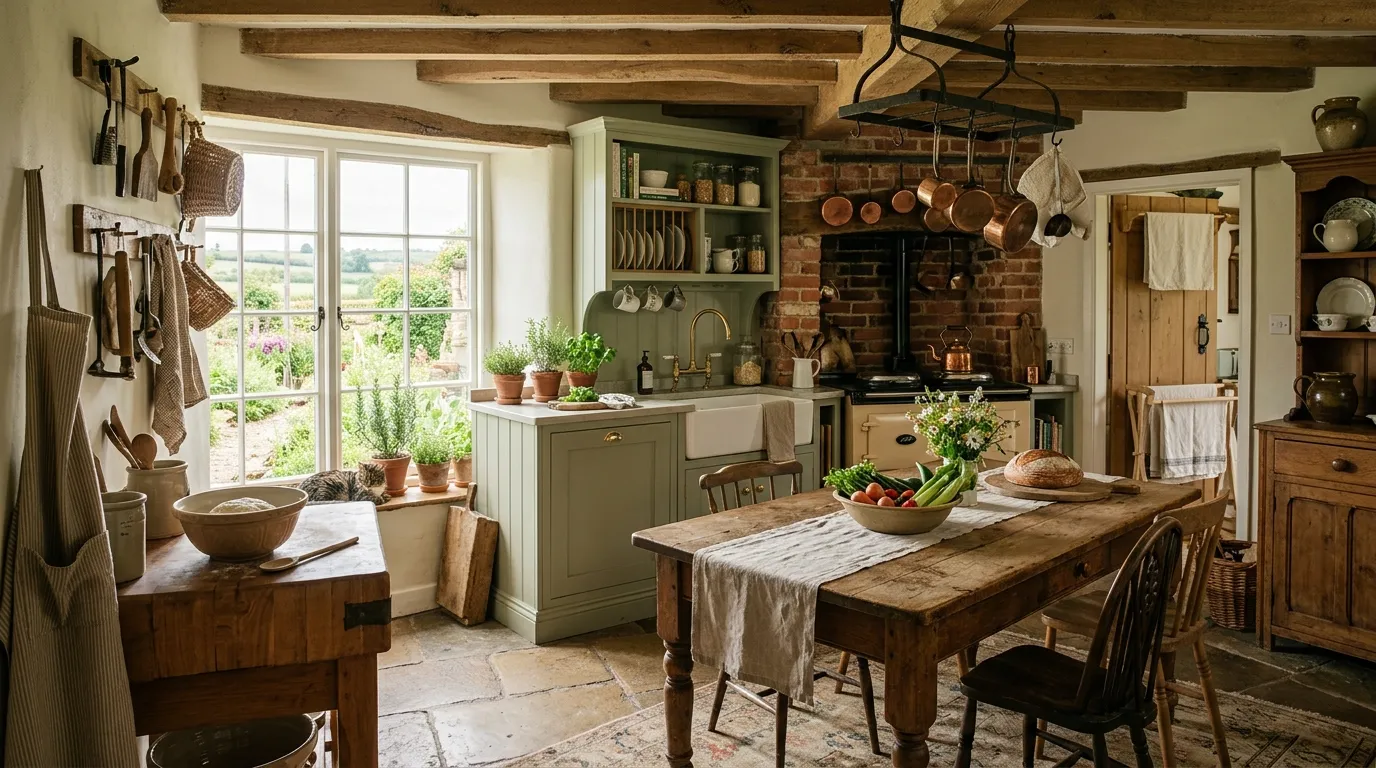
Everyone wants “farmhouse” until they realize it means owning fewer than four throw pillows shaped like animals. That’s not farmhouse. That’s a gift shop.
Real farmhouse style has dirt under its fingernails. It’s a house that worked for a living before it started looking good. The wood is reclaimed because something actually got claimed from somewhere. The stone is stacked because somebody stacked it, by hand, a long time ago, and never got around to hiding the effort.
Most people skip straight to the mood board and forget the mood came from function first. You can buy the aesthetic. You cannot buy the reason it exists.
This is the version that isn’t afraid of a little weight, a little wear, and a house that looks like it’s been fed.
Getting the Basics Right
Commit to Real Materials Before You Buy Décor
Reclaimed wood, natural stone, brass or blackened iron hardware, linen and jute textiles. These four materials are non-negotiable. Everything else is optional.
If your budget only stretches to one splurge, spend it on structural material — a real wood beam, a stone surround — not on accessories. The bones carry the room.
Choose a Ceiling Strategy First
Vaulted shiplap, exposed beams, or flat and quiet — decide the ceiling treatment before anything else, because it dictates the scale of everything below it.
A vaulted, beamed ceiling can carry heavier furniture and darker wood tones. A flat, simple ceiling needs the floor level to do more of the visual work.
Pick Your Hardware Metal and Stay Loyal
Brass, blackened bronze, or matte iron. Pick one and use it on every faucet, every hook, every light fixture in the house.
Mixing metals room to room reads as indecisive. A single consistent metal, repeated everywhere, is what makes a big house feel like one coherent idea instead of twenty small ones.
Farmhouse Ideas
Botanical Wallpaper Entry Nook
Pick a small, densely patterned floral wallpaper in a deep, moody tone — forest green with blush accents works, not a pale ditsy print. Use it in a contained space, like a doorway alcove, rather than an entire room.
Pair it with a black-painted glass-panel door. The contrast between the dark paint and the busy paper keeps the wallpaper from feeling overwhelming.
Add a brass wall sconce with a fabric shade directly beside the door. Warm light against dark paint and green paper is what makes the corner feel intentional instead of accidental.
Fill a vintage glass-front cabinet nearby with mismatched ceramics and dried florals. The clutter behind glass reads as curated, not chaotic — that’s the trick.
Striped Banquette Breakfast Nook
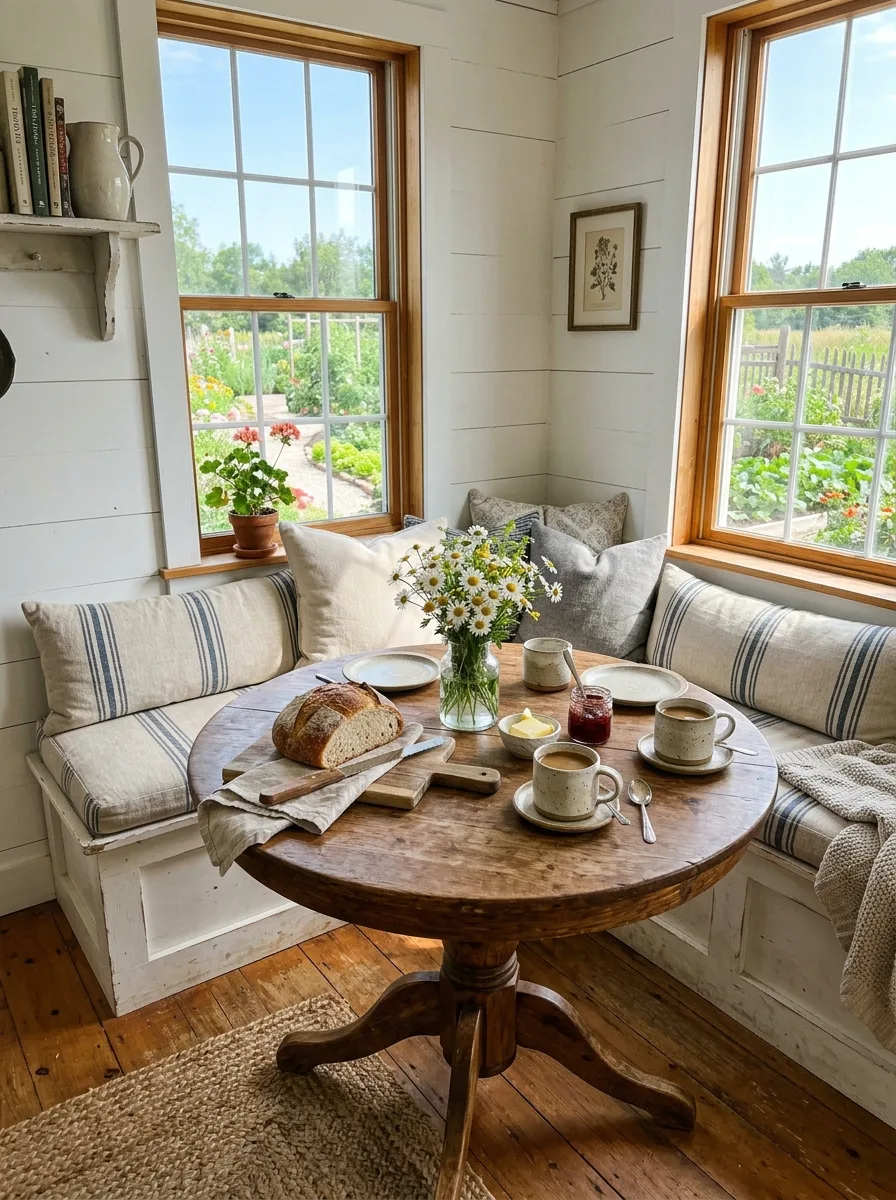
Build an L-shaped bench seat into a corner alcove, upholstered in a blue-and-cream ticking stripe fabric, with a mix of solid linen and striped pillows layered on top.
Center a round pedestal table in front of it — pedestal, not four-legged, so knees have somewhere to go on both sides.
Hang a small floating shelf above one window for a few stacked cookbooks and a pitcher, keeping it sparse rather than filled.
Dress the table daily with something simple and real: a jar of wildflowers, actual bread on a board, mismatched ceramic mugs. Staged perfection kills a breakfast nook faster than anything else.
Vaulted Shiplap Ceiling Beams
Run horizontal shiplap boards up a vaulted ceiling, following the roofline all the way to the ridge, rather than stopping at a flat plane. Paint it the same white as your walls so the whole envelope reads as one continuous shell.
Cross the vault with real structural beams left in a raw or lightly stained wood tone. The contrast between white shiplap and warm wood beam is the whole visual engine of the room.
Install a single statement chandelier — wrought iron with candle-style bulbs — hung low from the ridge point. Don’t center it perfectly; farmhouse ceilings favor a slightly off-center hang that echoes old construction.
Add a floating wood ledge along one low wall for framed art and pillar candles instead of hanging traditional wall art.
Labeled Jar Pantry Wall
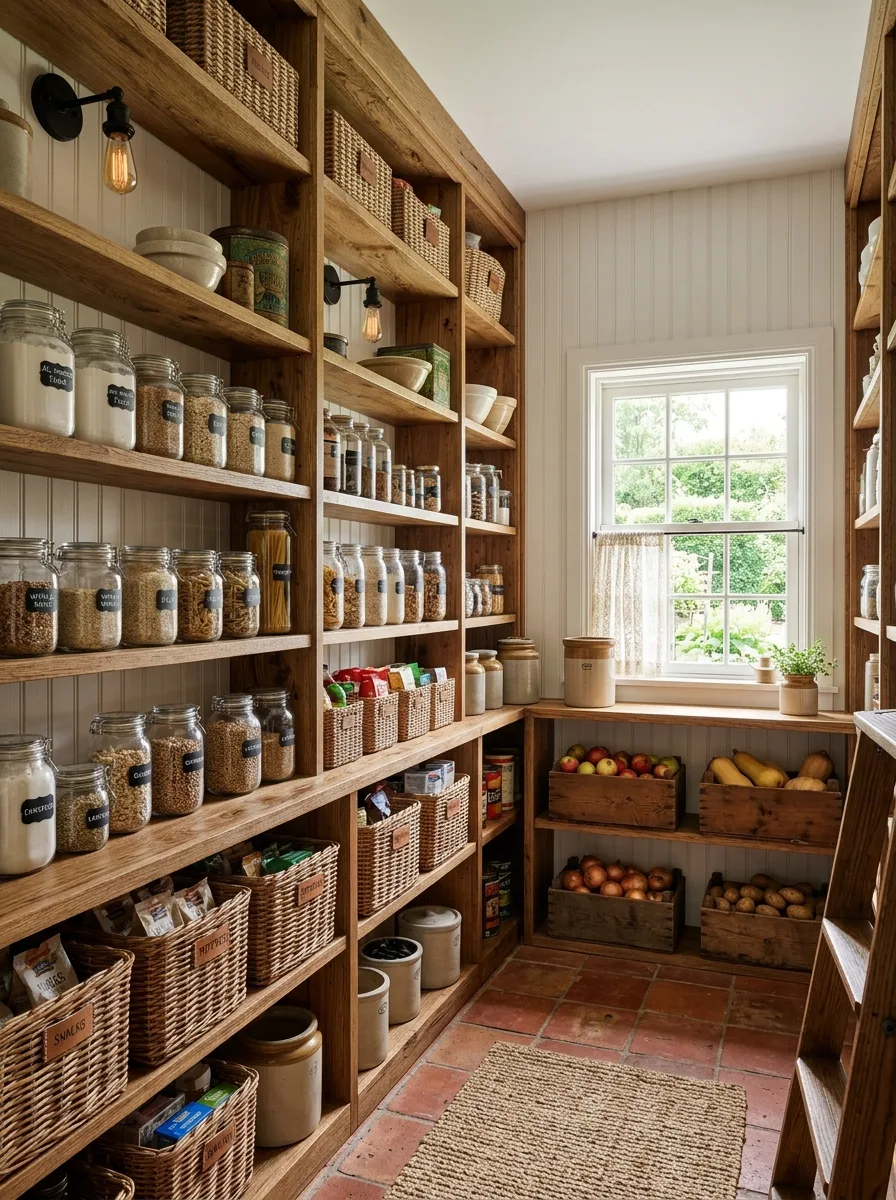
Build floor-to-ceiling open wood shelving on at least two walls, and decant dry goods into matching glass jars with simple black label tags — flour, sugar, grains, pasta, all visible and legible from the doorway.
Use woven wicker baskets on the lower shelves for produce and bulkier items, each with a small tag identifying contents.
Install warm Edison-style sconces directly on the shelving uprights instead of overhead lighting, so the room glows rather than glares.
Leave a window unobstructed if you have one, with a simple café curtain on a rod rather than full-length drapes — pantries need light, not drama.
Reclaimed Wood Barn Doors
Source two matching slabs of aged, weathered wood — barn siding is ideal — and mount them on an exposed black iron sliding rail above a doorway opening.
Leave the wood raw. No stain, no poly finish. The grey-brown weathering is the entire appeal, and any coating will kill it.
Let the doors slide to reveal, not just decorate. This has to be a working door treatment over an actual opening, or it reads as a prop nailed to drywall.
Keep everything else in the room pale — white slipcovered furniture, a jute or wool rug in a neutral weave. The doors need visual room to be the loudest thing present.Round Wood Framed Mirror
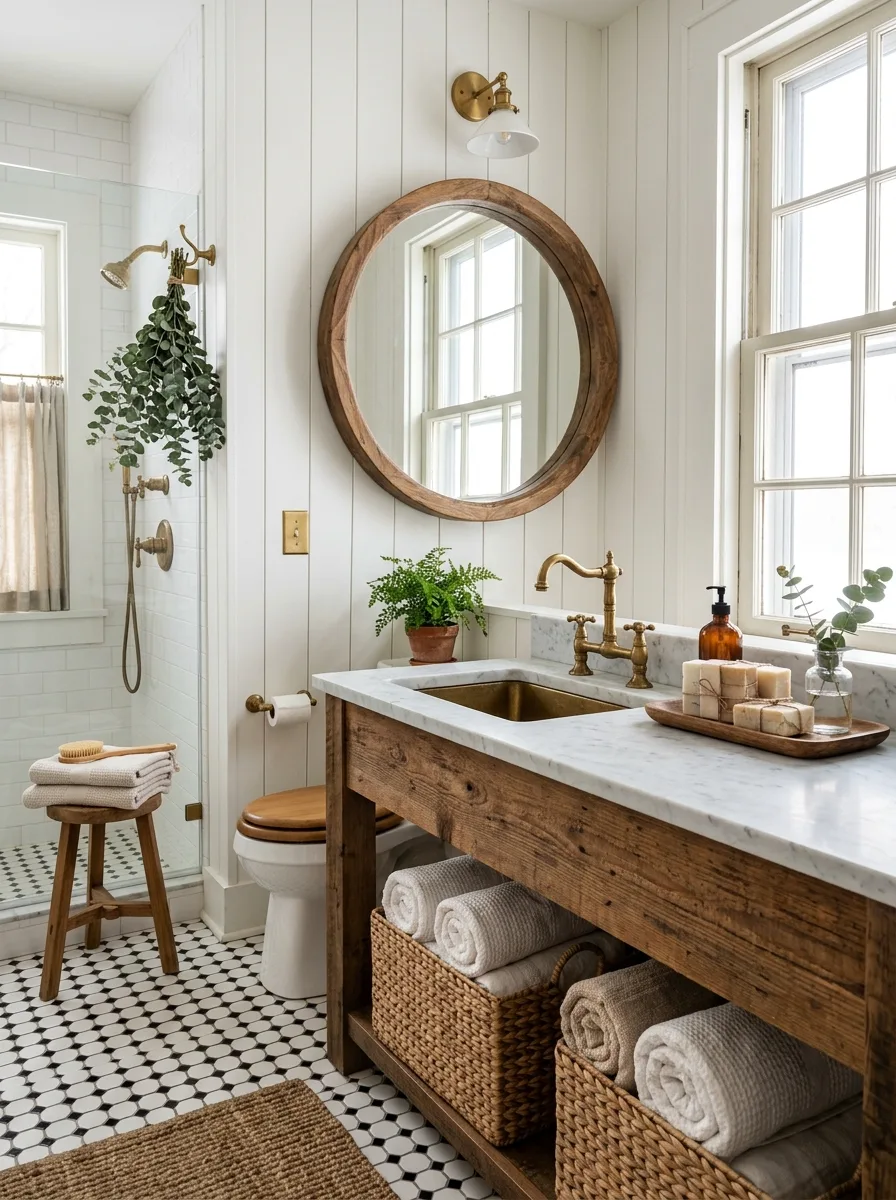
Hang an oversized round mirror in a thick, raw wood frame directly above a floating or open-base vanity, off-center from the sink if the wall allows it.
Build the vanity itself from reclaimed wood with a honed white marble top, and leave the base open beneath for woven baskets holding rolled towels.
Finish every fixture — faucet, shower head, sconces — in the same aged brass, and let a small potted fern sit on the counter for the one green note the room needs.
Skip a matched towel set. Stack a few different neutral linen towels instead — the slight mismatch reads as gathered over time, not bought in one trip.
Sage Shiplap Mudroom Nook
Paint a narrow wall in vertical shiplap a muted sage green, then build a simple bench seat directly into the space beneath a sloped ceiling line.
Mount a row of black iron hooks at shoulder height above the bench, and add a single floating wood shelf above that for baskets.
Hang a foraged-looking greenery wreath at the center of the hook row, off to one side rather than dead center. Perfect symmetry undercuts the casual feel this look depends on.
Finish with a chunky woven rug runner in undyed wool and a stack of woven baskets tucked beneath the bench for actual storage, not just styling.
Vintage Runner Laundry Room
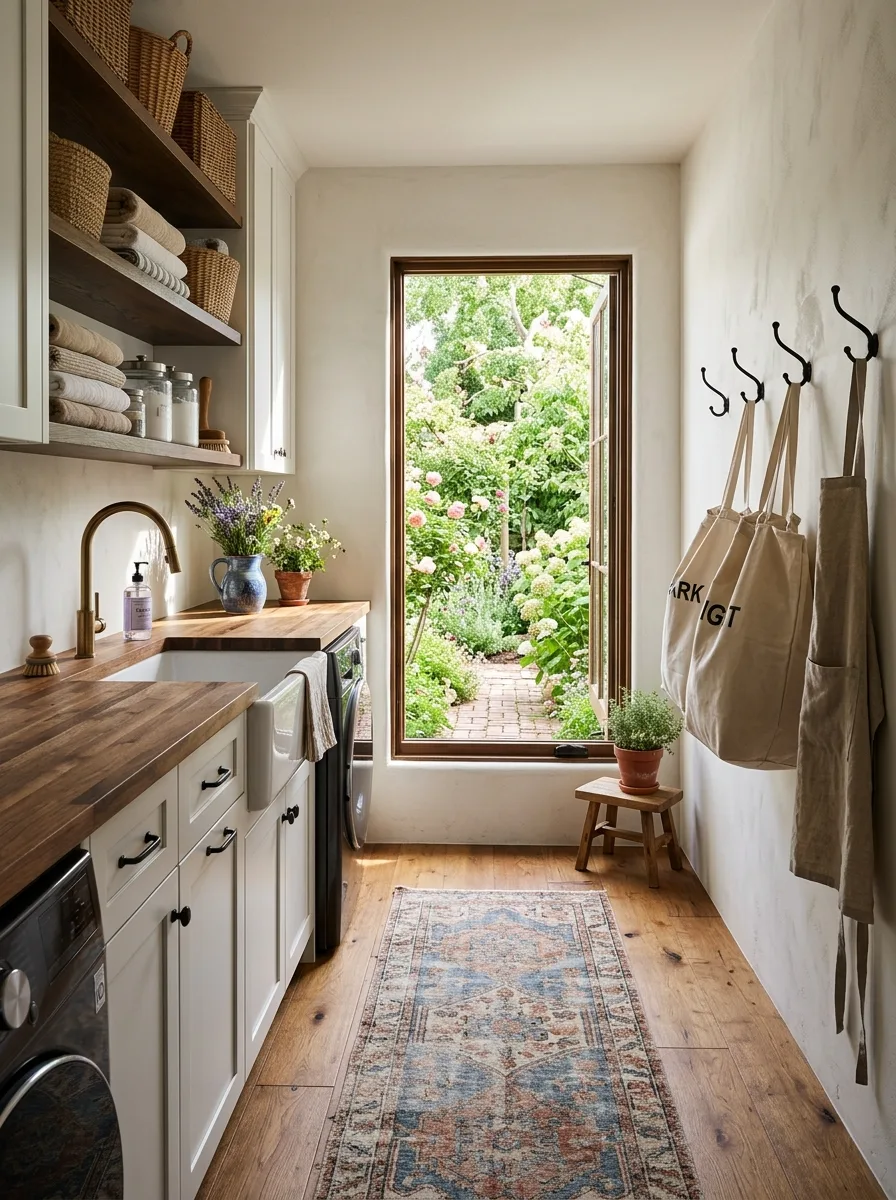
Install a butcher block countertop over the washer and dryer, with open wood shelving above for folded towels and glass storage jars.
Run a faded, patterned vintage-style rug the full length of the room instead of a plain bath mat — the pattern does the work a bare floor can’t.
Mount a row of hooks on the opposite wall for canvas market totes and an apron, hung at slightly different heights.
Keep a small wood stool tucked in the corner and a potted plant on the windowsill. A laundry room this considered stops feeling like a chore.
Crisscross Ceiling Beam Kitchen
Install rough-hewn wood beams in a crossing, structural-looking pattern across a vaulted kitchen ceiling — not evenly spaced decorative strips, but beams that look like they’re actually holding the roof up.
Stain kitchen cabinetry in a weathered grey-brown wood tone that echoes the beam color, and keep countertops in a busy natural stone pattern to balance all that wood.
Hang a cluster of black metal lantern-style pendants at varying heights down the length of the island, rather than one uniform row.
Add worn wooden bar stools with visible grain and dents at the island. New, glossy stools break the illusion instantly.
Black Soapstone Counters
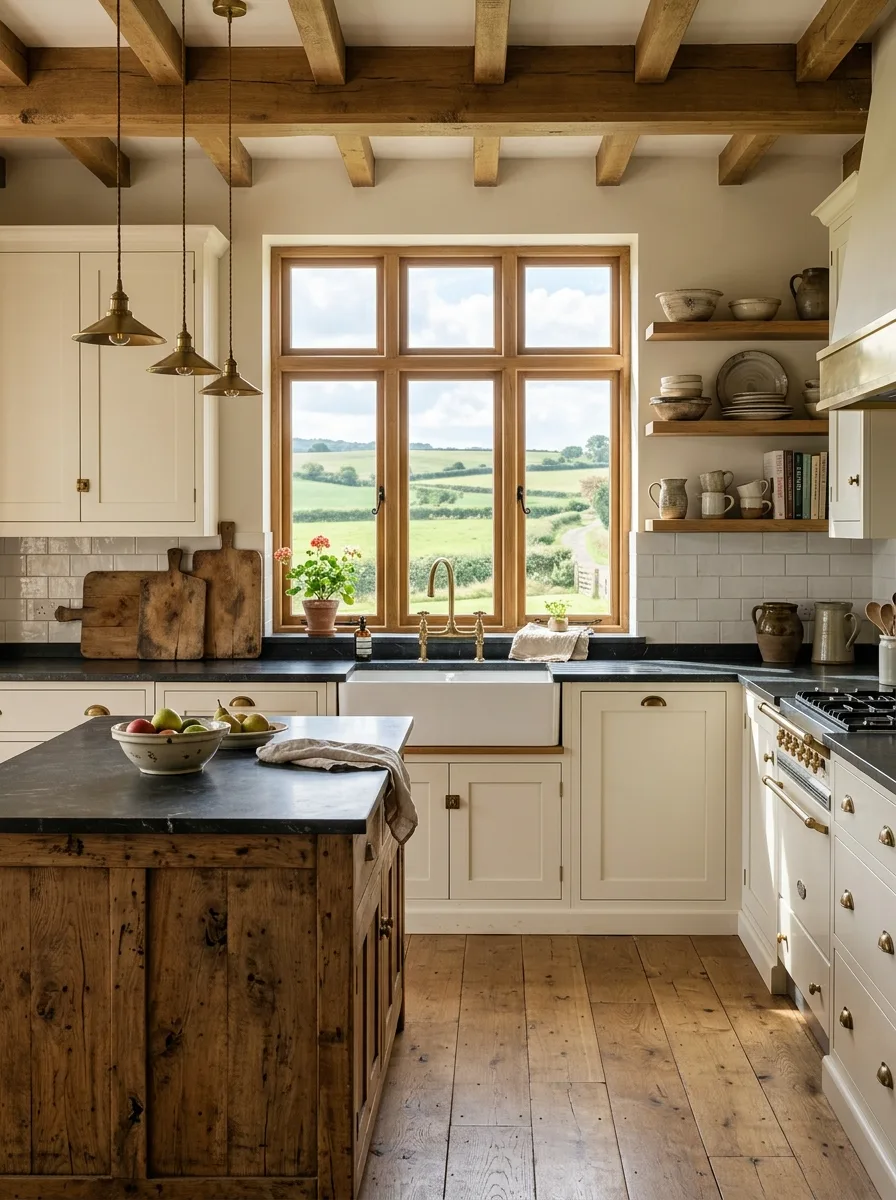
Pair creamy off-white shaker cabinetry with dark, honed soapstone or black granite countertops for the core contrast that makes this kitchen work.
Install a farmhouse apron sink beneath a large multi-pane window, and finish the faucet in unlacquered brass so it develops a living patina over time.
Leave one section of upper cabinetry open as shelving, and stock it with mismatched ceramic dishware in cream and stoneware tones rather than a matched set.
Bring in a single reclaimed wood island with a contrasting dark-painted base — the mix of pale cabinets, dark counters, and raw wood island is the full formula.
Rustic Stone Fireplace Wall
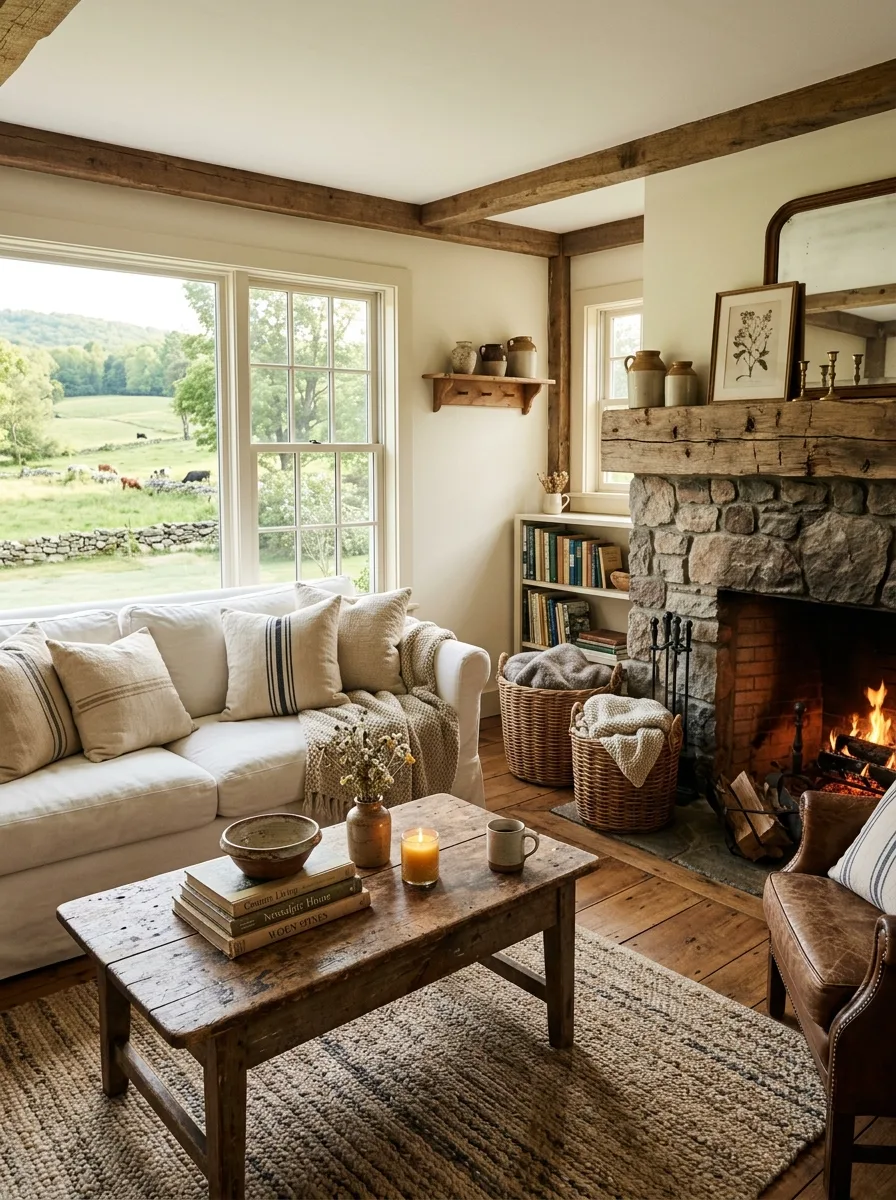
Build or clad a fireplace wall in irregular fieldstone, running it floor to ceiling rather than stopping at a mantel line.
Set a single thick, rough-hewn wood mantel beam across the stone at a low, usable height — low enough to display objects on, not purely decorative.
Furnish the room with slipcovered or leather seating in warm neutral tones, and layer in one striped grain-sack pillow per seat, no more.
Keep a low wooden coffee table nearby stacked with real, worn books and a lit candle. The room needs evidence that people actually sit here.
Reclaimed Wood Ceiling Beams
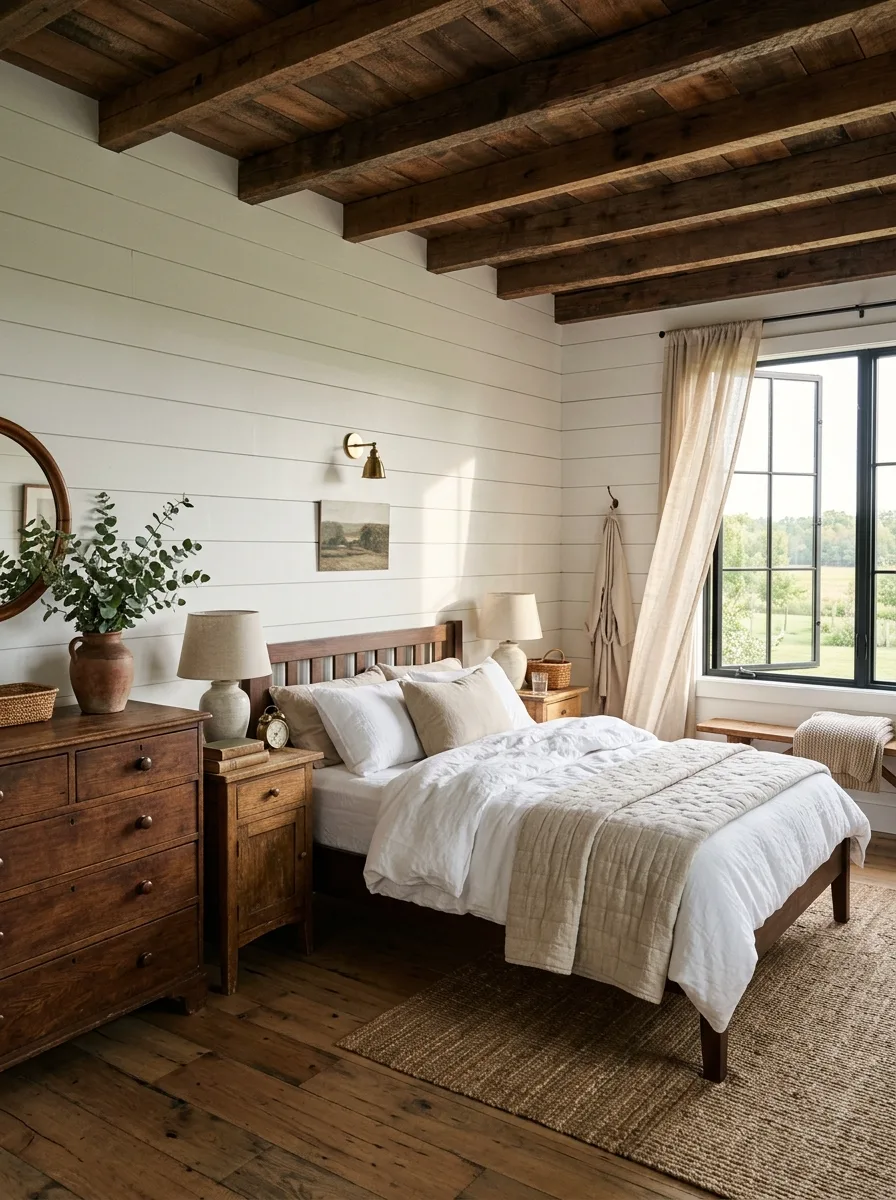
Line a bedroom ceiling with dark, reclaimed wood beams running parallel across a white shiplap backdrop, spaced unevenly to mimic original construction rather than a perfect grid.
Choose bedroom furniture — dresser, nightstands — in a warm, worn wood tone that’s a few shades lighter than the ceiling beams, so the eye has somewhere to land besides straight up.
Add a single wall sconce beside the bed instead of a table lamp, freeing up nightstand surface for a stack of books and a ceramic vase.
Dress the window in unlined linen curtains that pool slightly on the floor. Precision-hemmed drapes look hotel-ish; a little extra fabric looks lived-in.
Built-In Library Reading Nook
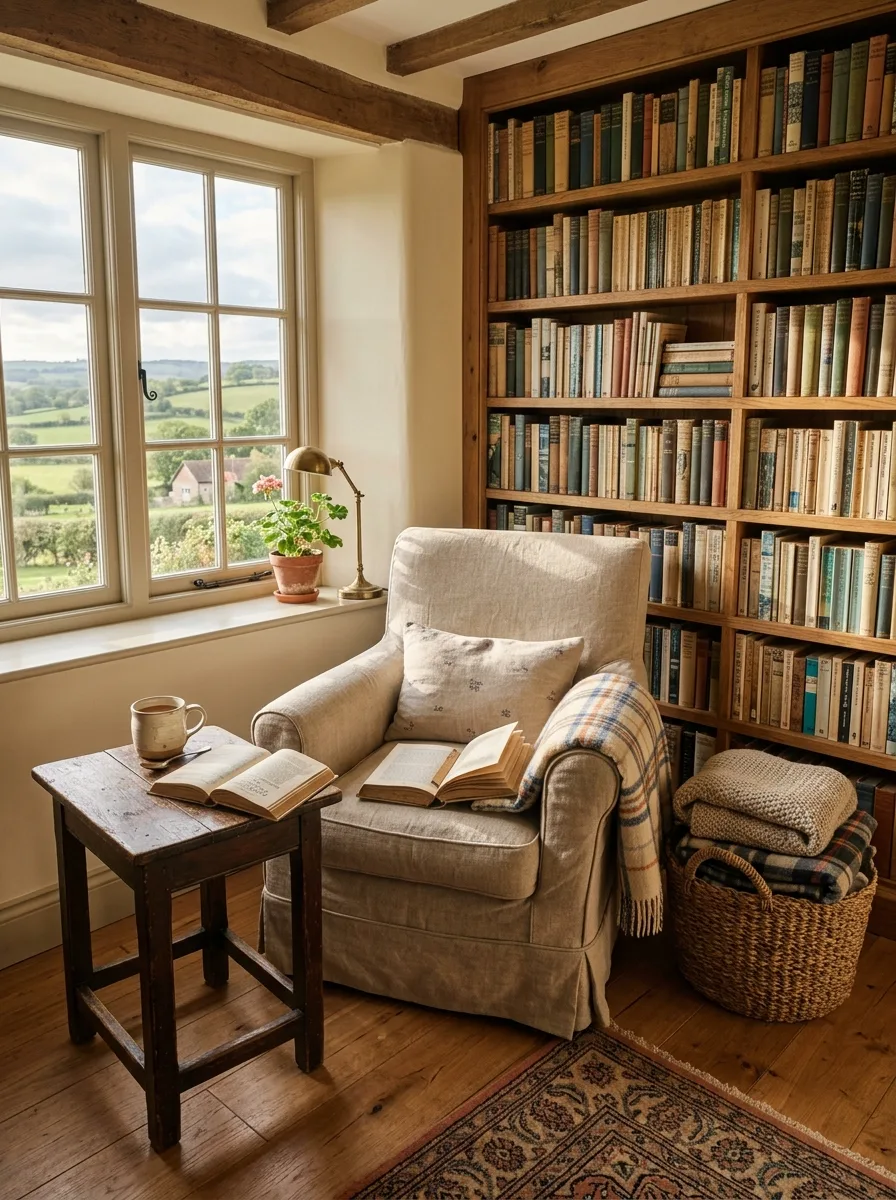
Fill an entire wall with floor-to-ceiling wood shelving, and let the books be genuinely mismatched — different spine colors, different heights, some worn at the edges.
Place a single deep, slipcovered armchair in linen facing a window, angled slightly rather than square to the wall.
Set a small, worn wood side table beside the chair, low enough for a mug and a stack of books to sit within reach.
Add one plaid wool throw draped over the chair arm and a low woven basket beside it for extra blankets. The room only needs one chair to feel complete — resist adding a second.
A-Frame Exposed Beam Ceiling
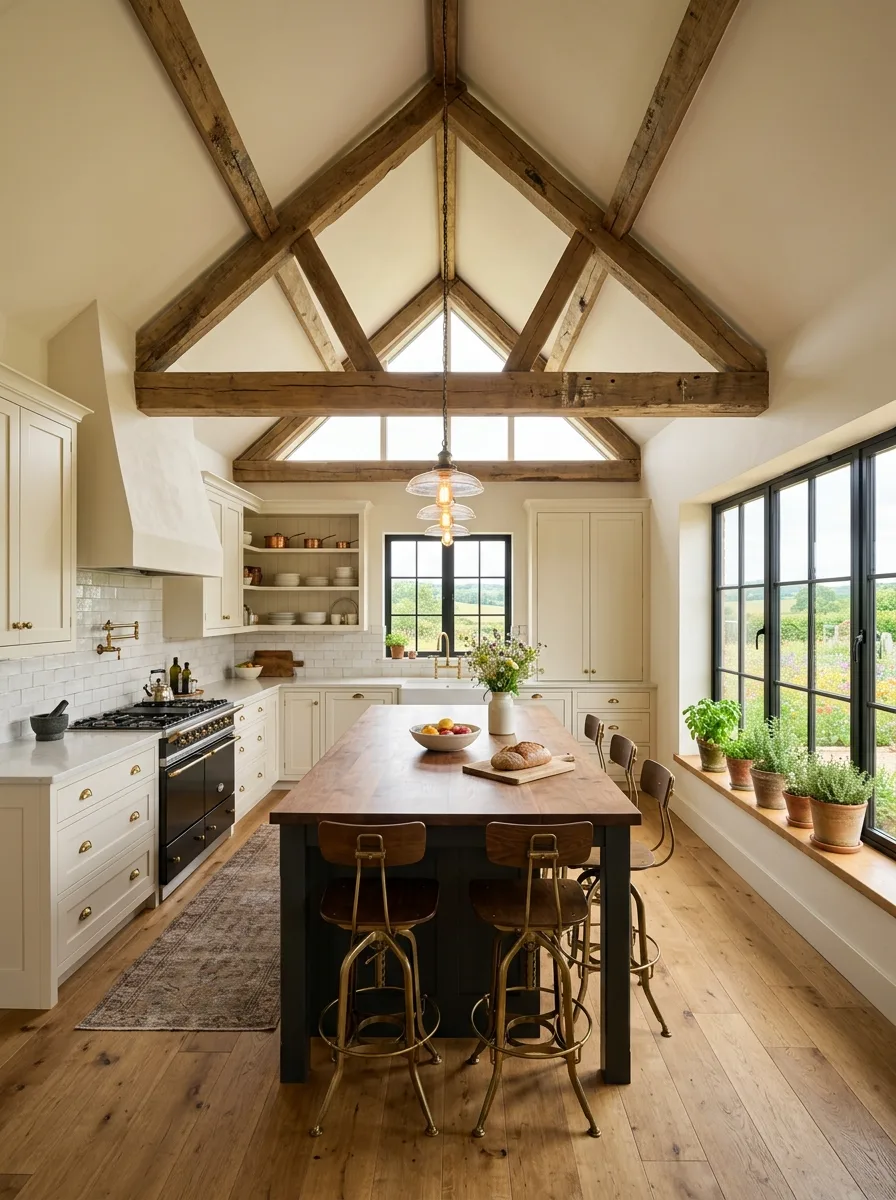
Frame the tallest point of a kitchen or great room with true A-frame timber trusses left in a natural, unstained wood finish, and let the roofline itself become the visual centerpiece.
Paint the walls a warm off-white that reads almost like limewash, so the beams read darker and more dramatic by contrast.
Center a long wood-topped island beneath the peak, with a black-painted base and mismatched vintage stools — bar height, worn leather or wood seats.
Hang a single simple glass pendant at the peak rather than a cluster. When the ceiling structure is this dramatic, the lighting should stay quiet.
Reclaimed Wood Writing Desk
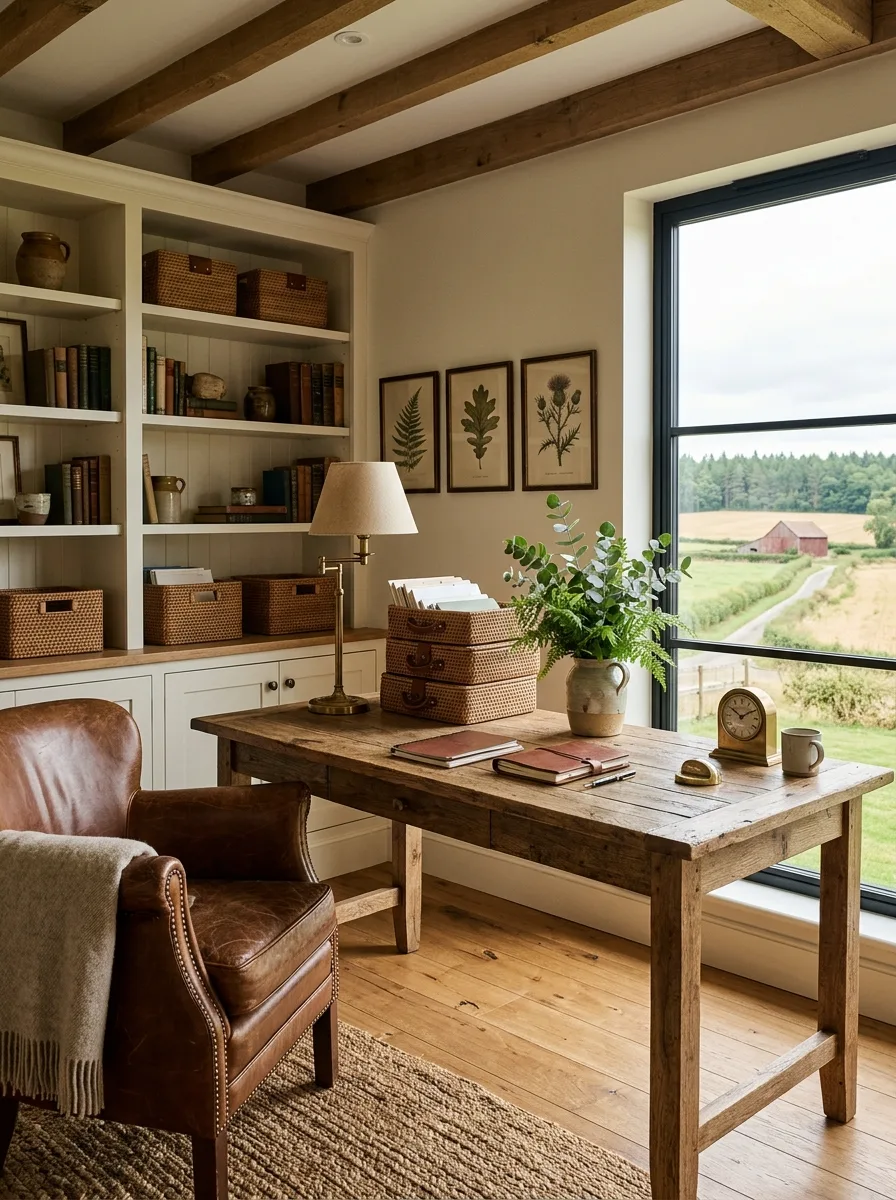
Find a narrow, worn wood table — an old farm table works better than an actual desk — and set it beneath a large window with a view out.
Pair it with a leather wingback or club chair in cognac or chestnut, showing visible creasing and wear.
Stock nearby built-in shelving with a mix of leather-bound books, wicker file boxes, and a few pieces of stoneware pottery, avoiding anything that looks like matched office supply.
Add a brass swing-arm task lamp instead of a desk lamp with a shade — the exposed brass arm keeps the surface from feeling too tidy.
Woven Pendant Light Trio
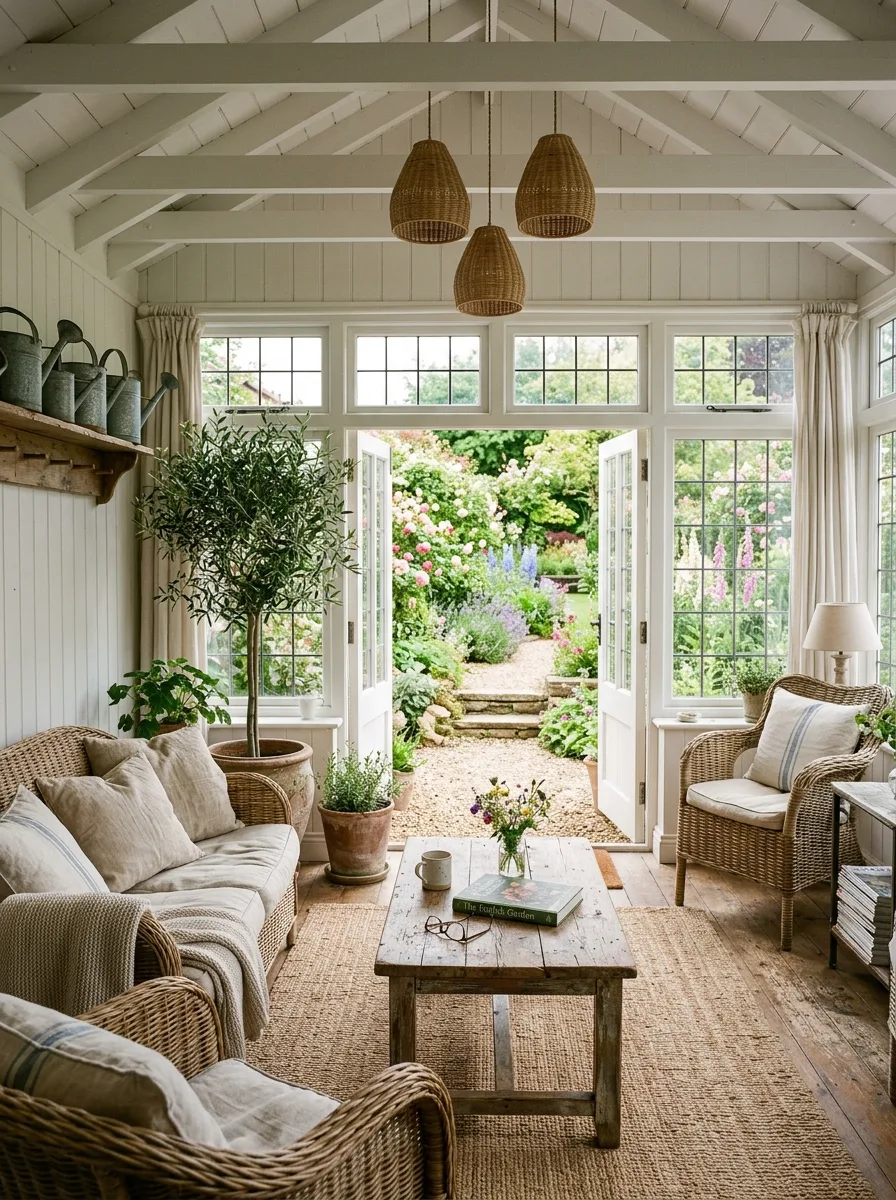
Hang three woven rattan or wicker pendant shades at staggered heights above a sunroom seating area, letting the natural texture play against white-painted wood ceiling boards.
Furnish the space entirely in wicker or rattan furniture frames with cream linen cushions, keeping upholstery pattern-free so the woven textures carry the interest.
Bring in one large potted olive or fig tree in a terracotta pot as the room’s anchor, positioned near the door to the outside.
Layer a thick jute rug underfoot and leave garden doors open when weather allows — this look depends on blurring the line between inside and out.
Floating Wood Coffee Shelves
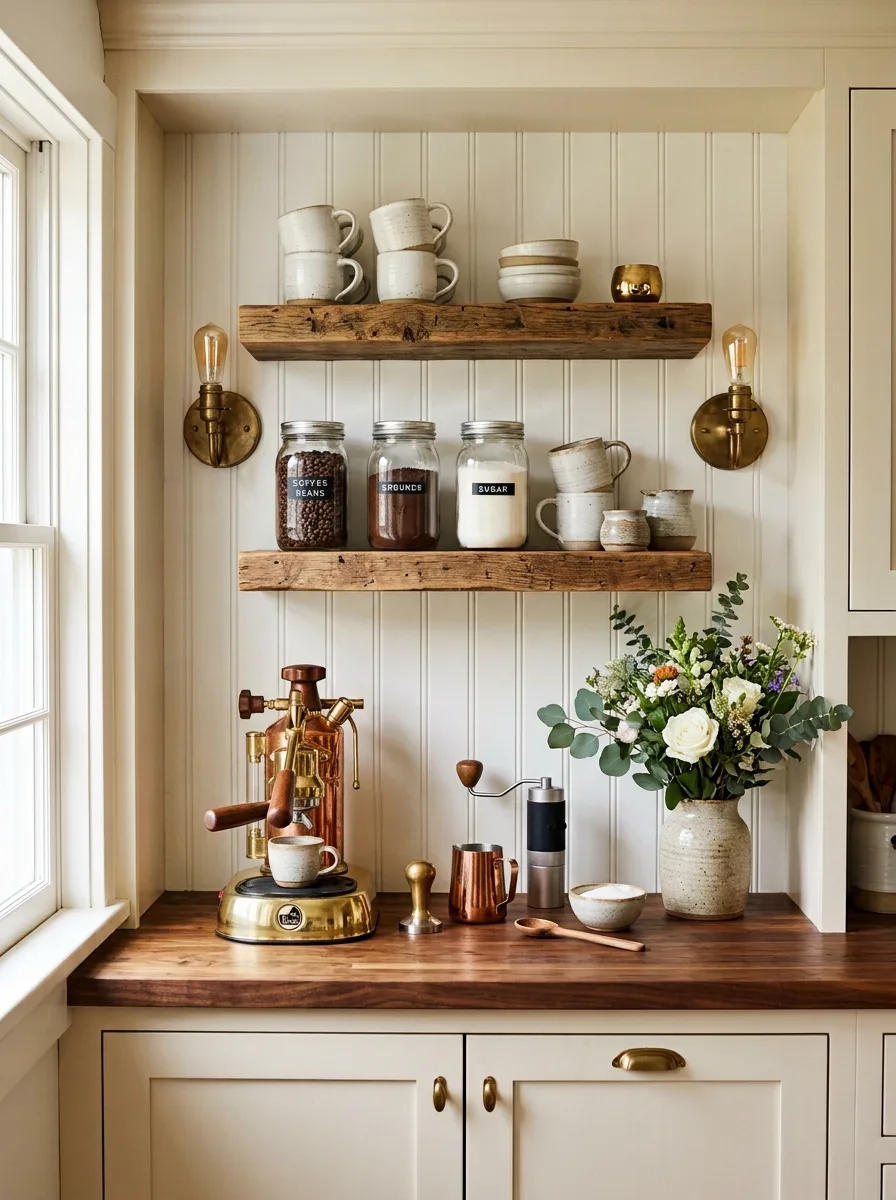
Mount two floating reclaimed wood shelves directly above a butcher block counter section, flanked by brass wall sconces on either side.
Style the top shelf with stacked stoneware mugs and bowls, and the bottom shelf with labeled glass canisters holding coffee beans, grounds, and sugar.
Set a vintage-style espresso machine in copper or brass tones as the counter’s centerpiece, with matching brass accessories — tamper, pitcher, scale — arranged beside it.
Finish with a loose, garden-style flower arrangement in a stoneware vase at one end of the counter, keeping the arrangement asymmetrical rather than centered.
Sage Limewash Bedroom Walls
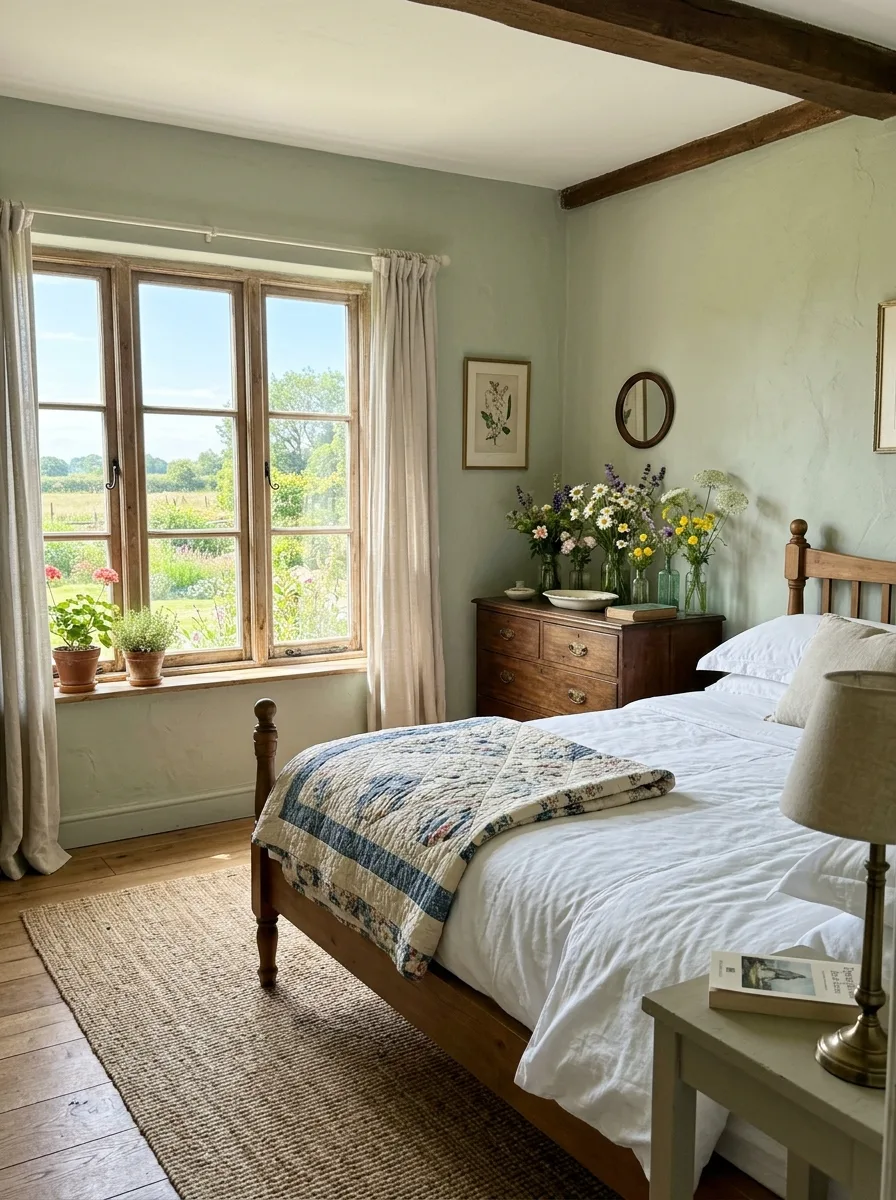
Apply a soft sage limewash or matte paint finish across bedroom walls, leaving some visible texture and variation rather than a flat, uniform coat.
Furnish with a simple turned-wood bed frame and a single antique chest of drawers in a contrasting warm brown, positioned as the room’s main storage.
Dress the dresser top with an asymmetrical cluster of small glass bud vases, each holding a few stems of wildflowers rather than one large arrangement.
Hang unlined linen curtains that puddle slightly at the floor, and leave the window trim in a natural wood tone rather than painting it to match the walls.
Screened Porch Rocking Chairs
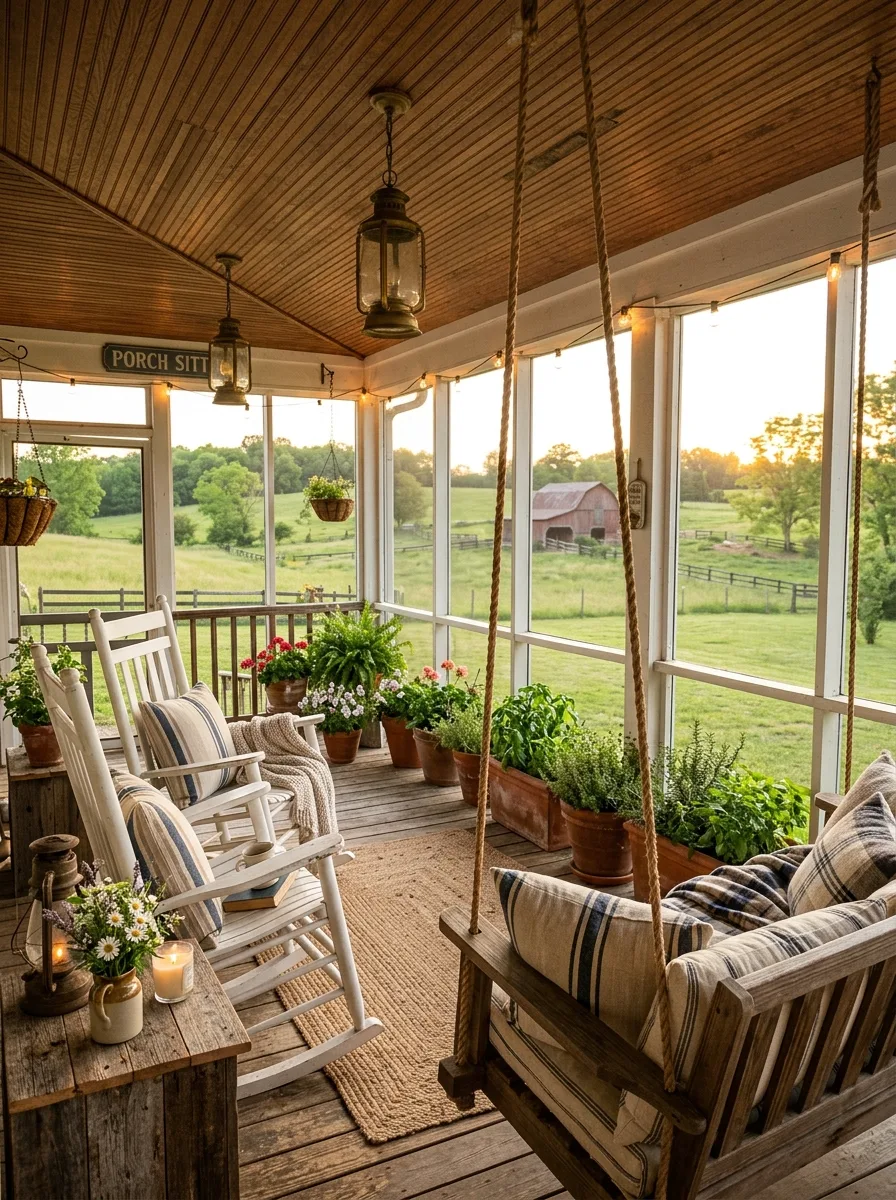
Enclose a porch in simple black screening, keeping the structure visible rather than hidden, and leave the ceiling in warm wood tongue-and-groove boards.
Furnish with two white-painted wood rocking chairs and a hanging porch swing suspended on thick natural rope rather than chain.
Layer striped ticking cushions across every seat, and add one flat-woven jute rug beneath the seating cluster to define the space.
String warm bulb lights along the porch’s edge and set a couple of black lantern fixtures at each end. A porch like this needs to work equally well at noon and at dusk.
Full-Height Stone Chimney
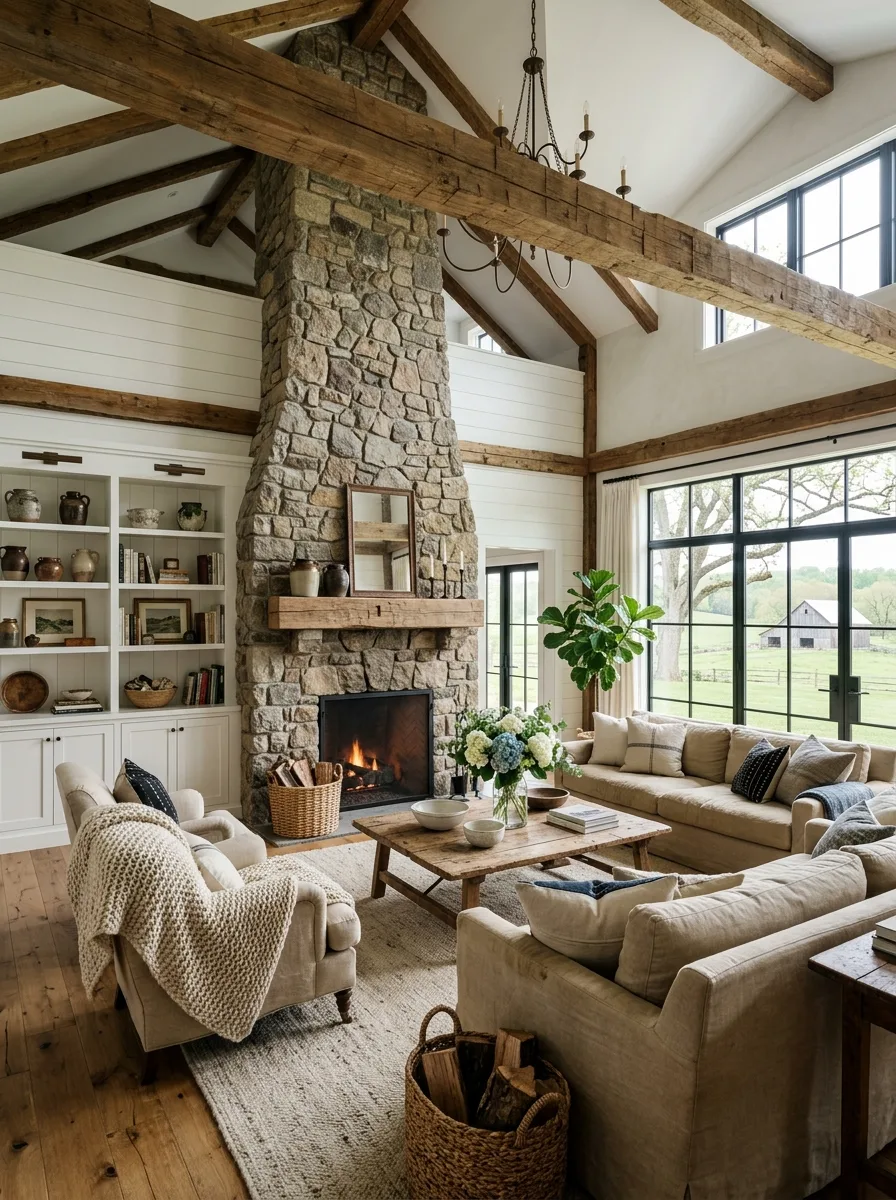
Build a fieldstone chimney breast that runs the full height of a vaulted great room, from hearth to ridge, rather than stopping at a standard mantel line.
Set a thick, rough wood mantel low on the stone, just above the firebox, and hang a small reclaimed-wood-framed mirror or art piece directly on the stone above it.
Furnish the surrounding seating in a mix of linen sofas and one leather-look armchair, layering in a chunky knit throw and mismatched linen pillows in navy and cream.
Flank the fireplace with white built-in cabinetry rather than matching stone, so the chimney stays the singular dramatic element in the room instead of competing with itself.
Final Thoughts
None of this works if you’re chasing a look instead of a logic. Every material in a real farmhouse room is there because it used to do a job — the beam held the roof, the stone held the heat, the wood held the weight of daily use.
The houses that get this right aren’t the ones with the most reclaimed wood. They’re the ones that understood restraint. One structural hero per room. One consistent material story. The rest gets to be quiet.
What ties every example here together isn’t a color or a brand of paint. It’s a willingness to let things look used. A chair that’s been sat in. A table that’s been eaten at for decades before you ever saw it.
Buy the story, not the finish. Everything else follows from that.