
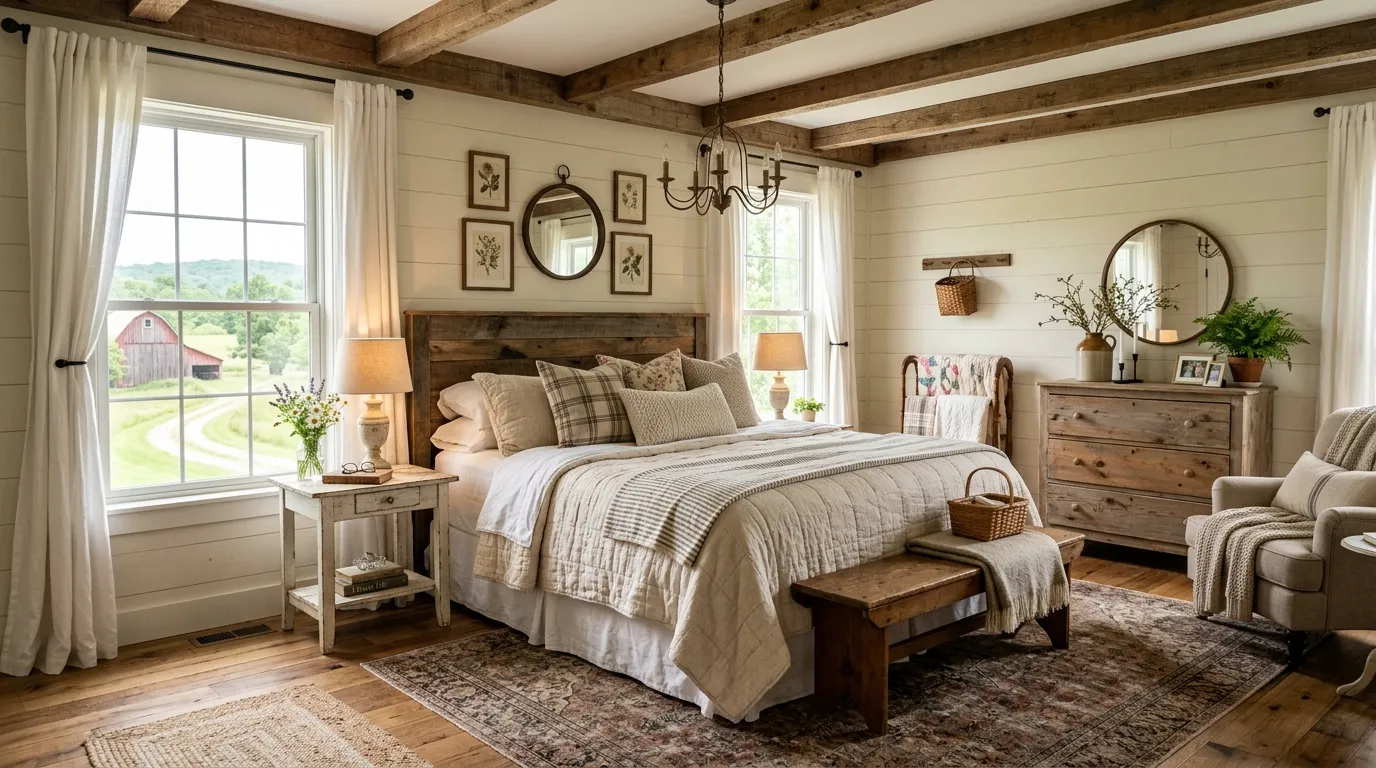
A bedroom is the one room in your house nobody else has to approve of. No guests rating it. No dinner party judging the throw pillows. Just you, at your most honest, staring at a ceiling every single night.
So why do so many farmhouse bedrooms look like a hotel chain’s idea of “cozy”? Matching linens. A single neutral throw folded at a forty-five degree angle. Zero evidence anyone actually sleeps there.
The real version has weight to it. A bed frame that could survive a small earthquake. Linens that look slept in because they have been. Walls doing something — wood, stone, paint with actual pigment in it — instead of retreating into beige.
This is the version of a farmhouse bedroom built for people who want to fall asleep somewhere with character, not somewhere staged for a listing photo.
Farmhouse Bedroom Ideas
Matte Black Iron Bed
Choose a wrought iron bed frame in a matte black finish with a simple, unfussy silhouette — no ornate scrollwork, just clean curved lines.
Hang a black wrought iron chandelier with candle-style bulbs directly above, keeping the black metal tone consistent between bed and light fixture.
Paint window trim and blinds the same matte black as the bed frame, so the metal tone repeats around the room instead of appearing once and stopping.
Add a rough-hewn reclaimed wood bench at the foot of the bed. The raw wood against all that black iron is the contrast that keeps the room from feeling too severe.
Chippy Whitewashed Brick Wall
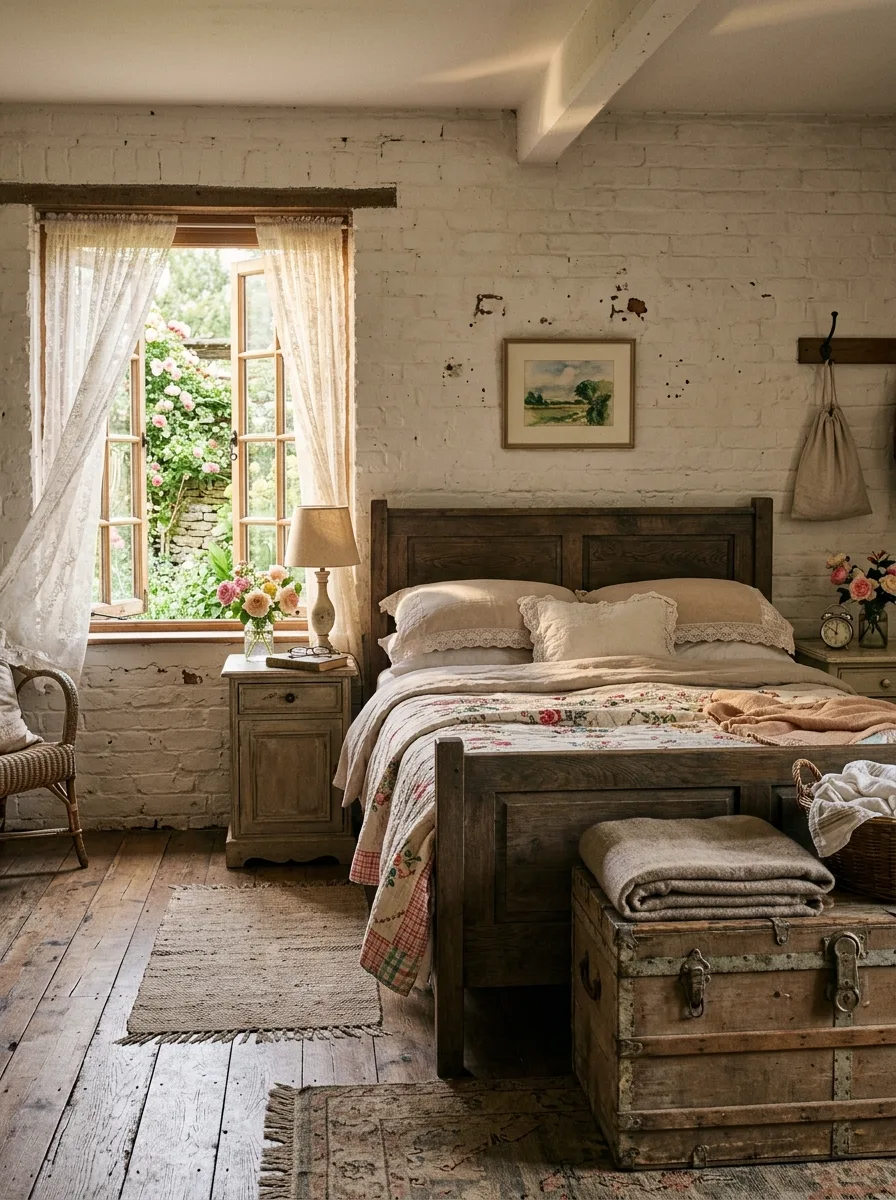
Leave an exposed brick wall in its naturally chipped, whitewashed state rather than repainting it evenly — the patchy coverage is the entire appeal.
Pair it with a dark, substantial wood bed frame so the heavy furniture grounds the pale, textural wall behind it.
Dress the window in sheer, unlined linen curtains that let maximum light filter through, since a room this textural needs softness in its light.
Add a vintage steamer trunk at the foot of the bed for storage, left in its original worn metal and wood finish rather than refinished.
Antique Shutter Wall Art
Source a pair of genuinely old, chippy-painted window shutters or garden gate panels, and mount them side by side directly above the headboard instead of traditional art.
Drape a single faded silk or dried floral wreath across the center seam where the two panels meet, letting it hang slightly asymmetrically.
Layer a fresh eucalyptus garland along the top of the headboard itself, running horizontally beneath the shutter panels for a second textural layer.
Flank the composition with a few smaller arched mirrors or vintage frames leaned rather than hung, propped against the wall at slightly different heights.
Exposed Stone Bedroom Wall
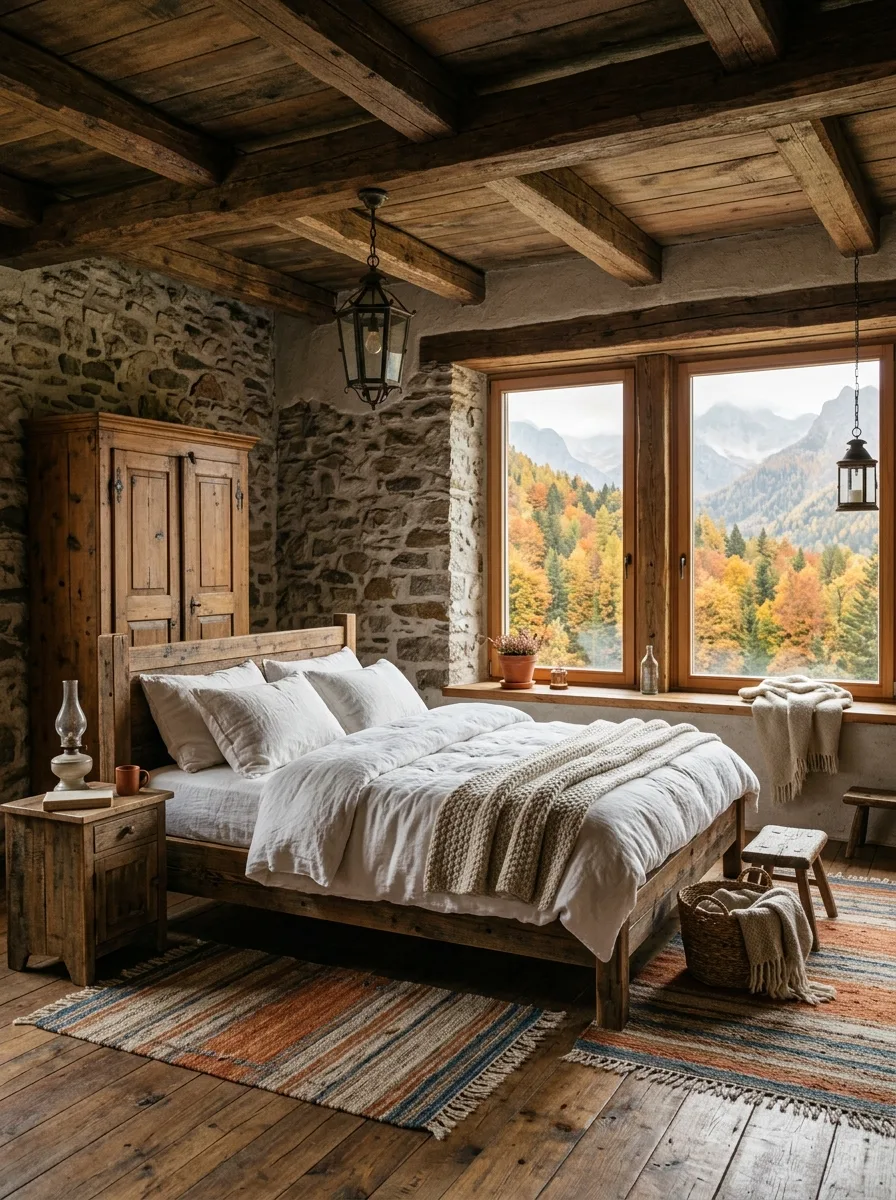
Leave one full bedroom wall in exposed, unfinished natural stone, pairing it with heavy raw timber ceiling beams rather than smooth drywall anywhere nearby.
Choose a substantial reclaimed wood bed frame with visible joinery, avoiding anything delicate or refined — the room’s materials need to match in weight.
Add a wall-mounted lantern-style light fixture directly on the stone rather than a hanging pendant, echoing the fixture styles you’d find in an actual old stone structure.
Layer a striped wool rug in warm rust and blue tones at the bedside, and leave a small wood side table with a lantern-style lamp for reading light.
Chunky Knit Pink Throw
Choose a hand-knit chunky throw blanket in a soft dusty pink, and drape it loosely across the foot of the bed rather than folding it with sharp corners.
Pair it with a sage green painted nightstand for the contrasting color note, and top it with a simple glass jar of garden roses rather than a matched vase.
Layer in botanical print pillows in soft greens and creams alongside the pink throw, mixing patterns rather than sticking to one print.
Fill the windowsill with potted plants and cut florals in mismatched vessels — a woven basket, a glass jar, a terracotta pot — so the greenery doesn’t look purchased as a set.
Blue Board And Batten
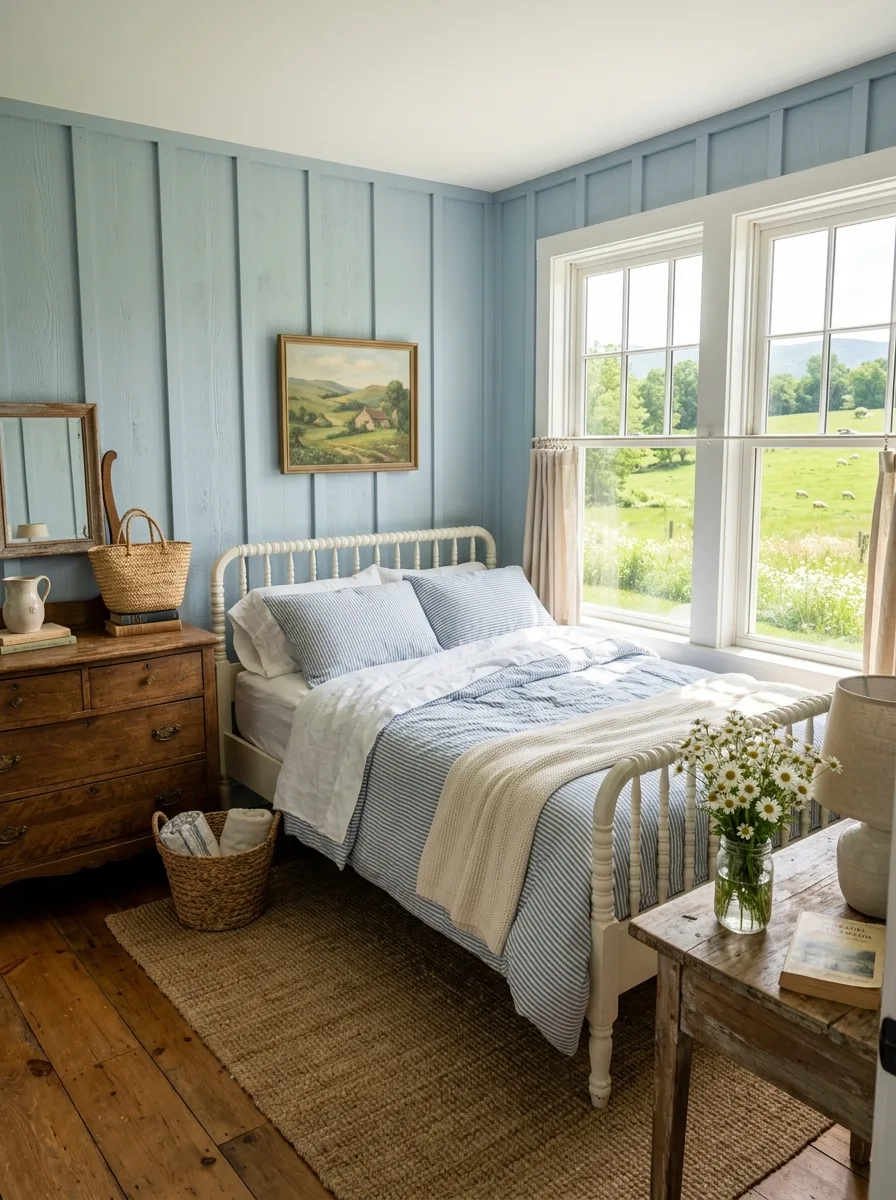
Paint vertical board and batten paneling in a soft, muted powder blue, running it partway up the wall rather than floor to ceiling.
Choose a white-painted spindle bed frame for contrast, and dress it in blue-and-white ticking stripe bedding that echoes the wall color without matching it exactly.
Hang a small landscape painting in a simple wood frame at the center of the blue paneled section, keeping the art modestly scaled rather than oversized.
Add a woven market basket beside an antique wood dresser for extra storage, and finish the window with simple curtains left un-fussy and unlined.
Sliding Barn Door Entry
Install two vertical-plank barn doors on an exposed black iron rail above a bedroom entry opening, choosing a pale, lightly weathered wood tone rather than a dark stain.
Let the doors slide open to reveal an arched window centered directly behind the bed, so the architectural moment continues once you’re inside the room.
Hang trailing greenery from a shelf mounted above the door track, letting vines spill down over the top edge of the doors themselves.
Keep furniture just outside the doors — a leather armchair, a console table — in warm brown tones that echo the door’s wood finish, tying the transition space to the room beyond.
Vertical Shiplap Paneling
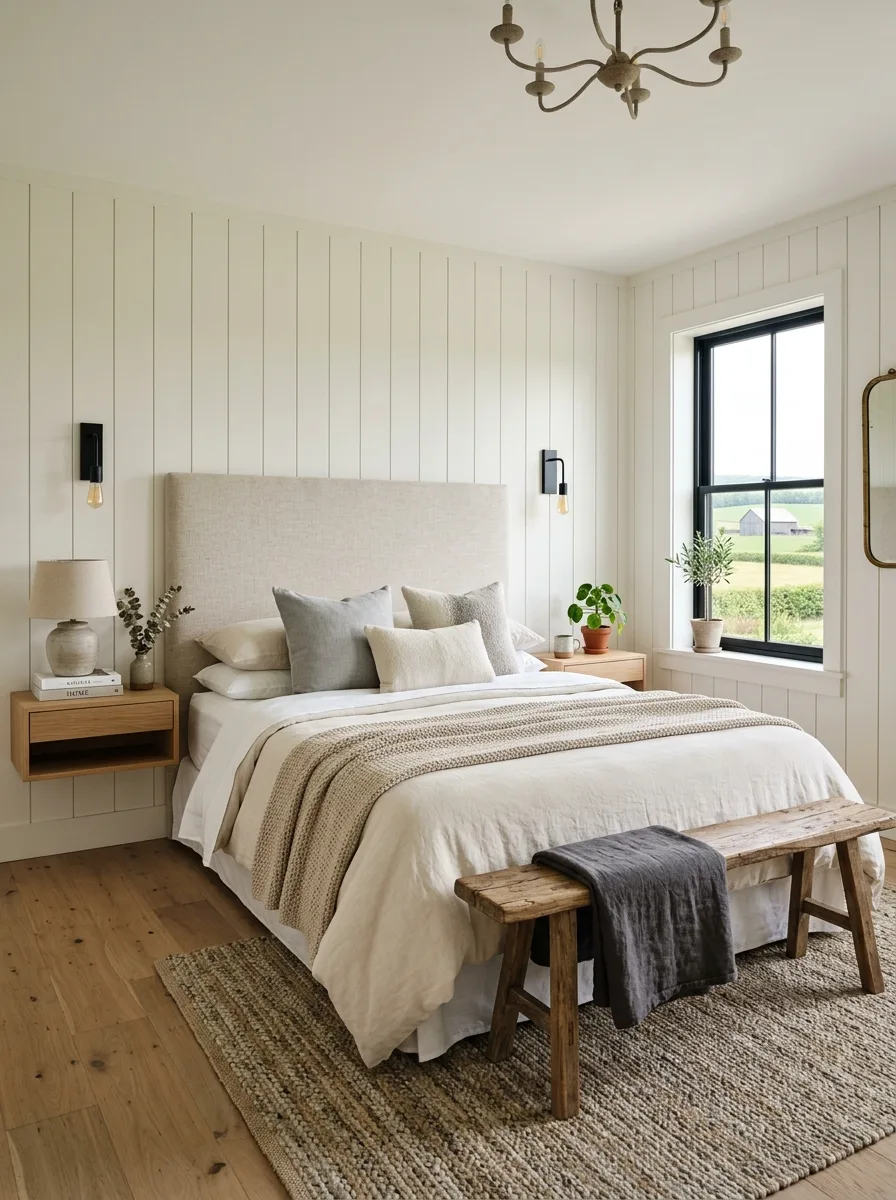
Run shiplap boards vertically rather than horizontally across the headboard wall, painting them a warm off-white that’s a shade softer than pure white.
Mount black wall-mounted sconces on either side of the bed instead of table lamps, freeing up nightstand space and adding a graphic, linear accent against all that vertical paneling.
Choose a simple upholstered headboard in a neutral linen or boucle fabric — the vertical lines behind it need a plain, textural headboard rather than a patterned one.
Add a floating wood shelf nightstand on one side for an asymmetrical, architectural touch instead of a traditional freestanding piece.
Stacked Stone Archway
Build or clad a doorway or partial wall in irregular fieldstone, shaping it into a rounded archway rather than a squared opening.
Pair the stone with heavy timber ceiling beams left in a dark, raw finish, crossing at visible structural angles overhead.
Furnish the room in saturated, warm tones — deep browns, burgundy textiles — rather than the pale neutrals most farmhouse rooms default to. Stone this dramatic can handle richer color.
Layer two vintage patterned rugs, overlapping at the edges, to match the room’s sense of accumulated history.
Whitewashed Beam Ceiling
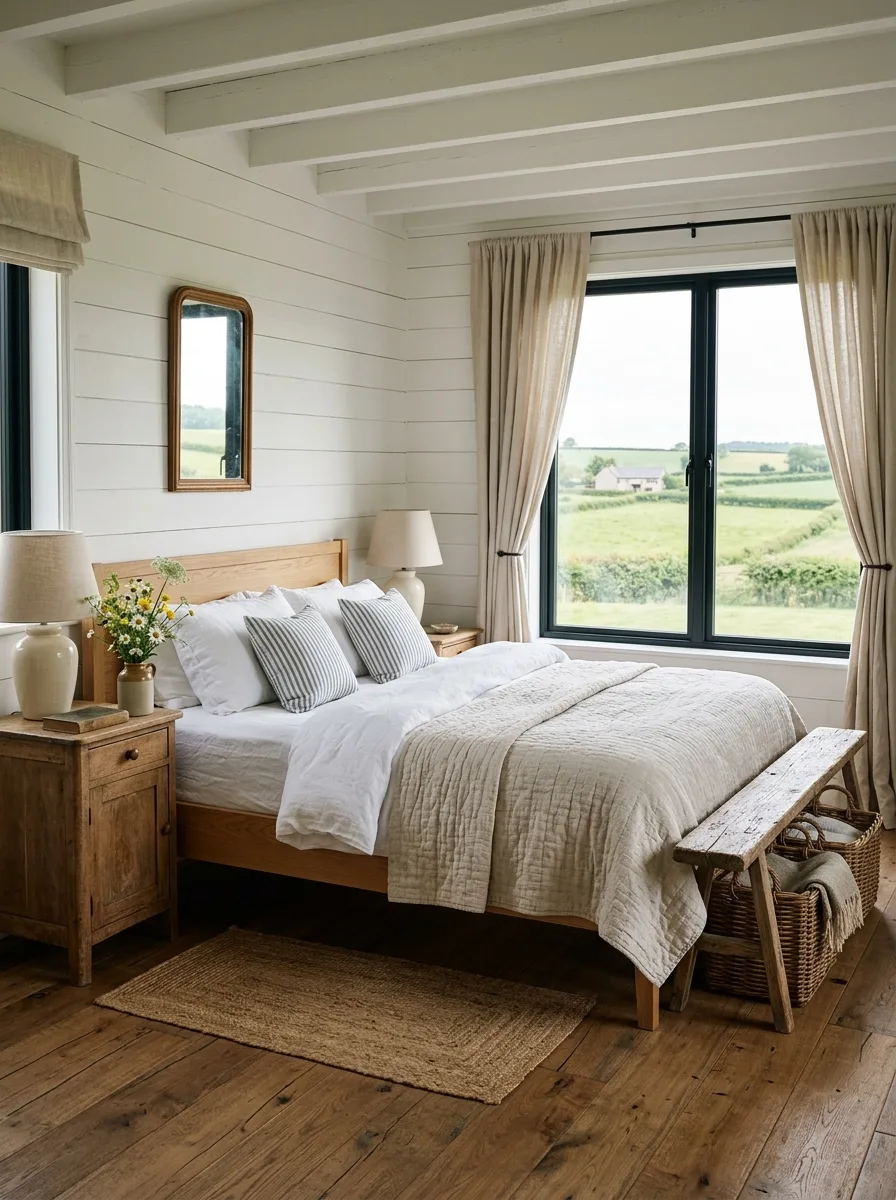
Whitewash or lime-wash exposed ceiling beams rather than leaving them in a dark natural stain, so they read soft and pale against a white shiplap ceiling.
Choose a warm honey-toned oak bed frame as the contrast point — the one place in the room wood tone is allowed to stay rich and dark.
Add a woven wicker or rattan pendant light at the ceiling’s peak, its texture echoing the wood grain of the beams without matching it exactly.
Tuck a rustic A-frame wood bench at the foot of the bed, and pile it with woven baskets holding extra linens instead of a traditional blanket chest.
Diagonal Cross Truss Beams
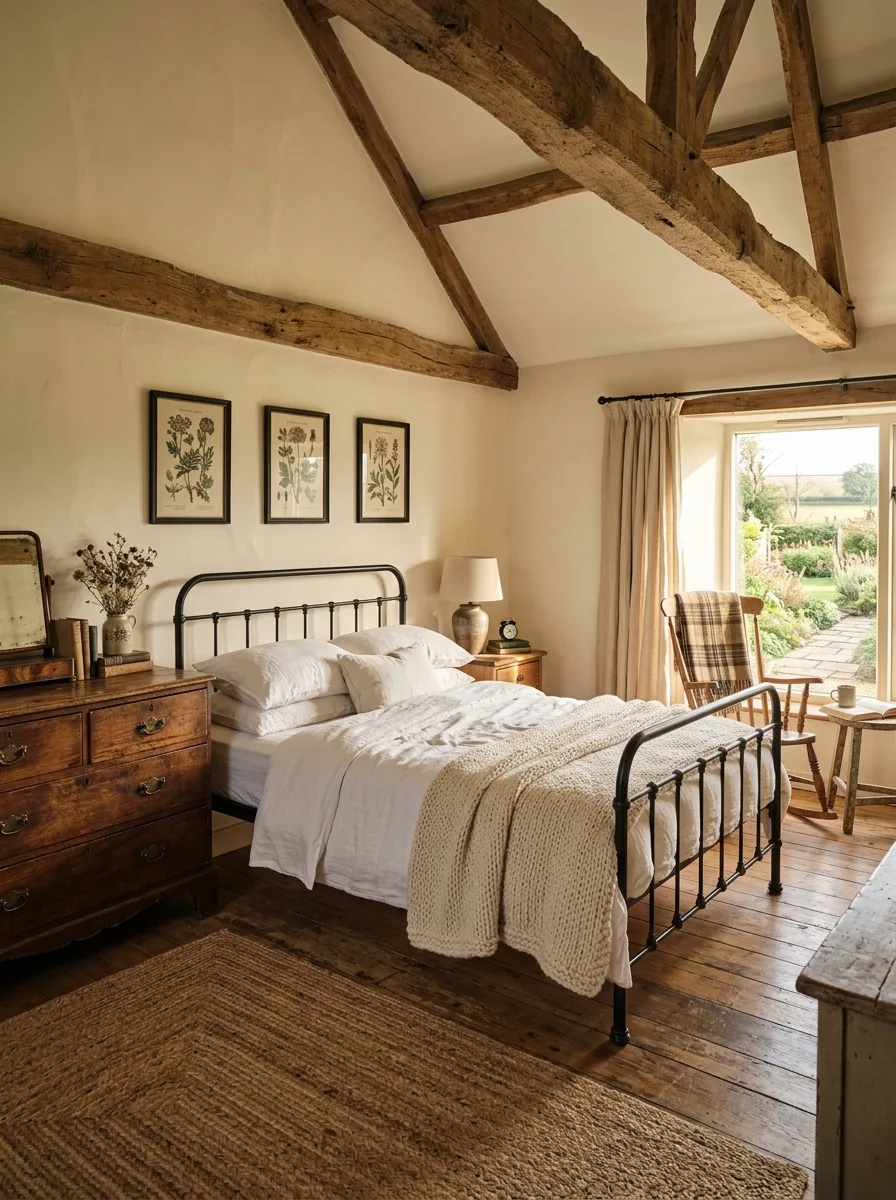
Install ceiling beams in a crossing diagonal pattern, like an exposed structural truss, rather than simple parallel beams — this is what gives the ceiling architectural drama.
Keep walls a warm, pale plaster tone rather than stark white, so the beams read as the room’s darkest, most dramatic element by contrast.
Hang a small trio of botanical prints in matching thin wood frames along one wall, spaced evenly at eye level from a seated position on the bed.
Furnish with a simple iron bed frame and a single antique wood dresser, leaving the rest of the room open so the ceiling stays the star.
Oak-Trimmed Window Wall
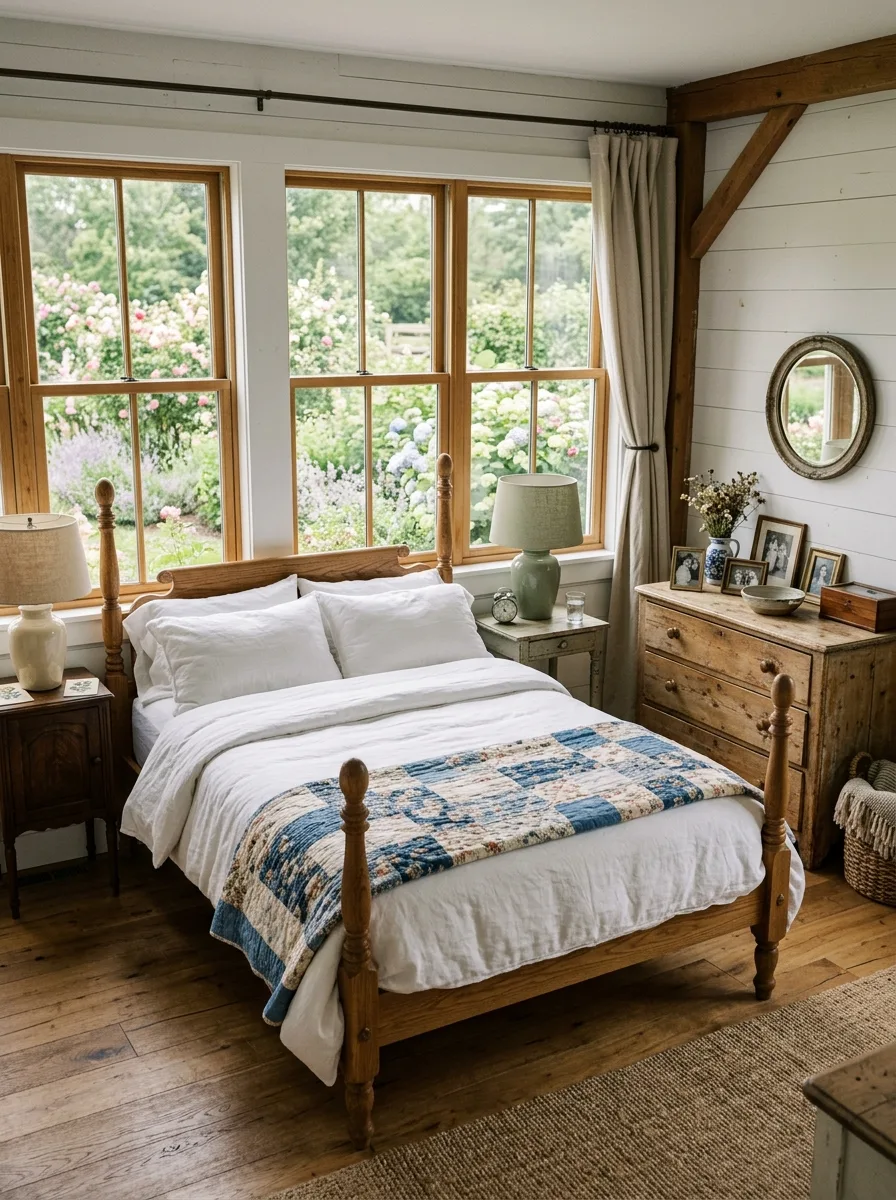
Install a bank of windows with natural oak trim left unpainted, letting the warm wood frame become the room’s main architectural feature.
Choose a matching turned-wood bed frame in the same warm oak tone so the window trim and furniture read as one continuous material story.
Add a round mirror in a distressed gilt or wood frame on the opposite wall, angled to catch the window’s natural light.
Fill a nearby dresser top with a small gathering of family photos in mismatched frames and a single stoneware bowl — small personal clutter that keeps the room from feeling staged.
Sloped Skylight Ceiling
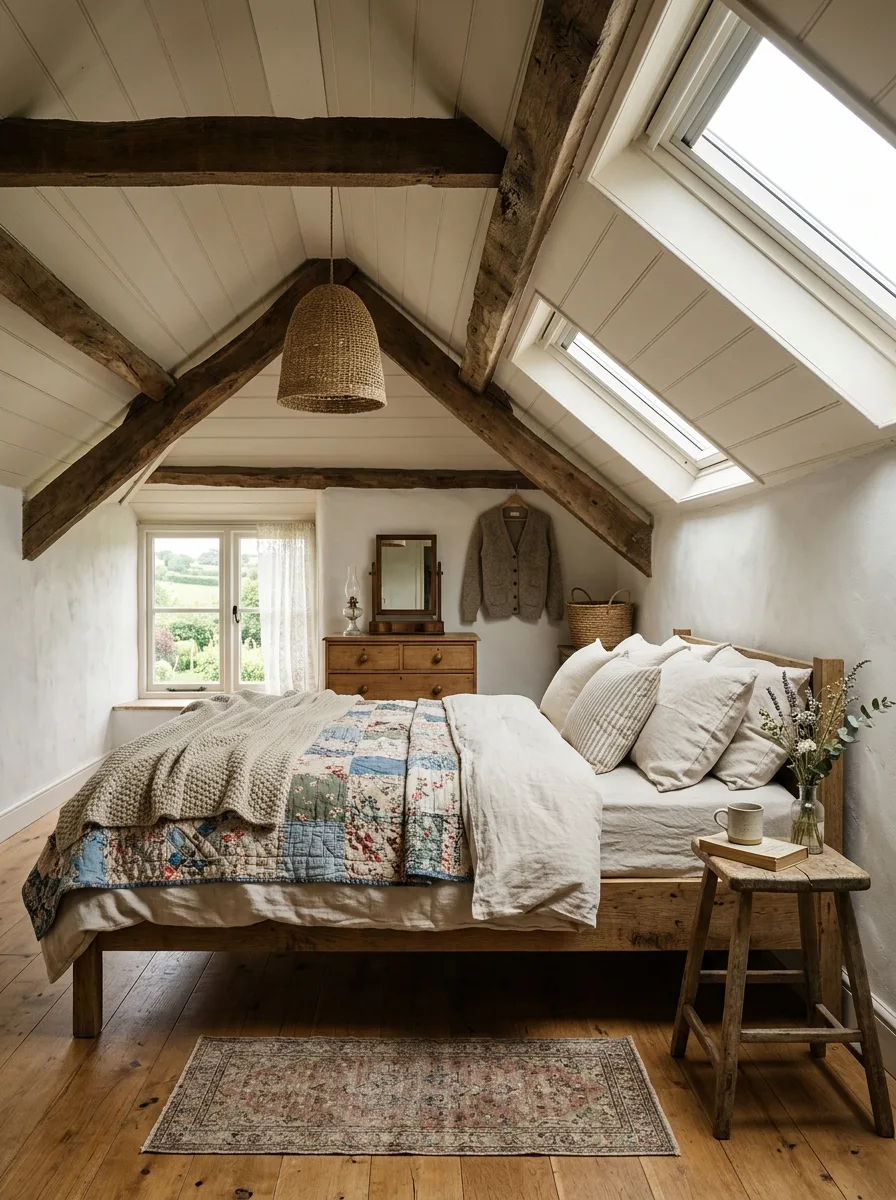
Cut a skylight into a sloped, beamed attic ceiling, positioning it directly above the head or foot of the bed so morning light falls across the room naturally.
Leave the ceiling beams in a dark, raw wood finish against white shiplap or plaster, letting the contrast frame the skylight itself.
Hang a single woven pendant light from the ceiling’s peak, positioned away from the skylight so it doesn’t compete with the natural light source.
Furnish simply — a plain wood bed frame, one small dresser, a single rustic stool doubling as a nightstand. Attic rooms like this work best when furniture stays minimal and the architecture stays loud.
Vintage Floral Wallpaper
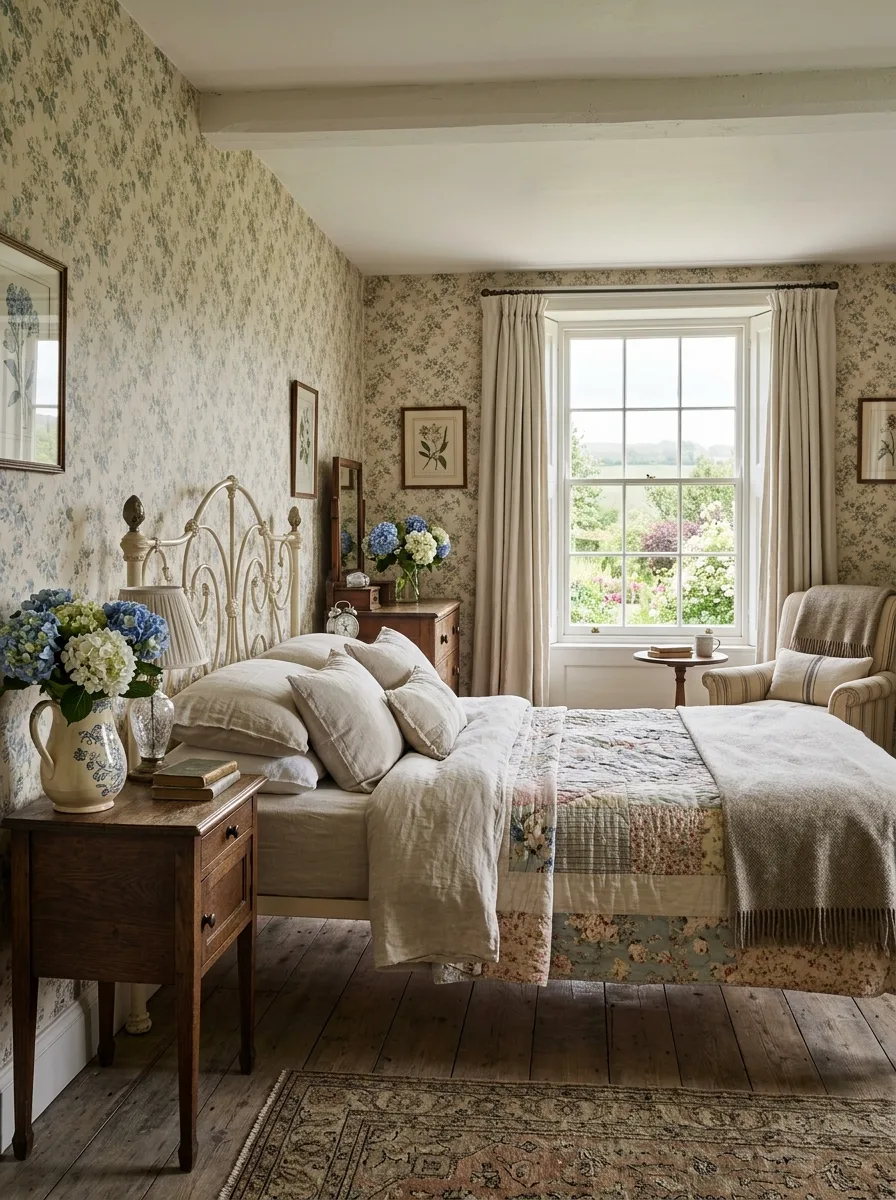
Paper an entire bedroom in a small-scale, muted floral print rather than using it as a single accent wall — full commitment is what makes this look read as intentional rather than accidental.
Pair the paper with a white scrollwork iron headboard, letting the ornate ironwork stand out against the busy pattern behind it.
Hang several small botanical or floral prints in thin wood frames scattered across the papered wall, rather than one large piece of art.
Fill the room with fresh-cut garden flowers in mismatched vintage pitchers rather than a single arrangement — the goal is a room that looks like it was decorated by someone who’s been collecting for decades.
In-Room Stone Fireplace
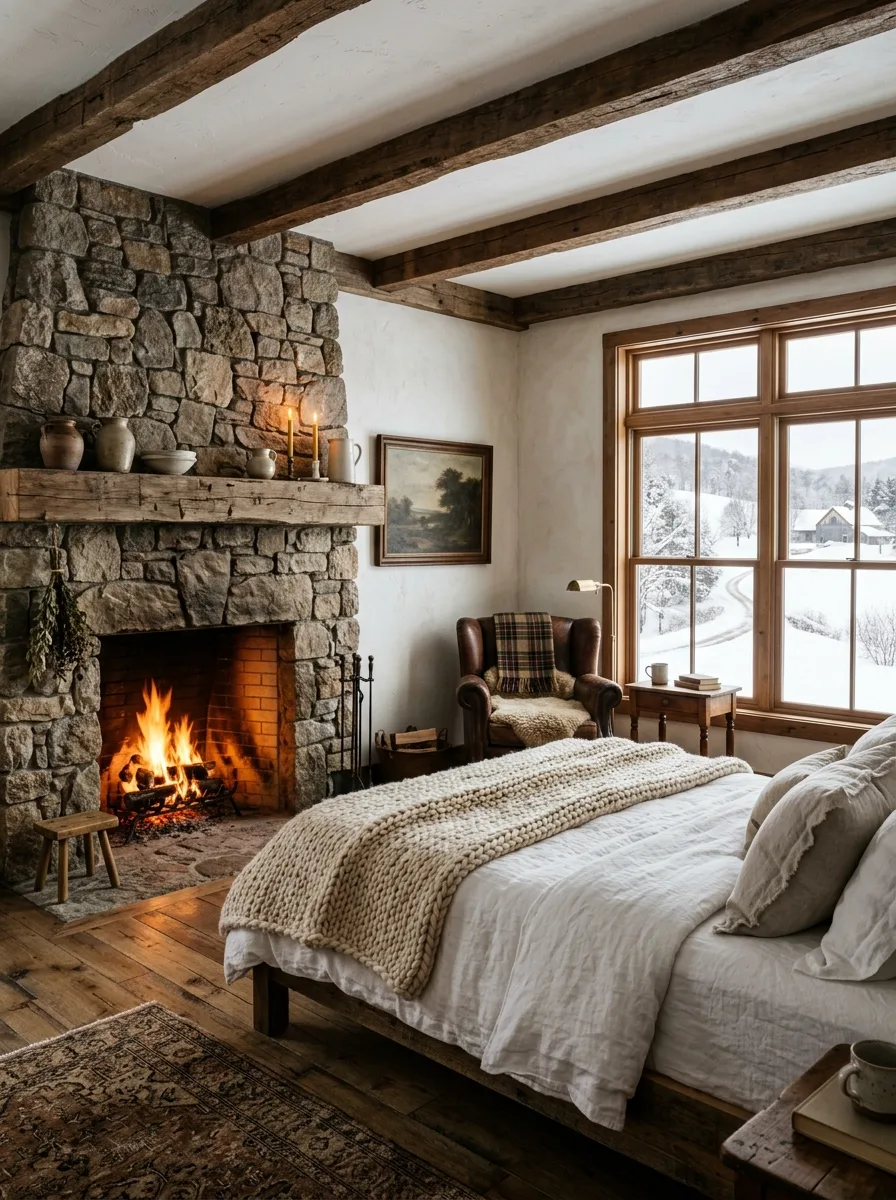
Build a floor-to-ceiling fieldstone fireplace directly into the bedroom, positioned where it’s visible from the bed rather than tucked in a corner.
Set a thick, raw wood mantel low across the stone, and style it sparsely — a few stoneware vessels, two candlesticks, nothing crowded.
Furnish with a worn leather wingback chair positioned beside the fire rather than facing the bed, creating a small secondary sitting area within the room.
Layer heavy linen bedding in warm ivory tones, and let a chunky knit throw serve as the visual bridge between the rustic stone and the softer bedding.
Painted White Brick Wall
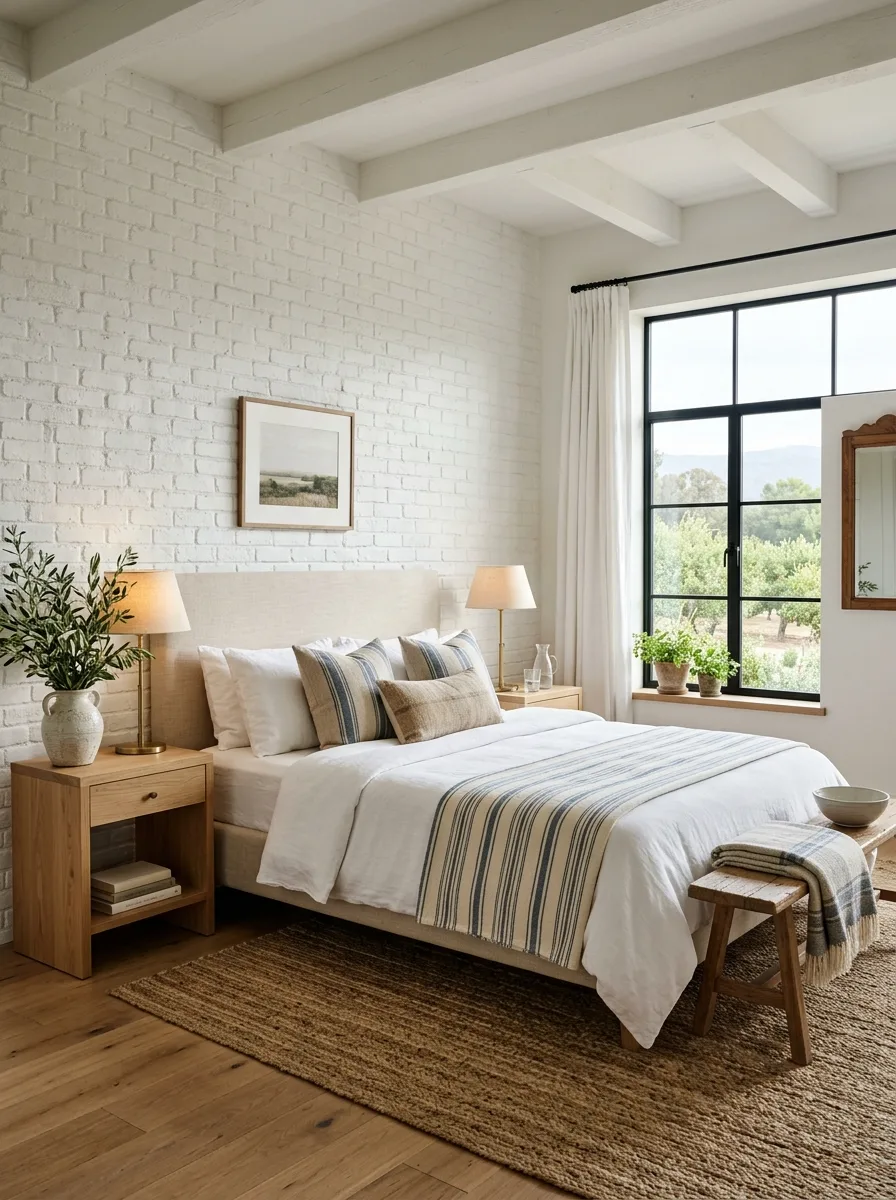
Paint an exposed brick wall a clean, even white rather than leaving it naturally chipped — this version is polished where the whitewashed cottage version stays raw.
Pair it with a simple upholstered linen headboard in a neutral tone, and flank the bed with matching wood nightstands and brass table lamps for a more tailored, modern-farmhouse finish.
Choose black window frames as the room’s graphic accent, letting them stand out clearly against the white brick and white bedding.
Add a single potted olive tree in the corner and one framed black-and-white photograph on the brick wall — restraint is what keeps this version from tipping into sterile.
Log Cabin Bed Frame
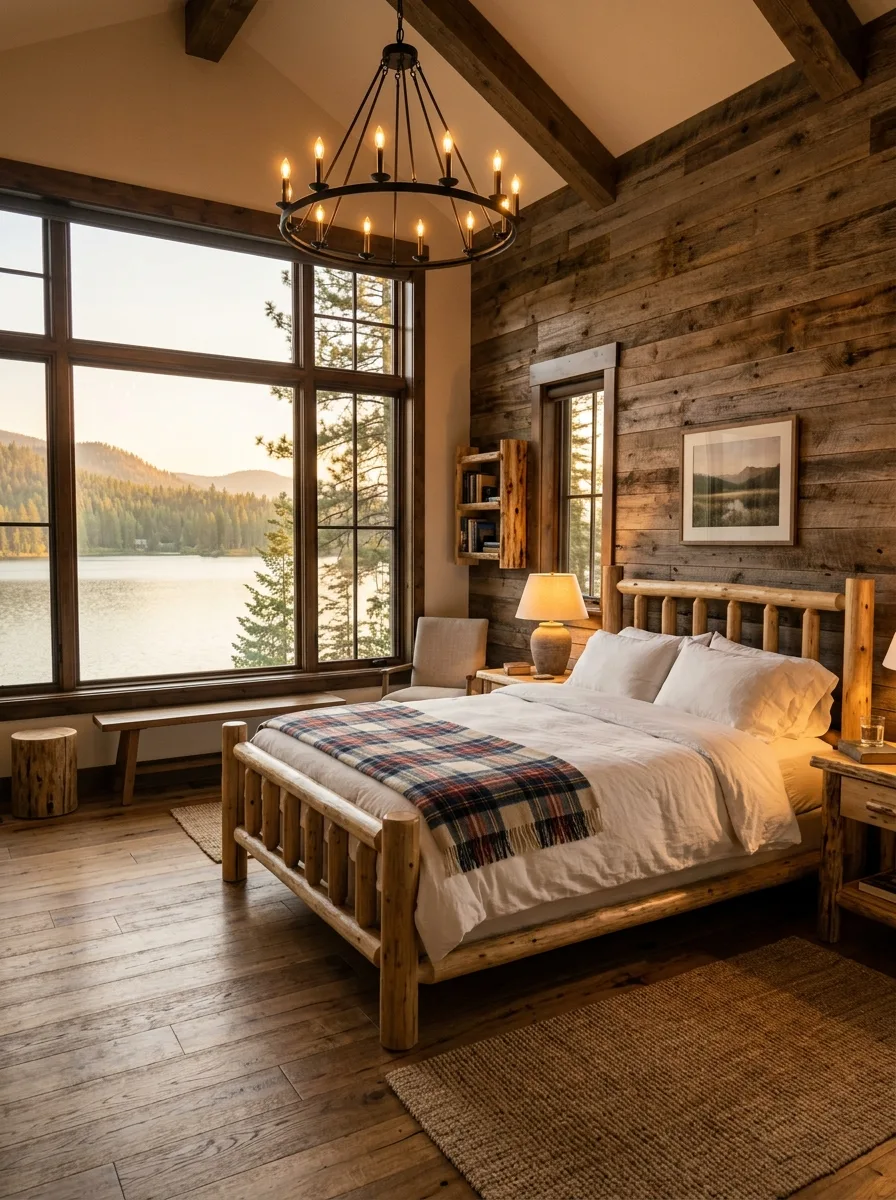
Choose a bed frame built from full peeled logs rather than milled lumber, keeping the bark-free, rounded log silhouette visible in the headboard and footboard.
Pair it with a reclaimed wood-plank accent wall behind the bed, running the boards horizontally in mixed warm brown tones.
Hang a wagon-wheel-style iron chandelier with candle bulbs from the vaulted ceiling, positioned to catch reflections from a large window if there’s a water or mountain view.
Add a plaid wool blanket folded across the foot of the bed, and keep the color palette entirely in warm browns and creams so the view outside stays the room’s brightest element.
Distressed White Bed Frame
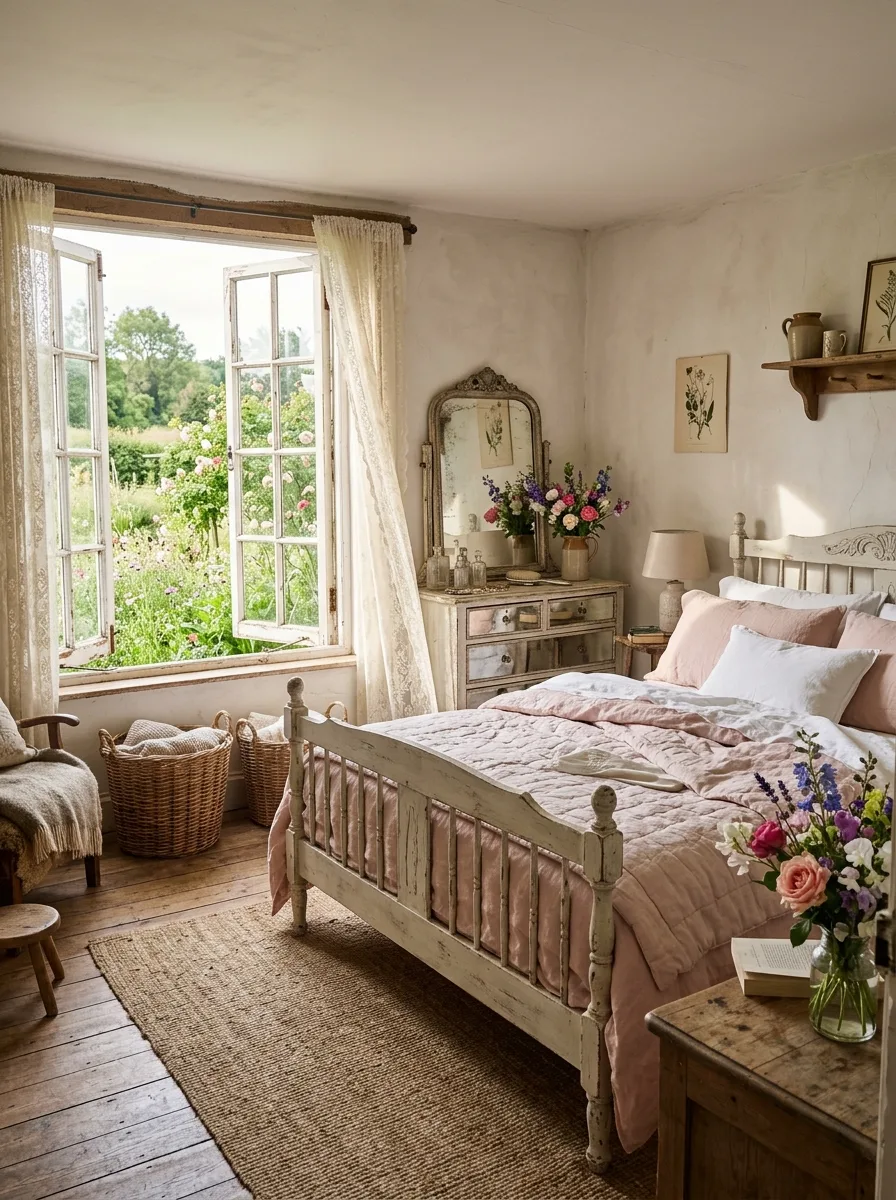
Choose a spindle or scrollwork bed frame in chippy, distressed white paint, letting bare wood show through at the edges and corners rather than a flawless finish.
Layer soft blush pink quilted bedding on top, and add a vintage gilt-framed mirror leaned against the wall beside an equally distressed dresser.
Open the windows fully and let sheer lace curtains billow rather than hang still — this look depends on movement and air, not stillness.
Fill mismatched vintage pitchers and jars with garden roses and sweet peas, clustering them on the nightstand rather than spacing them evenly around the room.
Charcoal Shiplap Accent Wall
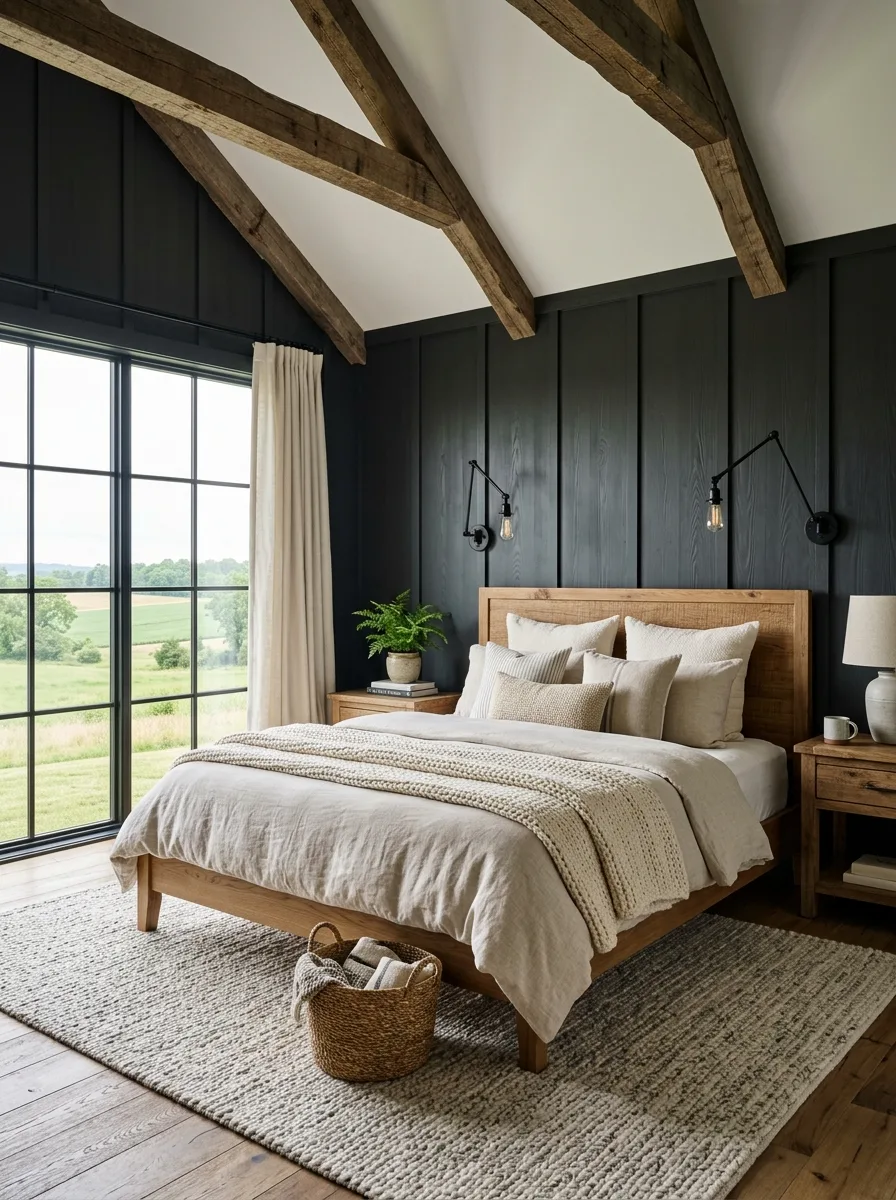
Paint vertical shiplap in a deep charcoal or near-black tone as the headboard wall, letting it anchor the room in place of a neutral backdrop.
Pair the dark wall with a warm, honey-toned wood bed frame and matching nightstands, so the wood glows against the dark paint rather than disappearing into it.
Mount black wall sconces directly on the charcoal shiplap for a fixture that nearly vanishes into the wall by day and glows warm by night.
Keep bedding entirely in cream and ivory tones, and add one small woven basket at the foot of the bed. Against a wall this dark, everything else should stay quiet.
Triangular Truss Beam Ceiling
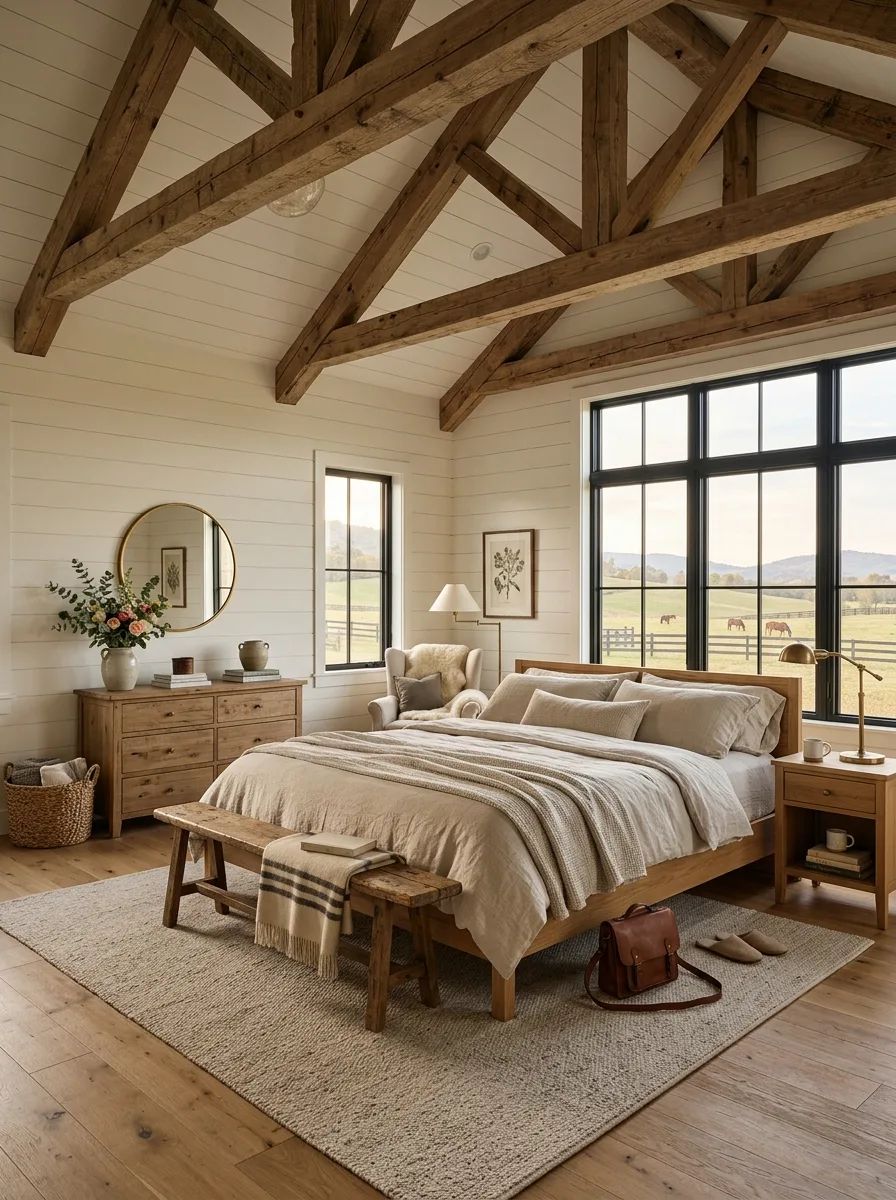
Build a full triangular timber truss system into a vaulted ceiling, letting the raw structural beams meet at a visible peak rather than running as simple parallel lines.
Keep walls in warm white shiplap so the truss beams read as the darkest, most architectural element in the room by contrast.
Add a round mirror in a thin wood frame on the wall opposite the bed, positioned to reflect the window and double the sense of light in the room.
Furnish with a plain oak bed frame and matching bench at the foot, and leave a leather bag or worn boots at the bedside — small lived-in details that keep a room this architecturally dramatic from feeling like a showroom.
Final Thoughts
A bedroom this considered isn’t really about the furniture. It’s about admitting that the room where you’re most yourself deserves more thought than the room where you perform for guests.
Every example here shares the same instinct: pick one true material — stone, log, brick, timber — and let it set the entire mood instead of drowning the room in five different textures competing for attention.
The beds that actually get slept in look nothing like the ones staged for photographs. They have a wrinkle in the duvet. A book left open on the nightstand. Evidence of a life happening in them.
Build the room around that evidence instead of hiding it. That’s the whole difference between a bedroom that looks farmhouse and one that actually is.