
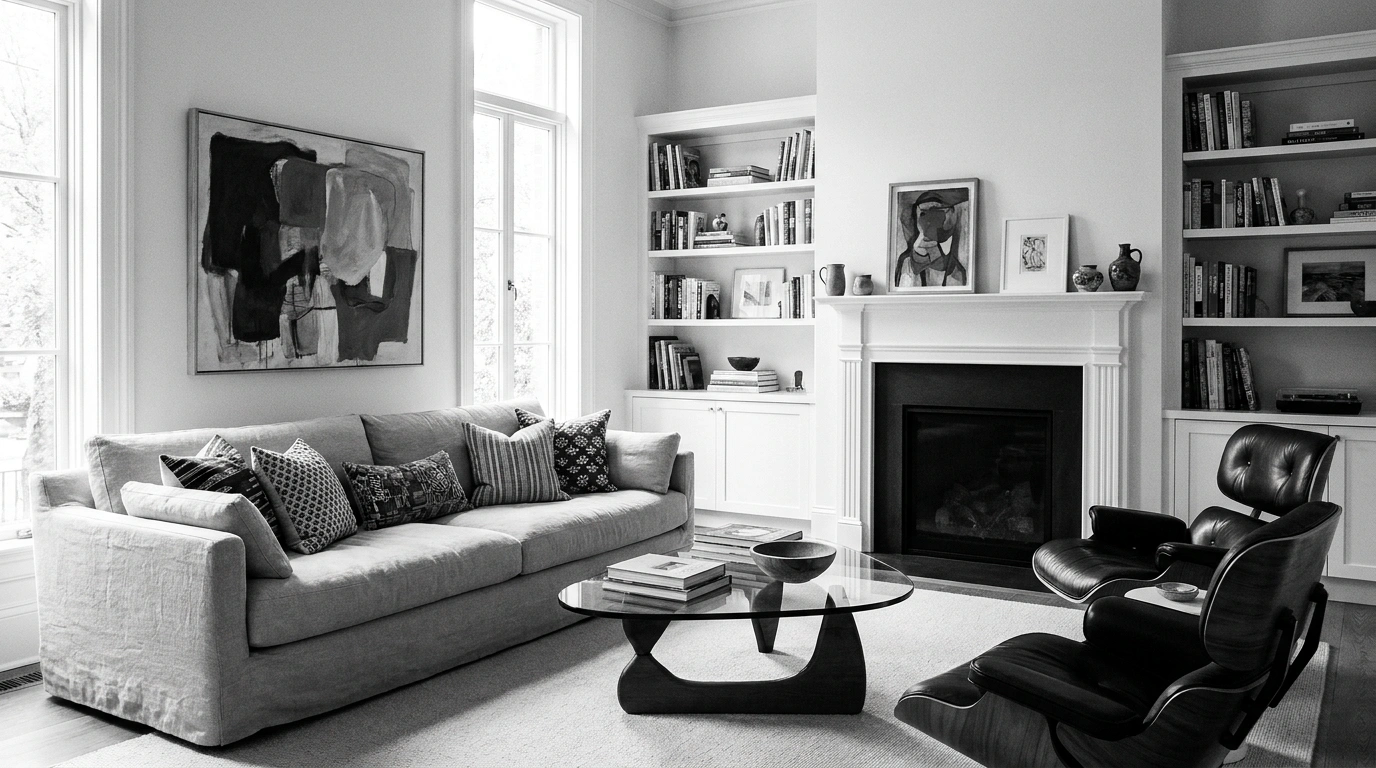
Black and white living rooms have one annoying little problem: they can go from sophisticated to suspiciously similar to a dentist’s waiting room in about three decorative decisions.
The trick isn’t simply putting a black sofa in front of a white wall and calling the job finished. A convincing monochrome room needs contrast in texture, shape, scale, material, and lighting.
Soft linen against painted black. Pale oak beside charcoal. A chunky rug under sleek furniture. Matte finishes where glossy surfaces would make everything look like a showroom.
Think of black as the visual anchor and white as the breathing room. Then bring in wood, stone, woven materials, aged metals, soft textiles, and architectural details to keep the palette from feeling flat.
Black and White Living Room Ideas
Bold Slatted Accent Wall
Create a dramatic focal point by applying vertical black wood slats to a main wall, giving the space instant depth and texture. Ground the high-contrast feature with a streamlined ivory sofa that introduces soft curves to balance the sharp architectural lines.
Anchor the seating arrangement with a bold black-and-white patterned rug that pulls the monochrome palette together across the floor. Introduce metallic brass side tables and matching slender wall sconces to add a touch of warmth and refined polish without disrupting the color scheme.
Finish the room with a striking multi-tiered crystal chandelier overhead to catch the light and inject a sophisticated layer of glamour. Keep tabletop accessories minimal so the statement wall and sculptural lighting remain the undisputed stars of the space.
Soft White Walls, Ink Black Sofa, and Warm Oak
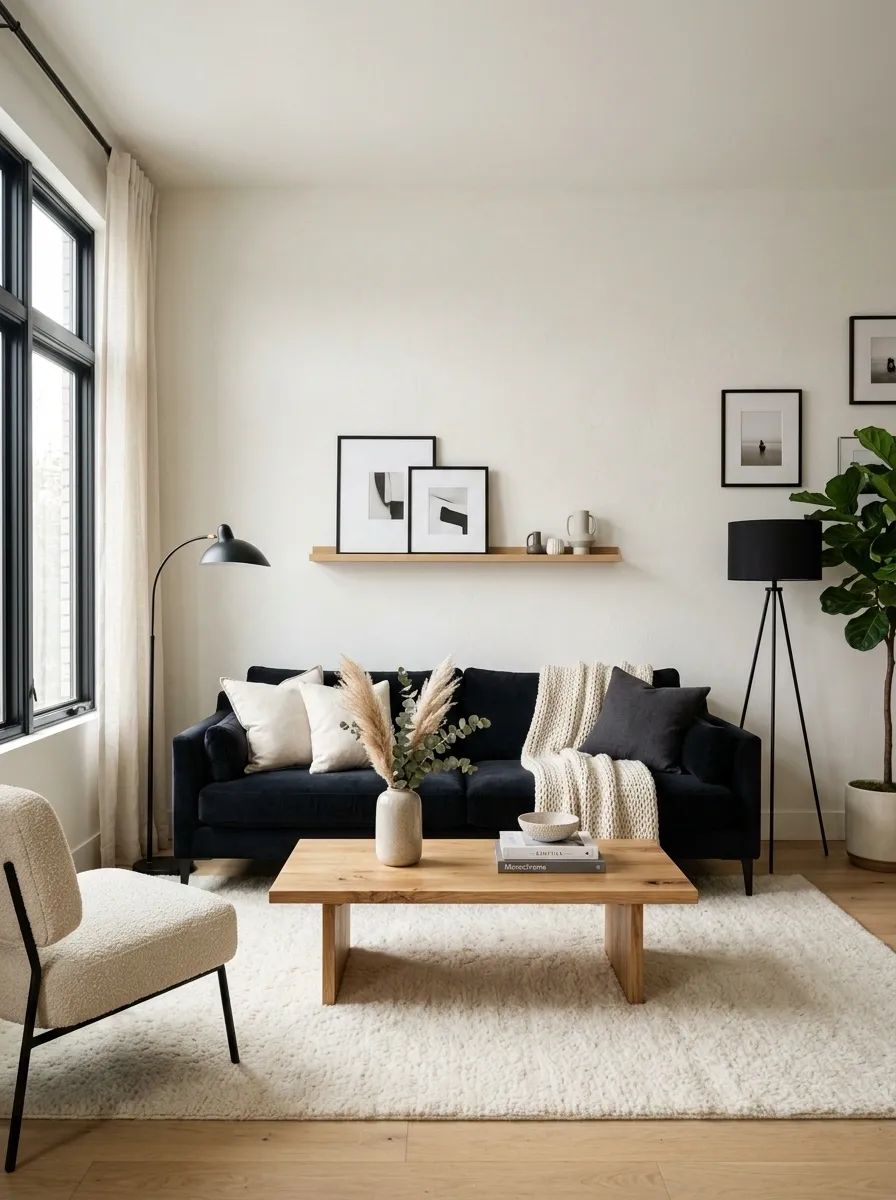
Start with warm white walls rather than an icy blue-white. Place a deep black sofa against the longest wall and ground it with a large ivory rug that extends comfortably beneath the front legs. Add a low oak coffee table with visible grain, then repeat the wood through a slim console or floating shelf.
Black floor lamps and picture frames reinforce the sofa without making every object in the room black. Cream cushions, chunky woven throws and lightly textured curtains soften the contrast.
The result feels crisp without becoming sterile. The oak matters here because otherwise the room starts looking like a monochrome showroom where nobody is allowed to touch anything.
Cozy Attic Lounge Vibe
Transform a sloping ceiling nook into an intimate sanctuary by embracing dark, moody seating and a glowing fireplace focal point. Place curved black velvet armchairs around a glass-topped coffee table to create a conversational grouping that feels sheltered and secure.
Layer a plush black faux-fur rug over light neutral flooring to add instant tactile warmth and break up the expanse of pale surfaces. Arrange clusters of varying candle heights along the perimeter to cast a soft, inviting glow across the room.
Keep window treatments simple with dark roller shades framed by angled architecture to maintain a clean, uncluttered horizon. A tall, branching decorative element in a minimalist vase adds organic shape and prevents the cozy setup from feeling too enclosed.
Charcoal Sectional Against Crisp White Walls
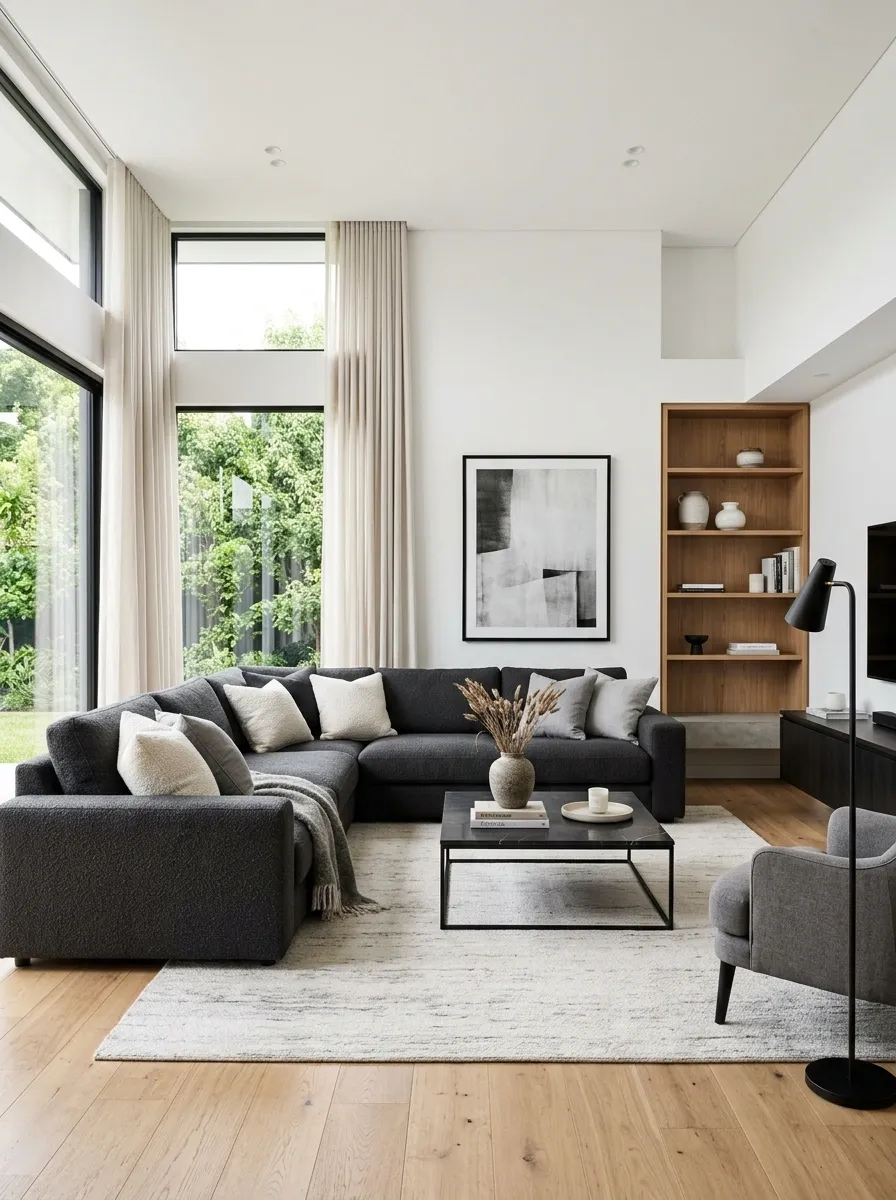
A large charcoal sectional can carry an entire living room when the surrounding architecture stays quiet. Keep the walls clean white and choose a pale rug with subtle gray movement rather than a busy pattern. A black metal coffee table adds structure while a few warm timber pieces prevent the sectional from becoming one enormous dark block.
Use cushions in ivory, charcoal and soft gray, with one or two nubby fabrics for tactile contrast. Floor-to-ceiling curtains in warm white make the windows feel taller and soften the hard geometry of the sectional.
This setup works especially well in larger rooms where smaller furniture would look lost. The sectional provides visual weight without requiring a pile of decorative clutter.
Sophisticated Glam With Wood
Combine classic dark paneling with modern luxury by framing the room in deep charcoal and accessorizing with opulent gold finishes. Position a tufted white sofa against the dark architectural backdrop, grounding it with an expansive abstract patterned rug that spans the seating zone.
Bring in lush greenery through tall indoor plants placed strategically against the dark walls to inject natural life and warmth. Integrated warm shelving lighting and a stunning multi-tier golden chandelier provide layered illumination that bounces off metallic frames and polished surfaces.
Keep the coffee table styling restrained with a marble top and a single floral arrangement to let the intricate wall details shine. The combination of rich textures and moody tones creates a high-end sanctuary that feels both curated and genuinely welcoming.
Black Fireplace Wall With Linen Seating
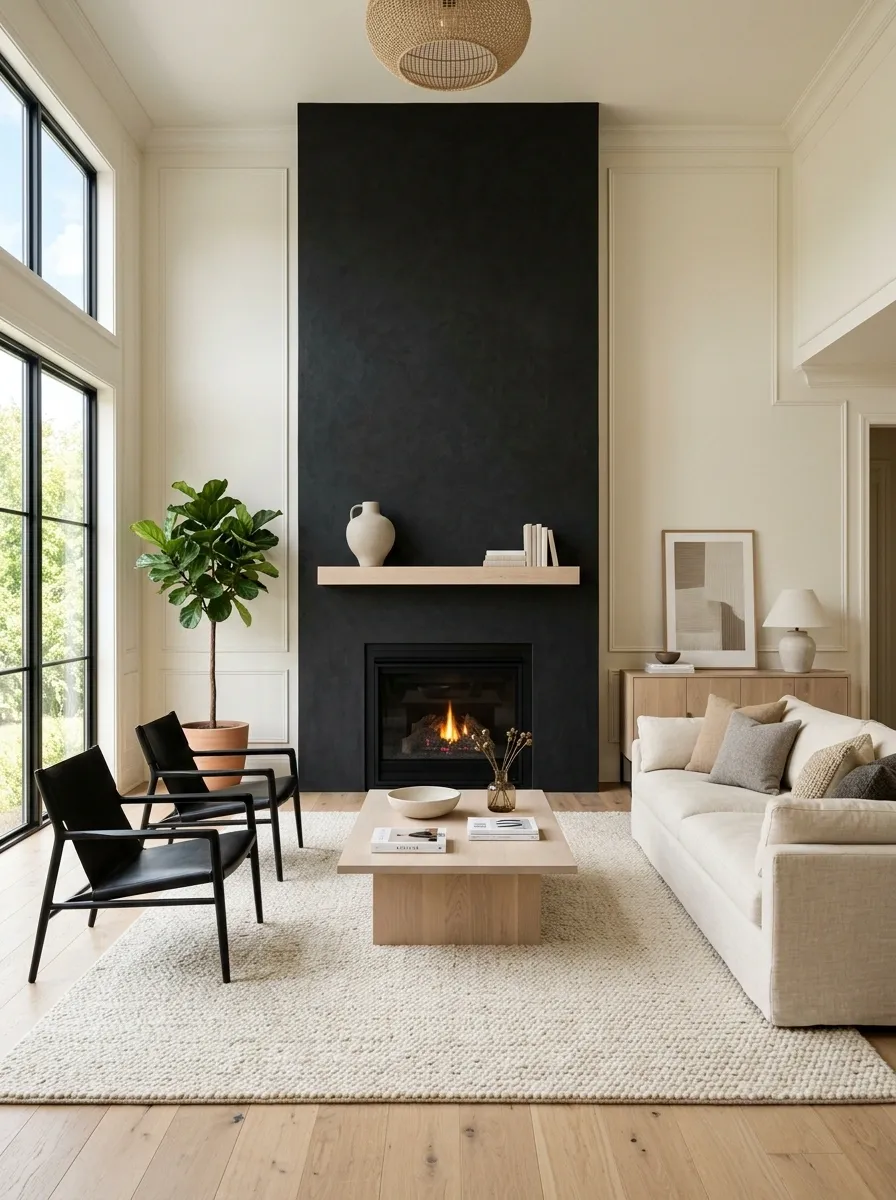
Make the fireplace the dark anchor and let everything around it stay restrained. A matte black fireplace wall works beautifully against warm white walls, particularly when the surrounding architecture has simple trim.
Place a soft white or natural linen sofa opposite it and add two black-framed lounge chairs angled toward the center. A thick cream rug should connect all the seating rather than leaving each piece floating independently.
Bring in pale timber through a coffee table and perhaps a narrow mantel shelf. Keep the fireplace styling sparse. One oversized ceramic object or a restrained stack of books will look intentional. Twelve tiny objects lined up across the mantel will look like the decorating department had a nervous breakdown.
Minimalist Media Wall Balance
Achieve a clean, gallery-like media wall by pairing a neutral warm-gray backdrop with a single vertical panel of black acoustic slats. Mount a large television displaying subtle monochrome art so it reads like a curated gallery piece rather than a black box.
Place a long, low-profile white media console beneath the screen to keep floor space feeling open and airy. A matte black coffee table centered on a softly textured cream rug provides a stark, grounding contrast in the middle of the room.
Keep the accessories extremely restrained with just a sculptural black vase and a minimalist tray. This approach ensures the clean lines and deliberate color blocking remain the primary focus of the living space.
Scandinavian Black and White With Pale Oak
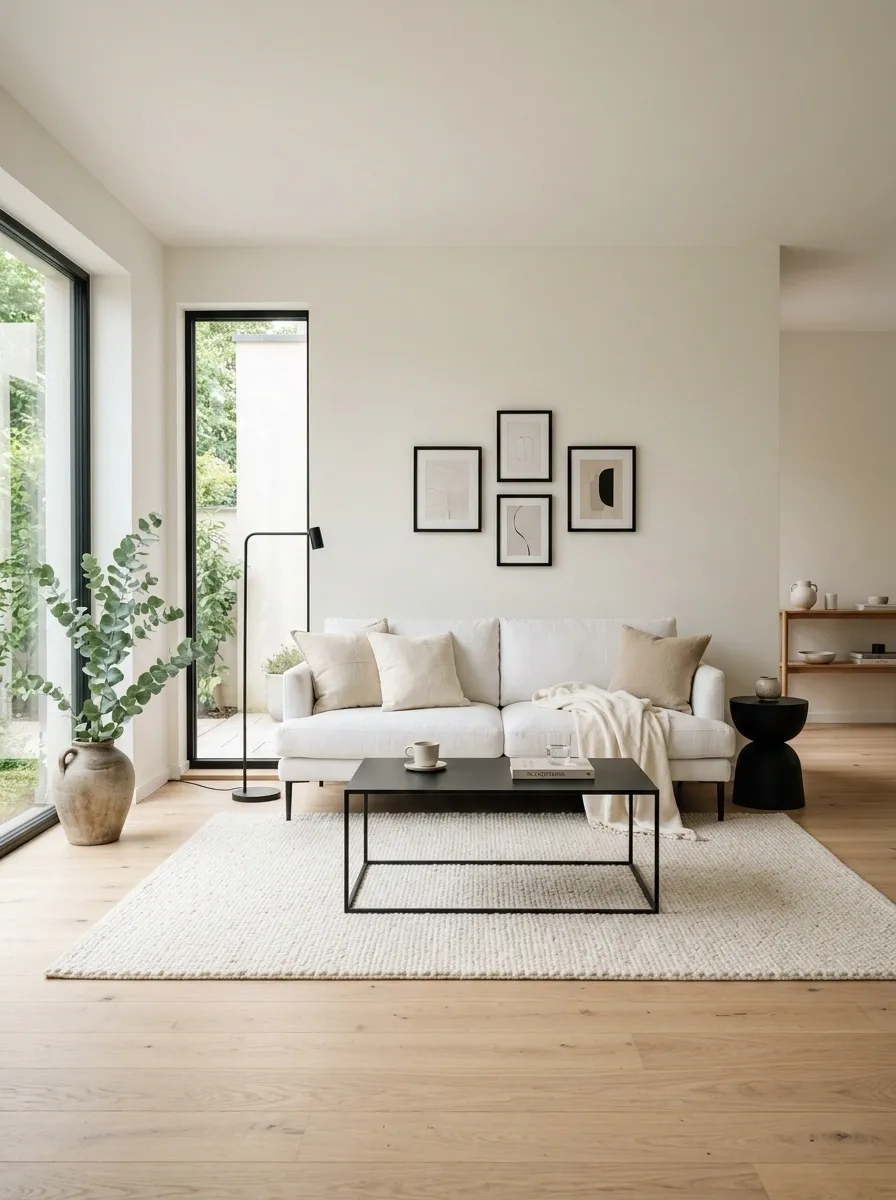
Keep this version light, airy and almost architectural. Use warm white walls, a low white sofa, pale oak flooring and a black coffee table with a simple geometric silhouette.
Introduce black through a floor lamp, slim picture frames and one sculptural side table. The important part is keeping the black elements visually distributed instead of clustering them in one corner.
Choose textiles with visible weave rather than perfectly smooth fabrics. A cream wool rug, linen cushions and a soft cotton throw create enough variation to make the restricted palette feel intentional.
The room should look calm without becoming precious. A single oversized branch arrangement or sculptural ceramic vessel can provide the organic shape the straight furniture needs.
Dramatic Arched Statement Wall
Make a monumental statement by painting the main wall in deep matte black and carving out a grand arched niche behind the seating area. Fill the arch with an intricate botanical mural wallpaper in monochrome to add unexpected depth and artistic flair to the heavy dark backdrop.
Suspend an oversized, glowing orb pendant light right in front of the arch to create a striking focal point that draws the eye upward. Place a long, clean-lined cream sofa below to provide a soft, neutral contrast against the intense surrounding darkness.
Ground the furniture ensemble with a crisp geometric white rug and an oval black coffee table styled with minimal ceramic objects. Finish the vignette with dark side lamps and a sculptural potted tree to balance the architectural drama with organic warmth.
Modern Classic With White Paneling and Black Trim
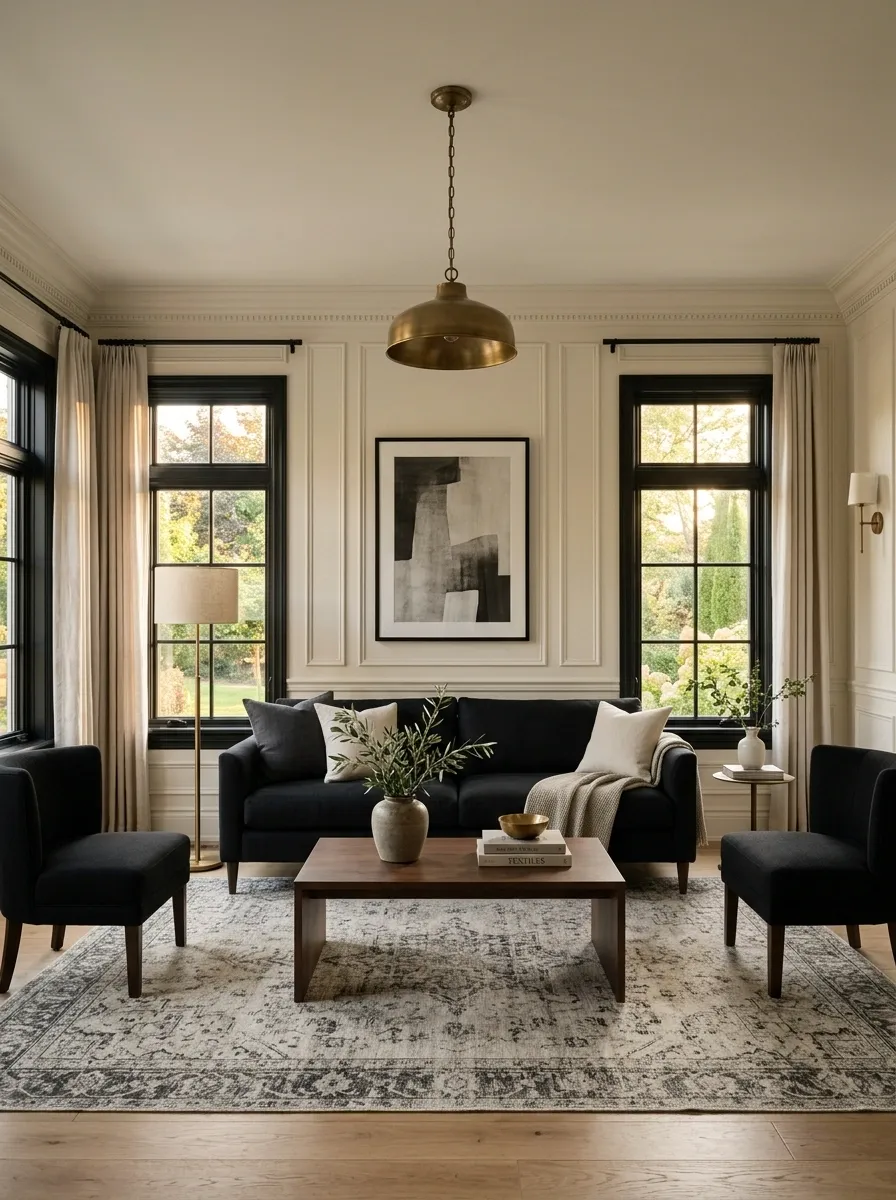
Use traditional wall paneling as the architecture and let black furniture provide the modern interruption. Paint the walls and panel molding in one warm white shade, then add a black sofa with clean arms and a pair of compact black accent chairs.
A large antique-style rug with muted cream and charcoal tones can bridge the traditional shell and contemporary furniture. Finish with aged brass lighting rather than bright chrome.
The combination feels polished because the contrast happens at several levels: architectural detail, furniture shape, textile texture and metal finish. Nothing needs to scream for attention.
And yes, the black trim around the windows can be gorgeous. Just don’t outline every single architectural feature unless the goal is to make the room look like it has been aggressively traced with a marker.
Small Apartment With Low Black Furniture
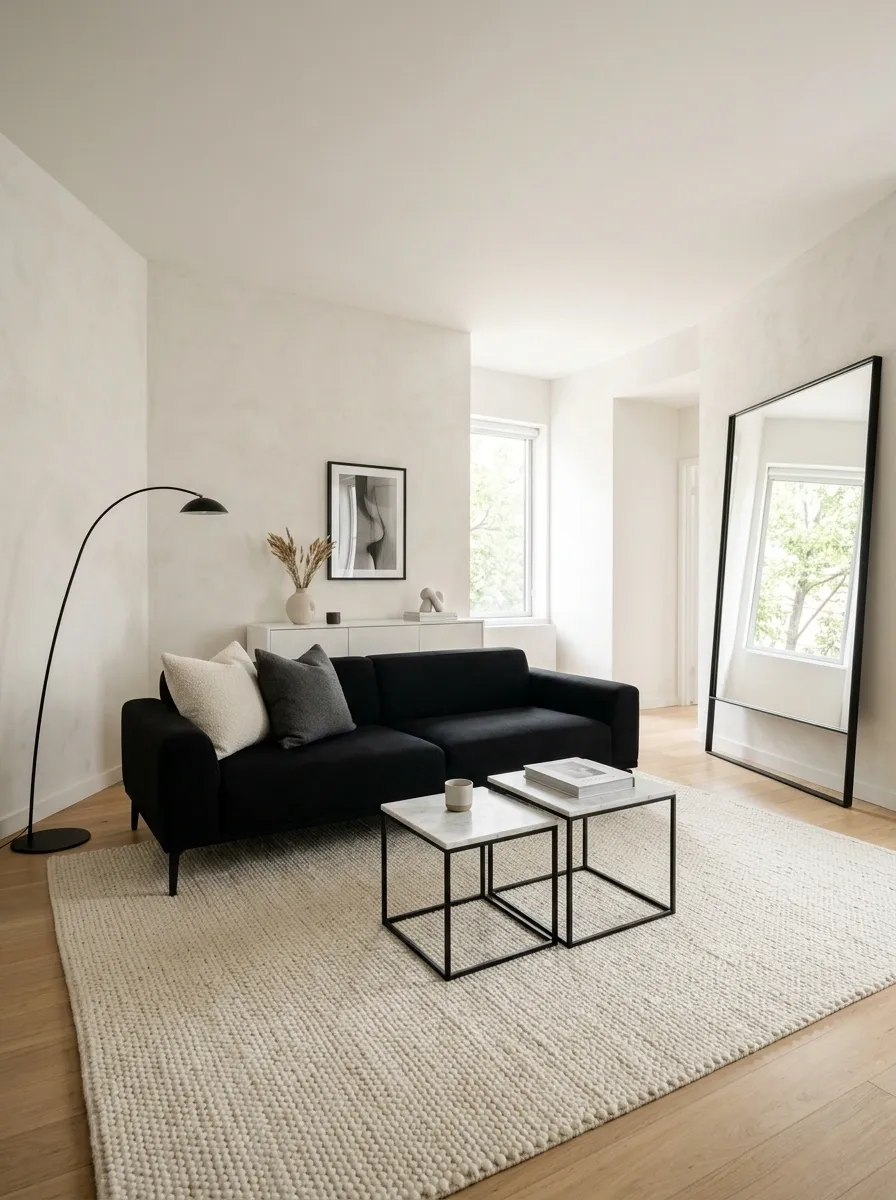
Small living rooms benefit from furniture that doesn’t visually tower over the space. Choose a low-profile black sofa, a slim white media cabinet and a light rug that runs generously underneath the seating.
Keep the walls warm white and use a large mirror with a thin black frame to bounce daylight without introducing another dominant color. A narrow black floor lamp can occupy an empty corner while keeping the floor visually open.
Use nesting tables instead of a bulky central coffee table when circulation is tight. A few oversized cushions are better than many tiny ones because visual clutter is especially obvious in compact rooms.
The goal is contrast without heaviness. Black furniture can actually make a small room feel more intentional when the surrounding surfaces remain bright.
Moody Black Ceiling With White Walls
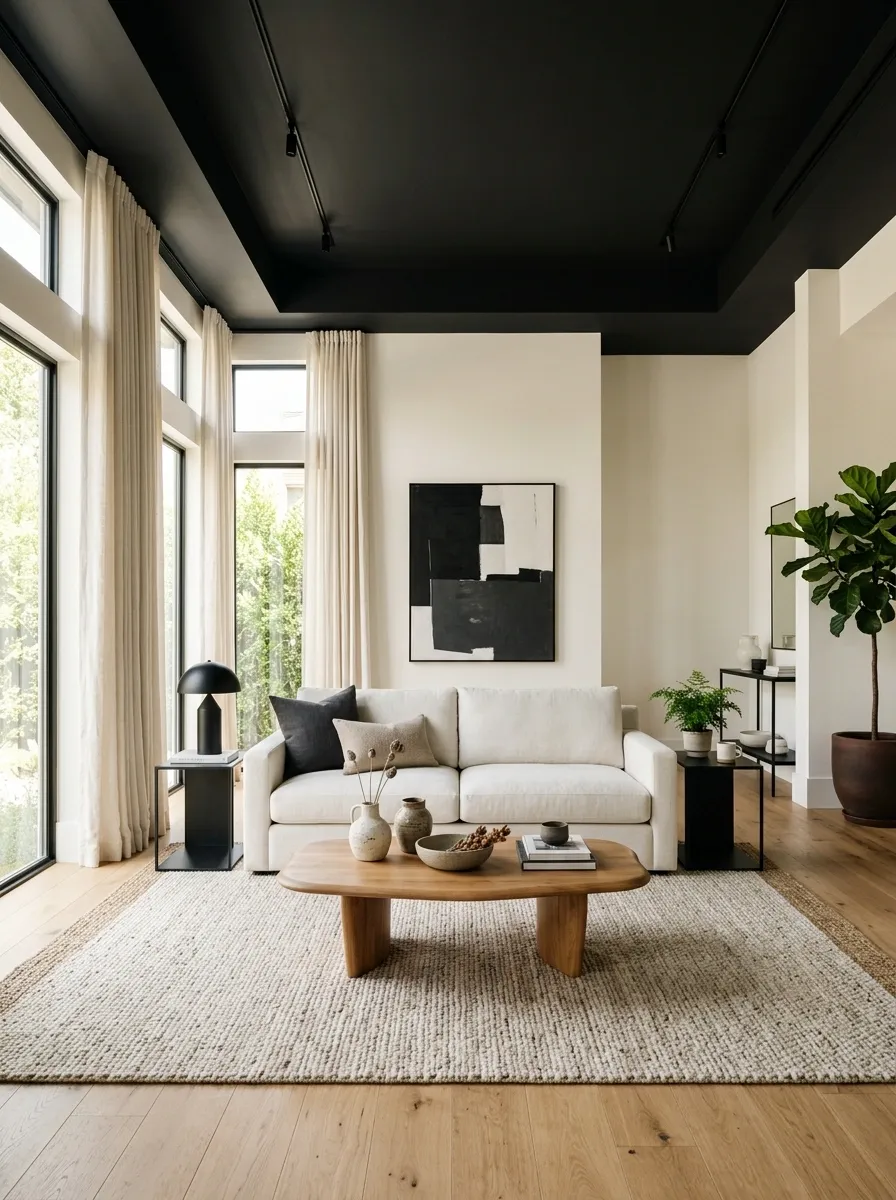
A black ceiling can completely change the character of a black and white living room without requiring dark walls. Keep the walls warm white, then use a matte black ceiling with a simple central fixture.
Choose a white sofa, black side tables and a warm wood coffee table. Floor-to-ceiling curtains in ivory prevent the ceiling from making the room feel compressed.
The dark ceiling works particularly well in rooms with generous natural light and decent ceiling height. It creates a strong visual plane above the furniture while keeping eye-level surfaces bright.
This is the kind of move that looks intentional rather than accidental. The ceiling gets the drama, so the rest of the room can behave itself.
Black Built-Ins With a White Sofa
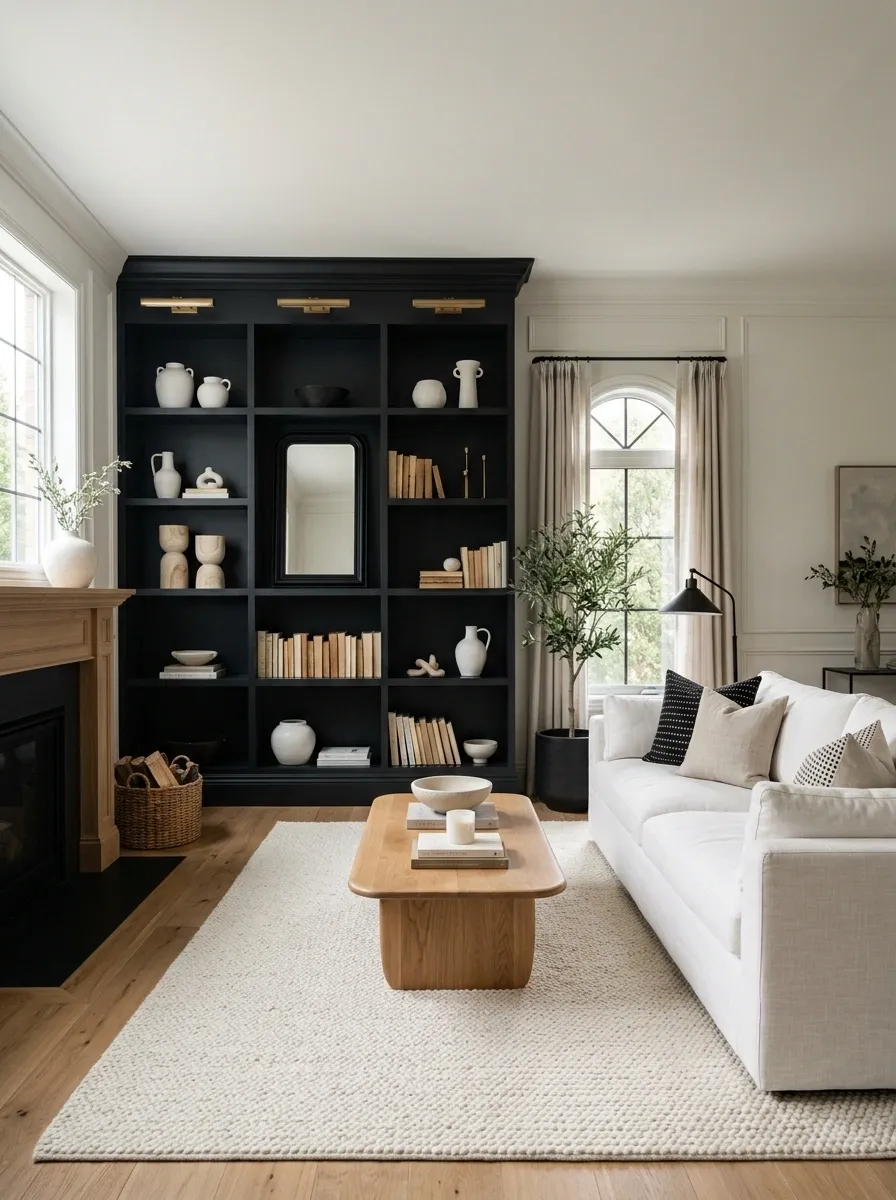
Paint built-in shelving or cabinetry matte black and let a white sofa sit directly opposite it. The contrast creates a natural focal wall without needing wallpaper or oversized art.
Inside the shelves, mix white ceramics, natural books, pale wood objects and a few empty sections. Leaving negative space is crucial. A shelf packed edge to edge will swallow the room visually.
Keep the coffee table simple, preferably in wood or light stone. A textured ivory rug softens the dark cabinetry and gives the seating area a clear boundary.
This arrangement works especially well for rooms where the built-in wall already exists. Instead of fighting the architecture, make it the strongest graphic element in the room.
Black Leather Sofa With Soft White Textiles
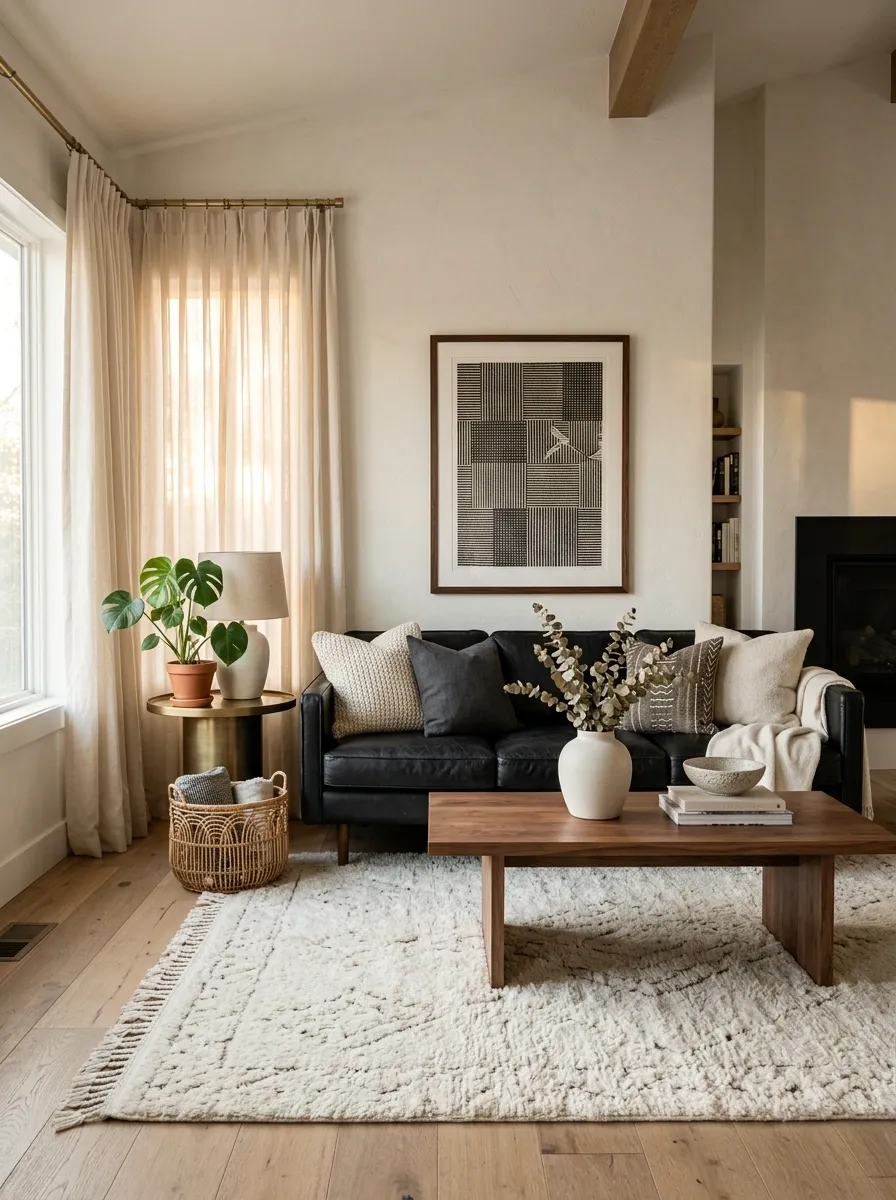
A black leather sofa gives the room structure and a slightly sharper character. Balance it with an oversized white rug, soft cream curtains and plenty of tactile cushions.
Avoid pairing leather with too many other glossy surfaces. Instead, bring in matte ceramics, woven baskets, unfinished wood and brushed metal. The contrast between smooth leather and rougher materials gives the room depth.
A walnut coffee table works particularly well because its warmth prevents the black sofa from becoming visually severe. Keep artwork simple, perhaps a large abstract black-and-white print in a substantial frame.
The room should feel collected rather than coordinated. Matching every black surface to the sofa is how a strong palette starts looking suspiciously like a showroom package.
Organic Black and White With Stone and Wood
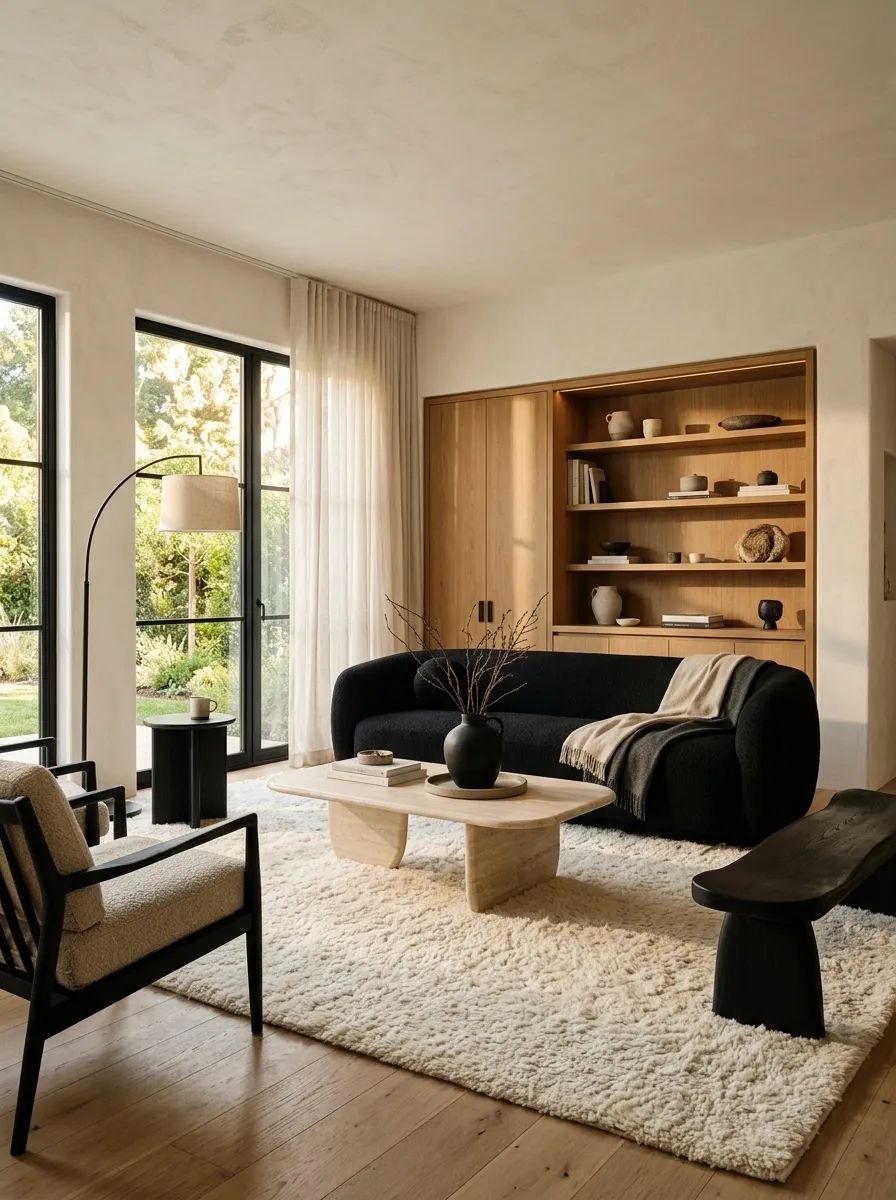
For a softer interpretation, build the room around natural materials. Use creamy white walls, a black sofa with rounded edges, a pale stone coffee table and warm oak cabinetry.
Add a thick wool rug and linen curtains to keep the room from feeling overly polished. Black can appear in smaller doses through the lighting, window frames and occasional side table.
Curved furniture helps soften the strong color contrast. A rounded coffee table or sculptural chair can keep the room from becoming a collection of rectangles.
The palette stays monochrome, but the materials do the heavy lifting. Stone has visual variation, wood has grain, linen has weave and wool has depth. Suddenly black and white has plenty to say without adding another color.
White Slipcovered Sofa With Black Accent Chairs
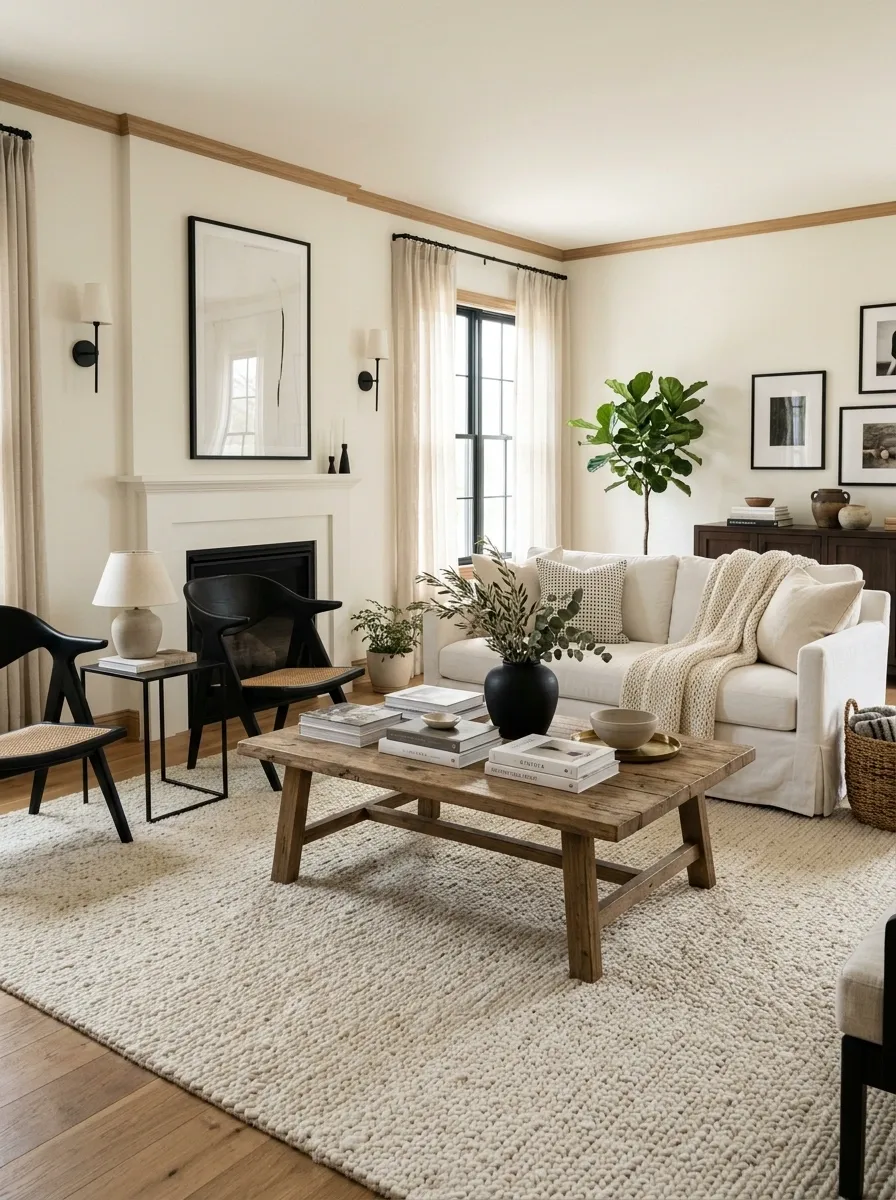
A white slipcovered sofa creates a relaxed base while black accent chairs provide the visual punctuation. Choose chairs with interesting silhouettes rather than simply selecting two identical black boxes.
Place a large textured rug underneath everything and use a substantial wood coffee table in the center. Keep the walls warm white and introduce black through lighting, frames and a few decorative objects.
This approach works especially well when the room needs to feel comfortable rather than formal. The slipcovered sofa looks softer and more approachable than a rigid white leather piece.
Add a black-and-white patterned cushion or throw for a little graphic movement. The pattern should be restrained because the chairs already provide plenty of contrast.
Black Window Frames With a Bright White Shell
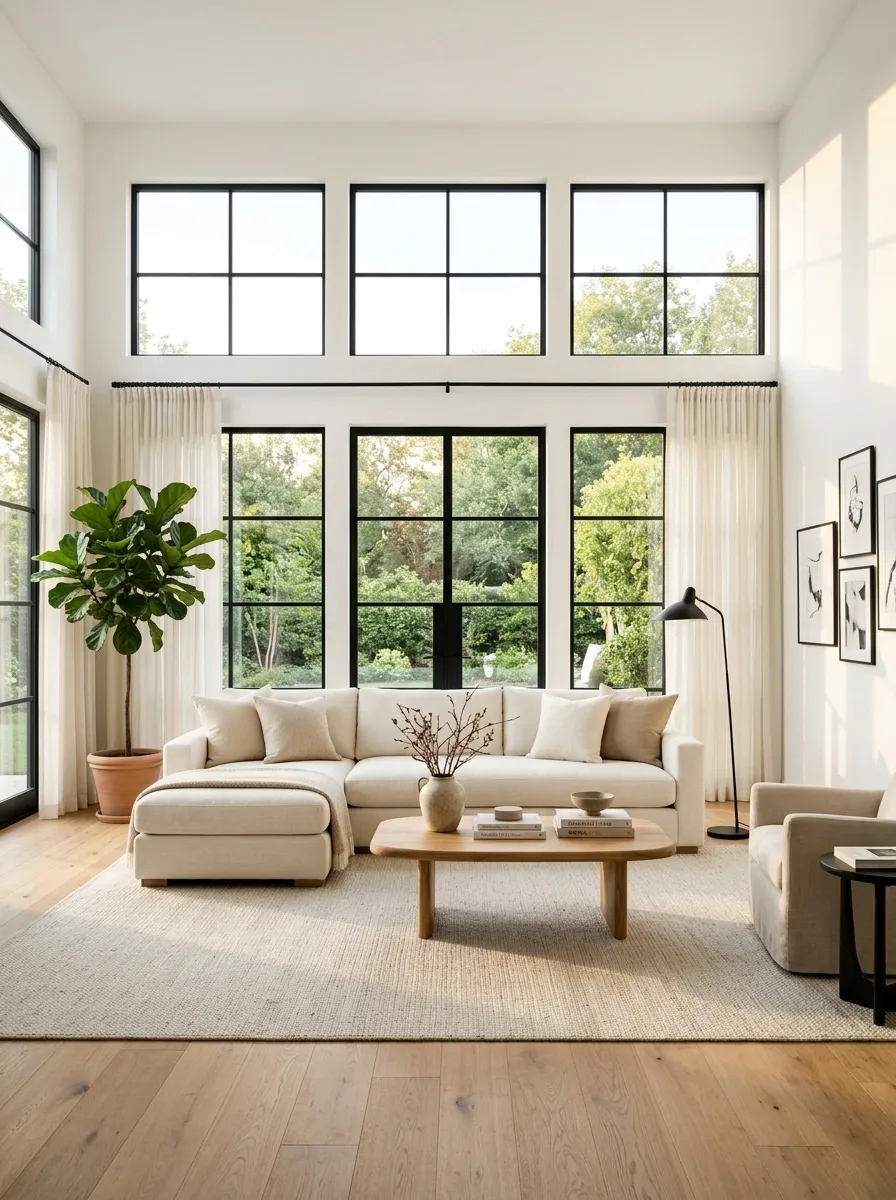
If the room has large windows, let the architecture do most of the decorating. Keep the walls, ceiling and large furniture pieces light, then use black window frames as strong graphic lines.
Choose a white or cream sofa, pale rug and natural wood coffee table. Repeat the black only in small quantities through lighting and picture frames so the windows remain the dominant dark feature.
This works particularly well with abundant daylight because the black frames create definition without making the room feel dark.
Avoid covering the windows with heavy dark curtains. Soft ivory linen panels keep the room bright while giving the windows a finished edge.
Black Media Wall With a White Floating Cabinet
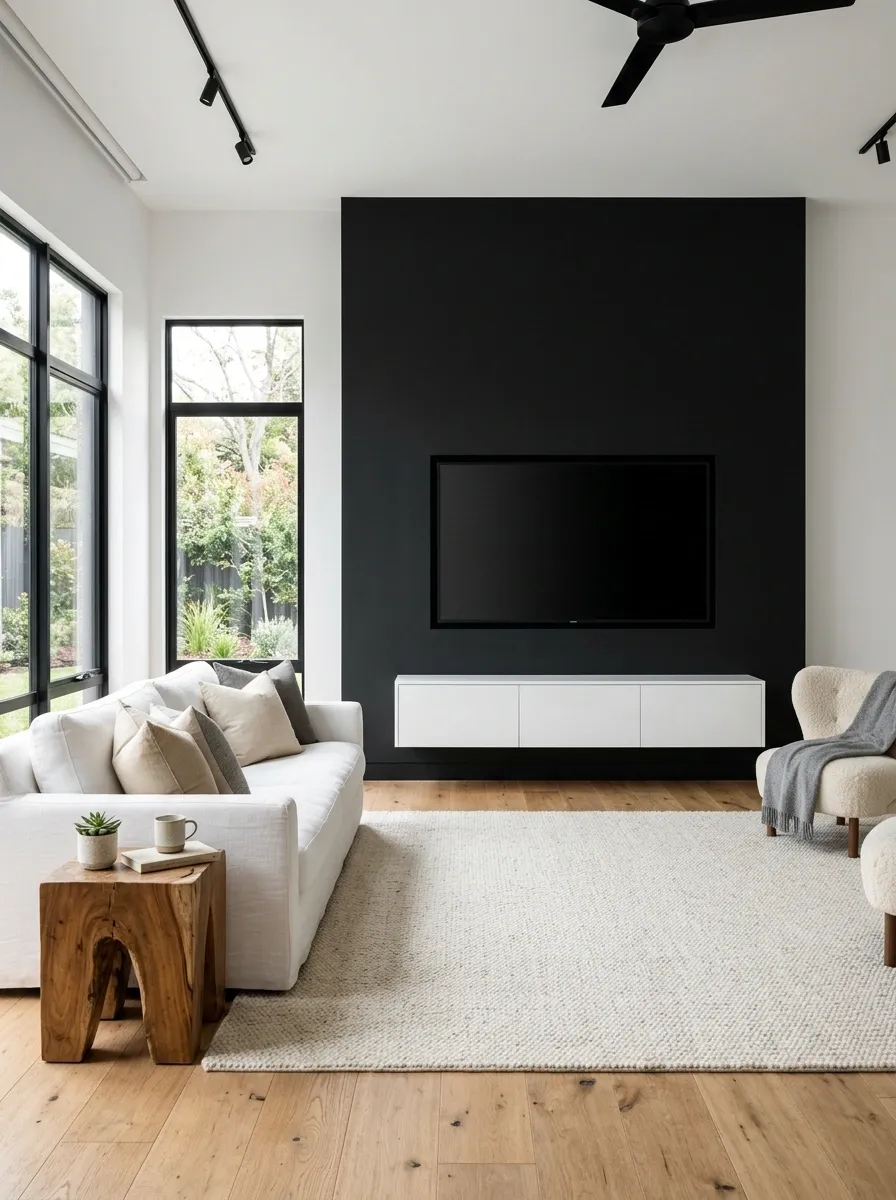
Create a controlled media wall by painting the entire wall matte black and mounting a long white floating cabinet below the television.
The white cabinet breaks up the dark wall horizontally while keeping the floor open underneath. Add a warm wood stool or side table nearby to soften the composition.
Keep the television wall almost completely free of decorative objects. The architecture itself is already doing the visual work.
A large cream rug and white sofa can balance the dark wall from across the room. Black ceiling lighting and window frames can repeat the color elsewhere without competing with the media wall.
The result is graphic and clean, especially in contemporary spaces where a traditional entertainment unit would feel too bulky.
White Brick Fireplace With Black Mantel
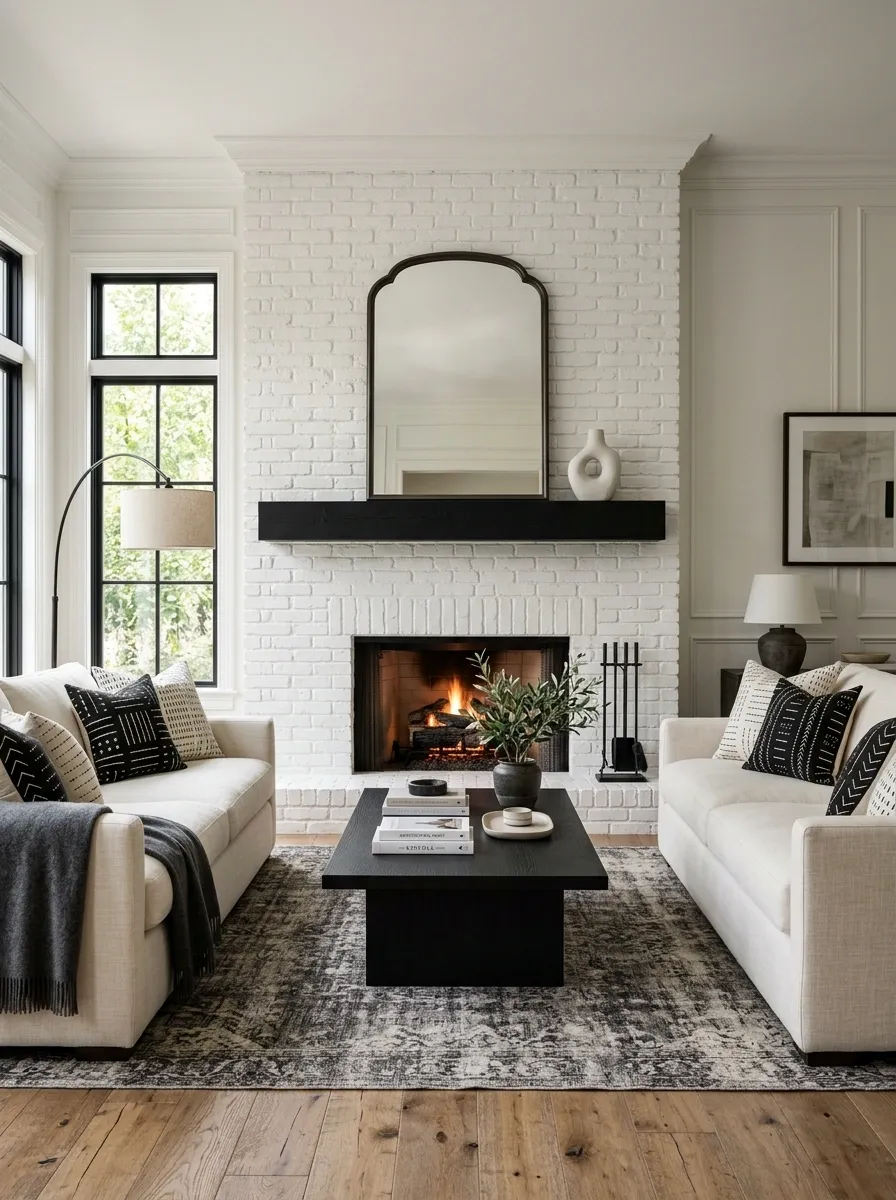
White-painted brick provides texture while keeping the palette bright. Add a substantial black mantel shelf across the fireplace and repeat that black through the coffee table and lighting.
Choose a cream sofa with relaxed proportions and layer it with black-and-white cushions. A vintage-style rug with muted charcoal details can introduce pattern without breaking the palette.
The brick should remain visible enough to create shadow and texture. Covering it with too many decorative pieces defeats the entire point.
A large mirror above the mantel can reflect light and make the fireplace feel taller, while a single sculptural object keeps the mantel from becoming a miniature accessories store.
Monochrome Mid-Century With Walnut
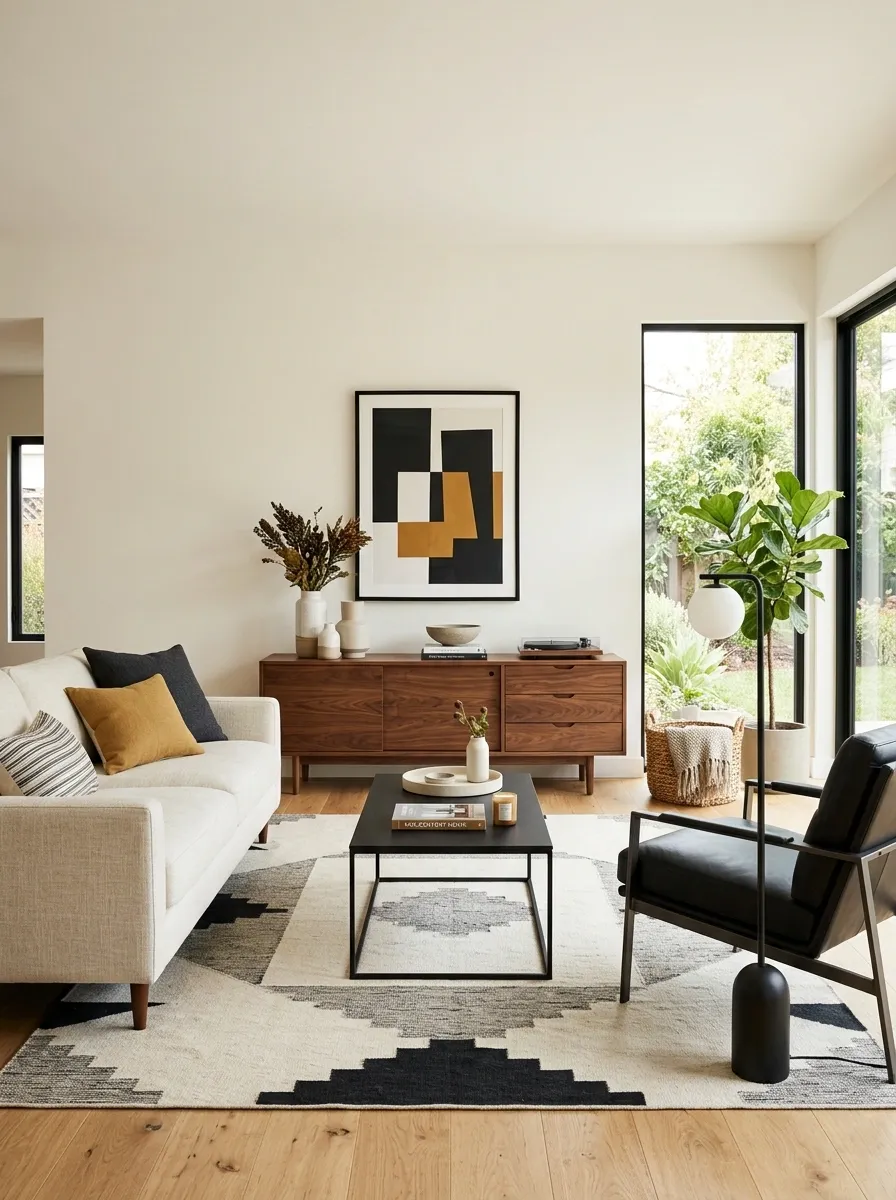
Use a low walnut media console as the warm centerpiece against a white wall. Pair it with a black lounge chair, a cream sofa and a simple black coffee table.
The furniture should have clean legs and slightly tapered silhouettes so the room feels connected to mid-century design without becoming a museum recreation.
Choose a geometric rug in cream, black and muted gray. Add a simple globe-style light or sculptural floor lamp to reinforce the period influence.
Walnut is particularly useful in black and white rooms because it adds warmth without introducing a loud color. The grain becomes part of the visual texture.
Contemporary Loft With Black Steel and White Plaster
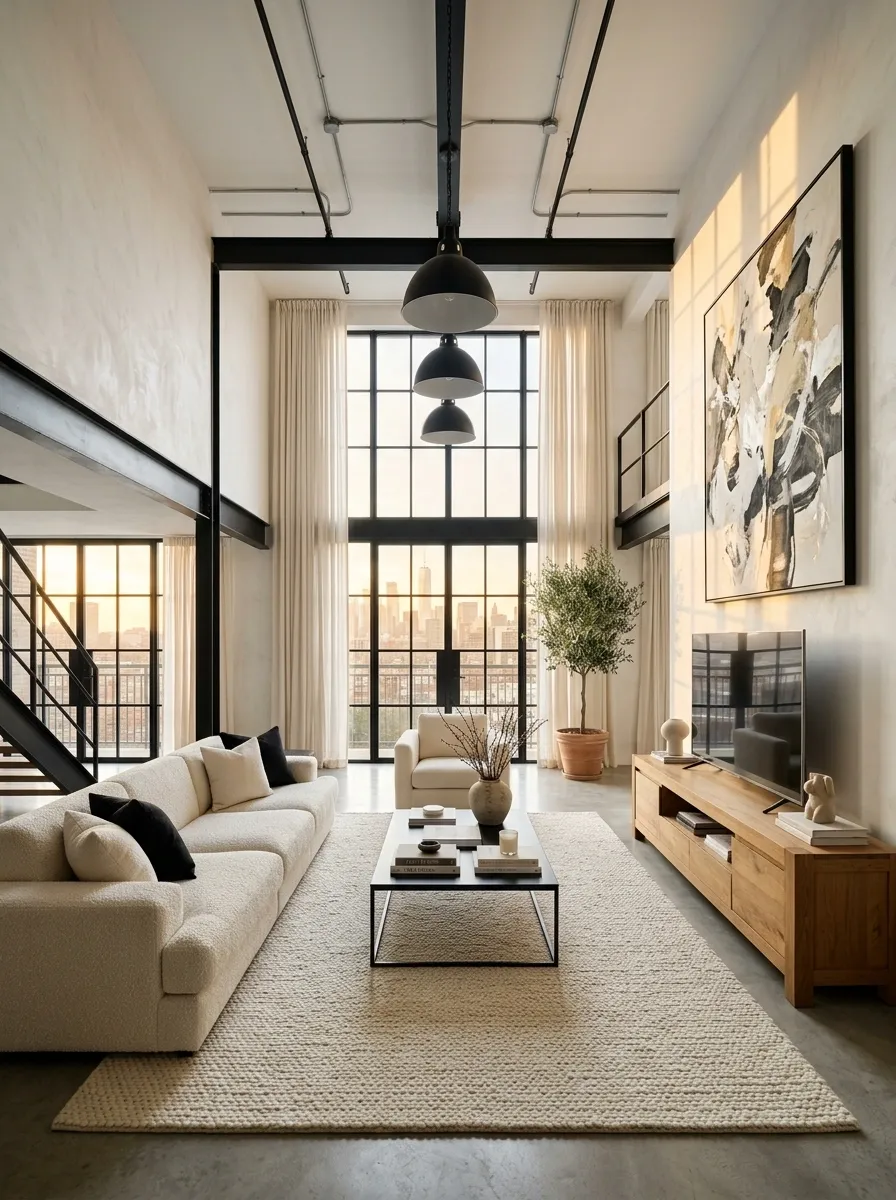
Lean into the architecture of a loft instead of trying to soften every industrial feature. Keep the walls white or pale plaster, use black steel-framed windows and choose a large cream sofa.
A black metal coffee table and exposed-style lighting reinforce the industrial language. Warm oak flooring or a substantial wood console keeps the space from becoming cold.
Add one oversized abstract artwork rather than filling every wall. The large scale works with the generous proportions common in loft spaces.
Soft textiles matter here. A thick rug and linen curtains prevent the room from feeling like a converted warehouse waiting for furniture.
Black and White Coastal Without the Beach-Cliche Problem
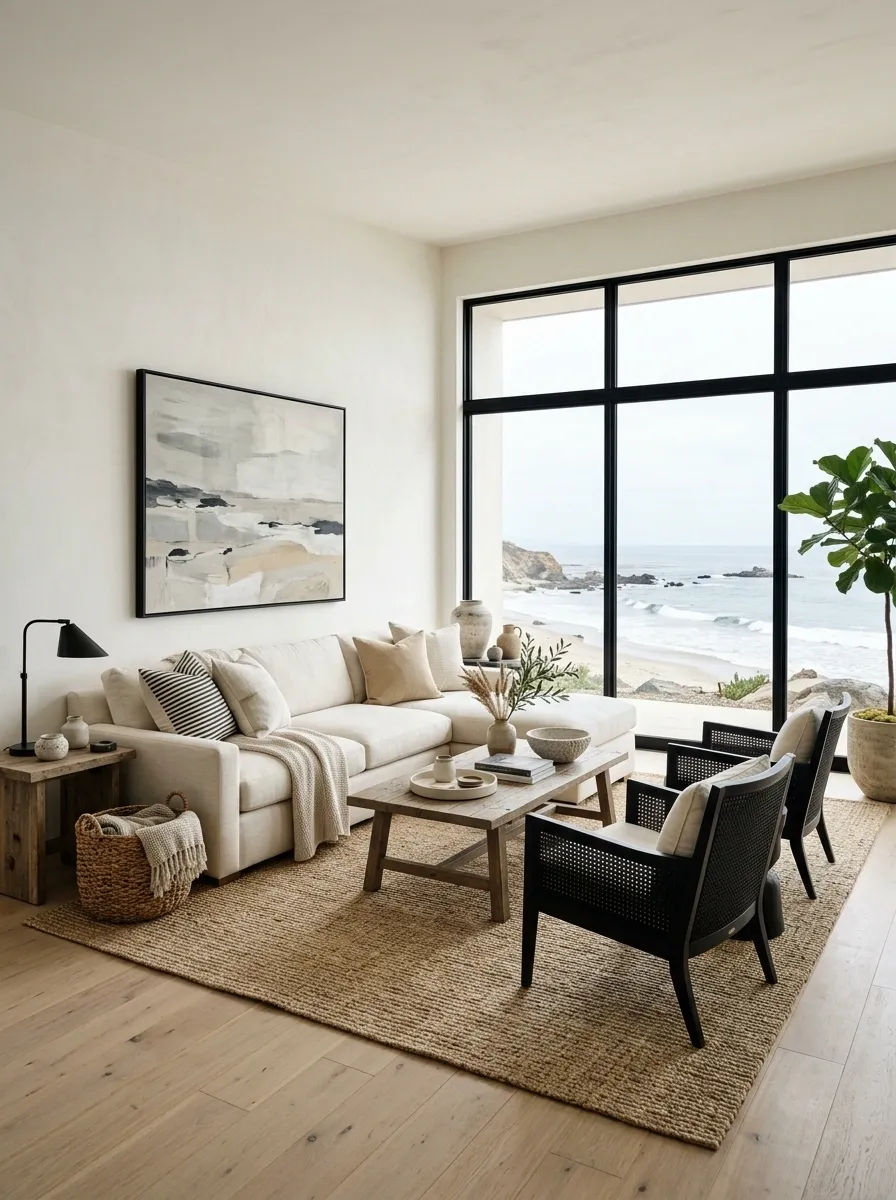
Keep the palette restrained with warm white walls, a cream sofa, black woven chairs and pale timber. Avoid obvious nautical decorations. No anchor collection is required. The ocean will survive without it.
Use natural textures such as linen, rattan, jute and lightly weathered wood. A black-framed mirror or window creates the contrast needed to keep the room visually grounded.
Choose artwork with abstract shapes or quiet landscape tones rather than literal beach photography. The room should feel influenced by coastal light, not decorated by a souvenir shop.
This approach gives black and white a relaxed character while maintaining enough contrast to prevent the space from becoming an all-beige blur.
Transitional Room With Traditional Molding
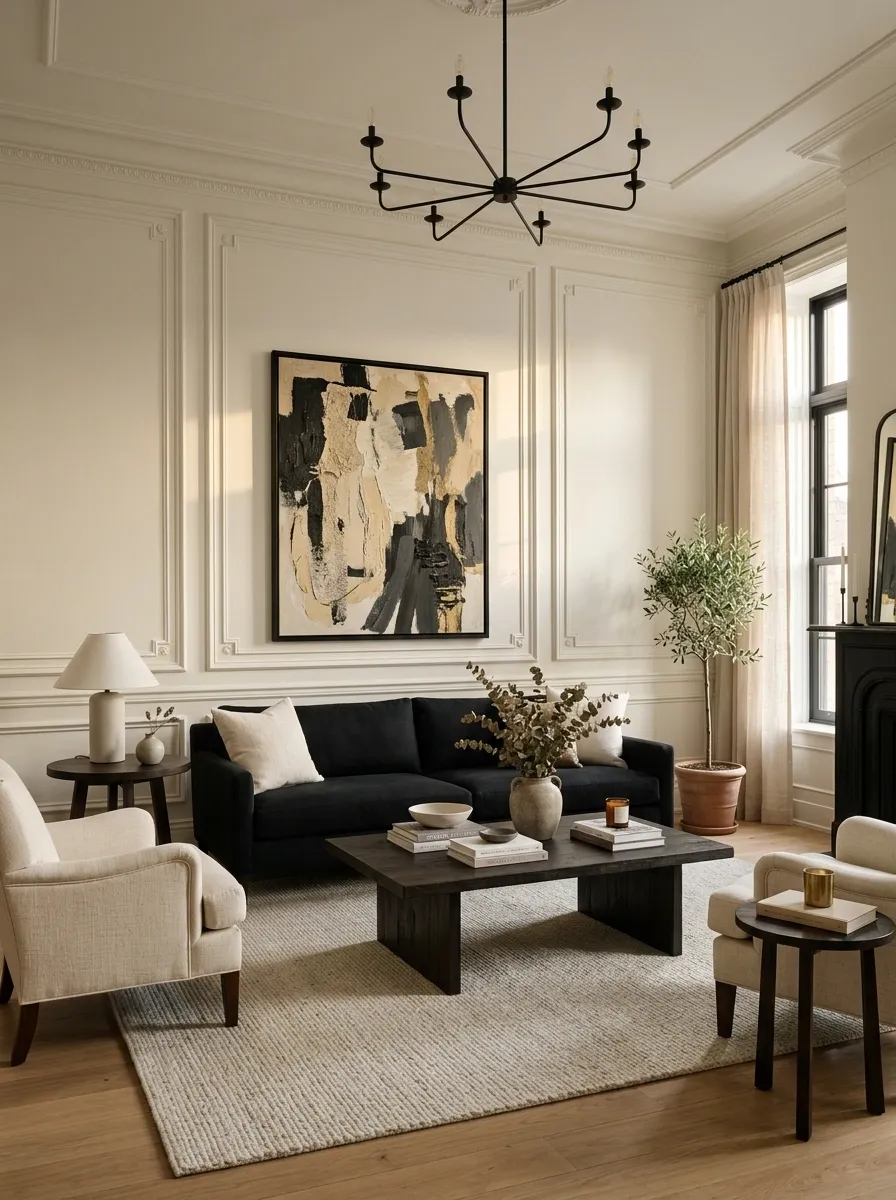
Use classic wall molding as the backdrop and contemporary black furniture as the counterpoint. Paint the entire architectural shell in a warm white and choose a deep black sofa with simple proportions.
Add a pair of traditional-inspired chairs in cream fabric, a dark wood coffee table and a large neutral rug. Black lighting fixtures provide a modern edge without fighting the molding.
The important detail is restraint. Traditional rooms can tolerate more decoration, but the monochrome palette already provides strong structure.
A large mirror or oversized artwork can sit above the sofa while smaller objects remain concentrated on the coffee table and console.
Tiny Living Room With Vertical Black Details
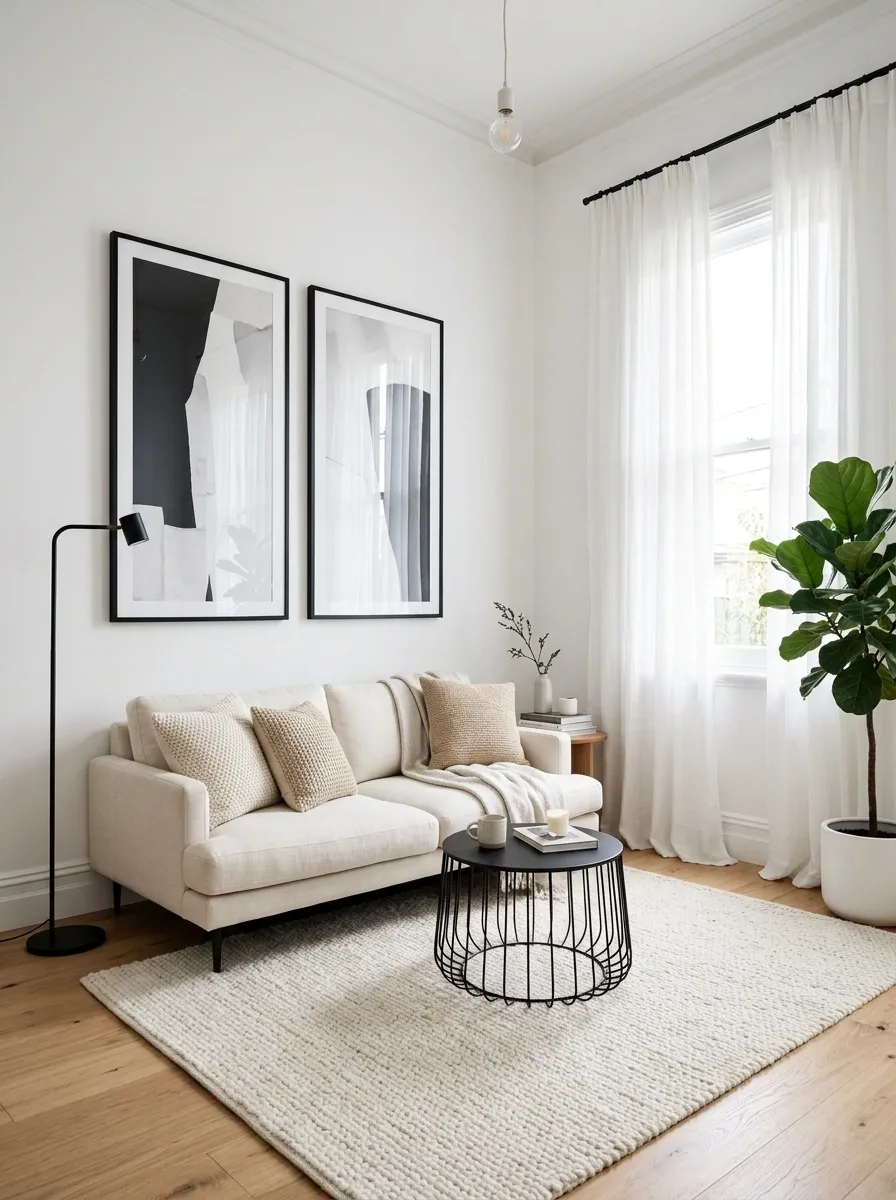
In a compact room, use black vertically instead of spreading heavy dark furniture across the floor. A narrow black floor lamp, tall framed artwork and slim curtain rod can draw the eye upward.
Keep the main sofa light and choose a small black coffee table with an open base. A cream rug should cover enough floor to visually connect the furniture.
Use one tall plant if greenery suits the space, but keep the rest of the styling restrained. Vertical lines already provide visual movement.
This composition works because the darkest elements aren’t competing for floor space. The eye moves upward while the white surroundings keep the room feeling open.
Open-Plan Living Room With Clear Black Anchors
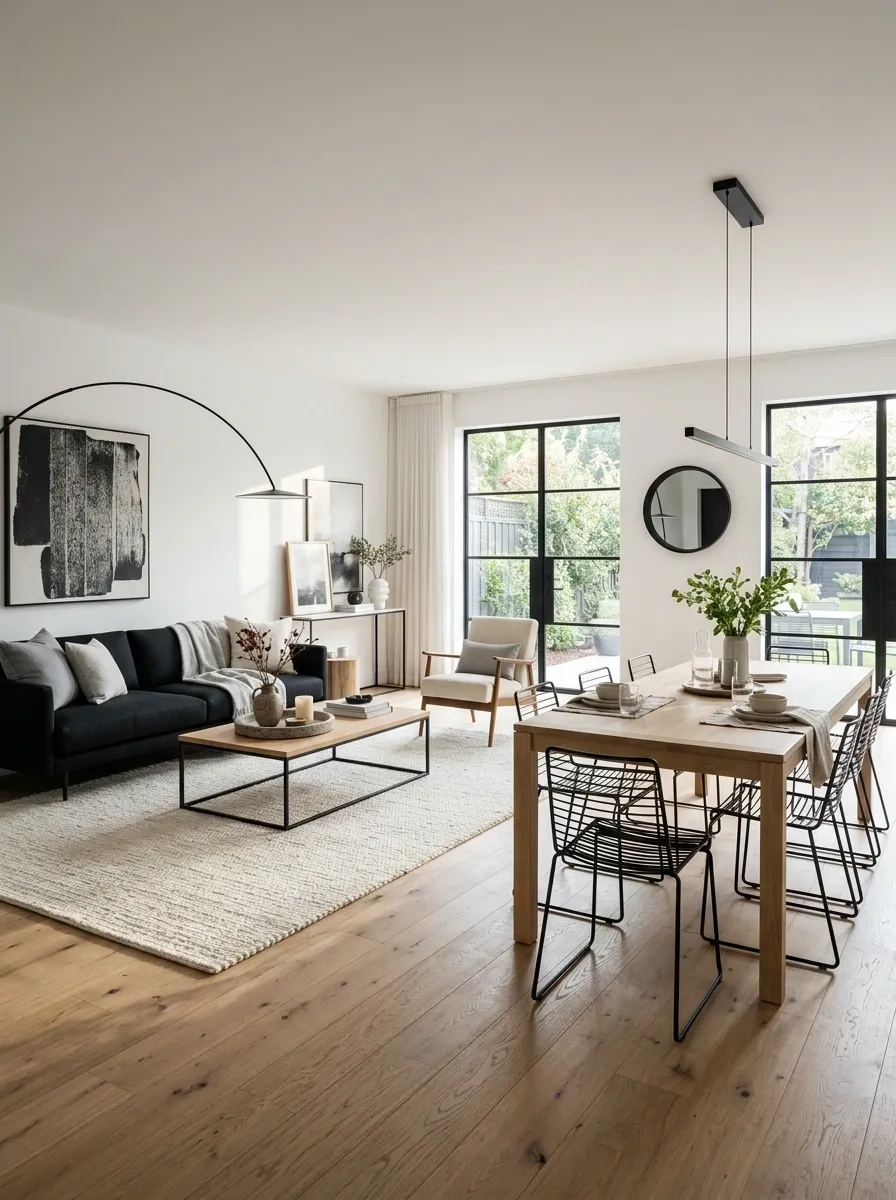
Open-plan rooms need visual boundaries without actual walls. Use a large ivory rug to define the living area, then place a black sofa along one edge of the zone.
A black pendant or oversized floor lamp can visually anchor the seating area from above. Keep the adjacent dining area lighter with pale wood furniture so the spaces feel connected without looking identical.
Repeat black in the dining chairs or window frames to create a visual thread across the open plan.
The trick is repetition, not matching. The same black appears in different shapes and locations, making the entire room feel intentional.
Curved White Sofa With a Black Coffee Table
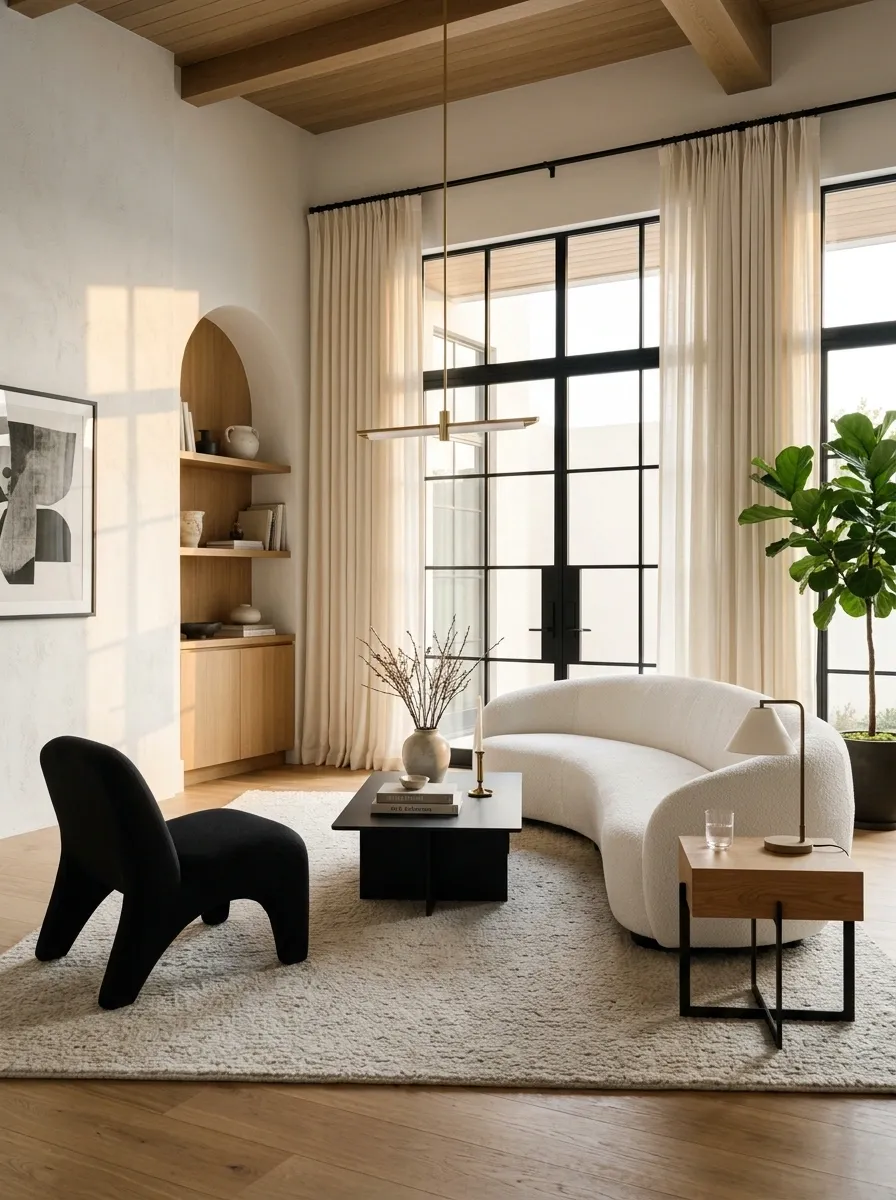
A curved white sofa creates a softer silhouette against the strong black-and-white palette. Center it on a large neutral rug and place a low black coffee table in front.
Add one black sculptural chair at an angle rather than arranging every seat parallel to the walls. This makes the room feel more conversational and less like a furniture showroom.
Use a warm wood side table and soft ivory curtains to bring warmth into the composition.
Curves are especially useful when the architecture is boxy. The furniture becomes the softer counterpoint to straight walls, windows and shelving.
White-On-White Room With Sparse Black Accents
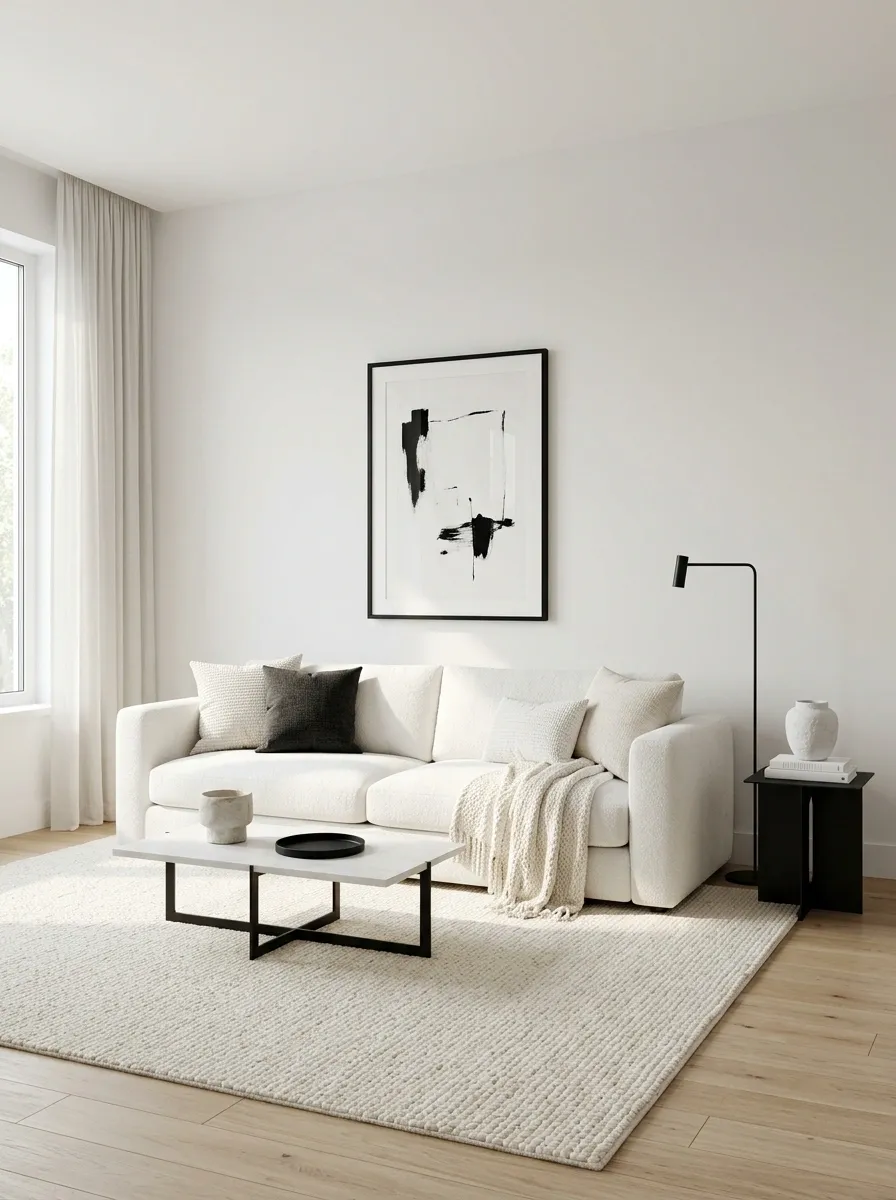
This version reverses the usual formula. Keep almost everything white, ivory or cream, then use black only where a visual anchor is needed.
A white sofa, white walls, cream rug and pale curtains create the base. Add a black floor lamp, black framed artwork and one black side table.
The room feels sophisticated because the black accents are deliberately spaced apart. Each one has room to register.
Bring in different shades and textures within the whites. Smooth painted walls, rough ceramic, woven fabric and wool should all look slightly different under daylight.
The result is monochrome without being flat. The black accents become punctuation marks instead of entire paragraphs.
Maximalist Black and White With Art as the Main Event
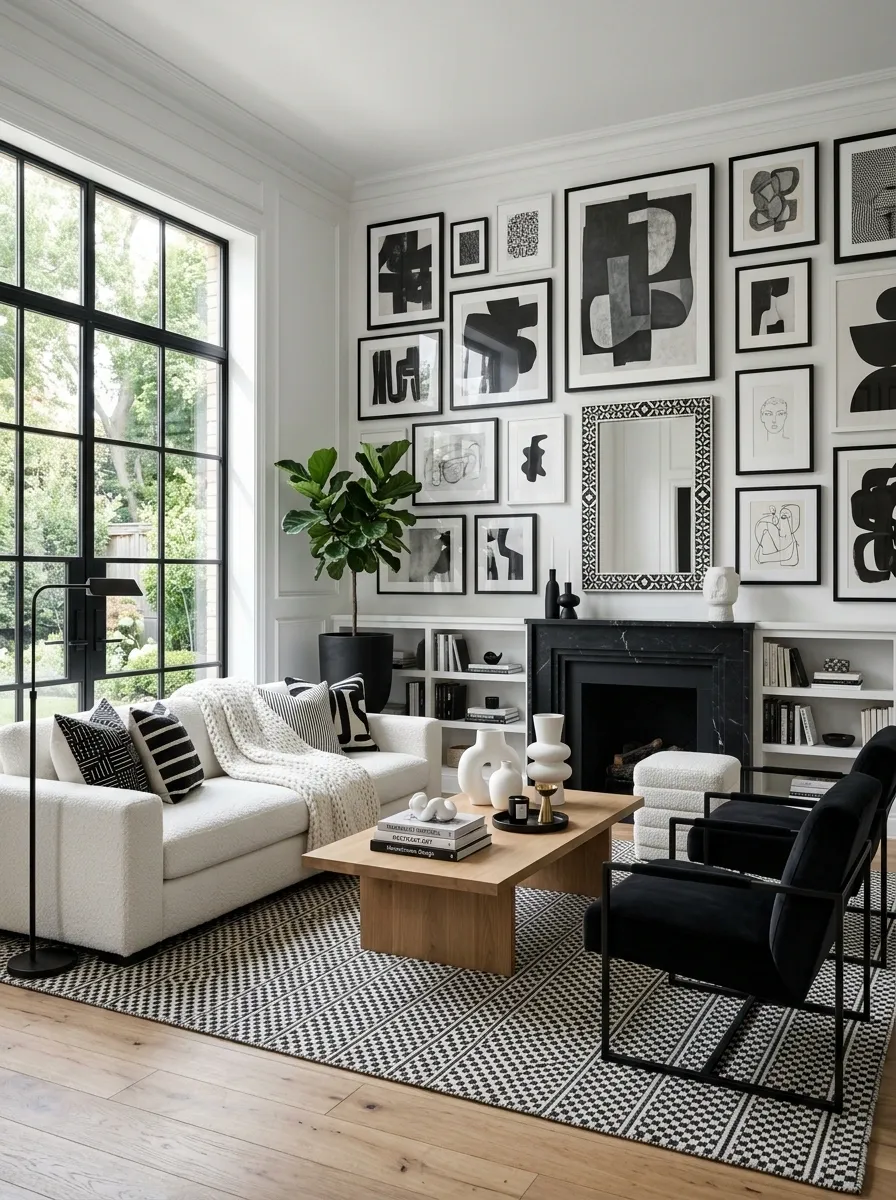
A monochrome room can handle maximalism when the colors stay controlled. Use a white sofa, black accent chairs, a large patterned rug and an oversized gallery wall.
Mix different frame shapes and artwork scales while keeping the palette mostly black, white and gray. Add sculptural ceramics and layered books on the coffee table.
The furniture should remain relatively simple because the walls and textiles are already carrying the visual energy.
This approach proves that black and white doesn’t automatically mean minimalist. The drama comes from layering patterns, artwork and shapes rather than adding random colors.
The room should look collected, not like every decor trend was invited to the same party.
Black Velvet Sofa With Soft White Walls
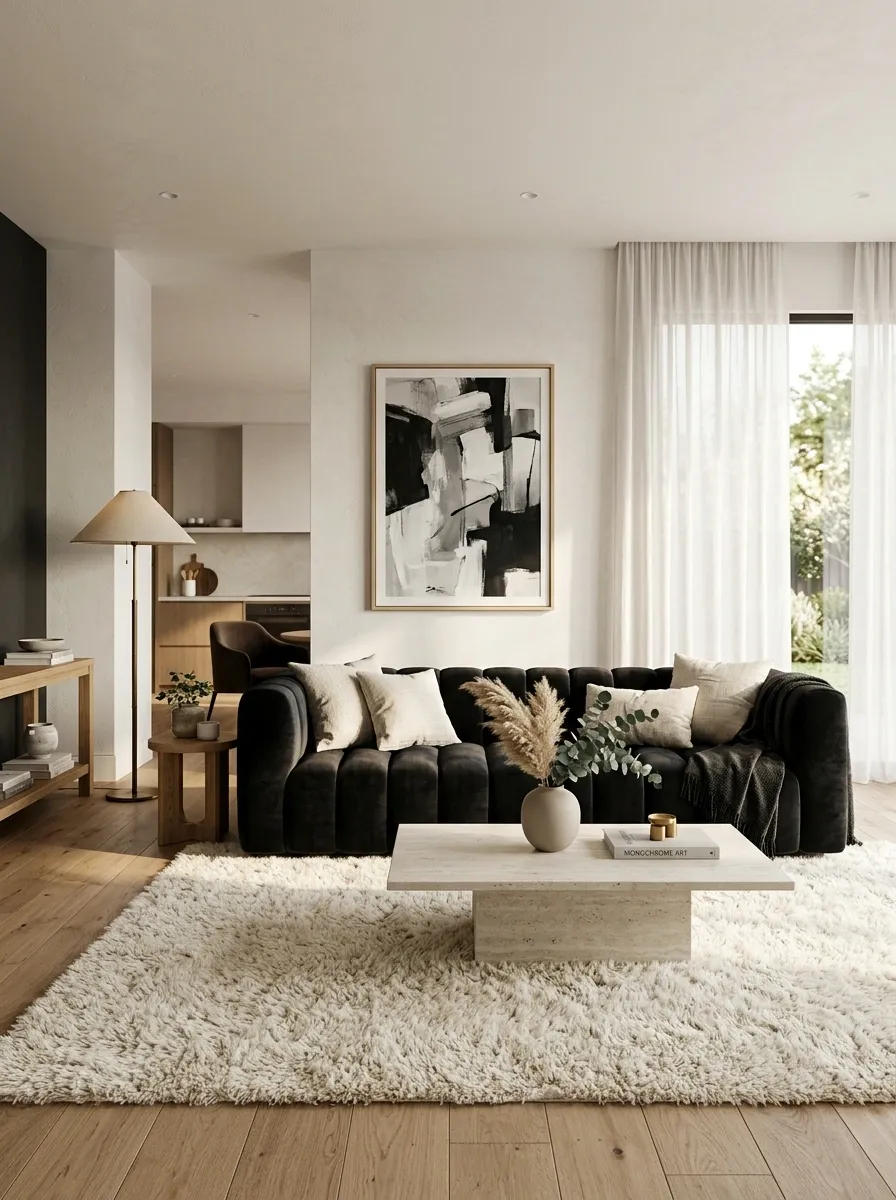
A black velvet sofa immediately introduces depth because the fabric catches light differently across its surface. Keep the walls warm white and use a cream rug underneath.
Choose a white or pale stone coffee table so the center of the room doesn’t become too dark. Add brass or aged-metal lighting sparingly for warmth.
Soft white curtains and cream cushions keep the sofa from feeling overly formal. A large monochrome artwork above it can reinforce the palette without repeating the exact sofa shape.
The key is letting the velvet remain the richest dark texture in the room. Too many glossy black surfaces will flatten the effect instead of supporting it.
Rental-Friendly Black and White Living Room
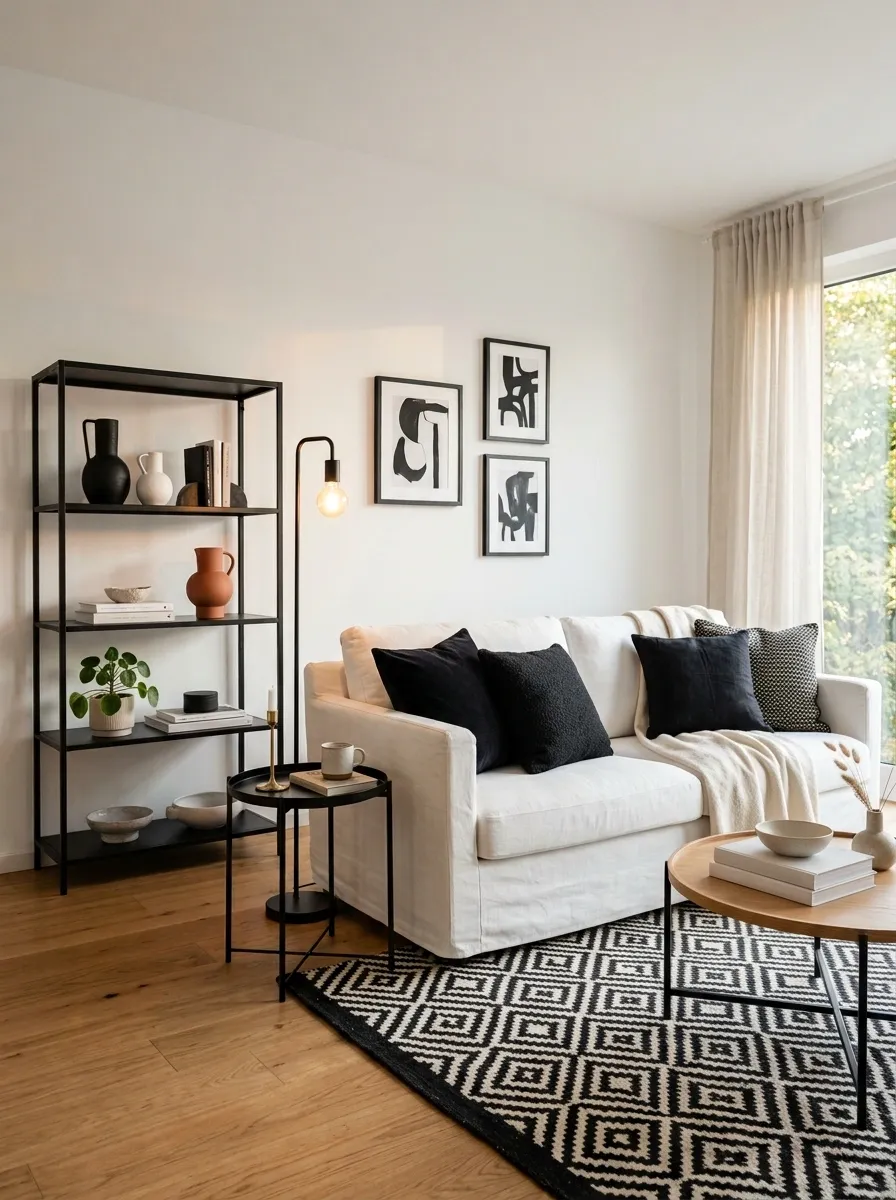
Build the palette through removable and movable pieces. Keep the walls light, then introduce black through a freestanding bookcase, floor lamp, picture frames and side tables.
A large black-and-white rug can create the strongest visual anchor without touching the architecture. Choose a white sofa with washable covers and add black cushions in different textures.
Removable wall molding or temporary wallpaper can add architectural character if the rental allows it, but even simple framed artwork can create the same visual structure.
The strongest rental rooms don’t rely on permanent changes. Furniture scale, rug placement and lighting can do an astonishing amount of the work.
Warm Black and White With Walnut and Cream
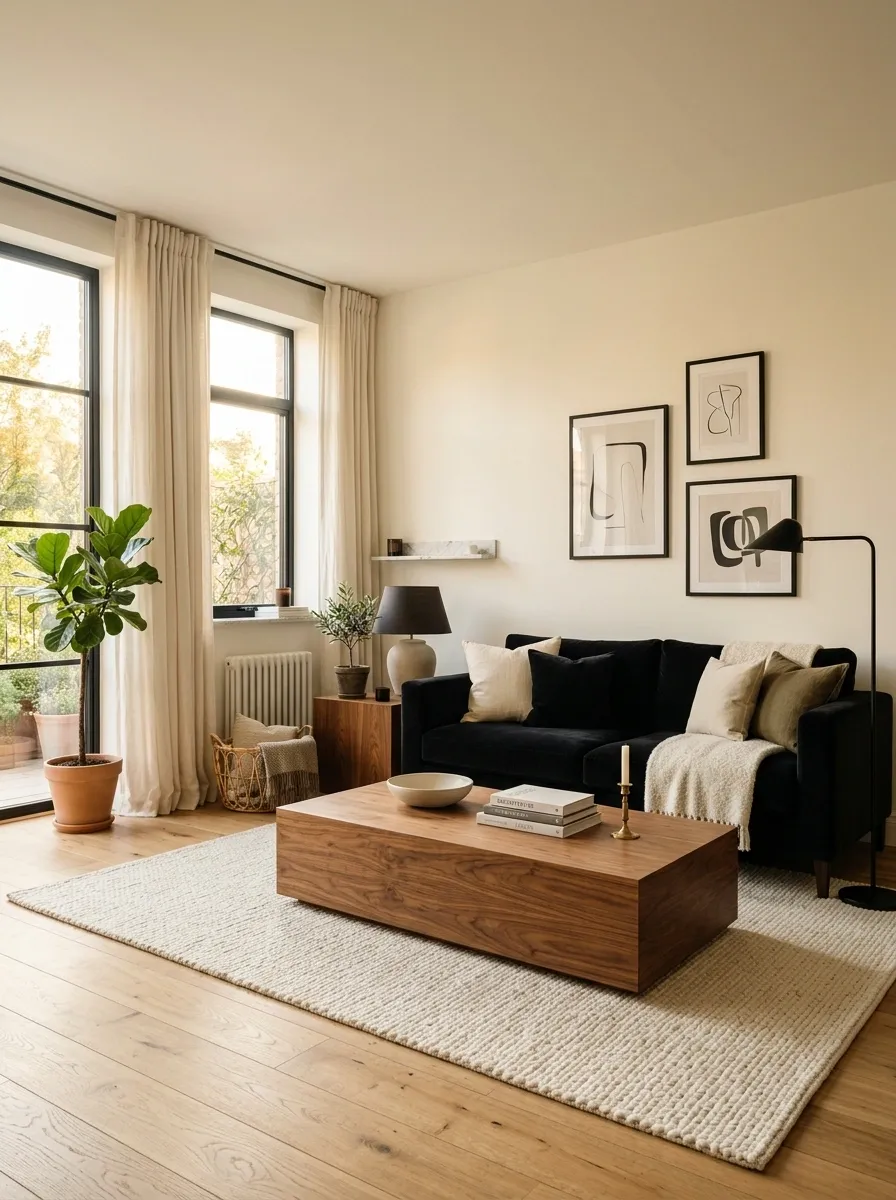
Use black and white as the base while allowing walnut and cream to provide warmth. A black sofa can sit against a creamy wall, with a large walnut coffee table creating the central bridge between the two.
Layer an ivory rug beneath everything and use cream curtains that soften the windows. Black lighting and frames repeat the sofa color without overloading the room.
Walnut works especially well because it has enough visual depth to stand beside black while remaining warmer than a stark gray.
The result feels sophisticated but lived-in. It doesn’t need a rainbow of accent colors to avoid looking cold. Wood was invited, and frankly, wood understood the assignment.
Floor-to-Ceiling Black Curtains With a White Seating Area
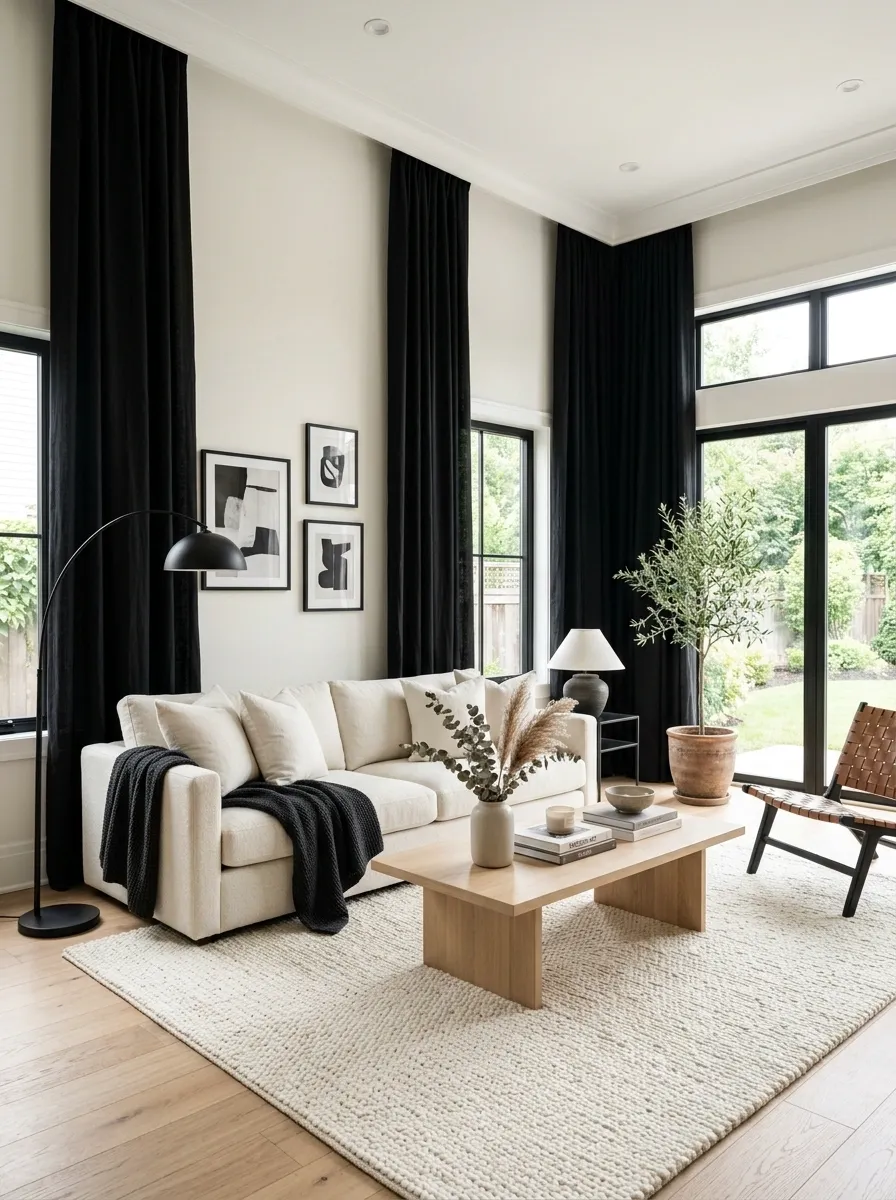
Let the windows become the dramatic feature. Hang black curtains from close to the ceiling down to the floor, then keep the furniture and walls light.
A white sofa, ivory rug and pale wood coffee table create a calm foreground. Repeat black in the floor lamp and a few picture frames so the curtains don’t feel isolated.
The height of the curtains draws attention upward and can visually strengthen a room with tall windows.
Choose a matte fabric rather than something shiny. The goal is architectural depth, not nightclub energy.
White Living Room With Black Sculptural Lighting
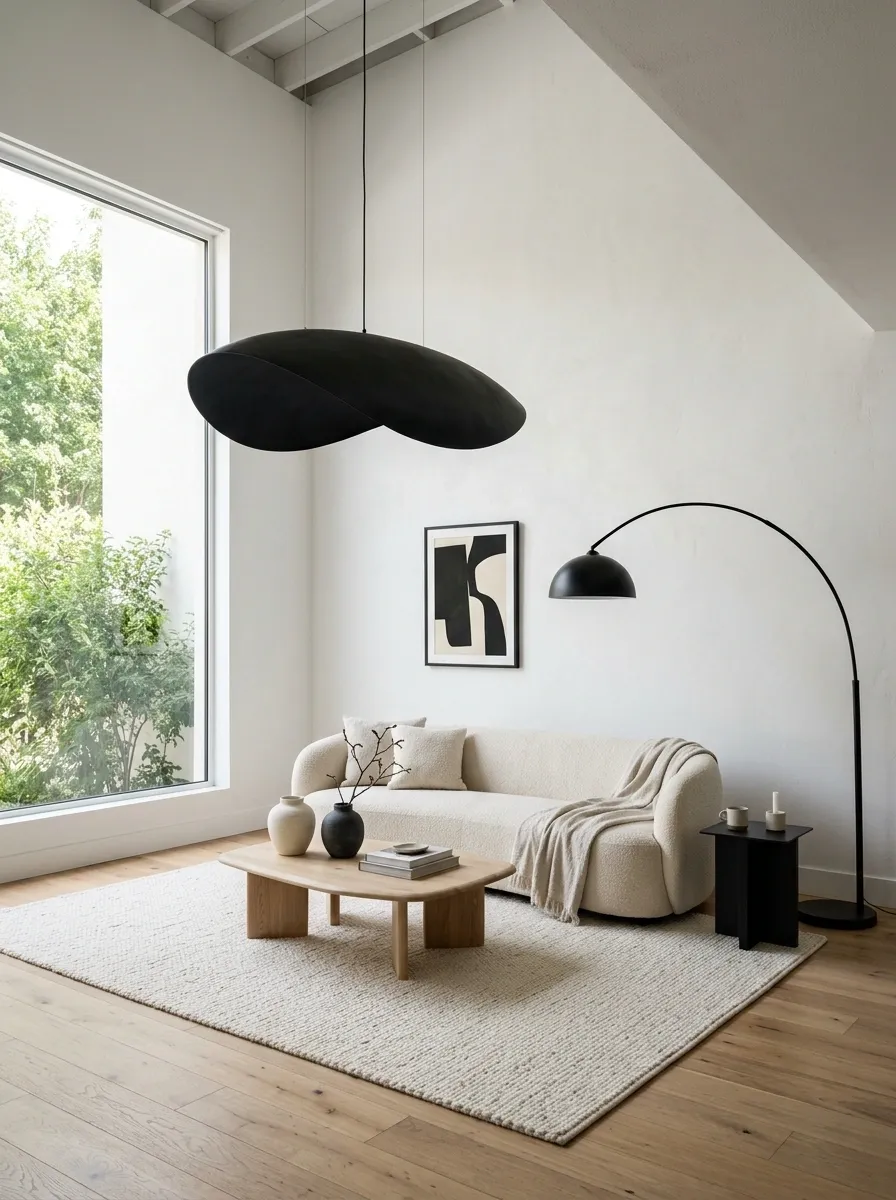
Keep the architecture and furniture mostly white, then introduce black through unusually shaped lighting. A large arched floor lamp, sculptural pendant or oversized black fixture can become the main visual feature.
Use a low cream sofa and pale rug so the light fixture remains prominent. Add a black side table or frame elsewhere in the room to repeat the shape.
This works especially well when the architecture is simple. Instead of filling blank walls with decoration, one strong lighting silhouette can provide the contrast the room needs.
The result is graphic without being cluttered. The lighting isn’t just there because someone eventually has to see the coffee table.
Symmetrical Black Fireplace With White Built-Ins
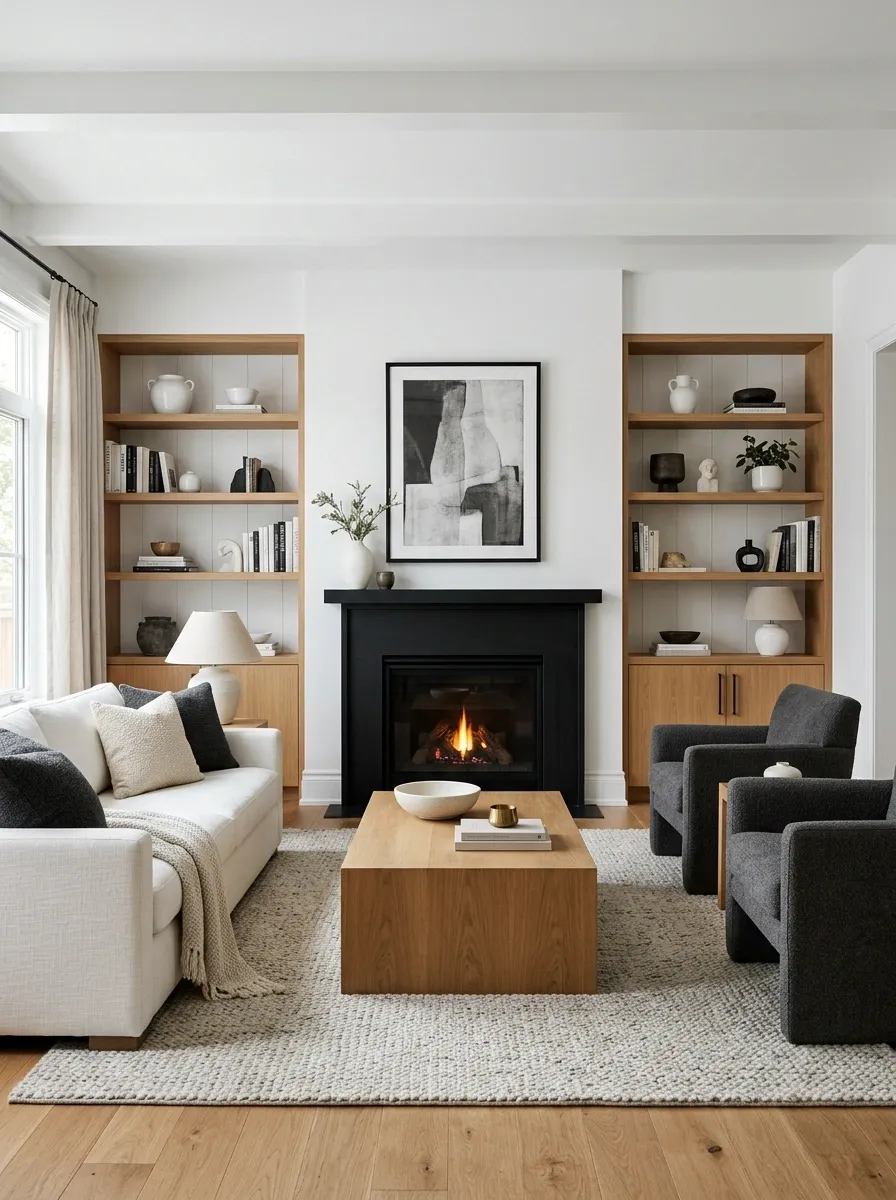
Create a balanced focal wall with a black fireplace centered between white built-in shelving. Keep the seating symmetrical with a white sofa directly opposite and matching black or charcoal chairs on either side.
Use warm wood shelves or a wooden coffee table to soften the architecture. Style the built-ins with a mixture of white ceramics, books and a few dark objects.
Symmetry gives this room a more formal character, so introduce softness through linen, wool and curved accessories.
The fireplace becomes the visual anchor while the white cabinetry prevents the wall from becoming one large dark rectangle.
Black-and-White Checkerboard Rug With Quiet Furniture
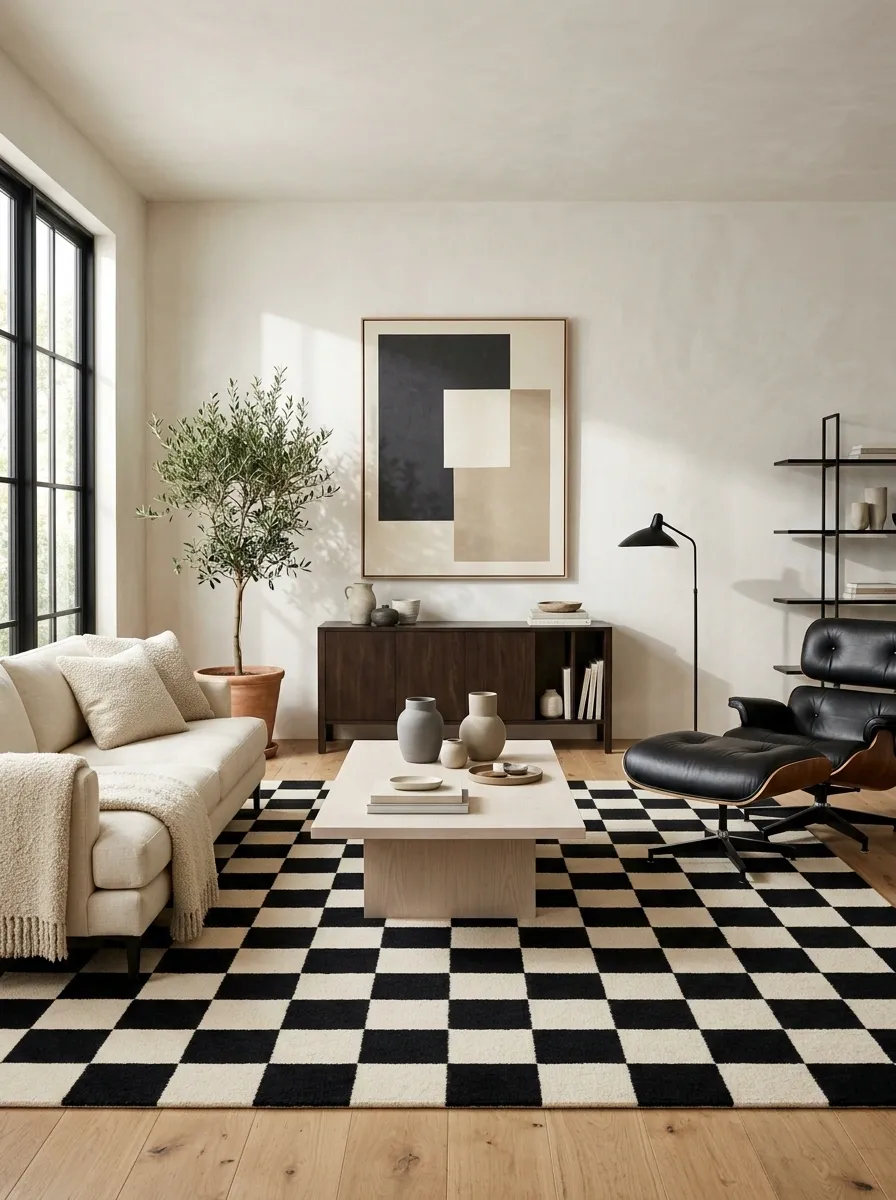
Let the floor provide the pattern. A large checkerboard rug in black and ivory can become the defining feature while the rest of the furniture stays simple.
Choose a cream sofa, black lounge chair and pale wood coffee table. Keep the walls warm white and use artwork with mostly solid shapes rather than additional busy patterns.
The rug should be large enough to connect the seating. A tiny checkerboard floating in the middle of a huge floor will look accidental.
Because the floor is already making a statement, every other element needs a little self-control. The rug has entered the group chat and doesn’t need five competitors.
Long Narrow Living Room With a Strong Black Axis
Long rooms benefit from a clear visual direction. Place the main sofa along the longest wall and use a black rug or coffee table to establish a central axis through the space.
Keep the walls white and use tall artwork or lighting at the far end to draw the eye through the room rather than emphasizing its narrowness.
A pale sofa can keep the space open while black chairs or side tables provide weight at the opposite end.
Avoid pushing every piece against a wall. A narrow room still needs breathing space around the furniture or the entire layout starts looking like a furniture storage facility.
Black-and-White Vintage-Inspired Living Room
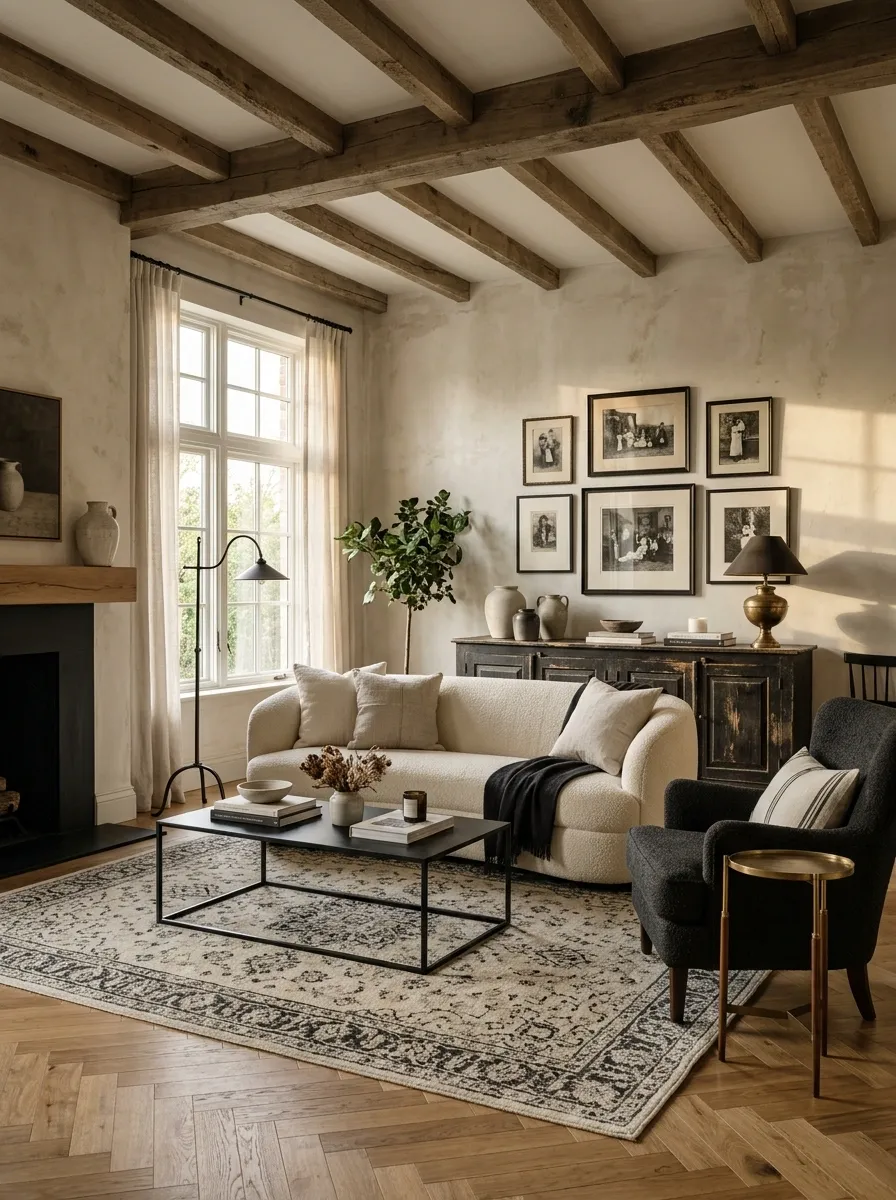
Mix vintage silhouettes with a strict palette. A curved cream sofa, black wooden sideboard and vintage-inspired armchairs can create character without introducing multiple colors.
Use aged frames, old-looking black-and-white photography and a patterned neutral rug. Let wood show some natural variation rather than choosing furniture with identical finishes.
The room should feel collected over time, not like every piece came from one coordinated collection.
Vintage elements work particularly well in monochrome because the palette gives different eras a visual connection. A traditional chair and modern coffee table can coexist because the color language keeps them related.
Black-and-White Living Room With a Bay Window
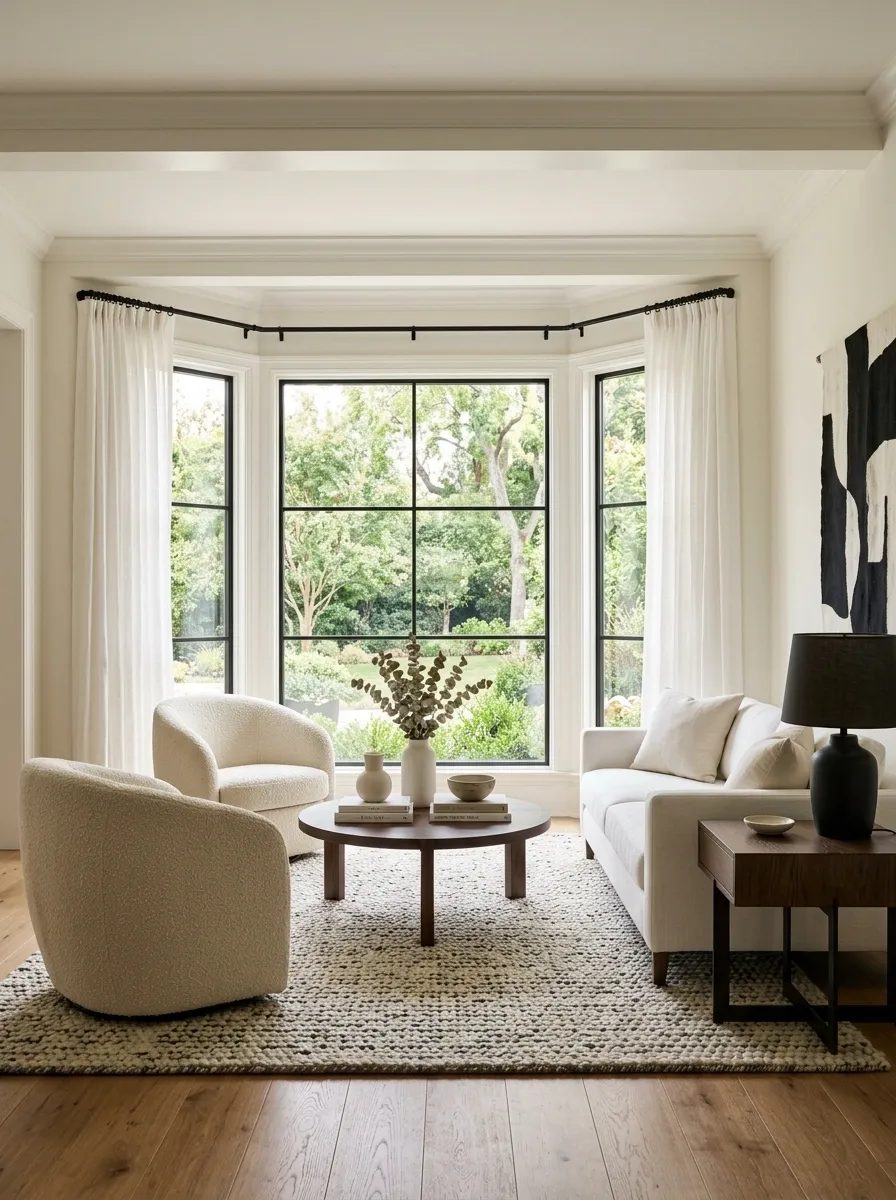
Treat the bay window as the architecture that determines the seating arrangement. Place a compact white sofa or pair of cream chairs facing inward toward the room while keeping the window area visually light.
Use black curtain rods, slim black frames and a dark side table to connect the window with the rest of the room.
A round coffee table works particularly well because it echoes the conversational shape created by the bay.
Avoid filling the window with heavy furniture. Let daylight remain the dominant feature and use the black accents to frame it.
Black Sofa With an Oversized White Art Piece
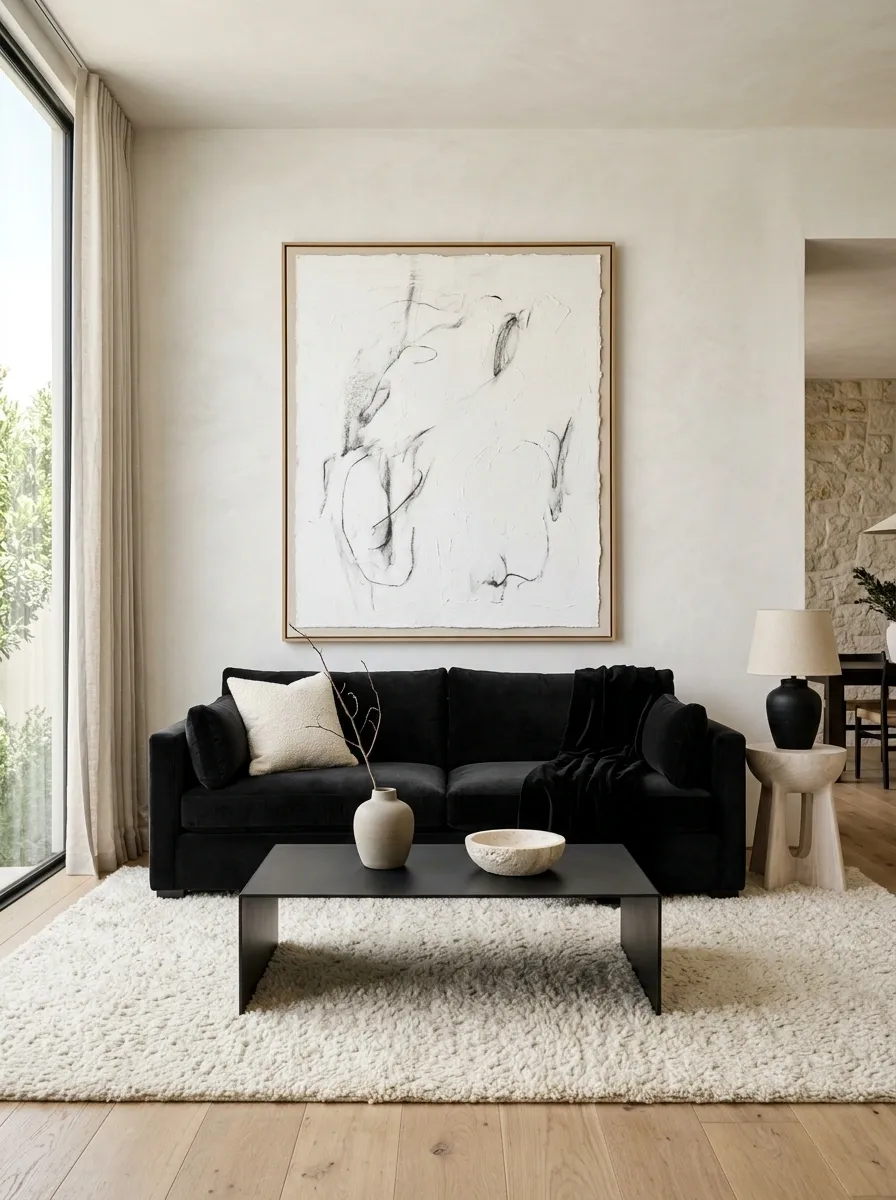
Make one enormous piece of pale artwork the counterweight to a black sofa. The artwork can be abstract, textured or almost entirely white with subtle charcoal marks.
Keep the wall warm white and use a cream rug beneath the seating. Add a black coffee table and a pale wood side table for balance.
The oversized artwork should have enough breathing room around it. If it nearly fills the entire wall, the composition becomes heavy.
This approach is especially useful for people who want a dramatic focal point without a gallery wall full of smaller objects.
White Sofa, Black Built-In Desk, and Multi-Use Living Space
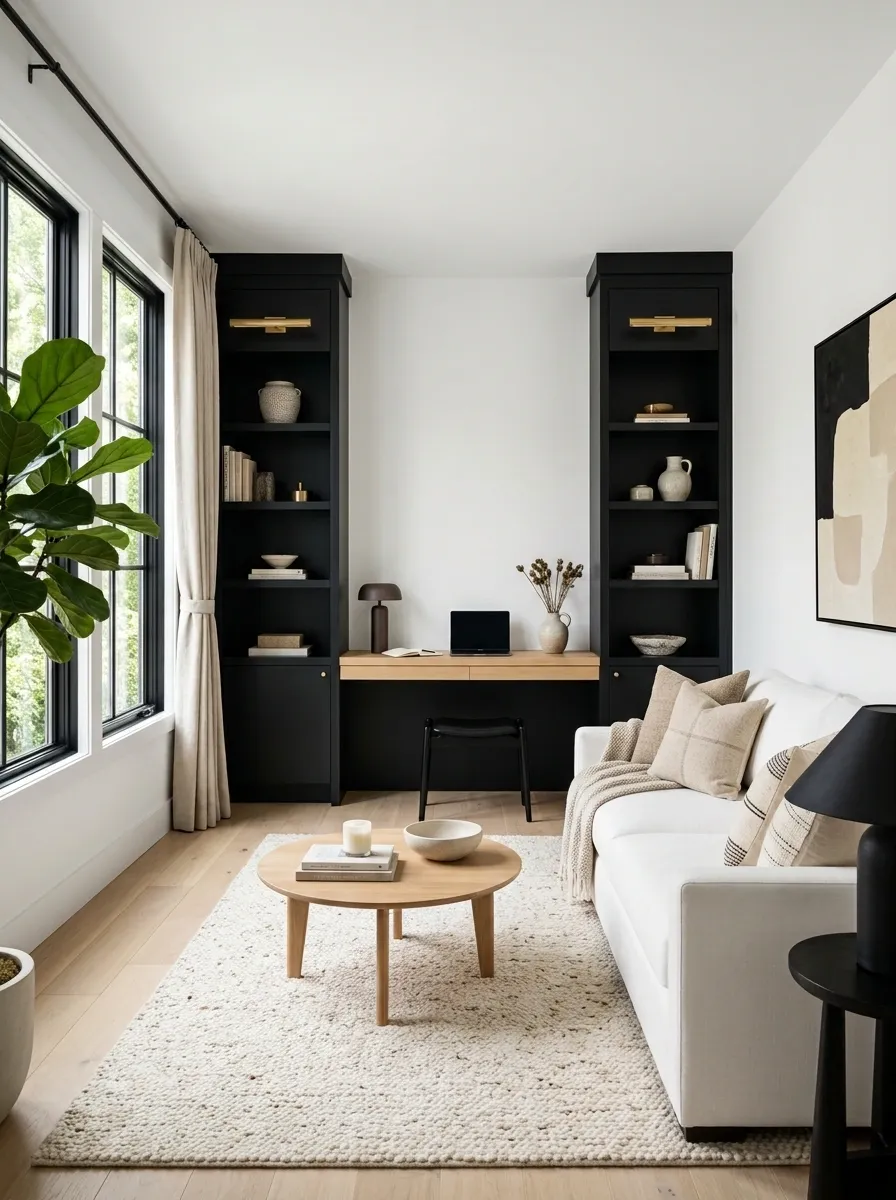
For rooms that need to handle work as well as lounging, integrate a compact black desk into the living room rather than adding a visually separate office corner.
Use a white sofa as the main seating anchor, then repeat black through the desk, shelving and task lighting. A pale wood desktop introduces warmth.
Keep the desk visually clean and avoid turning the living room into a permanent office. Closed storage underneath can hide cables and everyday clutter.
A large rug should define the seating area while the desk sits just beyond its edge.
High-Contrast Black Walls With Cream Furniture
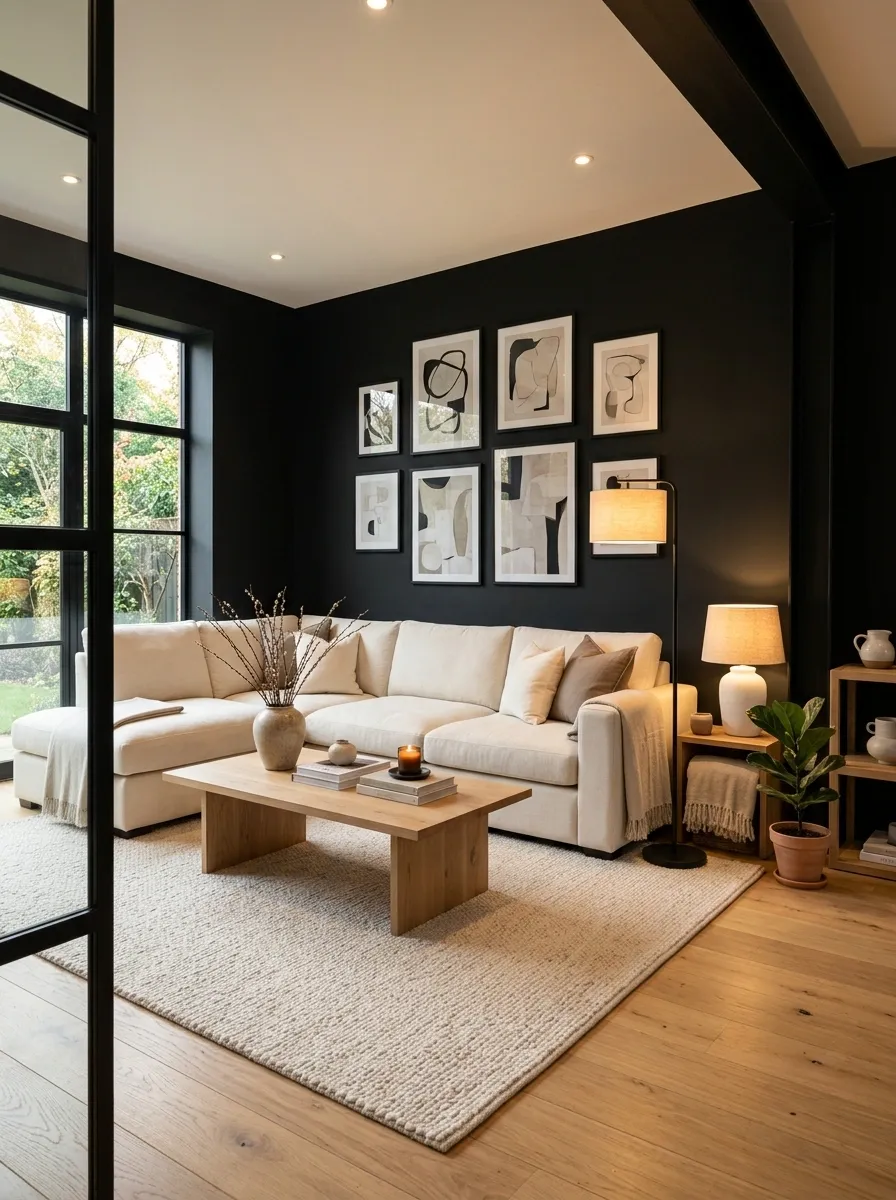
For a more dramatic room, paint the walls a soft matte black and keep the furniture cream, ivory and warm white.
A large cream sofa becomes the main visual object against the dark architecture. Add a pale rug and light wood coffee table to keep the center of the room from becoming too heavy.
Use black lighting and artwork frames so the furniture doesn’t appear disconnected from the walls.
This version needs good lighting. Layer ceiling lighting, floor lamps and table lamps rather than depending on one bright overhead fixture. The goal is pools of warm light against the dark walls.
White Fireplace, Black Mantel, and Symmetrical Chairs
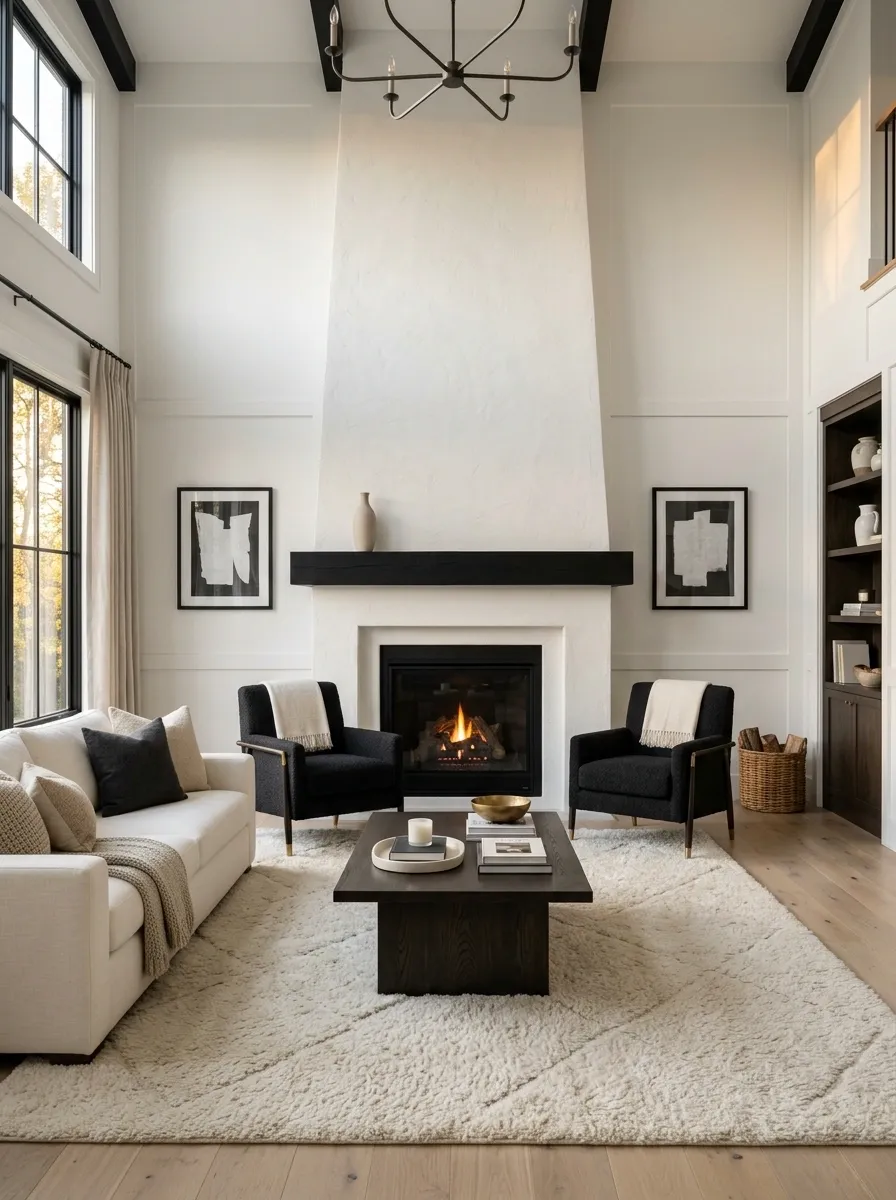
Use a white fireplace surround as the central architectural element and place a thick black mantel across it. Flank the fireplace with matching black or charcoal chairs upholstered in a soft fabric.
A white sofa opposite the fireplace keeps the main seating area bright. Use a dark wood or black coffee table in the center and a large cream rug underneath.
The symmetry creates a polished appearance, while soft upholstery prevents the room from feeling overly formal.
Keep the mantel decoration minimal. The fireplace already has enough authority. It doesn’t need a dozen objects competing for the microphone.
Soft Gray as the Bridge Between Black and White
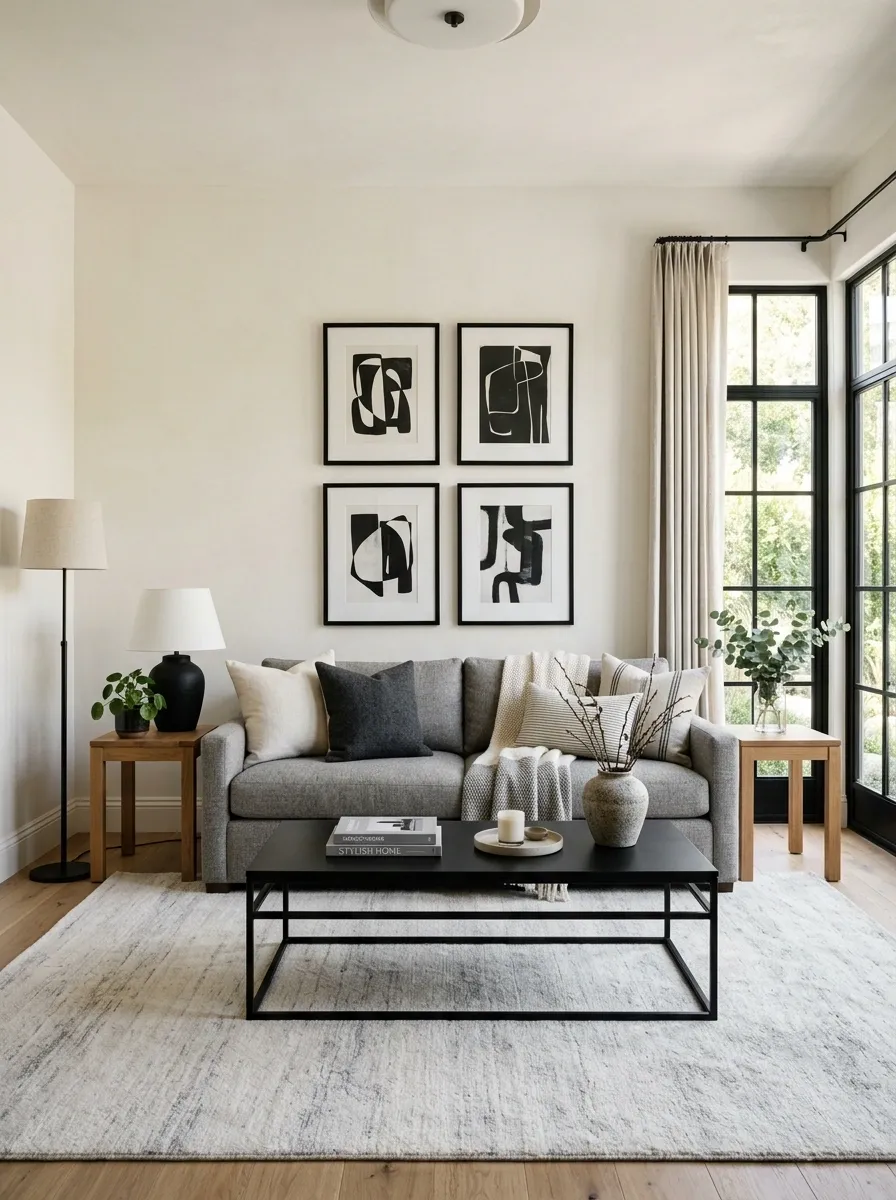
Gray can keep a black and white room from feeling too abrupt. Use a medium-gray sofa against a warm white wall, then introduce black through the coffee table, lighting and window frames.
Keep the rug lighter than the sofa, perhaps ivory with subtle gray movement. Add black-and-white artwork above the sofa and warm wood through the side tables.
The result has more tonal gradation than a strict black-and-white scheme while still reading clearly as monochrome.
Gray is especially useful when the room contains a lot of natural stone or existing architectural materials that already sit somewhere between the two extremes.
The Layered Monochrome Room With No Single Hero Piece
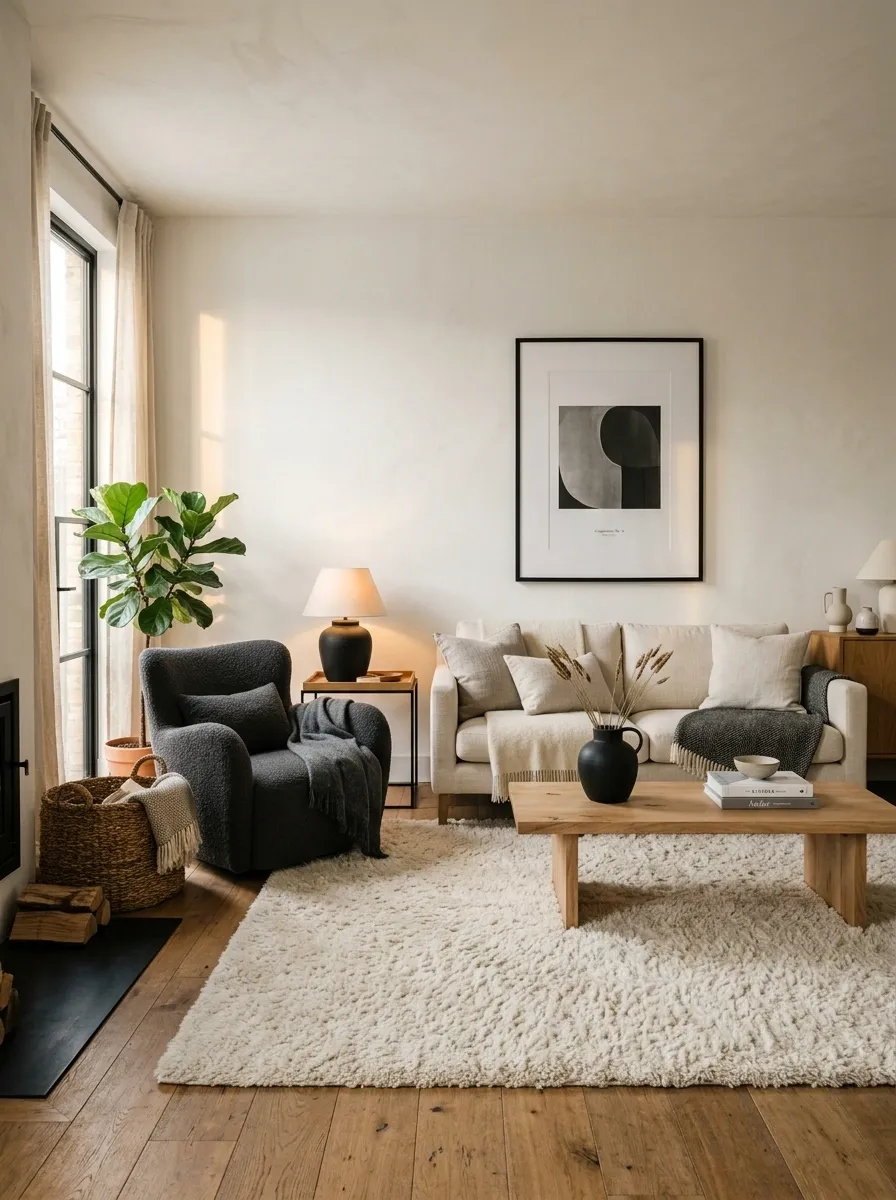
Instead of relying on one dramatic object, build interest through several smaller contrasts. Use a cream sofa, charcoal chair, black side table, pale oak coffee table and ivory rug.
Layer different textile weights across the seating. Add a woven basket, matte ceramic lamp and framed monochrome art.
The room works because nothing has to shout. The eye keeps finding small differences in material and shape.
This is the most adaptable approach for a real everyday living room because it doesn’t depend on a fireplace, dramatic windows or custom cabinetry. The composition comes entirely from furniture, materials and proportion.
The Finishing Move
A successful black and white living room isn’t really about keeping everything black or white. It’s about controlling where the contrast lands.
Use black to anchor furniture, architecture and lighting. Let white create breathing room. Then bring in warmth through wood, stone, linen, wool and aged finishes. Those materials are what stop monochrome rooms from feeling flat or overly staged.
The best compositions also leave something out. Not every wall needs artwork. Not every surface needs an object. Not every black piece needs a matching black partner.
Give the room enough contrast to feel intentional, then enough softness to make it look like an actual home rather than a showroom waiting for its photographer.