
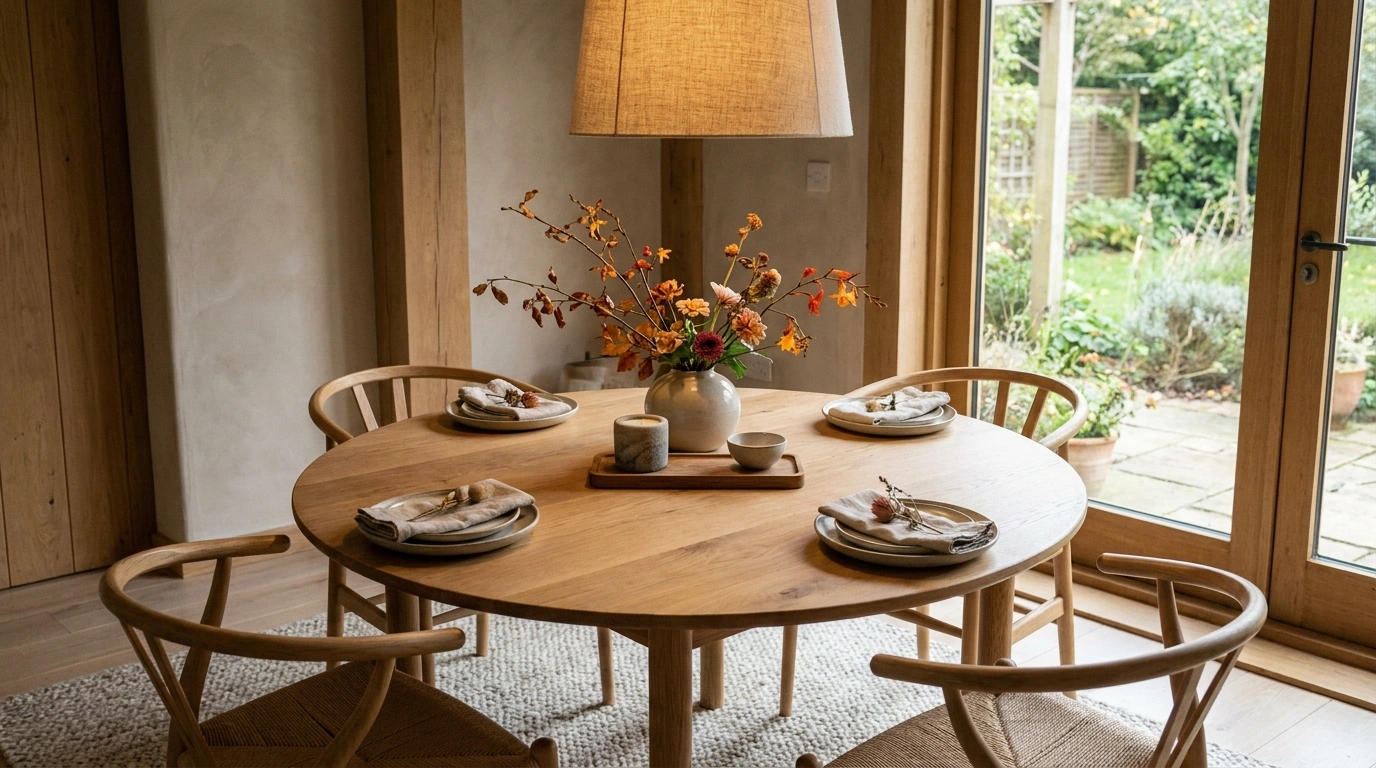
A round dining table has one unfair advantage: it makes a room feel more social without asking for much space. Everyone faces everyone, the center stays visually calm, and awkward corners suddenly have somewhere useful to go.
But the table itself isn’t the whole story.
The chairs, lighting, wall treatment, centerpiece, rug, nearby cabinetry, window placement, and even the amount of empty space around the table all decide whether the room feels intentional or like someone bought a table and then panic-decorated around it.
Warm, Layered Round Dining Rooms
Warm Oak Round Table With Linen Chairs and Soft Branches
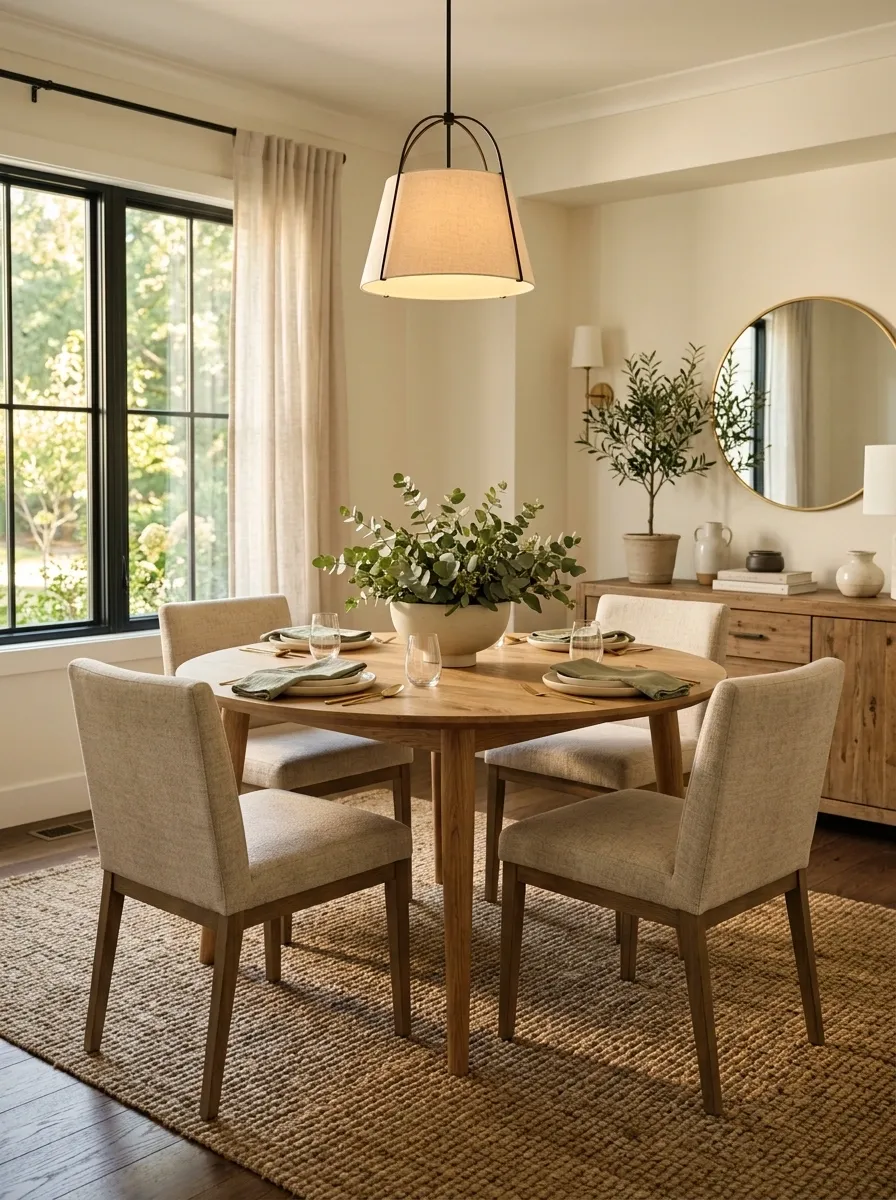
Warm oak gives a round table enough character to carry the room without making the dining area feel heavy. Pair it with upholstered linen chairs in oatmeal or warm ivory, then keep the walls slightly creamy rather than stark white.
A simple ceramic bowl filled with loose olive or eucalyptus branches gives the center height without turning dinner into an obstacle course. A woven rug underneath softens the wood and defines the dining zone. Keep the lighting warm, especially if the room gets afternoon sun.
The result feels collected rather than decorated within an inch of its life.
Moody Walnut Table With Amber Glass and Candlelight
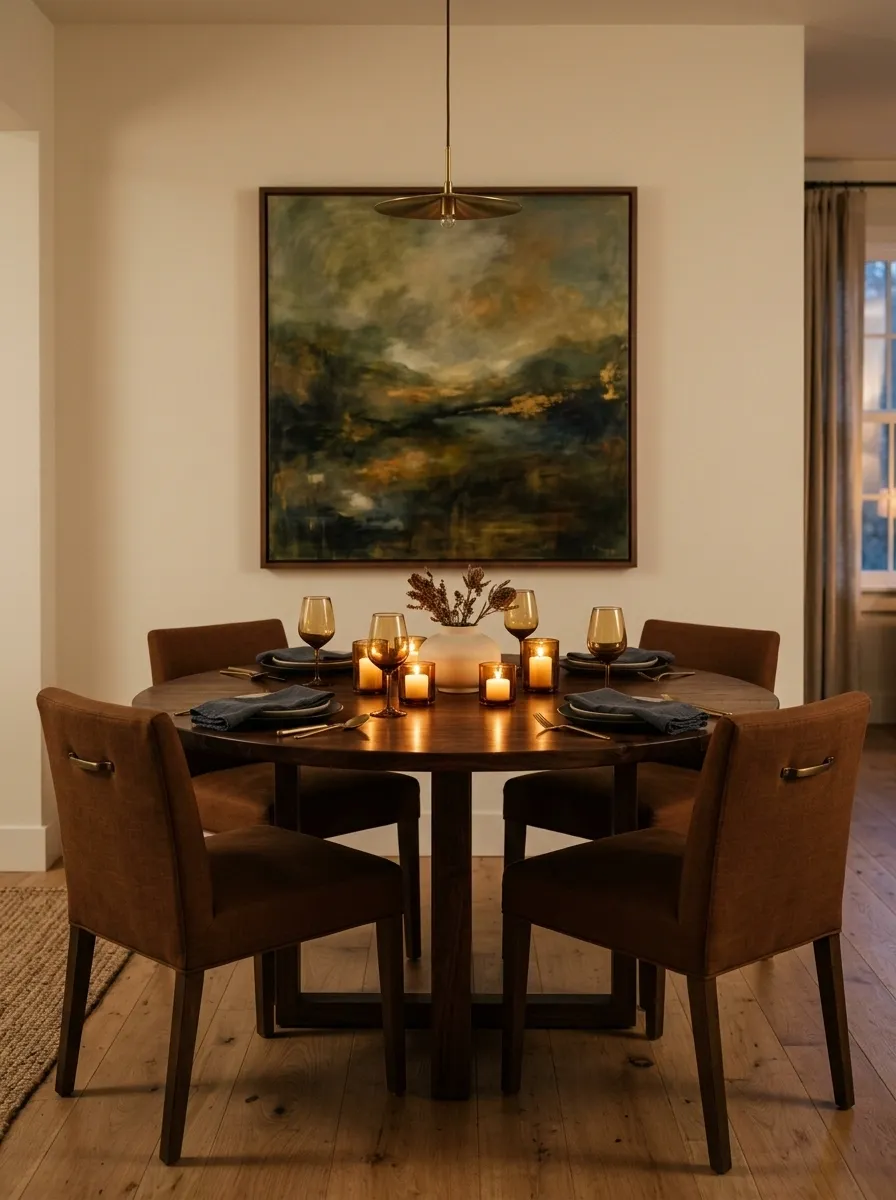
A deep walnut round table changes the entire mood of a dining room. Instead of fighting the darkness, lean into it with warm cream walls, tobacco-colored upholstery, and amber glassware.
A low ceramic vessel in the middle keeps the tabletop grounded while small candles bring soft points of light around it. Brass or aged bronze works better here than shiny chrome because the warmer metal keeps the room from becoming visually cold.
Add one large piece of artwork behind the table rather than a wall covered with tiny frames. The room should feel intimate, not like a restaurant trying very hard to impress.
Fresh White Tablescape With Blue-and-White Dinnerware
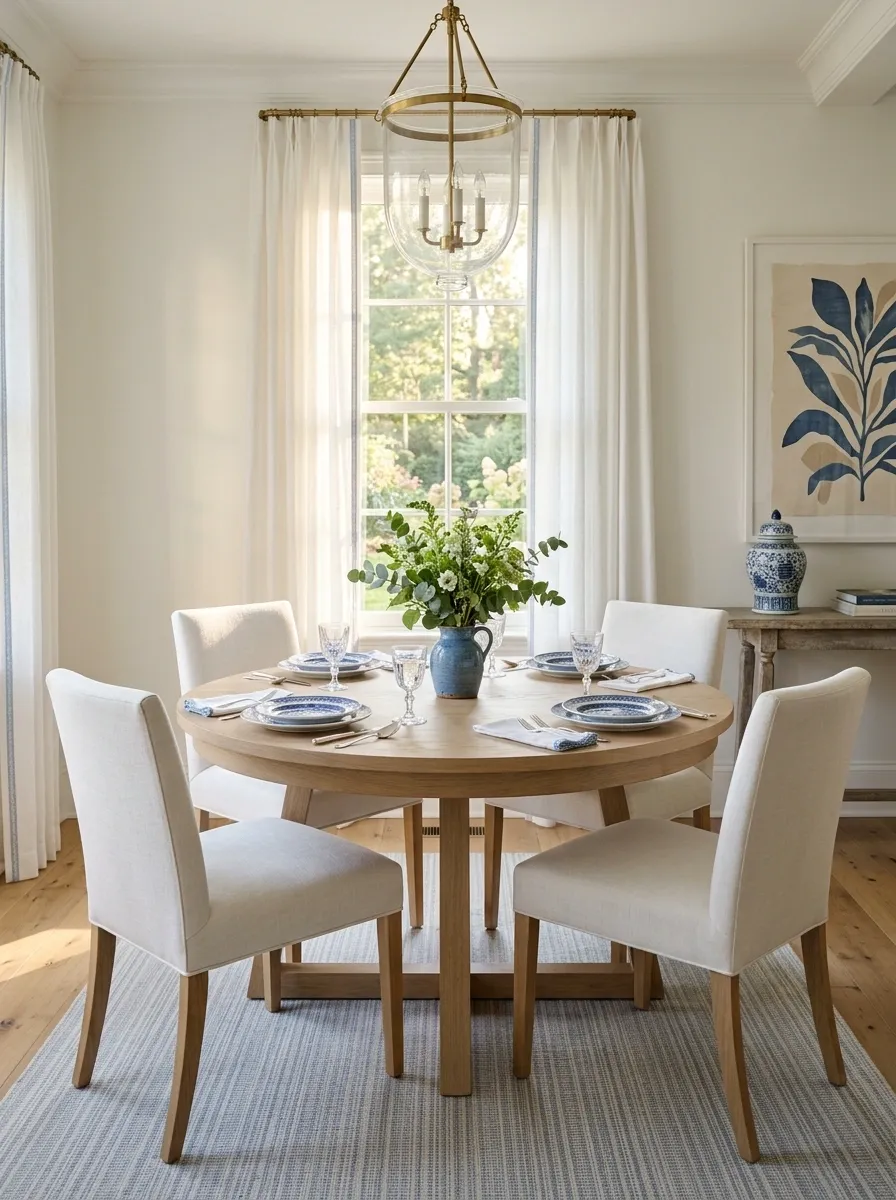
For a lighter dining room, pair a white or pale oak round table with classic blue-and-white ceramics. Keep the chairs upholstered in soft white, pale beige, or natural rush so the tabletop remains the visual anchor.
A small blue ceramic vase with leafy greenery is enough for the center. Avoid piling decorative plates, books, candles, and random bowls onto the table just because the surface is available. The charm comes from restraint.
A striped rug or subtle blue curtain can repeat the color elsewhere so the table doesn’t look like it wandered in from another room.
CONTRAST
Organic Modern Table With Travertine, Oak, and Olive Branches
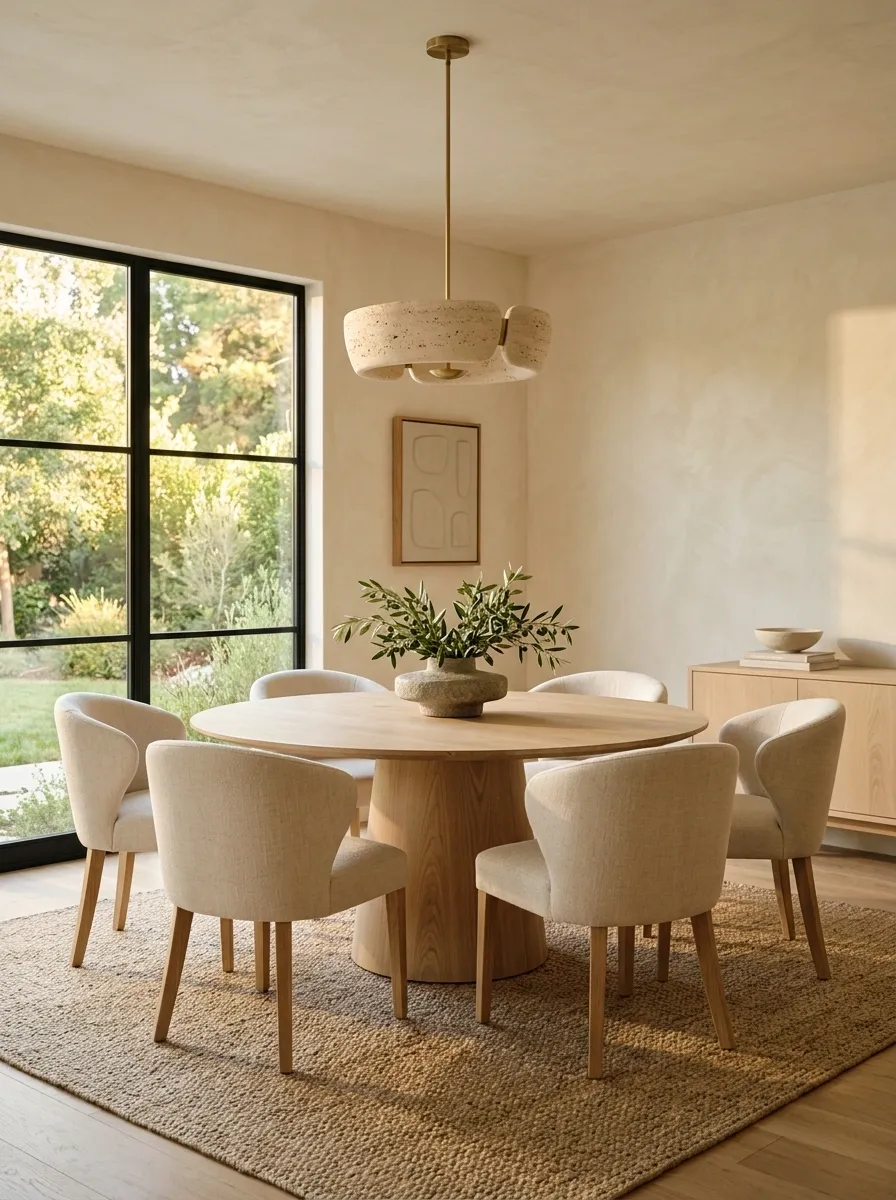
Organic modern dining rooms work especially well with round tables because the furniture already has a softer silhouette. Choose a pale oak pedestal table and surround it with curved upholstered chairs.
A travertine pendant above the table introduces a second natural material without competing with the wood. Keep the tabletop almost bare, using one low stone vessel with olive branches. Cream plaster-look walls, woven textures, and a warm neutral rug fill out the room.
The secret is material variety rather than color variety. Wood, stone, linen, and greenery give the eye plenty to notice without making the room feel busy.
Small Apartment Round Table With Built-In Banquette Seating
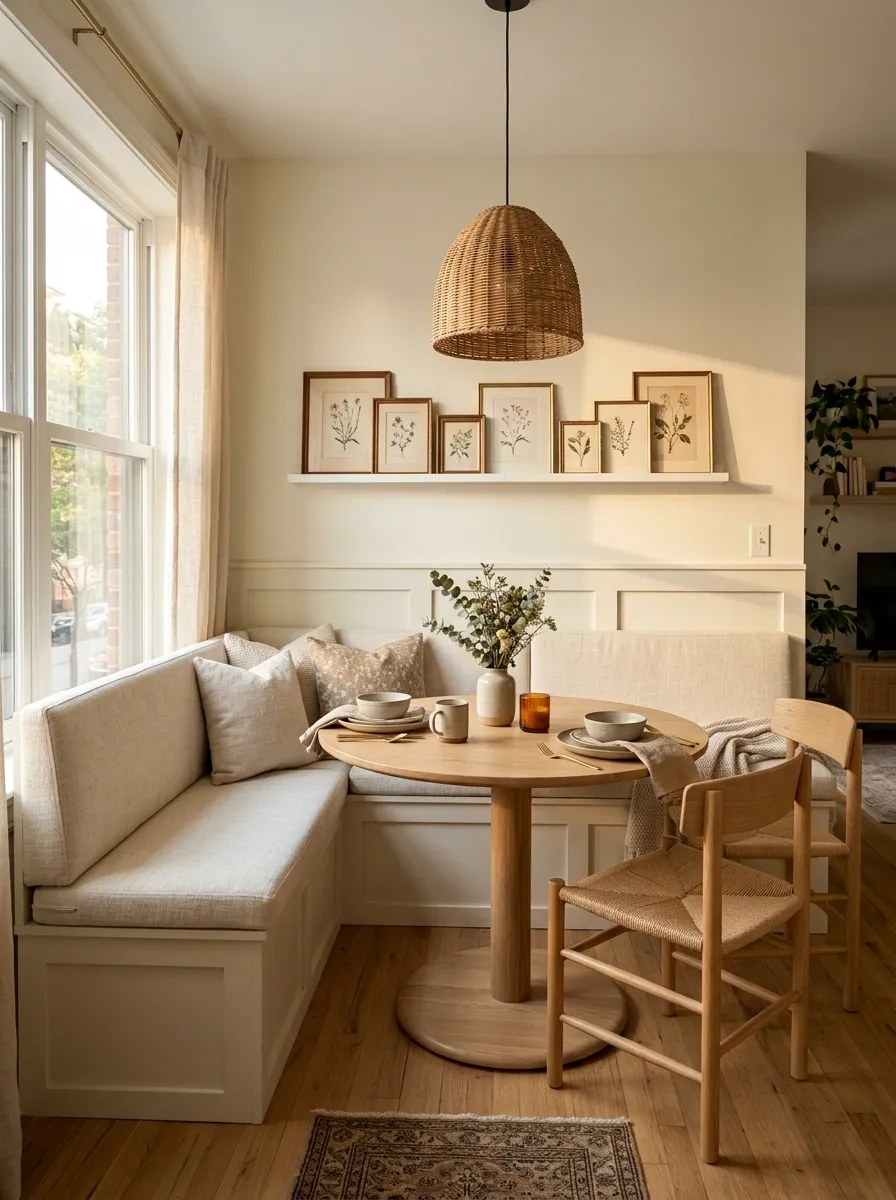
A small dining area doesn’t need four bulky chairs surrounding the table. A built-in or wall-mounted banquette can reclaim valuable floor space while making the dining corner feel custom.
Choose a compact pedestal table so legs don’t collide with the seating. Keep the banquette upholstery light, then add two movable chairs on the open side. A narrow picture ledge above the bench can hold a few framed prints without stealing floor area. A pendant centered over the table helps define the zone.
The whole setup should feel like a deliberate nook, not furniture squeezed against a wall because the living room won the argument.
Classic and Collected Dining Rooms
Classic Dining Room With a Pedestal Table and Pleated Linen Shades
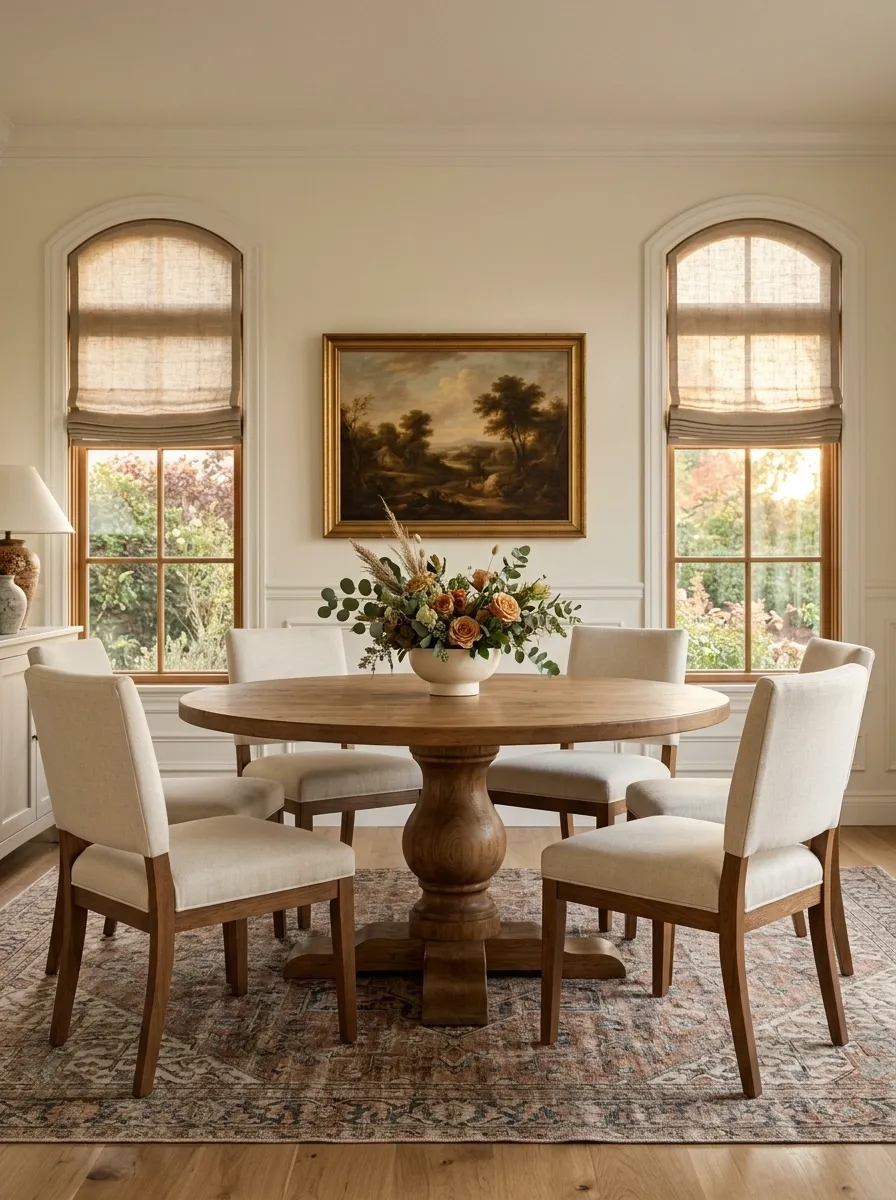
A pedestal table instantly gives a dining room a traditional foundation, especially when paired with pleated linen shades and tailored upholstery. Keep the table finish medium-toned so the room doesn’t become too formal.
A muted patterned rug underneath can introduce age and character without dominating the space. Place a large framed artwork or mirror behind the table, then repeat its warm tones in the chairs or curtains.
For the centerpiece, use a low bowl or a single floral arrangement with loose movement. This is classic without becoming a showroom frozen in 1998.
Black Round Table With Rust-Colored Textiles
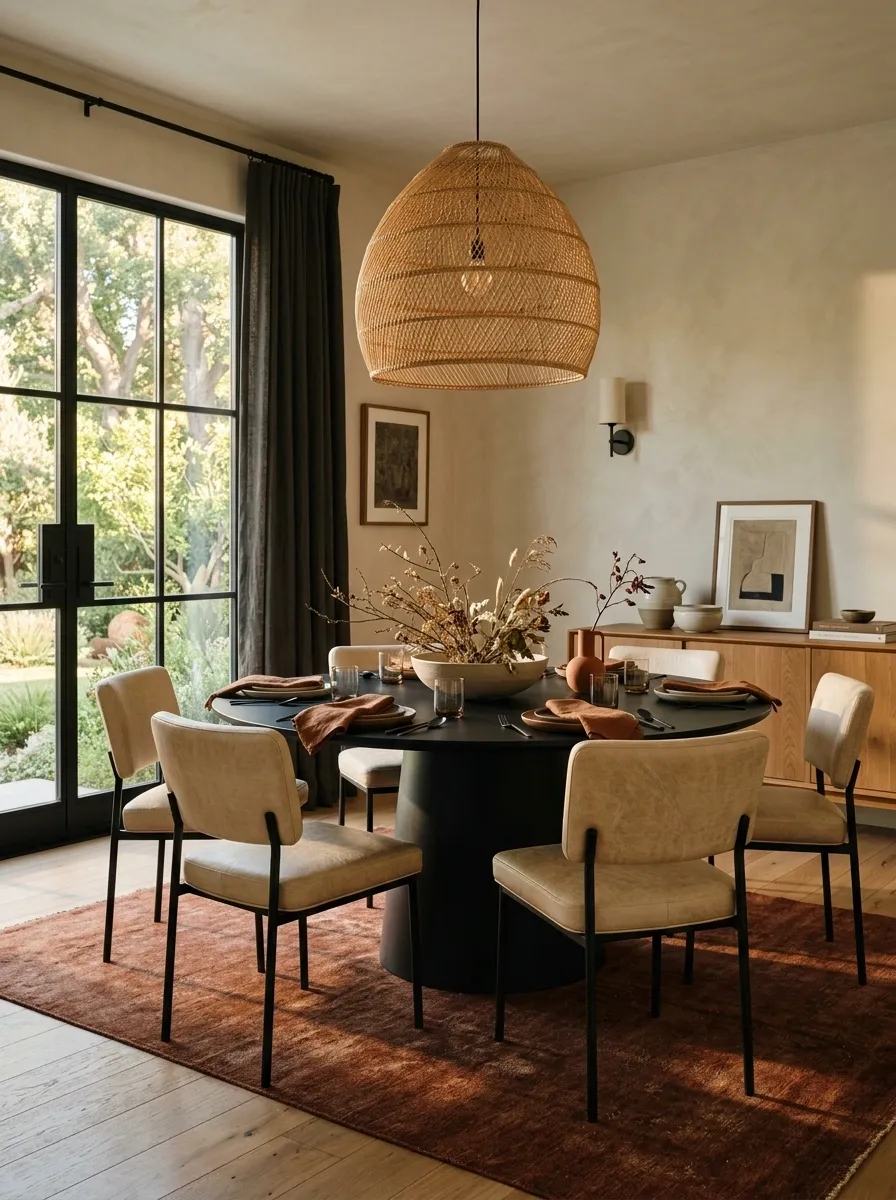
A black round dining table can anchor a room with very little additional effort. Pair it with chairs upholstered in warm ivory or natural leather, then bring rust into the room through napkins, a rug, artwork, or a small ceramic vessel.
Keep the walls warm white or pale mushroom to prevent the furniture from feeling harsh. A woven pendant overhead softens the strong black silhouette. On the table, a shallow bowl filled with seasonal branches keeps the center low. The contrast feels modern but still warm enough for everyday meals.
Coastal Round Table With Pale Wood and Soft Blue Layers
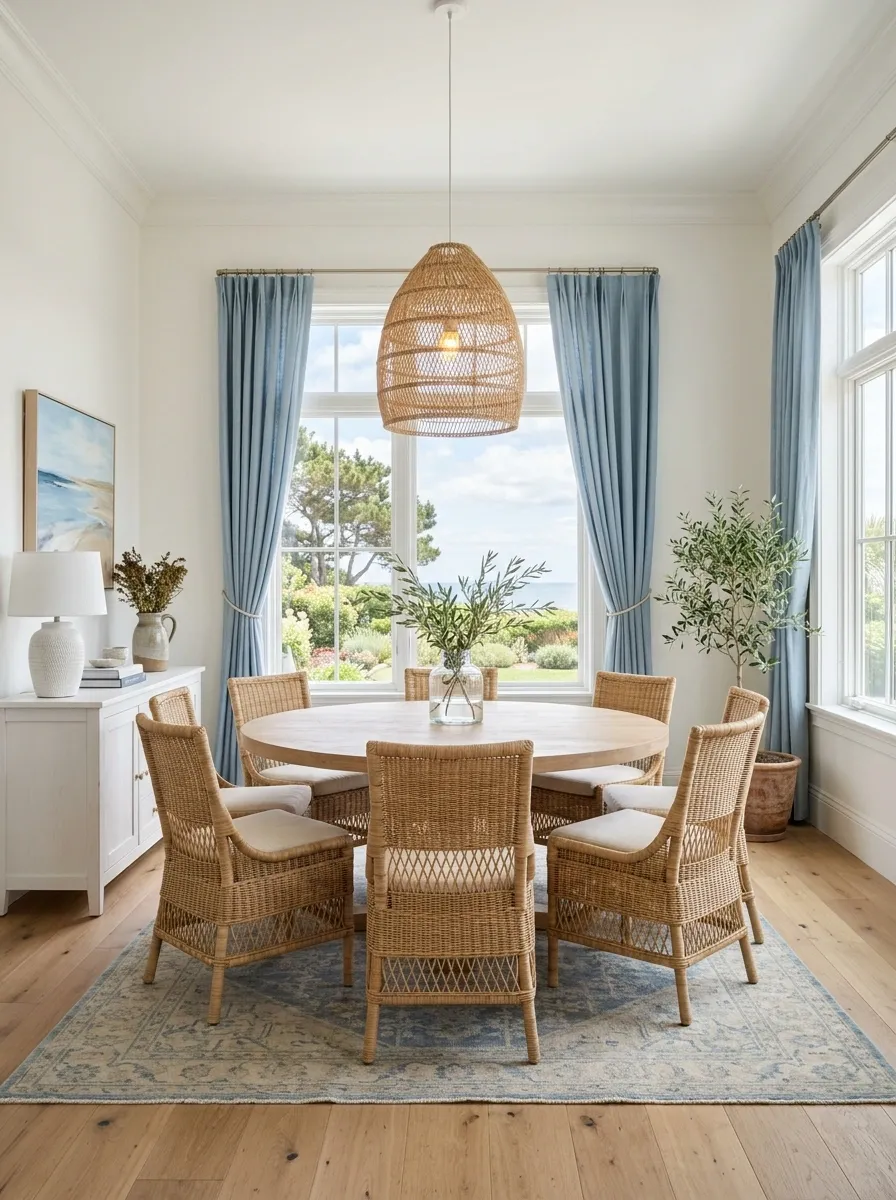
Coastal dining doesn’t need anchors, seashells, or a sign announcing that the beach has been contacted. A pale wood round table, woven chairs, soft blue textiles, and plenty of natural light are enough.
Use white walls with a slightly warm undertone, then introduce blue through a rug, artwork, or linen curtains. Keep the centerpiece organic with a simple glass vase and airy branches. A rattan or woven pendant adds texture overhead.
The finished room should feel light and relaxed, with enough structure that it still reads as a dining room rather than a vacation rental staged five minutes before check-in.
Round Table Beneath a Sculptural Pendant With Minimal Styling
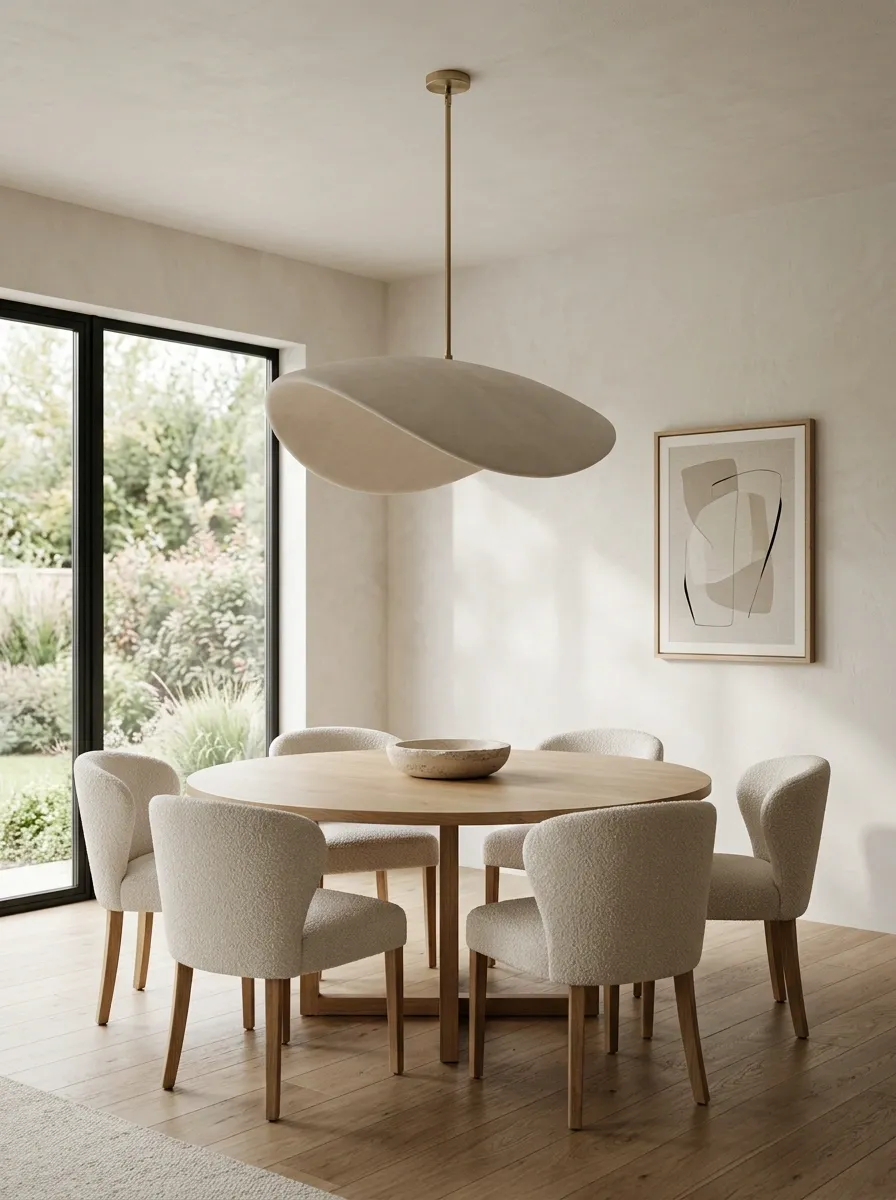
Let the light fixture become the statement. A sculptural pendant with an oversized shade or interesting curved form can sit directly above a simple round table. Keep the chairs clean-lined and neutral so the fixture remains visually important.
The tabletop needs very little: perhaps one low stone bowl or a single branch arrangement. Use artwork on the surrounding walls sparingly. The beauty of this composition comes from negative space and repetition of curves. The circular table, rounded pendant, and curved chairs create a quiet rhythm throughout the room. This is minimalism with enough personality to avoid looking like a furniture catalog.
Vintage-Inspired Table With Mismatched Dining Chairs
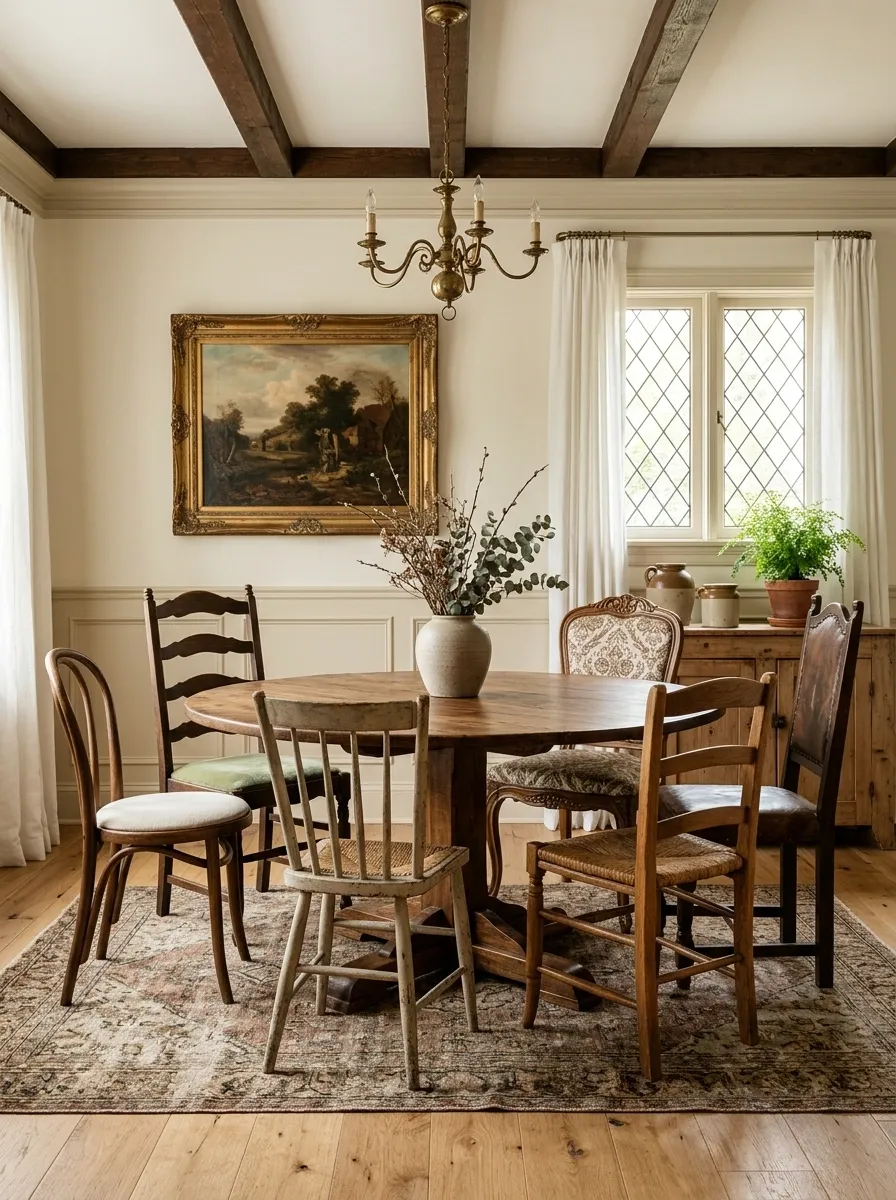
A vintage-inspired dining room becomes much more interesting when the chairs aren’t a matching set. Use a round wood table with visible grain, then surround it with chairs that share a similar scale but differ slightly in shape, finish, or fabric.
Keep the palette connected through warm neutrals, faded green, cream, and brown. A vintage rug can ground the composition, while a simple ceramic centerpiece keeps the tabletop from looking staged. Add one oversized framed artwork or an old-style mirror to finish the wall. The goal isn’t randomness. Every piece should look like it could have belonged together even if it didn’t arrive in the same box.
Architectural and Space-Saving Compositions
Sunlit Bay Window Dining Nook With Curved Oak Seating
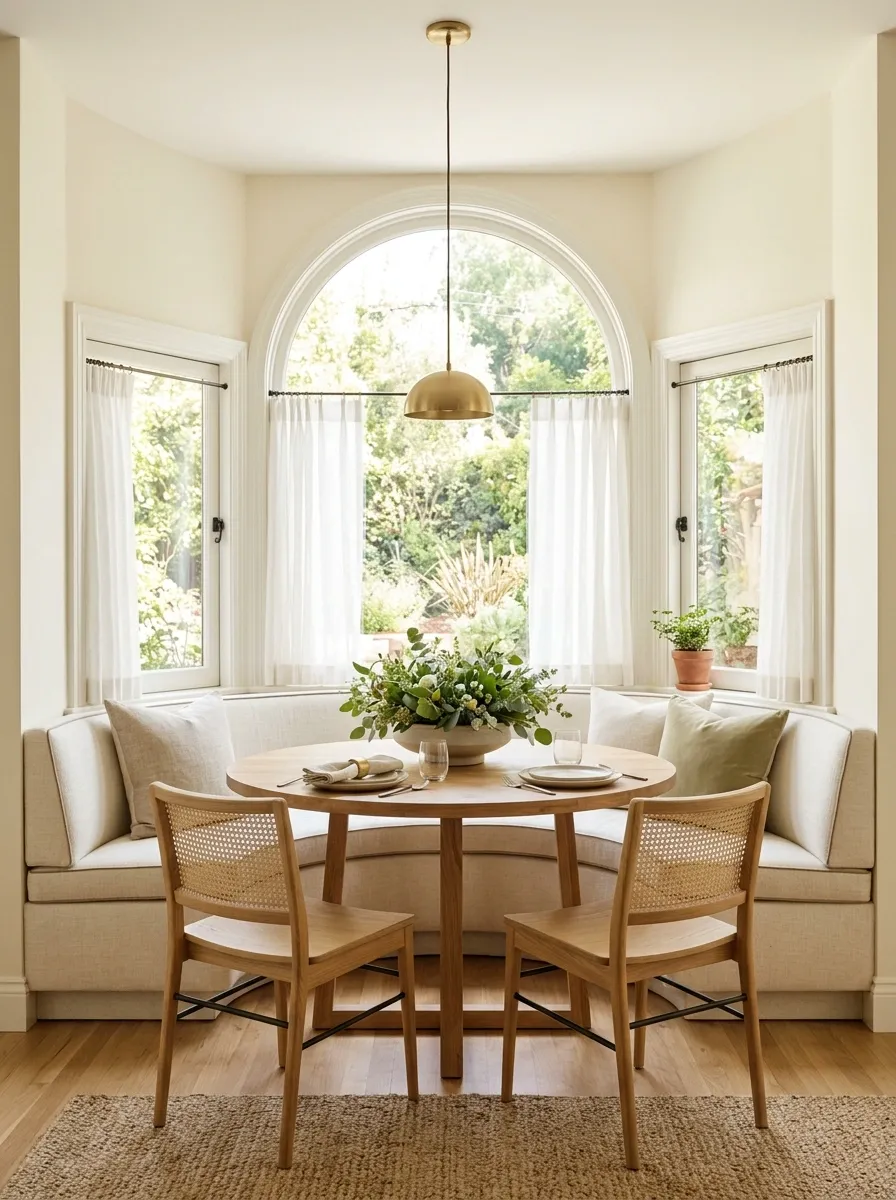
A bay window is practically asking for a dining table. Place a round oak table directly into the light and build the composition around the window rather than blocking it.
A curved upholstered bench along the widest wall makes the most of the architecture, while two lightweight chairs can fill the open side. Keep window treatments soft and simple so the natural light remains the star. A small pendant centered over the table adds definition after sunset.
The centerpiece should stay low, perhaps a shallow bowl with seasonal greenery. This arrangement makes the architectural feature feel intentional instead of like an awkward leftover corner.
Sage Green Breakfast Nook With U-Shaped Banquette and Stone Top
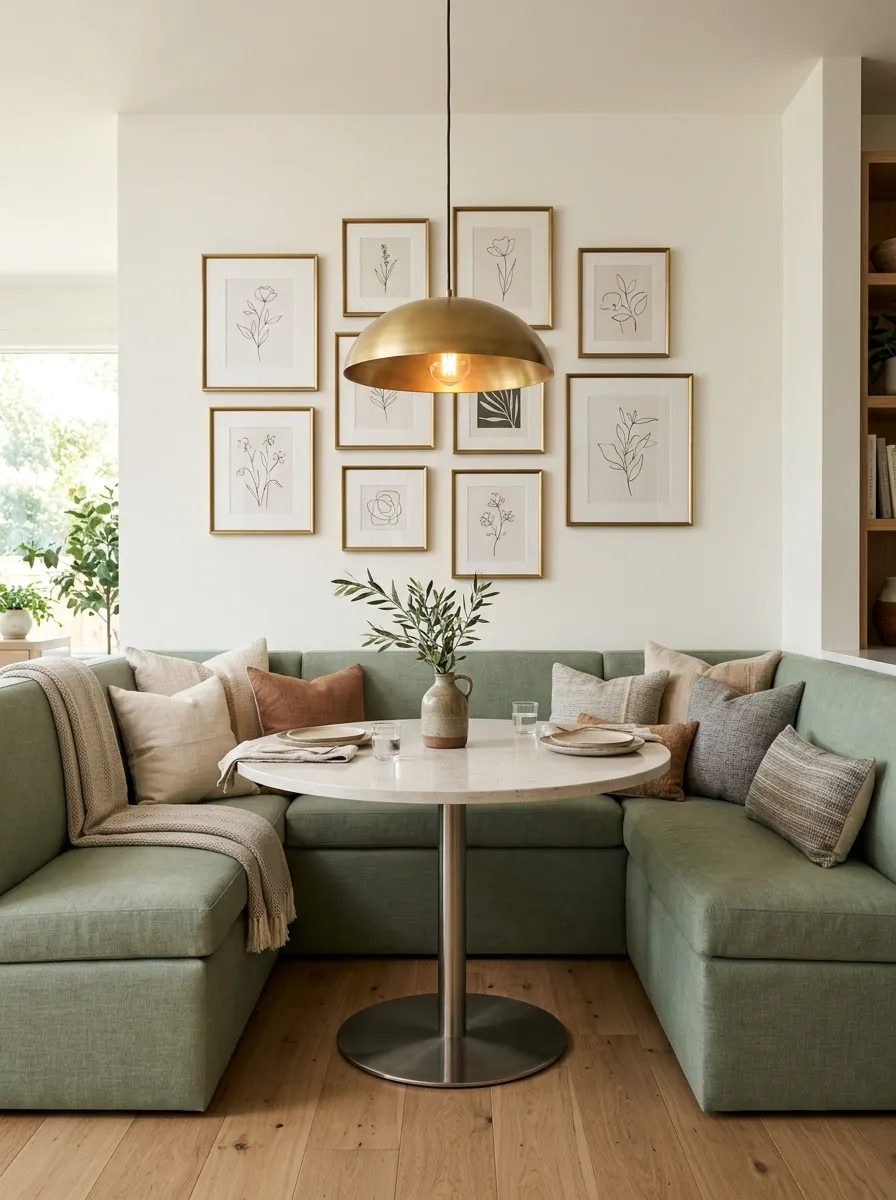
A U-shaped banquette makes a small breakfast area feel built rather than squeezed together. Use sage green upholstery on the seating and pair it with a round stone or light quartz tabletop.
The pedestal base keeps the center open, while the surrounding bench gives the table a comfortable sense of enclosure. Add framed botanical artwork above the banquette, but keep the frames simple. A small pendant can sit low enough to create intimacy without blocking sightlines.
The palette should stay soft: sage, warm white, pale stone, and natural oak. It feels fresh without wandering into farmhouse cliché territory.
Dark Walnut Dining Room With Cream Upholstery and Layered Art
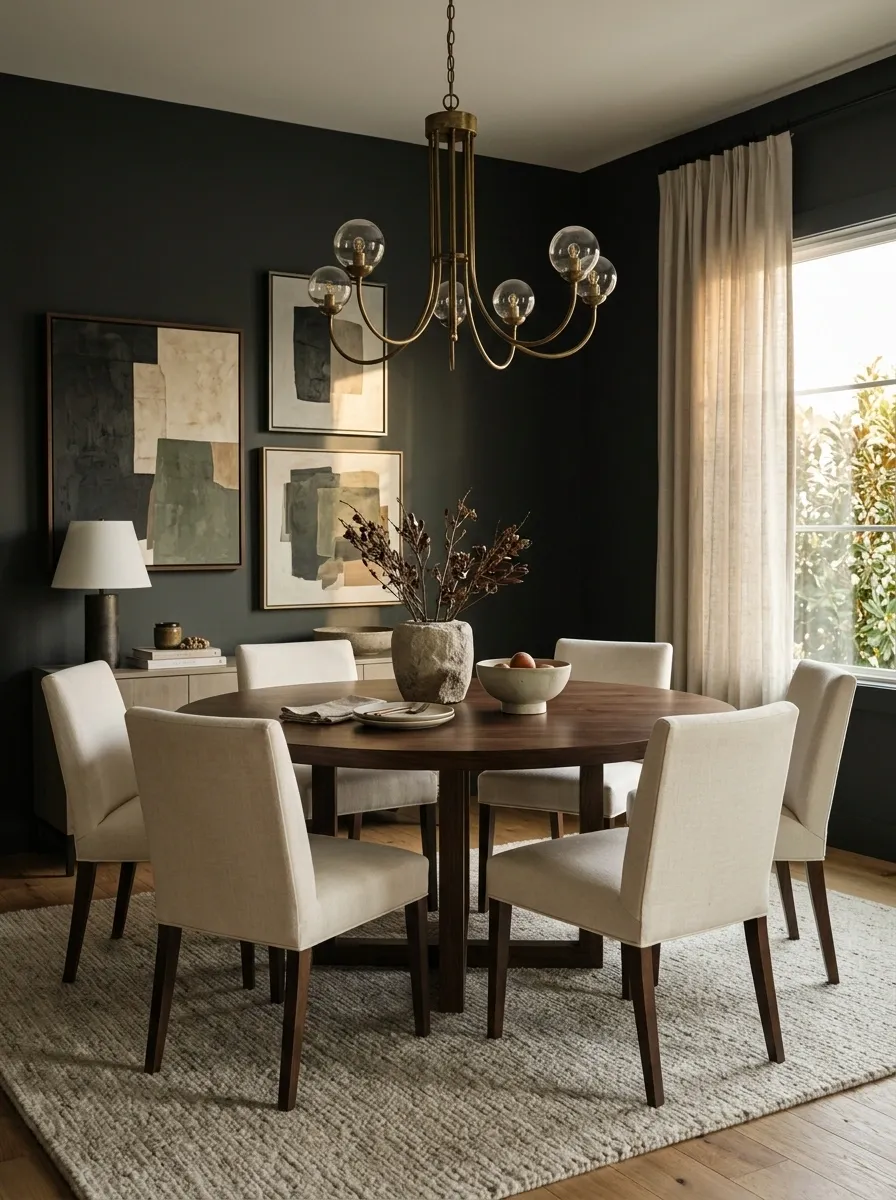
Dark walnut can make a dining room feel rich without needing dramatic wall color. Pair the table with cream upholstered chairs and a large neutral rug. Behind the table, layer two or three pieces of artwork in related tones rather than hanging a perfectly symmetrical gallery wall.
Think charcoal, parchment, muted brown, and a little faded green. A substantial pendant in aged metal brings the eye upward. Keep the tabletop simple with one stone vessel or ceramic bowl. The contrast between deep wood and soft upholstery gives the room depth while keeping the overall composition welcoming.
Tufted Ivory Banquette With Round Table and Classic Trim
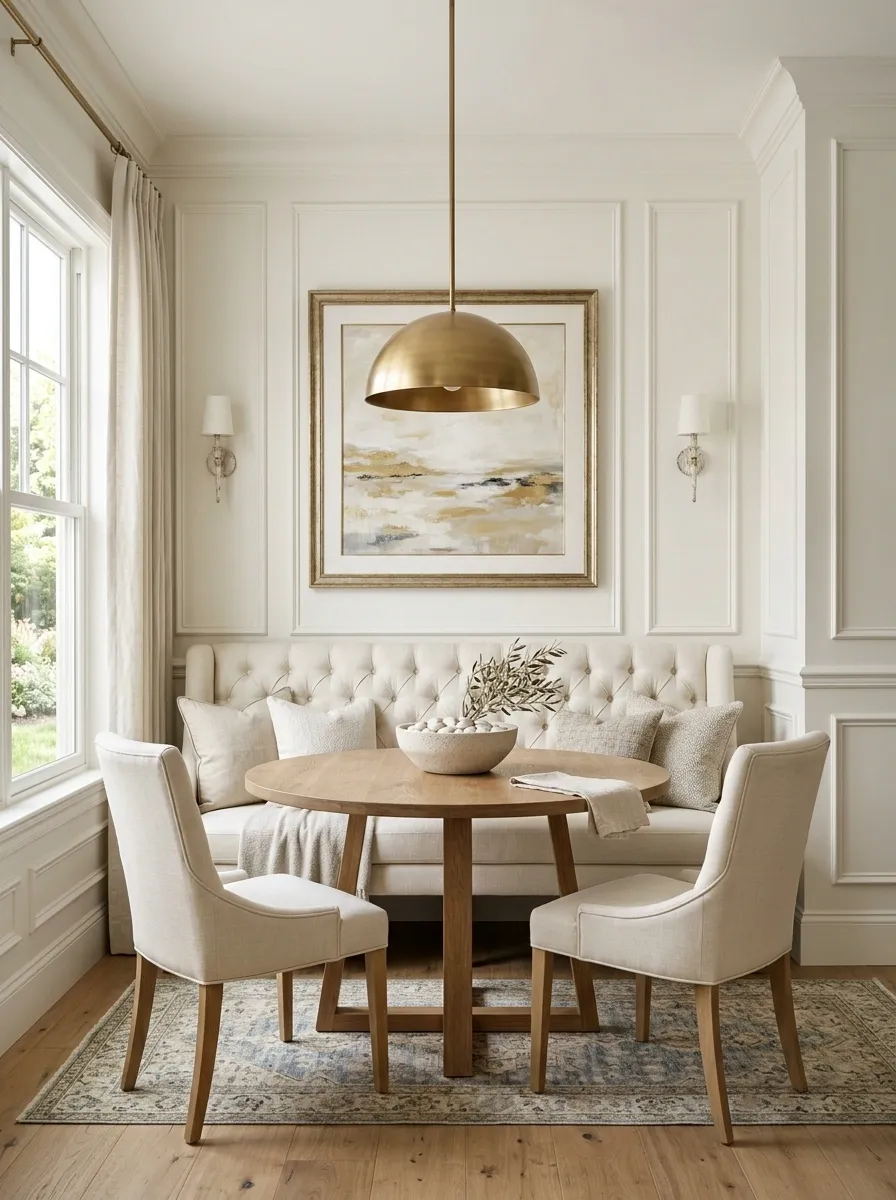
For a more traditional dining nook, use a tufted ivory banquette as the main architectural feature. A medium-toned round wood table keeps the space grounded, while two upholstered side chairs provide flexibility. Add simple molding or picture-frame trim to the wall behind the banquette, then keep the artwork centered and substantial.
A brass or aged bronze light fixture completes the classic direction. The tabletop doesn’t need a centerpiece every day. A low ceramic bowl is enough, with candles brought out when the room is being used for dinner. The whole composition should feel tailored rather than overly precious.
Wall-Hugging Apartment Dining Nook With Slim Pedestal Table
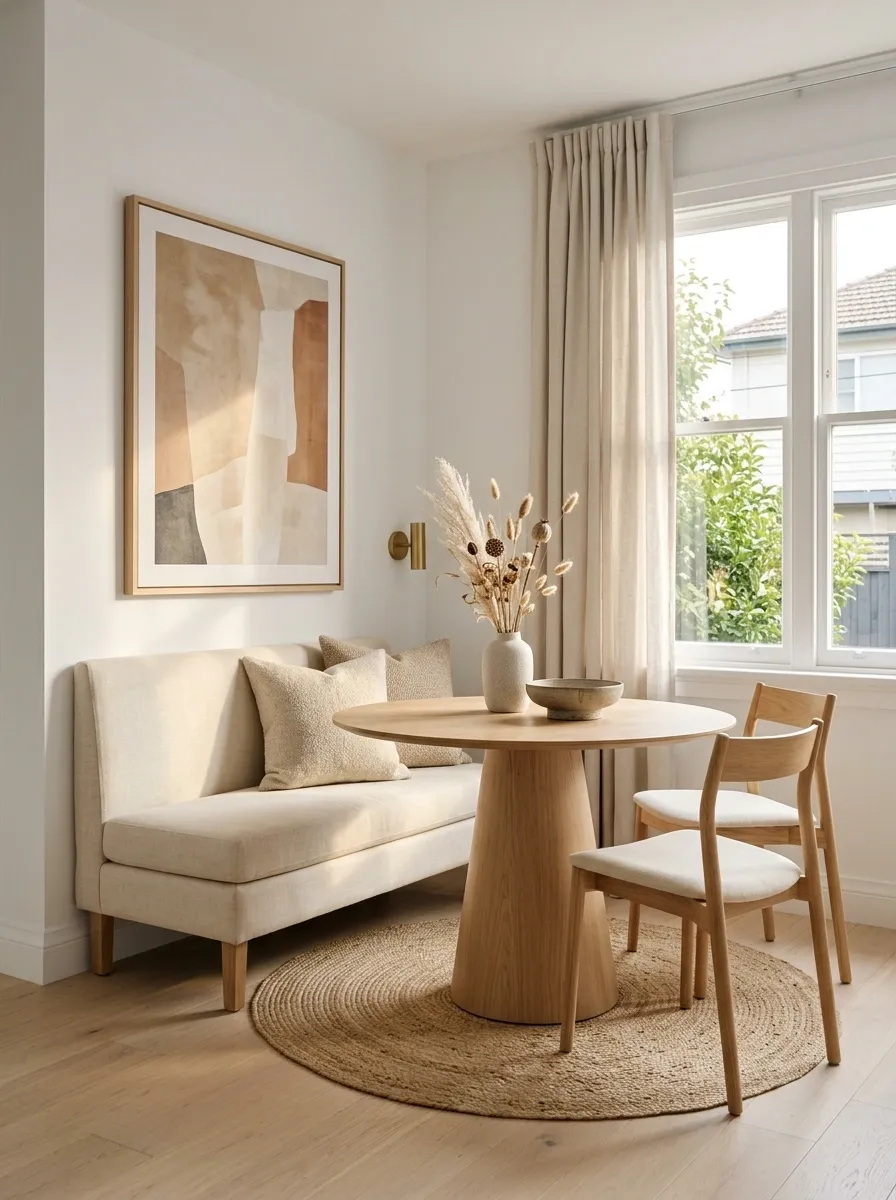
When the dining area shares a wall with the kitchen or living room, a slim pedestal table can make the arrangement feel intentional. Push the table closer to the wall and use a compact bench on one side, leaving lightweight chairs on the opposite side. Hang one oversized piece of artwork above the bench rather than filling the wall with small frames.
A narrow runner or round rug can visually define the dining area without overwhelming the floor plan. Choose a light wood finish and warm neutral upholstery so the furniture doesn’t visually shrink the room. Small spaces need editing more than decoration.
Round Table Beside a Kitchen Island With Cohesive Stone and Wood
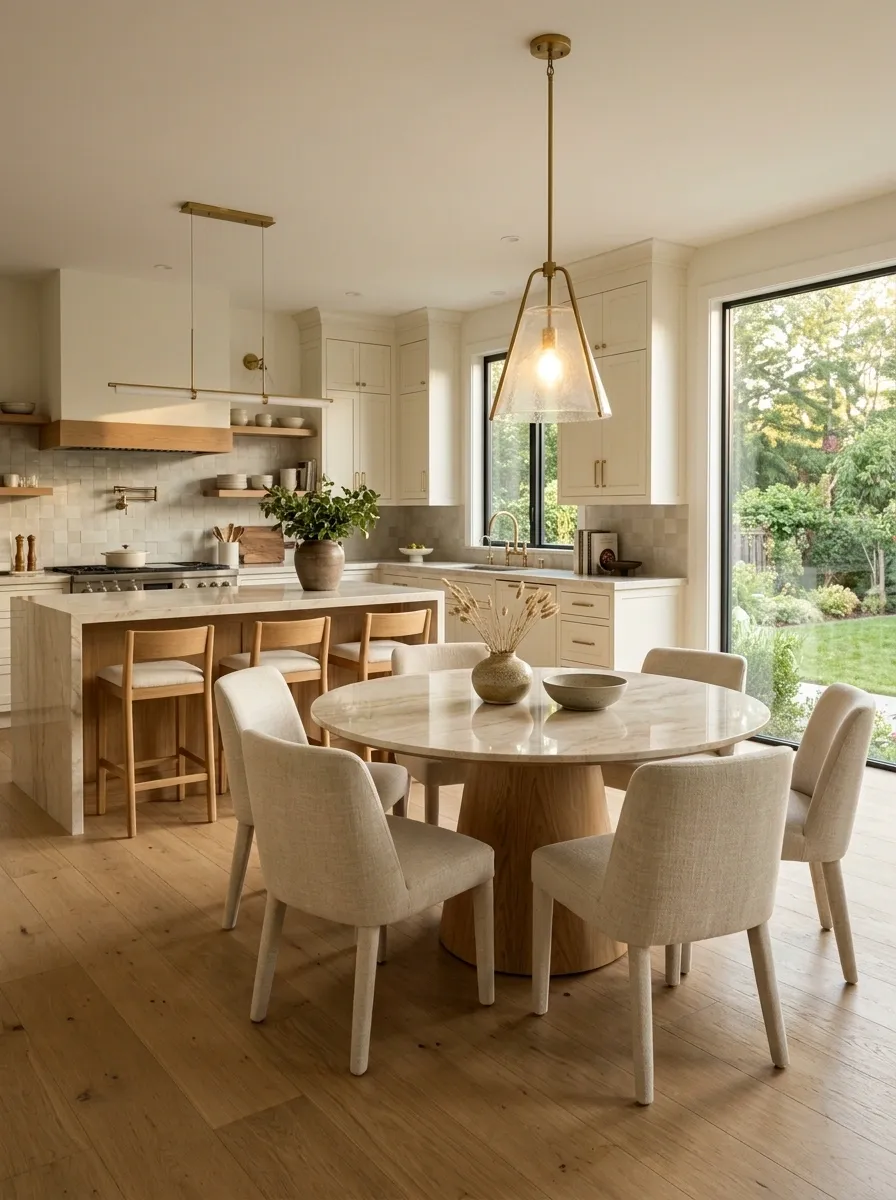
A dining table beside a kitchen island should feel like part of the same room rather than a separate furniture story. Match one material between the two zones, such as oak cabinetry and an oak table base, or warm stone counters with a stone-topped dining table.
Keep the chairs softer and more residential than the kitchen finishes. A single pendant above the dining table distinguishes it from the island lighting. Use one low centerpiece that echoes the kitchen’s materials. The table should create a softer pause beside the harder working surfaces of the kitchen.
Sage, Limestone, and Oak Dining Room With Soft Architectural Contrast
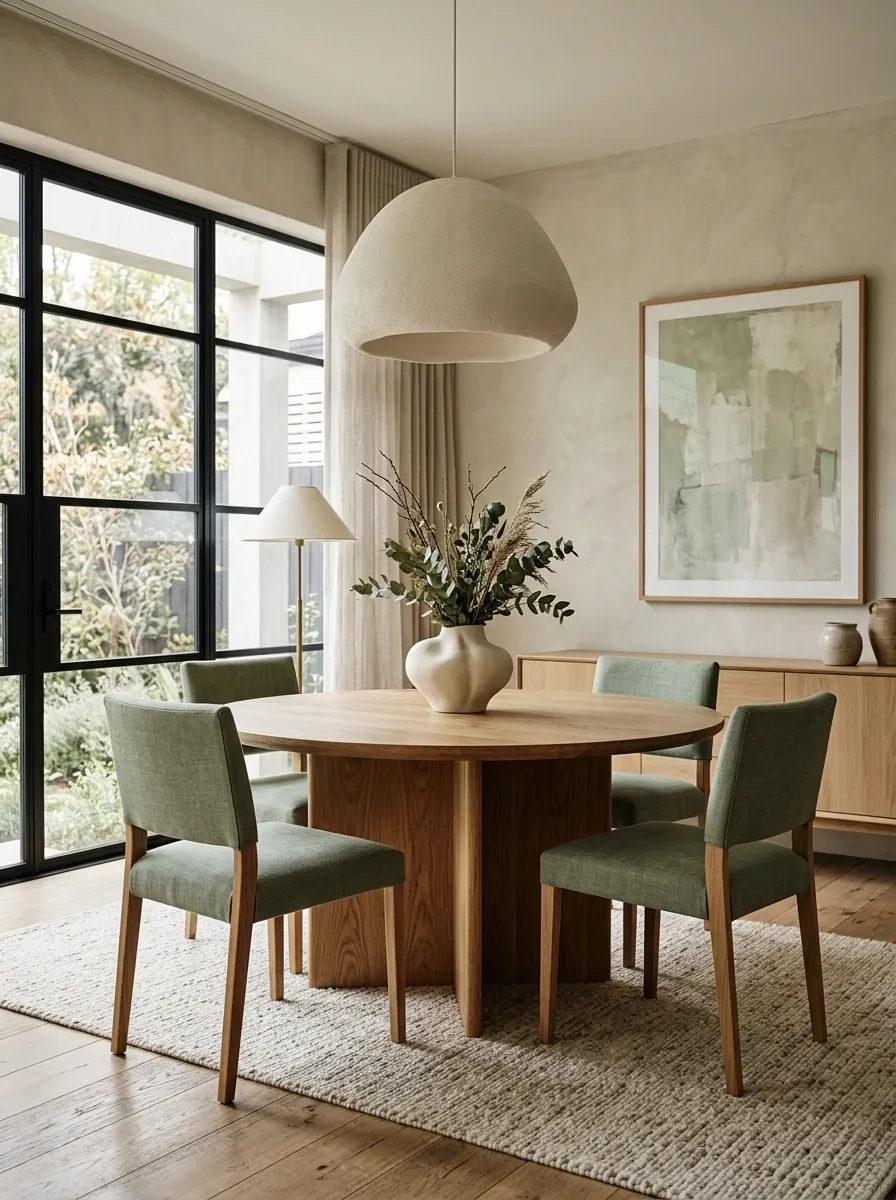
This palette works especially well in rooms with simple architectural details. Use an oak round table, limestone-toned walls, and sage upholstered chairs. A plaster-look pendant introduces texture above the table, while a pale stone vessel keeps the centerpiece almost sculptural.
Instead of adding lots of color, let the materials create variation. The result feels calm but not flat because each surface catches light differently. A faded green artwork or muted textile can reinforce the sage without turning the room into a color-themed set.
Modern Curves and Scandinavian Simplicity
Curved Dining Room With Sculptural Chairs and Rounded Millwork
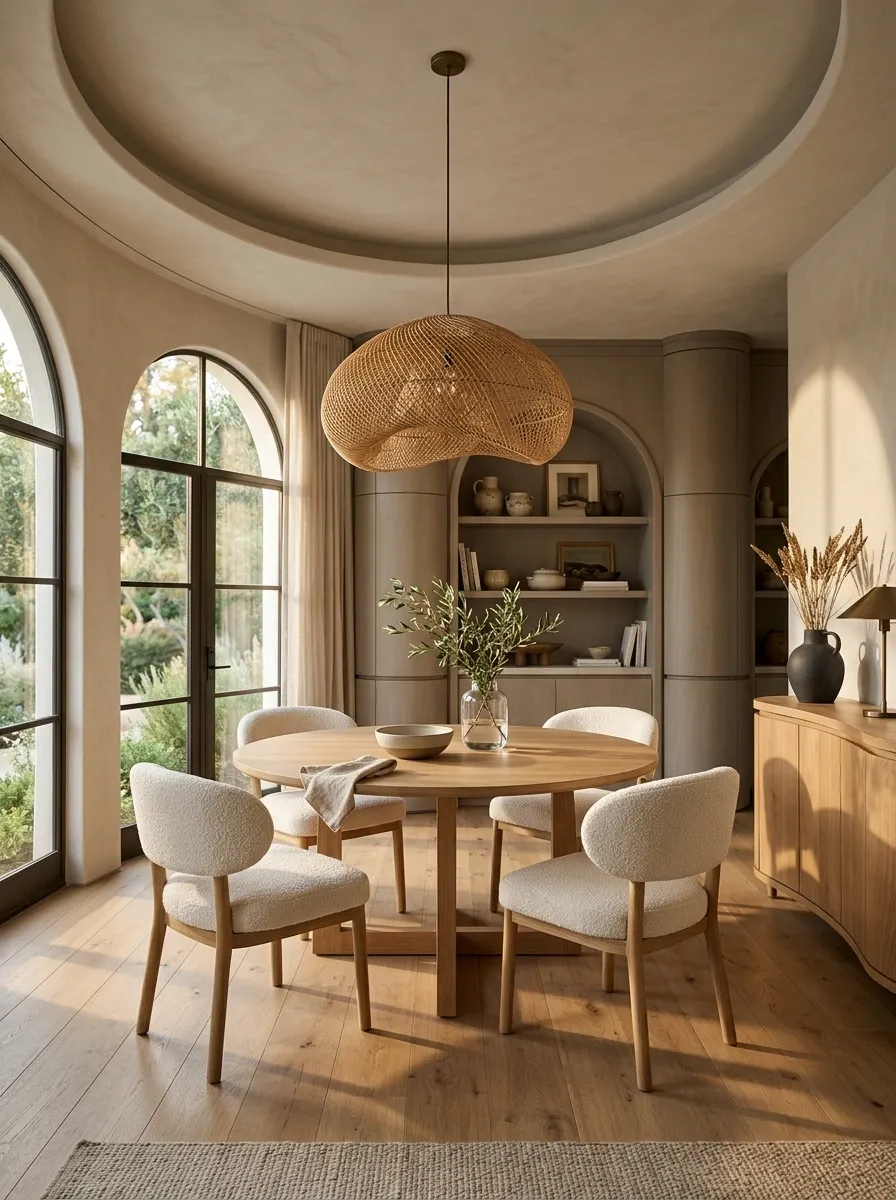
Lean fully into the circular shape by repeating curves throughout the room. A round table can sit beneath a curved pendant, surrounded by chairs with rounded backs. If the room has built-in cabinetry, use arched or softly rounded openings rather than hard rectangular lines.
Keep the palette neutral with warm white, mushroom, oak, and a small amount of dark contrast. The tabletop should remain mostly clear so the silhouette stays visible. This composition feels sophisticated because the same visual language keeps appearing at different scales.
Scandinavian Pale Oak Dining Space With Linen and Soft Gray
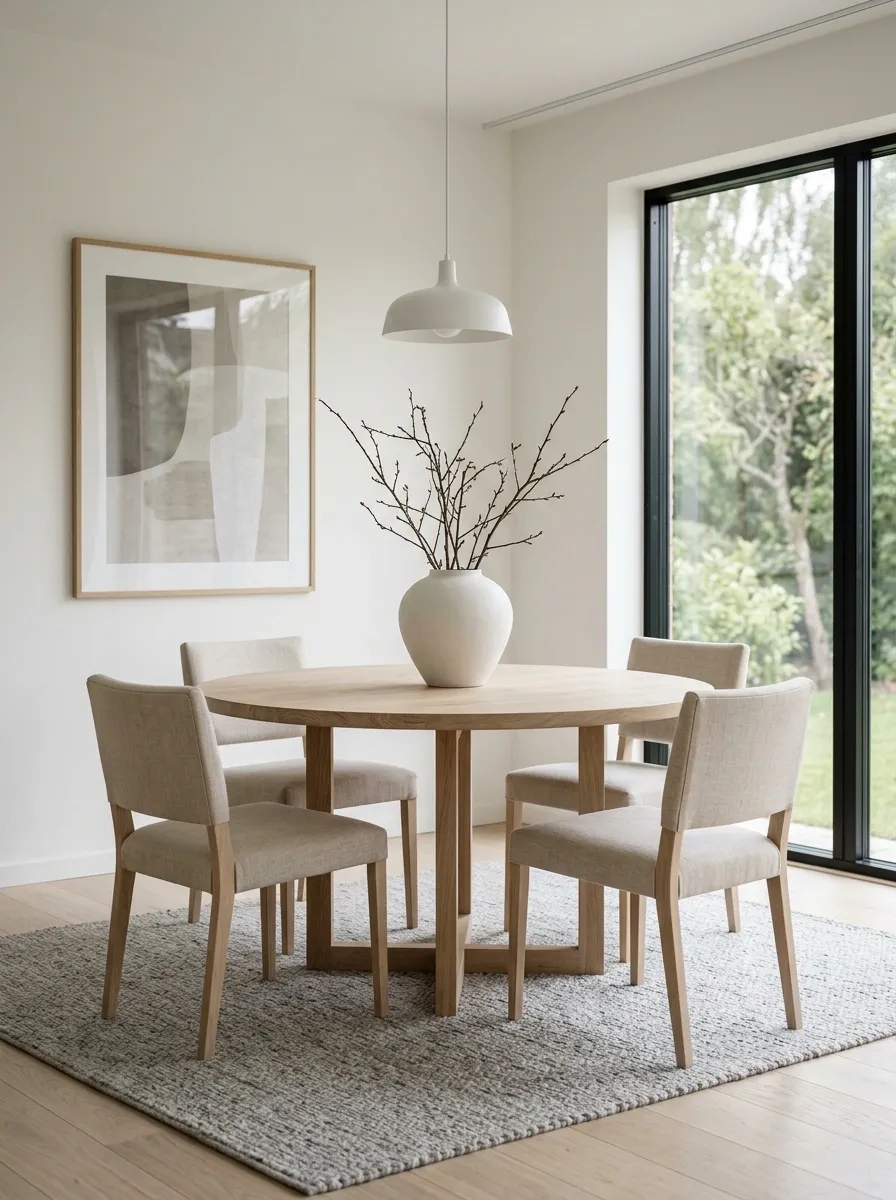
A Scandinavian-inspired dining room benefits from simplicity, but simplicity doesn’t mean empty. Use a pale oak round table with light linen chairs and a soft gray rug. Add one sculptural pendant above the table and a restrained arrangement of branches in a matte ceramic vase.
Keep wall art minimal, perhaps one large abstract print with warm gray and beige tones. The room should have visible texture through linen, wool, wood grain, and ceramic. Avoid excessive decorative objects. The whole point is to make ordinary materials look considered.
Deep Green Dining Room With Leather Chairs and Brass Lighting
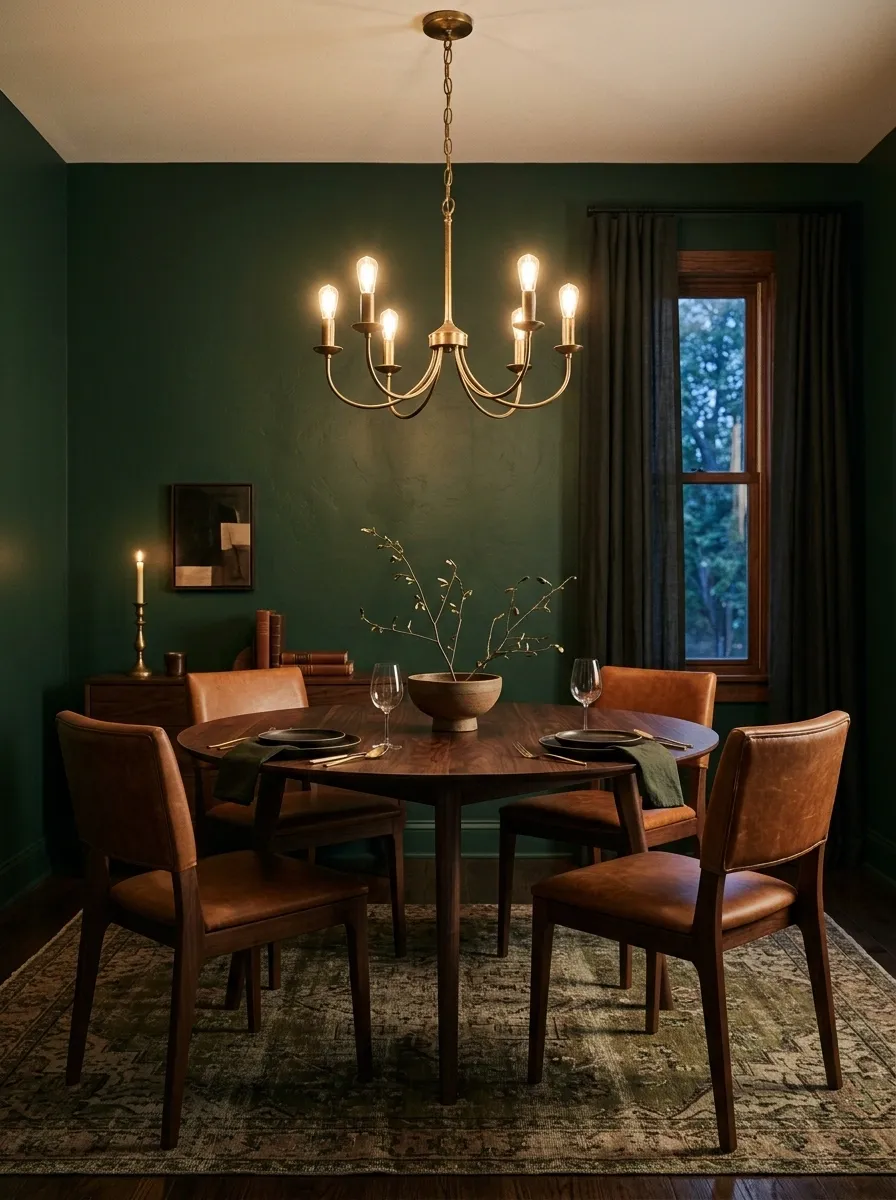
Deep green walls can make a dining room feel enveloping, especially with a round wood table placed against them. Add caramel or cognac leather chairs for warmth and aged brass lighting for a soft metallic note. Keep the centerpiece earthy with a ceramic bowl or a few branches.
A vintage-inspired rug with faded green and brown tones ties the lower half of the room together. Avoid adding lots of bright colors. The richness comes from depth and repetition. This is the kind of dining room that looks especially good after sunset when the brass and warm lighting start doing their thing.
Open-Shelf Dining Wall With Round Table and Collected Ceramics
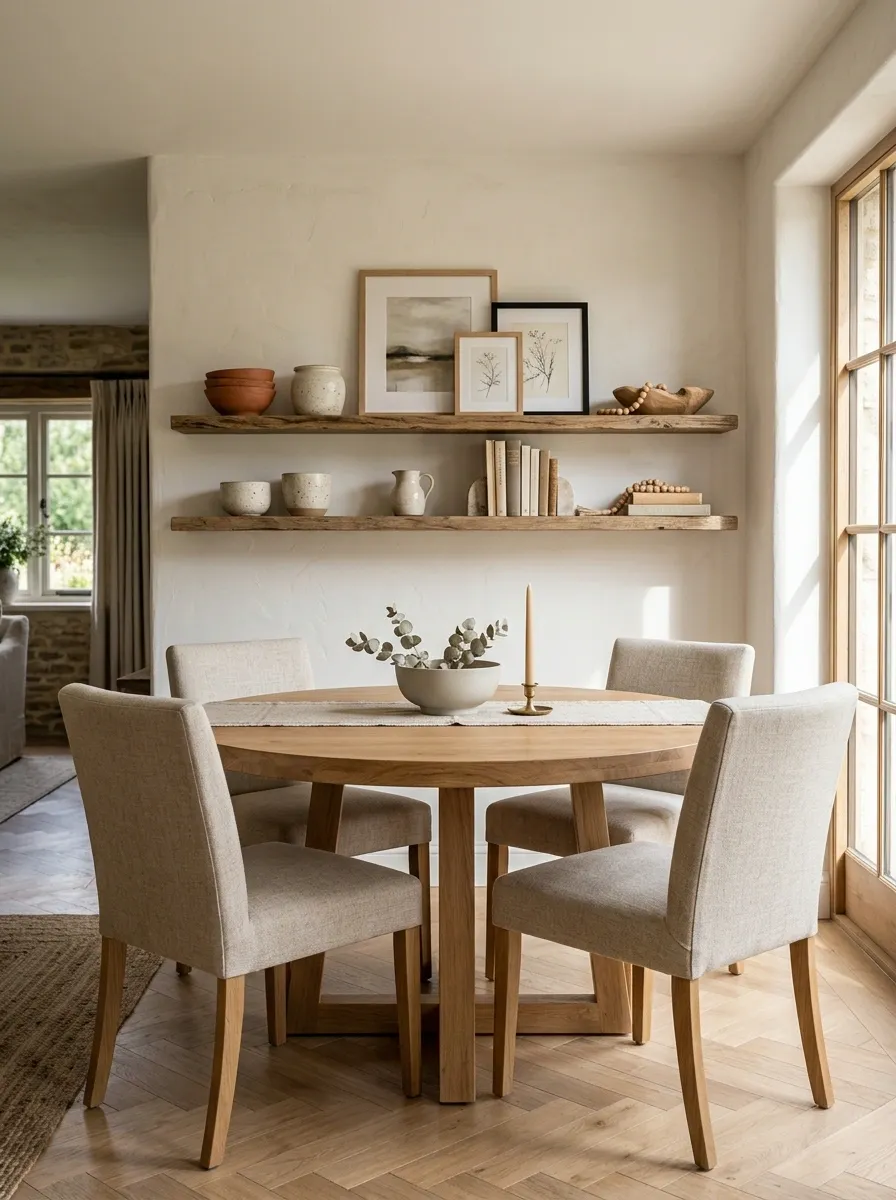
An open shelf behind the dining table can act as the room’s visual backdrop. Keep the shelves edited, using a mix of ceramic bowls, framed art, small books, and a few natural objects. Choose a round table in a finish that appears somewhere on the shelving, such as warm oak.
Upholstered chairs keep the composition comfortable. The centerpiece can be extremely simple because the wall already carries visual interest. The key is leaving some shelf space empty. Every inch filled with decor turns the display into a storage problem wearing lipstick.
Rustic, Farmhouse, and Collected Character
Reclaimed Wood Round Table With Farmhouse Bench and Aged Metal
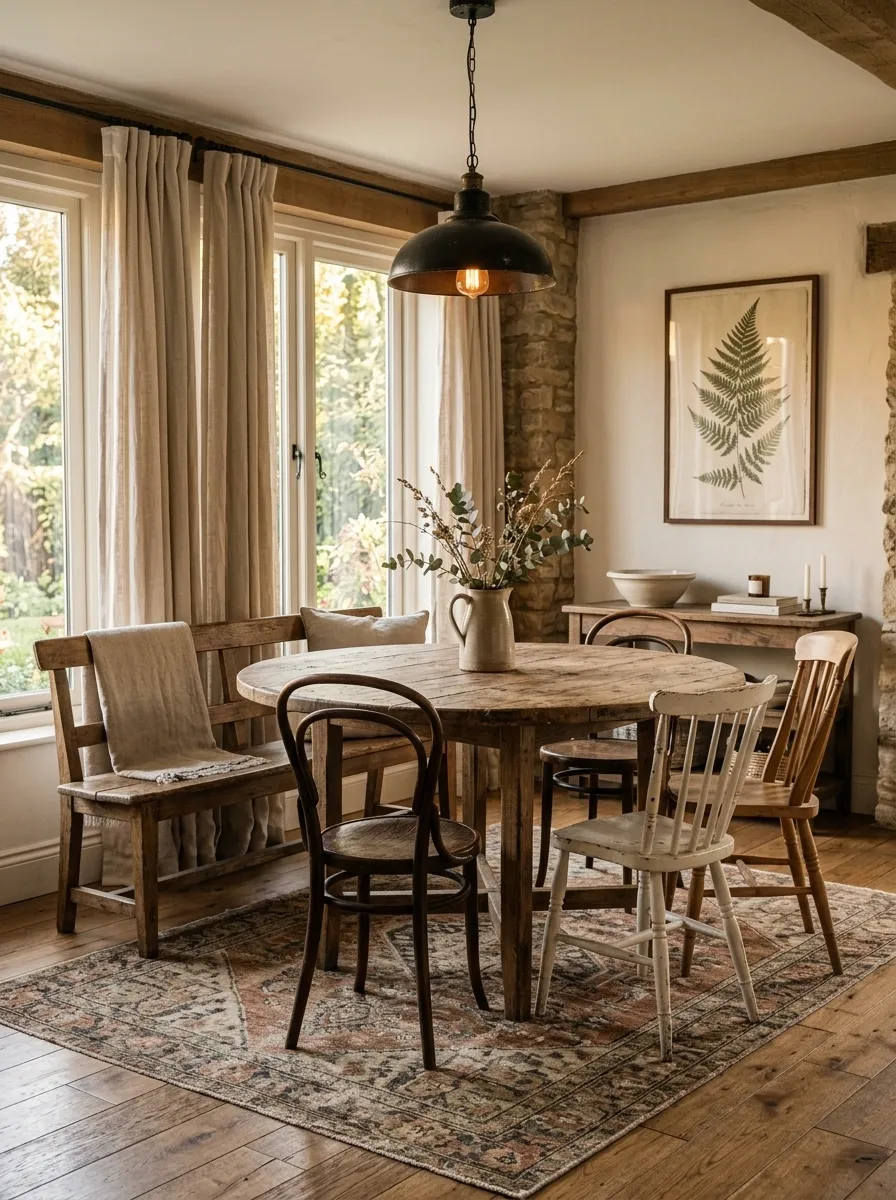
A reclaimed wood round table gives a dining room instant texture. Pair it with one simple farmhouse bench and two or three chairs that don’t look overly coordinated. Aged metal lighting adds structure while linen curtains keep the room soft.
Use a faded vintage rug underneath to prevent all the wood from blending into one giant brown situation. The centerpiece can be a simple stoneware pitcher with branches. Keep the wall decor restrained, perhaps one large landscape or botanical print. The room should feel lived-in rather than staged to sell artisanal jam.
Bay-Window Dining Corner With Upholstered Bench and Natural Light
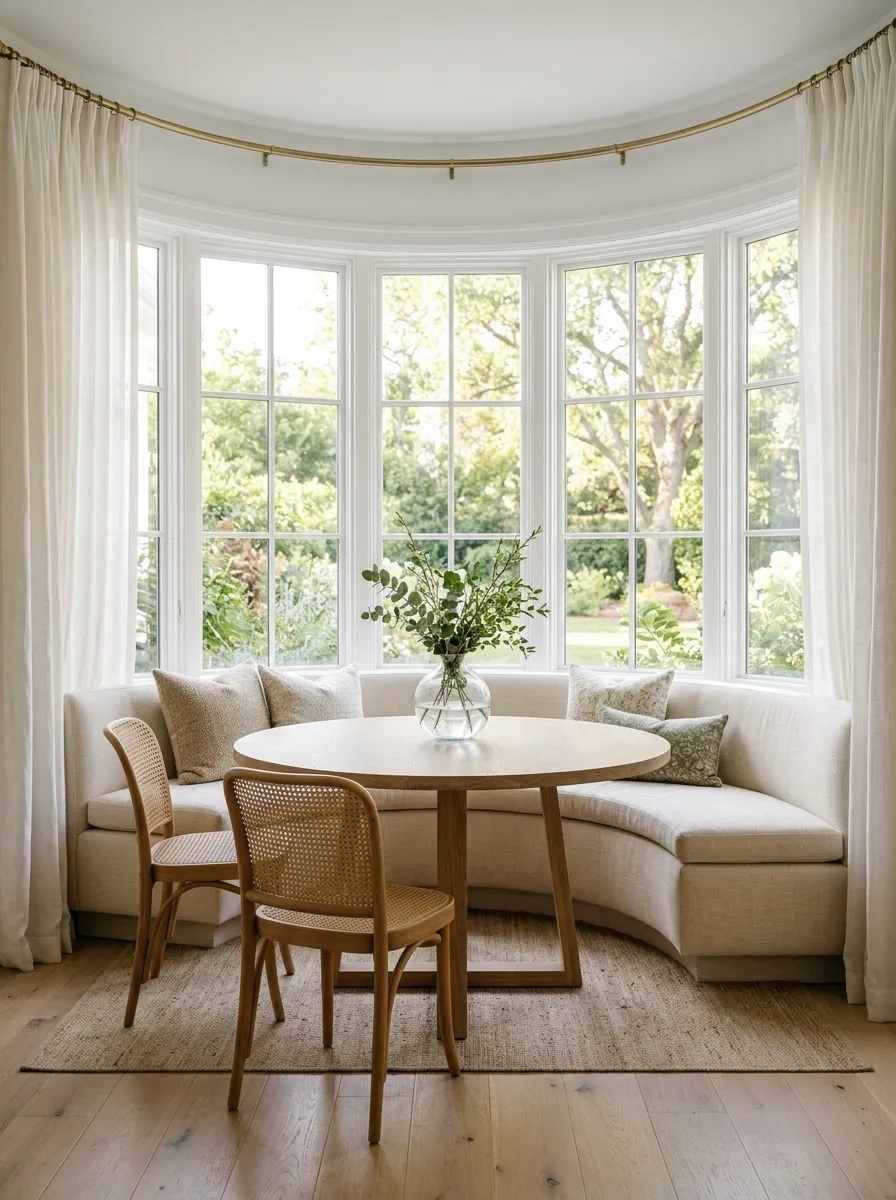
Use a bay window as the natural frame for a round dining table. An upholstered bench fitted along the back wall gives the table a comfortable anchor while keeping the window open. Choose a warm neutral fabric with subtle texture, then bring in two movable chairs in wood or cane.
Keep the table finish medium-light and use a simple glass or ceramic centerpiece so daylight can pass through the composition. Curtains should frame the window rather than cover it. The entire setup becomes a small destination within the room, especially when the table catches morning or late-afternoon light.
Black-and-Oak Linear Dining Room With Graphic Contrast
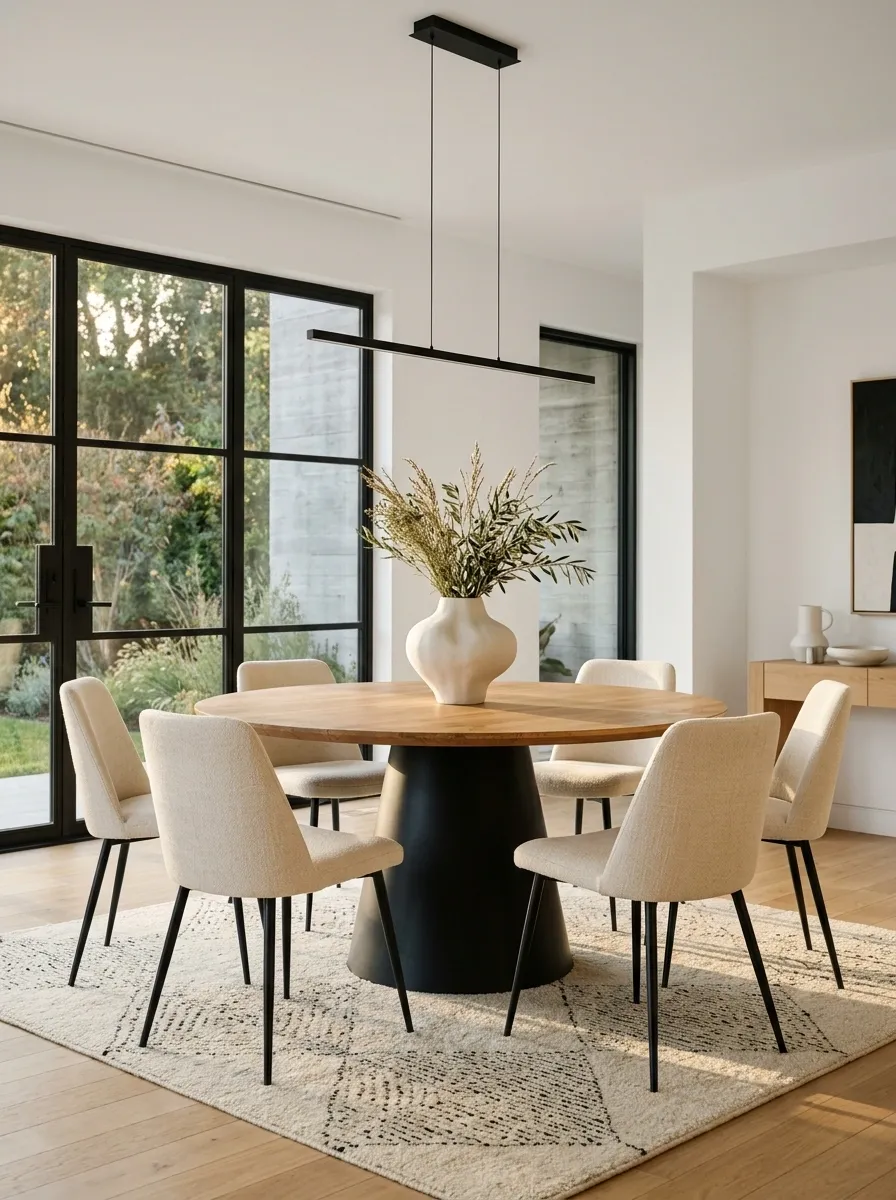
For a stronger contemporary composition, combine a black round table base with a warm oak tabletop or oak cabinetry nearby. Repeat black through the pendant, window frames, artwork, or chair legs. Keep the upholstery warm cream so the contrast doesn’t become too severe.
A graphic rug can introduce subtle geometry underneath the table, while a sculptural ceramic centerpiece adds softness. The room should have a clear visual hierarchy: black defines the structure, oak brings warmth, and cream keeps the center light. Strong contrast works best when the colors appear in several places instead of being isolated to one piece.
Cream Banquette With Fluted Oak Table Base and Soft Textiles
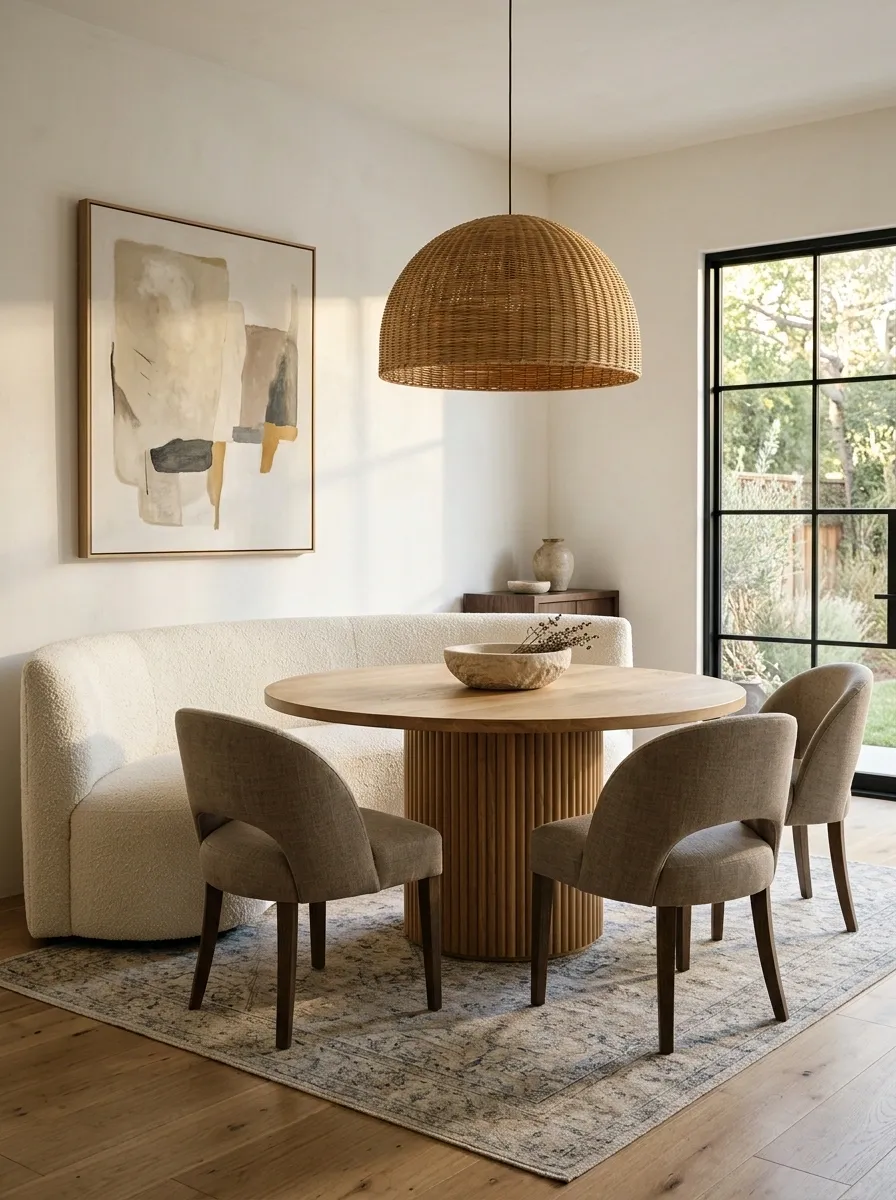
A cream banquette creates a soft backdrop while a fluted oak table base adds architectural detail underneath. Pair the table with curved cream or taupe chairs and a subtle patterned rug. The walls can stay warm white, with one oversized piece of artwork providing a little contrast.
Use a woven or linen pendant above the table to add texture overhead. A low stone bowl keeps the tabletop uncluttered. The room feels polished because the materials are varied but the palette stays tight. This is a good route for anyone who wants detail without visual noise.
Warm Color and Personality
Terracotta and Walnut Dining Room With Woven Chairs
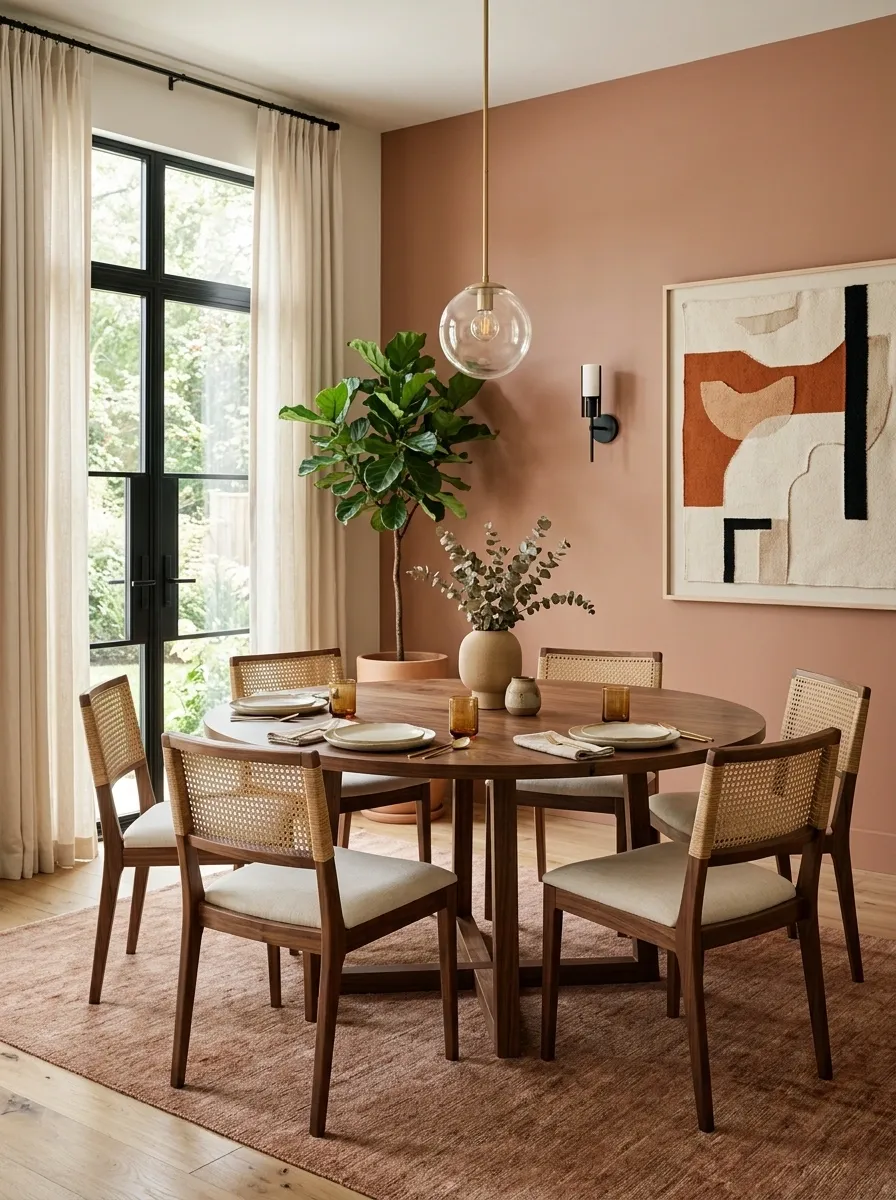
Terracotta works beautifully with walnut because both colors have natural warmth. Use a muted terracotta wall, rug, or artwork as the main color moment, then anchor the room with a dark walnut round table. Woven or cane chairs soften the composition and keep the darker wood from feeling too formal. Add cream linen curtains and a simple ceramic centerpiece in a sandy tone. A brass pendant introduces a small amount of shine. Keep the rest of the room quiet so terracotta feels like a deliberate architectural color rather than a collection of orange accessories having a group meeting.
Small Rental Dining Corner With Removable Wall Styling and Compact Table
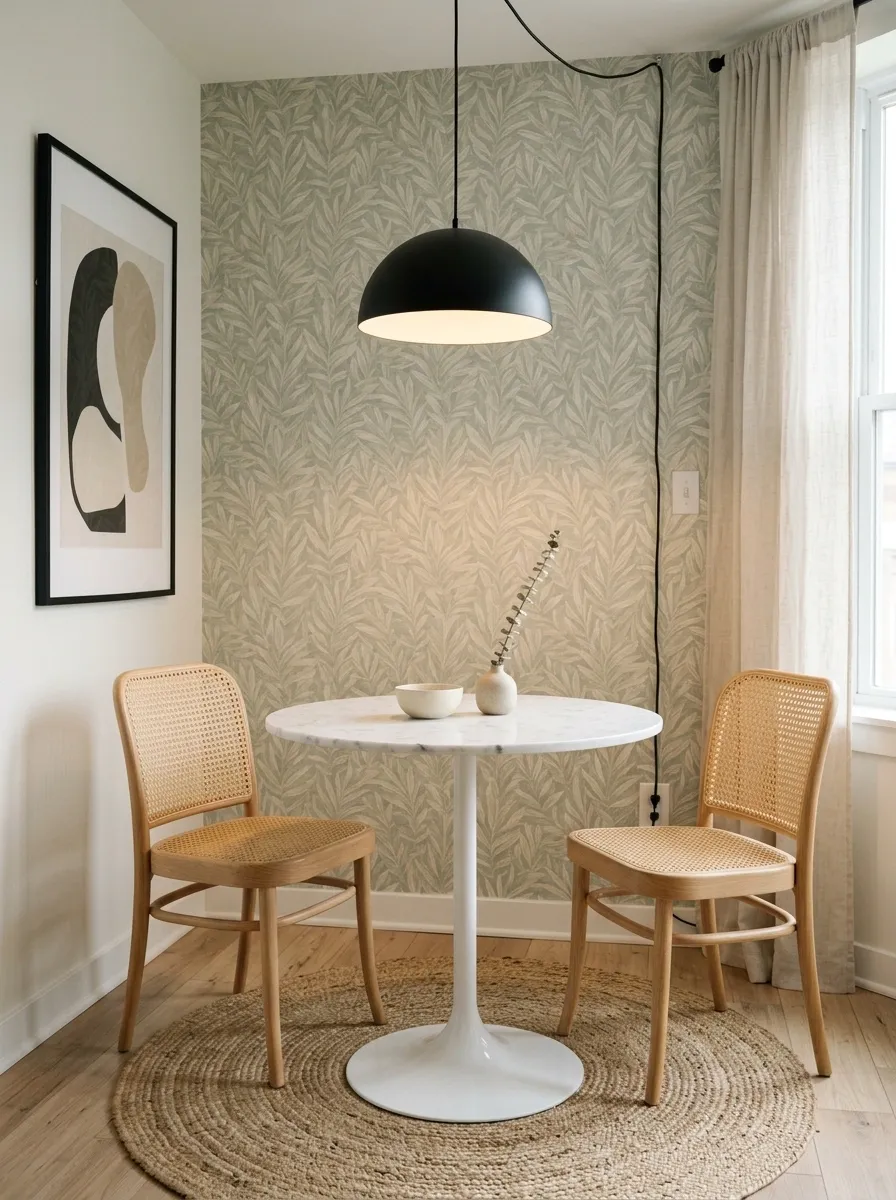
A rental dining area can still look finished without permanent changes. Use a compact round pedestal table with lightweight chairs and create the backdrop with removable wallpaper, oversized framed art, or a large textile panel. A plug-in pendant can provide the visual focus overhead without requiring major electrical work. Keep the centerpiece tiny and practical, such as a ceramic bowl or little vase. A round rug underneath helps separate the dining area from the rest of the room. The trick is making the temporary pieces look deliberate enough that nobody starts noticing the lease agreement.
French Country Round Table With Painted Chairs and Soft Linen
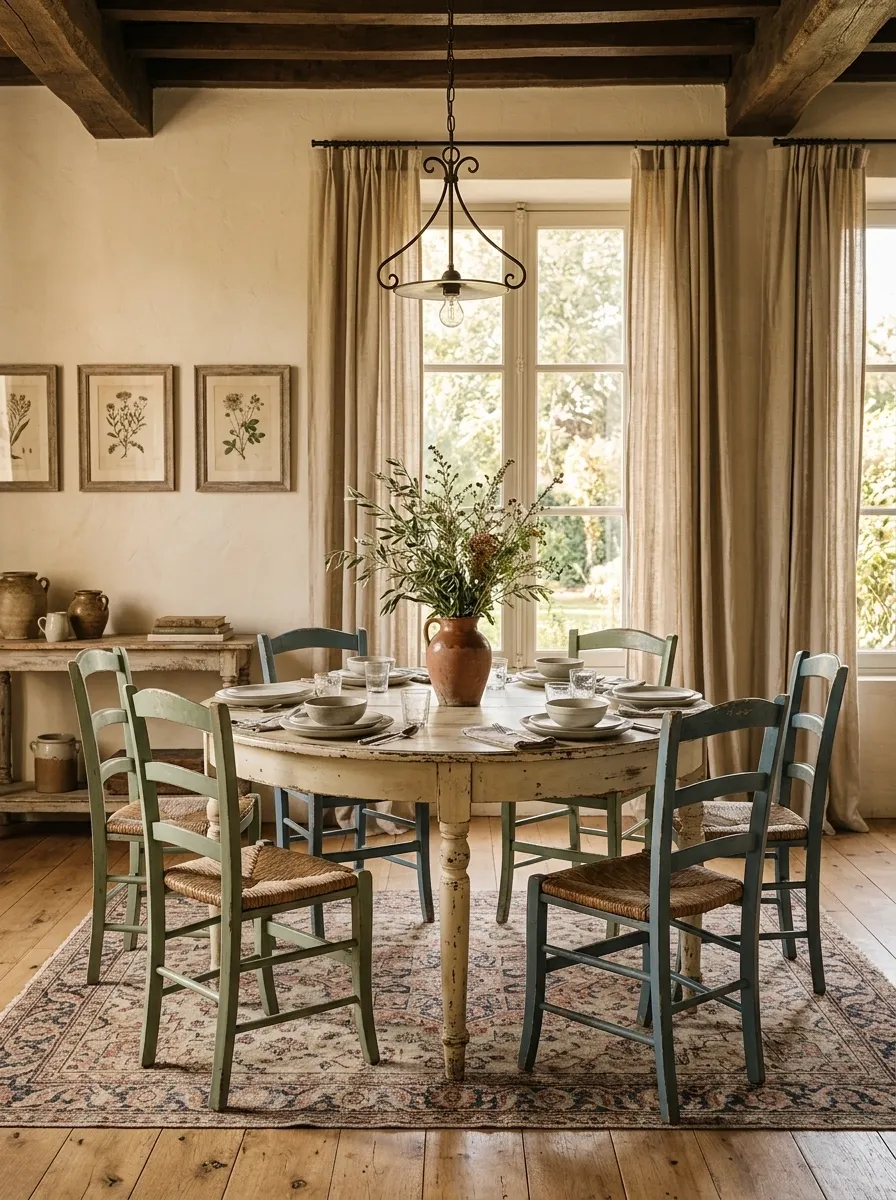
A French-country-inspired dining room can use a painted round table with slightly worn-looking chairs in cream, sage, or dusty blue. Linen curtains and a faded patterned rug bring softness while a simple pendant keeps the ceiling from feeling empty. Use stoneware or ceramic pieces on the table rather than glossy accessories. A single vase of loose branches works beautifully here. Keep the wall art relaxed, with botanical or landscape imagery in simple frames. The room should feel collected over time rather than manufactured as a matching set on Tuesday afternoon.
Contemporary Apartment Dining Room With Glass, Oak, and Sculptural Lighting
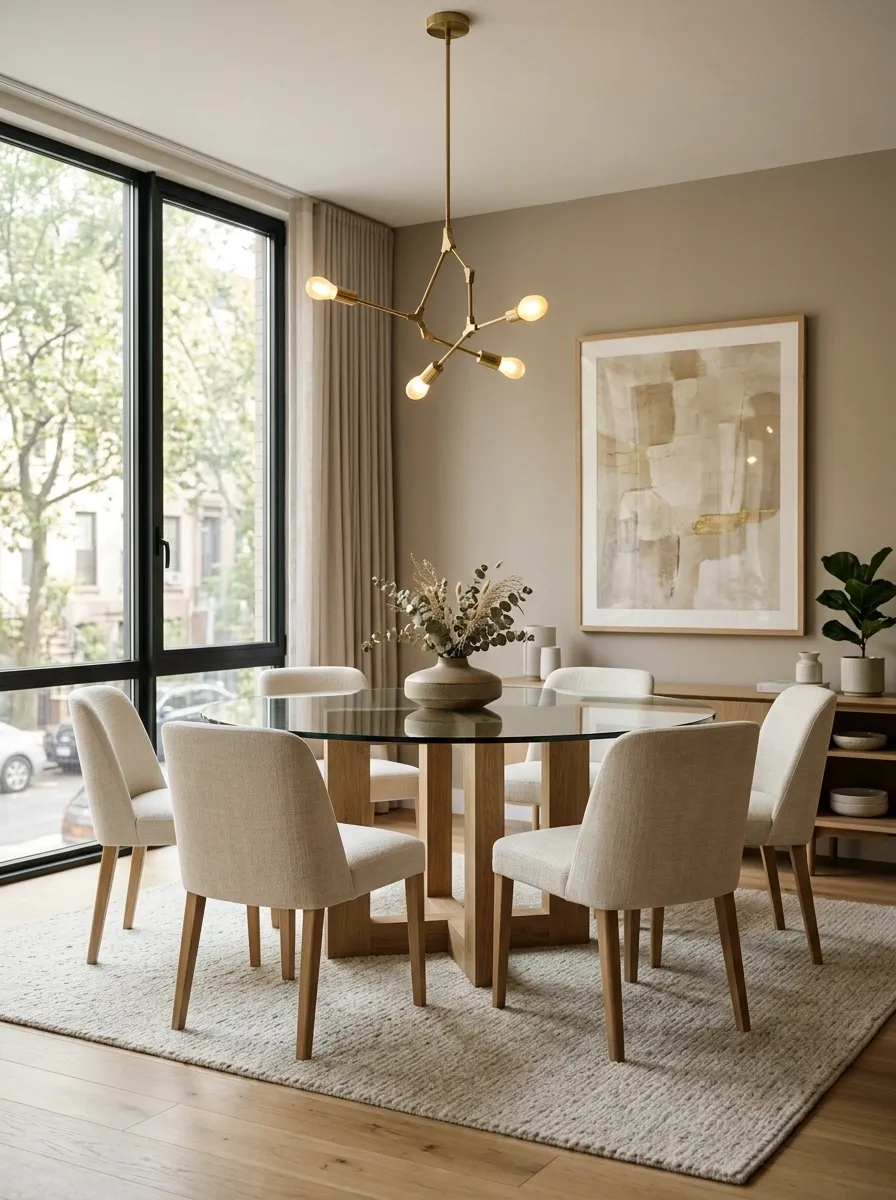
For a contemporary apartment, combine a round glass tabletop with a substantial oak base. The transparent surface keeps the room visually open while the wood adds warmth. Surround it with upholstered chairs in cream or taupe and place a sculptural pendant above. Keep the walls mostly uncluttered, using one large artwork instead of many small pieces. A soft rug underneath helps define the dining area without making the glass table feel too exposed. On the tabletop, use a single low vessel. The composition works because the furniture has strong shapes while the glass keeps the center visually light.
Warm Evening Dining Room With Burnished Wood, Candlelight, and Layered Neutrals
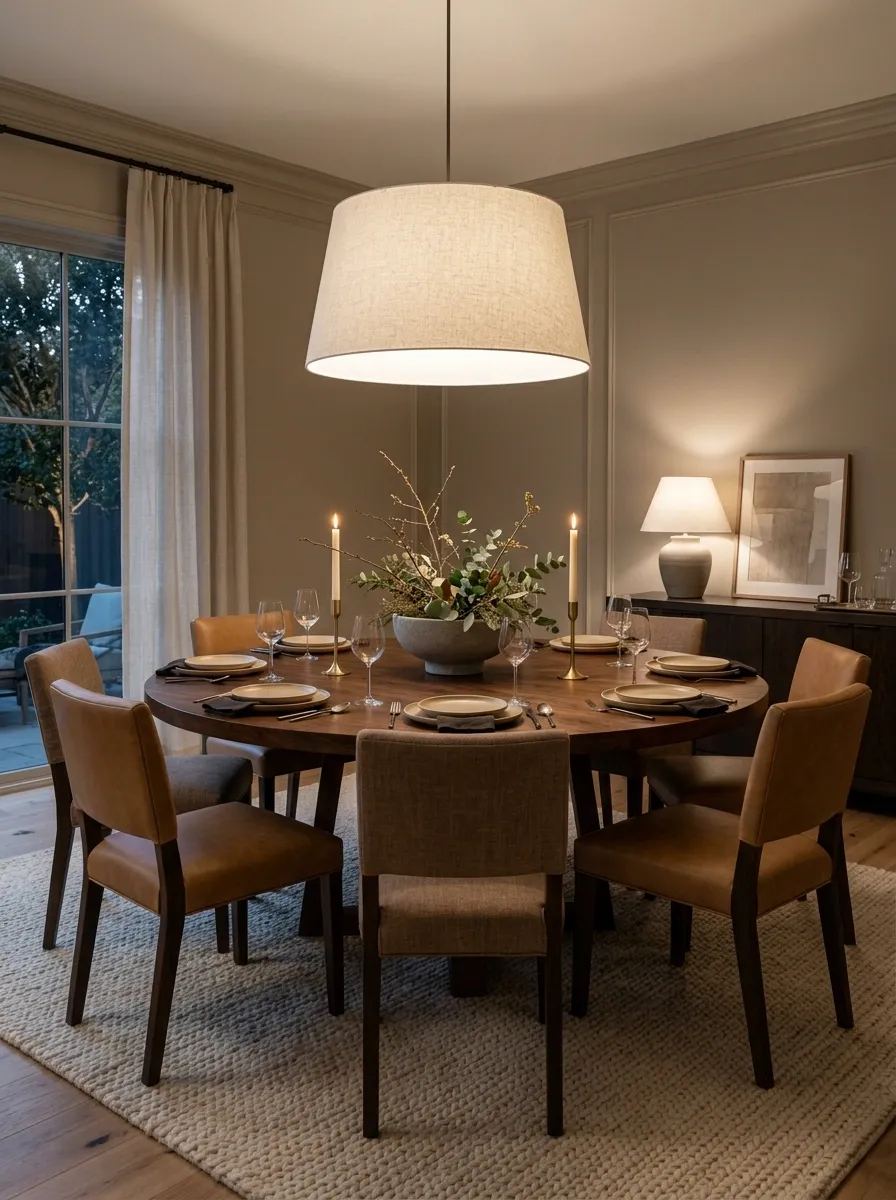
A dining room can become especially atmospheric at night when the styling is built around warm light. Use a burnished wood round table with chairs upholstered in cream, camel, or soft brown. A linen pendant casts a gentle pool of light while small candles create lower points of glow. Keep the walls warm beige or mushroom and add a textured rug underneath. The centerpiece should be low and organic, perhaps a stone bowl with branches or seasonal foliage. This room doesn’t need dramatic color. The magic comes from different shades of warm neutral catching different kinds of light.
Finishing the Room Without Overdecorating
The Low-Centerpiece Dining Room
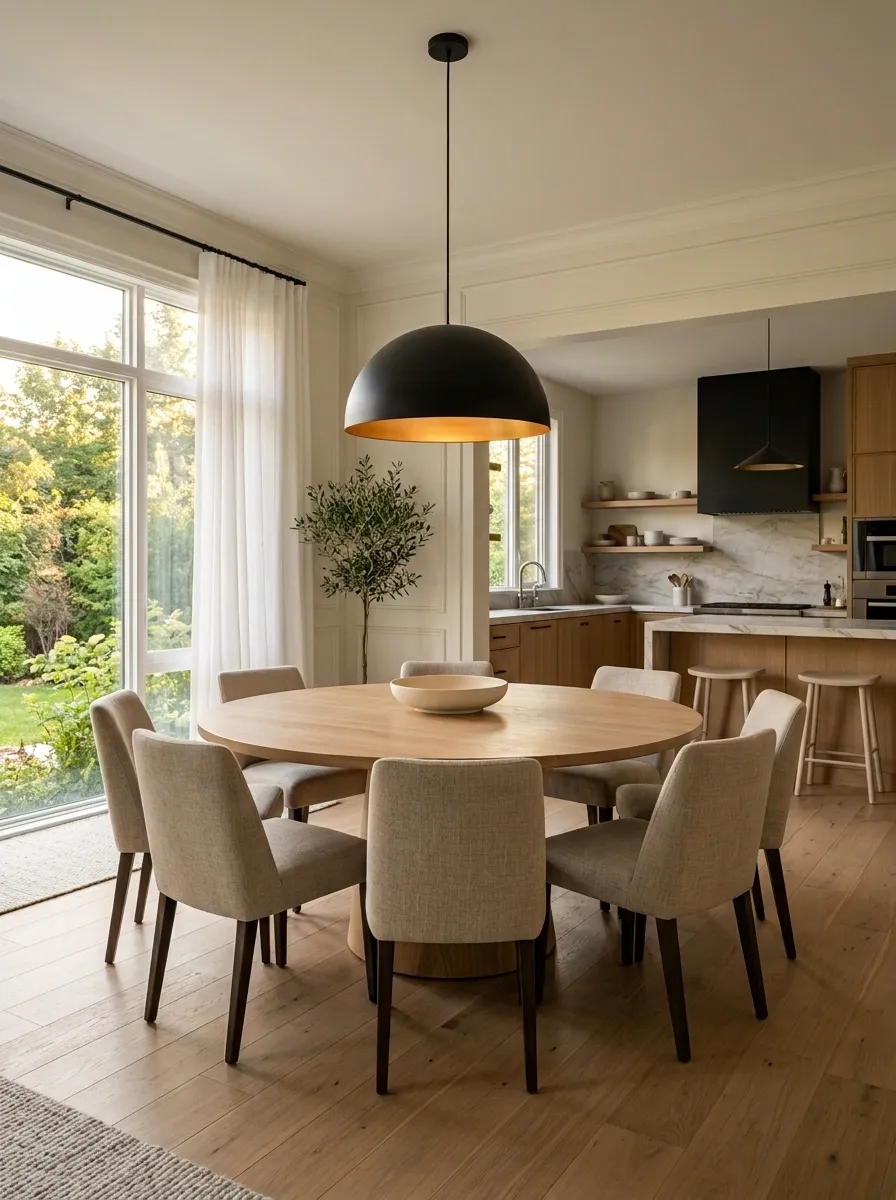
Sometimes the strongest styling choice is simply refusing to fill the table. Use a beautiful round table, comfortable chairs, a well-scaled pendant, and one low centerpiece. A shallow ceramic bowl, low vase, or small arrangement keeps the sightline across the table open. This works especially well in homes where the dining area connects directly to the kitchen or living room. The table becomes part of the architecture instead of a decorative island. And yes, everyone can actually see the person sitting opposite them. Revolutionary.
The Art-First Dining Room With a Quiet Tabletop
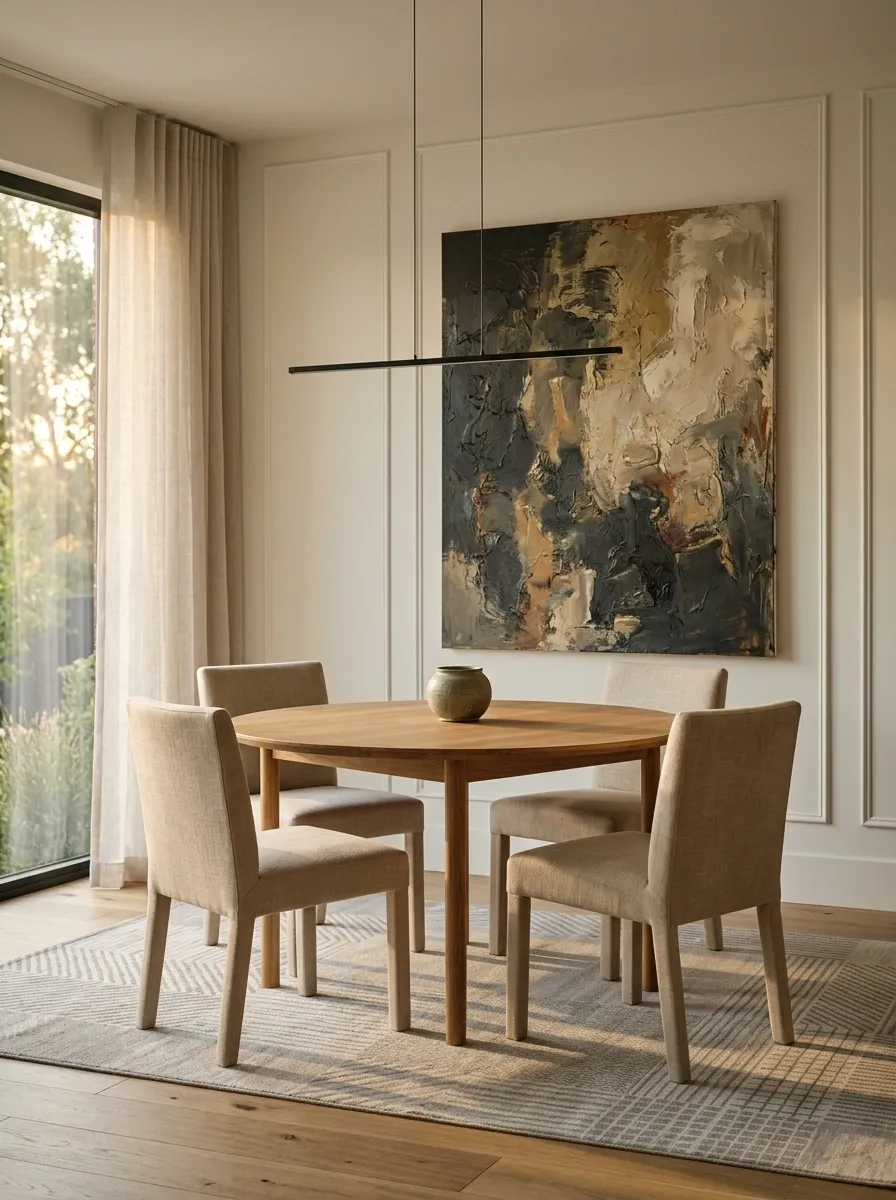
Instead of making the table the loudest feature, let one oversized artwork carry the room. Choose a round table in a simple wood finish, then place a large painting or textured artwork on the wall behind it. Keep chairs neutral and comfortable. A restrained rug can add pattern underfoot, while the tabletop gets only one small vessel. This arrangement works especially well when the artwork has strong color or texture. The dining table becomes the calm foreground while the wall provides the visual statement.
The Everyday Dining Room With Open Space Around the Table
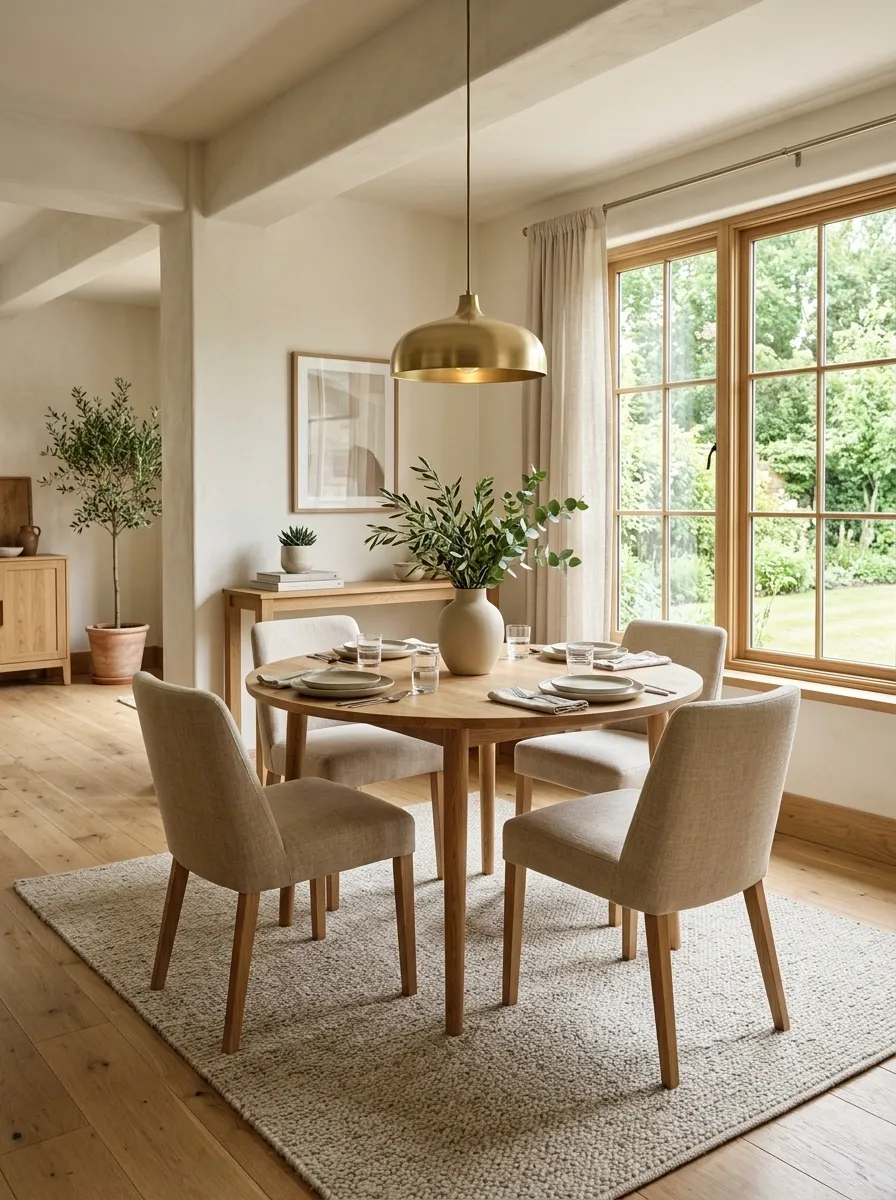
A dining room doesn’t need to look dressed for a magazine every day. A round table with comfortable chairs, a simple rug, warm lighting, and one useful centerpiece can be enough. Leave visible floor around the table so the furniture feels spacious. Keep extra decorative objects on nearby shelving or a console rather than crowding the tabletop. This approach is especially useful for busy homes where the dining area actually gets used. The room still looks intentional, but it doesn’t require a fifteen-minute reset every time someone wants toast.
Final Thoughts
The best round dining rooms don’t rely on a mountain of tabletop accessories. They work because the entire composition makes sense: the table has enough breathing room, the chairs support its shape, the lighting lands where it should, and the materials repeat just enough to connect the room.
A small apartment can use a banquette. A traditional room can lean into carved details and linen. A modern space can keep the tabletop nearly empty. A dark dining room can become warm through walnut, leather, amber glass, and low lighting.
The goal isn’t to make the table look decorated.
The goal is to make the whole dining area look finished.
And thankfully, that usually requires fewer things, not more.
If a dining table is currently sitting in the room looking slightly abandoned, start with the composition around it. One strong light fixture, better chair balance, a rug that actually fits, and a restrained centerpiece can change the entire scene without turning the room into a decorative obstacle course.