
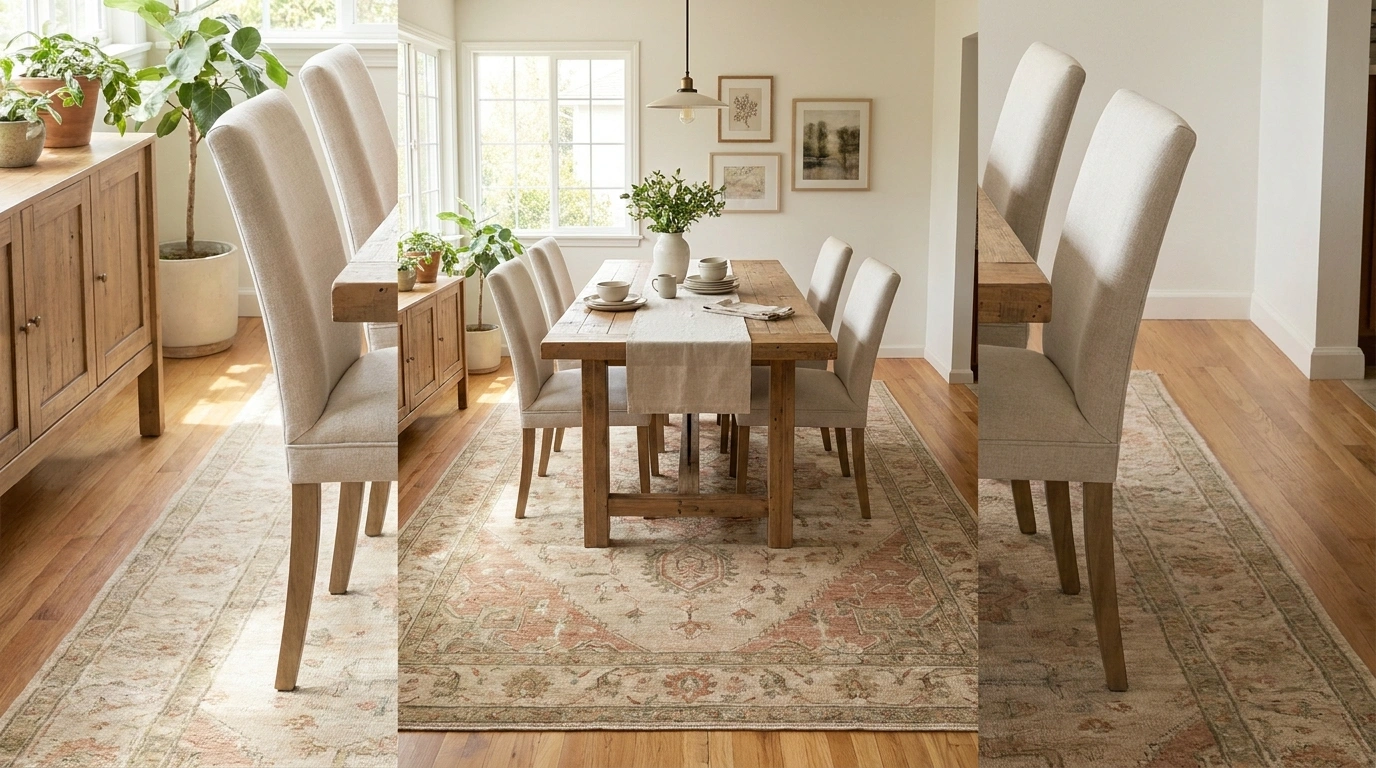
A dining room can have the right table, decent chairs, a pendant light doing its little influencer pose, and still look strangely unfinished. The floor is often the reason. A dining rug gives the furniture something to sit inside rather than leaving the table floating in a large patch of nothing.
The trick is choosing a rug that belongs to the entire room, not one that looks like it was ordered separately at 2 a.m. because the floor suddenly seemed “too plain.”
Dining Room Rug Ideas
Blue Walls With a Bold Checkered Rug
A moody blue dining room needs a little bit of pattern to keep things from feeling too serious, and a forest green and natural jute checkered rug hits that exact sweet spot. It brings an earthy groundedness right beneath a rustic wooden table and simple wooden chairs, adding charm without trying too hard.
The natural sunlight streaming across the floor highlights the texture of the weave, while a casual vase of vibrant pink peonies adds a pop of life. Keep the surrounding decor relaxed and organic, letting the graphic rug anchor the entire rustic scene.
This is how you do pattern mixing with confidence. The checkerboard floor element grounds the rich wall color while keeping the whole room feeling effortlessly cool and lived-in.
Warm Oak Dining Room With a Vintage Persian Rug
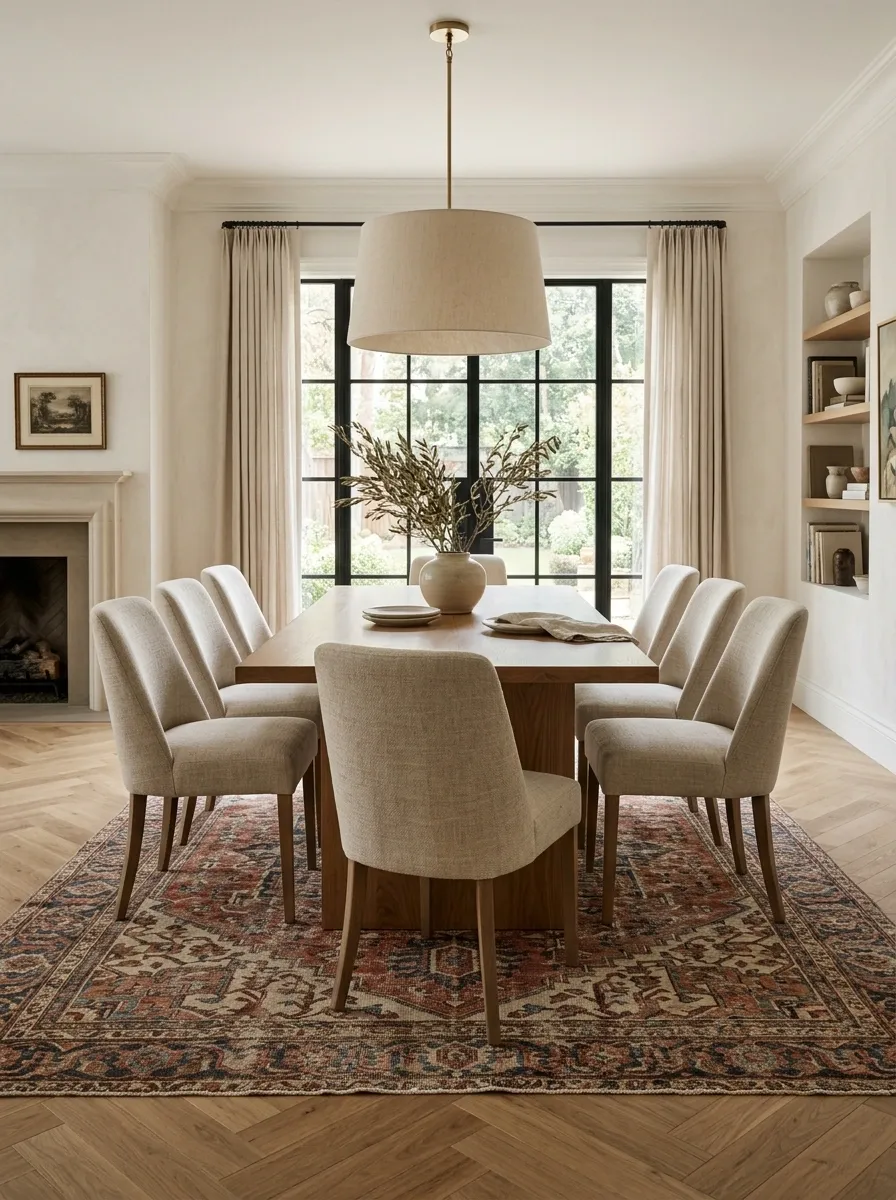
Warm oak furniture and a faded Persian rug are practically fluent in the same design language. The rug brings reds, muted blue, cream, and earthy brown beneath a simple oak dining table, giving the room character without making it feel decorated within an inch of its life. Upholstered dining chairs in oatmeal or warm beige keep the pattern grounded, while a soft pendant above the table creates a focused pool of light.
The important detail is restraint. The walls can stay warm white, the curtains can remain simple, and the table doesn’t need ten decorative objects competing for attention. The vintage pattern already has enough personality. Let it make the comment section jealous quietly.
Long Table With a Neutral Distressed Rug
A grand dining space featuring a long wooden table and sleek green upholstered chairs can easily feel imposing, but a large, lightly distressed neutral rug softens the whole setup. It introduces a subtle, faded pattern that warms up the expansive flooring without competing with the striking lighting fixture overhead.
The oversized round mirror reflects the light and opens up the room, while the delicate floral runner down the center of the table ties the sophisticated palette together. The rug does the heavy lifting by bringing softness to the hard edges of the chairs and table.
It is the ultimate design magic trick: creating a luxurious, cohesive look that appears entirely effortless. Your dinner guests will wonder how you managed to make a massive dining room feel so wonderfully intimate.
Soft Contemporary Dining Room With a Large Cream Textured Rug
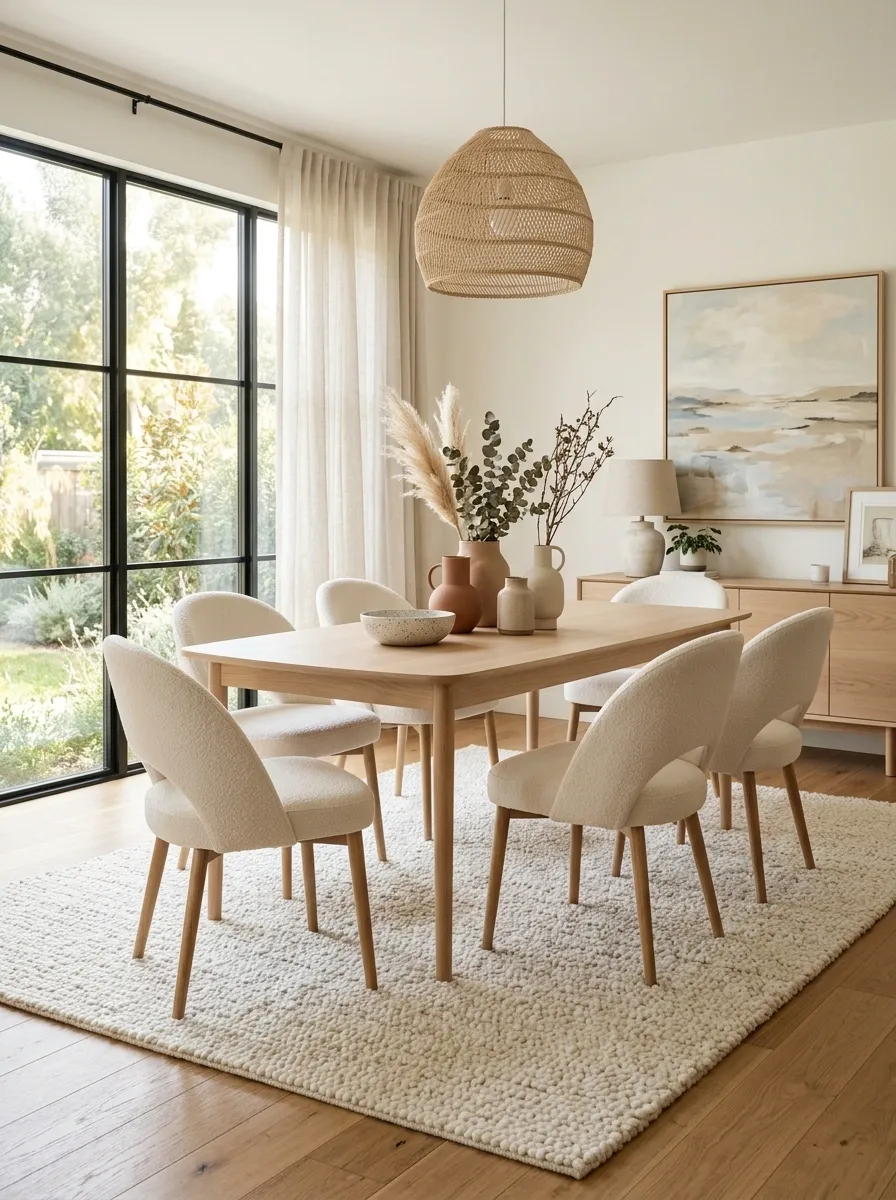
A cream textured rug changes the entire temperature of a contemporary dining room without introducing another loud color. Pair it with a pale oak or natural wood table, curved upholstered chairs, and warm white walls. The result feels soft rather than sterile because the rug supplies visual texture where a plain floor would leave the room looking a little too showroom-perfect.
A subtle boucle or high-low texture works particularly well under a simple dining set. Keep the pattern nearly invisible from a distance so the furniture remains the star. The joke here is that the rug is doing a ridiculous amount of work while looking like it isn’t trying at all.
Round Table With a Linear Patterned Rug
A round wooden dining table paired with modern cream chairs creates a gorgeous organic silhouette, and placing it on a round grey patterned rug makes the entire corner feel complete. The linear, dash-like pattern on the rug adds subtle movement beneath the heavy pedestal base, softening the transition to the hardwood floors.
Framed by a sleek black window frame and a minimalist wall art piece, the space feels bright, balanced, and intentionally designed. The modern brass chandelier overhead ties the warm wood tones and neutral textiles together in absolute harmony.
This layout proves that matching shapes—like a round table on a round rug—creates an instant sense of calm. You get high-end style without any of the fuss, making every casual meal feel like a designer-backed event.
Black Dining Table With a Faded Terracotta Patterned Rug
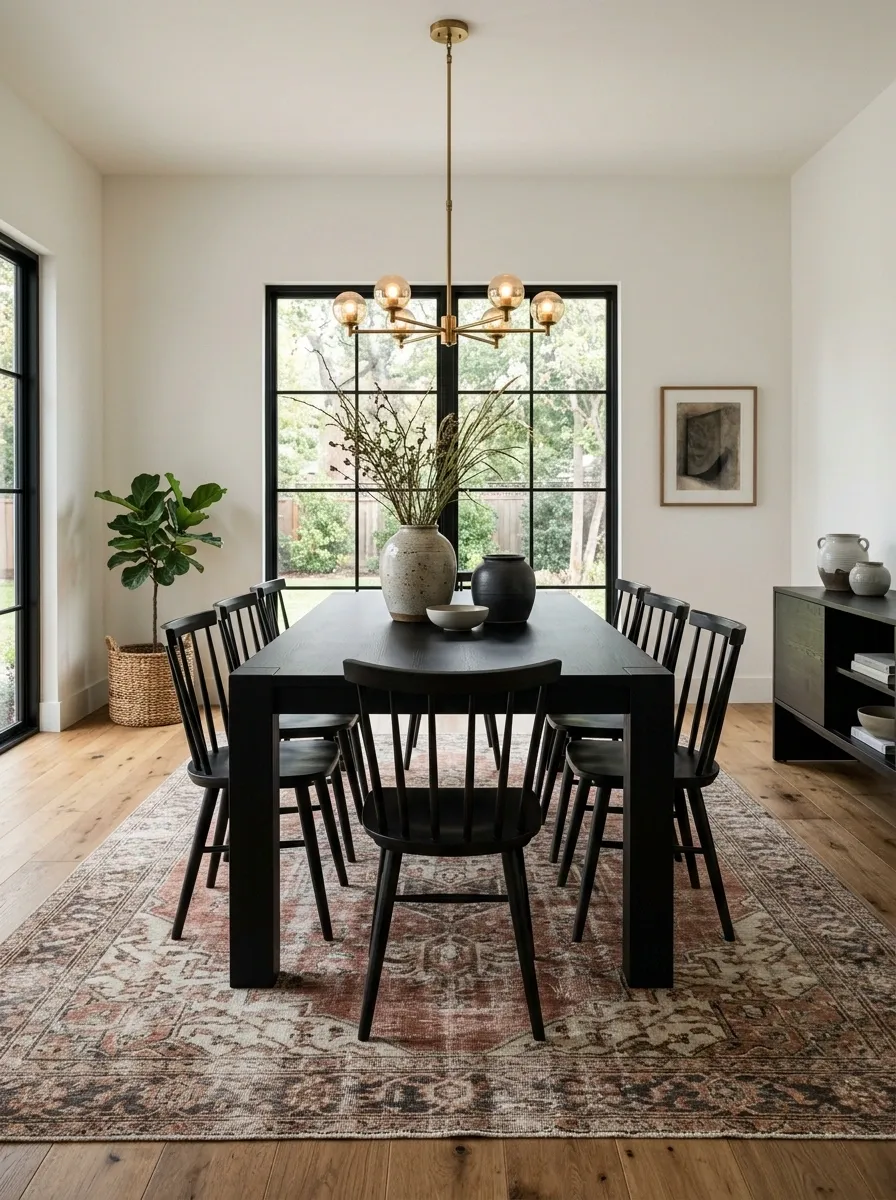
A black dining table can make a room feel sharp, but without warmth underneath it can also look like the furniture arrived before the personality did. A faded terracotta rug fixes that balance with dusty rust, cream, muted brown, and hints of charcoal.
Use simple black or dark wood chairs, warm white walls, and aged brass lighting to keep the palette cohesive. The rug should look slightly weathered rather than freshly printed. That softened pattern prevents the black table from becoming visually severe.
This is especially effective when the rest of the room has clean lines. The table handles structure. The rug handles warmth. Nobody needs to add twelve decorative bowls to explain the concept.
Minimalist Dining Space With a Fluffy Cream Rug
Minimalism in a dining room can sometimes lean cold, but a super-soft, textured cream rug instantly invites you to linger long after dessert is finished. Placed beneath a light wood dining table and chunky boucle chairs, the plush pile adds an incredible layer of coziness that you can practically feel through the screen.
A oversized textured wall hanging and a gorgeous round paper lantern pendant light complete the serene, monochromatic palette. Every element feels curated for maximum warmth and textural interest rather than visual clutter.
The secret here is layering different shades of cream and beige so the room stays interesting instead of flat. The rug anchors the floating furniture pieces and proves that neutral spaces can still have plenty of soul.
Round Walnut Table on a Soft Geometric Rug
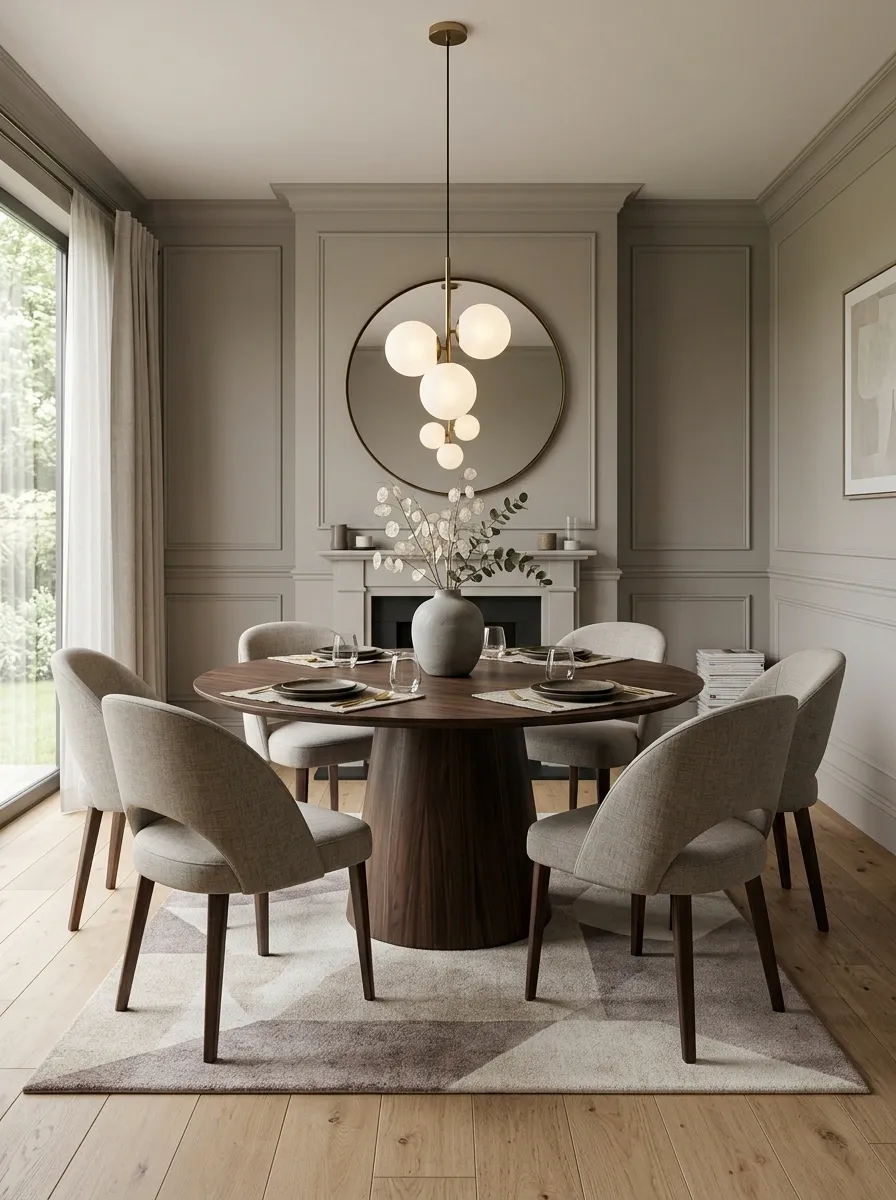
A round walnut table already has a strong silhouette, so the rug underneath can echo that softness instead of introducing another rigid rectangle. A low-contrast geometric rug in cream, taupe, and dusty gray creates subtle movement while preserving the calm shape of the table.
Curved dining chairs make the composition feel intentional, especially when paired with a globe pendant or rounded wall mirror. Keep the pattern restrained enough that the eye still lands on the walnut tabletop.
The visual trick is simple: repeat curves without making the room look like a furniture catalog written entirely in circles.
Farmhouse Dining Room With a Muted Checkered Rug
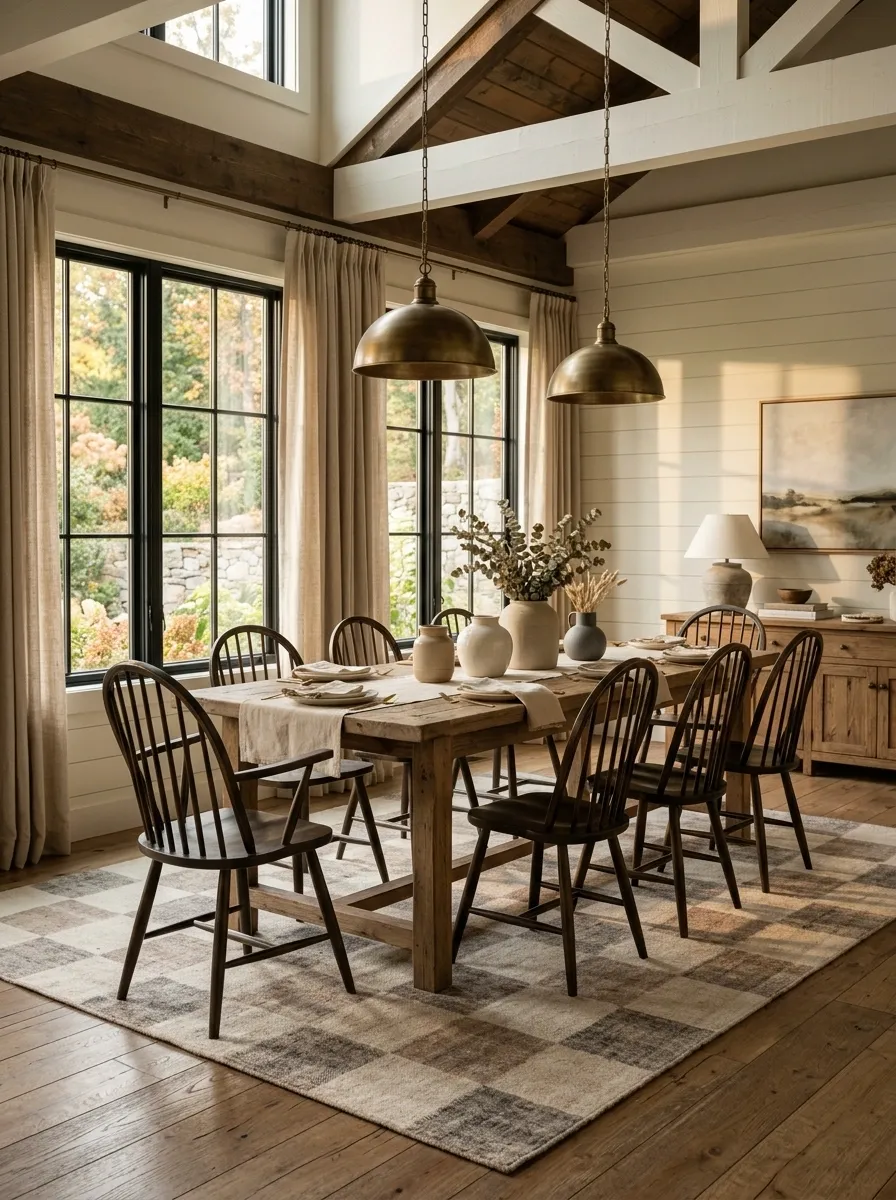
A checkered rug can push a farmhouse dining room toward playful rather than overly rustic. Choose a softened pattern in beige, cream, charcoal, or faded brown instead of a high-contrast black-and-white grid. A weathered wood table, spindle-back chairs, linen curtains, and aged metal lighting complete the room without turning it into a themed restaurant.
The key is scale. A larger check works beautifully beneath substantial furniture because it doesn’t disappear visually. Smaller checks can feel busier and more country-cottage than intended.
And yes, the rug can have personality without every other object in the room also auditioning for a farmhouse makeover show.
Dark Dining Room With a Dramatic Oriental Rug
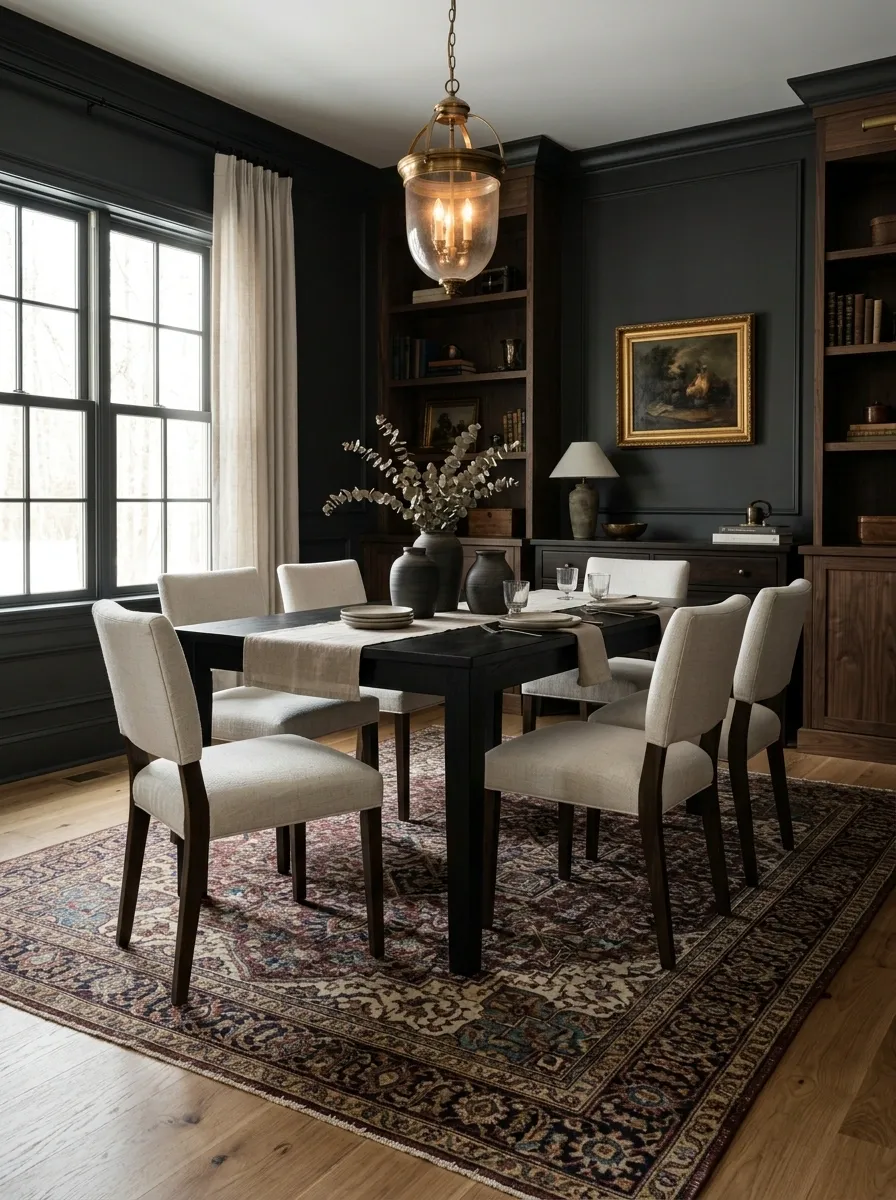
Deep wall color, dark wood, and a richly patterned rug can make a dining room feel intimate without requiring oversized furniture. A traditional Oriental-style rug in burgundy, charcoal, muted blue, and aged cream gives the floor enough visual depth to hold its own against darker surroundings.
Keep the table silhouette relatively simple. A dark walnut or black-stained table works well, while linen or textured upholstery prevents the room from becoming visually heavy. Warm pendant lighting matters here because cool bulbs can make deep colors look flat and slightly sad.
The rug gets to be dramatic. The chandelier doesn’t need to scream too.
Scandinavian Dining Room With a Pale Blue Flatweave Rug
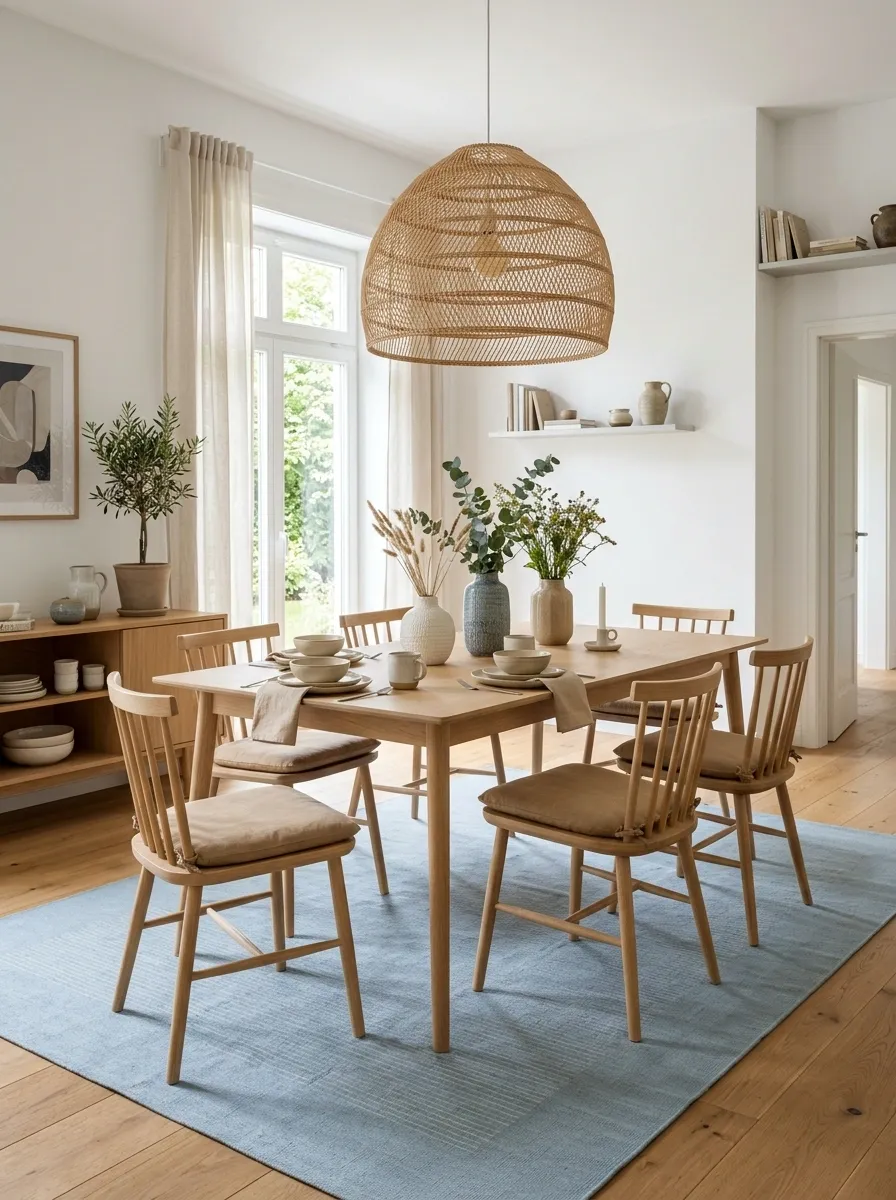
Pale blue brings a cooler note into a Scandinavian dining room without breaking the natural palette. Pair a light oak table with simple wooden chairs, white walls, woven pendant lighting, and a flatweave rug with a barely visible linear pattern.
The rug should sit quietly beneath the furniture while still giving the room a defined dining zone. Natural timber keeps the blue from feeling icy, and warm beige textiles stop the overall composition from becoming too stark.
This is the dining room equivalent of saying “calm down” to every decorative object within a five-mile radius.
Traditional Dining Room With a Deep Red Rug
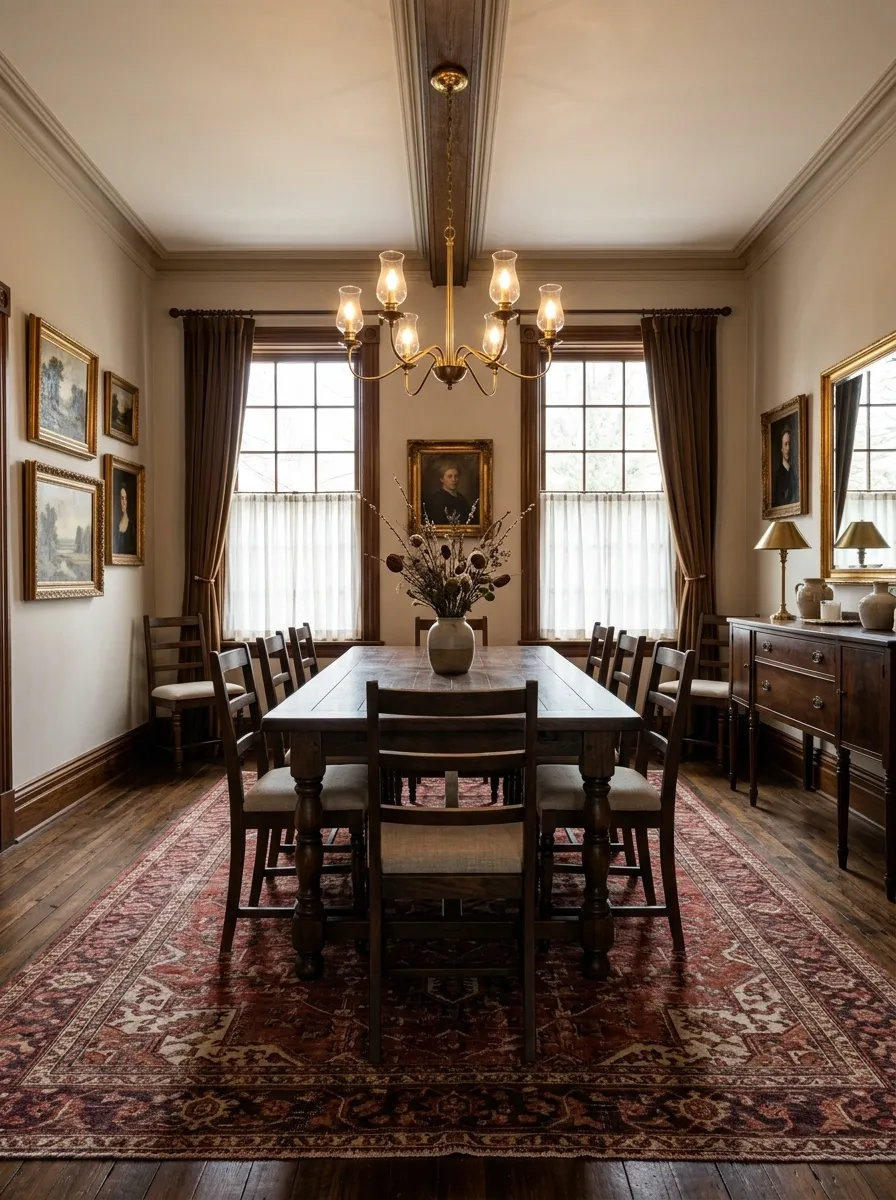
A deep red rug can give a traditional dining room serious presence, especially under a substantial wood table. Look for burgundy, oxblood, faded rust, and small amounts of cream rather than an overly bright red. The aged coloration makes the rug feel established rather than newly printed.
Dark wood chairs, brass lighting, framed artwork, and warm neutral walls can build around the palette naturally. The rug should be large enough to visually gather the entire dining arrangement so the furniture feels anchored.
This is where traditional actually works because the room commits to the palette instead of sprinkling one antique-looking object into a sea of random gray furniture.
Cottage Dining Room With a Faded Floral Rug
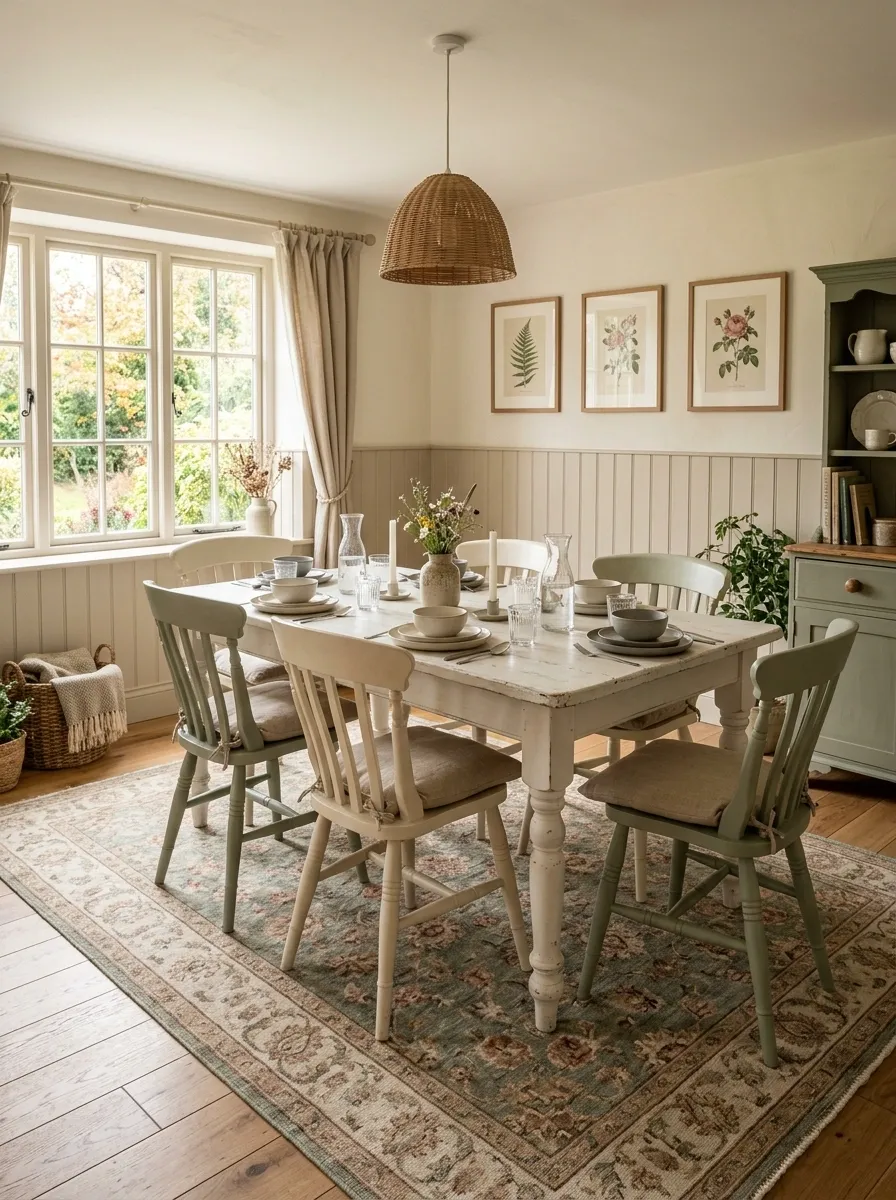
A faded floral rug can bring softness to a cottage dining room without turning the space into a floral explosion. Choose a low-contrast design with dusty green, muted rose, cream, and warm tan. Pair it with a painted wood table, mismatched but coordinated chairs, and natural linen.
The furniture should feel collected rather than perfectly matched. A simple pendant, ceramic tableware, and restrained wall art allow the floral pattern to remain the main decorative layer.
The secret is fading. Fresh, saturated florals can quickly become “grandma’s entire Pinterest board.” Dusty color keeps the room relaxed.
Small Apartment Dining Nook With a Low-Contrast Rug
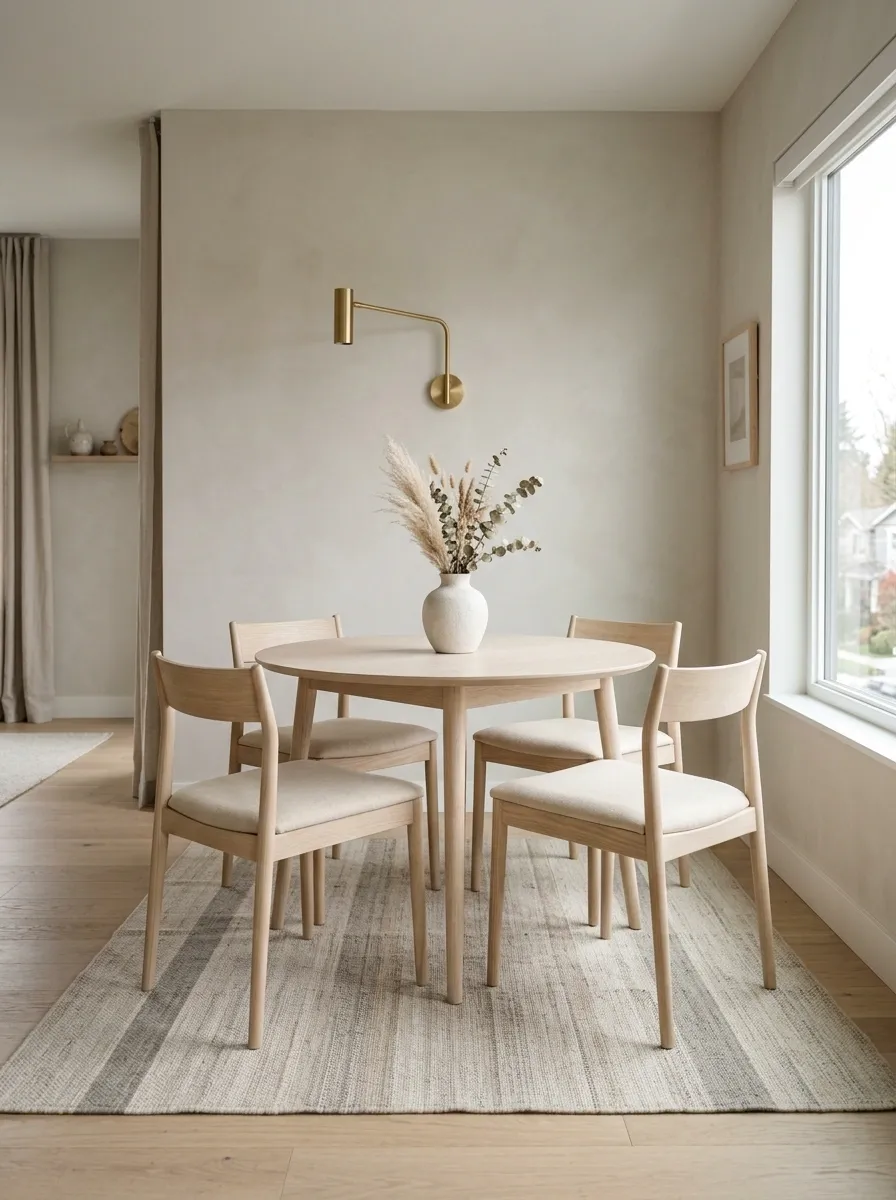
A compact dining nook doesn’t need a visually loud rug. A low-contrast flatweave in oatmeal, beige, and soft gray can define the area without making the room feel smaller. A small round or compact rectangular table, slim chairs, and a wall-mounted light keep circulation open.
The rug should relate closely to the wall and flooring tones. Strong contrast can make a tiny dining zone feel visually chopped up, especially when the table is already close to other furniture.
Small rooms don’t need more stuff screaming for attention. They need better editing.
Natural Coastal Dining Room With a Textured Jute Rug
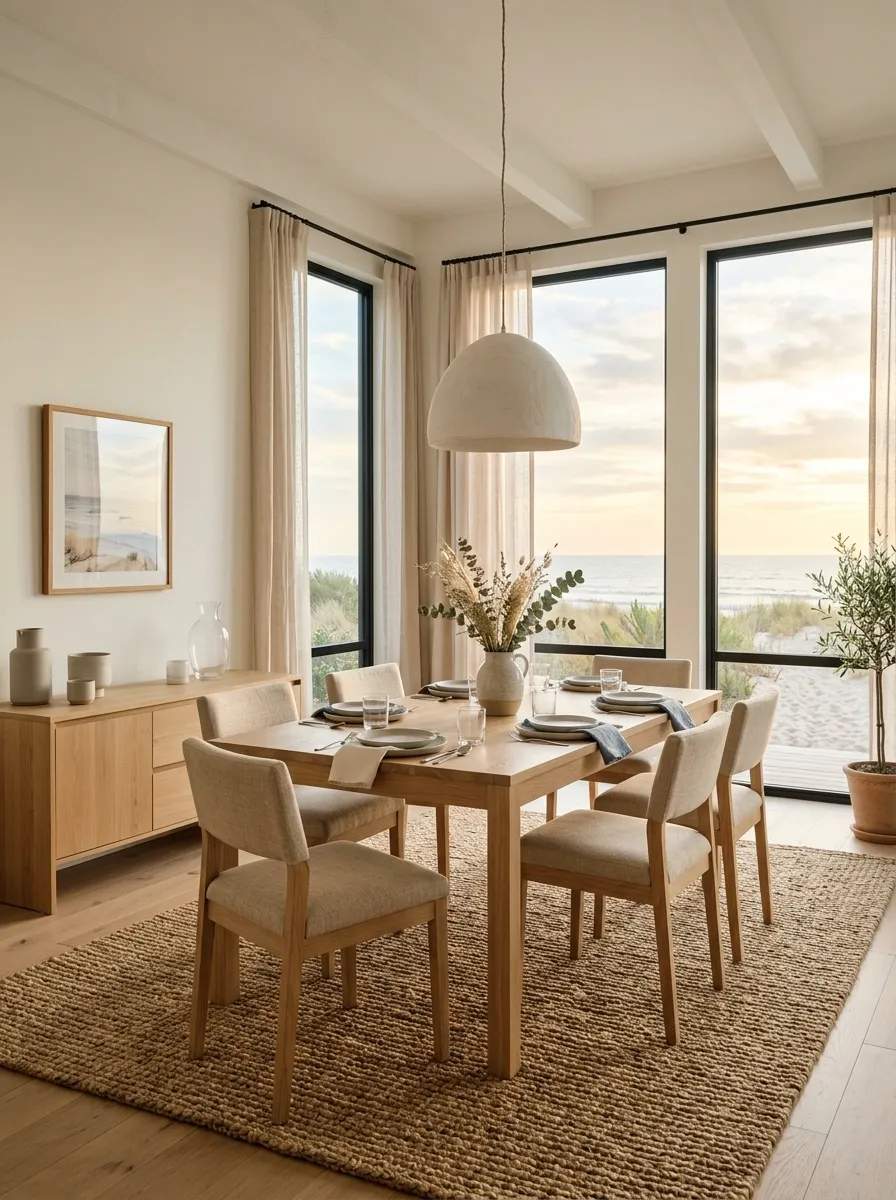
A natural jute rug can give a coastal dining room texture without forcing the room into obvious beach decor. Combine it with a white oak table, white or sand-colored chairs, linen curtains, and soft blue accents used sparingly.
The roughness of the jute works particularly well against smoother surfaces such as painted walls, ceramic lighting, and polished wood. Keep the palette sun-washed rather than nautical.
No anchor-shaped wall art is required. The ocean has officially been informed.
Moody Green Dining Room With a Border Rug
Deep green walls create a dramatic envelope, so a bordered rug can bring structure without adding another loud pattern. Choose a rug with an aged cream center and a muted brown or charcoal border. A walnut table and upholstered chairs reinforce the richer palette.
Brass or aged bronze lighting can add warmth above the table, while artwork with small touches of cream and rust connects the walls to the floor.
The border matters because it visually defines the dining zone. In a room already doing drama, that little architectural trick keeps the rug from becoming visual chaos.
Long Narrow Dining Room With an Elongated Vintage Rug
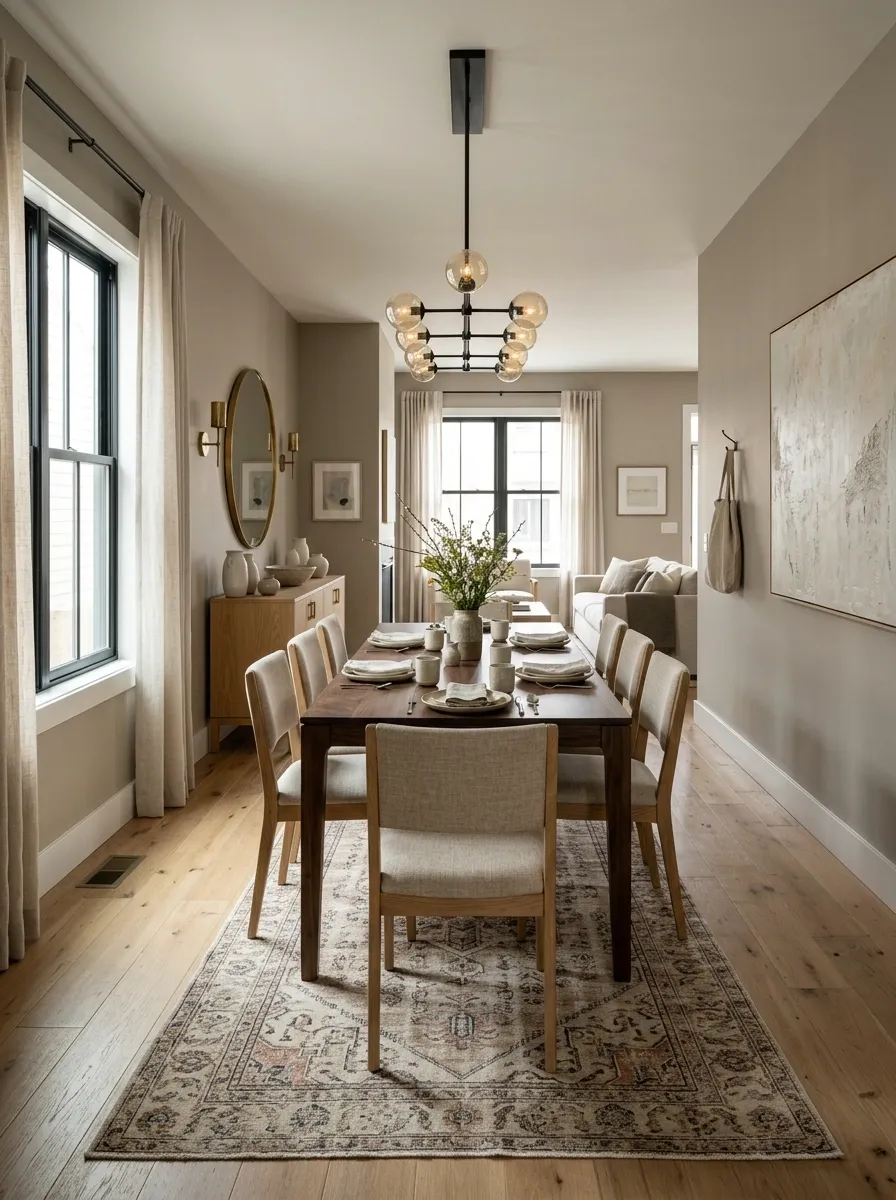
A narrow dining room benefits from a rug that follows the architecture instead of fighting it. An elongated vintage rug beneath a rectangular table creates a continuous visual lane, making the dining area feel deliberate rather than squeezed into leftover floor space.
Choose a faded pattern with enough neutral background to keep the room from becoming visually crowded. Slim chairs, a narrow sideboard, and linear lighting reinforce the proportions.
The goal isn’t to disguise the narrow room. It’s to make the narrowness look intentional. Suddenly the floor plan has opinions.
Modern Moroccan Dining Room With a Soft Black-and-Cream Rug
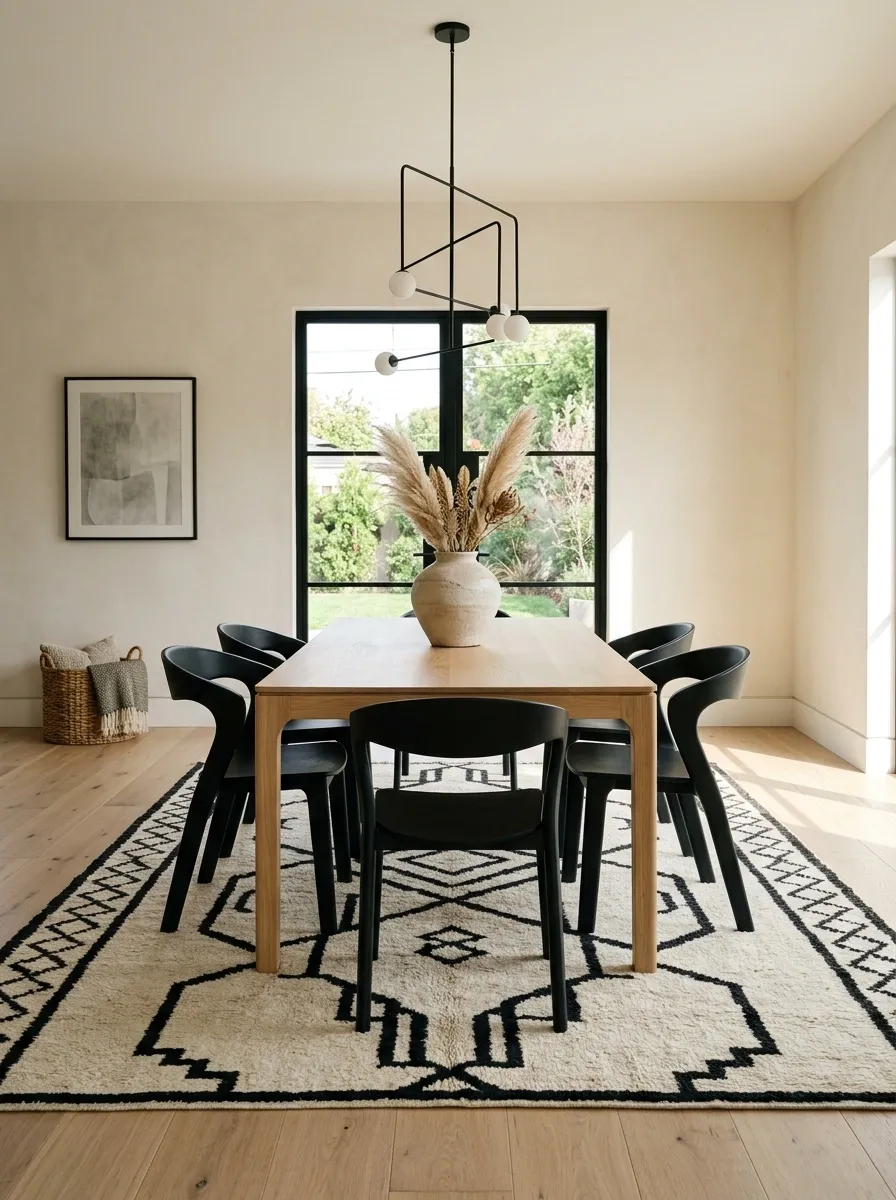
A black-and-cream Moroccan-inspired rug can bring graphic contrast to a modern dining room without requiring colorful furniture. Pair it with a light wood table, curved black chairs, plaster-toned walls, and a sculptural pendant.
The pattern works best when the rest of the room stays visually simple. Repeating black accents in the chairs or lighting makes the rug feel connected to the furniture rather than randomly dropped underneath it.
This is graphic design for the floor. Fortunately, it doesn’t require opening Photoshop.
Japandi Dining Room With a Natural Wool Rug
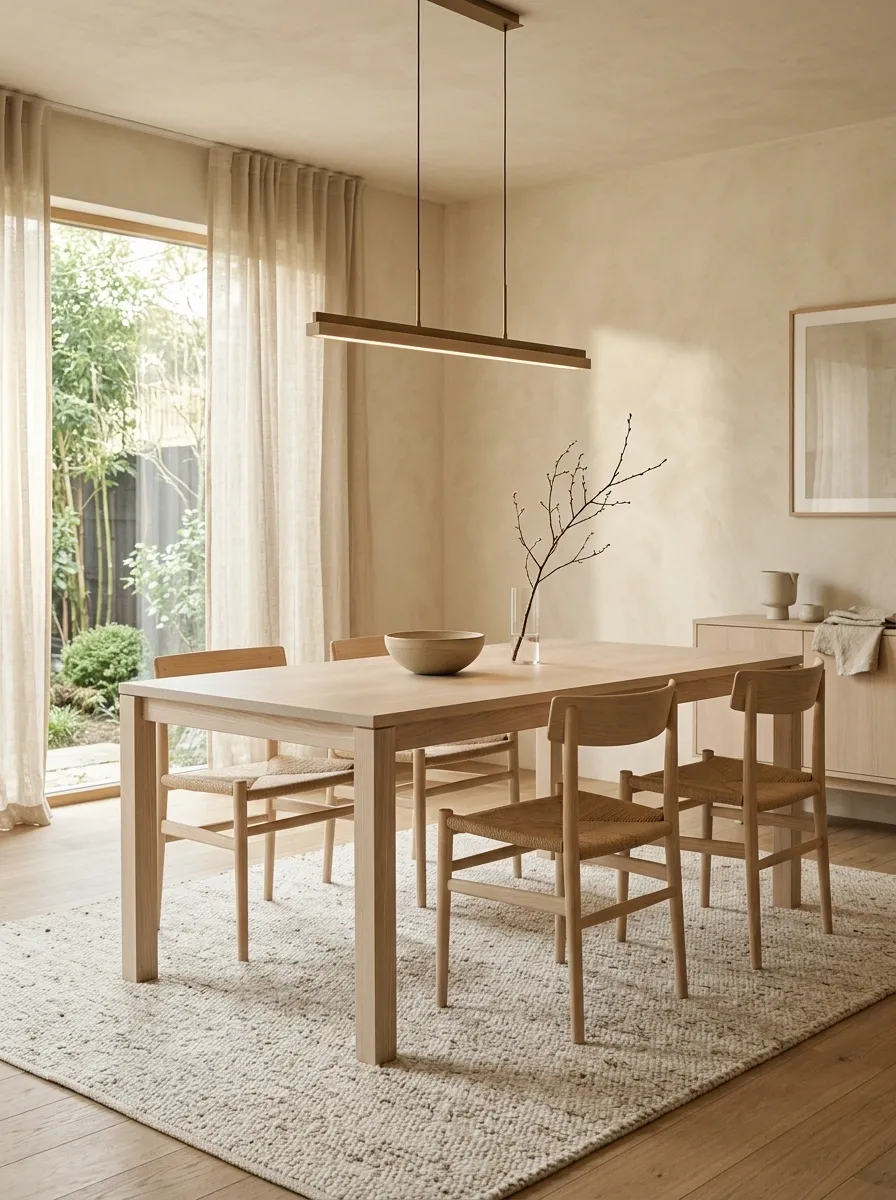
A natural wool rug suits a Japandi dining room because it introduces softness without competing with the architecture. Place it beneath an ash or oak table with simple chairs, low-profile lighting, and warm neutral walls.
The rug can have a subtle irregular weave rather than a strong pattern. That slight variation gives the floor depth while keeping the room restrained.
Everything here should feel intentional but not precious. A ceramic bowl, one branch in a simple vase, and clean surfaces are enough. The room doesn’t need seventeen beige objects proving that beige exists.
Eclectic Dining Room With a Faded Kilim Rug
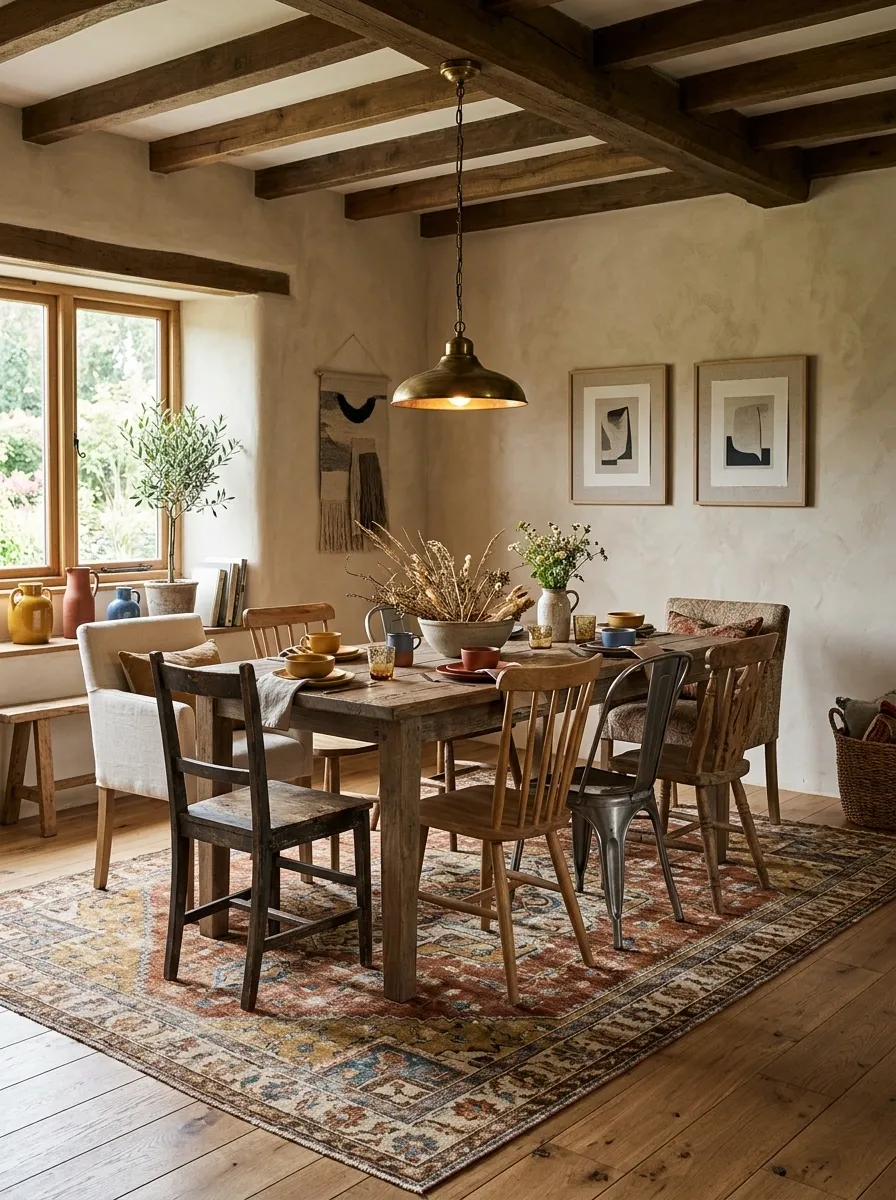
A faded kilim gives an eclectic dining room enough color to connect mismatched furniture without forcing every chair and accessory into the same palette. Pair it with a vintage wood table, a mixture of chair styles, simple artwork, and warm lighting.
The rug can contain rust, mustard, faded blue, cream, and brown, while the furniture picks up only two or three of those tones. That creates connection without making the room look coordinated by committee.
A little mismatch is charming. Complete visual chaos is just a group chat nobody knows how to leave.
Color-Drenched Terracotta Dining Room With a Tonal Rug
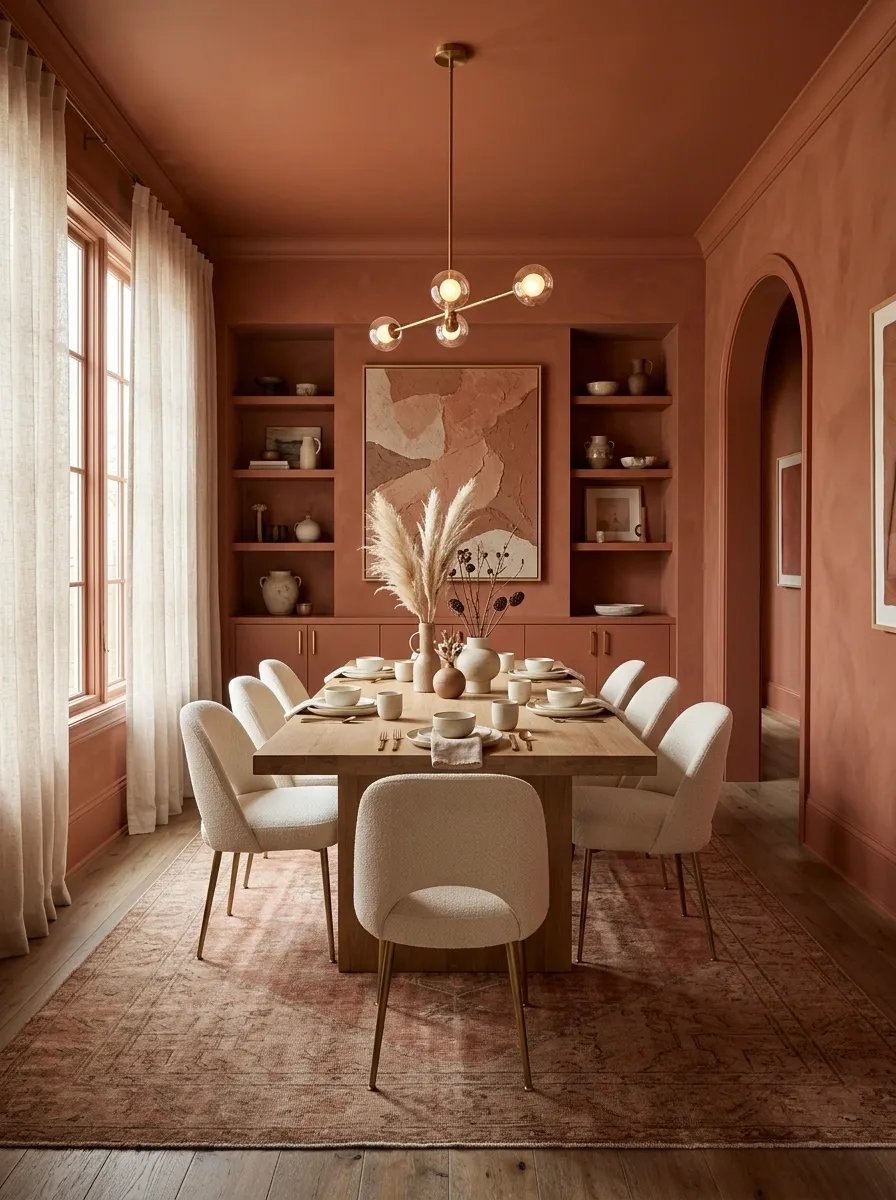
A terracotta dining room becomes much richer when the rug stays within the same warm family rather than introducing an unrelated color. Choose a muted clay rug with subtle tonal variation beneath a dark wood or natural oak table.
Cream upholstery and aged brass provide enough contrast to stop the room from becoming visually flat. The rug can have a faint geometric or faded pattern, but the overall effect should remain tonal.
Color drenching works because the room commits. Half-commitment is how a terracotta wall ends up looking like it had a brief disagreement with the floor.
Minimal Dining Room With a Charcoal Wool Rug
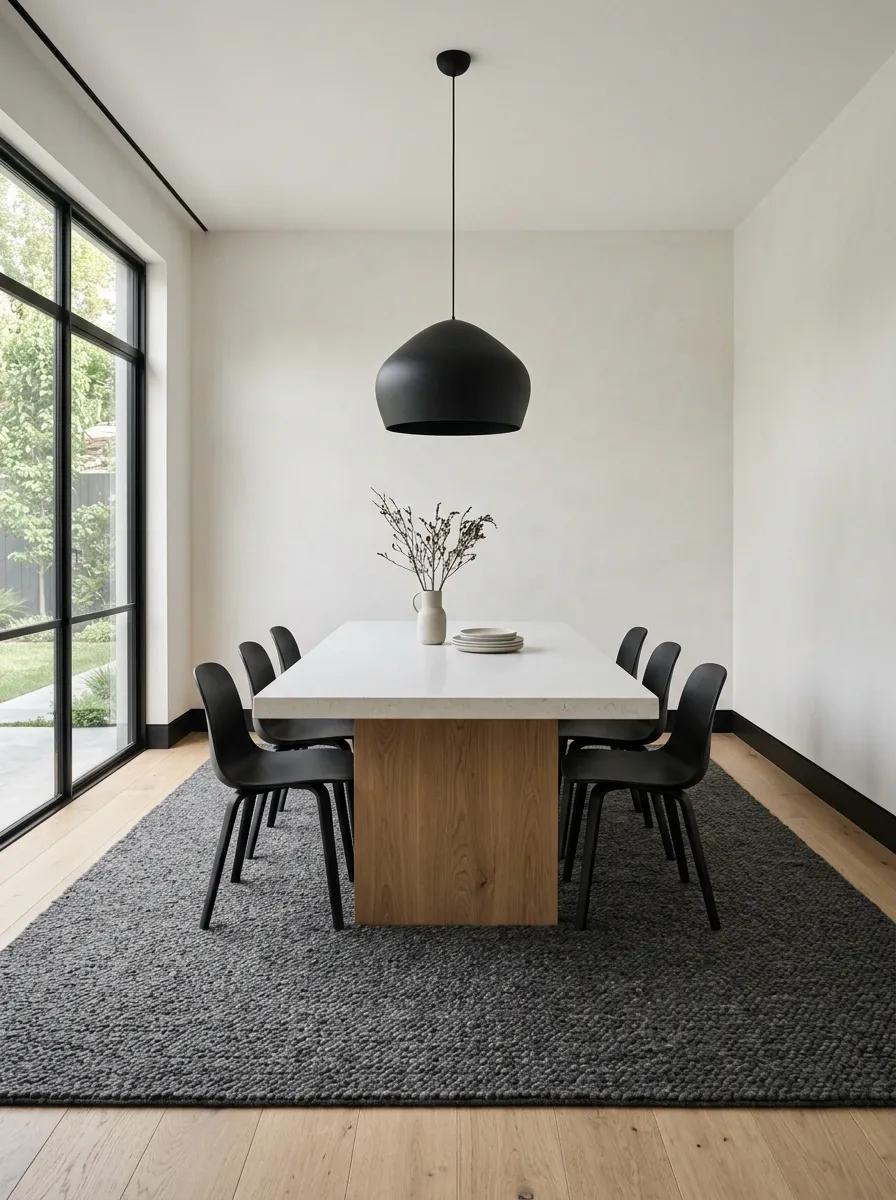
A charcoal wool rug can ground an extremely minimal dining room without introducing a decorative pattern. Use a pale stone or oak table, sculptural chairs, clean walls, and one strong pendant.
The contrast between the pale furniture and dark floor creates enough visual definition that the room doesn’t need a gallery wall or collection of accessories. Texture becomes the decorative element instead.
This is for the room where someone says “nothing unnecessary” and actually means it.
Small Rental Dining Area With a Washable Flatweave Rug
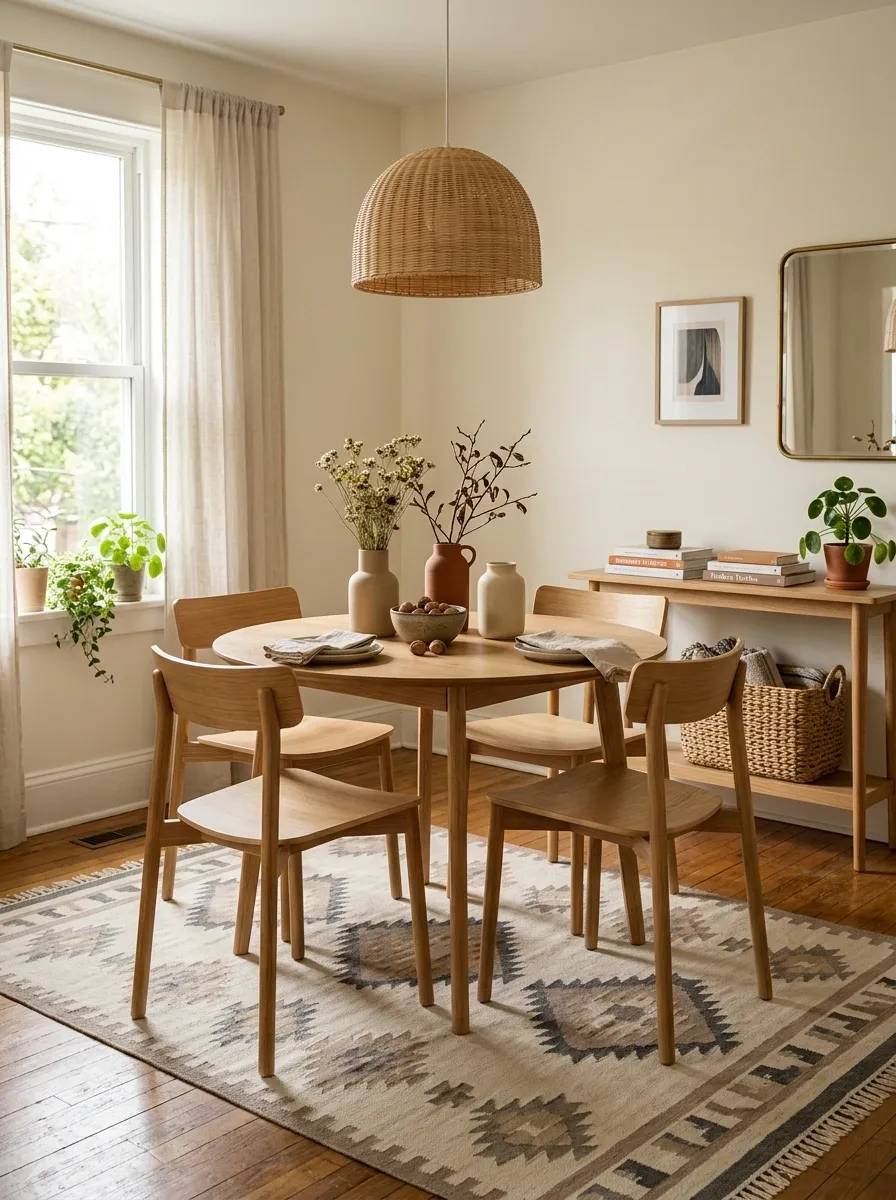
A rental dining area needs a rug that can handle actual life. A washable flatweave in a muted geometric pattern gives the space definition while staying practical around everyday meals, spills, and high-traffic chair movement.
A compact wood table, lightweight chairs, and a simple pendant keep the area easy to rearrange. Choose a pattern that hides small marks without becoming visually dominant.
The goal isn’t to make the rental look like a staged apartment. It should look like someone lives there and has simply refused to let the floor look neglected.
Mid-Century Dining Room With a Mustard Vintage Rug
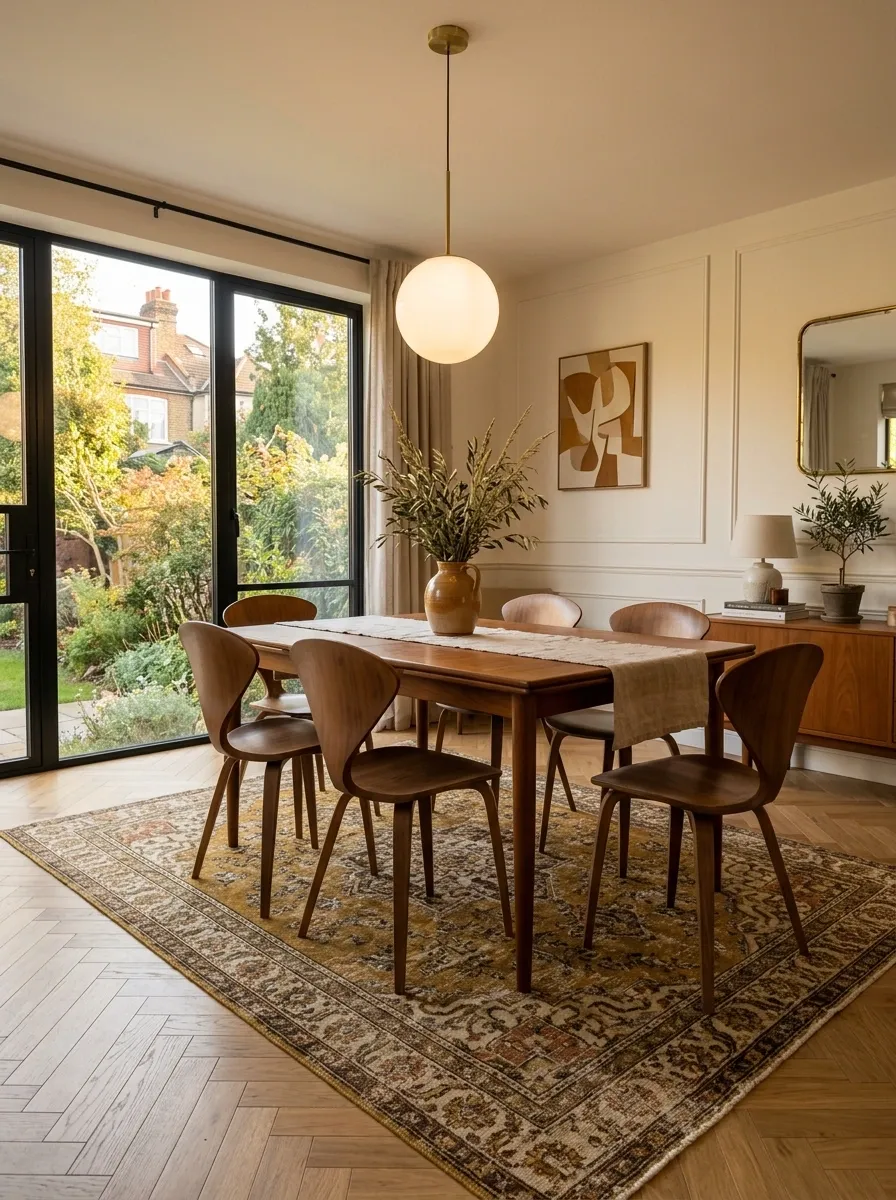
A mustard vintage rug can make a mid-century dining room feel warm and collected without abandoning its clean lines. Pair it with a teak table, tapered wooden legs, curved or molded chairs, and a simple globe pendant.
Look for a rug where mustard appears alongside brown, cream, rust, and muted olive rather than as one solid block of yellow. This gives the floor enough complexity to connect with the wood furniture.
The result feels like mid-century design without looking like a time capsule. The lava lamp can stay retired.
French Country Dining Room With a Faded Medallion Rug
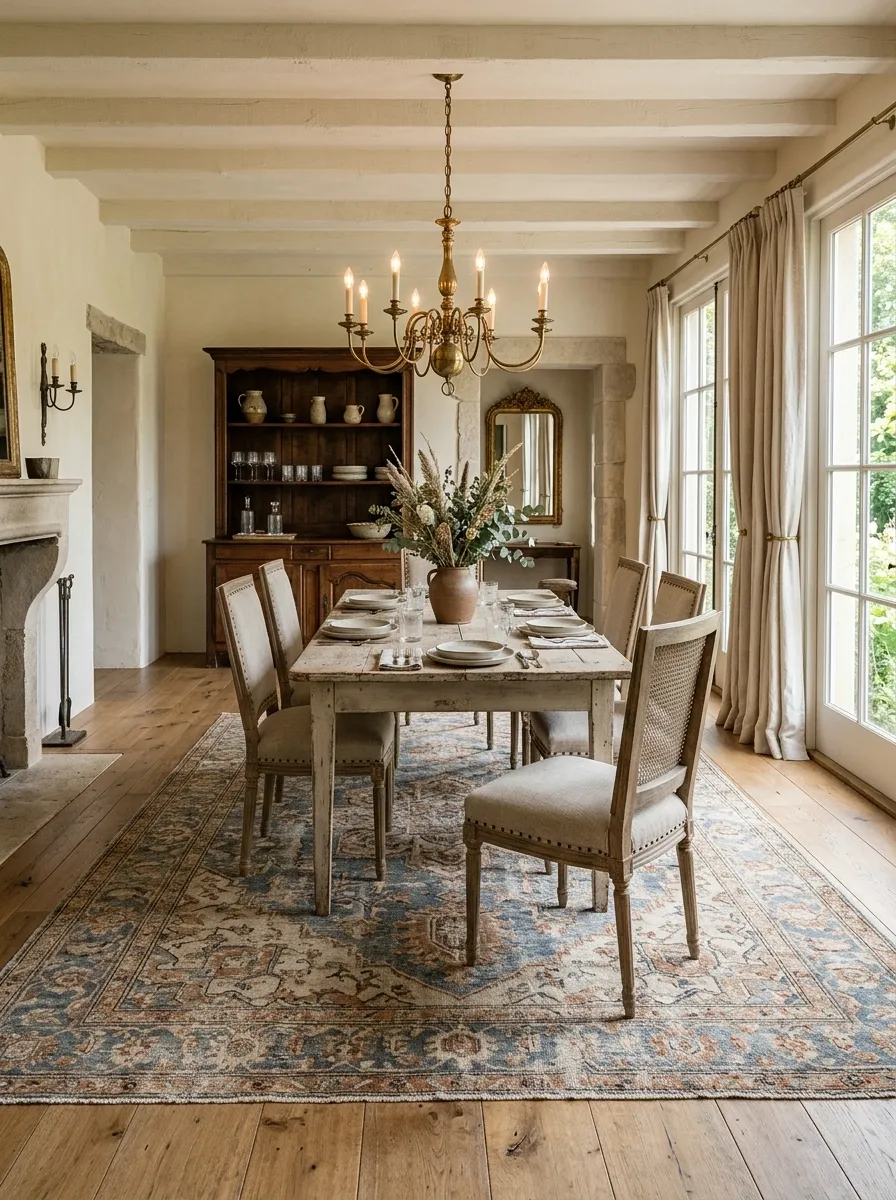
A faded medallion rug gives a French country dining room its layered, old-world character without making every surface ornate. Pair it with a painted wood table, linen-upholstered chairs, aged brass lighting, and warm cream walls.
The rug should look softened by time, with dusty blue, beige, rust, and cream rather than saturated jewel tones. Keep the furniture silhouettes simple enough that the pattern has space to breathe.
The room can feel collected without looking like someone emptied an antique shop directly onto the dining floor.
Blue and White Coastal Dining Room With a Striped Flatweave Rug
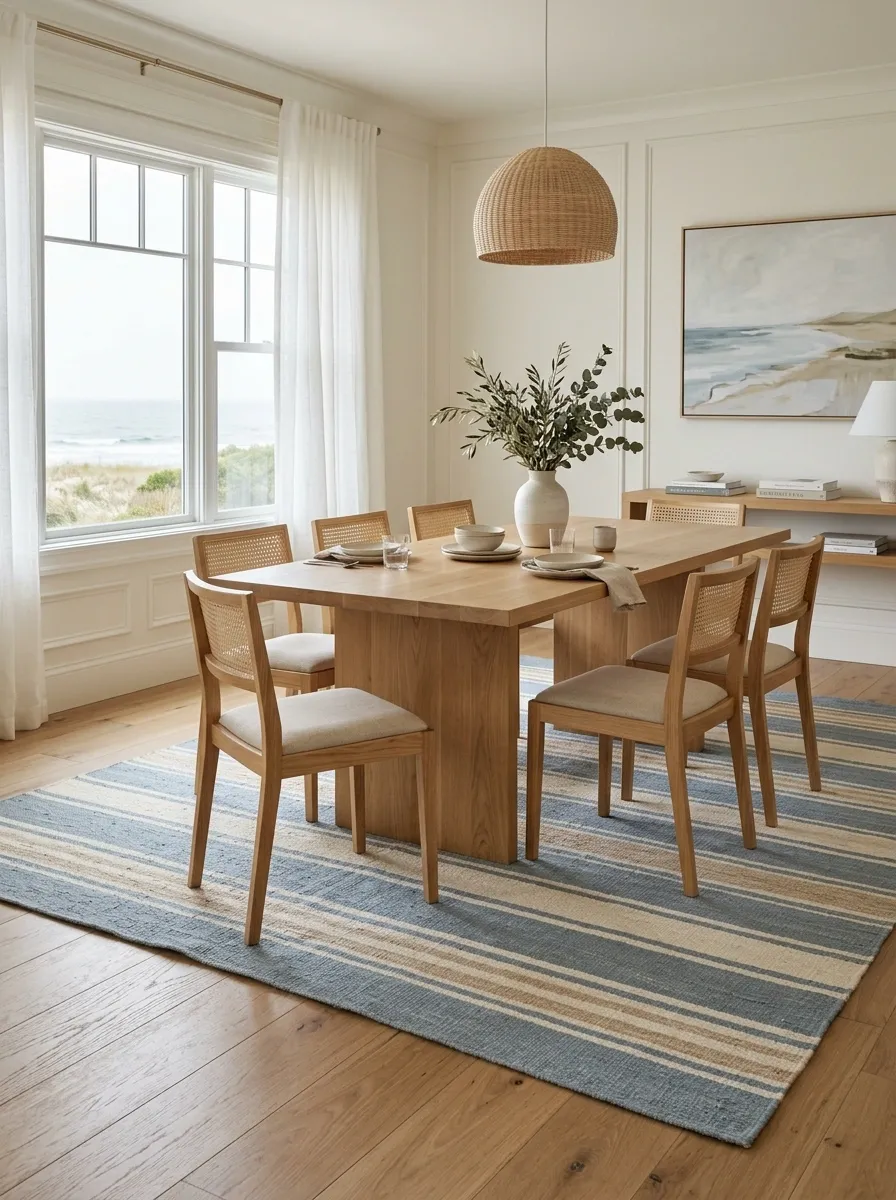
A striped flatweave gives a coastal dining room a sense of direction without resorting to obvious nautical motifs. Use soft blue, cream, and warm beige beneath a white oak or painted wood table.
The stripe scale matters. Wider stripes feel relaxed and architectural, while tiny stripes can become visually noisy under a busy table arrangement. Keep the chairs simple and let the natural materials do some of the decorating.
This room says coastal without screaming “beach souvenir shop.” A considerable achievement.
Industrial Loft Dining Room With a Distressed Neutral Rug
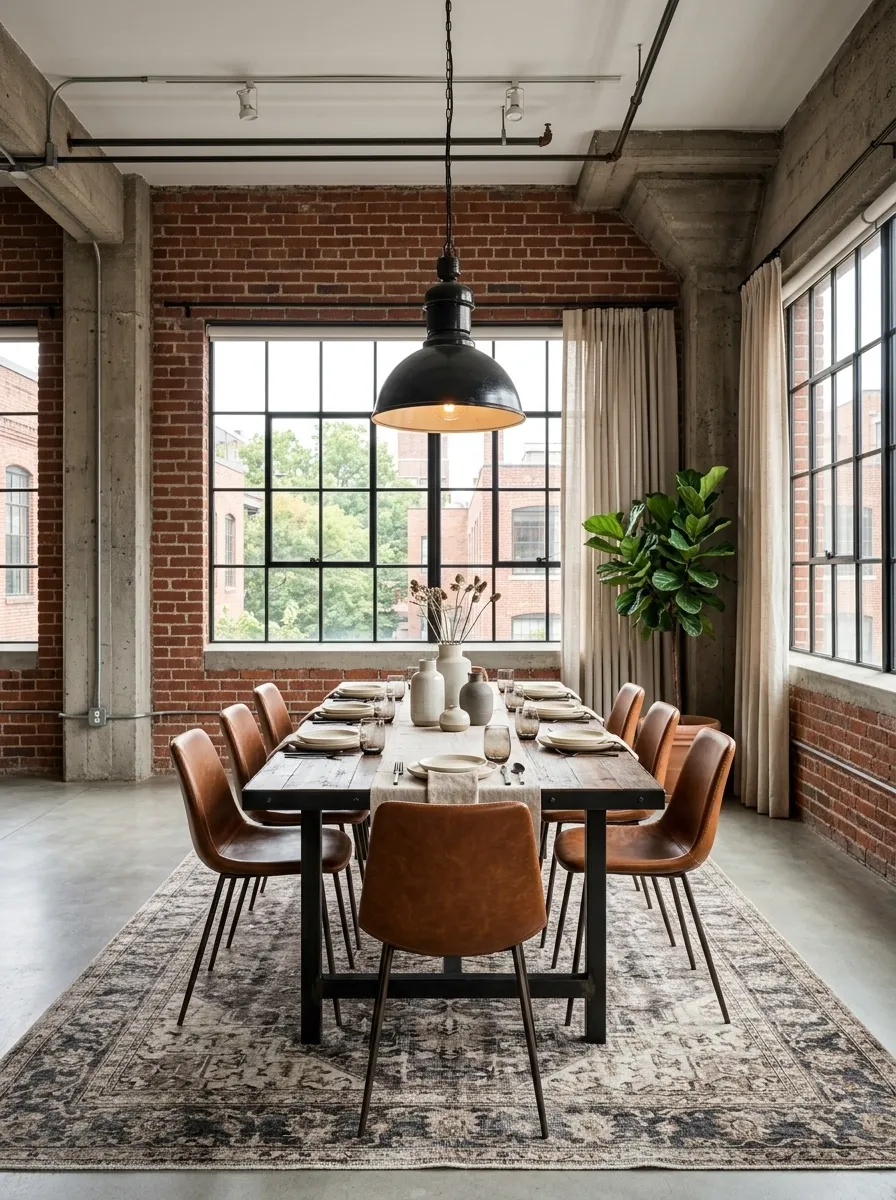
Industrial dining rooms can become overly hard when every surface is black metal, exposed brick, concrete, and dark wood. A distressed neutral rug softens the composition without removing its character.
Choose a faded rug in charcoal, beige, cream, and brown beneath a substantial wood and steel table. Leather chairs add warmth, while a large pendant or track lighting keeps the ceiling visually connected to the furniture.
The rug is doing emotional support work for all that concrete.
Soft Pink Dining Room With a Muted Floral Rug
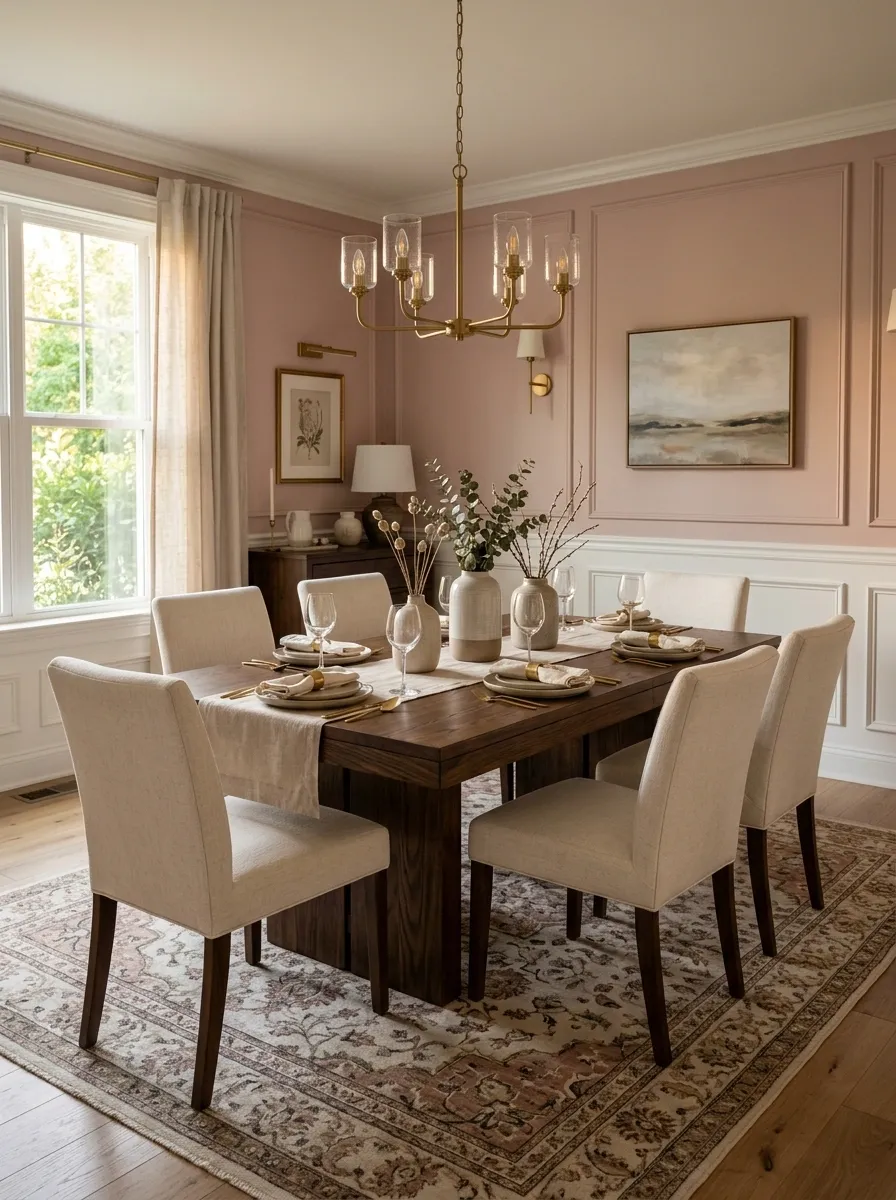
Soft pink walls don’t need a matching pink rug. A muted floral design with cream, dusty rose, olive, and faded brown gives the room depth while keeping the palette sophisticated.
A dark wood table provides contrast, while cream upholstered chairs and brass lighting keep the overall composition warm. The rug should repeat the wall color only subtly so the room doesn’t become one giant pink blur.
The floral pattern can be romantic without turning the dining room into a wedding venue that forgot to leave.
Contemporary Dining Room With a Checkerboard Rug
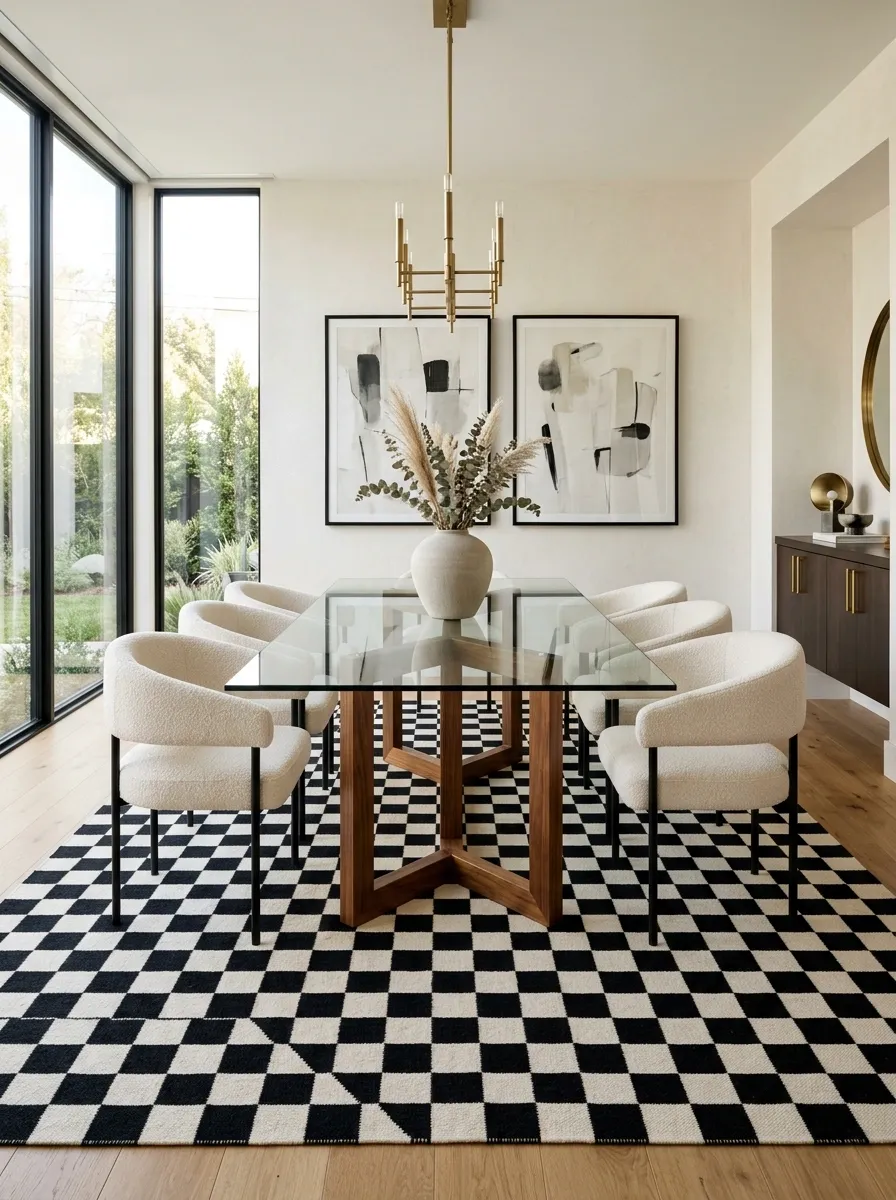
A checkerboard rug can give a contemporary dining room a crisp graphic foundation, especially beneath a glass or stone-topped table. Keep the rest of the room controlled with curved chairs, warm wood accents, and restrained artwork.
Black and cream checks work beautifully when the room already has a few black details. If the pattern is bold, let the furniture silhouettes remain simple.
The floor can make the statement. The chairs don’t need to start a second campaign.
Maximalist Dining Room With a Layered Vintage Rug
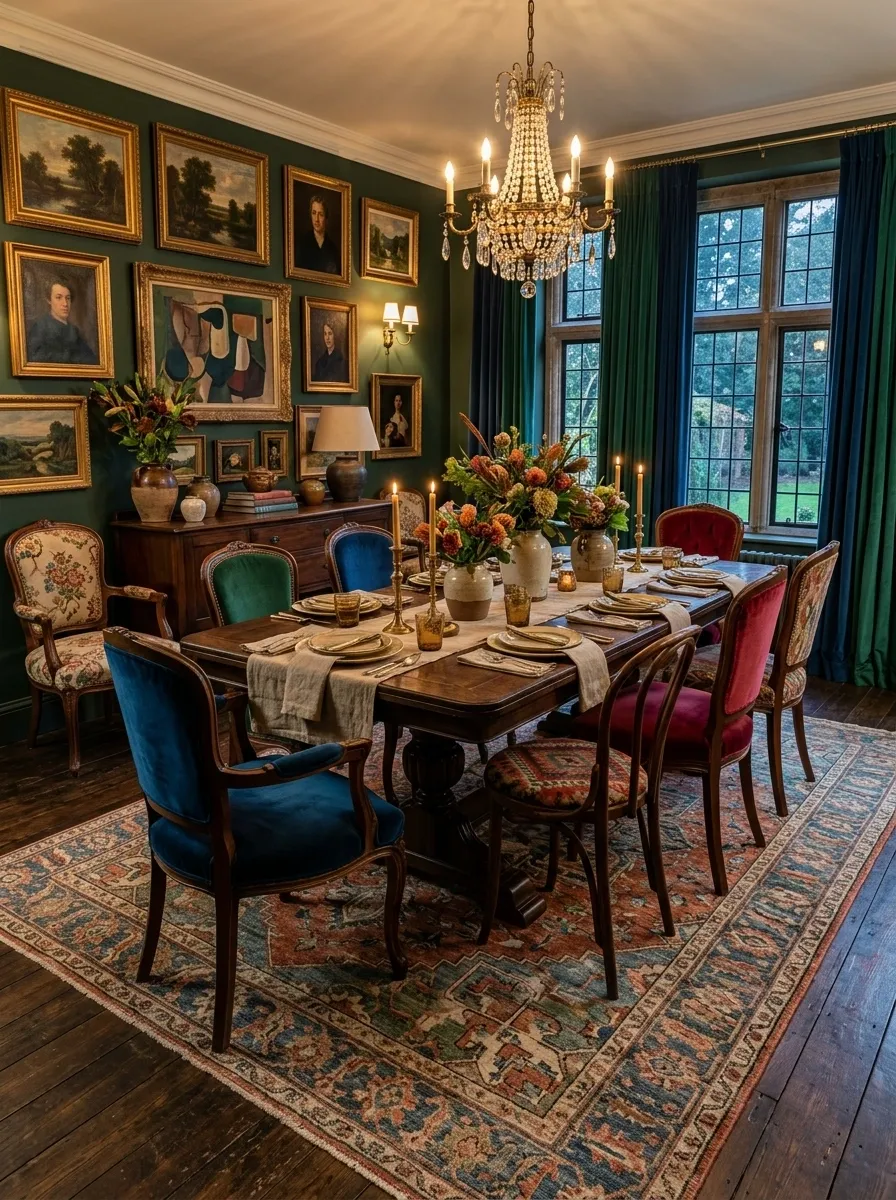
A maximalist dining room can handle a richly patterned vintage rug because the room is already built around visual abundance. The trick is repetition. Let the rug’s rust, blue, green, and cream appear again in artwork, upholstery, ceramics, or curtains.
A dark wood table gives the pattern an anchor, while mismatched chairs can add personality without making the composition completely random. Layered lighting helps separate the different visual zones.
Maximalism isn’t a license to buy everything that catches the eye. There still needs to be a plot.
Organic Modern Dining Room With a Soft Stone-Toned Rug
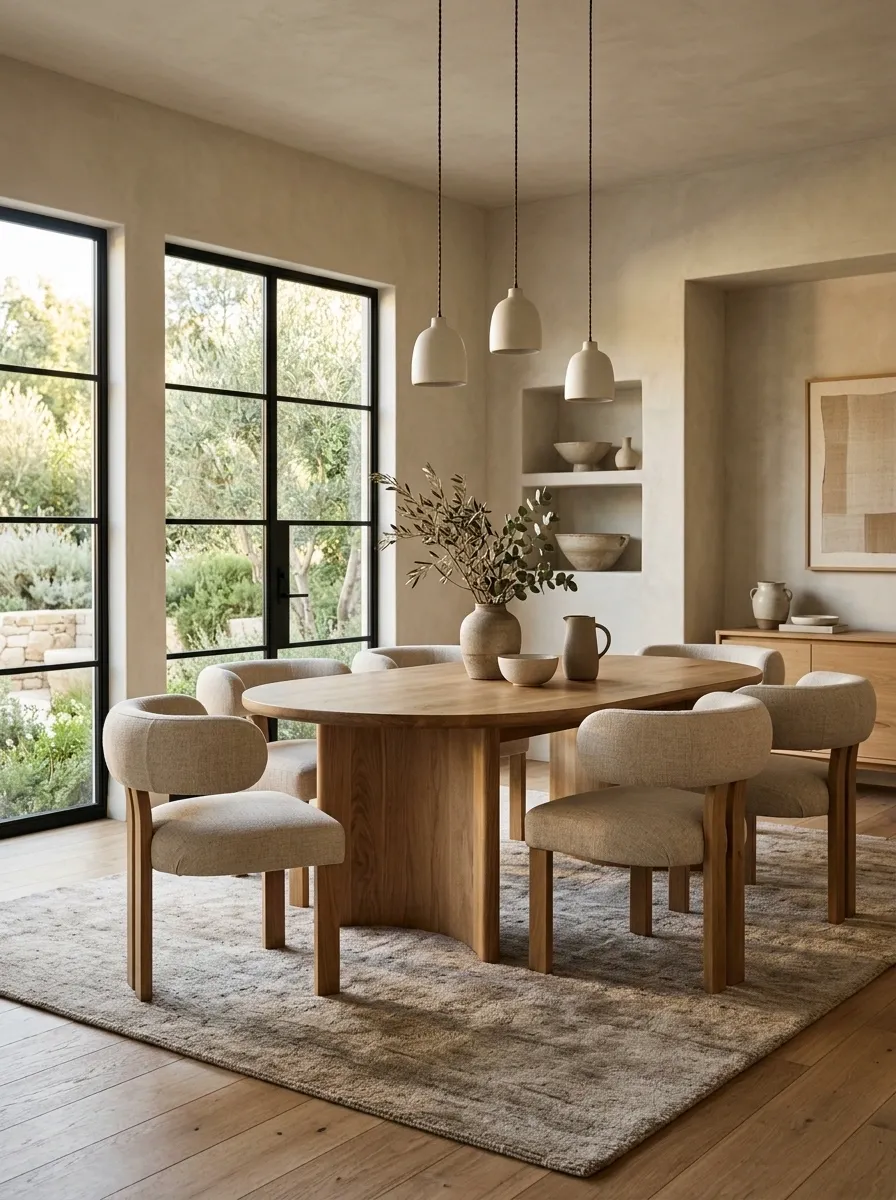
An organic modern dining room benefits from a rug that feels tactile rather than decorative. Choose a soft wool rug in stone, oatmeal, taupe, or warm gray beneath a rounded wood or stone table.
Curved chairs, plaster walls, ceramic lighting, and natural wood reinforce the same quiet material story. The rug should have visible texture but minimal pattern, allowing the architecture and furniture shapes to carry the visual interest.
This is where “simple” actually looks considered instead of simply unfinished.
Dining Room With a Built-In Banquette and Oversized Rug
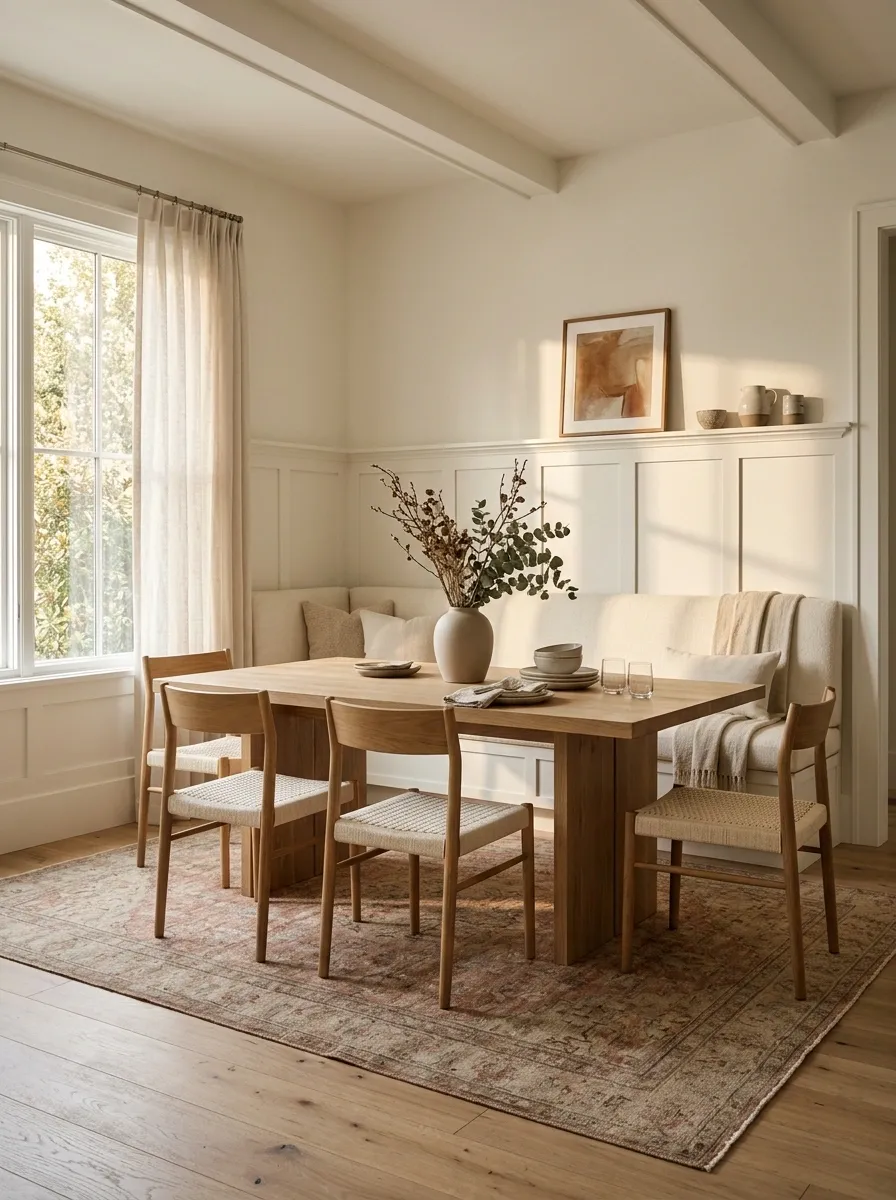
A dining area with a built-in banquette can look disconnected when the table and chairs sit directly on the surrounding floor. An oversized rug pulls the banquette, table, and loose chairs into one visual zone.
Choose a durable low-pile rug with enough pattern to disguise everyday marks but not so much contrast that it competes with the upholstery. Warm neutrals, faded blue, olive, or muted terracotta can work beautifully depending on the banquette fabric.
The oversized scale makes the dining zone feel intentional rather than like someone squeezed a table into the corner and hoped nobody noticed.
Formal Dining Room With an Antique Persian Rug
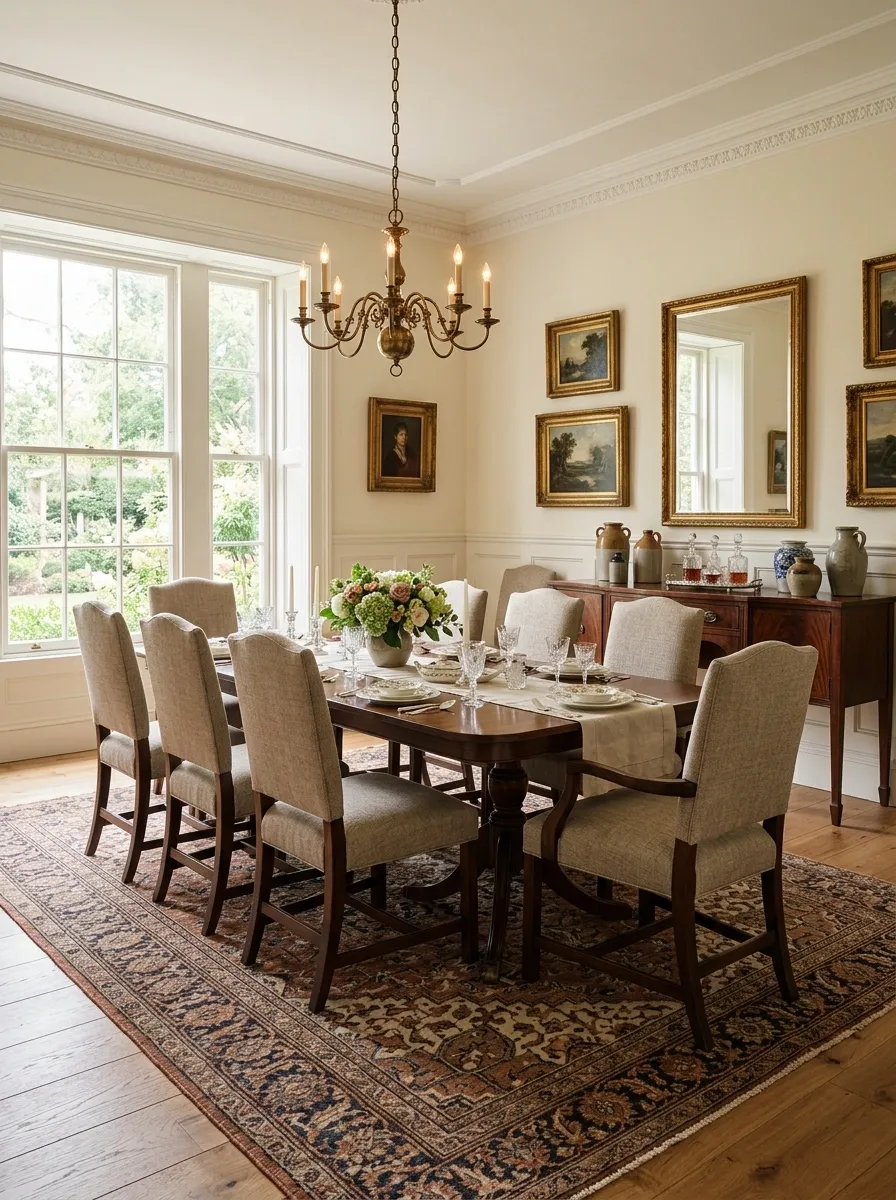
A formal dining room benefits from an antique Persian rug when the rest of the furniture has enough visual weight to support it. A dark wood table, upholstered dining chairs, traditional lighting, and framed artwork create a layered composition where the rug becomes part of the room’s history.
Choose a rug with softened colors rather than extremely saturated tones. Deep rust, faded navy, cream, and brown create richness without making the floor visually louder than the furniture.
The antique look works best when the room doesn’t try too hard to look “formal.” A little breathing room keeps it from becoming a furniture museum after closing hours.
Warm Transitional Dining Room With a Subtle Bordered Rug
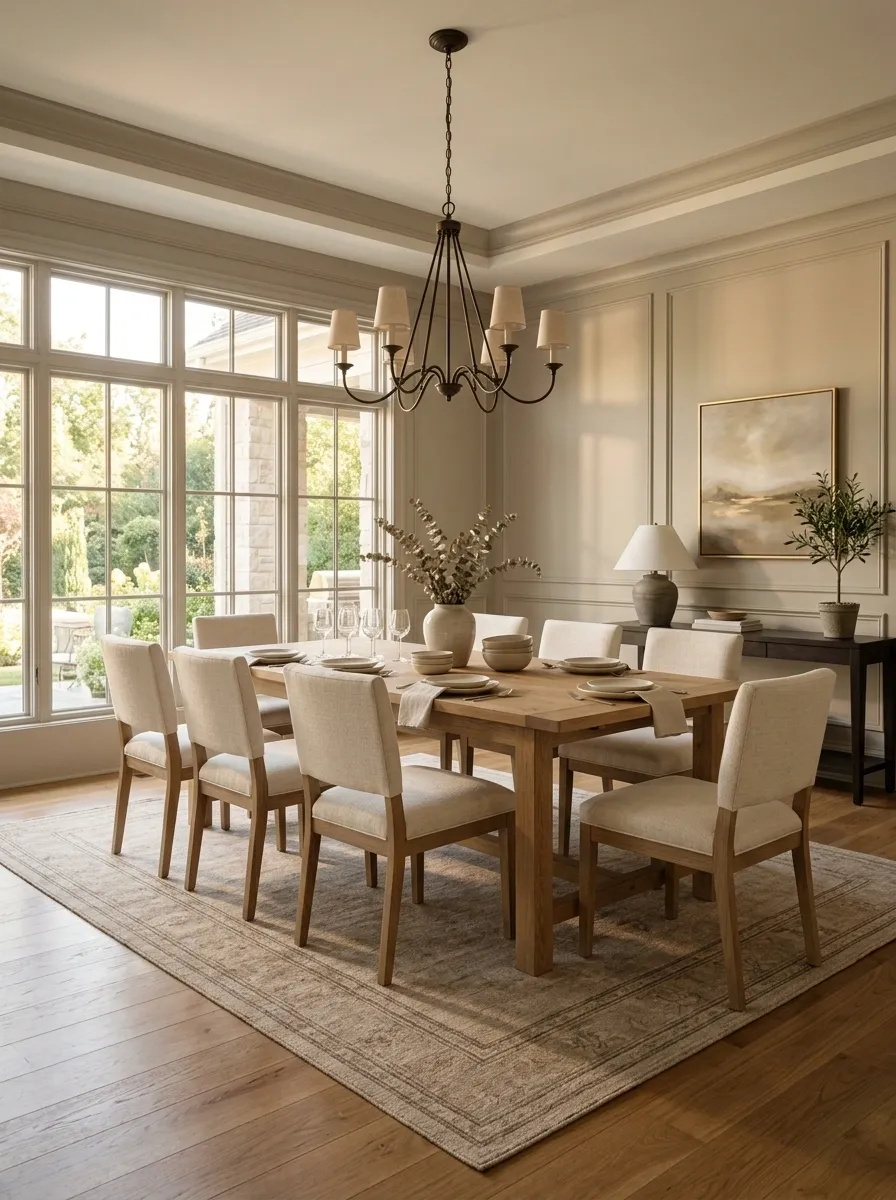
A transitional dining room works beautifully with a quiet bordered rug that adds definition without introducing an obvious motif. Choose warm beige, taupe, cream, or faded gray beneath an oak or walnut table.
Upholstered chairs soften the furniture, while a classic pendant or chandelier provides structure overhead. The border creates enough visual framing to keep the rug from disappearing into the floor, especially when the room already has neutral walls.
It’s the design equivalent of being well dressed without announcing every individual item of clothing.