
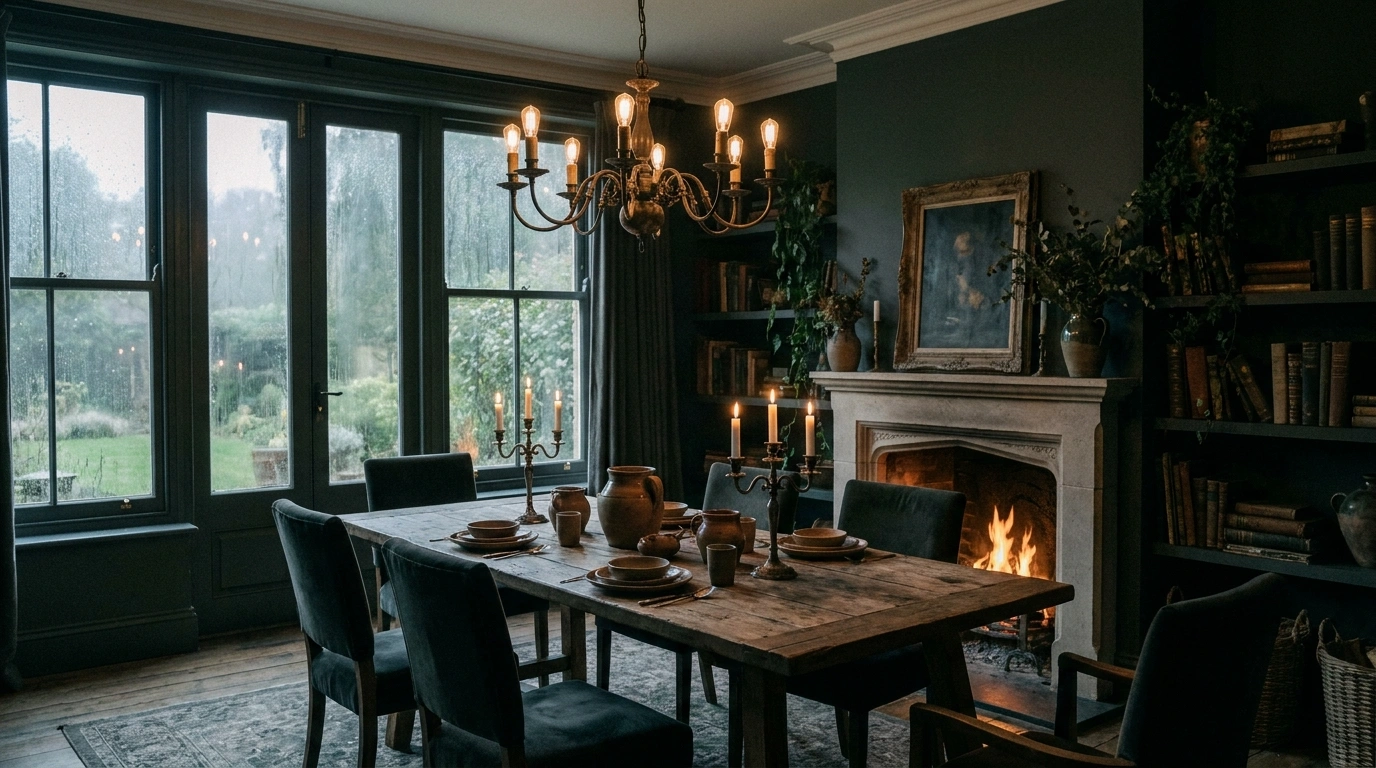
A dining room can handle a surprising amount of darkness. The problem starts when every dark choice gets piled into the same corner: charcoal walls, black furniture, black lighting, black artwork, black everything. Suddenly the room isn’t moody. It just looks like the power company has personally offended someone.
The best moody dining room ideas aren’t really about making a room as dark as possible. They’re about controlling where the darkness sits and giving it something interesting to push against.
Warm oak, pale stone, saturated upholstery, aged metal, textured walls, soft linen, and natural daylight can completely change how a dark palette feels.
That is what makes a finished room more useful than a list of individual decorating suggestions. A black pendant might look fantastic in isolation, but it tells very little about what happens when it meets the table, walls, flooring, windows, artwork, and chairs.
Complete Moody Dining Room Ideas
Moody Dining Room With Crystal Chandelier
A dramatic multi-tiered crystal chandelier hangs directly above a round wooden dining table, injecting a layer of unexpected brilliance into the deep gray space. Dark upholstered chairs surround the table, while floor-to-ceiling sheer curtains soften the natural light entering from the side.
The brilliant sparkle of the chandelier contrasts brilliantly against the matte walls and dark wood tones. Candlelight flickers from the tablescape, amplifying the cozy, intimate ambiance that makes this dark dining room feel exceptionally luxurious.
Warm Oak Dining Room With Slim Black Steel Details
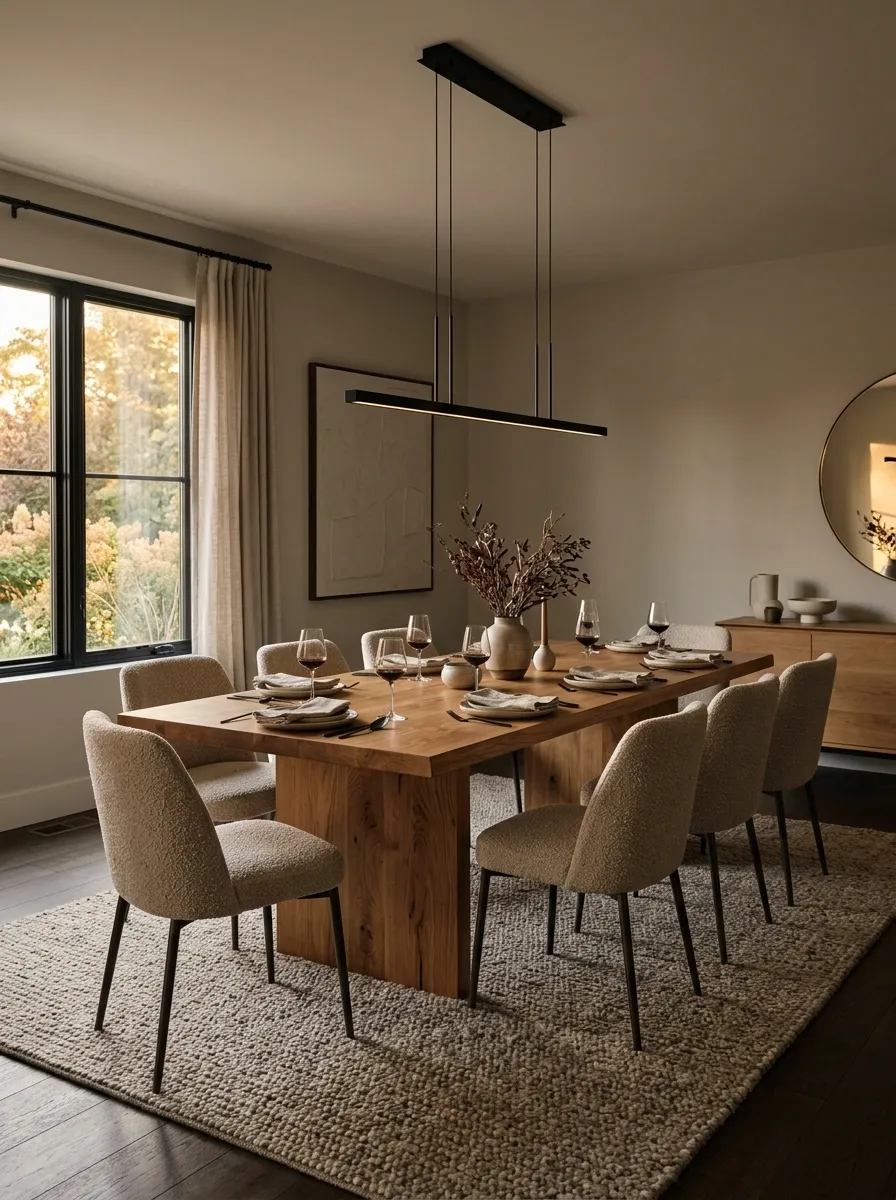
Warm oak brings most of the softness in this dining room, while slim black steel details give the composition a sharper architectural edge. A substantial oak dining table sits beneath a linear black pendant, surrounded by simple upholstered chairs. The walls stay in a muted warm gray, while a large textured rug grounds the furniture against the darker wood floor.
The important contrast isn’t simply oak versus black. It’s the difference between the organic grain of the table and the precise geometry of the lighting and furniture. That keeps the room from becoming overly rustic while still giving it plenty of warmth.
Keep the artwork restrained here. The room already has enough visual interest in the wood grain and black framework. Adding an entire wall of tiny decorations would turn the calm composition into a meeting of every object that happened to be available.Dark Blue Dining Room With Metallic Pendant
Deep navy blue walls wrap this dining room in a sophisticated hug, anchored by a sleek modern wooden dining table and comfortable gray armchairs. A cylindrical metallic pendant light hangs low over the center, drawing the eye upward toward the matching dark ceiling.
The brassy finish of the light fixture provides a warm focal point that counters the cool undertones of the blue envelope. Simple framed art and fresh botanical arrangements complete the space, ensuring the room reads as intentional and deeply inviting.
Charcoal Dining Room With a Soft Curved Table
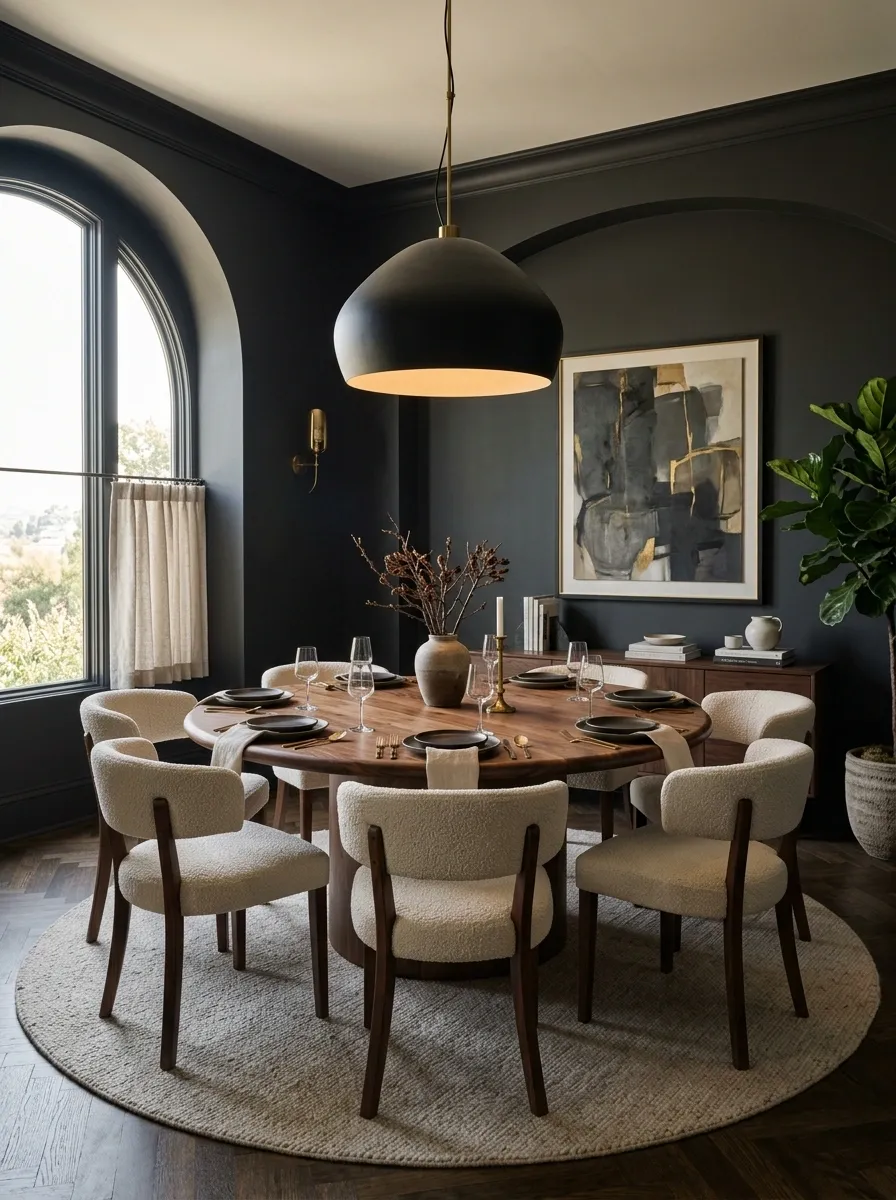
Deep charcoal walls give this dining room a strong envelope, but the furniture deliberately avoids hard rectangular shapes. A rounded walnut table sits at the center with curved upholstered chairs, a softly shaped pendant, and a large circular rug beneath the dining area.
That repetition of curves makes the dark walls feel softer and gives the room a more relaxed rhythm. The walnut adds warmth without fighting the charcoal, while the upholstery introduces another tactile layer.
This is a good example of why a moody room doesn’t need more decoration just because the walls are dark. The architecture already provides the drama. The furniture simply needs to keep the composition moving.Earthy Dining Room With Warm Ambient Glow
Rich brown walls and warm lighting create a cocoon-like atmosphere in this sophisticated dining space, featuring a long wooden table flanked by plush upholstered chairs. A modern black dome pendant casts a focused downward beam onto the table’s rustic surface, highlighting its natural grain.
Warm LED strips embedded in the dark wooden shelving unit in the background add depth and dimension to the perimeter. The interplay of hidden lighting and low-glow fixtures prevents the dark palette from feeling heavy, rendering the room effortlessly cozy.
Moody Dining Room With Olive Walls and Antique Brass Lighting
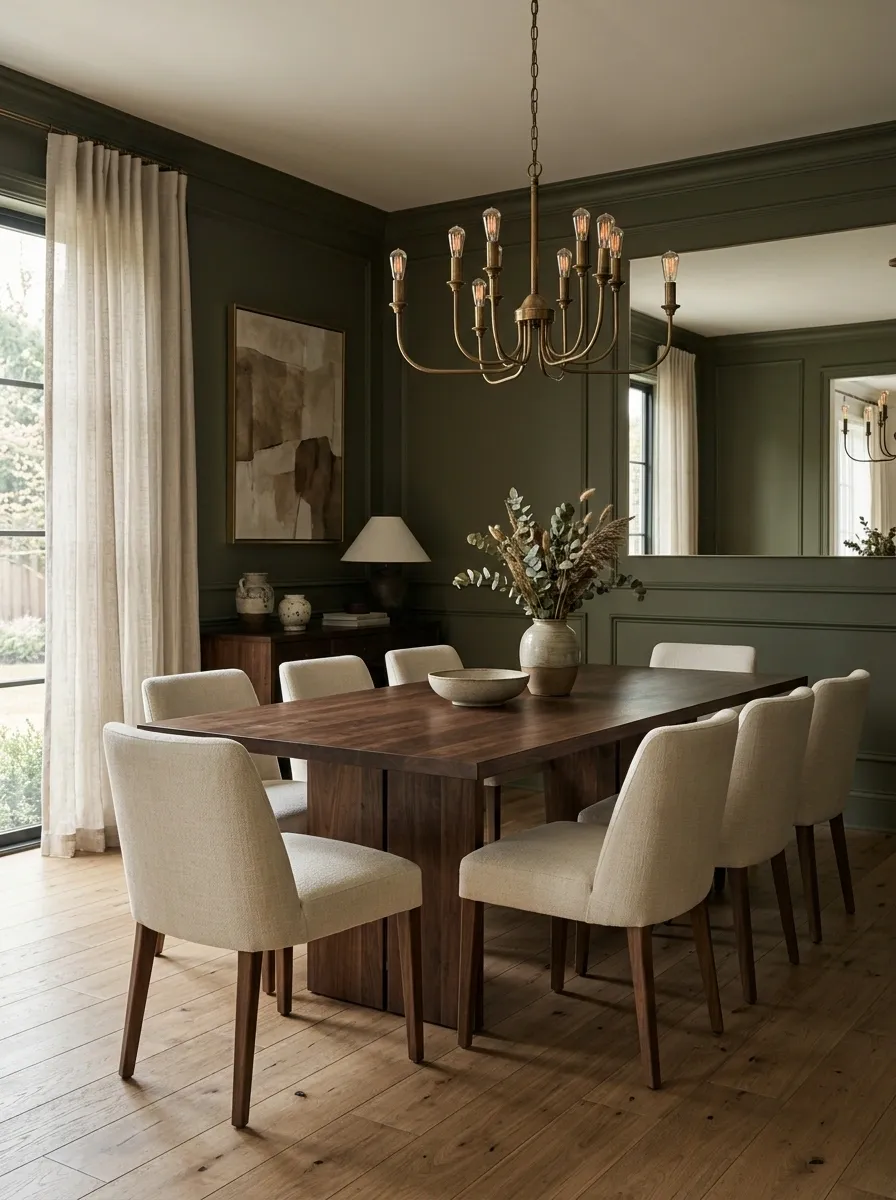
Muted olive walls create a deep, earthy backdrop for a dark walnut dining table and cream upholstered chairs. Above the table, an antique brass chandelier supplies a warm metallic note that catches the light without turning the room into a showroom for shiny things.
The palette works because every major surface has a slightly different temperature. Olive feels earthy, walnut feels warm, cream brings lightness, and aged brass adds a small amount of glow.
Keep the brass aged or brushed rather than mirror-bright. The whole point is to make the lighting feel integrated with the room rather than announce itself from across the house.Warm Wood Dining Room With Sculptural Lighting
Vertical wood slat paneling accents the rich brown walls, creating a striking architectural backdrop for a circular wooden dining table. Interlocking curved gold pendant lights suspend overhead, introducing an artistic, sculptural element that unifies the earthy color palette.
Deep burgundy upholstered chairs echo the warm, saturated tones found in the abstract artwork hanging nearby. Every material works together to build a harmonious environment where dark colors feel rich, layered, and deeply comforting.
Dark Dining Room With Natural Stone and Sculptural Seating
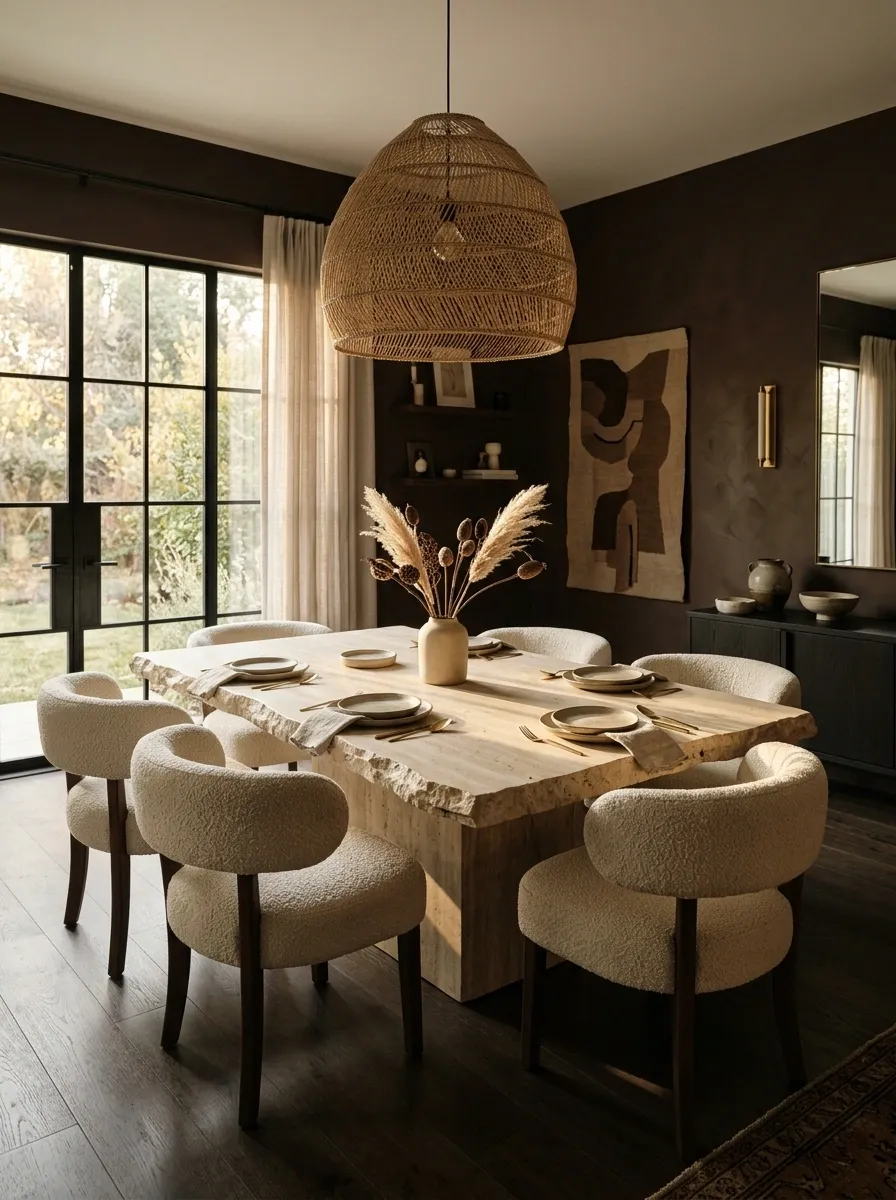
A deep brown wall color sets the stage for a pale natural stone dining table with a thick, softly irregular edge. Sculptural upholstered chairs surround it, while a large woven pendant hangs overhead. The flooring remains dark and understated so the table becomes the brightest architectural element in the room.
The stone is doing more than providing contrast. Its natural variation gives the center of the room a visual texture that painted furniture simply couldn’t provide. The rounded seating echoes the softer edges of the stone and pendant, creating a cohesive silhouette.
Keep the surrounding decor sparse. When the table already looks like a slab of actual geology, there is no urgent need for a decorative bowl containing seventeen beige objects.Brightest visual weight DARK ROOM
Creates surrounding depth
Organic Dining Room With Branch Pendant Light
A suspended natural branch fitted with exposed Edison bulbs serves as a striking, rustic chandelier above a live-edge wooden dining table. Sleek dark chairs line the massive slab table, which is supported by a robust tree-trunk base that grounds the entire composition.
The raw, organic lines of the branch light fixture tie into the earthy textures of the table, making the dark walls feel intentional and warm. Subtle accent lighting and carefully placed greenery finish the space with an effortless, nature-inspired elegance.
Moody Dining Room With Built-In Dark Paneling
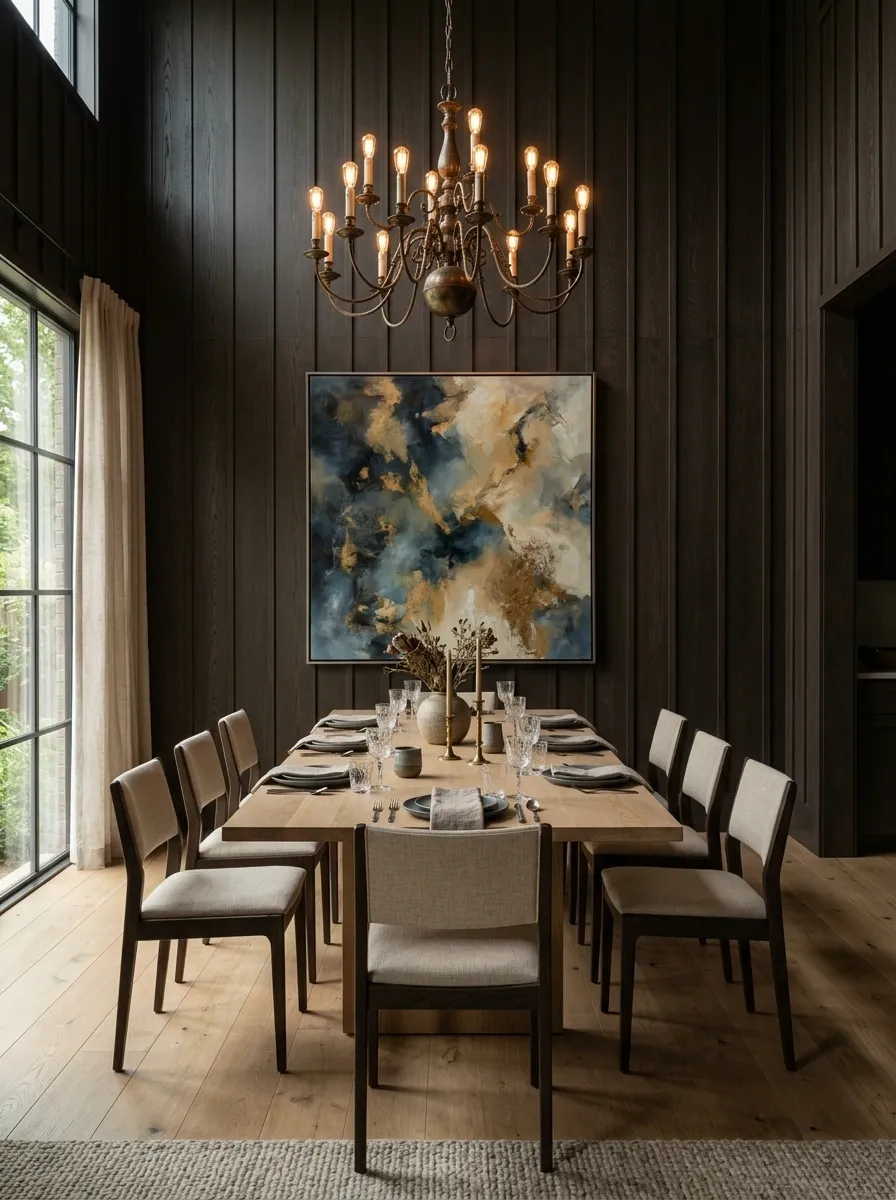
Floor-to-ceiling dark paneling creates a strong architectural backdrop behind a long dining table. The panels are painted in a soft black-brown rather than a flat jet black, giving the wall enough warmth to work with the oak furniture and aged bronze lighting.
A large piece of artwork sits centrally against the paneling, while the table and chairs remain simple. The repeated vertical lines add height and make the dining room feel intentionally architectural instead of simply dark.
Paneling works best when it relates to the scale of the room. Tiny decorative strips pasted onto a small portion of the wall can look more like an afterthought than architecture. Here, the treatment feels structural because it occupies the entire visual field.Draw the eye upward. WARM DARK TONE
Keeps the wall from feeling harsh.
Moody Dining Room With an Oversized Pendant and Quiet Walls
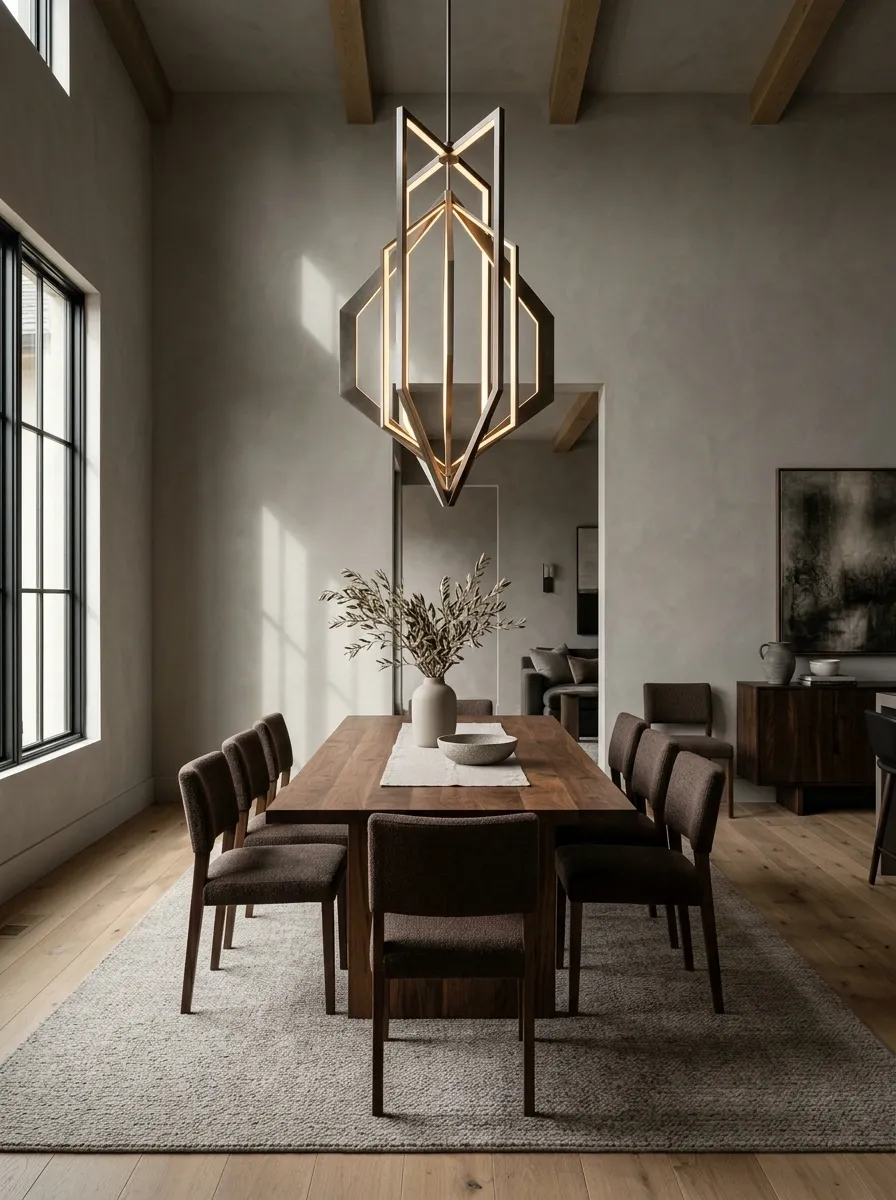
Here, the walls take a back seat. They are painted a soft mushroom gray, while the main drama comes from an oversized sculptural pendant suspended above a long walnut dining table. The chairs are upholstered in a deep brown fabric, and a broad muted rug gives the furniture a visual boundary.
This approach works especially well when the architecture is already interesting or the room has strong natural light. The oversized fixture becomes the focal point without requiring dark walls everywhere.
The rest of the room stays deliberately restrained. When one object is doing the heavy lifting, adding five more “statement pieces” usually just creates an argument nobody asked for.Moody Dining Room With Dark Brick and Weathered Wood
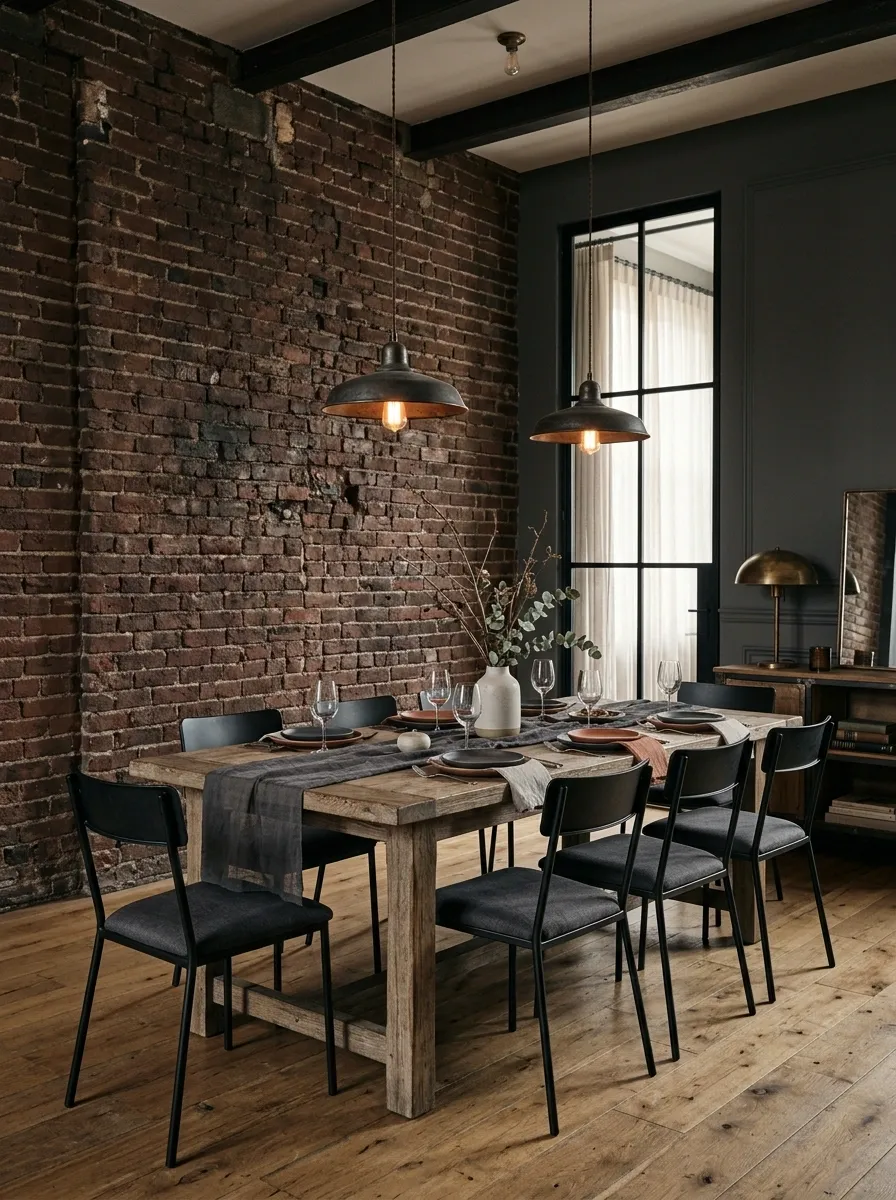
Exposed dark brick gives this dining room an instant sense of depth, while a weathered wood table, black-framed chairs, and aged metal lighting create an industrial foundation without pushing the room into restaurant territory.
The brick wall becomes the dominant texture, so the remaining surfaces stay comparatively quiet. Warm wood softens the masonry, while upholstered seating prevents the composition from becoming too hard.
The strongest version of this look uses restraint. Don’t cover every surface in reclaimed wood, industrial metal, and vintage signs unless the goal is to recreate a pub that has recently discovered Pinterest.Moody Dining Room With Floor-to-Ceiling Curtains
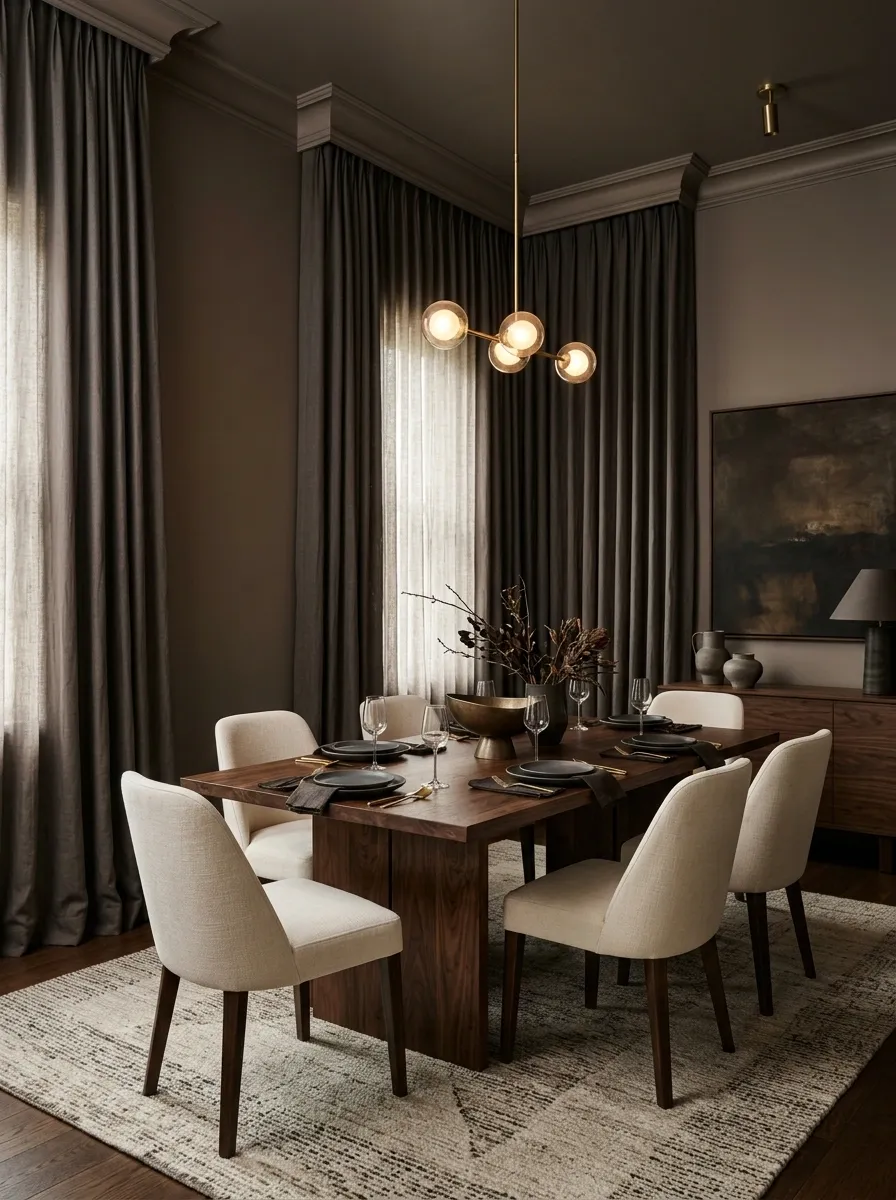
Deep taupe walls are paired with full-height curtains in a slightly darker shade, creating a soft enveloping effect around a dark wood dining table. The curtains extend from close to the ceiling down to the floor, giving the windows greater visual height and making the dining area feel more intimate.
Cream upholstered chairs keep the center of the room from becoming too dark, while a softly patterned rug introduces variation without competing with the curtains.
The important detail is the relationship between the fabric and architecture. The curtains aren’t just window coverings sitting beside the room. They become part of the room’s visual envelope, which makes the entire composition feel more intentional.Moody Dining Room With a Gallery-Like Artwork Wall
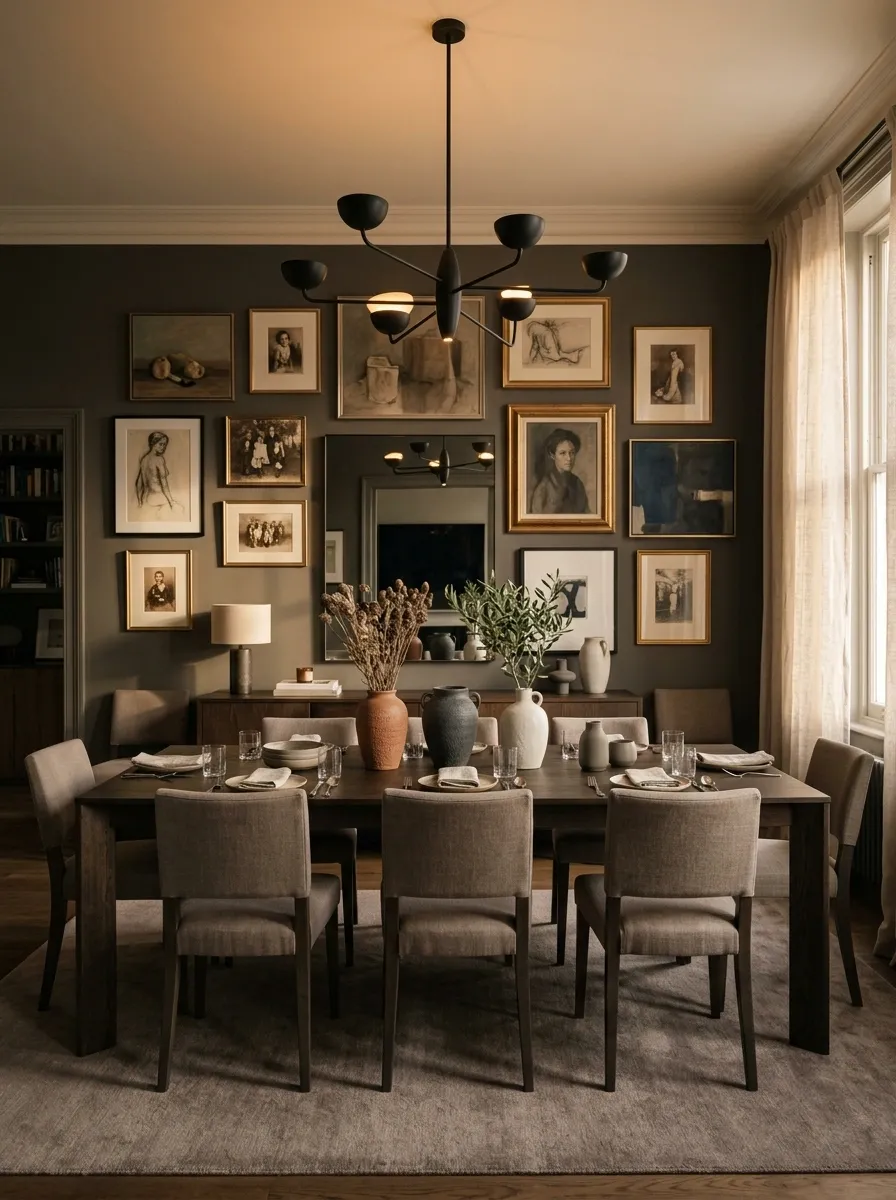
Warm dark-gray walls create a sophisticated backdrop for a long dining table framed by a deliberately varied artwork collection. Different frame sizes, muted paintings, sketches, and photographs fill the wall behind the table, while simple upholstered chairs, a sculptural chandelier, and a quiet rug prevent the room from becoming visually chaotic.
The artwork wall supplies the personality here, so the furniture remains restrained. Variation in frame size gives the wall movement without making it feel random, while keeping the palette within warm neutrals and dusty tones lets the collection read as one composition. The trick is giving the artwork breathing room. Every empty patch does not need a frame just because the wall is technically available.Moody Dining Room With a Long Built-In Sideboard Wall
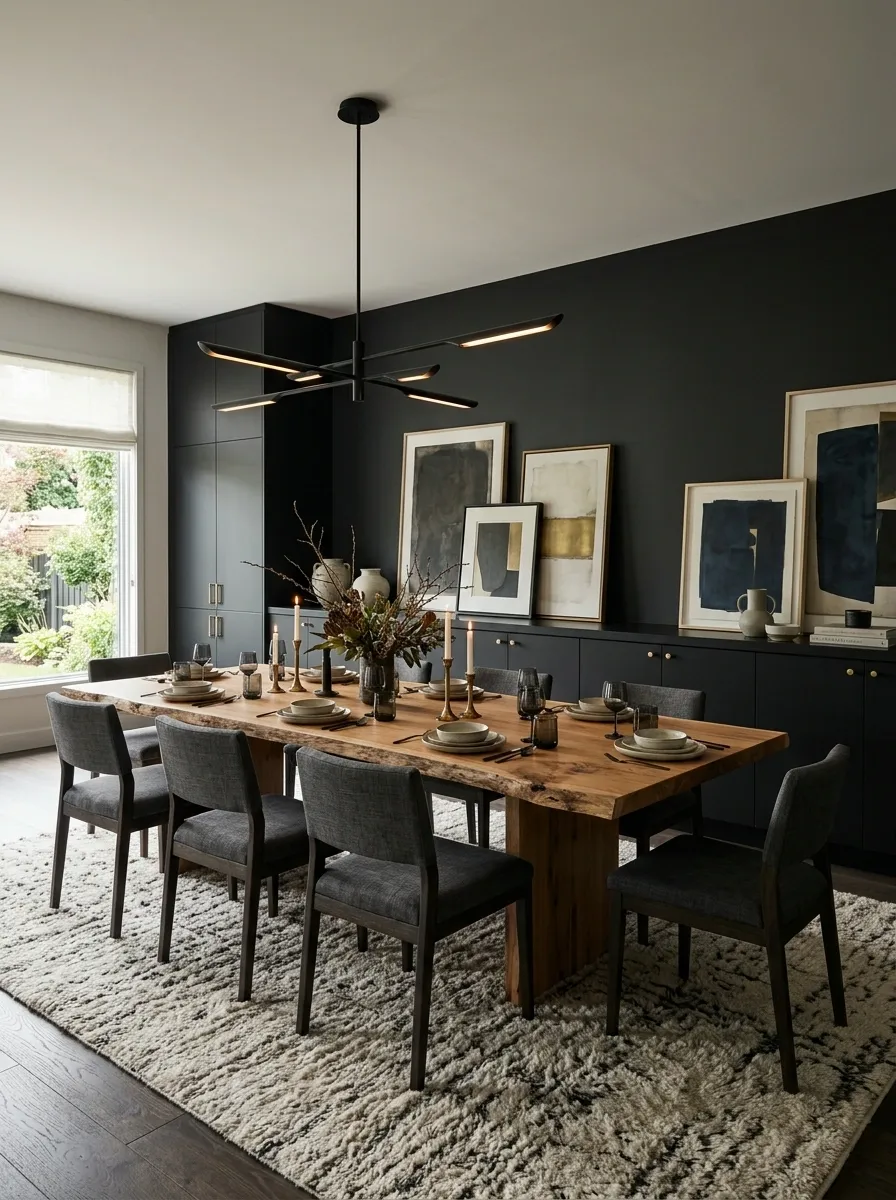
A continuous dark sideboard stretches across one wall of this dining room, creating a clean architectural backdrop for a long wood table and upholstered chairs. Above it, a few oversized pieces of artwork lean against the wall rather than being arranged in a crowded gallery. A broad pendant hangs over the table, while a textured rug defines the dining zone.
The long horizontal lines make the room feel orderly, but the wood keeps it from becoming too severe. Closed storage also gives the room a practical advantage, especially when the dining area needs to hold serving pieces, linens, and everyday clutter. The whole wall looks intentional because the furniture follows the architecture. No awkward little cabinet squeezed into the corner. No orphan furniture wandering around looking for purpose.Moody Dining Room With Deep Plum Walls and Soft Linen
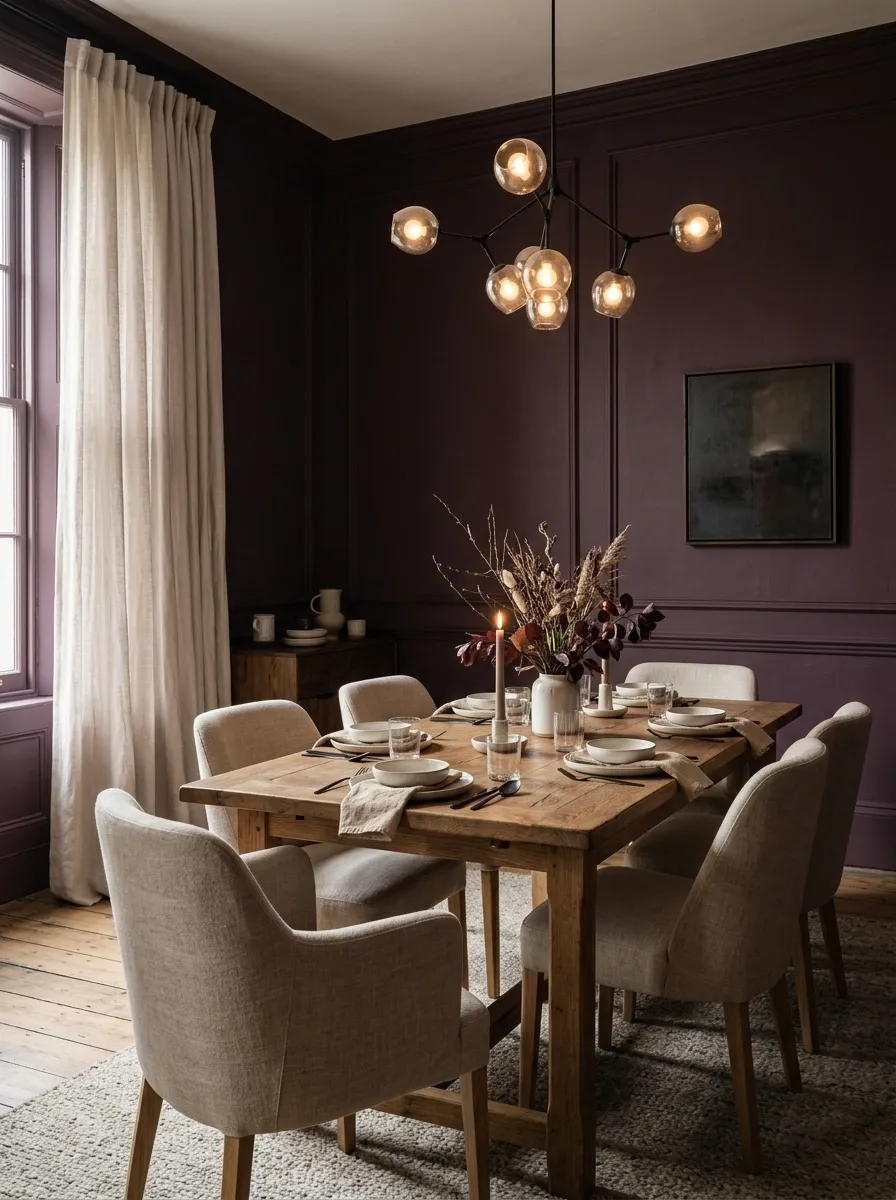
Deep plum walls create a rich, slightly romantic atmosphere around a medium-toned wood dining table, generously upholstered chairs, long linen curtains, and a softly shaped chandelier. Instead of adding lots of metallic accents, the room relies on texture and tonal variation to keep the palette interesting.
The linen is especially useful because it introduces a pale, matte surface beside the saturated walls. The wood warms the center of the room, while the chandelier adds a delicate shape overhead. Everything feels softer than the typical black-and-brass interpretation of moody dining design. It’s dramatic without looking like the room has been instructed to whisper at all times.Moody Dining Room With an Arched Doorway and Warm Limestone
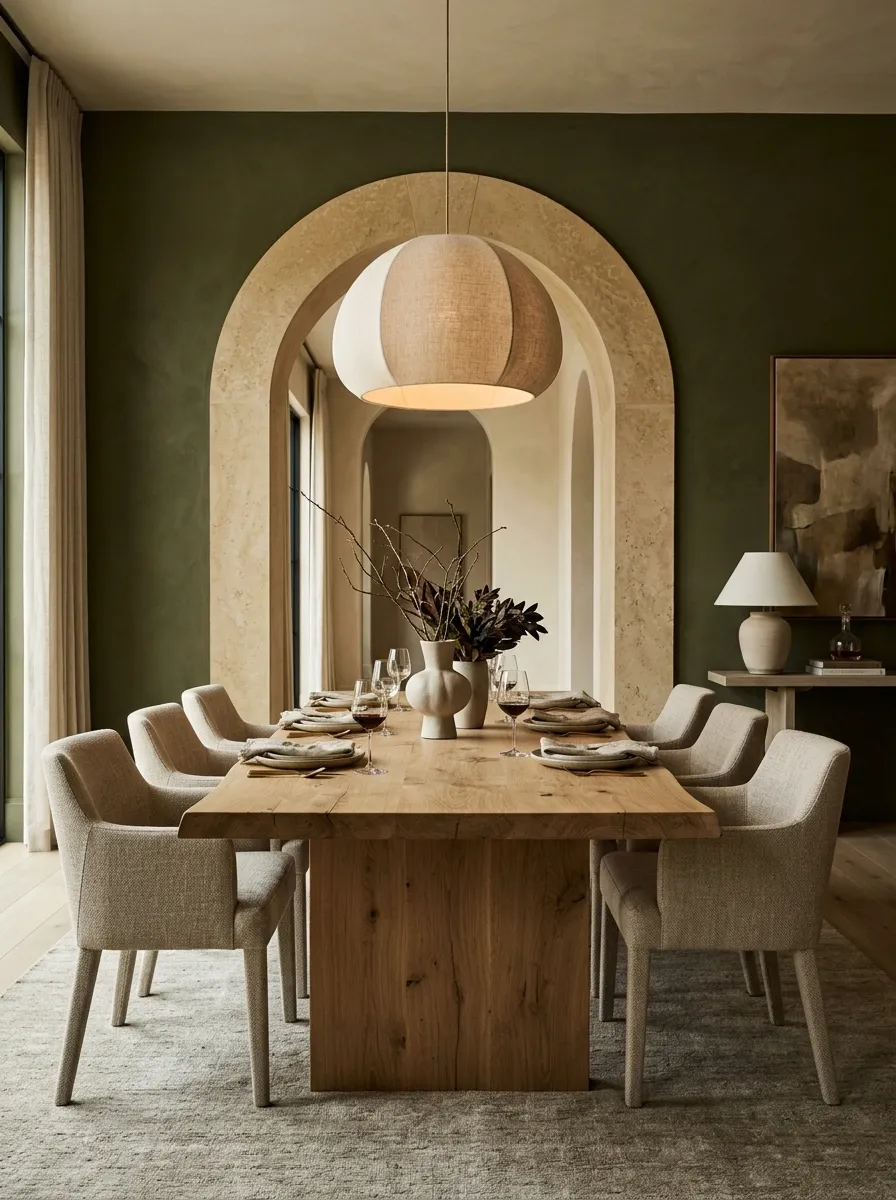
A deep olive dining room frames a wide arched doorway finished in warm limestone, creating a strong contrast between dark painted surfaces and pale natural stone. Inside the room, a chunky oak dining table sits beneath a rounded linen pendant, with woven upholstered chairs and a muted rug completing the setting.
The limestone prevents the darker palette from becoming visually dense while tying directly into the warm wood. Repeated curves in the doorway and pendant soften the substantial table beneath them. The result feels architectural without being cold. The room has drama, but it comes from proportion and material contrast rather than fifty decorative objects standing around demanding compliments.Moody Dining Room With a Dark Wood Ceiling and Light Walls
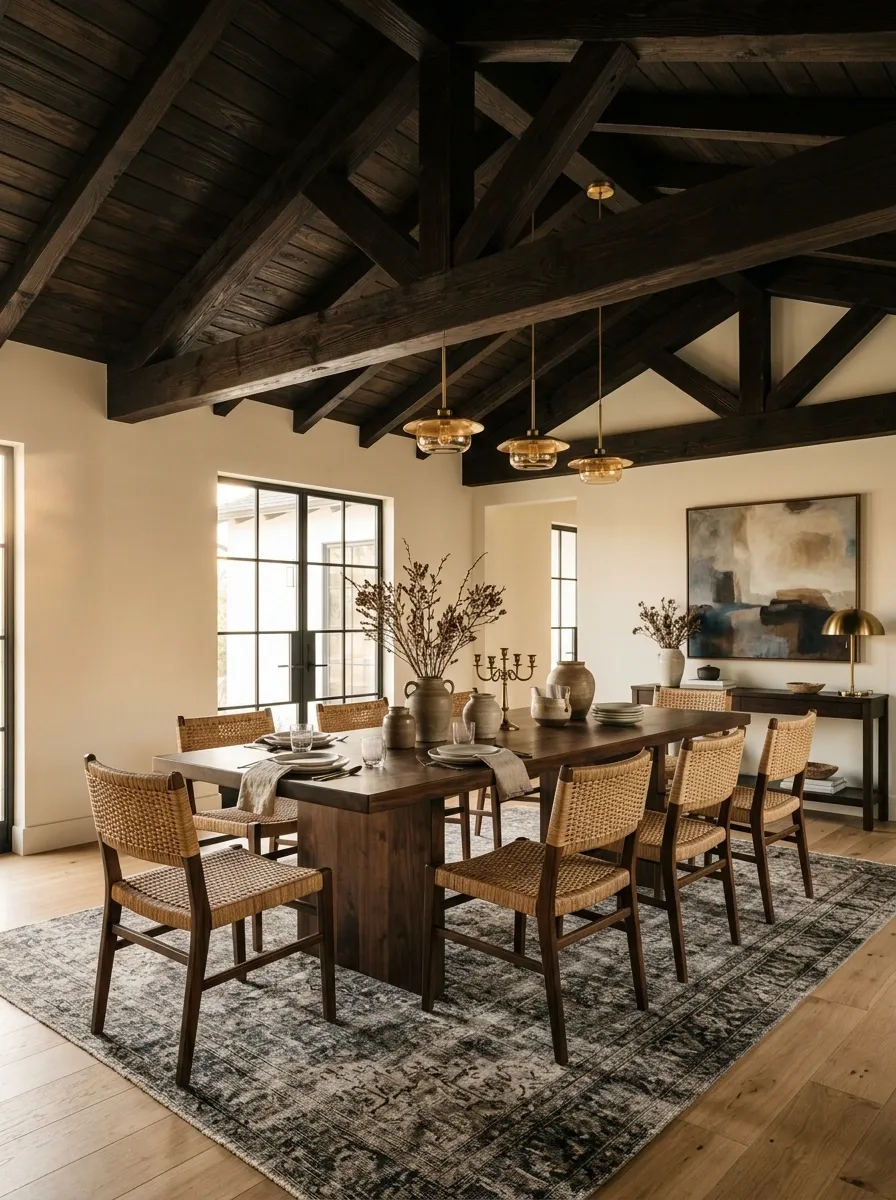
Instead of darkening the walls, this dining room puts the drama overhead with a rich timber ceiling set against warm light walls. A dark dining table, woven chairs, a soft pendant, and a large muted rug create enough depth below to keep the ceiling from feeling disconnected from the rest of the room.
This reversal makes the space feel moody without sacrificing the brightness of the walls. The timber overhead becomes the architectural statement, while the lighter envelope keeps the dining area open during the day. Dark furniture then echoes the ceiling at eye level and creates a visual connection from top to bottom. It’s a clever little plot twist for anyone who wants mood without living inside a charcoal box.Moody Dining Room With Deep Charcoal Walls and Pale Stone
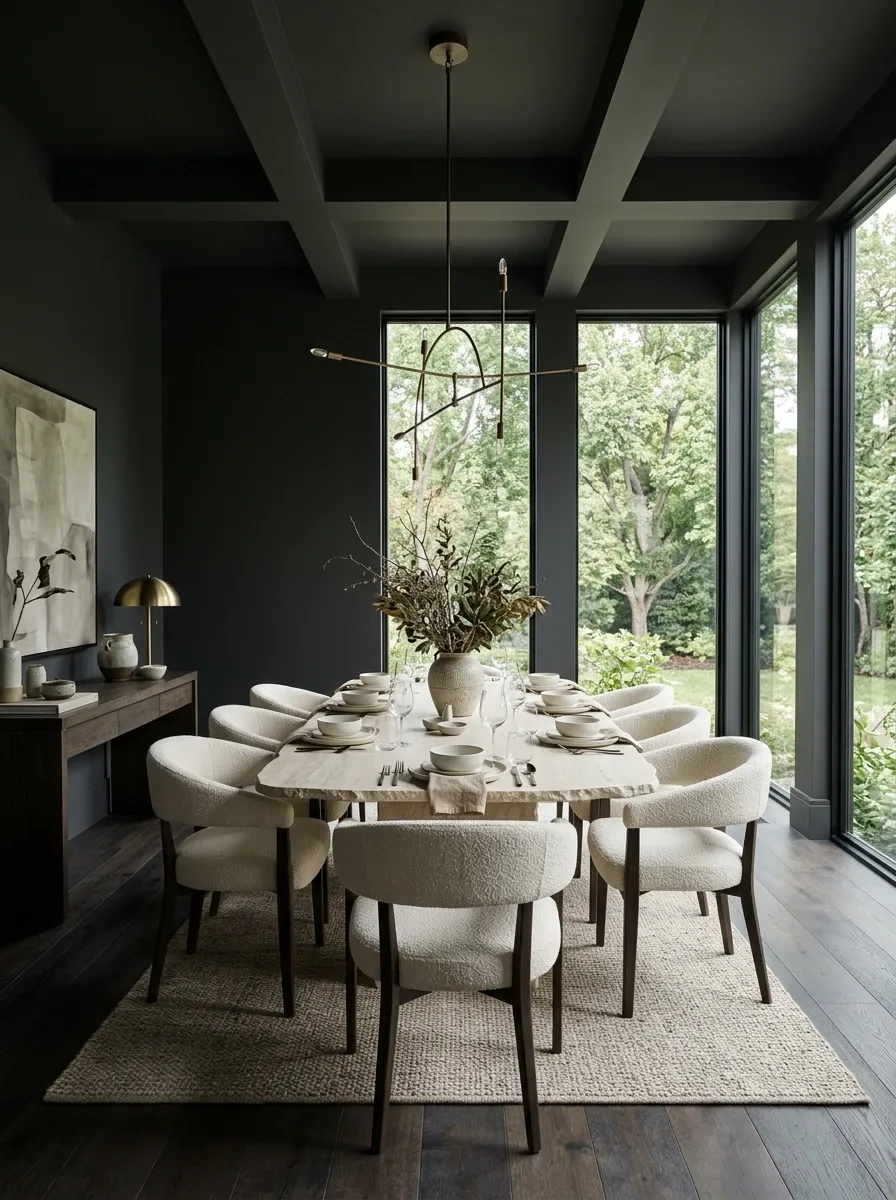
Deep charcoal walls surround a pale limestone dining table, creating a strong light-against-dark composition. The table has a softly irregular surface, paired with curved cream chairs, a dark wood floor, and a simple aged-metal chandelier. Large windows bring natural daylight into the room, keeping the dark walls from feeling closed in.
The pale stone is the key move. Instead of using a pale rug as the main contrast, the brightest visual weight sits directly at the center of the dining area. That gives the room a more substantial, architectural feel. Keep the surrounding accessories muted so the stone stays visible. Otherwise, the table gets buried beneath the usual parade of trays, bowls, books, candles, and one suspiciously enormous decorative branch.Moody Dining Room With Rust-Colored Walls and Dark Furniture
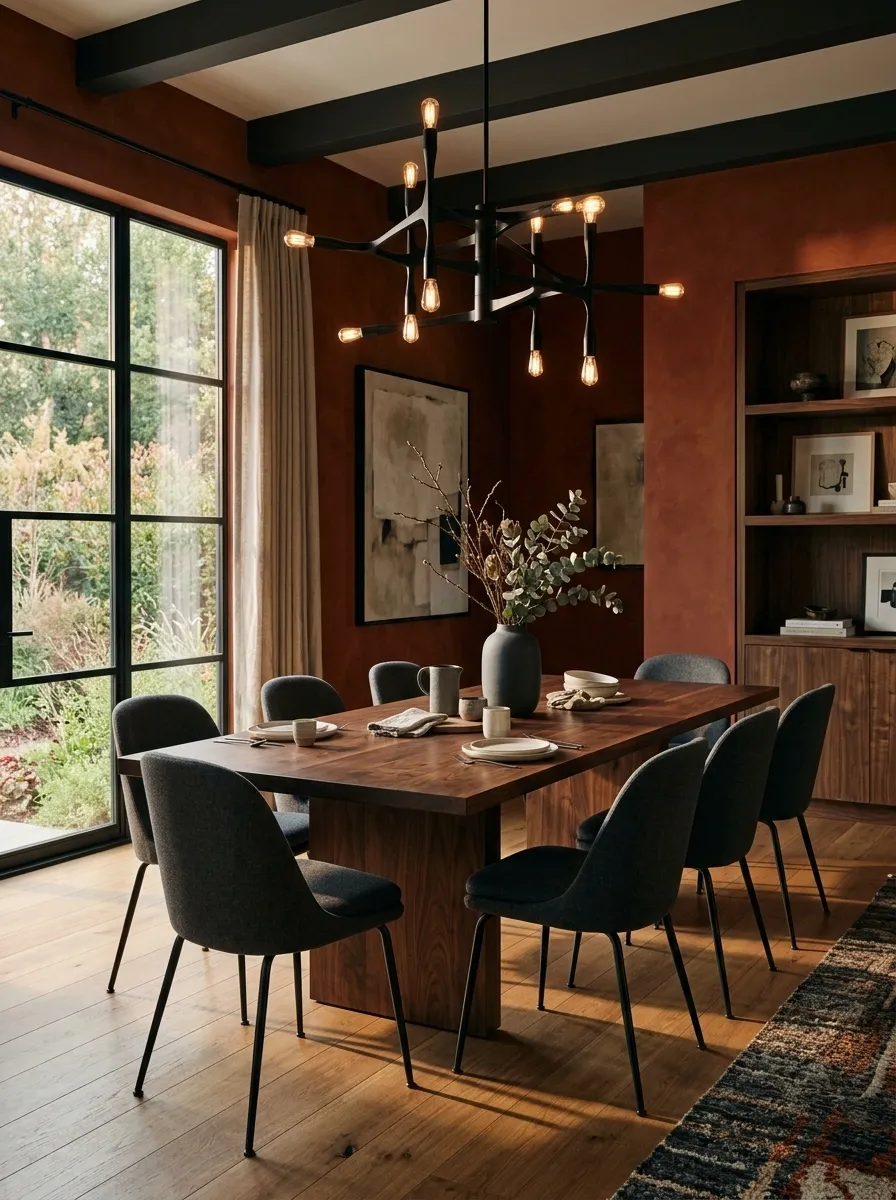
Rich rust walls give this dining room a warm, saturated foundation, while a dark walnut table, charcoal upholstered chairs, and a black sculptural chandelier create contrast. The flooring stays in a medium natural wood tone, bridging the intense wall color with the darker furniture.
Rust is especially effective here because it already feels connected to wood and warm light. The room can therefore use a fairly strong wall color without becoming visually chaotic. The upholstery adds another deep tone instead of another bright one, which keeps the palette mature. It’s bold, but not “someone discovered color theory at midnight and decided every surface needed a different sample.”Moody Dining Room Framed by Dark Pocket Doors
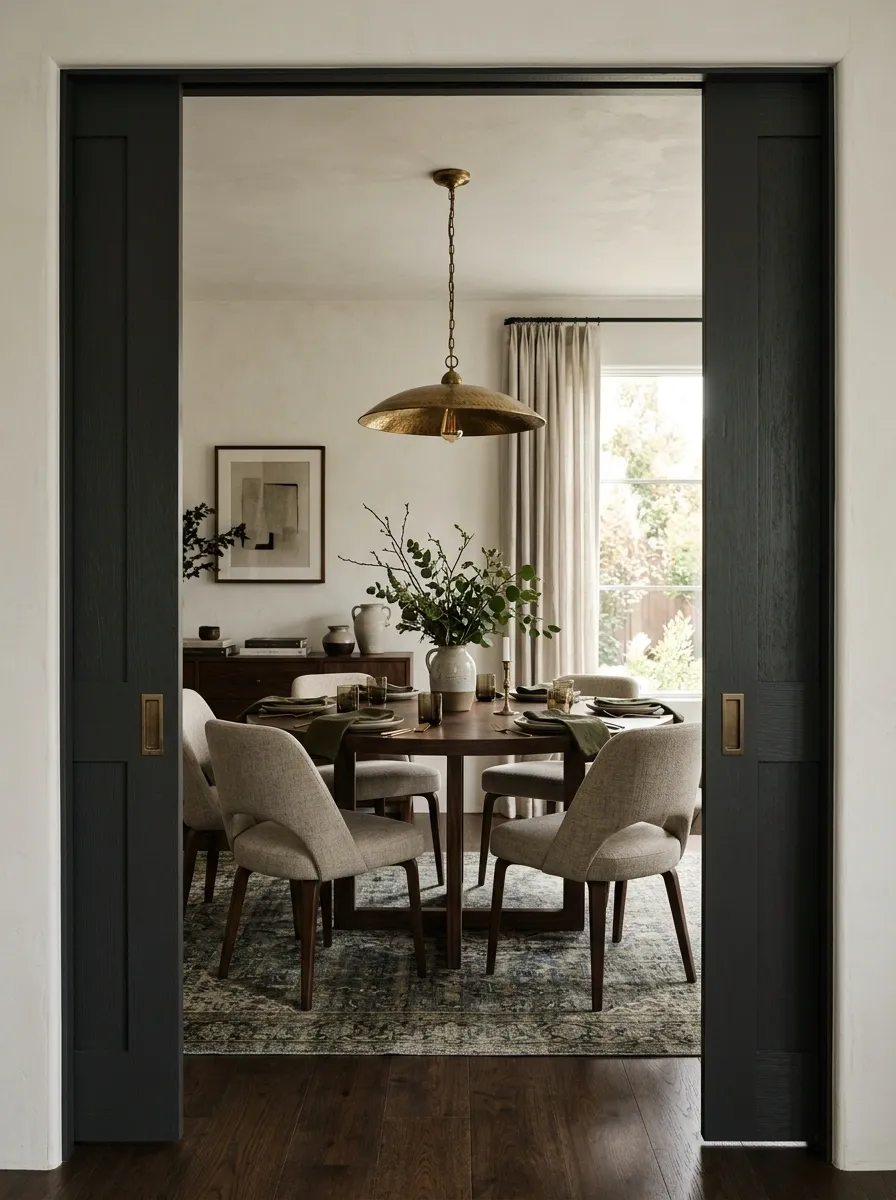
This dining room gets its mood from architecture rather than a fully dark envelope. Warm off-white walls surround a deep olive dining area framed by oversized dark pocket doors. Inside the opening, a round walnut table, upholstered chairs, a vintage-inspired pendant, and a patterned rug create a distinct dining zone.
The pocket doors give the room a sense of depth because the darker color belongs to a defined architectural area rather than every wall in sight. When the doors are open, the dining room connects visually to the neighboring space. When closed, it becomes a more intimate setting. It’s a strong option for homes where “open plan” needs occasional supervision.Moody Dining Room With Sapphire Chairs and Warm Stone Walls
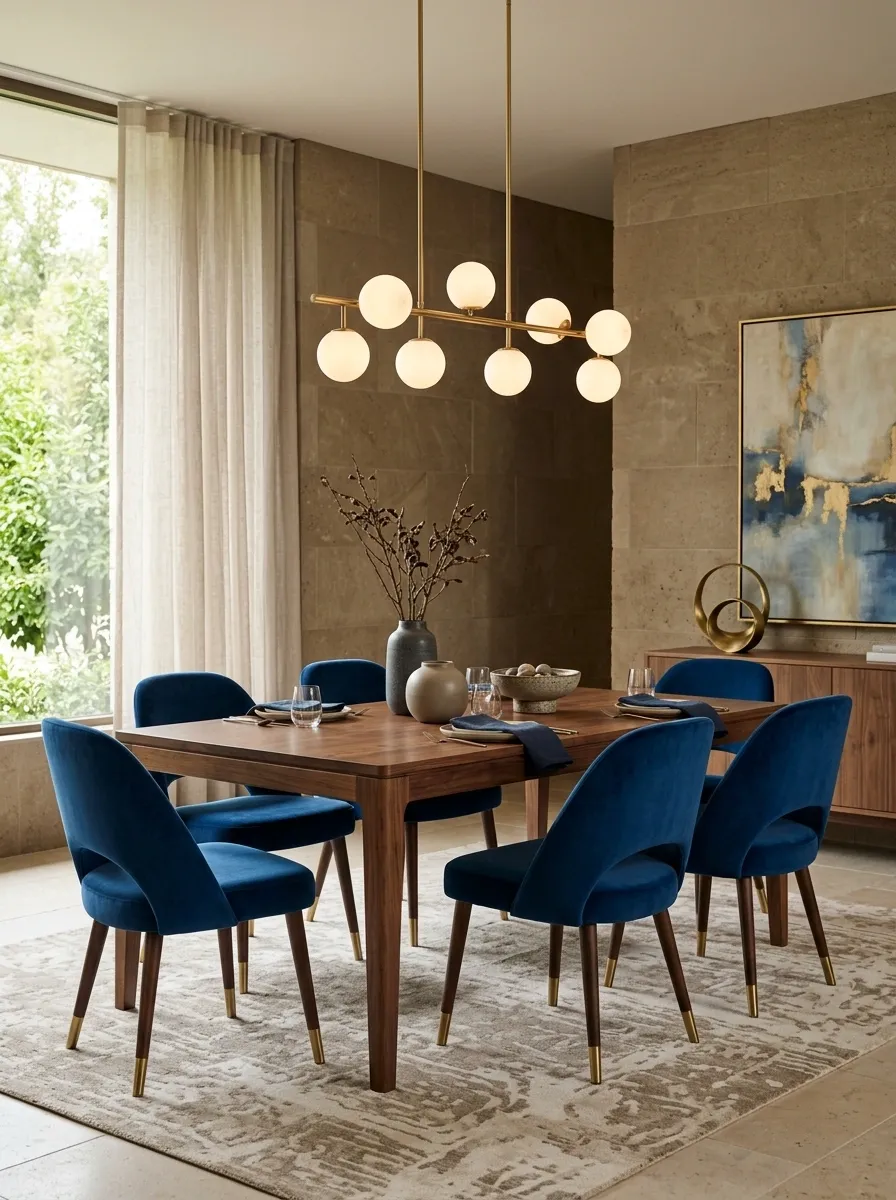
Warm mushroom-colored walls provide a quiet backdrop for a medium-toned wood table and richly saturated sapphire-blue dining chairs. A simple brass chandelier hangs overhead, while a pale stone floor and softly patterned rug keep the lower half of the room lighter.
The unusual part is the balance between warm architecture and cool upholstery. The sapphire feels deeper against the neutral walls, while the brass prevents the blue from becoming too cold. The table stays visually simple so the chairs can carry the personality. That’s enough color to make the room memorable without turning dinner into a competitive seating chart.Layered Moody Dining Room With Soft Gray, Walnut, and Woven Texture
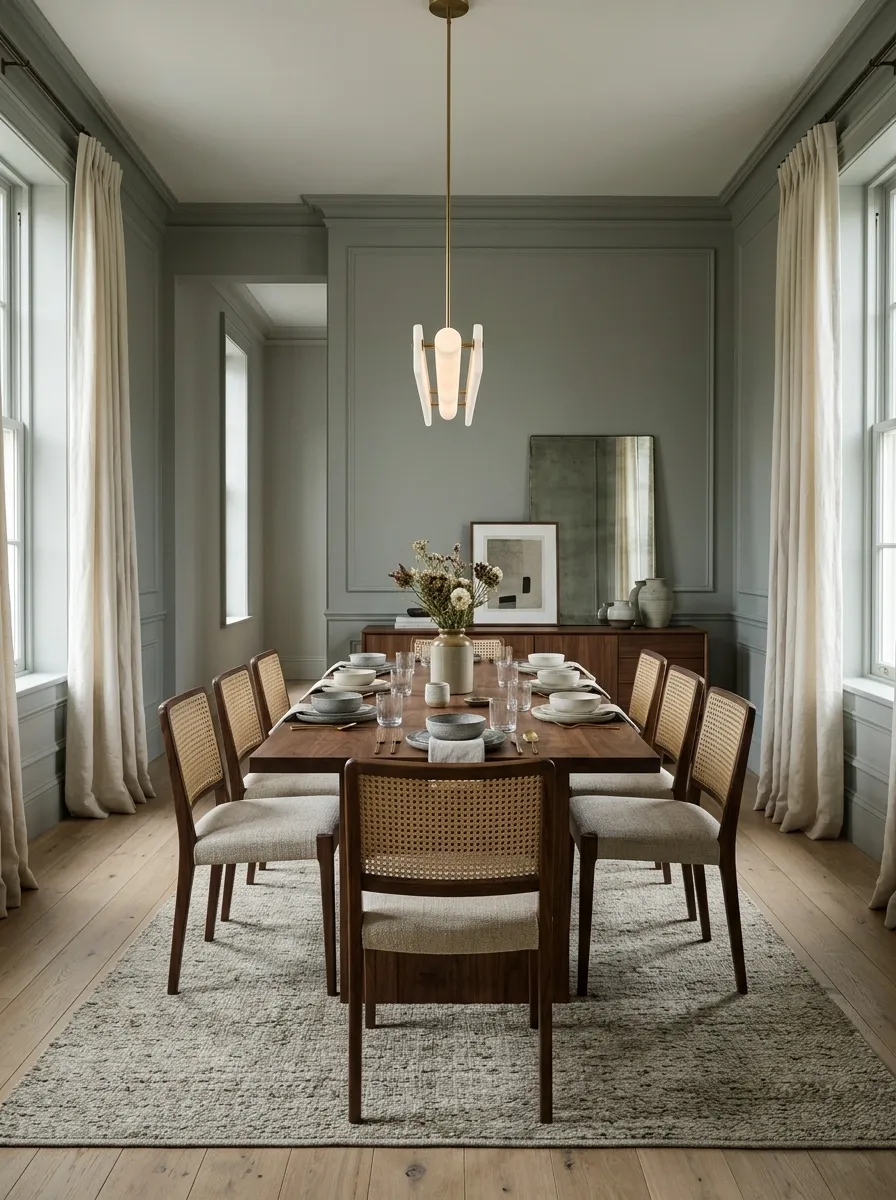
Soft gray-green walls create a subdued backdrop for a walnut dining table, woven-back chairs, linen curtains, and a muted hand-finished rug. Instead of one dramatic feature, the room builds interest through several quiet layers that become more noticeable as the eye moves around the space.
The woven chairs add texture without adding another strong color, while the walnut gives the center of the room enough warmth to prevent the gray from feeling lifeless. Linen curtains soften the windows, and a low sculptural light fixture keeps the ceiling simple. This is the quieter interpretation of moody style. Less drama queen, more person who somehow always has the best-looking dining room.Let the Dining Room Be Dark Without Making Everything Dark
A moody dining room doesn’t need to win a competition for the darkest paint in the hardware store. The stronger approach is usually more selective. Dark walls can be balanced with pale stone. Saturated upholstery can sit against warm neutrals. Heavy timber can be softened with linen. Architectural darkness can be concentrated around one doorway, one ceiling, or one carefully framed wall.
That gives the room somewhere for the eye to rest.
The most memorable designs above work because they have a clear visual relationship running through the entire space. The table belongs with the lighting. The walls belong with the flooring. The chairs belong with the palette. Nothing looks like it wandered in from a completely different room five minutes before dinner.
Save the designs that match the architecture, natural light, and furniture scale already available. Then build around the complete composition rather than collecting individual pieces and hoping they somehow become a room.
Pin the designs that make you stop scrolling. Those are usually the ones worth coming back to when the dining room finally gets its moment.