
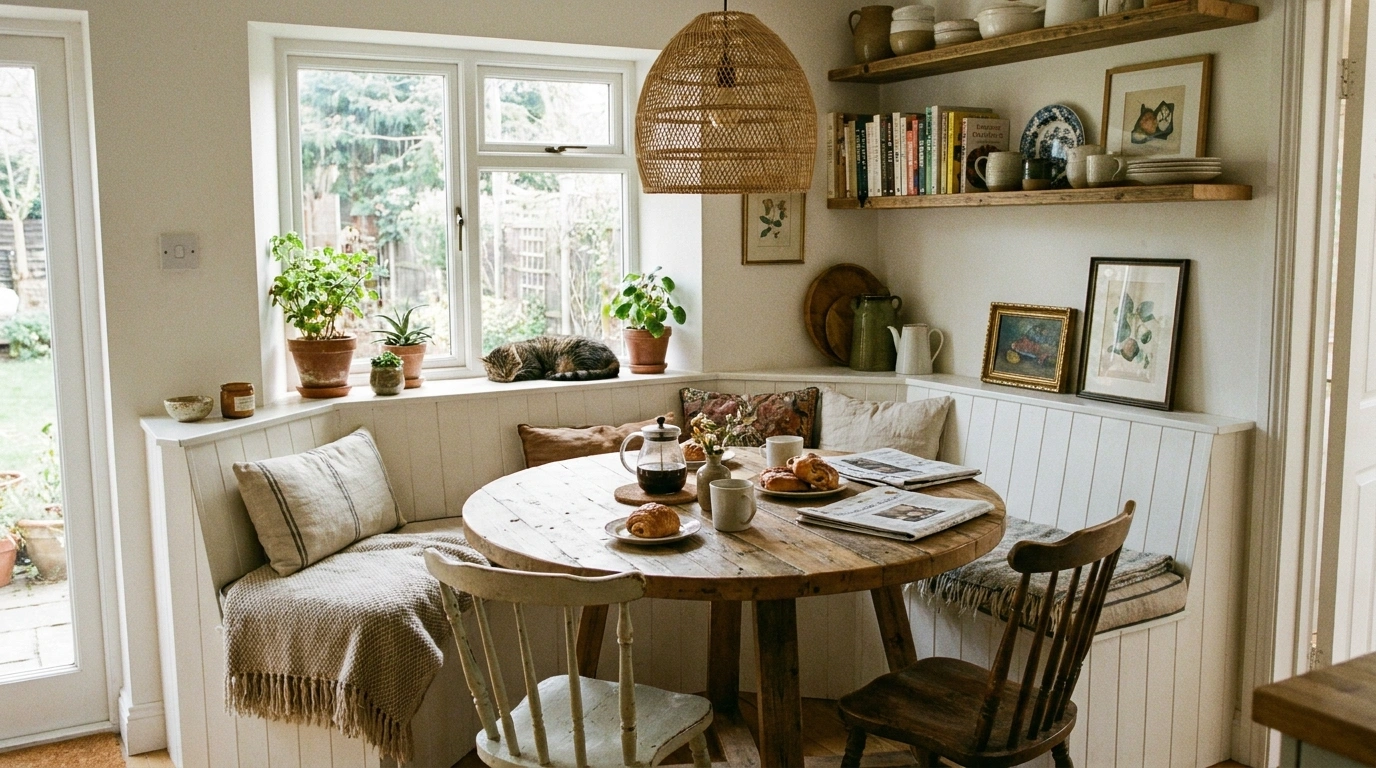
The dining corner is usually where good intentions go to die. The table is slightly too large, the chairs are fighting for the same patch of floor, and the empty wall somehow becomes home to three unrelated pieces of decor.
Nothing is technically wrong, yet the whole thing looks like furniture was delivered before anyone measured the room.
That is why dining nook ideas are much more useful when they show the entire composition. A beautiful chair means very little when the table blocks the walkway.
A clever bench means very little when its depth eats half the room. The finished arrangement has to make sense from wall to wall.
The Table Isn’t the Problem. The Scale Is.
Dining Nook Ideas
Classic Corner Banquette With Dark Wood Table
A crisp white built-in banquette wraps around a bright corner, offering plenty of seating without crowding the floor space. A round dark wood pedestal table provides a striking focal point, anchored by simple black spindle-back chairs that tuck neatly underneath. Natural woven shades filter the sunlight, while a multi-arm chandelier hangs overhead to define the dining zone. Patterned throw pillows add texture and visual interest to the neutral upholstery, making the entire setup feel cozy and completely lived-in.
The dark table and chairs create a grounding contrast against the bright white millwork and pale walls. A framed botanical print on the shiplap wall ties the color palette together, ensuring the nook feels connected to the rest of the room. It is a brilliant way to turn an underutilized corner into the most charming spot in the house.
Nothing here feels forced or overly curated, proving that classic materials always win in small spaces. The built-in bench doubles as hidden storage, which is basically a requirement for anyone trying to maintain a clutter-free home. This nook proves you do not need massive square footage to create a dining area that feels substantial and deeply intentional.
Sunlit Bay Window Nook With Curved Oak Bench
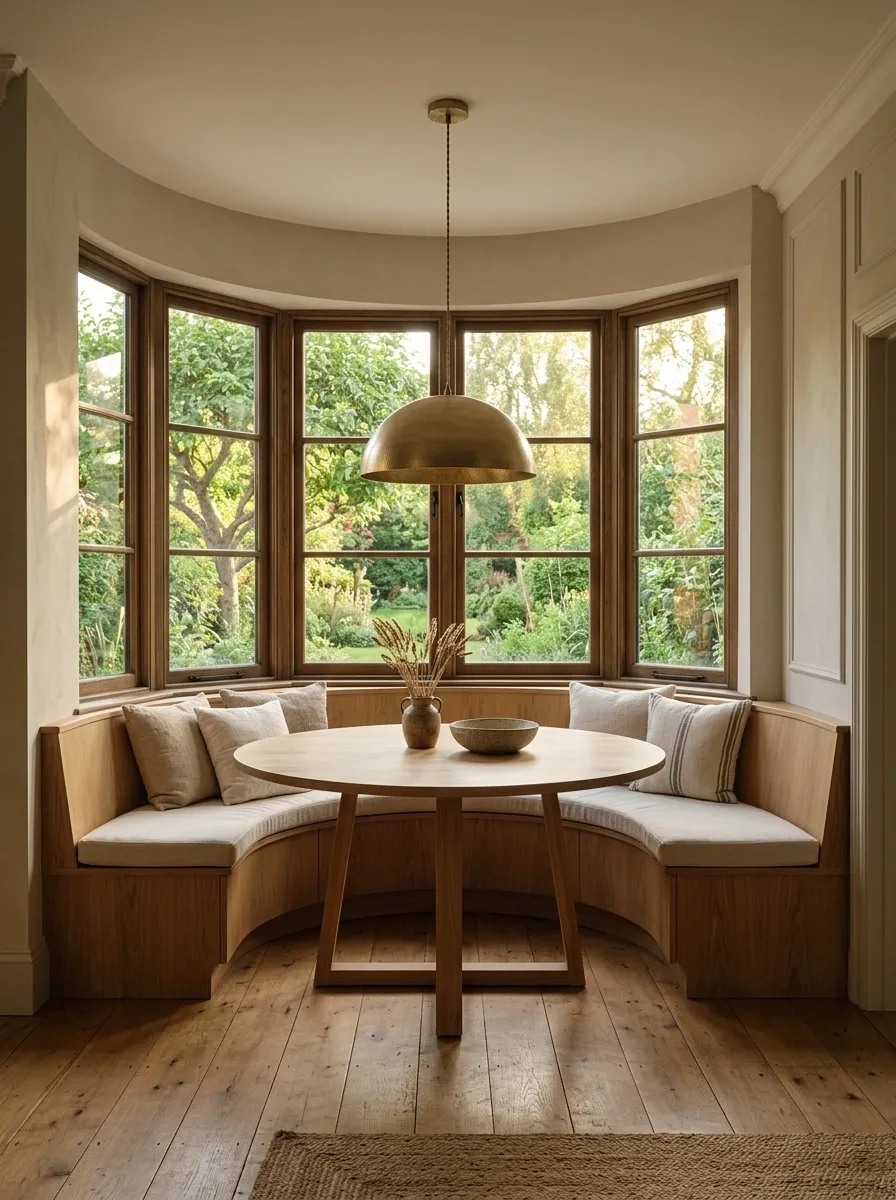
A curved built-in bench follows the shape of a bay window, giving the dining area a custom look without making it feel overly formal. A round oak table sits neatly in front, while loose linen cushions soften the harder architectural lines. A low pendant hangs close enough to define the eating area without blocking the daylight.
Keep the surrounding finishes warm and quiet so the window remains the star. The curved geometry is what makes this nook memorable. It also solves the classic bay-window problem of having a lot of awkward space and absolutely no idea what to do with it.
Sunlit Nook With Café Curtains and Wood Tones
A row of expansive windows floods this corner with natural light, framed beautifully by delicate café curtains that add a touch of old-world charm. A custom built-in banquette lines the base, piled high with textured pillows in muted earth tones. In the center, a warm wood round table pairs with sleek cream chairs for an inviting spot to enjoy a morning coffee. Exposed wooden ceiling beams tie the rustic elements together, grounding the airy architecture overhead.
Flanking wall sconces provide soft ambient lighting as the sun goes down, making the nook just as functional at dinner as it is at breakfast. A ceramic pitcher filled with soft pink blooms sits on the table, introducing a subtle pop of organic color. Every element works harmoniously to create a serene sanctuary that celebrates natural materials and abundant sunlight.
This corner strikes the perfect balance between cozy and breathable, avoiding the heavy feeling that some built-in banquettes tend to carry. The tailored upholstery keeps the lines clean, while the vintage-inspired details prevent the space from feeling too sterile. It is an effortless masterclass in designing a cozy retreat within a sunroom or kitchen corner.
Warm White Banquette With Walnut Table and Black Windows
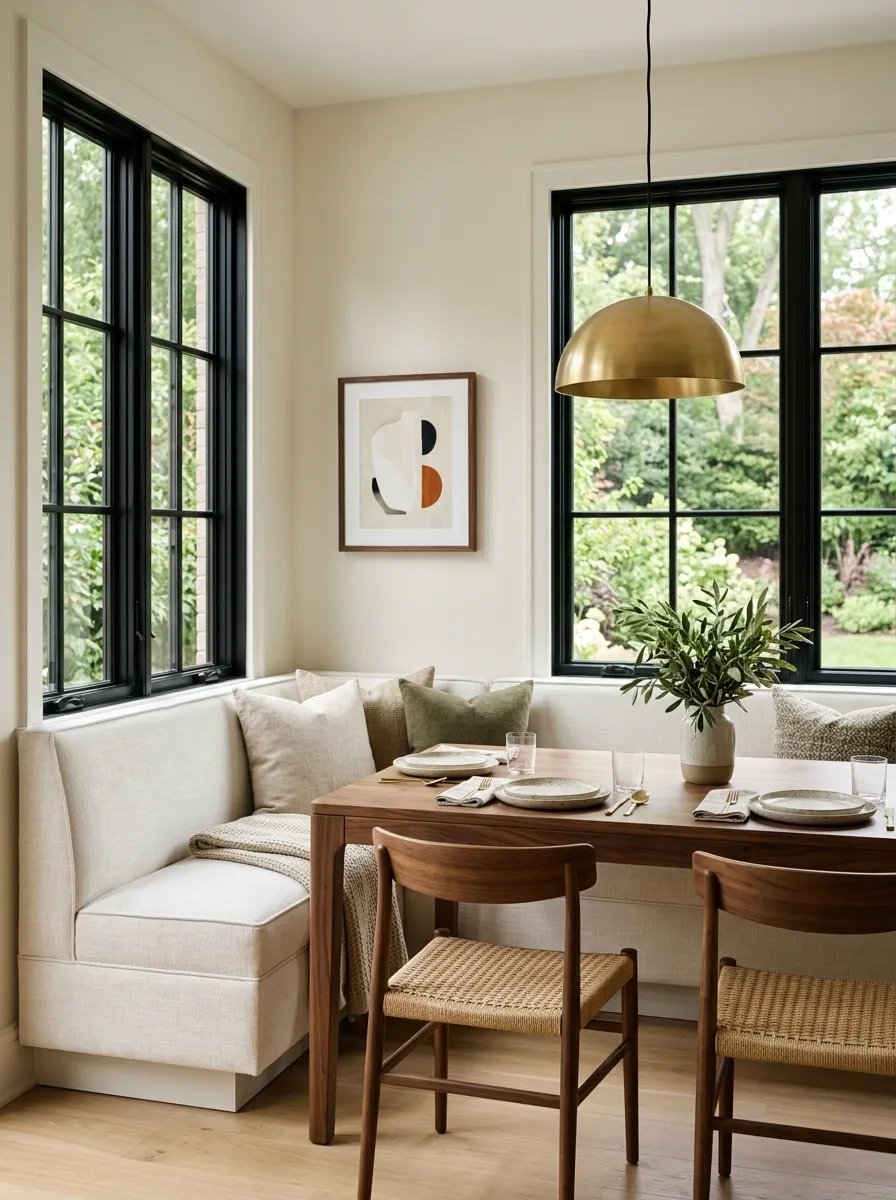
This version keeps the architecture crisp while letting warm materials stop the space from feeling cold. A tailored white banquette runs beneath black-framed windows, paired with a walnut table and simple dining chairs on the open side.
One understated pendant adds a pool of warmth above the table, while a restrained artwork selection keeps the wall from looking unfinished. The contrast is doing most of the work here. Black frames give the pale space definition, walnut adds depth, and the upholstery keeps everything visually light.
It feels polished without drifting into showroom territory, which is a nice change from rooms where every surface is apparently auditioning for a design catalog.
Minimalist Nook With Fluted Pedestal Table
Clean lines and a restrained color palette define this modern minimalist dining nook, tucked effortlessly into a quiet corner. A round table with a fluted wooden base anchors the space, surrounded by sleek white chairs with slender black legs. The built-in banquette keeps a low profile, dressed in neutral cushions and anchored by a striking abstract art piece in muted rust tones. A minimalist wall sconce casts a warm upward glow, creating a dramatic yet cozy atmosphere.
Floor-to-ceiling sheer curtains soften the edges of the room, filtering daylight into a gentle haze that flatters the entire vignette. The repetition of rounded shapes—from the table to the chairs—keeps the tight footprint feeling fluid rather than cramped. It is a masterclass in modern editing, proving that a space can feel complete with just a few carefully chosen silhouettes.
Nothing in this corner fights for attention, allowing the texture of the fluted wood and the warmth of the lighting to do all the heavy lifting. The result is a calm, intentional pause in the room that invites slow meals and quiet conversations. It is proof that minimalism does not have to feel cold when you lean into warm woods and tactile fabrics.
Tiny Apartment Dining Nook Against a Single Wall
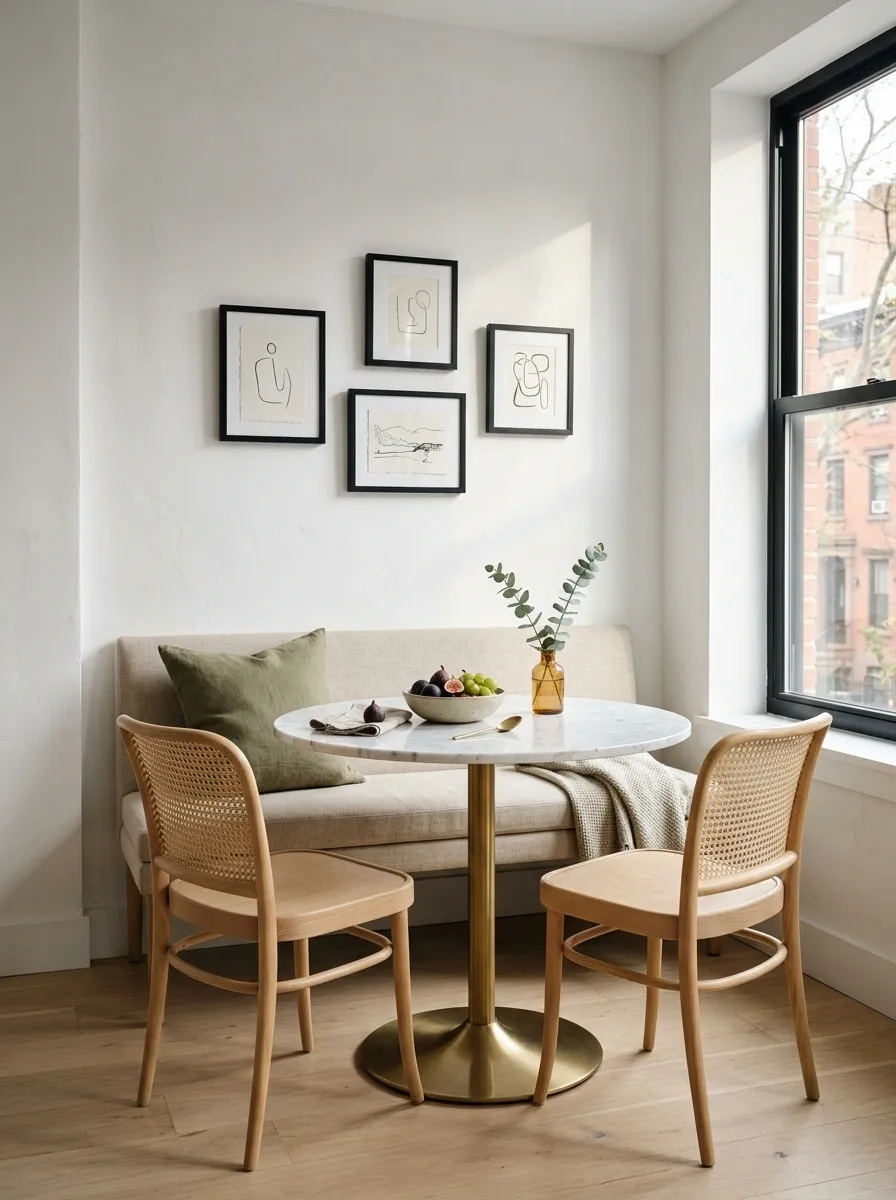
A narrow apartment does not need a fake dining room squeezed into it. This layout uses one wall intelligently, with a slim upholstered bench, compact pedestal table, and two lightweight chairs that can slide away when the floor needs to breathe.
A small framed artwork arrangement adds personality without consuming valuable depth. The pedestal base keeps the floor visually open, which matters in a tight footprint. Nothing here is oversized, bulky, or trying to win an argument with the architecture.
The result feels intentional because every piece respects the limited width instead of pretending the apartment secretly has another twenty square feet.
Golden Hour Banquette With Mustard Velvet Seating
Rich mustard velvet breathes incredible life into this cozy corner, giving the built-in banquette a luxurious, tactile edge. A round wood pedestal table sits proudly in the center, flanked by a sleek green dining chair and a simple pendant lamp with a crisp white shade. A vase of vibrant pink roses introduces a cheerful burst of color against the golden upholstery. The overall mood is unapologetically warm, making the entire dining area feel like an absolute embrace.
Abstract art framed in minimalist lines hangs nearby, adding a contemporary touch to the otherwise classic setup. The rich yellow fabric reflects the light beautifully, making the nook feel inviting even on overcast days. It is a bold color choice that pays off tenfold, turning a basic corner into a major design statement.
This nook proves that embracing color in a small space can make it feel much more purposeful and curated. The combination of velvet, wood, and brass creates a sensory-rich experience without overwhelming the surrounding room. It is the kind of corner that practically begs you to linger long after the meal is over.
Deep Green Built-In Nook With Vintage Brass Lighting
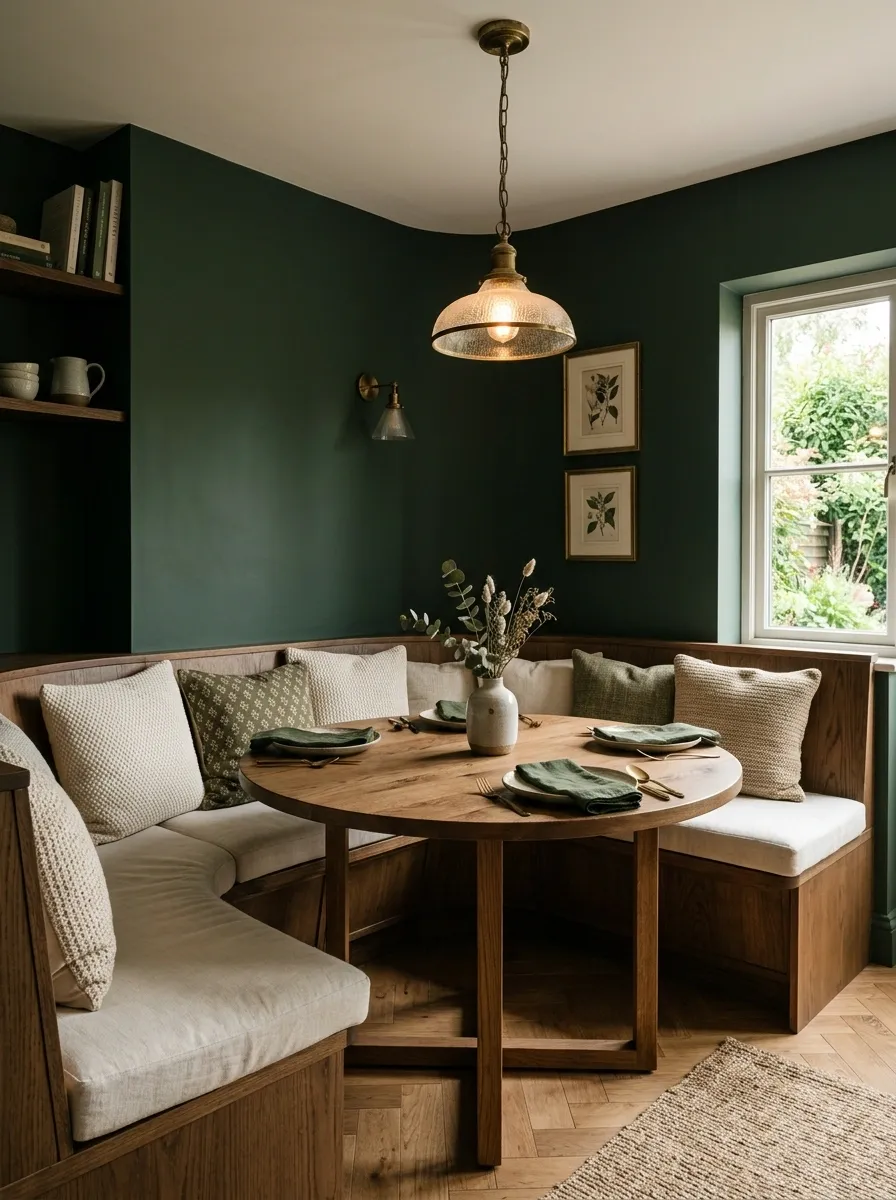
Deep green cabinetry and walls give this dining nook a strong architectural identity, while a round wood table keeps the corner from feeling too heavy.
The built-in bench carries the same green finish around the seating area, creating a cocoon-like backdrop without adding separate visual fragments. A vintage-inspired brass pendant brings a warmer note above the table, and cream textiles stop the darker palette from swallowing the room.
The trick is restraint. Once the green is doing this much visual work, every additional decorative piece needs a reason to exist. Otherwise the nook starts looking less like a collected corner and more like a very committed paint sample.
Traditional Corner Nook With Vintage Plate Wall
Traditional charm takes center stage in this bright corner, featuring a classic wooden banquette with crisp white cushions. A collection of decorative plates is artfully arranged on the shiplap wall above, creating a whimsical gallery effect that feels entirely personal. A round wooden table pairs with a matching spindle-back chair, keeping the footprint light and conversational. A woven basket overflowing with hydrangeas adds a lovely organic touch to the center of the table.
Warm brass wall sconces provide targeted illumination, casting a gentle glow over the seating area as evening approaches. The herringbone brick floor introduces rich texture underfoot, grounding the light-filled corner with historic character. Every decorative choice feels deliberate, honoring traditional craftsmanship without tipping into stuffiness.
This nook is a masterclass in layering texture and pattern in a compact architectural footprint. The plate wall brings a sense of collected history to the space, ensuring the corner feels lived-in and deeply personal rather than staged. It is a timeless approach to small-space dining that will look just as charming decades from now.
Scandinavian Nook With Pale Oak and Soft Linen
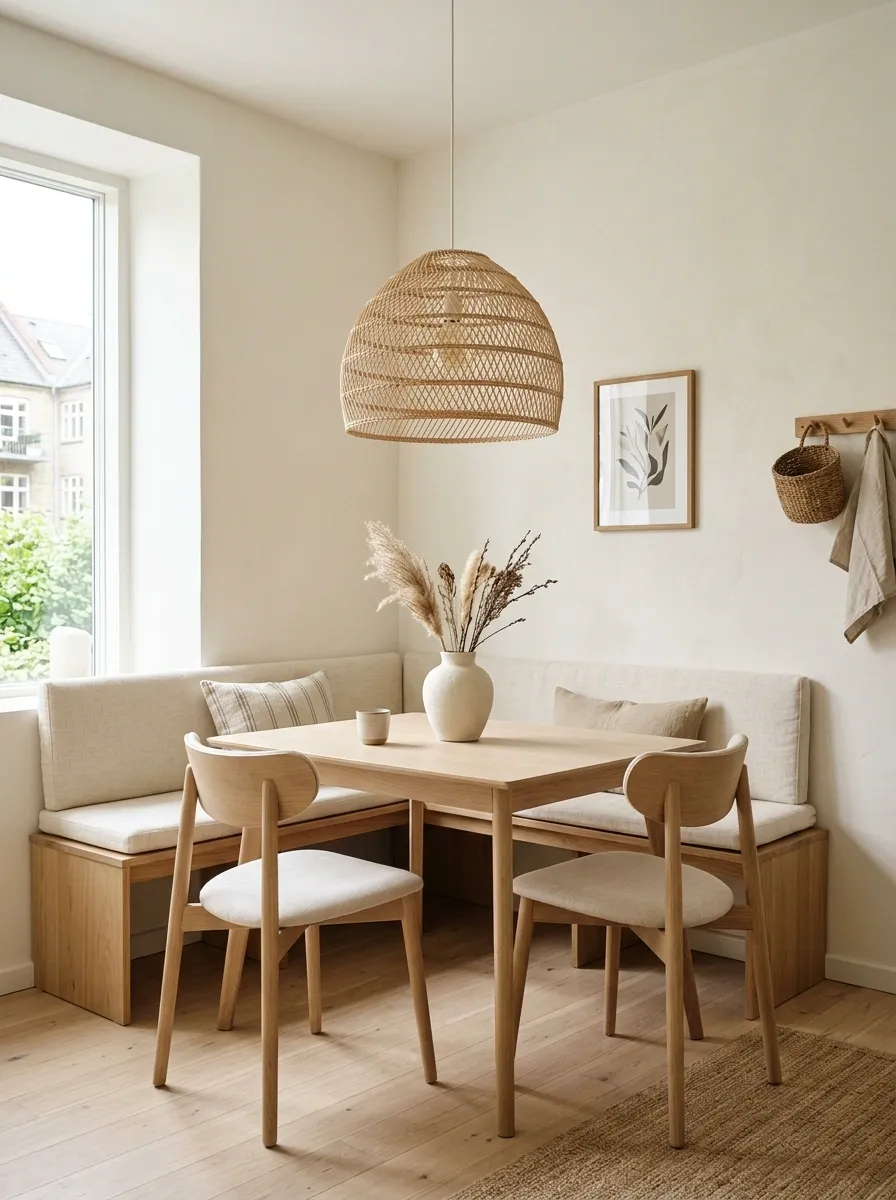
Pale oak, creamy walls, and soft linen create a Scandinavian dining nook that feels calm without becoming visually empty. A compact rectangular table sits against a simple bench, balanced by two curved chairs in a light fabric.
A woven pendant introduces texture overhead, while the walls remain mostly quiet so the furniture shapes stay easy to read. The palette relies on subtle shifts rather than hard contrast, which gives the nook a soft, natural rhythm.
It is a good example of why a neutral room does not need ten decorative objects to feel finished. Sometimes the furniture proportions are already doing the entire job.
Upholstered Corner Booth With Square Table
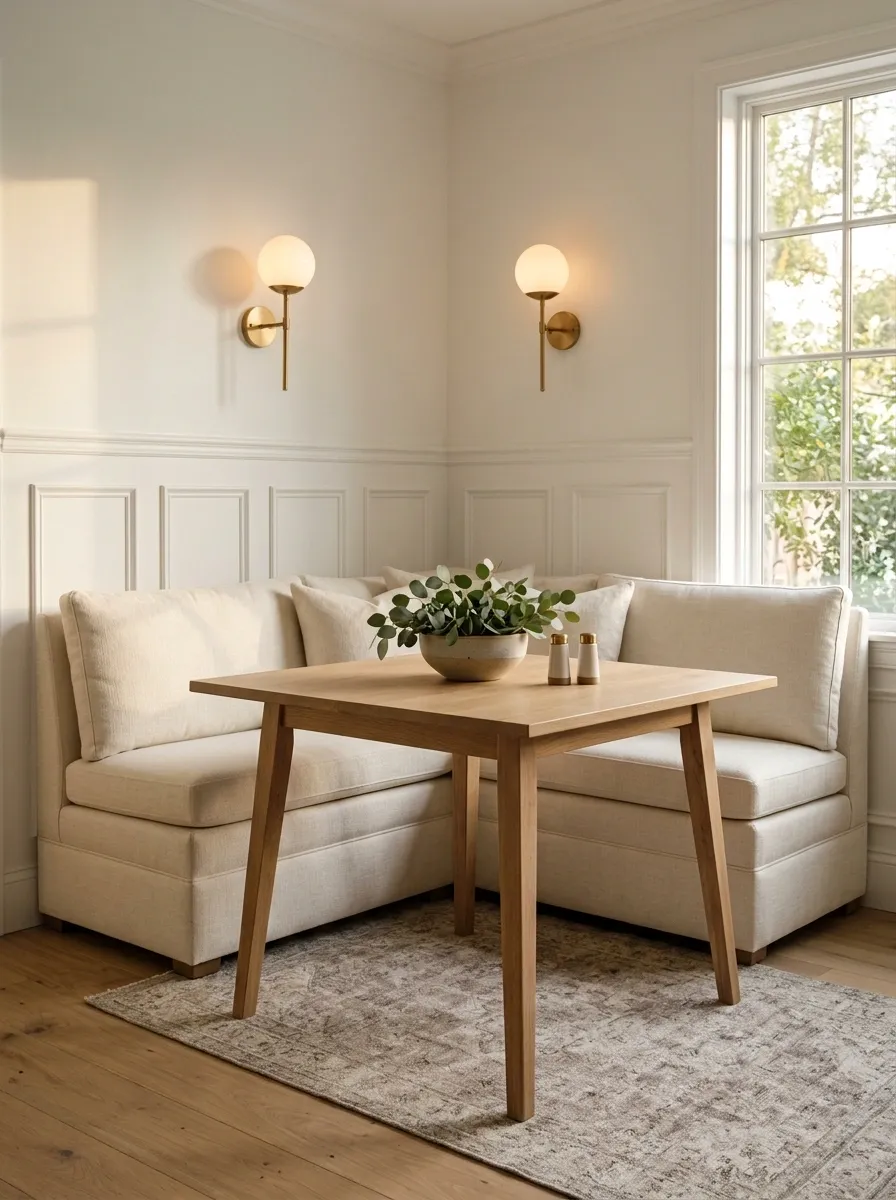
This true corner booth makes the most of two adjoining walls, with upholstered bench seating meeting at a clean right angle. A square oak table fills the center without leaving an awkward gap between the seats, while a pair of wall lights gives the arrangement a more architectural finish than a single hanging fixture.
The upholstery brings softness to the straight lines, and the wood keeps the palette grounded. This shape works especially well in corners where a conventional table-and-four-chairs setup would waste precious floor area. The important part is keeping the table proportionate to the booth. Nobody needs to perform gymnastics just to reach the salt.
Soft Japandi Nook With Low Walnut Furniture
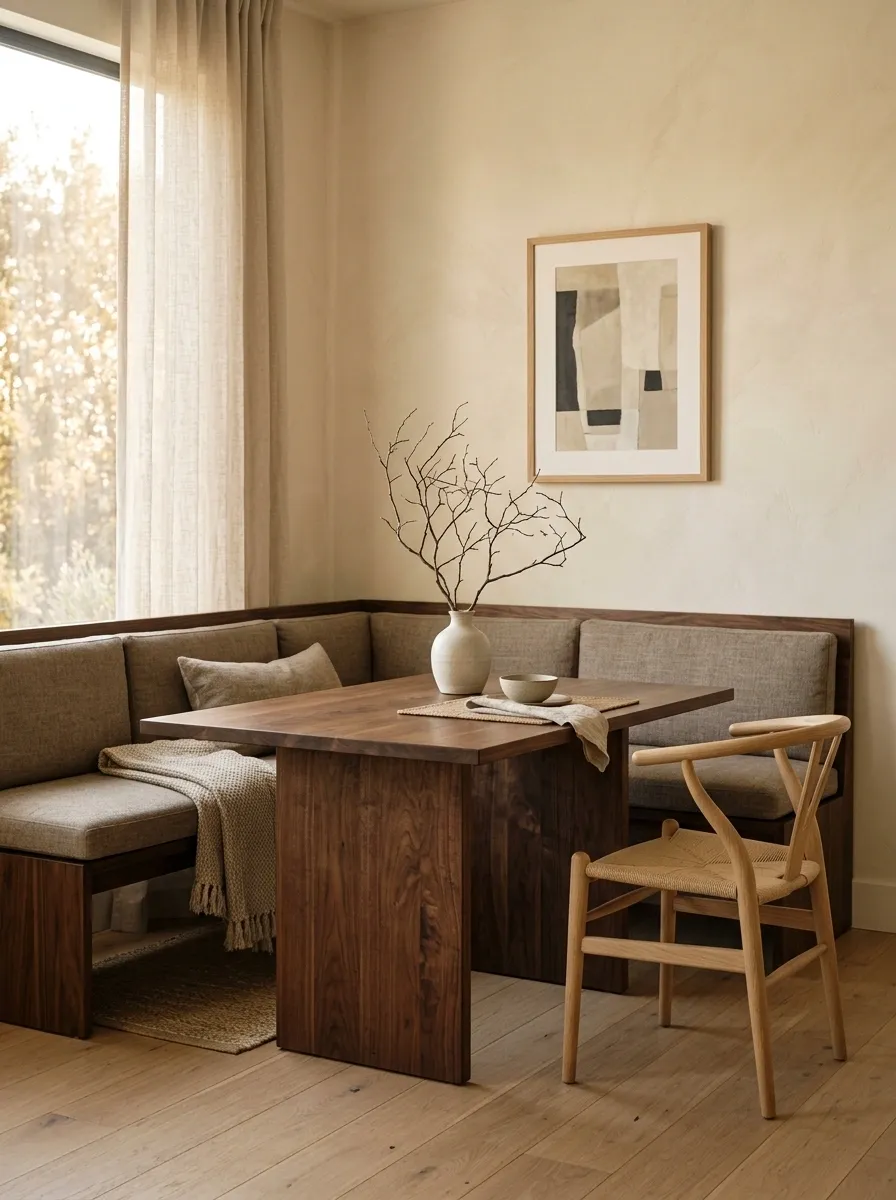
Low walnut furniture gives this Japandi-inspired nook a quiet, grounded presence. A simple rectangular table sits against a deep bench, with one or two sculptural chairs balancing the open side.
The walls stay warm and lightly textured, while a simple ceramic pendant introduces shape without visual noise. Accessories are sparse, but not absent. A small branch arrangement, woven textile, and restrained artwork keep the corner from looking unfinished.
The palette works because the dark wood has room to breathe against the lighter walls. This is the dining nook equivalent of someone who owns one excellent coat instead of seventeen questionable ones.
Classic Breakfast Nook With Painted Wood and Checkerboard Floor
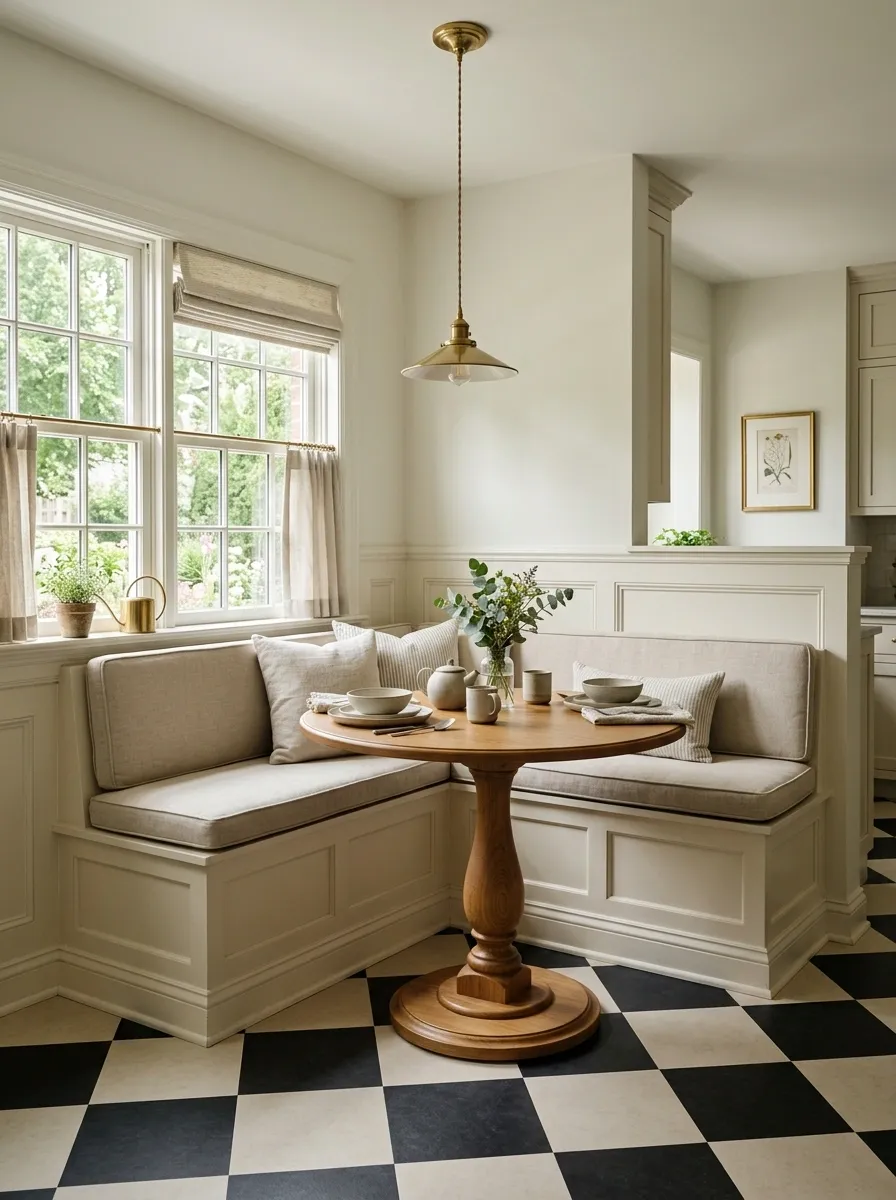
A painted built-in bench gives this breakfast nook a traditional backbone, while a small pedestal table keeps the center visually open.
The checkerboard floor adds pattern underfoot, but the walls and upholstery remain comparatively quiet so the room doesn’t turn into competing grids and stripes. Soft fabric cushions bring warmth to the painted wood, and a classic pendant completes the ceiling line.
The floor becomes the character piece here, so everything above it should know when to stop talking. That balance is what keeps a patterned nook feeling collected instead of like the floor accidentally took over the entire decorating meeting.
Modern Black Nook With Smoked Oak and Sculptural Lighting
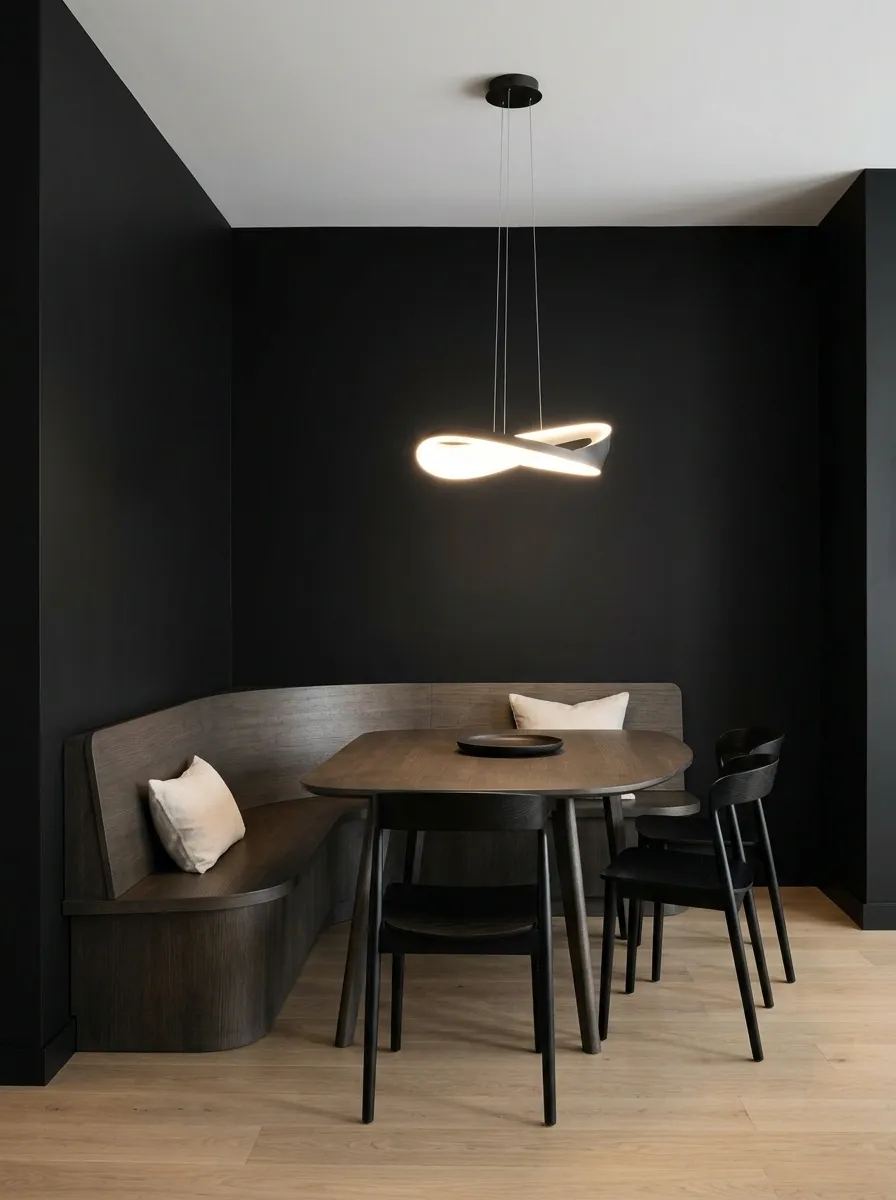
Black walls create a strong architectural envelope around this contemporary dining nook, but smoked oak furniture keeps the darkness from becoming flat. A curved bench anchors one side, paired with streamlined chairs and a sculptural pendant that becomes the brightest visual object overhead.
The floor remains slightly lighter than the walls, giving the furniture enough separation to stay readable. Small touches of warm fabric soften the harder palette without weakening its modern character. The trick is contrast inside the darkness. When every surface is the exact same depth of black, the room stops looking dramatic and starts looking like the lights have been personally offended.
Breakfast Nook With Wraparound Windows and Round Pedestal Table
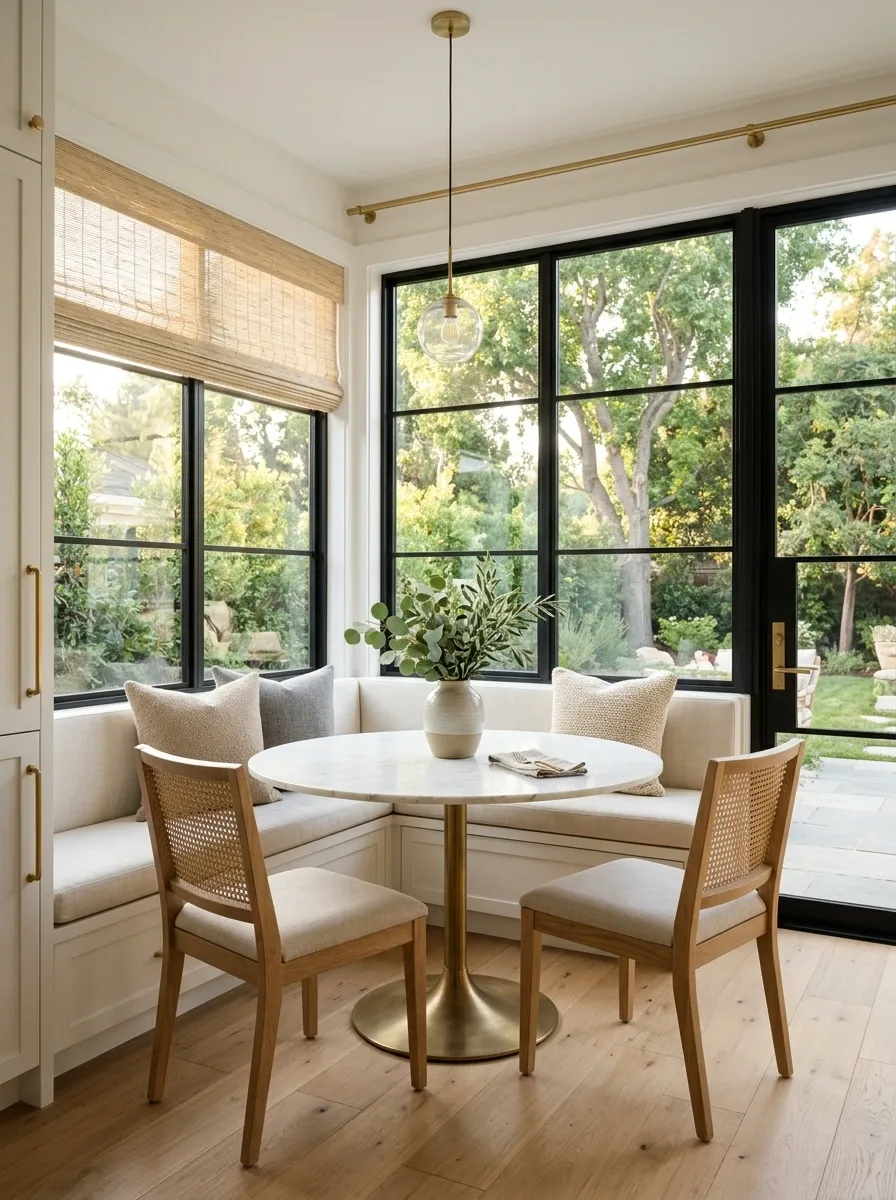
Here, the architecture does most of the decorating. Windows wrap around the dining area, bringing daylight from more than one direction and making a compact round pedestal table feel naturally centered.
A built-in bench occupies the quietest wall, while two movable chairs keep the open side flexible. Woven shades add just enough texture to soften the glass without stealing the view. The furniture stays deliberately simple because the surrounding windows already provide plenty of visual activity.
That is the entire point. When a nook comes with this much natural light, there is no prize for adding twelve more things to look at.
Cozy Cottage Nook With Painted Bench and Floral Textiles
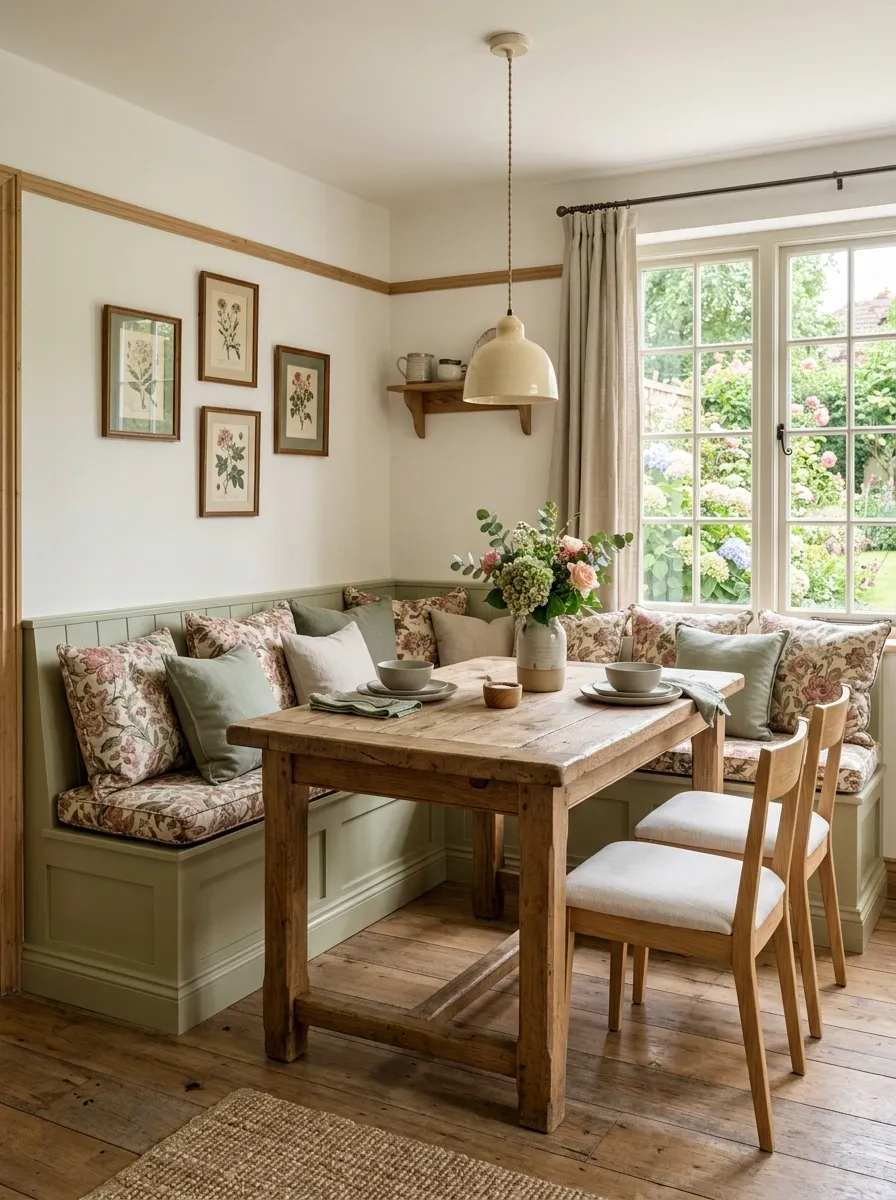
Soft painted wood gives this cottage dining nook a relaxed foundation, while a chunky farmhouse-style table adds enough visual weight to keep the seating from feeling too delicate.
Floral cushions bring pattern to the built-in bench, balanced by simpler linen on the chairs. A warm ceramic pendant hangs low over the table, and a few framed pieces fill the wall without creating a miniature gallery museum.
The mix works because the patterns are concentrated in the seating while the larger surfaces stay relatively calm. There is charm here, but it still looks like a place where someone could actually eat toast without being afraid of touching anything.
Mid-Century Dining Nook With Teak and Curved Chairs
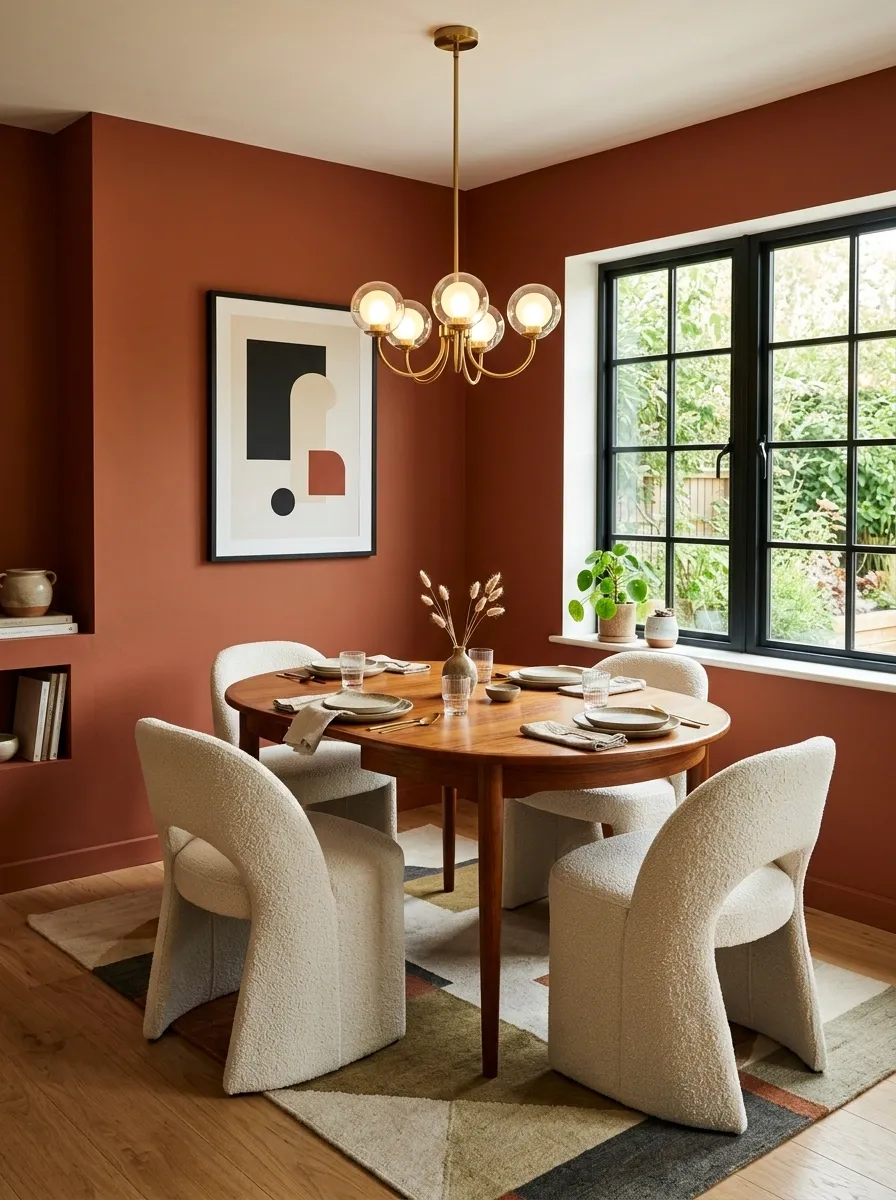
Teak furniture gives this dining nook its unmistakable mid-century character, with an oval table creating a softer footprint than a sharp rectangular one. Curved upholstered chairs echo the shape of the table, while a period-inspired pendant keeps the ceiling interesting without overpowering the furniture.
A warm wall color adds depth behind the setup, and the artwork stays graphic rather than overly decorative. The result depends heavily on silhouette. The table, chairs, and lighting all have recognizable forms, so the room does not need a pile of accessories to announce its style. Good furniture design is apparently capable of carrying its own conversation.
Coastal Window Nook With Light Wood and Woven Seating
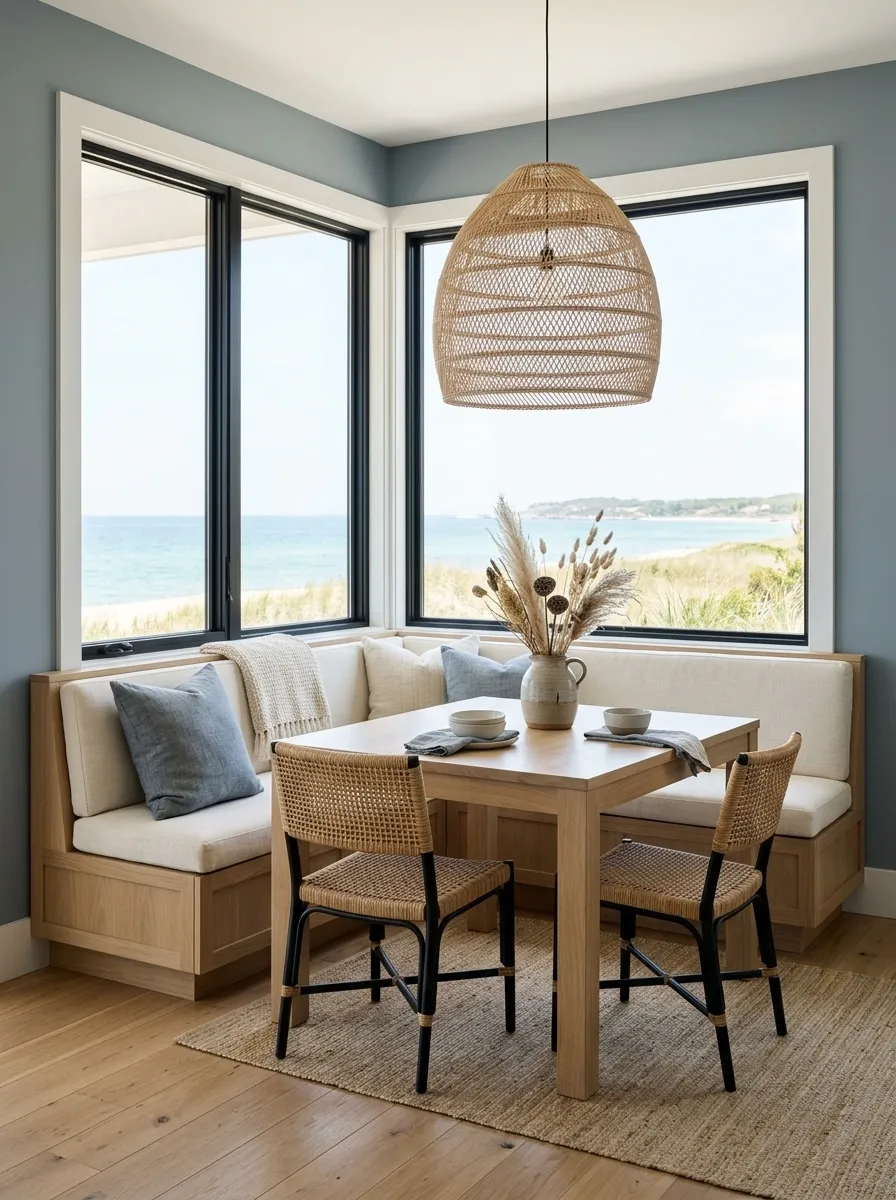
Light oak furniture, cream upholstery, and woven pendant shades create an easy coastal dining corner without relying on obvious beach decorations.
A soft blue-gray accent appears sparingly in the textiles, while the windows provide plenty of daylight around the table. The bench stays shallow and tailored, allowing the corner to feel open rather than bulky.
Natural texture is more important than themed accessories here. Woven fibers, pale timber, linen, and the muted wall color provide enough variation on their own. No anchor-shaped wall art required. The ocean has not filed a complaint about its absence.
Industrial Nook With Brick, Black Steel, and Reclaimed Wood
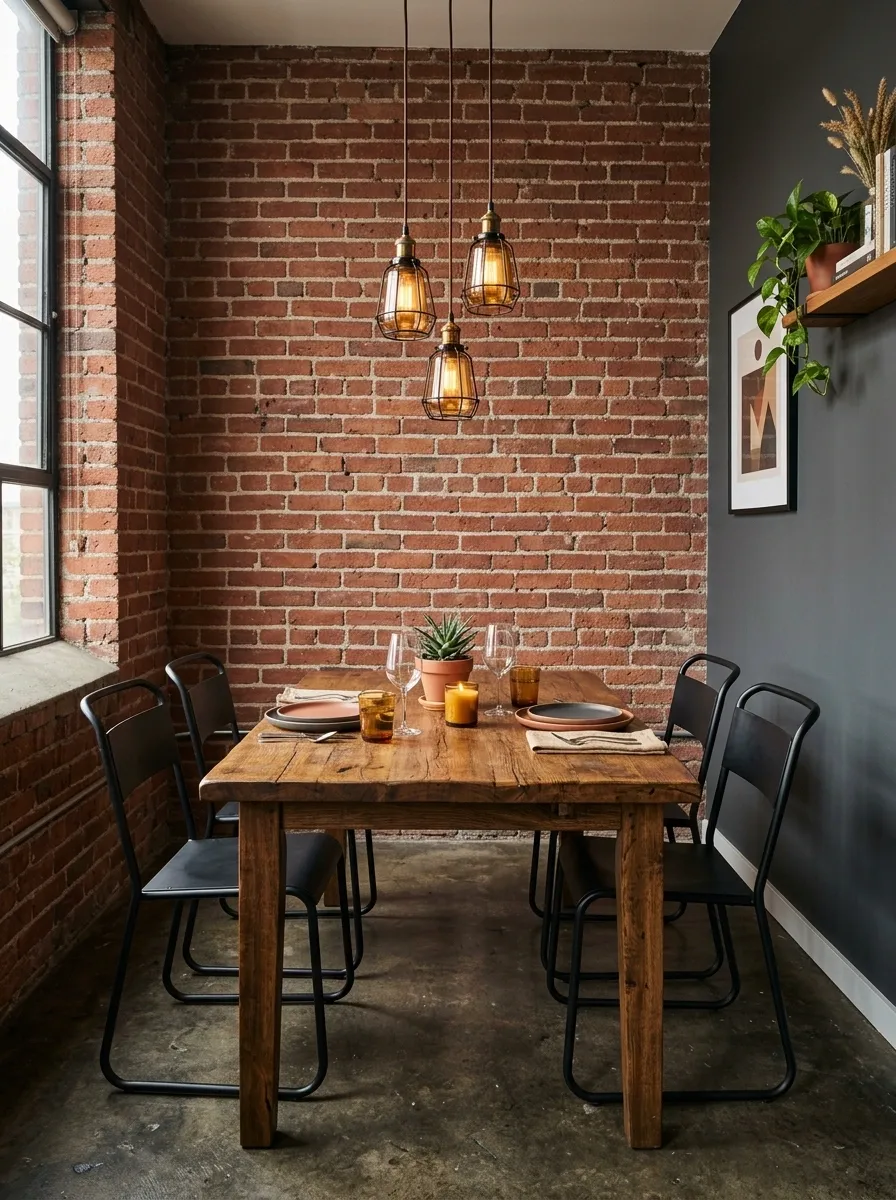
An exposed brick wall creates the backdrop for a dining nook built around reclaimed wood and black steel. Instead of adding more industrial decoration, the composition lets the architecture and furniture provide the character.
A sturdy wood table anchors the space, slim steel chairs keep the edges visually light, and warm pendant lights add a softer layer against the harder materials. The floor should remain relatively restrained so the brick can hold its position as the strongest texture. That distinction matters. Industrial does not mean every surface needs to look like it has survived a forklift accident.
Soft Transitional Nook With Upholstered Bench and Marble Table
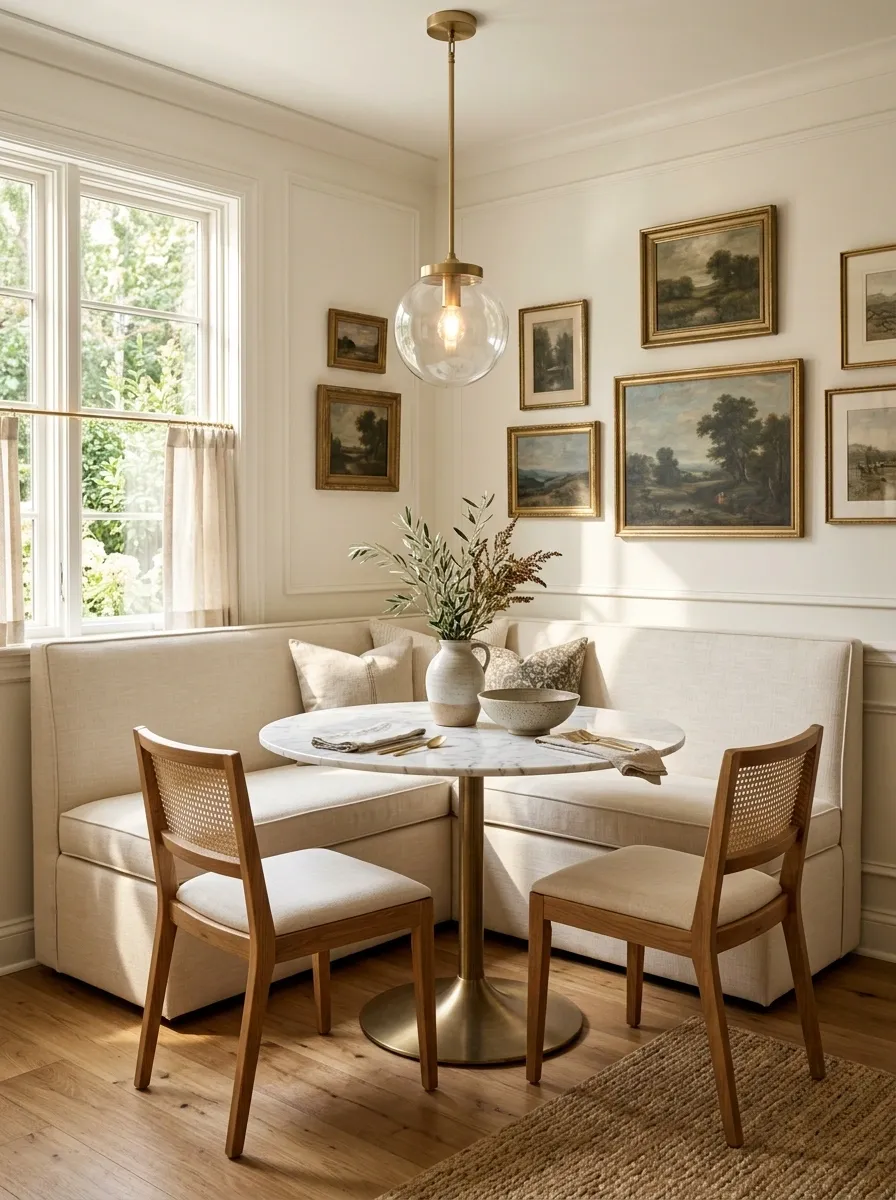
Cream upholstery and a compact marble-topped table give this transitional nook a polished foundation, while warm wood keeps the composition from feeling too formal. A tailored bench fills one side of the corner, paired with understated chairs on the open edge.
Brushed or aged brass appears in the pendant and small hardware details, while traditional artwork adds just enough history to keep the room from looking newly assembled. The surfaces are refined, but the forms remain comfortable and usable. Marble already knows how to be dramatic, so there is no need to add another ten attention-seeking finishes beside it.
Small Dining Nook With Storage Under the Bench
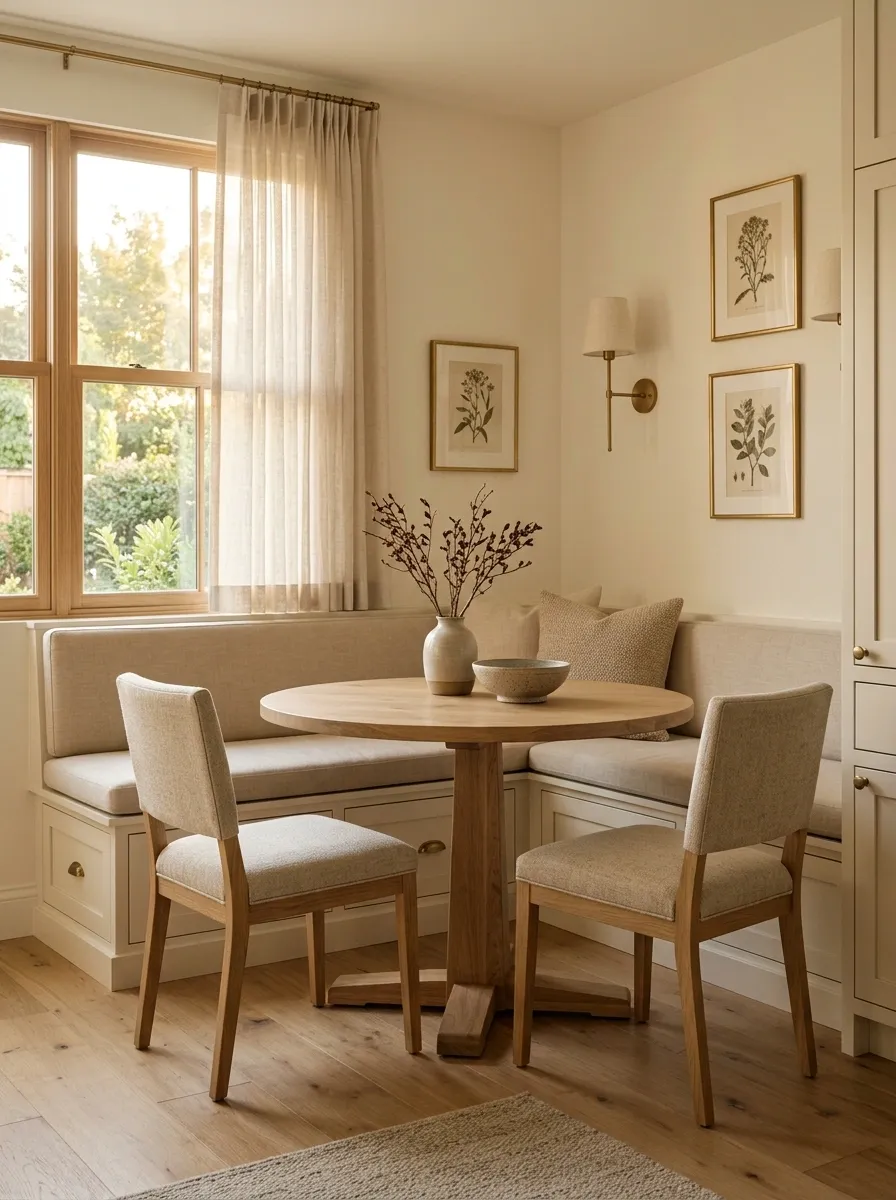
This compact nook makes the built-in bench earn its floor space twice. Deep drawers sit beneath the upholstered seat, giving the dining area a place for table linens, serving pieces, board games, or the mysterious collection of batteries that somehow exists in every home.
A small pedestal table keeps the center open, while two movable chairs complete the opposite side. The cabinetry follows the wall rather than projecting heavily into the room, so the nook still feels compact. Keep the storage fronts visually quiet and let the upholstery, wood tabletop, or lighting provide the character. Practical can still look polished.
Olive Green Nook With Rustic Oak and Woven Pendants
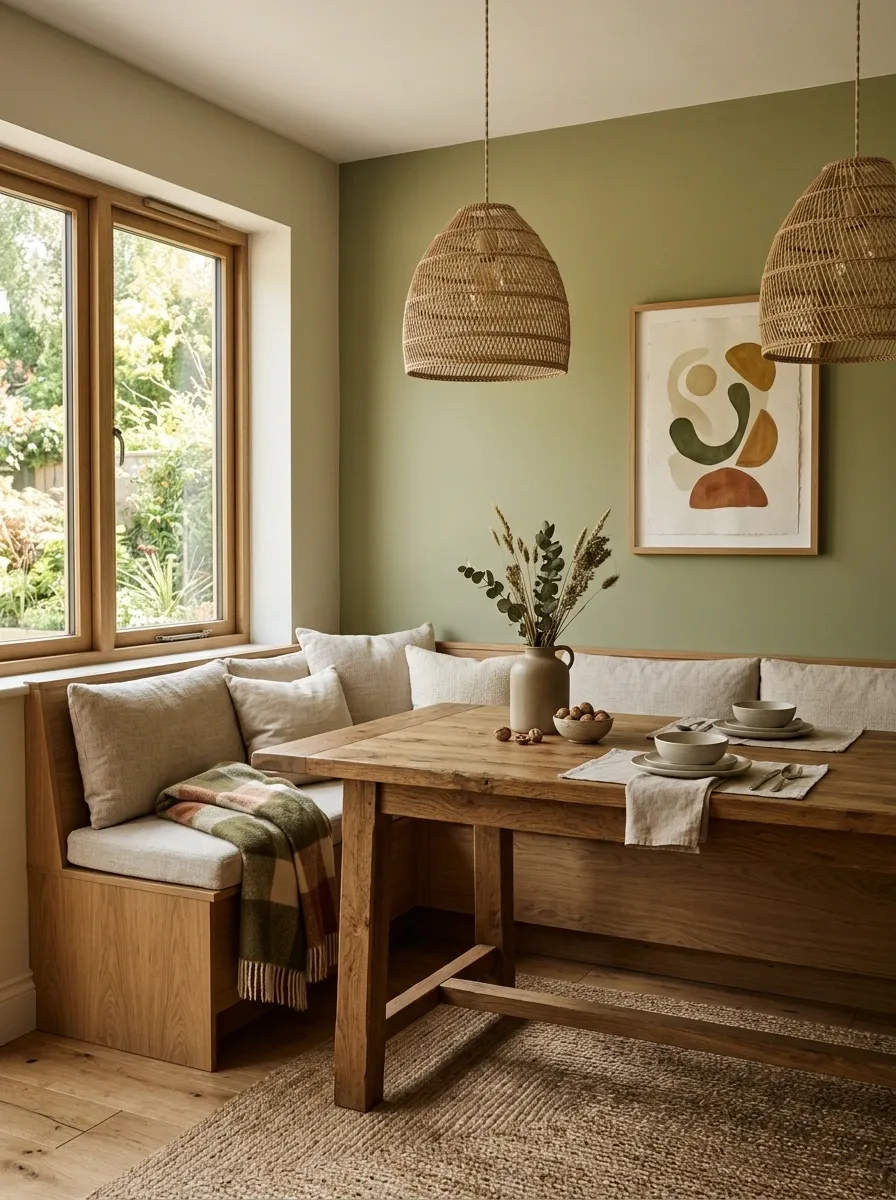
Olive green walls establish a soft earthy backdrop for a chunky rustic oak table and woven pendant lights. The built-in bench stays simple, with lightly upholstered cushions that keep the corner comfortable without competing with the wood grain.
A few ceramic pieces and understated artwork reinforce the natural palette, while the open side remains visually clear. Olive works especially well here because it has enough color to make the nook feel intentional but enough softness to sit comfortably beside natural timber. The result feels collected instead of themed. No tiny wooden signs announcing that this is, in fact, the place where breakfast happens.
Narrow Galley Kitchen Dining Nook
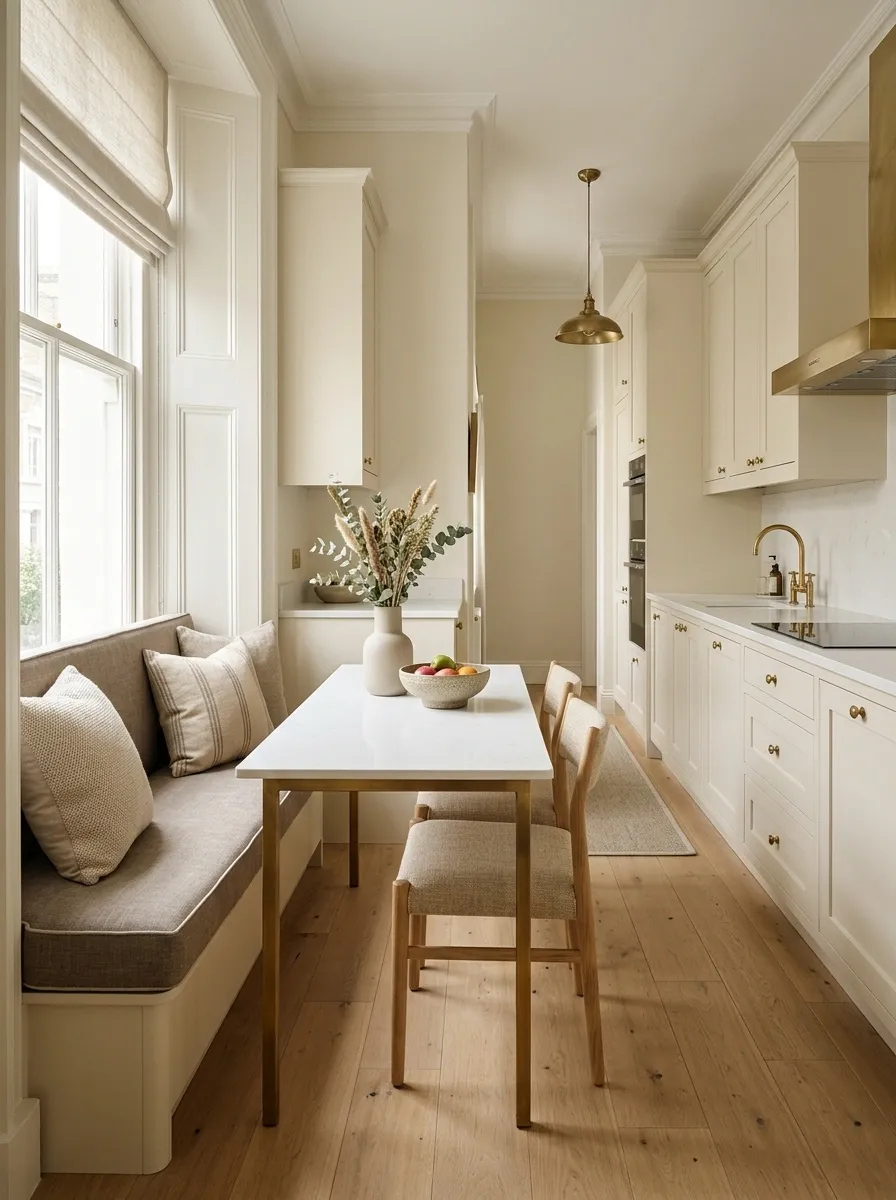
A long, narrow kitchen can still have a defined dining area when the furniture respects the direction of the room. A slim bench runs against one wall beside a narrow rectangular table, leaving a clear working route through the kitchen.
Two lightweight chairs occupy the exposed side but can slide inward when the walkway needs extra room. The finishes relate closely to the kitchen cabinetry, so the nook reads as part of the same space rather than an object parked beside it. This layout is all about circulation. Beautiful furniture is lovely, but being able to open the refrigerator without negotiating a hostage situation is lovely too.
Dining Nook Under a Staircase
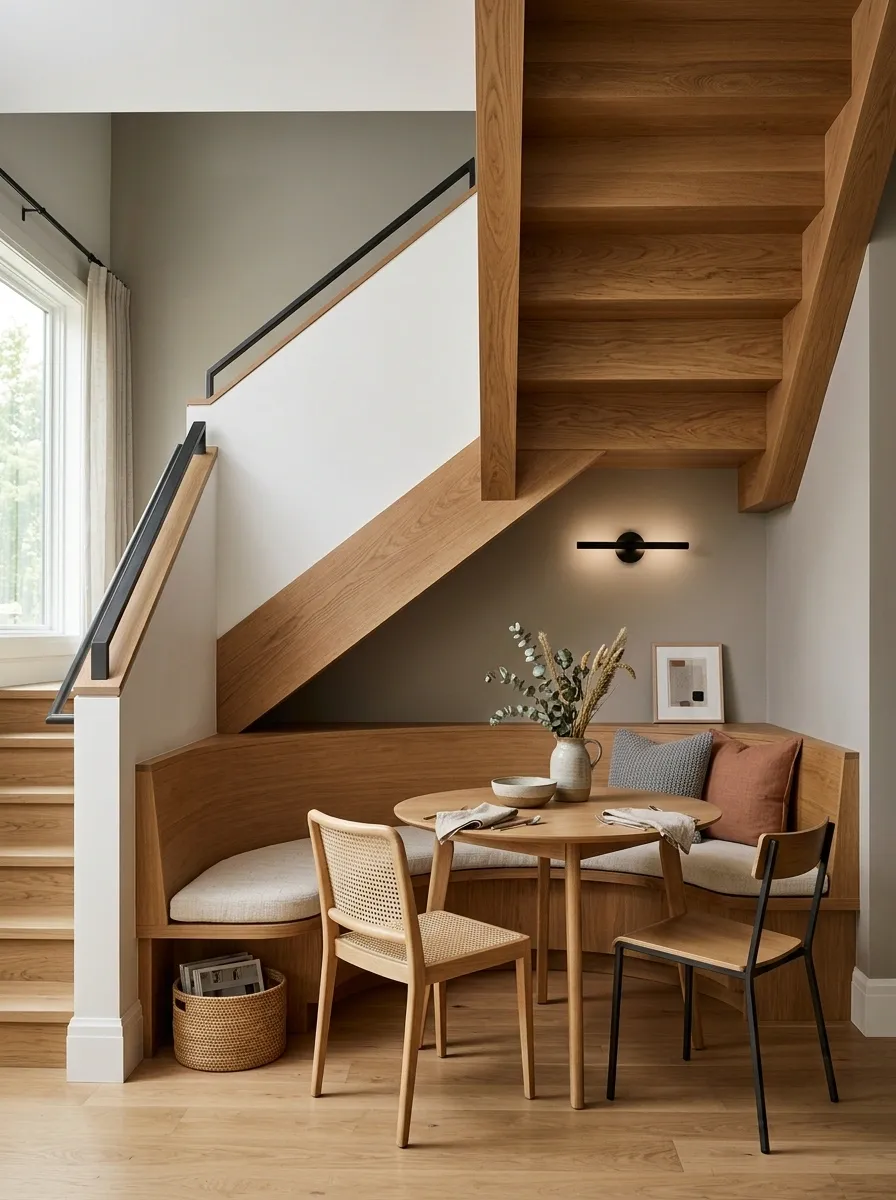
The space beneath a staircase becomes surprisingly useful when the dining furniture follows the architecture instead of fighting it. A fitted bench occupies the taller wall, while a compact round table sits toward the center where ceiling height is more comfortable.
A wall sconce adds focused lighting without consuming overhead space, and warm timber finishes bring out the character of the staircase itself. The lower part of the stair remains visually quieter so the nook does not feel trapped beneath a heavy structure. This is one of those layouts that makes an ignored piece of architecture suddenly look intentional. The awkward corner finally has a job.
Moody Burgundy Dining Nook With Vintage-Inspired Furniture
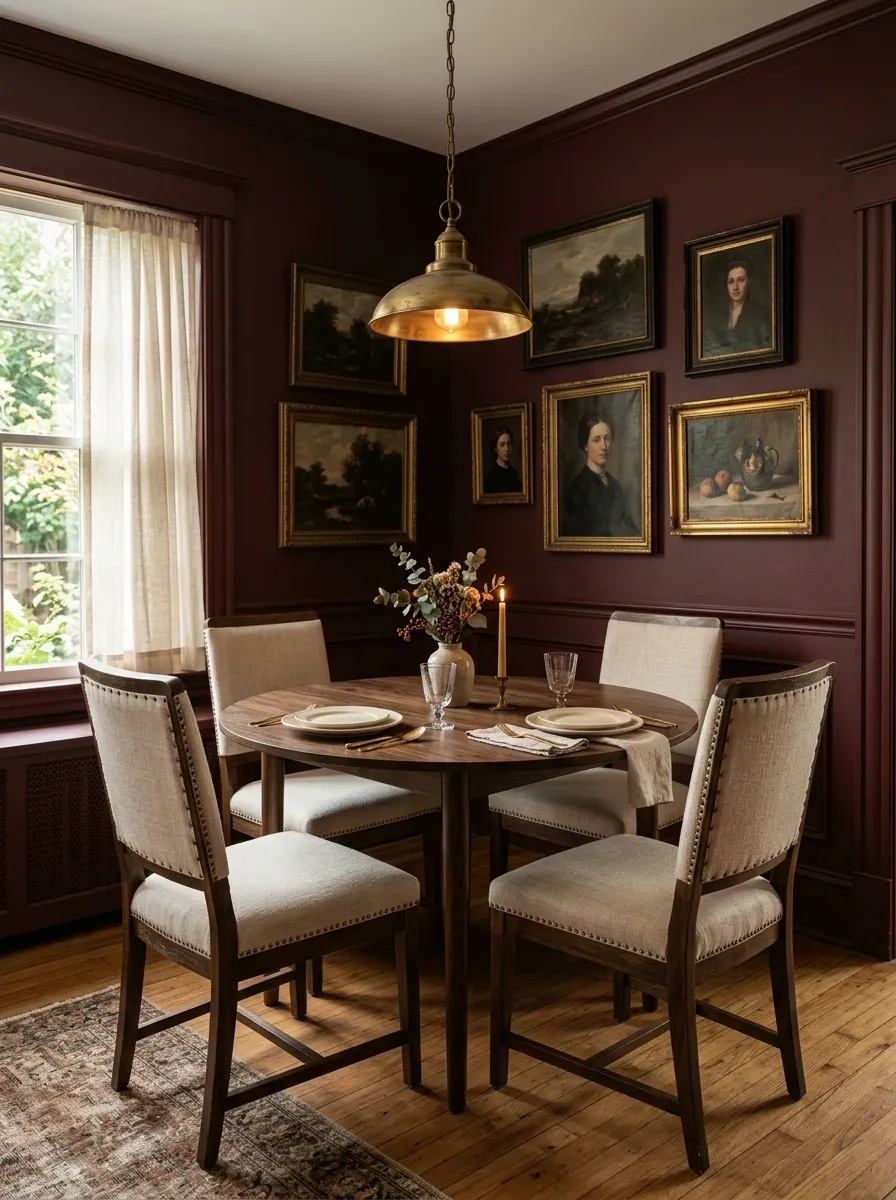
Deep burgundy walls give this dining nook an evening-friendly mood, with dark timber furniture and cream upholstery creating enough contrast to keep the room from becoming visually heavy. Aged brass lighting adds warmth above the table, while traditional framed artwork gives the walls a collected, slightly historic character. The furniture has classic proportions rather than ornate detailing, which keeps the color dramatic without making the nook feel theatrical. This palette works best when the lighter elements are deliberate and limited. Burgundy should feel rich, not like the walls are personally furious about natural daylight.
Organic Modern Nook With Stone Table and Natural Wood
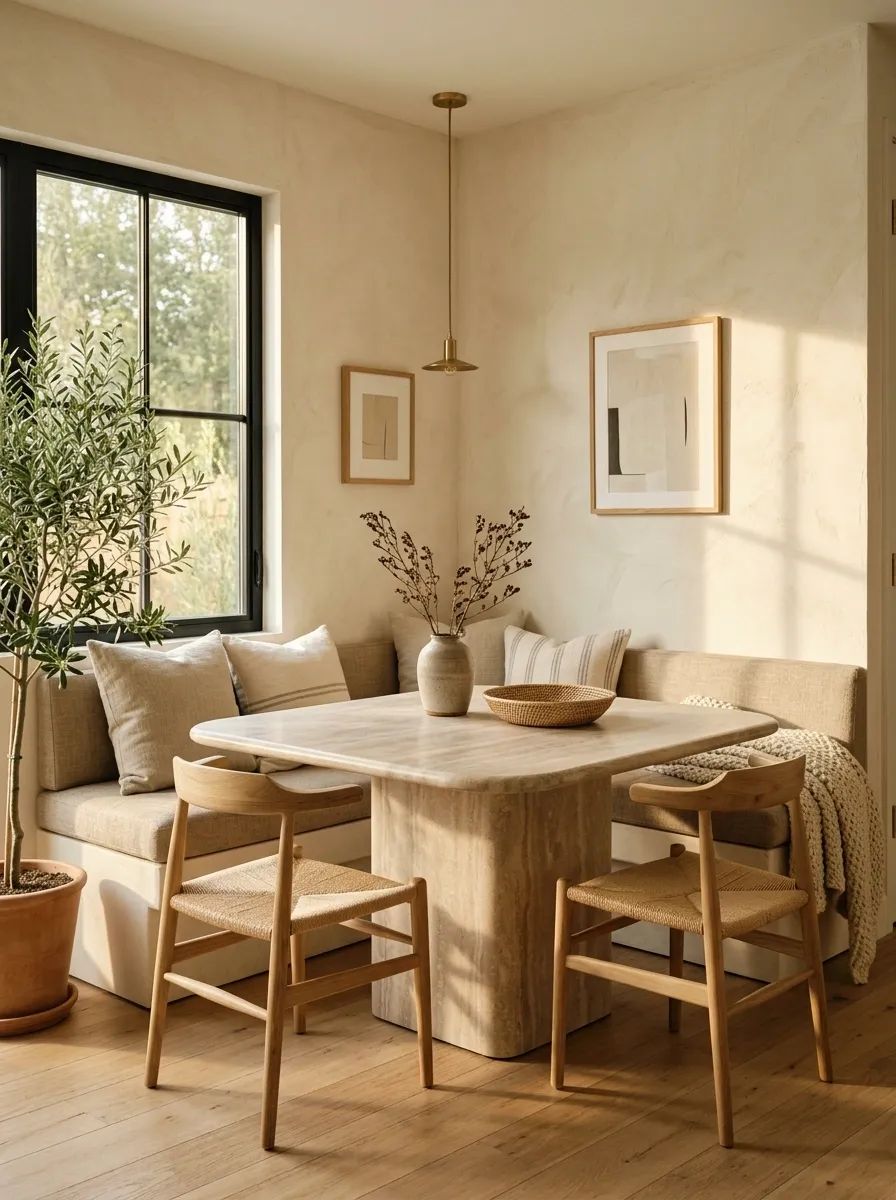
A softly veined stone table anchors this organic modern nook, surrounded by warm oak seating and lightly textured walls. The furniture has rounded edges, which keeps the harder stone surface from making the corner feel too severe. An upholstered bench sits against the wall, while two sculptural chairs create an open side that feels relaxed rather than formal. Natural materials do the decorating here, with woven texture and a few restrained accessories filling the gaps. The palette stays warm and quiet, allowing the stone to become the focal point without competing against five other “statement” pieces. The room has character because the materials have character.
Rental-Friendly Dining Nook With Freestanding Furniture
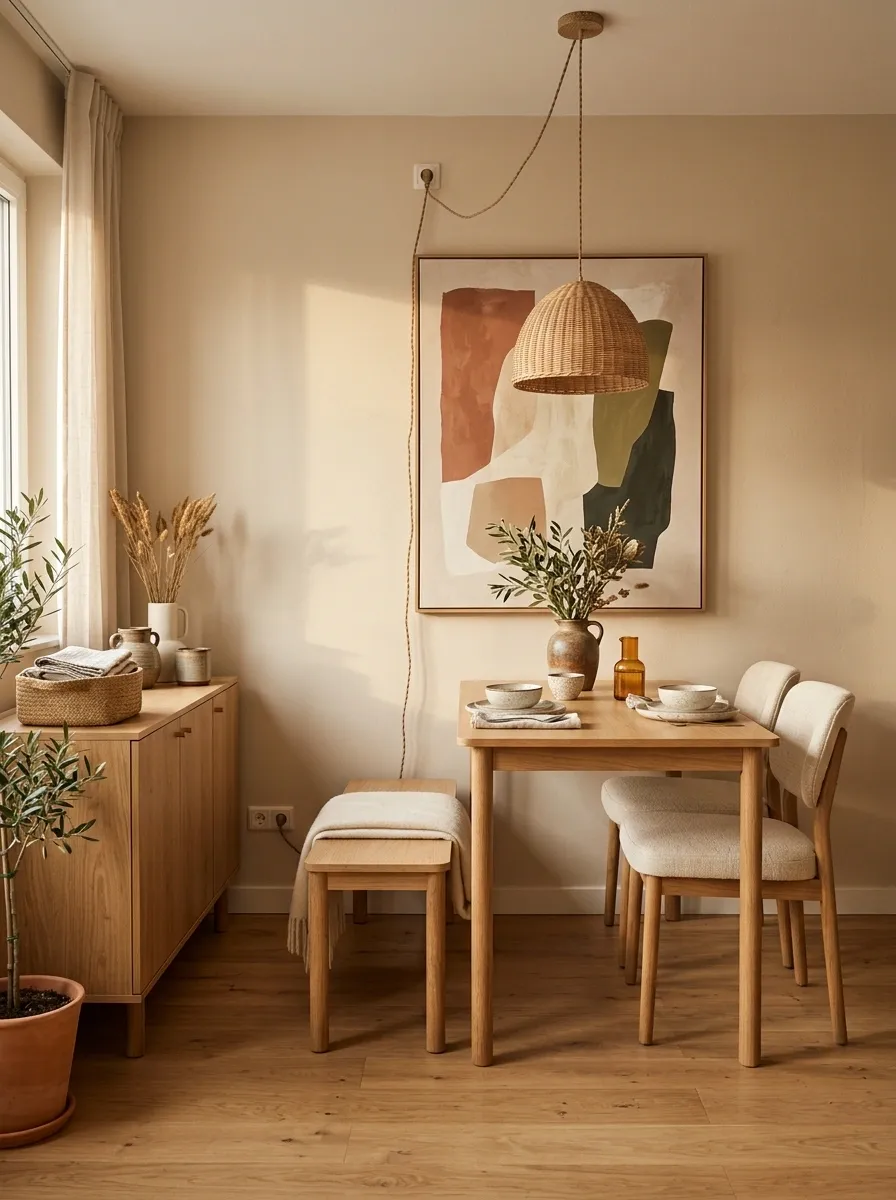
This dining nook proves a finished look does not require a built-in bench or permanent renovation. A narrow freestanding table sits against the wall, joined by a movable bench and two compact chairs. Removable artwork creates a visual backdrop, while a plug-in pendant adds the feeling of a dedicated dining area without changing the ceiling. A low cabinet nearby can provide extra serving storage while remaining easy to take to the next home. The key is choosing pieces that visually behave like a built-in composition even though none of them are attached to the building. Landlords may own the walls. They do not own the right to your good taste.
Dramatic Nook With Floor-to-Ceiling Curtains
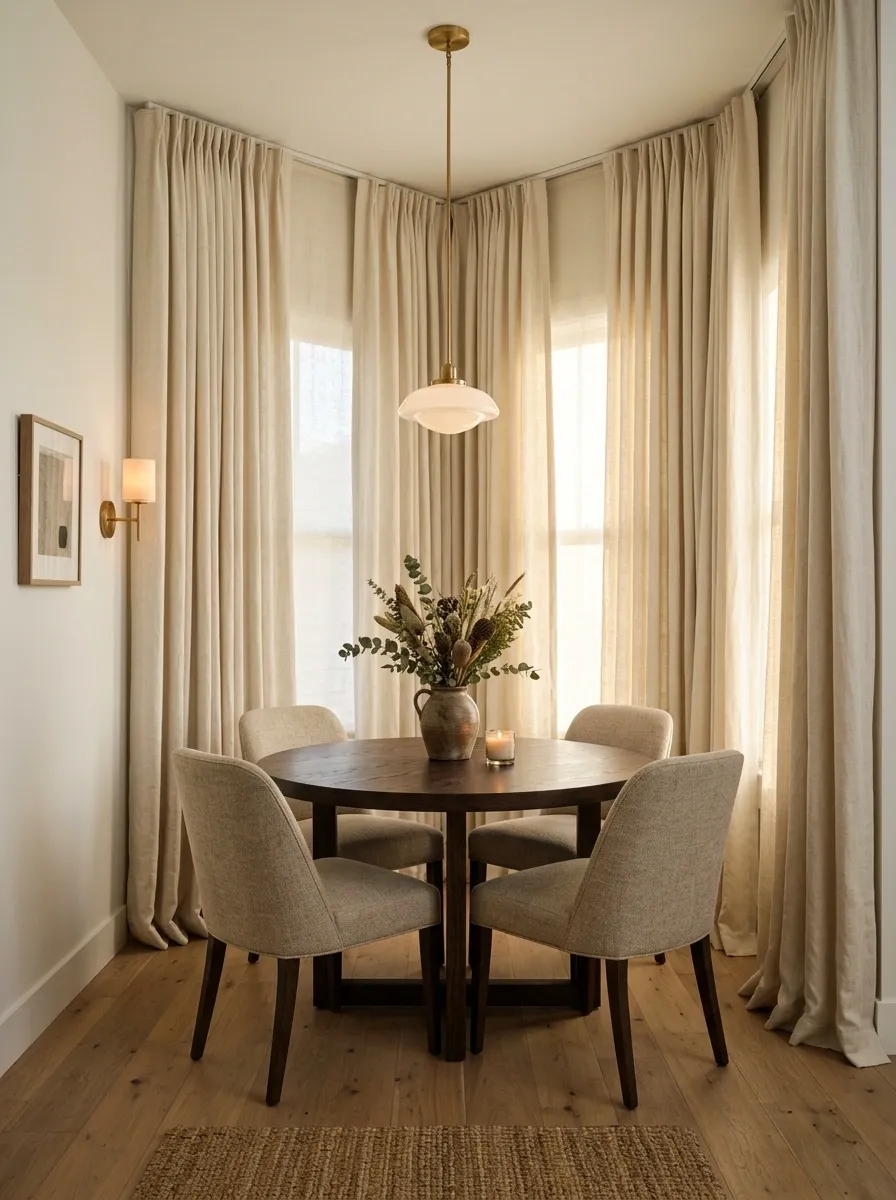
Full-height curtains frame this dining nook from floor to ceiling, giving a small corner a much stronger architectural presence. The fabric hangs beyond the immediate width of the table, creating a broad visual backdrop rather than a tiny curtain panel. A dark wood table and upholstered chairs sit in front, while warm lighting keeps the fabric from becoming visually heavy after sunset. The surrounding walls stay simple so the curtains remain the defining feature. This approach is especially effective when the nook lacks interesting architecture of its own. Sometimes the room simply needs one very large gesture instead of seventeen little ones competing for screen time.
French-Inspired Nook With Round Table and Café Chairs
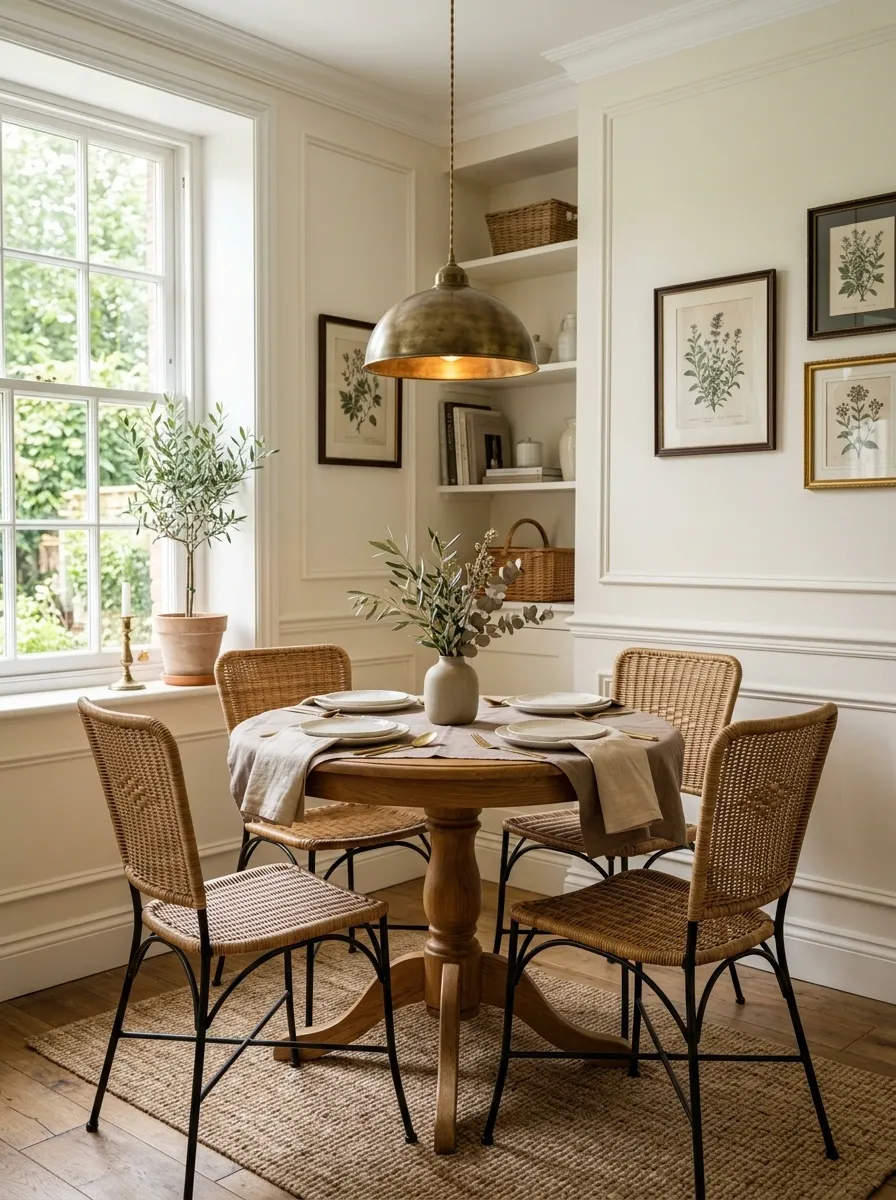
A small round table gives this French-inspired dining nook an easy, conversational shape, paired with woven café chairs and a delicate pendant above. Pale walls and traditional trim provide the architectural backdrop, while a few framed artworks keep the setting from becoming overly precious. The chairs have enough visual openness to preserve the compact footprint, and the round tabletop avoids the hard corners that can make a narrow nook feel cramped. The styling is relaxed, not theatrical. A single vase and simple table setting are enough. Nobody asked for a pastry shop to be recreated down to the last croissant.
FOOTPRINT
Family-Friendly Nook With Durable Upholstery and Rounded Edges
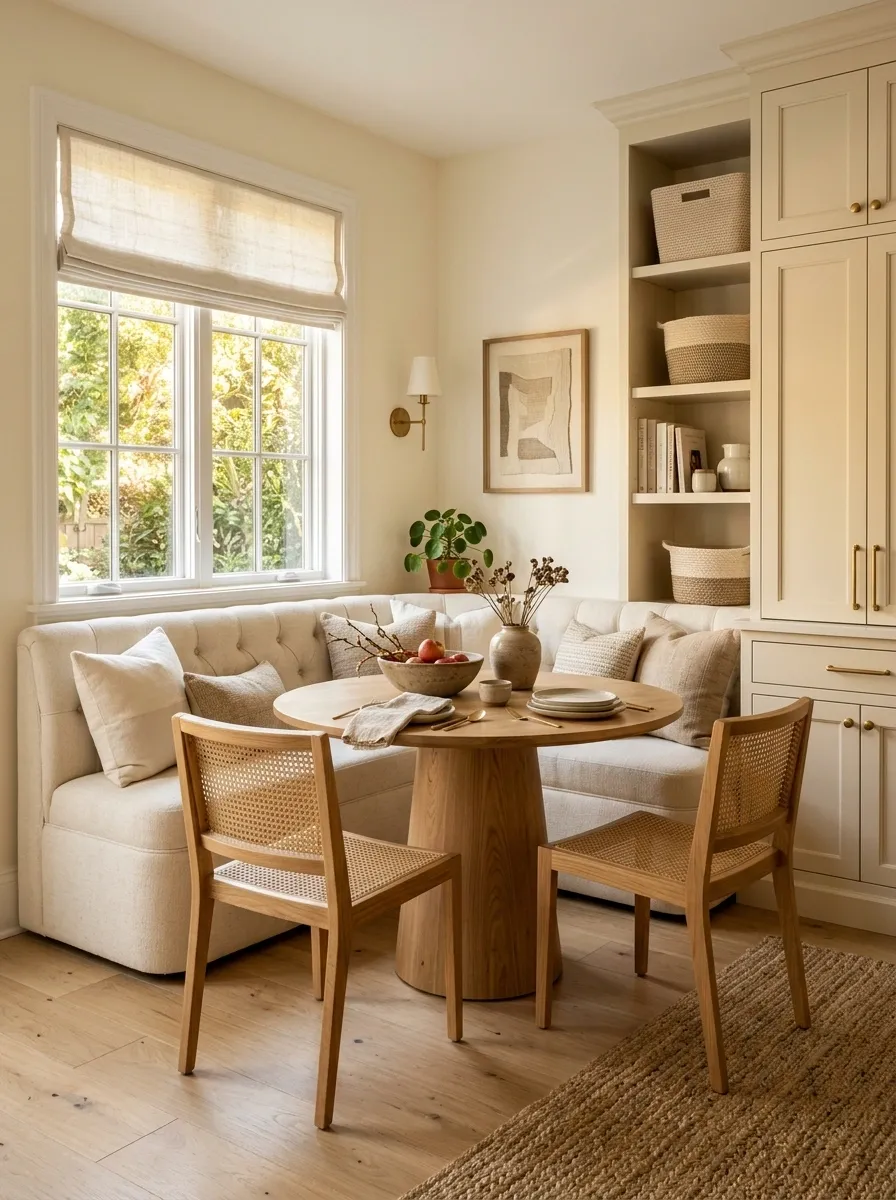
A family dining nook can look refined while quietly preparing for actual life. This composition uses rounded furniture edges, a sturdy pedestal table, durable easy-clean upholstery, and flooring that can handle frequent traffic without becoming visually demanding. The built-in bench keeps the footprint efficient, while loose chairs on the opposite side make the seating flexible. Storage nearby holds everyday dining items so the table does not become the household’s unofficial mailroom. The palette stays warm and simple, allowing practical surfaces to disappear into the overall design. The goal is comfort and resilience without making the room look like a waiting area for very small people.
Open-Plan Nook That Visually Connects to the Kitchen
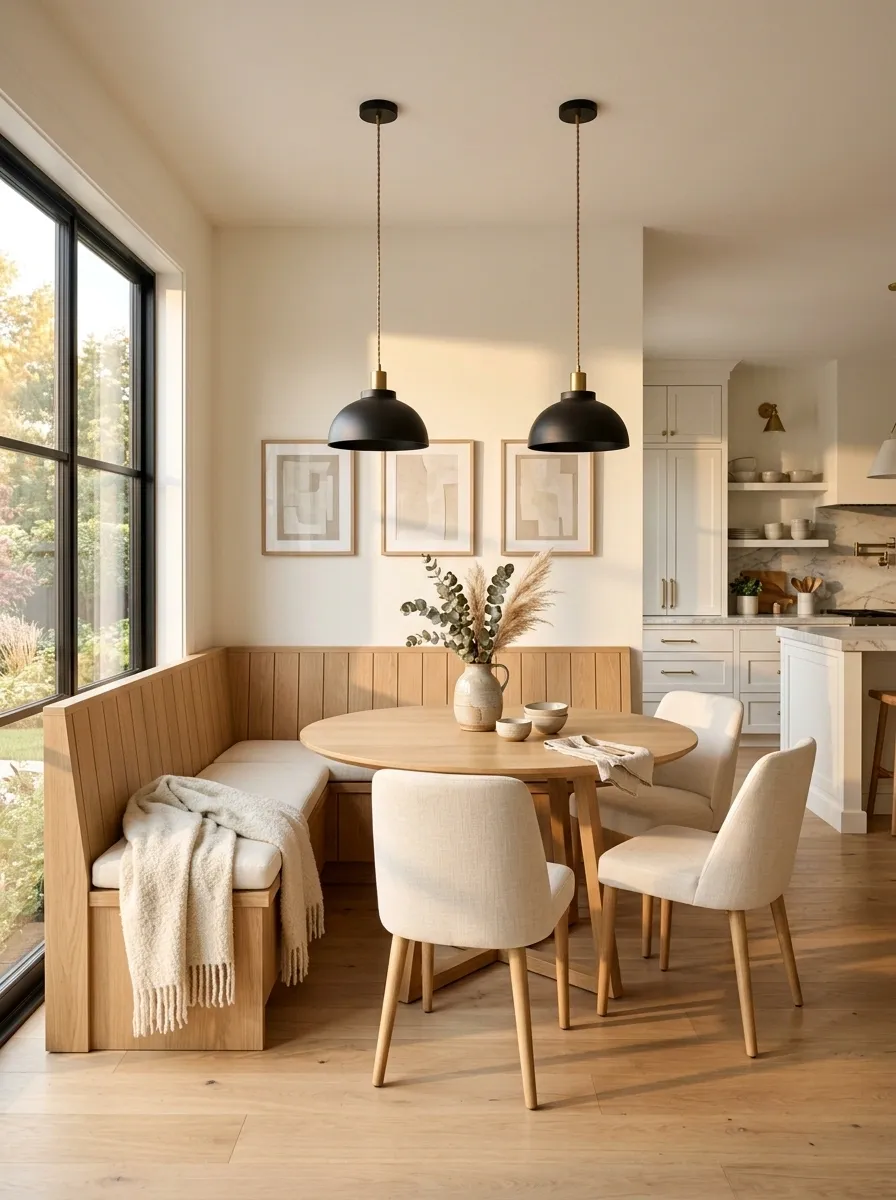
This dining nook sits directly beside the kitchen, but the two areas feel connected rather than randomly placed next to each other. Matching wood tones carry from the kitchen cabinetry into the dining table, while related metal finishes keep the lighting visually tied together. A built-in bench defines the dining zone without creating a heavy barrier in the open floor plan. Artwork and textiles add personality, but the palette stays closely related to the kitchen. The real trick is repetition without cloning. The nook should feel like the kitchen’s well-dressed neighbor, not like someone moved a dining set into the hallway five minutes ago.
Old-World Nook With Plaster Walls and Dark Timber
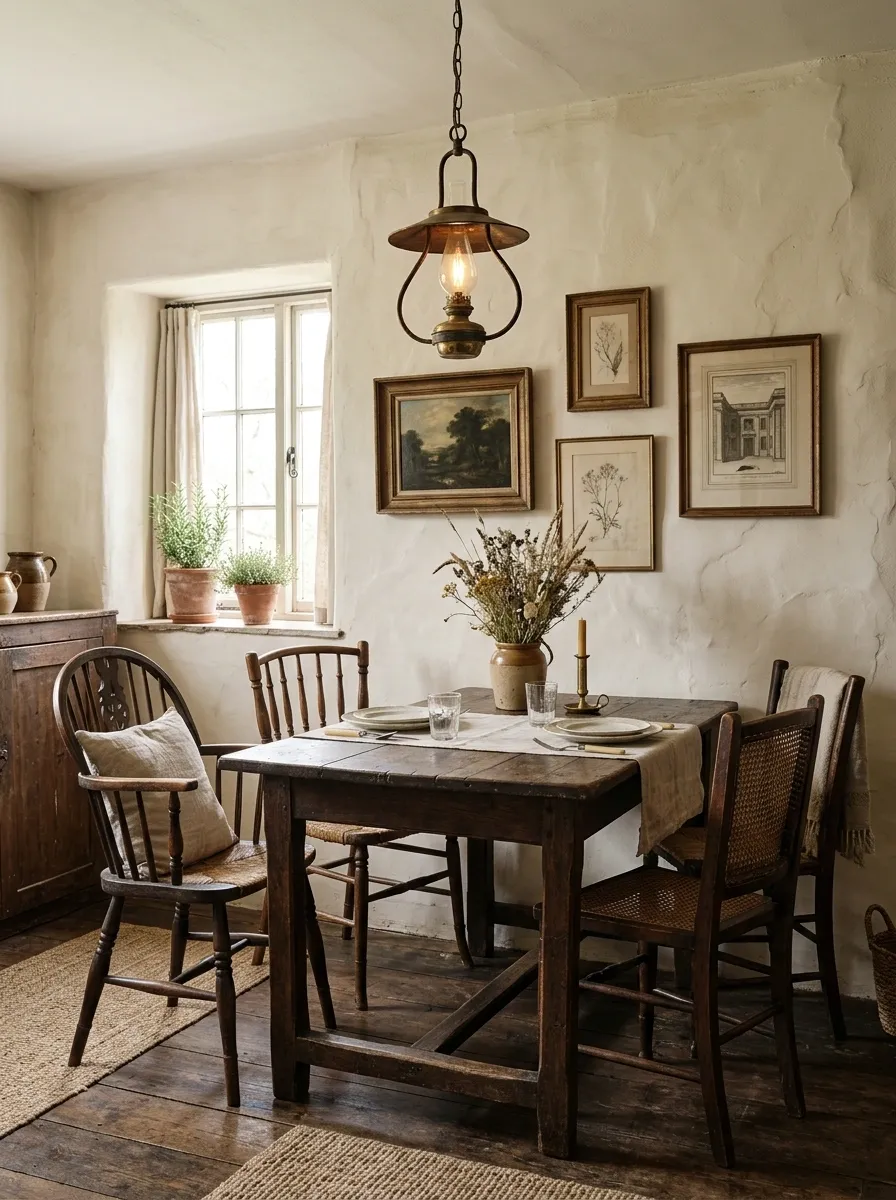
Textured plaster walls create a soft, aged backdrop for dark timber furniture, woven seating, and aged metal lighting. The table has substantial visual weight, while the chairs introduce slightly different shapes so the composition feels collected instead of perfectly matched. Traditional artwork sits comfortably against the irregular wall finish, and warm textiles keep the darker furniture from becoming too formal. The beauty of this direction comes from variation in texture. Smooth wood, rough plaster, woven fibers, and aged metal each react to light differently. The result has depth without needing a decorative object on every available surface. The empty spaces are doing some heavy lifting too.
Bright Contemporary Nook With Sculptural White Table
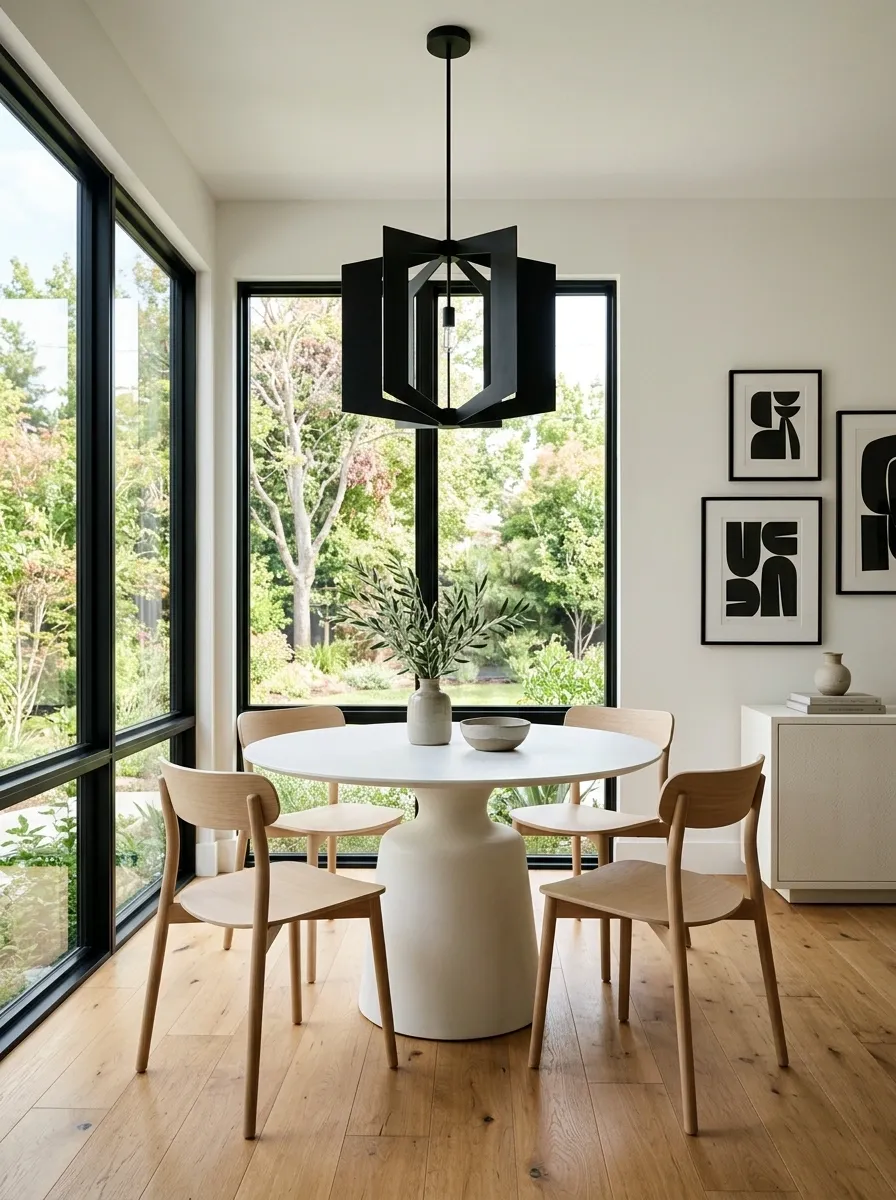
A sculptural white table becomes the focal point of this bright contemporary nook, surrounded by pale wood chairs and expansive windows. The table has enough shape to command attention without requiring elaborate decoration, while a strong architectural pendant reinforces the same clean geometry overhead.
Graphic artwork adds contrast against the lighter walls, and the floor remains warm enough to keep the room from feeling clinical. The composition succeeds because the focal points are intentional. There is the table, the light, and the view. Everything else stays disciplined. Three interesting things can make a room feel considered. Thirty usually make it look like the decor section exploded.
Compact L-Shaped Nook With Built-In Shelving
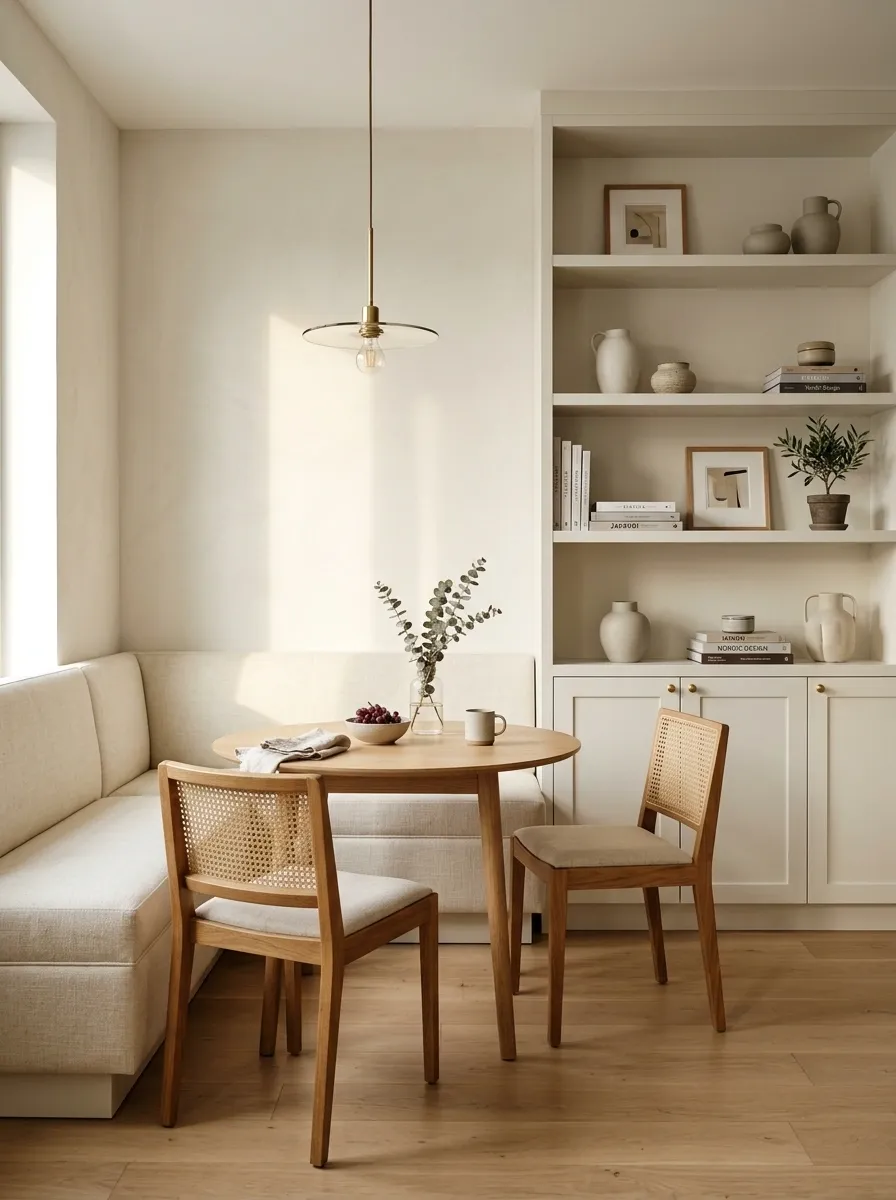
An L-shaped bench wraps around one corner while shallow built-in shelving occupies the adjacent wall, giving the nook two useful layers without consuming much floor area. The dining table sits slightly forward from the corner, leaving enough room for the bench to remain comfortable. Open shelves display a restrained mix of ceramics, books, and artwork, while closed storage below keeps the less photogenic necessities out of sight. The vertical shelving makes use of wall space that would otherwise sit empty, but its shallow depth keeps the room from feeling boxed in. This is how a small corner starts pulling its weight instead of just existing there looking confused.
Layered Eclectic Nook With Mixed Woods and Collected Art
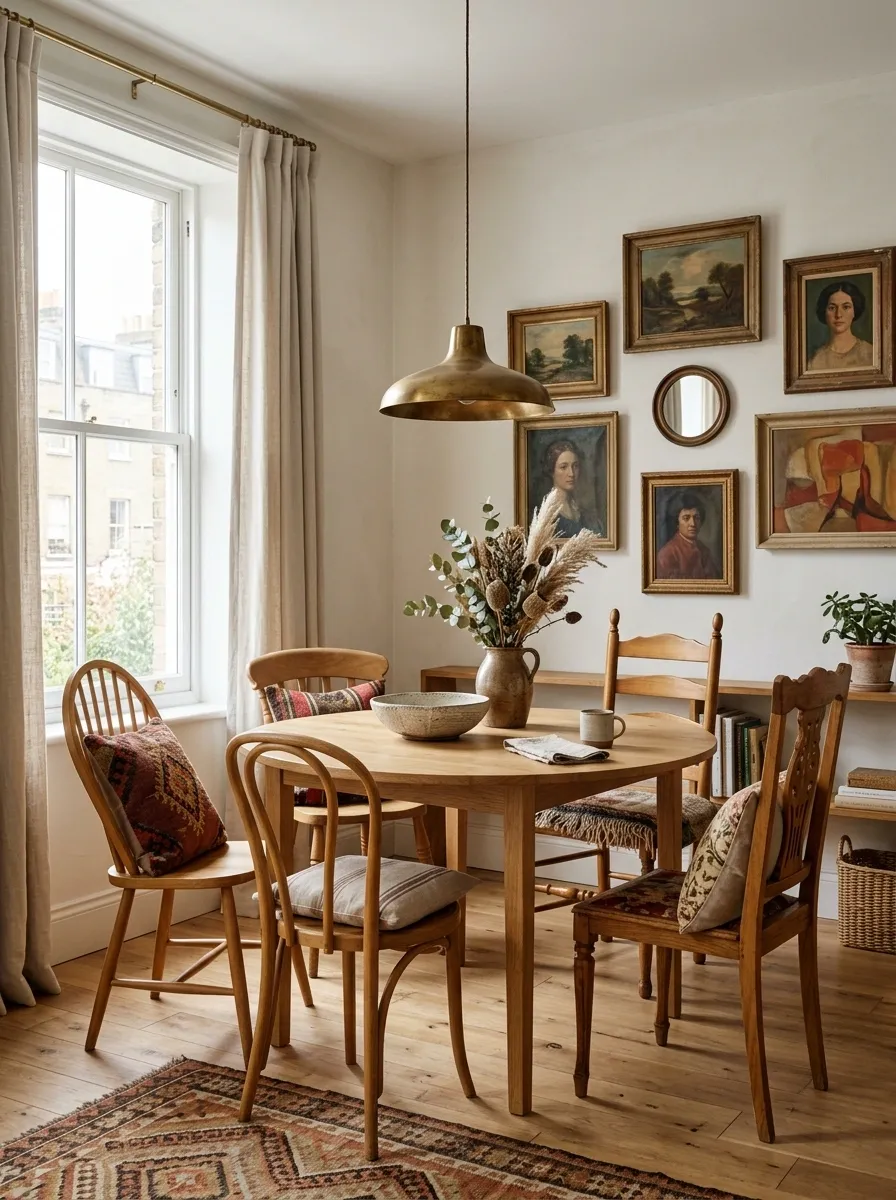
This eclectic nook allows different wood tones, mismatched chairs, vintage artwork, and patterned cushions to coexist without becoming visual chaos. A simple dining table acts as the anchor, giving the more expressive pieces somewhere to gather around. The chairs do not match exactly, but their scale and overall visual weight remain related. Artwork varies in subject and frame while sharing a similar warm tonal range. Textiles add another layer of pattern, but the walls and larger surfaces stay calm enough to absorb it. Eclectic rooms work when something holds the whole thing together. Otherwise it is not collected. It is just thirty tabs open in the brain.
Make the Corner Feel Like It Belongs There
A dining nook should not feel like a table happened to land in an empty patch of the house.
The difference is usually visible in the relationship between the pieces. A bench follows the wall. A round table softens a tight corner. Wood repeats somewhere else in the room. A pendant defines the eating area. Curtains frame the architecture instead of stopping halfway up the wall. Even a tiny apartment nook can feel deliberate when those decisions work together.
The easiest place to start is the shape of the corner itself. Look at the windows, the walkway, the ceiling, and the walls before choosing the furniture. Then choose a complete visual direction and let the smaller pieces support it.
Save the dining nook that feels closest to your actual space, then come back to it when the measuring tape finally comes out.