
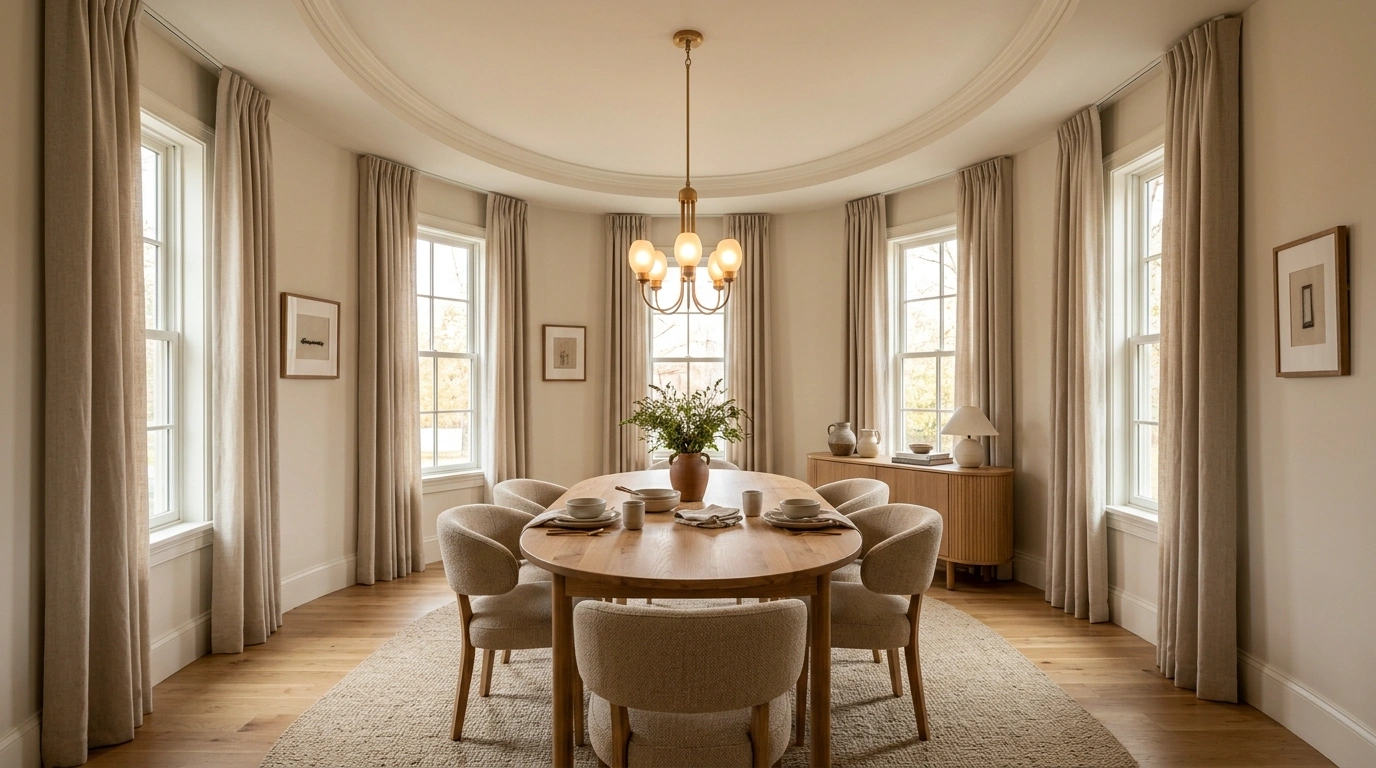
An oval dining table can be one of the easiest ways to make a dining room feel softer, but it can also expose everything around it that is not quite working.
Suddenly the rug feels too rigid, the chairs look strangely disconnected, and the pendant seems to be hanging over a completely different room. The table gets blamed, naturally, because furniture always gets accused before the ceiling light does.
The Oval Table Reality Check
Usually, the room is just fighting it.
Oval Dining Room Designs
Warm Oak Oval Table With Sculptural Pendant and Linen Chairs
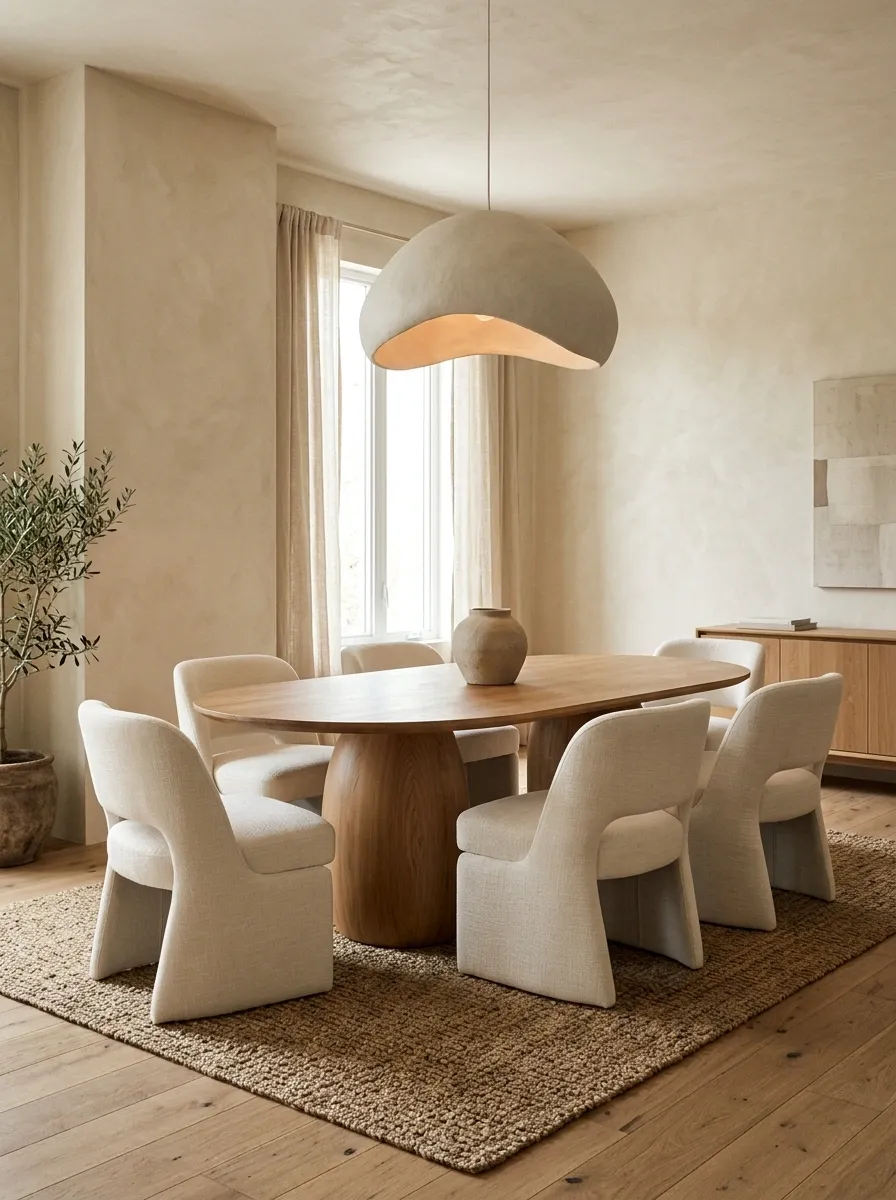
This room gets the important part right immediately: the oval table has enough visual weight to anchor the space, but the surrounding pieces stay relaxed. A pale to medium oak tabletop sits on a rounded base, surrounded by softly upholstered linen chairs. Plaster-toned walls, a natural woven rug, and a large sculptural pendant keep the room warm without turning it into a beige showroom.
The secret is the finish mix. Wood brings structure, linen softens the seating, plaster adds quiet texture, and the woven rug keeps the floor from looking flat. A small ceramic centerpiece is enough. More decor would just start filing for attention.
Grounds the composition
Softens the seating
Adds quiet surface texture
Keeps the floor visually grounded
Dark Walnut Oval Table in a Moody Traditional Dining Room
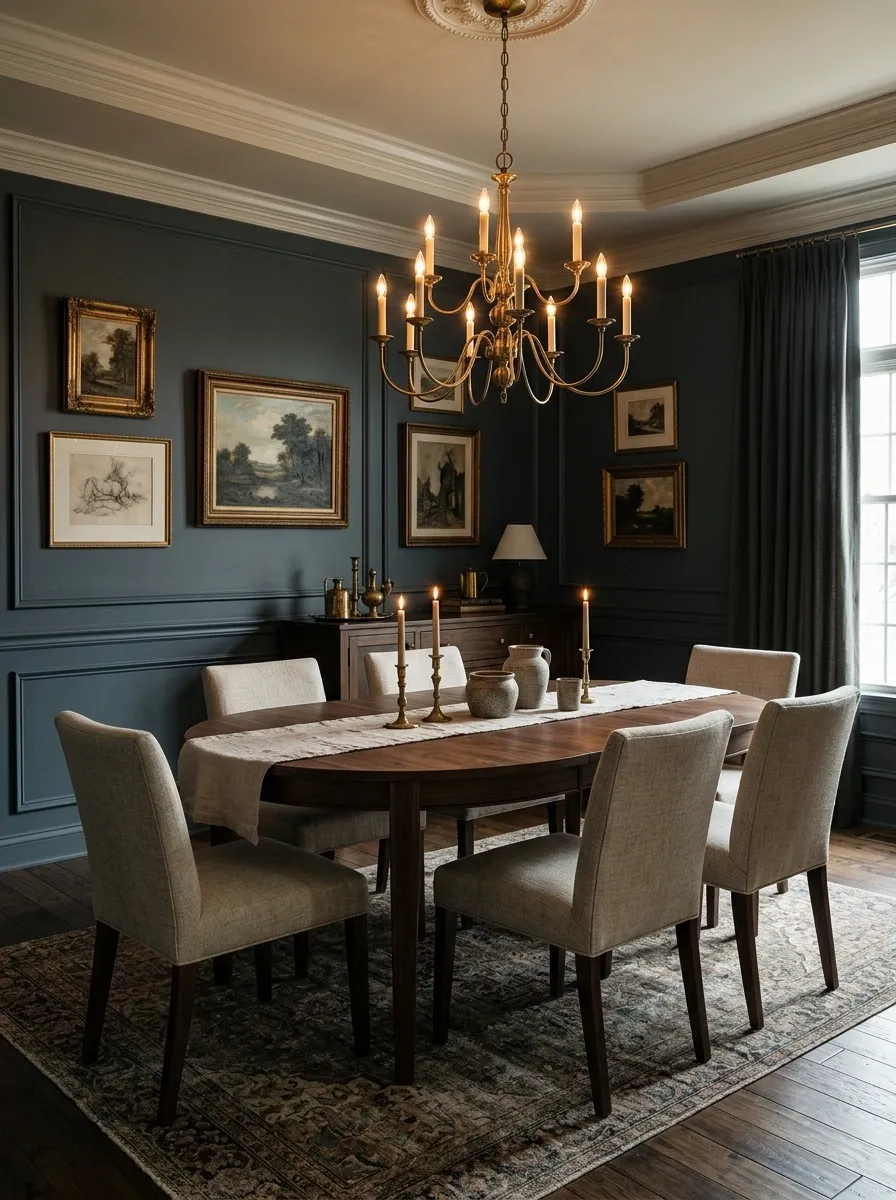
Deep walnut changes the entire mood of a dining room. Here, the oval table sits against rich painted walls with tailored upholstered chairs, darker flooring, framed artwork, and an aged-brass chandelier. The room feels collected rather than themed because the traditional details are substantial but not fussy.
The contrast matters. The dark table and walls create a quiet backdrop, while the upholstery breaks up the wood and keeps the seating from looking heavy. Brass appears only where it counts, mostly overhead and in small decorative touches. This is a room that knows how to whisper dramatically. Throwing bright white accessories into it would be like showing up to a candlelit dinner wearing cycling glasses.
Largest visual field
Main furniture anchor
Softens the dark mass
Small high-contrast highlight
Organic Modern Dining Room With Travertine and Warm Wood
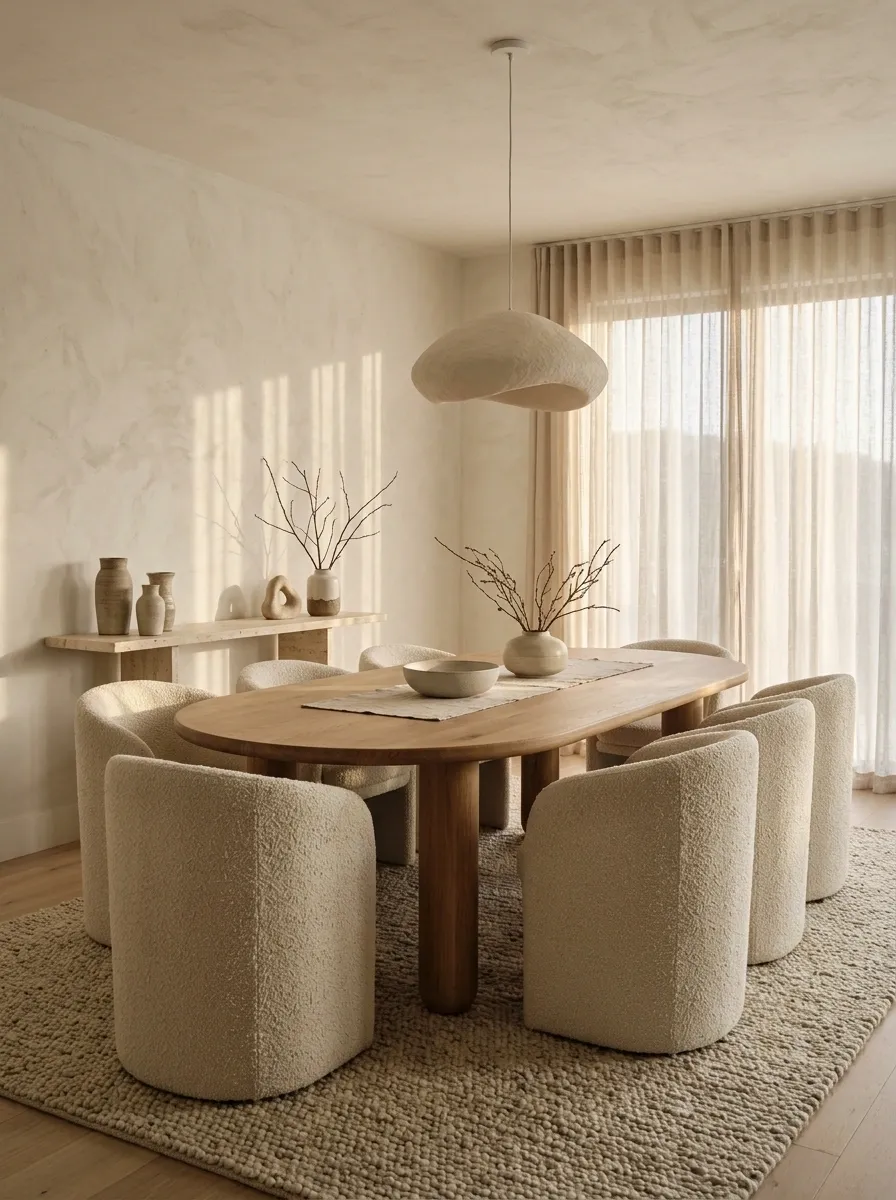
This composition leans into natural surfaces without becoming a catalog of beige objects. A warm wood oval table sits with rounded upholstered chairs, while a travertine console, limewashed walls, soft wool rug, and handmade-looking stoneware create a quieter layered backdrop.
The strongest contrast is between the table and stone. Wood carries visual warmth and a little softness, while travertine introduces a pale, irregular surface that catches light differently across the room. Keeping the upholstery simple prevents the materials from competing. A few organic shapes in the lighting or accessories echo the oval tabletop, which makes the room feel connected rather than assembled from separate shopping trips.
Main anchor and visual warmth
Light-catching texture
Quiet supporting layers
Classic Cream Dining Room With a Pedestal Oval Table
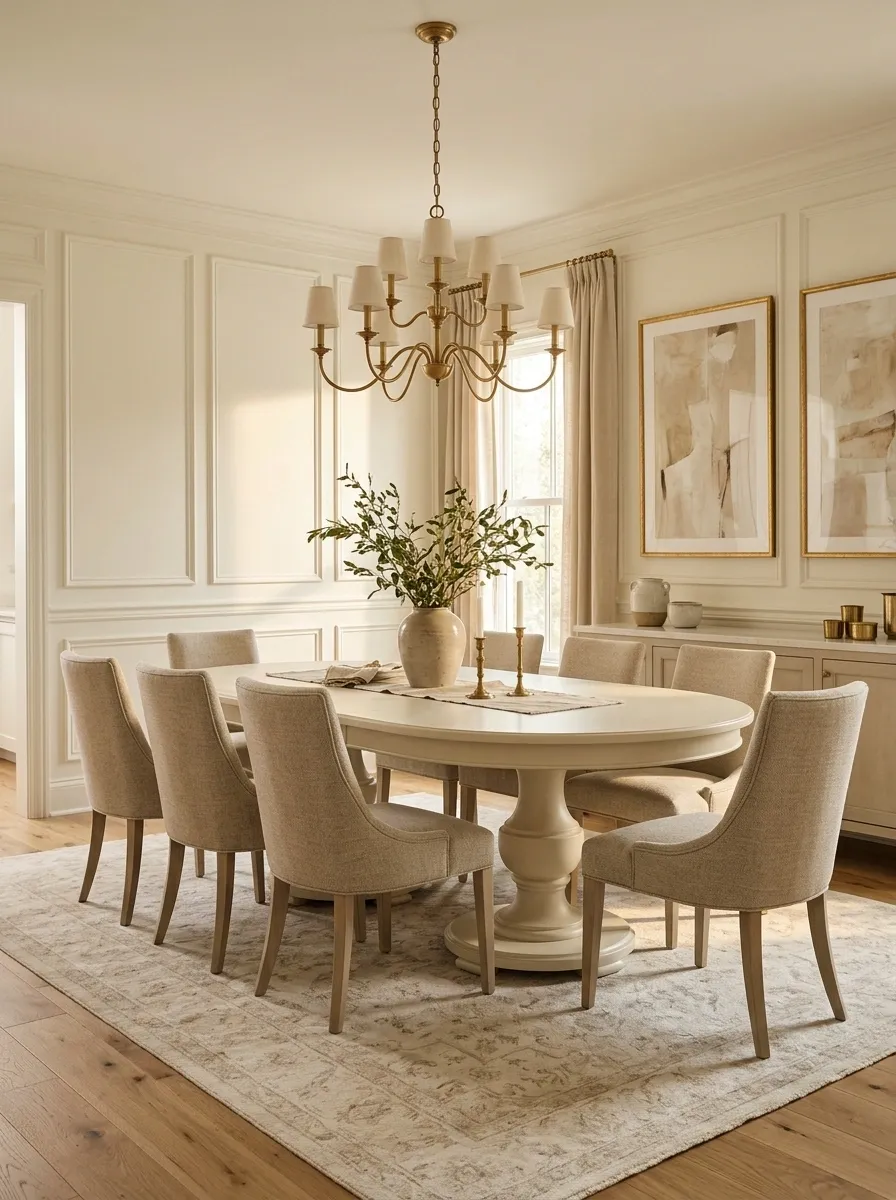
A substantial pedestal table gives this cream dining room its center of gravity. The surrounding composition uses classic wall molding, upholstered chairs, a soft patterned rug, framed artwork, and a traditional chandelier, all kept within a warm neutral range. The result feels polished without drifting into formal dining-room museum territory.
The pedestal matters because it lets the oval silhouette stay visually clean. Chair legs do not have to compete with a complicated table base, and the tabletop reads as one strong shape. The chandelier sits directly over that center, while artwork provides height on the wall. Everything has a job. Nothing is desperately auditioning for another one.
Contemporary Black Oval Table With Cream Bouclé Seating
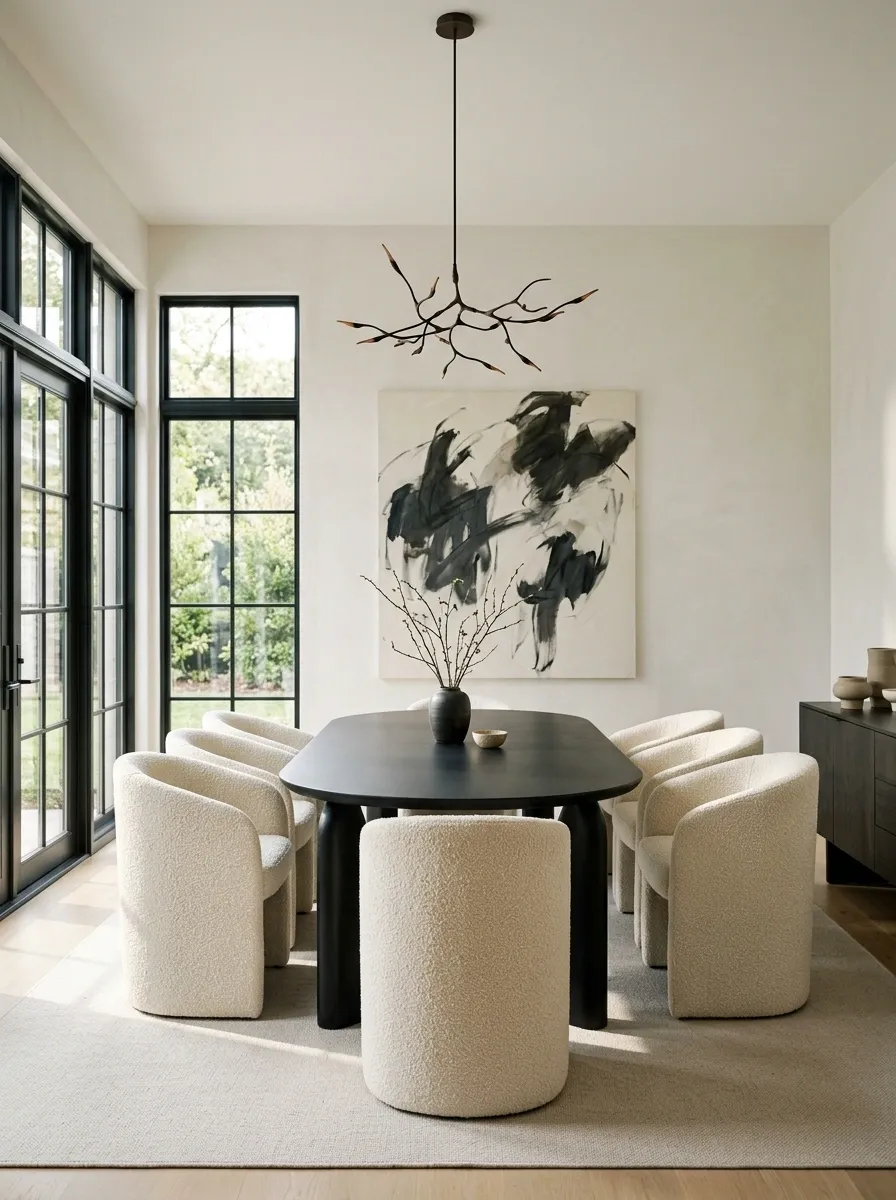
A matte black oval table gives this dining room a crisp center, while cream bouclé chairs stop the dark tabletop from making the whole space feel severe. Pale walls, black-framed windows, oversized abstract art, and a sculptural ceiling fixture create a clean contemporary shell around the furniture.
The contrast is deliberate. Black appears in several architectural and furniture details, so the table feels connected to the room instead of dropped into it. Cream then interrupts that dark line and keeps the seating visually soft. The rug stays quiet and pale underneath. This is a strong formula for a room with good natural light and enough wall space to let the dark elements breathe. Basically, the room understood that contrast works better than fifteen competing statement pieces.
Cottage Dining Room With Painted Furniture and Floral Textiles
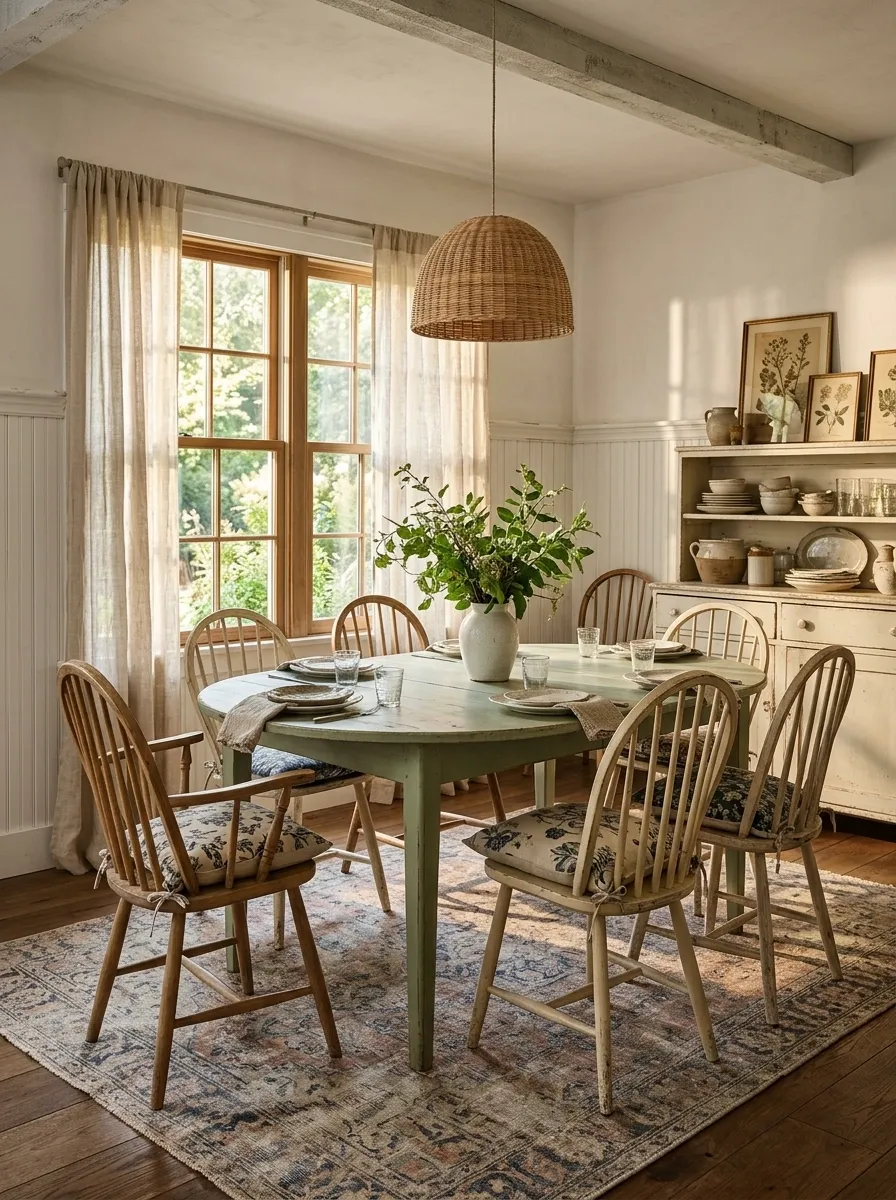
This cottage composition uses an oval painted table as the soft centerpiece of a room filled with familiar, slightly mismatched pieces. Spindle-back chairs carry small floral cushions, while beadboard walls, a vintage-style dresser, woven lighting, and garden-facing windows bring in the relaxed character.
The room stays convincing because the pattern is distributed instead of piled onto every surface. Floral fabric appears on the chairs, while the walls and larger furniture remain comparatively quiet. A patterned rug can work beneath the table, but it needs to support the textiles rather than introduce a whole new pattern language. The charm comes from the mix feeling gathered over time, not from making every object aggressively “cottage.” Nobody needs a rooster-shaped anything to understand the assignment.
Modern Farmhouse Dining Room With a Thick Rustic Oak Table
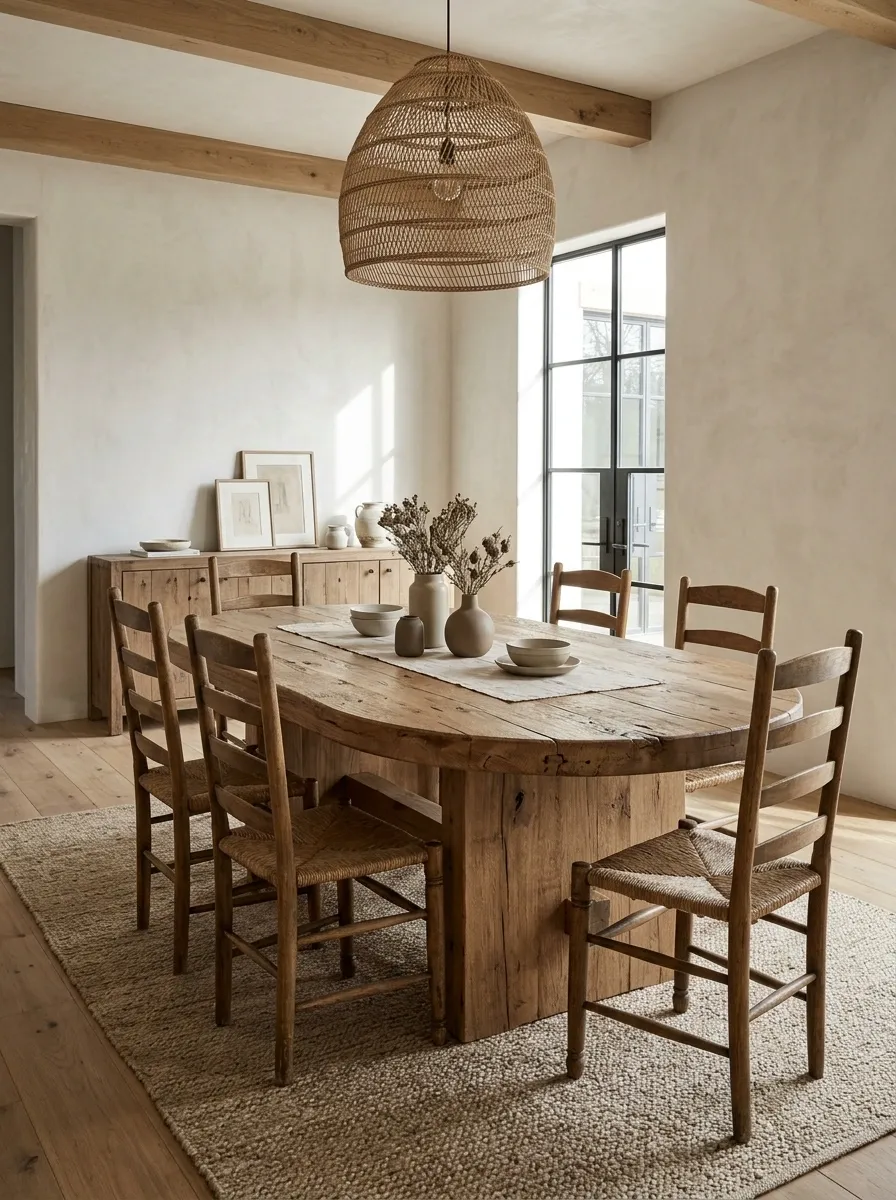
Here the oval table is broad, heavy, and clearly built to be the room’s anchor. Rustic oak brings visible grain and warmth, while simple spindle or ladder-back chairs keep the seating from becoming equally bulky. Plaster-colored walls, a woven pendant, a low rustic cabinet, and restrained accessories complete the farmhouse direction.
The trick is balancing roughness with enough visual calm. A chunky table already provides texture and presence, so the rest of the room does not need distressed finishes everywhere. Keeping the walls simple also lets the wood read as the feature. The result feels relaxed and substantial rather than themed for a furniture catalog photo shoot from 2014.
oak grain
fiber
surface
ceramic
Japandi Dining Room With a Low-Profile Oval Table
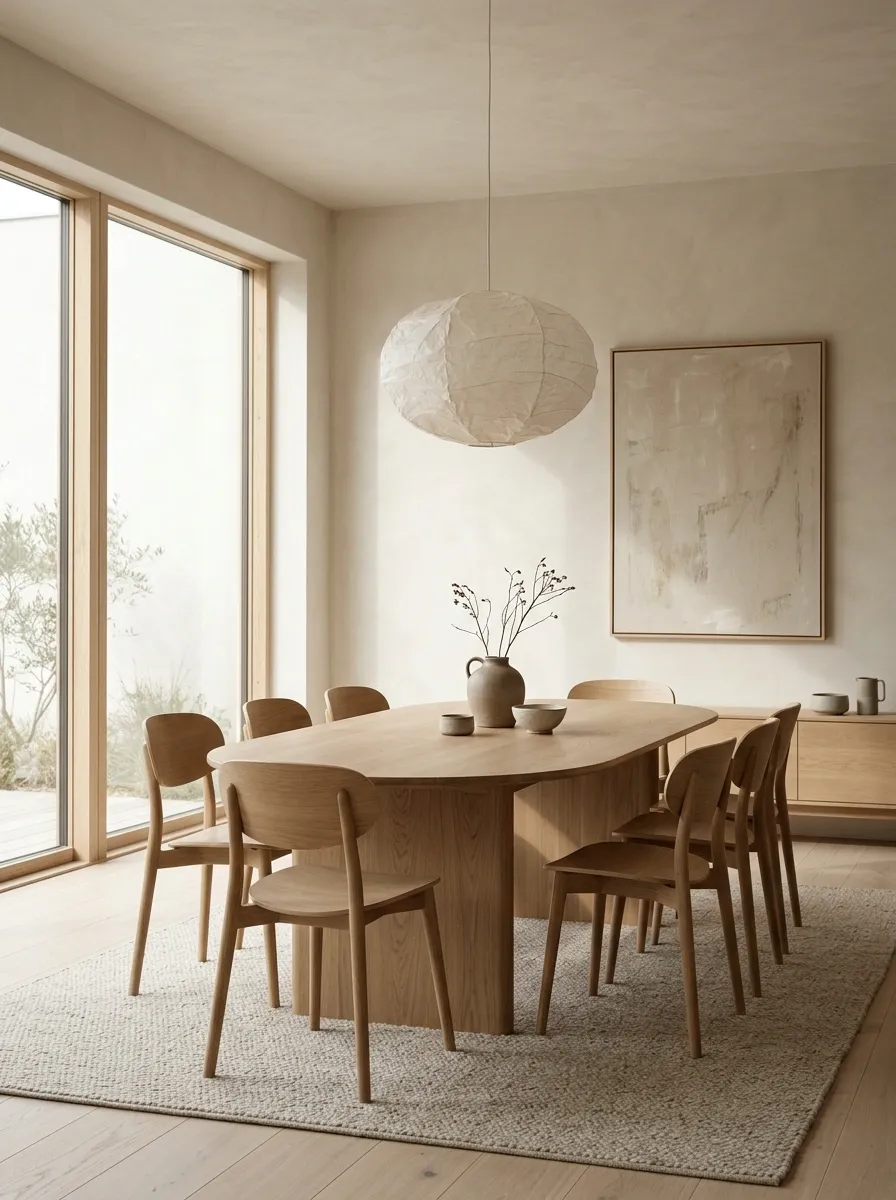
A low-profile oak oval table creates a calm center in this Japandi-inspired dining room. Curved chairs sit close to the tabletop, warm neutral walls keep the background quiet, and a simple paper-like pendant hangs above. Pale flooring, sparse ceramics, and one restrained artwork complete the scene.
There is very little visual noise, which is exactly why the room works. The oval table softens the straight architecture, while the low furniture keeps sightlines open across the space. Natural wood provides warmth without making the room feel rustic. The hardest part of this look is resisting the urge to keep adding “just one more thing.” That sentence has ruined many otherwise peaceful rooms.
Elegant Dining Room With Marble-Topped Oval Table and Upholstered Chairs
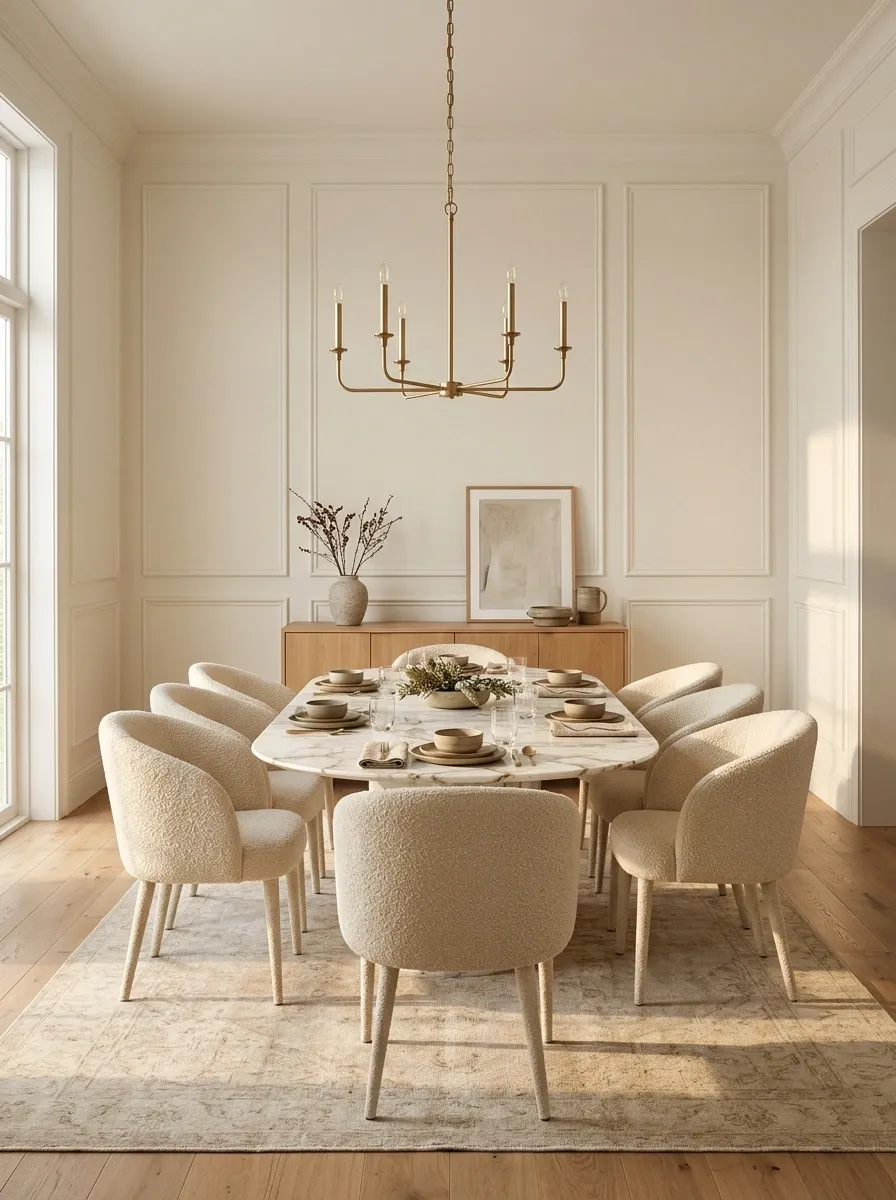
A slim oval marble table brings a more tailored feel to this dining room, especially when paired with softly upholstered chairs and a restrained architectural backdrop. Warm white walls, subtle molding, a refined chandelier, and a large low-contrast rug give the stone enough room to command attention without making the space feel formal for the sake of being formal.
Marble is already visually busy, so the surrounding finishes stay calm. The chairs bring softness, the rug absorbs some of the harder visual edges, and the chandelier adds height without introducing another loud surface. Keep the sideboard simple and let the stone remain the conversation starter. Nobody needs three competing focal points in one dining room. That is how dinner turns into a design committee meeting.
Color-Drenched Dining Room With a Rich Painted Backdrop
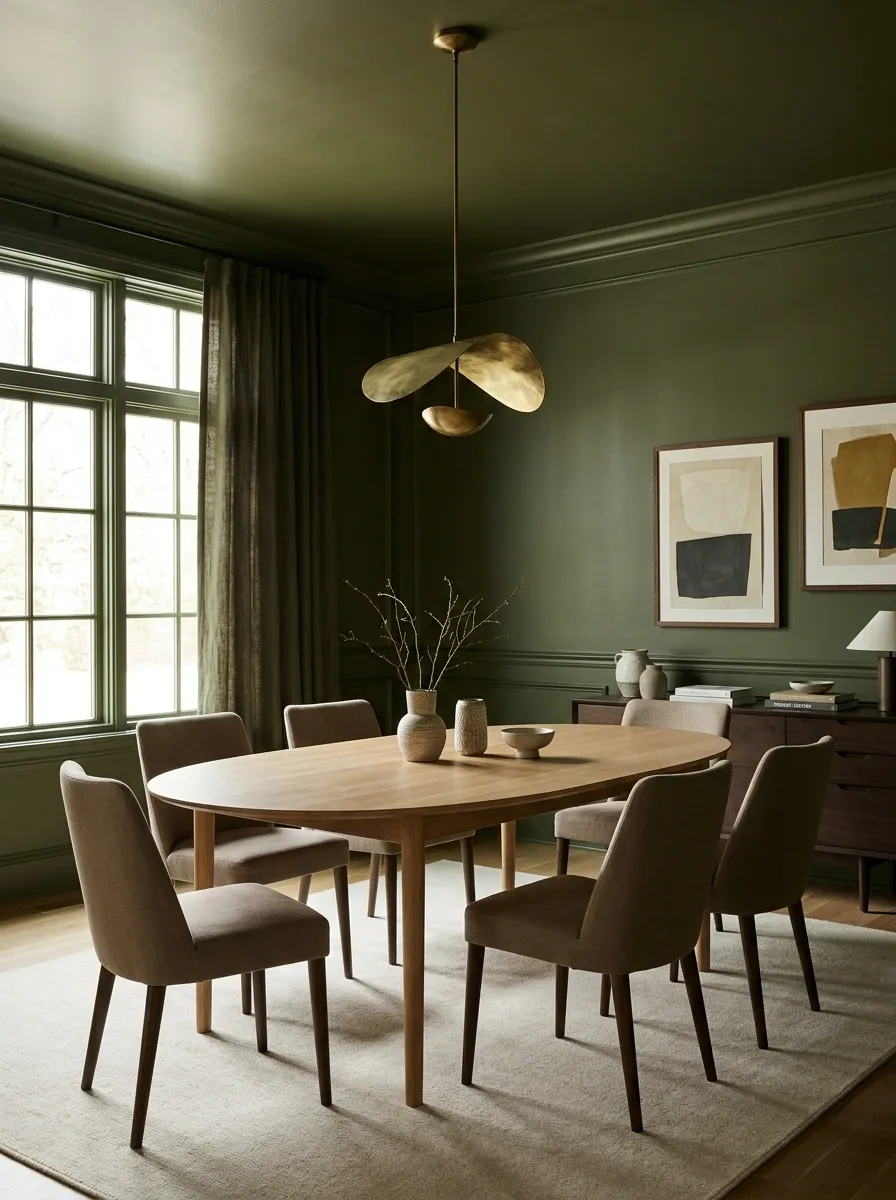
This dining room commits fully to one saturated wall color, carrying it across the trim and, where the architecture allows, the ceiling as well. Against that continuous backdrop, a lighter oval wood table becomes the warm interruption, surrounded by upholstered chairs in a slightly contrasting tone. A sculptural pendant and layered artwork complete the composition.
The effect comes from continuity, not from piling on color. The walls create one large visual field, while the table gives the eye somewhere to land. Because the architecture is doing so much work, the rug and accessories stay comparatively quiet. This is the dining room equivalent of a comment section saying “bold” and then actually being bold instead of buying one orange vase and calling it a day.
Coastal Dining Room With Light Oak and Soft Blue Accents
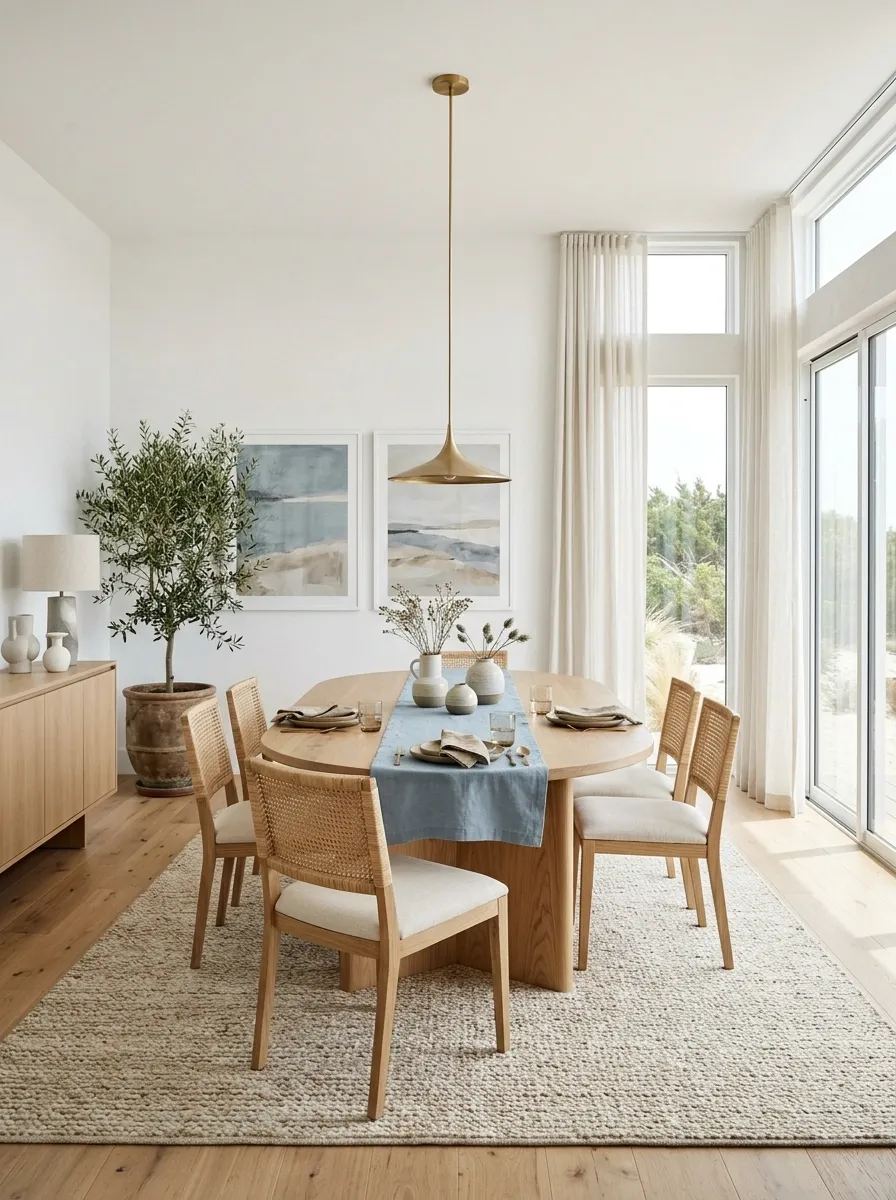
A light oak oval table gives this coastal dining room a warm center against a bright, airy shell. The chairs mix natural woven texture with pale upholstery, while soft blue appears through a restrained textile layer and selected artwork. White walls, a simple pendant, a natural rug, and generous windows keep the room open and relaxed.
The important distinction is restraint. The room references the coast through light, texture, and color instead of turning every surface into a beach souvenir display. The oval table also helps soften the sharper geometry of the windows and flooring. Blue works best as a supporting note here, not the entire orchestra. The room should suggest fresh air, not a vacation rental with seventeen anchors on the wall.
Vintage-Inspired Dining Room With an Antique Oval Table
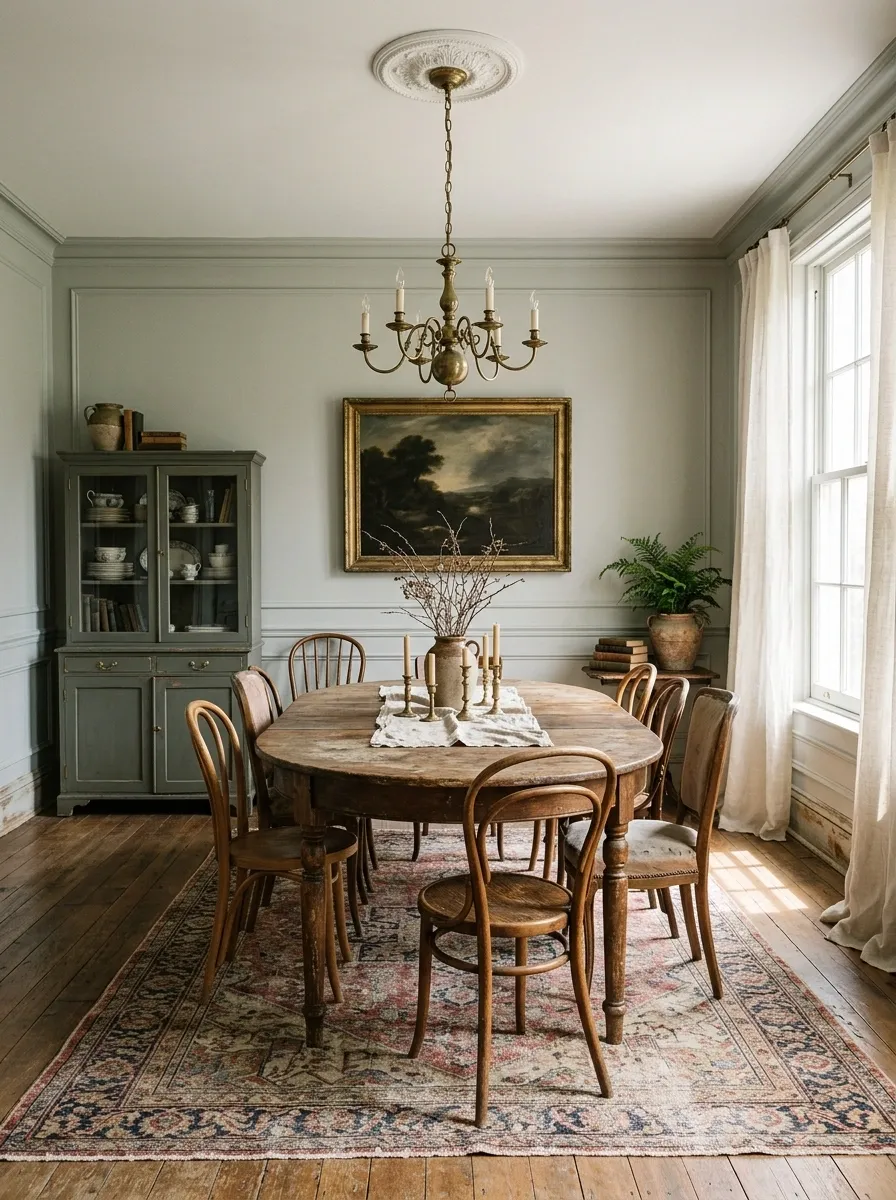
This room builds its character around an aged wood oval table with visible patina, then layers in mismatched chairs, a traditional rug, old-world artwork, and a classic chandelier. A painted cabinet along one wall gives the space practical storage while adding another period-inspired shape without turning the whole room into a time capsule.
The furniture does not need to match perfectly. What matters is visual connection through warm wood, similar scale, related upholstery tones, and repeated curved forms. Newer pieces can sit comfortably beside vintage-looking furniture when their proportions make sense. The result feels collected rather than manufactured. The only thing that should look intentionally chaotic is the chair mix. Everything else needs to know where it belongs.
Minimal Black-and-Wood Dining Room With a Strong Architectural Focus
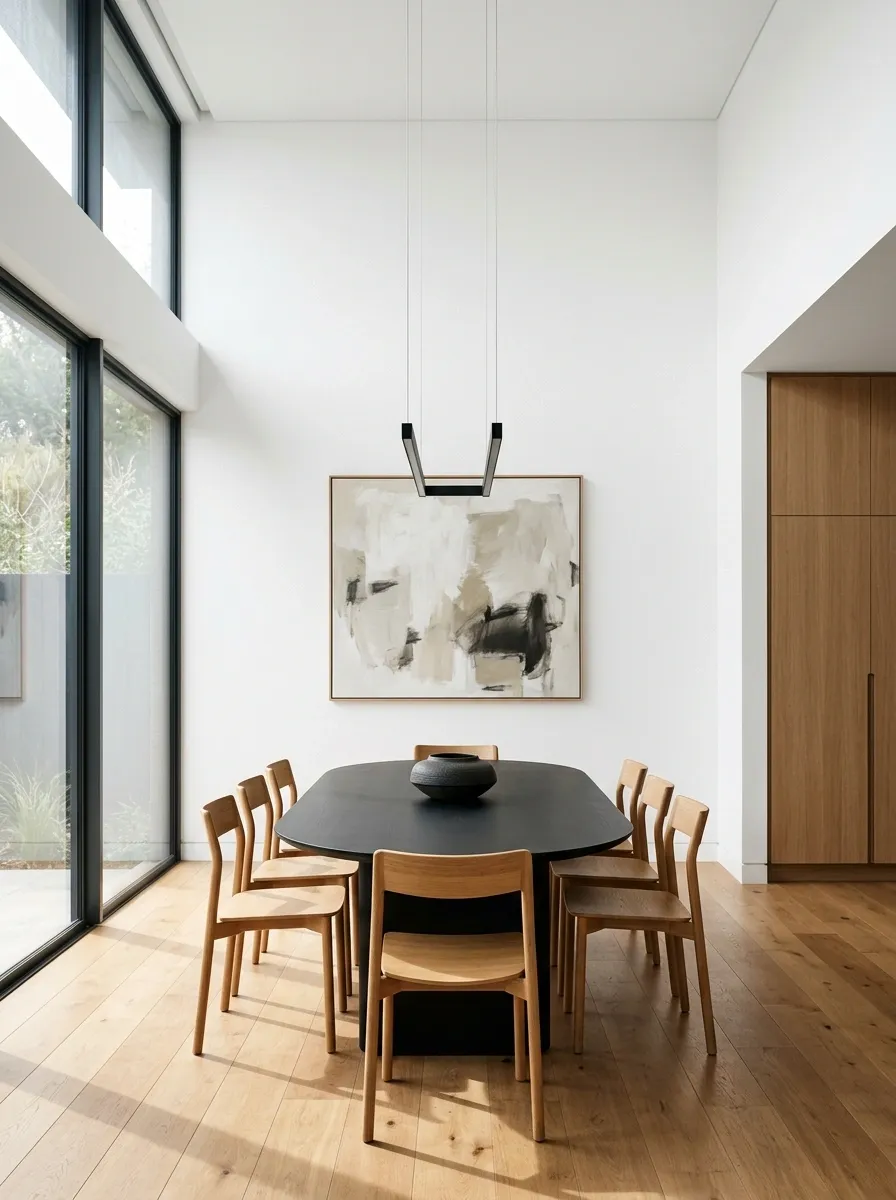
A black oval table sits inside a mostly white room where the architecture provides the drama. Warm oak appears through selected cabinetry or chairs, while dark-framed windows, a long linear pendant, and a few carefully placed pieces repeat the table’s dark weight. Artwork remains large but quiet, so the architectural lines stay visible.
The oval shape is especially useful in a room like this because the surrounding architecture is mostly rectilinear. It introduces a controlled curve without making the space feel soft or decorative. The black elements create a visual route through the room, while the warm wood keeps the composition from becoming cold. This is minimalism with an actual personality, which is a refreshing change from “four white chairs and a sad plant.”
Soft Transitional Dining Room With Taupe Upholstery and Walnut
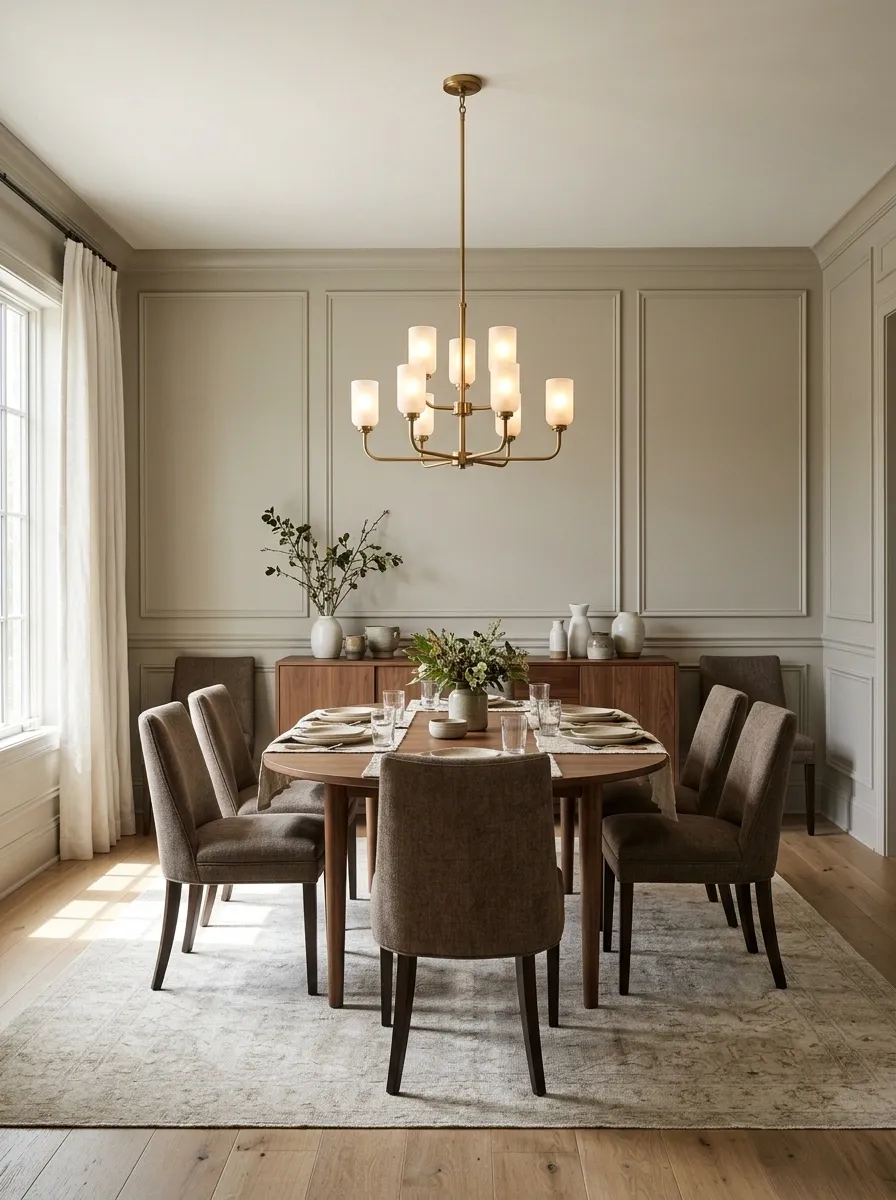
A medium-walnut oval table gives this transitional dining room enough depth to feel substantial without making it heavy. Taupe upholstered chairs soften the surrounding wood, while paneled walls, a refined chandelier, and a large low-contrast rug bring in the more traditional side of the composition. A broad sideboard sits along the wall, practical but visually quiet.
The key is proportion. The table has presence, so the chairs need enough height and width to hold their own without becoming bulky. The wall paneling adds structure, while the rounded table and upholstered seating keep the architecture from feeling stiff. It is polished, comfortable, and grown-up without looking like a lawyer’s conference room that accidentally developed taste.
substantial anchor
softens the mass
quiet visual base
Eclectic Dining Room With Collected Chairs Around One Oval Table
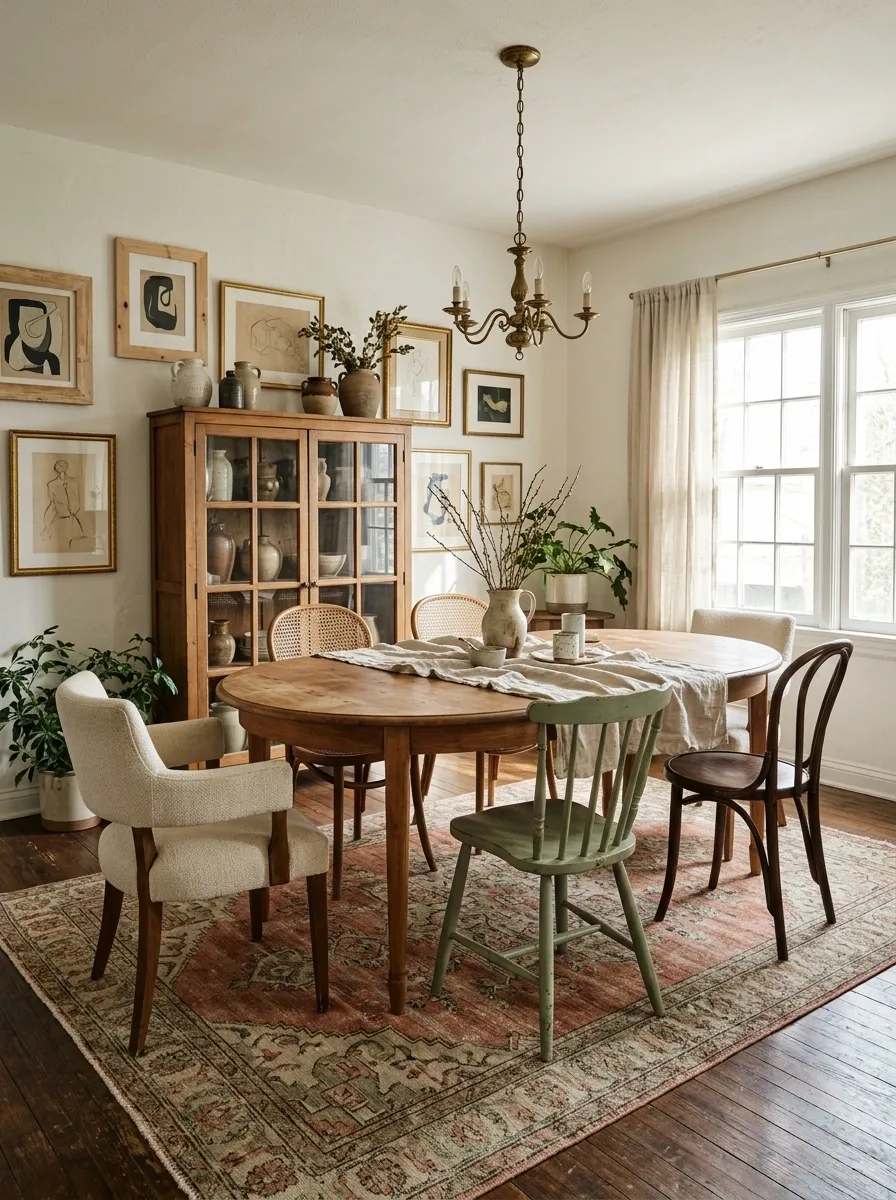
A single warm wood oval table becomes the calm center of an eclectic dining room where the chairs are intentionally varied. One might be upholstered, another painted, another woven, but the group still feels related through height, warm undertones, and repeated curves. A patterned rug, layered artwork, and a vintage-style cabinet fill out the surrounding room.
The table acts like the visual referee. Because it is simple and consistent, the mismatched seating can have personality without making the room chaotic. Keep the differences noticeable but controlled. Similar seat heights matter more than identical chair styles. The result feels collected, not coordinated by committee. Basically, everyone gets to have a personality, but nobody gets to bring their own color palette.
Green-and-Walnut Dining Room With an Intimate Evening Mood
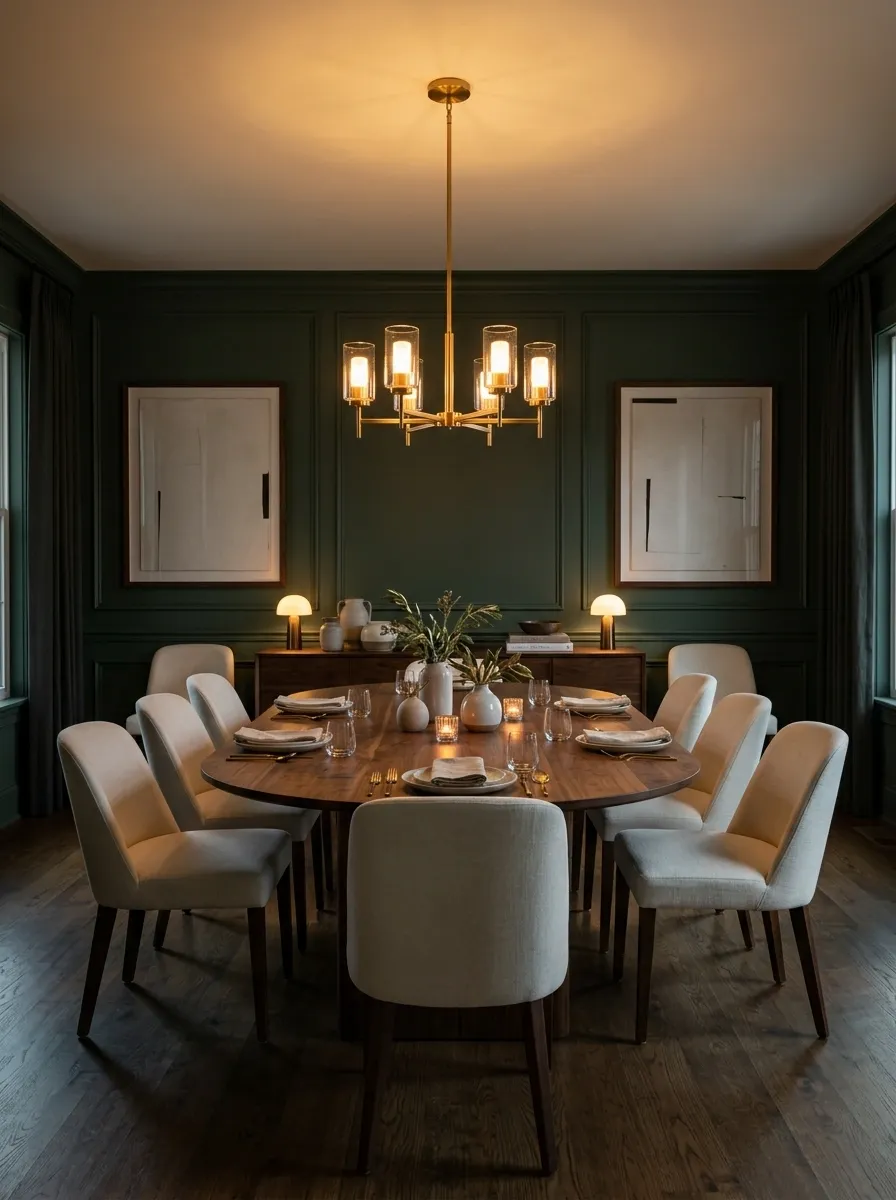
Deep green walls turn this dining room into a richer, more enveloping setting, while a walnut oval table adds warmth against the darker backdrop. Cream upholstered chairs provide the necessary break in tone, and a brass chandelier casts warm light over the center. Dark flooring and restrained artwork finish the room without competing with the green.
The room works especially well because the lighting has a clear job. The chandelier brightens the center while the darker walls stay comparatively quiet, making the table feel intimate instead of visually lost. Warm metal also prevents the palette from becoming too cool. This is the sort of dining room that makes a random overhead LED suddenly look like a personal betrayal.
Airy Modern Dining Room With Floor-to-Ceiling Windows
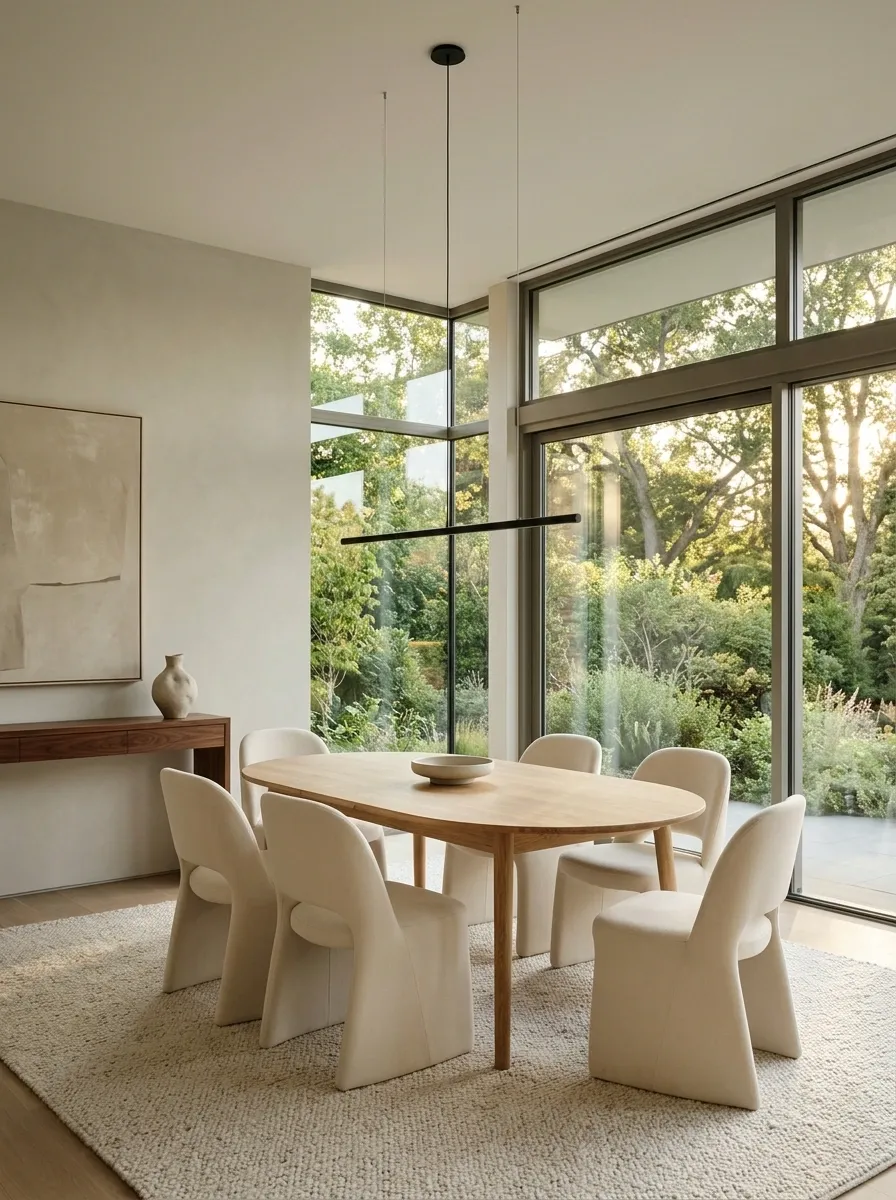
Here the view is part of the dining room’s design. A light oval table sits near floor-to-ceiling windows, surrounded by sculptural chairs and a pale rug. A restrained pendant marks the dining zone without blocking the glass, while a slim console and minimal artwork provide structure along the opposite wall.
Furniture placement matters more than decoration in a room like this. The table stays close enough to the windows to benefit from the daylight but leaves the main sightline open. The palette remains pale so the outdoor greenery becomes a natural source of contrast. The oval top also prevents the center of the room from becoming a hard rectangle floating against all that glass. A window this good does not need a competing gallery wall. It has already brought the content.
+
art
TABLE
sightline
Compact Breakfast Room With a White Oval Table and Wood Chairs
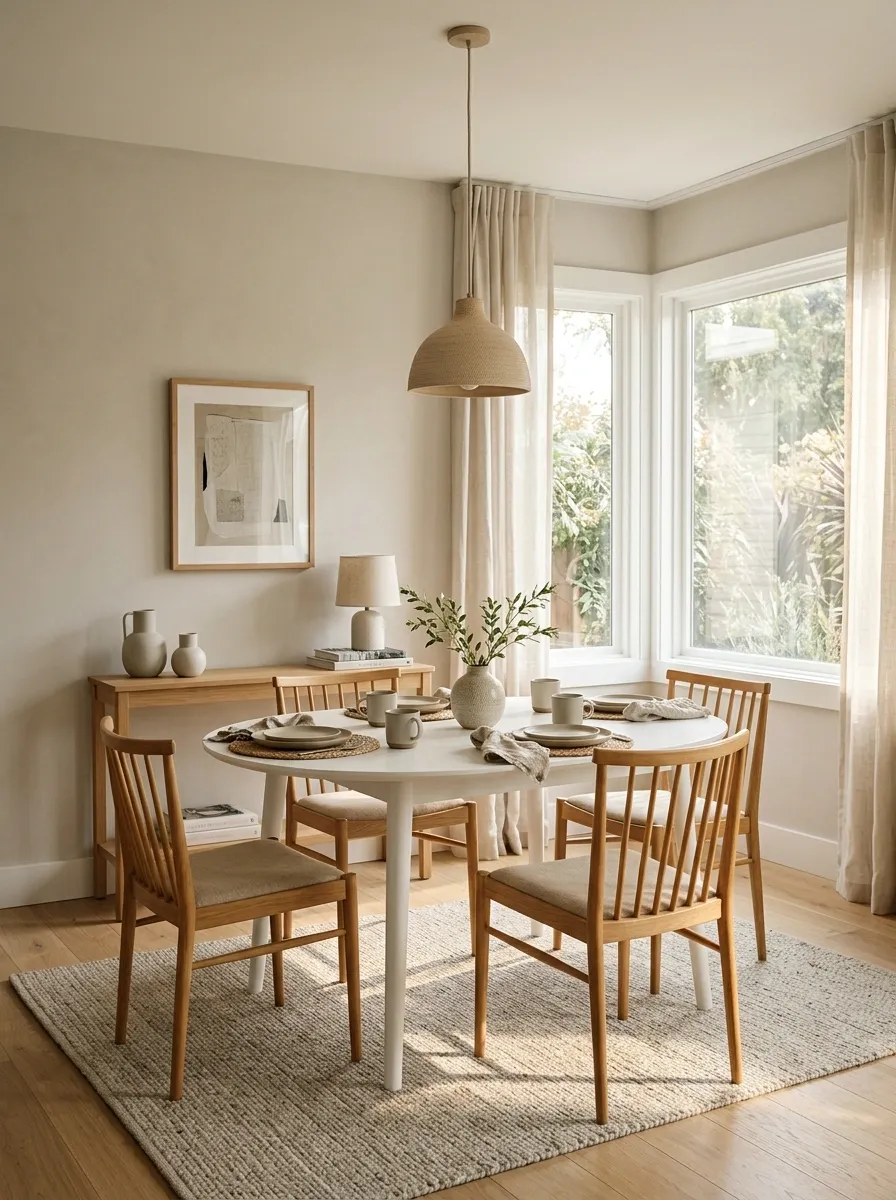
A white oval table brightens this compact breakfast room, while warm wood chairs introduce enough contrast to keep the composition from feeling washed out. Sunlit corner windows sit nearby, with a narrow sideboard, simple pendant, and understated rug completing the setting. The furniture stays visually slim so the room can handle everyday movement.
The lighter tabletop is useful in a smaller room because its edges recede more easily against pale surroundings. The wood chairs then provide definition around the perimeter. A storage piece should stay narrow and low enough that it does not visually compete with the table. This is a room where every inch has a job description. The sideboard should probably not be applying for management.
CHAIRS
STORAGE
Dramatic Stone Dining Room With an Oversized Oval Table
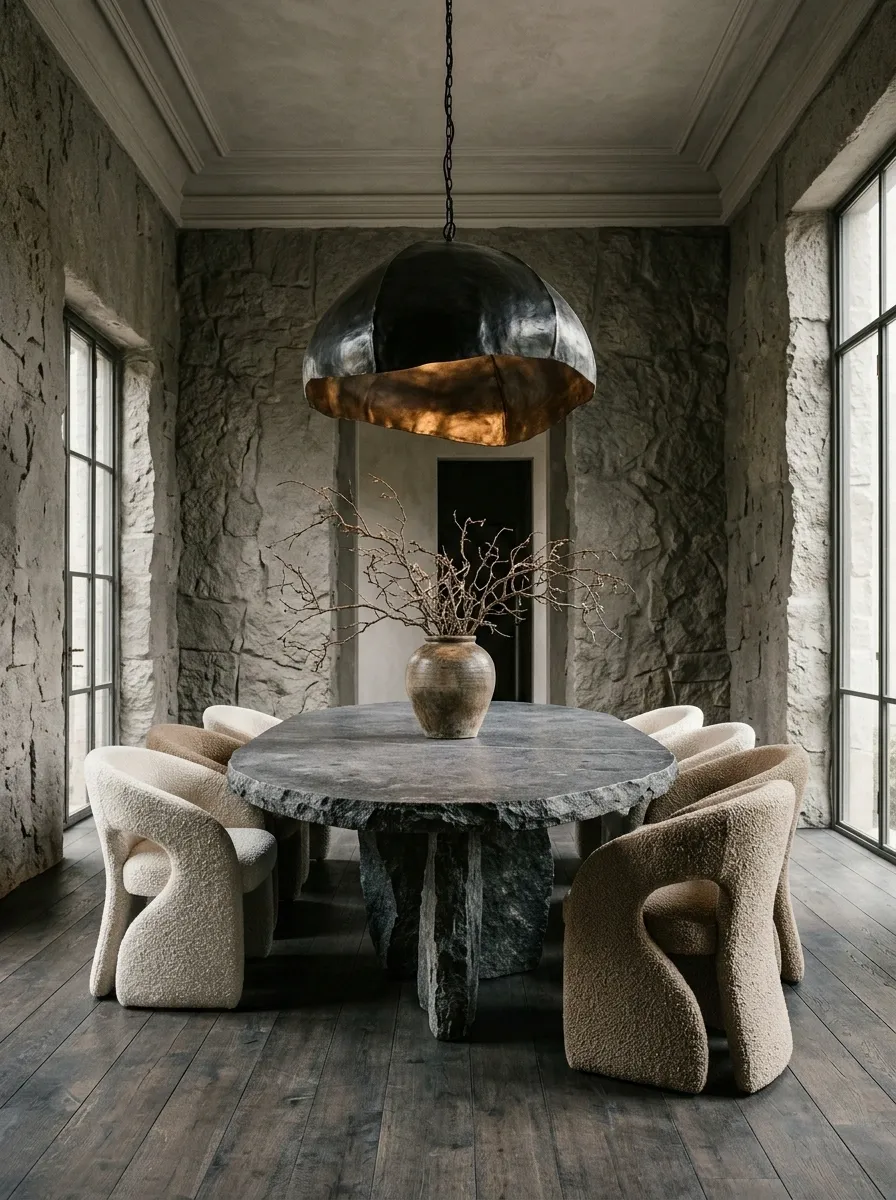
A large oval table can hold its own inside a room with strong architectural materials, and this stone-forward dining room proves it. The setting combines textured stone walls, a substantial oval table, sculptural upholstered chairs, a dramatic overhead fixture, and darker flooring. Decorative objects remain sparse because the architecture already supplies plenty of visual weight.
The trick is scale matching. A massive room can swallow delicate furniture, while oversized furniture in a small room becomes an obstacle with a dining reservation. Here, the table feels believable because the ceiling height, flooring, lighting, and surrounding architecture all support its size. The oval edge stops the composition from becoming a collection of hard rectangles. Big is not the problem. Big without context is.
dark grounding layer
provides surrounding mass
central focal weight
breaks up the mass
French-Inspired Dining Room With Curved Chairs and Antique Details
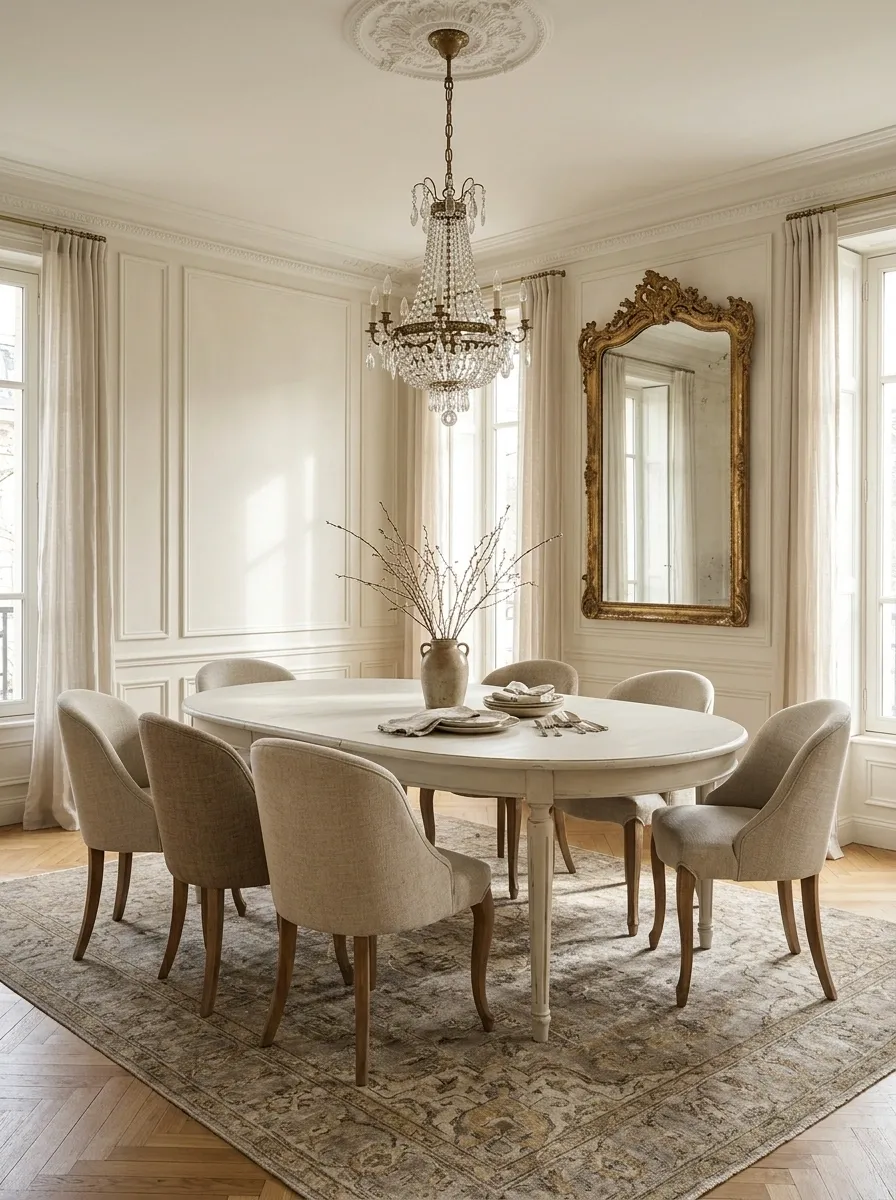
This French-inspired dining room layers a painted oval table with curved upholstered chairs, classic molding, a decorative chandelier, a vintage mirror, and a traditional patterned rug. The architecture stays soft and warm, letting the furniture feel refined without becoming overly formal.
Curves repeat throughout the room, which is what gives the composition its rhythm. The tabletop, chair backs, mirror, and chandelier all echo one another without matching exactly. That repetition makes the room feel intentional even though the individual pieces have different histories and finishes. Keep the antique-style elements edited. Once every surface starts looking like a flea-market haul, the elegance quietly leaves through the back door.
Warm Minimal Dining Room With Clay Tones and Natural Wood
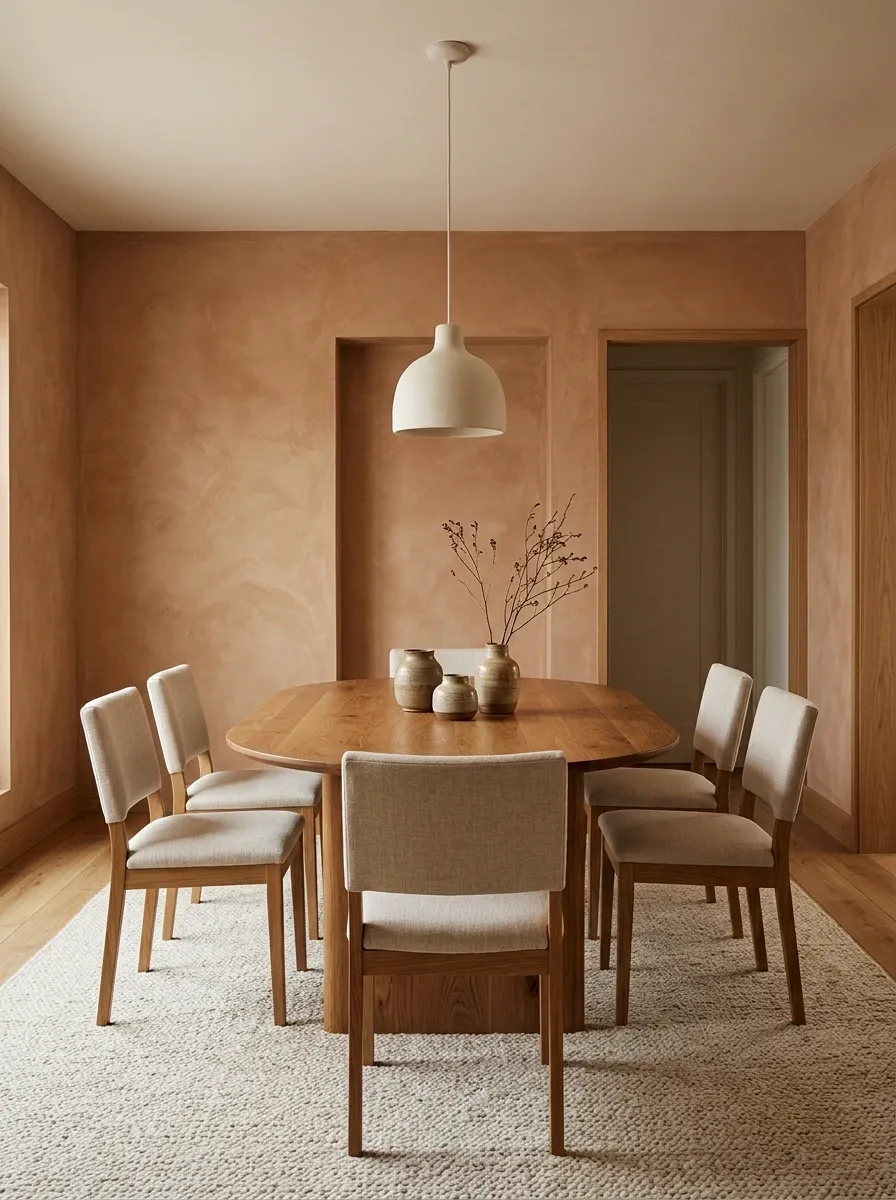
A clay-toned wall color gives this warm minimal dining room more personality than a standard neutral backdrop. A medium oak oval table sits beneath a simple ceramic pendant, with understated upholstered chairs, a tactile rug, and a handful of handmade-looking objects completing the setting. The palette stays warm from wall to floor without becoming monochromatic.
The interest comes from temperature and texture rather than clutter. The wall provides the strongest color statement, the wood adds natural variation, and the rug creates softness underneath. Keeping the accessories sparse allows the materials to remain visible. There is a fine line between “warm minimal” and “someone painted everything the color of a latte.” This room stays on the right side because the wood and pale upholstery create separation.
strongest color presence
adds organic variation
creates visual breathing room
softens the floor plane
Moody Library-Style Dining Room With Built-In Shelving
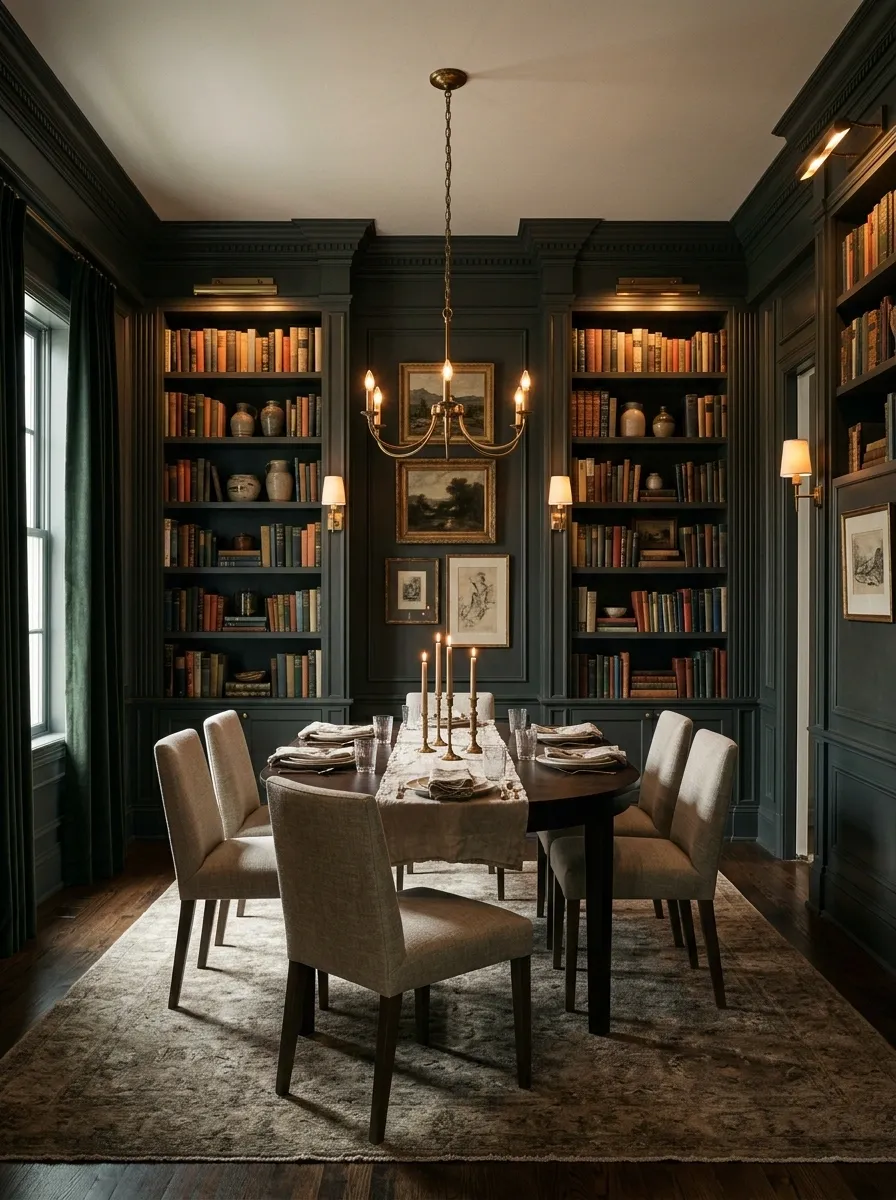
An oval wood table sits at the center of this library-style dining room, surrounded by upholstered chairs and tall built-in shelves filled with books and selected objects. Deep wall color, warm reading-style lighting, framed artwork, and a substantial rug make the room feel intimate without turning the dining area into an office.
The challenge here is visual density. Shelving already introduces many small shapes, so the table needs a clean silhouette and the larger furniture needs to be simple. Repeating the wood tone between the table and shelving creates a strong connection, while upholstery interrupts the darker mass. The books provide texture naturally, meaning extra tabletop decoration should be minimal. Once the shelves become the background, adding a centerpiece the size of a small monument is simply unnecessary drama.
Relaxed Mediterranean Dining Room With Plaster Walls and Woven Seating
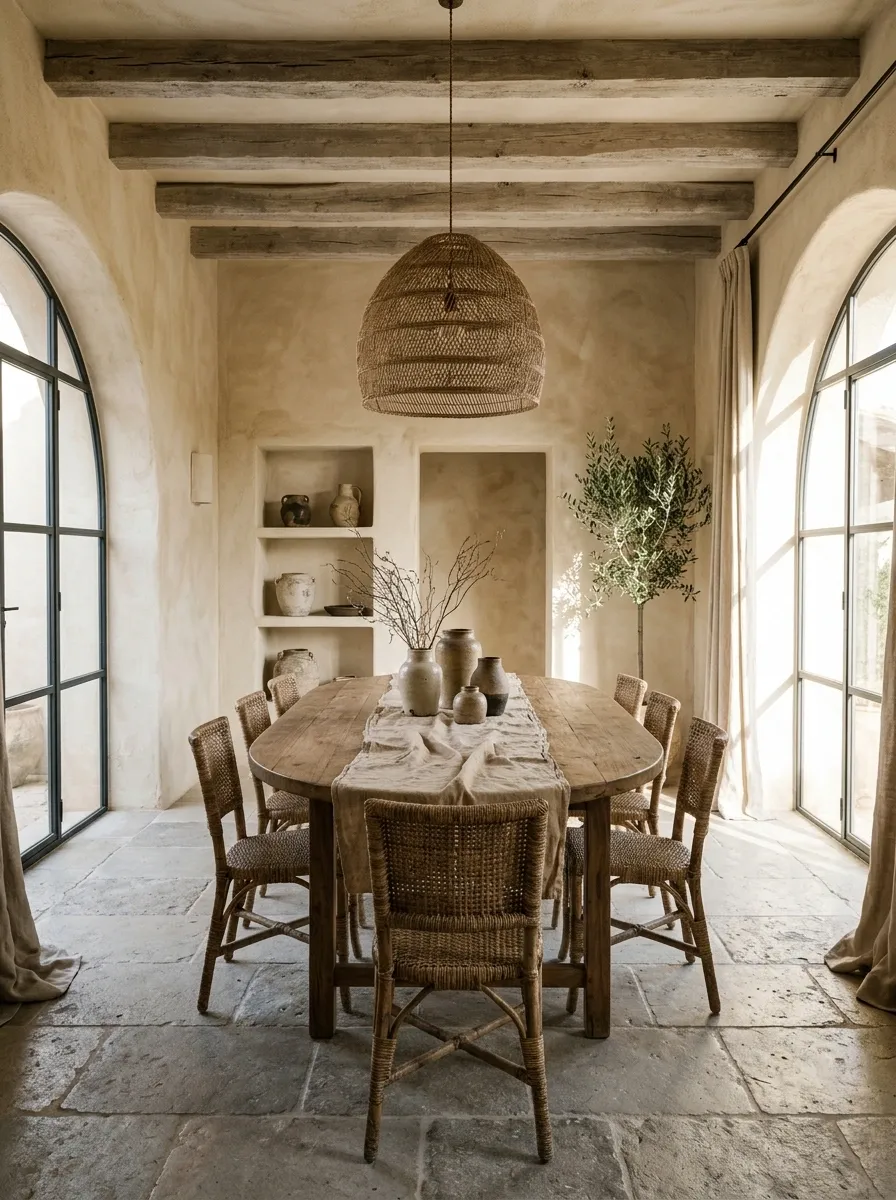
Thick plaster-textured walls create the backdrop for a warm wood oval table, woven chairs, stone flooring, and a rustic pendant. Sunlight enters from broad windows, catching the uneven wall surface and reinforcing the relaxed Mediterranean character. Simple ceramics and a restrained textile layer finish the table without making it look staged.
This room relies on material contrast more than decoration. The rough wall and stone floor provide texture, while the tabletop and woven seating introduce warmth and softness. The lighting remains simple because architectural texture is already visible throughout the room. The overall effect is relaxed and tactile, not themed. There is no need to install a decorative olive branch the size of a minor tree. The architecture already knows where it is.
High-Contrast Dining Room With White Walls and Espresso Wood
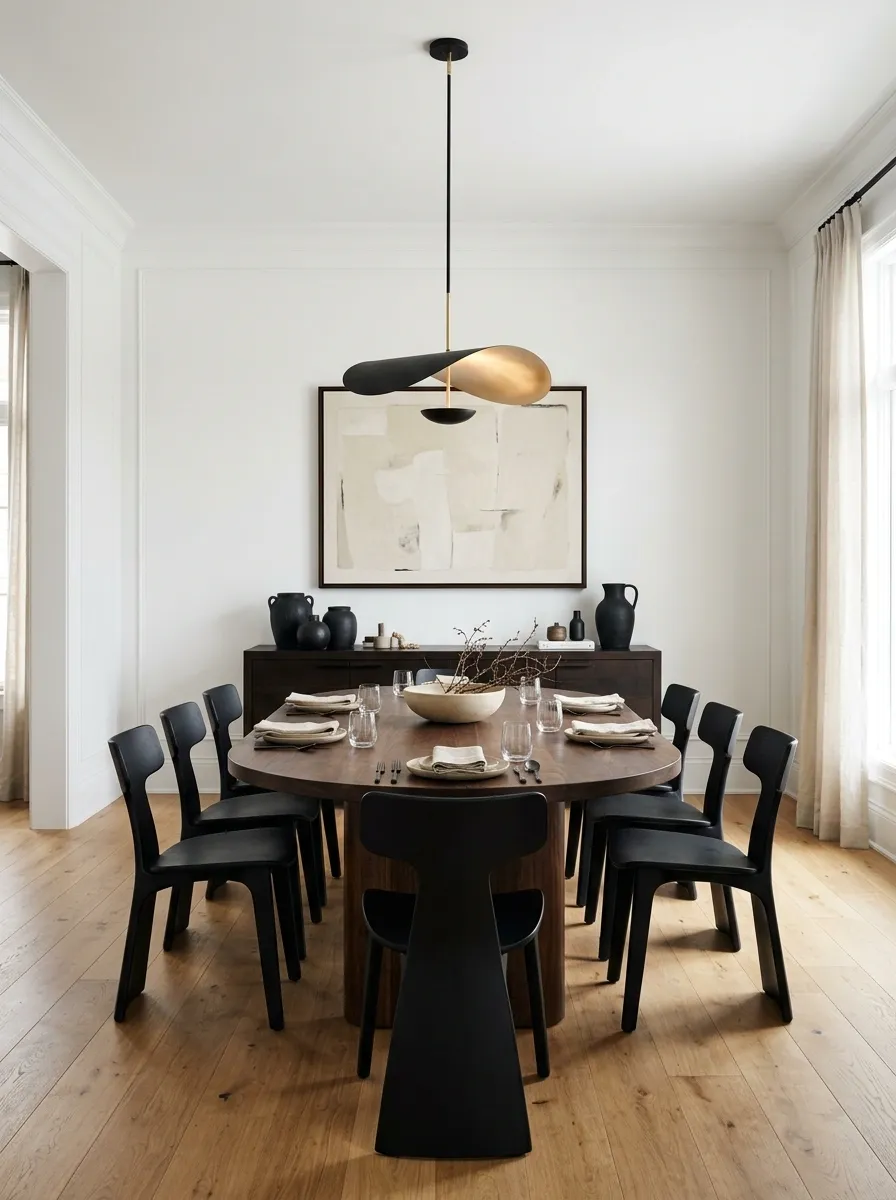
A pale architectural shell makes an espresso oval table look even richer in this high-contrast dining room. The dark table sits with sculptural black chairs, a large quiet artwork, a dark console, and focused overhead lighting. White walls keep the room bright while the darker pieces create a strong visual spine through the space.
The trick is repeating the espresso tone in more than one place without scattering it everywhere. The table carries the largest dark shape, the console supports it, and smaller black details connect the two. Warm wood elsewhere keeps the contrast from feeling too severe. This is crisp, dramatic, and still livable. Basically, the room has discovered that “high contrast” does not mean putting a black object in every available corner.
Family-Friendly Dining Room With a Soft Upholstered Palette
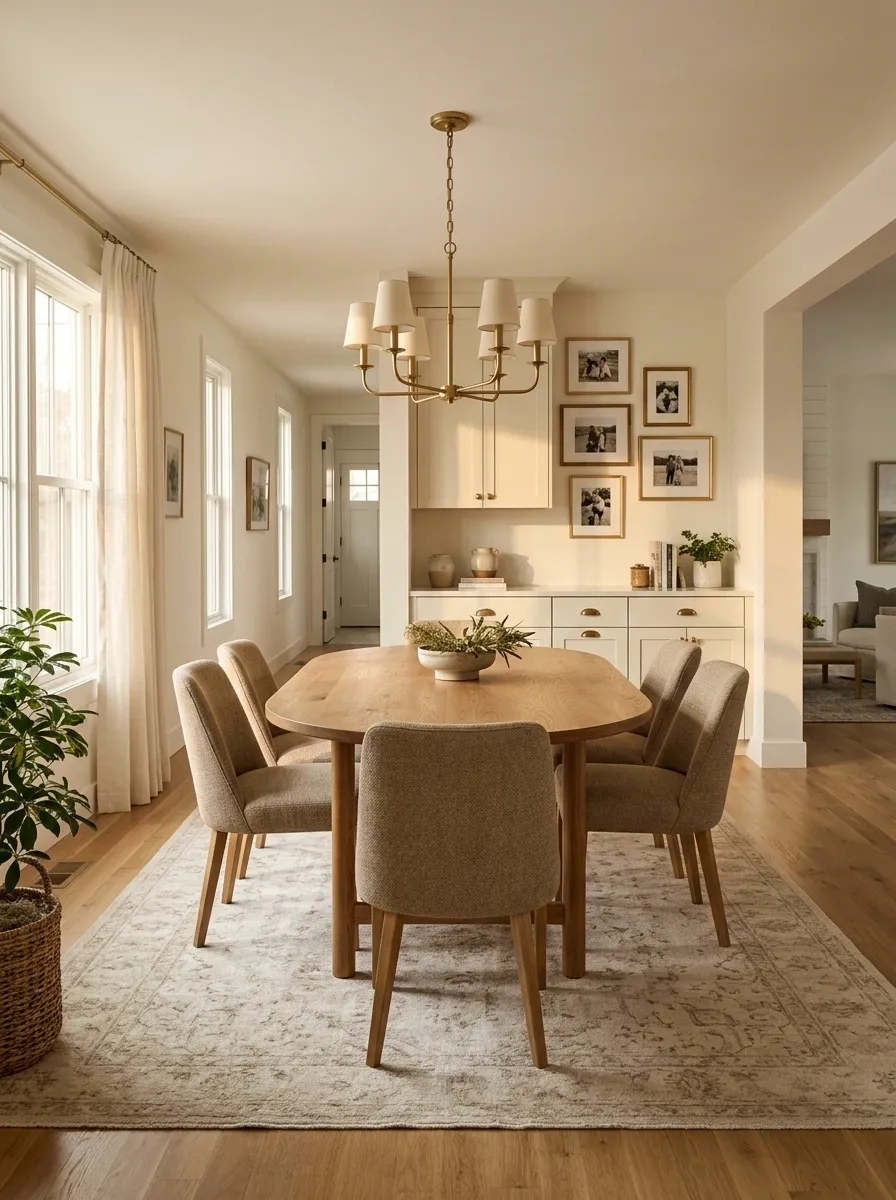
This dining room keeps the oval table practical without giving up a polished look. A medium wood tabletop sits above a simple sturdy base, surrounded by comfortable upholstered chairs. A softly patterned rug, closed storage, family artwork, and generous circulation space make the whole setting feel ready for actual daily life rather than one carefully staged photograph.
The palette stays warm and forgiving, while the furniture choices keep the room visually calm. Closed storage is especially useful when everyday objects need to disappear quickly. The upholstery should feel comfortable enough for long meals, and the room needs enough open space for chairs to move without turning dinner into a furniture obstacle course. Pretty is nice. Pretty that survives Tuesday is better.
Seating should support longer meals, not just look good for photographs.
Leave enough open floor for chairs and everyday traffic.
Closed cabinetry keeps visual clutter from taking over.
Warm upholstery, wood, and restrained pattern keep it finished.
Layered Neutral Dining Room With a Textured Plaster Backdrop
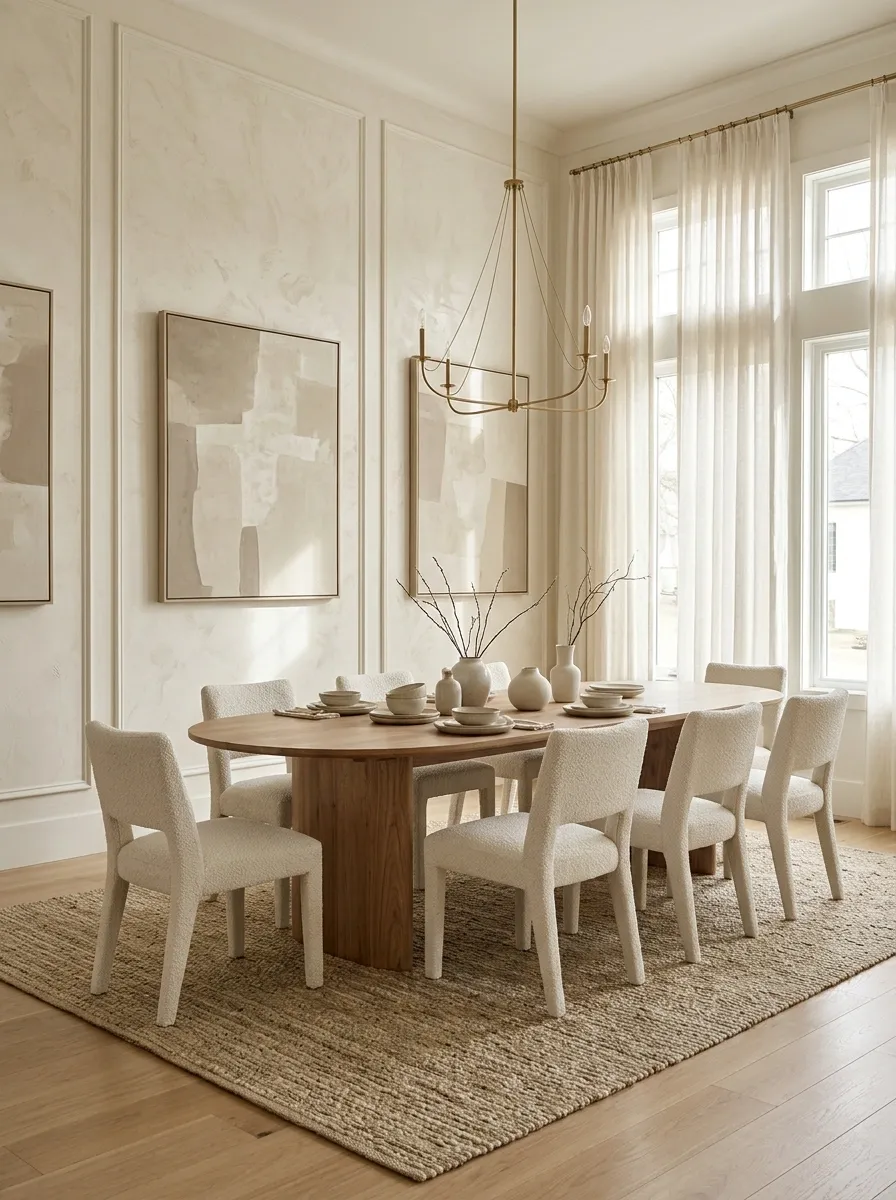
Several shades of cream, beige, and warm wood create this layered neutral dining room, but the room never turns flat because the surfaces are doing different things. A light walnut oval table sits against textured plaster, with upholstered chairs, a natural rug, tonal artwork, and an understated chandelier filling out the composition.
Color is intentionally quiet here, so texture has to carry the visual interest. The wall catches light differently from the smooth tabletop, while the rug introduces softness underfoot and the upholstery creates another subtle shift. This approach works when a restrained palette is more appealing than strong contrast. It also proves that beige can have a personality, provided someone remembers to give it texture before it starts looking like the waiting room at a luxury dentist.
PLASTER
TABLE
RUG
Statement Chandelier Dining Room With a Quiet Supporting Palette
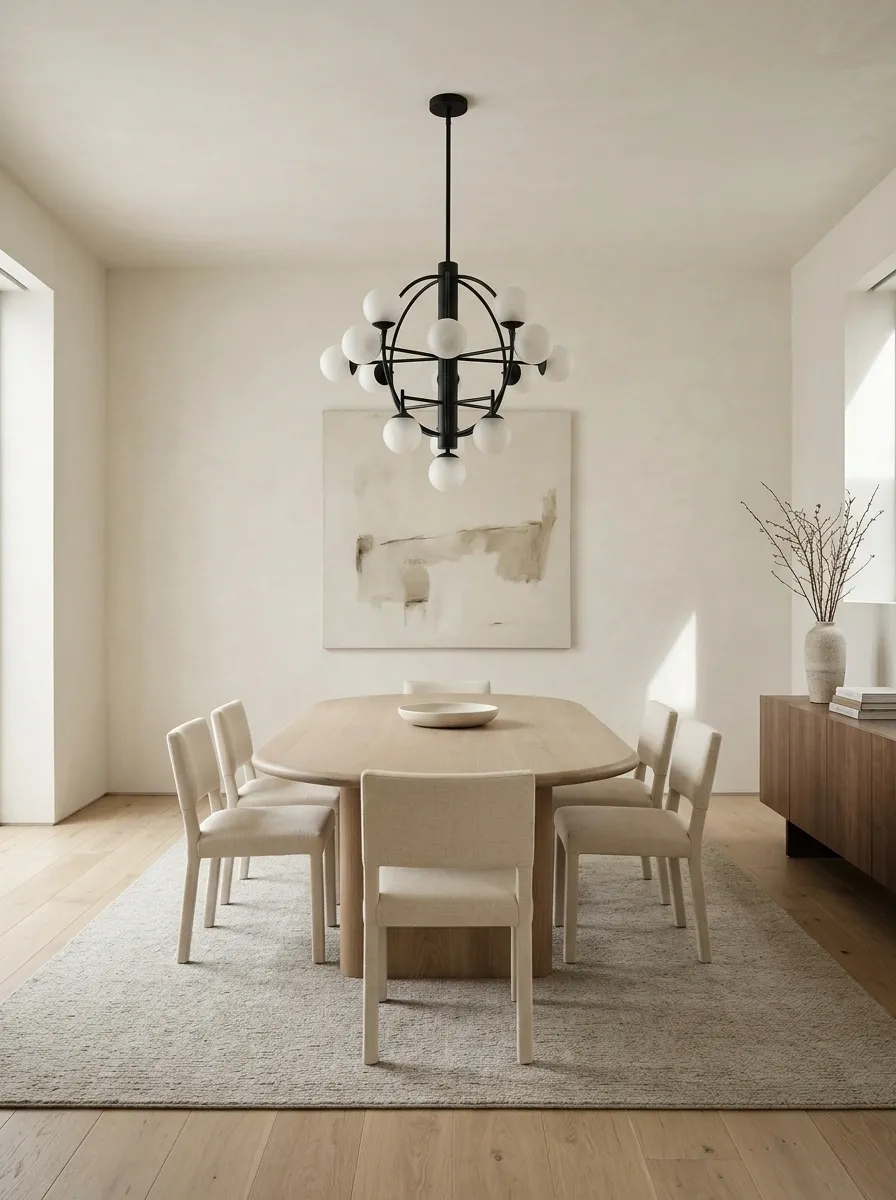
The chandelier owns this dining room, and everything else wisely lets it. A simple oval table sits beneath an oversized sculptural fixture, surrounded by understated chairs on a large neutral rug. The walls remain calm, the sideboard is clean-lined, and artwork is limited so the eye naturally returns to the dining zone.
The table does not need to compete with a dramatic light. In fact, the simpler shape makes the chandelier feel even more intentional. The oval tabletop also gives the large fixture a softer base, preventing the center of the room from becoming too angular. This is the right approach when there is one piece that deserves the spotlight. One celebrity is enough. The rest of the room can stop asking for screen time.
Collected Modern Dining Room With Layers of Wood, Art, and Soft Curves
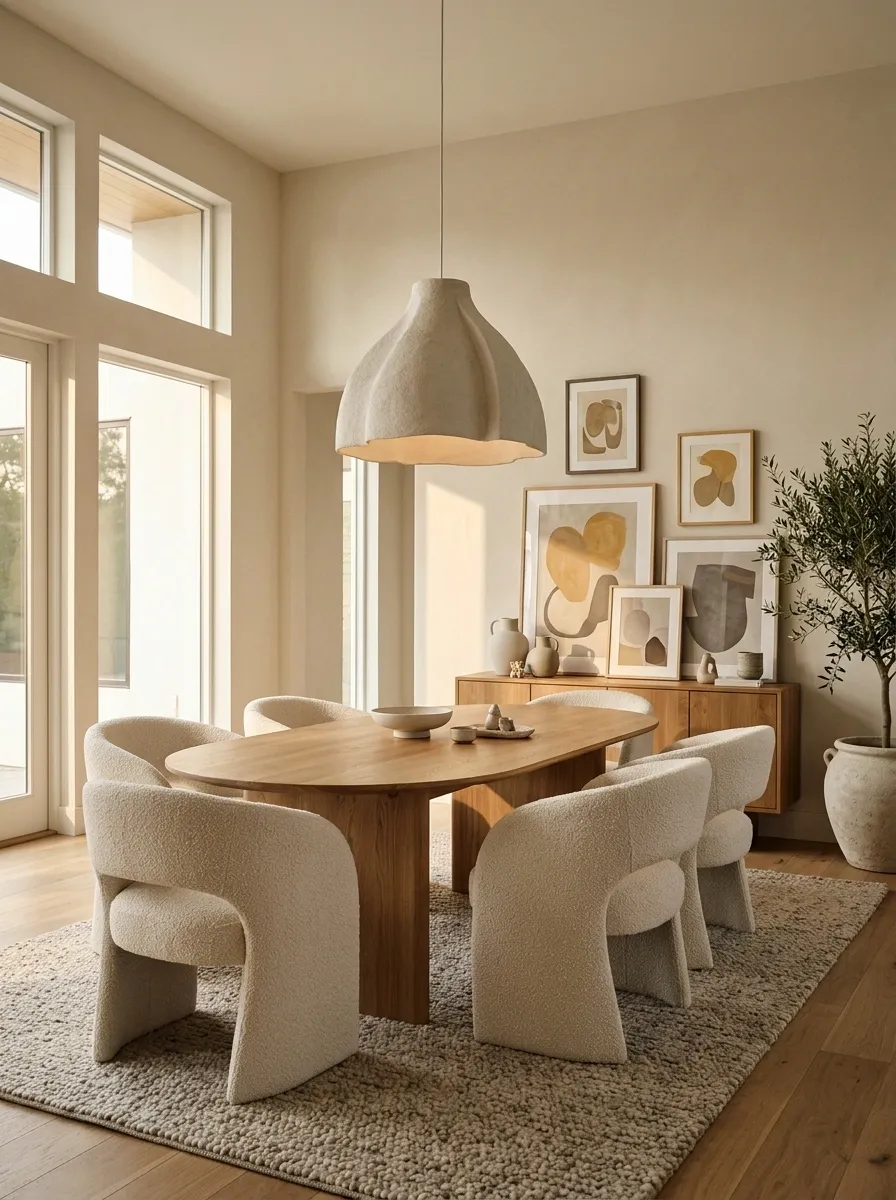
The final concept brings several of the gallery’s ideas together without becoming a greatest-hits compilation. A medium-tone oval table anchors the room, surrounded by curved upholstered chairs, an architectural pendant, layered artwork, and a warm wood sideboard. Sculptural ceramics and soft flooring add texture while keeping the overall composition modern and relaxed.
The room feels cohesive because curves appear in several places, wood repeats across the furniture, and the artwork adds personality without overwhelming the dining zone. The oval table acts as the bridge between the softer seating and more structured architecture. That balance is what makes the room feel collected instead of overly matched. It looks considered, but not like every object was interviewed before being allowed through the door.