
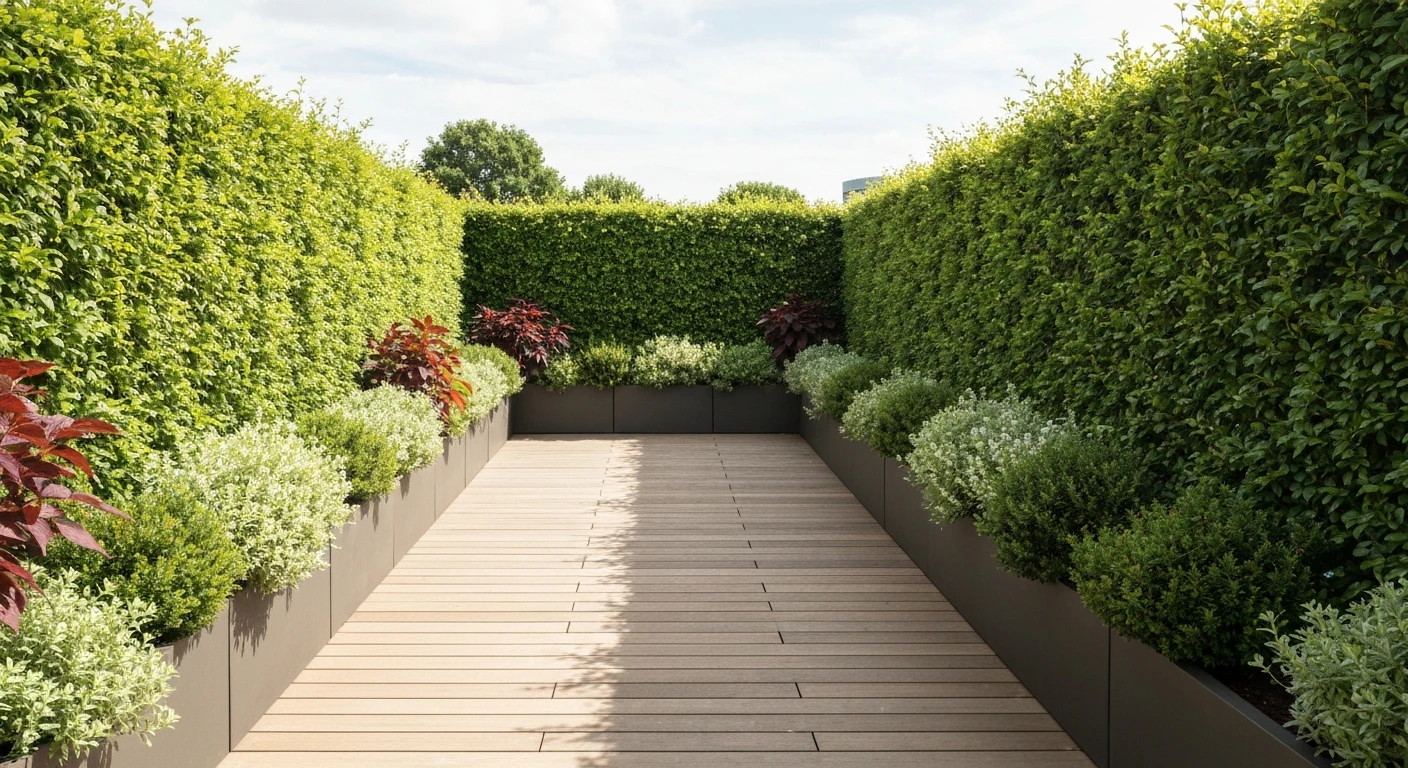
Deck planters can either make a space feel finished and intentional or just add more clutter to move around when you’re trying to clean. The good ones add greenery, create privacy, define zones, and look like they belong. The bad ones are random pots scattered around that blow over in wind or die from neglect.
Here’s how to use planters on your deck in ways that actually work and look considered.
DIY Deck with Built-In Planters and Privacy Screen
Nearly finished my Deck and raised planter
byu/killer_by_design inDIYUK
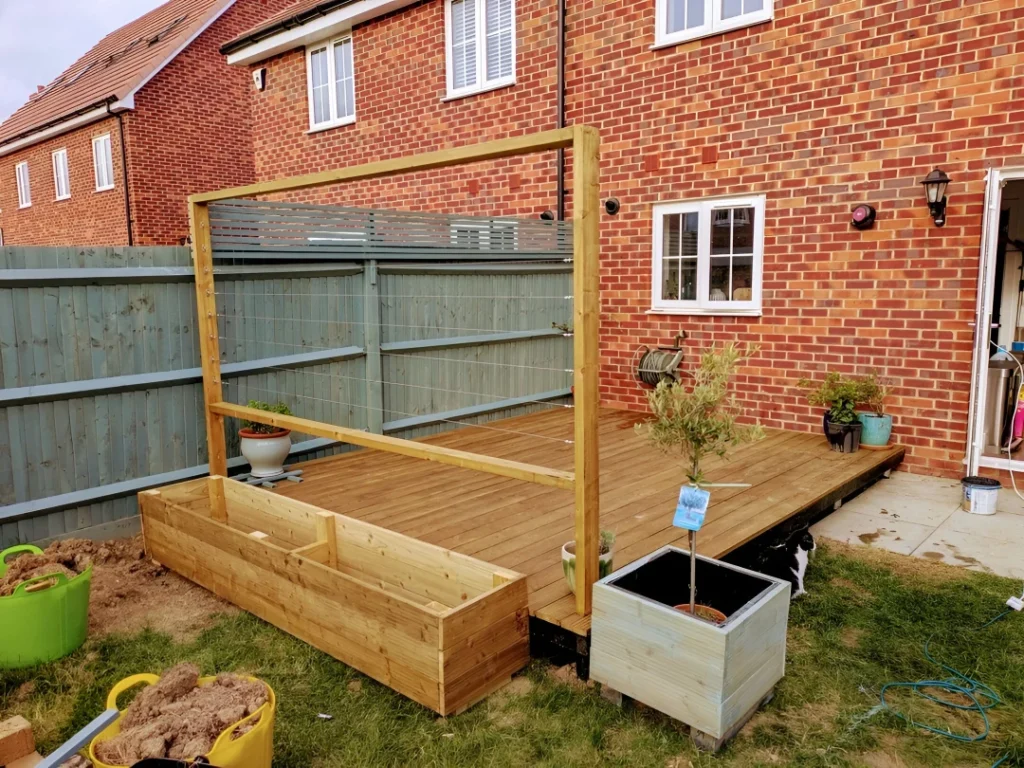
u/killer_by_design shows a work-in-progress deck with built-in wood planter boxes and a privacy screen structure. That natural wood finish will weather beautifully, and the built-in planters create permanent homes for plants without needing to move containers around.
The privacy screen with horizontal slats provides enclosure while still letting light through. This is DIY done thoughtfully—building planters into the deck structure from the start rather than adding them later.
Deck Container Garden with Vertical Growing Space
Got my garden planted out on my deck earlier this week
byu/mattyboi4216 incontainergardening
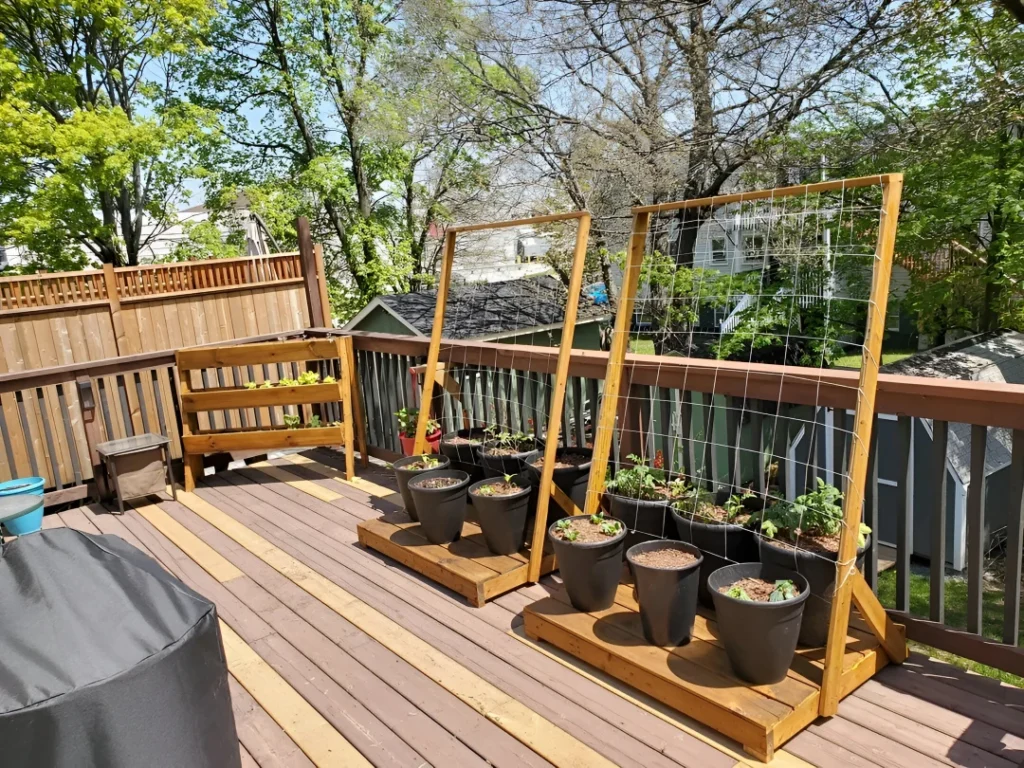
u/mattiboi4216 created this smart container garden setup on their deck using a wooden frame with wire panels for vertical growing. Dark plastic planters lined up on wooden platforms provide organization, while the vertical support lets climbing plants or tall vegetables grow upward.
This is practical deck gardening—maximizing growing space on a deck without taking up all the floor area. The structured approach keeps it from looking cluttered.
Multi-Level Deck with Integrated Planters
First big deck project (UK)
byu/Backinvenice inDecks
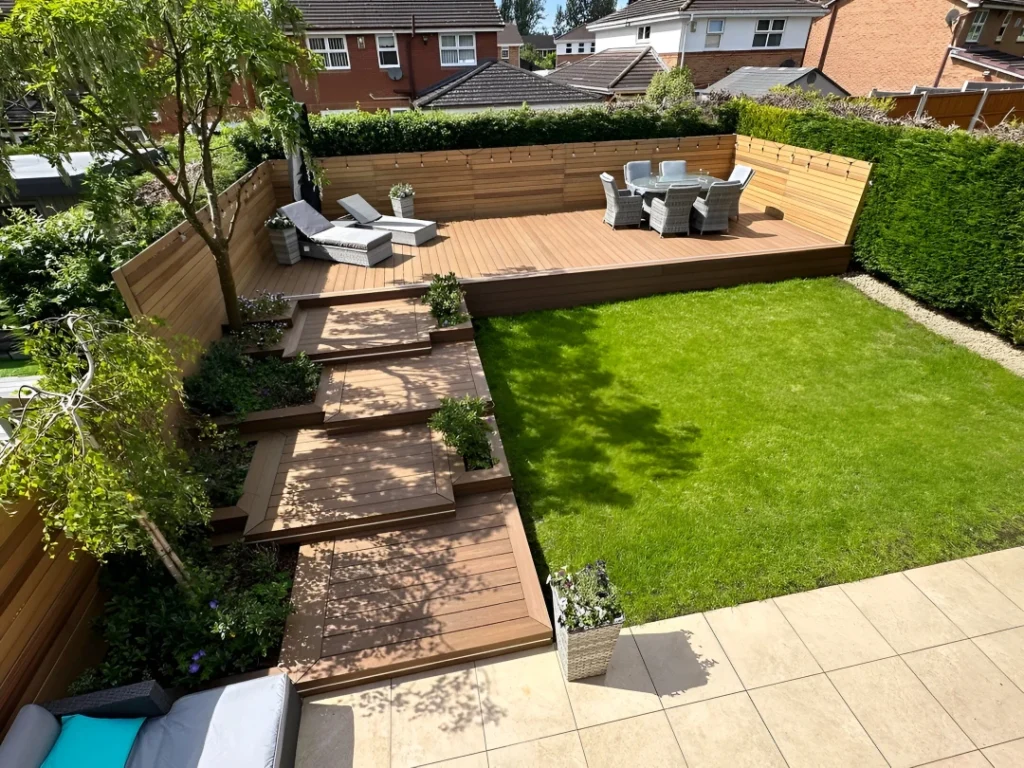
u/Bazkinvenice shows how planters can be integrated into a multi-level deck design. Those built-in planter beds along the deck edges and at level transitions hold greenery that softens the wood while the raised deck creates distinct zones.
The combination of horizontal decking, vertical railings, and green planting creates layers of interest. This is comprehensive deck design where planters are part of the architecture from the beginning.
Sculpted Monolith Planters with Architectural Greenery
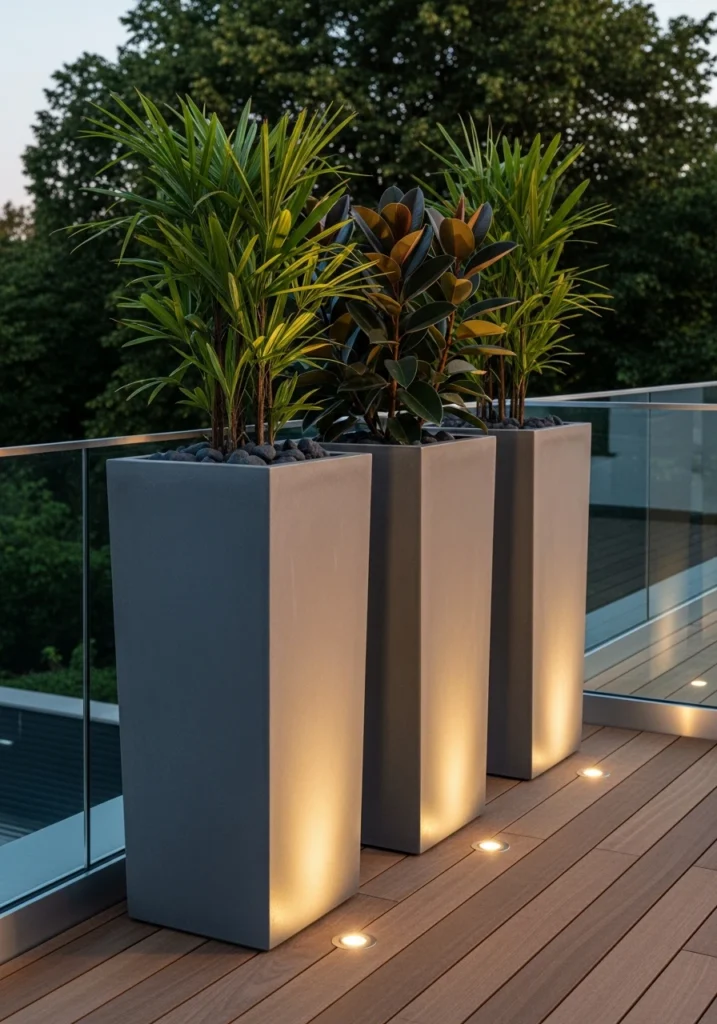
Tall sculpted monolith planters in soft matte stone composite with oversized rectangular forms and sharp edges create serious visual impact. Planted with architectural greenery like pleated palms and glossy rubber plants, they become sculptural elements rather than just containers.
Subtle recessed floor lighting washing the planters at night makes them glow. These work best on larger decks with contemporary glass railings where bold statements fit the scale—this is planters as architecture.
Floating Planter Wall with Layered Depth
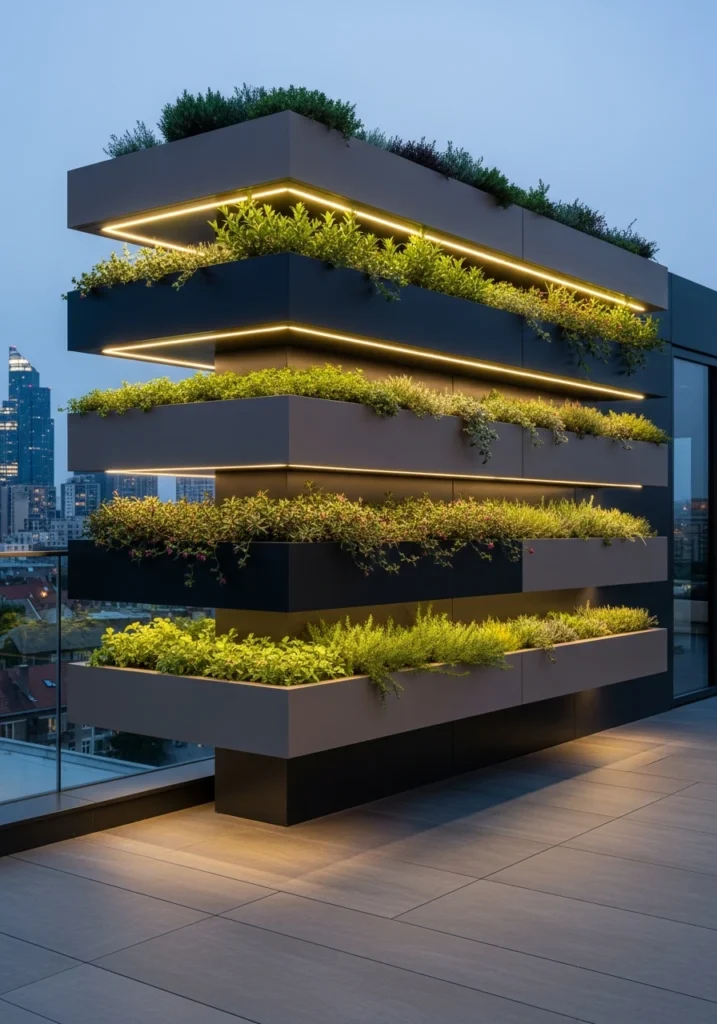
A floating planter wall system with staggered horizontal planter slabs mounted with hidden supports creates this striking vertical garden effect. Deep charcoal and warm taupe finishes provide neutral backdrop, while lush layered foliage cascades in controlled patterns.
Negative space between planters creates depth and keeps it from feeling too dense. Integrated LED strip lighting underneath each layer adds drama at night—this is green wall meets modern design.
Curved Statement Planters Framing the Deck
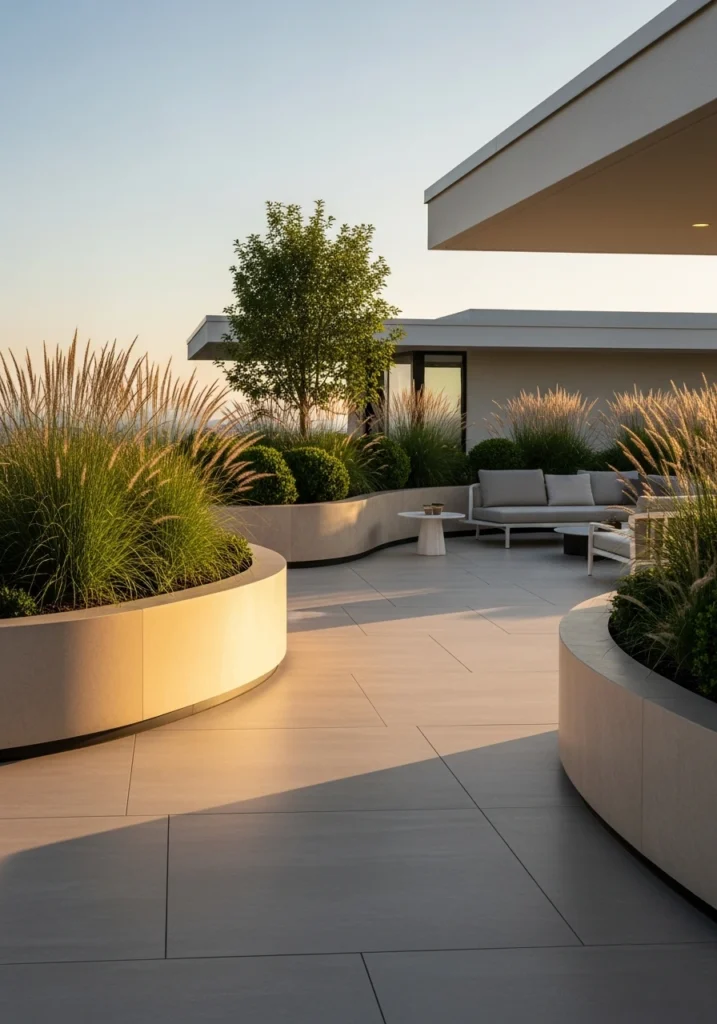
Large curved statement planters forming a soft perimeter create enclosure without hard edges. Seamless mineral finish in warm greige tones planted with tall ornamental grasses and structured greenery brings movement and softness.
The fluid organic curves contrast clean deck lines beautifully. This is planters defining space—using curves to soften geometry.
Modular Luxury Planters with Mixed Heights
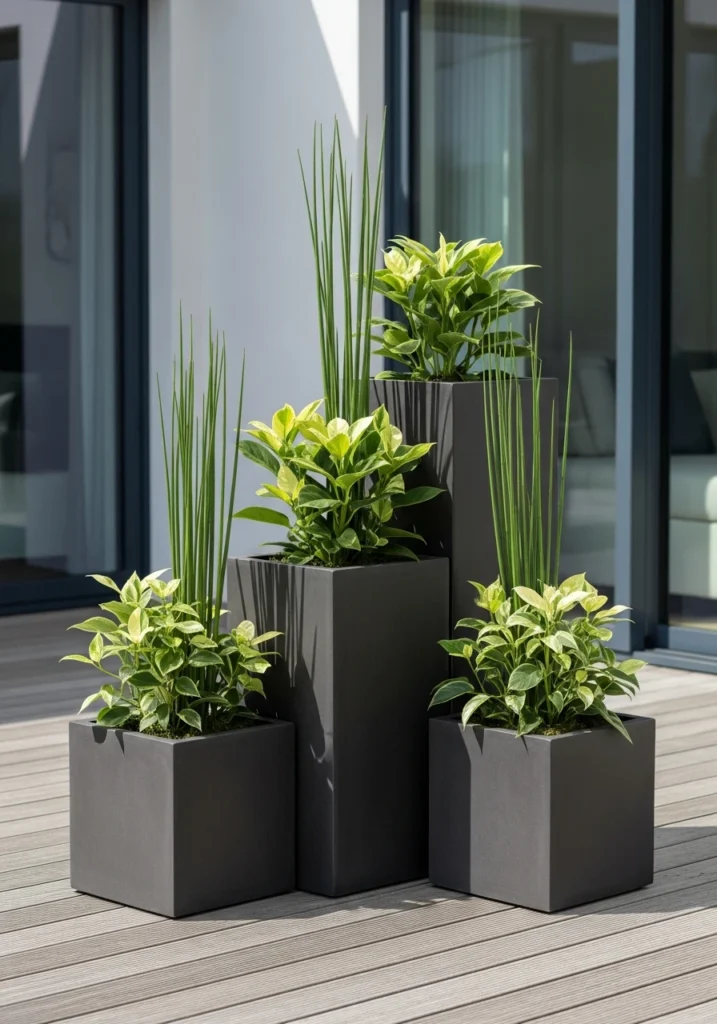
Modular luxury planters in coordinated finishes arranged like sculptural blocks at different heights (low, medium, tall) create visual rhythm. Rich stone-resin material with restrained green palette featuring glossy leaves and vertical accents makes each planter feel intentional.
Refined symmetry with slight asymmetry for interest keeps it from feeling too rigid—this is composition-focused planting.
Linear Edge Planters with Built-In Seating Effect
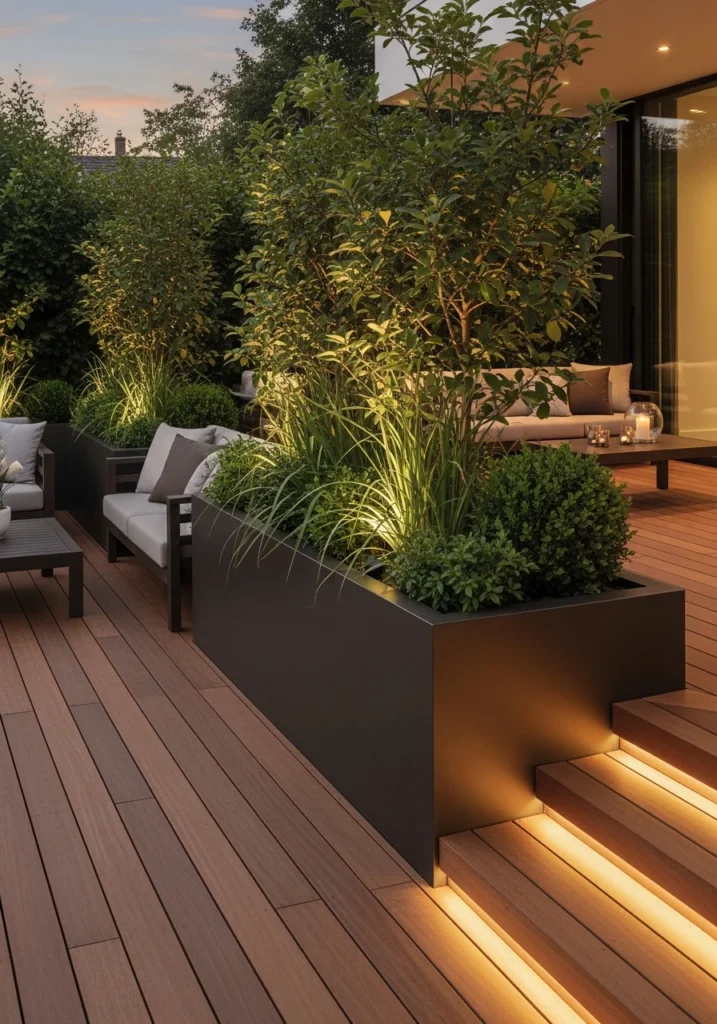
Long linear edge planters running along the deck boundary in deep matte graphite finish with dense greenery create privacy while visually anchoring low lounge seating. The planters double as visual weight that balances furniture.
Seamless integration with wood decking and soft ambient lighting makes them feel built-in—this is planters as infrastructure.
Elevated Platform Planters as Art Pieces
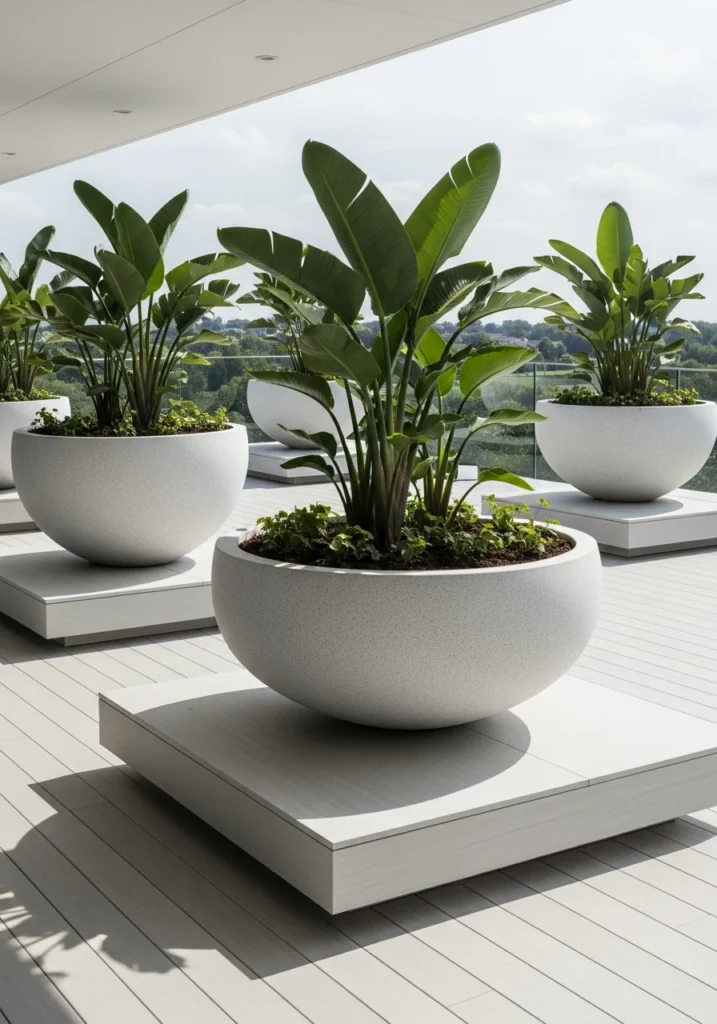
Elevated platform planters raised slightly above deck surface on clean modern pedestals create this museum-like quality. Smooth stone finishes with dramatic sculptural plants featuring large leaves command attention with intentional spacing around each piece.
Minimalist surroundings let the planters become focal points—this is less-is-more planting strategy.
Asymmetrical Planter Composition with Negative Space
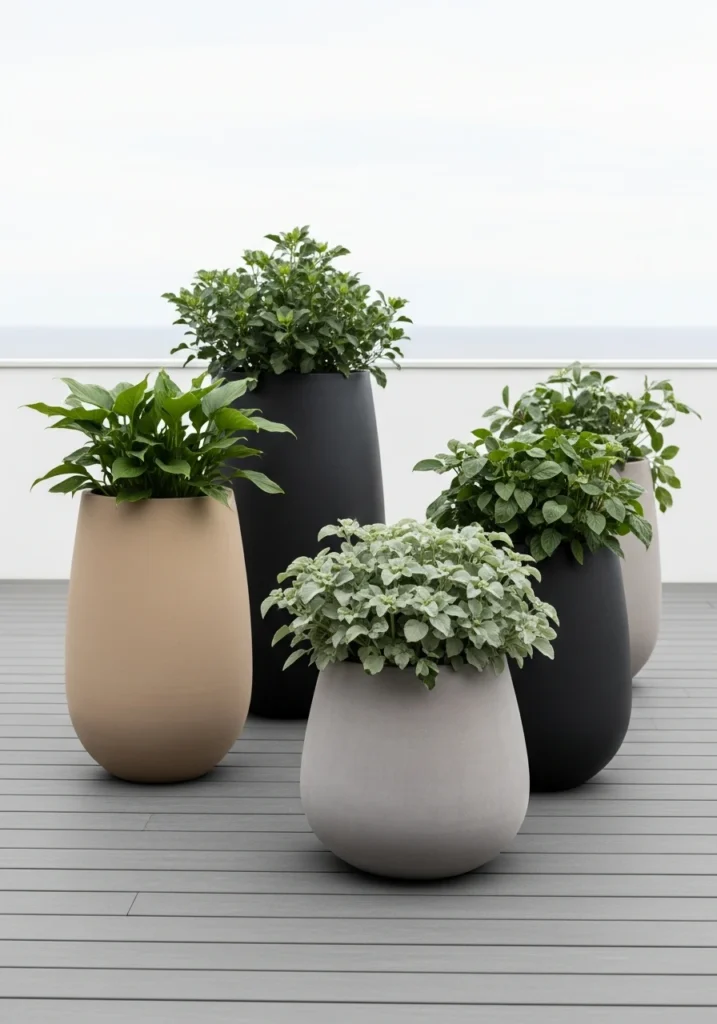
Planters placed intentionally with breathing room between each piece in muted high-end finishes (sand, charcoal, soft clay-grey) create this modern art gallery feel. Controlled greenery with varied leaf textures adds interest without chaos.
The asymmetry feels deliberate rather than random—this is planters as curated collection.
Monochrome Planters with High-Contrast Greenery
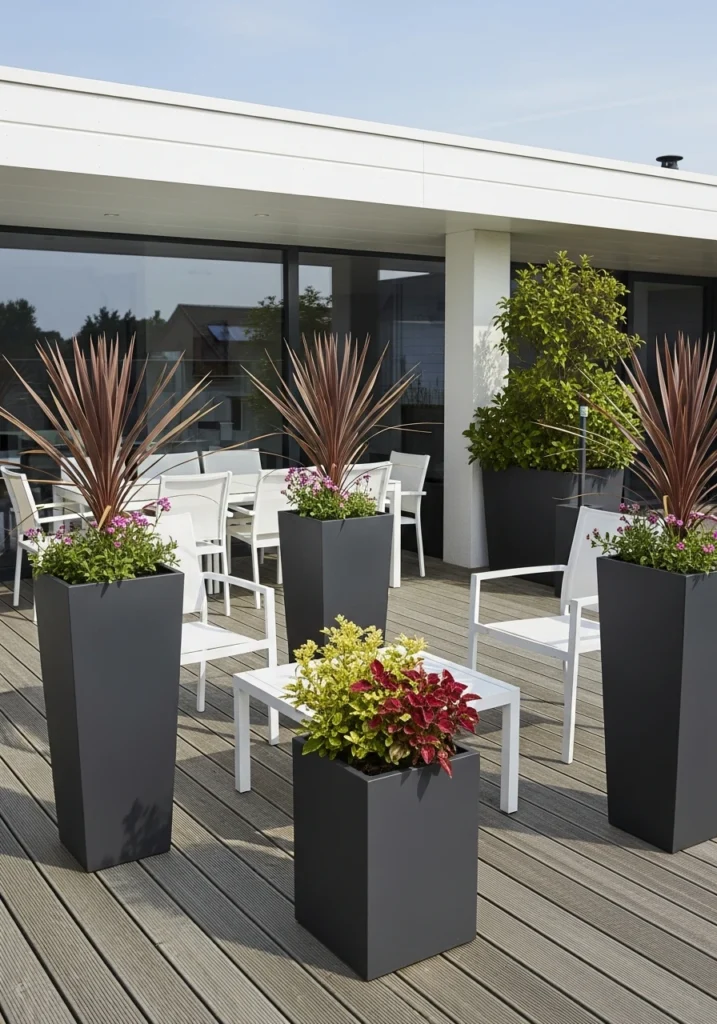
Planters in a single refined tone with ultra-matte finish and sharp geometric silhouettes create cohesive backdrop for vibrant high-contrast greenery. Disciplined layout with strong visual rhythm makes each plant pop.
This is color restraint on containers letting plants be the color story.
Corner-Focused Planter Architecture
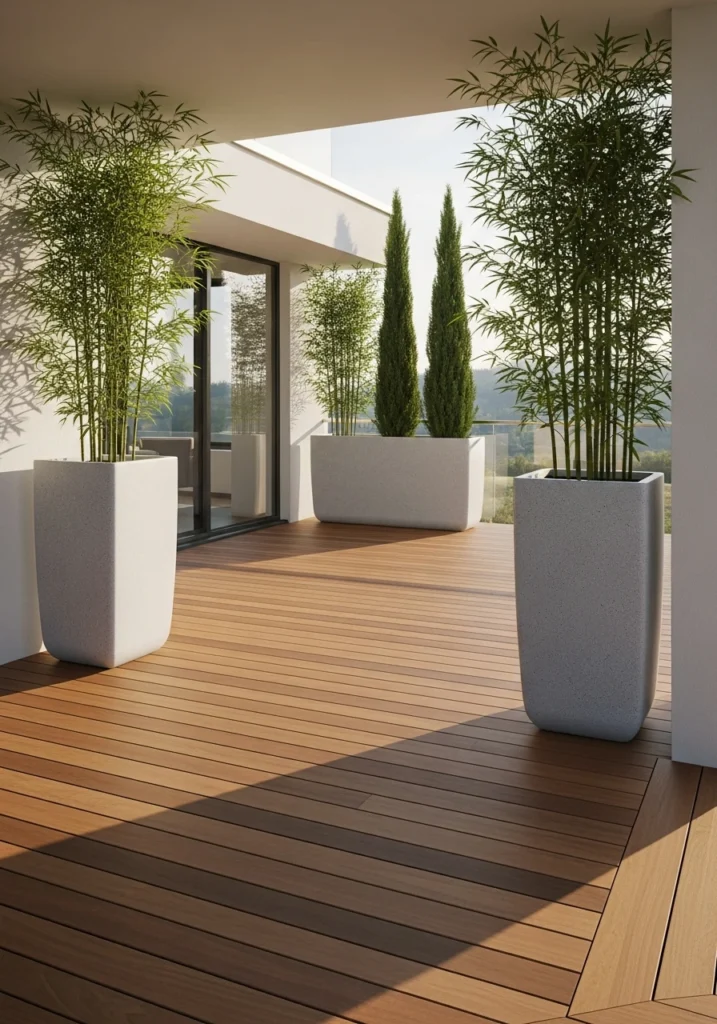
Oversized square planters grounding corners of the deck with smooth stone composite and soft rounded edges anchor the space. Vertical greenery rising from corners frames views while keeping the central deck area open.
This is strategic placement—using corners to add green without eating into usable space.
Sunken Planter Zones Integrated into Deck Layout
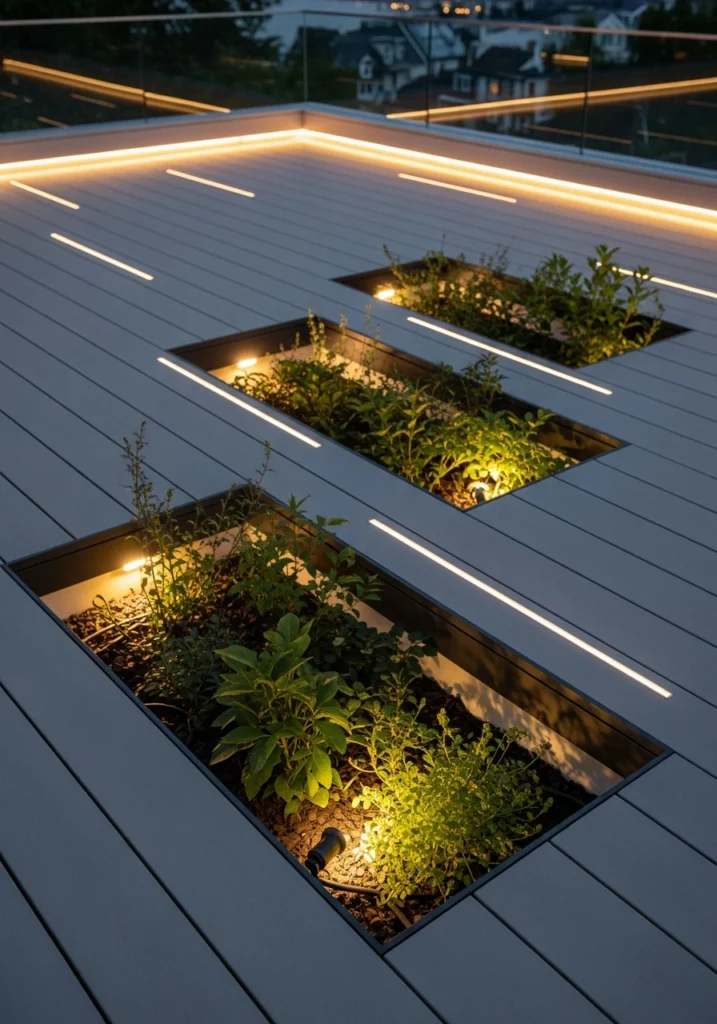
Planters integrated flush into the deck design with greenery appearing to grow organically from within the deck create seamless indoor-outdoor feel. Clean rectangular cut-outs with refined neutral finishes and intentional spacing make it look built-in rather than added later.
This requires planning during deck construction but creates the most polished result.
Sculptural Planters as Visual Focal Point
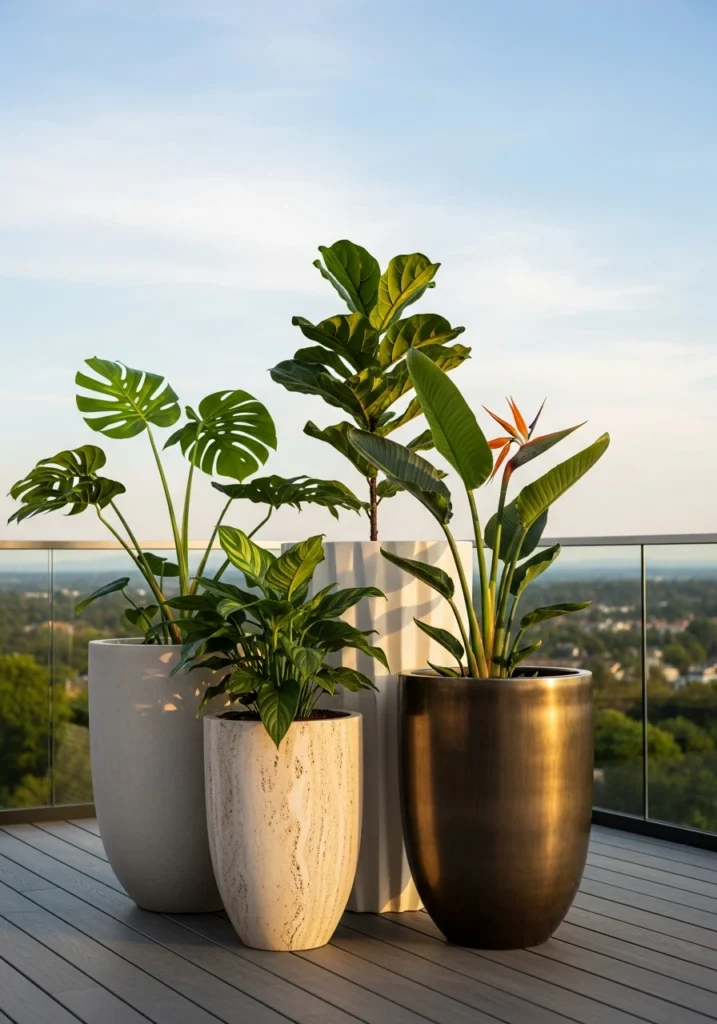
A group of three statement planters with varying heights and silhouettes in premium mineral finishes creates intentional composition. Bold leafy plants with strong forms feel like modern art installation.
Privacy-Driven Planters with Refined Density
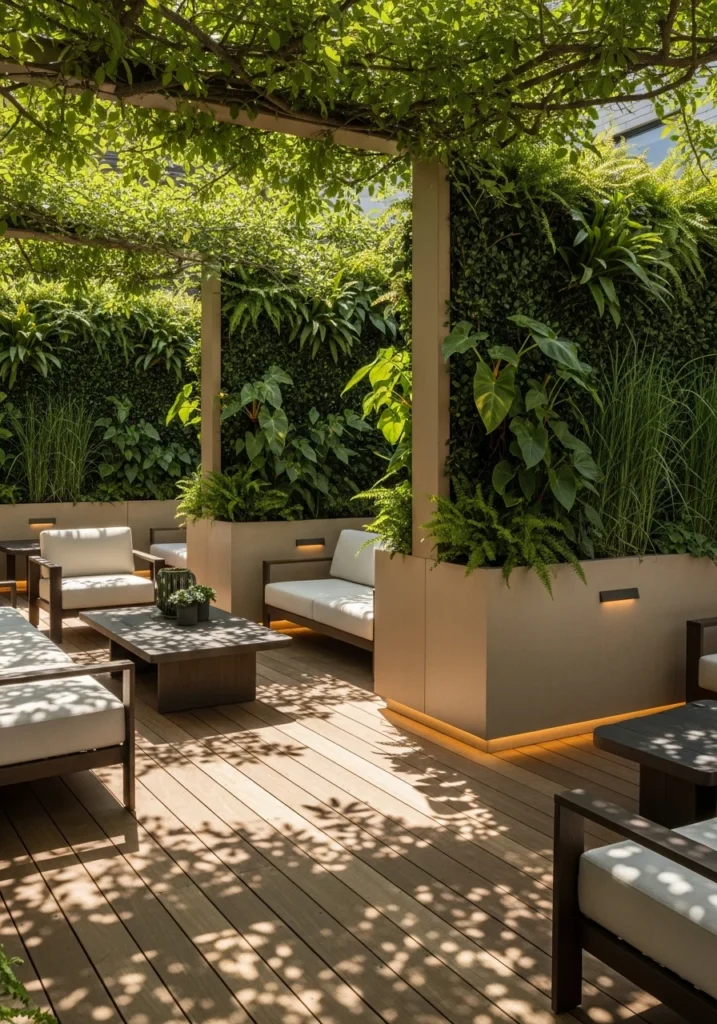
Tall planters creating green envelope around seating area with dense but controlled planting in sleek rectangular forms and warm neutral tones provide privacy without solid walls. Filtered sunlight passing through foliage creates dappled light.
This is functional greenery—planters solving the privacy problem elegantly.
Minimalist Luxe Deck with One Hero Planter
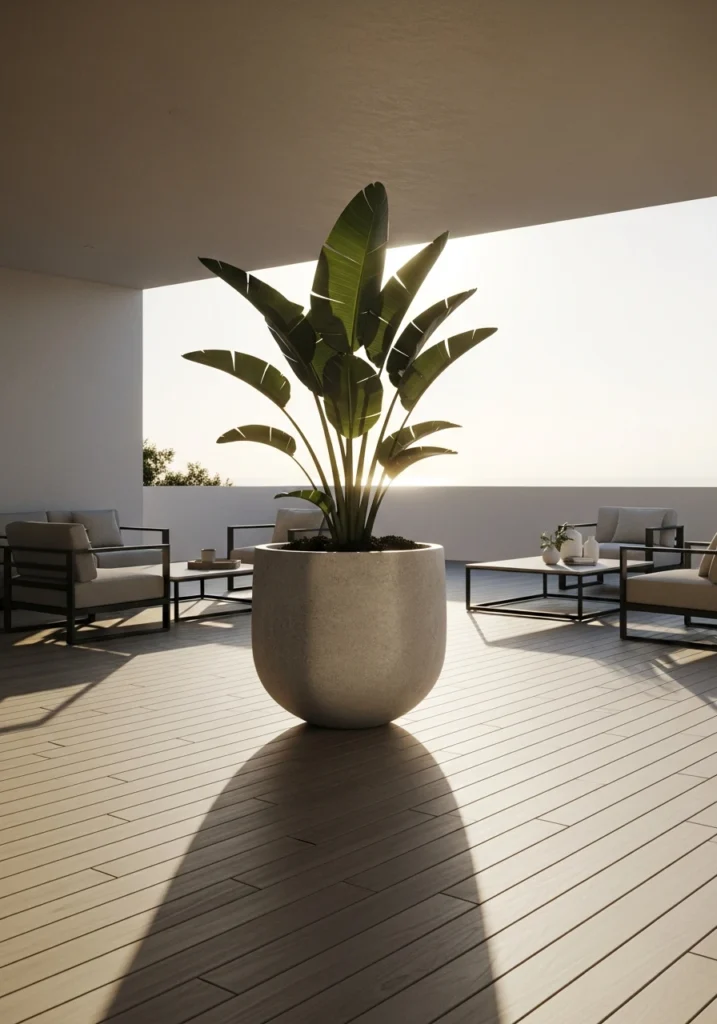
A single oversized hero planter as focal point with bold sculptural form, smooth stone finish, and dramatic statement plant with large architectural leaves proves sometimes one great piece beats many mediocre ones.
Negative space around the planter and premium modern furniture complete the look—this is quality over quantity approach.
The best deck planters get planned as part of the overall design rather than being afterthoughts. Consider scale (big decks can handle large planters, small decks need restraint), placement (corners and edges often work better than middle-of-the-floor), and maintenance (built-in planters with good drainage are easier than lots of individual pots).
Choose containers that coordinate with your deck’s style and color palette, group in odd numbers when clustering, and remember that fewer quality planters with healthy plants look better than lots of cheap pots with struggling plants. Your deck should feel like an outdoor room, and planters are the landscaping that makes it feel complete.