
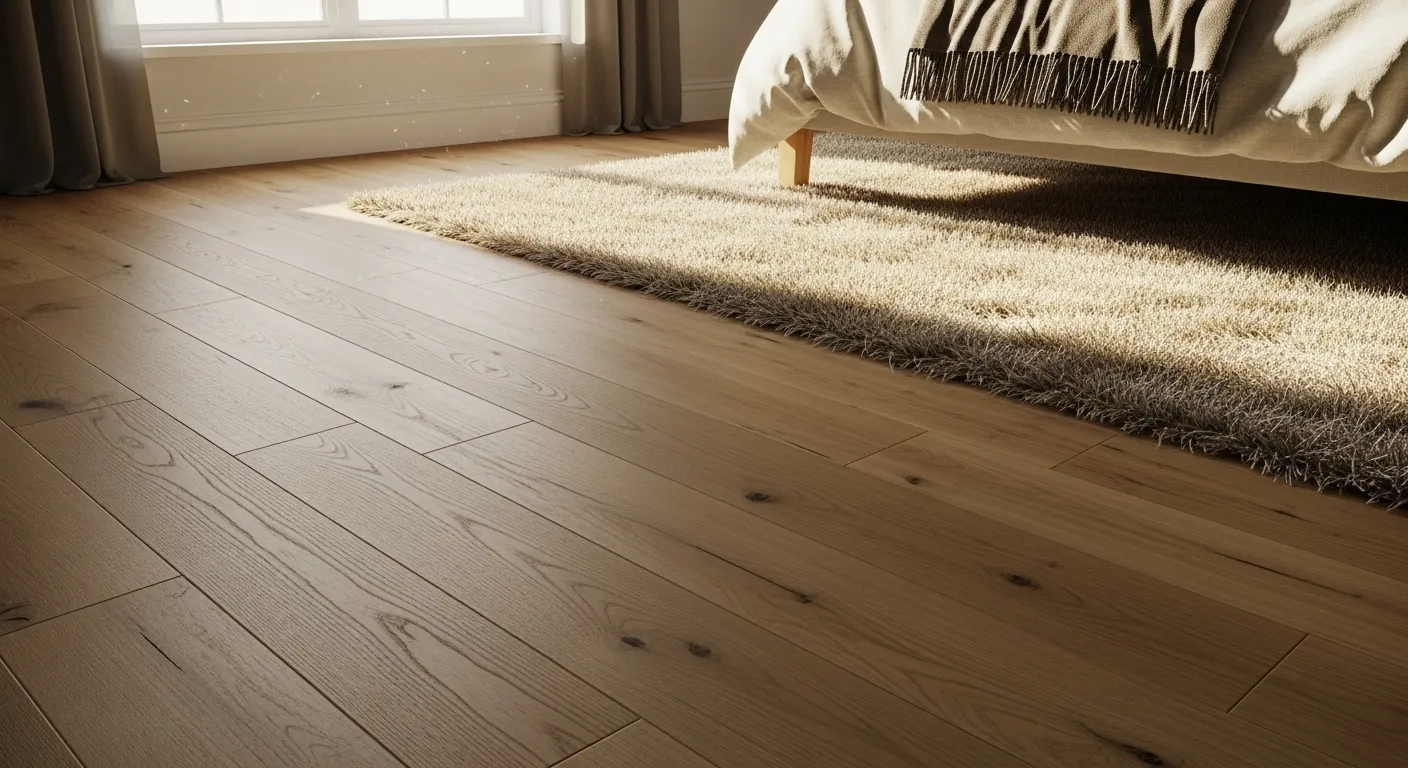
Want your bedroom to scream expensive rather than IKEA clearance? Start from the ground up — literally. The floor is the single largest surface in any bedroom and the one most people treat as an afterthought, selecting whatever was on special or whatever the builder installed and then spending everything else on furniture while wondering why the room never quite comes together. These bedroom flooring ideas will show you exactly what considered flooring does for a room and exactly why yours deserves better than what it’s currently got.
Luxe Flooring Architect
Why Your Bedroom Floor Is the Foundation Every Other Design Decision Depends On
The furniture can be excellent. The lighting can be layered. The color scheme can be deliberate and well-executed. But if the floor is wrong — cheap laminate pretending to be wood, generic carpet in a shade that doesn’t belong, tile that was installed for practicality and never reconsidered — every other good decision in the room is working against a foundation that’s undermining it. The floor sets the tone before anyone looks at anything else. It determines how warm or cold the room feels, how the acoustics behave, and whether the space reads as genuinely considered or merely furnished.
The floor and the ceiling work together to determine the room’s perceived height
A pale, reflective floor makes a room feel taller because it bounces light upward. A dark, matte floor makes a room feel more intimate because it absorbs light and grounds the space visually. Neither is wrong — they create different rooms — but understanding what your floor is doing to the perceived volume of the space is essential before you commit to it. The bedroom that feels disappointingly low or unexpectedly cosy despite good bones is almost always responding to a floor choice that was made without considering this relationship.
Flooring material determines the morning experience more than any other single element
The first physical sensation of every day in your bedroom is the floor under your feet when you get out of bed. Cold stone in winter, scratchy cheap carpet in any season, slippery polished tile, warm hardwood that’s been sitting in morning sun — these are experiences that happen before you’re fully awake, before the coffee, before anything else. The floor material you choose is a daily sensory decision as much as a design one, and treating it purely as a visual choice misses half the point.
Pattern and layout direction dramatically affect the room’s spatial reading
The same hardwood plank laid lengthwise down a narrow room versus across the width of it creates two entirely different spatial experiences from identical material. Herringbone and chevron patterns add visual complexity that makes a floor feel bespoke rather than installed. Large-format tiles make a room feel larger than the same area covered in small tiles. These are not subtle distinctions — they are significant enough that getting the layout direction wrong on an otherwise excellent flooring choice can undermine the entire spatial effect you were trying to achieve.
The transition between bedroom flooring and adjoining spaces is a design decision
The point where the bedroom floor meets the hallway, the en suite, or a dressing area is a detail that most people handle with a threshold strip and never think about again. In considered interiors, this transition is designed — using the same material running through continuously, a deliberate material change that reads as intentional, or a border treatment that frames the bedroom floor as a discrete zone. A badly handled floor transition makes two well-designed spaces look like they were designed separately by people who never communicated.
The Foundation of Luxe
Why your floor is the decision everything else depends on.
Floors determine perceived volume
Pale, reflective floors bounce light upward to make ceilings feel taller, while dark, matte floors absorb light to ground the space. Understanding this dynamic is required before committing to any material.
The primary sensory experience
The first physical sensation of every day is the floor under your feet. Treating it purely as a visual choice misses the point; it is a tactile, daily sensory decision from cold stone to sun-warmed hardwood.
Pattern dictates spatial geometry
Herringbone, chevron, or large-format tiles directionally change spatial reading. These complex patterns add a visual richness that makes a floor feel bespoke rather than generically installed.
Thermal and acoustic foundations
Hardwoods reflect sound; wool dampens it. Adding radiant underfloor heating completely alters the calculus, removing thermal objections and turning cold architectural stone into a luxury asset.
Bedroom Flooring Ideas
Deep Pile Grey Carpet Wall-to-Wall, Angled Ceiling, and Floor-to-Ceiling Glass
Wall-to-wall deep pile carpet in a cool mid-grey running seamlessly to the base of full-height black steel frame glass walls on two sides, the colour and texture keeping the feet warm while the massive glazing connects the room to an exterior landscape that earns its position. A floor-to-ceiling channel-tufted grey velvet headboard, white and blush layered bedding with faux fur throw, a ribbed boucle bench at the foot, and a sculptural black twig chandelier overhead. The carpet asks nothing of the room visually and gives everything acoustically and thermally — which is precisely the right brief for a floor in a room this architecturally dramatic. Pro tip: Deep pile carpet in a bedroom with floor-to-ceiling glazing needs to be in a cool, slightly grey tone — warm carpet tones fight the cool daylight flooding through large glass panels and create a colour temperature conflict the eye notices without being able to identify.
Polished Marble Floor With Decorative Inlay Border, Mirrored Ceiling Feature, and a Sculptural Pendant
Polished white marble with dark emperador inlay border framing the entire floor zone in a geometric border pattern that reads as deliberate architectural detailing rather than decorative flourish, a sculptural ceiling feature combining mirror panel and descending glass element pendants, warm fluted timber wall panels alternating with gold mirror insets creating the backdrop for a blush velvet upholstered bed in matching tones. A distressed silk rug under the bed in warm amber, grey velvet upholstered bench at the foot, cream linen curtains managing the natural light from full-height windows. Pro tip: Polished marble floors with decorative inlay borders require the furniture layout to respect the pattern — placing the bed so its footprint sits entirely within the inlay frame rather than straddling it is what makes the floor read as designed rather than just installed.
Wall-to-Wall Wool Loop Carpet in Warm Grey, Dark Feature Wall, and Floor-Length Ripple Fold Sheers
Warm grey wool loop carpet covering the entire floor without interruption, its texture visible in the natural light flooding through full-height ripple fold sheer curtains in pale greige, a charcoal painted feature wall behind the bed hosting a large abstract art print and a single globe wall sconce, a low upholstered bed with grey and burgundy layered bedding, a dark green velvet rocking armchair and a minimal round side table in the window zone. The carpet’s warmth is doing critical work against the dark wall — without it, the room would tip from moody to cold. Pro tip: When pairing wall-to-wall carpet with a dark painted feature wall, the carpet tone needs to read warm rather than cool — grey carpets with green or blue undertones will amplify the coldness of a dark room rather than balancing it.
Dark Wide-Plank Oak Floors, Woven Jute Runner, and Clay Plaster Walls
Dark stained wide-plank oak flooring in a deep brown tone with visible grain running toward the window, a woven natural jute rug in diamond pattern with fringe detail sitting under the bed and extending toward the door, a leather-upholstered timber bed frame with turned post details and intricate block print bedding in rust, teal, and amber, a dark timber nightstand with a bronze lamp beside it, and a deep green plant providing the only fresh colour in an otherwise entirely warm and earthy palette. Clay plaster walls in warm off-white catch the natural light and shift subtly throughout the day. Pro tip: Dark wood floors with visible grain require a rug with enough textural character to hold its own visually — a flat, plain rug on a dramatic dark floor disappears rather than completing the layered look.
Bespoke Botanical Inlay Resin Floor, Warm Timber Panelling, and Cream Velvet Furniture
A high-gloss resin floor with hand-painted cherry blossom branches and white flower botanical inlay covering the entire bedroom floor in a design that makes the surface feel like looking through glass at a garden below, the warm amber and taupe tones of the resin base reflecting morning light from full-height sheer curtains in cream and transforming the room into something that feels fundamentally different from a conventionally floored space. A cream upholstered bed, warm walnut timber wall panelling behind it, velvet armchair and ottoman in taupe at the window, matching table lamps on walnut nightstands. Pro tip: A floor this decoratively complex requires every other surface in the room to be deliberately plain — the floor has used the entire decorative budget and anything competing with it will make the room feel chaotic rather than extraordinary.
Rock the Herringbone: Walnut Wonder
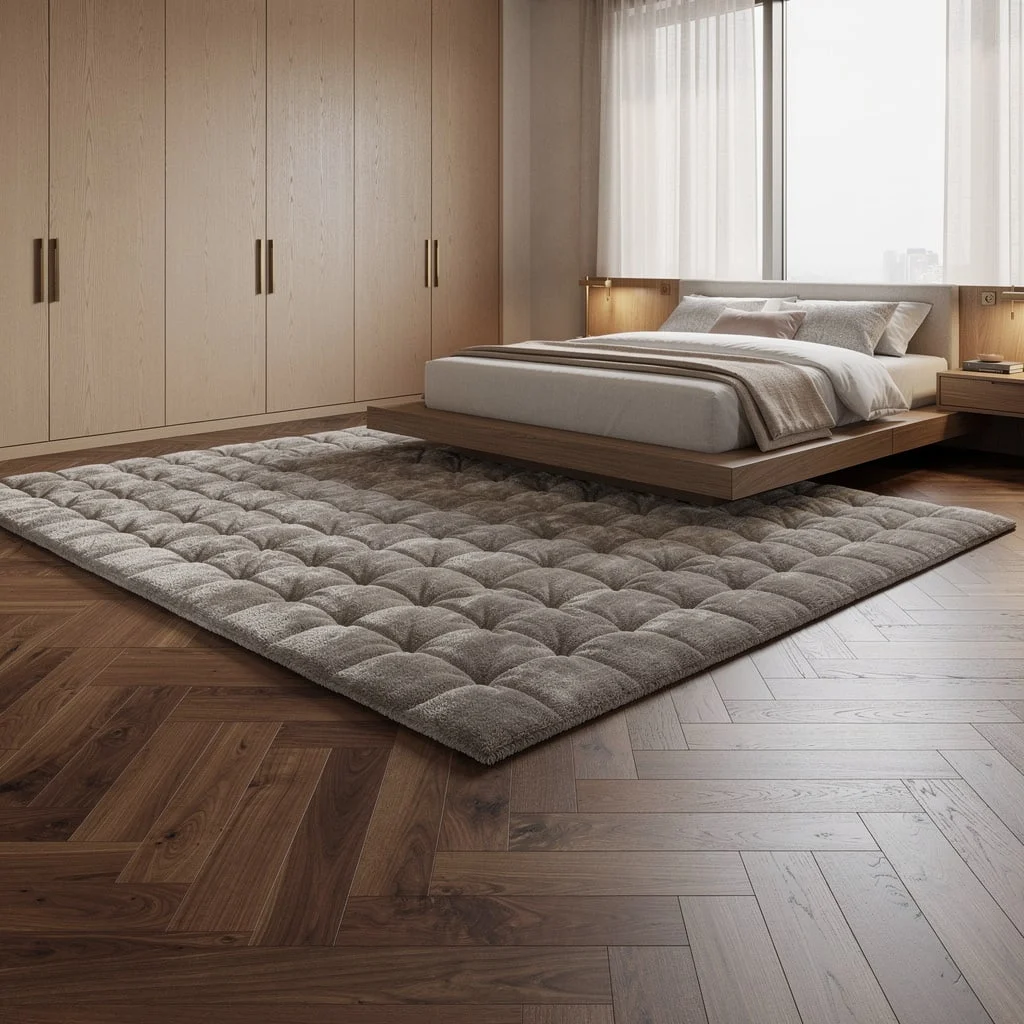
Want your bedroom to scream ‘expensive,’ not ‘IKEA clearance’? Start with wide-plank American walnut in a herringbone pattern, finished in matte because, hello, shine is so 2018. Throw down a custom tufted wool rug—but don’t smother the pattern, float it in the middle and let that floor flex at the edges. Pair with minimalist ash cabinetry, a floating oak bed, and brushed bronze accents for that rich-people serenity. If you don’t have linen sheers, you’re missing vital daylight magic. Pro tip: Layer big, plush textures only on top of show-off floors—never hide herringbone.
Concrete Junglist: Luxe Loft Moves
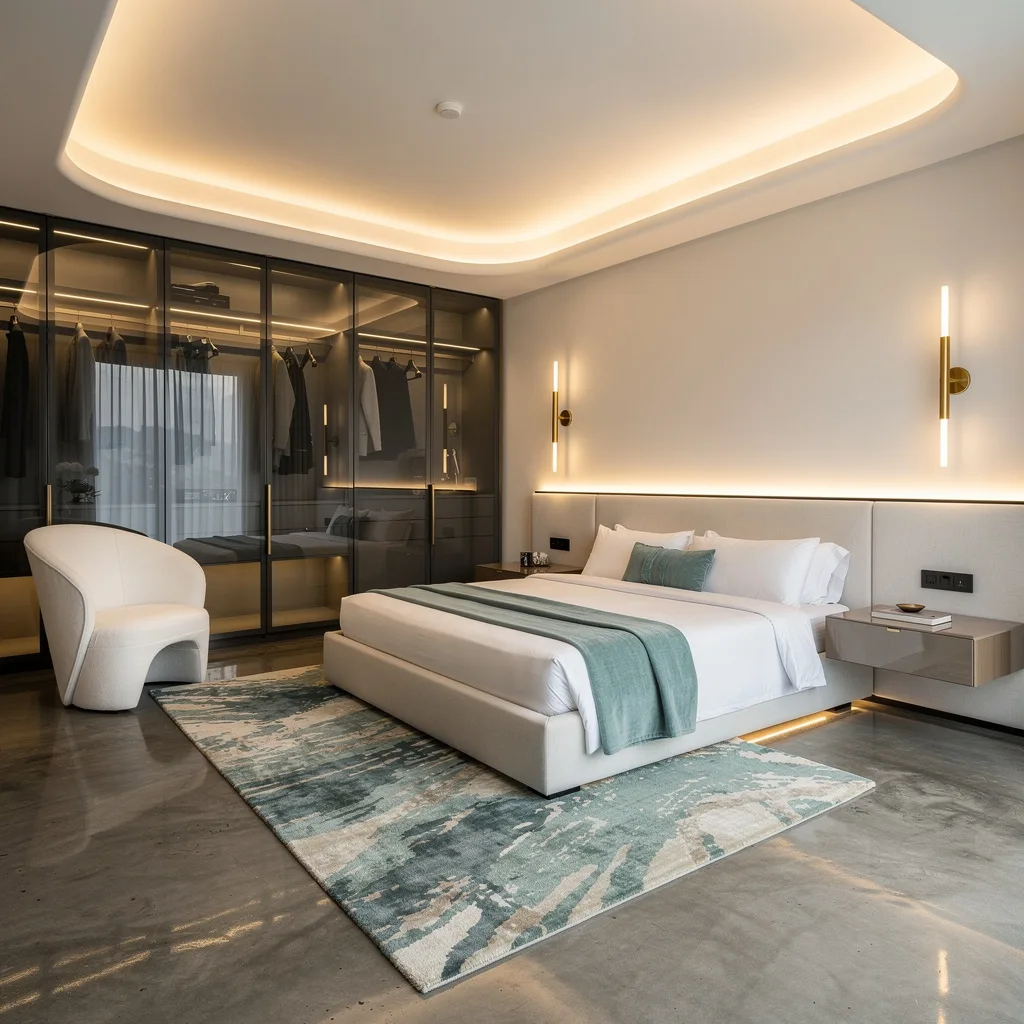
If you crave gallery vibes and hate shag, pour polished concrete for a seamless industrial-chic canvas. Don’t act tough—soften up with a hand-knotted silk rug in muted tones (teal, cream, whatever makes your brain feel artsy). Coved white ceilings and indirect lighting instantly kill hospital coldness; add polished brass sconces and smoked glass wardrobes for air of boutique drama. Keep nightstands floating and lacquered so nothing feels heavy. Pro tip: Concrete’s cold, so always choose rugs with wild texture—artistry matters, no basic rectangles allowed.
French Oak Plank: Subtle Flex
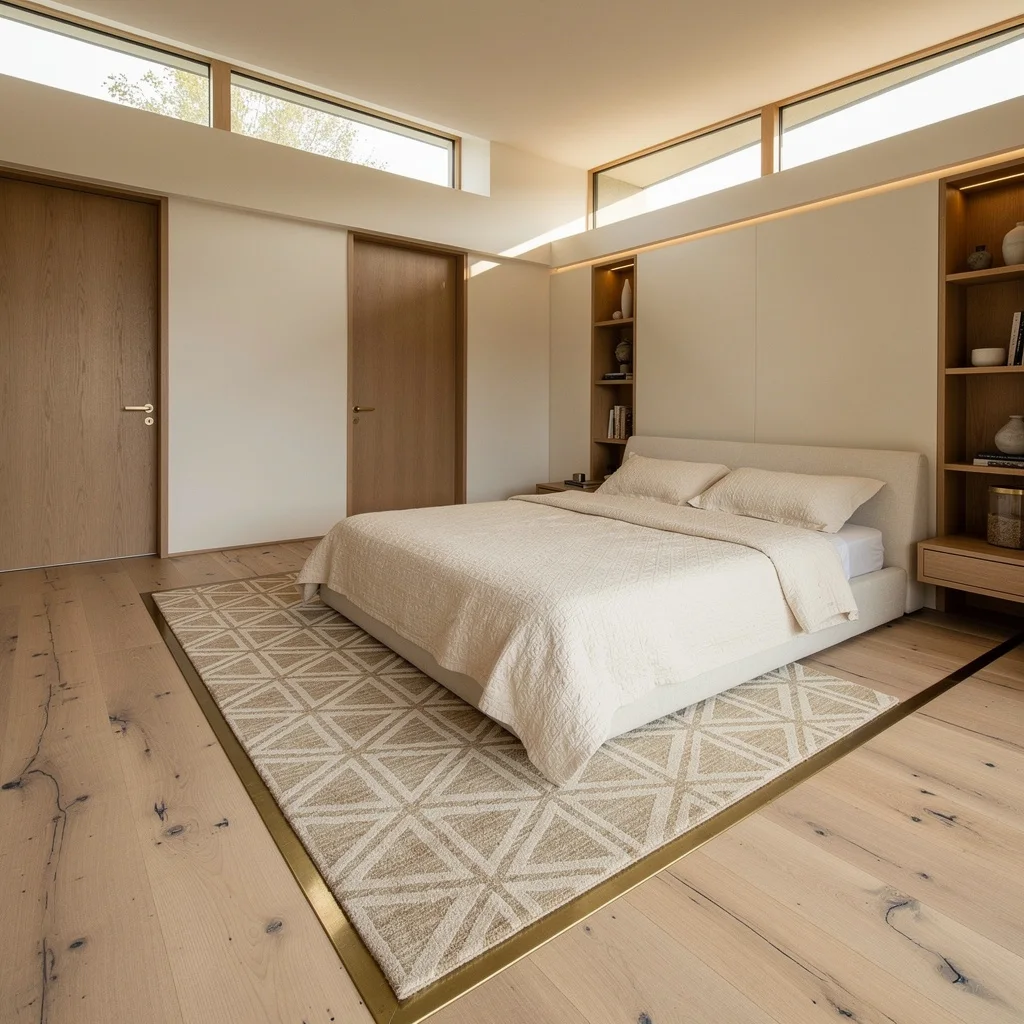
You want calm and taste, not chaos and ‘Oops-we-spilled-wine.’ Run pale French oak engineered planks lengthwise, and bonus points if you can edge them with upcycled brass inlays. Toss a geometric rug in sand and ivory for grounded comfort, but never let it dominate the wood. Use walnut doors, cream linens, and built-ins to keep things sleek. Clerestory windows throw perfect daylight—don’t ever let floor lamps ruin your shadows. Pro tip: Always feature the floor’s border in your rug layout—don’t let brass inlays hide, they’re your flex.
Porcelain Palace: Marble for Mortals
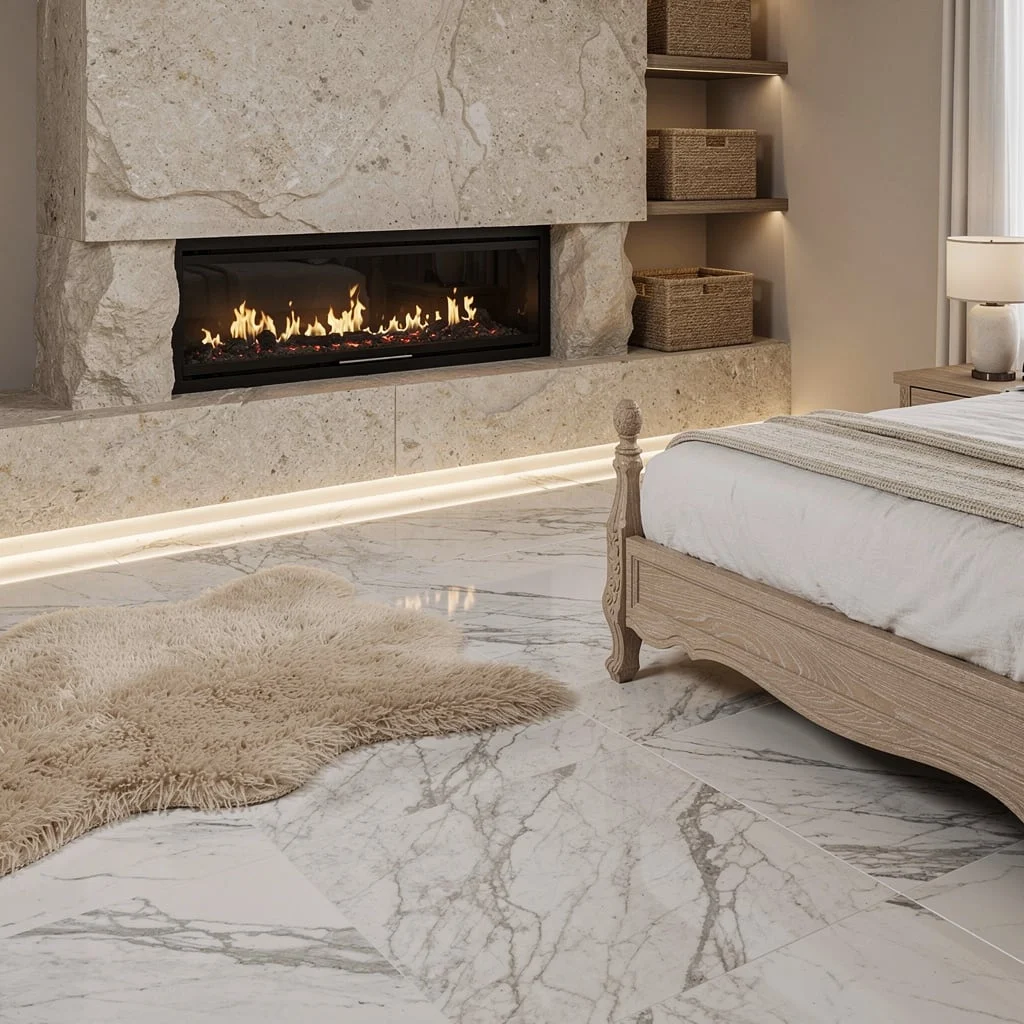
Want the marble look without the mortgage meltdown? Large-format Calacatta marble-look porcelain tiles are your bestie. Go heated flooring because freezing toes are yesterday’s news. Toss an alpaca throw rug for plush contrast near your sculpted oak bed, and light up the perimeter with dimmable LEDs for that soft-glow effect. Gas fireplace, stone shelving, natural baskets—keep it organic but modern. Pro tip: Don’t even think about skipping radiant heating under stone unless you want to suffer. Comfort always wins.
Sustainable Swagger: Cork Craze
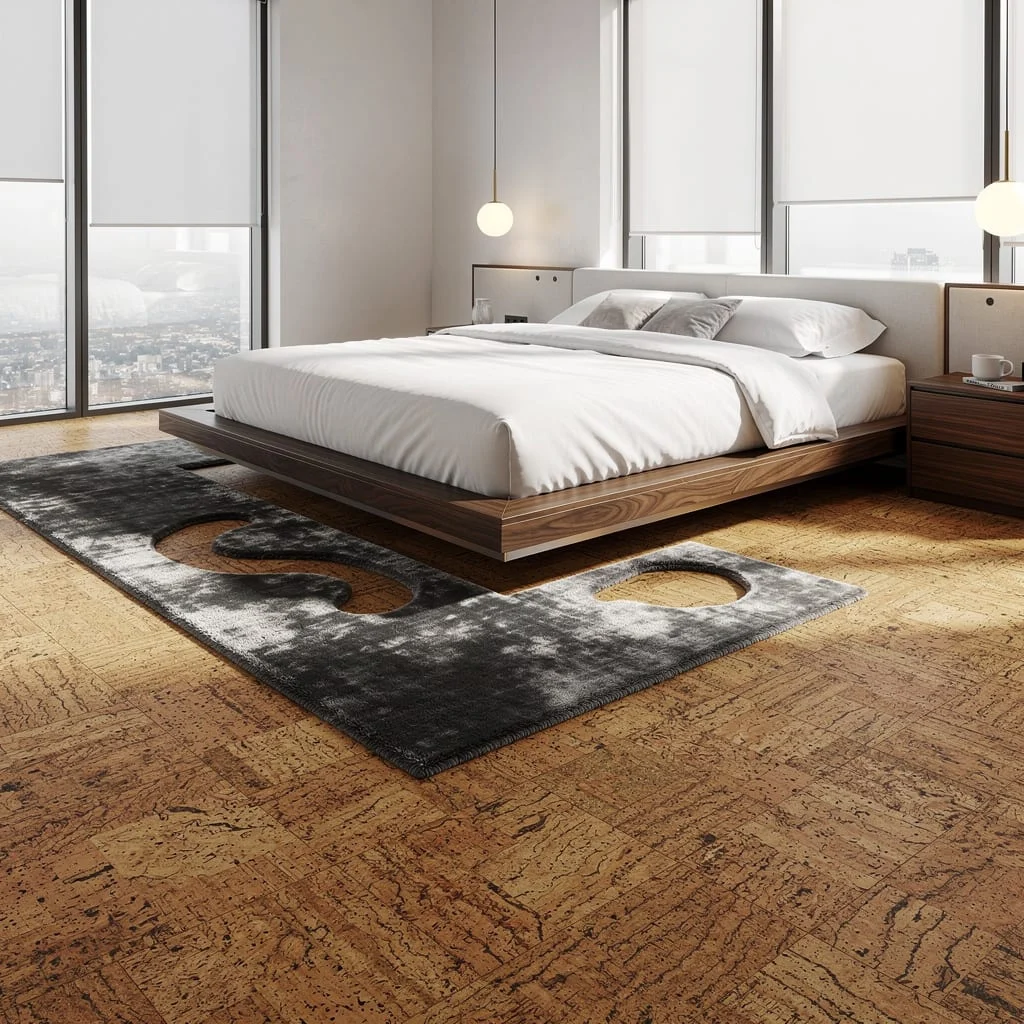
If you’re tired of pretending you care about the planet, cork flooring is your eco-chic shortcut. Honey tones kill the coldness, plus it’s so resilient you can jump on it without guilt. Cut in a plush velvet rug right beside your platform bed (don’t just plop one down), integrated is the future. Layer with walnut furniture, monochrome lighting, and plenty of daylight. Pro tip: Don’t treat cork like carpet—highlight its natural texture and never cover the entire surface with runners. Let its pattern breathe.
Jute Genius: Textured Tranquility
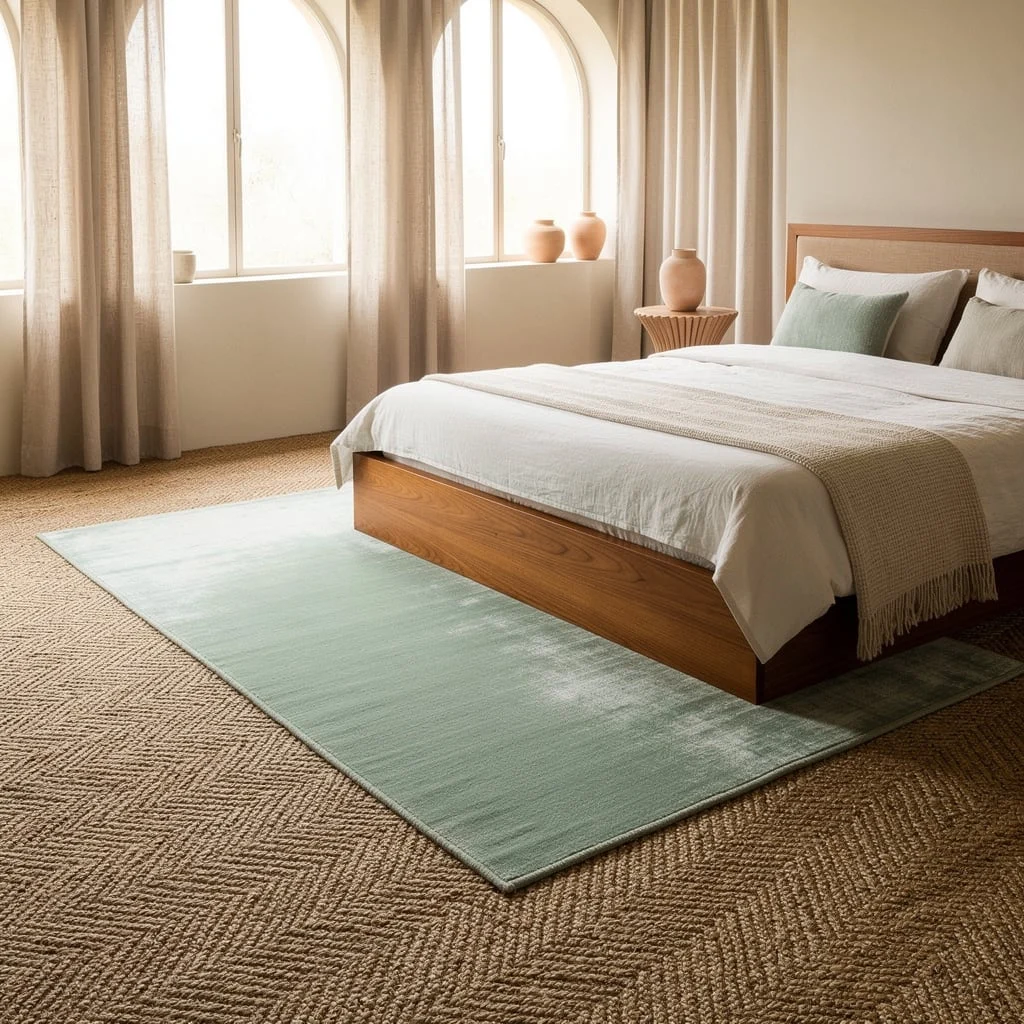
If your soul needs chill, go jute with a chevron weave. This isn’t farmhouse, it’s refined earthy vibes. Anchor the bed with a lightweight silk rug in celadon, not chunky—keep it airy. Broad arched windows and organic linens make the space breezy, while fluted wood details and terra-cotta pottery add texture. Pro tip: Never leave jute bare—fine rugs layer best on handwoven bases, not the hardwood. You want flow, not friction, so always pair raw texture with soft luxury.
Brick Paver Brilliance: Urban Luxe
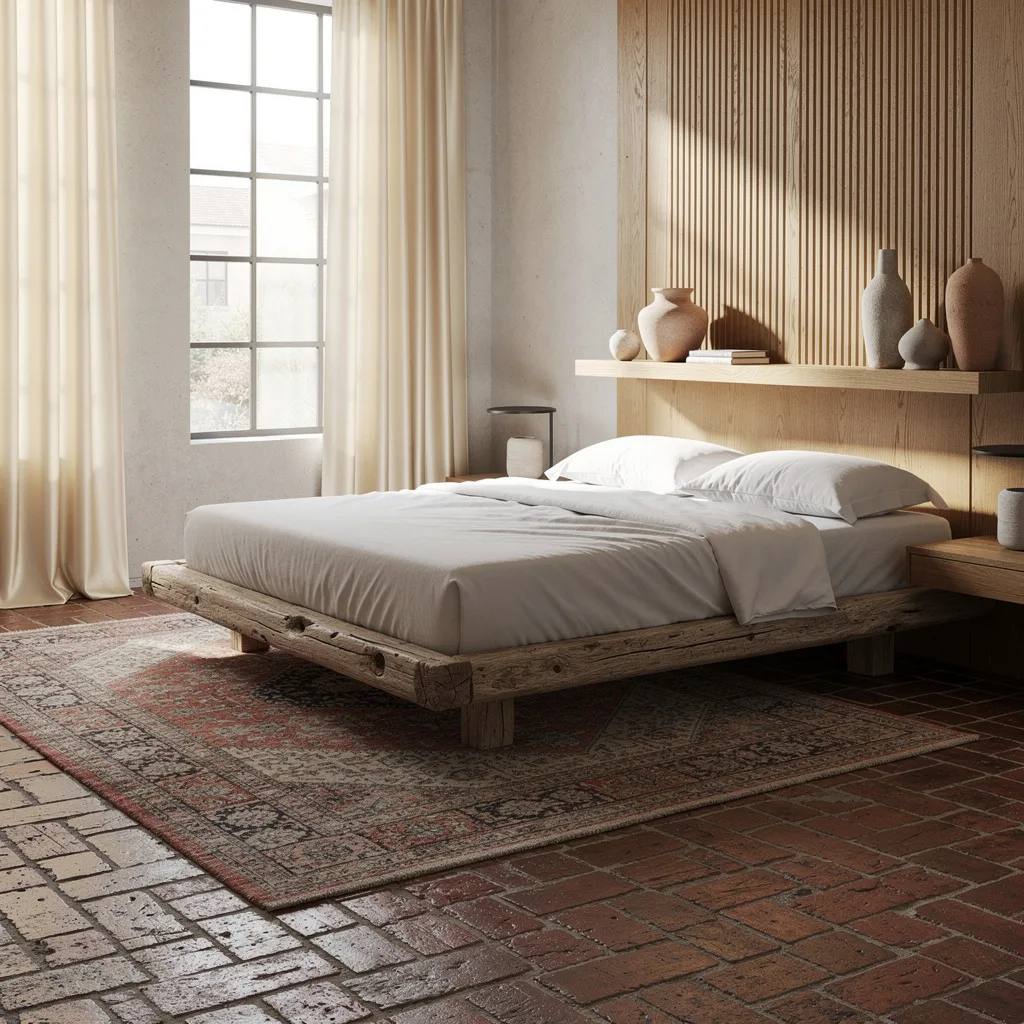
Tired of suburban snooze? Lay reclaimed red-brick pavers with a low-gloss sealant for big city feels minus the grime. Cream silk drapes and driftwood beds keep it from getting dungeon-y. Layer a handwoven Persian rug for class and let sunlight through grid windows to play up brick’s color. Fluted oak panels and floating shelves complete the urban grind. Pro tip: Don’t oversaturate with heavy textiles—let brick shine, and always seal it or you’re begging for dust drama. Modern luxe means curated, not cluttered.
Maple Magic: Bright Underfoot
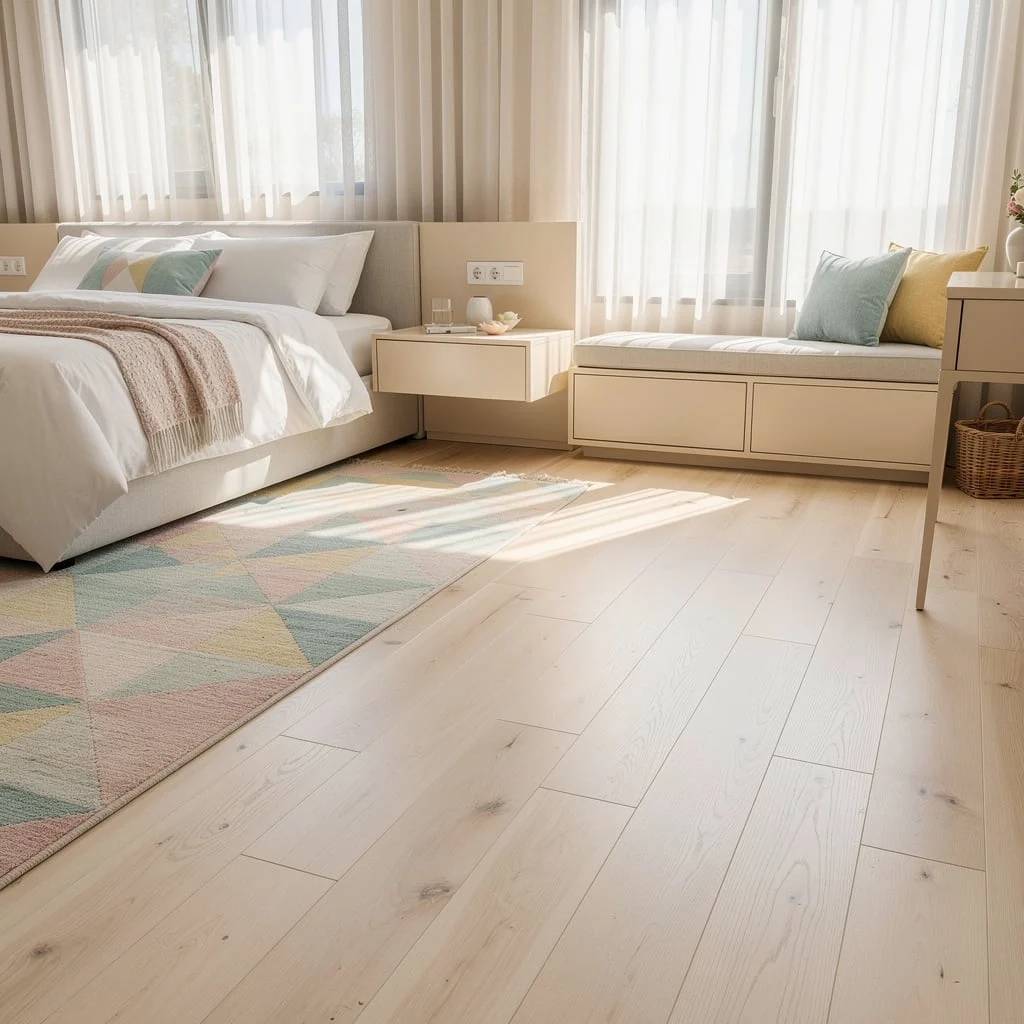
Need some sunshine in your life? Stretch maple hardwood wall to wall for instant brightness—barely-there grain keeps things fresh, not fussy. Use pastel geometric rugs for comfort zones, never double up, let each area stand. Float ivory lacquer nightstands and build in a window seat for max tailored ease. Floor-to-ceiling sheer drapes are a must, not optional. Pro tip: Place rugs strategically around the bed for traffic control—don’t cover your best feature. More light means more glam, so ditch the heavy curtains.
Slate Statement: Cool, Calm, Collected
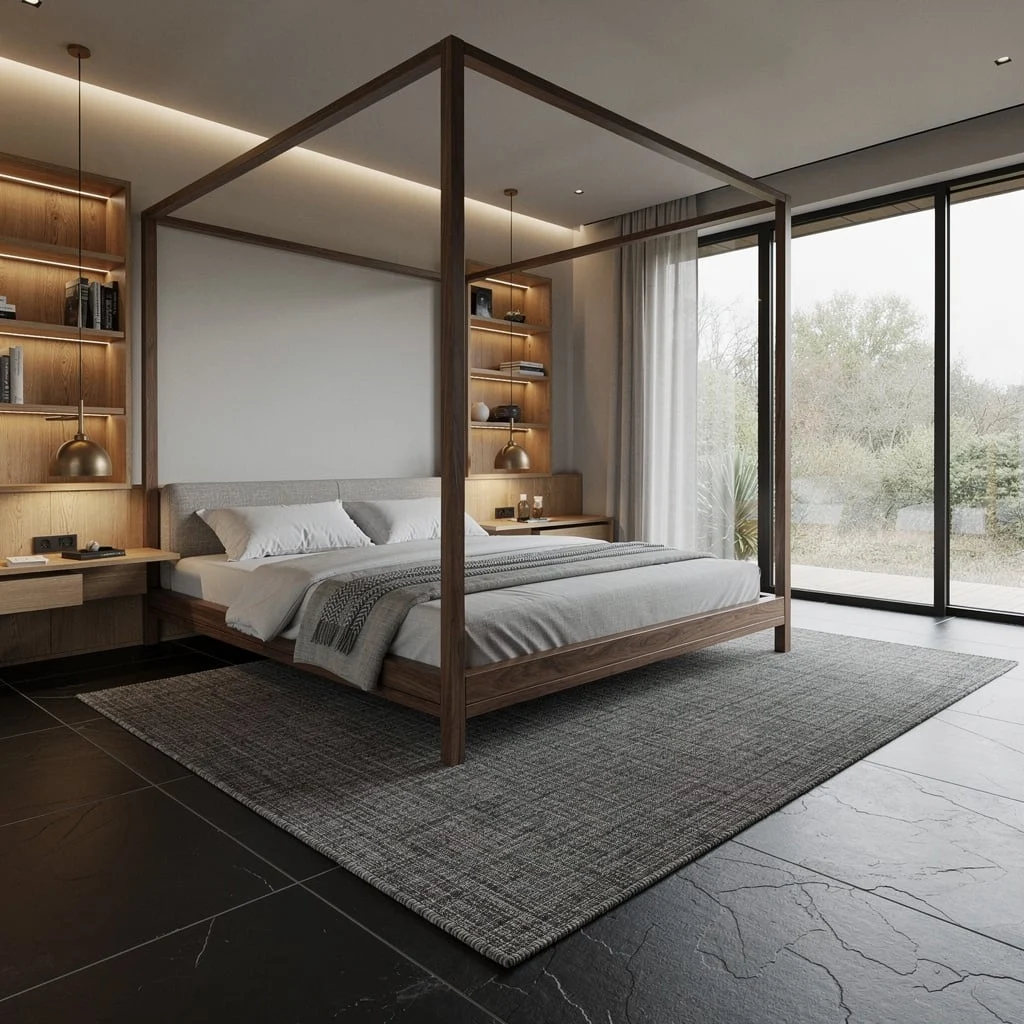
Want drama but hate shiny floors? Go black slate—large tiles, honed surface, and add radiant heat so you don’t cry in winter. Drop a walnut canopy bed on a washed charcoal linen rug, then use hidden lighting to let stone textures pop. Oak accents and bronze hardware build sophistication without getting precious. Keep glass doors big for filtered daylight. Pro tip: Always style stone with wood and metal—nothing ages a slate floor like all-white decor. Contrast is basic, but depth is designer.
Bamboo Bliss: Light, Tight, and Right
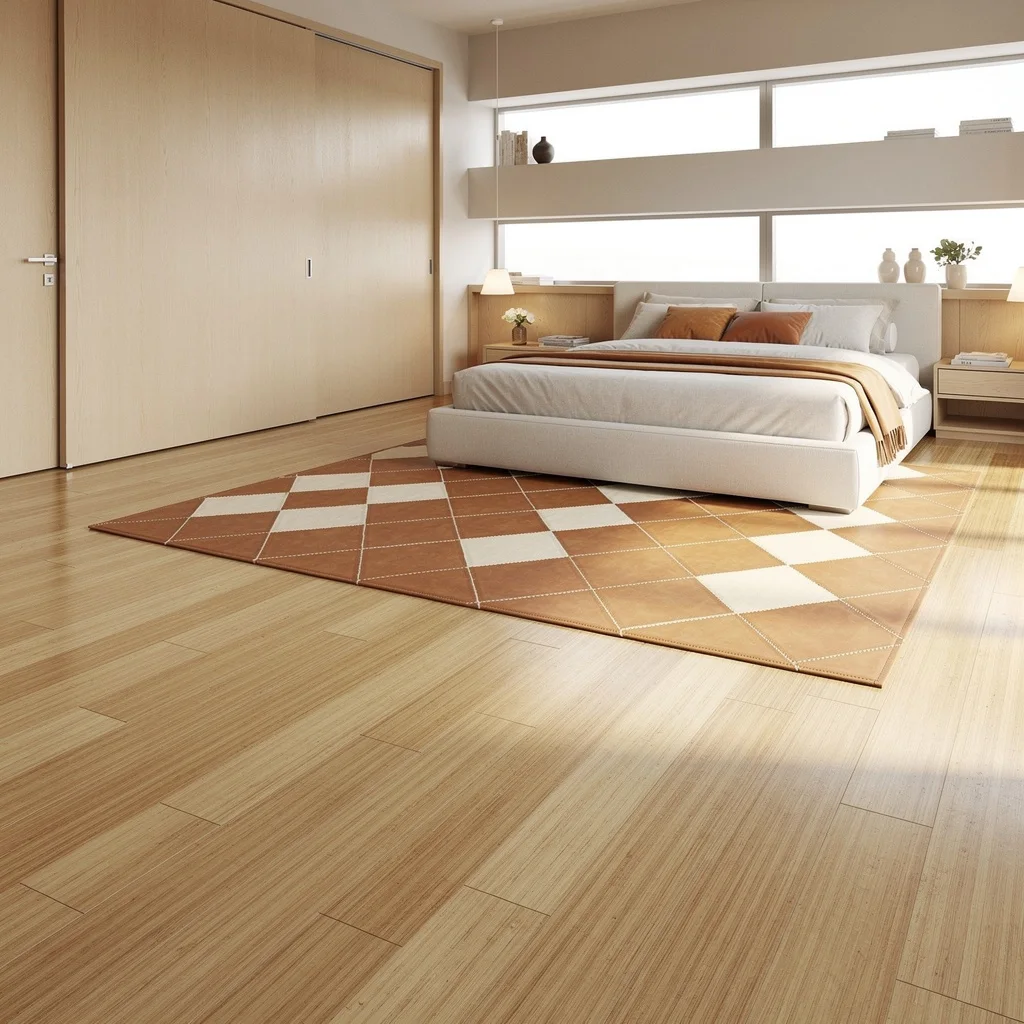
If you want eco without granola, bamboo strip flooring is your secret. Light caramel tones and subtle grain keep things modern and warm. Ribbon windows, diamond-pattern leather rugs, and sleek platform beds pull the look together—nothing heavy, nothing clunky. White oak shelving, seamless doors, and soft daylight cultivate designer vibes. Pro tip: Don’t let the floor fight with your rug—always pick leather patterns that echo the wood grain. Bamboo likes clean lines, so skip ornate textiles. Visual engagement means layering, not chaos.
Final Thoughts
A bedroom floor that has been chosen properly — for its material qualities, its acoustic properties, its visual relationship with the room’s palette and furniture, and the daily experience of living with it — transforms how the room functions and how it feels in a way that paint colours, bedding, and furniture simply cannot replicate. It is the foundation on which everything else sits, literally and figuratively, and treating it as an afterthought or a budget line to be minimised is the single most reliable way to ensure that every other good decision in the room is working harder than it should to compensate. Get the floor right and the room becomes significantly easier to get right everywhere else.