
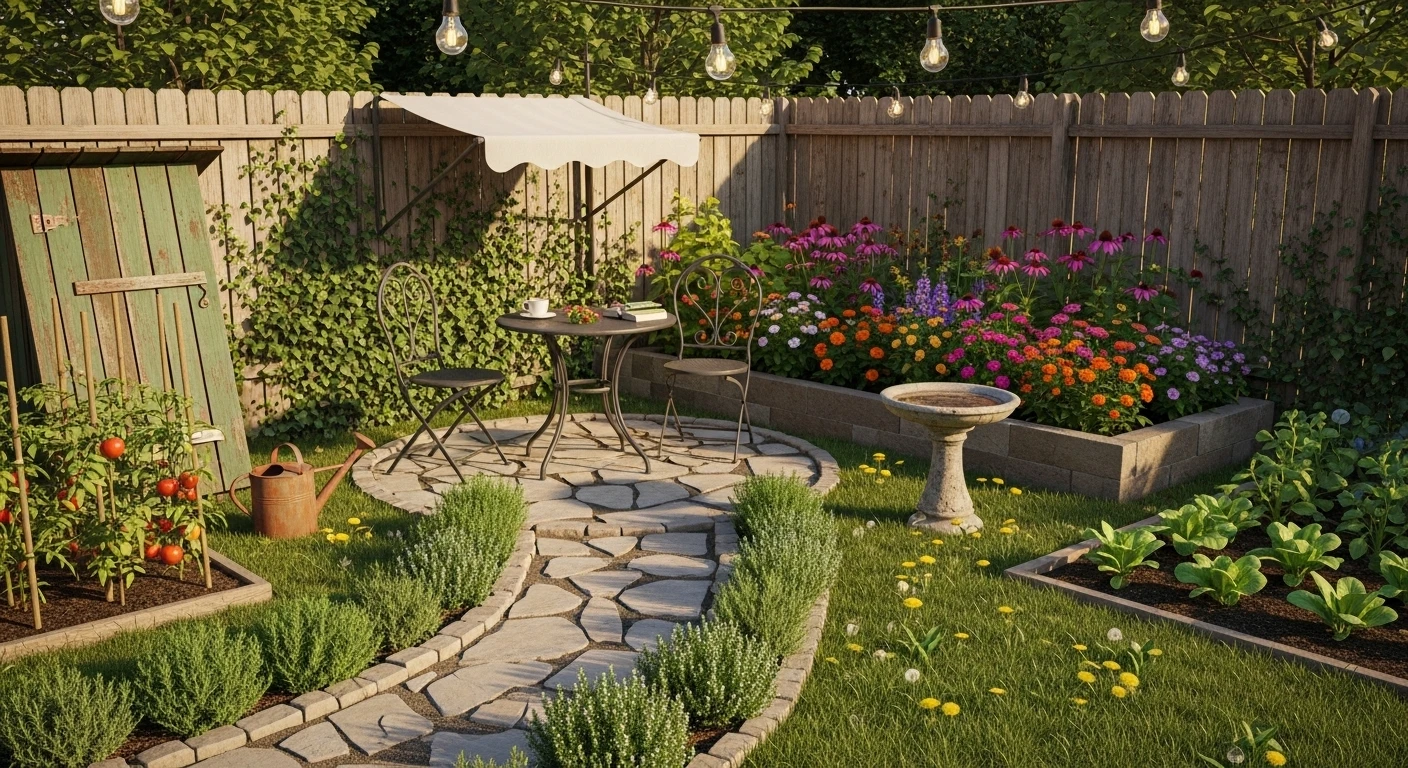
Somewhere between buying the house and accepting the yard as-is, most people make a quiet, unspoken peace with the fact that their backyard garden is simply not going to be anything to write home about. The lawn does what lawns do, a couple of shrubs exist near the fence, and that’s roughly the extent of the vision. It’s not bad, exactly. It’s just not anything.
The thing about backyard gardens specifically — as distinct from patios, pools, or decks — is that they ask for a different kind of commitment. You’re not buying furniture or pouring concrete. You’re working with living things that grow, change, respond to what you do with them, and compound their beauty over time in a way that no hardscape investment can replicate. A well-planted backyard garden in its third year is something entirely different from what it was at installation, and that quality of accumulated, evolving beauty is worth the initial effort it takes to get the planting decisions right.
The Excuses That Are Keeping Your Backyard Garden Generic
Garden design conversations tend to get derailed very quickly by constraints that turn out, on closer inspection, to be softer than they first appear.
“I Don’t Have a Green Thumb” – This is a statement about past plant choices, not a fixed personal characteristic. Most plants die in neglected backyards because they were wrong for the conditions, not because their owner is uniquely incapable. Match the plant to the light, water, and soil situation that actually exists in your yard rather than the one you wish existed, and the success rate improves dramatically.
“I Don’t Have Time to Maintain It” – A garden designed around low-maintenance perennials, self-seeding annuals, and established shrubs requires significantly less intervention than the bare lawn it typically replaces. The problem is that most people think low-maintenance means minimal planting, when it actually means smart planting — the right things in the right places, left largely alone to do what they do.
“My Yard Is Too Small / Too Shady / Too Awkward” – Every constraint that feels like a limitation is actually a design brief. Small means intimate and enclosed. Shady means ferns, hostas, and the kind of dappled woodland atmosphere that sun-drenched gardens can’t achieve. Awkward means the finished result will look more personal and site-specific than any standard rectangular layout ever could.
What Makes a Backyard Garden Actually Work
The gardens that get saved to inspiration boards and revisited repeatedly share qualities that have nothing to do with budget and everything to do with a few core principles applied consistently.
Layering Creates Depth – A flat plane of same-height plants reads as a hedge, not a garden. Combining ground-level plants with mid-height flowering perennials and tall structural specimens at the back creates the kind of visual depth that makes even a narrow planting bed look like a proper garden rather than a border.
Repetition Creates Coherence – Planting one of every interesting thing you encounter at the garden center produces a collection, not a garden. Repeating key plants — the same rose in three spots, the same ornamental grass at intervals along a bed — creates visual rhythm that makes a planting scheme feel designed rather than assembled.
The Path and the Planting Are One Design – How you move through a backyard garden is as much a part of the design as what’s planted in it. Stepping stones that disappear into planting, pathways that curve to reveal the garden gradually, gravel that mingles at the edge with ground-cover plants — these transitions between hard and soft elements are where gardens develop their character.
The One Investment That Every Backyard Garden Needs
Time. Not money, not professional help, not a complete redesign — time for the planting to establish, fill out, and become the thing it’s working toward in its first season. The gardens that look extraordinary in photographs are almost always several seasons old, which means the original investment in plants has had time to compound. Buy good plants, put them in the right conditions, resist the urge to overplant immediately, and then give the whole thing room to develop. The gap between a backyard garden that looks newly installed and one that looks like it belongs there is almost entirely measured in patience.
Backyard Garden Ideas
Sweeping Lawn, Flowering Borders, and a Garden That Grew Up Around the House:
Posts from the cozyplaces
community on Reddit
There is a particular quality to gardens that have been planted and tended over many seasons — a settled, unhurried confidence that newly designed spaces take years to develop and never quite fake convincingly — and this backyard has it in abundance. A deep green lawn sweeps from the house toward a metal arch at the garden boundary, flanked on both sides by mixed flowering borders where rudbeckia, agapanthus, and tropical foliage compete cheerfully for space without any of them losing. Climbing plants scale the house facade itself, softening the architecture and connecting the building to the garden in the way that only time and the right plant choices together can achieve. The overall effect is of a garden that was tended rather than installed, which is the most compelling endorsement any outdoor space can earn.
Carved Stone Path, Cottage Flowers, and a Gate Worth Having:
The ornate carved timber gate in the corner of this garden is doing something quite specific — it’s implying that there’s more beyond it, which makes the space you’re already in feel like the beginning of something rather than the entirety of it. Irregular flagstone stepping stones curve through densely planted beds of red geraniums, yellow marigolds, purple verbena, and white alyssum, with clipped mounding shrubs providing structure among the flowering abundance. A wooden potting bench styled with terracotta pots and a whimsical polka-dot birdhouse adds the kind of personal detail that makes a garden feel lived-in. String lights and a wall-mounted lantern overhead seal the atmospheric deal once the sun goes down.
Pergola Corner Patio With Cottage Planting:
This backyard succeeds by blurring the line between garden and outdoor room so thoroughly that neither category quite applies on its own. A grey wicker L-shaped sectional sits on brick pavers under a timber pergola draped with climbing plants, with a wicker drum coffee table and jute rug pulling the arrangement into something that reads unmistakably as a room. Around and between the paving, the garden presses in with generous enthusiasm — circular stepping stones emerge from a grass patch flanked by lavender and black-eyed Susans, large-leaf tropicals crowd the fence line, and pink hydrangeas bloom behind the sofa like particularly well-placed wallpaper. Filament string lights under the pergola handle the evening shift without any help from anything else.
Vine-Covered Pergola Bistro Corner:
It takes confidence to look at a small walled backyard space and decide that a bistro table, two folding chairs, and a timber bench contain everything the space needs — and this garden has that confidence in full. The walls and pergola frame are completely colonised by climbing vines, creating a fully enclosed green canopy that turns a modest corner into something that feels genuinely removed from wherever it actually is. Hanging basket planters in multiple heights add flowering color without consuming any floor space, Edison string lights weave through the pergola beams overhead, and a vase of fresh cut roses on the table is the only decoration the space requires. At dusk, this corner glows amber from within like a lantern.
Hanging Baskets, Raised Planters, and Lawn:
The scale of ambition in this backyard garden is immediately apparent and consistently delivered upon — multiple timber raised planting beds at ground level overflow with hot pink peonies, geraniums, and mixed foliage, while a full collection of hanging basket planters suspended from structures and tree branches fills the overhead space with cascading pink and purple blooms that make the whole yard feel like the interior of a flower market. A small central lawn of vivid green provides the visual anchor that stops all that floral abundance from becoming overwhelming, and two timber garden benches with patterned cushions offer seating that’s embedded in the planting rather than separate from it. The tree canopy overhead frames the entire composition with dappled light that makes everything below it look more beautiful than it already is.
Raised Bed Vegetable Garden With Vertical Wall Planting:
Deciding that a backyard garden should produce food as well as atmosphere is not a compromise — this setup proves it’s an upgrade. White rendered raised beds at ground level grow leafy greens, tomatoes, and herbs in generous, organised abundance, while a vertical wall-mounted planter system brings the growing operation upward along the fence face, stacking grey trough planters at multiple heights with cherry tomatoes, strawberries, and herbs visible and accessible without bending down. A timber trellis panel beside the raised beds provides the climbing structure that sprawling plants need, and the clean white rendered walls throughout keep the whole productive garden looking crisp and deliberate rather than allotment-scrappy. The paved pathway alongside means mud is someone else’s problem.
Go Full Futurist: Geometric Drama, But Make It Chic
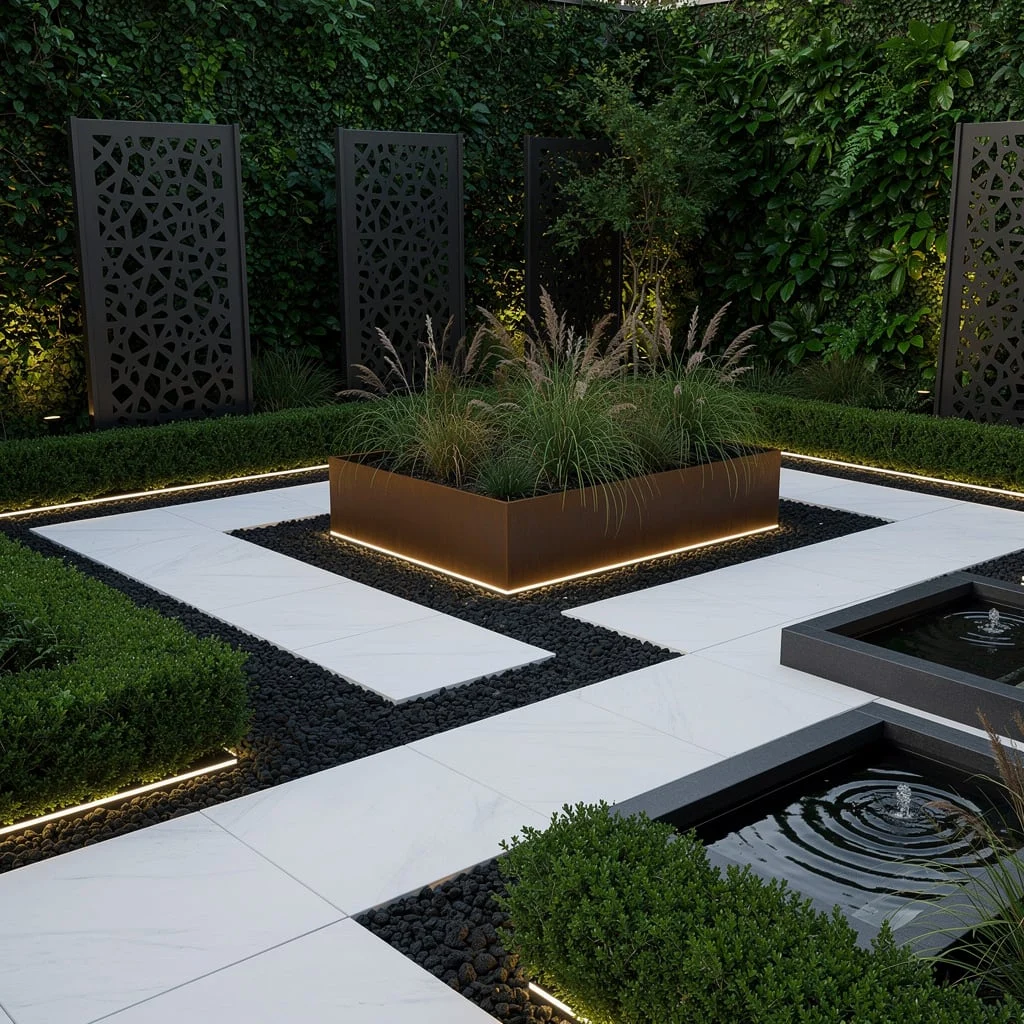
Want your backyard to scream ‘rich architect energy’? Stop with random mulch and get serious. Lay crisp white porcelain tiles in geometric patterns—no crooked lines, please. Frame each path with black volcanic stone for a bold contrast, and plop low boxy hedges everywhere for that clean look. Stack bronze-finished planters with ornamental grasses in the center, then slap LED strip lighting underneath to flex your night game. Install matte charcoal privacy screens for intrigue and fire up minimalist water basins if you actually care about tranquility. Pro tip: Don’t cheap out—integrate lighting in every path to keep those lines punchy after dusk.
Sumptuous Fire Pit Vibes: Luxe-Land, No Camping Allowed
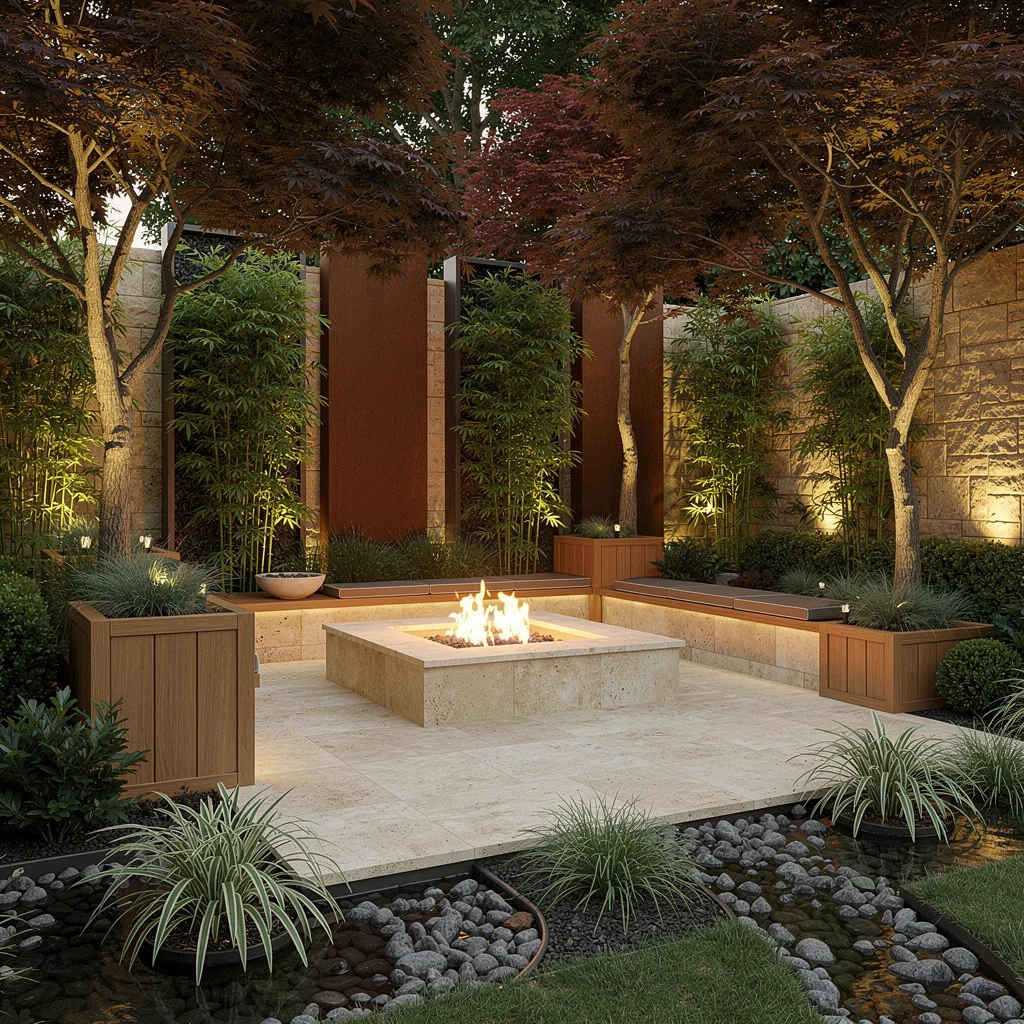
Think ‘rich people relax here,’ not ‘smoke-stained patio furniture.’ If you crave warmth and status, go for a sunken fire pit with travertine pavers that don’t stain. Circle the pit with teak benches (don’t be basic; get the ones with built-in planters) and layer in Japanese maples overhead for that sweet dappled shade. Let river rocks edge linear water streams and sneak bamboo in between corten steel panels for texture and privacy. Style hack: Keep greenery meticulously pruned—if it looks wild, you look broke. And always uplight tree trunks for mood that survives the sunset.
Tiered Designer Garden: Levels Are the New Flat
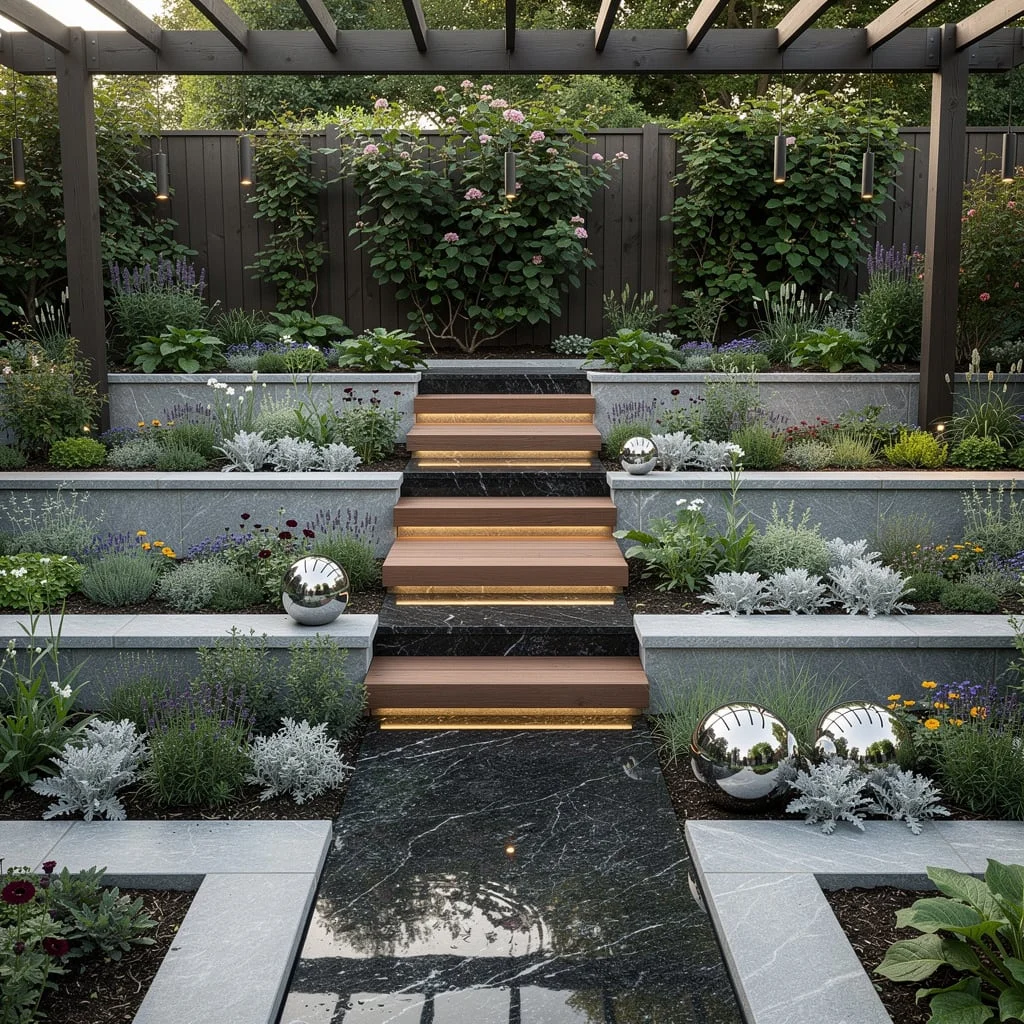
If your garden is flatter than your social life, you’re doing it wrong. Build tiered limestone platforms and edge those beds with polished bluestone for a designer finish. Connect the levels with floating timber steps loaded with LED inlays—why trip in the dark? Drop a reflective black granite water rill in the center and scatter mirrored steel spheres around silvery foliage clusters. Make your fencing moody with dark stained cedar, and climb those greens for contrast. Pro tip: Use pendant-style garden lighting for sophistication—never settle for generic solar stakes.
Patterned Patio Royalty: Structured Seating, No Floppy Lawn Chairs
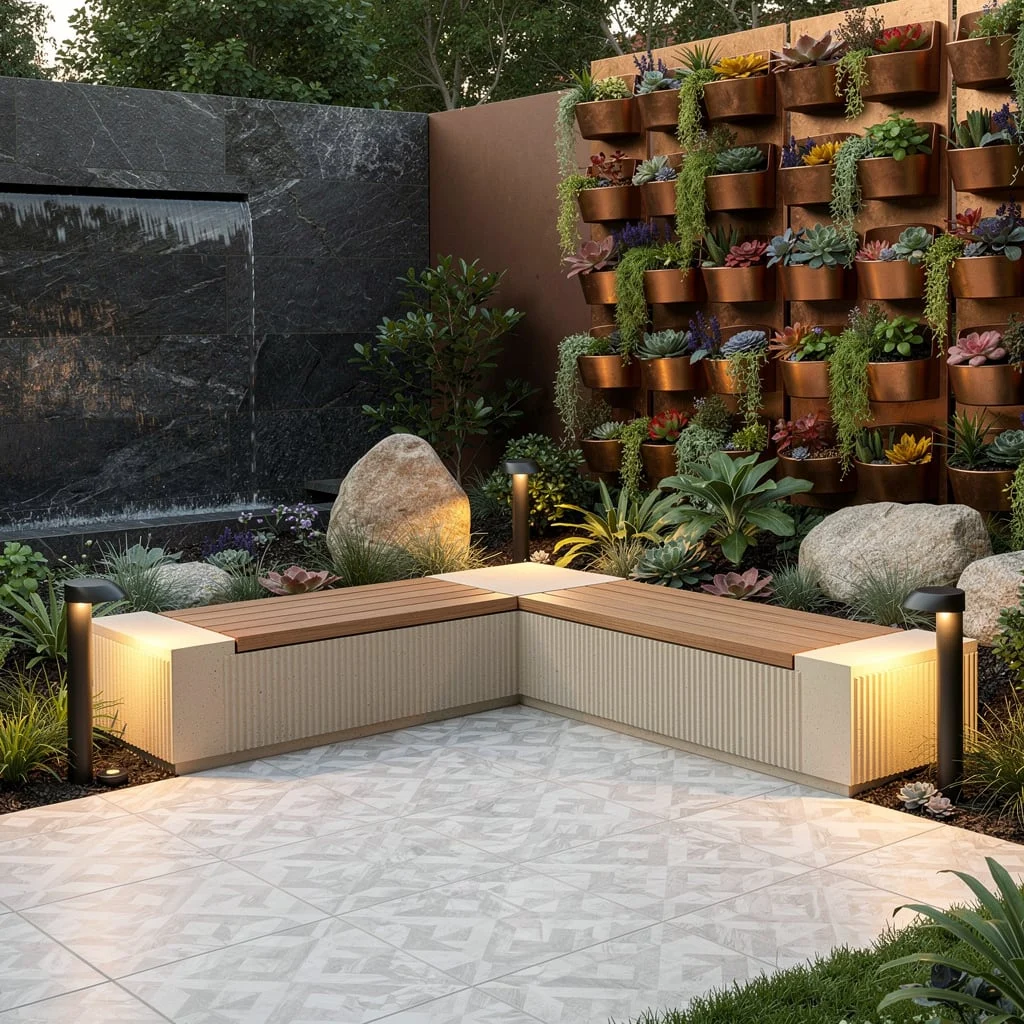
If your patio is giving ‘awkward family barbecue’, fix it with patterned porcelain tile. Arrange modular ribbed concrete planters orthogonally—no random angles here. Build ipe wood benches along the lines for structured lounging, and install a vertical garden wall with staggered terracotta and copper planters loaded with trailing greenery and succulents. Light up garden beds with slender matte black bollard lights (ditch the fairy lights, please), and scatter sculptural stone boulders for designer cred. The must: Add a custom water blade over a basalt wall, but never let it get slimy.
Sunken Lawn Resort: Go Gold or Go Home
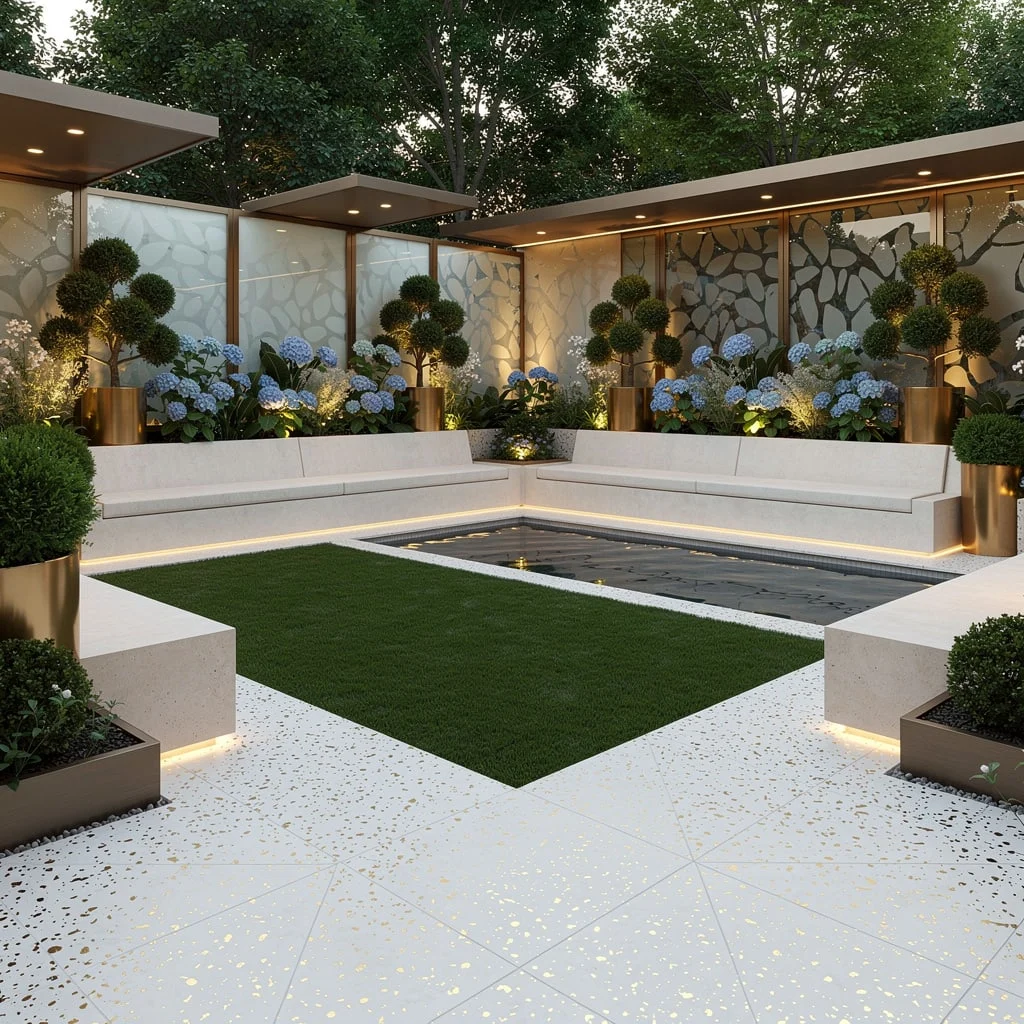
Stop tolerating patchy grass. Sink your lawn under seamless white terrazzo pavers—pick ones with subtle gold flecks for instant flex. Wrap the edges with buff limestone seating and build cantilevered overhangs for shade that won’t trap heat. Plant brushed brass containers with bold topiaries and blue hydrangeas, and run a linear reflecting pool to mirror that sky everyone pretends to love. Always uplight architectural plant forms, and use sandblasted glass screens for privacy without killing light. Major hack: Hide lighting everywhere—every showroom garden glows from the ground up.
Checkerboard Turf: Minimalism That Slaps
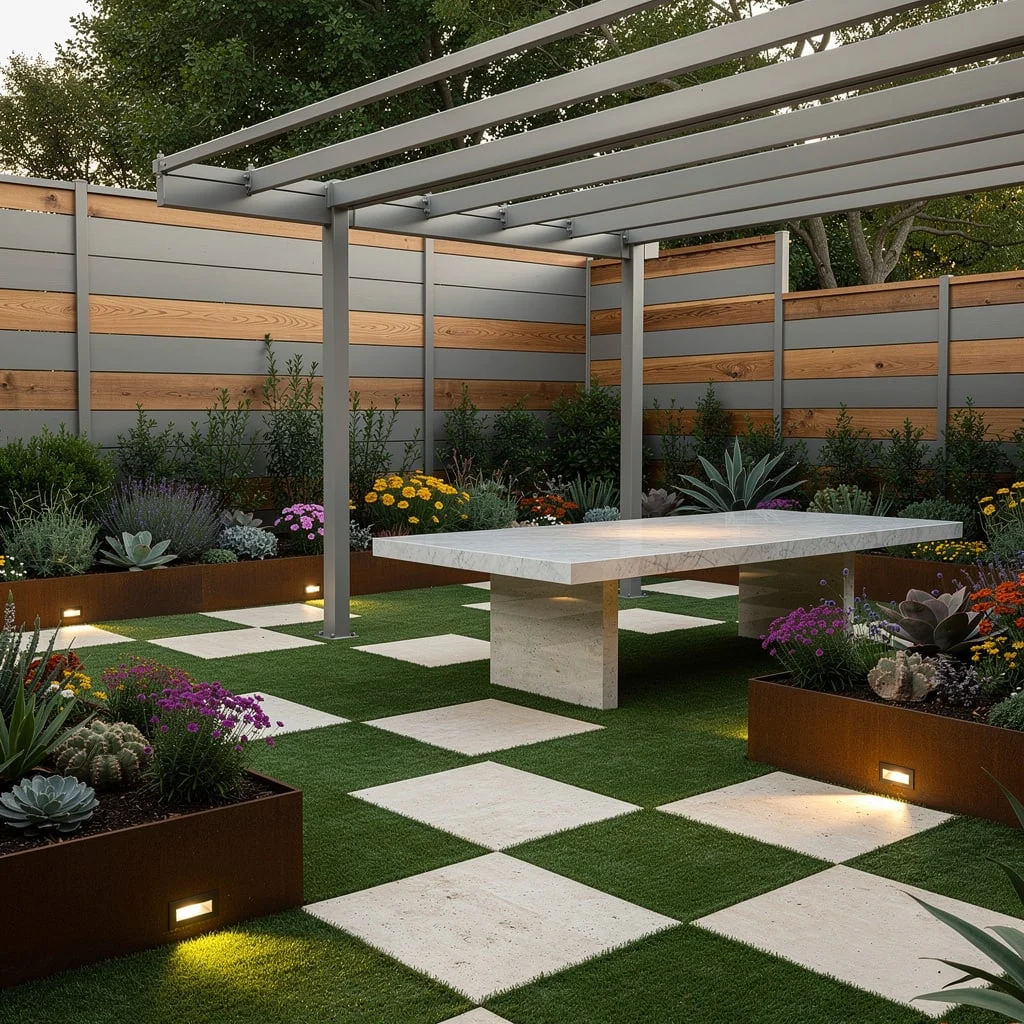
You like order? Create a checkerboard with pale travertine and emerald artificial turf—nature’s just a vibe in this spot. Raise corten steel planters for drought-tolerant blooms and textured succulents. Construct a shade pergola from powder-coated steel and throw a marble-topped dining table underneath for glam with no maintenance. Set low-level garden spotlights into planters to cast epic shadows at night. Fencing is key: Alternate horizontal cedar and grey composite panels for privacy and minimalist style. If you care about Instagram cred, never let turf seams show.
Oasis Pathway: Curve Your Enthusiasm (And Your Garden)
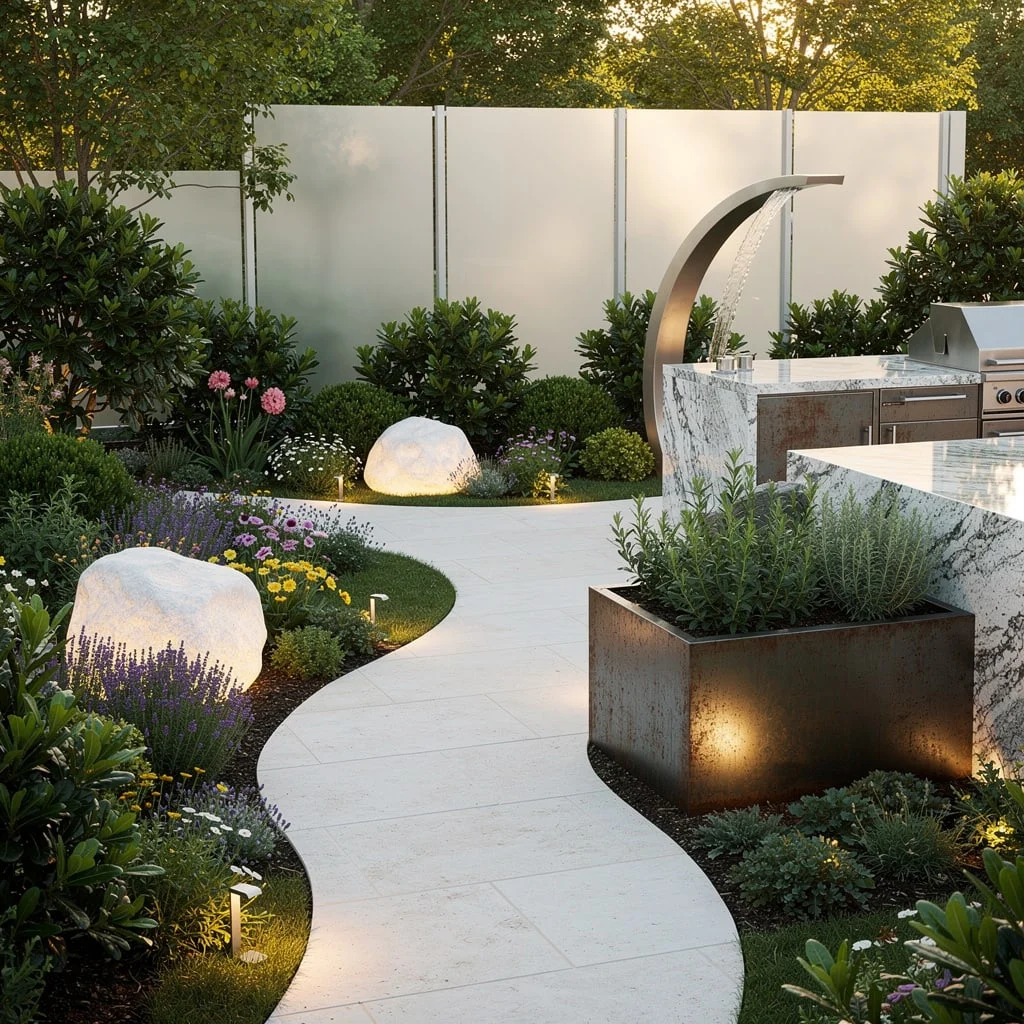
Winding paths are the cheat code to making your backyard look interesting—lay pale sandstone and line it with flowering perennials, glossy shrubs, and illuminated white boulders (yes, rocks can be fancy). Face raised planters in weathered zinc and plant herbs near an outdoor kitchen with actual stone (flamed granite, please). Use in-ground lighting to edge your pathway, and filter sunlight with contemporary frosted glass screens. The big hack: Arch a stainless steel water feature for chilled vibes, and set soft lighting everywhere to make the garden mood last past last call.
Retaining Wall Luxury: Comfort That Feels Rich Without Trying
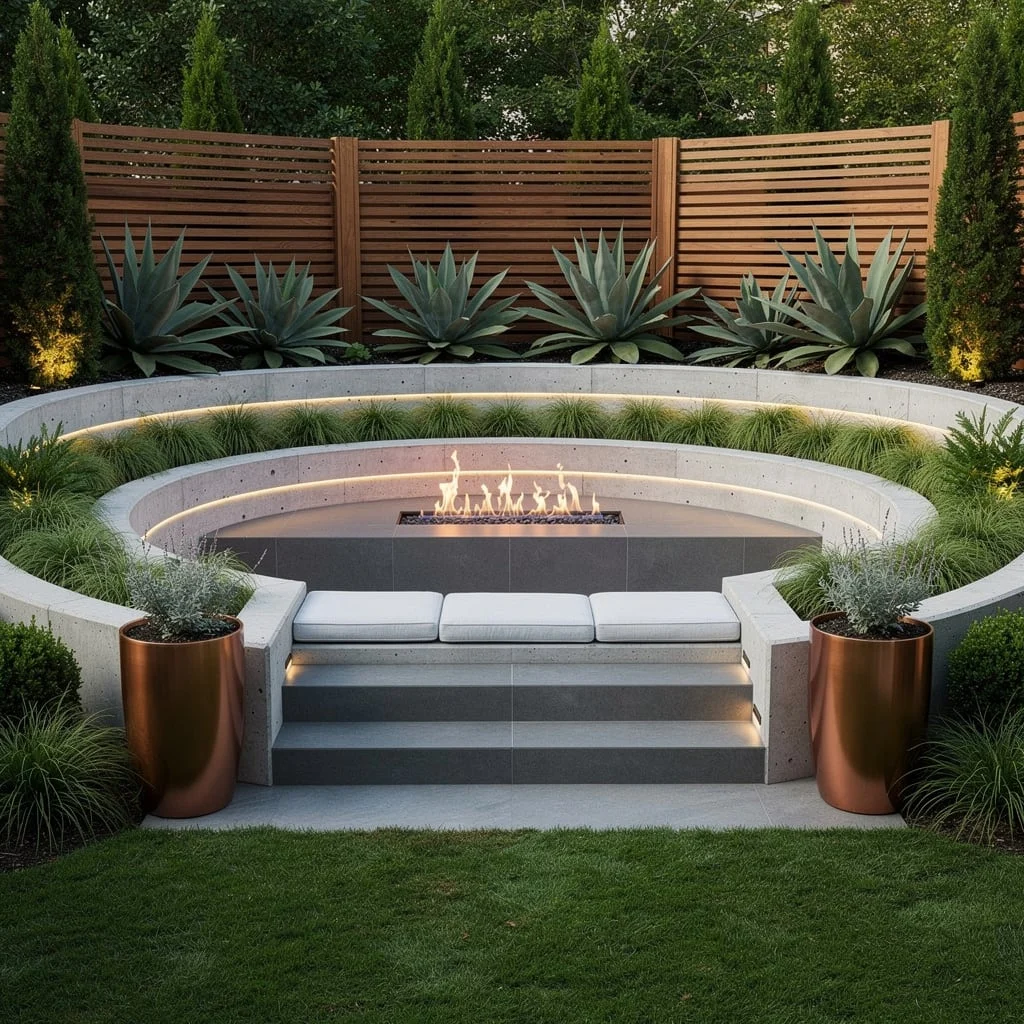
Curved board-formed concrete walls scream opulence, plain and simple. Frame that lush lawn with architectural agave and flowing ornamental grasses—don’t let your plants be boring. Build inset stone steps leading to a sunken lounge clad in graphite ceramic with a linear gas fire feature. Run integrated strip lighting along wall creases for layers that pop. Bookend entry points with polished copper planters, and screen the scene with slatted timber privacy and columnar evergreens. Real talk: Never let your grass creep onto hardscape—it kills that luxury vibe instantly.
Floating Deck Freshness: When Even Your Planters Are Fancy
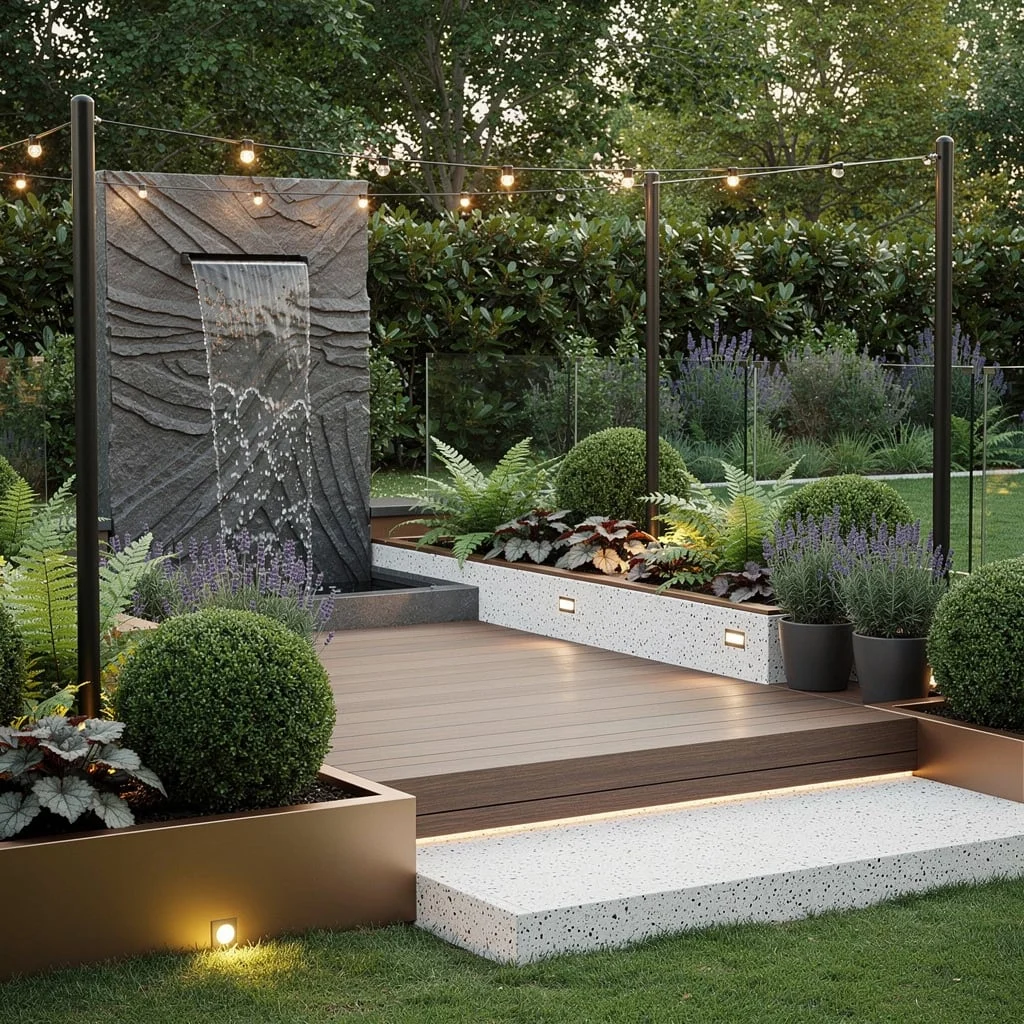
If you need to flex, build a floating hardwood deck and use softly lit planters in satin bronze and textured white terrazzo. Load raised beds with sculptural ferns, heuchera, and spherical boxwoods. Install a vertical wall fountain clad in raked slate—no generic plastic waterfalls allowed. Keep sightlines clear with a glass balustrade instead of chunky fencing. String slimline cable lighting overhead between matte black poles (think chic, not warehouse). Scatter potted lavender and rosemary for the scent and always style in odd numbers—because symmetry is for amateurs.
Urban Grid Garden: Function Meets Flair, No Mess Allowed
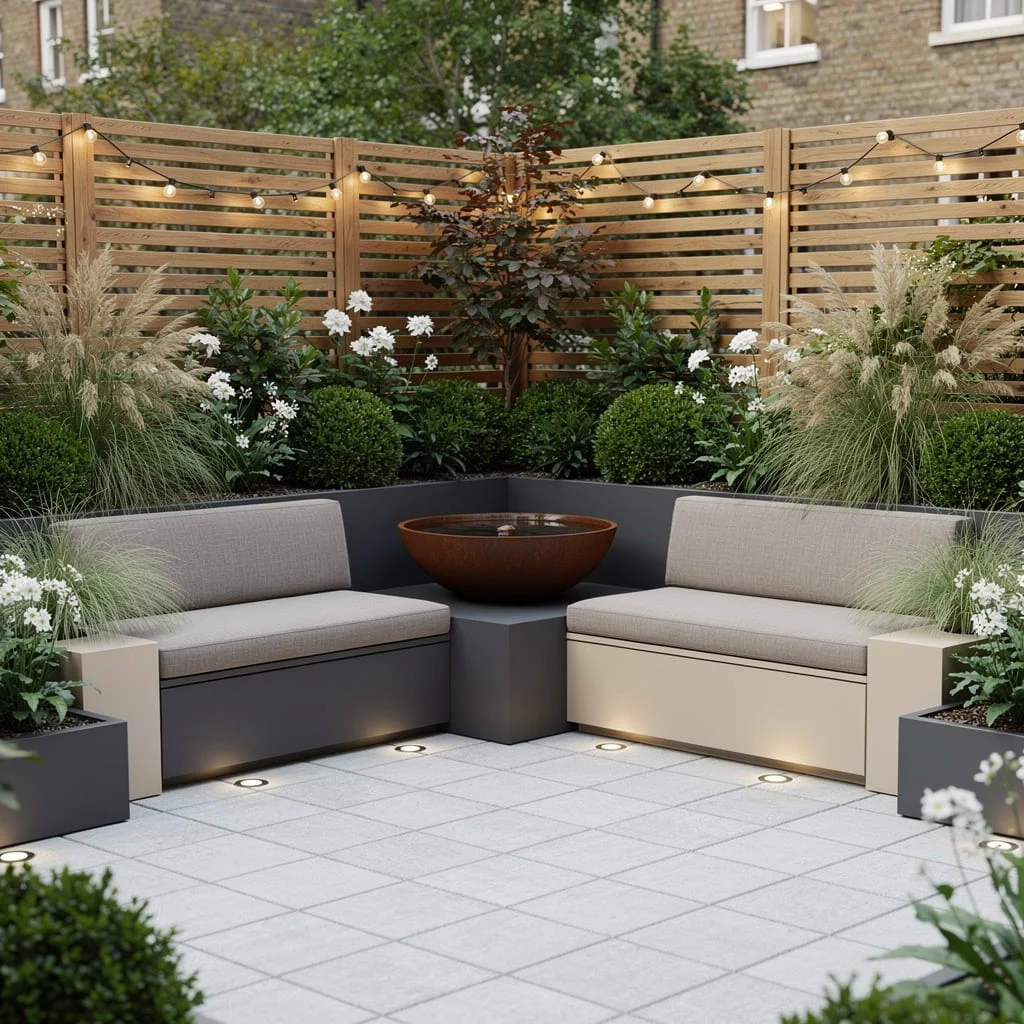
Like things clean with a hint of drama? Lay grid-patterned grey stone paving and stack two-tier planters in matte graphite and champagne tones. Choose yews, ornamental grasses, and white perennials for structure. Set a corten steel water bowl dead center for the flex. Build an L-shaped seating nook with weather-proof taupe upholstery and make sure storage is built in—clutter is cringe. Illuminate with flush recessed uplights and hang festoon lights for atmosphere, not chaos. The tip: Always line timber screens with lights—your guests will thank you, your garden will look expensive.
Final Thoughts
Backyard gardens don’t have a shortcut to looking genuinely good, but they do have a reliable path — plant things suited to your conditions, give them room to develop, and resist the urge to intervene constantly. The gardens that look best are the ones that were given a clear starting direction and then trusted to grow into it.
What ties every garden in this list together is that each one had a clear sense of what it was trying to be. The cottage garden committed to its romantic abundance. The bistro corner committed to its intimacy. The vegetable garden committed to its productivity. That commitment — choosing a direction and following it through with every plant, every material, and every design decision — is the thing that turns a collection of plants in a backyard into a garden worth spending time in. Make the decision, put the right things in the ground, and then go inside and let the garden do the rest.