
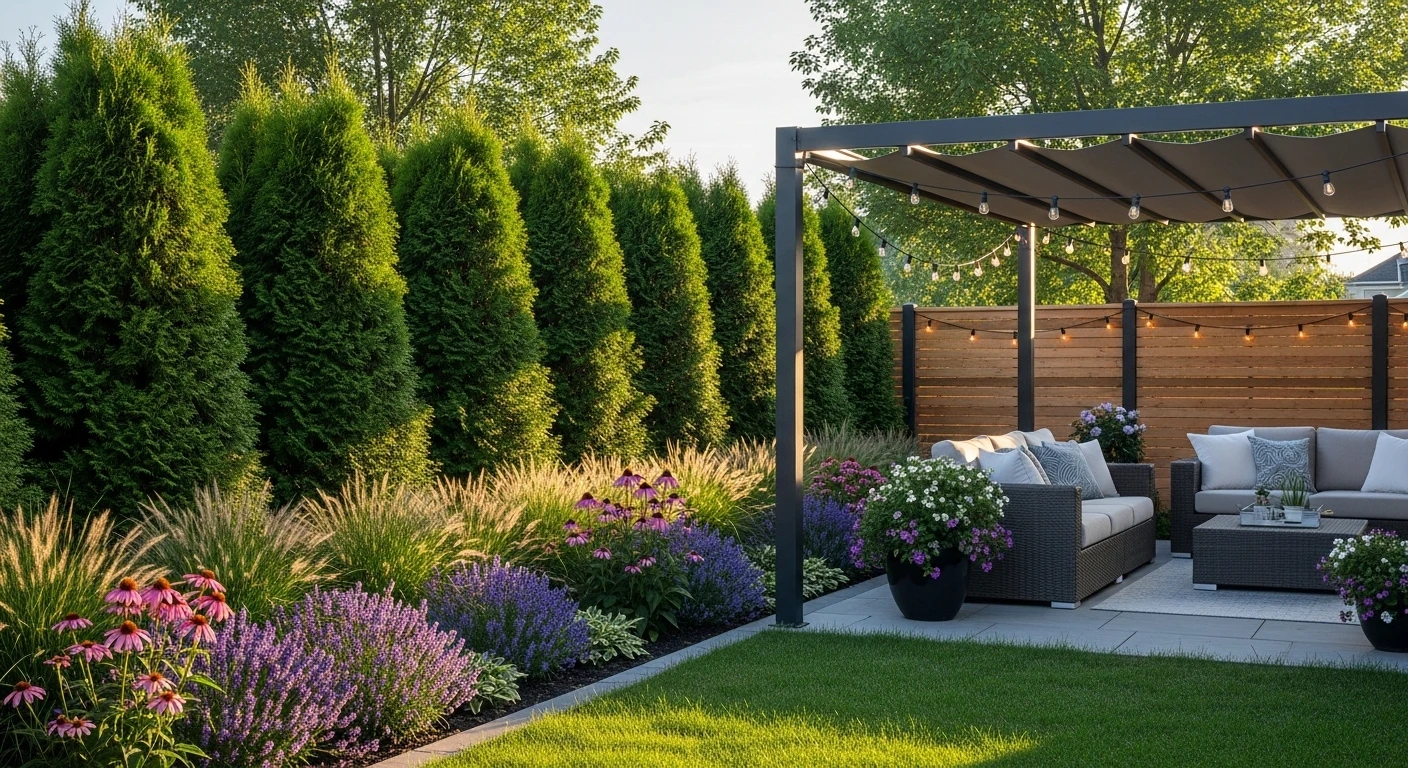
You bought a house. You have a backyard. And yet somehow, every time you step outside to enjoy it, you’re treated to an unobstructed view of your neighbor watering his tomatoes in a bathrobe, the couple three houses down conducting their Thursday argument, and at least one dog that isn’t yours making itself at home on your lawn. Privacy, it turns out, was not included in the asking price.
The average suburban backyard exists in a state of uncomfortable semi-publicity that makes genuinely relaxing out there feel slightly performative — like you’re not really unwinding, you’re unwinding for an audience. And the solutions most people reach for are either eyesores in their own right (six-foot wooden fence panels that look like a construction site boundary) or completely ineffective (a single potted bamboo in the corner that fools no one).
Good backyard privacy doesn’t announce itself. The best versions of it look like garden design decisions that happen to block every sightline in a ten-meter radius, leaving you with both your solitude and your aesthetic dignity intact. These six backyards figured out how to achieve exactly that.
Why Most Privacy Solutions End Up Making Things Worse
The typical homeowner’s approach to backyard privacy follows a predictable and unfortunate pattern that produces results almost as bad as no screening at all.
Solid Fencing That Looks Like Imprisonment – Maximum-height solid timber fencing solves the visibility problem and simultaneously makes every backyard it surrounds feel like a holding facility. Privacy and atmosphere are not the same thing, and a fence that achieves the first while destroying the second has not actually solved the problem — it’s just traded one bad situation for a different one.
Screening That’s Too Small to Actually Work – A single decorative screen panel in one corner, a potted tree that’s three feet tall, a trellis with no plants on it yet — these are privacy gestures rather than privacy solutions. They communicate the intention without delivering the result, which is arguably more frustrating than simply not trying.
Treating Privacy as an Afterthought – Privacy screening installed after the garden is designed will always look like it was installed after the garden was designed. The gardens that feel genuinely private and genuinely designed are the ones where the screening was part of the original concept, not bolted on afterward when someone realized they could see directly into their neighbor’s kitchen.
The Privacy Solutions Worth Actually Committing To
Not all screening approaches are equal, and understanding what each one actually does — functionally and aesthetically — saves a significant amount of money spent on things that look good in a showroom and do nothing in an actual yard.
Living Screens Grow Into Their Job – Bamboo, hornbeam hedging, tall ornamental grasses, and climbing plants on trellis all require patience that a fence panel doesn’t, but the result after two or three seasons is a privacy solution that looks like it belongs in the garden rather than beside it. Living screens also filter noise, provide habitat, and improve with age — none of which can be said for a fence panel.
Laser-Cut Metal Screens Do Two Things at Once – Decorative metal privacy screens with patterned cutouts provide genuine sightline blocking while functioning as a garden design feature in their own right. The shadow patterns they cast across paving and lawn through the day are an aesthetic bonus that solid screening simply cannot offer.
Partial Privacy Is Often More Effective Than Total Enclosure – Complete visual enclosure can make even a generous backyard feel claustrophobic. Strategic screening — blocking specific sightlines from neighboring windows or overlooking buildings while leaving other aspects open — achieves privacy where it’s needed without turning the garden into a walled compound.
What All Successfully Private Backyards Share
The backyards that feel genuinely secluded without feeling enclosed share a quality that’s easy to identify and harder to articulate — the privacy elements feel like they grew there or were chosen for that specific garden rather than selected from a catalog and installed by someone who’d never seen the space. Whether it’s a hedge wall that curves with the lawn, bamboo planted in white pebble against a rendered wall, or a decorative screen backed by a specimen olive tree, the screening is in conversation with everything around it. That integration — between the privacy solution and the garden it sits in — is what separates backyards that feel like sanctuaries from ones that feel like enclosures.
Backyard Privacy Ideas
Dark Fence, Egg Chair, and Letting the Architecture Do the Work
What would you do to create some privacy from my neighbours?
by u/UJ_Reddit in gardening
Not every privacy solution needs to be elaborate to be effective, and this modest British terraced garden proves the point without fuss. Dark charcoal timber fence panels run the full perimeter at a height that genuinely blocks neighboring sightlines, and the decision to paint both the fence and the outbuildings in the same dark tone creates a visual continuity that makes the whole boundary feel considered rather than assembled from whatever was available. A rattan egg chair suspended from a simple post becomes the garden’s focal point — and crucially, it faces inward toward the house rather than toward any boundary, which is the arrangement that actually makes a small private garden feel settled. Simple, honest, and more effective than it looks.
The Hornbeam Hedge Wall:
There are privacy solutions and then there is this — a hornbeam hedge clipped to a height and density that makes it function as a living wall with a precision that no timber fence panel has ever achieved. The curved line it follows as it extends down the garden creates movement and visual depth that a straight boundary never produces, and the striped mown lawn running alongside it emphasises that curve in a way that makes both elements look better for the relationship. What makes this categorically more impressive than any fencing option is that it improves every single year as it matures, thickens, and settles further into the landscape. It takes patience that most homeowners claim not to have and produces results that all of them want.
Bamboo Cane Panels and Tropical Planting:
Bamboo cane screening panels as a fence treatment are a different proposition from bamboo grown as a plant — and this tropical backyard corner uses both the aesthetic and the material with the kind of full-commitment energy that half-measures can’t produce. Dark bamboo cane panels wired in horizontal rows create a warm, textural fence surface that immediately establishes a tropical atmosphere before a single plant has been encountered, and the planting in front of it — palm fronds, banana leaves, burgundy-toned cordylines, and broad tropical ground cover — layers against that backdrop in a way that makes the fence and the garden feel like a single continuous composition. Crushed gravel and white pebble at ground level keeps the floor plane clean enough to let all that foliage drama read without competition.
Laser-Cut Metal Screen and Specimen Planting:
A matte black laser-cut decorative screen with an abstract geometric pattern installed against a compact urban garden does something a solid fence categorically cannot — it creates shadow play, filtered views, and a decorative surface that functions as garden art rather than merely a barrier. Paired with a dark slatted planter box of feathery bamboo immediately in front and a dramatic spiky yucca planted in white pebble to the side, the screening becomes part of a composed backyard vignette that reads as a deliberate design decision from every angle. Circular stone paving stepping across the artificial lawn adds a playful ground-level detail that prevents the whole composition from taking itself too seriously, which is exactly the right balance.
Dark Timber Lattice and Climbing Vines:
This urban courtyard garden found privacy by accepting that the buildings overlooking it weren’t going anywhere and designing around that reality rather than pretending it didn’t exist. Dark stained timber lattice panels run the full perimeter at height, and climbing vines have been trained across the surface with enough time to establish a genuinely lush green coverage that turns the lattice from a structure into a living wall — the dappled light patterns the vines cast across the flagstone paving below are an aesthetic bonus that no solid screening option could deliver. A dark wood sofa and armchair with generous cream upholstery anchor the seating zone, and large white ceramic planters at key positions add the planting presence that softens every hard edge in the composition.
Steel Walls & Bamboo: Get Modern or Get Gone
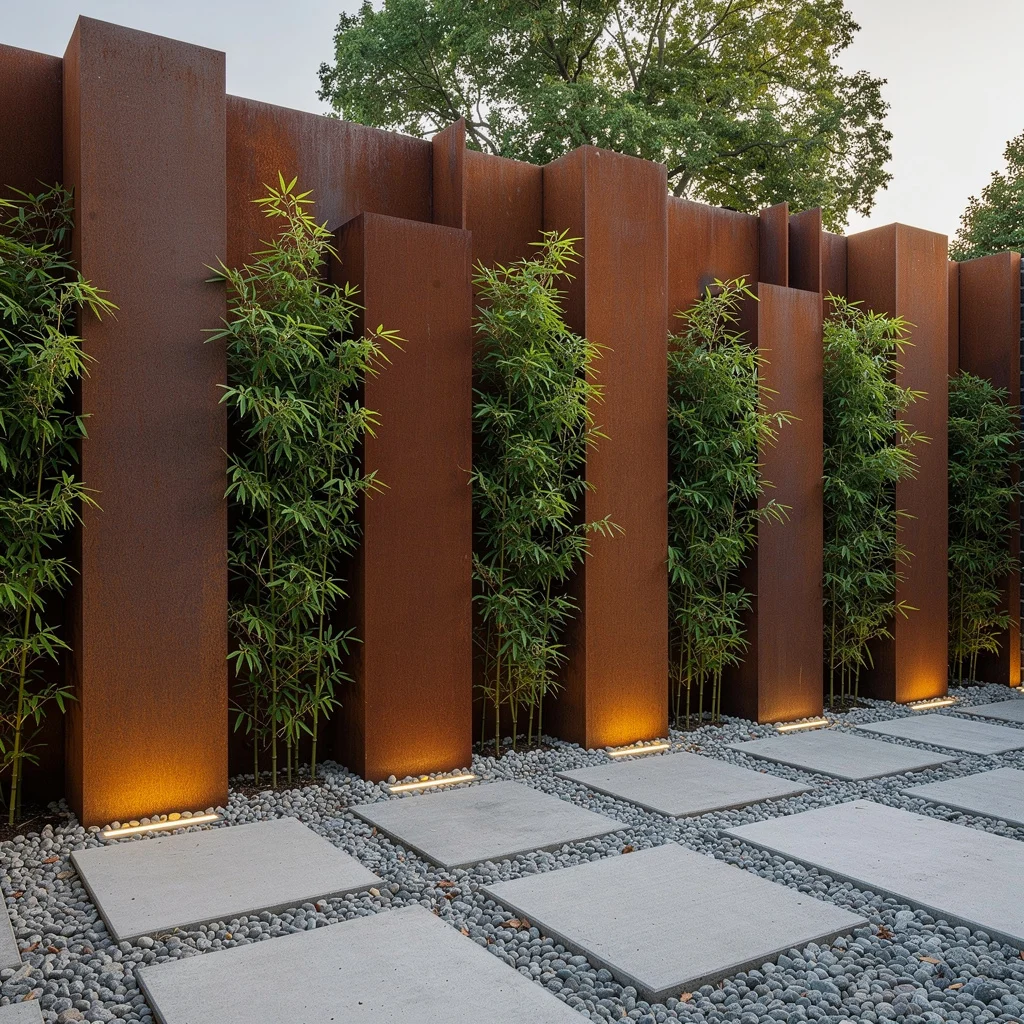
Chase that architectural vibe if you want your backyard to scream ‘designer fortress’ instead of ‘sad picnic’. Install staggered corten steel privacy panels for instant edge, then slot vertical planters right between the gaps—jam them with UNRULY bamboo, not those weak ferns everyone’s using. Drop wide concrete pavers onto a bed of crunchy river pebbles for contrast bold enough to make your socks roll up. Finish the look by hiding LED strip lights around the perimeter—no, not fairy lights (grow up)—for after-dark coolness. Don’t forget: always stagger those steel panels, never align them flat or you’re one step from a prison yard.
Glass Partitions: Privacy—But Make It Bougie
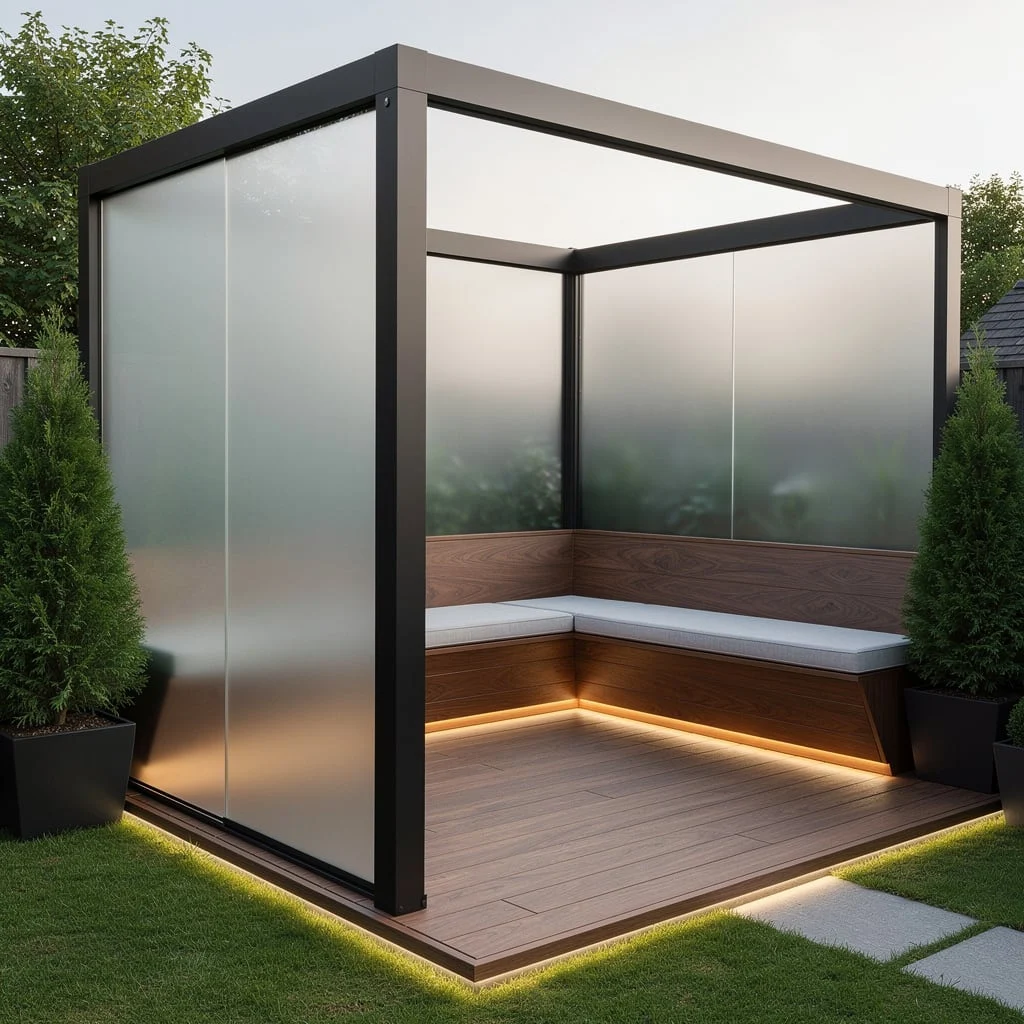
Slide those frosted glass partitions into your life if you want diffused daylight without the neighbor’s dog judging your lounge game. Use slim matte black aluminum beams to frame your glass, and line at least one side with built-in walnut benches. Go big or go home on walnut—anything less is cheap IKEA. Keep the deck wood, keep it seamless, and layer container evergreens just inside the perimeter for actual softness. Install floor-level indirect lighting only (no overhead sauce), and don’t even think about putting throw pillows with floral prints on this setup. Pro tip: never use glossy glass—frosted only, unless you want your backyard to scream suburban dentist office.
Teak Screens & Green Walls: Call Nature’s Block Button
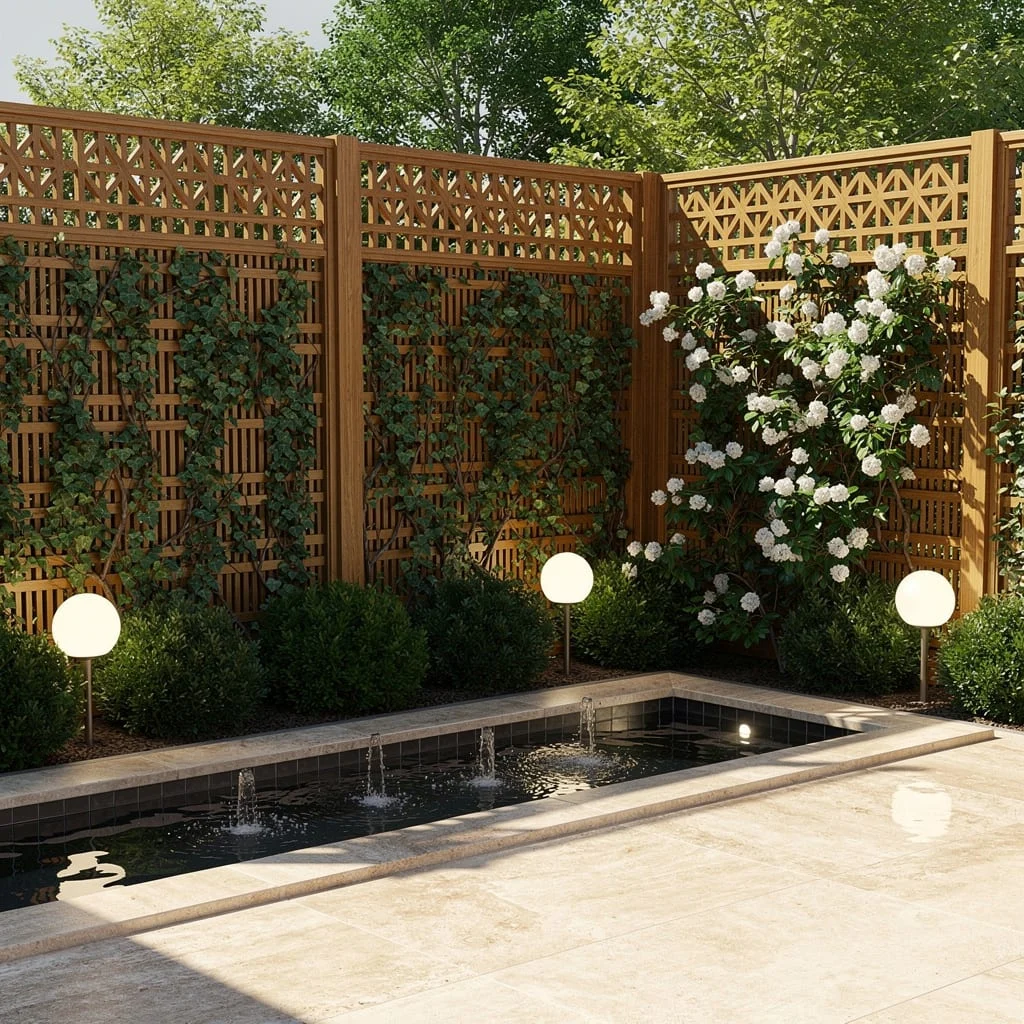
Want your backyard to feel like a secret spa? Throw down vertical teak slats with horizontal lattice, but don’t leave them naked—train fresh ivy and jasmine right up those screens ASAP. Use oil-finished teak, not stained, unless you like looking at water rings forever. Build your patio from polished travertine (not gray, go pale), and anchor with a water feature that trickles, not splashes, because serenity > chaos. Drop spherical lanterns low in your shrubs to keep the mood soft, but never hang them overhead. Always let your climbing plants hit at least halfway up the screens before inviting anyone over—bare wood screams ‘just moved in’.
Living Wall Luxe: Give Your Backyard a Jungle Upgrade
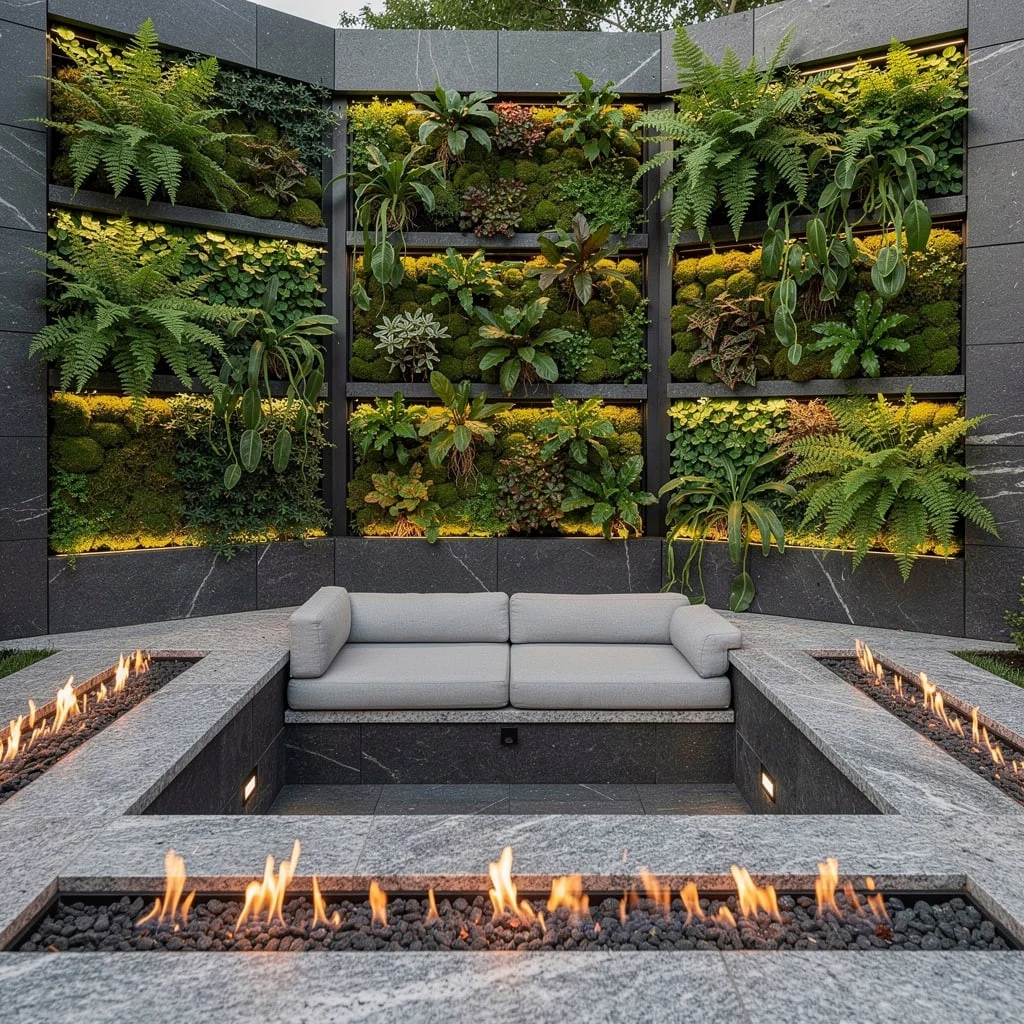
Ready for the rich-kid sanctuary flex? Secure modular panels and pack them tight with ferns, moss, trailing philodendron—no boring pothos allowed. Frame the whole system with chunky charcoal stone, then install a sunken seating pit with weather-resistant upholstery you could nap on—none of this plastic patio garbage. Lay linear gas fire troughs around your pit for heat that doesn’t shout ‘campfire’. Sneak in LED uplights behind the panels, but only use subtle tones, or you’ll look like a Vegas nightclub. Here’s the real trick: your living wall panels better be dense, not spaced, or the privacy is pure placebo.
Curved Limestone Walls: Soft Edges, Strong Privacy
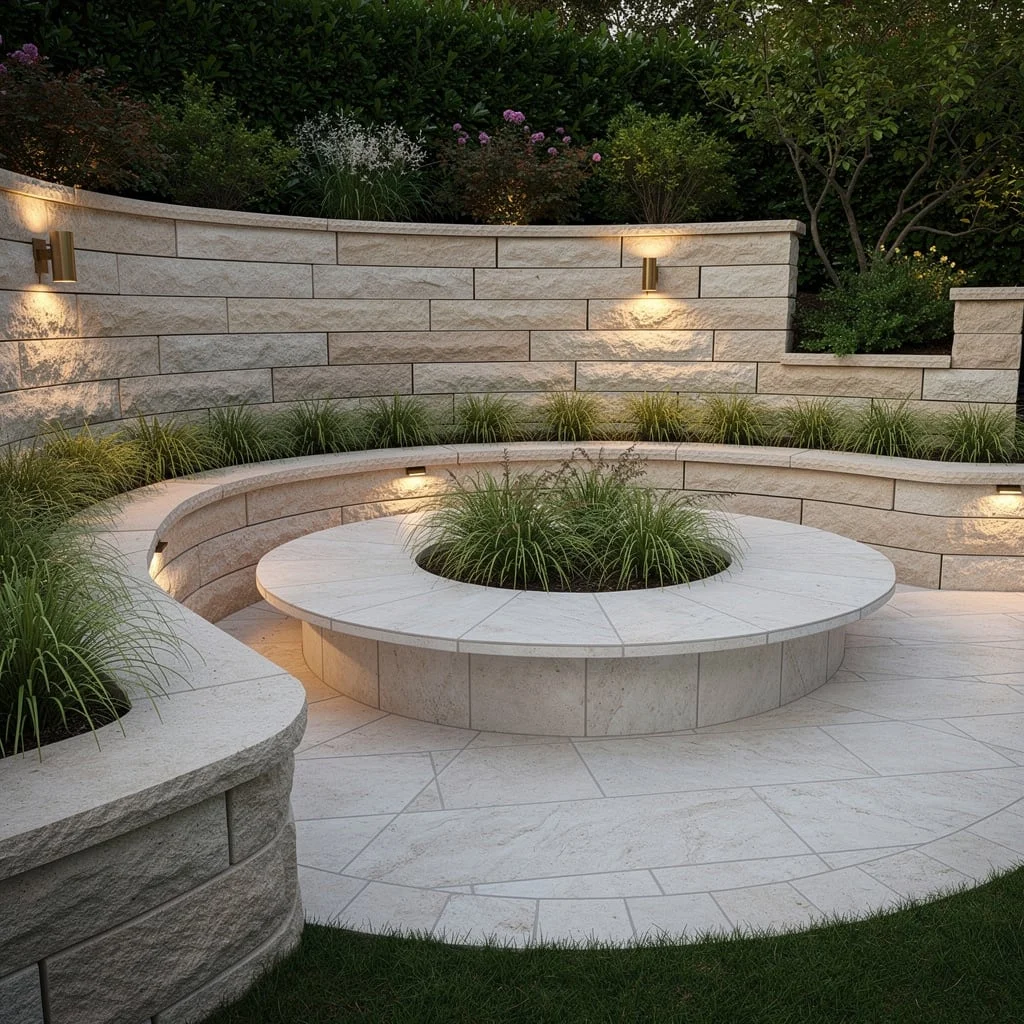
If you’re over the whole rectangle-fence look, get curved, undulating limestone walls in stacked heights that break up sightlines for real. Demand sandblasted stone—anything polished is a fingerprint magnet, and you know you’re never cleaning it. Build integrated planters for ornamental grasses right inside your wall system, and use round porcelain tiles for the center seating zone since squares are ‘meh’ now. Light it up with discreet brass sconces, never cheap nickel, and let shadows play the vibe in the evening. Rule number one: always vary the wall height so your neighbors can’t peek on the sly.
Bronze Mesh & Sculpted Greenery: Old Money Meets Modern Metal
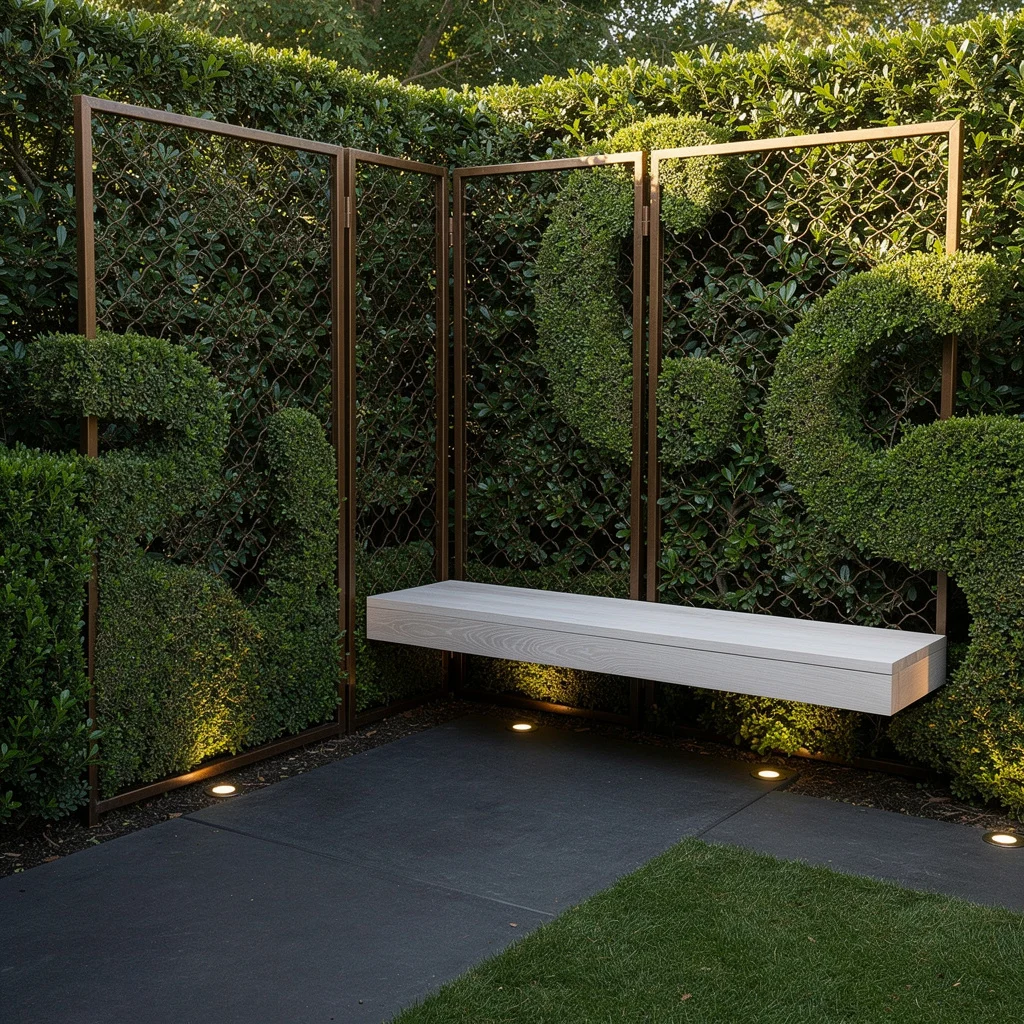
Quit playing with flimsy trellis kits—install custom bronze-mesh panels and train hornbeam hedges to grow in actual sculptural shapes. Prune those hedges hard, not fluffy: hedge art > hedge chaos. Set your path with charcoal concrete (never light gray), then plunk a minimalist pale ash wood bench at the end. Ground-level recessed lighting is a must, not solar stakes, to show off the plant forms at night. Never crowd the mesh panels too close together or you lose both air and attitude; keep enough spacing so sunlight does the sparkle thing without turning your backyard into Times Square.
Resin Walls: Go Futuristic Without the Tacky
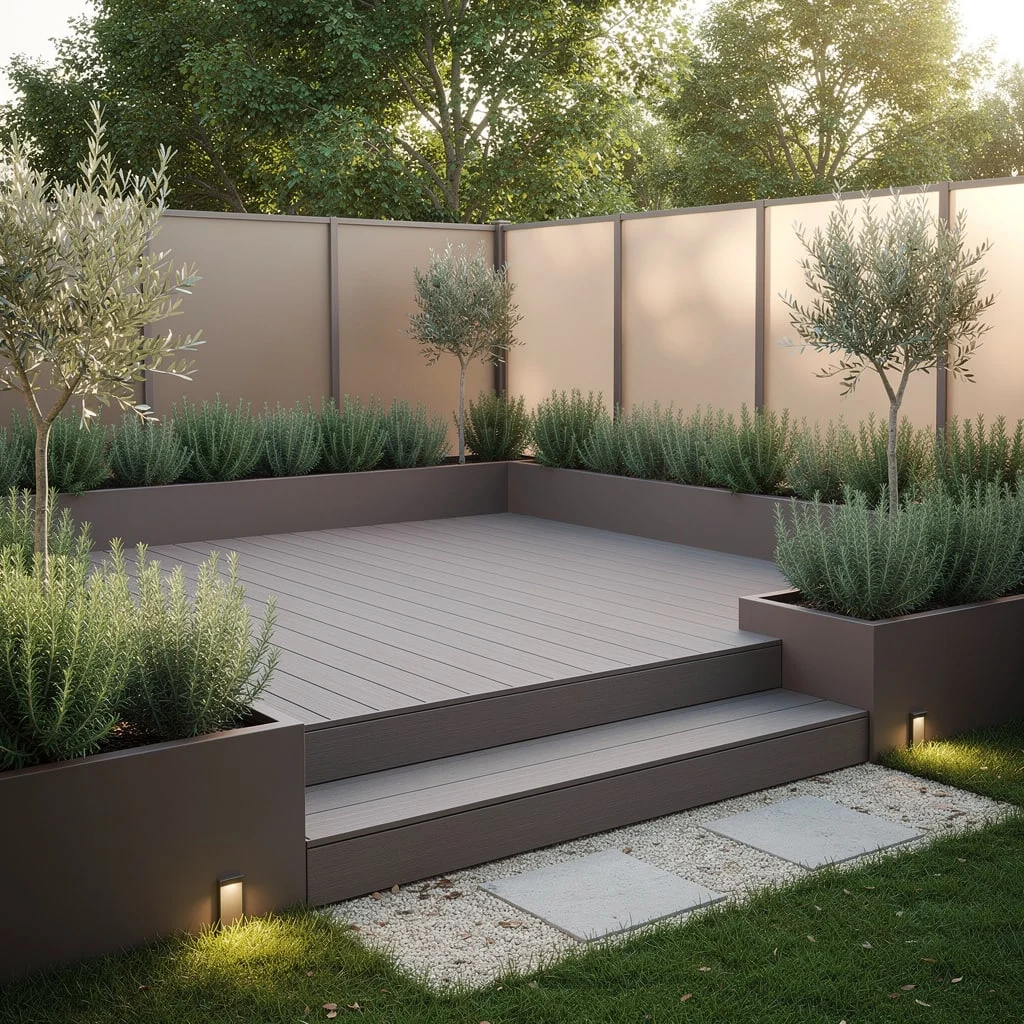
You want privacy and softness but hate actual walls? Dump the fence, install fiber-reinforced resin partitions with a muted taupe tint—no bright colors, please. Raise your composite deck so nobody’s peering in, and run built-in planter troughs full of rosemary and dwarf olive trees all the way around (no half-baked flower beds). Lighting is everything—go low-set, pathway lights only, or your backyard turns into a football field. The trick here: never use clear resin unless you want everyone to see you eat ice cream at midnight. Go semi-translucent for the ‘I’m private, but still designer’ effect.
Gabion Walls: Go Rugged, Stay Chic
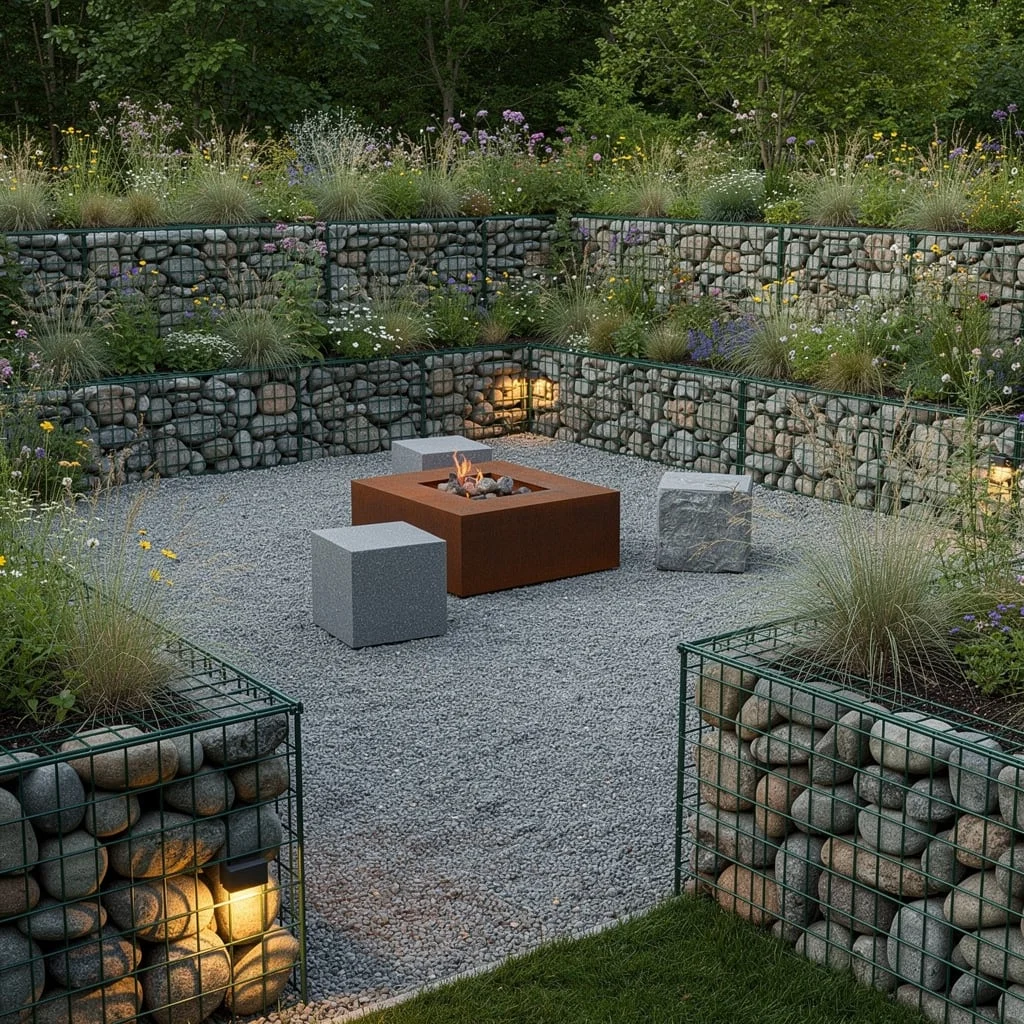
If you want to flex a designer fortress vibe that doesn’t read as ‘rock pile’, build linear gabion walls using smooth river boulders trapped in painted deep green mesh cages. Top them and plant alongside with native grasses and wildflowers—none of that tame lawn stuff. Anchor your space with a gravel terrace, not mulch, and drop a corten-steel fire pit plus basalt seating cubes for maximum drama. Uplights are crucial at night, but never expose your bulbs—hide them for texture, not disco. Always paint your gabion mesh in colors that blend, never silver, unless you love the look of local jail fencing.
Bronze Panels & Hedging: Luxe Layers Only
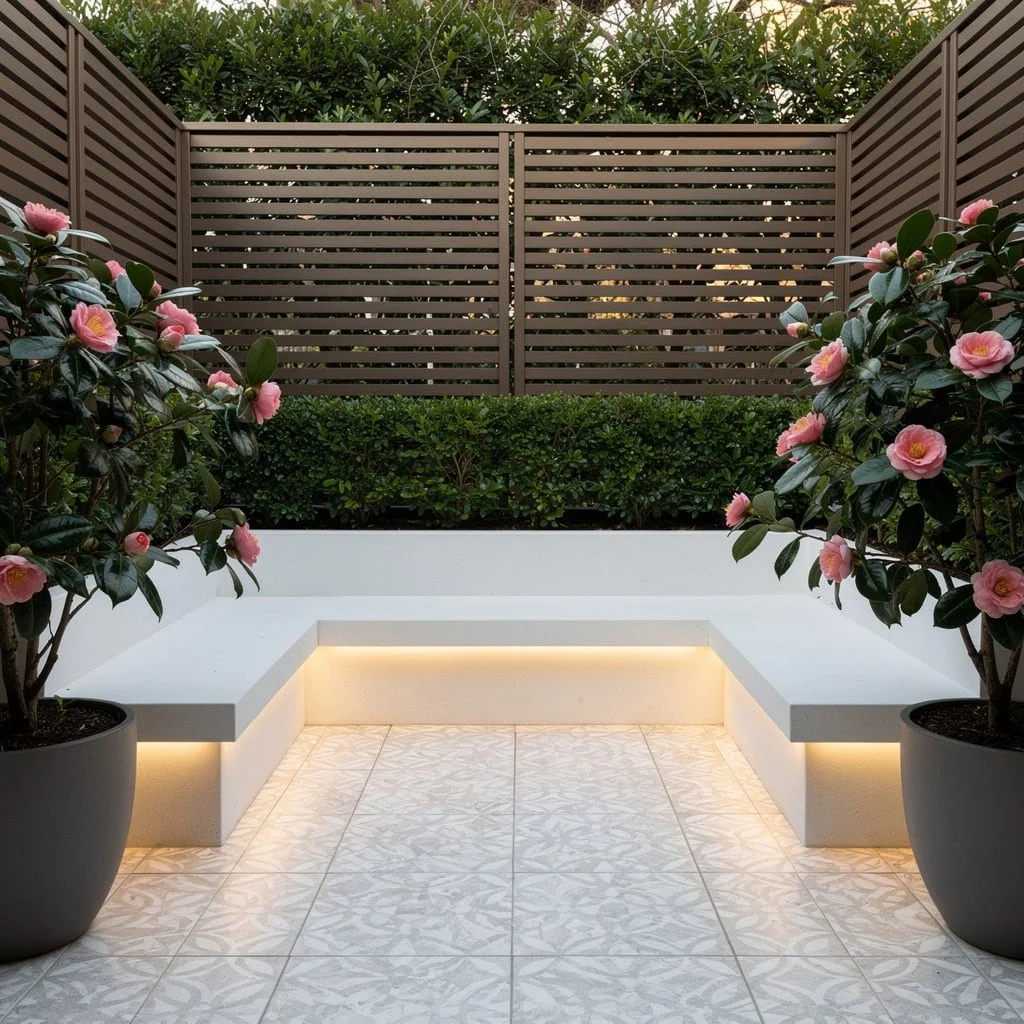
Skip flimsy wood, go with horizontal slatted composite panels in muted bronze to drop privacy and style points at once. Plant big, structured hedges behind—not just dinky shrubs—so you’re blocking views and looking lush. Run a patterned tile path (no boring slabs), and tuck illuminated benches in white concrete along the way. Oversized planters with camellias anchor your corners, and indirect lighting goes beneath, never above, to avoid the ‘interrogation room’ effect. The hack: always use see-through panels for filtered views—solid walls are for hermits, not luxury backyards.
Cedar Acoustic Screens: Silence & Style, Not Just Shade
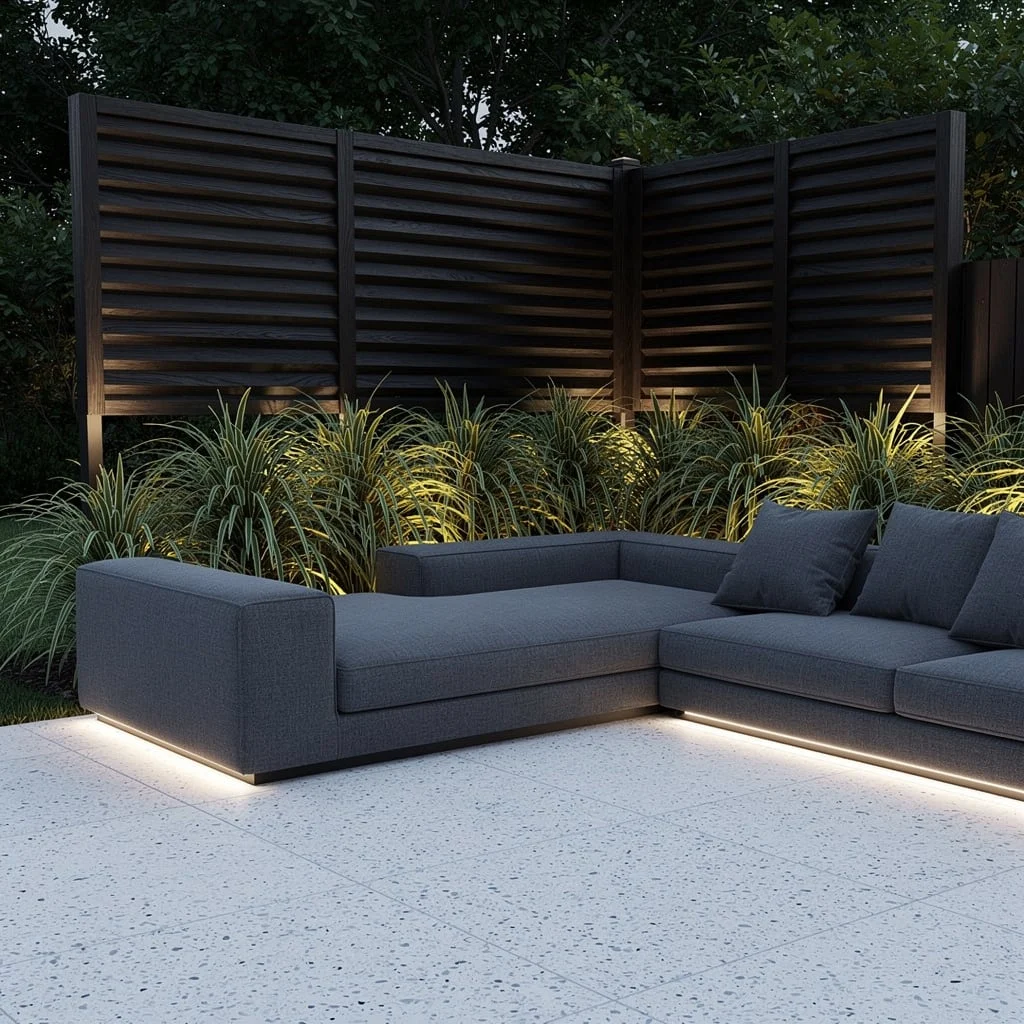
Want sound protection that doubles as a look? Go for acoustic louvered screens made from blackened cedar, angle them so you’re blocking views and annoying noise. Back the screens with thick clumps of variegated ornamental grasses—never let them go bare. Install linear recessed LEDs at the base for nighttime drama, and make the furnishings low-slung modular seating with slate textiles on white terrazzo tiles. Don’t cheap out with plastic anything. Your screens should create privacy without turning your lounge into a bunker. Never put your LED lights on top; grazing highlights from below are pure style flex.
Boxwood & Magnolia Planters: Hide in Plain Sight
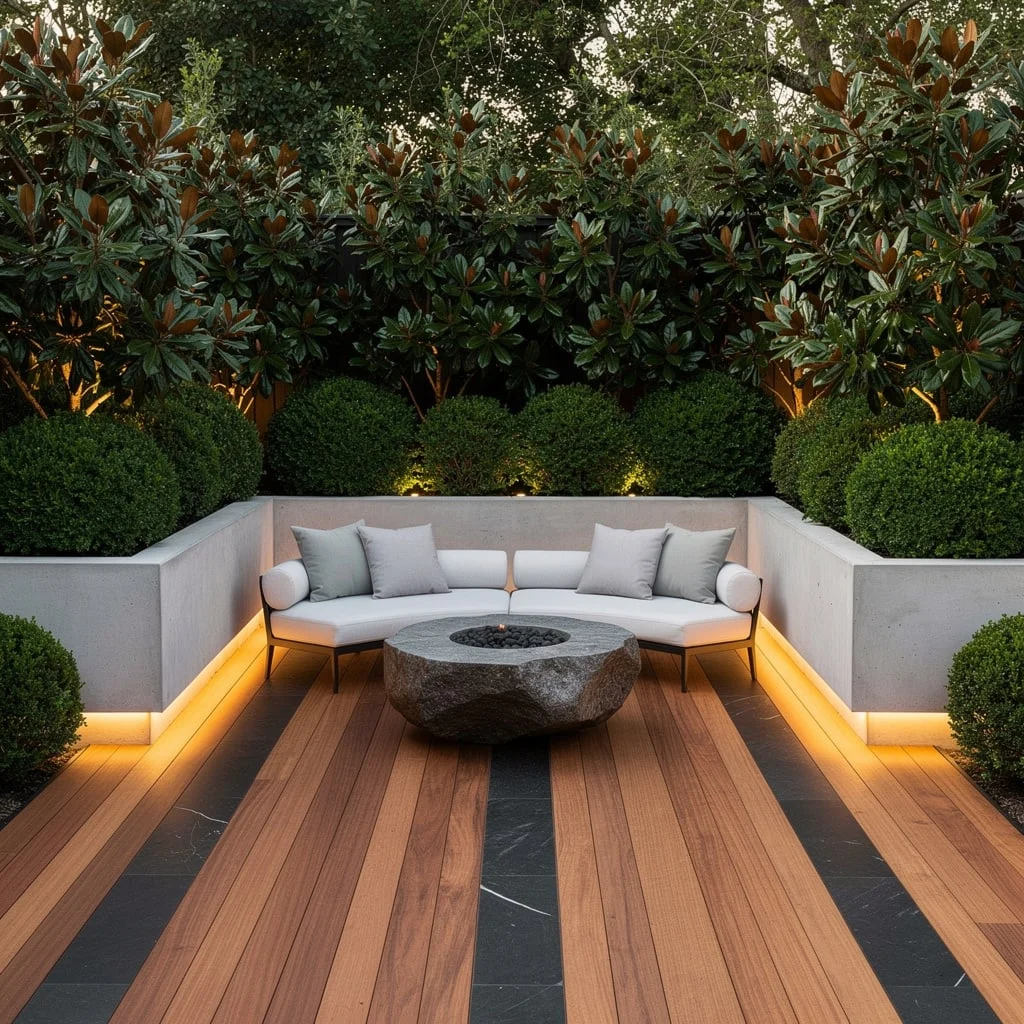
If you need privacy that doesn’t scream ‘fortress’, stack offset concrete planters packed with cloud-pruned boxwood and glossy magnolias. Illuminate from inside the planters, not outside, for foliage drama and geometry that actually matters. Blend warm ipe wood with strips of black slate for your floors—stop with those tired deck boards. Finish with a circular seating setup and a basalt fire feature that looks sculptural, not like something bought at a big box store. The styling tip? Layer your plants for density, not height—privacy comes from blocking sightlines, not building a hedge as tall as your house.
Stucco Walls & Oak Benches: Soft Walls, Strong Style
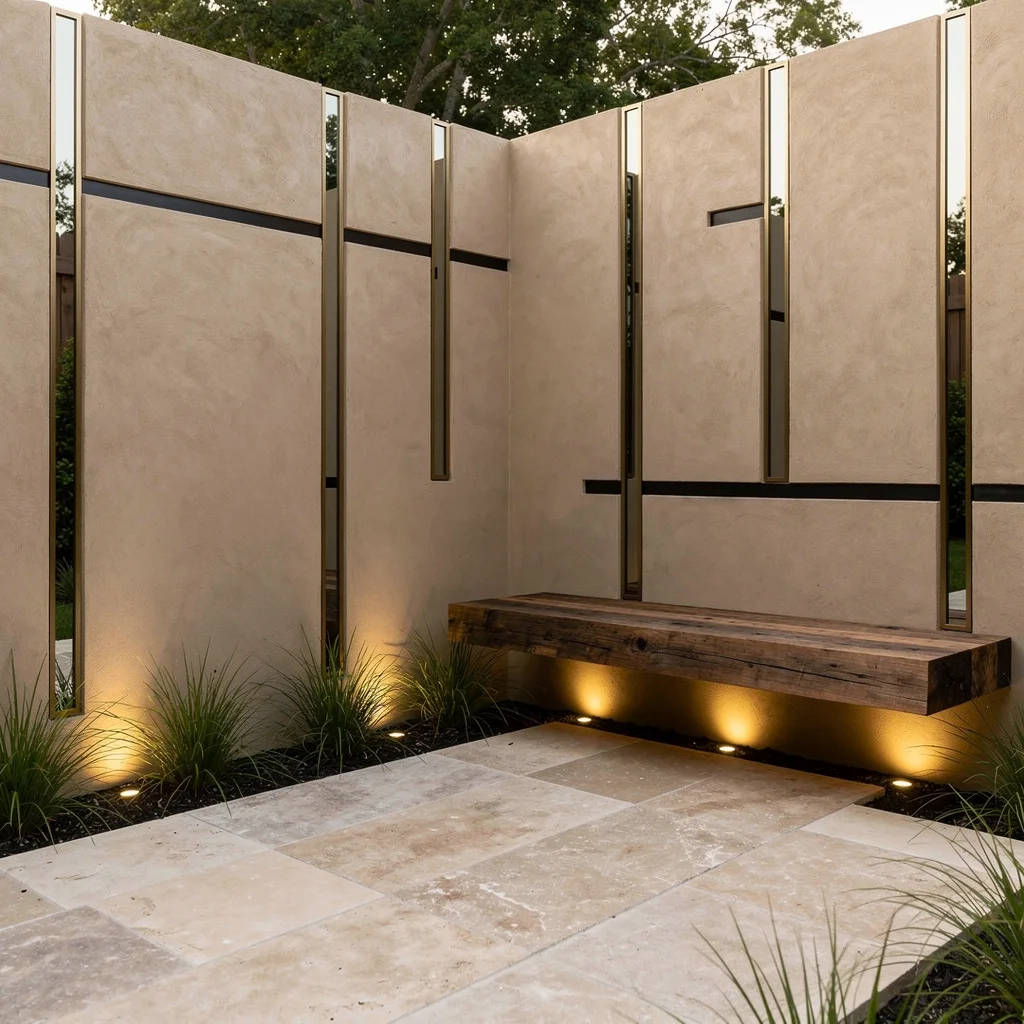
Stop hiding behind basic paneling and get some hand-troweled stucco privacy walls in a matte sand hue with blackened brass accents and vertical slit windows. Line those slits with mirrored glass for the most extra privacy move ever. Drop oversized limestone pavers for the patio, then cantilever a floating oak bench against the wall (reclaimed please, not faux). Plant architectural grasses along the base for softness. Punch up nighttime vibes with hidden perimeter ground lights—never go floodlight. Always use actual stucco, not fake panels, or you’re just pretending to have style.
Final Thoughts
Privacy in a backyard is not really about blocking the neighbors — it’s about creating the psychological conditions under which actually relaxing outside becomes possible. The moment you stop feeling observed, the garden starts feeling like yours, and that shift in how a space feels changes how much you use it, how long you stay, and how genuinely restorative it becomes.
Every backyard here solved the privacy problem and ended up with a better-looking garden for having done so, because the best screening solutions are design decisions as much as they are functional ones. The hedge that blocks a roofline becomes the garden’s most beautiful element. The lattice that hides a neighboring wall becomes the backdrop for a climbing plant collection. The bamboo that screens a fence line becomes the defining character of the whole outdoor space. Stop thinking about privacy as a problem to be solved and start thinking about it as a design brief — the results are almost always more interesting than a fence panel.