
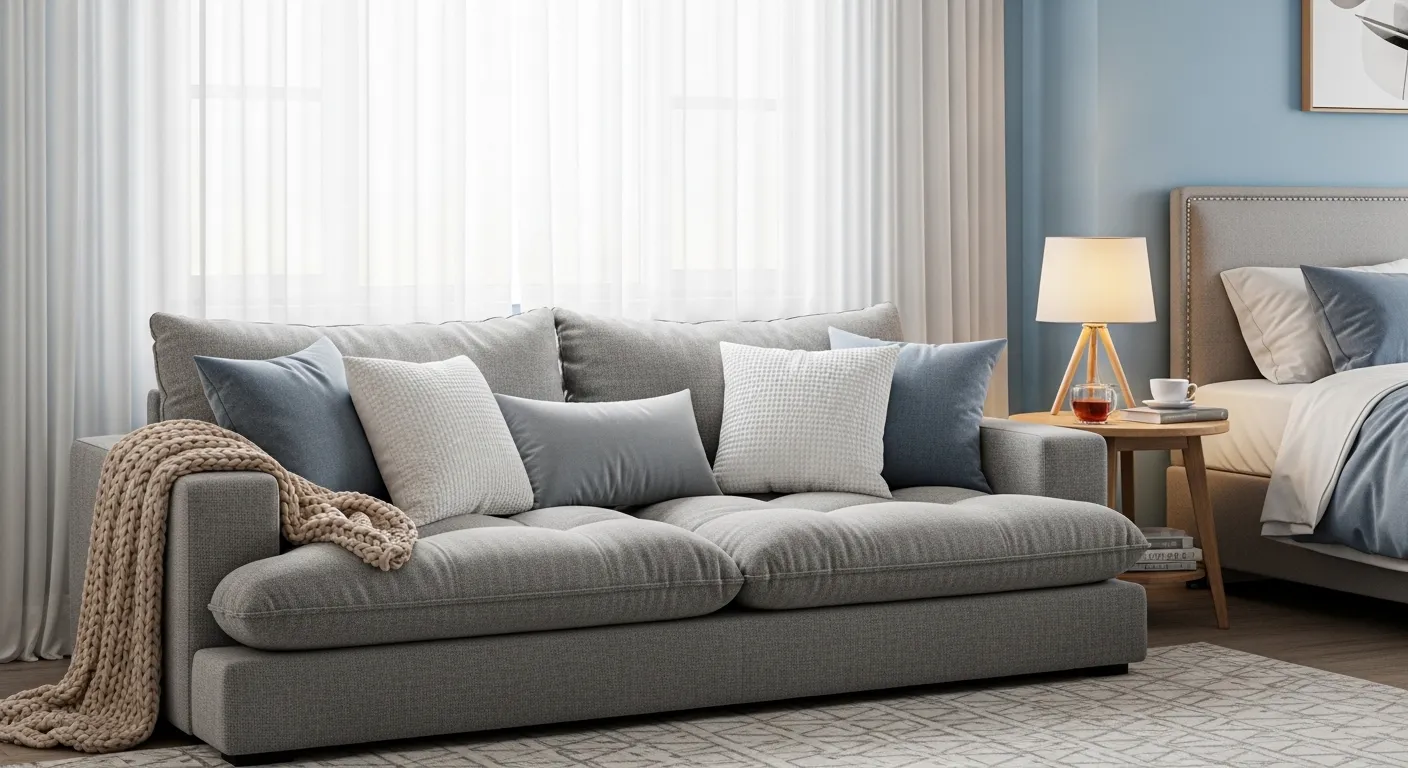
Let’s have an honest conversation about your bedroom furniture. If the pieces in your room were chosen because they were available, on sale, or came in a set that seemed like a good idea at the time, this is for you. Bedroom furniture isn’t just storage and a place to sleep — it’s the architectural backbone of the most personal room in your home, and the difference between furniture that was chosen and furniture that was accumulated is visible from the doorway. These ideas will show you what chosen looks like.
Furniture Cohesion Architect
Design an environment where every piece belongs. Scale and tone matter.
Why Most Bedroom Furniture Fails the Room Before It’s Even Assembled
The failure isn’t usually in the individual pieces. Most bedrooms have furniture that’s perfectly adequate on its own terms — a decent bed frame, a functional nightstand, a wardrobe that closes. The failure is in how those pieces relate to each other, to the room’s proportions, and to the design intention that was either present or absent when the choices were made. Furniture that was bought separately over time from different sources in response to different needs almost never produces a room that feels cohesive, no matter how good each individual piece is.
Scale is the problem most people misdiagnose as a style problem
A bedroom that feels off — that never quite looks right regardless of how it’s styled — is almost always suffering from a scale problem rather than a style one. Furniture that’s too small for the room floats disconnectedly. Furniture that’s too large crowds the space and removes the visual breathing room that makes a bedroom feel restful. Getting the proportions right — bed size relative to room size, nightstand height relative to mattress height, wardrobe mass relative to available wall — solves design problems that no amount of cushions or accessories can fix.
The bed frame is the room’s single most important design decision
Everything else in the room is in visual conversation with the bed. The nightstands need to relate to its height and scale. The floor treatment needs to work with its material palette. The wall behind it becomes the room’s focal point because of it. Choosing a bed frame that’s merely functional — a box that holds a mattress — and then trying to build a designed bedroom around it is building on a weak foundation. The bed frame deserves the most deliberate selection of any piece in the room.
Nightstands are doing more design work than their size suggests
The nightstand is the piece most people buy last, spend least on, and think about least carefully — which is exactly why so many bedrooms look almost right but not quite. Nightstands are seen at close range from the bed, they hold the lamp that illuminates the most intimate zone of the room, and they exist at precisely the height where the eye naturally rests when lying down. A nightstand that’s the wrong height, the wrong material, or the wrong visual weight relative to the bed frame is noticed constantly even when it’s not consciously registered.
Storage furniture needs to earn its place visually, not just functionally
A wardrobe that solves the storage problem but dominates the room’s visual weight, a chest of drawers that’s practical but stylistically orphaned from everything else, a bench at the foot of the bed that serves no clear purpose — these are furniture decisions made purely on function that haven’t considered what they cost the room aesthetically. Every piece of storage furniture in a bedroom should solve the practical problem and contribute to the room’s design. When it can only do one of those things, the room pays the price every single day.
The Architectural Backbone
The difference between furniture that was chosen and furniture that was accumulated.
Scale is misdiagnosed as style
Furniture that’s too small floats disconnectedly; too large crowds the space. Getting proportions right solves design problems that no amount of cushions can fix.
The bed frame is the anchor
Everything else is in visual conversation with the bed. Choosing a frame purely for function builds on a weak foundation; it deserves the most deliberate selection.
Tonal consistency over matching sets
Matching sets feel showroom-staged. The sophisticated approach is sharing a material family—warm timbers or matte finishes—to produce a room that feels curated rather than purchased.
Seating & lighting are furniture
A well-chosen chair anchors the room at a different height, while sconces contribute to the material palette. They signal that the room is a complete environment, not just a sleeping area.
What the Bedroom Furniture Combinations That Actually Work Have in Common
There is a consistent quality to rooms where the furniture works as a composition rather than a collection — a sense that the pieces were chosen in relation to each other, that material choices were made with the whole room in mind, and that whoever furnished the space understood the difference between pieces that coexist and pieces that belong together.
Tonal consistency in materials creates cohesion without requiring a matching set
Matching furniture sets solve the cohesion problem by making it impossible to get wrong — but they also produce rooms that feel showroom-staged rather than personally considered. The more sophisticated approach is tonal consistency without matching: choosing pieces that share a material family — warm timbers together, cool metals together, matte finishes with matte finishes — without being from the same manufacturer or the same range. This produces a room that feels curated rather than purchased.
The seating element in a bedroom is the most underinvested piece in most rooms
A bedroom with a well-chosen chair, chaise, or small sofa has a quality that bedrooms without seating simply cannot achieve — a sense that the room is a complete environment rather than a sleeping area. The seated zone creates visual anchoring at a different height from the bed, provides functional value for reading and dressing, and signals that the room was designed rather than furnished to minimum requirements. Yet it’s consistently the element people cut from the budget or leave out entirely.
Lighting fixtures are bedroom furniture and need to be chosen with the same care
The lamp on the nightstand, the wall sconce above the bed, the floor lamp in the reading corner — these are furniture decisions as much as lighting decisions. A ceramic lamp base, a brass sconce arm, a pleated linen shade all contribute to the room’s material palette in the same way that a timber nightstand or an upholstered bench does. Choosing lighting fixtures that are functionally adequate but aesthetically mismatched with the furniture around them is as disruptive to the room’s design coherence as any other mismatched piece.
Bedroom Furniture Ideas That Actually Deliver
Dual Brass Wall Sconce With Vertical Arm and Slat Wall Backdrop
A sculptural double-arm brass wall sconce with two frosted cylindrical glass shades at different heights — one at mid-wall, one lower — mounted on a near-black wall beside a upholstered bed with dark vertical slat panelling as a backdrop. The sconce sits above a minimal dark nightstand holding a reed diffuser, a small succulent, and a stack of books. The entire composition is a masterclass in restraint — two light sources, three surface objects, one material story in warm brass against charcoal. The sconce isn’t just lighting; it’s the decorative element the wall needed. Pro tip: Wall sconces positioned beside rather than above the bed throw light at the angle that’s most flattering for reading and most atmospheric for the room — overhead lighting from sconces only works when they’re dimmable and aimed away from the face.
Floor-to-Ceiling Rotating Bookcase Tower With Warm Desk and Pleated Floor Lamp
A tall rotating circular bookcase in warm dark walnut finish — six tiers from floor to nearly ceiling, accessible from all sides — positioned in the corner between a window and a seating area, loaded with books in tonal spines rather than colour-organised chaos. Beside it, a traditional dark wood writing desk with a matching chair, and on the other side a curved-arm floor lamp with a deep pleated cream shade pooling warm light over a linen armchair with a dusty pink throw draped across the arm. A small plant in a white ceramic pot on the desk. Every piece is warm, rounded, considered. Pro tip: A rotating bookcase earns its floor footprint specifically because it’s accessible from all sides — positioning it in a corner where only one face is accessible wastes the function entirely and just makes it a tall shelf with delusions of grandeur.
Rounded Upholstered Headboard With Curved Oak Nightstand and Ceramic Lamp
A wide upholstered headboard in warm oat-textured fabric with a gently curved oak trim detail running the perimeter, paired with a rounded-corner two-drawer nightstand in light warm oak with a substantial plinth base that adds visual weight without bulk. On top: a tapered ceramic table lamp in warm cream with a matching linen shade throwing soft amber light, and a small dark ceramic vase holding three white daisy stems. Warm textured grasscloth wallcovering behind the headboard pulls the entire composition into a single enveloping tone. Nothing shouts. Everything is warm, rounded, and considered. Pro tip: Matching the lamp shade material to the headboard fabric — both in linen or both in cotton — is the detail that makes a warm neutral bedroom feel intentional rather than accidentally beige.
Curved Boucle Lounge Chair With Black Side Table, Textured Curtains, and Sculptural Chandelier
A generously proportioned curved boucle armchair in warm off-white with a low walnut base, sitting beside a small black cone-profile side table holding a tiny vase of dried stems and a dark ceramic object, positioned against floor-length dark charcoal textured mesh curtains that filter light without blocking it. Above, a black ring chandelier with multiple exposed globe bulbs provides the room’s overhead punctuation. On the wall to the right, two large-format white textured abstract canvases in gold frames. A fluffy white bench at the bed’s foot anchors the foreground. This is a bedroom that has a living zone and treats it as equal to the sleeping zone. Pro tip: The side table beside a bedroom chair should be significantly smaller and visually lighter than a nightstand beside the bed — the asymmetry in scale signals that this is a relaxation zone, not a second workstation.
Cream Fluted Vanity Desk With Backlit Round Mirror, Woven Chair, and Feather Floor Tree
A curved cream lacquer vanity desk with fluted drawer fronts and gold hardware, topped with white marble-effect surface and paired with a large circular LED-backlit mirror mounted on warm gold vertical timber slat wall panelling. A basket-weave upholstered chair with gold legs sits at the desk. A tall decorative feather floor piece in gold and white — somewhere between a lamp and a sculptural plant — stands beside the vanity as the room’s single extravagant gesture, doing the decorative heavy lifting that keeps everything else restrained. White roses in a gold perfume-bottle vase on the desk surface. Pro tip: One deliberately theatrical accessory — a feather tree, an oversized sculptural lamp, an unexpected art piece — gives a softly glamorous room the one moment of committed excess that prevents it from reading as simply pleasant rather than genuinely designed.
Channel-Tufted Doesn’t Mean ‘Try Hard’: Luxe, Chill Bedroom Moves
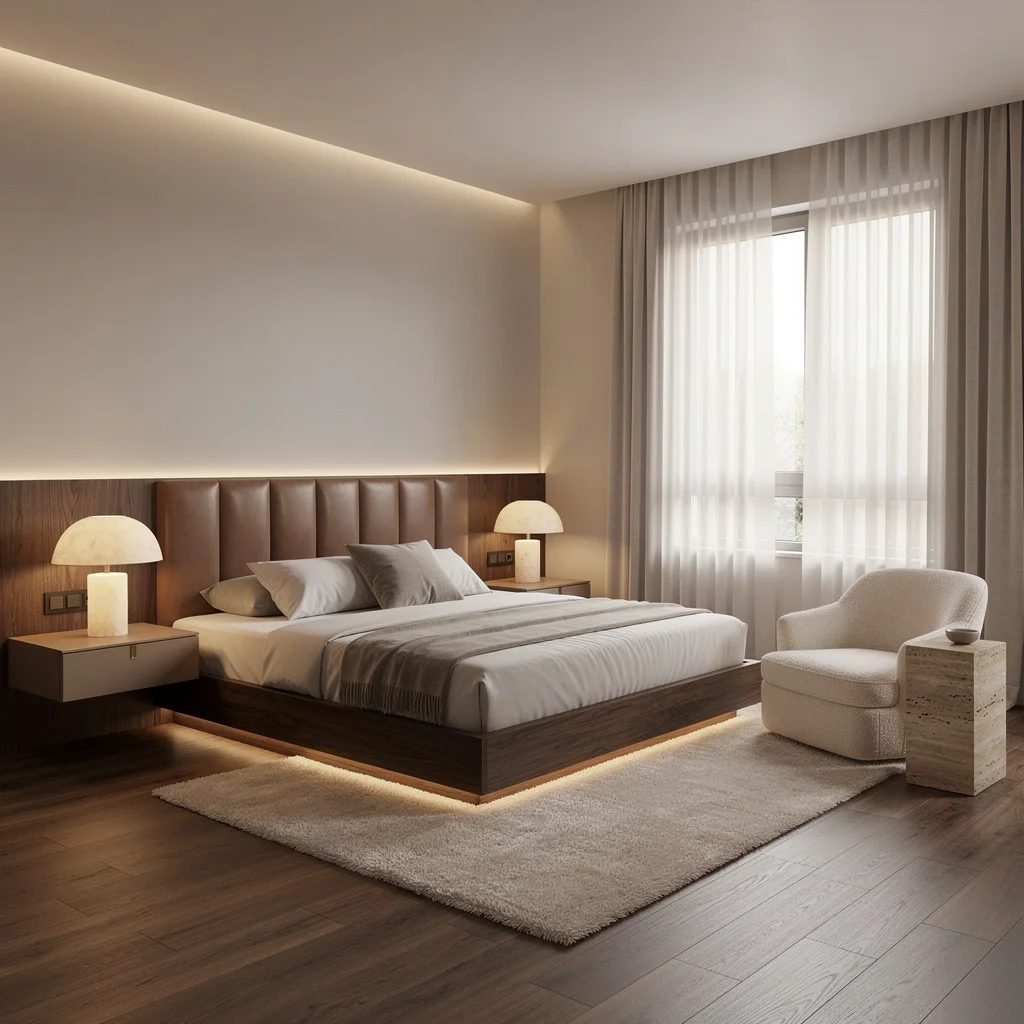
If you crave serene luxury but don’t want your room to scream ‘boring hotel’, get real and anchor your room with a walnut platform bed featuring channel-tufted leather headboards. Yes, taupe is grown-up—deal with it. Toss in floating matte lacquer nightstands (bronze hardware only because silver is just so yesterday) and pop some alabaster lamps for actual mood lighting. Think cream boucle lounge chair and monolithic travertine plinth side table for a flex. Don’t forget fumed oak planks, soft cashmere wool rugs, and sheer curtains that let in daylight. Always layer your lighting: uplighting is mandatory if you don’t want to live in cave vibes.
Velvet Is The New Sleep: Sophisticated Bedroom, Minimal Effort
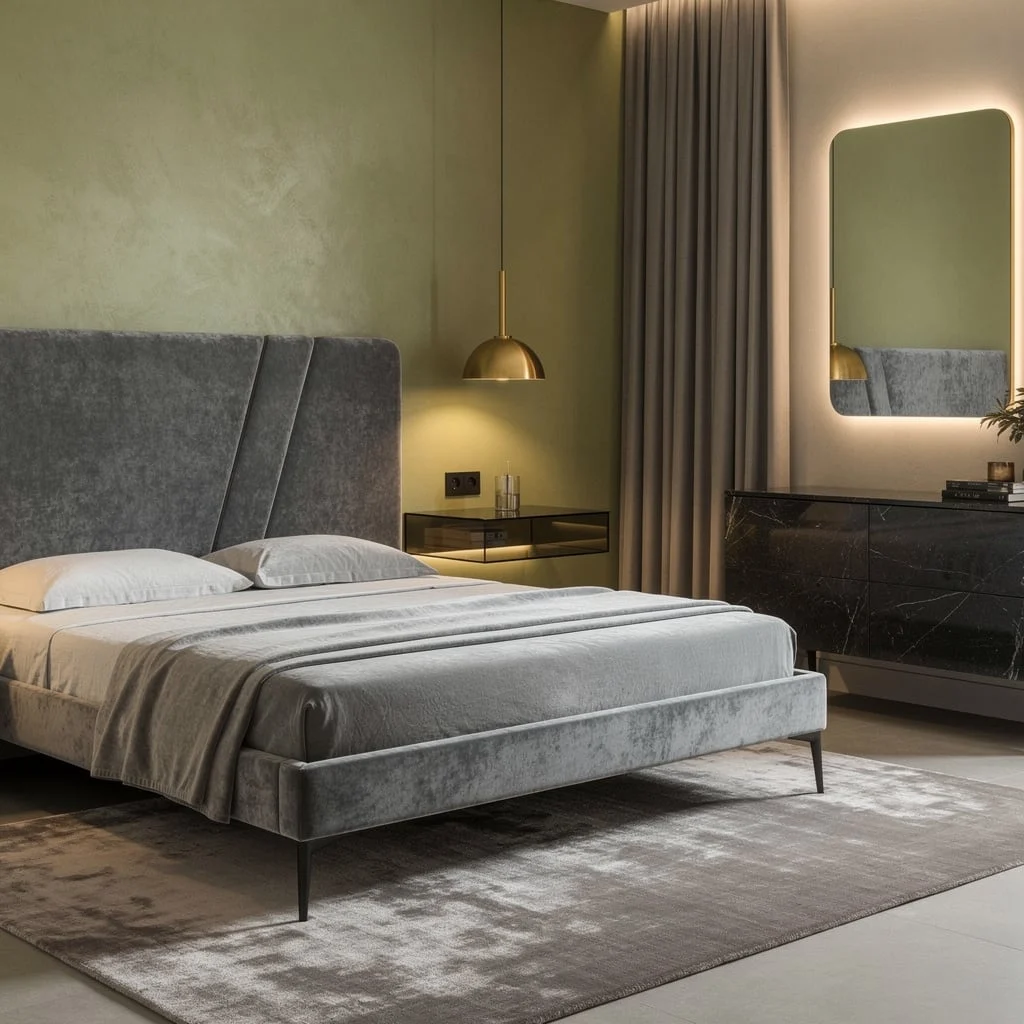
Want to wake up in a space that looks smarter than you? Go for a custom upholstered bed in textured smoke-grey velvet. Tall headboards with asymmetrical panels? Scream confidence. Install smoked glass nightstands (make them float, obviously), and fat brass pendants because indirect light is the goal. Throw down a hand-knotted silk rug to tie your muted drama together, and don’t skip out on matte lime-plaster walls—paint them, then brag. Dresser topped with dark stone, backlit mirror, and blackout drapes: the recipe for a room that always feels chic. Pro tip: don’t settle for dim lighting; layered, filtered light keeps your color palette from feeling flat.
Wire-Brushed Ash & Champagne Metal: Living Your Calm Life
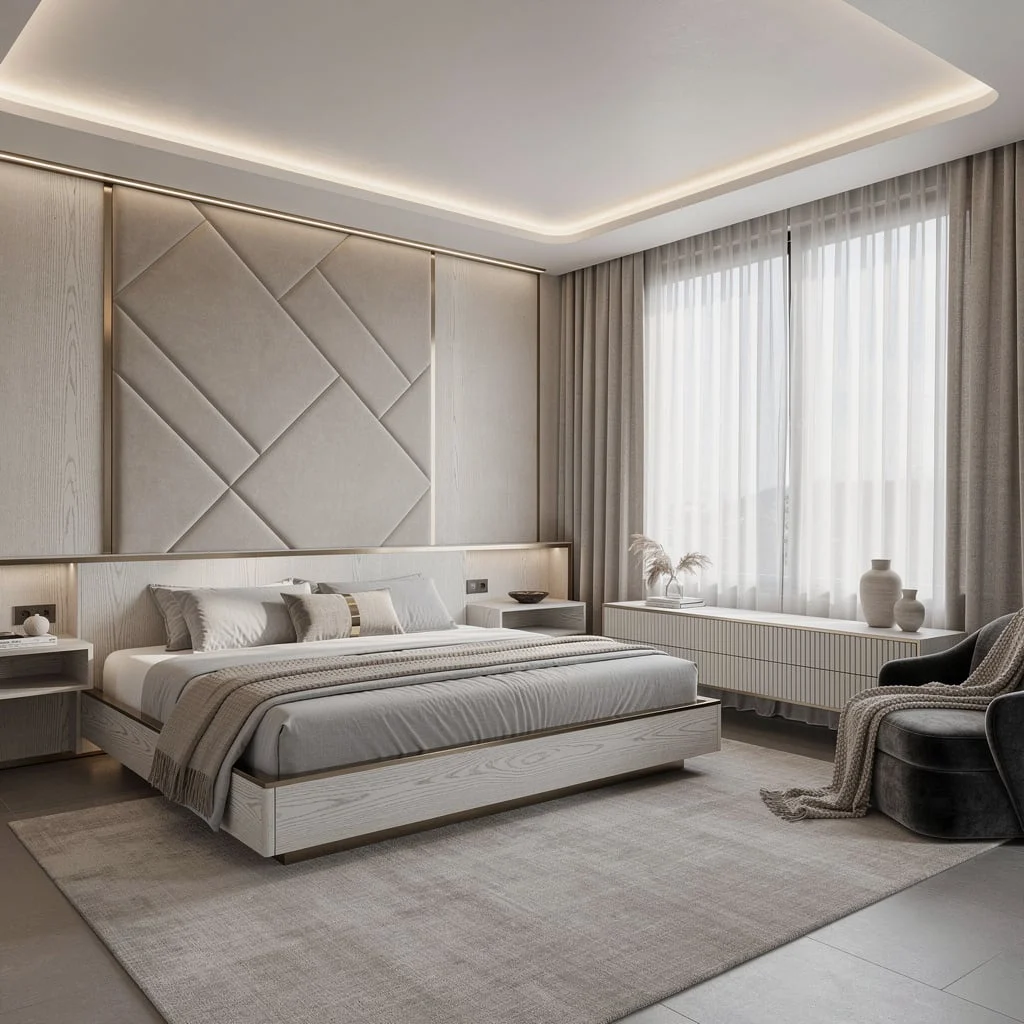
Trying to fake grown-up minimalism? Build your base with a platform bed in lightly wire-brushed white ash and oversized geometric headboards mixing leather and suede. Flirt with brushed champagne metal detailing and floating shelves, because nothing says ‘adulting’ like less floor clutter. Run a fluted maple credenza parallel to the bed. Curtains in muted wool—not poly—diffuse daylight like magic. Recessed perimeter LED ceiling lighting? Do it or stay basic. Add mohair chairs and textured ceramics for depth. Always finish with neutral throws; layer textures, not just colors. Pro tip: keep your lighting architectural to avoid accidental ‘dorm room’ vibes.
Tatami Low and Linen Cool: Minimalist Bedroom For the Lazy Genius
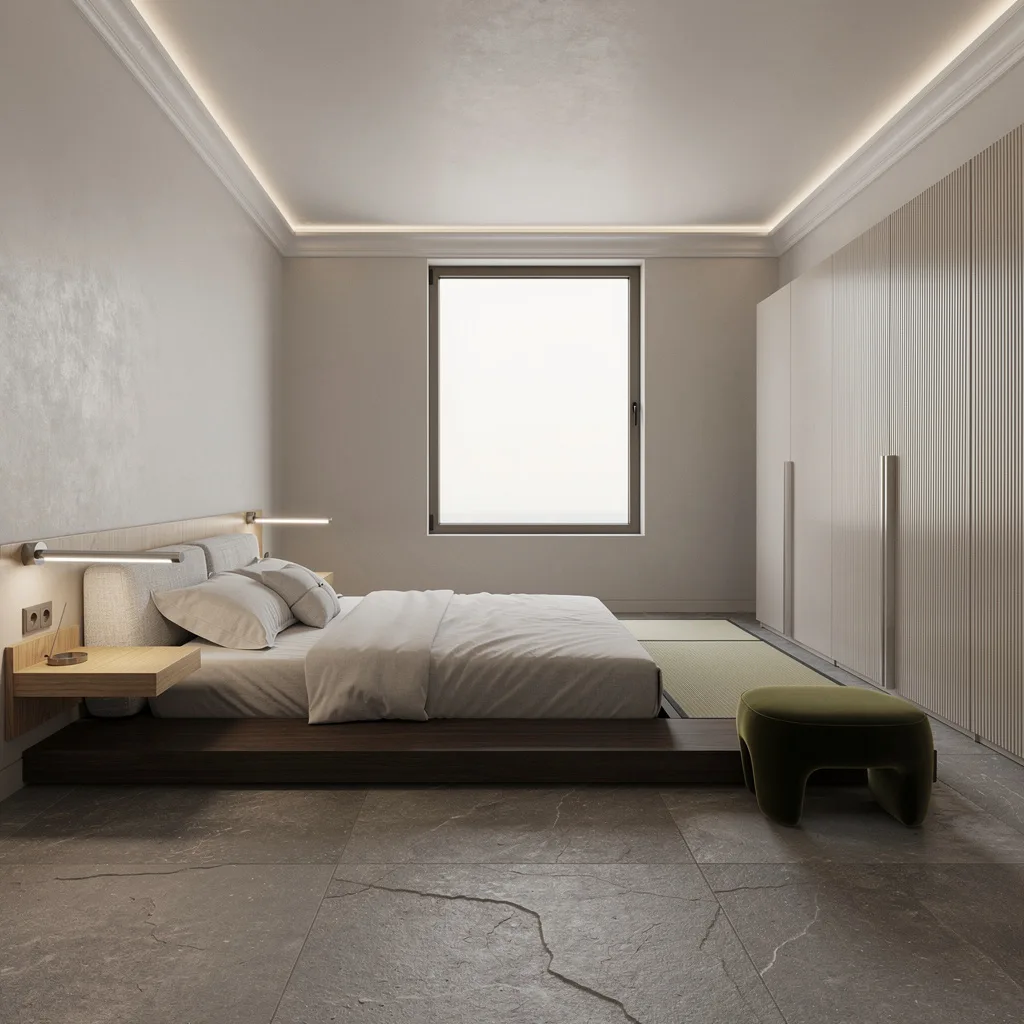
If you want simplicity that doesn’t feel like punishment, start with an ultra-low dark oak tatami platform and modular linen headrests. Hack your storage with wall-mounted birch side tables and knurled brushed stainless task lights. Ribbed matte lacquer wardrobe? Concealed handles only, because nobody loves hardware snags. Underfoot, go organic grey stone tiles and throw one sculptural olive green velvet bench for flavor. Strip LED moldings behind ceiling detail—your fake natural light hack. Only buy neutral palettes if you can commit, and pro tip: ditch the clutter. Keep your lighting diffused, your palette tight, and your bench weird. That’s the formula.
Go Big Or Stay Awkward: Emerald Velvet & Brass Isn’t Optional
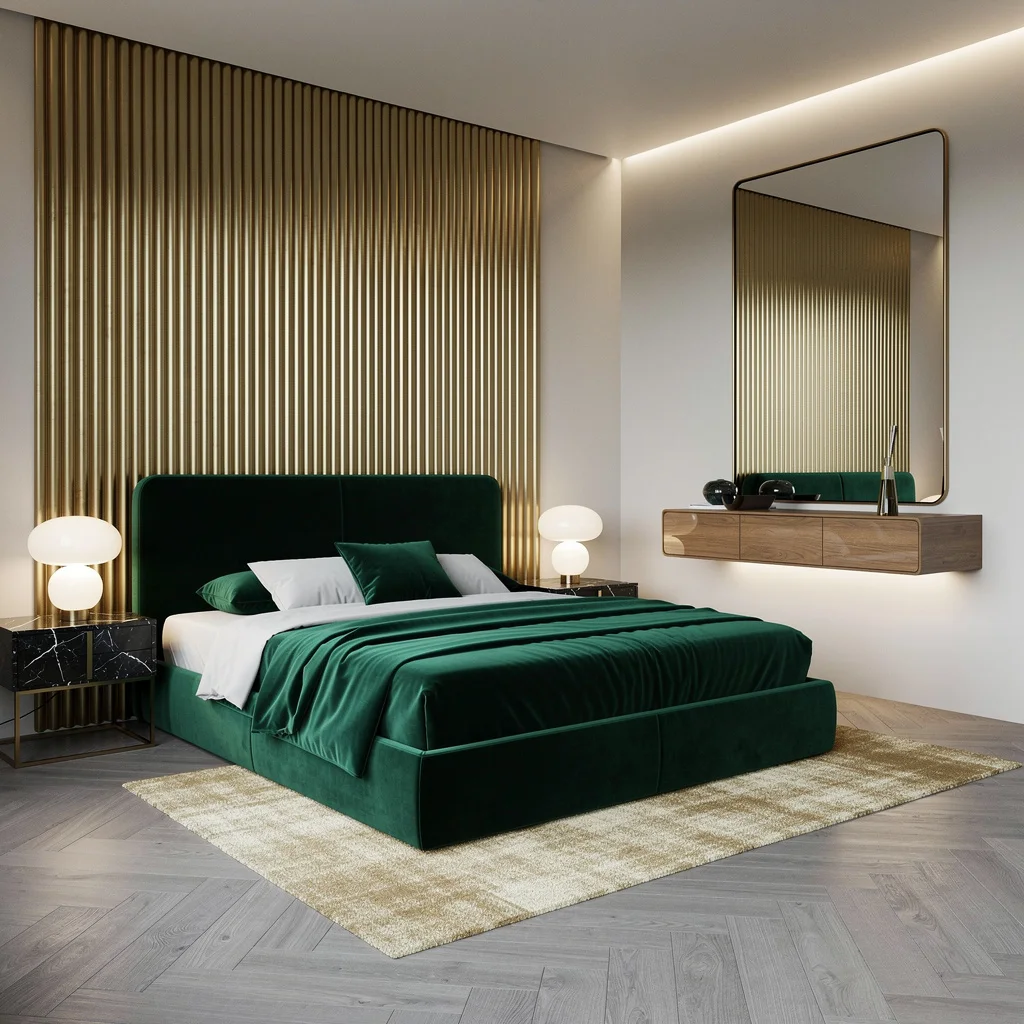
Ready for drama? Drag in an oversized bed clad in deep emerald velvet; anything less is quitting. Pair with a ribbed satin brass headboard—not just one wall, wrap the space. Nightstands in black marble with bronze pulls mean you actually care, and bubble lamps pop some fun into your routine. Herringbone ash grey floors? Lay those down for major points. Pale gold chenille rug is your warmth fix, and don’t skip the cantilevered console under a gallery mirror, softly backlit. Always use cove LEDs for shadow-free illumination. If the space isn’t striking, you’re not trying hard enough.
Oak Four-Poster Power Move: Get Calm Without Going Bland
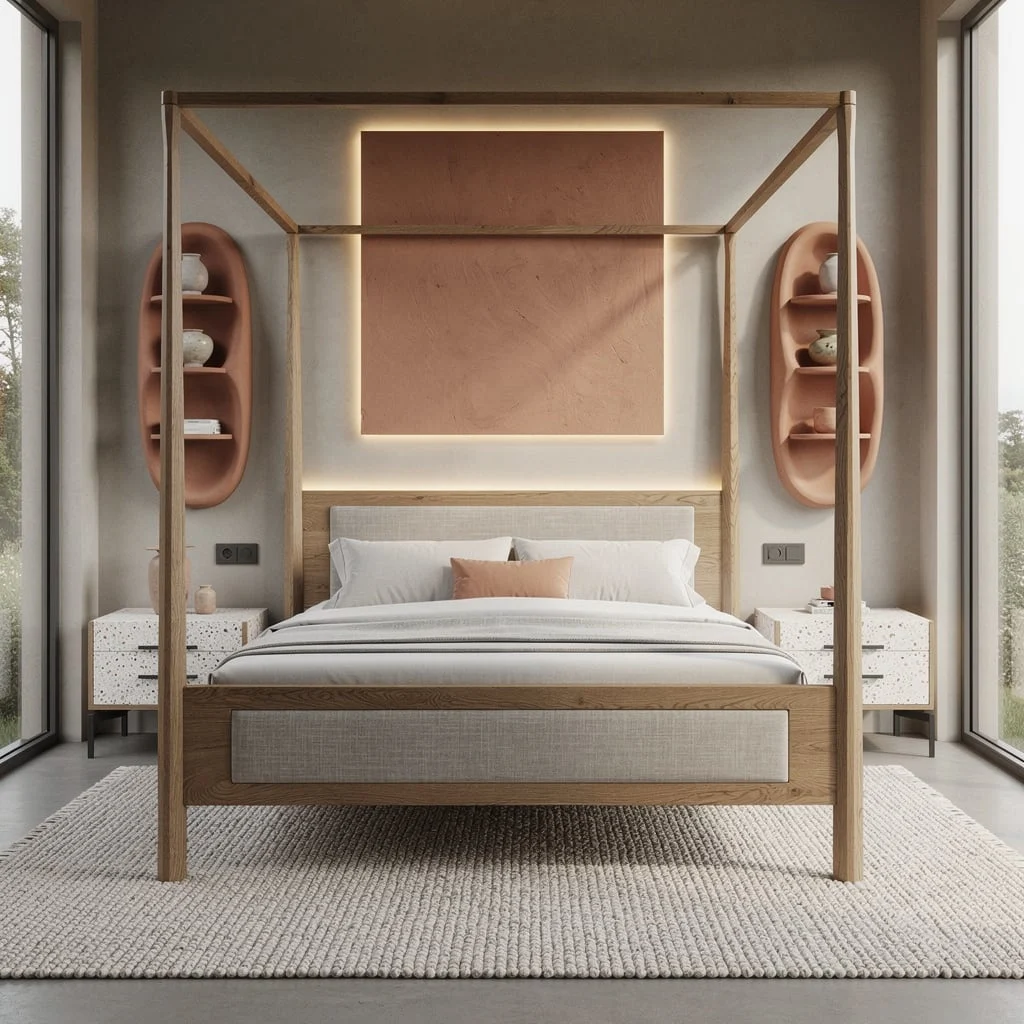
Don’t settle for a basic bed—grab a rift-cut oak four-poster and add rectangular linen insets plus integrated shelf lighting for mega calm vibes. Sculptural wall sconces in terracotta clay, and artisan ceramics on shelf game are required. Nightstand? Pale terrazzo top, gunmetal hardware. Taupe-washed walls and a backlit woodwork panel: if you skip texture, you’re missing the point. Frameless corner windows mean light for days; nubby wool rug grounds your room in luxury. Pro tip: lighting at headboard level is non-negotiable—always bring ambient shelf lighting for those big Pinterest feels.
Curved Oak Slats & Italian Leather: The Bedroom That Roasts Your Friends
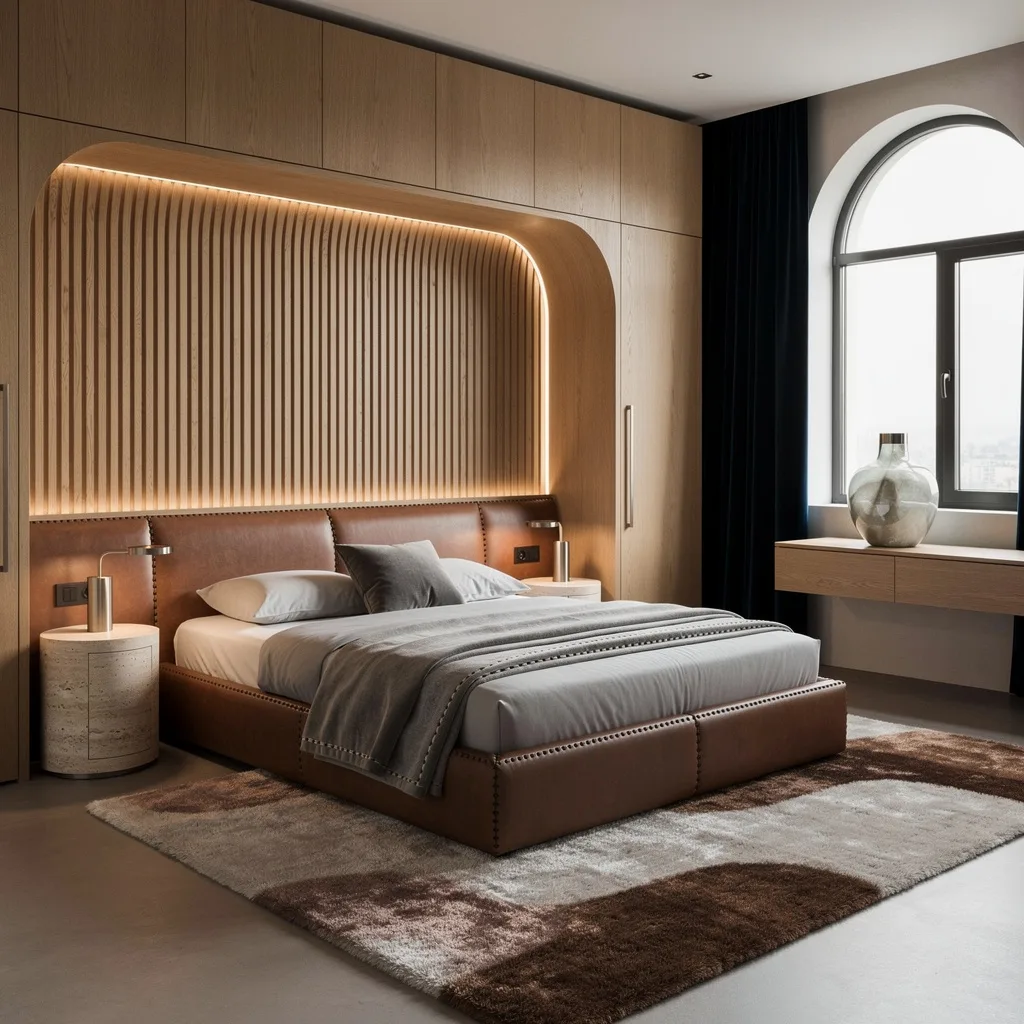
Feel smug with a custom Italian leather-wrapped bed complete with hand-stitched piping. Back it with a curved oak slat wall, integrated LEDs required, unless you actually enjoy dark corners. Low cylindrical travertine tables and minimalist stainless reading lamps—don’t fight for style points, these are essentials. Use built-in niche wardrobes for max storage and drama. Multi-tone alpaca wool rug = texture on texture. Floating credenza, organic glass vessel, and velvet blackout drapes seal the deal. Pro tip: keep your lighting indirect and your slat walls curved; straight lines are old news unless you’re decorating your grandma’s guest room.
Quartzite Everything: Floating Furniture That Actually Floats
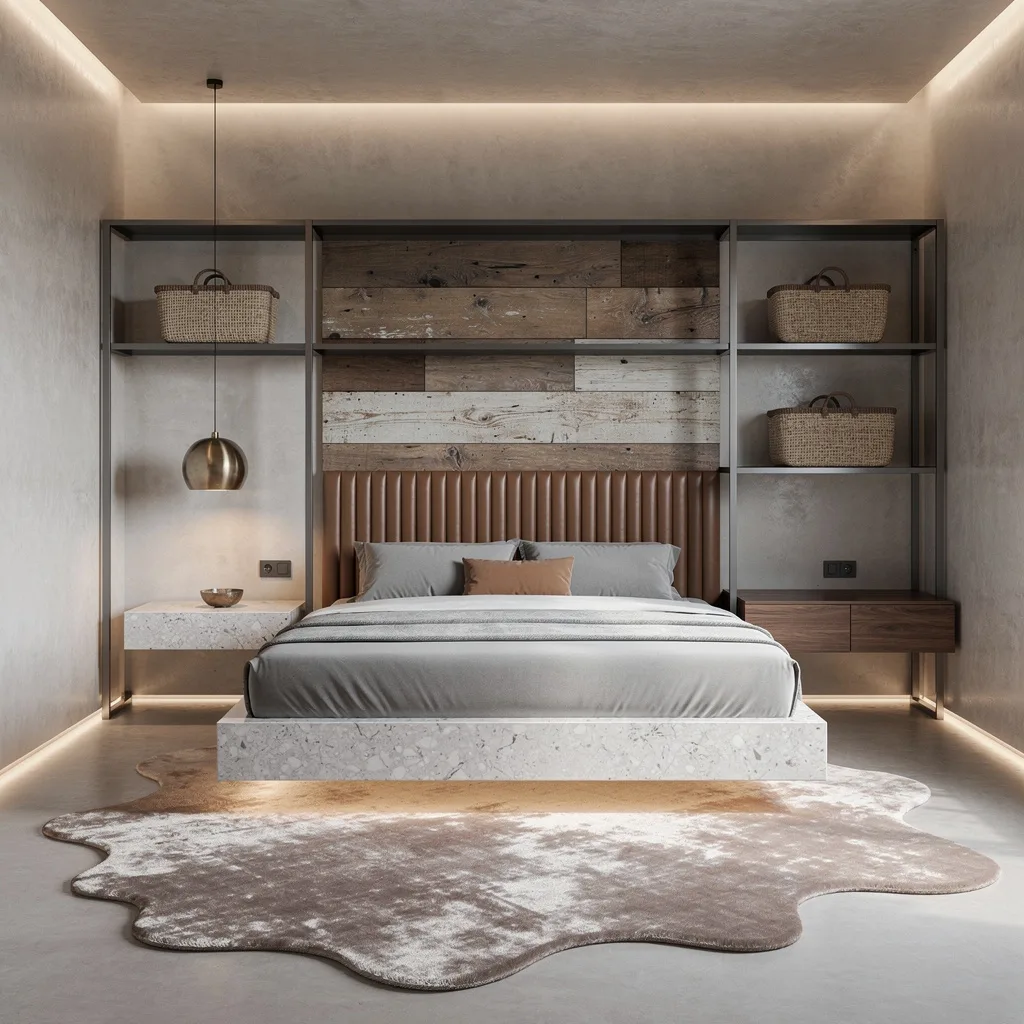
If you want your bedroom to look like it was designed by actual pros, start with a floating bed on an illuminated quartzite base. Frame it with matte graphite shelves—just enough space for woven baskets, not junk piles. Layer your headboard with oversized painted wood planks and ribbed leather panels for attitude. Burnished zinc pendants on one side and a marble-capped nightstand keeps things spicy. Use a low walnut console for grown-up storage. Polished Venetian plaster walls and an irregular-edge silk-blend rug are a must—no room for basics. Hidden uplights along the perimeter finish the vibe. Pro tip: always choose floating over bulky.
Boucle Headboards & Blush Benches: Spacious Bedrooms That Flex
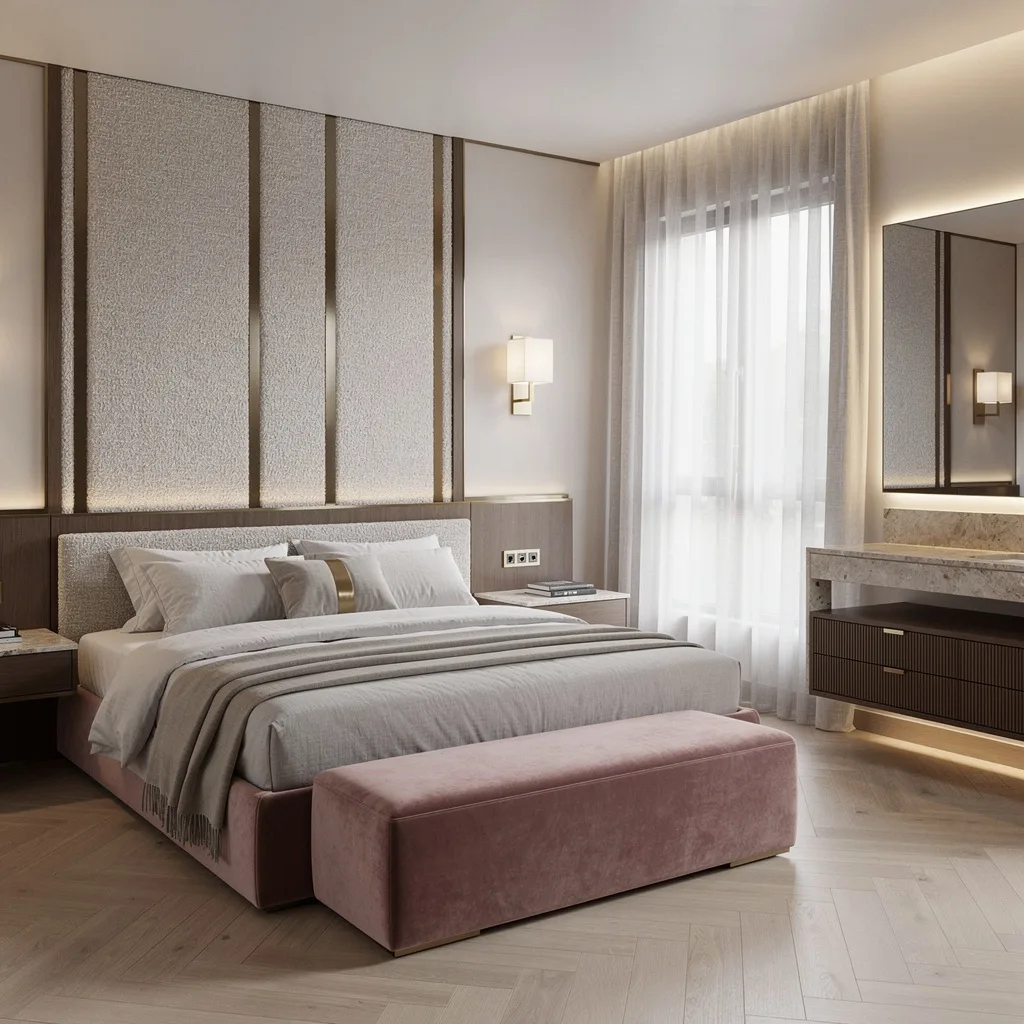
Want a bedroom that looks bigger than your sad studio? Jump on a custom headboard clad in textured boucle and dark-bronze strips. Extend nightstands with a float so your floor stays visible (and dust is less visible). Brass-accented cube wall sconces provide soft illumination—stop using desk lamps. Low blush velvet bench at the foot? Yes, for drama. Pale herringbone oak floors create space, and stone slab vanities with ribbed walnut drawers bring major flex. Sheer linen curtains, floor to ceiling, filter that natural daylight. Pro tip: always integrate your nightstands into the headboard for maximum visual width.
Travertine and Bronze: Luxury Suite Vibes That Don’t Try Too Hard
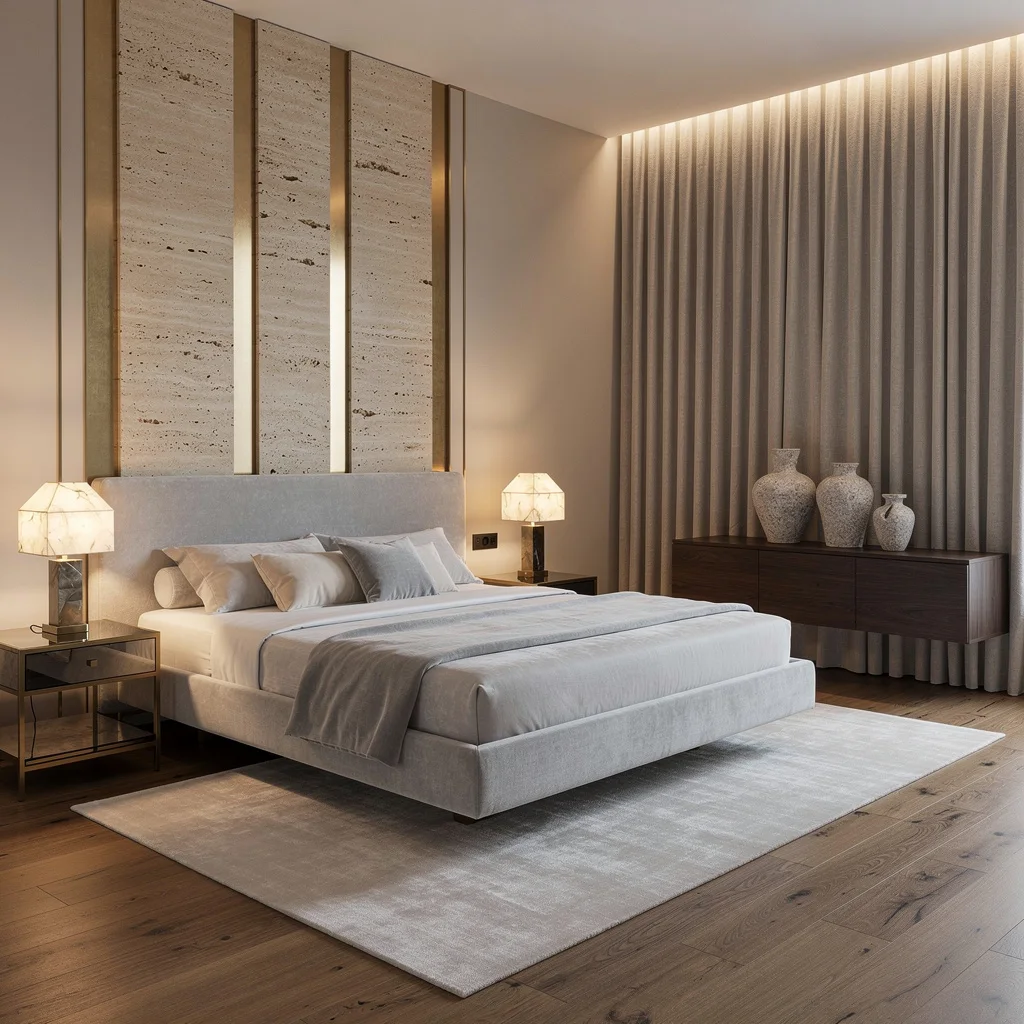
Luxury suite style isn’t about money—it’s confidence. Start with a cantilevered platform bed upholstered in ice-grey cashmere. Mount a headboard with vertical strips of raw travertine and inset bronze. Mirrored bronze and smoked glass nightstands are your sparkle source; geometric alabaster lights are non-negotiable. Floating walnut credenza on one wall with textured stoneware vases, wide-plank oiled oak floors, and a pale viscose rug set the foundation. Wrap the room in tall matte linen curtains and throw in ambient and accent layered lighting. Pro tip: always use mirrored surfaces on nightstands to bounce light and fake bigger space.
Final Thoughts
Bedroom furniture that works as a room rather than a collection of pieces requires one thing above everything else: making the decisions in relation to each other rather than independently over time. The bed frame first, everything else chosen in conversation with it. Materials that share a tonal language without matching literally. Scale that’s appropriate to the room’s actual proportions. A seating element that turns the bedroom into an environment. And lighting fixtures chosen with the same care as the furniture they sit beside. None of this requires a larger budget. It requires more deliberate decisions made in the right order.