
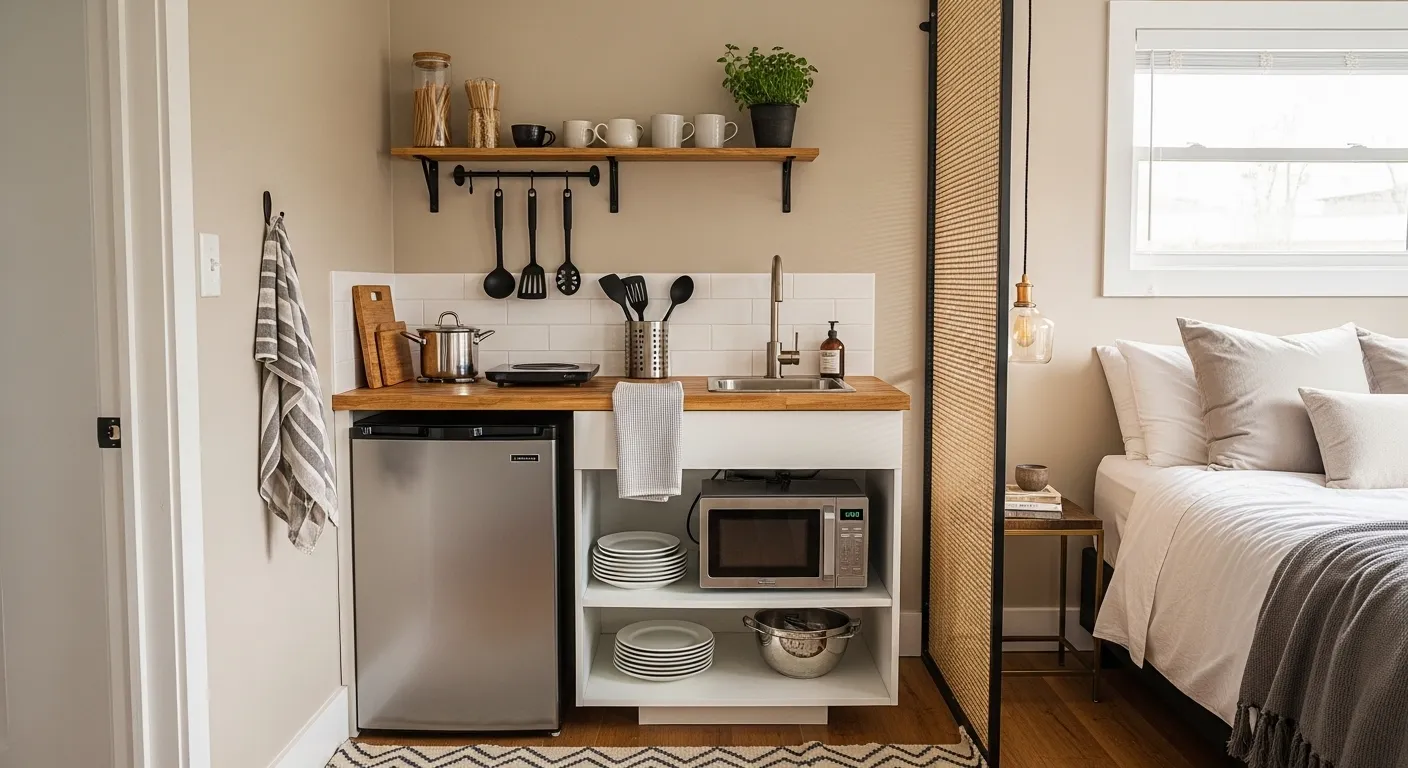
If you’ve been treating the kitchen corner of your studio like an embarrassing secret — hiding it behind a curtain, ignoring it in photos, decorating around it rather than with it — this is your intervention. A bedroom kitchenette done properly isn’t a compromise. It’s a design feature that signals intelligence about space, intention about lifestyle, and a complete lack of interest in apologising for living efficiently. Whether you’re working with a studio apartment, a guest suite, or a serviced room, these ideas will show you exactly what a kitchenette can be when it stops being treated as a problem.
Why Most Bedroom Kitchenettes Look Like an Afterthought and How to Stop Yours From Joining Them
The bedroom kitchenette fails in predictable ways. Appliances that were chosen for function with zero consideration for aesthetics. Cabinetry that doesn’t relate in any way to the rest of the room’s palette. A visual boundary between the kitchen zone and the sleeping zone that was never designed, just hoped for. And lighting that treats the entire space as a single undifferentiated area, which is the fastest way to make both zones look worse than they would separately. Every one of these failures is a design decision that was never made — and every one of them is fixable.
The kitchen and sleeping zones need a design language they share, not just proximity
The rooms where a kitchenette genuinely works are the ones where someone applied the same material palette, the same colour story, and the same design logic to both zones. The kitchen cabinetry and the bedroom furniture don’t need to match — they need to belong to the same room. When the timber tone on the kitchen units matches the timber on the bed frame, when the pendant above the counter reads from the same language as the lamp beside the bed, the space stops feeling like two things forced together and starts feeling like one considered whole.
Concealment is a design strategy, not a defeat
The instinct to hide the kitchenette — behind bifold doors, behind a partition wall, behind sliding panels — is not a failure of the brief. It’s a legitimate design move that creates flexibility, improves the sleeping zone’s atmosphere by removing visual kitchen noise, and makes the room feel more intentional. The key distinction is between concealment that was designed — where the doors or panels are themselves a design element — and concealment that was improvised — a curtain track installed in desperation. One of these looks like a boutique hotel. The other looks like what it is.
Zone separation without physical walls is a skill worth learning
When full concealment isn’t possible or desired, the visual separation between kitchen and sleeping zone becomes a design challenge that requires deliberate tools: rugs that define the sleeping zone’s footprint, lighting that operates independently in each zone, a change in floor material or ceiling height where possible, or a low partition element — open shelving, a breakfast bar, a half-wall — that creates psychological separation without blocking light or flow. The zones don’t need to be sealed from each other. They need to feel like they have different purposes, which requires different atmospheres.
Appliance choice is a design decision as much as a practical one
The refrigerator, the kettle, the microwave — these are the elements most likely to destroy a kitchenette’s design coherence if they were chosen without considering how they’d look. A stainless steel appliance in a warm timber and cream kitchen, a brightly coloured kettle in a monochrome palette, a microwave sitting on the counter in a kitchen where every other appliance is concealed — each of these is a design decision made by default rather than intention. Matching appliance finishes to the kitchen’s metal hardware and concealing anything that doesn’t belong on display are the two moves that most reliably transform a functional kitchenette into a designed one.
The Kitchenette Intervention
Stop apologising for living efficiently. Design the integration.
A shared design language
They don’t need to match perfectly, but they must belong to the same room. When the timber tone on the cabinets matches the bed frame, the space stops feeling forced and starts feeling considered.
Concealment is a design strategy
Hiding the kitchenette improves the sleeping zone’s atmosphere by removing visual kitchen noise. The key is designed concealment—beautiful bifold doors or sliding panels—not an improvised curtain.
Visual boundaries without walls
Never chop the floor material to separate zones. Use rugs to define the sleeping footprint, and a low peninsula or breakfast bar to create psychological separation without blocking light.
Independent zone lighting
A single overhead light treats the space as an undifferentiated box. Under-cabinet LEDs and dedicated bed sconces allow each zone to have its own atmosphere, separating them instantly.
Bedroom Kitchenette Ideas
White Scandi Kitchen Wall With Rattan Pendant and Open-Plan Bed Zone
A clean white handleless L-shaped kitchen running along one wall with white tile backsplash and under-cabinet lighting, light oak countertops keeping the warmth, and appliances fully integrated behind the cabinetry. The sleeping zone sits perpendicular rather than parallel, separated by a large round rattan pendant that marks the transition between zones without blocking anything. A black metal console table and a dark shag rug define the sleeping zone’s footprint. Multiple plants in both zones establish the shared botanical thread that ties the entire palette together. Everything is white, warm timber, and greenery. Pro tip: Using the same flooring material throughout the entire studio without interruption is the single most effective move for making a small space feel larger — zone separation should come from furniture, lighting, and rugs, never from a change in floor material that chops the space visually.
Dark Navy Fluted Feature Wall With Round Bed, Cove Lighting, and Compact Kitchen
A compact white-and-grey kitchen unit positioned directly beside a circular tufted bed platform in a studio where the bedroom zone has clearly won the design competition. Deep navy fluted wall panels create the sleeping zone’s backdrop, warm amber cove lighting runs the ceiling perimeter, a globe pendant hangs above the bed, and a multi-arm chandelier commands the room’s centre. The kitchen unit’s clean white cabinetry and grey counter are deliberately kept simple so they don’t compete with the bedroom zone’s drama — it’s a supporting cast that knows its role. Pro tip: When the bedroom zone is doing significant visual work — curved bed, dramatic wall treatment, statement lighting — the kitchen should be visually quiet, not competing, because two dramatic zones in one small space cancel each other out rather than doubling the impact.
Attic Studio With White Kitchenette Peninsula, Living Zone, and Skylights
A compact white kitchen peninsula with matte quartz surface and black tap marks the kitchen zone’s boundary without requiring a wall, with the living zone — a dark green upholstered sofa, low round side table, wall art — creating a natural transition to the sleeping zone beyond. A large dark green upholstered headboard anchors the bedroom end. Two skylights overhead flood the entire space with natural light that treats all zones equally and removes the gloomy corner problem that most interior kitchenettes suffer from. A small desk area with a white chair sits under the second skylight. Pro tip: A peninsula rather than a full island is almost always the correct choice for a bedroom kitchenette because it defines the zone boundary while maintaining visual openness — a full island in a small space creates a physical and psychological barrier that makes both sides feel smaller.
Industrial Teal Studio With Black Open Shelving Kitchen, Yellow Bedding, and Track Lighting
Teal walls running the entire perimeter of a compact studio, with a black metal open-shelf kitchen unit against one wall holding copper cookware and plants alongside a full-height refrigerator, an induction cooktop, and warm yellow-lit subway tile backsplash. Track lighting on the ceiling with individual spots aimed at different zones replaces any attempt at a single overhead fixture. A low charcoal sofa with mustard cushions sits beside a wooden coffee table, and a platform bed with amber bedding pushed into the window zone — the full-width black-framed window making the city view the room’s most significant design element. Pro tip: Track lighting is the most practical lighting solution for a single-room studio with multiple zones because individual spots can be aimed and aimed differently at the kitchen counter, the sofa zone, and the bed — giving each zone its own lighting atmosphere without requiring separate circuits or multiple switch plates.
Hide Your Luxe: The Smoked Glass Slide-In
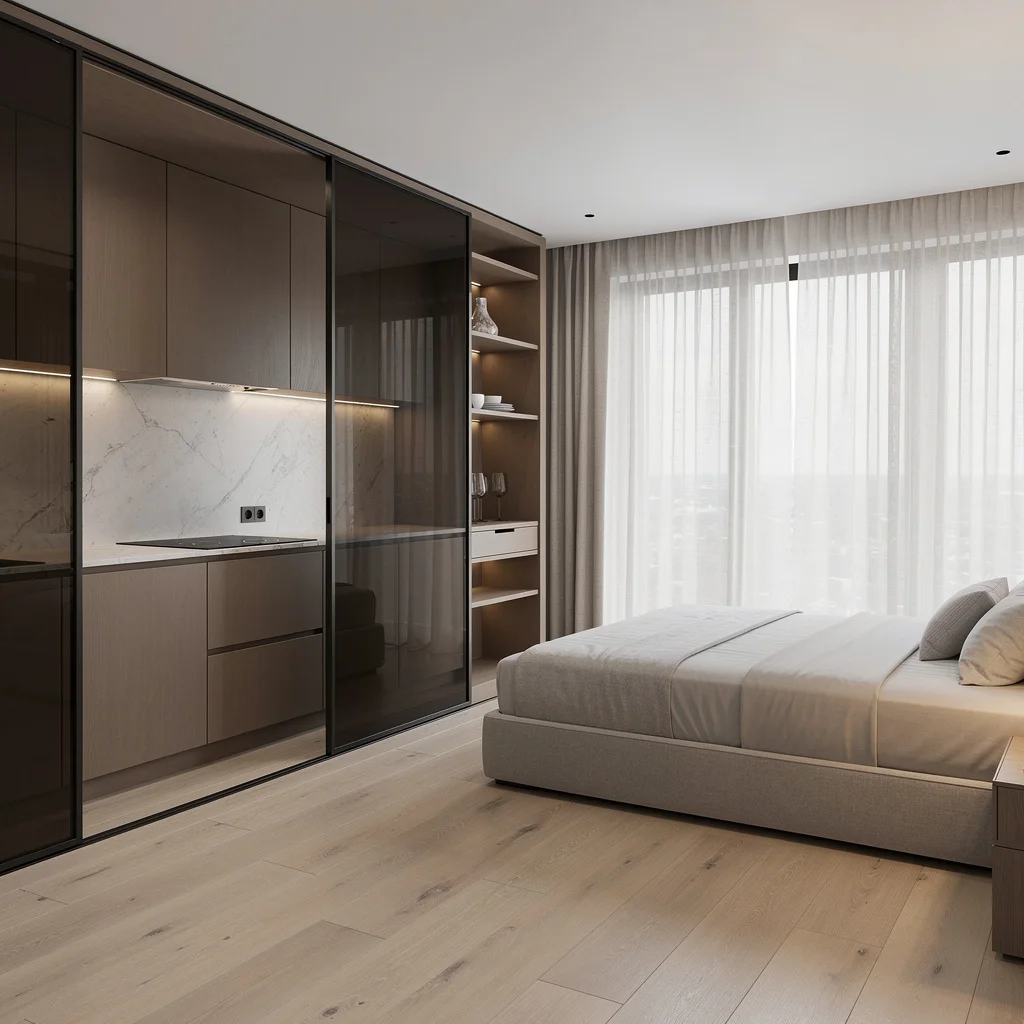
If you want big-money vibes and zero clutter, you need a kitchenette that vanishes as fast as your motivation on Monday mornings. Install minimalist smoked-glass sliding panels to ghost the mess and flaunt your taste. Drop matte walnut cabinetry for that ‘too expensive to touch’ effect, marry with a crisp white marble backsplash, and for the love of subtlety, conceal your induction cooktop. Run recessed strip lighting under the uppers for high-key ambiance. Put everything on wide-plank pale oak floors, and always use a low partition with built-in shelving to separate your snooze zone—nobody wants to spoon crumbs. Hot tip: Sheer linen drapes always trick your brain into thinking the space’s twice as chill and expensive as it really is.
Boutique Hotel Chic: Fold-Out, Freak Out
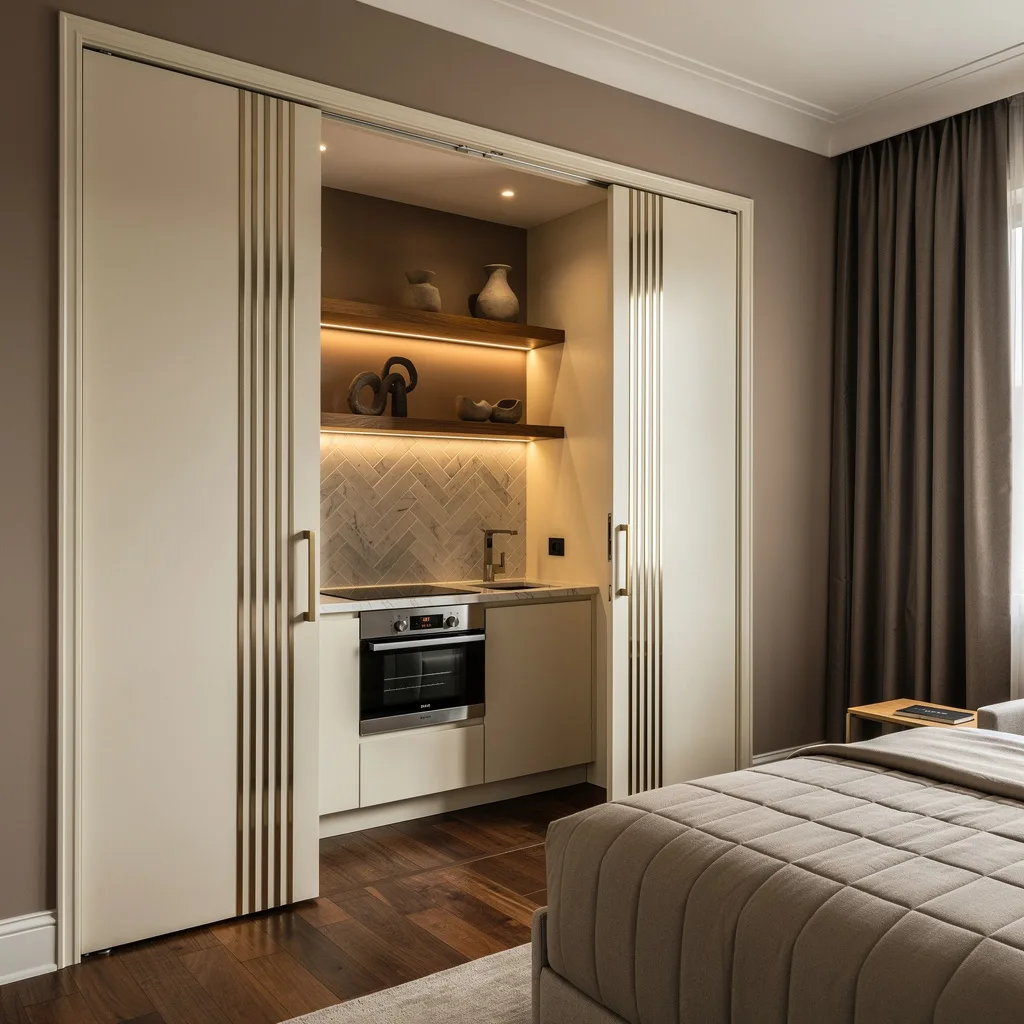
If you want five-star hotel without the weird minibars, enclose your kitchenette behind bespoke bifold doors lacquered in cream with metallic inlays. Use porcelain slab counters and herringbone tile to guarantee respect from your parents and TikTok followers alike. Hide your gadgets, but let ambient LED under floating oak shelves set your mood when you’re cradling ceramic art mugs at 1 a.m. Lean on a channel-stitched headboard and keep your floors luxe with walnut. Real talk: Silk blackout curtains are a non-negotiable—hang them to the floor, or live forever in design mediocrity.
Architectural Glam: The Line-Up
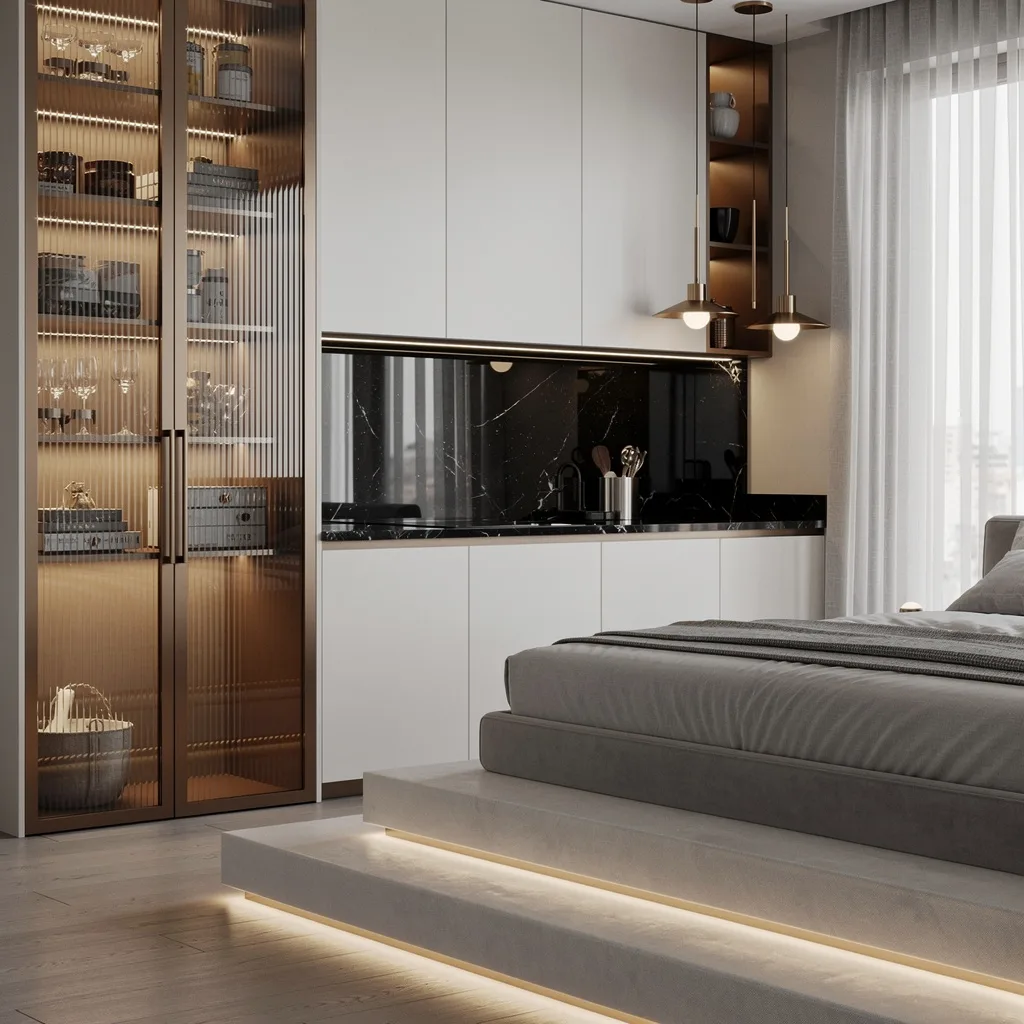
If your heart beats for straight-up modern glam (but low-key, duh), line your kitchenette along one wall with matte white handleless cabinets. Pair them with a honed black quartz worktop and shelves with bronze inlays to say ‘yeah, I know what the cool kids are doing.’ Flank the pantry with ribbed glass doors, toss in architectural pendant lights in brushed brass, and place your bed on a lit plinth—because nothing says ‘style’ like under-bed drama. Double the room’s depth with a smoky mirrored wall, but always soften with sheer drapes. Rule: Step lighting isn’t extra—it’s a must.
Japandi Noir: Less Is More (and Hotter)
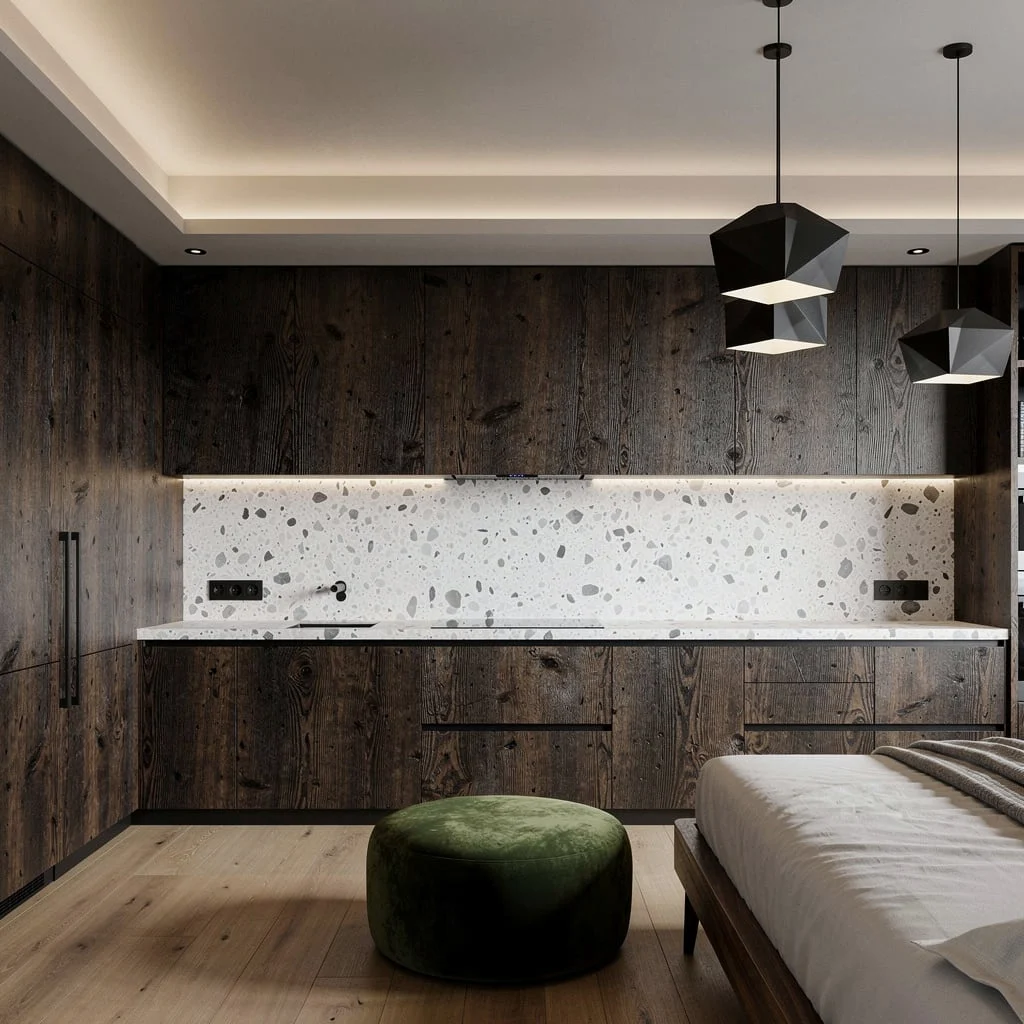
If you love ‘rich but reads philosophy’ aesthetics, go for Japanese charred wood cabinetry and toss in a white terrazzo backsplash. Keep your induction hob sly and venting hidden for zero chaos. Amp up with geometric matte black pendants overhead for shadow play that’s more Kendall Roy than college dorm. Anchor everything on natural oak floors and don’t skip the mid-century low bed. Add a moss green velvet ottoman for moody edge. Ceiling needs drama? Go recessed. Pro tip: Minimal palette is your superpower, but don’t go sterile—inject a color pop to avoid eye-rolling boredom.
Paris Apartment Flex: Blue Panel Brag
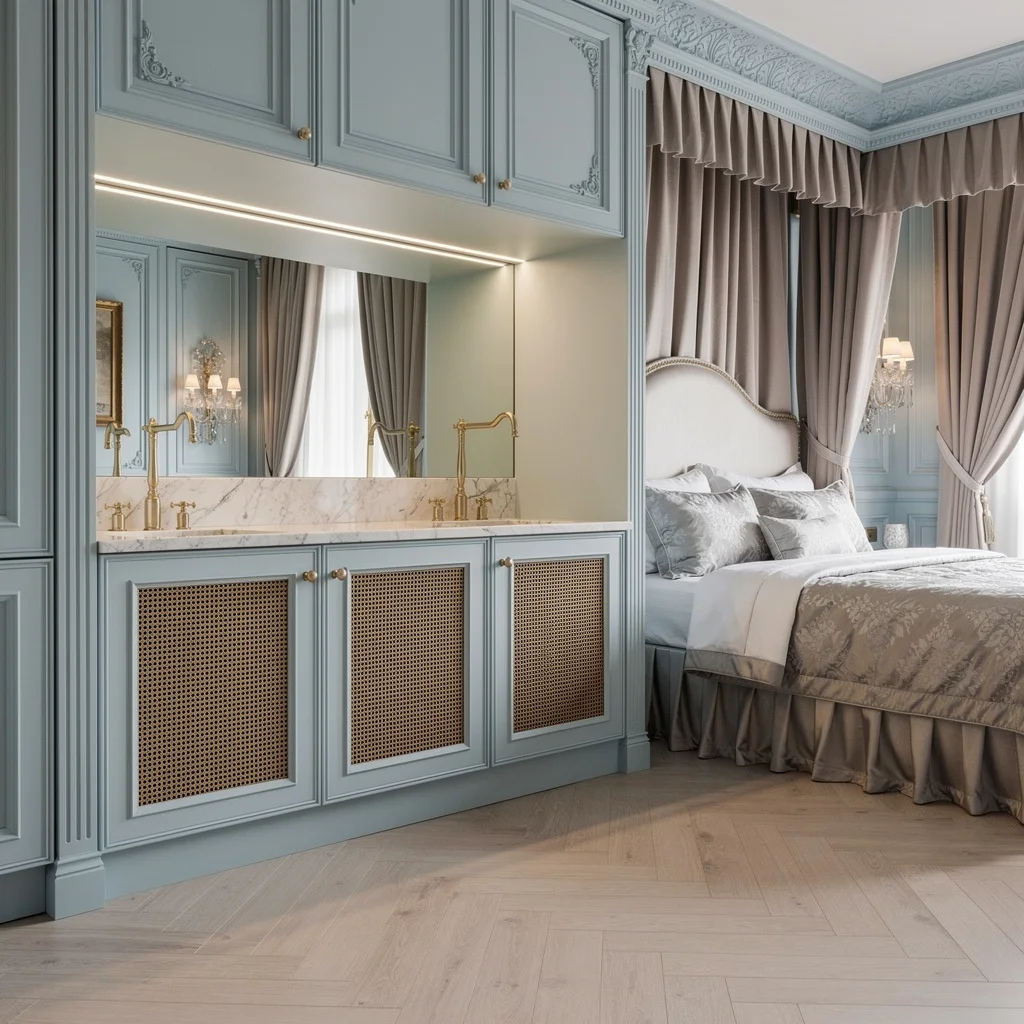
If you’re dying for that unapologetically chic Parisian je ne sais quoi, start with ornate wood paneling, paint it eggshell blue, and tuck your kitchenette beneath. Throw mirrored backsplashes and marble on the worktop—details matter when you want the space to whisper ‘vintage, not estate sale.’ Cane-front cabinetry and antique brass fixings follow, obviously. Statement bed? Make it a king-sized canopy bursting with jacquard. On the ground: pale herringbone parquet—anything else and the Parisians will talk. Styling law: Crown the look with silk drapes and vintage sconces; faking history is always on the table.
Curves Only: Organic, But Not Crunchy
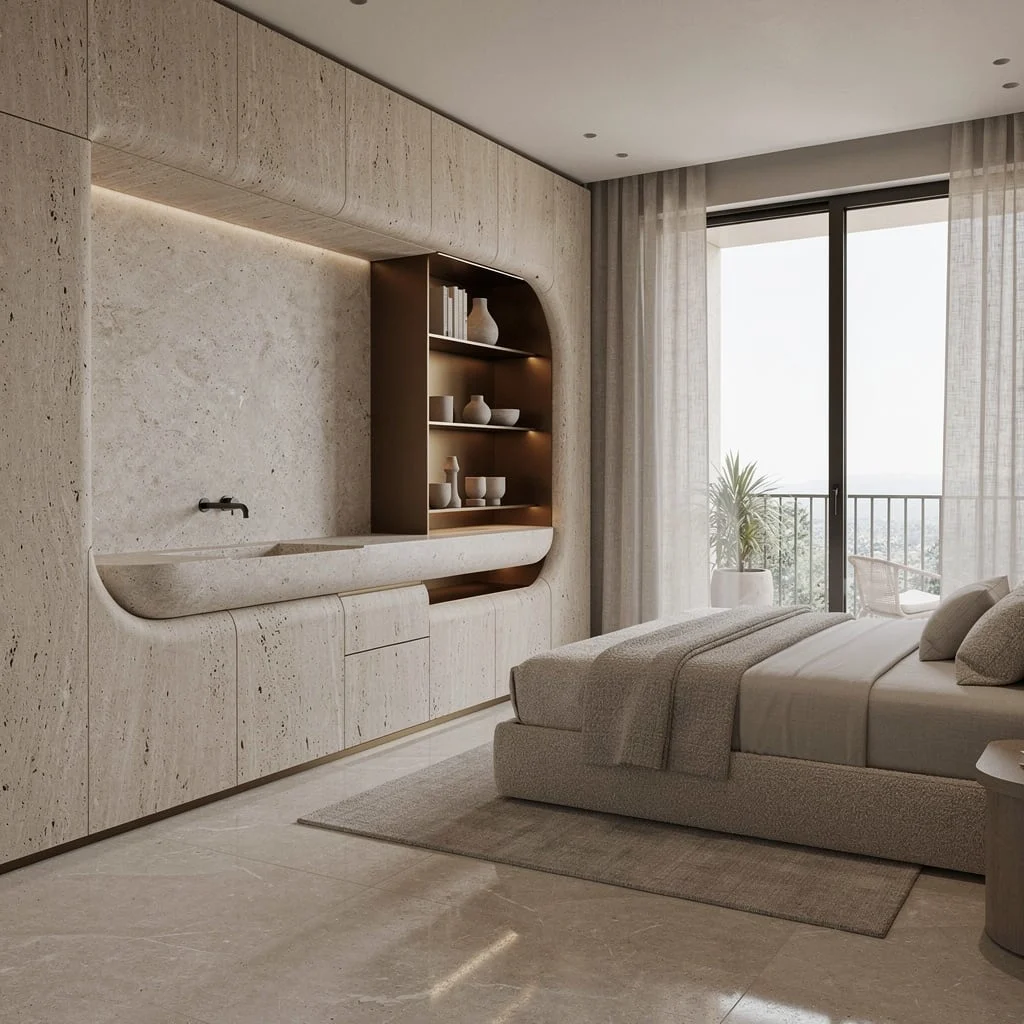
Ready to ditch hard lines? Build your kitchenette with curved matte travertine for a smooth, cave-luxe effect that’s anything but granola. Get matchy with a stone sink and a waterfall-edge counter, then pop bronze shelving in and backlight for shadowy drama. Keep your bed neutral and creamy, but, for your own pride, banish basic linens for those with some texture. Set doors to the balcony, layer up limestone floors and soft drapes for a literal cloud-life moment. Hack: Seamless curves steal all the attention, so don’t over-accessorize—edit more than you add.
Art School Kitchenette: Ribbed But Refined
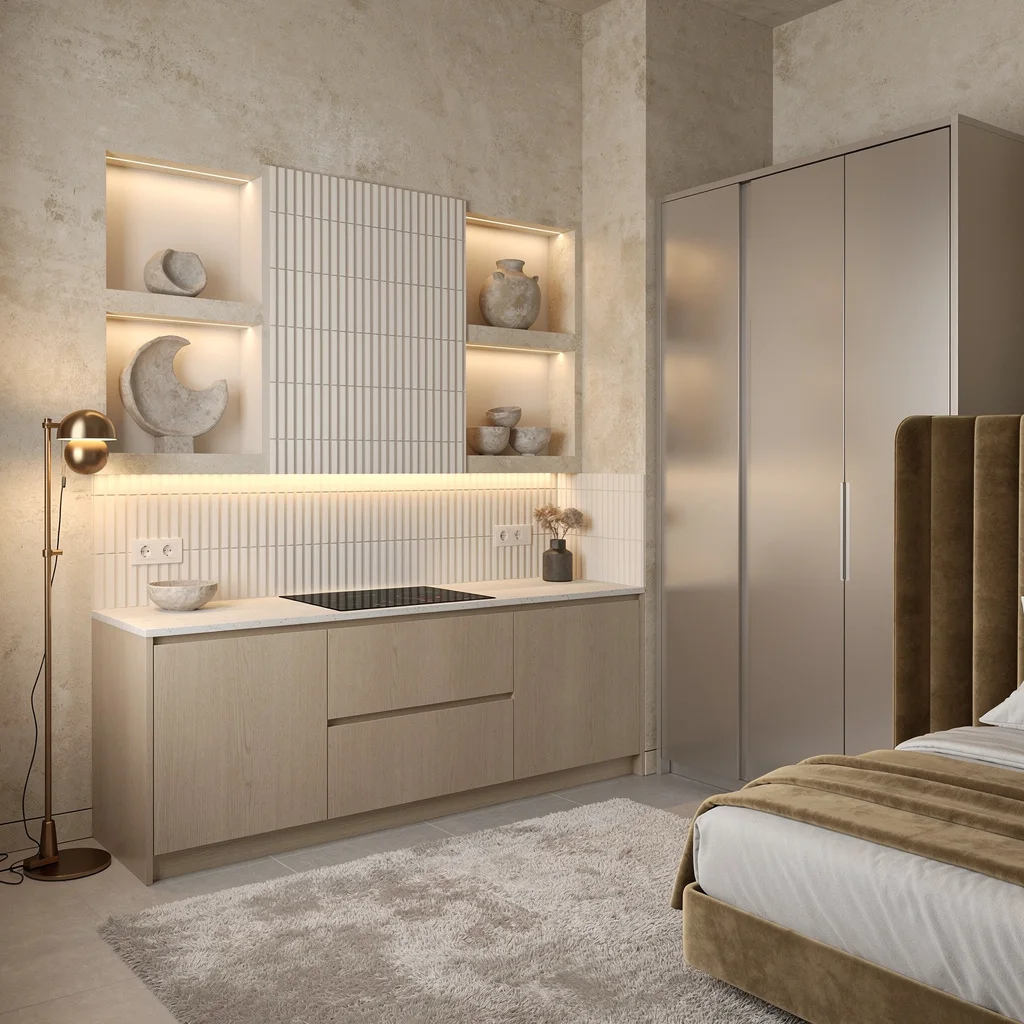
Crave a space that hits as much as your favorite art gallery? Frame your kitchenette with ribbed cream tiles and prop up flat-front light oak cabinets. The countertop should look like it’s never seen a spill—go pale quartz for cool cred and slap in a flush induction stove for one-level logic. Add wall alcoves with spot lighting for your weird ceramics or abstract mugs, and run limed plaster over the walls for gallery-chic. Pro order: Any art vignette needs a channel-tufted suede headboard and a satin wardrobe, and don’t skip the plush rug for extra swank.
Loft Love: Urban Cozy Mode Activated
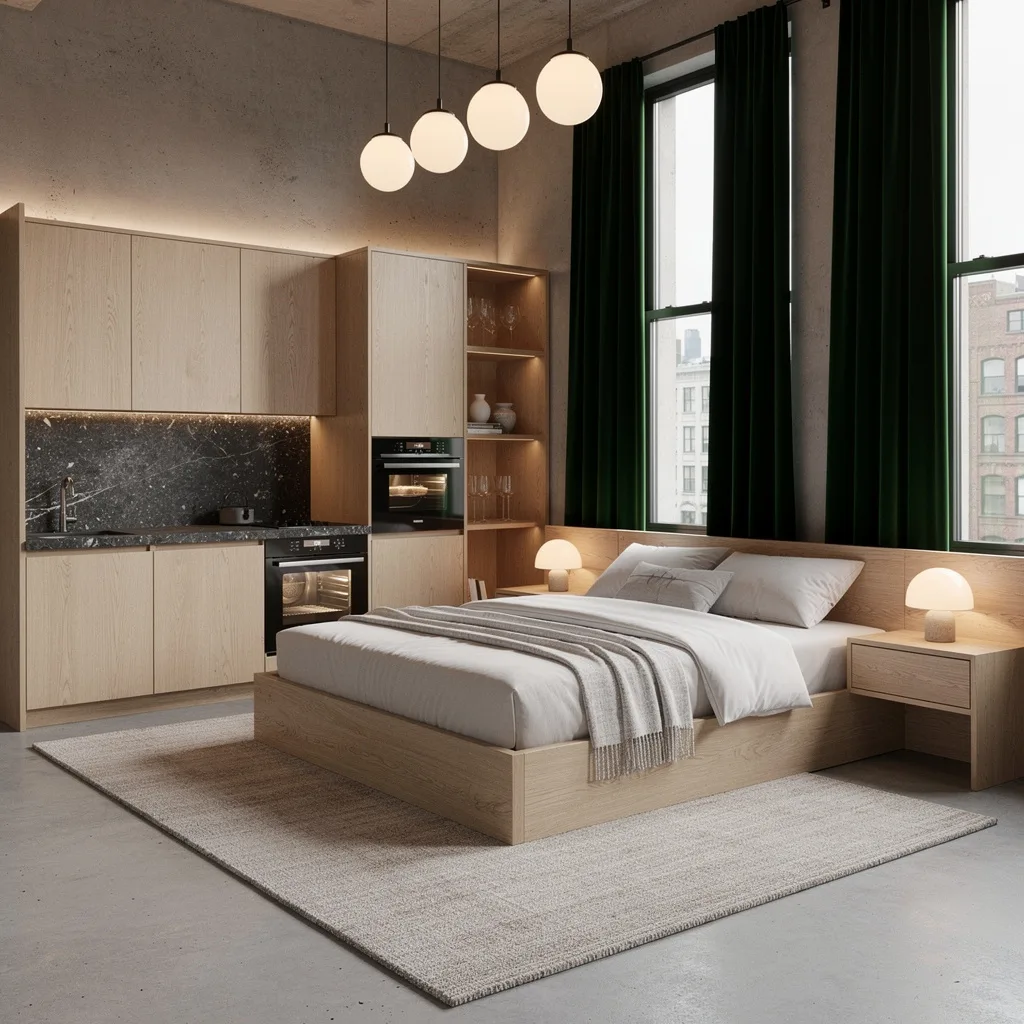
If you need your space to serve major big-city comfort, box your kitchenette in custom white oak and hide all appliances—clutter pile is banned. Go dark with leathered granite on the counters and make your pendants glowing orbs for a moody-meets-welcoming feel. Velvet drapes in forest green must go floor-to-ceiling—forget what your mom did in 1993. The bed? Platform, naturally, with integrated oak nightstands. Drop a neutral wool rug that could sleep a dog, cat, or self after a hard week. Here’s the test: Microcement walls and sneaky uplighting guarantee you’ll never want to leave your room.
Split-Level Szn: Mezzanine Magic
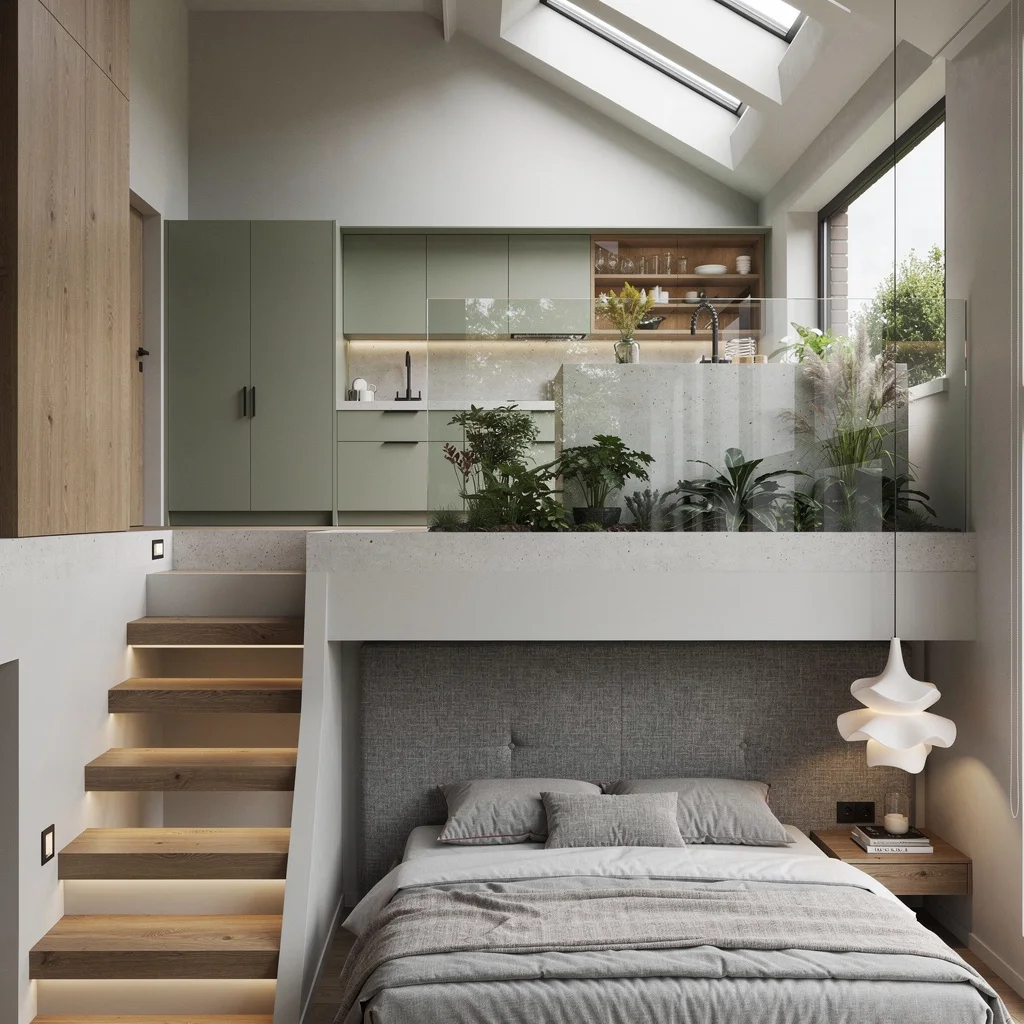
Small space, big dreams? Stick your kitchenette on a mezzanine via floating oak stairs (bonus for under-tread lighting, obviously). Order up matte sage cabinetry against pale concrete counters and a glass backsplash for a peek at your garden—live plants trump wall art any day. Your kingdom below: a bed with textured gray upholstery and layered linens for plush-factor. Choose a sculptural pendant for the drama. Pro move: Clerestory windows multiply your daylight, so never block that light with junk or heavy furniture if you want the space to stay airy AF.
Peninsula Interruptus: Floating Style School
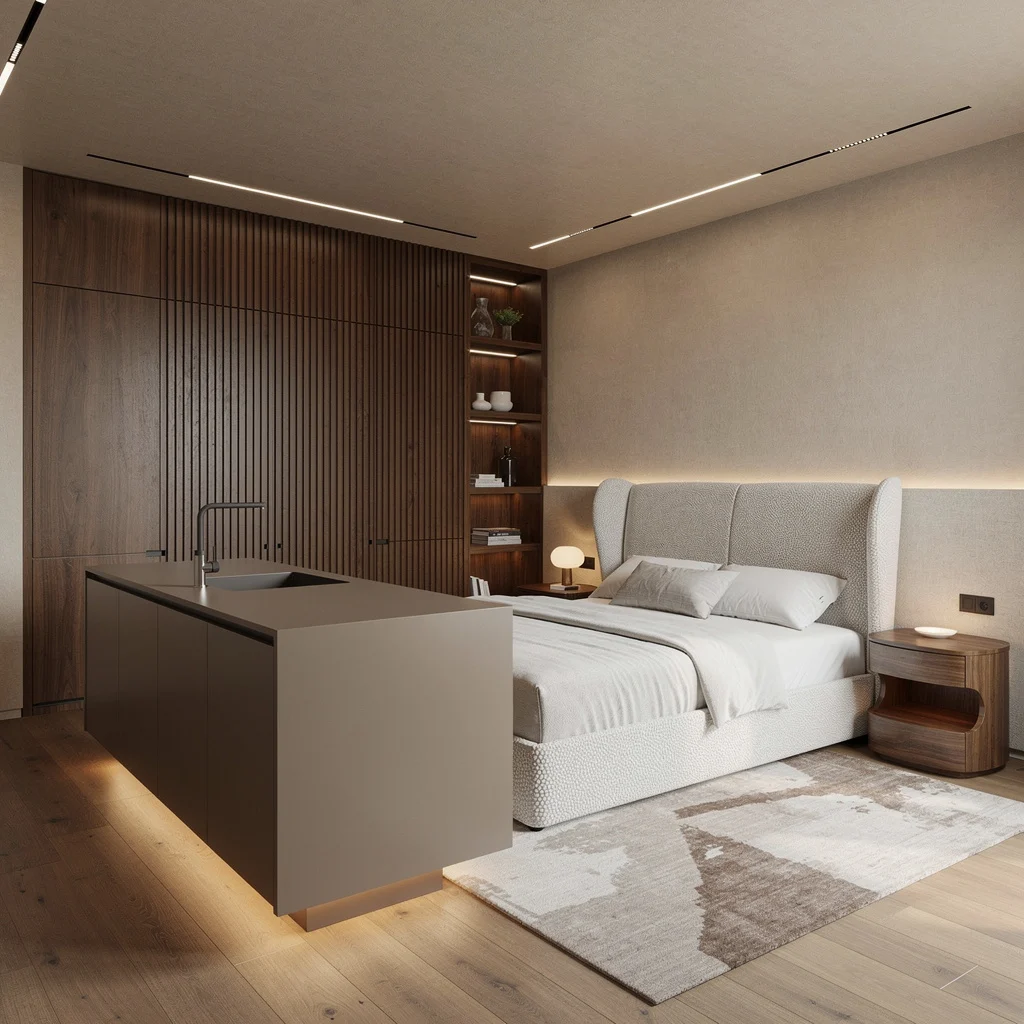
Want your kitchenette to mark its territory without screaming ‘open plan disaster?’ Embrace a floating peninsula in matte taupe finish with a seamless sink. Back that up with walnut cabinetry in vertical wood slats and sprinkle in secret-LED shelving for gentle glow. Anchor sleep with a wingback bed in pebble-fleck textured fabric (otherwise, why bother?), curve those walnut night tables and always keep your oak floors spotless. Sand-tone walls and a massive abstract rug tone down the try-hard. The lesson: Hidden linear lighting is not a trend—it’s your new life. Don’t ignore it.
Final Thoughts
A bedroom kitchenette that works isn’t about hiding the kitchen or minimising it into irrelevance — it’s about designing it as deliberately as every other element in the room, treating its materials and lighting and zone relationship as design decisions rather than practical afterthoughts. The spaces that genuinely succeed are the ones where the kitchen zone was designed as part of the room from the beginning rather than installed and then designed around. Shared material palette, independent lighting per zone, considered separation between kitchen and sleeping areas, and appliance choices that belong to the room’s design language — these are the decisions that separate a studio that feels like a compromise from one that feels like a choice.