
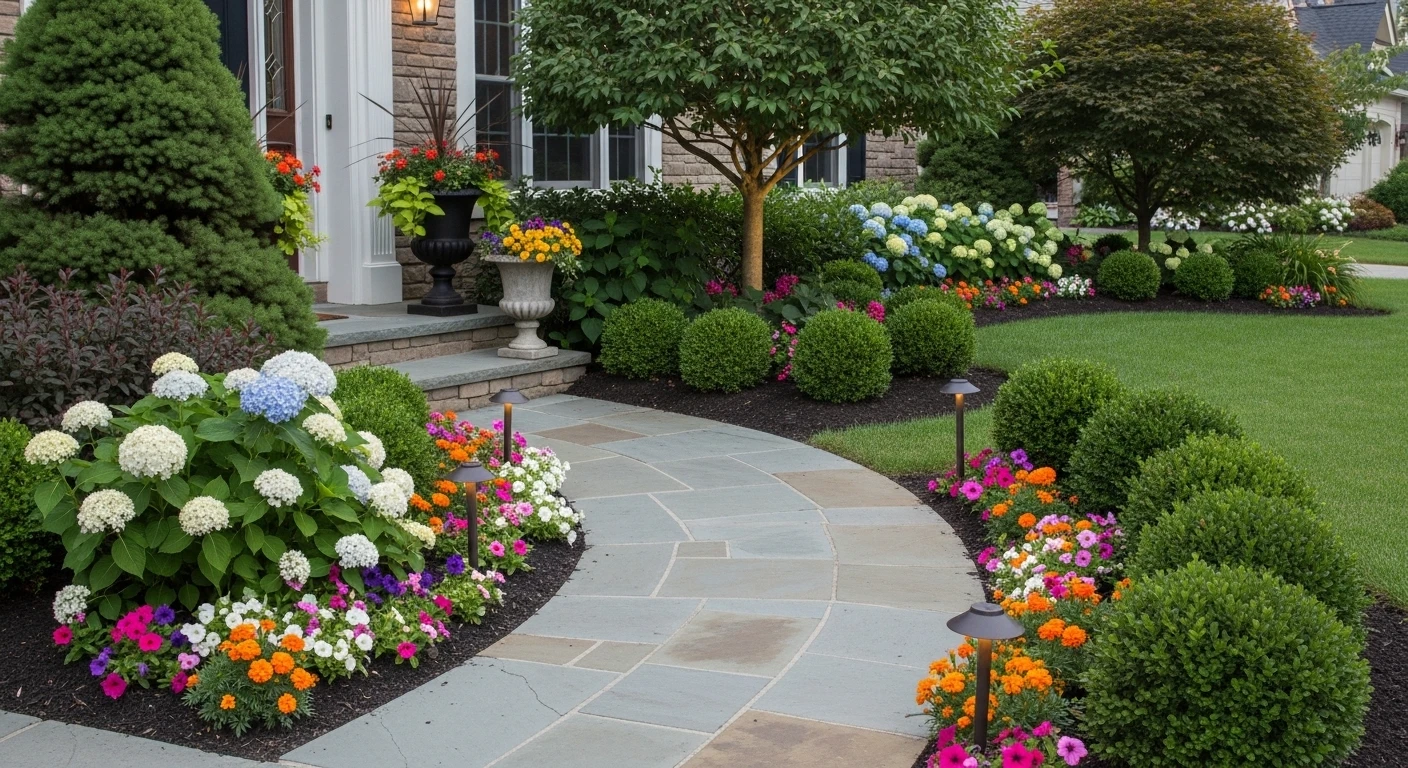
Your front entry landscaping is doing a performance review on your house every single day, and for most properties, the results are not great. A concrete path, some mulch that’s been there since the previous owners, and whatever shrub survived the winter by sheer stubbornness — this is the curb appeal situation millions of homes are presenting to the world with apparent indifference to how it reads from the street.
The frustrating part is that the front entry is the one outdoor space where everyone who visits or drives past forms an immediate opinion about your house before they’ve seen a single thing inside it. It sets expectations, communicates personality, and either makes arrival feel like an occasion or makes it feel like navigating a service entrance. Given that it’s doing all that work anyway, it seems worth doing it intentionally.
What separates genuinely impressive entry landscaping from the mulch-and-hope approach isn’t budget or garden expertise — it’s understanding that the path, the planting, the steps, and the door are a single composed moment rather than separate elements that happen to exist in proximity. The concrete slab that leads to the door, the beds flanking it, the lighting after dark, the colour relationship between the plants and the facade — all of it is one design decision either made deliberately or made by default, and the results look exactly like which approach was taken.
The Path Is the First Sentence of the Whole Story
Every front entry has a path leading to the door, and that path communicates more about the property’s design intentions before visitors reach the threshold than almost anything else visible from the street.
Path Material Sets the Architectural Register — Brick steps signal traditional warmth. Floating timber treads signal contemporary precision. Geometric concrete pavers with black inlaid detail signal that someone hired a designer or at minimum spent serious time on Pinterest with a notebook. The material choice is not neutral — it’s a declaration about the house’s personality that everything else in the entry landscaping either supports or contradicts.
Width Communicates Confidence — A narrow, tentative path looks like it was installed to technically connect point A to point B rather than to welcome anyone. A generous path width — one that allows two people to walk side by side without negotiating the shrubbery — creates the sense of arrival that transforms a front entry from a functional necessity into a designed experience.
The Path Needs a Destination Worth Arriving At — The best paths create anticipation rather than just providing directions. A path that bends slightly, that widens as it approaches the door, that frames the entry between planted beds or defined borders creates a sense of ceremony around arrival that a straight concrete strip between two strips of grass never achieves regardless of how well maintained the grass is.
Planting Does the Work That Hard Landscaping Cannot
Materials create the structure. Plants give it life, scale, seasonality, and the quality of something that improves over time rather than simply ageing. Getting the planting composition right in an entry landscape is the difference between a designed entrance and an entrance that looks designed.
Height Layering Creates Depth From the Street — A front entry planting scheme that keeps everything at the same ground level reads as flat and incomplete, even when the individual plants are healthy and well maintained. Combining a tall specimen — a standard topiary, a multi-stemmed shrub, a climbing plant against the facade — with medium shrubs and low ground cover creates the layered quality that gives planted entries their sense of fullness and considered organisation.
Symmetry Signals Formality and Welcomes Immediately — Two matching pots flanking a door, two identical shaped shrubs at either side of a path, mirrored planting beds of the same composition — symmetrical planting arrangements create an instant sense of arrival and welcome that asymmetrical arrangements rarely match for immediate impact. It’s the oldest entry landscaping trick available and it works every single time it’s executed with matching scale and maintained condition.
Seasonal Interest Proves Someone Is Actually Paying Attention — Entry planting that looks spectacular in one season and bleak in three others is a plan that wasn’t finished. The best entry landscapes are considered across the full calendar — evergreen structure maintained through winter, flowering plants providing colour through warmer months, foliage interest bridging the gaps. It communicates ongoing care rather than a single installation moment, which changes how the whole property is perceived.
The Door and the Facade Are Part of the Landscape Brief
The landscaping does not end where the building begins. The relationship between the plants, the path, the steps, and the front door colour, facade material, and architectural detailing determines whether the entry reads as a coherent composed moment or a garden that happens to have a house behind it.
Door Colour Is a Landscape Decision as Much as an Interior One — A green door in a white facade with bougainvillea climbing the wall is a colour composition, not just a paint choice. A navy door in a stone entry with box hedging and iron lanterns is a composition. A pale blue door with white pots and blue hydrangeas is a composition. The door colour should be chosen in relationship to what’s growing around it, not in isolation from the outdoor palette.
Facade Material Determines What Planting Works Best Against It — Light rendered facades make dark foliage and vivid flowers advance dramatically — they need contrast. Brick or natural stone facades absorb colour differently and suit softer, more naturalistic planting styles. Getting this relationship right produces entries where the planting and the building enhance each other. Getting it wrong produces entries where even expensive, healthy plants look somehow wrong against the background they inhabit.
Lighting Extends the Entry’s Design Hours Substantially — An entry landscape that disappears after dark has sacrificed half its design potential. Path lighting, uplighting on a specimen plant or facade feature, wall-mounted lanterns flanking the door — these are not decorative additions, they’re the difference between an entry that works for twenty-four hours and one that works for twelve. The lighting should be considered as part of the landscape design from the beginning, not added as an afterthought when someone trips on the steps in October.
Entryway Landscaping Ideas
The Tropical Refresh That Proved Paint and Plants Can Do Everything
My tree guy helped me redo my front entryway
by u/ERB33414 in landscaping
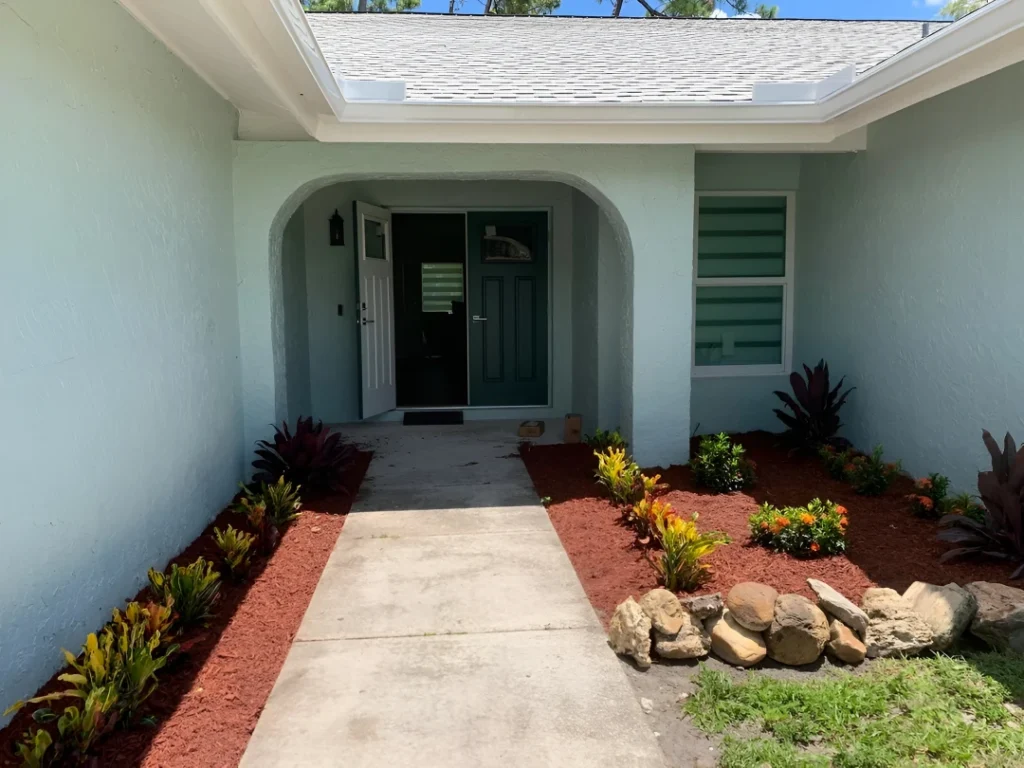
A concrete path leads to an arched entry porch under a pale mint-blue rendered facade, and the entire composition has been transformed by two interventions that cost a fraction of what they imply — a confident dark teal front door and a flanking planting scheme of crotons, bromeliad-style plants, ixora with orange-red flowers, and dramatic red-leafed cordylines in fresh red bark mulch on both sides. The stone boulder grouping at one corner adds casual natural texture without any maintenance demands, and the arched entry framing the dark door creates a focal point visible from the street that the previous arrangement almost certainly lacked. It’s evidence that the right door colour and a properly planted bed can do more for a front entry than any structural renovation.
The Bougainvillea Gate Entry That Knows Exactly What It Is
A teal timber gate with arched top sits within a white rendered wall, and bougainvillea in full shocking-pink bloom climbs both sides of the frame and spreads across the wall top with the kind of vigorous abundance that takes several seasons to achieve and absolutely no restraint to appreciate once it arrives. Concrete pavers set in turf grass create a simple geometric path approaching the gate, low ficus plantings and blue lobelia fill the ground level, and a traditional lantern sconce on the white wall handles the lighting brief with appropriate restraint. The gate colour, the bougainvillea pink, the white wall, and the blue ground planting create a colour relationship that looks like a Mediterranean courtyard even in a suburban context, purely because the planting commitment is total.
The Blue Dutch Door Entry That Let the Garden Come to the Door
A periwinkle blue Dutch door open at the top frames the interior entry — a round mirror, a blue ceramic vase, a lamp glimpsed within — while two generous white pots overflowing with mixed blue hydrangeas, purple petunias, and trailing ivy stand at either side of a granite-edged step. Concrete paver strips set in turf grass approach from the lawn, and the whole facade in white board-and-batten with matching blue shutters creates a colour conversation between exterior and interior that makes arrival feel like stepping into something consistently considered. The matching pot scale flanking the door is the detail that makes the composition feel resolved — it’s symmetrical without being rigid and generous without being excessive.
The Geometric Paver Entry That Treated the Path Like Architecture
Cream limestone pavers with black steel geometric frame inlays — concentric square patterns scaled to the paver dimensions — lead from the street through a gravel bed to double navy doors framed by tall pilasters and flanked by black bollard lights and clipped box spheres in dark gravel beds. The geometry on the pavers is the element that elevates this from an impressive entry to a genuinely exceptional one, because it transforms a functional path surface into a decorative composition that the eye follows toward the door with the same engaged attention given to an interior floor pattern. The restraint of the surrounding planting — tight box spheres, dark gravel, nothing competing with the paver detail — is precisely what allows the path pattern to read clearly from the street.
The Pediment Cottage Entry That Understood Tradition Has a Future
A classic white painted pediment supported by simple columns frames a pale grey glazed door with brass hardware, brick steps with a natural stone edging rising to the threshold, clipped round-ball shrubs in stone urns on either side, and a mixed cottage border of foxglove, box hedging, and pink flowering plants in the ground below. The matching blue-grey shutters and the door tie the facade together in a monochromatic cool palette that the warm brick steps and stone urns prevent from feeling cold. What makes this entry stand out against every other traditional cottage front is the consistent quality of execution — the shaped shrubs match, the urn scale matches the pilaster scale, the plantings are generous enough to look established rather than recently installed.
The Timber Step Zen Entry That Made Modern Feel Liveable
Wide horizontal timber deck steps in warm cedar tones rise through a landscape of white gravel, black river pebble, stepping stone pavers, and a small shallow dish water feature planted with lily pads and a single pale stone — and the combination of all those materials creates a Japanese-influenced entry that feels both calm and contemporary without retreating into sterility. White limestone block cladding on the structural pillar, a warm timber door with horizontal grain panelling, dark metal window framing, and recessed soffit lighting in the canopy above bring the architecture into conversation with the landscape rather than ignoring it. The small water feature at the entry path junction is the detail that most people would leave out — and its presence at exactly that scale is precisely what makes the whole composition feel genuinely considered rather than competently assembled.
Get Modern Zen With Porcelain & Charcoal Drama
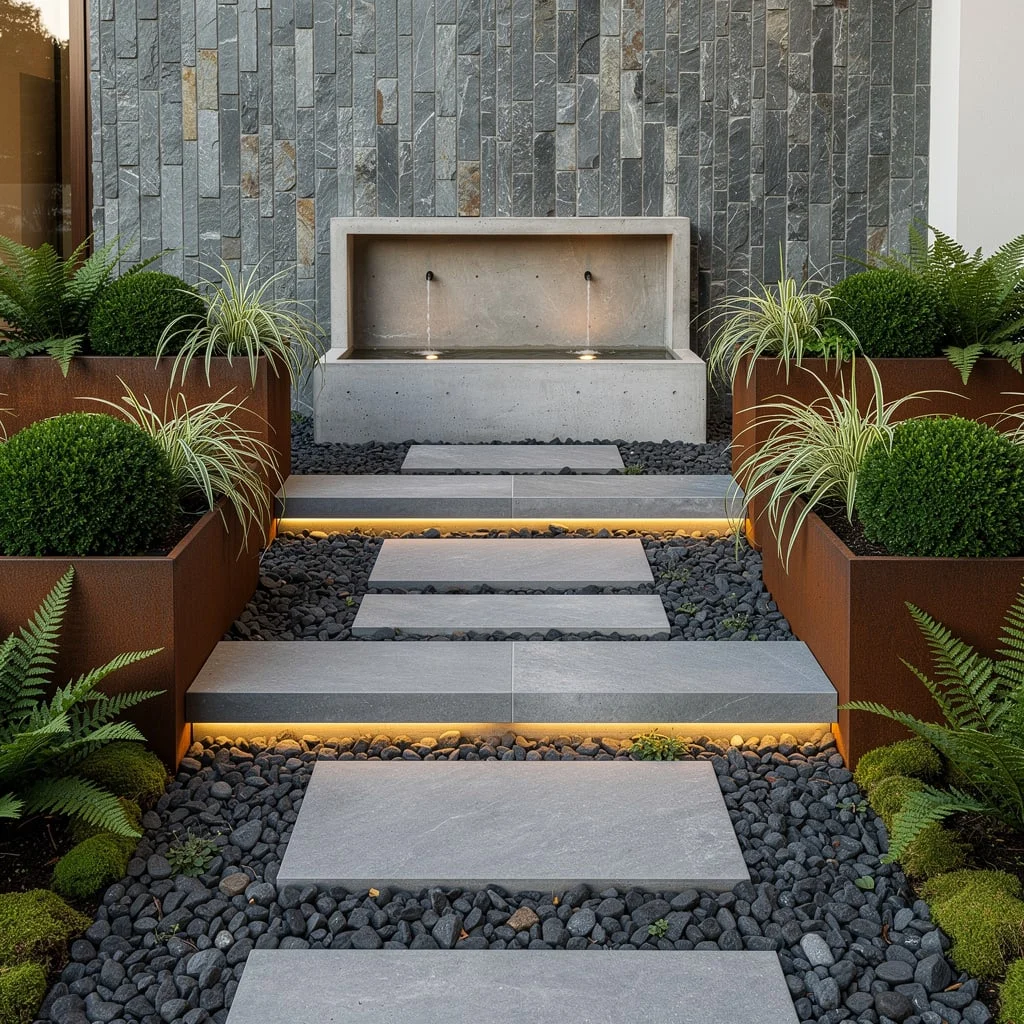
Channel serious cool by mixing modern textures for that spa-but-stylish feel. Grab staggered porcelain pavers and nestle them in a sea of charcoal river stones. Line the path with corten steel planters stuffed full of deep green boxwoods—none of those limp shrubs—and variegated ornamental grasses. Layer in LED strip lighting under each step because bland lighting is for quitters. Cap it with a vertically stacked bluestone accent wall plus plush ferns and moss for softness. Install a simple water feature into a polished concrete niche to flex that tactile genius. Never let the stones stop; always let them creep under the steps for seamless vibes.
Architectural Drama: Diagonal Limestone & Black Pivot Door Flex
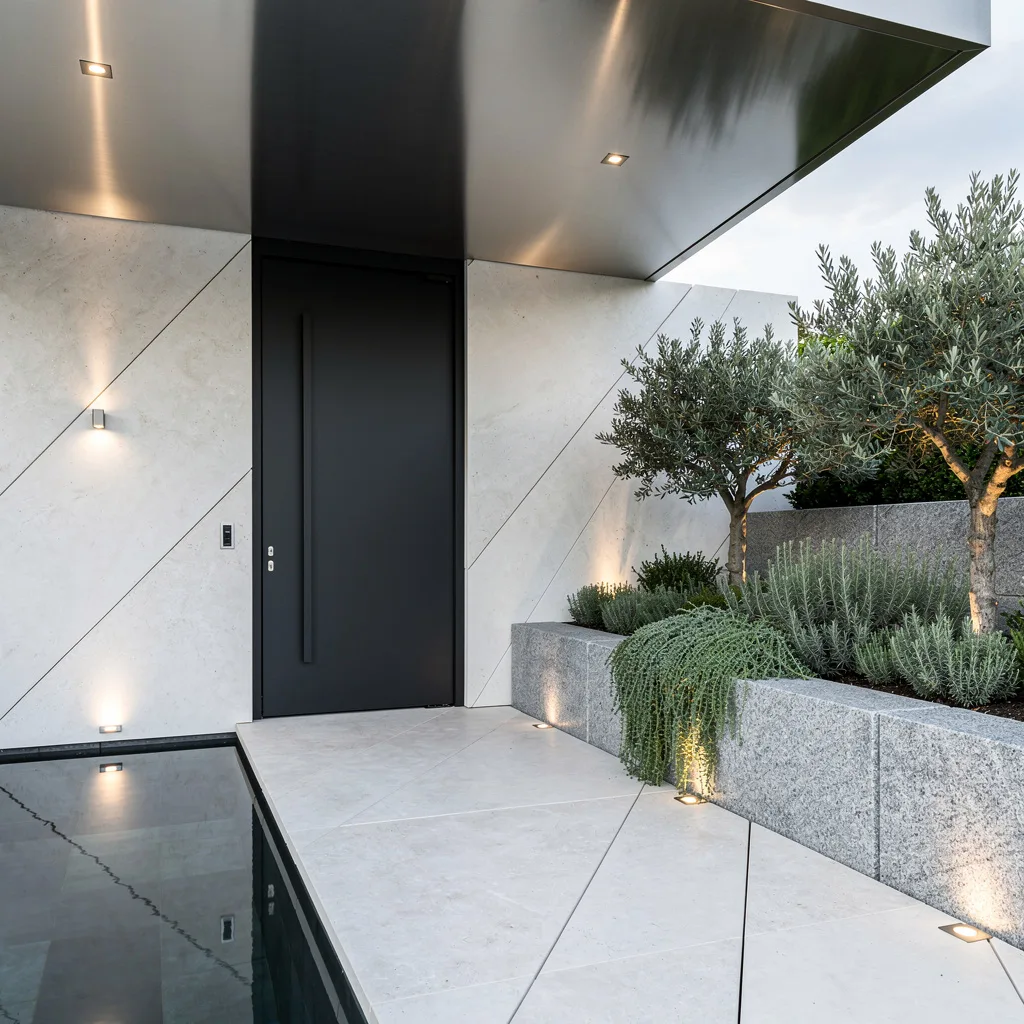
Go full sculptural with smooth white limestone slabs laid on the diagonal, because straight lines are for basic folks. Prop a raised granite block garden bed with olive trees and trailing rosemary—it’s cute and Mediterranean without trying too hard. Set up a reflecting pool to play mirror games with your door and the sky, and pump up texture with recessed wall lights and ground uplights. Throw a brushed stainless steel canopy overhead, so you stay dry but still flex your landscaping for all the neighbors. Never settle for boring symmetry; make those angles work and illuminate like your entry is runway ready.
Slate, Thyme & Teak: Transitional Cool With Plant Power
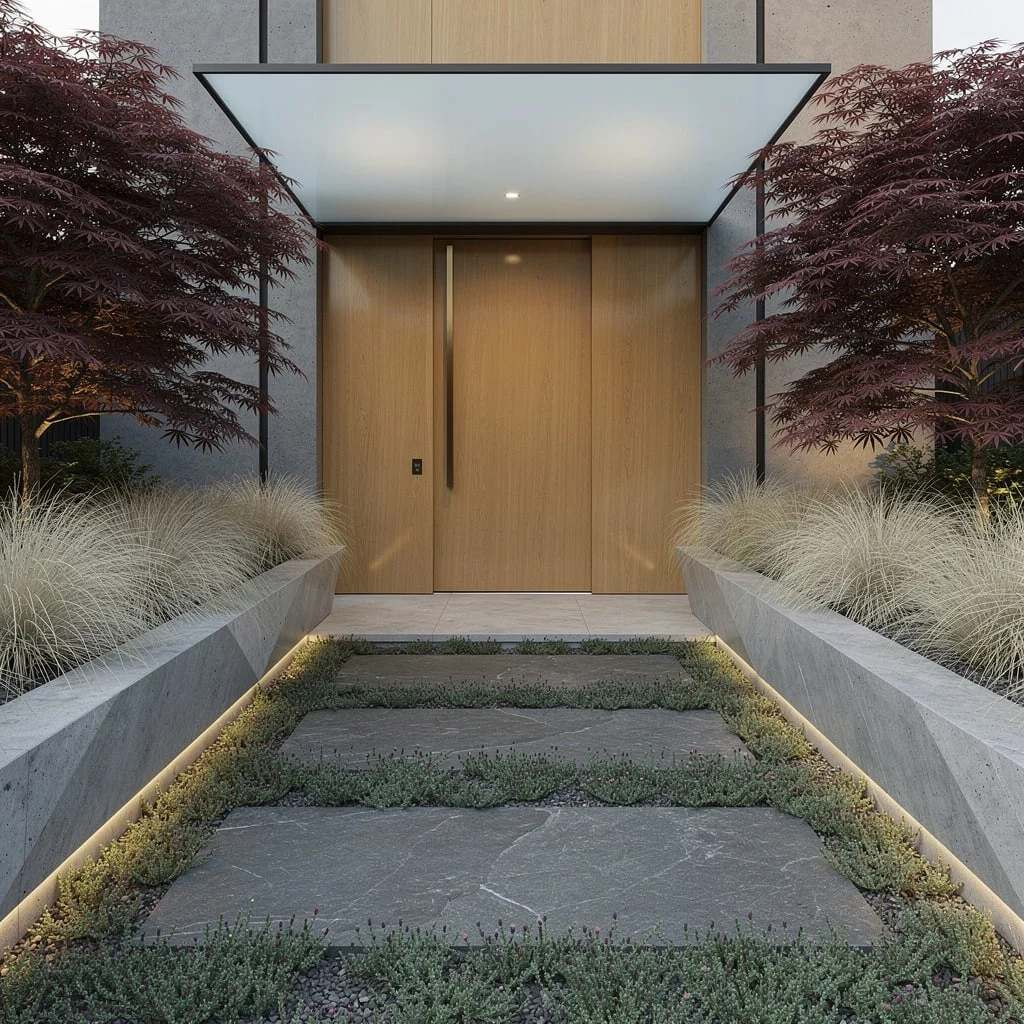
Balance slick and organic by embedding massive slate stepping stones in a carpet of creeping thyme—just walk all over it, literally. Frame everything with polished concrete borders loaded with fluffy ornamental grasses and burgundy-leaf Japanese maples. Hide undercap lights along the edges for moody, nocturnal elegance. Shade your entry with a frosted glass canopy that keeps things breezy. Install a honey-colored teak door tricked out with brass inlays; if you want to flex your taste, flaunt metallic accents in stonework. Always match plant tones with your wood and metal finishes, the ultimate designer cheat code.
Concrete Walkway & Glass Panels: Future-Proof Your Curb Appeal
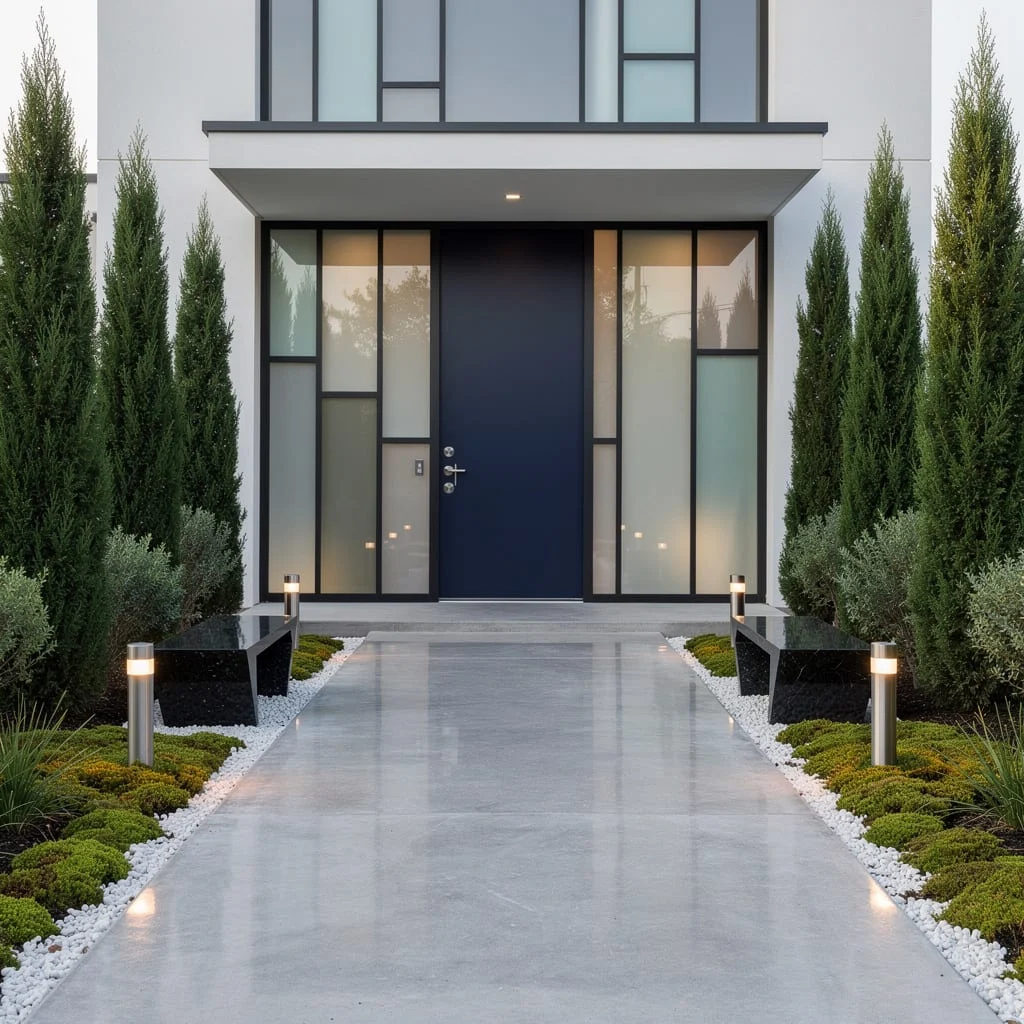
Why are you still doing basic pavers? Embed tinted glass panels in a polished concrete walkway for a touch of futuristic sophistication. Stake tall, symmetrical Italian cypress along each side; keep ‘em tight and neat. Fill the gaps with moss and white gravel, because clutter is a crime. Drop discreet bollard lights so the glass panels—and your guests—are bathed in soft glow. Place sculptural black granite benches along the walk for a seating moment, then finish with a deep navy entry door featuring brushed nickel hardware. Pro tip: Never let walkway lighting upstage the door. Always unify hardware with nearby plant finishes.
Brushed Bronze Tiles & Metallic Mood: Glam Slam Entrance
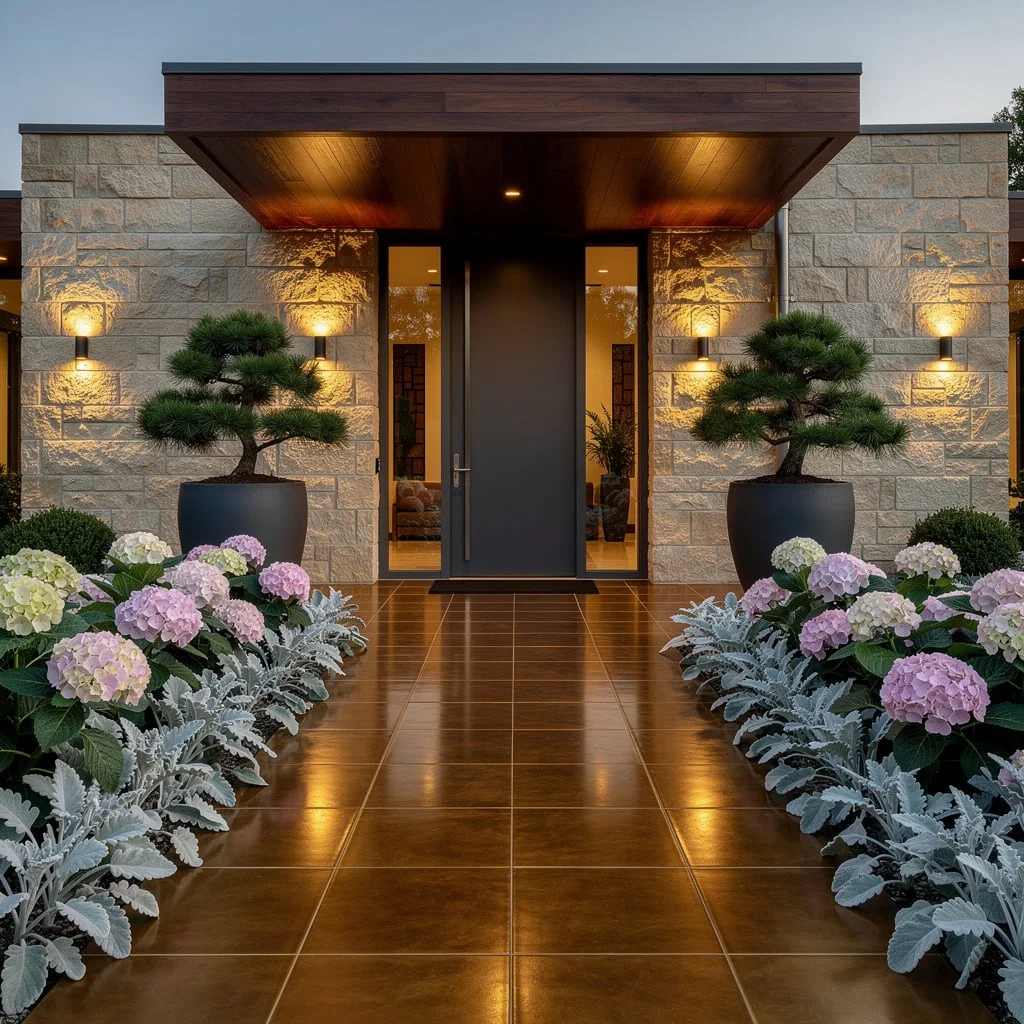
If you want your entryway to feel rich and kinda otherworldly, lay down brushed bronze tiles. Surround them with beds of silver-leaf lamb’s ears and pale pink hydrangeas—don’t be shy with color contrasts. Anchor the entry with big, matte charcoal planters holding compact Japanese pine, balancing bling and green like a pro. Wall-mount LED sconces along the path, so you get that shimmer effect under the evening sky. Finish the look with a textured limestone façade and a custom wood canopy in dark walnut. Metallics shouldn’t be scary; always offset them with organic shapes and colors to keep things poppin’, not tacky.
Pool Steps & Limestone: Float Into Luxury Like A Boss
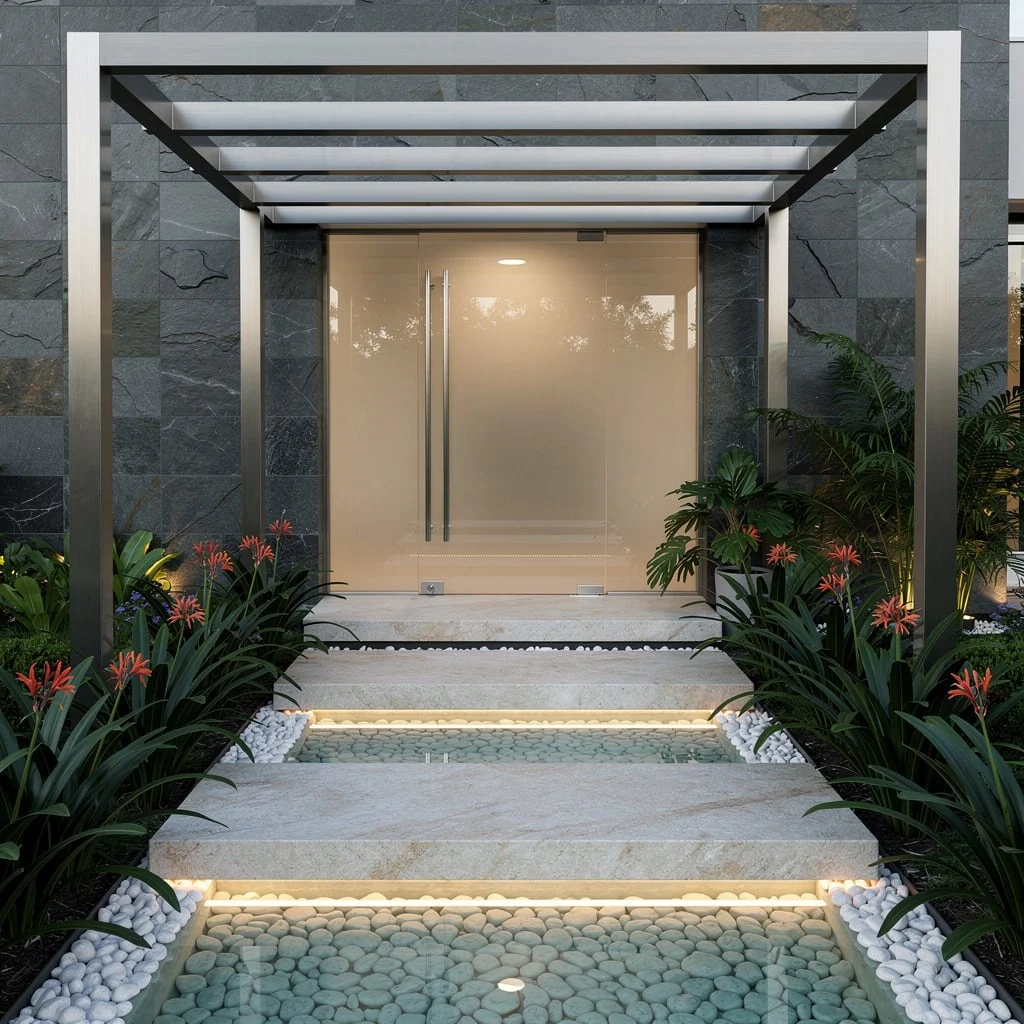
If you want immediate wow, float rectangular limestone steps over a shallow pool—no, it’s not crazy, it’s high design. Edge the path with deep green clivia and minimalist white pebbles; keep the palette tight, don’t go rainbow. Throw a brushed steel pergola overhead for structure and chill vibes. Install strip lighting at the pool edges for night sparkle. Backdrop the whole thing with a minimalist slate wall, and set a clear, frameless glass door with chrome handles to bounce light. Make sure your steps truly hover, not just sit over water. Poolside entryways are the sign of a true design savage.
Patterned Tiles & Marble Transition: Get Artisanal Without Looking Try-Hard
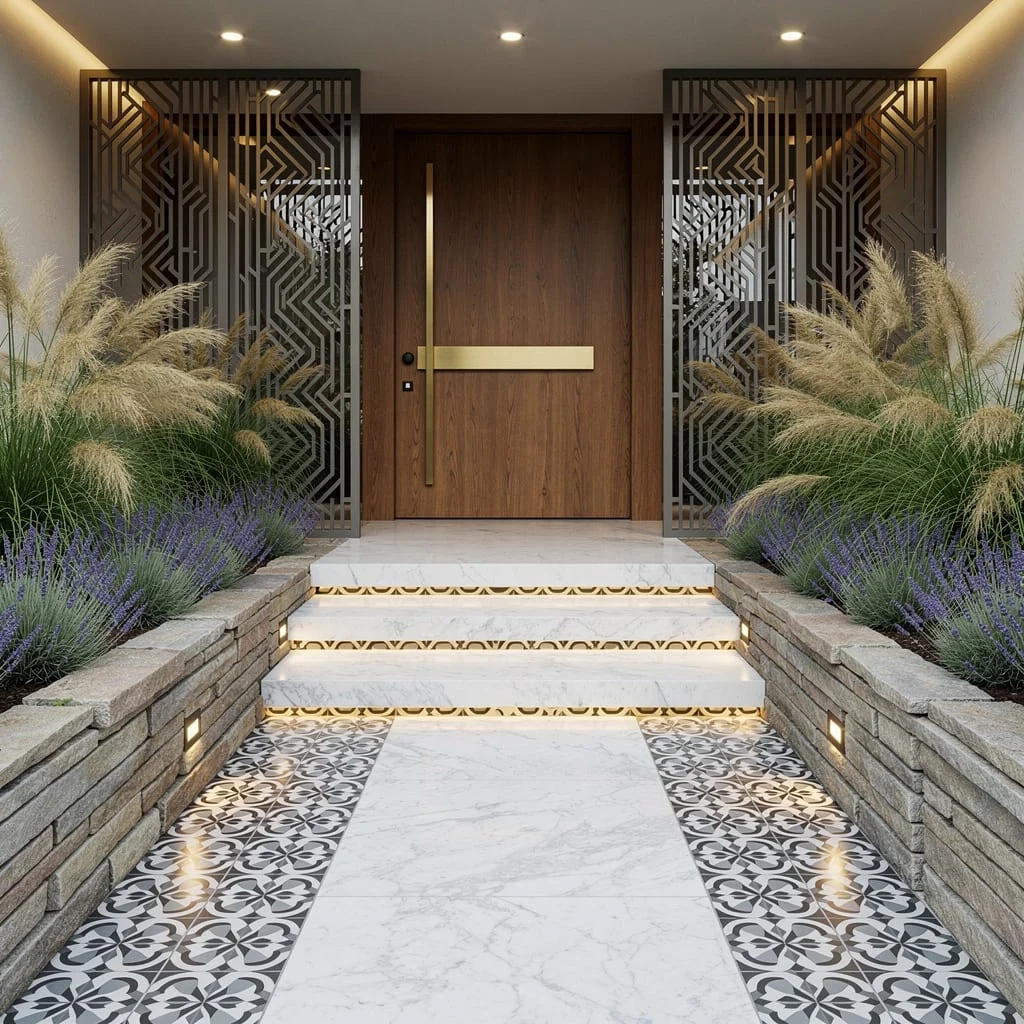
Don’t bore your guests—lay out an entry path of patterned encaustic tiles, bordered with stratified stone walls densely planted with ornamental millet and purple lavender. Let your steps transition from tile to honed white marble slabs as you approach the main entry; yes, you do need that luxe switch-up. Pop integrated step lights for warm, inviting glow. Flank your entry with custom powder-coated metal screens with linear cutouts for privacy and designer clout. Pair a teak door with a massive brushed brass pull, illuminated by overhead spotlights. Always transition materials dramatically; it’s called ‘getting noticed for the right reasons.’
Granite Blocks & Wood Slats: Organically Engineered Vibes Only
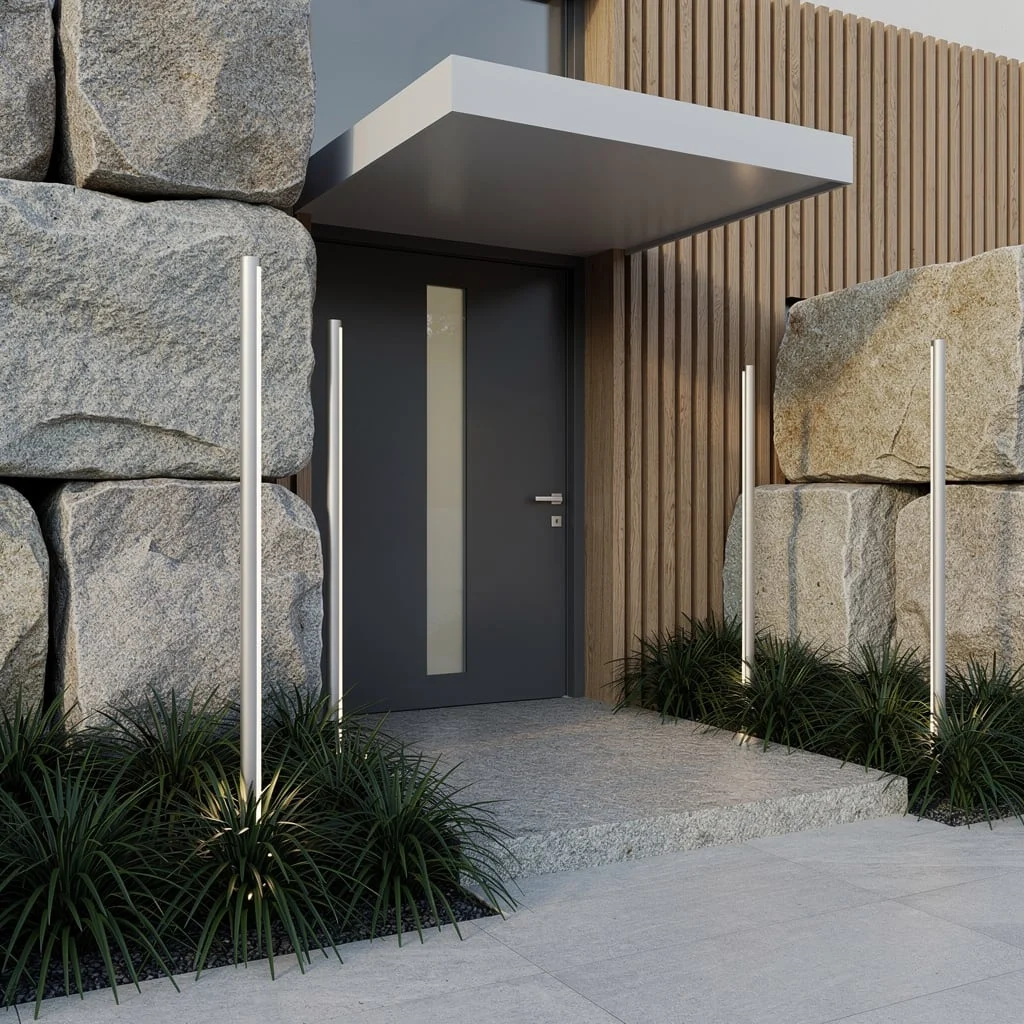
Stop faking that organic feel. Use oversized rough-cut granite blocks in a freeform arrangement, bordered by mondo grass, for real earthiness. Guide visitors using vertical designer wood slats—scatter them, not too tight, not too loose. Add tall, slender LED light posts for direction and drama, not just function. Install a cantilevered aluminum canopy in pale grey above the threshold; it’s got calm confidence, not loud hype. Place a matte charcoal entry door with frosted glass panel for edge. Rule: always alternate hard and soft textures, and keep lighting vertical for that cutting-edge style without looking robotic.
Timber Deck & Volcanic Sand: Sophistication With Swagger
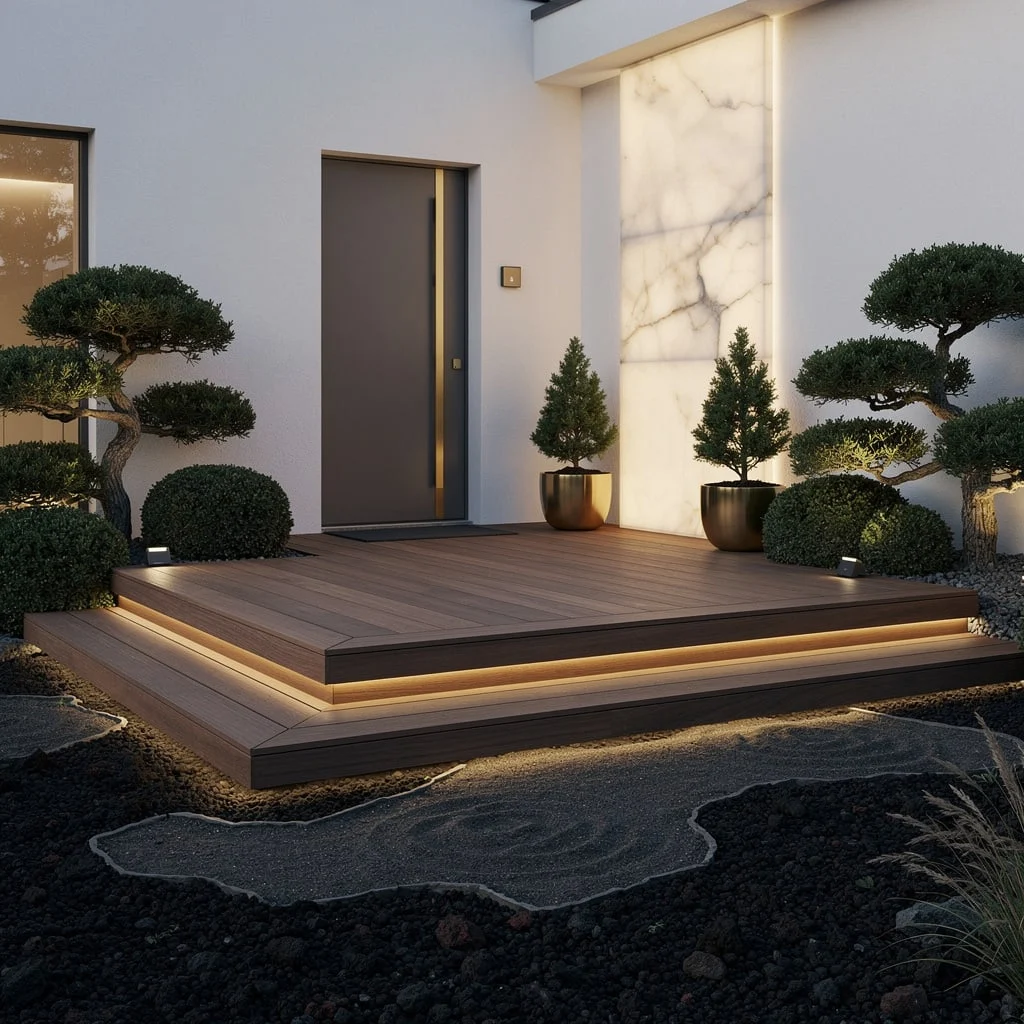
Want to float your entry in style? Layer a multi-tiered timber deck above black volcanic sand for major contrast. Sculpt and prune myrtle bushes around the border—don’t even bother with anything floppy or dull. Drop recessed warm LED lights low for designer-level ambiance, not harsh spotlight chaos. Set a backlit translucent stone panel beside the door for glowy, gentle focal effect, and pad the entry with brushed brass planters holding miniature conifers. Smooth white masonry on the façade pulls the look together. Always float your deck slightly above the sand and keep planters symmetrical for that sharp, deliberate finish.
Curvy Travertine & Terrazzo Planters: High-End Entryway That Doesn’t Try (But Totally Does)
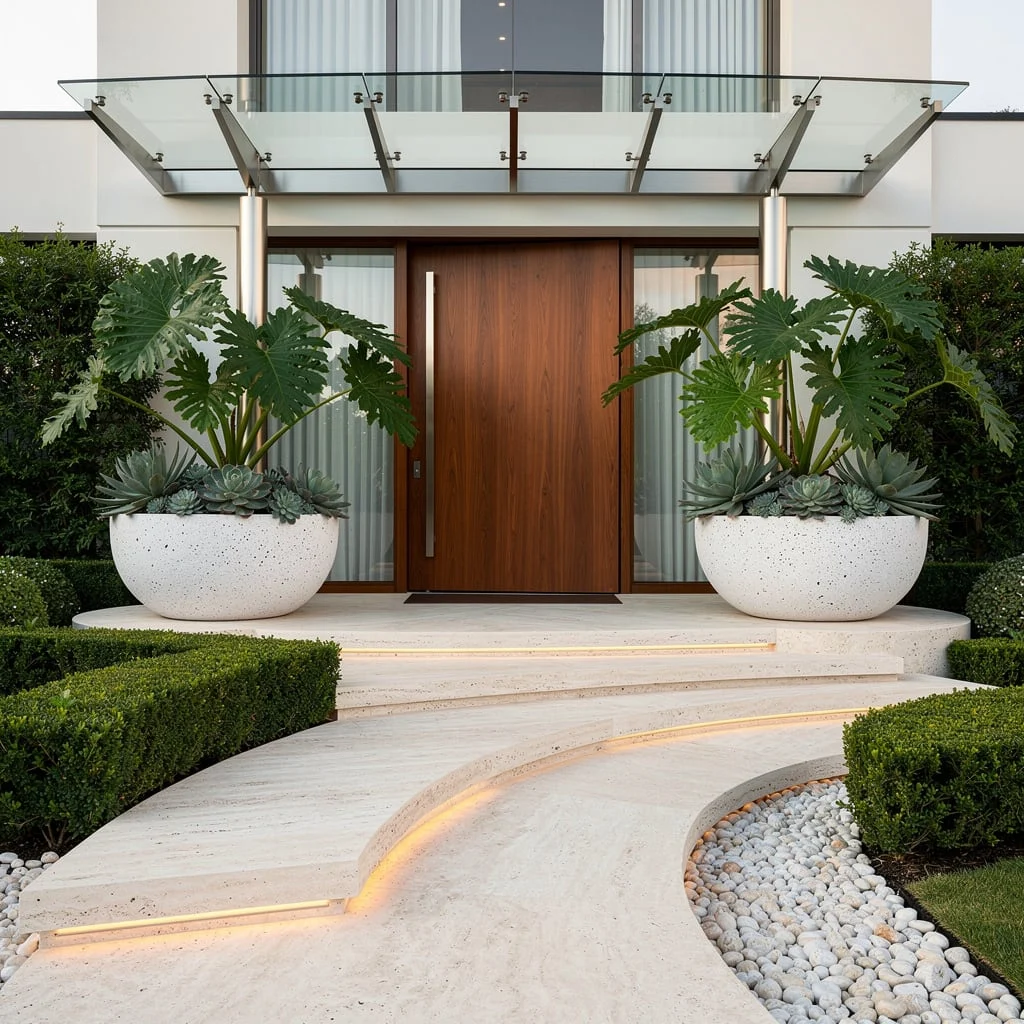
Flex on the neighbors with curvilinear travertine steps weaving through lush plants. Load up custom white terrazzo planters with mature philodendrons and chunky succulents, because tiny pots are for quitters. Embed linear LEDs into risers for subtle glow, and border the area with sculpted hedges and beds of shiny pebbles. Opt for a pivoting slab of oak as your door, accented with brushed chrome. Hang a glass canopy held by minimalist steel columns overhead for weather shielding (a must). Pro tip: always curve your steps, never do straight lines, and keep your terrazzo planters oversized for serious entry presence.
Final Thoughts
Front entry landscaping is the outdoor design decision with the highest visibility and, in most properties, the lowest level of intentional thought applied to it. Every visitor, neighbour, and delivery driver forms an opinion about your home from it before seeing anything else, and that opinion is formed in approximately three seconds — which is either a terrifying or encouraging fact depending on what you currently have growing out there.
The entries here that make the strongest impression aren’t necessarily the most expensive or the most elaborate — they’re the ones where the path, the planting, the door colour, and the facade material are all making the same argument about what the house is. That coherence is what creates the quality of arrival rather than just access, and it starts with understanding that everything visible from the gate to the threshold is a single design brief rather than a series of separate decisions.
Get the path material right, choose plants that work with the facade rather than in spite of it, give the door a colour worth walking toward, and light the whole thing properly after dark. That’s the entire brief. Everything else is detail work in service of those four decisions, and getting all four right produces an entry that earns the house behind it rather than apologising for it.