
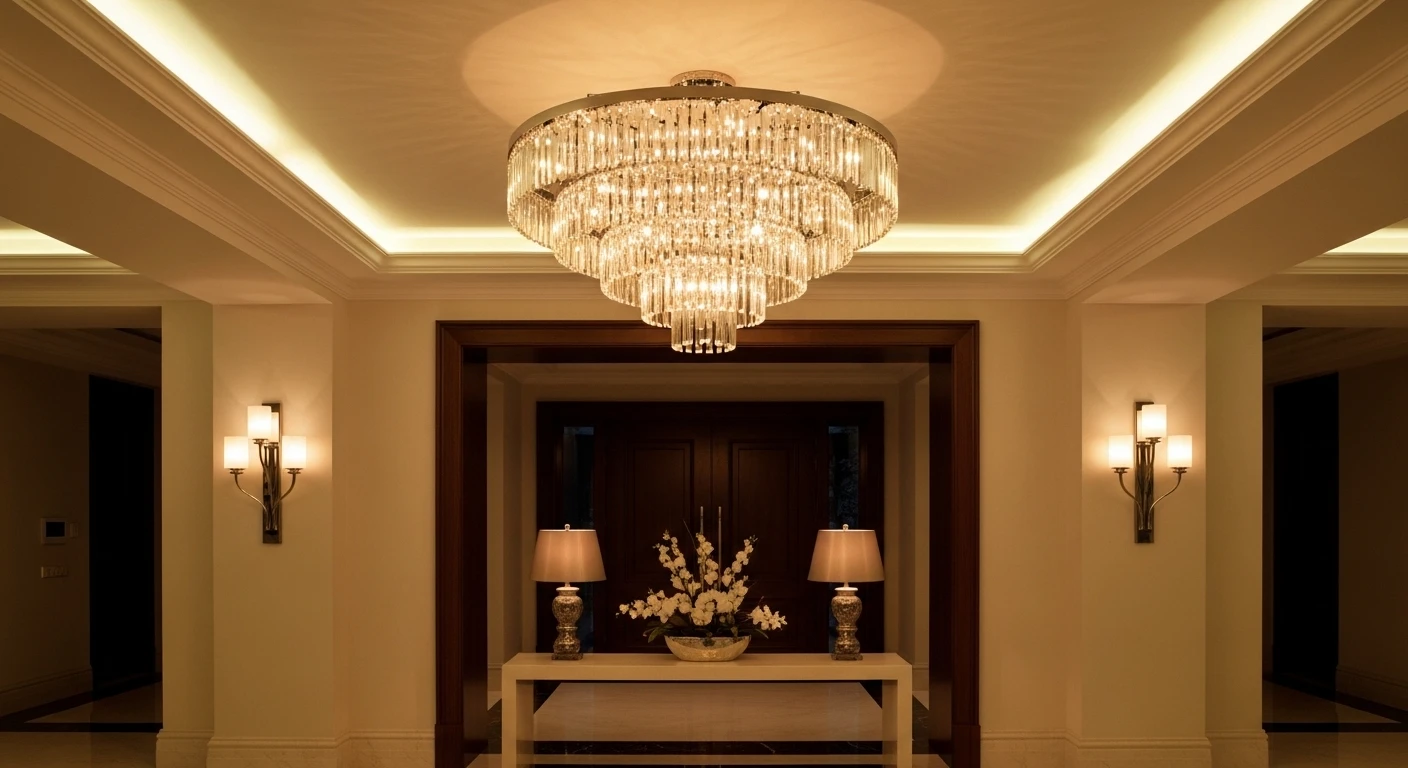
Lighting is the one design element that affects everything else in a room and receives the least deliberate attention in most homes. Nowhere is this more painfully true than the entryway, where the fixture that came installed during construction has been doing its flat, joyless job for years while every other design decision in the house got reconsidered, upgraded, and photographed for a mood board at least twice. The original fitting remains. Somehow it always remains.
The consequences of this neglect are more significant than most people realise. Entryway lighting determines whether the space feels warm or clinical, dramatic or forgettable, designed or defaulted. The same console, the same mirror, the same rug — all of them read completely differently under a warm pendant hung at the right height versus a recessed can doing its best impression of a dentist’s waiting room. The furniture hasn’t changed. The light source has. That’s how much the fitting matters and how little credit it receives.
What’s particularly frustrating is that the lighting is often the least expensive change available and the one with the most dramatic return. A pendant swap costs a fraction of a new console. LED strip installation requires an afternoon. A pair of wall sconces changes the entire atmospheric character of a corridor for less than a decorative accessory. The entryway lighting situation is not a budget problem — it’s an attention problem, and the good news about attention problems is that they’re entirely solvable the moment someone actually starts paying attention.
The Fitting Is Not Just Functional — It’s the Room’s Personality at Night
Every entryway effectively becomes a different space after dark, and the version it becomes is determined almost entirely by the light source. This is why lighting decisions matter so much more than most design choices — they’re active for the entire portion of the day when the space is most frequently used for arrival and departure.
The Fitting Sets the Mood Before the Room Does — A crystal chandelier communicates something about a house before anyone has processed a single wall colour or piece of furniture. A sculptural pendant does the same. So does a pair of vintage wall sconces or a strip of concealed LED cove lighting. The fitting is a statement piece whether it was chosen as one or not — the difference is whether that statement was intended or inherited.
Warm vs Cool Temperature Changes Everything — Warm white light at 2700-3000K makes skin look healthy, wood tones look rich, and entryways feel genuinely welcoming. Cool white light at 4000K and above makes the same space feel like it’s waiting to have its drains inspected. This is not a subtle distinction and it costs nothing extra to get right — it’s simply a number on the bulb packaging that most people have never checked.
Layered Lighting Beats Single-Source Lighting Every Time — An entry lit only from the ceiling, however good that ceiling fitting is, produces flat, even illumination that reads as functional rather than atmospheric. Adding a secondary source — a table lamp on the console, wall sconces flanking a mirror, LED strips at cornice or floor level — creates the layered quality that makes spaces feel considered and alive rather than simply illuminated.
Understanding What Different Fixture Types Actually Do
The choice between a pendant, a chandelier, wall sconces, recessed lighting, and LED strips is not just aesthetic — each fixture type creates a fundamentally different spatial experience and suits different entry configurations in ways that are worth understanding before making any purchase.
Pendants and Chandeliers Establish Vertical Scale — A hanging fixture draws the eye upward and establishes the perceived ceiling height through where it sits within the vertical space. In a double-height entry, a chandelier hung too high disappears; hung at the right level it fills the void and anchors the whole composition. In a standard-height entry, an oversized pendant that nearly fills the ceiling plane paradoxically makes the space feel more generous, not more cramped.
Wall Sconces Provide the Warmth That Ceiling Fixtures Cannot — Light at human height — at eye level or slightly above — produces a quality of warmth that downward-directed ceiling light simply cannot replicate. Wall sconces beside a mirror, flanking a door, or running along a corridor create pools of warm ambient light that make arrivals feel genuinely welcomed in a way that overhead fixtures never achieve regardless of their quality.
Concealed LED Lighting Works by Being Invisible — Cove lighting, under-shelf strips, step lighting, and perimeter LEDs all produce their effects precisely because the source itself cannot be seen — only its light. The glow that appears to emanate from the ceiling junction or float along the floor carries an atmospheric quality that visible fixtures cannot produce, and the installation cost is substantially lower than statement fixtures while the impact is arguably comparable.
The Details That Separate Considered Lighting From Casual Lighting
Good fixture choice alone doesn’t guarantee good entryway lighting. The installation decisions — height, position, colour temperature, dimming capability — determine whether a quality fitting performs as intended or simply hangs there doing less than it should.
Hanging Height Is a Decision, Not a Default — Most pendants and chandeliers get hung at whatever length the manufacturer’s chain provides, which produces correct results approximately by accident. The right hanging height depends on ceiling height, the size of the fitting, what’s below it, and how it reads from both the entry and any adjacent rooms with sightlines into it. Adjusting the chain or cord to the right height is the finishing detail that makes a fixture look chosen rather than installed.
Dimming Capability Changes the Entry for Every Hour of the Day — An entryway that operates at a single fixed brightness level is doing one job when it could be doing several. Full brightness for functional morning departures, dimmed warmth for evening arrivals, low ambient for when the house is otherwise dark — a dimmer switch costs almost nothing to add and transforms a light fitting from a binary on/off proposition into something that responds to how the space actually gets used.
The Fitting’s Relationship to Natural Light Matters — An entryway with generous natural light through sidelights or a skylight has completely different lighting needs than a dark interior corridor. The artificial light should complement the daylight rather than compete with it — which means considering how the fitting behaves both when natural light is flooding the space and when it’s doing all the illumination work after sunset.
Entryway Lighting Ideas
The Cove LED Perimeter That Made a Plain Hallway Feel Like a Design Decision
Posts from the hue
community on Reddit
LED strip lighting tucked into a ceiling perimeter cove runs the full outline of this grey-walled entry junction, producing a warm glow that traces the architecture without revealing its source and makes a textured grey wall and geometric metal artwork look considerably more intentional than they would under conventional overhead lighting. The fixture-free approach is the entire point — there’s nothing to look at except the effect, which is a soft luminous outline that gives the space definition and warmth without any fitting competing for attention with the architectural geometry of the walls and doors below. It’s the lighting equivalent of a well-tailored suit: the craftsmanship shows precisely because nothing about it is trying to show.
The Marble Feature Wall Entry Where Lighting Became Sculpture
Recessed ceiling downlights provide the general illumination while a black oversized floor lamp with a conical shade handles the atmospheric layer at human scale, and together they frame a sinuous full-height marble feature wall behind a massive black ceramic vase with a lit branch arrangement that blurs the line between interior design and installation art. The warm LED cove at ceiling junction adds a third layer that separates the ceiling plane from the wall surfaces, and the herringbone parquet below bounces warmth back up through the whole composition. What this entry demonstrates is what happens when lighting is treated as a material in its own right rather than a service — every surface, texture, and object in the space is performing for the light sources surrounding it, and the result is an entry that looks genuinely different from every angle and at every hour.
The Crystal Chandelier That Justified Every Square Foot of Double Height
A multi-tiered crystal chandelier of considerable scale and ambition hangs through the full void of a double-height staircase hall, catching the teal-blue wall colour and warm timber stair elements in its hundreds of glass drops and distributing fragmented light across every surface simultaneously. A table lamp on the dark timber console below provides the secondary warm layer that makes the console arrangement readable at eye level, two picture lights illuminate botanical prints on the staircase wall, and the combination of three distinct light sources creates a depth and richness that a single ceiling fitting — however spectacular — could never achieve alone. The teal walls are doing substantial work here, absorbing the chandelier light and warming it before bouncing it back into the space in a way that paler walls simply wouldn’t, which is why the colour and the chandelier feel like they were chosen together.
The Green Lantern That Made a Quiet Entry Quietly Exceptional
A classic square lantern pendant in forest green with brass internal fittings hangs in an entry flooded with natural light through a grey painted glazed door and full-height sidelights, and the confidence of that colour choice — green lantern against botanical wallpaper, against grey door, against wainscot panelling — is what makes the whole entry feel considered rather than safe. During daylight the lantern reads as a statement object; after dark it provides the warm pool of light that makes the botanical wallpaper glow amber-green in a way the daytime photographs completely fail to capture. A jute-framed mirror and a slim dark mahogany console beneath it provide the entry furniture, but the lantern is what guests notice first and remember afterwards, which is precisely the job a well-chosen pendant is supposed to do.
The Sculptural Pendant That Didn’t Need Anything Else to Make Its Point
A large pleated or folded fabric pendant in warm natural tones hangs from an ornate plaster ceiling rose in a black-and-white entry where a dark arched door, black-painted staircase balusters, and pale walls create the graphic high-contrast backdrop the pendant performs against. The fitting is unusual enough in its silhouette that it draws the eye immediately, contemporary enough that it updates the Victorian bones of the entry without fighting them, and warm enough in its light output that the stark black-and-white palette below it feels inhabited rather than cold. A slim side table with a single plant and a monochrome textured runner are the only other styling elements — everything else has correctly understood that when the light fitting is this good, the best supporting decision is restraint.
The Wall Sconce Corridor That Understood Warmth Is Not a Luxury
Two goose-neck wall sconces with opal glass bowl shades are mounted along a pale hallway corridor, positioned just above a timber and iron coat rack, and the quality of light they produce — warm, directional, at exactly human height — transforms what could be a completely functional passage into something with the character of a well-loved older building that knows exactly what it is. The sconces illuminate the coats hanging below them, the limestone tile floor ahead, and the natural stair runner receding toward the staircase, creating a series of warm pools that invite movement through the space rather than simply making it visible. The fitting choice is traditional without being nostalgic, practical without being utilitarian, and warm without being sentimental — which is a combination that most contemporary fittings spend considerable design effort trying to achieve and most vintage-inspired ones get right almost by instinct.
Go Full Drama with Crystal and LED Layers
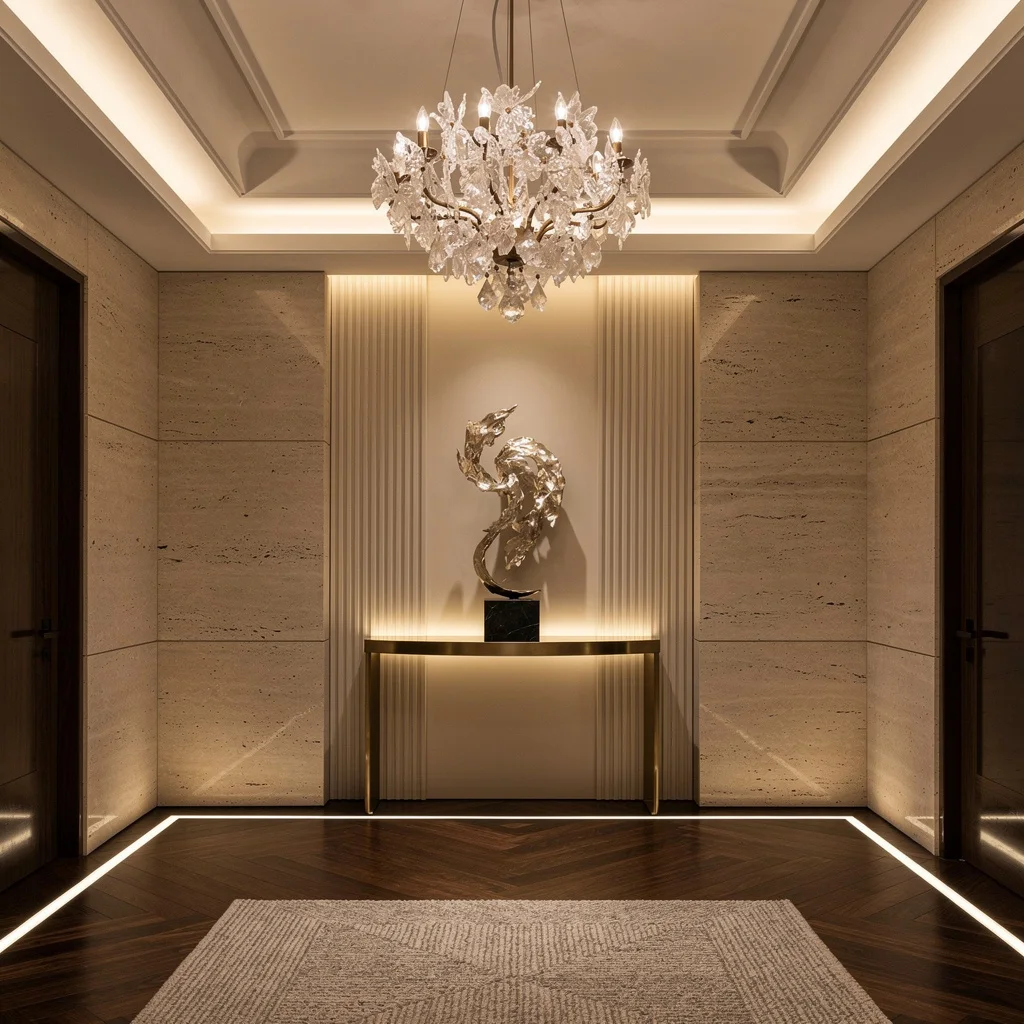
If you’re angling for pretentious glamour, start with a sculptural crystal chandelier and go wild on recessed coffered ceilings packing hidden LED strips. Don’t settle for plain walls; slap matte travertine with a polished dark walnut chevron floor and toss in a backlit bronze console for instant shadow magic. Layer ambient cove lights and strategic floor washers near the threshold so your area rug gets attention. Reflections? Always make sure your centerpiece is shimmery—bonus points for a glowing entry niche. Never let a hallway feel basic. Leave your guests blinded (but tastefully).
Float Your Lights and Cement Those Luxe Biophilic Vibes
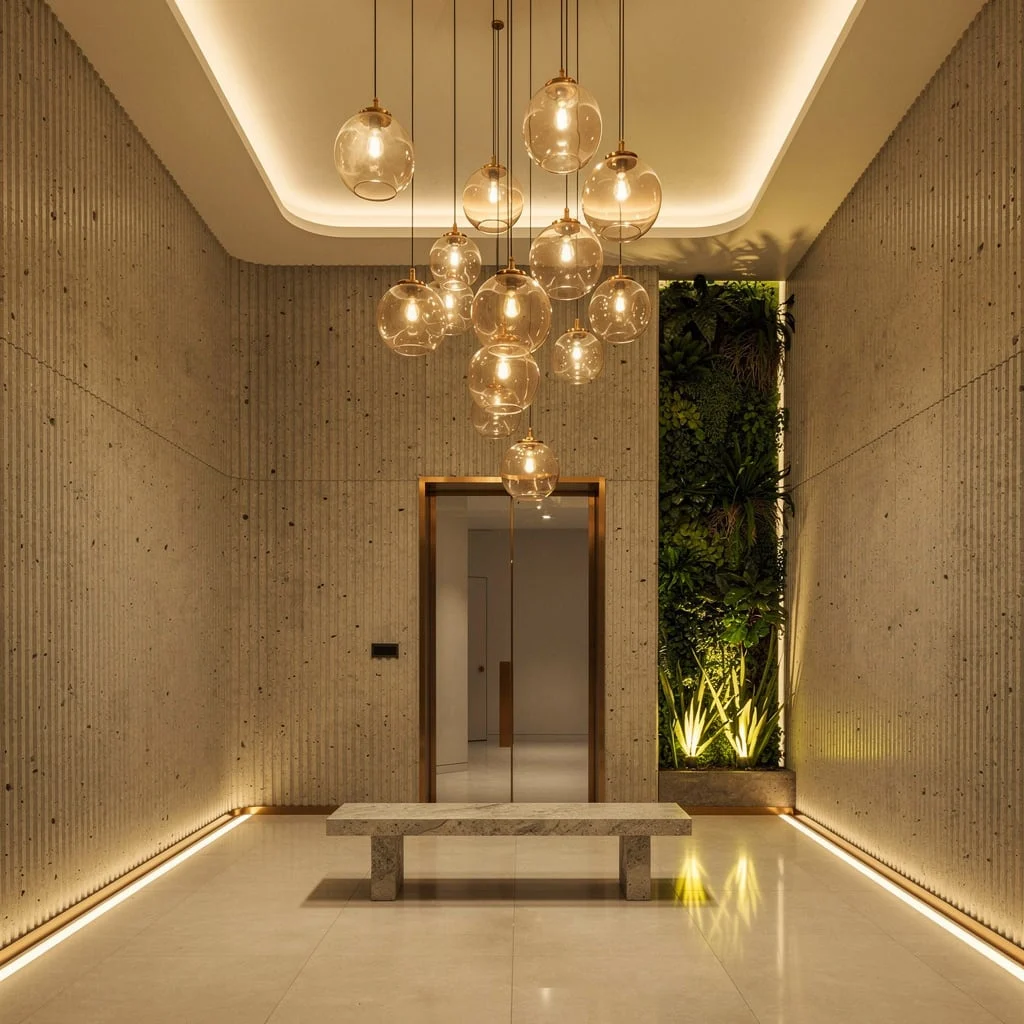
Dreaming of a foyer that looks basically two stories tall? Suspend a cluster of glass pendants at random heights for eye candy, and slap minimalist stone benches underneath for straight-up gallery energy. Add fluted concrete walls with warm step lighting and uplighting that makes your planter wall lush and Insta-worthy. Bronze trim details around the door? Yes, please. Soften the transition from outdoors with a recessed ceiling channel that floods the space with light so gentle it’ll convince people you care about their retinas. Rule: Never let your plant wall go unlit. Period.
Linear LEDs and Seamless Corridors—Chill Yet Slick
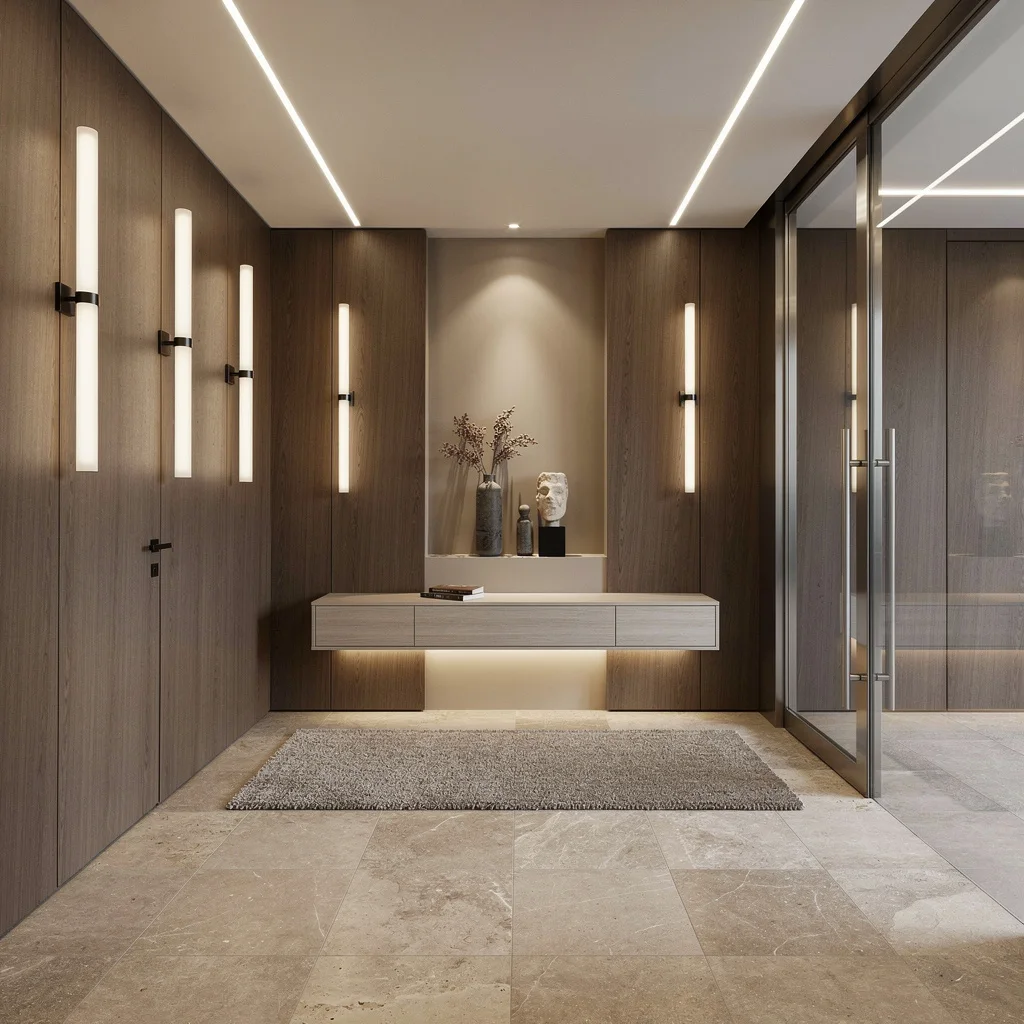
Want to channel the ‘silent millionaire’ vibe? Stick with natural limestone tiles and embed linear LED channels right in the ceiling for ultra-sleek illumination, then install frosted wall tube lights to highlight vertical walnut panels (no, don’t skimp). Float your console, light it from underneath, and throw in a textured wool runner so nobody slides to their doom. Always add a hidden niche with a soft downlight for your favorite objets d’art—and finish with a glass pivot door, framed in brushed stainless steel. Always recess your lighting as much as possible—banish ugly fixtures for good.
Backlit Onyx = Golden Glow, Gallery Entry Magic
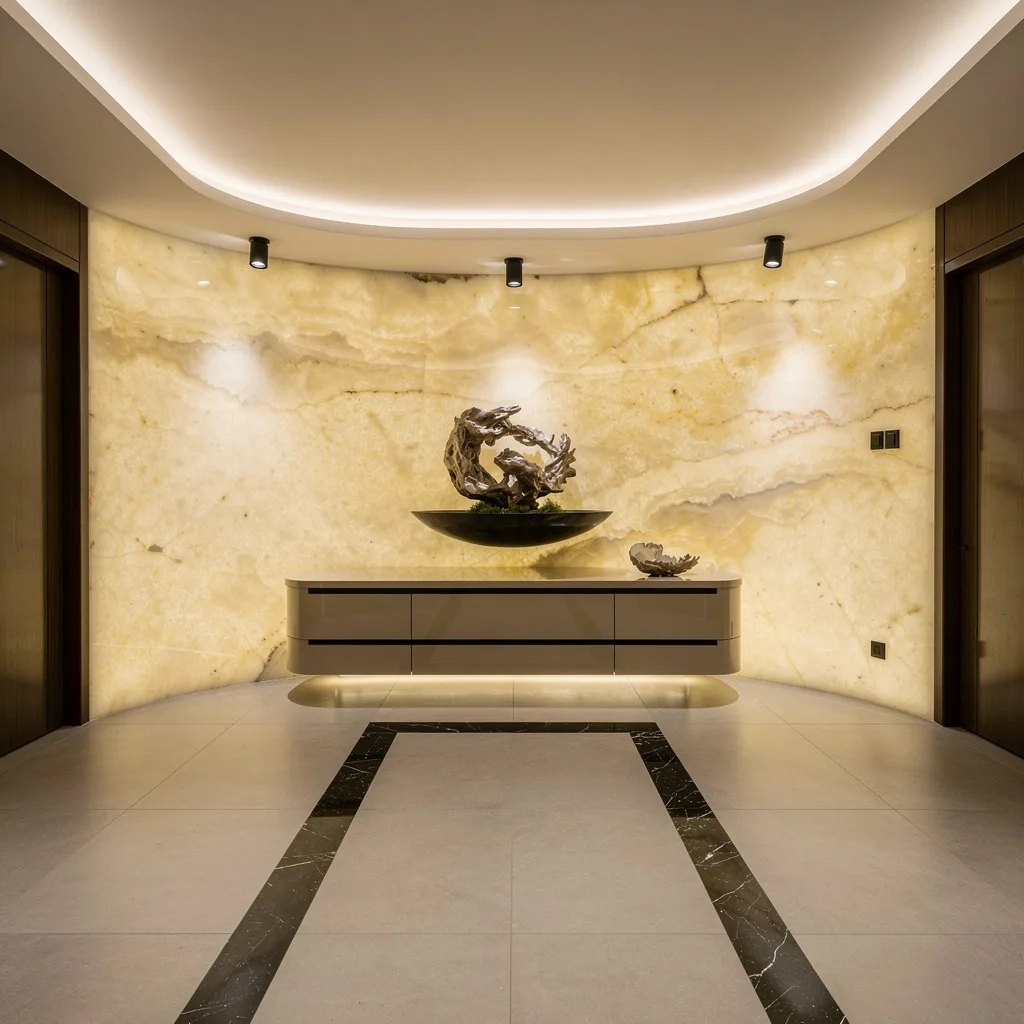
Ready for museum-level entry? Slam an onyx stone wall with subtle backlighting for that golden glow. Keep floors matte porcelain but flex with an inlaid path of polished black marble. Recess your ceiling tray and line it with diffused warm LEDs—trust, it’s worth it. Sculptural planters and glossy lacquered consoles with built-in drawer lighting make for glare-free, modern vibes. Directional spotlights accent your plant, and it’s gallery-level illumination. Pro tip: Don’t ever settle for splotchy overheads—layer your light with wall spots and tray lighting or it’s amateur hour.
Stacked Ceramic and Drum Pendants—Cozy Entry That’s Not Basic
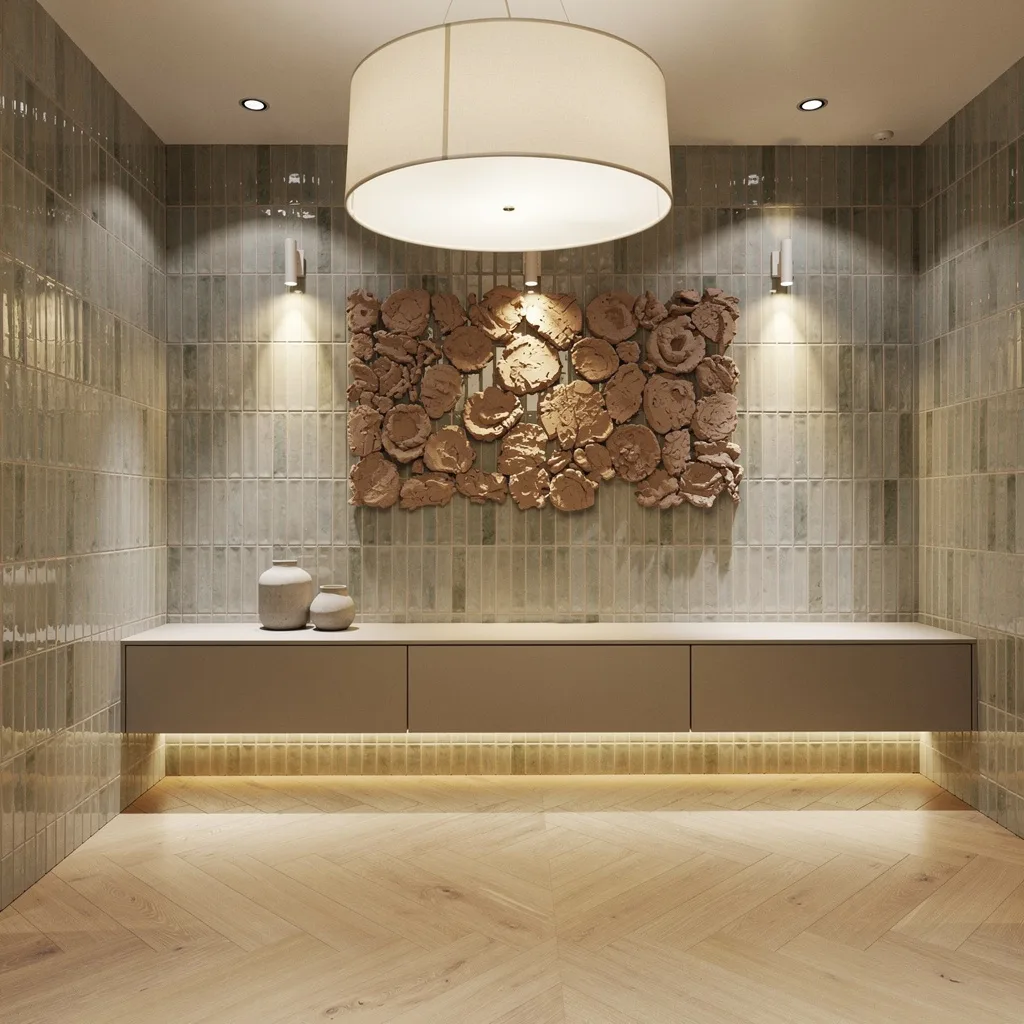
Cozy but not boring? Stack hand-glazed ceramic tiles vertically on your walls for movement, then hang an oversized drum pendant for cloud-soft light. Pale oak herringbone floors never hurt, and hidden LED strips under a floating shoe cabinet keep the base glowing so your guests feel rich walking in. Recessed wall washers focused on clay art installations make your entry feel curated, not cluttered. And discreet, modern downlights deliver consistent brightness—don’t leave anyone in the dark. Styling rule: Only use oversized pendants—tiny ones scream ‘builder-grade rental.’
Glass Lanterns and Brass—Make Your Hallway Shine (Literally)
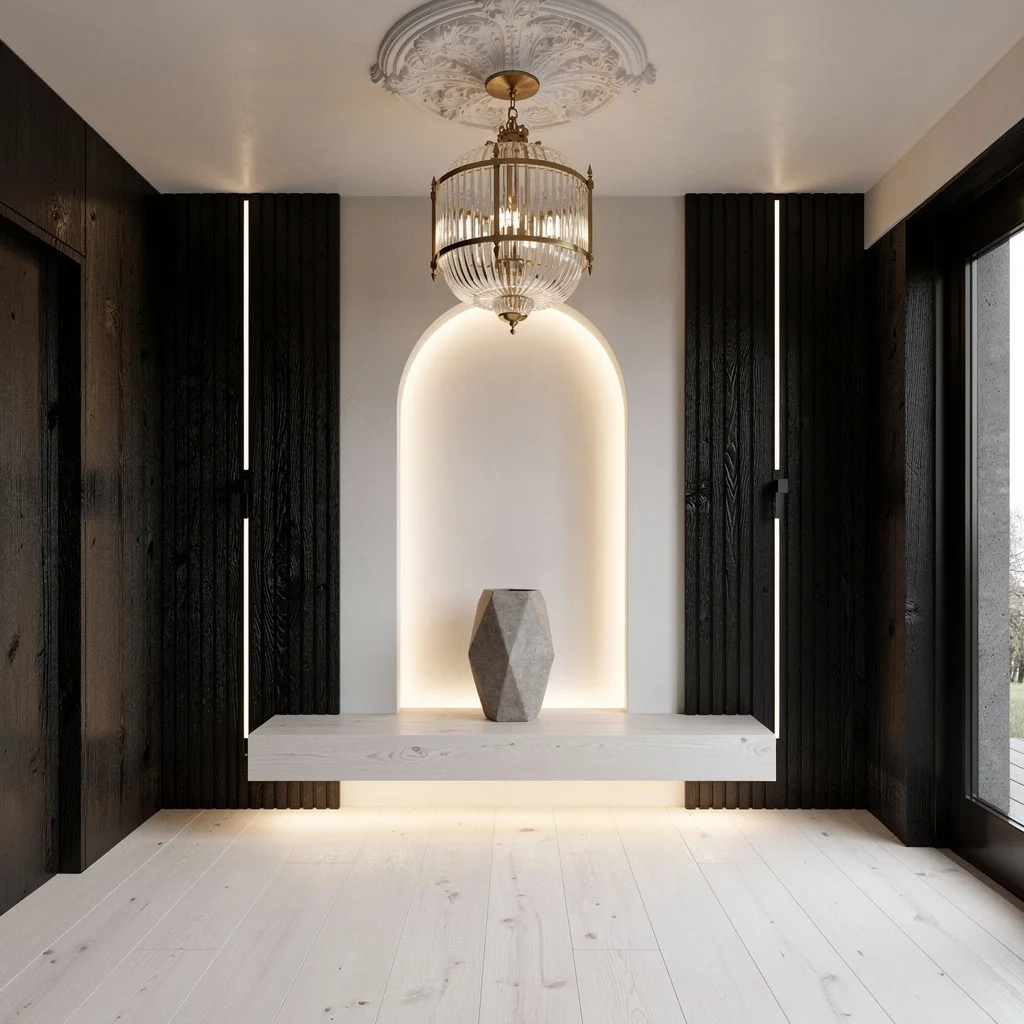
If your entry’s feeling dusty, hang a ribbed glass lantern with burnished brass for instant vintage drama. Pair wide-plank whitewashed oak floors with floating benches packing invisible toe-kick lighting, so even your seating looks expensive. Arched alcove cove lights highlight geometric vases—go sculptural or go home. Shade those vertical slats of charred timber with slim wall light bars for contrast. Commandment: Always emphasize texture with targeted lighting—Don’t let your timber wall drown in the dark. Get light bars or get over yourself.
Minimalist Skylights and Perimeter LEDs—Just Glow, No Clutter
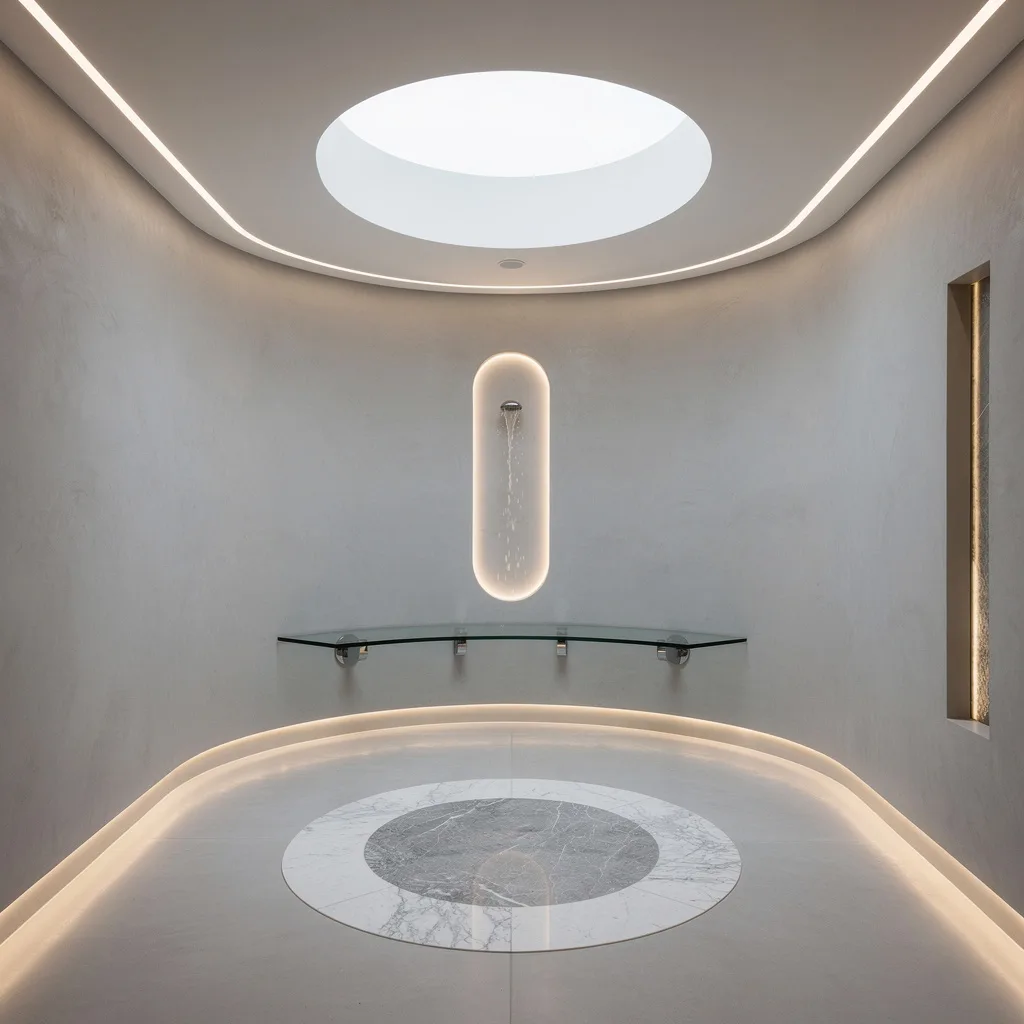
Plotting a refined entry? Carve in an elliptical skylight to flood the foyer with honest daylight. Slam marble tile medallions dead center, and line ceiling perimeters with hidden linear LEDs to keep those microcement walls glowing. Float your glass ledge and underlight it—chrome brackets only. Hide your water feature in a vertical wall slot—never let anyone see the wiring. Use indirect uplighting recessed in your baseboards so your wall textures pop. Pro tip: If your fixtures are visible, try again. Only indirect, only invisible, only luxury.
Wall Facets and Cloud Globe Clusters—Futuristic Luxe
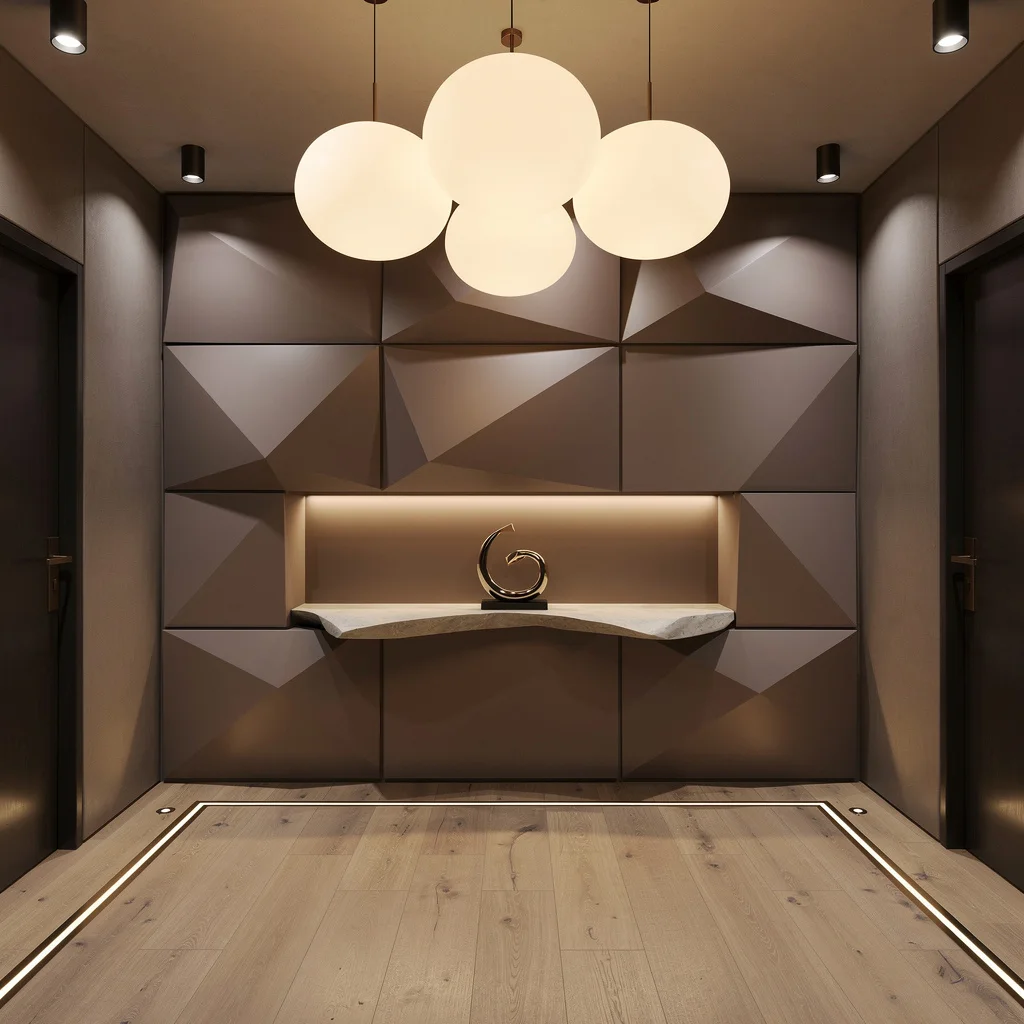
Ready for moody designer vibes? Install custom 3D geometric wall panels—matte, deep taupe is always a power move. Angle adjustable ceiling LEDs to highlight every facet, and run light oak plank floors with bronze inlay lit by recessed floor LEDs so your guests feel like VIPs. Layer backlit shelves and stagger oversized opal-glass globe lights for a cloud-like spread that makes your foyer feel like a fashion shoot. Never crowd your pendants—space them generously. Rule: If your entry’s not moody at night, rethink all your lighting angles.
Vertical Light Columns—Make That Wall Flex
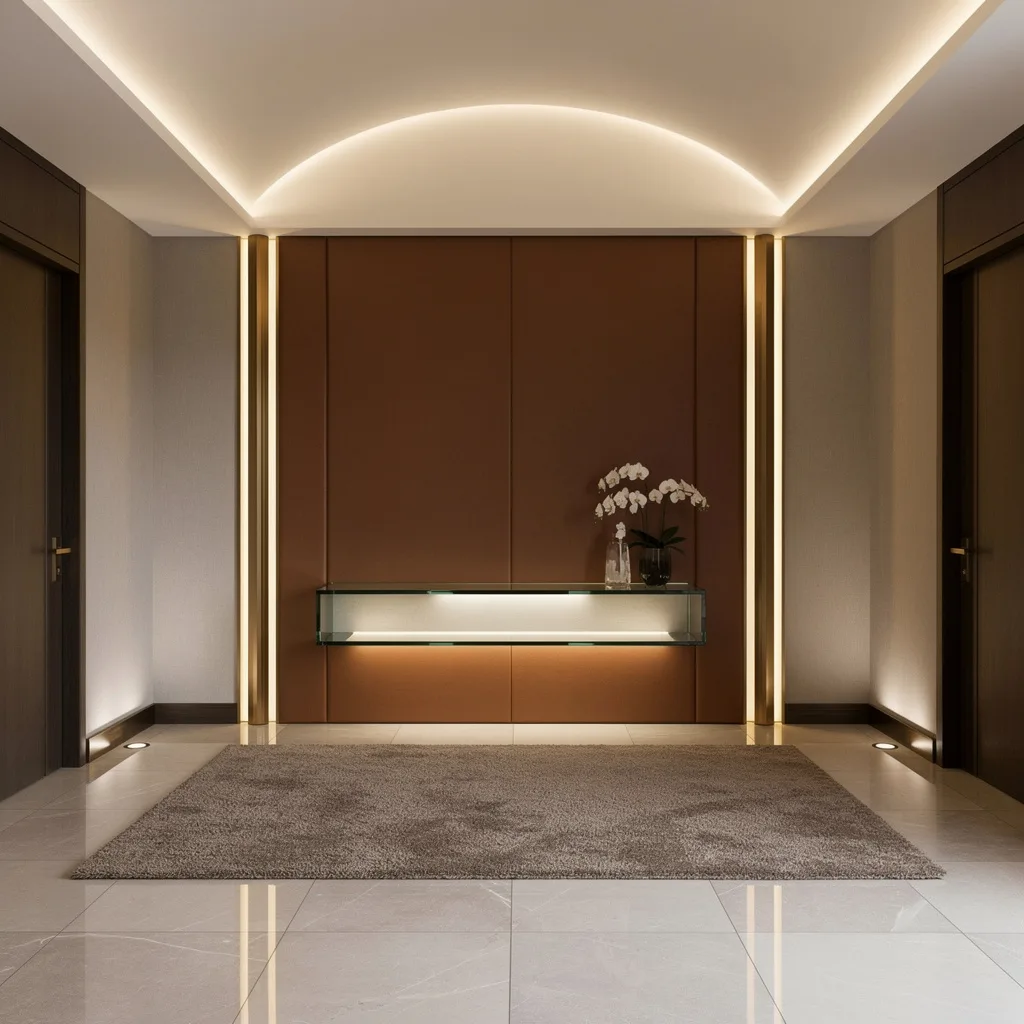
Want transitional vibes with a flex? Install slender brass light columns alongside inlaid leather panel walls for instant glow and depth—yes, leather and brass are addictive. Choose large-format polished porcelain tiles for max reflection, and hide cove lighting under a gentle ceiling arch for a soft wash. Graze your wool rug with wall-recessed floor washers, and float a glass console with tray lighting so your florals pop. Never leave task and accent lighting unlayered—combine both or live in mediocrity.
Mesh Pendants and Patterned Shadows—Entry Gallery Goals
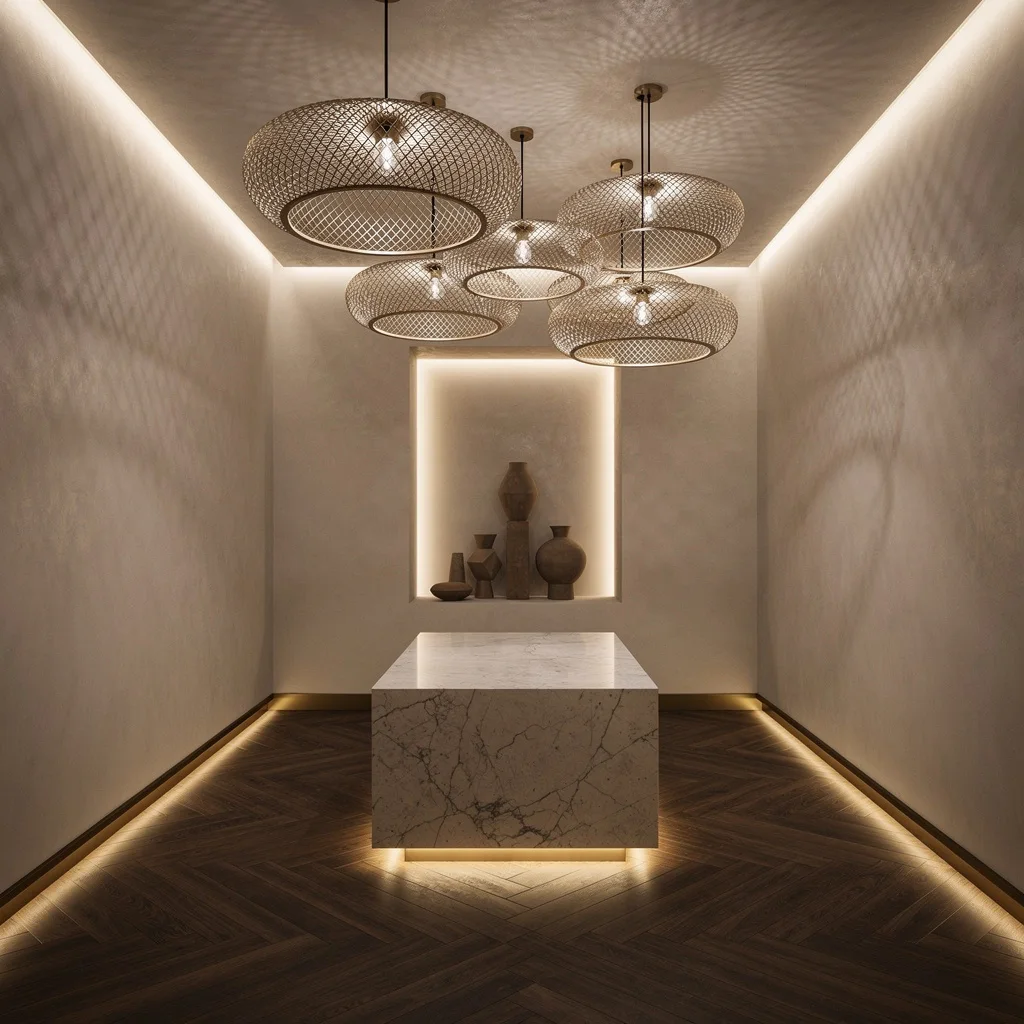
If your entry feels as dead as a hospital corridor, suspend oversized metallic mesh pendants at random heights for a shadow show worthy of an art auction. Install smooth Venetian plaster walls with dark walnut herringbone floors. Float your central marble plinth, backlight it, and light ceiling perimeters with hidden LEDs for all-around ambiance. Don’t forget uplights for deep alcoves and bronze thresholds for glowing drama. Pro tip: If your shadows aren’t interesting, change your pendants. Flat light = flat life.
Earth-Toned Ceramic Pendant Orbs—Natural Texture Wins Again
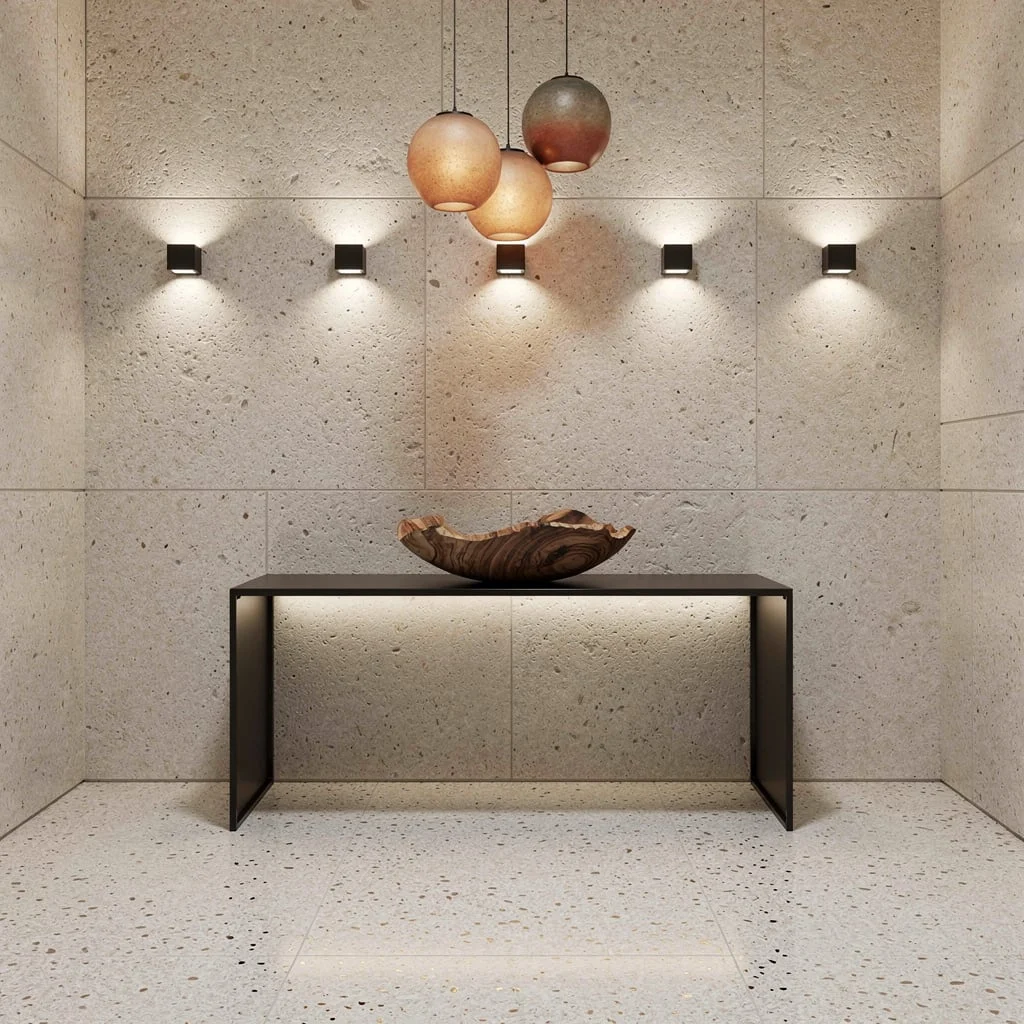
Ready to make your entry feel rich without looking try-hard? Clad walls in sandblasted limestone slabs for max texture. Use a row of low-profile square wall washers for gentle wall-washing (no, don’t install UFO lights). Float a matte black metal console and light its surface with top-mounted LEDs—only show off bowls with real character. Hang ceramic pendant orbs in gradient earth tones overhead and finish with pale terrazzo floors packing metallic flecks. Rule: Only mix materials with subtle gleam—never go full matte everywhere unless you want ‘dead zone’ vibes.
Contemporary LED Strakes—Serene Luxury With Zero Clutter
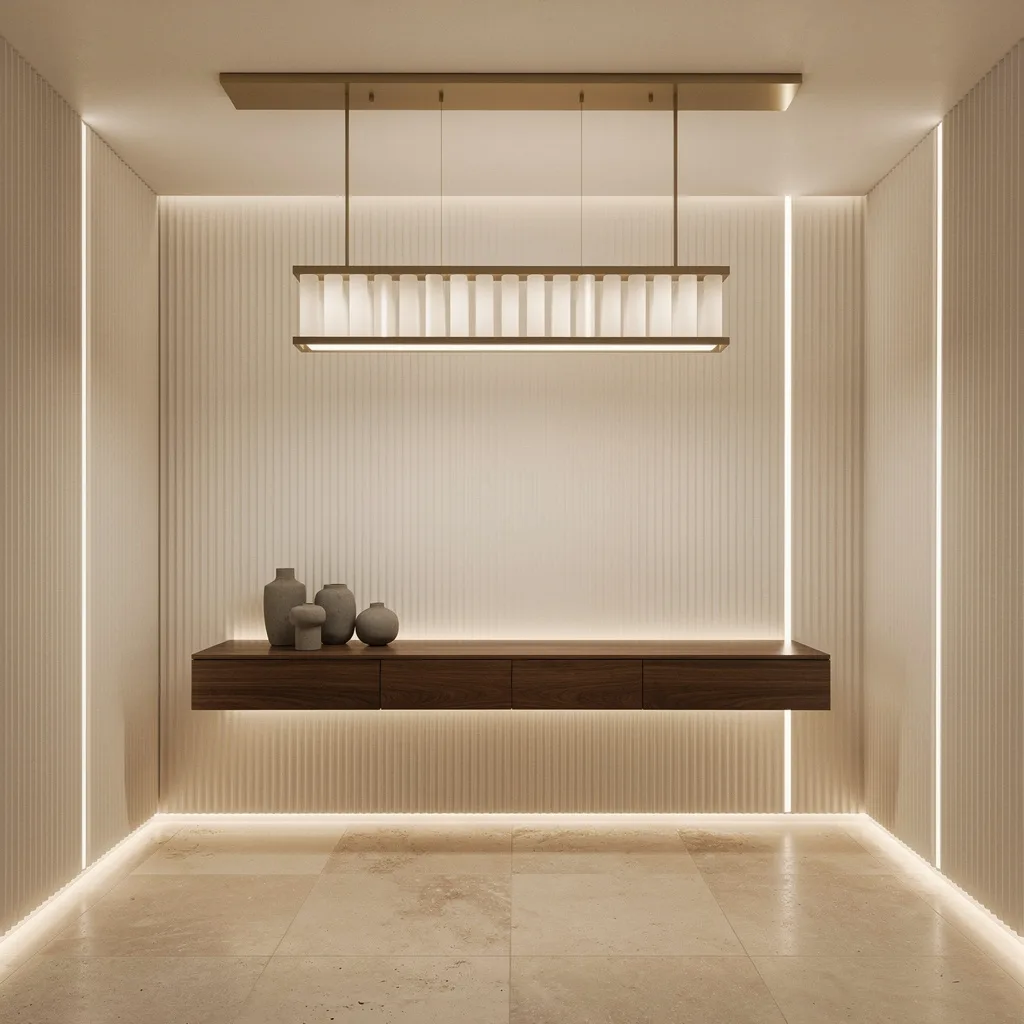
Going full contemporary? Install a custom linear pendant with frosted acrylic tubes and champagne frames—slot it into the ceiling so no one sees the hardware. Ribbed plaster walls, softly up-lit from a hidden cove base, keep things plush but not fussy. Float a walnut veneer shelf with edge lighting so your monochrome vases get their own moment. Layer vertical recessed LED strakes for extra glow, and keep the whole vibe serene with clutter-free finishes. Styling tip: Always match your LED color temp—mismatched whites ruin high-design faster than a cheap lightbulb.
Final Thoughts
Entryway lighting is the design decision with the highest daily impact and the lowest rate of deliberate attention — which means it’s also the change most likely to produce a dramatic result for relatively modest investment and effort. Every entry on this list looks the way it does primarily because of its lighting, not despite it, and that relationship between source and space is worth understanding before anything else gets decided.
The fixture type, the colour temperature, the hanging height, the decision to layer sources or commit to a single statement — these are not technical details to be sorted after the decorating is finished. They’re the framework within which all the decorating performs, and getting them wrong quietly undermines everything else that went right. Getting them right makes the console look better, the mirror more effective, the wall colour more accurate, and the whole arrival experience more genuinely welcoming.
Light is not the background. In an entryway, it is the entire atmosphere — and treating it as anything less is how spaces that look fine in daylight disappear after dark every evening for the rest of the time you live there.