
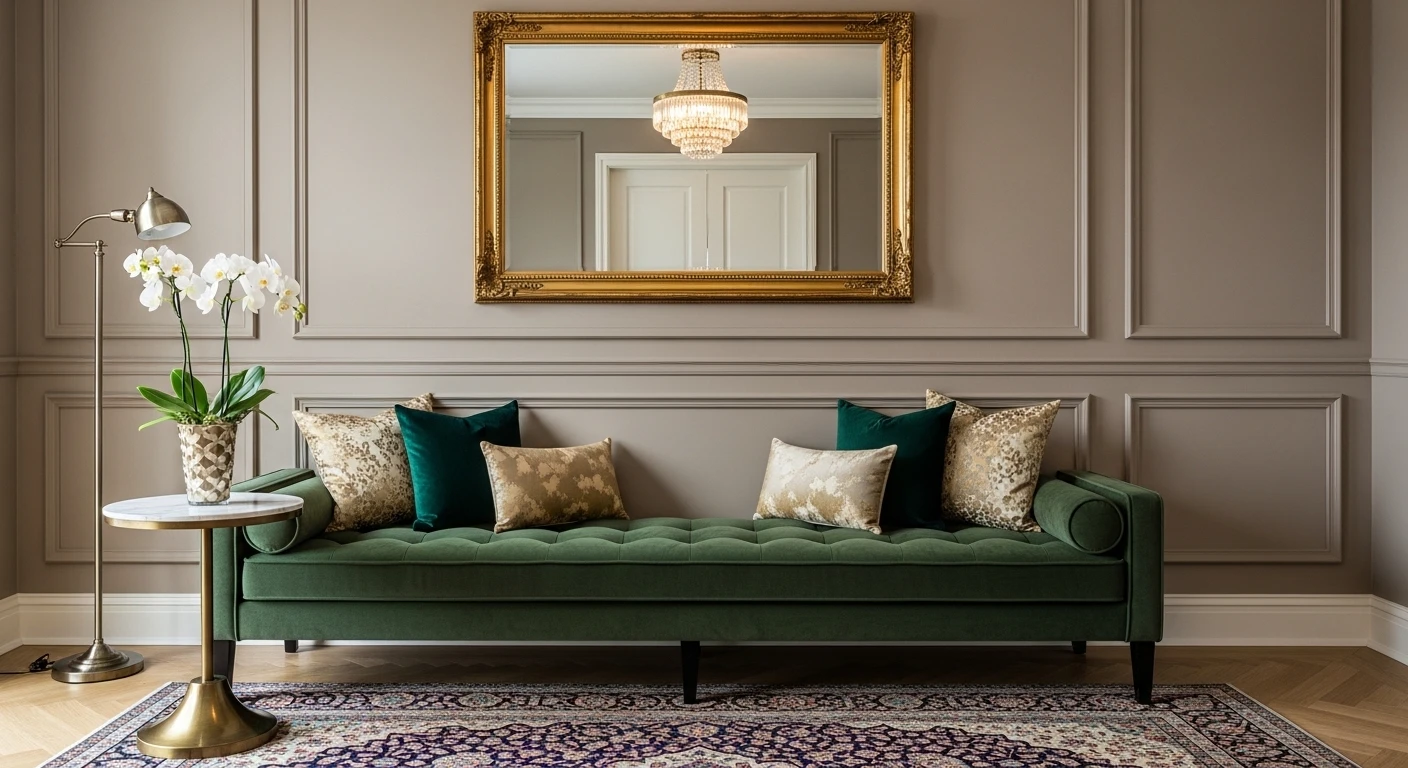
Most entryways contain exactly one of three things: a pile of shoes that’s been there since Tuesday, a console table covered in unopened post and charging cables, or absolutely nothing at all because the space was too confusing and the decision got indefinitely deferred. The seating part — the idea that a person might want to sit down in their own entryway — barely registers as a thought, let alone an action item.
This is worth examining because the entryway is where shoes get wrestled on and off, where bags get dropped, where people stand awkwardly waiting for other people who are still finding their keys. It is, in terms of actual daily use patterns, one of the most physically demanding rooms in the house. And yet the average entryway provides its occupants with approximately the same seating options as a municipal car park.
The argument for entryway seating goes beyond convenience, though convenience alone should be sufficient justification. A seat in an entryway changes the feel of the space fundamentally — it signals that the room is finished, that arrival is an experience rather than a threshold, that someone made deliberate decisions about this part of the house rather than treating it as a corridor that happens to have a front door at one end.
Getting it right means understanding what the entryway needs to do — receive people, store things, set expectations for what follows — and choosing seating that contributes to all three simultaneously rather than just occupying floor space.
The Entryway Seat Is Doing More Work Than You Think
A bench, a chair, or even a pair of ottomans in an entryway isn’t decoration. It’s the clearest possible signal that the space was designed rather than simply left to figure itself out.
Function and Form Cannot Be Separated Here — Entryway seating that looks beautiful but provides nowhere to actually put anything is half a solution. The best entryway seats incorporate storage underneath, a surface nearby for essential deposits, and a hook or wall-mounted solution above for whatever gets carried in every day. These aren’t separate decisions — they’re a single system that either works or doesn’t.
Scale Relative to the Entry Is Everything — An undersized bench pushed against a long hallway wall looks apologetic and provisional. An oversized piece crammed into a narrow entry looks like a moving-day mistake that never got resolved. Measuring before buying sounds obvious and gets ignored constantly, which is why so many entryways contain furniture that’s clearly fighting its own space.
The Seat Sets the Design Register for the Whole House — Whatever style the entryway seating commits to is the first interior design statement visitors encounter. A church pew with wicker baskets says something. A sleek bouclé bench with a woven pendant says something different. A wingback chair pair with moulded panelling behind them says something else entirely. All of them can be right — none of them work by accident.
Fabric, Material, and Finish Choices That Hold Up to Real Life
Entryway seating is in constant contact with people arriving from outside — damp coats, muddy shoes, bags dropped without ceremony — and the material choices that work beautifully in a living room will not necessarily survive the specific demands of daily threshold use.
Performance Fabrics Are Not a Compromise — The hospitality industry worked out decades ago that bouclé, textured weaves, and treated upholstery can look just as considered as their more delicate equivalents while surviving the kind of contact that would destroy a fragile fabric in a season. Entryway seating is not the place to use that beautiful linen you’ve been saving for something special.
Natural Wood Improves in High-Traffic Positions — Timber bench seating, particularly in reclaimed or heavily grained species, develops character with use rather than showing wear. Scuffs and patina add to the quality reading rather than subtracting from it, which makes natural wood benches one of the most intelligent entryway investments available when the finish is appropriate to the material.
The Cushion Is Removable and Cleanable — Use That — Permanently upholstered entryway benches that cannot be re-covered or cleaned without professional intervention are optimistic in a way that rarely survives a full winter. A removable cushion with a quality cover in a performance fabric gives the seat its softness and comfort while keeping the practical reality of entryway life manageable.
What the Space Around the Seat Needs to Provide
The seat itself is only one component of an entryway seating arrangement that actually functions. The wall behind it, the surface beside it, and the floor beneath it all need to be part of the same considered composition.
The Wall Behind the Seat Is the Composition’s Backdrop — A mirror above a bench serves multiple practical purposes — it allows the last-glance check before leaving, it reflects light into a potentially dim space, and it creates a visual pairing that reads as complete rather than assembled. The size, frame style, and hanging height of that mirror relative to the seat below it determines whether the composition looks finished or accidental.
Under-Seat Storage Solves the Chronic Entryway Problem — The primary enemy of every entryway is the accumulation of objects — shoes, bags, seasonal accessories, things that came in and never found their way to where they belong. A bench with genuine under-seat storage, whether drawers, baskets, or open shelving, addresses this directly and invisibly. Without it, those objects live on the floor and the entryway never quite looks pulled together regardless of how good the seat itself is.
Lighting Above the Seat Changes Everything After Dark — A wall sconce positioned above or flanking the entryway seat provides the kind of warm, directional light that makes the whole composition feel considered at the times of day when entryways actually get used the most. The overhead fitting that came with the house, doing its flat functional job from the ceiling, is not sufficient to make the space feel designed. It never will be.
Entryway Seating Ideas
The Sunroom Entry That Decided Rooms Were for Living In
Entryway/sitting room
by u/Top-Debt7597 in DesignMyRoom
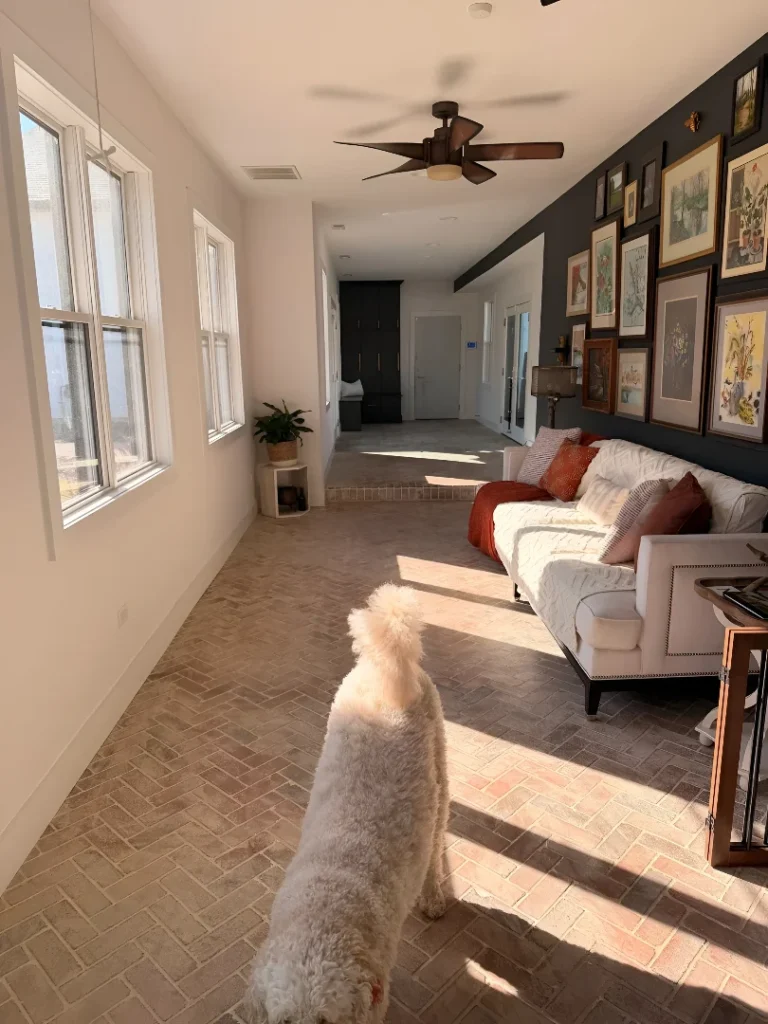
Herringbone brick-tile flooring runs the full length of a generous light-filled space where a substantial white upholstered sofa with terracotta, rust, and blush cushions sits against a dark charcoal accent wall entirely covered in a gallery of botanical prints in assorted frames. A ceiling fan provides the casual note that tells you this room is actually used, large windows flood the left side with natural light, and the composition of the whole space — from the warm brick underfoot to the art-covered wall — makes this feel like a room the house is proud of rather than a threshold it tolerates. The dog surveying the scene from the foreground, unbothered and authoritative, is not incidental to the atmosphere. It is the atmosphere.
The Minimalist Entryway That Made Every Piece Justify Itself
A black-painted door with full-height sidelights anchors the far wall while a woven rattan pendant overhead handles all the warmth the white walls and light oak floor don’t provide on their own. On the right, a low slatted timber bench sits below a grid of four thin-framed prints, and on the left, a fluted oak sideboard carries a pair of mismatched sculptural table lamps and a single dark ceramic vessel. A tall olive tree in a timber planter stands beside the door at a height that feels deliberate rather than convenient, and a woven cotton runner defines the central floor plane without competing with anything around it. Nothing in this entryway is working very hard and yet the combined effect is an entry that looks like someone spent considerable time and money achieving apparent effortlessness.
The Compact Entry That Solved Every Entryway Problem in About Six Square Feet
A cream bouclé storage bench runs wall to wall beside a black glazed door, providing seating, under-seat storage accessed by lifting the hinged top, and a clean visual platform for the compact rattan side table placed at one end carrying a sage ceramic vase of eucalyptus stems. A wall-mounted Shaker-style peg rail above carries a canvas tote and a leather bag at varying heights, a faded vintage runner in warm tones covers the light oak floor in the entry zone, and white walls do the sensible thing and stay out of the way. This is what happens when a small entryway is treated as a design brief rather than a limitation — every square foot has a job, every object earns its position, and the result is a tiny space that feels considered rather than cramped.
The Sitting Room Entry That Treated Arrival as an Occasion
Viewed through a round frameless mirror that reveals the composition before you even step fully into it, this entry has done something most residential interiors only manage accidentally — it has created a room, not a threshold. Two cream wingback chairs sit on a circular ivory rug facing each other across a driftwood and glass side table carrying a generous arrangement of flowering branches in a round white vase. Grey-green panel moulding covers the walls in a tone that makes the cream upholstery glow, directional wall sconces flank the arrangement at exactly the right height, and an arched opening beyond hints at what follows. The round mirror framing the whole view is the detail that makes it — it turns an entry into a composed tableau that you encounter rather than simply pass through.
The Entryway That Understood a Church Pew Was Always the Right Answer
A dark-stained timber church pew with high sides and carved back detailing sits beneath a large gold ornate mirror in an entry where blue-grey geometric wallpaper covers the walls and matching gold twin-arm sconces flank the mirror on either side. Two botanical print cushions in blue and cream add the softness the timber needs, wicker baskets tucked neatly beneath the pew handle the storage requirement without any fuss, and a beaded semi-flush chandelier overhead provides the ceiling-level material connection that stops the gold sconces and frame from feeling isolated. The open door in the corner revealing a stone-arched exterior lantern outside completes the picture — this is an entryway confident enough in its own quality to invite comparison with what’s beyond the threshold, and the comparison holds.
The Bench and Mirror Entry That Did the Simple Thing Properly
A natural timber bench with a striped linen upholstered seat sits on a jute runner beside a black iron freestanding coat stand, and above it a substantial arched mirror in a warm natural wood frame hangs at a height that makes functional sense and visual sense simultaneously. Three cushions in embroidered linen, botanical print, and antique script fabric sit in an arrangement that looks considered without looking arranged, and the taupe-grey walls provide a backdrop neutral enough that every warm timber and textile tone in the composition advances clearly against it. There is nothing unexpected or ambitious happening here and it is completely correct about that — this is an entryway that understood its scale, chose appropriately for it, and executed with enough care that the simplicity reads as confidence rather than limitation.
Go Floating for Maximum Flex: The Custom Walnut Bench Move
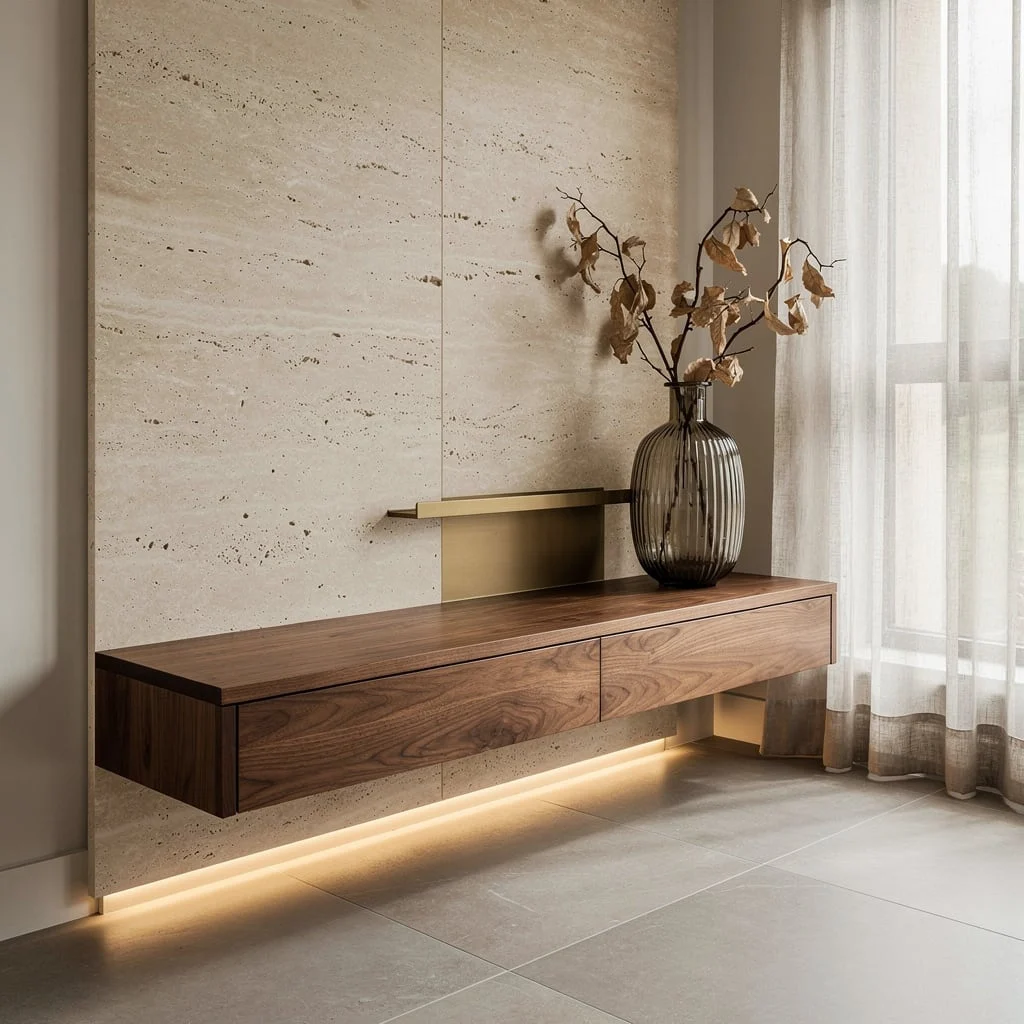
Want your entry to scream ‘rich but chill’? Ditch clunky legs and slap a floating walnut bench on the wall. If you’re feeling extra, lay down LED strip lighting to give those floors a low-key spa vibe (porcelain tile is your friend here, not your grandma’s linoleum). Throw a travertine panel behind for texture—nobody hates dimension. Add a slim bronze shelf for keys and toss a giant glass vase full of dried branches on top. Keep your window treatment sheer; daylight is free therapy. Never cram too much stuff under the bench or you’re back to chaos. Always keep the grain running seamless—life’s too short to stare at mismatched wood patterns.
Minimalist Curves: Bouclé Dreams Only
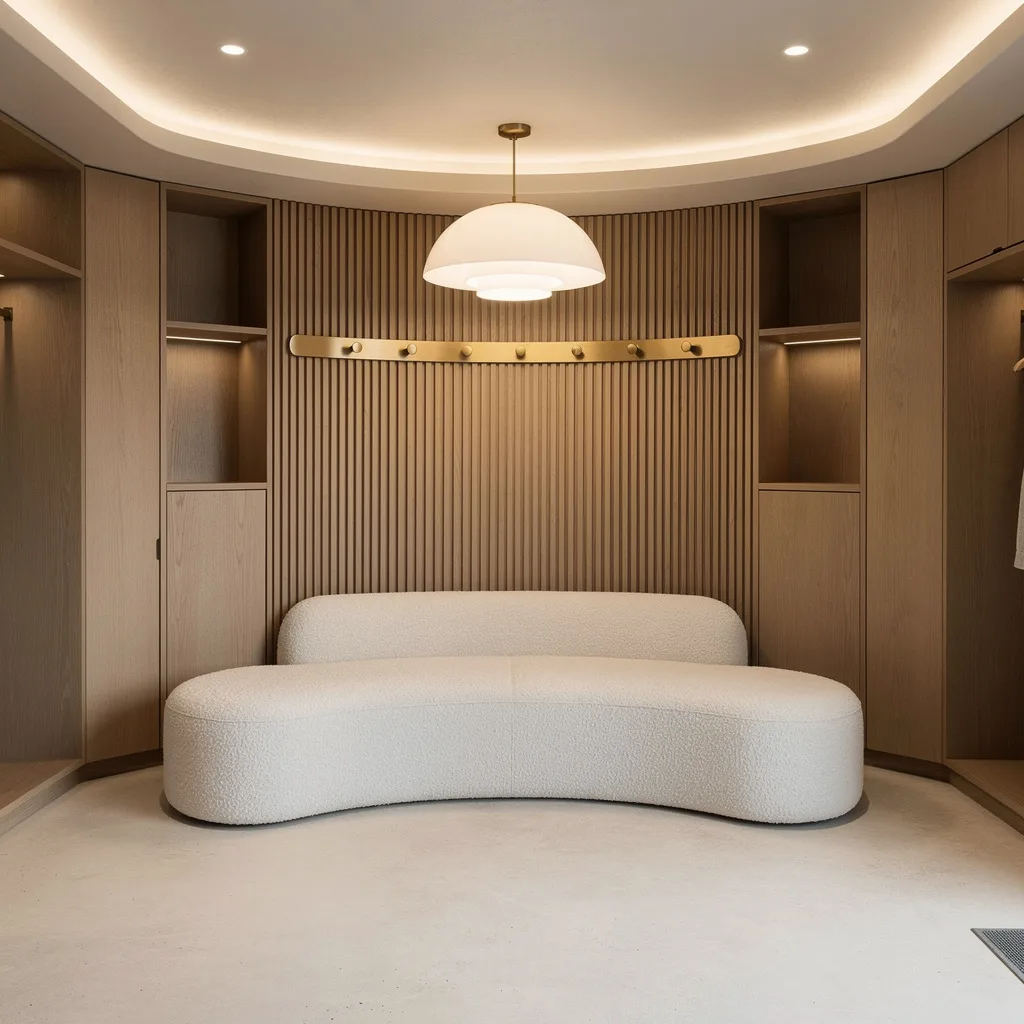
If you actually want your entryway to say ‘I’m not trying, but I have taste’, go for a curved, modular bouclé bench. Don’t even think about skimping—plush is non-negotiable. Set this on a microcement floor so your shoes slide off like butter. Anchor the vibe with an oak slatted wall (bonus: hidden storage niches for all your random nonsense), and use a matte brass rail for coats—no ugly hooks allowed. For lighting, a dome pendant is your minimalist flex, and perimeter recessed lights banish harsh corners. Keep all tones soft—no loud colors in your entry unless chaos is your brand. Always pick textures over patterns if you want that “calm and inviting” feeling.
Window Seat Flex: Small Entry, Big Style
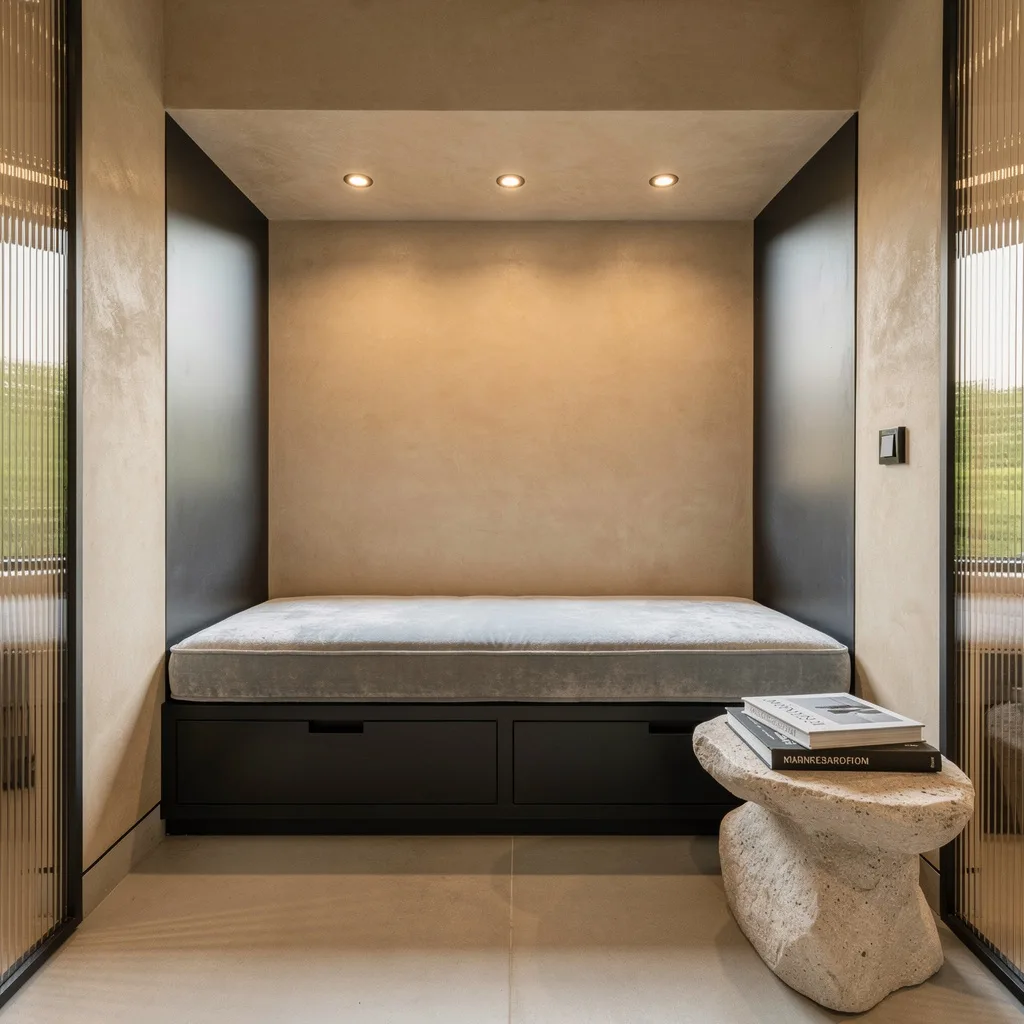
Tiny entry? Build a bespoke window seat. Use deep drawers under the bench for secret storage, and go pale grey mohair on cushions (because potato sack fabrics are not chic). Paint your sills and frame dark—contrast is power. Plaster up your walls with champagne-brushed finish and place a stone side table nearby for peak book-stacking visuals. Ribbed glass panels on both sides let sunlight in while keeping nosy neighbors out. Pro tip: downlights above your seat add soft focus, so even your mail looks expensive. Never let drawers stay empty—hidden mess is genius.
Marble Status: Cantilevered Bench Club
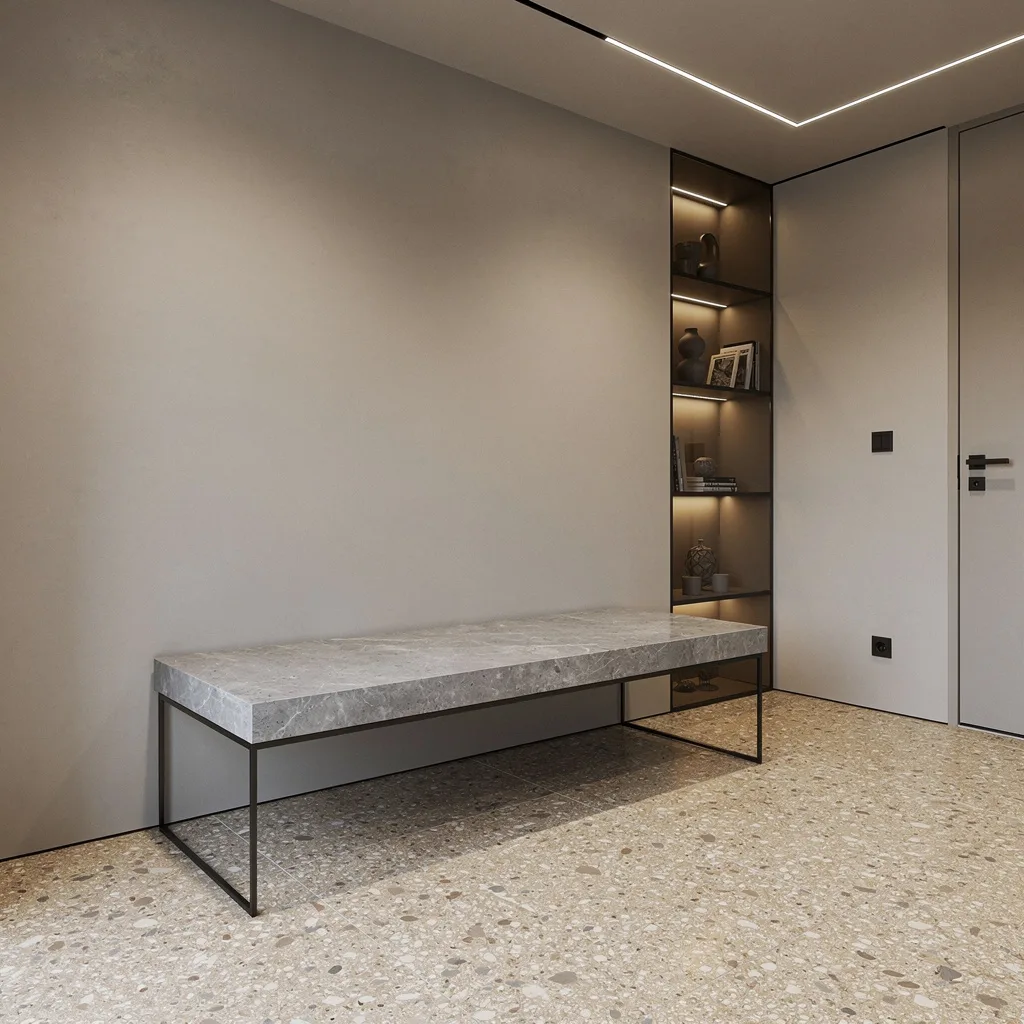
If you’re craving ‘entryway flex’, cantilever a slab of honed Pietra Grey marble with a thin black steel frame. Keep it floating above sand-toned terrazzo flooring—a little sparkle, never glitter—and make sure your niche features smoked glass showing your personal trinkets, but only ones you’d brag about. Use matte mineral paint on the walls and shadow-gap detailing at the ceiling for that ‘money spent, but not loud about it’ vibe. Recessed slimline lights highlight your bench (trust, nothing kills drama like a sad overhead bulb). Never set random stuff on marble— go intentional with styling.
Ottomans + Brass Game: Sumptuous Entry for Lazy Kings
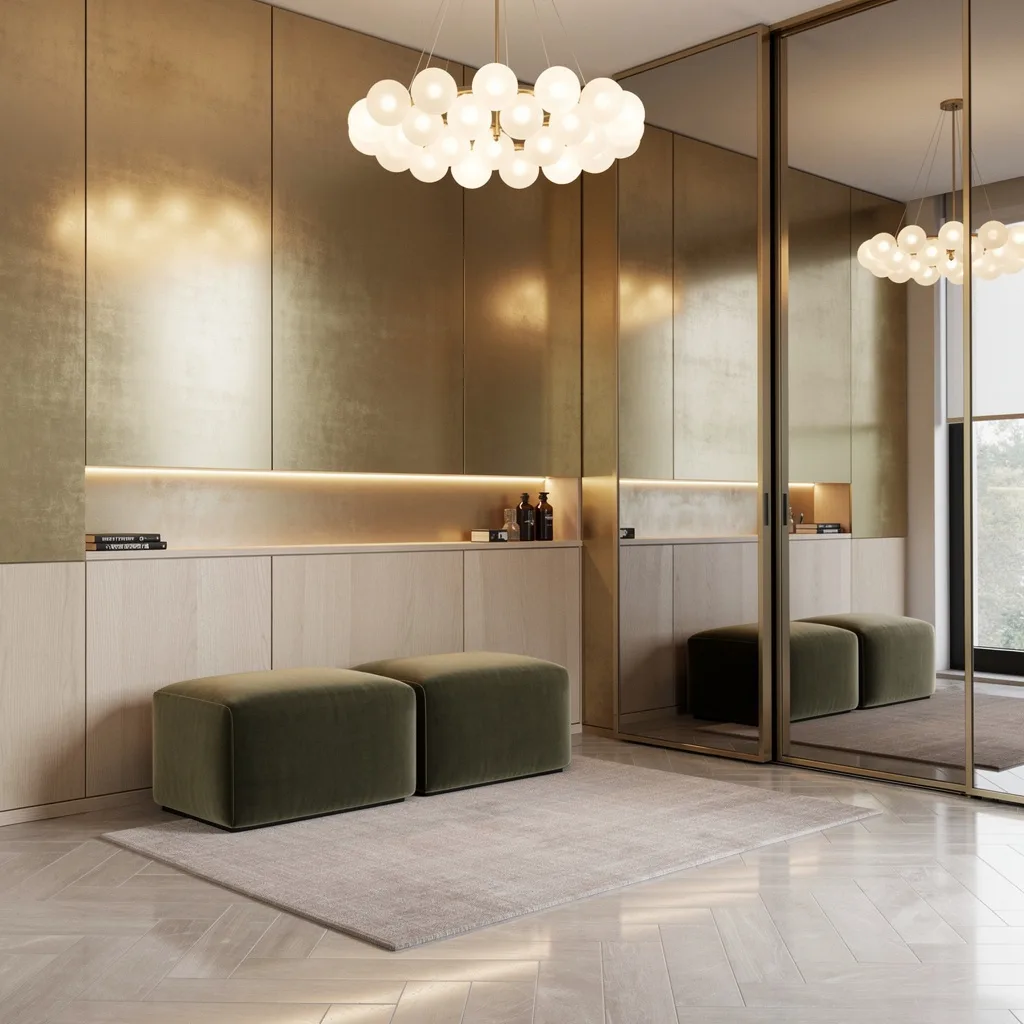
Stop buying those tacky entry benches that do nothing for your style. Toss in low modular velvet ottomans—muted olive if you’ve got taste—and slap a burnished brass and pale maple panel system behind them. Slide in a linear backlit shelf to corral essentials (keys, chapstick, snacks). Roll out a taupe area rug on porcelain herringbone floors, and hang a chandelier made of glass orbs for instant fanciness. Pivoting mirrors? Yes—double the daylight, double the space. Always pair velvet with shine, but never let your ottomans block walkways. Keep it open for easy hustle.
Cocoon Entry Dreams: Cedar and Suede FTW
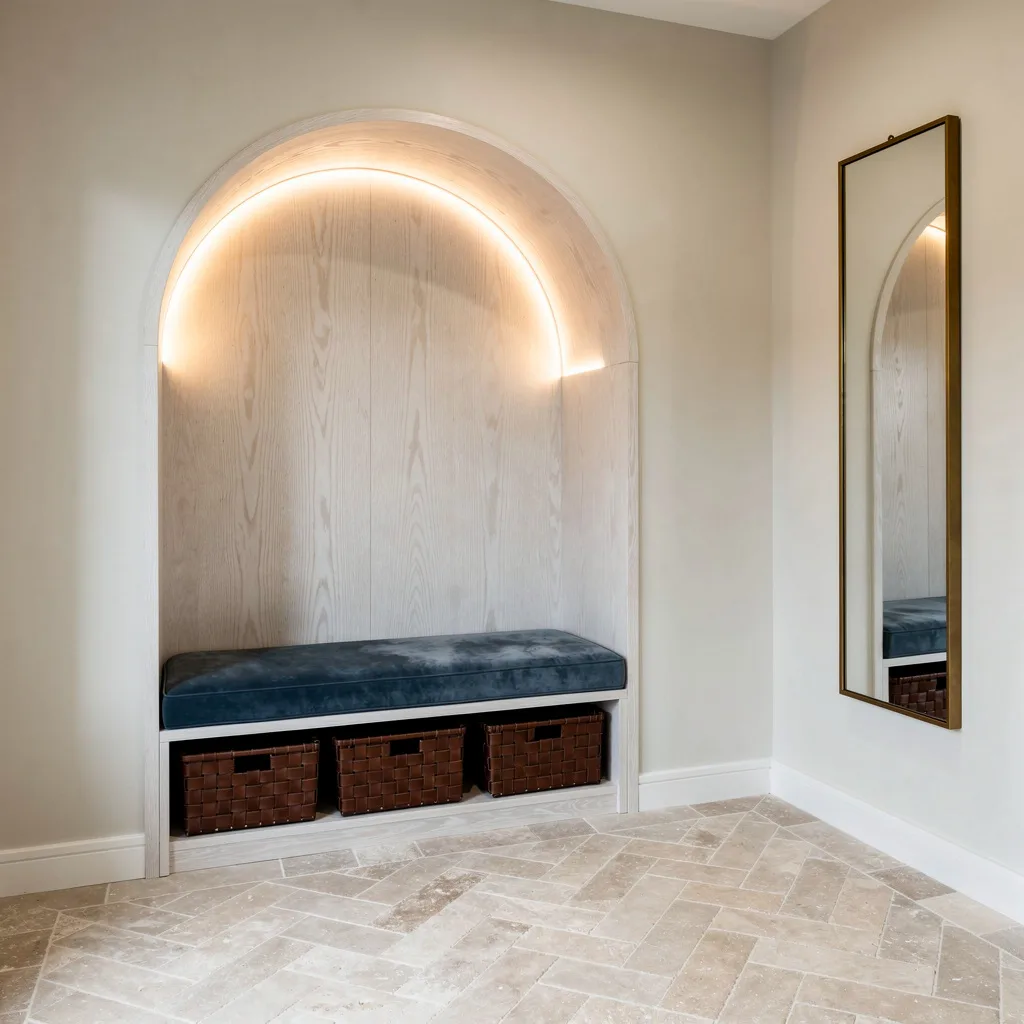
If your life feels chaotic, build an arched alcove lined in whitewashed cedar and drop in a slate blue suede bench—don’t go cheap on the cushioning. Hide leather-weave storage baskets underneath for organizing the mess (nothing screams grown-up like ‘functional elegance’). Use chevron limestone flooring, and finish walls with eggshell paint. LED uplights are a must—don’t skimp, lighting up curves makes them look expensive. Throw in a narrow bronze mirror to bounce back the calm vibes. Always match storage baskets, don’t let random bins kill the vibe—consistency is king.
Mansion Entry Power: Espresso Leather + Marble Geometry
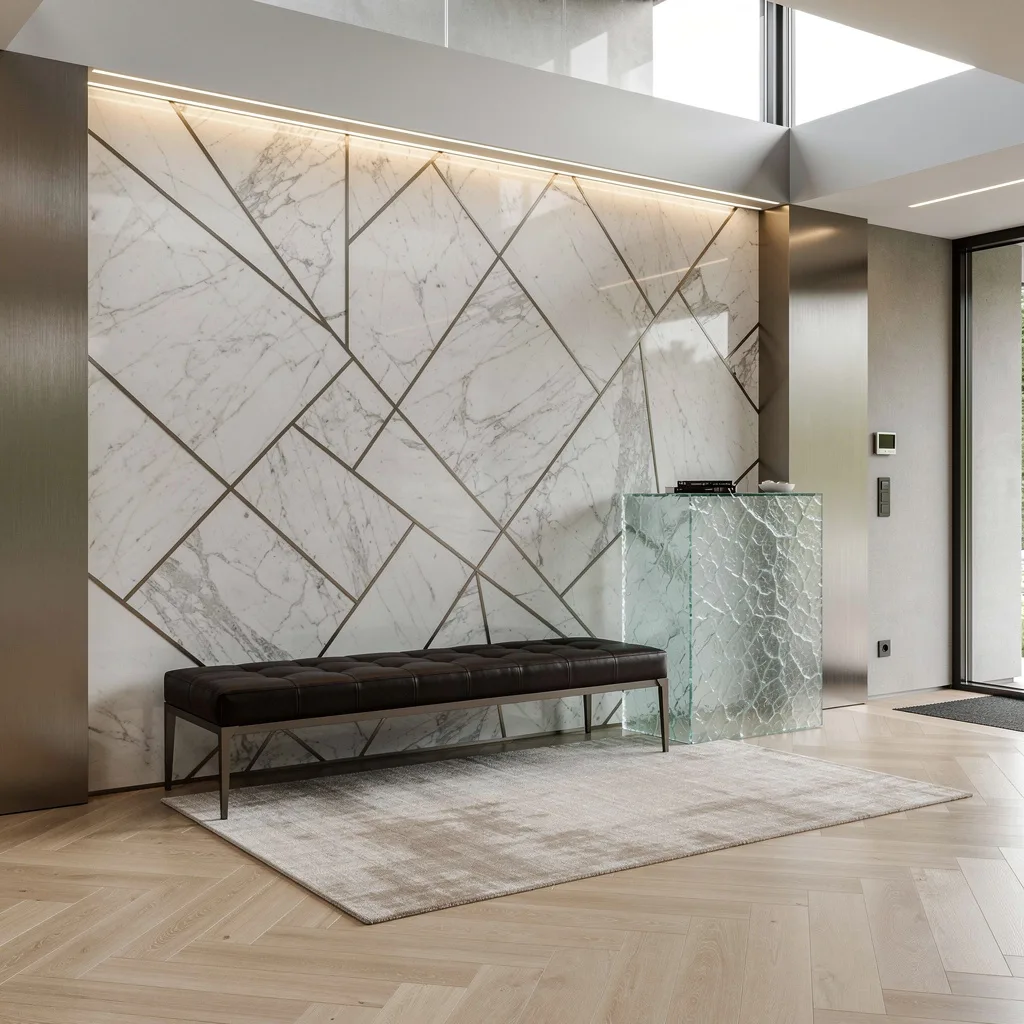
If you need your entry to flex both money and taste, mount a leather bench in espresso against an inlaid marble-and-gunmetal wall. Run pale oak floors in chevron for grown-up warmth and setup a monolithic glass console for your stash of essentials—yes, glass can handle your keys, just don’t drop your phone. Add a neutral silk rug to mark your throne zone and light it up with discreet recessed glow, not harsh spotlights. Always stick gunmetal accents with marble—never chrome unless you want ‘budget ballroom.’ Maintain monochrome for clarity, then let daylight do the rest. Don’t pile bags on the bench; use the console only.
Parisian Luxe Banquette: Emerald Velvet or GTFO
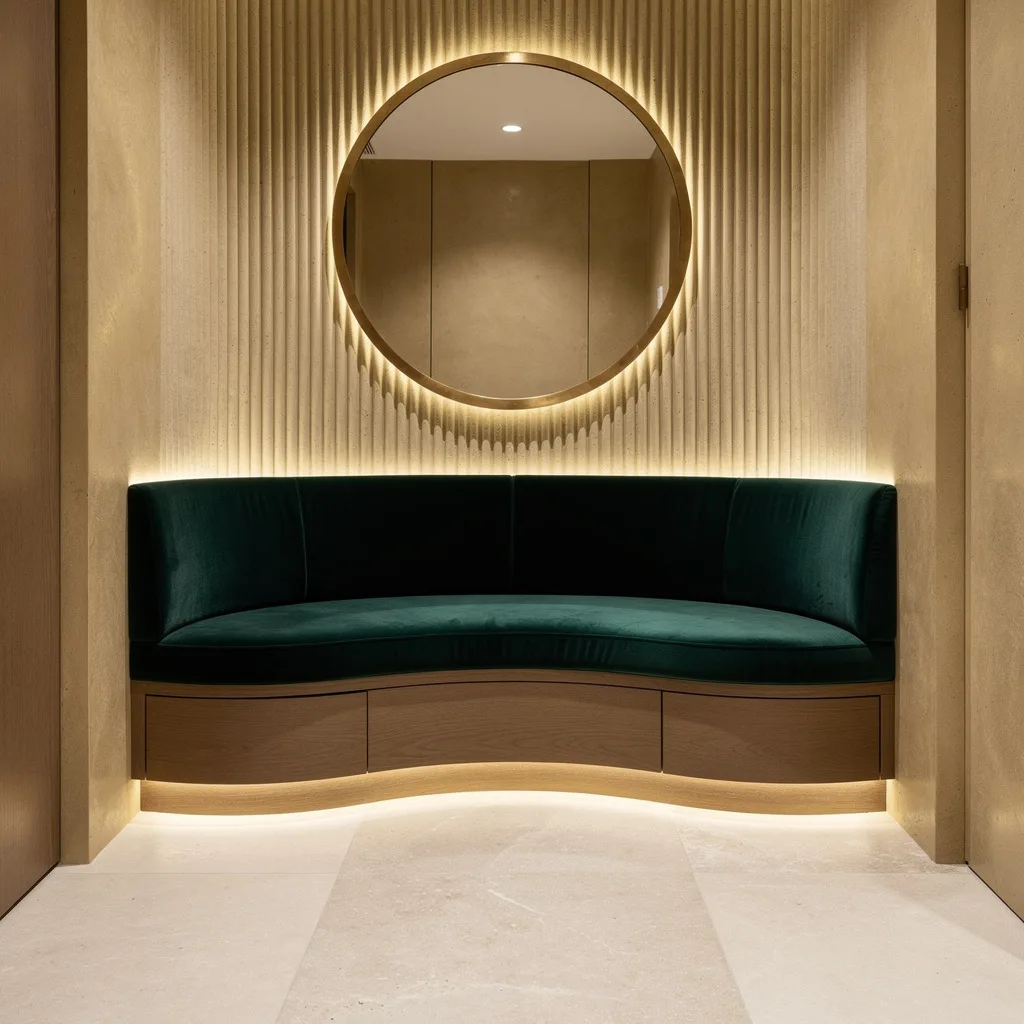
Stop thinking basic benches are ‘enough.’ Bump up your entry with a semi-circular banquette in deep emerald velvet. Use champagne microcement vertical ribs behind for that boutique drama. Embedded LED cove lighting is your secret weapon—totally unnecessary but who cares, it looks sick. Large pale limestone tiles keep floors clean (and classier than laminate), plus a bronze-rimmed round mirror above is a non-negotiable styling move. Floating oak drawers let you stash whatever you need, but only keep essentials, not actual junk mail. Always match your velvet with metallics–never go half-hearted on luxury, or your Parisian dream turns basic quick.
Gallery Block: Bluestone Benches for Tactical Drama
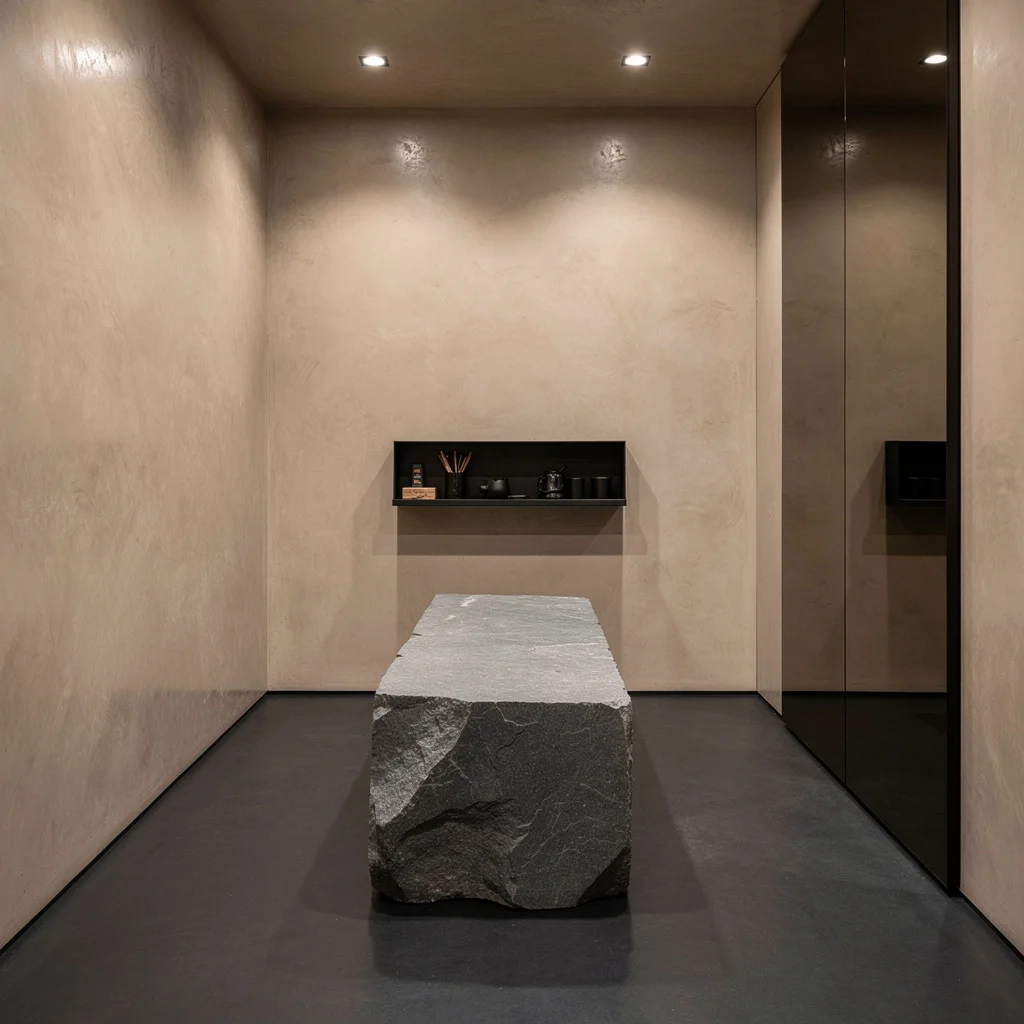
If you love maximal minimalism, carve your entry out with a solid Belgian bluestone bench—center it for power moves. Set this on seamless charcoal resin flooring and skim your walls with warm taupe Venetian plaster, because boring paint sucks. Use micro-spotlights to define the seat, and install a smoked mirror full-height to expand that narrow space like a magic trick. Wall-mount a blackened steel shelf nearby to keep your daily essentials in check—no piles allowed. Pro tip: always pair artful seating with pristine floors; dirty entry kills the gallery vibe instantly.
Ash and Linen: Chill Monochrome Entry Moves
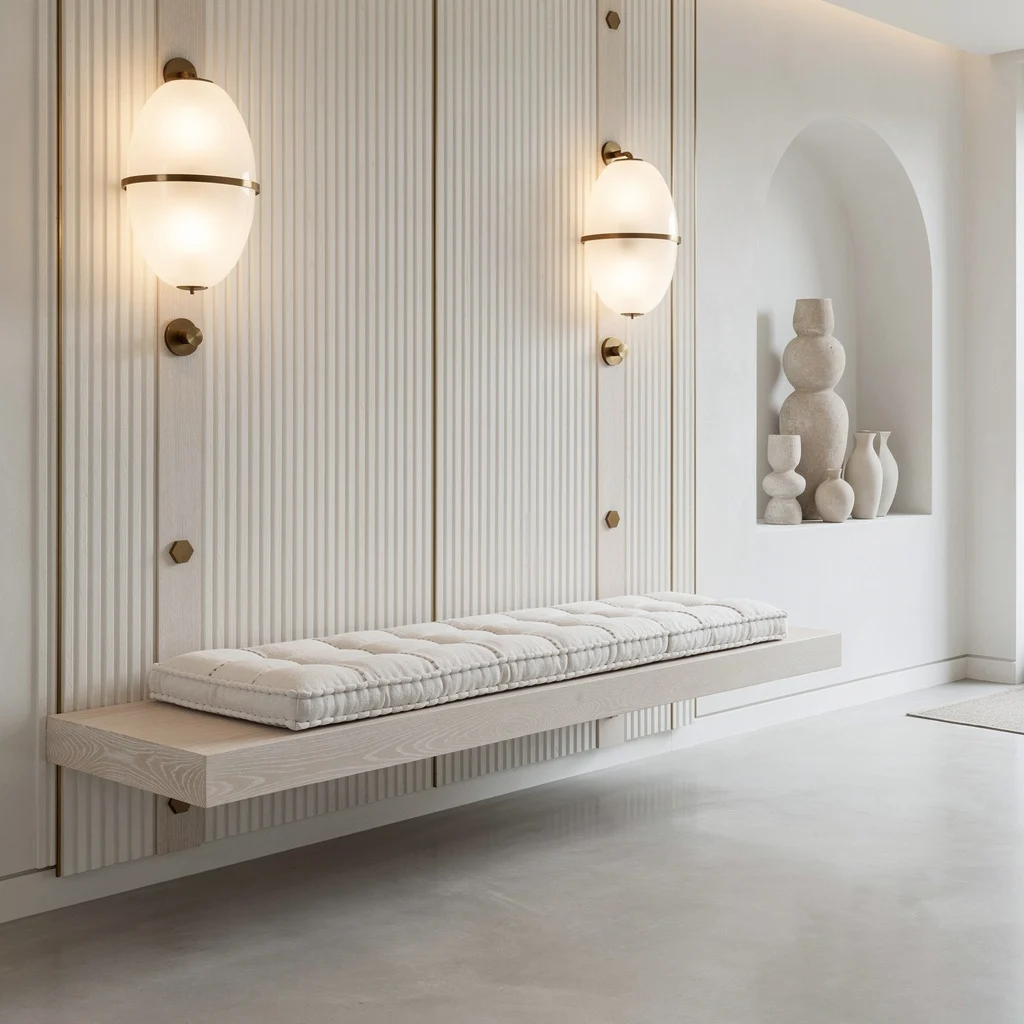
Want calm without effort? Go for a floating bench in bleached ash, drop an ivory linen cushion (stitched, never glued), and wall-clad with vertically fluted gypsum featuring bronze details. Pair this with oversized wall sconces with frosted glass—diffused lighting is your low-key flex. Use ultra-matte concrete floors polished to soft glow, and add an arched niche nearby for sculptural ceramics. Never clutter the seat; keep the vibe clean so sophistication stays front-and-center. Always keep monochrome to whites and soft greys—avoid loud colors or you break the peace.
Built-In Nook: Soft Curves Only
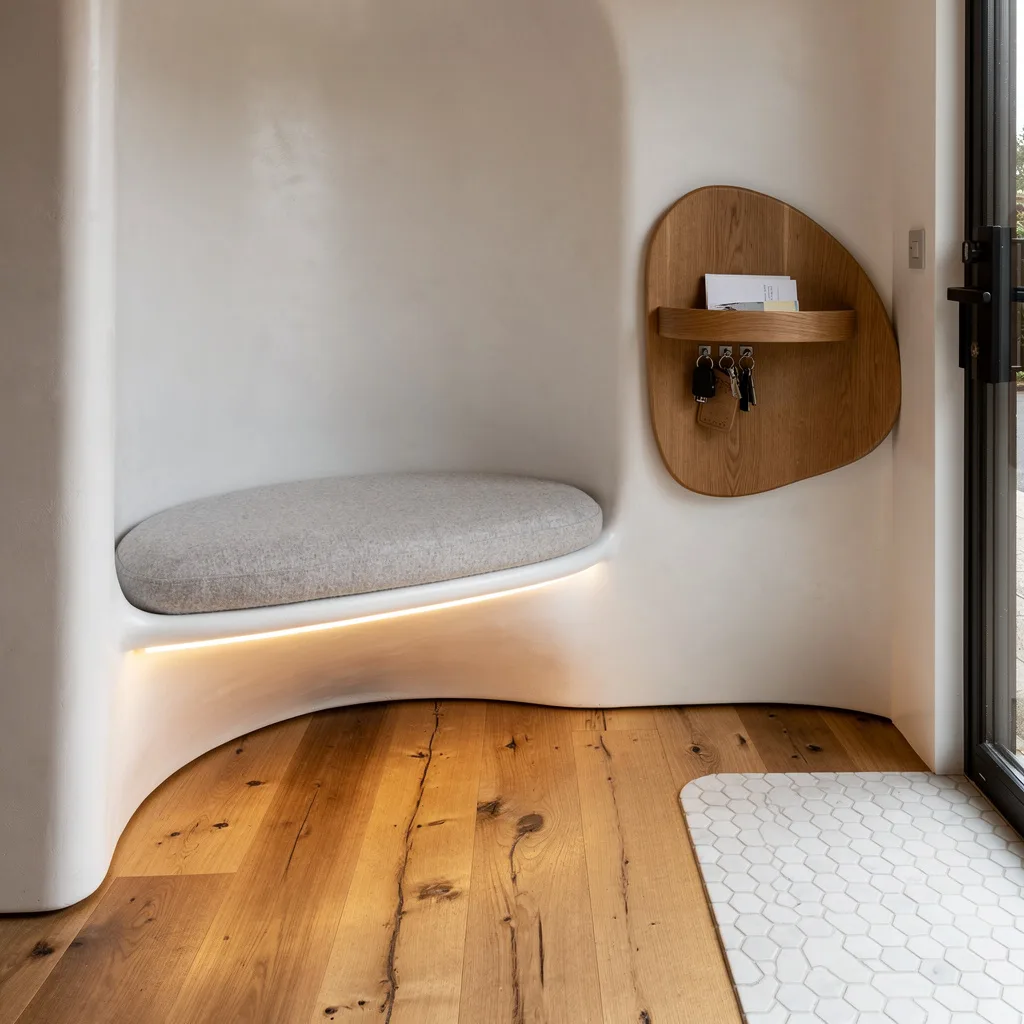
If you want your entry to feel calm (and maybe look bigger), carve out a soft, seamless plaster nook with organic curves. Upholster in heathered dove wool, and hide an LED strip under the seat for that easy-glow look—light equals instant status. Lay down hand-oiled wide plank oak boards, but transition right into a hexantile doormat for actual function. Adjacent asymmetrical oak shelves give you a spot for keys and mail, so nothing lives on the bench. Always build the shelf deeper than you think; shallow shelves are useless for mail mountains.
Partition Power: Sapele Slats and Saddle Leather
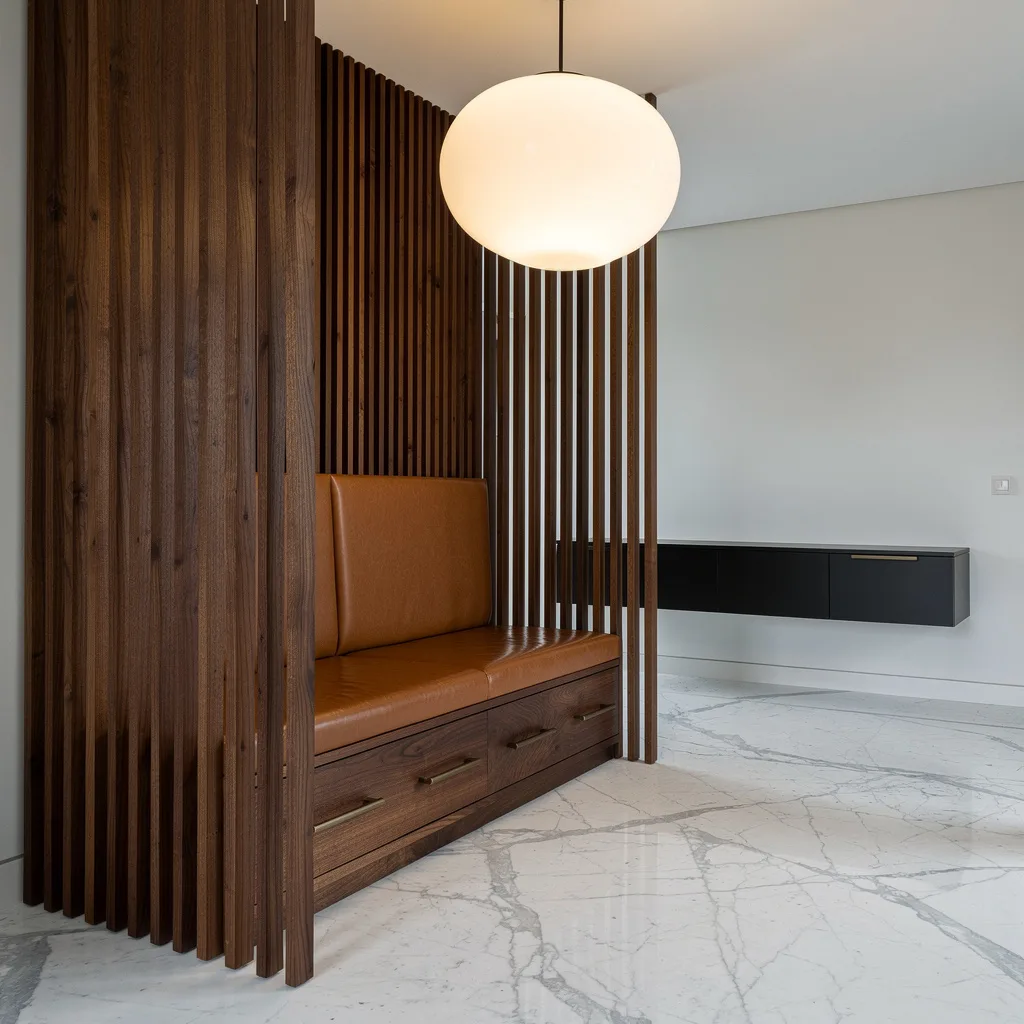
If you crave privacy but hate boring partitions, use vertical, open-grain sapele slats to zone off your seating area. Line your bench with caramel-toned saddle leather (bonus points for integrated storage drawers with bronze pulls). Cloudy white marble floors with soft grey veining keep things feeling swanky, while an oversized oval frosted glass pendant makes light feel almost spa-level. Behind those slats, add a floating matte black console—never settle for basic legged tables. Keep the seating zone clear, and always match your bronze pulls to other metals—mismatched hardware is a rookie mistake.
Final Thoughts
An entryway that has genuinely considered its seating arrangement tells a different story about the house than one that hasn’t — not because seating is intrinsically impressive, but because it signals that someone thought about how the space would actually be used and made decisions accordingly. That shift in thinking, from “this is the bit before the house” to “this is part of the house,” is what separates entryways that get complimented from ones that simply get walked through.
The scale, the material, the storage capacity, the mirror above, the light beside — none of these are complicated decisions, but all of them need to be made deliberately and in relationship to each other rather than in the sequence of whatever went on sale. Get that composition right and the entryway stops being a transition and starts being a room in its own right.
Everything in a home makes a first impression exactly once. The entryway makes it every single time someone walks through the door, which means it deserves considerably more than whatever was left over from the rooms you actually cared about decorating.