
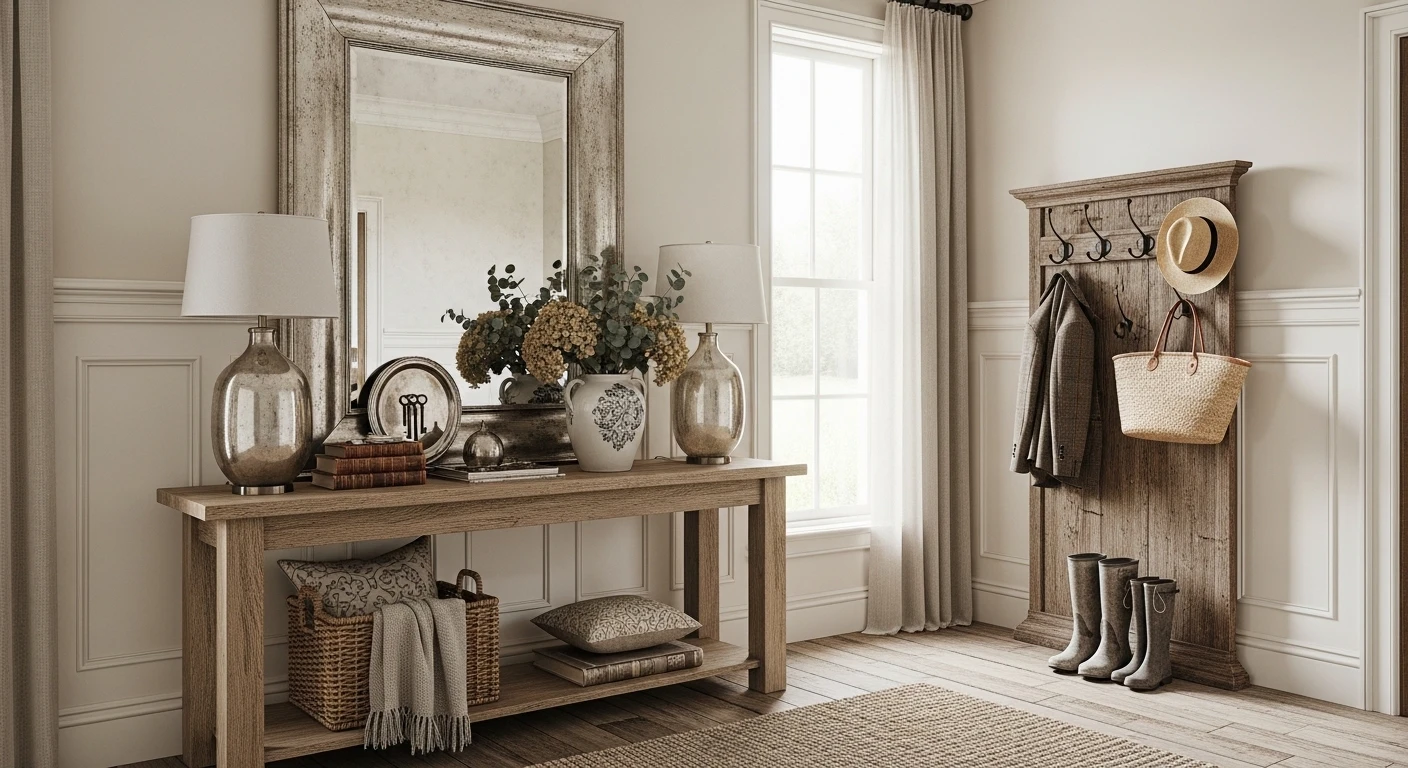
Somewhere along the way, farmhouse style got hijacked. What started as a genuine design language—honest materials, functional objects, the specific warmth of spaces built for actual living—got processed, packaged, and sold back to people as a collection of signs that say “gather,” shiplap that was never near a farm, and enough burlap to upholster a livestock trailer. If your entryway currently features a chalkboard with a seasonal quote on it, this is your intervention.
Real farmhouse design is not a theme you apply with accessories. It’s a philosophy about materials—wood that shows its grain, iron that shows its age, textiles that show their weave—and about function that refuses to be embarrassed by itself. The hook that holds the coat, the bench that takes the boots, the basket that swallows the clutter: all of it visible, all of it chosen rather than inherited from a set, all of it doing something useful while also looking good doing it.
The entryway is where farmhouse style either makes its case or collapses into parody, because it’s the space that has to be genuinely functional first and decorative second. There’s no room for objects that exist purely to signal a lifestyle. Everything that walks in the door gets deposited somewhere, and where it gets deposited is either part of the design or evidence that the design failed. The entries on this list got that relationship between function and beauty right—and the results are worth considerably more attention than another burlap wreath.
What Separates Real Farmhouse Style from the Gift Shop Version
The difference is visible in every single object and every single decision, and once you can see it you can’t stop seeing it.
Authentic materials age rather than wear — Real reclaimed wood looks better after five years than it did installed. Real iron hooks develop a patina rather than chipping. Real stone floors get more character with every boot that crosses them. If a material is going to look worse with use, it doesn’t belong in a farmhouse entry—because the entry is where use happens most intensely.
Function is not hidden or apologized for — The farmhouse entry that looks right is one where the hooks are doing actual work, the baskets contain actual things, and the bench takes actual weight daily. When storage is purely decorative—baskets that are too pretty to use, hooks too low for coats, benches too fragile for sitting—the farmhouse aesthetic becomes costume rather than character.
Restraint is the mark of confidence — The farmhouse entries that have aged best are almost always the ones with fewer objects chosen more carefully, not the ones where every surface holds something seasonal or symbolic. A single good piece of ironwork, one excellent basket, one beam of honest wood: these things speak more clearly than a collection of items trying to out-rustic each other.
The Traps That Turn Farmhouse Charming Into Farmhouse Chaos
Even people with genuinely good intentions end up with entries that feel more like a curated shop than a lived-in home, and the reasons are consistent.
Too many signs — The word “welcome” can appear in a farmhouse entry once, on the actual door, before it becomes a problem. On the wall as a wooden cutout, as a chalkboard inscription, on a throw pillow, and on a doormat simultaneously, it stops being warm and starts being insistent in a way that makes guests feel slightly harangued.
Matching sets posing as collected objects — Real farmhouse entries look like things were accumulated over time, from different places, in different years. Everything that matches too perfectly reads as purchased in one trip to one store in one afternoon—which produces exactly the opposite of the lived-in character that farmhouse style depends on for its credibility.
Seasonal overcommitment — Farmhouse style has a seasonal decoration problem because the aesthetic invites it, and then the entry ends up being completely dismantled and reassembled four times a year. The entries that look best year-round are built on a permanent foundation strong enough that seasonal additions are a choice rather than a requirement to make the space feel complete.
Farmhouse Entryway Ideas Worth Stealing
White Shiplap, a Honey Wood Door, and Exactly Enough Going On
How We Gave Our Entryway Farmhouse Charm in One Day: Simple Tips for a Welcoming Makeover
by u/Kayakerguide in toolsweek
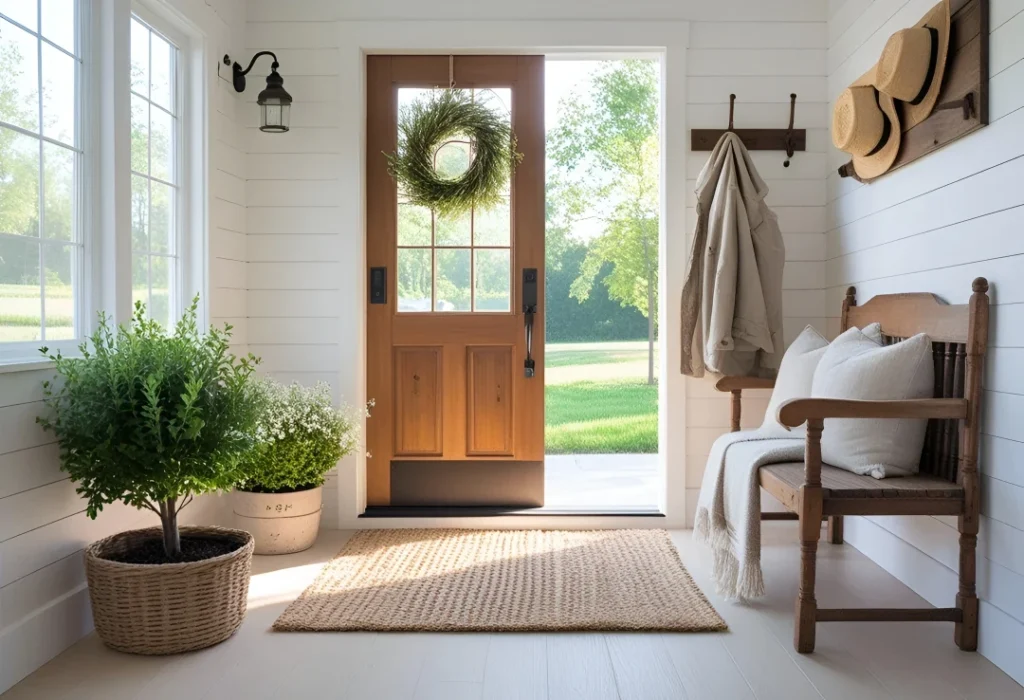
This entry has the discipline to know when to stop, which is the rarest and most valuable quality in farmhouse design. White horizontal shiplap covers every wall surface, a honey-toned wood door with a divided glass upper panel floods the space with natural light and a glimpse of the green beyond, and a black iron wall sconce provides the one dark note the room needs against all that white. A rustic wooden bench with carved back detail holds linen cushions and a fringed throw, positioned to catch the light from both the door and the side window. Two plants—one in a woven basket, one in a white ceramic pot—bring organic life without crowding the floor space. A simple jute mat and a dark iron coat rack complete the picture, and then the edit stops. No signs. No seasonal garlands. No collection of small objects competing for attention on every surface. The confidence to leave white wall as white wall, to let one good door do the work of a dozen accessories, is precisely what gives this entry its quality—and it’s also the hardest thing to actually do.
Herringbone Wood Ceiling with Collected Vintage Objects and One Very Comfortable Dog
The ceiling is the surface that farmhouse design most consistently wastes, and this entry wastes nothing. A herringbone-laid tongue-and-groove pine ceiling in warm natural tone turns what would be a blank overhead plane into the room’s most interesting material surface—the pattern visible from every angle, the warmth radiating downward into the space below. White arched walls and tiled floors keep everything beneath the ceiling quiet enough that the wood can do its work without competition, and an iron lantern pendant drops into the center of the composition to provide light and reinforce the crafted quality of the ceiling above it. A dark wood open-console with carved trestle base holds a lamp, a small plant, a lantern, a wood slice, and an assortment of objects with the particular quality of things that were actually found rather than purchased together. A vintage window frame on the wall above it provides scale and structure without blocking light. A green wreath on a shiplap board at the far end of the corridor marks the passage into the next room. The dog asleep on the floor is doing more for the farmhouse character of this space than any number of decorative accessories could—it is, after all, a home.
Duck Egg Blue Door with Dark Wood Floors and a Gallery Wall That Keeps It Personal
The front door color is where this entry earns its distinction—a muted duck egg blue that sits right at the intersection of soft and saturated, warm enough to feel welcoming, cool enough to feel considered. Against white walls and dark wide-plank floors, it reads as a genuine choice rather than a safe default, and the full-glass panel and sidelights mean the color is visible from inside and outside simultaneously, doing double duty as interior element and exterior curb appeal. A turned-leg wood console in a warm natural finish holds a textured lamp, a white ceramic vase with eucalyptus, and a small collection of objects at varying heights—not styled within an inch of their lives, but clearly placed with some thought. Six white-framed photographs in a loose grid on the wall above it introduce the personal element that most farmhouse entries lack: evidence that specific people live here, not a general idea of rustic domesticity. A faded vintage runner leads to the door, a fiddle leaf fig in a woven basket occupies the corner where the hallway meets the adjacent room, and a knit throw draped over the console shelf provides the one moment of casual softness the whole composition needed.
Dark Wide Plank Floors, Shiplap Staircase Wall, and a Bench Living Its Best Life
The farmhouse entry with a staircase has an architectural advantage that most don’t: the diagonal of the stair creates compositional movement that even the most considered styling can’t manufacture from scratch. This setup understands that and lets the staircase structure do its work—dark stained wood newel posts and iron baluster spindles against the white shiplap-clad stair wall, the diagonal line pulling the eye upward and through the space simultaneously. A dark wood bench with a graphic diamond-pattern upholstered seat sits against the shiplap wall beneath the stair slope, holding a chunky knit cushion and a woven throw at one end, with a rustic tray on the lower level housing small plants. A large ceramic crock in white with a number painted on it holds a loose lavender arrangement beside the bench—unpretentious, functional-looking, and warm. Dark wide-plank floors throughout ground everything in the deep, aged warmth that the rest of the palette needs to feel genuine rather than produced. A lantern pendant overhead and a wreath on the door visible through the adjacent glass are the only decorative gestures that read as choices rather than habits, which is exactly the right ratio.
Board-and-Batten with a Herringbone Bench and the Word “Welcome” Used Its One Allowed Time
A wall of white board-and-batten with a row of black iron hooks running across it is the farmhouse entry’s load-bearing structure—functional enough to handle coats, bags, and the daily chaos of people coming and going, beautiful enough to look designed rather than improvised. The herringbone-pattern wooden bench in front of it is the detail that elevates the whole setup: the same wood-and-iron language as the wall behind it, but with the craftsmanship visible in the laid pattern of the top surface rather than hidden in construction. A metal cutout “welcome” sign is mounted between the hooks—used once, in this place, where it functions as typographic decoration rather than decorative insistence—and a small boxwood wreath hangs from one of the lower hooks with the kind of casual ease that takes more placement thought than it appears to. A woven jute rug underfoot, a wire bucket holding kindling beside the bench, and a grey woven basket beneath it for actual storage complete a setup that is honest about what it is: an entry that works hard, looks good, and knows the difference between enough and too much.
Dark Board-and-Batten with Graphic Wallpaper and Twin Leather Mirrors
The farmhouse entry that isn’t afraid of drama looks exactly like this—dark slate blue board-and-batten running from floor to a wide display shelf, a graphic brushstroke-pattern wallpaper covering the wall above in charcoal and cream, and two round mirrors in leather-strap frames hanging from the shelf edge rather than mounted to the wall, which is the small decision that separates this from every other board-and-batten entry and makes it look specifically chosen. A solid slatted wood bench in warm walnut tone sits in front of the board-and-batten, holding a leather cushion in cognac and a striped linen pillow, with three large woven baskets underneath providing storage that looks substantial rather than fussy. The tile floor in a dark grey continues the moody palette at ground level, and a faded vintage Persian rug bridges the bench and the tile in exactly the way the space needs—worn enough to feel genuine, patterned enough to contribute. A white ceramic vase with a loose arrangement of dried and fresh flowers on the shelf adds the one moment of warmth and imperfection that the otherwise controlled palette needs to feel like a home rather than a set.
Chill Farmhouse, But Make It Bougie
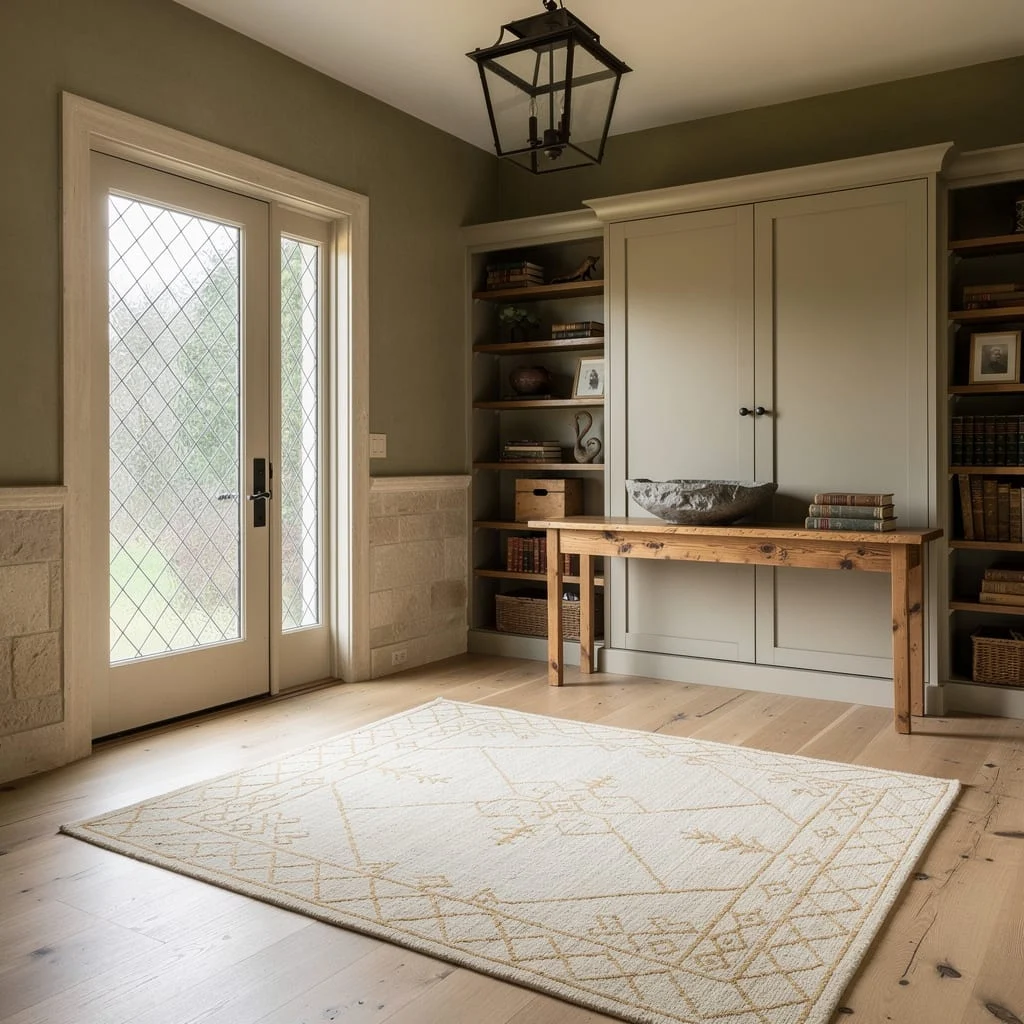
If you want farmhouse but can’t stomach anything kitschy, run with quarter-sawn ash floors (yes, the real deal) and limestone wainscoting for the opposite of predictable. Paint the walls in a muted olive limewash—because flat paint is a crime. Install a floating knotty pine console to display a stone bowl and a few actual vintage books (not fake, not thrifted last week), then hide every ugly thing in a full-height shaker storage unit. Light up the entry with sidelights and a quilted glass front door so the carpet actually glows—bonus points for a giant hand-knotted wool rug with ochre geometric patterns. Hang an iron lantern overhead to keep it moody after dark. Pro tip: Choose console decor in uneven numbers—three objects always looks more intentional.
Big Mudroom Energy: Terracotta and Storage Porn
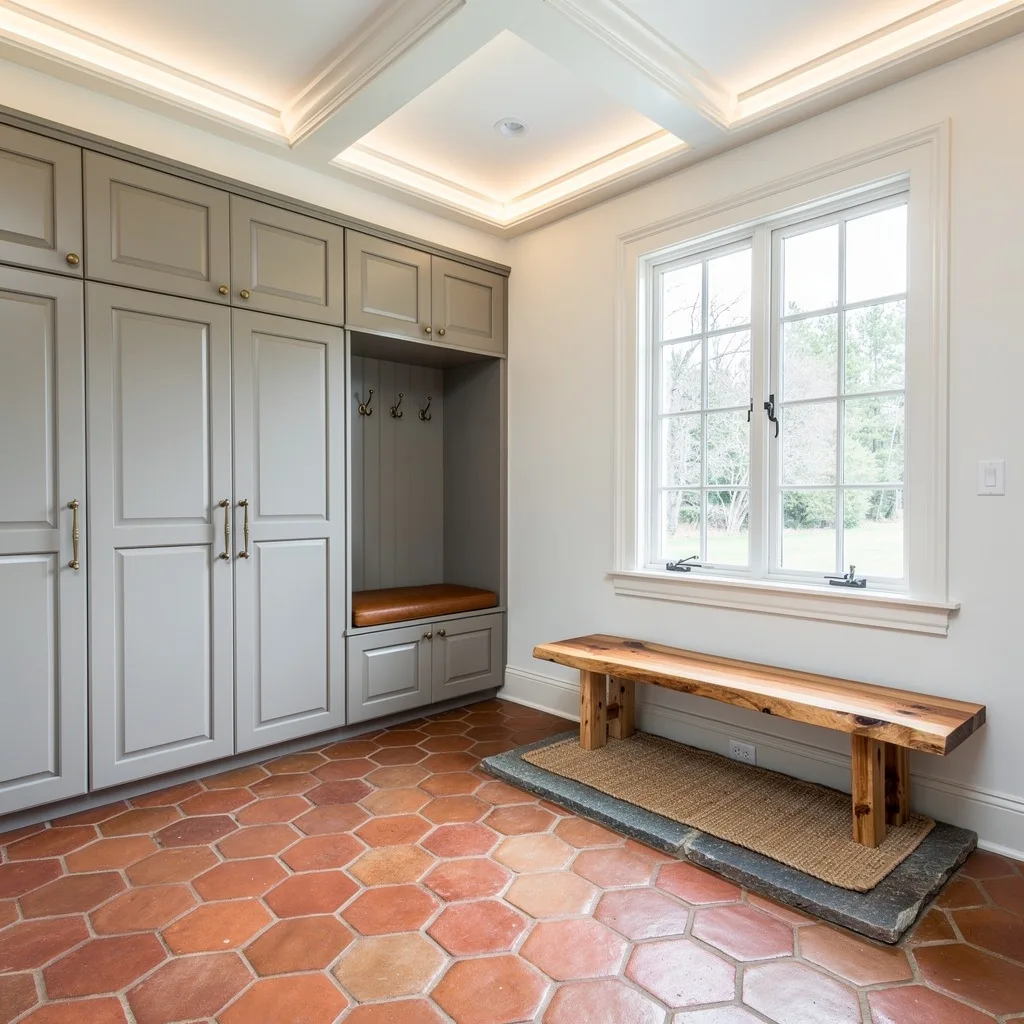
Don’t bring grime into your house—slap down oversized terracotta hex tiles in your mudroom so even muddy shoes look chic. Paint those walls white (but use real paint with a good finish, not cheap landlord special) and add a coffered ceiling with LED strips that actually make the room glow, not give you a migraine. Build wall-to-wall beveled cabinetry in a soft gray (floor-to-ceiling for maximum hide-the-mess effect), but carve out a nook with a padded leather cushion and brass hardware for that lived-in farmhouse flex. Opposite, add a rustic live-edge maple bench next to a giant, divided-pane window—sunlight is free, use it. Throw down a jute runner, and finish with a rough bluestone threshold for boss moves. Pro tip: Always store wet boots at the entry—never let them hit your nice floors.
Drama Alert: Double-Height Farmhouse Chic
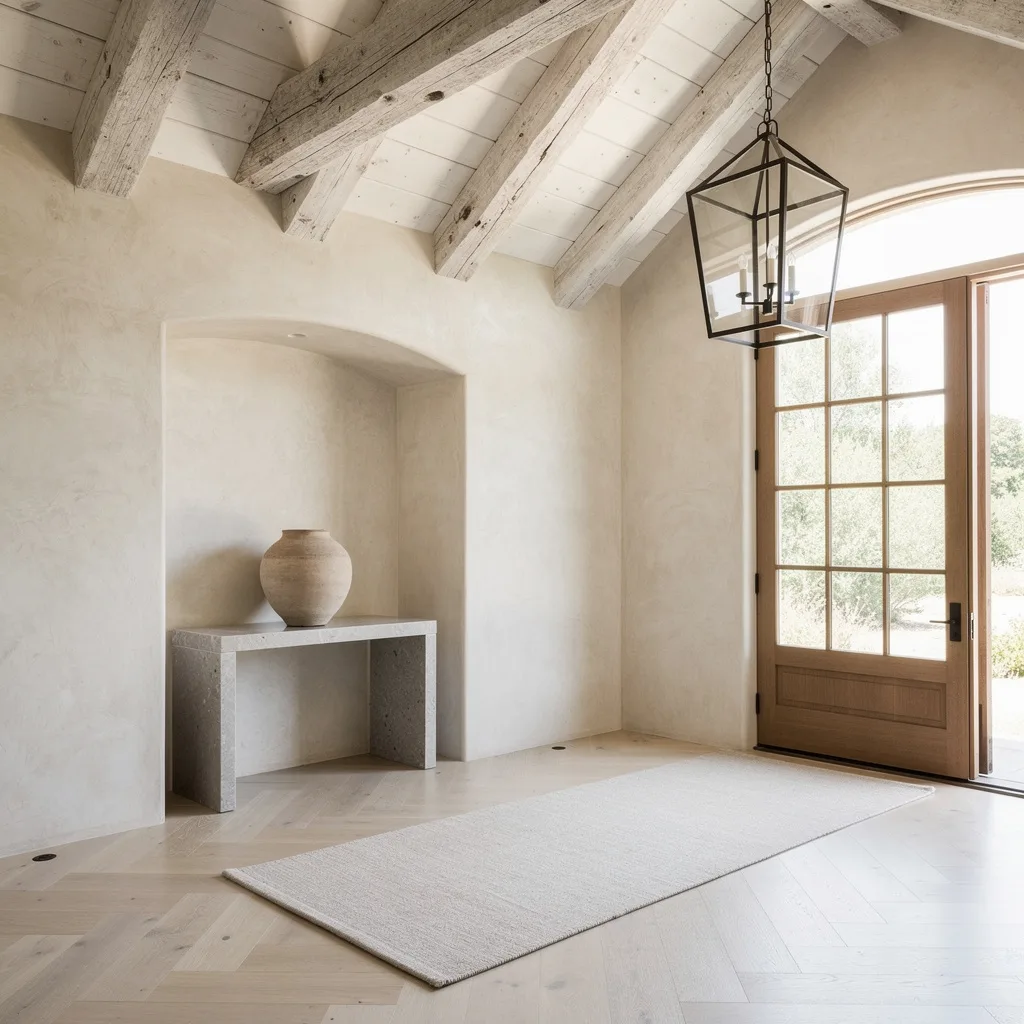
Go full main-character with a double-height entry—install reclaimed timber beams (whitewashed, please, don’t skip this or it looks dusty). Run herringbone white oak for the floors so your guests know you care about the details. Go all-in on hand-troweled limestone plaster for the walls—no half-baked shortcuts like faux panels. Drop a soapstone console into a recessed alcove, and put one massive artisanal pottery piece on top. This is not ‘maximalism’—it’s intentional restraint. Flood the zone with sunlight from a grid-fronted, extra-tall wood door and hang a powder-coated steel lantern for attitude. Lay a soft runner to make the entry not sound like a gym. Pro tip: When using one big piece (like pottery), ditch the clutter—let it breathe.
Cozy Up—But Don’t Get Cute
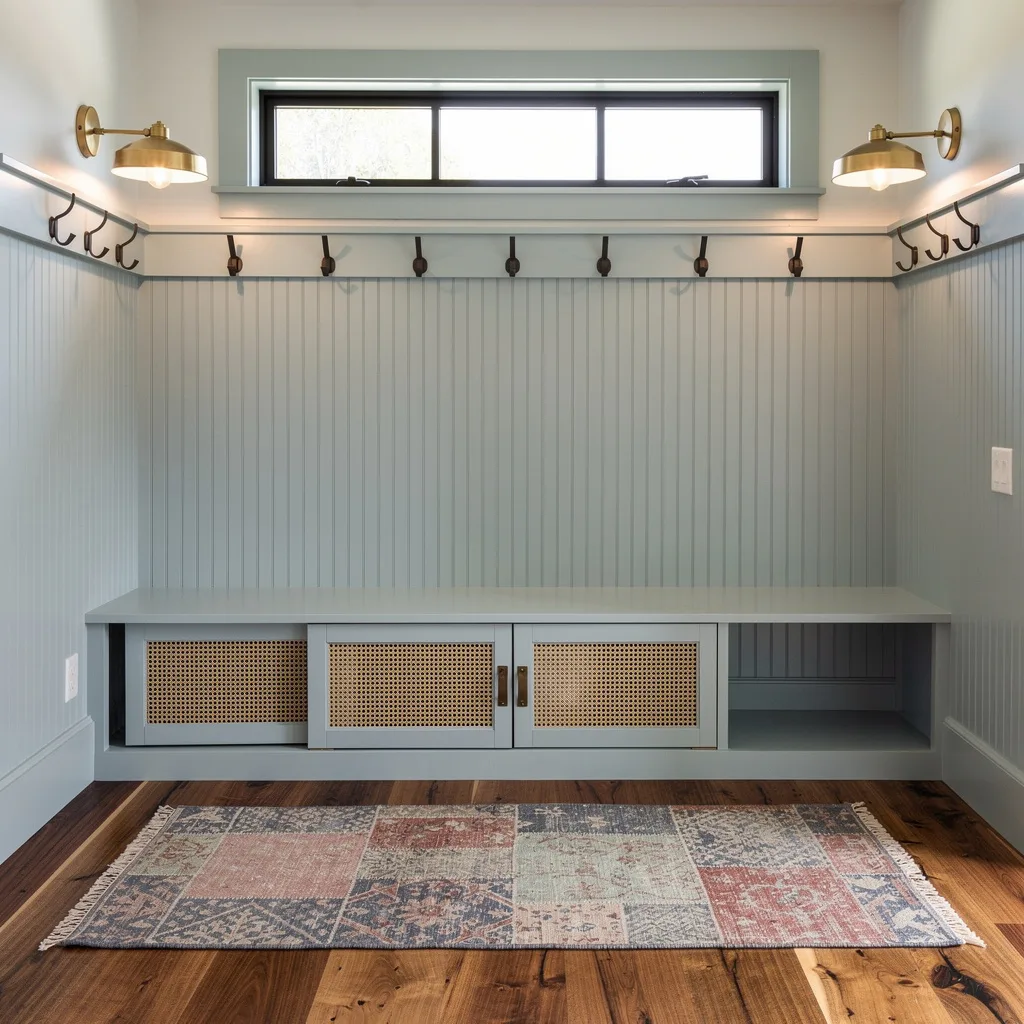
For real coziness, nail down character-grade walnut floors so you’re not living on drama-laminate. Go for beadboard walls in a subtle fog blue—none of that boring rental white. Build a bench—it must have sliding cane doors for hidden storage (shoes and dog leashes, not throw pillows you don’t use). Add a lineup of matte charcoal hooks above shiplap so even your outerwear looks intentional. Throw down a patchwork Turkish vintage runner for pure style and shine LED brass wall sconces everywhere—no one wants overhead ‘office bathroom’ lighting. A black steel transom window lets in just enough daylight to keep the entry moody but livable. Pro tip: Never line hooks above seating unless there’s enough room between for actual coats.
Modern Farmhouse, Zero ‘Fixer Upper’ Clichés
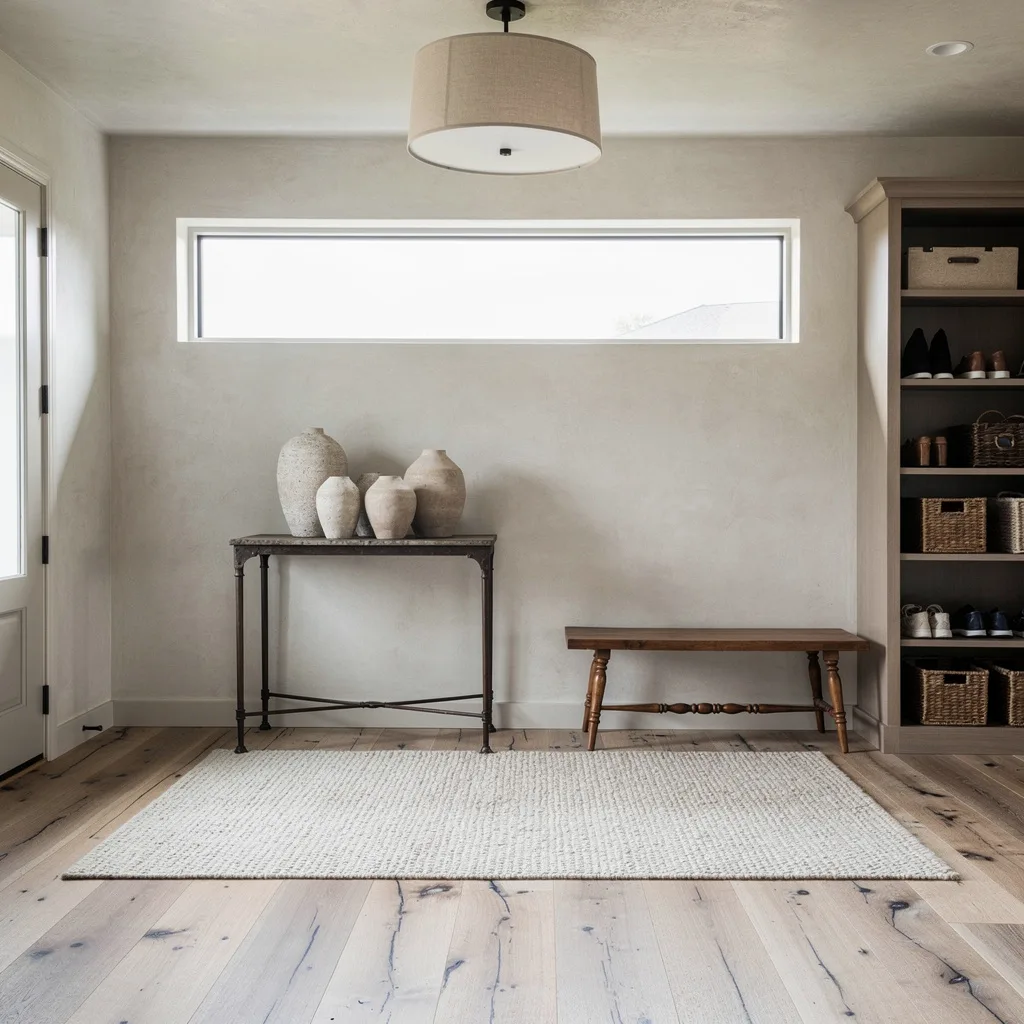
If you’re allergic to twee, go for wide-plank weathered white oak flooring topped with real hand-plastered linen-toned walls (bye, faux shiplap). Bring in a vintage iron console and style it with odd-shaped stoneware—nobody cares for matching sets. Pop in a solid wood spindle bench next to open shelving—kick baskets and shoes in there and pretend you’re always organized. Park an elongated horizontal window up top for free daylight and anchor the look with a subtle flatweave wool rug (skip the machine-made versions). Finish with a no-nonsense linen drum pendant. Pro tip: To actually look modern, stop over-accessorizing—less is more, genius.
Dutch Door Energy (and It’s Not Negotiable)
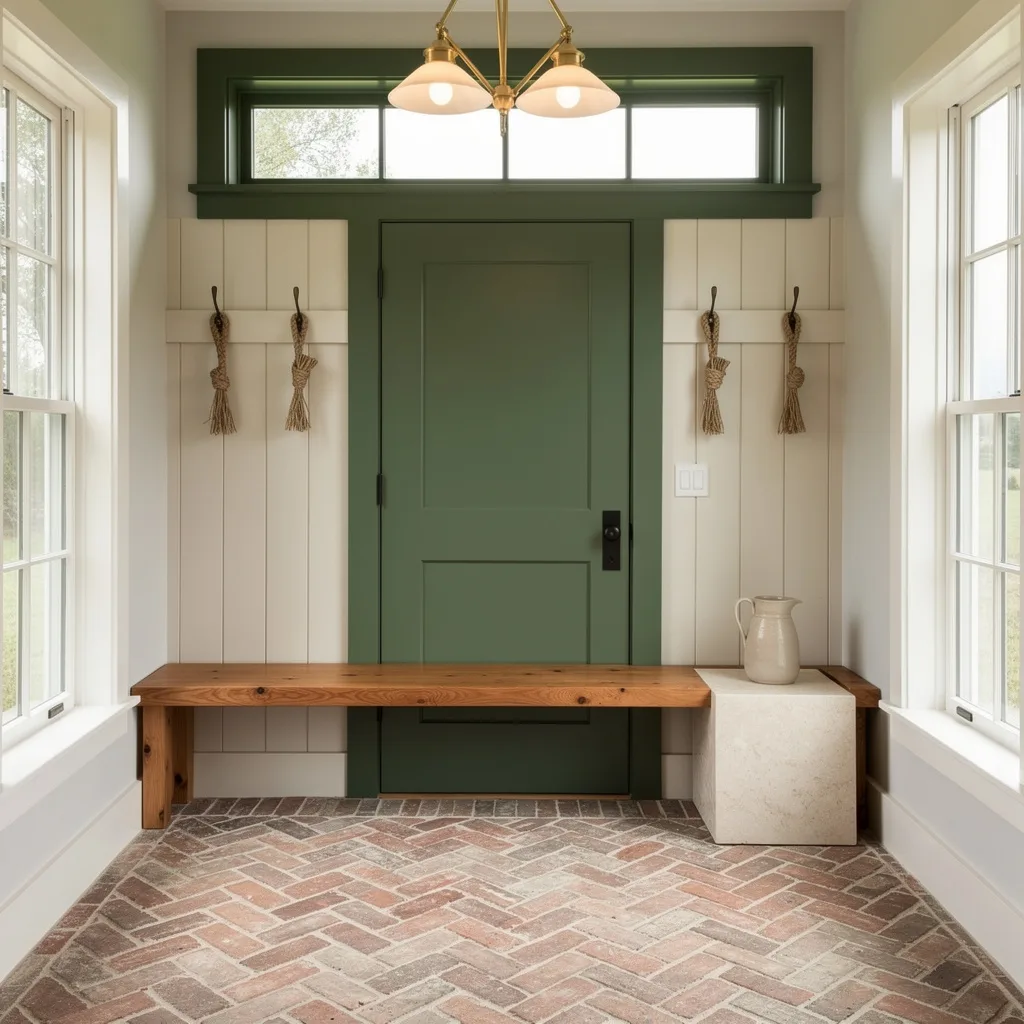
Stop buying boring slab doors and get yourself a custom Dutch door in forest green, topped with a divided transom for the ‘I live in a storybook’ flex. Lay down oversized brick pavers in a chevron pattern—if you’re gonna use brick, commit fully. Install a built-in solid fir bench under vertical shiplap, and only use organic jute-wrapped hooks so the look doesn’t get second-hand DIY. Drag in a chunk of honed limestone as a side table (squeeze a ceramic pitcher on top, don’t overthink it) and let daylight pour in through side windows so you don’t live in a cave. Bang up a classic three-light brass chandelier and call it. Pro tip: Always go vertical with your shiplap—horizontal is tired.
Upscale Entry: Farmhouse, But With Receipts
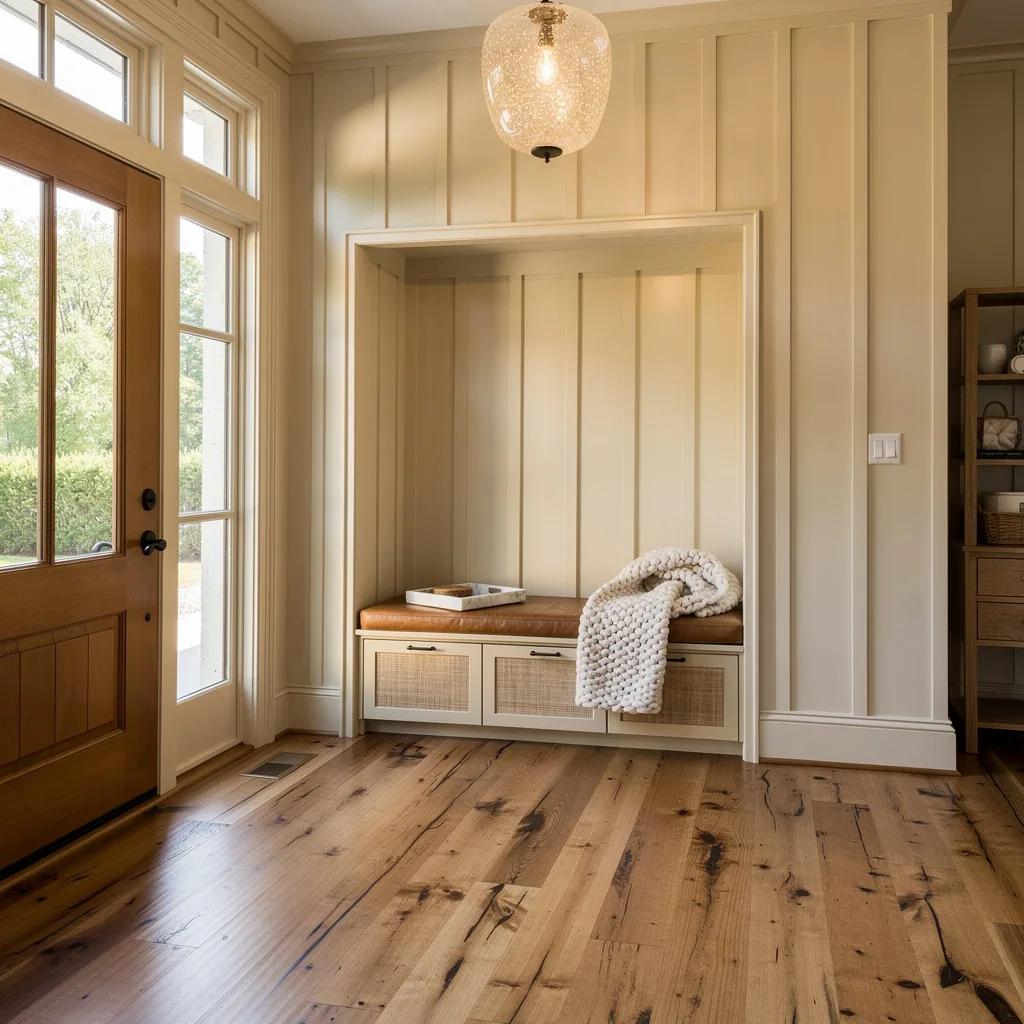
For a chic entry that flexes on your neighbors, start with hand-scraped quarter-sawn maple floors—if you can’t feel the texture, keep searching. Install creamy board-and-batten walls all around for instant height. Carve out a tall alcove for custom cabinetry with woven rattan fronts—keep the saddle tan bench cushion fat and luxe. Let sunlight in with big divided sidelights flanking a craftsman front door. Accessorize with a marble tray (bonus points: raw edge only) and a fat boucle throw. Dangle a hand-blown seeded glass pendant for soft, actual-grownup lighting. Pro tip: Benches must have storage—otherwise, what’s the point?
Refined Mudroom Vibes—Farmhouse Edition
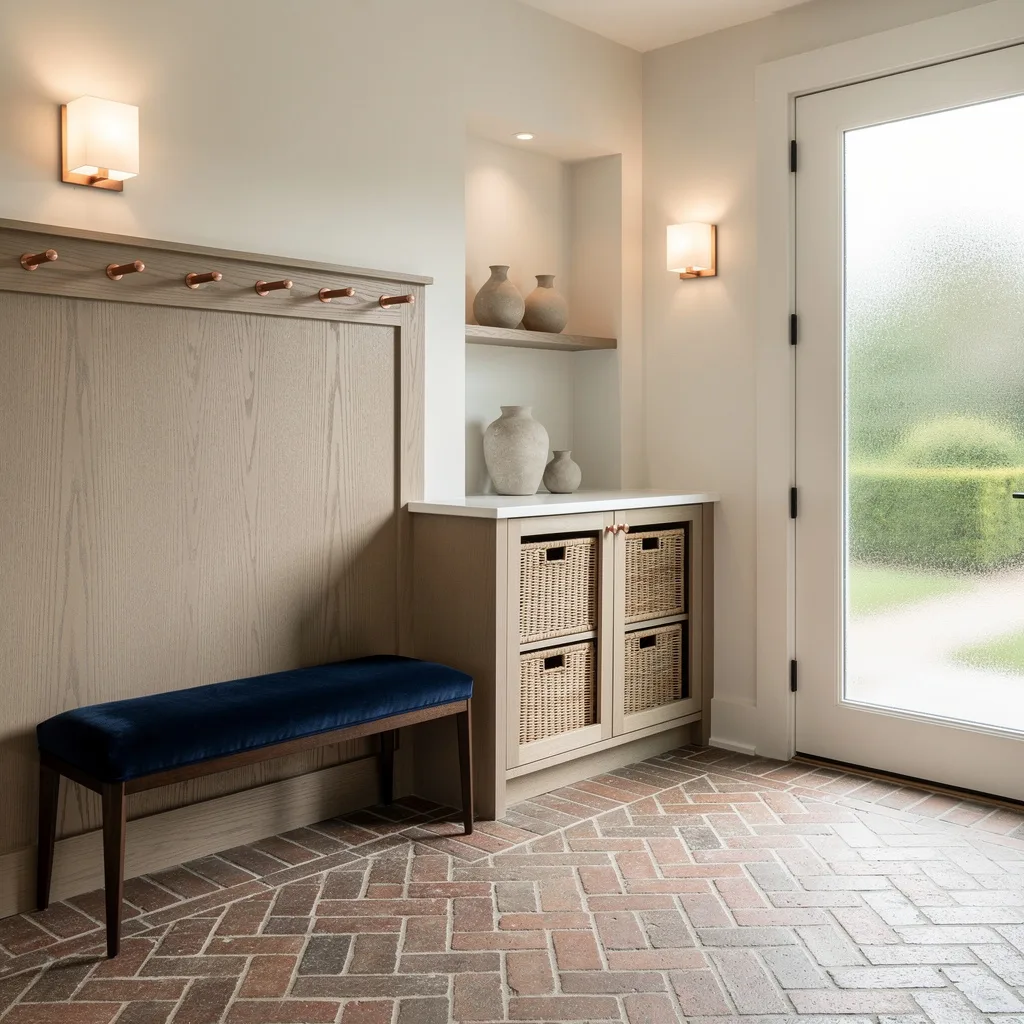
Start with herringbone brick tile flooring—if you don’t want filthy grout lines, seal it properly from day one. Paint the walls soft white, but add a half-wall rift-sawn oak panel so the whole space doesn’t feel bland. Make your bench tailored and slap an indigo velvet cushion down—basic cotton need not apply. Add copper pegs for your gear, but be exact with spacings (nothing says chaos like hooks at random). Build in an architectural niche and fill it with minimal stoneware, then tuck a basket-lined cabinet underneath for ugly stuff. Light the vibe with square frosted sconces and use a frosted glass door to keep things bright. Pro tip: Always line pegs before the bench—not above it, so you can sit without face-planting.
Farmhouse, But Actually Edgy
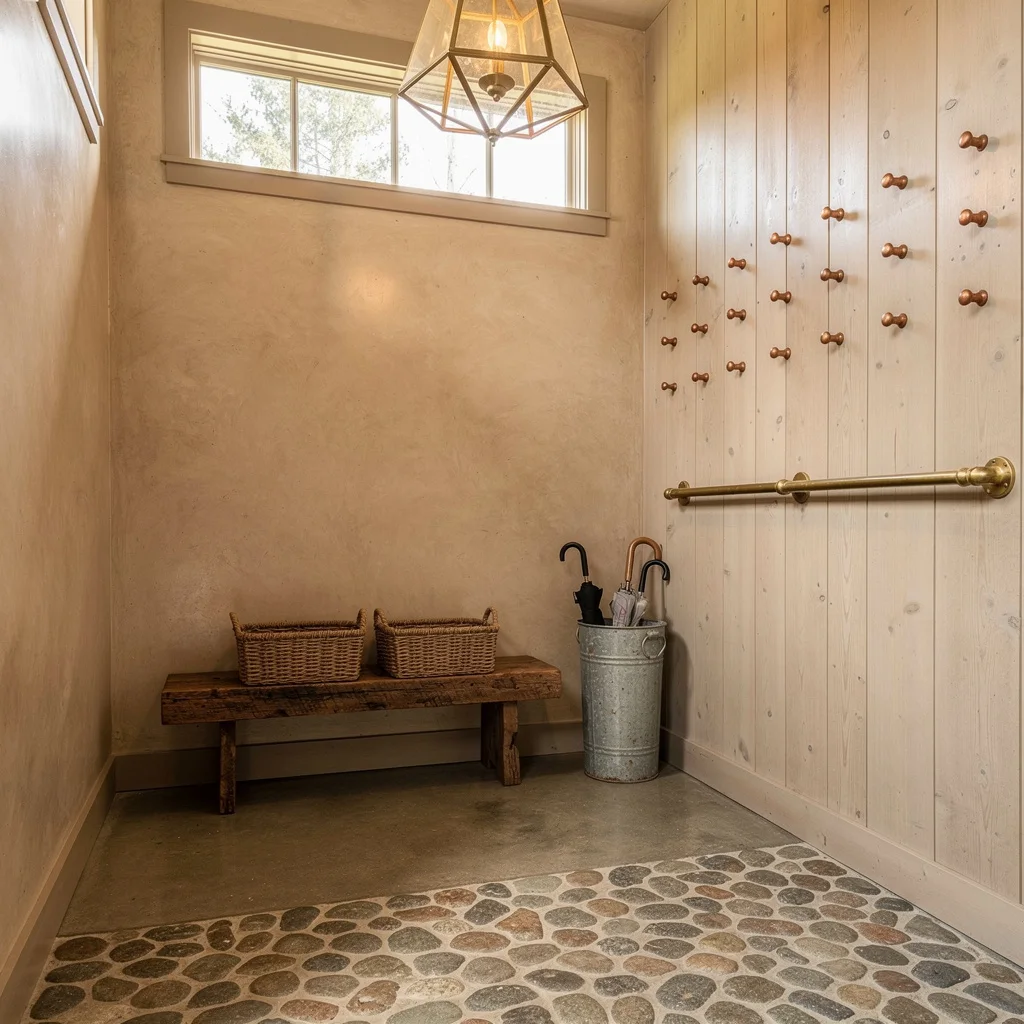
Tired of ‘distressed’ everything? Cram some attitude into the entry with heated concrete floors inlaid with real river stones (nobody will know you have warm feet, they’ll just be impressed). Do sand-toned plaster walls—ditch the drywall texture—and throw up full-height vertical shiplap on one side for tension. Outfit the wall with copper pegs and a show-offy brass rail so your friends know you mean business. Use a reclaimed oak bench—bonus points for more flat, woven baskets—and stick a vintage zinc vessel by the door as your umbrella stand. Drop a geometric glass and bronze pendant overhead. Pro tip: Clerestory windows add drama and daylight—never skip them if you’ve got the wall real estate.
Artisan Mood: Pattern Play for Days
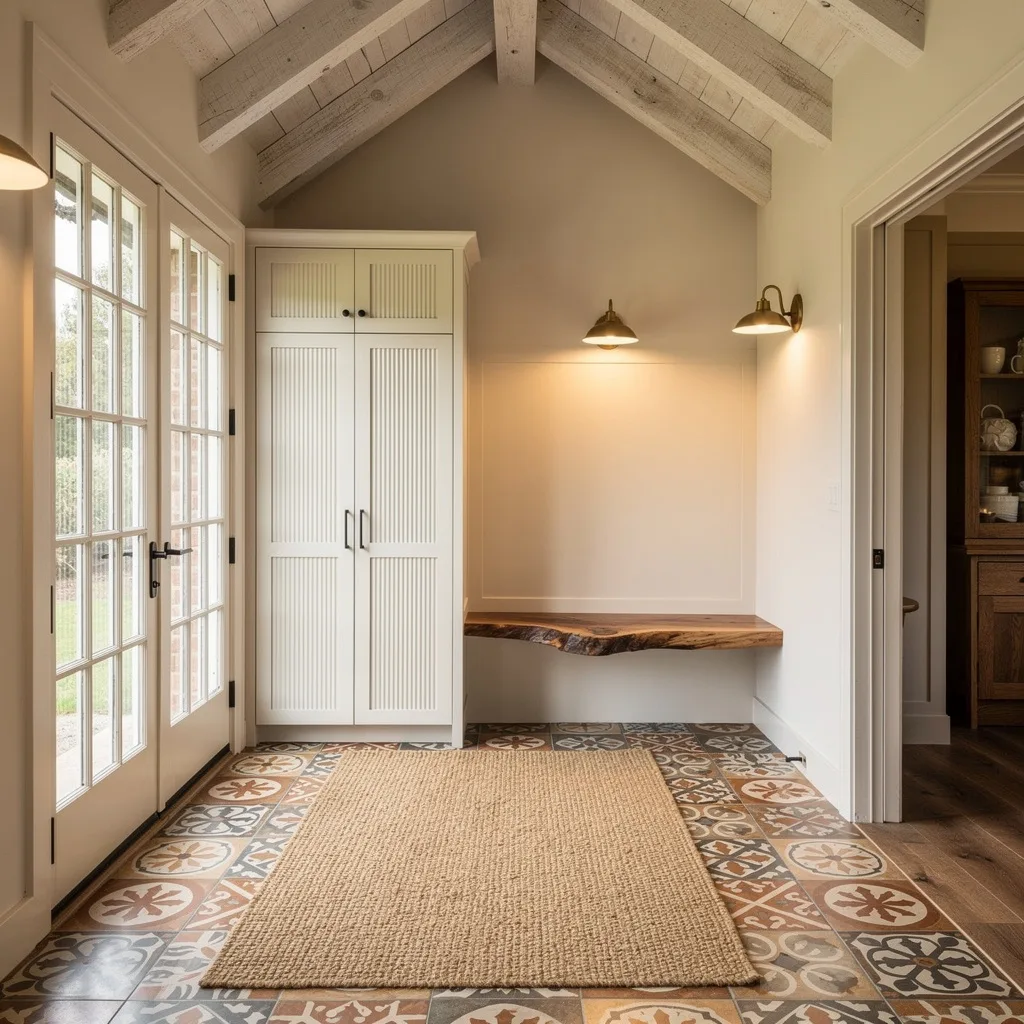
Ready to dunk on cookie-cutter farmhouse? Use encaustic cement tiles in rich earthy patterns for your floors—no cheap printed decals allowed. Run a whitewashed beam across the ceiling, then get a storage cabinet custom made with fluted oak doors and aged bronze hardware. Install narrow, paned sidelights—it’s more architectural and way less ordinary. Float a live-edge walnut shelf for drop zones and mount antique brass picture lights to show off all that texture. Use a handwoven sisal runner to pull the scheme together (bonus: dirt tolerance). Pro tip: Always light your entry with layered, wall-mounted fixtures—overhead alone is for hospitals.
Classic, Minimal, and Maxed Out
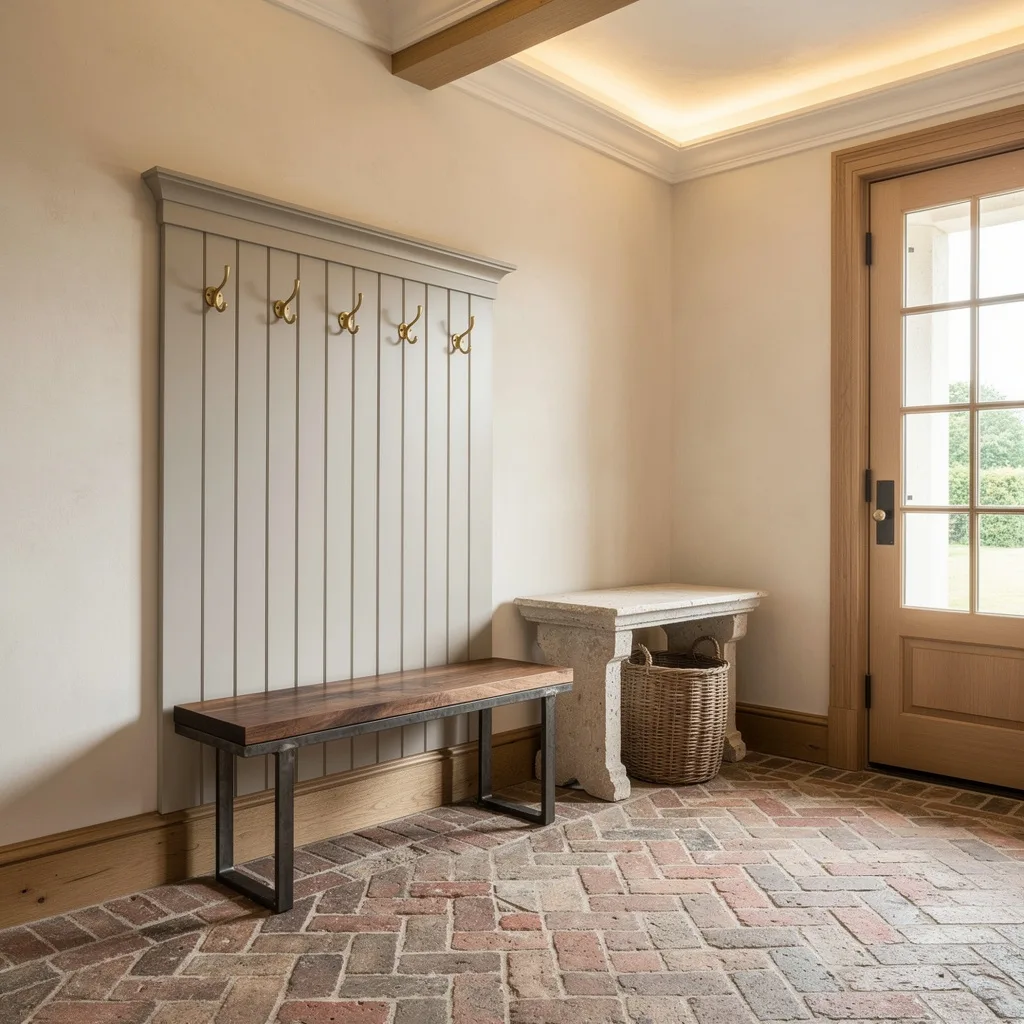
Want entryway swagger? Lay real reclaimed brick in classic running lines; pair with off-white plaster walls and go for chunky natural oak baseboards—wimpy trim is for amateurs. Craft a bench from oxidized steel and walnut so the space says ‘I lift’ but with design. Set up vertical painted millwork behind the bench and stack it with individual brass hooks, spaced like you care about symmetry. Add an antique French limestone console for flex and stash a giant seagrass basket for pets, boots, whatever. Let daylight blast in from a divided-glass door, and use coffered ceiling uplights to fake a sunrise 24/7. Pro tip: For major texture, leave at least three contrasting materials in sight at all times—boring is literally optional.
Final Thoughts
The farmhouse entries that hold up over time—the ones that still look right five years later and don’t require a seasonal overhaul to feel complete—are the ones built on material honesty rather than thematic decoration. They work because someone chose real wood over laminate that looks like wood, real iron over chrome painted to look old, real baskets that hold real things rather than decorative props that hold nothing.
Every trend in farmhouse design comes back to the same question: is this object here because it does something, or because it signals something? The entries that last are the ones where that question was answered correctly—where every hook holds something, every basket contains something, every bench supports someone—and the beauty emerged from the function rather than being applied over it.
Your farmhouse entry doesn’t need more objects, more signs, or more seasonal updates. It needs fewer things chosen better, placed with enough confidence that the space can breathe around them. That’s what the real version of this style has always been about, before it got a TV show and a gift shop.