
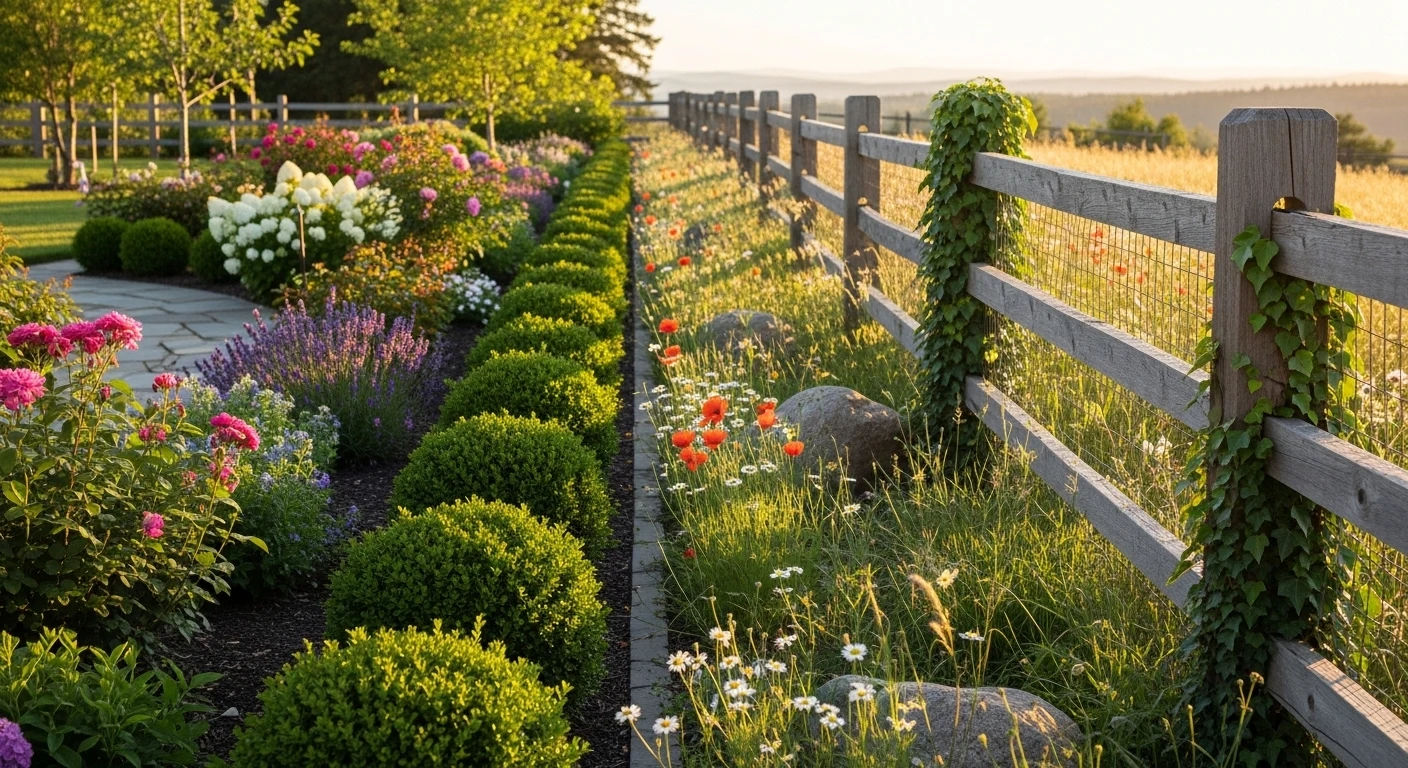
Your fence is the longest uninterrupted design surface in your entire garden and you’ve done absolutely nothing with it. Just raw timber or chain link or concrete panels standing there, doing the bare minimum of keeping things separate while contributing zero personality to the space. You’ve spent hours agonizing over what cushions to put on the patio furniture and meanwhile the entire perimeter of your property looks like a construction site boundary.
Fence line landscaping is one of those things that sounds like a minor detail and turns out to be the thing that completely transforms how a garden feels from the inside. A fence on its own is a boundary. A fence with intentional planting, lighting, and layered materials in front of it becomes a backdrop — and backdrops are what make everything else in a garden look better by comparison. The difference between a garden that photographs beautifully and one that photographs like a crime scene is almost always what’s happening along the edges.
Ideas ahead, five very different approaches, and not a single one of them involves leaving your fence to stand there naked and ignored like you’ve been doing.
Your Fence Line Is Working Against You and You Don’t Even Know It
Garden designers talk constantly about “borrowed landscape” and “visual anchors” and a lot of other terminology that sounds impressive and means one simple thing: your fence line is either an asset or a liability, and most people are sitting on a liability they’ve convinced themselves is neutral.
A Bare Fence Makes Gardens Feel Smaller – Exposed fencing at the perimeter of a garden draws the eye directly to the boundary, which tells your brain exactly how much space you have. Layered planting in front of that fence blurs where the garden ends, which makes the whole space feel significantly larger than it actually measures.
Vertical Space Is the Most Wasted Real Estate in Any Garden – Everyone obsesses over ground-level planting and completely ignores the vertical plane. Climbers, tall structural plants, wall-mounted lighting — these take up zero floor space and add enormous visual height that changes the entire atmosphere of an outdoor space.
Fence Material and Planting Need to Speak the Same Language – Random plants in front of any fence looks like an accident. The right plants chosen specifically to complement the fence material — warm toned timber paired with rich greens, dark metal against bright flowering color — look like a design decision, which is the only acceptable option.
The Lighting Problem Nobody Talks About
Gardens look completely different after dark, and fence lines especially go from interesting design feature to invisible boundary the moment the sun goes down. Most people accept this as an inevitability when it’s actually just a failure of planning.
Uplighting from Below Changes Everything – Ground-mounted uplights aimed at fence panels or planting create shadow drama and depth that no overhead lighting can replicate. The effect at dusk is immediate and genuinely striking, transforming a garden boundary from daytime feature to evening atmosphere.
Wall-Mounted Sconces on Fence Posts Do Double Duty – Practical enough to actually illuminate the space, decorative enough to be a design element in their own right, and positioned at exactly the right height to cast light both upward onto climbing plants and downward onto ground-level planting.
Solar Lights Are Letting You Down – Not because the concept is wrong but because the output is almost always insufficient. If the lighting situation along your fence line can be described as “subtle,” it’s probably just dim. Proper low-voltage LED ground lights cost more upfront and are worth every penny of the difference.
What Separates Good Fence Line Planting From Great
The gardens that actually look designed rather than assembled share a handful of structural principles that have nothing to do with plant knowledge and everything to do with understanding how layering works.
Height Variation Is Non-Negotiable – A flat run of same-height planting along a fence looks like a hedge that gave up. Mixing tall structural specimens — columnar trees, large grasses, statement shrubs — with mid-height flowering plants and low ground-level coverage creates the kind of depth that makes a boundary planting look genuinely considered.
Repetition Creates Rhythm – Planting one of everything looks like a plant nursery. Planting the same specimen repeatedly at intervals creates visual rhythm that moves the eye along the fence line rather than stopping dead at each individual plant.
The Ground Treatment Matters as Much as the Plants – Bare soil between plants is not a neutral choice, it’s a lazy one. River pebbles, crushed granite, bark mulch, groundcover plants — whatever material covers the ground at the base of your fence line planting is doing active design work, and it needs to be chosen deliberately.
Fence Line Landscaping Ideas That’ll Finally Make Your Boundary Look Intentional
Black Horizontal Slats and Fire-Colored Chrysanthemums:
Matte black horizontal slatted fencing is one of the most effective backdrops available to a garden designer, and the reason is simple — it makes every color planted in front of it pop harder than it would against literally any other background. This fence line leans into that principle without any hesitation whatsoever, pairing burnt orange and deep red chrysanthemums in full autumn bloom with sweeping ornamental grasses at the base, the whole arrangement uplighted from below so that at dusk the planting transforms into something that reads more like a light installation than a garden border. The gaps between the slats allow glimpses of the tree canopy beyond, preventing the fence from feeling like a wall while maintaining total visual privacy, and the fallen leaves on the pavement edge only add to an atmosphere that looks like it was styled for a shoot. Ground-mounted warm uplights are doing the heavy lifting here — without them, this is a perfectly nice fence with plants. With them, it’s a garden moment worth actually looking at.
Cedar Slatted Panels, Tall Charcoal Planters, and Pebble Ground Cover:
Side passages between buildings are where garden ambition typically goes to die — too narrow to do anything interesting with, too visible to ignore, and almost universally treated as a storage zone for things that haven’t found a home yet. This one refused that fate entirely. Natural cedar horizontal slat panels run the full length with wall-mounted directional sconces mounted at fence post intervals, casting a warm focused beam that makes the timber grain glow in a way that elevates the whole material significantly. Tall charcoal cylindrical planters — proper height, not the stumpy variety — hold clipped round shrubs that provide structure and year-round greenery, while the ground below is covered in white river pebbles that reflect the ambient light and keep everything looking clean regardless of season. A timber pergola arch at the end of the passage adds architectural punctuation that turns a functional corridor into a destination, which should be the goal of every side passage that isn’t actively being used as a bin store.
Warm Timber Fence, Boulder Border, and Mixed Flowering Planting:
Rich warm-toned horizontal timber planks are a strong backdrop choice, but what makes this fence line genuinely impressive is the decision to abandon conventional edging entirely and use irregular natural boulders as the retaining border for the planting bed instead. The effect is simultaneously more rustic and more sophisticated than any manufactured edging product could achieve, and it gives the whole composition an organic, rooted quality that makes it look like it evolved over years rather than was installed on a weekend. Behind the boulder border, a genuinely thoughtful mix of planting does exactly what layered fence line planting should — columnar conifers providing strong vertical structure, hydrangeas and mid-height shrubs delivering flowering color, and golden-toned ornamental specimens adding contrast against all that green and timber warmth. The mature trees visible beyond the fence bring borrowed landscape into the picture that costs nothing and contributes enormously to the sense of depth and enclosure.
Vertical Timber Slats, Climbing Clematis, and Double-Beam Wall Lighting:
Vertical slat fencing reads completely differently from horizontal — where horizontal panels feel calm and modern, vertical timbers feel bold, structural, and significantly more dramatic, and this installation understands that distinction and runs with it. Warm-toned timber posts of varying visual weight stand in a rhythmic row, and between them climbing clematis and variegated ivy have been trained upward to weave through the gaps in the kind of deliberately casual way that takes actual planning to achieve convincingly. The critical detail here is the double-beam wall sconces mounted at mid-height on alternate posts, each one casting light both upward across the climbing plants and downward along the timber face, creating a wash of warm amber at dusk that turns the whole fence line into something you’d genuinely pay to look at. A low clipped boxwood hedge running the full length at ground level gives the composition a clean base that prevents all that climbing vertical energy from looking rootless, and the overall effect is a boundary that feels less like a fence and more like a feature wall that happens to live outside.
Arborvitae Columns and White Hydrangeas:
Sometimes the most sophisticated fence line choice is deciding not to install a fence at all and growing one instead — which is a concept that sounds obvious once you’ve seen it executed this well and baffling every time you look at a bare chain link boundary. A tightly spaced row of columnar arborvitae — the tall, narrow, deeply green variety that clips itself into perfect vertical forms without much intervention — creates a living privacy screen of considerable height and absolute year-round presence, the kind of green wall that makes a garden feel genuinely enclosed without feeling trapped. The design intelligence here is the decision to plant a continuous run of white hydrangeas along the entire base, creating a low flowering border that runs the full length of the living fence like a hem on a garment — the hydrangeas are bright enough to contrast dramatically against the deep green columns without competing for visual dominance, and the effect of that white against that green, particularly under dappled tree canopy light, is quietly spectacular in a way that no manufactured fence could replicate.
Go Moody with Charred Black Slats and Corten Drama
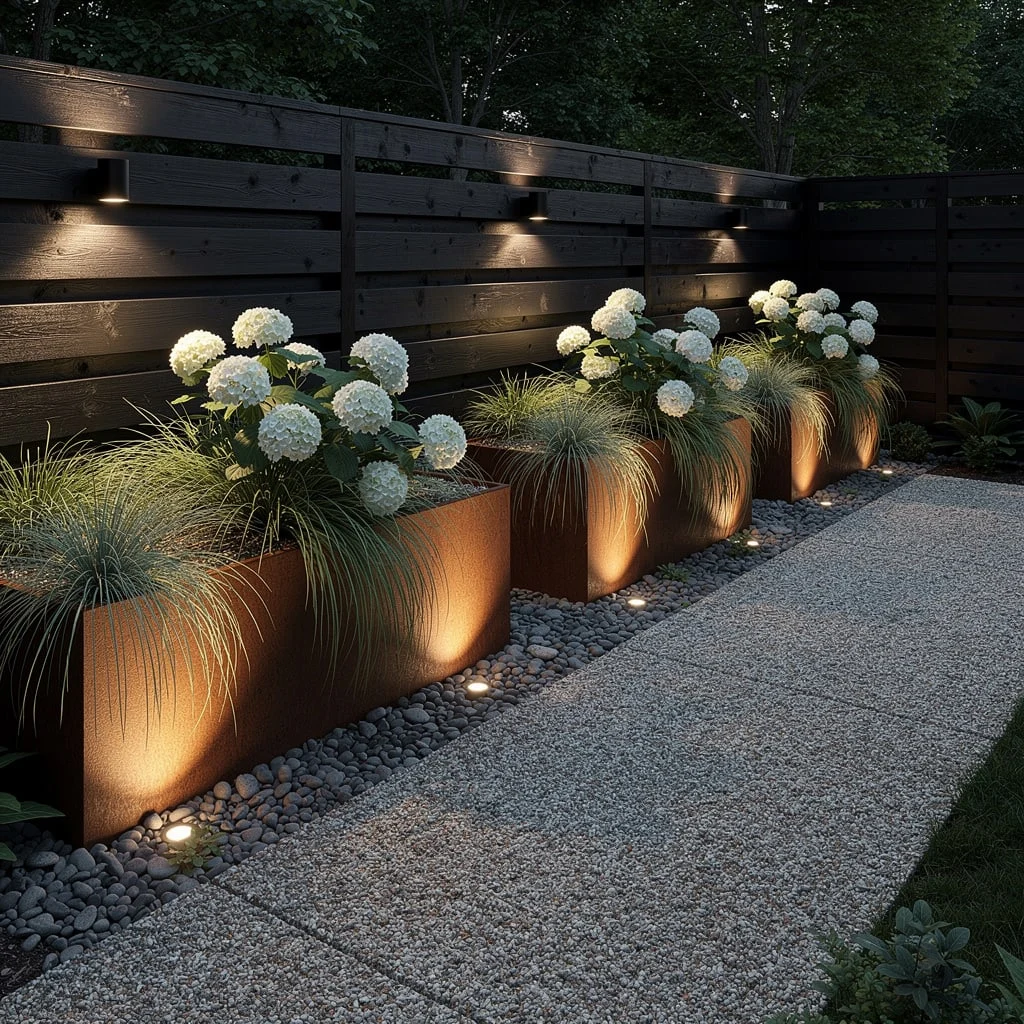
Want your backyard to scream sophistication instead of ‘forgot to mow’? Start with horizontal slat fencing in charred timber for instant moody vibes—black, because you’re not afraid of commitment. Next, stagger corten steel raised planters like you’re building an art gallery, not a veggie patch. Stuff them with structured ornamental grasses and bright white hydrangeas because contrast sells. Get crushed granite for pathways, not that sad mulch, and slap uplighting at planter bases for night-time shadow drama. Toss river stones in for crisp contrast, and never let your lighting be anything but dramatic. Rule: Don’t cheap out on planter heights. Stagger or bust.
Living Wall Flex: Ferns, Ivy, and Slate Swag
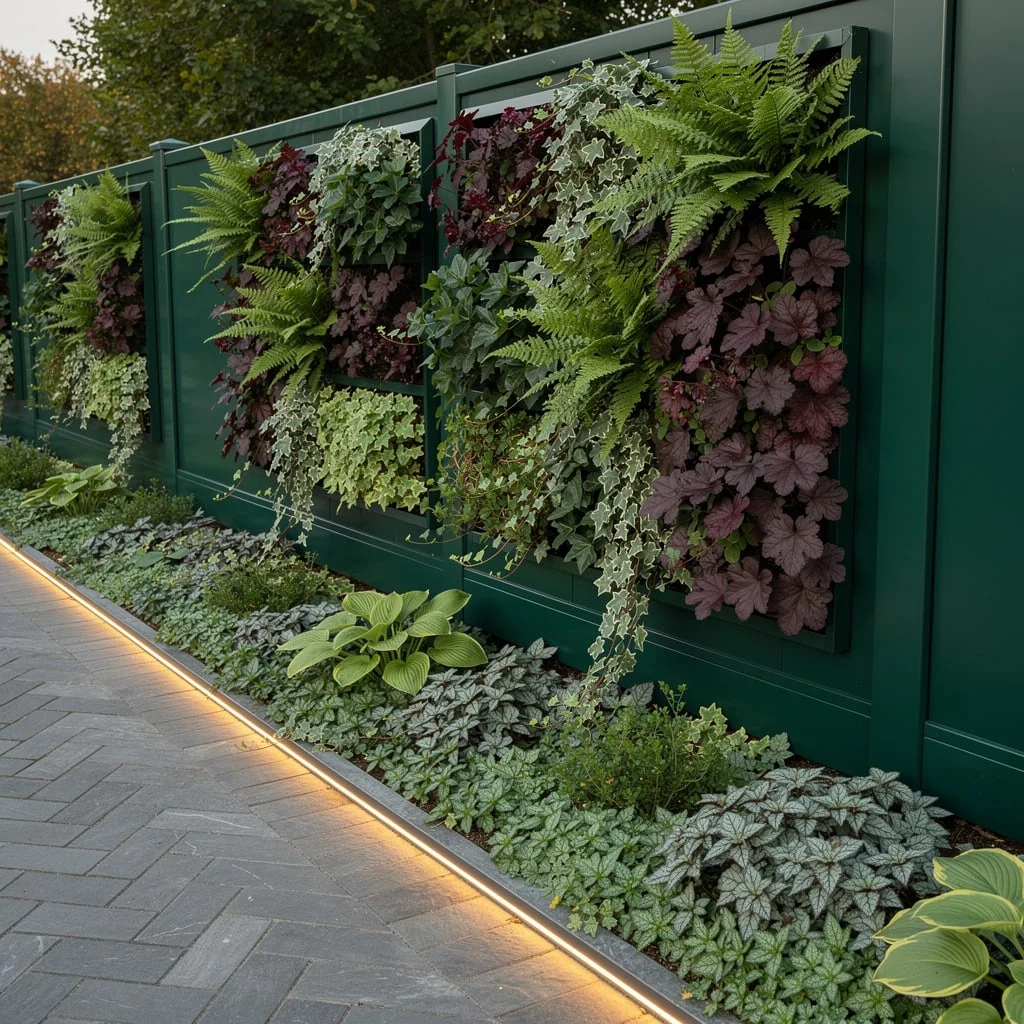
Think vertical! Skip the boring ground plants and layer a living wall on a deep forest green aluminum fence. Block your ferns, ivy, and burgundy heuchera to create a tapestry that slaps, then run a herringbone path in proper hand-cut slate for that extra touch of ‘I didn’t DIY this.’ Edge that path with in-ground LED strips, so even at night your foliage textures are working overtime. Lamium and hostas beneath? Yes, please. Pro move: Always cluster LEDs so the whole wall glows—don’t rely on puny solar lights. Go lush or go home.
Seriously Chill: Limestone, Glass, and Spa Bamboo
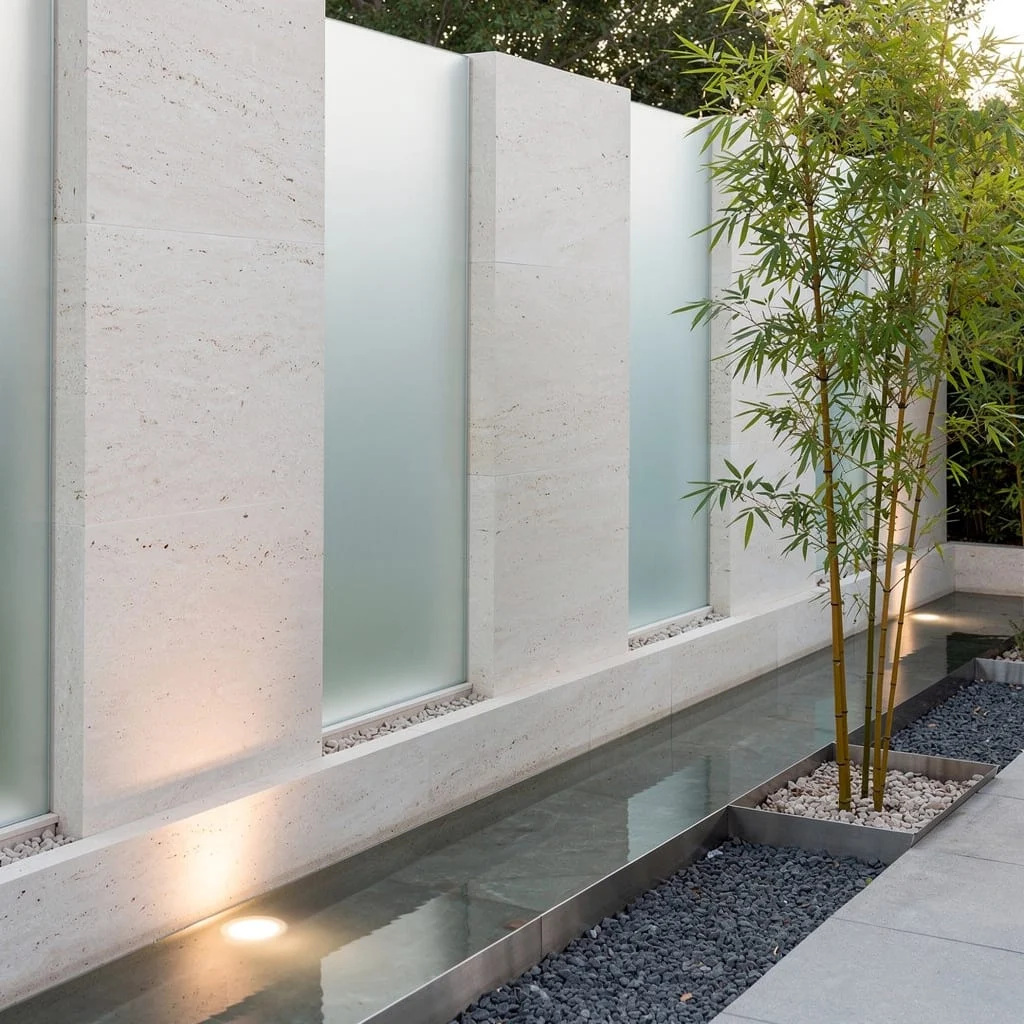
If you want calm, try pale limestone fence panels alternating with frosted glass for a vibe that’s modern and actually relaxing—like your own spa, minus the cucumber water. Run a linear water feature parallel to the fence, using matching limestone so it looks intentional, not accidental. Plant graceful bamboo clumps in gravel beds, bordered with stainless steel; no fake greenery allowed. Conceal ambient lighting at the water base, because everyone loves a soft glow. Styling rule to live by: Strategically position bamboo to create movement, but keep the clutter out—overcrowding is rookie.
Get Rugged: Reclaimed Barn Wood, Gabion Beds, and Prairie Power
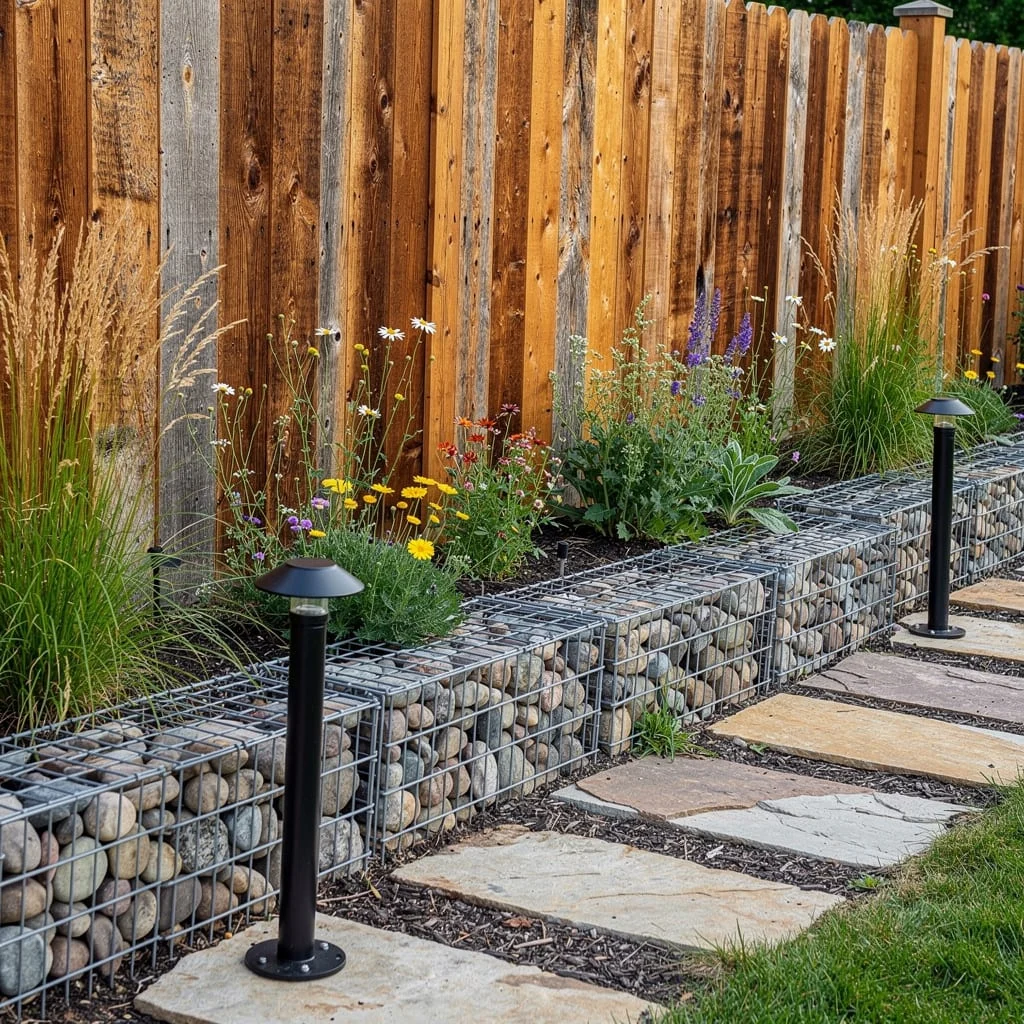
Raw and rustic? Hit up vertical barn wood planks—reclaimed, naturally—showing all that weathered texture so your fence has actual character. Gabion cages stuffed with river stones double as raised beds, basically creating instant industrial cool. Drop native wildflowers and tall prairie grasses in those beds, don’t overthink color. Scatter black bollard lights for mood lighting and safety, but make sure they aren’t awkwardly spaced. Use natural stone stepping pads to connect zones, and never let anyone convince you rugged has to look messy—keep those lines clean and materials real. Pro tip: Always layer wildflowers tall in back, short in front.
Go Gallery: White Masonry, Junipers, and Lantern Glow
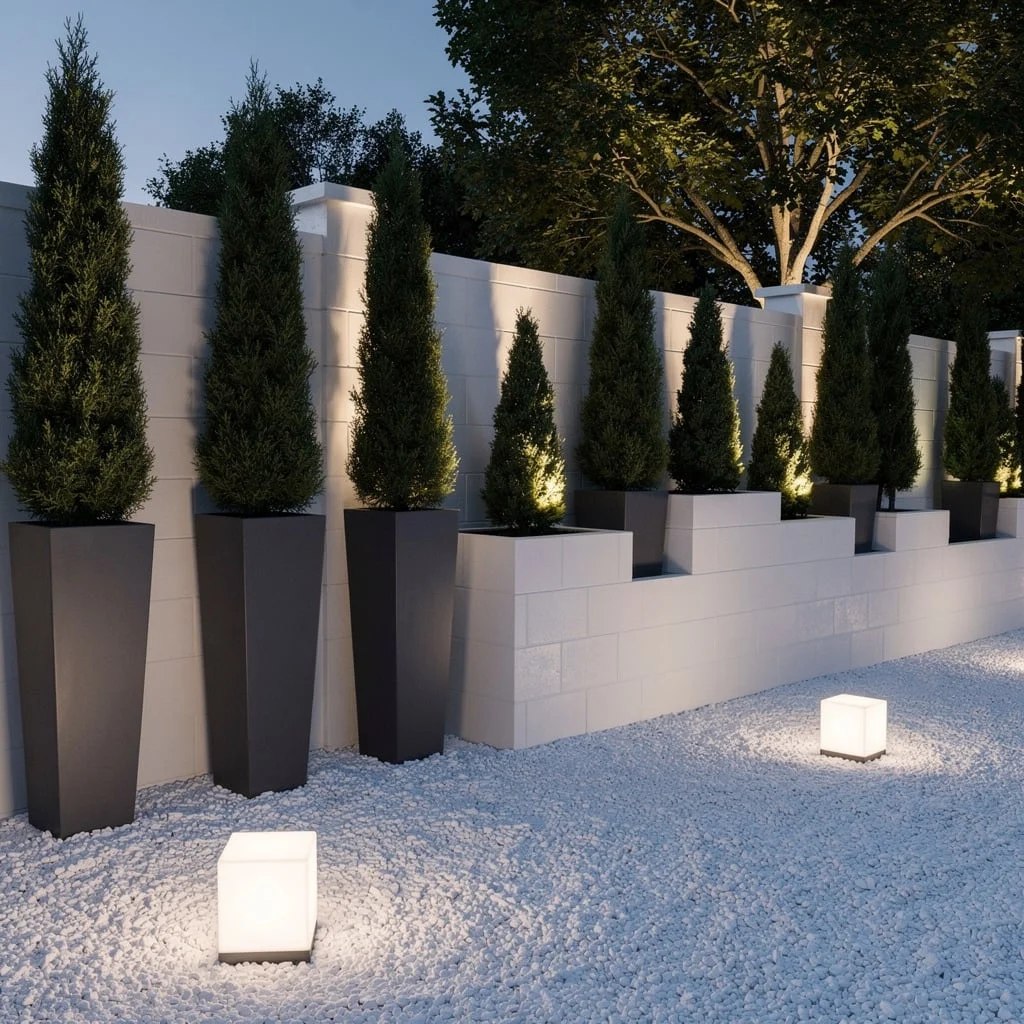
Ready for some visual rhythm? Stack matte white masonry blocks at different heights along your property boundary for an instant skyline effect—boring is banned. Opt for tall charcoal concrete planters between blocks, stuffed with columnar junipers to seriously elongate the vibe. Cover the ground in polished white gravel to keep things crisp—no mulch disasters. Cube-shaped lanterns should be inset and pointed up for twilight magic, and always uplight your trees to nail those artsy shadows. Don’t break the gallery mood with random garden gnomes—trust structure for sophistication.
Cable Railing and Boxwood: Transparent Chic
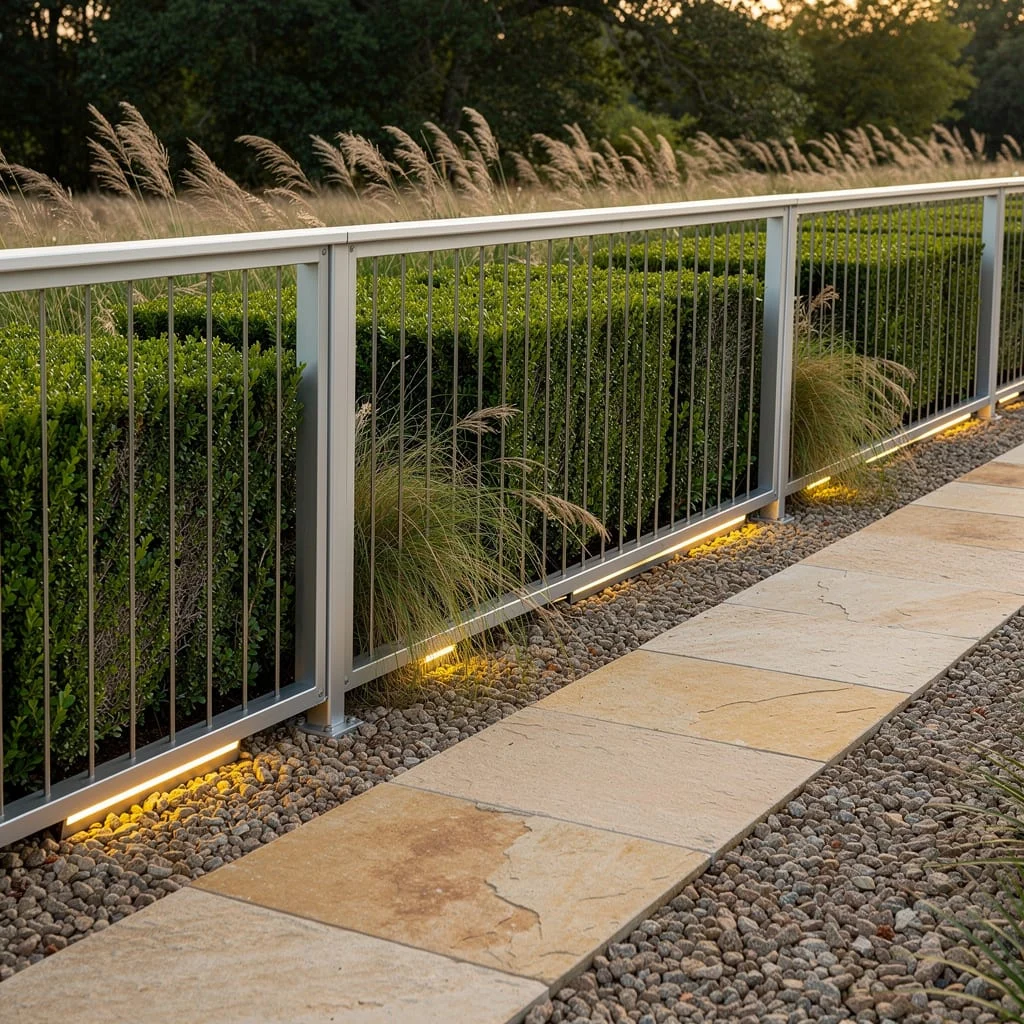
Mix vertical cable railing sections with sculpted boxwood hedges for that transparent, modern look people pay too much for. Frame the cable panels in silver powder-coated aluminum; plastic is a crime. Weave Mexican feather grass between hedges, so your landscape catches the breeze without looking scraggly. Buff sandstone pavers sitting atop fractured pea gravel give the path some real texture. Conceal strip lighting at the base of every aluminum panel to show off your greenery and metal—not your neighbor’s eyesore shed. Rule: Never let cable rails sag—keep them tight for maximum flex.
Glam Up: Eucalyptus, Bronze Screens, and Lava Rock Swag
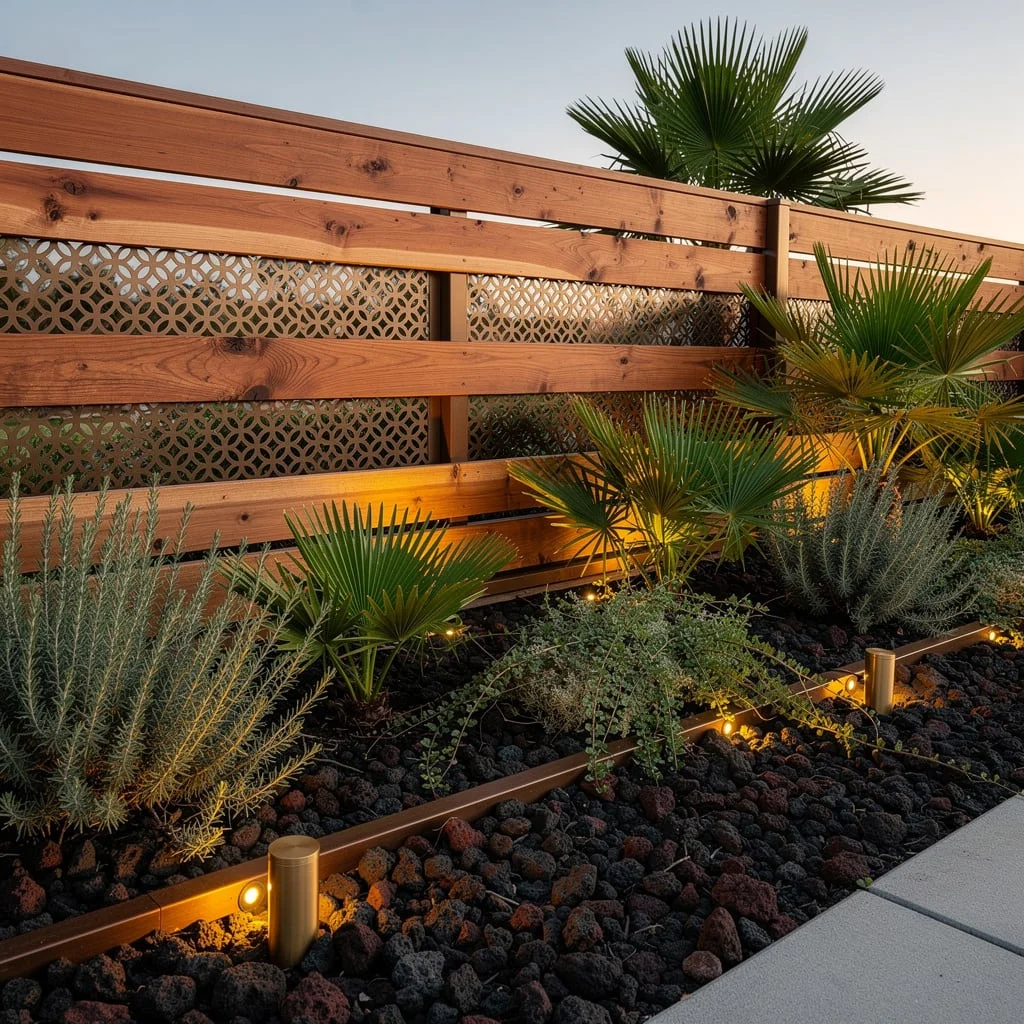
Privacy fence looking tired? Layer eucalyptus timber slats horizontally, then drop in patterned laser-cut bronze aluminum screens for actual visual intrigue. Plant Mediterranean fan palms, silver sage, and trailing rosemary in staggered rows for bold foliage, and backfill with dark lava rock mulch for punchy texture. Line the path with embedded brass deck lights, so your fence patterns and plants are living their best lives at dusk. Styling commandment: Bronze screen designs must be eye-catching—don’t settle for granny lace patterns. Keep foliage spaced and bold.
Concrete Meets Metal: Editorial Luxury Fencing
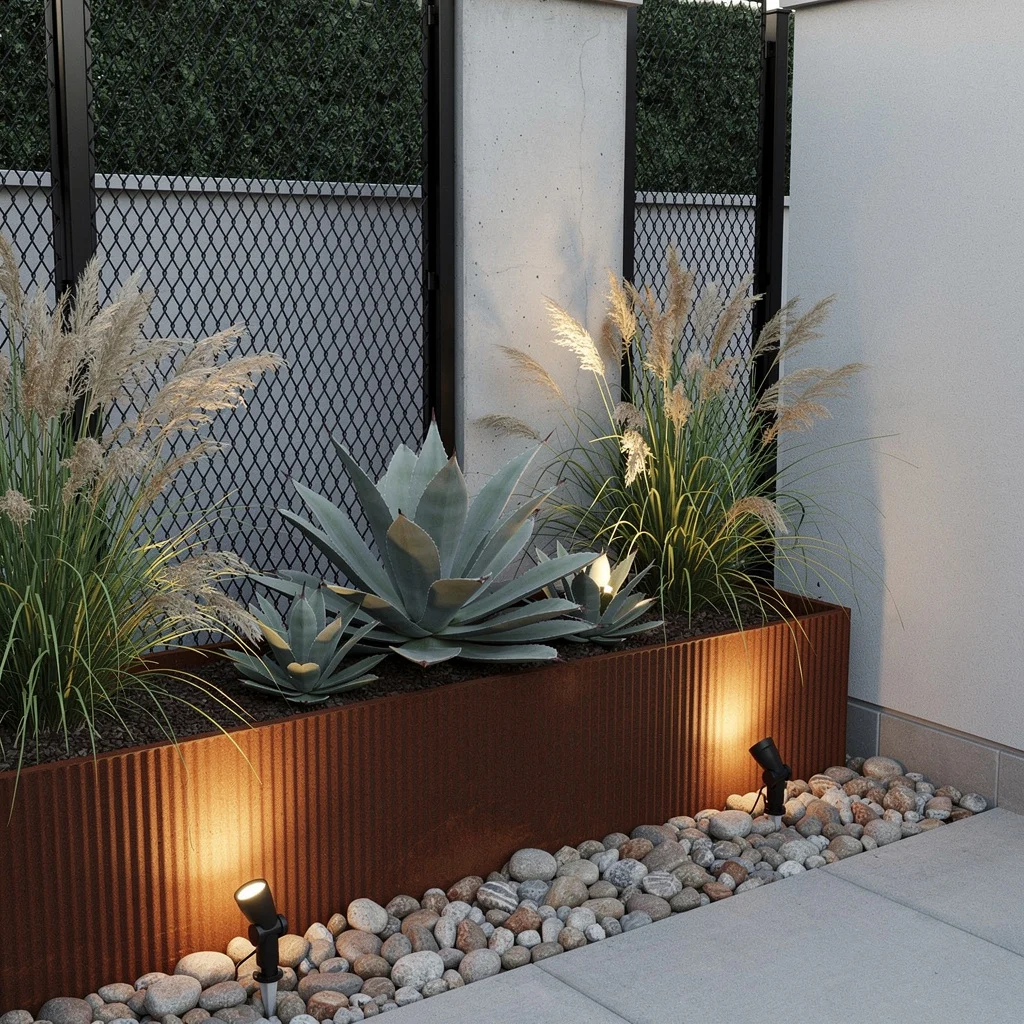
Time to ditch cramped vibes—render smooth light-grey concrete panels and alternate with black powder-coated steel mesh sections for instant editorial cred. Place ribbed corten steel trough planters along the fence stuffed with sculptural agaves and reed grasses that mean business. Lay down polished river stones as ground cover—not loose, not messy. Use adjustable spike spotlights only for key plants and fence textures—never let your lighting get random or weak. Styling rule: Space planters evenly and don’t crowd the agaves—each plant is a statement, not filler.
Curves Only: Graphite Panels, Weathersteel Beds, and Granitic Flow
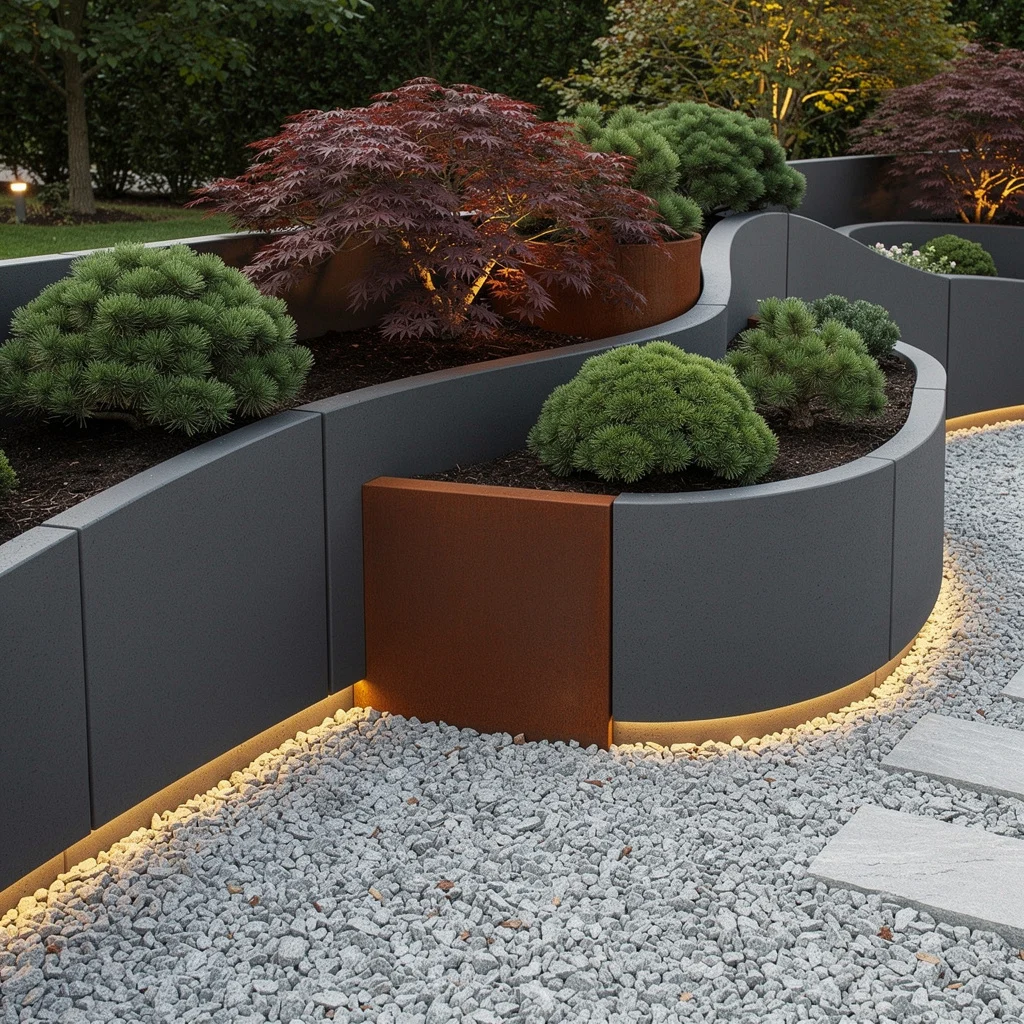
Stop thinking fence lines have to be straight. Install matte graphite fiber cement panels in a gentle wave for organic flow, not awkward zigzags. Project oxidized weathersteel raised beds at select curves—stuff with mounded dwarf globe pines and Japanese maples to create standout focal points. Go for light granite chippings on the ground, and slice in stepping stones so nobody has to tiptoe. Warm LED ground washers tucked under curves are non-negotiable for subtle illumination. Rule: Never force symmetry with your raised beds. Embrace the curves and let your plants play.
Art House: Travertine, Glass, and Sculpture Planting
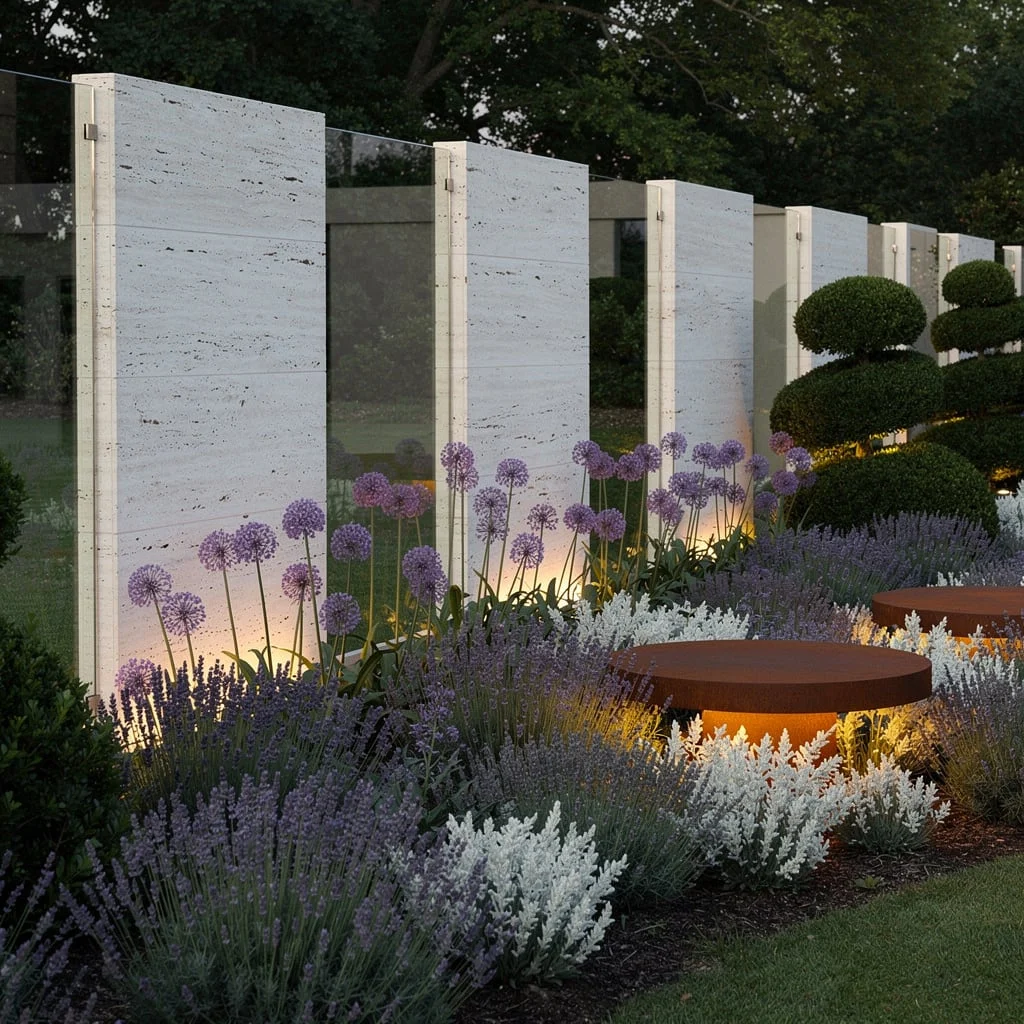
Break out of fence boredom with tall panels—alternate white travertine and clear glass for an architectural win. In front, plant drift waves of lavender, alliums, and white salvia to get that painterly effect, then scatter floating corten steel platforms as accent sculptures. Back it all with sculpted juniper topiaries for real structure. Install discreet recessed footlights along panel bases for night glow—no floodlights, just elegance. Pro tip: Plant lavender in thick drifts, not single stalks. Group sculptures so they surprise, not clutter.
Boulders and Black Slats: Luxurious Organic Fusion
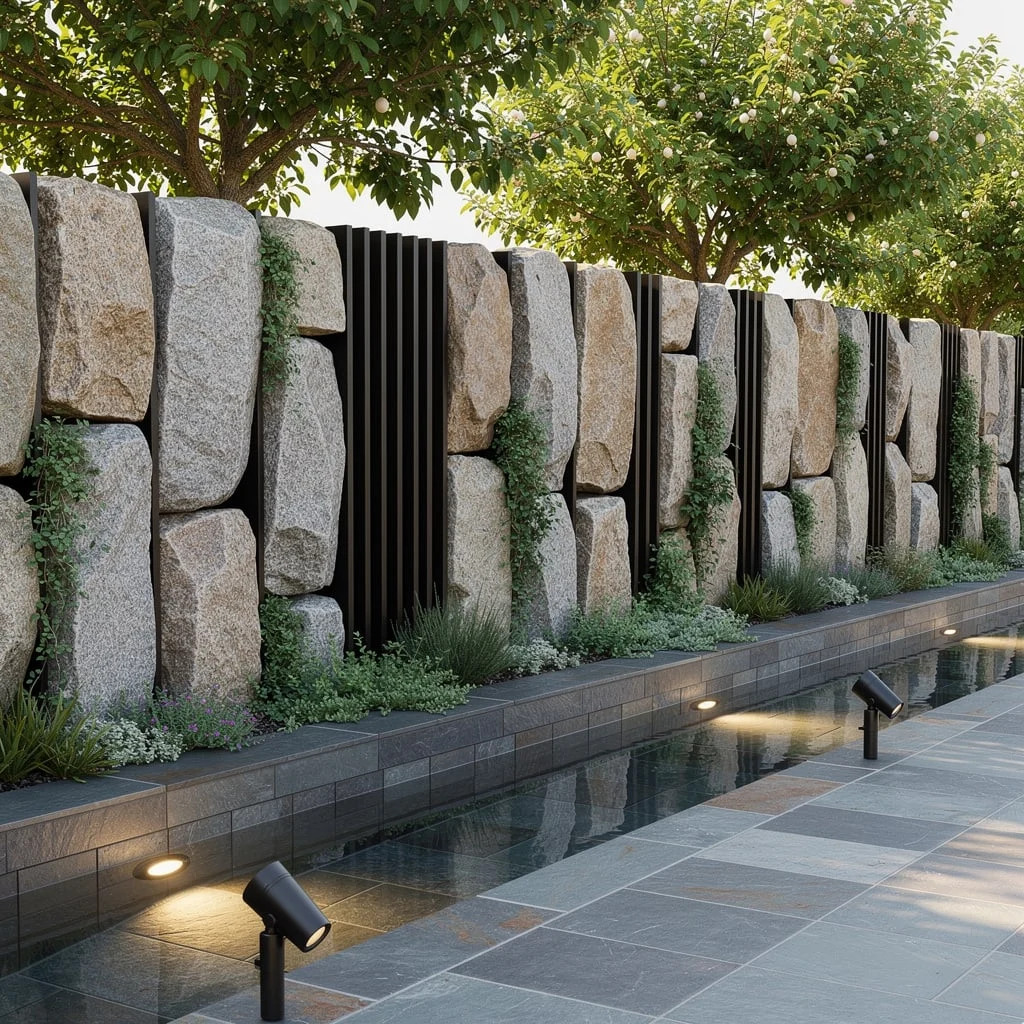
Why settle for a fence when you can build tactile drama with split-face granite boulders in staggered rows? Drop in vertical powder-coated black slat inserts for depth and don’t let anyone call it ‘busy’—it’s sculptural, not random. Trail groundcovers through the rock gaps so the composition feels organic but intentional. Plant mature dwarf ornamental pears overhead for cool, dappled shade. Run shallow reflecting pools parallel to the fence, lined with slate tiles, and add spot uplights to splash shadows and highlight stone texture. Rule: Never crowd your boulders—let each one stand out.
Final Thoughts
The perimeter of a garden is the canvas that everything inside it sits against, and treating it as an afterthought is the fastest way to make every other design decision you’ve made look worse than it actually is. Good planting, the right lighting, materials chosen specifically to work with the fence surface rather than just installed in front of it by default — these are the things that take a boundary from a legal necessity to a genuine design asset.
None of the fence lines above happened by accident, and none of them required an enormous budget. They required someone deciding that the edges of the garden mattered as much as the center, which turns out to be the only decision you actually need to make. Everything else follows from there.