
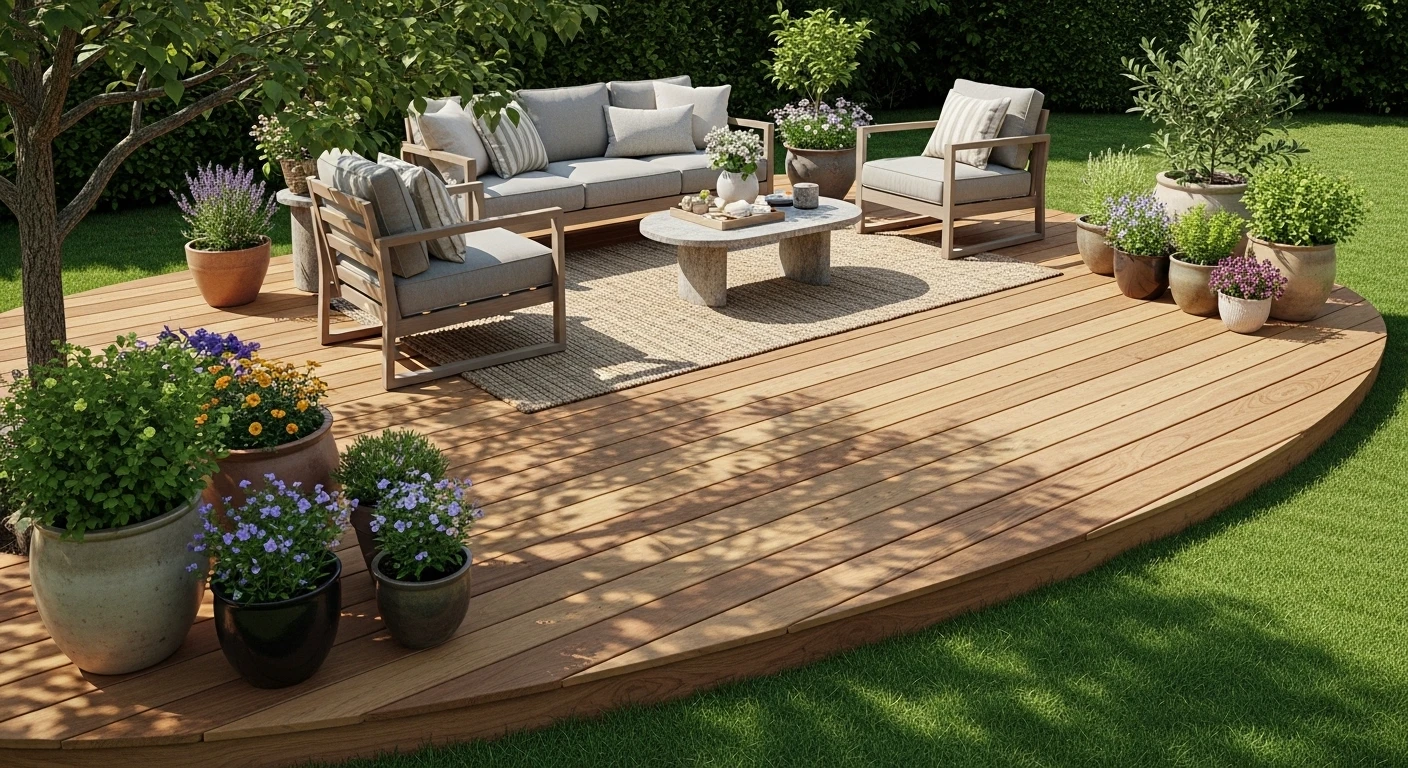
That sad stretch of patchy grass and forgotten lawn furniture you’ve been calling a “backyard” has gone on long enough. Every summer you tell yourself you’ll do something about it, and every summer you end up sitting on a camping chair next to a dying potted plant wondering why your outdoor space feels like a waiting area for somewhere better. It doesn’t have to be this way, and frankly, at this point it’s an embarrassment.
Ground level decks are one of those ideas that sound deceptively simple — boards, ground, done — but executed well, they completely redefine how a backyard functions and feels. No complicated structural engineering, no building permits for a second-story situation, no drama. Just a well-planned platform that turns unused lawn into somewhere you’ll actually want to spend time, which for most people is a revolutionary concept.
The ideas ahead run the full spectrum from clean and unfussy to genuinely jaw-dropping, and every single one of them started as an ordinary backyard that someone decided to stop ignoring.
Your Backyard Is a Design Space, Not a Storage Unit
Before the lumber talk begins, let’s address the fundamental mindset problem that produces sad backyards in the first place. Most homeowners treat their outdoor space as whatever’s left over after the house is done. That approach is how you end up with ten years of a mildew-covered patio umbrella and no actual plan.
The Ground Is Your Canvas – A ground level deck doesn’t fight your landscape, it defines it. Decide where the deck goes based on how the sun moves through your yard, where you want to sit in the evening, and what you want to look at — not just where it’s most convenient to build.
Edging Is Everything – The difference between a deck that looks designed and one that looks dumped into the yard is almost always the border treatment. White gravel, black rock, planting beds, or stone pavers — pick one and make it intentional, because raw soil around bare deck boards is the outdoor equivalent of unfinished baseboards.
Furniture Makes or Breaks It – A beautiful deck with bad furniture still looks bad. You don’t need to spend a fortune, but you do need to think about scale, weight, and whether your seating arrangement actually invites people to sit and stay rather than just exist awkwardly near each other.
The Deck Decisions Nobody Warns You About
Wood selection alone will occupy three separate internet rabbit holes and two arguments with whoever you live with. Save yourself some time and know what actually matters before you start.
Composite vs. Natural Wood – Composite lasts longer, needs less maintenance, and comes in colors that don’t gray out into something depressing after two seasons. Natural wood looks richer and warmer but will absolutely require your attention on a regular basis. Neither answer is wrong — but pretending you’ll maintain natural wood when you’ve had the same dead lightbulb for six months is a lie you don’t need to tell yourself.
Plank Direction Changes Everything – Running boards parallel to the house makes spaces feel wider. Diagonal patterns add movement and make a simple rectangle feel considered. Perpendicular to the house draws the eye out into the garden. This one decision costs nothing extra and completely changes how the finished deck reads.
Lighting Is Not Optional – A deck that looks gorgeous at 2pm and completely dead at 8pm is only doing half its job. Solar path lights are fine as a starting point, but in-ground LEDs, string lights, and lanterns layered together are what separates a deck from an outdoor room.
Why Ground Level Beats Every Other Deck Type
Raised decks have their place, but ground level builds have a specific magic that elevated platforms simply cannot replicate — and more people should be choosing them deliberately rather than by default.
They Connect to the Garden – Sitting just inches above the ground puts you in the landscape rather than above it, which completely changes the atmosphere. You’re not overlooking the yard; you’re part of it, and that distinction matters more than it sounds.
The Visual Weight Is Right – Ground level decks photograph beautifully because they have proportional relationship to everything around them. A raised deck can look clunky and dominating; a low platform looks intentional and grounded, like it grew there.
Anyone Can Build One – This is not a project that requires a contractor, a structural engineer, or a second mortgage. With the right materials and a reasonable weekend commitment, a ground level deck is genuinely achievable — which means the only thing standing between you and a better backyard is the decision to actually start.
Ground Level Deck Ideas That’ll Finally Make Your Backyard Worth Going Outside
The Floating Island:
First time building a deck
by u/OkQuantity1854 in Decks
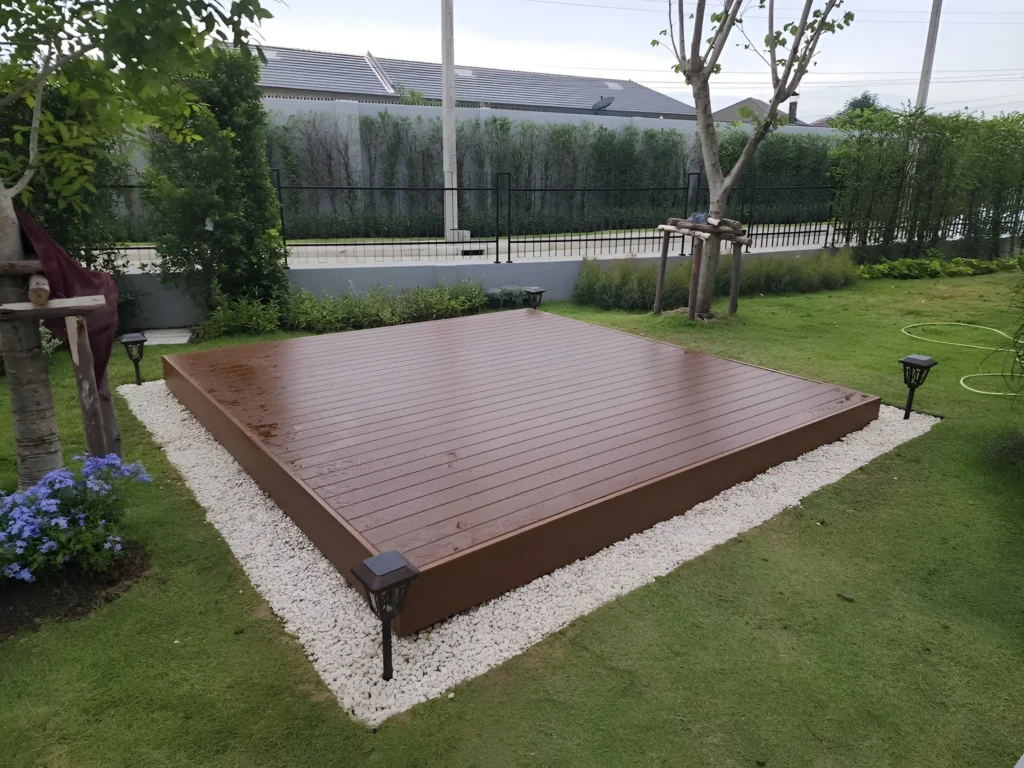
Credit where it’s due — this deck committed to a concept and didn’t blink. A clean square of warm composite boards sits perfectly level with the surrounding lawn, bordered on all four sides by a crisp frame of white pebble gravel that separates wood from grass with a precision that feels almost architectural. There’s no furniture, no shade structure, nothing competing for attention — just the platform itself doing its job as the yard’s focal point, with small solar stake lights at each corner providing the subtlest possible evening presence. It works precisely because nothing about it hedges — the deck is the statement, the white gravel border is the frame, and the surrounding lawn and mature greenery provide all the backdrop it needs. Not everyone has the restraint to build something this minimal and trust it, but when it’s done right, it looks like you spent ten times more than you actually did.
String Lights and Sectionals:
This is what it looks like when someone actually sat down and planned for how they wanted to live outside rather than just where to put the barbecue. Warm hardwood planks with a wide step detail drop seamlessly toward the lawn, and a full outdoor sectional in charcoal wicker anchors the space like a proper living room — throw pillows, coffee table, the whole setup. The horizontal slatted fence running the back perimeter is painted dark grey and hung with string lights that weave into the surrounding ivy, creating a backdrop that makes the whole space glow after sunset in a way that feels genuinely atmospheric rather than just functional. Floor lanterns at the deck’s edge and uplighting in the garden beds complete the layered lighting situation that is, without question, why this deck looks like a magazine shoot and not just an upgraded patio. The lesson is that furniture arrangement and lighting investment do more for a deck than almost anything structural.
Egg Chairs and Boxwood Balls:
Someone looked at their backyard, decided they wanted it to feel like a boutique hotel courtyard, and then actually made that happen — which deserves respect. The natural pine deck sits low and flush, bordered by a tidy integrated planting frame packed with clipped boxwood spheres that line the perimeter like a living trim detail. Three rattan egg chairs arranged around a simple black side table do the furniture work without cluttering the space, and a jute rug underneath grounds the seating arrangement and makes it feel like an indoor room that just happens to be outside. Behind everything, a dense green hedge wall provides the kind of lush, enveloping backdrop that makes the deck feel like its own private world rather than just a platform in a suburban backyard. The symmetry and restraint here are doing enormous amounts of heavy lifting — this is proof that editing your choices aggressively produces better results than filling every available inch.
The Tree Hugger:
Building around an existing tree instead of despite it is the kind of design intelligence that makes landscape architects happy and everyone else slightly jealous. This L-shaped deck wraps around a mature tree with a cutout that frames the trunk like a living sculpture, running a stepped platform in warm cedar tones that connects a lower front section to a raised back portion where a long daybed lounger sits in the shade like it owns the place. The horizontal cedar slatted fence along the back wall ties the whole material palette together and provides privacy without walling off the space, while the perimeter planting beds filled with shade-tolerant ground cover soften every edge where deck meets garden. The layout works because it follows the logic of the yard rather than imposing a rigid shape onto it — the tree dictated the form, and the form ended up being better for it than a standard rectangle ever would have been.
White Rail and Warm Wood:
Tucked under a mature shade tree with autumn light doing half the decorating work, this corner deck absolutely nails the brief of looking like it cost significantly more than it did. The warm stained wood planks are standard enough, but the white spindle railing wrapping two sides of the L-shaped platform elevates the whole thing from utilitarian platform to proper outdoor room — and that railing detail is what most budget deck builds skip, to their detriment. An L-shaped sectional fits the corner perfectly, accessorized with mustard yellow and ivory pillows that pick up the warm tones in the wood, while a squat round coffee table and a single floor lantern complete the arrangement without overloading it. Potted mums in burnt orange and red tucked along the fence line bring seasonal color that ties back to the cushion palette in a way that feels deliberate and polished. The whole setup suggests that someone actually thought about this as a room with a decorating scheme rather than just a structure with some chairs on it.
Before and After:
The before image is almost physically painful — a weathered, grey, collapsing deck with weeds growing through the boards, a rusting grill in the corner, and the general atmosphere of a space that gave up on itself around 2009. The after is a completely different reality: a multi-level composite deck in warm terracotta tones extends across the full back of the house, with a lower platform section stepping down to the lawn via built-in lit steps, a covered pergola section near the house for shade, and planting beds bursting with hydrangeas and layered greenery that turn the entire back fence line into a proper garden backdrop. Wicker seating and a dining area share the space without crowding it, and the step lighting adds that evening-hour polish that makes the whole yard look intentional and considered rather than just renovated. The transformation isn’t subtle — it’s the kind of before-and-after that makes people feel personally attacked about their own backyard, which is exactly the energy you want from a deck project.
Mahogany Magic: Minimalism Meets Moody
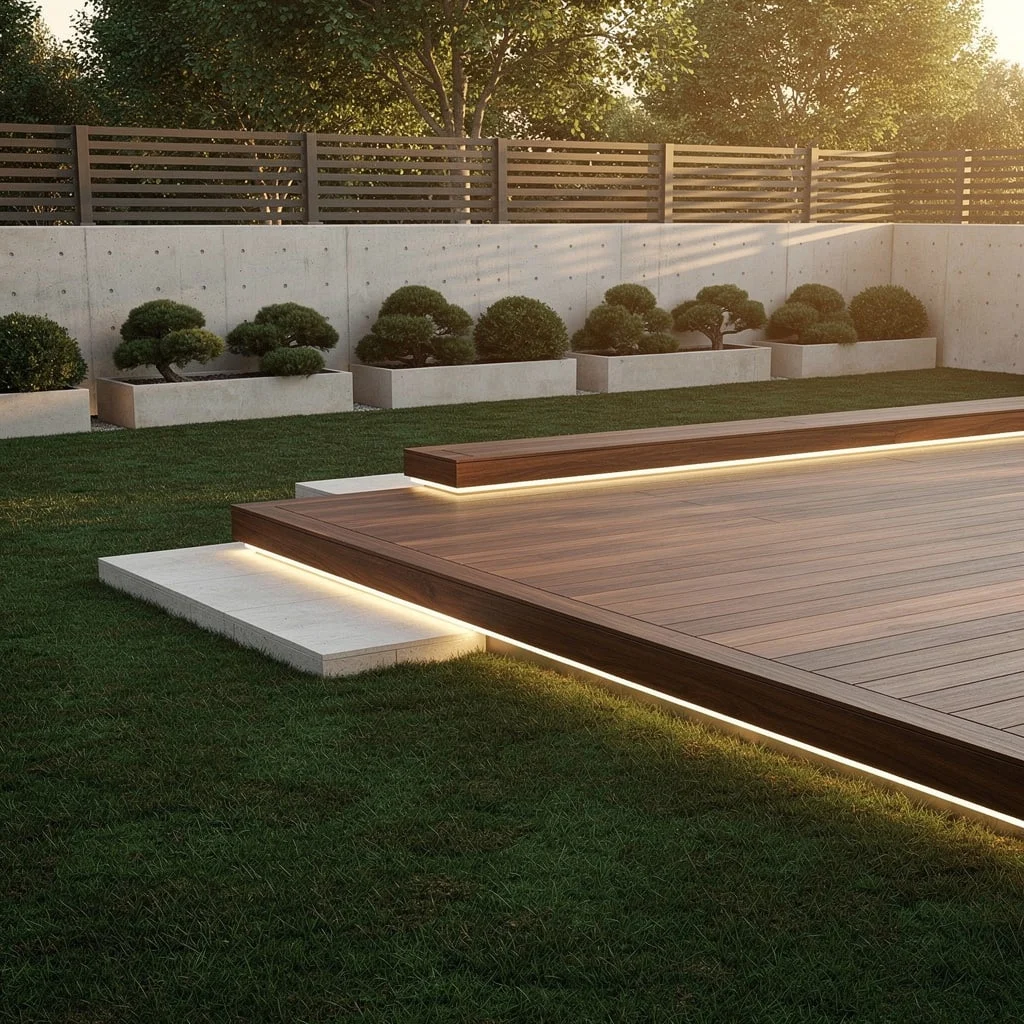
Go big or stay inside—mahogany gives serious luxury vibes, so if you want your deck to scream ‘grown-up’, you need rich wood paired with limestone steps for cool contrast. Set your deck flush with the lawn for a seamless transition; don’t trip over ugly edges. Steal the move and embed floating illuminated planters packed with sculpted evergreens. Run linear LED strip lighting around the perimeter to spotlight the wood and keep the party going after dark. Never skip a textured concrete privacy wall; horizontal slats add modern sophistication and block nosy neighbors. Always fight for warm lighting at golden hour—if your deck’s not glowing, you’re doing it wrong.
Grey Geometry: Decks That Don’t Do Boring
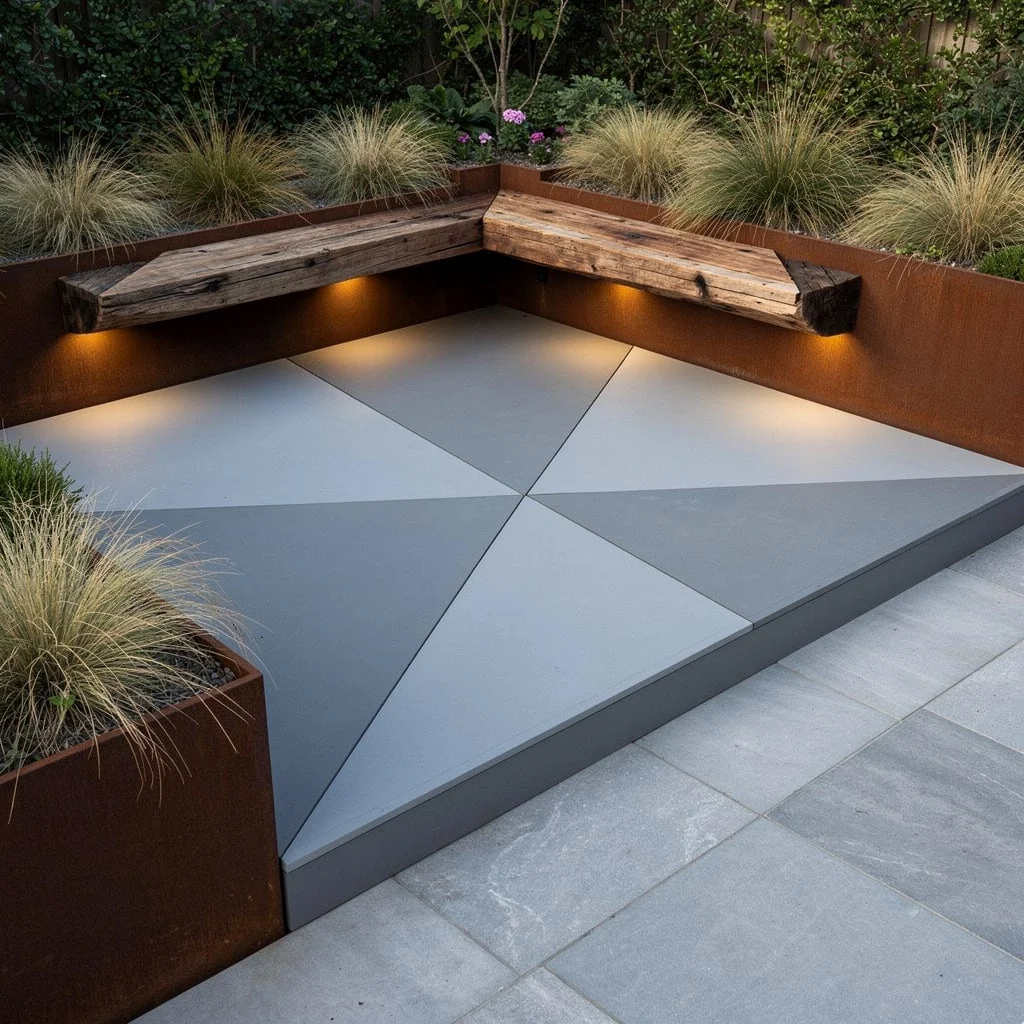
Want your deck to look like you hired a fancy architect? Go geometric with composite decking—triangular segments in two-toned greys hit different. Frame it all in corten steel planter boxes overflowing with layers of ornamental grasses, because boring borders are a disgrace. A sculptural bench in reclaimed timber adds both seating and eco cred—ditch clutter, always go integrated. Hide up-lighting beneath benches and planters to make those angles pop after dark, and finish with patio pavers to define proper pathways. Always mix textures; if your deck looks flat, you failed the assignment.
Ash & Marble: Drama for Your Backyard
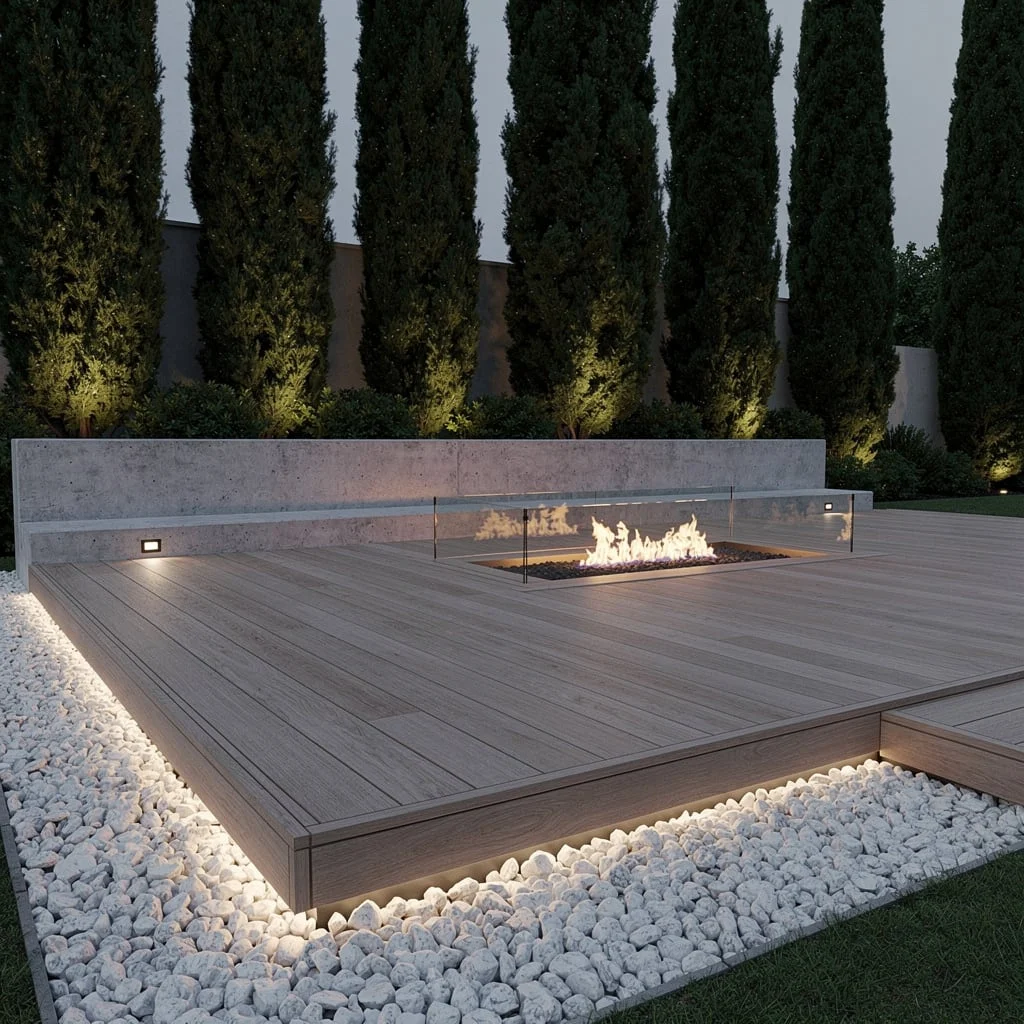
Stop settling for bland decks—thermally-treated ash paired with white marble chips is the move for dramatic coziness. Lay the deck at ground level, border it with marble chips for high-contrast drainage, then bust out a recessed fire feature right in the deck for seamless integration. Clean lines are law; slap a low concrete backrest along the length for structure and attitude. Line up tall cypress trees for privacy (also: brag rights), and never skip integrated ground spot lighting for that intimate nighttime glow. Pro tip: Keep your lighting soft and diffused—nobody wants to feel like they’re at a football stadium.
Bamboo Breeze: Fresh, Flexible, and Flawless
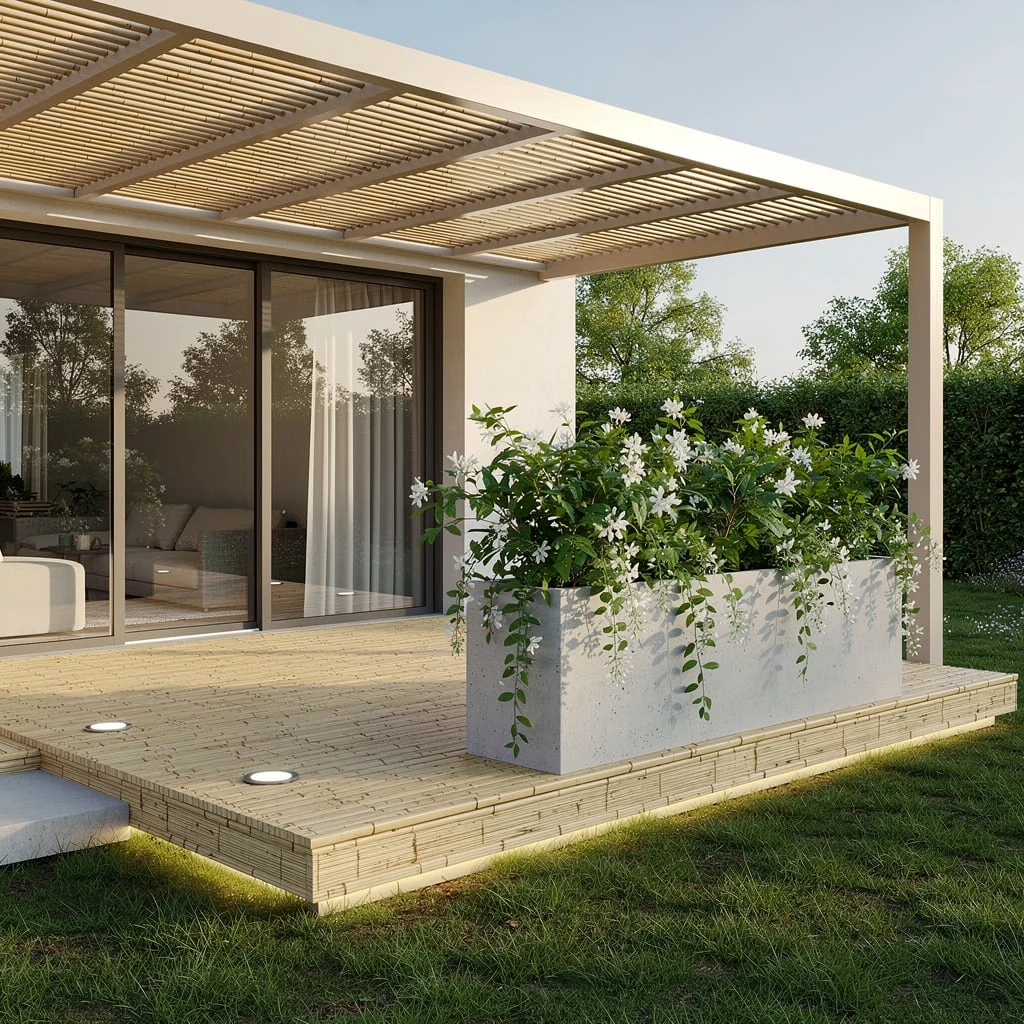
If your goal is eco-chic, bamboo planks are your best friend. Build a low modular deck right next to your home—preferably with full-height sliding doors for Oprah-level indoor-outdoor flow. Flush-mount LED disk lights add evening ambiance, and a removable slatted pergola overhead makes shade management a snap (plus, it looks cool). Install linear planters from poured concrete and fill them with cascading jasmine—let those green leaves spill onto the deck, and light them from below for major drama. Pro tip: Use pale materials for a clean, airy look—dark is for winter hermits.
Charcoal Chic: All About Contrasts
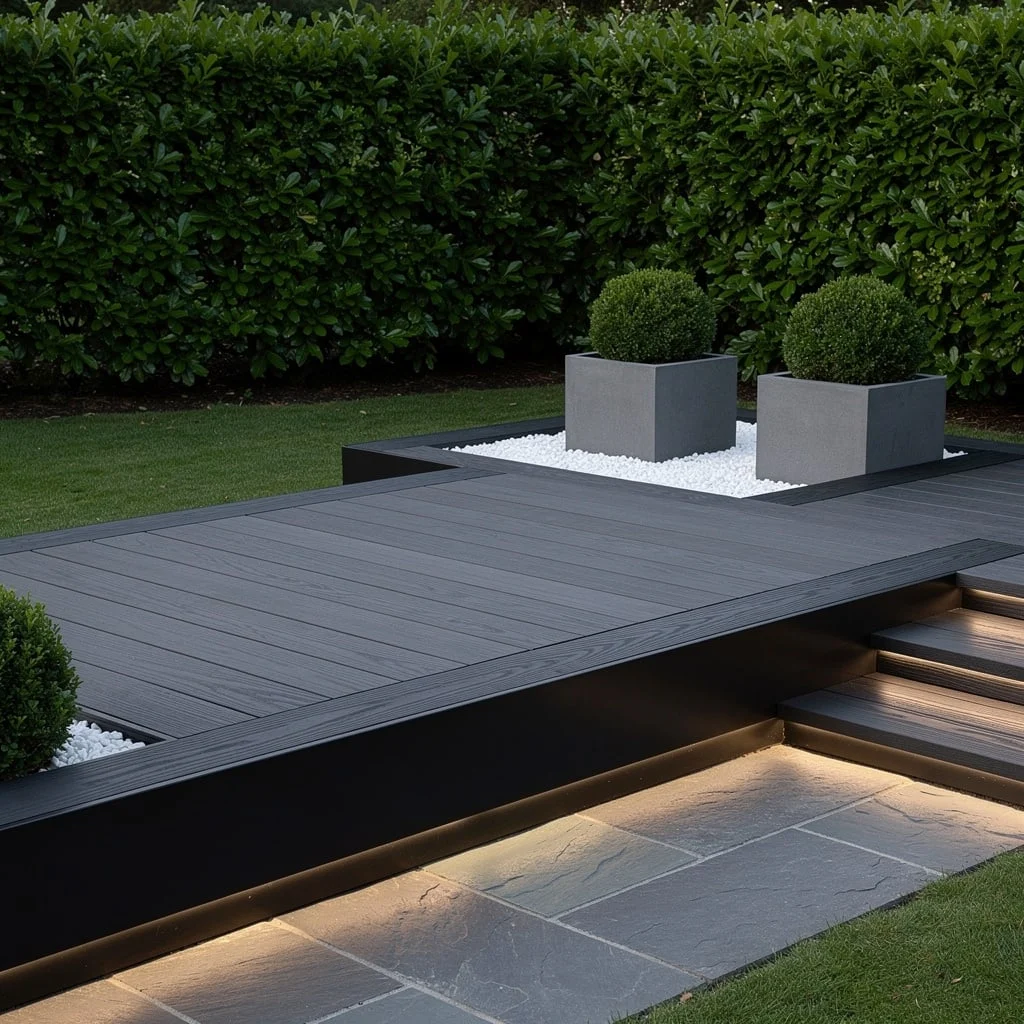
Want maximum modern? Go ultra-contemporary with charcoal-finished larch wood. Frame your deck with blackened steel edges for graphic impact, then fill minimalist square planters with crisp white gravel and topiary boxes. Run staggered flush steps to a side slate flagstone pathway—no boring straight lines allowed. Set LED uplights into the steel edge for patterned night illumination and surround the scene with lush green hedges. Draw hard lines; the black-and-white contrast gives your deck the punchy vibe every magazine editor loves. Pro tip: Never underestimate the power of black trim—it’s the instant style upgrade nobody admits to needing.
Cedar + Copper: Rustic Luxe That Lasts
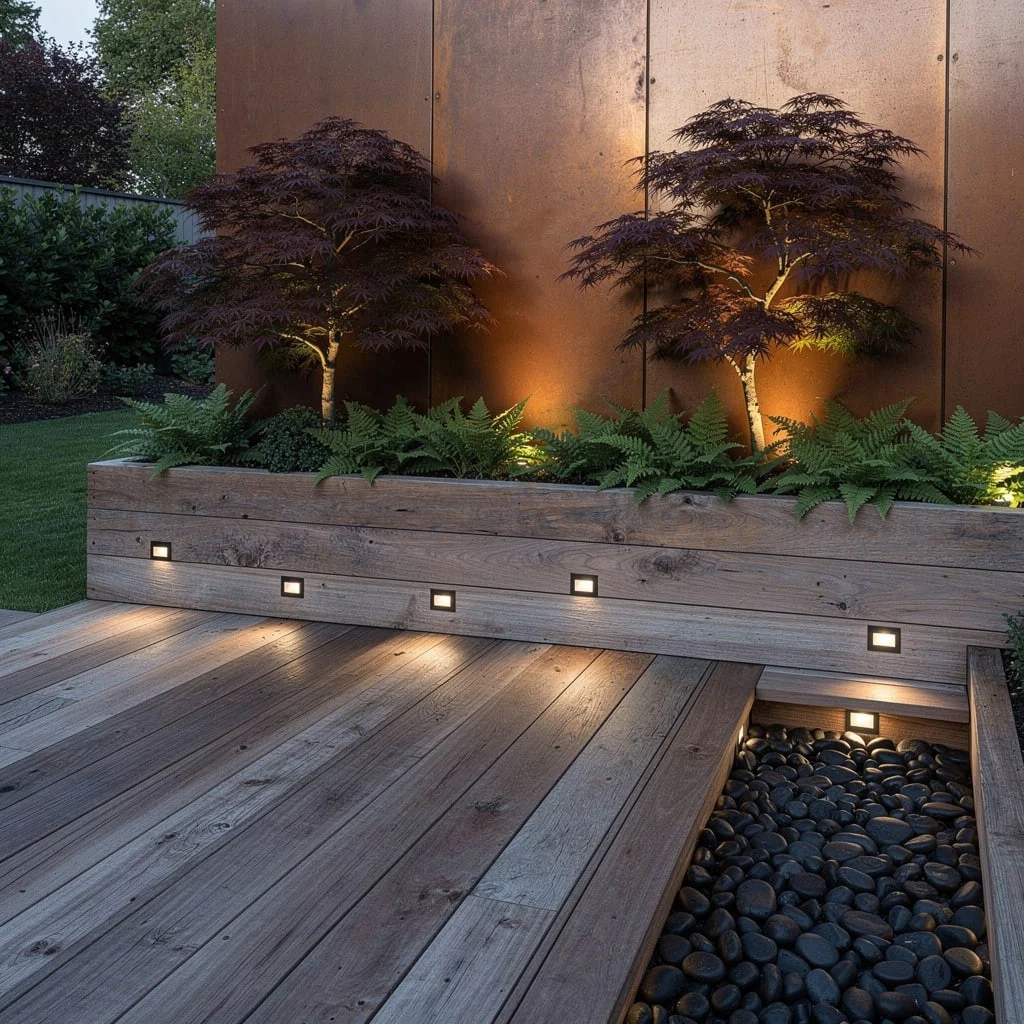
Ready for some actual edge? Build your deck from weathered cedar, running planks parallel to a feature wall of bold copper panels with matte patina. Wrap the deck with oversize built-in planters filled with dwarf maples and layered ferns for lushness. Go next level and recess a sunken section surfaced in smooth black river pebbles as a tactile footpath. Hit the deck with in-deck uplights for gentle highlights, and let the copper wall bounce warm light across the garden. Pro tip: Use contrasting materials—if your deck and walls match too closely, you might as well throw a beige blanket over the whole thing.
Bleached Oak Flow: Curves for Days
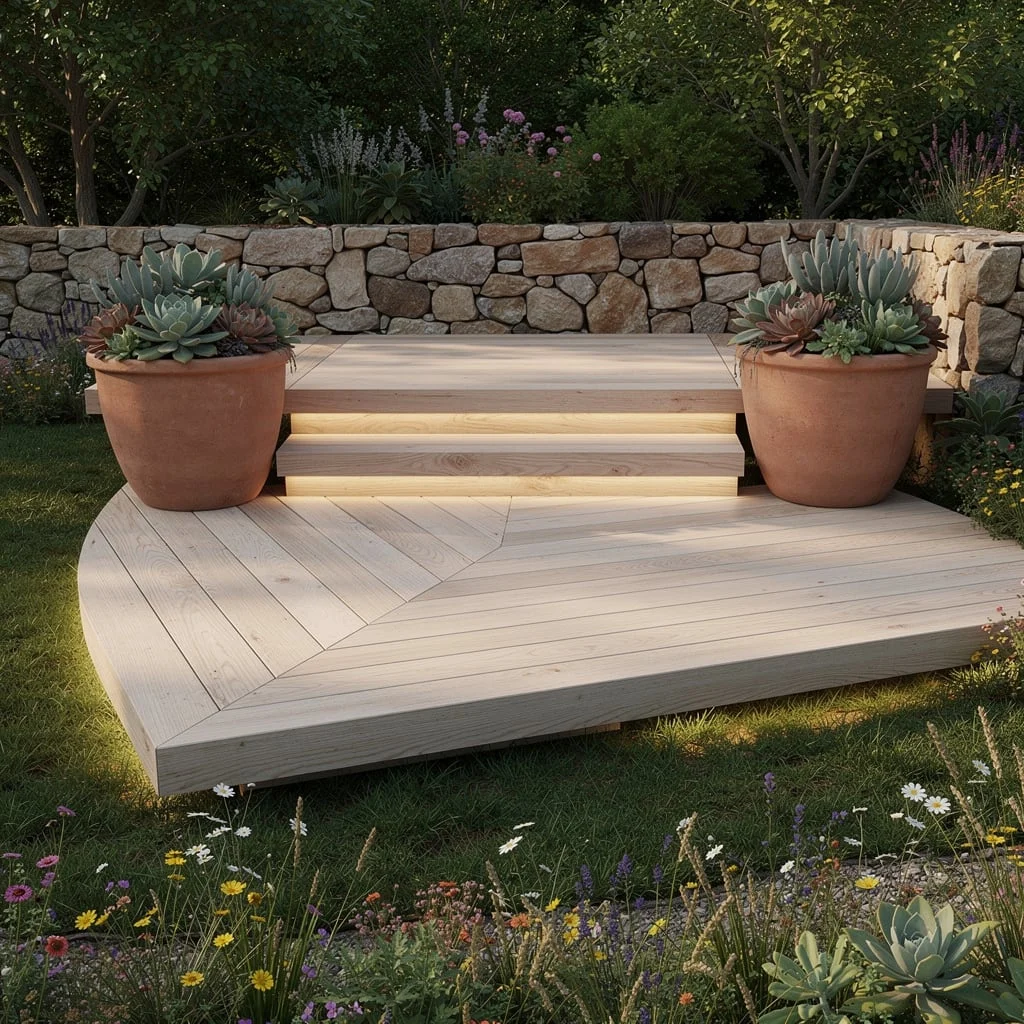
If angular is out, go for broad bleached oak boards arranged diagonally—you’ll get dynamic movement without even trying. Place thick terracotta planters full of structural succulents at the corners for spicy color and sculptural impact. Curve your deck towards a wildflower border for that ‘oh, I just casually have a meadow’ vibe. Frame the space with a low fieldstone wall, and use integrated lighting under planters and steps to boost the tactile texture after dark. Never let your deck lines go straight when a curve will give you bonus style points.
Teak Geometry: Square Up to Stylish
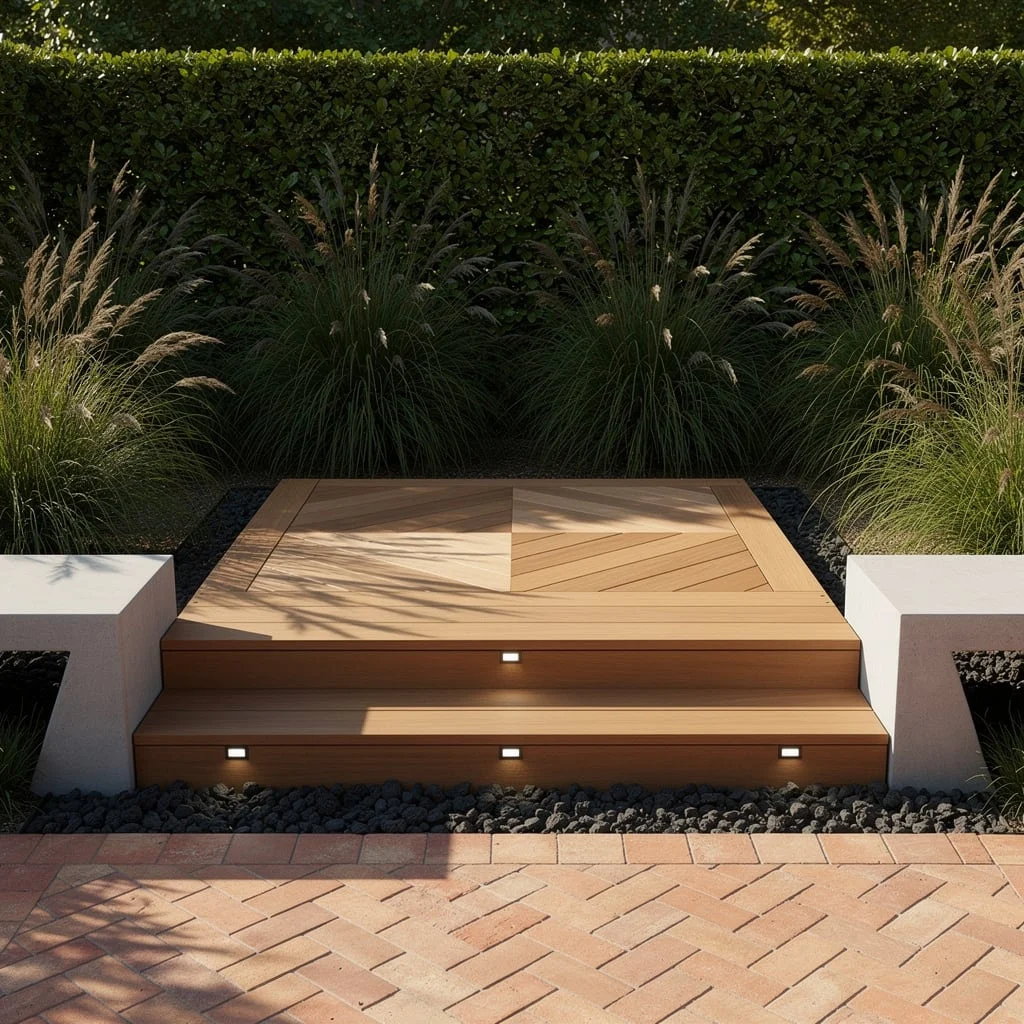
Square-shaped matte teak deck? Go flush with herringbone clay tiles for undeniable textural chemistry, then edge with black lava rocks for killer definition. Install wide symmetrical steps to connect garden and deck, and slap angular concrete benches in the corners for seating and visual structure. Run crisp LED path lights along the steps, casting geometric shadows across the timber planks—so your Instagram game stays strong at dusk. Rim the whole space with mature ornamental grasses and a clipped hornbeam hedge to bring wildness and tailored luxury. Pro tip: Always mix natural and architectural elements—otherwise, your deck is just a wood slab on dirt.
Glass Edge Ash: High-End Without Fences
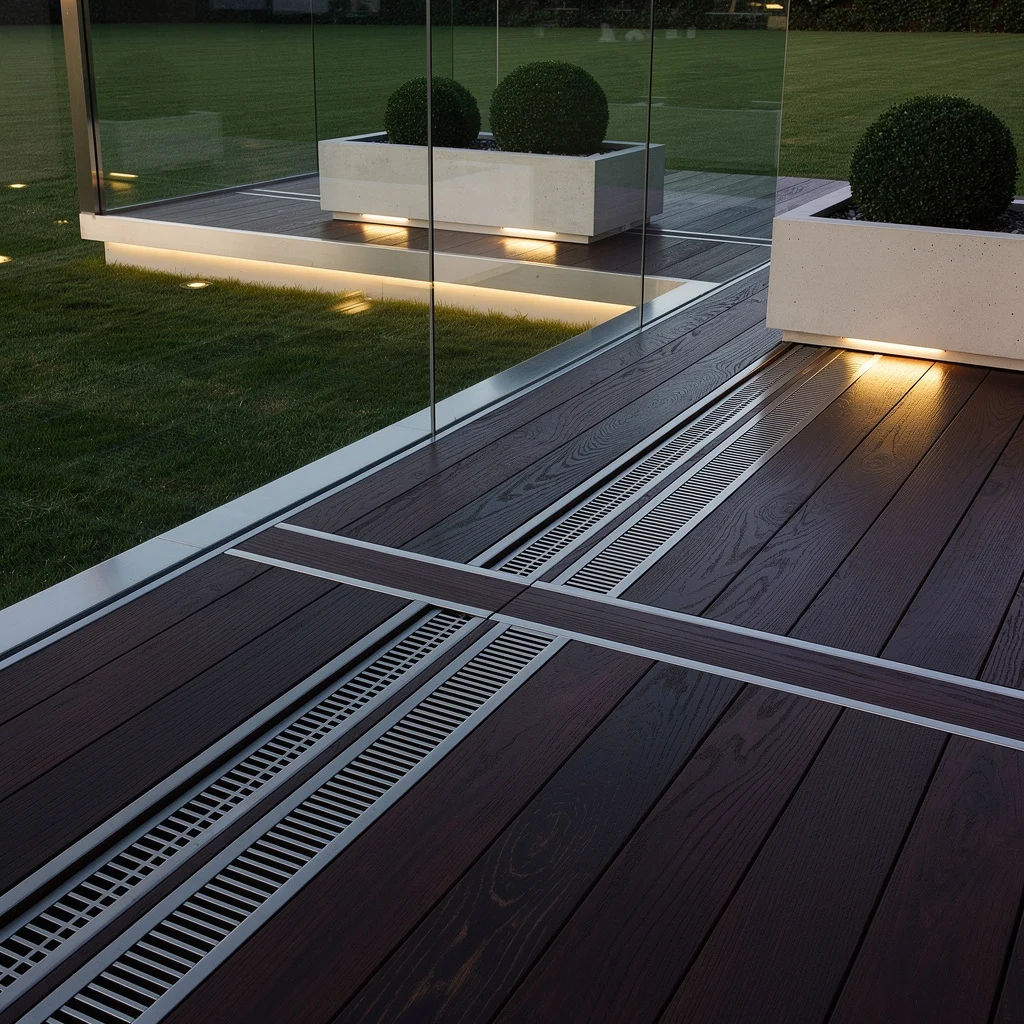
For unobstructed views, use thermally-modified ash decking and a frameless glass edge, so your lawn stays the main character. Install an undercover irrigation system hidden below concealed grates—because nobody likes flooding. Run narrow stainless steel channels across the deck for water runoff and modern flair. Drop geometric pale concrete planters full of perfectly pruned boxwood spheres to keep things sharp. Integrated step lights shine at twilight, serving museum vibes—just without the velvet ropes. Pro tip: Always hide utility; if you can see your drainage, you didn’t plan hard enough.
Maple Arc: Curved Calm & Statement Style
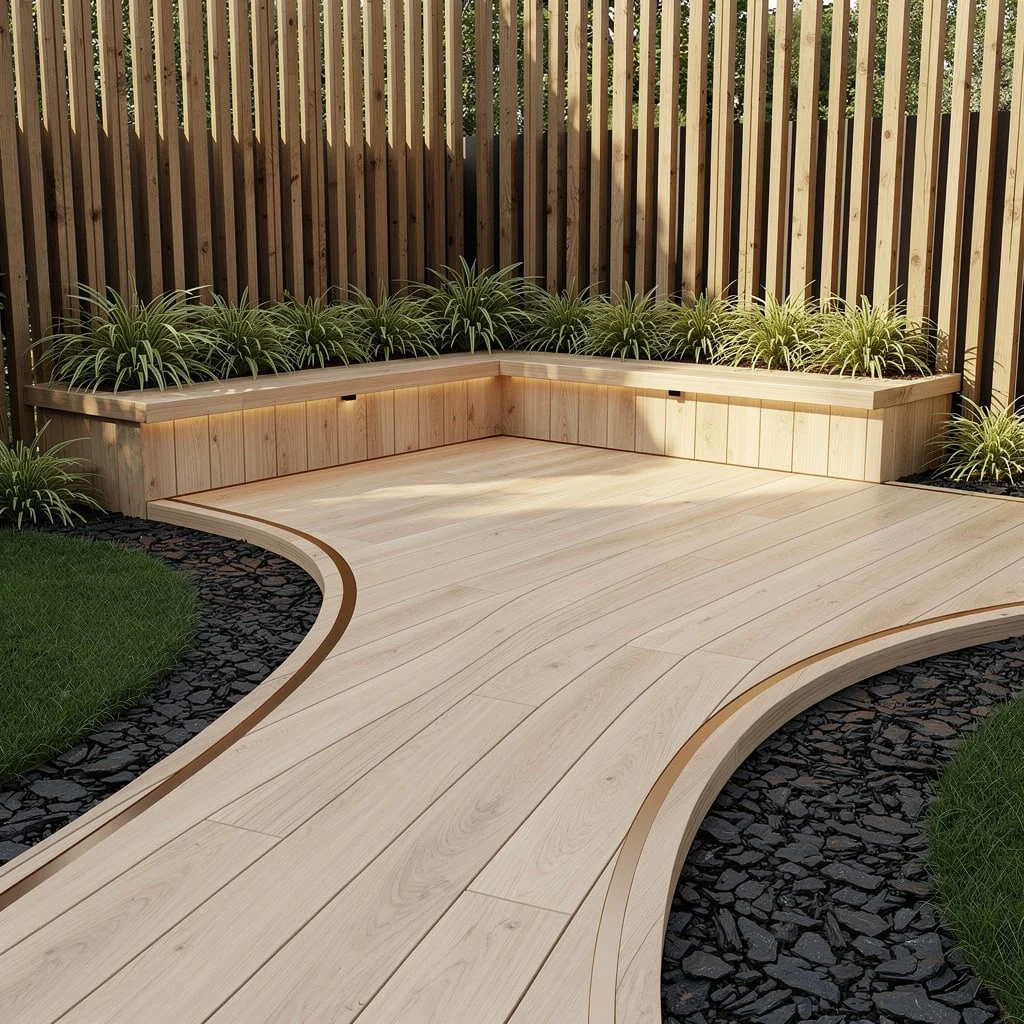
Wide blond maple planks and bronze inlays? Yes, you need both, because regular boards are for the flavorless. Let the deck arc gently out to the garden—hard right angles are banned in 2024. Blend the edge into beds mulched with black slate for mad contrast. Build in boxy bench planters packed with funky ornamental grasses, and install accent lighting underneath to keep the color game strong day and night. Throw up decorative vertical timber slatting for privacy and rhythm. Pro tip: Use ultra-thin inlays for extra detail—fat metal strips are so last decade.
Final Thoughts
None of these decks happened because someone had unlimited money or professional design help on speed dial. They happened because someone looked at their outdoor space and decided that “good enough” wasn’t going to cut it anymore — and then made a plan instead of just making excuses.
The best ground level decks share exactly one thing: intention. Intention about where the platform sits, how it meets the lawn, what goes on top of it, and how it looks once the sun goes down. That’s it. Not a massive budget, not exotic materials, not a contractor with a five-star rating. Just actual decision-making applied to a space that most people leave on autopilot for years. Your backyard has been out there this whole time, patiently waiting for you to stop ignoring it. It’s time to build something worth going outside for.