
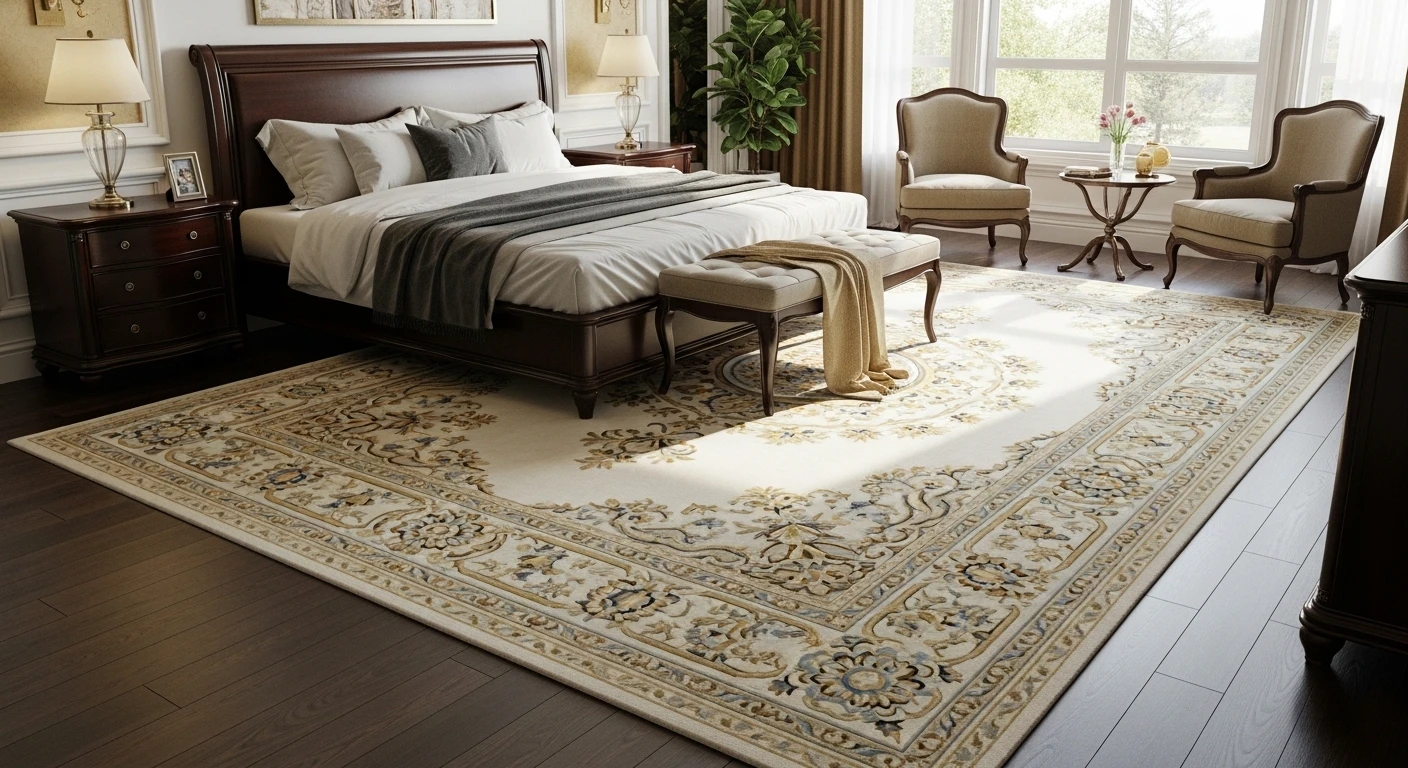
Want your bedroom to feel like an art gallery and not a messy storage confessional? The rug is where it all starts — and where most people quietly give up by ordering whatever ships fastest in a size that’s two feet too small. Whether you’re after cloud-like luxury, geometric edge, or the kind of pattern that makes guests crouch down and ask where it’s from, these master bedroom rug ideas will drag your floor out of its forgettable phase and into territory worth walking on. Buckle up — your feet deserve better.
The Rug Architect
Drag the sliders to orchestrate the perfect layout. The floor has been waiting for a decision worth making.
Your Bedroom Rug Is Not a Decorative Afterthought, Stop Treating It Like One
The rug is the foundation of every bedroom that actually looks designed rather than assembled. It anchors the furniture, defines the zone, absorbs the sound, and communicates the entire personality of the space from the floor up. It is the first thing your feet touch in the morning and the thing that either ties the room together or makes it look like someone ran out of decisions and money at the same time. Treating it as a finishing touch rather than a foundational choice is the single fastest way to undermine every other good decision you've made.
Size is where ninety percent of bedroom rugs fail before they've even been unrolled
A rug that only fits under the bed is not a bedroom rug — it's a bath mat with ambitions. The correct size for a master bedroom rug extends at least two feet beyond the bed on both sides and at the foot, so that the first thing you step onto when you get out of bed is the rug rather than cold floor. Anything smaller looks like a mistake and reads as someone who measured wrong and refused to admit it.
Pile height determines what the rug actually does for the room
Low pile rugs — flatweaves, kilims, vintage-style wool — add pattern and warmth without changing the room's feeling of height or openness. High pile and shag rugs add a physical softness and a sense of luxury underfoot that flat rugs simply cannot replicate. Neither is wrong. They just create different rooms, and knowing which room you're trying to create before you order is the difference between a rug that fits and a rug that fights.
Pattern scale needs to work at room distance, not showroom distance
A beautiful intricate pattern on a rug sample will completely dissolve into visual noise once it's on the floor of a bedroom viewed from the doorway. The patterns that read properly — that actually register as a design decision rather than a texture — are the ones scaled generously enough to be legible from across the room. If the pattern looks complicated up close but undifferentiated from a few feet away, it's the wrong scale for the space.
The rug's color either anchors the room or fights it, there is no middle ground
A rug in a tone that conflicts with the wall color, the floor color, or the dominant bedding color doesn't read as an interesting contrast — it reads as an error. The most successful bedroom rugs either echo one of the room's existing tones in a deeper or lighter version, or introduce one new color that the rest of the room can justify. Rugs that introduce two or three colors the room hasn't seen before require the confidence and skill of an interior designer to execute. Most rooms don't survive the attempt.
What Nobody Tells You About Making a Bedroom Rug Look Expensive
There is a gap between a rug that looks expensive and a rug that is expensive, and it is a gap almost entirely made up of decisions about placement, proportion, and what surrounds it. The most luxurious-looking bedroom rugs in design publications are not always the most expensive ones — they are the ones that have been treated as the foundation of the room rather than a late addition to it.
How the rug is placed under the bed matters as much as the rug itself
The classic placement — two thirds of the rug under the bed, one third extending at the foot — is classic because it works every time. It connects the bed to the floor visually, gives the rug room to be seen, and ensures there's enough rug beyond the bed to step onto in the morning. The alternative is a rug positioned entirely in front of the bed that reads like a hallway runner that got confused. Neither costs more than the other. One looks intentional and one doesn't.
The floor underneath the rug is part of the composition
A beautiful rug laid on bad flooring looks apologetic. A beautiful rug laid on herringbone oak, polished concrete, or wide-plank hardwood looks deliberate — as if the two surfaces were chosen together because they were. If your floor is genuinely difficult — old carpet, damaged timber, dated tile — the rug needs to be large enough that the floor around it barely registers. If your floor is beautiful, leave enough of it exposed that the contrast reads as a design choice.
Layering rugs is either the most sophisticated thing you can do or a complete disaster
Layering a smaller flat-weave or vintage rug over a larger natural fibre base is a technique that in the right hands creates extraordinary visual depth and texture. In the wrong hands — mismatched scales, competing patterns, wrong pile heights — it looks like someone couldn't decide which rug to return. The rule is simple: one rug is the base and provides the majority of the floor coverage. The second rug is the statement and sits on top with at least half its surface visible. Anything else is a conversation about rugs rather than a design decision.
Making a Bedroom Rug Look Expensive
The gap between a rug that looks expensive and one that actually is.
Placement matters as much as the rug
The classic placement — two thirds under the bed, one third extending — connects the bed to the floor. A rug entirely in front of the bed reads like a confused hallway runner.
The floor is part of the composition
A beautiful rug laid on bad flooring looks apologetic. If your floor is beautiful, leave enough of it exposed that the contrast reads as a deliberate design choice.
Layering is sophisticated (or a disaster)
One rug is the base and provides coverage. The second is the statement and sits on top with at least half its surface visible. Anything else looks like you couldn't decide which to return.
Master Bedroom Rug Ideas
Vintage Moroccan Rug in Berry, Orange, and Fuchsia
A hand-knotted Moroccan rug in deep berry, fuchsia, orange, and ivory medallion patterns anchors a low platform bed dressed in a single tone of rich plum-red linen — the kind of one-color bedding decision that only makes sense next to a rug this loud. A raw timber slice nightstand, a textured white ceramic lamp, an abstract art print leaning against the wall in a black frame, and a terracotta potted fig tree doing its part in the corner. The rug is doing everything. The rest of the room understood the assignment and stayed out of the way. Pro tip: High-saturation vintage rugs need a single-tone bedding palette to avoid the room looking like it was styled by someone in a hurry.
Mustard and Blush Geometric Wool Rug Under a Plum and Mauve Bedroom
Deep plum walls carrying up across the ceiling without apology, burgundy velvet floor-length curtains framing a bay window in the same family, a lavender linen duvet with striped and spotted cushions in teal, mauve, and blush — and then a mustard-ochre wool rug with blush zigzag geometric pattern covering the entire floor space like someone made the most confident decision of their life and never looked back. A sculptural blue velvet chair in the corner. A tiered pink glass chandelier on a brass fitting. A black side table with a single dark vase. Pro tip: When the walls, ceiling, and curtains are all in the same deep tone, the rug needs to be in a completely different colour family — the mustard breaks the monochrome and stops the room from folding in on itself.
Persian-Style Red Rug, Tropical Plants, and an Arched Window
Warm cream walls and vaulted ceiling with a Palladian arched window doing architectural work that no decorator could replicate, a low platform bed in white linen with ochre velvet cushions and a mustard throw, woven bamboo shades managing the arched light — and then a traditional red and indigo Persian-style rug spread generously across the pale hardwood floor. A towering bird of paradise plant in a dark grey planter dominates the window corner. Multiple smaller plants in white and terracotta vessels line the floor between window and bed. Pro tip: When the rug is a traditional pattern, keep every other pattern in the room to a minimum — the Persian rug is the pattern budget spent entirely, and the room is better for it.
Oversized White High-Pile Shag Rug
An oversized white high-pile shag rug covering nearly the entire floor of a grey-walled bedroom, extending well beyond the Chesterfield-style sleigh bed on all sides, its surface catching the light and holding it in a way that changes the entire quality of the room. A white button-tufted headboard and footboard, crisp white and charcoal bedding, a white French-style nightstand with a cream lamp, and a wire crystal pendant overhead providing the only ornamental moment in a room that has otherwise committed entirely to texture over decoration. Pro tip: White high-pile rugs require the rest of the room to be equally clean — a white shag rug in a cluttered bedroom just looks dirty, not luxurious.
Abstract Charcoal and Sand Wool Rug
A large abstract hand-tufted rug in deep charcoal with sand and taupe cloud-shaped negative space anchors a low platform bed against a wall hung with an oversized framed abstract painting in front of dramatic botanical wallpaper in dark bronze tones. Warm parquet herringbone floor visible beyond the rug's edges, a mid-century teak side table with an amber lamp, a low black bench at the foot of the bed, grey-mauve linen bedding layered with leopard print and rust cushions. Arched windows with white sheer curtains and a Juliet balcony door letting afternoon light flood across the rug's surface. Pro tip: Abstract rugs in organic shapes work best under beds with clean, architectural lines — the contrast between the fluid rug pattern and the structured bed frame is where the visual tension that makes the room interesting actually lives.
Radiating Black and White Circular Rug
A circular rug with a radiating sunburst pattern in crisp black and ivory sits under a cream bouclé lounge chair, positioned between the bed and the wall in a room that has otherwise committed to restraint. Button-tufted headboard in warm taupe, black arc floor lamp with a domed shade, ornate plaster wall panelling in white, and gold wall sconces providing the only warmth in an otherwise cool palette. The circular rug is the loudest thing in the room and absolutely knows it. Everything else stepped back and let it. Pro tip: Circular rugs in bedrooms work when the furniture arrangement mirrors the round shape — place a round or curved chair at the center to anchor the geometry properly.
Cloud-Like Luxe: Go Bespoke or Go Home
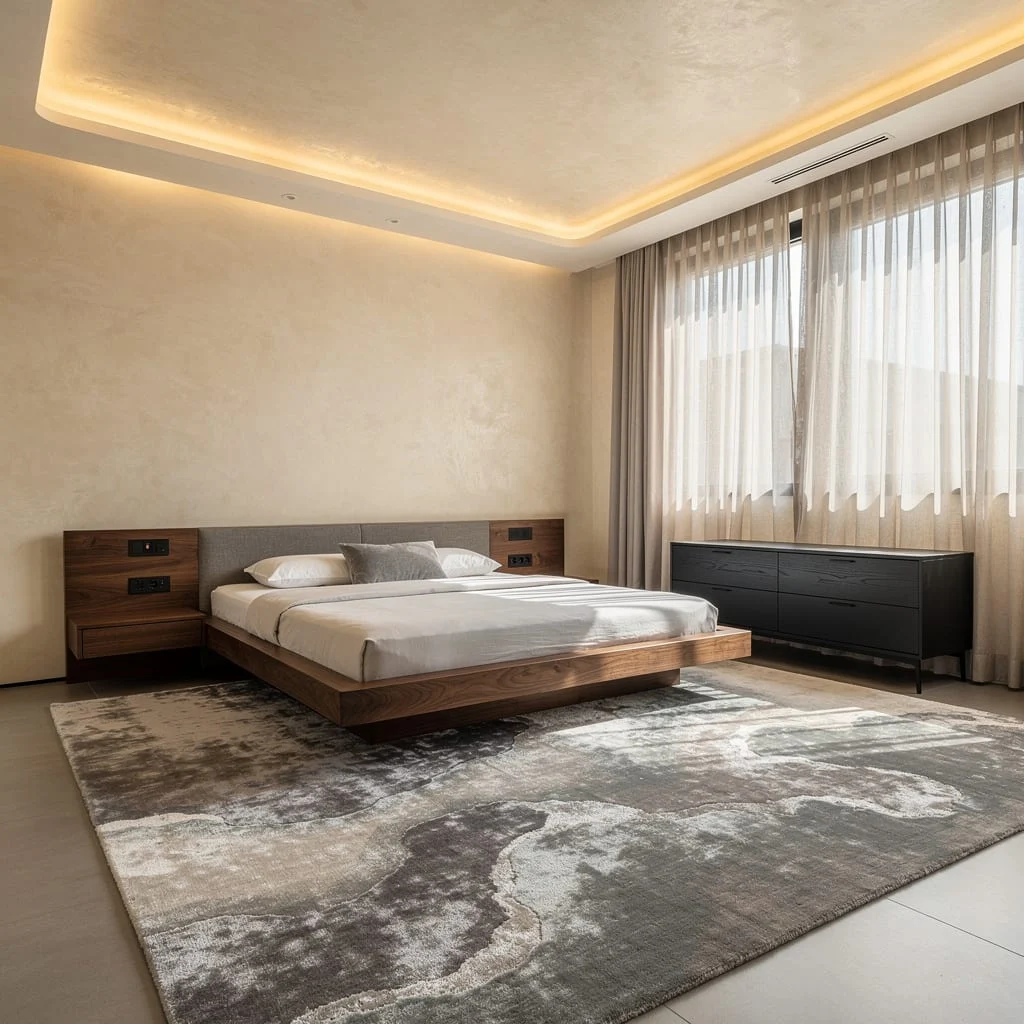
Want your bedroom to feel like an art gallery and not a messy storage confessional? Then slap a hand-knotted silk rug in misty grey and silver under your platform bed. Demand abstract patterns—cloud vibes only. Pair walnut with creamy Venetian plaster walls, then kill clutter ruthlessly. Cove lighting cranks up the plush factor, making the rug’s shine pop. Punt random décor; this is elite minimalism. If your dresser isn’t black oak and your drapes aren’t sheer limestone-toned, you’re doing it wrong. Bonus tip: Integrated side tables = zero nightstand chaos. Respect the gallery look or else.
Geometric Genius: Muted Palettes With Edge
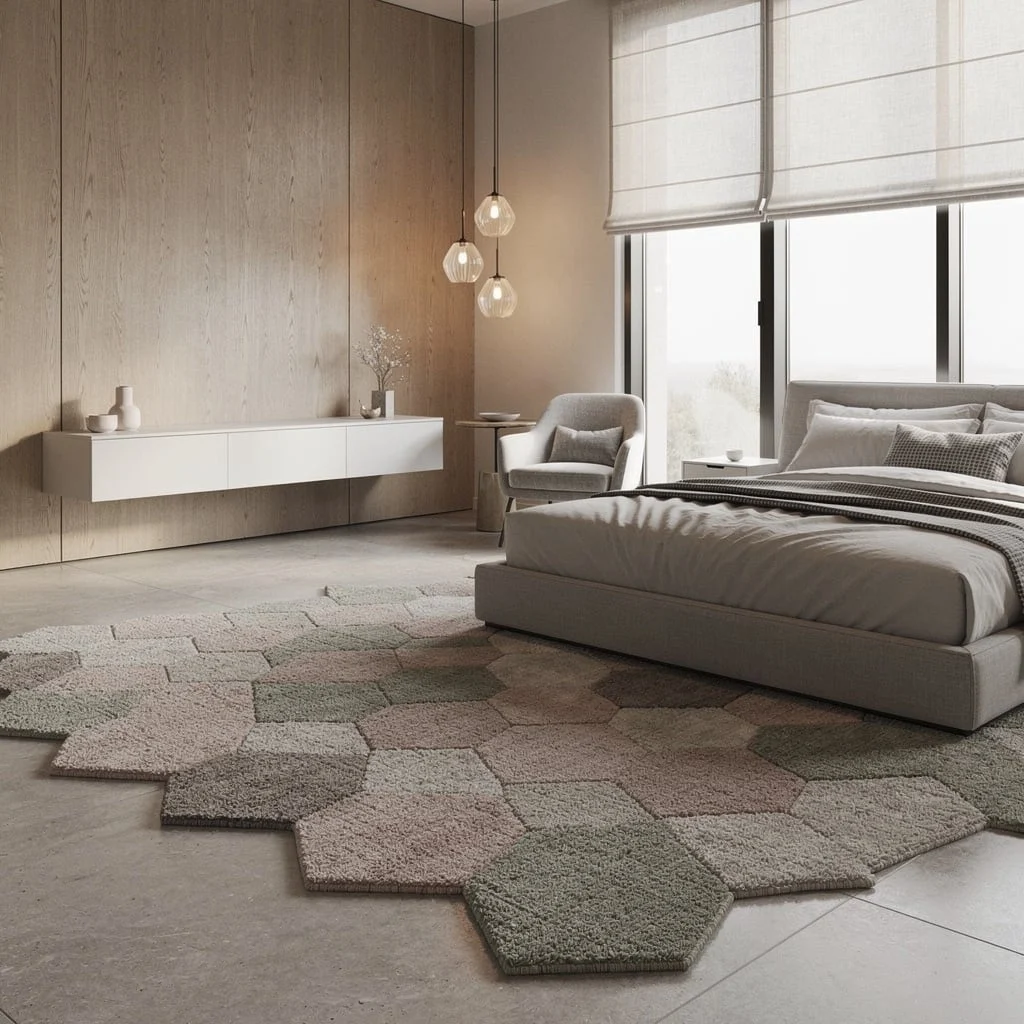
Sick of boring squares and circles? Hunt down a custom geometric wool rug with interlocking hexagons in taupe, blush, and sage. Start it under your bed and let it flow toward your reading corner for that seamless designer flex. Ash wood paneling and matte limestone flooring create spicy contrast, so don’t go cheap on finishes. Drop a trio of asymmetrical pendant lights overhead—nothing screams 'design forward' like weird lighting. Use a floating white credenza and slap on oversized windows with linen shades for clean lines. Pro move: Layer bedding in neutrals, but never all the same monotonous tone.
Art Deco Drama: Welcome to the Roaring Bedroom
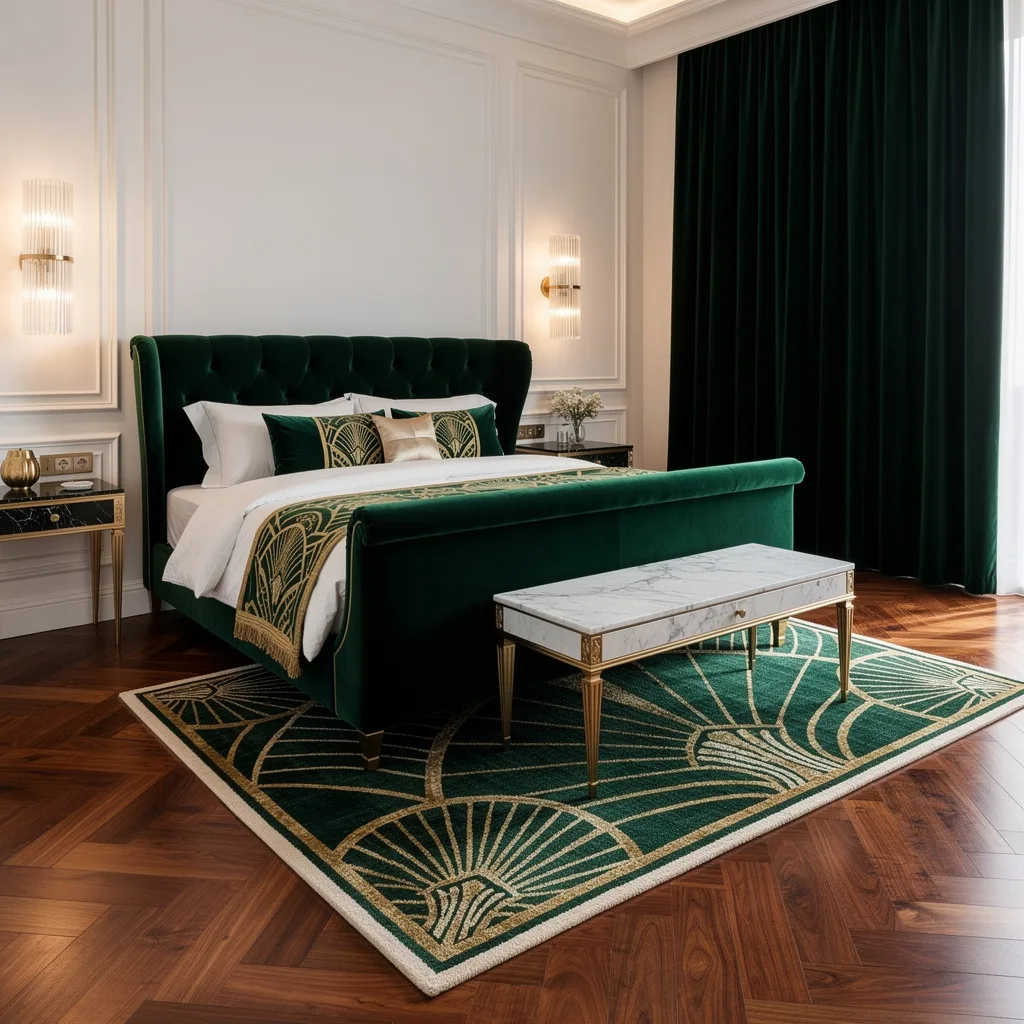
Ready for some Gatsby energy? Secure a rectangular rug with fan motifs in emerald, gold, and ivory, centered right under your velvet sleigh bed. Walnut herringbone floors frame the rug’s drama, so show those off. Choose fluted glass sconces and a marble-topped console to crank up the opulence. Walls should live in soft white—boring? Nope, it keeps everything looking neon-fresh. Hunt for brushed brass accents everywhere; everything else screams ‘cheap knockoff.’ Curtain game? Floor-to-ceiling velvet, obviously. Hot tip: Don’t crowd the rug area—let it shine like your ego after payday.
Moroccan Texture: Go Bold or Stay Boring
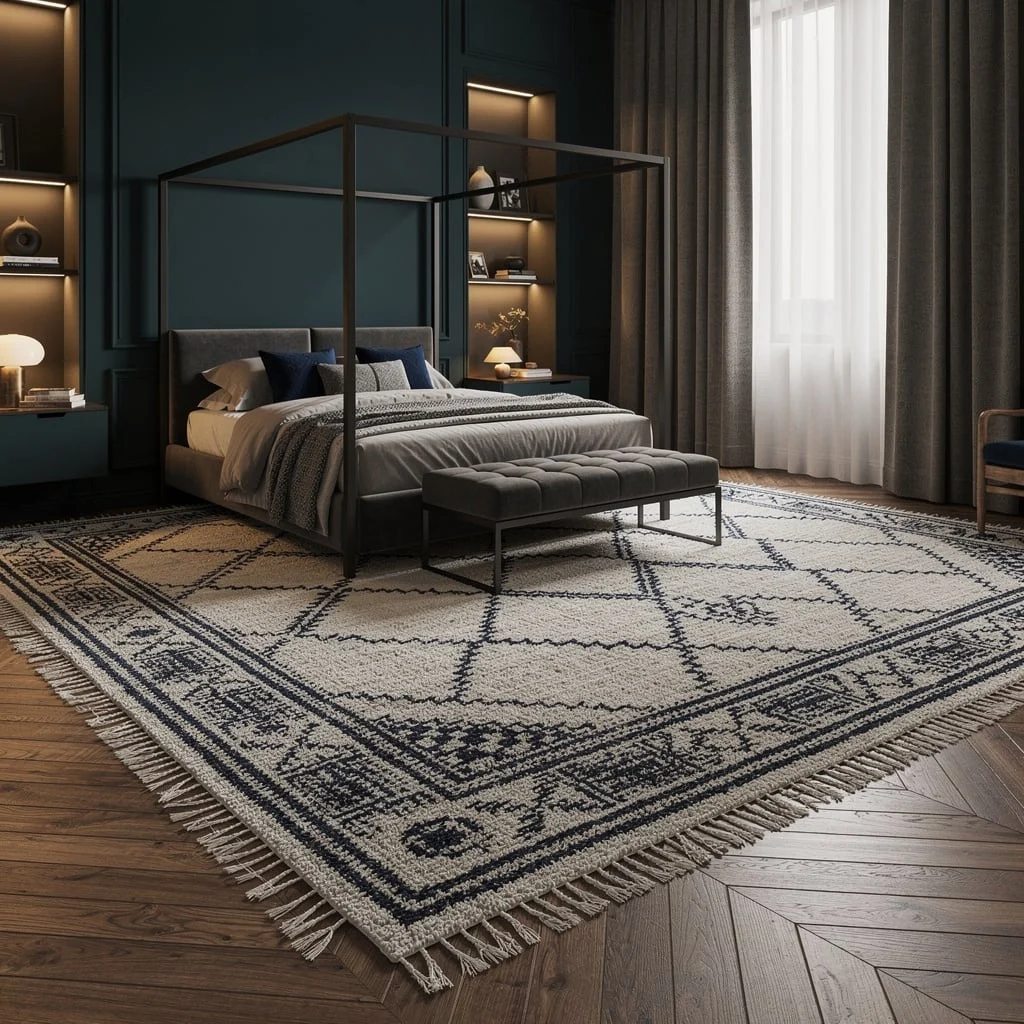
Want drama without tipping into chaos? Claim a Moroccan-style rug in ivory and midnight blue—fringe required—and let it anchor your low charcoal four-poster bed. Skip matching benches and preserve the moody teal wall paneling as your backdrop. Oak chevron floors? Yes, please. Concealed uplights emphasize your rug’s patterns, so hide those ugly lamp cords. Thick wool drapes frame the window and keep the cozy vibes alive. Here’s the hack: Always pair plush rugs with deep textures and moody colors for richness. If it doesn’t feel expensive, you’re missing the mark. Enough with those flat, lifeless carpets.
Biophilic Vibes: Bring the Outside In, Without the Bugs
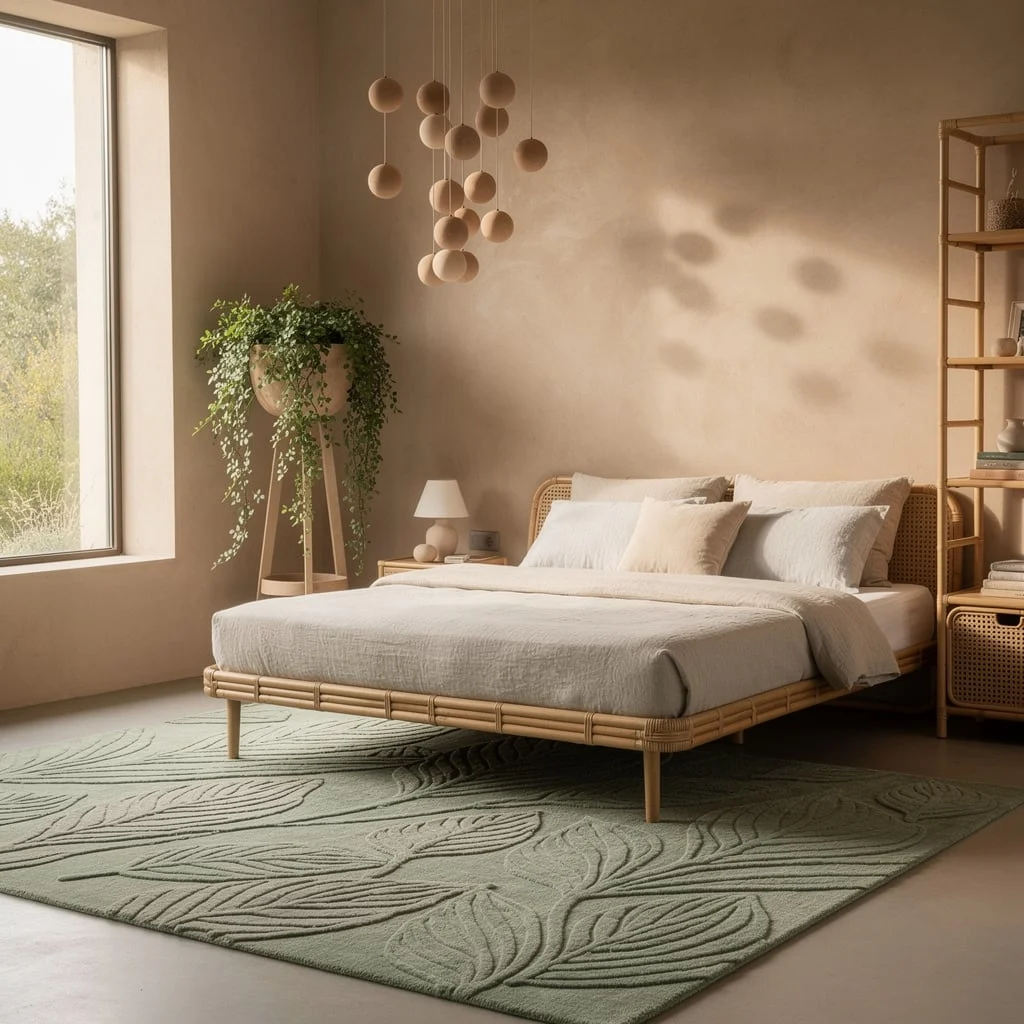
Dreaming of sleep surrounded by plants without risking an ant invasion? Spread out a leafy sage hand-tufted rug with subtle botanical patterns under a floating rattan bed. Put a planter beside a big window—bonus points if the greenery actually cascades. Walls demand clay microcement and skip overloaded décor. Hang a mobile with ceramic orbs for shadow play, then complete with linen bedding and bamboo shelves. Here’s the pro secret: Never crowd the floor. Let the rug breathe and let daylight hit it; organic textures mean nothing if they’re hiding under piles of junk.
Circle of Glam: Hollywood Style for Your Feet
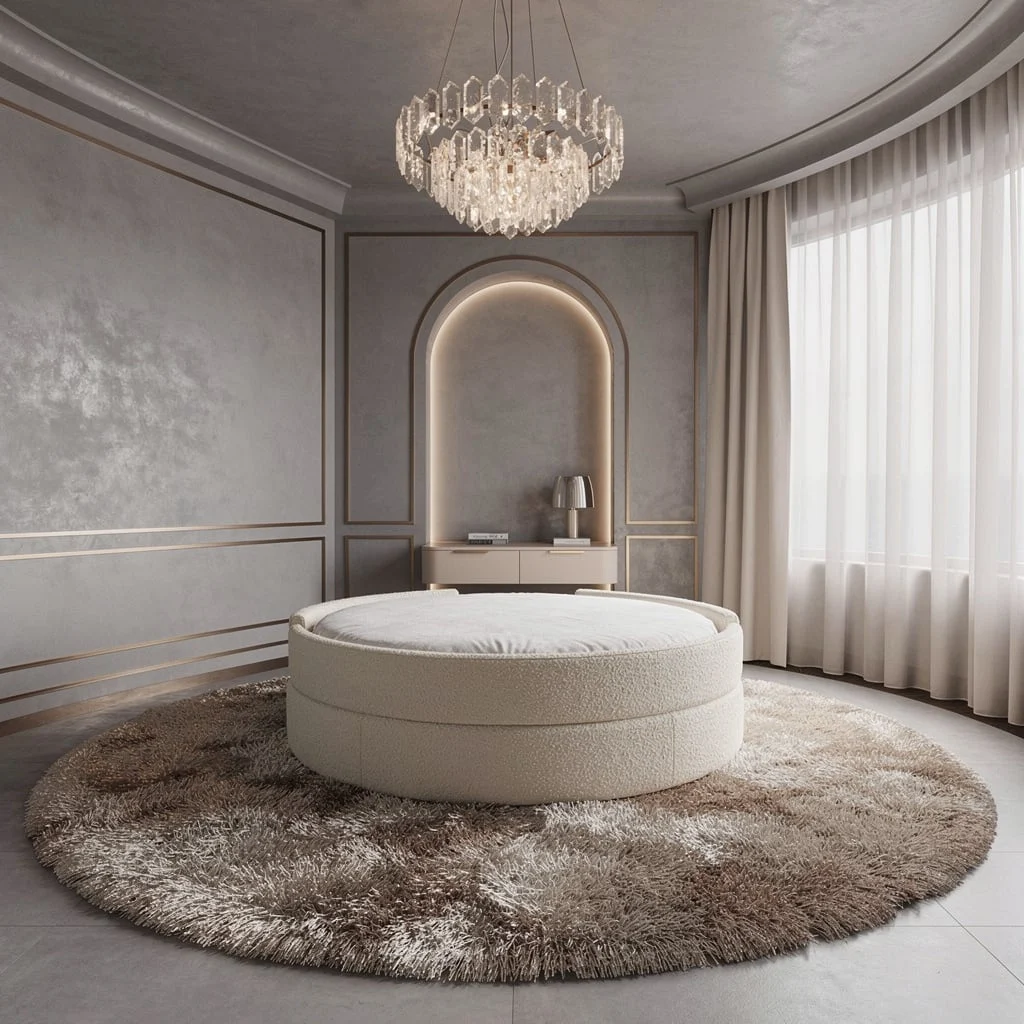
Want to feel like you’re waking up inside a champagne bottle? Plant a circular, high-pile rug in silvery tones under a round cream bouclé bed. Walls need smooth dove-grey stucco and bronze trim—don’t skimp on metallic accents. Hang a crystal prism chandelier and let those reflections do the work. Accent wall? Go arched and alcoved for minimalist nightstands. Always use floor-length ivory curtains to control the light. The golden rule: If your rug isn’t fluffy enough to lose your phone in, it’s not worth the glam. Never settle for limp pile, and get that plush life.
Transitional Shine: Ombré Isn’t Just for Hair
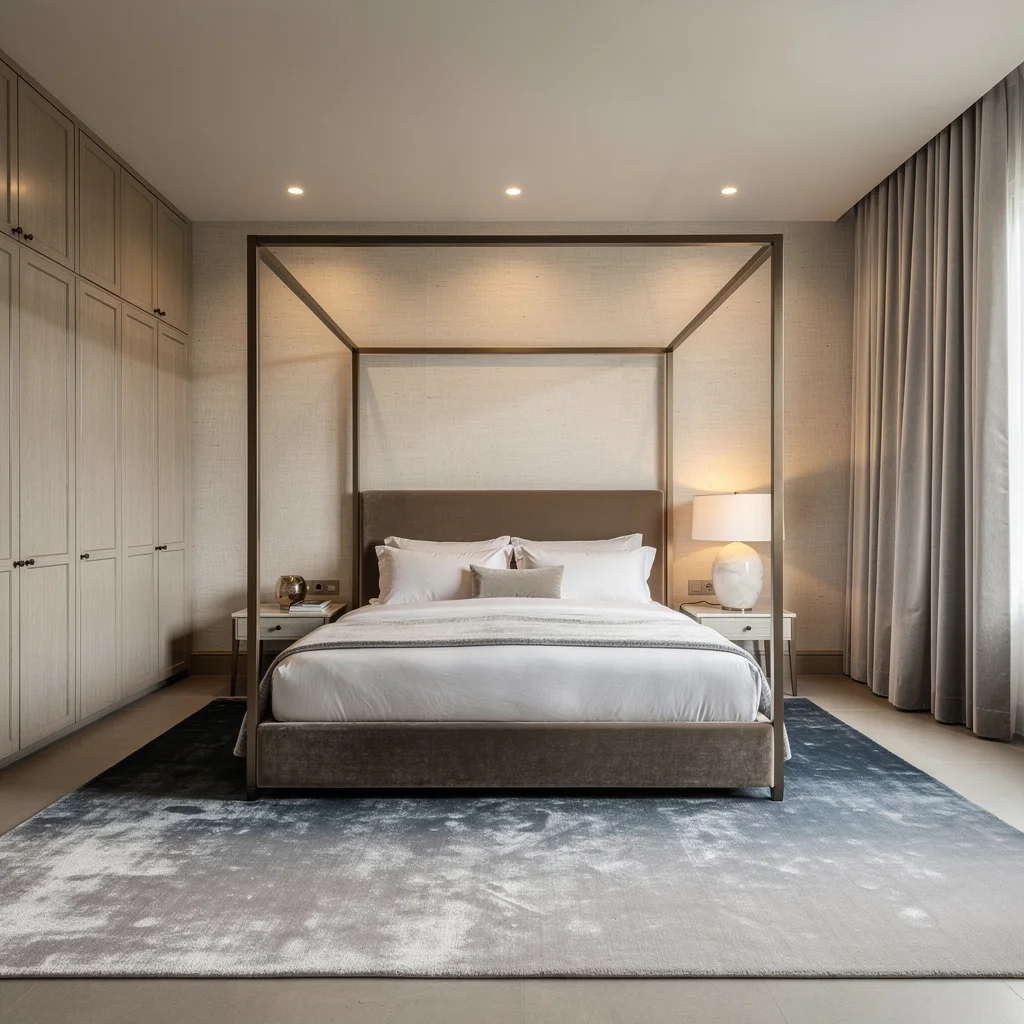
If you want grown-up chic without disco interruptions, park a hand-loomed viscose-wool rug in slate blue fading to pearl grey under a velvet shelter bed. Nail textured grasscloth wallpaper and recessed lights for subtle depth. Go wall-to-wall on your rug if possible—no floating islands. Use custom Art Deco-inspired cabinetry for seamless storage; tacky furniture kills the vibe. Silk drapes are mandatory so the rug’s shine comes to life. Here’s the rule: Ombré works best when your color transitions are tight and subtle, not blobby and obvious. Lighting matters—always go soft.
Moody Modern: Dark Drama That’s Not Depressing
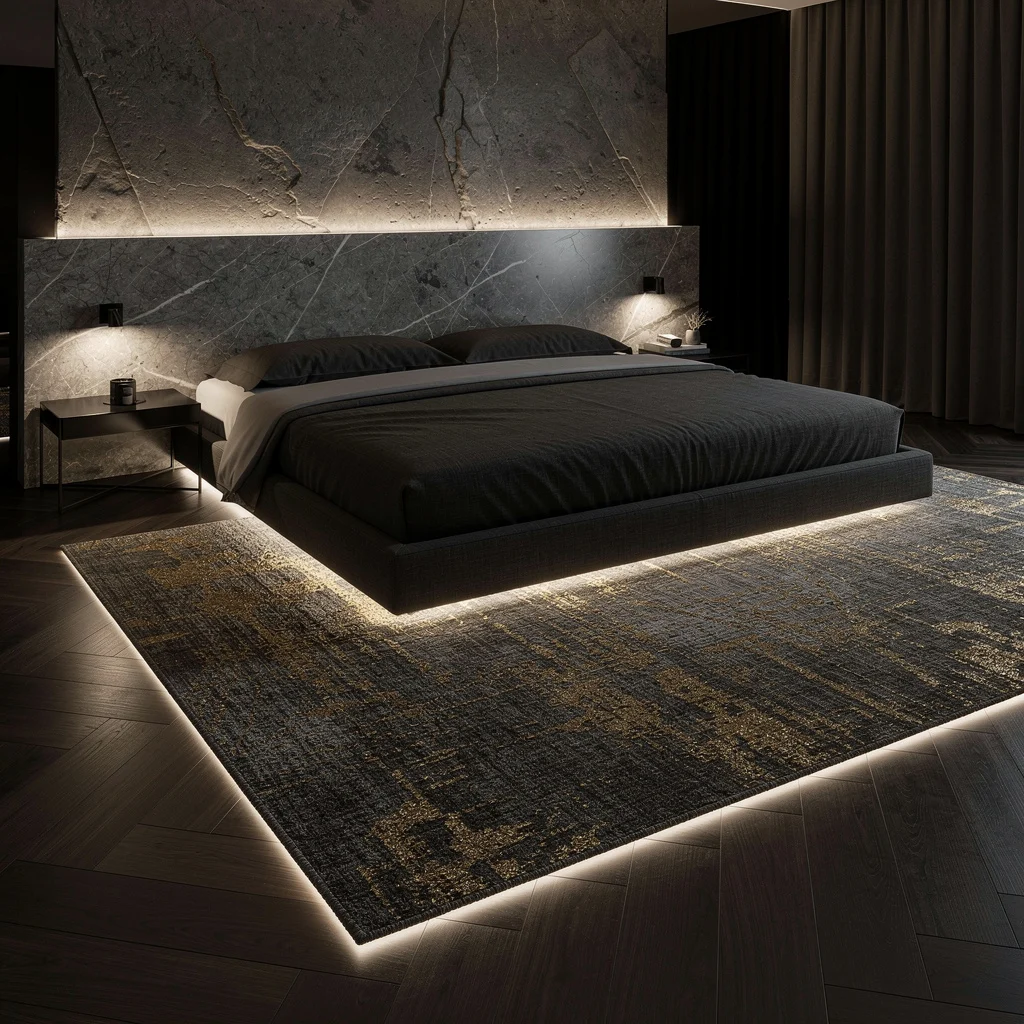
Craving those ‘Netflix thriller’ vibes? Roll out a hand-knotted rug in graphite and bronze—abstract pattern only—for a creative focal point. Marble headboard, deep charcoal linen, blackened steel tables… stack those textures for instant depth. LED perimeter lighting is your shortcut to drama without extra lamps. Choose walnut chevron floors and pair with blackout drapes for intimacy you can literally control. Styling tip: Never let the rug’s shimmer get lost—keep other accessories matte and simple. Too much shine equals chaos. Nail the moody look, but don’t confuse it with just plain darkness.
Gallery-Style Minimalism: Wall-to-Wall Power Move
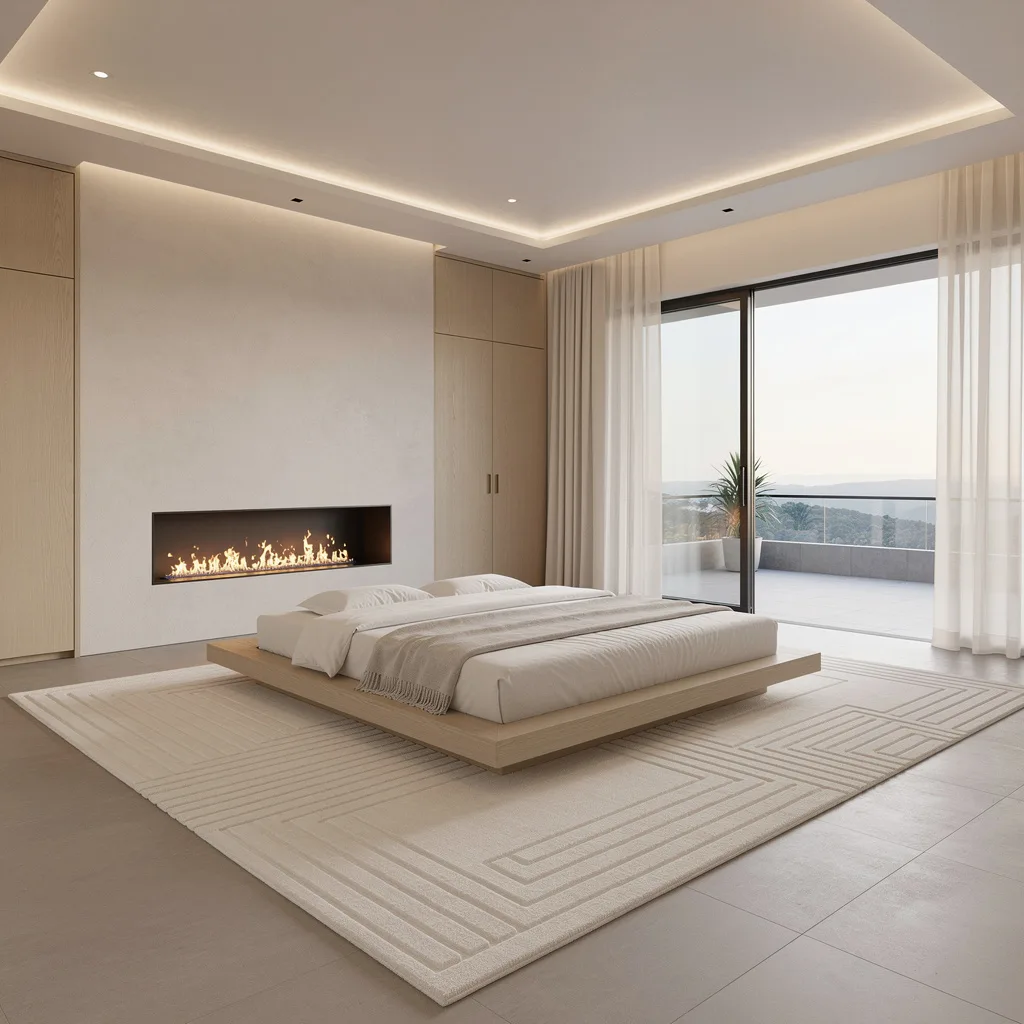
Want your bedroom to scream 'designer' without screaming 'clutter'? Roll out a custom oversized ivory rug with sculptural raised lines—wall-to-wall is the power move. Slap it under a floating light maple platform bed and let a linear fireplace do the talking. Matte white plaster feature walls, sheer ecru drapes, and built-in pale oak cabinets round out the gallery look. Open up sliding doors for that indoor-outdoor flex. Rule: Large rugs are not excuses for dead corners—keep furniture light and let the sculptural rug be the diva. If you overload the space, you’ll ruin the vibe.
Urban Edge: Patchwork Leather for Big People Energy
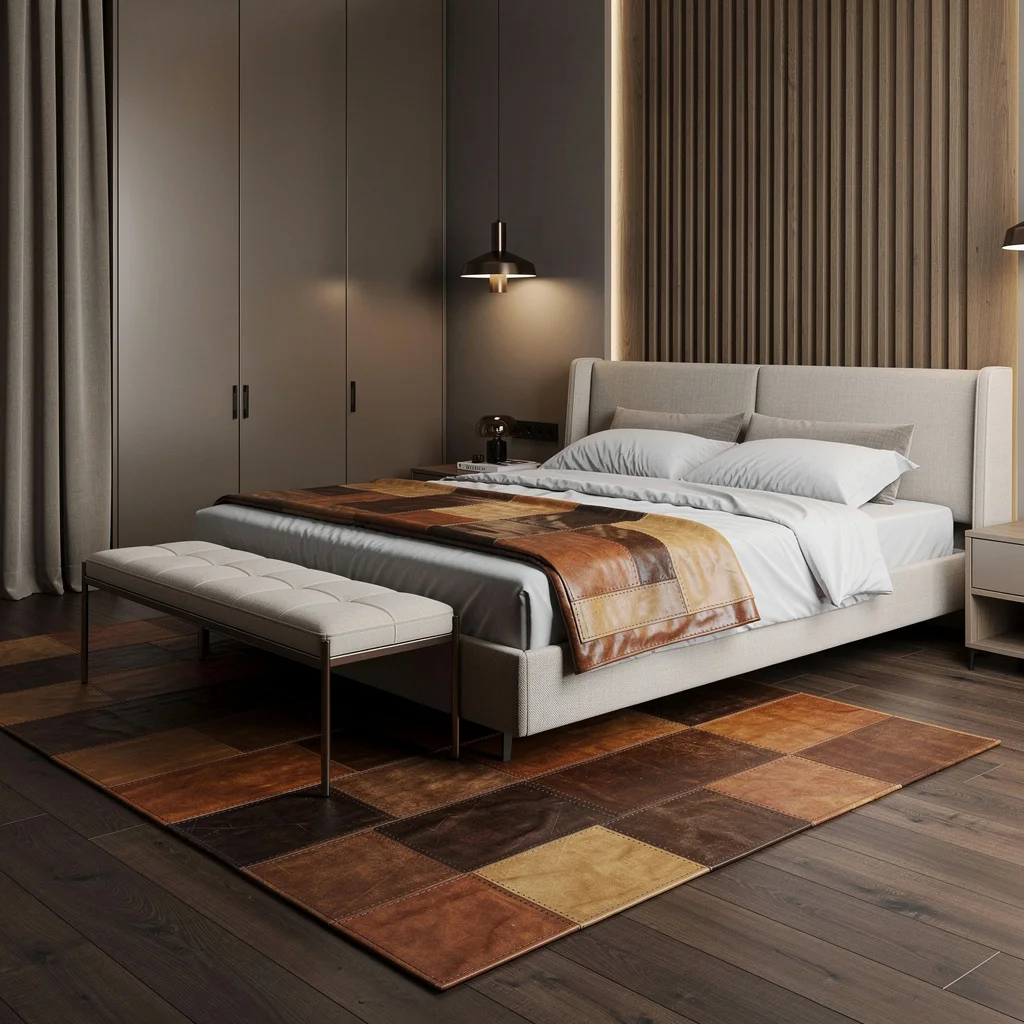
Want to boss up your bedroom like you run the city? Go hard with a bespoke patchwork leather rug—espresso, cognac and camel tones—under your low, upholstered headboard. Place a slender bench at the bed’s foot for extra polish (no shoe piles, please). Install satin-finish cabinets on the wall opposite, and slam in directional bronze sconces for purposeful lighting. Subtle wood slats and wide-plank smoked oak floors keep it warm without getting rustic. Blackout curtains mean total control. Hack: Leather rugs aren’t gentle, so pair them with sleek finishes—not fluffy throws—if you want that urban cocoon.
Final Thoughts
A master bedroom rug that's working properly doesn't announce itself — it makes the room feel finished in a way you notice immediately but can't quite explain. It's the thing that pulls the furniture into a coherent arrangement, makes the floor feel like part of the design rather than something to walk on top of, and communicates a level of intention that transforms a bedroom from adequately furnished into genuinely designed. Get the size right, get the placement right, and choose something you'd actually stop to look at. The floor has been waiting for a decision worth making.