
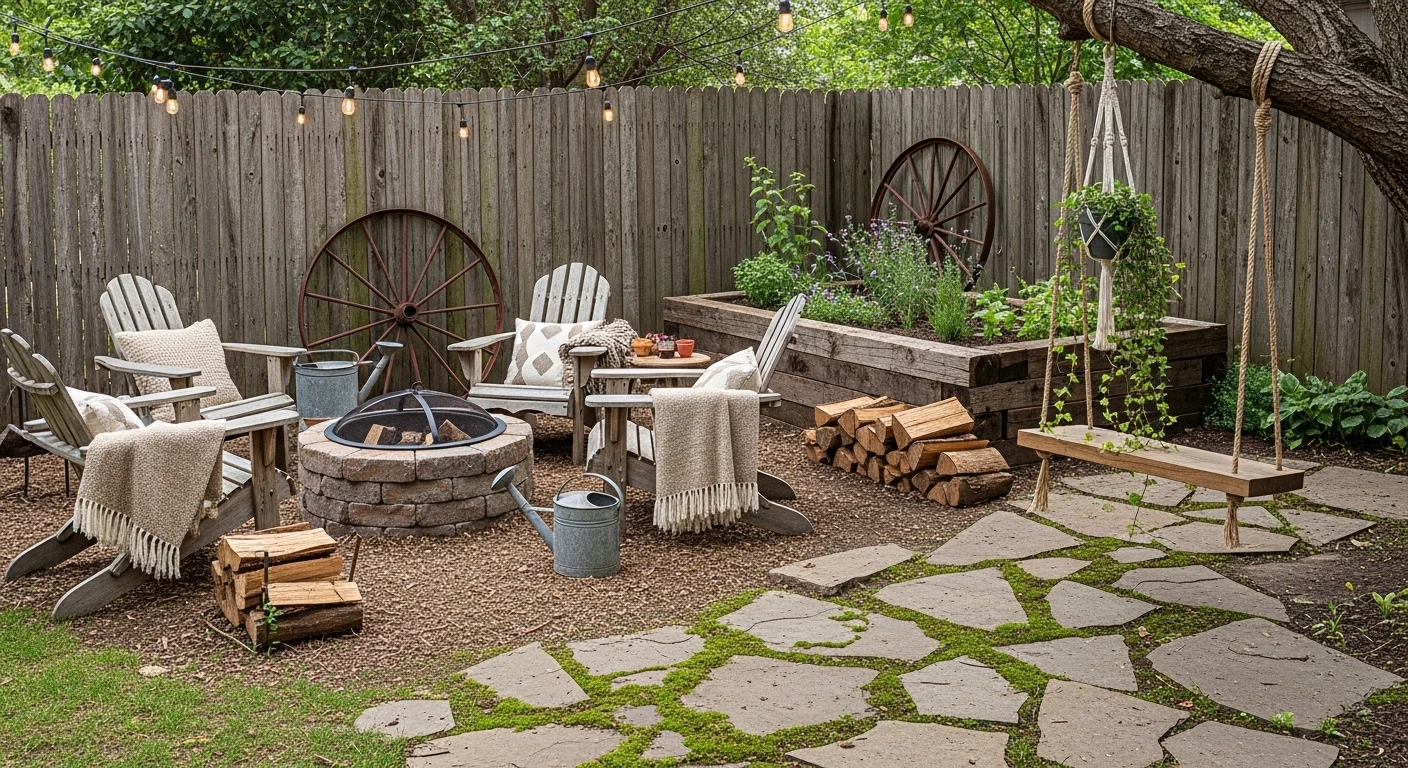
Ready to drag your garden out of suburbia snoozefest and serve serious rustic attitude? Stop wishing for Pinterest-core and actually get your hands dirty—literally—with these decisive, slightly savage decor rules. Whether you’re after cottagecore legend or ‘found it on grandma’s farm’, these how-tos will teach you to style with grit, not grit-your-teeth regret. Forget catalog clones. Get the authentic, weathered magic without looking like you just raided a fake prop warehouse. Let’s clean up your outdoor act—one rusty bucket at a time.
The Lantern and Iron Bench Garden Room
If your garden doesn’t feel like a room, you haven’t finished decorating it. Anchor a wrought iron bench with scrolled arms under a pergola so overgrown with climbing roses and vines that the structure underneath is almost beside the point. Around it, place barrel planters stuffed with marigolds and asters, let lavender and phlox spill over the stone path edges, and hang antique iron lanterns from the pergola beams at varying heights so they glow amber through the foliage at dusk. The flagstone floor should look like it was laid a century ago and mortared by someone who wasn’t in a hurry. Rule: outdoor lanterns earn their place when they’re hung from actual structure, not propped on a surface — the moment light comes from above, your garden stops being a yard and starts being a place.
The Lace and Chain Swing Nook
This is what happens when someone stops trying to make their garden look finished and starts letting it look found. A weathered wooden bench suspended from gnarled tree branches by chains, draped with a heavy knitted throw and flanked by every mismatched pot, enamel bucket, and wicker basket of wildflowers you can gather. Old lace panels hung from the branches above filter the light and billow in the breeze like something from a novel set in the countryside. An antique watering can rusting quietly to the side, a scattered handful of garden books, foxgloves and asters growing in from every direction — none of it was arranged so much as allowed to accumulate with intent. Rule: this aesthetic dies the moment anything looks new — if it doesn’t have a patina, a chip, or a story, it has no business being here.
The Ladder That Got Promoted
An old wooden ladder leaning against a barn wall is either an eyesore or a vertical garden display — the only difference is whether you’ve loaded every rung with pots. And not just any pots: terracotta in every size, a few plastic ones in hot pink and purple that should by all design rules be banned but somehow work in this context, zinnias, petunias, geraniums, calibrachoa, and dahlias all competing for space and spilling over each other with zero apology. Trailing plants hanging off the sides, pots crowded together at the base where they’ve migrated over the season, greenery taking over the top rungs — the ladder disappears and a tower of color takes its place. Rule: the moment your ladder display looks curated, it looks wrong — this works precisely because every pot got there differently and nobody edited the result.
The Rose Pergola Hideaway
This is the garden feature that makes everyone who walks past slow down and stare. A timber pergola framing a weathered door set into a brick wall, climbing roses so densely planted they’ve consumed the entire structure until the wood underneath is just a suggestion, iron bistro chairs and a fold-up table tucked underneath where the roses form a natural ceiling — and at dusk, a single lantern glowing warm through the blooms. The brick path underfoot is uneven and moss-edged, the roses are the blowsy, old-fashioned kind that drop petals everywhere and smell like something you can’t buy. Rule: a rose pergola only reaches its potential when the roses are allowed to go wild across the top — clip the sides for tidiness if you must, but let the canopy grow until it’s almost too much, because almost too much is exactly right.
The Ornate Mirror in the Garden
Putting a mirror in a garden sounds like a decision that requires explaining and then stops requiring explanation the moment you see it done properly. A floor-length ornate stone-framed mirror standing among foxgloves, roses, and delphiniums doubles the garden behind it and creates the disorienting, magical impression that the space extends far beyond its actual boundaries. Edge it with river stones, surround the base with terracotta pots of cottage flowers, let ivy creep in from above and roses push in from the sides until the mirror frame looks like it grew there. Rule: a garden mirror only works when the plants are allowed to partially obscure it — a mirror sitting clean and unencroached looks like furniture that got left outside; one half-consumed by greenery looks like it was always there.
The Watering Can and Ladder Wall
This is organized chaos at its most committed. A sun-bleached ladder leaning against a weathered wood wall, surrounded by every galvanized watering can, tin bucket, enamel cart, and rusty vessel you’ve been quietly collecting from markets and grandparents — each one planted up with wildflowers, baby’s breath, asters, and cosmos in the soft palette of something that bloomed by accident. Wooden shelving on the wall above holds overflow pots, a worn gardening bag hangs from a rung, tools are propped rather than stored. The collection has clearly grown over years, each piece arriving from a different place and finding its purpose here. Rule: this look requires real patina, not manufactured distress — buy old things that have genuinely been used and let them rust and chip naturally, because the fake version of this is immediately obvious and deeply unconvincing.
Build a Potting Bench That Actually Has Character
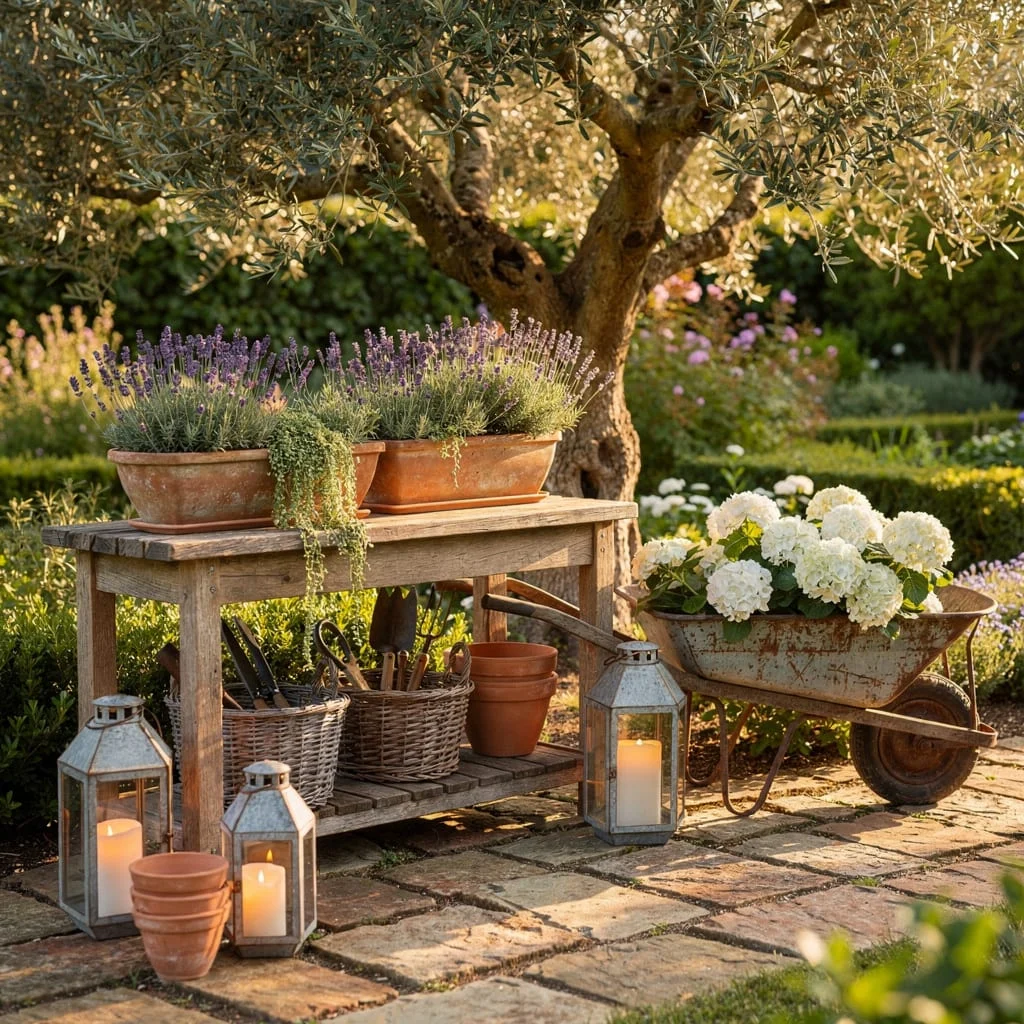
Want a garden that whispers old-world magic instead of ‘I bought it all yesterday’? Drag in a weathered oak potting bench and slide it under the moodiest, gnarliest olive tree you can find (shade and drama, always). Jam antique terra cotta planters with outrageous amounts of lavender and tangled rosemary, the more fragrant, the better. Toss some reclaimed stone pavers around and stack hand-thrown clay pots like a stonecutter who’s also channeling their inner Matisse. Plop down willow baskets loaded with tools; leave them looking like you were just mid-task. Vintage wheelbarrows make perfect plant pedestals—jam them with blousy hydrangeas. Scattered galvanized lanterns? Mandatory. Never, ever line anything up—nature’s best moments are artfully messy.
Create an Adirondack Nook With Actual Storybook Energy
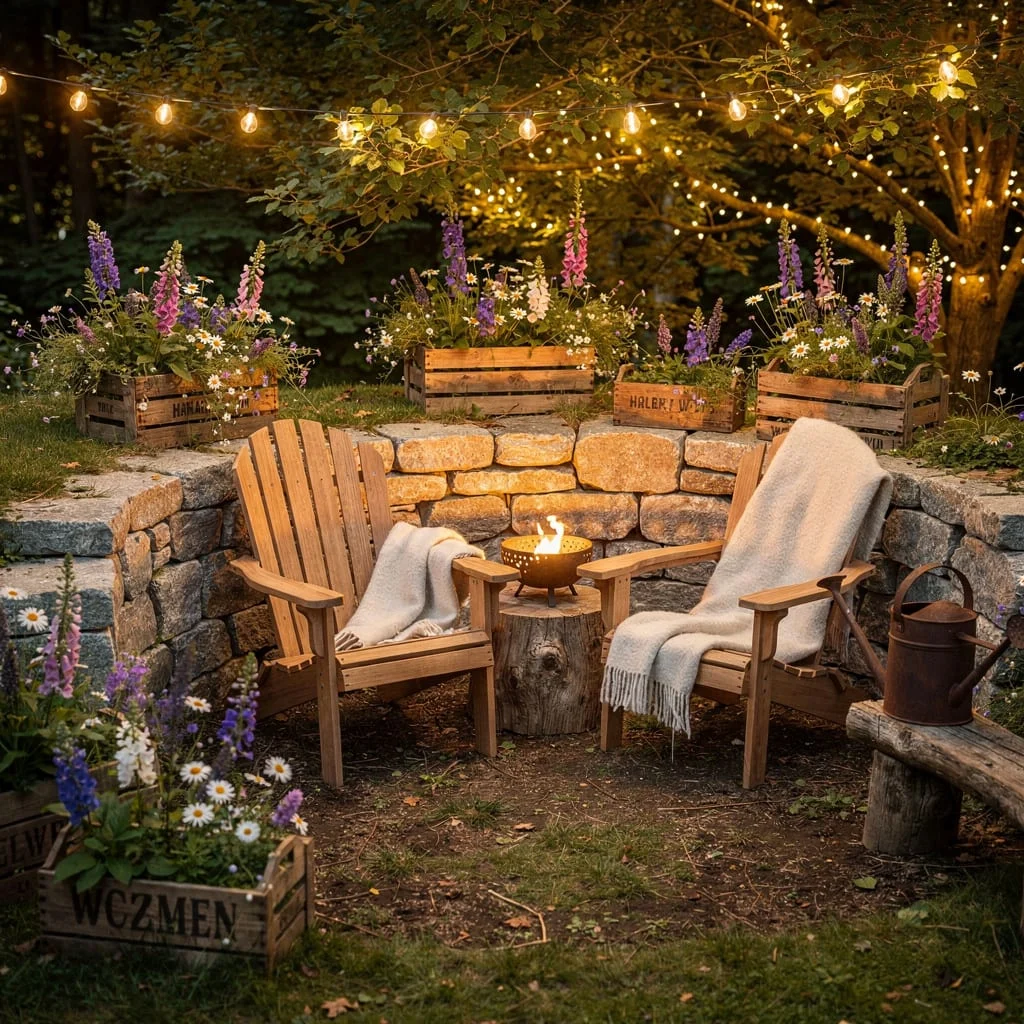
Stop pretending your plastic patio set is doing anything for your vibe. Build a semicircular fieldstone wall (or fake it with affordable stone blocks) to pen in a pair of solid teak Adirondack chairs. These are thrones, not chairs, so toss wool throws over them, messy-cool style. Use a milled tree-stump table for your coffee—and your Instagram flat-lay. Prop wildflowers in repurposed wooden crates all around, and let a gnarly iron watering can sit by a rough bench for visual ‘I garden’ points. String fairy lights through the branches, not just above, and drop in a fire bowl for those golden-hour selfies. Rule: More wild, less tidy.
Make a Statement With Sculptural Bird Baths (But Ditch the Lawn Ornaments)
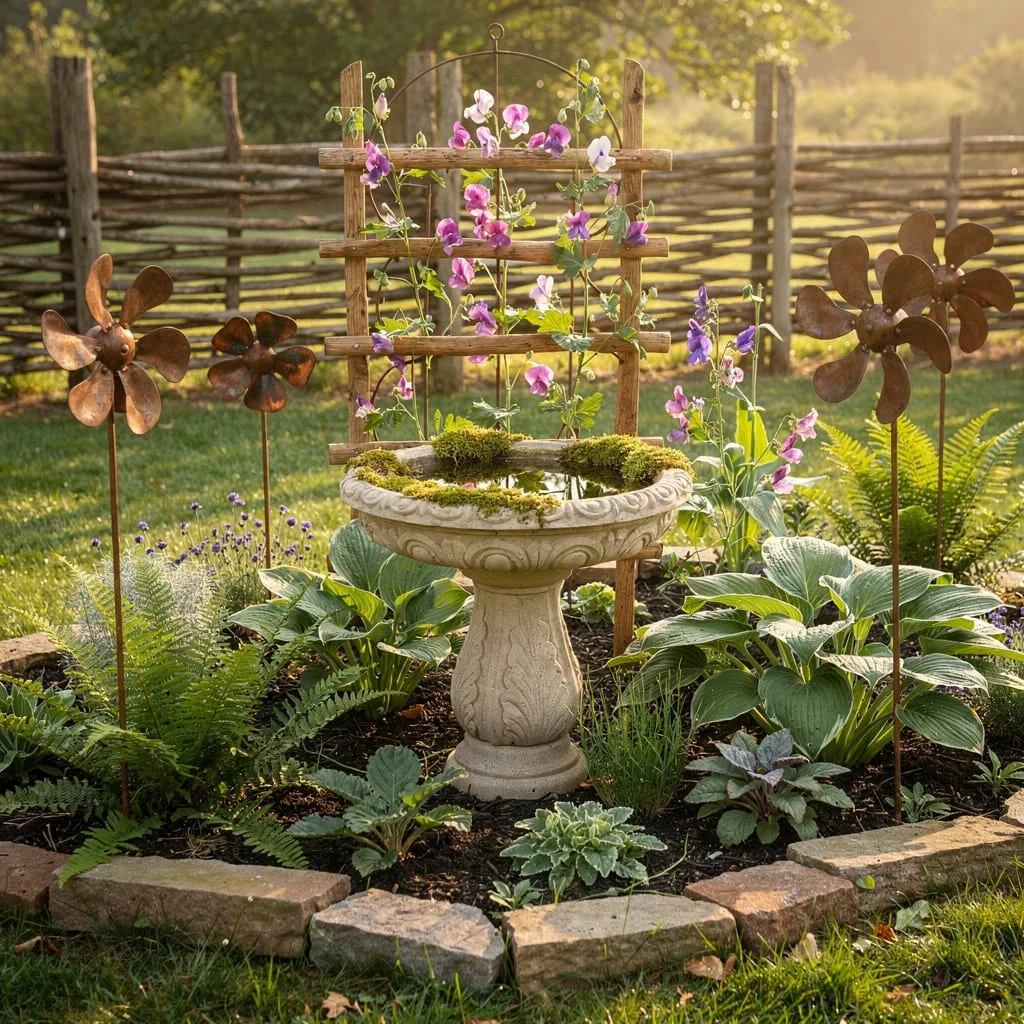
Ditch the kitsch plastic flamingos and give your garden real gravitas: drop in a hand-carved limestone birdbath cloaked in moss for peak rustic elegance. Cluster weathered copper wind spinners and vintage botanical stakes between unruly native ferns and hostas, but keep it asymmetric—nature doesn’t care about symmetry and neither should you. Low, handmade oak trellises are for climbing sweet peas—go wild, not straight lines. If you want privacy, get a split-rail woven fence for that textural, untamed edge. The pro move? Dew-kissed foliage only happens early—wake up and water before the neighbors even touch their coffee.
Frame the Scene With a Real Wood Archway (No Fake Plastic Vines, Ever)
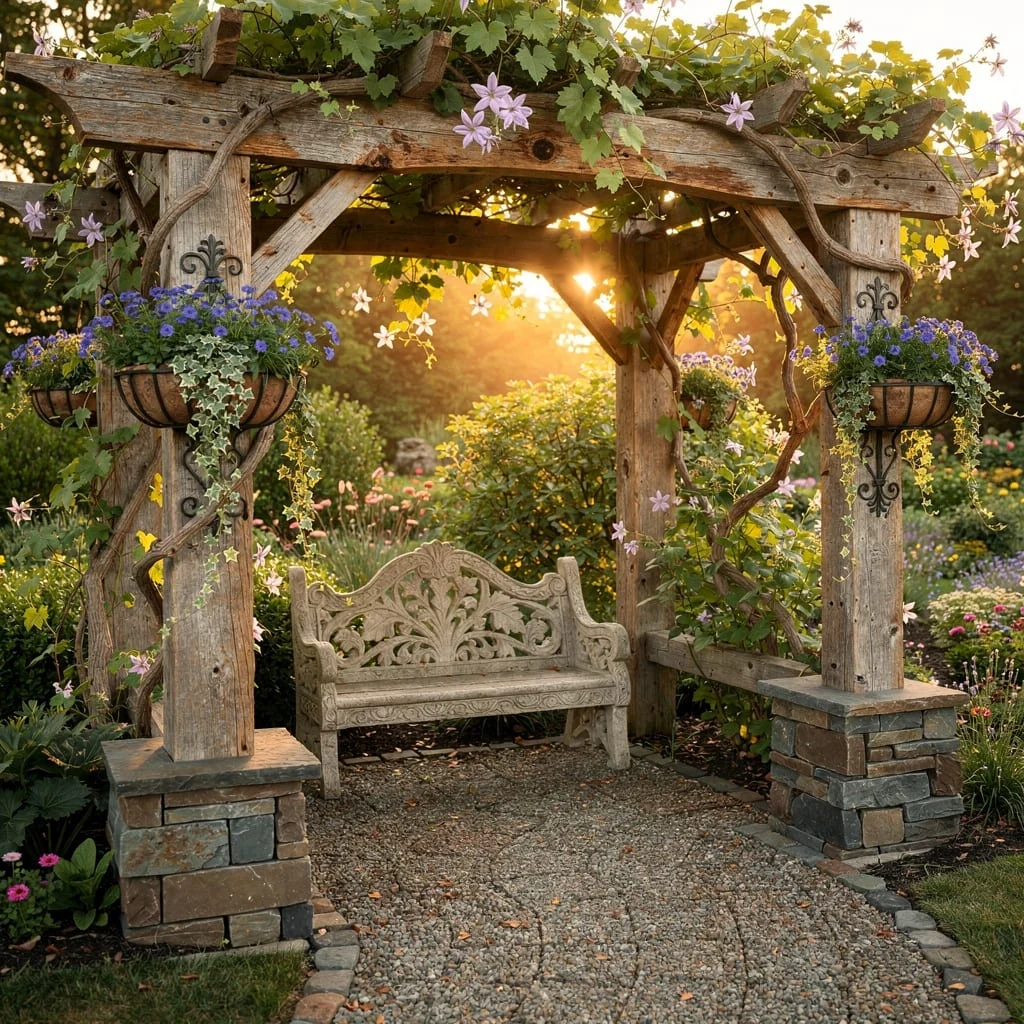
Stop settling for rickety wire arches. Build your garden entrance with reclaimed barn wood. Yes, that means actual beams, not those prefab bundles. Train chunky grapevines and rampant clematis over it. Sit a legit carved stone bench in the shade—bonus if the carving tells a backstory. Wall-mount wrought-iron planters exploding with blue lobelia and ivy right next to unevenly stacked slate accents that edge a gravel path. Let unruly sunlight filter through the top—no silly fabric canopies. The secret? Let the chaos of real plants define your lines. Refined nature always wins over try-hard perfection.
Craft a Potting Corner That’s More Thrifted Than TikTok
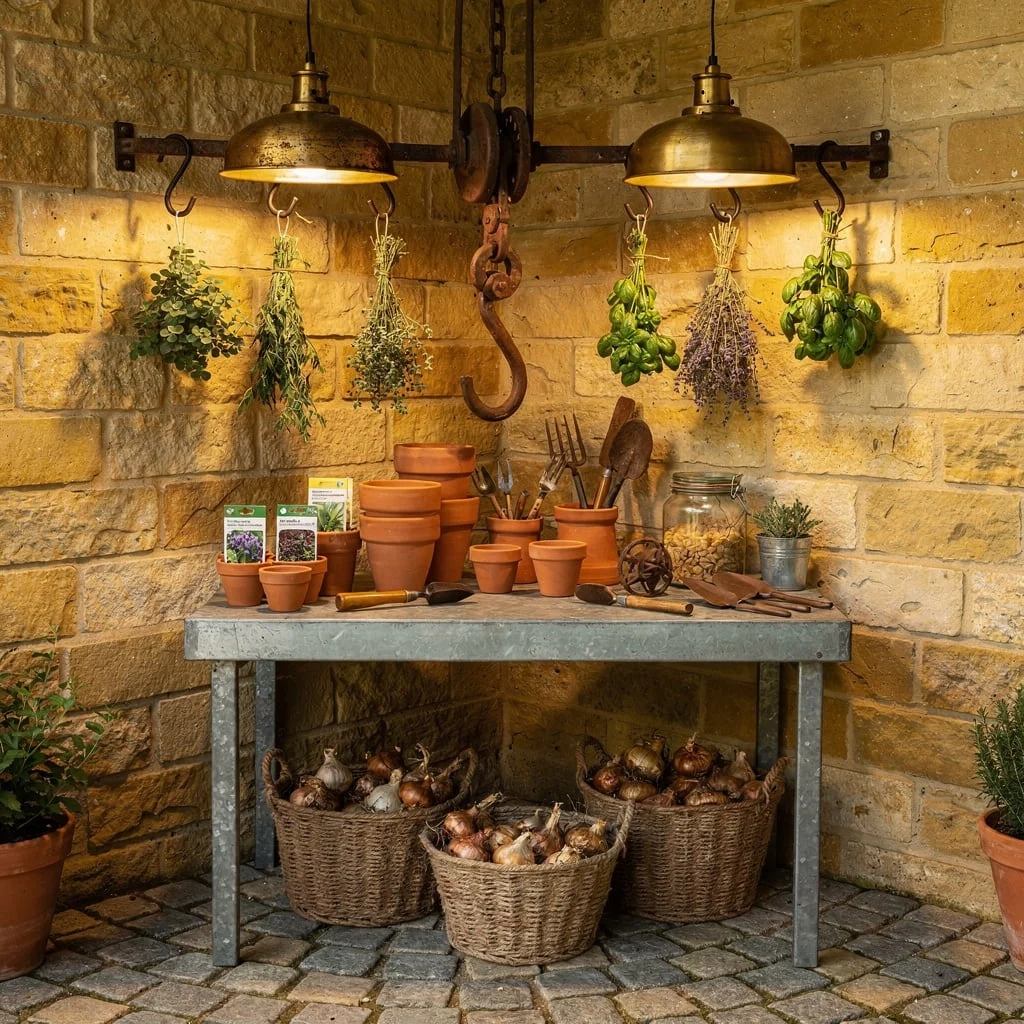
Channel that old-world gardener who knows their bulbs from their basil. Set a zinc-topped potter’s table against limestone—no manufactured urban jungle here. Scatter terra cotta pots, ancient seed packets, and tools that’ve known pain (not factory fresh). Hang dried herb bunches with pulleys and S-hooks, like you actually use oregano. Sisal baskets full of bulbs get tossed underfoot. Use natural cobblestone for a floor that calls for boots, not slippers. Overhead? Hang aged brass pendants—skip the Edison bulb meme and demand real patina. Always mix your lighting harshly—no moody garden deserves a dental office overhead glow.
Steal the Show With a Repurposed Trough Water Feature

Stop buying treacly concrete fountains. Snap up an old copper watering trough and let it go wild green with verdigris—nobody respects shiny copper outside. Channel water through a rough stack of slate, frame the basin with polished river stones and micro ferns, then get all organic with driftwood logs for seating. No cushions? That’s cruel. Handwoven jute only. Lanterns (tea lights, not tiki torches) should edge the setup. If your willow branches don’t reflect in the water, rethink your whole placement. Never forget: The gentler your lighting, the chicer your photo ops. Keep everything looking collected, not bought.
Style a Shelving Scene With Eclectic Grandpa Energy
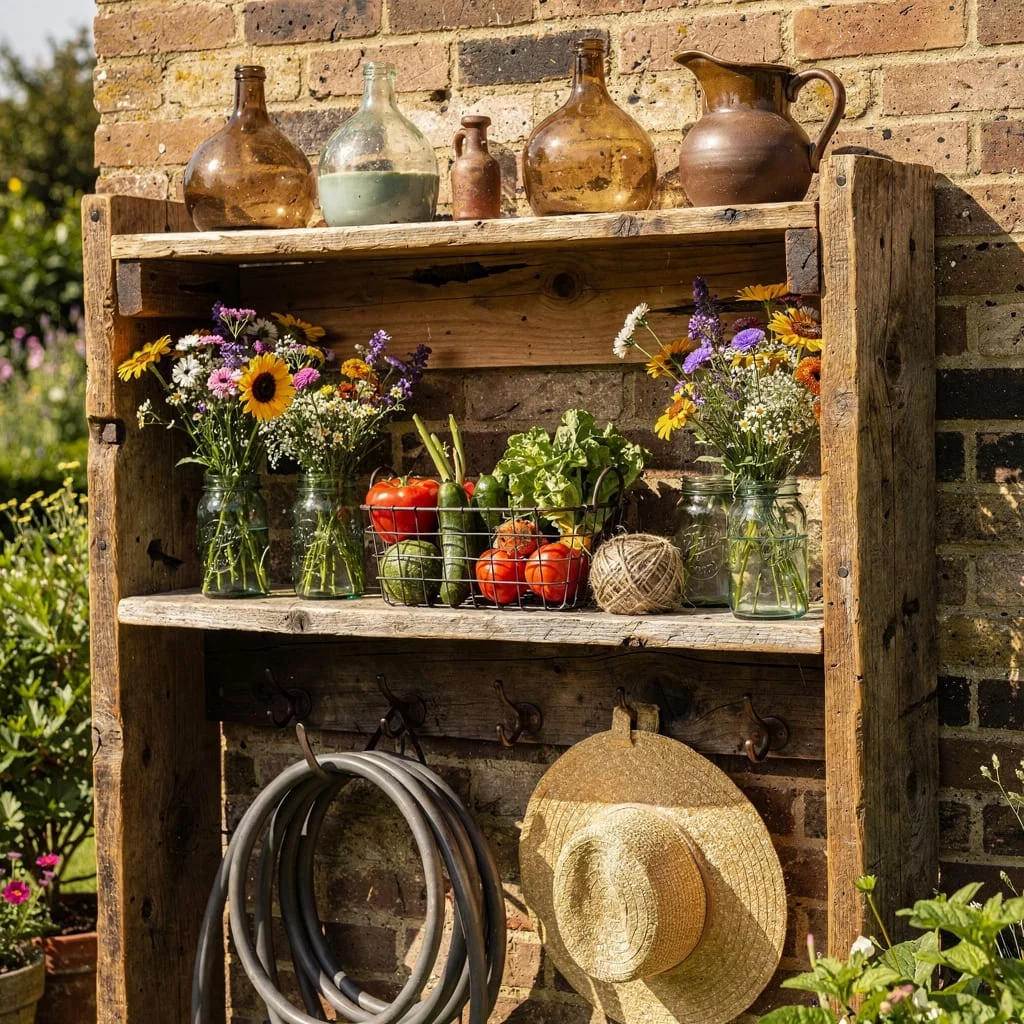
Install a chunky, rustic shelving unit from railway sleepers against a brick wall, then pile it high with antique glass demijohns, weirdly shaped ceramic pitchers, and mismatched wildflower bouquets in mason jars (because basic is boring). Shove wire baskets of homegrown produce and string up hand-bound twine for decoration-turned-handyman-flex. Iron hooks should proudly display garden hoses and straw hats—function double as decor, always. Bathe the whole setup in sunlight, not shade—crisp shadows make the textures pop. Rule: Display is everything; crowded shelves are chic, but only when you clearly don’t care.
Hang Eclectic, Swaying Cans for Ambience (No Cheap Solar Stakes Allowed)
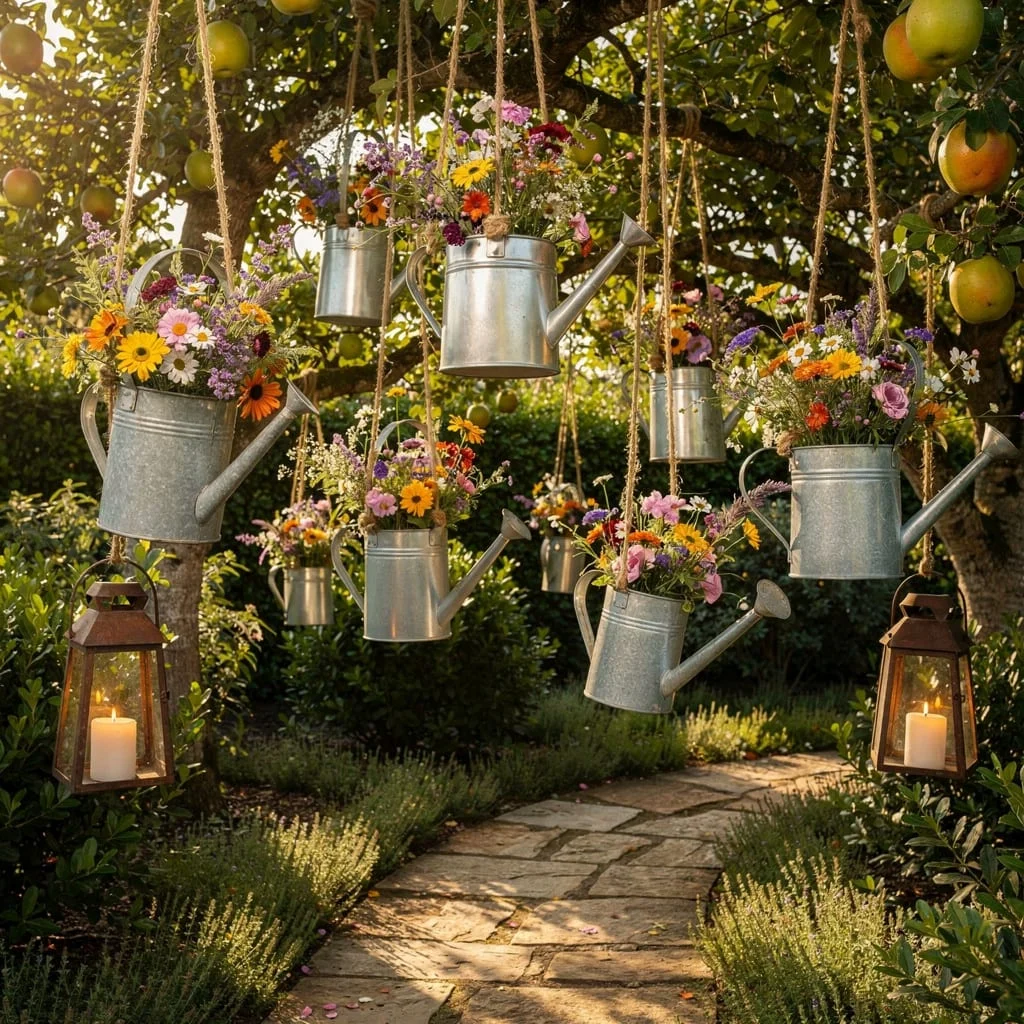
Embrace chaos over order. Suspend upcycled galvanized watering cans and enamel pitchers from fat jute ropes; cram seasonal wildflowers in ‘em and let them dangle over a stone path bordered by creeping thyme. If you aren’t changing blooms with the seasons, what’s the point? Dotted-between lanterns should house LEDs, not actual flames—function before fantasy, kids. Dense greenery = natural diffusion filter. If your light isn’t patchy and your shadows aren’t random, you’re doing it wrong. Hanging installations should make people wonder if you’ve lost your mind (creatively, of course).
Deploy a French Baker’s Rack (Minus the Baguettes, Sadly)
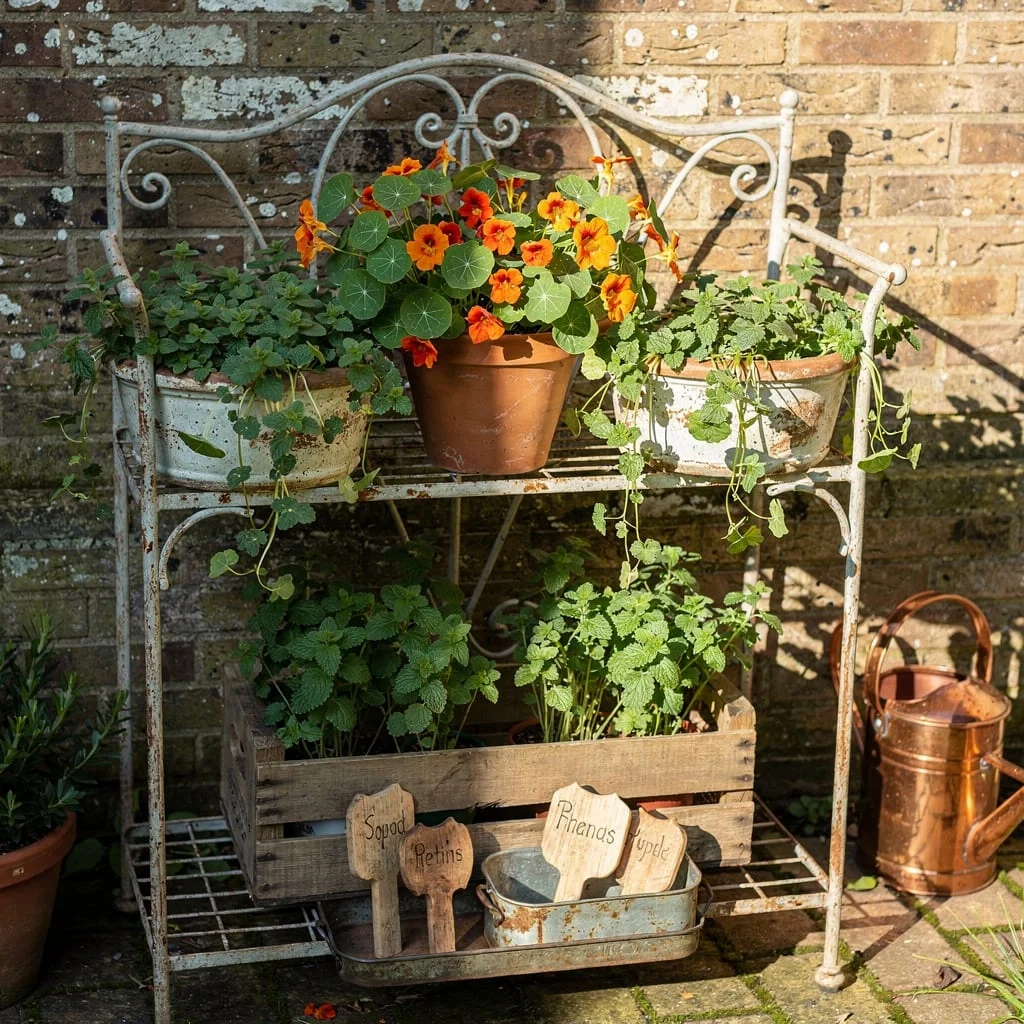
If you’re not decorating with a rusted-out French baker’s rack, what are you even doing? Stack planters overflowing with nasturtiums and lemon balm at every level—let vines spill, don’t ‘arrange’. Use apple crates for fresh-cuts at the base, and hoard hand-carved labels in an antique tin tray like you run your own greenery speakeasy. Always background with a weathered brick wall, not vinyl siding. Copper watering cans must be worthy of envy—a good patina’s a necessity. Sunbeams should highlight, not wash out, your greens. Never arrange by height; arrange by flower drama and always, always keep it lush.
Drape a DIY Chandelier Over Your Farm Table Like a Pro
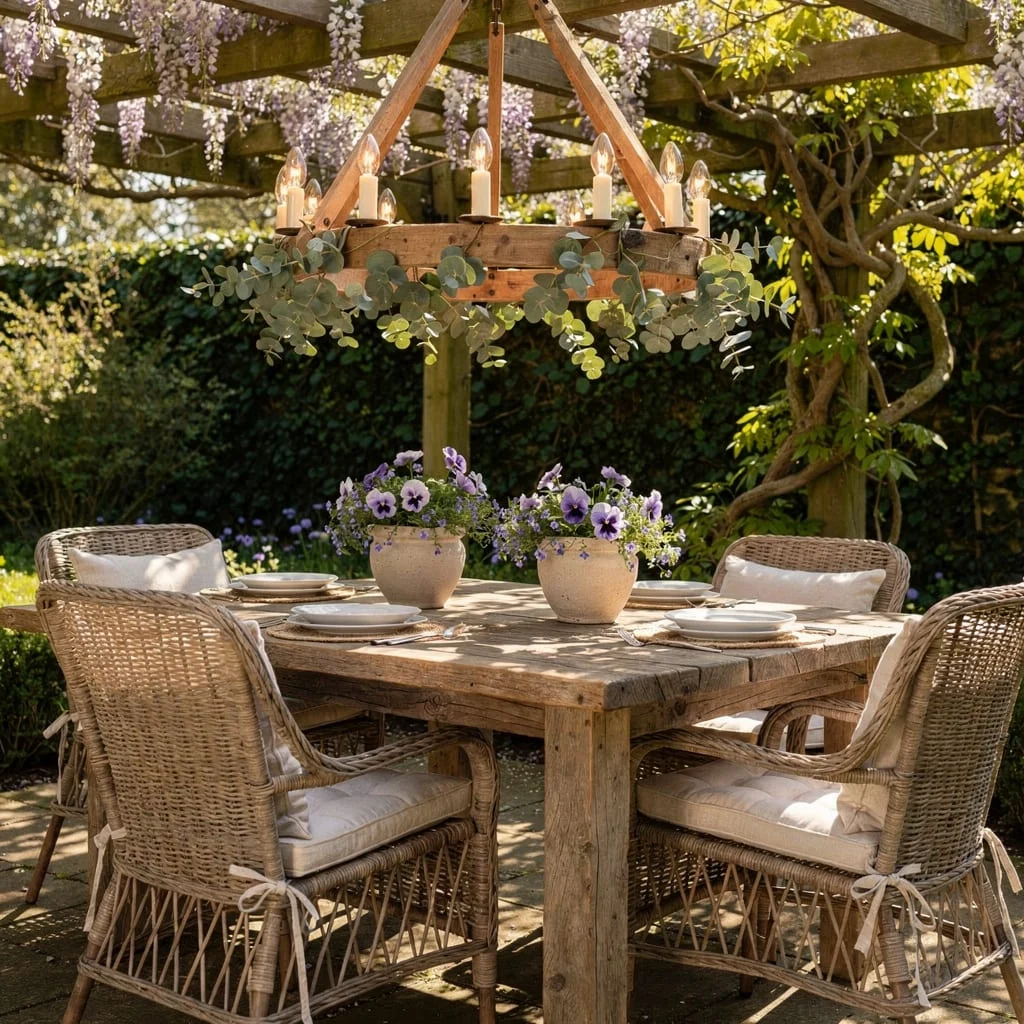
Get crafty: transform a chunky wooden yoke into a chandelier with faux candle bulbs (save the real fire for the fire pit) and drape fresh eucalyptus garlands for max aroma points. Center this situation over a thick, reclaimed oak farmhouse table and fill ceramic planters with pansies and lobelia. Woven rattan chairs, real linen cushions—anything plasticy gets the boot. Place it all under an open pergola and let climbing wisteria do its thing, sunlight dappling everywhere. Pro tip? Let foliage hang low enough to brush your head—if no one dodges a leaf mid-dinner, your setup is too bare.
Ready to burn your ‘Live, Laugh, Love’ sign and build a garden that actually slaps? Don’t just wishlist these ideas—steal, thrift, and DIY your way to a garden that flexes real character. Perfection is for control freaks and chain stores; honest rustic style is all about doing the most with the worn, the wild, and the weird. Get out there, break up those flower beds, and dare someone to call your garden basic ever again.