
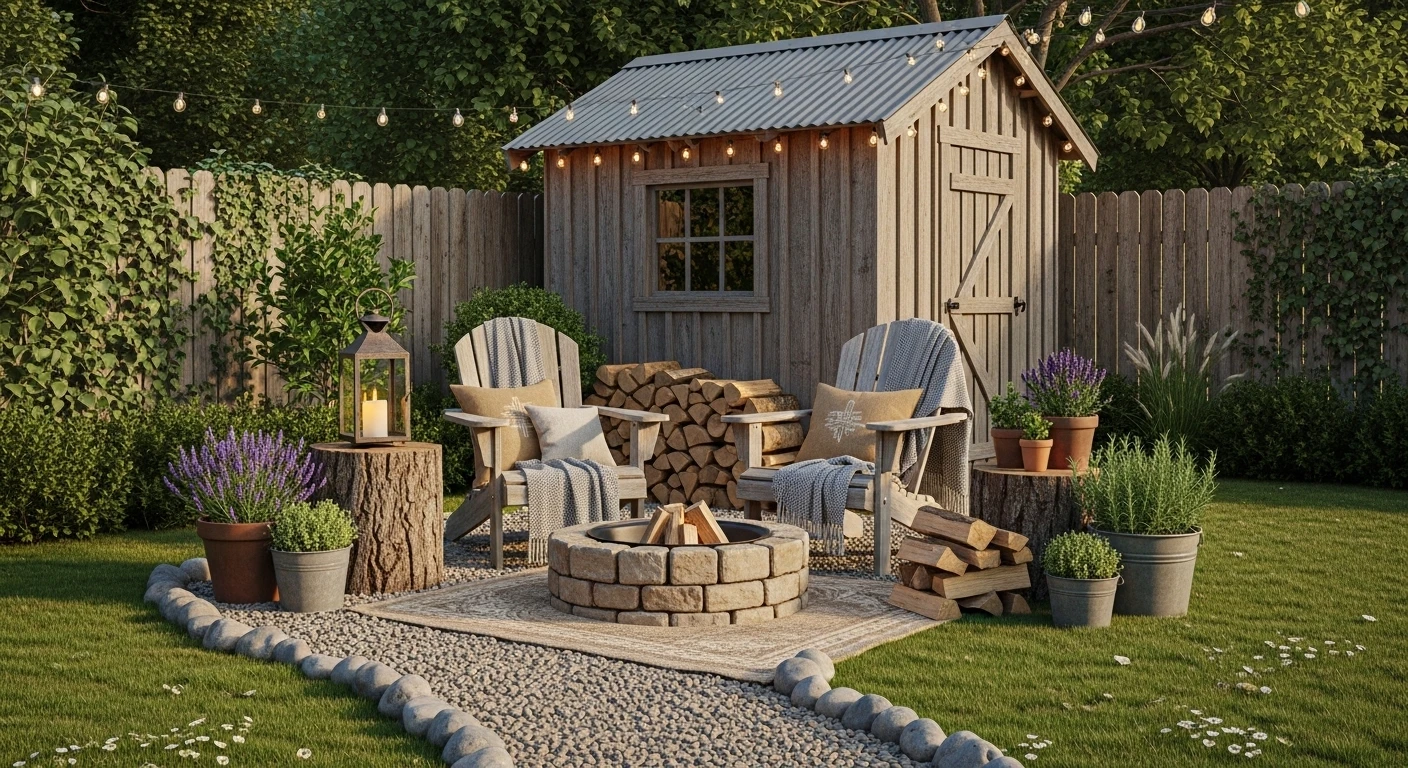
Sick of looking at your flat, plastic patio furniture and that desperate, patchy grass? Time to trade suburbia vibes for real, unfiltered rustic garden goals. No more yawning at boring mulch beds—you’re about to unlock the kind of lush, lived-in outdoor style your neighbors will fake-smile about and your Insta will eat up. It’s all about mixing wild textures, murdering matchy-matchiness, and using actual stone, actual wood, and actual plants. Ready to commit garden blasphemy (and do it right)? Here are killer rustic garden decor ideas, served snarky.
The Lantern and Iron Bench Garden Room
If your garden doesn’t feel like a room, you haven’t finished decorating it. Anchor a wrought iron bench with scrolled arms under a pergola so overgrown with climbing roses and vines that the structure underneath is almost beside the point. Around it, place barrel planters stuffed with marigolds and asters, let lavender and phlox spill over the stone path edges, and hang antique iron lanterns from the pergola beams at varying heights so they glow amber through the foliage at dusk. The flagstone floor should look like it was laid a century ago and mortared by someone who wasn’t in a hurry. Rule: outdoor lanterns earn their place when they’re hung from actual structure, not propped on a surface — the moment light comes from above, your garden stops being a yard and starts being a place.
The Lace and Chain Swing Nook
This is what happens when someone stops trying to make their garden look finished and starts letting it look found. A weathered wooden bench suspended from gnarled tree branches by chains, draped with a heavy knitted throw and flanked by every mismatched pot, enamel bucket, and wicker basket of wildflowers you can gather. Old lace panels hung from the branches above filter the light and billow in the breeze like something from a novel set in the countryside. An antique watering can rusting quietly to the side, a scattered handful of garden books, foxgloves and asters growing in from every direction — none of it was arranged so much as allowed to accumulate with intent. Rule: this aesthetic dies the moment anything looks new — if it doesn’t have a patina, a chip, or a story, it has no business being here.
The Ladder That Got Promoted
An old wooden ladder leaning against a barn wall is either an eyesore or a vertical garden display — the only difference is whether you’ve loaded every rung with pots. And not just any pots: terracotta in every size, a few plastic ones in hot pink and purple that should by all design rules be banned but somehow work in this context, zinnias, petunias, geraniums, calibrachoa, and dahlias all competing for space and spilling over each other with zero apology. Trailing plants hanging off the sides, pots crowded together at the base where they’ve migrated over the season, greenery taking over the top rungs — the ladder disappears and a tower of color takes its place. Rule: the moment your ladder display looks curated, it looks wrong — this works precisely because every pot got there differently and nobody edited the result.
The Rose Pergola Hideaway
This is the garden feature that makes everyone who walks past slow down and stare. A timber pergola framing a weathered door set into a brick wall, climbing roses so densely planted they’ve consumed the entire structure until the wood underneath is just a suggestion, iron bistro chairs and a fold-up table tucked underneath where the roses form a natural ceiling — and at dusk, a single lantern glowing warm through the blooms. The brick path underfoot is uneven and moss-edged, the roses are the blowsy, old-fashioned kind that drop petals everywhere and smell like something you can’t buy. Rule: a rose pergola only reaches its potential when the roses are allowed to go wild across the top — clip the sides for tidiness if you must, but let the canopy grow until it’s almost too much, because almost too much is exactly right.
The Ornate Mirror in the Garden
Putting a mirror in a garden sounds like a decision that requires explaining and then stops requiring explanation the moment you see it done properly. A floor-length ornate stone-framed mirror standing among foxgloves, roses, and delphiniums doubles the garden behind it and creates the disorienting, magical impression that the space extends far beyond its actual boundaries. Edge it with river stones, surround the base with terracotta pots of cottage flowers, let ivy creep in from above and roses push in from the sides until the mirror frame looks like it grew there. Rule: a garden mirror only works when the plants are allowed to partially obscure it — a mirror sitting clean and unencroached looks like furniture that got left outside; one half-consumed by greenery looks like it was always there.
The Watering Can and Ladder Wall
This is organized chaos at its most committed. A sun-bleached ladder leaning against a weathered wood wall, surrounded by every galvanized watering can, tin bucket, enamel cart, and rusty vessel you’ve been quietly collecting from markets and grandparents — each one planted up with wildflowers, baby’s breath, asters, and cosmos in the soft palette of something that bloomed by accident. Wooden shelving on the wall above holds overflow pots, a worn gardening bag hangs from a rung, tools are propped rather than stored. The collection has clearly grown over years, each piece arriving from a different place and finding its purpose here. Rule: this look requires real patina, not manufactured distress — buy old things that have genuinely been used and let them rust and chip naturally, because the fake version of this is immediately obvious and deeply unconvincing.
Build an Irresistible Sunken Fire Pit Lounge—Not Just a ‘Fire Spot’
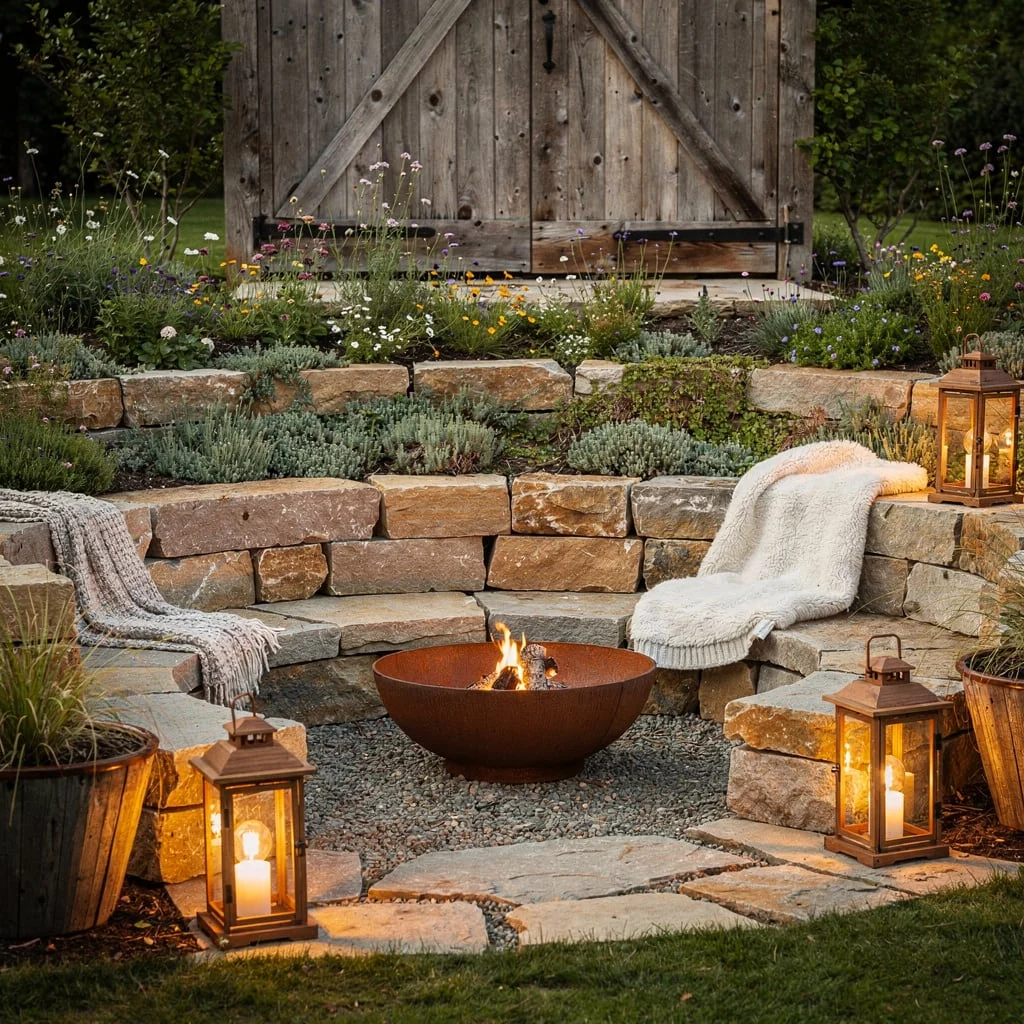
Stop plopping a metal bowl on some pavers and calling it a fire pit. If you want backyard drama and intimacy, literally dig a circular pit into your garden and line it with rough-hewn sandstone seating—it’s ancient amphitheater energy, but for s’mores. Drop a corten steel fire bowl in the center (get used to that rusty, industrial vibe: it’s *intentional*, not neglect), then pack the pit with gravel for proper drainage and chill factor. Wrap the pit with a stone retaining wall—not the fake stuff—then let creeping thyme and wildflowers crawl all over it like nature’s own Instagram filter. Toss in wool throws and weathered planters, and anchor the scene with a reclaimed barn door for the ultimate rustic backdrop. Pro tip: Always add soft lantern lighting at multiple heights—skip harsh floods, and actually use Edison bulbs so your firelight is moody instead of interrogation-room terrifying.
Host Dinner Under a Reclaimed Timber Pergola—Actual Ambience, Incoming
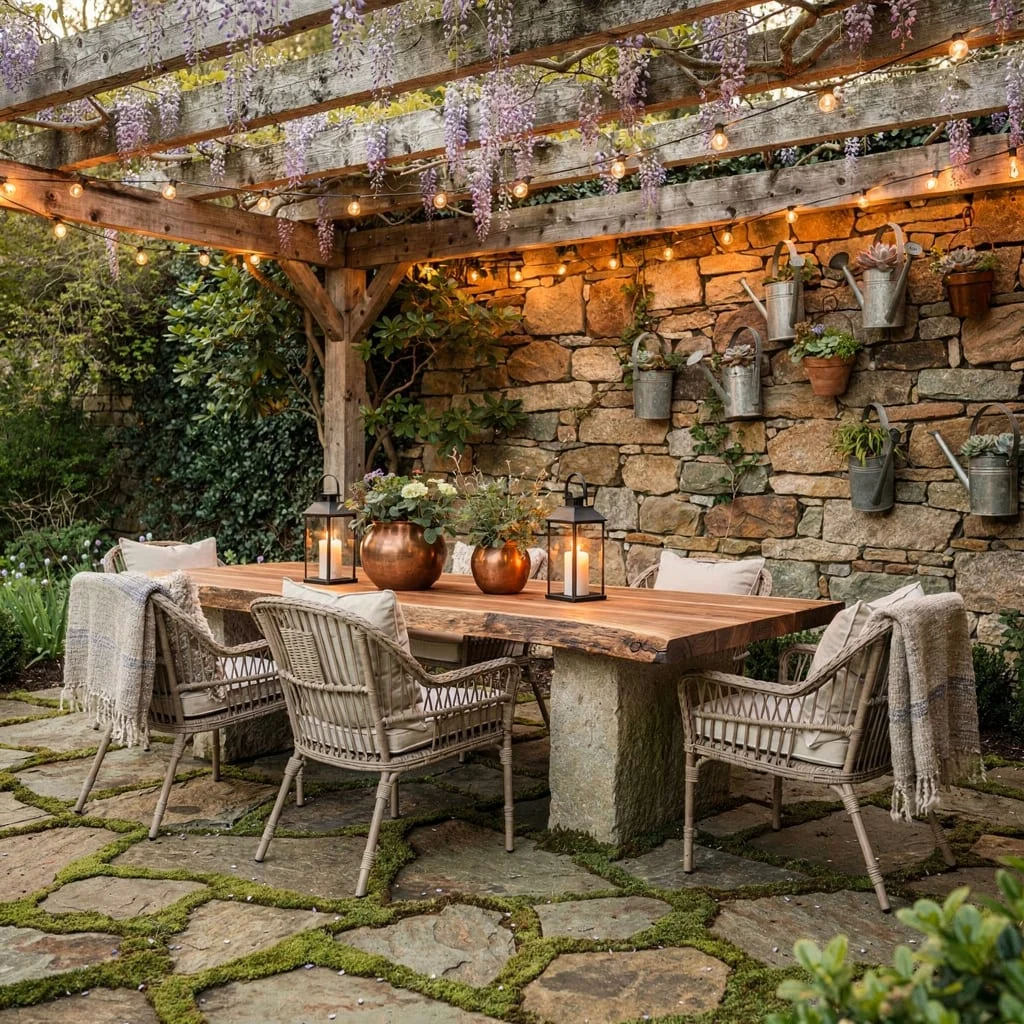
Ditch the plastic tables and patio umbrellas. If you want to turn ‘outside eating’ into the main character moment, throw up a pergola using thick, battered timber beams—bonus points if you can haul in the real stuff, not faux stains. Let your wisteria or climbing vines do their dramatic hang-down thing for shade and romance. Park a chunky live-edge walnut table on uneven flagstone pavers with moss in the cracks (no, don’t grout them), and stack your chairs with faded woven throws because *cozy* isn’t just for inside. Decorate with actual copper planters, overload the stone wall with scrappy metal watering cans full of succulents (because you’re an upcycling genius now), and swag string lights overhead with all the grace of a cozy Italian patio. Pro tip: Skip the matchy chair sets—use rattan and iron together, and always layer lighting with both lanterns and fairy lights for instant glow-up.
Upgrade Your Potting Station—Function AND Drama, Baby
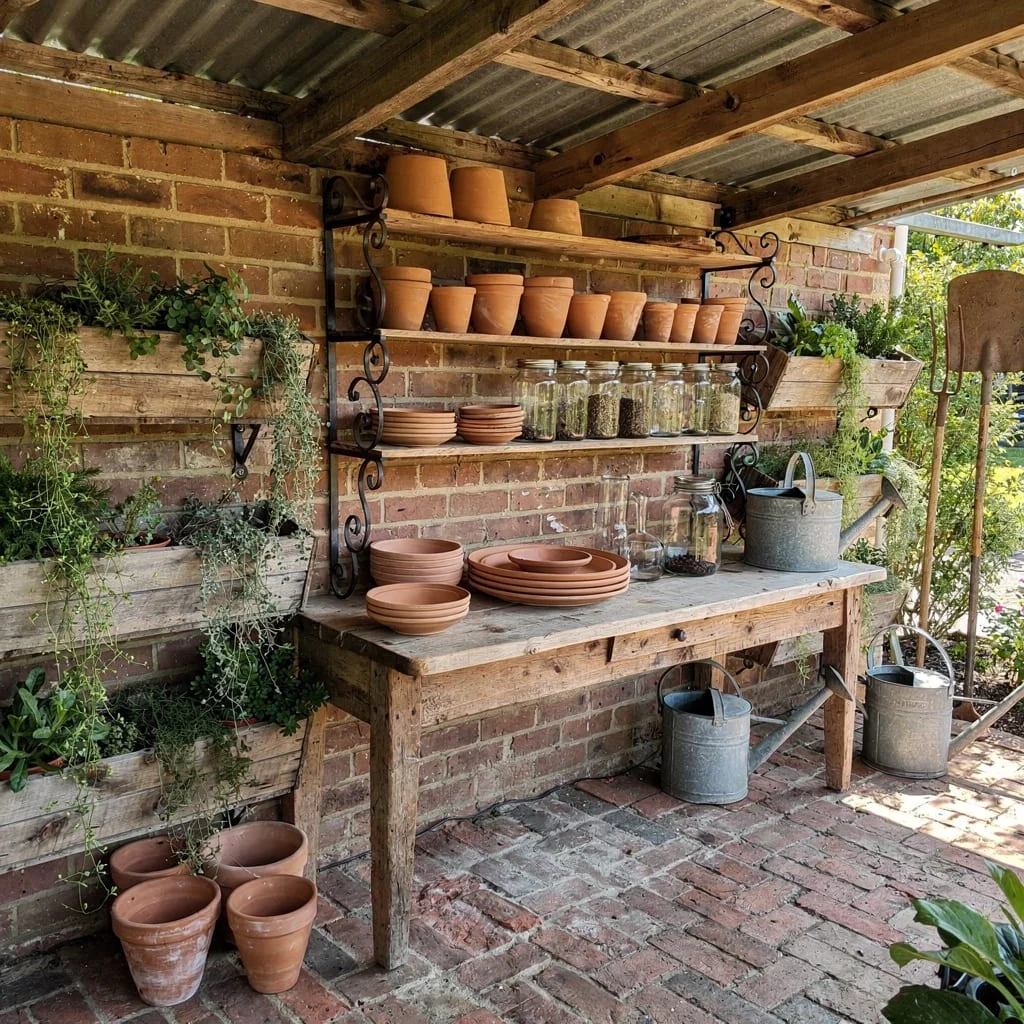
Stop using your muddiest corner as a dumping ground. Build a rustic potting bench under a scrap-metal roof, right against a brick wall. Use an actual aged-oak workbench and put up open wrought-iron shelving for your clay pots, saucers, and charmingly mismatched glass jars. Brick or stone pavers underfoot add legit old-world street energy, but don’t forget to soften them up with rampant, cascading greenery spilling from crate shelves—if you’re not tripping on herbs, you’re not doing it right. Shelter your tools under exposed timber rafters and let some filtered sun in to catch the sparkle off your vintage finds. Pro tip: Never, ever let plastic pots invade—terracotta or bust, and hang those galvanized watering cans where everyone can see.
Go All-In on a Stacked Limestone Water Feature—Call It the Garden’s Catwalk
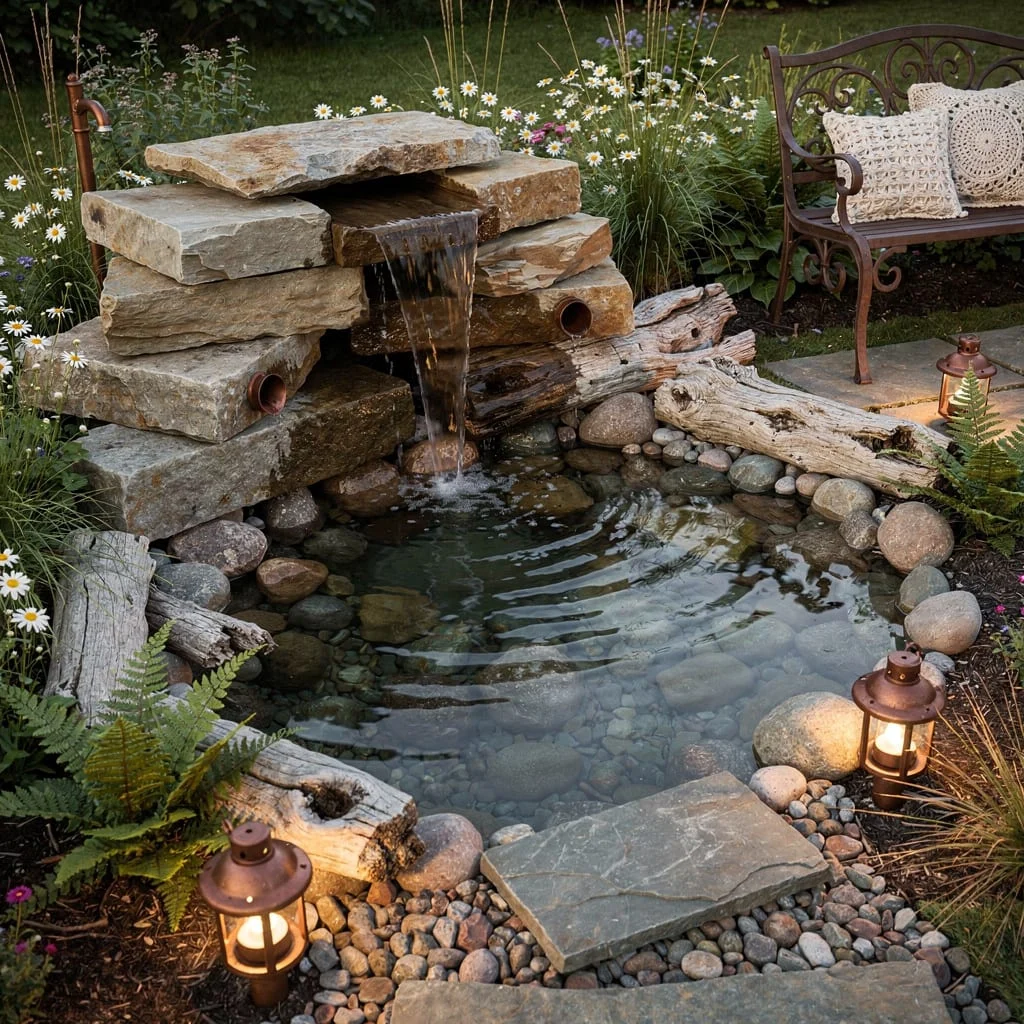
Enough with plastic fountains or those gurgling store-bought birdbaths. Stack up limestone slabs in a cascade so your water flows like a Dior runway: controlled, but wild. Frame the pond with river rocks and driftwood like you actually collected them (pretend, it’s fine). Smother the area with native ferns, wild daisies, and field grasses—no sterile symmetry! Drop in weathered copper spouts for the old-growth touch, then carve a stepping-stone path over slate to draw guests in. Perch a proper wrought-iron bench beside it, pile on crocheted cushions, and floor-level lanterns to wash ripples with soft light at dusk. Pro tip: Always cluster your plantings—ditch the lonely single specimens for magazine-level lushness.
Carve Out a Rustic Reading Nook—Serotonin Sanctuary, Incoming
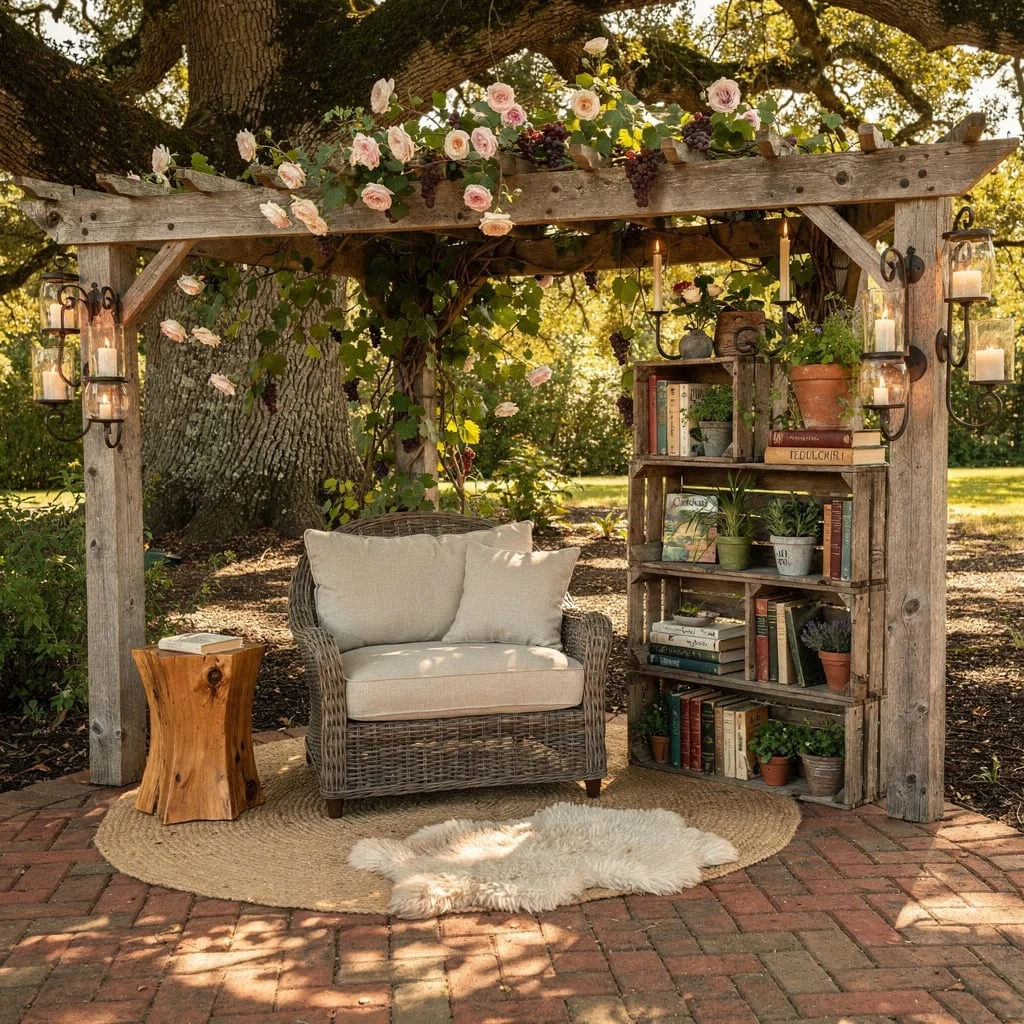
Don’t settle for a folding chair under a tree—go designer-cabin in your garden. Set up a battered wooden arbor under your biggest oak, let roses and grapevines snake across it (no, you don’t have control, and that’s the point). Plop an oversized wicker chair with so many linen cushions you lose your phone, and lean a raw-edge cedar table close for coffee, books, or actual snacks. Use crate shelves for vintage gardening books and potted parsley—because you’re literate *and* rustic. Ground the nook with a herringbone brick floor and scatter thick sheepskin throws over layered jute rugs. Pro tip: Iron sconces on the arbor, candles only; you want flickering dappled shadows at golden hour, not LED crime-scene vibes.
Swap ‘Cute Planter’ for a Proper Hanging Herb Garden—Botanical Clapback
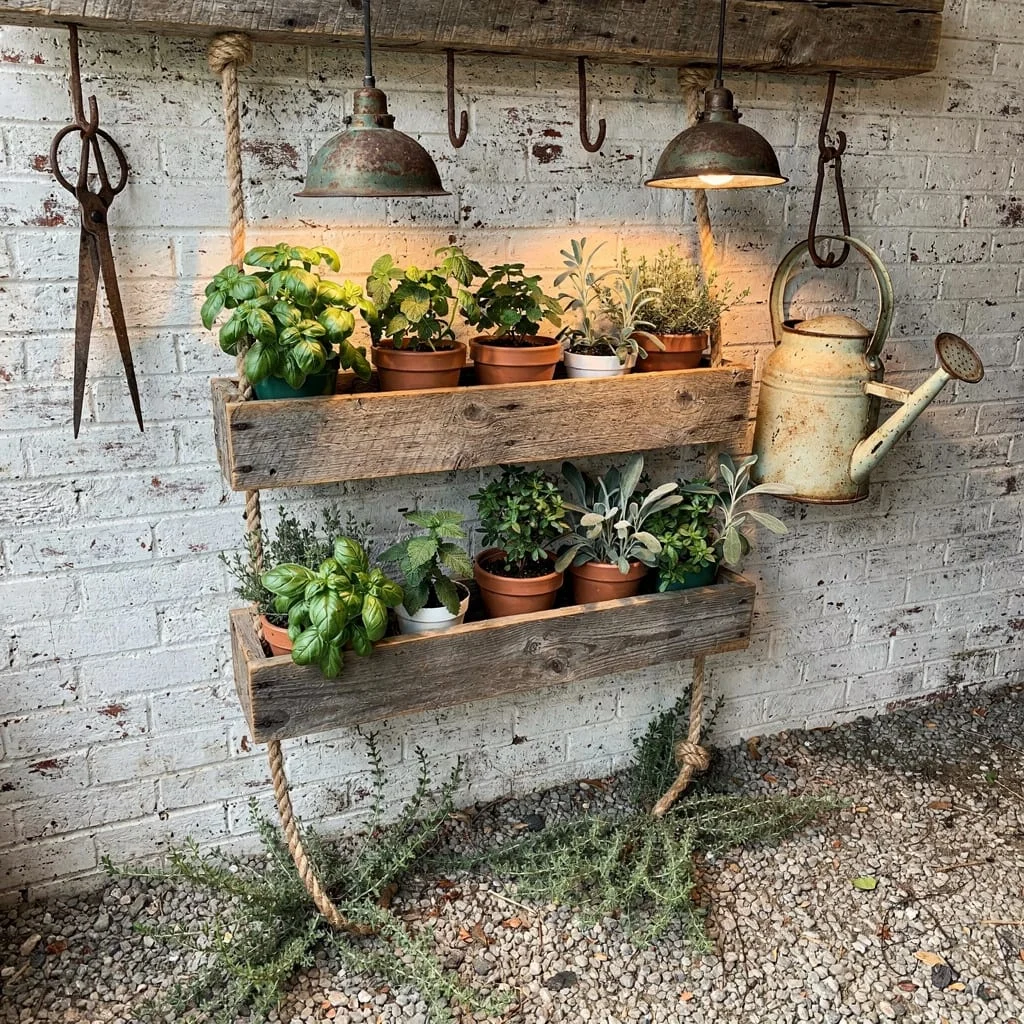
Here’s the deal—a few sad mint sprigs in chipped plastic aren’t rustic; they’re just sad. Suspend thick pine shelves from a scavenged barn beam using knotted rope, and crowd them with big, gorgeous pots of basil, sage, and mint. Mount your setup against a whitewashed brick wall, lay down gravel (herbs hate wet feet), and weave creeping thyme into the cracks—trample it so it throws shade and scent. Go wild with rusted steel hooks for your tools (bonus for ancient garden shears) and let your enamel watering cans show off that aged enamel crackle. Pro tip: Industrial pendant lighting is a must for nighttime drama—but only with weathered or patina-finish fixtures, or it’s all for nothing.
Unleash a Birdhouse Village—Not Your Grandma’s Yard Art
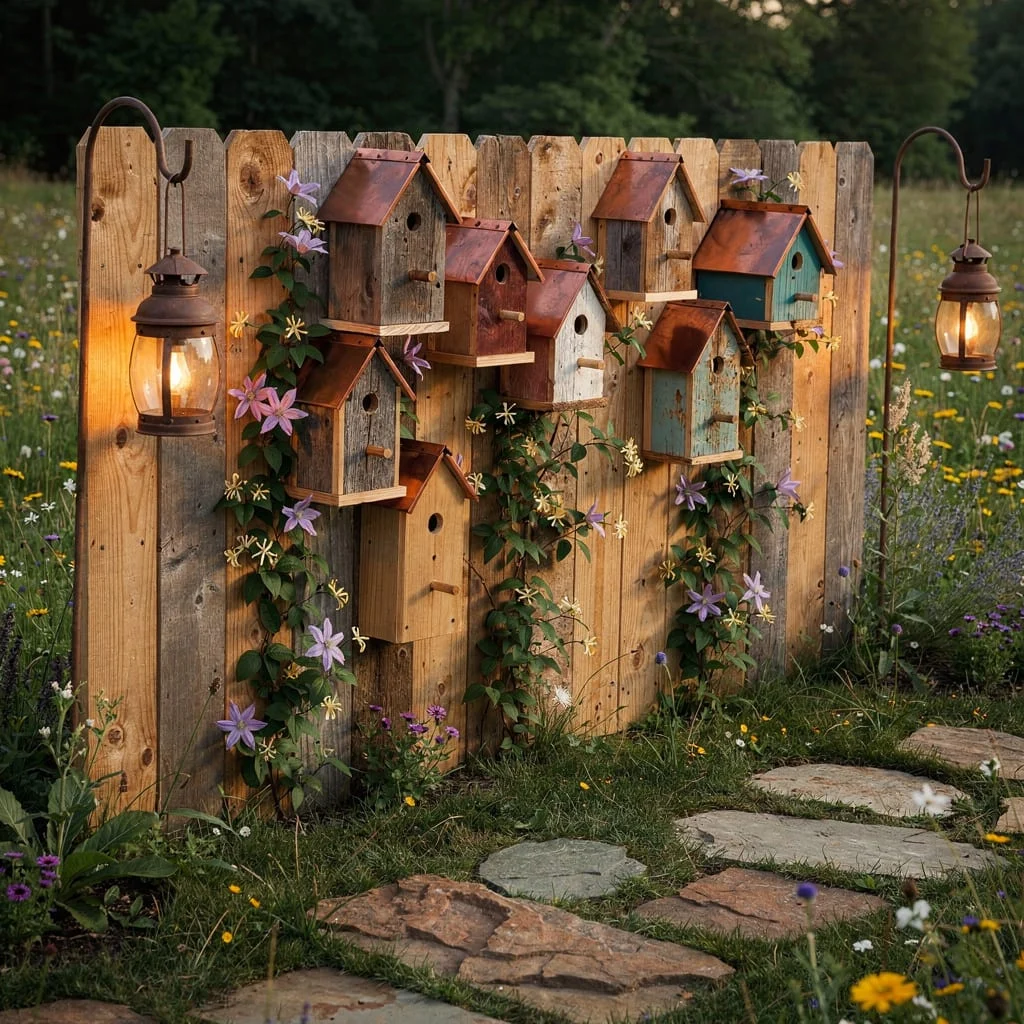
Turn your fence into the hottest real estate for the neighborhood birds. Use mismatched, asymmetrical birdhouses built from real barnwood—no factory ‘cuteness’ allowed—and add mini copper roofs so the birds and the bugs alike can flex. Tangle clematis, honeysuckle, or whatever vine you haven’t killed yet between the houses for texture. Set the fence inside a wildflower riot so your stone paths don’t look like sad afterthoughts. Plant shepherd’s hooks along the path to dangle vintage metal lanterns, throwing soft lighting at dusk. Pro tip: Forget perfect symmetry—cluster houses in unpredictable groups, and let weeds win in some spots. Messy is the new luxe.
Nail the Outdoor Kitchen—Rustic, Not Restaurant Supply
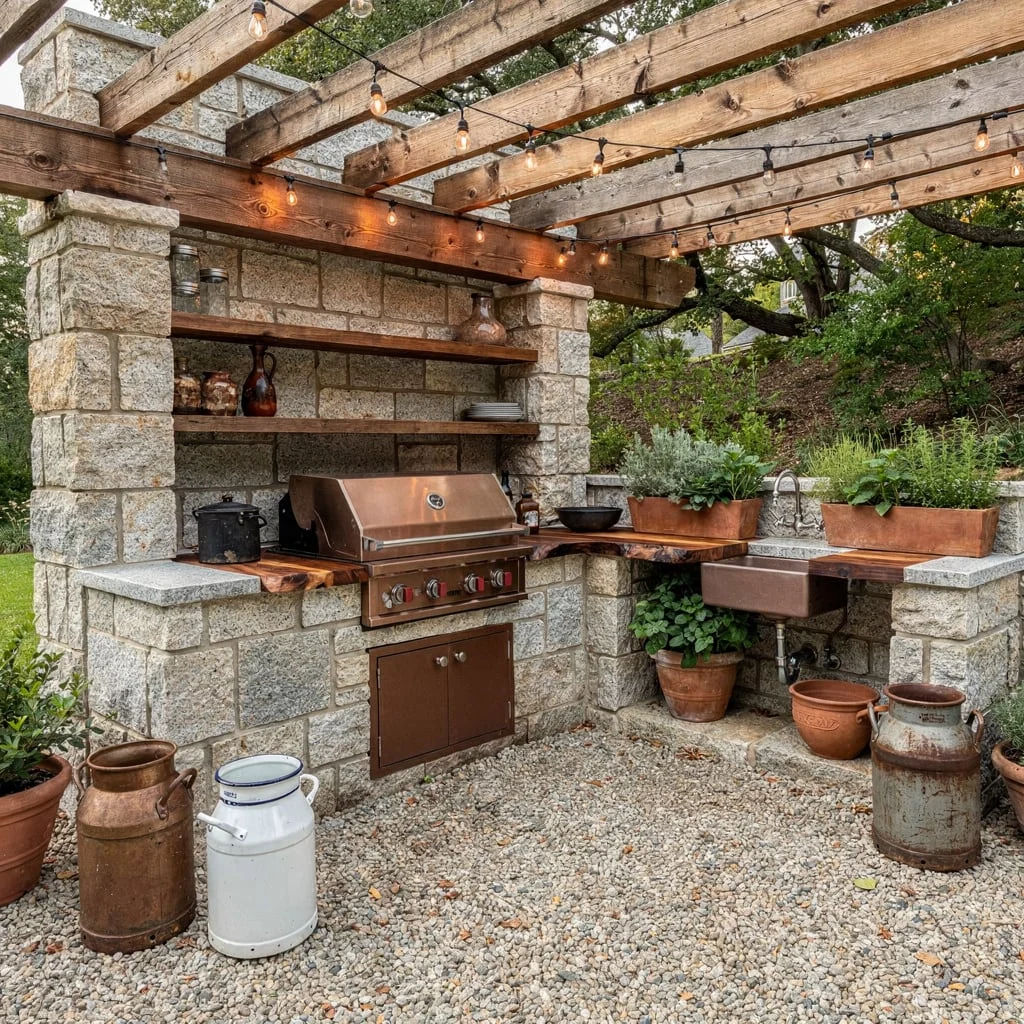
Let your friends envy you. Frame your outdoor kitchen with rough-cut granite blocks, open up some chunky timber shelving, and for the love of aesthetics, skip stainless-snooze and add a hammered copper sink. Top your counters with live-edge walnut and cram the built-in terracotta planters full of actual herbs—not sad faux greenery. Your grill belongs in a stone cradle, and string lights should absolutely snake along heavy wood rafters overhead for both shadow play and low-key glow after dark. Throw vintage milk cans and chunky enamel pots around, and resist the urge to tidy—patina is the vibe. Pro tip: Mix metals (iron, copper, zinc) but don’t go all in on shiny—aged finishes only, or lose the rustic ticket.
Craft a Gateway That Screams ‘Secret Garden,’ Not ‘Subdivision Entrance’
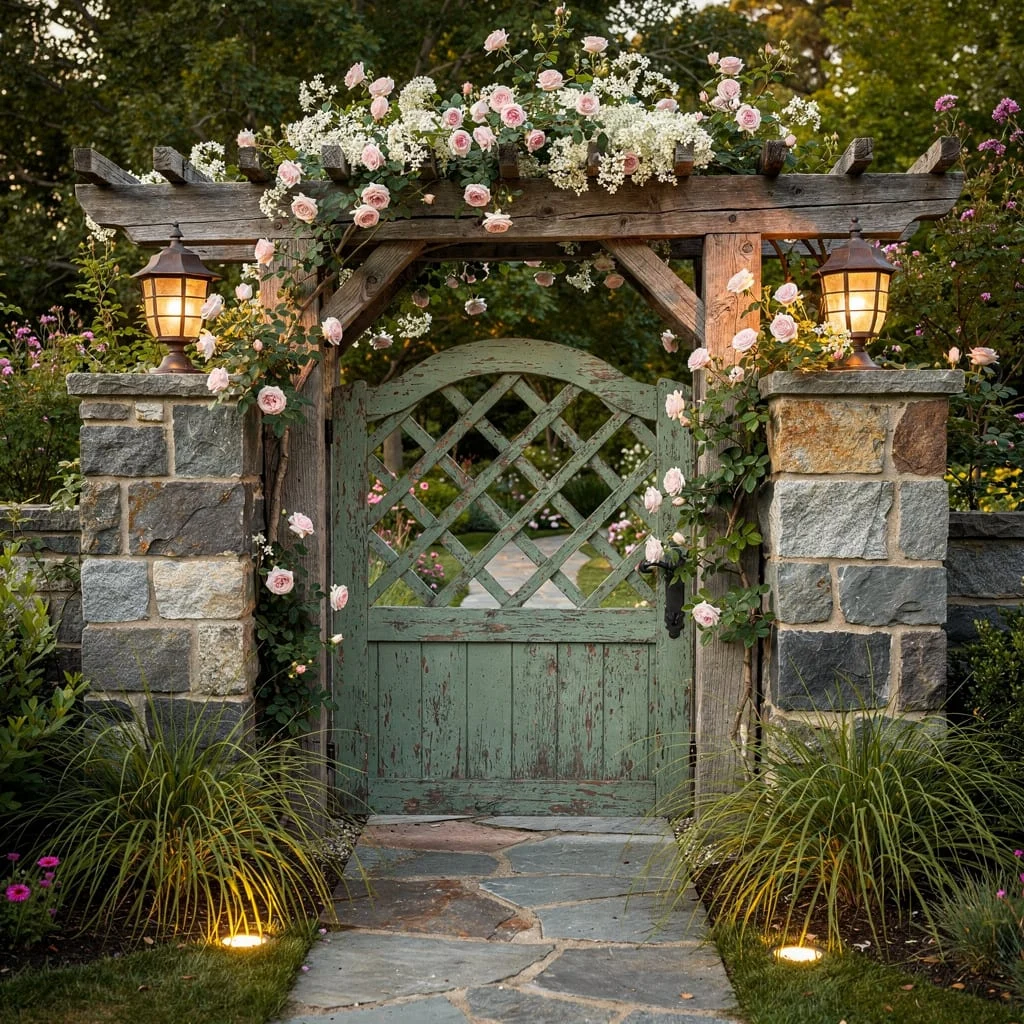
Put up an arched gate with battered oak timbers—it needs to look like it’s survived several plagues, minimum. Let stone columns flank the gate and top them with actual antique lanterns (wiring is allowed, neon is not). Train roses and jasmine to fight for space up and over the structure until you’ve got full-on botanical drama. For the path, use irregular bluestone, and let clusters of native grasses shoulder in for the photo bomb. Ground lighting is killer—recess soft-glow fixtures at foot level so the magic’s in the under-lighting, not blinding floods. Pro tip: Never, ever line your path perfectly. Gardens don’t care about your sense of order.
Stack Some Drama with a Tiered Planter Wall—Depth > Flat
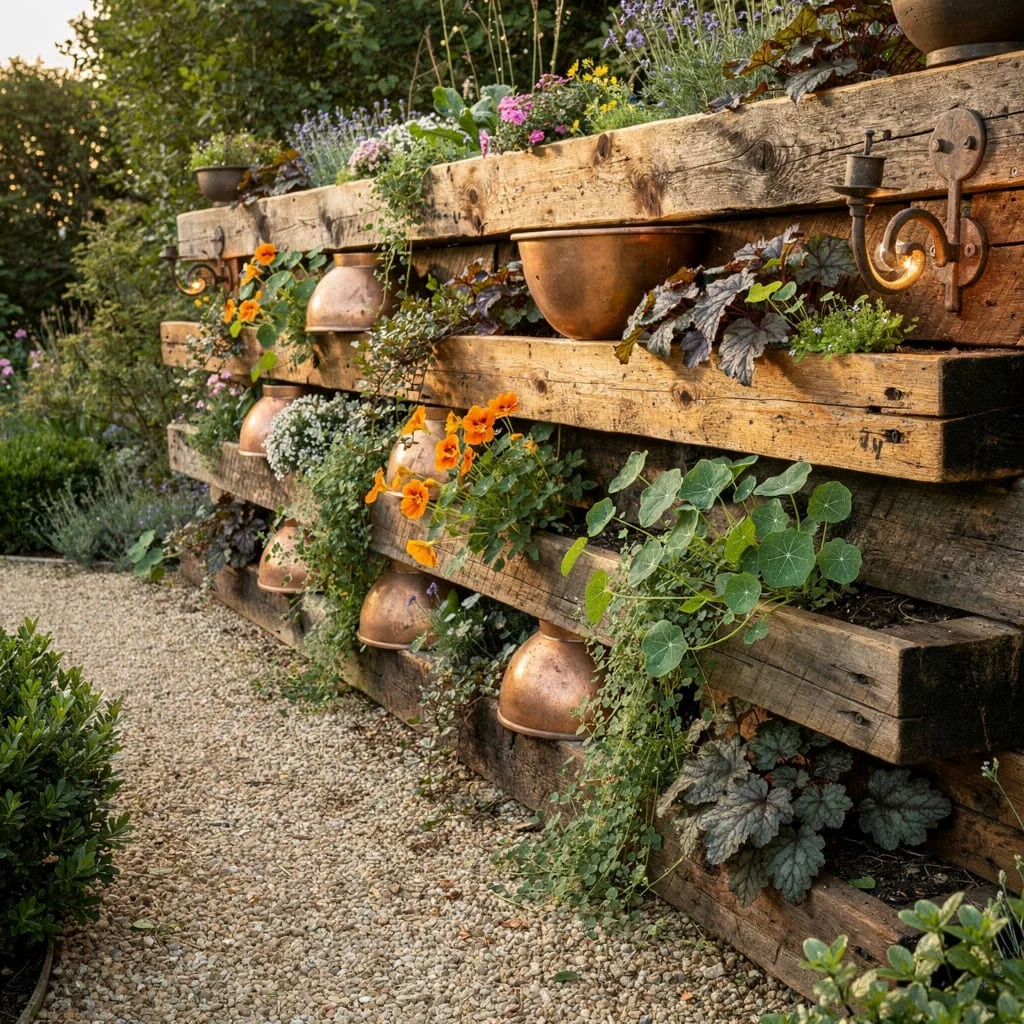
Dump the flower border and build up. Stack reclaimed railway sleepers high enough for a layered effect (it’s called *dimension*, try it). Pack the wall with clusters of lush perennials—nasturtiums, heuchera, whatever billows aggressively—and let them spill down every gap. Tuck aged copper pots among the wood for random bling, but no shiny new stuff—corrosion is chic. Border everything with a winding gravel path, and fit chunky wrought-iron sconces along the wall to keep the vibe moody at dusk. Pro tip: When stuffing plants, keep at least one-third trailing varieties for max jungle effect.
Was that a little brutal? Good. Your garden deserves tough love—the whole point of rustic design is that it’s laid-back, lush, and unquestionably authentic. Let stone actually be stone, let plants take over, and never choose shiny new when you can have perfectly aged. Mix your textures, layer your lighting, and—above all—embrace the mess. Start with these ideas and make your garden the spot nobody wants to leave (including you). Now get out there and break some design rules.