
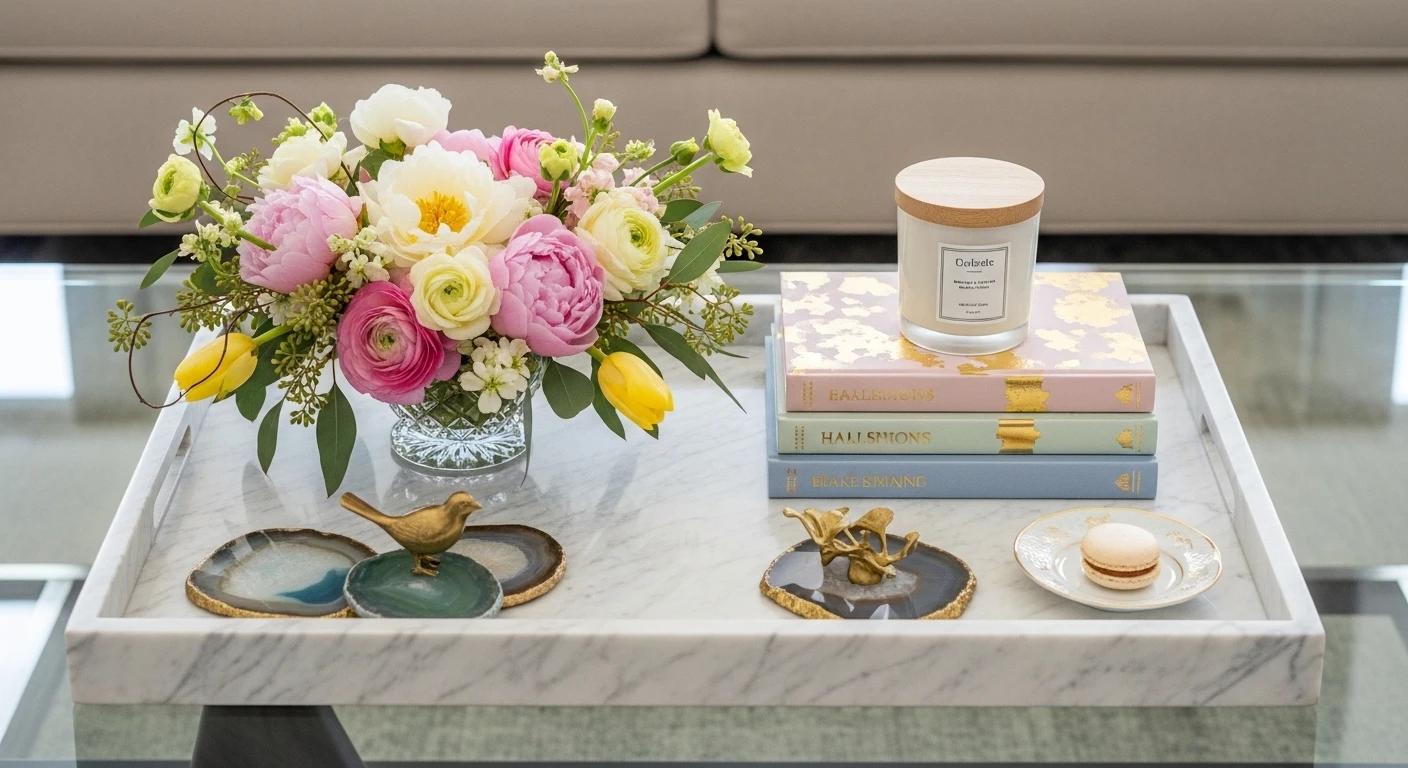
Your coffee table is the geographic center of your living room, which makes it either the best real estate in the house or the place where mail goes to die. For most people it’s the latter — a flat surface that somehow accumulates TV remotes, half-read books, a charger that belongs to nobody, and the mug you told yourself you’d take to the kitchen an hour ago. Spring is the one season where the bar for making a coffee table look genuinely beautiful is at its absolute lowest, because flowers, candles, and natural textures do ninety percent of the work without requiring any design talent whatsoever. And yet — and this is the part that’s painful — most living rooms still greet April with a bowl of decorative balls that haven’t moved since 2019.
A centerpiece isn’t just decoration. It’s a signal about the kind of person who lives in the space, the kind of evenings that happen in that room, and whether anyone gave the place any thought at all. Getting it right doesn’t require expensive pieces or a florist on speed dial. It requires knowing what you’re going for and committing to it instead of just dropping something in the middle of the table and walking away. These five setups show exactly how different that commitment can look — from earthy and unfussy to full romantic drama — and every single one of them can be replicated without a design degree or a crying budget.
What Your Coffee Table Is Actually Communicating Right Now
Before anything else, it’s worth being honest about the three mistakes that turn coffee tables from focal points into furniture you stop seeing.
Trays exist for a reason and you’re ignoring them — Loose objects scattered across a table surface look like they landed there by accident. A tray creates a defined zone that tells the eye “this is intentional, these objects belong together,” which is the difference between a curated centerpiece and a surface that needs to be cleared before company arrives.
Height variation is doing more work than you realize — A collection of objects all sitting at the same level reads as flat, regardless of how nice the individual pieces are. One tall element, one medium, one low — that’s the whole formula, and it works every time without exception.
Spring doesn’t mean pastel everything — The season’s best centerpieces borrow from nature’s actual palette, which includes warm browns, deep teals, aged metals, and textured neutrals alongside the blush and mint. Limiting yourself to baby pink and yellow produces a table that looks like an Easter basket rather than a designed space.
Stop Treating Your Coffee Table Like a Dumping Ground
The best coffee table setups you’ve ever seen in a magazine or a friend’s living room weren’t accidents. They were made by people who understood a few basic principles and didn’t abandon them halfway through.
The hero piece rule — Every great centerpiece has one dominant element that everything else supports. It might be a vase, a tray, or a candle cluster — but there’s always a clear lead and a clear supporting cast. When everything competes equally for attention, nothing wins.
Seasonal materials earn their place — Spring-specific elements like fresh blossoms, cherry branches, or even dried botanicals in warm tones signal intention in a way that year-round decorative objects simply can’t. Swap them out and the whole table transforms with the season.
Less is a complete sentence — The urge to fill every inch of tray space is the enemy of every good coffee table arrangement that ever existed. White space — actual empty tray surface — is a design element, not a failure to finish the job.
Spring Coffee Table Centerpieces That Earn Their Square Footage
The Wicker Tray and Dried Branch Setup
There is an extremely fine line between “effortlessly natural” and “I forgot to throw the dead plants away,” and this centerpiece walks it with such confidence that you almost don’t notice how few elements are actually in play. A wide woven seagrass tray, a clear glass jar holding dried copper-toned eucalyptus branches, two candles at different heights — one in a glass jar on a small wooden riser, one in a simple vessel directly on the tray — and that’s the entire inventory. The genius is in what’s not there: no filler objects, no unnecessary layers, no attempt to add “just one more thing” that would tip this from serene into cluttered. The dried branches are doing double duty as both botanical interest and warm color without requiring maintenance, watering, or the quiet guilt of watching fresh flowers die because you forgot to change the water. Styling note: the wooden riser under the second candle is a detail that separates this from an amateur arrangement — that three-inch height difference is the entire reason the composition has visual movement.
The Al Fresco Purple Blooms Table
Taking your table setting outside at golden hour and centering it on a stoneware crock absolutely stuffed with purple and pink stock flowers is the kind of decision that only looks effortless in retrospect — in practice it requires the confidence to commit to one very bold floral color and then build everything else around it without flinching. The crock is doing something clever here: its rough, utilitarian texture is in direct conversation with the antique silver candlesticks and crystal glassware surrounding it, and that contrast between rustic and refined is what gives the whole table its character. Cut crystal glasses catch the last of the afternoon light in a way that no modern glassware replicates, which is why inheriting your grandmother’s crystal is genuinely good interior design luck. One rule that this table follows absolutely: the floral arrangement is tall enough to be seen above the table clutter without being so tall it blocks conversation across the table, which is the exact calculation most people get wrong in both directions.
The Blush Rose and Gold Tray Setup
Getting a pink and gold coffee table centerpiece to read as sophisticated rather than sweet sixteen decor is a legitimate design challenge, and the solution here is ruthless restraint in the number of elements combined with genuine quality in each one. A ribbed glass vase with a full, generous arrangement of blush roses, cream peonies, and white ranunculus sits on a small stack of books — that book stack is load-bearing for the composition’s height, not just a styling afterthought — alongside three white candles in clear vessels at slightly staggered heights. The ornate gold tray frames all of it without overwhelming, because the tray’s detailing is fine rather than heavy. Scattered rose petals on the tray surface look either intentional or like something fell apart depending entirely on the quality of everything around them — here they read as intentional because every other element is pulling its weight. Styling note: the flowers are arranged loosely enough to look grown rather than constructed, which is harder to achieve than a tightly structured arrangement and infinitely more appealing.
The Rose Gold Crystal Tray and Peonies
This is a table that has made a decision about itself and is not interested in your notes. A jeweled rose gold mirror tray — the kind of piece that could easily tip into maximalist excess — is kept in check by the absolute simplicity of what sits on it: one ribbed glass vase of pale pink peonies with a few leaves left visible for contrast, one small lit candle, and one empty crystal vessel waiting to hold something or simply reflecting light depending on the moment. The restraint of only three objects on an ornate tray is what makes the whole thing work — the tray gets to be decorative, the peonies get to be the flower moment, and nothing fights anything else for primary attention. The ridged glass vase is doing subtle work here: the vertical lines echo the crystal detailing on the tray without matching it exactly, which is how you create visual cohesion without making everything identical. Marble table surface underneath reflects the soft pink tones back upward — don’t attempt this on a dark wood table and expect the same result.
The Teal Ceramic and Blossom Tray
Decorating with hearts is a trap most people can’t escape from gracefully — the line between charming and cluttered is thinner than anyone wants to admit — but this setup manages to include two white ceramic heart stones and not look like a Valentine’s Day leftover, which deserves genuine recognition. The round wooden tray anchors everything with substantial, textured weight, and the glazed teal ceramic vase holding slim white cherry blossom branches is confident enough in its own color that everything else defers to it. Two candles — a small dotted ceramic tea light holder and a straight glass pillar — introduce warmth without competing with the botanical centerpiece. The scattered white flower heads on the tray surface are the detail that either makes this feel alive or makes it feel like someone’s garden shed leaked onto your furniture, and here it works because the flowers are fresh, white, and sparse rather than colorful and abundant. The glimpse of the teal sofa cushion in the background pulls the whole room into the same color conversation the tray is having, which is the kind of environmental styling that makes a single centerpiece feel like a room decision rather than a table accessory.
Go Marble or Go Home

If you’re aiming for house-tour-ready elegance, start with a white marble coffee table. Don’t cheap out on faux flowers—grab real pastel peonies, hydrangeas, and ranunculus for max flex. Stuff them in a long, low crystal vase and throw in chrome candleholders with pillar candles to keep it grown-up. Toss an oversized linen book and a geometric mother-of-pearl box on the side, but avoid anything that looks dusty or outdated. Want your place to feel like actual money? Let sunlight bounce off marble (pro-tip: use sheer curtains) and keep surfaces buffed—no fingerprints allowed.
Scandi Calm, But Actually Interesting

If you’ve ever looked at a minimalist Scandinavian room and thought, ‘That’s basically a museum,’ you’ve got the vibe. Snag a round travertine coffee table and keep your centerpiece low-key with a wide ceramic bowl filled with moss balls, hellebores, and random sculptural branches. Stack some slim hardcover books underneath a matte gold sphere—because yes, you need at least one mysterious object nobody understands. Get creamy boucle sofas and pale birch flooring in the mix for soft, cozy layers. Seriously, don’t let things get too matchy; always offset organic shapes with something angular, or the room will snooze.
Urban Loft Glow-Up
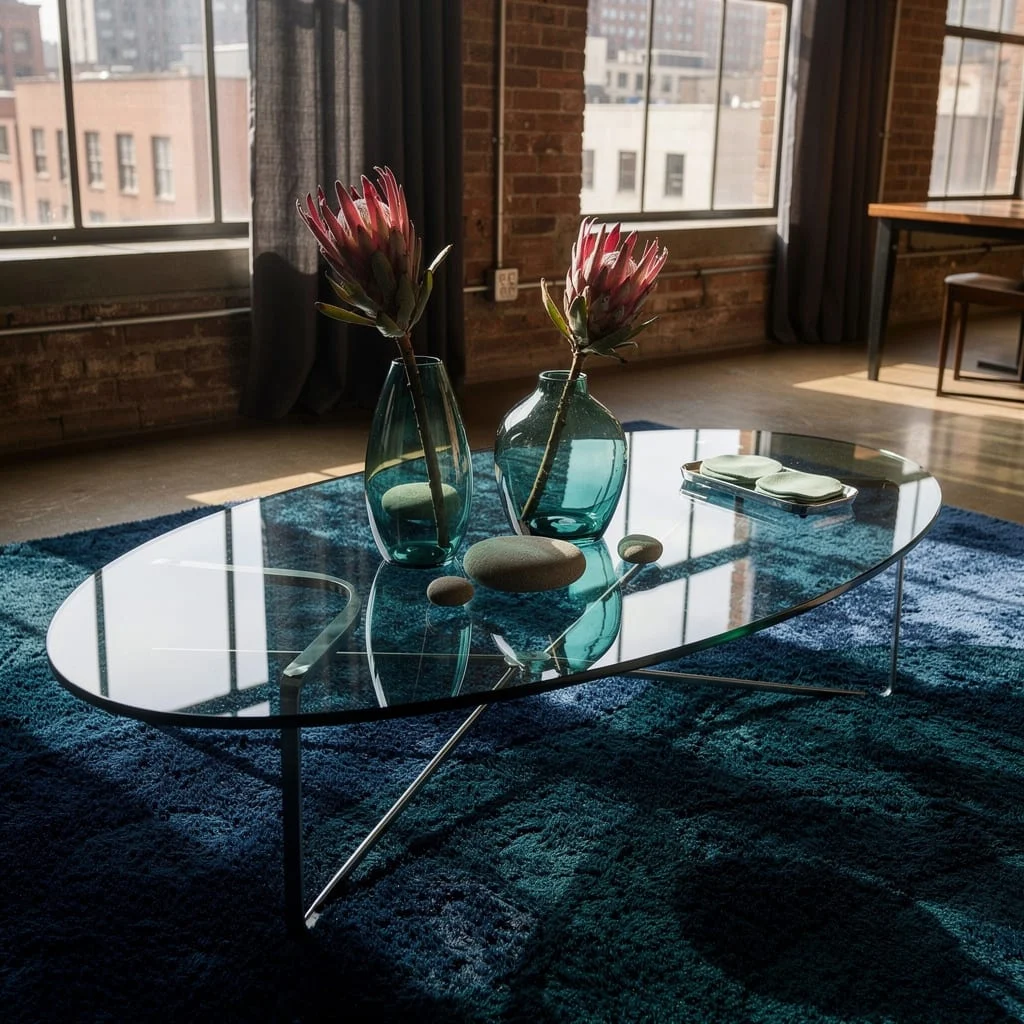
Want drama without trying too hard? Anchor your space with a smoked glass coffee table on an ink-blue rug—bonus points for industrial windows. For your centerpiece, line up aqua glass vessels, each with a single protea stem (a.k.a. designer flower clout), then scatter river stones between. Grab a silver tray and add sage coasters for subtle color. Keep the palette clean and the objects spaced out for that cool, artsy feeling. Never cram too much on the table—let daylight play with the reflections, and always use charcoal sheers for big city edge.
Brass & Botanical Brilliance

Low-key obsessed with cheerful elegance? Embrace brushed brass and terrazzo for a coffee table that feels custom. Lock in your centerpiece with a Lucite box stuffed with daffodils, ferns, and pussy willow—science fair chic, but make it grown-up. Add artisanal ceramics for extra layer; nobody’s impressed by generic dishes. Use honey-toned floors and a cream woven rug to bump up warmth. Pro styling rule: stack ceramics on a light oak tray—never directly on the table, unless you love scratches—and always let sunlight do the heavy lifting with your botanicals.
Mid-century Modern, But Fresh

Stop wasting time with predictable mid-century knockoffs. Get yourself a walnut veneer coffee table with those poppin’ tapered legs. Style it with a matte white ceramic pitcher (yes, pitchers are cool again) and a minimalist bouquet of lilacs. Use a frosted glass tray to display marble spheres in pink and green, then pile vintage design journals nearby to prove you actually care about aesthetics. Diffuse sunlight through wood blinds for subtle texture. Never let your accessories outshine the table—balance shiny objects with soft florals so you don’t end up looking like a retro showroom.
Limestone Luxe for the Chill Set

If you’re the type who wants everything calm but still expensive, square limestone is your move. Go big with a tall faceted vase—fill with green hellebores and trailing jasmine for modern botanist vibes. Toss a jade tray beside it holding coral fragments, but keep the tray petite; oversized trays look desperate. Stick with velvet sofas and silk-blend carpets for that understated touch (no shag, thank you). Always position your centerpiece so it catches that indirect sunlight—never let a lamp spotlight mess with the natural stone’s texture.
Copper Chic for Modern Flex

Make your living room feel like a spring gallery by starting with smoked oak and copper bowls. Get dramatic by loading each bowl with white tulips, peach ranunculus, and extra ruffled greenery. Throw a sleek slate tray on the side with a folded linen runner plus resin objects for that ‘designer who cares’ effect. Let sunlight fall hard across the table’s wood grain. Major pro-tip: don’t line up your bowls like a grocery store display—keep them clustered off-center and let your metalwork be the star, not the sidekick.
Earthy Edge with Live Acacia

Want your space to scream ‘I’m chill but still stylish’? Start with a live-edge acacia wood table—no, don’t settle for fake. Pop a stoneware vase filled with roses, viburnum, and mint in the center for instant fresh factor. Ditch cheap coasters; stack birch wood ones on a bronze tray for actual cottagecore coolness. Keep your floors soft with wool-cotton blends and snag sage green cushions for the right amount of organic layering. Warning: never center everything dead in the middle—slide your vase off to one side for real-life, not showroom, vibes.
Parisian Glam—Minus the Attitude
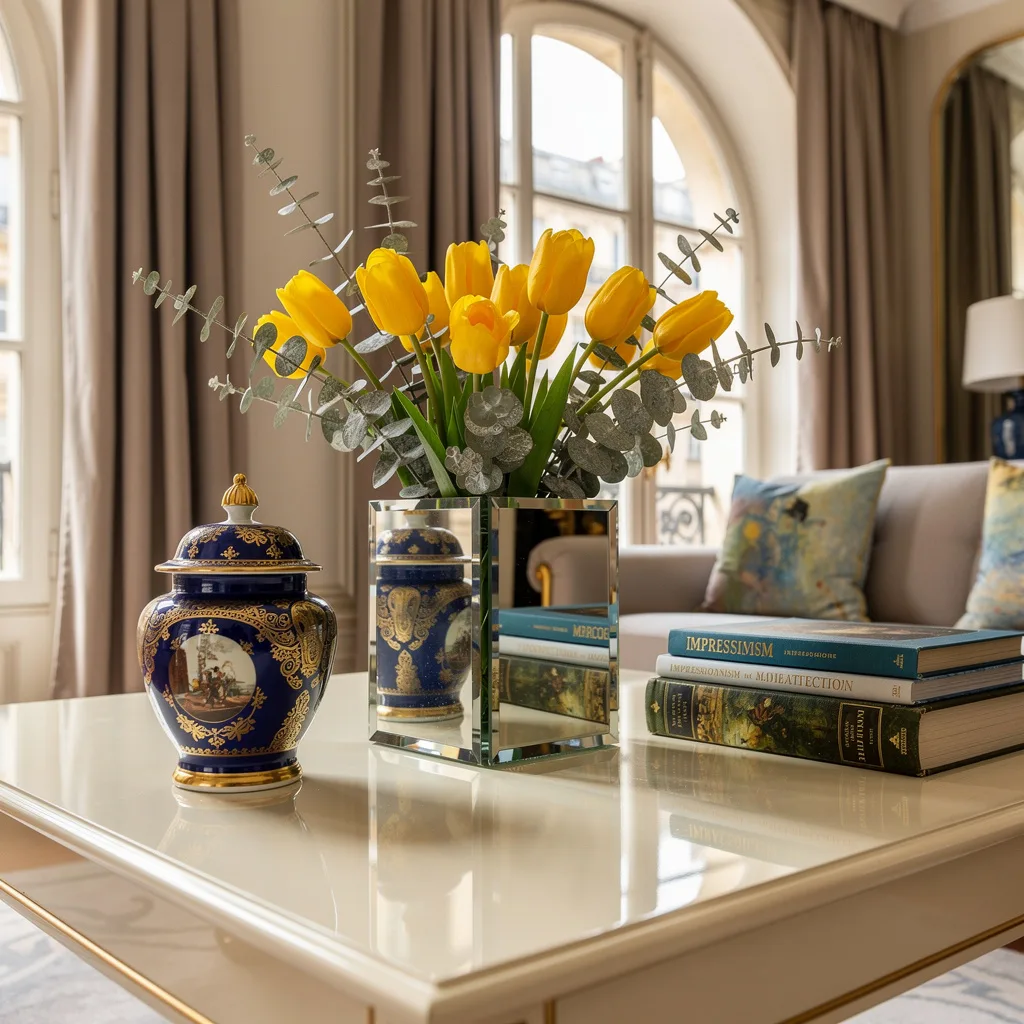
If you live for a bit of drama and shine, go ultra-high-gloss with lacquered ivory. Break out a mirrored cube vase stuffed with yellow tulips and silver eucalyptus—because structured florals are a power move. Add a fancy porcelain lidded jar in blue and gold for that ‘I summer in Provence’ touch. Stack up art books to flex culture, and arrange them neatly (no slouching, please). Always mix reflective and matte surfaces on the table—if everything shines, you’ll blind your guests. Keep windows tall and curtains loose for instant Parisian light.
Coastal Chill for Non-Yacht Owners

If you crave spring but hate kitsch seashells, grab a reclaimed teak coffee table—driftwood-inspired, not actual driftwood (no splinters, thank you). Load up a woven rattan basket with muscari, lavender, and asparagus fern for that effortless coastal vibe. Pair with sandblasted glass bowls holding shells—just enough to hint at the beach, not scream tourist shop. Go with wide-plank gray-washed floors for the bare feet look. Never let your centerpiece float solo; always anchor with trays or bowls so it doesn’t look like the room forgot about it.
Boho Bliss, Minus the Fringe Overload

If you’re tired of rooms that look like Instagram cliché, get real and use a thick cork coffee table. For spring, grab a rustic terracotta trough and load it with wild bluebells, white freesia, and sculptural branches. Layer jute placemats and terracotta books for stacked drama. Slide in an abalone shell box for random sparkle. Always let shadow play happen—arrange objects so sunlight hits them at odd angles for the right dose of informality. Never clutter the table to the point of chaos; boho cool needs open space and actual breathing room.
Final Thoughts
The centerpieces worth stealing from here aren’t the most expensive or the most elaborate — they’re the ones where every single object is earning its place on the tray. That’s the whole assignment. Not more flowers, not more candles, not a bigger tray — just enough elements, chosen with intention, arranged with some attention to height and contrast and breathing room.
Spring is genuinely the easiest season to work with on a coffee table because the materials practically style themselves. Fresh flowers, natural textures, candlelight — none of this requires a design background or a significant budget. What it requires is deciding what kind of moment you want the center of your living room to create, and then not second-guessing yourself into adding seventeen more things until the whole composition collapses into visual noise. Pick your tray, pick your hero piece, add two supporting elements, and stop. The restraint is the skill.