
Creating a functional study space at home can feel like a challenge, especially when you’re working with limited square footage or trying to carve out focus zones in shared areas. The study spaces below prove that you don’t need a dedicated home office to create a productive work setup. From cozy window nooks to creative storage solutions, these study space ideas show how to design spots that actually make you want to sit down and get things done.
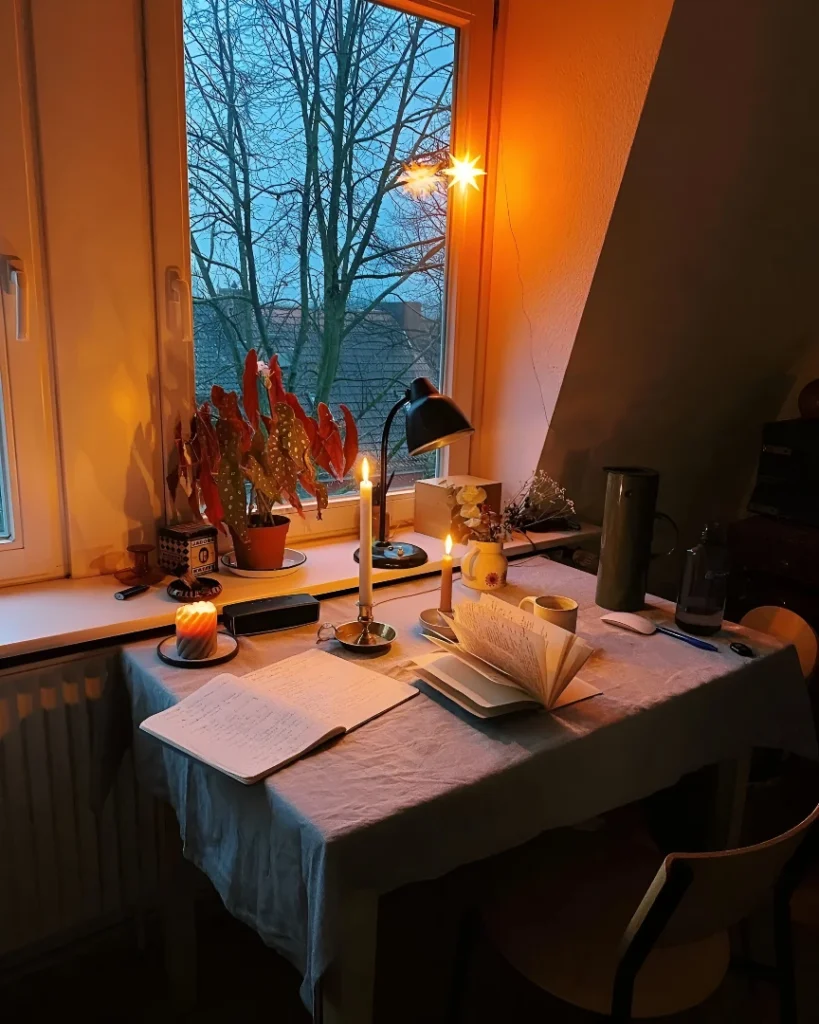
This study space absolutely nails the cozy, atmospheric vibe. u/psycot set up a simple desk by the window that takes full advantage of natural light during the day. That warm golden glow from the string lights and candles creates such an inviting evening work atmosphere—way better than harsh overhead lighting. The colorful glass art on the windowsill adds personality and catches light beautifully. The open notebook and reading materials show this is an actually-used space, not just styled for photos. That black task lamp provides focused light when needed. The textured blue tablecloth adds softness and color. The mix of practical elements (coffee mug, candles for ambiance, plants) with decorative touches (the art, the collected objects) creates a space that feels personal and inspiring. This setup proves that study spaces don’t need to be sterile or minimal—sometimes a bit of creative clutter and warm lighting makes you actually want to work there.
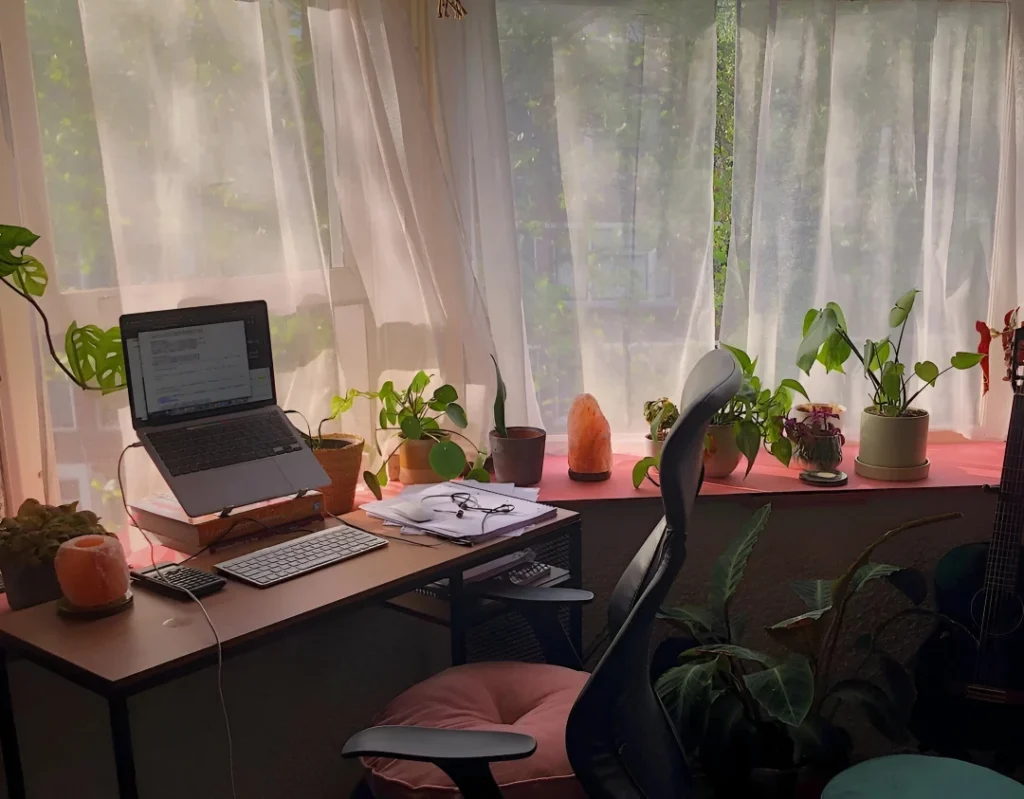
This study space embraces the biophilic design trend in the best way. u/MatteChili created a window desk setup that’s basically surrounded by plants—on the deep windowsill, on the desk, tucked around the ergonomic chair. The laptop on a stand keeps ergonomics in mind, paired with a separate keyboard for better posture. That mesh ergonomic chair shows attention to comfort for long work sessions. The pink cushion adds a pop of color and extra comfort. The sheer curtains filter natural light beautifully without blocking it completely. The Himalayan salt lamp adds warm ambient glow. The mix of plant varieties—trailing, upright, small succulents—creates such a lush, alive feeling. The simple white desk keeps things feeling clean and uncluttered despite all the greenery. This setup shows how bringing nature into your workspace can make it feel less like “work” and more like a retreat you actually want to spend time in.
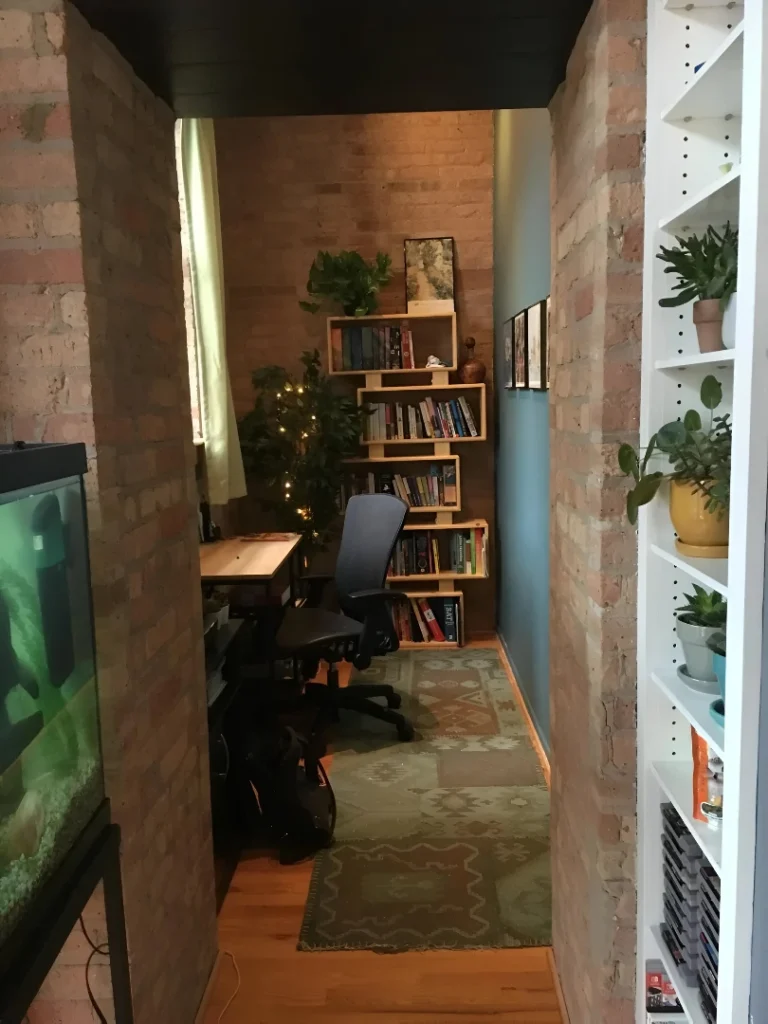
This narrow study nook makes incredible use of what looks like a tight hallway or awkward space. u/chicagorpgnorth carved out a proper workspace in that exposed brick alcove that’s basically a sliver of space most people would leave empty. That geometric bookshelf climbing the wood-paneled wall is both functional and sculptural—it provides storage while adding visual interest. The simple wood desk keeps the footprint minimal. That ergonomic office chair fits perfectly in the narrow space. The LED strip lighting along the edge creates ambient glow without taking up any room. Plants tucked in with the books soften all those hard surfaces. The vintage rug defines the work zone and adds warmth underfoot. The exposed brick on either side adds so much character and texture. The black painted ceiling makes the nook feel more intimate and defined. This setup proves that you can create a legitimate workspace in the most unlikely spots when you get creative with vertical storage and lighting.
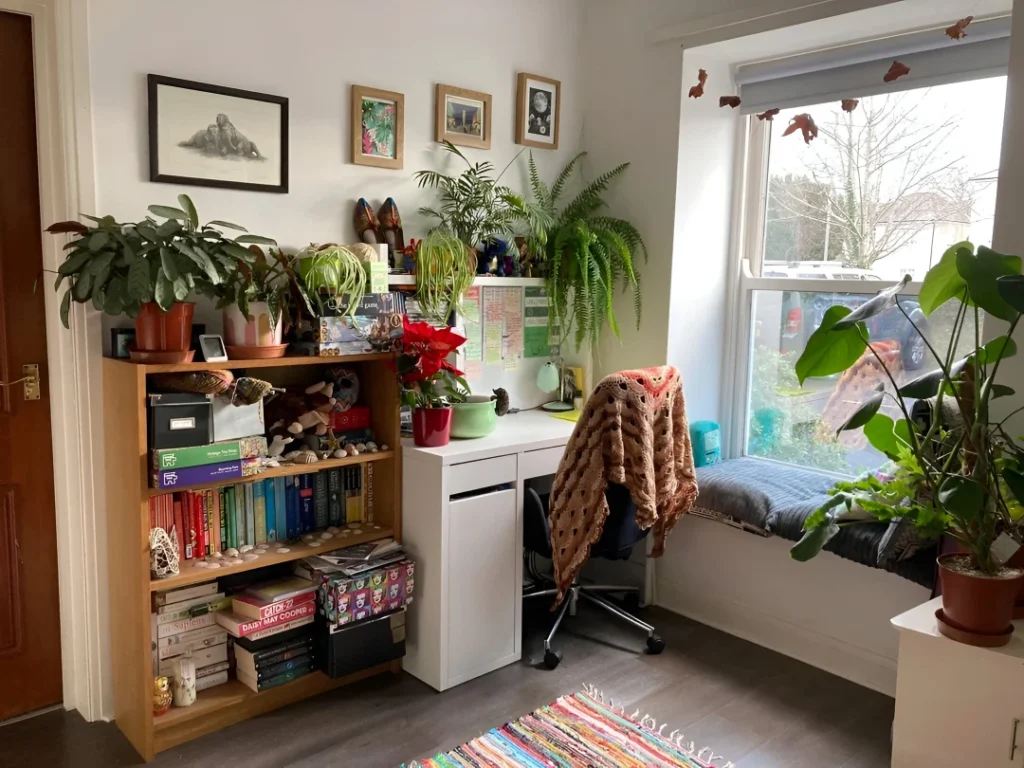
This study space is basically a plant jungle that happens to have a desk in it. u/iulipuppybaroness set up a corner workspace that’s overflowing with greenery—hanging plants, shelf plants, windowsill plants, floor plants. The simple white desk keeps things feeling clean despite all the visual activity. That white storage unit with drawers provides practical organization for supplies and books. The gallery wall of eclectic art adds personality and color. The ergonomic chair with that cozy throw draped over it looks actually comfortable for long work sessions. The large window floods the space with natural light, which is perfect for all those plants and makes the workspace feel bright and energizing. The colorful striped rug grounds the area and adds pattern. That little task lamp on the desk provides focused light. This setup shows how plants can completely transform a workspace from boring to inspiring—the abundance of greenery makes you feel like you’re working in a conservatory rather than just another home office corner.
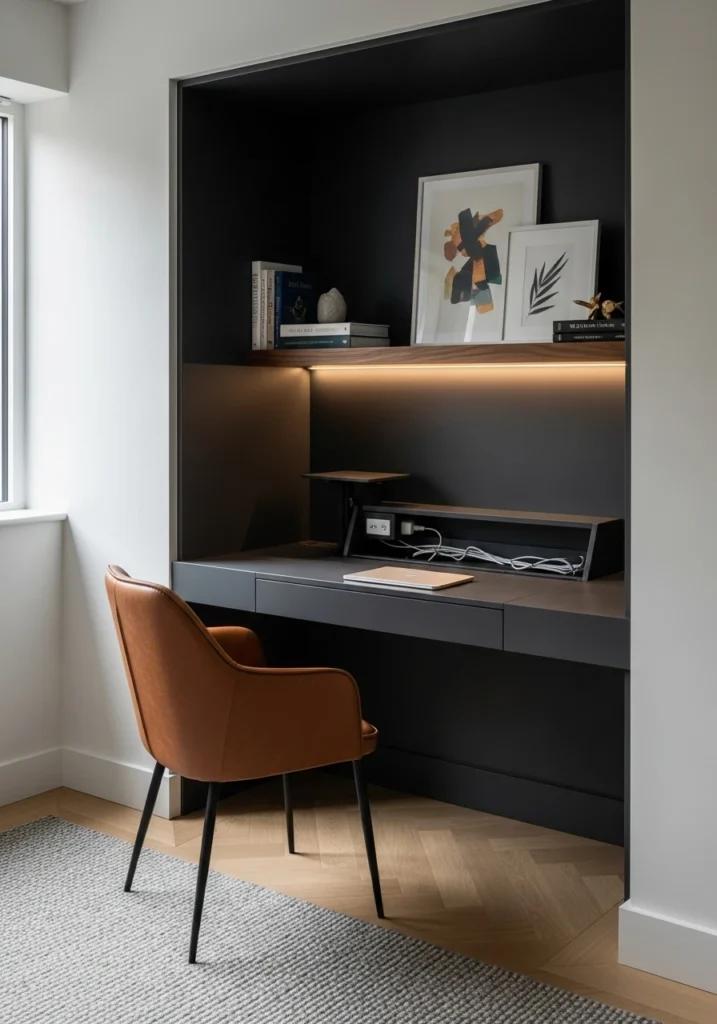
The concept of a built-in desk with concealed tech is all about maintaining visual calm while hiding practical necessities. Picture a compact recessed desk in dark matte lacquer with a pop-up power module and hidden cable tray—everything you need is there, but when not in use, surfaces stay clean and clutter-free. A slim walnut floating shelf above holds books and art. Integrated under-shelf LED strips provide warm task lighting. An upholstered leather desk chair in cognac adds comfort and warmth. A low-profile noise-reducing rug dampens sound. Pale oak herringbone flooring adds pattern and elegance. Soft daylight from a narrow side window provides natural illumination. This approach works because it acknowledges that tech is necessary but doesn’t need to dominate the aesthetic—concealing cables and power while keeping them accessible creates spaces that feel calm and intentional.
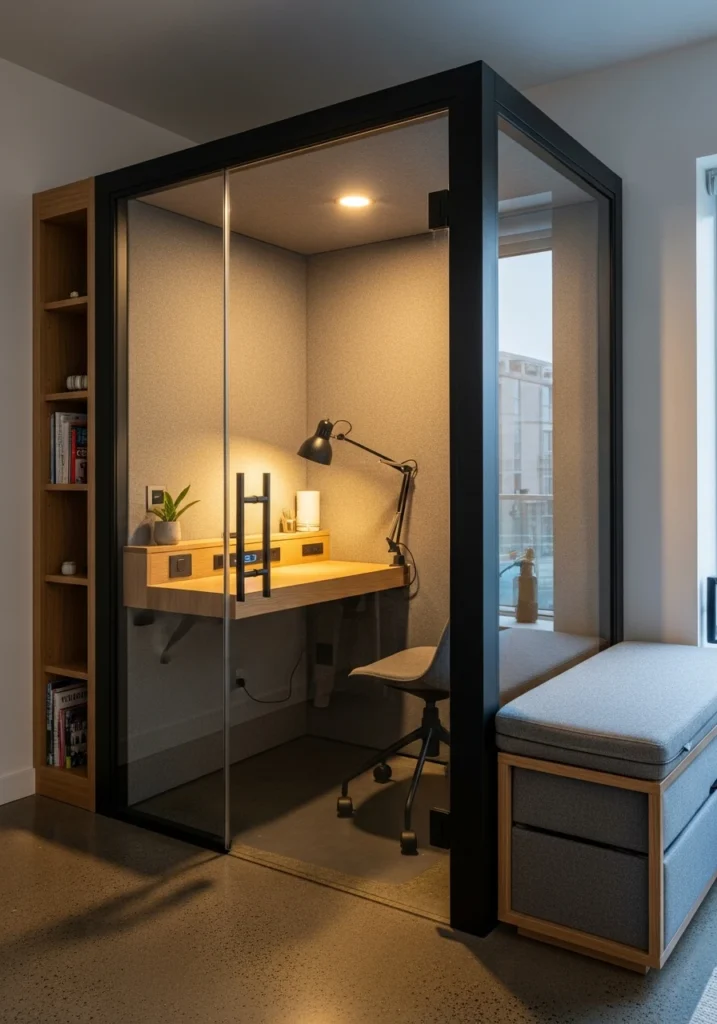
A glass pod study nook takes the concept of a dedicated workspace to an architectural level. Imagine a small soundproof glass-framed pod inside an apartment—basically a room within a room. An oak micro-desk with wireless charging provides the work surface. Ambient warm downlight and an adjustable task arm lamp create layered lighting. The matte black frame with smoked glass door defines the space while maintaining visual connection to the rest of the home. A built-in mini-bookshelf and folded cushion bench sit just outside the pod. Polished concrete floors feel modern and seamless. Evening mode with soft warm glow makes it feel like a cocoon for focus. This concept is brilliant for open-plan living where you need both visual separation and acoustic privacy—the transparent walls maintain openness while the soundproofing creates actual functional boundaries.
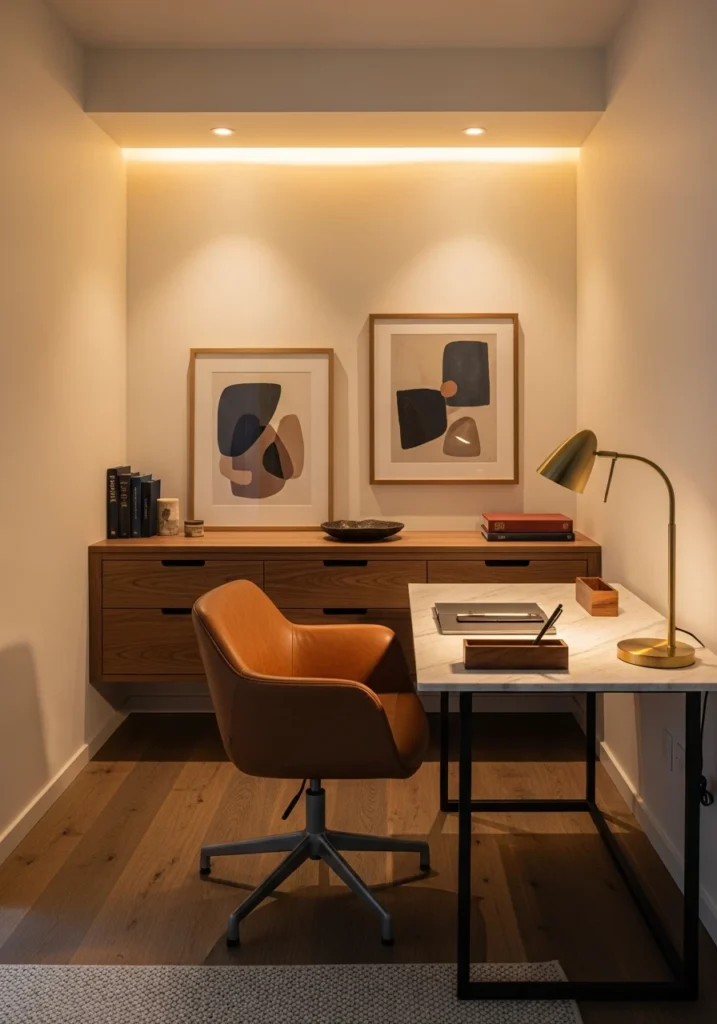
The executive leather and marble approach brings luxury materials into compact study spaces. Picture a slim marble-topped desk that feels substantial but doesn’t eat up floor space. A leather-clad swivel chair adds comfort and sophistication. A brass desk lamp and pen tray bring in metallic warmth. Wall-mounted walnut cabinets with soft-close drawers provide storage without bulk. Framed abstract art in muted tones adds personality. Recessed warm cove lighting washes the ceiling while a spotlight focuses on the desk. Dark-stained oak floors with a small wool rug underfoot add warmth and texture. This approach proves that compact doesn’t have to mean cheap or basic—investing in quality materials makes even small workspaces feel intentional and inspiring.
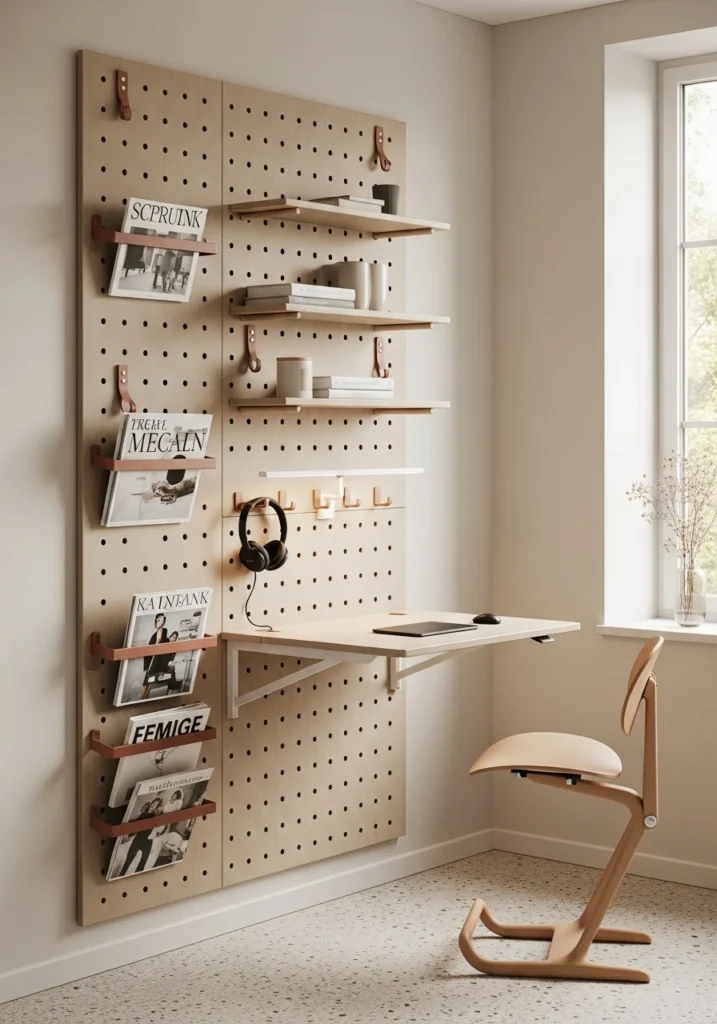
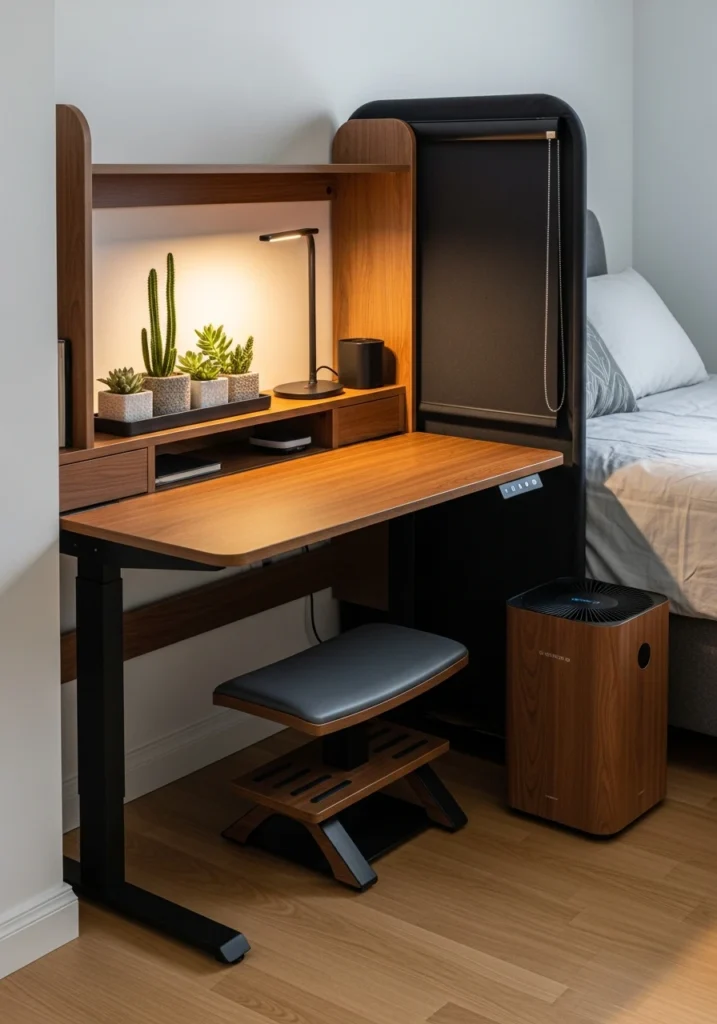
Vertical reference walls with fold-out desks maximize tight spaces brilliantly. The concept uses tall lacquered pegwall panels with modular shelving and magazine rails—everything’s within reach but vertical rather than spreading horizontally. A fold-out desk brackets to the wall and converts to standing height, giving flexibility throughout the day. Leather strap hooks hold headphones or bags. Narrow LED task strips provide focused light. Pale microcement floors feel modern and clean. A compact ergonomic stool tucks away when not needed. Daylight from a side window creates soft shadows that emphasize the three-dimensional storage. This approach is perfect for small apartments where dedicating permanent floor space to a desk feels wasteful—the ability to fold everything away means the space can serve multiple purposes.
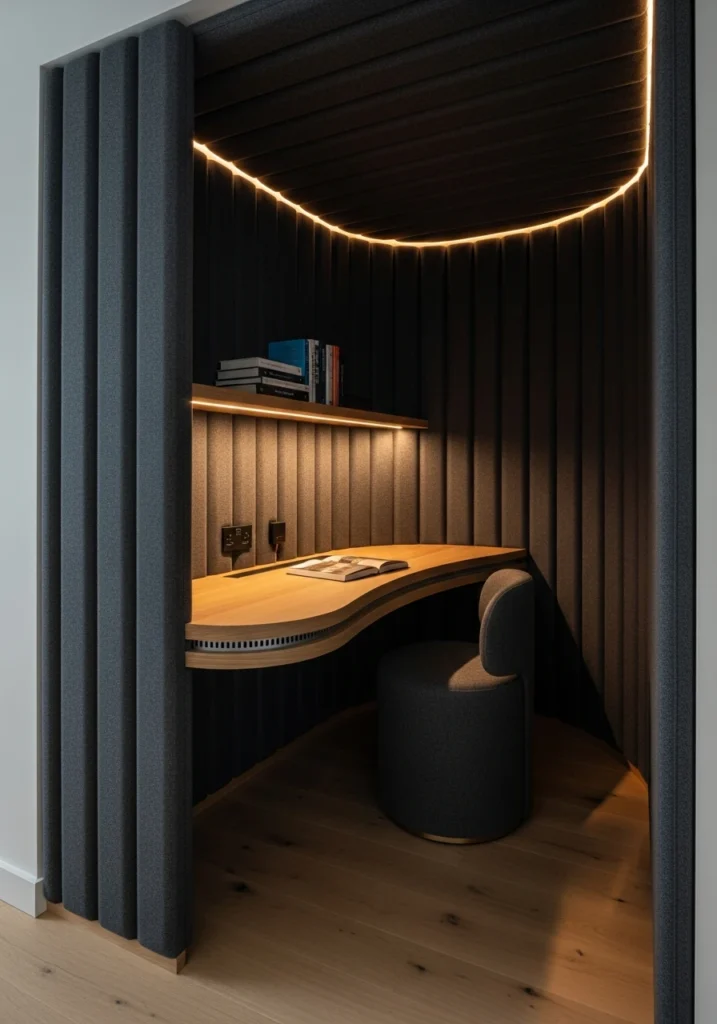
Curved acoustic alcoves create focus through both form and function. Imagine a small curved niche wrapped in sculpted acoustic fabric panels in deep graphite—the shape embraces you while the material absorbs sound for better concentration. A curved timber desk with integrated cable channels keeps cords managed. A thin backlit shelf holds reference books. Dimmable warm perimeter lighting creates a soft cocoon effect without being overly “zen” or spa-like. A plush upholstered stool provides comfortable seating. Pale oak flooring outside the alcove creates contrast and definition. This concept works because it addresses both the physical and psychological aspects of focus—the curved walls create a sense of enclosure and safety, while the acoustic treatment actually improves the sound environment for calls or concentration.
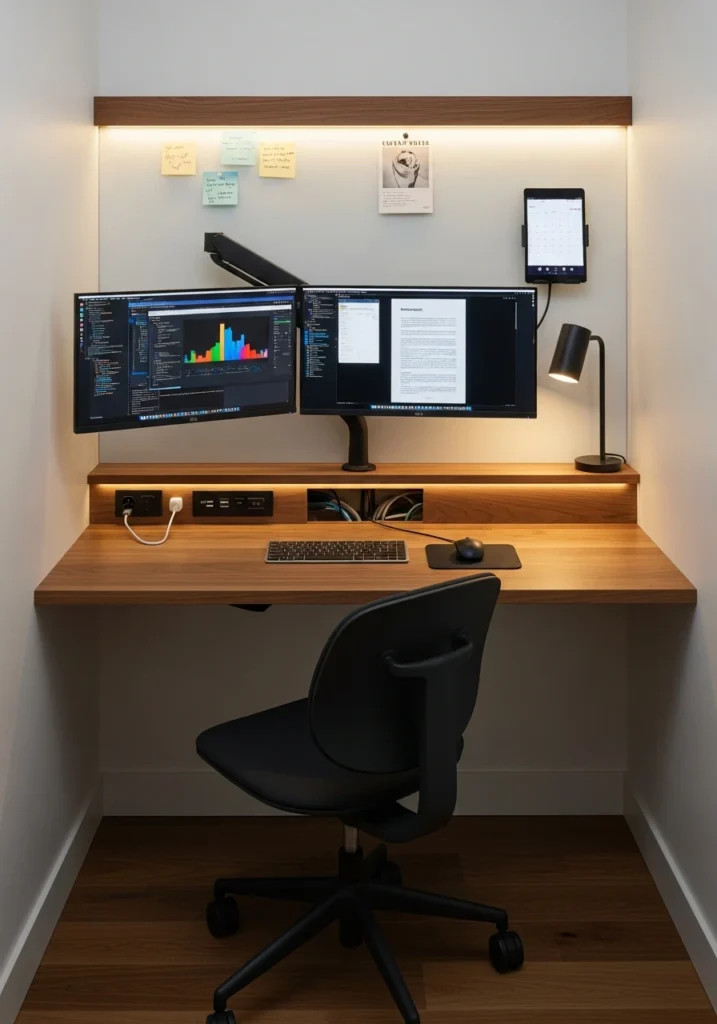
The tech-integrated command desk concept is for people who need serious digital setup in compact spaces. Picture a narrow walnut desk with dual-monitor arm mounts—screens float above the surface, freeing up valuable desk real estate. Recessed under-desk power and USB banks keep charging accessible but hidden. Magnetic whiteboard strips and mounted tablet docks provide flexible tool access. A matte black task chair with lumbar support addresses ergonomics. Discreet cable management troughs keep cords organized and invisible. Cool daylight balanced with a warm task lamp creates proper lighting for screens and paperwork. This approach acknowledges that modern work requires multiple devices and connections—instead of fighting that reality, it embraces and organizes it beautifully.
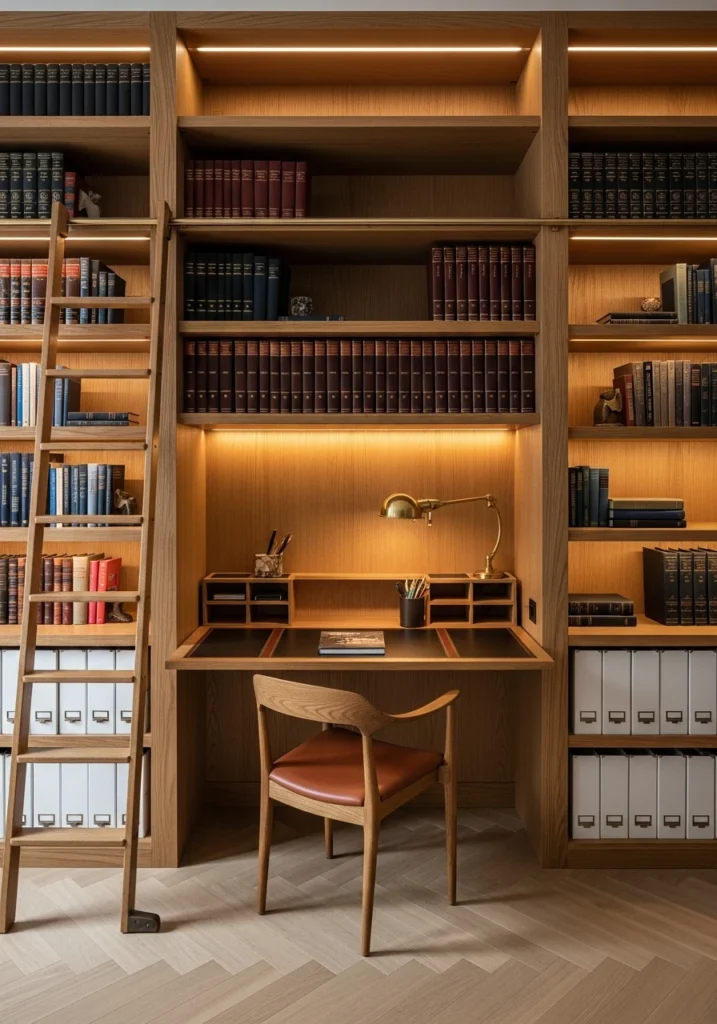
Library walls with micro workbays create impressive storage while carving out functional workspace. The concept features floor-to-ceiling oak shelving with a ladder rail for accessing high shelves. A small pull-out desk surface with leather inlay provides just enough workspace. Curated books and vertical file slots keep everything organized and accessible. A brass reading lamp integrates right into the shelving. Layered warm LEDs on each shelf create ambient glow that highlights the collection. Pale herringbone floors add elegance. This approach is perfect for book lovers who need workspace—the library wall becomes the design statement while the small desk niche provides practical function without dominating the room.
Convertible study and meeting corners solve the challenge of needing multiple functions in one spot. Picture a versatile corner with a compact desk that slides back to reveal a small round meeting table underneath. Two upholstered stools tuck under when not in use. A wall panel incorporates both a marker board and concealed AV panel for video calls or presentations. A soft acoustic ceiling baffle absorbs sound. Recessed warm downlights provide overhead illumination. Neutral stone floor tiles feel professional and easy to maintain. This concept works brilliantly for freelancers or hybrid workers who occasionally need to host small client meetings at home—the space adapts rather than requiring multiple dedicated zones.
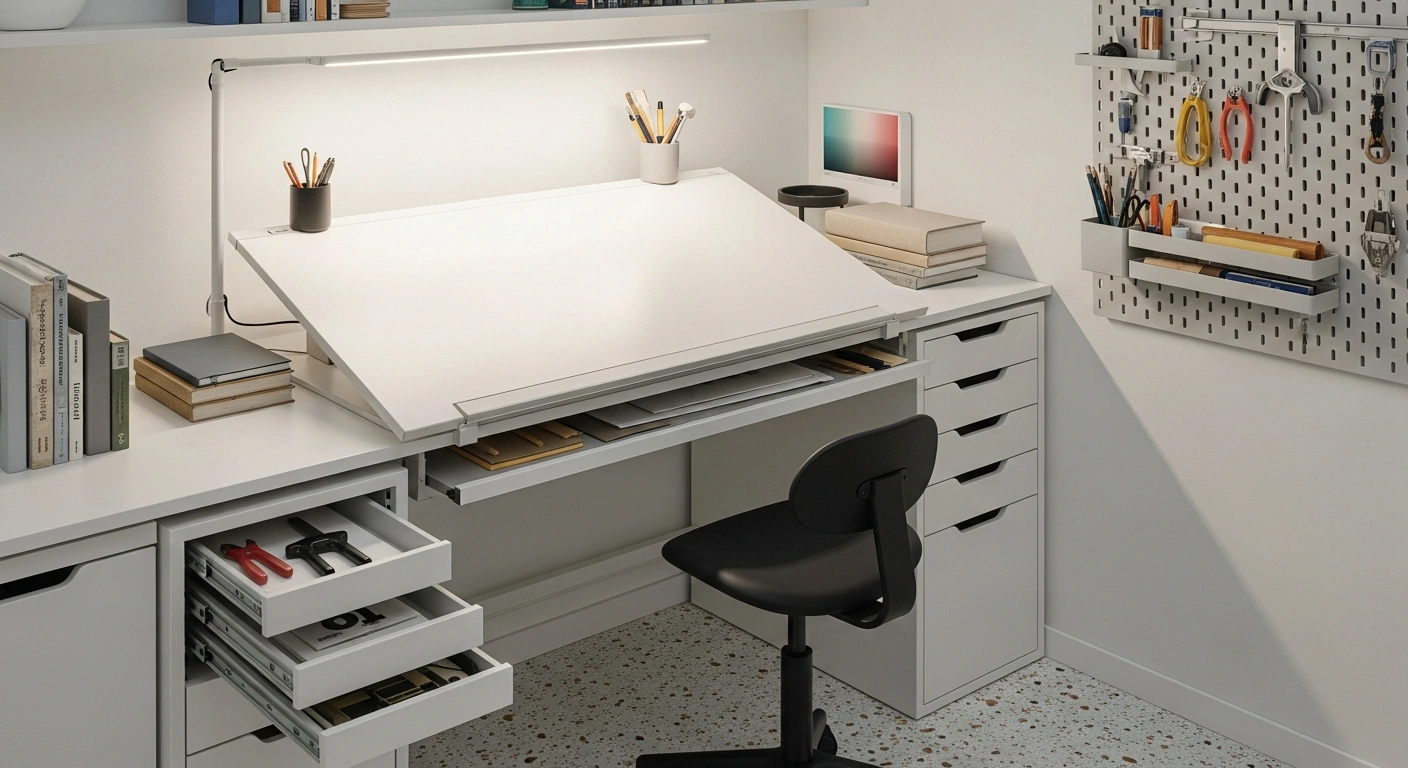
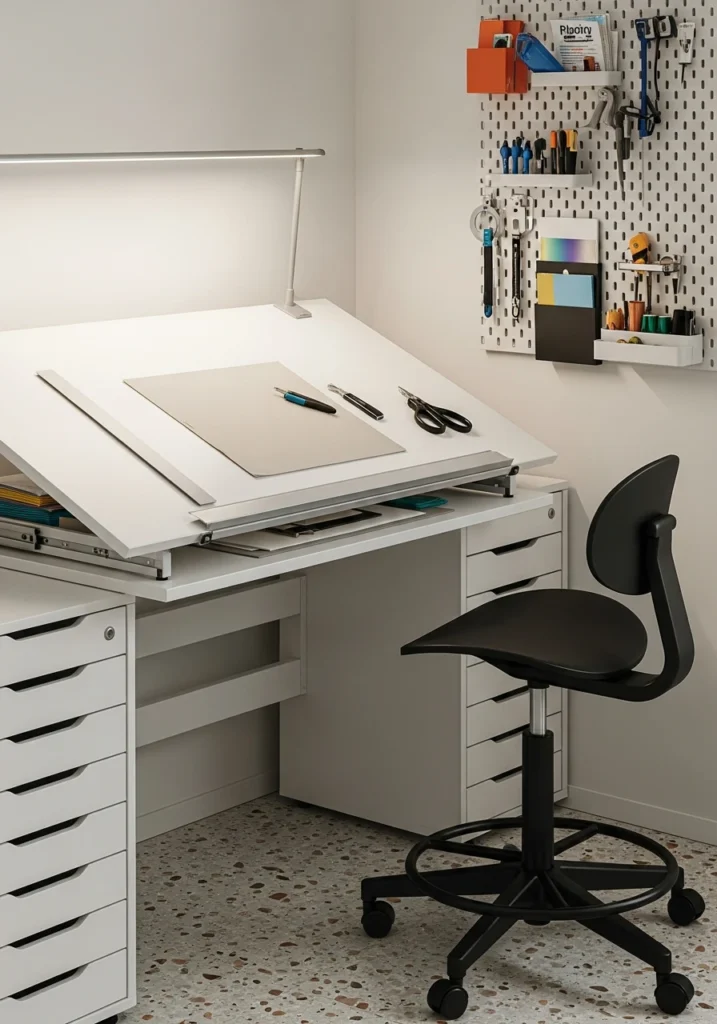
Lightbox desks for creative work bring specialized function into compact footprints. Imagine a narrow drafting-style desk with an integrated lightbox surface for reviewing prints, tracing, or detailed creative tasks. Slim storage drawers below hold paper and tools. Adjustable LED edge lights with color-temp control let you match lighting to the task. Matte white finish reflects clean light upward. A black ergonomic stool provides seating. Pegboard on the adjacent wall organizes tools and materials visibly. Pale terrazzo floors feel modern and durable. This specialized approach works for illustrators, designers, or anyone doing detailed visual work who needs proper task-specific lighting and organization.
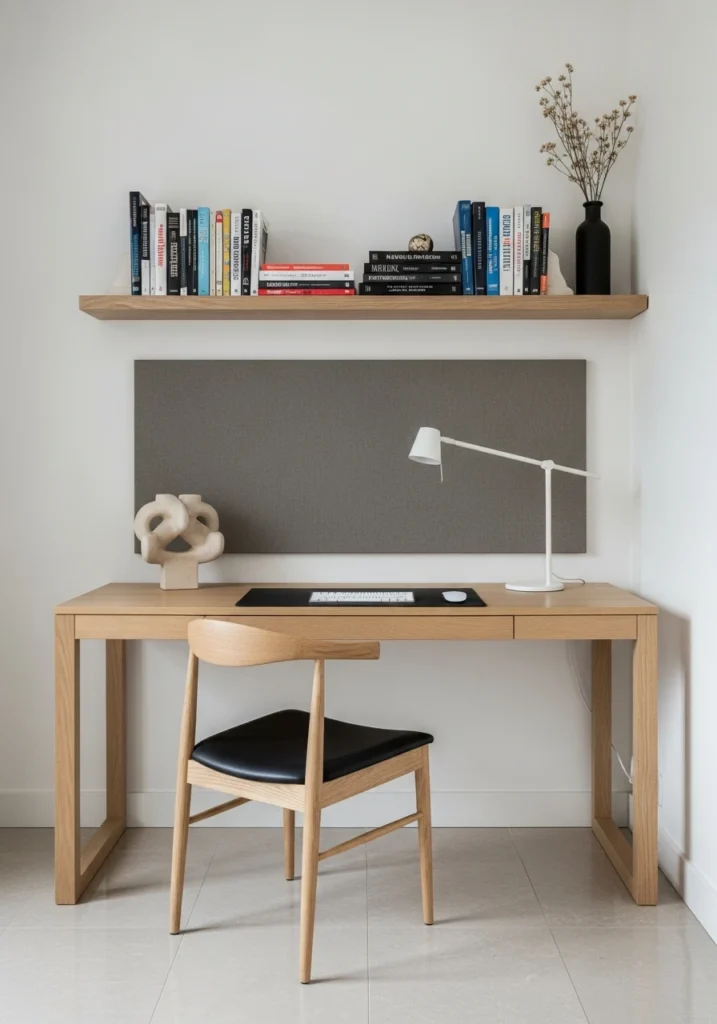
The curated minimalist study with gallery backdrop is about creating inspiring simplicity. Picture a pared-back desk in pale oak with a single sculptural object providing visual interest. A gallery-style matte wall behind allows for rotating art or prints—your inspiration can evolve with your projects. A low-profile task lamp and slim wireless keyboard tray keep technology minimal and unobtrusive. A floating shelf holds curated reference books—just the essentials, not a full library. Gloss-finish stone tile underfoot reflects subtle light and feels luxurious. This approach creates an intentional creative studio in miniature where every element is chosen carefully and nothing extraneous remains—the emptiness becomes a canvas for focused thought.
Whether these study spaces involved clever built-ins, abundant plants, specialized lighting, or just thoughtful ergonomics, they all prove that productive workspaces don’t require dedicated rooms or massive square footage. Some embraced cozy warmth, others went sleek and minimal, but every single one shows that the best study spaces are the ones that make you actually want to sit down and focus—not just aesthetically pleasing corners that look good but don’t function well.