
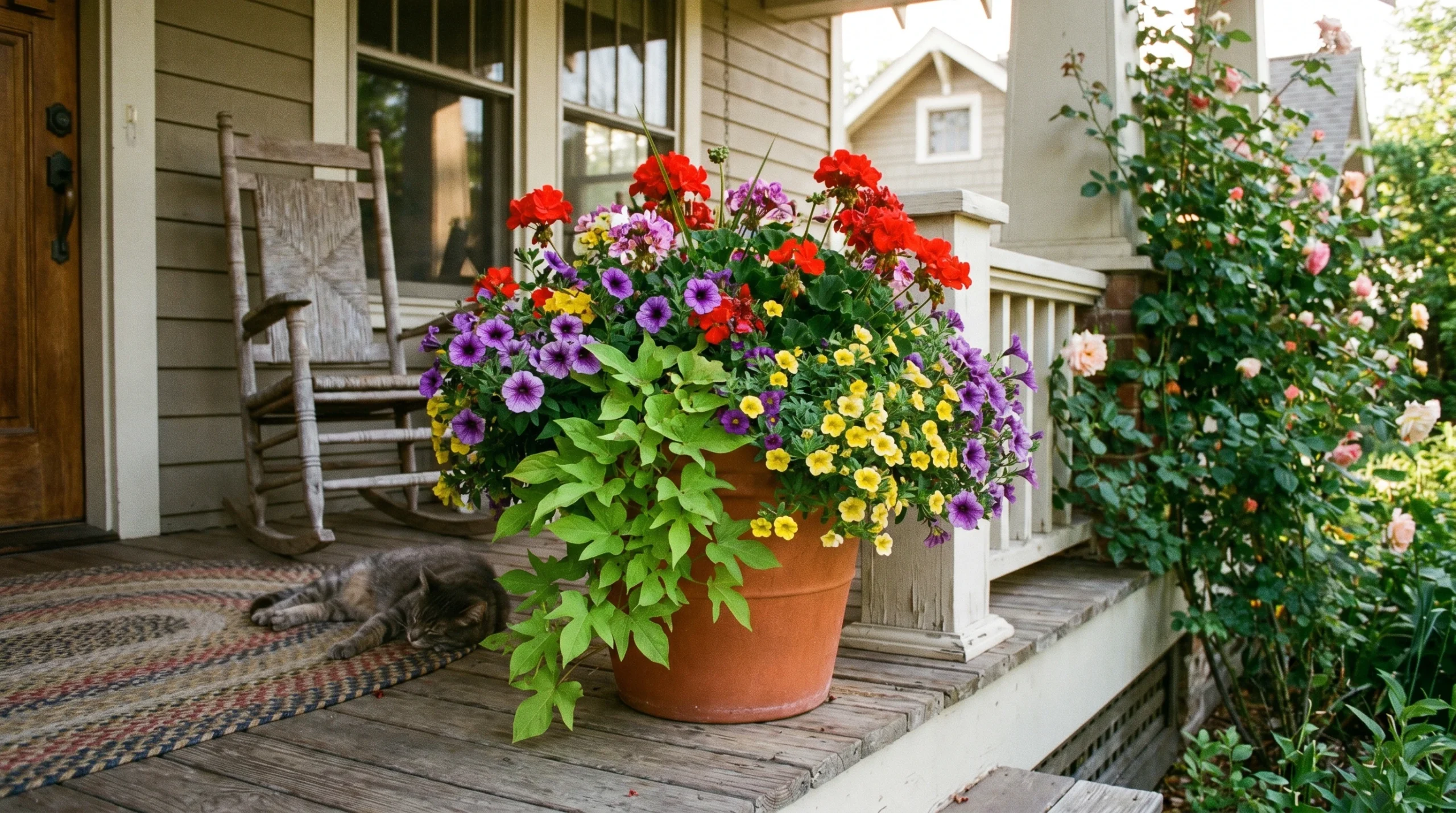
Your front porch has one job. It tells everyone who walks up whether the person inside has any taste whatsoever.
Most porches fail that job. Not because the owners don’t care, but because they think a single pot of red geraniums by the door is enough. It’s not. A lonely pot on a porch is the decorating equivalent of showing up to a dinner party with a half-eaten bag of chips.
The good news is that flower pots — actual pots, plural, arranged with some intentionality — are one of the cheapest ways to completely transform the face of your home. No landscaping crew. No permits. Just plants, containers, and a willingness to go a little bigger than feels comfortable.
Here’s what it actually takes to pull it off.
The Container Is Half the Design
People buy plants first and then scramble to find something to put them in. This is backwards.
The container sets the entire visual tone. A galvanized metal bucket communicates something completely different from a classical white urn. A cobalt ceramic pot on a white porch railing says coastal cottage. A matte black tall planter beside a black door says architecture. The plant fills the container; the container frames the porch.
Material Speaks Before the Plant Does
Terracotta is warm, forgiving, and works with almost any house colour. It looks better as it ages, which is more than you can say for most things.
Glazed ceramic gives you colour before a single flower opens. Cobalt blue, deep green, jet black — these pots carry the design weight themselves. The flowers become a bonus rather than the whole point.
Galvanized metal and raw wood crates bring texture and informality. They say the look was assembled, not purchased. That’s harder to achieve than it sounds.
Scale Is Where Everyone Goes Wrong
The single most common mistake is buying pots that are too small. A twelve-inch pot by a front door looks like it got lost on the way to a balcony.
For flanking a door, you want pots that reach at least mid-thigh when sitting on the ground. For railing planters, you want them to be visible from the street. When in doubt, go one size larger than feels right. You will never regret it.
The Container Family Rule
If you’re using multiple pots, they need to belong to the same family. That doesn’t mean identical. It means related — same material in different sizes, or same colour in different shapes.
Mixed materials work when there’s a clear hierarchy. One dominant container type, one accent. Three different materials fighting for attention is a container yard sale, not a design.
How Colour Actually Works on a Porch
The mistake people make with colour is thinking about individual flowers. Colour on a porch works at the scale of the whole facade. It has to hold up from the street.
Your House Colour Is the Starting Point
A white house is a blank canvas, which means you can go bold with pots or flowers without consequence. Hot pink against white reads perfectly from twenty metres away. Orange does too.
A brick or stone facade already has warm undertones. That’s why classic red geraniums work so well against it — they’re in the same warm family. Cool purples and blues create contrast against warm stone without clashing.
Dark siding — brown, charcoal, forest green — asks for lighter, brighter plants. Dark pot plus dark house plus dark plant is a void. At least one element needs to lift.
The Door Colour Anchor
Your door is already making a colour statement. Your pots should either echo it or intentionally contrast it.
A navy door with white flowers is effortless. A deep burgundy door with orange and red flowers builds warmth deliberately. A black door with clipped box topiary is a masterclass in restraint.
Don’t fight your door. Work with it or step clearly away from it.
Repetition Reads as Intention
One purple petunia in twelve different places looks scattered. The same purple repeated across three or four identical pots along a railing reads as a design decision.
Repetition is how you signal that what you’re doing is deliberate. And deliberate is exactly what a front porch should look like.
Front Porch Flower Pot Ideas Worth Stealing
Grey Ribbed Column Pots
Use three ribbed grey cylindrical planters in descending heights arranged on a path or step sequence. Plant the tallest with lime-white hydrangea, the middle with white begonias and trailing ivy-leafed geranium, and the smallest with white bacopa and more trailing ground cover.
The grey ribbed texture is the container’s entire contribution. It grounds the white flowers without competing. Use only white and green in this arrangement — the moment you add colour, the sophistication evaporates. Let the hydrangea bloom be the drama. Everything else supports it.
Classical Urn with Spikes
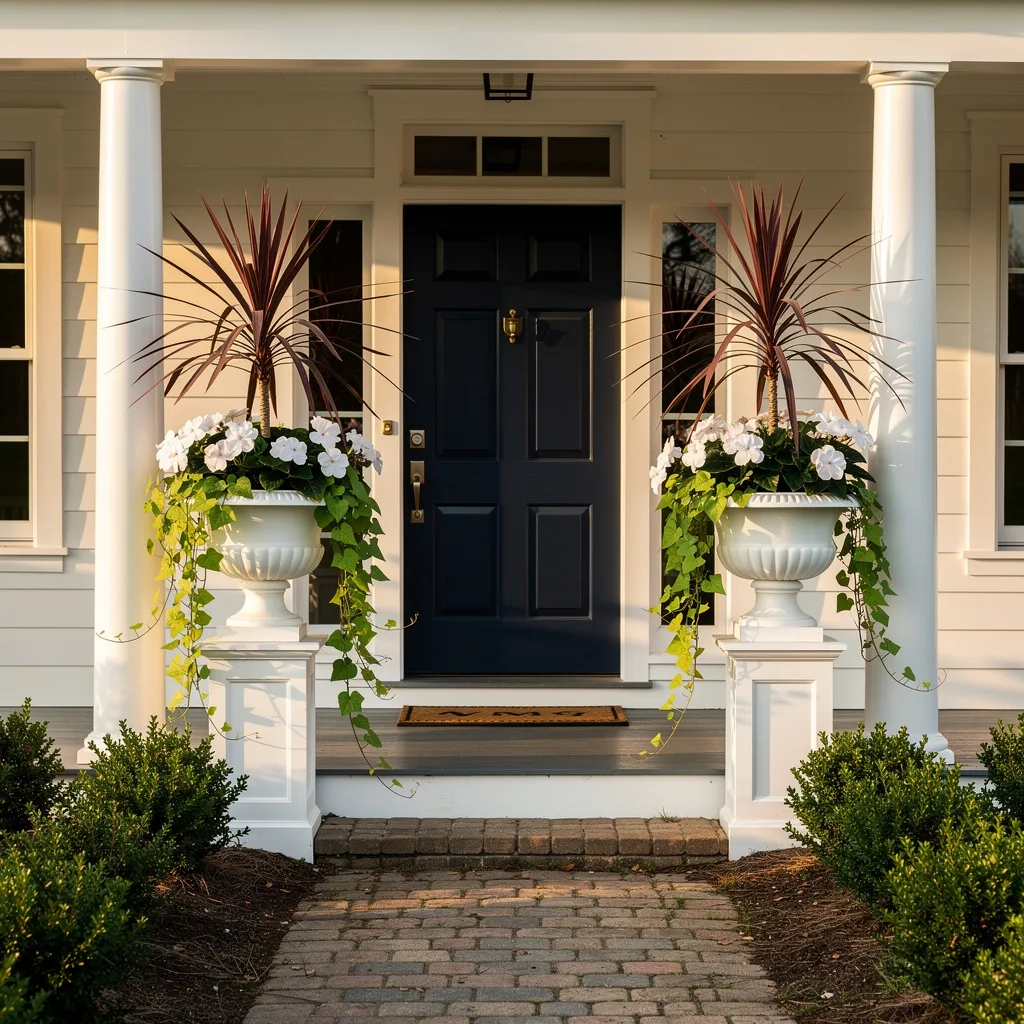
On white porch pedestals, place white ribbed classical urns. Into each one, plant one red cordyline or dracaena as the central spike — it should be dramatic in proportion, reaching well above the urn rim. Surround it with white impatiens as the filler and lime-green sweet potato vine or yellow creeping jenny as the spiller.
The cordyline is the decision. It’s architectural rather than pretty. It gives the whole arrangement a formality that matches the urn shape and the columned porch. The white flowers and trailing green keep it from feeling stiff.
Wooden Basket Hydrangea Feature
In a single cedar cross-frame planter box, arrange purple hydrangeas as the dominant bloom alongside lamium with silver-marked leaves as the spiller. Add a fern for texture and several bare pussy willow branches standing tall at the back for height and structural contrast.
The planter box material here is crucial. The natural wood with cross-beam detailing is warm and organic. It makes the purple hydrangeas feel gathered from a garden, not purchased from a nursery. The pussy willow branches add unexpected sculptural height without needing any maintenance. Choose branches that are at least half again taller than the planter’s width.
Rainbow Hanging Row
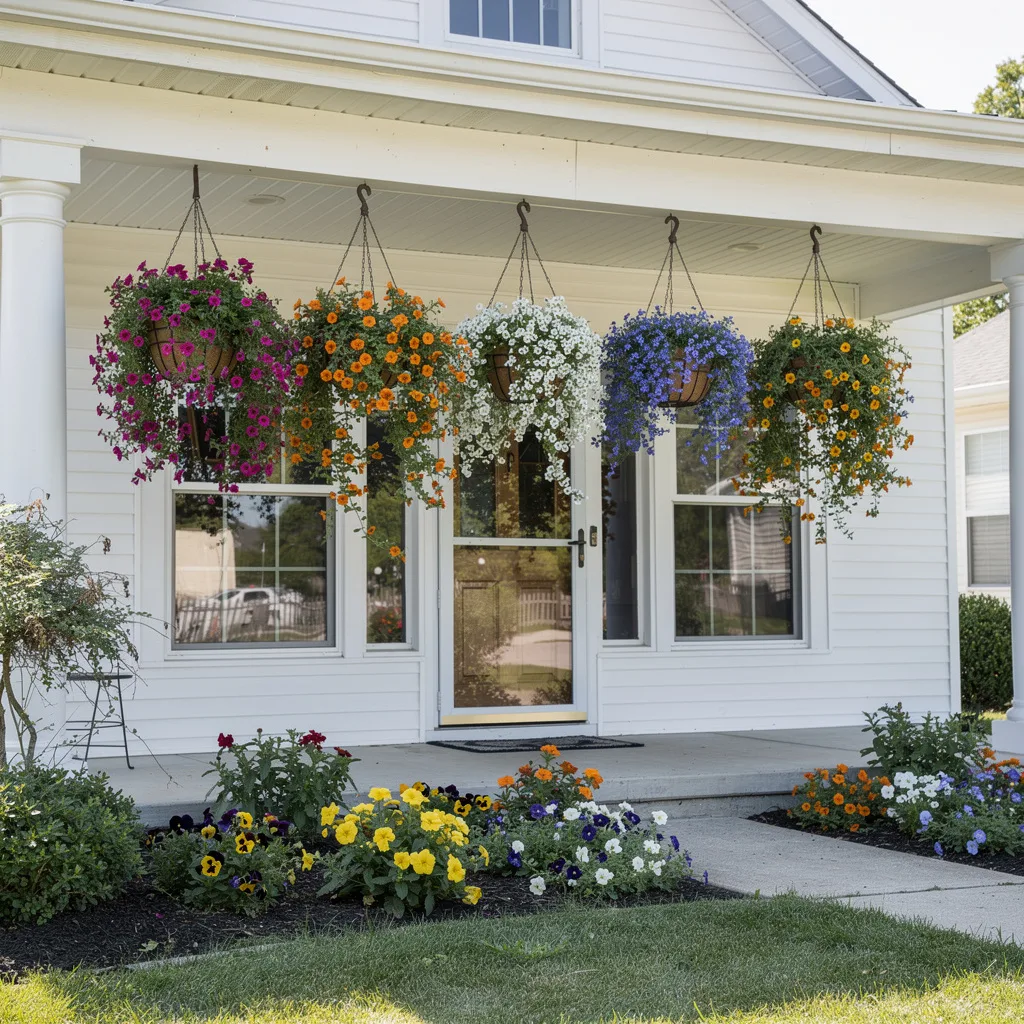
Along a white porch ceiling, hang five to six baskets of trailing petunias in completely different colours — hot pink, orange, white, purple, orange again. Space them evenly across the ceiling, all at the same height. The uniformity of the spacing and the containers makes the riot of colour feel intentional rather than chaotic.
For each basket, use a twelve-to-fourteen-inch coco fibre liner basket. Plant one colour per basket — don’t mix within the basket. The contrast happens between baskets, not inside them. Underplant the beds below the porch with complementary colours in loose groupings: pansies and marigolds work well here. The layering — hanging colour above, ground-level colour below — is what makes the whole facade feel complete.
Black Pots Tropical Canopy
In two large dark-glazed or faux-concrete black pots, plant parlour palms or areca palms as your central anchor — something that reaches above the doorframe. Fill the pot beneath the palm with a mix of begonias in hot pink, variegated ivy, and trailing creeping jenny. Hang a topiary wreath with a gingham ribbon on the door.
The tropical plant changes the entire character of the porch. It pushes the space away from cottage garden and toward something more lush and deliberate. The black pots contain all that green without making it look jungle-accidental. It looks collected, not overgrown.
Terracotta and Magenta Steps
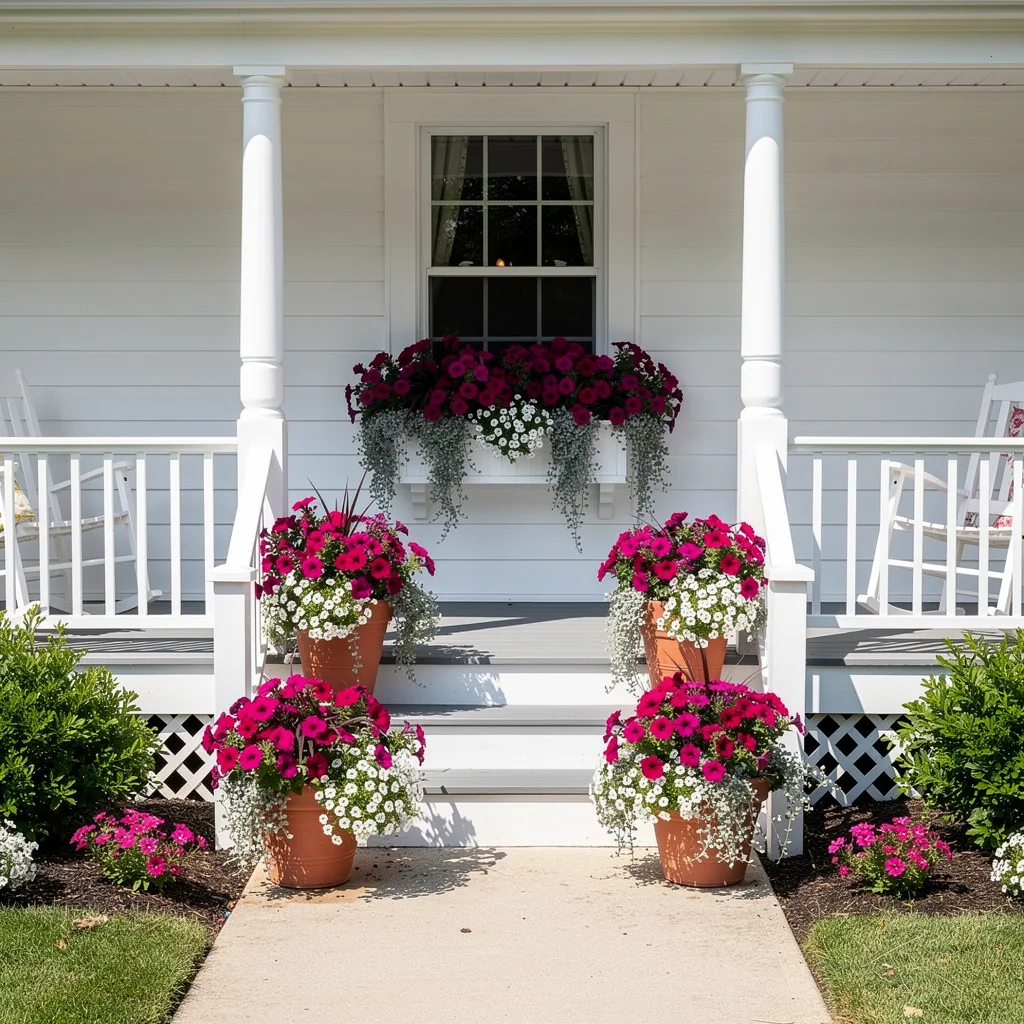
Stack terracotta pots at staircase level in two sizes — larger pots flanking the base of the stairs, smaller ones at the top step. Plant all of them with deep magenta petunias as the main bloom and white bacopa as the spiller.
Add a window box directly below the porch window using the same plant palette: dark magenta on top, white bacopa trailing down. The secret to this look is the colour discipline. Only two colours, hard stop. The terracotta warms everything; the magenta makes it land.
Galvanized Cluster Door
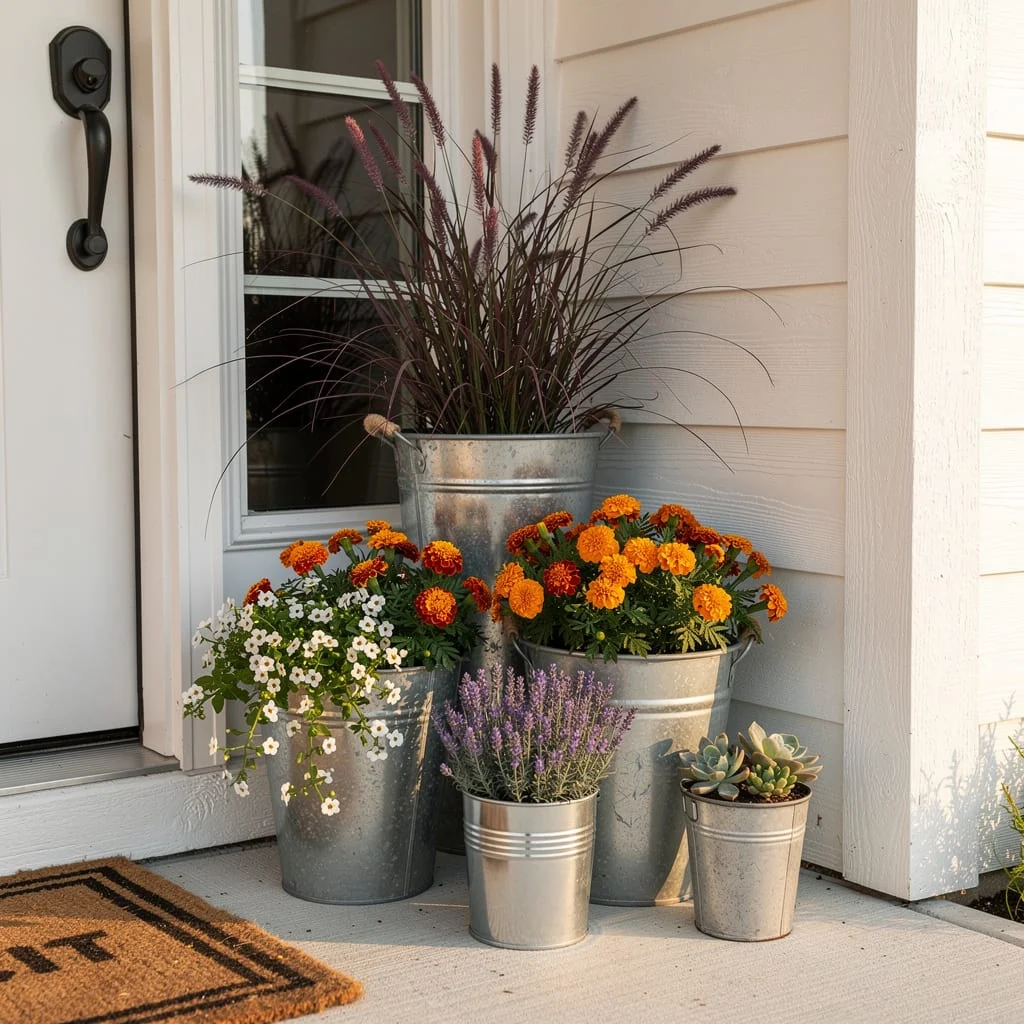
Group five to six galvanized metal buckets of varying sizes directly beside the door — not arranged in a line, but clustered like they grew there. Use a tall purple fountain grass in the largest bucket as your vertical anchor. Fill the medium buckets with orange marigolds and white bacopa. Put lavender and succulents in the smallest ones.
The mixing of plant types is what makes this look mature. Grass, flowers, herbs, and succulents in the same palette of soft silvers, oranges, and purples. Galvanized metal unifies them. Don’t paint the buckets and don’t polish them — the weathered finish is the point.
Terra Pyramid on Stone Steps
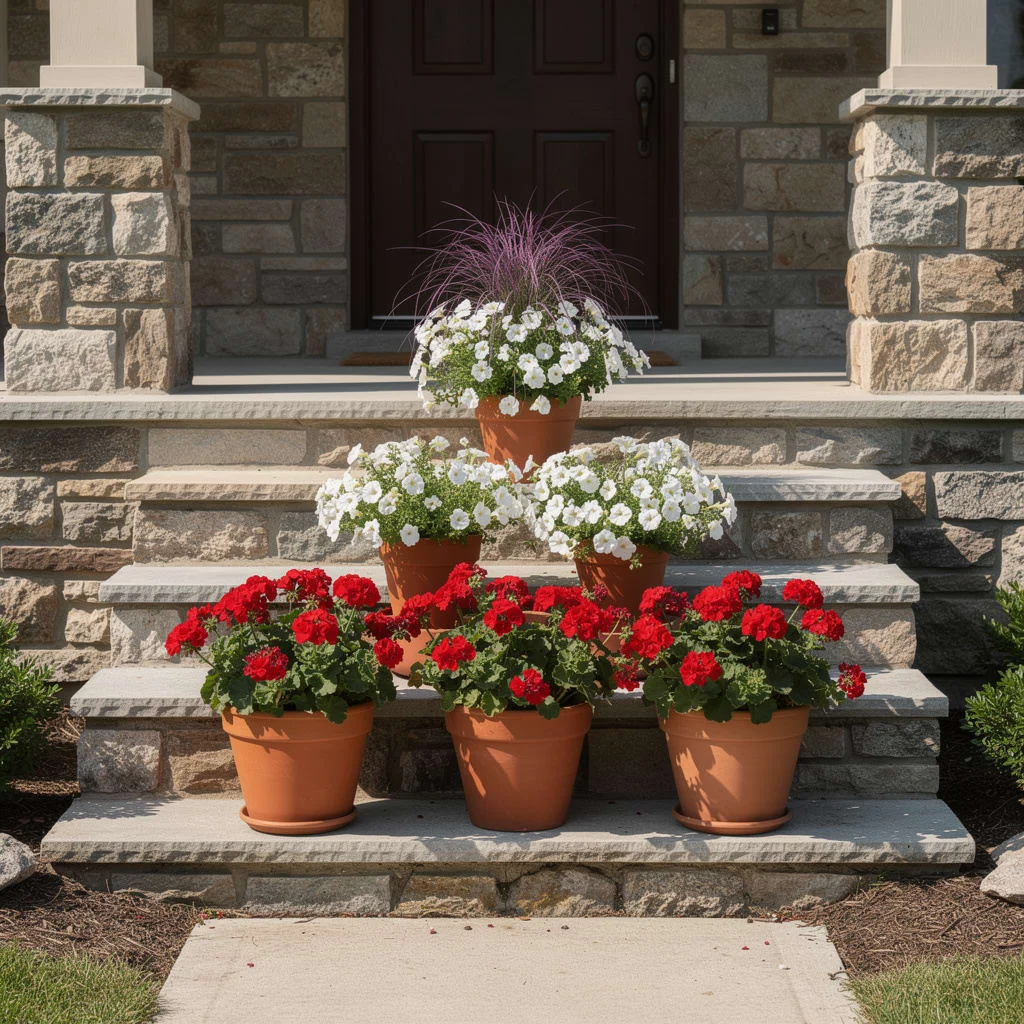
On wide stone steps, create a pyramid: three identical terracotta pots of red geraniums across the bottom step, two pots of white petunias on the middle step, one pot of mixed ornamental grass and white petunias at the top. All terracotta, all matched in size within each level.
The structure works because stone steps already have geometry. You’re echoing it rather than fighting it. Red geraniums against stone is a combination that’s been working for a few centuries. There’s no shame in that.
Black Planter Topiary Pair
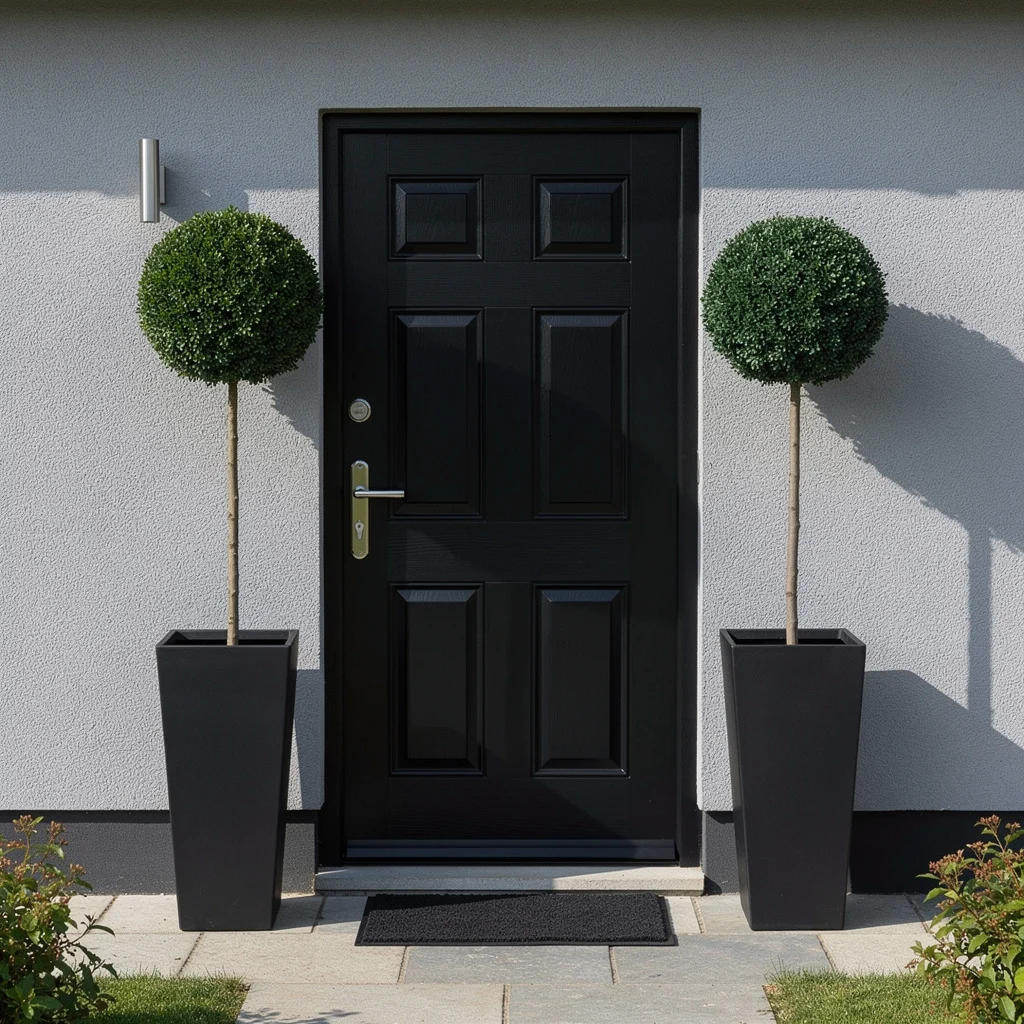
Place two identical matte black square planters flanking a black door, each containing a standard ball topiary — clipped box or privet, kept in a perfect sphere. Nothing else. No underplanting, no flowers, no trailing anything.
The restraint is the entire point. This look works because it understands proportion and symmetry absolutely. The sphere top, the tapered square base, the clean line of the door — everything relates. If you add trailing ivy or seasonal flowers, you’ve explained the joke. Leave it alone.
Cabin Railing Terracotta Line
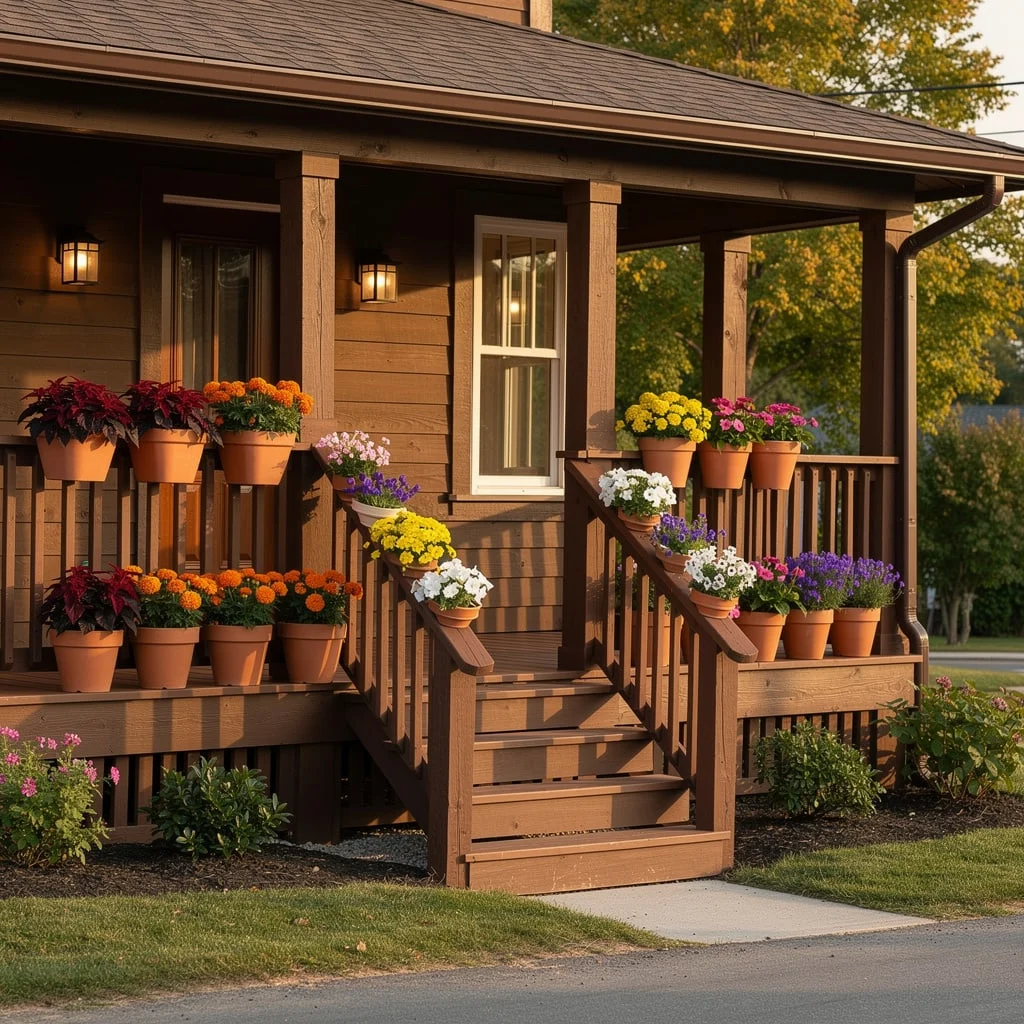
Along a wooden porch railing, fix terracotta pot brackets at regular intervals and plant each one with a single variety. Mix them along the railing: coleus, orange mums, white petunias, purple petunias, yellow marigolds. Continue the same arrangement down the stair railings as well.
The key decision is the brackets. They need to be rated for the pot weight and sized so the pots sit at railing height, not drooping below it. At that height, with that density of colour, the railing itself becomes a living ledge. The brown-stained wood behind it makes every warm colour read warmer.
Tall Black Planter with Low Bowls
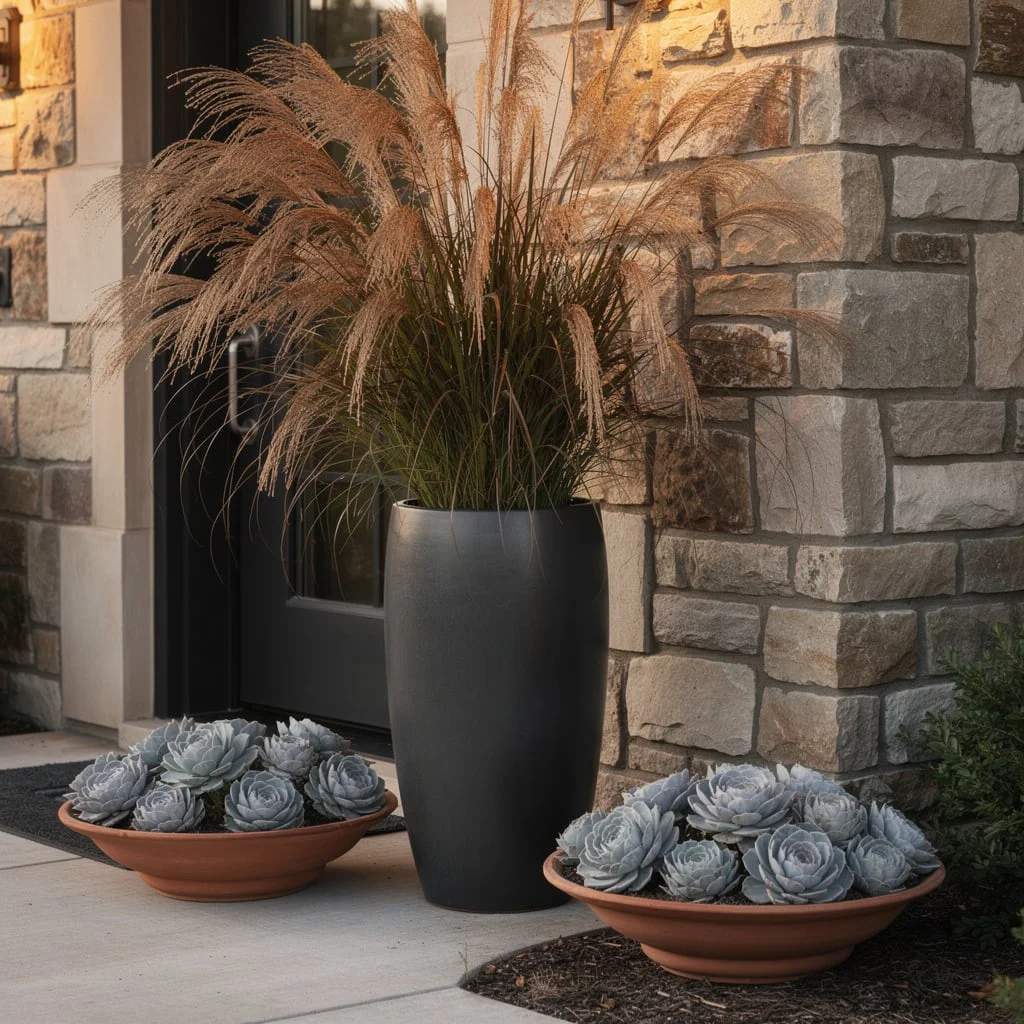
Place one tall matte black cylindrical planter centre-left of the door. Plant it densely with miscanthus or pampas grass — the feathery, golden variety that moves in the wind. Flank the base on either side with wide, shallow terracotta saucers planted thickly with blue-grey echeveria succulents.
The contrast is extreme and entirely deliberate: tall versus flat, soft movement versus still and geometric, warm terracotta versus matte black, feathery grass versus sculptural succulents. It works because every choice goes in exactly the same direction — graphic, architectural, no fuss.
Tiered Iron Stand Pair
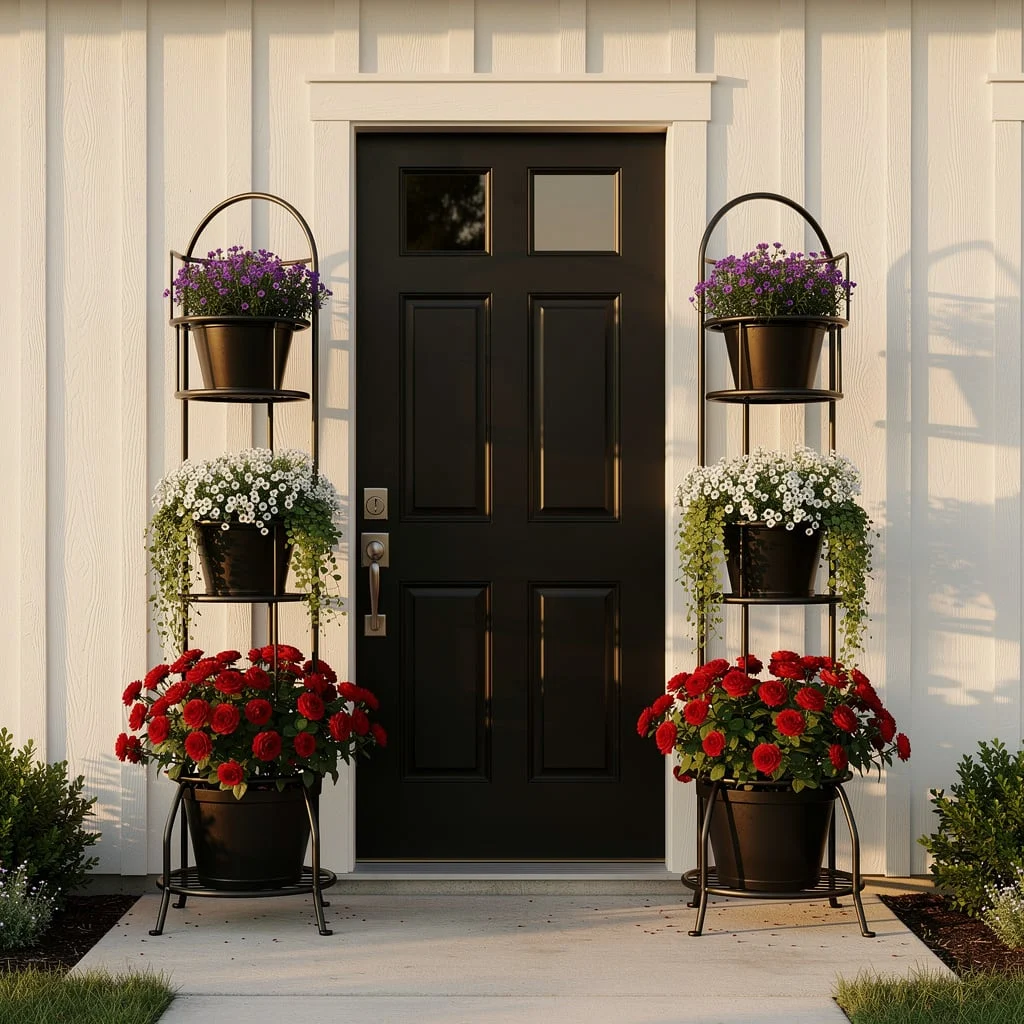
On either side of the door, place matching tall iron tiered plant stands — the kind with three levels and a curved handle at the top. Plant the top tier in purple verbena or small asters. Fill the middle tier with white trailing bacopa or daisies. Pack the base with red roses or red gerbera daisies.
Match both stands identically. This is not a place for variation. The symmetry is the structure. The three-tier format gives you vertical height without a single large pot, which is the useful trick for narrow porches where a big planter would block the entry entirely.
Beige Porch Hanging Baskets
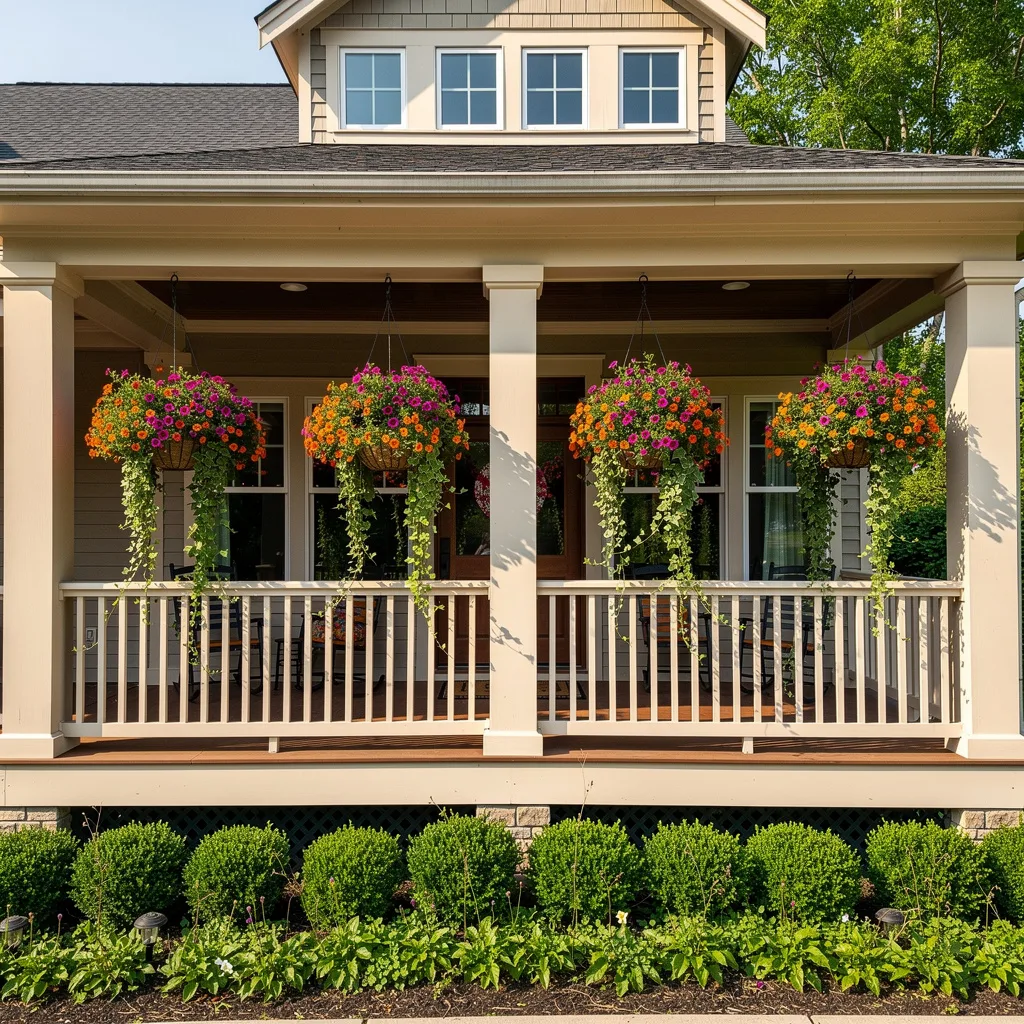
Under a wide wrap-around porch ceiling with beige columns, hang four large coco basket arrangements at equal intervals. Plant each basket with orange and pink calibrachoa as the main bloom and allow English ivy or creeping jenny to trail dramatically — at least thirty centimetres of trail. The ivy should reach below the railing line.
The trail length is what most people cut short. Let it grow. The dramatic downward sweep from the basket is what gives this style its lushness. Clip the ivy once it touches the railing — not before.
Stacked Wooden Crates
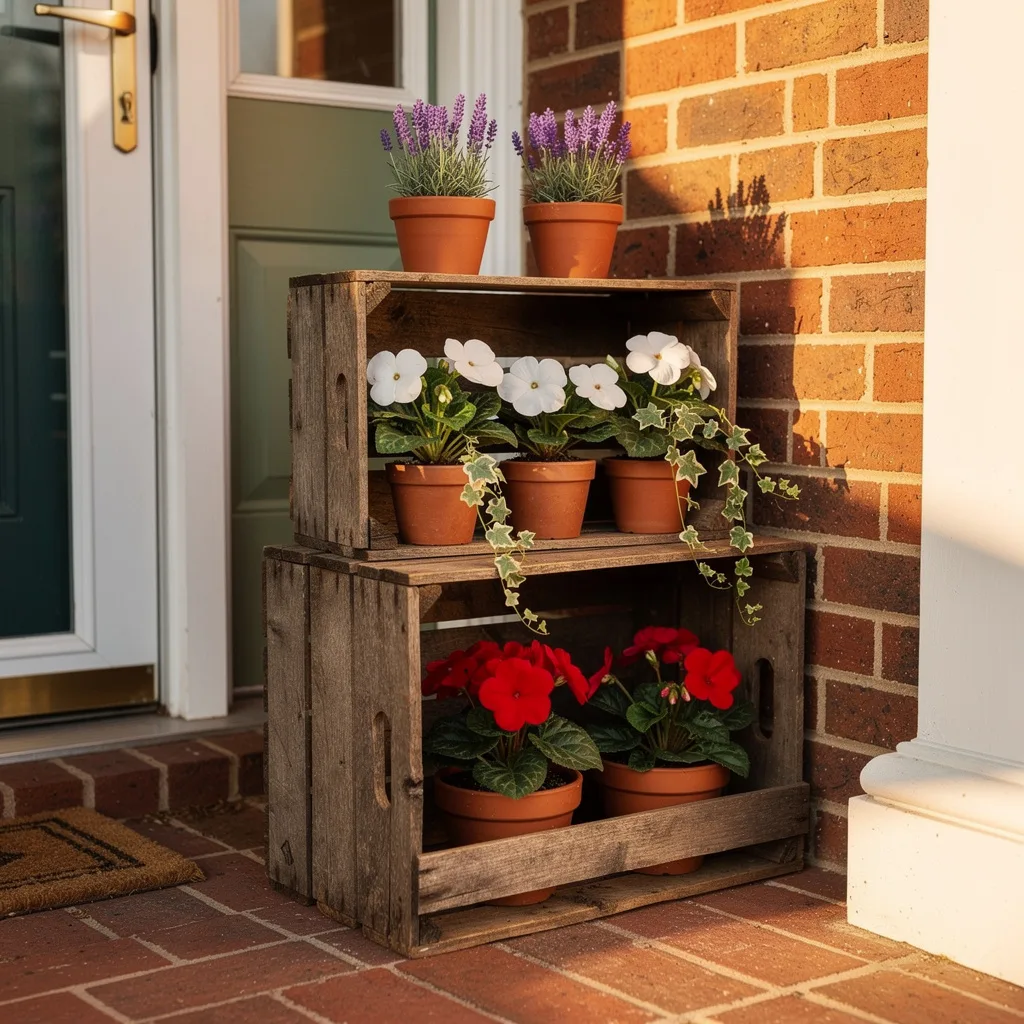
Stack two weathered wooden crates against the wall beside the door — one slightly offset from the other rather than perfectly aligned. Place two terracotta pots of lavender on the top crate. Fill the middle shelf with three small terracotta pots of white impatiens and let English ivy drape over the front edge. On the bottom shelf, tuck three pots of red impatiens.
The wood crates should be genuinely weathered, not freshly stained in a faux-rustic finish. The real texture is what makes this look honest. If your crates are new, leave them outside for a season before you use them.
Cobalt Blue Railing Line
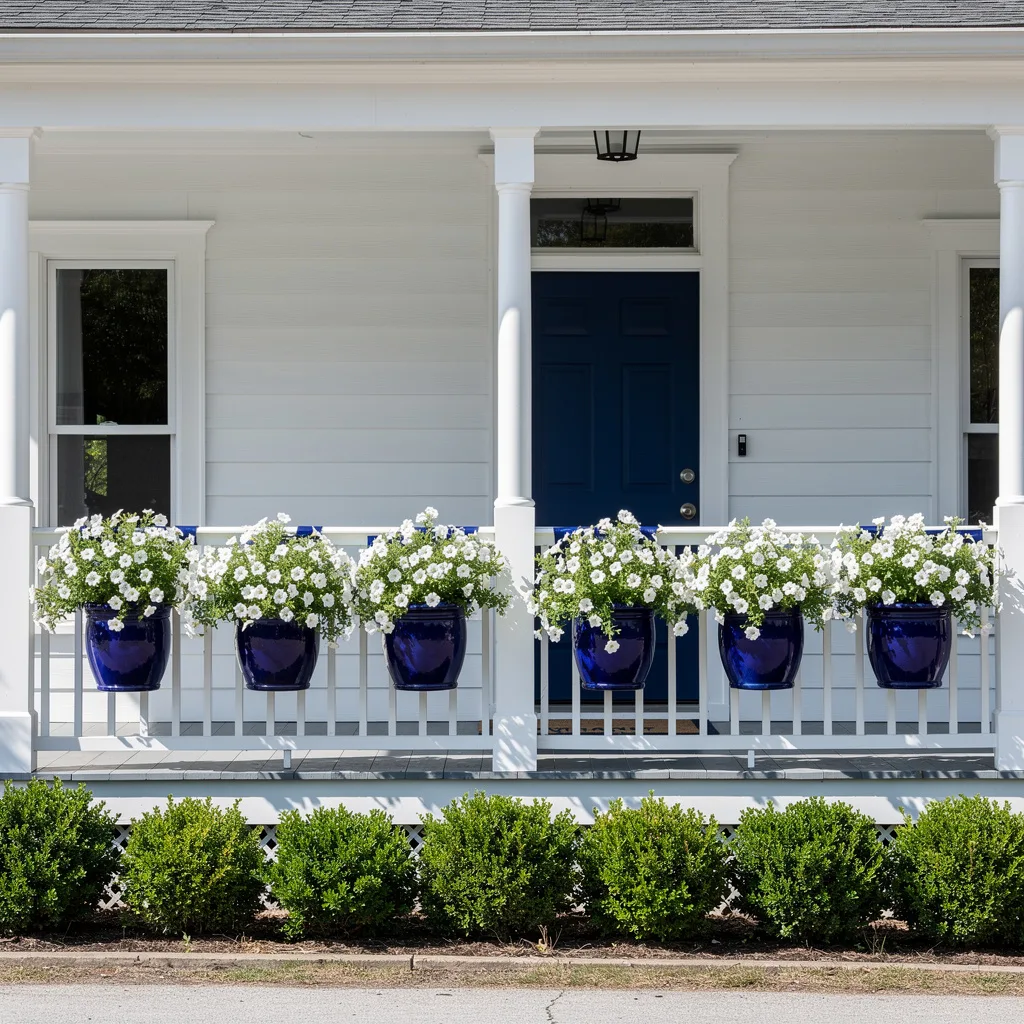
Along a white porch railing, clip cobalt blue glazed ceramic pots at regular intervals — six or eight of them, all matching, all the same size. Plant each one with white petunias and let them grow full and slightly wild over the pot edge. Behind the railing, let the blue door anchor the whole scene.
The glaze colour is doing all the work. The white flowers exist to stop the cobalt from looking heavy. Do not use any other flower colour. No pink, no yellow, no mixed. White only. The discipline is what makes a blue door with cobalt pots feel curated instead of garish.
Final Thoughts
Every one of these arrangements works for the same underlying reason. Each one made a clear decision and stuck to it.
A decision about the container material. A decision about colour range. A decision about whether to go abundant or restrained. What connects all of them is the commitment. The rainbow baskets go all in on colour. The black topiary pair goes all in on geometry. Neither is hedging.
The front porch is a small space. Hedging in a small space looks timid. Timid doesn’t read from the street.
Pick your direction. Scale it up slightly beyond what feels safe. Let it grow in.