
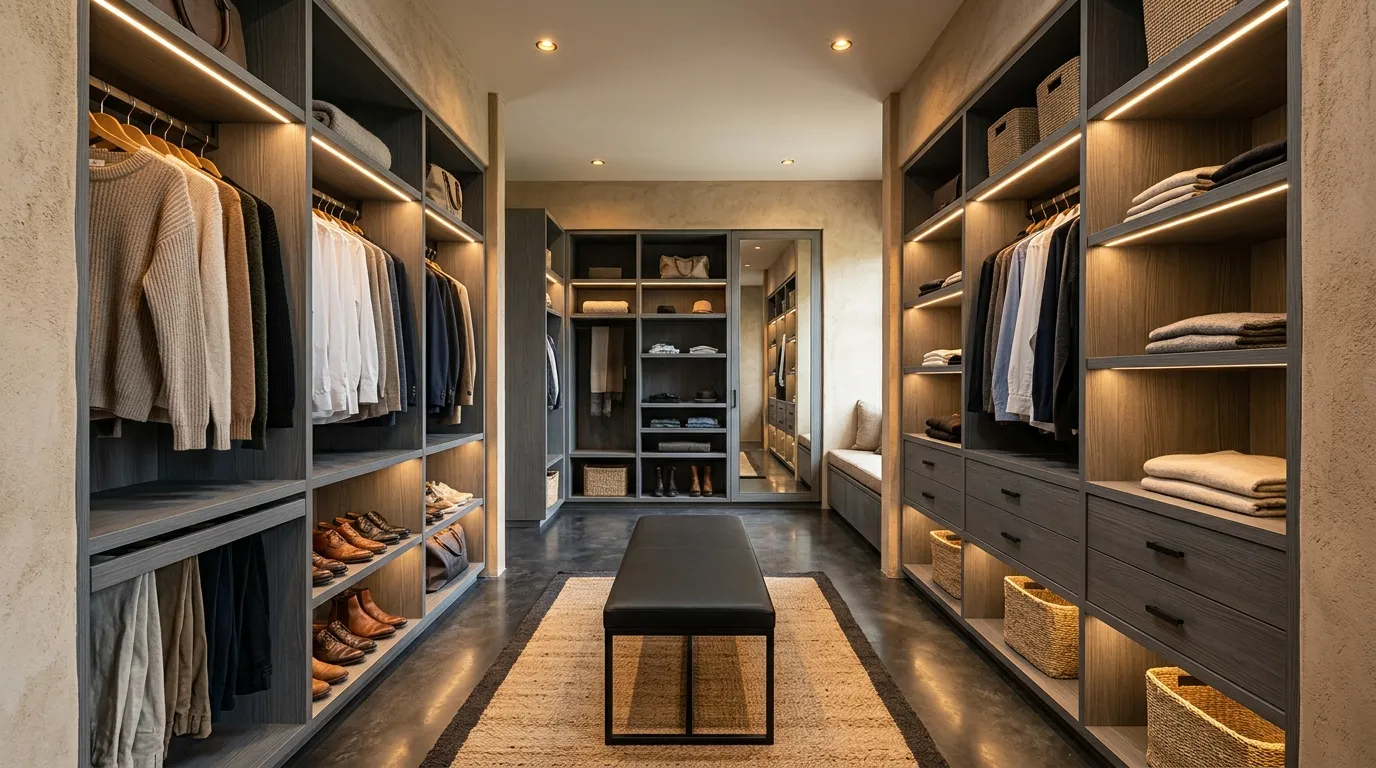
Most people’s closets are an afterthought. A leftover rectangle behind the bedroom, filled with wire shelving and a single bulb hanging from the ceiling like a bad idea nobody bothered to fix.
Then they wonder why getting dressed in the morning feels like a chore instead of a moment.
Here’s the thing nobody tells you: the closet is not storage. It’s a room. It gets used twice a day, every day, for the rest of your life, which is more than you can say for your dining room.
Treat it like one, and everything changes.
What Separates a Closet From a Room
Once the basics are handled, the difference between a good closet and a forgettable one comes down to a few ideas most people never articulate.
A Closet Is a Room, Not a Leftover
Give it a rug. Give it art, or at least a mirror with a frame instead of a slab of glass screwed to the wall.
The moment you add a seat — a stool, a bench, an ottoman — the closet stops being storage and starts being a place you’d choose to spend time.
That shift is the whole game.
Repetition Is the Design, Not the Boring Part
The most striking closets in this list all do one thing on repeat. Same hardware finish. Same door style. Same fabric on every drawer front.
Repetition reads as intention. Variety, unless it’s deliberate, reads as indecision.
Pick your fluted panel, your brass pull, your glass texture — and let it appear everywhere.
Contrast Does the Heavy Lifting
A closet that’s one shade of white from floor to ceiling disappears into itself. A closet with one dark element against a light field — a black island, a bronze frame, a single navy wall — has somewhere for the eye to land.
You don’t need color to get contrast. You need something that isn’t the same as everything around it.
Walk-In Closet Ideas
Brass-Trimmed Shelf Edges
Run a thin strip of brass along the leading edge of every open shelf, every drawer face, and every panel seam in the room. Have it fabricated to spec rather than bought as trim — it needs to sit flush, not applied like an afterthought.
Pair it with warm white lacquer cabinetry and integrated LED strips tucked just behind the brass line, so the metal catches light instead of just reflecting it.
Finish with a marble-bordered runner down the center aisle. The brass should repeat in every direction you look — shelf edges, drawer pulls, the vanity mirror frame at the far end — so the eye reads it as a system, not decoration.
Ribbed Glass Wardrobe Doors
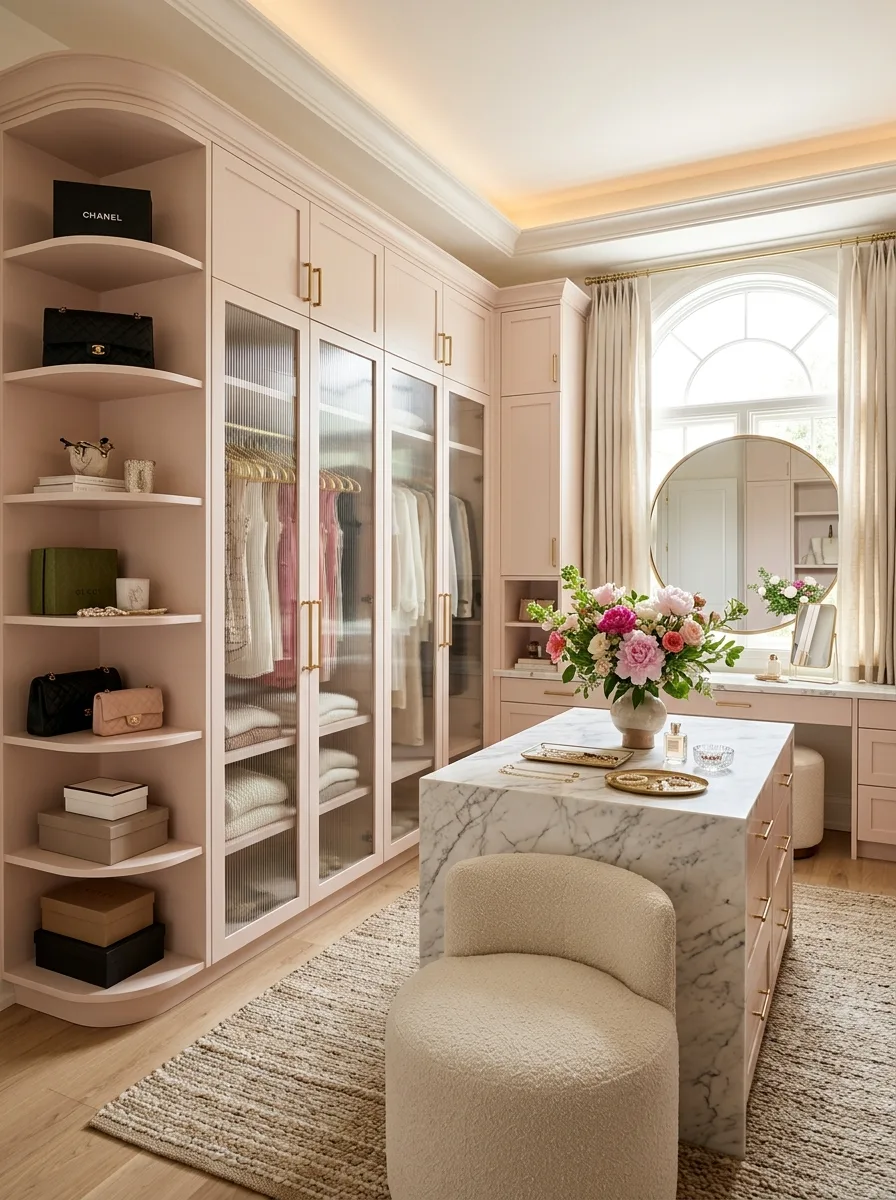
Specify fluted or ribbed glass — not clear glass — for wardrobe doors that need to hide clutter while still hinting at color and shape behind them.
Pair the ribbed glass with soft, rounded cabinetry edges and a curved corner shelving unit that turns an awkward room corner into a design feature instead of dead space.
Finish with a marble-topped island and a single boucle stool. The ribbed glass does the work of keeping the room feeling calm even when the wardrobe behind it isn’t.
Glass-Top Jewelry Island
Build a freestanding island with a raised glass display top over a lit interior compartment, sized to hold jewelry, watches, and small accessories under glass rather than in a drawer.
Use the same cream lacquer and brass hardware on the island as the surrounding wardrobe walls, so it reads as furniture, not a shop fixture dropped into the middle of the room.
Hang a genuinely oversized chandelier above it — bigger than feels reasonable — and back the far wall with an arched mirror that doubles the light. The island only works if the ceiling height and the fixture size match its ambition.
Mezzanine Stair City View
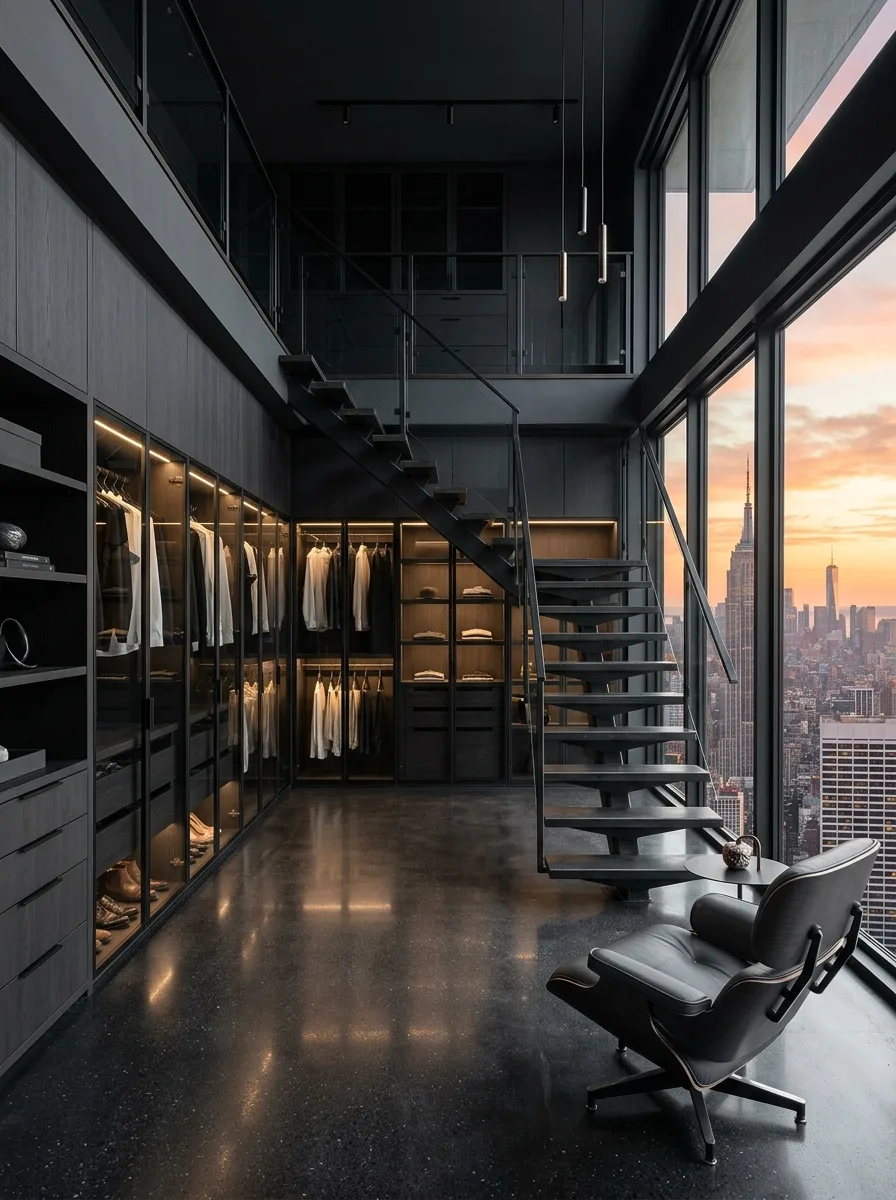
Build vertically instead of horizontally: line the lower level in dark wood-and-glass wardrobe walls, then run an open steel staircase up to a mezzanine level of additional storage.
Keep the far wall floor-to-ceiling glass, uninterrupted by curtains or blinds, so the room borrows a skyline instead of competing with it.
Furnish with exactly one serious chair — leather, low, built for sitting rather than styling — because a room with a view this good doesn’t need more furniture arguing for attention.
Ornate Mirror Pink Lacquer
Choose one saturated color and commit to it on every cabinet face, floor to ceiling, no neutral break anywhere in the room.
Install a single oversized antique-style mirror with a gilded, ornate frame directly opposite the entrance — the frame needs to be dramatically different in tone and texture from the lacquer to earn its place as the focal point.
Add a sputnik-style chandelier in gold to keep the metal consistent, then anchor the floor with a plush white rug so the saturated color has one place to rest the eye instead of overwhelming the whole room.
Marble Jewelry Tray Island
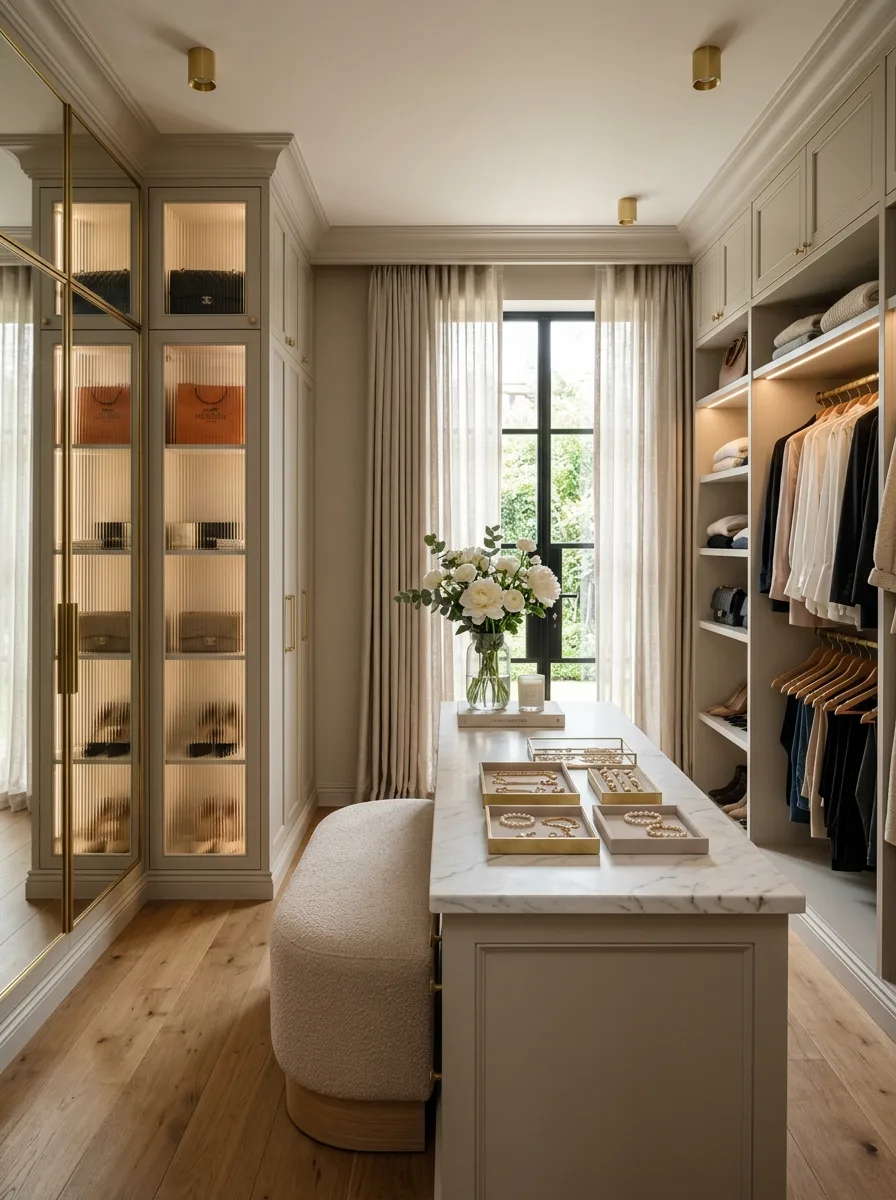
Top a simple rectangular island in the same greige as the surrounding cabinetry with a slab of light marble, then lay out shallow velvet-lined trays across it for rings, bracelets, and watches instead of storing them in a drawer.
Pair ribbed glass cabinet fronts on one wall with open, lit shelving on the other, so the room has both concealment and display without feeling cluttered.
Dress the window in sheer linen rather than a heavy drape — the point of this look is soft daylight falling directly onto the marble.
Fluted Cabinetry Ring Pendants
Order cabinetry with a vertical fluted or reeded texture across every door and drawer front — the ribbing is the entire personality of the room, so it needs to be deep enough to cast real shadow lines.
Suspend a layered ring pendant, or a pair of them at different heights, directly above the island to create a soft, sculptural moment against all that hard vertical texture.
Glass-front upper cabinets let the fluting continue even where the doors are transparent. Keep every handle and pull in the same warm brass so nothing interrupts the rhythm.
Floral Wallpaper Wicker Hampers
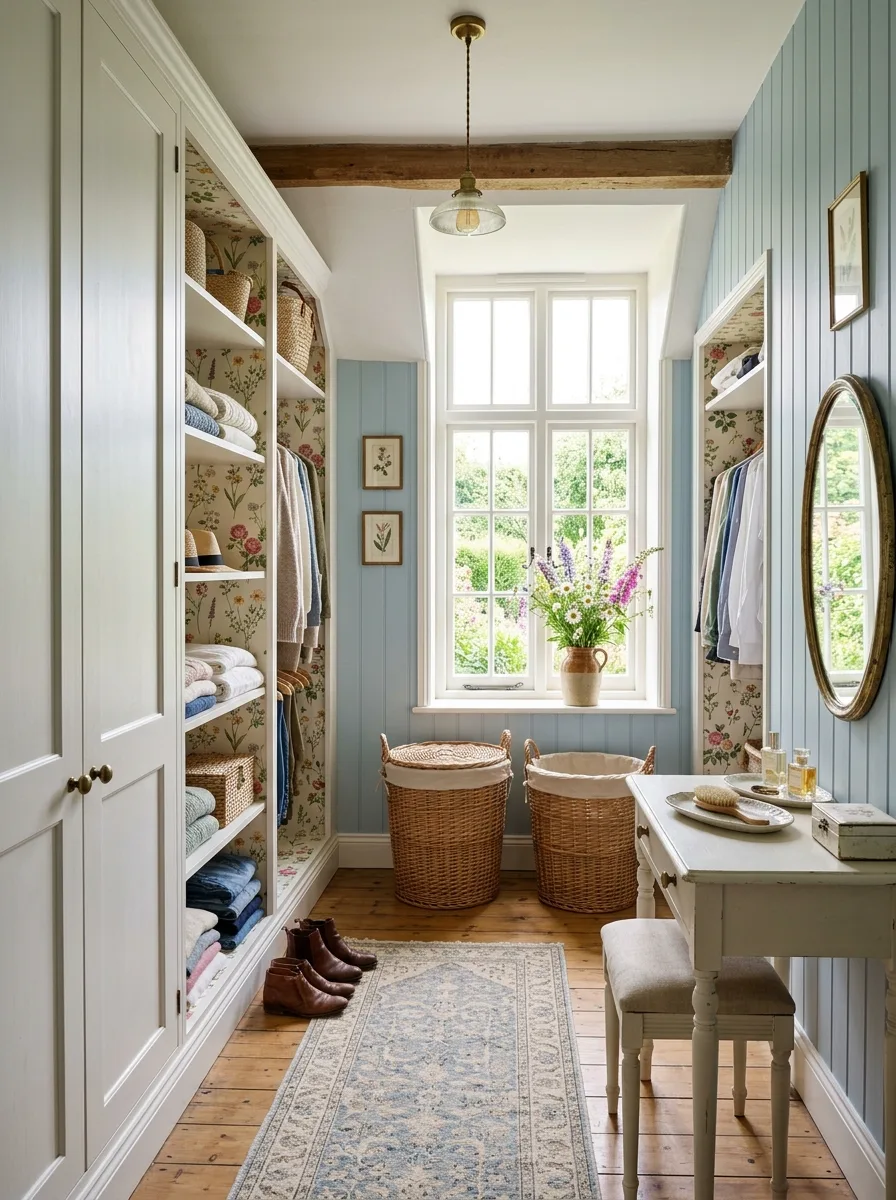
Paper the upper walls in a small-scale floral print, then run painted wainscoting in a soft blue below it, so the pattern has a clean stopping point instead of overwhelming the room.
Use woven wicker hampers with fabric liners for laundry rather than hidden bins — they should be visible and slightly rustic, sitting in the open under the window.
Keep the cabinetry a simple painted shaker style, and let a single exposed wood beam overhead stay unpainted. The whole look depends on restraint everywhere except the wallpaper.
Open Shelf Bag Display
Skip upper cabinet doors entirely on at least one wall. Build open cubbies sized specifically to the width of a folded sweater or a structured handbag, so nothing on display looks accidental.
Style each shelf the way a boutique would — one bag per cubby, faced forward, with negative space around it rather than crammed in.
Keep the drawer bank below simple and matte, with recessed hardware, so the open shelving above stays the visual priority. This look fails the moment the open shelves get treated like general storage instead of a display case.
Skylight Over Black Marble Island
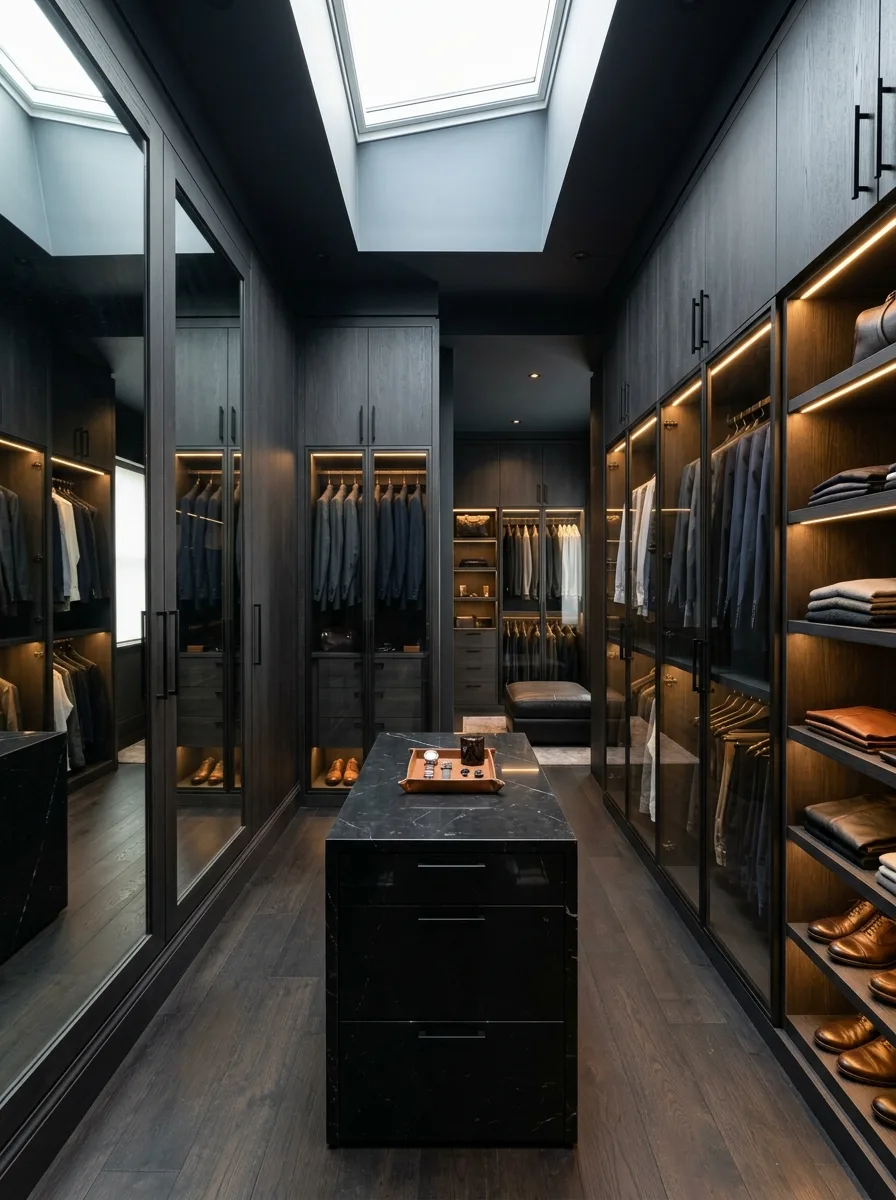
Paint every surface — walls, cabinetry, ceiling — the same deep charcoal or black, then let a single skylight do the work of making the room feel open instead of cave-like.
Center a black marble-topped island directly under the skylight so natural light hits the one surface in the room designed to reflect it.
Line the perimeter in dark wood with warm integrated lighting inside every cabinet, so the room reads as moody rather than dim. This only works if the light source above is real and generous — a small window won’t carry a palette this dark.
French Window Herringbone Floor
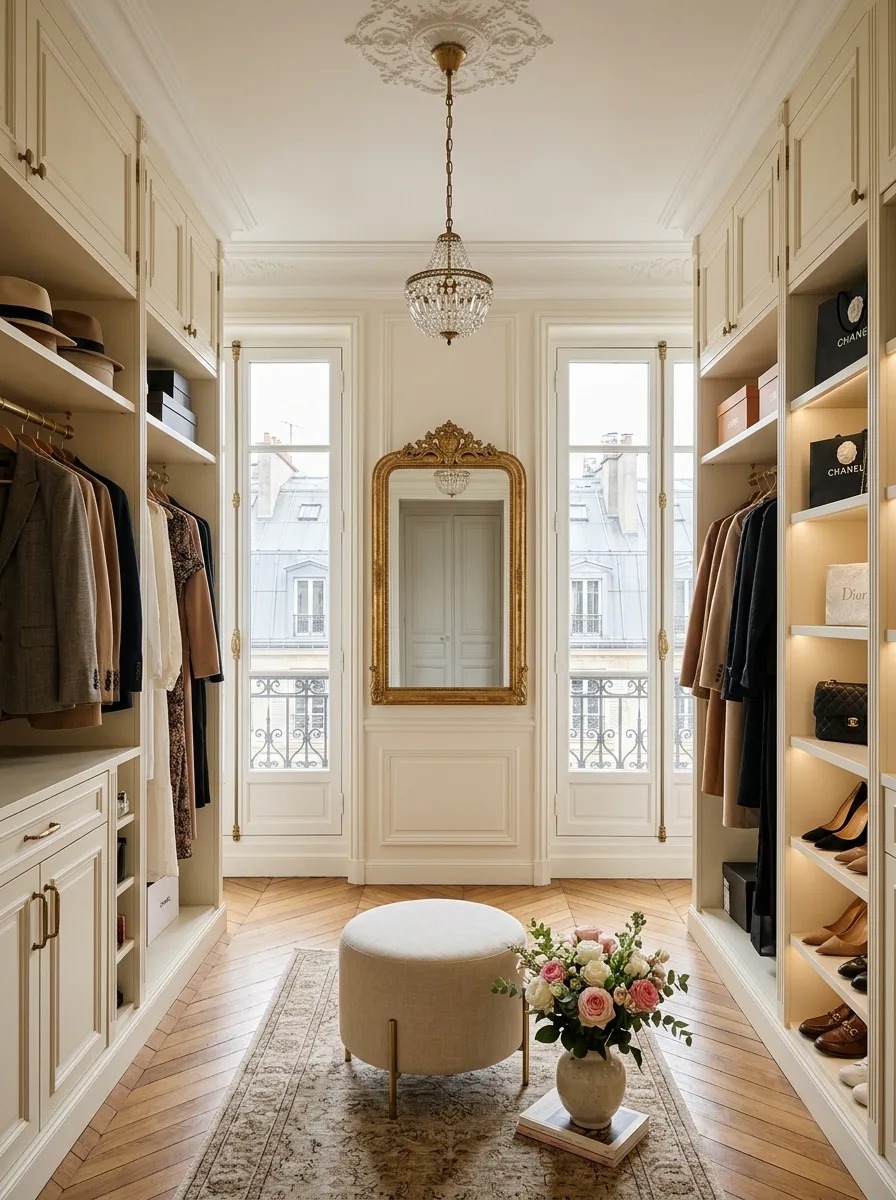
Lay a herringbone wood floor and leave it exposed rather than covering it with wall-to-wall carpet — the pattern is doing real work in a room this pared back.
Position a single ornate gilt mirror between two full-height French windows, so the closet borrows both the light and the view from outside instead of feeling sealed off.
Keep the cabinetry a simple cream shaker or paneled style with brass hardware, so nothing competes with the windows and the floor. Add one upholstered stool as the only soft object in the room.
Shoji Door Garden View
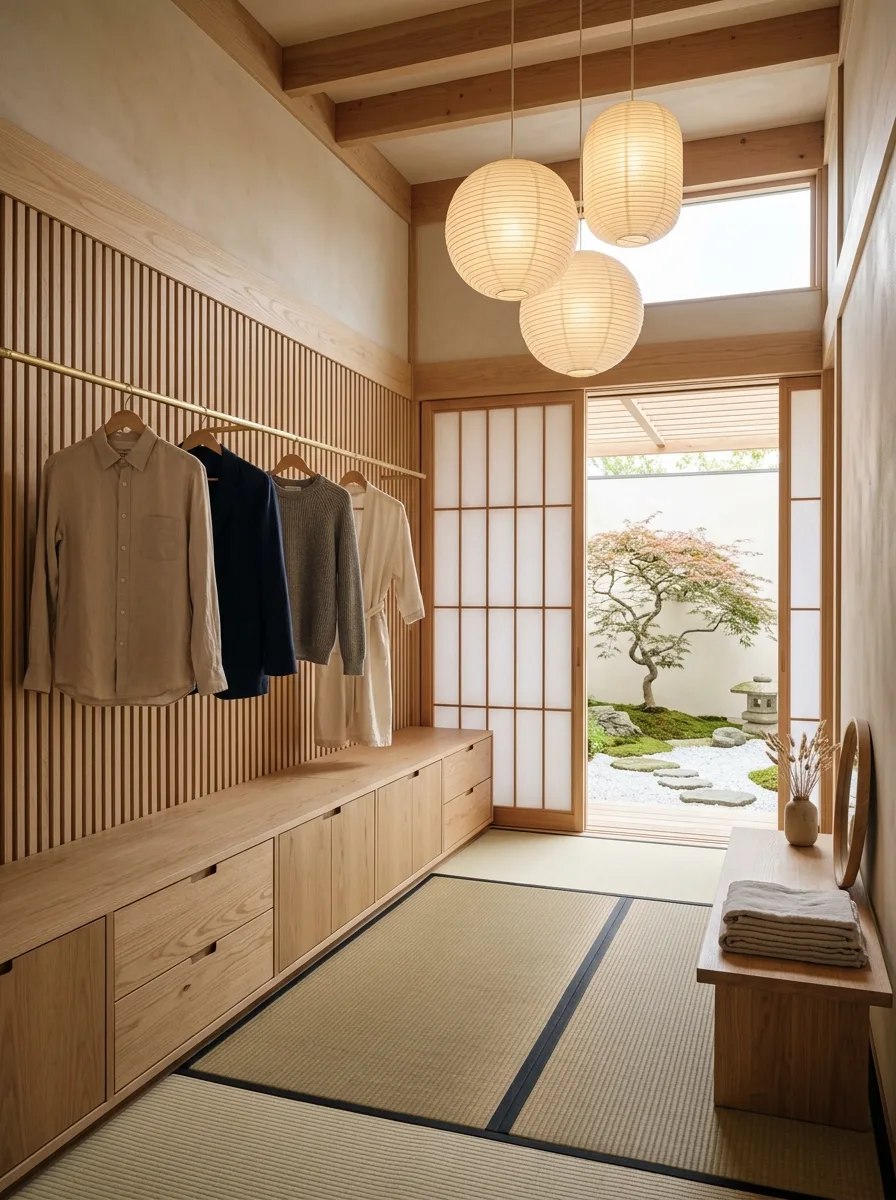
Install a sliding shoji-style door — wood frame, paper panels — as the transition point between the closet and an outdoor view, ideally a small garden or courtyard visible through it.
Keep storage low and horizontal: a long wood credenza with simple recessed pulls, no hanging rod visible above eye level, so the room stays calm and grounded rather than stacked with visual noise.
Hang paper lantern pendants in a cluster rather than a single fixture, and lay tatami matting instead of carpet or hardwood. Every material in this room should be natural and left visibly imperfect.
Curved Perfume Bottle Shelving
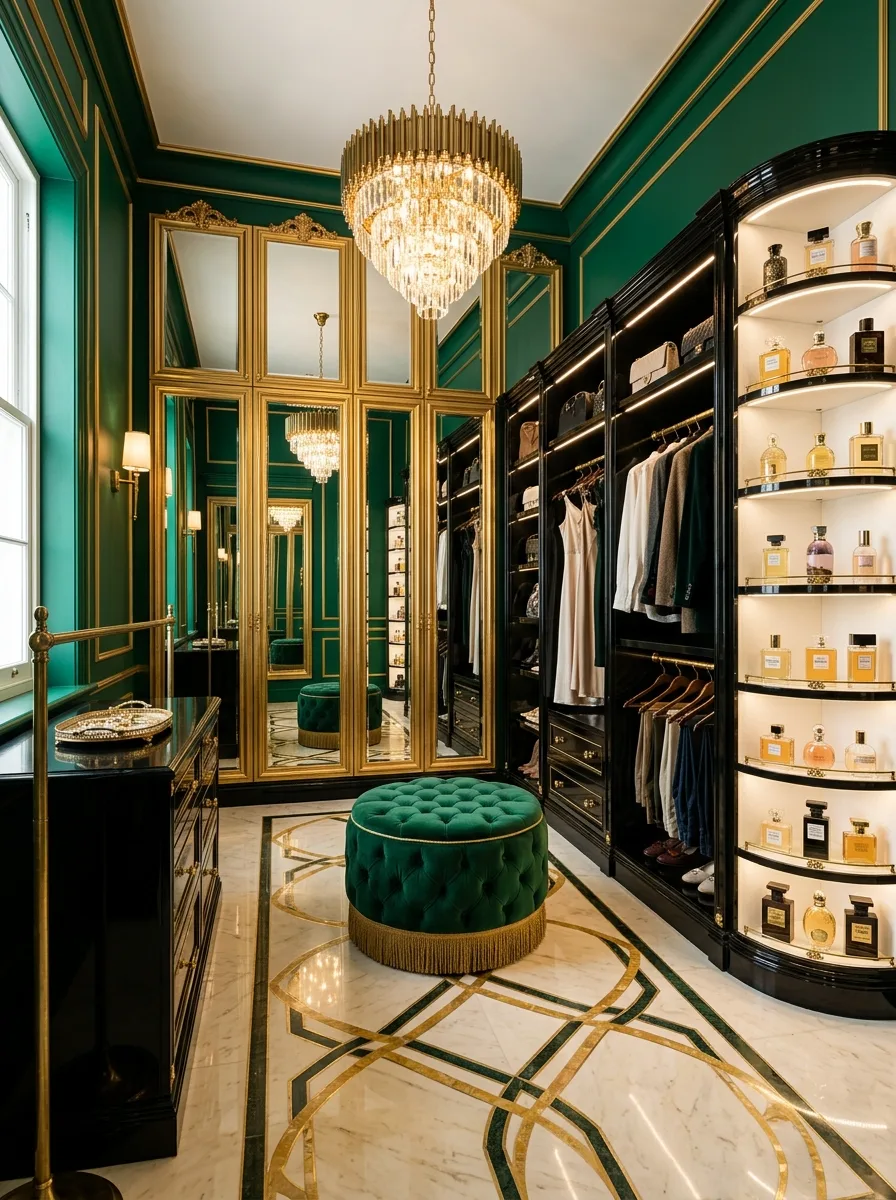
Build a curved, freestanding shelving tower with a rounded front edge, lit from within, specifically sized to display perfume and fragrance bottles like a private apothecary.
Paint the walls a deep emerald and trim every panel, mirror frame, and molding edge in gold — the green-and-gold pairing needs to appear on every surface to avoid looking like a single accent wall.
Lay a marble floor with an inlaid geometric pattern in the same gold, and center a tufted velvet stool on top of it. This look rewards going further than feels reasonable with the metallic trim.
Sculptural Dual Round Mirrors
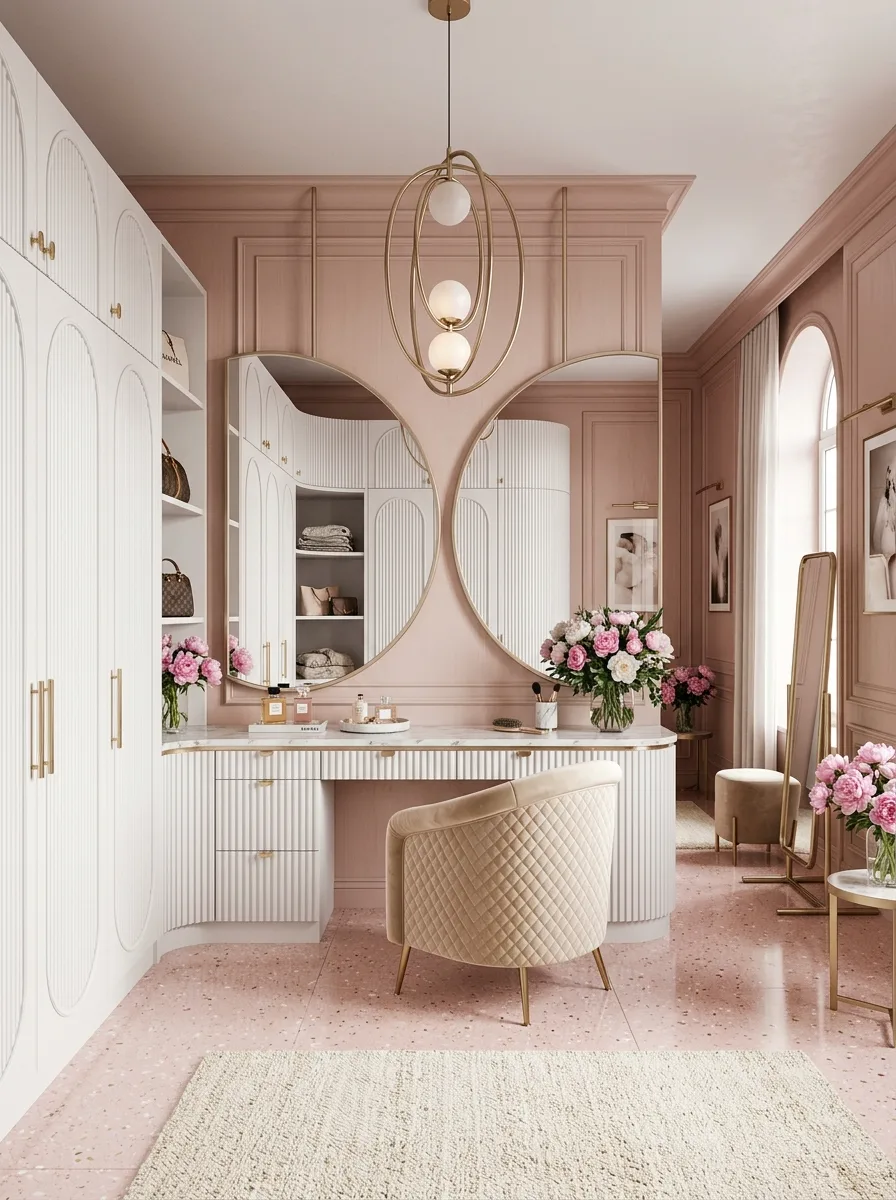
Mount two oversized round mirrors side by side so their edges just touch, creating a sculptural figure-eight silhouette on the wall behind the vanity — this only works with two full circles, not one oval.
Paint the wall behind them in a warm blush or terracotta, and use fluted cabinetry in a lighter cream so the mirror shape stays the clear focal point.
Finish the floor in a matching terrazzo, and add fresh flowers in oversized arrangements on either side of the vanity counter. The mirrors need generous negative space around them to read as sculpture rather than accident.
Straw Hat Wall Display
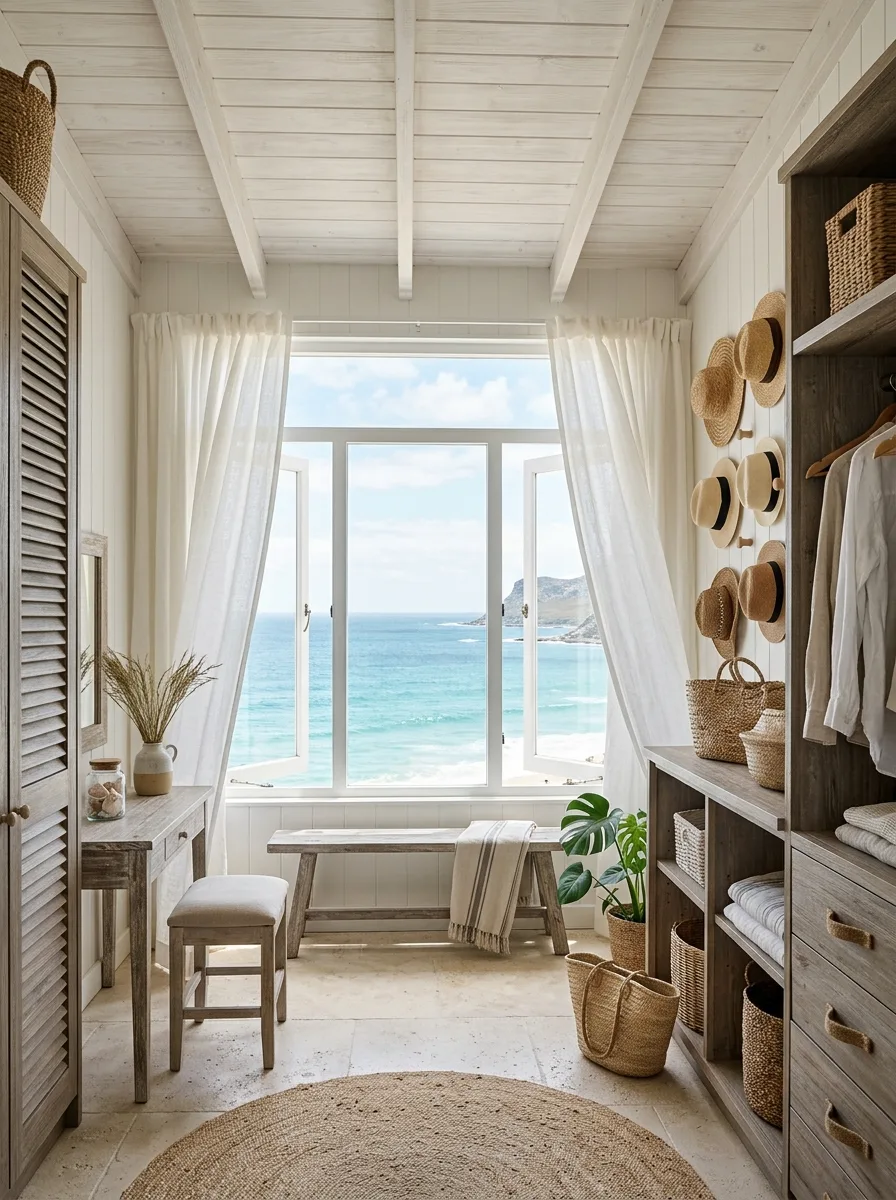
Mount a row of wide-brimmed straw hats directly on the wall using simple pegs, spaced with intentional irregularity rather than a perfect grid, so they read as a collection instead of inventory.
Hang linen curtains at a window with a real view — the outdoor scene needs to be part of the room, not incidental — and leave them loosely tied rather than perfectly pressed.
Use reclaimed or driftwood-toned cabinetry with visible grain, and finish the floor in a woven jute round rug. Every texture in this room should look like it’s been touched by salt air.
Library Ladder Leather Drawers
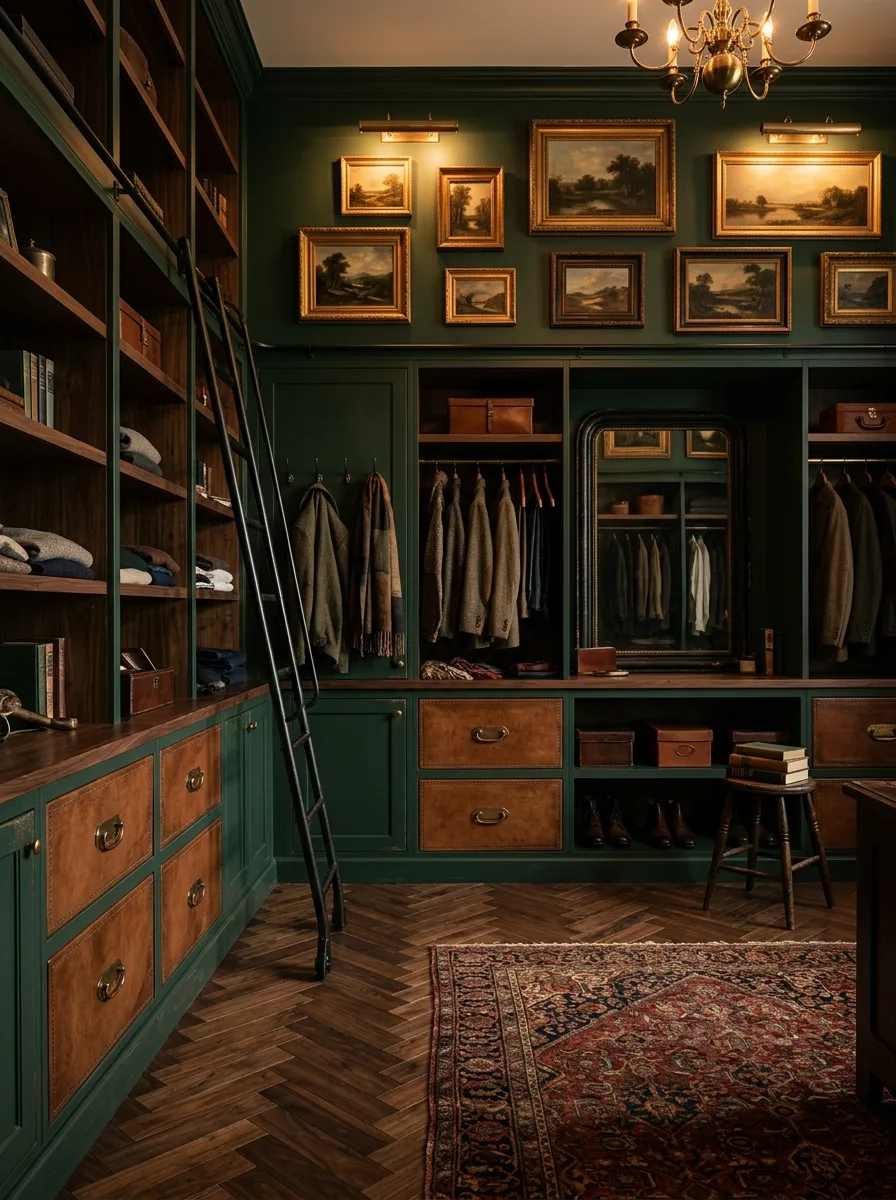
Paint the room in a deep hunter green and install a rolling library ladder against a full wall of open shelving — the ladder needs a real rail to run on, not a decorative prop.
Front every drawer bank in tan leather with aged brass pulls, and let the leather age unevenly rather than choosing a uniform finish.
Hang a dense gallery wall of small landscape paintings in gilt frames above the wardrobe, packed close together rather than spaced out. Lay a herringbone wood floor and add one worn Persian rug on top of it.
Antique Desk Balcony Doors
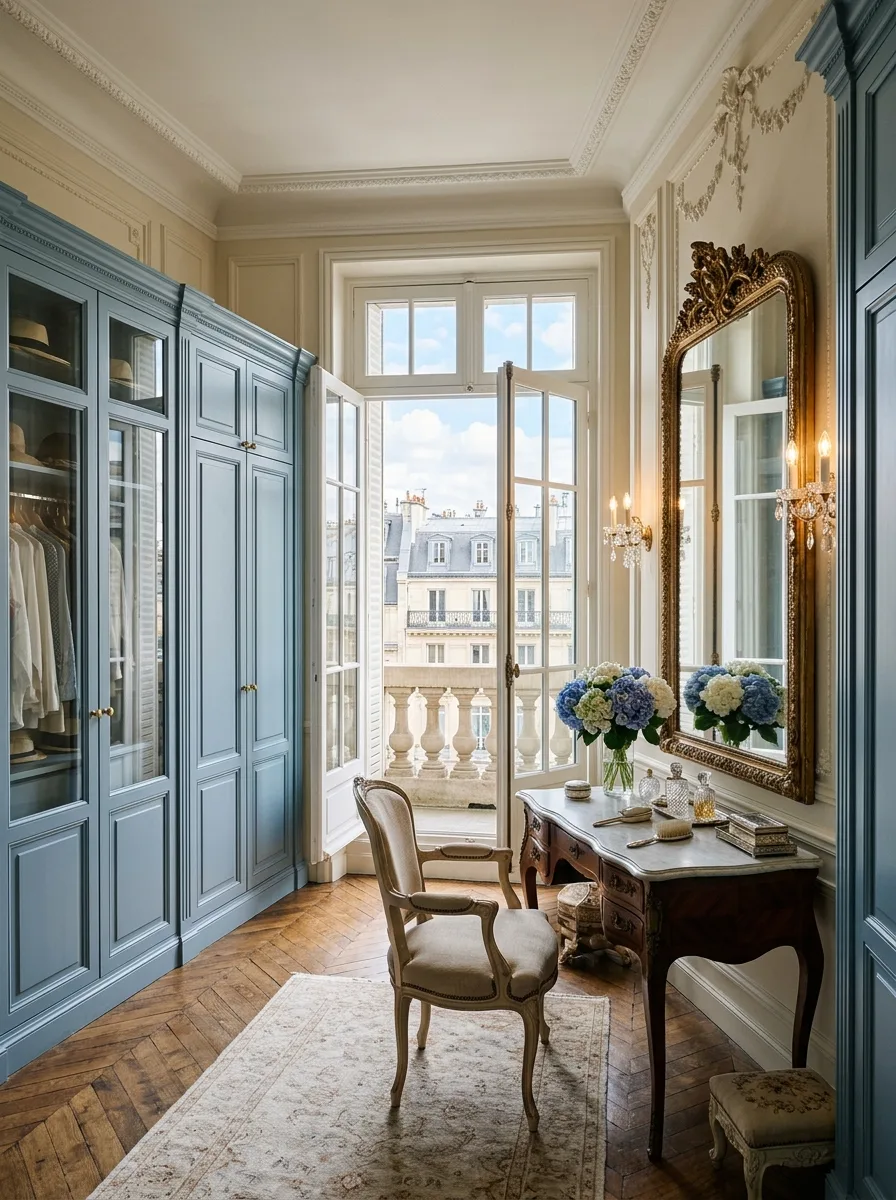
Use a genuine antique writing desk as the vanity rather than a built-in counter — the mismatch between old furniture and structured storage is the point.
Paint the surrounding wardrobe cabinetry a dusty blue-gray, and keep the hardware simple and small so it doesn’t compete with the desk’s original details.
Open the room onto a Juliet balcony with tall French doors, and dress the desk with fresh hydrangeas and a single ornate gold mirror mounted directly above it. Lay a chevron parquet floor and leave it bare except for one faded runner.
Checkerboard Floor Geometric Mirror
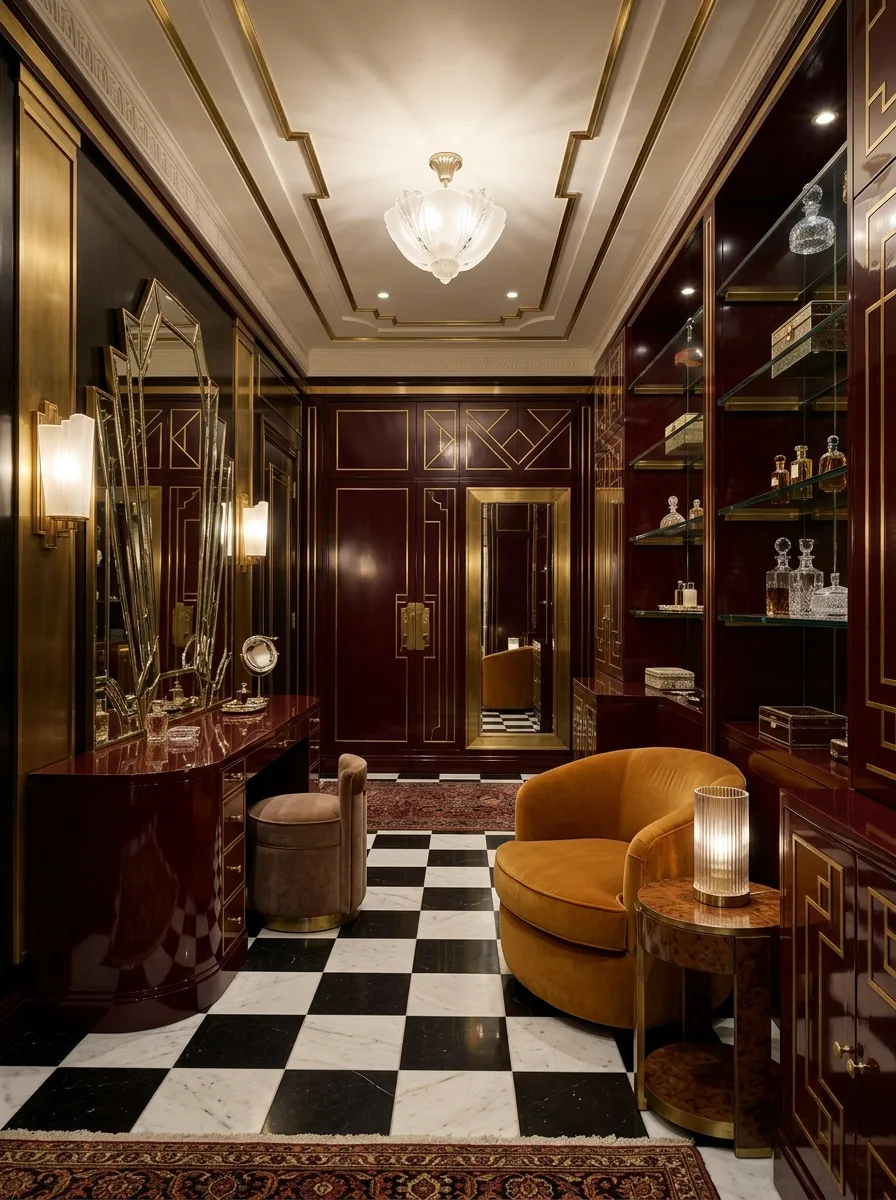
Lay a black-and-white checkerboard marble floor at a diagonal — the diagonal angle matters, it keeps the pattern from feeling like a kitchen.
Panel the walls in lacquered burgundy with inlaid brass geometric lines, and hang an angular, fan-shaped mirror with a mirrored frame instead of a wood or gilt one.
Add a single curved velvet chair in mustard or gold as the only warm, soft object in an otherwise hard-surfaced, high-shine room. Every material here should have a reflective finish.
Orb Pendant Curved Cabinetry
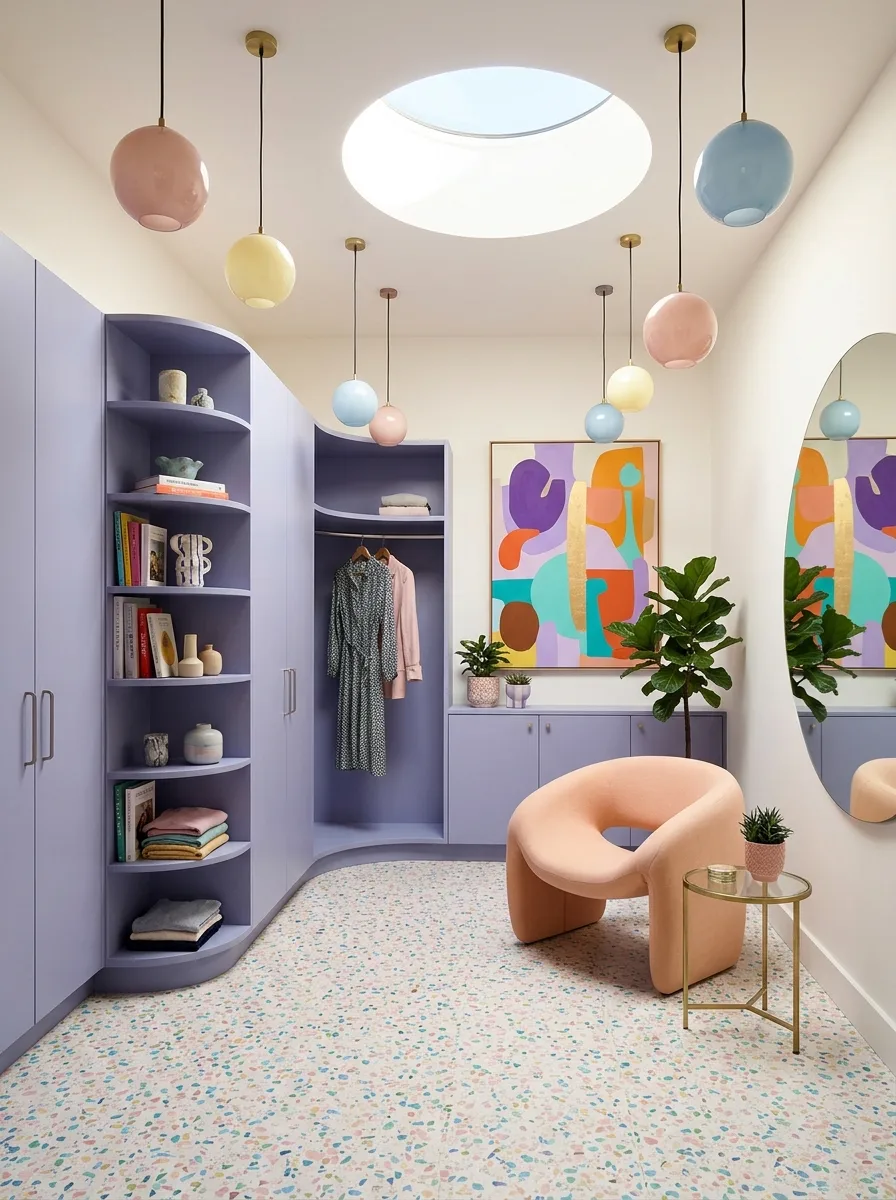
Curve the cabinetry itself — rounded corners, no hard right angles anywhere in the room — and paint it in a soft lavender or periwinkle.
Suspend a cluster of colored glass orb pendants at varying heights and in varying pastel shades, treating the lighting as functional sculpture rather than a single fixture choice.
Lay a speckled terrazzo floor in matching pastel tones, and add one boldly shaped chair — something with an unusual, sculptural silhouette — as the seating anchor. This look depends on curves repeating in the cabinetry, the lighting, and the furniture all at once.
Stained Glass Carved Armoire
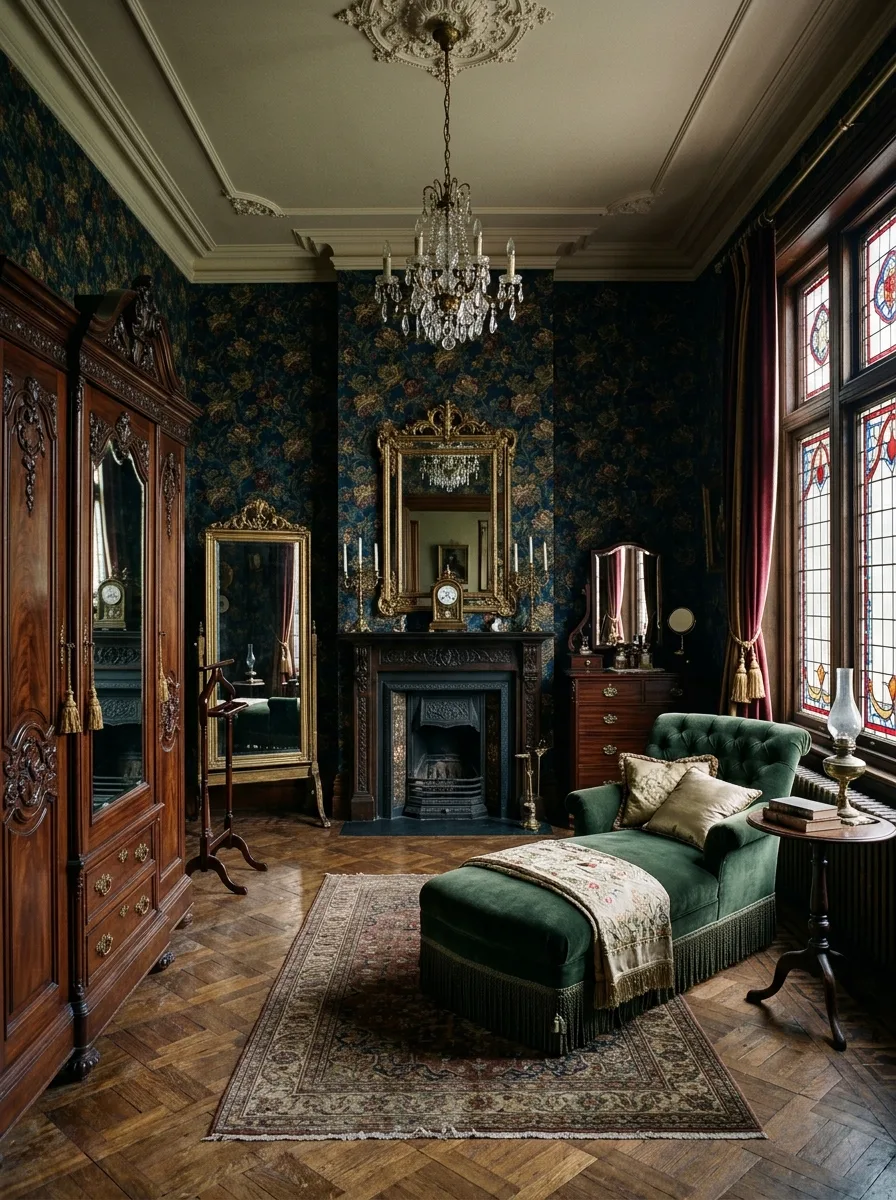
Source or commission a heavily carved wood armoire as a freestanding piece rather than built-in storage, and let it be the darkest, most ornate object in the room.
Paper the walls in a deep floral print and pair it with a genuine stained glass window — the colored light it throws across the room in the afternoon is doing half the design work.
Add a velvet chaise in forest green with fringe trim, and hang a crystal chandelier low enough to feel intimate rather than grand. Every surface should feel collected over decades, not bought in a single trip.
Final Thoughts
None of these rooms are really about the clothes.
They’re about the five minutes at the start and end of every day that most houses waste on a bad hallway with a rod in it. Whether the room is blush pink or hunter green, glass-fronted or wide open, the ones that work all made the same bet — that this space deserved as much thought as the living room.
The specific style is negotiable. Gold or black hardware, marble or tatami, chandelier or paper lantern — none of it matters as much as the decision to treat the closet like a room instead of a leftover.
Make that decision first. Everything else is just picking a palette.