
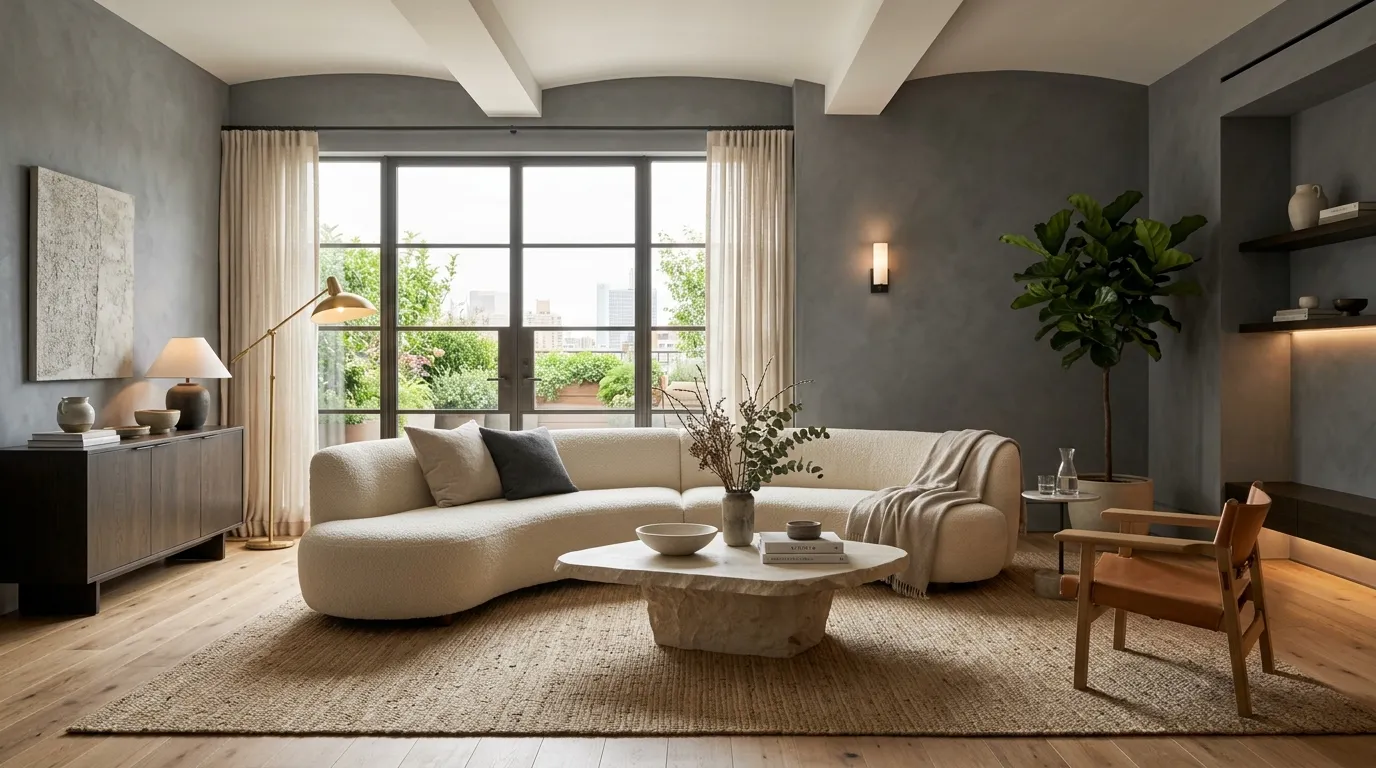
Nobody hands you a design manual with your lease.
You get square footage, a security deposit, and a landlord who gets nervous about anything involving a drill. Everyone else figures out the room from there, usually by buying whatever fits through the door.
That’s how you end up with a sectional a size too big, one lamp in the corner doing the work of an entire lighting plan, and a TV mounted at a height that suggests nobody actually measured anything.
Small doesn’t have to mean unfinished. It just means every decision counts twice as much.
Small Rooms Lie Better Than Big Ones
Once the basics are sorted, a handful of tricks separate an apartment living room that feels tight from one that feels intentionally compact.
Height Reads as Space More Than Width Does
You can’t add square footage to a rented room, but you can draw the eye upward. Curtains hung from just below the ceiling instead of just above the window. Tall, narrow bookshelves instead of low, wide ones. A single vertical piece of art instead of a horizontal gallery.
The room doesn’t get any bigger. It just stops announcing its limits at eye level.
Let the Windows Win
In a small room, the window is usually the only source of real depth — the one place your eye can travel past the walls. Blocking it with heavy furniture or dark drapery closes off the one thing working in your favor.
Sheer curtains, furniture kept low near the window line, and a mirror positioned to catch the outside light all do more for a cramped room than another lamp ever will.
One Bold Layer, Not Five Timid Ones
A small room with five different half-committed ideas — a slightly bold rug, a slightly bold pillow, a slightly bold lamp — reads as cluttered and unsure of itself. A small room with one fully committed bold choice, surrounded by calm, reads as curated.
Pick the one thing that gets to be loud. Let everything else support it.
Apartment Living Room Ideas
Brass Arc Lamp Mirror Corner
Position a brass arc floor lamp with a cluster of round glass shades in the corner nearest the window, angled so its light bounces off a nearby arched mirror instead of pointing straight down.
Choose a sectional with visible wood legs and a low profile rather than a boxy silhouette, so the sofa doesn’t visually block the sightline to the window behind it.
Add a small round marble coffee table and a single brass-based side table nearby, keeping every metal finish in the room the same warm gold. In a room this size, one consistent metal does more work than a second accent color would.
Macrame On Exposed Brick
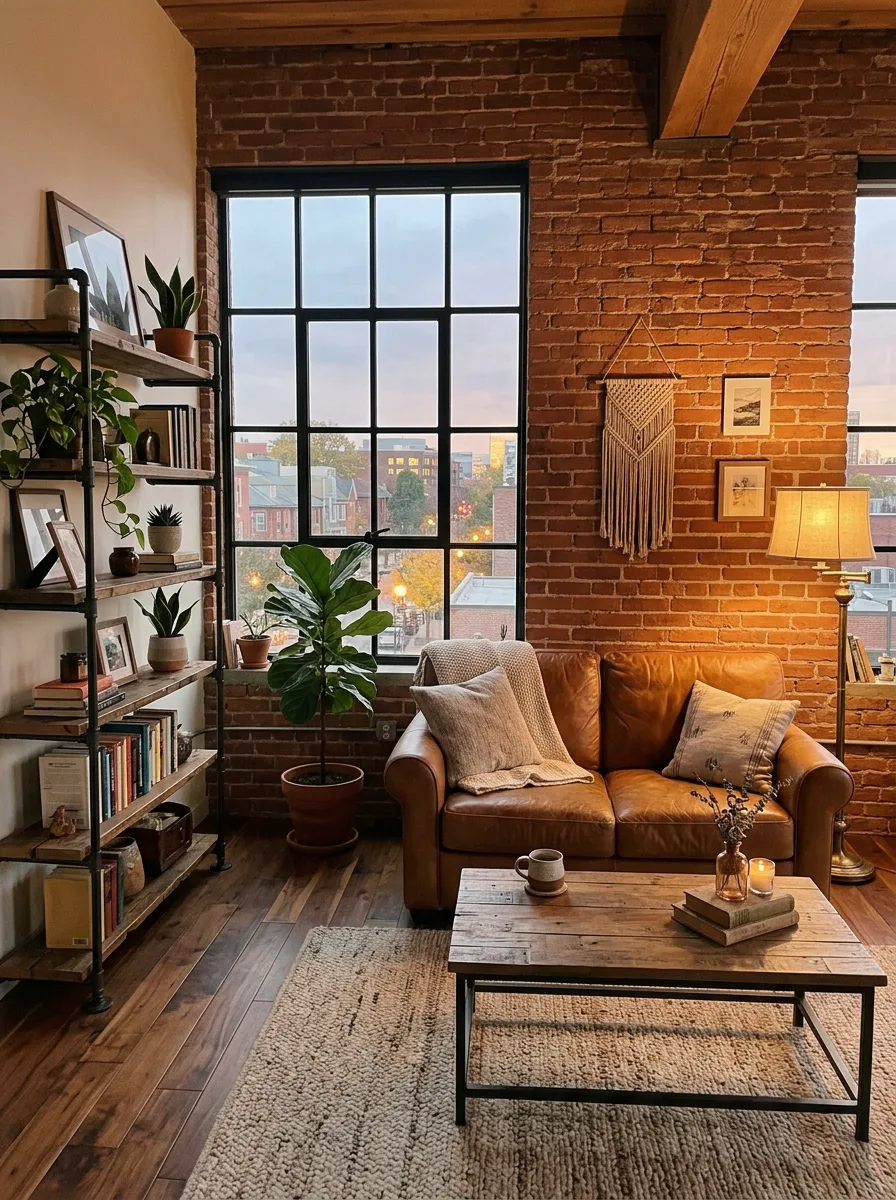
Leave the exposed brick wall completely untouched, and hang a single macrame wall piece directly on it as the room’s one textile-based accent, rather than adding shelving or art that would compete with the brick’s texture.
Choose a leather sofa in a warm cognac tone, and pair it with an open metal-and-wood shelving unit for books and plants, left slightly imperfect and lived-in rather than styled to a formula.
Use one substantial table lamp with a fabric shade instead of overhead lighting, and let the tall industrial windows provide the rest of the light. The brick and the macrame need space around them to read as intentional rather than incidental.
Wisteria Chandelier Arched Backdrop
Build a slatted wood arch shape directly onto the wall behind the sofa using thin vertical strips, painted to match the wall so it reads as architecture rather than an applied feature.
Hang a dramatic crystal or beaded chandelier low enough to feel like a real lighting moment, even in a small room — the scale should feel slightly oversized for the space on purpose.
Choose a deeply cushioned bouclé sofa in all-white, and add a sculptural white coffee table with an irregular silhouette. The whole look depends on the ceiling fixture being the one loud object in an otherwise monochrome room.
Bracket Shelf Green Wall
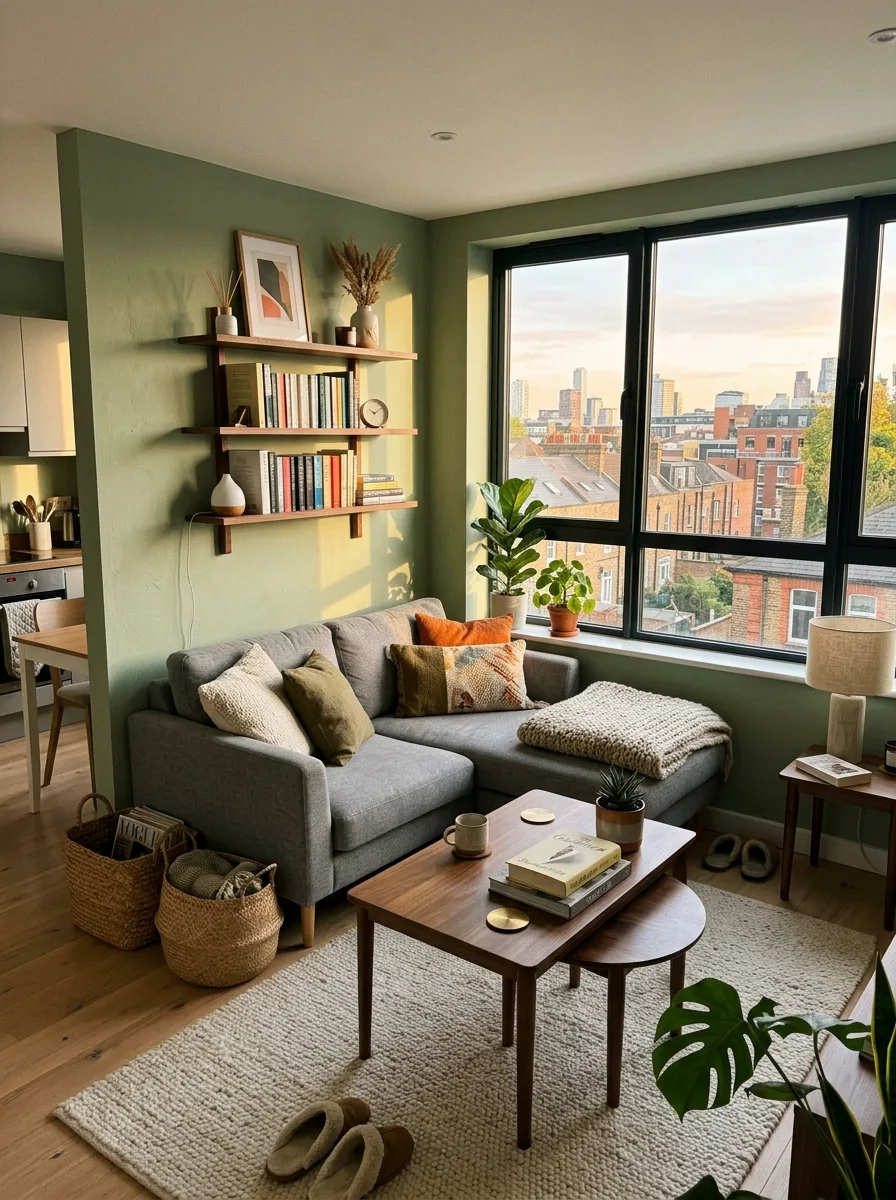
Paint one wall a saturated moss or olive green, and mount simple wood shelves on visible black brackets rather than hiding the hardware — the exposed brackets read as an intentional, slightly industrial detail against the color.
Choose a gray sectional with clean, low arms, and add two nesting wood coffee tables at slightly different heights instead of one large table, so the seating area can flex for a tray, a laptop, or a drink without crowding.
Finish with woven storage baskets tucked beside the sofa for the things that would otherwise clutter the floor, and let a jute rug ground the whole look in warm, textural neutrals against the green.
Wood Slat TV Accent Wall
Cover the wall behind the television in vertical wood slats, running them floor to ceiling rather than stopping at the TV’s edges, so the slats read as a design feature independent of the screen.
Mount a floating wood shelf above the console for a few plants and books, lit with a warm strip along the underside, and choose a rounded, oversized chair — something with real personality, like a bubble or curved silhouette — as the second seat in the room.
Keep the sofa itself simple and neutral, letting the wood slats and the sculptural chair carry the visual interest instead.
Rattan Pendant Ocean Balcony
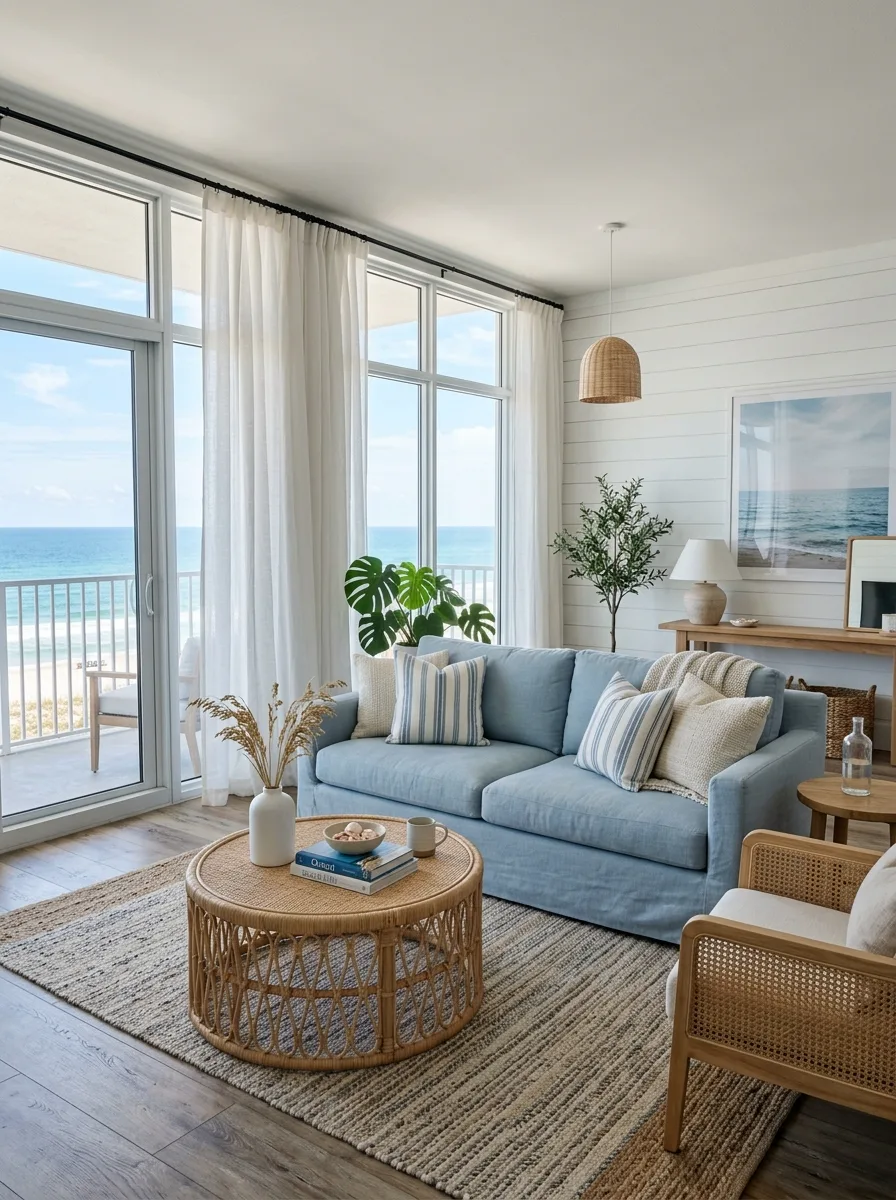
Hang a woven rattan pendant light near the sliding door, positioned so it silhouettes against the view during the day and glows warmly after dark.
Choose a slipcovered linen sofa in a soft coastal blue, and pair it with a round rattan coffee table with an open, airy base so the room doesn’t feel weighed down close to the floor.
Leave the sliding door dressed only in sheer white curtains pushed fully to the sides, and let the ocean view function as the room’s primary artwork. Every other material in the room should stay light and natural to match.
Wavy Floor Mirror Wood Slat
Lean an irregular, wave-edged full-length mirror against the wall near the entry rather than mounting a traditional rectangular one — the organic shape does more to soften a small, boxy room than a straight-edged mirror ever could.
Pair a slim wood-slat accent wall behind the TV with warm under-shelf lighting, and use a round dining table near the sofa that can pull double duty as extra seating when people come over.
Keep the floor and wall tones matched in warm neutrals so the mirror’s irregular shape and the wood slats are the two features doing all the visual work.
Floating Console Tall Curtains
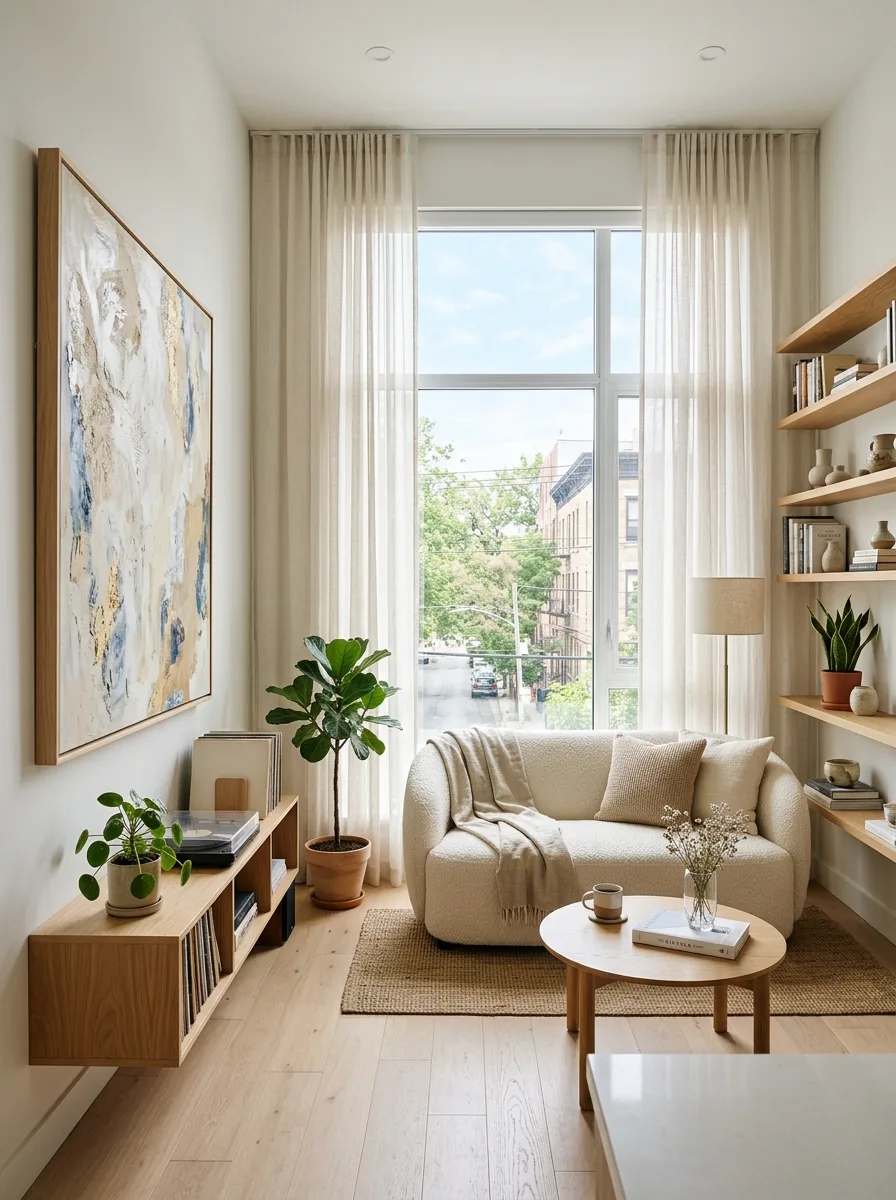
Hang curtains from a rod mounted just below the ceiling rather than directly above the window frame, so the room reads taller than its actual dimensions the moment you walk in.
Mount a floating wood console on the wall with no visible legs, keeping the floor beneath it clear, and pair it with an oversized abstract painting hung close to the ceiling rather than centered on the wall.
Choose a rounded bouclé loveseat instead of a full sofa, sized to leave real breathing room around it, and finish with a simple jute rug that doesn’t compete with the wall art.
Curved Mustard Sofa Blue Wall
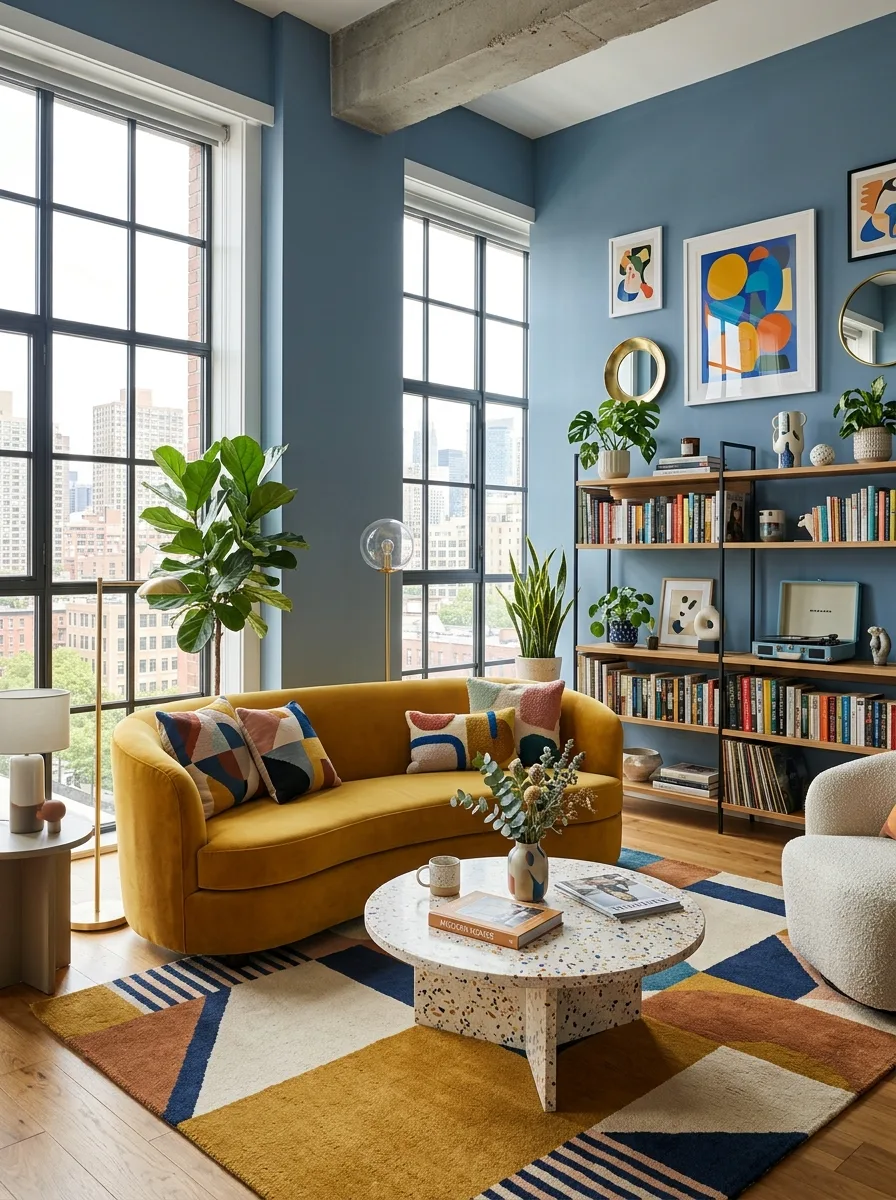
Paint the walls a deep, dusty blue and hang a tight cluster of small colorful abstract prints in mismatched thin frames, letting the color in the art pull directly from the mustard sofa across the room.
Choose a curved, rounded sofa in a saturated mustard velvet as the room’s one bold furniture statement, and pair it with a round terrazzo coffee table that echoes the room’s mixed palette in miniature.
Add open metal-and-wood shelving for books and a record player, keeping the shelf styling a little imperfect and personal rather than symmetrical. Finish with a bold geometric rug that ties the mustard, blue, and white together without introducing a fourth color.
Tripod Lamp Marble Nesting Tables
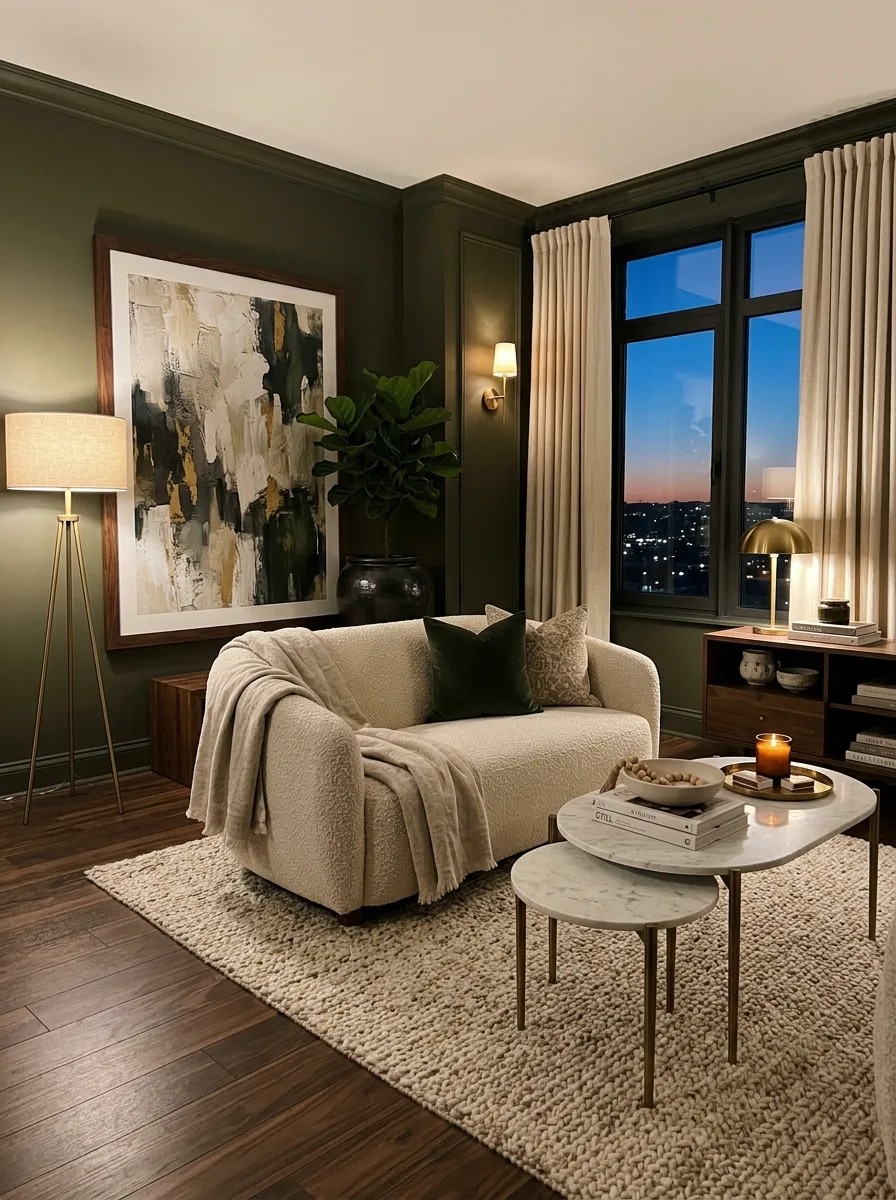
Paint the room a deep olive or hunter green and hang one large abstract painting in a simple wood frame as the sole piece of art, letting its gold and cream tones warm up the dark wall behind it.
Use a brass tripod floor lamp instead of a table lamp, positioned to cast light upward and soften the depth of the dark paint color.
Pair a cream bouclé loveseat with two marble-topped nesting tables set at different heights, and finish with a chunky knit wool rug. The dark walls only work if enough warm brass and cream fabric are reflecting light back into the room.
Floating Console City Skyline
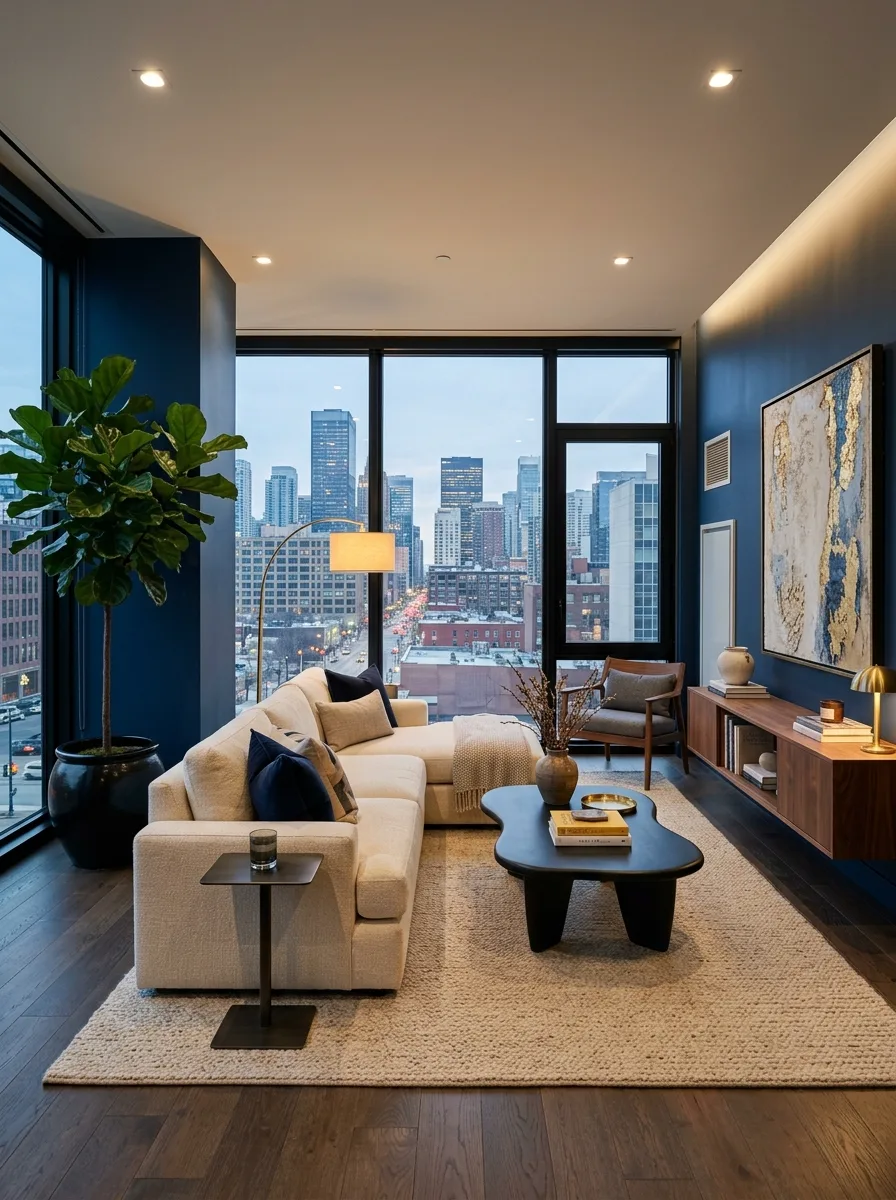
Paint one wall a deep navy and leave the adjacent wall of windows completely undressed, letting the city skyline function as the room’s main visual anchor after dark.
Mount a floating wood console beneath the window wall instead of a freestanding cabinet, keeping the floor clear and the sightline to the view uninterrupted.
Choose a curvy, organic-shaped black coffee table as the one sculptural object in the room, and keep the sofa a simple cream boucle so the navy wall and the skyline stay the loudest elements in the space.
Built-In Wood Storage Wall
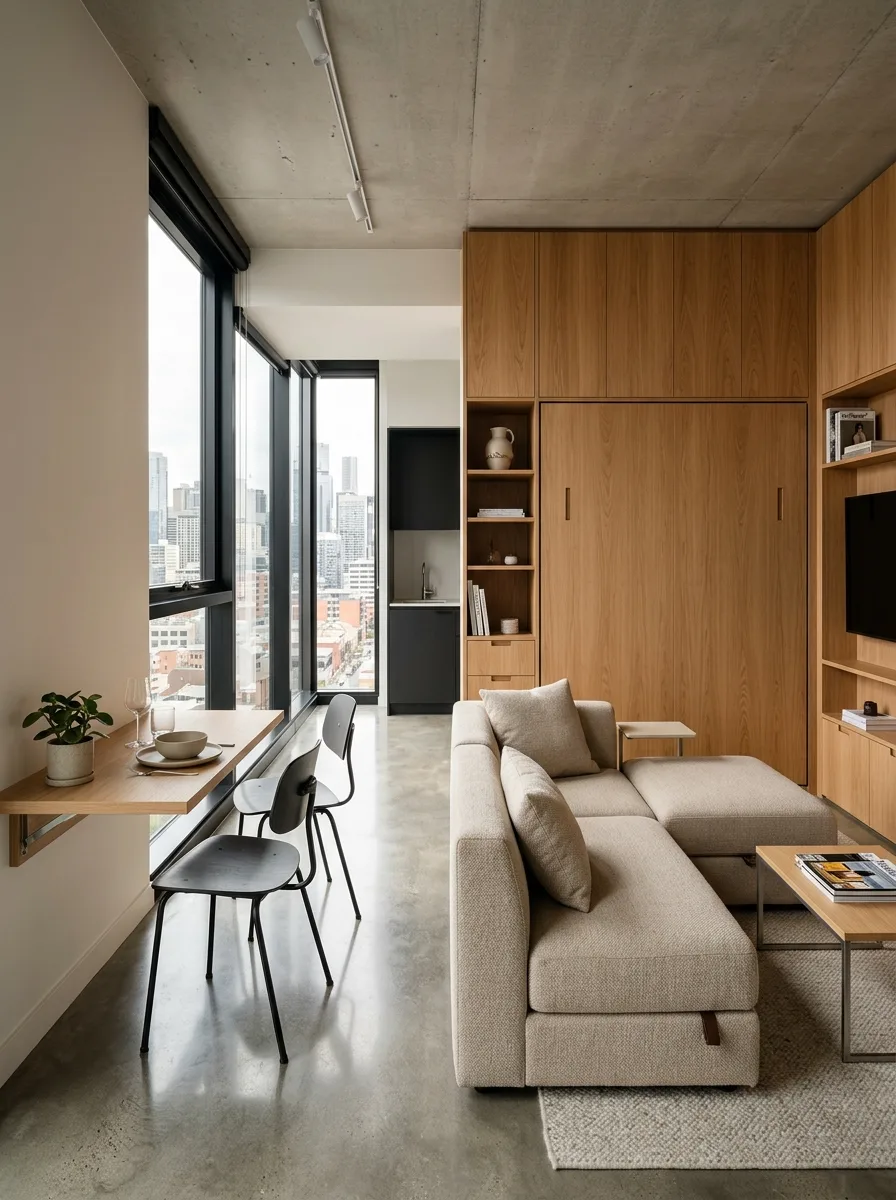
Build a full-height wood cabinetry wall that conceals a fold-down or murphy-style bed behind closed doors, so the living room can fully commit to being a living room during the day.
Keep the exposed concrete ceiling and floor as-is, and let the wood cabinetry’s warm tone be the one material doing the work against all that gray.
Add a slim wall-mounted table by the window for two chairs, sized for meals or laptop work, and choose a low sectional with a chaise that doesn’t compete with the cabinetry wall for visual weight. This look depends entirely on the storage wall being genuinely built-in, not a piece of furniture pushed against the wall.
Travertine Coffee Table Skyline
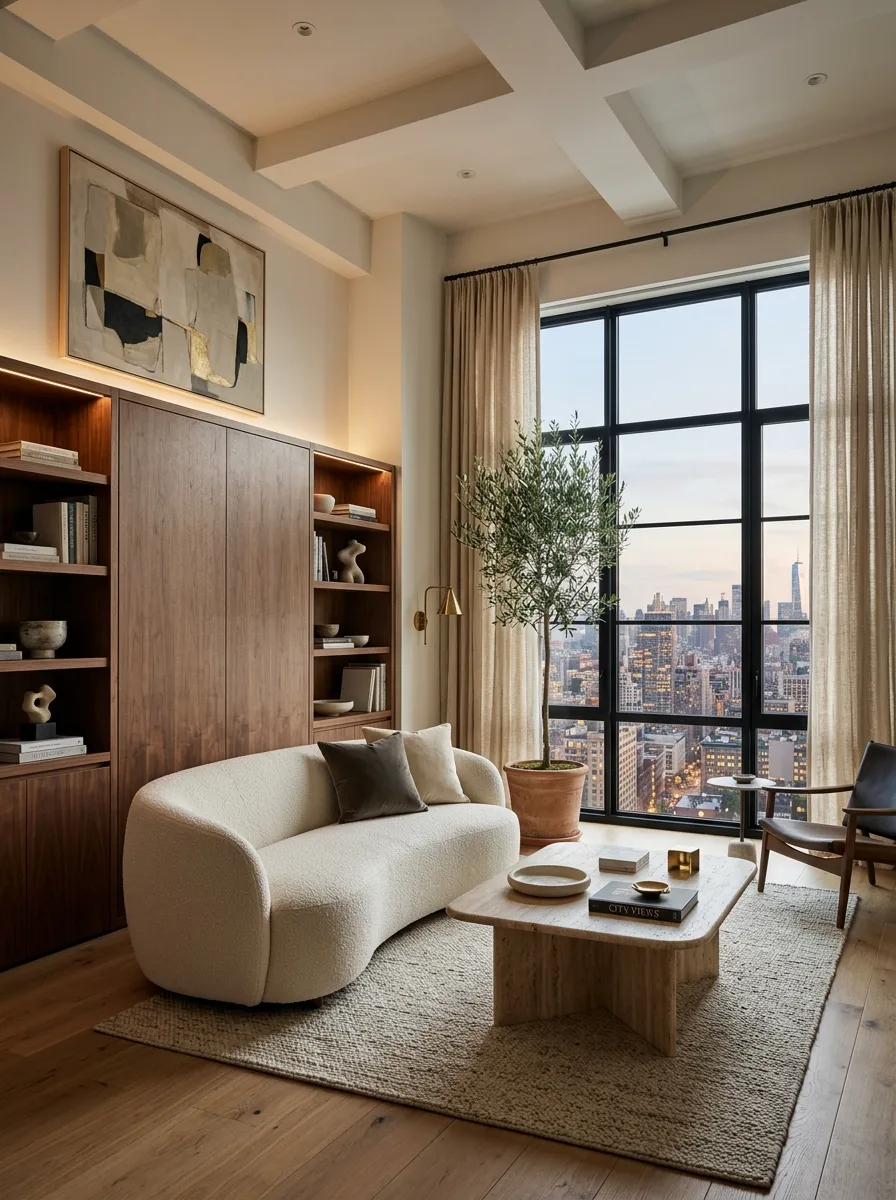
Pair rich walnut built-in shelving with a coffered ceiling detail, keeping the shelving styled loosely with real books and a few sculptural objects rather than densely packed decor.
Choose a curved, cream bouclé sofa with an organic silhouette, and set a travertine coffee table with a simple architectural base in front of it as the room’s one stone accent.
Leave the floor-to-ceiling windows completely bare, and add a single potted olive tree near the glass to soften the transition between the warm interior materials and the city view beyond it.
Checkerboard Rug Print Wall
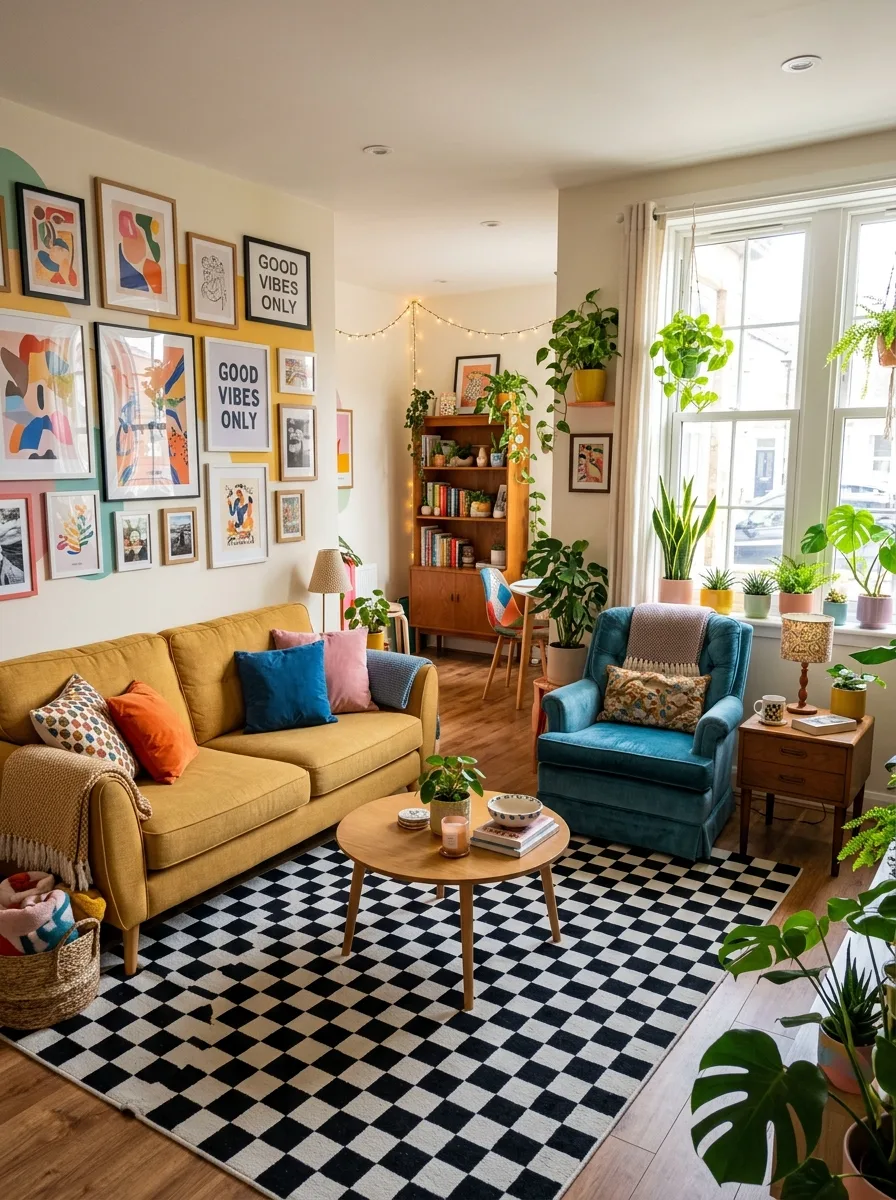
Cover one full wall in a dense, mismatched gallery of colorful prints and hand-lettered art, hung edge to edge with almost no visible wall space between frames — the density is the entire point of this look.
Anchor the seating with a mustard sofa and a contrasting teal armchair, chosen specifically because they clash pleasantly rather than coordinate.
Lay a black-and-white checkerboard rug as the one graphic, high-contrast element on the floor, and fill every remaining surface and window ledge with plants of varying heights. This look has no restraint built into it anywhere — that’s the design.
Tatami Platform Shoji Divider
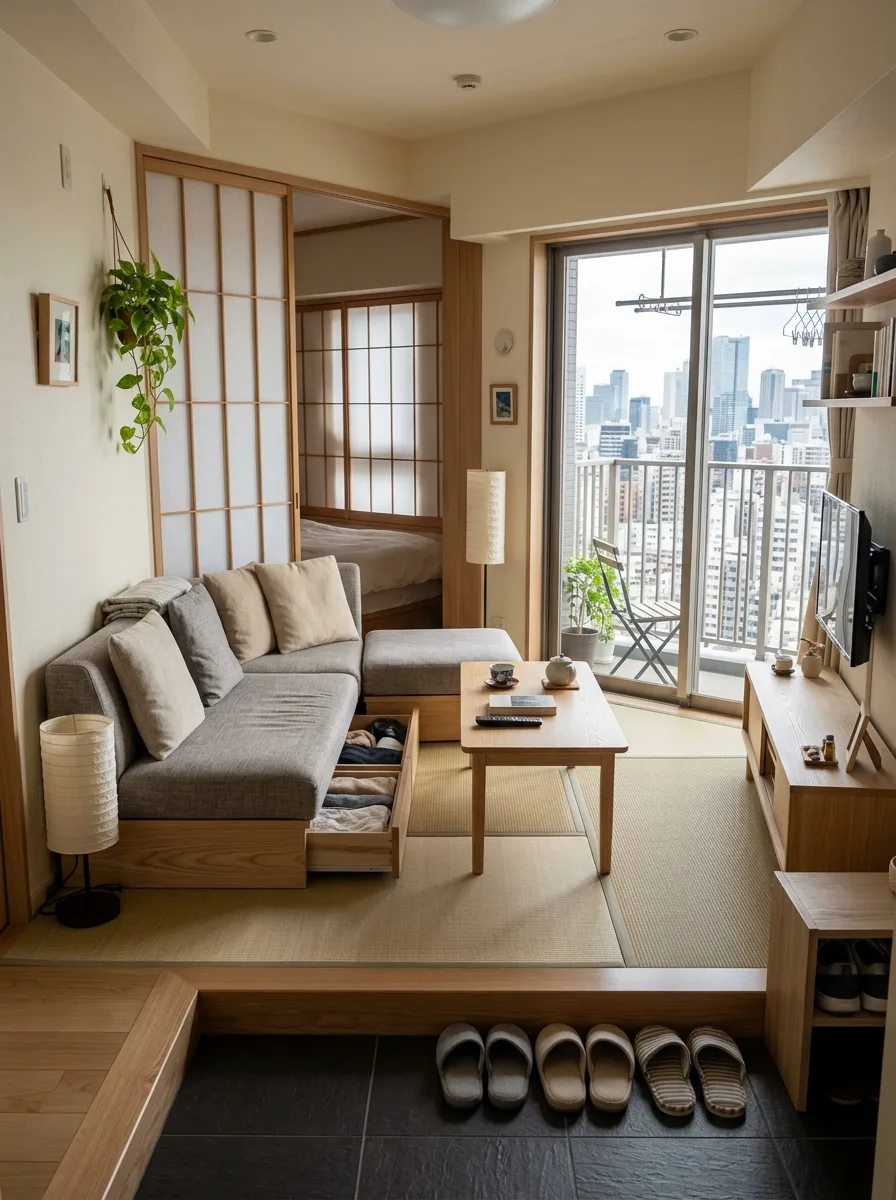
Raise the living area on a low tatami-covered platform, distinct in level from the entryway, and use a sliding shoji screen instead of a solid door to separate the sleeping area beyond it.
Choose a low sectional with built-in drawer storage in the base, so seasonal items and linens can be stored without needing separate furniture.
Keep the color palette entirely warm neutral wood and cream, and leave a small balcony visible through the sliding glass door as the room’s main source of depth and view.
Gaming Console Media Wall
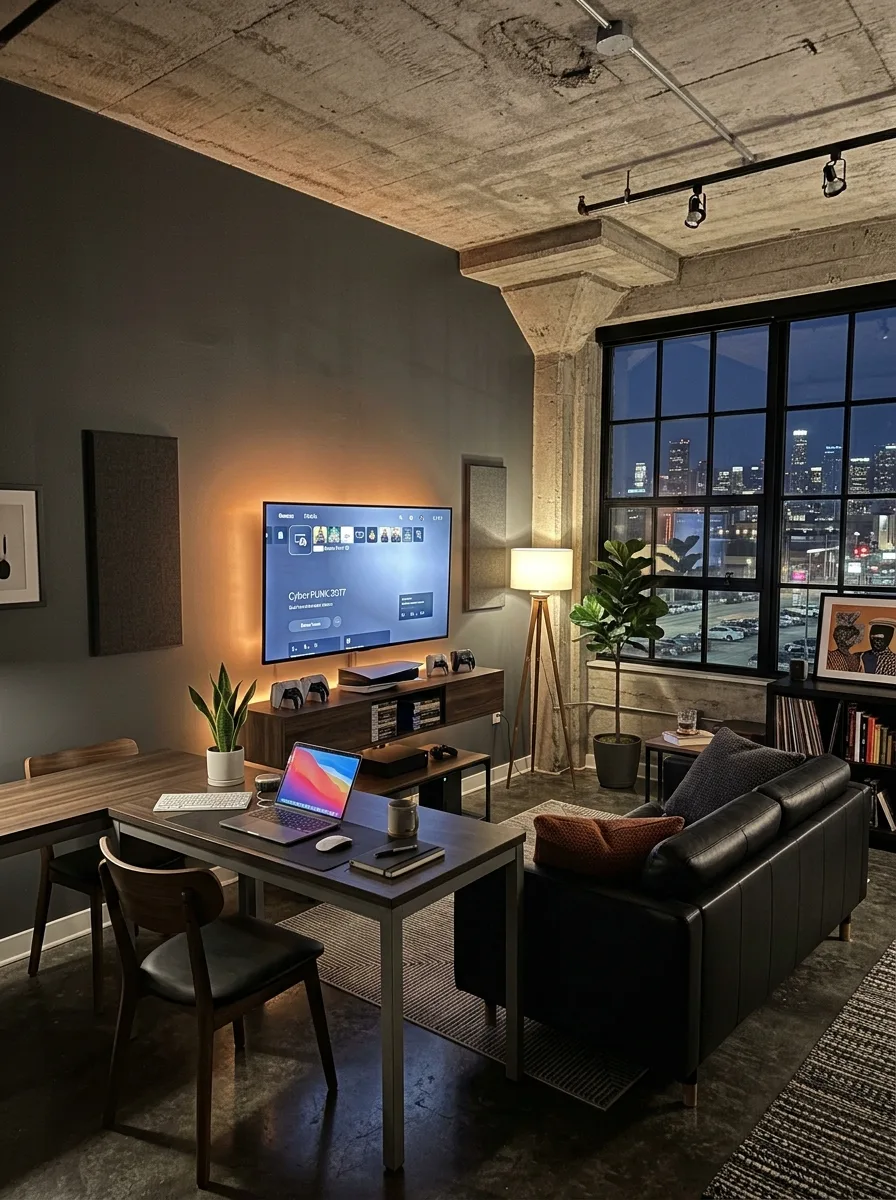
Mount the television on an exposed concrete accent wall, framed by matte black acoustic panels on either side to both look intentional and manage the echo that comes with bare concrete.
Keep the console shelf below sparse — the gaming systems, one plant, nothing decorative — and let a tripod floor lamp with a warm bulb be the only light source besides the screen after dark.
Choose a black leather sofa low to the ground, and let the floor-to-ceiling black-framed windows behind it stay completely undressed so the city lights read as the second display in the room, right alongside the TV.
Boho Gallery Wall Checkerboard
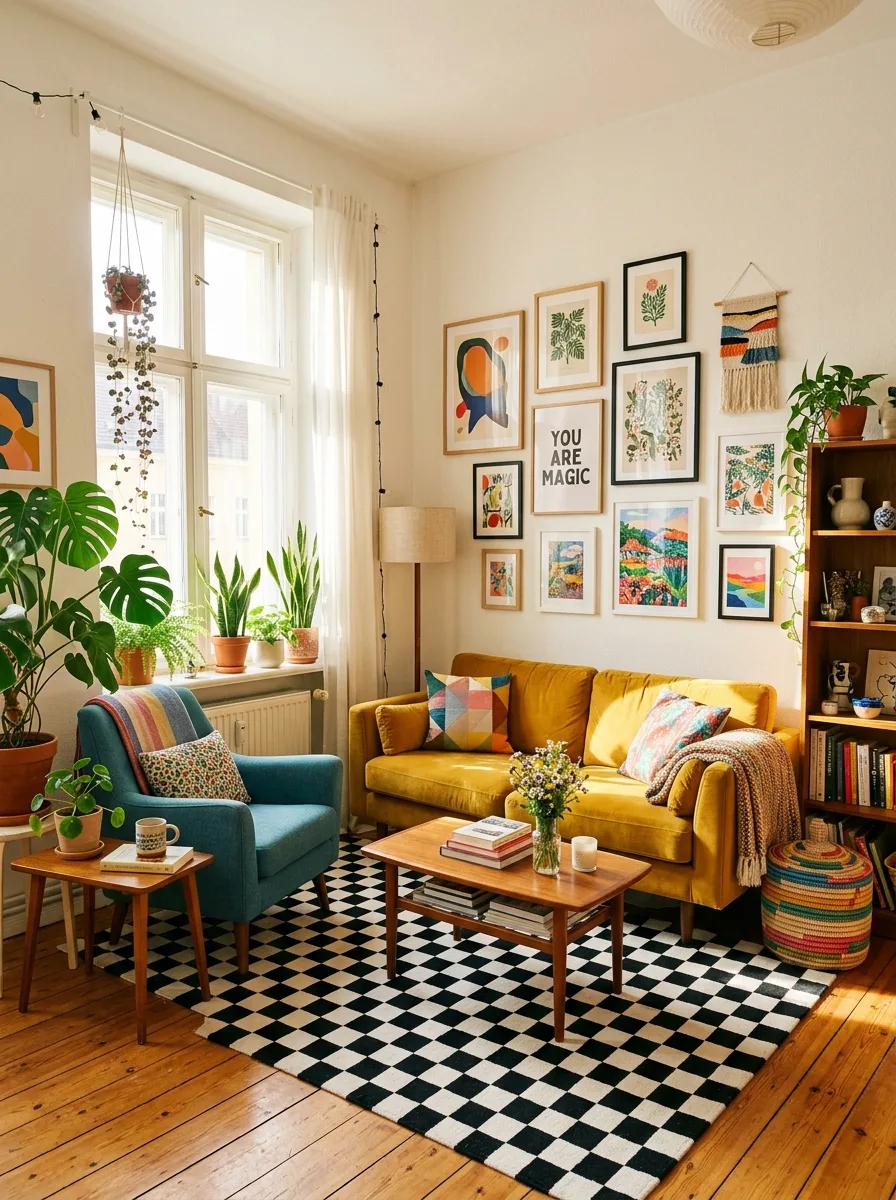
Fill one wall floor to ceiling with an eclectic, tightly packed mix of botanical prints, affirmations, and small original art in different frame styles, treating the wall as a growing collection rather than a finished composition.
Choose a mustard velvet sofa and a contrasting teal armchair, and let a black-and-white checkerboard rug ground the busy wall above it.
Hang plants from the ceiling near the window and stack more along every windowsill and shelf edge, so the greenery competes with the gallery wall for attention rather than sitting quietly in a corner.
Candlelit Windowsill Rainy View
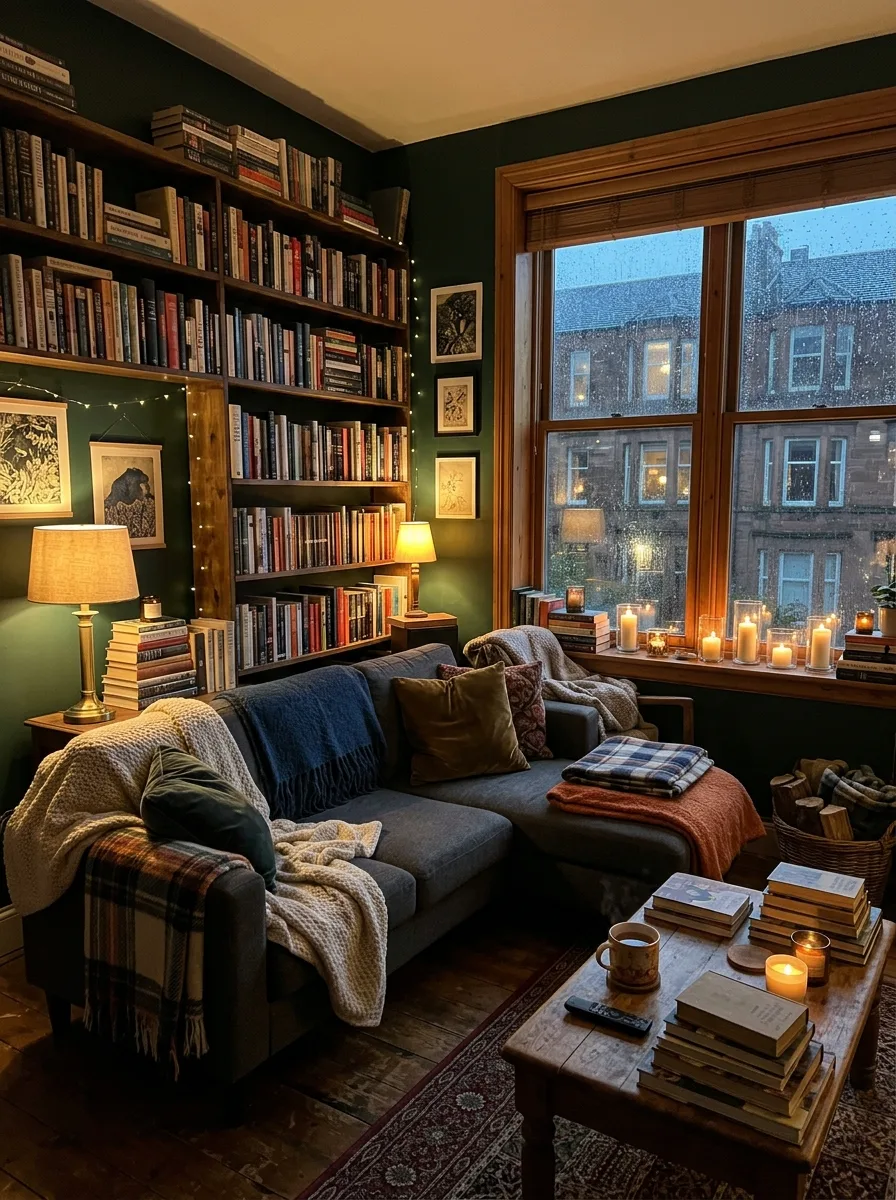
Build or install floor-to-ceiling bookshelves along one full wall, painted the same deep green as the surrounding walls so the books themselves — not the shelving — provide the color and texture.
Line the entire windowsill with candles of varying heights instead of a single decorative object, so the window becomes a light source in the evening rather than just a view.
Layer the sofa in mismatched plaid and knit throws, left loosely draped rather than folded, and keep the coffee table stacked with real, in-progress books and a mug rather than staged decor. The room should look like someone is actually using it tonight.
Round Table Doubling as Desk
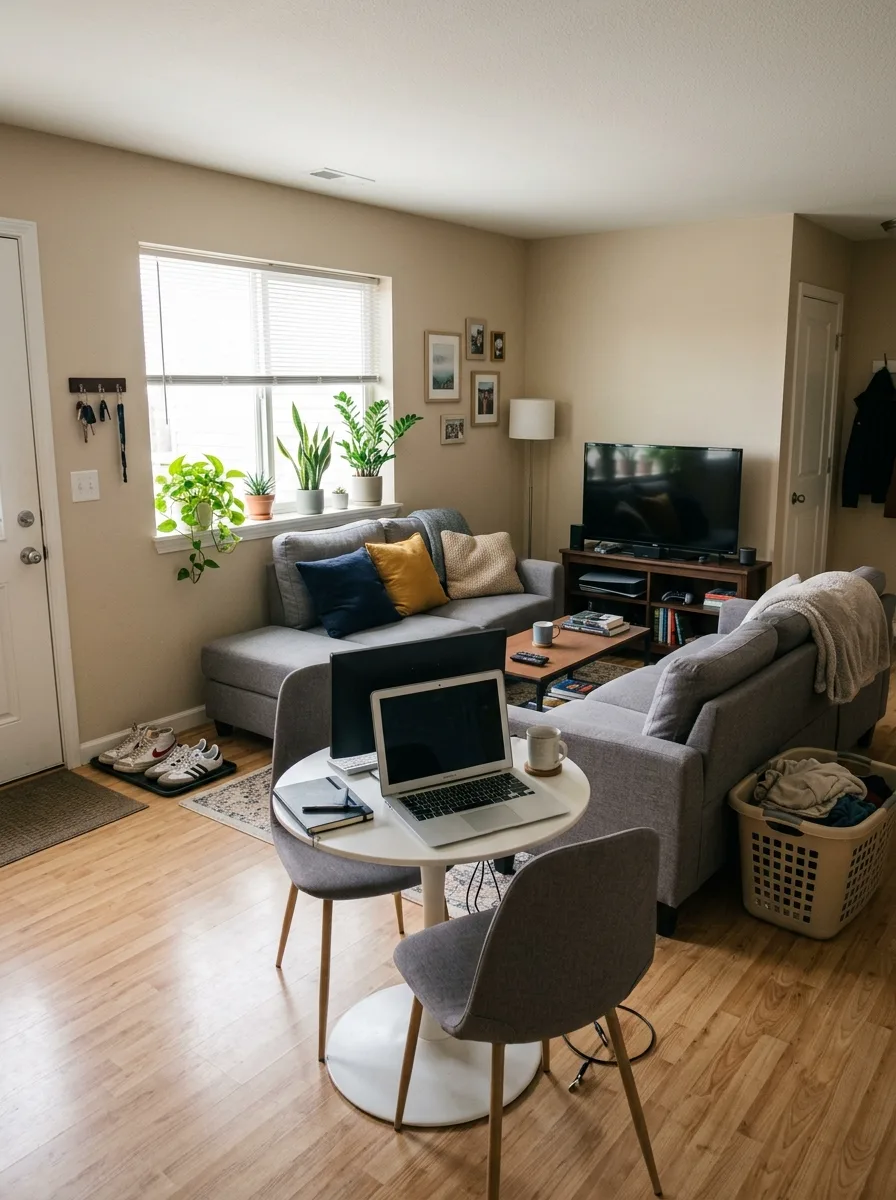
Place a small round table with two chairs in the open floor space between the sofas, sized to work as a two-person dining table by evening and a laptop desk by day rather than adding a separate desk the room doesn’t have space for.
Keep the sofas simple and gray, adding color only through a few pillows, so the round table can be the one piece of furniture doing double duty without competing for attention.
Use the entry wall for hooks and a low shoe tray rather than a dedicated mudroom piece, and keep a woven basket by the sofa for the laundry or throw blankets that would otherwise pile up. This is the least glamorous room in the list, and also the most honest about what apartment living actually requires.
Final Thoughts
None of these rooms solved their square footage. They worked around it.
A curtain hung higher than it needed to be. A console mounted instead of standing on legs. A table that pulls a second shift as a desk. The good apartment living rooms all found the one or two moves that mattered most for a small space and stopped pretending they needed twenty more.
The lease was never the obstacle. The obstacle was treating a small room like a failed big one instead of designing it as its own thing.
Solve for the room you actually have. It’s more interesting than the one you’re pretending you’ll move into next year.