
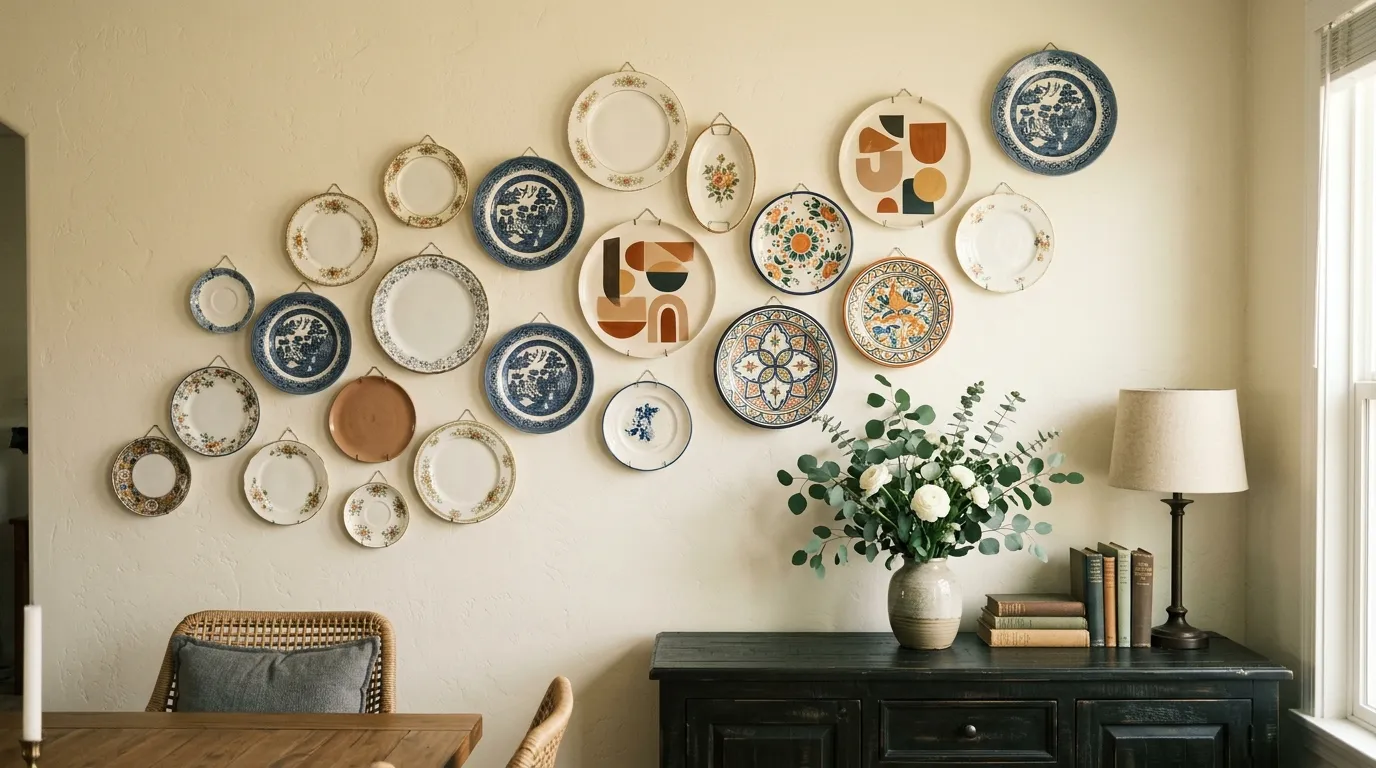
Somewhere in your kitchen cabinet, there’s a stack of plates you inherited, bought on vacation, or fell in love with at a flea market and never actually use.
They’re sitting in the dark. Nobody sees them. Every so often you take one out, use it for dinner, and put it right back into the stack where it disappears again.
That’s not storage. That’s a collection in witness protection.
A plate wall solves this in the most obvious way possible — put the thing you like on the wall instead of behind a door. Here’s how the good ones actually get built.
Plate Wall Ideas
Full Wall of Mixed Vintage Plates
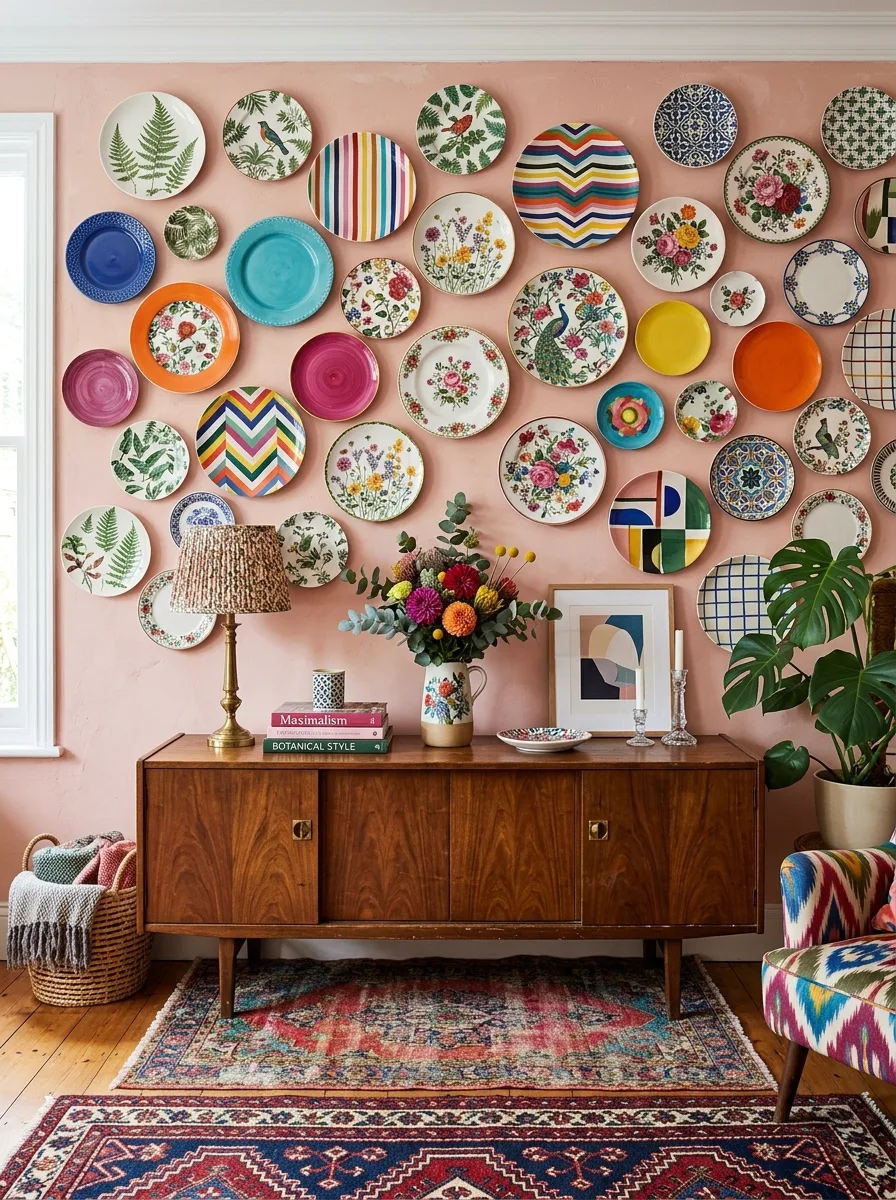
Cover an entire wall edge to edge in a dense cluster of mismatched vintage plates — solids, stripes, botanicals, patterned china — hung with barely any negative space between them.
Anchor the composition around a mid-century credenza below, and let the wall color, something saturated like a dusty pink or terracotta, unify the visual chaos above it.
Vary plate sizes deliberately, mixing small dessert plates with large dinner plates and the occasional oversized charger, so the eye has both dense detail and larger resting points.
Style the credenza simply — a lamp, a stack of books, one vase of flowers — since the wall above is already doing all the work.
Formal Blue-and-White China Wreath
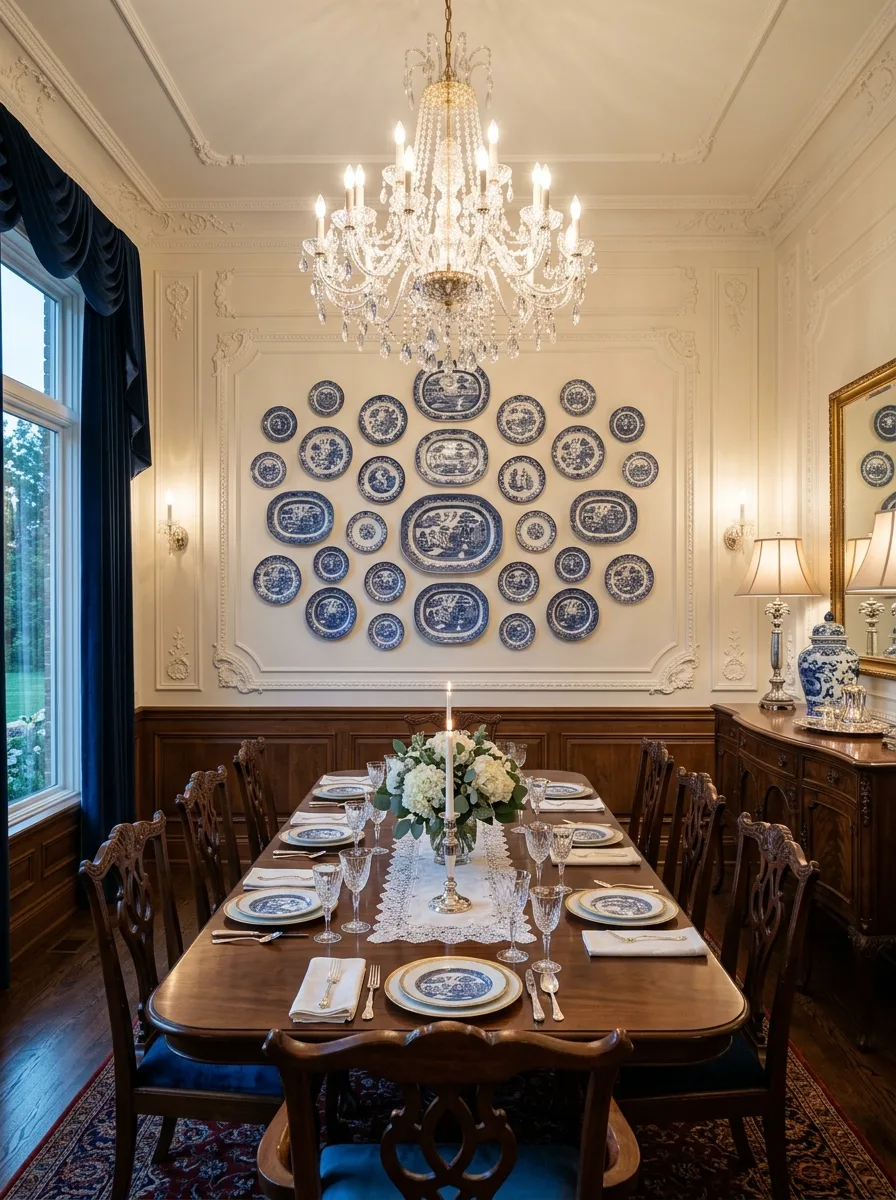
In a paneled, molded dining room wall, arrange traditional blue-and-white china plates and platters into a large, symmetrical oval or wreath shape, using the largest platters at the vertical center.
Keep the pattern language consistent throughout — all blue and white transferware, no other colors introduced — so the formality of the room is reflected in the display’s restraint.
Frame the whole arrangement within an existing wall panel or applied molding if the room has one, letting the architecture provide a natural border for the display.
Light the wall with wall sconces flanking the display rather than a single overhead source, so the white ceramic catches warm light from the sides.
Organic Stoneware Cluster, Backlit
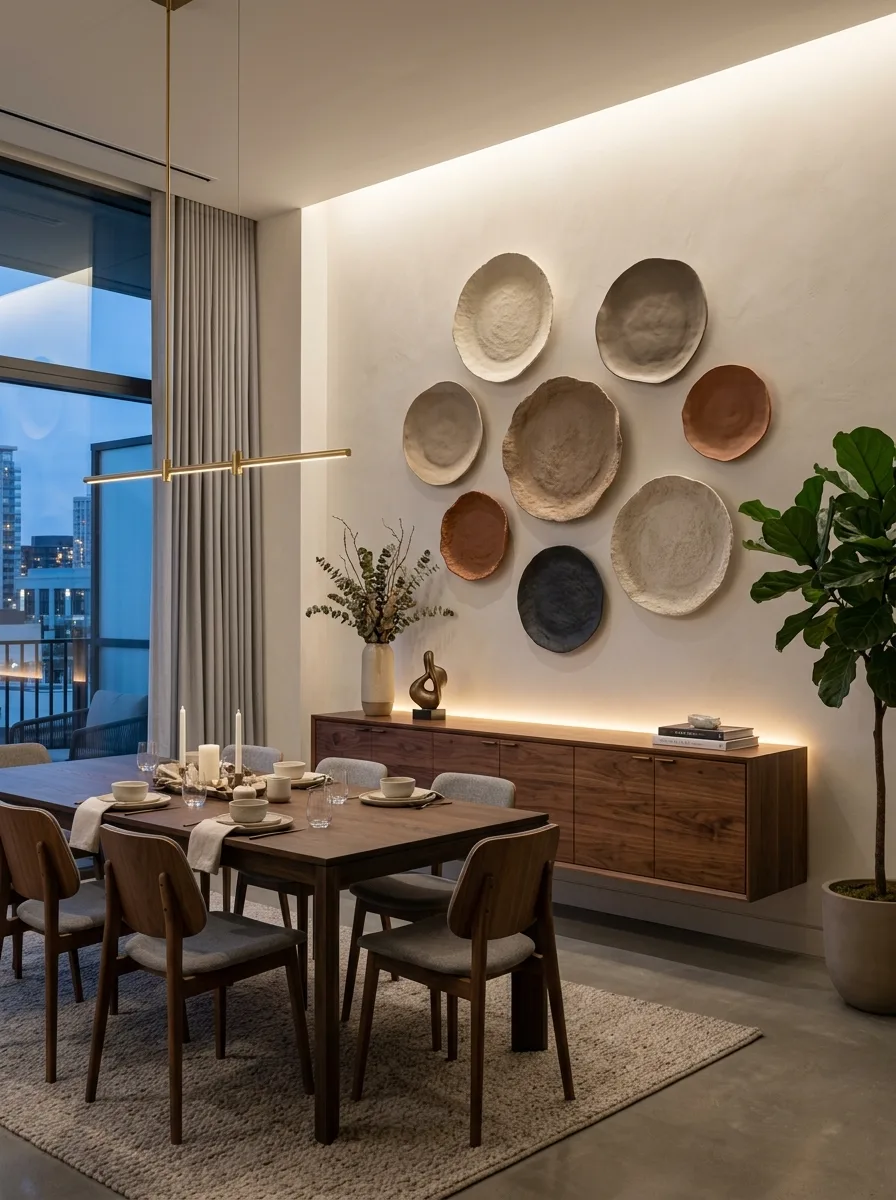
Cluster a small group of irregular, hand-thrown stoneware plates in muted earth tones — cream, terracotta, charcoal, grey — in a loose asymmetric arrangement against a plain plaster wall.
Position the cluster above a floating wood console with integrated under-lighting, so warm light washes up the wall and catches the texture of each plate’s surface.
Choose plates with visibly different glazes and finishes — some matte, some with visible throwing marks — rather than a matching set, since the texture variation is what makes this composition interesting without any pattern at all.
Keep everything else on the console minimal: one sculptural vase, a small object, nothing that competes with the plates’ texture.
Vertical Stack in a Quiet Corner
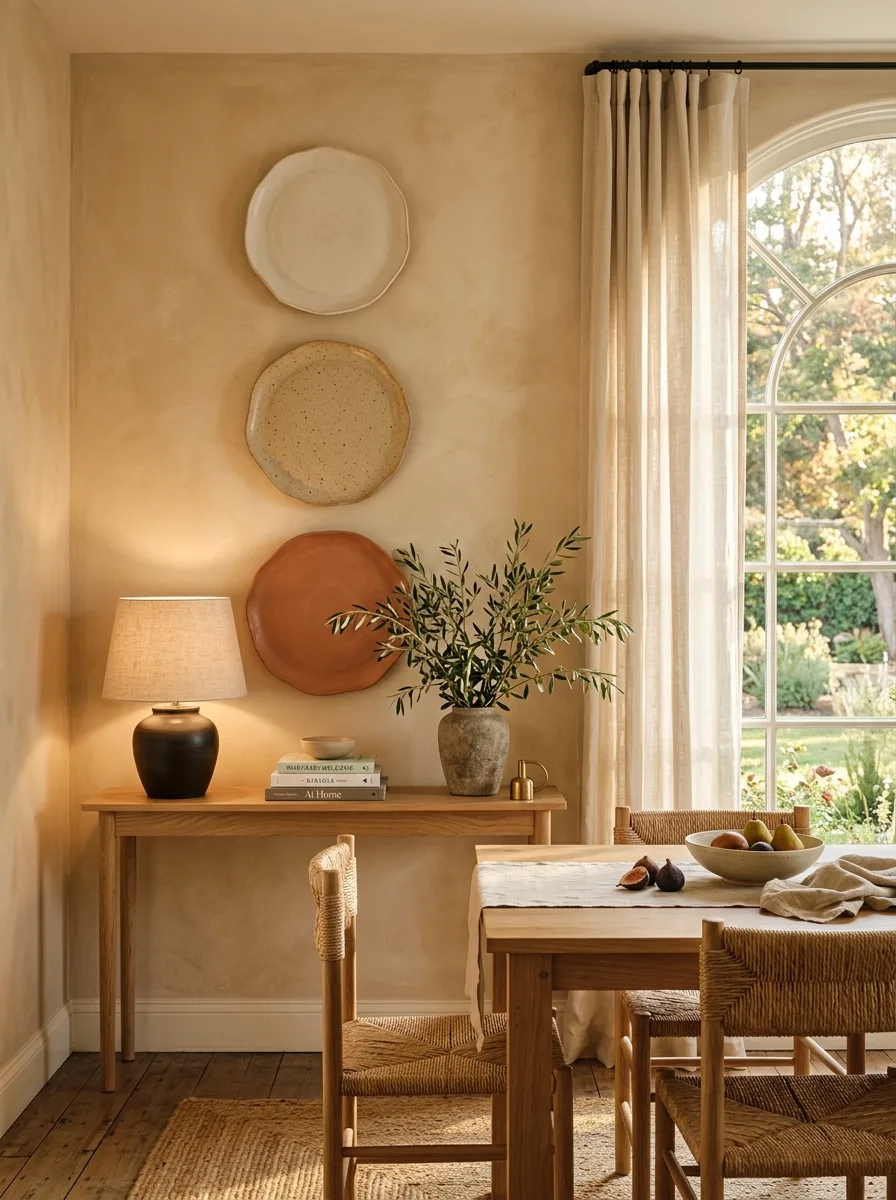
In a narrow wall corner, hang three plates in a single vertical column above a simple console table, choosing one white, one speckled stoneware, and one warm terracotta glaze.
Space them with generous, even gaps rather than crowding them close together, letting each plate function almost like a piece of individual art rather than part of a dense cluster.
Set a single potted olive branch on the console below, positioned so its leaves nearly brush the lowest plate, tying the vertical display down to the surface beneath it.
Keep the wall plaster or a warm neutral paint, with no other decoration nearby, so this quiet three-plate moment has room to breathe.
Symmetrical Farmhouse Platter Arrangement
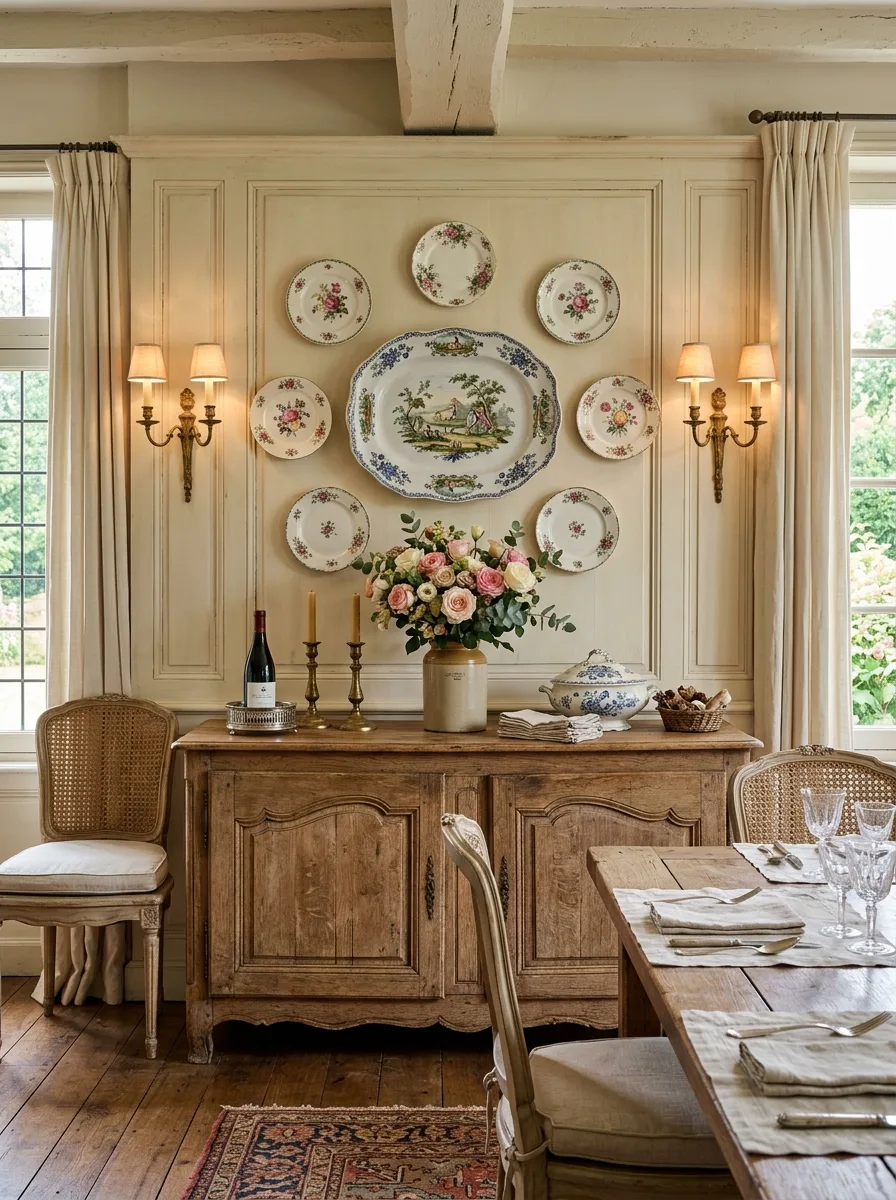
Arrange antique floral plates in a symmetrical grid around one large oval transferware platter at the center, mounted directly onto a painted wood paneled wall.
Keep the plate count and spacing perfectly mirrored on both sides of the central platter, using pairs of matching or closely related florals.
Position the display above a rustic farmhouse sideboard flanked by candle sconces, and style the sideboard with a jug of garden roses, brass candlesticks, and a covered tureen.
Choose plates with a shared cream or ivory base tone even if their floral patterns differ, so the overall wall reads as one family of china rather than a mixed collection.
Single Sculptural Plate as Wall Art
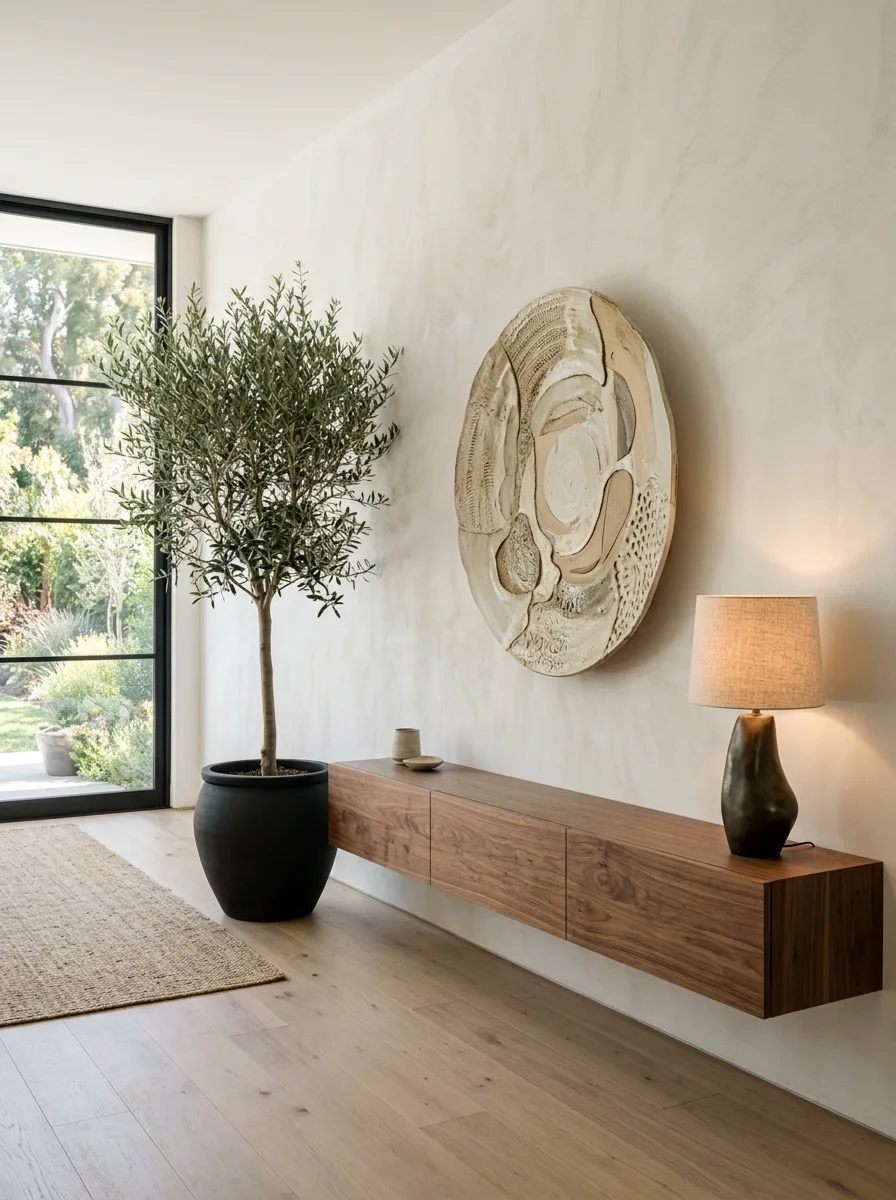
Choose one oversized, artfully textured ceramic plate — abstract, sculptural, more art object than dinnerware — and hang it alone as a focal point above a floating walnut console.
Keep the surrounding wall completely bare, treating the single plate the way you’d treat a painting, with generous negative space on all sides.
Pair it with a single potted olive tree nearby and one sculptural table lamp on the console, so the room has exactly three considered objects instead of a crowd.
This works specifically because it goes against the multi-plate instinct — sometimes the boldest plate wall idea is restraint.
Plate Wreath Around a Mirror
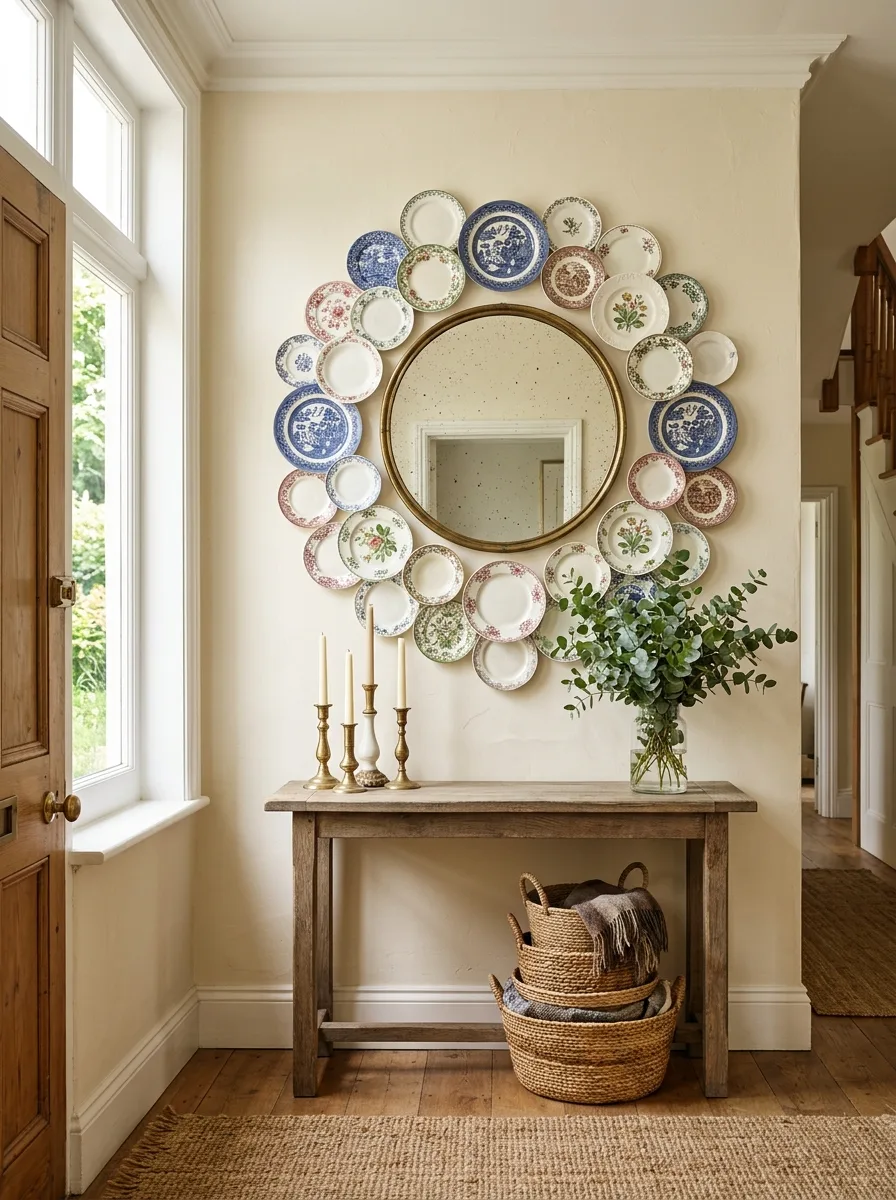
Circle a round mirror with a dense ring of vintage plates in blues, florals, and creams, letting the plates overlap the mirror’s edge slightly so the wreath and mirror read as one combined object.
Vary plate sizes around the ring, using slightly larger plates near the bottom for visual weight and smaller ones near the top, so the wreath doesn’t feel top-heavy.
Set a console table beneath the mirror styled with candlesticks in varying heights and a loose vase of eucalyptus, so the wreath has a proper landing surface below it.
Keep the wall color a warm, pale neutral so the mixed plate patterns stay the visual focus rather than competing with a busy wall behind them.
Café-Style Plates Above Open Shelving
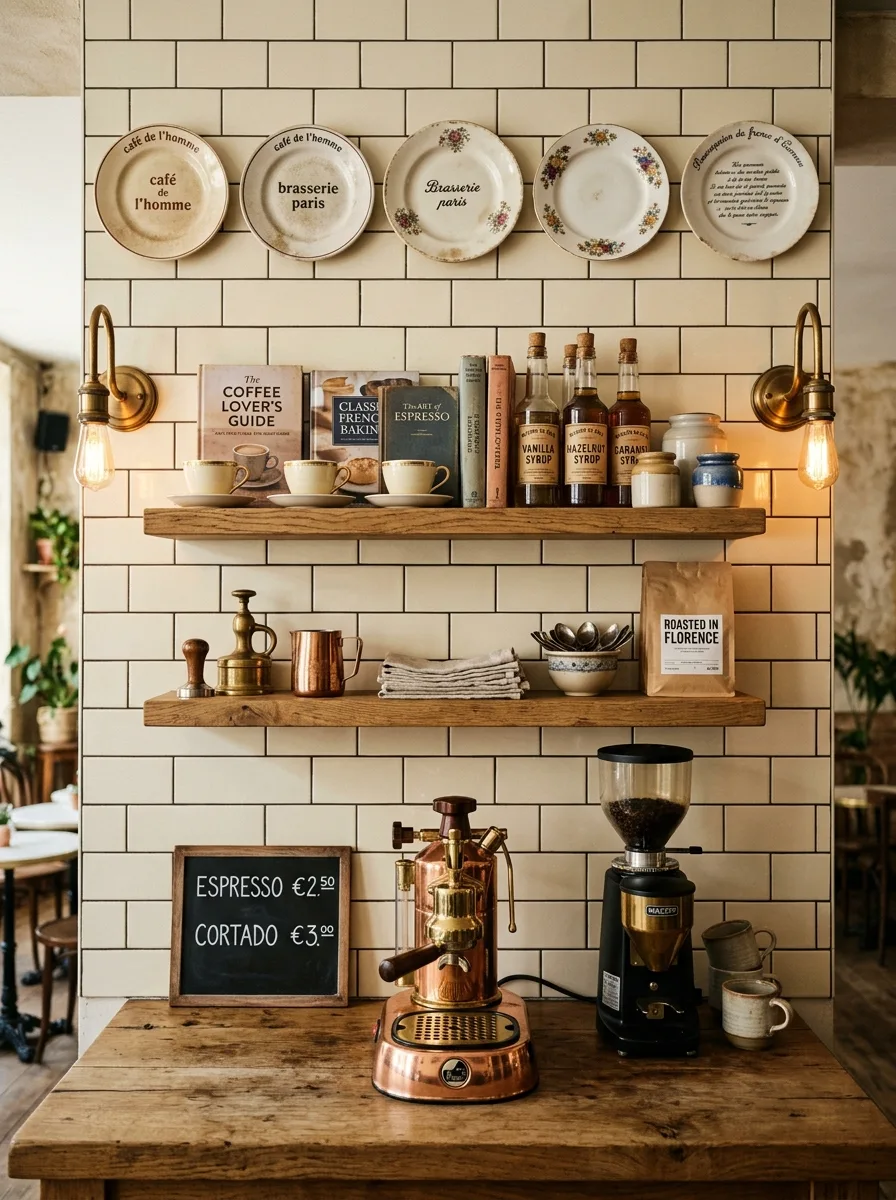
Mount a row of vintage or vintage-style plates — some with painted café phrases, some simply floral — in a single evenly spaced line above open wood shelving on subway tile.
Style the shelves below with stacked cups and saucers, cookbooks, glass syrup bottles, and a bag of coffee, so the plates read as part of a working café display rather than pure decoration.
Keep the plate spacing mathematically even, unlike the looser clusters elsewhere in this list — the evenly spaced row is what makes this read as commercial-informed rather than purely residential.
Add warm brass sconces on either side of the display for the same warm, working-space glow a real café counter would have.
Traditional Plate Rack Display
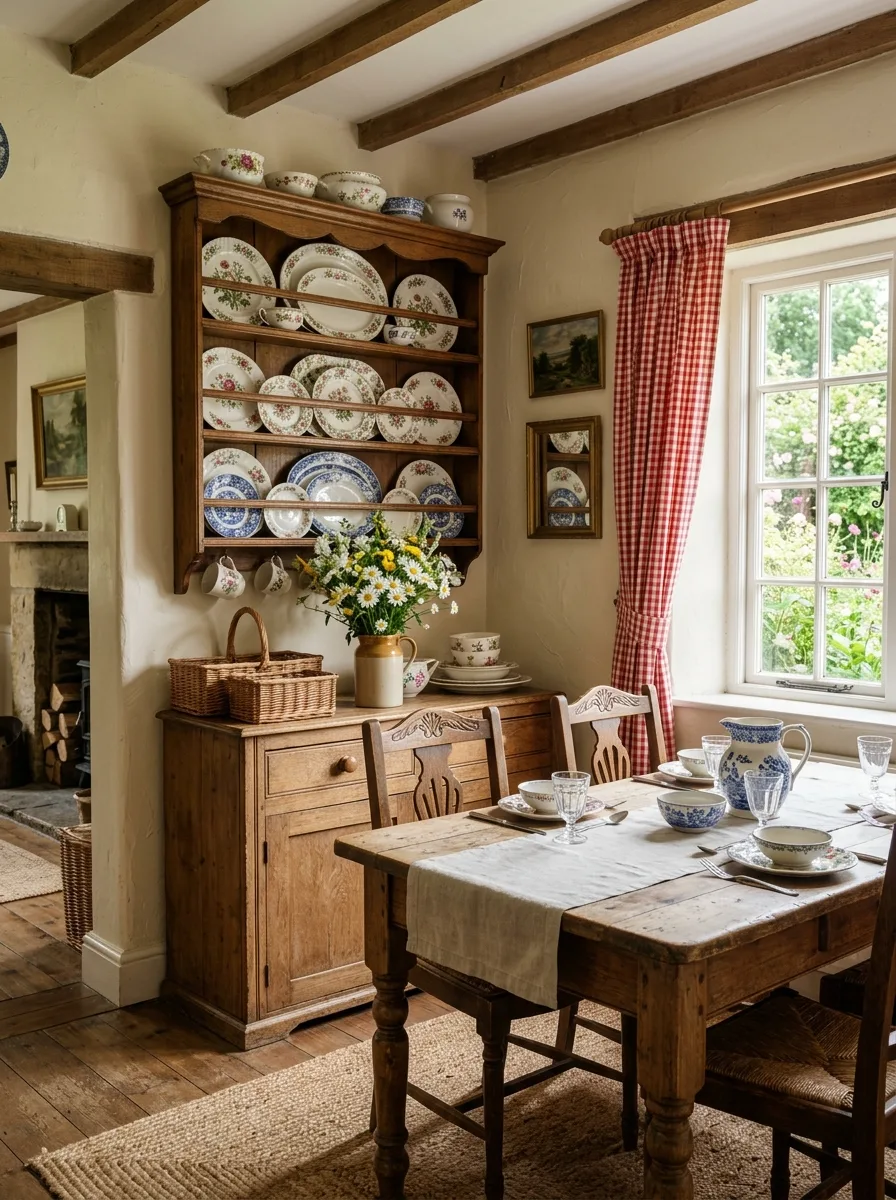
Install a wall-mounted wood plate rack with open shelving, and stack plates upright in rows rather than hanging them flat, mixing florals and blue-and-white transferware by pattern family per row.
Hang a few mugs from hooks along the rack’s underside, and set a jug of wildflowers on the counter below to soften all that stacked ceramic.
Keep the rack itself in a natural or lightly stained wood that matches the surrounding cabinetry, so it reads as built-in storage that happens to double as display.
This format is the one to choose if the plates need to stay genuinely usable — pulling one for dinner and returning it doesn’t disrupt a fixed wall arrangement the way a hung display would.
Minimalist White Plate Grid
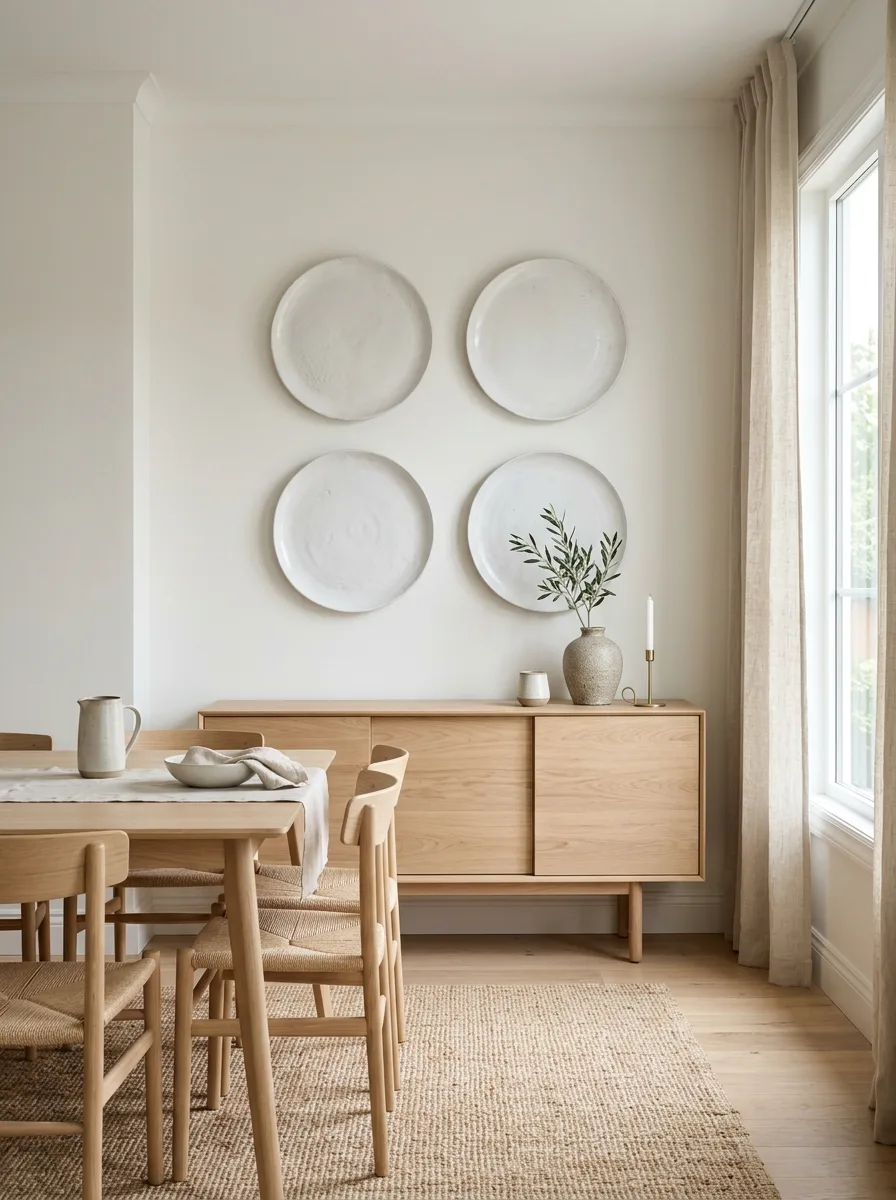
Hang four plain, texturally interesting white plates in a strict two-by-two grid on a bare white wall, spacing them with wide, even margins.
Choose plates with visible handmade texture — thrown ridges, an uneven glaze — so the all-white palette still has something for the eye to read up close.
Position the grid above a simple oak sideboard, and let a single vase with one or two olive branches be the only other object in the entire vignette.
This is the plate wall for a room that already has enough going on elsewhere. Four plates, one grid, done.
Eclectic Kitchen Gallery With Baskets and Prints
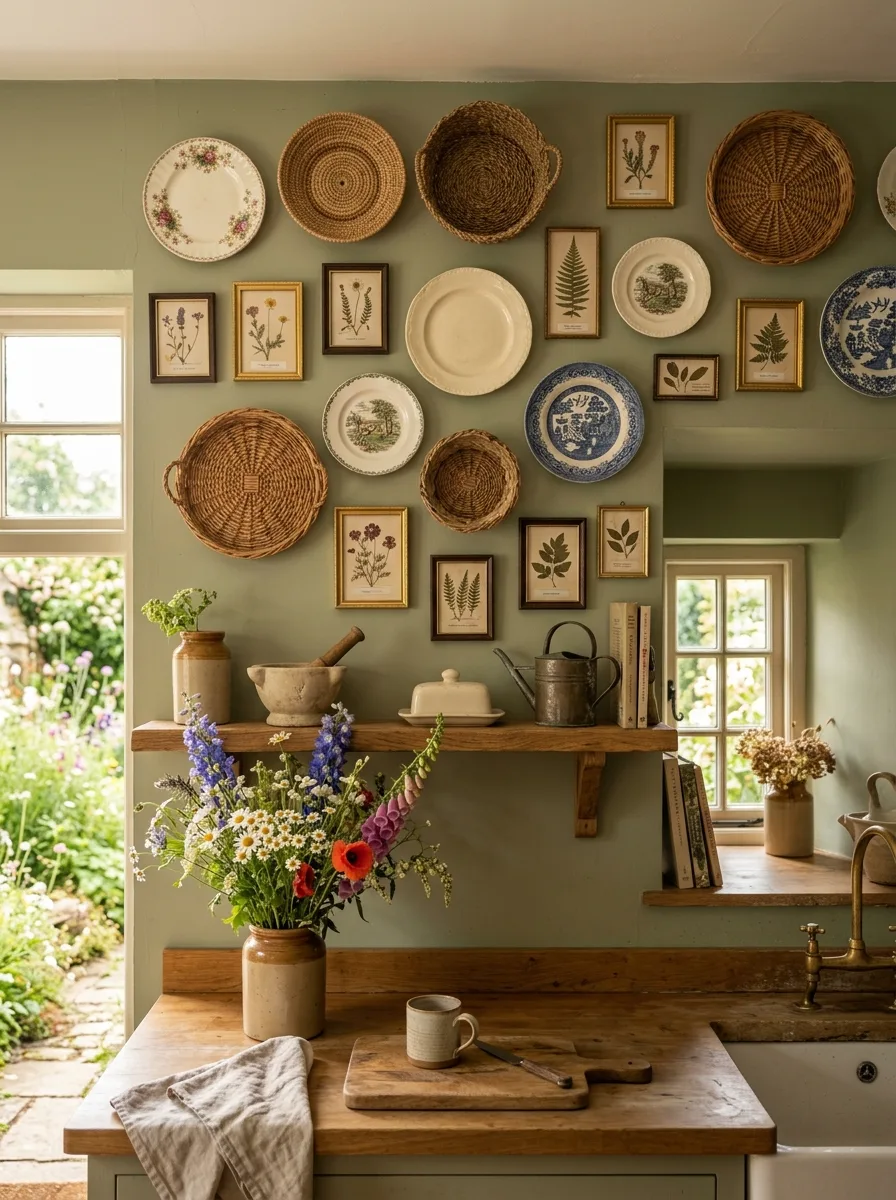
Mix flat woven baskets, botanical prints in thin gold frames, and floral plates together into one dense gallery wall above a kitchen work surface, painted in a muted sage green.
Let the baskets provide round shapes similar in scale to the plates, so the two object types blend into one visual rhythm instead of reading as separate categories.
Add a simple wood shelf partway up the display to hold a mortar and pestle, cookbooks, and a watering can, so the wall has one functional break in the pattern.
Keep the overall palette earthy — greens, warm creams, muted blues — pulling the frame colors and plate patterns back to the same handful of tones as the wall itself.
Symmetrical Mandala Plates in Wall Panels
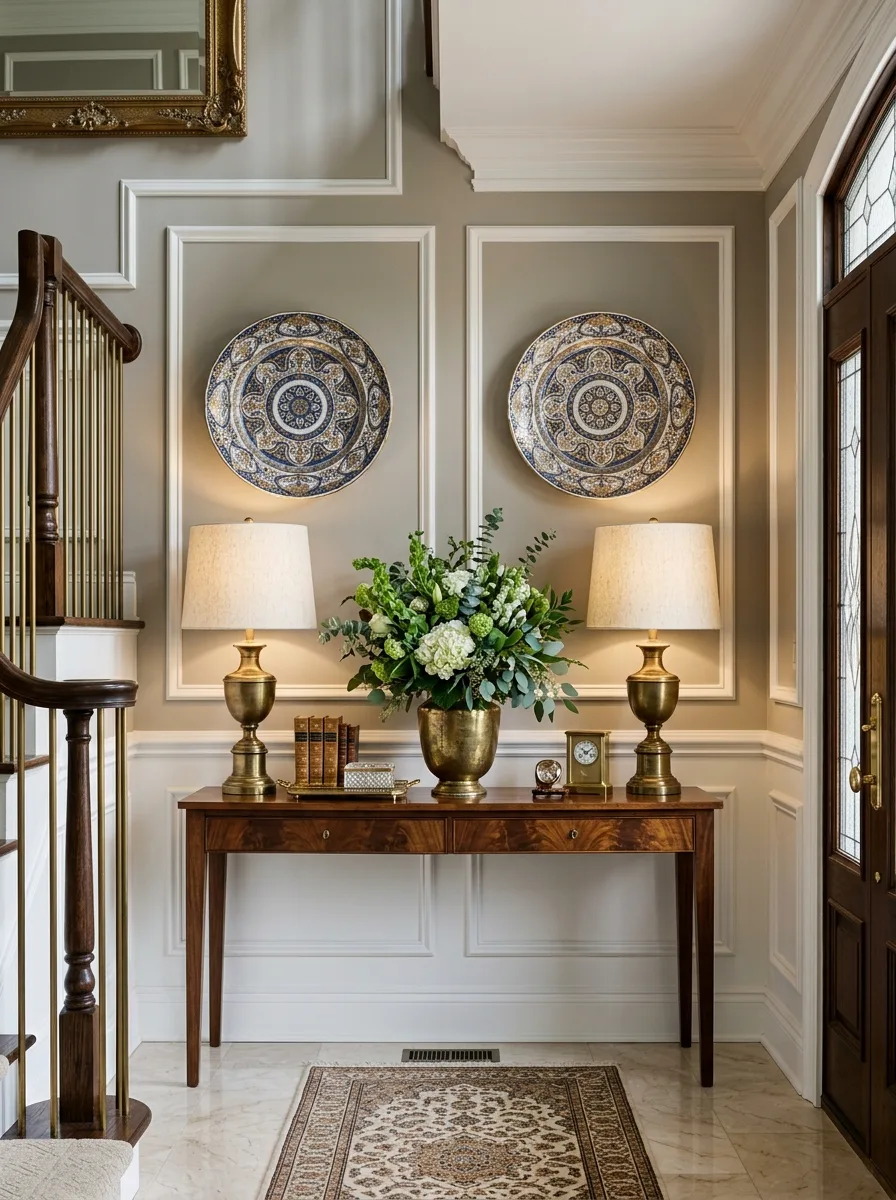
Mount one large, ornately patterned mandala-style plate into each of two matching architectural wall panels flanking an entry, keeping the plates perfectly matched in pattern and size.
Style a console beneath each panel identically — matching brass lamps, matching candle holders — so the whole vignette reads as one deliberate, mirrored composition.
Set a single large vase of white flowers at the center point between the two consoles, giving the eye one unifying element between the two symmetrical halves.
This works in formal entries and hallways specifically because the strict mirroring reads as intentional architecture, not casual display.
Arched Vintage Plate Frame Around Art
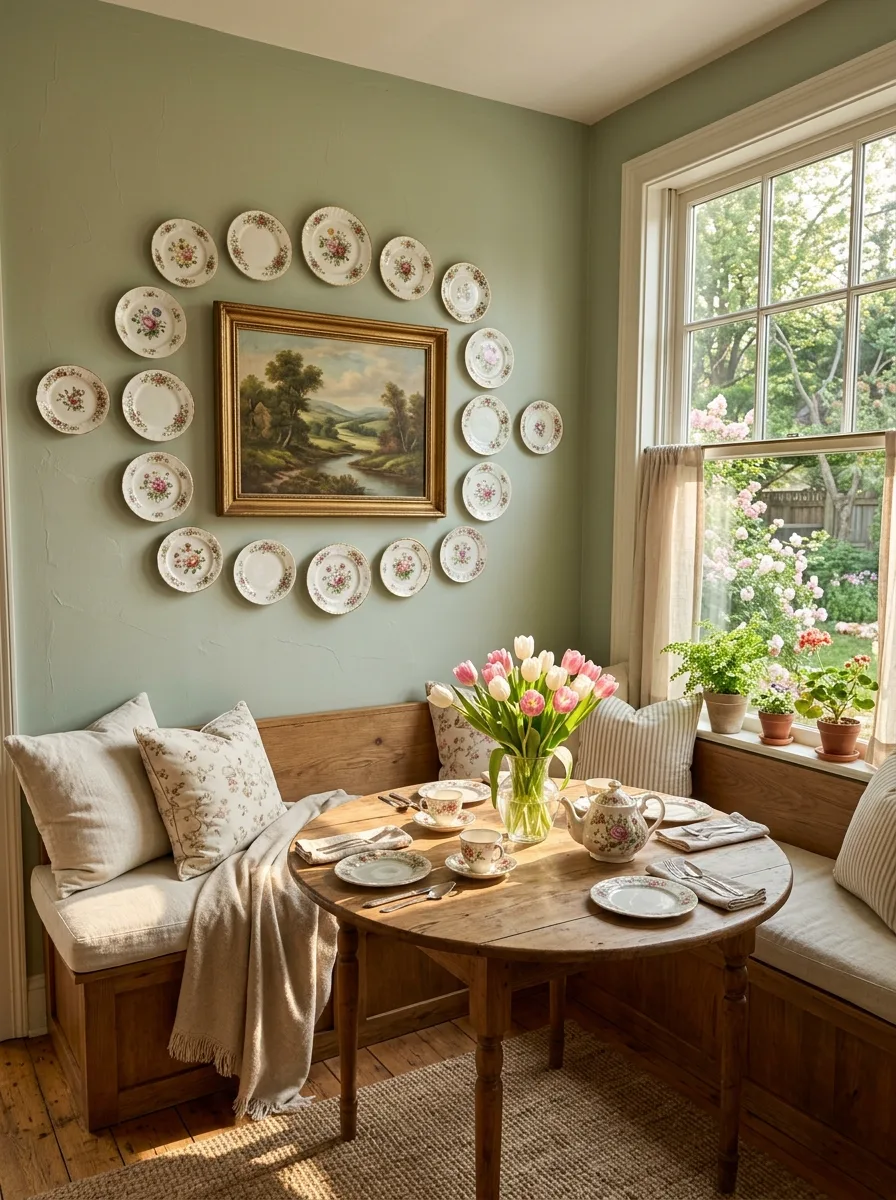
Arrange floral vintage plates in a loose arch shape around a framed landscape painting, using the painting as the visual center the plates orbit.
Vary the plate patterns while keeping them in a consistent pink-and-white or pink-and-green color family, so the arch reads as one composition despite the pattern variety.
Position the whole arrangement above a built-in window seat, and let cushions and a folded throw below echo the same pink and cream tones used in the plates.
Keep the arch loosely symmetrical rather than perfectly mirrored — a few plates slightly out of strict alignment is what keeps this read as collected rather than manufactured.
Hand-Painted Fruit Motif Cluster
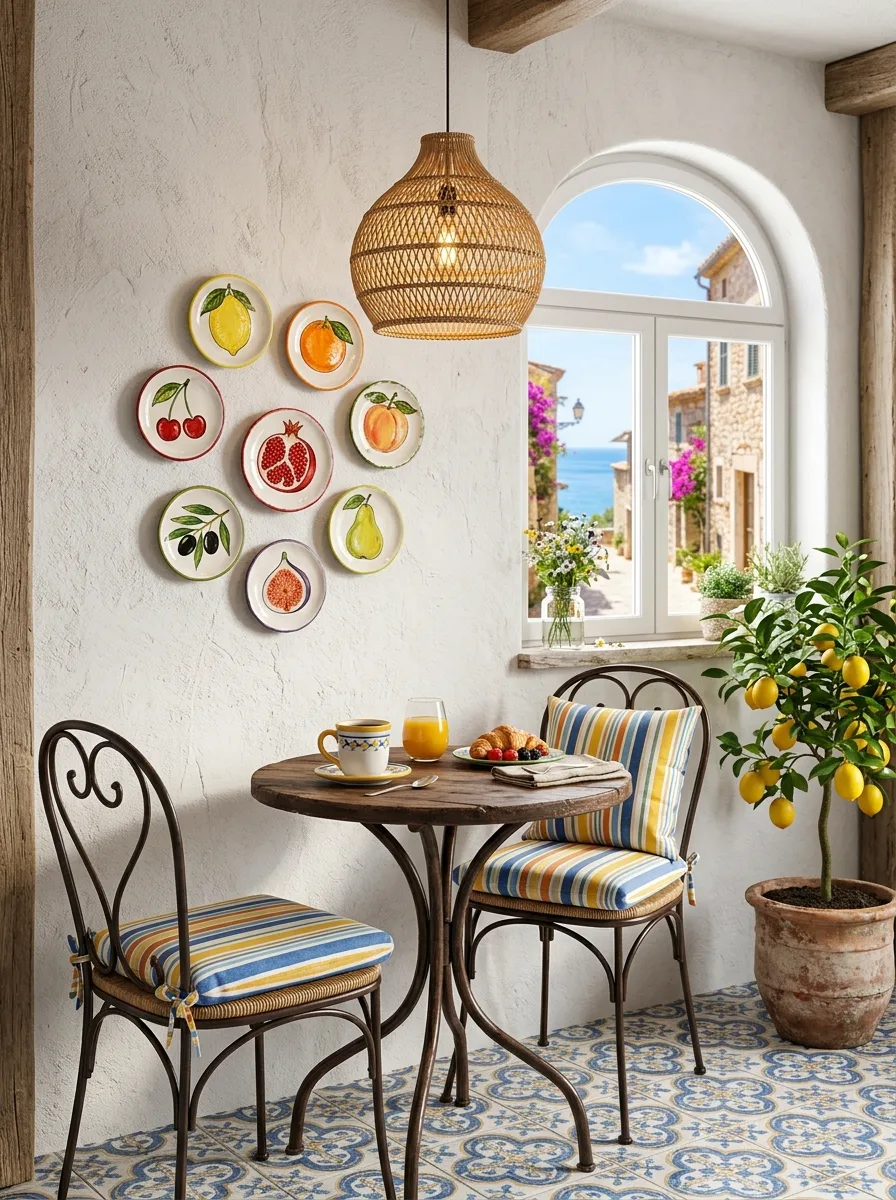
Group hand-painted plates, each featuring a single fruit — lemon, cherry, pomegranate, olive branch — into a loose diamond cluster on a textured plaster wall.
Choose a woven pendant light nearby in a warm natural material, letting its texture echo the handmade quality of the painted plates.
Style the space below with a small bistro table set with matching fruit-motif cups and a citrus centerpiece, so the plate wall’s theme continues down into the actual tabletop styling.
Keep the wall itself pale and textured rather than painted a strong color, letting the plates’ bright, varied fruit colors provide all the saturation the space needs.
Backlit Blue Willow Niche
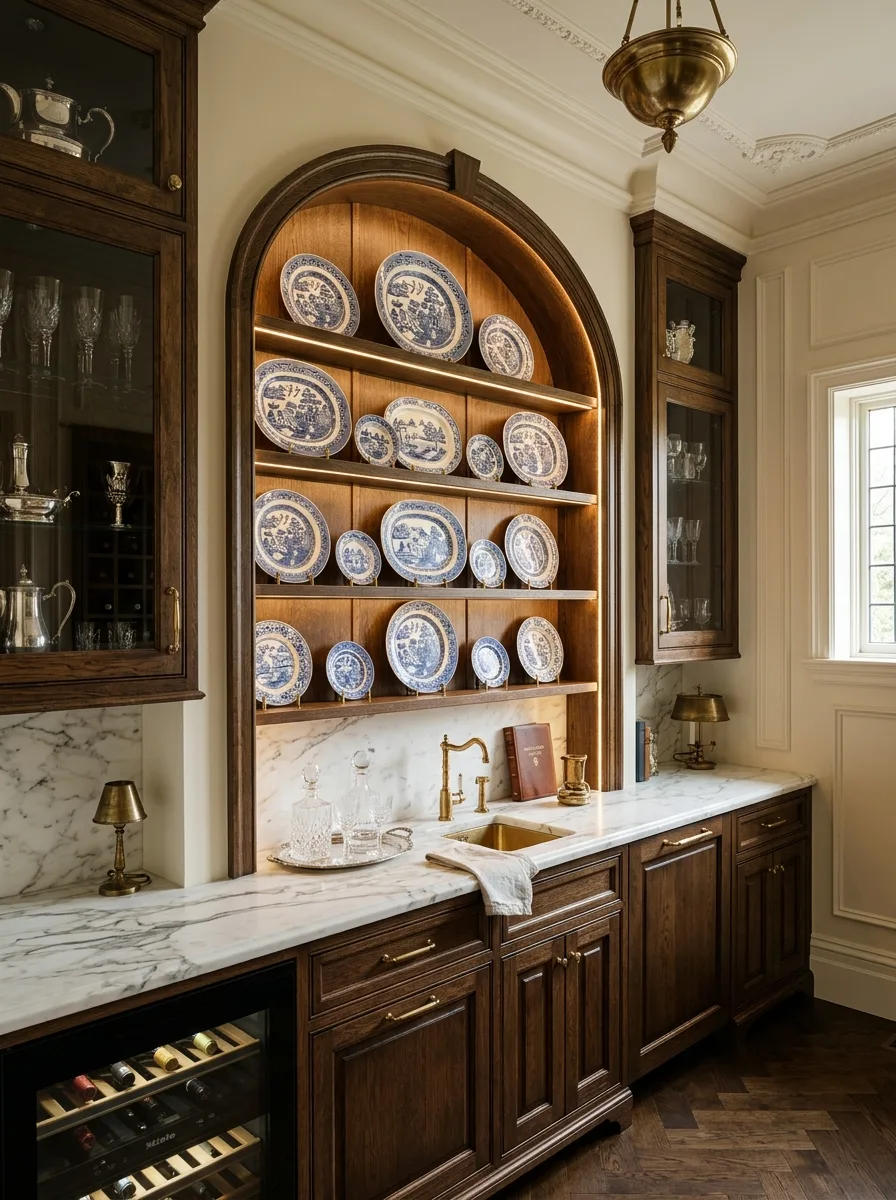
Build or use an arched wall niche fitted with shelving, and fill it entirely with matching blue-and-white willow-pattern plates, largest at the top shelf and smaller pieces filling in below.
Run warm LED strip lighting along the inside edge of the niche, so the arched display glows against the surrounding dark wood cabinetry.
Keep every plate in the same willow pattern and color family — no mixing in other blues or other patterns — since the tight consistency is what makes a niche display like this feel intentional rather than crowded.
Position the niche above a marble counter styled with crystal decanters and brass accessories, so the whole display reads as a proper butler’s pantry moment.
Seasonal Plates on Layered Shelves
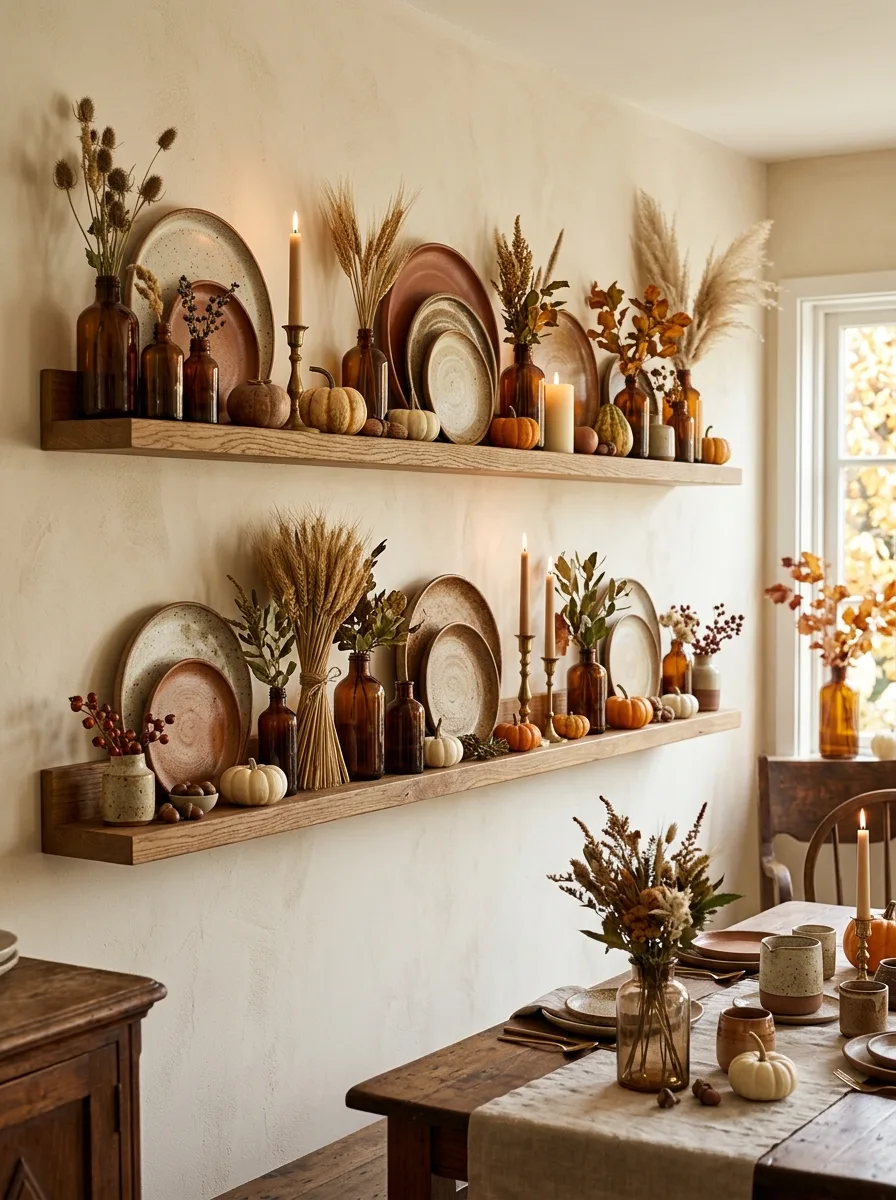
Install two long floating wood shelves and style them with a mix of stoneware plates, amber glass bottles, dried florals, and small pumpkins or gourds depending on the season.
Lean plates against the wall rather than mounting them flat, overlapping a few slightly so the shelf reads as a still life rather than a strict inventory display.
Vary the height of objects across the shelf — tall dried grasses next to low, stacked plates — so the eye moves across the whole length instead of resting in one spot.
This format is built specifically for rotation: swap the dried florals and small objects seasonally while the plates themselves stay in place as the constant.
Textured Plates Flanking an Arched Mirror
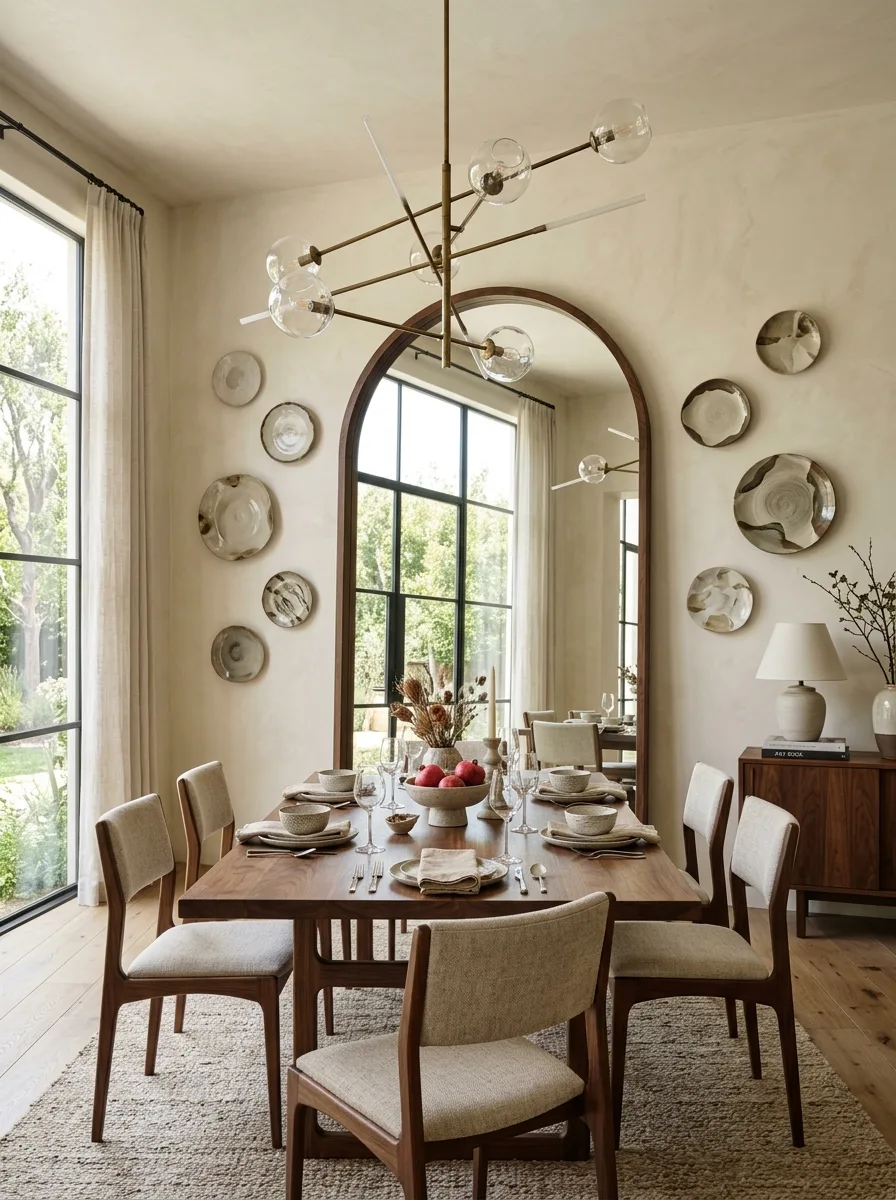
Mount a small cluster of textured stoneware plates on either side of a large arched mirror, keeping the two clusters loosely mirrored in plate count and general shape without matching exactly.
Choose plates in warm neutral glazes — cream, rust, sage — so the wall stays calm and cohesive despite the asymmetric placement within each cluster.
Position a dining table directly in front of the mirror, so the plates and the mirror’s reflection double the sense of texture and warmth in the room.
Keep the wall a plain warm plaster, letting the arched mirror’s dark wood frame provide the only strong line the plate clusters need to organize around.
Corner Shelf Display in a Working Kitchen
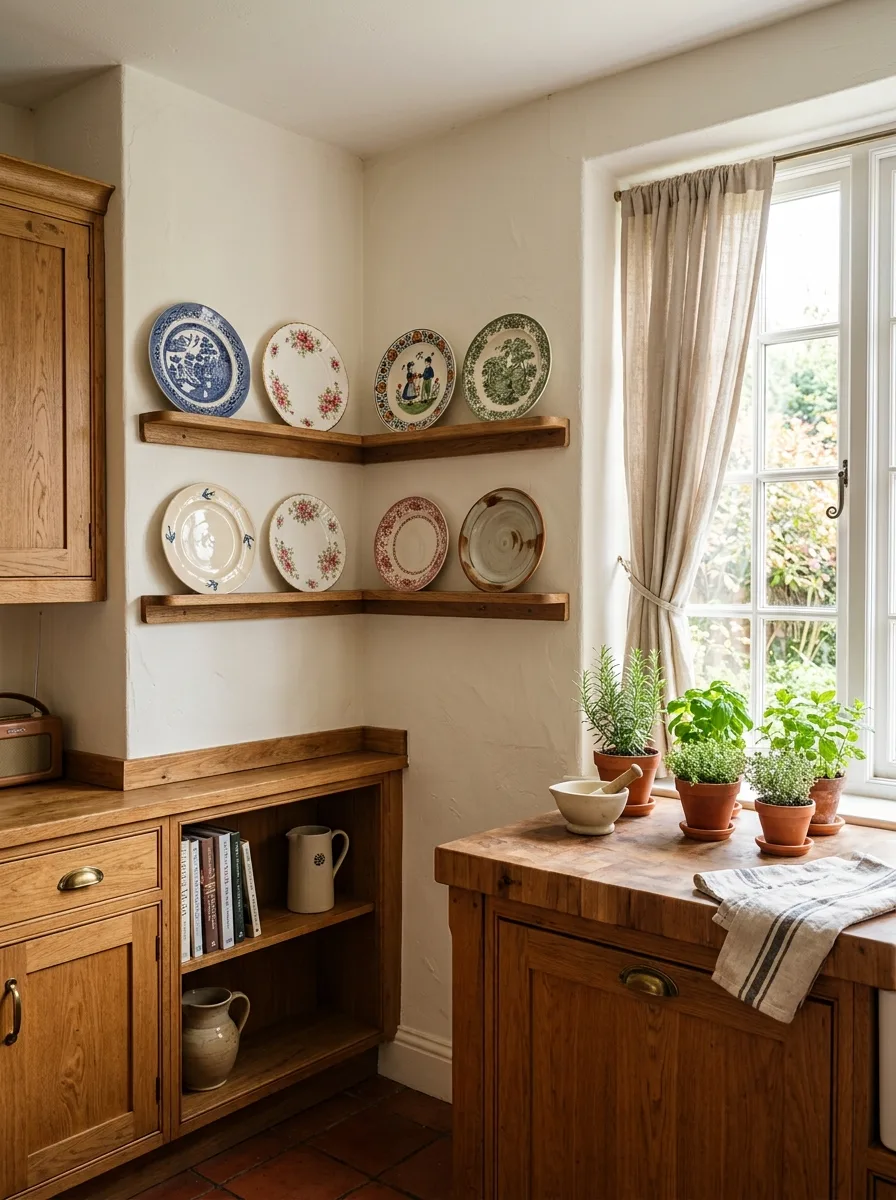
Install two L-shaped floating shelves wrapping a kitchen corner, and display a small mixed collection of vintage plates flat against the wall, standing upright along the shelf edge.
Keep the collection loosely themed — blue and white, soft florals — but don’t worry about strict pattern matching, since a lived-in kitchen corner reads better slightly imperfect.
Add a small open cubby beneath the shelves for cookbooks and a jug, so the corner functions as working kitchen storage as much as display.
Cluster potted herbs on the windowsill nearby in matching terracotta pots, tying the corner’s collected, gathered feeling together with living things as well as ceramic ones.
Matching Shelf Units Flanking a Window
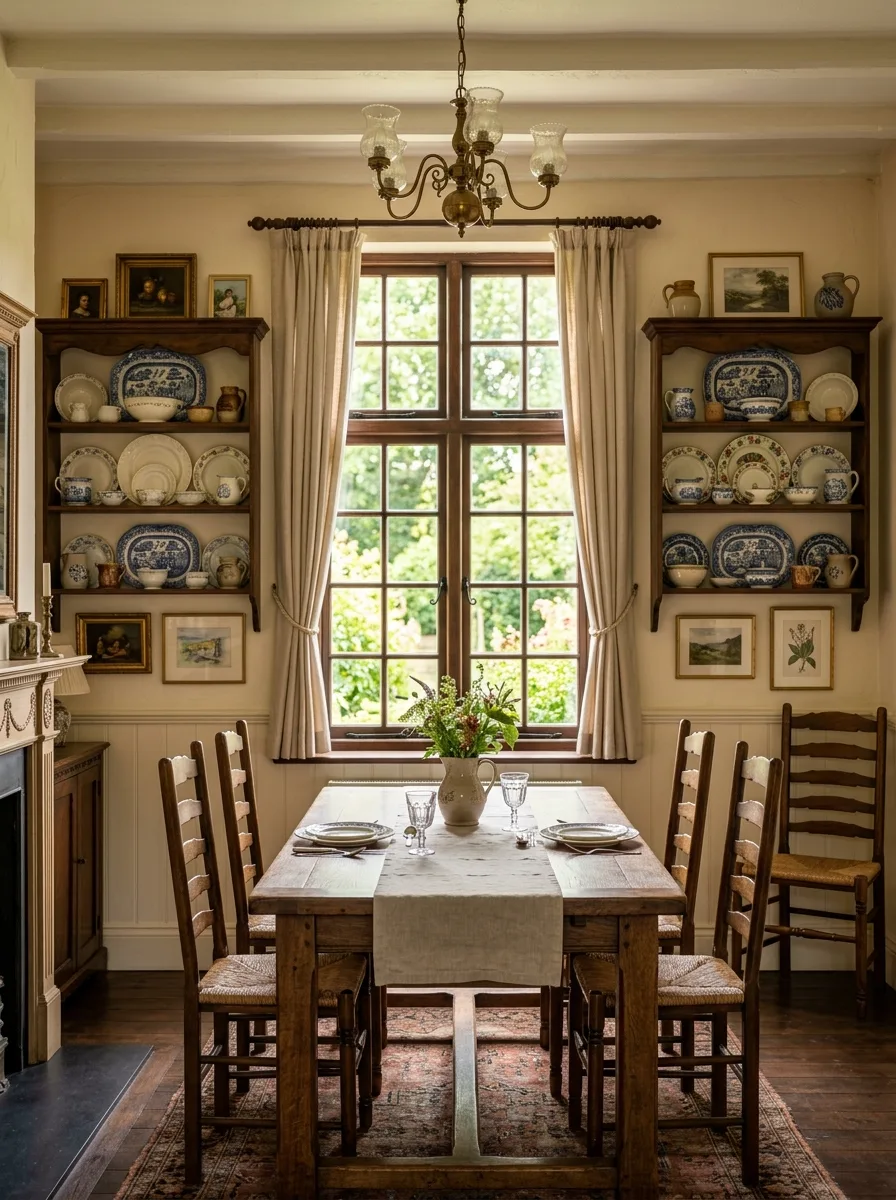
Install a matching pair of open wood plate-and-china shelving units on either side of a large window, filling each with stacked plates, cups, and small jugs in a shared blue-and-white and floral palette.
Keep the two sides symmetrical in overall shape and object count, though not necessarily identical piece for piece, so the pairing reads as considered without being sterile.
Hang small framed art and botanical prints in the gaps around each shelf unit, using thin dark frames that echo the wood tone of the shelving.
Center a farmhouse table beneath the window between the two units, so the whole wall functions as one continuous, symmetrical dining backdrop.
Warm Cluster Above a Rustic Sideboard
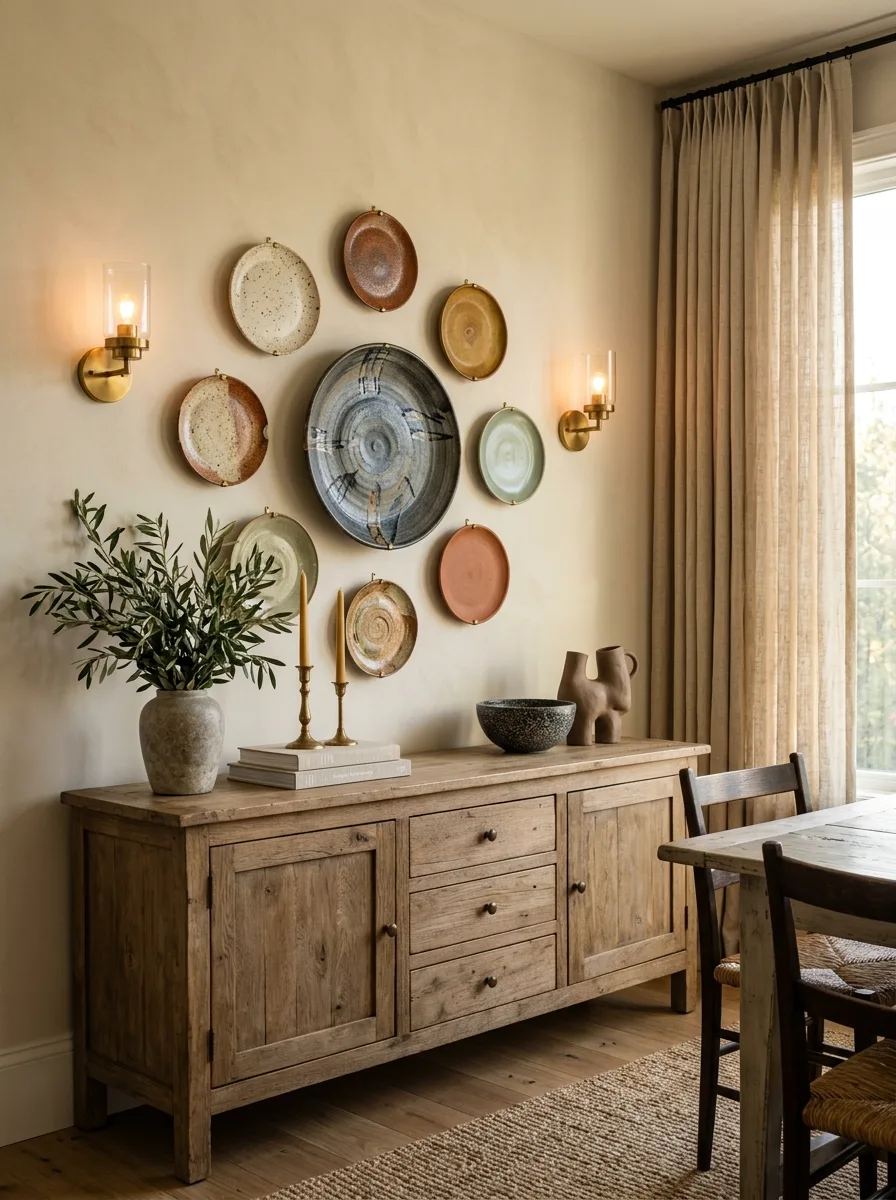
Cluster stoneware plates in warm rust, sage, and cream tones above a reclaimed wood sideboard, anchoring the composition with one large, dark abstract-glazed platter at the center.
Flank the display with wall sconces in warm brass, positioned to wash light up and across the plate cluster in the evening.
Style the sideboard below with a stack of books, brass candlesticks, a dark ceramic bowl, and a loose vase of olive branches, keeping the palette tied to the plates above.
Choose plates with enough glaze and texture variation that the cluster reads as rich and layered even though the color palette itself stays tight and restrained.
Final Thoughts
Every plate on every one of these walls used to live in a cupboard. That’s the whole point worth sitting with.
The difference between a stack of dishes and a room-defining feature isn’t the plates. It’s the decision to stop treating them as something you use twice a year and start treating them as something you look at every day.
Some of these walls took real planning — years of collecting, careful symmetry, a rack built specifically for the job. Others are just three plates and a bit of nerve. Both hold up.
Go open that cupboard. Whatever’s been hiding in there for the last two years didn’t get put away to be protected. It got put away because nobody ever gave it a wall.