
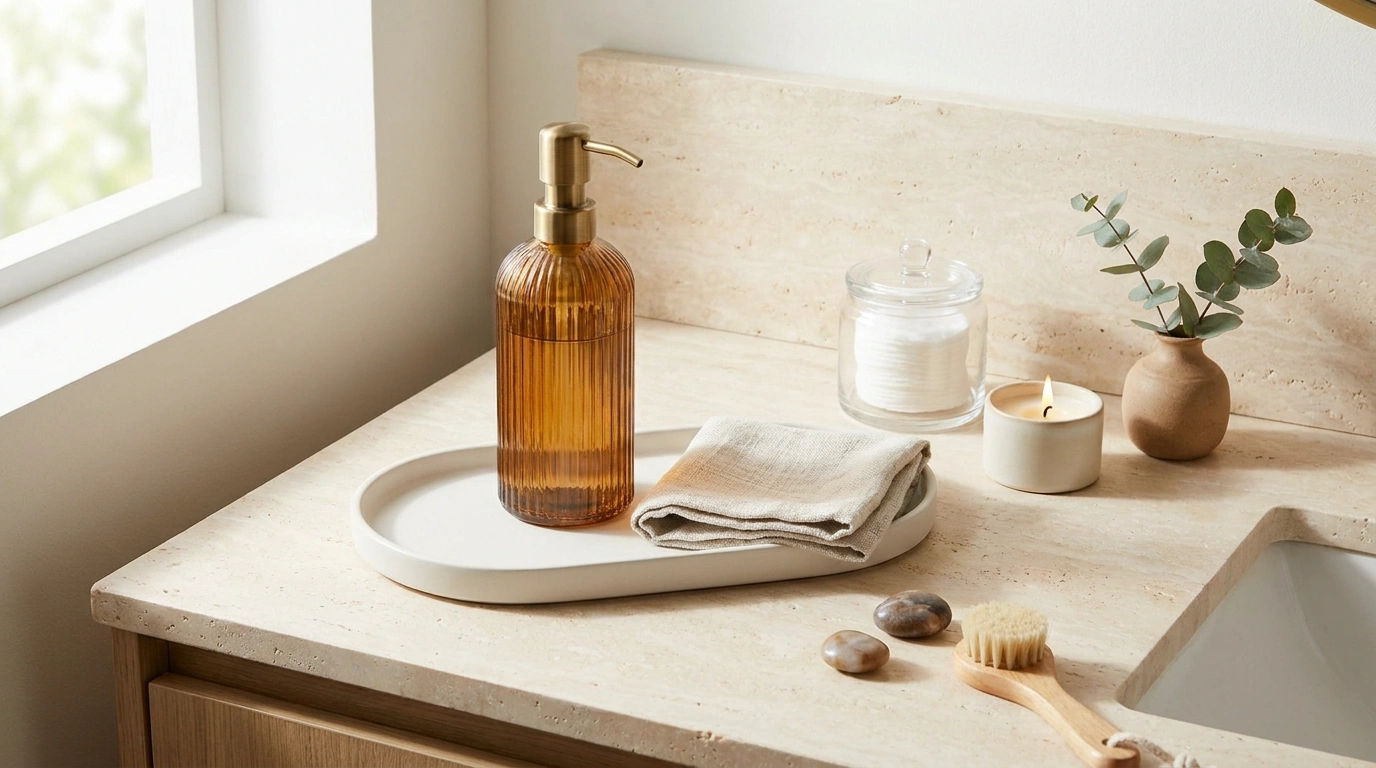
A bathroom can have beautiful tile, a great vanity, and expensive-looking fixtures, yet the counter can still make the whole room feel unfinished. That usually happens when the things sitting around the sink were chosen one at a time instead of as part of the room.
A soap dispenser comes from one style, a tray from another, a little plant gets squeezed into the remaining space, and suddenly the vanity feels cluttered rather than considered.
These finished bathroom counter decor concepts show what that relationship can look like in real rooms. Look at the full vanity first, then study the smaller details.
The goal is not to copy every object. It is to find a visual direction that makes sense for your own bathroom and gives you a much clearer starting point.
Choose Your Bathroom Counter Decor Direction
| Design Direction | Countertop Character | Styling Approach | Best Supporting Finishes |
|---|---|---|---|
| Warm & Natural | Soft stone or light quartz | Wood, ceramics, organic accents | Oak, brass, warm white |
| Classic & Refined | Marble with visible veining | Symmetrical, edited accessories | White, polished nickel, bronze |
| Moody & Dramatic | Dark stone or charcoal surface | Minimal, sculptural pieces | Walnut, black, aged brass |
| Organic & Textured | Limestone, travertine, handmade surfaces | Tactile ceramics and natural materials | Blonde wood, muted metal |
| Clean & Modern | Quartz, concrete-look, or seamless stone | Very limited countertop styling | Oak, black, brushed metal |
| Color-Led | Cream or neutral stone | A few accents that echo cabinetry | Olive, blue, burgundy, deep green |
Bathroom Counter Decor Ideas
Dramatic Marble and Aged Brass
This bathroom proves that bold stone can do all the heavy lifting when paired with the right fixtures. Richly veined marble creates a dramatic backdrop, while warm brass sconces and hardware anchor the space in timeless luxury.
The countertop styling leans into the opulence without feeling cluttered. A sleek soap dispenser sits beside a glowing candle, while a small dish holds everyday essentials. The arrangement feels curated rather than crowded, allowing the striking stone walls to remain the true star of the room.
Stick to a cohesive metal finish and let the natural pattern of the marble guide your color palette. Restraint is key here—when your backdrop has this much personality, your accessories only need to whisper.
Warm White Vanity With Natural Oak and Soft Brass
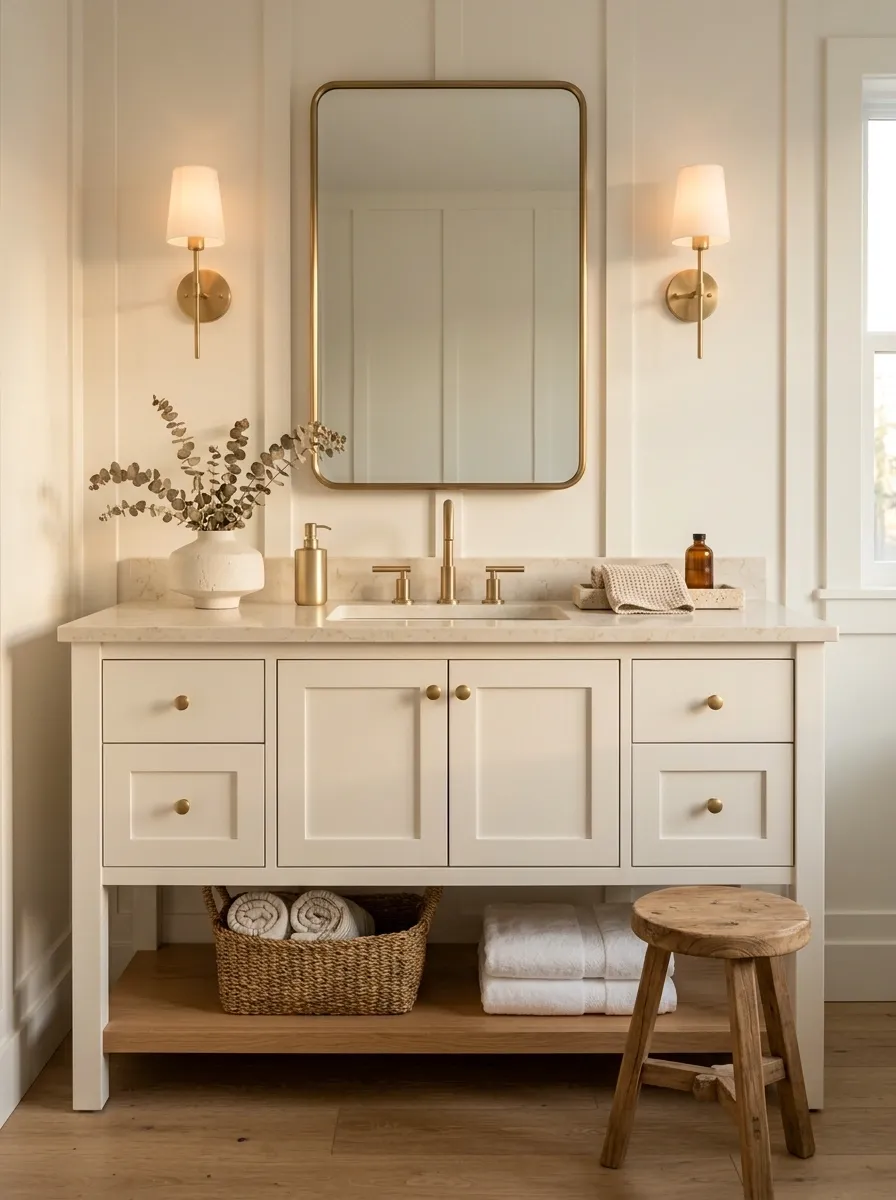
Warm white cabinetry makes a bathroom feel brighter, but it can also become forgettable when every surface is equally pale. This composition fixes that with natural oak, creamy stone, and soft brass that introduce warmth without making the vanity feel busy.
The countertop stays edited: a low ceramic vessel, a simple soap dispenser, and one small tray are enough. The mirror has a slim warm-metal frame, while the lighting repeats that brass tone higher on the wall. The oak appears again in a small stool or open shelf, linking the lower half of the room to the vanity.
I’d keep the accessories matte rather than glossy here. The stone and brass already provide enough subtle contrast, while the wood gives the room its visual anchor.
Calming Neutral Tray Styling
There is an effortless serenity that comes with keeping a bathroom counter strictly monochromatic. A soft marble tray acts as a quiet anchor, gathering everyday luxuries into a neat, intentional composition that feels both spa-like and grounded.
A simple ceramic soap pump, a faceted perfume bottle, and a warm-toned candle create varying heights within the tray. A delicate facial roller adds a subtle touch of texture, while a dried floral stem in a matte vase brings organic softness to the corner.
This approach works best when you embrace tactile materials. Let the subtle veining in the stone tray, the smooth ceramic, and the translucent glass do the talking without needing loud colors or unnecessary clutter.
Moody Walnut Vanity With Charcoal Stone
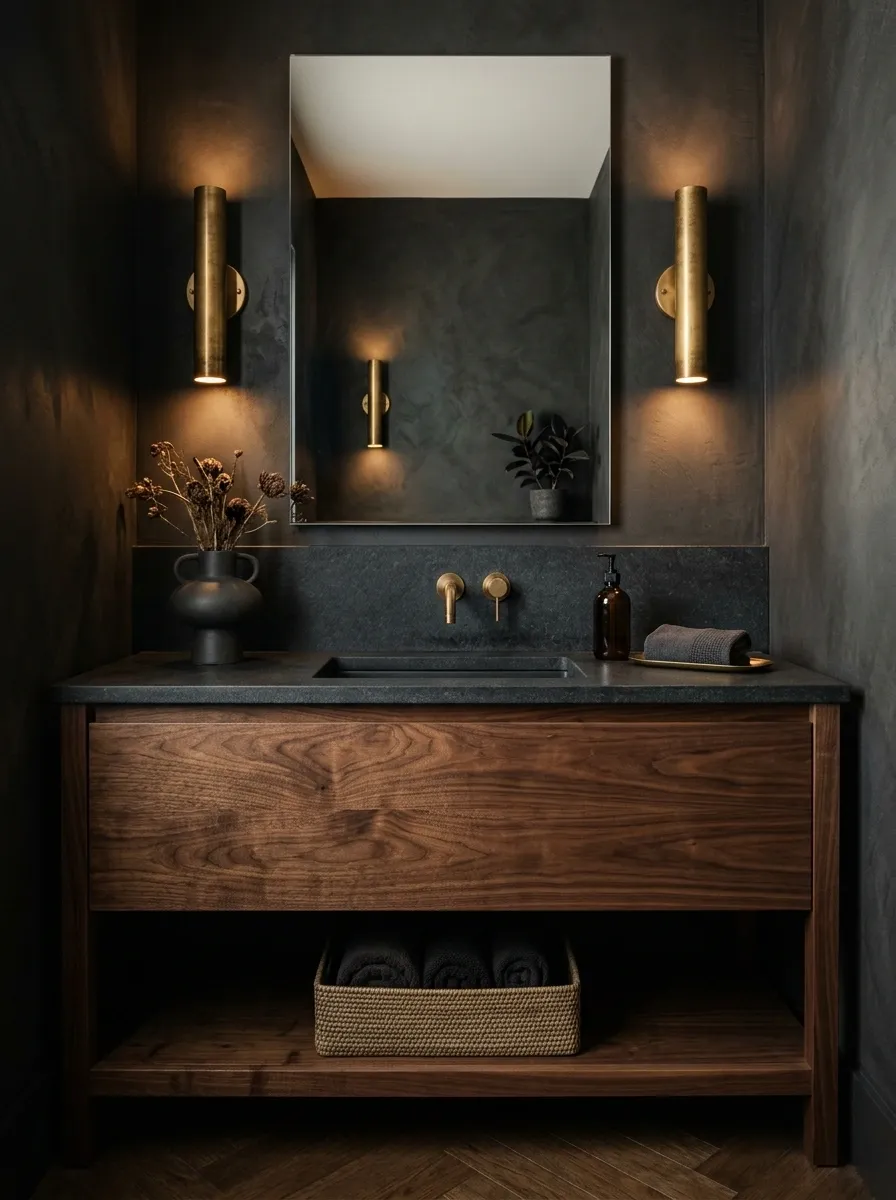
This bathroom leans dark, but it avoids the heavy, closed-in feeling that can happen when every surface is charcoal. Rich walnut cabinetry provides the warmth, while a deep stone countertop creates a darker visual base.
The counter styling is intentionally spare. A sculptural ceramic vessel, dark glass soap bottle, and one neatly folded hand towel provide enough life without breaking the mood. Warm sconces sit close to the mirror, giving the stone and walnut softer edges in the evening.
The trick is contrast inside the dark palette. Don’t match every finish perfectly. Let the wood show variation, keep the stone more matte than reflective, and use aged brass sparingly so the room still feels architectural rather than ornate.
Tiered Marble Vanity Caddy
Maximizing counter space without sacrificing style is an art, and a two-tier marble and brass organizer handles it effortlessly. It brings verticality to the vanity, turning everyday toiletries into a deliberate display of modern elegance.
The upper shelf hosts perfume bottles and a sleek container, while the lower level corrals skincare serums, cotton swabs, and amber glass bottles. The brass frame ties the structure together, echoing the warm lighting and dark stone surroundings.
When styling a tiered organizer, balance is everything. Mix heights and keep the most frequently used items within arm’s reach on the bottom level, leaving the upper shelf for decorative pieces that catch the light.
Classic White Vanity With Marble and Polished Nickel
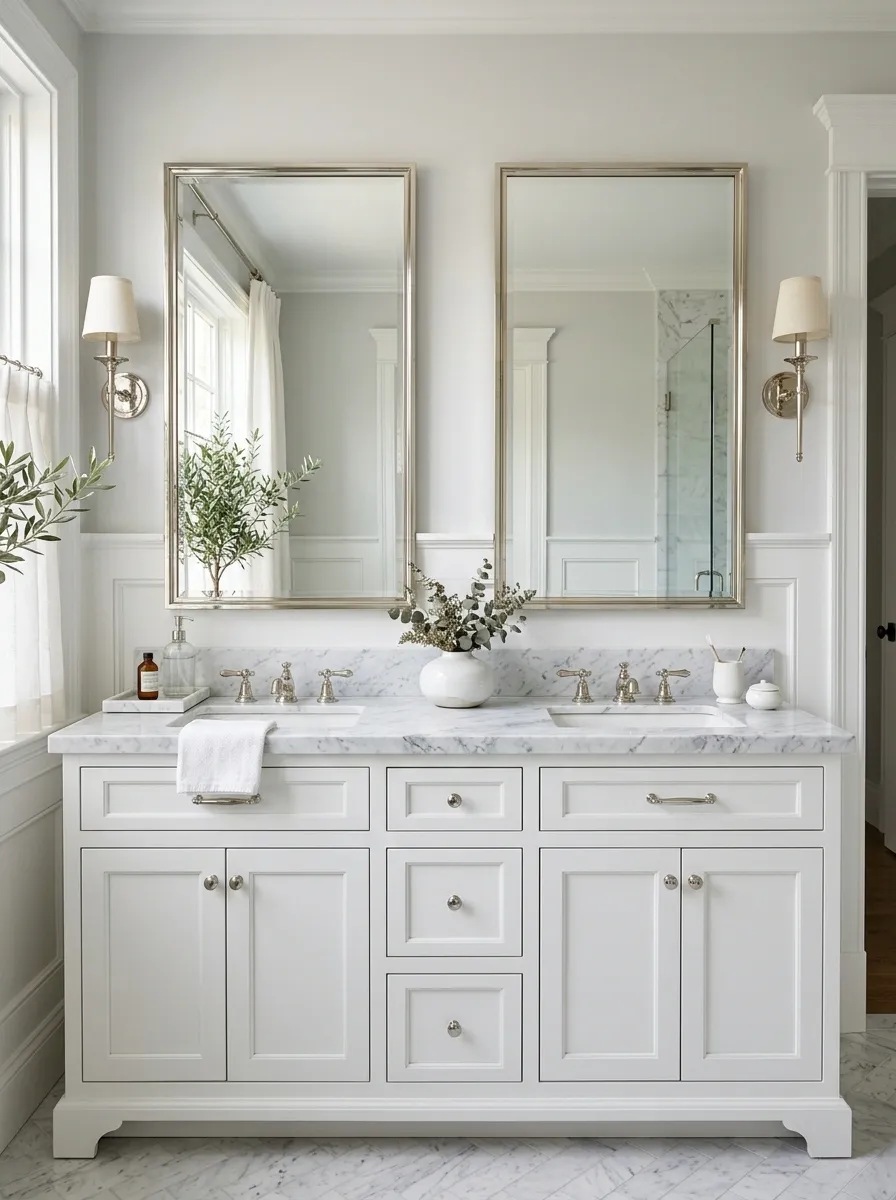
This is the bathroom counter decor direction for anyone who prefers a timeless vanity with enough detail to feel finished. White cabinetry, veined marble, polished nickel fixtures, and framed mirrors establish a classic foundation without relying on excessive ornament.
The counter gets a more deliberate arrangement here. A clear glass soap dispenser sits beside a small marble tray, while a low ceramic vessel balances the opposite side. Matching sconces and repeated metal finishes give the vanity a sense of order.
Symmetry is useful in this composition because the room already has strong traditional architecture. Still, don’t line up every object perfectly. A slight shift in the vessel or towel keeps the countertop from looking like a hotel display.
Olive Green Vanity With Warm Stone
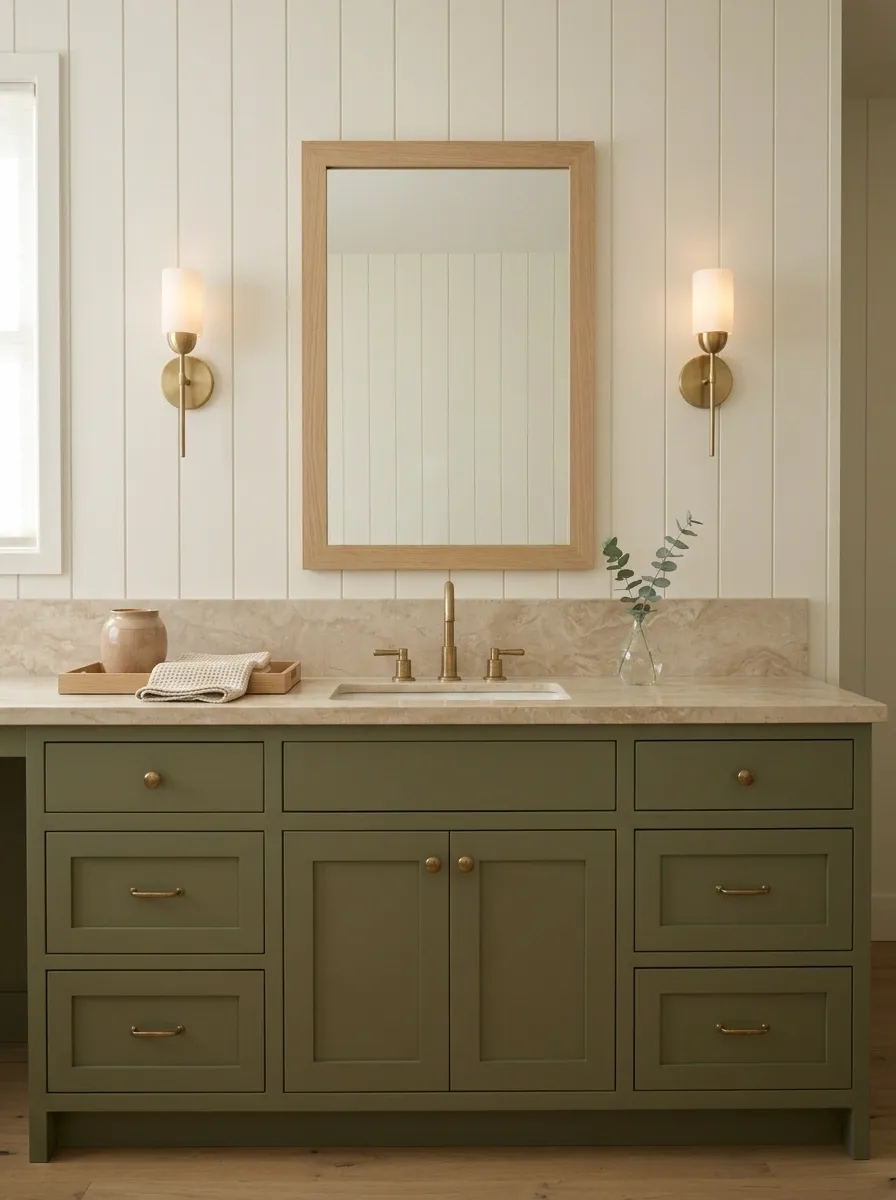
Olive green gives the vanity enough color to become a focal point without turning the bathroom into a themed space. Pair it with warm stone, natural wood, and aged brass, then let the countertop styling reinforce those same tones.
The finished scene feels layered rather than decorated. A squat ceramic vessel repeats the warm stone, a wood-framed tray connects to the cabinetry warmth, and a restrained botanical accent brings a little softness beside the sink. Nothing needs to be oversized.
I’d avoid adding several green accessories just because the vanity is green. The cabinetry already carries the color. Counter pieces should support it through texture and warmth instead of competing with it.
Minimal Oak Vanity With Concrete-Look Countertop
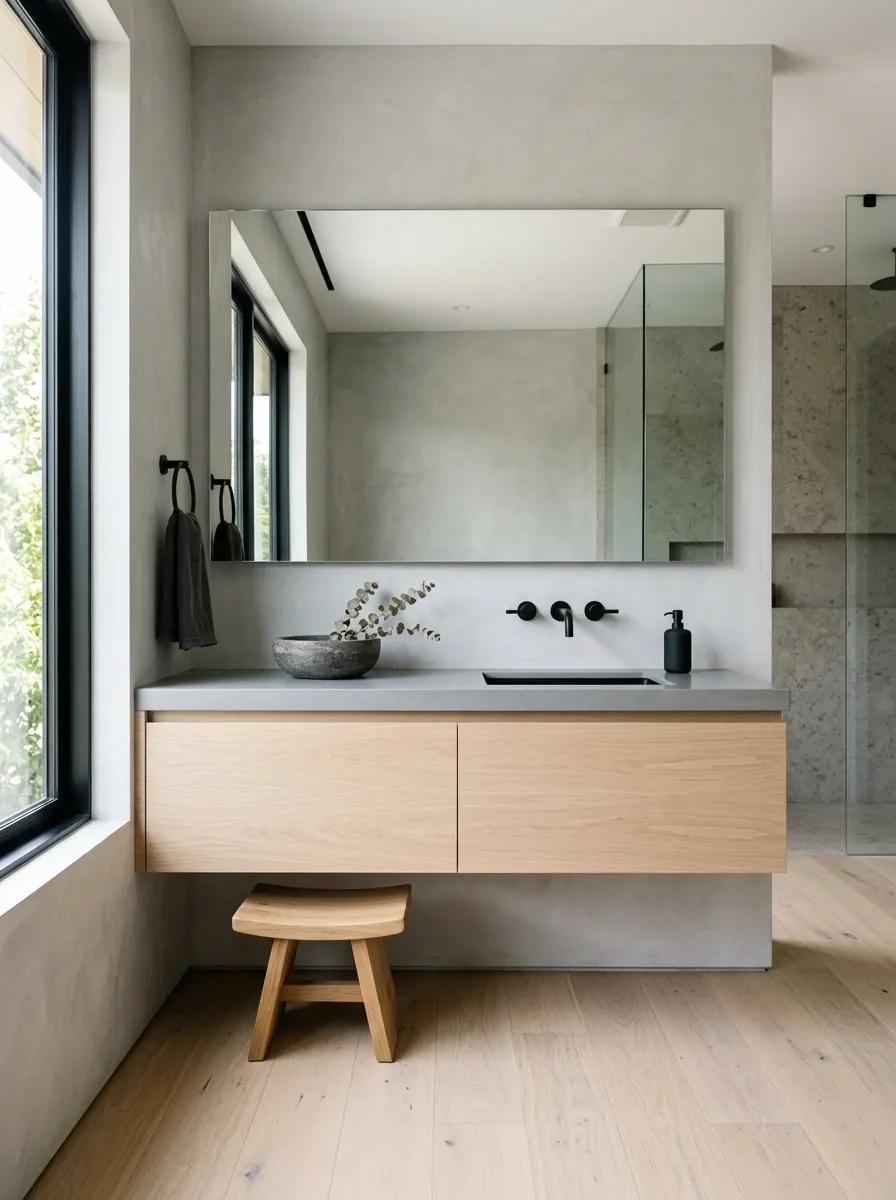
This bathroom takes a cooler modern direction, then warms it up with pale oak. The floating vanity has clean slab fronts, a concrete-look countertop, matte black fixtures, and a wide mirror that keeps the architecture visually simple.
Countertop decor stays deliberately sparse. One low stone vessel and a compact soap dispenser are enough because the room already has strong horizontal lines. A small oak stool beneath the vanity adds warmth without interrupting the open floor area.
The important contrast is between the smooth, cool counter and the visible grain of the wood. Don’t introduce several different accent materials here. Keeping the finishes limited makes the whole vanity feel sharper and more expensive.
Dusty Blue Vanity With Cream Quartz
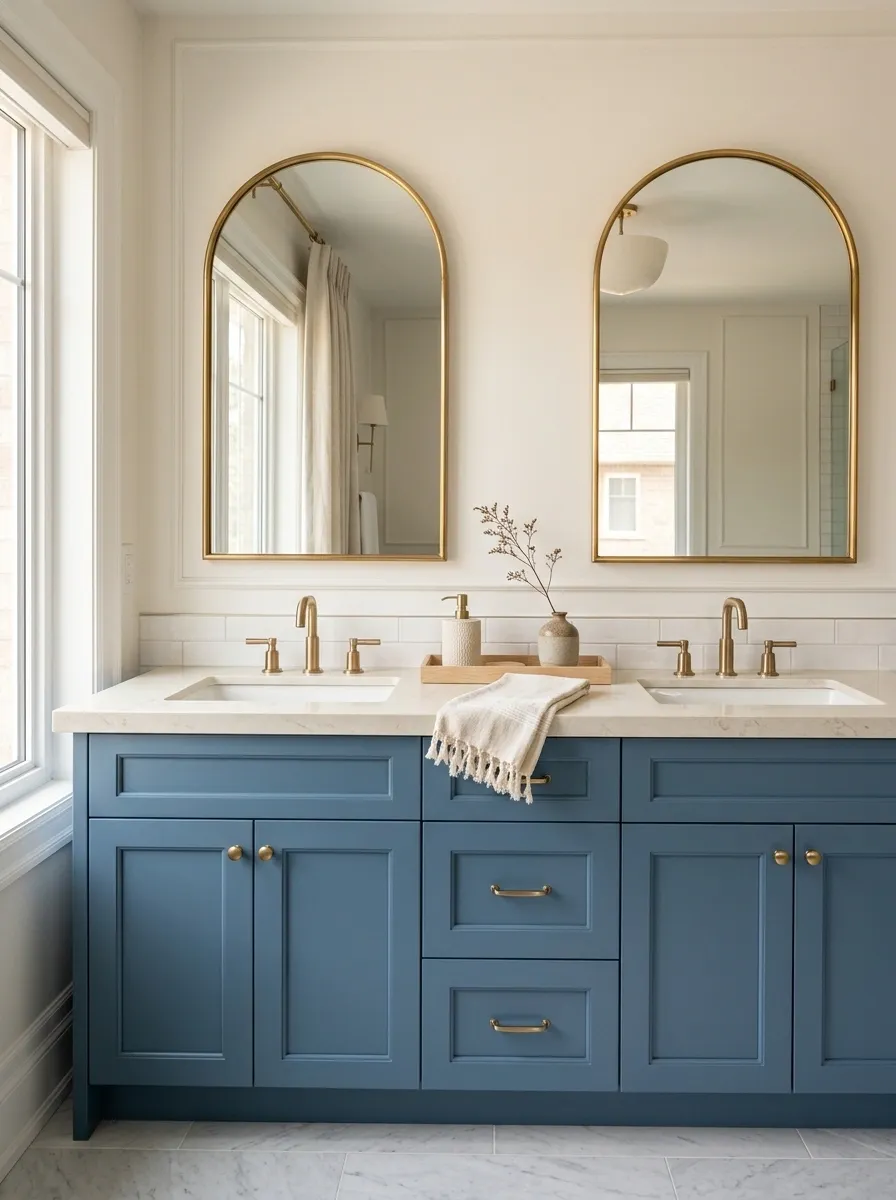
Dusty blue cabinetry gives this bathroom a gentle color shift while cream quartz prevents the room from feeling cold. The vanity has a tailored profile, brushed metal plumbing, and framed mirrors that bring a little traditional structure to the softer palette.
The counter styling follows the same quiet approach. A cream ceramic container, a pale wood tray, and a small folded linen towel create layers without introducing a competing color. Keep the accessories warm and slightly muted so the cabinetry remains the most noticeable color in the room.
This combination is especially useful when a bathroom already has cool daylight. The cream surfaces and warm wood soften that light, while the blue cabinetry still feels crisp rather than gray.
Black Vanity With Honed Marble and Warm Wood
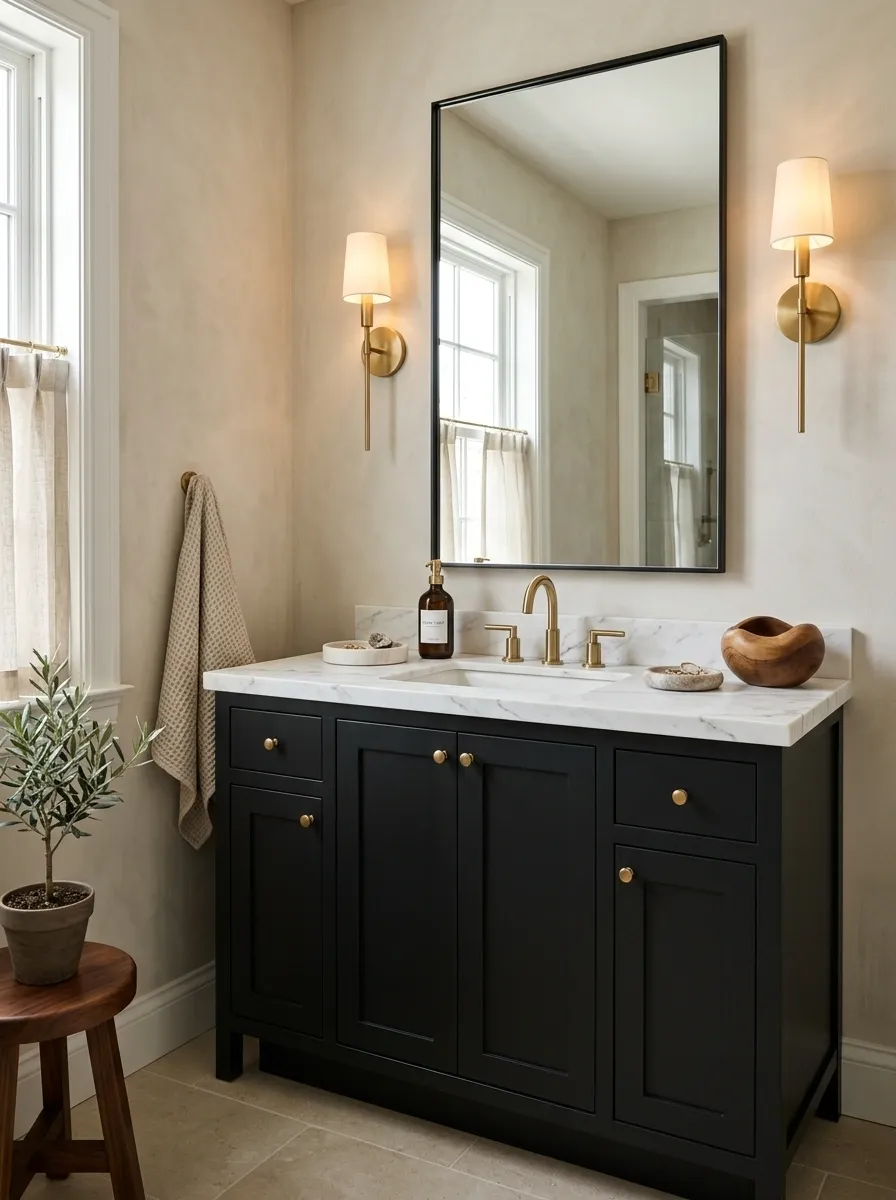
A soft black vanity gives the bathroom immediate visual structure, but honed marble keeps the composition from becoming too severe. Walnut accents and warm lighting add another layer of contrast, making the room feel rich rather than stark.
The countertop should look intentionally edited. One dark soap bottle, a low marble dish, and a natural wood accent are enough. The mirror can carry a slim dark frame, while warmer metal appears only in the plumbing and lighting.
I’d avoid shiny black surfaces here. Honed stone and matte cabinetry create a more sophisticated relationship with the light, while the wood keeps all that darkness from swallowing the room.
Fluted Vanity With Travertine and Aged Brass
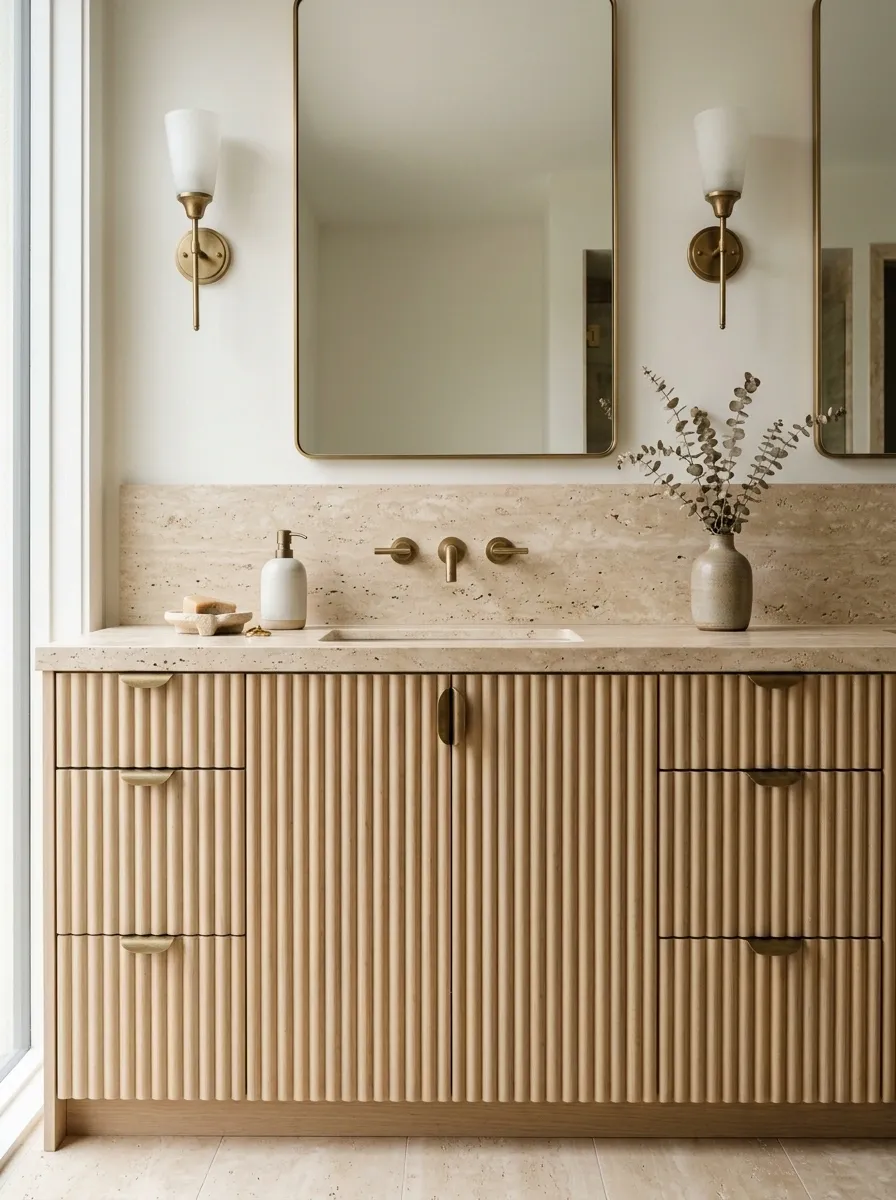
Fluted cabinetry gives this bathroom a strong tactile starting point, and travertine continues that textured language across the countertop and backsplash. Aged brass adds warmth without introducing the bright shine of polished metal.
The styling should feel tactile rather than decorative. Think handmade ceramic, a small stone dish, and one practical dispenser with a quiet finish. The fluted fronts already create repetition, so the counter should contain fewer shapes with more breathing room between them.
This room works because the textures are related but not identical. The cabinetry is ridged, the stone is porous, and the brass is smooth. That variety keeps a restrained color palette from feeling flat.
Tiny Powder Room Vanity With Oversized Mirror
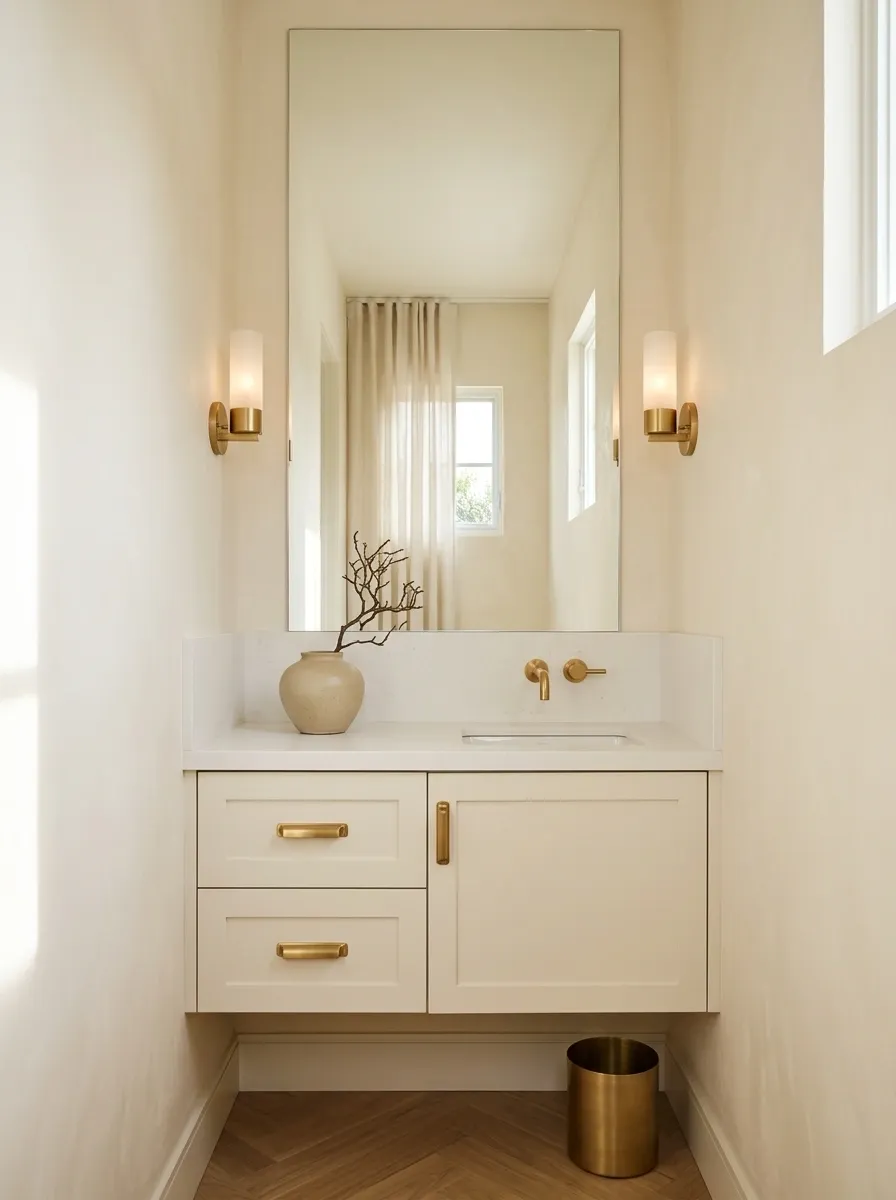
A tiny powder room does not need a tiny-looking design. This composition uses a narrow vanity, oversized mirror, compact wall-mounted lighting, and a nearly empty countertop to make the room feel visually generous.
The mirror occupies more wall area than the vanity itself, creating a stronger sense of openness. Below it, the countertop carries only the essentials, with a small vessel placed off to one side rather than centered directly under the sink.
The biggest mistake here would be filling the available surface simply because it exists. Keep the styling footprint tight. In a small room, visual breathing space is part of the decor.
Deep Burgundy Vanity With Cream Stone
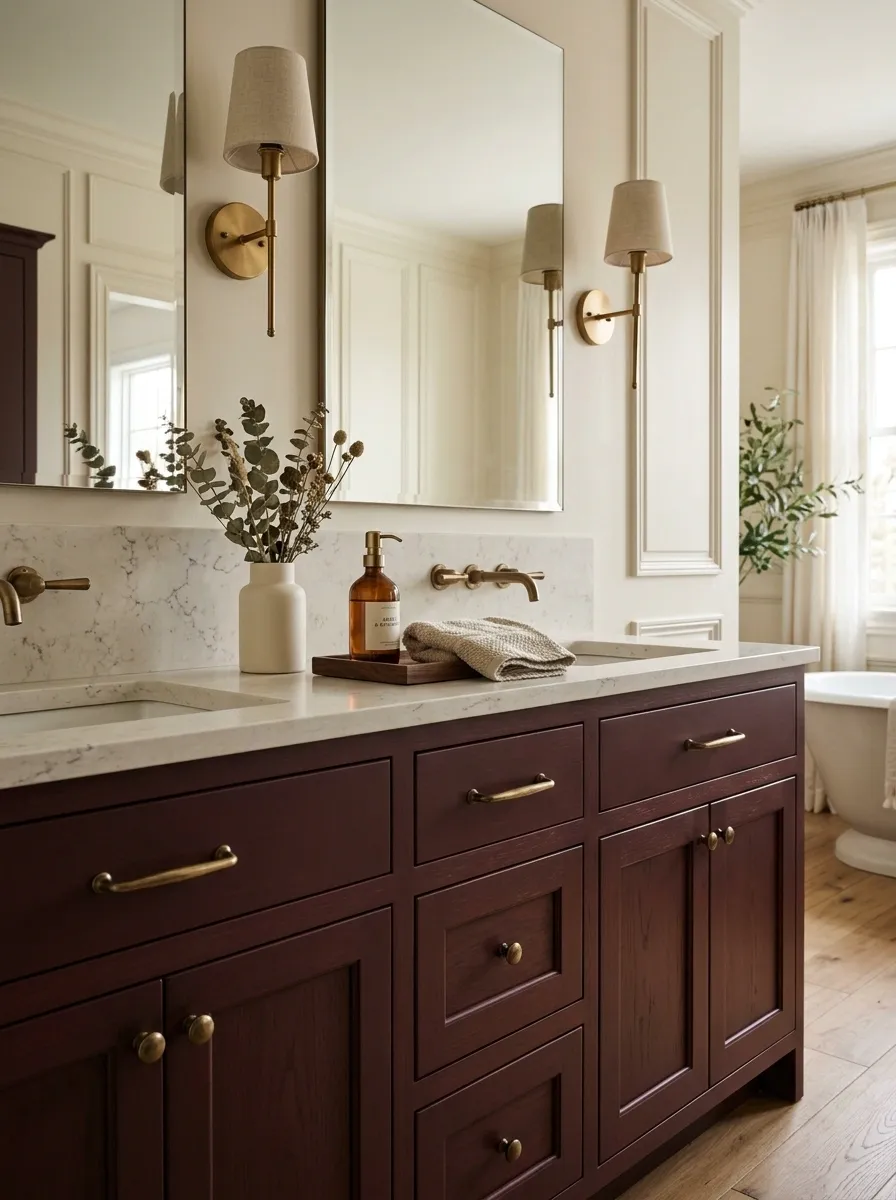
Deep burgundy cabinetry gives this bathroom a richer personality without needing a pile of decorative accessories. The color works best against creamy stone, dark wood, and aged brass, creating a warm composition with enough contrast to feel sophisticated.
The countertop stays deliberately quiet. A cream ceramic vessel, an amber-toned soap bottle, and a small wood tray echo the room’s main finishes without introducing another strong color. Warm sconces soften the burgundy and make the whole vanity feel more intimate.
The key is letting the cabinetry remain the statement. Don’t repeat burgundy across every accessory. A few warm materials are enough to connect the counter to the rest of the room.
Pale Gray Vanity With Sculptural Ceramics
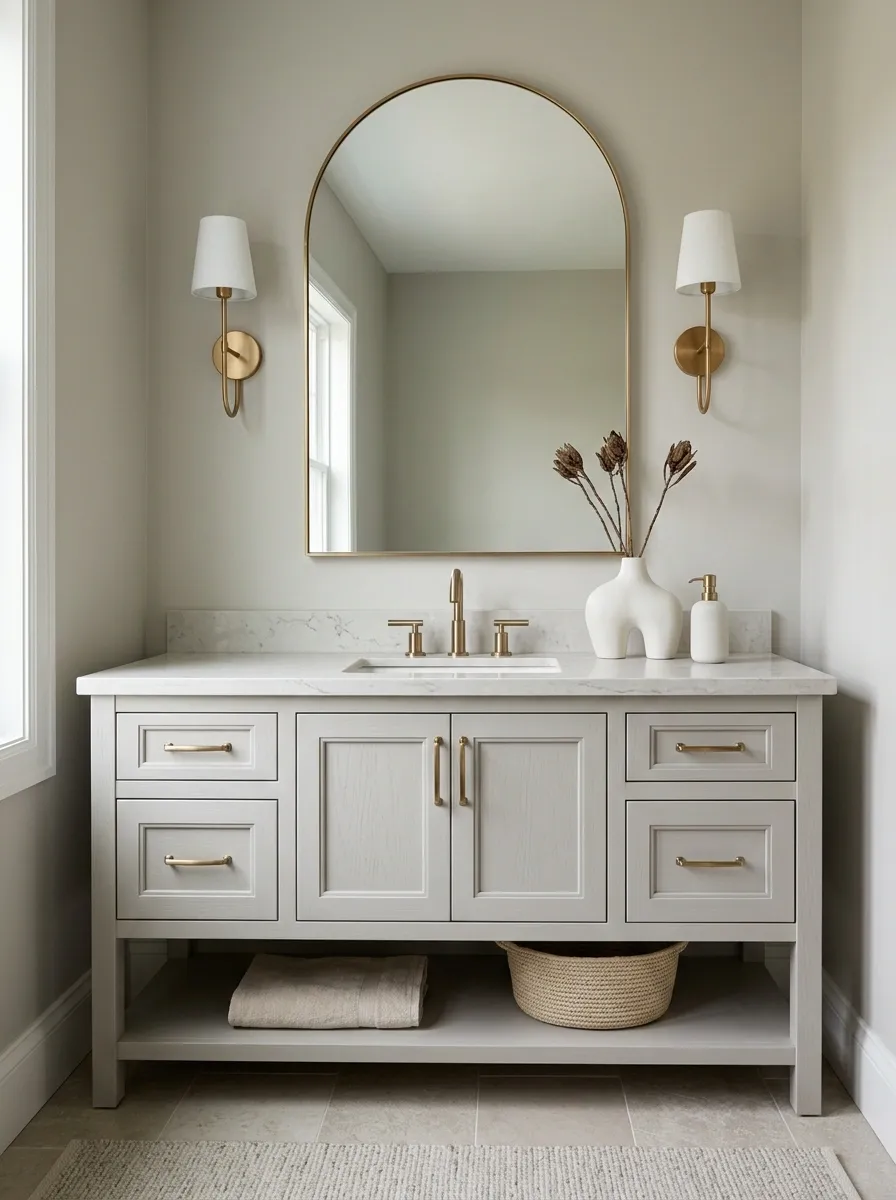
Pale gray cabinetry gives this bathroom a clean foundation, but the room avoids looking flat by relying on shape. Rounded mirrors, curved lighting, soft stone, and sculptural ceramics create a visual conversation between straight cabinetry and softer forms.
Keep the counter styling low and purposeful. A rounded ceramic vessel and a simple soap dispenser are enough to continue the curved language. The mirror should stay visually strong, while the surrounding walls remain quiet so the shapes are easy to read.
This concept is a good reminder that a neutral room does not need more color to become interesting. Change the silhouettes instead. A few strong curves can give a simple vanity much more character than a dozen accessories.
Traditional Vanity With Furniture-Like Styling
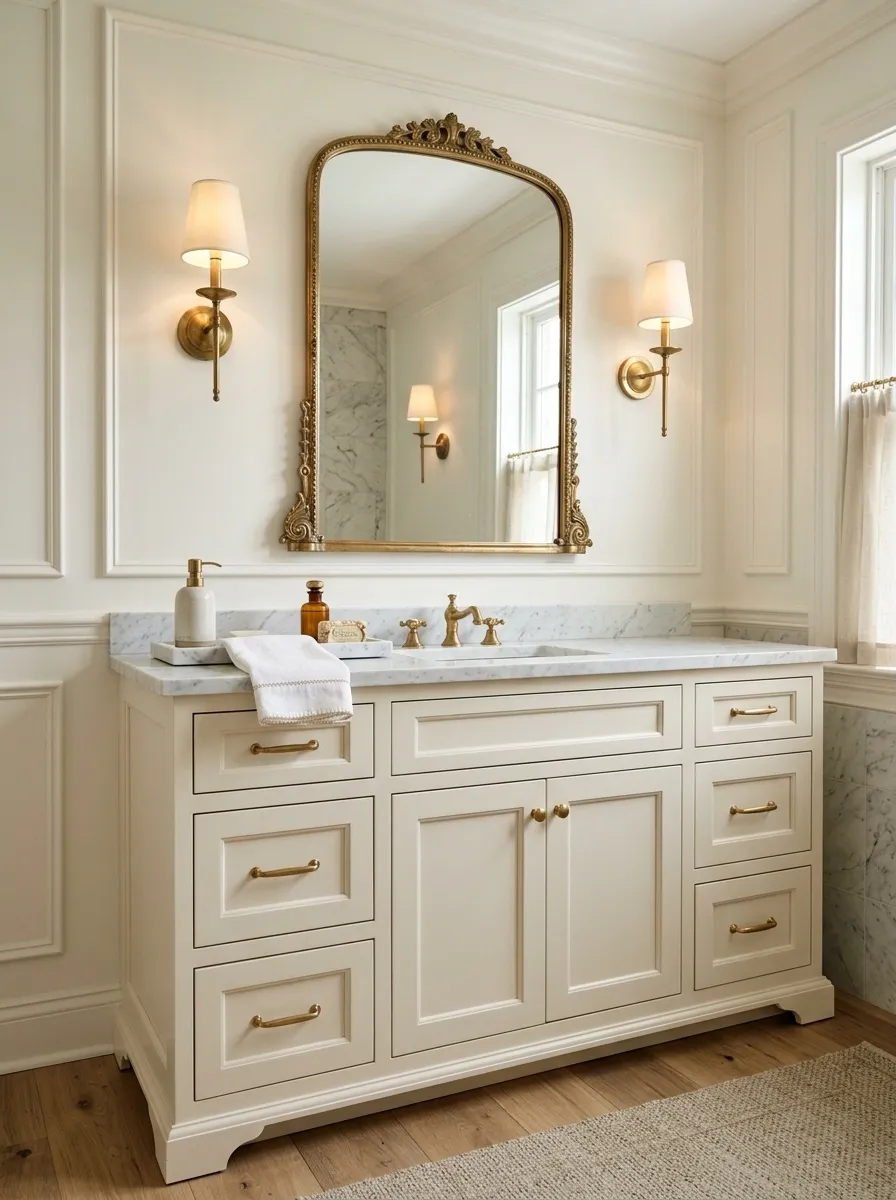
A furniture-style vanity makes the bathroom feel less like a utility room and more like a considered interior. Painted cabinetry, marble, framed mirrors, and classic sconces establish the architecture, while the countertop styling brings a collected quality to the finished scene.
Instead of scattering accessories across the surface, create one compact arrangement near the sink. A shallow tray, ceramic container, and neatly folded hand towel provide function while still looking intentional. The opposite side can remain almost completely open.
That balance matters. Traditional bathrooms can handle detail, but they still need visual breathing room. Let the cabinetry, mirror framing, and stone carry most of the decorative weight.
Long Double Vanity With Symmetrical Counter Styling
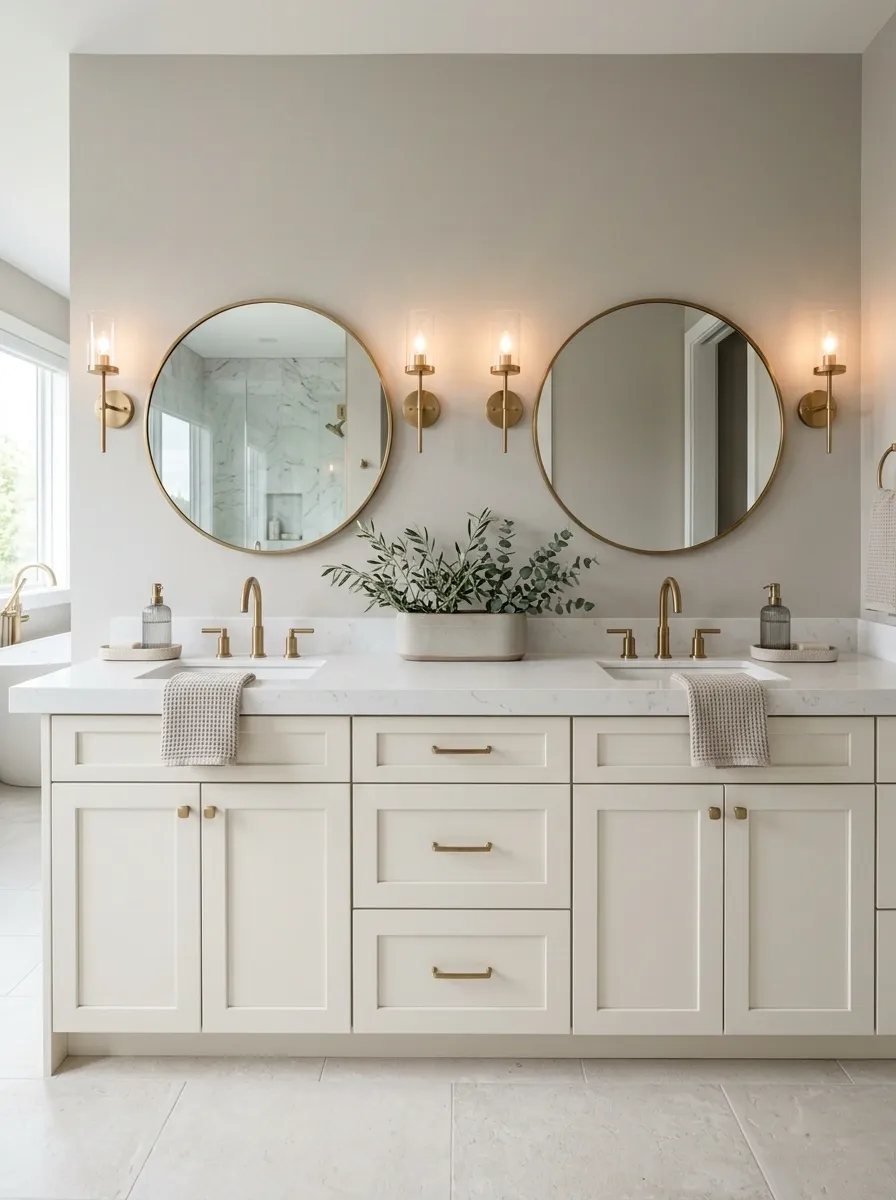
A long double vanity naturally creates symmetry, so this bathroom uses that repetition instead of fighting it. Two sinks, matching mirrors, repeated sconces, and a broad stone countertop establish a strong rhythm across the wall.
The counter decor should reinforce the symmetry without becoming overly formal. Matching soap dispensers can sit near each sink, while a low shared vessel occupies the center. That middle object provides a small point of variation between the repeated zones.
Keep the central styling low. On a wide vanity, tall objects can interrupt the clean horizontal line and make the countertop feel divided. A long, low composition is much calmer.
Terrazzo Bathroom With Light Wood Vanity
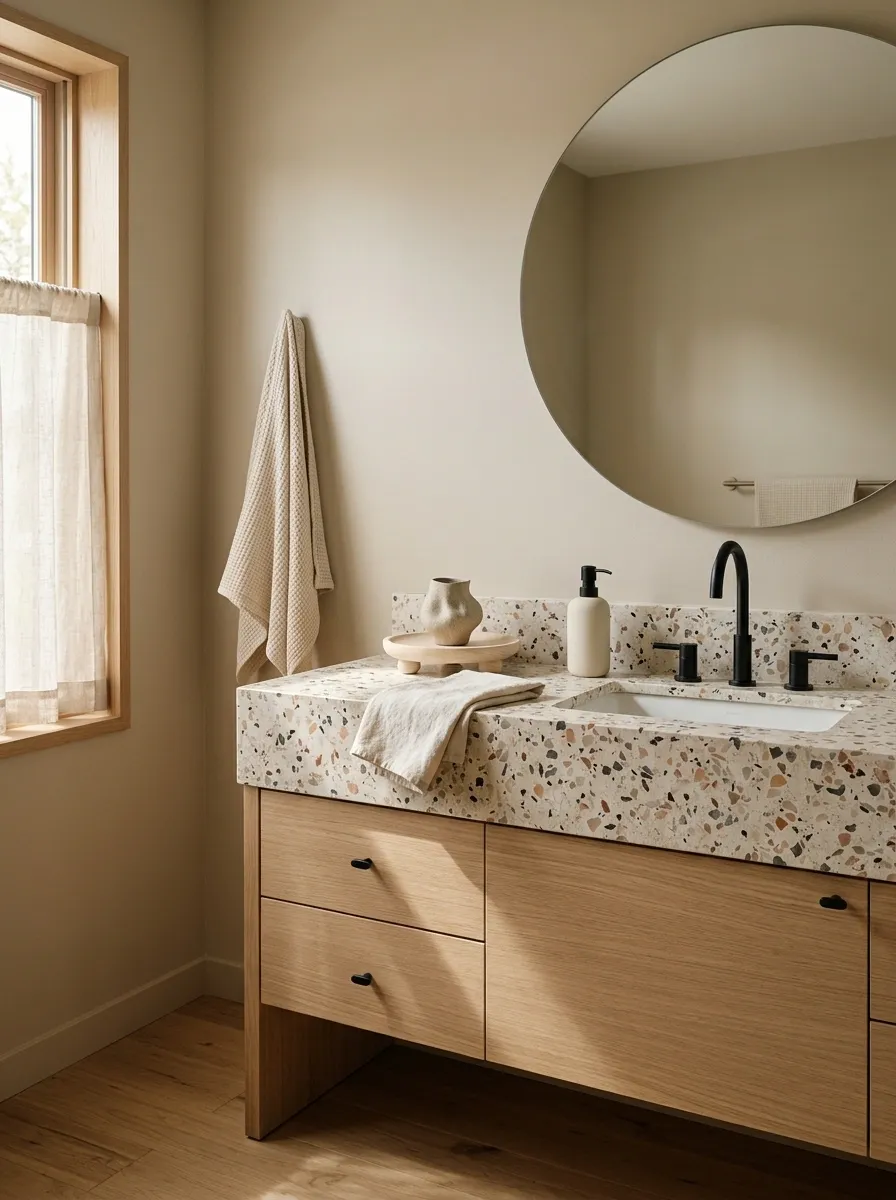
Terrazzo brings pattern into the bathroom, so the rest of this composition stays relatively quiet. A light wood vanity, simple faucet, restrained mirror, and warm neutral walls give the terrazzo room to become the visual feature.
The countertop styling echoes the room’s softer tones rather than competing with the chips in the surface. Choose a plain ceramic dispenser, a pale wood tray, and one small vessel with a shape that is easy to read against the patterned stone.
This design needs discipline. Don’t introduce patterned containers, colorful towels, and extra decorative objects on top of an already active surface. The room looks better when the terrazzo has plenty of uninterrupted space around it.
Cream Vanity With Handmade Tile and Bronze
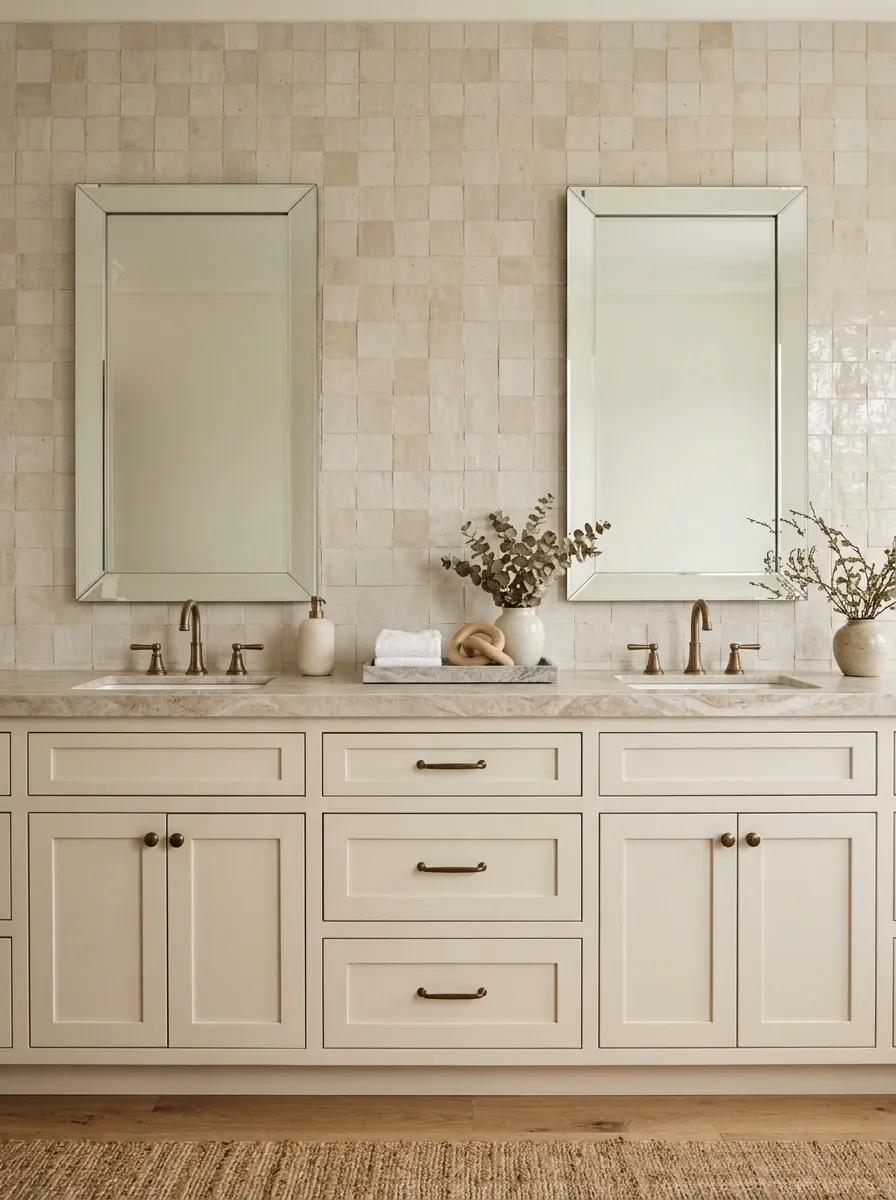
Cream cabinetry, softly irregular tile, and bronze fixtures give this bathroom a warm transitional character without making it look overly traditional. The stone countertop continues the creamy palette, while handmade tile adds just enough variation behind the mirrors.
The counter decor should feel tactile and useful. A ceramic soap dispenser, shallow stone tray, folded linen, and one small natural accent create a finished arrangement without covering the surface. Keep the shapes uncomplicated so the handmade tile remains visible.
This design works because the finishes have slight imperfections and tonal variation. Don’t pair them with overly glossy accessories. Matte and softly textured pieces make the entire vanity feel more connected.
Compact Floating Vanity With Wall-Mounted Fixtures
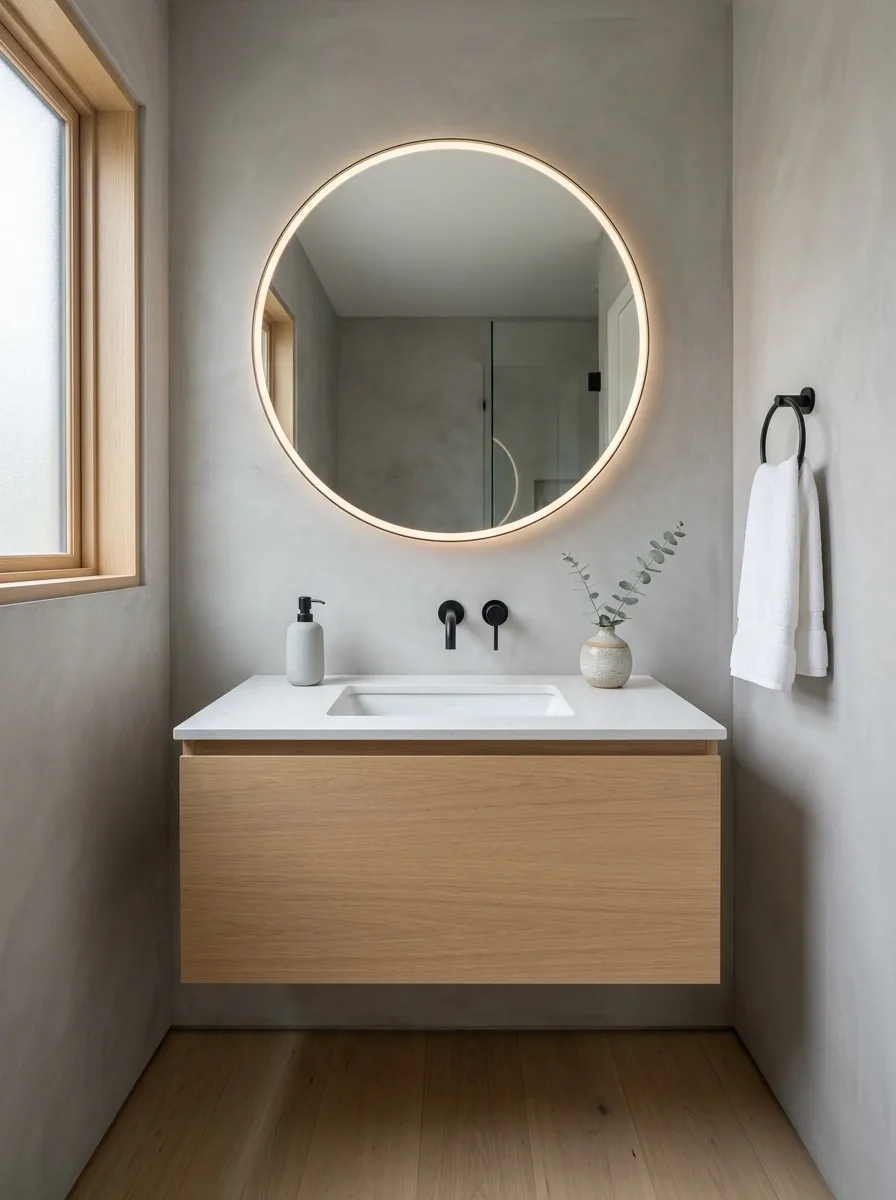
A floating vanity can make a small bathroom feel dramatically more open because the floor continues underneath it. This composition pairs that visual openness with a wall-mounted faucet, slim mirror, integrated lighting, and a pale stone surface.
There is very little room for decorative clutter, and that’s a strength. Keep only a streamlined soap dispenser and one small ceramic piece on the counter. Everything else should either be stored below or moved onto the wall.
The room works through negative space. The floating cabinet, open floor, and clean wall area all contribute to the same visual idea. Adding bulky decor would immediately weaken it.
Rich Green Vanity With Checkerboard Stone
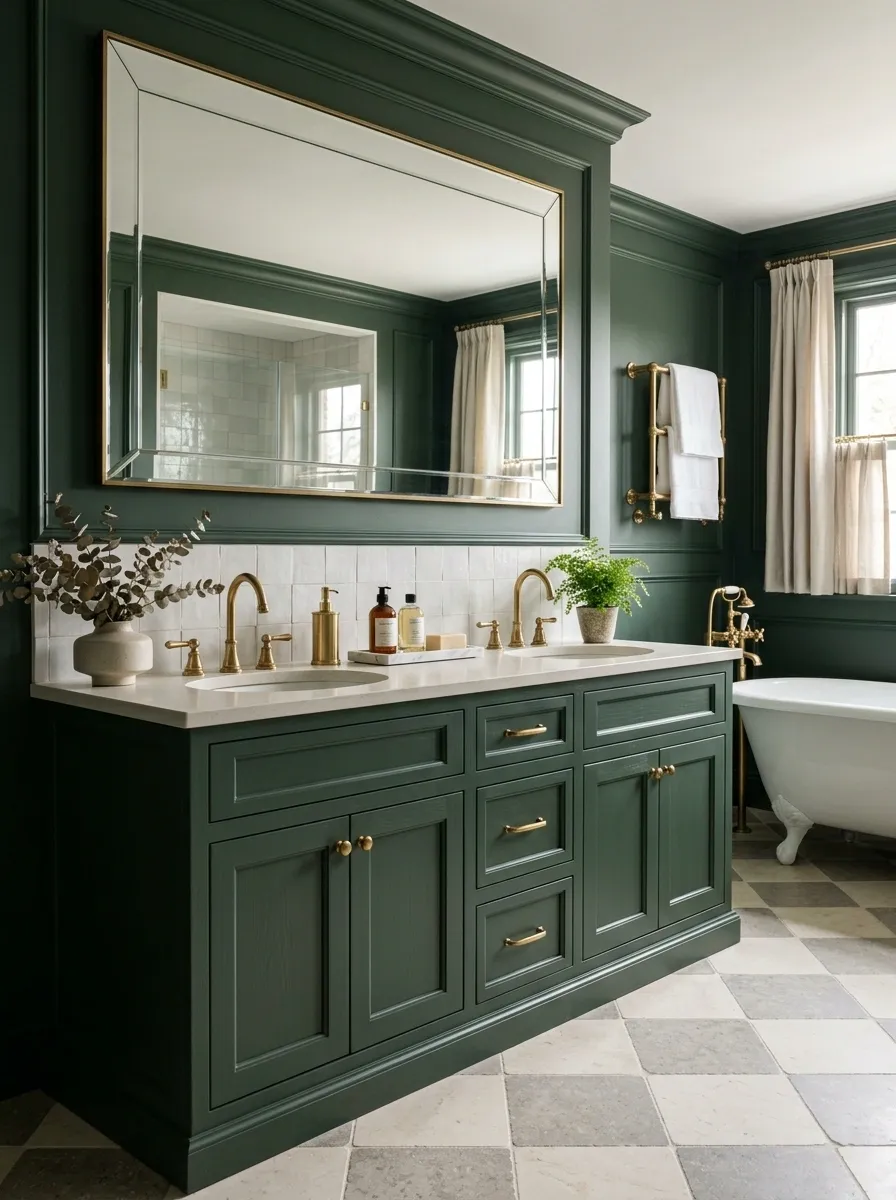
Deep green cabinetry gives this bathroom a strong traditional foundation, while a subtle checkerboard floor adds pattern underfoot. Pale stone, warm metal, and classic mirrors keep the composition grounded instead of letting the pattern take over.
The countertop styling is restrained but slightly decorative. A ceramic vessel, brass soap dispenser, and small tray connect the surface to the cabinetry and fixtures. Keep the pieces low enough that the mirrors remain visually dominant.
The balance comes from giving each element a job. The floor provides pattern, the vanity provides color, and the counter supplies small-scale texture. Adding another strong pattern would only muddy the composition.
Statement Stone Vanity With Barely There Decor
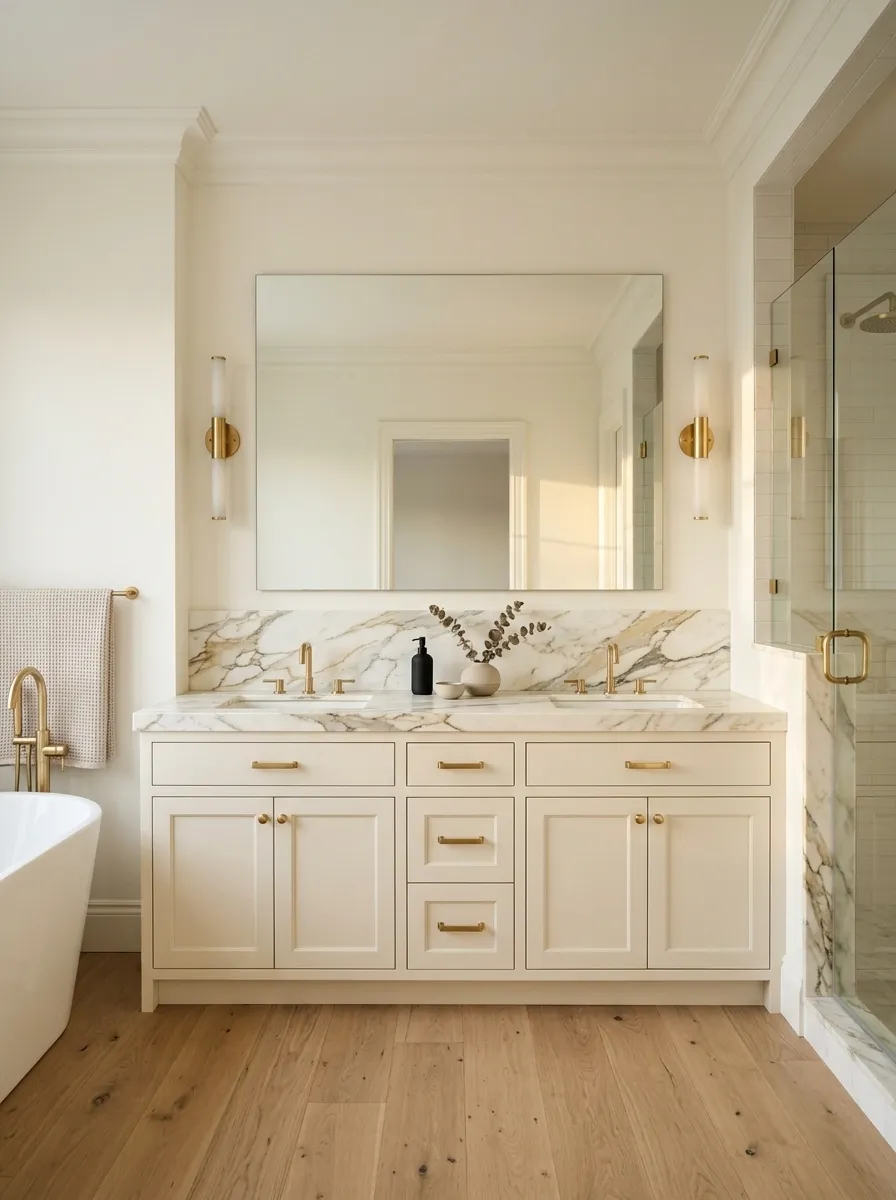
Some bathroom counters are already decorative. A heavily veined slab running across the vanity and up the backsplash creates such a strong visual feature that adding lots of accessories would only dilute it.
This room lets the stone dominate. The cabinetry is simple, the mirror is quiet, and the lighting has a clean profile. On the counter, a single refined soap dispenser and a small low vessel provide function without breaking the stone’s visual continuity.
This is one of the strongest arguments for editing instead of adding. When the architecture already carries the room, restraint becomes the styling strategy. Give the stone plenty of uninterrupted space.
Vintage-Inspired Vanity With Antique Brass
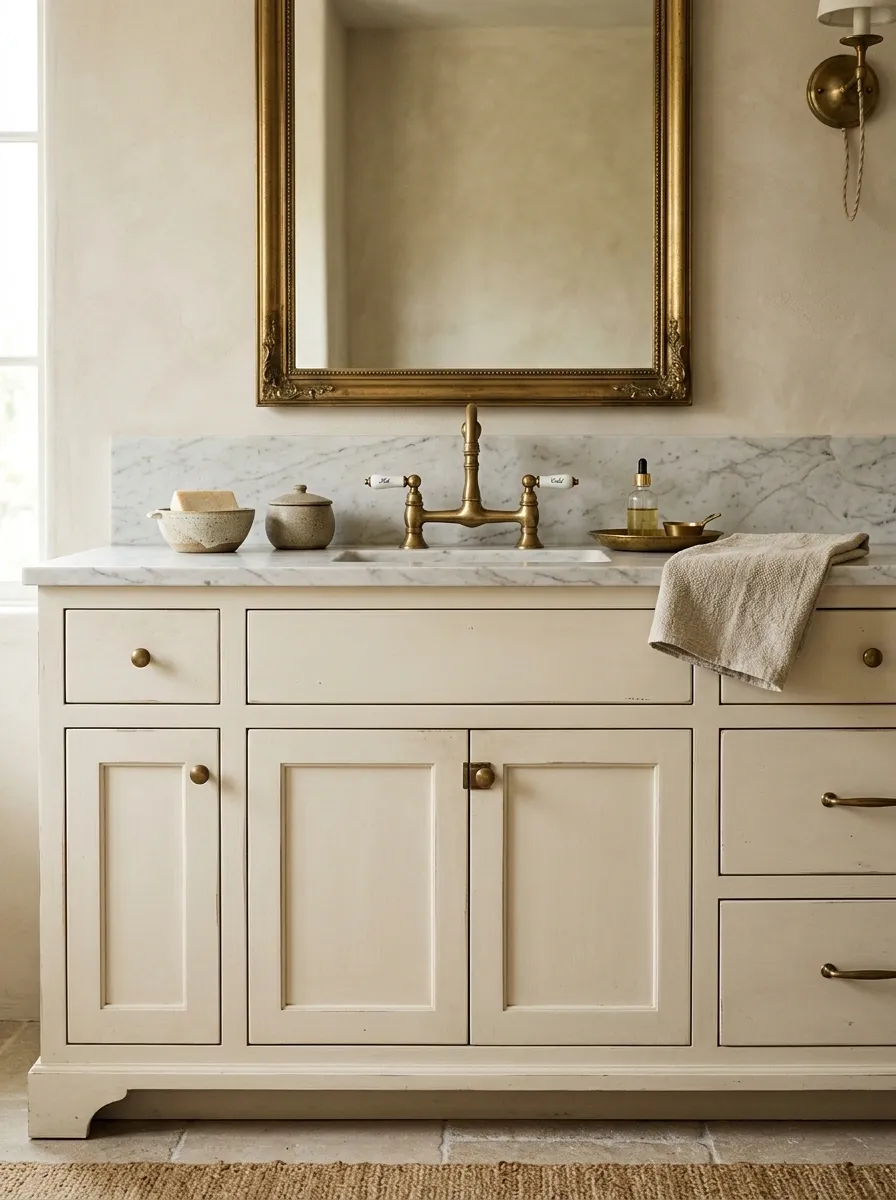
This bathroom has the warmth of an older home but feels considered rather than nostalgic. Furniture-style cabinetry, a softly aged surface, antique brass fixtures, framed mirrors, and patterned textiles build the character from the room outward.
The countertop decor should look collected over time. A ceramic soap vessel, small lidded container, shallow tray, and folded linen create a layered arrangement that feels useful rather than staged. Slight variation between pieces is welcome here.
Resist the urge to turn the counter into a miniature antique shop. Two or three distinctive pieces have more impact than a crowded collection. The vintage feeling should come from the architecture and materials first.
Modern White Vanity With Warm Wood Countertop Accents
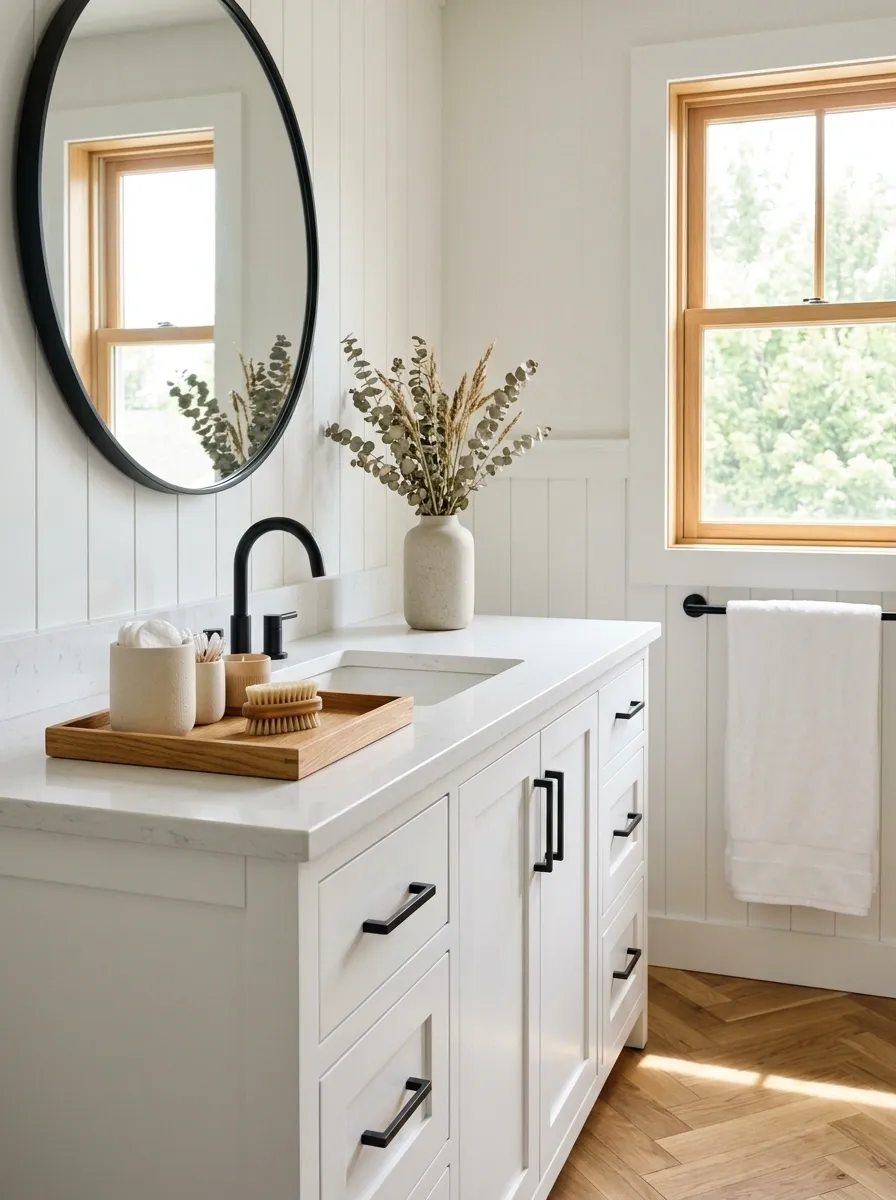
An all-white bathroom can look crisp without looking sterile when warm wood is introduced at several levels. This design combines white cabinetry, pale stone, simple black or brushed fixtures, and restrained wood accessories that soften the overall composition.
The countertop gets a shallow wooden tray, a warm-toned ceramic container, and perhaps one small natural accent. Those pieces repeat the warmth found elsewhere in the room without changing the clean modern direction.
Keep the wood consistent in tone. Mixing several unrelated wood colors would make the room feel less intentional. One warm wood family repeated across the vanity, stool, and accessories is enough.
Narrow Bathroom Vanity With Vertical Storage
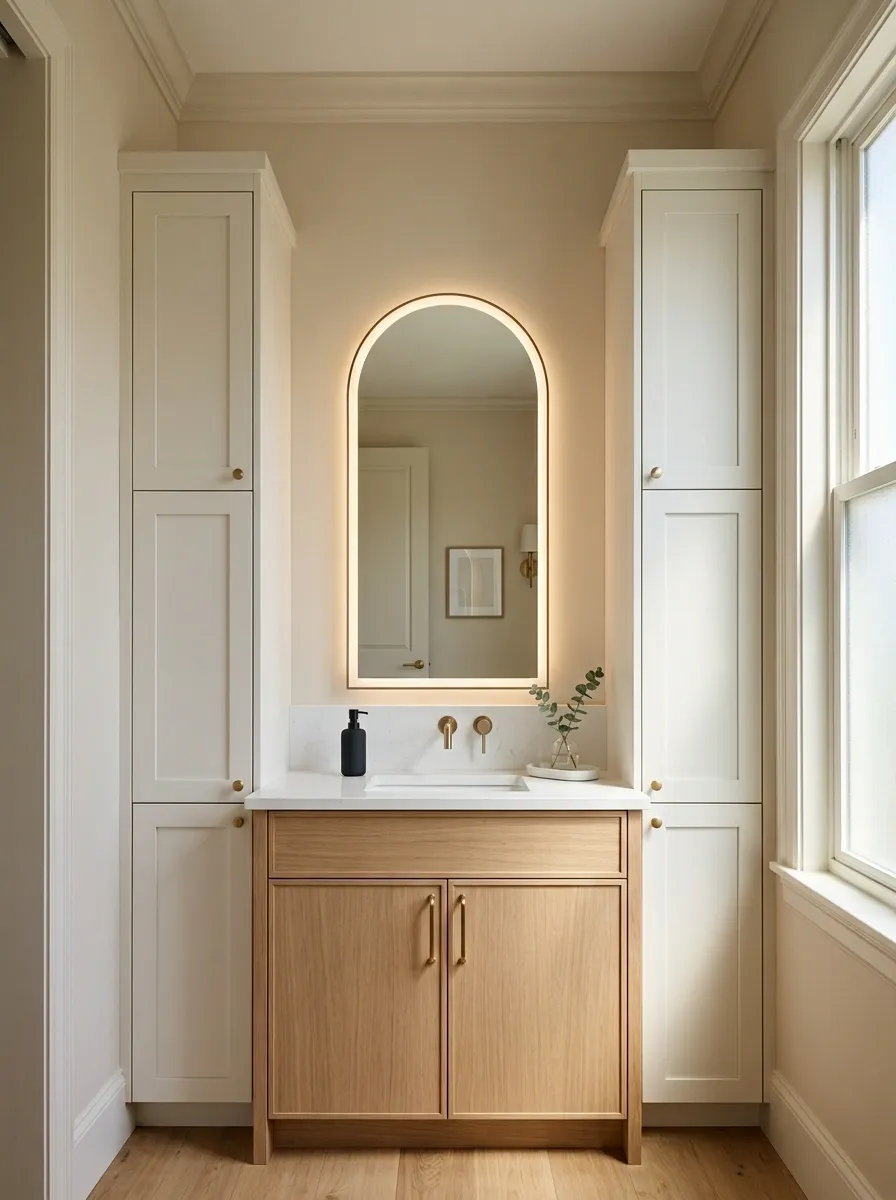
A narrow bathroom needs a composition that works upward rather than outward. This design uses a slim vanity, tall storage, vertically oriented mirrors or cabinetry, and integrated lighting to make the room feel useful without crowding the floor.
Countertop decor is deliberately compact. A narrow dispenser and one small tray provide what is needed while leaving most of the surface free for everyday use. Storage takes care of the visual clutter that would otherwise collect around the sink.
The vertical strategy changes how the whole bathroom reads. Instead of trying to make the counter carry every decorative element, let the walls provide the height and the vanity provide the base.
Soft Black Vanity With Veined Quartz and Cream Textiles
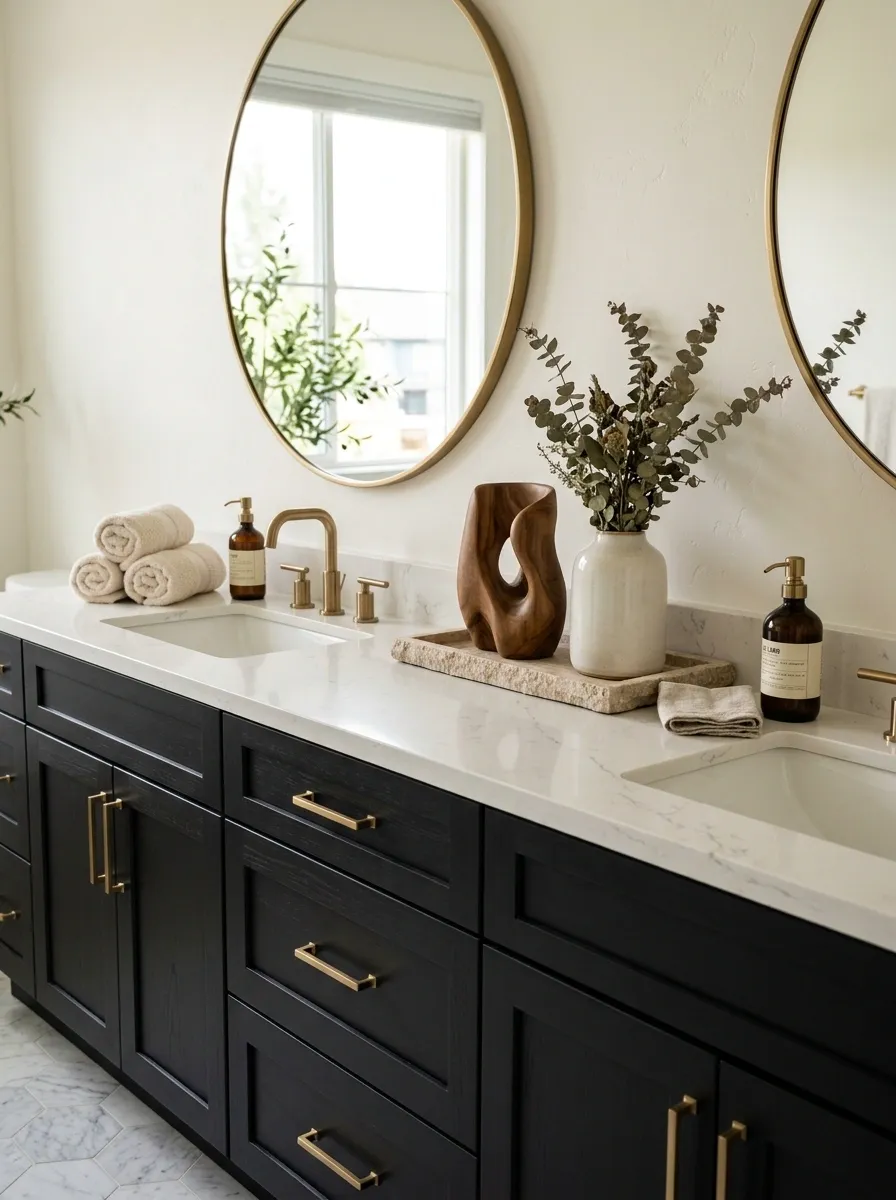
Soft black cabinetry gives this bathroom its structure, while lightly veined quartz keeps the room bright. Cream towels, warm metal, and organic countertop accents soften the contrast without pulling the design in a different direction.
The counter styling is simple but warmer than the cabinetry. A cream ceramic vessel, a stone tray, and a small wood accent create a bridge between dark cabinetry and pale stone. Keep the textiles nearby in the same creamy family so the palette repeats naturally.
This is a high-contrast room that still feels comfortable because the black is softened rather than glossy. Matte finishes are the right call. They absorb some of the visual intensity and let the stone and textiles do the balancing.
Light-Filled Transitional Vanity With Layered Neutrals
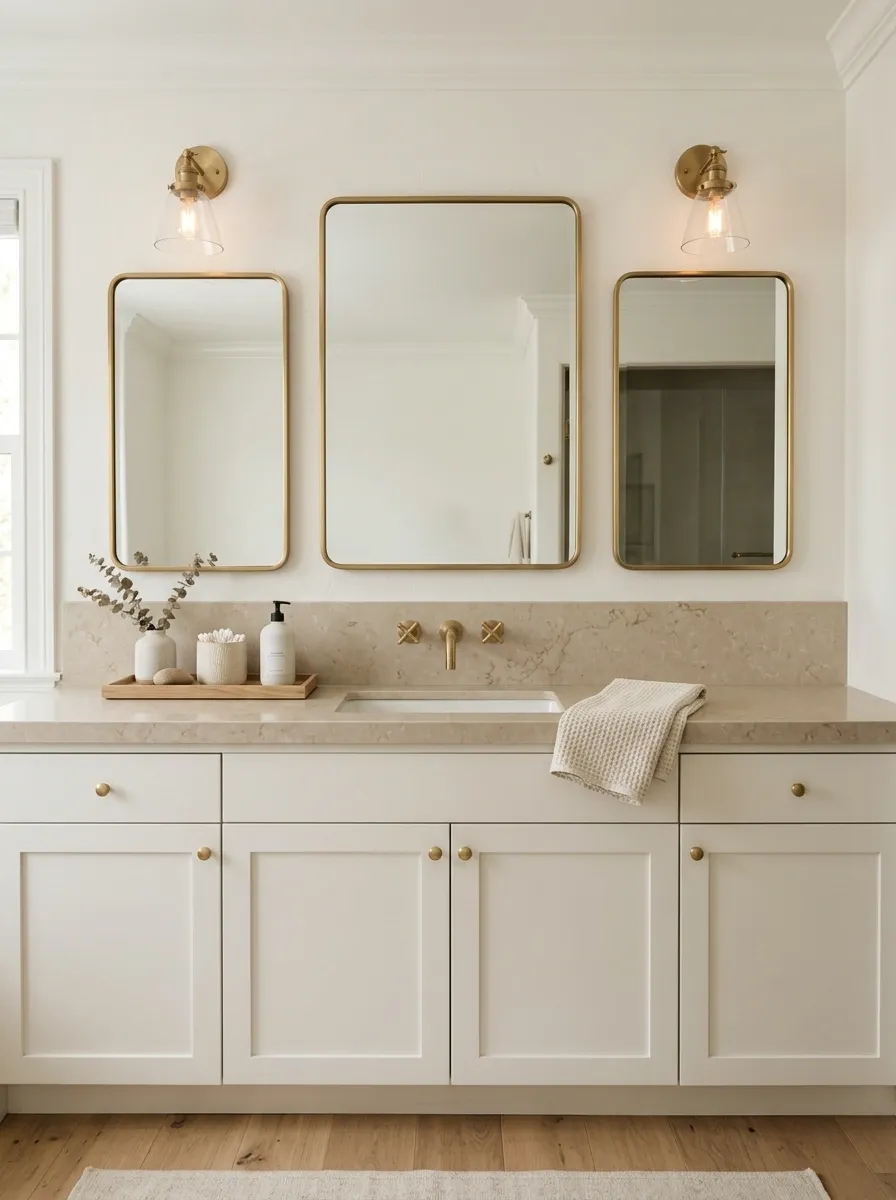
This final composition pulls together the most flexible ideas in the collection without becoming generic. Warm white cabinetry, beige stone, light wood, soft brass, framed mirrors, and layered neutral accessories create a vanity that feels polished but still lived in.
The countertop styling uses a shallow wood tray, ceramic container, soap dispenser, and a small natural accent. The pieces are grouped rather than scattered, leaving enough open stone around the sink to keep the surface visually calm.
What makes the design work is repetition. Warm wood appears in small doses, brass repeats at the mirror and lighting, and the cream-beige palette connects the permanent finishes to the accessories. That’s the difference between a decorated counter and a finished vanity.
A well-styled bathroom counter usually gets better when you stop adding things and start connecting the things that are already there. The strongest rooms use the vanity, stone, mirror, lighting, hardware, textiles, and accessories as parts of one composition. That does not mean everything has to match. It means each piece should have a reason for being there.
Start with the permanent finishes and decide what deserves to lead visually. Then bring that language onto the countertop through a few useful, well-scaled pieces. A tray can organize a group, a ceramic vessel can repeat the stone, wood can warm up a pale vanity, and an empty stretch of counter can be just as important as a decorative object.
Save the designs that feel closest to your bathroom now, before you start shopping or changing finishes.