
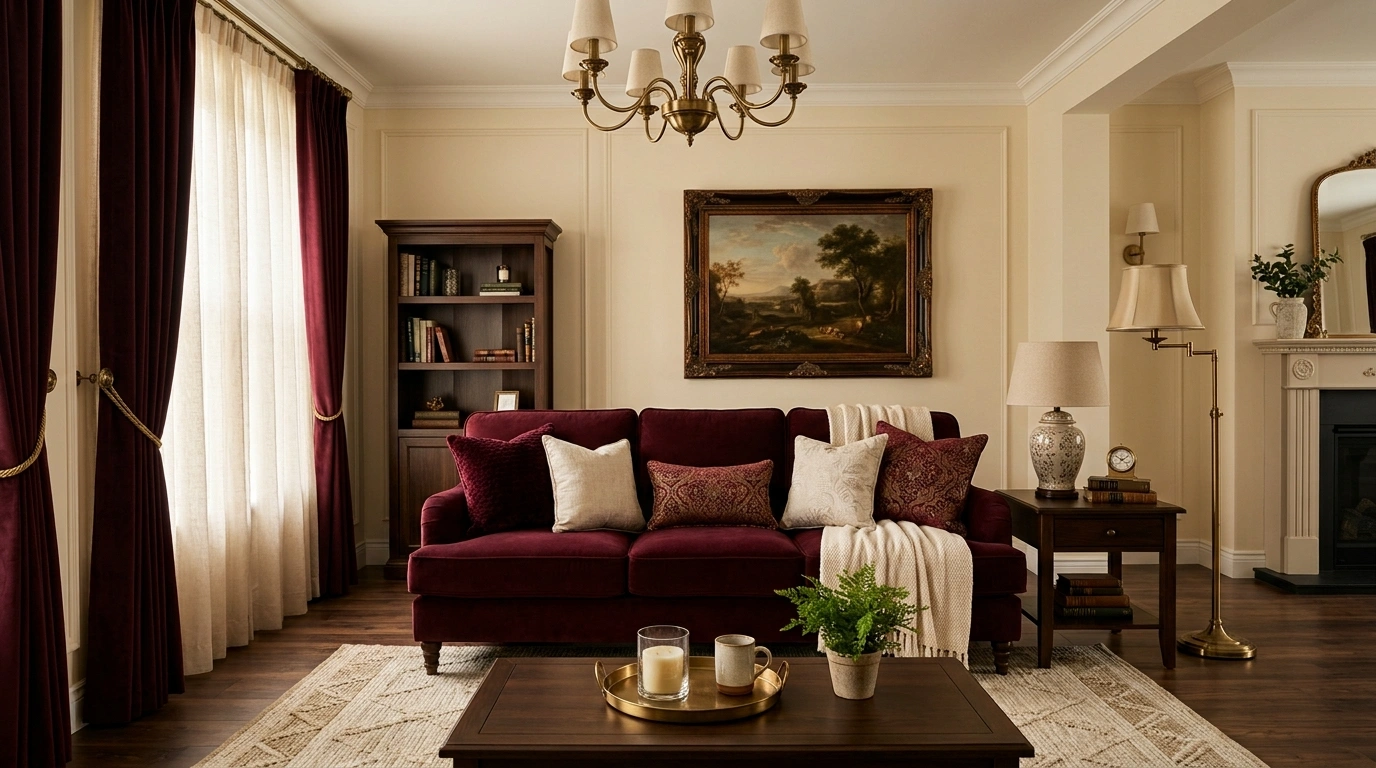
Burgundy has a way of exposing a weak living room faster than almost any other color. Put it next to cold gray, flimsy furniture, harsh white walls, or a pile of unrelated accessories, and the room suddenly feels heavier than it should. Put it beside warm materials and the same color can look deep, tailored, and incredibly expensive.
That’s the part most decorating advice skips.
A successful burgundy room isn’t really about finding more burgundy things. It’s about deciding where the color should have power and where it should stay quiet. A velvet sofa may need cream walls. A dark feature wall may need pale upholstery. A burgundy rug may need almost everything above it to calm down.
The Burgundy Formula
Burgundy looks strongest when it isn’t working alone. A warm neutral opens the room, wood adds depth, soft fabric keeps the color from feeling hard, and one darker accent gives the composition some weight.
Burgundy Living Room Ideas
Anchor Burgundy With Charcoal and Brass
A moody charcoal wall creates a dramatic stage for bright cream seating.
Deep burgundy shows up in tailored ottomans and accent pillows, tying the rich red tones together without overwhelming the space. Warm brass sconces and a statement chandelier lift the dark color palette.
Keep the large surfaces light with a textured neutral rug to balance the heavy walls.
Put a Burgundy Sofa Against Warm Cream Walls
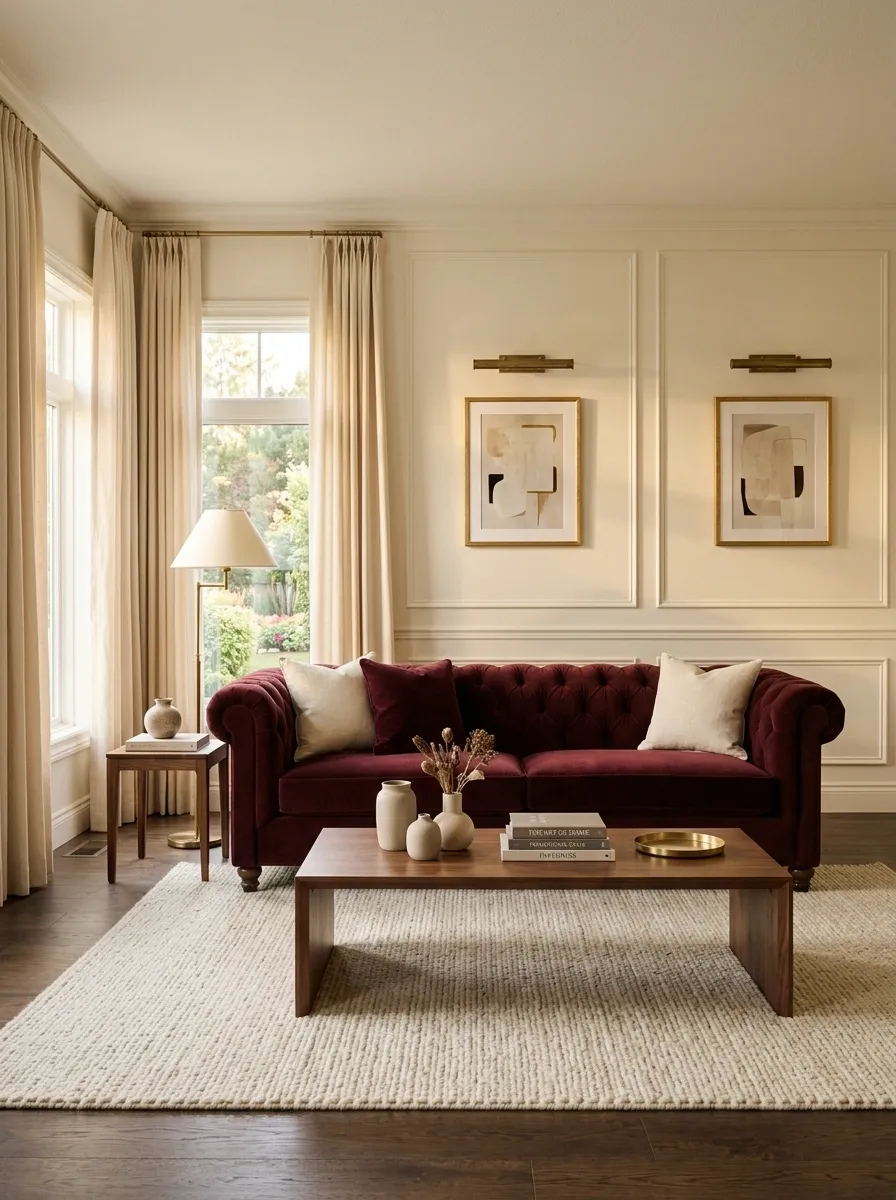
The easiest way to make burgundy feel expensive is to give it a pale backdrop.
A deep burgundy sofa becomes the clear focal point against warm cream walls, especially when the rest of the furniture stays quiet. Add a walnut coffee table, a textured ivory rug, and curtains that sit close to the wall color.
Keep the contrast warm, not stark.
The room should feel layered rather than split into red and white. A few muted brass details finish the combination without competing with the sofa.
SOFA
Drench the Room in Monochromatic Burgundy
Commit completely to burgundy by taking the color across the walls and ceiling.
This wrap-around approach blurs the room’s edges, making the space feel instantly cozy and immersive. A rich velvet sofa blends seamlessly into the background while walnut furniture adds necessary warmth.
Break up the deep tones with a patterned vintage rug and subtle metallic lighting fixtures.
Paint One Strong Wall Behind the Sofa
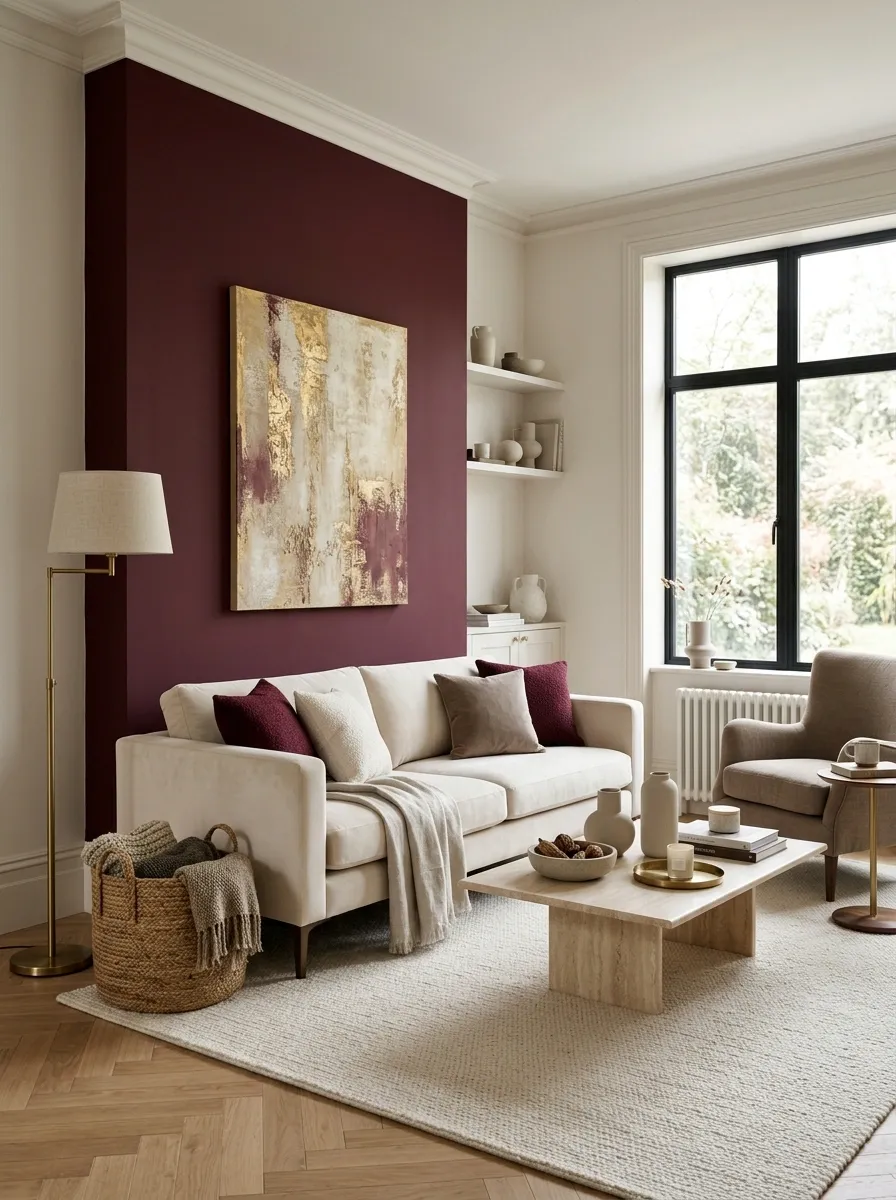
A burgundy wall works best when it has a job.
Put the color directly behind the main sofa or reading chair, then leave the neighboring walls lighter. That creates a visual anchor without shrinking the entire room.
For trim, warm white beats icy white. The difference is small, but it keeps the burgundy looking rich instead of overly red.
Use the wall to frame the furniture, not compete with it.
A pale rug and natural wood floor help the darker wall feel intentional rather than heavy.
Layer Neutrals Around a Burgundy Sectional
Let a spacious burgundy sectional anchor a bright, airy living room.
Warm cream walls and sheer curtains soften the deep red, keeping the overall atmosphere light and welcoming. A classic gold chandelier and matching coffee table legs add a touch of refined elegance.
Stick to minimalist decor so the room feels curated rather than crowded.
Mix a Burgundy Velvet Sofa With Walnut Furniture
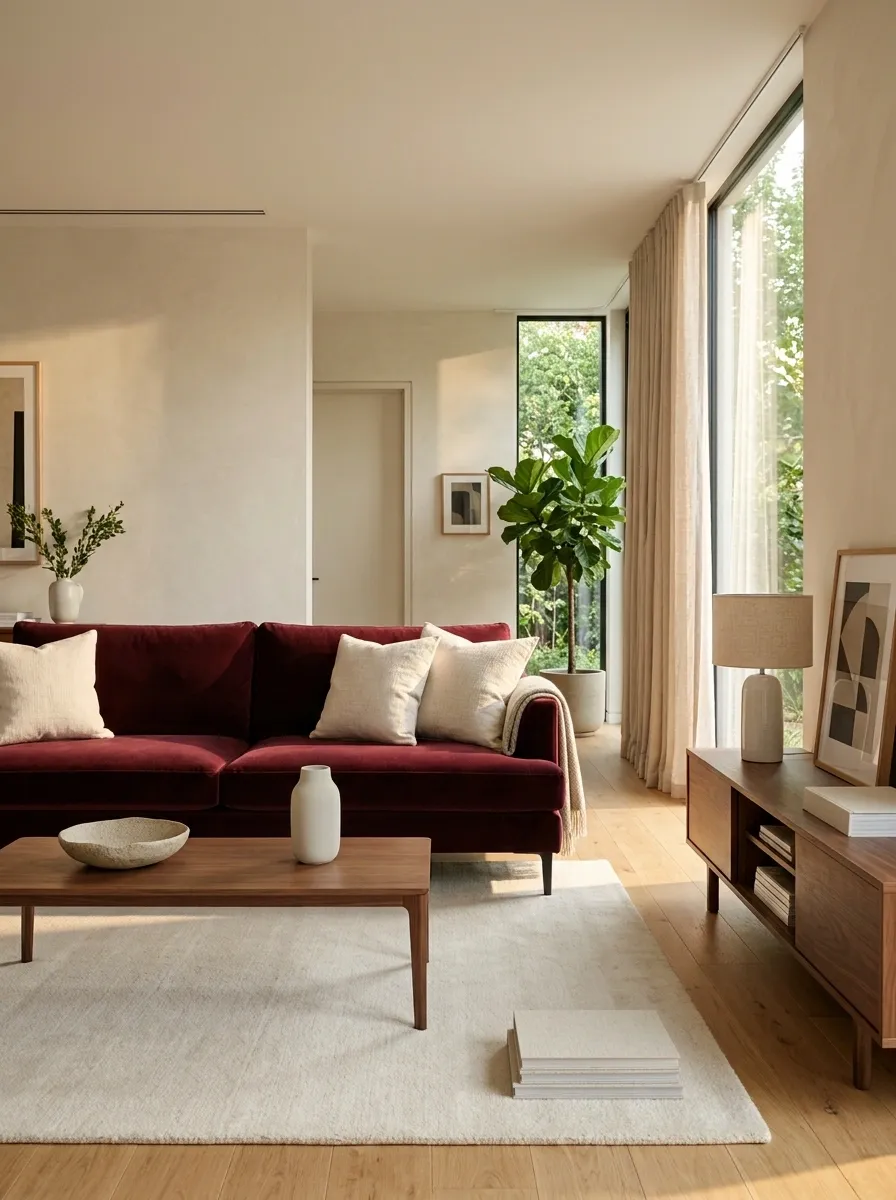
Texture makes burgundy easier to live with.
Velvet gives the color depth, while walnut adds an earthy counterweight. That pairing feels especially strong in rooms with simple architecture because the materials create enough visual interest without needing lots of decoration.
A slim walnut coffee table, low media console, or wood-framed accent chair is all that’s needed.
Don’t pile on more dark finishes.
Let the sofa and wood do most of the work, then bring in cream cushions and a pale rug to keep the lower half of the room from becoming one dense block.
Combine Burgundy Walls With Classic Panel Trim
Traditional wall moldings instantly elevate a rich burgundy paint color.
Pair the saturated walls with cream seating and a matching textured rug to ground the space. Warm wood accents and brass lighting fixtures finish the traditional look with a polished touch.
Let the architectural details do the heavy lifting for effortless sophistication.
Use Burgundy Curtains Instead of Burgundy Walls
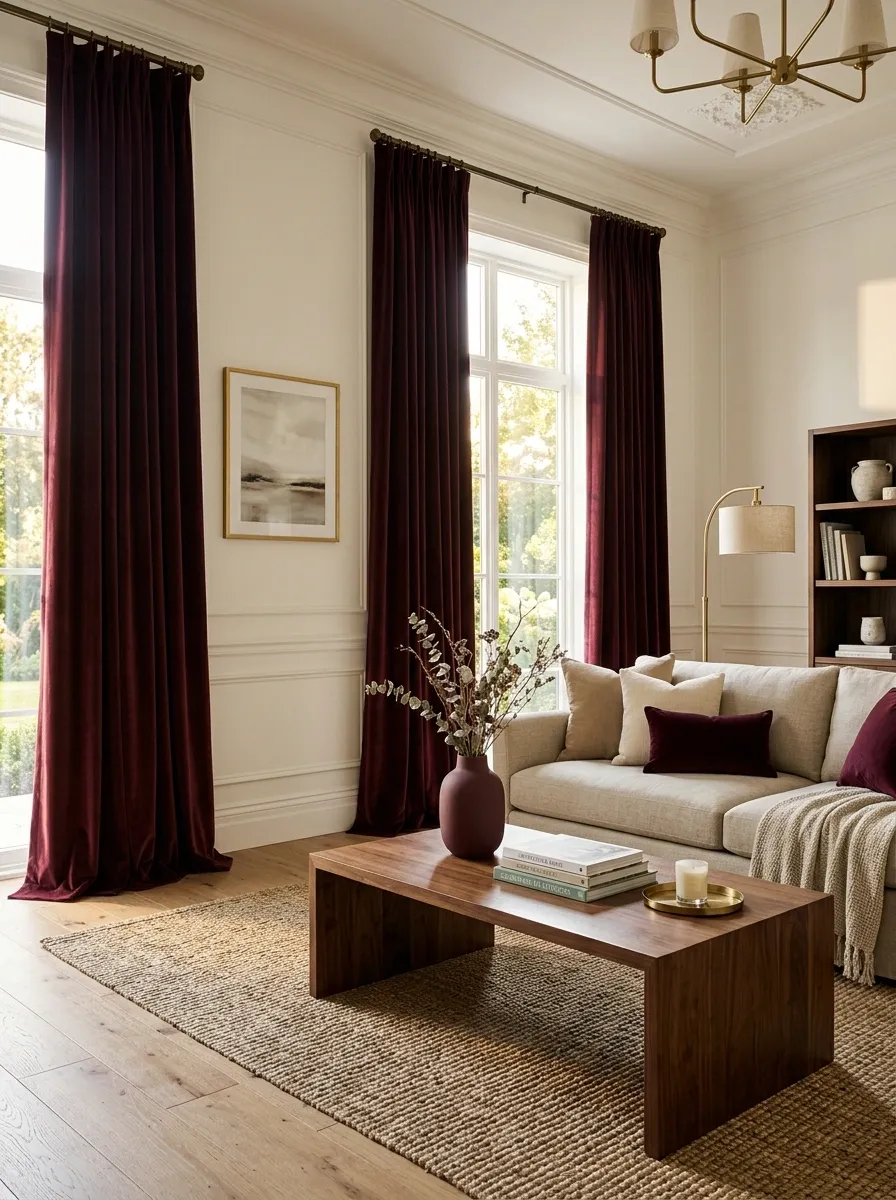
Burgundy doesn’t need to live on the walls to make a statement.
Floor-to-ceiling curtains create a much softer hit of color, especially when the walls stay warm white or pale beige. Hang the panels high and let them fall close to the floor. That vertical line makes the color feel deliberate instead of decorative.
Best pairing: a neutral sofa, wood furniture, and one burgundy accessory repeated elsewhere in the room.
That could be a cushion, ceramic piece, or small artwork. One repeat is enough to make the curtains feel connected to the rest of the space.
Ground a Deep Sectional With Zebra Print
Play with bold patterns alongside a luxurious burgundy sectional.
Zebra-print ottomans add an unexpected graphic element that breaks up the deep red tones of the velvet sofa. A sculptural glass coffee table and a striking modern chandelier keep the aesthetic contemporary.
Keep the surrounding walls simple to let the bold furniture combinations shine.
Layer a Burgundy and Ivory Rug Under Neutral Seating
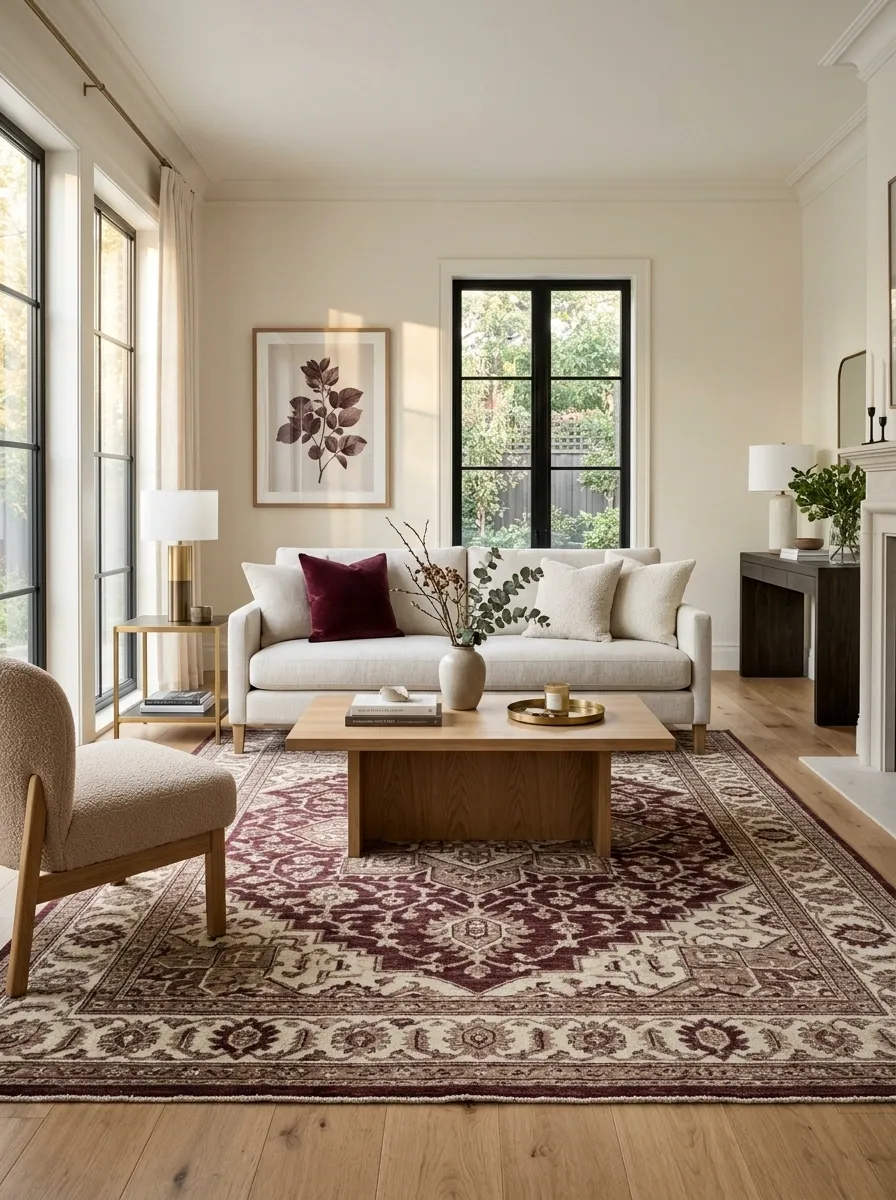
A burgundy rug is the better move when the sofa needs to stay neutral.
Choose a design where burgundy appears as part of a larger pattern rather than as one solid red field. Ivory, faded beige, and muted brown soften the color while giving the seating area a clear visual boundary.
Keep the coffee table fairly simple. A busy rug already carries plenty of detail.
Best finishing move: repeat one small burgundy note above rug height, such as a cushion or framed print.
That creates a vertical connection and keeps the color from looking trapped on the floor.
Pair Burgundy With Cognac Leather
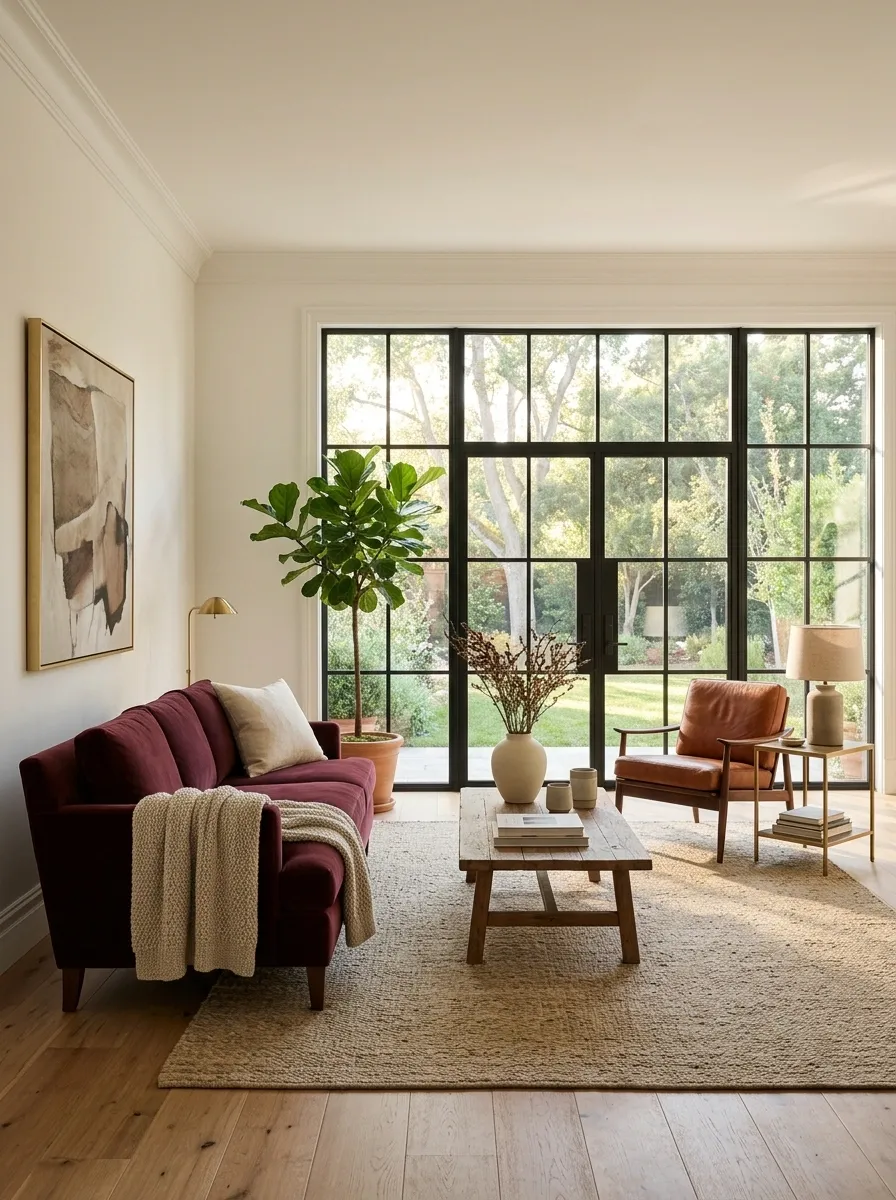
Burgundy and cognac work because they share enough warmth to look connected without becoming a single muddy color block.
Use a burgundy sofa with one cognac leather chair, ottoman, or pair of smaller accent pieces. Keep the walls much lighter and let natural wood sit between the two colors.
The trick is restraint. Cognac should support the burgundy, not compete with it.
Add a cream cushion or oatmeal throw to break up the saturated tones, especially if the room already has dark flooring.
Let Burgundy Walls Meet Creamy Boucle Seating
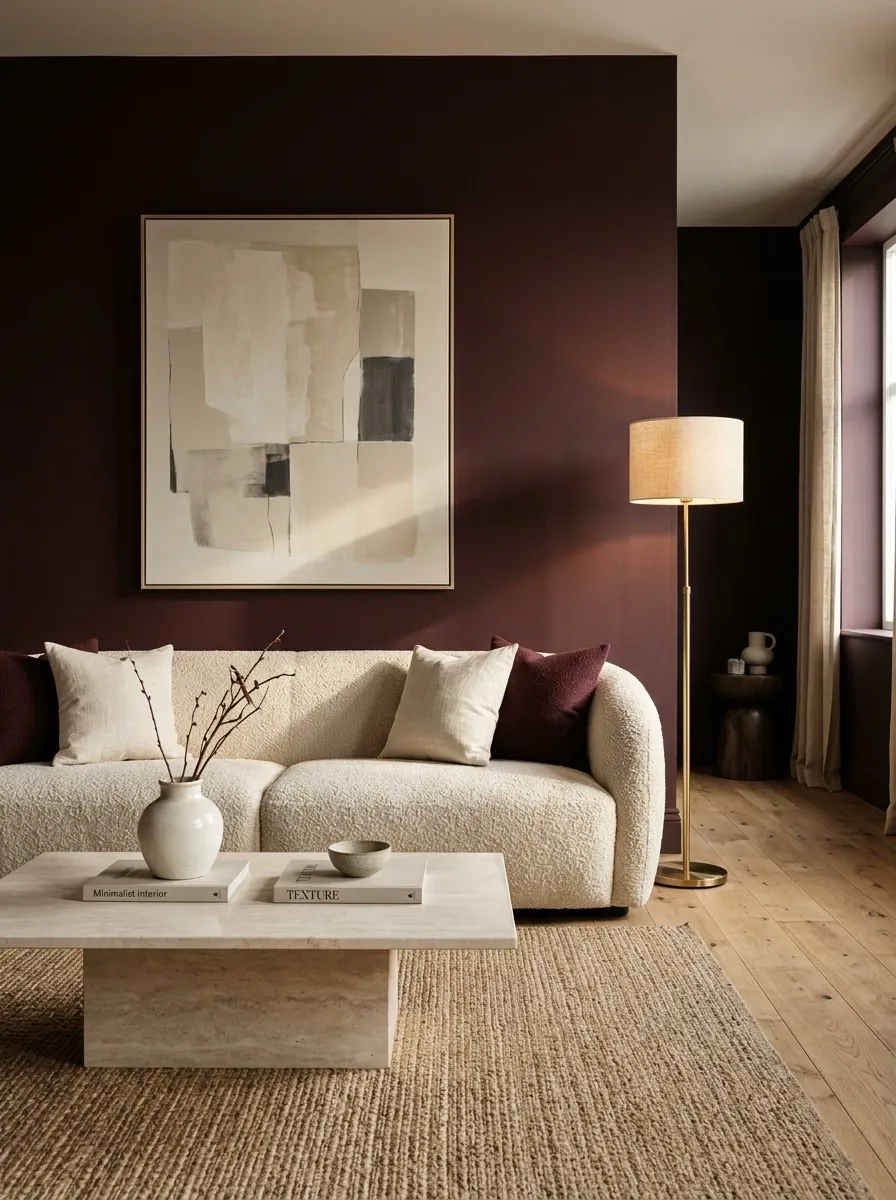
Dark walls become much easier to live with when the furniture looks soft.
A burgundy wall paired with a creamy boucle sofa or chair creates a strong material contrast. The wall brings depth while the pale upholstery keeps the seating area visually light.
Keep the rest of the room simple. A pale stone coffee table, natural oak, and warm floor lamp are enough.
The texture does the decorating here.
Avoid filling the wall with lots of small frames. A single oversized artwork looks far stronger against a deep burgundy backdrop.
Bring In Antique Brass, Not Bright Gold
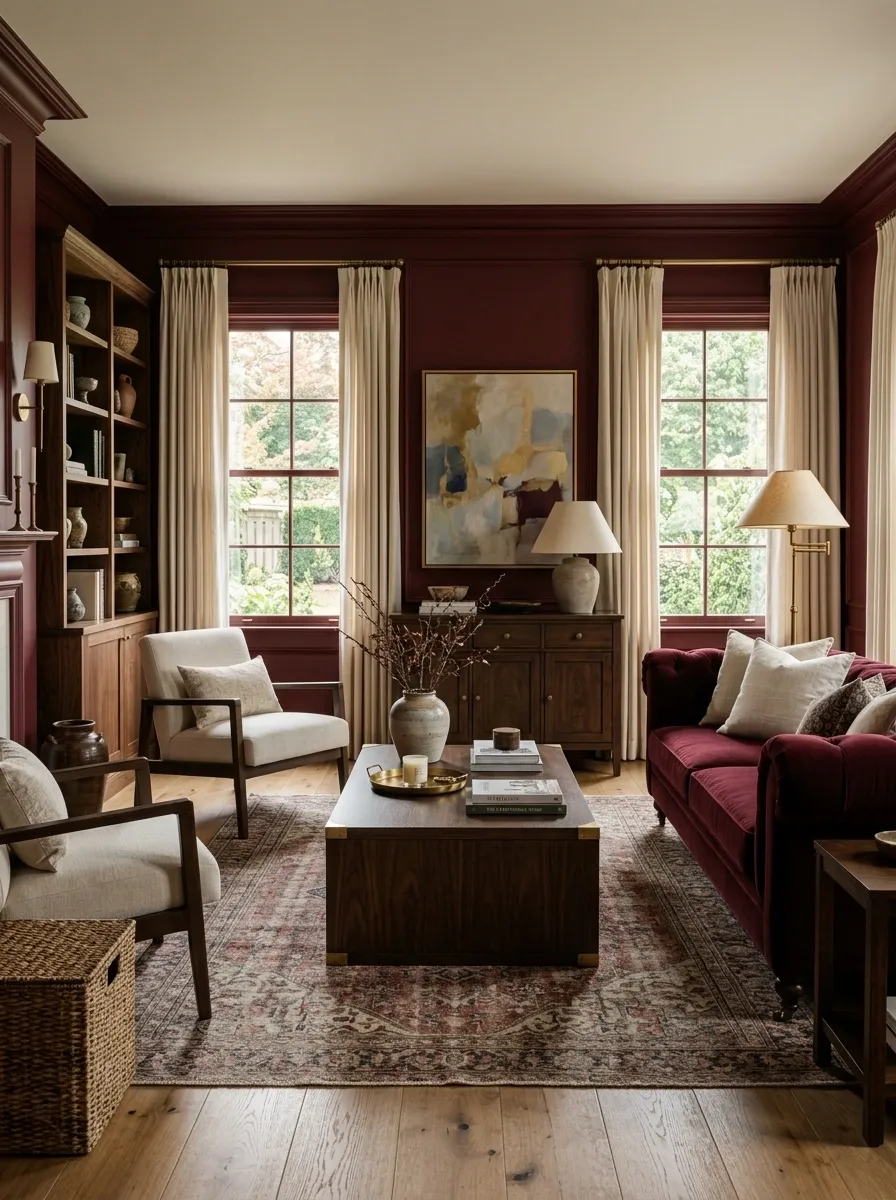
Burgundy already has plenty of visual weight. The metal needs to look aged and quiet.
Antique brass works beautifully on floor lamps, sconces, coffee table details, curtain rods, and cabinet hardware. Its muted finish sits naturally beside deep red without creating a sharp modern contrast.
Stick to one brass finish throughout the room.
Aged brass paired with warm cream, walnut, and burgundy creates a much more settled composition than mixing brass, chrome, and polished gold in the same space.
Frame the Fireplace in Burgundy
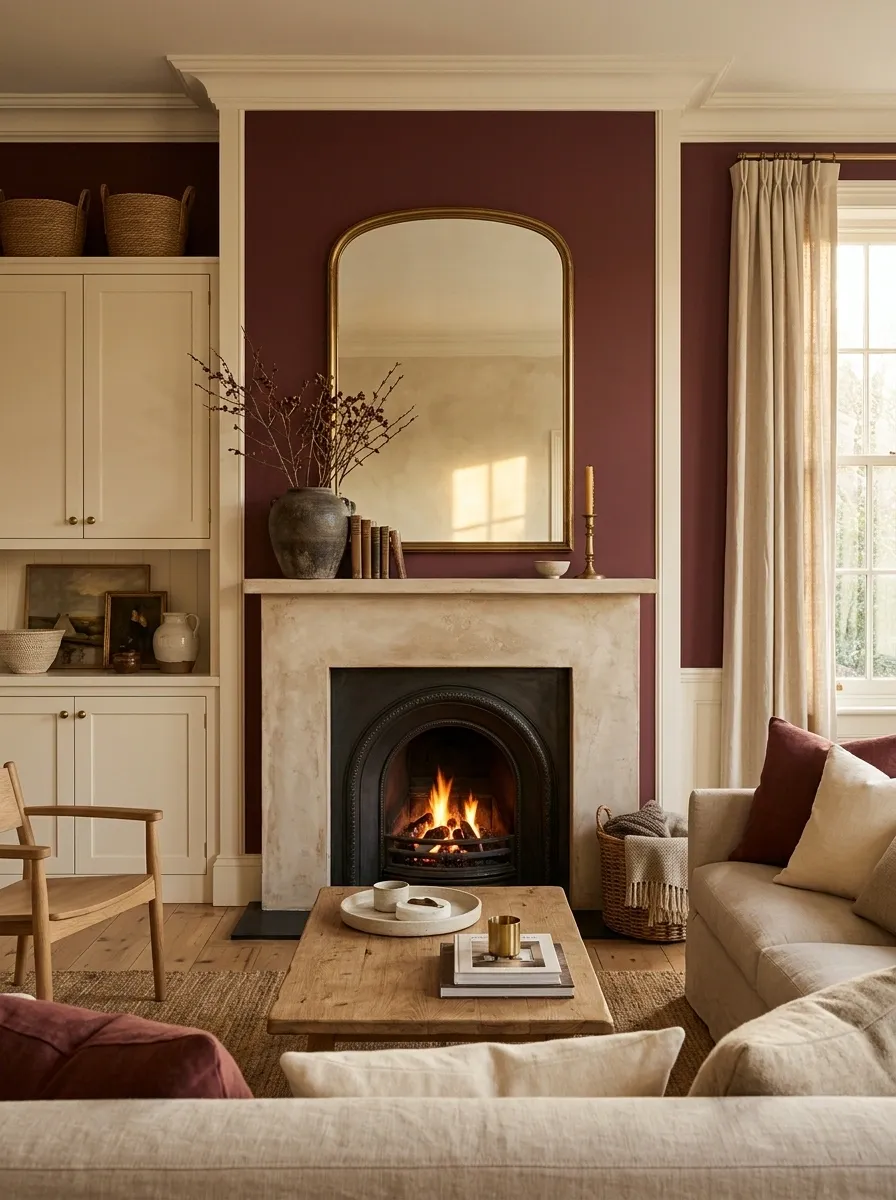
A fireplace gives burgundy a natural place to stop.
Paint the fireplace wall burgundy while keeping the mantel trim, ceiling, and nearby walls lighter. The result creates a strong architectural center without forcing the entire room into a dark palette.
This works especially well with a stone, plaster, or painted mantel.
Keep the objects on the mantel low and intentional. A large mirror, restrained artwork, or a pair of substantial objects will hold their own against the deep background.
Use a Burgundy Sectional to Define an Open Floor Plan
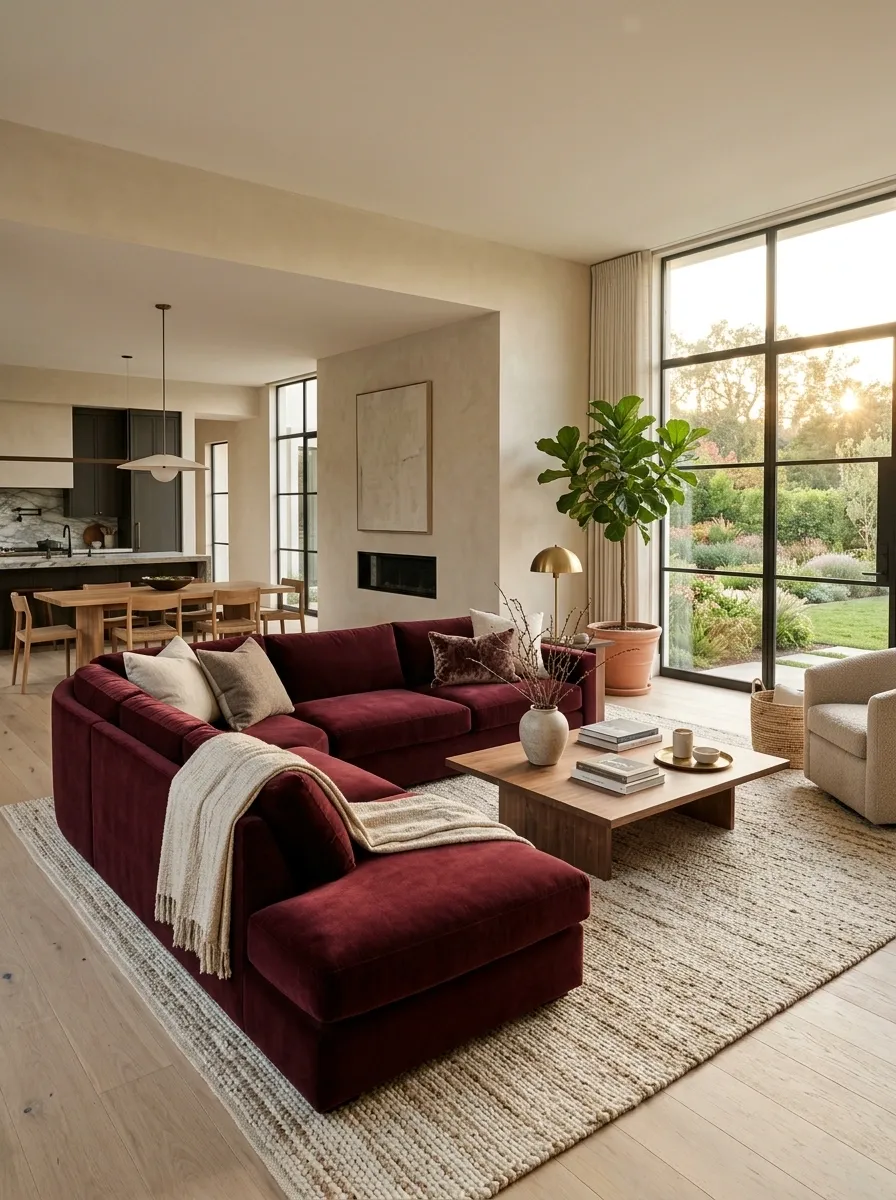
An open living room needs a furniture piece that establishes where the living area begins and ends.
A burgundy sectional handles that job better than a small matching sofa and chair arrangement. Its stronger shape creates a clear visual boundary between the seating zone, dining area, and walkway.
Give it breathing room. Don’t push every piece of furniture directly against the walls.
Leave the surrounding finishes quieter. Pale flooring, warm neutral walls, and a simple wood table keep the sectional from turning the entire open floor plan into one dark mass.
Soften Burgundy With Dusty Pink
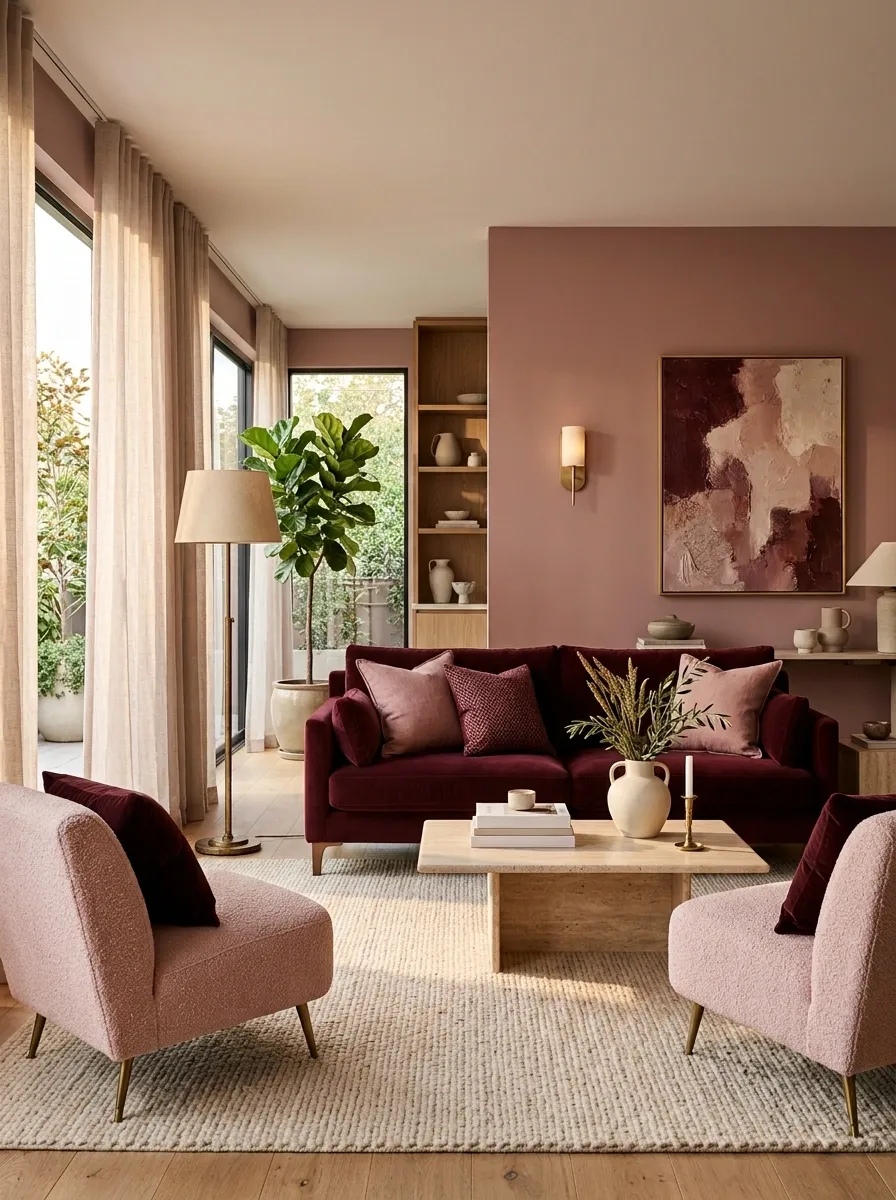
Burgundy and pink don’t have to look sugary.
The right combination uses a muted, dusty pink rather than a bright bubblegum shade. A burgundy sofa against a dusty rose wall, or burgundy cushions layered over pale pink upholstery, creates depth without introducing a third competing color.
Keep both shades slightly muted.
Bring in cream, warm beige, or natural oak to break up the reds. Brass lighting also works here, especially when the finish is brushed or aged rather than glossy.
Turn Burgundy Built-Ins Into the Room’s Architecture
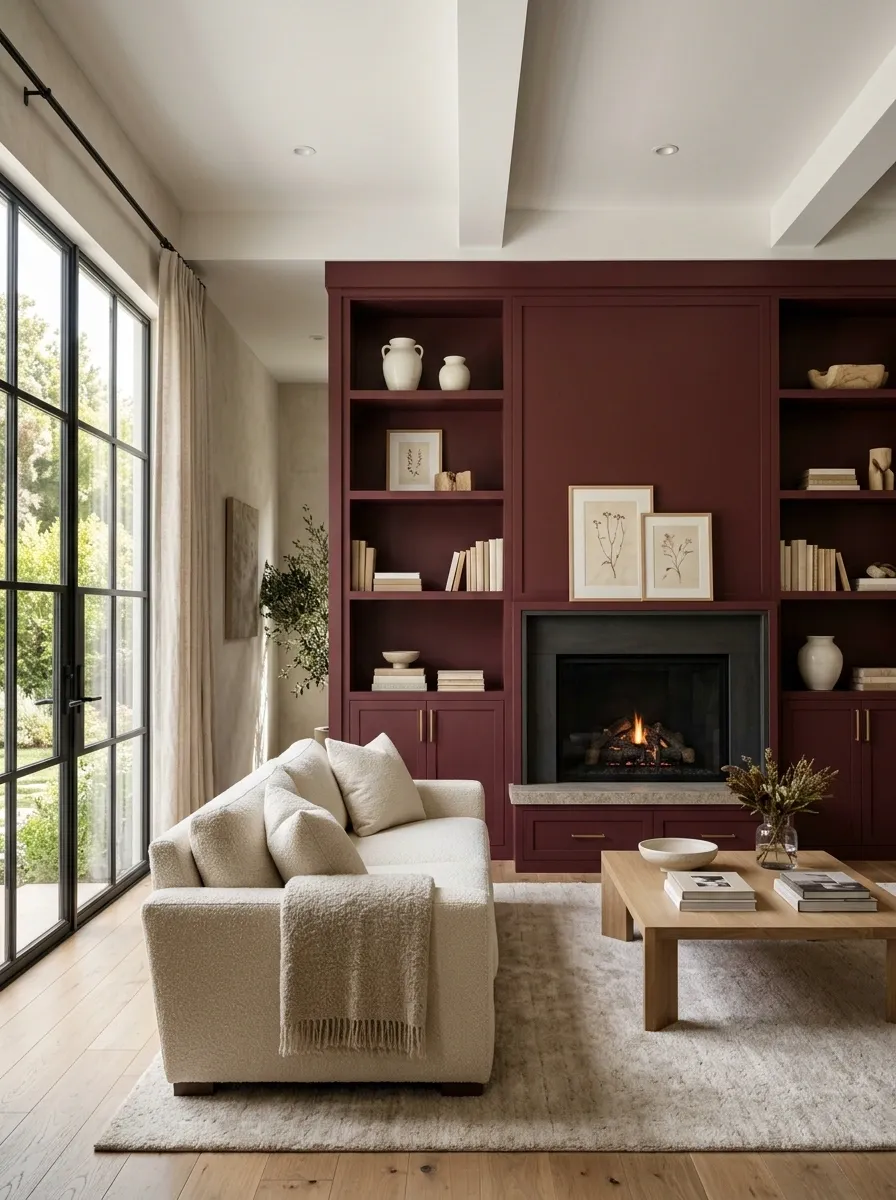
Painted built-ins give burgundy a more permanent role than a single accent object.
Use the color across shelving around a fireplace, a media wall, or a reading nook. Then keep the objects inside the shelves restrained. Cream ceramics, books, pale artwork, and natural wood stand out beautifully against the deep background.
The smartest part is the structure itself.
The storage becomes the color statement.
That works especially well in rooms where a large painted wall would feel too dramatic but a burgundy sofa isn’t practical.
Use Burgundy Throw Pillows to Test the Color First
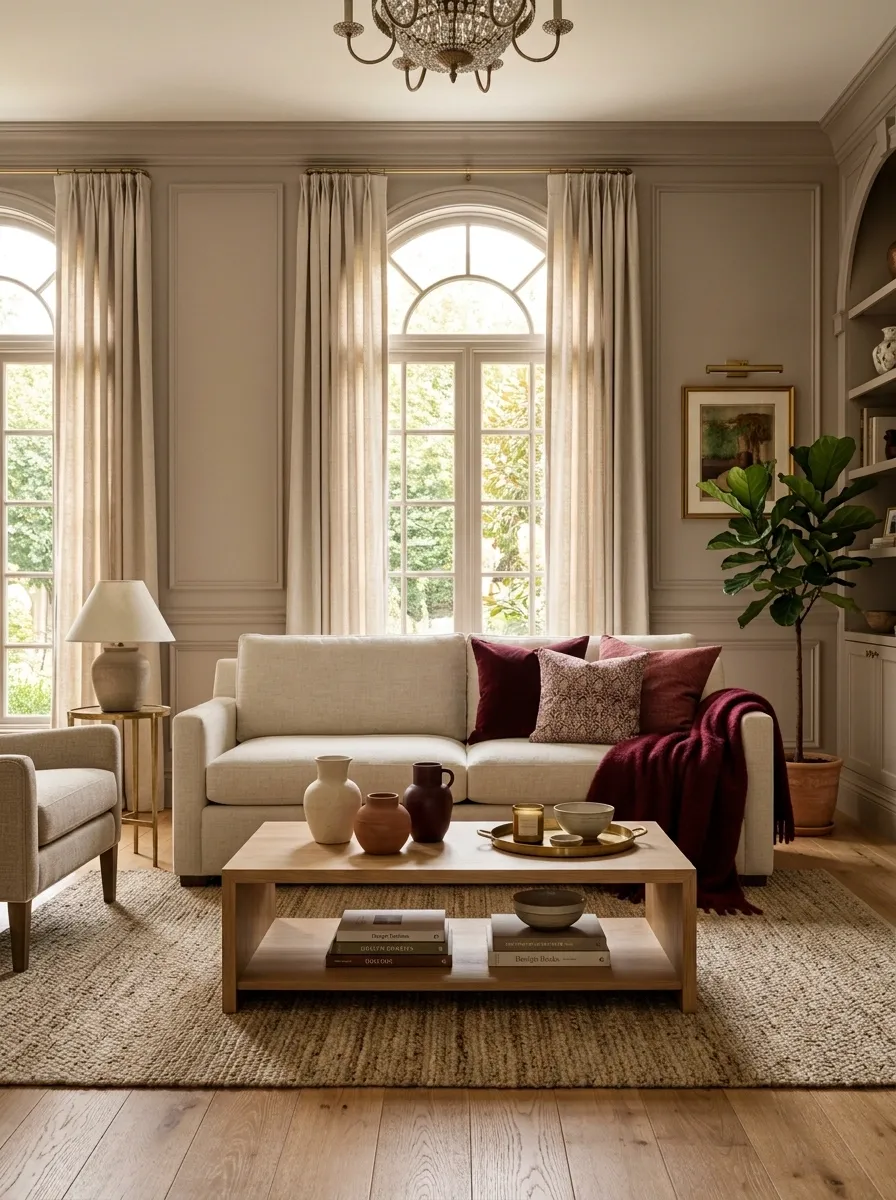
Not ready to commit to a burgundy sofa or wall? Start with the seating.
A neutral beige, cream, or taupe sofa gives burgundy cushions enough room to make an impact without locking the entire room into the color.
Mix one deep velvet cushion with one patterned cushion and one quieter linen piece. Different textures make a small collection feel intentional rather than matched.
Three different textures beat six identical cushions.
Add a burgundy throw across one corner of the sofa, then stop. Too many matching red accessories will make the color feel forced.
Pair Burgundy With Muted Sage Green
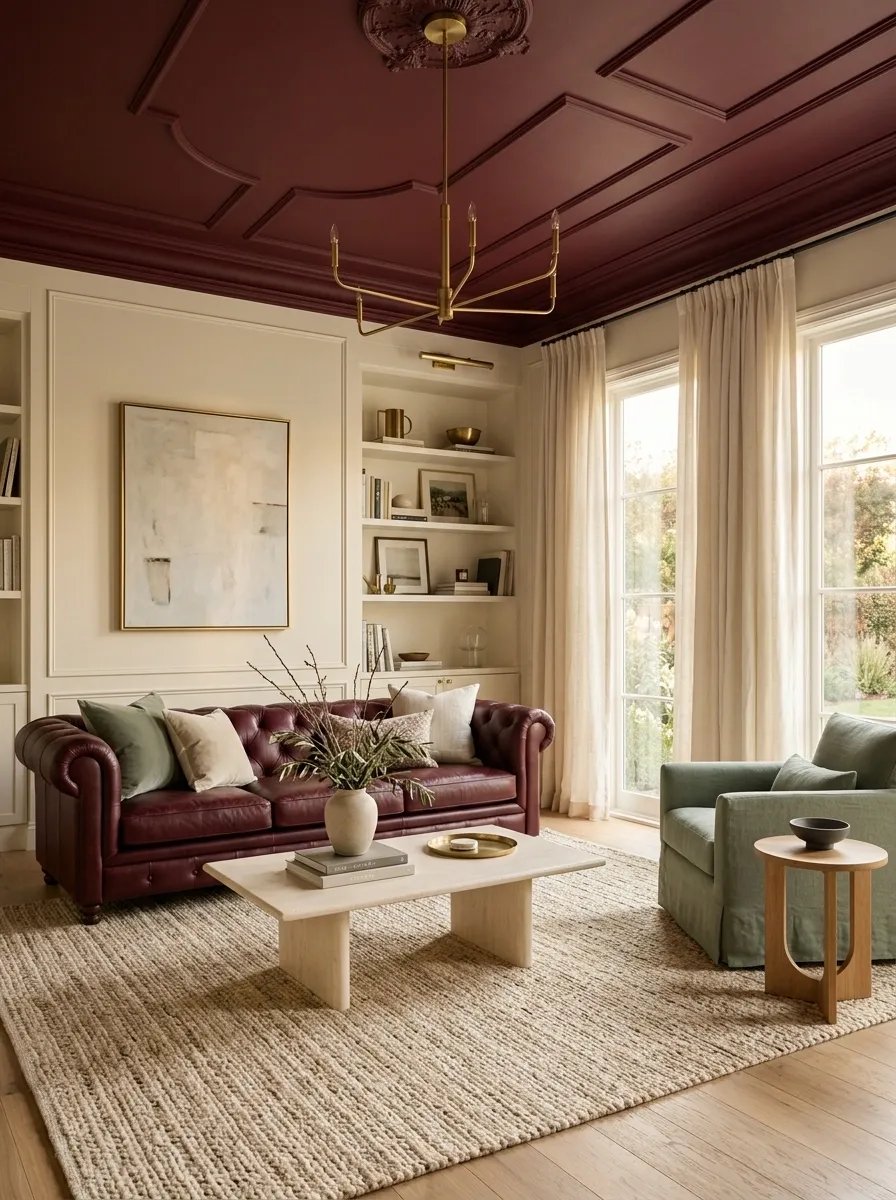
Burgundy and sage green create a surprisingly balanced room because one color is deep and warm while the other feels soft and earthy.
Use burgundy on the sofa, curtains, or a feature wall. Bring sage into the room through one chair, artwork, cushions, or botanical-looking textiles.
Keep the green dusty rather than bright.
Warm beige should bridge the two colors. A natural rug, cream walls, and medium wood furniture stop the palette from turning into a holiday-themed room.
Let Patterned Wallpaper Meet a Burgundy Sofa
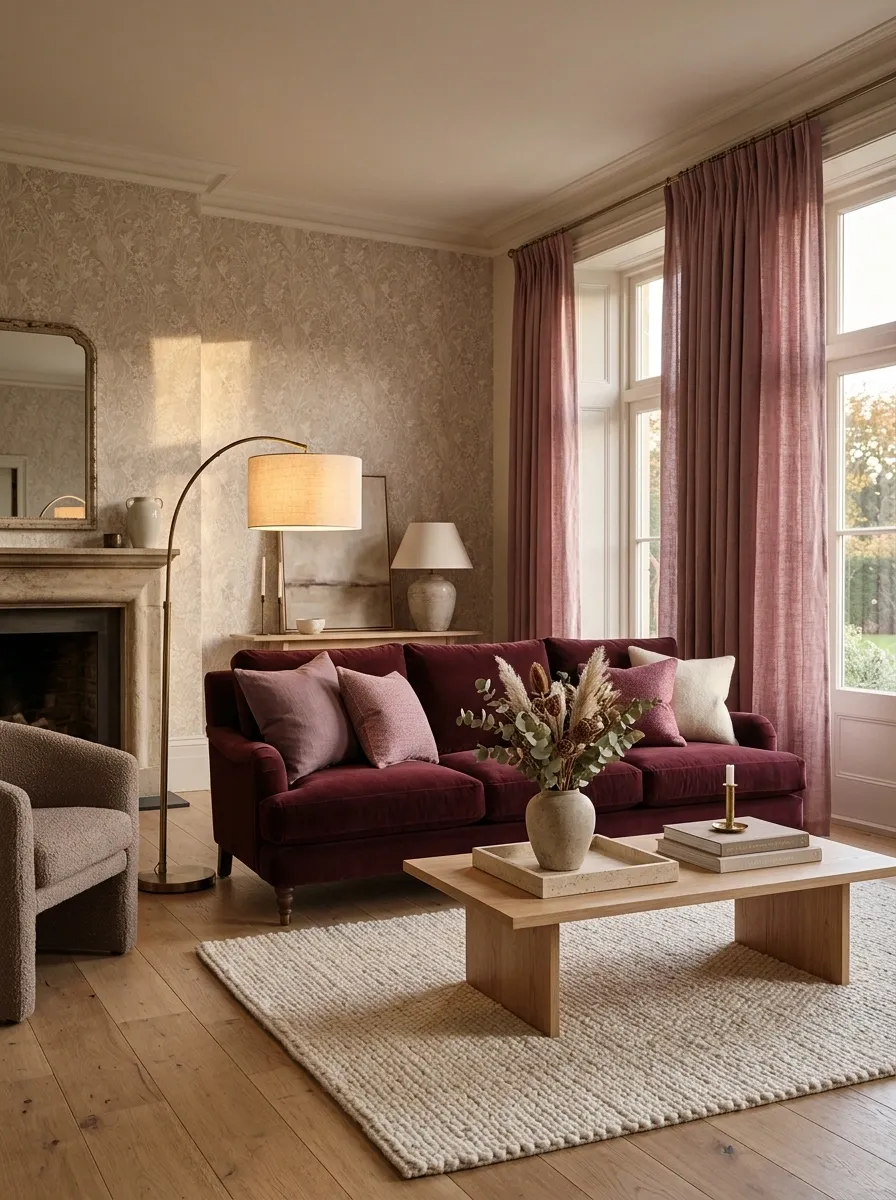
Burgundy becomes much more interesting when it sits against pattern instead of another solid color.
Choose wallpaper with muted botanical shapes, fine stripes, faded florals, or small-scale geometric detail. Keep the background lighter than the sofa so the room doesn’t become too dense.
The pattern should whisper, not shout.
A simple wood coffee table and solid cream rug will give the eye somewhere quiet to land. Skip a second bold pattern on the curtains. The wallpaper has already done that job.
Make a Burgundy Accent Chair the Hero
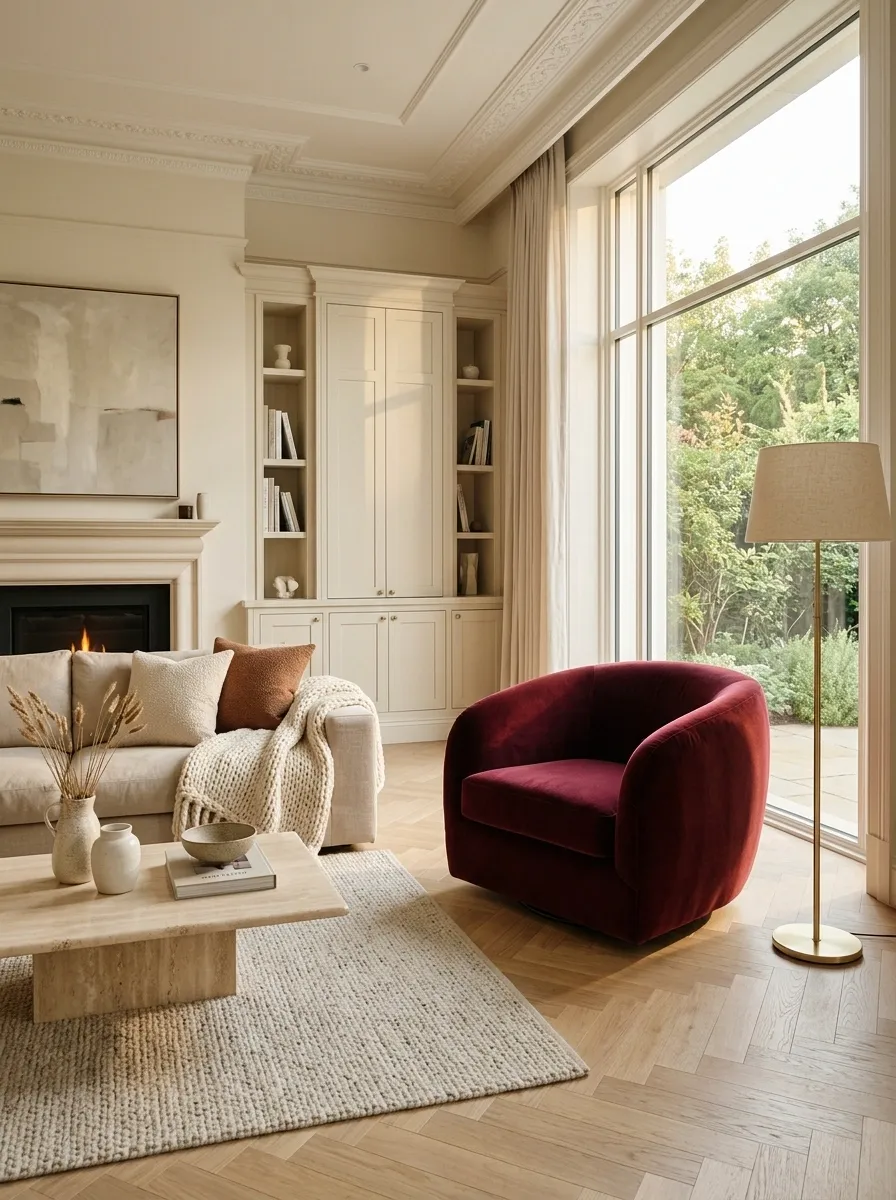
Burgundy doesn’t have to cover the whole sofa to command attention.
A single burgundy accent chair creates a focused hit of color in a mostly neutral living room. Choose a curved chair, sculptural lounge chair, or classic leather piece, then give it enough space to breathe.
Place it where the eye naturally travels.
Beside a window, near a fireplace, or opposite the main sofa works better than squeezing it into an empty corner.
Keep the surrounding upholstery neutral so the chair actually looks intentional rather than like a leftover piece.
CHAIR
Contrast Burgundy With Muted Blue
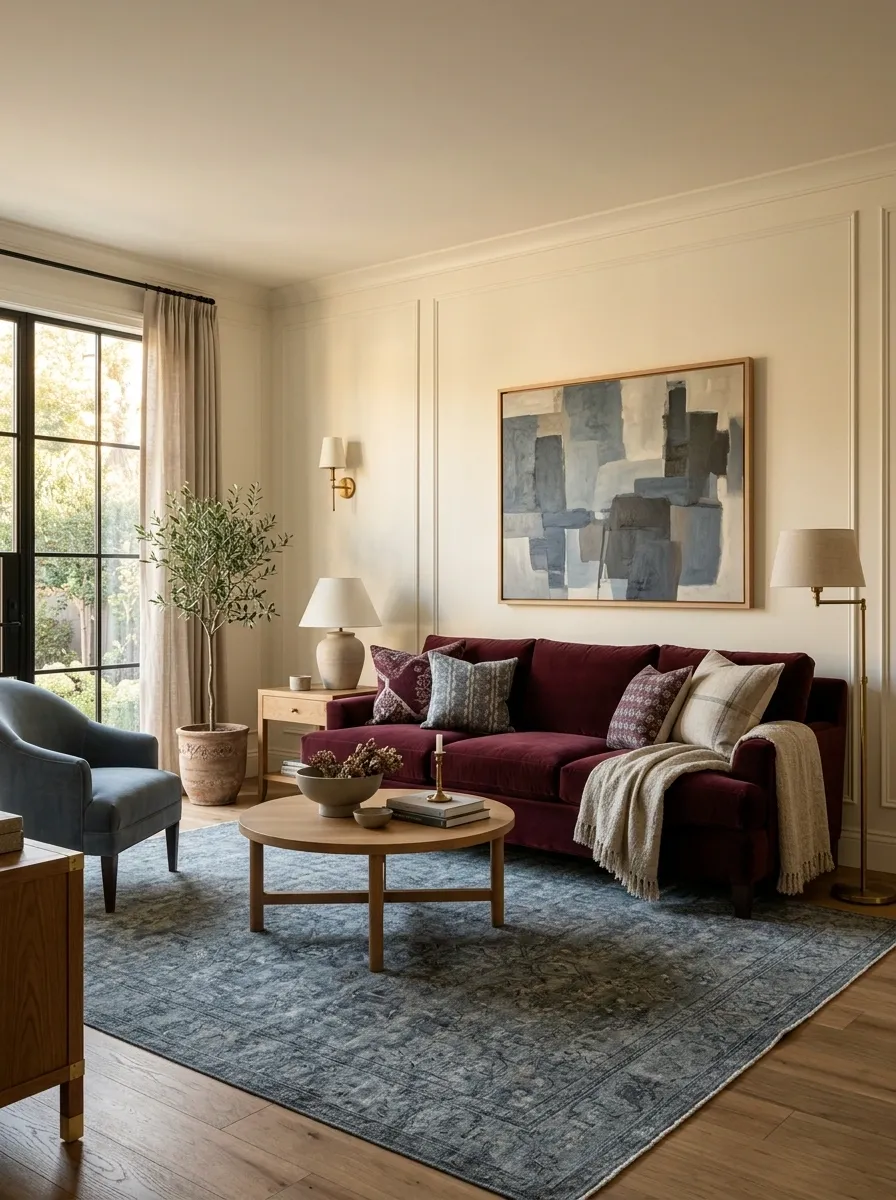
Burgundy and blue can look sophisticated when the blue is dusty, grayish, and slightly faded.
Think muted denim, smoky blue, or blue-gray rather than electric navy. Use burgundy on the main sofa and introduce blue through a chair, artwork, patterned rug, or cushions.
Let burgundy stay warmer and heavier.
The blue should act as the cooler counterweight, not become an equal rival. Warm cream walls and medium wood furniture bridge the temperature difference and keep the palette grounded.
NEUTRAL
Repeat Burgundy Through the Fireplace, Rug, and Curtains
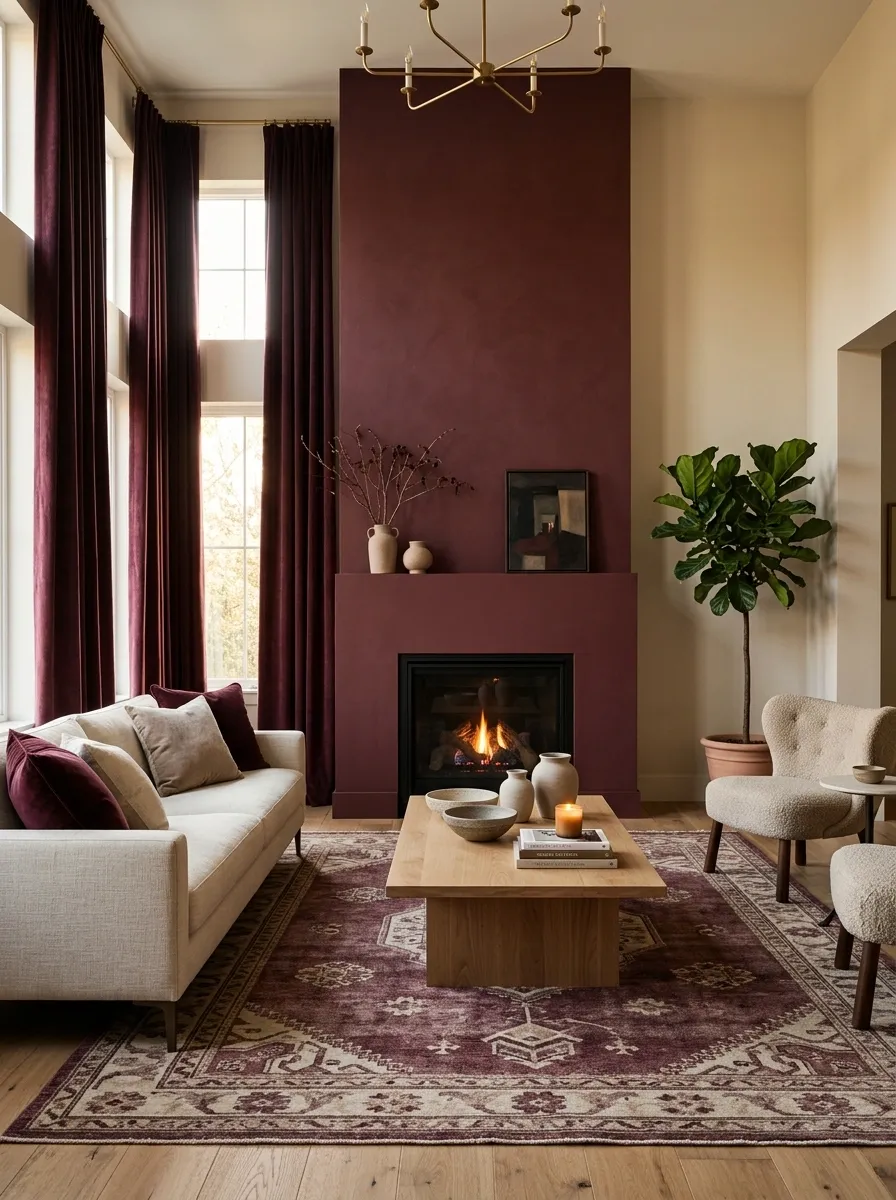
The strongest rooms repeat a color in different places instead of putting all of it in one object.
A burgundy fireplace wall, patterned rug, and full-length curtains can work together when each piece uses a slightly different intensity or texture. The fireplace establishes the focal point. The rug carries the color horizontally. The curtains pull it upward.
That creates a connected room instead of three unrelated burgundy purchases.
Keep the sofa and walls between those elements much quieter. Cream, oatmeal, and warm beige are doing important work here.