
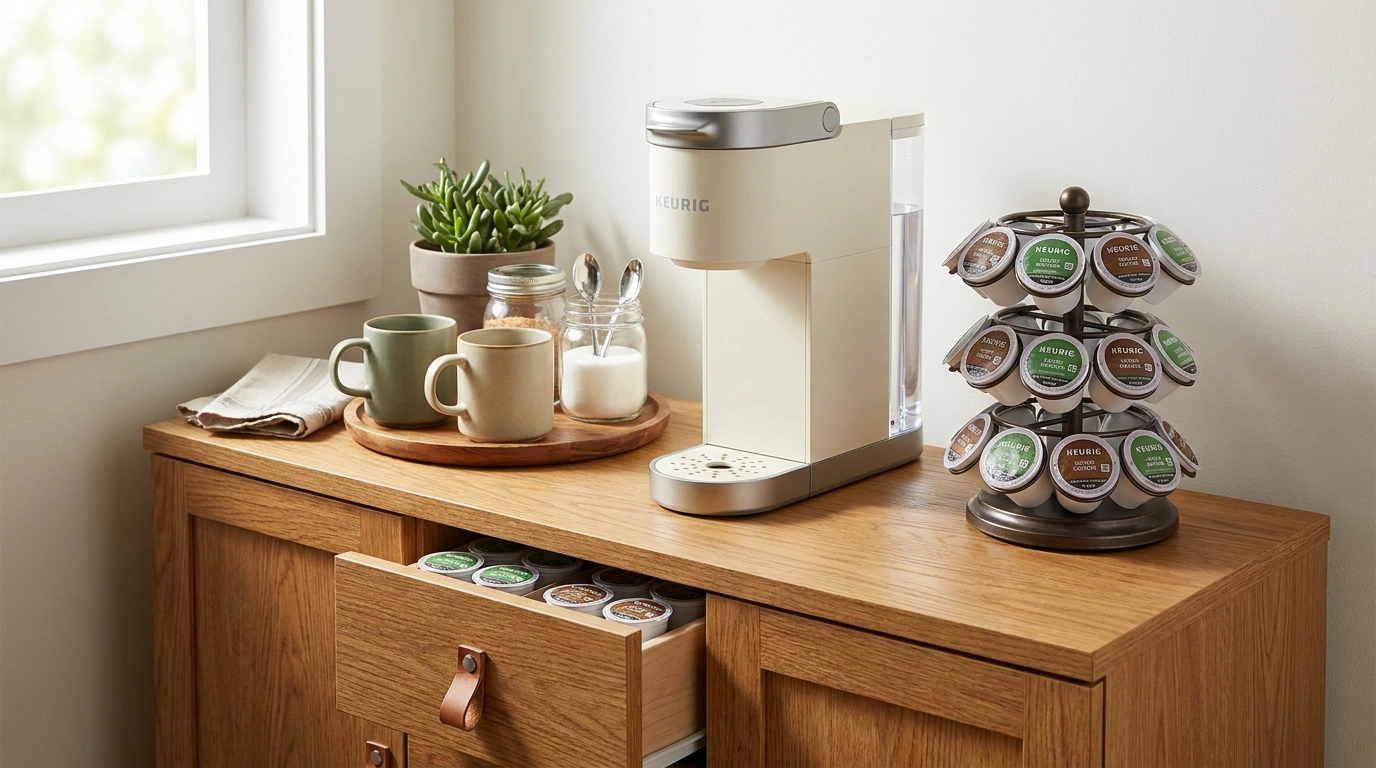
Some kitchens have a coffee maker sitting beside the toaster, three mugs fighting for space, and a bag of coffee beans that has been open since approximately the last presidential election. Technically, coffee is being made. A coffee station, however, is a different story.
The best coffee station ideas bring the entire setup together. The coffee maker, grinder, mugs, beans, pods, and everyday supplies should have a proper place, while the surrounding cabinets, countertops, and shelves should look like they belong in the same kitchen.
A dedicated coffee corner doesn’t have to involve expensive cabinetry or a kitchen renovation. A narrow console, an unused countertop, a vintage cabinet, or even a small section of the pantry can become a useful brewing area.
Questionable life choices?
The coffee maker isn’t the problem. The mugs, open coffee bags, random spoons, and shelf installed directly above the grinder might be.
If there’s barely room for a coffee cup, another decorative sign isn’t going to save the situation.
A mug collection is charming. A mug mountain blocking the backsplash is a storage issue wearing a cute outfit.
Coffee beans, filters, pods, spoons, and syrups don’t all need separate spots on the most visible countertop.
A coffee station that looks intentional, has room for proper brewing, and doesn’t require a kitchen renovation or a second mortgage.
Coffee Station Designs
Warm Oak Coffee Station With an Ivory Backdrop
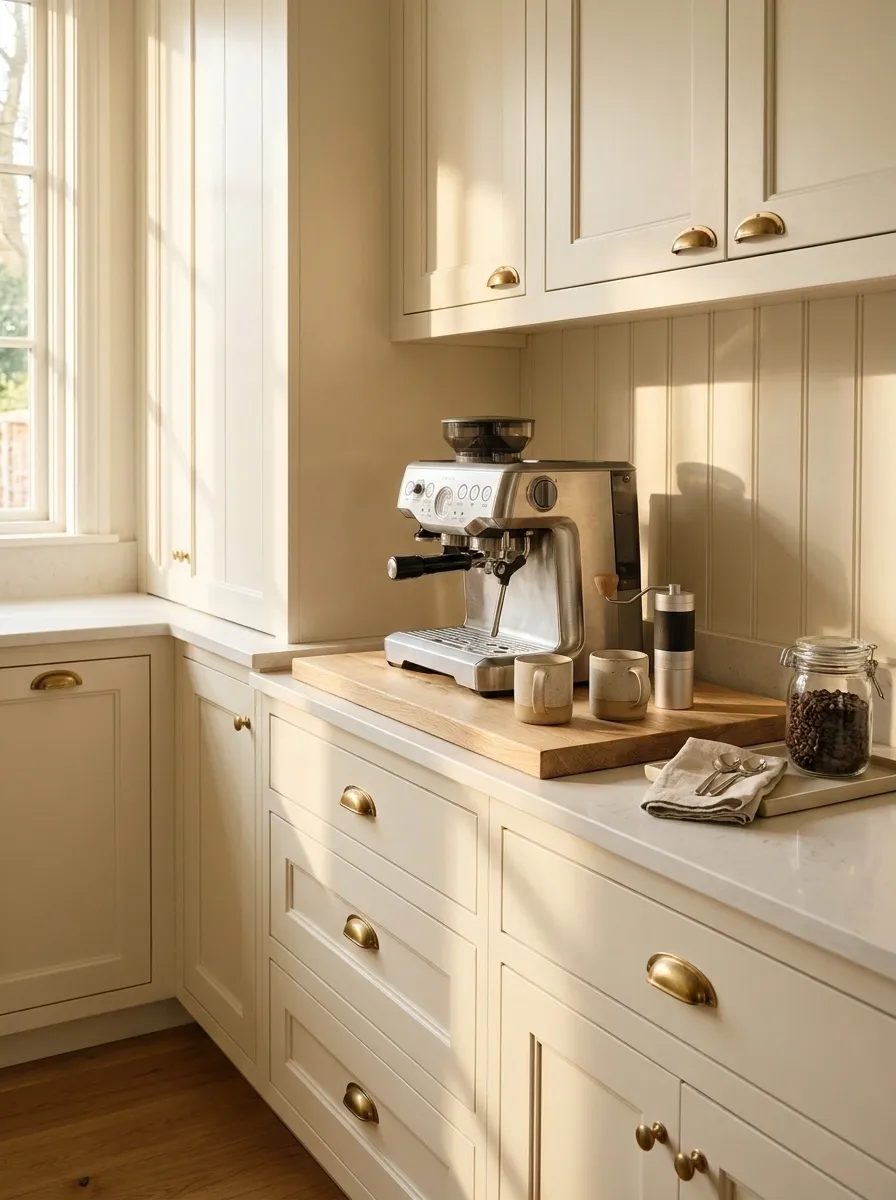
Warm oak and ivory give a coffee station an easy, natural look that fits into everyday kitchens. A light wood countertop or serving board grounds the coffee maker, while cream cabinetry and simple ceramic mugs keep the arrangement soft without making it look washed out.
A small grinder, a glass jar of coffee beans, and a tray for everyday supplies complete the setup. Store extra filters and bags of coffee in a nearby drawer so the countertop doesn’t become a mini grocery store.
The combination of warm grain and quiet surfaces does most of the decorating. There’s no need for twelve matching jars to prove that coffee happens here.
Let wood provide texture, ivory provide breathing room, and darker details provide definition. Too many competing finishes turn a coffee corner into a sample board.
Renter-Friendly Coffee Station on a Narrow Console
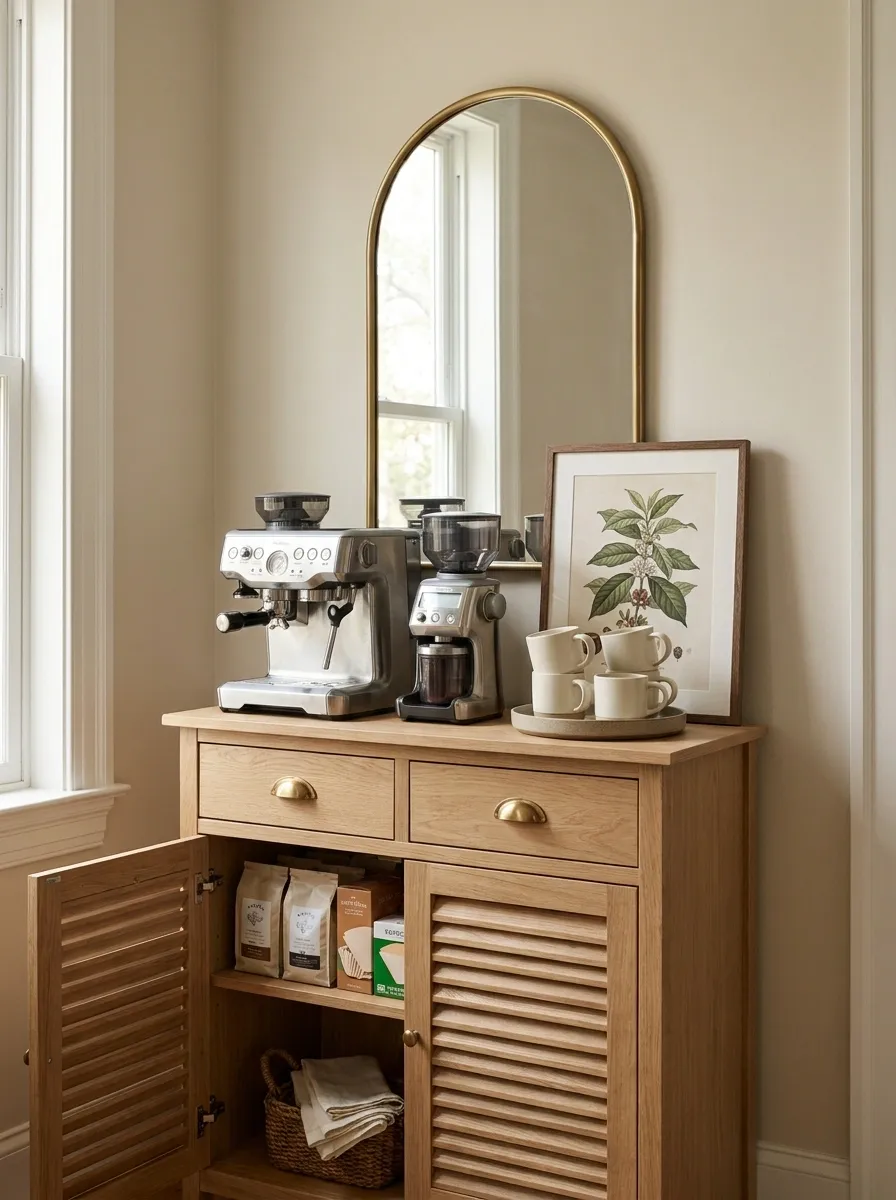
A narrow console cabinet can give a rental kitchen a dedicated coffee zone, even when the actual kitchen has approximately the counter space of a postage stamp. Place a drip coffee maker or compact espresso machine on top, keep mugs and coffee supplies in the storage below, and use a framed print to connect the furniture to the surrounding room.
Choose a console deep enough to support the machine securely, with room to open its lid and refill the water reservoir. A wall mirror can make the corner feel more finished, but check the clearance before adding shelves overhead.
Rental-friendly doesn’t mean turning every available surface into a decorating opportunity.
Vertical Coffee Station With Wall-Mounted Shelving
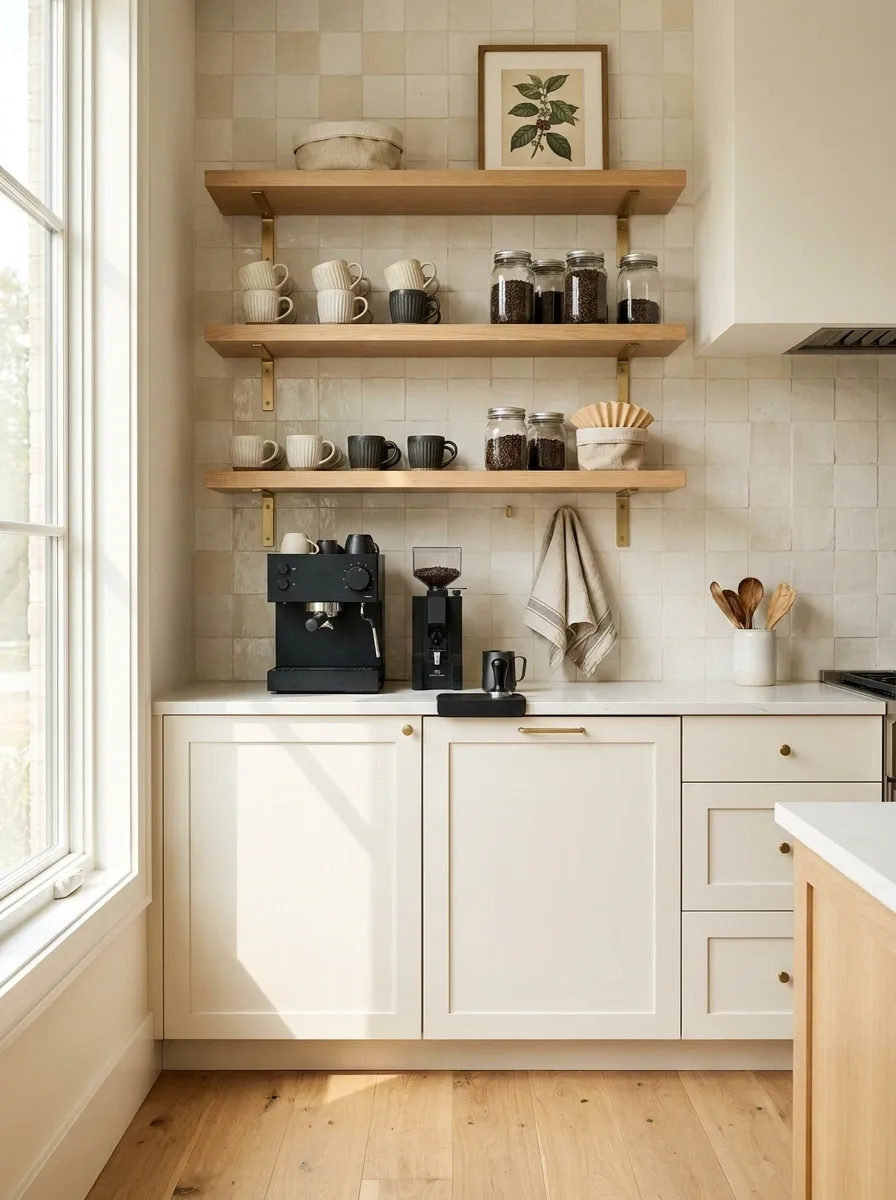
When horizontal counter space is limited, the wall can do some of the storage work. A compact countertop holds a coffee maker and grinder, while shelves above accommodate mugs, coffee jars, filters, and a small framed print.
Light wood against a pale backsplash keeps the arrangement open, while darker brackets add structure. Put frequently used items within easy reach and reserve higher shelves for lighter or less frequently handled objects.
Leave enough clearance to operate the machine and access its removable parts. A shelf packed edge to edge is still clutter, just with better posture.
Concealed Coffee Station Inside an Appliance Garage
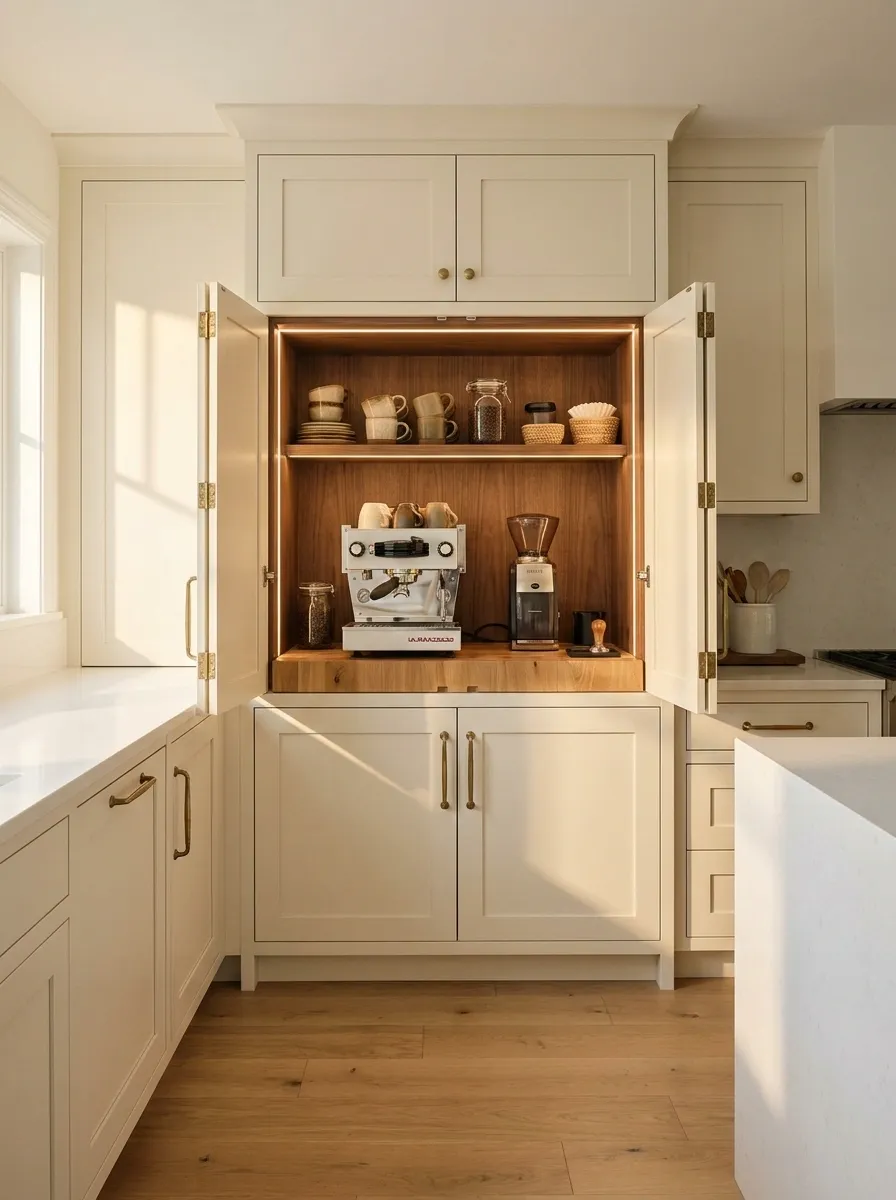
For kitchens that look better with clear countertops, an appliance garage can hide the coffee maker, grinder, and supplies behind cabinet doors. Inside, a dedicated counter supports the brewing equipment, with filters and mugs stored nearby. When open, the nook works as a practical little coffee bar. When closed, the kitchen returns to its streamlined appearance.
This concept works especially well when the interior finish matches the surrounding cabinetry or introduces a restrained wood accent. The cabinet needs appropriate clearance, electrical access, and ventilation according to the appliance manufacturer’s instructions.
Closing a cabinet around a machine that is still hot is not a clever storage hack.
The appliances and supplies stay out of sight when not in use.
The equipment and supplies have a dedicated place to operate.
A tidy exterior is only half the job. The inside still needs sensible storage, clearance, and safe appliance use.
Vintage Hutch Turned Into a Coffee Bar
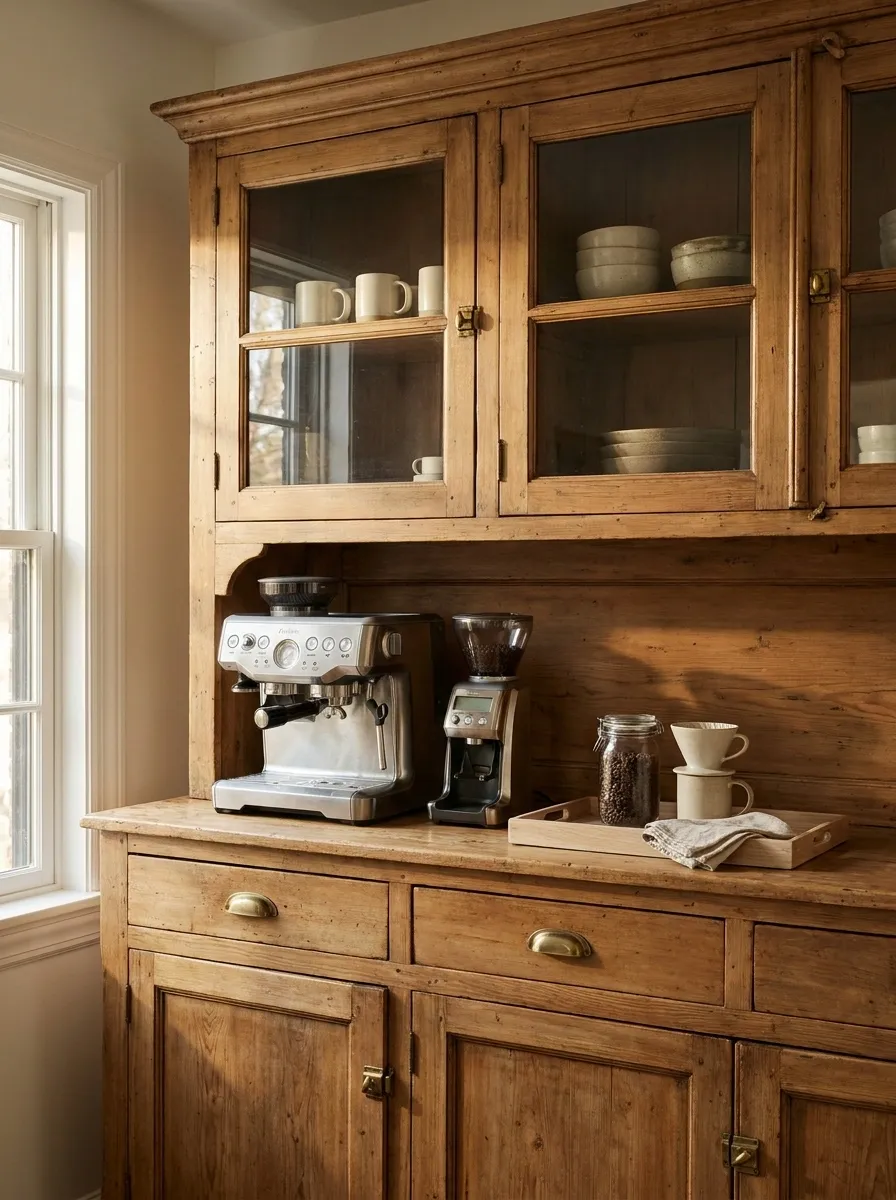
A vintage hutch turns the coffee station into a furniture feature rather than another section of kitchen countertop. The lower portion holds the coffee maker, grinder, a serving tray, and everyday supplies. Upper shelves or glass-front cupboards display ceramic mugs and a few carefully chosen pieces.
Warm wood, aged finishes, and cream ceramics give the arrangement character without forcing a country-kitchen theme onto the entire room. Keep some breathing room between the objects.
A hutch already brings plenty of visual detail. Adding a sign, several baskets, decorative words, and six different jars is how charming furniture becomes a flea market with plumbing nearby.
Hide a lot.
The furniture and a few well-chosen pieces provide the charm. Every shelf doesn’t need to perform.
Check that the work surface safely supports the equipment and that electrical access is practical. Antique charm does not exempt furniture from physics.
Rolling Coffee Cart for a Flexible Kitchen
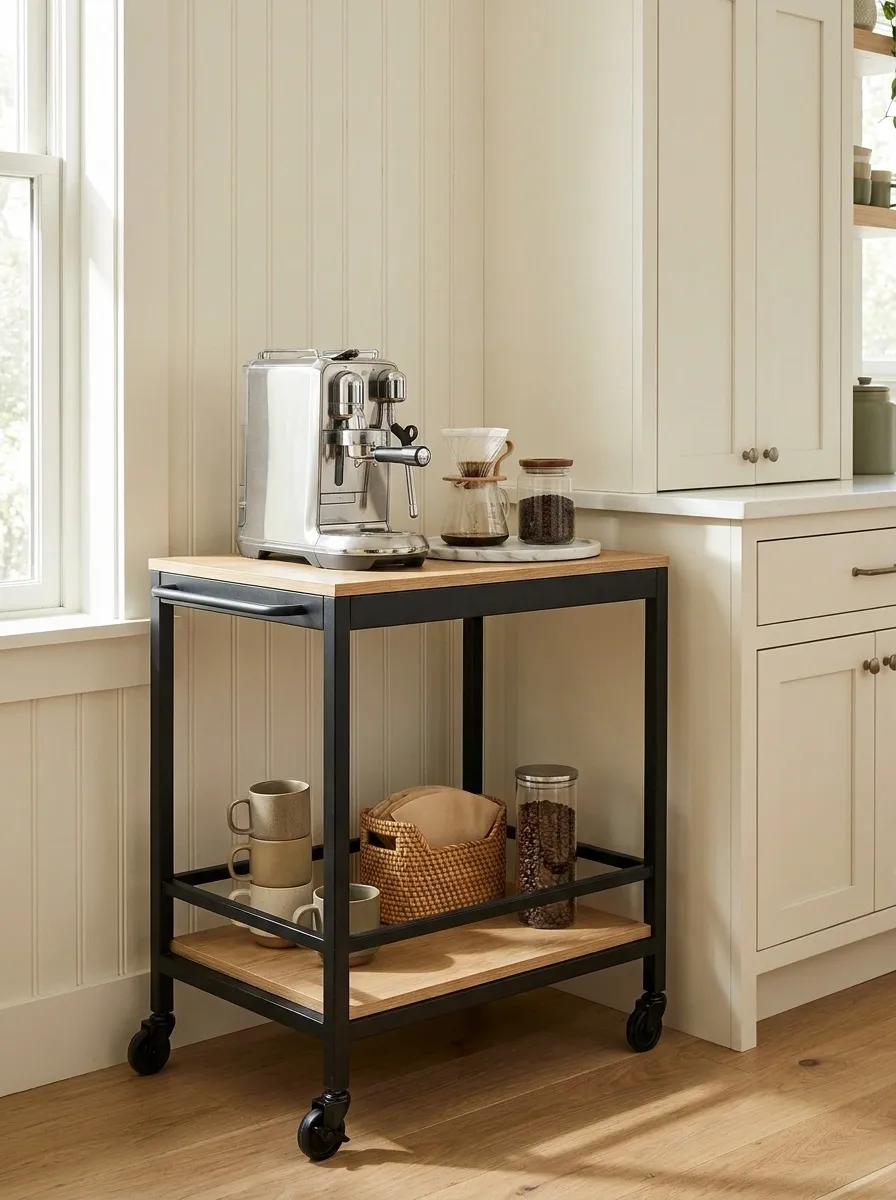
A wooden rolling cart gives the coffee maker a dedicated home without permanently claiming an entire countertop. Keep a compact machine and a small serving tray on top, arrange mugs and coffee supplies on the lower shelf, and use a basket for backup filters or beans.
Light wood with black metal framing creates a casual industrial look, while a painted cream or sage cart feels softer. The real advantage is flexibility. The cart can move when the kitchen needs extra preparation space or sit beside the breakfast table on a lazy weekend morning.
Make sure the top is sturdy, the wheels lock securely, and electrical access is safe. A rolling hot appliance with a loose cable is a lawsuit audition.
Lock the wheels, keep cords away from them, and leave enough clearance to move the cart safely.
Sage Green Coffee Nook With Built-In Cabinetry
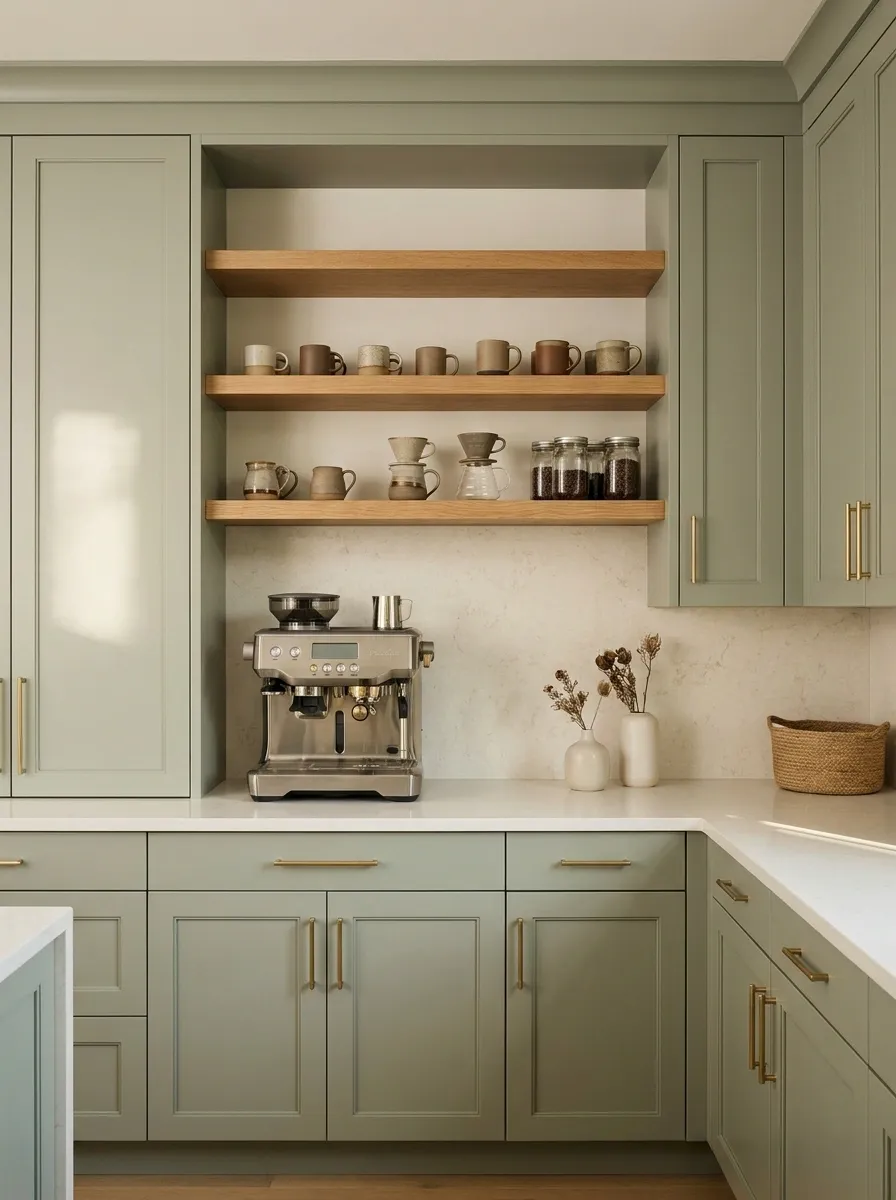
Sage green cabinets give a dedicated coffee nook a softer look than an all-white kitchen, especially when paired with oak shelves, brushed brass hardware, and a cream or pale stone backsplash. The coffee maker sits in a defined recess, with mugs arranged nearby and extra supplies tucked behind cabinet doors.
The green works because the surrounding finishes stay restrained. Adding a bright sign, competing metals, and a collection of patterned jars would undo that balance in record time. Let the cabinetry provide most of the personality, and keep the counter practical enough for an actual morning routine.
Farmhouse Coffee Corner With Beadboard and Butcher Block
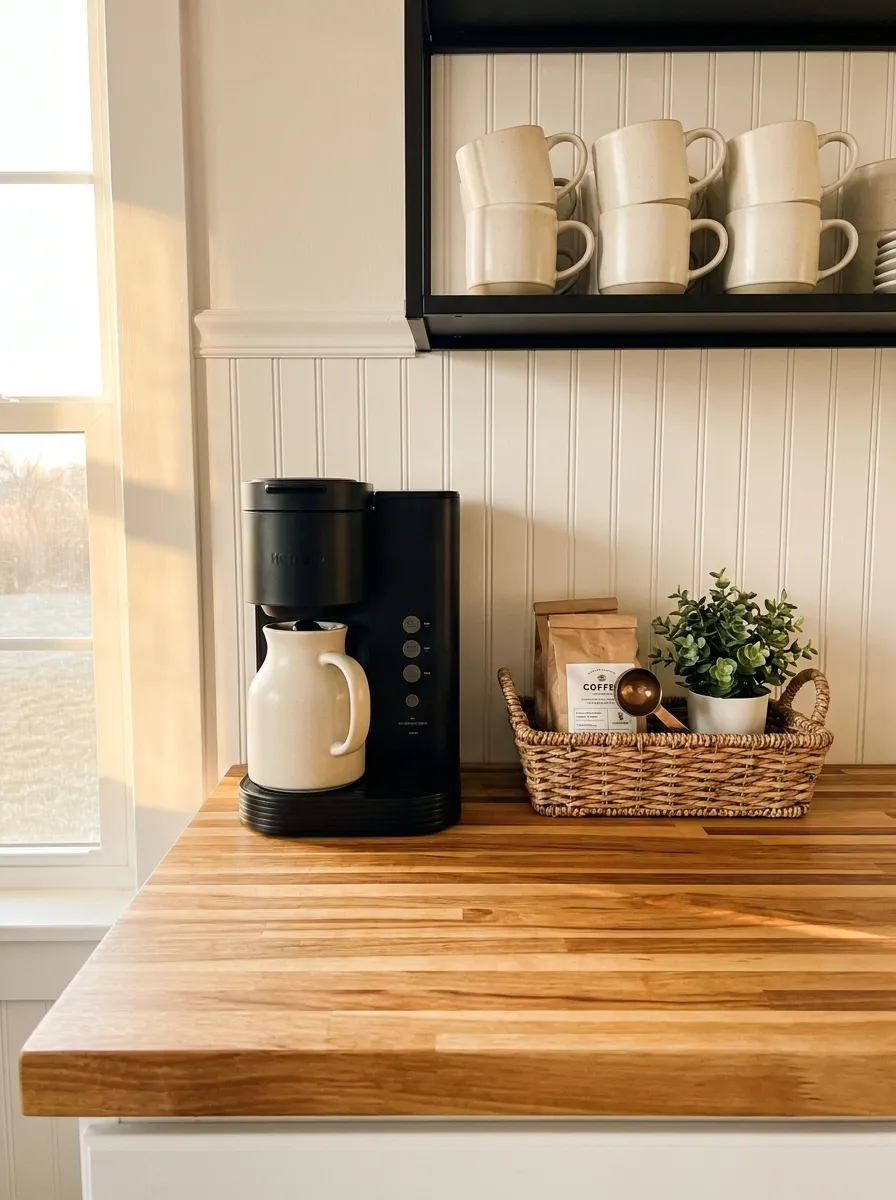
White beadboard behind a butcher-block counter gives this coffee station a familiar farmhouse look without requiring a barn door or a sign explaining that coffee is served here. A dark coffee maker provides contrast against the pale finishes, while ceramic mugs and one woven basket soften the arrangement.
The strongest part of this design is the mix of textures. Narrow vertical lines of beadboard contrast with the broad horizontal grain of the wood, so the scene looks finished without a pile of accessories. Keep the hardware consistent and skip distressed finishes on every surface.
Farmhouse character doesn’t require every object to look rescued from a fictional antique shop.
Dark Walnut Coffee Station With Black Stone
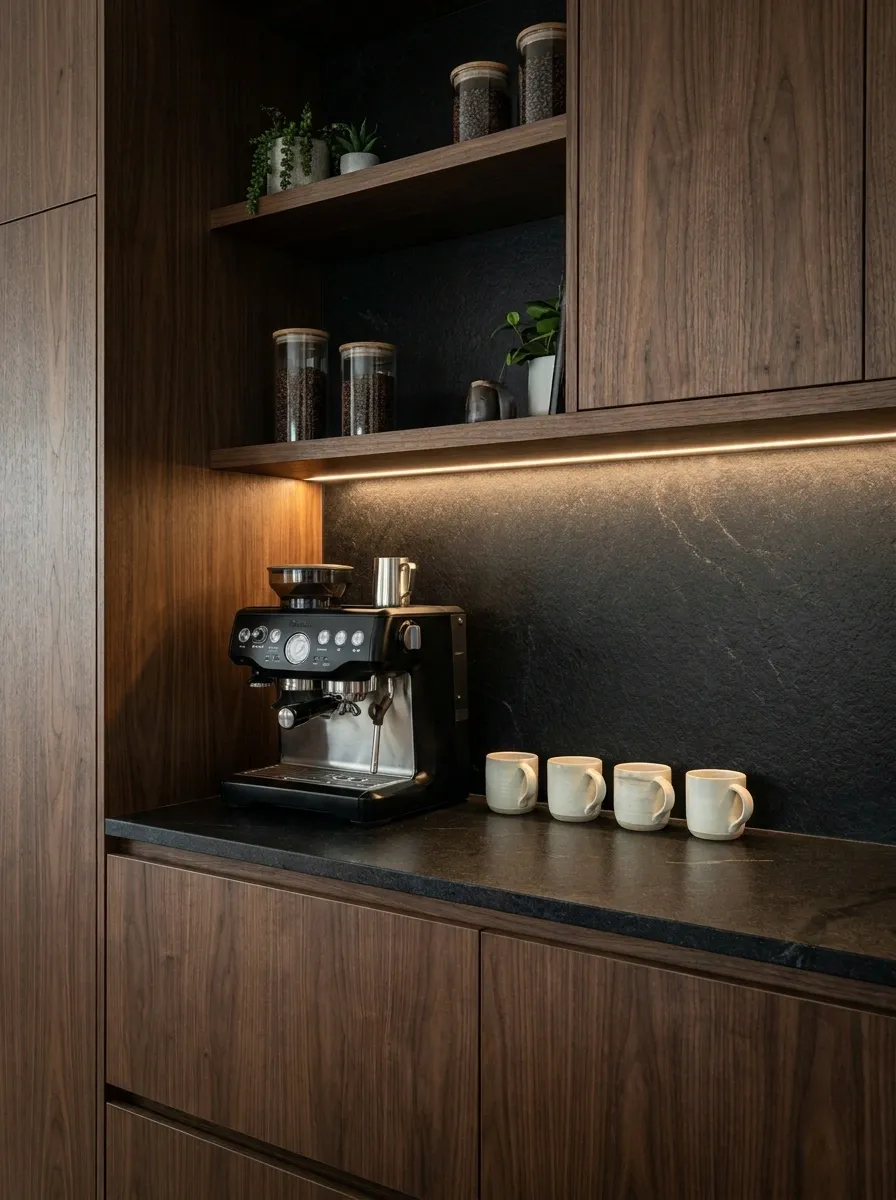
Dark walnut cabinets, a black stone backsplash, and warm under-cabinet lighting create a dramatic coffee station. An espresso machine or dark drip coffee maker becomes part of the composition, while a few ivory mugs stand out against the surrounding finishes.
The wood grain prevents the whole area from looking flat, and the lighting picks out the textures instead of flooding everything with harsh white light. Pair matte cabinetry with stone that has subtle movement, then use lighter ceramics as punctuation.
Avoid covering the counter with black canisters, black trays, black jars, and black everything else. A dark palette needs contrast, not an identity crisis in monochrome.
Walk-In Pantry Coffee Station With a Dedicated Counter
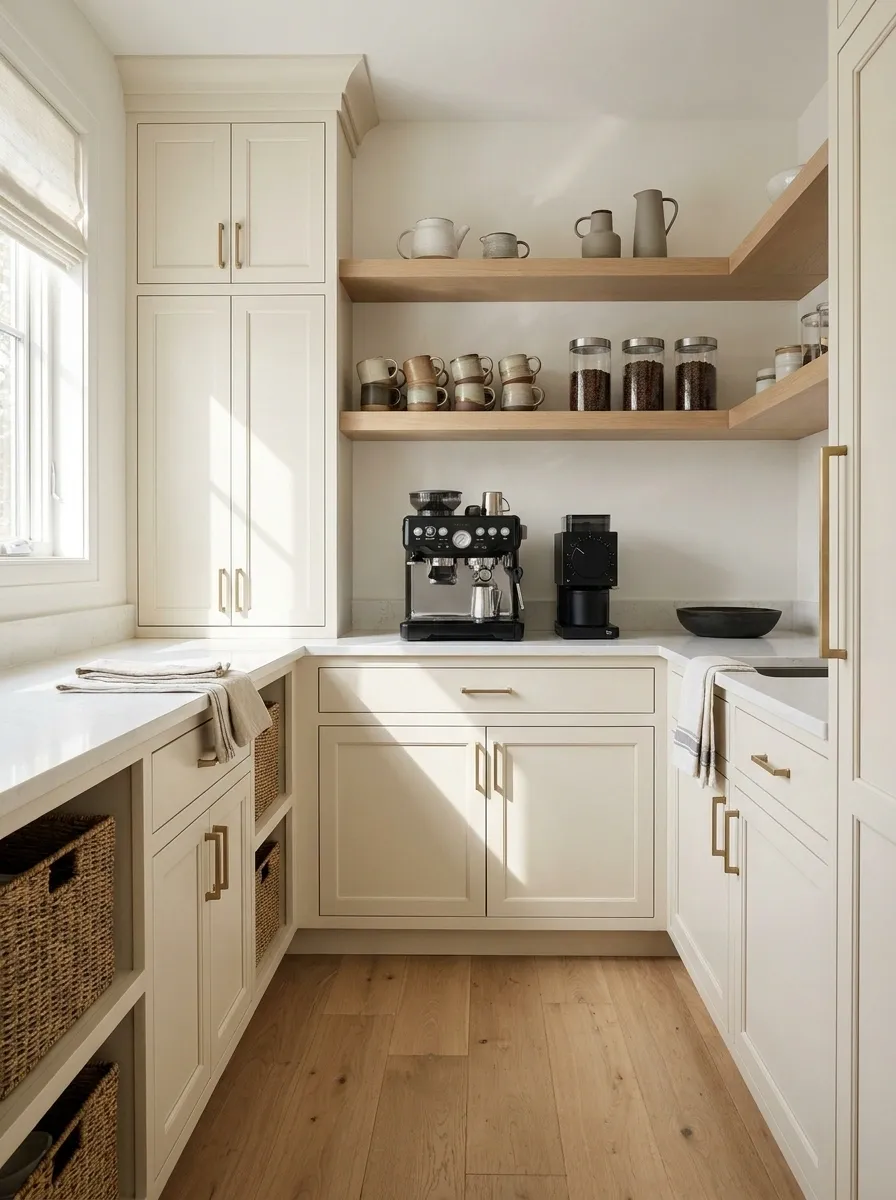
A walk-in pantry can house a complete coffee station without asking the main kitchen counter to do yet another job. A continuous worktop holds the coffee maker, grinder, and daily supplies, while shelves above store mugs, beans, and frequently used ingredients.
Lower cabinets or baskets can conceal bulk coffee, spare filters, and backup supplies. This setup provides room to replenish everything without rearranging the toaster, fruit bowl, and half the kitchen.
Still, don’t fill every shelf just because it exists. Keep the surface near the machine clear, with electrical access and appliance clearance planned properly.
Keep daily items close, heavy refills low, and the space immediately around the machine open. Pantry storage should make coffee easier, not turn every morning into an archaeological dig.
Breakfast Nook With a Coffee Station Beside the Dining Bench
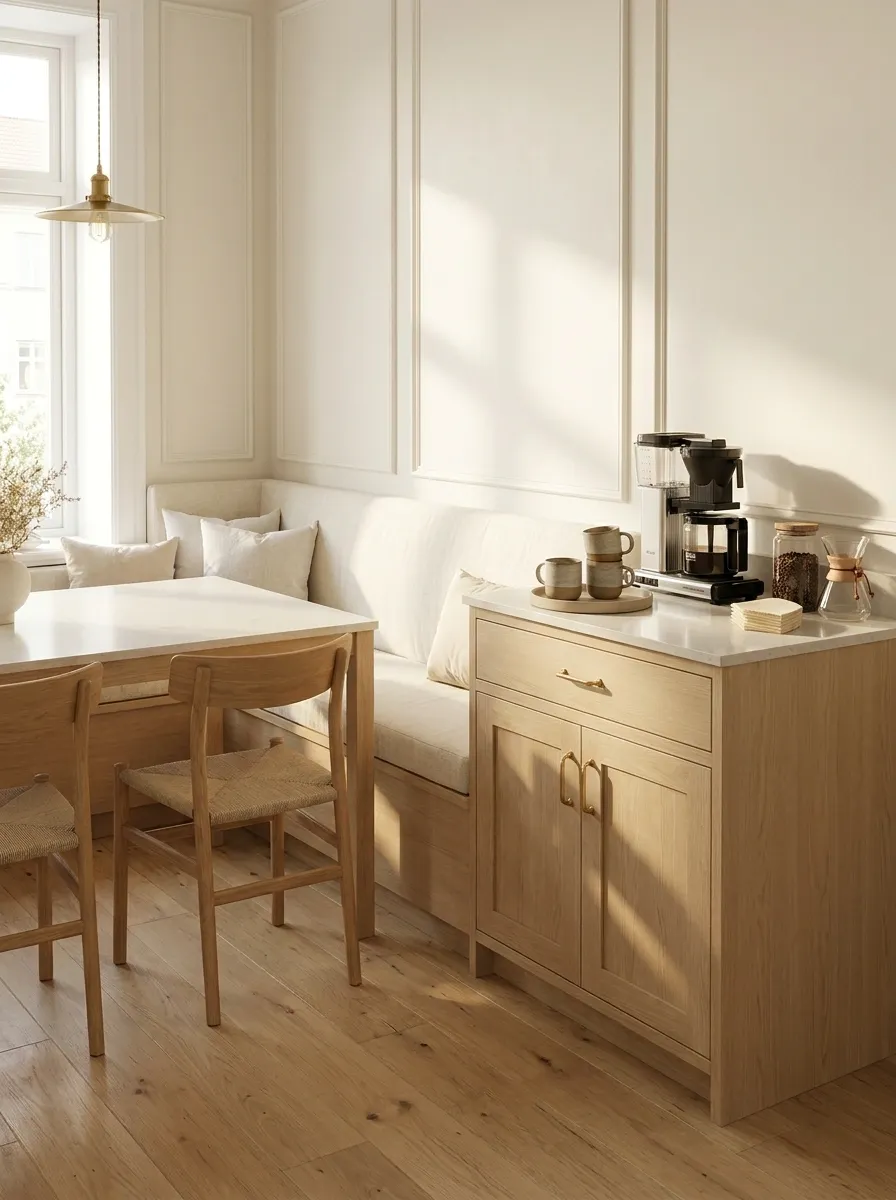
A small cabinet beside a built-in dining bench creates a natural home for the coffee maker. Pale oak, cream upholstery, and a light countertop keep the nook visually connected, while a small tray groups cups and coffee supplies without taking over the table.
The coffee station stays close enough for a quick morning refill, but the dining surface remains available for actual breakfast. Repeat one or two finishes across the bench, cabinet, and table to connect the layout.
Avoid placing the machine where its cord crosses a walking route or where someone has to squeeze past a chair just to reach caffeine.
Keep the two zones close enough to be convenient, but separate enough that coffee equipment never takes over the breakfast table.
Kitchen Island End Converted Into a Coffee Zone
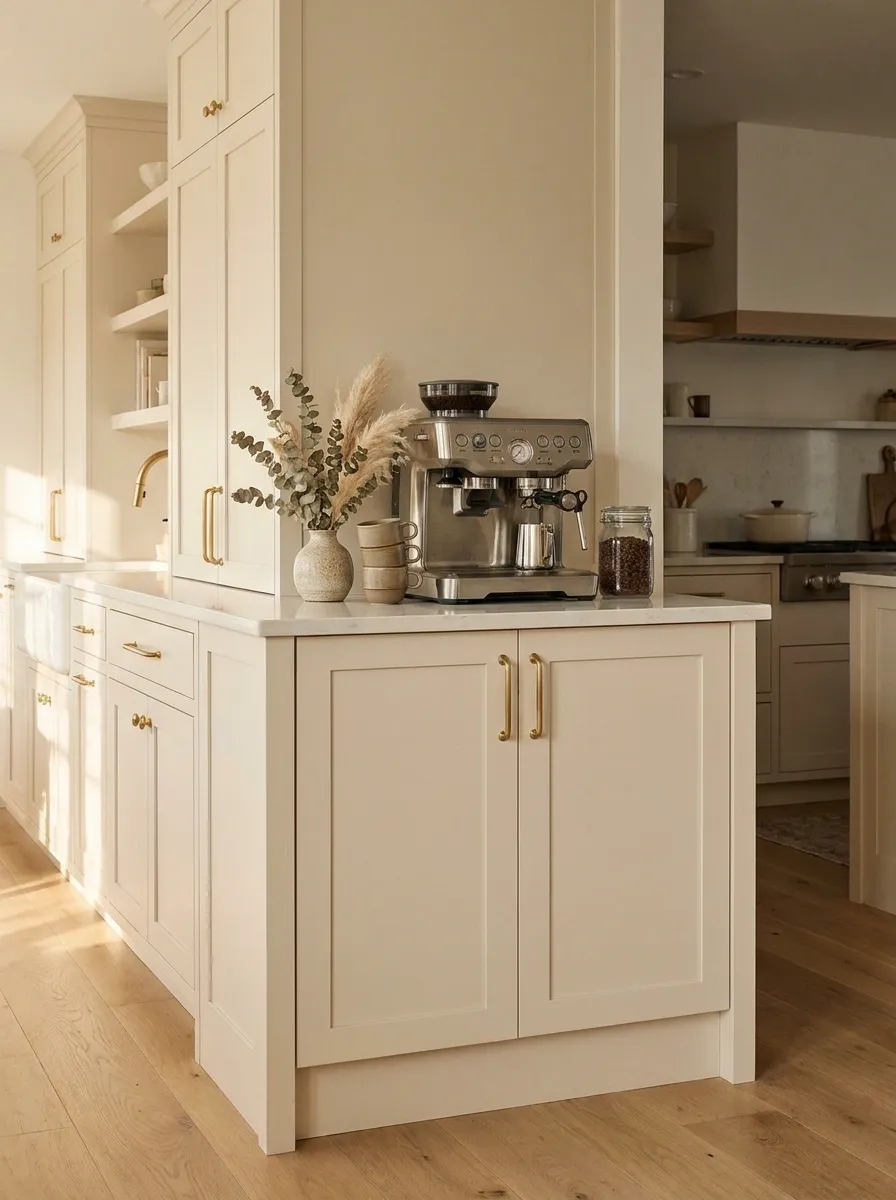
An unused end of the kitchen island can become a dedicated coffee station, particularly when its cabinetry already matches the rest of the kitchen. Position the coffee maker on the end counter with beans, filters, and mugs stored in a nearby drawer or cabinet.
A pale stone surface and matching cabinet fronts help the station blend into the island. This layout separates coffee preparation from the main food-prep area, which is useful when several people are using the kitchen.
Keep the equipment clear of busy seating and cooking zones. The island is already doing several jobs. It doesn’t need to become a traffic jam with caffeine privileges.
The coffee zone needs enough room for safe operation without swallowing the surface needed for chopping, plating, or everyday cooking.
Dining Room Sideboard Styled as a Coffee Bar
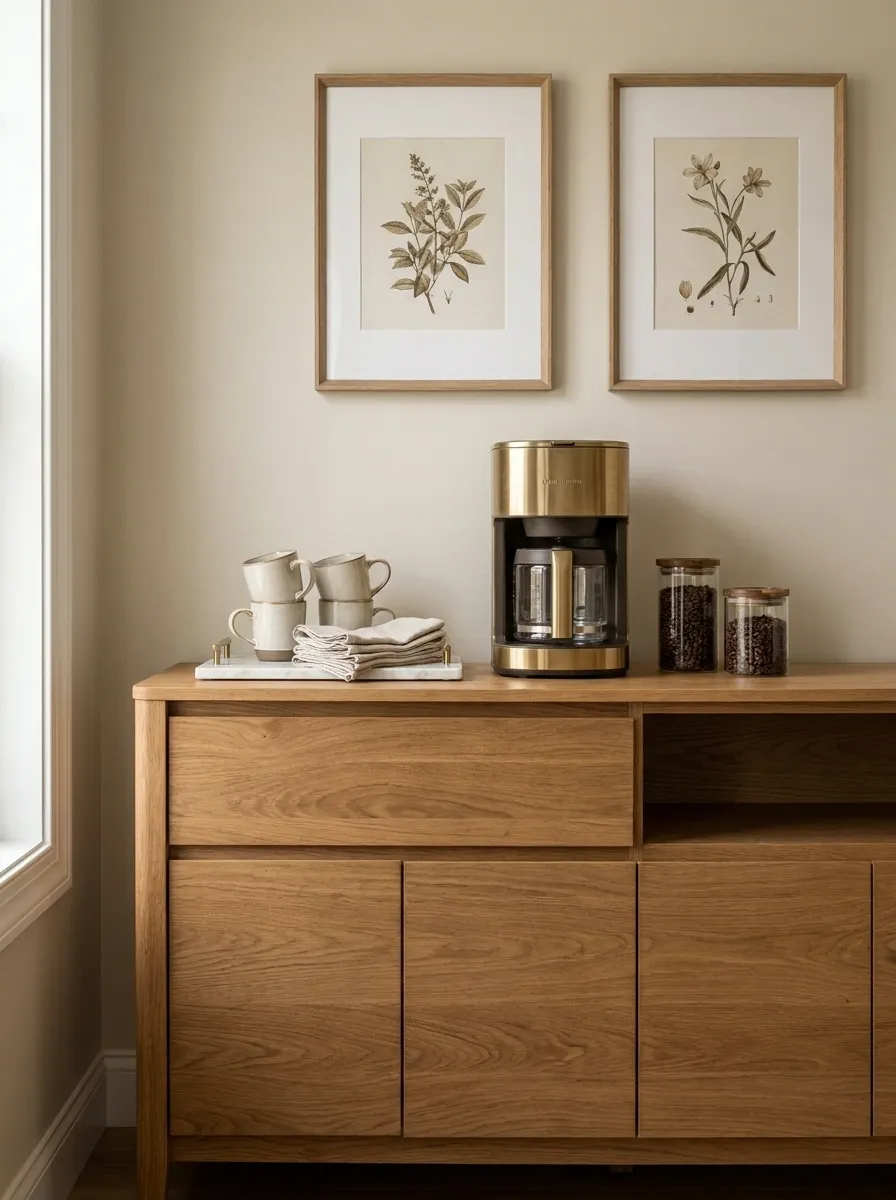
A dining room sideboard makes a convincing coffee bar because it already has the right proportions for serving. A wooden credenza, a coffee maker, a ceramic mug collection, and a small serving tray create a setup that looks appropriate beside a dining table.
Framed artwork above the furniture adds vertical interest, while closed cupboards conceal spare filters, coffee beans, and packaging. This concept is useful when guests gather in the dining room and the kitchen counter is already busy.
Keep the arrangement wider than it is tall, and leave some of the furniture top uncovered. A sideboard buried under accessories is still clutter, even when the clutter has expensive taste.
Use the lower cupboards for backups and keep the serving surface open. Check that the sideboard is suitable for an appliance and arrange safe electrical access.
L-Shaped Corner Coffee Station That Uses an Awkward Counter
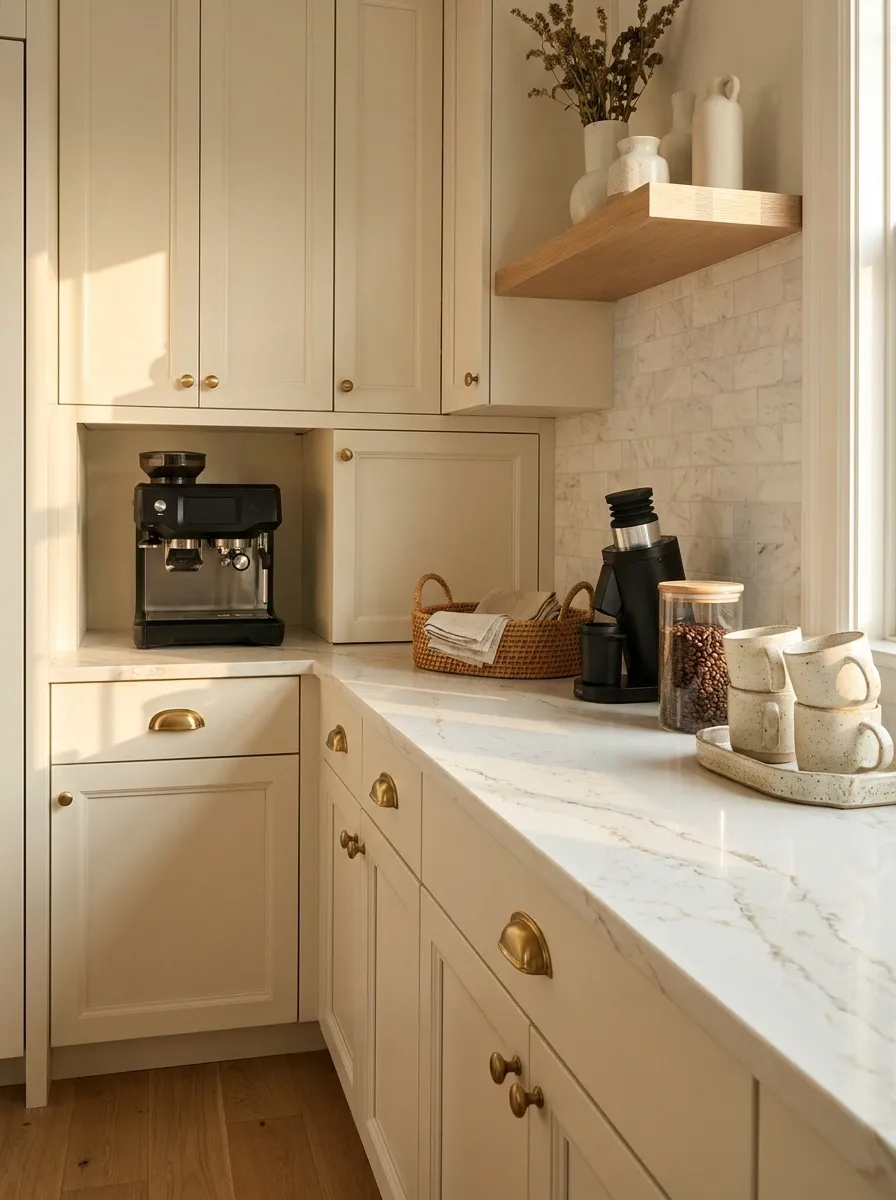
That awkward L-shaped counter where nothing seems to fit can actually make a good coffee station. Place the coffee maker on one side and use the adjoining counter for a grinder, bean container, or mug tray. Matching cabinetry and a simple backsplash make the corner feel intentional.
The important detail is equipment placement. A corner can restrict access to a water reservoir or make a grinder difficult to use if everything is pushed too far back. Leave enough room to operate and clean the equipment comfortably.
A clever layout should eliminate daily annoyances, not relocate them to the precise spot where nobody wants to reach.
Check reservoir access, lid clearance, and space for cleaning before settling on equipment placement.
Studio Apartment Coffee Station With Hidden Storage
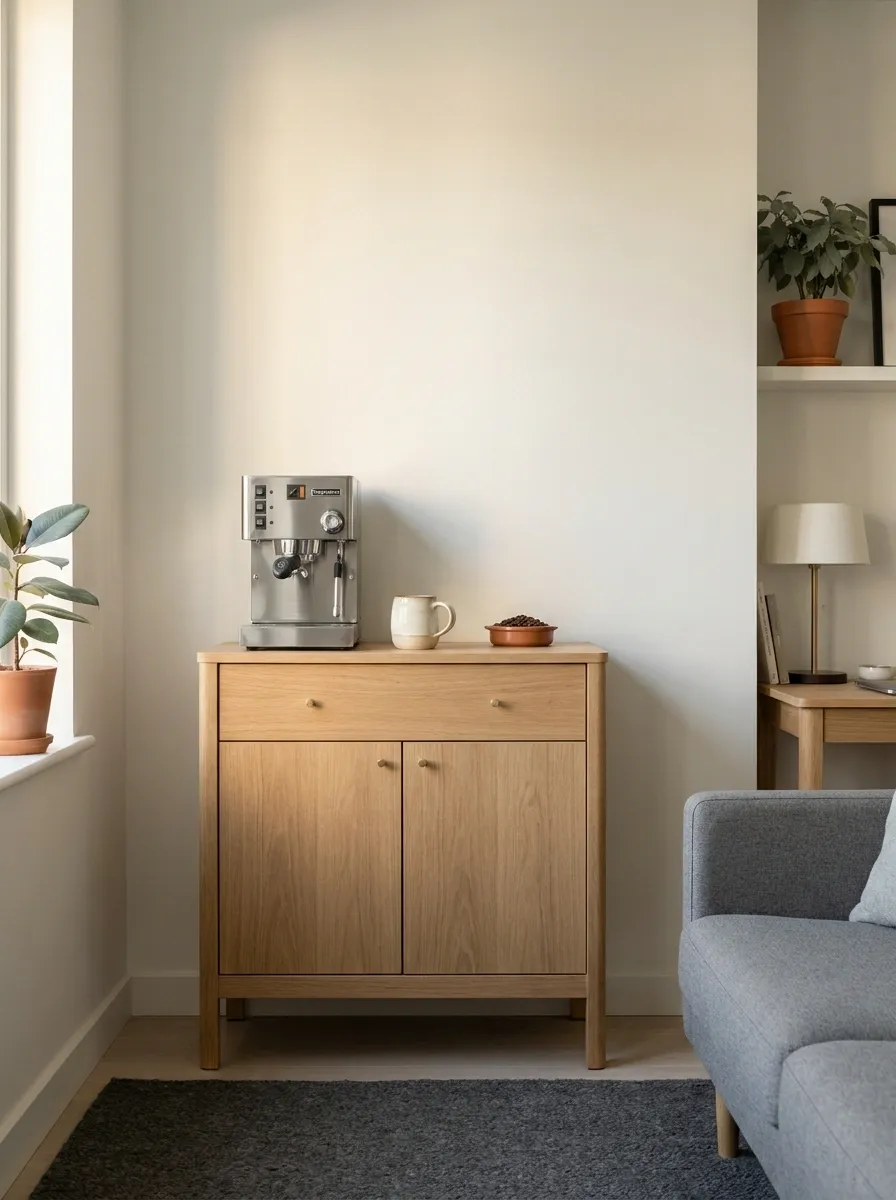
In a studio apartment, the coffee station has to share its surroundings with the sofa, desk, kitchen, and approximately every possession accumulated since moving day. A compact cabinet with a useful top surface provides a dedicated place for a coffee maker, while closed storage hides beans, filters, mugs, and backup supplies.
A warm wood finish or muted green paint helps the furniture connect to the rest of the room. Keep the cabinet visually simple so the equipment doesn’t compete with the living space.
The goal is to make the apartment feel organized without installing a miniature café in the middle of the living room.
The coffee station should define a corner, not consume the entire room. Leave the surrounding floor free for its actual jobs.
Industrial Coffee Bar With Reclaimed Wood and Metal Shelving
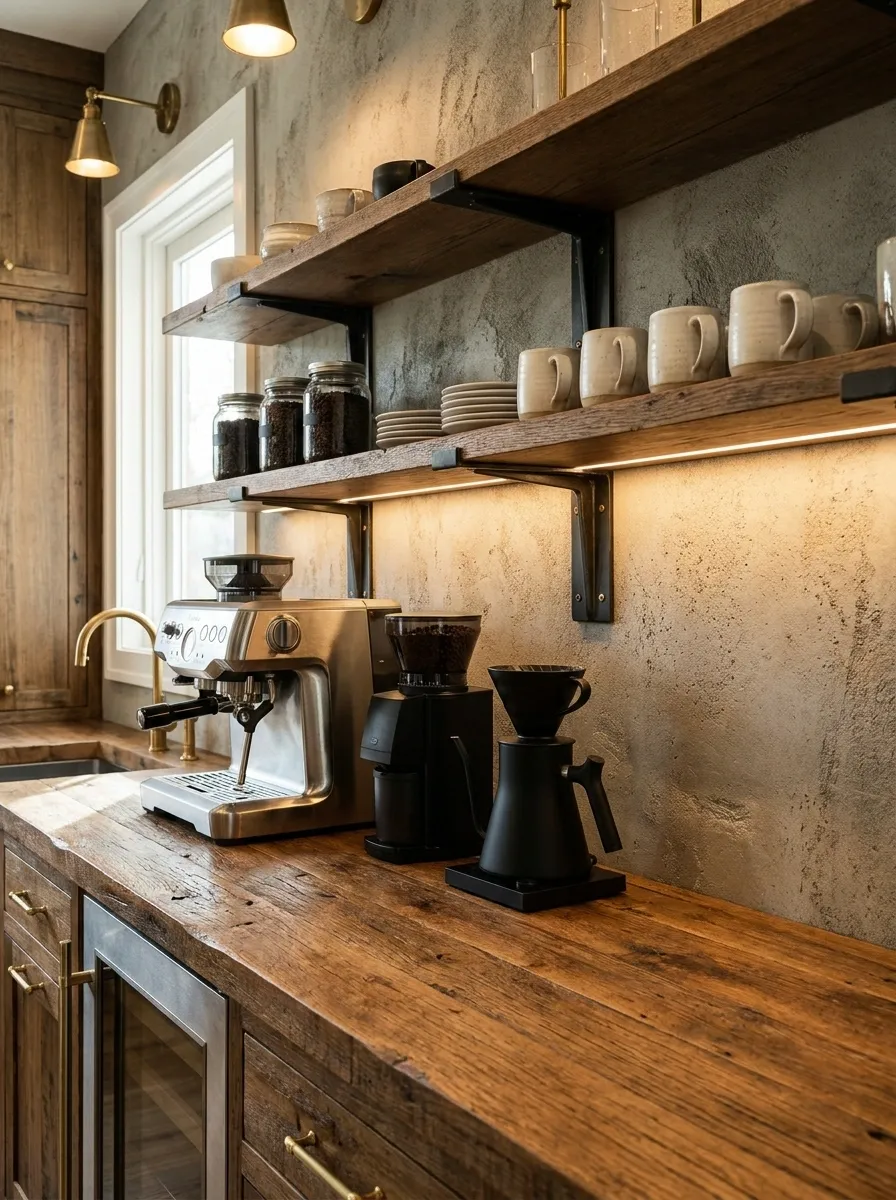
Reclaimed wood shelving, black metal brackets, and a concrete-look backsplash give this coffee station industrial character without making the kitchen look like a renovated factory. An espresso machine or dark drip coffee maker sits on a substantial wood counter, with dark-framed shelves holding ceramic mugs and coffee supplies.
Warm lighting softens the harder finishes, while natural wood grain keeps the setup from feeling cold. Rough textures already provide plenty of visual interest, so avoid stacking distressed signs, galvanized containers, exposed pipes, and every industrial accessory known to the internet.
A cleaner arrangement lets the materials do the talking.
Use dark metal to define the structure, wood to warm it up, and a restrained backsplash to keep it grounded. Three strong materials beat twelve decorative distractions.
Airy Coastal Coffee Station With Pale Blue Cabinets
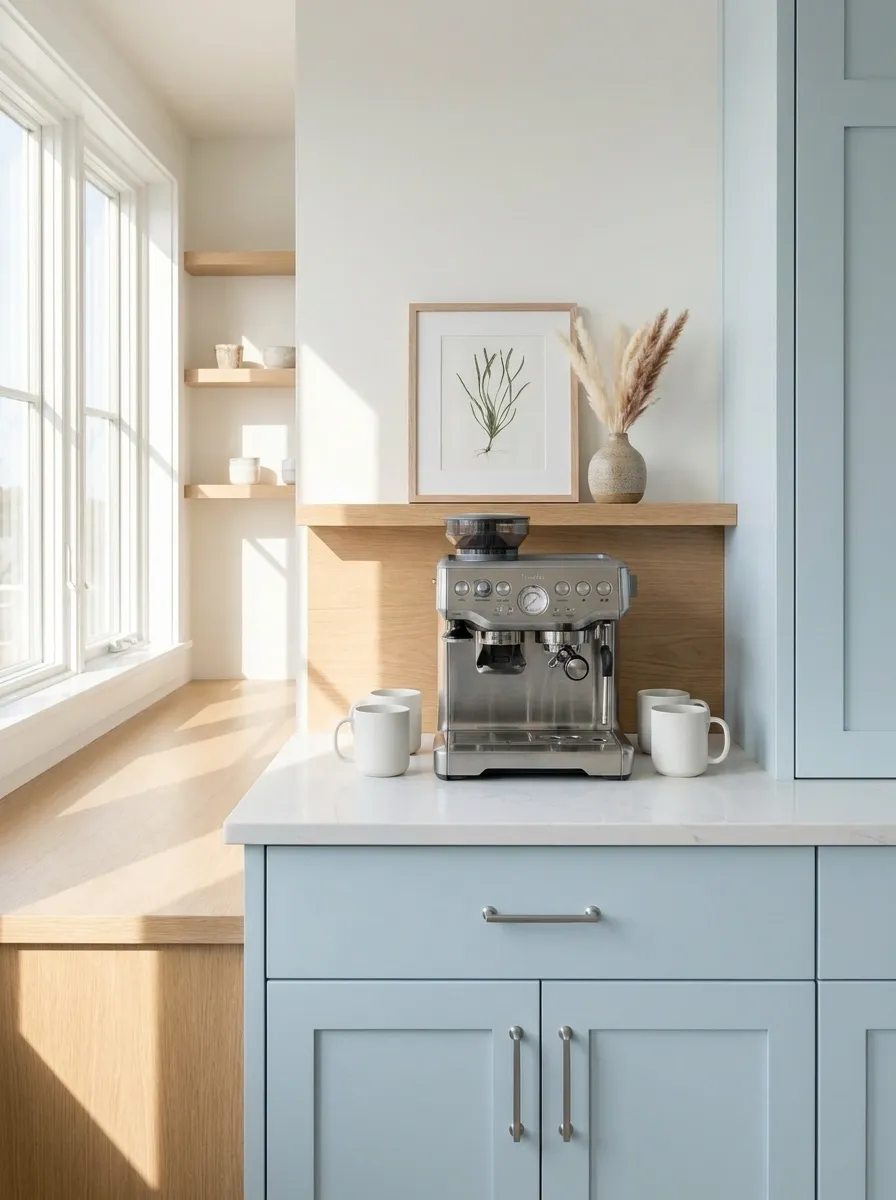
Pale blue cabinetry gives a coffee station a coastal feel without covering the kitchen in seashells and miniature anchors. White countertops keep the area bright, while natural oak details and simple ceramic mugs add warmth. A small framed print can finish the wall, but the palette should remain the main attraction.
The combination works because cool blue and warm wood balance each other. Too much blue can make the arrangement feel chilly, while too many nautical accessories make it look like a souvenir shop with a coffee machine.
Keep the decorative pieces restrained and let the light finishes create the relaxed atmosphere.
Minimalist White Coffee Station With Hidden Supply Storage
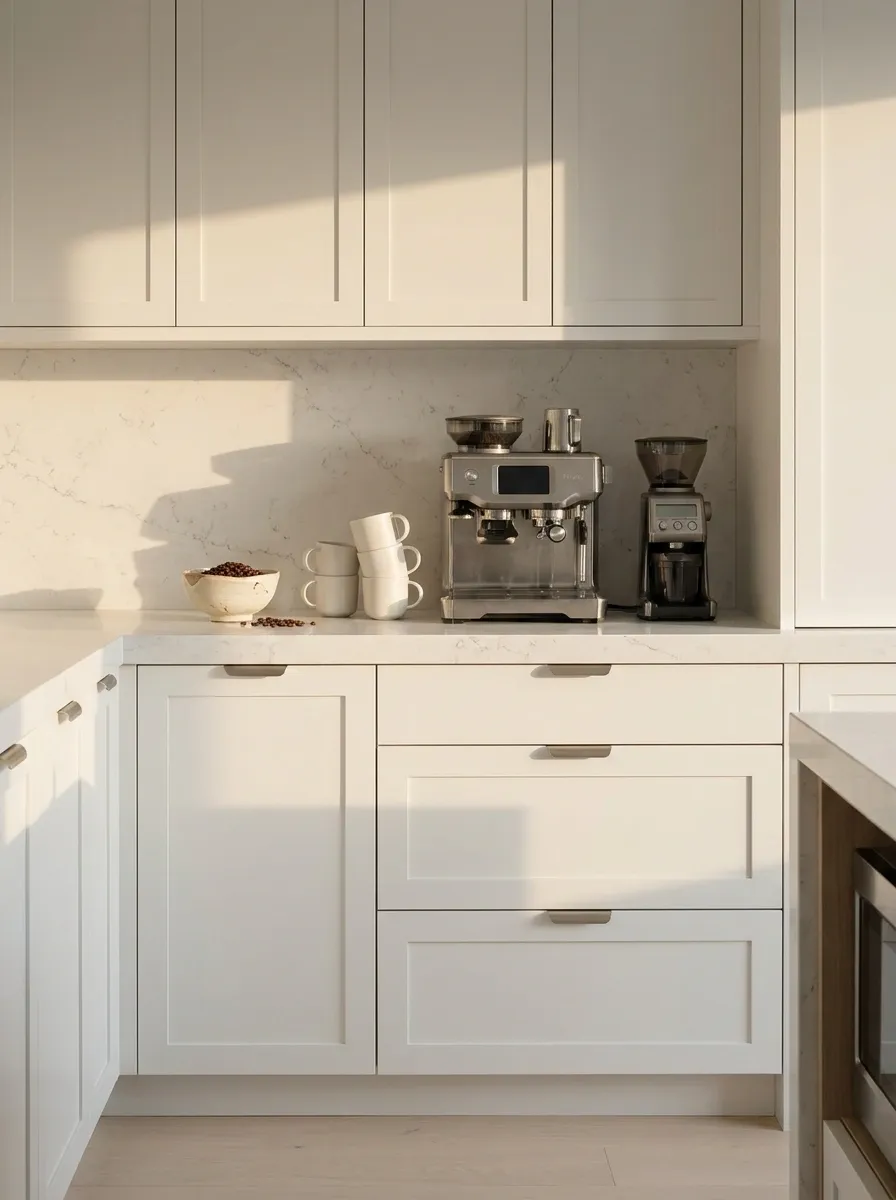
White cabinetry, a pale stone countertop, and discreet storage create a coffee station with very little visual noise. The coffee maker and grinder become the main functional objects, with a small number of matching cups nearby and beans, filters, or pods stored in a drawer.
Subtle changes in texture prevent the white surfaces from looking flat. Minimalism isn’t an instruction to buy sixteen matching glass jars. It’s about deciding which objects deserve to remain visible.
Keep the accessories useful, hide the packaging, and resist adding decorations simply because the counter looks empty. That empty space is doing its job.
The aim isn’t an empty kitchen that nobody can use. It’s a working station without the supporting cast of unnecessary objects.
Traditional Coffee Alcove With Cream Cabinetry and Marble
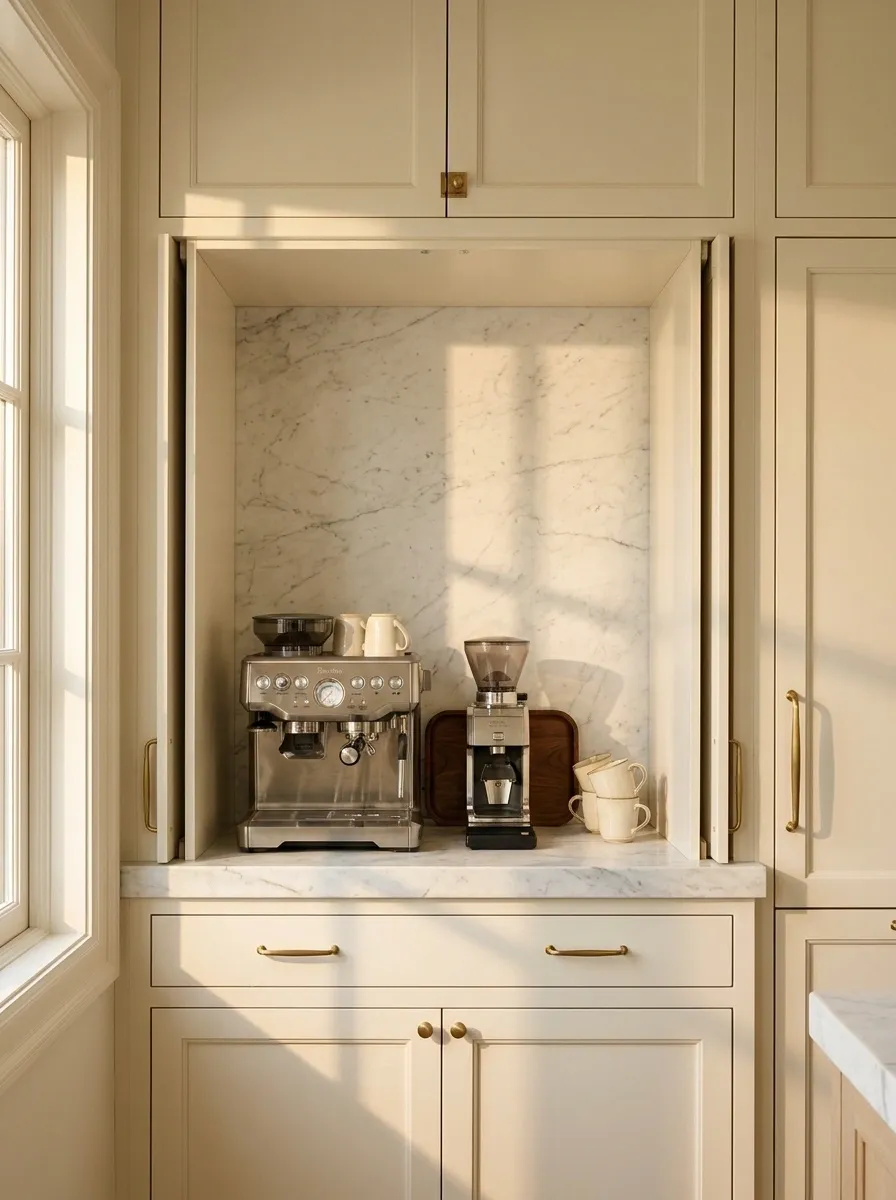
A recessed coffee alcove framed by cream cabinetry makes the brewing area feel like part of the kitchen’s architecture. A marble or marble-look backsplash introduces subtle movement, while traditional cabinet doors and modest brass hardware provide character. Porcelain mugs, a grinder, and a small serving tray complete the scene without competing with the detailing.
The alcove gives the station a clear boundary, the stone adds texture, and the cream finishes keep the composition warm. Avoid mixing too many ornate details into the recess.
If the cabinets already have decorative trim, a heavily patterned tray and a wall full of signs are just extra plotlines nobody asked for.
The recess must accommodate the equipment’s height, lid or reservoir access, and operating clearance.
Under-Stair Coffee Nook Built Into an Unused Recess
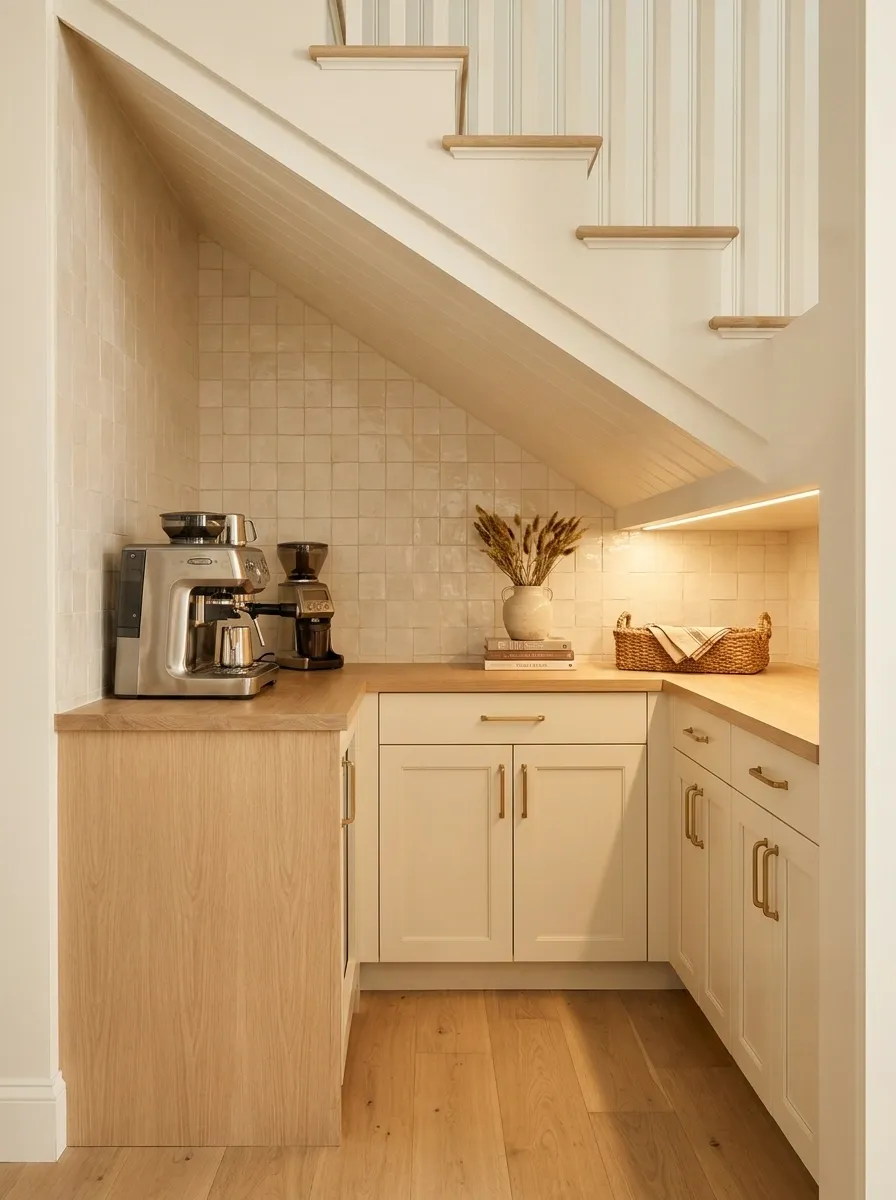
The sloping space beneath a staircase is often too awkward for ordinary furniture but can work as a built-in coffee nook. A custom counter follows the wall shape, while drawers and cupboards occupy the deeper portions beneath the stairs. The coffee maker and grinder sit where there is enough headroom to operate them comfortably.
Warm lighting and a simple backsplash define the little workstation. This is a more involved project than adding a cart, but it can make use of space that otherwise collects random household clutter.
Plan the dimensions, electrical routing, and clearance carefully. Forcing equipment into the lowest part of the recess just to claim the space is a very elaborate way to spill coffee.
Let the higher portion accommodate the working station and use the lower portion for storage where the dimensions allow. The result should look designed around the staircase, not squeezed into its leftovers.
Home Office Coffee Station on a Separate Credenza
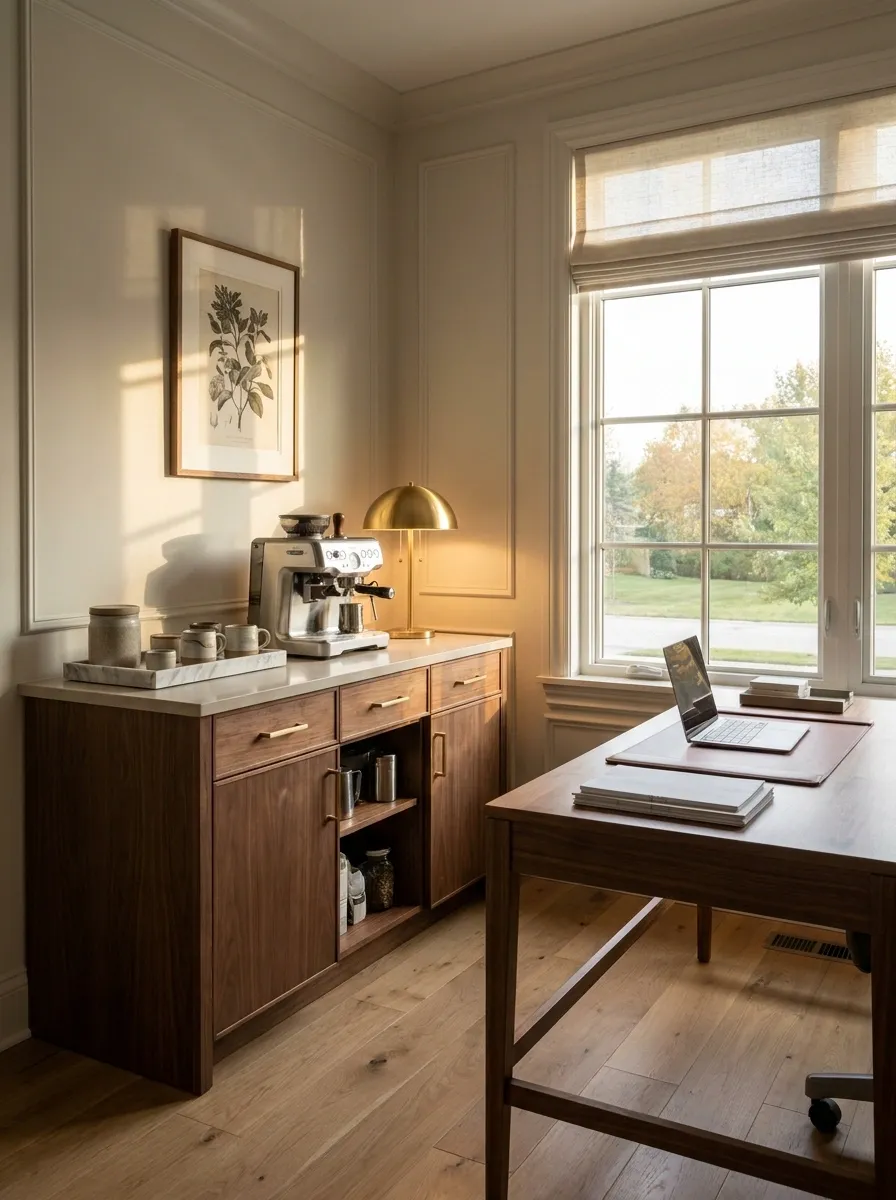
A wooden credenza beside a home office desk gives the coffee maker a proper place without sacrificing valuable workspace. Pair a walnut or oak cabinet with a neutral countertop, a small tray for mugs, and concealed storage for coffee beans and filters. A framed print or understated lamp can connect the station to the room.
The separation is the real win. Coffee supplies don’t compete with keyboards, and the desk doesn’t become a permanent dumping ground for mugs. Keep the equipment near a suitable electrical outlet and away from electronics where spills could cause damage.
Productivity is difficult enough without adding a coffee incident to the meeting agenda.
Use related wood tones or matching hardware to connect the furniture. The two zones should look like parts of the same room, not rival departments.
Guest Room Coffee Nook With a Hotel-Inspired Cabinet
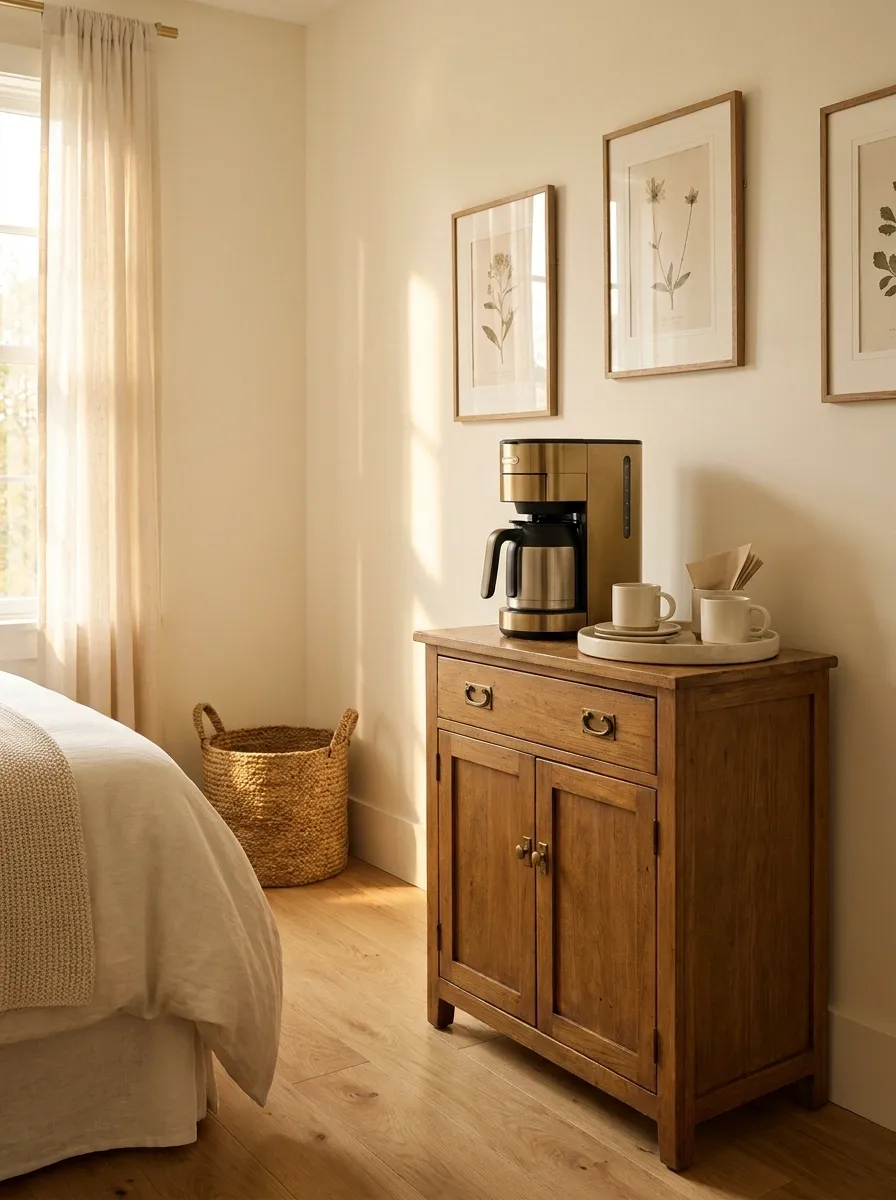
A compact cabinet in a guest bedroom can hold a coffee maker, a few cups, and a neatly arranged tray of supplies. Warm wood, cream linens, and simple framed artwork create a coordinated look, while closed storage keeps spare coffee, filters, and other supplies out of sight.
The station gives overnight guests a convenient morning option without requiring them to navigate an unfamiliar kitchen before their first cup. Keep the furniture compact enough to preserve walking space and room for luggage.
A welcoming guest room needs practical details, not a decorative arrangement so elaborate that visitors feel guilty touching anything.
Hospitality is mostly anticipating small inconveniences before someone has to ask where the coffee cups are.
Shared Coffee, Tea, and Hot Chocolate Station
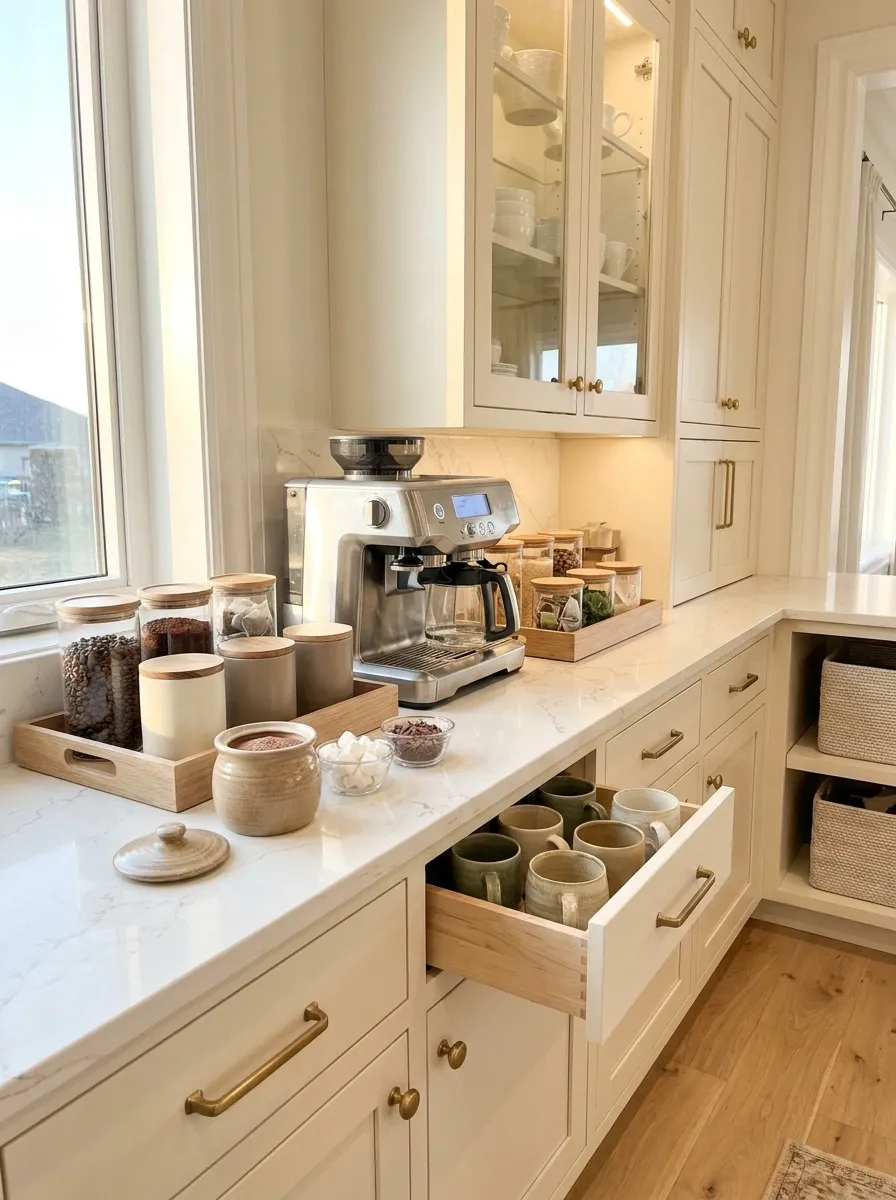
A shared beverage station makes a family kitchen easier to navigate when some people want coffee, others prefer tea, and someone inevitably wants hot chocolate at an unusual hour. The coffee maker anchors the counter, with separate containers for beans, tea bags, and cocoa supplies. A drawer holds spare mugs, while a shallow tray groups frequently used items.
Organize supplies by how they’re used instead of putting every jar on display. Choose a restrained combination of glass, ceramic, and wood so different beverage categories still feel connected.
A shared station should make mornings smoother, not create a beverage bureaucracy with seventeen containers and no available counter space.
Use containers sized for the supplies they actually hold. Nobody needs a giant jar for three tea bags, and the cupboard doesn’t need to become a beverage museum.
Pull-Out Coffee Station Inside a Tall Kitchen Cabinet
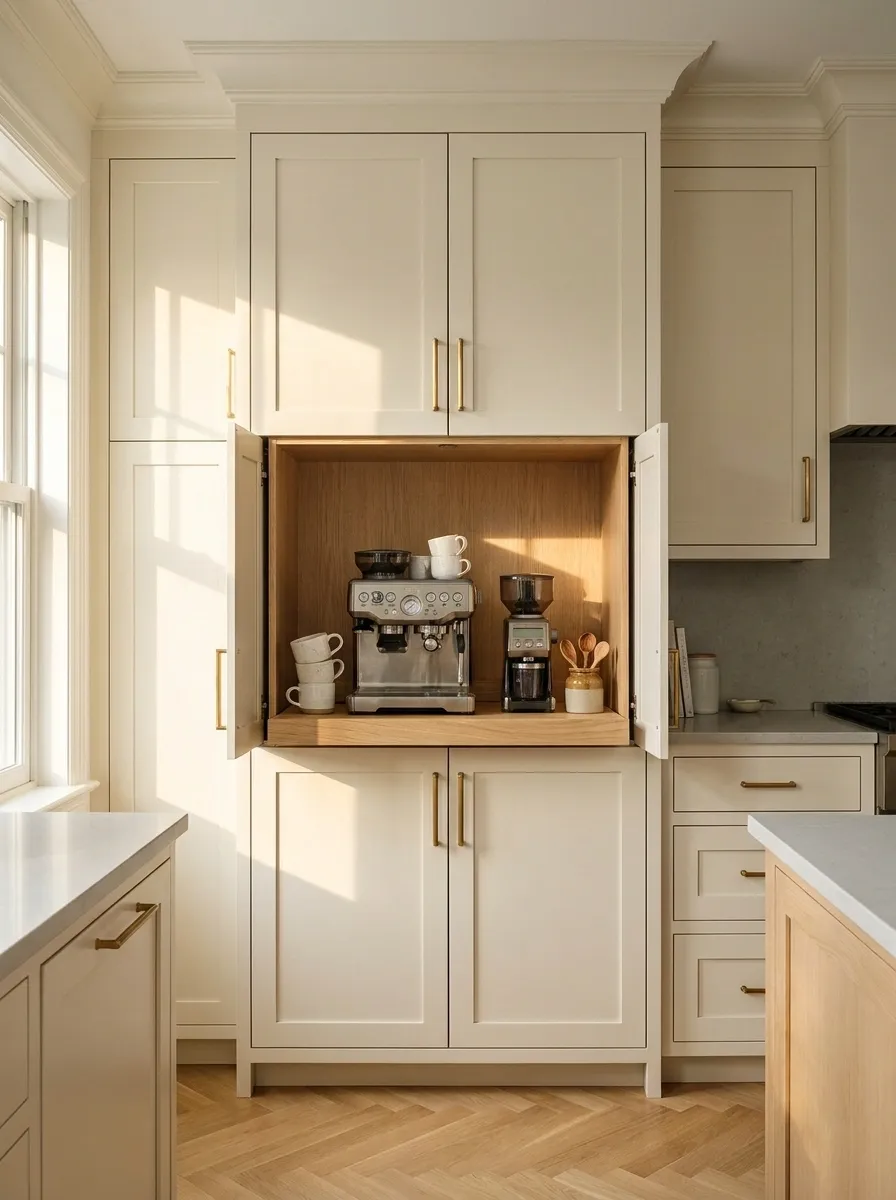
For a very small kitchen, a purpose-designed pull-out coffee station can provide a compact work surface without permanently claiming counter space. A tall cabinet holds the coffee maker and supplies, while a suitable pull-out shelf creates room for preparation when the station is in use. Closed fronts keep the kitchen looking streamlined.
This is more involved than adding a shelf to an existing cabinet. The appliance’s weight, shelf capacity, extension depth, electrical access, and safe operating conditions all need consideration. The cabinet must accommodate the machine’s height and access to removable parts.
Concealing clutter is useful, but a coffee maker needs more than a tiny cupboard and an optimistic carpenter.
Operate and store the machine according to its manufacturer’s instructions. A pull-out surface is a spatial solution, not permission to run an enclosed appliance without appropriate clearance.
Entertaining-Ready Coffee Bar With Under-Counter Beverage Storage
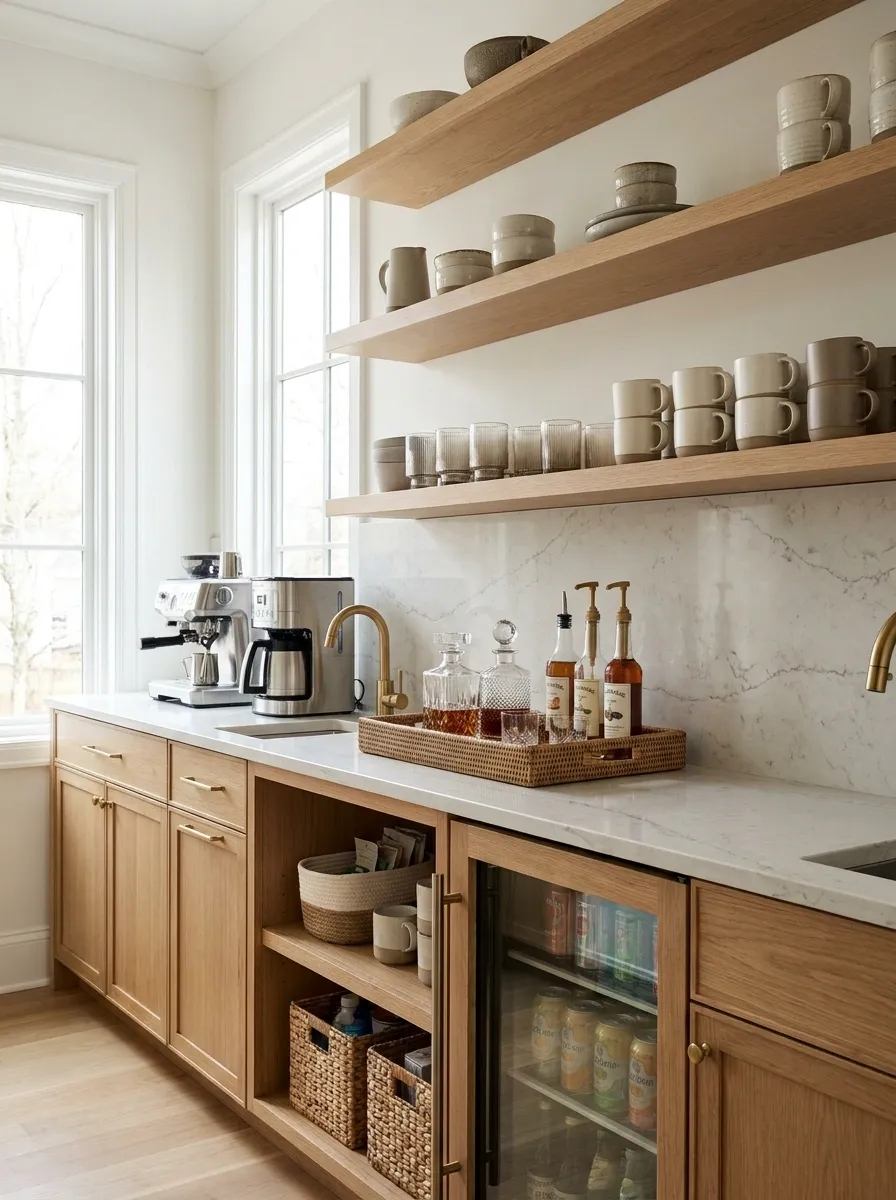
A longer beverage counter can combine an espresso machine, drip coffee maker, serving trays, glassware, and an under-counter beverage refrigerator in one dedicated zone. Warm wood cabinets and a pale stone worktop keep the arrangement residential rather than commercial, while open shelves provide room for mugs and a few attractive serving pieces.
The extra counter length allows several people to prepare drinks without competing for the same tiny patch of work surface. Keep the brewing equipment at one end, reserve the central surface for preparation, and place cups and refreshments within easy reach.
A hosting station should make entertaining easier, not create a queue behind someone searching for a clean mug.
Under-counter storage keeps extra refreshments nearby without taking over the preparation surface.
The longer counter should make serving easier, not become a place for every bottle, jar, and accessory in the house. Keep the zones distinct and leave room to set down a cup.
Scandinavian Coffee Station With Pale Wood and Soft Neutrals
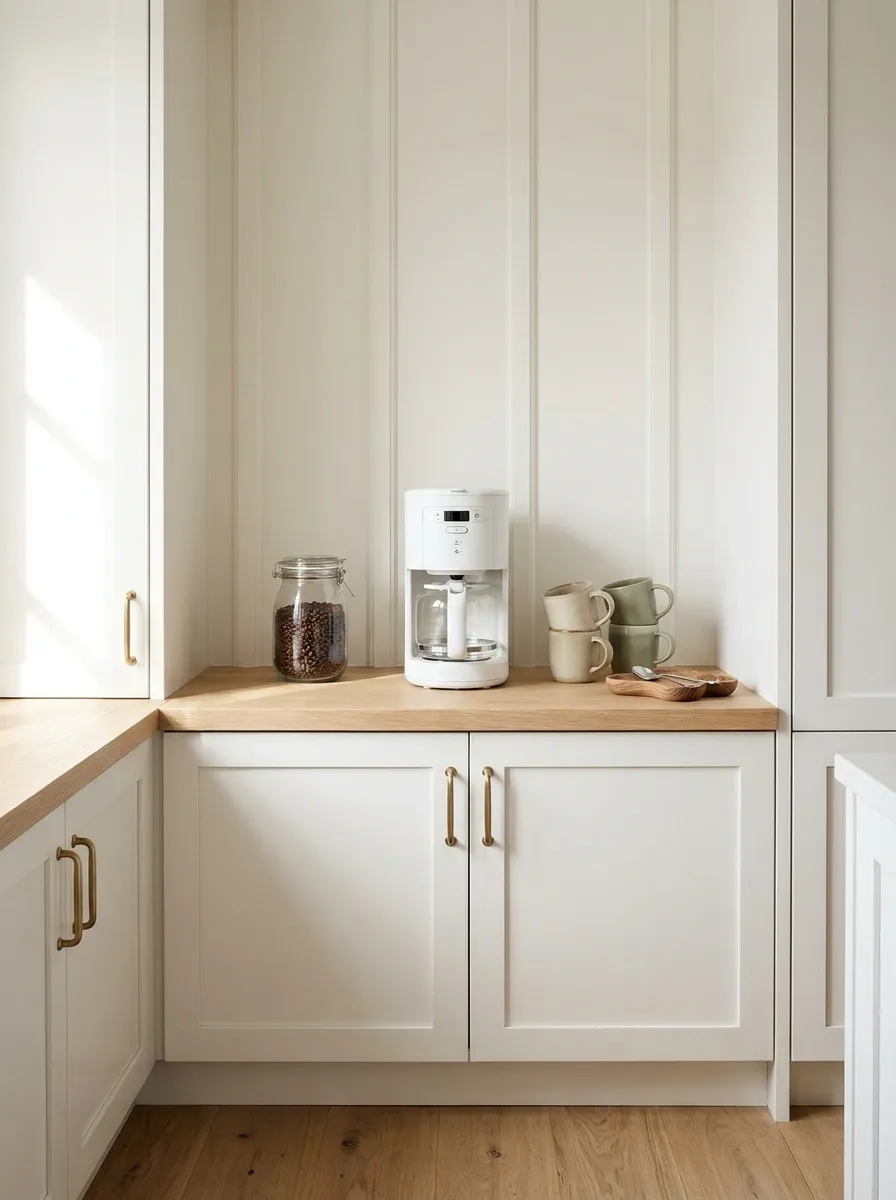
A Scandinavian-inspired coffee station keeps the focus on natural materials, simple shapes, and a practical brewing setup. A pale oak counter, white cabinetry, and a compact drip coffee maker create a clean starting point. A glass coffee jar, a few handmade ceramic mugs, and a small wooden tray add warmth without filling every available surface.
The style works particularly well in bright kitchens where natural light can reveal the grain of the wood and the texture of the ceramics. Keep the palette quiet, with soft gray or warm beige accents rather than several competing colors.
The result should feel calm and useful, not like a showroom where touching the coffee maker requires permission.
Let the wood bring warmth, use white to keep the arrangement light, and introduce muted green or gray only where the composition needs another layer.
Espresso Station With a Dedicated Grinder and Accessory Drawers
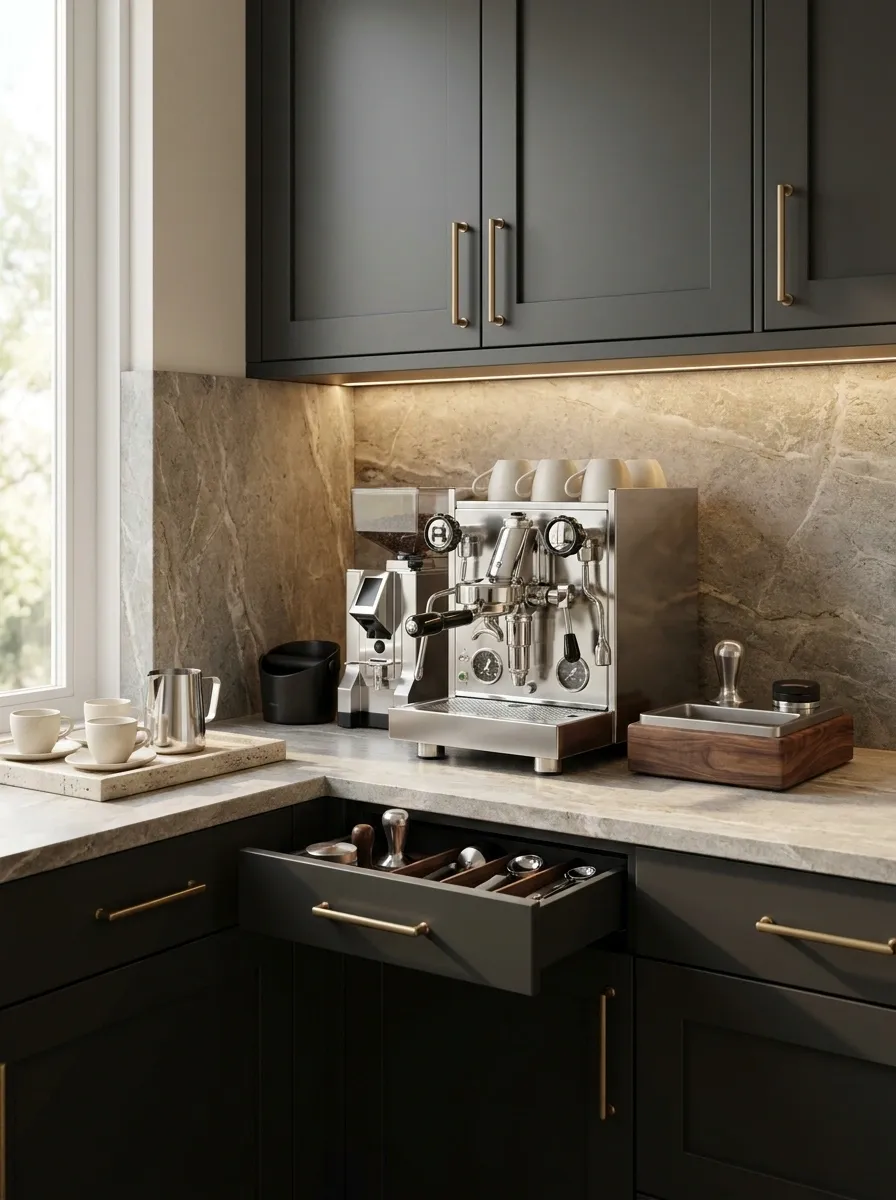
For households that enjoy espresso, a dedicated station needs more than a coffee maker and a pretty mug collection. A compact espresso machine, grinder, knock box, tamper, and a few small accessories should work together on one practical counter. Dark cabinetry, a stone backsplash, and warm under-cabinet lighting give the equipment a strong visual setting.
Keep the grinder next to the machine, with frequently used accessories stored in a shallow drawer. The milk pitcher and cups can sit nearby, while cleaning supplies remain concealed but accessible.
The layout should follow the actual brewing routine. A beautiful espresso setup that requires moving four objects before every shot is basically a countertop obstacle course.
Keep the grinder, machine, tamper, and knock box within easy reach. Store spare accessories nearby rather than letting them occupy the entire counter.
Coffee Station With a Built-In Mug Wall
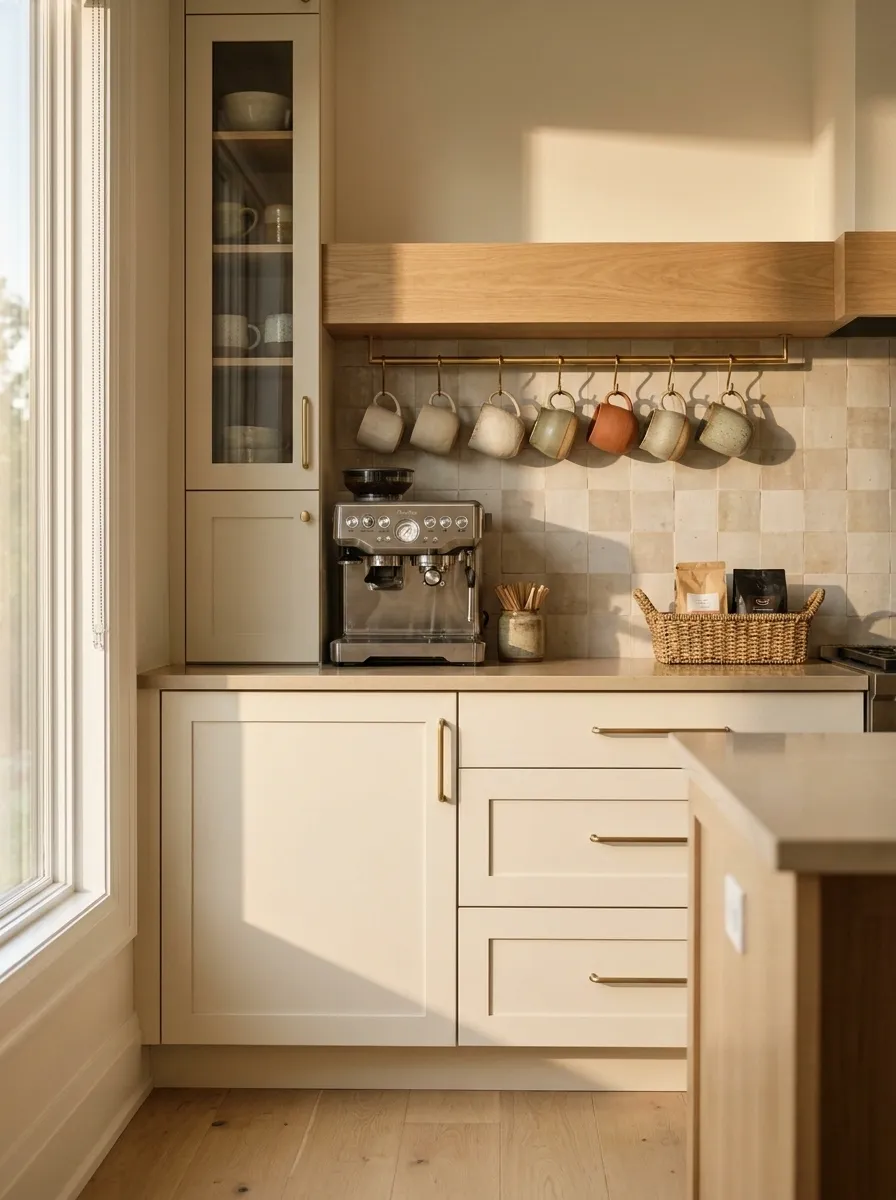
A dedicated mug wall can become the main visual feature of a coffee station when the surrounding counter and storage remain simple. A row of hooks beneath a wooden shelf or a carefully arranged wall-mounted rack displays ceramic cups above a compact coffee maker. A warm backsplash and matching lower cabinets tie the display to the rest of the kitchen.
Choose mugs with related colors or shapes rather than trying to make every cup identical. A few different textures can make the wall feel collected rather than overly staged.
Keep the hooks securely mounted and leave enough room between cups so handles don’t collide. A display should make mugs easier to reach, not turn them into a carefully arranged obstacle.
Keep the display selective. Match a few colors, vary the shapes slightly, and leave the countertop free for actual brewing.
Warm Modern Coffee Bar With Fluted Cabinetry
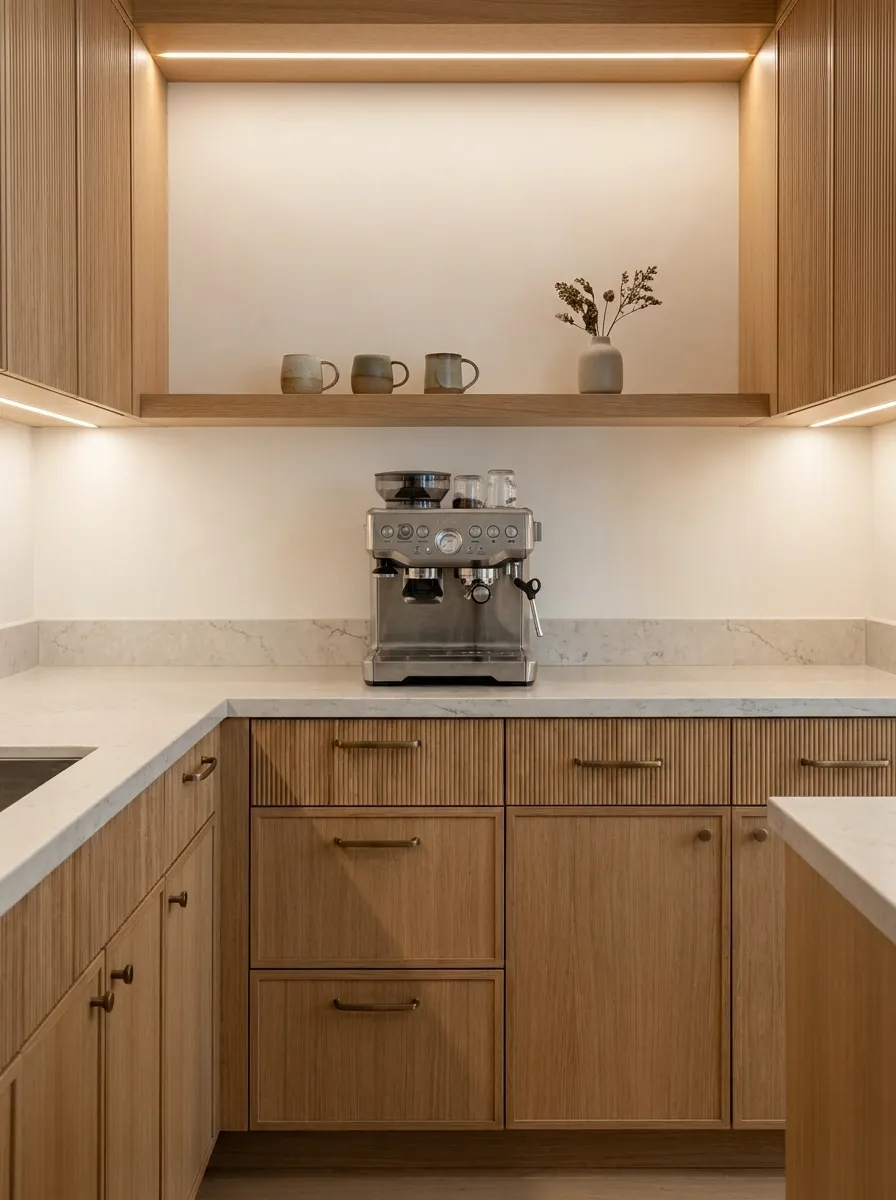
Fluted cabinet fronts bring subtle texture to a modern coffee station without relying on busy patterns or decorative accessories. Pair warm walnut or natural oak cabinetry with a pale stone countertop and a slim shelf above the machine. A compact espresso maker or drip brewer sits at the center, while matching drawers conceal coffee supplies.
Brushed bronze or dark hardware adds a small amount of contrast, and warm lighting makes the vertical cabinet detail more noticeable. The result feels contemporary but not cold.
Keep the surrounding finishes simple. Fluting already provides texture, so an elaborate backsplash and several competing patterns would turn the composition into a design argument.
Repeat the wood tone in a shelf or small tray, then let the hardware and lighting provide the remaining details.
Compact Coffee Station With a French Press and Pour-Over Setup
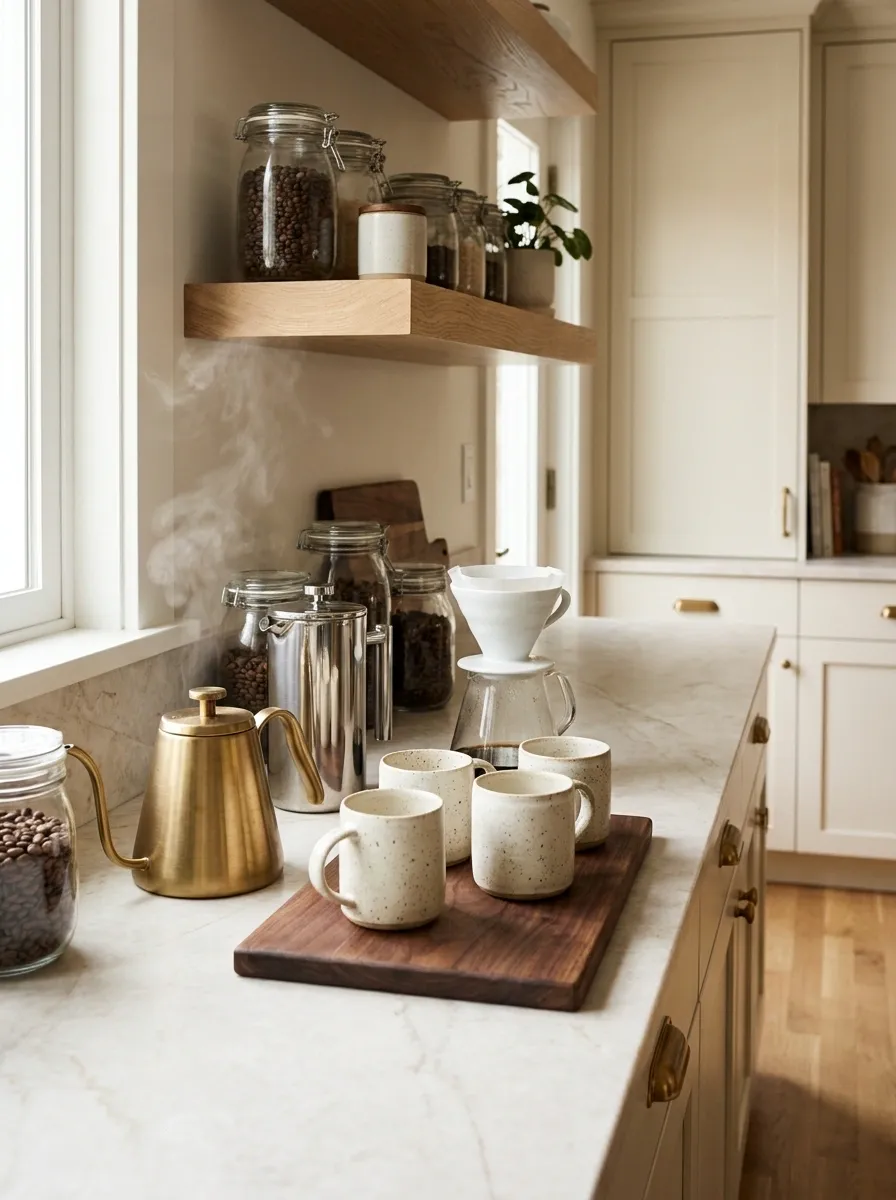
A smaller coffee station doesn’t need a large machine to feel complete. A French press, pour-over dripper, gooseneck kettle, and glass coffee jars can create a beautifully simple manual brewing corner. A pale stone counter, warm wood shelf, and handmade ceramic cups give the setup a more relaxed, craft-focused look.
Keep the kettle and dripper close together, with filters and coffee stored in a nearby drawer or container. A small wooden board can protect the countertop and define the preparation area.
The equipment itself becomes part of the display, so there’s no need for extra decoration. Just leave enough room for hot water, rinsing, and cleaning. Manual brewing is relaxing until the entire counter becomes a washing-up station.
Keep the hot-water equipment on a stable, heat-safe surface and leave enough room for rinsing and cleanup.
Coffee Station With a Dedicated Bean Storage Wall
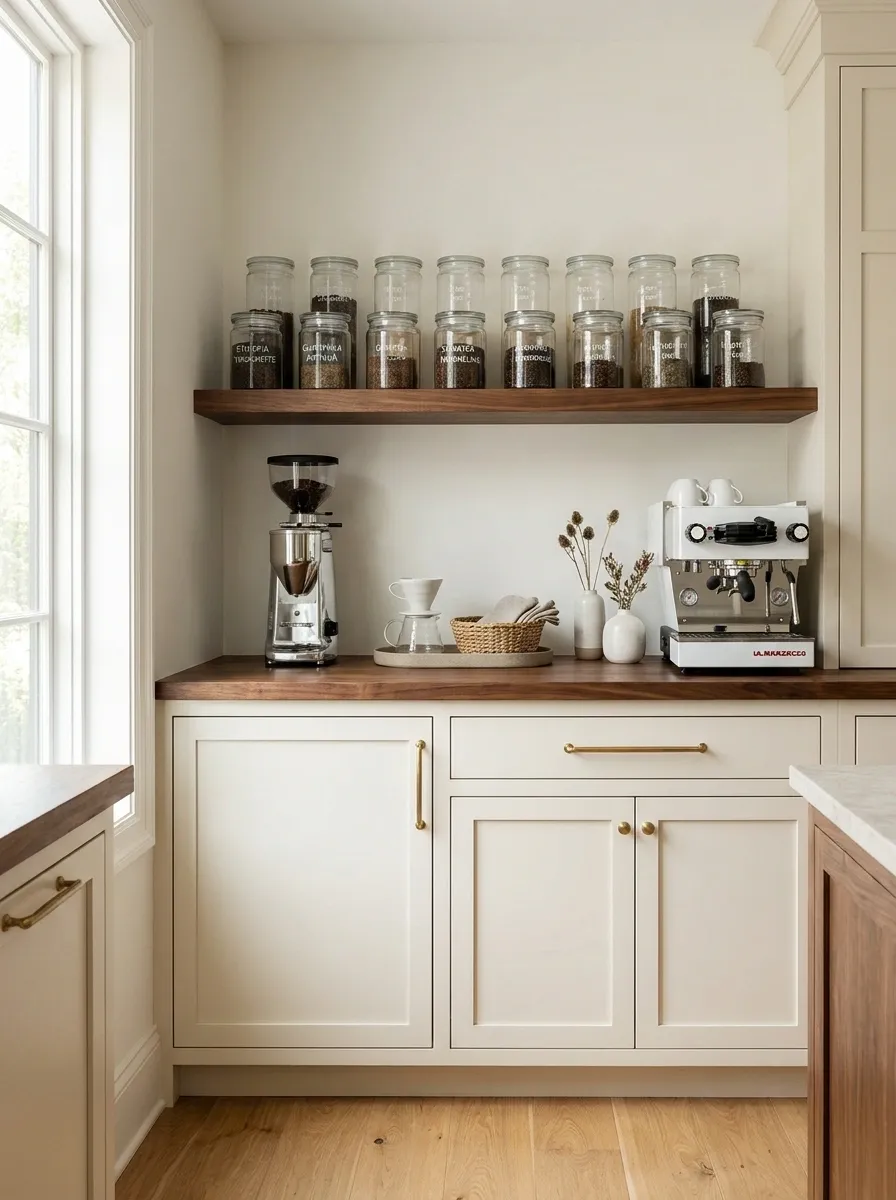
For households that prefer freshly ground coffee, a dedicated bean-storage area can become the main feature of the coffee station. A compact grinder and coffee machine sit on a warm wood countertop, while airtight containers hold different beans on a nearby shelf. Small labels help distinguish the varieties without turning the display into a grocery aisle.
A combination of walnut, cream cabinetry, and clear glass containers creates a warm, organized look. Keep beans away from direct sunlight, heat, and moisture, and store them in suitable airtight containers.
The display should be practical before decorative. Coffee beans deserve a proper home, not a permanent spot beside the oven.
Choose airtight, food-safe containers and keep them away from heat, moisture, and direct sunlight. Matching jars are optional. Proper storage isn’t.
Mid-Century Modern Coffee Station With Walnut Furniture
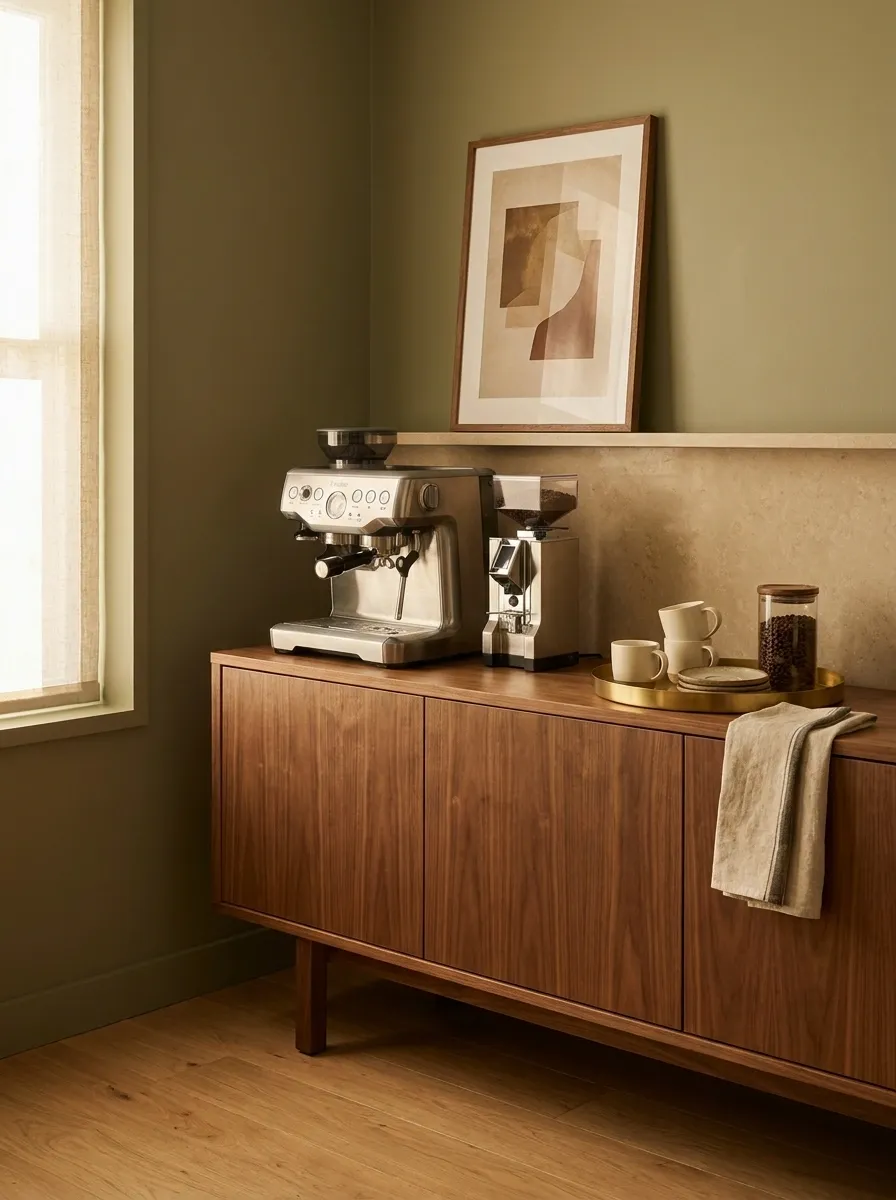
A mid-century modern coffee station uses clean furniture lines, warm walnut, and a few carefully selected accessories to create a more distinctive corner. A low walnut cabinet provides the main working surface, with a compact drip brewer or espresso machine placed beside a small grinder. Tapered legs, simple ceramic cups, and understated artwork reinforce the furniture style.
A muted olive wall or warm beige backsplash can provide contrast without competing with the wood. Keep the display relatively low and horizontal so the furniture remains the focal point.
The coffee station should feel like a natural extension of the living space rather than a collection of kitchen accessories assembled on an attractive cabinet.
Keep the furniture proportions low and the styling restrained. The cabinet is already bringing plenty of personality.
Small Coffee Station With a Fold-Down Wall Shelf
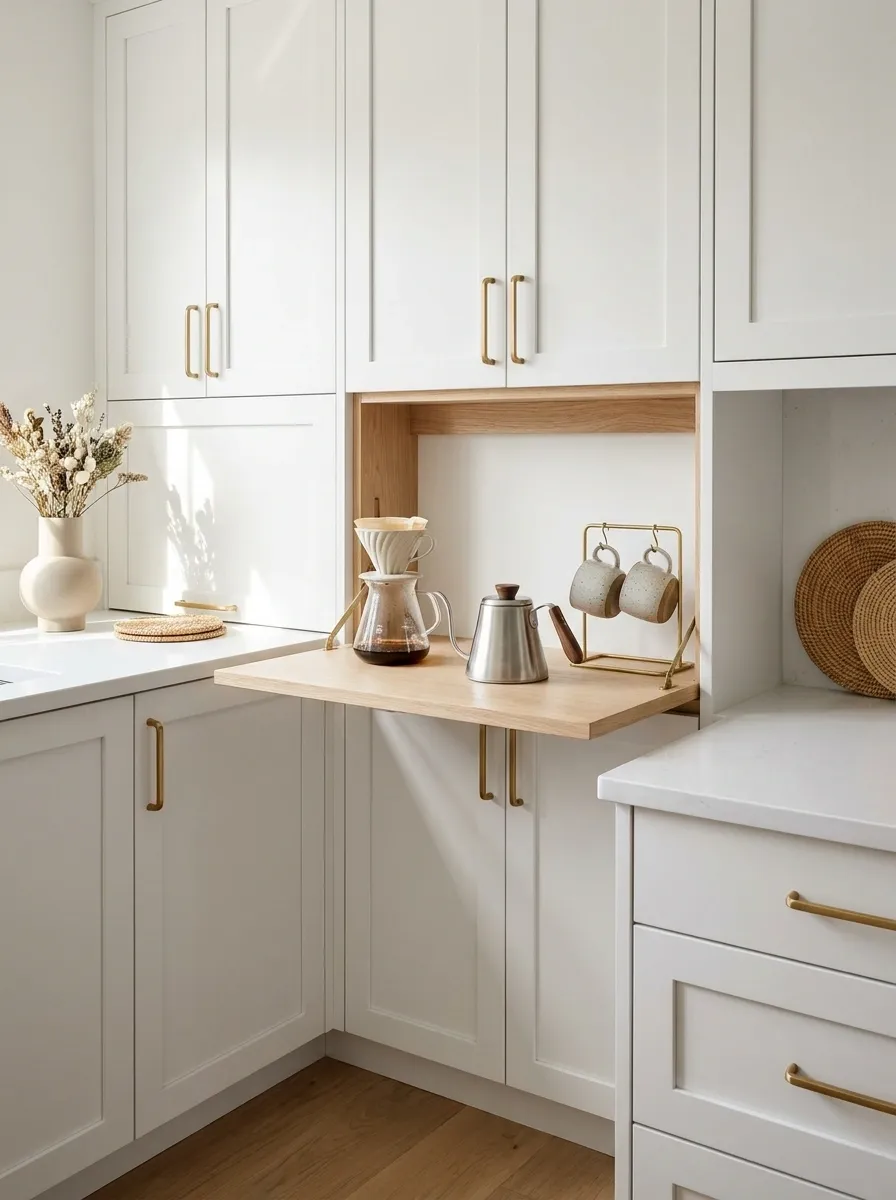
A fold-down wall shelf can create a temporary coffee-preparation surface in a very small kitchen. When open, it provides room for a pour-over setup, French press, or small coffee accessories. When folded away, the wall returns to its usual state, leaving the floor and main counter untouched.
A pale wood shelf paired with simple white cabinetry keeps the design light, while a small wall-mounted rack can hold a few cups. This solution is better suited to manual brewing equipment or accessories than heavy coffee machines that need a permanent, sturdy surface.
The hardware and wall anchoring need to support the intended load. A shelf that folds down beautifully but starts wobbling under a kettle is not saving space. It’s creating suspense.
Use suitable wall anchors and load-rated hardware. Keep heavy, hot, or electrically powered equipment on a stable dedicated surface.
Make the Coffee Station Work for Your Home
A coffee station should survive a real Monday morning, not just look good in a carefully arranged photo. The equipment needs room to work, daily supplies need to be easy to reach, and the surrounding finishes should make sense with the rest of the room.
Start with the available space and the type of coffee setup being used. Then choose furniture, storage, and finishes around that routine. A French press corner needs different arrangements from an espresso setup, and a small apartment has different needs from a walk-in pantry.
The best station isn’t the one with the most accessories. It’s the one where everything has a sensible place, the counter remains usable, and making coffee doesn’t involve moving half the kitchen first.
Save the designs that fit the space, and let the decorative jars stay on the shopping shelf until the actual storage problem has been solved.