
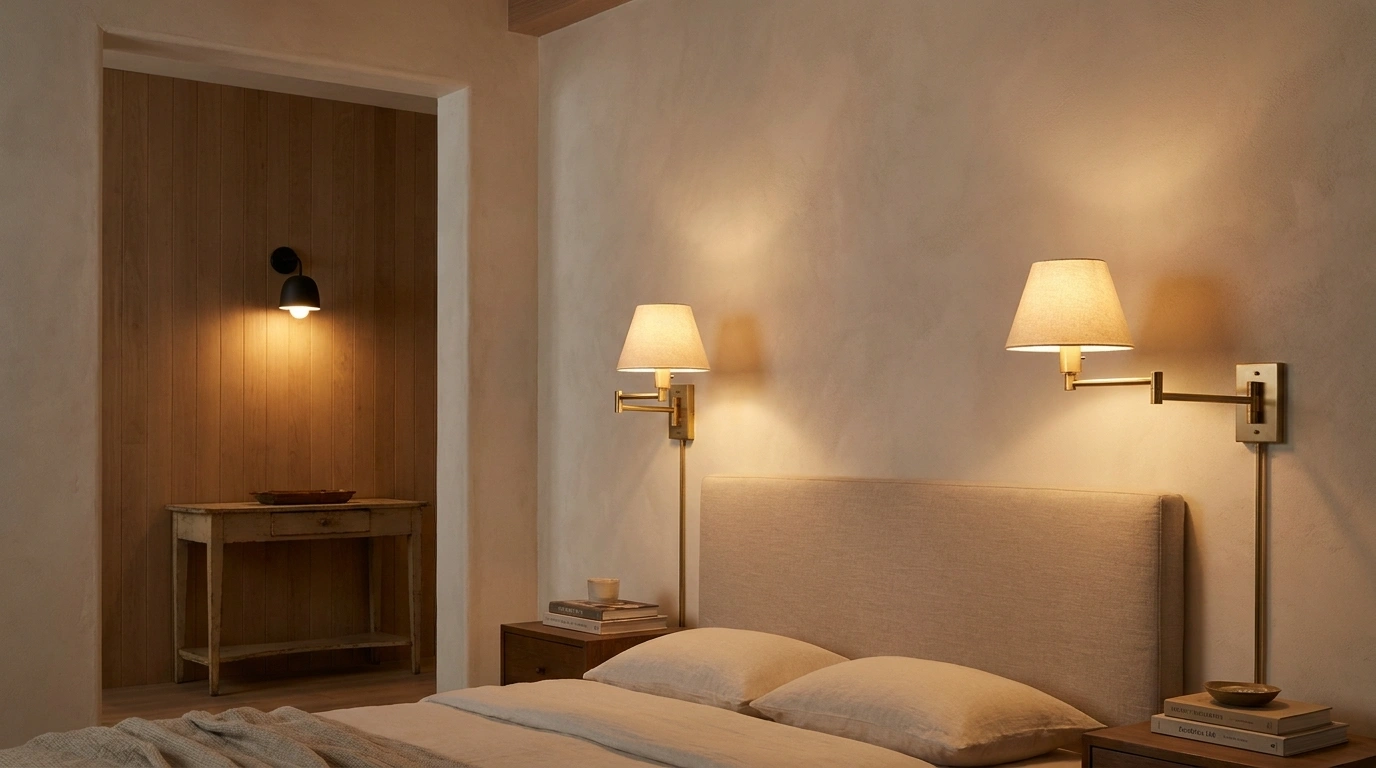
A wall sconce has two jobs: look right during the day and put light somewhere useful after dark.
It is surprisingly easy to buy one that manages only the first.
Before choosing a style, decide whether you need reading light, face lighting, a wall wash, or a small pool of atmosphere. Then consider projection, glare, controls, and installation. Hardwired work needs appropriate professional installation, and fixtures must suit their location. Bathroom and exterior ratings are product-specific; an attractive bathroom photograph is not a substitute for the specification. (Kichler Erma specifications, Kichler Marette specifications)
Sconce Ideas Organized Around Real Uses
Adjustable Bedside Sconces
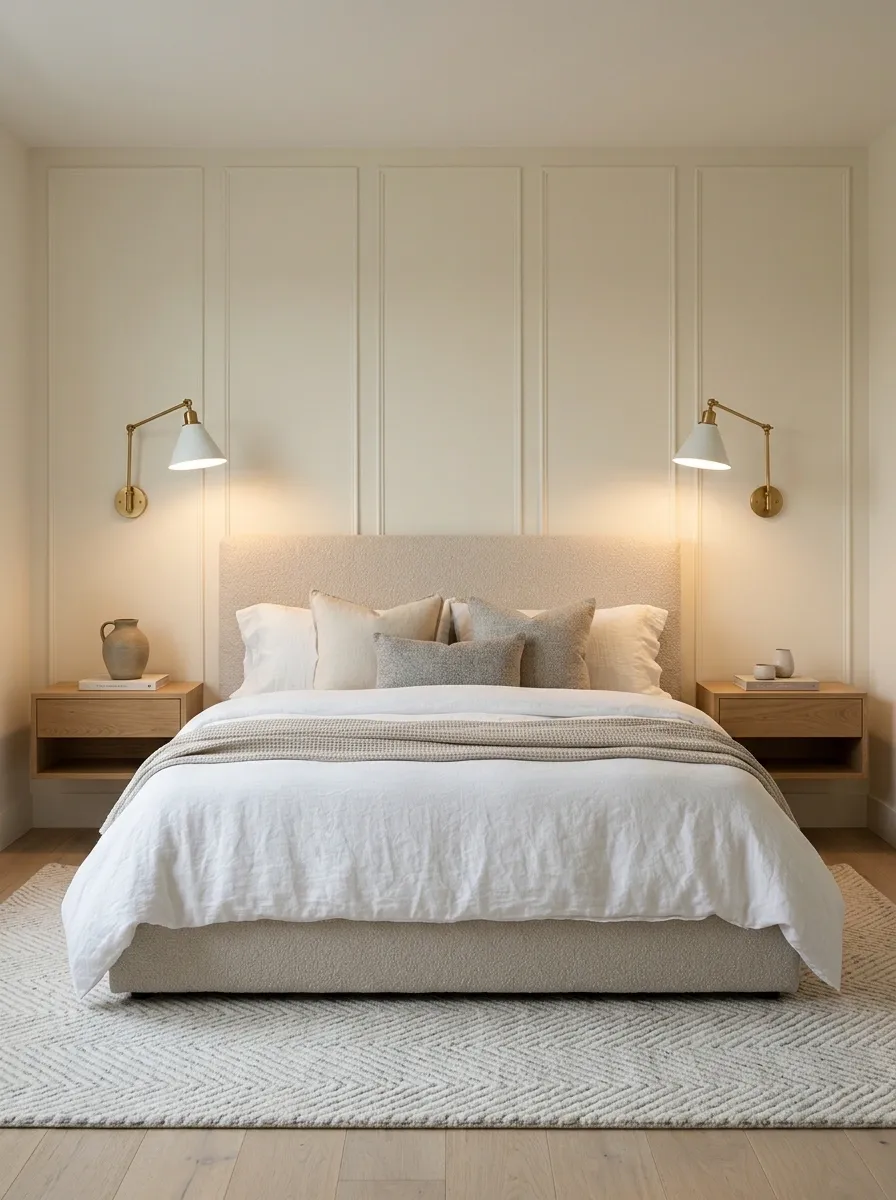
Adjustable sconces can put reading light where you need it while leaving the bedside table clear.
Choose the position with the bed, mattress, pillows, and your normal reading posture in place. Check that the shade does not expose a bright source directly to either person. A useful bedside light should be reachable without a minor stretching routine.
Aim at the page, keep glare away
Directed reading light
Confirm the position while sitting in bed before final installation.
A Single Swing-Arm Sconce Beside a Chair
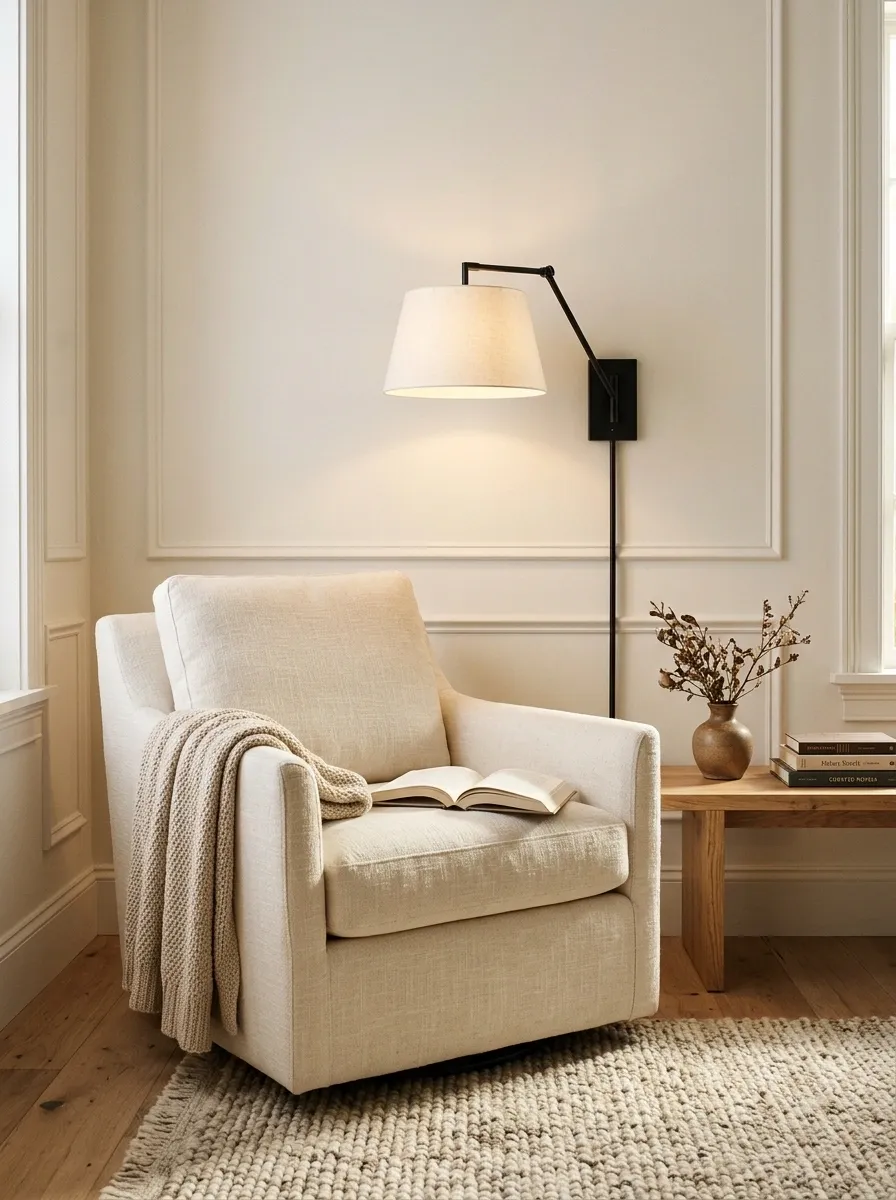
A swing-arm light can make a reading corner useful without consuming floor space.
Mount it where the arm can move comfortably around the chair and where the shade stays out of your face. Consider the chair’s recline and how people enter the corner. The most sculptural arm in the world becomes less charming when everyone catches it with their shoulder.
| Test from the chair | Test from the room |
|---|---|
| Light reaches the page | Arm does not obstruct movement |
| Controls are reachable | Shade suits the wall scale |
| Source is shielded | Cable or wiring route is resolved |
Vanity Sconces Beside the Mirror
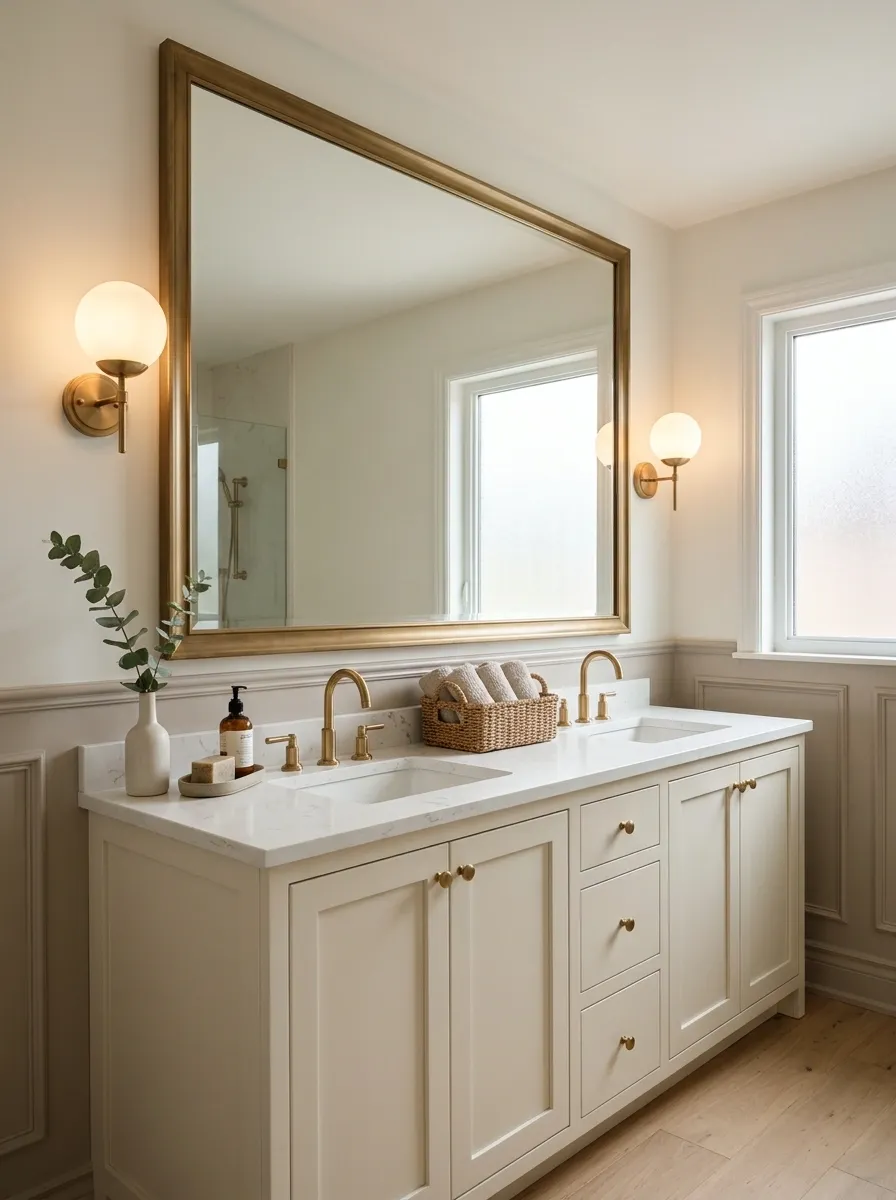
Lights beside a mirror can bring illumination closer to the face rather than relying entirely on a ceiling source.
Choose diffused fixtures and plan their positions around the mirror, users, and vanity. The exact arrangement should be designed for the room, including electrical requirements and moisture exposure. Avoid forcing oversized fittings into a narrow gap simply because the mirror was purchased first.
Plan the mirror and lights together
Diffusion, placement, location rating, and user comfort all matter.
A Wide Light Above a Compact Mirror
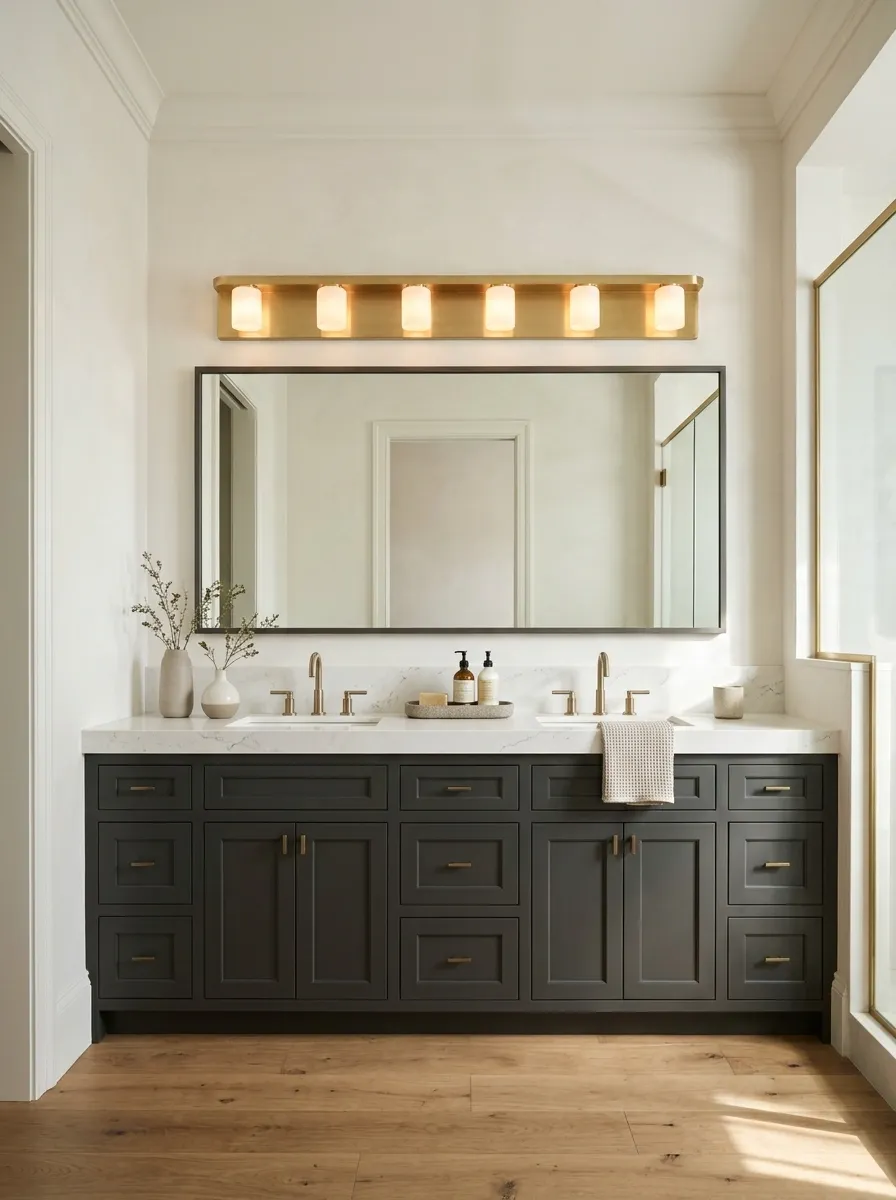
Where side space is limited, an appropriately selected light above the mirror can provide a cleaner arrangement.
Choose a width and distribution that suit the vanity rather than defaulting to the smallest fitting. Test for glare and consider additional room lighting. A single bright point above the forehead can be unkind; your bathroom does not need to conduct an interrogation before breakfast.
Design check: The light should relate to the mirror and vanity as a group, not hover like an unrelated accessory.
Ceramic Sconces That Wash the Wall
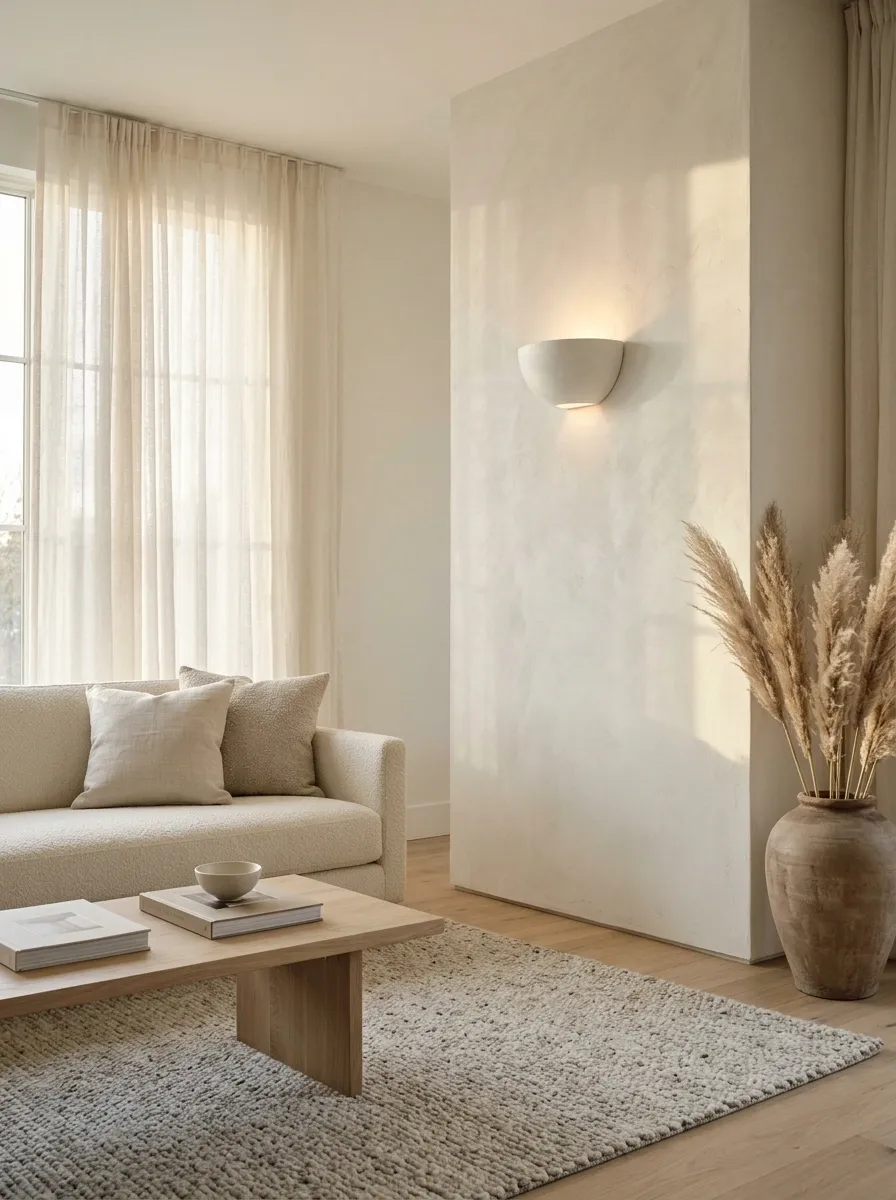
Ceramic sconces can feel like part of the architecture, especially when their finish relates to the wall color.
Their appeal often lies in the light pattern as much as the object. Use them where a gentle wall wash supports the room’s atmosphere. Check the actual distribution before choosing, because a dramatic beam can emphasize surface irregularities as enthusiastically as it illuminates plaster.
A quiet fixture with a visible wash
Slim Sconces in a Narrow Hallway
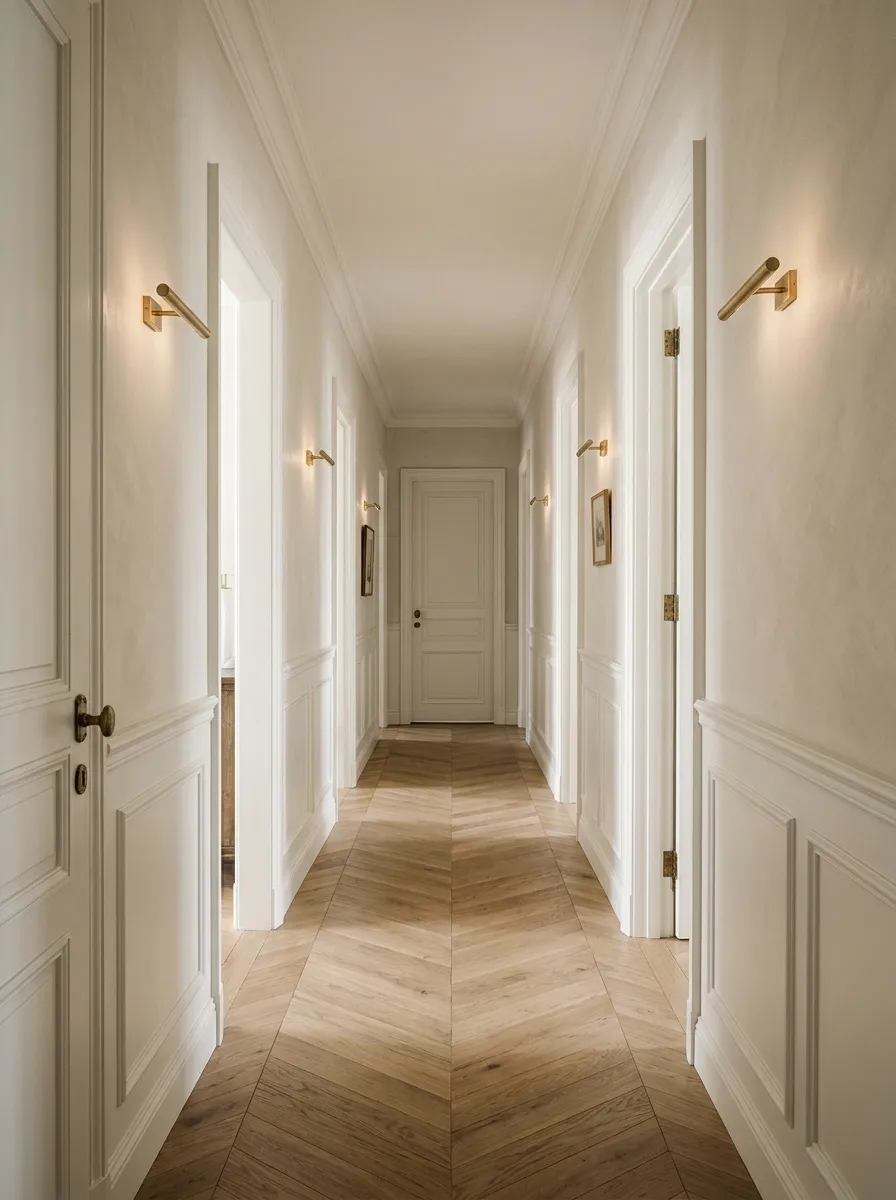
A narrow hallway benefits from fixtures with modest projection and a light pattern that supports the route.
Check clearances and applicable requirements before choosing a protruding shade. A low-profile fixture can still have presence through its finish, proportion, and wall wash. Keep placement related to doors and architectural breaks rather than spacing lights as though the hallway were graph paper.
| Prioritize | Reason |
|---|---|
| Limited projection | Preserves comfortable passage |
| Shielded light | Reduces direct glare |
| Appropriate spacing | Supports the actual hallway |
| Consistent finish | Keeps the route visually calm |
Staircase Sconces That Support Visibility
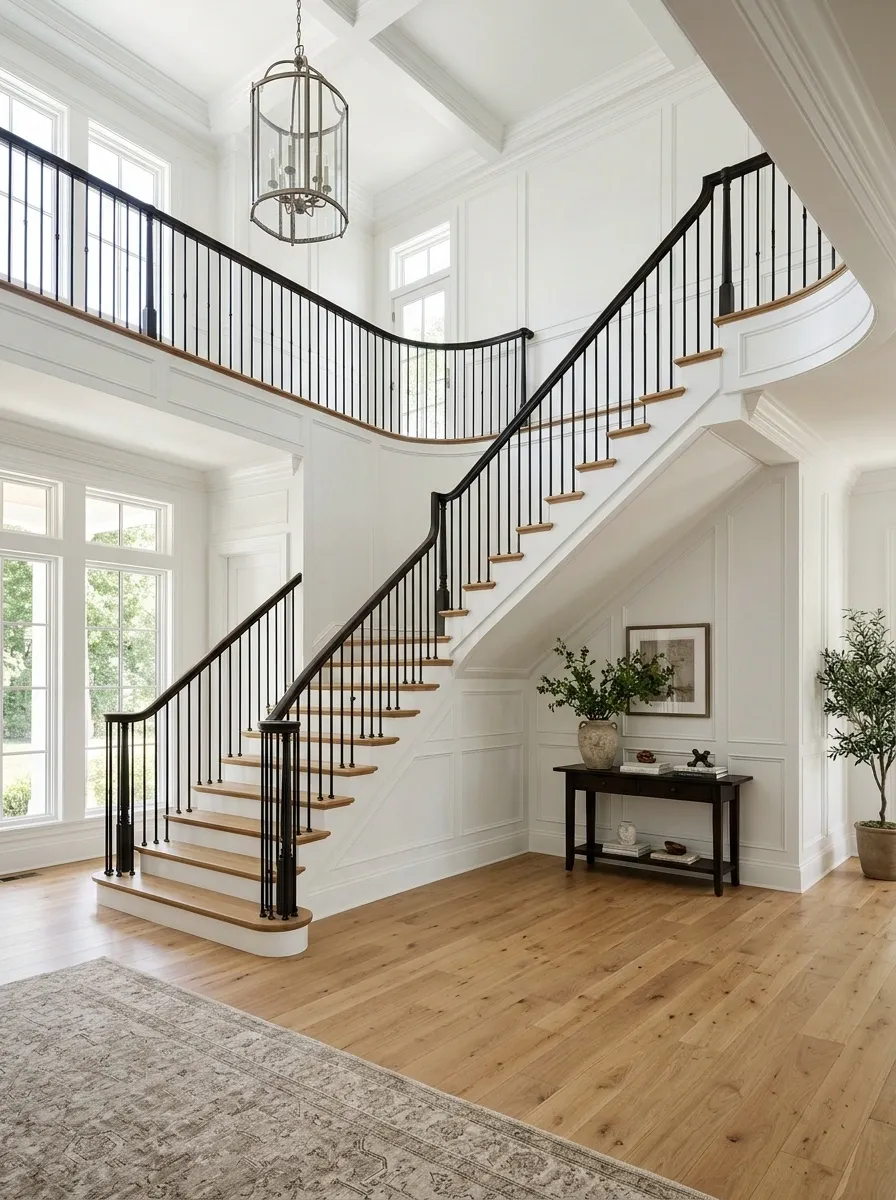
Stair sconces should work with the lighting plan for the whole stair, including landings and changes in direction.
Choose fittings that make sense from above and below, not just from a straight-on view. Avoid exposed bright sources at eye level and do not rely on decorative beams alone for safe navigation. The staircase deserves more consideration than “these look lovely against paneling.”
Read the route from both directions
Coordinate fixtures, controls, glare, and adequate illumination across the full route.
Plug-In Sconces With a Deliberate Cord Route
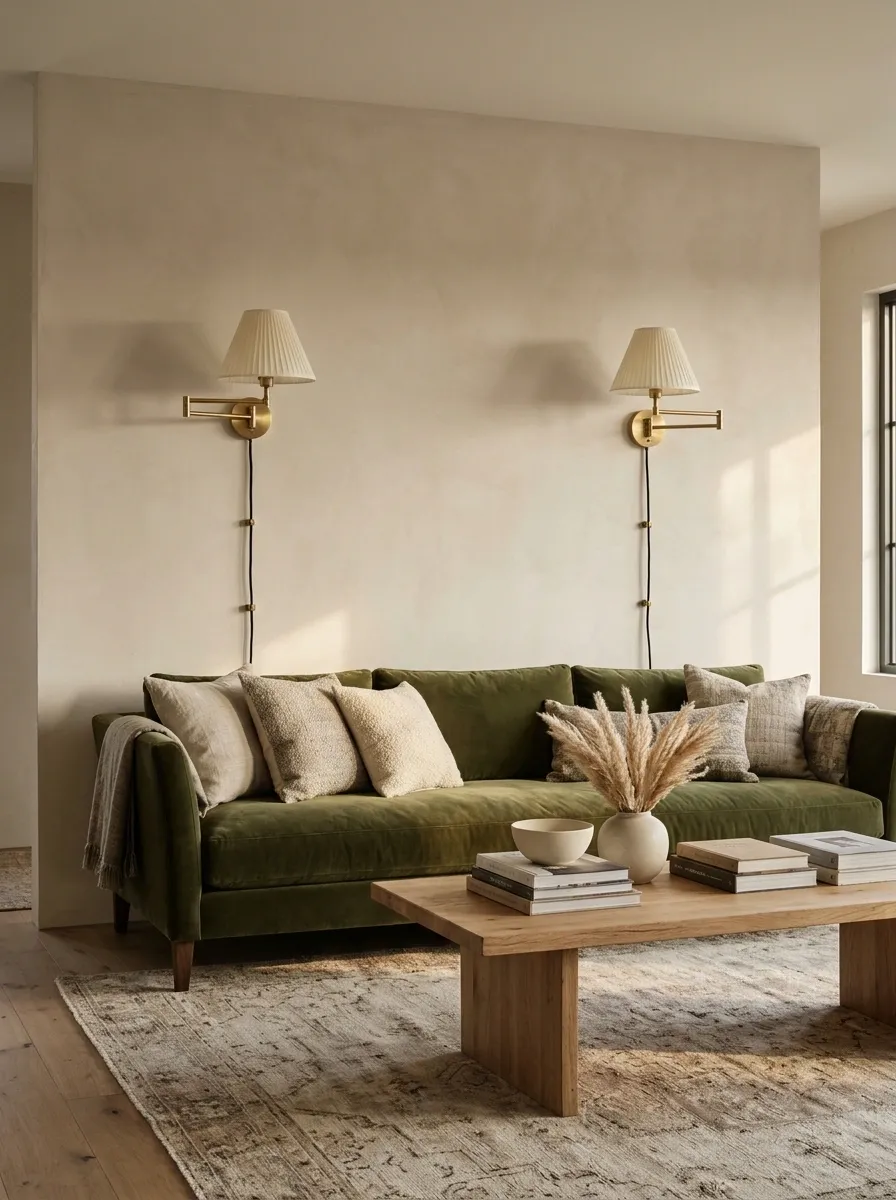
Plug-in sconces can suit a room where new hardwiring is impractical.
Plan the outlet location and cord path before buying. Use suitable mounting hardware and keep cords clear of pinch points, heat sources, and walking routes. A neat cord cover can help the installation look intentional, but it should be compatible with the cable and setup.
Renter note: Check mounting permissions. Plug-in does not automatically mean damage-free.
Rechargeable Sconces for Occasional Accent Light
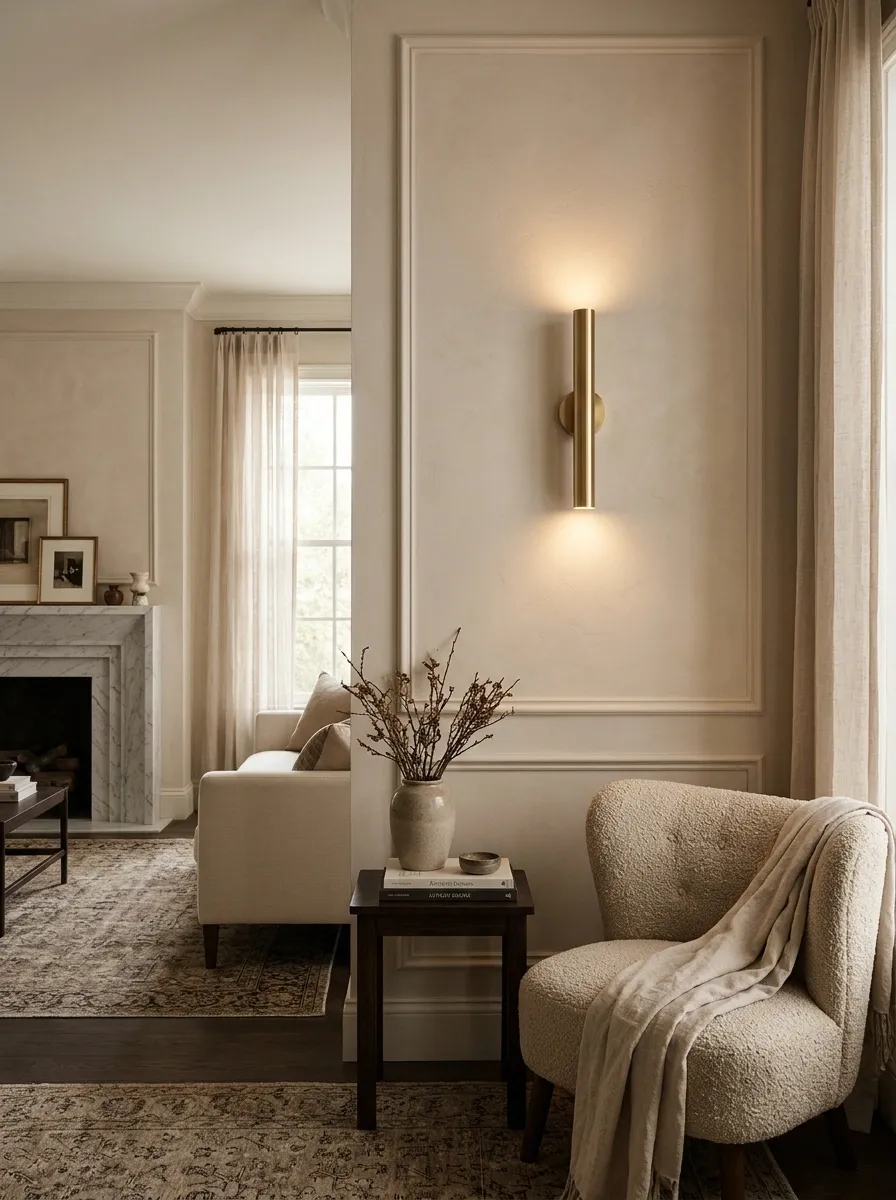
Rechargeable sconces can add light where a wired installation would be disproportionate to the task.
They suit occasional atmosphere better than every lighting need by default. Check output, runtime, charging access, mounting instructions, and location suitability. Be realistic about the routine: a beautiful light that spends most evenings empty is a wall ornament with a charging port.
Match the light to the routine
Enough for its job?
Enough for the evening?
Easy to reach?
Brass and Opal Glass on a Dark Wall
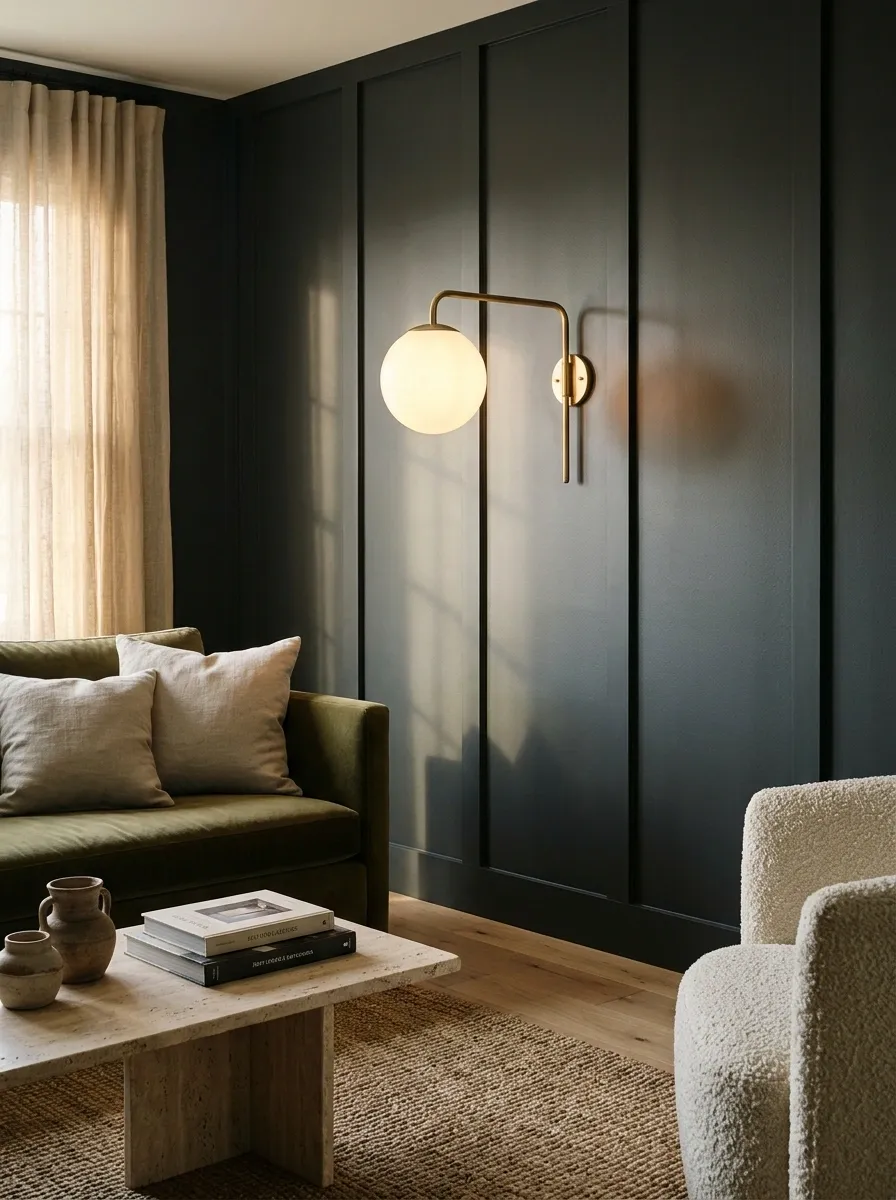
An opal globe can feel particularly soft against deep green, navy, or charcoal paint.
Brass adds warmth, while the pale glass gives the fixture a clear silhouette during the day. Check diffusion and brightness carefully; opal glass does not guarantee that every lamp inside will feel comfortable. Keep nearby metal finishes related without making them identical.
| Element | Role |
|---|---|
| Dark wall | Gives depth |
| Opal shade | Softens the visible source |
| Muted brass | Adds warmth |
| Restrained surrounding decor | Lets the fixture register |
Plaster Sconces in a Tonal Room
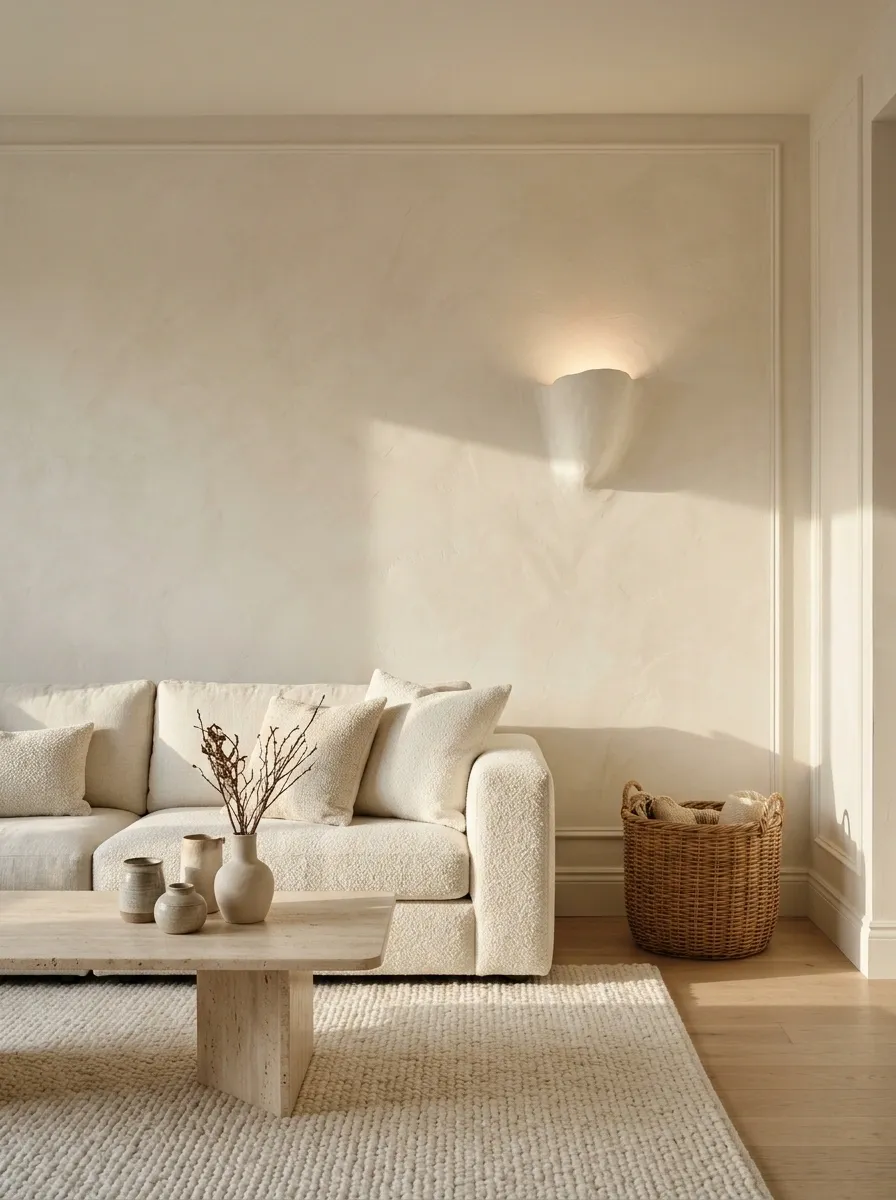
A plaster-style sconce can blend into a room where shape and shadow matter more than contrast.
Choose a finish compatible with the product’s instructions if painting is intended. A tonal fixture looks especially good beside simple trim and textured fabrics. The light pattern should suit the wall surface; rough texture can produce stronger shadows than expected.
Let shape emerge from a similar color
Tall Sconces Flanking a Fireplace
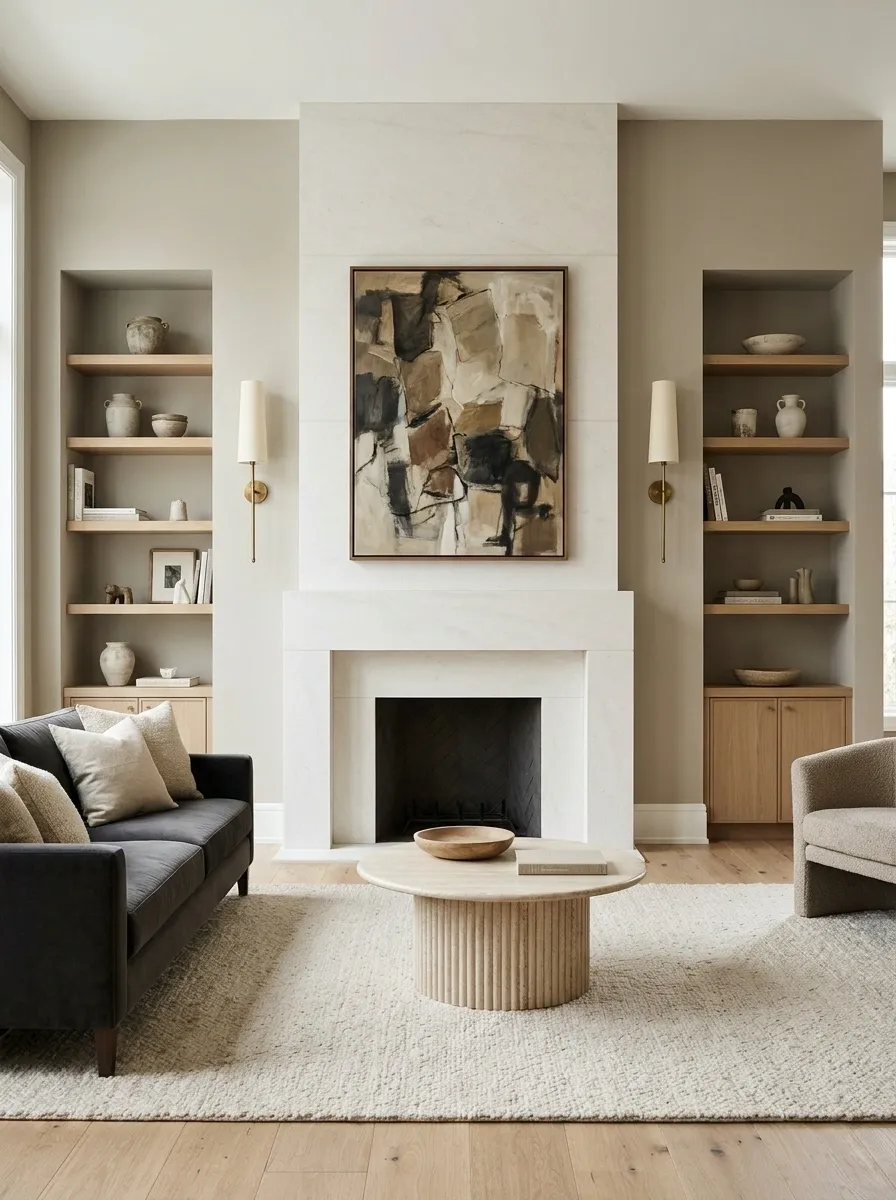
Vertical sconces can frame a fireplace wall without adding more objects to the mantel.
Respect clearances, heat exposure, and manufacturer instructions for the fireplace and lighting. Consider how the fixtures relate to artwork, shelving, and the mantel width. Tall fittings are most effective when the wall has enough space to support them; squeezing them into narrow strips rarely looks elegant.
Composition check: Read the fireplace, art, and lights as one arrangement before deciding on fixture size.
Sconces Above a Dining Banquette
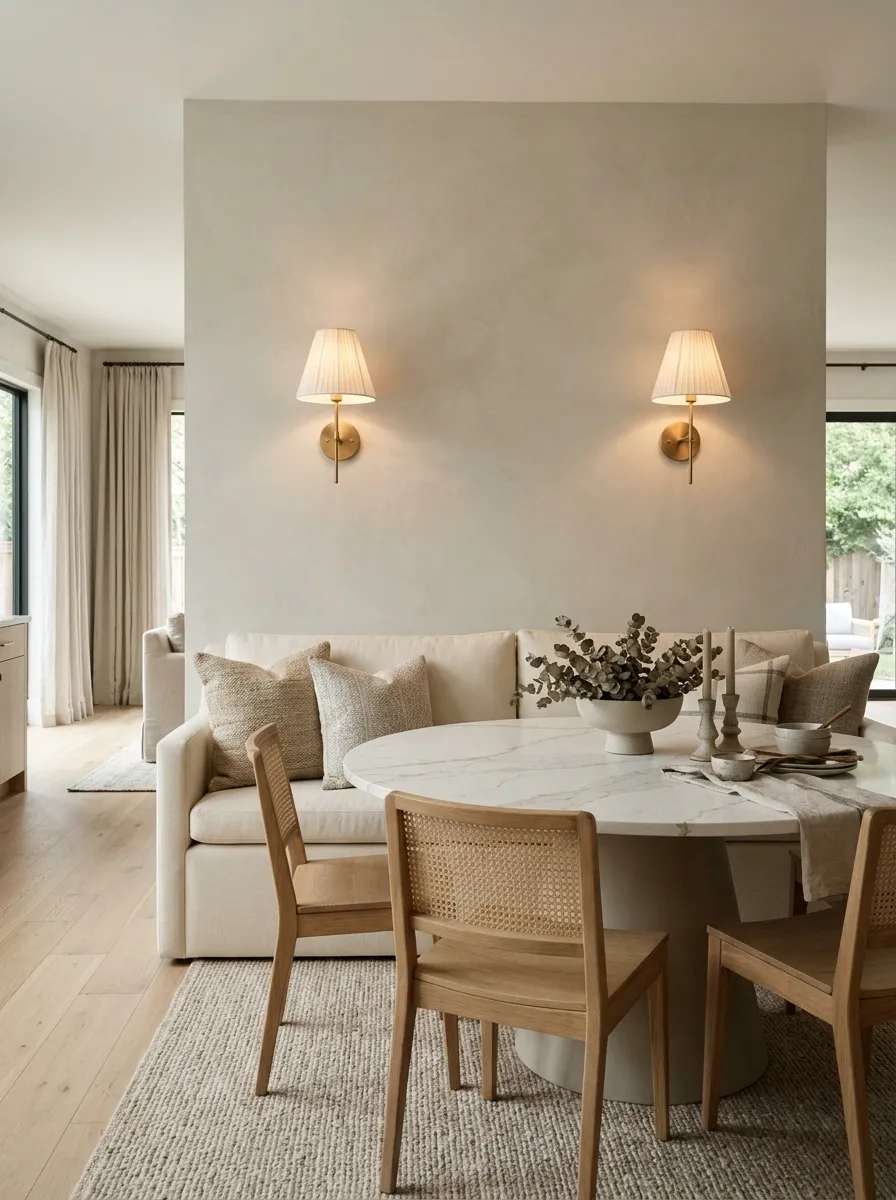
Wall lights can make a banquette feel like a defined destination within an open room.
Choose a distribution that lights the table pleasantly without glaring into seated faces. Check the fixture from every seat, including the end positions. A shaded design or carefully aimed fitting may suit the space better than exposed bulbs placed directly beside diners’ heads.
Light the setting without crowding the seat
An Adjustable Sconce Beside Kitchen Shelving
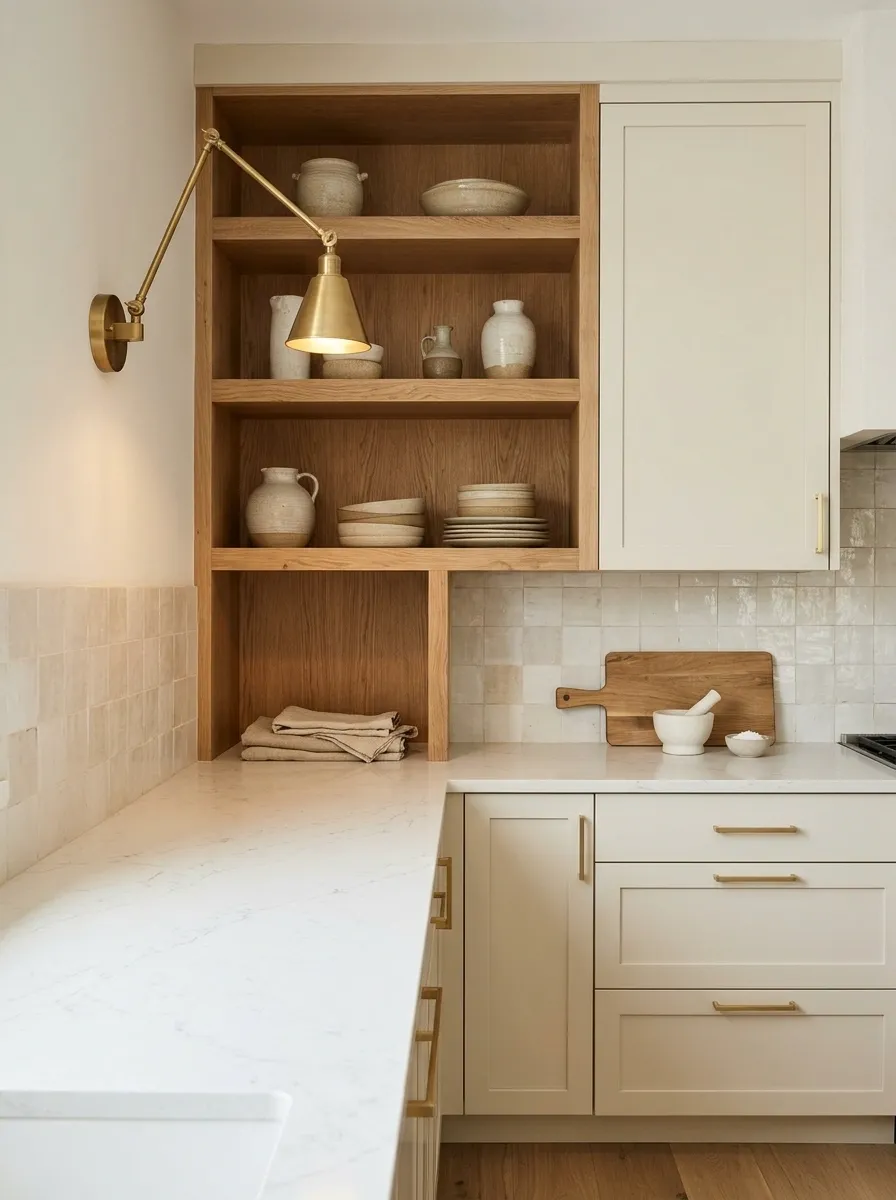
A carefully positioned adjustable fixture can add useful light near a dry preparation or display area.
Choose a product and installation suitable for the location, including heat and moisture exposure. Keep it clear of cabinet doors and avoid shining directly into the eyes of someone working nearby. Treat it as part of the kitchen lighting plan rather than a decorative afterthought above the shelf.
| Coordinate with | Why |
|---|---|
| Shelf contents | Avoid awkward shadows |
| Cabinet doors | Preserve operation |
| Work surface | Put light where needed |
| Other lighting | Prevent bright spots and dark gaps |
Dressing-Mirror Lights With Even Visual Weight
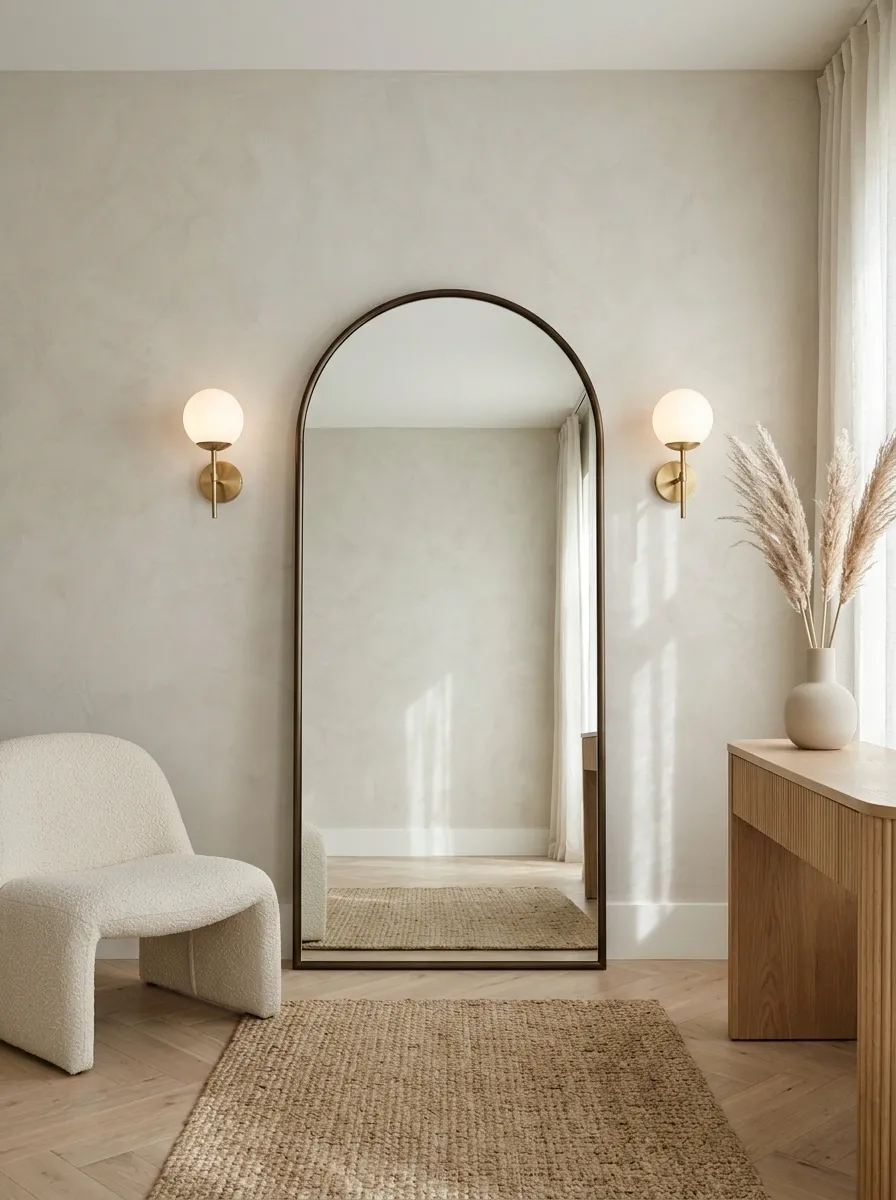
A dressing mirror often benefits from a balanced lighting arrangement rather than one strong source from the ceiling.
Choose diffused fittings and assess the result from where you actually stand. The mirror’s width, nearby walls, and available space affect the layout. Avoid placing a decorative fixture where its reflection becomes the brightest object in view.
Consider the reflection as well as the wall
A Small Sconce in an Alcove
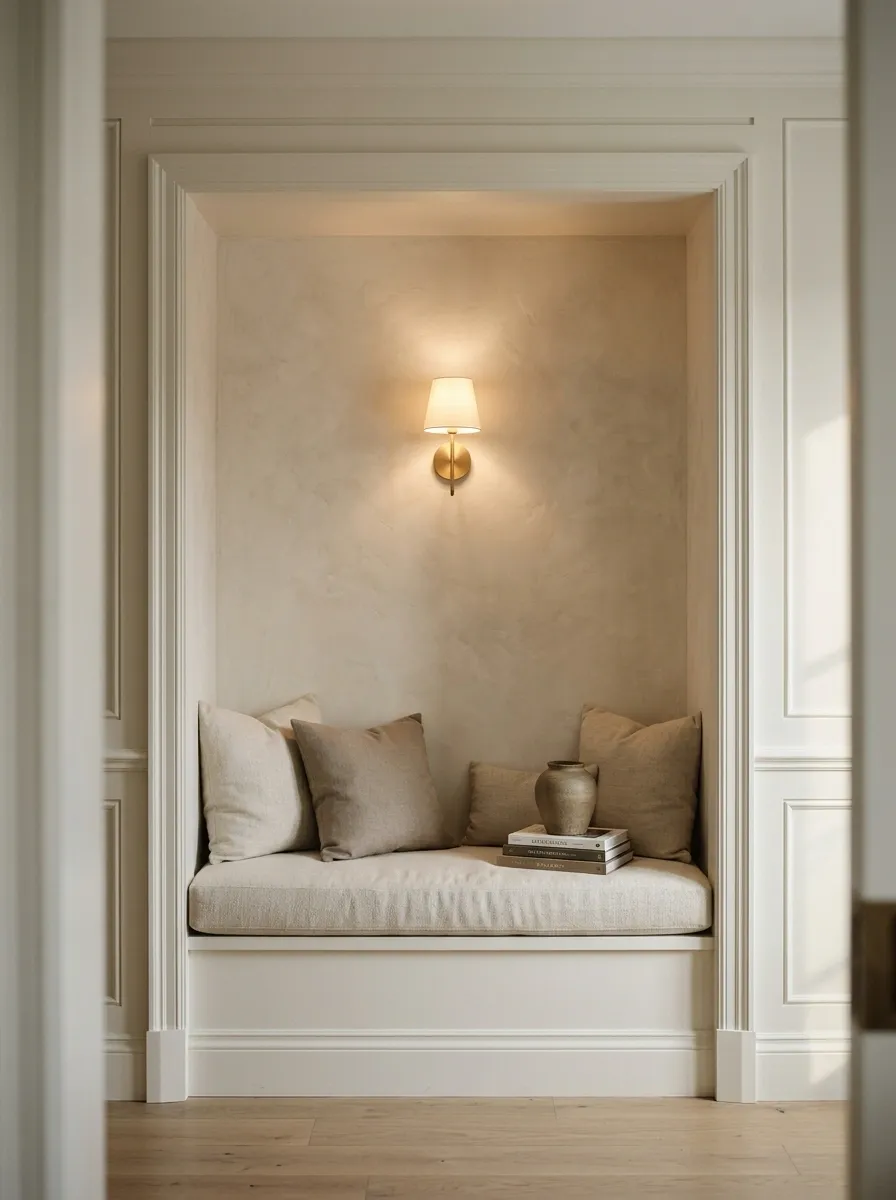
An alcove can feel intentional with a modest light that reveals its depth.
Choose a fitting proportionate to the recess and consider whether the light should wash the back wall, illuminate an object, or support a seat. Avoid using the brightest possible fixture simply because the alcove is dark. Small spaces have a remarkable ability to magnify glare.
Useful approach: Keep the fixture simple and let the illuminated recess provide the interest.
A Picture-Light Sconce Above One Artwork
A picture light can give one artwork a clear place in the room’s evening hierarchy.
Choose the fixture around the artwork’s size, surface, and conservation needs, and avoid damaging heat or excessive exposure. Test for reflections on glazing. A glossy framed print may need a different angle from an unglazed painting; the frame is not the only thing being illuminated.
Illuminate the artwork, manage reflections
Beam, angle, brightness, and exposure should suit the work.
Exterior Sconces Beside the Front Door
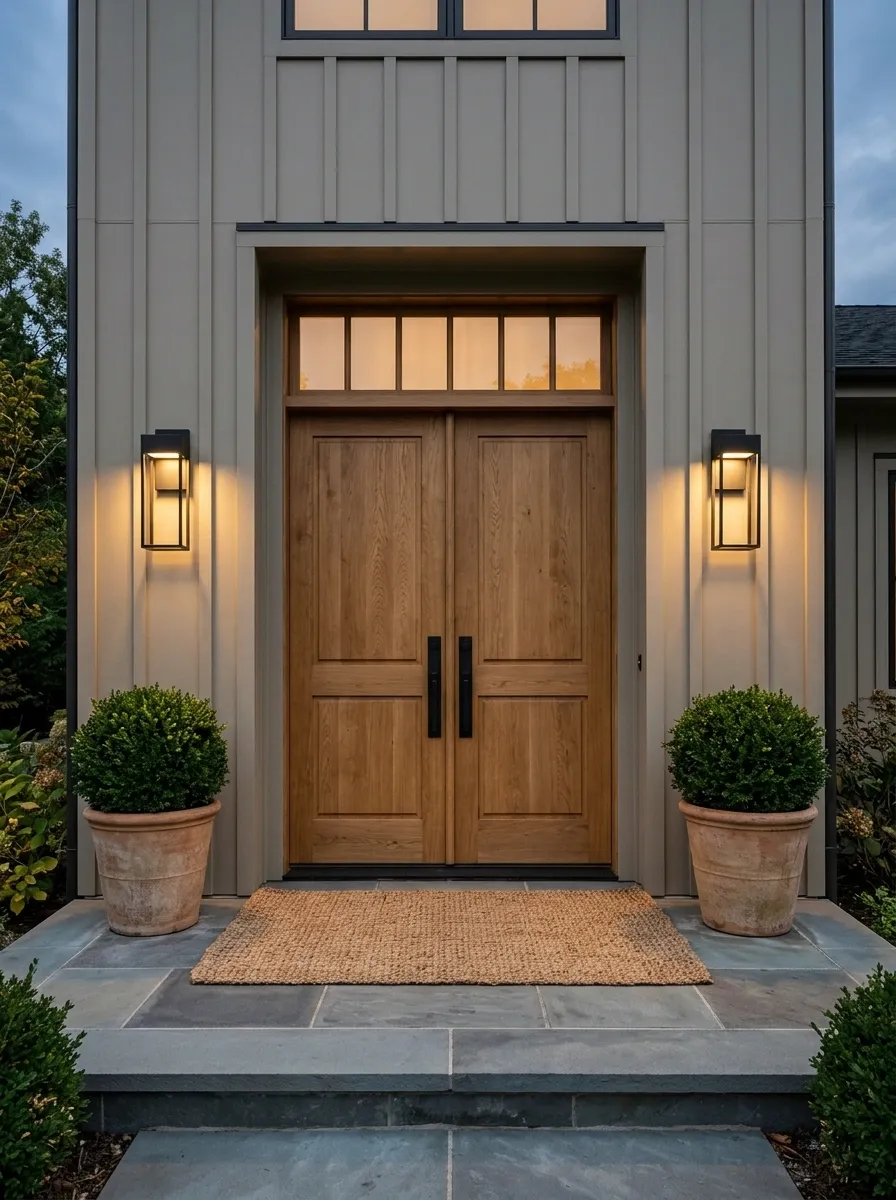
Exterior sconces help define an entrance, but their scale should relate to the architecture and their output to the task.
Choose fixtures rated for the actual exposure and have the installation properly designed. Consider visibility from the approach, reflections in glazing, and glare toward neighbors. More brightness is not automatically more welcoming; sometimes it just makes finding the key feel like an airport arrival.
| Aim | Consider |
|---|---|
| Clear entrance | Useful light at the door |
| Comfortable approach | Controlled glare |
| Durable installation | Appropriate exposure rating |
| Architectural fit | Scale, finish, and mounting position |
Shielded Downlights Along a Porch Wall
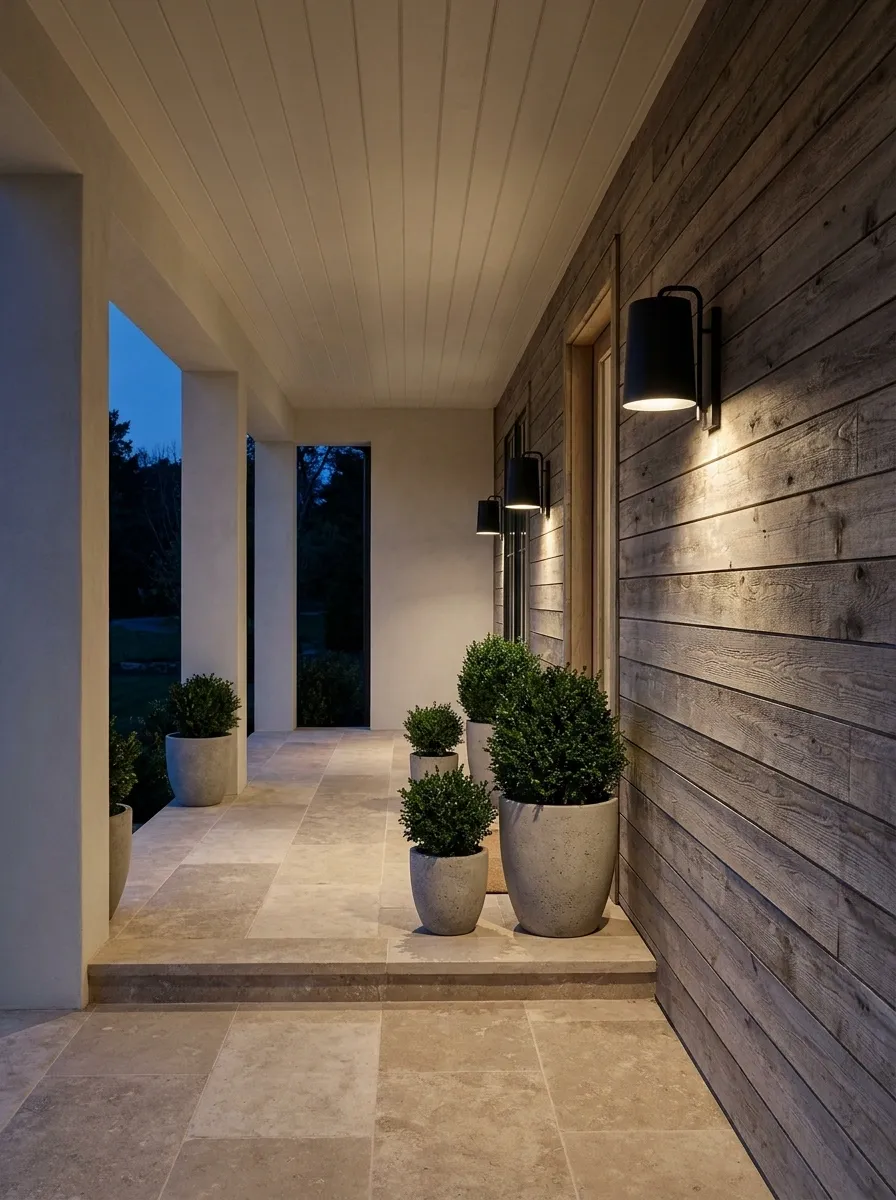
A shielded wall fixture can provide restrained light along a porch without exposing a bright bulb.
Plan enough illumination for the route and any changes in level. Check the actual beam pattern rather than relying on a dramatic product photograph. A narrow cone that looks impressive on a wall may leave the place you need to walk unhelpfully dark.
The route matters more than the beam effect
Useful illumination below
A Sconce Inside an Arched Niche
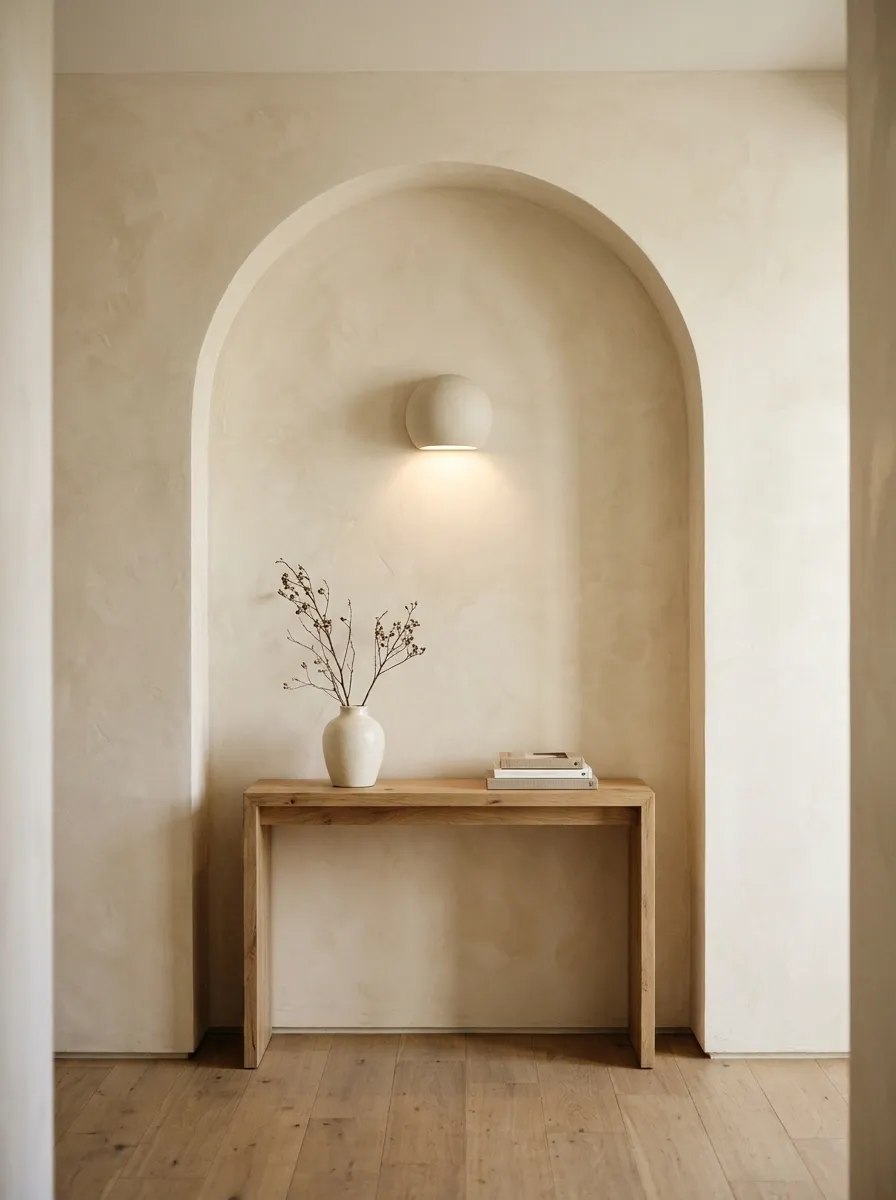
An arched niche can frame a light beautifully if the fixture respects the curve rather than competing with it.
A simple rounded fitting or small ceramic form usually gives the architecture room to speak. Check how the beam interacts with the arch. Strong scalloped patterns can become distracting when layered over an already distinctive shape.
Choose one dominant feature: The arch, the fixture, or the light pattern. All three shouting is rarely necessary.
Sculptural Sconces on a Large Plain Wall
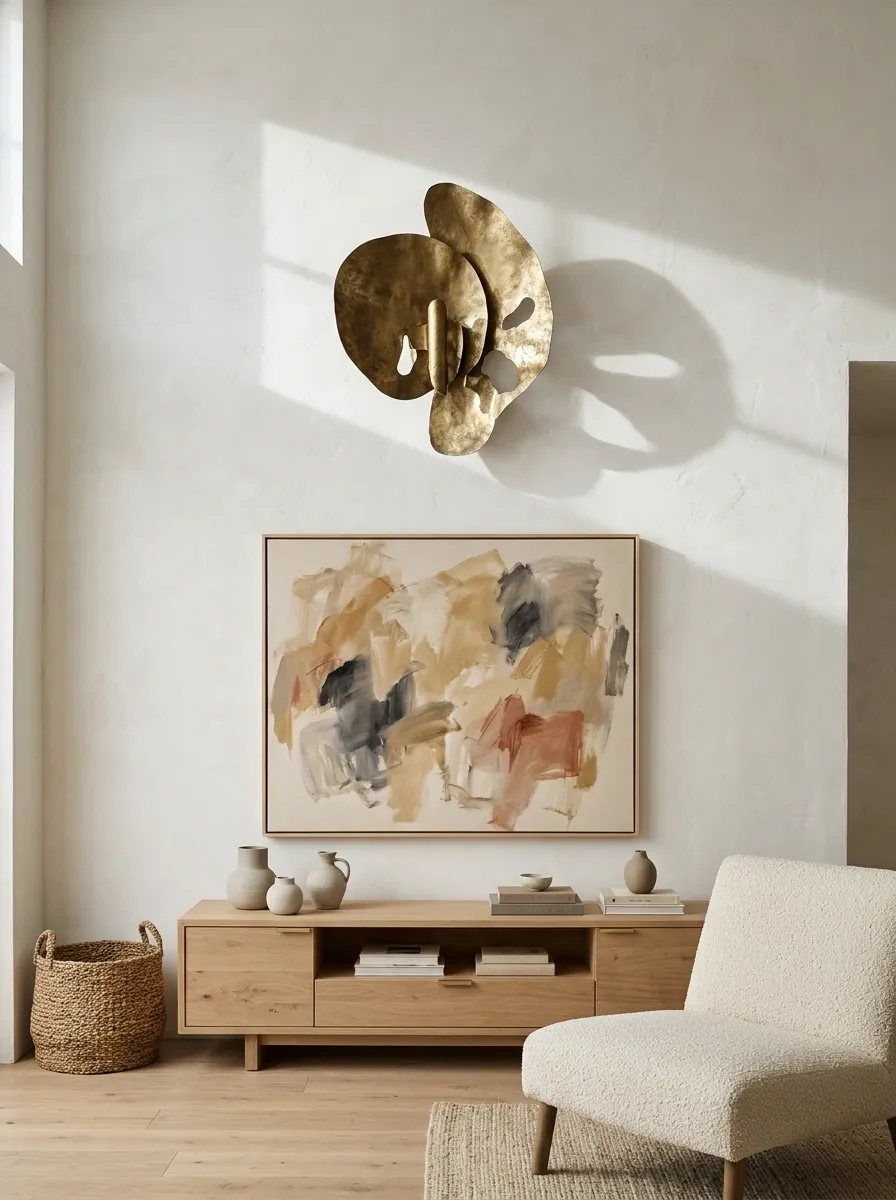
A large wall can support a more expressive fixture, especially when the surrounding furniture is restrained.
Treat the sconce as an object with visual weight. Consider its daytime silhouette, shadow, and relationship to nearby artwork. One strong piece may be enough. Repeating a highly sculptural fitting too many times can turn an elegant idea into a product display.
Give an expressive fixture breathing room
Keep nearby objects quieter than the main form.
Downward Sconces Over Bedside Shelves
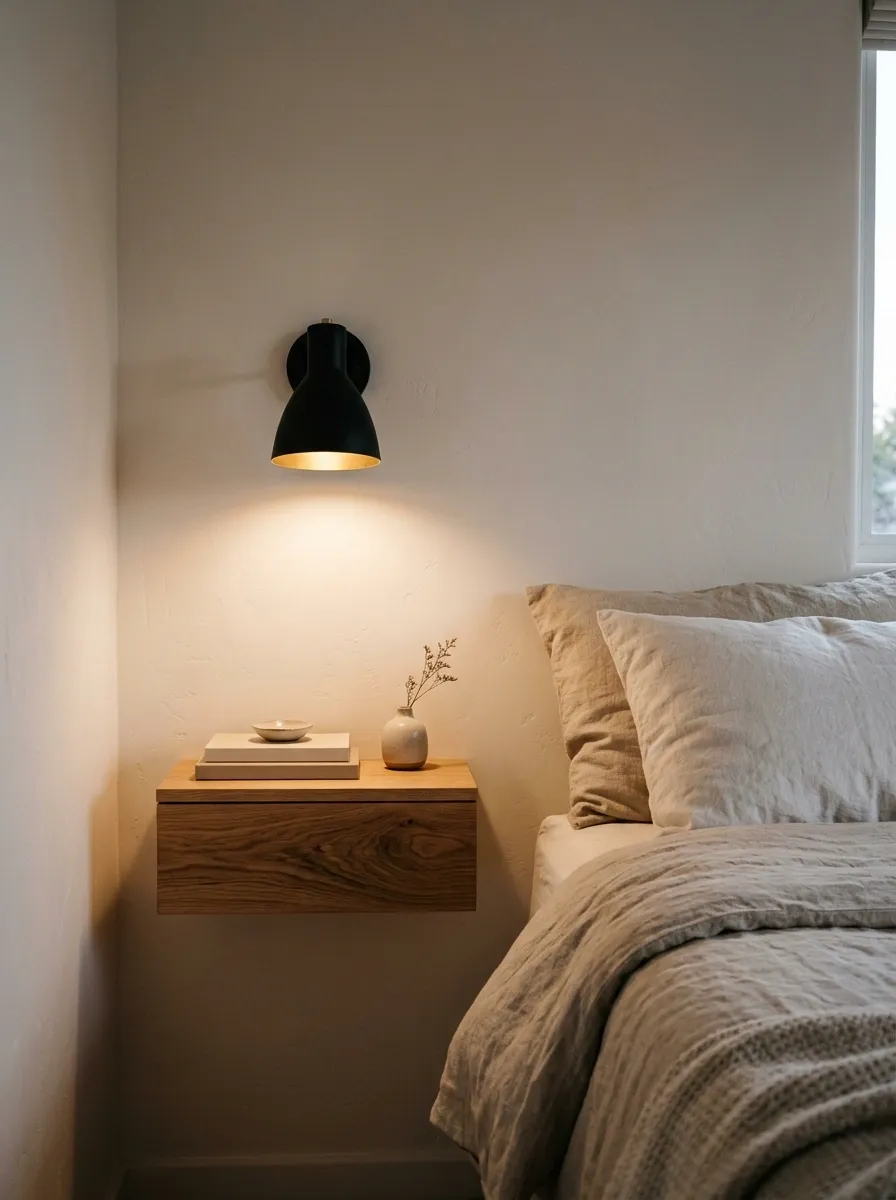
A small downward-facing fixture can pair neatly with a shallow bedside shelf.
Make sure the light suits the intended task and that the shelf does not become a shadow trap. Plan controls and outlets together so the setup remains useful. This can work well in a compact bedroom where a full table would crowd the bed.
| Coordinate | Result |
|---|---|
| Shelf position | Comfortable reach |
| Light direction | Useful illumination |
| Control location | Easy operation |
| Cable and outlet planning | Less visible clutter |
Sconces Set Within Wall Paneling
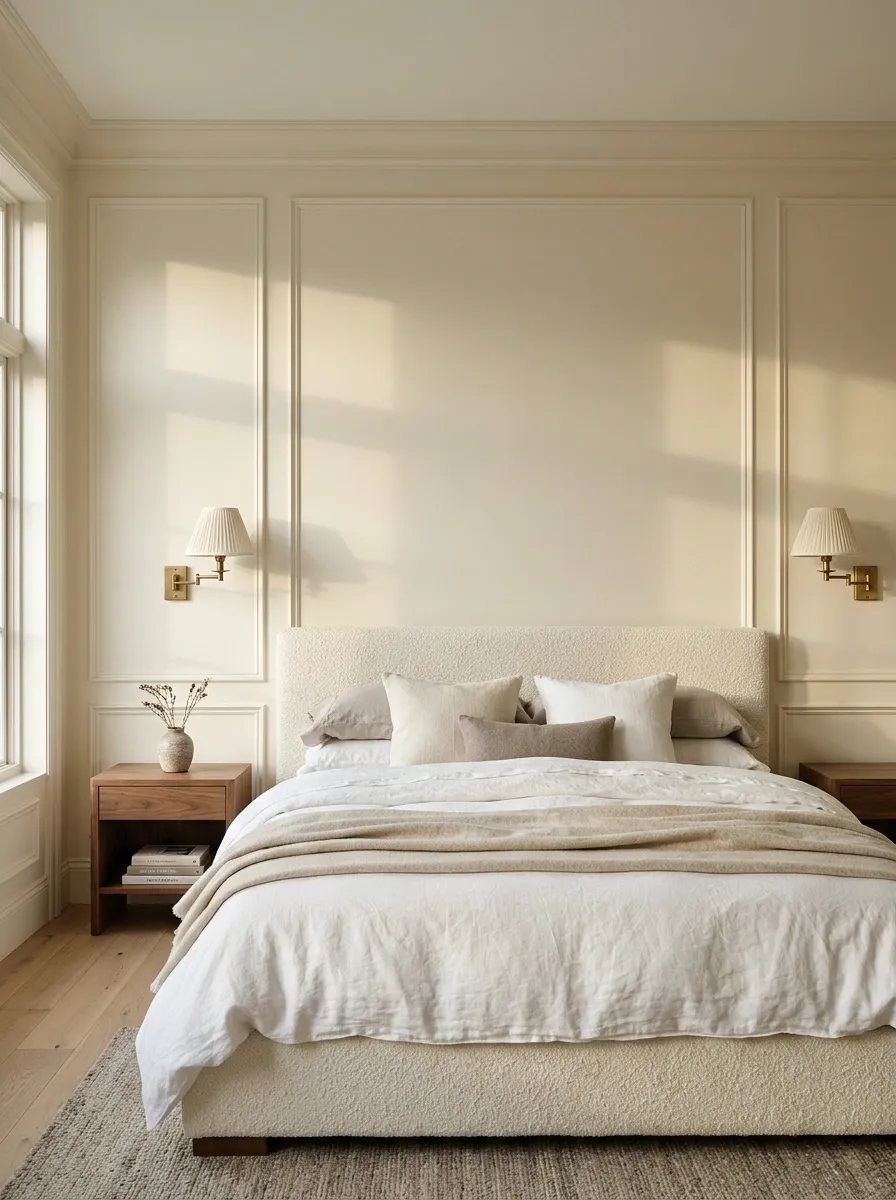
Paneling can give sconces a natural place if the layout is designed together.
Centering a backplate within a panel may look tidy, but the room’s function still comes first. Don’t force a bedside light into an inconvenient position to satisfy a molding grid. Adjust the panel design where possible so the architecture supports the use.
Design the panel and fixture together
A Small Wall Light Above a Useful Entry Shelf
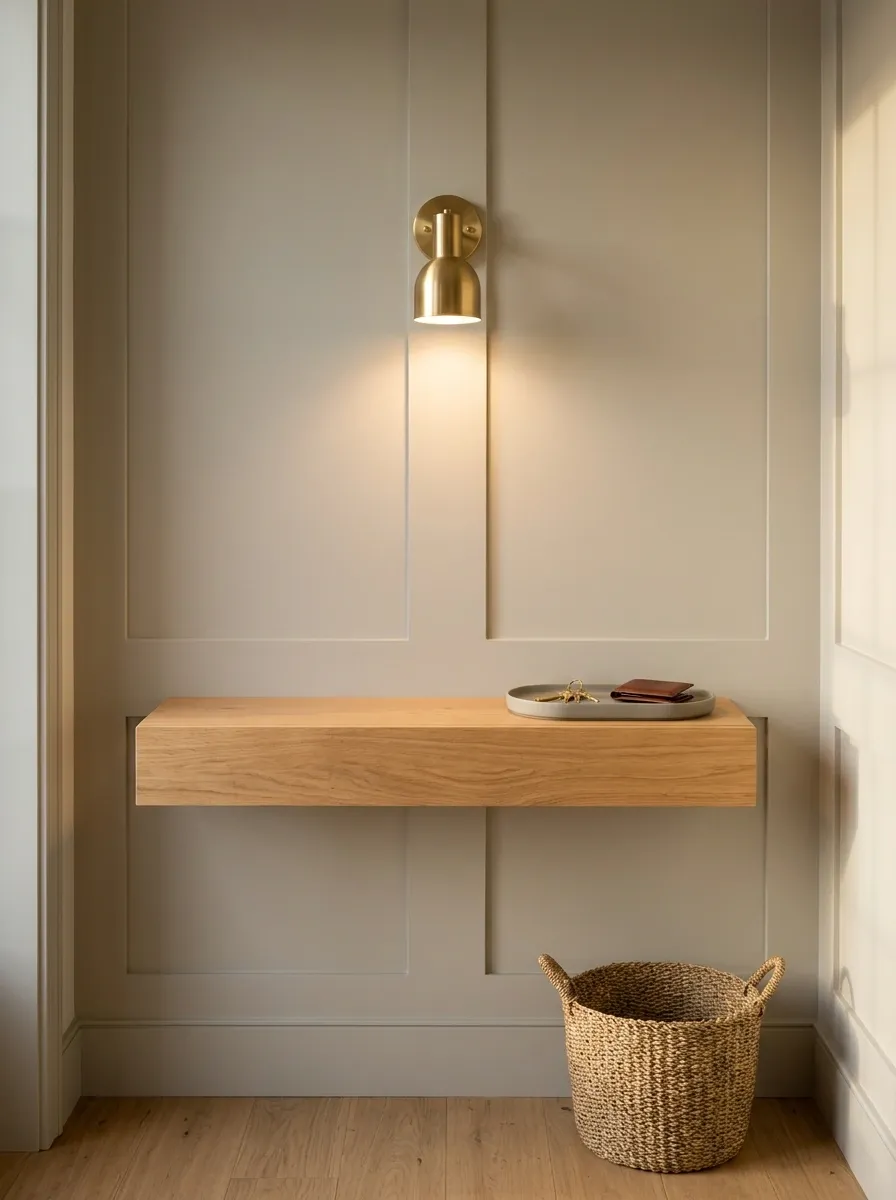
A compact sconce can make an entry shelf feel deliberate while helping you find keys and other small essentials.
Choose a beam that reaches the surface without glaring into the doorway. Keep the fixture clear of coats and bags, and make the switch easy to reach. The arrangement works best when the shelf remains genuinely useful rather than permanently occupied by decorative objects.
Keep visible: A clear landing area beneath the light.
Layered Sconces With Separate Controls
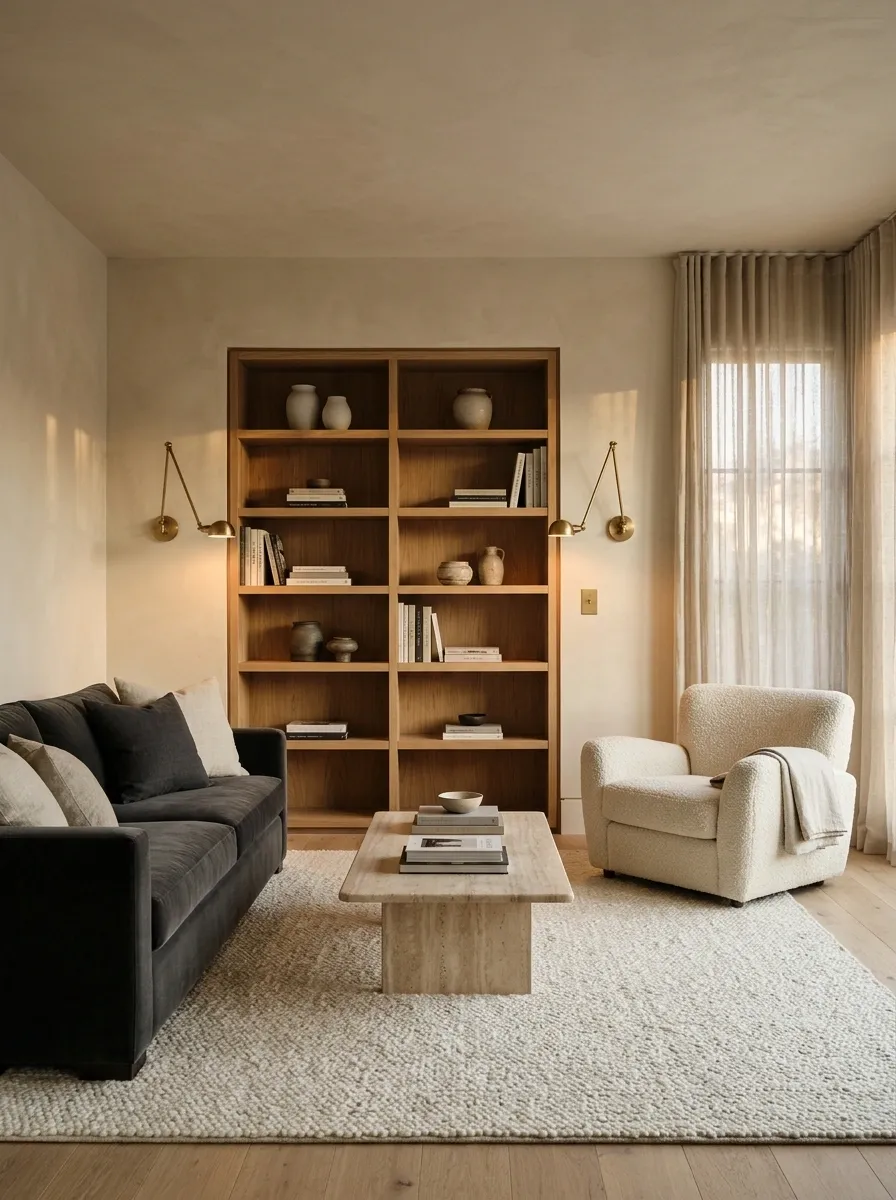
Sconces become more useful when you can operate them independently from the main ceiling lighting.
This allows the room to move between practical tasks and a quieter evening setting. Coordinate compatible lamps, dimmers, and controls where dimming is intended. A layered scheme should be easy to use; nobody wants a lighting system that requires an orientation session.
Let each layer do a clear job
Move and tidy
Read and prepare
Shape the evening
Judge the Light From Where You Live
Stand at the mirror. Sit in the chair. Lie back against the pillows.
Those positions tell you more than looking at a fixture straight on from the middle of the room. When the light is comfortable, useful, and easy to control, the attractive hardware becomes a bonus you get to enjoy all day.