
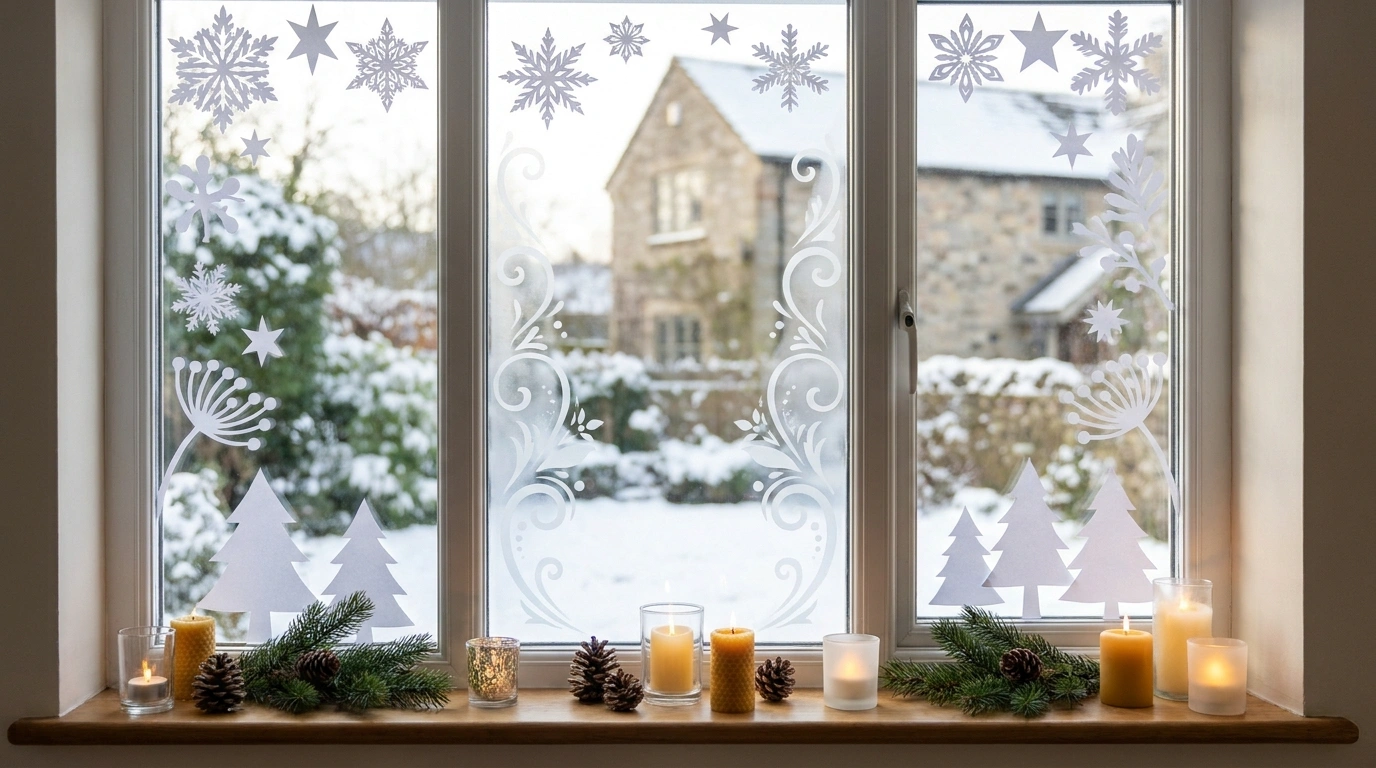
A bare winter window already has a pretty good background: pale skies, dark branches, and the occasional dramatic weather event.
Your artwork can work with that view.
A few well-placed lines or translucent shapes often have more impact than covering every inch of glass. These ideas use landscapes, botanical details, geometry, and winter patterns—without faces, eyes, or character drawings.
Before starting, check that the medium suits your particular glass and follow its removal instructions. Window markers vary: some are water-removable, while paint markers can be permanent. Test a discreet area and keep artwork away from seals, hardware, and necessary visibility. (Window marker removal, Paint and chalk markers)
Winter Designs With Room for the View
Whimsical Winter Village
Line the lower panes of your multi-panel window with charming hand-drawn cottages and evergreen trees to create a cozy neighborhood scene.
Keep the architectural lines simple and playful, letting a scattering of delicate snowflakes drift across the upper glass to complete the snowy atmosphere.
This delightful display brings instant holiday cheer to any room while keeping the design light and wonderfully transparent.
Snowflakes That Gather in One Corner
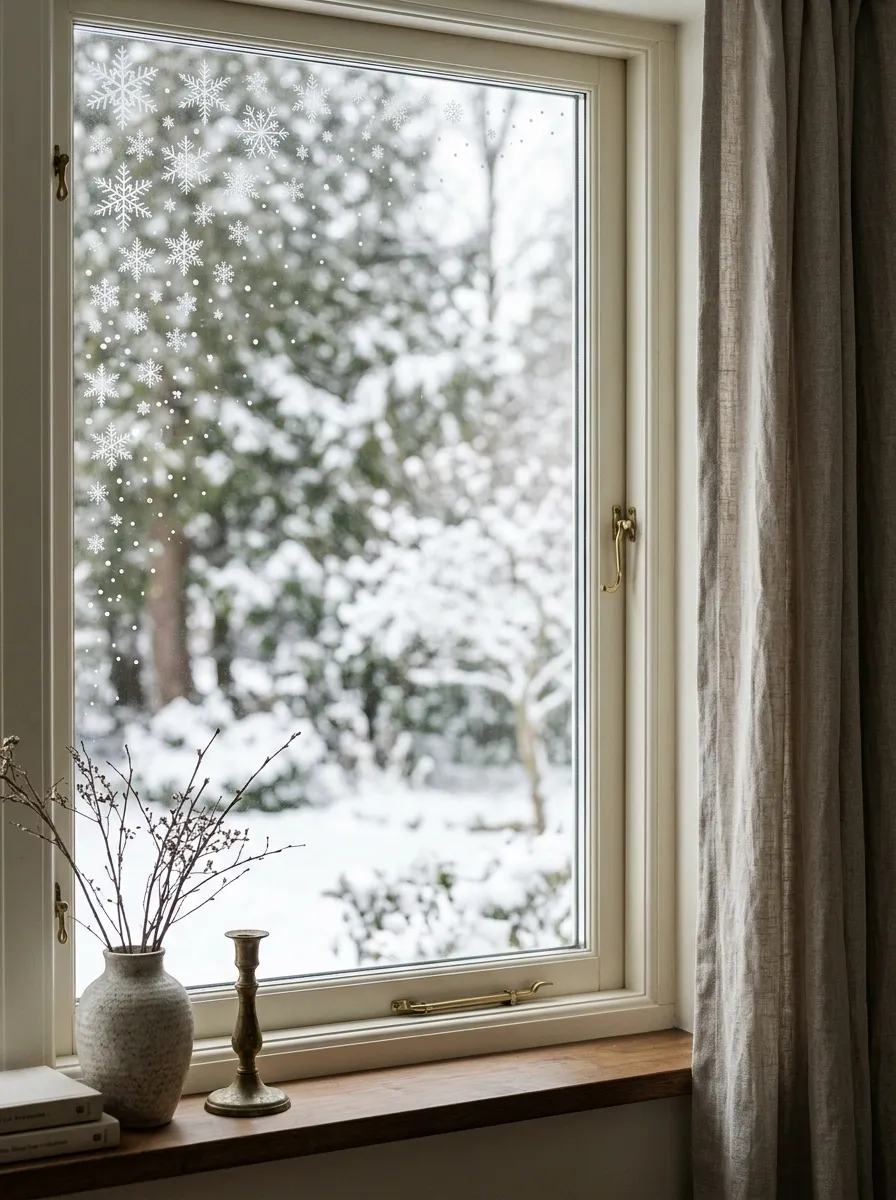
Let snowflakes cluster around an upper corner and gradually become smaller and farther apart as they travel inward.
This asymmetry makes the window feel decorated without turning it into a white screen. Mix simple six-armed forms with tiny dots, and leave most of the central glass clear. Elaborate snowflakes are optional. Nobody is conducting a structural inspection of your decorative ice crystals.
Detail at the edge, openness in the middle
Keep this view open
Charming Streetscape Silhouette
Create a picturesque row of diverse village houses right along the bottom edge of your glass for an enchanting winter display.
Allow a gentle flurry of intricate snowflakes and floating dots to fill the upper portion of the window, balancing the detailed town below.
This festive urban vignette adds warmth and storytelling charm to your interior without blocking out the natural daylight.
A Frosted Band Along the Bottom
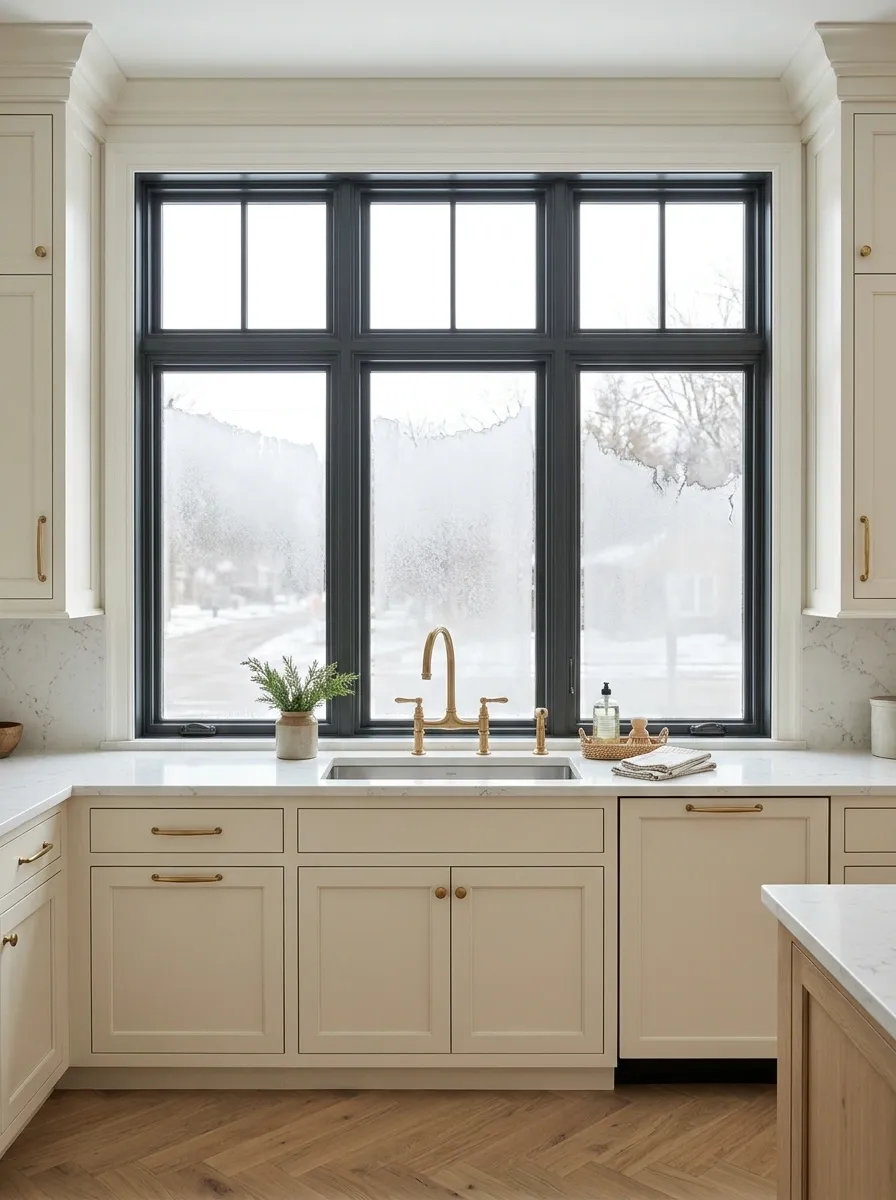
A low frosted band suits kitchens, bathrooms, and street-facing rooms where you want decoration without covering the upper view.
Use a glass-compatible removable film or product intended for the surface. Give the upper edge a soft, uneven outline so it resembles frost gathering rather than a strip of office privacy film. Decorative frosting may blur views, but privacy depends on the product and lighting conditions.
| Band shape | Effect |
|---|---|
| Straight upper edge | Clean and architectural |
| Gentle irregular edge | Frost-like and softer |
| Broken into small sections | Lighter and more decorative |
Cozy Glow Townhouse
Anchor your window design with a quaint skyline of hand-drawn houses and add a string of delicate star-and-moon garland draped gracefully above.
Scatter simple snowflakes through the upper panes to give the illusion of a quiet night snowfall over a magical holiday village.
When evening arrives and interior lights shine through, this charming illustration glows with a truly magical seasonal ambiance.
Slender Silver Birch Trunks
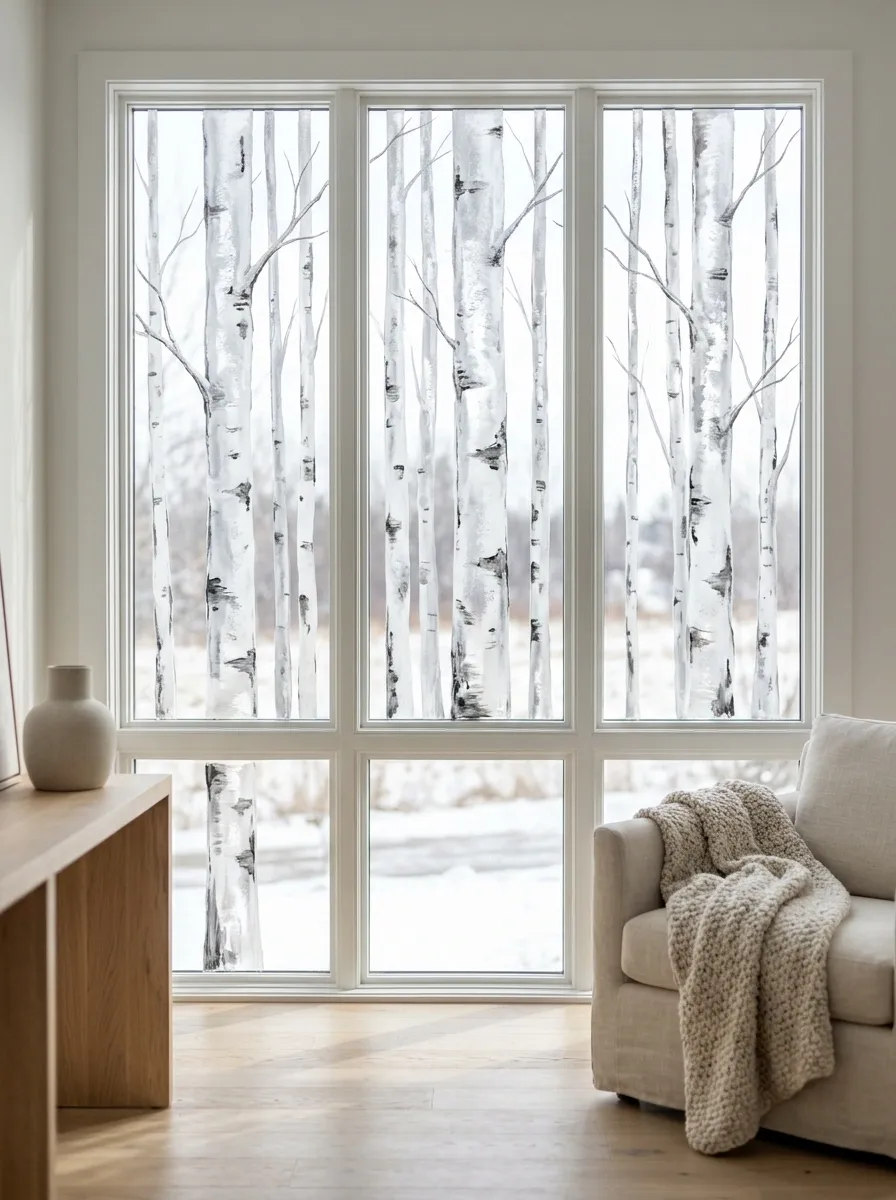
Birch trunks are striking because the pattern is simple: pale vertical forms interrupted by short dark marks.
Keep the trunks at different widths and let a few extend beyond the visible edge of the pane. Avoid adding a detailed forest floor. The vertical rhythm is enough, especially on tall windows where the design echoes the proportions of the glass.
Vary the trunks, not the whole palette
Botanical Window Wreath
Suspend a delicate hand-drawn wreath made of feathery pine needles and botanical foliage directly in the center of your glass pane.
Add a charming little bow at the top and scatter a few tiny speckles around the circle to create an effortlessly elegant holiday focal point.
This classic design offers a sophisticated nod to traditional seasonal decor while maintaining a wonderfully airy, minimalist aesthetic.
An Evergreen Silhouette Along the Sill
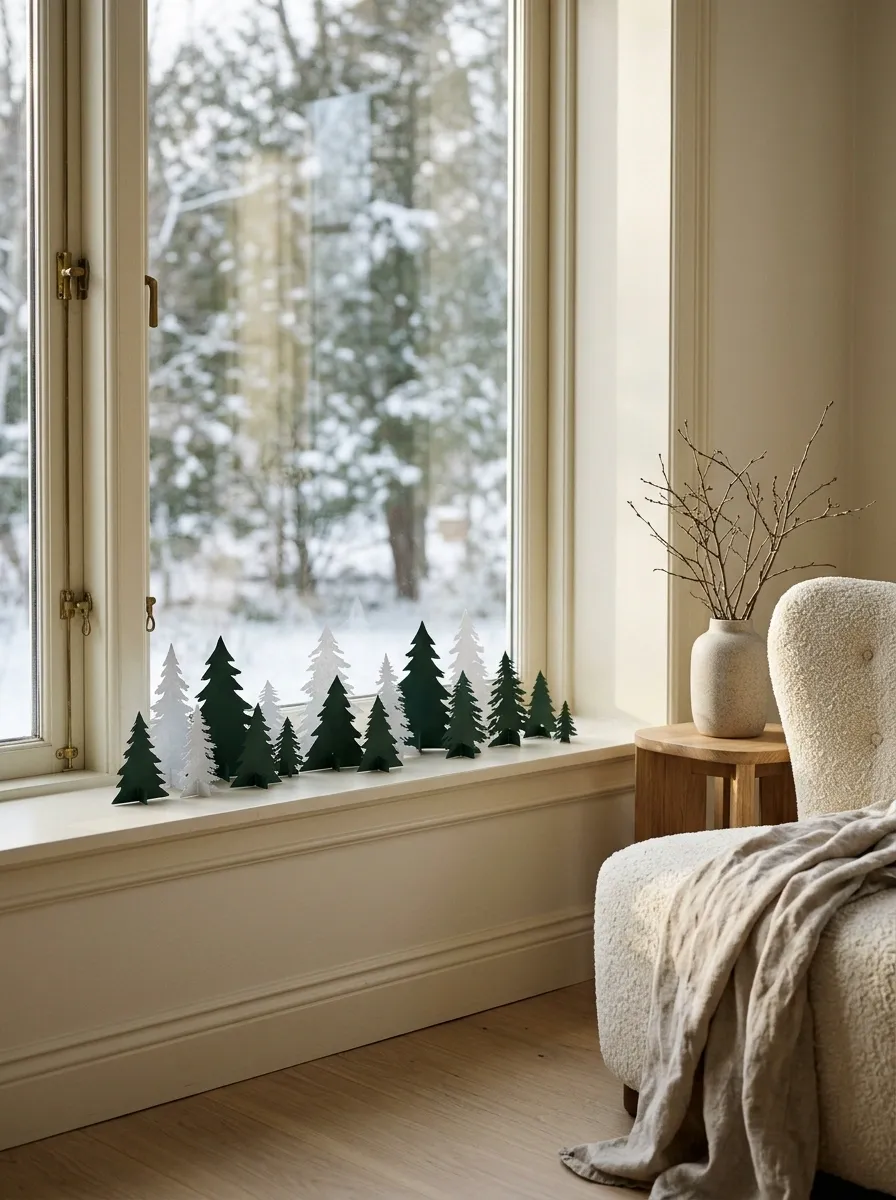
Create a low line of evergreen trees along the bottom of the glass. Vary the heights and leave gaps so the design reads as a small landscape rather than a green fence.
Dark green cutouts look graphic in daylight; white marker outlines feel lighter. Keep the tallest trees toward one side if you want a more natural arrangement.
Composition note: A few overlapping tree shapes create depth more effectively than identical trees spaced like supermarket stock.
Bare Branches Framing the Glass
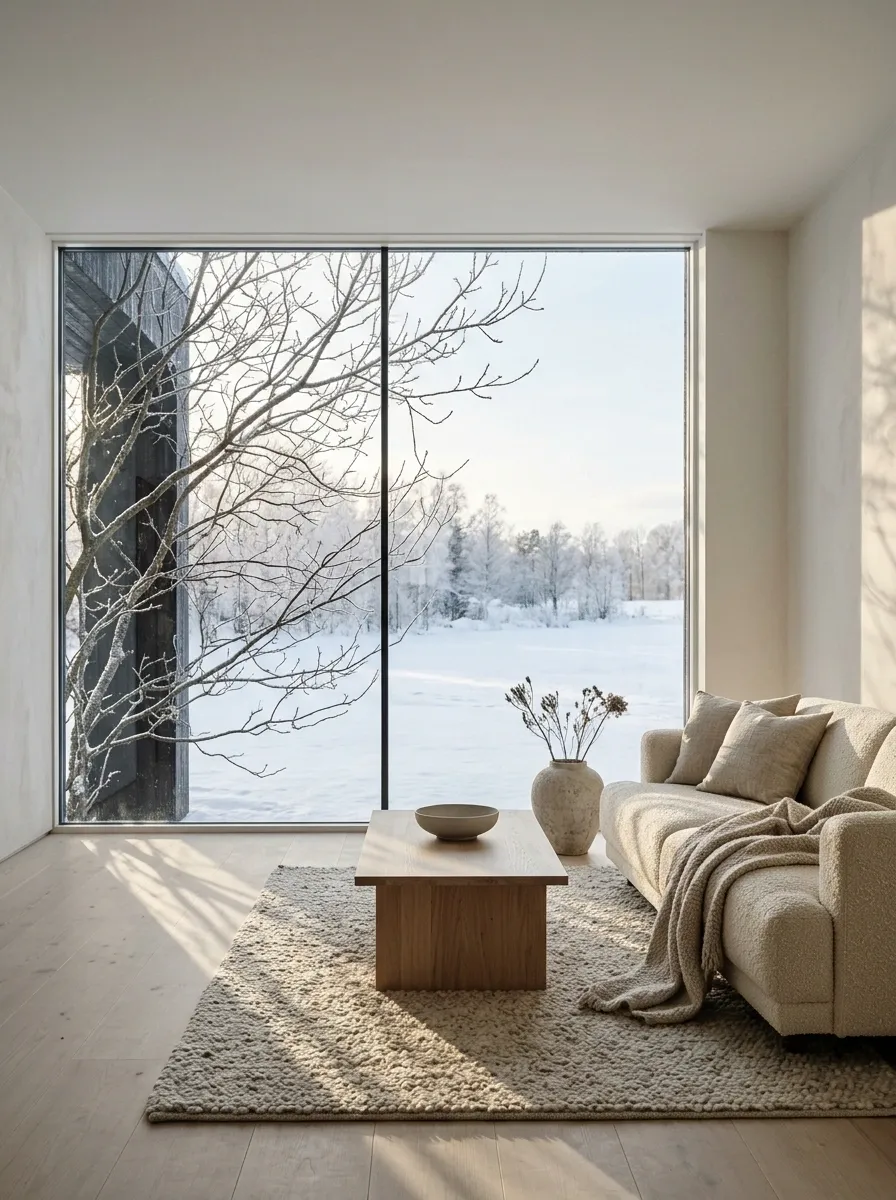
Bare branches are ideal when you want winter decoration with almost no ornament.
Start at one side of the frame and let thin branches reach inward. Use fewer lines than you think you need. A branch pattern becomes tangled quickly, and the window already has enough going on if the real trees outside are participating.
One main stem, lighter offshoots
Keep the opposite side mostly clear for balance.
Oversized Paper Snowflakes
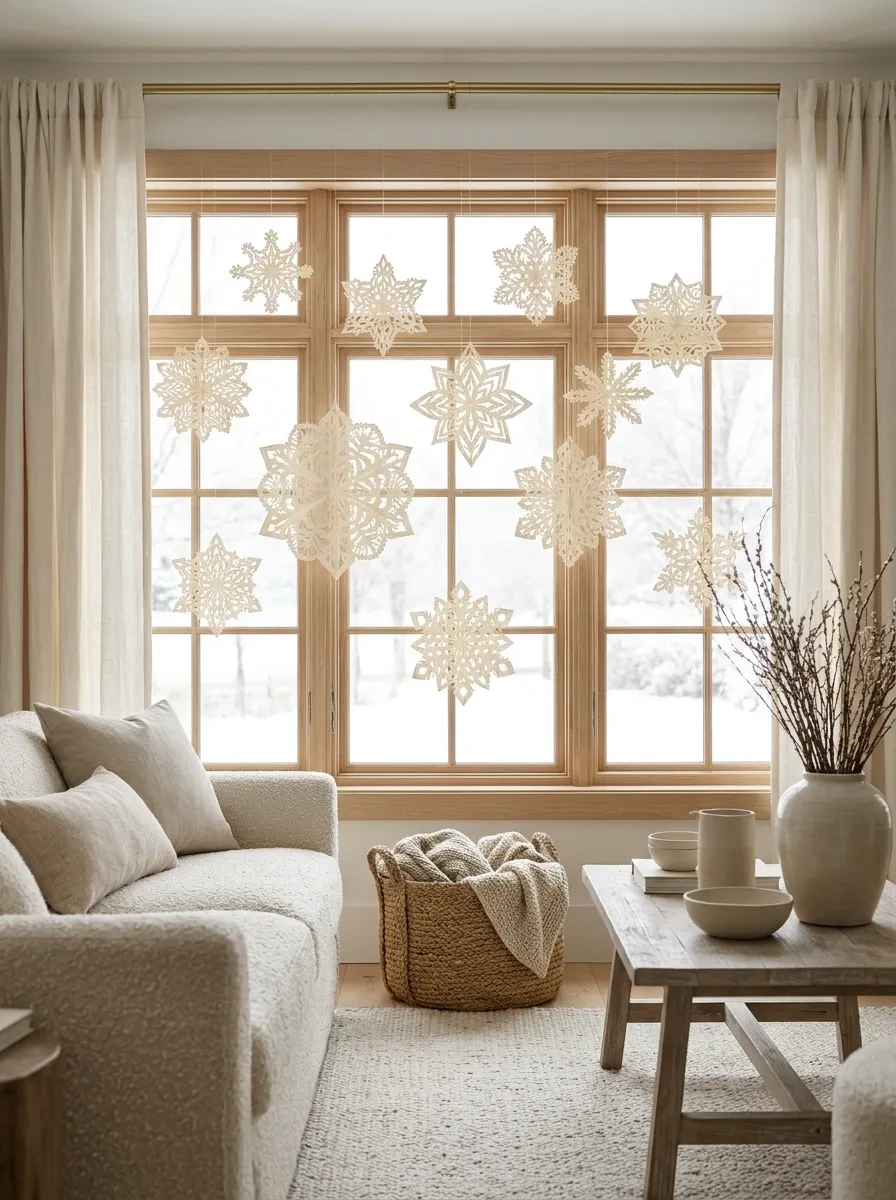
Large paper snowflakes can feel surprisingly elegant when you limit the number and vary the cuts.
Use lightweight paper and suitable removable attachments, or suspend the shapes from an independently supported rod. Leave space between them. A window covered in overlapping paper quickly stops being a window and starts auditioning as a noticeboard.
| Paper choice | Character |
|---|---|
| Plain white | Crisp and traditional |
| Warm ivory | Softer beside wood trim |
| Translucent paper | Lighter when daylight passes through |
Translucent Winter Geometry
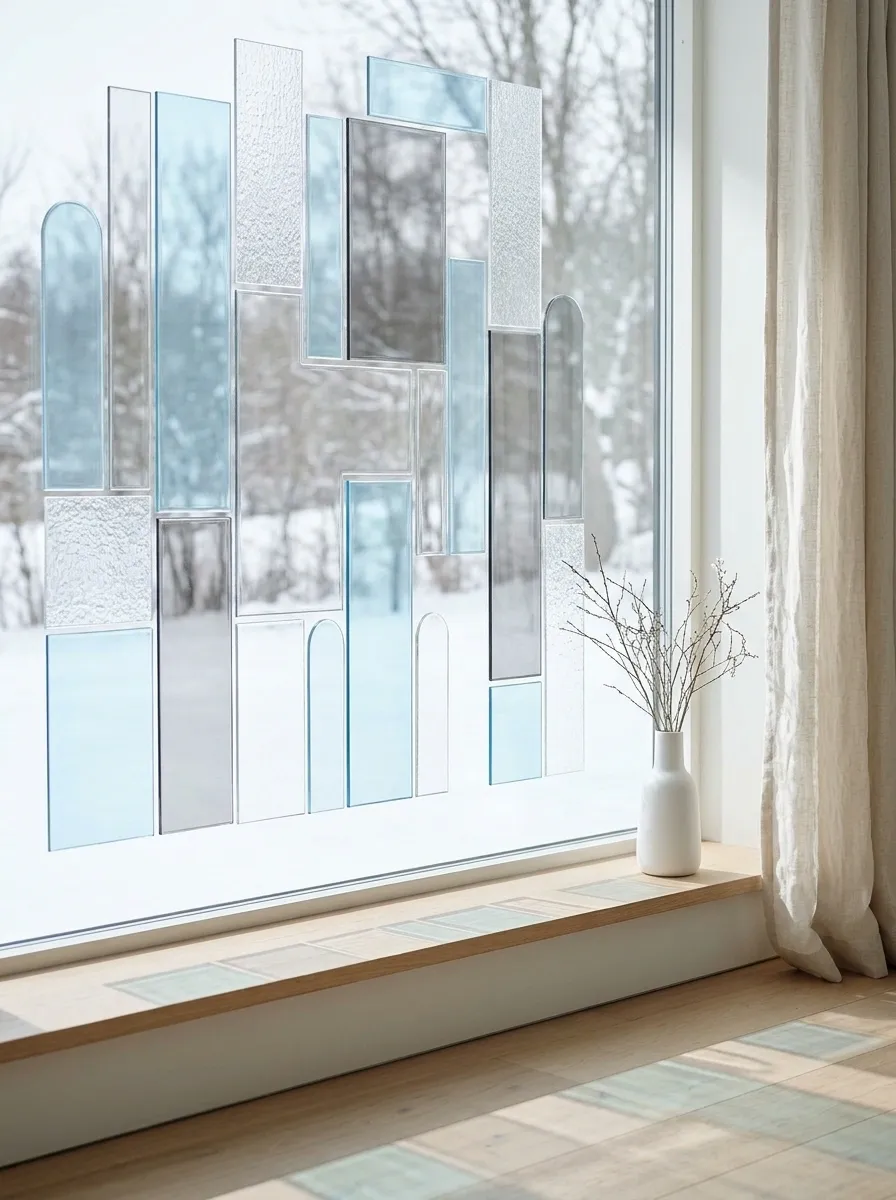
Arrange pale blue, smoke-gray, and clear translucent shapes into a loose geometric composition.
Rectangles and narrow arches work especially well on modern windows. Keep some shapes separated so daylight remains part of the design. Use removable materials suitable for the glass; the goal is a seasonal composition, not a permanent adhesive archaeological site.
Cool shapes, clear intervals
Rolling Snowbanks
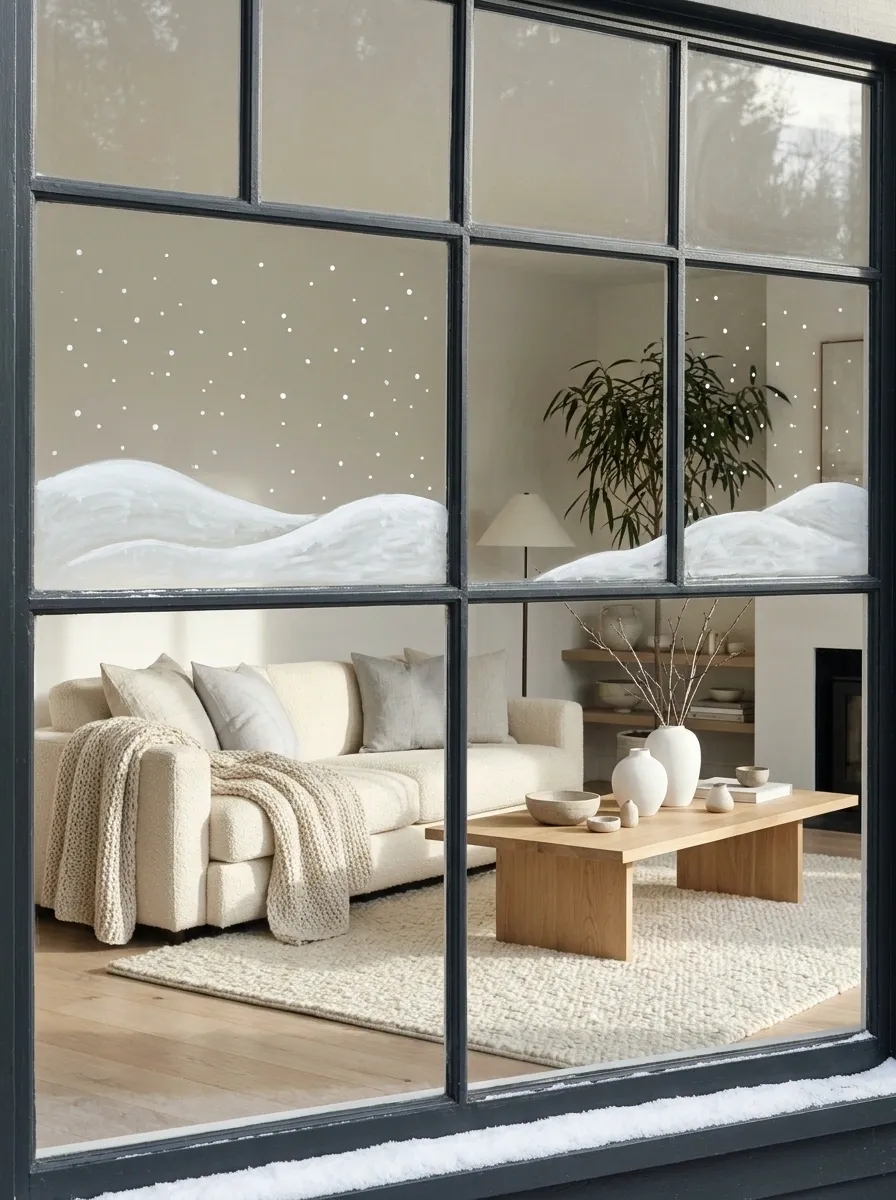
Draw or apply a series of gentle white curves across the lower part of the window.
Vary the height and let one curve disappear behind another. That overlap creates a landscape with very little detail. A small clear gap between layers can make the edges easier to read. Keep the design low enough that you can still see comfortably through the glass.
Best supporting detail: A few sparse snow dots above the hills. Stop before the whole pane becomes a snowstorm report.
A Tiny Village Without Characters
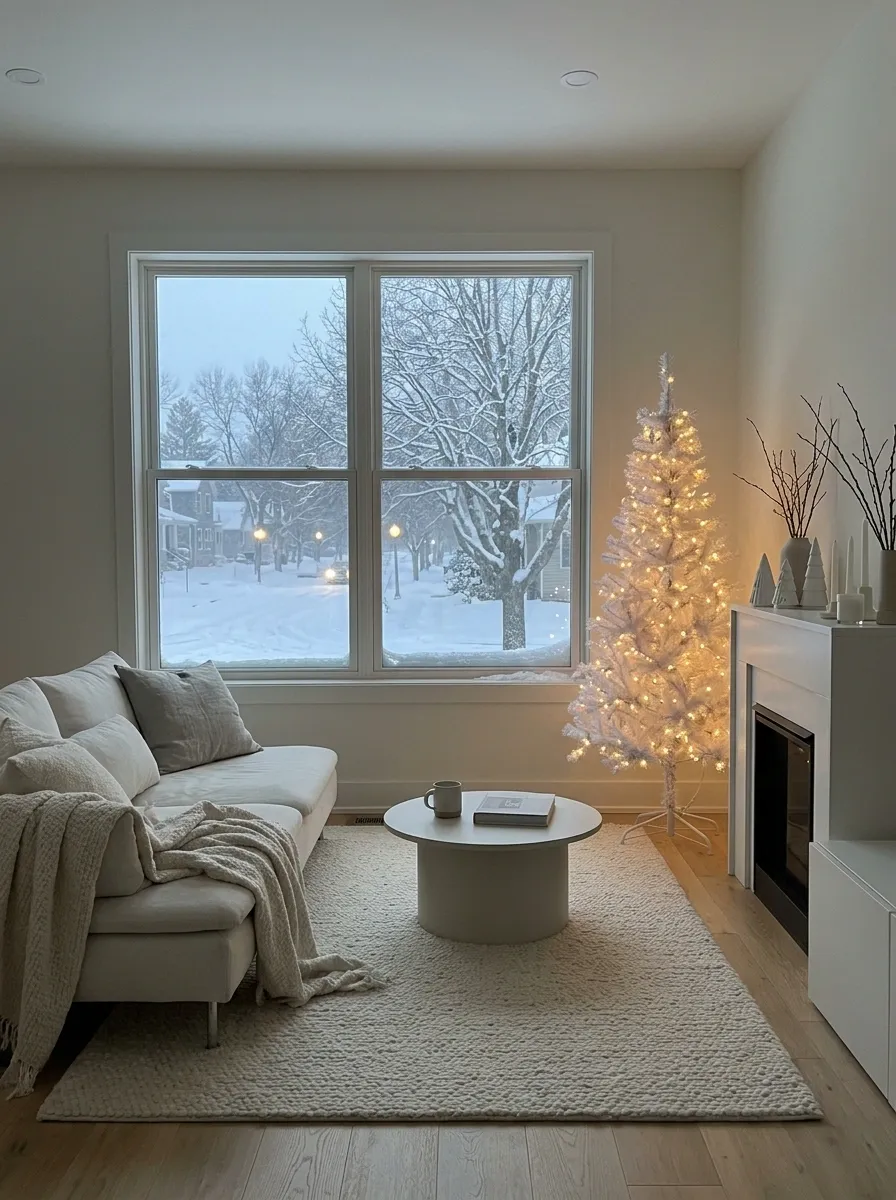
Simple rooflines, rectangular windows, and narrow chimneys create a winter village without requiring any people, animals, or faces.
Keep the buildings low on the glass and vary their widths. Use one outline color so the arrangement feels like a continuous streetscape. A few windows filled with pale gold can suggest warmth without adding holiday symbols.
Different roofs, one quiet line
Pinecone and Needle Studies
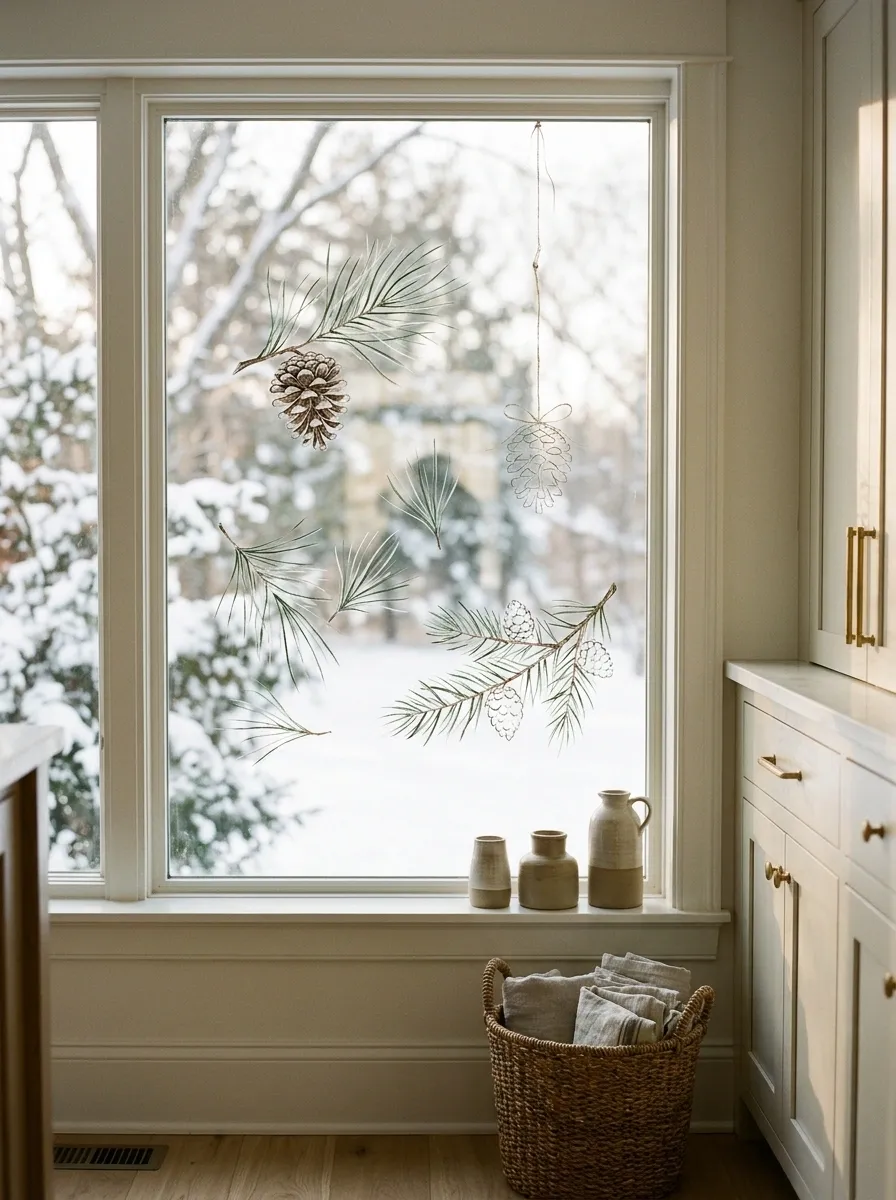
Treat a corner of the window like a botanical notebook: one pinecone, a few needle clusters, and plenty of clear space.
This design works best with fine lines rather than heavy filled shapes. Use brown, white, or muted green, depending on what shows clearly against the outdoor view. You can repeat a small needle motif on an adjacent pane without copying the entire composition.
| Main motif | Supporting detail |
|---|---|
| A single pinecone | Sparse needles |
| A short pine branch | Small unfilled cones |
| A hanging cone outline | A simple line suggesting twine |
An Icicle Border at the Top
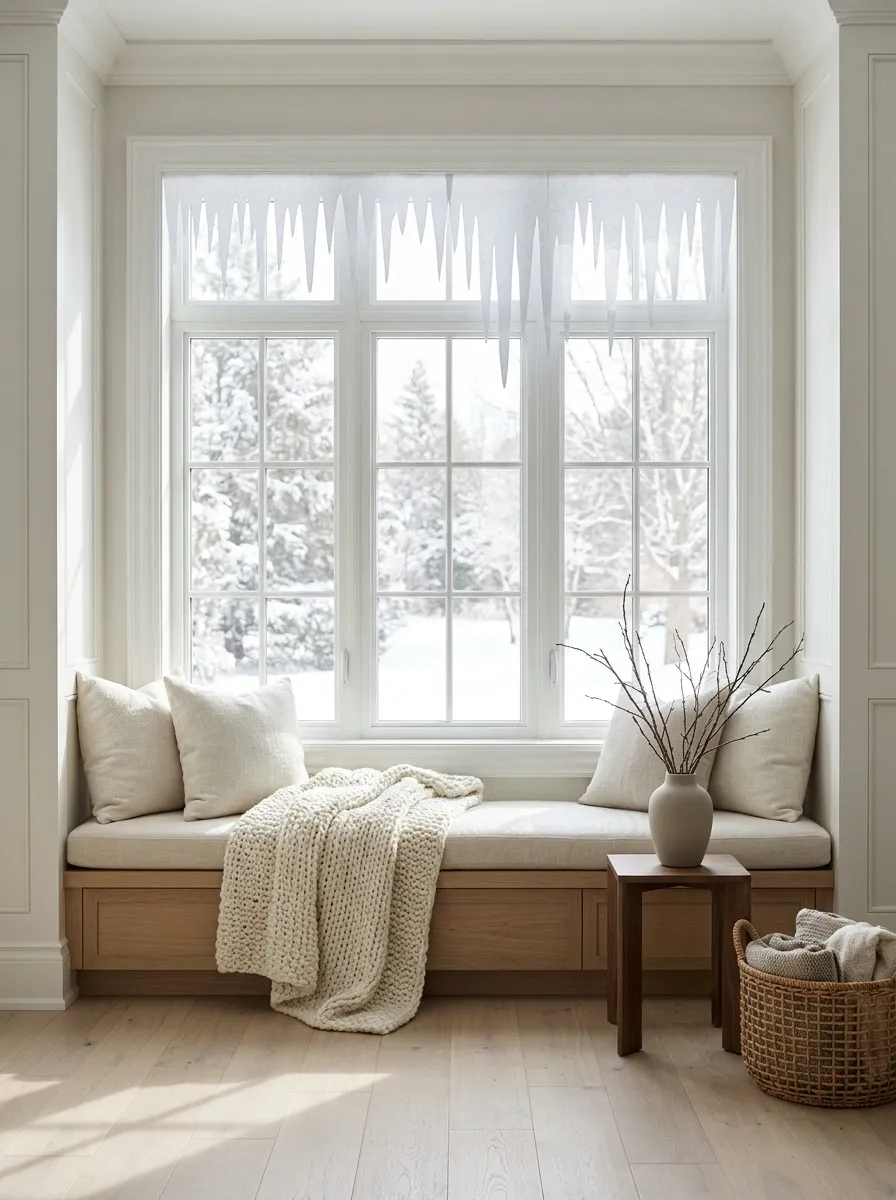
A top-edge icicle pattern leaves the useful viewing area open while giving the window a clear seasonal outline.
Vary the lengths and keep the lower points irregular. A perfectly repeating zigzag reads more like bunting. White or translucent material is usually enough; glitter is optional, and your vacuum cleaner would like a vote.
Keep the longest drops off-center
Open glass beneath the border
Layered Mountain Outlines
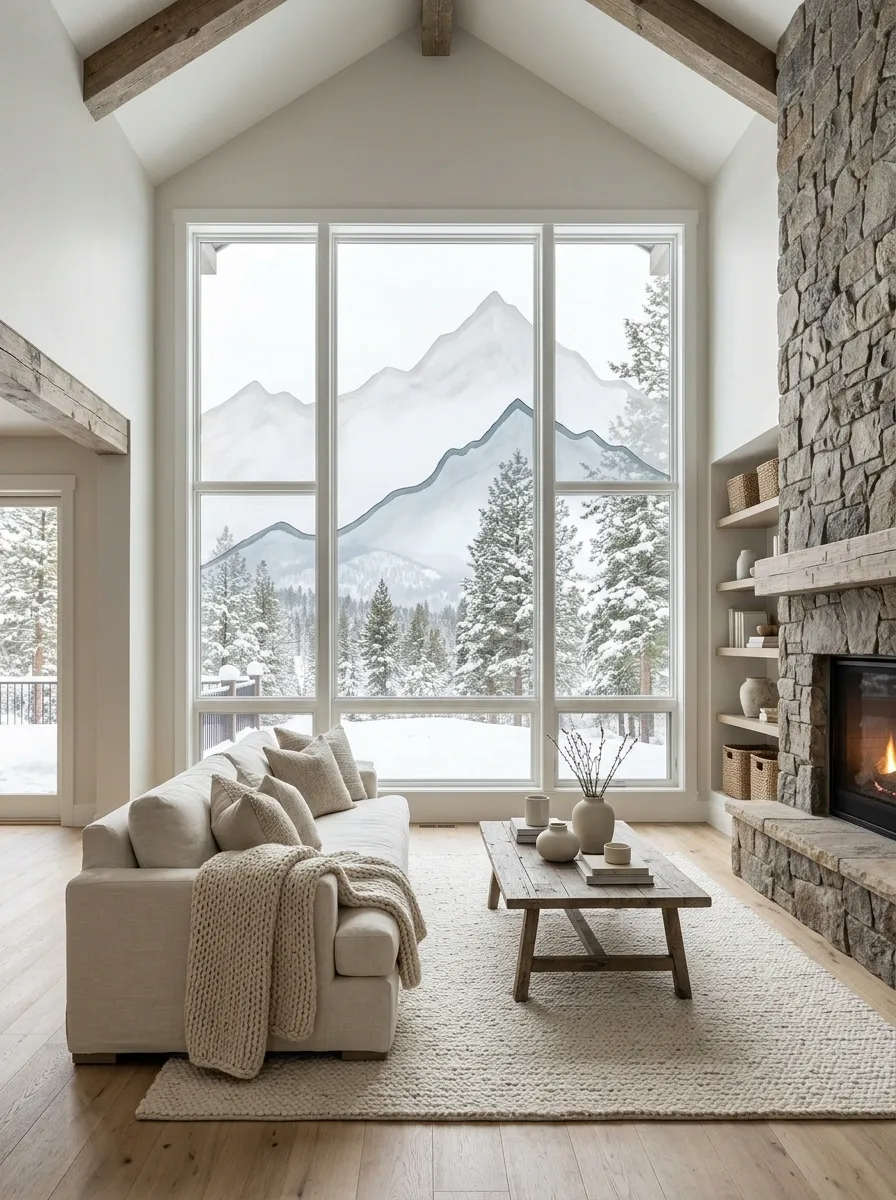
Mountains suit broad windows because the landscape can stretch across several panes without demanding fine detail.
Use a pale rear ridge and a darker or more defined front ridge. Keep the highest peak away from the exact center for a less predictable arrangement. A little white along selected edges suggests snow; covering every mountain top identically tends to flatten the effect.
Palette suggestion: Soft gray, white, and a restrained blue-gray.
A Crescent Moon and Sparse Stars
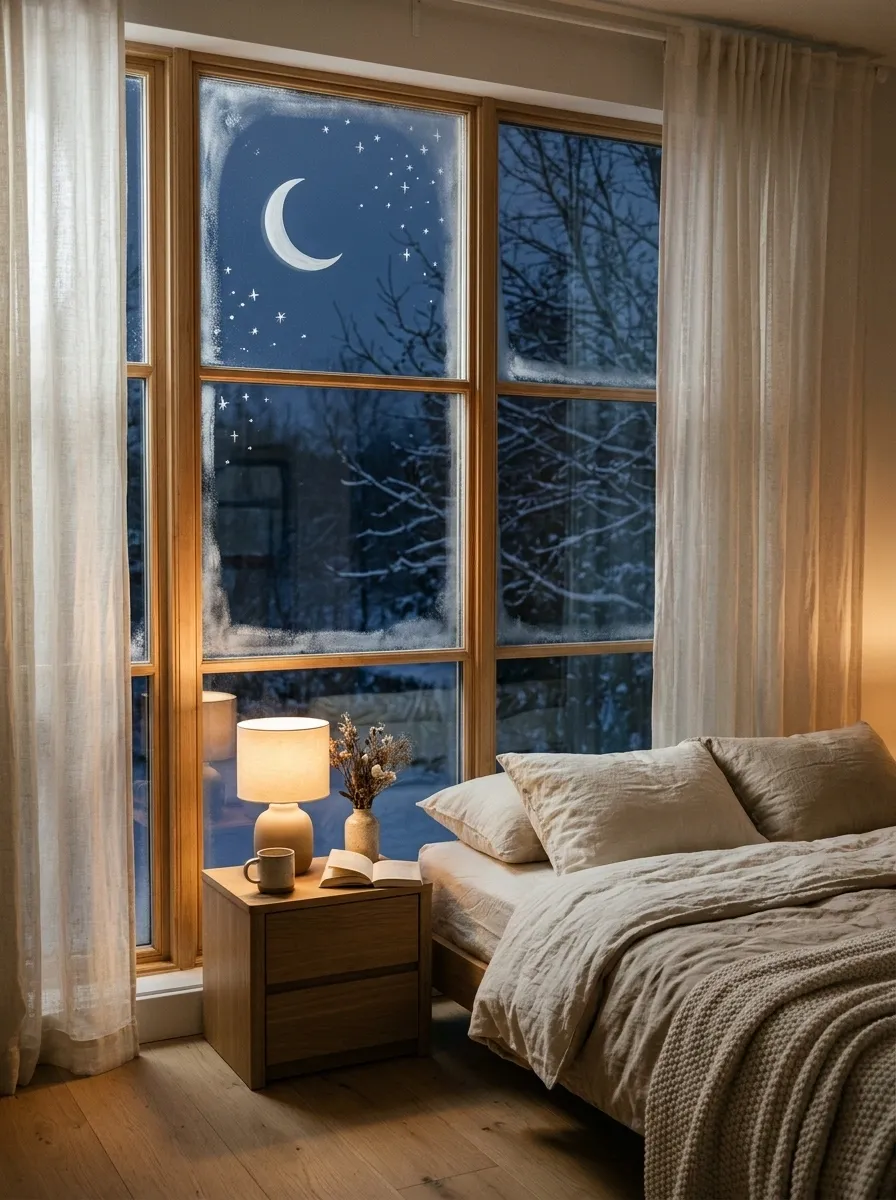
A plain crescent and a few small stars make an understated winter-night design.
Leave the moon unadorned and avoid arranging the stars at equal intervals. Cluster a few near one side, then let the pattern thin out. This works especially well on a bedroom window where a full landscape might feel too busy beside curtains and bedding.
One moon is plenty
A Cut-Paper Forest
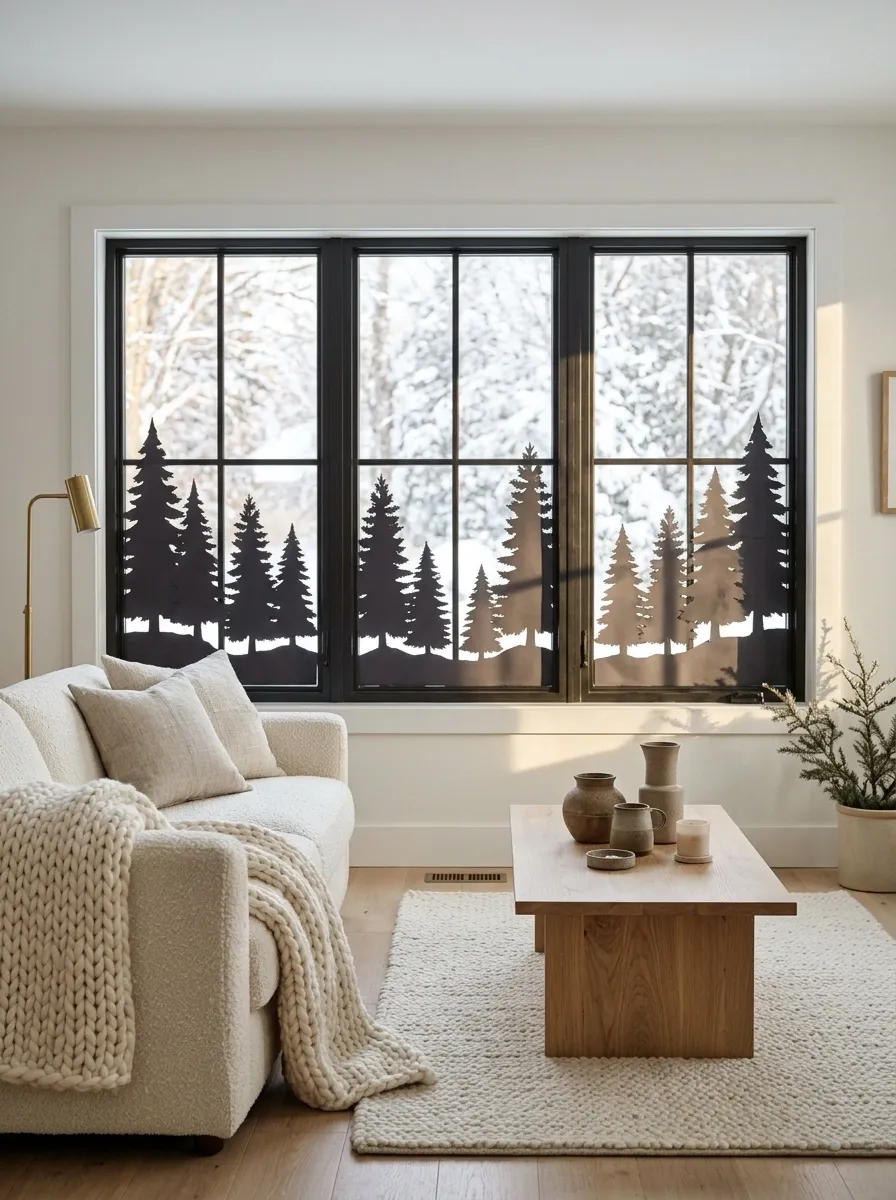
Cut a continuous forest silhouette from paper and position it along the bottom of the pane.
Unlike individually applied trees, a connected strip creates a strong, graphic edge. Use uneven tree heights and a slightly irregular ground line. Keep the strip shallow so the window retains daylight, and choose attachment methods that suit both the glass and the paper’s weight.
| Want this effect? | Choose |
|---|---|
| Crisp silhouette | Dark charcoal paper |
| Snowy lightness | White or ivory paper |
| Softer daylight | Translucent paper intended for the project |
Lantern Outlines With Golden Centers
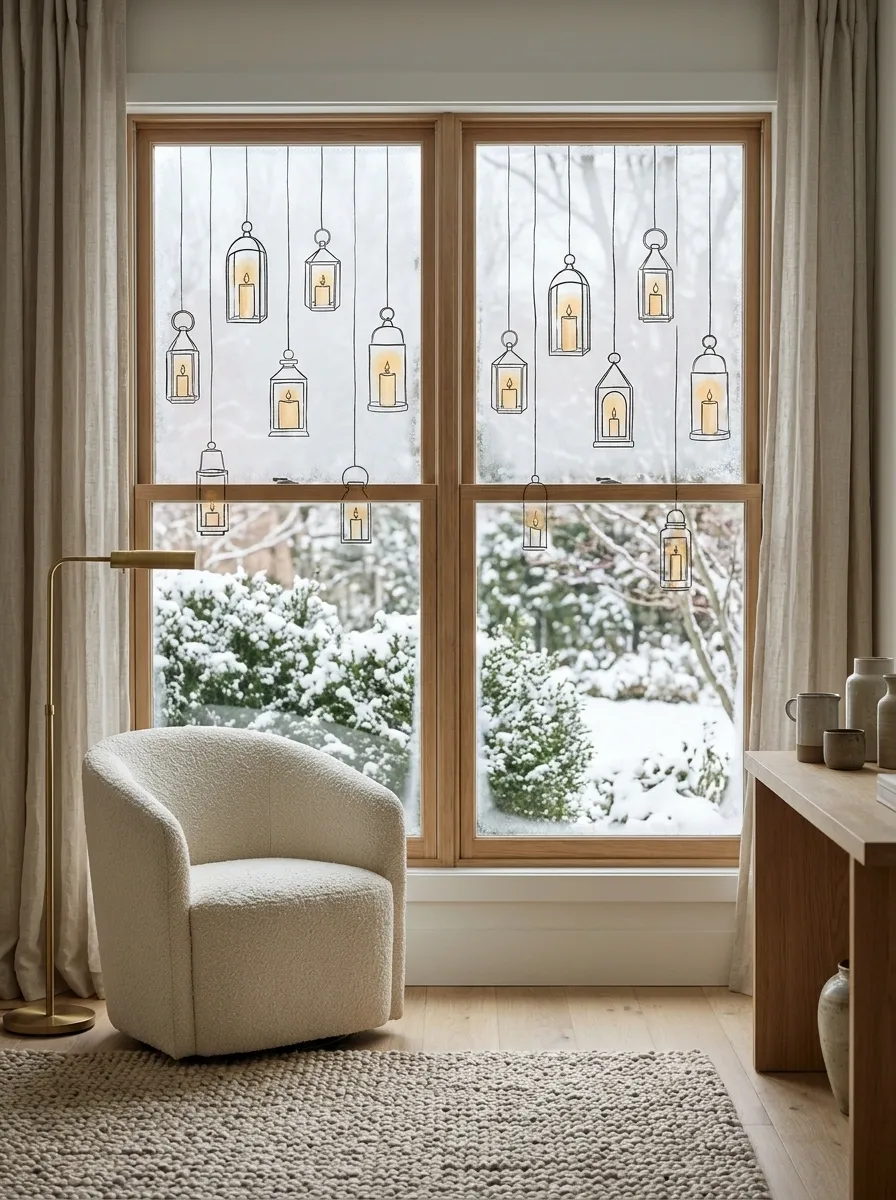
Draw a small group of lantern shapes using simple rectangles, curved tops, and handles.
Fill only the candle area with a pale amber tone. The surrounding glass stays clear, making the little warm centers feel more distinct. Keep the outlines slim and vary the hanging heights. There is no need to draw a flame with a personality.
Outline first, amber second
Frost-Fern Patterns
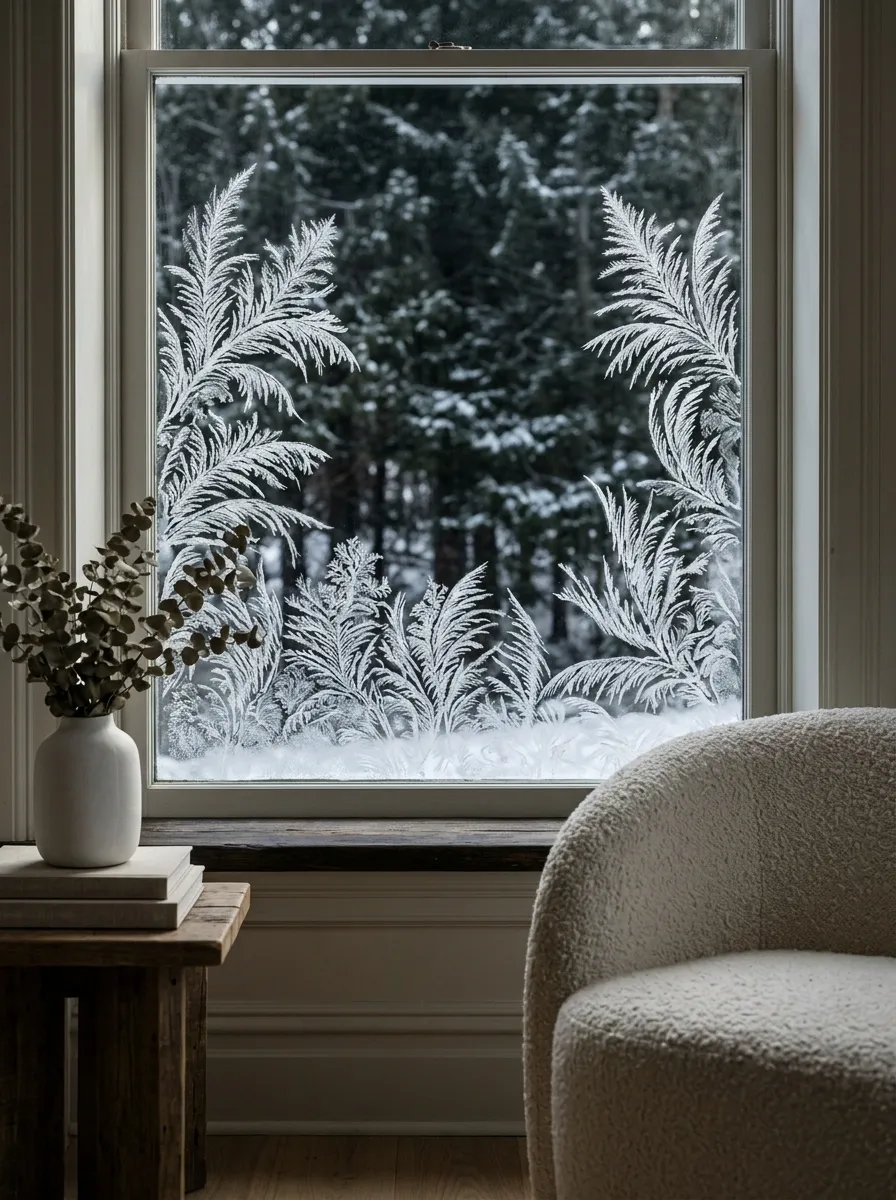
Frost-inspired fern patterns look delicate when they follow a clear direction.
Let each main line branch into smaller angled strokes. Begin near an edge and keep the center open. White works well against darker outdoor views, while a pale silver-gray can be subtler in bright rooms.
Drawing shortcut: Practice one branch on paper first, then place the reference behind the glass if your window setup allows it safely.
Snow Dots With Changing Density
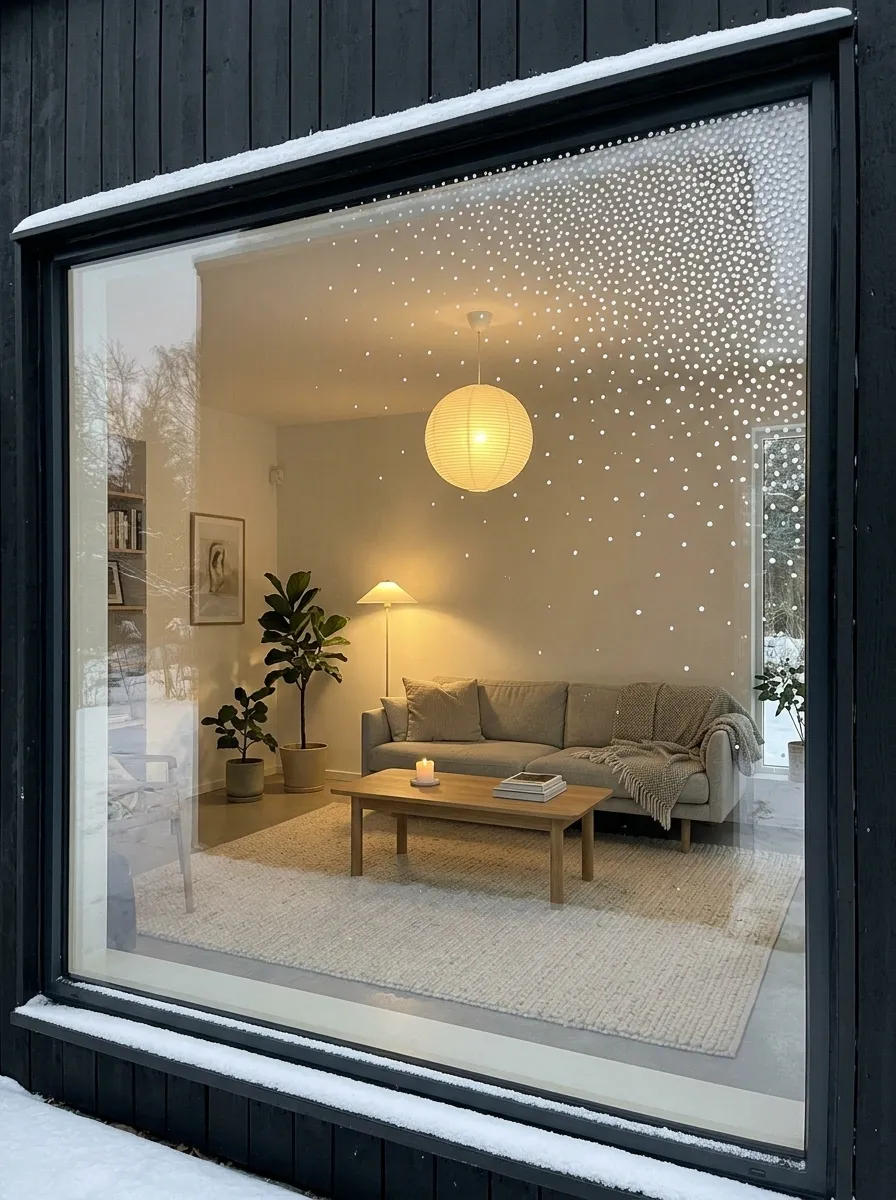
A field of dots becomes much more interesting when the density changes.
Gather small dots near the top or one side, then gradually space them out. Mix a few larger dots among the smaller ones, but avoid making every mark a different size. The result should suggest drifting snow, not a scientific chart of every possible circle.
Dense above, quieter below
Winter Berry Stems
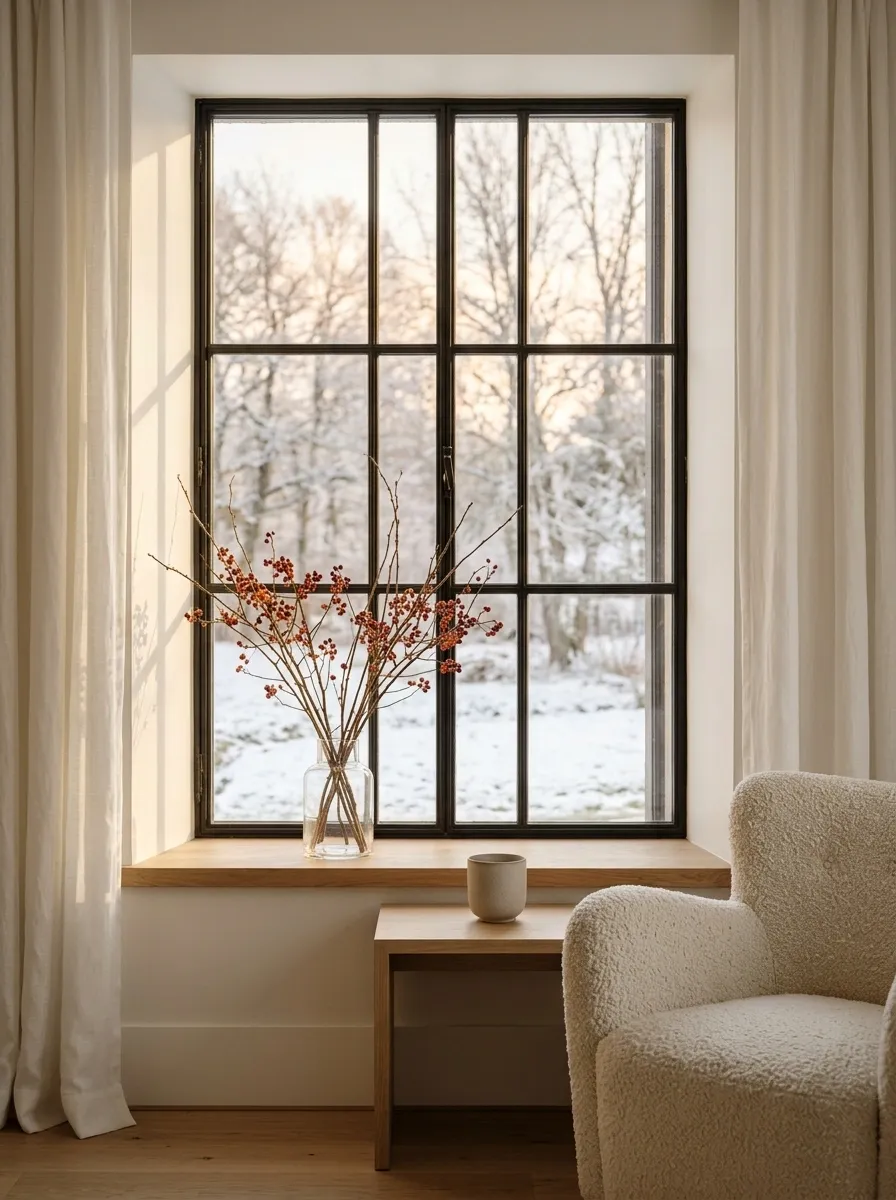
A few arching berry stems add a restrained note of color to a winter window.
Use thin brown or muted gray branches and small red-brown dots. Keep the stems loose and botanical rather than arranging them into a wreath. This lets the design feel seasonal throughout winter without tying it to a holiday.
| Detail | Keep it restrained |
|---|---|
| Branches | Fine, irregular lines |
| Berries | Small clusters with gaps |
| Color | Rust red, burgundy, or muted crimson |
Etched-Look Botanical Clings
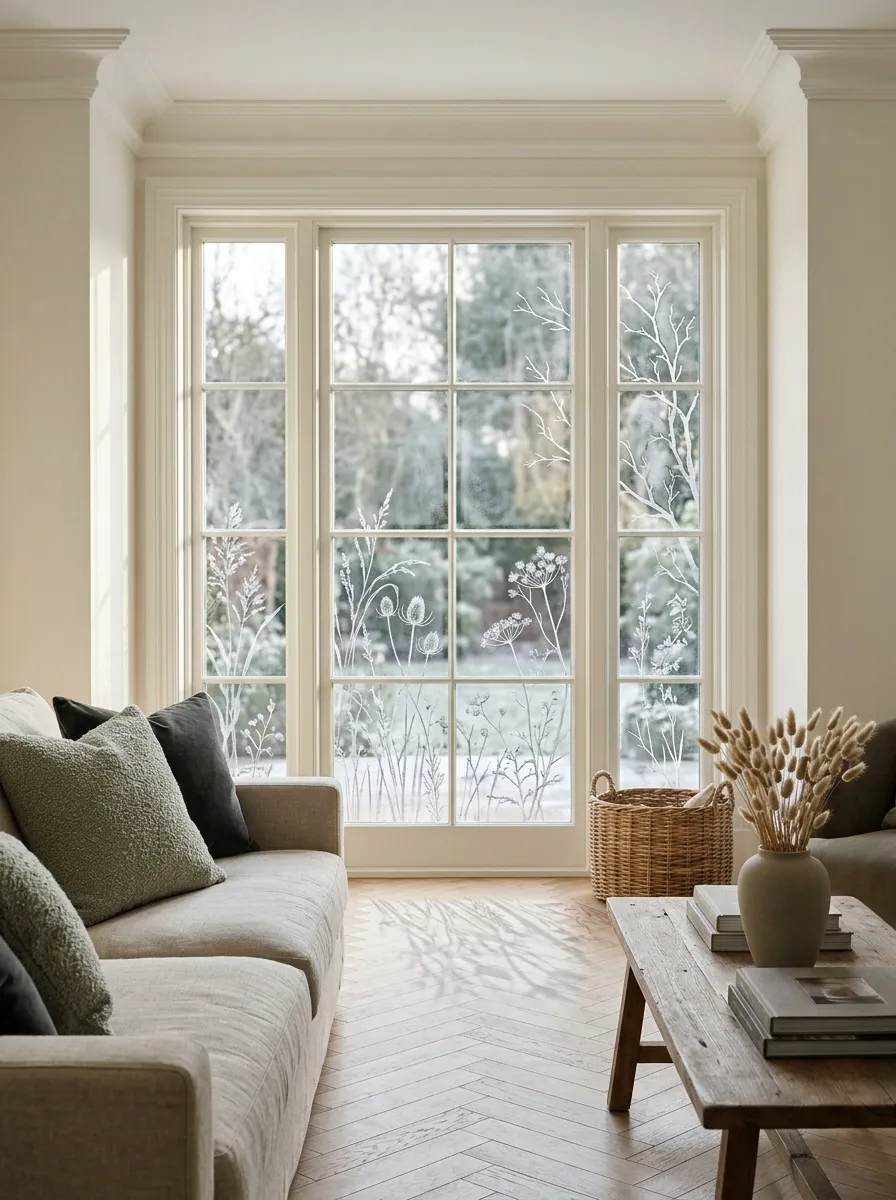
Removable etched-look clings are useful when you want a detailed pattern without drawing it yourself.
Choose winter grasses, branches, or simple leaves rather than a dense all-over design. Group them at one edge or across the lower glass. Check suitability for your window and remember that an etched appearance does not automatically provide complete privacy.
Give the pattern a boundary
One Pane as a Complete Landscape
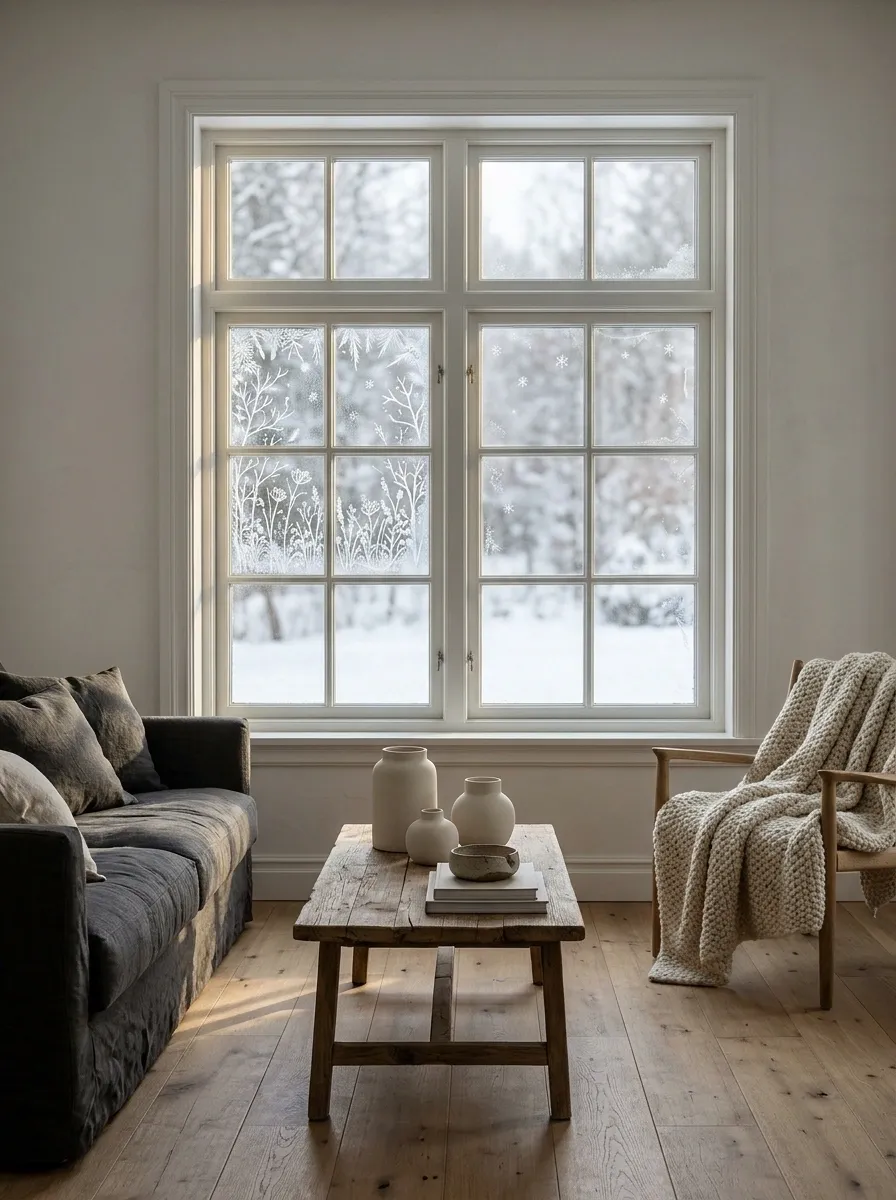
On a divided window, decorate one pane more fully and leave the others relatively open.
A small mountain scene, winter meadow, or simple wooded slope gains impact when the surrounding panes act as visual breathing room. This is particularly effective when the window is already divided into a strong grid. You get a focal point without making the entire opening compete for attention.
Good restraint: Let nearby panes contain only a few repeated dots or lines from the main scene.
Tall Grasses on a Narrow Window
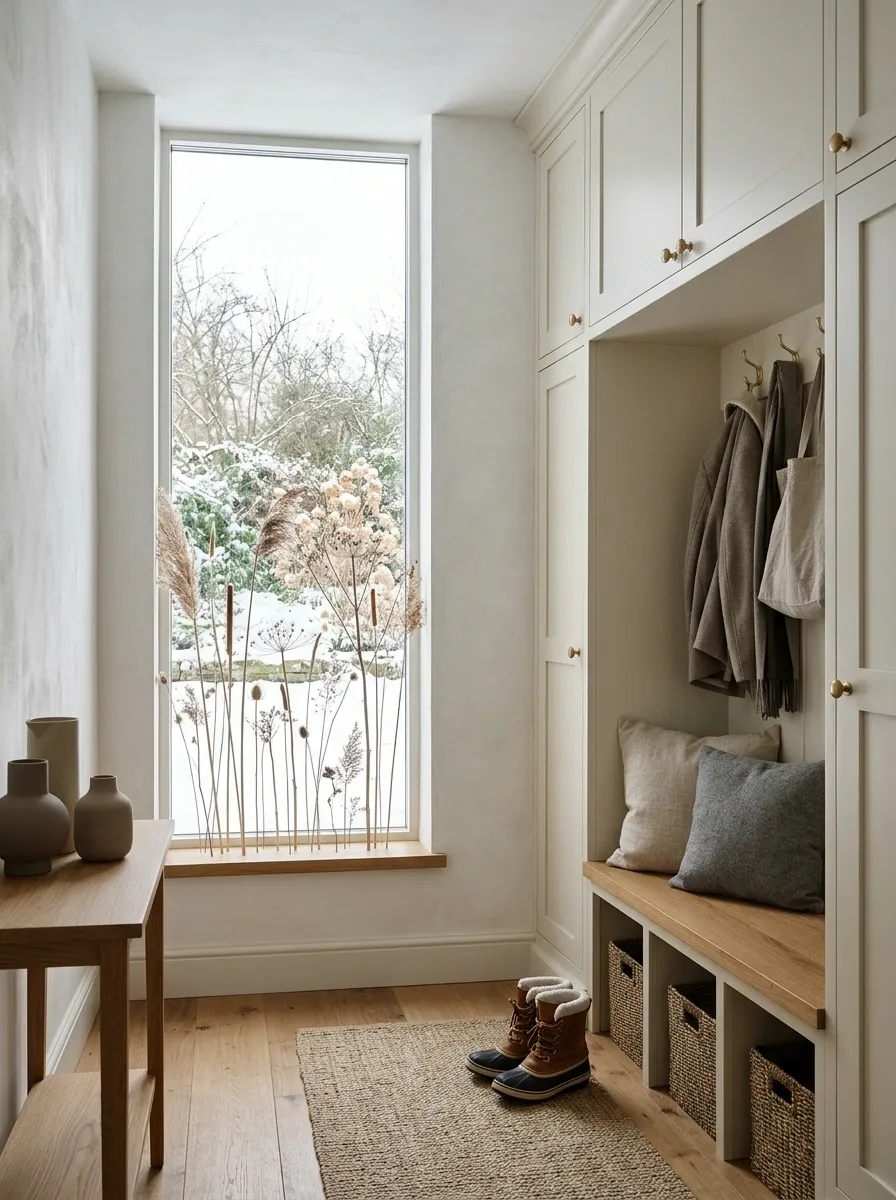
A slim window suits upright winter grasses, seed heads, and reed-like stems.
Start the lines near the bottom and vary their heights. Keep the seed heads small so the pattern stays airy. Warm gray, white, or muted brown can all work; choose the shade that remains visible against the changing view outside.
Follow the shape of the glass
A Limited Cobalt-and-White Design
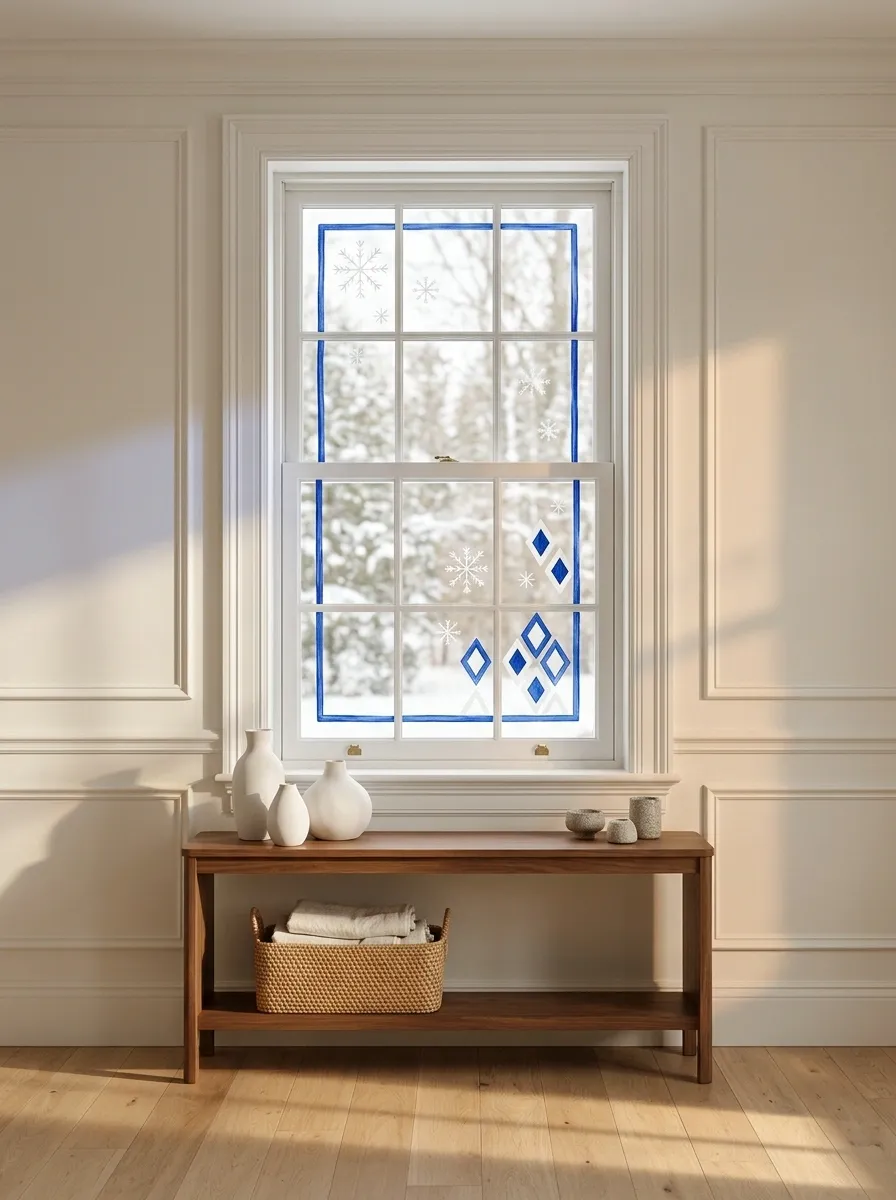
For a bolder window, use cobalt and white in a small geometric or snowflake composition.
The limited palette keeps strong color from becoming chaotic. Try a cobalt border around one pane with white shapes inside, or a few blue diamonds among white snowflakes. Avoid spreading the blue evenly across every surface; concentration gives it more purpose.
| Use cobalt for | Use white for |
|---|---|
| A framing line | Snowflakes or frost details |
| A few larger shapes | Smaller connecting marks |
| One focal pane | Light repetition nearby |
Warm-Ivory Paper Shapes
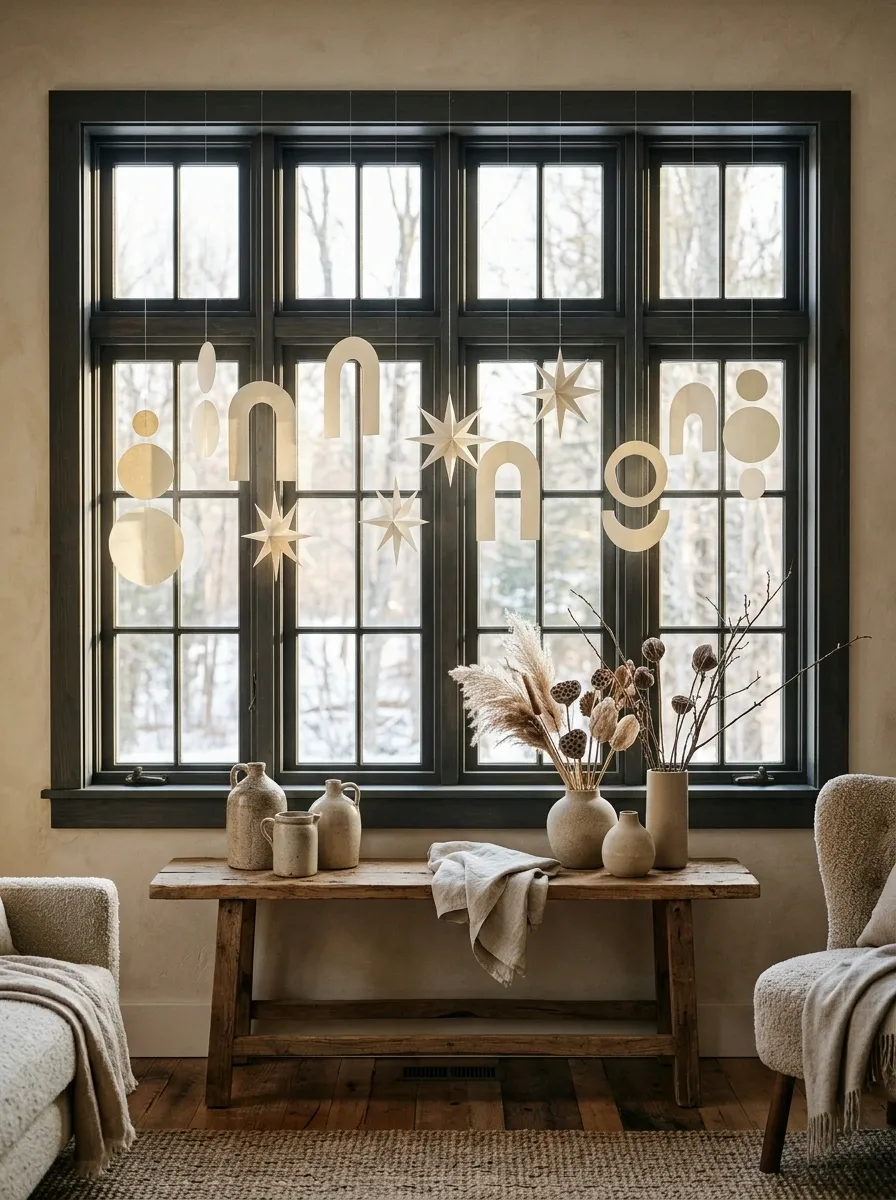
Winter decoration does not have to be icy blue.
Warm-ivory paper circles, arches, and simple stars can look beautiful against dark window trim or wooden frames. Use a consistent paper tone and vary the shape sizes. Suspend lightweight pieces from a suitable support rather than attaching anything heavy to the glass.
Paper, light, and open space
A Single Snowflake Medallion
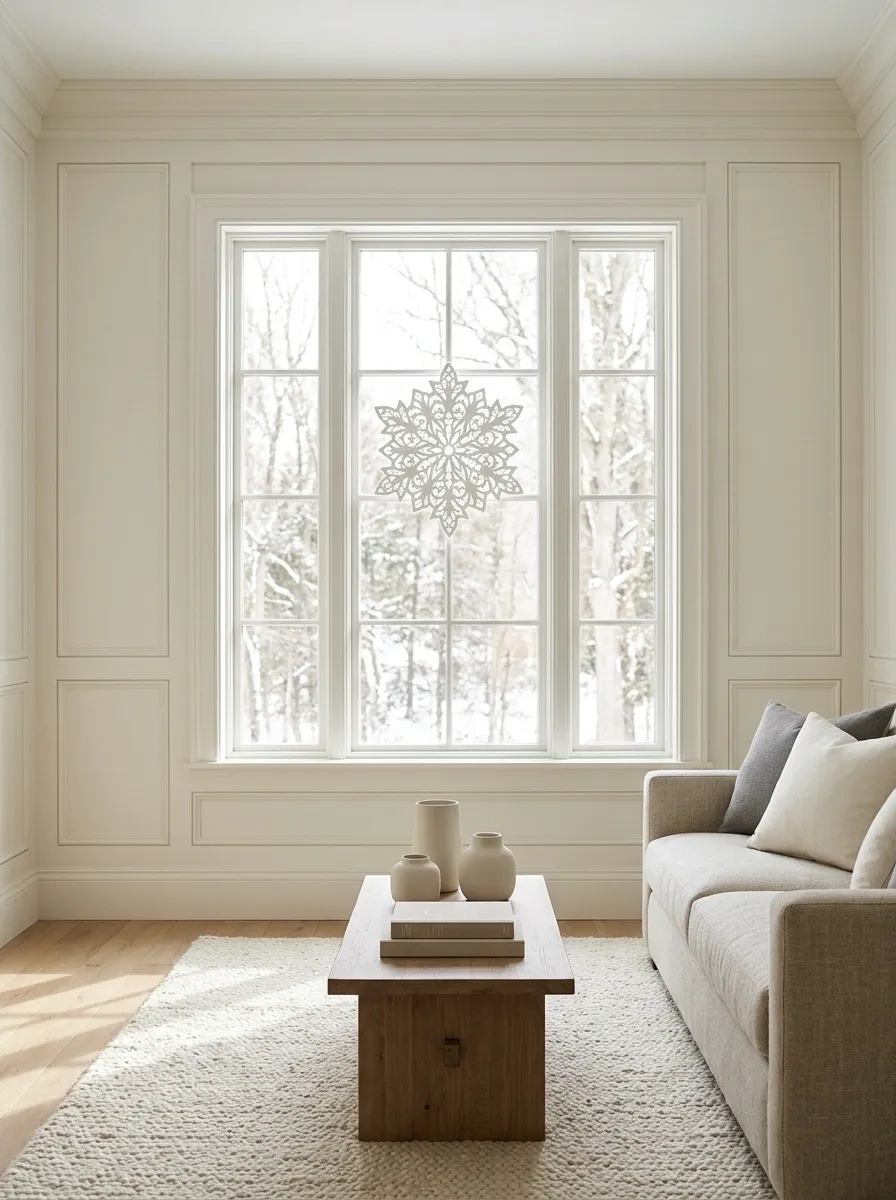
One large, carefully placed snowflake can be more effective than a whole pane of small ones.
Center it within a single pane or position it slightly above eye level. Keep the surrounding area clear so the shape reads cleanly. This approach suits symmetrical windows and rooms where other decorations already provide plenty of detail.
Make it intentional: Align the motif with the window’s structure, not with a random spot that happened to be reachable.
A Reusable Winter Art Collection
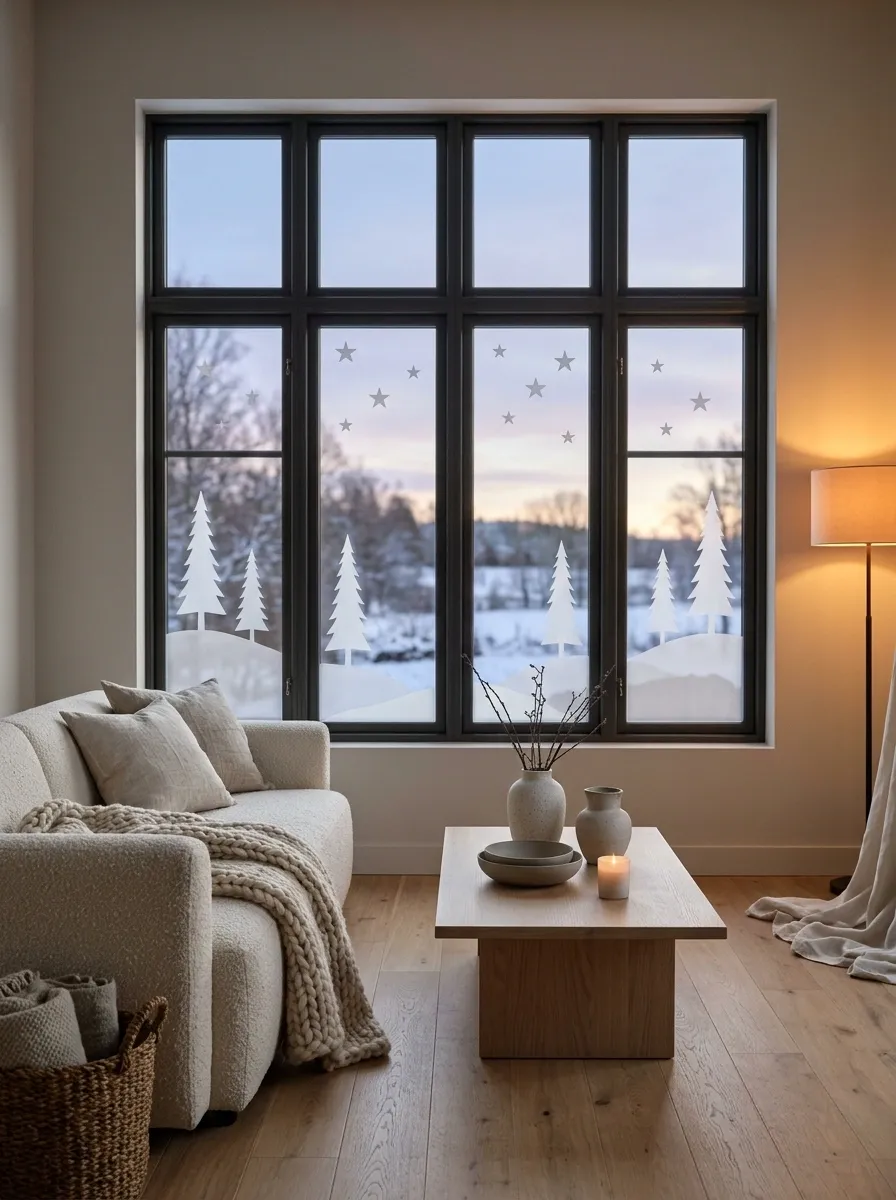
Create a small set of removable motifs that you can rearrange rather than redesigning the window from scratch.
Keep the collection consistent: perhaps white trees, translucent hills, and a few pale-gray stars. Store pieces flat according to the material’s instructions, with any required backing sheets. A reusable system saves effort without forcing the window to wear the same outfit indefinitely.
Keep the pieces, change the arrangement
Vertical structure
Lower edge
Sparse accents
Let the Glass Stay Part of the Design
Step back from the window before adding the final details. Then look again when the indoor lights are on.
A design can feel delicate in daylight and unexpectedly dense after dark. Leave enough clear glass to preserve the view, remove any marks that crowd the composition, and enjoy the fact that winter art can be seasonal without involving a smiling snowman supervising the kitchen.