
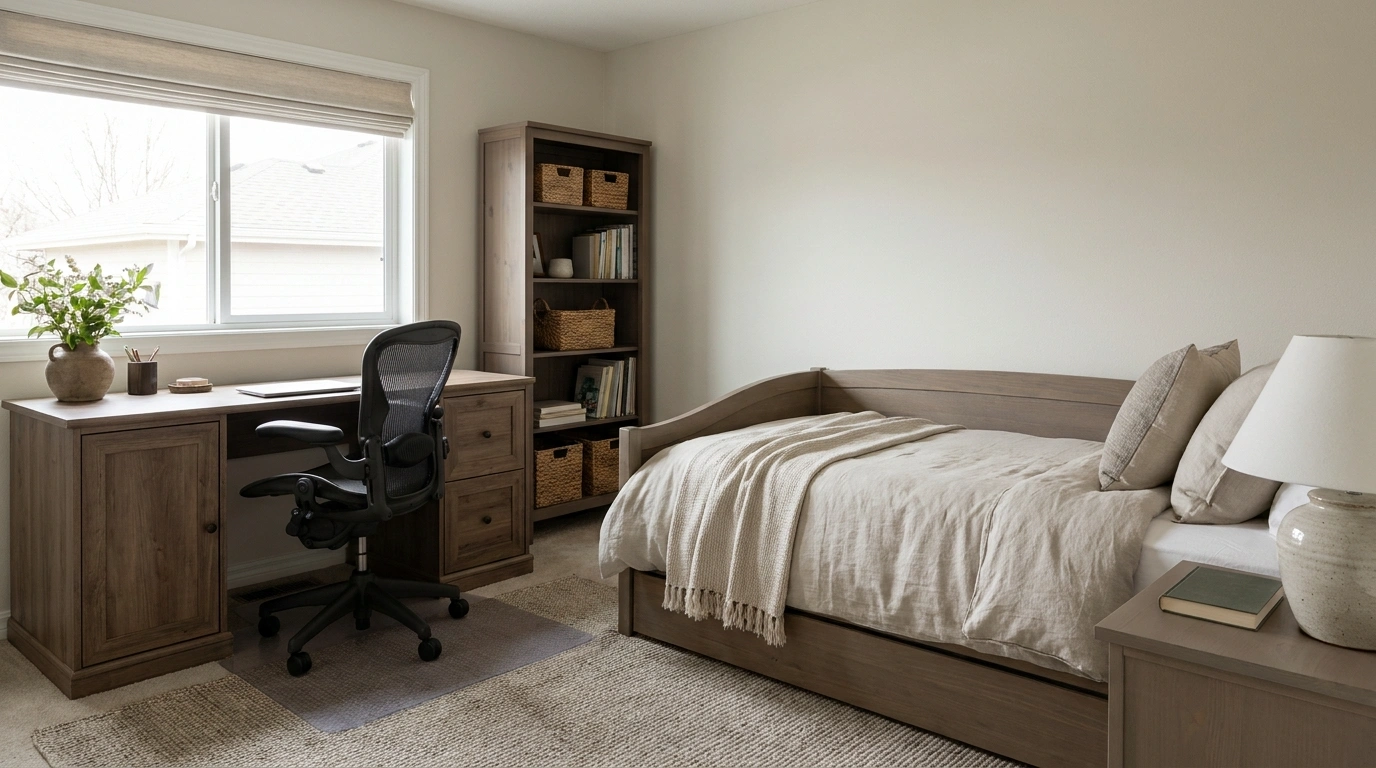
Your guest texts to say they’re arriving early. You look at the spare room and realize the bed is holding a printer, several work bags, and the project you promised to finish last month. Hospitality now involves a relocation operation.
A shared room earns its space when switching uses takes a manageable reset. You should be able to work comfortably on an ordinary Tuesday and give someone a proper place to sleep when they visit. Neither person should have to balance their belongings on the floor beside a tangle of charging leads.
Knowing how to create a dual-purpose guest room and home office means planning both versions of the room before buying furniture. The open sofa bed, occupied desk chair, guest suitcase, and wardrobe doors all need a place in that plan. A furniture label saying “multifunctional” won’t do the measuring for you.
Decide Which Version of the Room Runs the Week
Match the Bed to How Often People Stay
A room used for work most days can justify a sleeping setup that folds away between visits, provided it’s comfortable and practical to open. Frequent or longer guest stays may make a permanent bed the better choice. The right balance comes from your actual calendar and the people you host.
Consider mobility, comfort, and the effort required to change the room. A solution that needs heavy lifting before every visit will become annoying quickly. Choose a bed you can prepare without turning the hallway into temporary furniture storage.
Draw the Room With Everything Open
Measure the room, door swings, storage access, and the full dimensions of the proposed furniture. Then draw the bed open and the desk chair pulled out. Include somewhere for luggage and a route to the exit. Product photographs usually show the furniture in whichever position looks least demanding.
Mark the footprints on the floor where possible. Check how you’ll use the window and any heating controls. Planning both occupied modes exposes awkward overlaps before they become expensive objects standing permanently in your way.
Agree on What Happens to Work During a Visit
Some households stop using the room as an office while guests stay. Others need a plan for essential work elsewhere. Decide that before anyone arrives, especially when meetings, early starts, or private paperwork are involved. A sleeping guest shouldn’t discover the office schedule through a video call at the end of the bed.
Give work equipment a suitable temporary home and make the guest’s space clear. The room feels welcoming when visitors know what they can use without wondering whether they’re disturbing an active workplace.
Layouts and Practical Details for a Guest Room That Also Works as an Office
Put the Desk and Permanent Bed on Separate Walls
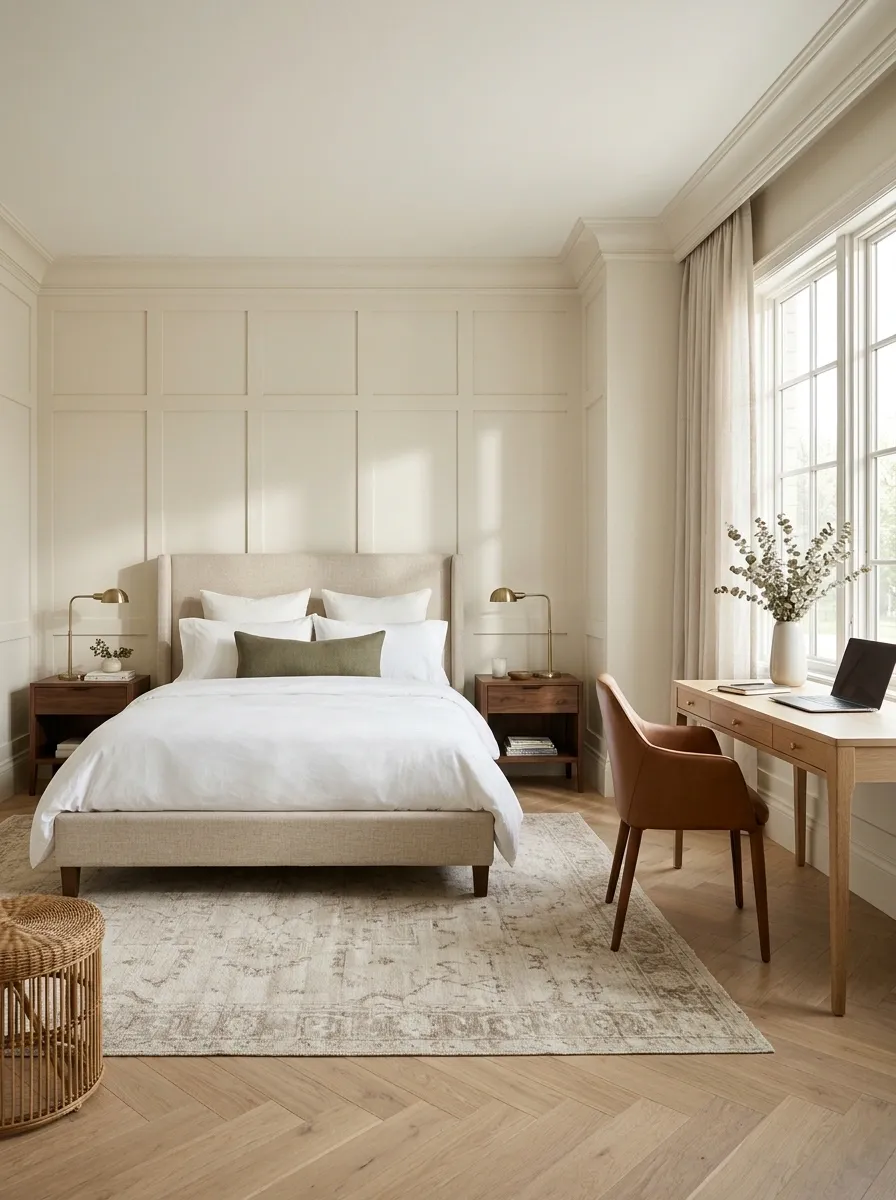
Separate the two main jobs before decorating around them.
Position a permanent bed on one wall and the desk on another where the room allows. Check the chair’s full movement and the route around the bed. Avoid putting the workstation where someone must squeeze past the sleeper to leave.
This arrangement suits rooms where guests stay regularly and the bed needs to remain ready. Keep surrounding furniture restrained so the room doesn’t become a bedroom plus an entire additional office. The bed and desk each need working space, rather than merely touching different walls.
Bed access, a bedside landing spot, and a clear exit route.
Chair movement, legroom, and access to the desk’s storage.
Use a Wall Bed With a Separate Working Desk
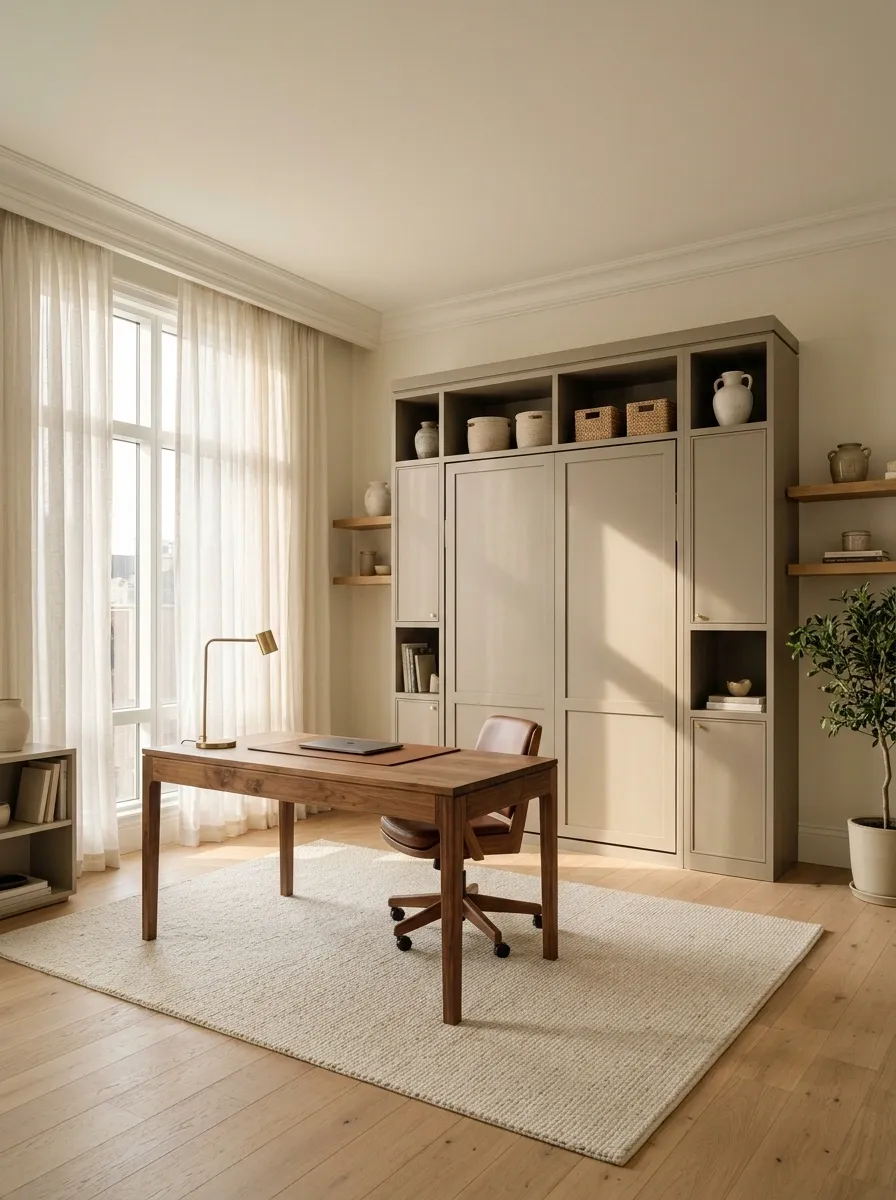
A wall bed can release useful floor between visits, but the desk still needs its own plan.
Choose a system suited to the room and have it installed according to its requirements. Keep the full opening area clear and check whether the deployed bed blocks any storage, heating, or access you need.
A separate desk avoids having to move active work every time the bed opens. Keep it outside the opening footprint. This layout needs careful measurement and appropriate installation, so assess the complete system rather than treating it as a decorative cabinet purchase.
Check every operating position
The office has usable chair space and clear circulation.
Nothing intrudes into the mechanism’s required area.
Guests can move around safely and reach essential storage.
Choose a Wall-Mounted Desk Only When It Fits Your Work
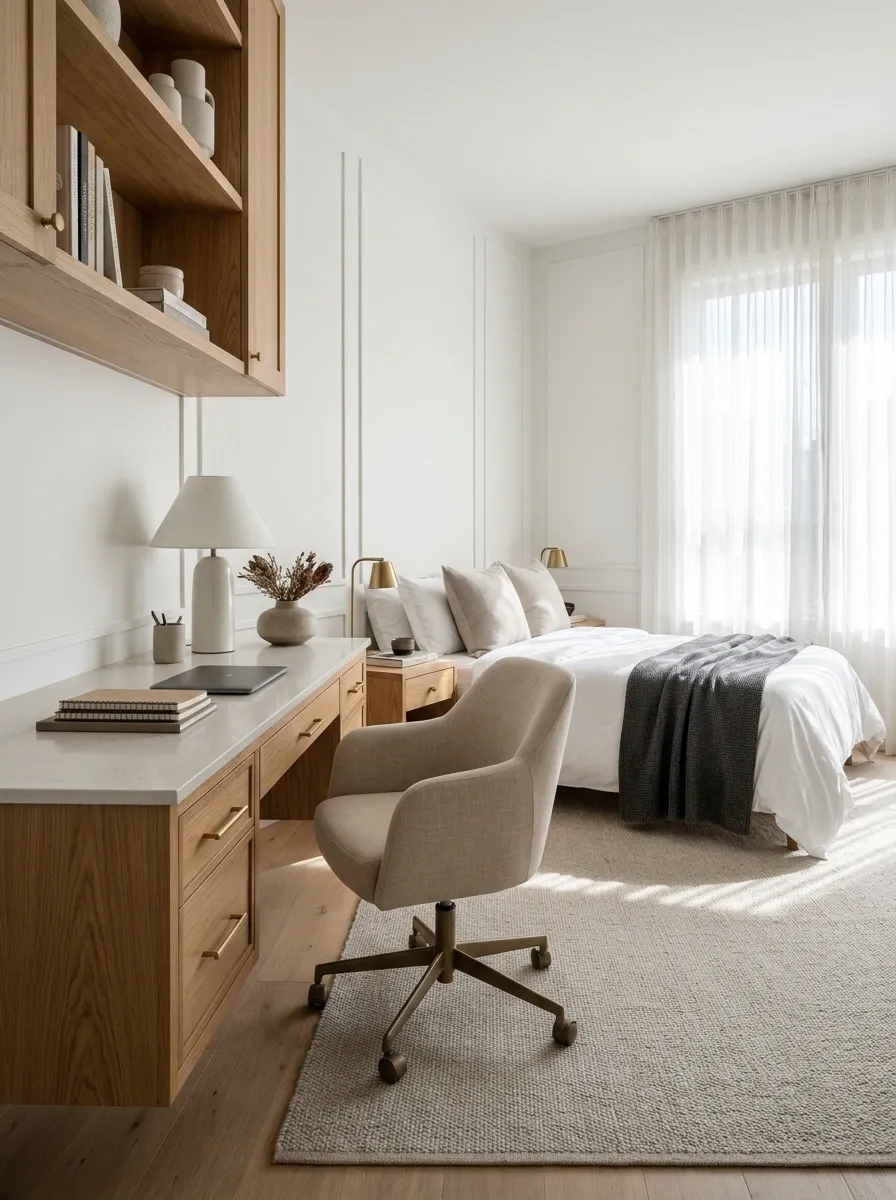
A shallow desk looks tidy until your keyboard, notebook, and elbows arrive.
List what you use during a normal workday and size the surface accordingly. A wall-mounted desk can keep the base visually simple, but it needs suitable installation and enough depth for a comfortable setup.
Check the chair position and nearby bed access before fixing anything. Keep essential equipment off unstable improvised extensions. This choice suits work that fits the available surface. If you use several screens or spread out documents daily, give that requirement an honest amount of room.
Size the work before the desk
Allow comfortable screen placement and any separate input devices.
Include the documents open at the same time.
Check weight, connections, and available surface together.
Give Private Work Materials Secure Storage
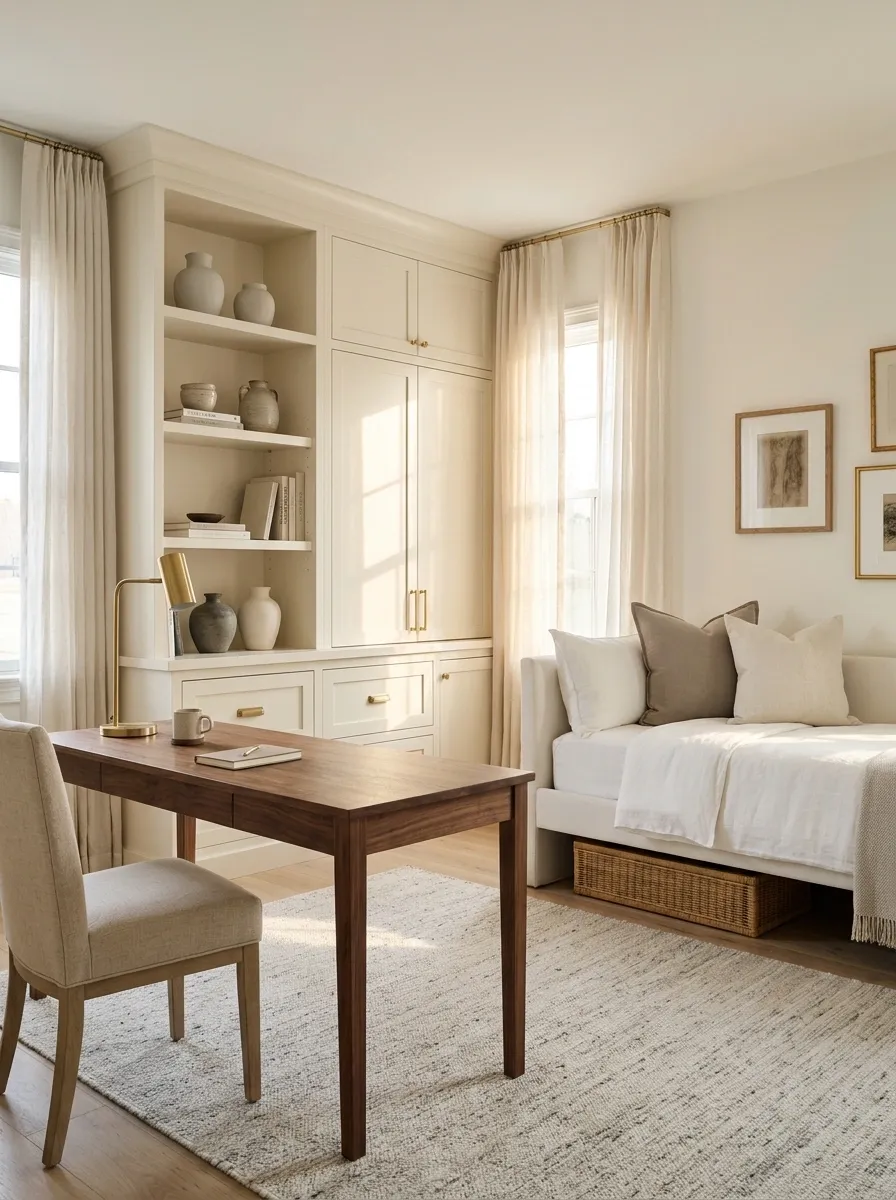
Visitors shouldn’t have to sleep beside exposed invoices, confidential notes, or equipment they’re afraid to touch.
Store private materials appropriately before hosting, using secure storage where needed. Separate them from the cupboard or drawers guests are invited to use. Keep essential access items somewhere you can reach without entering the sleeping room.
This also makes the reset easier. Instead of moving a loose stack of work from the bed to the floor, you have a defined destination. Choose storage for the contents and privacy requirements, rather than relying on a decorative box with a lid.
A closed container hides objects from view. Secure storage protects access where that’s required. Choose the level appropriate to your work.
Reserve a Luggage Spot Before Adding an Accent Chair
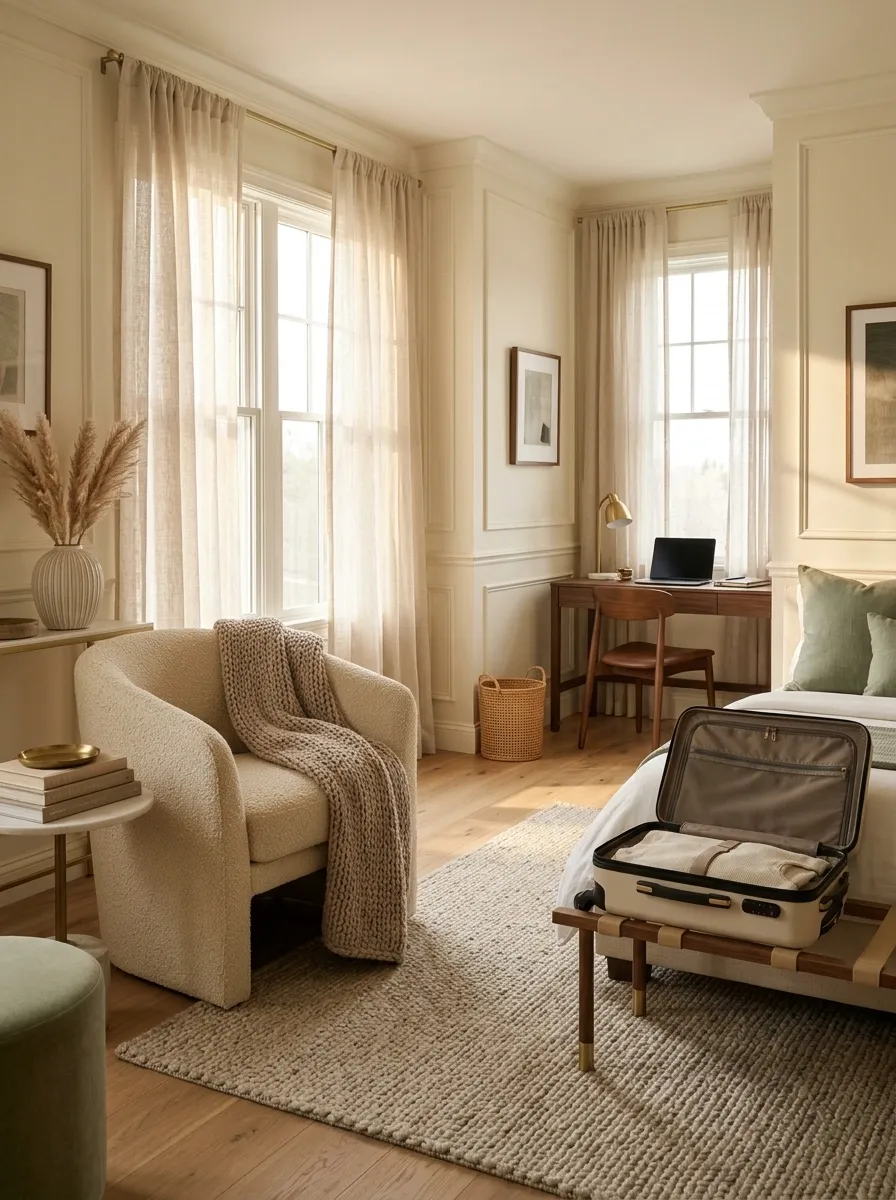
A guest’s suitcase is part of the room’s furniture during a stay. Leave a clear place where it can open without blocking the door or the desk. A suitable luggage rack or sturdy bench can help if you already have the space, but clear usable floor is better than another unnecessary object.
Test with a real bag before hosting. Keep the position away from the route used at night. That decorative chair earns less priority than a place for someone to retrieve clothes without kneeling in a gap beside office equipment.
- Open: Can the case or bag be accessed properly?
- Walk: Can someone pass without stepping over it?
- Stay: Can it remain there without blocking furniture or the exit?
Make the Work Surface Easy to Clear in One Pass
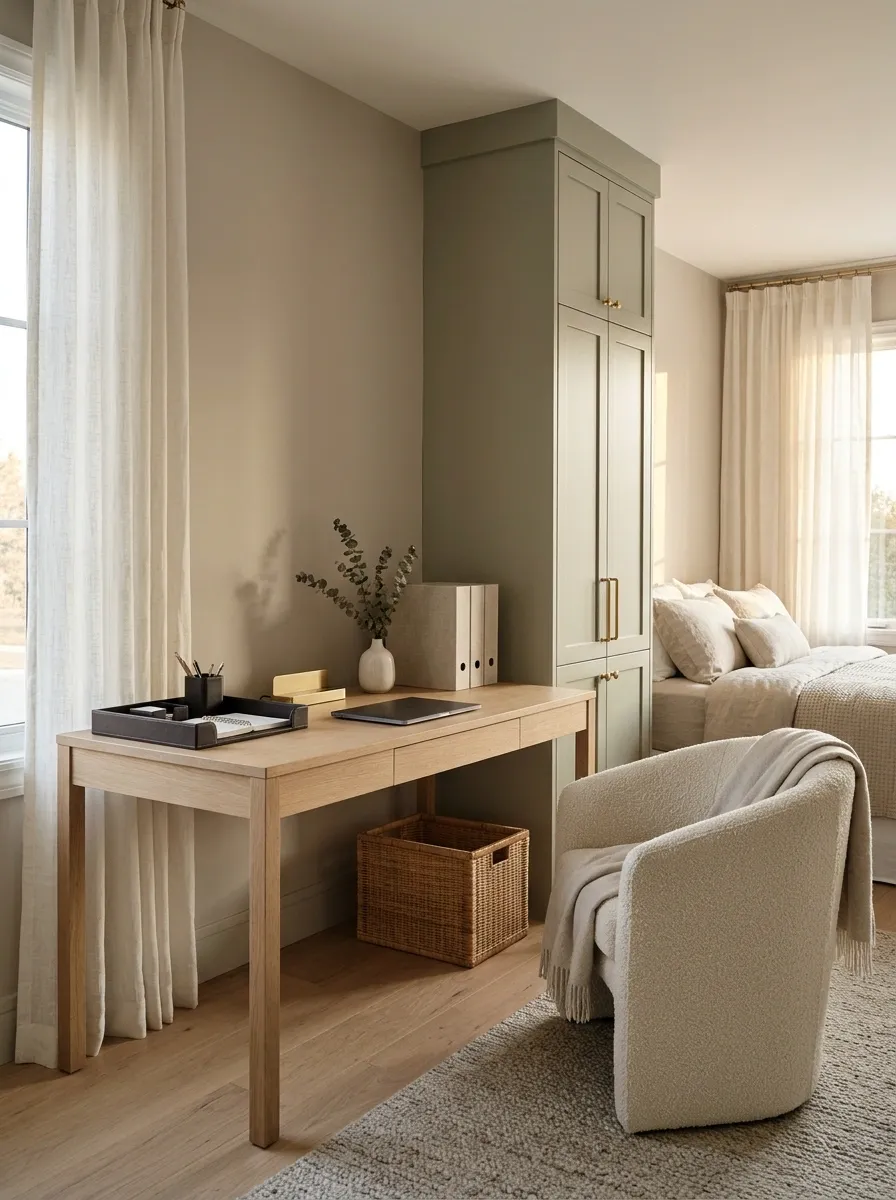
A desk stays visibly active when every object needs a separate relocation plan.
Group the supplies used together and give loose paperwork a defined home. Keep charging and docking arrangements straightforward enough that you can clear the guest-facing surface without pulling apart the entire office.
Use a suitable work tray or storage container for items that actually move together. Store powered equipment according to its requirements. A quick reset comes from having destinations already chosen. Guests don’t need a completely empty room, but they do benefit from one that looks ready for their arrival.
Build a repeatable work reset
Provide Separate Light for Working and Bedtime
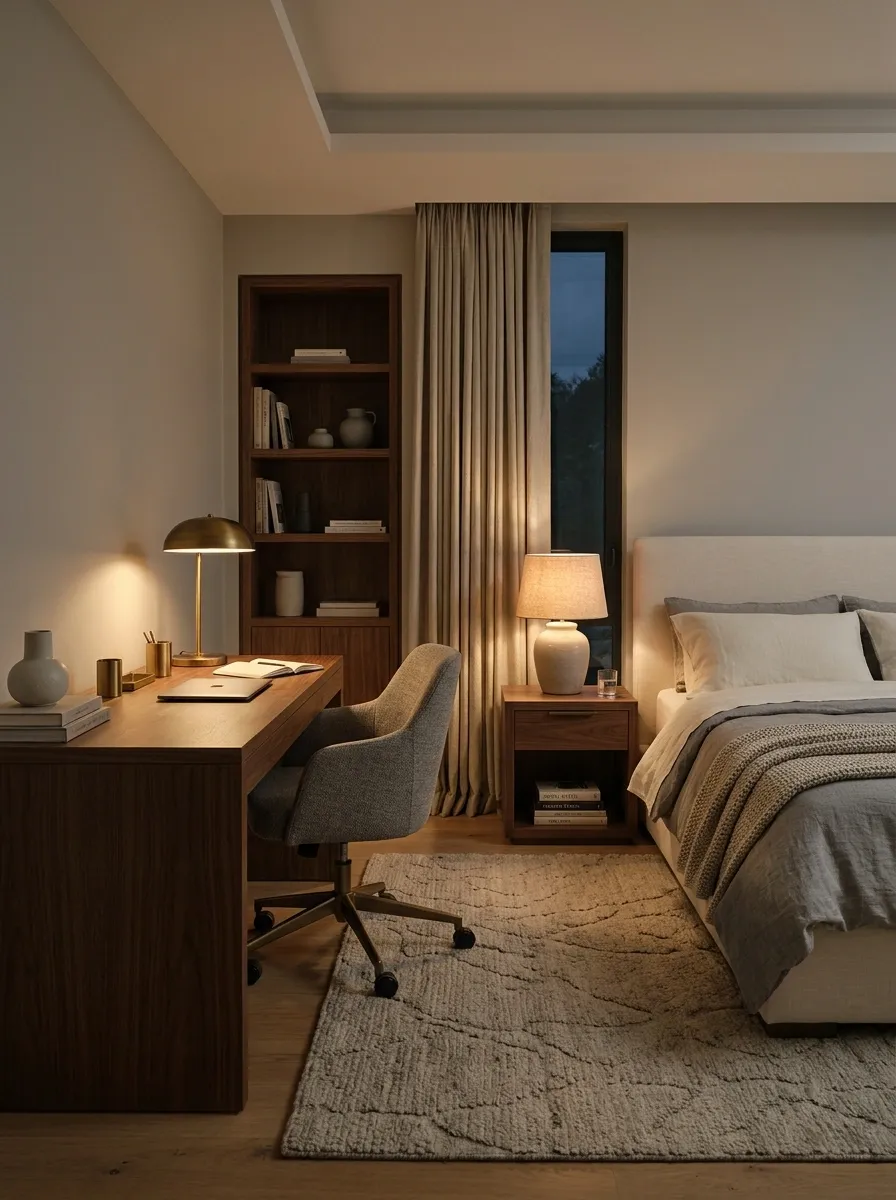
Your desk lamp and your guest’s bedside light have different jobs.
Give the work surface suitable illumination, then make sure someone can read or settle into bed without using the office controls. Position lights to avoid glare and keep switches accessible from the place they serve.
Start with lamps you own and check the arrangement after dark. Keep leads away from the walking route and bedding. A guest should be able to turn out their light comfortably, rather than crossing the room and returning to bed by memory.
Task light reaches the work without harsh reflection.
A useful light and reachable control support bedtime.
The route remains visible when moving around.
Create a Guest Charging Point That Doesn’t Depend on the Desk
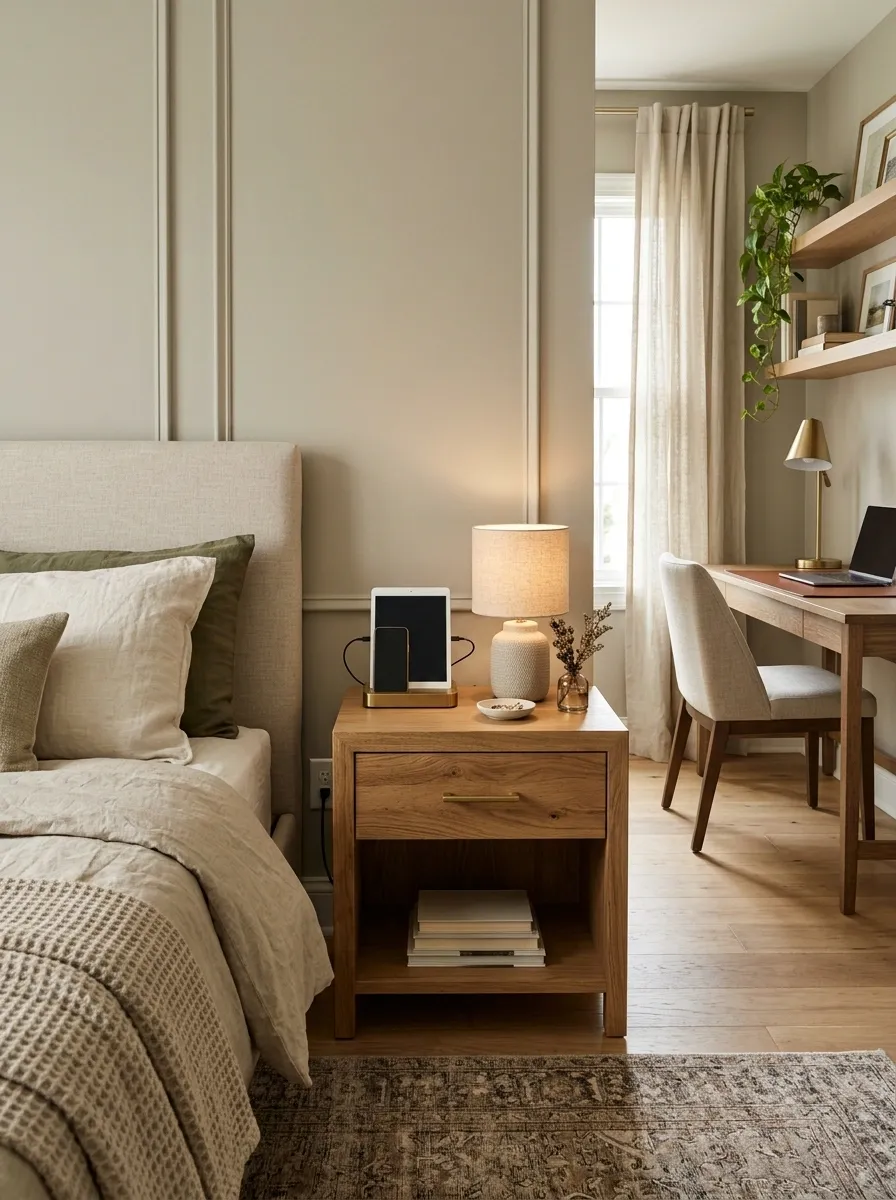
A guest shouldn’t need to unplug your monitor to charge their phone.
Offer access to a suitable outlet or charging setup near a stable bedside surface. Keep leads clear of bedding and the route around the room. Leave the arrangement simple enough to understand without a technical introduction.
Check the guest’s likely needs and provide clear information about what’s available. Keep private work devices separate. This small provision reduces the temptation to borrow connections from the workstation, and it makes the room easier to use when someone arrives tired with a nearly empty battery.
Give the phone a sensible home
Stable and reachable without placing devices on bedding.
Suitable equipment with accessible, safe connections.
No loose cable stretched across the nighttime path.
Store a Complete Guest Linen Set Together
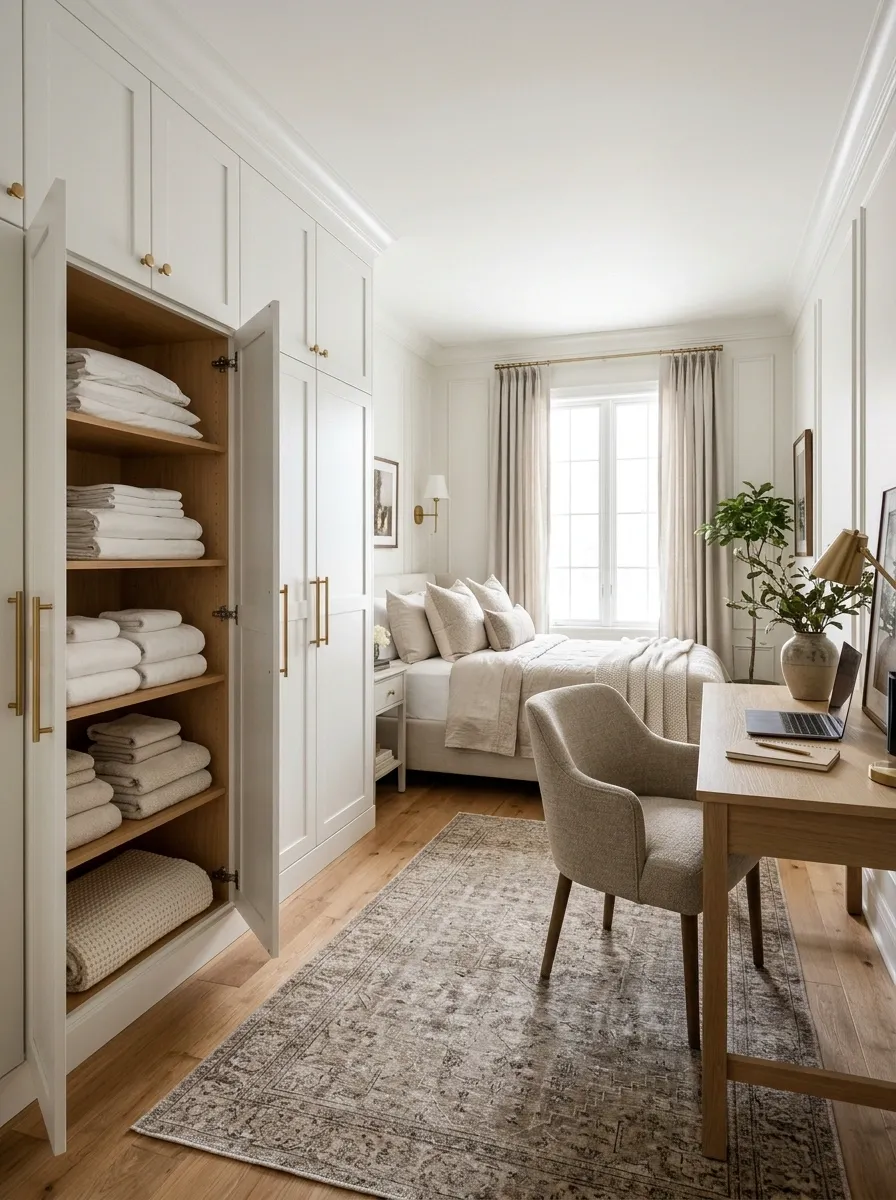
Preparing the bed shouldn’t require searching three cupboards for a pillowcase.
Keep the appropriate clean linen, towels, and any extra bedding together in dry storage. Choose a location that doesn’t require moving private work materials to reach it. Check what needs laundering well before arrival. If the bed folds away, follow its instructions about what can remain inside. Don’t force bulky bedding into a mechanism that wasn’t designed for it.
A complete kit makes the room easier to switch over and helps you notice missing essentials while there’s still time to deal with them.
- Clean and dry: Store linen only when fully ready for use.
- Complete: Include what the specific sleeping setup needs.
- Accessible: Retrieve it without dismantling office storage.
Divide the Wardrobe Into Clear Work and Guest Sections
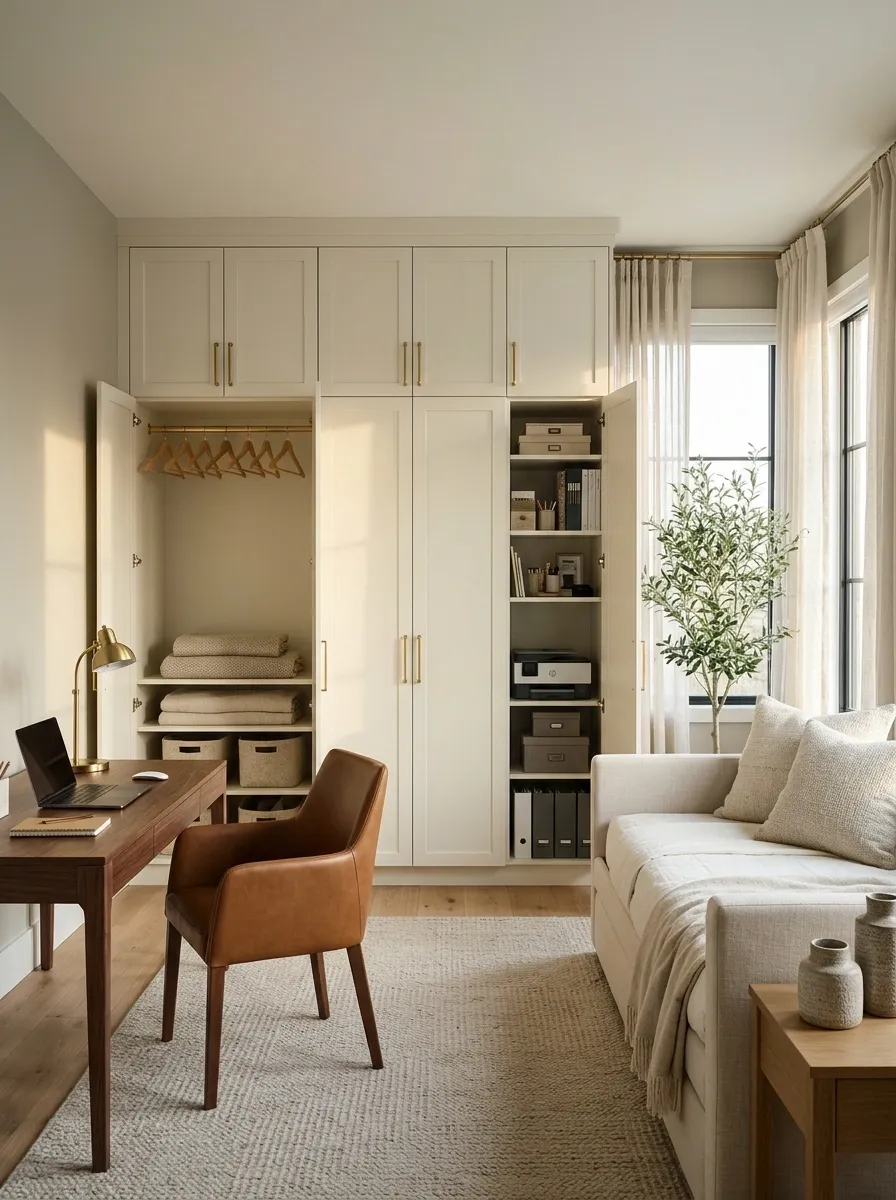
A spare room wardrobe often becomes a household archive with coat hangers.
Clear a genuinely usable section for guests and keep the office supplies elsewhere within a defined area. Leave suitable hangers and enough access to reach the space. A gap visible only after moving the printer box doesn’t count.
Tell visitors which section is theirs. If you need items during the stay, keep those accessible outside the sleeping room where practical. This makes the room more welcoming and prevents the awkward moment when you need to retrieve a work bag while someone is getting dressed.
Make the guest space explicit
Clear hanging or shelf space with usable access.
Contained supplies with a plan for anything needed during the visit.
Add a Proper Bedside Landing Spot
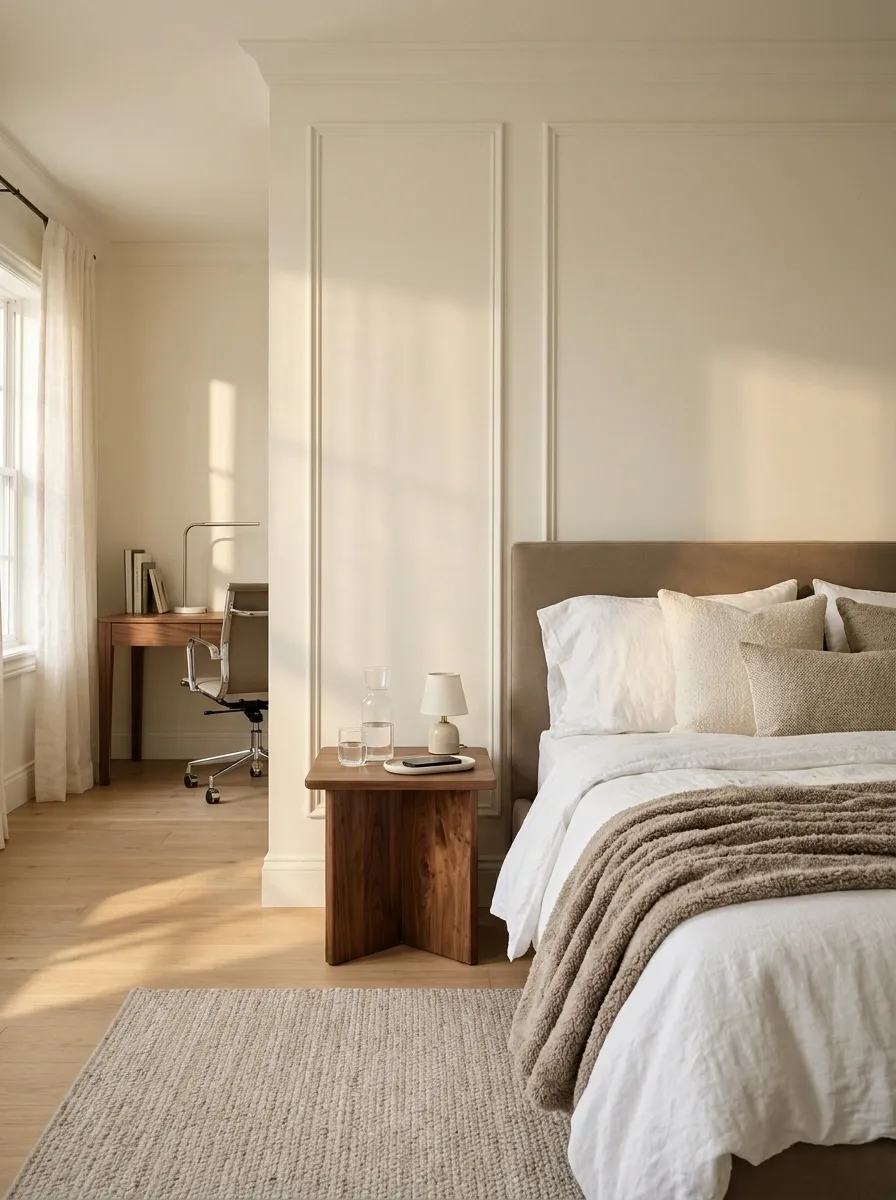
Glasses, water, and a phone need somewhere better than the floor beside the bed.
Use a stable small table, suitable shelf, or existing piece that fits the sleeping arrangement. Check reach from the pillow and clearance when the bed opens. Keep the surface available during the visit instead of filling it with office accessories. It doesn’t need to match the desk or bed frame. It does need to hold ordinary nighttime belongings without tipping or obstructing movement.
For a folding bed, choose a setup that can be positioned easily and stored somewhere sensible afterward.
| Reach | Can someone use it without an awkward lean? |
|---|---|
| Stability | Will ordinary items sit securely? |
| Clearance | Does it remain out of the bed mechanism and walking route? |
Use a Shared Palette to Connect the Two Jobs
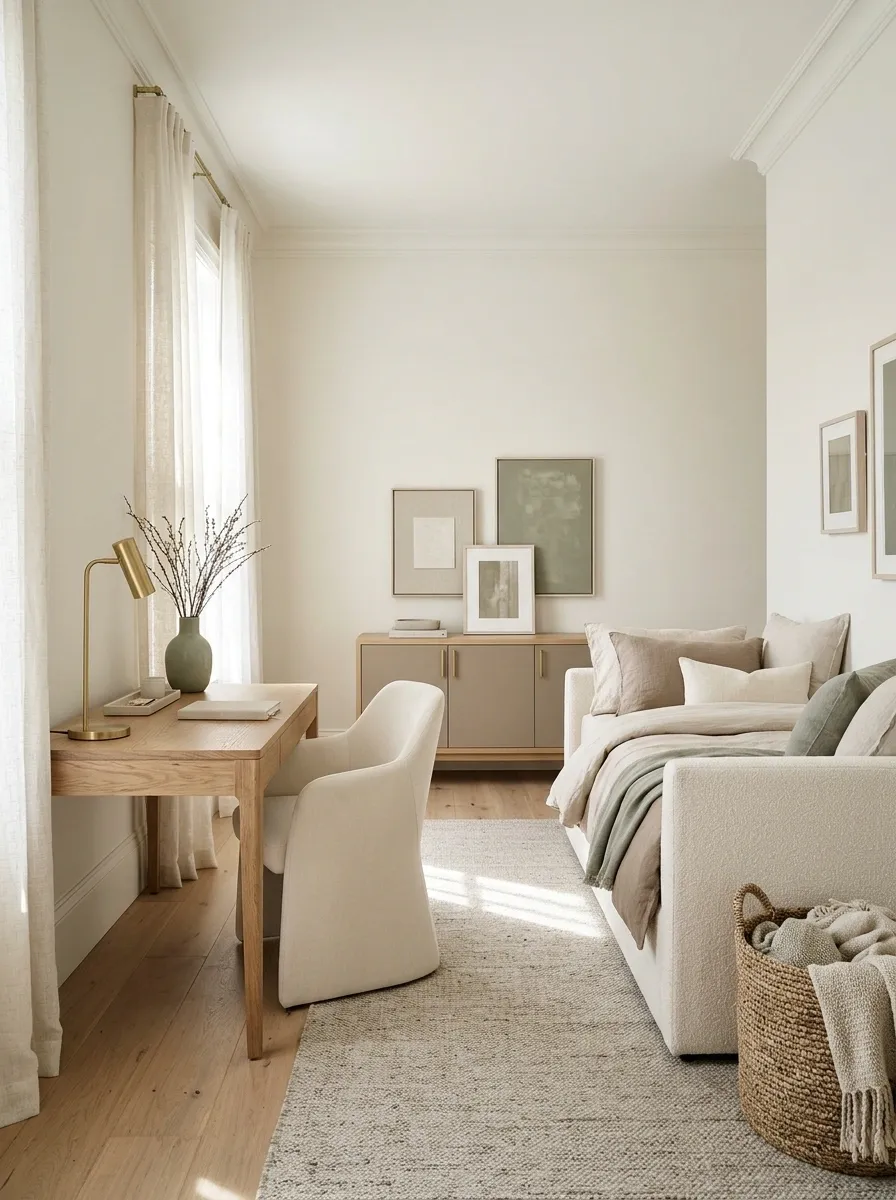
A bed and a desk can look like they belong together without being a matching furniture set.
Repeat a few colors or materials across the room. Pull a quiet color from the bedding into a desk accessory, or relate the lamp finish to existing hardware. Let large surfaces do most of the connecting.
Keep the office equipment you need and simplify the surrounding decoration. Trying to disguise every practical item usually adds more clutter. A coherent palette helps both modes feel intentional while leaving the room free to work as a real office and a real sleeping space.
Establish the main textile colors.
Relate finishes where practical.
Use a small amount of repetition rather than matching every object.
Use Soft Furnishings for Comfort Without Promising Silence
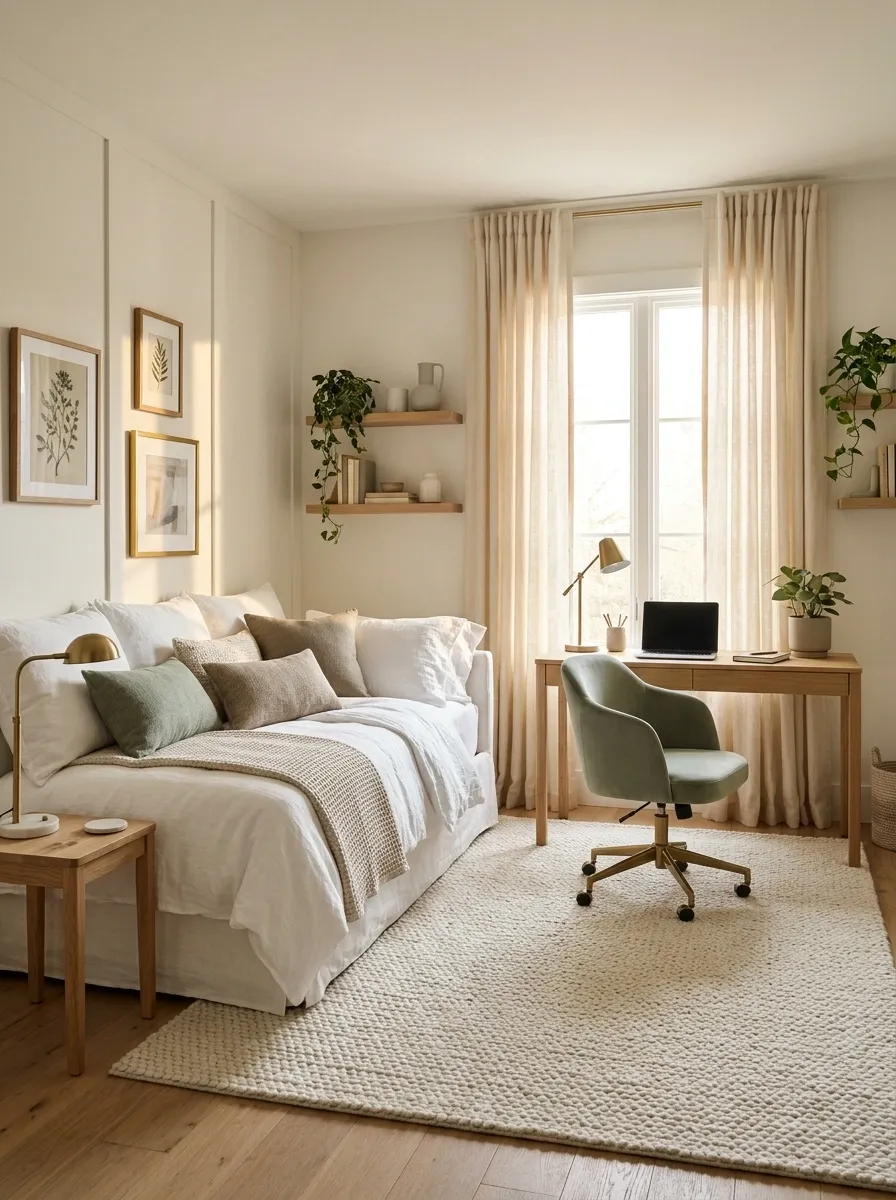
Curtains, bedding, and suitable rugs can make a hard room feel less bare. Use them where they support comfort and fit the room’s practical needs. Keep desk-chair movement, cleaning, and the bed’s operation in mind. Don’t pile in fabric merely to make the office look more like a bedroom.
These additions won’t create the privacy of a separate room. If work calls and guest sleep overlap, address the schedule and location directly. Choose the textiles for how they feel and function, with realistic expectations about what the shared space can accommodate.
Useful distinction: Soft furnishings affect the room’s feel. A private meeting or uninterrupted sleep may still need a different time or a different room.
Point the Desk Toward a Deliberate Video-Call Background
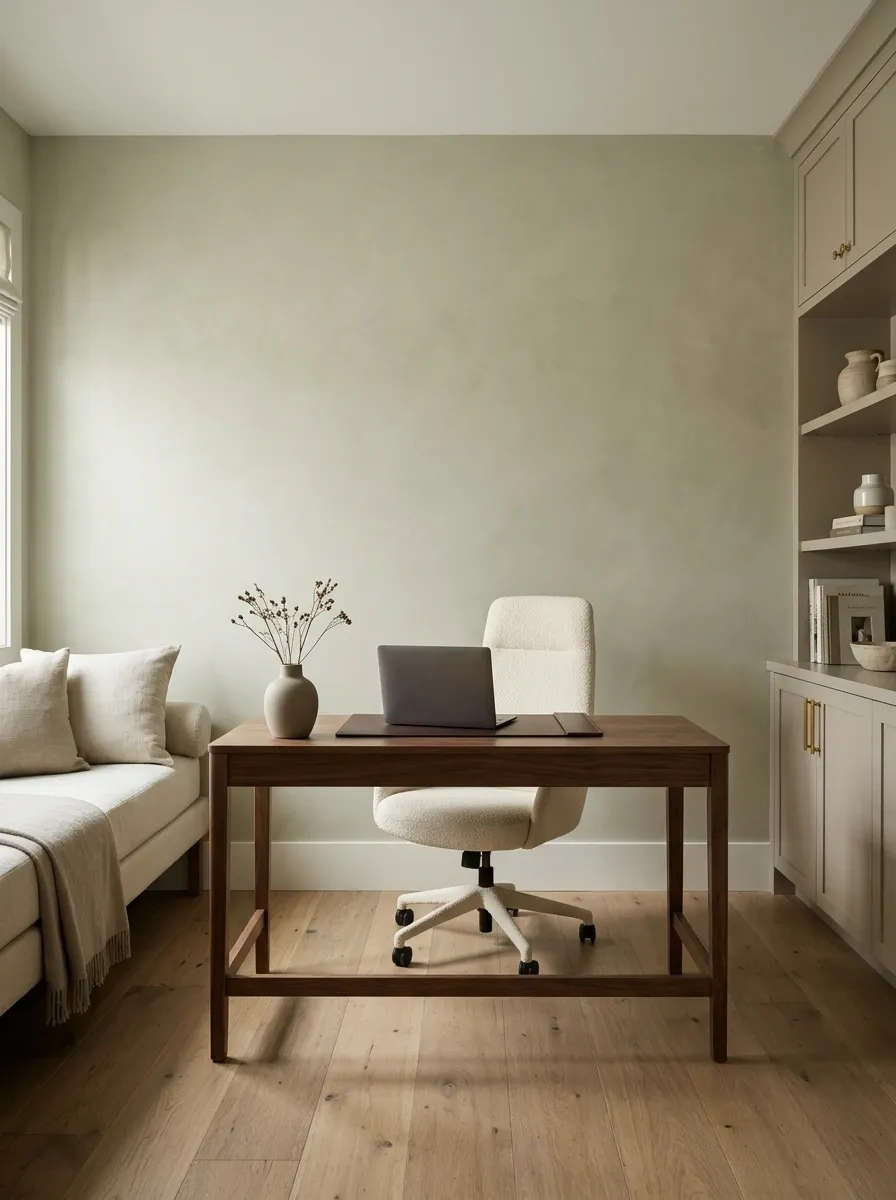
The bed doesn’t need to be the main feature of every work meeting.
Where the layout allows, orient the desk so the camera faces a calm wall or a controlled storage area. Check the view using your actual camera, because its framing may reveal more of the room than you expect.
Balance that choice with screen glare, lighting, and comfortable desk use. Don’t sacrifice the entire layout for a background. If camera positioning remains awkward, use available meeting features appropriately and keep personal guest belongings out of view. Check again after the room changes to guest mode.
Review the actual camera frame
Plan an Alternative Work Spot for Guest Stays
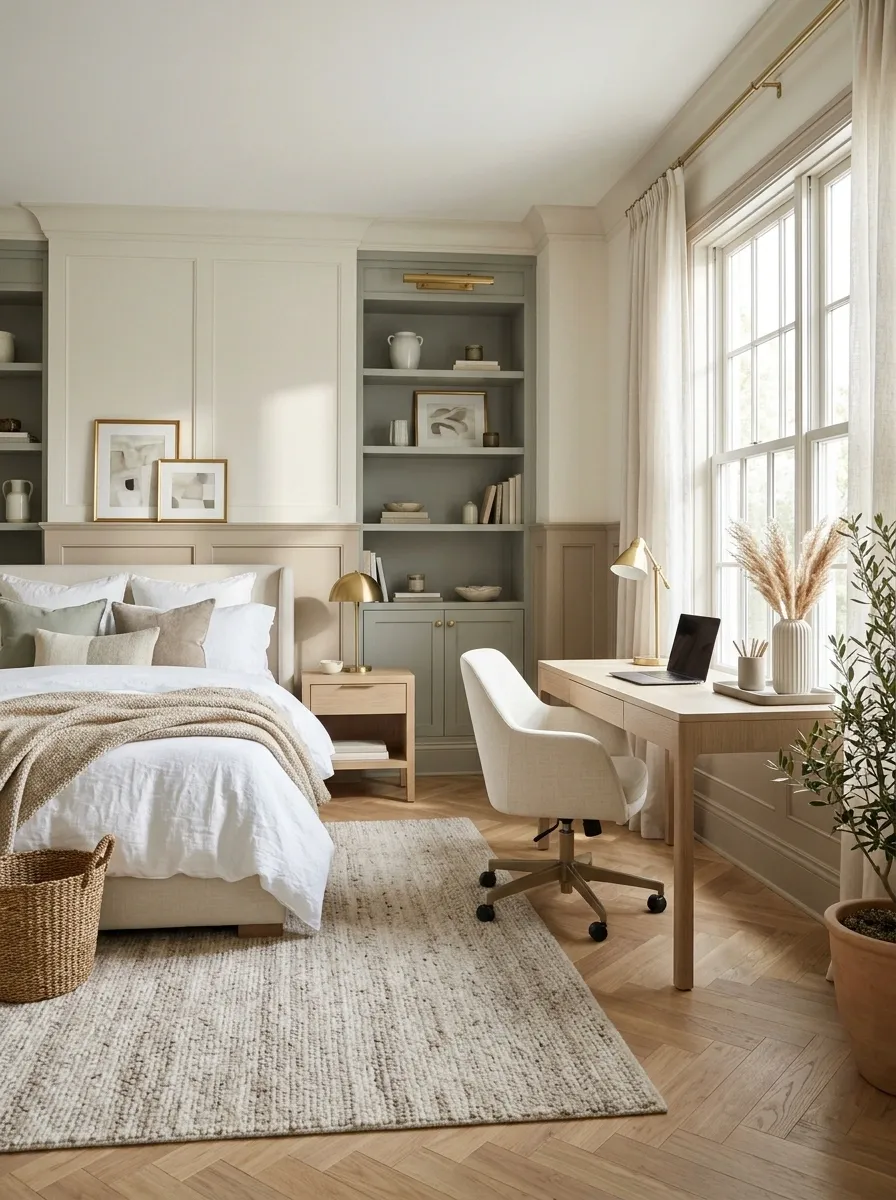
A room can serve two purposes without serving them simultaneously.
Decide where essential work happens while guests sleep there. Choose a suitable temporary setup with the equipment, privacy, and power access you need. Move the necessary items before arrival rather than improvising during the first morning. If the room must be used at agreed times, discuss that clearly in advance. Don’t rely on visitors guessing your schedule from the desk’s presence.
A considerate plan protects the guest’s privacy and lets you keep working without treating their stay as a daily interruption.
- Timing: When does work need to happen?
- Location: Where can it happen comfortably and appropriately?
- Equipment: What needs moving before the guest settles in?
Have the Bed Ready Before the Arrival Message
A guest should be able to put down a bag, charge a phone, and settle in without asking which objects can move. You should be able to return to work afterward without searching the house for your keyboard.
That’s the useful test for how to create a dual-purpose guest room and home office. Measure both versions, choose a sleeping setup you can manage, and give the changeover a repeatable routine. Add the decorative details once those decisions work.
Save this plan on Pinterest before you shop, then rehearse the room with the bed open. The floor plan gets the final vote.