
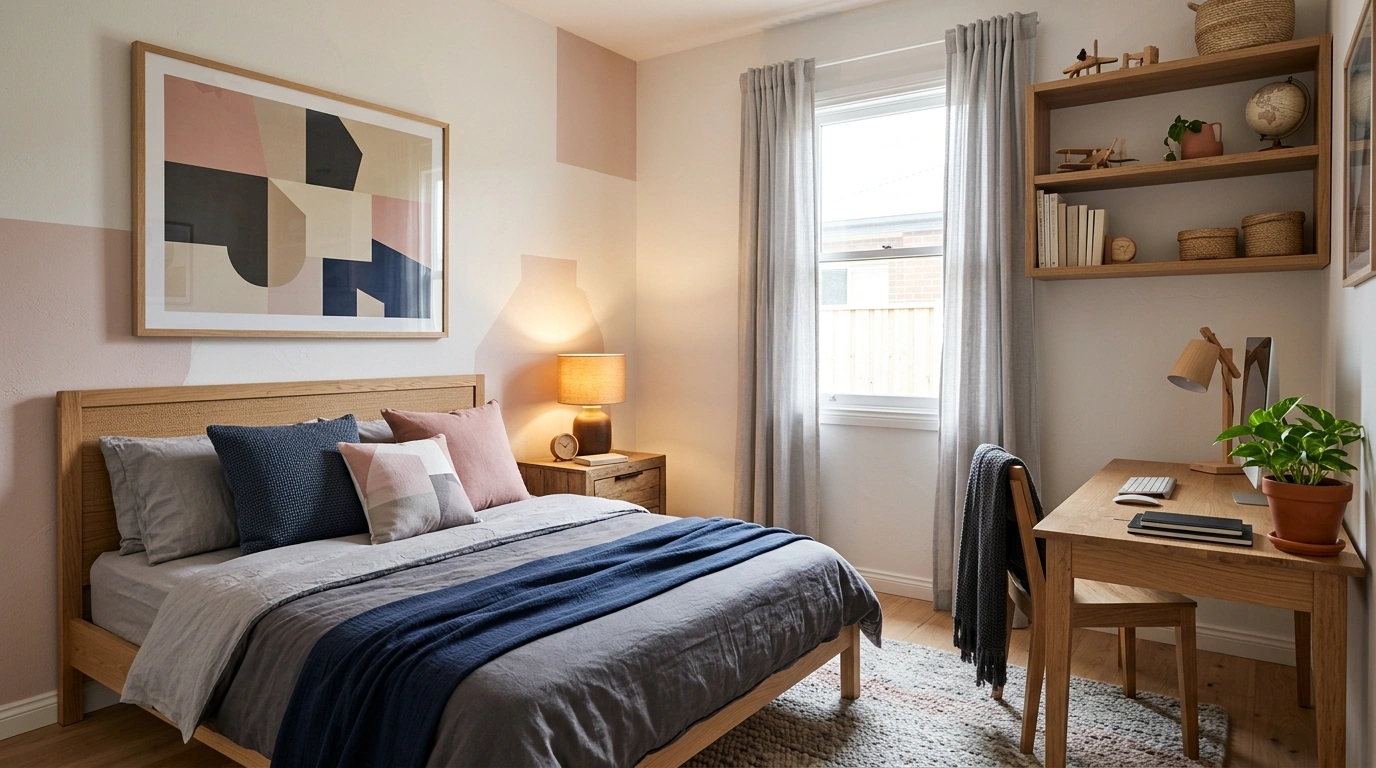
Pink gets blamed for rooms looking too sweet far more than it deserves. The real trouble starts when pink gets paired with five more versions of pink, delicate patterns, tiny decorative pillows, and enough matching accessories to make the room look like a product display.
A boys’ bedroom can absolutely use pink and still feel cool, relaxed, modern, or even a little edgy. The difference comes from what surrounds it.
Dusty rose looks completely different beside charcoal than it does beside pale pastel everything. A pink headboard with walnut furniture has a totally different attitude from an all-pink bed setup. Even the shape of the furniture matters. Clean lines and darker materials give softer colors some backbone.
These pink bedroom ideas for boys focus on finished room concepts rather than random accessories tossed together because they happened to match. Some lean warm and woodsy. Others use navy, black, olive, gray, or graphic patterns.
The goal is simple: make pink look intentional, not like the room lost a bet.
Pink Bedroom Reality Check
Pink isn’t the issue. Bad roommates are.
Pink isn’t the issue. Bad roommates are.
The color works. The problem starts when every other part of the room starts screaming for attention too.
LET PINK BE THE STAR
Give pink one obvious job. A wall, headboard, rug, duvet, or curtains can carry the color without every nearby object copying it.
ADD SOME ATTITUDE
Charcoal, navy, black metal, deep wood, and simple furniture shapes give the softer color some backbone.
KEEP THE SHAPES CLEAN
Straight-lined furniture and simple patterns make pink feel modern. Fussy layers start pushing the room in the opposite direction.
KNOW WHEN TO STOP
Once the room has a clear pink focal point and a few supporting echoes, stop shopping. The bedroom has already made its point.
Dusty pink + one strong dark tone + warm texture + breathing room.
That’s the whole trick. Nobody needs seventeen pink accessories holding a meeting on one shelf.
Pink Bedroom Ideas for Boys
Paint One Wall Dusty Rose and Keep the Other Walls Warm White
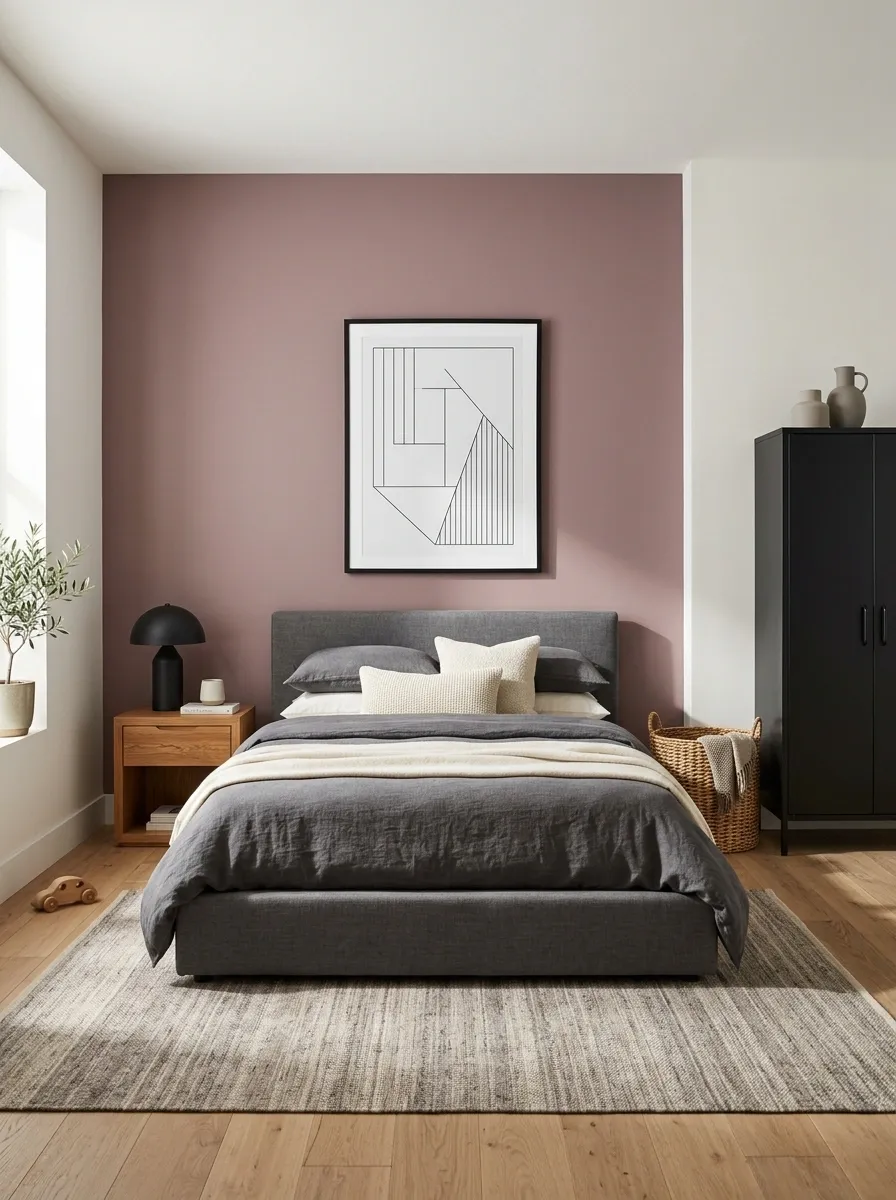
One pink wall is enough to give the room a clear focal point without turning every surface into the same color.
Choose a dusty rose with a muted, slightly gray undertone, then leave the remaining walls warm white. Add medium or dark wood furniture so the pink feels intentional instead of sugary.
The best wall is usually the one behind the bed. It gives the sleeping area some weight and makes the furniture arrangement look finished.
Think of the wall like this:
A single focal wall keeps pink intentional instead of letting it become the entire personality of the room.
Use Charcoal Bedding to Ground a Pink Bed
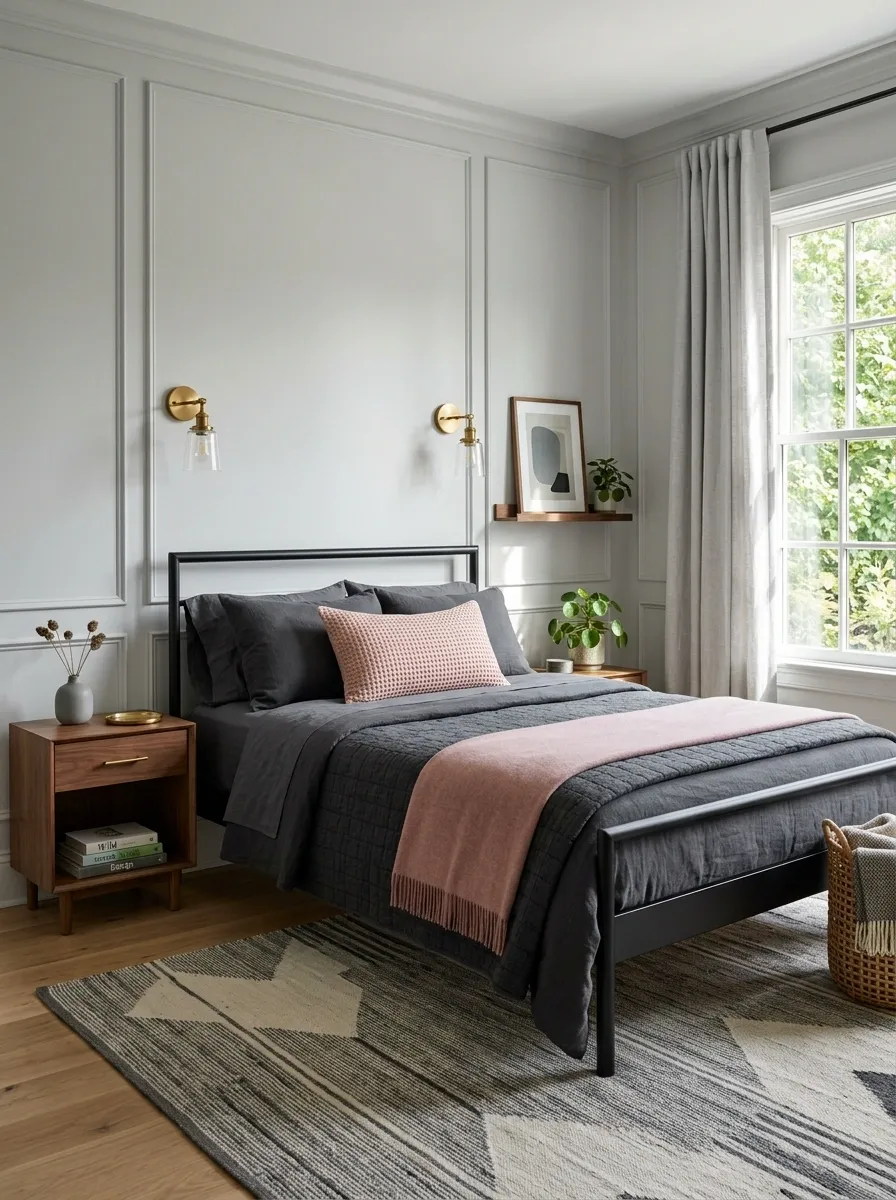
The fastest way to make a pink bedroom feel more balanced is to put a dark bedding layer directly against the pink.
Go for charcoal sheets, a deep gray duvet, or a graphite quilt. Then add one pink pillow or folded throw rather than stacking six matching blush cushions. That’s where things start looking like a catalog nobody asked for.
Keep the bed frame simple. Black, walnut, or natural oak works especially well because the darker bedding already brings enough visual weight.
Quick bedding check:
Charcoal or graphite main layer
One muted pink accent
Add texture, not more matching pieces
Build the Room Around a Pink and Navy Color Pair
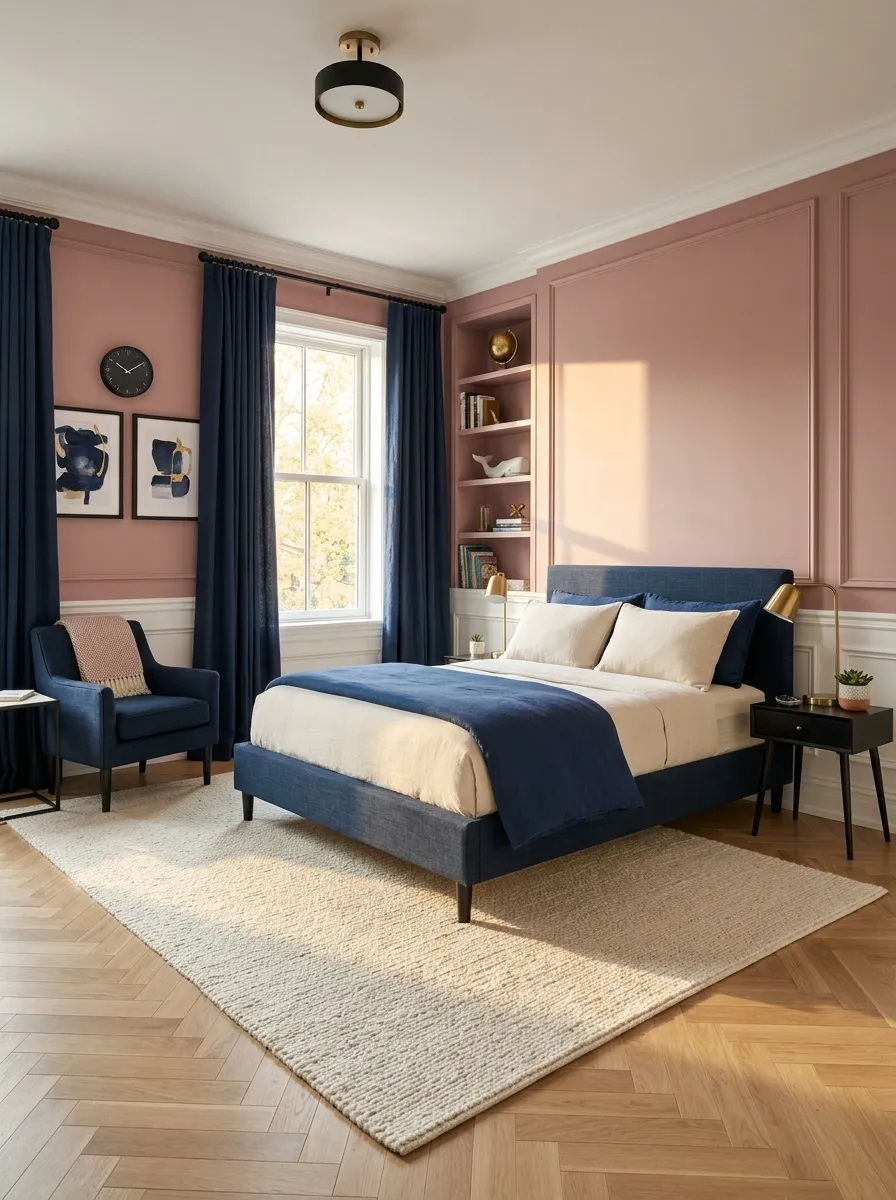
Navy does something pink desperately needs: it adds visual authority.
Use navy on the duvet, curtains, an accent chair, or a painted furniture piece. Keep pink on one larger element, such as the wall behind the bed or a headboard, then let cream and wood fill the gaps.
The result feels crisp rather than sugary, especially with simple bedding and straight-lined furniture.
Set it up in this order:
- Start with the pink focal point.
- Add one substantial navy element.
- Bring in cream to break up the darker colors.
- Finish with wood or black hardware for structure.
Don’t scatter tiny navy objects everywhere. One strong navy layer looks much cleaner.
Use it on the wall, headboard, or another major anchor.
Choose one large element so the pairing feels deliberate.
Use light bedding, walls, or a rug to stop the palette feeling heavy.
Use these for the smaller structural pieces and hardware.
Add a Large Pink Rug Instead of Painting the Walls
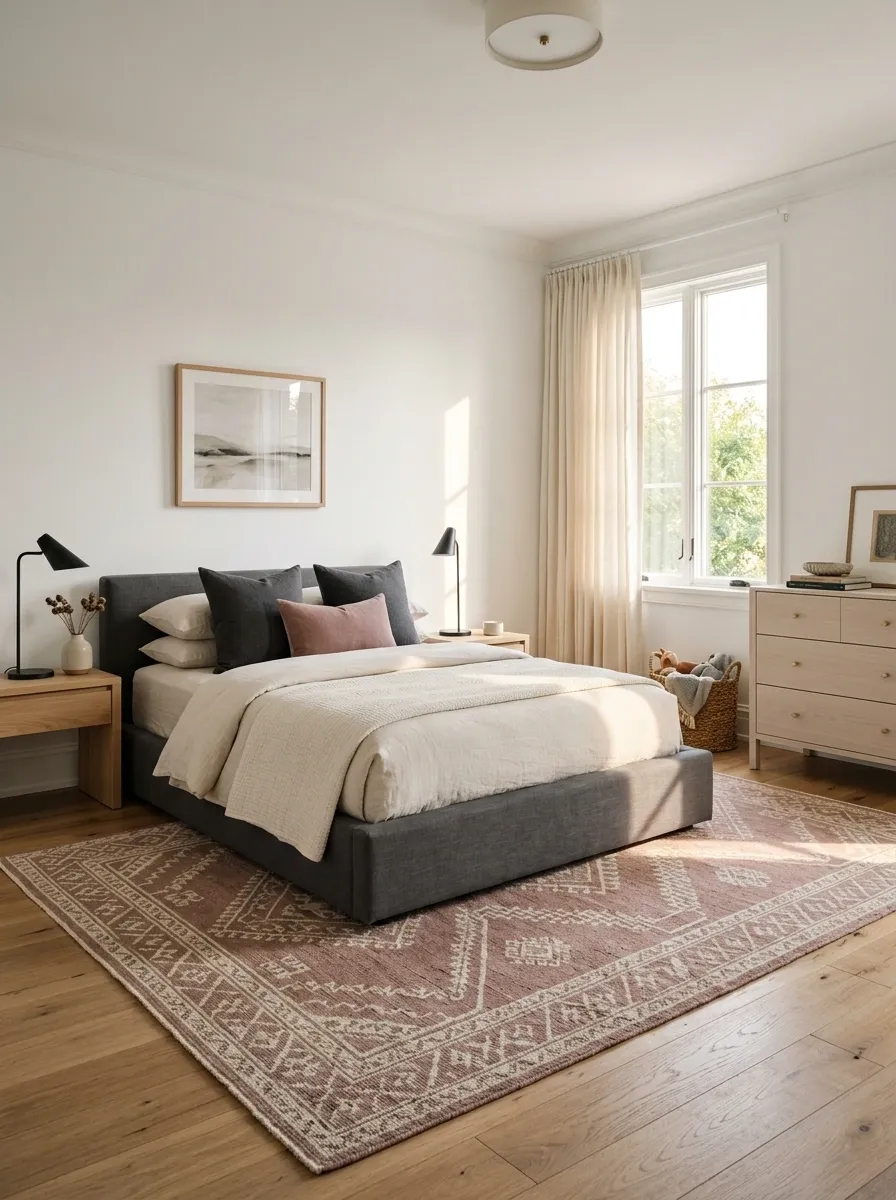
A large pink rug gives the room a defined accent without locking the entire wall color into the decision.
Choose dusty pink, muted rose, or a pink-and-neutral geometric pattern. Keep the bed and major furniture neutral, then let the rug sit underneath the front two-thirds of the bed.
This works especially well in rented rooms or bedrooms where painting isn’t practical. It also gives bare floors a softer landing without covering every visible surface in pink.
The rug should do one job: anchor the room. Not audition for eleven supporting roles.
Run the rug under the front portion of the bed so the sleeping area reads as one finished zone.
Keep the furniture quieter than the rug. Let the floor do the talking.
Choose Black Lighting and Hardware to Sharpen Soft Pink
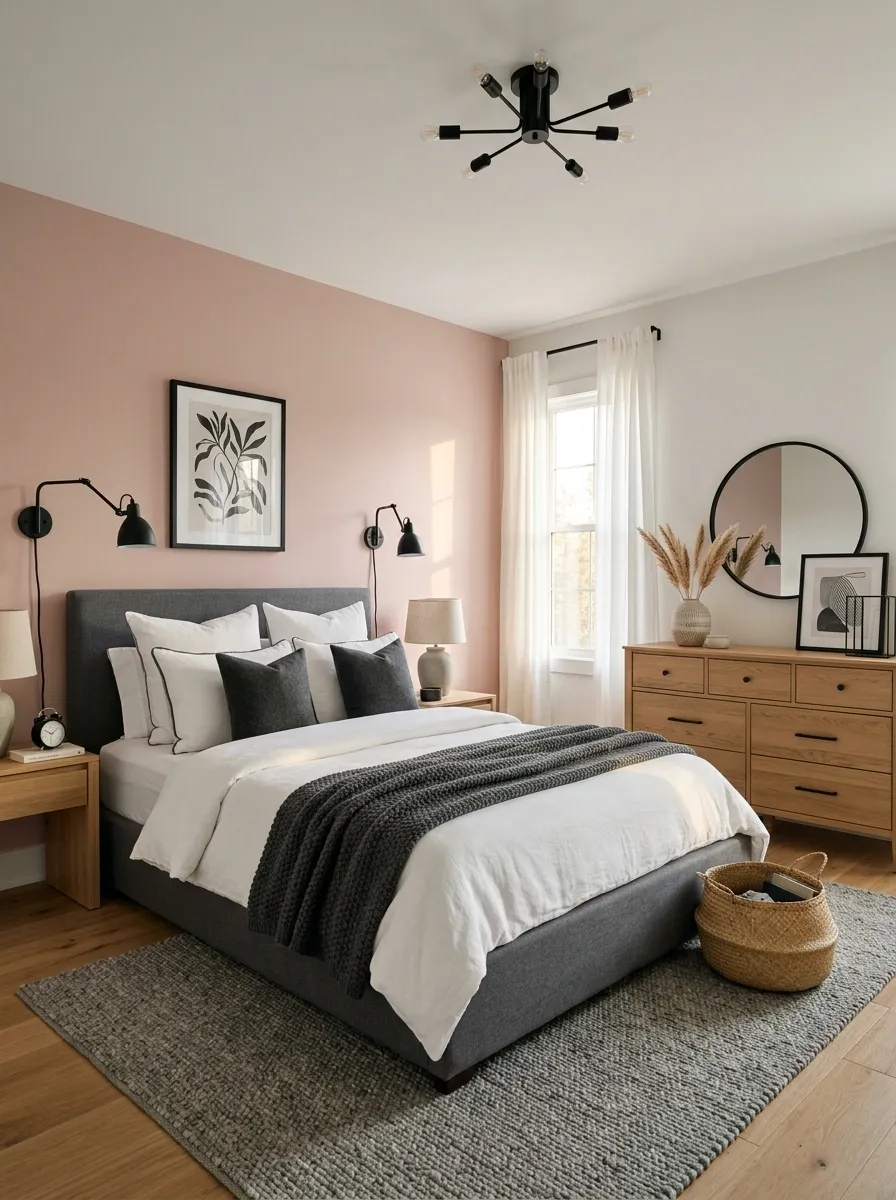
Pink looks far more grounded when the small functional pieces have some bite.
Use a black ceiling light, matte black drawer pulls, or a simple black wall sconce. These details don’t need to dominate. They just need to interrupt the softness in the right places.
The trick is repetition. Repeat black in at least two or three places so it looks intentional instead of like one random light fixture wandered into the room.
Tiny design rule:
Create a Graphic Pink, Gray, and White Bedding Setup
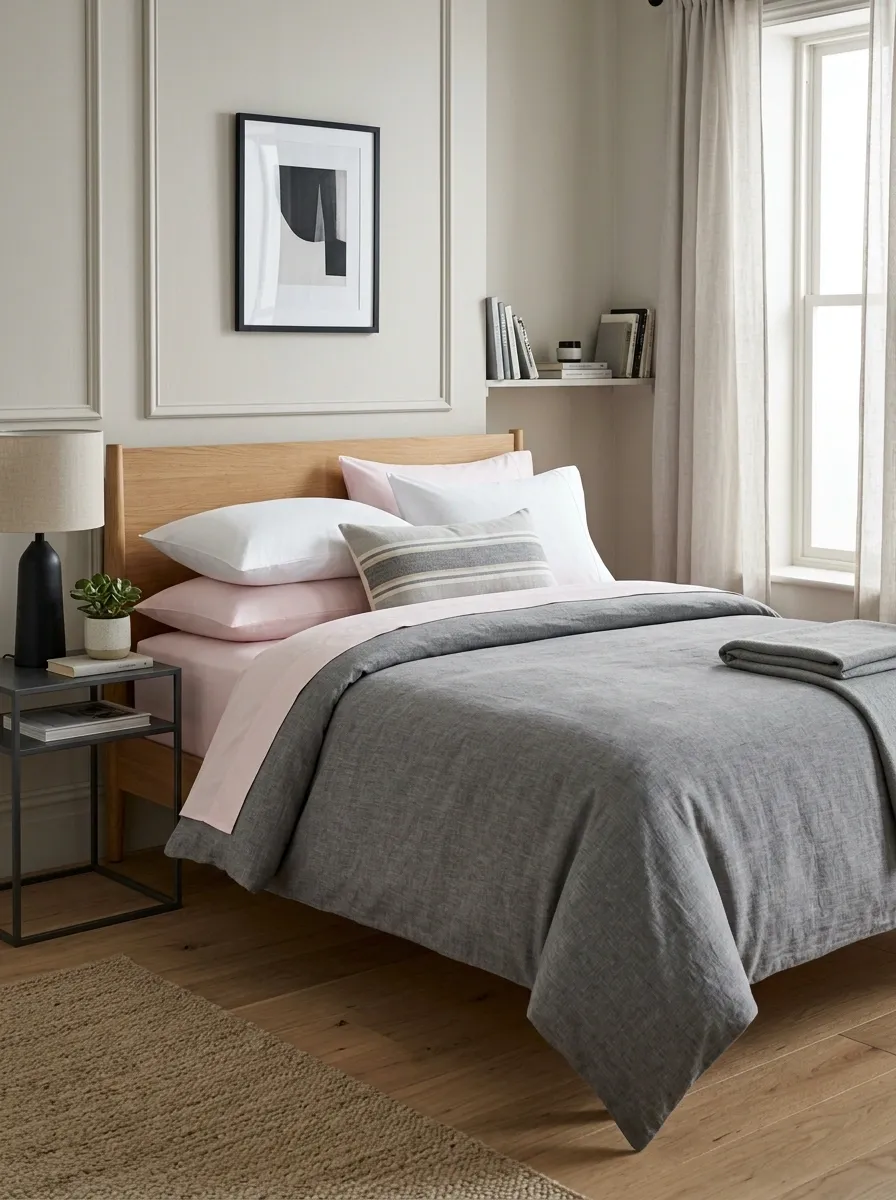
Soft pink bedding doesn’t need frills, ruffles, or a suspicious number of decorative cushions.
Build the bed with clean graphic layers instead. Use a pale pink sheet, a medium-gray duvet, and white pillowcases. A striped lumbar pillow or simple geometric throw adds pattern without making the bed look overly themed.
This combination works because each color has a job. Pink brings warmth, gray adds weight, and white keeps the whole bed crisp.
The pattern should stay simple. One strong stripe beats five tiny prints competing for attention.
Pale Pink
Use it closest to the body through sheets or a small accent.
Gray
Make the duvet or quilt the heavier visual layer.
White
Use pillowcases or a folded layer to sharpen the contrast.
Use Pink Curtains With Darker Furniture for Contrast
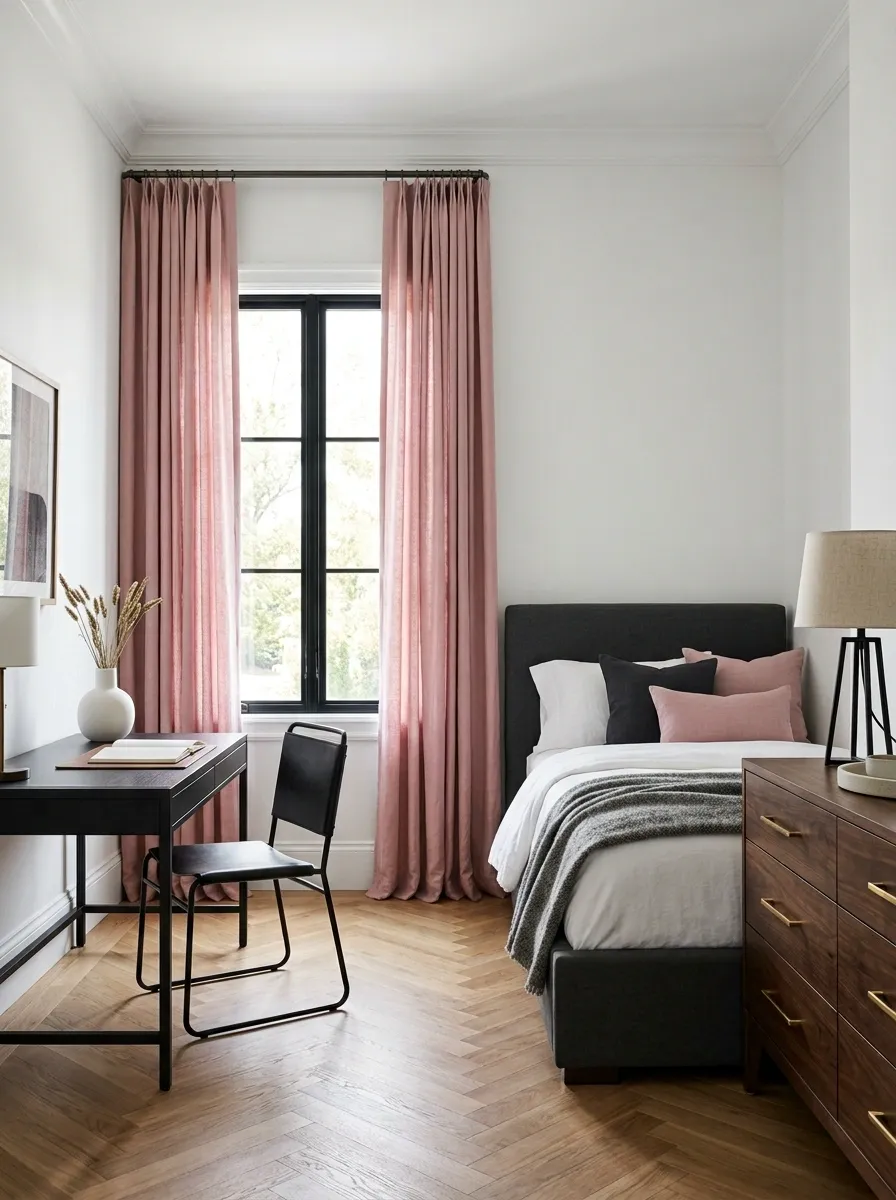
Curtains can carry the pink when the walls need to stay neutral.
Choose a dusty pink or muted rose fabric, then pair it with a dark wood dresser, charcoal bed, or black desk. The contrast makes the curtains feel like a deliberate design feature rather than another soft accessory.
Hang them high and let them fall close to the floor. Short curtains can make an otherwise polished bedroom look like the fabric was ordered during a lunch break.
Compare the two directions:
Pink curtains + light furniture
Keeps the room airy, but can look too pale when every other layer is also light.
Pink curtains + dark furniture
Creates a cleaner contrast and gives the pink more maturity without making it dull.
Bring in Olive Green for a More Earthy Pink Bedroom
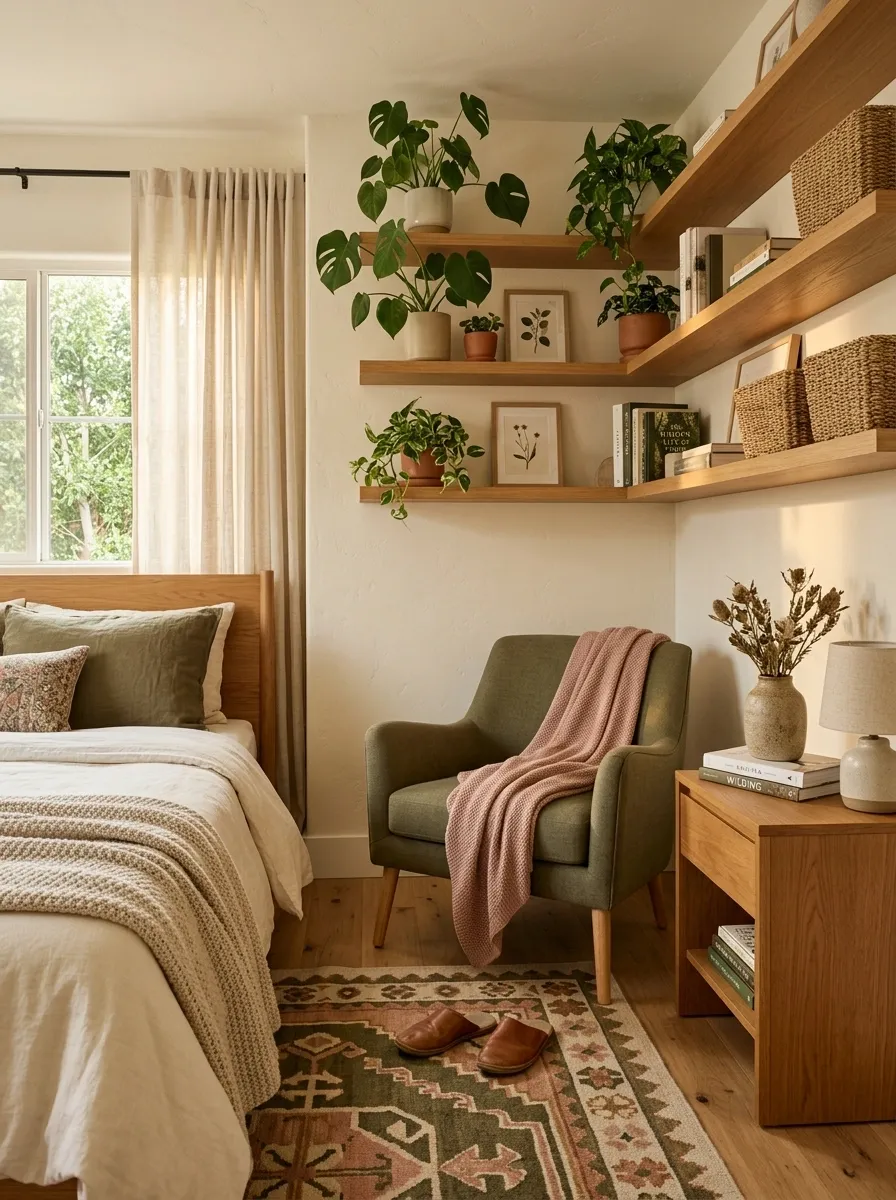
Olive green gives pink an entirely different personality.
Use muted olive on a chair, blanket, rug pattern, or painted storage unit. Keep the pink dusty and restrained, then add warm wood and cream around both colors. The result feels earthy and relaxed rather than overly coordinated.
This pairing works especially well when the room already has plants, woven textures, or wood furniture. The colors feel connected to those natural materials instead of sitting there looking like two paint samples that accidentally became roommates.
The palette works best in this balance:
Use for the main soft accent.
Use for one substantial secondary accent.
Use through furniture and shelving to connect the palette.
Keep larger light surfaces calm and uncluttered.
Let a Pink Headboard Become the Room’s Main Accent
A pink upholstered headboard gives the bedroom a strong focal point without requiring pink walls, bedding, and curtains to all join the same meeting.
Choose a simple rectangular shape in dusty rose or muted mauve. Keep the surrounding bedding neutral, then repeat a small amount of pink elsewhere through one cushion or a piece of artwork.
The headboard should feel like furniture first and decoration second.
Build the look in four moves:
- Pick a simple upholstered headboard.
- Keep the bedding cream, gray, or white.
- Repeat pink once through a small accent.
- Use dark wood or black beside the bed.
That’s enough. The headboard has already done the heavy lifting.
Keep everything around the headboard quieter. Three supporting elements are enough to make the focal point feel deliberate.
Use Dusty Pink Instead of Bright Bubblegum Shades
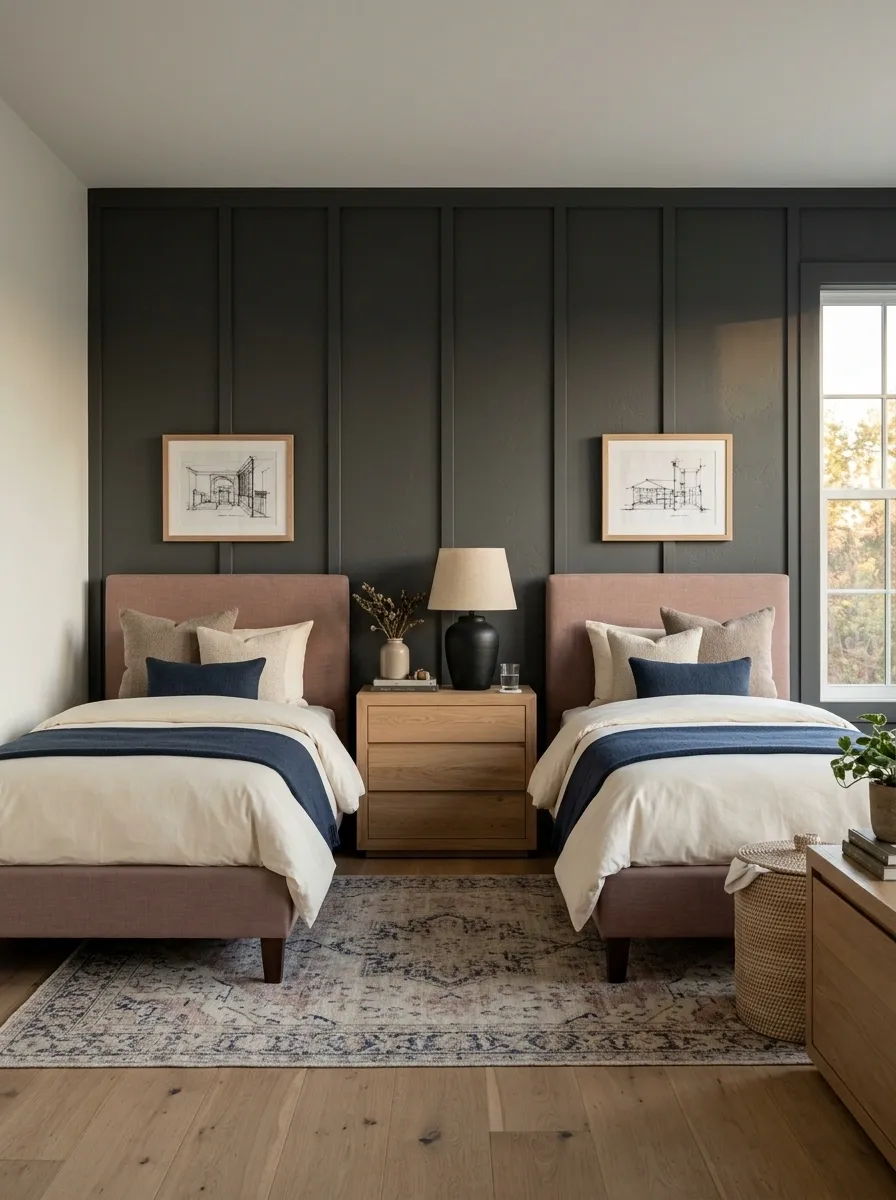
Bright bubblegum pink is loud. Dusty pink has restraint, which is exactly what a shared bedroom needs.
Look for pinks with muted, gray, brown, or mauve undertones. They sit much more naturally beside wood, charcoal, navy, and cream.
The difference is huge even when the room uses plenty of pink.
Shade test:
Reads playful and bright. Needs stronger neutral layers around it.
Muted undertones sit comfortably beside substantial wood and darker fabrics.
Works as a small accent when the rest of the room stays light.
The more muted the pink, the easier it is to pair with substantial furniture and darker accents.
Combine Pink Bedding With a Deep Wood Bed Frame
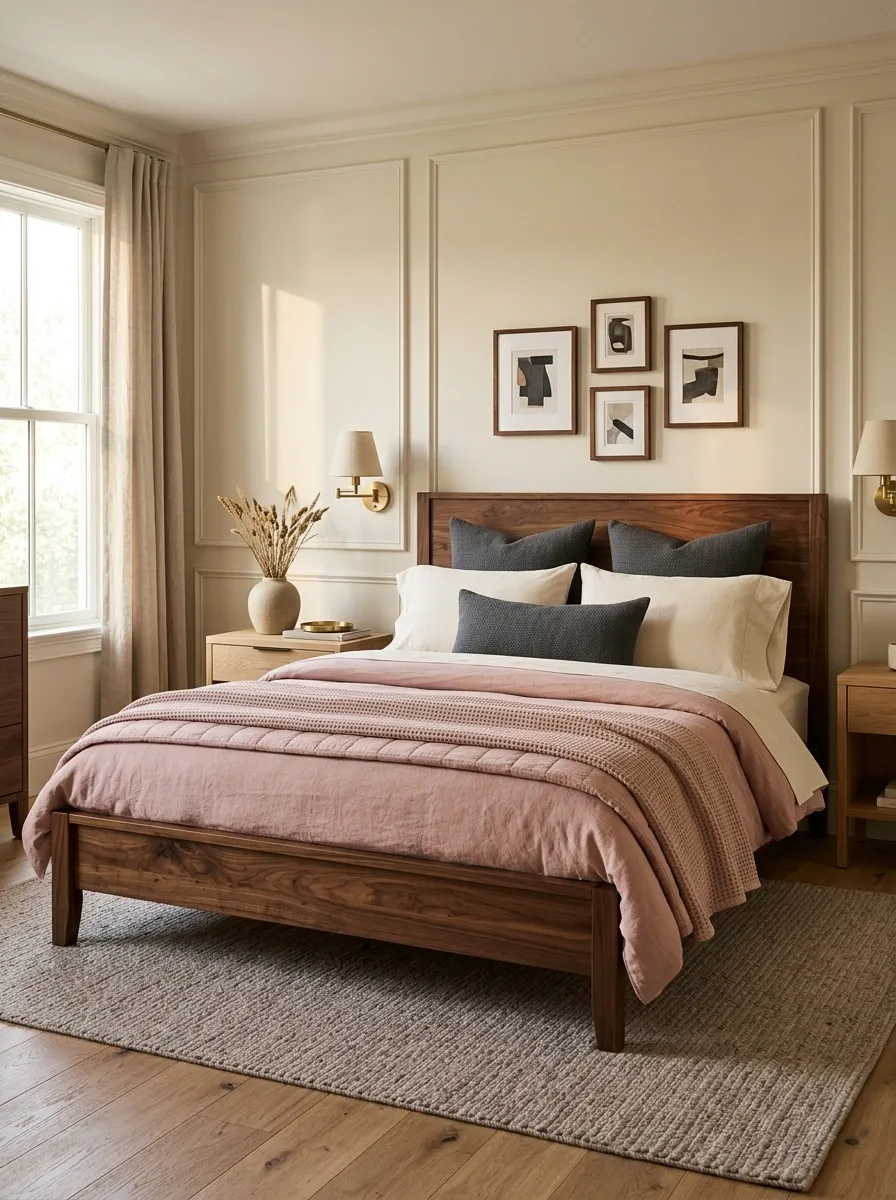
A deep walnut or espresso bed frame gives pink bedding a much heavier visual base.
Use muted pink through the duvet, quilt, or one folded blanket. Then keep the headboard or frame visibly wood toned so the grain becomes part of the design rather than hiding behind piles of fabric.
Cream sheets and charcoal pillows finish the setup without adding another competing color.
The wood matters here. Glossy white furniture would send the whole look in a completely different direction.
Place it on the largest visible bedding layer.
Use a substantial frame or headboard with visible grain.
Keep these colors quieter so the wood and pink remain the main visual pair.
Use a Pink Desk Chair Instead of More Pink on the Walls
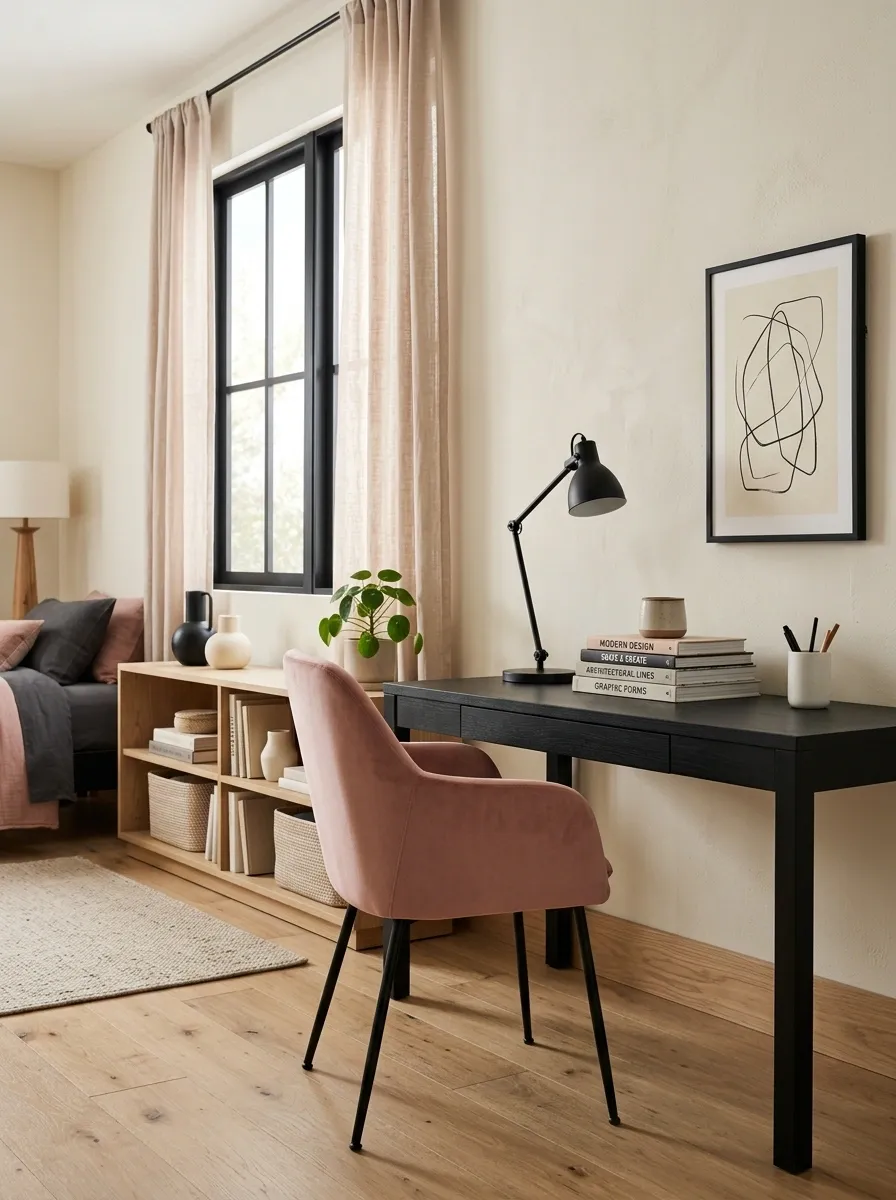
Not every pink element needs to be attached to the bed.
A dusty pink desk chair gives the workspace its own identity while the walls stay white, cream, or soft gray. This is a smart move for a bedroom that needs to work for homework, gaming, drawing, or late-night scrolling disguised as “research.”
Keep the desk itself darker, preferably black or wood. The contrast makes the chair look like a deliberate accent rather than another soft object added because there was apparently still some pink left in the paint bucket.
One small shift makes the setup feel intentional:
A single functional accent keeps the workspace interesting.
Keep the large furniture pieces grounded. The pink chair gets to be the fun part without forcing the whole room to join in.
Add Pink Through Stripes, Blocks, or Simple Patterns
Pink doesn’t always need to appear as a solid sheet of color.
A striped duvet, color-block rug, or geometric wall treatment can make pink feel far more graphic. Pair muted pink with cream, charcoal, navy, or brown and keep the pattern large enough to read from across the room.
Tiny repeating prints are where things start getting fussy. Large-scale shapes have more visual confidence and work better with clean-lined furniture.
The pattern should read before the pink does. That’s the trick.
STRIPES
Best on bedding, cushions, or a simple upholstered piece.
BLOCKS
Use larger sections of color for a cleaner, more modern result.
GEOMETRIC
Choose simple shapes instead of delicate decorative patterns.
Balance Pink Walls With a Cream and Gray Bedding Mix
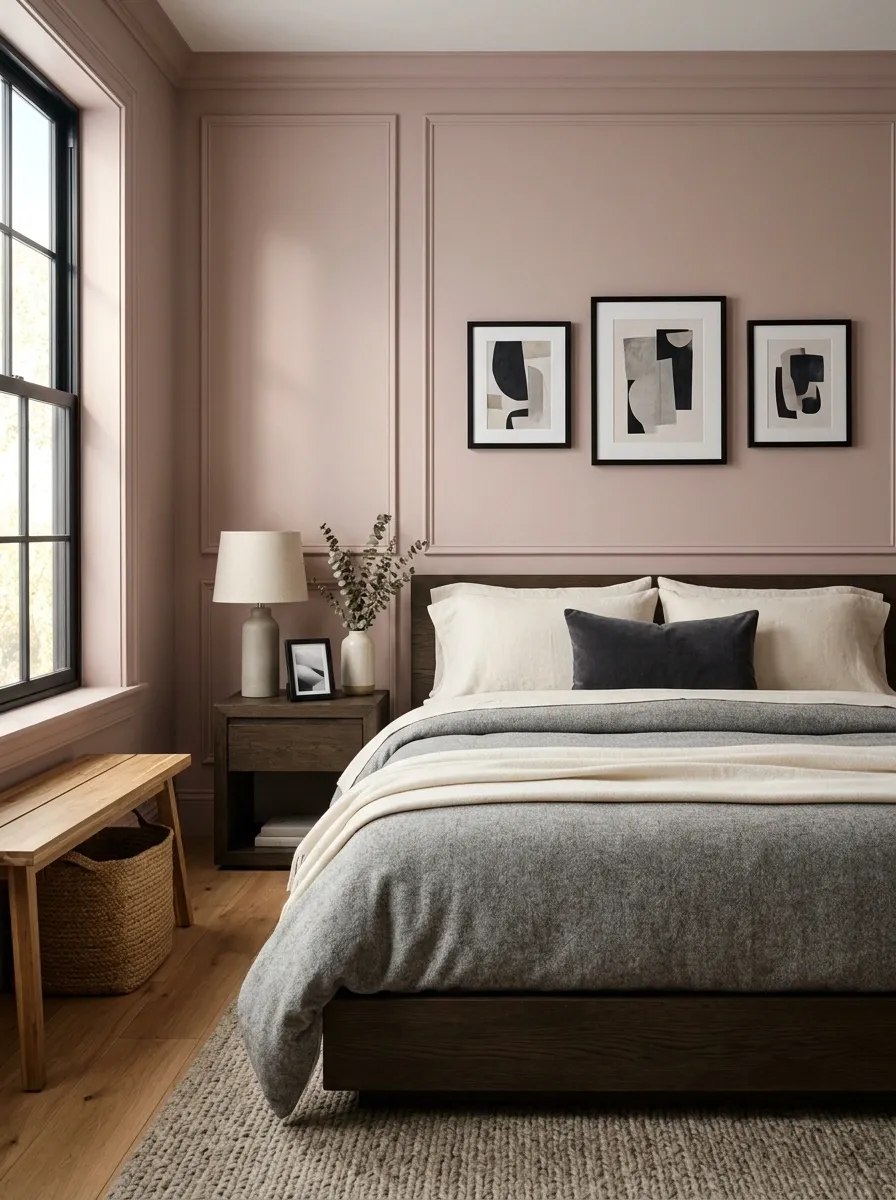
A pink wall doesn’t need a pink bed.
In fact, keeping the bedding cream and gray can make the wall look richer because it has something quieter to sit behind. Use cream for the sheets and one large layer, then bring in medium gray through the duvet or blanket.
Add a charcoal pillow or black frame at the side of the bed to sharpen the setup.
Three bedding directions, three different moods:
Cream Heavy
Softest and brightest. Works well when the pink wall is deeper.
Gray Heavy
Adds more visual weight and works with black or dark wood furniture.
Balanced Mix
Cream sheets, gray duvet, and one dark accent give the bed the most definition.
Keep the Ceiling and Trim Light to Make Pink Feel Cleaner
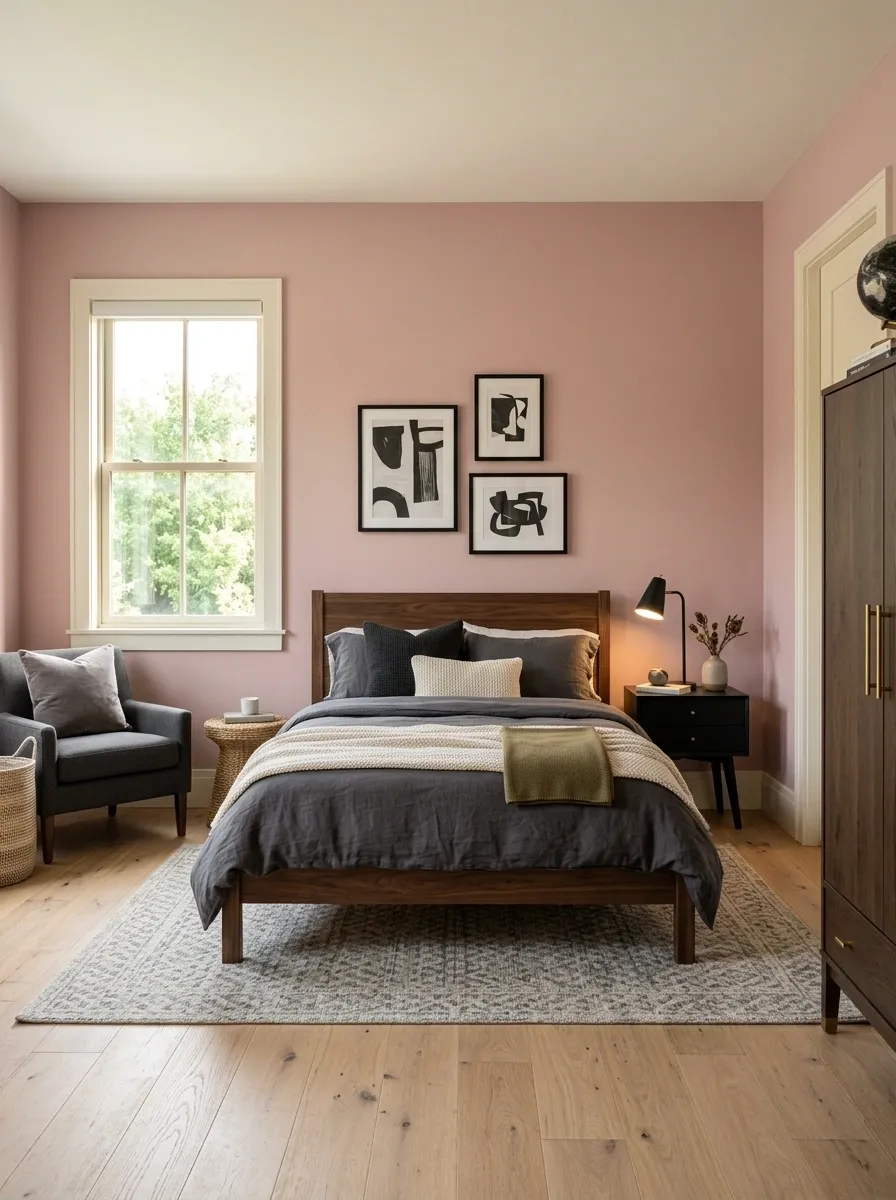
A pink wall already carries plenty of visual information. The ceiling and trim don’t need to start a side quest.
Keep the ceiling warm white and use matching or slightly warmer trim around doors and windows. This creates a clean edge around the pink and helps the color feel more architectural.
It also gives darker furniture somewhere to contrast against without making the room feel enclosed.
Use this simple order:
Light edges keep the pink looking clean instead of visually boxed in.
Use One Oversized Pink Piece and Keep Everything Else Quiet
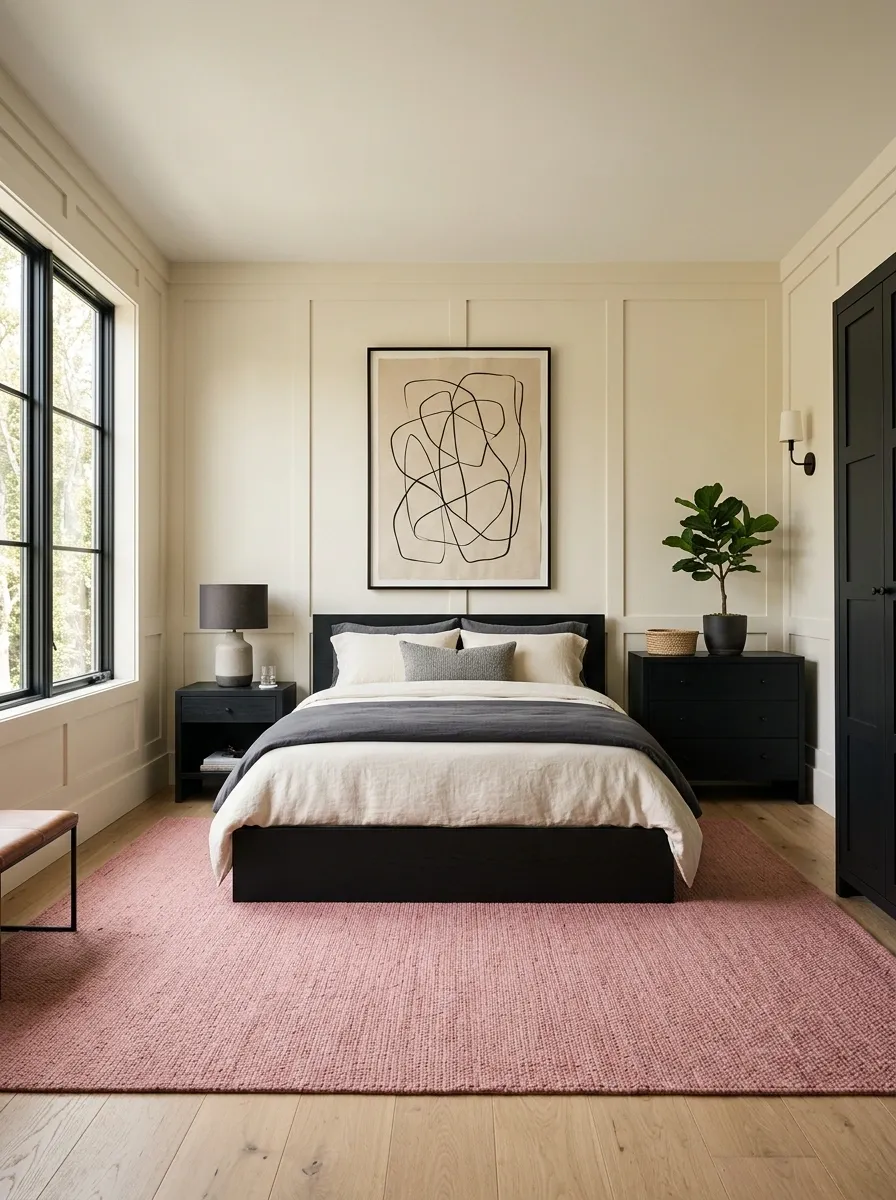
One large pink element has far more impact than a dozen little accents.
Pick one oversized piece, such as a rug, upholstered headboard, duvet, or curtain panel. Then keep the surrounding pieces restrained with cream, charcoal, wood, or black.
This makes the pink feel like part of the room’s architecture instead of a collection of accessories slowly multiplying on every available surface.
The oversized piece should be the first thing the eye notices. Everything else can relax.
Choose one dominant pink element that gives the room an obvious focal point.
One bold pink statement gives the room character without making every object participate.