
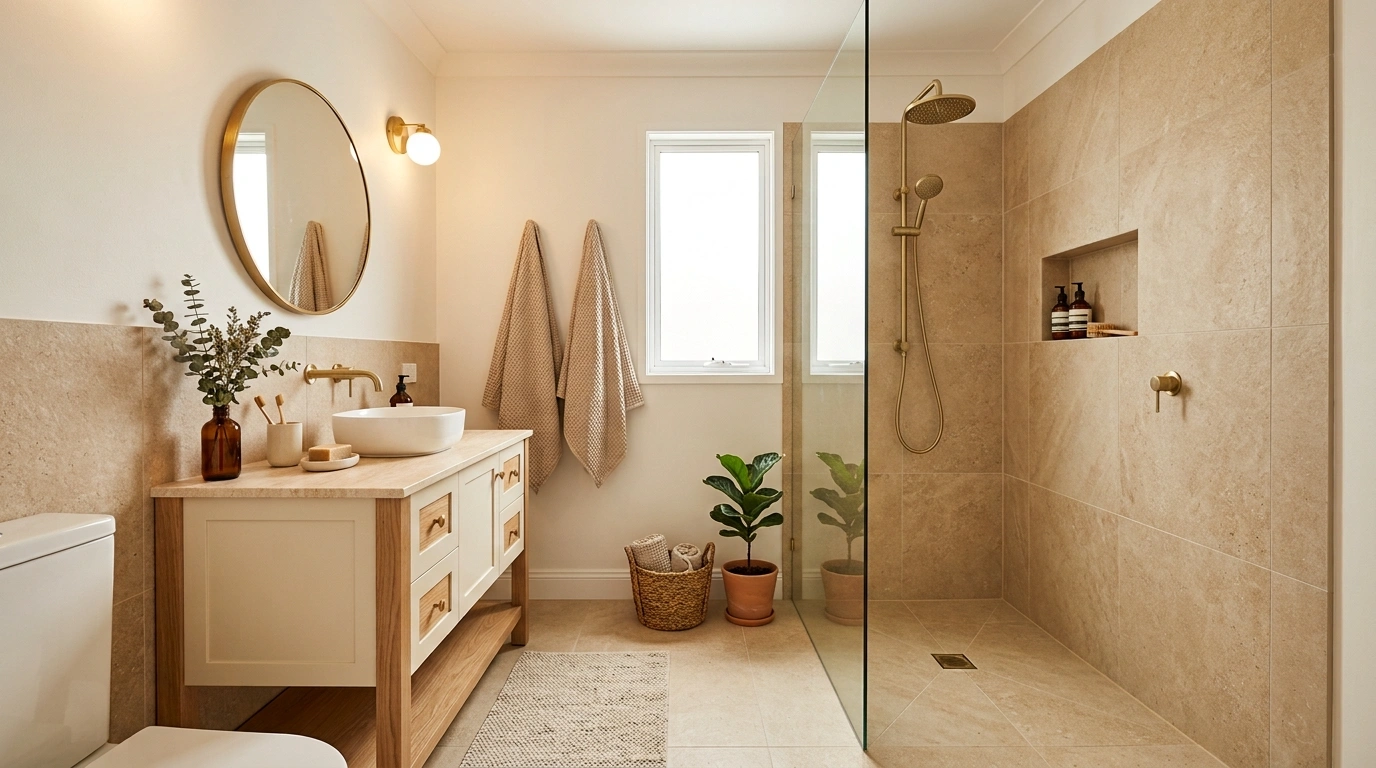
Beige gets blamed for boring bathrooms far more often than it deserves. The real problem is usually a room where every surface has been assigned roughly the same beige, every finish is equally flat, and the only thing breaking up the composition is a lonely hand towel.
That isn’t a beige problem. That’s a layering problem.
A finished bathroom needs a visual hierarchy. One material should carry the room, another should bring warmth or texture, and smaller details should give the eye a little contrast.
Change the balance and beige can go from soft and traditional to dark and architectural, from Mediterranean and weathered to clean and Scandinavian, without losing its warmth.
Beige Bathroom Ideas
Warm Minimalist Beige Sanctuary
This beige bathroom proves that tonal restraint doesn’t mean boring. Warm plaster walls create a continuous envelope, while a substantial oak vanity grounds the space with rich wood grain and clean modern lines. A sleek walk-in shower with minimalist dark fixtures keeps the layout open, and textured natural elements like a jute runner and earthenware vase soften the hard surfaces.
The real secret here is texture. When the color palette stays strictly within the warm beige family, every material has to pull its weight. The smooth plaster contrasts beautifully with the woven rug and the raw timber of the vanity.
Keep styling to an absolute minimum to let the architecture shine. A single stack of crisp towels and a simple ceramic vessel are all it takes to make this understated space feel entirely finished.
Warm Limestone Bathroom With Oak and Aged Brass
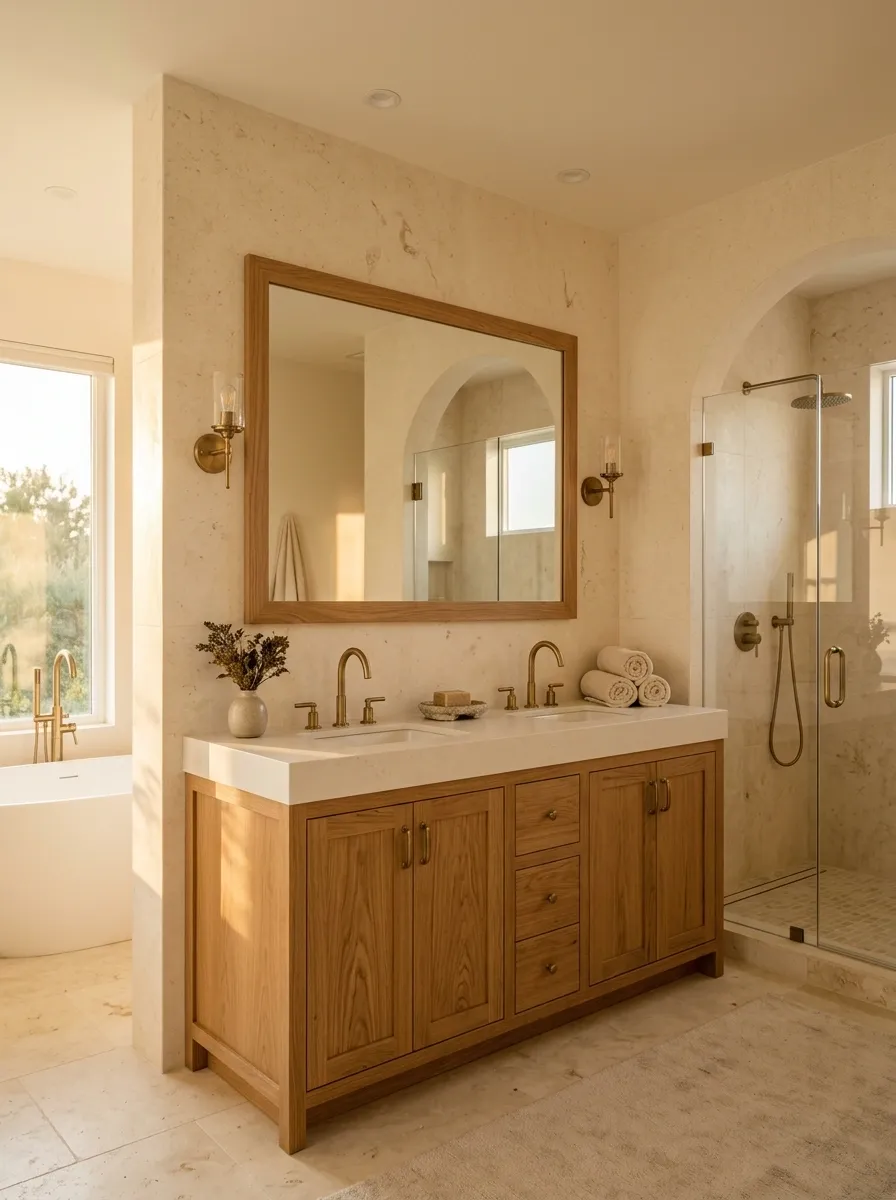
Creamy limestone sets the tone here, but the bathroom gets its personality from what happens around it. Floor and shower walls use warm stone with gentle variation, while a substantial oak vanity introduces visible grain and a slightly deeper honey tone. An arched shower opening softens the architecture, and aged brass fixtures add just enough glow without making the room look like a hotel lobby trying too hard.
The proportions matter. The vanity feels substantial, the mirror isn’t undersized, and the glass enclosure stays visually quiet. Keep the remaining accessories restrained so the limestone and oak remain the stars.
Rattan and Stone Spa Retreat
This serene bathroom leans hard into organic luxury with exposed timber ceiling beams and deeply textured stone walls. A floating beige stone sink anchors the vanity area, lit gently from beneath, while an arched backlit mirror draws the eye upward. Built-in arched wall niches hold glowing candles and greenery, adding layers of warmth to the monolithic stone architecture.
Lighting is everything in a space this textural. Hidden LED strips trace the ceiling and shower alcoves, casting a soft golden glow that accentuates the rough-hewn stone without creating harsh shadows.
Balance the rustic elements with sleek, modern fixtures. A wall-mounted toilet and clean-lined hardware ensure the room reads as a high-end spa rather than a cave.
Soft Monochrome Bathroom With Sculptural Stone and Floating Storage
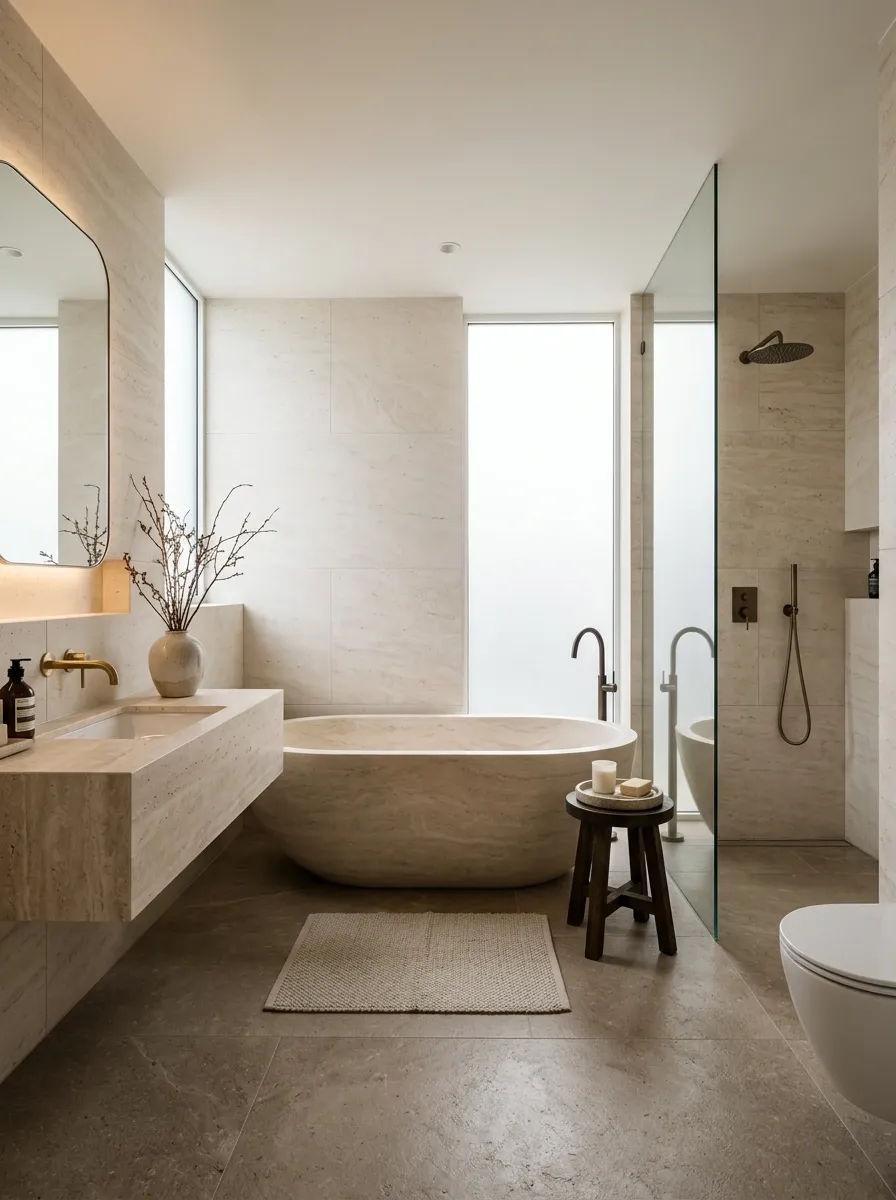
This bathroom keeps almost everything in the same warm beige family, then relies on shape and tonal shifts to stop the room from looking sleepy. Pale stone-effect walls meet a slightly darker floor, while a floating stone vanity creates a solid horizontal anchor. A frameless shower, sculptural freestanding tub, and minimal fixtures leave the architecture exposed instead of covering it with visual noise.
The trick is variation without obvious contrast. The wall, floor, vanity, and tub should sit close in tone but never look like one continuous slab. A few darker fixture details give the eye tiny stopping points. Beige isn’t the problem. Beige with no depth is.
Vertical Oak and Plaster Haven
Vertical oak slatting meets smooth beige plaster in this masterfully layered small bathroom. The warm timber paneling behind the floating vanity adds instant height and architectural interest, while a tall, arched frameless mirror breaks up the geometry. Minimalist brushed brass fixtures add a subtle metallic gleam that catches the ambient lighting.
The composition works because the vertical lines of the wood slats draw the eye up, making the room feel larger than it actually is. It’s proof that you don’t need square footage to make a dramatic design statement.
Keep countertops clear of clutter. Let the interplay between the smooth plaster walls and the ribbed oak woodwork do all the talking.
Japandi Beige Bathroom With Oak Slats and Textured Plaster
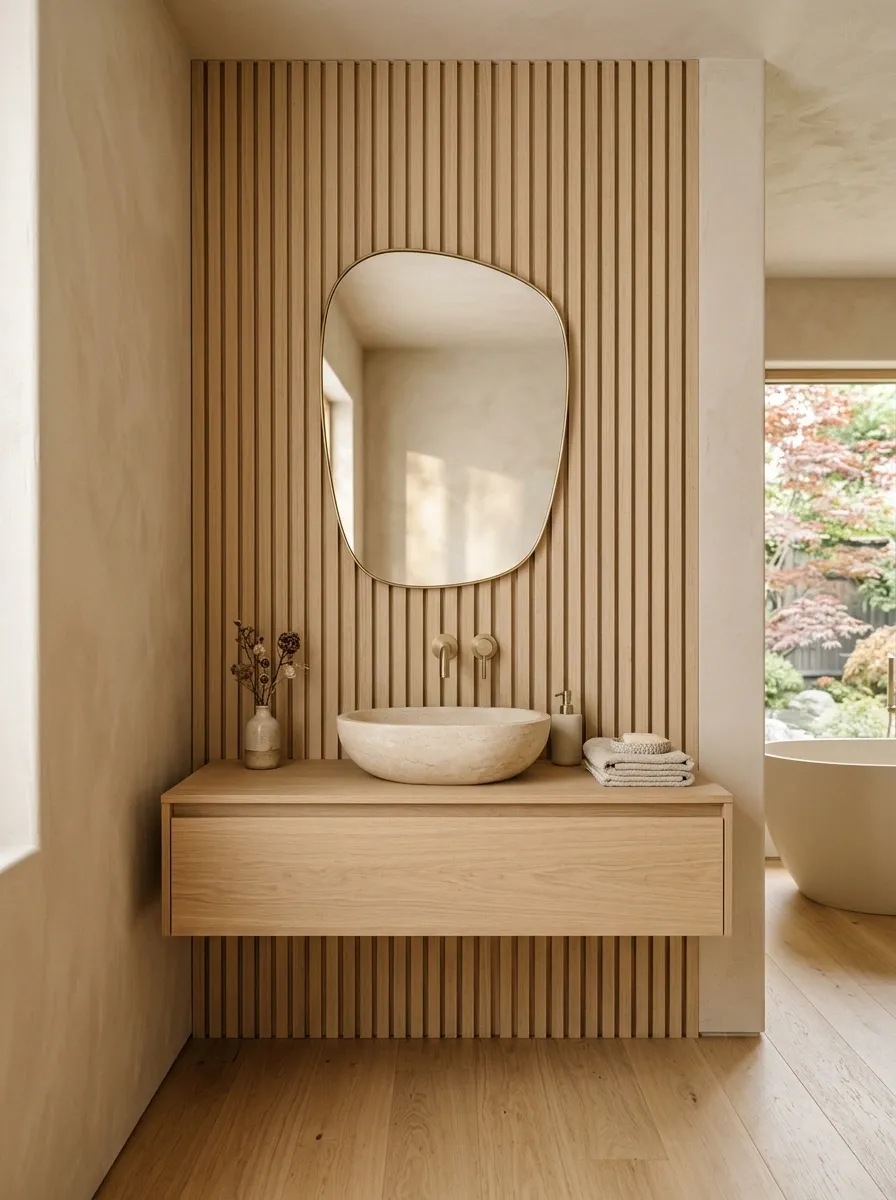
Smooth plaster walls and pale beige flooring create a quiet backdrop for vertical oak slats behind the vanity. The timber adds warmth without making the bathroom feel rustic, while a simple stone basin, low-profile cabinetry, and restrained fixtures keep the room visually calm. A softly rounded mirror breaks up the straight lines and gives the composition a little movement.
This look works because the contrast comes from texture and geometry instead of a pile of accessories. The plaster catches light differently from the oak, and the wood introduces a strong vertical rhythm. Keep the countertop and hardware simple. Adding decorative clutter here would be like putting three exclamation marks after a whisper.
PLASTER
STONE
Slatted Wood and Backlit Mirror
This sophisticated beige bathroom pairs clean vertical timber accents with a glowing, oversized oval mirror. The floating wood-slat vanity introduces gorgeous linear texture, contrasting against the seamless beige walls and soft flooring. A wall-mounted toilet and discreet shelving keep the floor plan feeling completely weightless and open.
The magic lies in the lighting strategy. A warm LED backlight wraps the mirror like a halo, casting a flattering glow over the entire vanity zone while highlighting the grain of the wood.
Resist the urge to crowd the space with accessories. A simple ceramic vase with a single stem is plenty for a room defined by such strong architectural details.
Mediterranean Bathroom With Limewashed Walls and Tumbled Stone
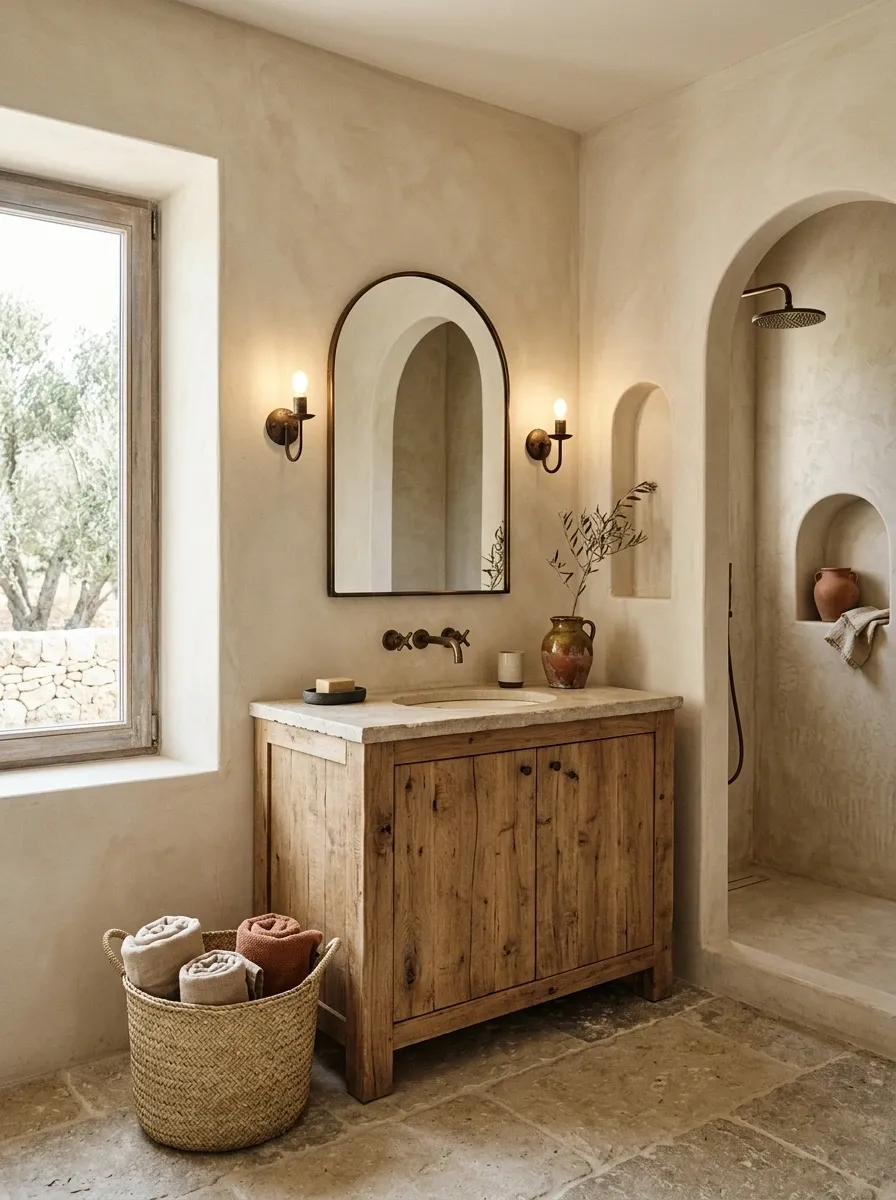
This version leans into warmth and irregularity. Limewashed beige walls sit above tumbled stone flooring, while a chunky wood vanity, rounded shower niches, terracotta ceramics, and aged metal fixtures give the room an old-world Mediterranean character. Nothing looks factory-perfect, and that’s exactly why the composition feels convincing.
The best part is the balance between rough and refined surfaces. The stone can be uneven, the plaster can carry subtle variation, and the wood can show its natural character, but the major shapes still need to be clean. Too much rustic detail and the room starts looking themed. This stays architectural first, decorative second.
Moody Marble and Beige Powder Room
Dramatic veined marble panels take center stage in this moody yet warm powder room. A freestanding beige basin sits against the striking stone backdrop, while an irregular, organic-shaped mirror adds an unexpected artistic touch. Black hardware, a minimalist pendant light, and a sleek wall-mounted toilet complete the high-contrast palette.
The beauty of this space is how it uses bold natural stone without overwhelming the room. The beige tones in the marble tie everything together, bridging the gap between the dark accents and soft walls.
Stick to moody accessories to match the vibe. A matte black trash can and matching brush holder keep the look cohesive, intentional, and undeniably chic.
Parisian-Inspired Beige Bathroom With Classic Paneling
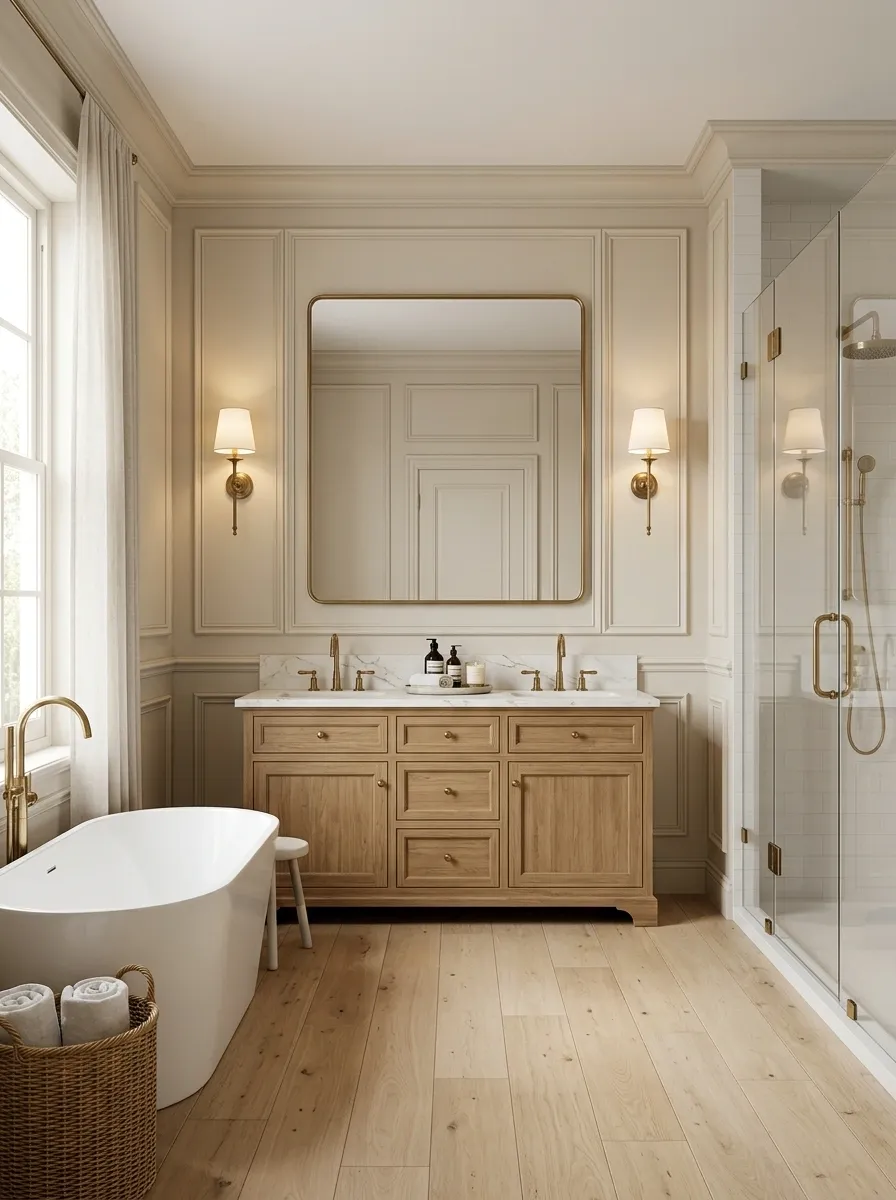
Cream-beige wall paneling gives this bathroom its architectural backbone. A marble-look floor, furniture-style vanity, antique brass fittings, framed mirror, and traditional wall lights build on that character without turning the room into a historical reenactment. The overall palette stays soft, so the paneling and furniture silhouettes carry the visual interest.
The modern restraint is what makes the composition work. The shower glass stays simple, the countertop doesn’t compete with the wall treatment, and the lighting feels decorative without becoming fussy. This style benefits from breathing room. Once every surface starts shouting “classic bathroom,” the charm disappears and the room becomes a period-drama audition.
Warm Wood and Glass Partition
This contemporary beige bathroom features a clever layout split by a sleek glass partition. A floating timber vanity with a sculptural stone vessel sink anchors one side, while a backlit curved mirror softens the wall. Across the room, a minimalist shower with a slatted wooden wall brings in rich, natural warmth.
The visual flow is seamless thanks to a unified beige color palette that extends from the floor across the walls. The glass divider keeps the shower area feeling expansive while containing splashes.
Limit your decorative items to functional essentials. A neat niche in the shower and a simple tray on the vanity are all you need to maintain this clean, edited aesthetic.
Compact Beige Apartment Bathroom With a Shower-Tub Combination
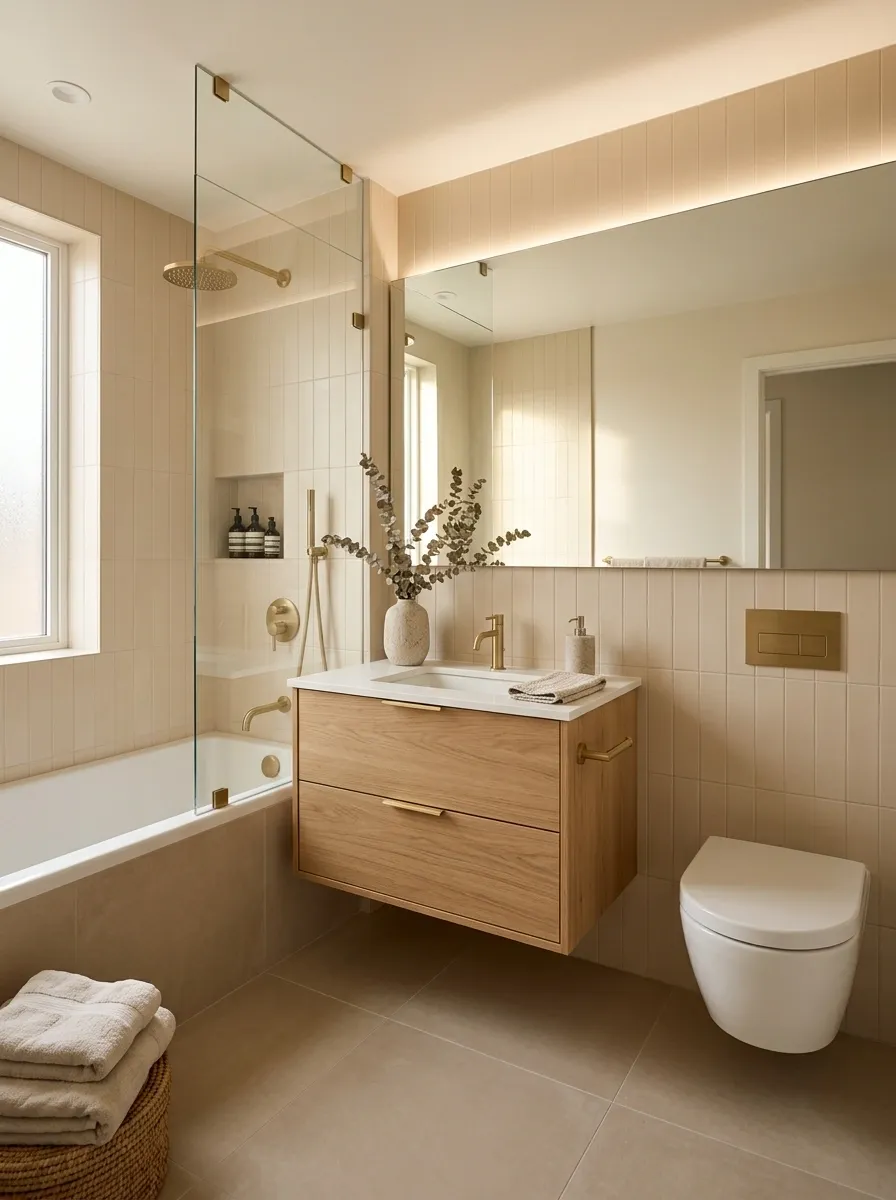
A small bathroom doesn’t need a giant renovation fantasy to look pulled together. This compact apartment layout uses warm beige wall tile, a slightly deeper beige floor, a slim oak vanity, and a shower-tub combination with clear glass above the tub. A wall-mounted toilet keeps the floor visually open, while a generous mirror stretches the room rather than adding another bulky object.
The important part is proportion. The vanity stays narrow enough for comfortable movement, the glass doesn’t chop the room into visual pieces, and the mirror reaches high enough to bounce light around. Storage stays concentrated near the vanity instead of creeping into every available corner. Tiny bathroom, yes. Tiny visual ambition, absolutely not.
vanity
glass
floor
Mediterranean Arch and Brass Rain Shower
Old-world charm meets modern luxury in this Mediterranean-inspired beige bathroom. Limewashed walls provide soft, chalky movement, while an arched glass shower enclosure frames a decadent brass rain shower system. A floating stone sink vanity pairs with an oversized arched mirror, creating a sense of grand scale in a compact footprint.
The magic is in the aged metallic finishes and natural textures. The brass hardware will only get better with time, and the woven basket beneath the vanity adds an instant layer of earthy warmth.
Embrace imperfection in the finishes. Limewash and tumbled stone are meant to look slightly weathered and organic, so don’t stress over achieving a factory-smooth look.
Deep Taupe and Beige Bathroom With Walnut Furniture
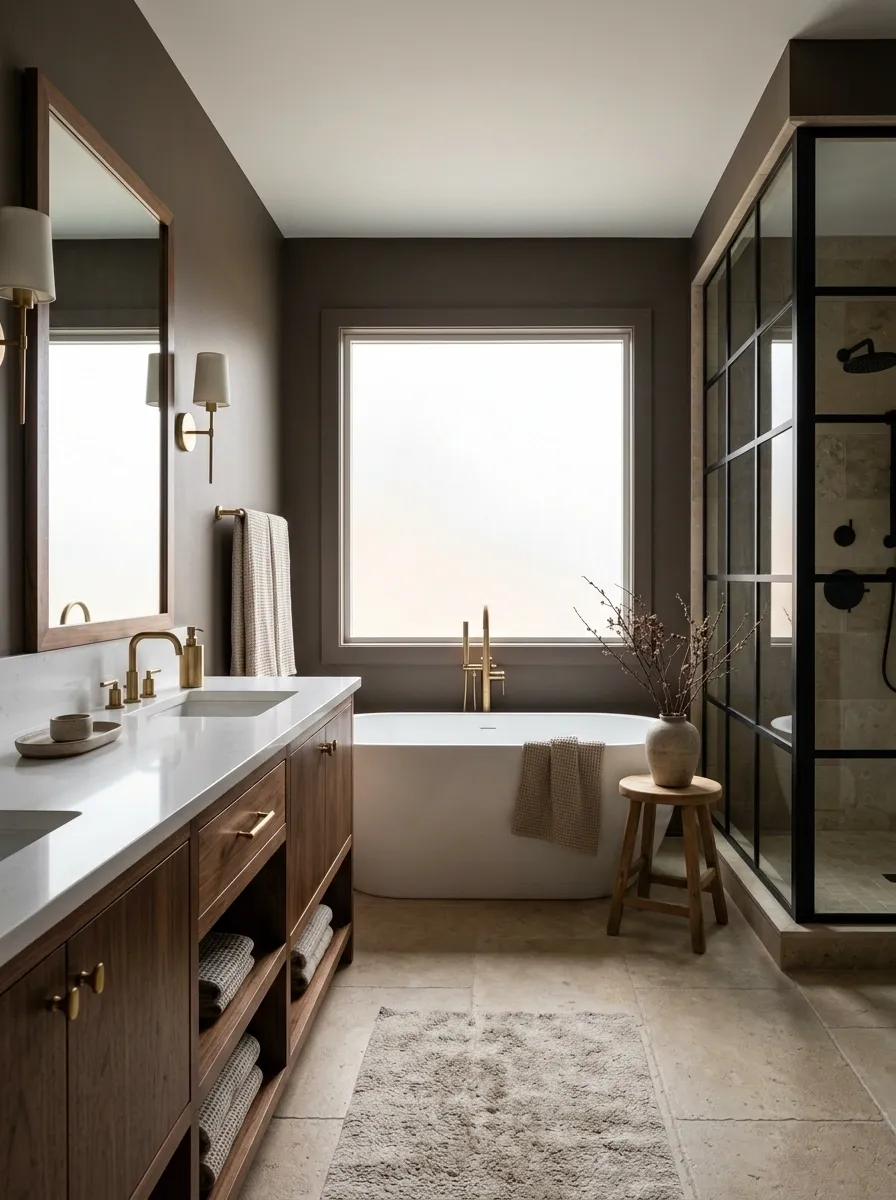
Beige takes a moodier turn here. Warm stone surfaces provide the light base, but the walls shift toward deep taupe and the vanity uses rich walnut with a broad, grounded silhouette. Black-framed shower glass adds a sharp architectural line, while a freestanding tub keeps a lighter shape toward the center of the room.
The contrast works because it arrives in layers rather than one giant dark wall. Beige keeps enough visual light in the composition, walnut bridges the warm and dark tones, and black appears mostly in thin structural details. Keep the remaining finishes controlled so the bathroom stays atmospheric rather than heavy.
Backlit Monolithic Beige Oasis
This striking bathroom pairs sleek minimalist architecture with dramatic vertical lighting strips. A tall, narrow mirror framed by glowing LED channels stretches toward the ceiling, flanked by a trio of delicate, modern pendant lights. A monolithic beige stone pedestal sink anchors the room with sculptural weight.
The vertical emphasis makes the ceiling feel impossibly high, while the concealed lighting creates a resort-like atmosphere that feels both calming and high-end.
Keep the surrounding decor sparse. A cluster of white towels and a simple textural arrangement in a vase are more than enough to finish the space.
Sandy Beige Bathroom With Muted Blue Coastal Accents
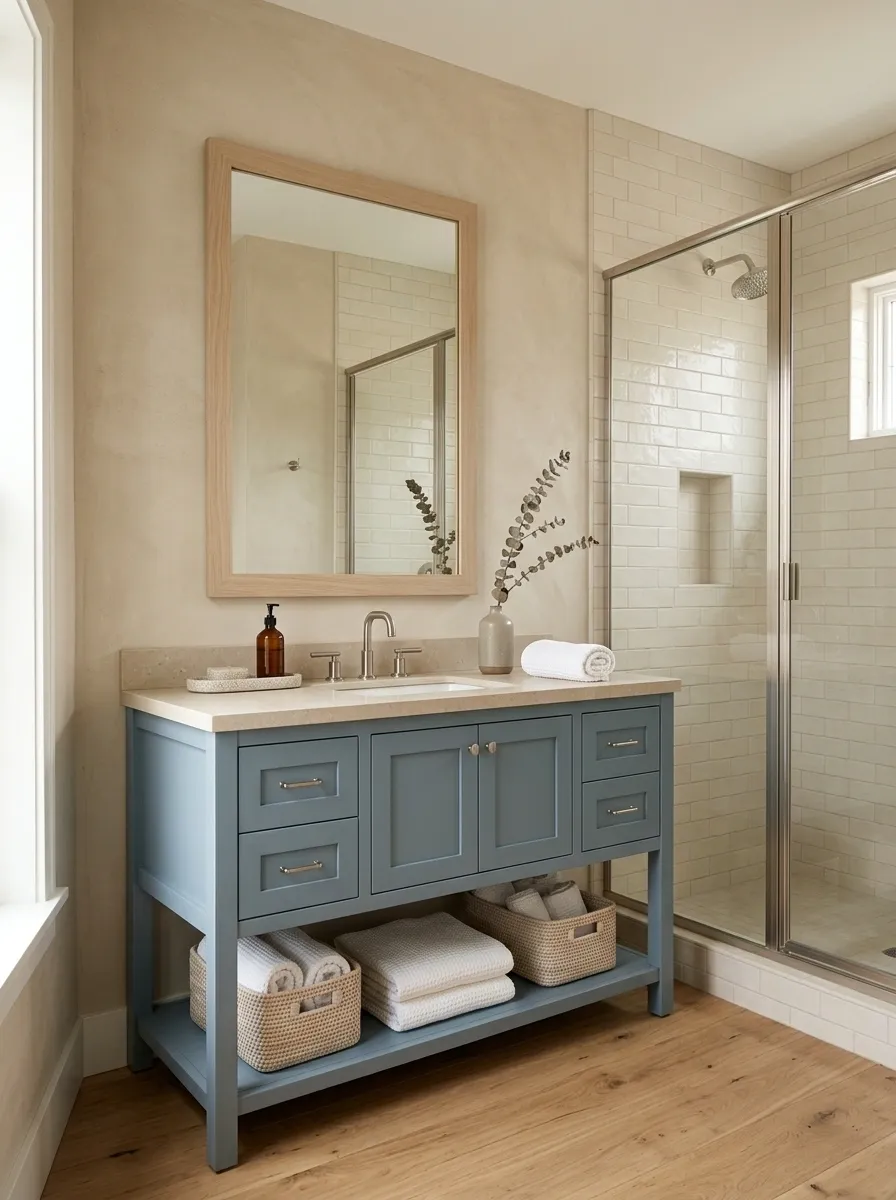
This bathroom skips the obvious beach-house clichés and goes for a quieter coastal composition. Sandy beige walls and flooring create the main field, while a muted dusty-blue vanity becomes the single noticeable color shift. Pale natural wood, brushed nickel, lightly textured tile, and soft woven details keep the room relaxed without introducing shells, anchors, or enough rope to secure a pirate ship.
The blue works because it stays dusty rather than bright. Beige remains dominant, so the vanity feels like part of the architecture instead of a random color block. Keep the hardware simple and let the blue cabinetry carry the personality.
1970s-Inspired Beige Bathroom With Rounded Forms and Terrazzo
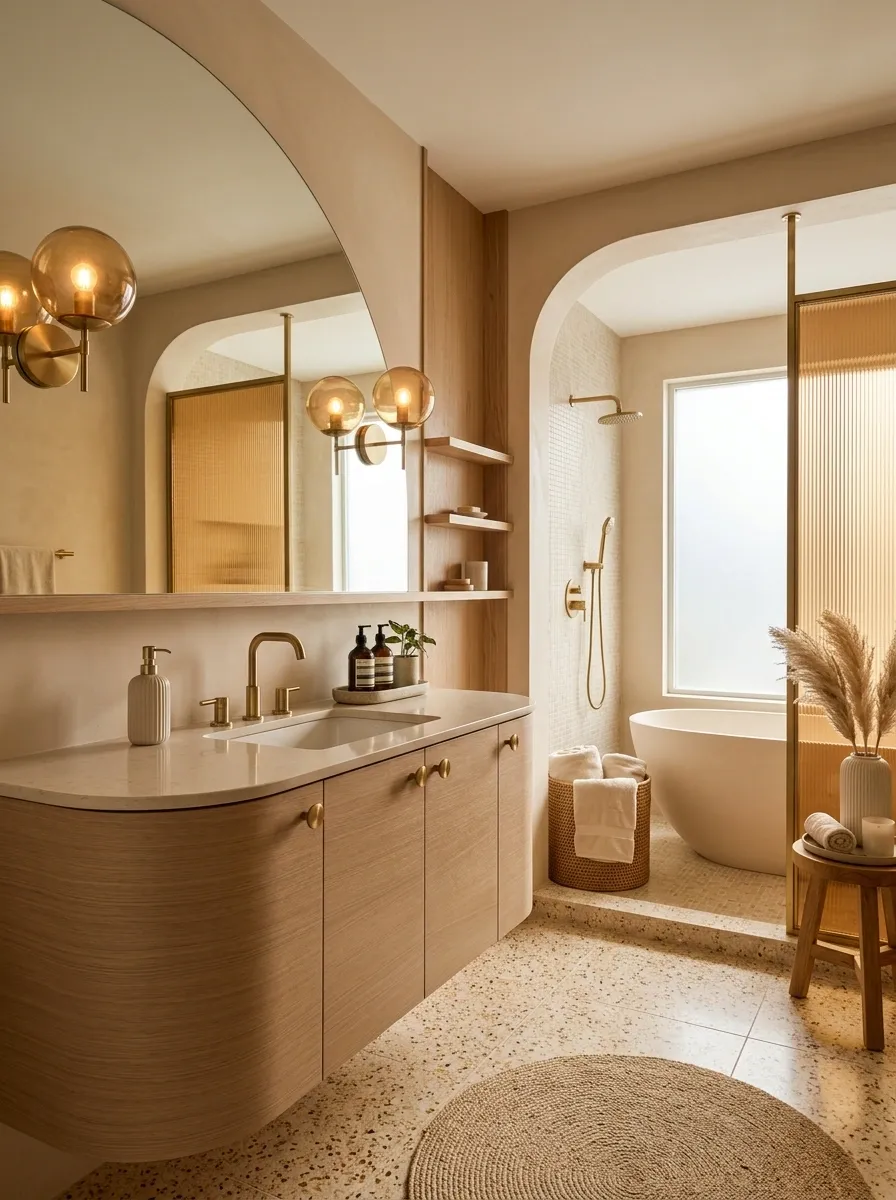
Warm almond beige, rounded cabinetry, amber-toned glass, and terrazzo bring a subtle 1970s influence into the room without turning it into a time capsule. The vanity has softened corners, the mirror follows a curved silhouette, and a warm terrazzo floor gives the lower half of the bathroom its visual rhythm. Brushed metal fixtures keep the whole composition from getting too retro.
The secret is repetition of shape rather than a pile of vintage objects. Curves show up in the mirror, vanity, lighting, and tub while the floor supplies smaller flecks of color. One era reference is enough. Add seven more and suddenly the bathroom is auditioning for a furniture catalog from 1978.
Traditional Cream Bathroom With Linen, Oak, and Soft Brass
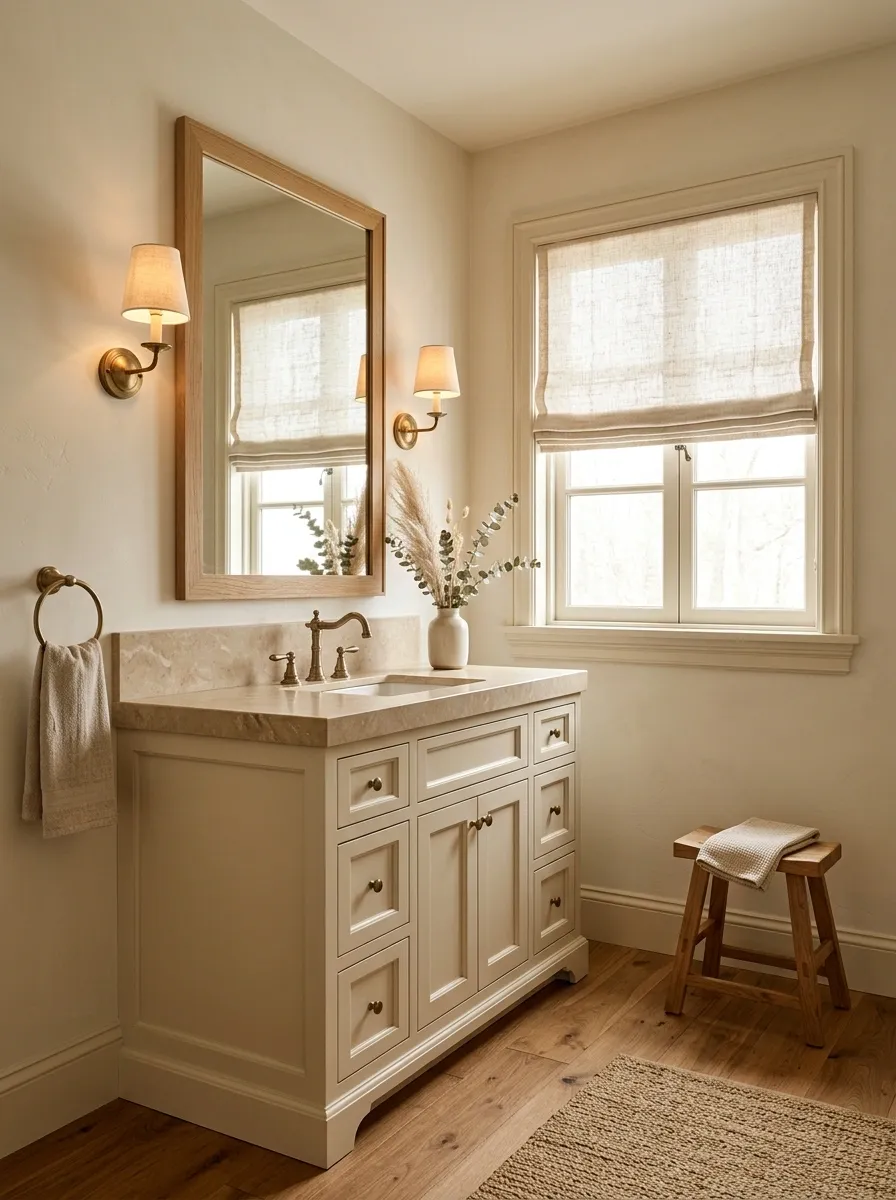
This version leans traditional without becoming overly formal. Creamy beige walls surround a substantial painted vanity, while warm oak appears in the mirror frame and small furniture details. Linen-textured window treatment softens the natural light, and brushed or aged brass fixtures add a gentle golden note. Framed mirrors and traditional sconces complete the composition.
The room feels collected because every material supports the same warm temperature. There’s no icy white countertop fighting the beige and no ultra-modern black fixture randomly appearing for dramatic effect. Keep the vanity substantial and the accessories sparse. Traditional style needs some breathing room or it starts looking like every decorative object was invited to the same meeting.
Organic Modern Bathroom With Travertine and Natural Oak
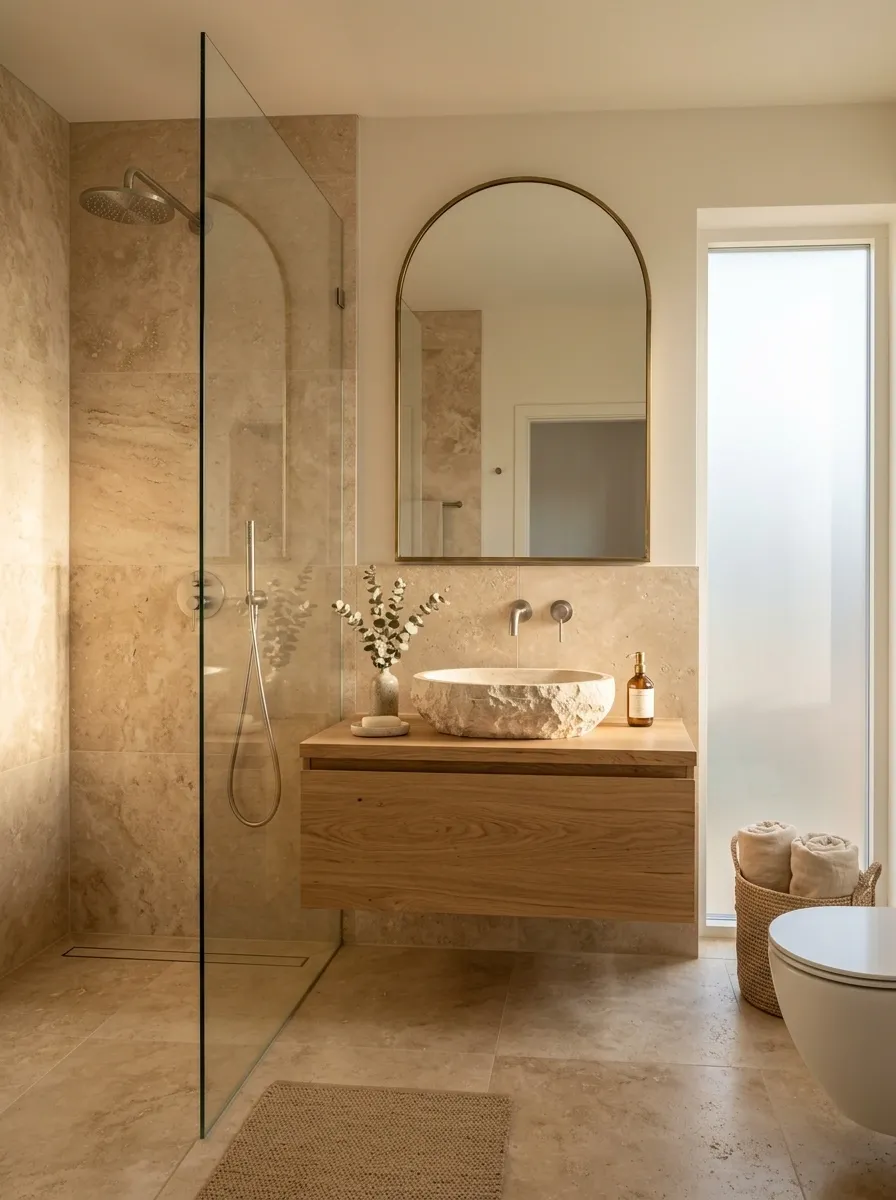
Travertine takes center stage in this bathroom, covering the floor and major shower surfaces with warm beige movement and softly varied markings. A thick natural oak vanity brings in a calmer grain, while a rounded mirror and sculptural stone sink keep the shapes relaxed. The fixtures stay understated so the natural materials don’t have to compete with hardware for attention.
This composition works because the materials feel substantial without becoming heavy. Travertine supplies visual movement, oak supplies warmth, and the curved pieces break up the harder rectangular forms. Keep the rest of the room quiet. Once every accessory starts competing with the stone, the bathroom loses the calm that made the combination work in the first place.
Beige Bathroom With Muted Olive and Earthy Stone
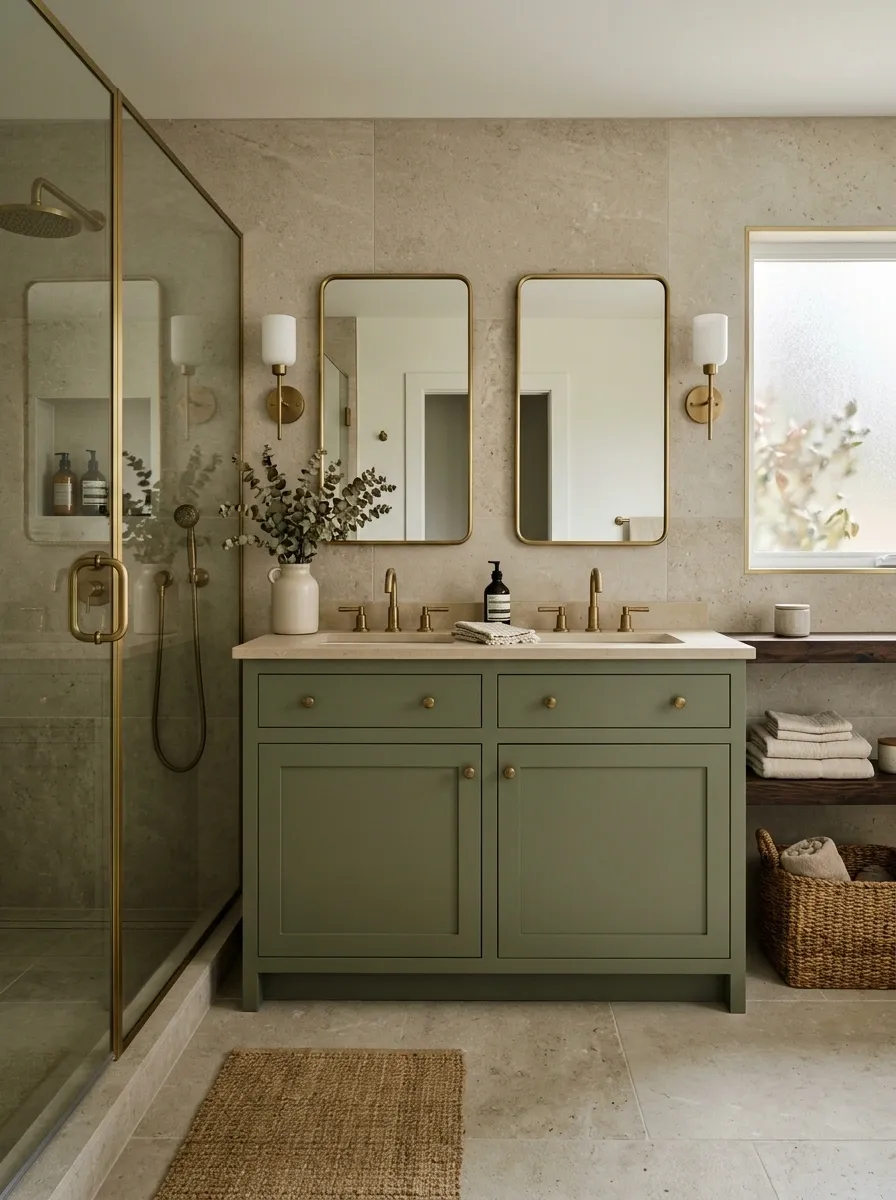
A muted olive vanity gives this beige bathroom its defining moment. Warm limestone-look surfaces cover the floor and shower, while the cabinetry introduces a dusty green that feels earthy rather than colorful. Dark wood appears in a few furniture details, and aged brass connects the olive and beige tones without becoming the obvious focal point.
The palette works because the green is softened enough to sit comfortably beside warm neutrals. The stone keeps the room grounded, while the olive gives the eye a clear place to land. Keep the green concentrated on the vanity instead of scattering matching accessories around the room. One strong color move usually looks more intentional than fifteen tiny ones begging for attention.
Classic Beige Checkerboard Bathroom With a Strong Floor Pattern
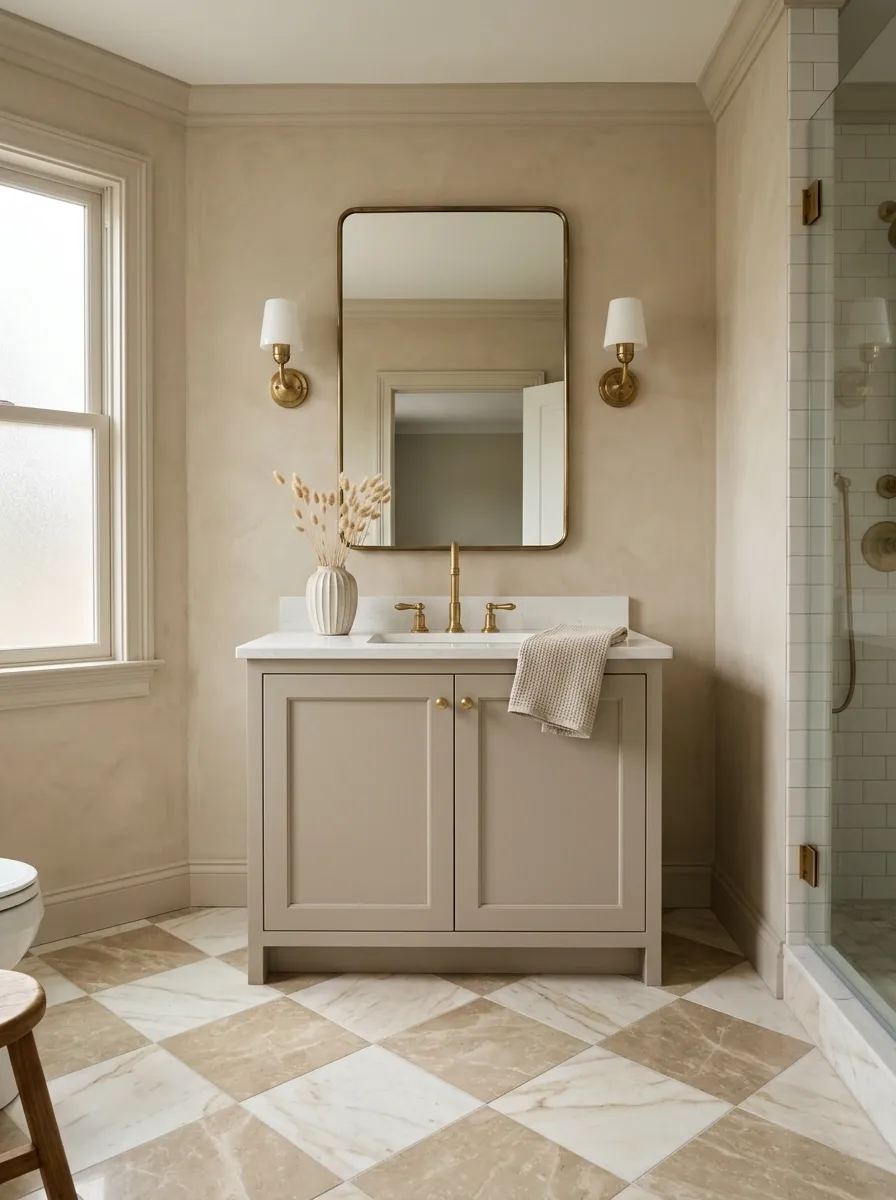
The floor does the talking in this bathroom. Large warm cream and beige checkerboard tiles create a clear graphic pattern under a quieter combination of soft beige walls, a simple painted vanity, framed mirror, and traditional brass fixtures. The rest of the room stays visually calm so the floor can remain the memorable feature.
The scale of the checkerboard matters. A larger pattern feels architectural and deliberate, while tiny squares can push the room toward a more decorative look. Keep wall tile or wall paint restrained and choose furniture with clean proportions. There is no need for five more patterns. The floor already submitted its résumé.
Beige Marble Bathroom With Dark Bronze Details
Warm beige marble-look surfaces give this bathroom a more dramatic foundation, with soft veining running through the shower and vanity area. Rich wood cabinetry adds weight beneath the stone, while dark bronze fixtures and a sculptural mirror create sharper points of contrast. The bathtub remains pale and simple, preventing the room from becoming visually heavy.
The darker metal feels connected to the stone because the marble’s natural veining already introduces deeper tones. That relationship keeps the fixtures from looking randomly pasted onto a neutral room. Keep the bronze finish consistent across the main hardware and lighting. Mixing four different dark metals would turn a sophisticated bathroom into a hardware group chat.
Warm Industrial Beige Bathroom With Concrete and Oak
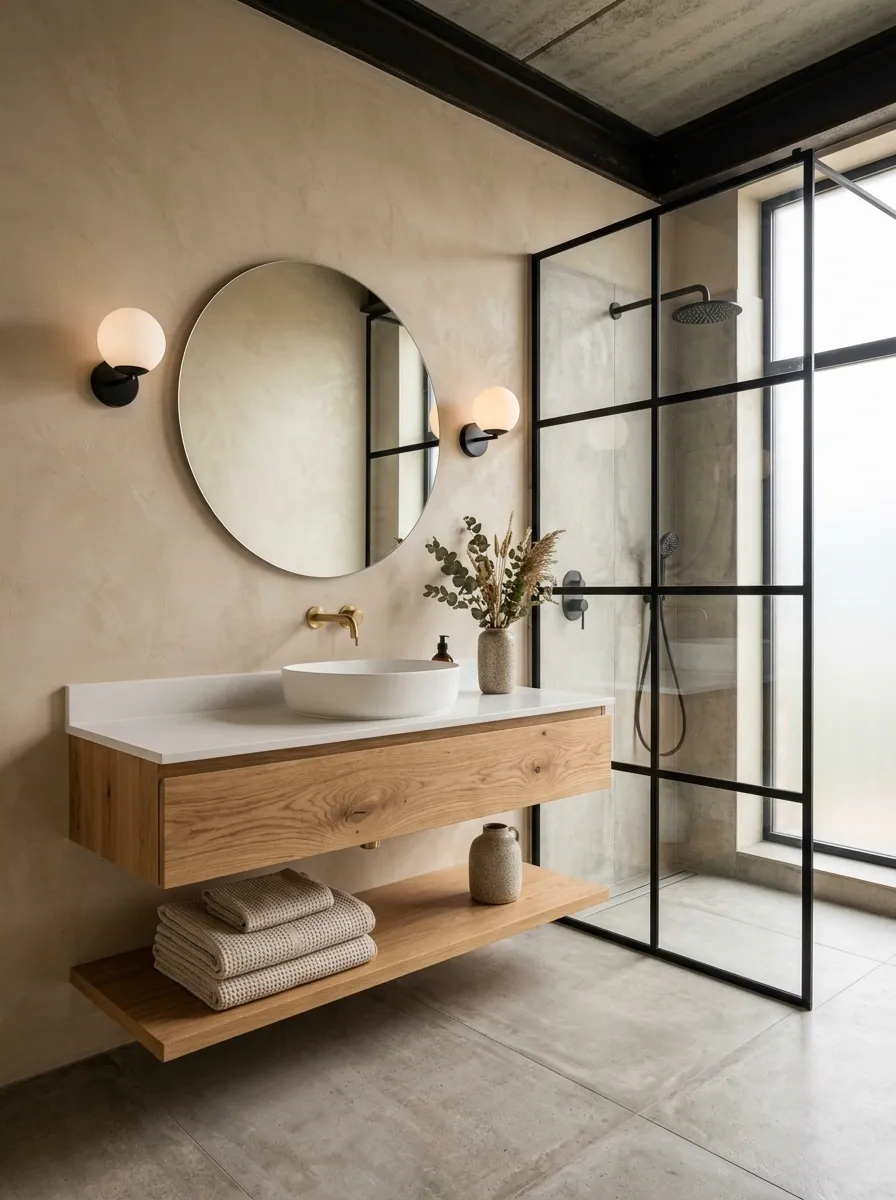
Industrial bathrooms don’t have to surrender to cold gray. Here, soft beige plaster walls warm up a concrete-style floor, while a chunky oak vanity introduces natural grain and visual weight. Slim black steel details frame the glass shower, and simple globe lighting adds a little softness against the harder materials.
The contrast between concrete, plaster, wood, and steel gives the room its character. Beige prevents the concrete from becoming sterile, while oak stops the black details from feeling severe. Keep the architecture exposed and resist filling every shelf with accessories. Industrial style looks strongest when the materials have room to breathe. Otherwise the room starts collecting “urban loft” props like they’re going out of style.
Scandinavian Family Bathroom With Pale Beige Tile and Oak
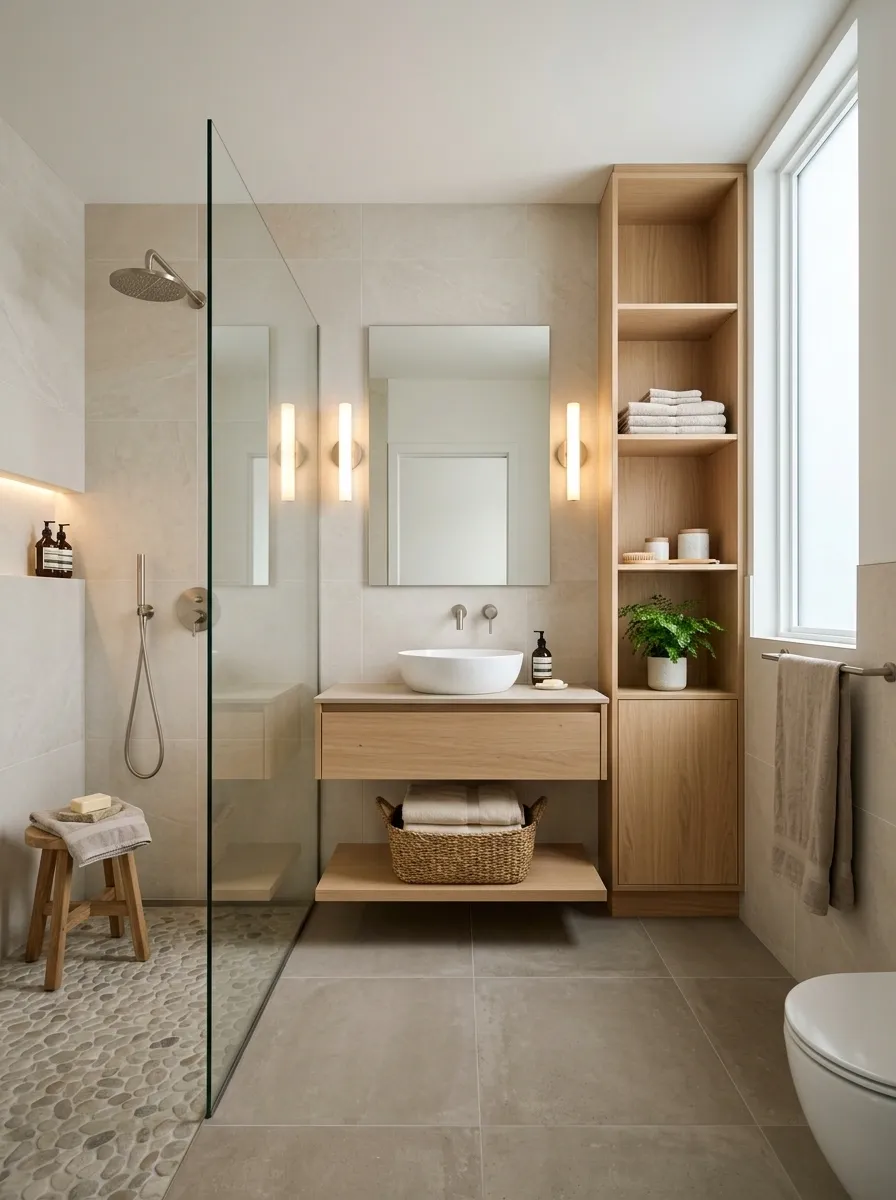
Clean lines, pale beige tile, and light oak make this family bathroom feel bright without drifting into stark white territory. Large-format wall tile keeps the surfaces calm, while oak cabinetry brings enough warmth to stop the room from feeling clinical. A generous walk-in shower, wall-mounted storage, simple metal fixtures, and practical lighting complete the composition.
This design earns its calm look through restraint. Storage is built into the architecture, so counters stay clear and the floor keeps its visual openness. The oak should have a natural finish rather than a glossy one, and the tile should carry a little tonal variation. Too much perfection would make the room feel like a showroom. Bathrooms still have to survive toothpaste, wet towels, and real life.
Tiny Beige Powder Room With Fluted Walls and a Stone Basin
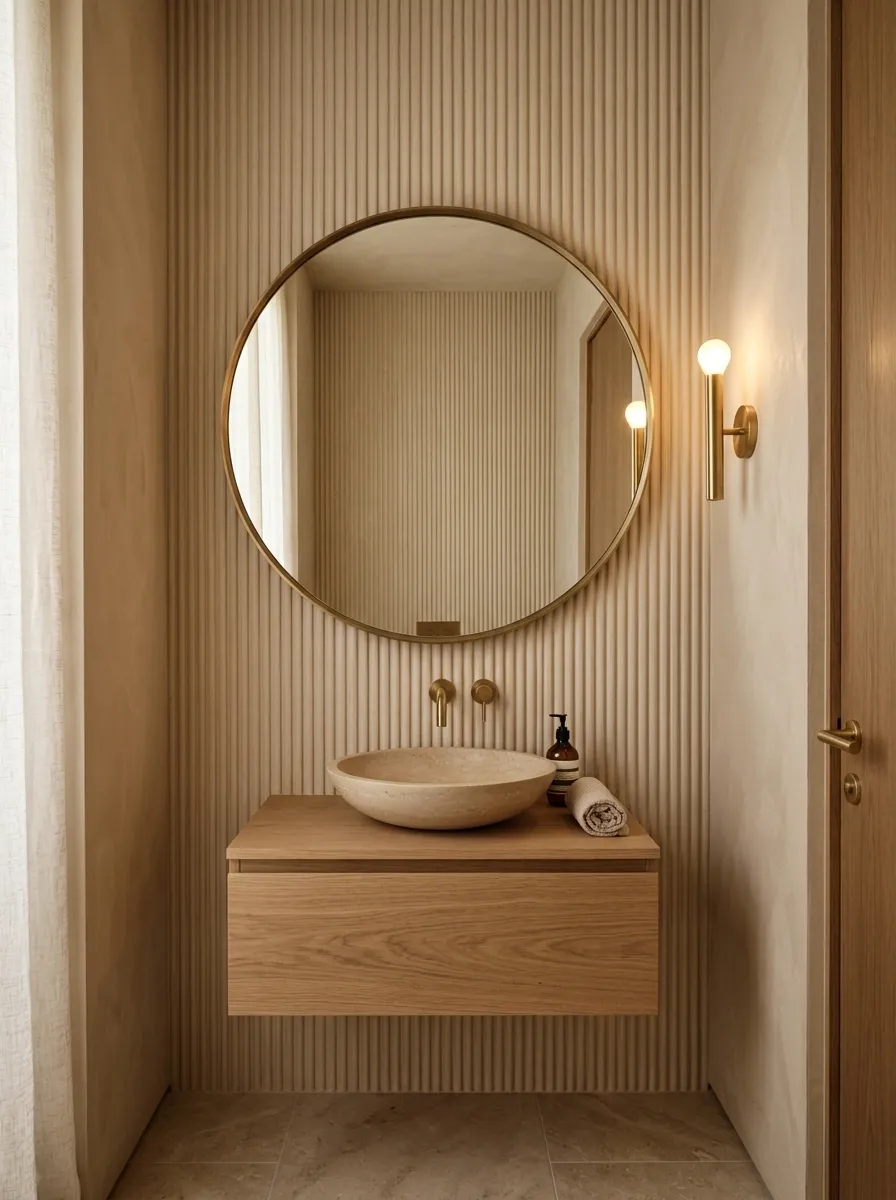
Small powder rooms can handle stronger styling because there isn’t much furniture competing with it. This one uses warm beige textured walls, a compact fluted vanity, a shallow stone basin, and a sculptural round mirror. Soft wall lighting sits close to the mirror, while the remaining surfaces stay quiet and warm.
The fluted vanity gives the tiny room a useful vertical rhythm, making the furniture feel more architectural than bulky. The mirror reaches high enough to exaggerate the room’s height, while the stone basin introduces a tactile focal point without consuming much counter space. Every inch has a job here. The square footage may be tiny, but the personality clearly refused to downsize.
MIRROR
VANITY
BASIN
Old-House Beige Bathroom With Clawfoot Tub and Painted Wood
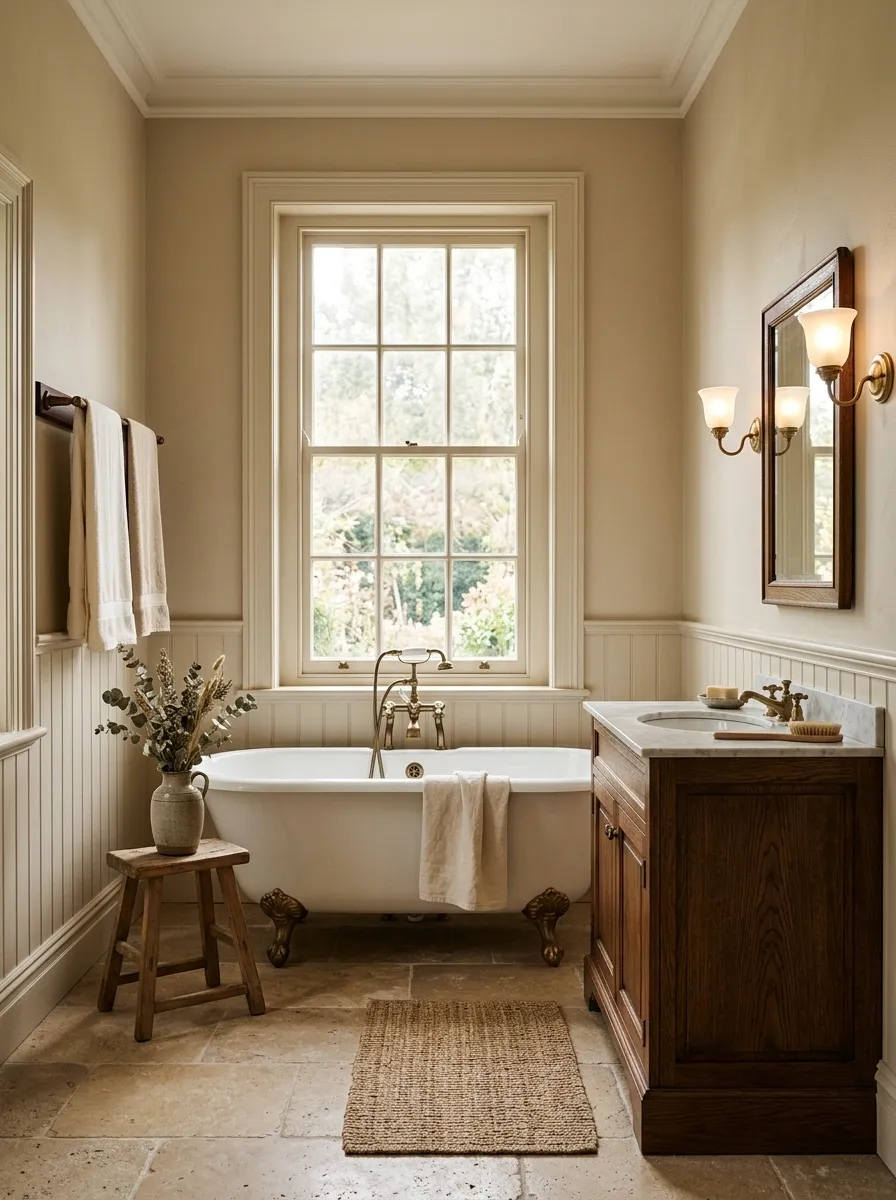
This bathroom feels as though the architecture had a previous life before the renovation. Soft beige walls meet painted wood paneling, warm stone flooring, and a classic clawfoot tub placed beneath a tall window. A simple wood vanity, traditional sconces, and aged metal fixtures reinforce the older-home character without filling the room with vintage objects.
The key is preserving the sense of age through materials and proportions rather than decoration. The tub should remain visually important, the cabinetry should feel substantial, and the wall treatment should have enough breathing room around it. Modern plumbing and glass can quietly do their jobs in the background. The room doesn’t need to prove its historical credentials every twelve inches.
Rustic Farmhouse Beige Bathroom With Limestone and Reclaimed Wood
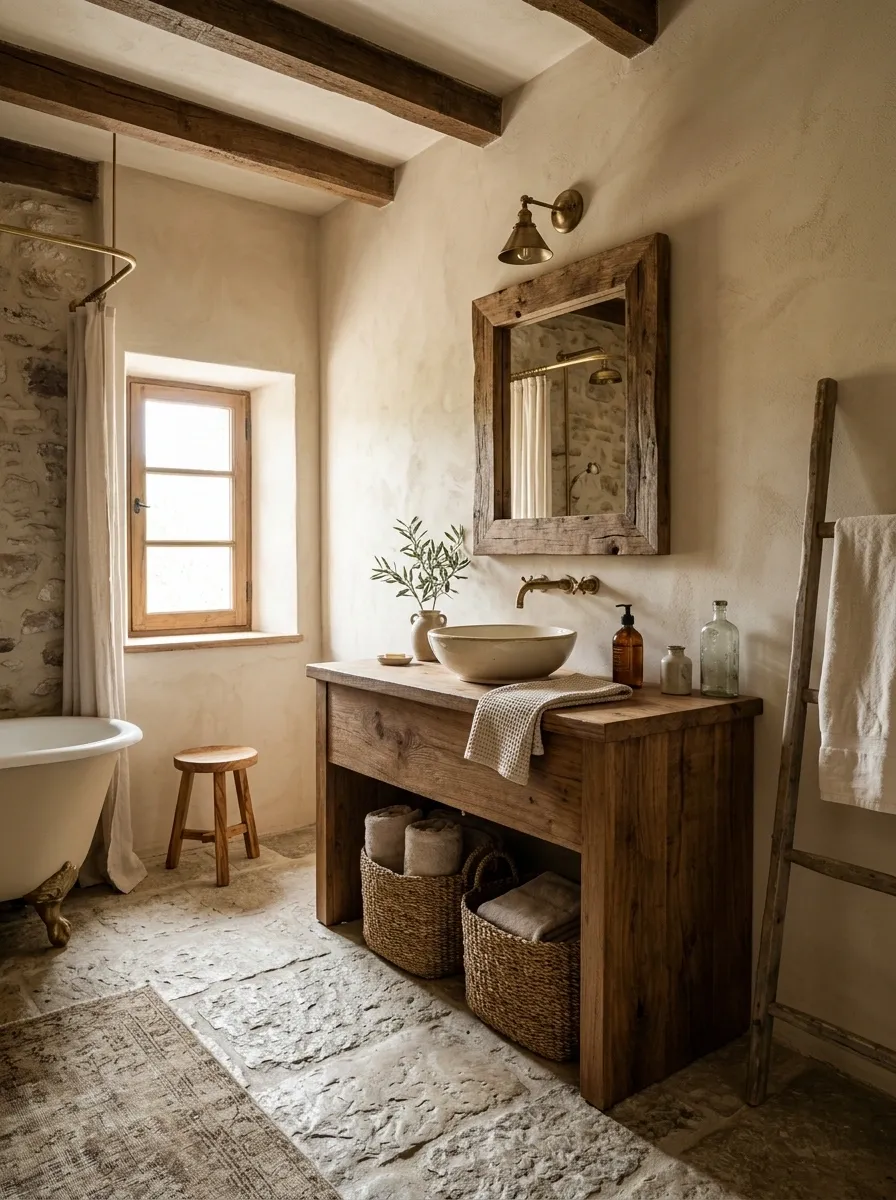
Warm beige plaster walls, rough limestone flooring, and a reclaimed-wood vanity give this bathroom its farmhouse foundation. Woven storage sits beneath the vanity, while aged metal hardware and simple fabric details soften the harder surfaces. A large mirror with a substantial wood frame keeps the room visually grounded and helps balance the heavier lower half.
The beauty of this composition comes from texture variation. Rough stone sits against painted or plastered walls, visible wood grain adds another layer, and woven pieces break up the hard materials. Keep the silhouettes simple so the textures remain easy to read. Rustic doesn’t need to mean cluttered. A bathroom can have character without every surface looking like it was rescued from a barn five minutes before installation.
Soft Beige Bathroom With Dusty Rose and Warm Stone
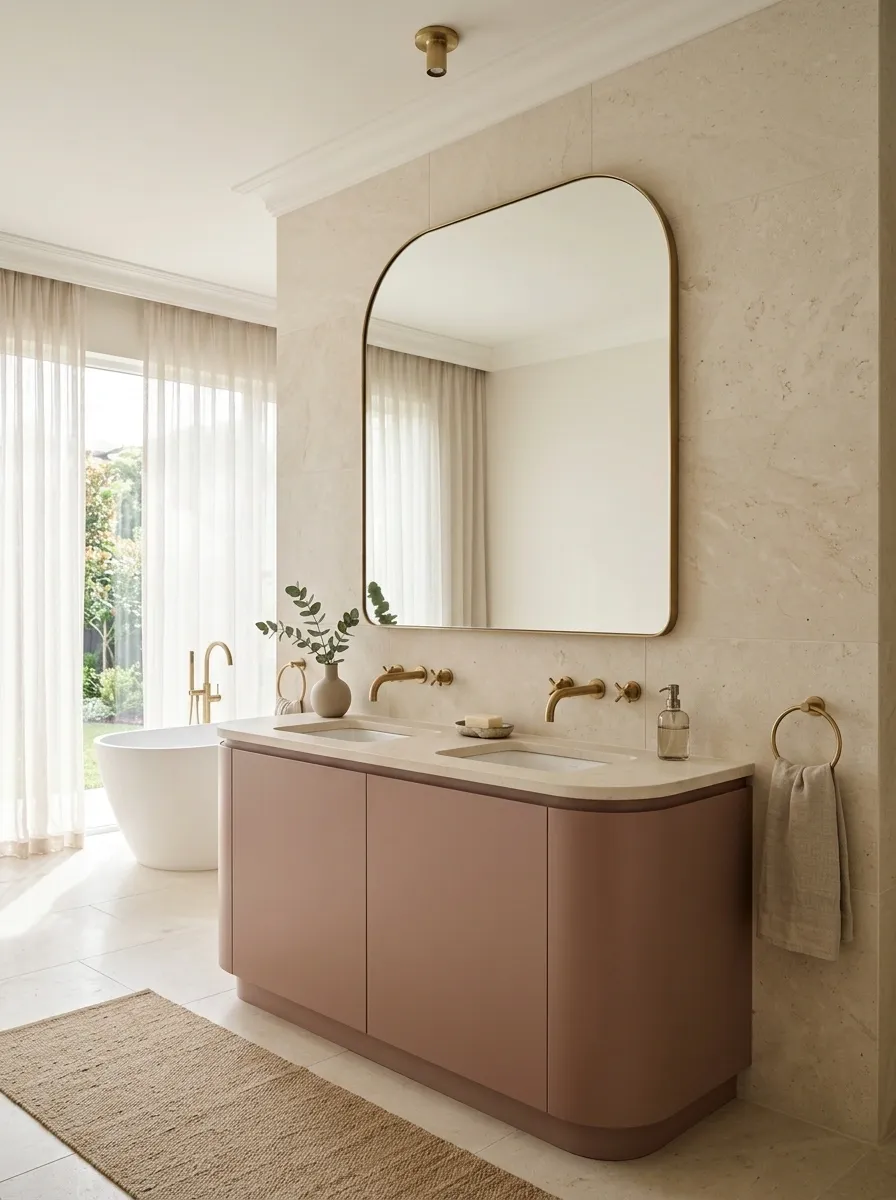
Dusty rose cabinetry introduces a quiet color shift into this otherwise warm beige bathroom. The walls and floor stay in creamy stone tones, while a softly rounded vanity adds the muted rose note. Pale stone counters, brushed brass fittings, and rounded mirrors continue the soft geometry throughout the room.
The color works because it is dusty rather than sugary. Beige stays dominant, rose remains concentrated, and the brass adds warmth without turning the whole room metallic. Rounded edges also keep the pink from feeling overly formal or decorative. One controlled color statement is enough. The bathroom does not need matching rose towels, rose candles, rose baskets, and a rose emotional-support toothbrush holder.
dominant field
ROSE
Desert Modern Beige Bathroom With Clay and Plaster
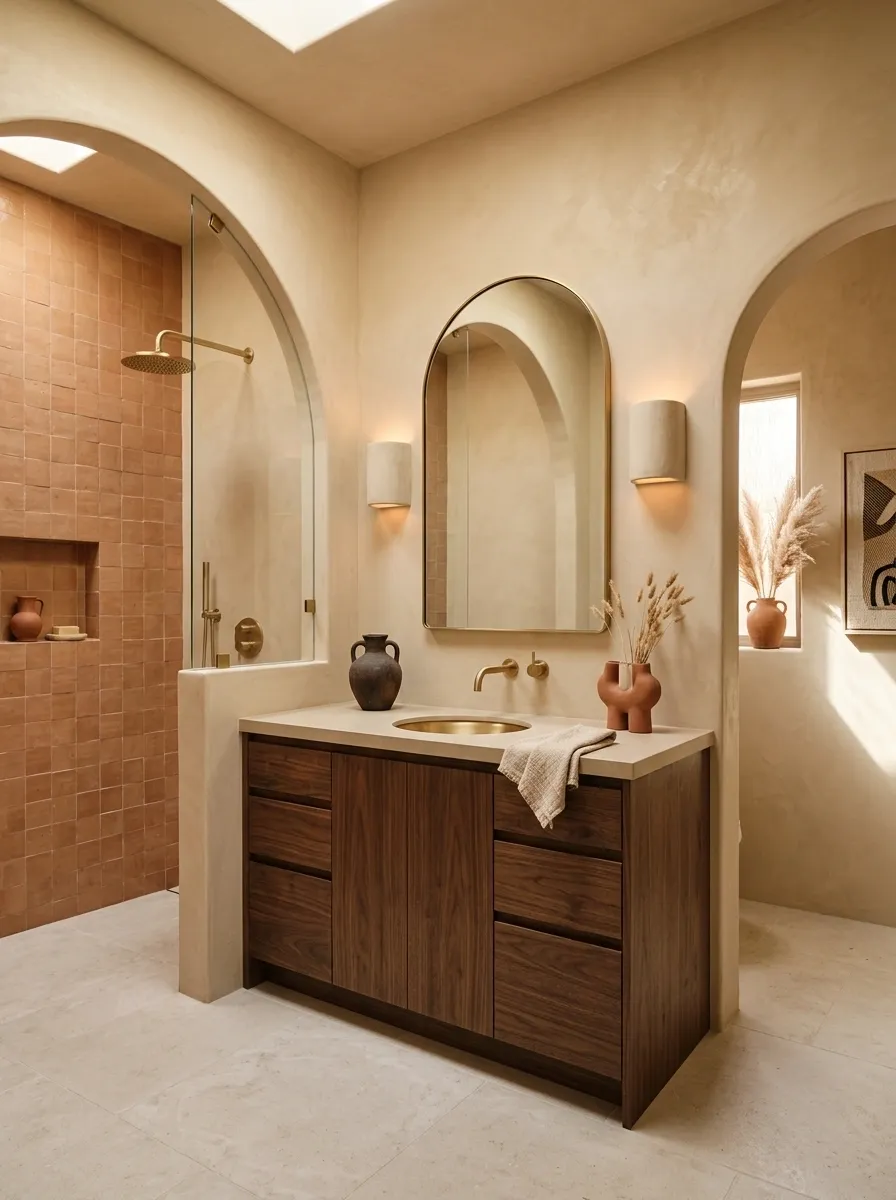
This bathroom takes beige into a warmer, sun-baked direction. Sand-colored plaster wraps the walls, pale limestone creates a softly textured floor, and clay-toned pottery introduces a deeper terracotta note. A dark wood vanity adds weight below the pale surfaces, while rounded architectural openings and softly sculpted lighting give the room a relaxed desert-modern character.
Natural light becomes part of the composition. The warm plaster should shift gently throughout the day rather than read as a completely uniform surface. Keep the decorative pieces sparse and substantial, with a few handmade-looking forms instead of a shelf packed with accessories. The whole room should feel tactile, not dusty. There is a difference.
High-Contrast Beige Bathroom With Charcoal Framing
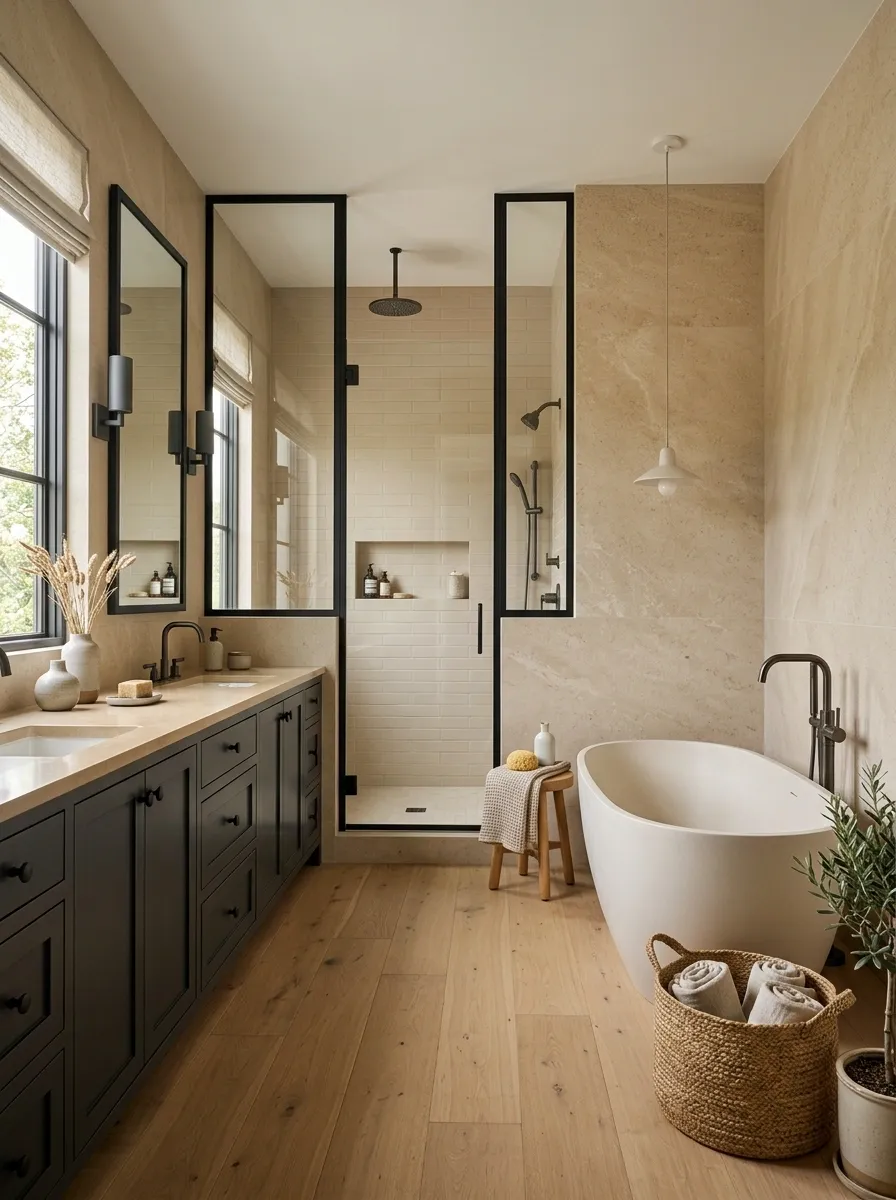
A warm beige bathroom gets a sharper architectural edge through charcoal framing around the shower and a dark vanity base. Large beige stone or porcelain surfaces keep the room visually warm, while a pale freestanding tub introduces a lighter sculptural shape. Dark hardware repeats the charcoal without spreading it across every surface.
This composition is especially strong when the room has enough natural or well-planned artificial light to keep the dark framing crisp. The charcoal should define edges, not consume the room. Think architectural punctuation, not a black-themed bathroom with beige standing awkwardly in the corner.
visual field CHARCOAL
architectural edge
Beige Bathroom Wet Room With Built-In Stone Bench
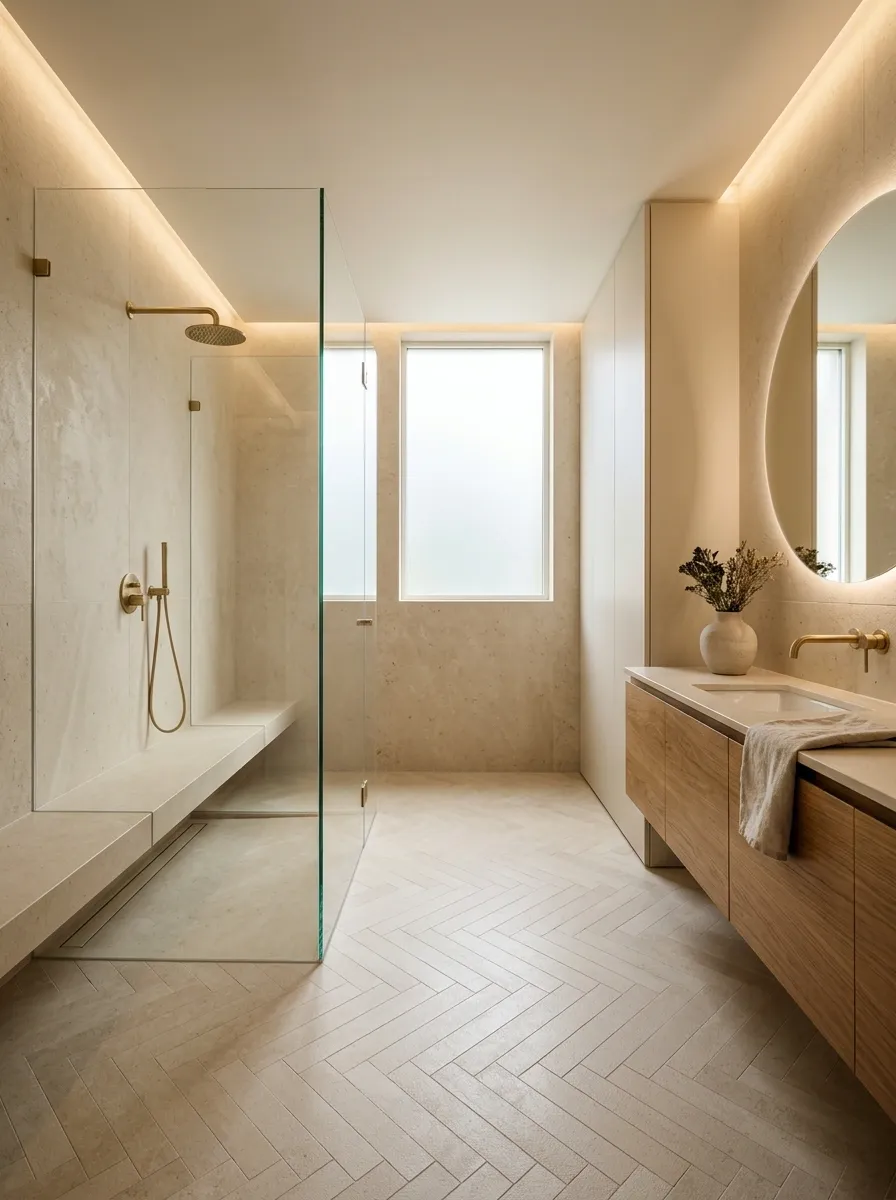
A wide walk-in wet room becomes the entire visual field here, with continuous beige stone surfaces flowing from the floor into the shower zone. A built-in stone bench runs along one wall, while concealed storage, wall-mounted fixtures, and a broad glass screen preserve the uncluttered architecture. The vanity sits just outside the wet area as a quieter block of warm wood.
This design feels substantial because the materials continue rather than stop at every change of function. The shower, bench, and floor read as one composition. A linear drain and sensible slope become part of the practical planning rather than afterthoughts hidden behind a collection of objects. The room gets to be luxurious without screaming about it.
Curved Beige Bathroom With Arched Vanity and Soft Plaster
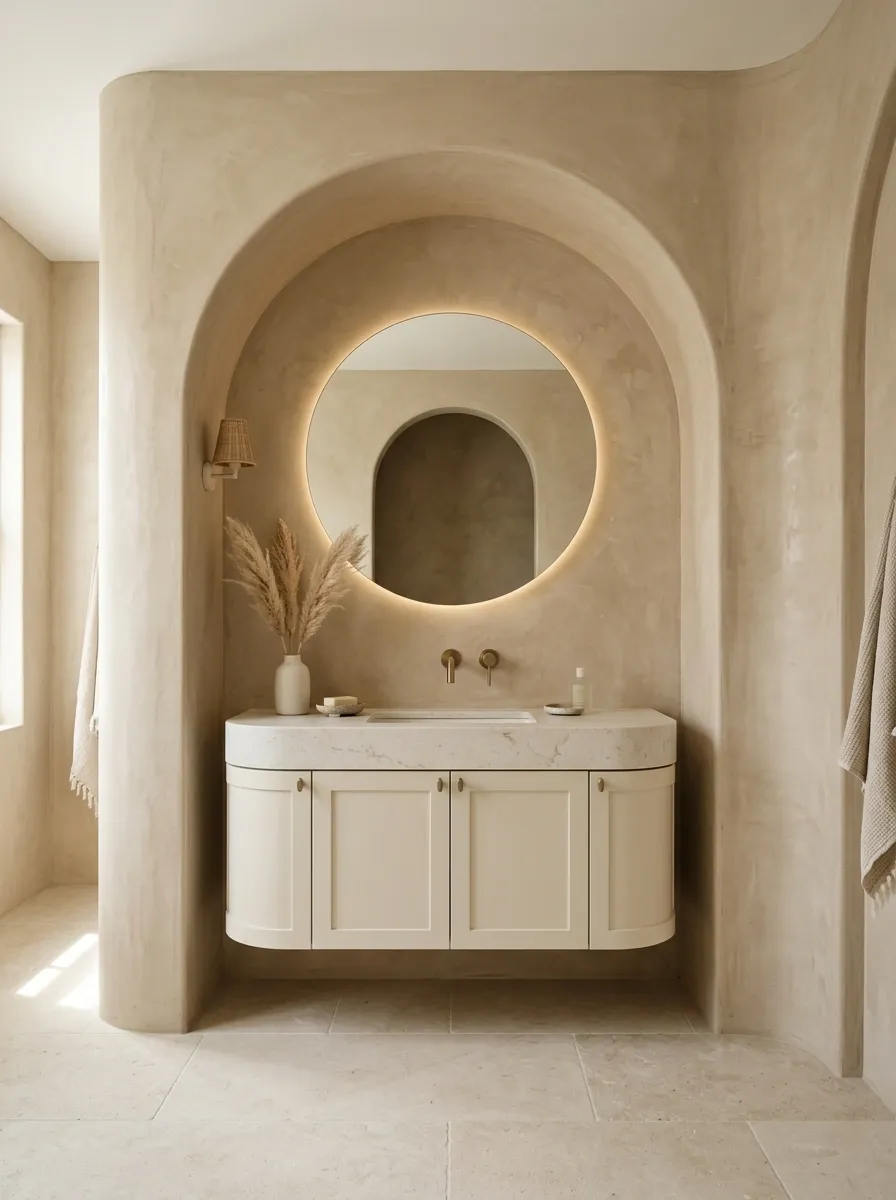
Architecture carries the personality in this bathroom. Soft beige plaster wraps curved walls and an arched vanity niche, while rounded cabinetry, a circular mirror, pale stone flooring, and warm metal fixtures repeat the same gentle geometry. There are very few decorative objects because the room already has enough shape doing the work.
The repeated curves create a strong visual language without relying on pattern. The arch at the vanity leads into the round mirror, while the curved cabinet fronts soften the lower half of the room. Keep the lighting simple and let the shadows reveal the plaster texture. When the architecture is this good, covering it with clutter would be an impressively unnecessary plot twist.
English Cottage Beige Bathroom With Zellige-Style Tile and Painted Vanity
Warm handmade-look beige tile gives the walls a softly irregular surface, while a muted painted vanity adds a quiet color shift beneath them. Natural stone flooring, classic framed mirrors, warm brass fittings, and traditional lighting complete the English cottage composition without turning the room into a collection of floral clichés.
The tile variation does most of the decorating. Its uneven edges and changing beige tones catch the light differently across the wall, which means the room still feels interesting even when the furniture stays simple. Keep the vanity color subdued and let the stone floor remain natural. Cottage style benefits from imperfections that look intentional, not from adding another twelve decorative objects because an empty shelf got nervous.
Boutique-Hotel Beige Bathroom With Ribbed Stone and Layered Lighting
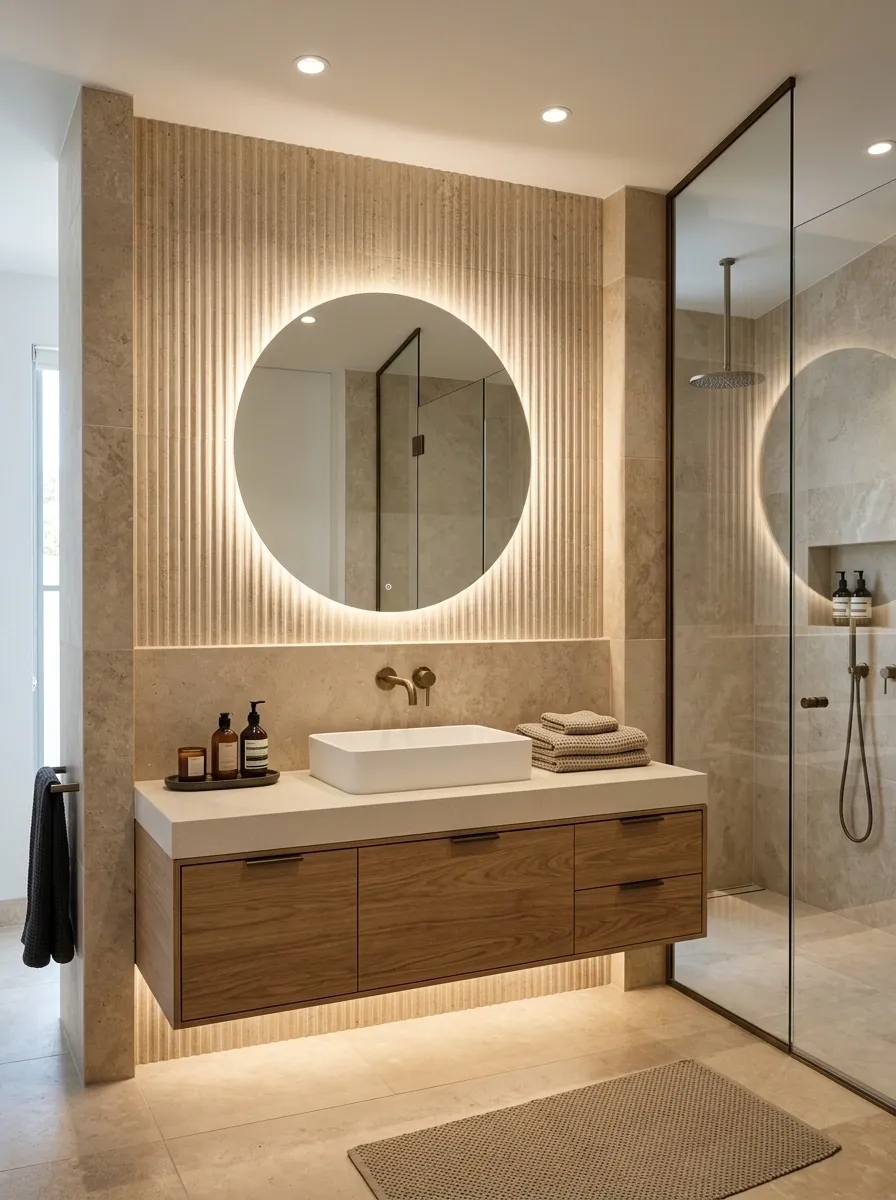
This bathroom borrows the composure of a boutique hotel while keeping the palette comfortably residential. Large beige stone surfaces meet ribbed wall detailing, a wide floating vanity, frameless glass, and integrated lighting. A few dark accents give the room enough contrast to stay architectural, while the overall silhouette remains clean.
Lighting is the quiet star. Soft illumination around the mirror prevents the vanity wall from disappearing into shadow, while concealed light sources emphasize the texture of the ribbed surfaces. The goal is glow, not nightclub. Keep decorative accessories minimal and let the stone, geometry, and lighting provide the visual drama.
Budget-Conscious Beige Bathroom With an Updated Existing Layout
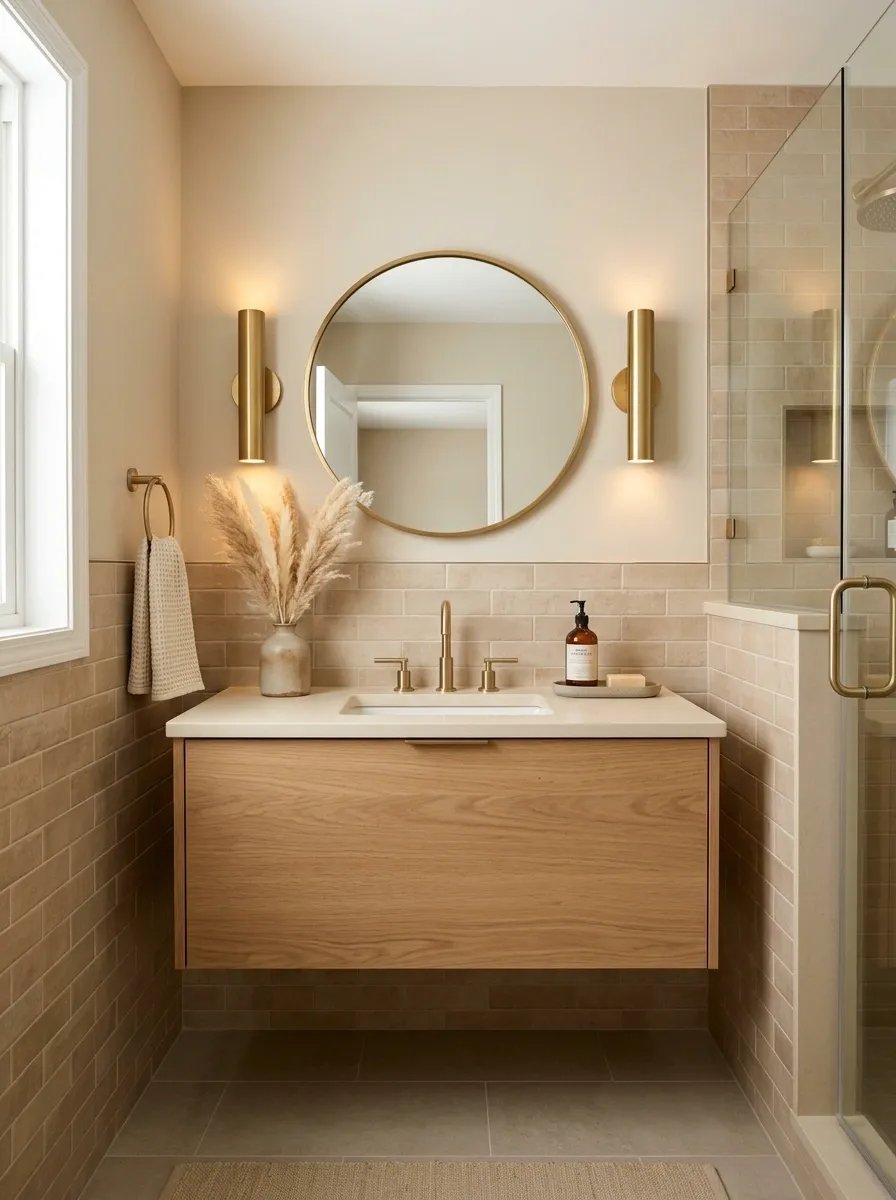
This composition proves that a bathroom can look dramatically different without moving every pipe in the building. The existing layout stays largely intact while warm beige wall tile, a simple wood-toned vanity, a refreshed mirror, coordinated fixtures, and soft wall color bring everything into the same visual family. The floor remains quiet enough to connect the updated pieces.
The smartest part of this design is restraint. A familiar layout means the visual transformation comes from finishes, furniture, lighting, and consistency rather than a giant structural overhaul. Keep the strongest money-making-for-the-eyes changes near the vanity and shower wall. A bathroom doesn’t need a completely new skeleton just because the mirror has seen better days.
Rental-Friendly Beige Bathroom With Removable Warm Layers
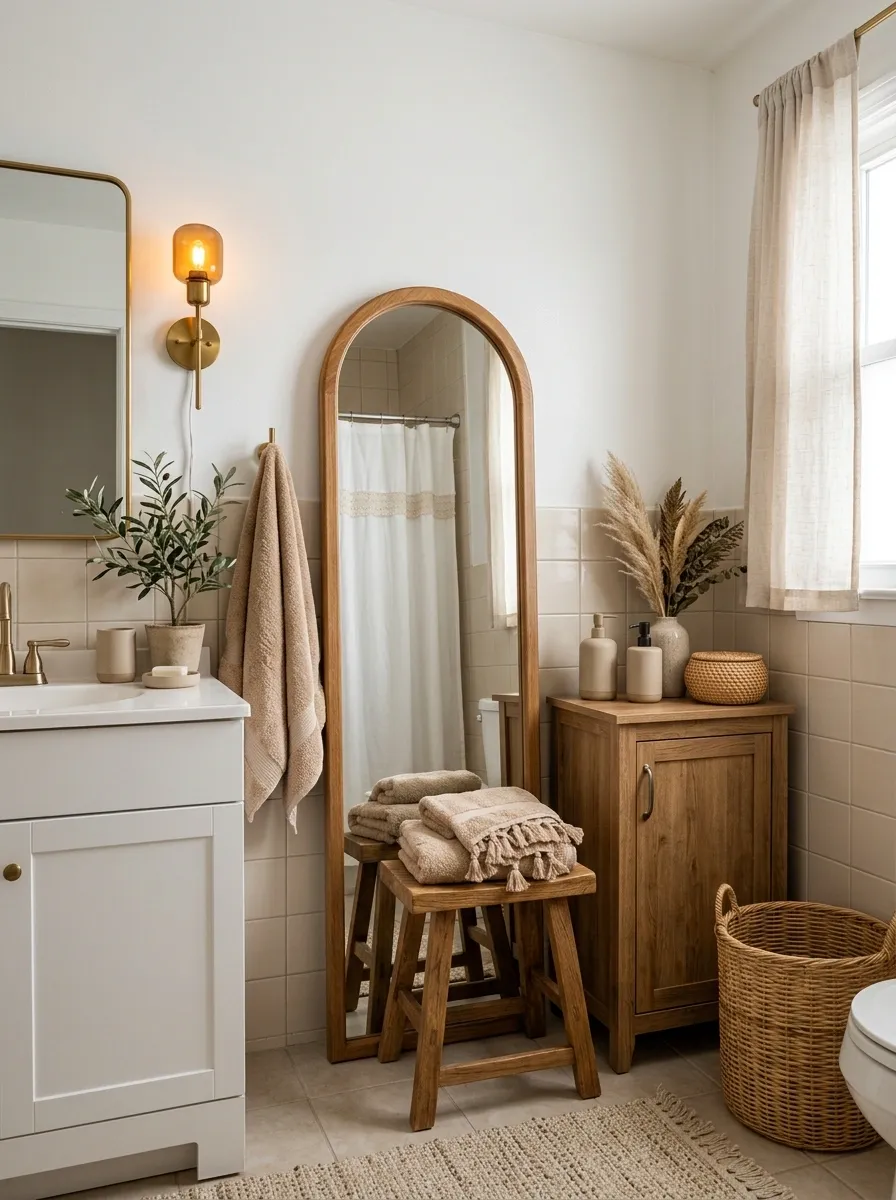
A bland rental bathroom can still develop a complete visual identity without rebuilding the walls. Warm beige textiles, oak-toned storage, a freestanding mirror, removable lighting, coordinated containers, and natural woven pieces create a softer composition around the existing finishes. The fixed bathroom remains simple while the movable pieces create a cohesive layer over it.
The strongest approach is to repeat warmth rather than color-match everything. A wood tone can appear in the storage, mirror, and small stool, while beige appears through towels and textiles. Nothing has to be permanently attached to make the room feel considered. The rental bathroom finally gets a personality without requiring a landlord meeting that somehow lasts longer than the renovation.
Southwestern Beige Bathroom With Terracotta and Dark Wood
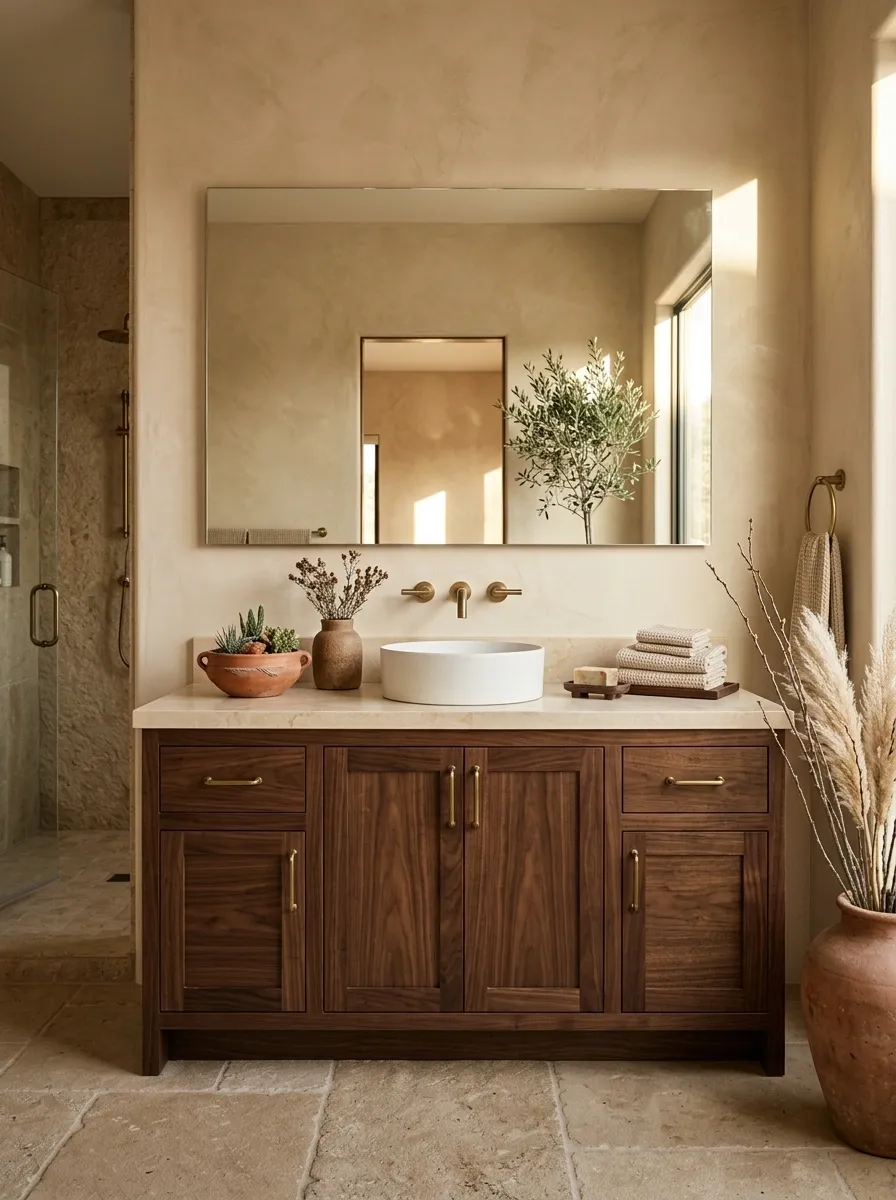
Warm beige plaster provides the backdrop for a stronger Southwestern palette built around terracotta, sandy stone, and dark walnut. The vanity has a substantial silhouette, while clay pottery, sculptural accessories, and aged metal fittings reinforce the earthy character. A large mirror keeps the upper wall visually open so the darker wood doesn’t weigh down the room.
The terracotta needs room to breathe. It should appear as a clear supporting tone rather than coating every object in the bathroom. Dark wood then acts as the anchor, giving the pale surfaces enough depth to feel architectural. Avoid adding too many rustic motifs. The goal is a sophisticated desert palette, not a souvenir shop having an identity crisis.
Timeless Beige Bathroom With Modern and Traditional Elements
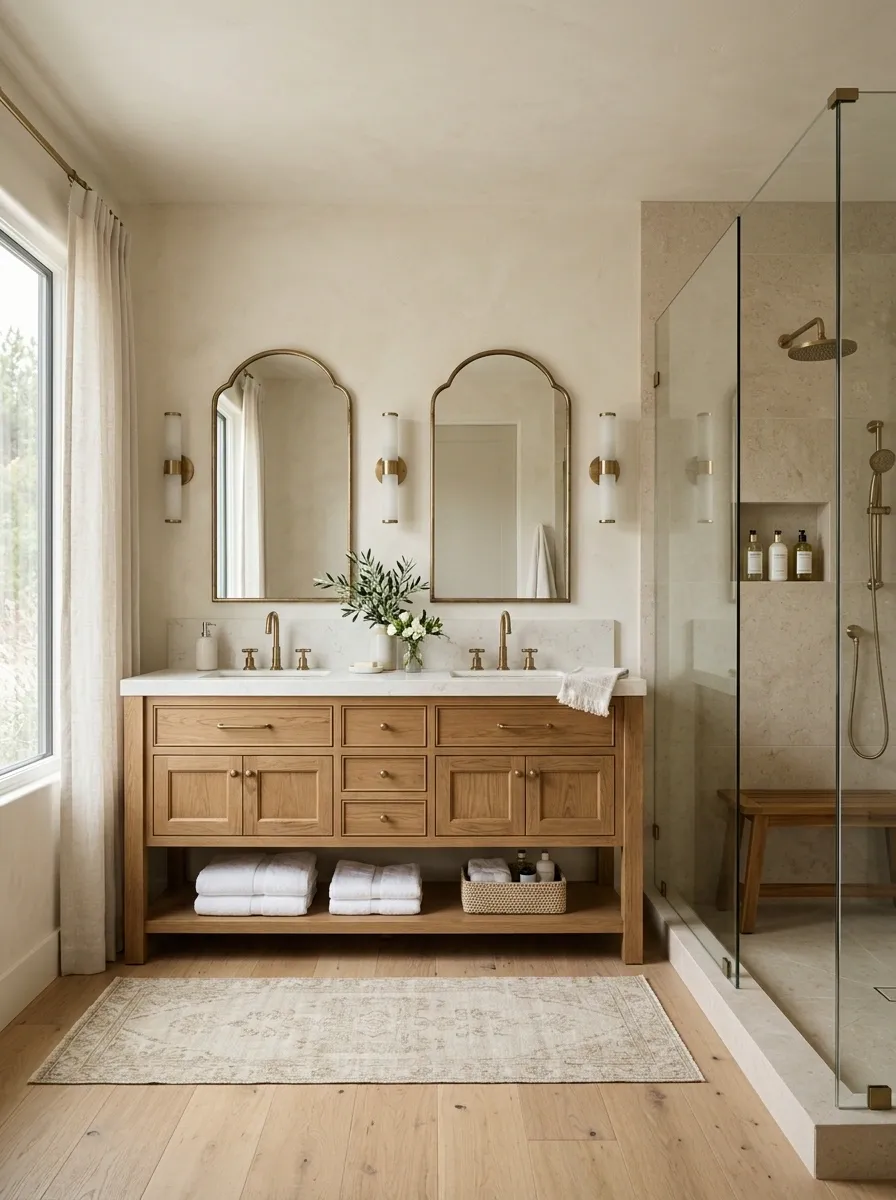
Creamy beige walls, lightly veined stone, a furniture-style vanity, classic framed mirrors, modern shower glass, restrained brass, and warm wood bring two design languages into the same room. The traditional details give the bathroom character, while the cleaner contemporary pieces keep it from feeling dated.
The connective tissue is the warm neutral palette. Nothing is forced to compete with a wildly different finish, so the contrast comes mostly from form. The vanity can have classic detailing while the shower remains clean and minimal. The mirror can feel traditional while the lighting stays simple. This is the kind of bathroom that doesn’t need to announce its style with a sign. The room already got the memo.
Framed mirrors
Warm brass
Simple stone surfaces
Clean lighting
Beige Bathroom With Natural Stone Walls and a Freestanding Wood Vanity
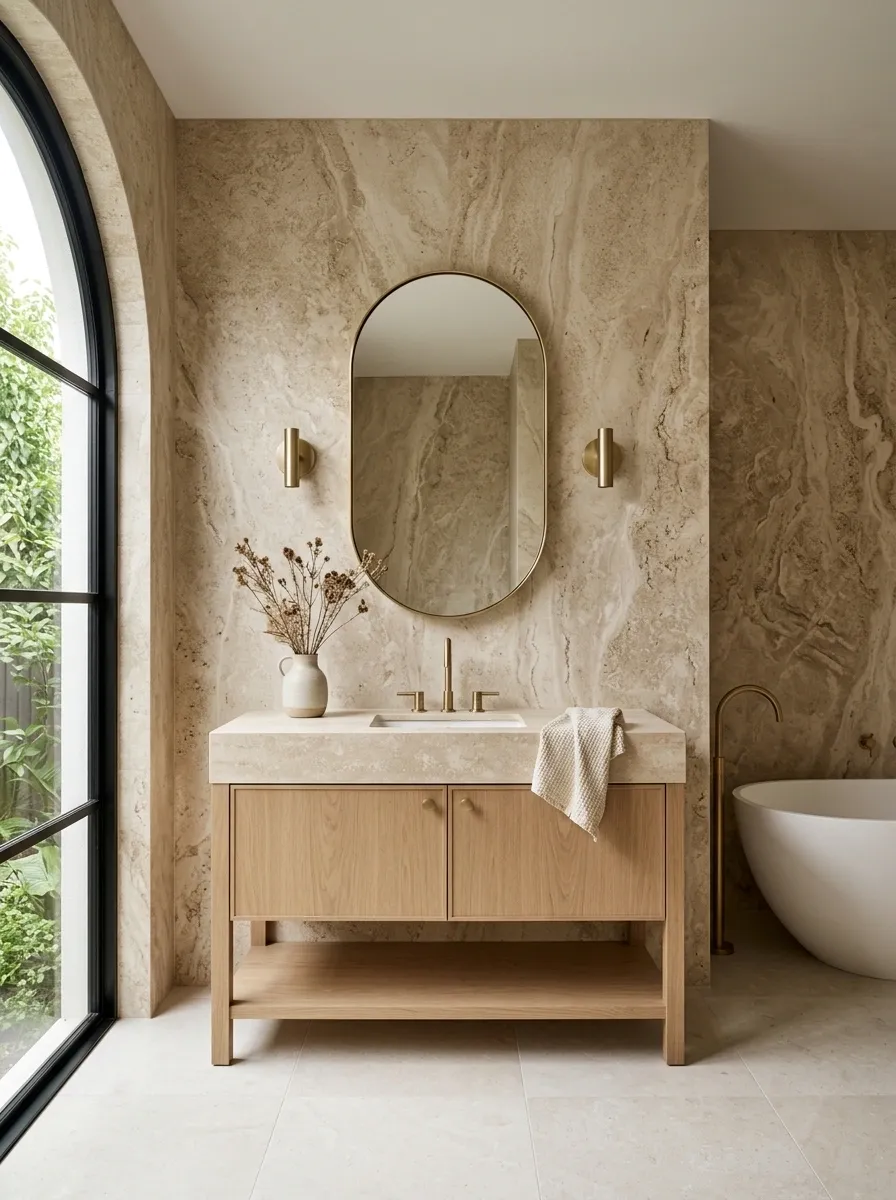
This room keeps the architecture deliberately quiet so natural stone can become the visual statement. Beige stone-clad walls rise around a freestanding timber vanity with a thick countertop, while a simple oval mirror, pale floor, and understated fixtures prevent the composition from becoming heavy. The stone has enough variation to make the walls interesting without relying on decorative pattern.
The vanity is positioned like a piece of furniture rather than a built-in block, which gives the bathroom a softer, more residential character. Keep the wood finish matte and natural so it works with the stone instead of competing with it. This room needs very little styling. The walls already did the expensive-looking work.
Wood vanity = secondary warmth
Mirror + fixtures = quiet punctuation
Creamy Beige Bathroom With Soft Black Windows and Natural Linen
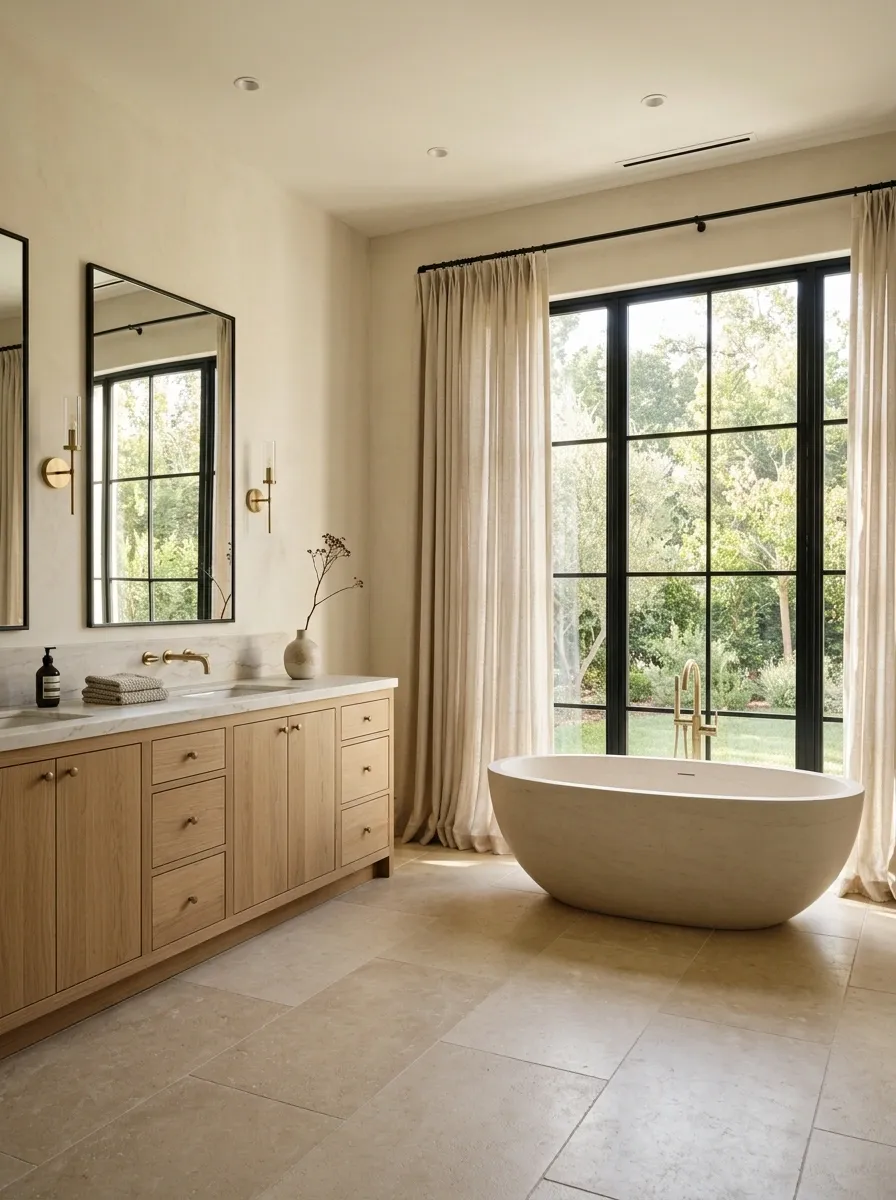
Large black-framed windows create a surprisingly elegant contrast against creamy beige walls, warm limestone flooring, and a simple oak vanity. Natural linen curtains soften the strong window geometry, while brushed metal fixtures and a pale stone tub keep the lower half of the room light.
The windows become architectural artwork without needing additional decoration. The warm beige stops the black frames from looking too severe, while linen adds movement against the hard glass and metal. The palette works especially well where daylight can reach deep into the room. Keep the accessories natural and restrained. There is no reason to cover a beautiful window with a shrine to bathroom décor.
Beige Bathroom With Sculptural Concrete Vanity and Cream Stone
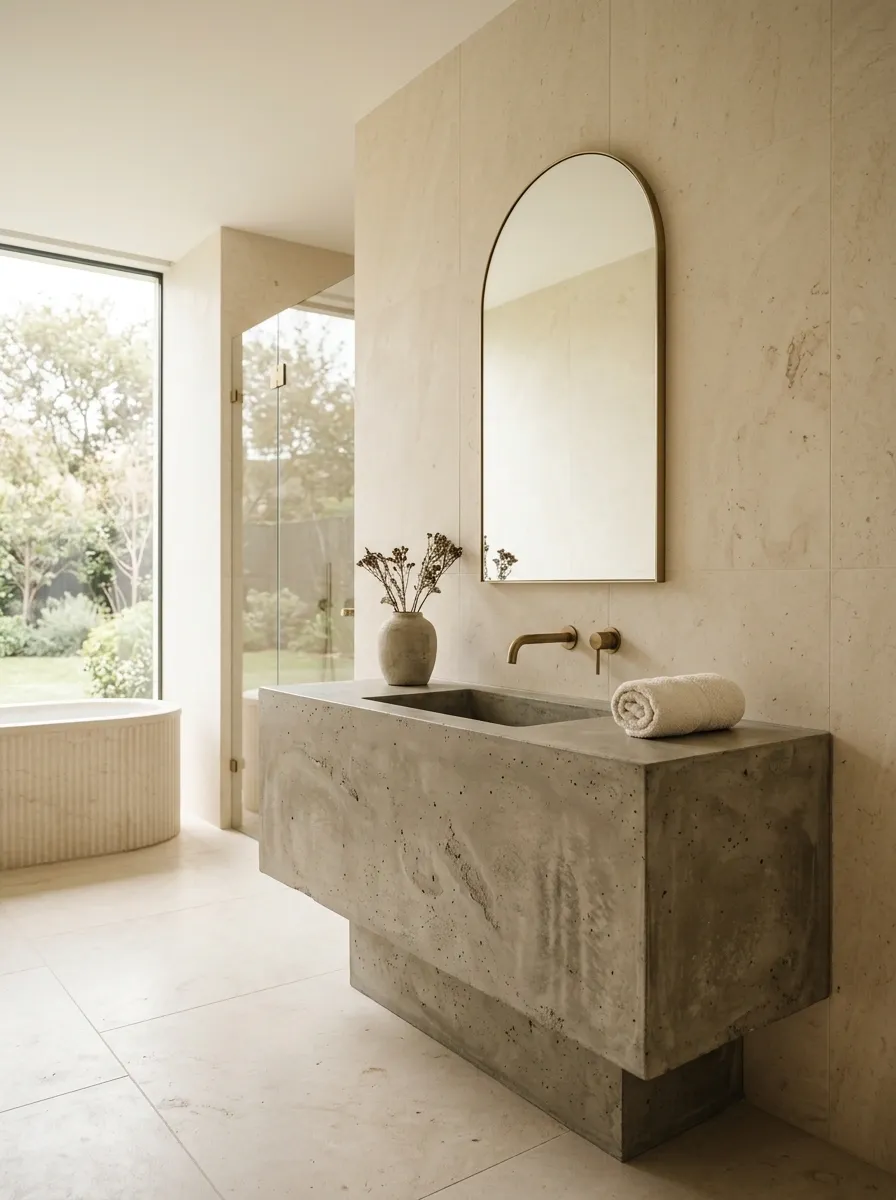
This bathroom uses a warmer interpretation of brutalist forms. Cream stone walls and flooring create the base, while a sculptural concrete vanity introduces a slightly cooler gray-beige contrast. The sink is integrated into the vanity, the mirror has a simple geometric shape, and the fixtures stay minimal so the strong furniture form remains dominant.
The tension between warm stone and concrete keeps the room interesting without requiring pattern. The concrete should have visible tonal variation rather than a perfectly uniform finish, and the surrounding architecture should remain quiet. The vanity is the statement. Everything else should politely stop talking over it.
Warm Beige Bathroom With Herringbone Walls and Walnut Vanity
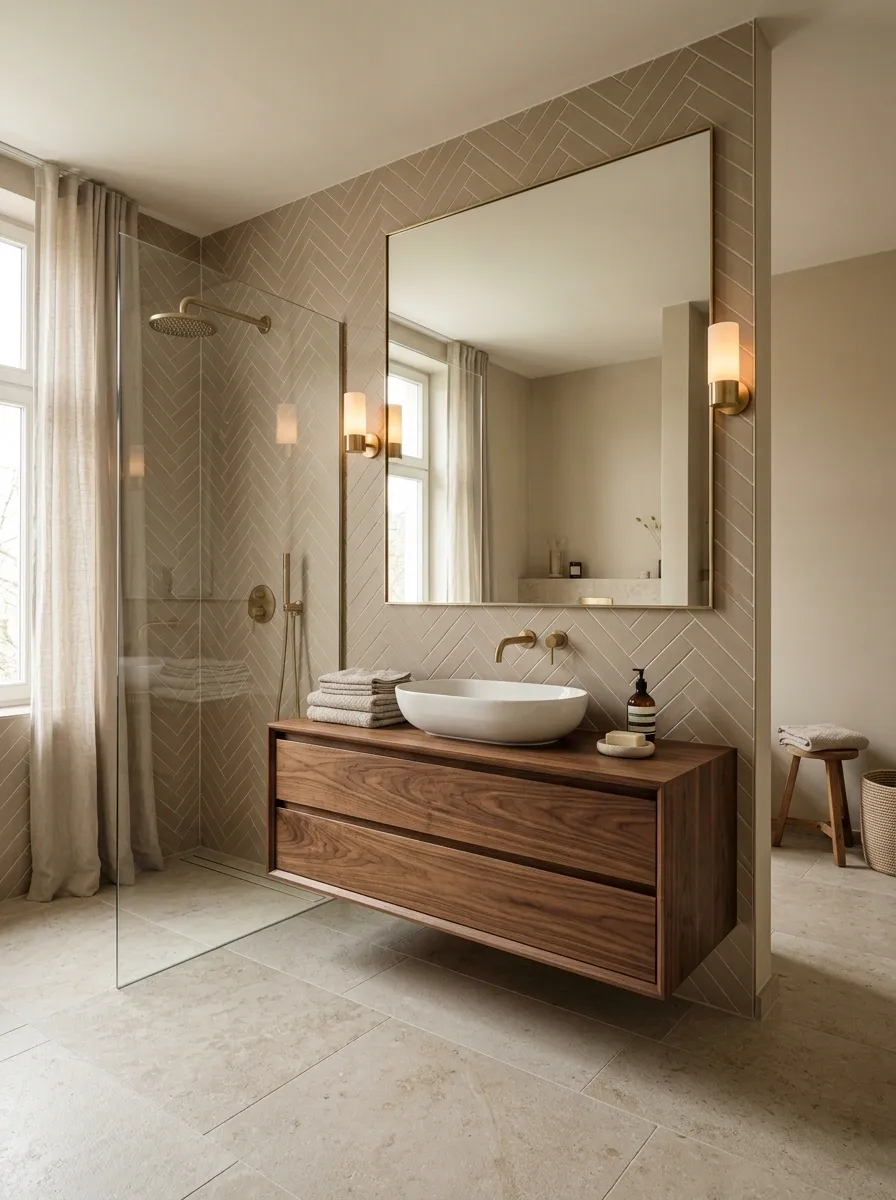
A classic herringbone wall installation adds directional movement to an otherwise warm beige bathroom. The floor stays relatively quiet, while a rich walnut vanity anchors the lower half of the room. Brushed brass fixtures, a broad mirror, and soft lighting complete the composition without introducing another major pattern.
The herringbone wall creates interest without needing a feature wall in a completely different color. Its directional lines also help guide the eye upward and around the room. Walnut adds enough depth to keep the beige from feeling pale. Let the pattern occupy one major surface. Putting herringbone on the floor too would turn the bathroom into a geometry exam nobody asked for.
direction + movement WALNUT
weight + warmth
Airy Beige Bathroom With Arched Window and Pale Oak
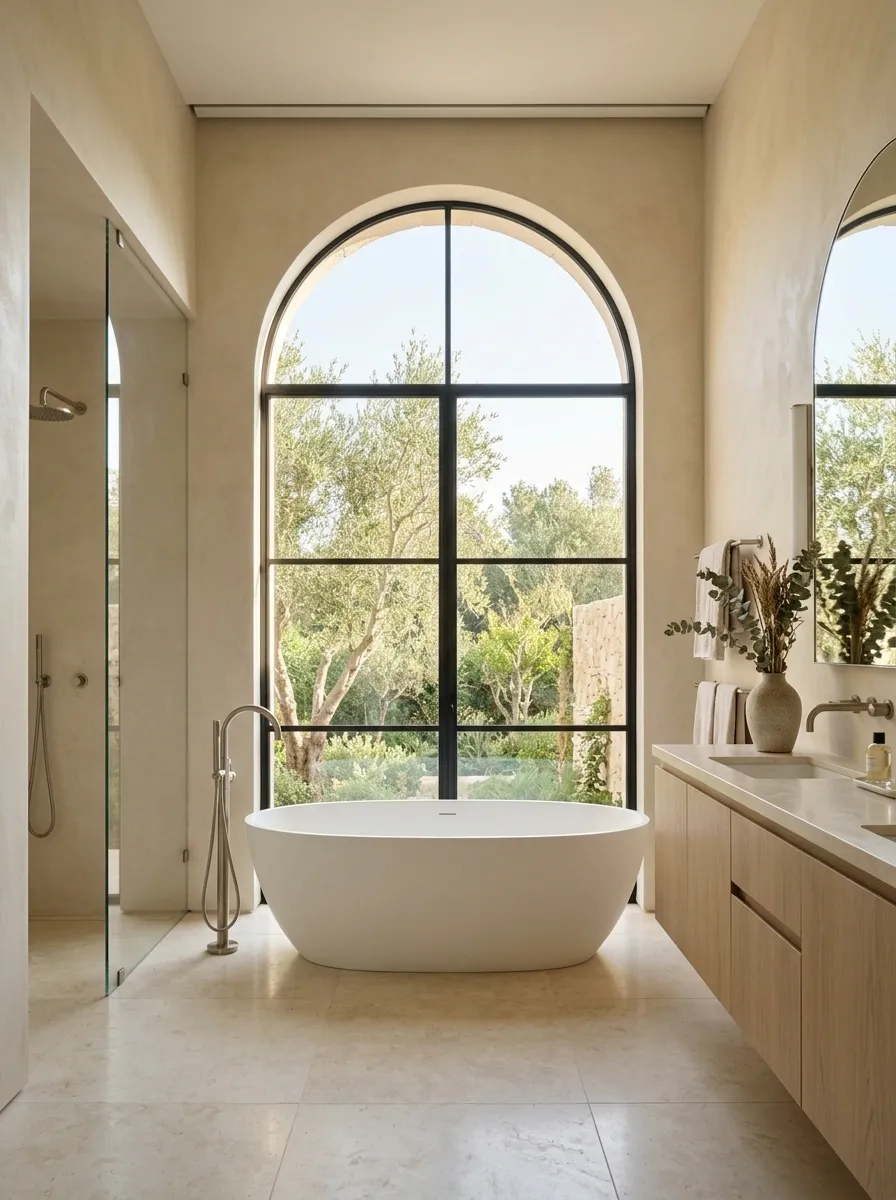
Natural light and pale materials define this softer composition. Warm beige plaster covers the walls, while a tall arched window becomes the architectural focal point. Pale oak cabinetry, creamy stone flooring, a simple oval tub, and brushed nickel fixtures give the room a fresh, understated character.
The arched window supplies enough shape that the rest of the bathroom can stay deliberately simple. Pale oak keeps the lower half warm without competing with the window, and the creamy stone ties the whole room together. This works best when the sightlines remain clean. Don’t clutter the window ledge with a jungle of bottles just because an empty ledge looked suspiciously available.
Beige Bathroom With Fluted Oak Vanity and Soft Stone Counter
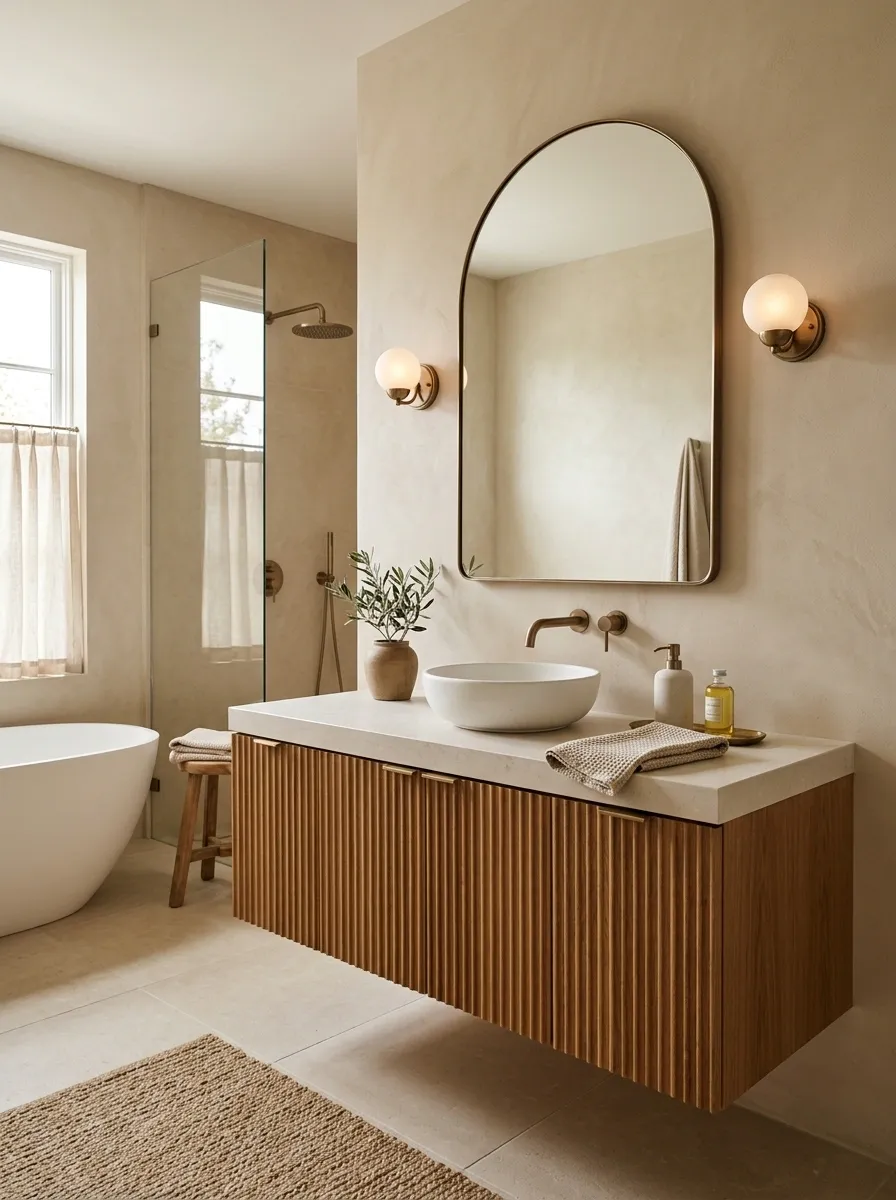
A fluted oak vanity creates the main vertical rhythm in this warm contemporary bathroom. Beige stone flooring and walls keep the palette soft, while a pale stone countertop lightens the substantial wood furniture. Rounded mirrors, compact sconces, and brushed bronze fittings add smaller curves and warm metallic detail.
The vanity works because its fluting is concentrated in one large plane. That texture feels architectural rather than decorative. Keep the adjacent walls smooth enough for the wood detail to remain legible, and use a simple basin shape above it. There is no need to repeat fluting on every cabinet, wall, shelf, and toothbrush holder. The vanity has already made its point.
Beige Bathroom With Cream Marble, Antique Mirror, and Dark Wood
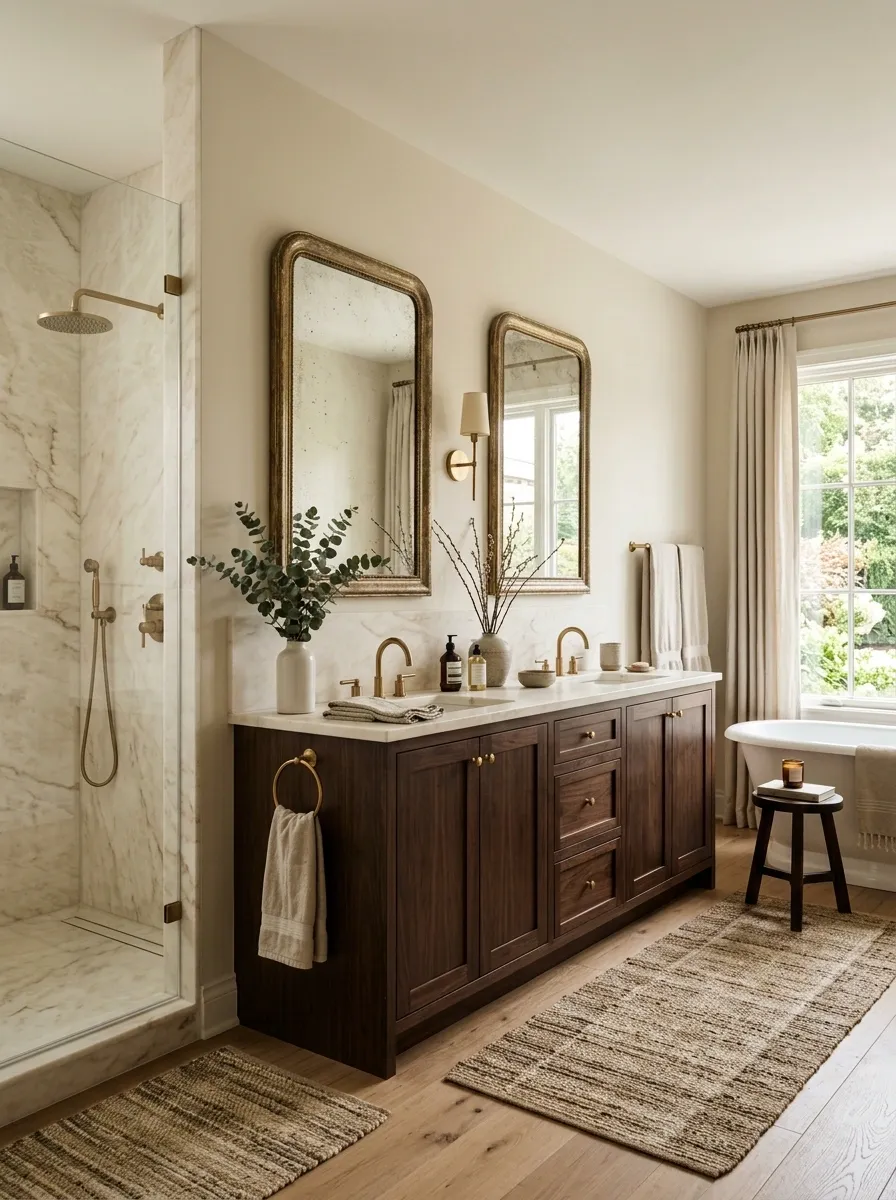
A softly veined cream marble wraps the shower and vanity zones, while dark wood cabinetry creates a deep visual anchor below the pale surfaces. An antique-effect mirror adds subtle aged character, and warm brass fixtures connect the gold tones in the mirror to the stone’s warmer notes.
The composition feels richer than a standard light neutral bathroom because the dark wood provides a substantial counterweight to all the pale surfaces. The antique mirror adds atmosphere without competing with the marble. Keep the lighting warm and directional enough to reveal the stone. The room should feel collected, not polished within an inch of its life.
Minimal Beige Bathroom With Full-Height Slab Surfaces
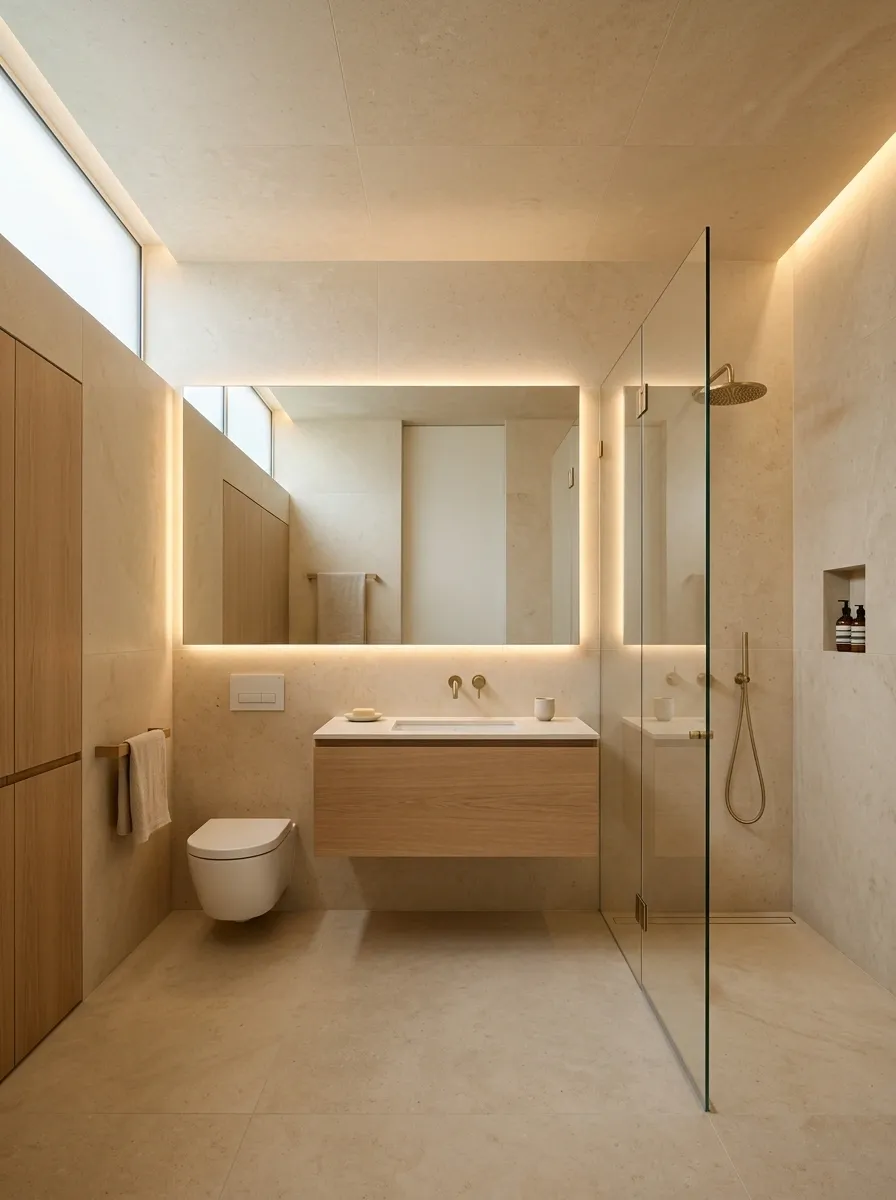
This is beige stripped back almost to the bones. Large-format slab surfaces run from floor to ceiling, a thin floating vanity appears beneath a broad mirror, and the shower is enclosed with nearly invisible glass. The palette stays tightly controlled, with only subtle tonal shifts between the wall, floor, vanity, and stone.
The room depends on proportion more than decoration. A thick countertop or oversized hardware would disturb the clean geometry, while too many seams would break the slab-like visual effect. Hidden storage matters here because open shelves quickly turn minimalism into accidental countertop storage. The fewer competing lines the room has, the more expensive the simplicity tends to look.
Beige Bathroom With Vintage Floral Tile and Modern Oak
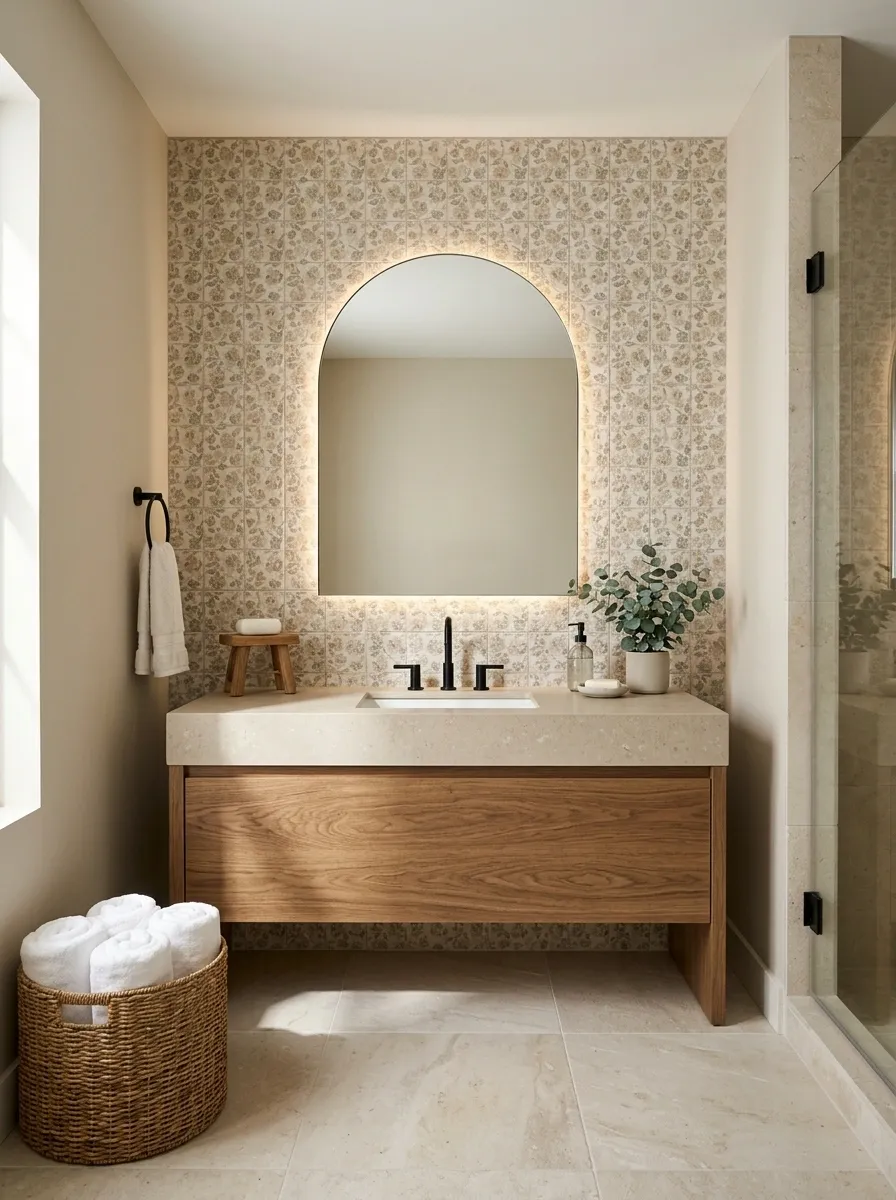
A restrained vintage pattern adds character to this otherwise contemporary beige bathroom. Small floral-inspired neutral tiles wrap one major wall, while a clean oak vanity, simple stone floor, modern mirror, and understated fixtures keep the room firmly in the present. The pattern is warm rather than colorful, so it still belongs within the beige family.
The modern furniture is essential because it stops the tile from taking the entire room backward in time. Let the patterned wall be the decorative focal point and keep the remaining surfaces calm. Vintage works best when the era is referenced rather than recreated. The bathroom doesn’t need to cosplay as a 1940s catalogue.
Warm Beige Bathroom With Ribbed Glass, Oak, and Soft Bronze
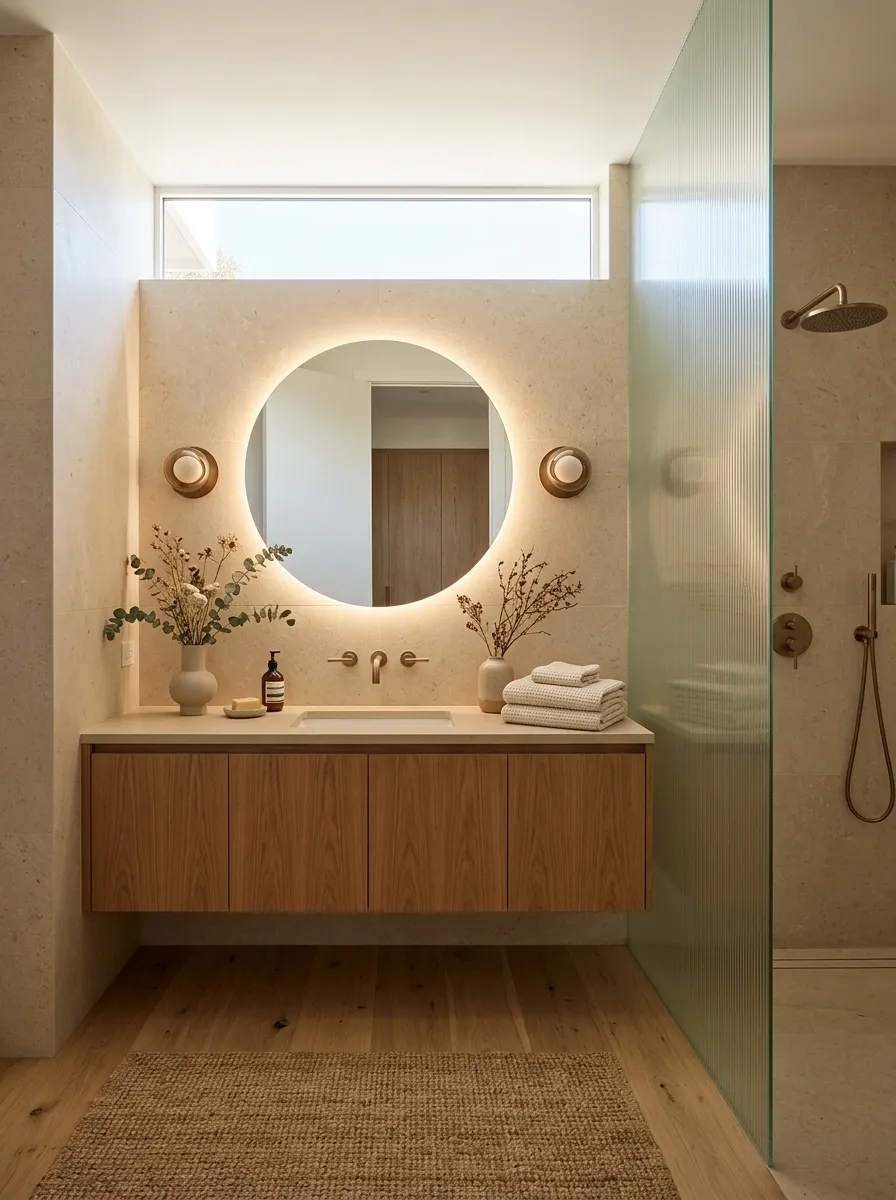
This bathroom uses translucent ribbed glass as one of its major design materials. A warm oak vanity sits opposite a walk-in shower enclosed with textured glass, while beige stone surfaces hold everything together. Soft bronze fixtures and rounded lighting add small points of warmth without competing with the glass.
The ribbed panel does two useful things visually. It creates texture while also softening the view through the shower enclosure, which keeps the room from reading as one giant open box. The rest of the surfaces remain relatively calm so the vertical glass texture stays noticeable. There’s a lot going on already. No need for the walls to start freelancing.
texture + softened views OAK + STONE
warm surrounding surfaces
Beige Bathroom With Built-In Niche Wall and Soft Ambient Light
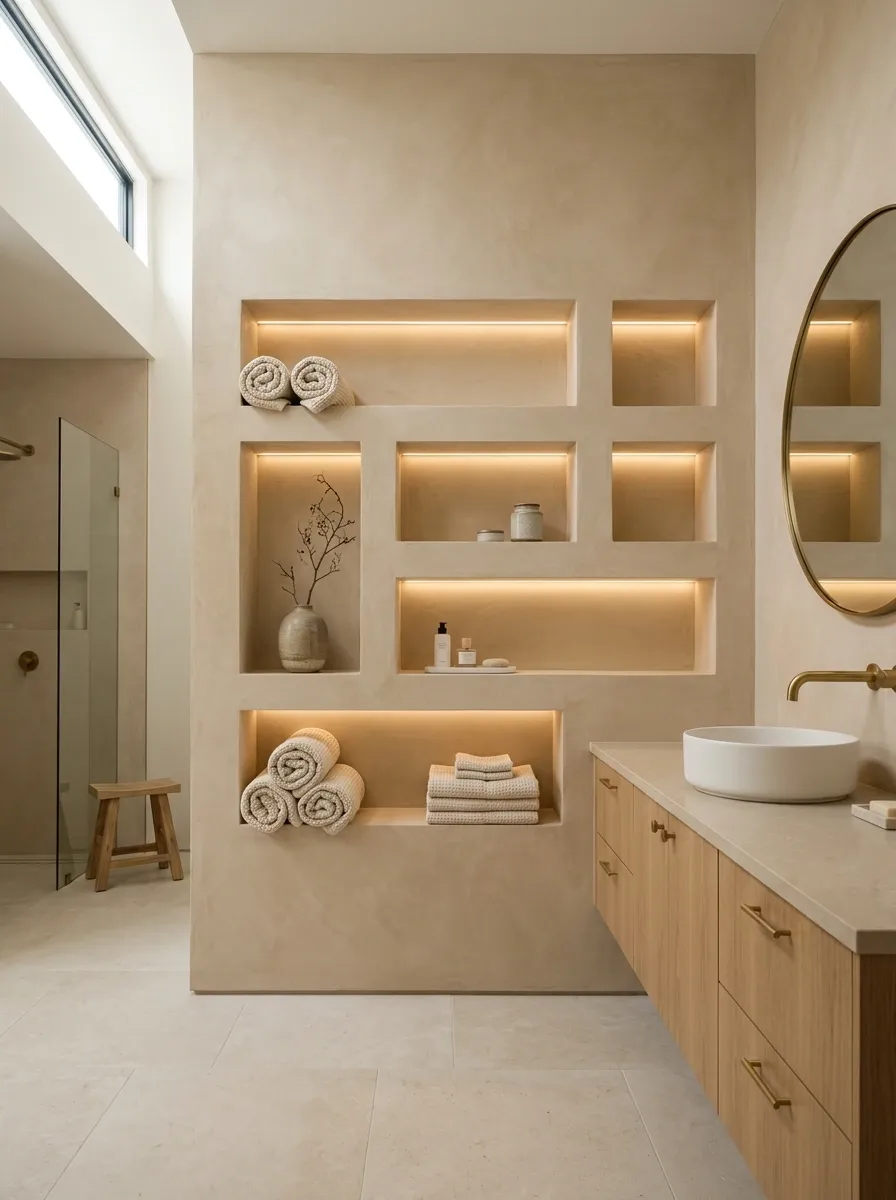
The architecture becomes the feature in this bathroom, where a full wall of recessed niches provides both storage and visual rhythm. Warm beige plaster or stone surrounds the niches, while a simple floating vanity and pale floor keep the lower half of the room open. Subtle lighting inside selected niches adds depth after dark without turning them into glowing display cases.
The strongest detail is the controlled repetition. Not every niche needs to be filled, lit, or decorated. Leaving some empty creates negative space and keeps the wall from looking like a bathroom bookshelf. Use the niches for the things that actually belong there, then let the rest of the wall breathe.
Beige Bathroom With Limestone Floor, Cream Walls, and Copper Accents
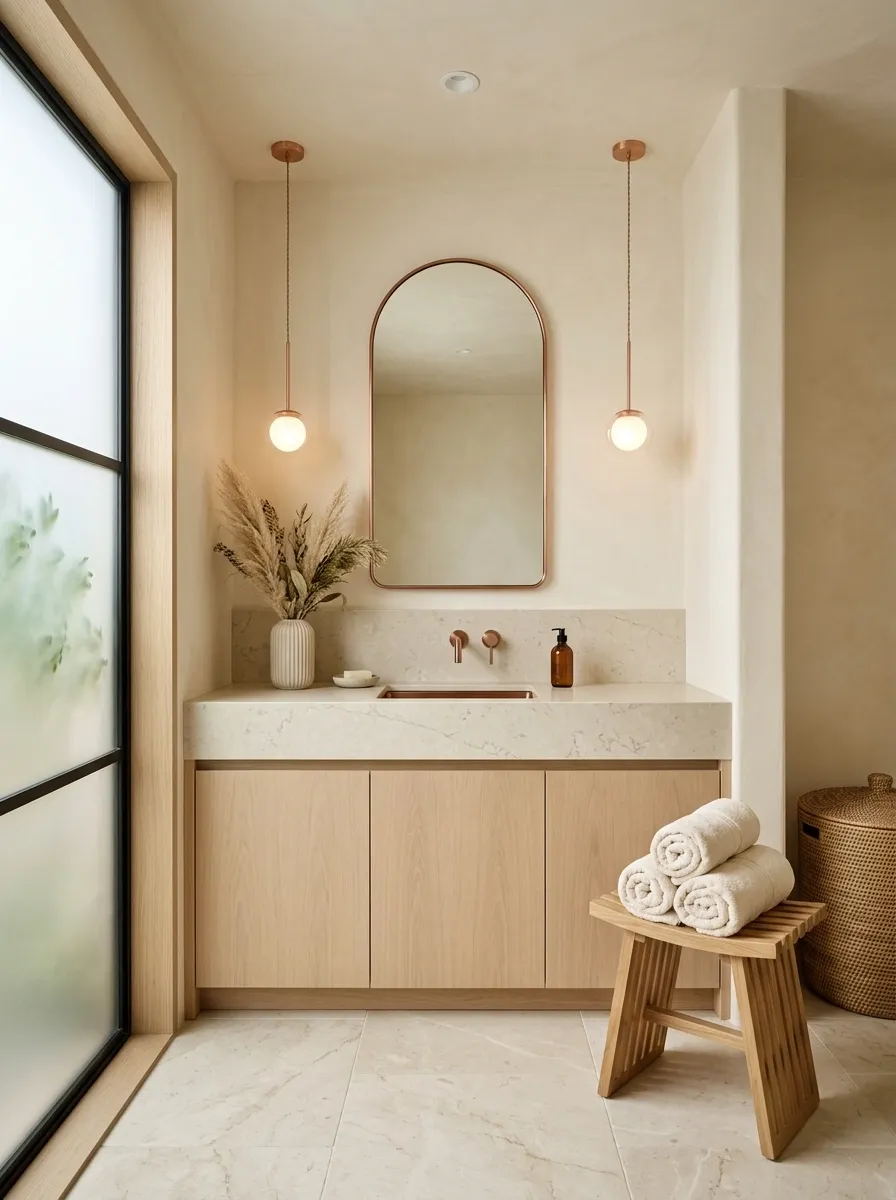
A slightly rosier interpretation of beige gives this bathroom an intimate warmth. Cream walls meet limestone flooring, while small copper accents appear through the mirror frame, pendant details, and selected hardware. The vanity uses pale oak to keep the lower half of the room natural and understated.
Copper is allowed to remain a supporting note rather than becoming the theme. Against the beige and limestone, its warmth reads as a gentle metallic variation. The room feels especially cohesive when the copper is repeated in only a few deliberate spots. Too much copper and the bathroom starts looking like a cookware showroom with plumbing.
Beige Bathroom With Freestanding Tub and Wide Picture Window
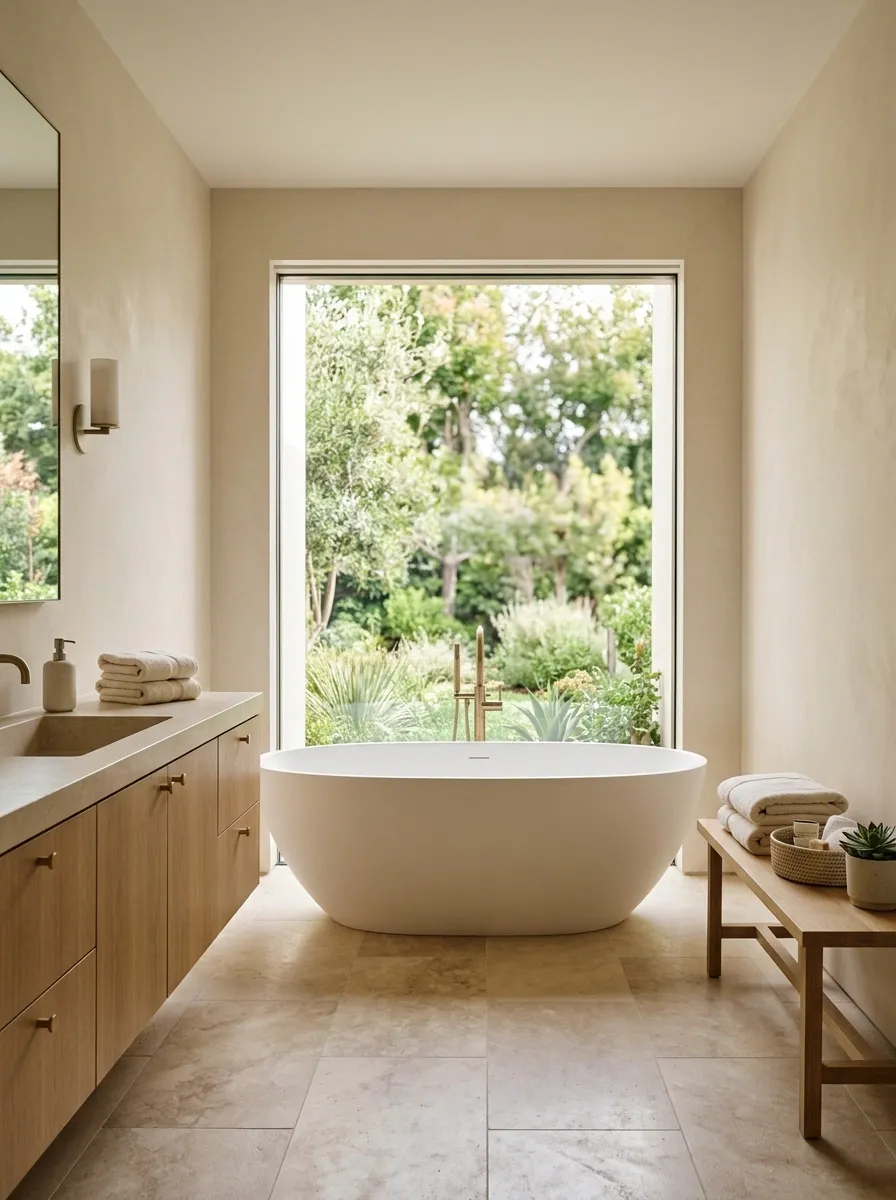
A broad picture window gives this bathroom its sense of openness, while soft beige plaster, warm limestone flooring, and a freestanding tub create a quiet center. A long oak vanity sits along the opposite wall, keeping the room balanced without blocking the window. Simple metal fixtures and restrained textiles complete the setting.
The bathtub should have enough visual space around it to remain sculptural. Crowding it with a stool, plant, basket, tray, and five other “finishing touches” would destroy the simplicity. The window is already providing the drama. The rest of the room simply needs to frame it.
Contemporary Beige Bathroom With Warm Greige Cabinetry
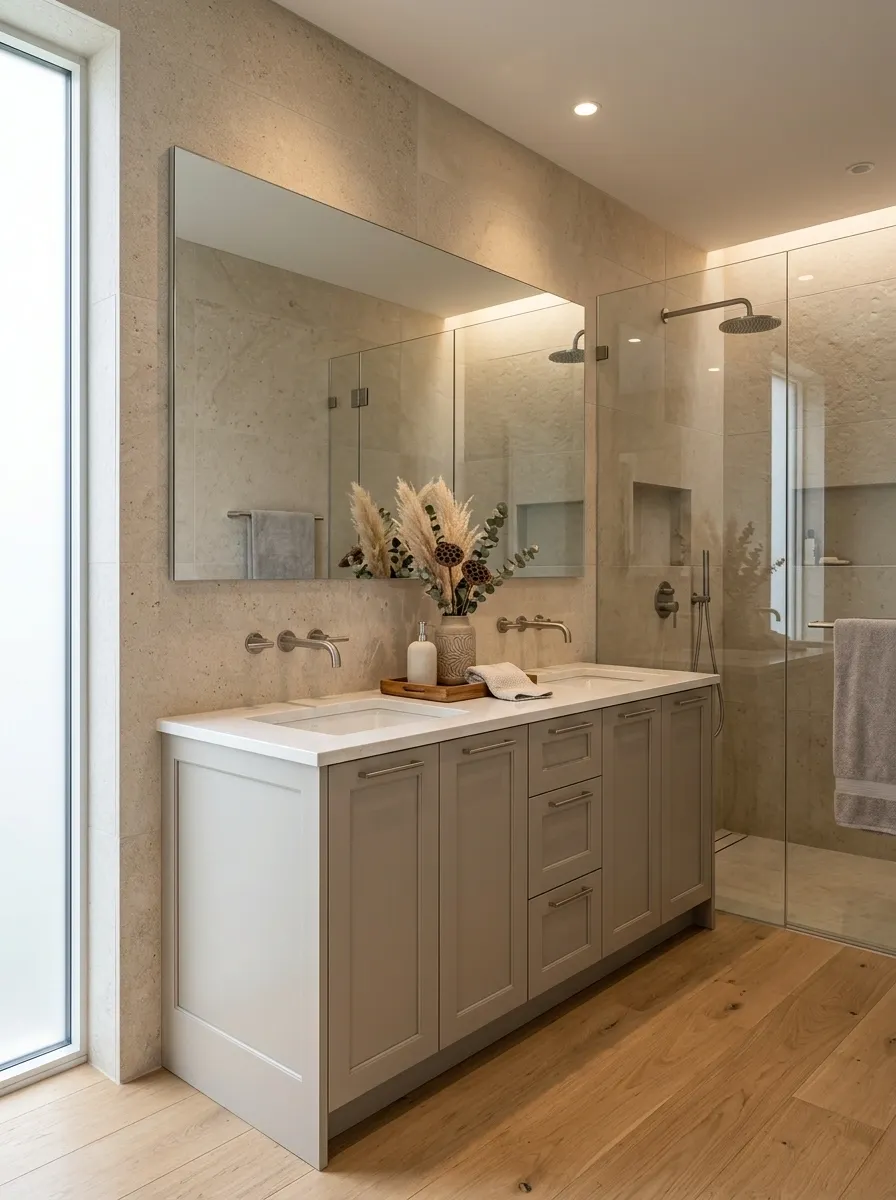
Warm greige cabinetry sits between beige stone walls and slightly warmer flooring, creating a soft layered neutral scheme with more visual complexity than a single beige. Slim brushed-metal hardware, a wide mirror, and a frameless shower keep the composition contemporary, while small wood details add a touch of natural texture.
This room is a useful reminder that beige doesn’t have to appear everywhere in exactly the same shade. The cabinets can lean gray-beige while the stone moves warmer and the floor adds a slightly deeper sandy note. Those small shifts create depth without adding strong color. Matching everything perfectly is not the goal. The bathroom is allowed to have range.
Soft Mediterranean Beige Bathroom With Arched Shower and Terracotta Floor
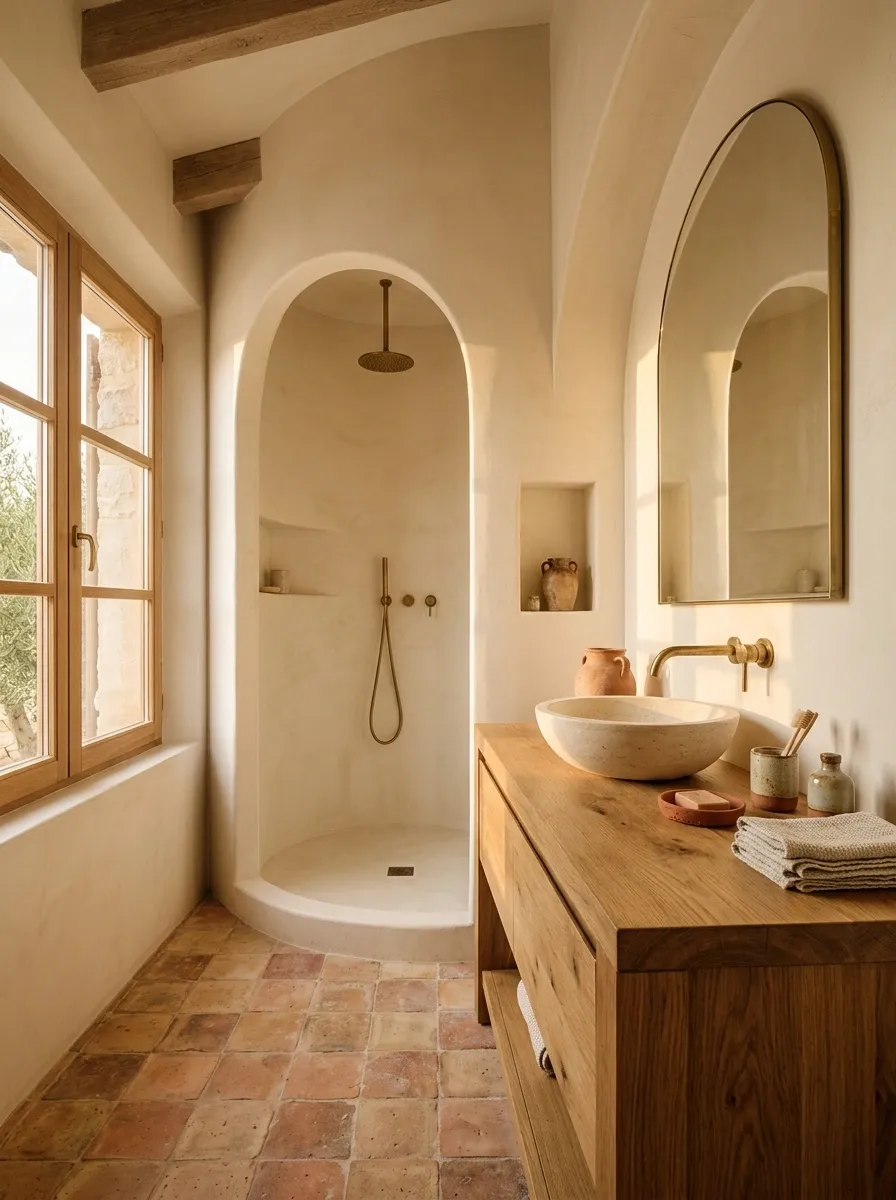
This version takes Mediterranean style in a cleaner direction. Creamy plaster walls surround a large arched shower opening, while terracotta floor tiles create a warmer foundation beneath the pale surfaces. A chunky oak vanity, simple brass fixtures, and a few handmade ceramic forms complete the room.
The contrast between pale walls and warm floor gives the bathroom an unmistakable sense of place. The arch provides the major architectural gesture, so the furniture can stay uncomplicated. Let the terracotta vary naturally rather than choosing a perfectly uniform surface. The room should feel sun-warmed and tactile, not like every tile was introduced to each other during a corporate presentation.
Beige Bathroom With Dark Olive Walls and Cream Stone
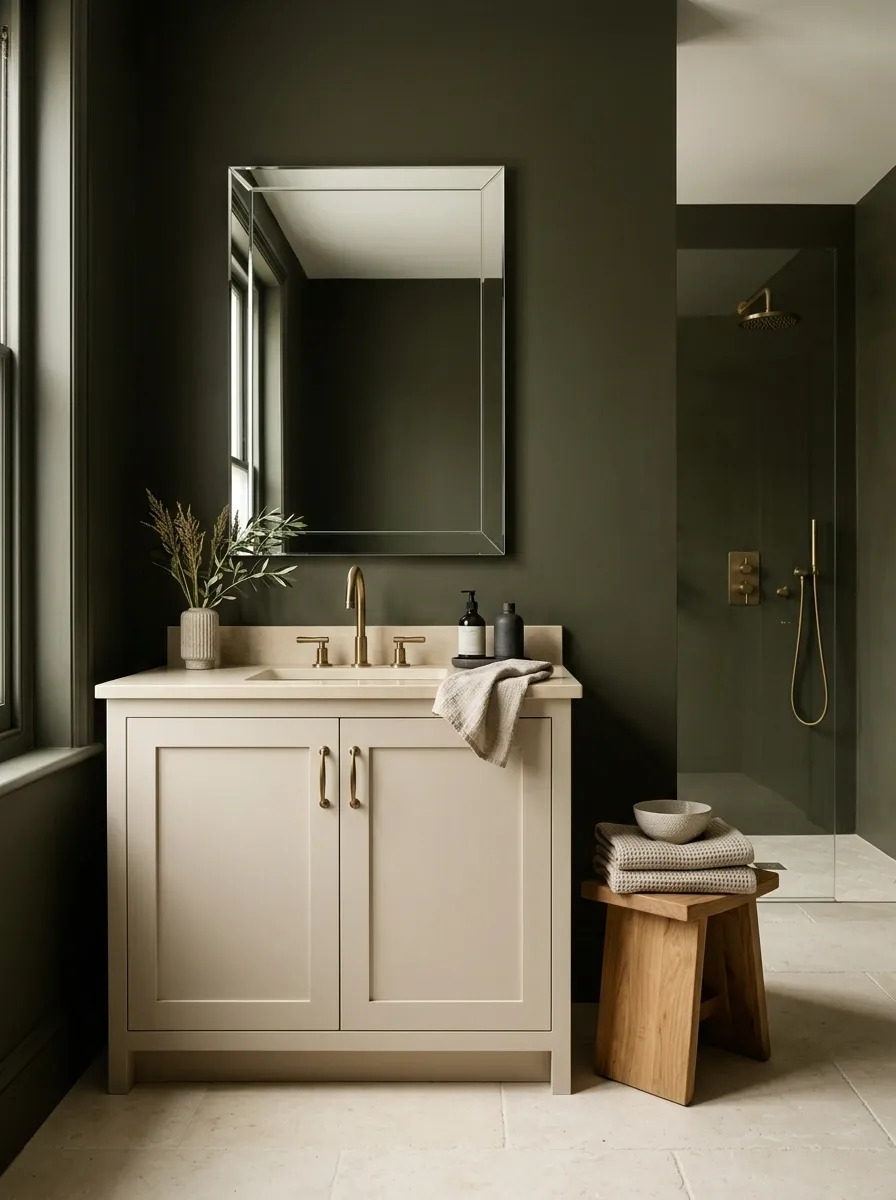
This is one of the deeper, moodier interpretations of beige. Cream stone flooring and a pale vanity provide the light foundation, while dark olive walls create a rich backdrop around the shower and mirror. Antique brass fittings warm the darker palette, and a natural oak stool brings a small amount of lighter grain into the room.
The beige remains important because it prevents the olive from becoming visually overwhelming. The contrast between the pale stone and deep wall color also gives the bathroom a more enveloping feeling. Keep the ceiling and major sanitaryware light so the dark color stays contained. Once the entire room turns dark, the beige loses its role and starts wondering why it was invited.
Layered Neutral Beige Bathroom With Multiple Natural Textures
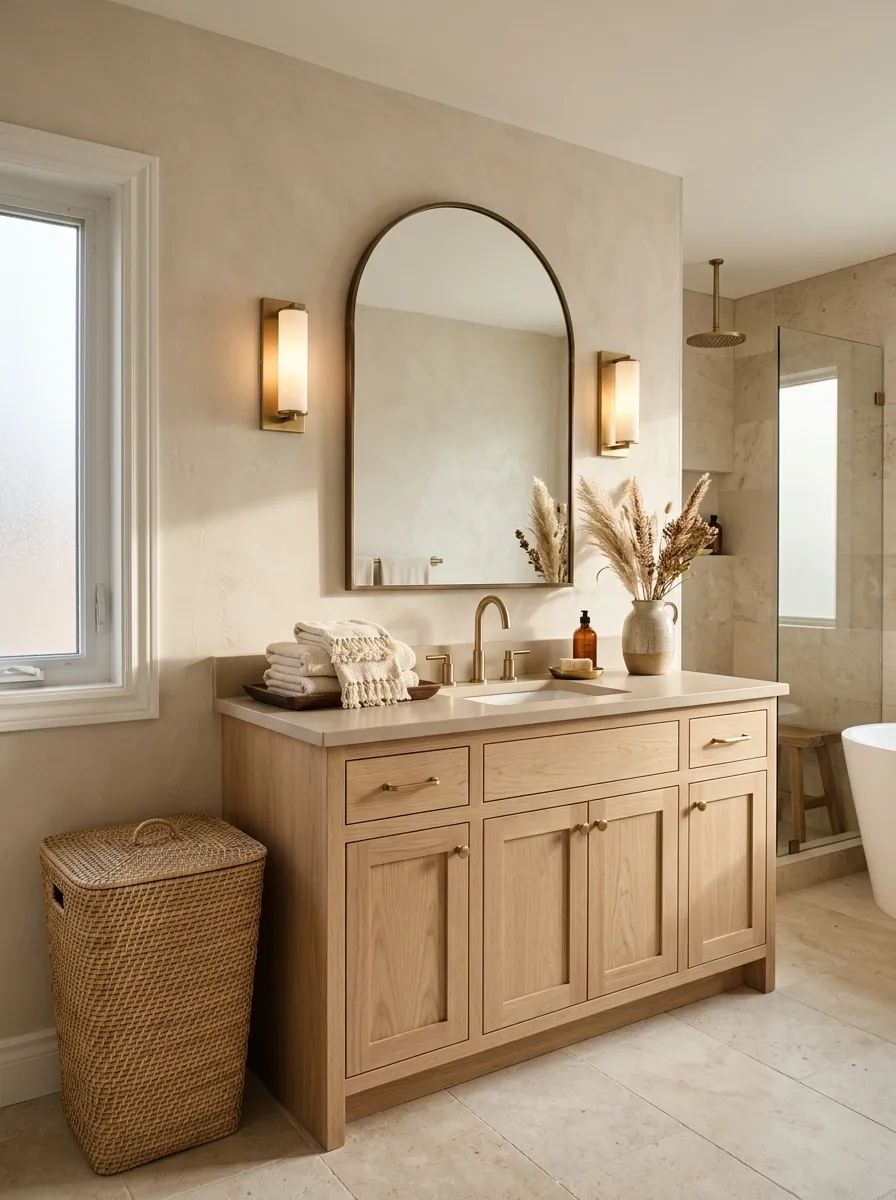
This final direction treats beige as a complete material palette rather than a single finish. Soft plaster walls, lightly varied stone flooring, textured linen, natural oak, woven storage, and small aged-metal details all live within the same warm family. The shapes stay simple so the textures can provide the visual movement.
This composition works when the materials are clearly related but not identical. Smooth plaster sits beside woven fibers. Oak grain meets stone variation. Linen softens the hard surfaces. The room feels finished because there is depth at several scales, from architecture down to the smallest textile. Nothing needs to shout. Beige finally gets to prove it had range all along.
Making Beige Feel Intentional
The strongest beige bathroom isn’t necessarily the lightest one or the most expensive-looking one. It is the one where the finishes appear to belong together.
Start with the room’s biggest visual surface, whether that’s stone, plaster, tile, or cabinetry. Then introduce one material with enough contrast to give the composition depth. Wood is an easy way to warm a beige room, while dark metal can sharpen it and terracotta can push it toward a more earthy direction. Texture matters just as much as color, especially when the palette stays quiet.
Before choosing accessories, look at the larger relationships first. Check how the vanity relates to the floor. Look at the undertones beside the natural light. Notice whether the mirror feels proportional to the furniture beneath it. A beautiful fixture can’t rescue a room where the major shapes are fighting each other.
That is where beige becomes interesting. It doesn’t need to be loud. It needs to be layered enough that the room gives the eye something new to notice as it moves across the space.