
A television has a funny habit of exposing every bad furniture decision in a small living room. Put the sofa too close, and the room feels cramped.
Push everything back, and the TV suddenly looks like it’s floating miles away. Add a chunky media console, a coffee table, a lamp, a few baskets, and somehow the floor disappears entirely.
The answer isn’t squeezing more clever products into the room. It’s choosing a finished composition where the sofa, TV, storage, rug, lighting, walls, and empty space actually make sense together.
That matters because a small living room has nowhere to hide visual mistakes. In a larger space, an oversized cabinet can disappear into the background. Here, it becomes the background.
Small Living Room With TV Ideas
Cozy Neutral Living Room
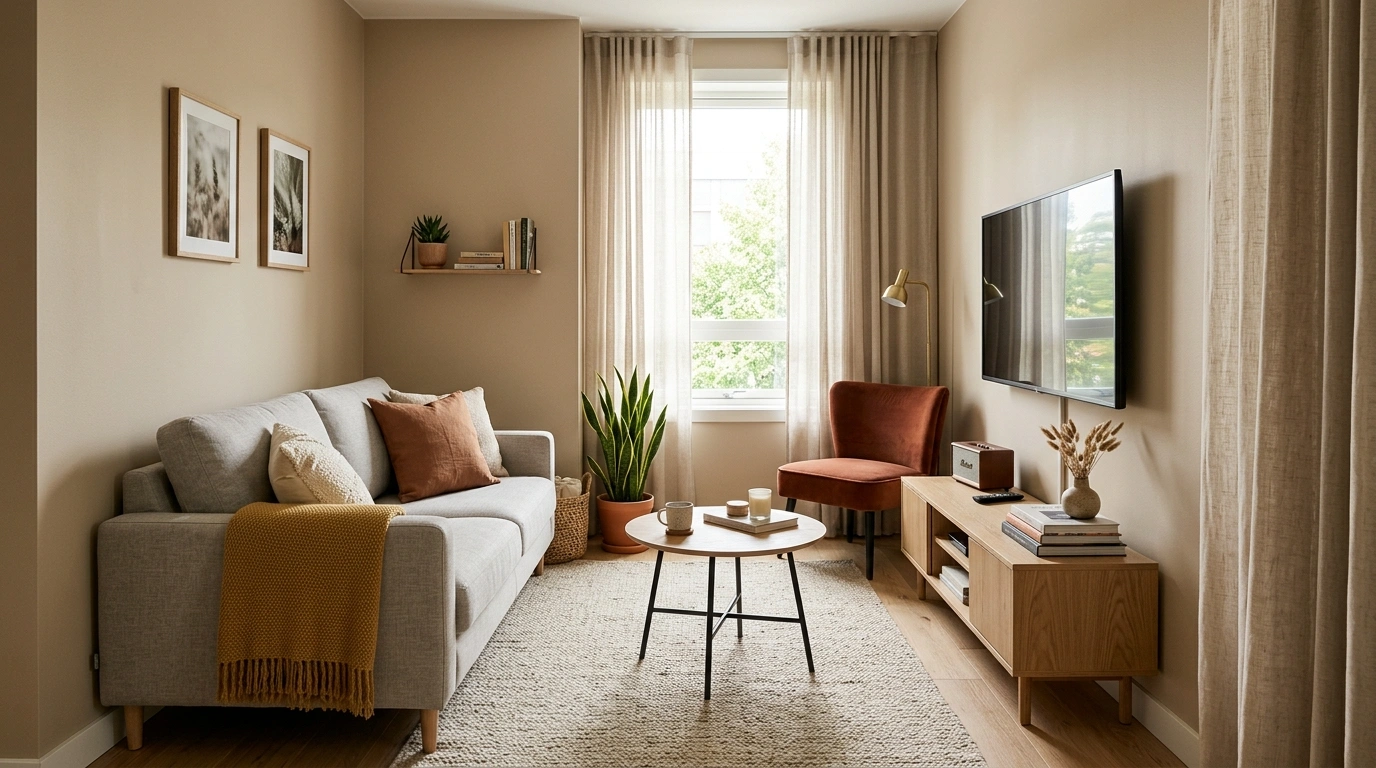
This space leans fully into soft textures and warm earth tones without crowding the square footage. A cream sofa layered with rust-colored pillows sits opposite a sleek white media console, while a round wooden coffee table anchors the center of the room.
The layout maximizes every inch by placing a cozy armchair near the window and utilizing vertical wall space for art and trailing greenery. Natural light filtering through sheer curtains keeps the entire setup feeling bright and breathable rather than heavy.
Keep decorative clutter to a minimum on the surfaces so the eye can easily travel across the room. A few well-placed candles and minimalist plants are all it takes to make the compact layout feel completely styled.
Warm Beige Sofa With Wall-Mounted TV and Oak Storage
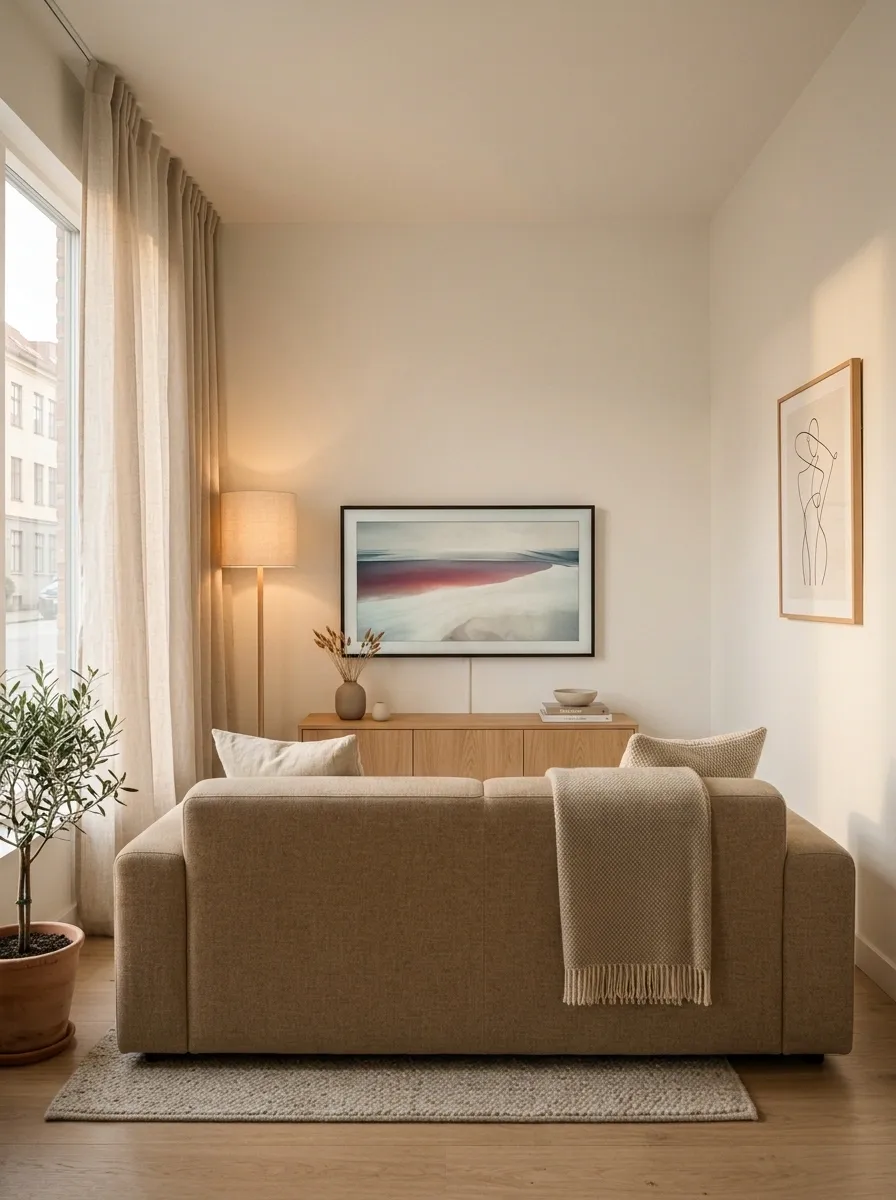
This room keeps everything low, warm, and visually quiet. A compact beige sofa faces a wall-mounted television, while a slim natural oak console runs beneath it. Warm white walls, a soft neutral rug, linen curtains, and one tall floor lamp fill out the room without creating a pile of competing focal points.
The height relationship does most of the work here. The sofa stays close to the floor, the media console remains narrow, and the television sits comfortably above the furniture instead of floating awkwardly halfway up the wall. The result feels finished without feeling stuffed.
The biggest mistake would be adding lots of little decor around the TV. The composition already knows what it’s doing.
Vertical Wood Slat TV Wall
A statement slat wood paneling behind the television instantly draws the eye upward, giving this small living area a custom architectural look. A low oak media cabinet runs beneath the screen, complemented by warm backlighting that highlights the texture of the wood.
Flanking the TV wall with floating shelves and keeping the grey sofa simple lets the focal point shine. A minimalist floor lamp and neutral area rug ground the space, proving you do not need excessive furniture to make a room feel complete.
Let the wood tones and warm glow do the heavy lifting. Over-decorating the surrounding walls would only distract from the clean, intentional lines of the slat panel.
L-Shaped Sofa Wrapped Around a Corner TV
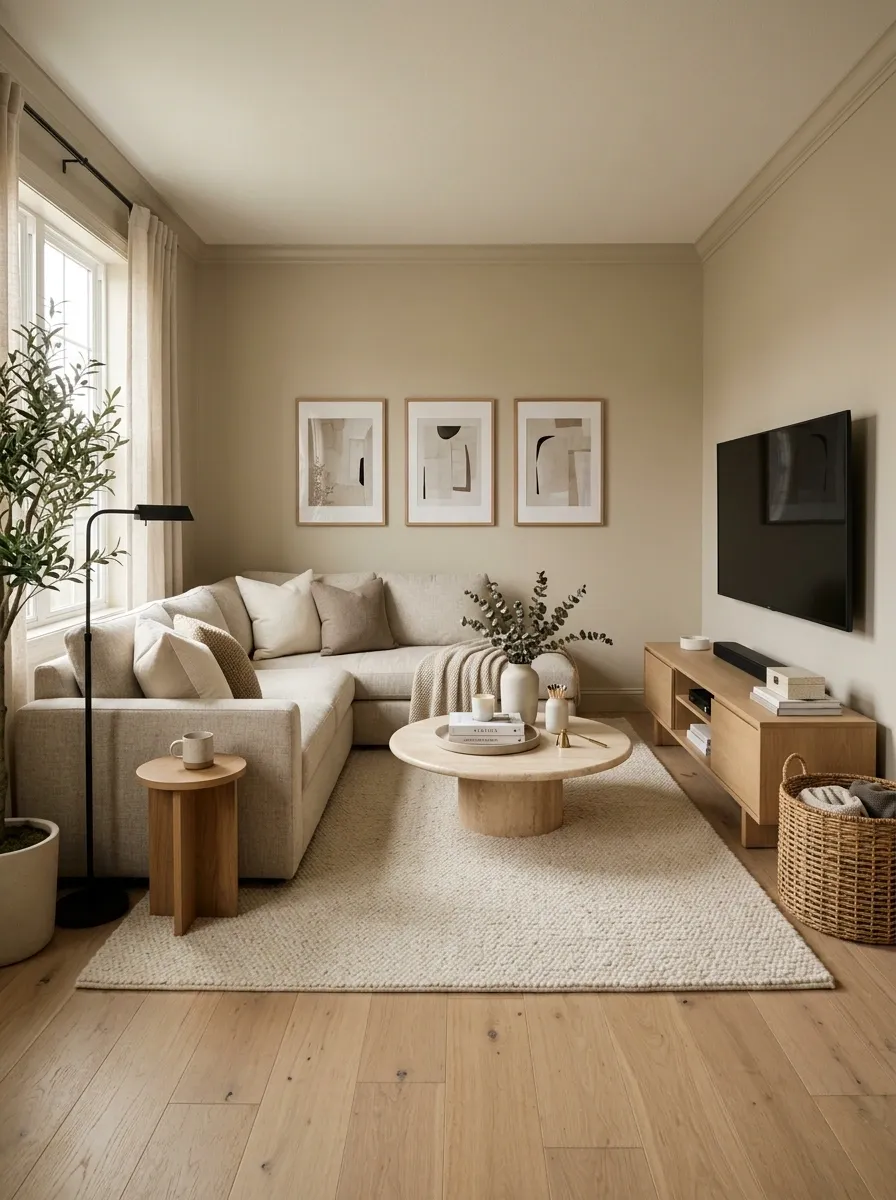
A square living room gets a much smarter layout when the seating hugs two walls instead of sitting awkwardly in the middle. An oatmeal L-shaped sofa creates a compact lounge zone, while the television sits on the opposite corner wall. A round coffee table occupies the center without creating sharp traffic bottlenecks.
This arrangement works because the sectional uses space that would otherwise become dead corners. The open center stays useful, while the TV gets a direct viewing line from the main seat.
There’s also no need to shove a giant rectangular coffee table into the room simply because living rooms are apparently contractually obligated to have one. The round shape makes the circulation feel much more forgiving.
Warm Wood Accents and Slat Feature
A clever combination of natural wood tones, vertical slat detailing, and an integrated full-length mirror maximizes both light and dimension in a compact footprint. A sleek white console beneath the wall-mounted TV keeps the floor clean, while a round wooden dining table anchors the foreground.
This layout proves that multi-functional rooms can maintain a cohesive flow when materials are kept consistent. The light oak furniture echoes the vertical wooden wall accents, creating a unified look that stretches the visual boundaries of the space.
Stick to a restrained palette of warm neutrals and soft lighting. When every piece of furniture shares a similar finish, the room naturally reads as larger and more cohesive.
Dark Charcoal TV Wall With Light Neutral Seating
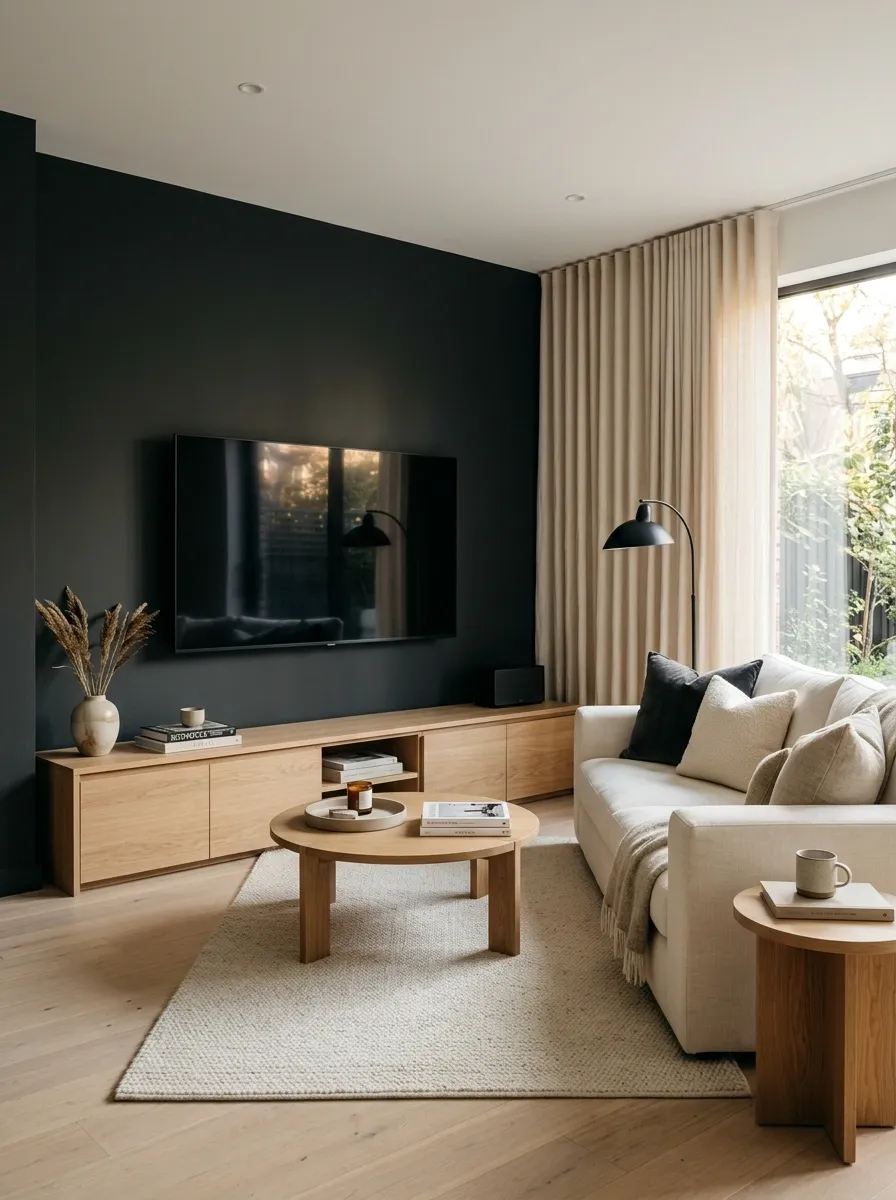
A charcoal TV wall gives a small room one deliberate dark moment while the rest of the space stays light. The sofa is soft ivory, the floor is pale oak, and the curtains are warm cream. A low cabinet runs beneath the screen, creating one clean horizontal line.
The darker wall helps the television visually settle into the background instead of looking like a huge black rectangle pasted onto an otherwise pale room. That contrast also gives the living area more architectural definition without filling the walls with shelves and artwork.
Keep the surrounding surfaces simple. Once the wall already carries this much visual weight, adding six decorative baskets and a gallery wall would be a little like whispering during a fireworks show.
TV wall + screen
sofa + floor
textiles + curtains
wood accents
Textured Brick Wall and Media Console
A whitewashed exposed brick wall adds instant character and tactile depth to this compact living area. The television mounts effortlessly above a streamlined floating media console, while a floating shelf above keeps the upper wall functional without feeling heavy.
An air conditioner unit is cleverly integrated near the ceiling, maintaining comfort without ruining the aesthetic. A comfortable grey sofa paired with a round coffee table and a geometric rug rounds out the seating arrangement without blocking the flow of movement.
Embrace the texture of the brick by keeping surrounding decor understated. Letting the wall’s natural pattern take center stage prevents the room from feeling visually overwhelmed by accessories.
Slim Fireplace With TV Stacked Above It
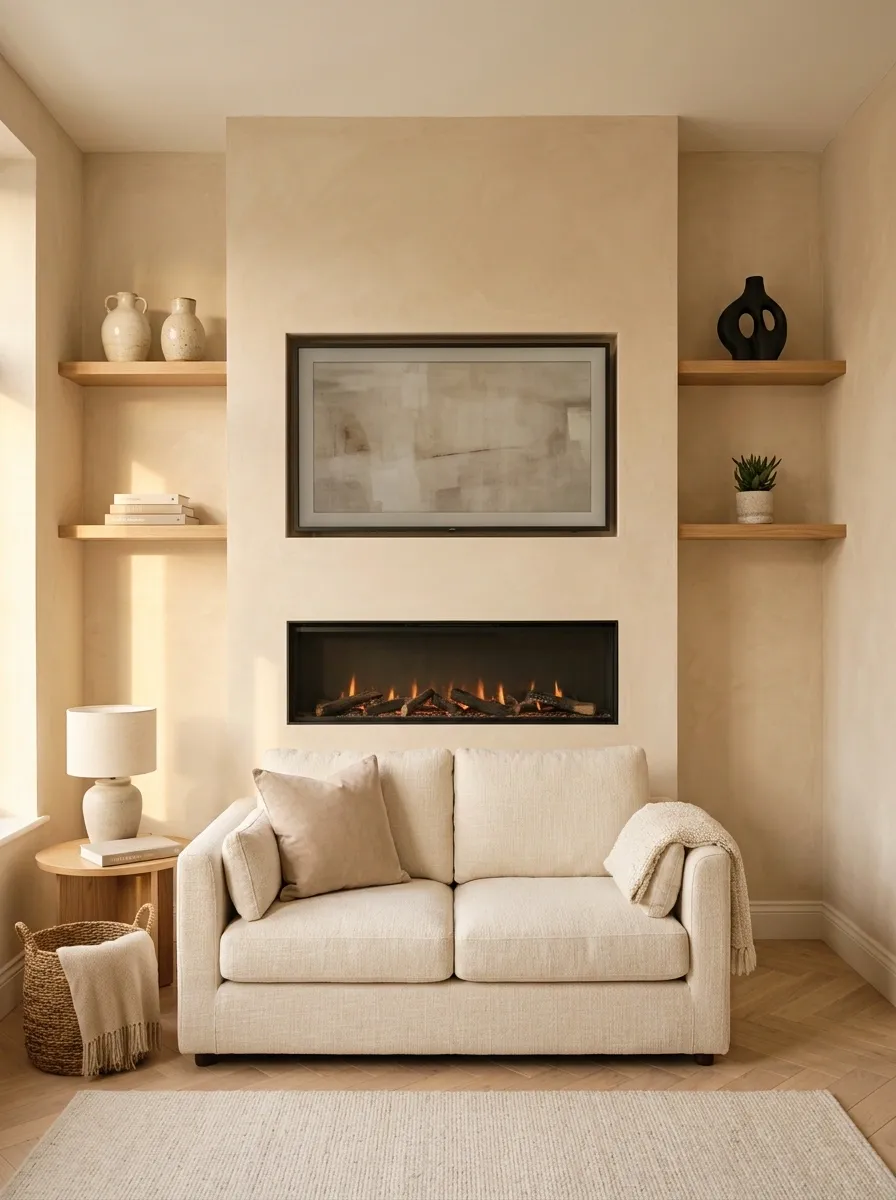
When wall width is limited, stacking the main focal elements vertically can free up valuable floor and wall space. This compact room places a narrow modern fireplace directly below the TV, framed by warm plaster walls and slim built-in shelves.
A small cream sofa, pale oak floor, and understated rug keep the lower half of the room light. Because the fireplace and television already create a strong vertical axis, the furniture doesn’t need to compete with them.
The trick is restraint. A fireplace wall with the TV, shelving, artwork, and twelve tiny objects starts looking less like architecture and more like a storage unit having a midlife crisis.
Monochrome Apartment Living Room
This monochrome setup uses high-contrast blacks and crisp whites to create a sophisticated, tailored look in a narrow space. A slim black shelving unit stands against the far wall, echoing the finish of the modern chandelier and the minimalist side table next to the sofa.
A large light grey sectional paired with a matching ottoman maximizes seating while keeping the visual weight low to the ground. The wall-mounted TV leaves the floor entirely unobstructed, enhancing the airy feel of the apartment.
Keep the color palette disciplined and rely on textures like woven baskets and framed artwork to add warmth. A restrained approach ensures the small room feels curated rather than chaotic.
Apartment Living Room With Floating Media Console
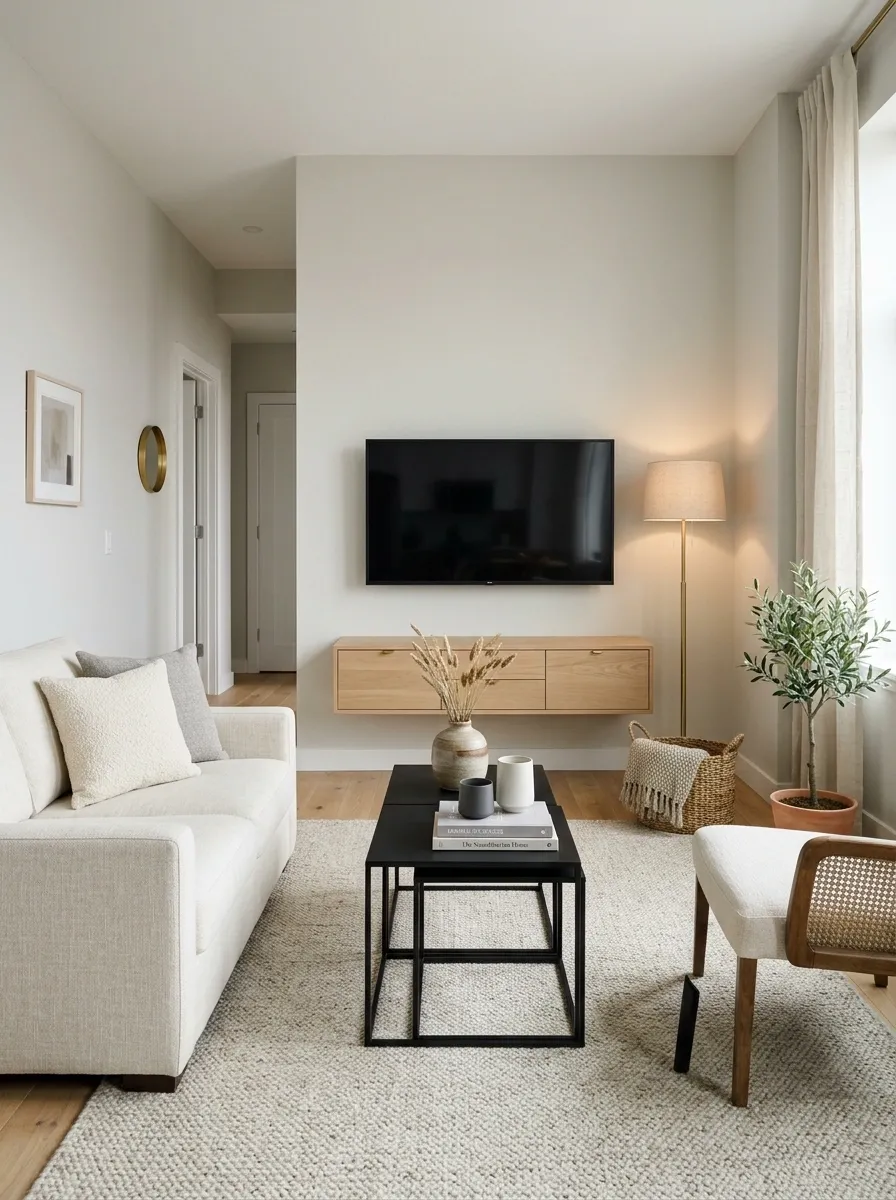
A narrow apartment living room feels more open when the TV wall stays visually light. Here, the television is mounted above a slim floating oak console, while a compact sofa, large neutral rug, nesting tables, and one floor lamp create the complete seating area.
The floating console matters because the open floor underneath remains visible. That little strip of uninterrupted flooring makes the furniture feel less bulky, especially in a room where every extra visual obstacle seems determined to become noticeable.
Keep the rug large enough to connect the sofa and tables. A tiny rug floating helplessly in front of the sofa will make the entire arrangement look smaller, which is exactly the opposite of the assignment.
Warm Ambient Apartment Lounge
Soft, diffused lighting transforms this compact apartment living room into an absolute sanctuary of calm. A neutral sectional sofa faces a low-profile media console and television, while an oversized potted plant softens the corner by the window with organic movement.
The warm glow from multiple lamps and the television screen creates a layered lighting scheme that makes the room feel intimate and expansive at the same time. A streamlined wooden dining setup sits neatly in the foreground, maintaining an open flow.
Embrace warm ambient bulbs over harsh overhead lighting to instantly elevate the mood of a small space. It turns a tight layout into an inviting retreat you actually want to spend time in.
Built-In Shelves Framing a Small TV Wall
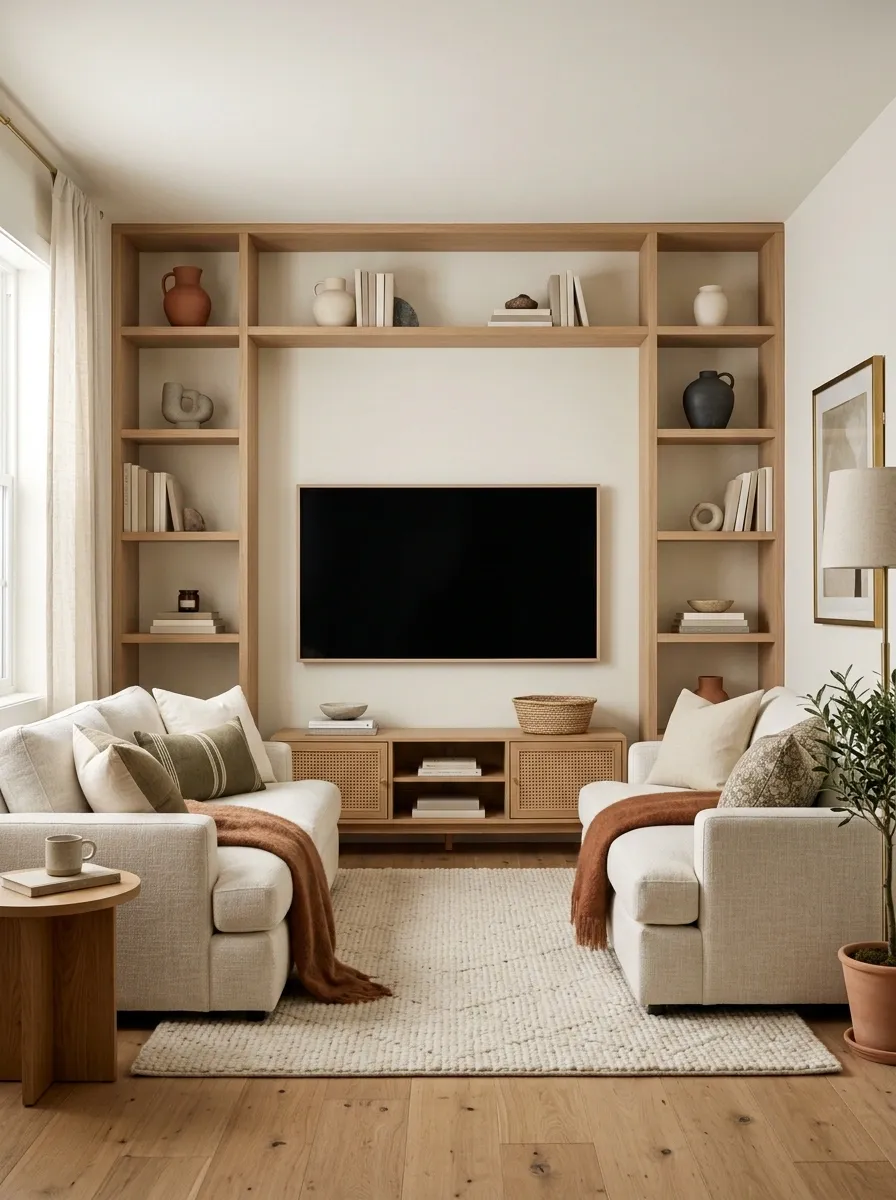
A compact TV wall can become the room’s strongest architectural feature when shallow built-in shelves frame the screen on both sides. The shelves stay relatively sparse, with a few books, ceramics, and one or two larger pieces, while the center remains deliberately calm. A compact neutral sofa, warm oak floor, and textured rug keep the lower half of the room grounded.
The important part isn’t filling the shelves. It’s the rhythm between the filled sections and the empty ones. That negative space keeps the wall from becoming visually heavy while giving the television a proper setting.
The shelf styling should stop before it starts looking like a tiny retail store. The room has to breathe.
Soft Sage Living Room With TV Blended Into the Wall
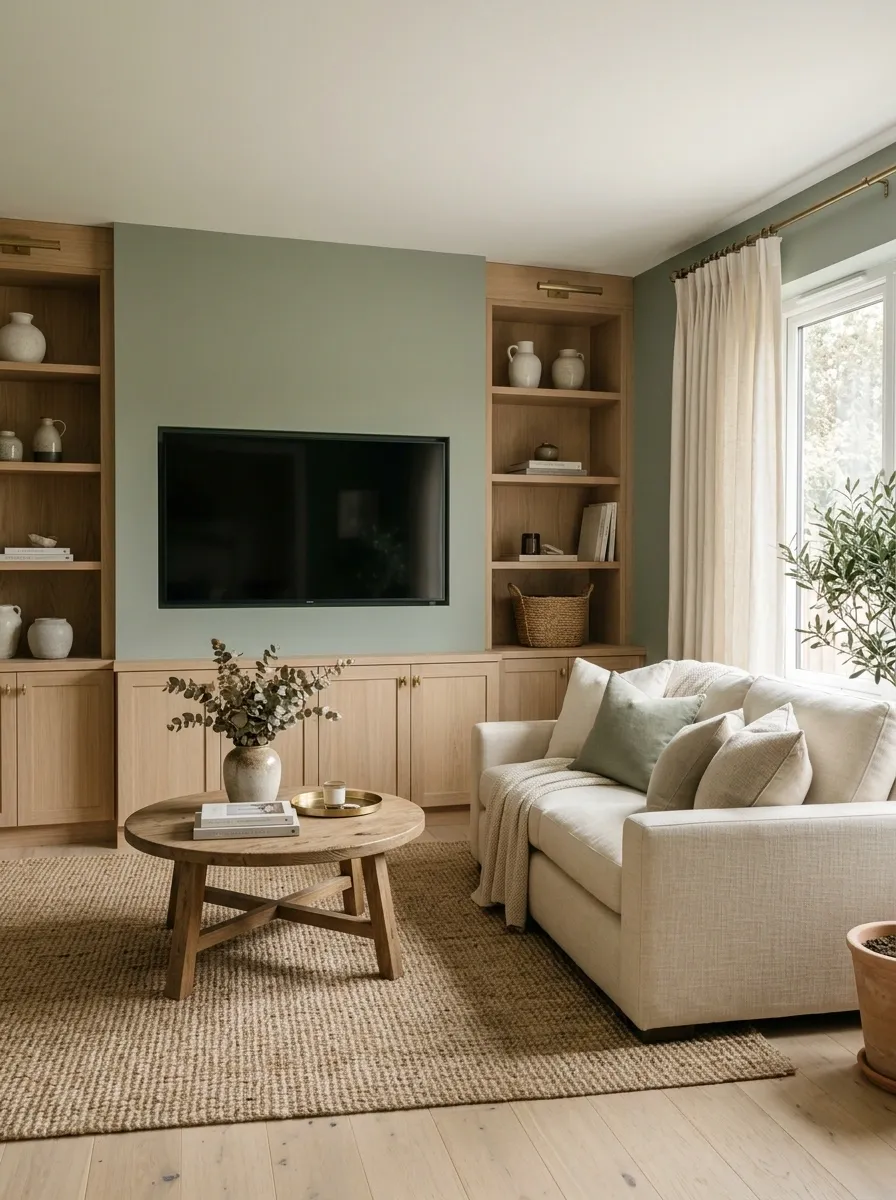
Muted sage walls give this small living room a softer way to handle the television. A warm cream sofa sits opposite the screen, while pale oak cabinetry, linen curtains, and a woven rug keep the palette natural. The television blends into the deeper wall tone instead of becoming a harsh black interruption.
The room feels layered because the colors are close, but the textures aren’t. Smooth painted walls, natural wood, woven fibers, and soft upholstery each catch light differently.
That is the difference between tonal and boring. Same family, different surfaces.
Bouclé Sofa With Deep Walnut TV Wall
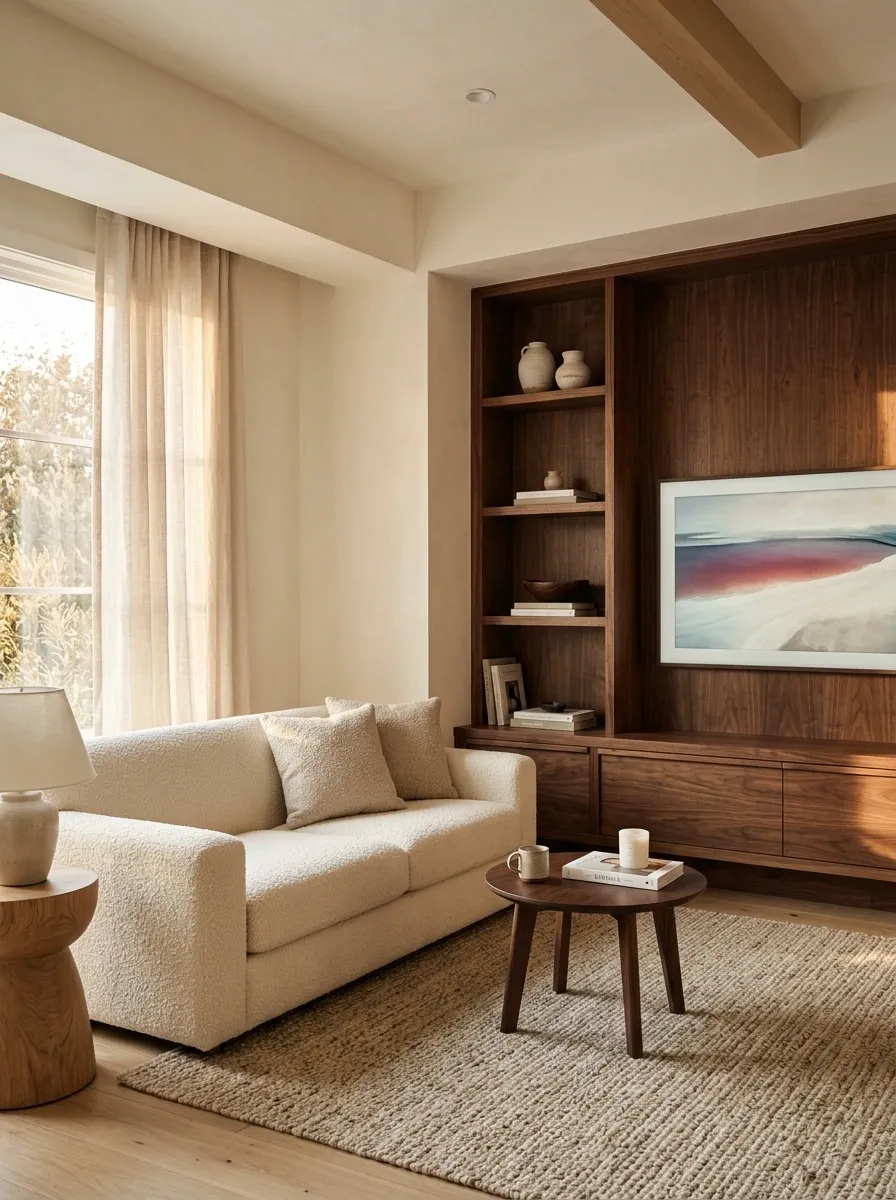
This version leans warmer and richer without needing a large room to carry it. A creamy bouclé sofa sits opposite a deep walnut media wall, with a neutral rug underneath and warm white walls around the edges. The television is mounted above a substantial but low wood console, creating a strong horizontal anchor.
The contrast between soft upholstery and dense walnut gives the room depth. The sofa feels plush, while the dark wood stops the composition from becoming overly pale and washed out.
Keep the floor and curtains uncomplicated. Once the sofa and walnut are doing this much visual work, another dramatic feature wall would be fighting for screen time.
Narrow Living Room With TV on the Short Wall
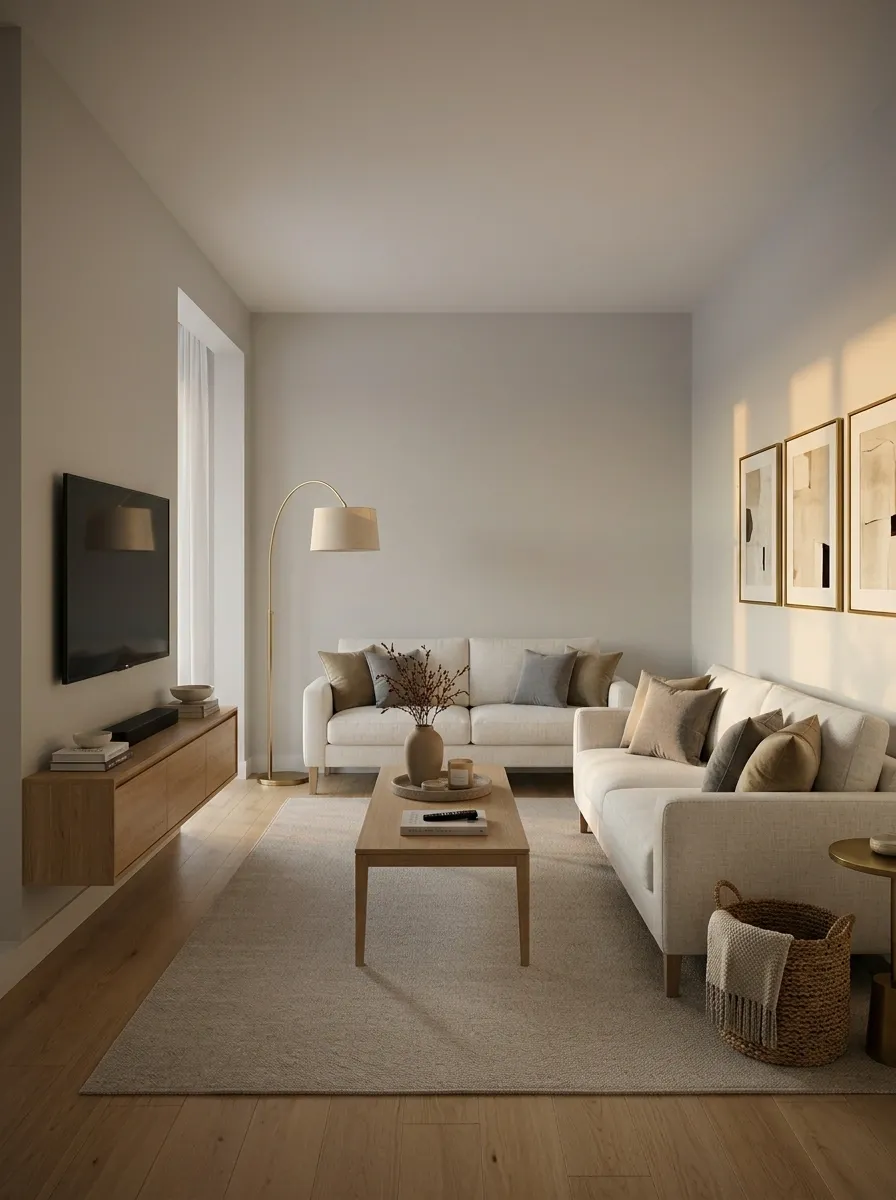
Long, narrow living rooms need a layout that accepts their shape instead of trying to disguise it. Here, the television sits on the short wall, directly opposite a compact sofa. A slim rectangular coffee table stays centered, while a clear side passage runs toward the window and any adjoining space.
The arrangement creates one obvious viewing zone without blocking the room’s natural route through the space. Pale walls and a continuous rug visually connect the seating area, while a single floor lamp adds height without stealing floor area.
The golden rule here is painfully simple: don’t put furniture in the walkway and call it “cozy.” That’s just obstructed circulation wearing a cute outfit.
Warm Terracotta Living Room With a Compact TV Unit
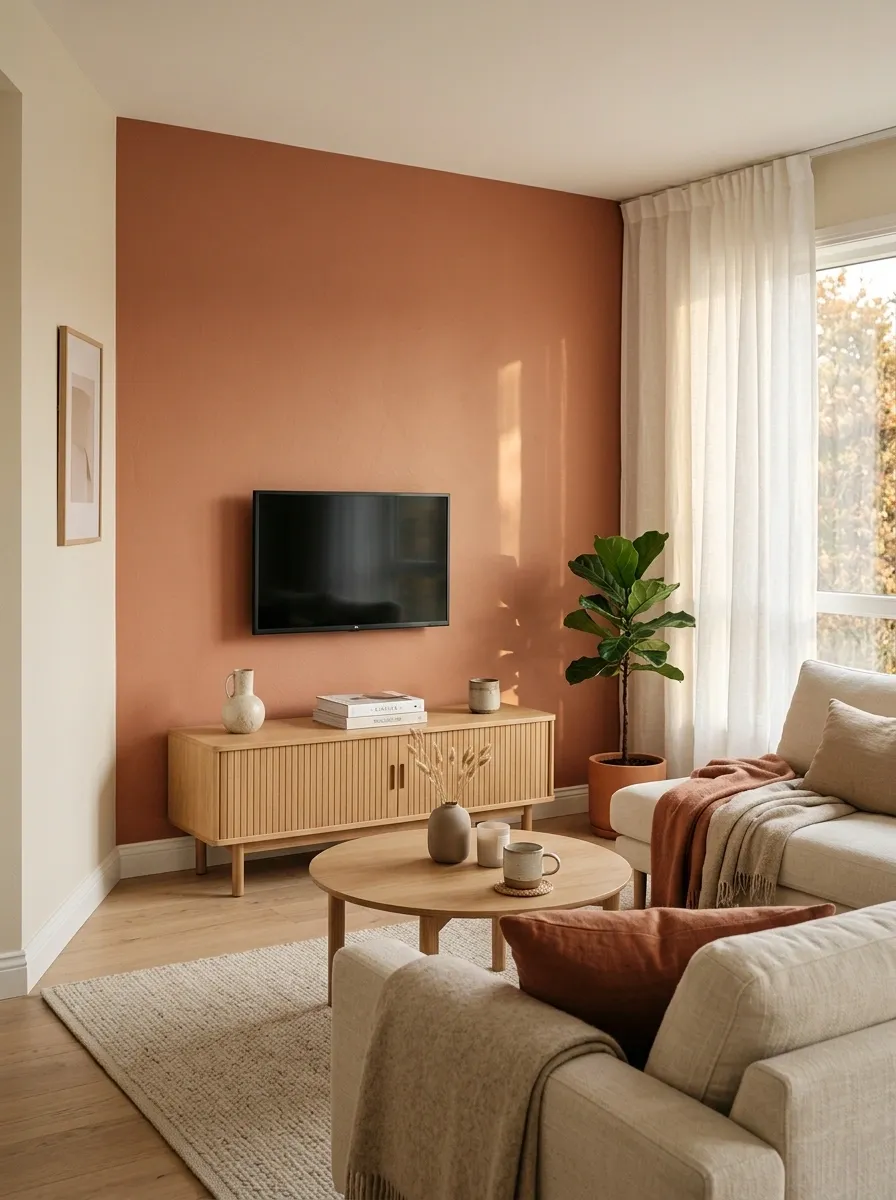
Terracotta brings personality into a small living room without needing layers of artwork or decorative clutter. The finished scheme pairs a muted terracotta wall with cream seating, light oak, a soft neutral rug, and a compact black TV mounted above a simple media cabinet.
The warm wall creates the visual identity, while the pale furniture keeps the room from becoming too dark. The oak tones sit between both colors, acting as the bridge that makes the palette feel intentional instead of assembled from random saves.
The strongest move is keeping the TV unit simple. The wall color has already done the dramatic part.
Scandinavian Small Living Room With TV and Pale Oak
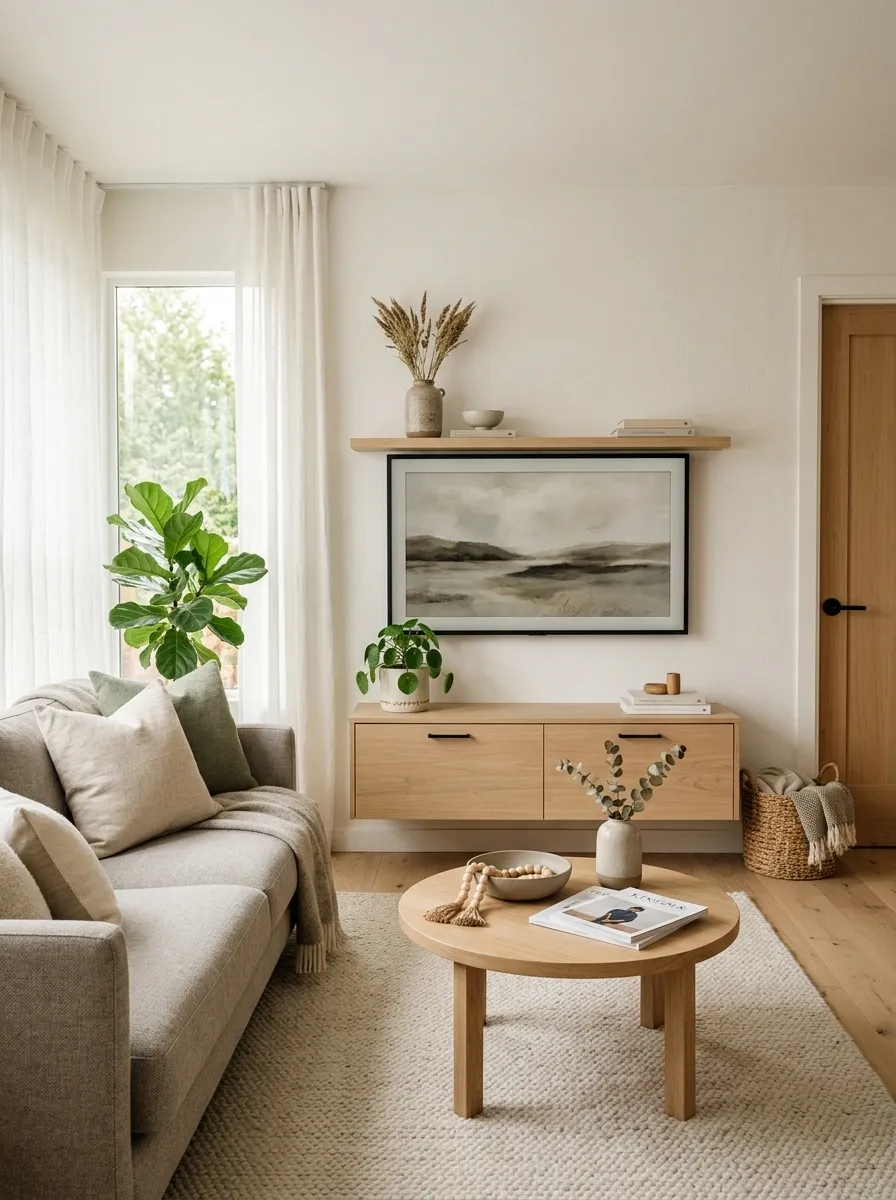
Pale oak, warm white walls, soft gray-beige upholstery, and a few restrained black accents give this small living room a clean Scandinavian character. The TV sits above a simple pale wood console, while a light rug connects the sofa, compact coffee table, and media wall into one calm arrangement.
The room feels airy because nothing has been given unnecessary visual weight. The furniture stays low, the palette stays light, and the storage remains simple. Even the lighting feels deliberately quiet.
This isn’t minimalism by removing every object in sight. It’s knowing which objects deserve to stay. A small room has no patience for decorative freelancing.
Deep Blue TV Wall With a Camel Sofa
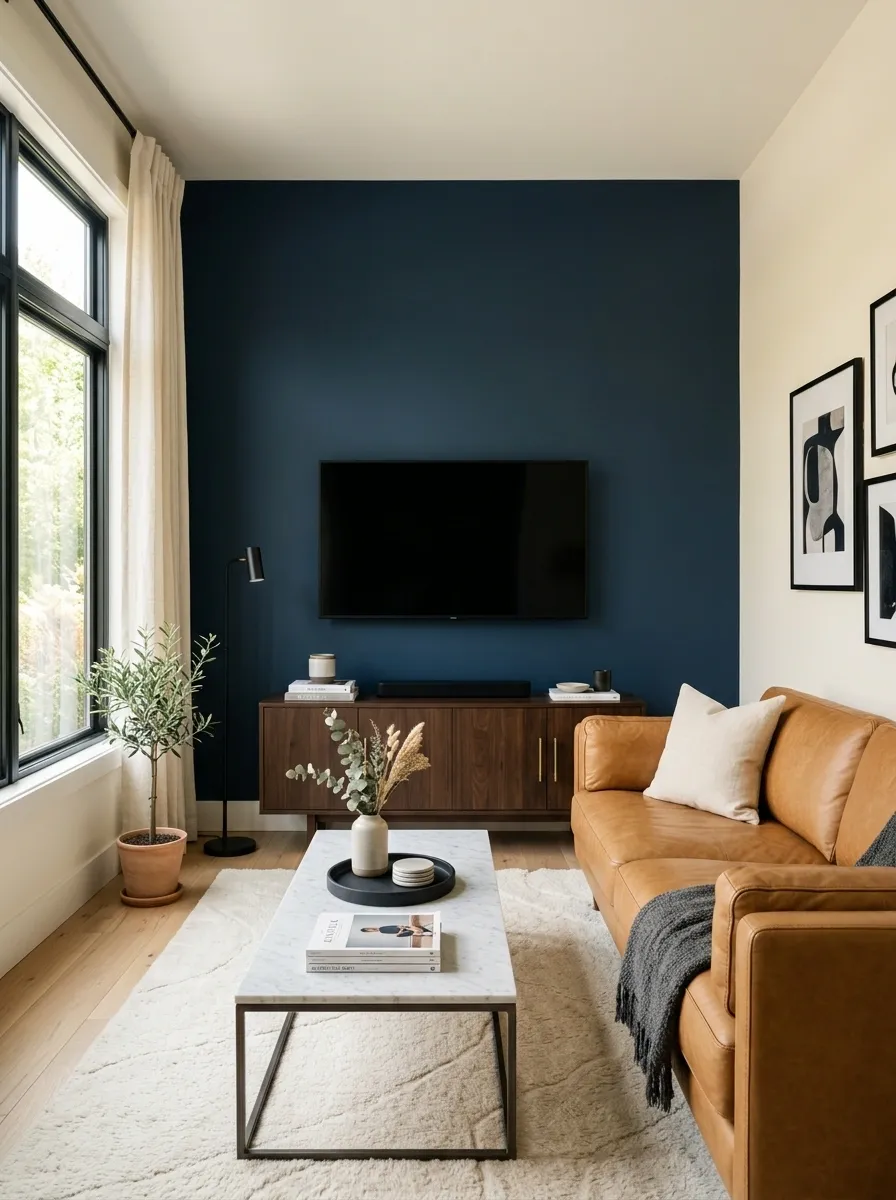
A deep blue TV wall gives this compact room a strong architectural identity. The television sits centered above a low dark media cabinet, while a camel-colored sofa provides warmth against the cooler background. Pale flooring, cream curtains, and a soft neutral rug keep the darker wall from closing in the room.
The color balance works because the blue is concentrated in one place. The rest of the room stays restrained, allowing the sofa to become the warm counterpoint.
A dark wall isn’t automatically going to make a small room feel smaller. A chaotic wall definitely has a better chance of doing that.
Compact Corner Sectional With a Built-In TV Niche
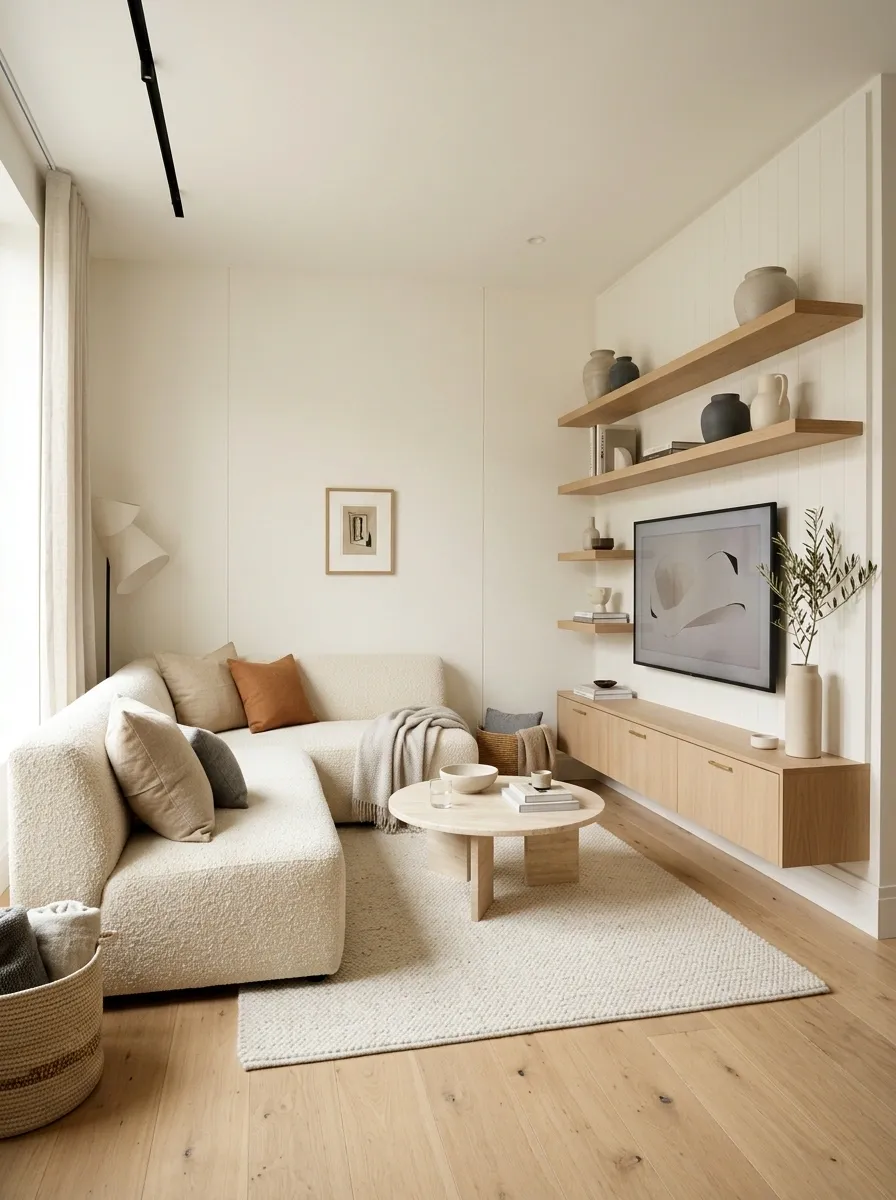
A compact sectional tucked into one corner makes use of the room’s perimeter while keeping the center open. Across from it, a built-in TV niche creates a dedicated media zone with shallow cabinetry underneath and a few carefully spaced shelves around the screen.
The wall-to-wall arrangement feels intentional because the architecture and furniture share the same footprint. Nothing projects unnecessarily into the room, and the sectional provides plenty of seating without demanding a huge central area.
This is especially effective in square rooms where floating a sofa in the middle would eat up the circulation for no good reason. The floor gets to exist. Revolutionary.
Traditional Small Living Room With a Framed TV Cabinet
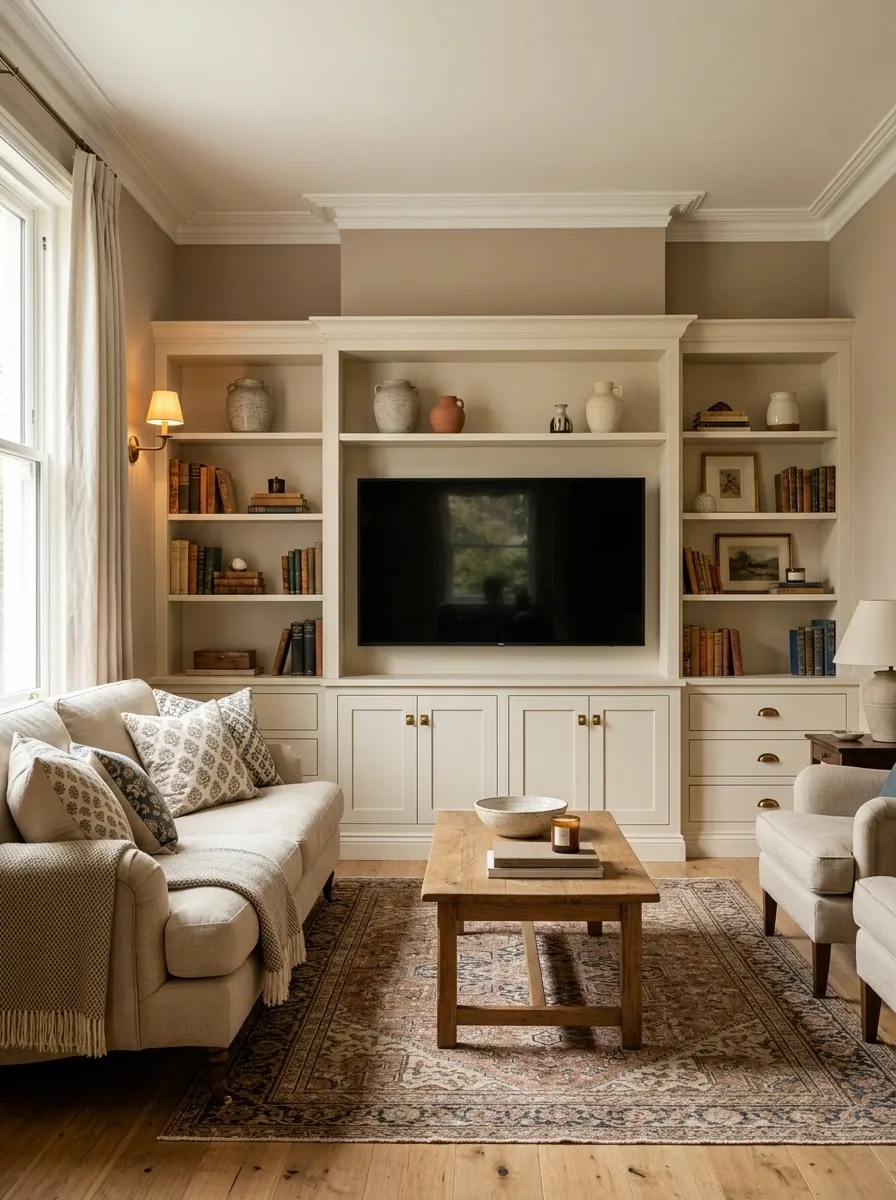
This traditional composition treats the TV as part of the cabinetry instead of allowing it to dominate the room. Painted millwork surrounds the screen, with closed storage below and a few open sections for books and ceramics. A classic neutral sofa, patterned rug, warm wood accents, and brass lighting finish the room.
The cabinetry gives the television a visual frame, so the screen reads as one part of a larger architectural composition. The traditional details also add character without requiring a busy gallery wall.
The trick is keeping the millwork proportional to the room. A gigantic built-in can technically be “custom” and still look like it swallowed the living room.
millwork
millwork
TV Integrated Into a Gallery-Style Wall
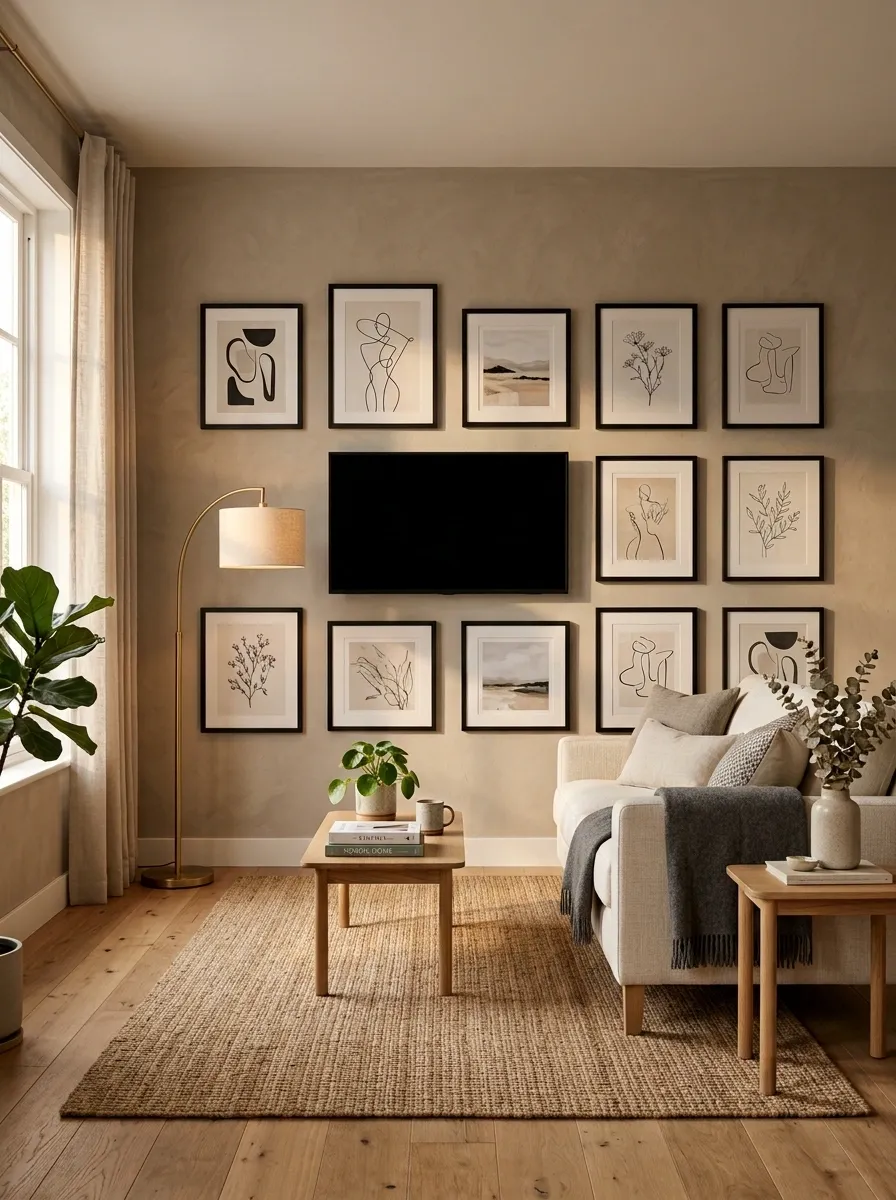
For a room where the television feels visually disruptive, surrounding it with artwork can soften its presence. This design places the screen within a carefully spaced gallery wall using consistent frames, neutral artwork, and generous gaps. A compact sofa, small wood table, and warm floor lamp keep the rest of the room understated.
When the TV is off, it becomes part of the overall wall composition. When it is on, the screen still has enough breathing room to remain easy to watch.
The important word is carefully. Randomly sprinkling frames around a television isn’t a gallery wall. It’s a hostage situation for the artwork.
Low Japandi Living Room With a Quiet TV Wall
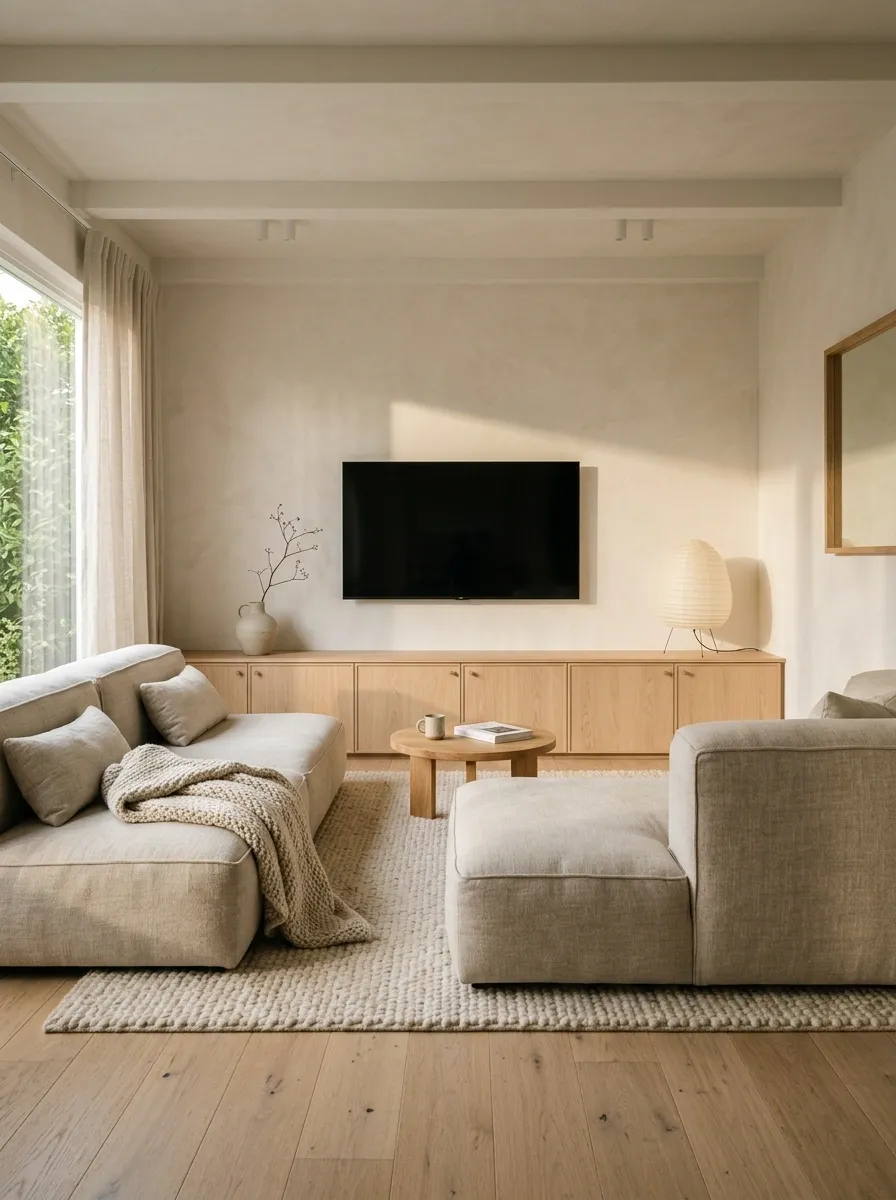
A low-profile sofa, pale oak cabinetry, textured plaster walls, and a warm neutral rug give this small living room a relaxed Japandi character. The television sits above a low media cabinet, keeping the entire focal wall close to the floor. A simple ceramic piece and one sculptural lamp provide just enough visual interest.
The low furniture creates a long, calm sightline across the room. Nothing feels tall enough to chop the space into separate visual layers, which helps the compact footprint feel more continuous.
The beauty here is in the restraint. There’s no need for seventeen decorative objects when three good ones are already pulling their weight.
Small Living Room With a TV Above a Narrow Cabinet
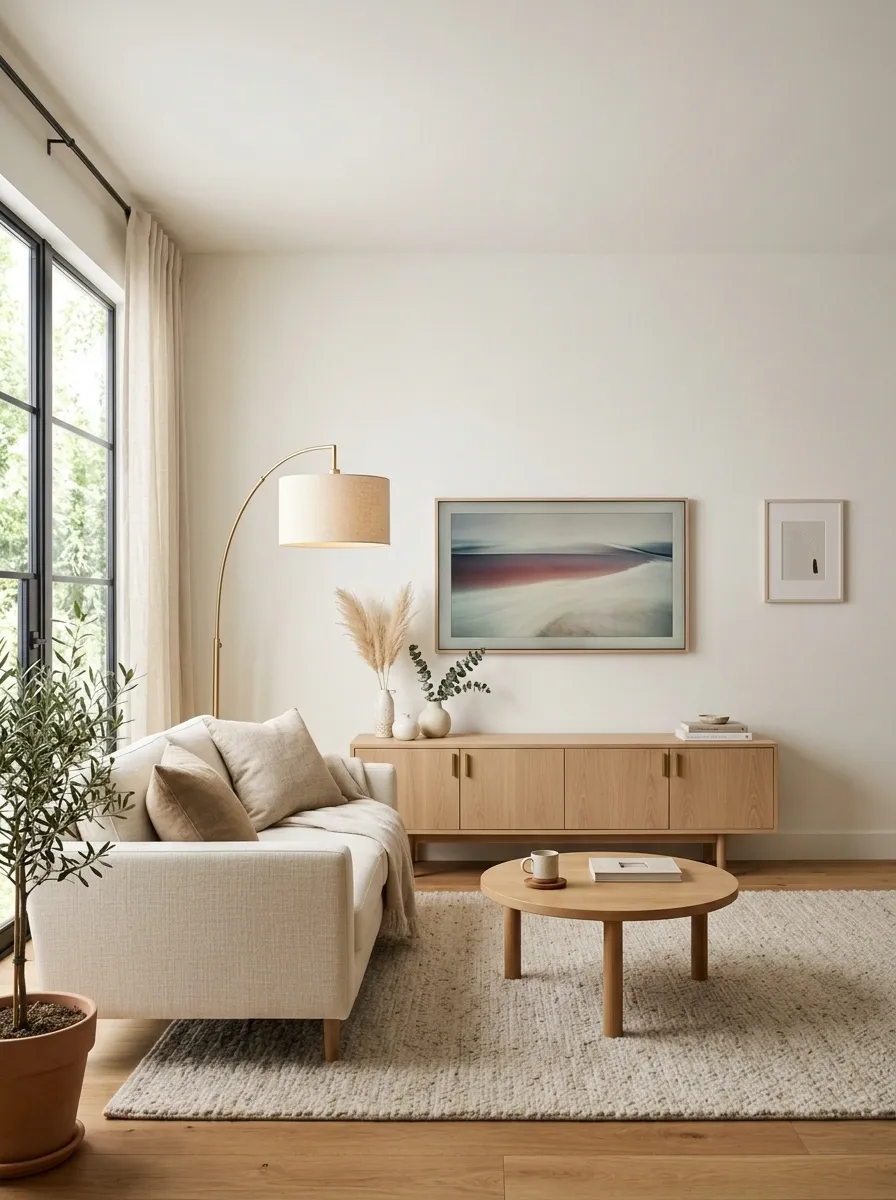
This compact arrangement keeps the media wall extremely straightforward. The television is centered above a narrow freestanding cabinet, while a small sofa, round coffee table, soft rug, and floor lamp complete the seating area. Warm white walls and pale wood keep the room visually light.
The cabinet provides enough presence to ground the screen without becoming a giant block underneath it. That proportion matters in a small room because the lower furniture line is often what makes a space feel crowded.
A huge media console with a tiny room around it is rarely a good plot twist. Keep the cabinet long enough to balance the screen, then stop.
Keep the screen visually centered.
Give it enough furniture to feel grounded.
Soft Monochrome Living Room With a Black TV as the Only Contrast
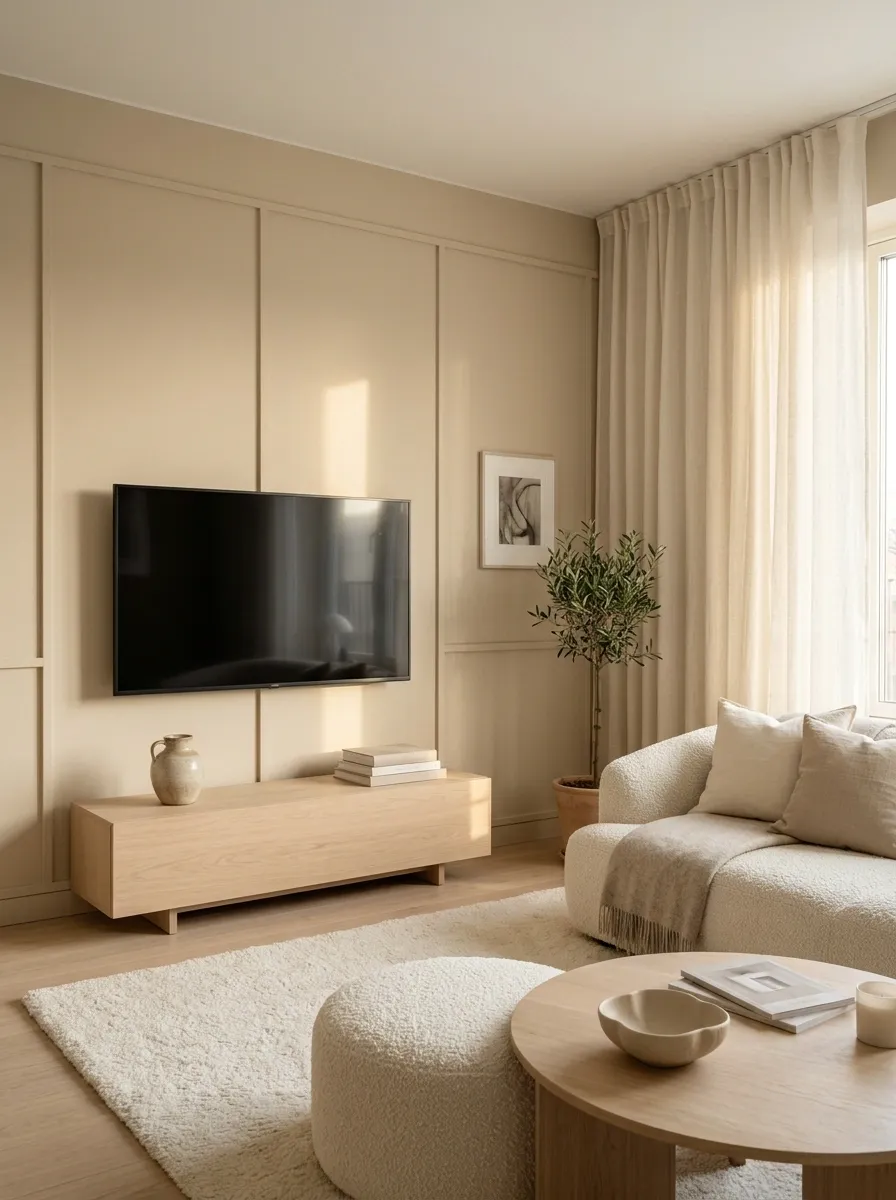
This room uses shades of beige from wall to sofa to rug, then lets the black television provide the strongest contrast. A pale wood console, cream curtains, and softly textured upholstery keep everything around the screen in the same visual family.
The monochrome approach makes the television feel intentional because there aren’t other dark objects scattered around competing with it. The eye lands on the screen, then moves easily across the warm neutral layers around it.
The palette also keeps decorating decisions simple. Once everything is tonal, the room doesn’t need a shelf full of “little something” to prove it has personality.
Rental-Friendly Living Room With a Freestanding TV Setup
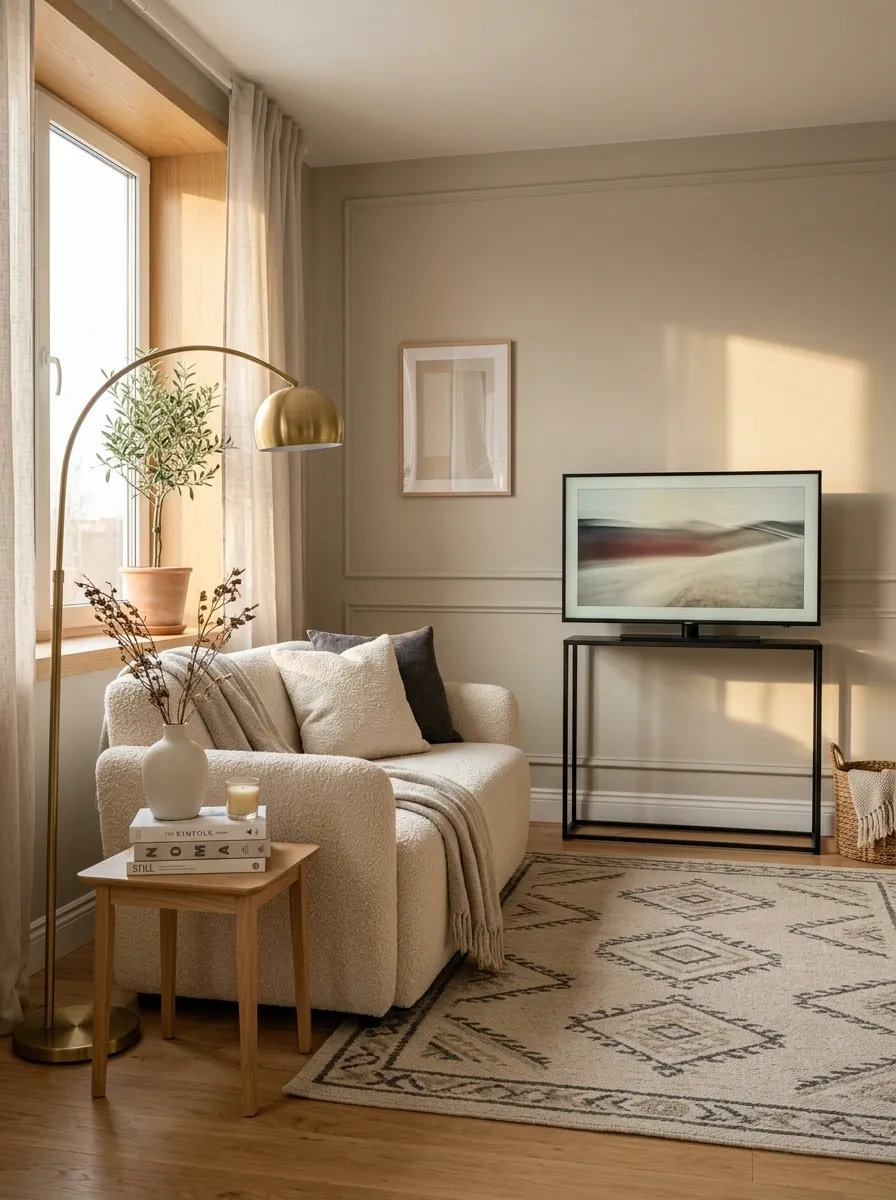
Not every small living room needs a wall-mounted television or built-in media center. This rental-friendly composition places the TV on a narrow freestanding stand, with a compact loveseat, movable rug, lightweight side table, and floor lamp arranged around it.
The advantage is flexibility. Nothing depends on drilling into the wall, permanent cabinetry, or a fixed electrical arrangement. Furniture can move when the room’s awkward corner turns out to be more awkward than expected.
The setup still looks finished because the pieces form one clear composition. Rental-friendly doesn’t have to mean “temporary furniture survival camp.”
Industrial Small Living Room With Concrete Texture and Leather Seating
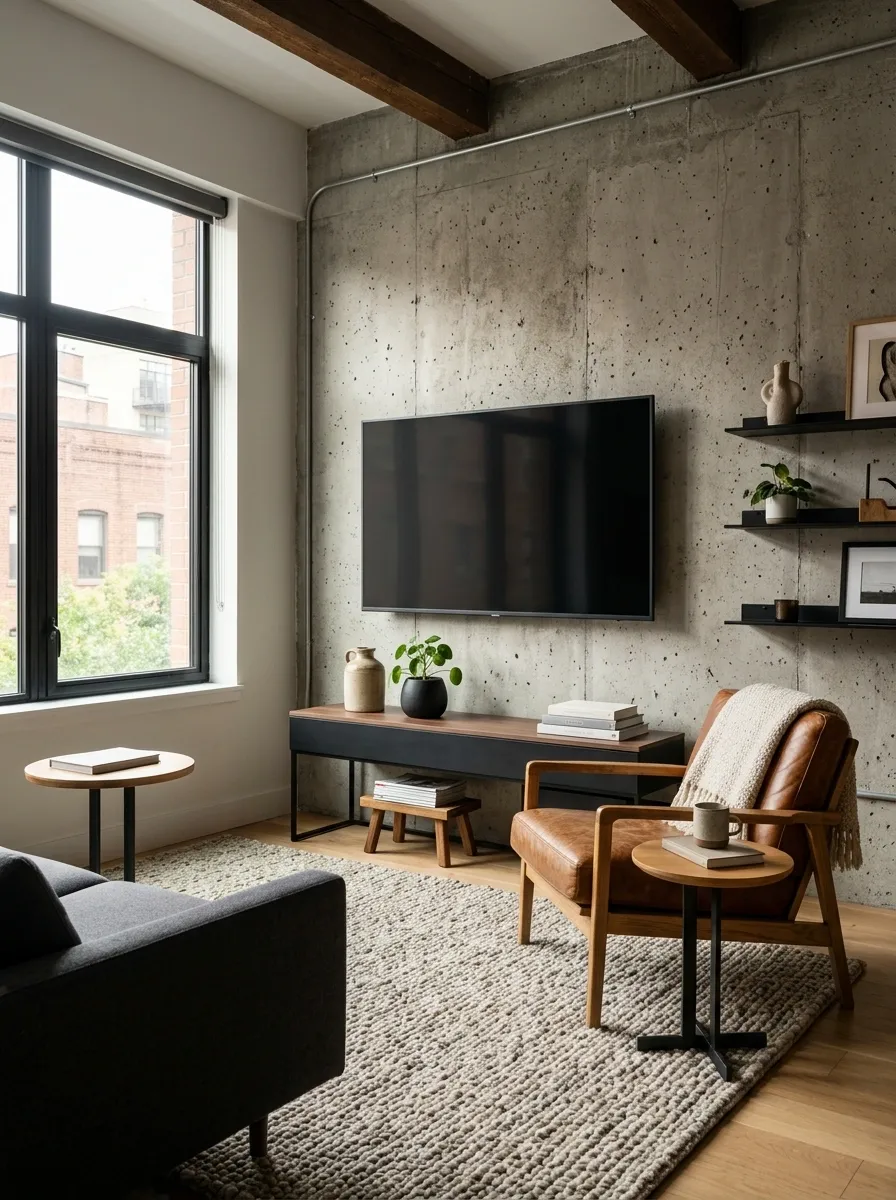
A concrete-look TV wall gives this small room an urban edge, while caramel leather seating and warm wood keep the composition from becoming cold. The television sits on a dark media console, with slim black shelving nearby and a textured neutral rug underfoot.
The contrast between hard and soft materials is what makes the room interesting. Concrete provides visual roughness, leather brings warmth and depth, and wood connects both to the lighter floor.
The palette is stronger than a typical neutral room, but the furniture remains compact. Industrial design works beautifully in small spaces right up until someone decides every empty wall needs exposed metal shelving.
Small Living Room With TV Behind a Sliding Wood Screen
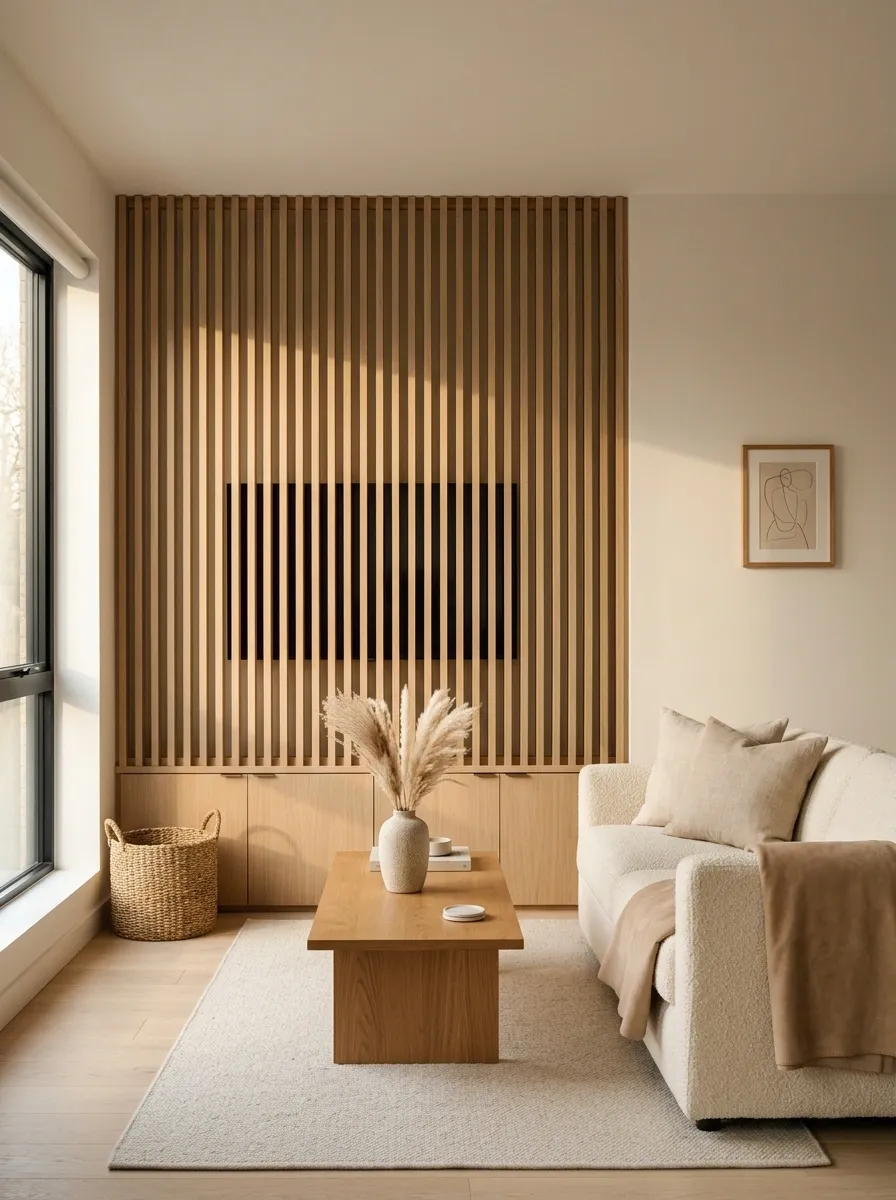
A slim wood slat screen gives this small living room a clever architectural feature while partially concealing the television. The screen separates the lounge from an adjoining area, so the TV wall feels integrated into the room instead of looking like a standalone entertainment zone. A compact cream sofa, pale rug, and warm wood accents keep the rest of the space calm.
The slatted texture adds depth without requiring a wall covered in shelves or decor. When the television needs to be seen, the screen sits aside. When it doesn’t, the room reads more like a finished living space.
A little flexibility goes a long way in a small room. Apparently walls can have jobs now.
Black-and-Cream Living Room With Graphic TV Wall
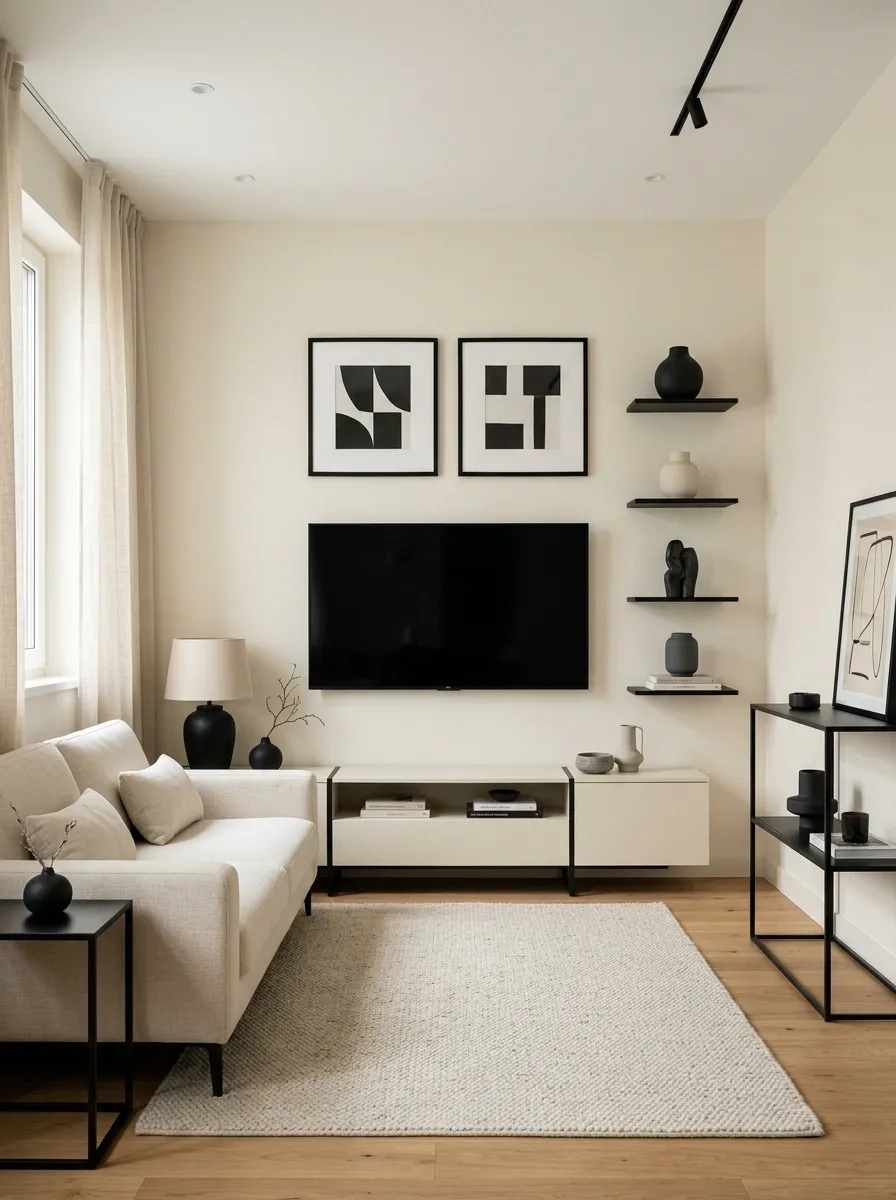
This small living room uses a crisp black-and-cream palette to create strong visual structure without adding bulky furniture. Cream walls and upholstery provide the background, while a black TV, slim shelving, dark lighting, and a few carefully placed frames create a controlled graphic rhythm.
The darker pieces are spread around the room rather than piled onto one wall. That keeps the eye moving while still giving the television a clear place within the composition. A pale rug softens the harder contrast underneath.
The trick is repetition. A few related dark elements look deliberate. Twenty unrelated black accessories just look like the decor section got unsupervised.
Tiny Living Room With Two Compact Armchairs Facing the TV
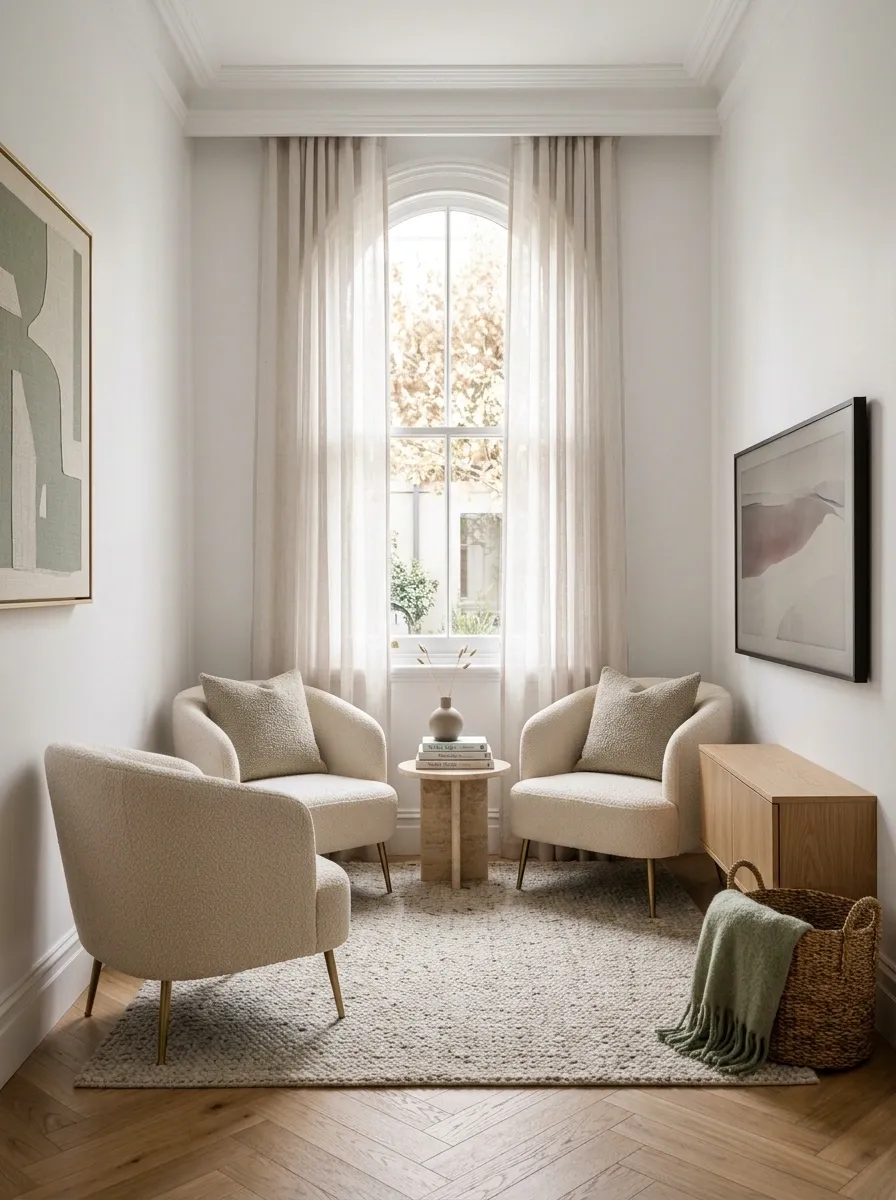
A tiny footprint doesn’t automatically require a sofa. Two compact upholstered armchairs create the main seating arrangement here, leaving more space around the furniture than a bulky loveseat would. The television sits on a narrow media cabinet opposite them, while a small round side table sits between the chairs.
The arrangement feels almost conversational, even though the TV remains the main focal point. The chairs also make the room easier to rearrange because each piece occupies a smaller individual footprint.
This is especially useful when the room doubles as a passageway. Sometimes two sensible chairs beat one enormous sofa that behaves like it owns the property.
Small Living Room With a TV and a Fold-Out Dining Zone
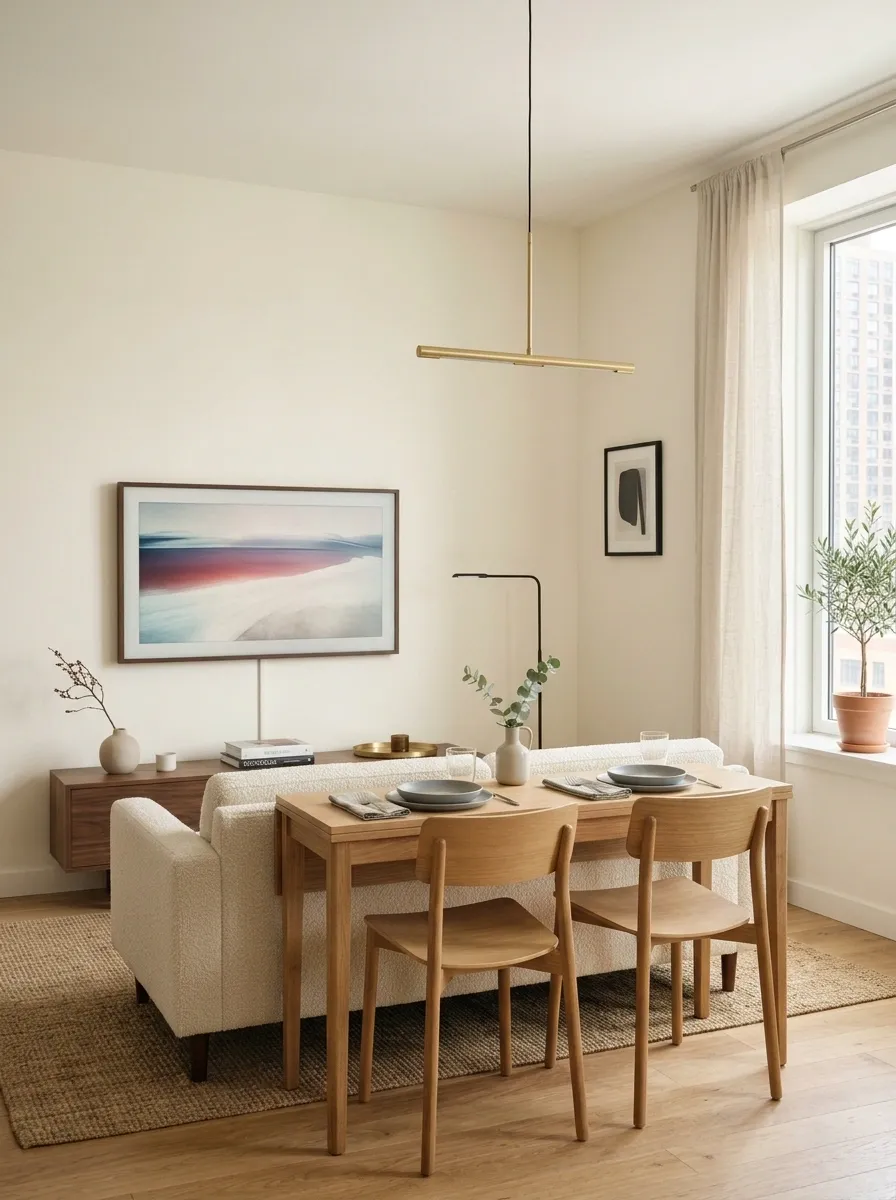
This compact apartment combines lounging and dining without letting either function take over. A small sofa faces the television, while a slim dining table sits directly behind the seating area. The two zones use different furniture shapes but share the same warm wood and neutral upholstery palette, making the whole room feel connected.
The sofa acts as a subtle divider between the two uses. A narrow pendant marks the dining side, while a floor lamp defines the living side. There’s a clear route around both zones, so the room still feels usable rather than packed.
Every square foot has a job here. Unlike the usual “just add a bigger table” approach, because apparently the missing ingredient was more furniture.
Warm Beige Living Room With Hidden Media Equipment
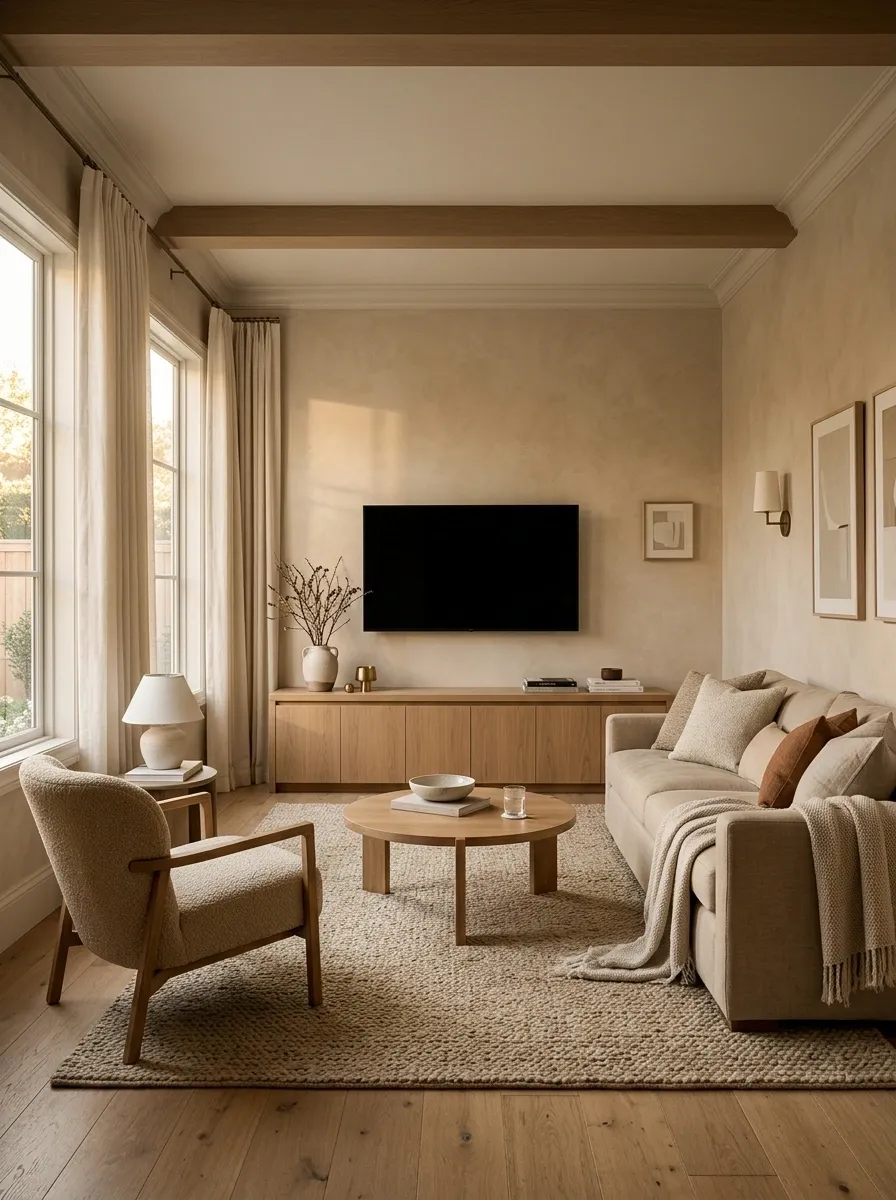
The television is visible, but almost everything surrounding it disappears. A warm beige sofa faces a simple black screen mounted above a low oak console with closed storage. Routers, gaming equipment, remotes, cables, and other electronics stay concealed inside the cabinetry. Cream curtains, a woven rug, and softly textured walls complete the quiet composition.
The room looks calm because the visual clutter is concentrated below eye level and hidden behind doors. The screen becomes the only obviously technical element.
That small distinction makes a surprisingly big difference. Nobody wants a beautiful living room that suddenly turns into Mission Control because six cables escaped from behind the TV.
Make the Entire Room Work Around the TV
A television doesn’t have to disappear for a small room to look sophisticated. It just needs a place within the composition.
Start with the room’s actual shape rather than the furniture pieces already sitting in it. A narrow room may benefit from a short-wall TV arrangement. A square room may work better with a corner sectional. A rental may need a freestanding console. A darker room may look richer with a deep painted media wall, while a naturally bright space can handle warmer wood and heavier textures.
The goal is not to make every small living room look minimal. It is to make the furniture, architecture, color, and empty space feel like they belong together.
And yes, sometimes the best decorating decision is simply refusing to buy one more thing.
Save these small living room with TV designs before rearranging the furniture, then come back when the measuring tape appears and the floor suddenly seems much smaller than it looked in the Pinterest photos.