
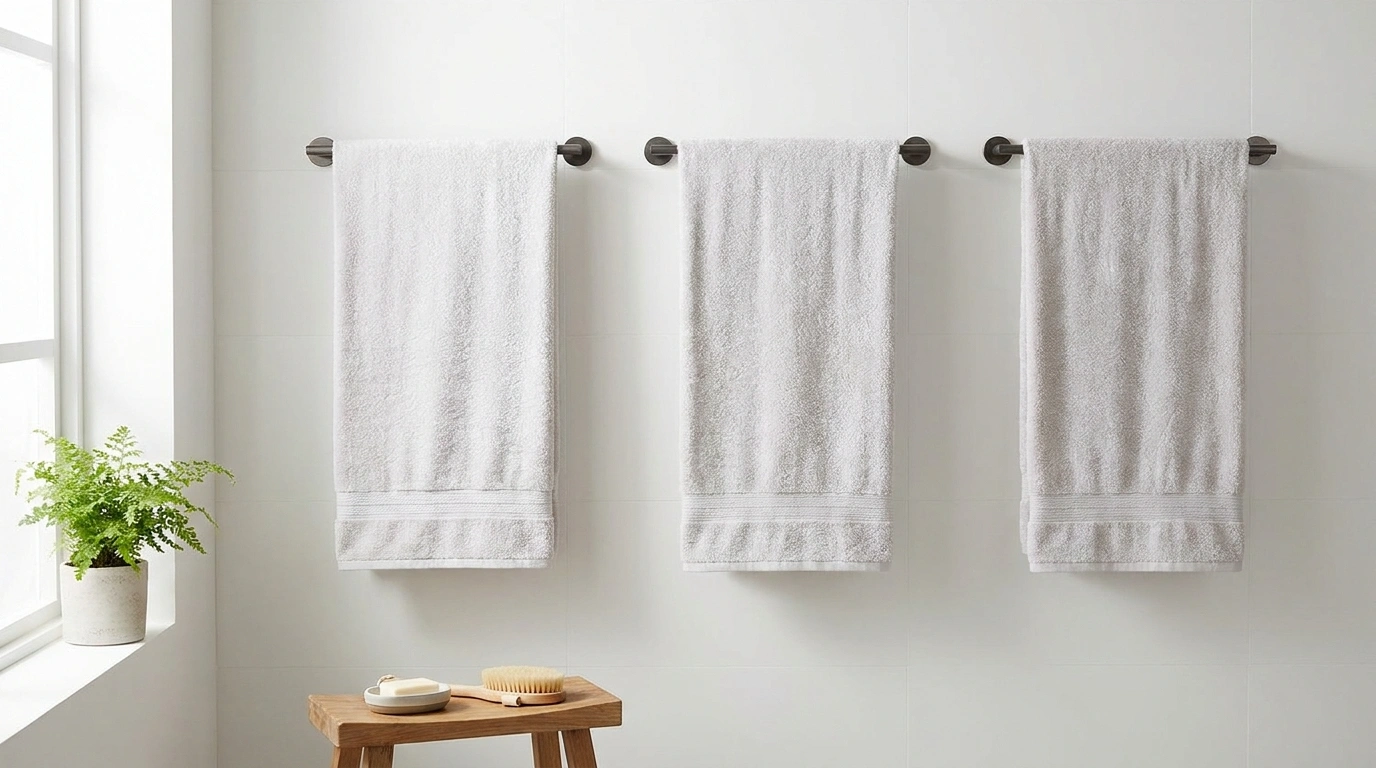
The towel on the hook is still wet.
It has been there since yesterday. It looks tidy enough from the door, which is apparently the standard the bathroom has been working toward. Unfortunately, your next shower requires a dry towel rather than a convincing silhouette.
Hanging wet towels properly is a small household task with a very straightforward objective: give moisture somewhere to go. That means opening the fabric, allowing useful air exposure, leaving room between items, and checking the room itself when drying repeatedly fails.
You don’t need a spa display. You don’t need to fold a used bath sheet into a decorative shape. You may need a wider rail, fewer towels sharing it, or a better routine for the ones waiting to be washed.
Start with the towel already in your hand. The guide below explains what to do after use, which hanging arrangements make sense in different bathrooms, and what to change when the fabric never seems to finish drying. No scented spray will be appointed to solve the problem through optimism.
The Quick Answer
Open the towel out across a suitable clean bar or rack as widely as the setup allows. Avoid decorative folds and dense bunching. Leave it separate from other damp items, use the room’s ventilation appropriately, and don’t fold or store it until it is fully dry.
Onsen’s care guide recommends hanging towels opened out rather than leaving them bunched on the floor or in a basket. Follow your own towel’s care label for laundering and machine drying.
A Routine That Works Beyond the Styling Photo
Hang It After Use Instead of Leaving It in a Heap

Move the used towel to its drying position as part of finishing the shower. Open it out before walking away rather than placing it on the bed, bath edge, or floor with the intention of dealing with it later.
The useful habit is a consistent destination. Put the rail or rack where it can be reached comfortably, while keeping safe access and room operation clear. If the towel’s proper home is inconvenient, the nearest chair will keep winning. A system that depends on everyone becoming unusually disciplined after bathing deserves a simpler layout.
After the shower
Release the bunched fabric.
Use its proper drying position.
Don’t cover it with another damp item.
Use the Towel’s Width Rather Than Folding It Into Thirds

Spread the towel along the available rail instead of making the narrow decorative fold used for clean display towels. If draping over a bar, keep the fabric open across its width and avoid compressing several thick layers into a small area.
A clean towel arranged for guests and a used towel drying between showers have different jobs. The bathroom can survive the less photogenic version. Choose a rail that suits the towels you actually use, especially if they are large bath sheets. A tiny rail cannot become wider because the folded towel looks more elegant on it.
Open fabric, fewer compressed folds.
A rail drape may create a fold over the bar; avoid adding decorative lengthwise folds as well.
Give Each Damp Towel Its Own Usable Position

A rail holding several towels pressed together isn’t providing several drying places. Separate the items so each has space rather than treating visible hanging capacity as useful drying capacity.
This may mean using another rail, a suitable rack, or a different room arrangement. Plan around the household’s actual towel use, not the empty bathroom photo. MFI’s towel-drying guidance likewise recommends opening towels out and leaving space between them. A towel bar can be beautifully coordinated with the taps and still be insufficient for the number of people using the room.
Own open position.
Separate from the first.
Prefer a Bar or Rack When Hooks Leave the Fabric Bunched
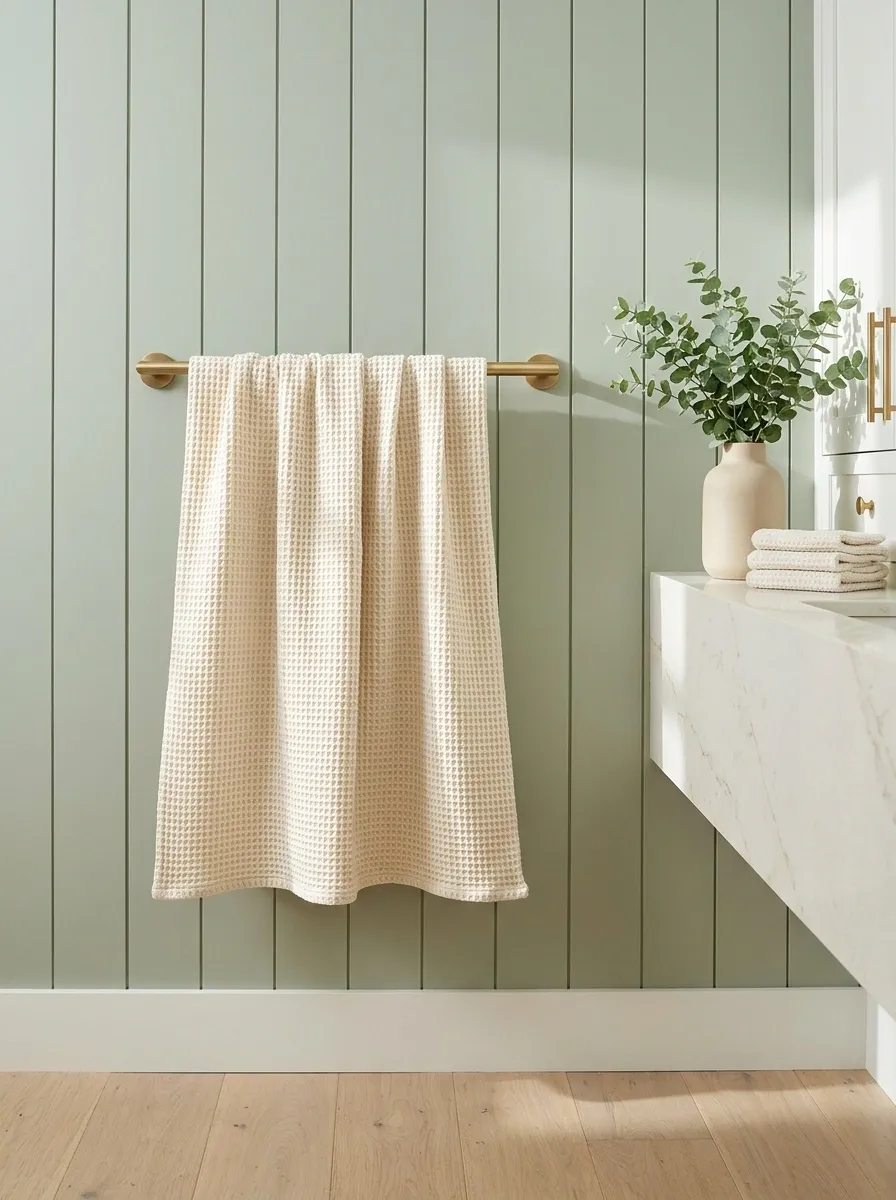
Hooks can be convenient, but a thick bath towel gathered tightly on one hook may leave dense folds. If that towel stays damp, try a suitable bar or rack that lets it open out more effectively.
Judge the result with your actual towel and bathroom conditions. Don’t declare every hook useless or every rail successful by appearance alone. A small hand towel and a large bath sheet behave differently in the same hanging spot. The practical question is whether the whole item dries, including the fabric gathered near the support. Hardware fashion can wait until that question has an answer.
If the outer fabric feels dry but the gathered center stays damp, change how the towel is supported.
Keep the Hanging Towel Away From Wet Contact Surfaces

Choose a drying position where the towel doesn’t trail onto the floor or remain pressed against a wet surface. Check the full hanging length, not just the rail height on the wall.
A towel can look neatly placed while its lower edge touches the bath, a damp wall, or another wet item. Adjust the position or choose a more suitable rack. Keep doors and household routes functional, and don’t improvise by draping towels over electrical equipment or unsuitable heat sources. The aim is useful exposure and separation, not discovering the warmest object in the room and hoping for the best.
Check lower edges, wall contact, nearby wet items, doors, and the floor.
Use a Drying Rack When the Bathroom Rail Is Too Small

A stable, suitable rack can provide more useful space than crowding the existing bar. Put it where it won’t block an exit, doorway, or normal household route, and spread the towels without packing every support tightly.
Check the rack loaded, including hanging fabric and any drips. A folding rack needs a storage home too, otherwise the bathroom acquires a permanent metal obstacle. This is particularly useful for large towels or several users. The rack should solve the space problem, not transfer it into the corridor where everyone can enjoy it together.
Open width, wet fabric, and clear route.
A proper parking place between uses.
Don’t Turn a Heated Rail Into a Dense Towel Bundle

Use a heated towel rail according to its product instructions and intended capacity. Spread items sensibly rather than wrapping the whole unit in a thick layered mass.
The heating product’s placement, electrical or plumbing installation, clearances, and permitted use matter. Don’t treat an ordinary heater as a substitute drying rack. Even with a suitable towel rail, crowding and fabric arrangement still deserve attention. A warm outside surface doesn’t prove the innermost fold is dry. Check the whole towel rather than assuming the device has completed the task merely because it feels reassuringly warm.
A suitable heated towel rail and an improvised heater-drying arrangement are different things.
Address the Bathroom’s Moisture Instead of Buying More Fragrance

If towels repeatedly stay damp, look beyond the rail. Use bathroom extraction as intended, keep ventilation paths functional, and investigate persistent moisture or leaks rather than masking the room’s smell.
The EPA’s moisture guidance emphasizes controlling moisture and using ventilation appropriately. Drying fabric in a persistently damp room can remain difficult even when the hanging arrangement looks reasonable. A room spray changes the smell you notice; it does not remove the underlying water. Deal with the environment if condensation, damp surfaces, or recurring problems suggest more than an overcrowded towel bar.
Check the room, not just the towel.
Keep Clean Display Towels Separate From Used Ones

Give clean spare towels a dry storage position and used towels an open drying position. The two arrangements don’t have to look identical, because they are performing different tasks.
A folded clean stack can stay attractive in a suitable cupboard or dry location. A damp towel belongs somewhere it can dry, not folded back into that stack for the sake of symmetry. Parachute’s towel-care guidance likewise separates hanging between uses from folding only after drying. Treating a used towel as a display object is a remarkably effective way to make the bathroom look tidier than it functions.
Dry storage and a neat fold.
Open hanging and drying space.
Check the Whole Towel Before Folding It Away

Feel the denser areas and folds, not just the exposed edge. The towel should be fully dry before it goes into closed storage or a folded stack.
There isn’t a universal drying time that makes this check unnecessary. Fabric, thickness, room conditions, and the hanging arrangement all affect the result. If the towel is still damp, reopen it or change the drying setup instead of folding it with confidence. Confidence is not an absorbent material. Use the condition of the actual towel as the decision, with its care instructions guiding any machine-drying finish.
Check the center, folds, and gathered areas before storage.
Let Towels Awaiting Laundry Dry Before Closed Storage
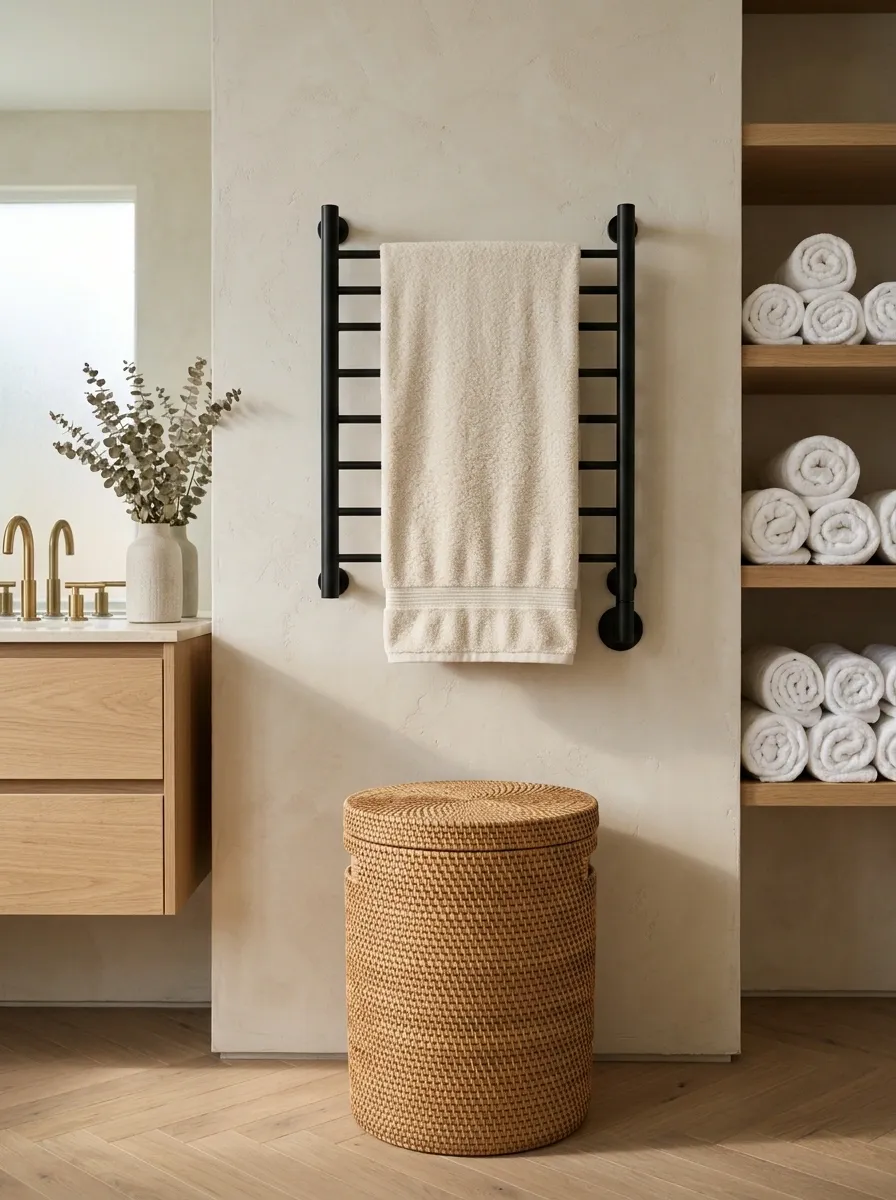
If a used towel is waiting for the next wash, don’t automatically compress it into a closed pile while wet. Where practical, give it a suitable drying position before it joins the laundry, keeping soiled items handled appropriately.
The same household can need both a drying place and a hamper. One doesn’t replace the other. Make the routine obvious so the bathroom floor doesn’t become the unofficial holding area. Keep the drying arrangement away from clean stored linen. A laundry basket is excellent at containing fabric; it is less talented at opening that fabric out for useful air exposure.
Don’t ask a closed hamper to perform as a drying rack.
Wash a Musty Towel Instead of Trying to Perfume It

If a towel smells unpleasant, follow its care label and launder it appropriately. Then check the drying routine so the same problem doesn’t simply return after the next use.
Don’t add fragrance as a substitute for washing or invent chemical mixtures from several unrelated household tips. Use laundry products according to their instructions. Brooklinen’s care guide illustrates how specific wash and dryer guidance varies by towel type. Your own label is the relevant starting point. An expensive towel doesn’t become immune to an unsuitable routine because its packaging once described a spa experience.
Use suitable wash and drying settings and follow product instructions. Skip improvised chemical combinations.
Use an Outdoor Line When Conditions and the Towel Allow

A suitable clean line or rack outdoors can be a useful drying option when weather, security, and the towel’s care instructions permit it. Open the fabric, support it sensibly, and leave space between items.
Check the towel before bringing it in and don’t fold it into storage while still damp. Outdoor hanging is a practical option, not a guaranteed result in every climate or season. The arrangement should suit the actual conditions rather than an idealized picture of a dry breezy day. Sometimes the weather has declined to participate, and another suitable drying method is the sensible choice.
Is outside useful today?
Check weather, cleanliness of the support, security, care instructions, and the towel’s condition before storage.
Check That the Rail Is Secure and Actually Clean

A towel rail should support its intended wet load, remain securely fixed, and be clean enough for the fabric touching it. Check mounting and condition according to the product and wall construction.
This matters particularly when adding a rail to solve an overcrowded bathroom. Adhesive or suction products need to be used within their stated conditions and capacity; visual neatness isn’t a load rating. Position the rail so doors and people don’t repeatedly catch the towels. The drying routine is easier to maintain when the hardware doesn’t detach itself during the morning rush.
Suitable support, secure fixing, clean contact surface, and clear hanging length.
Give the Household Enough Drying Capacity

If several people use the room, count the towels that need to dry at the same time and plan actual positions for them. Keep the arrangement simple enough that everyone can use it without a demonstration.
A separate suitable rack or additional properly fitted rail may do more than repeatedly asking people to spread towels on a bar that is already full. Consider the towels themselves when replacement becomes necessary, using product information and care needs rather than assuming the plushest option suits every room. The bathroom needs a workable system for its real occupants, not the imaginary single person in the styling photograph.
Count usable positions, not hooks.
If the hardware can’t provide that, change the setup before blaming the household routine.
Next Time You Leave the Shower
Open the towel. Put it in its proper drying position. Leave it separate from the next damp item. Later, check the whole thing before folding or storing it.
If it still won’t dry reliably, change one real condition: the bunching, the available space, the hanging position, or the room’s moisture management. Don’t buy a more persuasive bathroom fragrance and call the investigation complete.
Keep the quick routine somewhere useful if the household needs a reminder. The aim is a towel that is ready for its next job, not one that looks impressively tidy while remaining damp in the middle.