
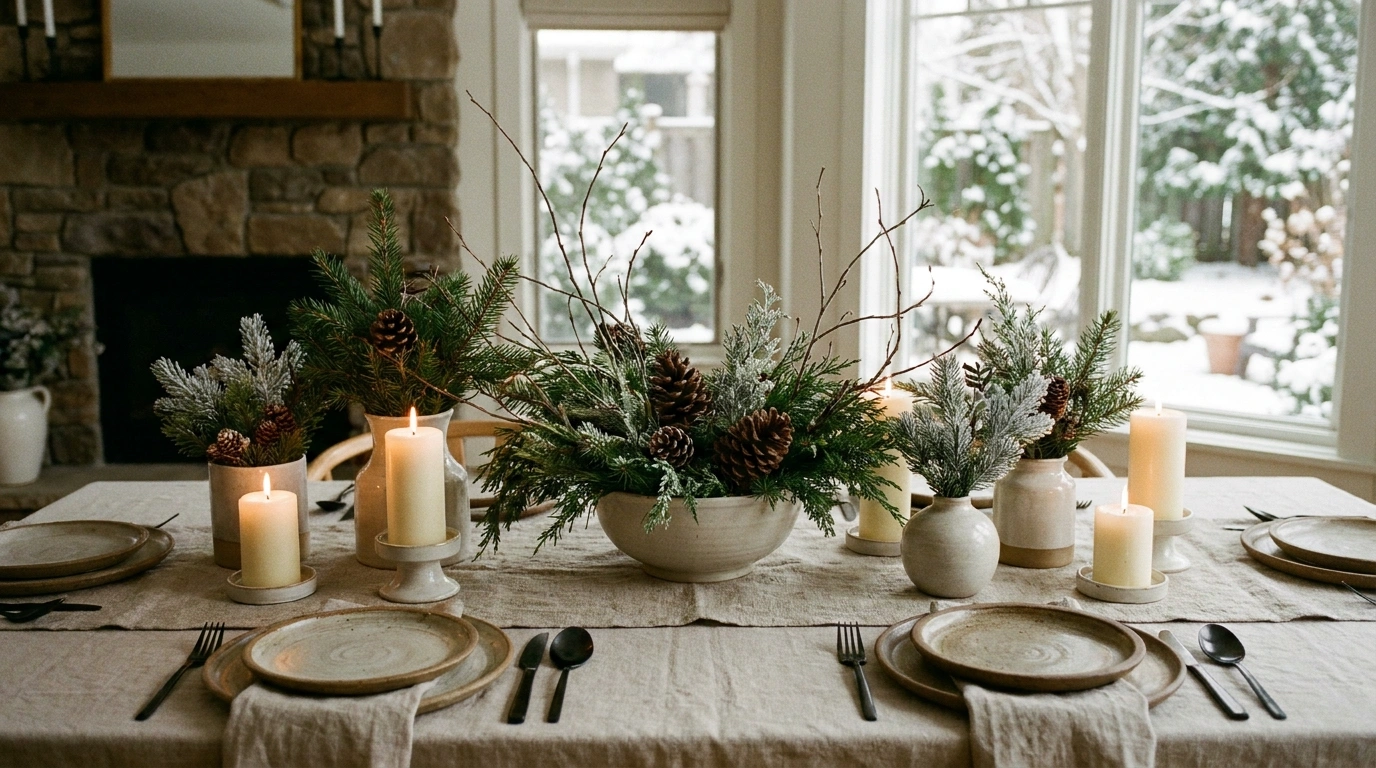
A winter table does not need to stay bare until spring. It also does not need to host a miniature forest so dense that passing the potatoes requires navigation equipment.
Start with how the table is used. A centerpiece for a working dining table needs room for plates, serving dishes, and people looking at one another. A hallway table can support more height. Coffee-table arrangements need space for the ordinary things that arrive there, usually without asking.
The ideas below lean into winter through texture, branches, muted color, and evening light. For light among dry materials, use suitable battery-operated candles with secure battery compartments; the U.S. Fire Administration recommends considering flameless alternatives.
Winter Centerpiece Ideas That Leave the Table Usable
A Glass Cylinder Framed by Berries
Anchor a tall glass hurricane vase inside a low wooden tray surrounded by frosted eucalyptus and bright red berries. The combination brings a welcome touch of woodland texture to a simple tabletop.
Nestle a few small pinecones evenly around the base to keep the arrangement grounded and organic. Choose a neutral pillar candle to maintain a calm, balanced glow throughout the evening hours.
Keep the overall height manageable so conversation flows easily across the table. This self-contained display looks intentional and stays well out of the way of everyday dining.
Mason Jars with Twinkling Lights
Fill a collection of clear glass jars with delicate fairy lights and fresh evergreen sprigs for an effortless seasonal glow. Drop in a handful of star anise at the bottom to add subtle detail and warm natural color.
Cluster the jars together on a sideboard or down the center of the table to create gentle evening illumination. The battery-powered lights keep things safe and entirely free of messy wax drips.
Vary the heights of the jars slightly if using different sizes to build natural visual rhythm. This luminous arrangement transitions seamlessly from the holidays right into the quietest months of winter.
Bare Branches at One End of a Long Table
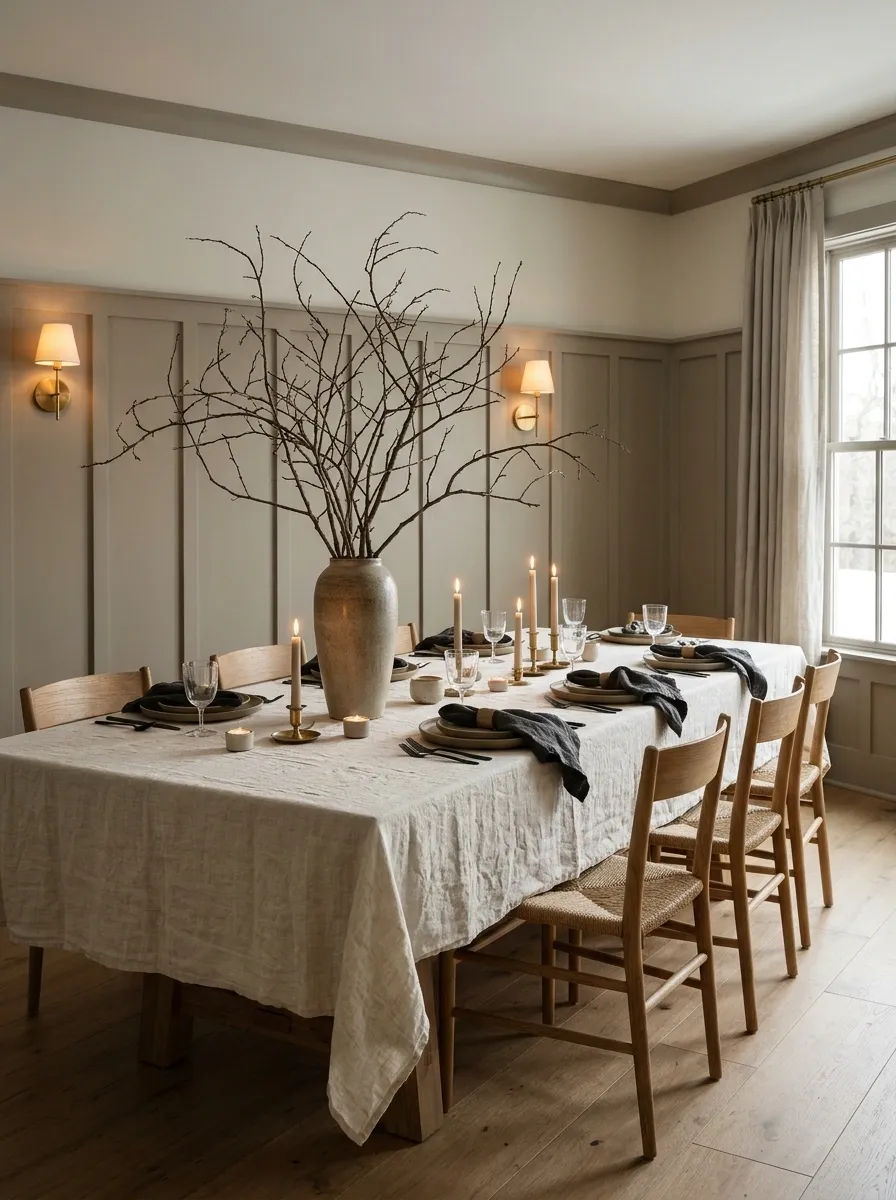
A branch arrangement can give winter structure without filling the table’s center line. Place a stable vase toward an end that will not be occupied during the meal.
Choose clean, suitable branches with an open silhouette. Keep them clear of faces, pendant lights, and circulation around the table.
If every seat will be used, move the tall vase to a nearby sideboard. The seasonal display still contributes to the room. Nobody should have to introduce themselves through a twig simply because the centerpiece was feeling architectural.
Vase toward an unused end, with clear sightlines
Tall vase moves to the sideboard
Glass Cylinders with Evergreen Bases
Line up a series of glass cylinders down a table runner, each holding a single pillar candle surrounded by pine sprigs and tiny pinecones. The clear glass protects the greenery while showcasing lovely natural textures.
Keep the spacing between each cylinder consistent to maintain a clean, rhythmic centerpiece along the length of the table. Use neutral dinnerware nearby so the simple green and brown elements can take center stage.
Opt for battery-operated candles if you prefer a worry-free display that can flicker safely for hours. This classic arrangement adds quiet structure to the room long after the seasonal decorations are packed away.
A Narrow Tray of Flameless Pillars
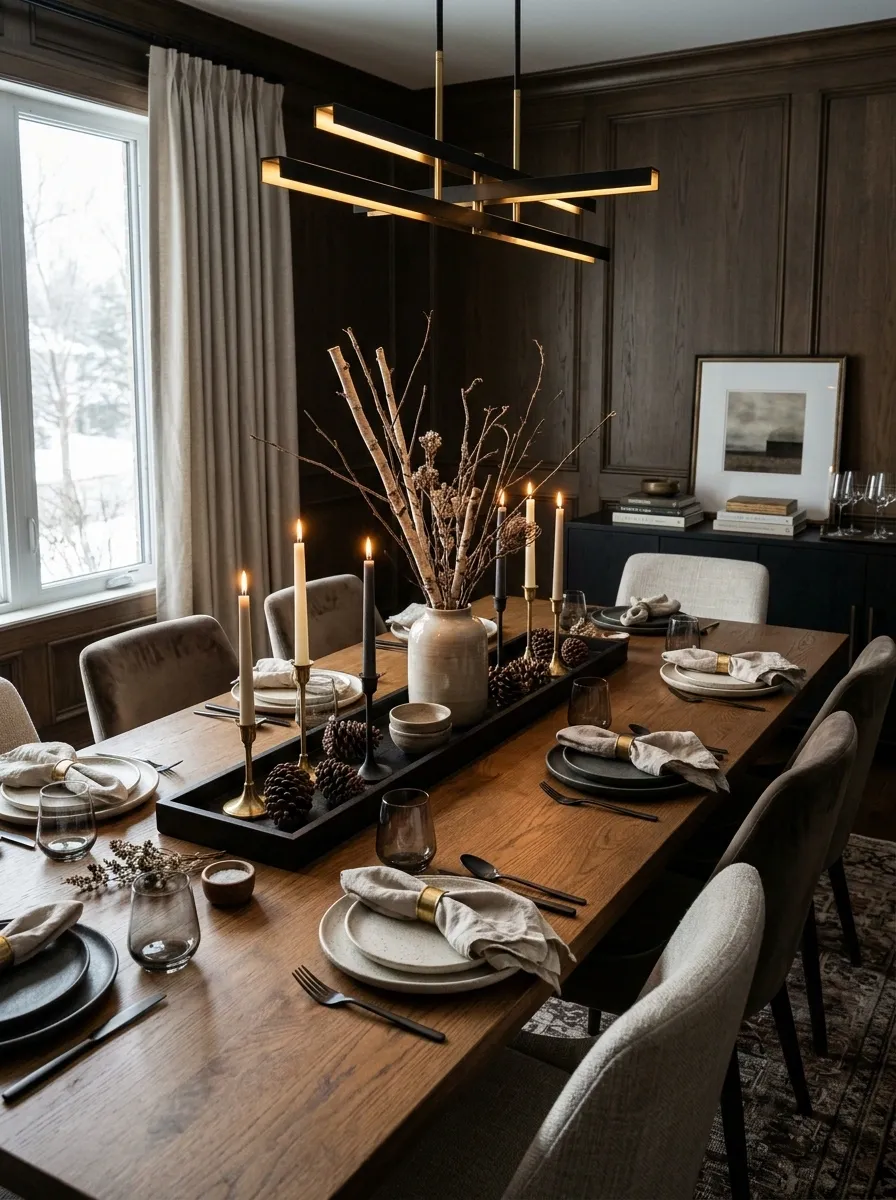
Arrange a few flameless pillars on a narrow tray, varying their height enough to create rhythm without blocking the view across the table.
Keep the tray itself proportionate. It should leave space for plates and the serving dishes you actually use, not just the smaller ones from a styled breakfast.
Choose a consistent candle color and warm-looking light. The tray can be metal, timber, or stone-look material with suitable protection beneath it. Avoid adding loose dry foliage around real flames; the battery option is doing useful work here.
Flameless pillars on one tray
Keep both long sides available for dining. Diagram is conceptual, not a seating or clearance measurement.
Pears in a Dark Wooden Bowl
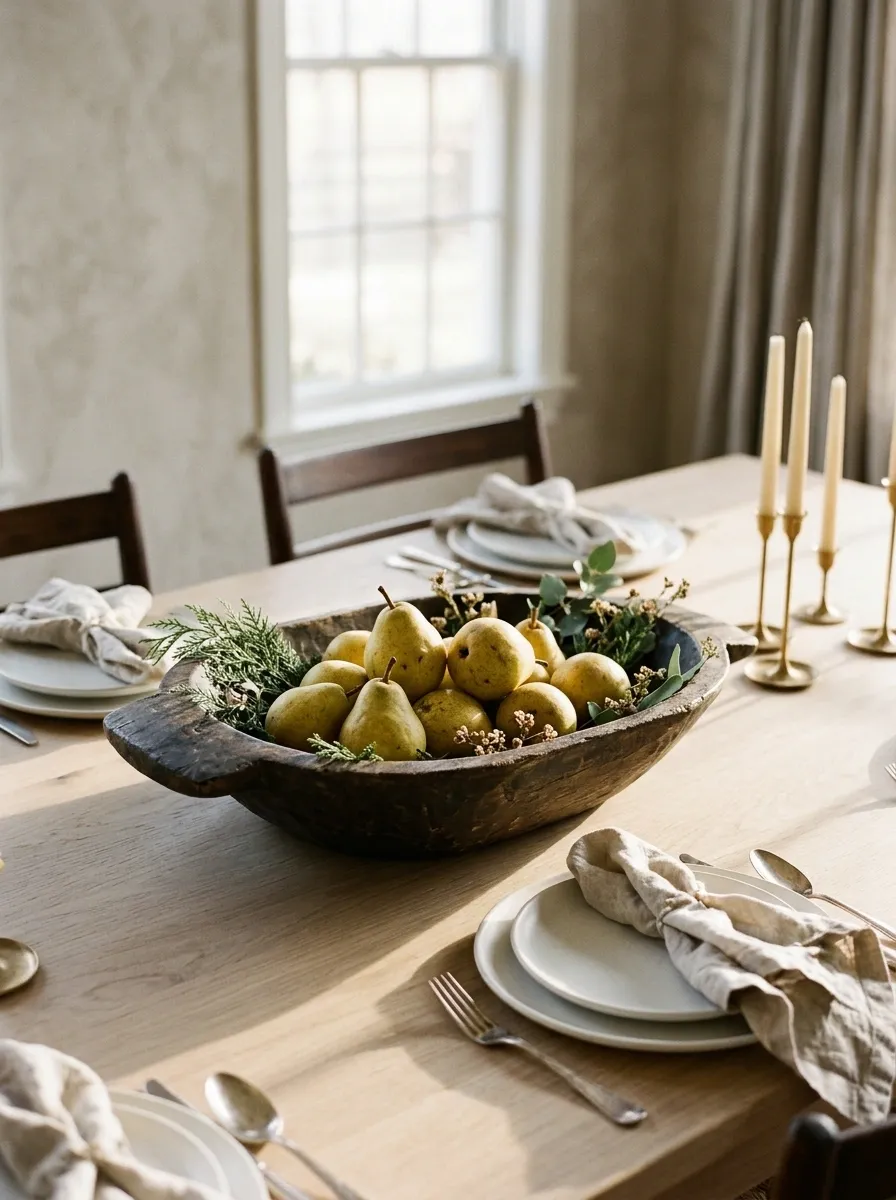
A bowl of pears can look seasonal through its muted yellow-green color and generous shape. Use clean, sound fruit and keep the bowl appropriate for food contact or use a suitable liner.
Choose a darker bowl if the table is pale, or a lighter ceramic one against dark timber. The contrast makes an everyday object feel deliberate.
Use and replace the fruit rather than treating it as permanent sculpture. The centerpiece is allowed to become lunch; it is less charming once it begins developing a private ecosystem.
A Single Hellebore Arrangement in a Low Vessel
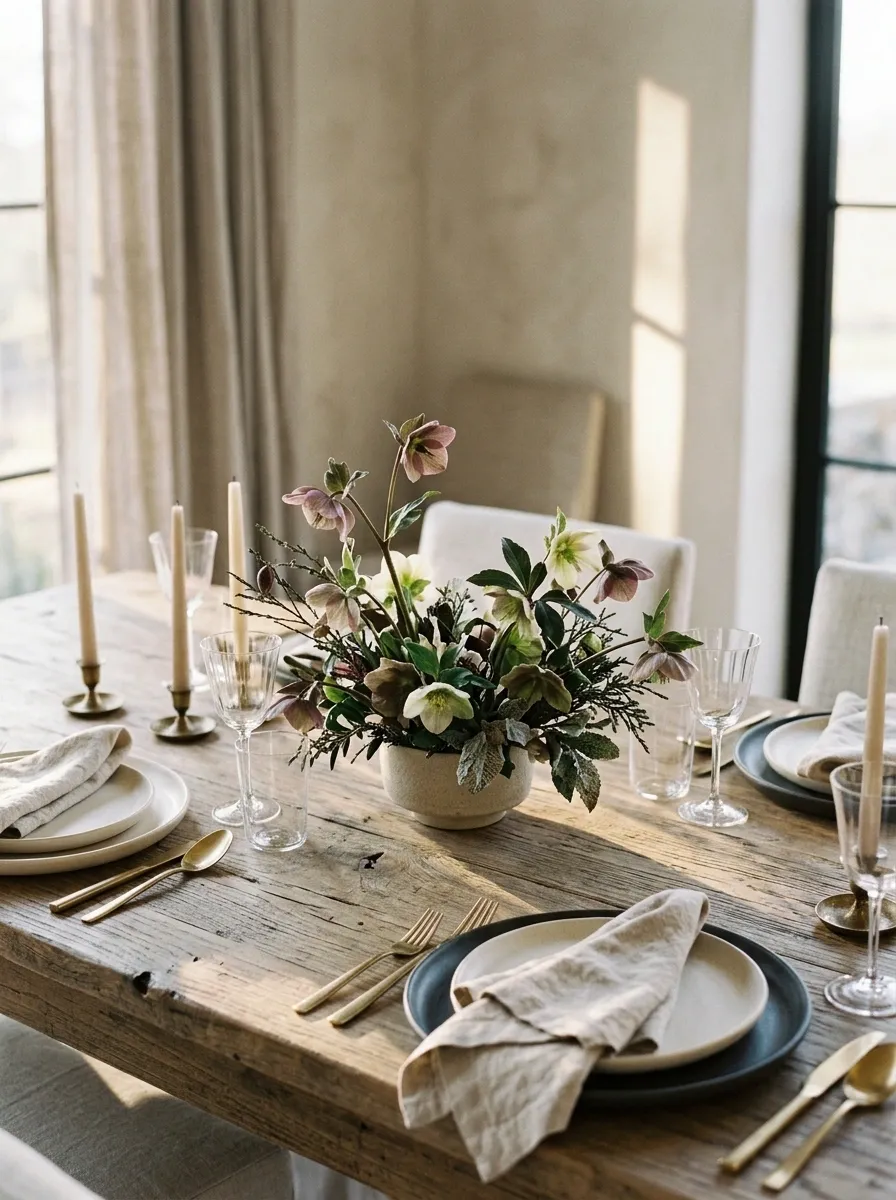
A low arrangement of winter flowers can feel quieter than a large mixed bouquet. Choose one main flower type and let its natural shape carry the display.
Use a suitable watertight vessel and protect the table. Keep any potentially toxic plants away from pets and children, and check the specific plant before bringing it into the home.
For a dining table, trim the overall silhouette so seated guests can see comfortably. The effect comes from the flower forms and a restrained vessel, not from adding every available stem until the arrangement gains territorial ambitions.
Low watertight vessel
One main flower type
A little suitable foliage
Clear view across the table
A Ceramic Village Without Holiday Accessories
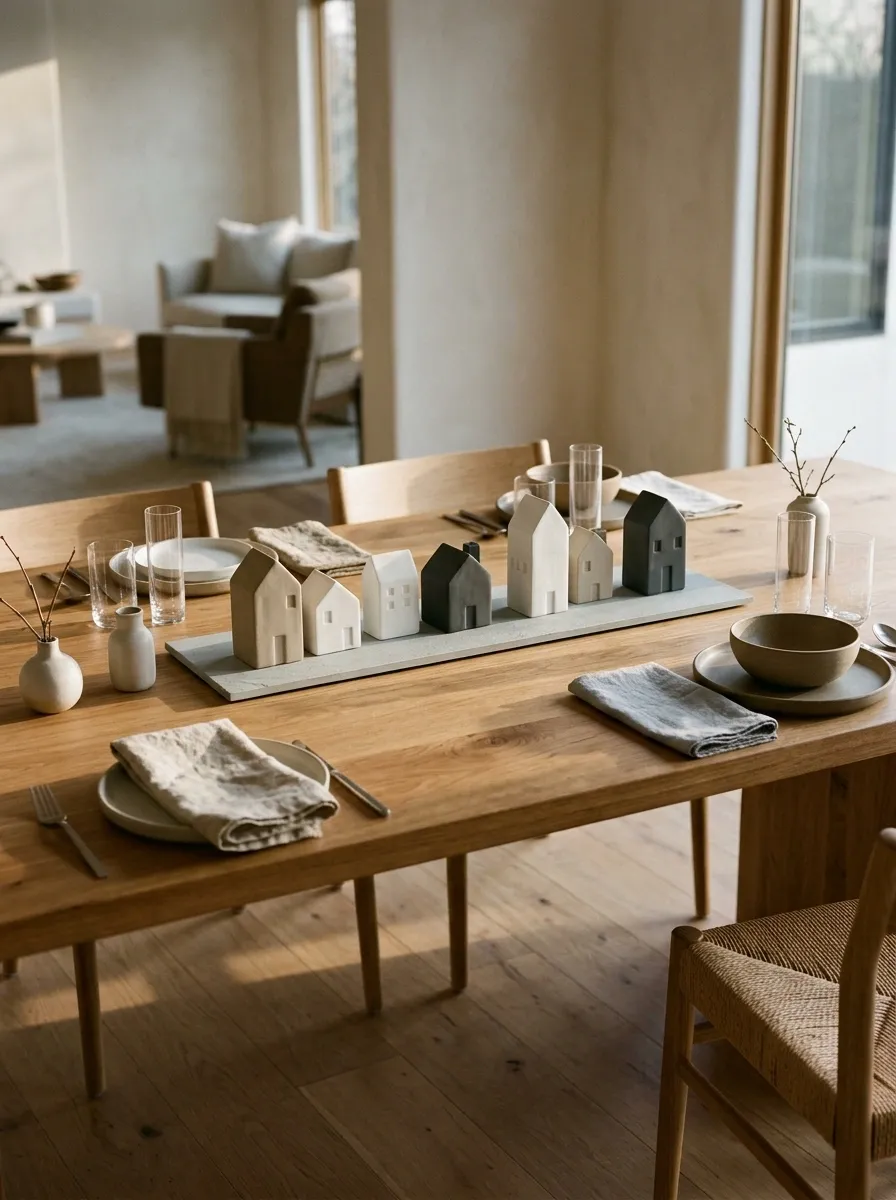
A small group of plain ceramic house forms can create a winter streetscape without turning the table back into a holiday display. Choose a restrained palette such as chalk, stone, and charcoal.
Keep the buildings low and limited in number. A simple base or tray makes the group easy to lift away.
Use unlit objects or suitable battery lighting if the pieces are designed for it. Skip loose glitter, imitation snow, and anything that sheds onto food. The winter atmosphere can survive without a blizzard occurring directly above the butter dish.
Plain ceramic forms on a tray
Leave gaps between the forms and keep the display low. Diagram is conceptual, not a seating or clearance measurement.
Folded Linen With One Sculptural Object
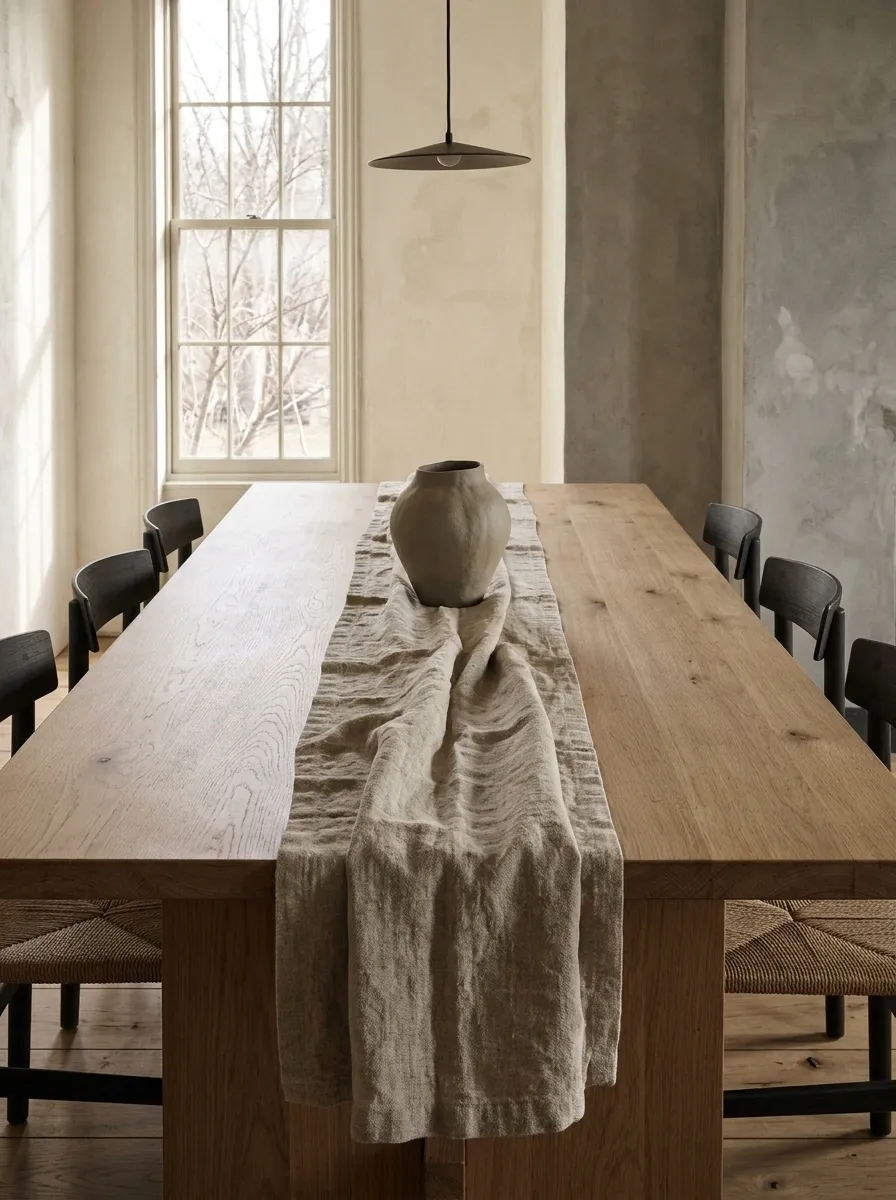
A folded strip of substantial linen can provide a quiet base for one ceramic or carved object. Let the textile add softness while the object supplies shape.
Choose a runner width that leaves place settings comfortably supported on the table. Wrinkles can look relaxed; bunching beneath a glass is a less successful interpretation.
Use a piece you already enjoy rather than buying a winter-themed object. A bowl, small abstract sculpture, or simple vessel can feel seasonal when the surrounding texture and color change.
Soft folds inside the central zone
Fabric bunches beneath plates or glasses
A Cluster of Amber Bottles With Sparse Stems
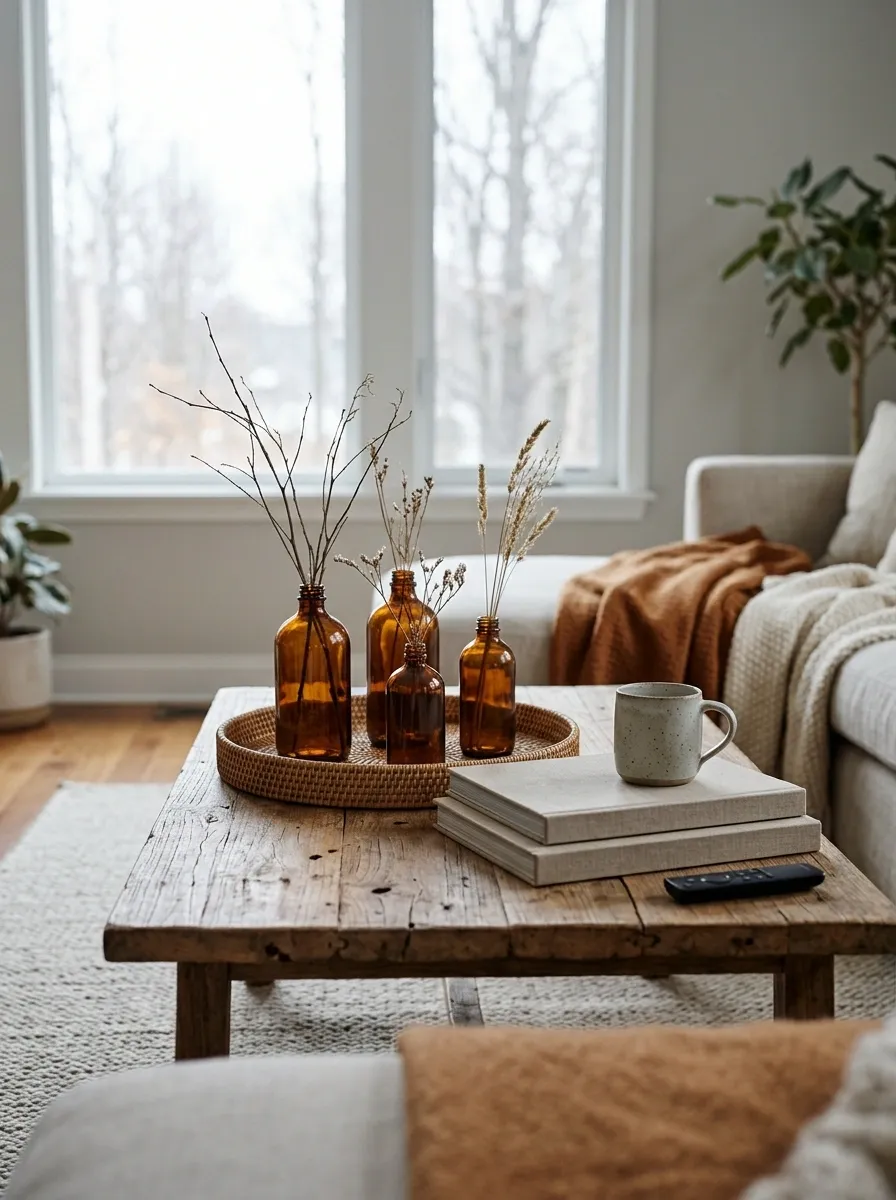
Amber glass can add warmth to gray winter daylight. Group a few clean bottles on a protected tray, using only one or two suitable stems in each.
Keep bottle heights varied but the arrangement open. Place taller pieces at an unused end or on a console if they interrupt dining sightlines.
Use stable bottles and avoid containers with narrow bases that tip easily. On a coffee table, fewer pieces often work better because the arrangement must share space with drinks, books, and whichever remote has decided to disappear again.
One protective tray
A few stable bottles
Sparse clean stems
A usable surface beside the group
A Shallow Basket With Pinecones
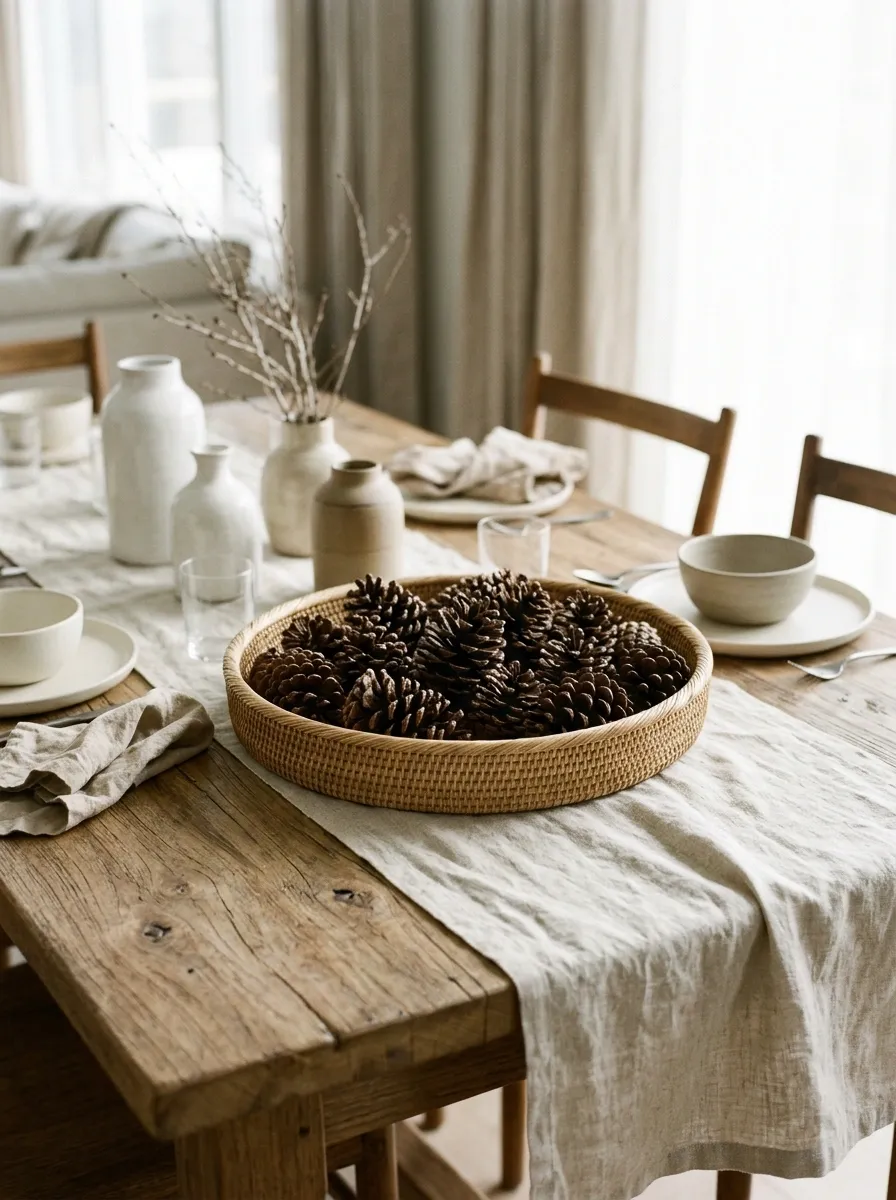
Pinecones can provide winter texture in a low basket, particularly beside plain ceramics and pale linen. Use clean, dry, pest-free material or suitable artificial alternatives.
Keep cones contained so fragments stay away from plates. Line the basket if necessary to protect the table and catch small pieces.
The shape matters more than quantity. A loose, shallow layer shows the texture better than a mound rising into everyone’s field of view. There is no need to recreate the entire woodland floor on a table that also has to hold soup.
Low contained pinecone layer
Leave the outer table area clear. Diagram is conceptual, not a seating or clearance measurement.
A Dark Platter With White Ceramic Fruit
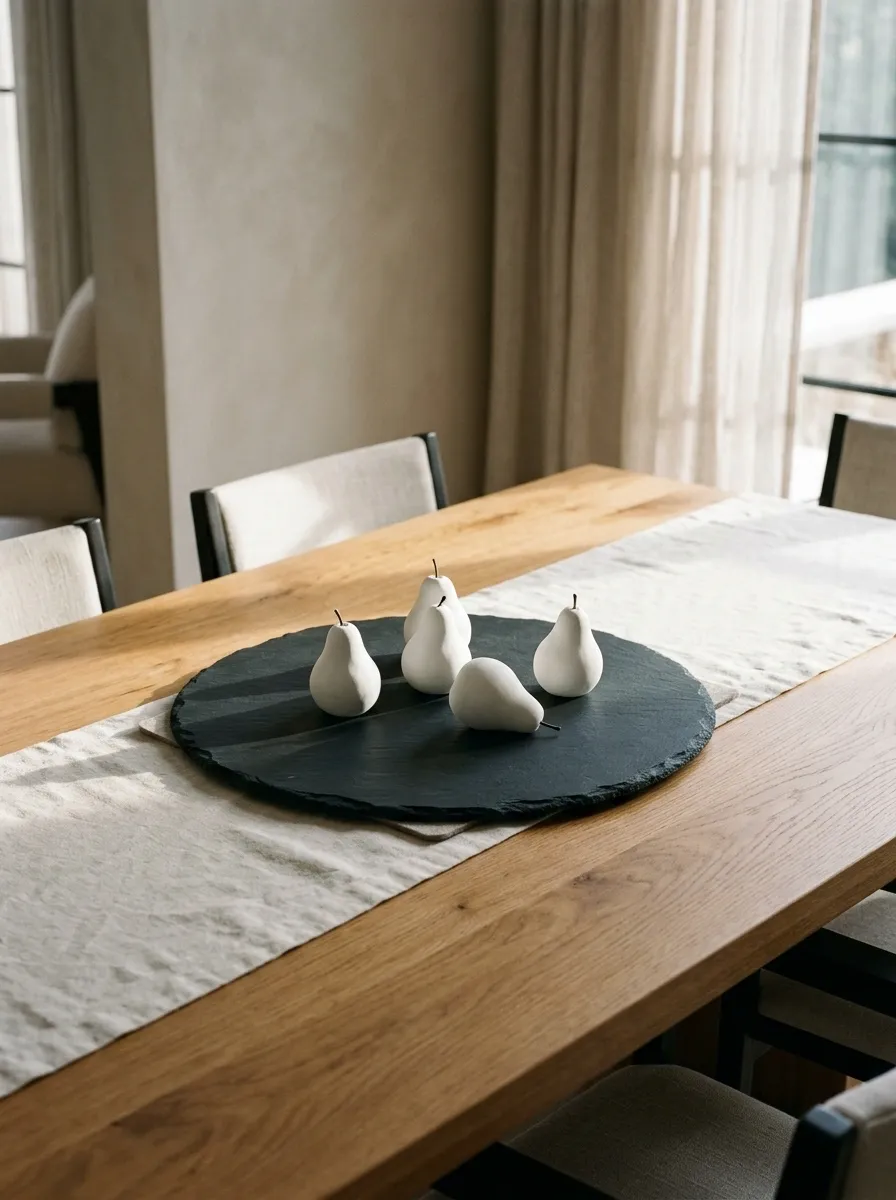
White ceramic pears or other simple forms can look graphic on a dark platter. Choose a small group with a little variation in size, then leave empty space around them.
This is especially effective on a warm timber table where the dark base creates a clear outline. Keep the surrounding textiles plain.
Add felt or another suitable protective material under abrasive pieces. The arrangement should be easy to move as one unit, without ceramic objects rolling toward the edge every time someone reaches for the bread.
Open the placement notes
Use the dark base to contain the pale shapes
Illustrative colors, not paint-product matches or mandatory proportions.
A Teapot Filled With Winter Foliage
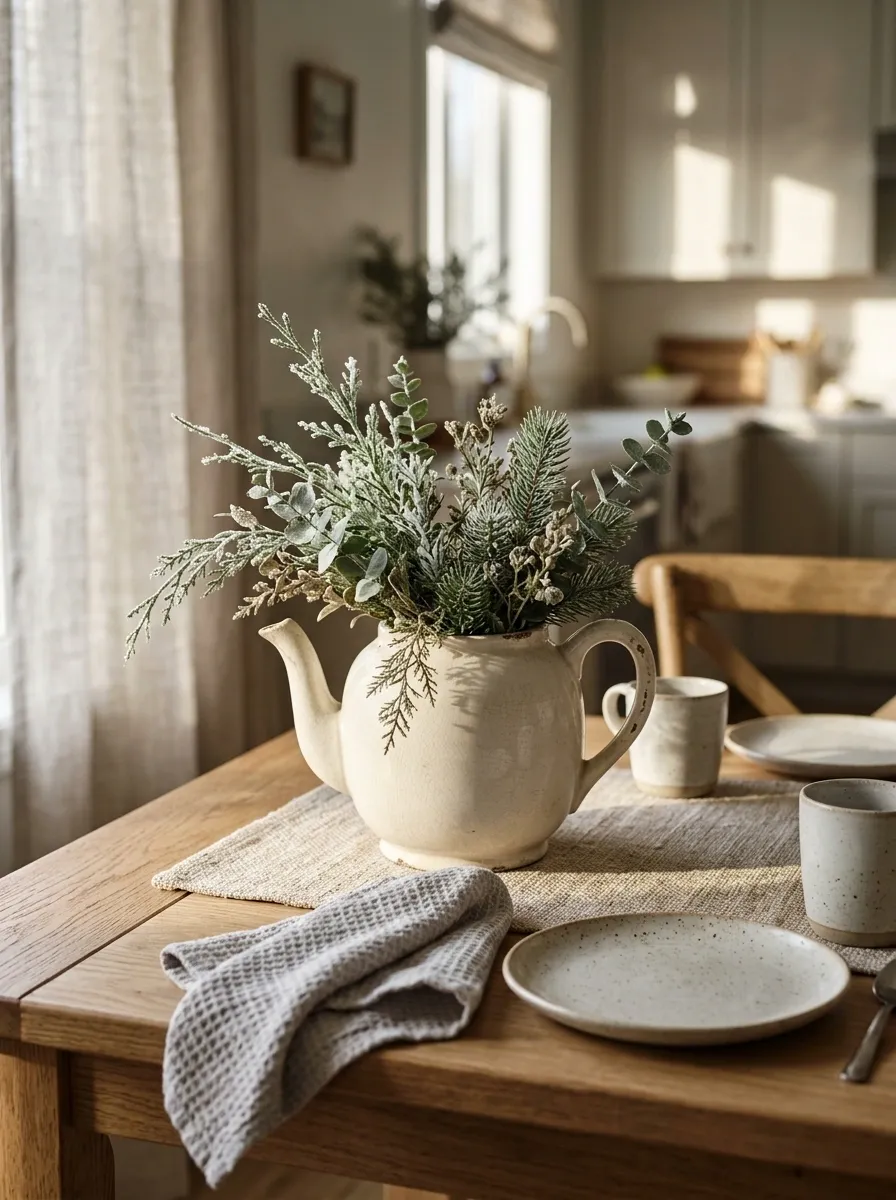
A spare teapot can become a compact vessel for suitable foliage or artificial stems. Check that it is watertight and protect the table beneath it.
Use a short arrangement that follows the pot’s shape rather than overwhelming the handle and spout. The vessel should remain recognizable.
This works well on a breakfast table, where the familiar object feels relaxed. Keep the actual serving teapot available elsewhere. A centerpiece is less delightful when guests discover the only source of tea has been filled with decorative branches.
A Low Row of Bud Vases
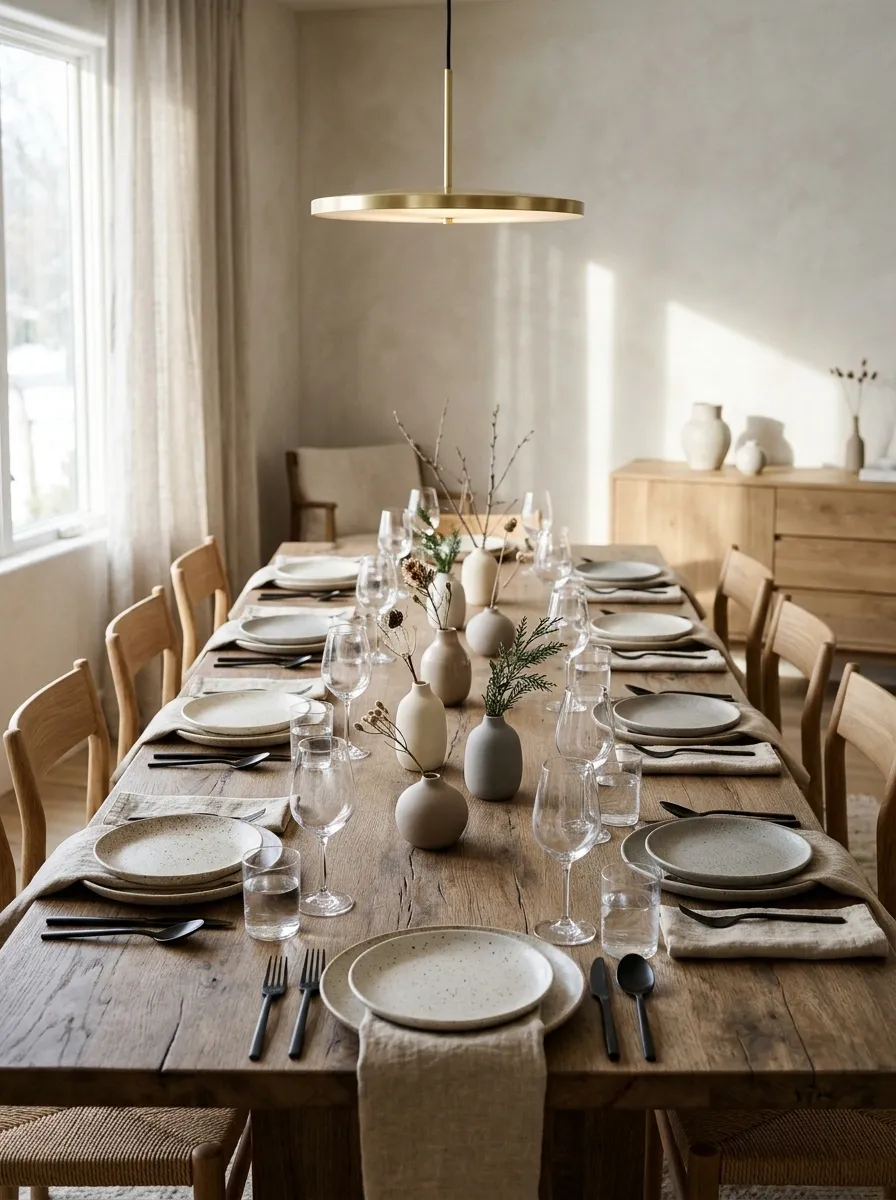
Small vases can create a flexible center line on a long table. Use a few consistent vessels, each with a short stem, and leave spaces for serving dishes.
Keep the stems below the main sightline and check the bases are stable. Tiny does not automatically mean difficult to knock over.
The arrangement can adapt to the meal: remove a vase where a platter needs to go rather than relocating the entire display. Repeating a simple vessel gives the table rhythm without requiring a large, expensive bouquet every week.
Short stems in separate stable vases
Leave deliberate breaks for serving dishes. Diagram is conceptual, not a seating or clearance measurement.
A Branch Ring Around a Low Ceramic Bowl
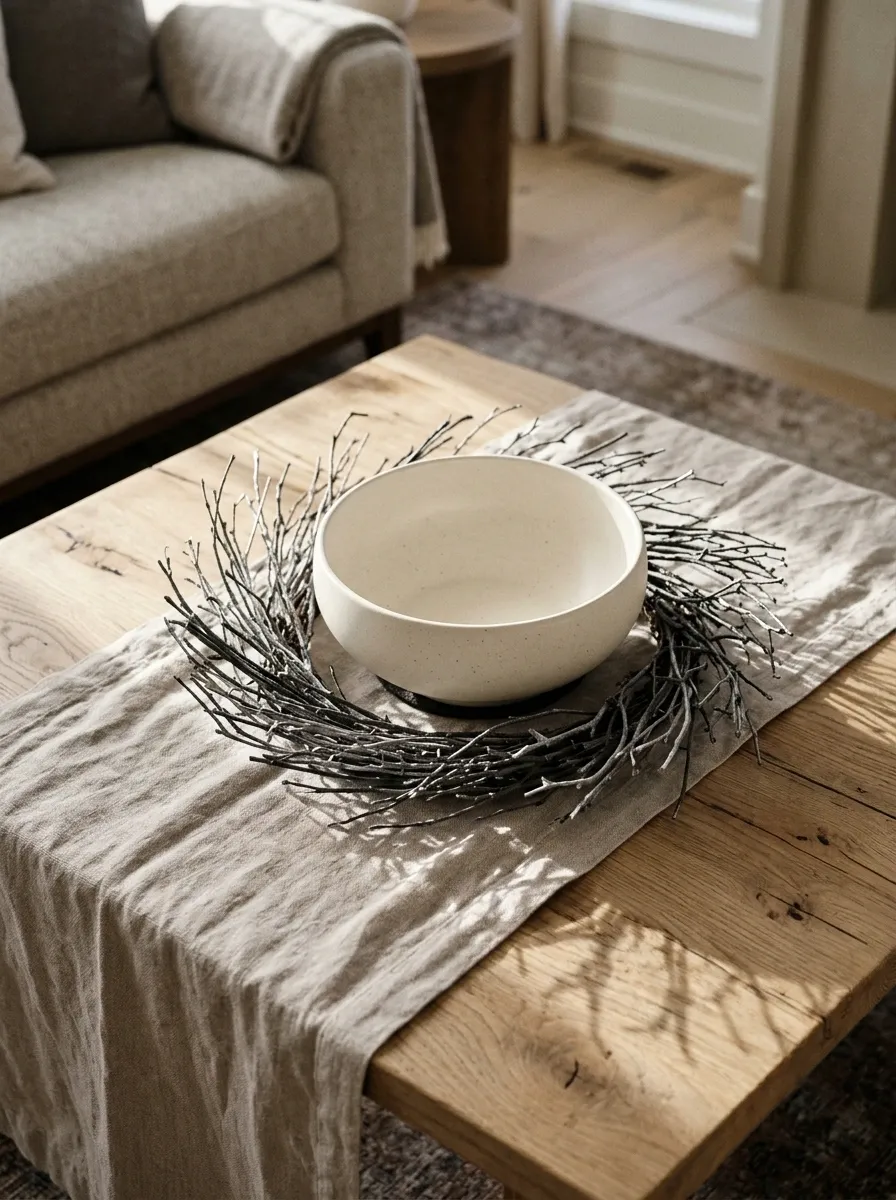
A restrained artificial twig ring can define a central bowl on a side table or occasional table. Keep the ring compact and the bowl empty or filled with suitable decorative objects.
Use a protective base if the twigs could scratch the surface. Avoid long projecting ends near arms and clothing.
For a dining table, make the whole arrangement removable and keep all materials away from food preparation. The ring should read as one contained shape, not as loose branches trying to establish a route into the adjacent place setting.
Protective base
Compact artificial twig ring
One low central bowl
No projecting ends into the dining zone
A Footed Bowl With Nothing Inside
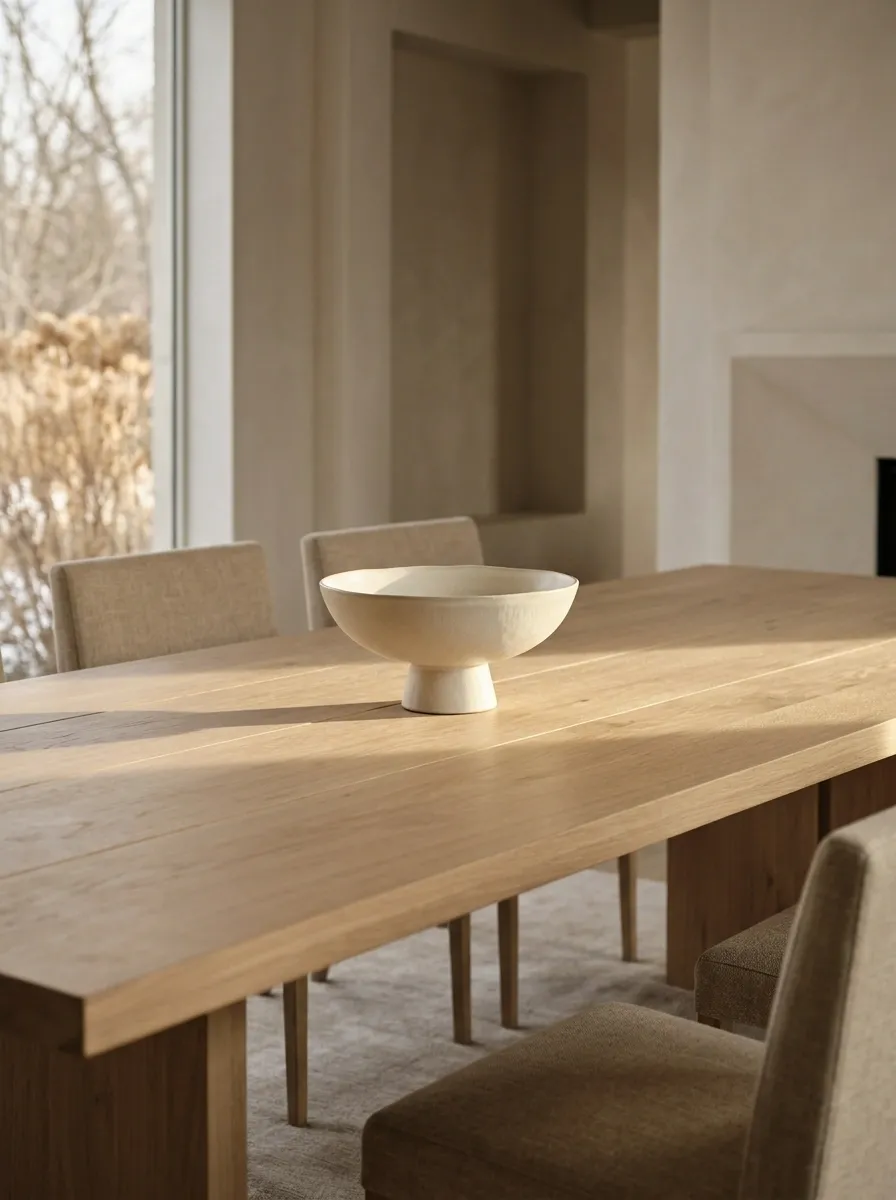
Leave the bowl empty.
A footed ceramic vessel can offer enough height and shape to feel deliberate, particularly on a simple table.
Choose a piece that remains below eye level and sits securely. Compare its scale with the table before deciding it needs filling.
Try it empty for a few days. The silhouette and glaze may already provide the interest you wanted. Decorative filler is remarkably persuasive in shops, but your bowl does not owe anybody a collection of identical woven balls to justify its existence.
Shape, glaze, and negative space remain visible
The vessel disappears beneath unrelated filler
A Slate-Colored Tray With Cream Textures
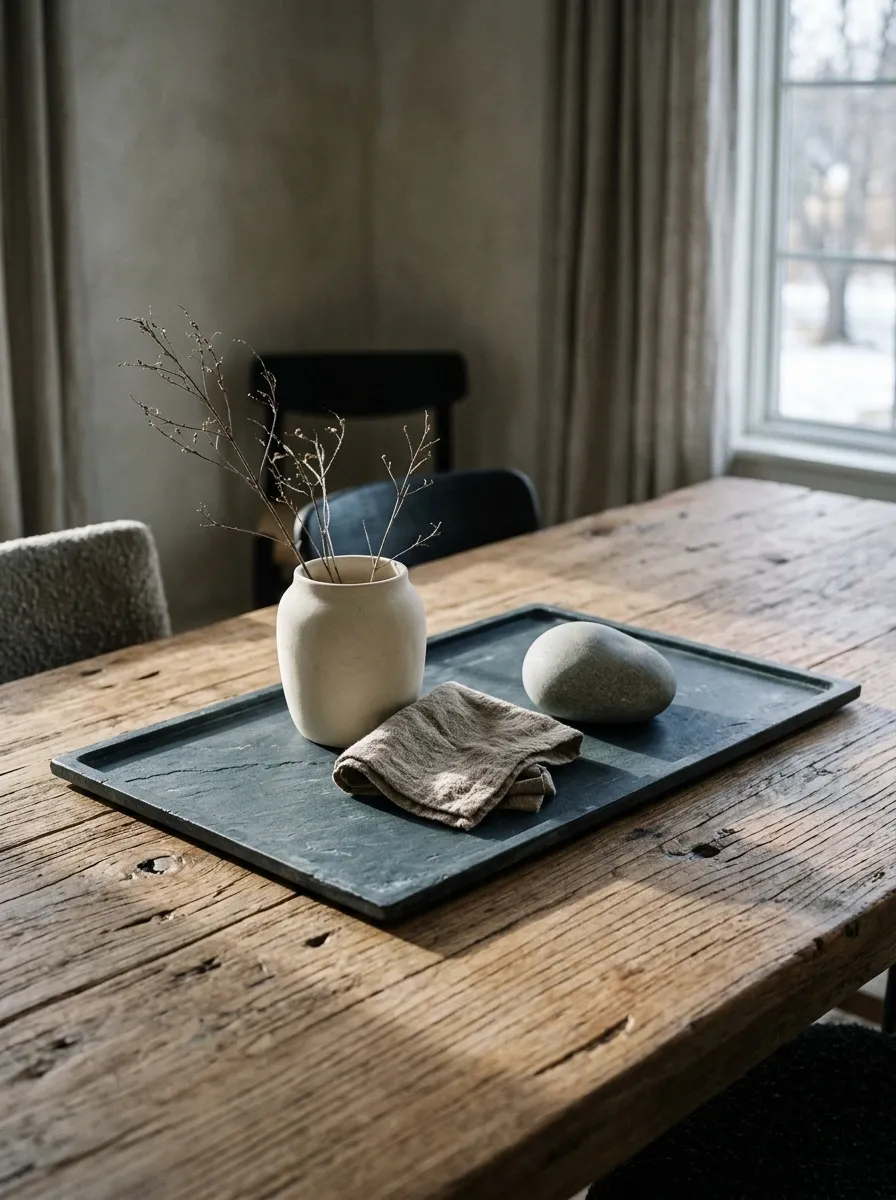
A dark tray can bring together a pale ceramic vessel, a small folded textile, and a smooth decorative object. The shared base gives different textures a clear boundary.
Keep the textile away from food and drinks if it is purely decorative. On a dining table, remove it before serving if needed.
Use different heights sparingly so the arrangement stays calm. This is a useful winter option when you want a darker, more grounded display without adding foliage, flowers, or anything that requires daily maintenance.
#596361
#e4d9c6
#b6aa95
Open the placement notes
Keep the palest pieces grouped on one contained base
Illustrative colors, not paint-product matches or mandatory proportions.
A Soup Tureen as the Main Shape
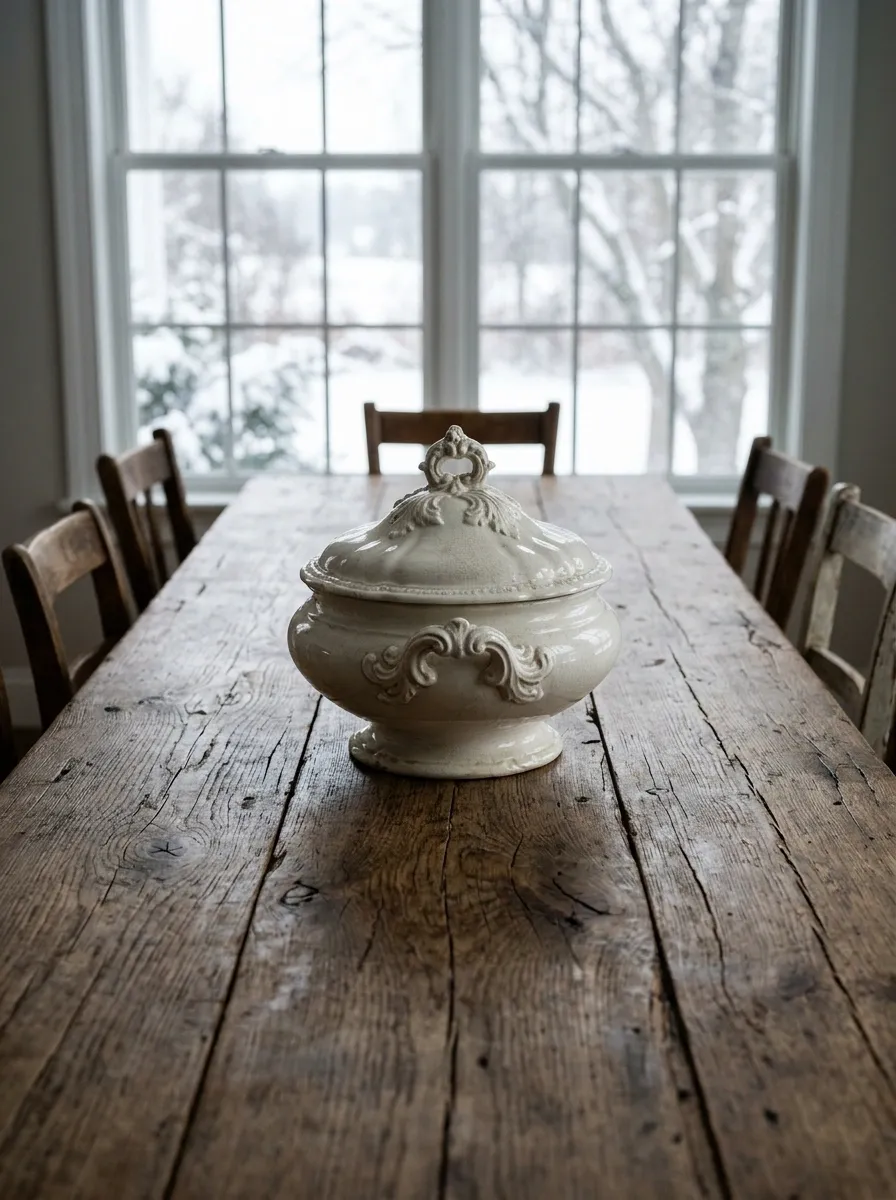
An unused tureen can bring character to a winter dining table. Display it closed as a sculptural object or use it for serving when the meal calls for it.
Keep its condition and intended use in mind, especially with old ceramics whose food suitability is uncertain. A decorative vintage piece can stay decorative.
Let the tureen take the center rather than surrounding it with a collection of smaller objects. It already has handles, a lid, and usually more personality than most contemporary serving bowls manage in an entire set.
A Compact Herb Pot in a Saucer
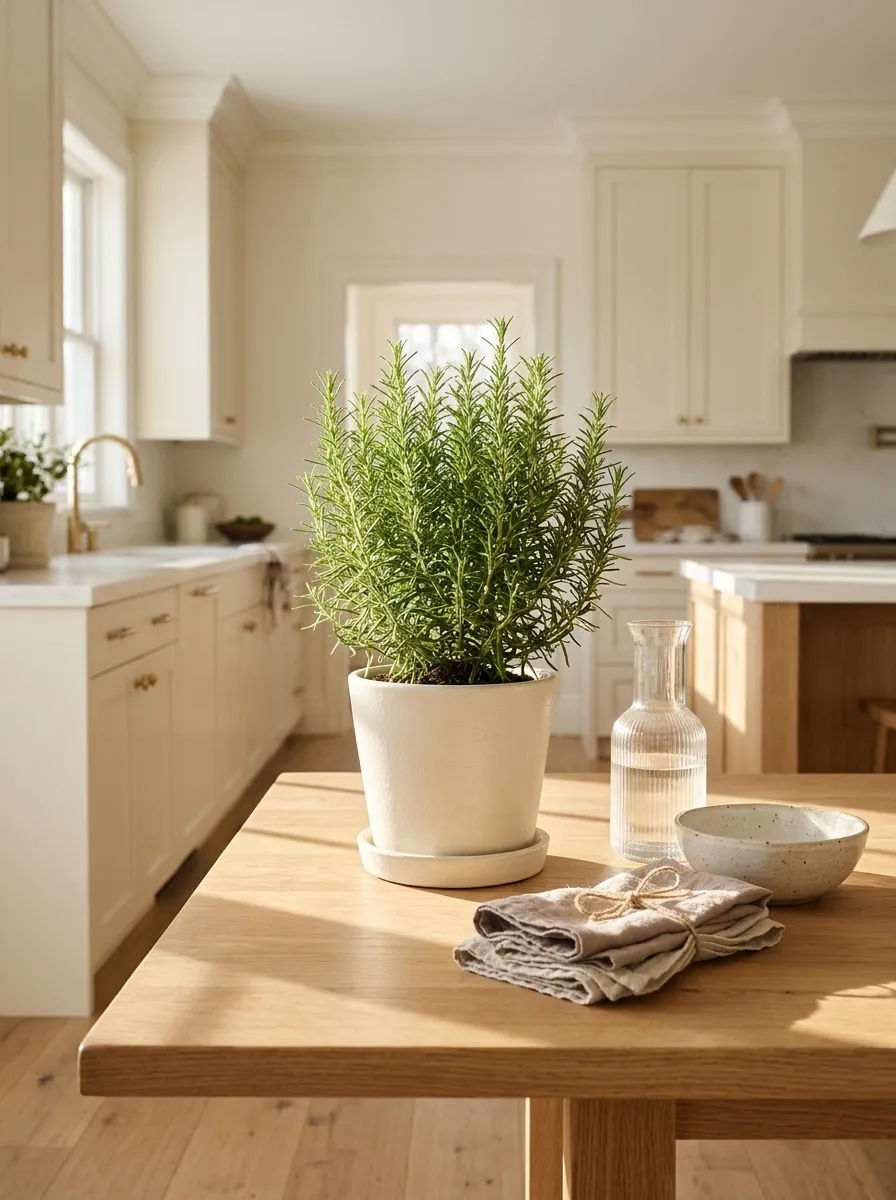
A small living herb can provide greenery on a bright kitchen table where the light genuinely suits it. Use a stable pot and a suitable waterproof saucer.
Keep the plant out of the way during meals and avoid overwatering. The table needs protection from both moisture and soil.
Choose the location for the herb rather than treating it as a disposable decorative prop. If the table is too dim, move the plant to a better spot and use another centerpiece. A struggling rosemary is not an essential ingredient of winter atmosphere.
Herb suited to available light
Stable pot
Waterproof saucer
Easy removal for watering and meals
A Wide Lantern With a Flameless Light
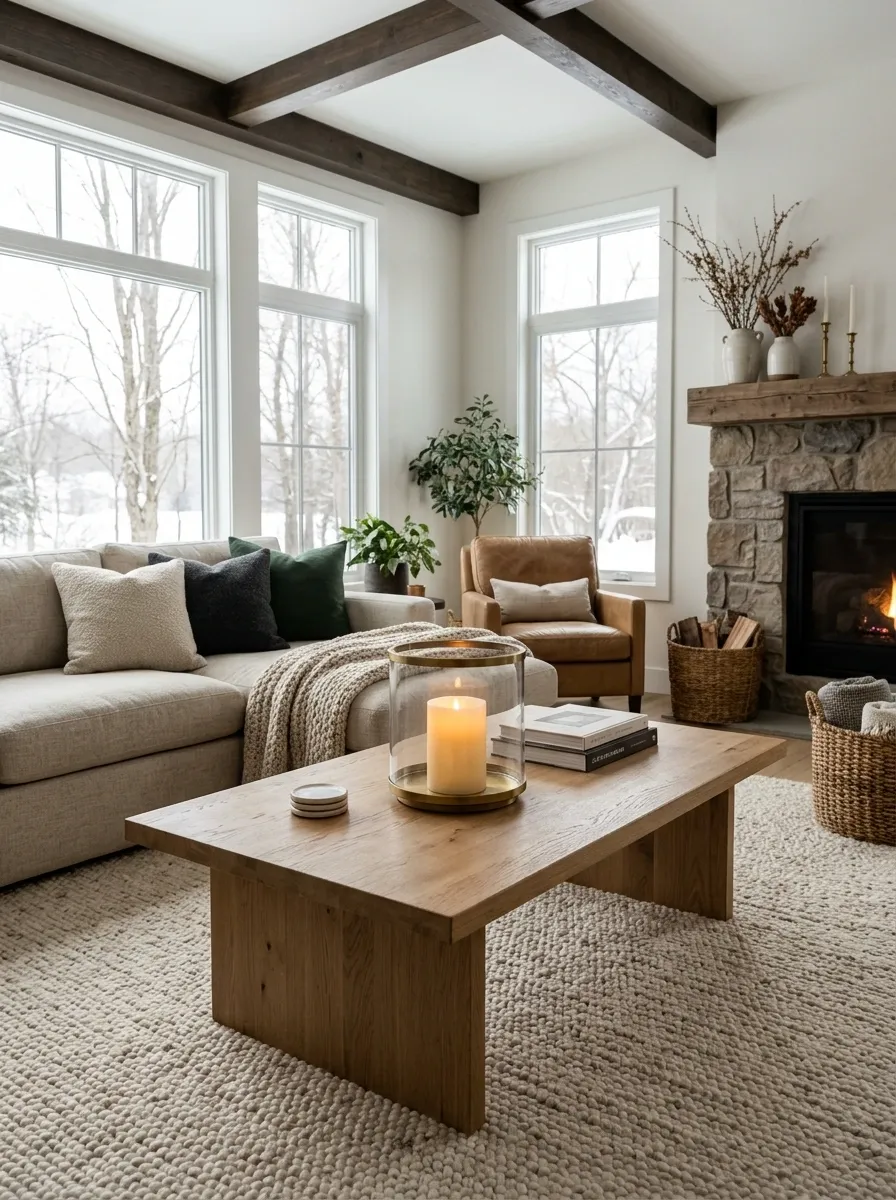
A low, broad lantern can give a coffee table or console a strong central shape. Use a suitable battery light and keep any battery compartment secured.
Choose a lantern with stable feet and a manageable footprint. Tall handles can add unexpected height, so check the full outline rather than only the body.
Keep the inside simple. A light and some empty space often look better than a lantern packed with faux snow, cones, and foliage. The frame is already providing structure; it does not need to contain a winter storage cupboard.
Low lantern with a suitable flameless light
Allow room for ordinary coffee-table use. Diagram is conceptual, not a seating or clearance measurement.
A Row of Small Stoneware Cups
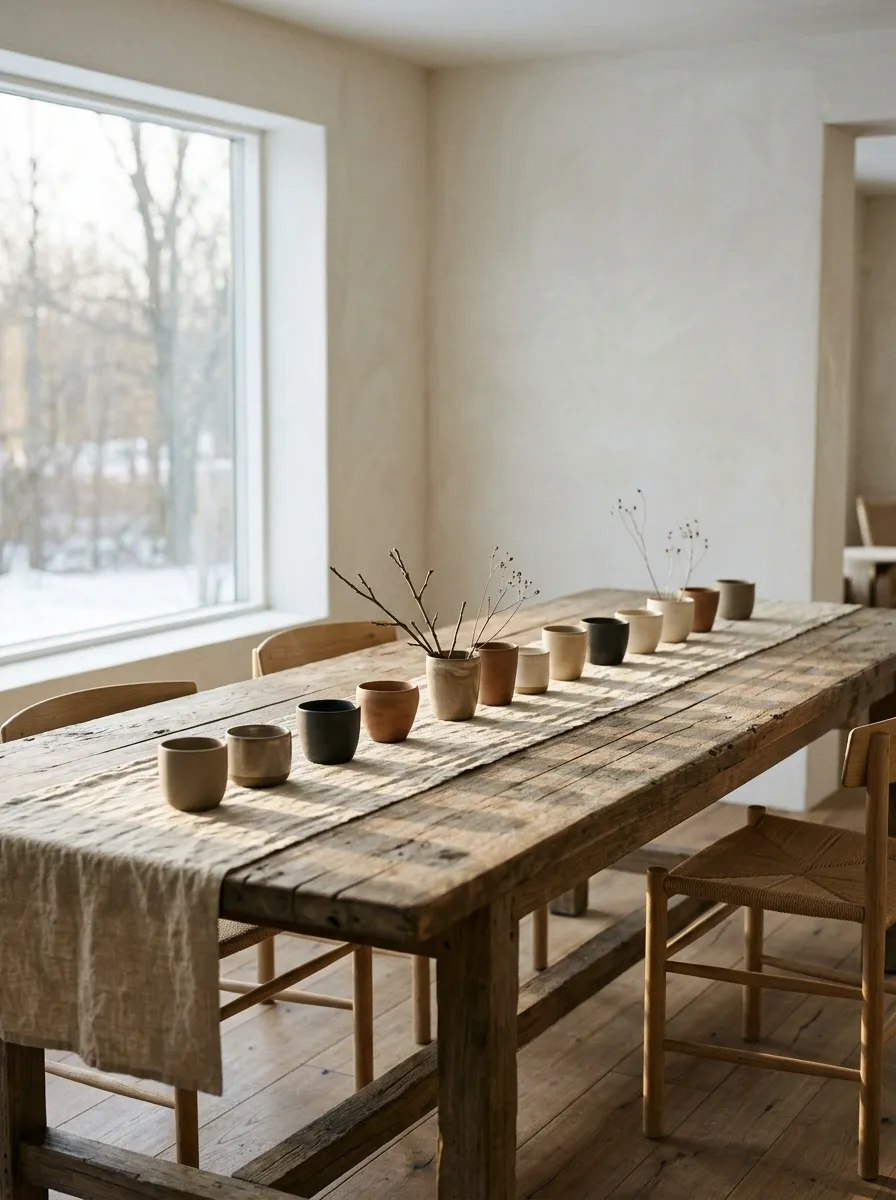
A few handleless stoneware cups can hold short stems, small artificial branches, or remain empty as a repeating form. Use related glazes rather than an exact matching set if you prefer a collected feel.
Keep the cups on a narrow base to simplify moving them. If they contain water, protect the table and check for leaks.
A low row is particularly useful on a narrow table because the visual interest comes from repetition, not depth. Leave intentional gaps so the display does not become a small ceramic fence.
A few cups with deliberate gaps
Too many pieces compete with serving space
A Glass Bowl With Smooth Pale Stones
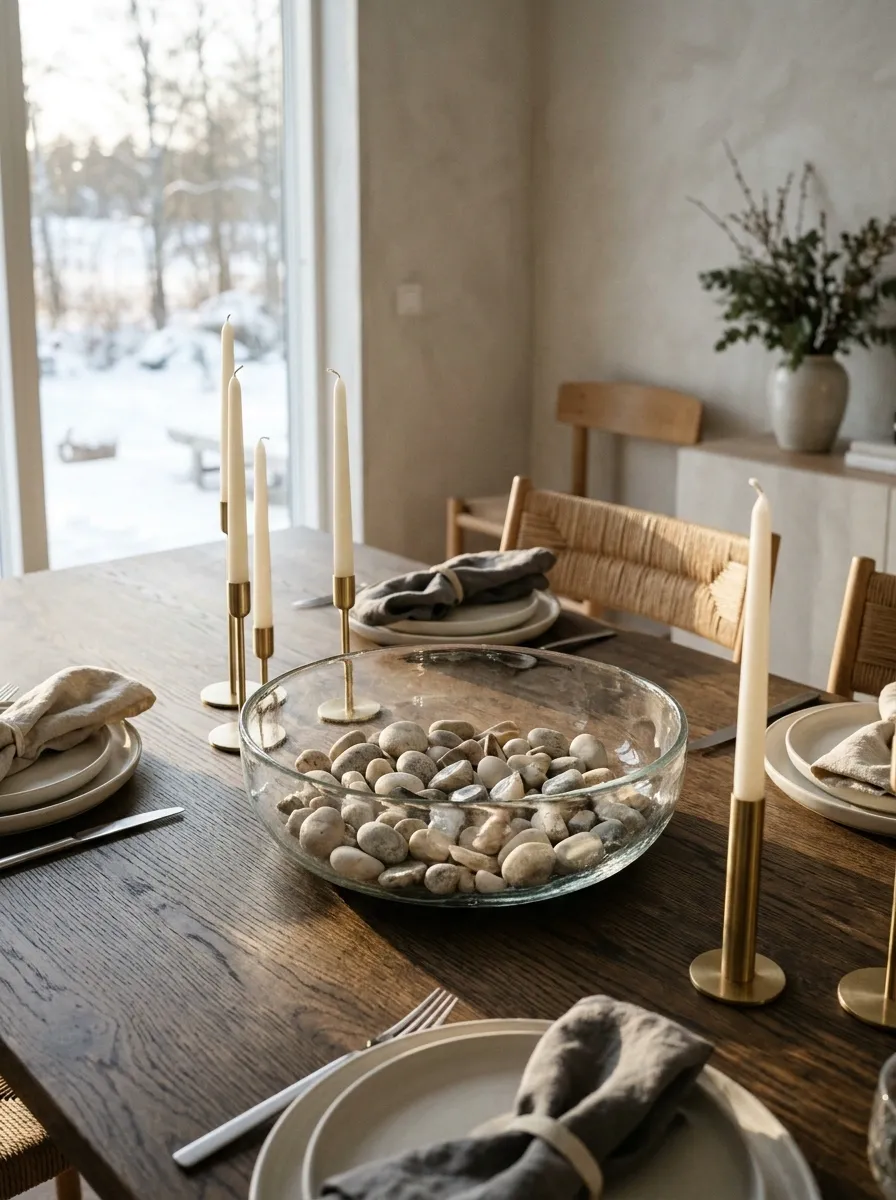
Smooth stones can provide a wintery, mineral texture without obvious seasonal motifs. Use clean decorative stones in a sound bowl that safely supports their weight.
Keep the layer shallow and the arrangement stable. Heavy contents deserve particular care on delicate tables and when moving the bowl.
Choose pale stones against darker glass or a clear bowl against a contrasting table. The interest comes from surface and color. There is no need to add water unless the vessel and location are suited to it and you want the extra maintenance.
Sound weight-appropriate bowl
Shallow layer of clean stones
Protected table surface
A safe way to lift the whole piece
A Soft Blue Vessel With Brown Branches
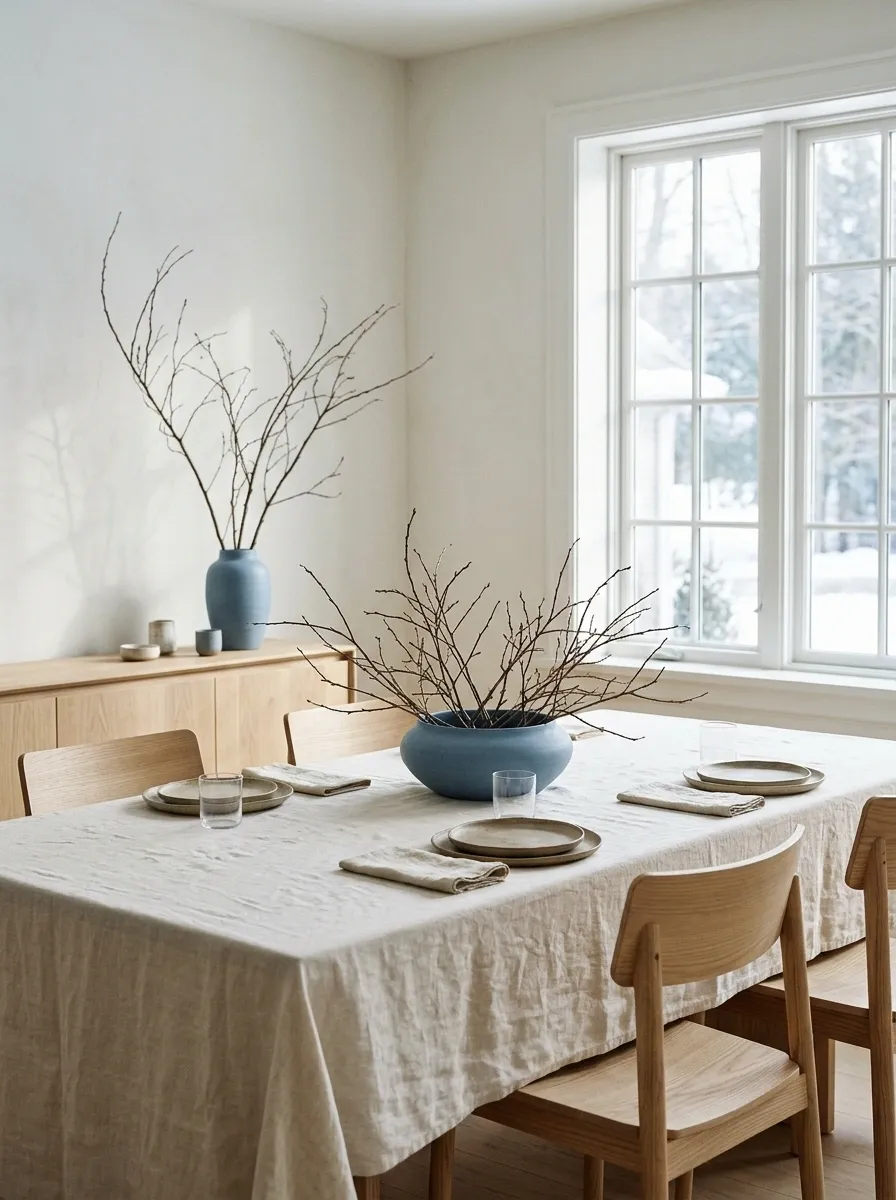
A muted blue vase can make bare branches feel fresh rather than rustic. Use a stable vessel and a few clean, open stems with a silhouette suited to the location.
Place a tall version on a sideboard; choose a low bowl and shorter stems for a dining table. The same palette can work at different scales.
Let the brown and blue remain the main relationship. Adding silver ornaments or sparkling filler changes the mood considerably. The branches already provide enough winter reference without needing an explanatory glitter campaign.
#8babb8
#79624b
#e5ddce
Open the placement notes
Match the height to the table's actual use
Illustrative colors, not paint-product matches or mandatory proportions.
A Stack of Decorative Boxes on a Console
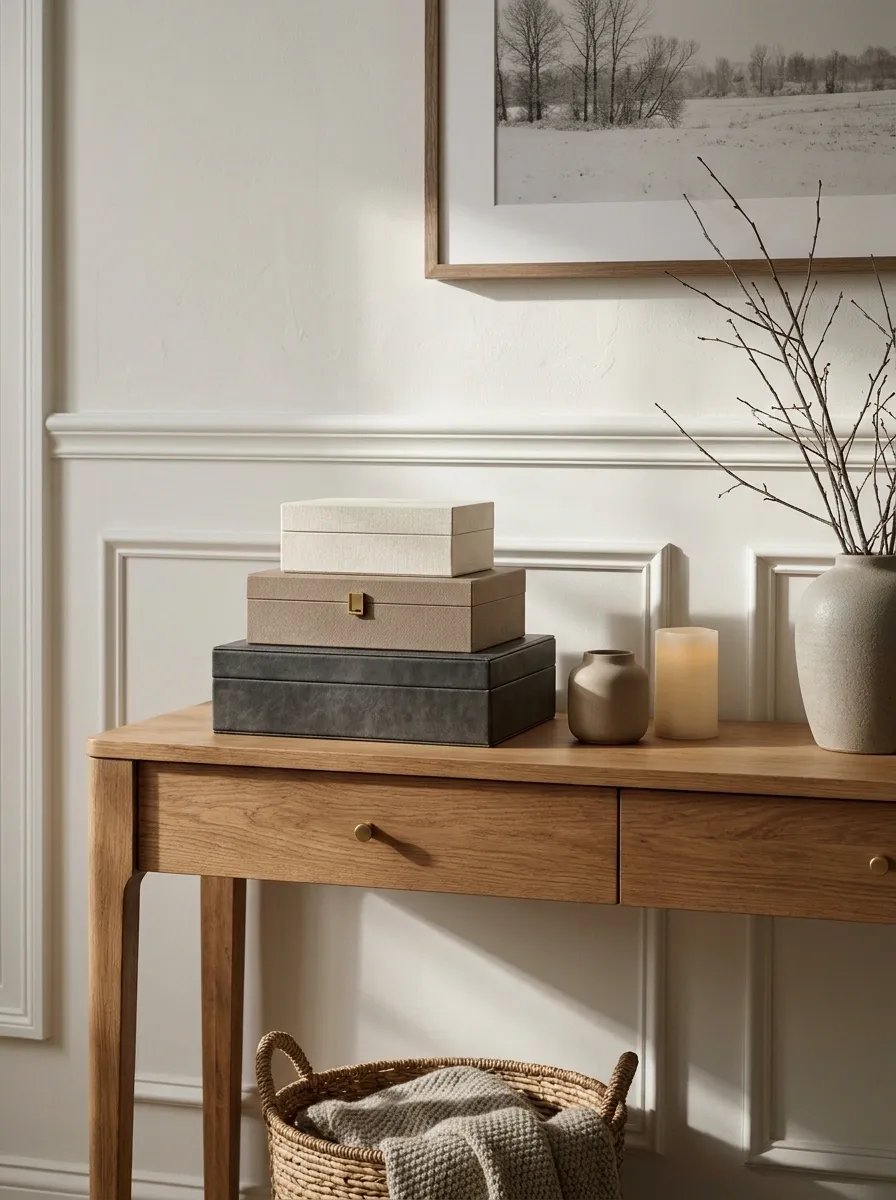
On a console rather than a dining table, a small stack of lidded boxes can support a winter display while hiding useful items. Choose stable sizes and finishes that relate.
Keep a small object or suitable flameless light beside the stack rather than balancing a heavy vase on top. Avoid blocking drawers, switches, or the route past the table.
This approach is useful when flowers are impractical and you want something with a longer life. The boxes can keep earning their space after winter, which is an unusually sensible seasonal purchase.
A Runner With a Break in the Middle
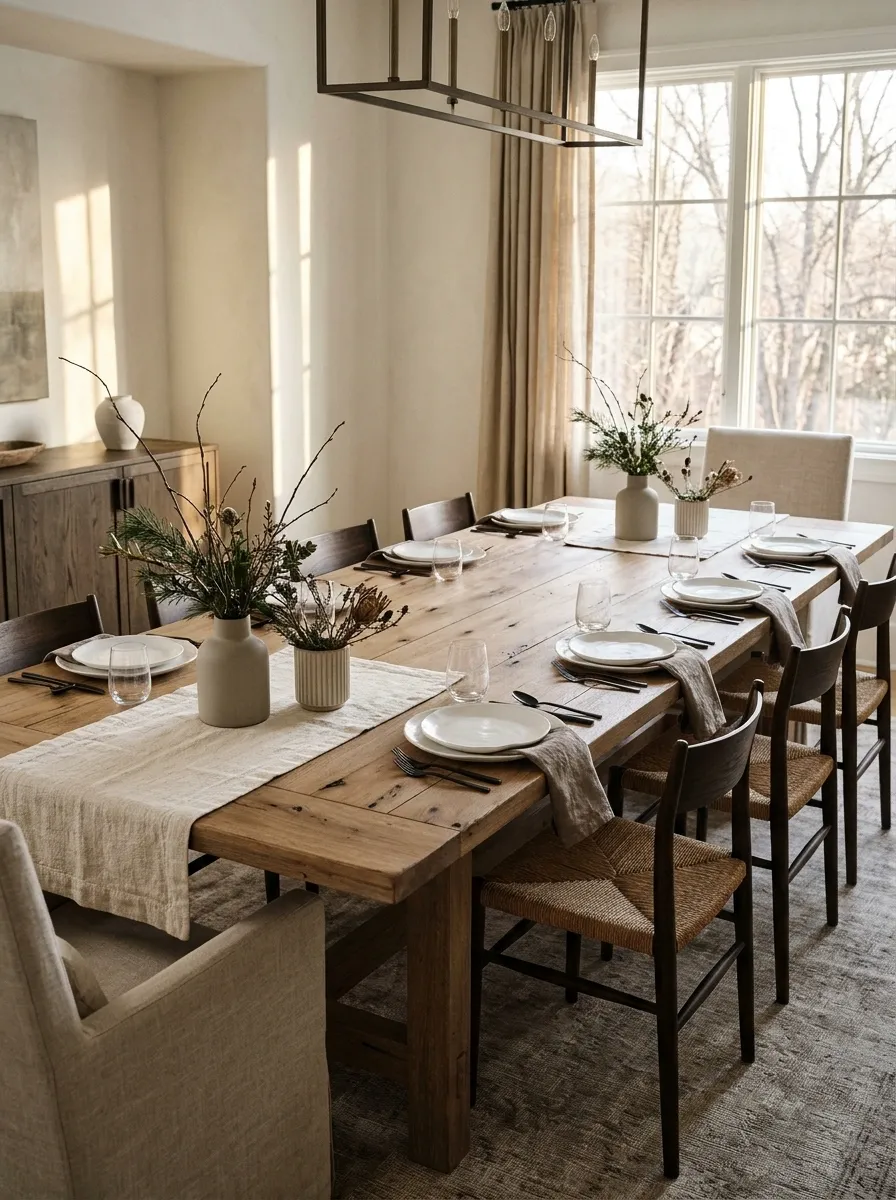
Instead of filling the central space, use two short textile sections at opposite ends of a long table and keep the middle clear for serving. Add one small low object to each end.
The repeated material creates continuity without a solid strip of decor. Choose fabric that sits flat and stays clear of place settings.
This works especially well for family meals where dishes arrive in large quantities. A centerpiece strategy that makes room for dinner has understood the assignment better than a beautiful display permanently occupying the only serving area.
Small arrangements at the two ends
The middle stays available for the meal. Diagram is conceptual, not a seating or clearance measurement.
A Repeated Shape in Different Winter Materials
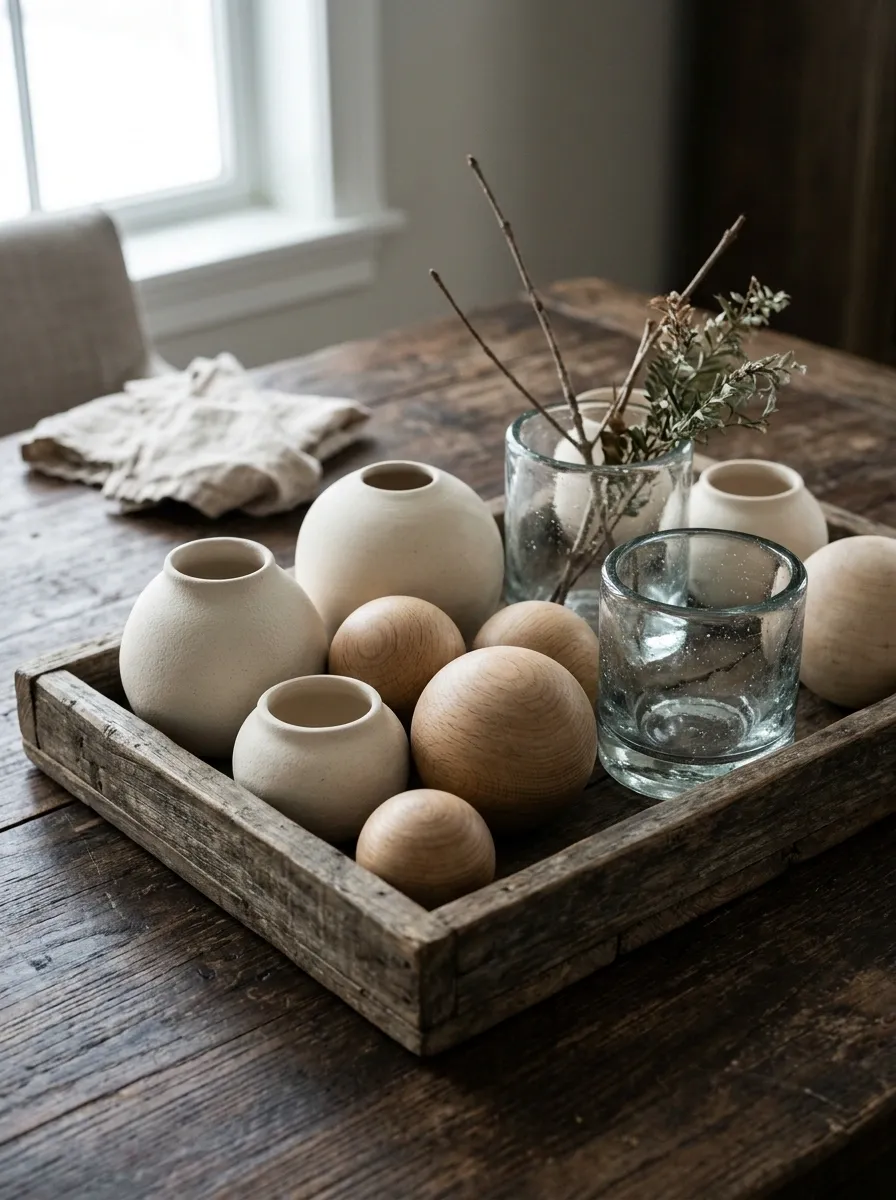
Group a few rounded forms in ceramic, timber, and suitable glass for a winter still life. A shared shape connects the materials while the different surfaces supply interest.
Keep the colors restrained and use a protective tray if the objects could move or scratch the table. Choose pieces with stable bases.
This is a useful way to work with things already at home. Look for a relationship in form before buying a matching seasonal set. Collected objects can feel more personal than a box labeled “instant winter elegance,” despite its admirable confidence.
Rounded ceramic
Smooth timber
Suitable stable glass
One quiet color family
A Centerpiece That Packs Away in One Lift
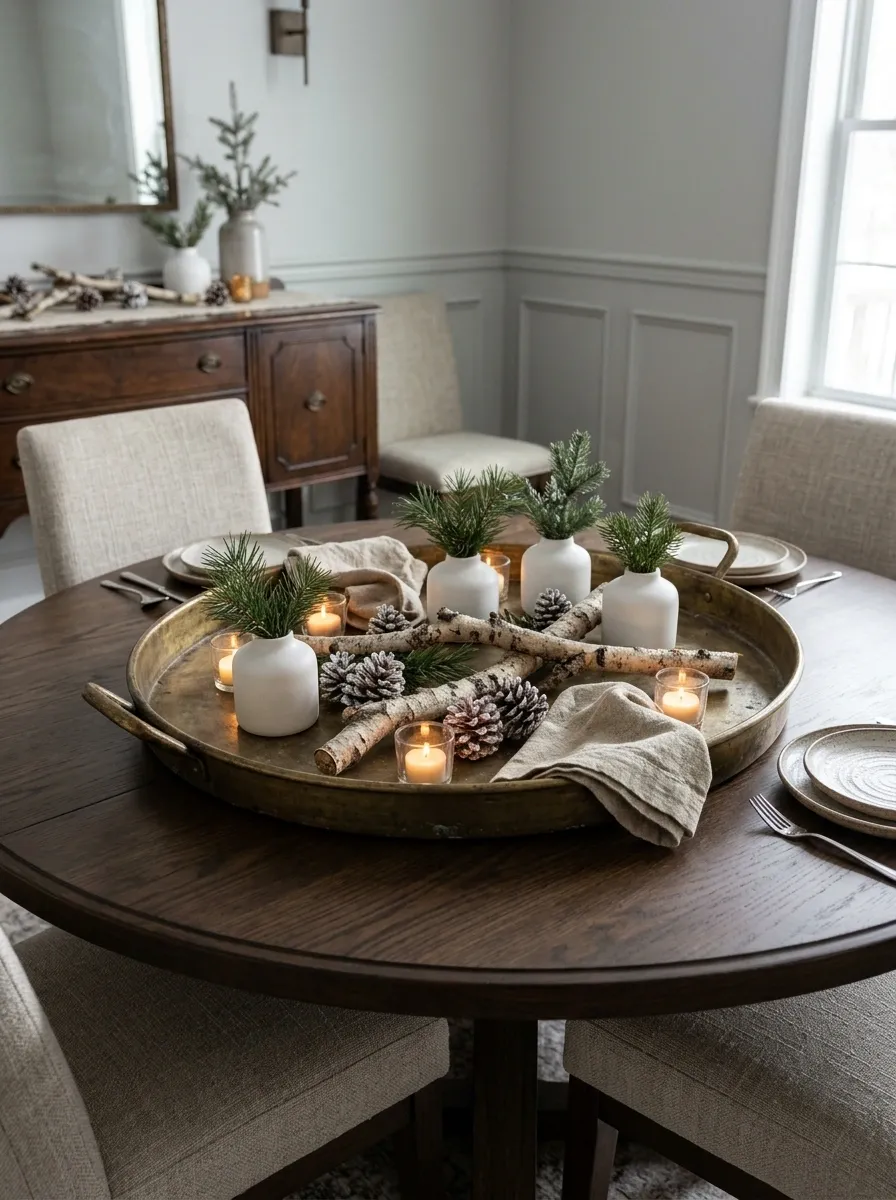
Build the arrangement on a tray that is easy to carry, then choose a permanent landing place for it nearby. It can stay on the table between meals and move without a full rearrangement.
Test the weight before filling it. Keep objects stable and avoid carrying open water through a crowded room if another setup would be easier.
The nearby landing place matters as much as the tray. Otherwise the display moves from dining table to kitchen counter, where it begins interfering with an entirely different household activity.
Contained, low, and useful between meals
Moves intact to a clear nearby surface
Set the table for a real meal before declaring the centerpiece finished. If plates, serving dishes, and conversation all fit comfortably, you have a winter display worth keeping.