
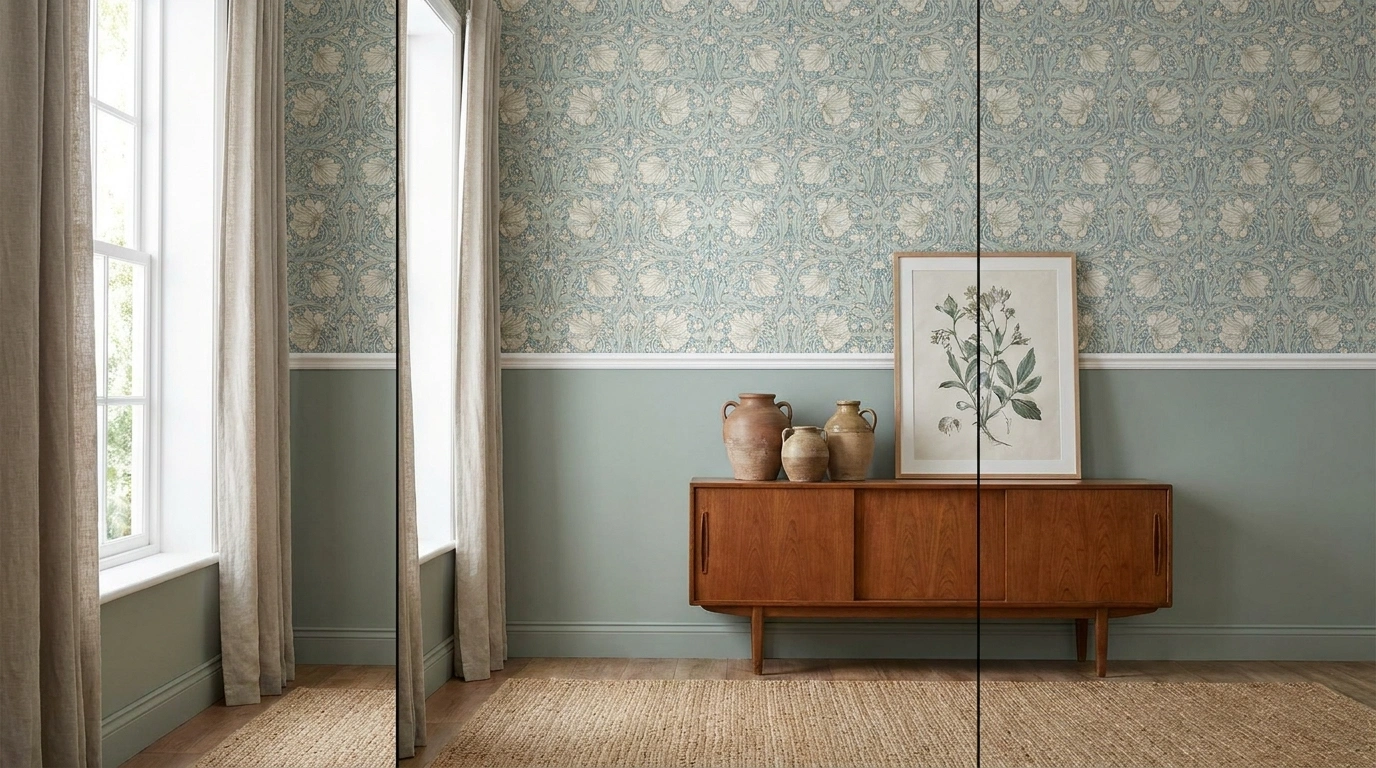
Wallpaper above paint. Wallpaper beside paint. Wallpaper in a central field with painted space around it. The combination has more possibilities than a strip of floral paper politely waiting above a white dado rail.
Here, both finishes belong on the same wall. The division does not have to land at the exact midpoint, but each treatment needs enough presence to feel intentional. Choose the boundary around the room’s architecture, furniture, and the wallpaper repeat—not an arbitrary measurement borrowed from another house.
Before ordering rolls, place the paper and paint samples directly against one another. The join is where the whole idea becomes convincing—or starts making excuses.
Plan preparation for both surfaces. Brewster’s installation guidance emphasizes checking the product instructions and preparing the surface. Wallpaper suitability, paint curing, adhesives, moisture exposure, and removal vary by product and wall.
Same-Wall Combinations With Different Boundaries and Proportions
Fine Stripes Above Oxblood Paint
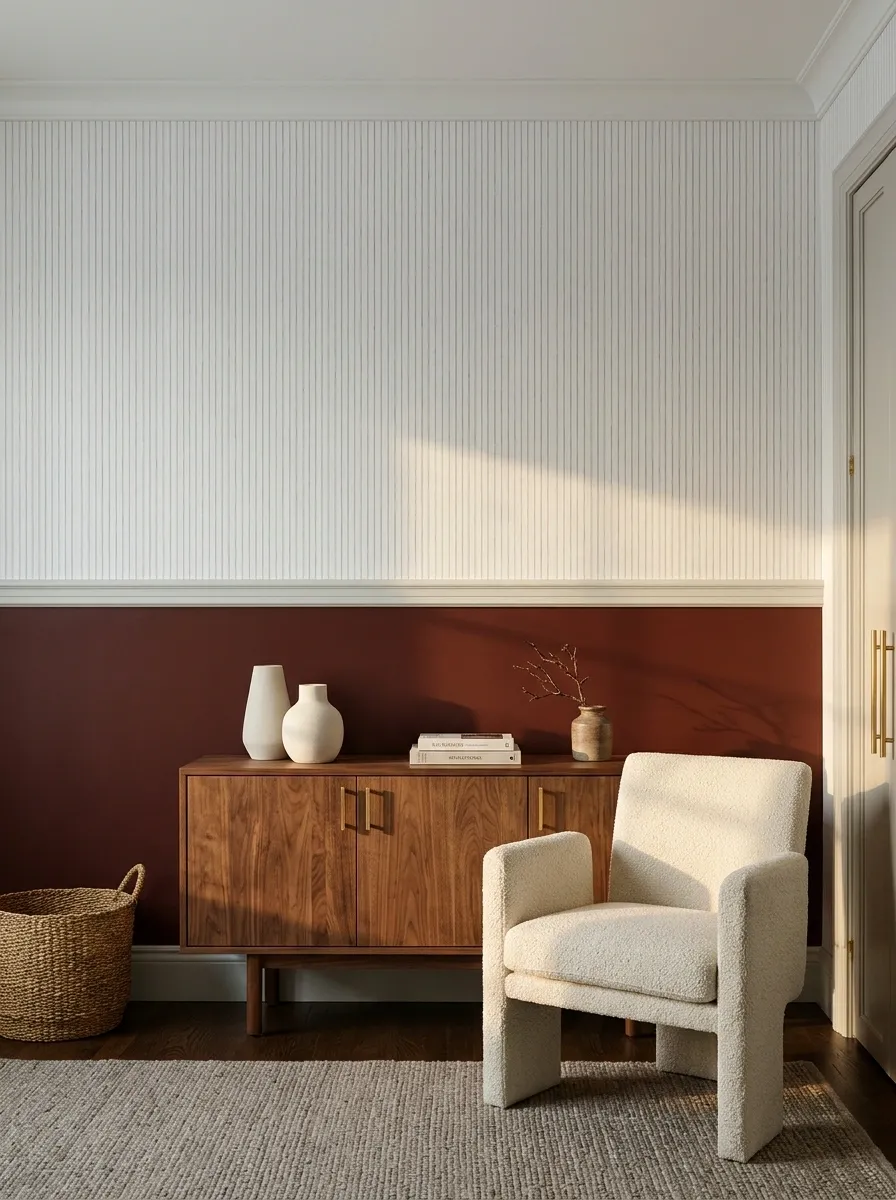
A restrained striped wallpaper can sit above a deep red-brown lower wall. The stripe gives vertical rhythm while the oxblood adds weight at furniture height.
Compare the stripe’s background with the paint in the actual room. A cool white paper may look sharper against oxblood than a softer ivory ground.
Decide what the dividing trim should do:
- Match the lower paint for continuity.
- Relate to existing trim for a clearer outline.
- Stay quiet if the stripe is already strong.
An accidental bright white line can become more noticeable than either main finish.
One continuous wall surface. Patterns are schematic; sample real paper and paint and plan the edge detail.
Geometric Wallpaper Below Plain Cream Paint
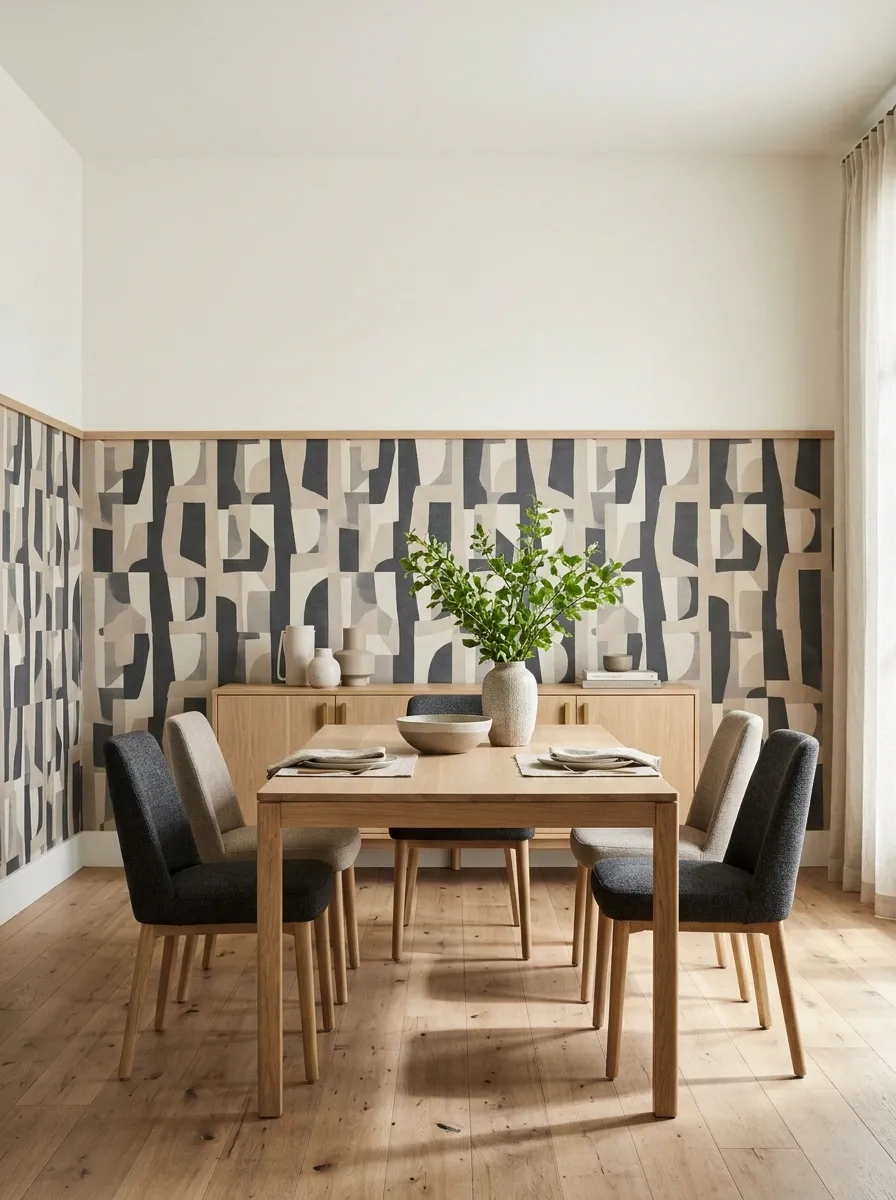
Reverse the familiar arrangement by putting wallpaper on the lower part and cream paint above. A clear geometric can give a dining room or study a defined lower zone.
Choose a paper suited to the wear it will receive. Lower walls meet chairs, bags, pets, and cleaning tools much more often than the upper wall does.
Plan any protective rail and edge details with the installer. The reversal should look purposeful and remain practical, rather than turning a delicate paper into the household’s most easily damaged surface.
One continuous wall surface. Patterns are schematic; sample real paper and paint and plan the edge detail.
A Vertical Split With a Broad Painted Side
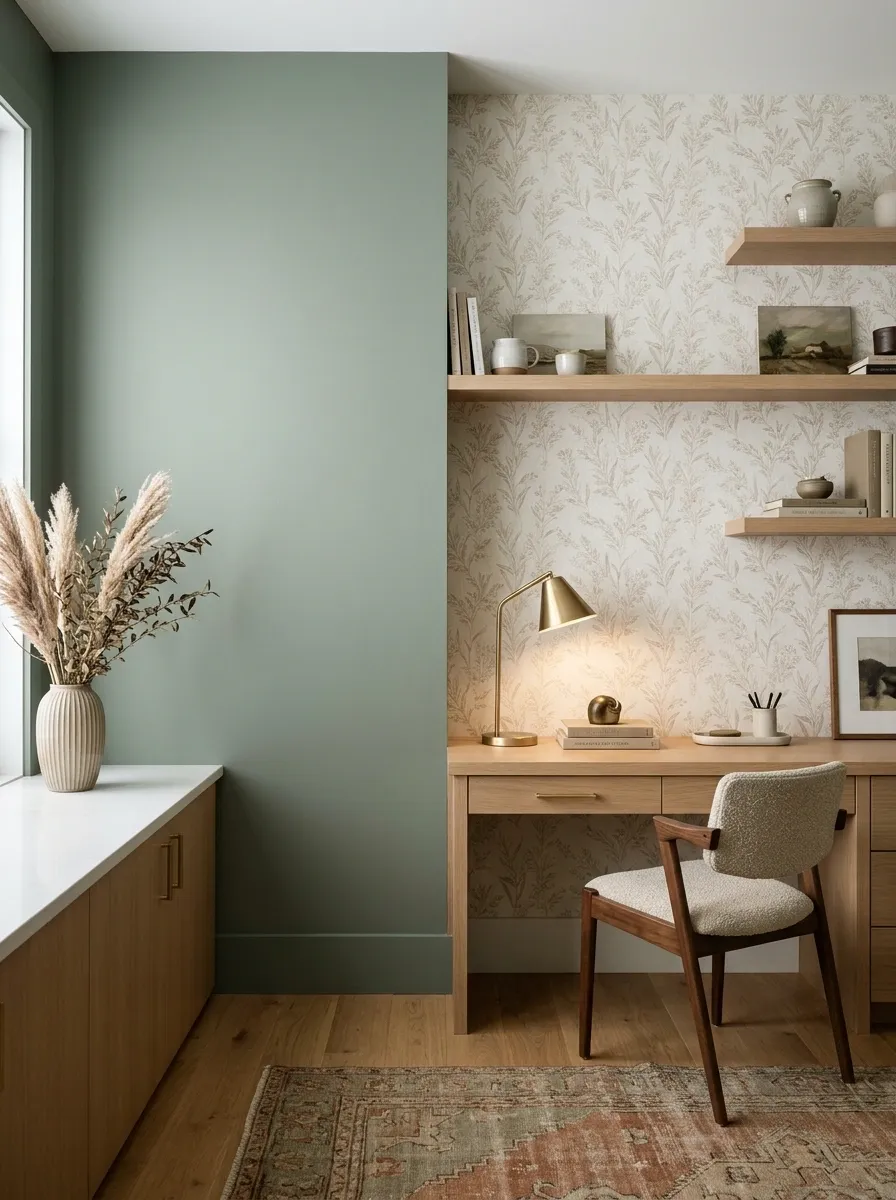
Divide one wall vertically, giving a clear section to paint and the remainder to wallpaper. Use the boundary to relate to a desk, console, or seating zone.
A broad painted area feels more deliberate than a narrow leftover strip. Align the divide with a useful furniture relationship or architectural line rather than forcing it to the wall’s exact center.
Check how the arrangement looks from the entrance. The two finishes should read as one composition, not as wallpaper that ran out before the decorator reached the corner.
One continuous wall surface. Patterns are schematic; sample real paper and paint and plan the edge detail.
An Offset Split Behind a Desk
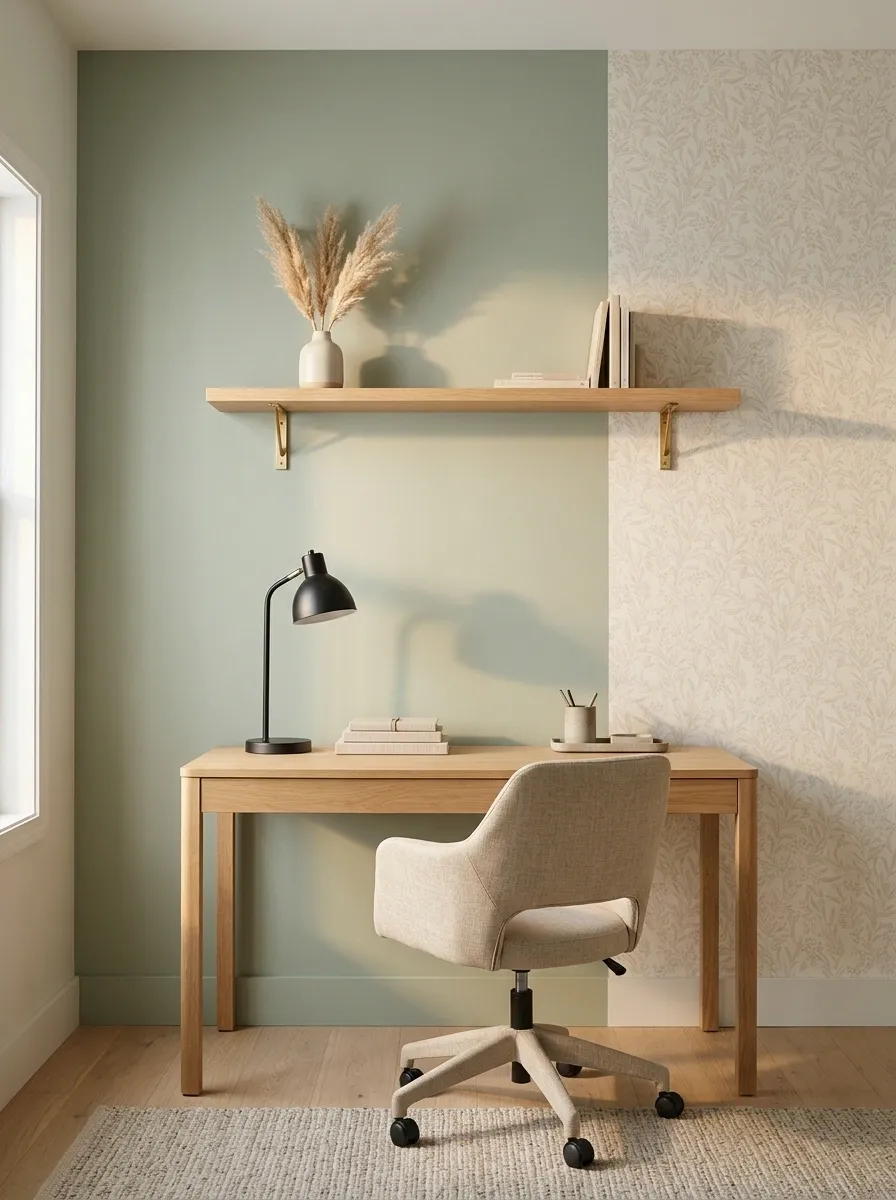
Put the painted area behind the desk and let wallpaper occupy the remaining width of that same wall. The boundary can mark a workspace without constructing a partition.
Keep the desk comfortably inside its color field so the composition feels settled. A chair or shelf may cross the visual boundary if the relationship remains clear.
Use a quieter pattern when the desk has screens, stationery, and everyday working clutter. The wall can define the zone without adding a competing layer of detail directly behind your monitor.
One continuous wall surface. Patterns are schematic; sample real paper and paint and plan the edge detail.
Deep Plum Paint With a Small-Scale Paper Above
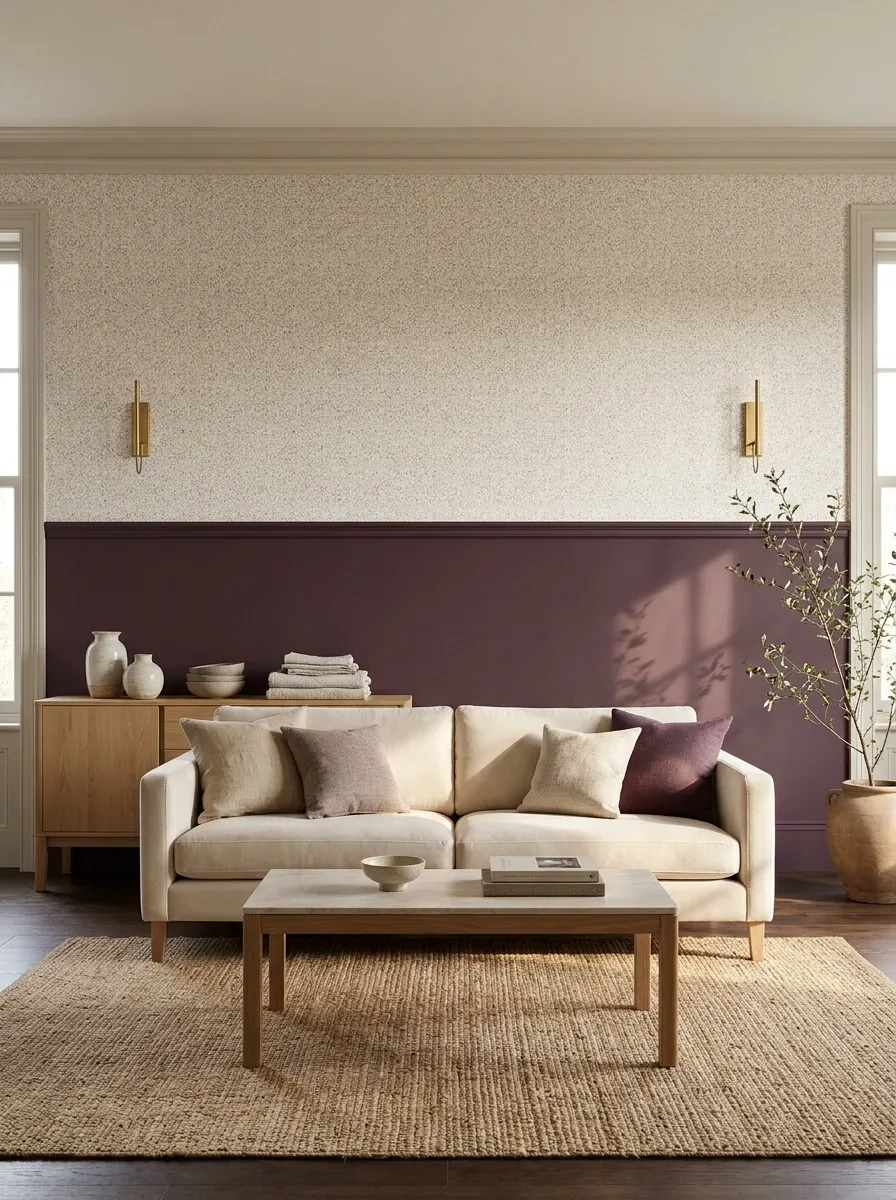
A higher painted lower section can make plum feel substantial while a small-scale wallpaper lightens the upper part. Choose the boundary around the room’s proportions and furniture.
Test the dark paint beside the paper at full sample size. The paper’s background may become more yellow, pink, or gray in that company.
Keep the rail profile restrained if the pattern is intricate. This combination already has depth and detail; oversized decorative trim can introduce another element that wants to be the main feature.
One continuous wall surface. Patterns are schematic; sample real paper and paint and plan the edge detail.
A Low Clay Band Beneath Tall Wallpaper
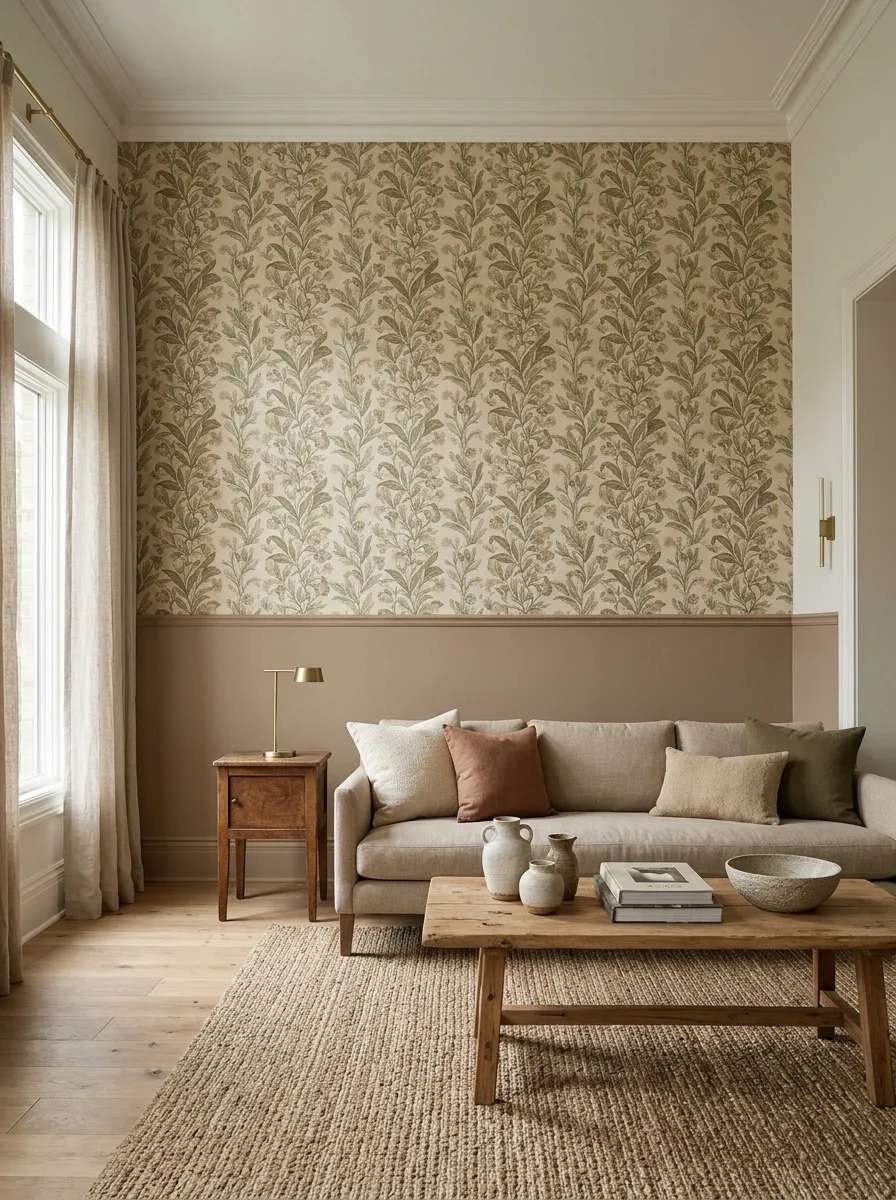
A low painted band can give the wall a clear base while allowing more of a tall wallpaper repeat to remain visible. Use a clay tone drawn from the pattern or related furnishings.
Keep the band broad enough to register as a treatment rather than a slightly enlarged skirting board. Test the height with tape before painting.
This is useful where the wallpaper’s vertical composition matters. A taller uninterrupted field can reveal the pattern more fully, while the painted area provides a quiet line near the floor.
Leaves a taller continuous wallpaper field
Gives the paint more presence and reduces visible pattern
A Central Wallpaper Field With Painted Side Sections
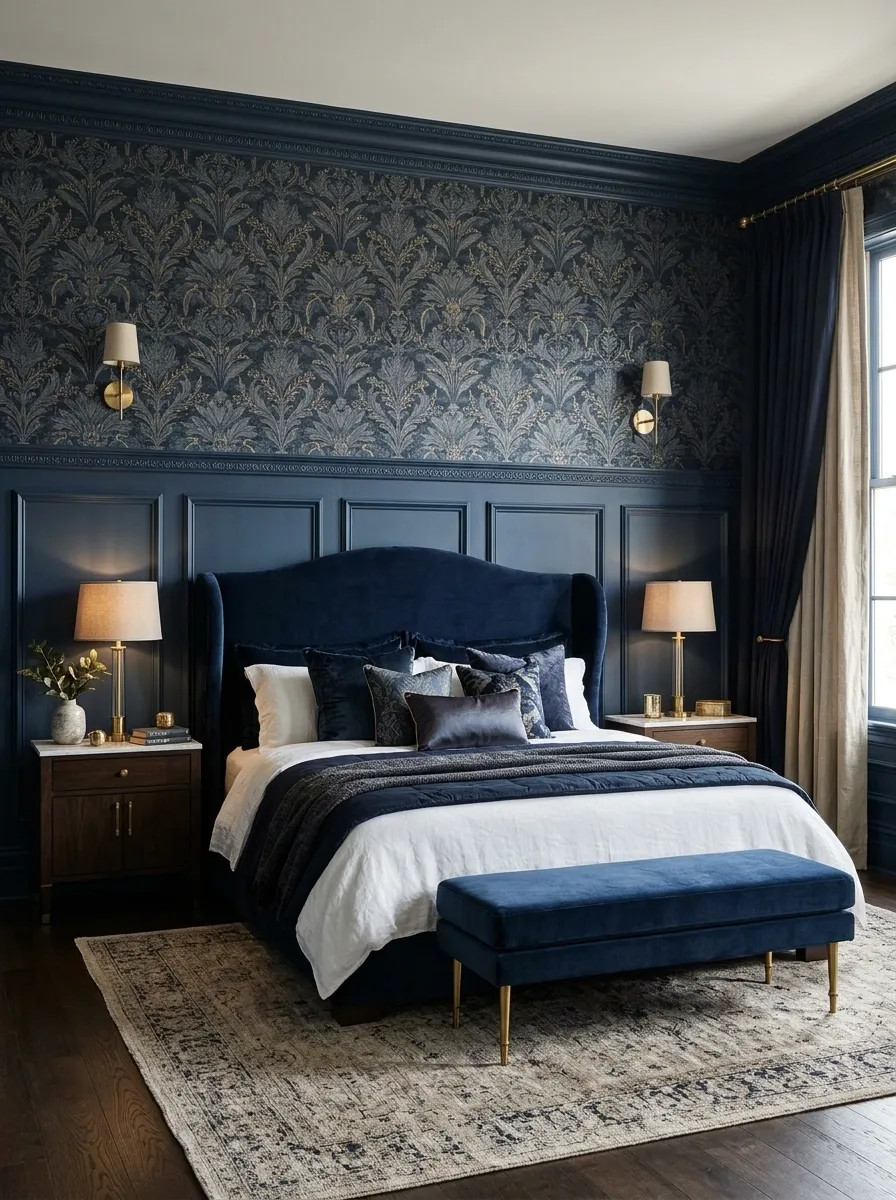
Use a broad central wallpaper panel and painted areas on either side of the same wall. Relate the paper width to a bed, console, or dining table arrangement.
A simple framed edge can make the field look intentional, but the boundary can also be crisp without applied trim if the surfaces and installation suit it.
Keep enough painted area visible to establish the two treatments. A tiny border around wallpaper covering almost the entire wall creates a different effect from a genuinely balanced paper-and-paint composition.
One continuous wall surface. Patterns are schematic; sample real paper and paint and plan the edge detail.
A Curved Painted Boundary Against Wallpaper
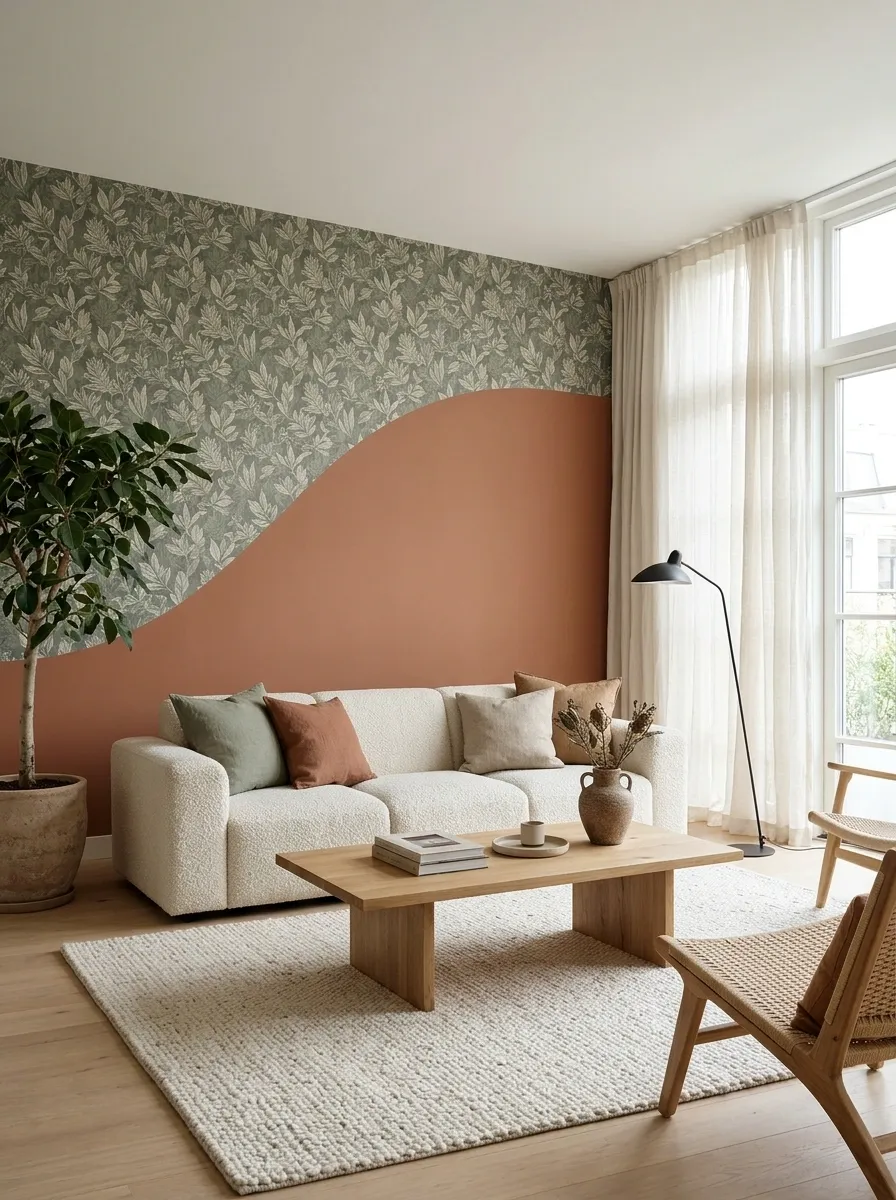
A broad curved edge can make the split feel less formal. Let paint occupy one clear area and wallpaper the other, with the curve planned as part of the full wall composition.
This is a careful installation job, particularly with thick or strongly patterned paper. Ask the installer how the edge will be finished and maintained.
Keep the curve simple enough to read from across the room. Several small waves can look fussy and make the paper trimming far more complicated without adding a useful design idea.
One continuous wall surface. Patterns are schematic; sample real paper and paint and plan the edge detail.
Large Checks Above Faded Ochre
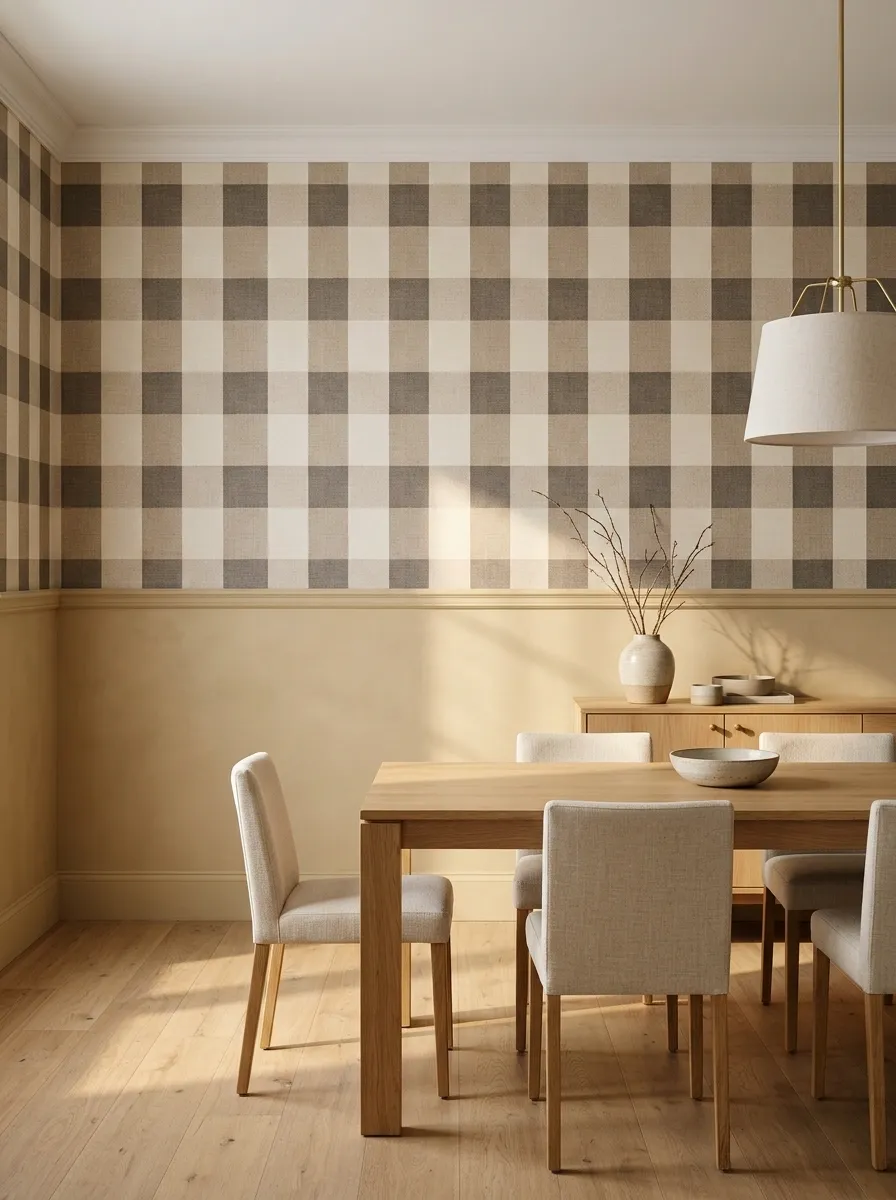
A large check wallpaper can bring order to the upper wall while faded ochre adds warmth below. Use a restrained check color if the lower paint is already distinctive.
Plan the repeat at the dividing line and ceiling. Uneven fragments may be unavoidable, but their placement should be considered across the full wall.
Keep nearby textiles simpler unless you enjoy deliberate pattern mixing. The wall already contains a substantial geometric statement. A second check on every chair may turn the dining room into a surprisingly committed graph-paper project.
One continuous wall surface. Patterns are schematic; sample real paper and paint and plan the edge detail.
Textured Wallpaper Above Rust Paint
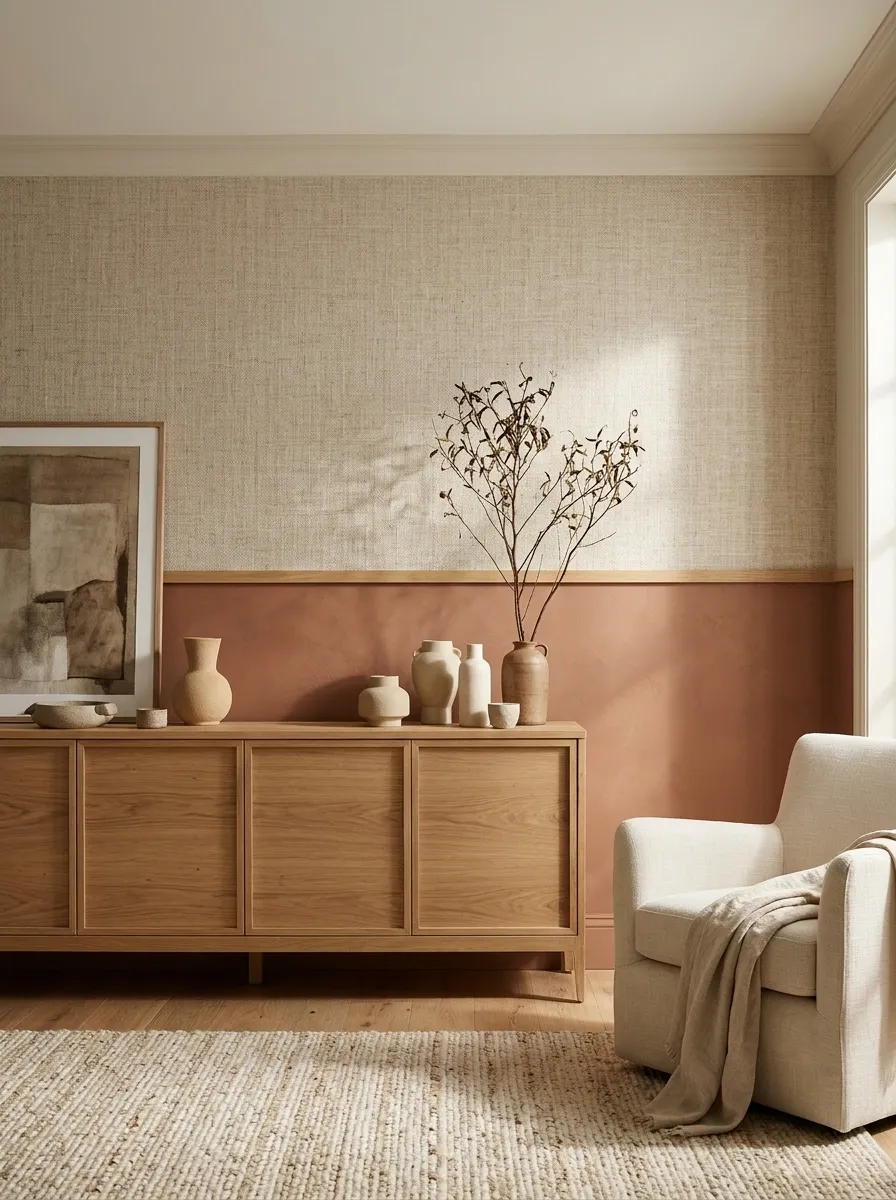
A subtle woven-look paper can pair with rust paint for a material-led wall. Choose a printed or textured product suited to the room and the maintenance you can provide.
Natural fiber wallcoverings and washable vinyl products behave differently, so do not choose by texture alone. Check installation, cleaning, and moisture suitability.
Let the lower color carry the warmth while the upper area provides quieter detail. This can feel rich without obvious pattern, especially when timber furniture and plain textiles supply the rest of the room’s character.
Suitable woven-look paper
Muted rust lower paint
A restrained dividing edge
Plain nearby textiles
Tiny Dots Above a Jade Painted Base
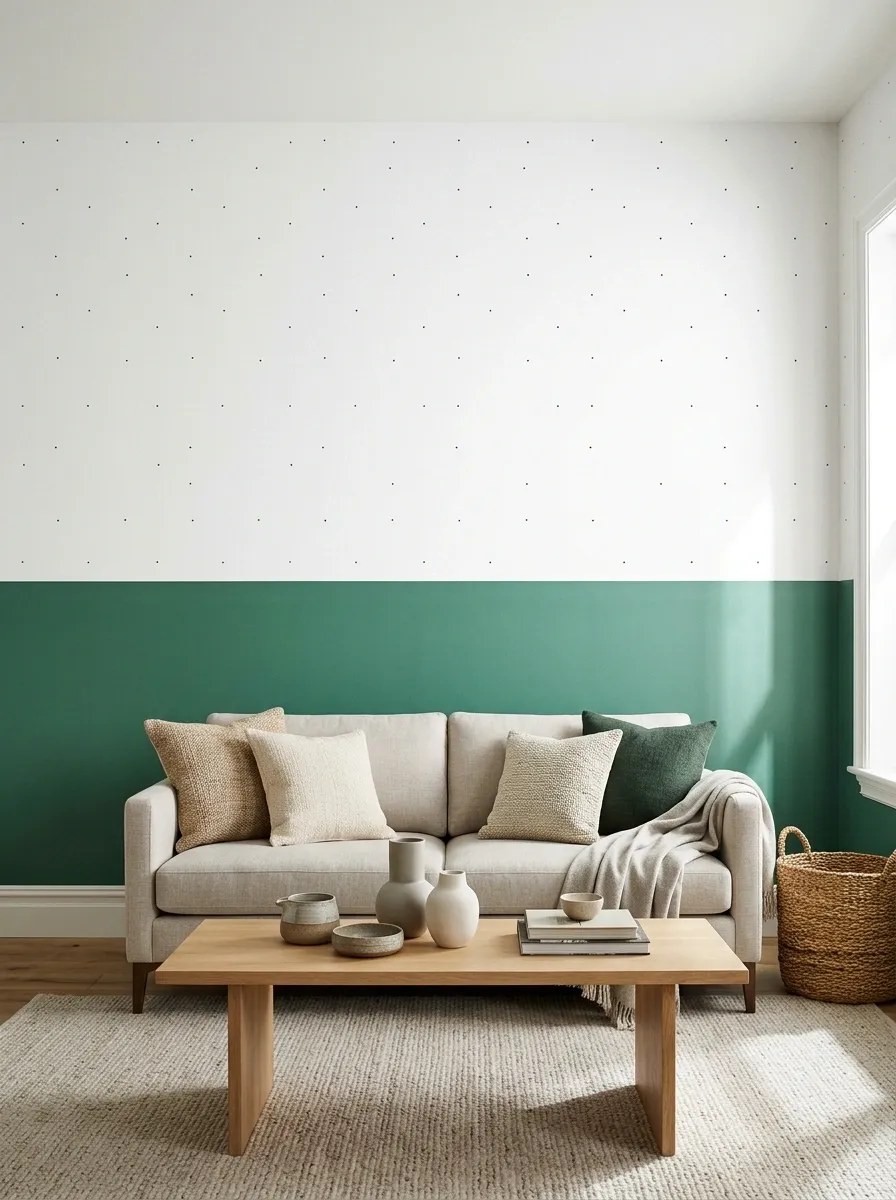
A small dot pattern can feel light above a deeper jade lower wall. Choose dots with enough spacing that they remain clear rather than blending into visual noise.
Compare the paper’s background white with the jade and existing trim. A yellowish background can shift the perceived green more than expected.
Use a simple join and keep the paint’s sheen appropriate to the location. A very glossy lower section creates a different visual emphasis from a quieter finish, even when the color itself stays the same.
One continuous wall surface. Patterns are schematic; sample real paper and paint and plan the edge detail.
Large Floral Wallpaper Below Pale Green Paint
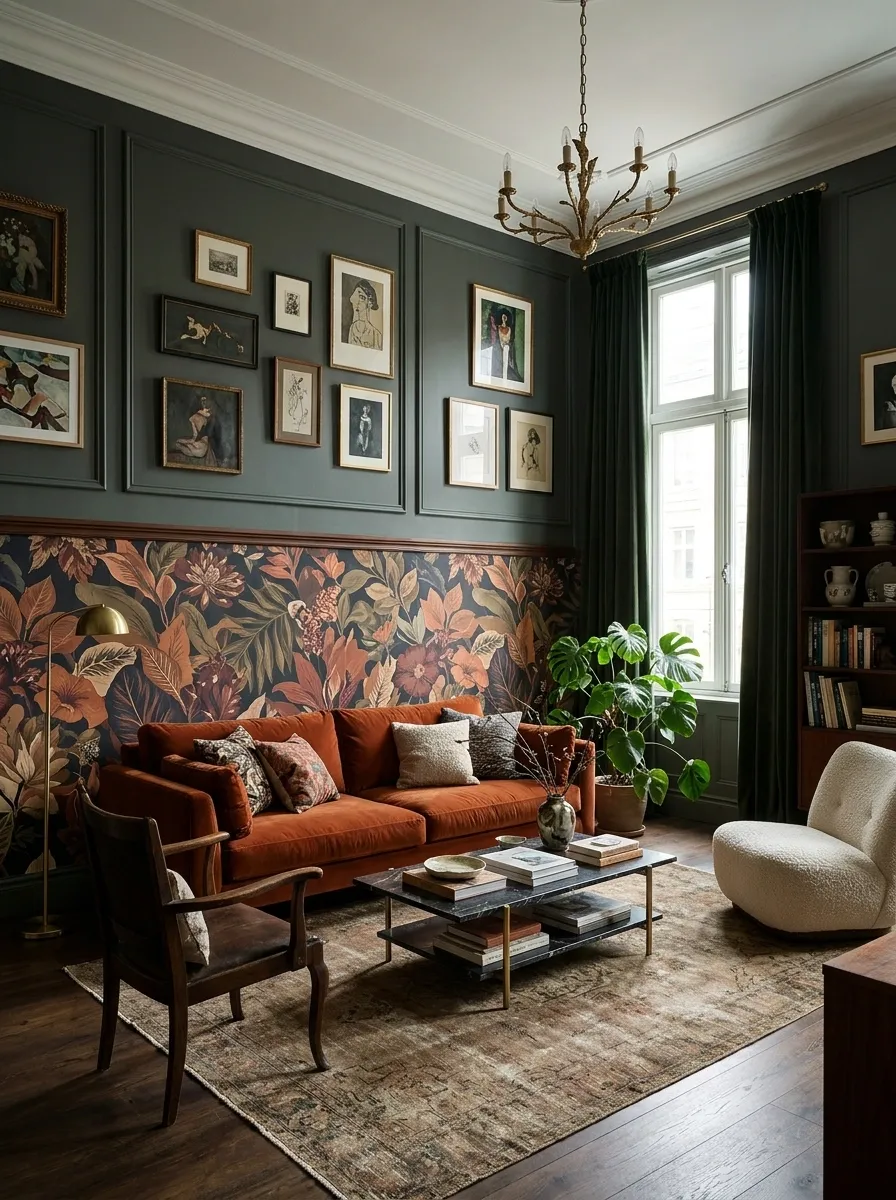
A lower floral section can look unexpected when pale green paint occupies the upper wall. Choose a robust product appropriate to the room’s lower-wall wear.
Plan where the large flowers fall relative to furniture. If the sofa hides most of the interesting forms, the composition may need adjusting.
Keep the upper paint quiet and related to the foliage or background. The reversal gives the paper a different role: pattern at furniture height, with a calmer field above. It should still look complete when the room is occupied.
One continuous wall surface. Patterns are schematic; sample real paper and paint and plan the edge detail.
A Diagonal Split With a Restrained Pattern
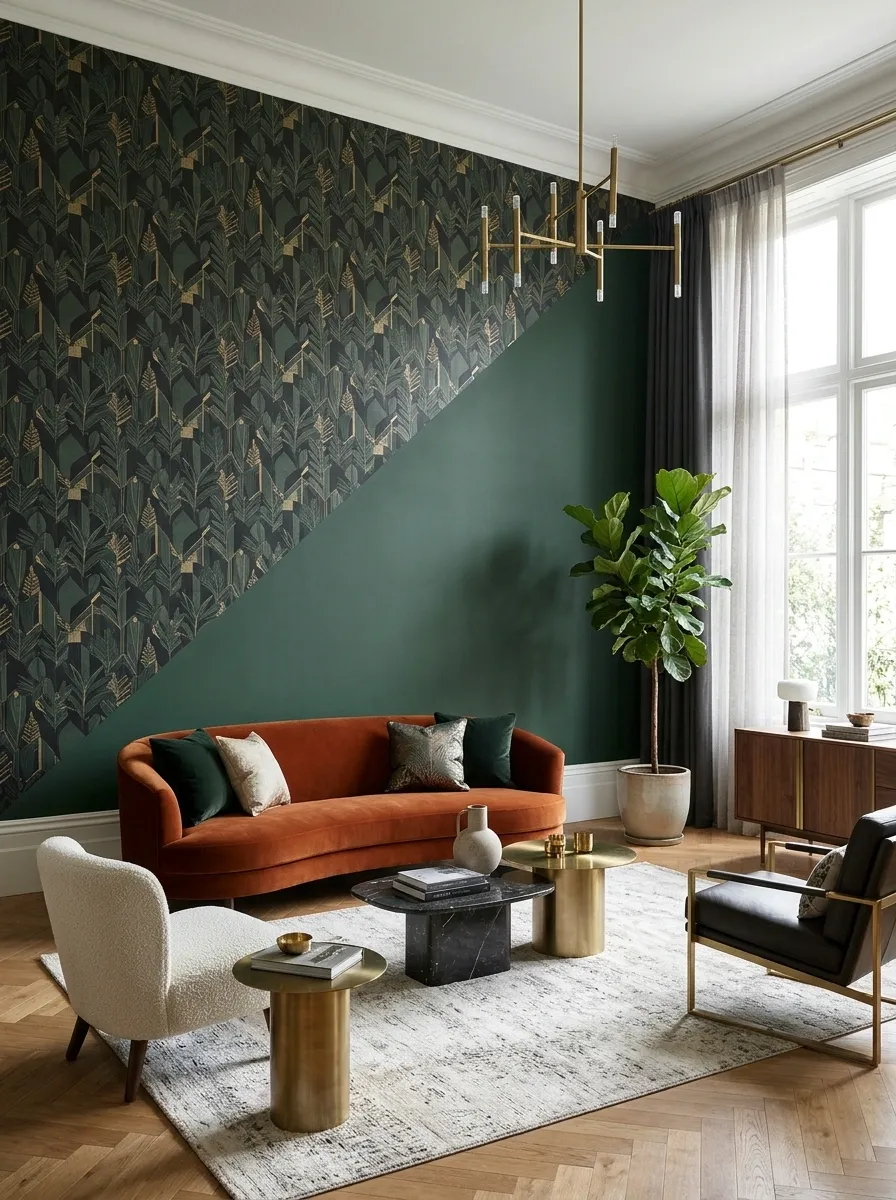
A diagonal division can give a simple wall a strong graphic gesture. Use one broad painted area and one wallpaper field, keeping both shapes uncomplicated.
Plan the diagonal against the furniture and door openings. A line that ends awkwardly behind a cabinet may feel less deliberate than one that reaches a clear wall endpoint.
Discuss edge finishing with the installer before selecting a thick or textured paper. The effect relies on a clean boundary; a complicated cut is not automatically a better design simply because it takes longer.
One continuous wall surface. Patterns are schematic; sample real paper and paint and plan the edge detail.
Use a Shallow Picture Ledge at the Join
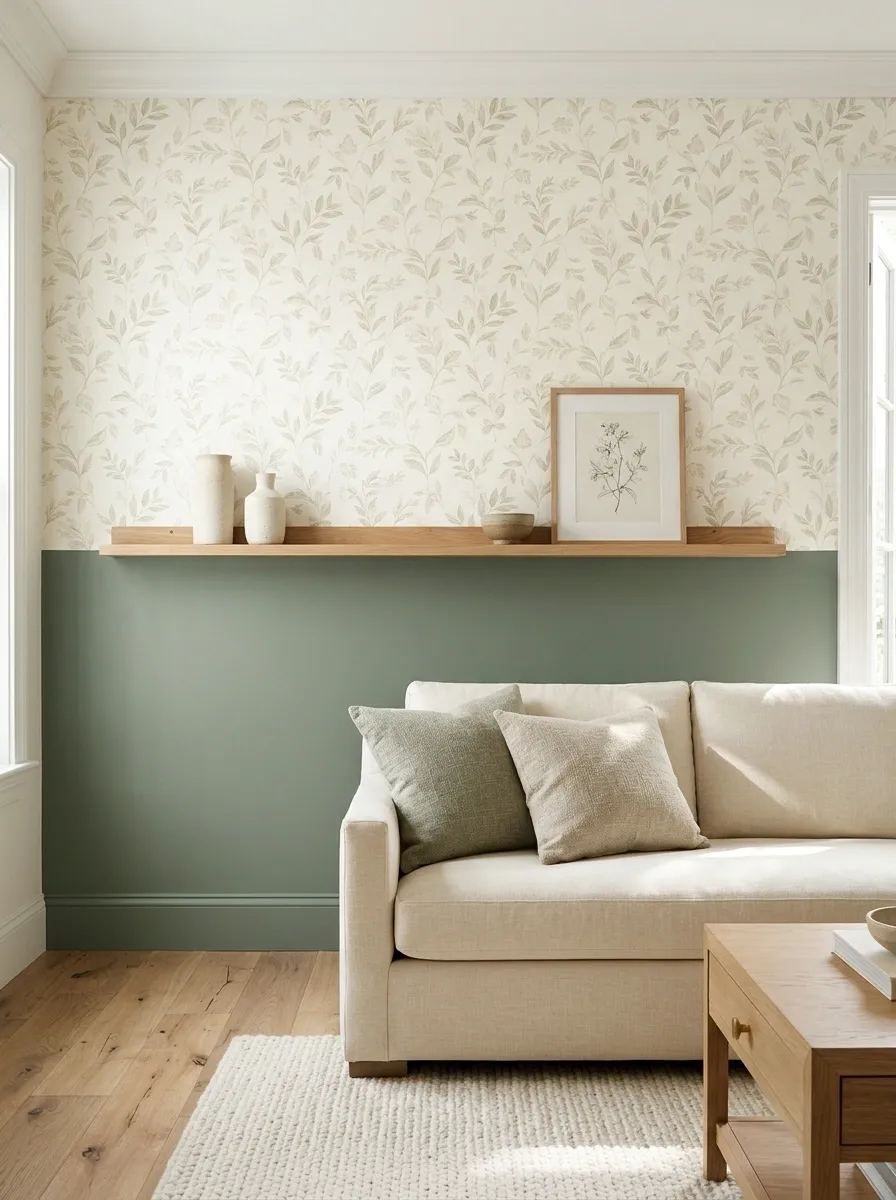
A properly fixed shallow ledge can mark the split between upper wallpaper and lower paint. Keep its depth suitable for the room and the objects it will hold.
Check concealed services before fixing and avoid a position where people will bump into it. The ledge should not compromise doors, seating, or circulation.
Use a restrained display so the wall treatments remain visible. A few small pieces can connect the two areas; a densely packed shelf can hide the boundary you carefully planned and add a separate clutter problem.
Follow a Sloping Stair Line With the Painted Base
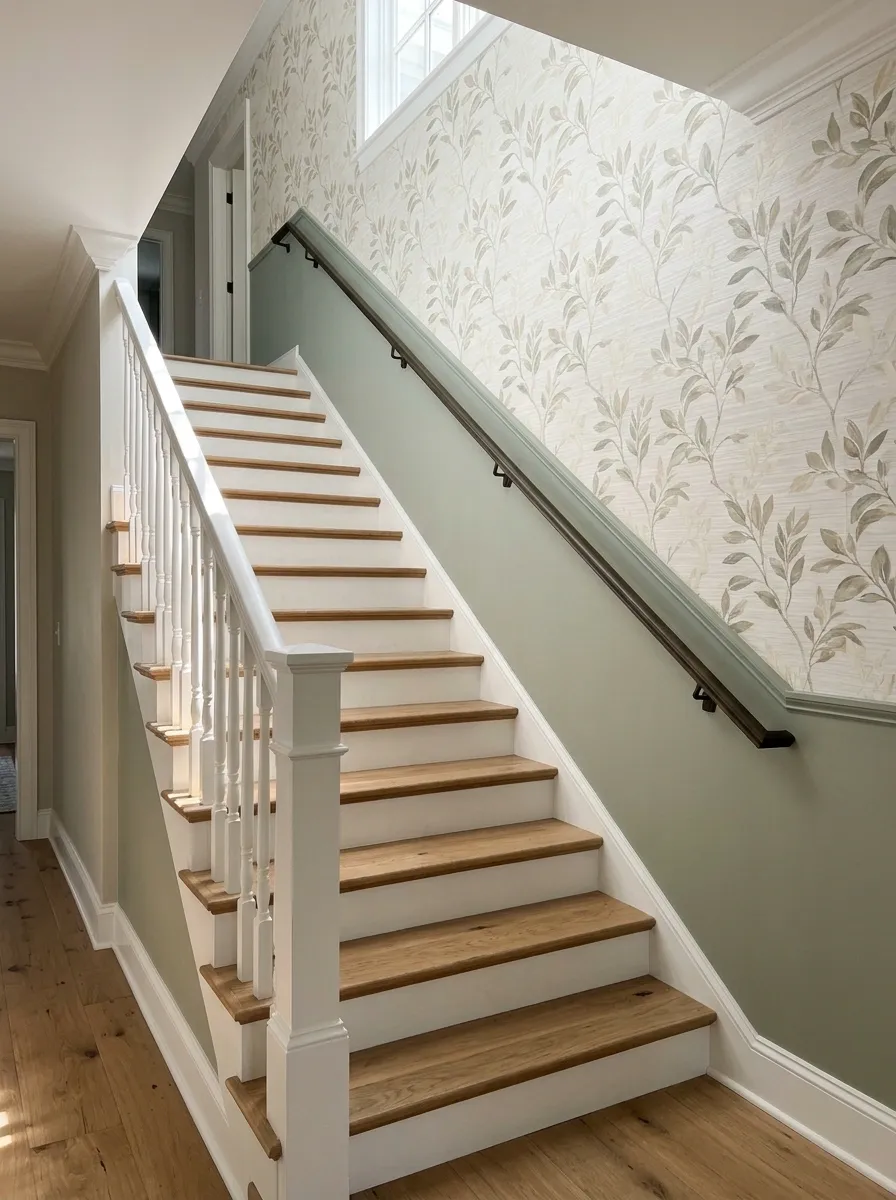
On one stair wall, the boundary can follow the staircase’s incline, with paint below and wallpaper above. A clear line can relate the treatments to the architecture.
Plan the wallpaper repeat across the slope and consider the view from both ends. Patterns that rely on a strong horizontal scene need particular care.
Use appropriate professional access for work above stairs. The wall treatment should preserve handrails, safe movement, and maintenance access. An ambitious decorating idea is not a reason to improvise a platform over a flight of steps.
One continuous wall surface. Patterns are schematic; sample real paper and paint and plan the edge detail.
Continue the Split Across a Window Wall
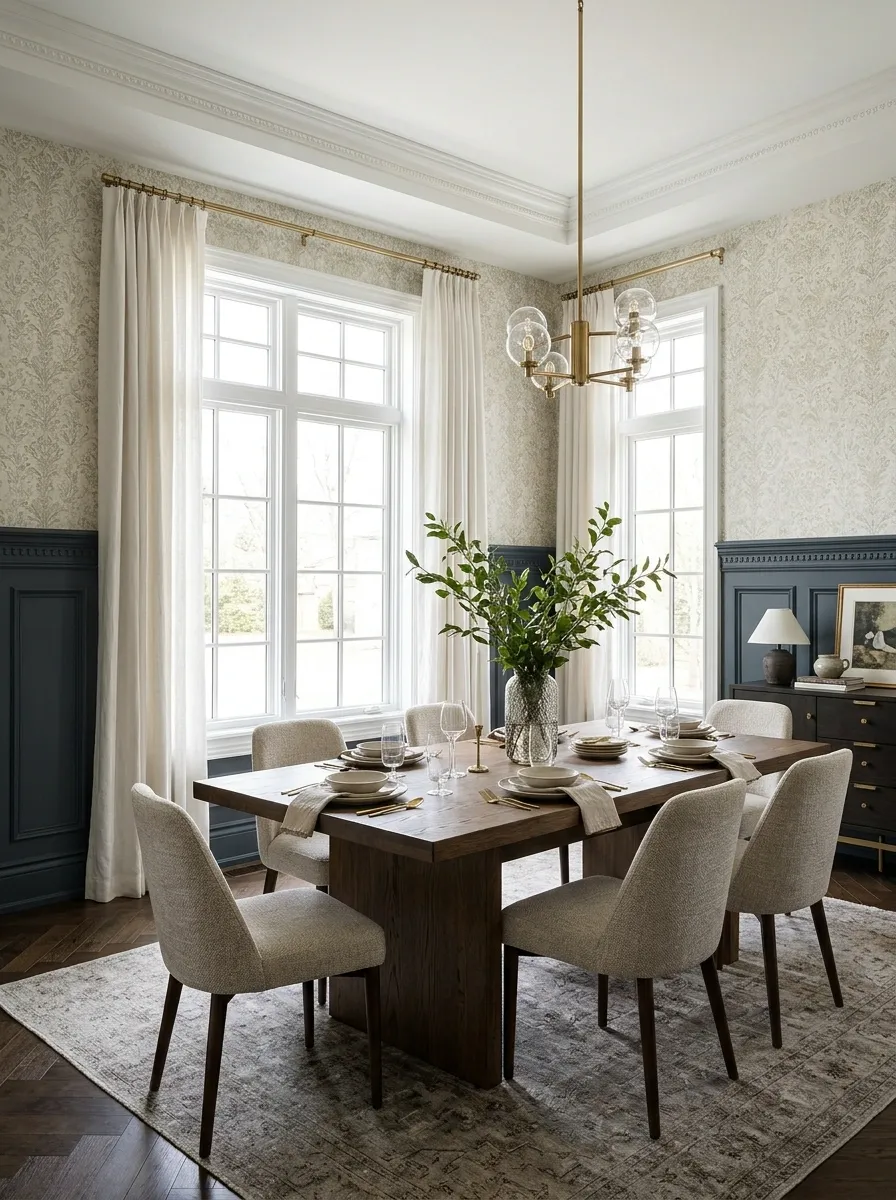
A horizontal division can continue across the wall sections beside and beneath a window. Keep the boundary consistent where it reappears so the composition feels connected.
Plan the paper repeat around the opening and resolve the trim relationship before installation. Small scraps of pattern can look awkward if they occur in the most visible position.
Use the window’s existing proportions as context, not an automatic instruction to align with the sill. Tape several possible heights and view them with the intended curtains or blind in place.
Paint and paper read as one planned wall
Each side appears to have chosen its own split
A Narrow Wallpaper Stripe Beside a Broad Painted Field
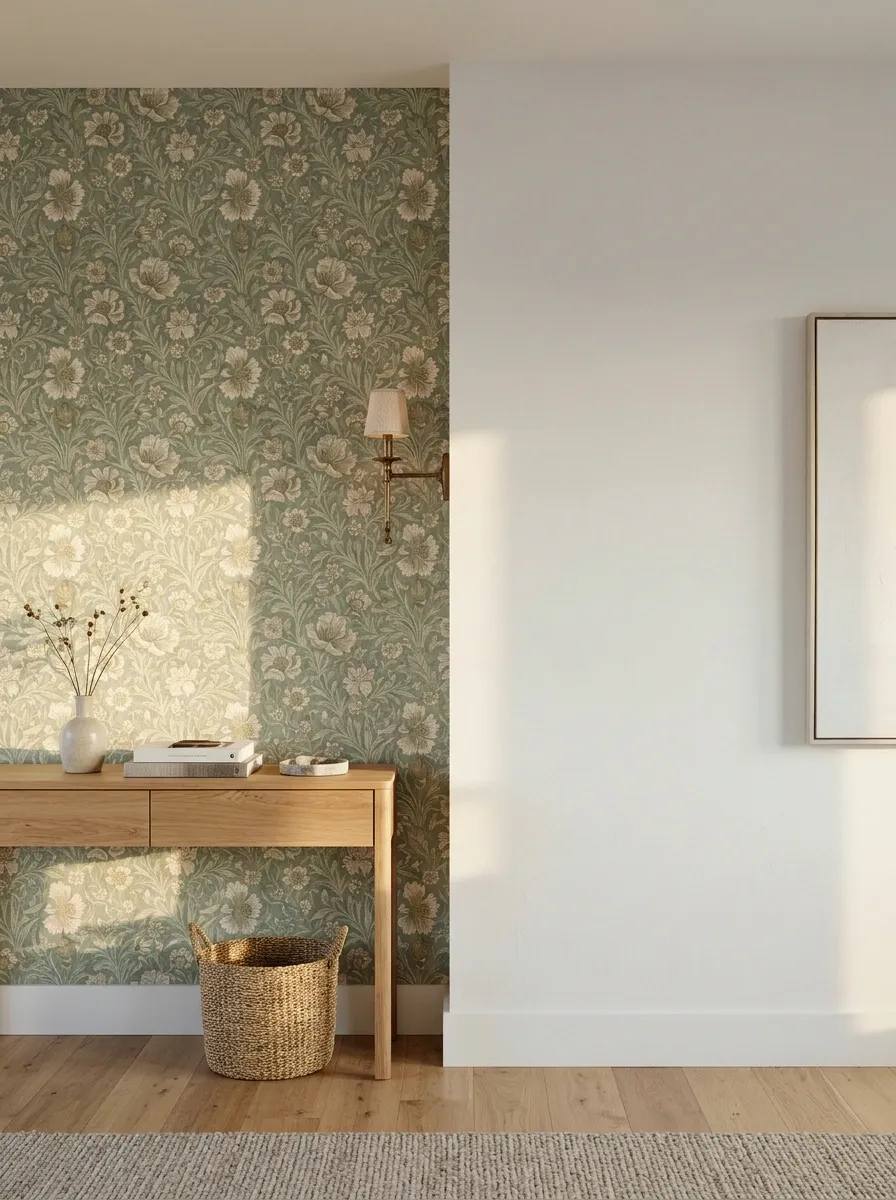
A vertical wallpaper field can act as a contained accent while paint occupies the larger part of the same wall. Make the paper broad enough to reveal a meaningful portion of the repeat.
Relate its position to a console, doorway, or chair rather than centering a random strip. The width should look intentional from the main viewpoint.
Choose a paper with a repeat that suits the available space. A giant scenic motif reduced to one partial tree may not give the effect you imagined when looking at the full-width sample.
One continuous wall surface. Patterns are schematic; sample real paper and paint and plan the edge detail.
Keep a Breakfast-Nook Pattern Above a Practical Painted Base
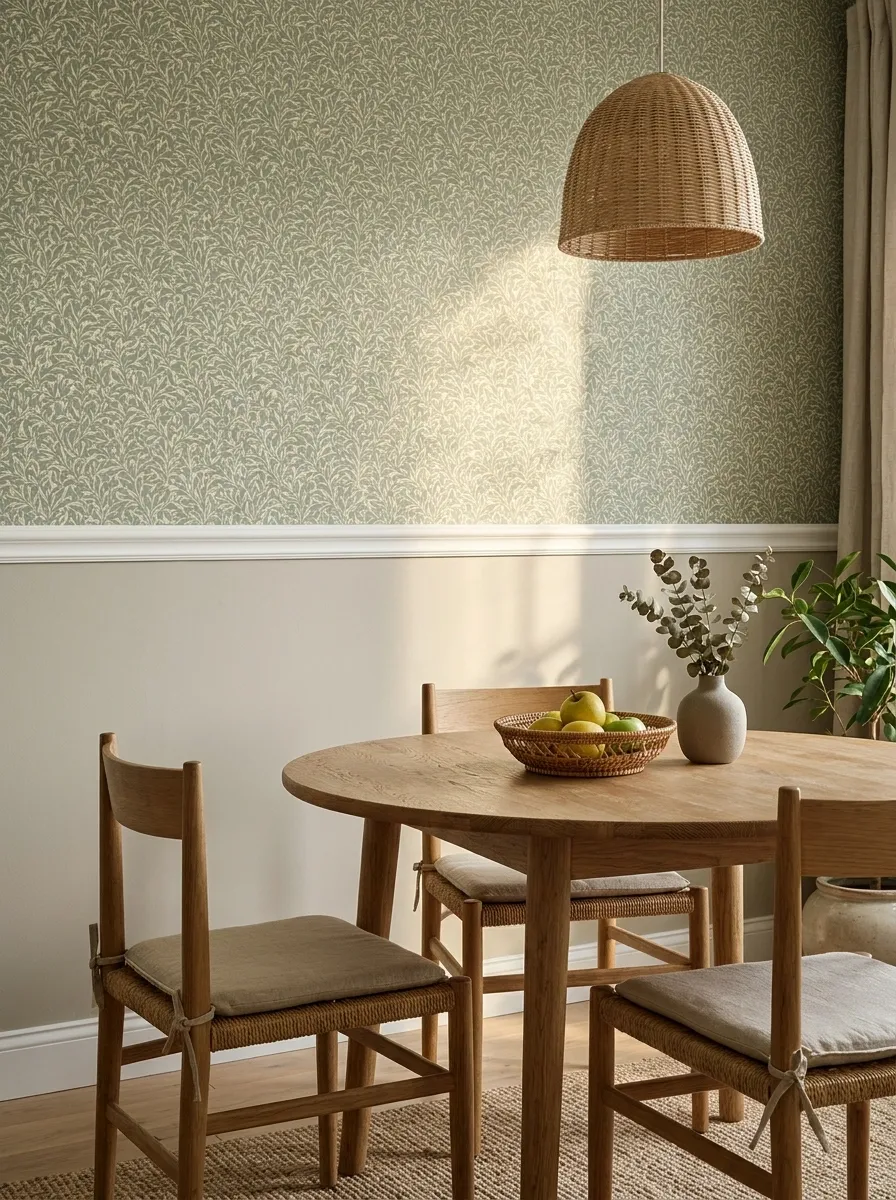
A breakfast nook can have wallpaper above and suitable paint below on the same wall. Choose the lower finish for the contact it will receive from chairs and daily use.
Keep the paper away from direct heat, frequent splashes, and unsuitable moisture exposure. A dining wall is not automatically an appropriate backsplash surface.
Use a compact pattern if the nook has little uninterrupted wall. The paint gives the lower area calm while the paper supplies personality. A simple table and lighting arrangement can keep the space from feeling overloaded.
Wallpaper in a suitable dry area
Lower paint suited to everyday contact
A clear durable boundary
Plain table and textiles nearby
Frame a Bed With Paper Above and Paint Below
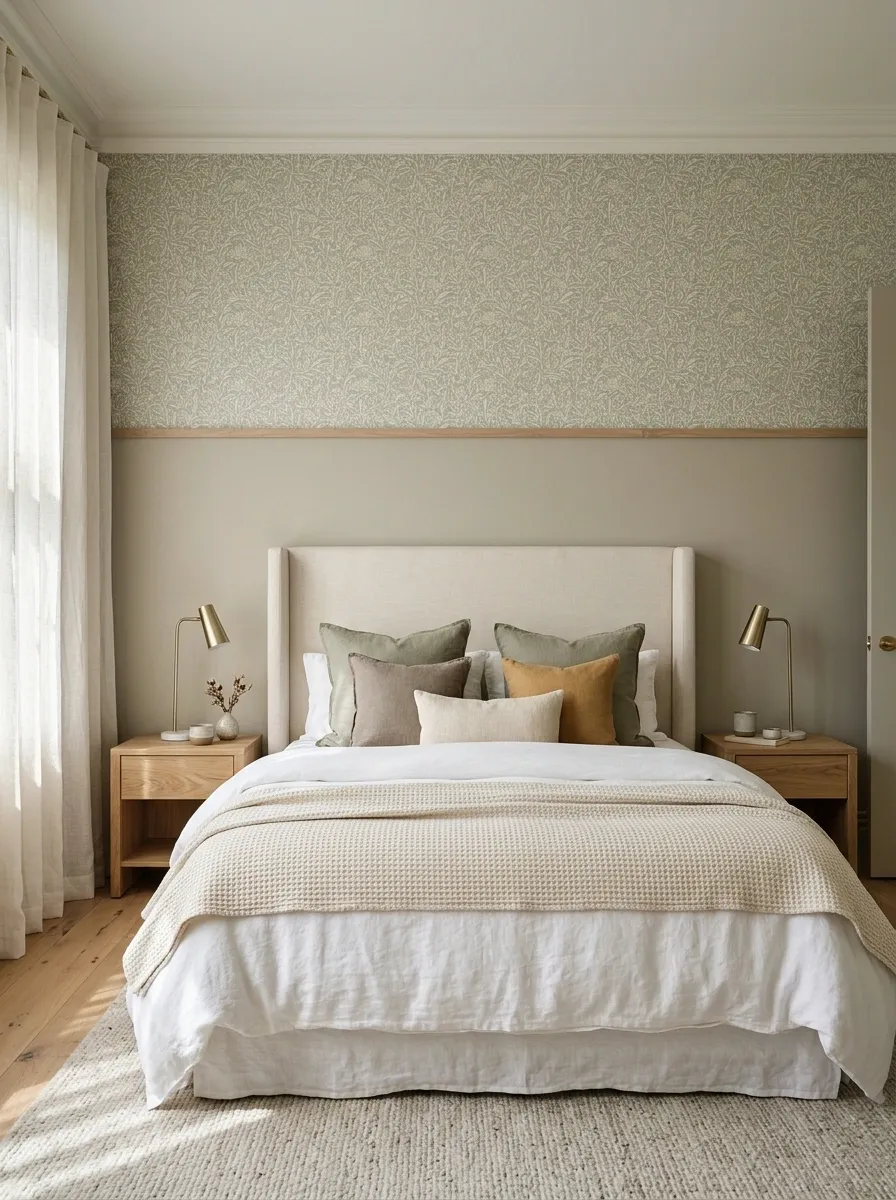
A bedroom wall can use the top edge of a headboard as a starting reference for the split, adjusted so both finishes remain visible. Do not assume the join must align exactly with the furniture.
Plan the wallpaper pattern around the bed’s center and check the view from the doorway. Bedside lights and sockets need to remain usable and appropriately installed.
Keep bedding calmer if the paper is detailed. The wall can provide the decorative interest while the bed remains a comfortable, practical place rather than a coordinated pattern demonstration.
One continuous wall surface. Patterns are schematic; sample real paper and paint and plan the edge detail.
Paint the Entry’s Contact Zone and Paper the Upper Wall
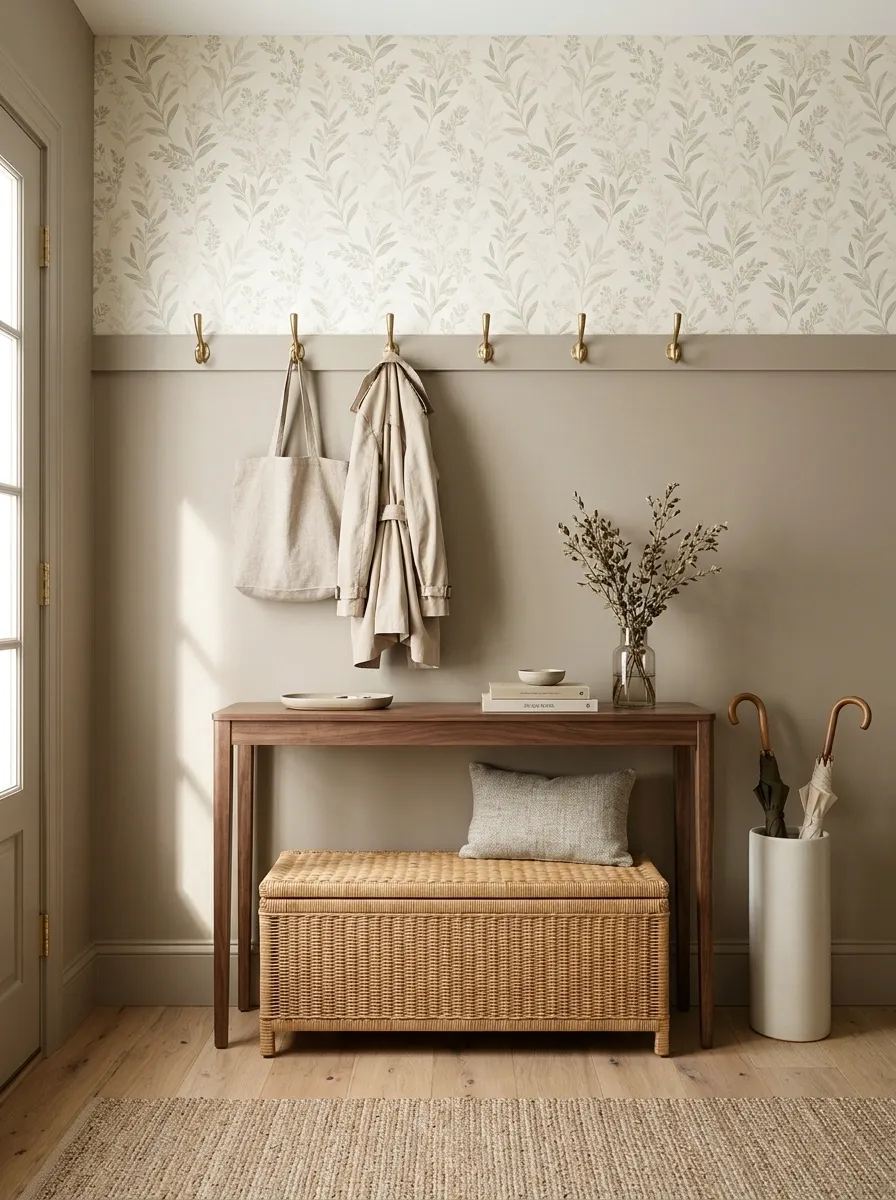
In an entry, a suitable painted lower area can handle ordinary contact while wallpaper adds interest above. Choose the split around hooks, furniture, and how the wall is used.
Use a product appropriate to the surface and expected cleaning. If bags and coats will rub the paper, adjust the layout rather than hoping the pattern is sufficiently distracting.
Keep the lower color related to the floor or furniture. The wall then feels connected to the room’s practical elements, with the upper paper providing the personality people notice when they arrive.
One continuous wall surface. Patterns are schematic; sample real paper and paint and plan the edge detail.
Tape the proposed boundary on the actual wall and place the samples on either side. Then put the furniture back. A split that looks excellent on an empty wall still has to make sense once the room resumes its normal duties.