
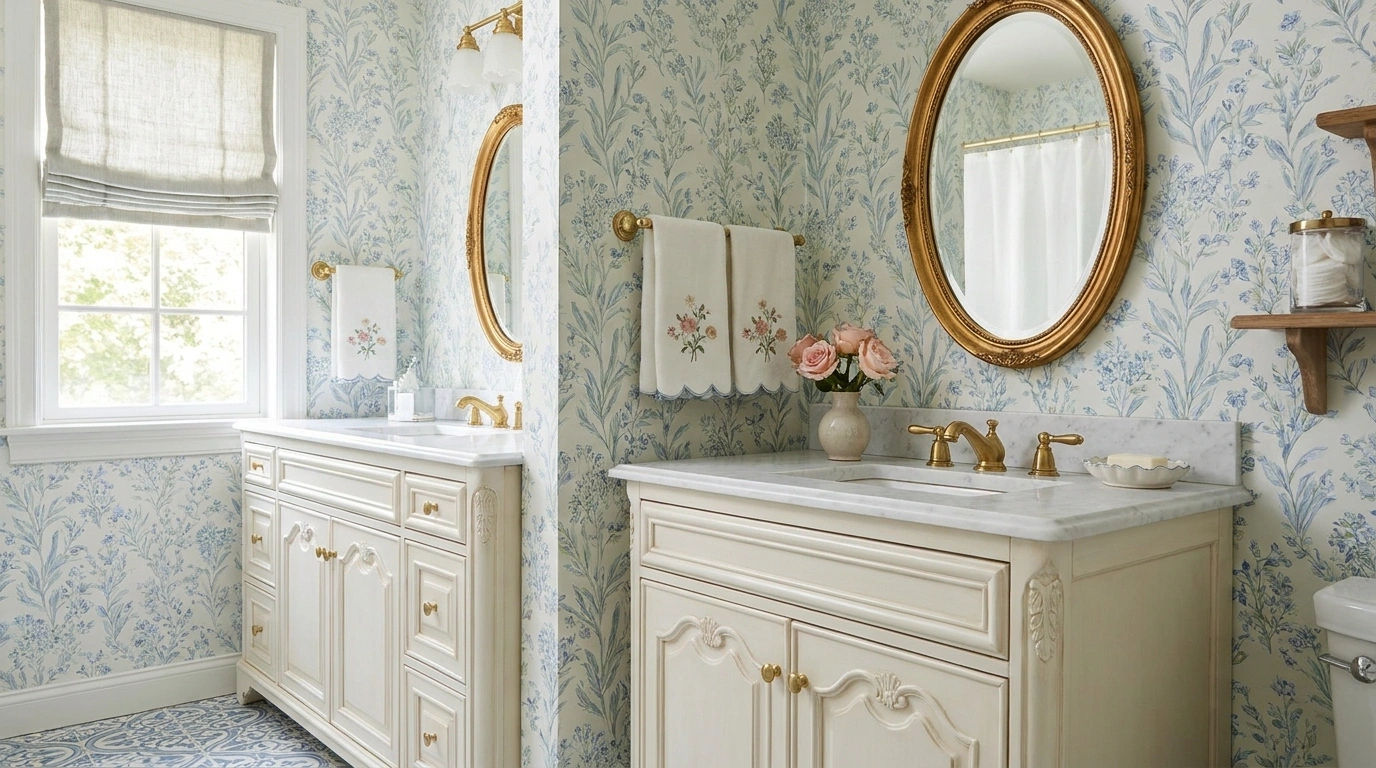
Yes to a floral print. Yes to a proper mirror. Possibly to a basin skirt, provided it isn’t expected to spend its life absorbing shower spray.
No to decorating a bathroom so delicately that using the tap feels rude.
Grandmillennial style has room for pattern, traditional furniture shapes, older-looking hardware, and things that feel chosen rather than issued as a matching set. In a bathroom, those details need to coexist with moisture, cleaning, and the embarrassing fact that everyone owns far more toiletries than the styling tray admits.
The room can be exuberant or quiet. A floral upper wall might be enough. A painted vanity and shaped mirror might supply the whole reference. A larger bathroom can handle layers, but layers still need somewhere sensible to stop.
These grandmillennial bathroom ideas treat the room as a usable setting rather than an inherited display cabinet. Choose the traditional details you actually enjoy. Then give the ordinary supplies a home so they don’t spend the next decade auditioning as countertop decor.
Pattern Can Be the Main Decision
Put samples beside the actual fixtures and look at the full wall area they will occupy. A print that feels restrained on a card can become remarkably talkative around a small mirror.
Use finishes and coverings appropriate to the location. Keep paper, fabric, and delicate furniture away from direct water exposure unless a suitable system has been specified. Older-looking doesn’t have to mean inconvenient to maintain.
Bathrooms With a Collected Point of View
Blue Floral Upper Walls With a White Paneled Vanity
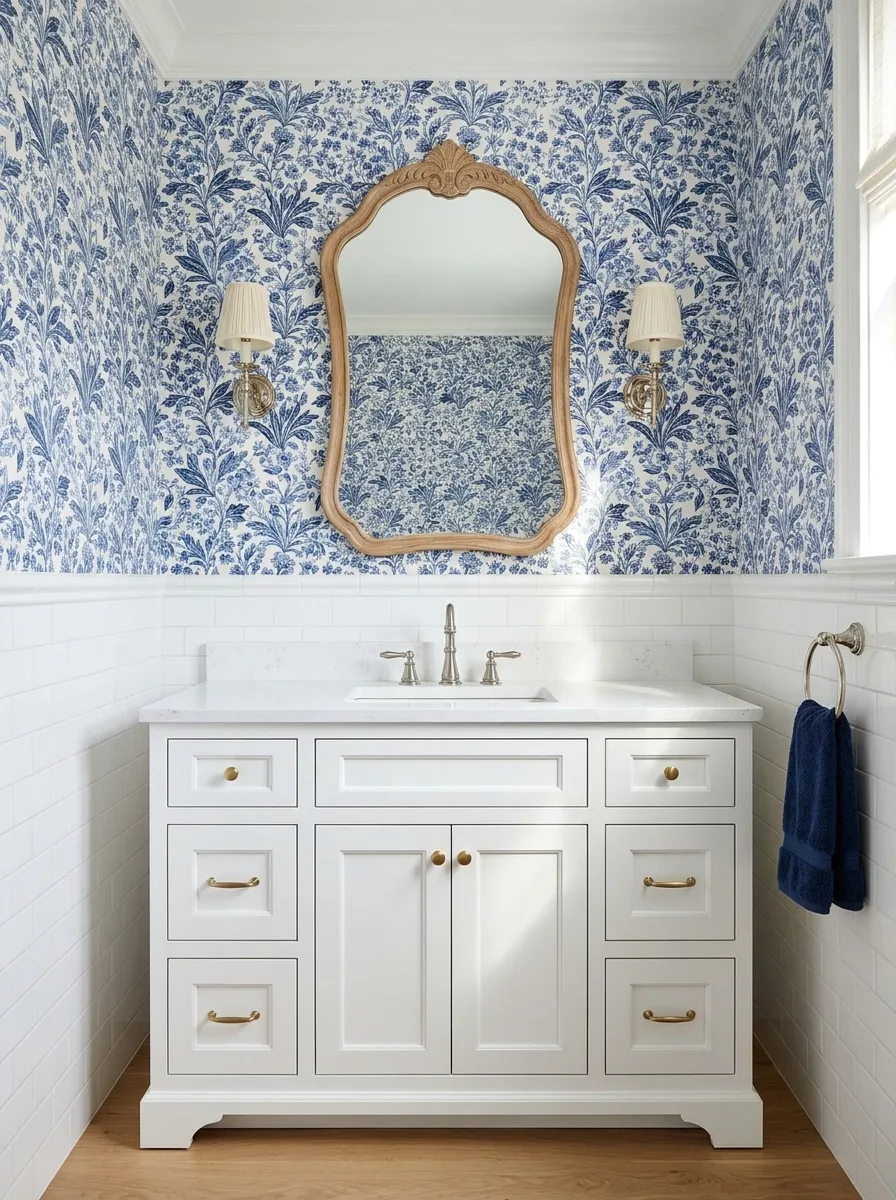
Blue floral upper walls can sit above a plain white tiled lower section, with a paneled vanity and simple nickel-toned fittings keeping the basin area clear. A shaped mirror adds a furniture reference without another large print.
Let the floral carry most of the detail. Choose towels in one color from the print and keep the floor quiet. A patterned shower curtain would need a reason beyond having been available in a coordinating collection. The vanity’s closed storage is what lets the decorative wall remain visible after the household moves its toiletries in.
Let the print talk.
Give everything else shorter lines.
Main decorative field.
Tile, vanity, towels, floor.
Sage Vanity With a Scalloped Mirror and Cream Tile
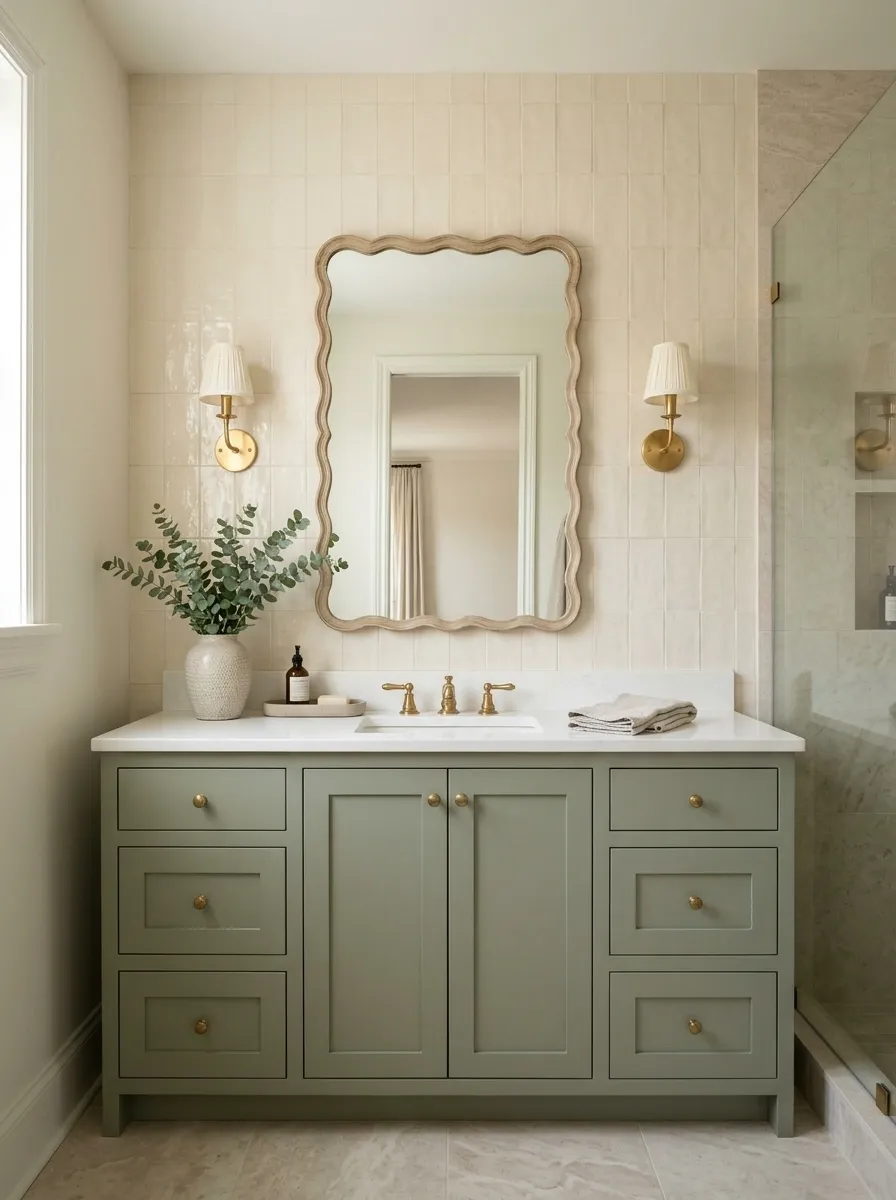
A sage vanity gives cream tile a gentle center, with a scalloped mirror and simple wall lights supplying the traditional outline. Keep the shower glazing plain and use a quiet floor so the mirror’s edge stays readable.
The scallop doesn’t need to reappear on the cabinet, bathmat, shelf, and towels. One convincing shape can carry the reference without the whole room developing a frill. Check the light positions around the mirror and keep supplies inside the vanity. The color can stay restrained while the outline provides enough personality.
Lights and shelves should frame its outline rather than collide with it.
Powder Room With a Skirted Basin and Small-Scale Wallpaper
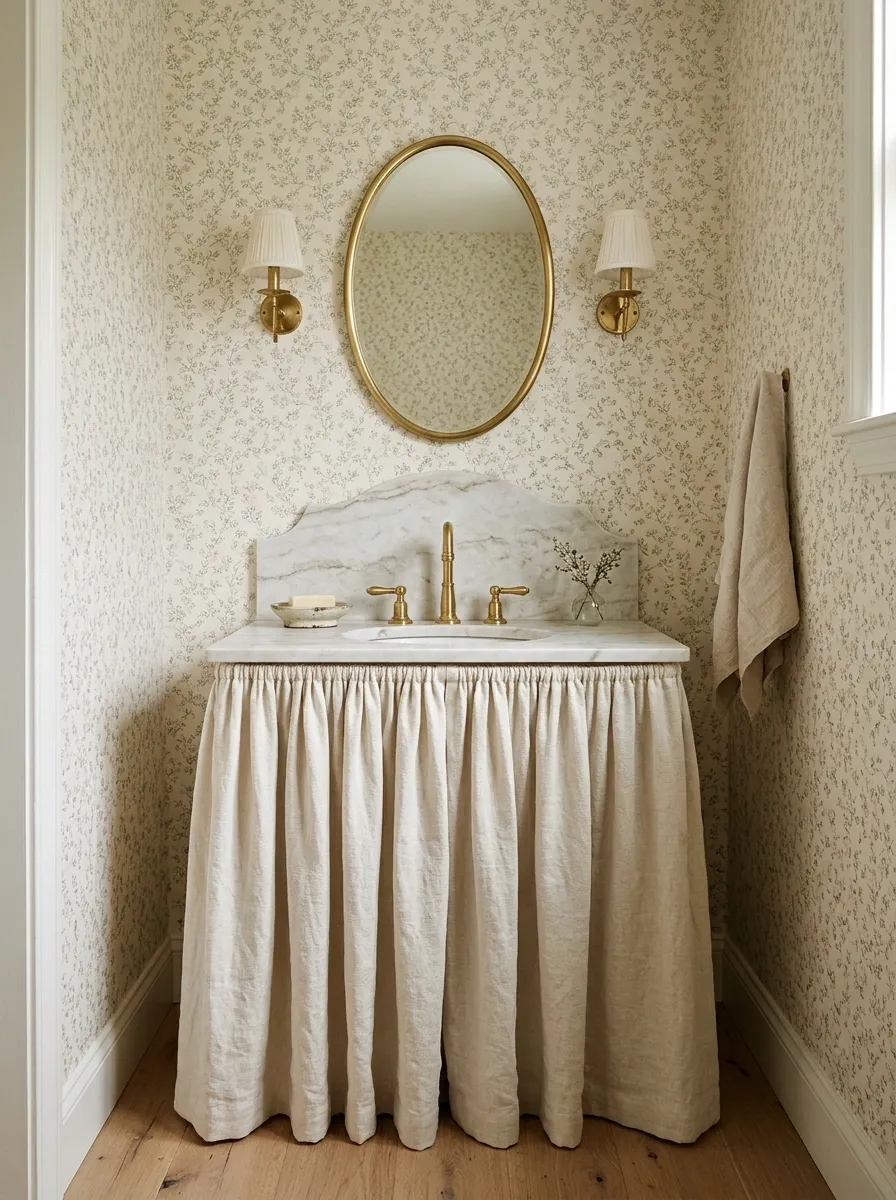
A skirted basin can give a powder room a soft furniture-like shape beside small-scale wallpaper. Use a simple mirror, a quiet floor, and a practical splash area so the fabric feels deliberate rather than improvised.
Choose a suitable washable textile, keep it clear of routine wetting, and allow convenient access to the storage and plumbing behind it. This is a better fit for a modest dry-use powder room than a steamy shower corner. The skirt should conceal useful storage, not become a curtain protecting a damp collection of things you forgot existed.
Splash exposure, hem position, laundering, and access behind it all belong in the decision.
Painted Dresser Vanity With a Plain Stone-Look Counter
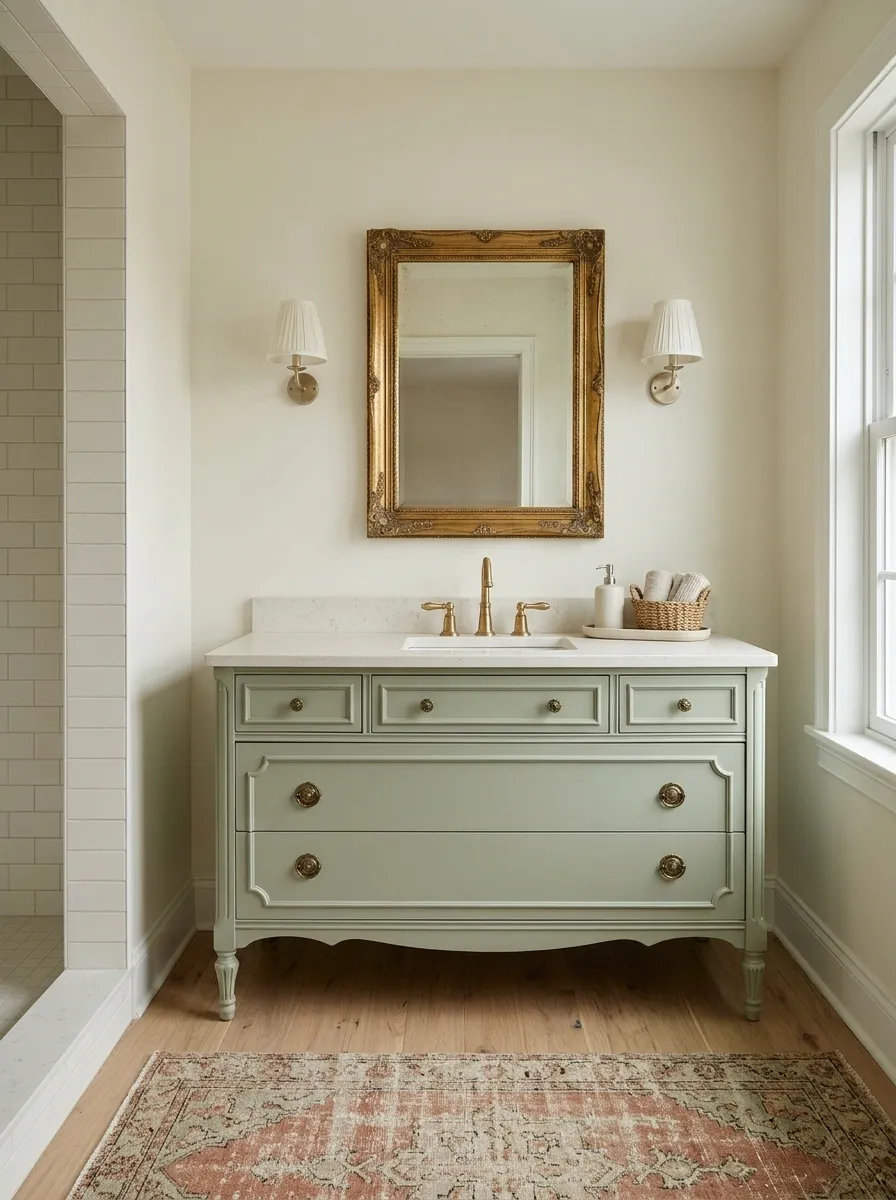
A painted dresser-style vanity and plain stone-look counter can establish a collected room without wallpaper. Add a framed mirror, modest wall lights, and pale tile around the bath or shower.
If adapting furniture, plan its structure, plumbing, finish, and useful drawer space properly. A beautiful front is not compensation for an interior that can store one flannel and a regrettable purchase. Keep the rest of the room quiet enough for the furniture shape to register. The vanity can look older without requiring the household to live as though closed storage hasn’t been invented.
Rose-and-Cream Bathroom With a Café Curtain
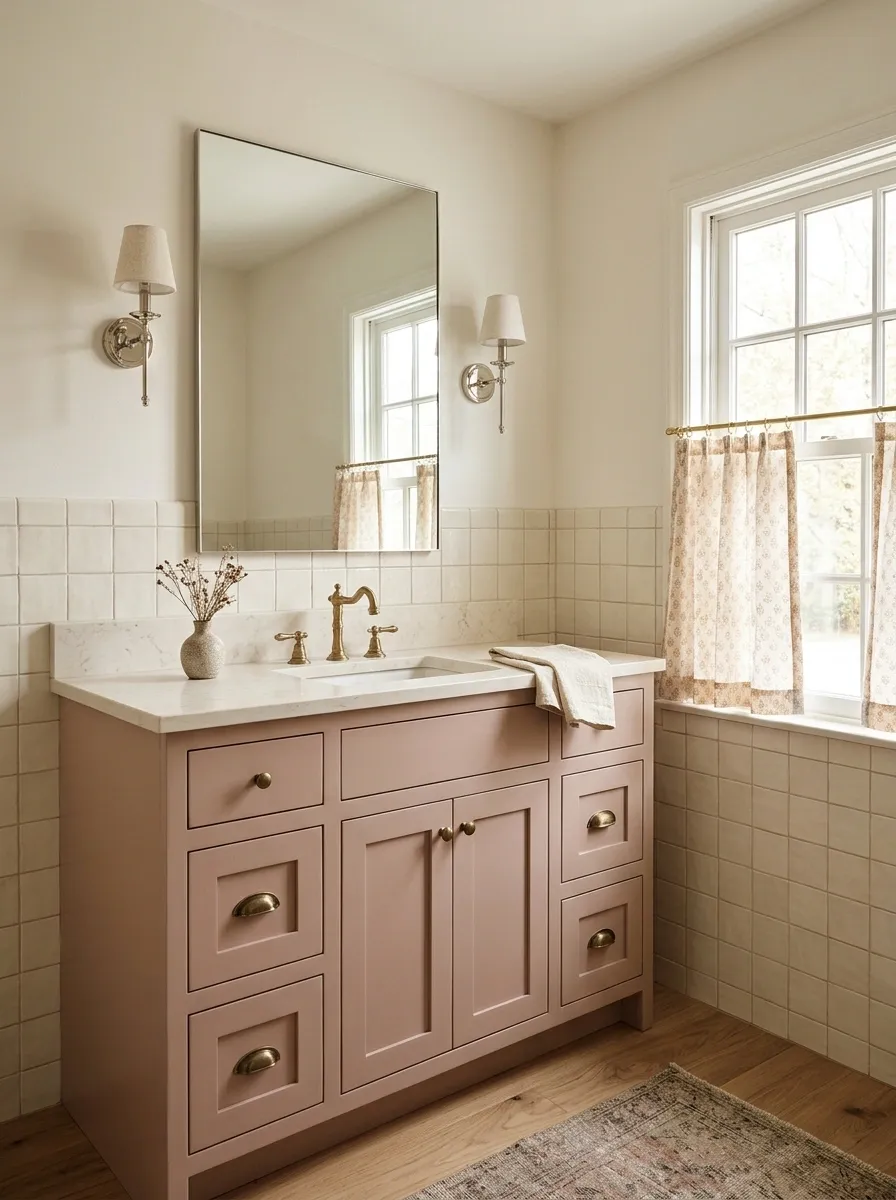
Rose-painted cabinetry, cream tile, and a simple café curtain can make a small bathroom feel furnished. A plain mirror and restrained metal lights keep the textile detail from becoming too busy.
Place the curtain where it stays clear of direct splashes and doesn’t obstruct the window. Check privacy from relevant angles and after dark. The rose doesn’t need matching floral accessories to explain itself. A small repeated warm tone in the curtain can connect the room, while plain towels keep the basin area from looking permanently dressed for a catalog appointment.
Main color block.
A link, not a second major pattern.
Green Botanical Walls With a Simple White Console Basin
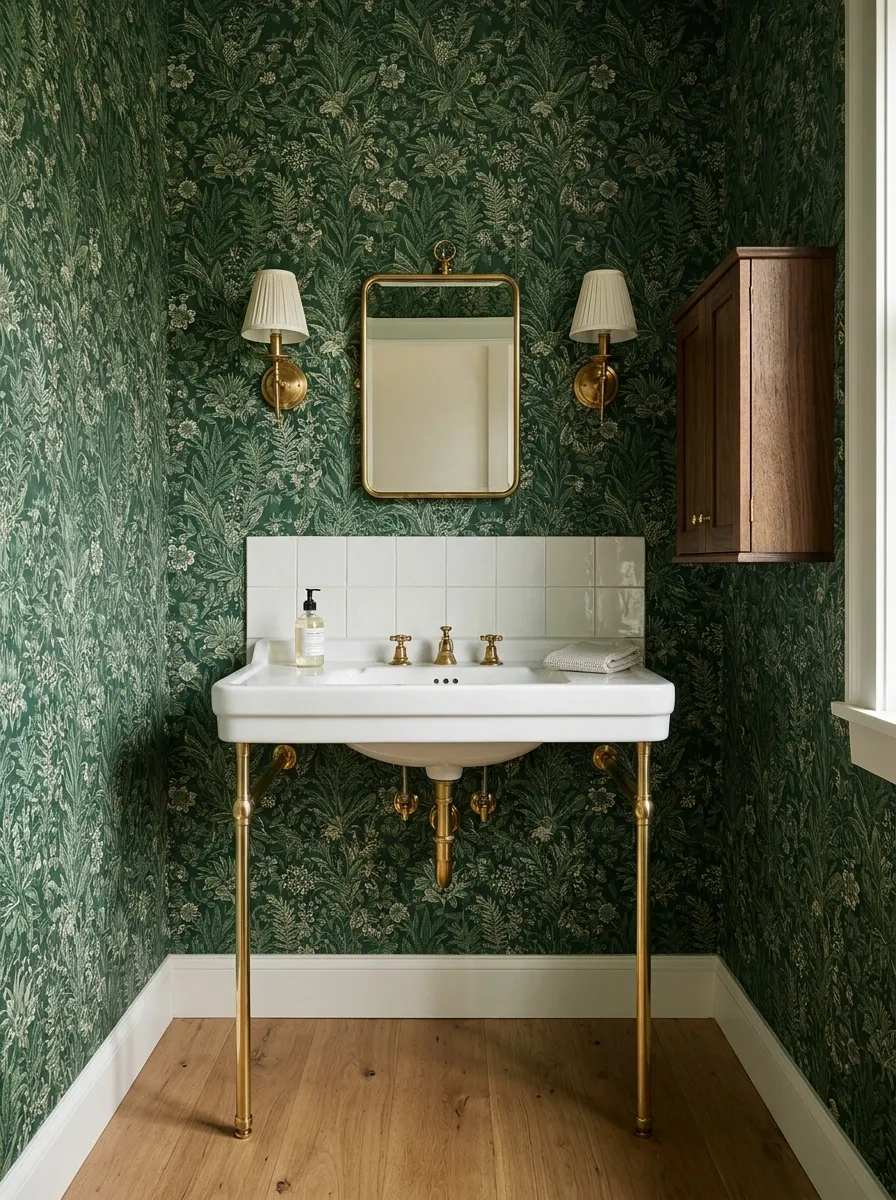
Botanical walls can give a console basin a complete setting, with white porcelain and a small dark cabinet supplying structure. Use a suitable plain splash surface and keep the floor quieter than the wall.
The print already contains movement, so the basin can stay simple. Put daily supplies in the cabinet rather than on open shelves competing with the pattern. A console’s exposed underside is part of its appeal; filling it with baskets until it resembles a crowded cupboard defeats the point. Let the decorative wall and the clear floor work together.
Use separate closed storage for the supplies that would otherwise collect beneath it.
Twin Basins With Individual Mirrors and a Shared Floral Backdrop
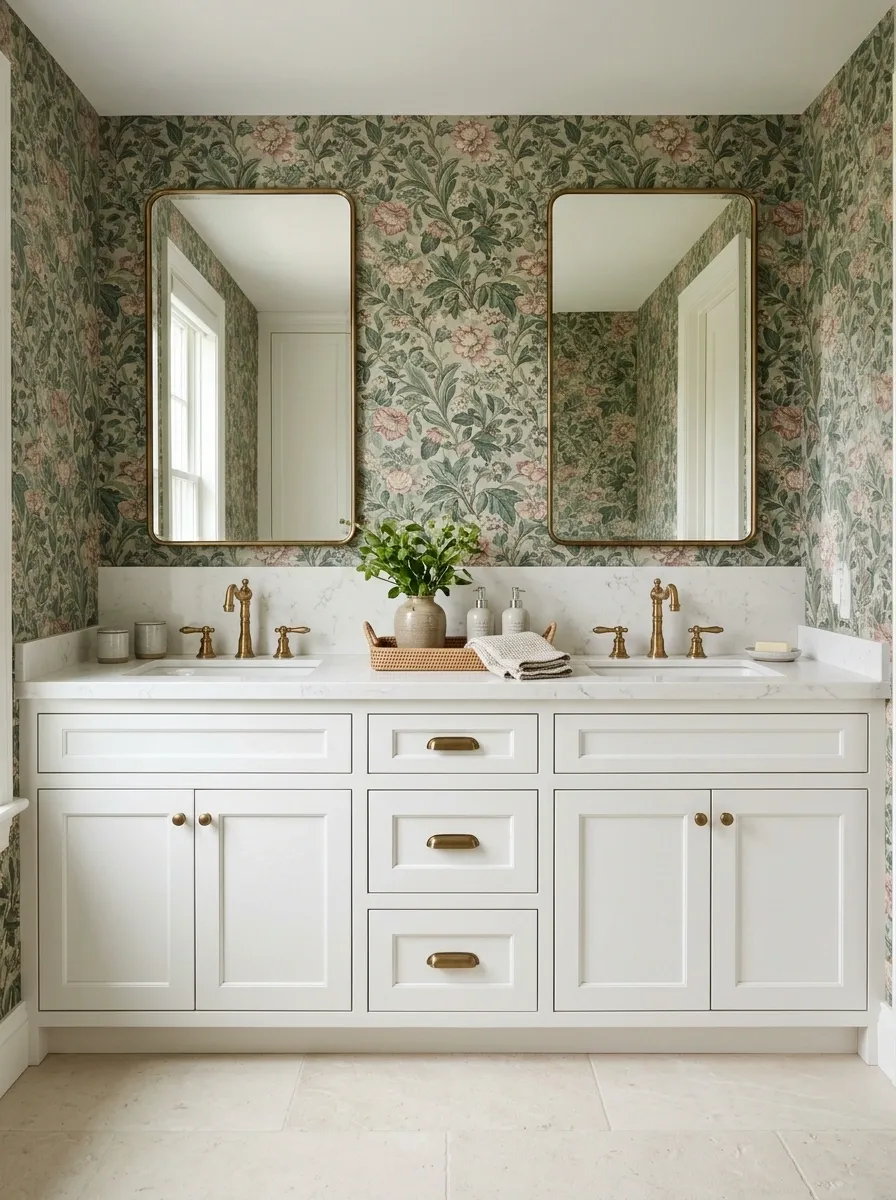
A paired vanity can sit beneath individual framed mirrors, with one floral wall treatment connecting the two positions. Keep the counter and floor plain so the room doesn’t become a competition between pattern and symmetry.
Give each basin a practical landing space and storage:
- Personal daily items within reach.
- Shared supplies in the central or lower section.
- Spare linen elsewhere if space is tight.
The mirrors don’t need elaborate frames if the print is strong. The room can feel collected without every object arriving in its most decorative outfit.
Personal routine.
Useful concealed supplies.
Personal routine.
Cream Bathroom With a Dark Timber Linen Press
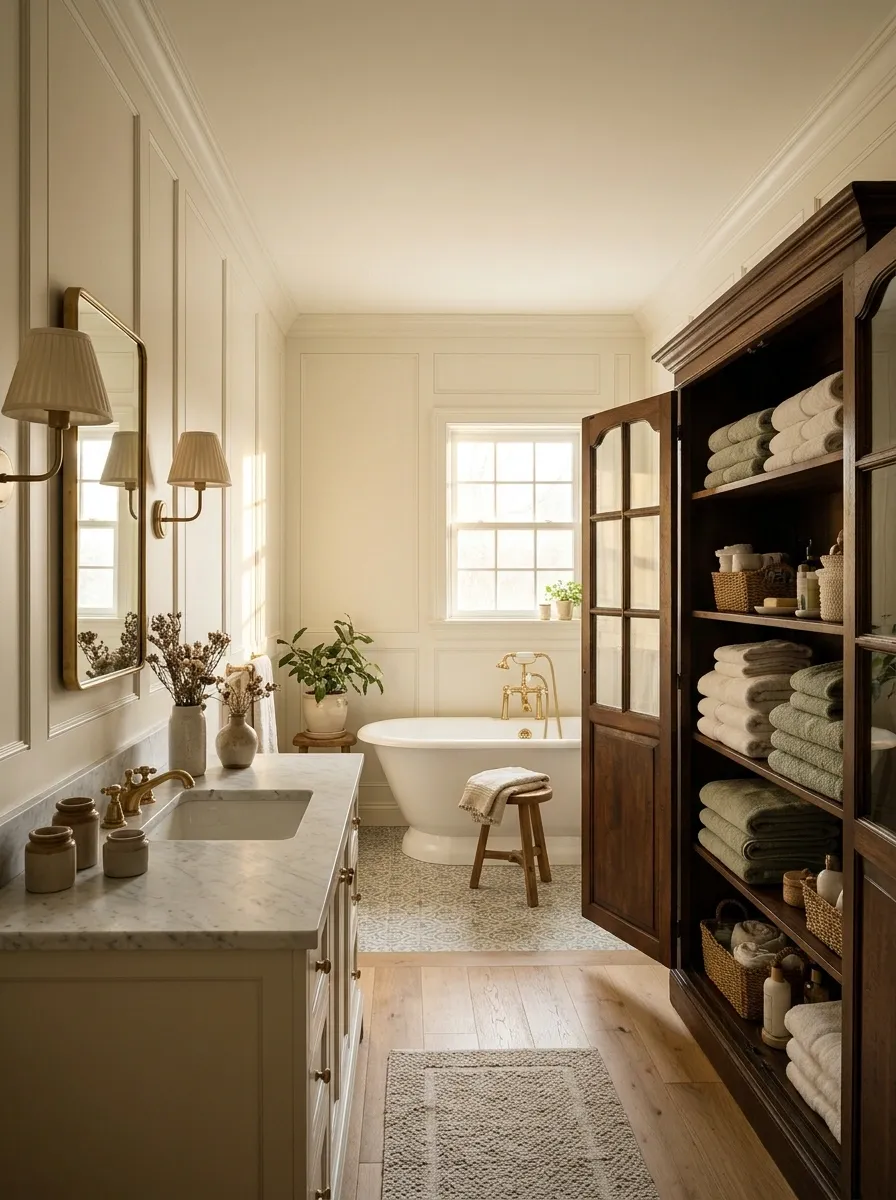
A dark timber linen press can give a cream bathroom depth, paired with simple fixtures and a modest patterned floor. A plain framed mirror and shaded-style bathroom-suitable lights keep the room’s furniture references connected.
Choose the cupboard for its position and exposure, not just its lovely doors. The shelves need to suit real towel stacks and small supplies. Leave a clear approach so the cabinet feels usable rather than ceremonial. A substantial old-looking piece can carry the whole room’s character, leaving the rest free to be pleasantly straightforward.
Check shelf depth, hand space, door opening, and the route to the bath.
Blue Painted Paneling With a Plain Roll-Top-Style Bath
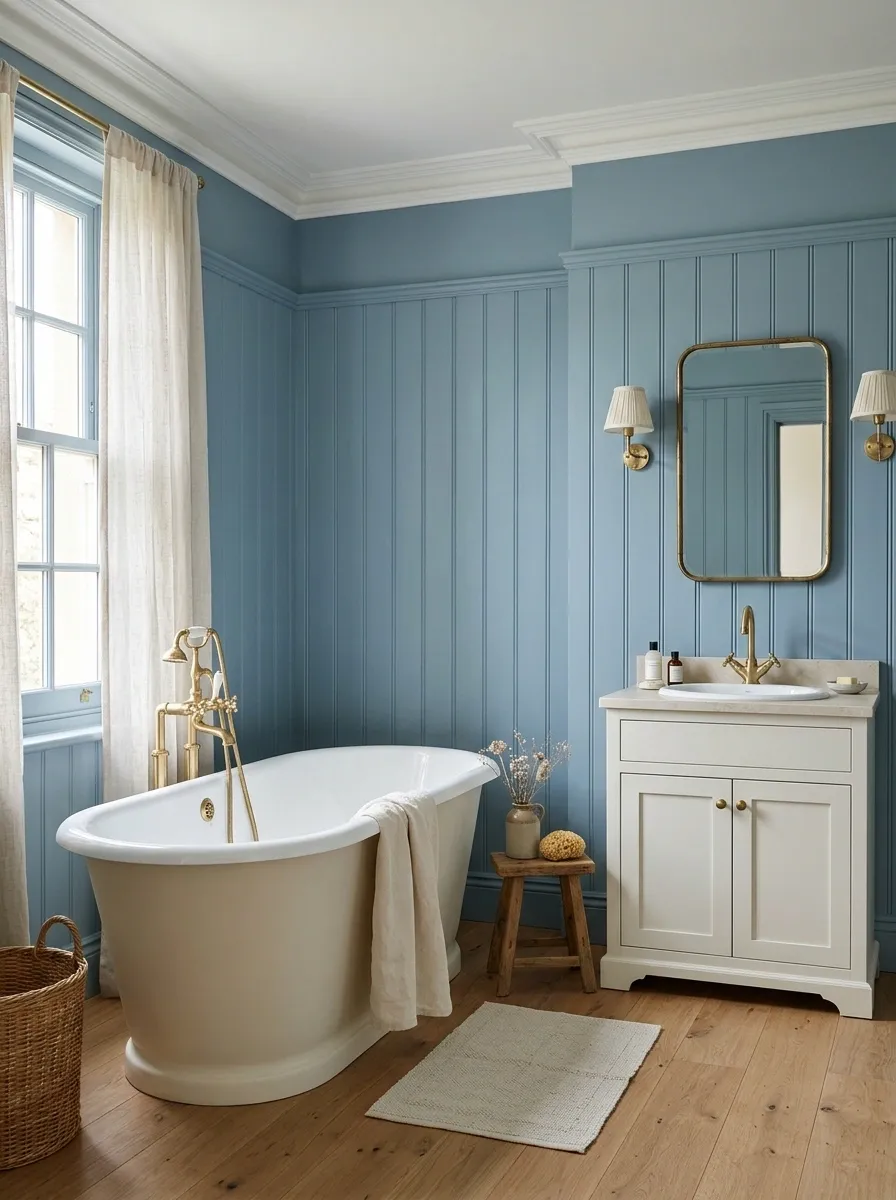
Blue painted paneling on suitable dry walls can give a traditional-shaped bath a settled setting. Use plain wet-area finishes, a modest basin cabinet, and a simple mirror so the bath remains the main furniture-like form.
Paneling needs a suitable construction and finish for its actual location. Keep direct water exposure in an appropriately specified zone rather than relying on the charm of painted grooves. The blue provides enough atmosphere without a second large pattern. A clear floor around the bath matters more than the decorative stool that seems to appear beside every fashionable tub.
Panel detail and paint.
Suitable continuous construction beneath its finish.
Tiny Powder Room With a Chinoiserie-Inspired Print
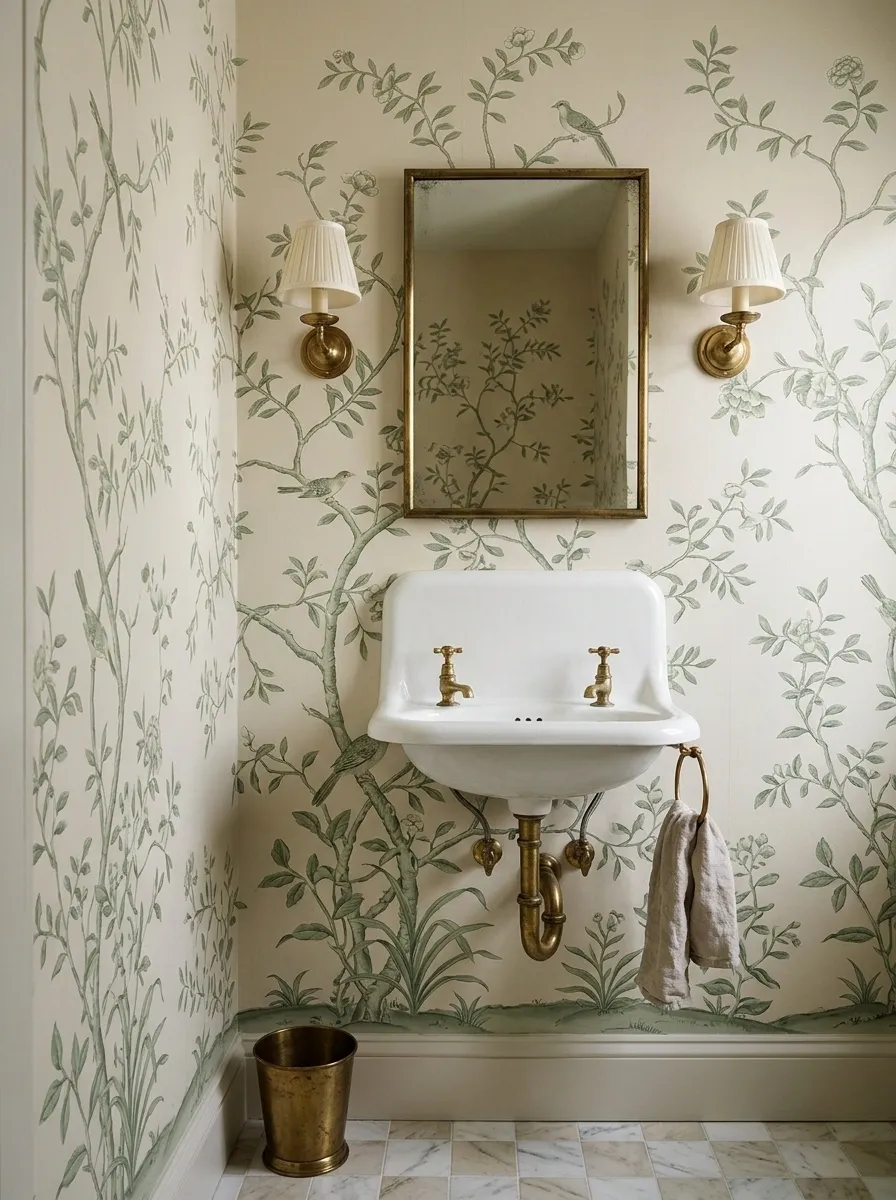
A delicate scenic or chinoiserie-inspired print can give a tiny powder room enough visual interest beside a simple wall basin. Use a plain mirror, compact lighting, and a quiet floor so the scene remains readable.
Choose the pattern around the actual cuts at corners and the mirror. Don’t judge it only as a perfect uninterrupted sample. A large scenic motif may lose its subject in a very small room. The wallpaper should feel deliberately placed rather than like an attractive drawing has been interrupted repeatedly by plumbing. Keep the fixtures modest and let the print carry the detail.
What survives the cuts?
Mark the mirror, basin, door casing, and corners on a pattern layout before ordering.
A Check-Floor Bathroom With Plain Floral Towels
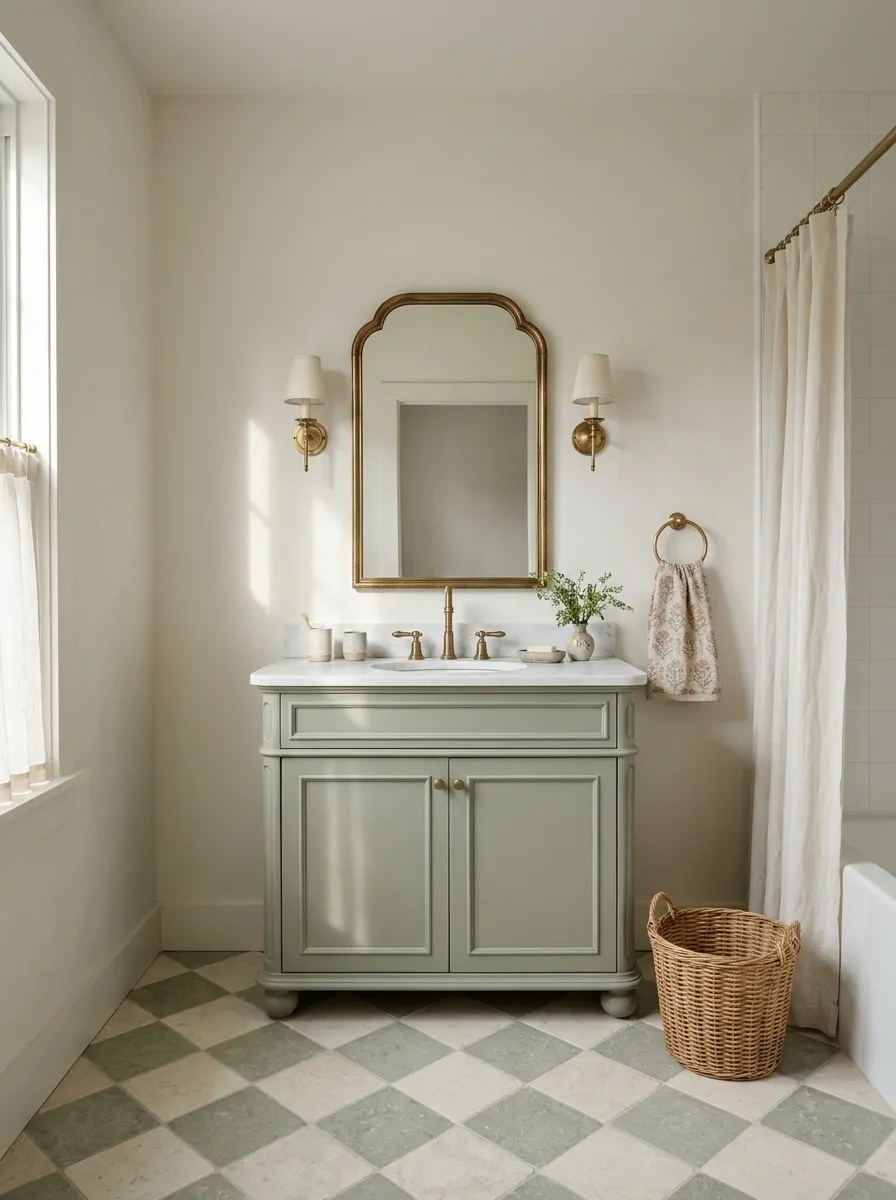
A restrained check floor can sit beneath plain walls and a painted vanity, with a small floral textile providing the softer reference. Keep the shower or bath enclosure simple and use a framed mirror to connect the furniture shapes.
The floor is the dominant pattern. The floral should be a smaller contribution, not a competing curtain covering half the room. Choose related colors and leave enough plain fabric around them. This gives the room layered character without demanding that every surface prove it understands the theme. Sometimes a plain towel is doing everyone a favor.
Give the patterns different jobs.
Check: main floor structure.
Floral: a smaller soft detail.
Plain surfaces: the space between them.
A Bath Alcove With a Plain Curtain and Patterned Dry Wall
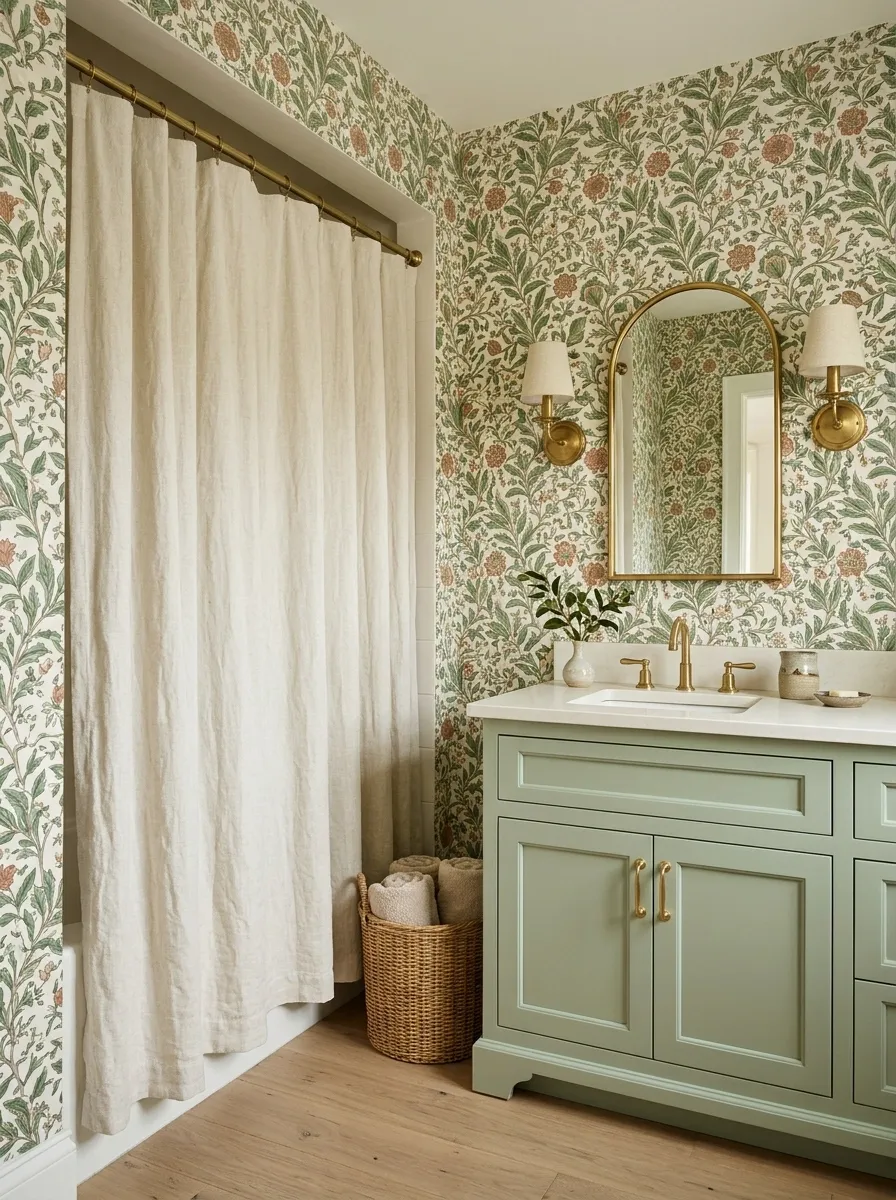
A simple shower curtain can keep a bath alcove quiet while a patterned dry wall gives the room its personality. Add a painted cabinet, plain floor, and modest mirror so the pattern has a clear area to occupy.
Choose curtain material and placement for the bathing setup, and specify the wet walls independently of the decorative paper. The quiet curtain can connect to a background color in the print. It doesn’t need to match the print exactly, which is useful because coordinated fabric and wallpaper can become surprisingly insistent when both occupy a tiny room.
Suitable plain enclosure finishes.
The main decorative print.
An Attic Bathroom With a Low Painted Cupboard
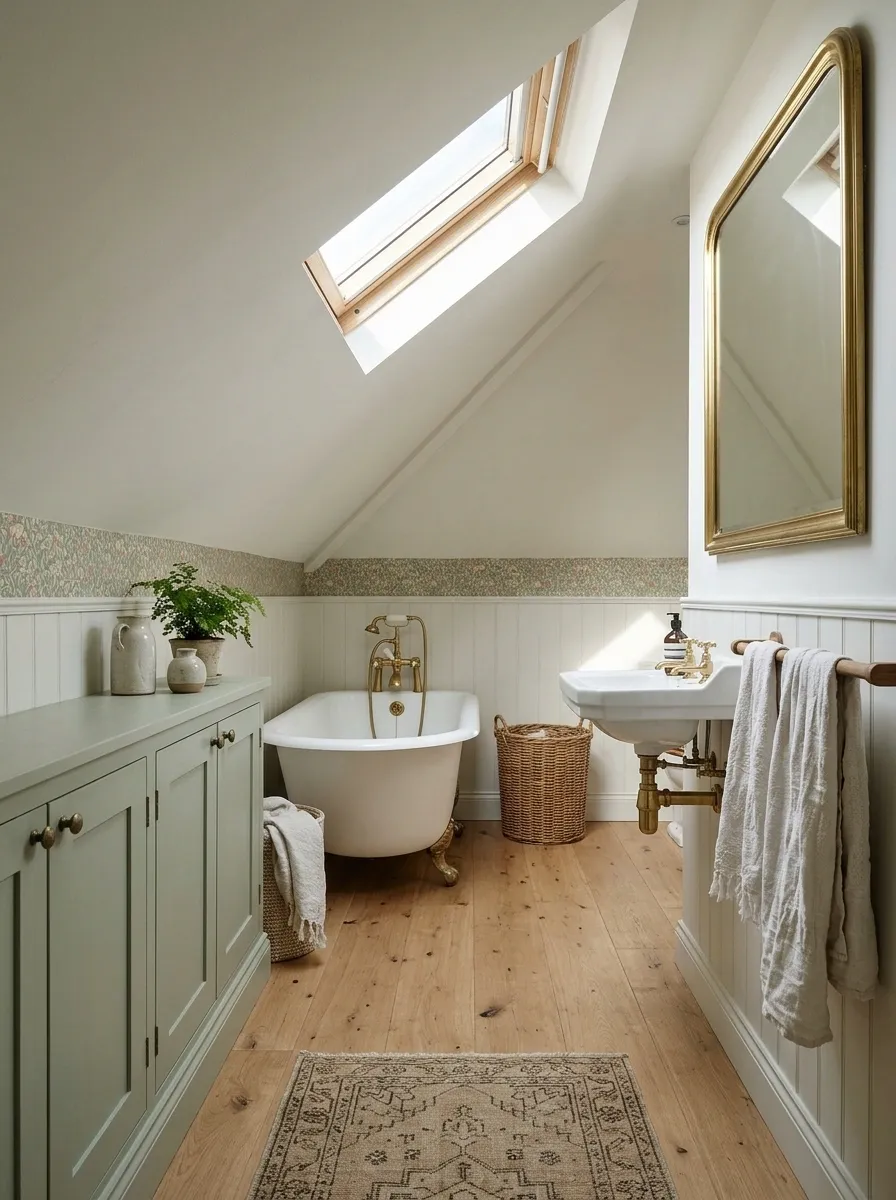
A low painted cupboard can follow the eaves, with a simple bath, small basin, and restrained floral detail making the attic feel furnished. Keep the sloping ceiling plain and use the taller wall for a useful mirror.
The roof shape already supplies visual complexity. Pattern every slope and the room may feel considerably smaller before anyone adds towels. Check headroom at the basin and bath access, then choose details that support those positions. The cupboard should use awkward low space without forcing the person opening it into a permanently apologetic posture.
Full-height wall: basin, mirror, and comfortable standing.
A Lilac Vanity With Cream Walls and a Dark Framed Mirror
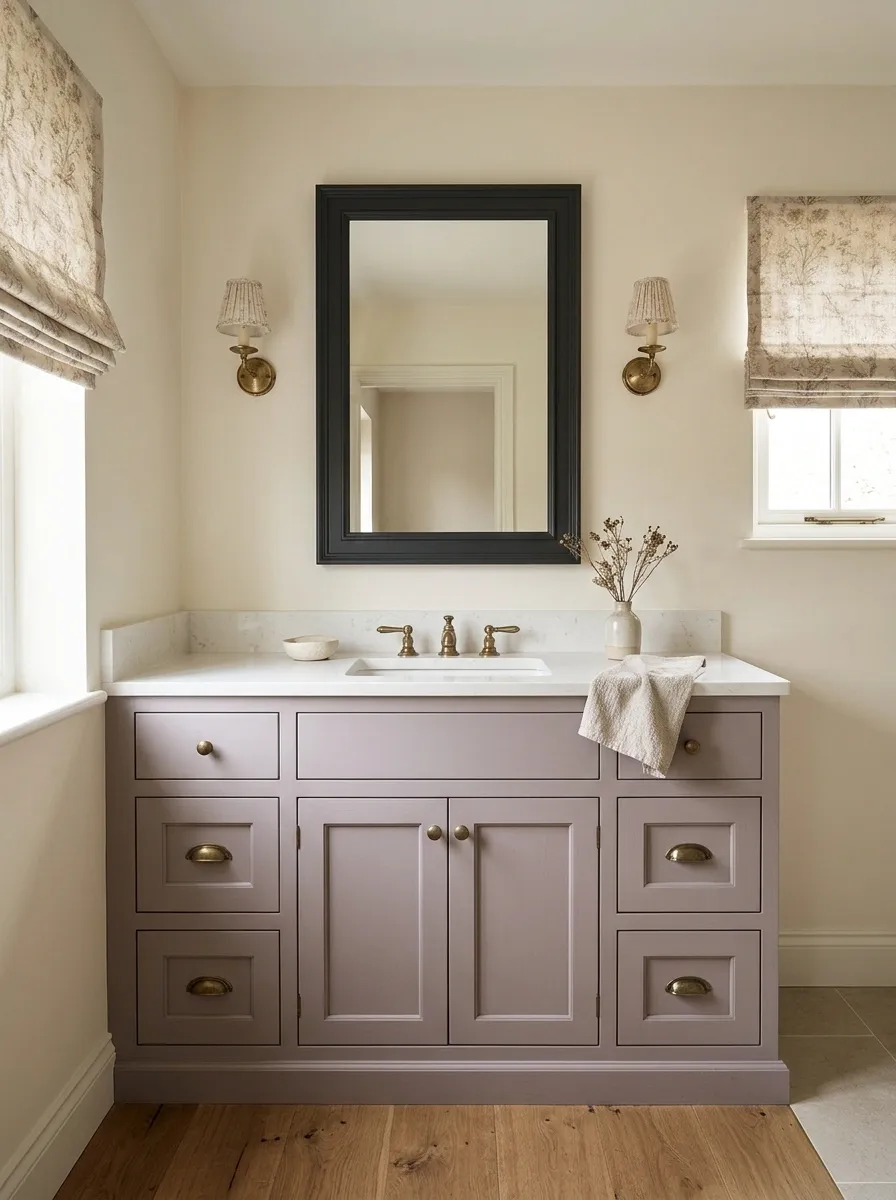
Muted lilac cabinetry can give cream walls a gentle color feature, with a dark framed mirror adding definition. Keep tile and flooring plain, and choose a small patterned blind only where it suits the window and exposure.
The lilac should feel deliberate beside the cream rather than like a white paint that has had an unusual afternoon. Sample the colors together under the bathroom lights. The mirror supplies enough darker structure without repeating black around every edge. A small room can be softly colored and still have a clear outline.
The mirror can provide definition while the cabinetry and walls stay soft.
A Bathroom With a Seated Dressing Surface and Plain Upper Walls
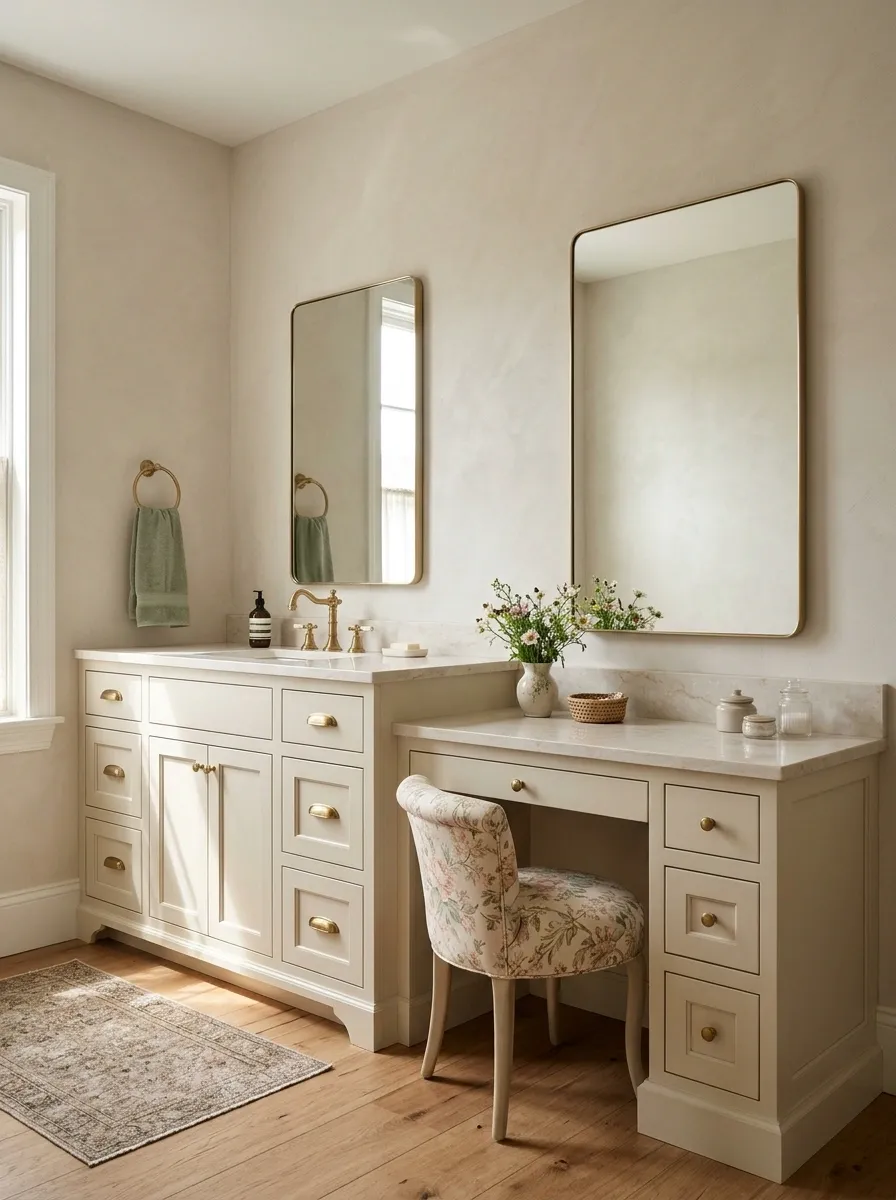
A seated dressing surface can share a furniture-like finish with the basin vanity, while plain upper walls and a restrained mirror keep the room coherent. A small patterned stool or chair provides the textile detail.
The seat needs knee space, useful lighting, and a dry position. It isn’t a decorative object to park in front of a closed cupboard. Keep the pattern concentrated on that smaller surface if the room already has ornate joinery. Everyday routines can be comfortable without turning the whole bathroom into a set where nobody is allowed to leave a hairbrush.
Basin: plumbing and washable counter.
Dressing: dry surface and chair access.
A Narrow Bathroom With Wallpaper at the Far End
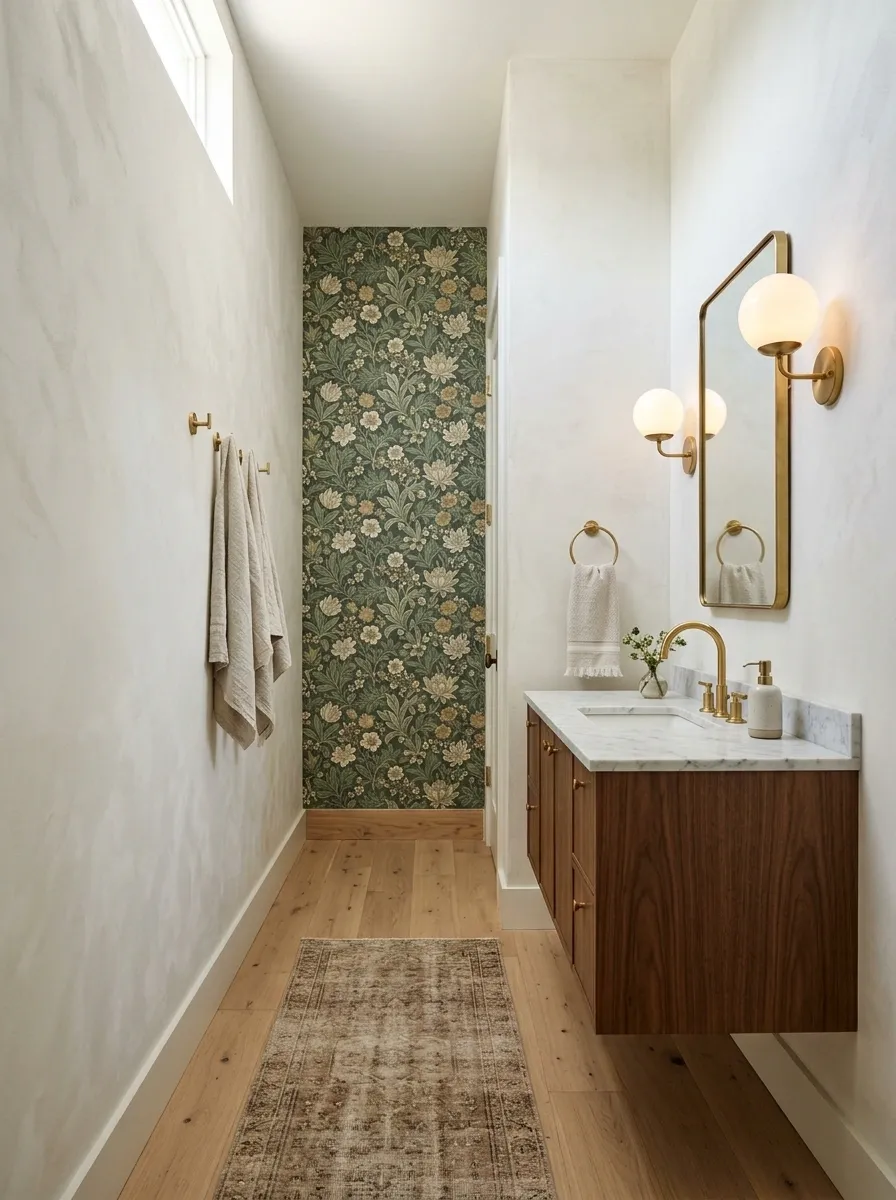
Concentrate pattern on the dry end wall of a narrow bathroom, keeping the long walls plain and the basin storage shallow. A simple mirror and restrained lights let the view into the room feel complete without narrowing the passage.
The patterned wall should remain visible around the fixtures rather than becoming a collection of awkward fragments. Use the rest of the room to provide light and clarity. A narrow bathroom doesn’t need decorative activity along both sides; it already has enough going on when someone opens the door while another person reaches for a towel.
Check the patterned area from the entrance after plotting fixtures and open storage doors.
A Coral Vanity With Small Brass-Toned Hardware
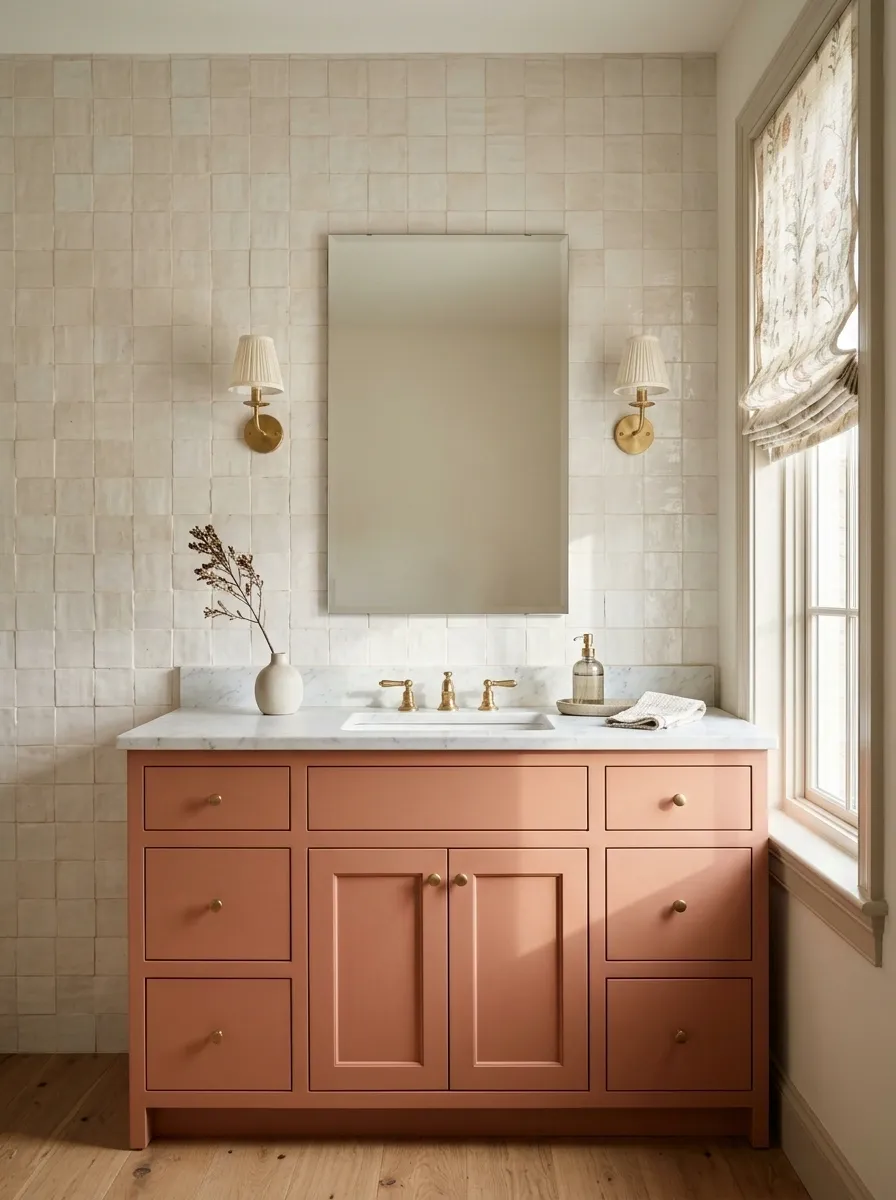
A muted coral vanity can sit beside warm white tile, a plain mirror, and modest brass-toned hardware. Add a quiet patterned window fabric if the room needs a softer layer.
Let the cabinet color remain the largest statement. Coral is quite capable of making itself known without matching towels, bathmats, and decorative jars reinforcing the point. Choose the metal finish for the complete fittings set and keep small accessories restrained. A room can feel collected through a few related decisions rather than through a complete catalog of coordinated objects.
Main color field.
Small, consistent, useful.
A Traditional Basin With a Recessed Modern Cabinet
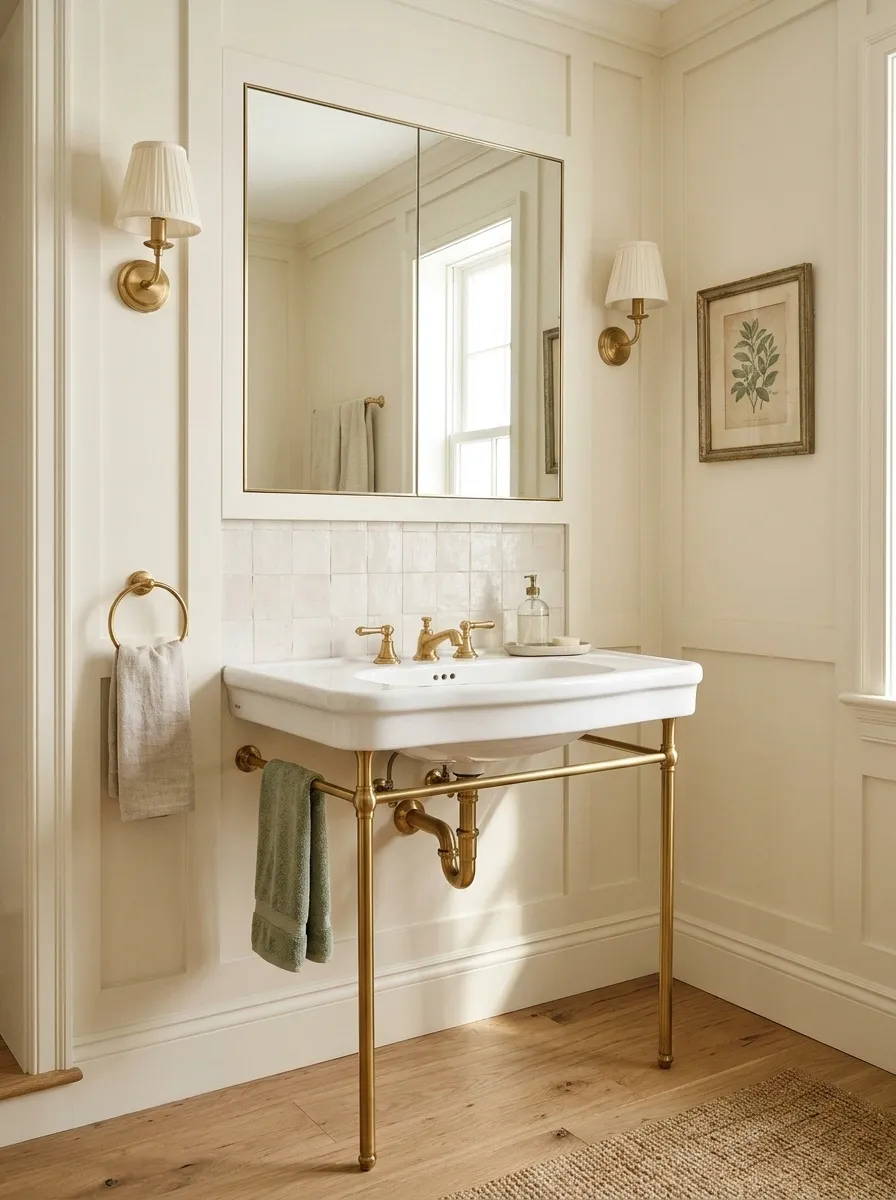
A traditional-shaped basin can keep its slim outline when a recessed mirror cabinet handles daily storage. Use a plain tiled splash area and a decorative dry wall, with one modest framed object if the room needs more character.
Check the wall construction and services before planning the recess. The cabinet interior should fit the actual supplies, not just look shallow and elegant from the side. Concealed modern storage is allowed in a traditionally styled room. It is often the reason the older-looking fixture remains pleasant to use after the first morning.
Plan shelf depth and bottle heights before choosing the mirror cabinet.
A Pale Bathroom With a Framed-Art Dry Wall
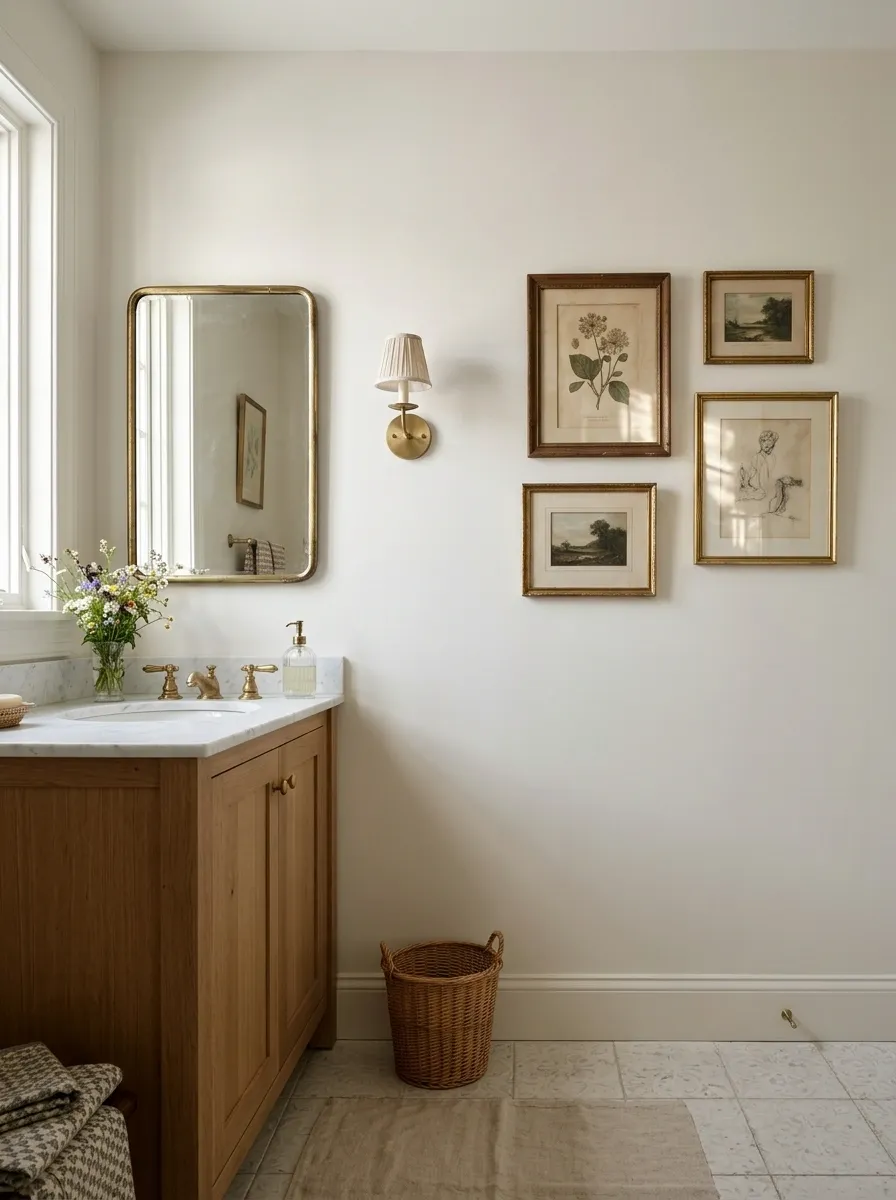
A pale bathroom can take its collected character from a small group of framed pieces on a genuinely dry wall. Use plain fixtures, a modest timber cabinet, and simple lighting so the art has a clear role.
Choose framing and positions suited to the environment, keeping paper and delicate materials away from direct moisture. Don’t turn every wall into a gallery. The room still needs blank surfaces and useful storage. A few meaningful pieces feel more personal than several generic prints purchased to establish that someone here has heard of vintage style.
Review moisture exposure, backing, glazing, and cleaning access before hanging the pieces.
A Floral-Blind Bathroom With Plain Green Cabinetry
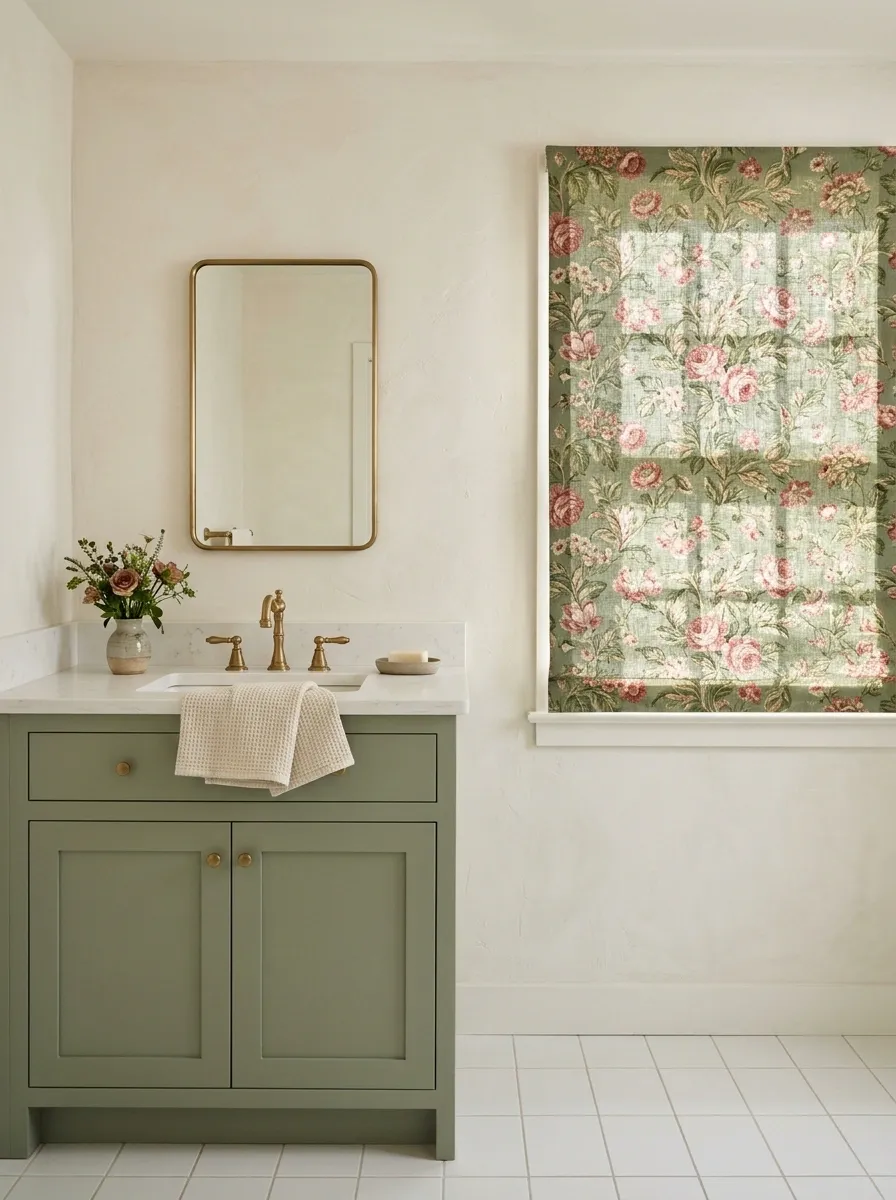
A floral blind can give plain green cabinetry a decorative link, with cream walls and simple tile keeping the rest of the bathroom quiet. Use a modest mirror and a floor without a second strong motif.
The blind belongs where its material suits the exposure and it can operate without catching fixtures. Pull a dominant color from the print for the vanity, not an obscure leaf shade that barely appears. The relationship should be visible at normal room distance. Matching only works when someone doesn’t need a magnifying glass and a persuasive explanation to notice it.
Which print color should connect to the vanity?
Choose a dominant, visible tone and compare it with the cabinet sample under the room’s actual light.
A Large Bathroom With Separate Patterned and Plain Zones
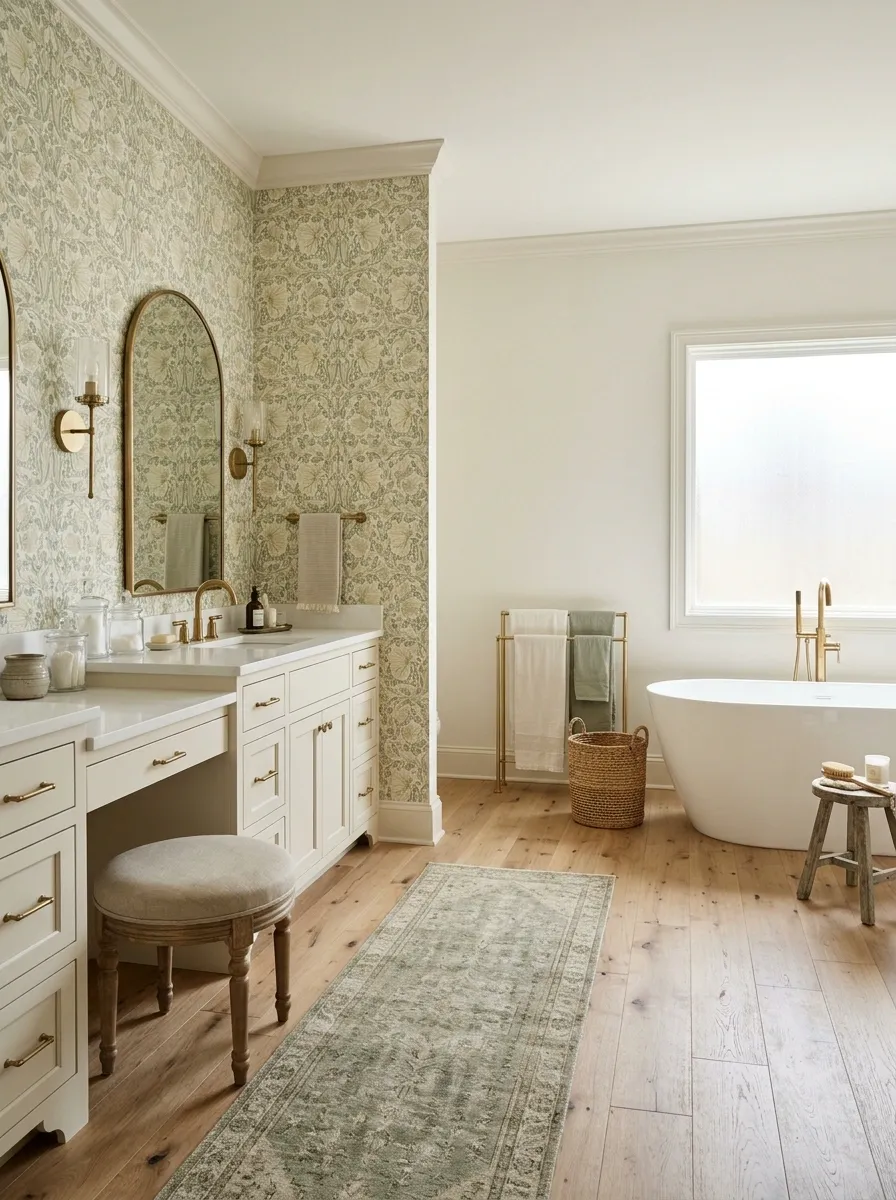
A generous room can separate a patterned dressing or basin wall from a plain bathing zone, linking them through one cabinet color and related metals. Keep the floor continuous so the room doesn’t feel divided into unrelated demonstrations.
The pattern needs a logical boundary, such as a return wall or an architectural change. Don’t stop it halfway through a surface because the room seems sufficiently decorated. Use the plain zone to let the stronger details breathe. Even an enthusiastic bathroom benefits from somewhere the eye can sit down without being handed another floral arrangement.
Basin or dressing identity.
Bathing and clear surfaces.
A Cream Vanity With Dark Blue Walls and Plain Linen
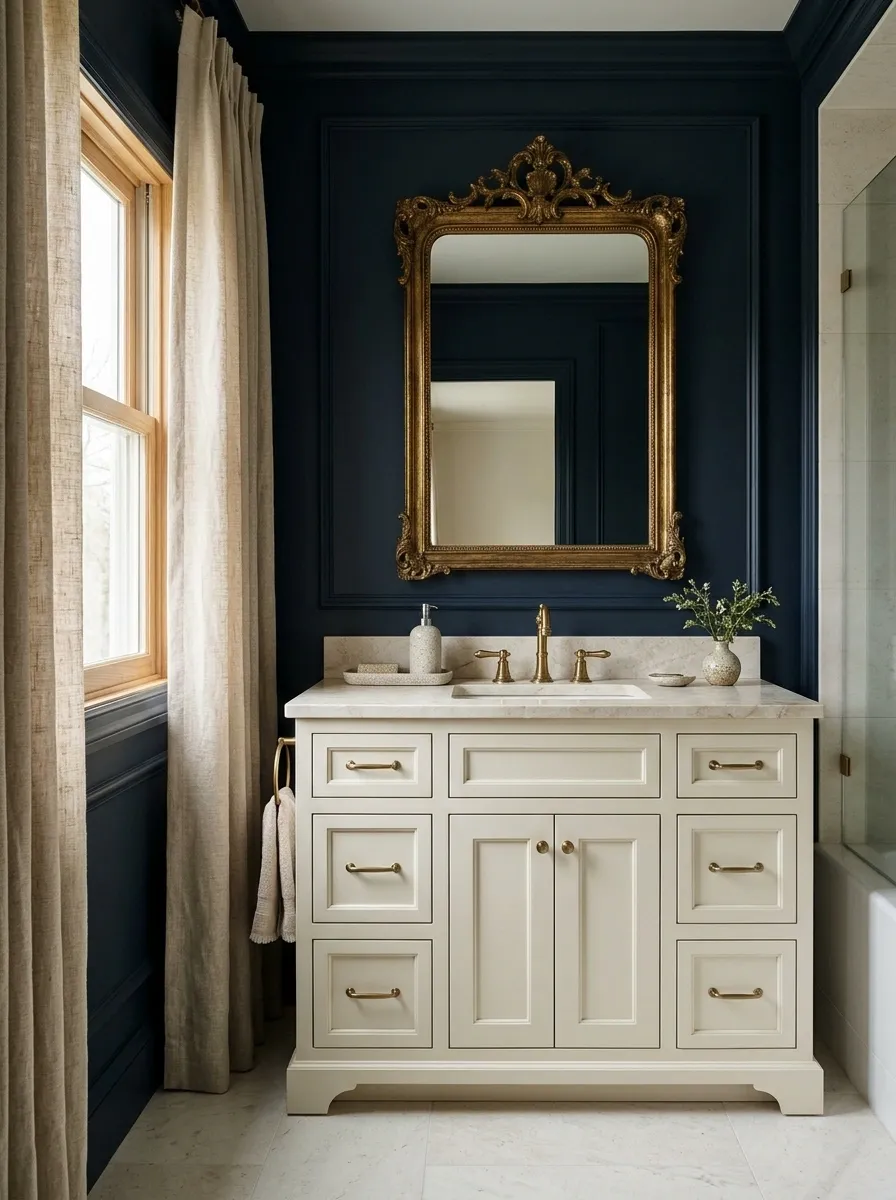
Dark blue walls can give a cream vanity and traditional mirror a stronger setting, with plain linen-colored curtains softening the window. Keep wet surfaces and the floor simple.
The cream needs enough contrast to distinguish the cabinet shape, while the blue should work under the actual bathroom lights. Don’t make every textile dark in an attempt to be coordinated. The vanity and lighter fabric give the room its readable center. The result can feel richly furnished without requiring a wallpaper print on top of an already substantial color decision.
Keep the cabinet outline and counter distinct from surrounding textiles.
A Small Bathroom With a Painted Corner Cupboard
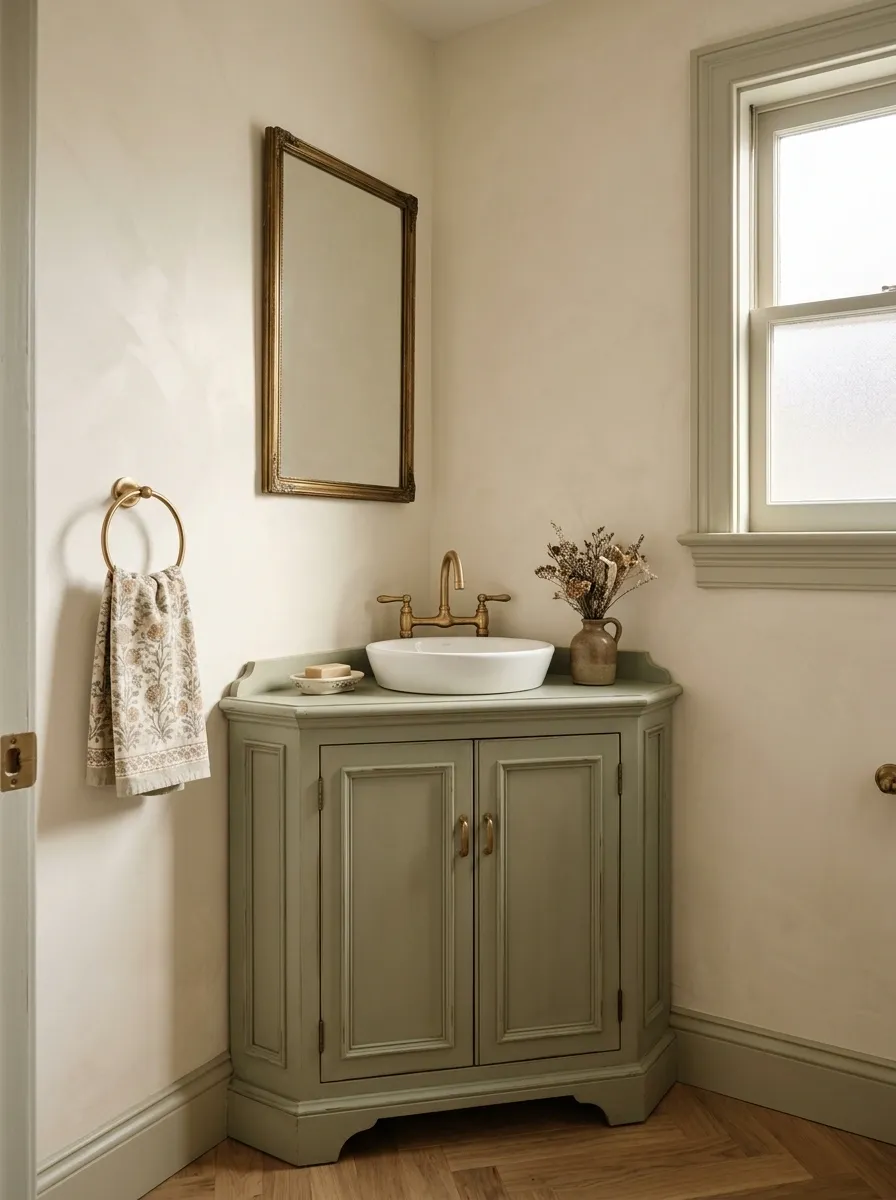
A painted corner cupboard can add a furniture reference where a standard vanity provides little storage. Pair it with a simple basin, a framed mirror, and one restrained textile or print.
The corner cupboard needs a useful opening and shelves that don’t bury small items at the back. Measure the door travel and the basin approach together. Charming cabinetry loses some of its appeal when the toothpaste requires an expedition. Keep its color related to the room, and let the cupboard’s shape supply the extra detail rather than painting another feature wall behind it.
Store daily items near the opening; give deeper shelves a specific usable purpose.
A White Bathroom With a Single Patterned Vanity Skirt
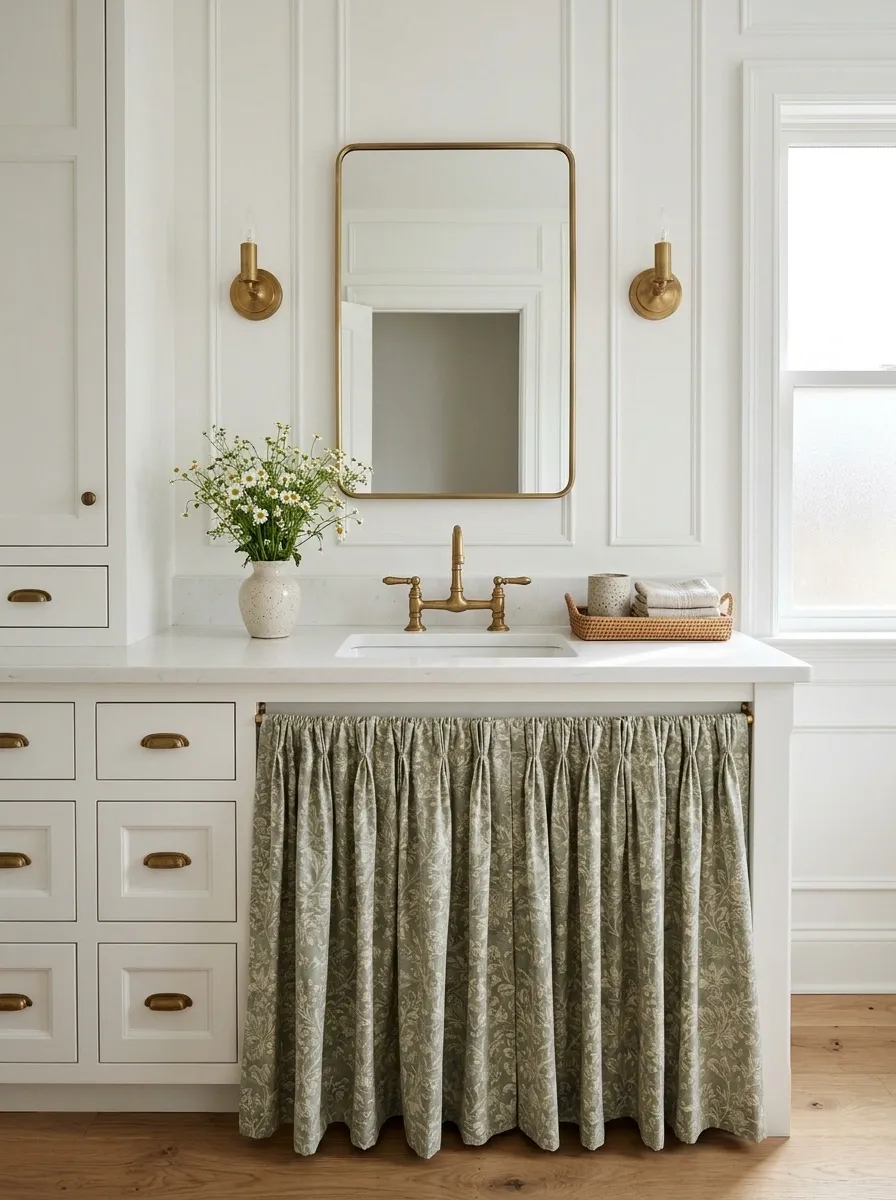
Where the layout and exposure suit it, a patterned vanity skirt can give an otherwise plain bathroom a soft focal point. Keep walls, mirror, and floor restrained so the fabric feels chosen rather than buried in a pattern competition.
Use suitable construction and a practical washable material, with access to plumbing and storage preserved. Keep the hem out of routine wetting. This direction works through one clear fabric decision. The rest of the room can remain plain without being accused of insufficient commitment to the style. The skirt already knows why it is there.
Washable, accessible, and clear of routine splashing.
A Quiet Grandmillennial Bathroom With an Exceptional Mirror
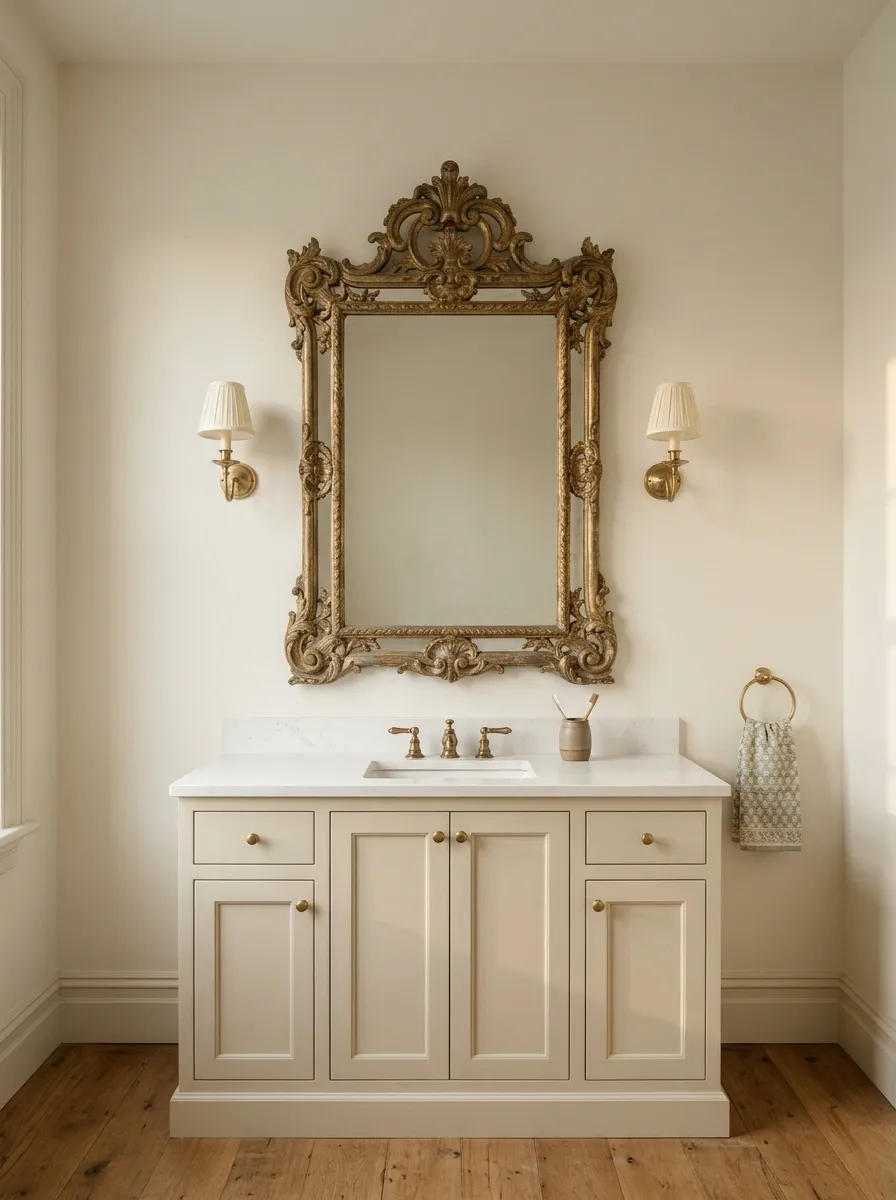
A good framed mirror, paneled cabinet, and plain cream walls can establish the style without a floral print. Add suitable soft-looking lighting and a restrained patterned towel if a small textile note is welcome.
The mirror needs blank wall around its outline. Keep nearby shelves and lights from crowding it, and use closed storage to preserve the counter. A room can feel personal and traditionally furnished through form rather than an accumulation of motifs. You don’t have to add wallpaper merely to prove the decorating brief was read all the way through.
Mirror, cabinetry, and lighting can establish character while the larger surfaces remain plain.
You Don’t Have to Buy the Whole Collection
Keep the floral if you love it. Keep the good mirror. Leave the matching tissue cover, extra scalloped tray, and unnecessary decorative stool unless they solve an actual problem.
The room should be comfortable with the ordinary evidence of use: a hand towel drying, a toothbrush put away, a cabinet opened without moving a chair. That is what lets the prettier details remain enjoyable instead of becoming maintenance assignments.
Save the room whose balance you would want to live with. Charm is allowed to have closed storage and a sensible cleaning routine.