
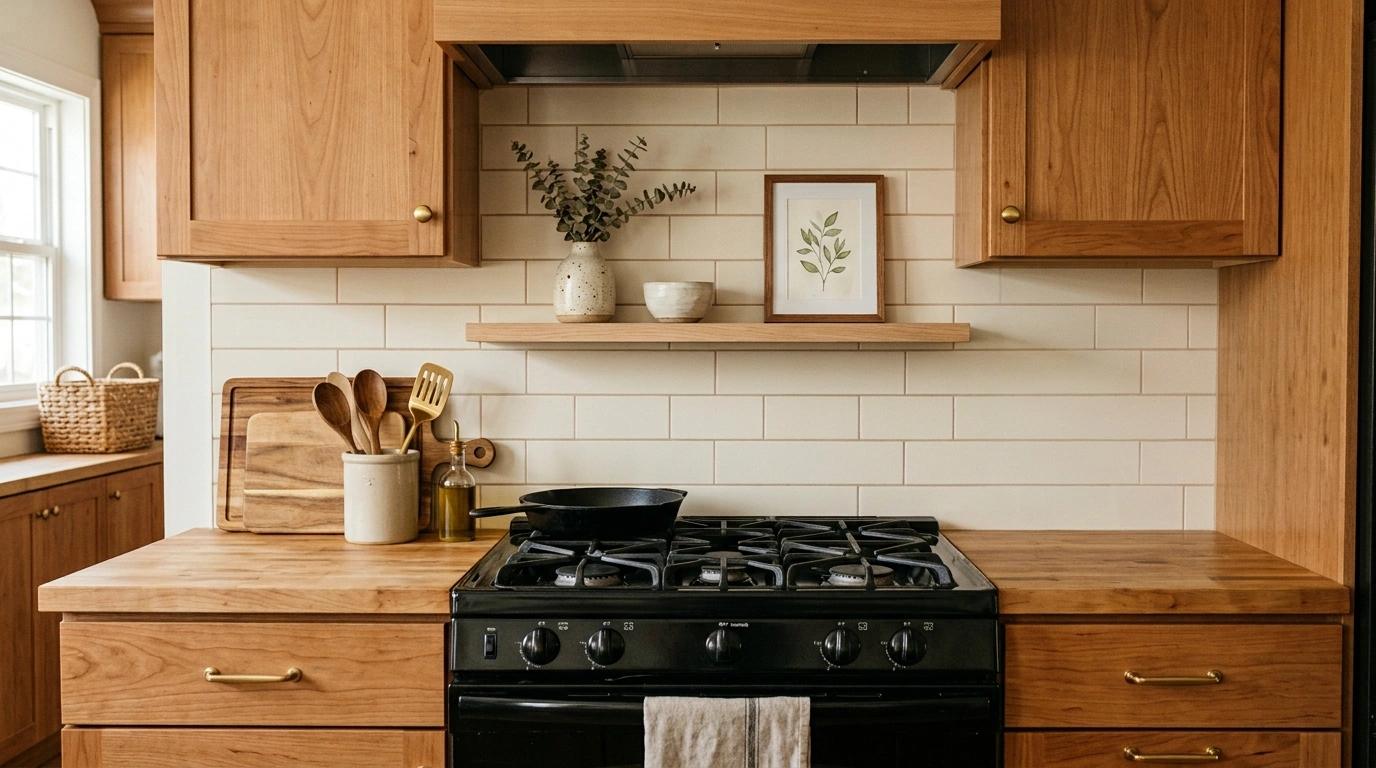
The space above the stove has a funny habit of making an otherwise finished kitchen look unfinished.
The cabinets can be gorgeous, the counters can be spotless, and the range can be brand new, yet that one wall still feels like someone stopped decorating halfway through the sentence.
The problem usually isn’t a lack of stuff. It’s a lack of visual direction. A stove wall needs to make sense with the hood, backsplash, cabinets, counters, flooring, lighting, and the rest of the room.
Throwing a shelf, a sign, a plant, and three jars into the empty space doesn’t automatically create a finished composition. It can just create a very committed collection of stuff.
Top of Stove Decorating Ideas
Cozy Farmhouse Stove Display
Crisp white cabinetry meets a traditional hood adorned with delicate molding, creating a charming focal point above the range. A classic subway tile backsplash runs behind the stove, offering a subtle texture that anchors the space without overwhelming the eye. Natural wood accents, cutting boards, and brass touches introduce warmth and timeless character.
The real magic happens with the layered countertop styling around the stove. A patterned tea kettle sits proudly front and center, while hanging utensils and oven mitts make the cooking area feel lived-in and deeply personal. This composition proves that functionality and coziness can happily coexist in the heart of the home.
Keep in mind that crowded surfaces require a careful hand to avoid looking chaotic. The mix of natural wood tones and warm white ceramics strikes just the right chord of rustic elegance. After all, a finished stove wall should invite you to cook, not just admire from a distance.
Warm White Kitchen With Arched Range Hood and Cream Stone Backsplash
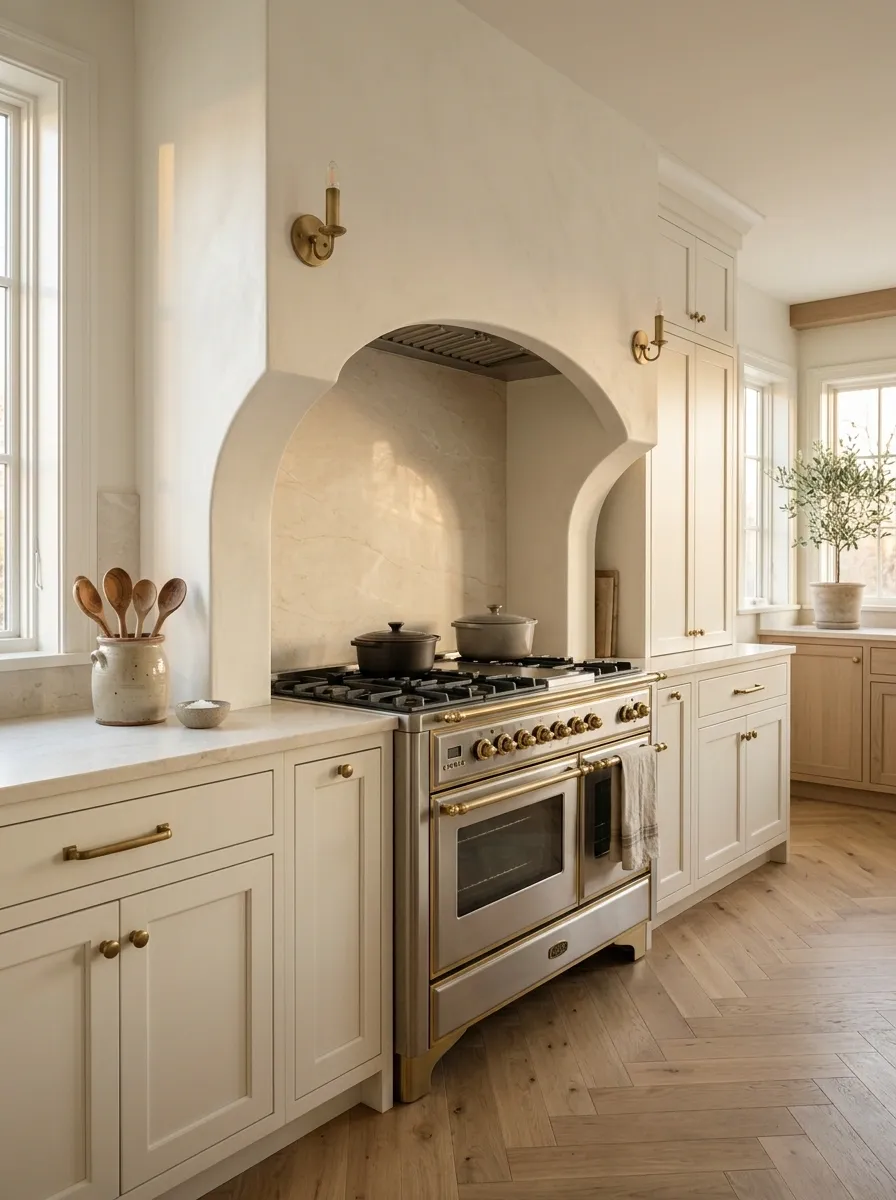
Warm white cabinetry and creamy stone give this kitchen a soft architectural look, while the arched hood creates the main focal point above the range. A pale stone backsplash rises behind the stove without introducing a busy pattern, and small aged brass details add just enough contrast. Natural oak flooring and a few quiet wood accents keep the room from drifting into flat, all-white territory.
The important part is the shape of the hood. That curve gives the stove wall a sense of permanence and makes the cooking area feel intentionally designed rather than simply filled in. Keep countertop styling low around the range. This composition already has enough going on. The room doesn’t need a decorative audition happening on every available surface.
Warm Modern Traditional Range
Rich brown cabinetry frames a broad, cream-toned stove surround, establishing a grounded and sophisticated cooking zone. A sleek black pendant light hangs gracefully overhead, casting a soft, ambient glow across the minimalist marble countertops below. Brass hardware and subtle wall sconces add an understated layer of refinement to the architectural niche.
The true brilliance of this setup lies in the streamlined brass rail holding carefully curated copper cookware. Every element serves a distinct purpose while contributing to an atmosphere of quiet luxury. It is a masterclass in how to dress a stove wall with absolute restraint and timeless style.
Let the rich textures do the heavy lifting rather than crowding the space with unnecessary accessories. The dark wood tones and warm metals keep the palette cohesive and welcoming. This kitchen proves that polished simplicity is always the best recipe for success.
Whimsical Cottage Kitchen Stove
Bright white cabinetry sets a cheerful tone, while a rustic wood beam beneath the range hood adds instant organic warmth. A charming black-and-white buffalo check wreath hangs boldly against the woodwork, injecting a playful farmhouse spirit directly above the stove. Soft white brick-style tiles keep the backdrop textured and luminous.
The styling thrives on personality, featuring tiny lanterns, fresh greenery, and a delightful ‘Stay Home’ cutting board displayed on the counter. Each accessory feels intentional, turning the cooking zone into a heartwarming focal point. It is cozy, welcoming, and unapologetically charming.
Balance is everything when working with eclectic decor pieces near a busy cooking station. By keeping the color palette restricted mostly to neutrals, the whimsical touches feel curated rather than cluttered. This cheerful nook invites you to slow down and enjoy every moment spent in the kitchen.
Scandinavian Kitchen With Pale Oak Shelving and Soft White Tiles
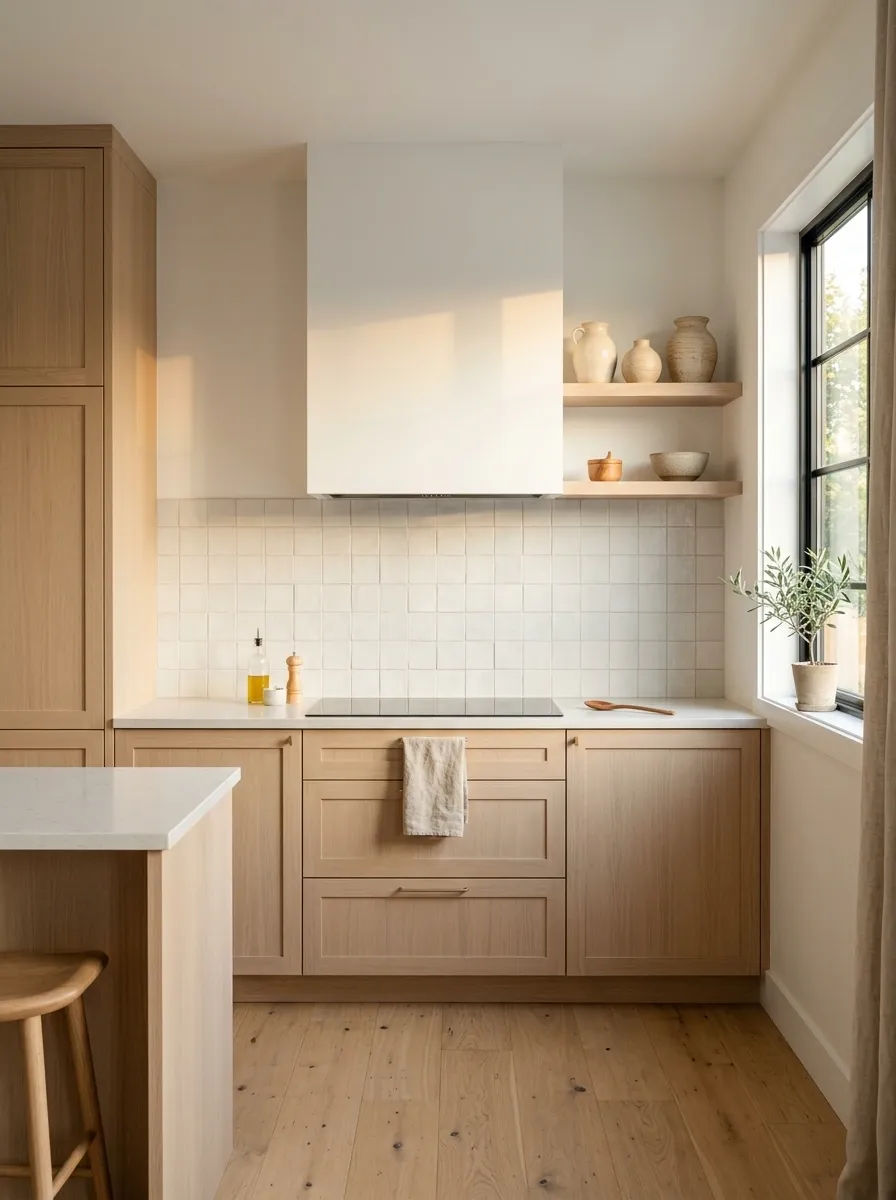
This kitchen keeps the stove area bright and open with soft white square tiles, pale cabinetry, light counters, and pale oak shelving. The hood remains simple and clean, while a few ceramic pieces provide texture without turning the backsplash into a storage shelf with delusions of grandeur. Light flooring keeps the entire composition airy.
What makes this direction work is the balance between smooth and tactile surfaces. The white tile gives the wall a little texture, the oak introduces warmth, and the ceramics add small variations in shape. Nothing is fighting for the center. That’s especially useful in a smaller kitchen, where visual clutter can make every inch feel even tighter.
Autumn-Inspired Country Hearth
Creamy white cabinetry and a classic range hood create a serene backdrop for a gorgeously styled autumnal stove wall. A rustic framed still-life painting hangs directly over the range, instantly warming up the vertical space with rich seasonal hues. Subtle vertical paneling adds architectural depth without stealing focus from the art.
The magic of this vignette rests in the layered harvest elements, from plump pumpkins to a charming white Dutch oven resting on the burners. A pottery crock filled with wooden spoons and a classic white kettle complete the idyllic scene. It feels less like a workspace and more like a painter’s cozy studio.
When incorporating seasonal decor near the stove, stick to pieces that feel authentic to the kitchen’s architecture. The warm wood tones and autumnal palette tie the entire cooking zone together seamlessly. Once your stove wall tells a story this lovely, no other decorations are required.
English Country Kitchen With Painted Hood and Decorative Mantel
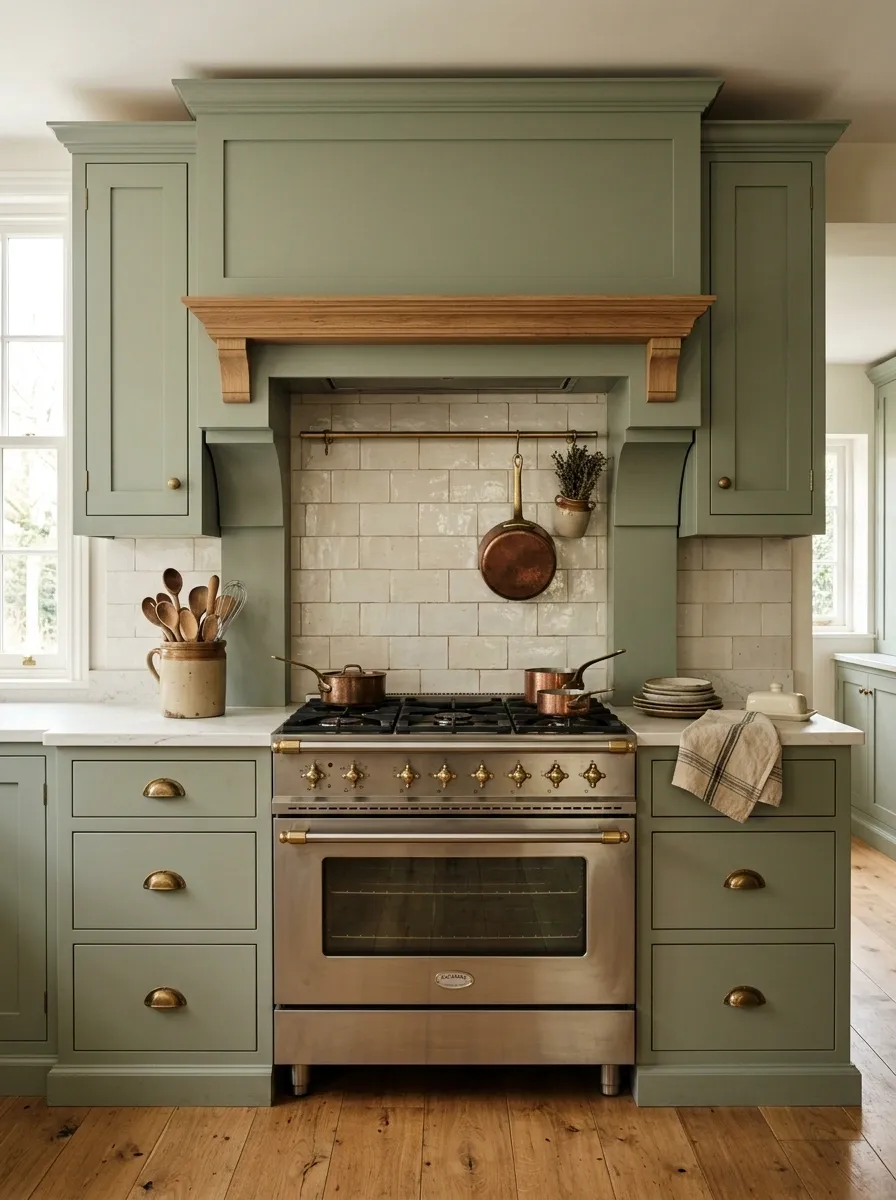
A muted sage kitchen becomes far more characterful when the range sits inside a substantial painted hood surround. Creamy backsplash tile fills the space behind the stove, while inset cabinetry, aged brass hardware, oak accents, and classic flooring reinforce the traditional architecture. The hood isn’t treated as a separate object. It feels like part of the room itself.
This composition suits kitchens where the architecture can carry some visual weight. The painted surround creates a strong frame around the range, and the lighter tile keeps that frame from becoming too heavy. Keep the surrounding cabinetry relatively calm so the hood remains the obvious focal point. Once every surface starts demanding equal attention, the English country charm quickly turns into a very expensive shouting match.
Vintage Blue and White Charm
Soft cream cabinetry meets a traditional mantle-style hood, creating an inviting culinary retreat filled with vintage character. Vertical tilework lines the backsplash, providing a subtle sheen that catches the gentle morning light. A collection of antique platters displayed on the upper shelf introduces a timeless, collected-over-time aesthetic.
The standout feature here is the effortless hanging storage rail, showcasing copper pots and a classic blue-and-white patterned tea kettle. A potted green herb sits beside the stove, offering a fresh burst of life against the neutral backdrop. Every detail feels purposeful and deeply rooted in classic design traditions.
Let your everyday cookware double as decor to achieve this effortless, lived-in look. The gentle interplay of blue porcelain, warm brass, and aged wood keeps the visual interest high without feeling fussy. It is a stunning reminder that a finished kitchen should always feel warm, welcoming, and uniquely yours.
Modern Kitchen With Waterfall Stone and Sculptural Range Hood
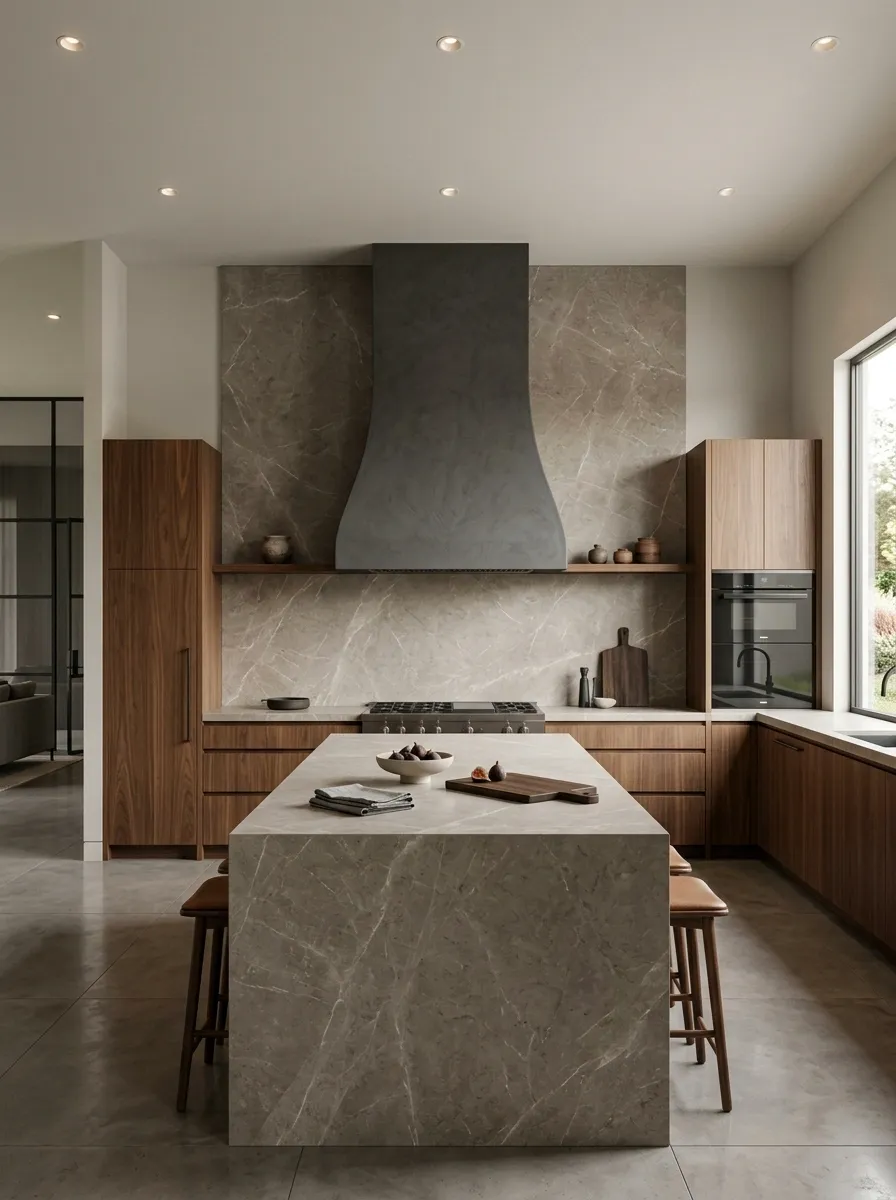
A contemporary kitchen can make the stove wall memorable without relying on shelves, art, or decorative objects. Here, a sculptural hood rises from a broad field of warm gray stone, while flat-panel cabinetry and a restrained island keep the room visually disciplined. The stone continues into the counters so the cooking area feels connected to the rest of the kitchen.
The strongest feature is the hood’s shape against the uninterrupted stone surface. That contrast between solid architecture and broad negative space gives the room its character. Lighting should stay soft and directional rather than flashy. The whole point is control. Once the stove wall already looks like architecture, adding a collection of random accessories is basically putting stickers on a museum building.
Earthy Stone Arch Range
A breathtaking arched niche frames the stove wall, lined in dramatic veined stone that instantly commands the room’s attention. Sleek white cabinetry and modern brass accents balance the raw, organic beauty of the marble surround. A minimalist brass rail holds matching utensils, marrying high-end form with everyday function.
The true genius of this design is the integration of the stone as both backsplash and architectural statement. An open cookbook rests invitingly on the counter, proving that the space is meant for actual cooking, not just display. Warm lighting highlights the subtle movement within the stone’s natural grain.
Keep countertop accessories to a bare minimum when your stone does this much heavy lifting. The restraint allows the luxurious materials to shine without any unnecessary visual competition. This is modern elegance at its absolute finest, proving that simplicity is the ultimate sophistication.
Terracotta and Cream Kitchen With Handmade Backsplash
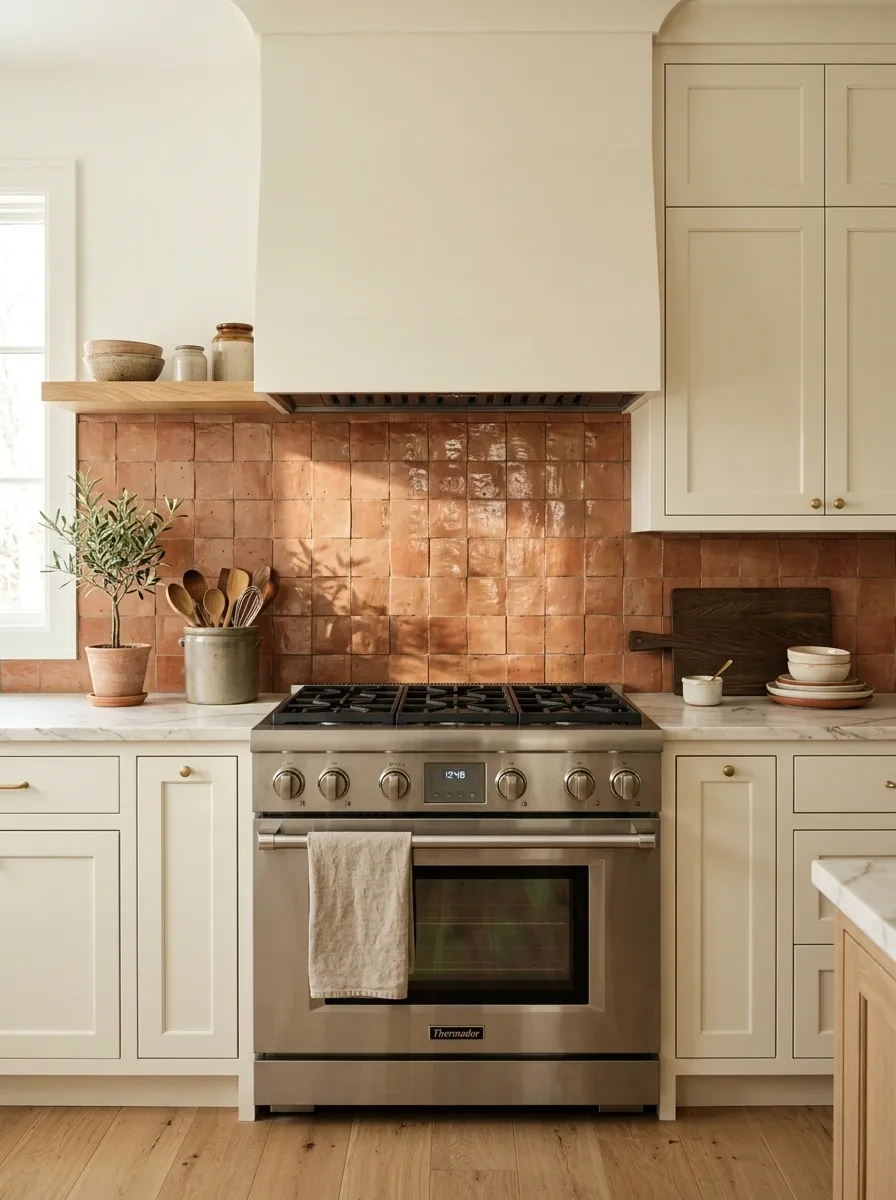
This kitchen gets its personality from warm terracotta tile, creamy cabinetry, natural oak, and softly veined stone. Behind the stove, handmade-looking tiles create a slightly irregular surface that catches light without becoming visually loud. The range hood stays simple, allowing the backsplash to carry the texture. Warm wood below and above the counter keeps the whole composition grounded.
The appeal comes from contrast in texture rather than contrast in color. Smooth painted cabinets sit beside imperfect tile and natural stone, so the kitchen feels layered without looking busy. Keep the decorative pieces limited to a few useful forms, especially around the cooking zone. The backsplash already has plenty to say. It doesn’t need a microphone too.
Compact Apartment Kitchen With Flush Hood and Slim Open Shelving
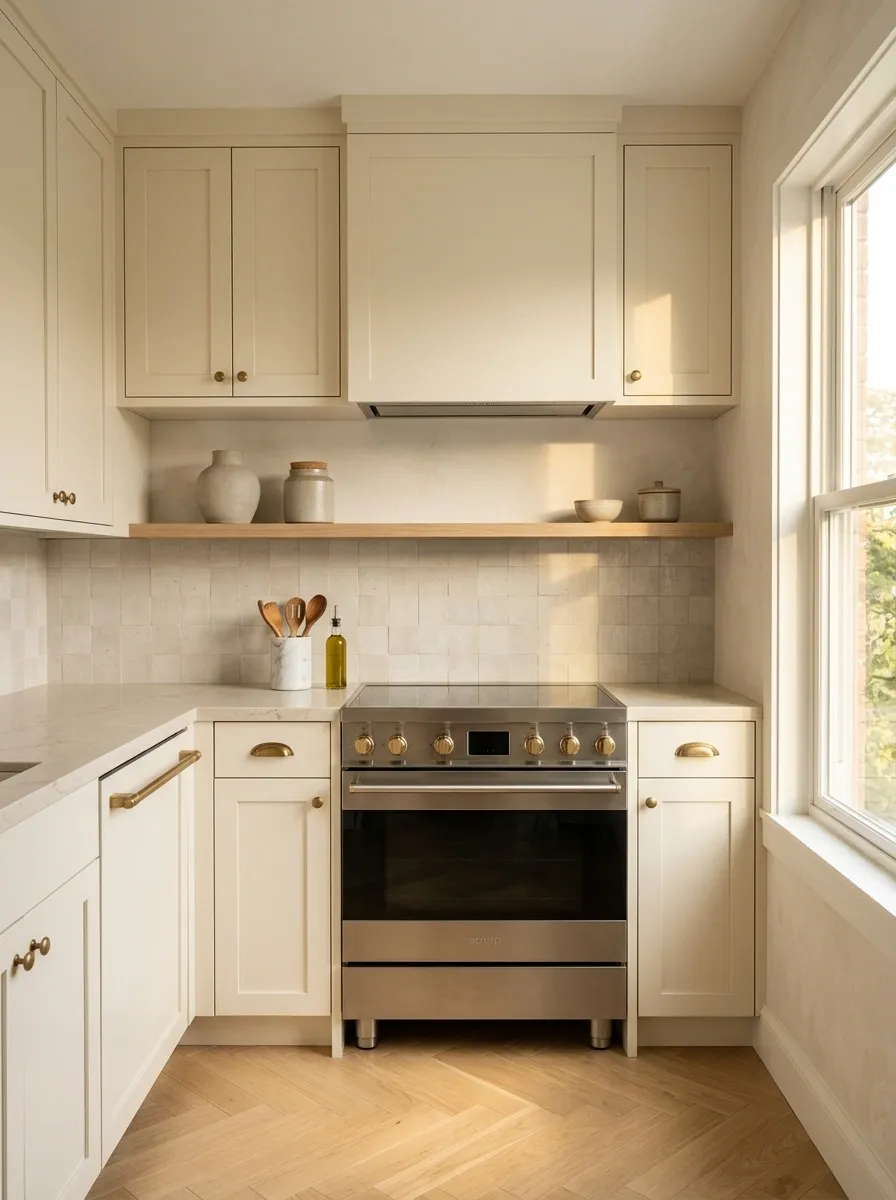
A small kitchen works better when the stove wall feels integrated into the cabinetry instead of being treated as a separate feature. This compact design uses pale cabinets, a flush hood, light stone counters, narrow oak shelving, and a restrained backsplash. The shelf holds only a few ceramics, creating warmth without making the cooking area feel crowded.
The proportions matter here. A bulky hood or deep shelving would visually push into the room and make the kitchen feel even smaller. Keeping the upper elements slim preserves a clean sightline while still giving the wall some personality. This is a good example of why small kitchens need editing more than they need decoration. Every available inch does not need a side quest.
less visual weight
clear focal area
strong visual edges
Black and Warm Oak Kitchen With Brass Statement Hood
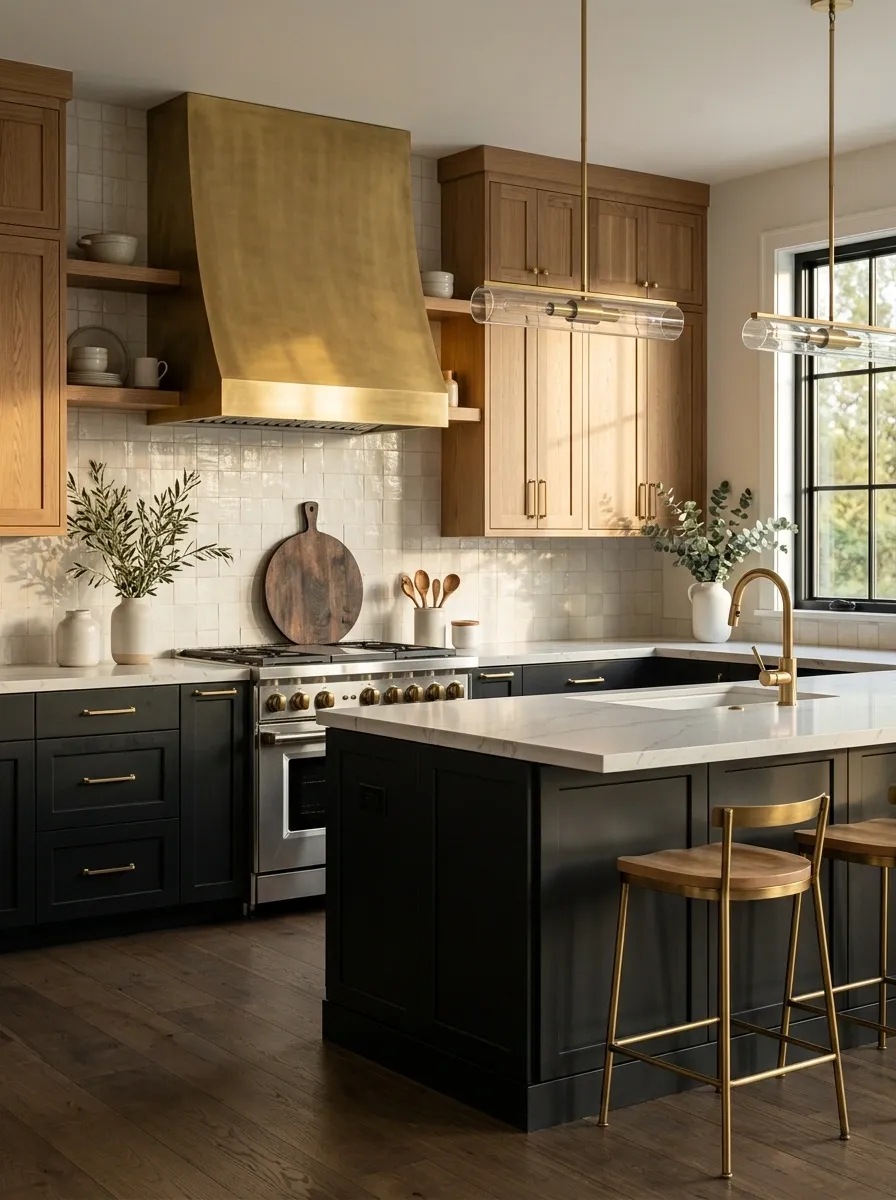
Matte black cabinetry creates a dramatic base, while warm oak brings a softer counterpoint through the upper cabinets and island. Above the range, a brass-toned hood becomes the unmistakable focal point against a creamy backsplash. Dark flooring reinforces the depth, while pale stone surfaces stop the room from becoming one giant block of black.
The secret is repetition. The warm oak appears in more than one location, so the brass hood feels connected to the room instead of looking like a random metallic object hanging in the middle of it. Keep the hardware and lighting restrained. Once three different metals start fighting for screen time, the kitchen has entered a group project nobody asked for.
Organic Modern Kitchen With Limestone Hood Surround
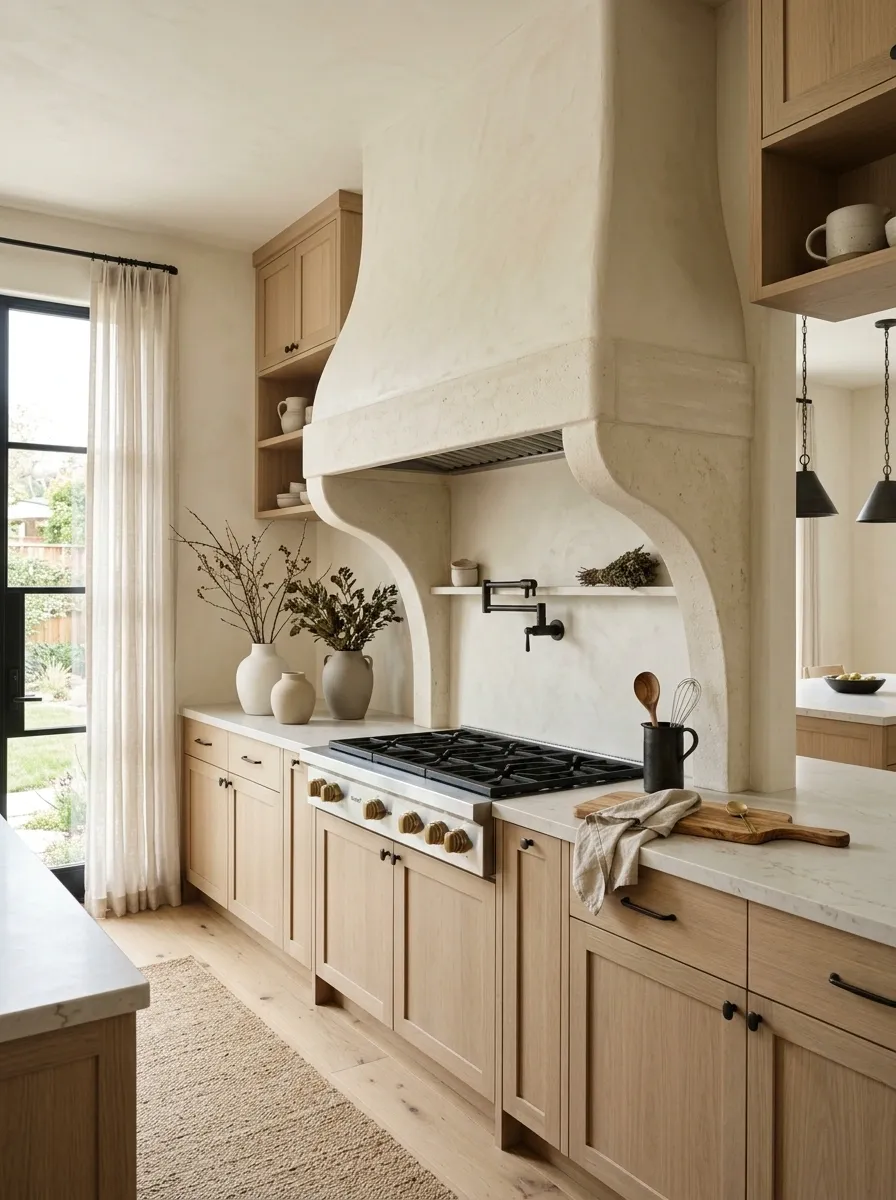
Soft limestone, pale oak cabinetry, creamy plaster walls, and rounded architectural forms give this kitchen a quieter kind of presence. The range sits inside a broad limestone hood surround that feels almost sculpted from the wall. Light counters continue the earthy palette, while simple ceramics and a few dark accents add definition without interrupting the calm composition.
The curved architecture is the key visual move. It softens all the straight cabinetry around it and gives the stove wall a natural focal point. This works especially well when the rest of the kitchen stays restrained. Too many contrasting shapes would weaken the effect. A beautiful curve deserves some peace and quiet. Let it have its moment.
Blue-Grey Kitchen With Full-Height Zellige Stove Backsplash
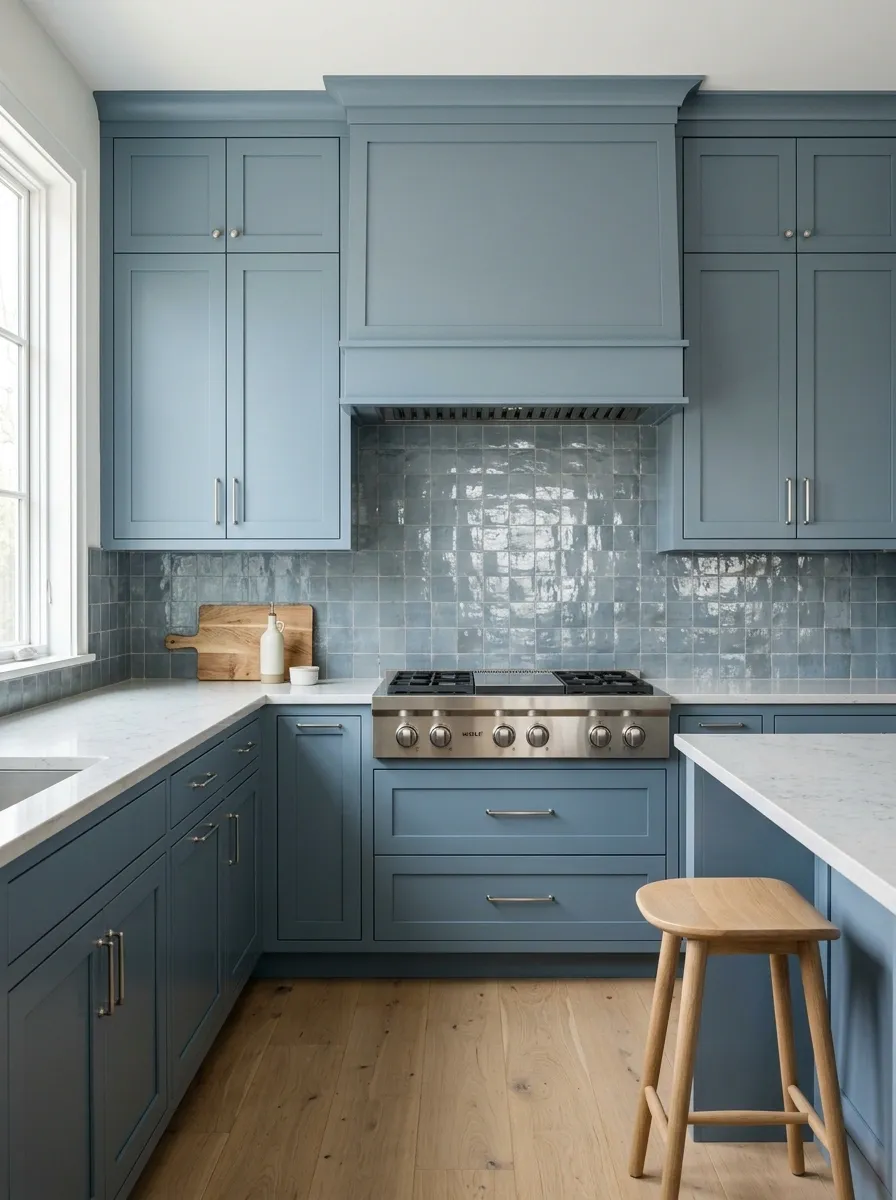
Dusty blue cabinetry gives this kitchen a soft color identity, while a blue-grey zellige-style backsplash rises behind the range from counter to hood. Light stone counters provide a pale frame around the deeper wall color, and natural oak adds warmth through stools and small architectural details. Brushed nickel hardware keeps the finish cool and understated.
The backsplash is intentionally reflective and varied, so it changes slightly as daylight moves across the wall. That subtle variation keeps the color from looking like one flat painted rectangle. The rest of the room should stay relatively simple to let that surface work. Not every kitchen needs twelve decorative objects proving that somebody owns a ceramic bowl.
Transitional Kitchen With Framed Backsplash Niche
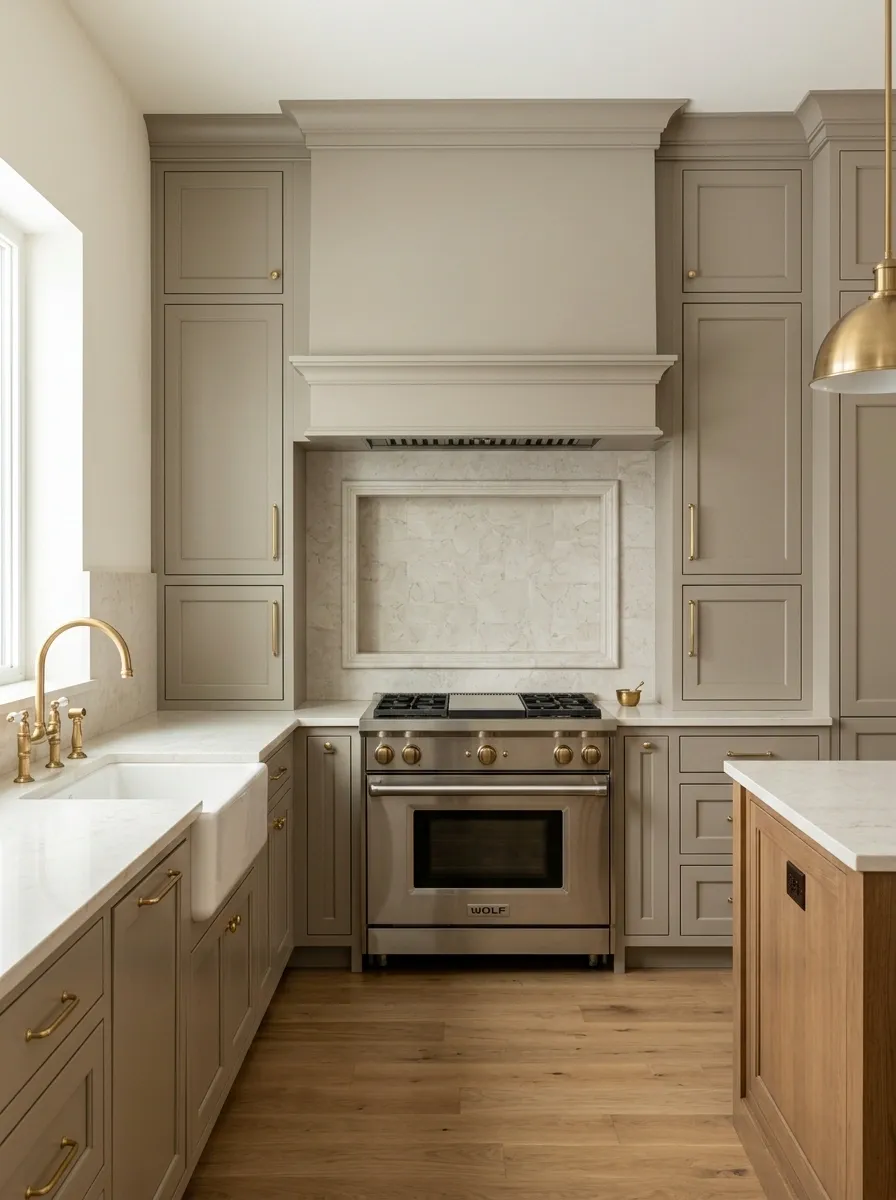
A warm greige kitchen gets its character from a framed stone backsplash niche positioned directly behind the range. The surrounding cabinetry stays simple, while a subtle brass faucet, oak accents, and creamy counters keep the palette warm. The hood and niche are visually connected, so the stove wall reads as one architectural composition instead of several unrelated decorating decisions.
The framed niche creates a natural stopping point for the eye. It also gives the backsplash enough importance to feel intentional without covering every inch of the kitchen in pattern. Keep the surrounding finishes quiet and let the frame do the talking. When the niche is already the focal point, adding decorative clutter inside it is basically giving a good joke six unnecessary punchlines.
the stove wall’s visual center
Japandi Kitchen With Low-Contrast Stone and Oak
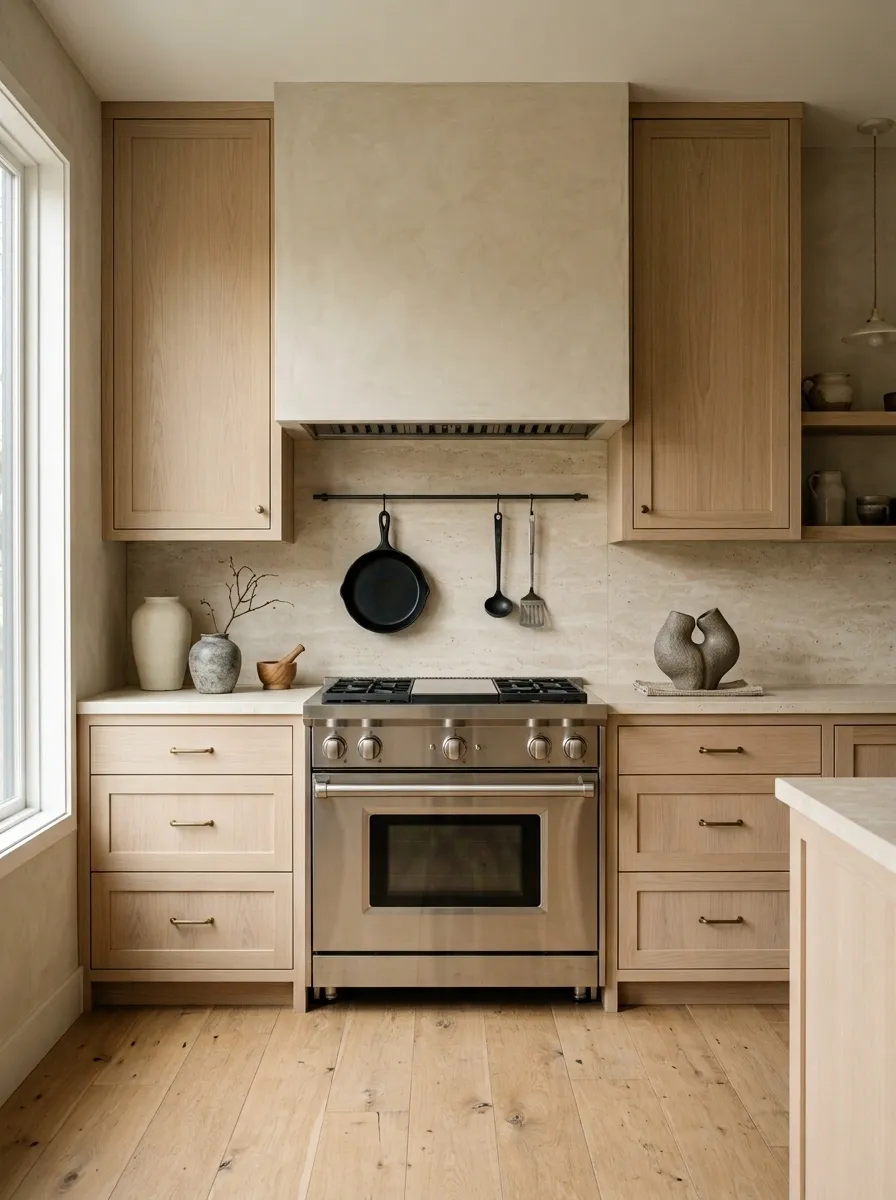
Pale oak cabinetry, creamy stone, muted plaster walls, and soft charcoal details create a quiet Japandi composition around the range. The hood is understated, allowing the material changes to define the stove wall instead of a bold decorative feature. Simple ceramics and one or two sculptural forms add texture while leaving plenty of negative space.
The beauty here comes from restraint and small tonal shifts. Nothing is dramatically darker or brighter than its neighbor, so the kitchen feels calm without looking lifeless. The oak supplies warmth, while the stone gives the wall enough variation to stay interesting. This is a room where restraint actually looks expensive. Nobody needs to panic-buy seventeen matching jars.
Apartment-Friendly Kitchen With Warm Terracotta Stove Alcove
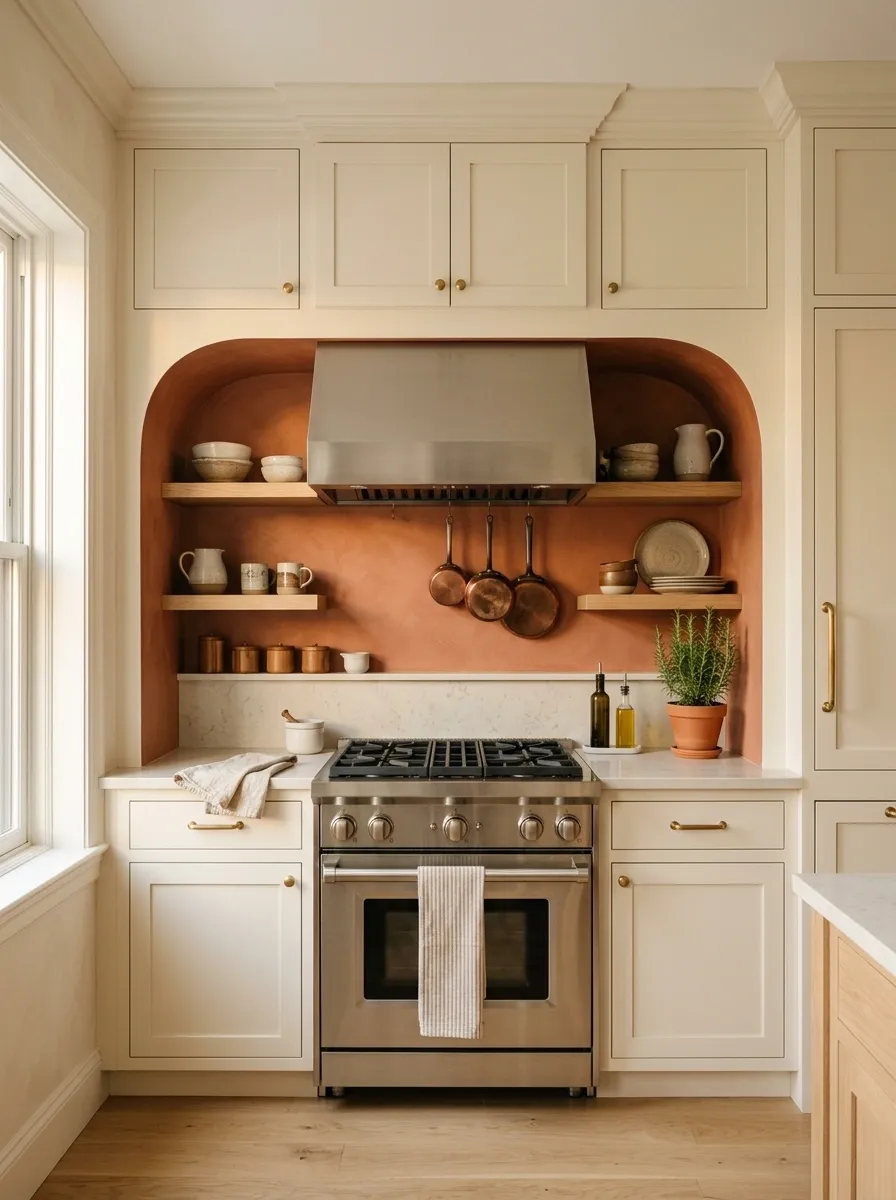
A compact kitchen gets a much stronger identity from a warm terracotta-toned stove alcove surrounded by cream cabinetry. The color stays concentrated around the cooking area instead of spreading across the entire room, while oak shelving, pale counters, and simple hardware soften the contrast. A few practical ceramics make the wall feel finished without sacrificing working space.
This approach works because the color has a defined boundary. The terracotta becomes an architectural moment rather than just another backsplash color. In a rental or small apartment, that distinction matters because the rest of the kitchen can remain adaptable. The stove zone gets personality without demanding a full renovation. Basically, the kitchen gets a glow-up without asking the landlord for a TED Talk.
Walnut Kitchen With Creamy Travertine Range Wall
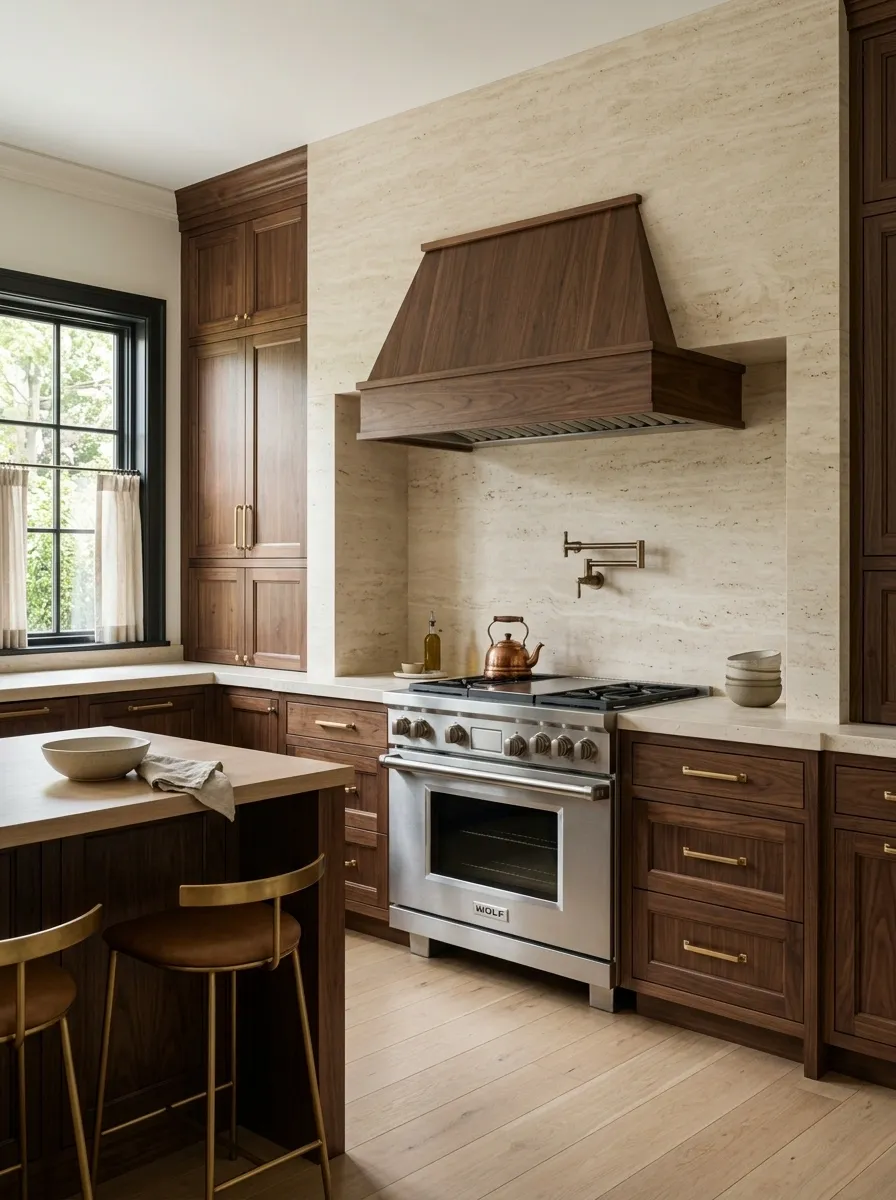
Rich walnut cabinetry gives this kitchen a deep, warm foundation, while creamy travertine around the range creates a broad, lighter visual break. The stone backsplash continues high behind the hood, making the stove wall feel substantial without relying on decorative objects. Muted hardware and pale flooring keep the darker wood from making the room feel heavy.
The strongest relationship is between the continuous stone surface and the surrounding walnut. Instead of treating the backsplash as a little rectangle behind the stove, the stone becomes a full architectural plane. That gives the cooking zone definition while keeping the palette cohesive. Let the walnut remain the star elsewhere. Once every surface starts competing with that grain, the kitchen has officially entered “too much going on at the family dinner” territory.
dominant warmth
light balancing plane
definition
Bright Traditional Kitchen With Checkerboard Stone Floor
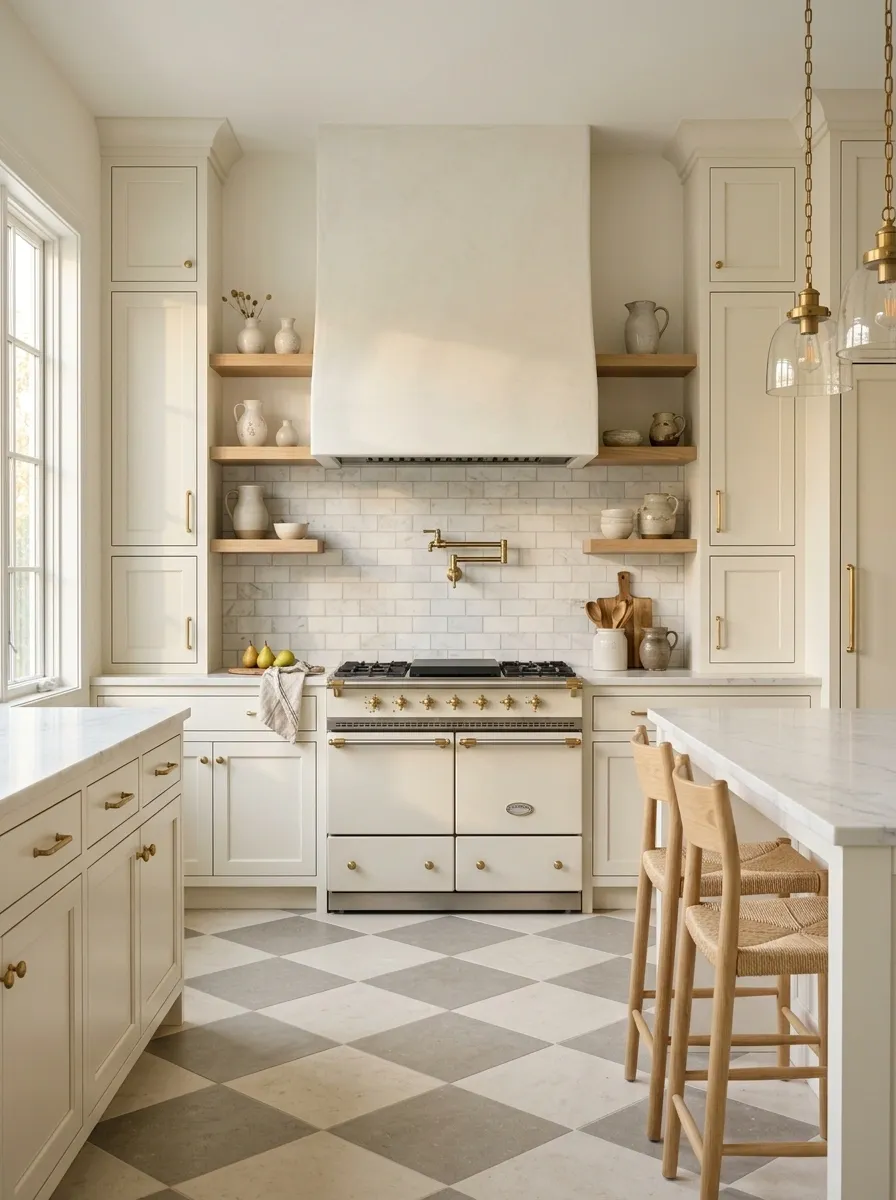
White cabinetry, creamy counters, a soft range hood, pale marble-style backsplash, and warm brass create a traditional kitchen with a fresh feel. The real visual twist comes from the floor, where a subtle checkerboard pattern grounds the otherwise pale palette. The stove wall remains calm so the floor and architectural details can work together instead of competing.
That floor-to-wall relationship is what makes the room feel finished. The backsplash is light and quiet, while the checkerboard introduces a stronger pattern lower in the room. This keeps the eye moving without putting a bold print directly behind the range. The result feels classic rather than overloaded. Basically, the floor understood the assignment and the backsplash wisely didn’t try to steal its notes.
Minimal White Kitchen With Oversized Stone Slab Behind the Range
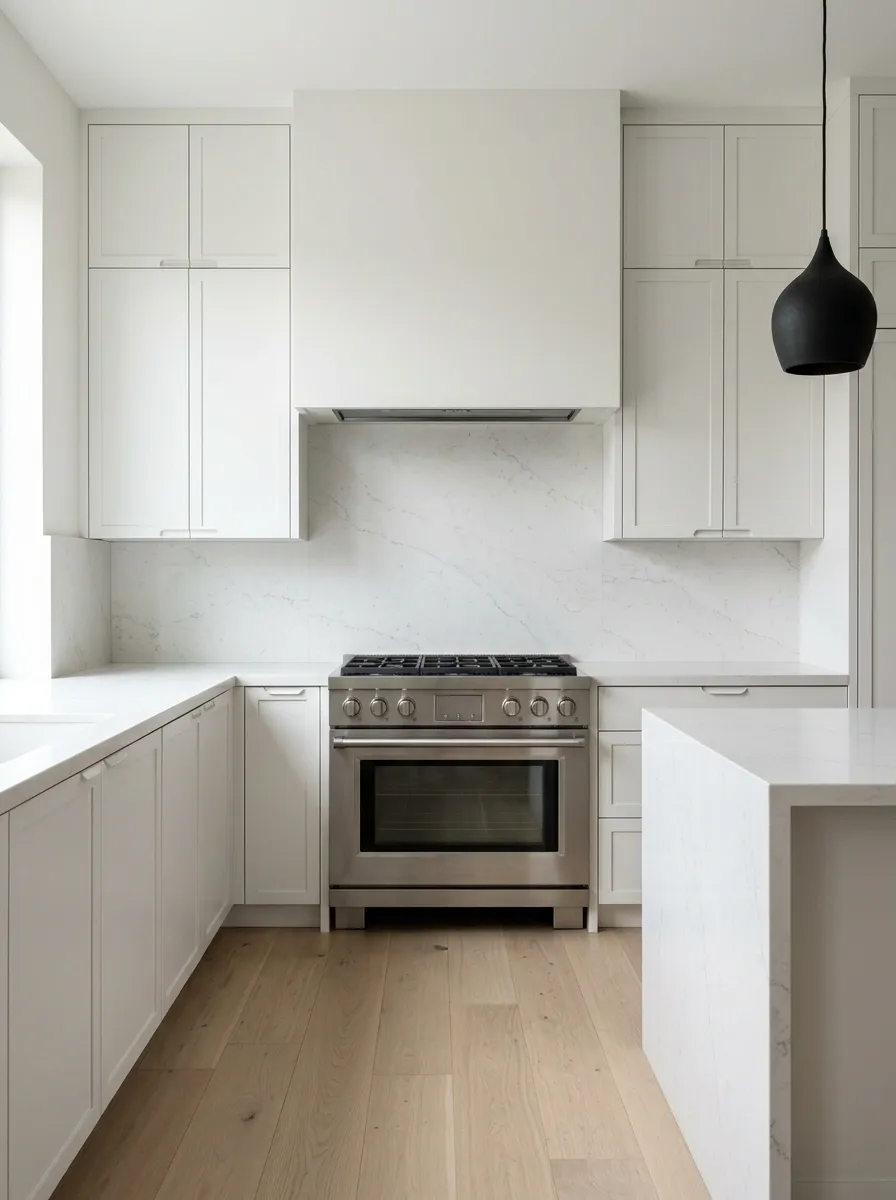
This kitchen goes deliberately quiet. Handleless white cabinetry surrounds a large slab of softly veined stone that rises behind the range and continues across the counters. The hood blends into the pale wall, while warm wood flooring and one sculptural light fixture introduce enough contrast to keep the room from feeling flat.
The oversized slab gives the stove area a single visual field instead of a collection of little surfaces. There are no grout lines competing with the cabinetry and no tiny decorative zones fighting for attention. That simplicity is what makes the wall feel expensive and architectural. Keep the rest of the kitchen equally edited. Once the stove wall is this calm, covering every counter with accessories is basically adding subtitles to a silent movie.
same stone
same stone
same stone
Rustic Kitchen With Reclaimed Wood Hood and Soapstone Counters
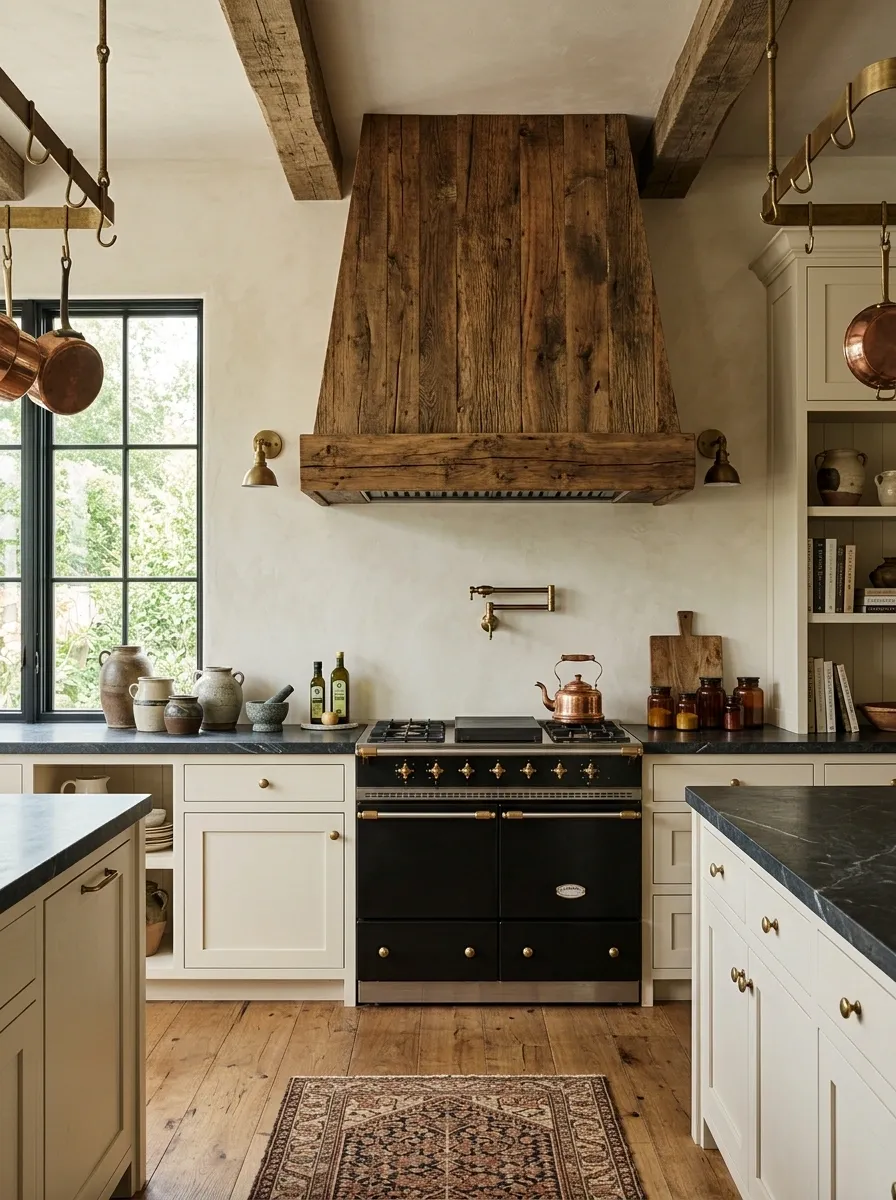
A reclaimed wood hood gives this kitchen its strongest character, surrounded by creamy cabinetry, dark soapstone counters, warm flooring, and aged metal fixtures. Behind the range, the wall stays softly textured and muted, giving the timber hood enough room to stand out. Vintage-inspired lighting and a few handmade-looking ceramics complete the old-house feeling.
The materials work because they don’t all behave the same way. The wood shows grain, the soapstone has a dense matte surface, and the aged metal carries a little irregularity. That variety creates depth without needing bright color or decorative clutter. Let some material variation remain visible rather than forcing every surface to look identical. A rustic kitchen should have a few imperfections. Otherwise it starts looking like a rustic kitchen designed by a spreadsheet.
Soft Beige Kitchen With Fluted Hood and Curved Cabinetry
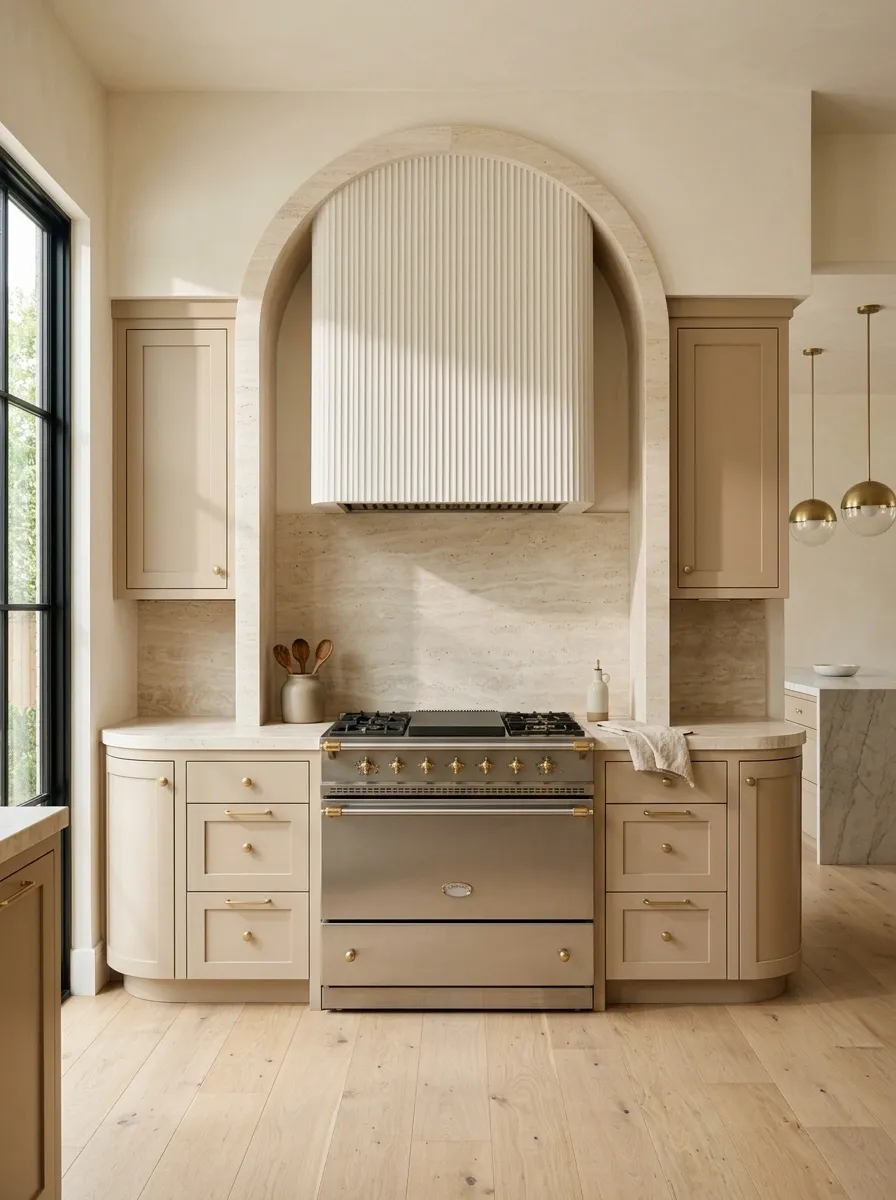
Warm beige cabinetry becomes much more interesting when paired with a fluted hood, curved end cabinets, pale travertine, and warm oak. The range sits inside a soft architectural frame, while the counters and backsplash stay close in tone. Rounded lighting echoes the curved edges and helps the kitchen feel intentionally shaped rather than assembled from straight rectangles.
The visual appeal comes from repeating curves and vertical texture. The fluting catches shadow across the hood, while the curved cabinetry softens the harder lines around it. Because the palette stays restrained, the architecture remains the main event. Keep the hardware subtle and the counter styling spare. The room already has plenty of personality. It doesn’t need a decorative object making a motivational speech beside the stove.
Moody Charcoal Kitchen With Copper Accents
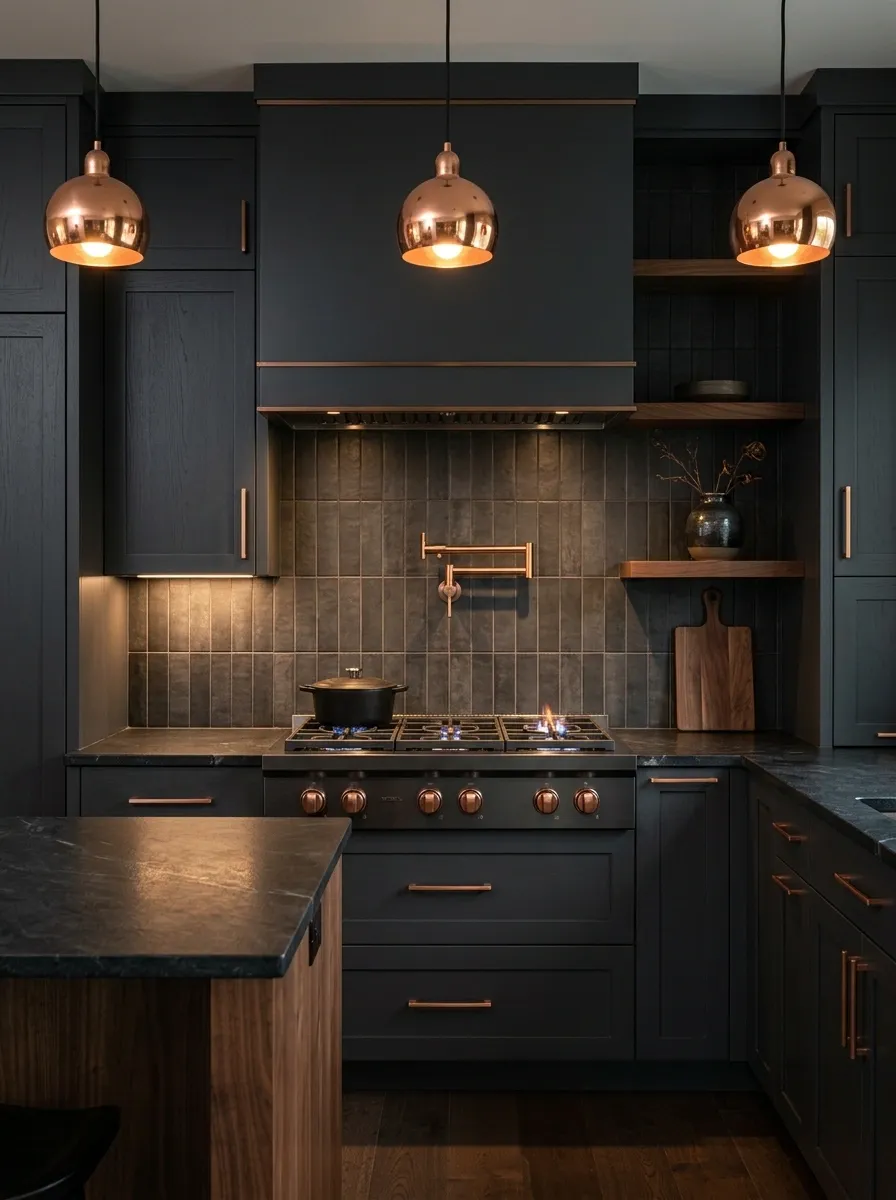
Charcoal cabinetry creates a deep backdrop around the stove, with dark stone counters, a smoky backsplash, walnut details, and warm copper hardware. Instead of contrasting the hood against the cabinets, the hood blends into the darker wall so the copper lighting and fittings provide the warmer highlights. The result feels intimate and dramatic without relying on a dozen decorative features.
Warm lighting is what keeps this palette from becoming flat. Soft pools of light bring out the walnut grain and copper while allowing the charcoal surfaces to recede slightly. The darker stove wall should remain the strongest visual zone, with lighter finishes opening out from it. This kitchen already has enough atmosphere to fill a room. Adding a huge bouquet, six cutting boards, and a decorative ladder would just make the stove look like it joined the wrong group project.
French-Inspired Kitchen With Cream Hood and Marble Inset
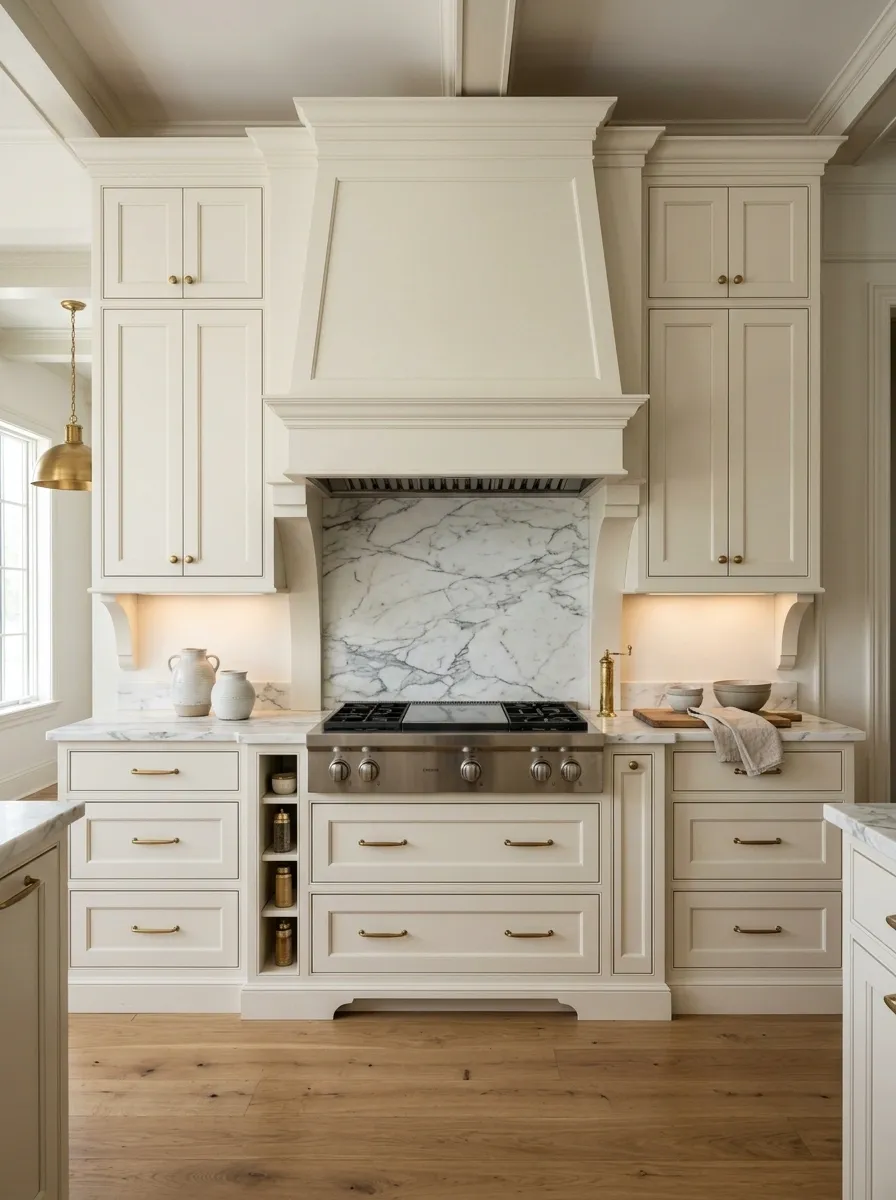
A creamy French-inspired kitchen places the range beneath a substantial painted hood, with a marble inset directly behind the stove. Inset cabinetry, aged brass fittings, warm oak flooring, and understated lighting give the room a classic character without turning it into a period set. The stove wall feels layered because the hood frames the marble and the marble frames the range.
Proportion is what keeps this look elegant. The hood is broad enough to connect visually with the cabinetry, while the marble inset creates a quieter center inside that larger frame. That layered arrangement gives the cooking area presence without requiring a busy collection of objects. Keep the accessories sparse and let the architecture carry the composition. When a wall already has this much structure, more decoration is basically showing up to a party after the group photo was taken.
A Kitchen Where the Stove Wall Actually Finishes the Room
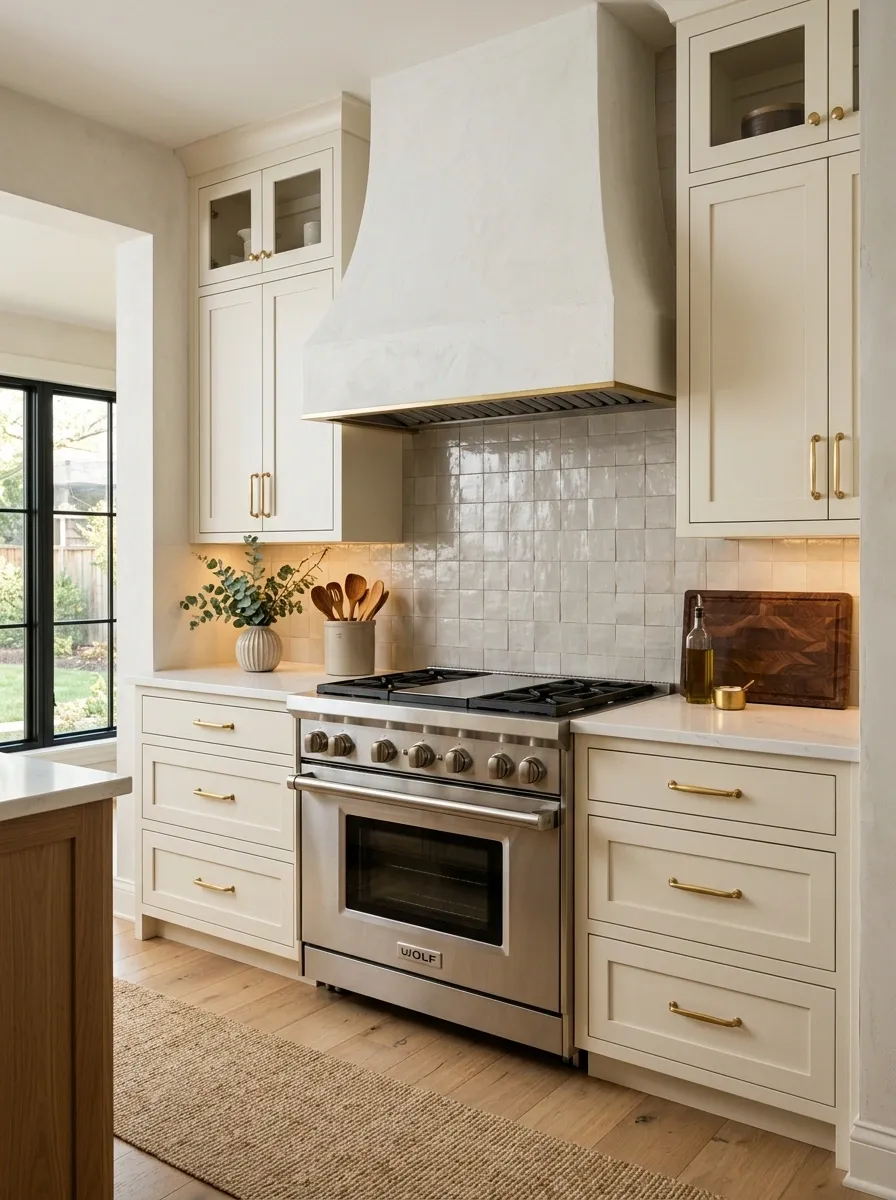
The strongest stove area is rarely the one with the most decoration. It is the one that feels connected to everything around it. Look for a clear relationship between the range and the hood, then let the backsplash, cabinetry, counters, flooring, and lighting reinforce that relationship. A bold stone wall can handle quiet cabinetry. A detailed hood can handle a calmer backsplash. A compact kitchen may need open sightlines more than extra shelving.
That is the difference between decorating a wall and designing a kitchen composition. The pieces should look like they belong to the same room, not like they were collected during five unrelated shopping trips.