
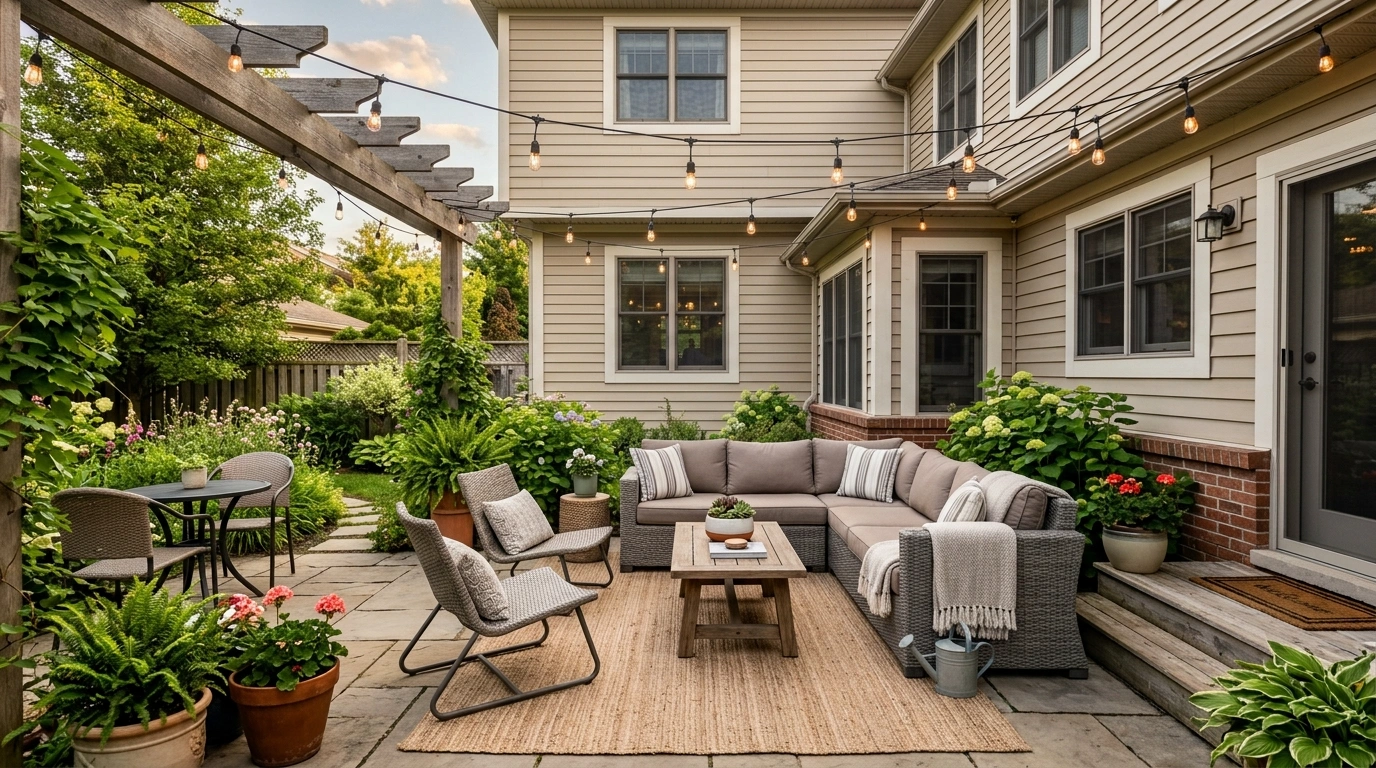
A back patio can look expensive and still feel oddly unfinished. The furniture might be good, the paving might be gorgeous, and the plants might be thriving, yet the whole thing somehow reads like a pile of decent purchases instead of an actual place to live.
That usually happens when every decision is made separately. The sofa gets chosen because it looks good.
Then comes the fire table. Then a rug. Then some pots. Then another chair because there was an empty corner. Suddenly the backyard has six different ideas competing for attention and absolutely none of them got the memo.
Back Patio Ideas
Enchanted Evening Backyard Dining
A canopy of twinkling string lights transforms this wooden back porch into a magical nighttime retreat, completely shifting the mood as the sun goes down.
A rustic wood dining table sits right beneath the glow, surrounded by simple chairs and flickering candles that keep the atmosphere warm and inviting. The open-air deck connects seamlessly with the surrounding trees, making late-night dinners feel wrapped in nature.
The real magic comes from the layers of lighting and lush potted plants framing the space. Hanging ferns and leafy greens soften the structural timber, while a bold patterned rug anchors the seating area with graphic flair. There is no need for complicated decor when the lighting does all the heavy lifting.
Everything here works together to create an intimate outdoor room that begs for long conversations and slow evenings. The combination of warm wood, glowing bulbs, and abundant greenery makes the entire backyard feel intentional and deeply cozy without ever tipping into clutter.
Warm Modern Patio With Concrete, Cedar, and Olive Green
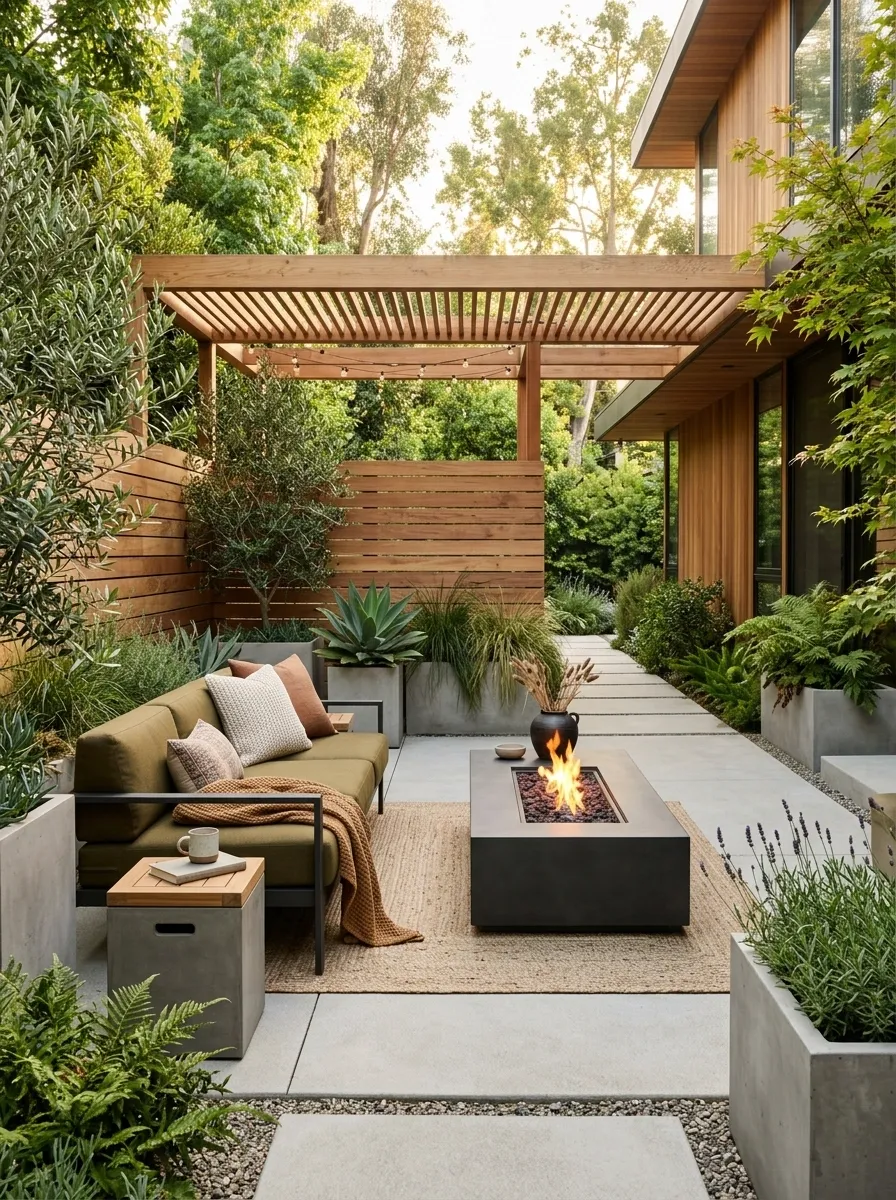
Pale concrete pavers create a clean foundation while warm cedar brings enough natural color to keep the patio from feeling like a parking lot with cushions. A low outdoor sofa sits opposite a compact fire table, with olive-toned upholstery tying the furniture into layered planting around the edges. A cedar privacy screen finishes the far side without making the backyard feel boxed in.
The important part is the restraint. The materials do the visual work, so the decor stays quiet. A few substantial planters make more sense here than a parade of tiny pots fighting for attention. The result feels modern without becoming cold, and warm without drifting into rustic territory.
Modern Pergola With Vibrant Bougainvillea
A sleek black pergola frames this contemporary courtyard, offering striking architectural contrast against a cascade of brilliant pink bougainvillea climbing the wall.
Below, a clean white sofa and matching armchairs gather around a round wooden coffee table, resting on emerald green turf that stays effortlessly manicured year-round. It is a masterclass in blending sharp modern lines with explosive organic color.
The layout makes the most of a compact footprint by keeping the furniture low-profile and letting the vertical elements draw the eye. Paver stones set into the grass lead the eye deeper into the space, while vertical cedar slats on the back wall echo the geometry of the overhead structure. Every single inch serves a distinct visual purpose.
The result is a stunning backyard nook that feels both architectural and wildly alive. The restrained furniture choice ensures the vibrant pink blossoms remain the undisputed star of the show, proving that structural elegance and natural drama belong together.
Covered Back Patio With a Deep Timber Roof and Outdoor Dining
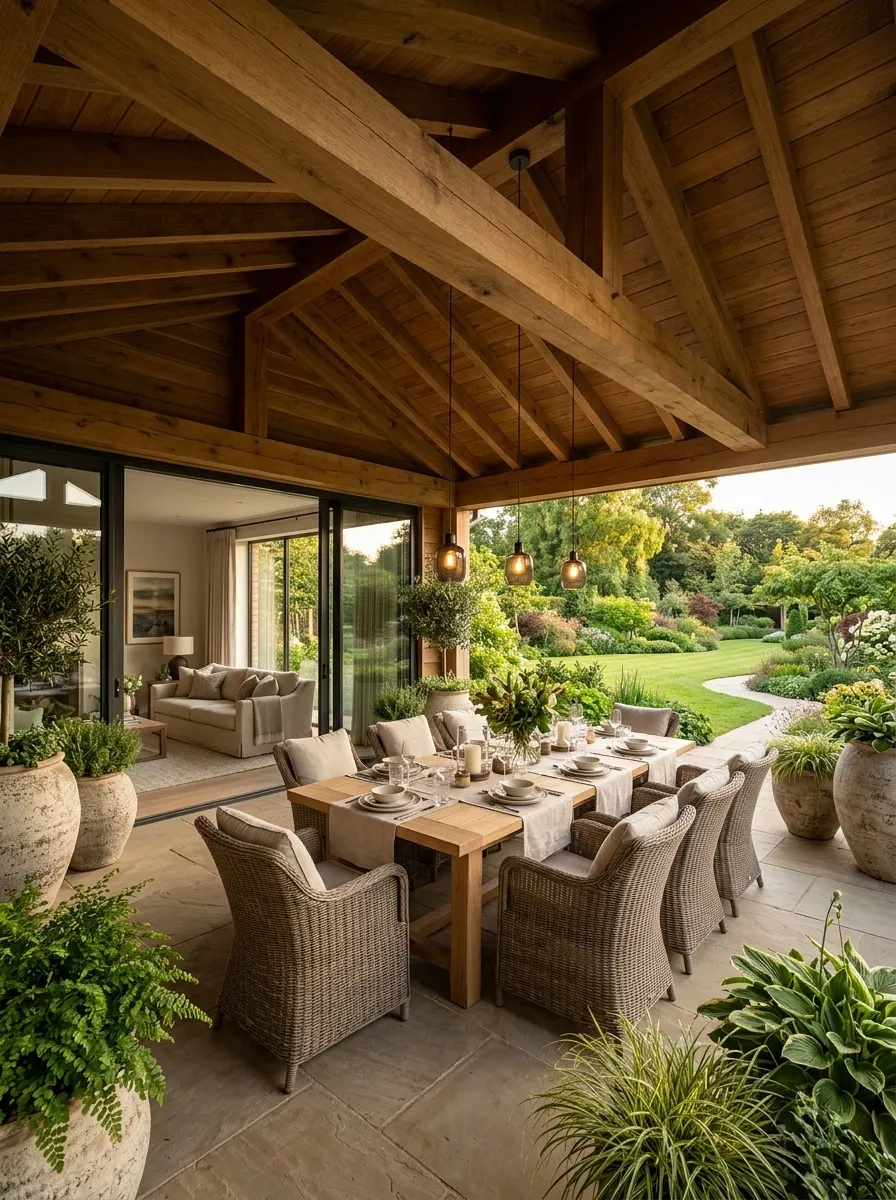
A substantial timber roof gives this patio the presence of a real outdoor room. Underneath, a long dining table becomes the anchor, surrounded by woven chairs and warm overhead lighting. The house opens directly onto the patio through broad glass doors, making the dining area feel like a natural extension of the interior instead of a separate zone dropped onto the lawn.
The deep roof matters because it creates visual weight as well as shelter. That lets the furniture stay relatively simple. A few large planters frame the edges, while the open side remains visually clear toward the garden. There is no need for twenty lanterns dangling everywhere. The roof already understood the assignment.
Cozy Black Slat Wall Retreat
Dark charcoal vertical slat walls wrap this private patio in sophisticated drama, creating a moody, enveloping backdrop for vibrant green foliage.
A lush green sectional sofa loaded with patterned cushions provides the ultimate spot to unwind, positioned directly across from a warm wood coffee table. Potted ferns and climbing vines soften the dark perimeter, turning an enclosed corner into a lush outdoor sanctuary.
The monochromatic approach relies entirely on texture and tone rather than bright colors to make an impact. The black backdrop makes the green plants look hyper-vibrant, while the patterned rug underfoot breaks up the dark stone flooring. It’s proof that darker hues can actually make a small outdoor space feel more intimate rather than closed-in.
String lights crisscrossing overhead add just the right amount of sparkle to the moody atmosphere, bridging the gap between indoor comfort and outdoor wildness. The space feels finished, deliberate, and entirely insulated from the rest of the world.
Small Back Patio With Built-In Bench Seating and Vertical Planting
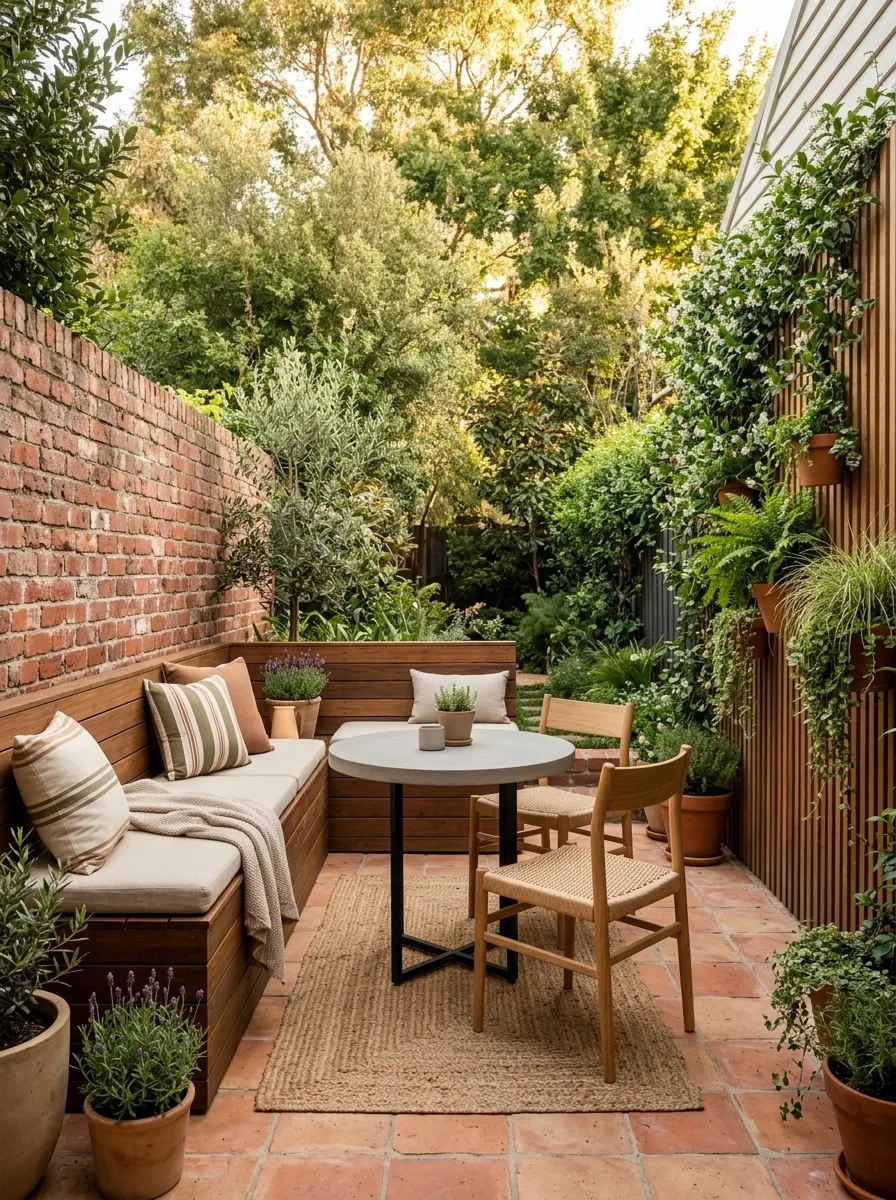
This compact patio skips the oversized sectional that would swallow half the yard and instead uses a built-in bench along one wall. A small round table keeps the center flexible, while tall planting and a narrow vertical screen draw the eye upward. Warm brick or clay-toned paving adds character without needing a dozen decorative accessories.
The round table is doing more work than it looks. It softens the hard geometry of the small footprint and leaves easier pathways around the seating. Storage can sit beneath the bench, keeping cushions and outdoor clutter out of sight. That’s the trick with smaller patios: every object needs a job, because the patio already has enough drama without a furniture traffic jam.
fixed seating + storage Open center
movement + flexibility Planting
height + privacy
Lush Stone Patio Under Rosy Pergola
A weathered wooden pergola smothered in cascading pink roses creates a breathtaking overhead canopy, casting dappled afternoon shadows across terracotta-tiled flooring.
Plush armchairs and a simple wooden coffee table cluster near the stone-clad house wall, establishing an effortless indoor-outdoor flow. It feels less like a built deck and more like a secret garden room carved out of time.
The strength of this design lies in its romantic, time-worn materials. Irregular stone tiles and aged timber beams harmonize with the overflowing floral display, ensuring the patio feels deeply rooted in its environment. A vintage-style wall clock adds a touch of charm without trying too hard to be decorative.
With nature doing this much heavy lifting, keeping the furniture straightforward and comfortable was the smartest move possible. The space invites you to sit down with a book and completely forget about the rest of the world. It is outdoor living at its most poetic and relaxed.
Glow-Lit Garden Dining Hideaway
An intricate web of overhead bistro lights casts a golden glow over this rustic outdoor dining space, making the entire yard feel like a permanent celebration.
A wooden table paired with sleek metal chairs sits at the center of a striking geometric rug, surrounded by overflowing garden beds and climbing trees. The dark fencing fades into the background as the lighting takes center stage.
The magic here is all about ambiance and scale. The overhead lights define the dining room boundaries without the need for walls, while the high tree canopy overhead creates a natural ceiling. Potted plants and scattered greenery frame the edges to keep the space feeling wild and secluded.
It’s a masterclass in turning a simple backyard corner into an enchanting evening destination. By keeping the furnishings grounded and letting the lighting create the atmosphere, the patio achieves effortless charm that looks just as good by day as it does by night.
Black-Framed Contemporary Patio With a Linear Fire Feature
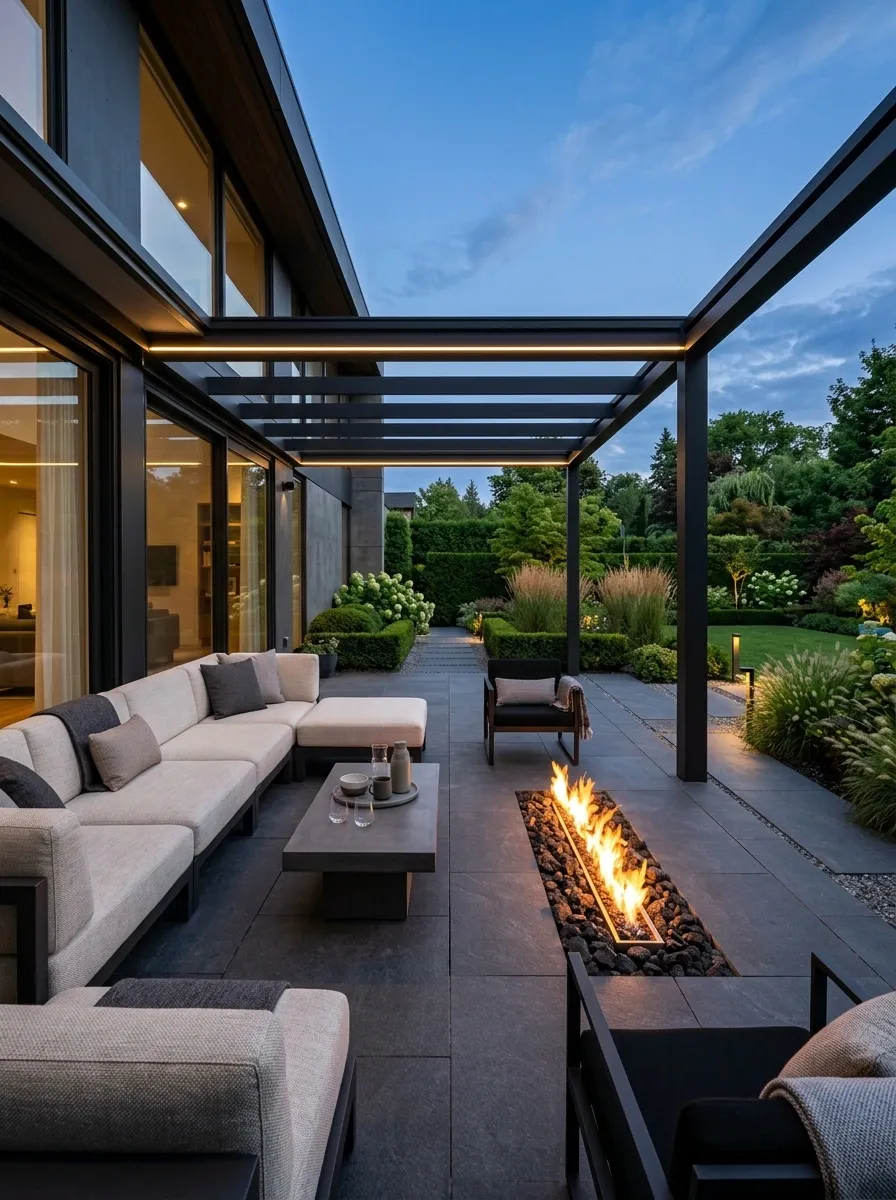
Sharp lines define this contemporary patio, where charcoal paving, black steel framing, long modular seating, and a narrow linear fire feature create one strong visual axis. The patio feels connected to the architecture because the dark framing continues the geometry of the house, while clipped planting softens the edges without weakening the clean composition.
The layout works because everything pulls in the same direction. The sofa, fire feature, paving joints, and sightline toward the garden reinforce the length of the space. Keep the surrounding finishes simple so the geometry remains visible. A pile of mismatched lanterns and colorful accessories would interrupt the whole point. This patio doesn’t need more stuff. It needs room to let the architecture show off.
Sleek Modern Fire Pit Lounge
Crisp white modern armchairs gather in a neat circle around a striking black fire bowl, creating an intimate conversation pit on a bed of pale gravel.
Set against a white-washed exterior wall with black-framed glass doors, the patio bridges contemporary architecture and minimalist landscaping. Slim vertical trees and potted greenery soften the clean lines without cluttering the floor plan.
The layout succeeds through sheer balance and proportion. The circular arrangement of the chairs softens the rigid geometry of the square concrete pavers and the building’s architecture. Every element, from the neutral upholstery to the minimalist fire feature, works together to create a calm, uncluttered atmosphere.
This patio doesn’t rely on a parade of colorful accessories to make a statement. The restraint of the materials lets the architecture and the surrounding greenery do all the work, resulting in a finished outdoor room that feels exceptionally chic and endlessly inviting.
Classic Brick Patio With Traditional Garden Furniture
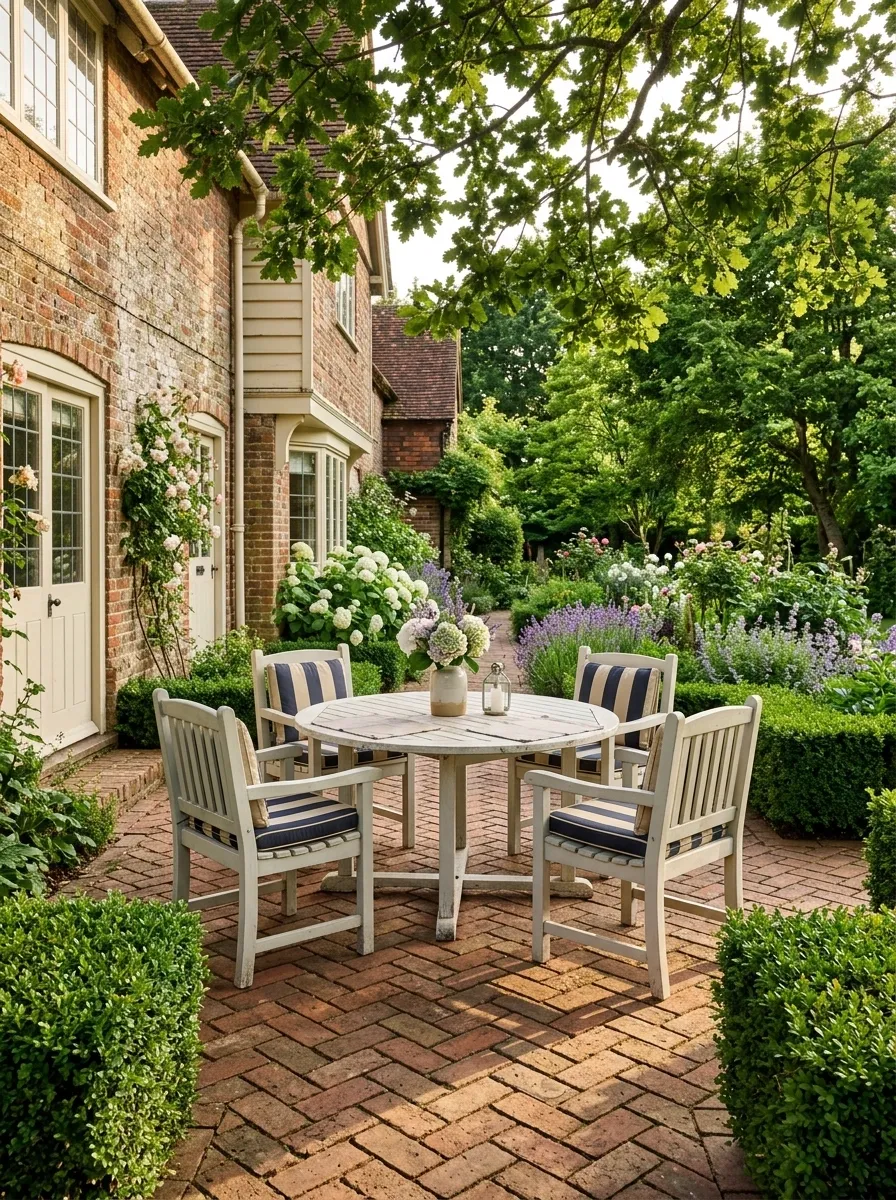
Warm brick paving gives this patio an instantly established look, especially beside a traditional house with painted trim or masonry walls. The furniture leans classic too, with painted wood seating, a compact dining table, striped outdoor cushions, and clipped shrubs framing the edges. Flowering plants soften the harder lines while keeping the patio connected to the garden beyond.
The palette stays pleasantly restrained: brick, muted paint, green foliage, and a little pattern. That’s enough. The patio feels collected without looking like a furniture showroom had an identity crisis. Keep the planting slightly informal around the perimeter so the traditional architecture doesn’t become overly stiff.
weight
character
softness
pattern
Poolside Back Patio With a Relaxed Resort Layout
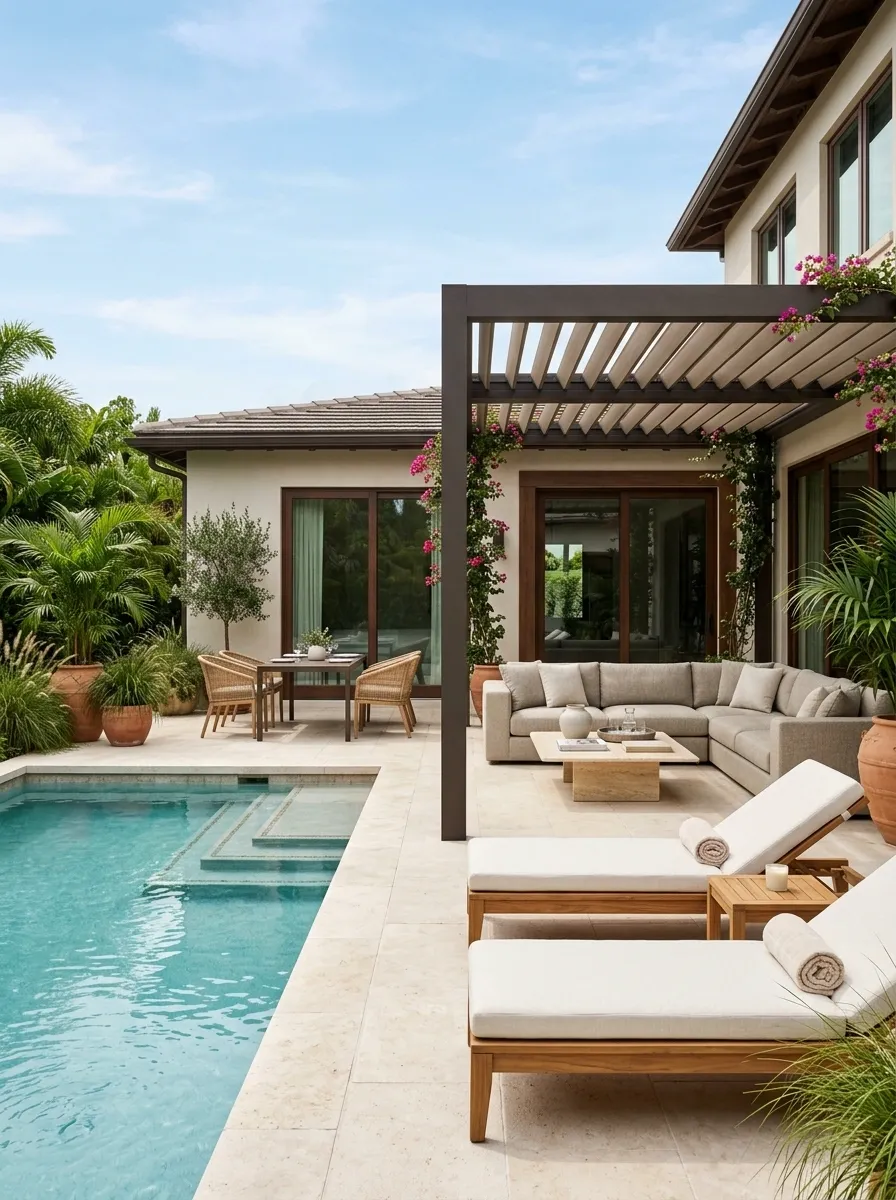
A wide patio beside the pool creates room for several uses without chopping the backyard into awkward little sections. Loungers sit closest to the water, a shaded sofa arrangement occupies the middle zone, and the house-facing edge holds a small drinks or dining area. Pale stone paving keeps the entire setting visually unified, while large pots and palms soften the hard surfaces.
The important distinction is that the zones stay open to one another. There are no walls, bulky dividers, or furniture mazes blocking the view. The pool remains the visual center, while the seating supports it. That’s what makes the space feel relaxed rather than over-programmed. A backyard pool does not need to become a hotel lobby just because there is room for furniture.
Mediterranean Patio With Terracotta, Stucco, and Olive Trees
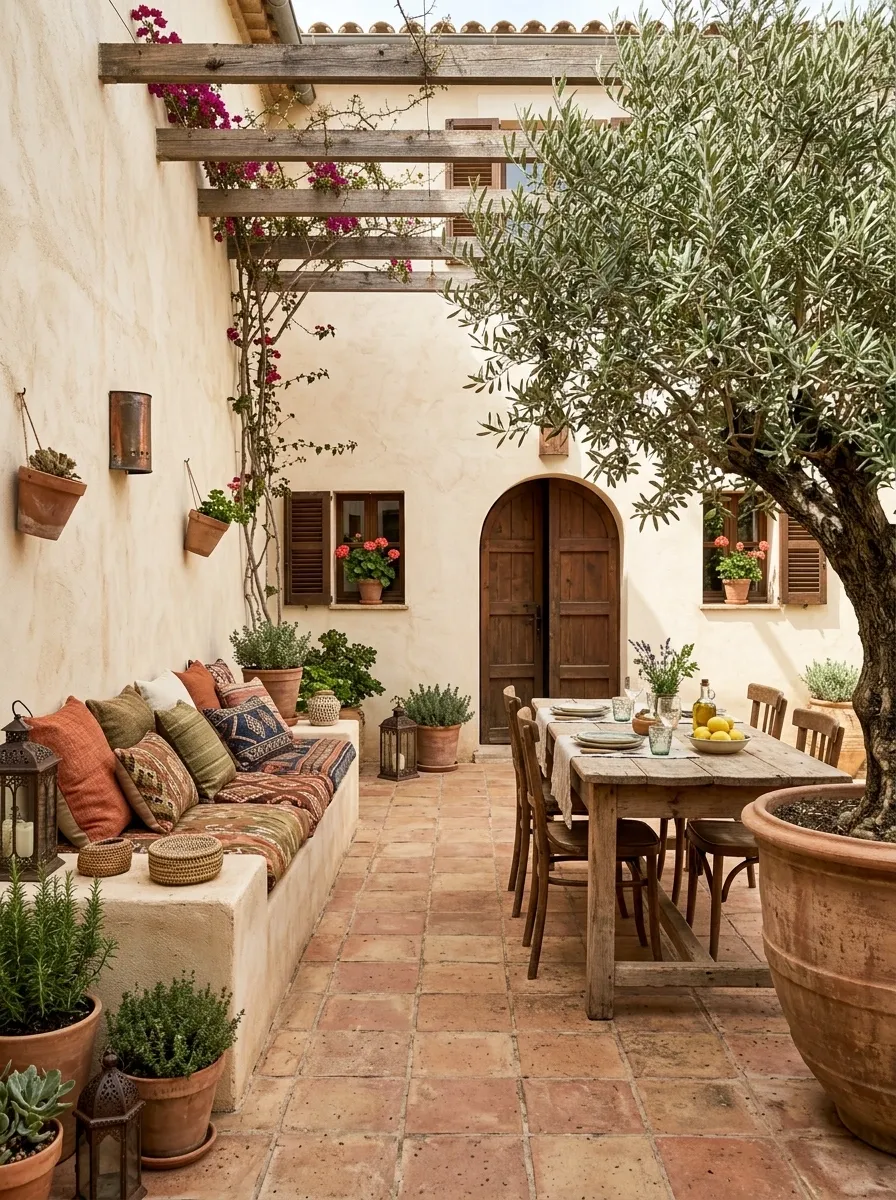
Sun-washed stucco walls, terracotta flooring, and oversized olive trees give this patio a warm Mediterranean character without needing an enormous villa or a fake stone fountain the size of a bathtub. Built-in masonry seating wraps one edge, layered with patterned cushions, while a simple dining table sits near the house for meals that can spill naturally outdoors.
The warmth comes from repetition. Terracotta appears across the floor and pots, cream keeps the walls light, and muted green gives the planting a visual counterweight. That balance stops the orange tones from taking over. Keep the furniture substantial and unfussy so the architecture remains visible. The patio should feel sun-baked and collected, not like a themed restaurant trying very hard.
floor + pots + warmth
walls + visual breathing room
planting + balance
Coastal Back Patio With Pale Wood and Soft Blue Upholstery
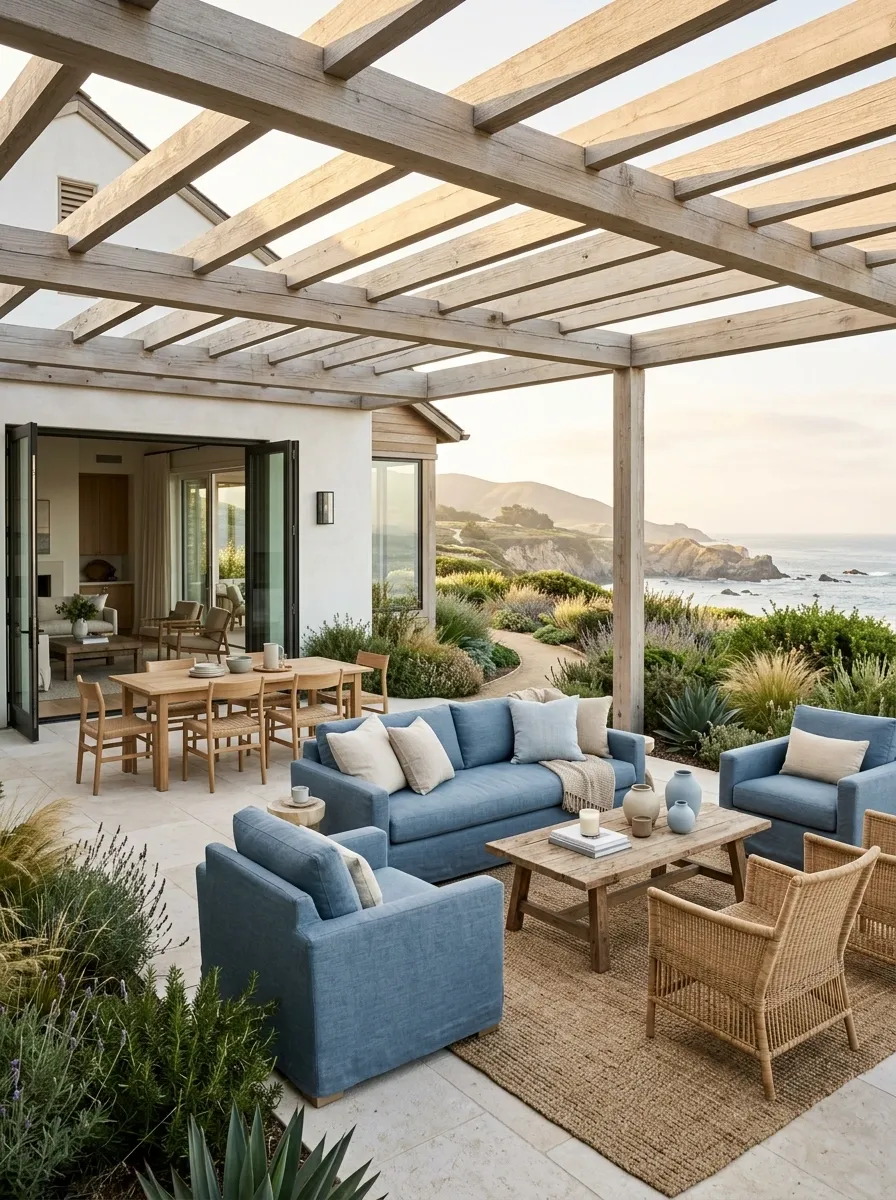
This patio takes the lighter side of coastal design, using pale timber, soft blue upholstery, woven furniture, and light stone underfoot. Wide doors connect the seating area directly to the house, while loose planting around the perimeter keeps the setting relaxed rather than overly manicured. A small dining arrangement sits close enough to the kitchen to make outdoor meals practical.
The strongest feature is the limited palette. Cream and pale wood form the background, while blue appears in the upholstery and a few carefully repeated details. That restraint gives the patio its breezy character. Skip obvious nautical decorations here. No anchor collection is required to prove the ocean exists in the color palette.
paving + walls Natural wood
furniture + structure Soft blue
upholstery + accents
Dark Cottage Patio With Gravel Edges and Weathered Timber
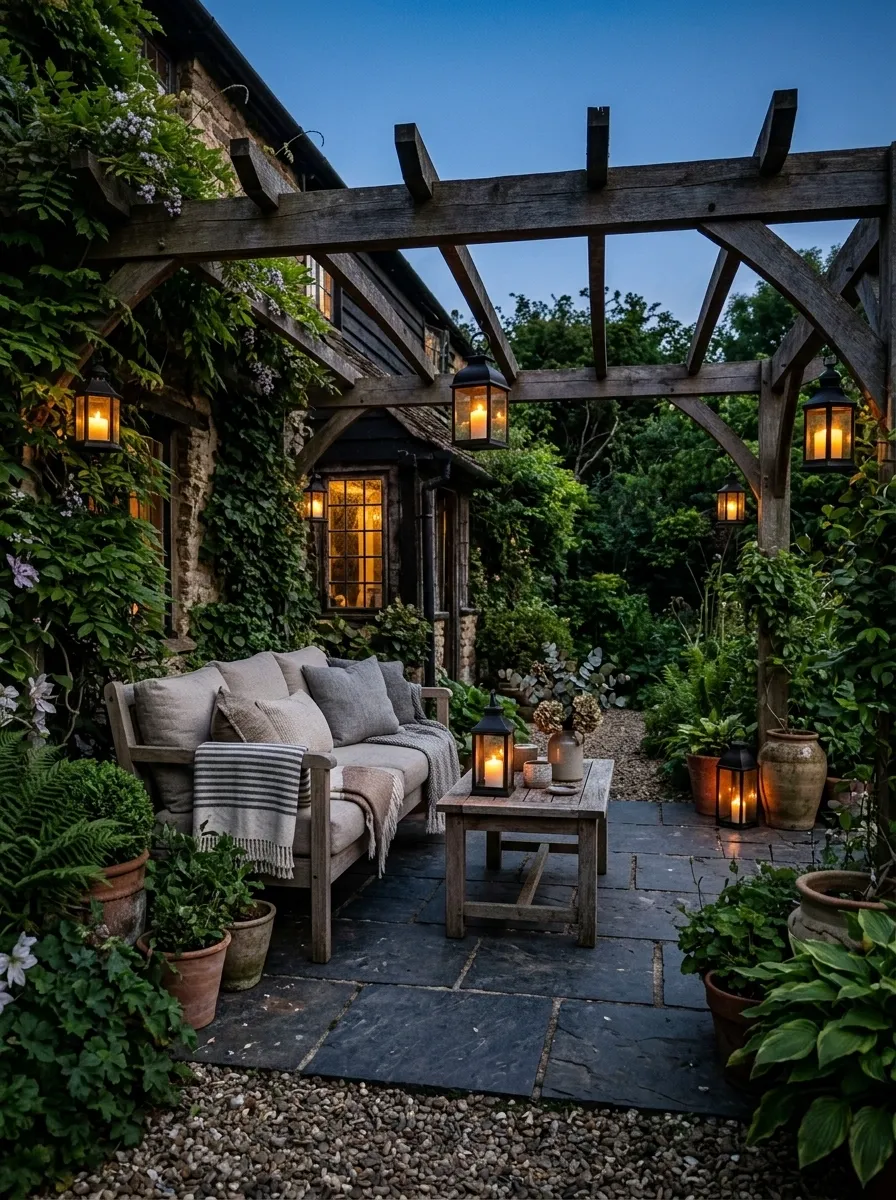
A darker cottage-inspired patio takes a completely different route, using deep paving, weathered timber furniture, gravel margins, climbing greenery, and warm lantern lighting. Instead of making the patio feel smaller, the deeper tones give it a sheltered, intimate character, particularly when the surrounding garden is already dense with foliage.
The furniture stays comfortably simple, with a generous sofa and a compact table arranged around the warmest pool of light. Gravel softens the boundary between paving and planting and gives the patio a less formal edge. The key is contrast. Dark surfaces need lighter foliage and warm lighting nearby, otherwise the whole thing can start looking like a very stylish storage shed.
Long Narrow Patio With One Continuous Conversation Zone
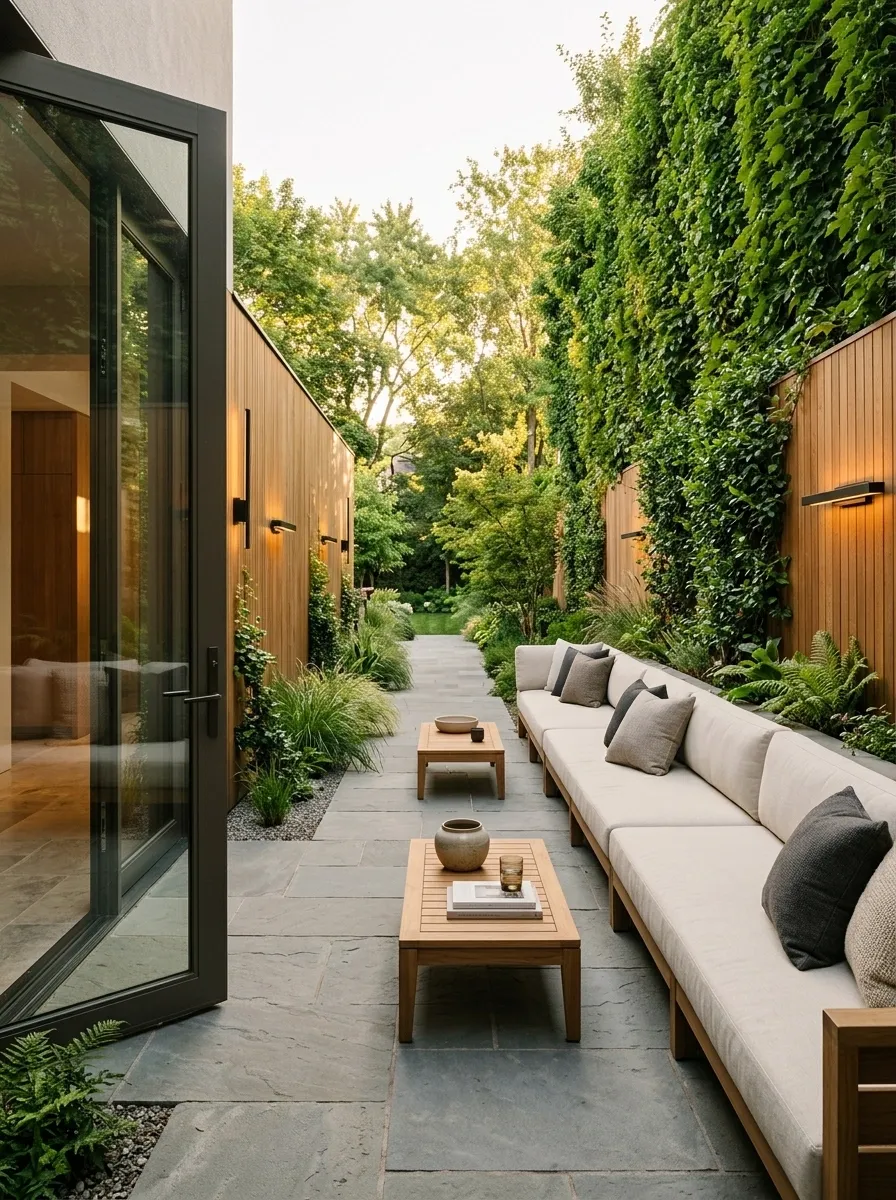
A narrow backyard doesn’t need to be chopped into several tiny zones just to prove that it can multitask. This layout runs one long sofa along the outer edge, paired with two small tables and a slim planting strip. The paving continues from the back door toward the garden, creating one uninterrupted visual path that makes the space feel longer.
Vertical planting adds height without stealing floor area, while wall-mounted lighting keeps the edges useful after sunset. The furniture stays shallow and streamlined so the walkway never feels squeezed. The whole patio has one clear purpose: conversation with a view. Sometimes the smartest design move is simply refusing to put a giant sectional in a space that clearly did not consent.
Creates one clear social zone.
Keeps movement easy from house to garden.
L-Shaped Outdoor Living Patio Around a Corner of the House
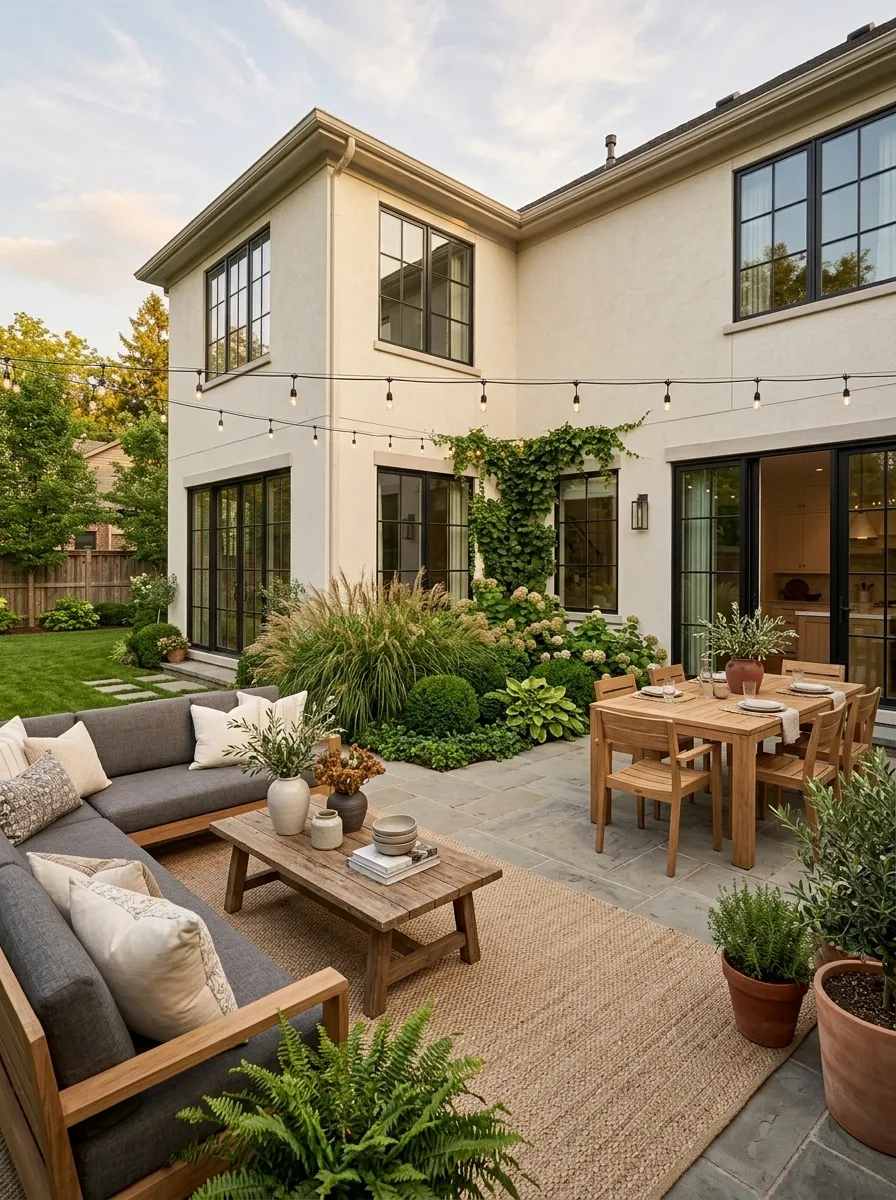
An L-shaped patio makes excellent use of a house corner by giving two outdoor functions their own territory without visually splitting the backyard apart. A lounge occupies the quieter side, with deep seating and a low table, while a compact dining setup sits closer to the kitchen entrance. The same paving carries through both areas, and matching wood tones connect the furniture.
Planting at the outside corner softens the transition while preserving the open center. The result feels like one outdoor room with two purposes rather than two patios awkwardly sharing a yard. The L shape does the organizing for free, which is useful because nobody needs another outdoor storage bin full of “decor” that has somehow become permanent.
Dining + serving
Lounge + garden view
Pergola Patio With Climbing Greenery and Soft Seating
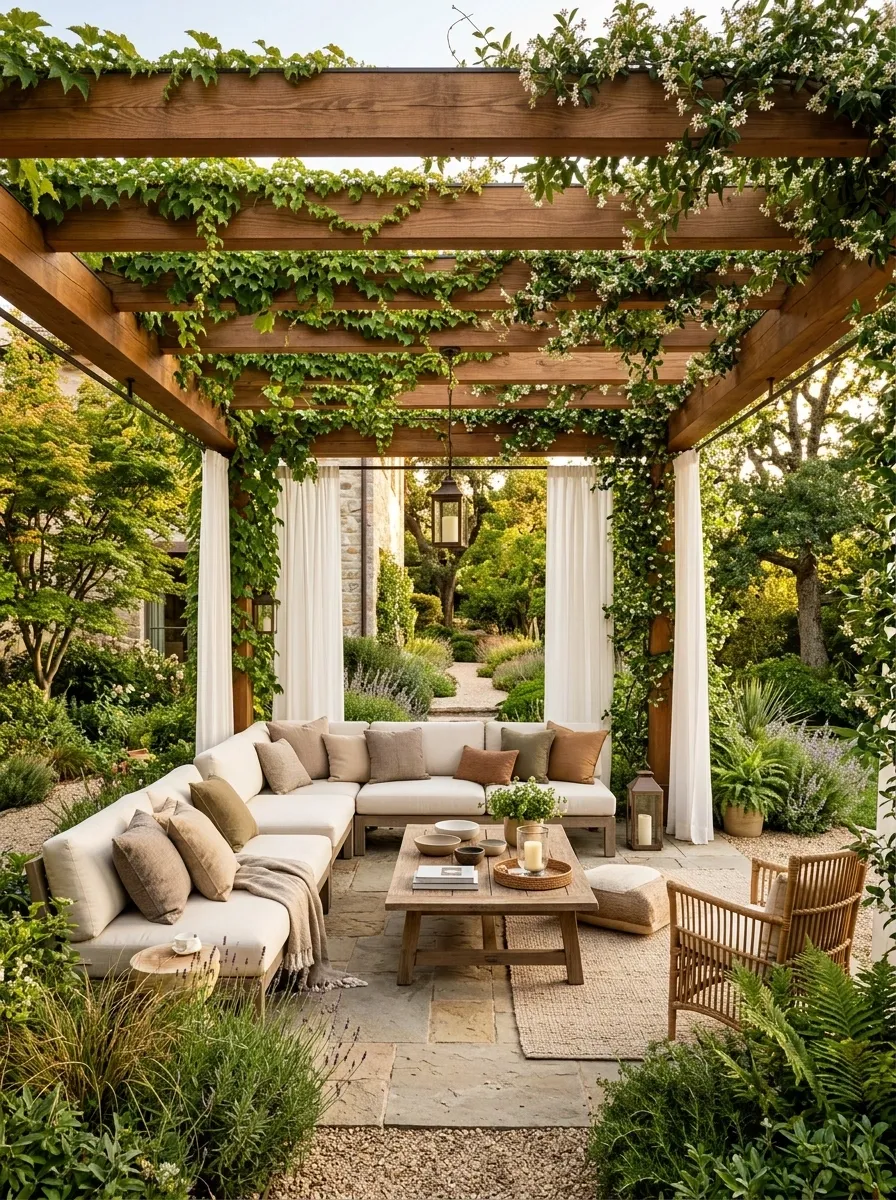
A timber pergola gives this patio a strong vertical framework, while climbing greenery gradually softens the structure overhead. Beneath it, deep outdoor seating creates a proper lounge with textured cushions, low tables, and a few sheer outdoor curtains that can define the edges when needed. Gravel and planted beds sit around the perimeter, keeping the floor from feeling like one enormous hard surface.
The appeal comes from the layers. There is a solid structure overhead, comfortable furniture at eye level, and foliage moving through both levels. That gives the patio depth without filling every corner. The planting should feel abundant but controlled. Otherwise the pergola goes from “garden retreat” to “nature has filed a hostile takeover.”
Minimalist Patio With Flush Paving and Almost No Decoration
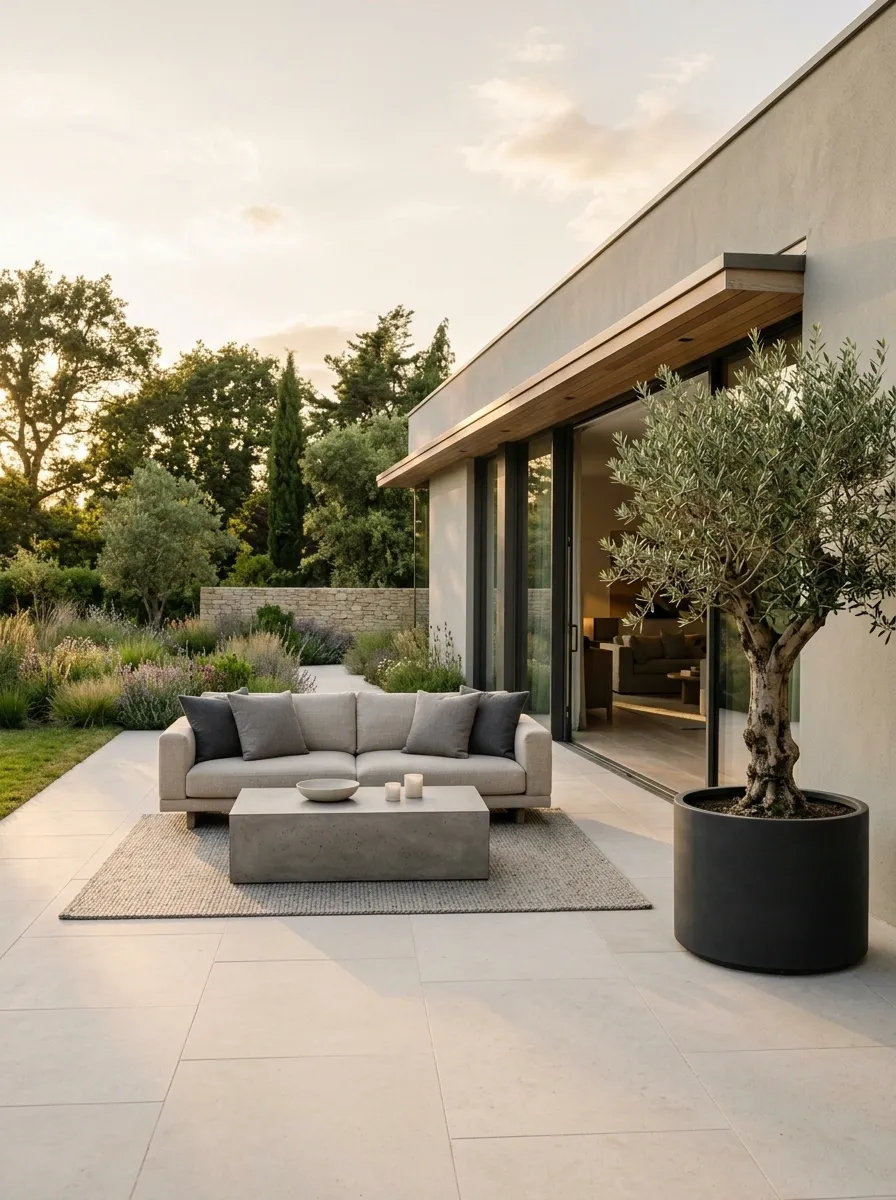
This patio proves how much stronger a backyard can look when the design stops trying to entertain everyone at once. Large-format pale paving runs cleanly from the house toward a simple garden edge. A low rectangular sofa and one understated coffee table establish the living area, while a single sculptural tree provides the only major plant statement.
The architecture carries most of the visual interest, so decorative objects stay almost nonexistent. That doesn’t make the patio feel unfinished. It makes the proportions easier to notice. Broad areas of empty floor give the furniture breathing room, while the repeated pale surfaces create a calm backdrop. The challenge is resisting the urge to “finish” the patio with random accessories. Minimalism is mostly an exercise in leaving perfectly good empty space alone.
Outdoor Kitchen Patio With Dining and Lounge Zones
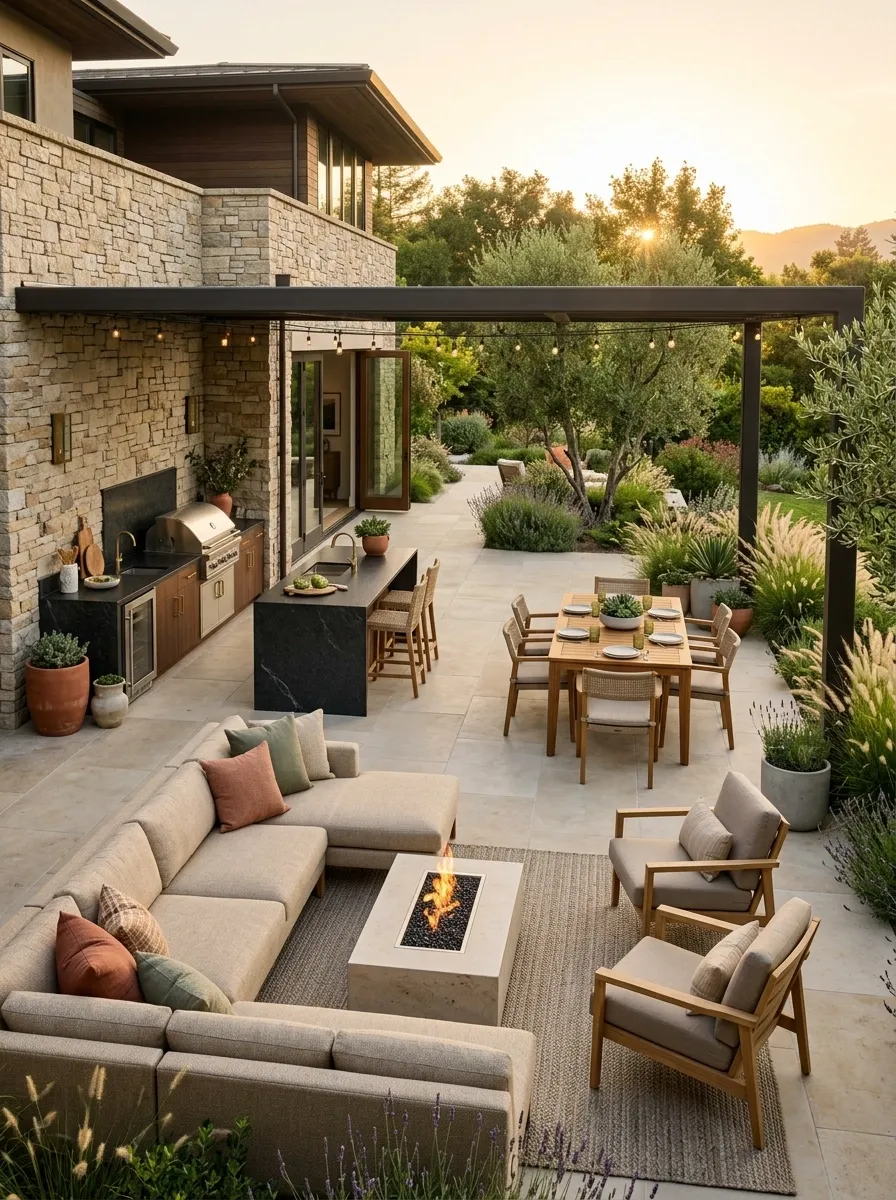
A generous patio can handle cooking, eating, and lounging without looking like a showroom floor plan. The outdoor kitchen sits directly against the house for practical access to utilities and storage. A dining table follows nearby, while a separate lounge arrangement occupies the outer edge where the view is strongest.
Matching stone across the kitchen and patio gives the whole setting one material language, while warm timber in the furniture keeps the composition from becoming too hard. The zones remain distinct through placement rather than bulky dividers. That matters because nobody wants to carry dinner around a maze of furniture while trying not to step on somebody’s toes. Good outdoor planning should make movement feel obvious.
Kitchen + prep + serving
Table + direct access
Seating + garden view
Rustic Farmhouse Patio With a Long Wooden Table
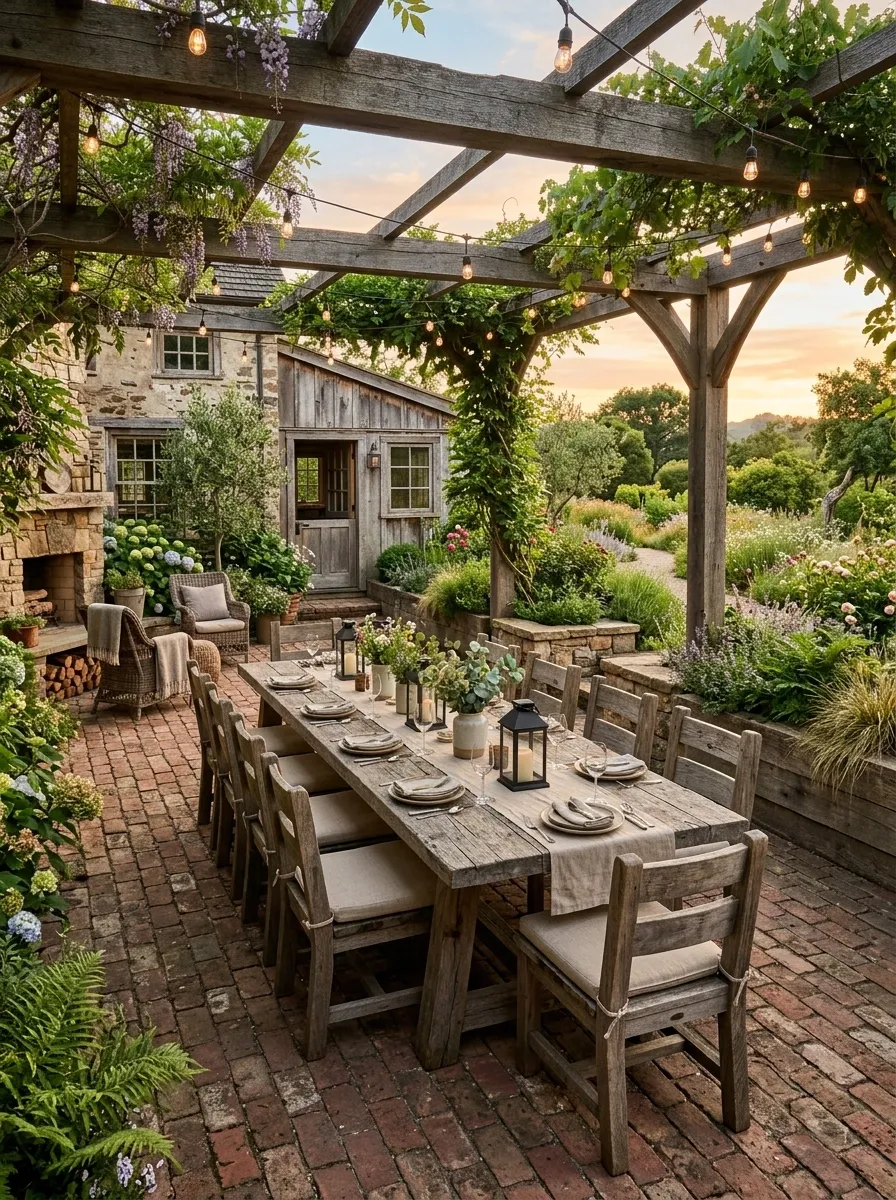
This farmhouse patio centers everything around a long wooden dining table placed on warm brick or aged-looking paving. Sturdy timber chairs fill the table without making the setting feel formal, while simple lanterns and raised planting beds frame the space. Beyond the patio, the garden remains open and slightly loose, which keeps the whole composition from becoming too polished.
The long table is the obvious focal point, so the rest of the patio behaves like supporting cast. Natural wood, brick, greenery, and a few muted textiles repeat the same warm language throughout. There is no need for a giant collection of decorative signs announcing that this is a farmhouse. The weathered materials have already filed the paperwork.
Modern Patio With a Raised Deck and Lower Conversation Area
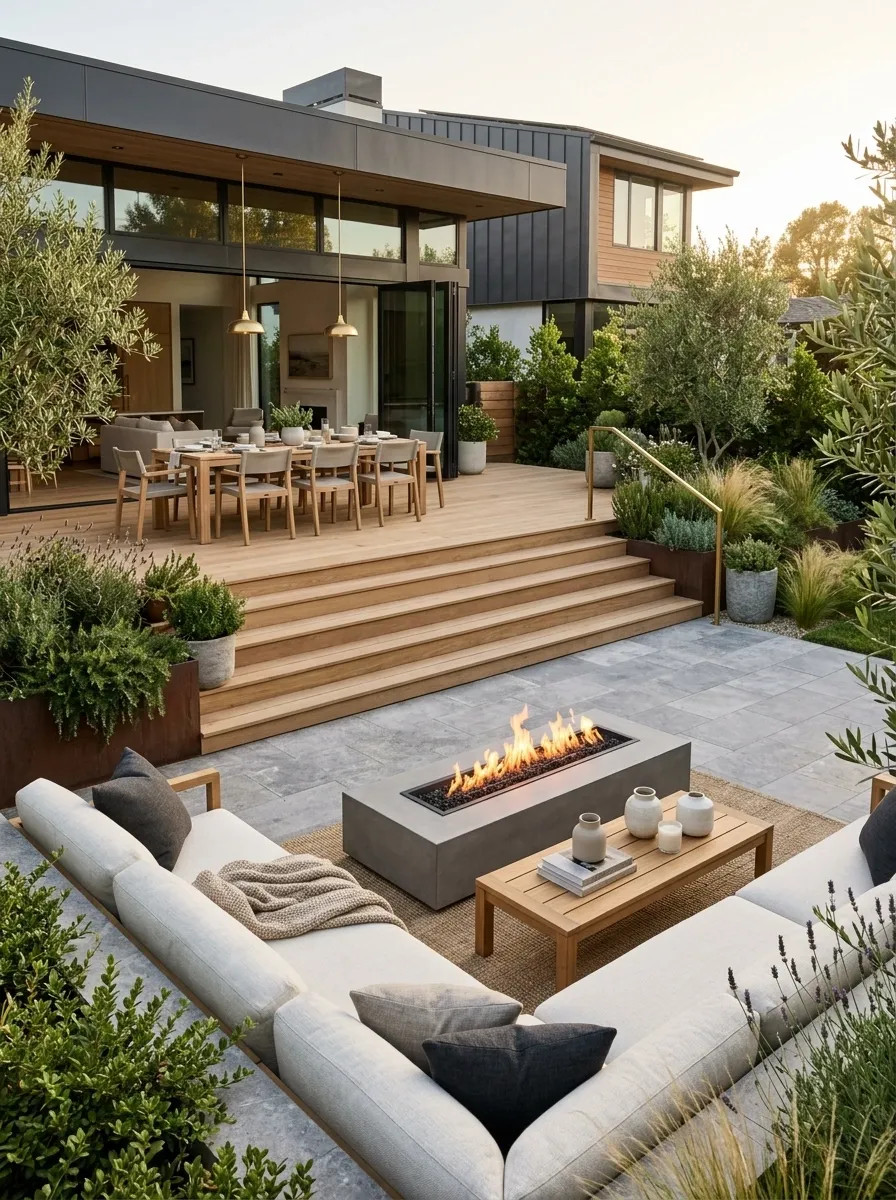
Two levels turn an ordinary backyard into a more layered outdoor room. A raised timber deck sits closest to the house, creating a natural place for dining or morning coffee, while a lower paved area extends into the garden for relaxed seating around a fire feature. Broad steps connect the levels and make the transition feel intentional rather than abrupt.
The change in height gives each zone a clear identity without requiring walls or screens. The materials should stay related, with warm timber above and similarly toned paving below. That visual connection prevents the patio from looking like two unrelated surfaces that happened to meet in the same yard. A clever level change does plenty of work on its own, so there is no need to decorate every stair like it’s auditioning for a magazine cover.
house connection
fire feature
Budget-Conscious Gravel Patio With Built-In Character
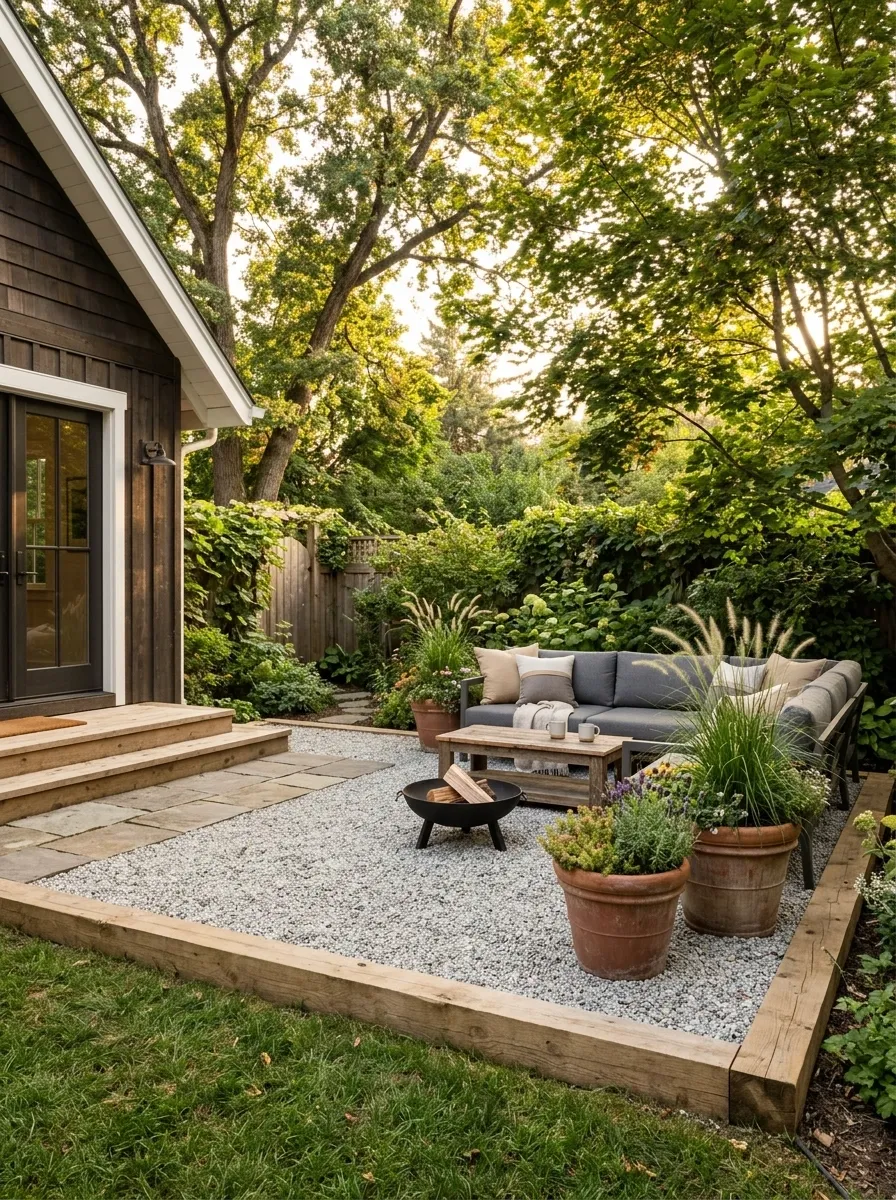
A simple gravel patio can feel considered rather than temporary when the surrounding composition is planned properly. Timber edging gives the gravel a crisp boundary, a compact paved area connects directly to the back door, and comfortable modular seating forms the main living zone. Large planters and a small fire bowl add weight without filling the floor with unnecessary objects.
The trick is contrast. Gravel supplies a loose, inexpensive-looking surface, so the furniture and planting need enough presence to anchor it. A few larger pieces work better than many small accessories. The patio should feel intentionally simple, not unfinished. There is a difference, and thankfully it doesn’t require a shopping cart full of decorative nonsense to prove it.
firm footing
main outdoor room
soft finish
Privacy-Focused Patio With Layered Screening
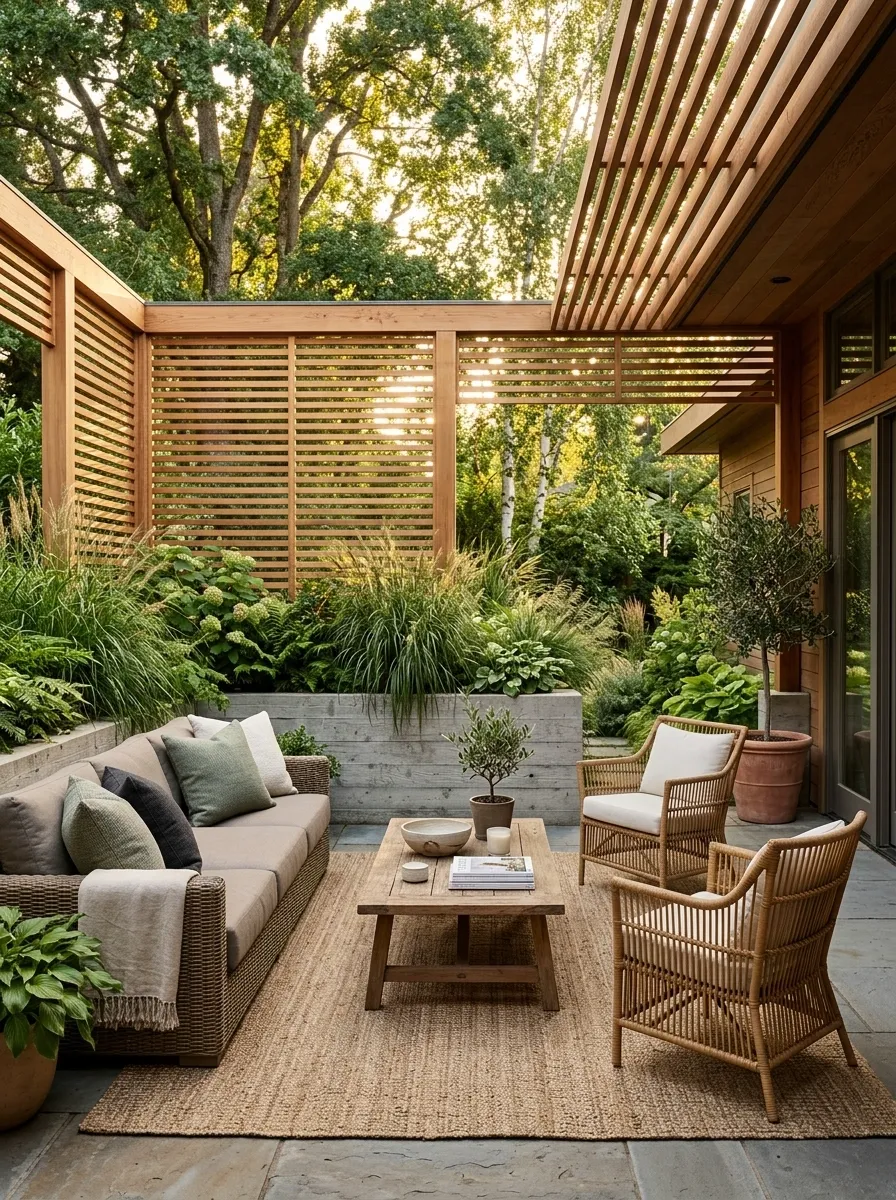
This patio is designed around seclusion without turning the backyard into a fortress. Slatted timber screening blocks direct views from neighboring spaces, while taller grasses and dense planting soften the edges. A low wall or built-in planter creates another visual layer, and the seating is positioned so the occupants face inward toward the garden rather than toward the surrounding fences.
The screens work because they aren’t all doing the same thing. Solid surfaces provide privacy, open slats filter views, and planting creates a softer final layer. That combination feels much less restrictive than one giant fence running around the entire space. Privacy should create a sense of calm, not make the patio look like it has entered witness protection.
blocks the strongest views.
filters without closing in.
softens the whole edge.
Greenhouse-Inspired Patio With Glass Doors and Garden Views
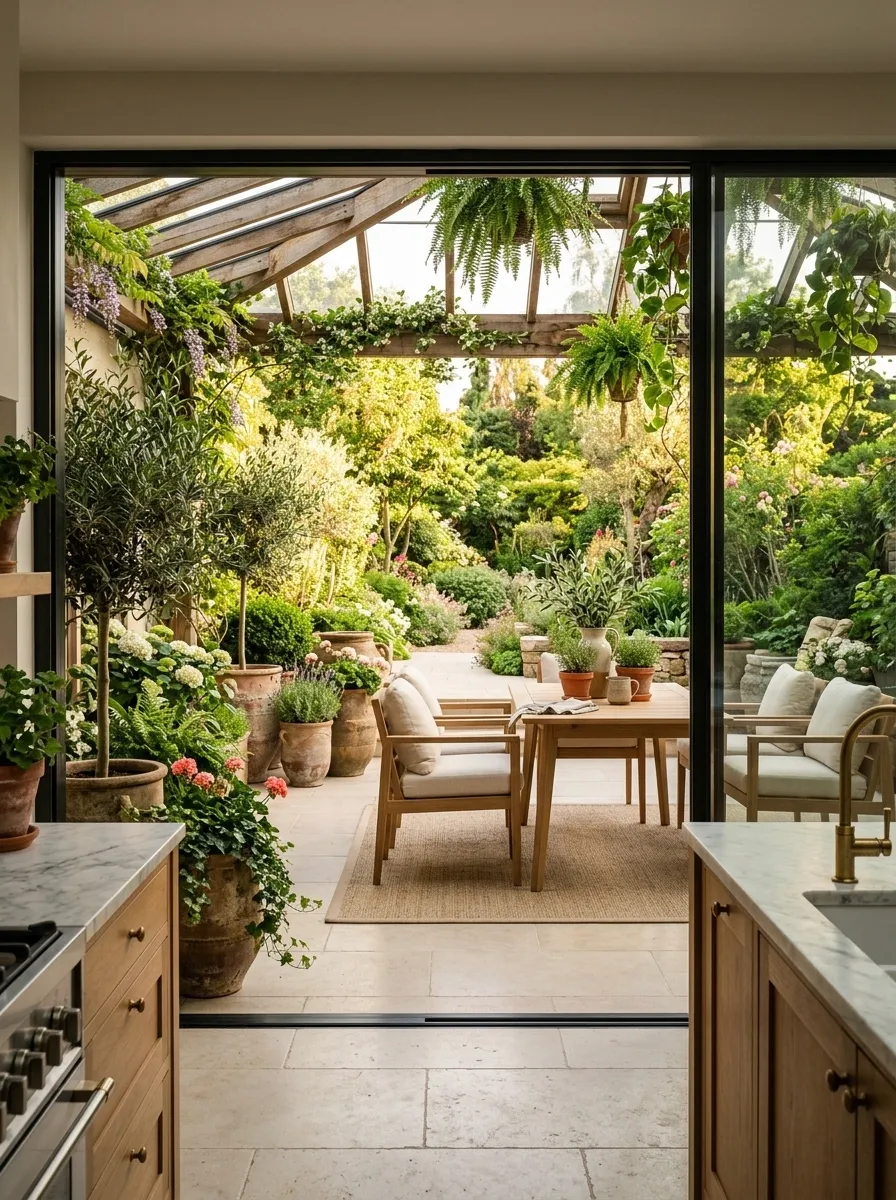
Broad glass doors make this patio feel less like an outdoor attachment and more like another room in the house. Pale paving continues directly from the interior threshold, while natural wood furniture, soft textiles, and potted herbs create a relaxed bridge between kitchen and garden. A small dining table sits close to the doors, with the outer edge of the patio opening toward a dense green view.
The sightline is the star here. Furniture stays low enough to preserve it, and the palette remains light so the garden becomes the richest visual layer. The patio doesn’t need a dramatic architectural trick because the connection between inside and outside is already doing the heavy lifting. Sometimes the best feature is simply letting the backyard be seen.
Urban Back Patio With Black Steel and Warm Wood
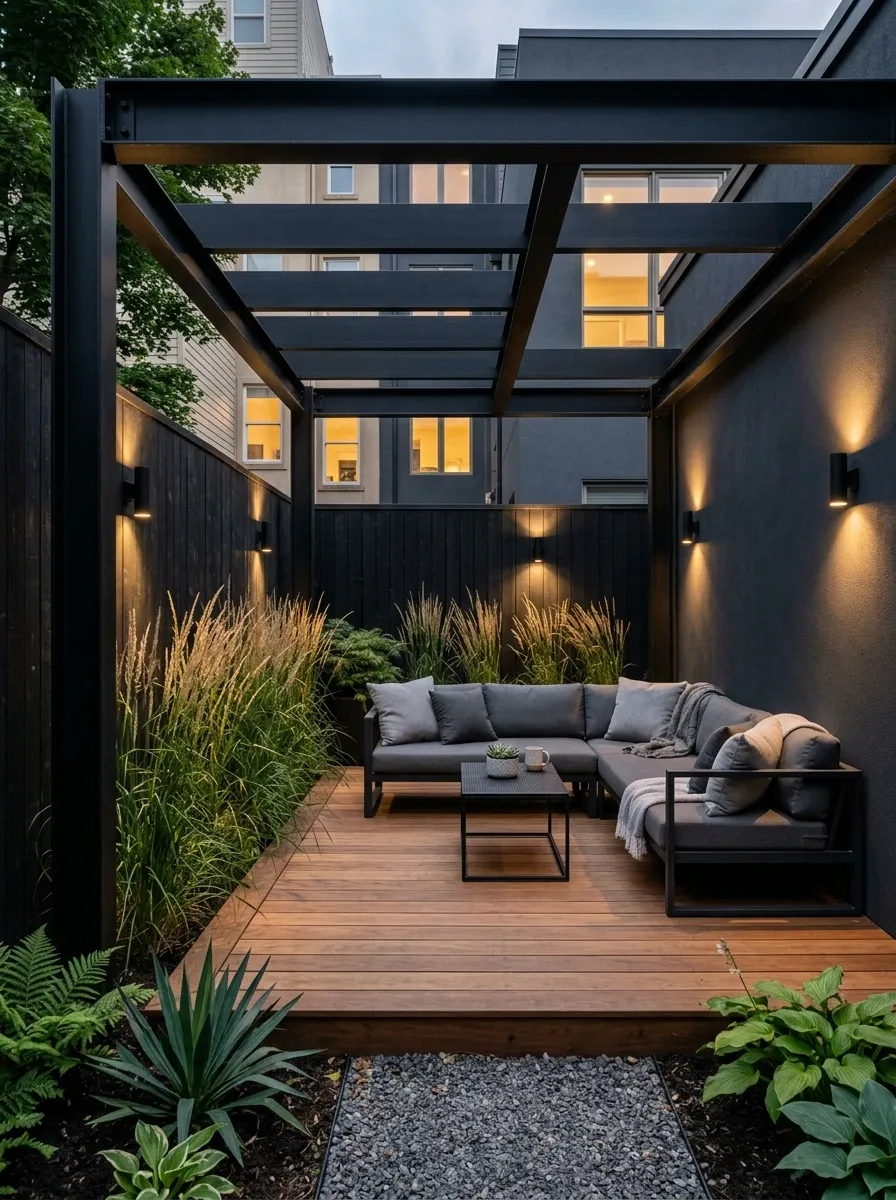
A compact city backyard gets a strong architectural identity from black steel framing, warm timber decking, and narrow planted borders. The seating is kept streamlined, with a simple outdoor sofa facing the garden and a small table that doesn’t interrupt the limited floor space. Architectural grasses rise beside the fencing, adding movement and softness against the dark structure.
The contrast between black and wood keeps the patio from feeling flat. The timber prevents the steel from becoming too severe, while greenery breaks up the darker surfaces. Wall-mounted lighting works especially well here because it saves floor space and keeps the composition clean. This is the sort of patio that proves a small yard doesn’t need twelve furniture pieces to look finished. It needs a coherent idea.
structure + framing
warmth + furniture
softness + movement
English Garden Patio With Soft Planting Around the Edges
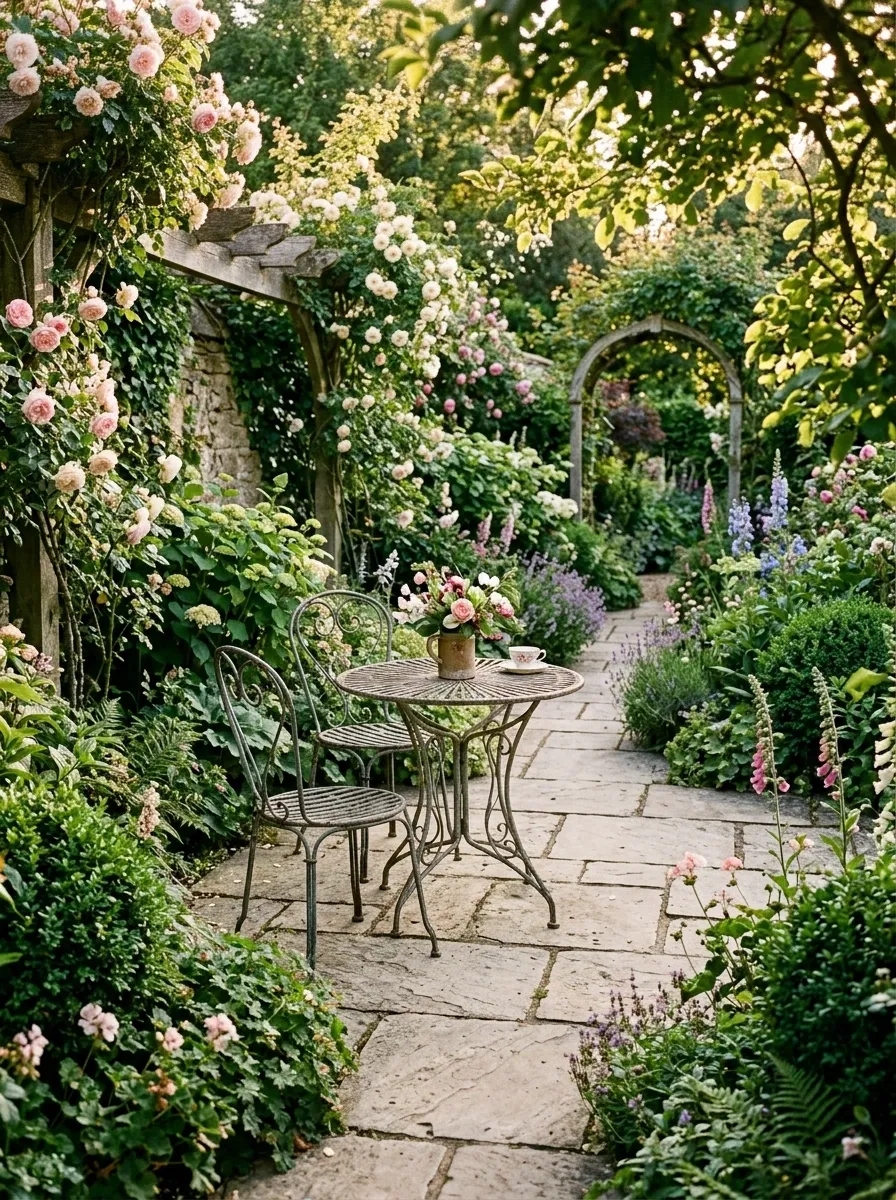
A softly structured English garden patio lets the hard surface sit comfortably inside a much looser planting scheme. Pale paving creates the central living area, surrounded by flowering borders, climbing roses, shrubs, and pockets of greenery that blur the edge between patio and garden. Traditional outdoor chairs and a small bistro table give the space an understated place to sit without competing with the planting.
The secret is in the transition. The center remains useful and relatively clear, while the perimeter gets progressively softer and fuller. That creates a sense of abundance without covering the patio itself in plants. It also gives the architecture somewhere to breathe. No need to turn every spare corner into a potting station because apparently the garden already knows what it’s doing.
Fire Pit Courtyard Patio With Built-In Seating
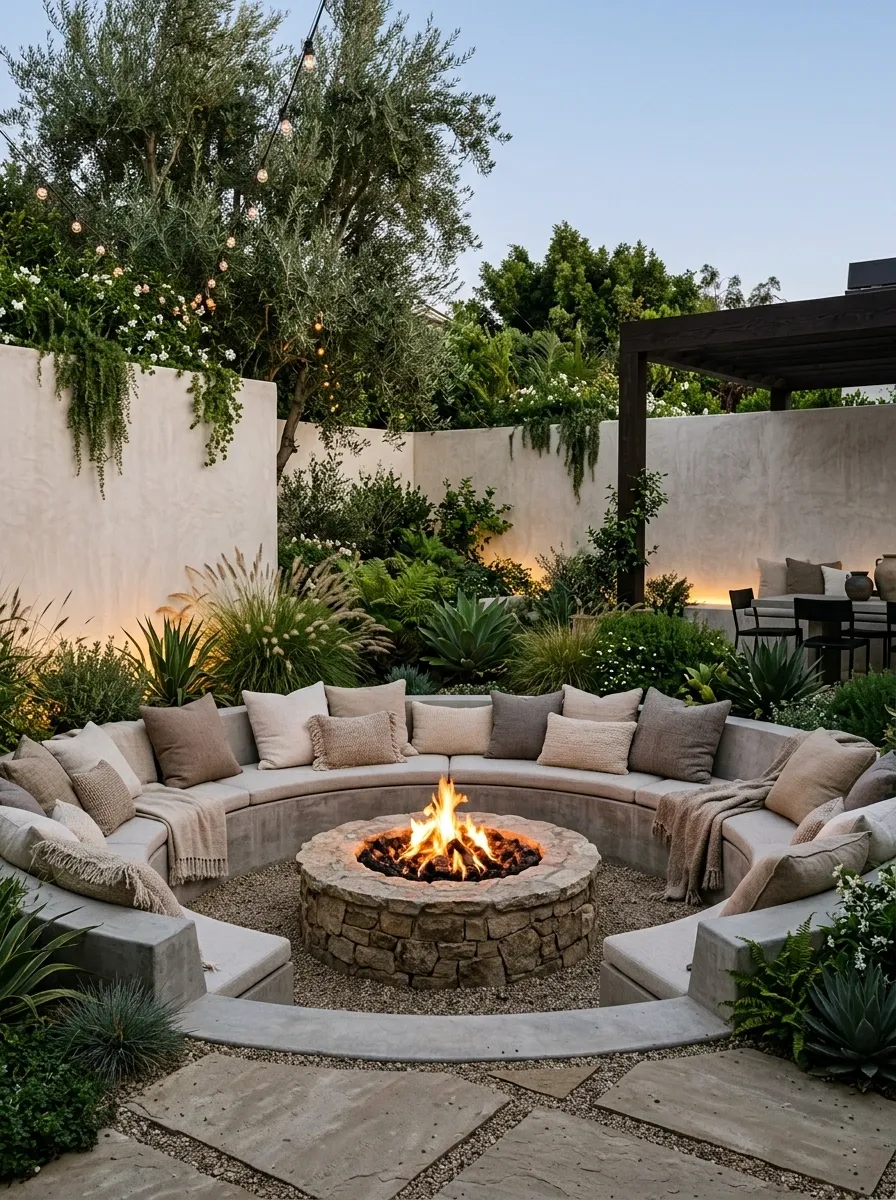
This courtyard-style patio puts the fire feature at the center of the composition, surrounded by low built-in seating that creates a natural conversation circle. Masonry walls or low rendered boundaries give the space architectural weight, while gravel joints and planted corners stop all that stone from feeling overly hard. Cushions in warm neutral tones bring softness directly into the seating.
The circular arrangement changes the way the patio is experienced. Instead of furniture pointing toward the yard, everything points inward, making the fire the social anchor. That works particularly well when the surrounding property isn’t the star of the show. The patio creates its own little world. Add warm lighting around the perimeter, not directly on top of the fire. The flames have already booked the spotlight.
Keep the surrounding circulation open so the seating feels social rather than cramped.
Modern Pergola Dining Patio With an Oversized Table
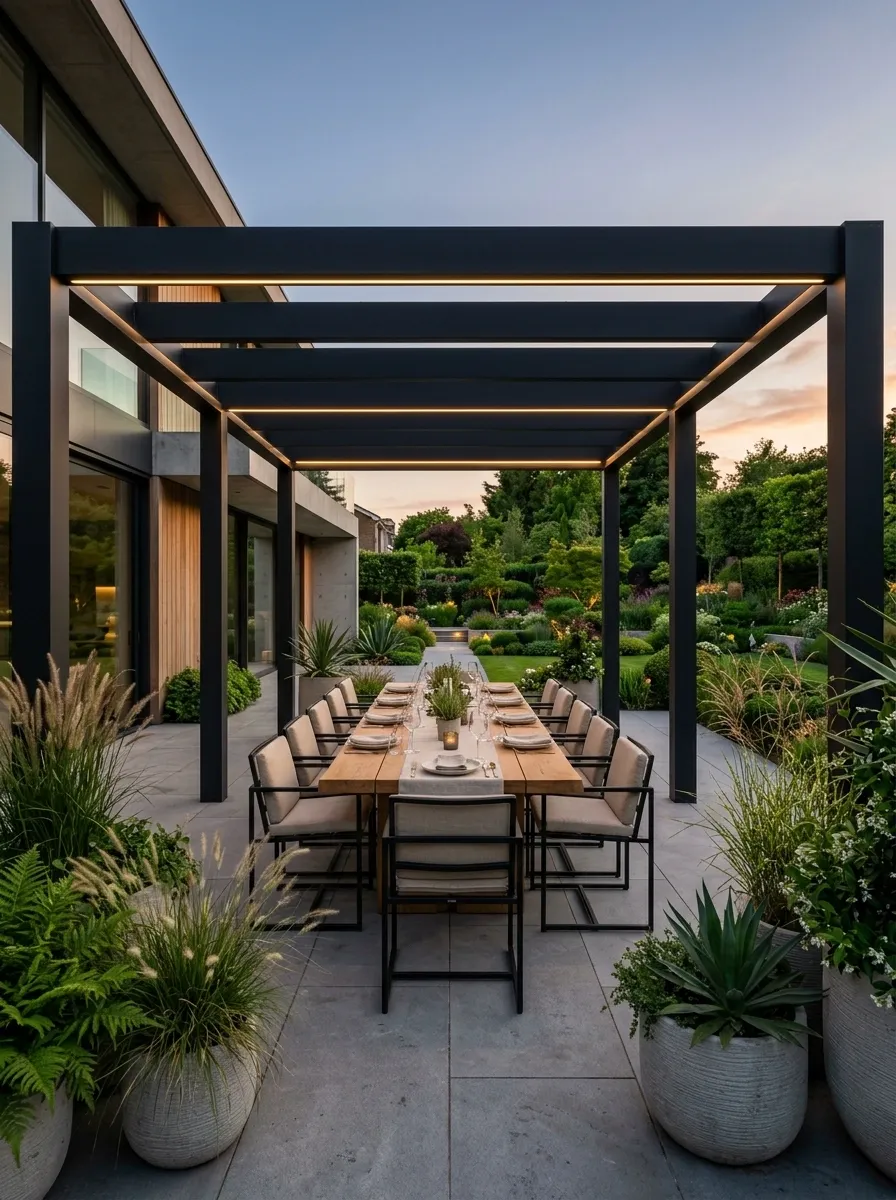
A strong timber or metal pergola frames this patio and gives a long dining table enough architectural presence to feel intentional. Large-format paving creates a clean floor beneath it, while sculptural planters sit near the outer corners and a clear sightline leads directly toward the garden. Integrated lighting follows the pergola structure rather than hanging random fixtures from every available beam.
Scale is what makes this composition work. A large pergola paired with a tiny table would look strangely underdressed, while oversized furniture in a small structure would feel cramped. Here, the table fills the middle comfortably and leaves enough room around it for chairs to move. The whole setting reads as one strong shape. That’s much more convincing than placing a dining set under a pergola and hoping architecture will happen by itself.
Bohemian Back Patio With Layered Textiles and Low Furniture
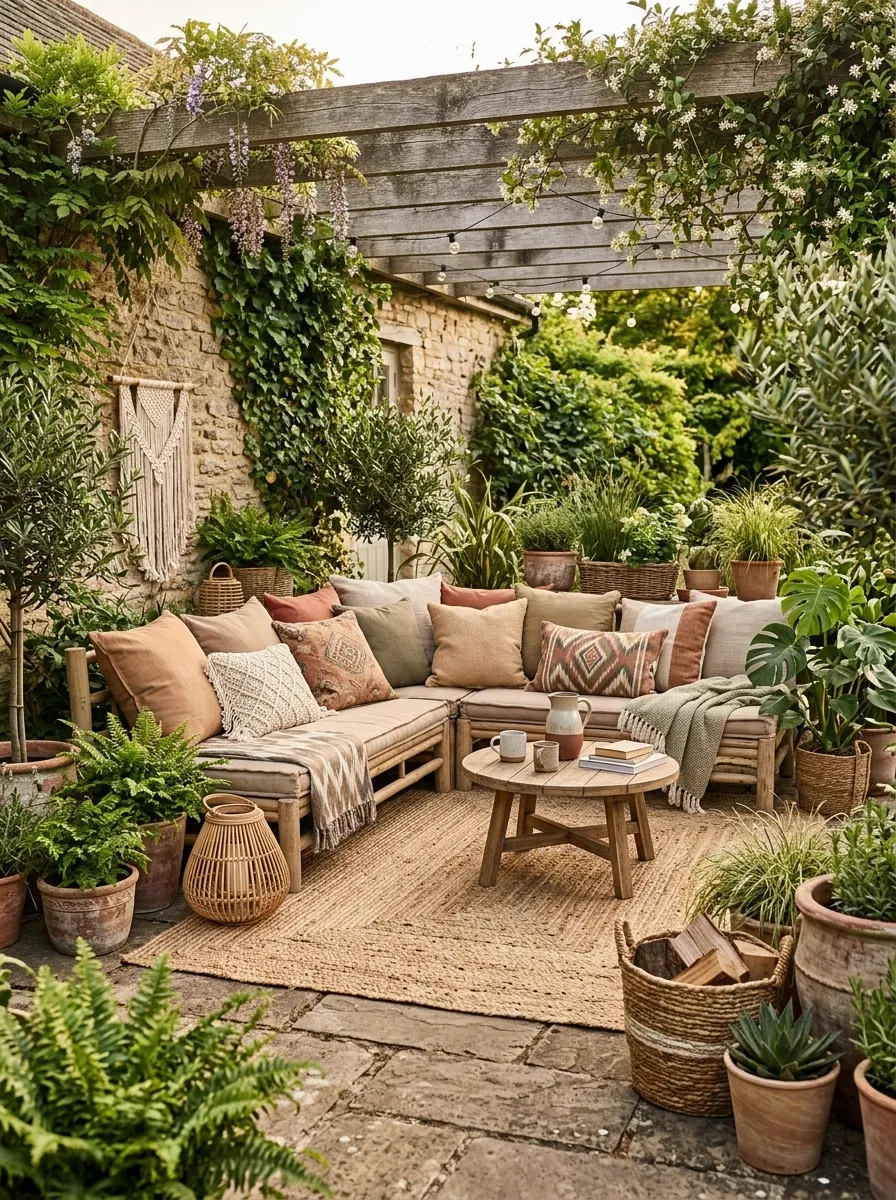
A relaxed bohemian patio builds its character through layers rather than one dramatic architectural gesture. Low-profile seating sits close to the ground, surrounded by patterned cushions, woven textures, terracotta pots, natural timber, and abundant greenery. A textured outdoor rug visually gathers the seating zone, while the rest of the patio remains open enough for easy movement.
The palette works best when the colors relate rather than compete. Warm clay, sand, muted olive, and small amounts of pattern create plenty of visual interest without turning the patio into a fabric department having a crisis. Keep the larger furniture shapes simple because the textiles already bring movement. The charm comes from the mix of textures and heights, not from adding something decorative to every visible surface.
furniture
cushions + rug
planting
pots + warmth
A finished patio doesn’t come from finding the “right” collection of accessories. It comes from making the big visual decisions agree with each other. The paving should make sense with the architecture. The furniture should fit the layout. The planting should support the mood instead of fighting it. Lighting should reinforce the composition once the sun goes down.
That is why a complete design direction is so much more useful than a shopping list. It gives the space a visual language before the individual pieces start showing up.
Choose the concept that fits the way the backyard is actually used, then pull the materials, colors, proportions, and layout from that direction. The result will look far more intentional than a patio assembled one random purchase at a time.
Save the designs that keep catching your eye, then come back to them when it’s time to plan the space.