
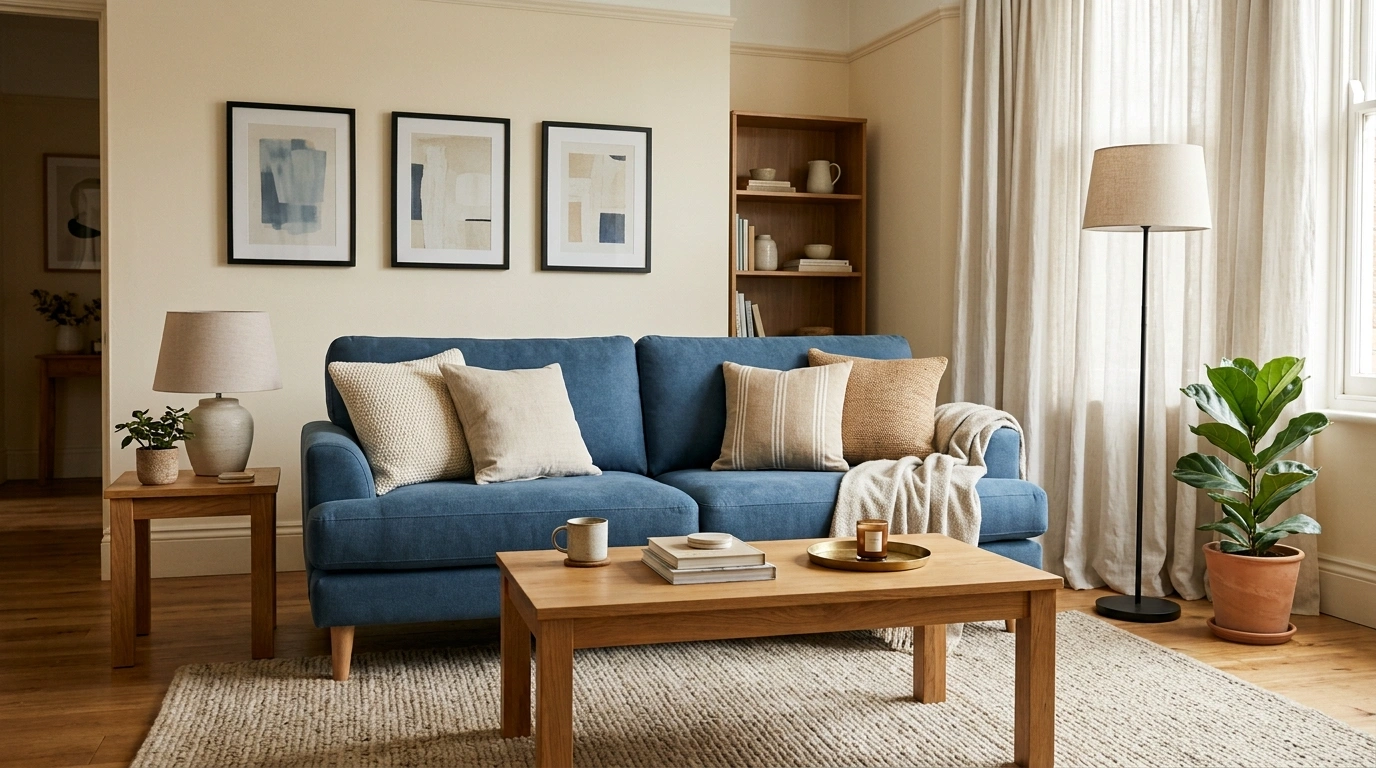
A blue couch can be the best thing in a living room or the one piece that makes everything else look slightly confused. The difference usually isn’t the sofa itself. It’s what surrounds it.
Blue has enough visual weight to become the focal point, but it also works across wildly different design directions.
It can feel tailored with walnut and brass, relaxed with cream and oak, dramatic against dark walls, or completely fresh beside earthy greens and terracotta. The trouble starts when the sofa gets treated like an isolated purchase instead of part of a finished room.
Blue Couch Living Room Ideas
Classic Blue Living Room
A deep blue sofa commands attention when placed against crisp white wainscoting and traditional picture frame molding. This layout anchors the seating arrangement with a rich wooden coffee table and frames the entire space using layered vintage rugs that soften the hardwood floors.
Gallery walls filled with botanical prints create a sense of heritage, while warm wood tones and cream textiles bridge the gap between traditional architecture and modern comfort. A tall fiddle leaf fig introduces organic height into the corner without blocking the natural light.
This is a masterclass in balanced layering. The key is letting the rich navy fabric take center stage while surrounding it with timeless elements that make the room feel curated over decades rather than assembled in a single weekend.
Small Apartment Living Room With a Compact Blue Sofa
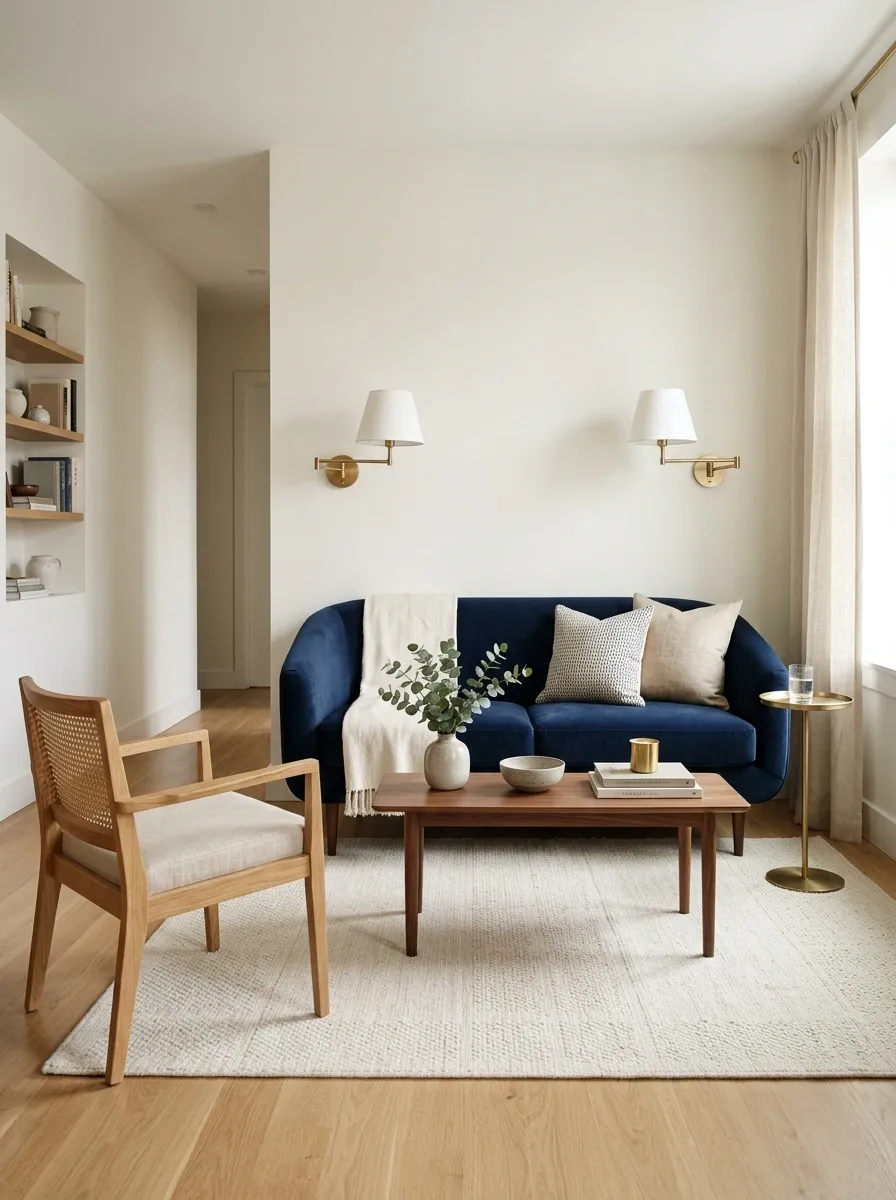
A compact blue sofa can give a small living room a strong identity without swallowing the available floor space. This layout keeps the sofa fairly streamlined, pairs it with an open-leg accent chair, and uses a narrow coffee table that leaves a clear path through the room. A pale rug visually expands the seating area without making the floor feel busy.
Wall-mounted lighting takes up less room than a bulky floor lamp, while a slim side table provides a landing spot without becoming another obstacle. The colors stay light around the sofa, giving the blue enough contrast to stand out.
The main lesson is brutally simple: small rooms need breathing space. Cramming full-size furniture into a tiny footprint doesn’t make the room richer. It makes everyone walk sideways.
Blue Sofa and Leather
Pairing a rich blue sofa with buttery cognac leather chairs changes the entire emotional temperature of a living room. This composition contrasts cool indigo tones with warm caramel seating, creating an effortless tension that feels both modern and deeply inviting.
A sleek dark wood coffee table and minimalist built-in shelving ground the space, while tall neutral curtains frame the windows to draw the eye upward. Textured ottomans tucked near the fireplace add functional extra seating without cluttering the main floor plan.
The secret here is material contrast. Mixing plush velvet or woven fabrics with smooth leather prevents the room from feeling one-note, giving every piece of furniture its own distinct moment in the spotlight.
Blue Velvet Sofa With Dramatic Stone and Brass
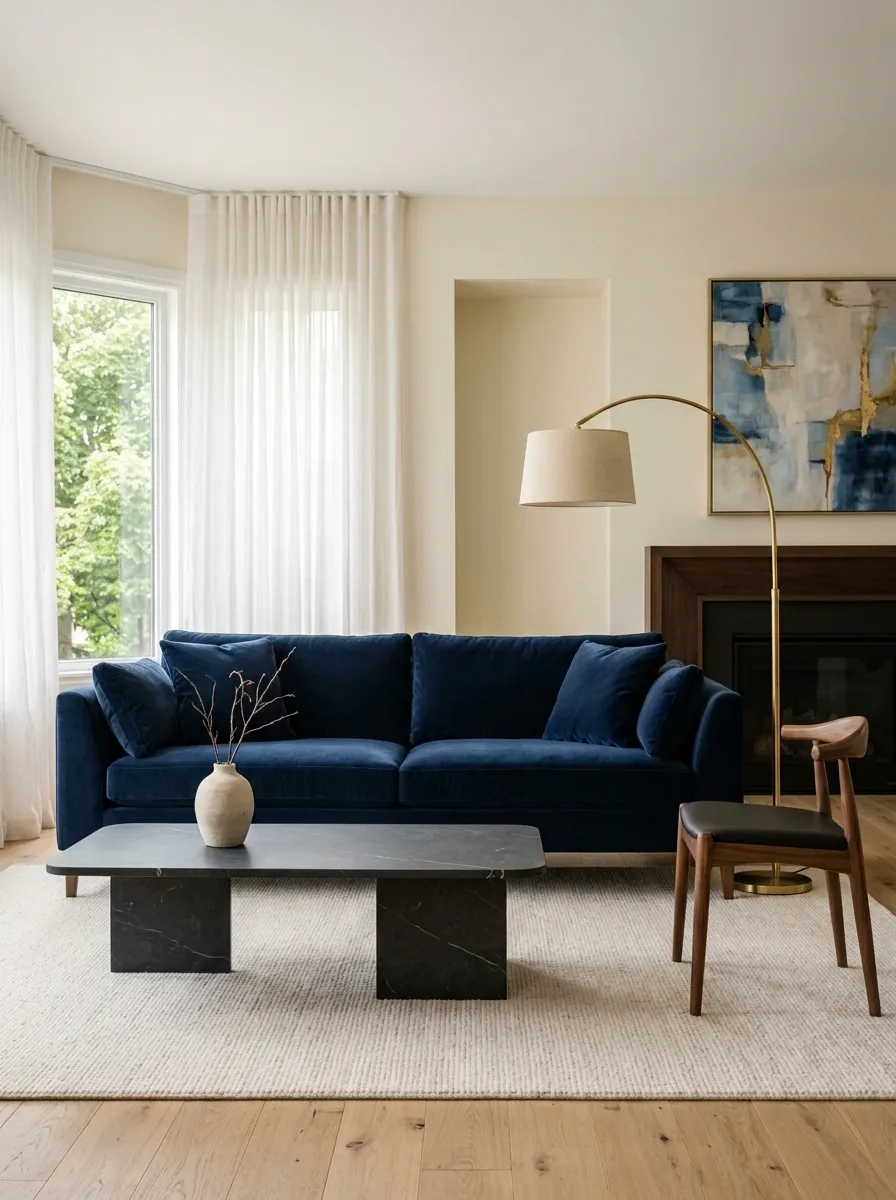
For a richer direction, deep blue velvet changes the room almost instantly. This composition combines the sofa with dark stone, warm brass lighting, creamy walls, and a pale textured rug. The contrast between plush fabric and harder surfaces gives the room a polished feel without requiring piles of decorative objects.
The brass is deliberately restrained. A sculptural floor lamp or a pair of small metallic accents is enough to catch the light. Meanwhile, the stone introduces veining and visual movement that keeps the darker palette from looking flat.
This is the kind of room where editing matters. The sofa already has texture, color, and shine. Adding ten glossy accessories would push the whole thing from refined to “someone discovered the home decor aisle five minutes ago.”
Monochrome Blue Sectional
A sprawling blue sectional dominates this space with effortless comfort, styled against rich blue walls and a stunning oversized mosaic mirror. The matching color palette creates a cocoon-like atmosphere that feels sophisticated rather than overwhelming.
White built-in bookshelves break up the saturated backdrop with crisp architectural lines, while a minimalist white coffee table keeps the center of the room light and open. Soft cream pillows and a textured throw blanket add subtle layers of contrast against the deep upholstery.
This design proves that embracing a monochromatic scheme can be remarkably effective. By playing with different textures and finishes within the same color family, the room gains immense depth without needing a single contrasting accent.
Soft Blue Sofa With Dark Green Built-Ins
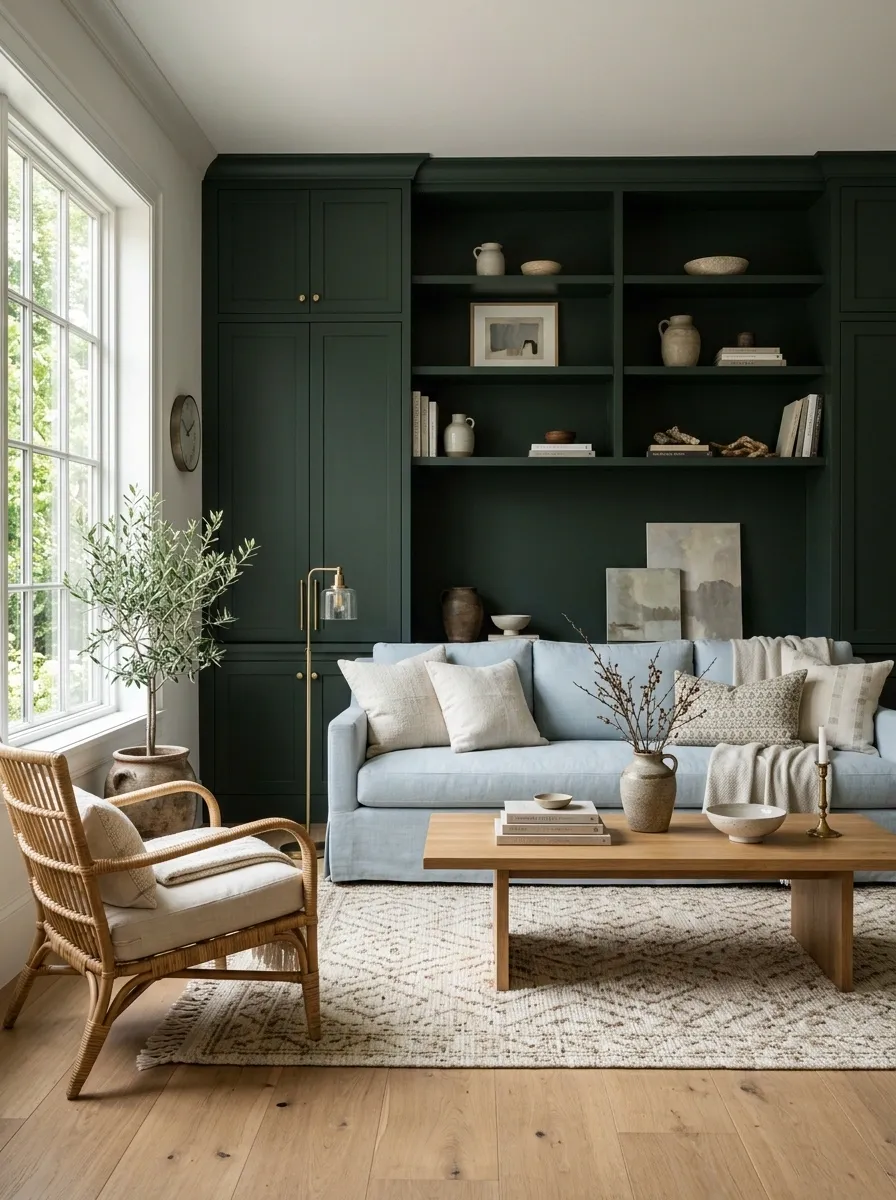
A pale blue sofa becomes far more interesting when it sits against deep green built-in shelving. The room uses the darker cabinetry as the architectural backdrop, then layers in the lighter sofa, warm oak, cream textiles, and muted artwork.
The contrast between blue and green is strong, but neither color is allowed to become cartoonishly bright. Their slightly softened tones make the room feel sophisticated and settled. Open shelving is styled lightly, leaving enough empty space for the cabinetry to read as architecture rather than a storage display having a nervous breakdown.
Warm wood is the bridge between the two colors. It keeps the composition grounded and prevents the blue and green from feeling like unrelated paint samples placed next to each other.
Modern Monochrome Blue
A streamlined blue velvet sofa takes center stage in this bright white room, flanked by black-framed artwork and minimalist floating shelves. The monochrome backdrop lets the rich texture of the blue couch pop without requiring competing colors or complicated patterns.
A round glass-topped coffee table keeps the sightlines entirely open, enhancing the airy feel of the room. A softly patterned vintage rug adds just enough organic movement to soften the crisp black-and-white framework.
The elegance of this setup lies entirely in its editing. Every piece has a clearly defined job, keeping the overall environment feeling serene, intentional, and entirely free of unnecessary clutter.
Blue Sofa With a Black-and-White Graphic Palette
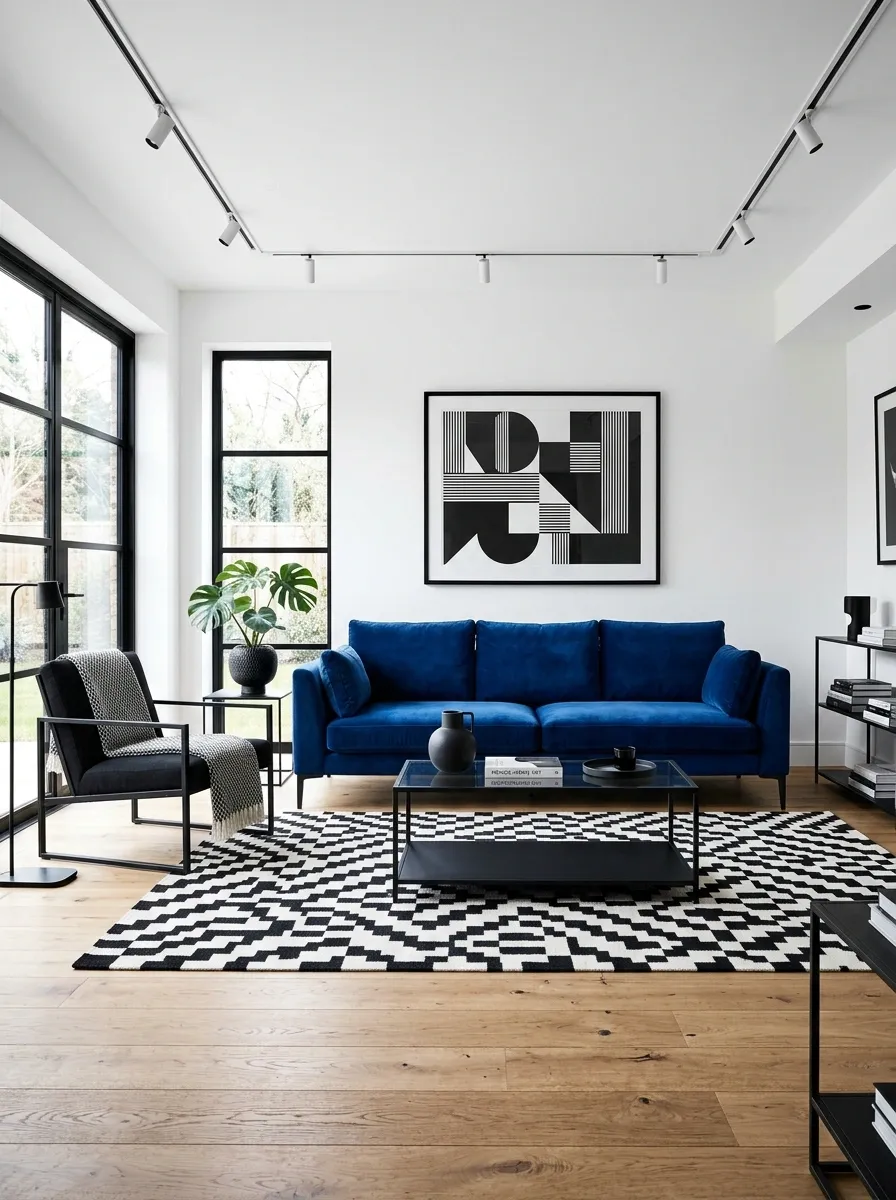
A blue couch can become the only major color in an otherwise monochrome living room. This version uses crisp white walls, black-framed furniture, graphic artwork, a patterned rug, and simple architectural lighting. The blue sofa breaks the black-and-white scheme without needing a dozen matching blue accessories.
That restraint gives the room a sharper contemporary character. The rug can carry geometry, while the artwork adds more graphic movement without introducing another major hue. Even the coffee table stays visually simple.
The composition works because the colors have clearly assigned roles. White opens the room. Black defines edges. Pattern adds movement. Blue provides the focal point. Throwing another accent color into the mix would probably just start an argument nobody asked for.
Spacious Blue Sectional
A generous navy blue sectional wraps around a rustic oak coffee table, creating an intimate conversation zone in an open-concept living area. The rich blue fabric anchors the room, while tall neutral curtains and traditional wainscoting elevate the architectural pedigree.
Warm wood tones from the coffee table and flooring prevent the deep blue from feeling cold or austere. Simple ceramic decor and a single green stem on the tabletop keep styling minimal and effective.
This arrangement is ideal for large spaces that risk feeling cavernous. A substantial sofa paired with grounding natural elements fills the footprint naturally, making the entire room feel cohesive and deliberately designed.
Earthy Blue Living Room With Olive and Clay
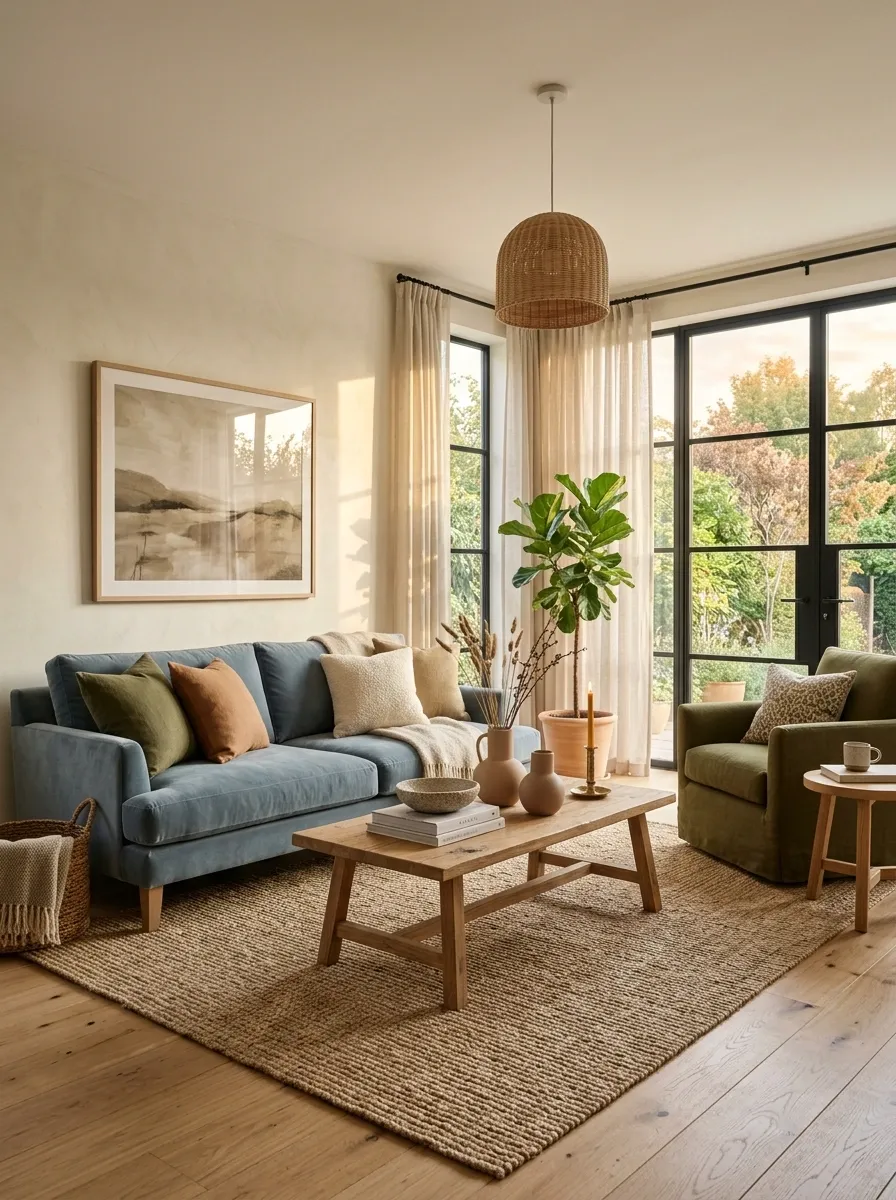
Blue gets an entirely different personality when it meets earthy colors. This living room combines a muted blue couch with olive green, clay-toned accents, warm oak, woven textures, and soft ivory walls. The result feels grounded without drifting into the usual blue-and-gray formula.
The trick is to keep all the colors slightly softened. A vivid electric blue beside a bright emerald and saturated orange would create a completely different room. Here, the dusty quality lets the colors sit together without constantly competing for the spotlight.
Oak adds another warm note, while woven furniture and textured textiles give the palette physical depth. This is especially effective in rooms with natural flooring because the existing wood tones become part of the color story rather than something that needs to be hidden.
Cozy Moody Blue Corner
A sculptural floor lamp casts a warm glow over a textured blue sofa, turning a simple corner into an inviting evening retreat. The dark paneled windows and floor-to-ceiling sheer curtains frame the urban view while keeping the focus firmly inside the room.
A minimalist marble-topped coffee table rests on a high-pile cream rug, introducing a luxurious play of soft and hard surfaces. An oversized abstract canvas leans against the wall, adding artistic weight without the need for complicated hardware.
This space succeeds by embracing intimacy. By keeping furniture low-profile and lighting focused, the room transforms into a sophisticated sanctuary that feels tailor-made for unwinding after a long day.
Bright Mid-Century Living Room With a Streamlined Blue Sofa
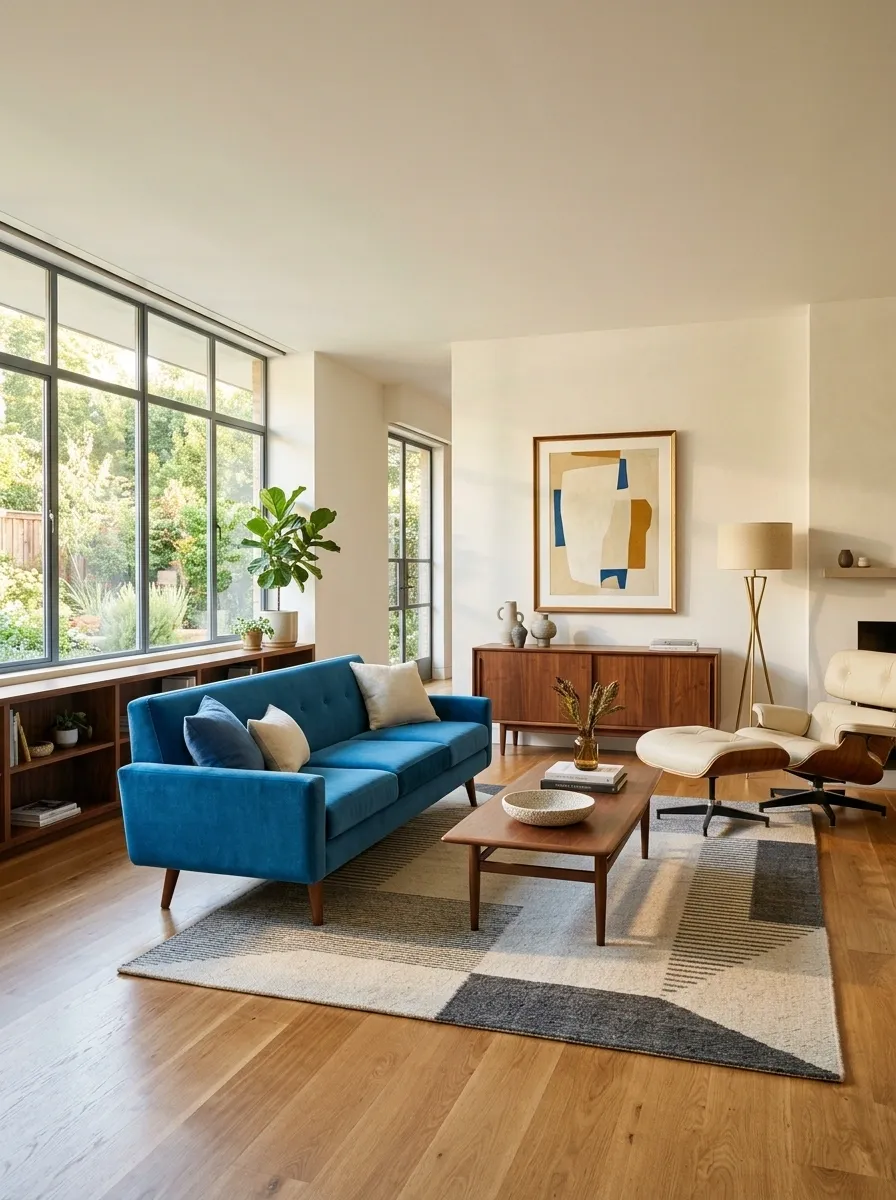
A streamlined blue sofa fits naturally into a mid-century room where the furniture stays low, the wood stays warm, and the shapes remain clean. This composition pairs the sofa with walnut tables, a low credenza, tapered furniture legs, warm white walls, and a restrained geometric rug.
The low furniture creates a strong horizontal line across the room, which makes the space feel calm even when the rug introduces pattern. Walnut keeps the blue from feeling too cool, while the cream walls give the darker upholstery plenty of room to breathe.
The best part is how little decoration the composition actually needs. A few sculptural objects and one or two framed pieces are enough. Once the furniture has good proportions, covering every available surface in accessories would just be decorative overemployment.
main horizontal anchor Walnut
warm visual weight Low profile
keeps sightlines open
Classic Navy and White
Deep navy sofas anchor this striking living room against dark blue walls, creating a dramatic yet timeless backdrop. Crisp white patterned accent pillows and matching armchairs break up the dark palette, keeping the overall vibe fresh and luminous.
A gray-striped area rug layered over a classic striped floor runner adds graphic interest underfoot, while the large landscape artwork ties the entire color story together. Fresh greenery in a blue-and-white porcelain vase brings organic life to the mantel.
This interior demonstrates the power of a coordinated color narrative. By repeating the deep navy and crisp white tones across furniture, textiles, and art, the entire space achieves a polished, designer-level finish.
U-Shaped Blue Sectional Around a Central Conversation Zone
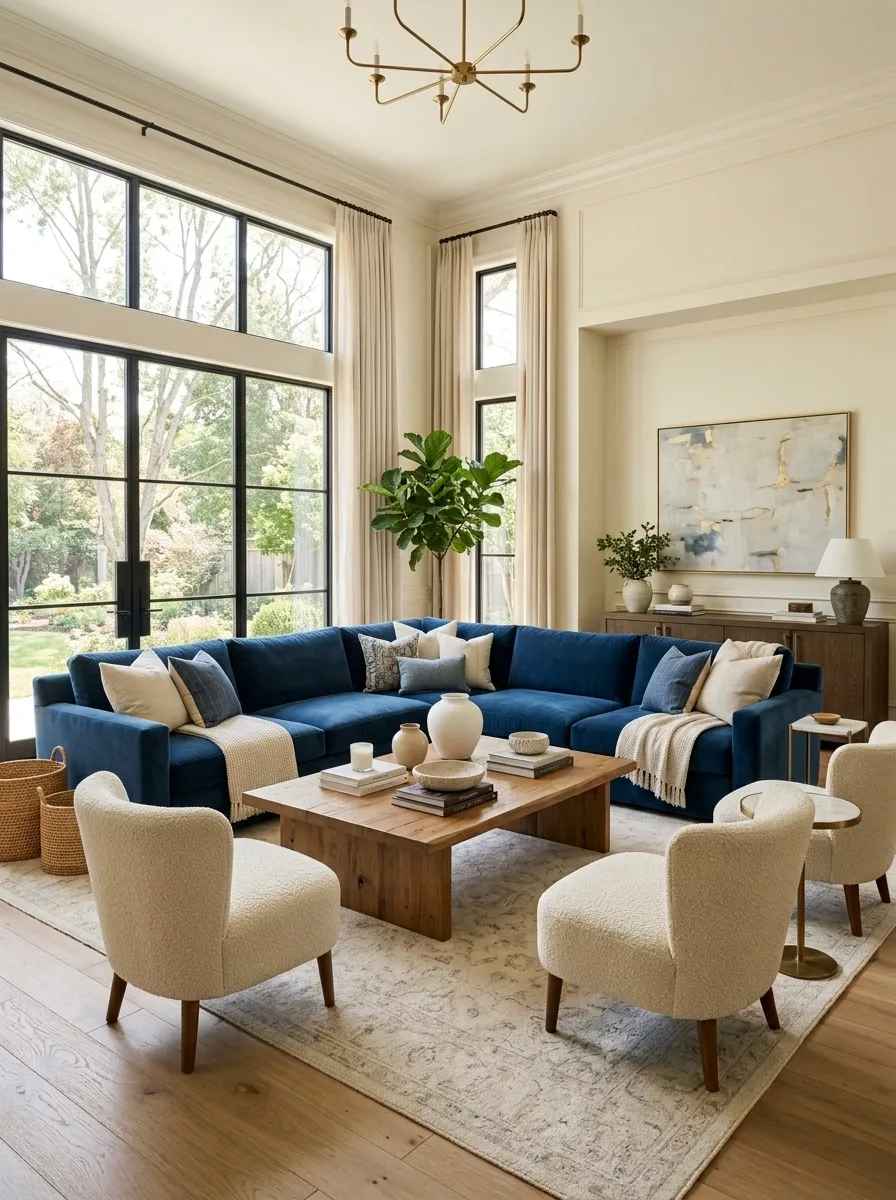
This living room is built for conversation rather than a straight line toward the television. A clearly U-shaped blue sectional wraps around a generous coffee table, with the open side facing the rest of the room. Two accent chairs complete the conversational arrangement without breaking the central focus.
A large rug pulls the entire seating group together, while warm wood and soft ivory textiles keep the substantial blue sectional from becoming visually overpowering. The room feels intentional because every seat points toward the same center.
This layout needs enough breathing room around the sectional. The whole idea falls apart when the sofa is shoved against every available wall and the coffee table is so close that reaching for a drink becomes a minor athletic event.
Blue Sofa With Exposed Brick and Black Steel
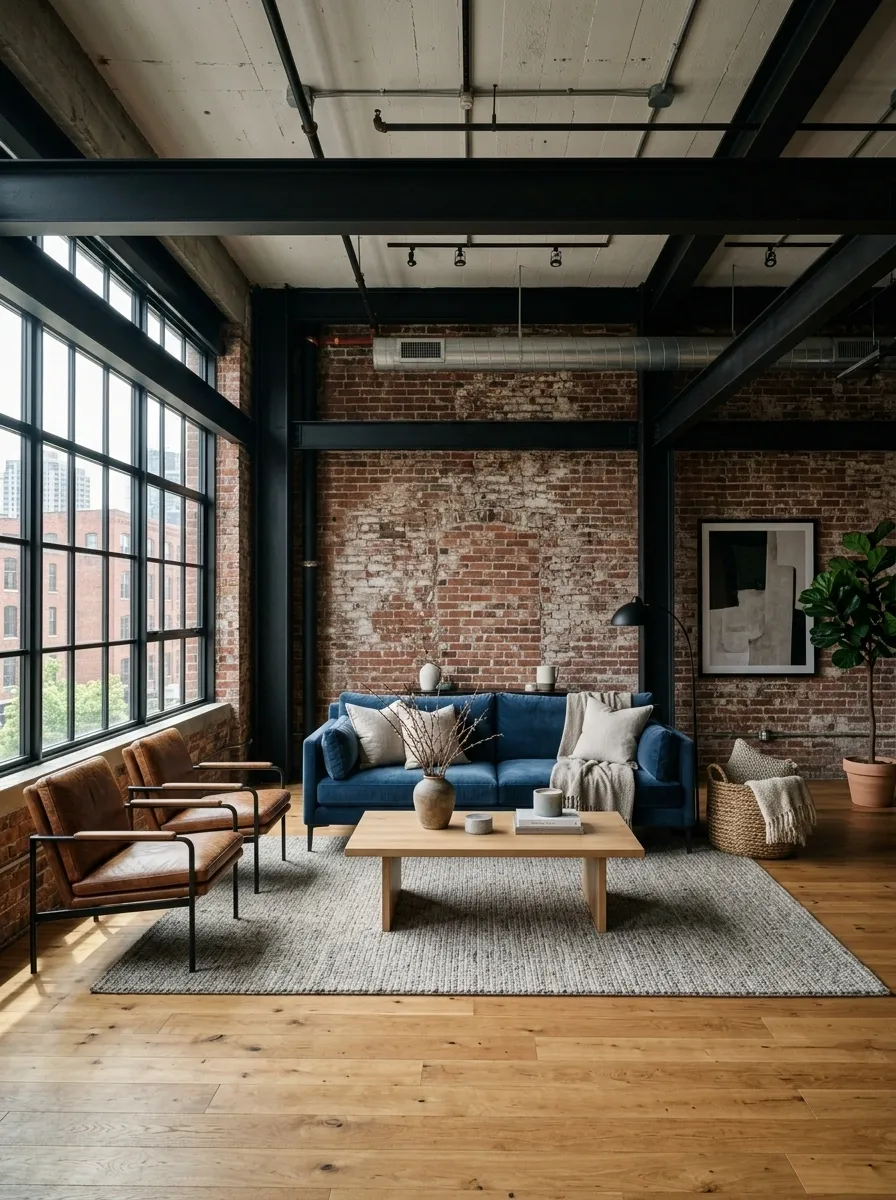
A blue sofa brings welcome color into an industrial living room dominated by exposed brick and black steel. The composition adds warm timber, a few cognac leather details, oversized windows, and simple lighting to soften the harder architectural materials.
The contrast is what gives this room its character. Brick is rough. Steel is sharp. Wood adds warmth. The sofa brings a smoother, richer surface into the mix. Because each major material has a different visual texture, the room doesn’t need excessive decoration to feel developed.
The furniture should remain fairly straightforward. Elaborate tables and ornate accessories would fight the industrial structure instead of supporting it. The blue sofa is already doing enough talking. Give it a microphone, not another six people shouting beside it.
Monochromatic Blue Living Room With Layered Shades
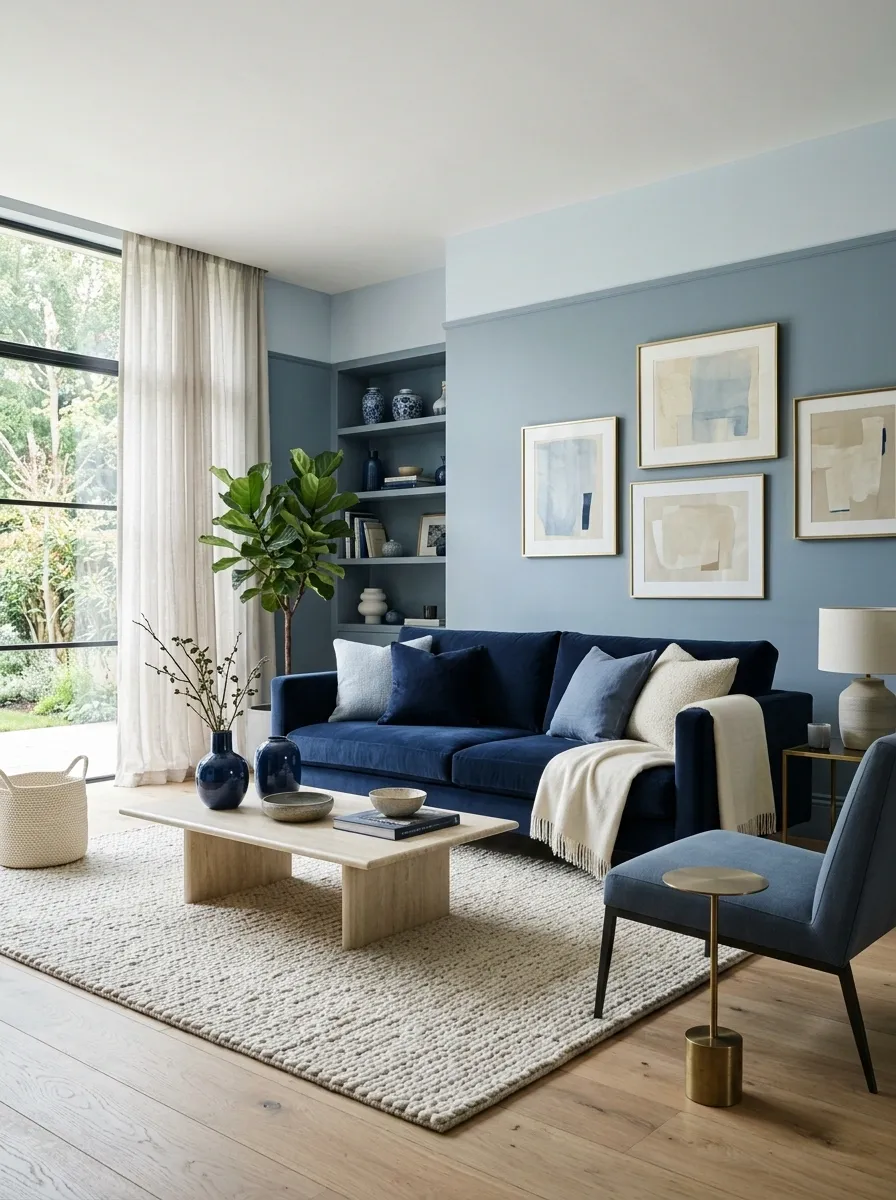
A monochromatic blue room can look remarkably sophisticated when the shades are allowed to move from deep to pale instead of staying at one exact color. A deeper blue sofa anchors the seating area, while dusty blue textiles, softer wall tones, pale artwork, and neutral flooring create gradual shifts around it.
Texture becomes especially important here. Velvet, linen, wool, painted surfaces, and smooth ceramic all reflect the same color family differently, which keeps the room from looking like someone ordered thirty gallons of the same paint.
The floor and a few ivory details provide just enough visual relief. Keep the blue shades related rather than identical. Matching every fabric exactly can make the room look less layered, not more.
Blue Sofa With Cream Boucle Chairs and Warm Oak
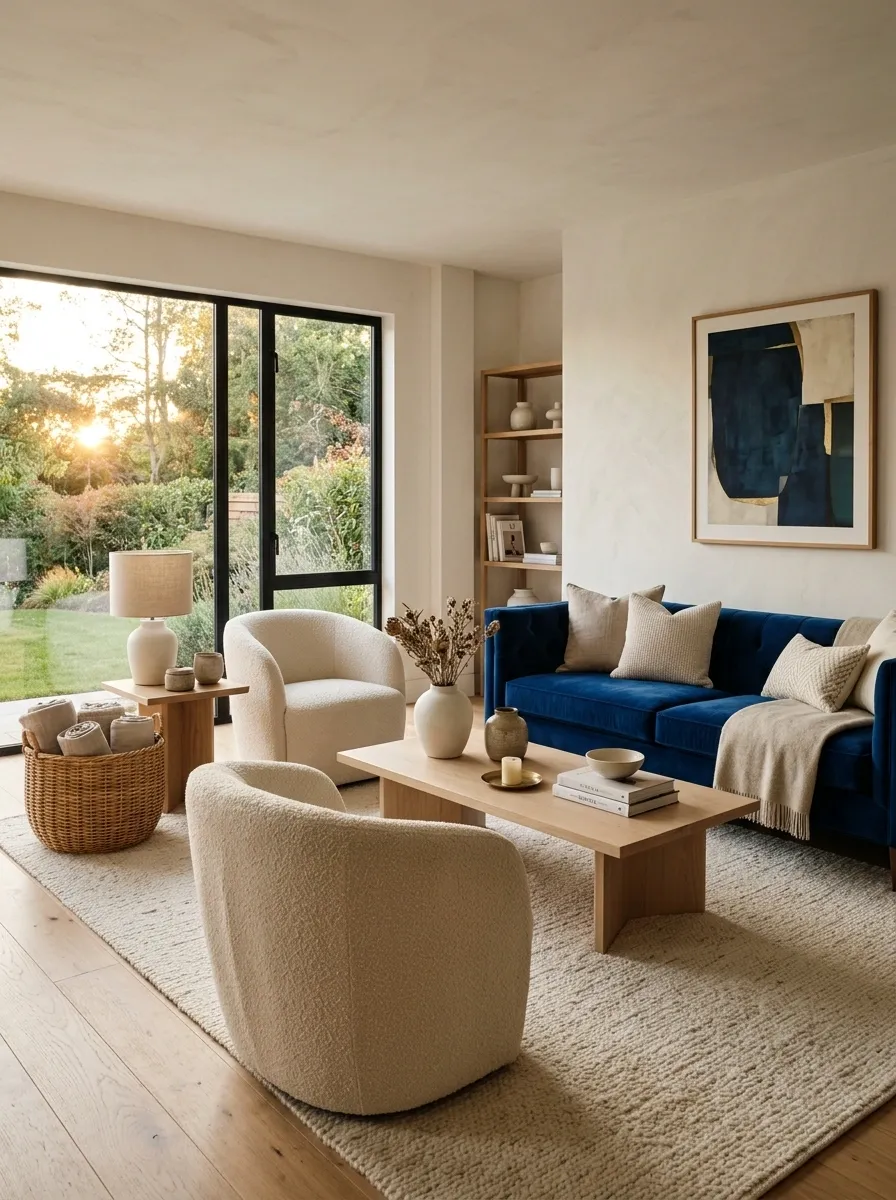
The contrast here is softer but still clear: a rich blue sofa sits opposite cream boucle chairs, surrounded by pale oak furniture, an ivory rug, and warm white walls. The room feels comfortable without becoming visually sleepy because the upholstery does more than one kind of work.
The blue supplies saturation. Boucle supplies texture. Oak supplies warmth. Ivory opens the whole composition. Those roles make the palette feel deliberate even though the colors themselves are fairly simple.
Rounded chair shapes and a generous rug soften the stronger sofa silhouette, giving the room a more relaxed contemporary feel. This is a good example of why a neutral room doesn’t have to mean a boring room. Sometimes the smartest color scheme is simply one strong note surrounded by really good materials.
Navy Sofa in a Formal Symmetrical Living Room
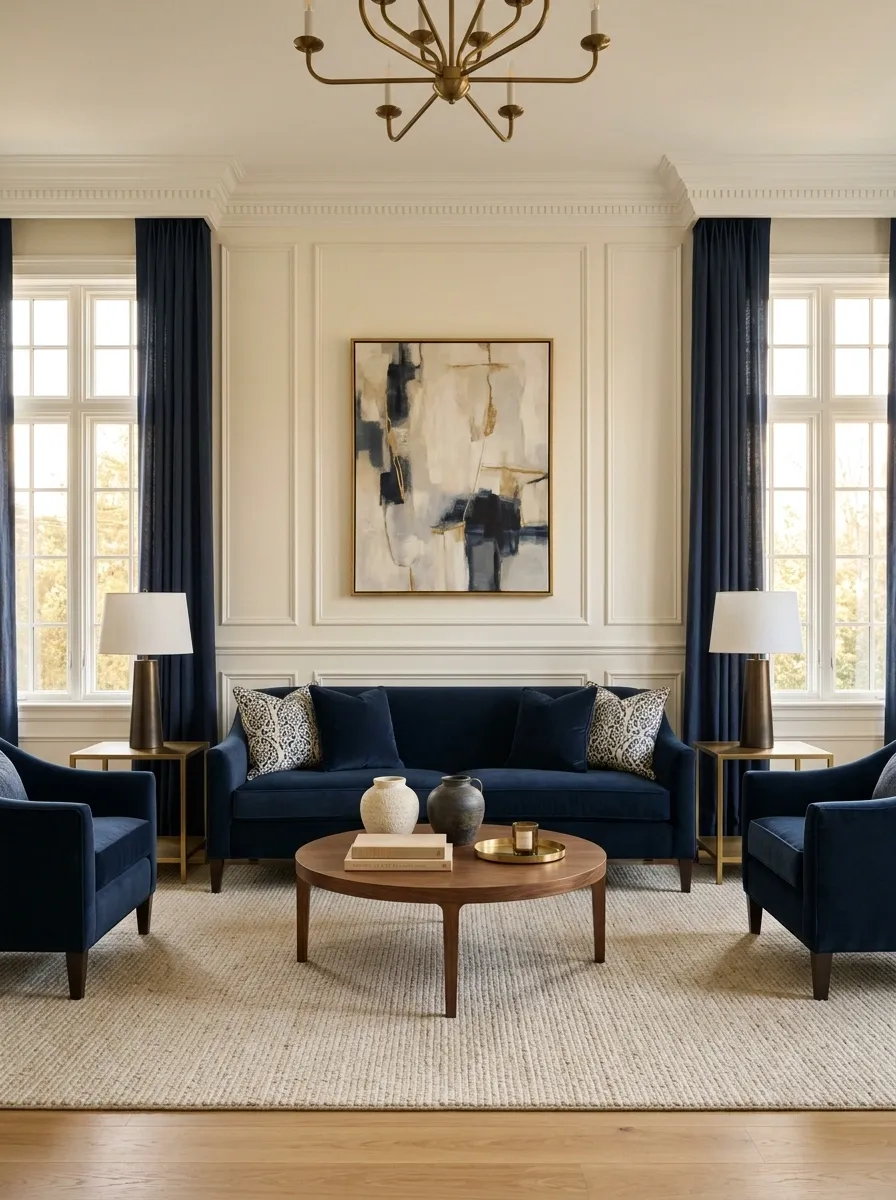
A navy sofa becomes especially composed when the rest of the room follows a clear symmetrical layout. Here, the sofa sits on the center line with matching armchairs, balanced lamps, a substantial area rug, and a central coffee table. Warm wood and architectural trim give the room enough structure to support the formal arrangement.
The symmetry keeps the visual field calm, while the navy upholstery gives the center of the room enough depth. Warm ivory textiles soften the darker furniture, and brass lighting introduces a small amount of contrast without stealing attention.
This setup works best when the room already has strong architectural balance. Don’t force symmetry into a room with awkward doors or uneven circulation just because matching lamps looked cute in someone else’s photo. The architecture gets a vote.
Blue Sofa Under a Gallery Wall of Abstract Art
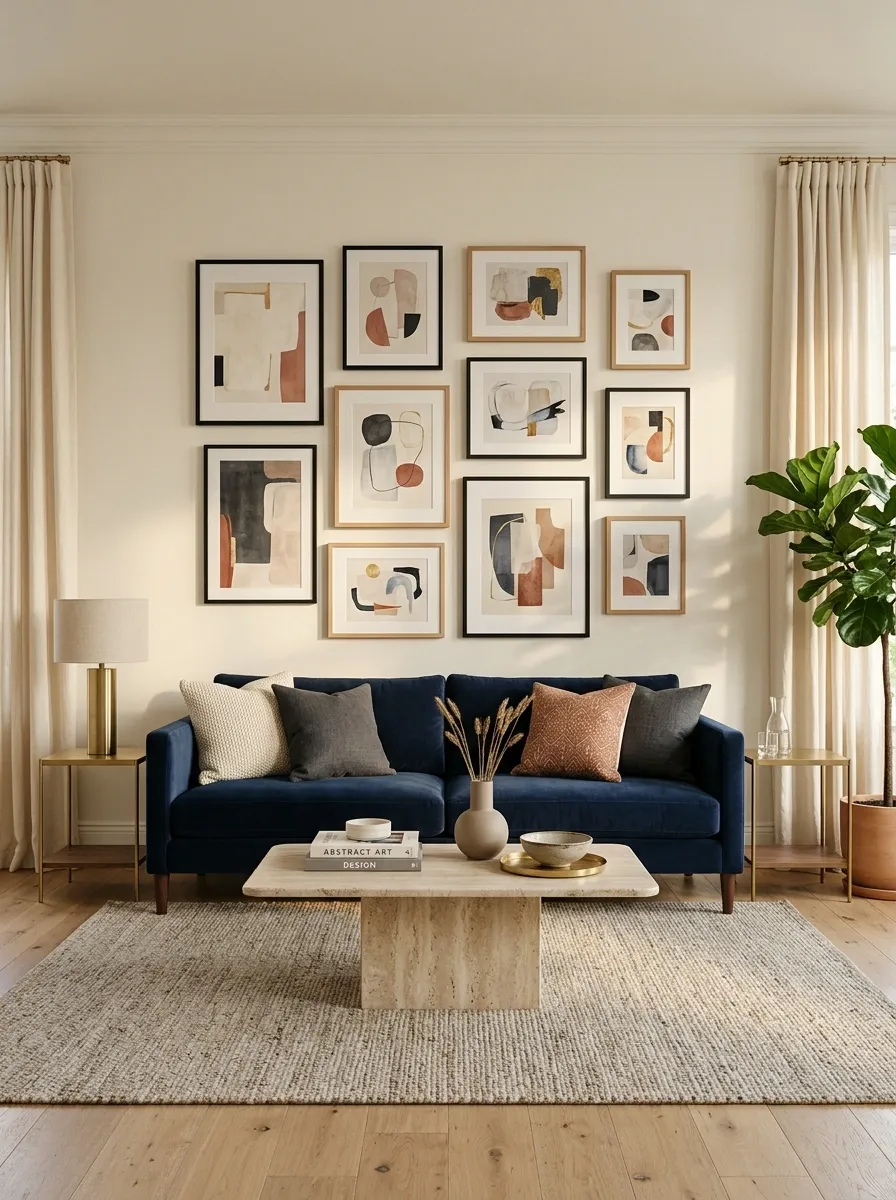
This room gives the wall behind the blue sofa just enough visual energy to feel creative without turning the seating area into an art storage problem. A series of abstract pieces sits above the sofa in a controlled arrangement, while the furniture below remains simple with a neutral rug, sculptural coffee table, and understated side tables.
The artwork can bring in cream, muted terracotta, charcoal, and touches of blue, creating a connection between the wall and sofa without making everything match. That little bit of repetition is enough.
The sofa also needs breathing room below the artwork. A gallery wall that runs too low will visually flatten the furniture, while one placed too high can make the wall and sofa look like they barely know each other.
Blue Couch With Rust, Brick Red, and Warm Wood
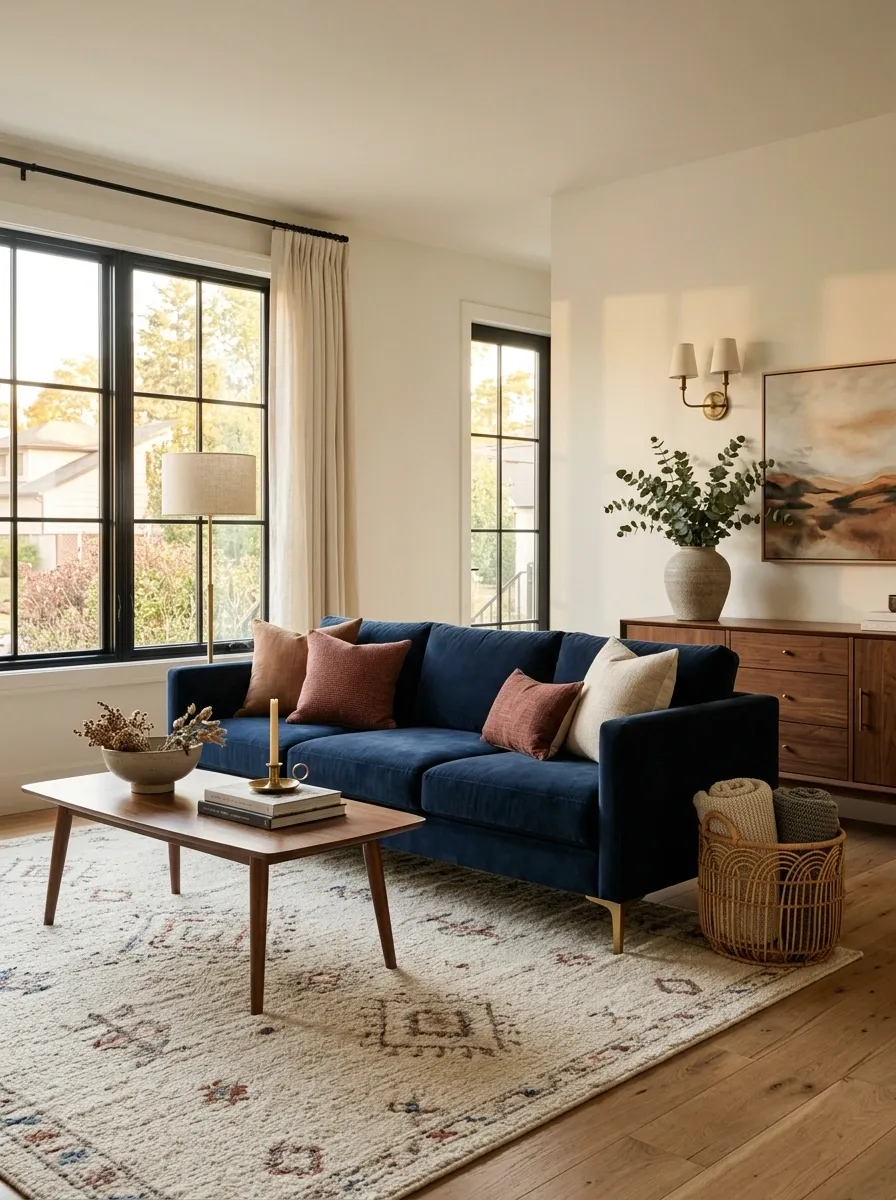
This living room turns the contrast up by pairing a deep blue sofa with rust, brick red, warm wood, cream textiles, and aged brass. The colors are rich but slightly muted, which keeps the room from becoming visually loud.
The blue establishes the cool side of the palette. Rust and brick red bring warmth, while wood sits between them and helps connect the two temperature families. Cream upholstery and a lighter rug prevent the darker colors from piling into one heavy mass.
Pattern should be used selectively here. A rug with several of the supporting tones can tie the room together, while smaller textiles repeat just enough color to keep everything connected. The point isn’t to make every pillow match. That’s how a living room starts looking like it came with a uniform.
Minimal Blue Sofa Living Room With Almost No Decor
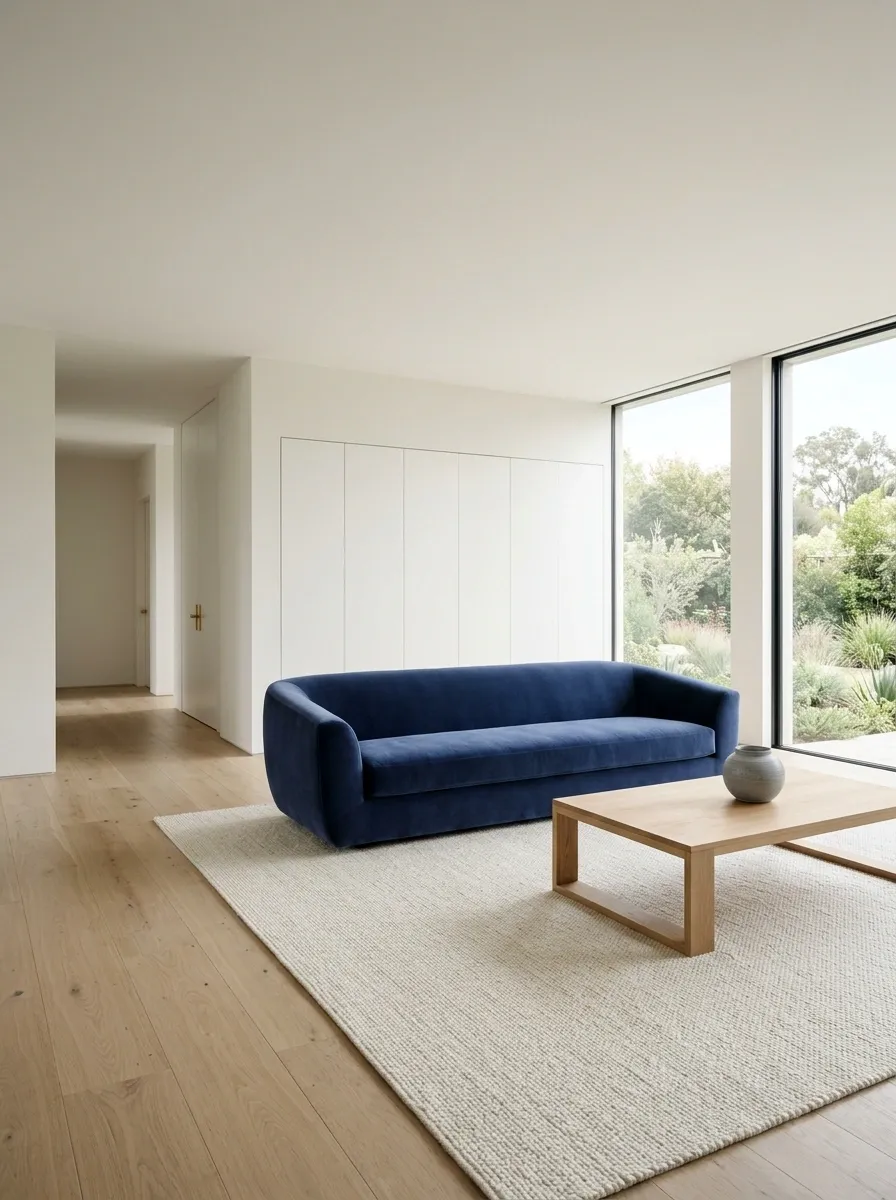
Sometimes the strongest blue couch living room is the one that stops adding things. This minimalist composition uses a sculptural blue sofa, pale walls, a large neutral rug, one low coffee table, concealed storage, and very little decoration. The architecture and furniture silhouettes become the visual focus.
Negative space does a surprising amount of work here. It lets the sofa breathe, keeps the room easy to read, and makes every remaining object feel intentional. Warm wood can introduce a little softness without disrupting the restrained palette.
The difficult part is resisting the urge to fill every empty surface. Empty space isn’t unfinished space. In this room, it is part of the design. Add too much and the entire concept collapses faster than a “minimalist” room after one trip to the home accessories aisle.
sofa, rug, table
everything else stays quiet
Curved Blue Sofa With Rounded Furniture
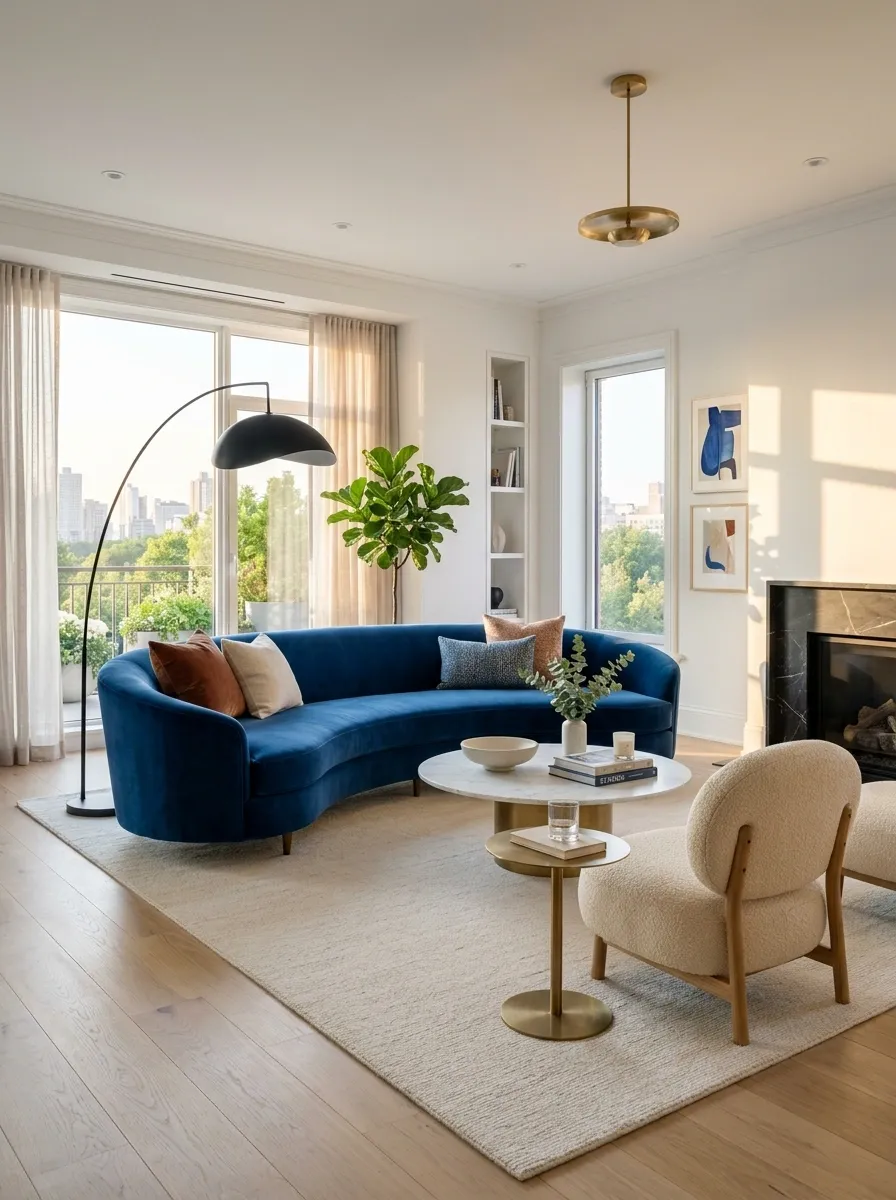
A curved blue sofa completely changes the rhythm of the usual rectangular living room. This composition uses a gently curved sofa with a round coffee table, rounded accent chair, circular side table, and sculptural lighting. The architecture can remain fairly simple because the furniture provides the movement.
The blue upholstery gives the curved silhouette enough presence without needing a busy wall treatment. Warm ivory and pale oak keep the room soft, while the rounded forms create a more relaxed visual flow from one piece to the next.
Straight architectural lines still matter. A rectangular rug or clean wall edge can give the room enough structure to prevent every surface from becoming a curve. Too many rounded pieces can make the space feel like furniture has collectively forgotten how corners work.
Making the Blue Sofa Feel Like Part of the Room
The strongest blue sofa rooms don’t try to make the sofa disappear. They give it a clear role.
Sometimes that means letting the sofa become the only saturated color against a quiet neutral background. Other rooms use the blue as one part of a richer palette with green, rust, wood, stone, or brass. The furniture arrangement matters just as much. A blue sofa placed into a thoughtful conversation layout feels completely different from the same sofa pushed against a wall with random furniture scattered around it.
Before changing accessories, look at the big relationships first: sofa scale, rug size, walking paths, wall color, lighting, and the visual weight of nearby furniture. Those choices determine whether the room feels cohesive long before the decorative objects get their turn.
And if the room already works, stop adding things. This may be the hardest decorating instruction of all.
Save the blue couch designs that match the way the room actually needs to function, then use those images as references when choosing furniture, colors, materials, and finishing details.