
A coffee maker sitting on an empty counter is useful, but useful is not always the same thing as good-looking. The awkward part of creating a farmhouse coffee bar is that the little corner can start feeling cluttered very quickly.
Add a shelf, a few mugs, a sign, a basket, maybe some wood, and suddenly the space looks less like a finished kitchen detail and more like every farmhouse decor trend from the last ten years got invited over.
The better approach is to design the whole scene at once. Cabinet color, countertop, shelving, backsplash, lighting, storage, and the actual coffee equipment should feel like they belong to the same room.
That does not mean everything has to match. It means every choice should support the finished composition.
Farmhouse Coffee Bar Ideas
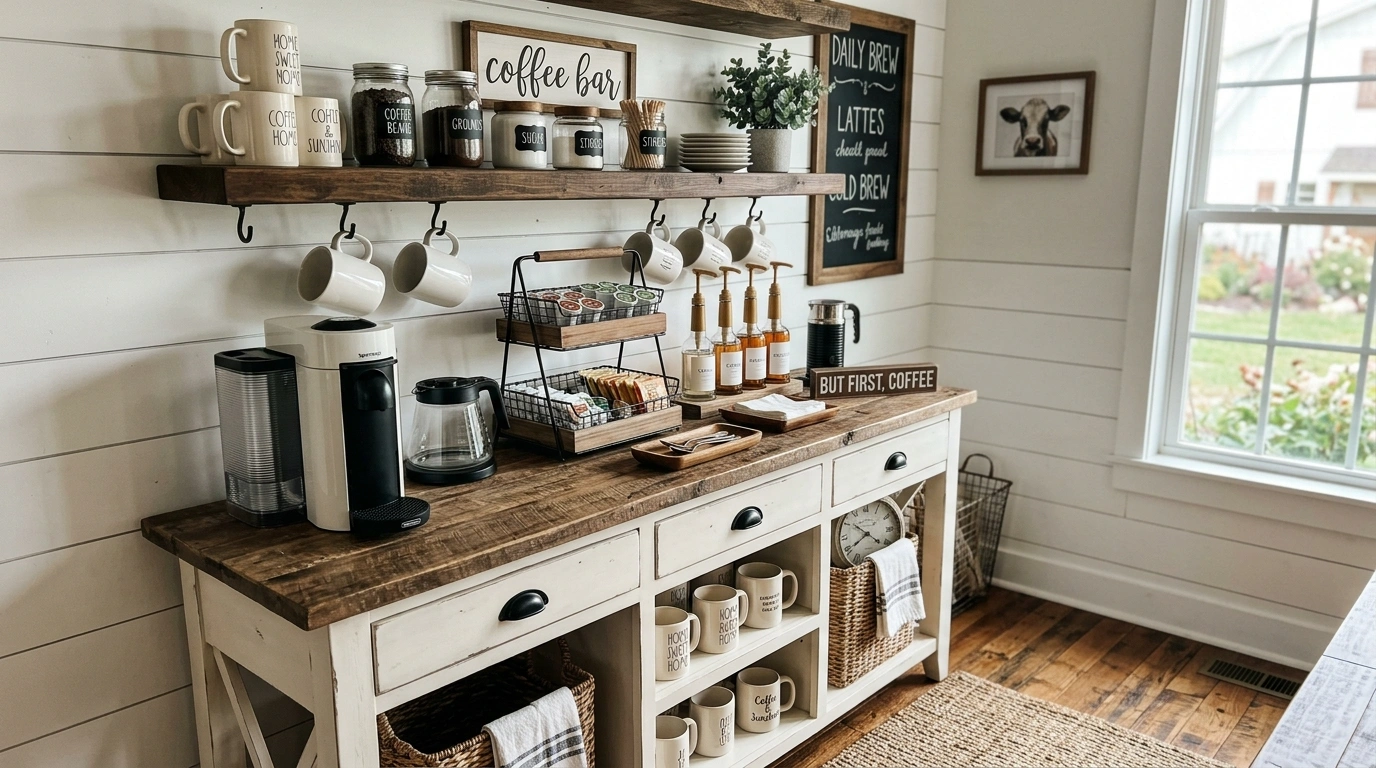
Cozy Farmhouse Coffee Bar with Open Shelving
This cozy farmhouse coffee bar leans heavily into the rustic charm of open shelving, utilizing every inch for maximum character. Thick wooden shelves anchor the station, holding an impressive collection of mugs, jars, and seasonal signage that captures an inviting, lived-in feel. Below, a rustic counter provides the perfect landing spot for the coffee maker and additional canisters.
The real secret here is the thoughtful layering of textures and vintage accents. Woven baskets neatly tuck away clutter on the lower tiers while keeping everyday essentials within arm’s reach. A soft neutral backdrop ensures that the charming displays remain the undisputed star of the corner.
Ultimately, this setup proves that personality and practicality can coexist beautifully in a small footprint. Just remember to mix in a few empty spaces among your favorite mugs so the display doesn’t start feeling crowded. It is a warm, welcoming touch that turns a simple morning routine into a daily ritual.
White Shaker Coffee Bar With Reclaimed Oak Shelves
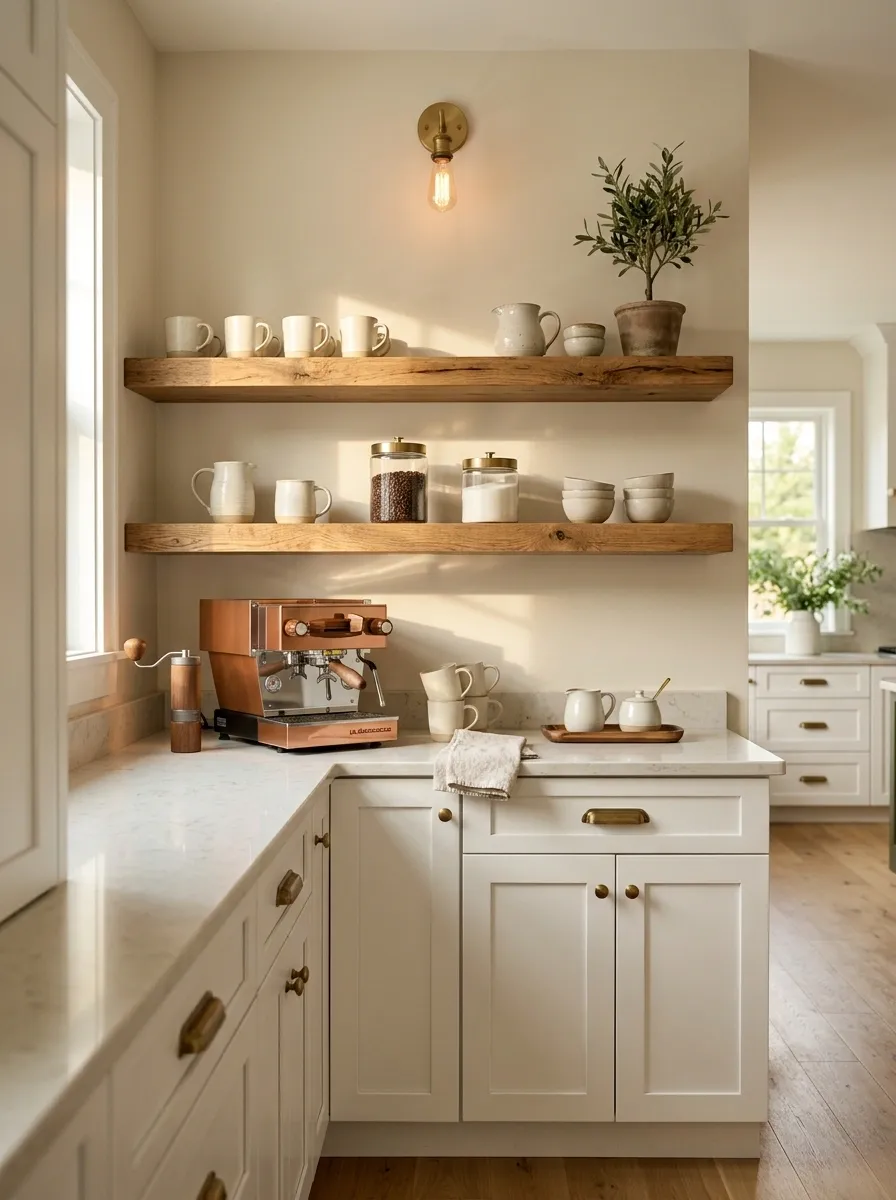
This is the farmhouse coffee bar that gets the basic formula right without looking overly themed. Crisp white Shaker cabinetry creates a clean base, while thick reclaimed oak shelves bring in the rougher texture the space needs. A pale countertop keeps the lower half bright, and aged brass hardware adds just enough warmth.
The important part is the balance. The shelving should hold a small mix of mugs, jars, and serving pieces, with plenty of empty wall showing through. That negative space keeps the design from drifting into “every shelf must be decorated” territory. A simple wall sconce above the counter gives the whole station a finished architectural feel.
Autumn-Inspired Farmhouse Coffee Nook
Fall has officially taken over this stunning farmhouse coffee bar, and honestly, we are not mad about it. Warm wood countertops provide a rich foundation for a sleek espresso machine, while surrounding autumn foliage and miniature pumpkins bring instant seasonal warmth to the entire kitchen corner. Glass jars filled with coffee beans and sweet treats complete the harvest-ready vibe.
The key to pulling off this look without turning your kitchen into a craft store aisle is restraint in color palette. Sticking to earthy tones, amber glassware, and natural wood textures keeps the seasonal decor feeling elevated rather than tacky. A charming vintage sign above the setup anchors the space nicely.
Whether you are sipping a pumpkin spice latte or a simple black roast, this cozy coffee station makes the whole room feel like a permanent autumn retreat. It is proof that thoughtful seasonal styling can make even the most modern appliance look right at home in a rustic setting.
Warm Wood Coffee Bar With Cream Subway Tile
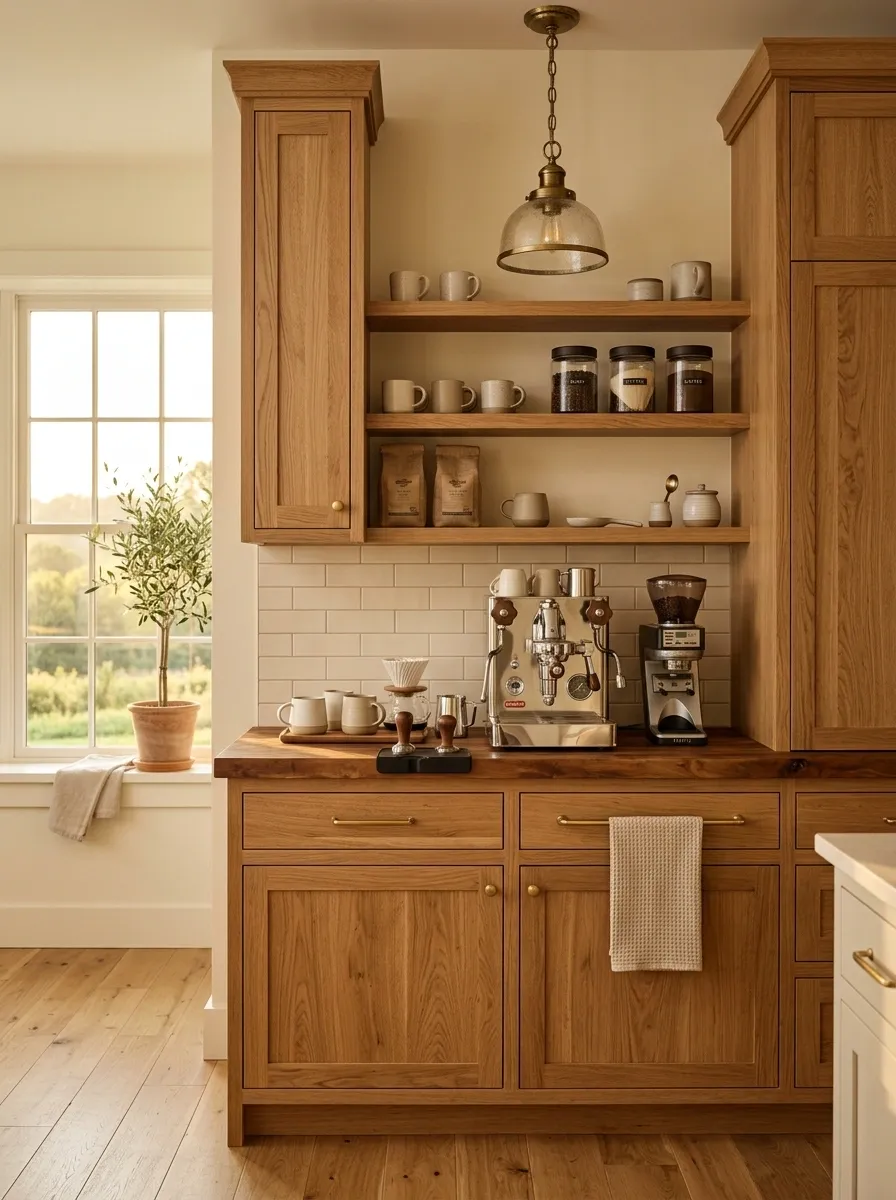
Here, the wood does most of the visual work. Tall warm-wood cabinetry wraps the coffee station, while creamy subway tile adds a softer backdrop that keeps the room from becoming too brown. A butcher-block counter ties the shelving and lower cabinets together, and a vintage-style pendant gives the station a stronger focal point.
The finished look feels rural without turning every surface into a prop. Keep the backsplash simple and let the natural grain of the wood carry the texture. A few ceramic mugs and glass jars are enough. Anything more and the shelves start looking like they are preparing for their own estate sale.
Warm wood
Cream surfaces
Dark accents
Moody Black Accent Farmhouse Coffee Station
If you want your coffee station to double as a dramatic piece of art, this moody black backdrop is the way to do it. The dark wooden paneling creates a striking contrast against floating shelves lined with crisp white mugs and glass jars. Industrial wall sconces frame the entire vignette, giving the corner a polished, architectural glow that feels deeply intentional.
The design works because the dark tones ground the station while the warm wood brings the necessary farmhouse soul back into the mix. A handy rail underneath the lower shelf provides effortless mug storage, keeping things functional without sacrificing aesthetic appeal. It is sleek, moody, and entirely functional.
Styling a dark backdrop like this requires keeping your display pieces curated and bright so they pop against the shadows. A few handwritten labels and neat stacks of glassware finish the look with effortless charm. Your morning caffeine fix has literally never looked this cool.
Black-and-White Farmhouse Coffee Bar With Antique Accents
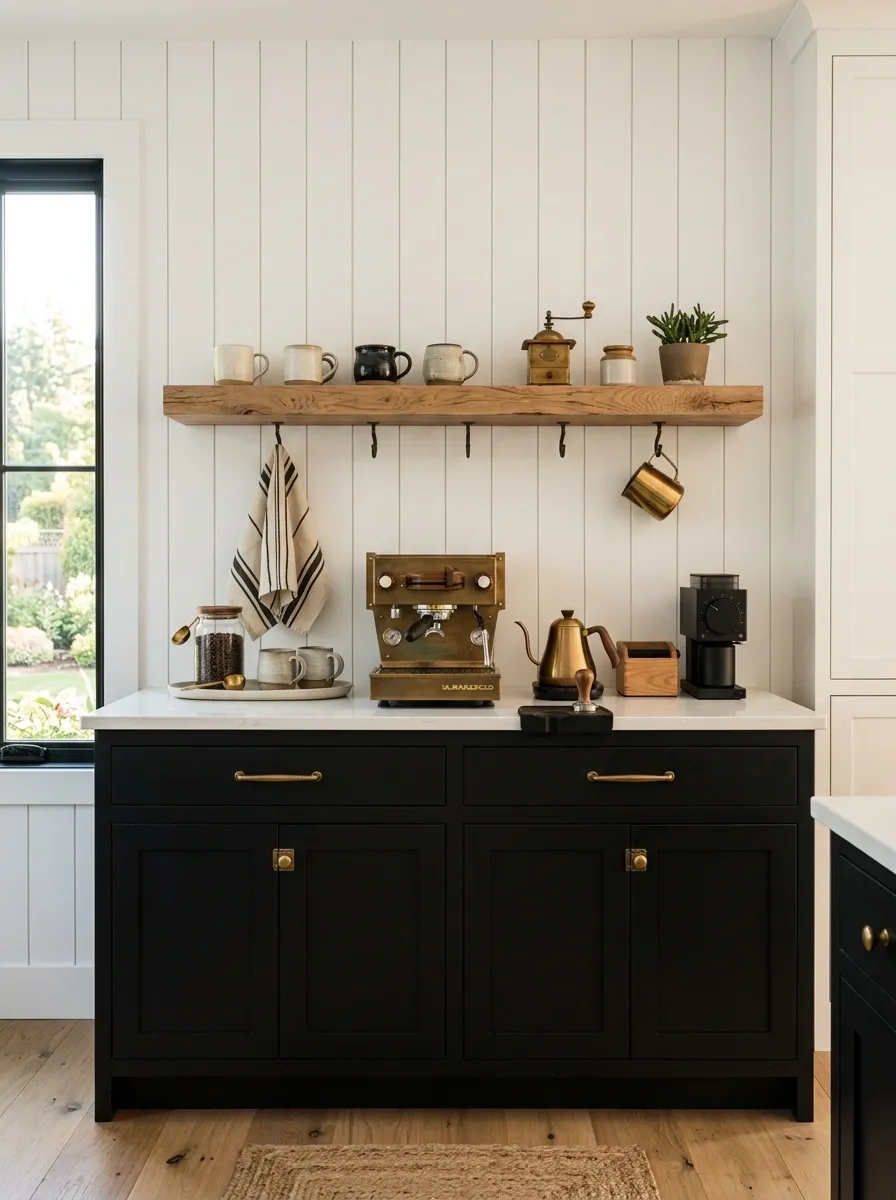
This version takes the familiar farmhouse palette and gives it more edge. Matte black lower cabinets ground the coffee station, while white walls keep the upper half open and bright. Rougher wood shelving brings warmth back into the composition, and aged metal details make the whole setup feel collected rather than brand new.
The contrast is what makes the scene memorable. Black cabinetry gives the station visual weight, but the old wood and soft white surroundings stop it from becoming a generic modern coffee nook. Keep the countertop fairly quiet. The more dramatic the cabinet color becomes, the less clutter the rest of the station can handle.
Light above.
Modern Farmhouse Kitchen Coffee Counter
Clean lines meet rustic warmth in this streamlined farmhouse coffee bar tucked neatly beneath sleek cabinetry. A natural wood countertop bridges the gap between classic white upper cabinets and modern kitchen storage, creating a dedicated zone for morning brewing. A chic espresso machine and a minimalist kettle sit ready for action.
What makes this corner truly shine is the clever use of vertical space with a simple hanging rail for mugs and a touch of greenery. It keeps the counter remarkably clear of clutter while ensuring everything you need for a great cup of coffee is right at your fingertips. The built-in wine racks nearby add an extra layer of custom cabinetry flair.
This is the ultimate setup for anyone who loves the farmhouse aesthetic but prefers a cleaner, less cluttered environment. By letting the gorgeous wood grain and simple hardware do the heavy lifting, the space feels bright, airy, and effortlessly organized. Grab a mug and enjoy the quiet morning calm.
Freestanding Pine Hutch Turned Into a Coffee Station
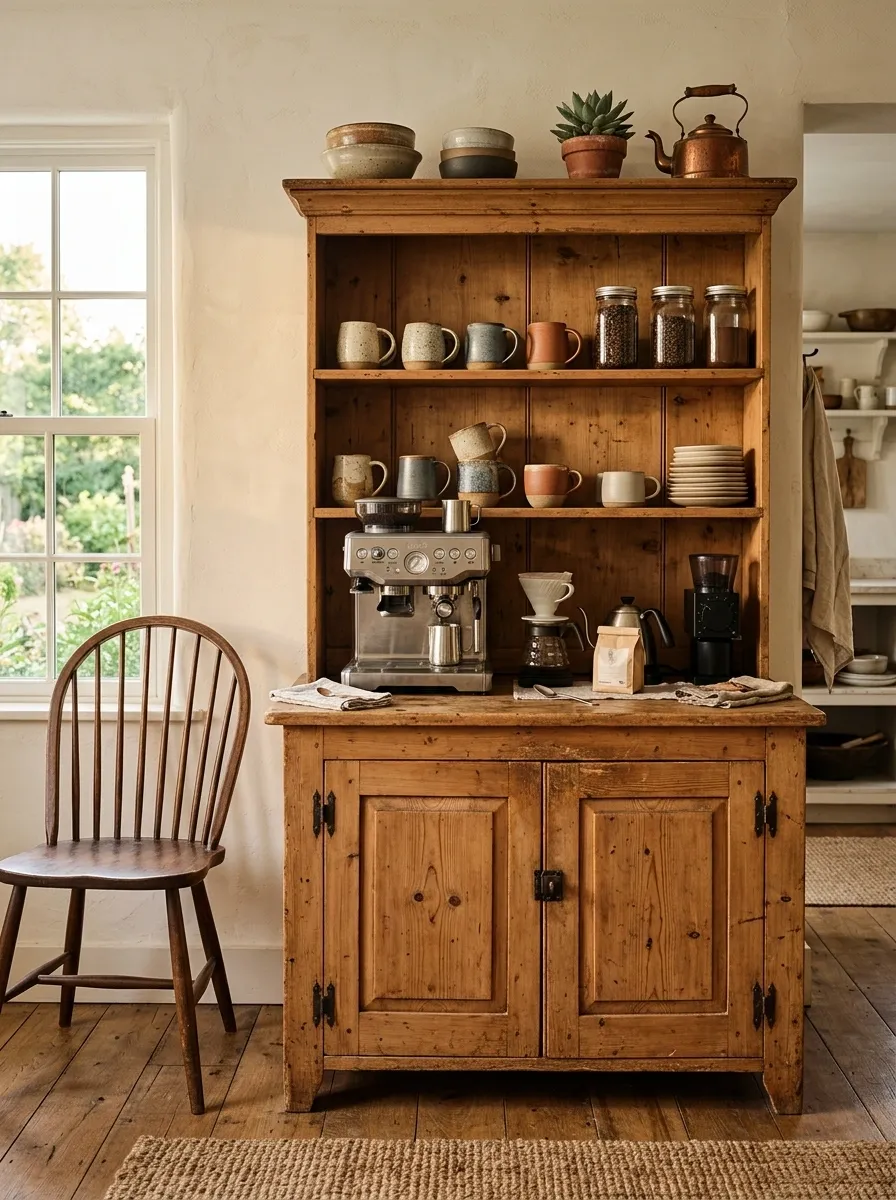
A vintage pine hutch can become the whole coffee bar, which gives this design a very different character from a built-in. The furniture itself provides structure, storage, and height. The lower section holds the machine and supplies, while the upper shelves display mugs, jars, and a few everyday serving pieces.
This works because the coffee station looks like furniture first and a collection of appliances second. That distinction matters in kitchens where a large built-in would feel too permanent. Keep the styling practical and let the natural pine stay visible. Covering every inch with decor would defeat the entire point.
Rustic Autumn Farmhouse Coffee Corner
Chalkboard lettering and rich autumn decor turn this farmhouse coffee corner into the ultimate seasonal gathering spot. Floating rustic shelves packed with mugs, lanterns, and quirky signs sit gracefully above a classic white dresser-turned-coffee-bar. A large ceramic crock overflowing with pumpkins finishes the cozy harvest aesthetic.
The magic of this display lies in its abundant charm and clever vertical zoning. Every shelf tells a story without feeling chaotic, thanks to a cohesive color scheme of crisp whites, weathered woods, and soft autumn oranges. The vintage dresser adds instant character that built-in cabinetry simply cannot replicate.
Styling a corner like this is all about balancing decorative whimsy with actual coffee-making practicality. Keep your daily machine accessible while letting the surrounding shelves showcase your personality and love for seasonal decor. It is a picture-perfect spot that makes you want to linger a little longer over your morning brew.
Farmhouse Coffee Bar Under a Staircase
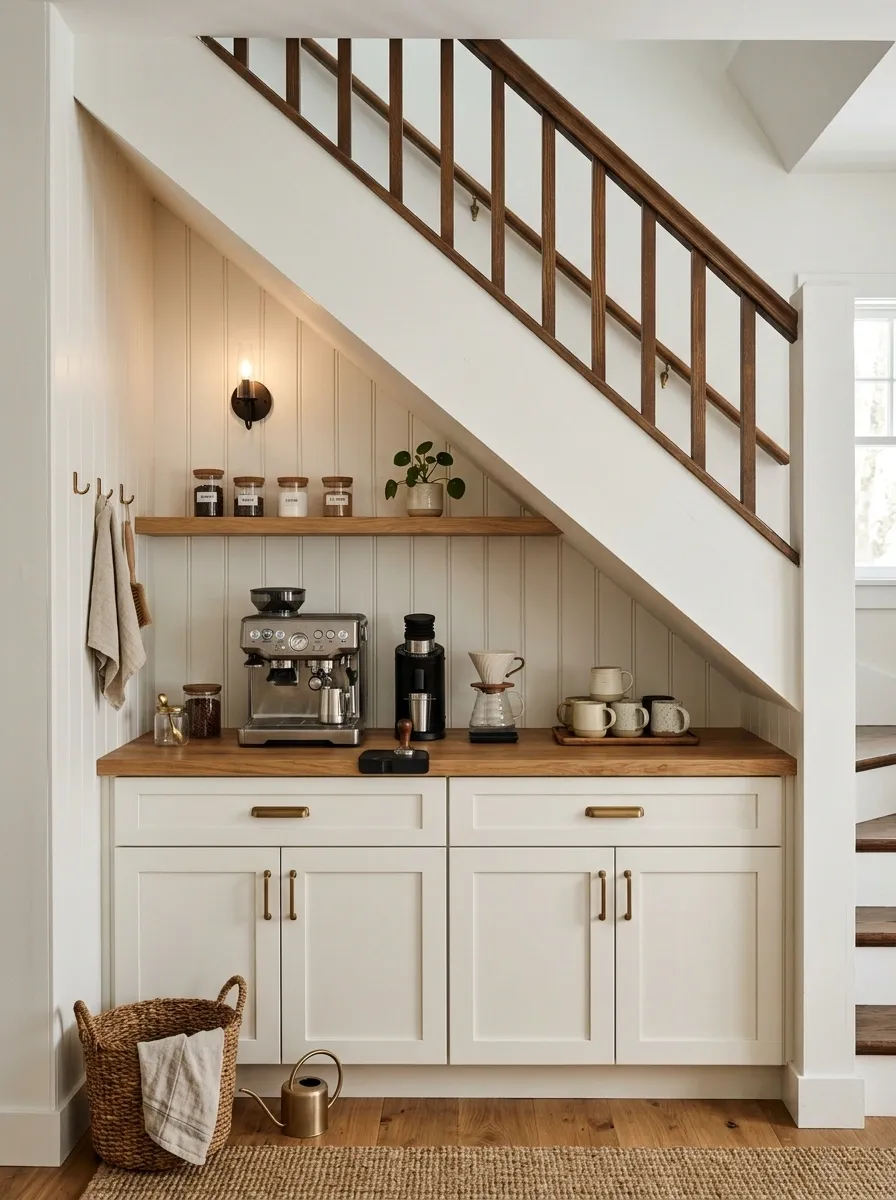
That awkward space under the stairs finally gets a job. A compact built-in fits beneath the slope, with warm white cabinetry, a wood countertop, vertical beadboard backing, and a small wall sconce tucked into the highest usable section. The result feels intentional because the architecture of the nook becomes part of the design.
The key is keeping the counter depth realistic. A coffee station does not need a massive work surface if the storage is planned around the actual equipment. Closed cabinets below keep the mess out of sight, while one narrow shelf adds just enough display space. The sloped ceiling becomes a feature instead of a problem. Much better use of square footage than letting the area collect one lonely vacuum cleaner.
Staircase Niche Farmhouse Coffee Bar
Who knew the awkward dead space under a staircase could look this charming? This recessed farmhouse coffee bar transforms an otherwise forgotten architectural nook into a stunning destination zone. A weathered wood archway frames the mini station, while crisp white board-and-batten paneling and a darling little window frame add incredible depth.
The genius of this design is how it seamlessly integrates the coffee station into the home’s architecture rather than treating it like an afterthought. Closed lower cabinets hide away bulk supplies, while upper display shelves keep cute mugs and a classic white coffee maker neatly arranged.
A rustic half-gate nearby completes the farmhouse narrative, making the whole staircase landing feel like a storybook setting. It is creative, functional, and uses square footage in the most delightful way possible. Your morning routine just got a serious architectural upgrade.
Deep Green Cabinetry With Natural Wood Shelving
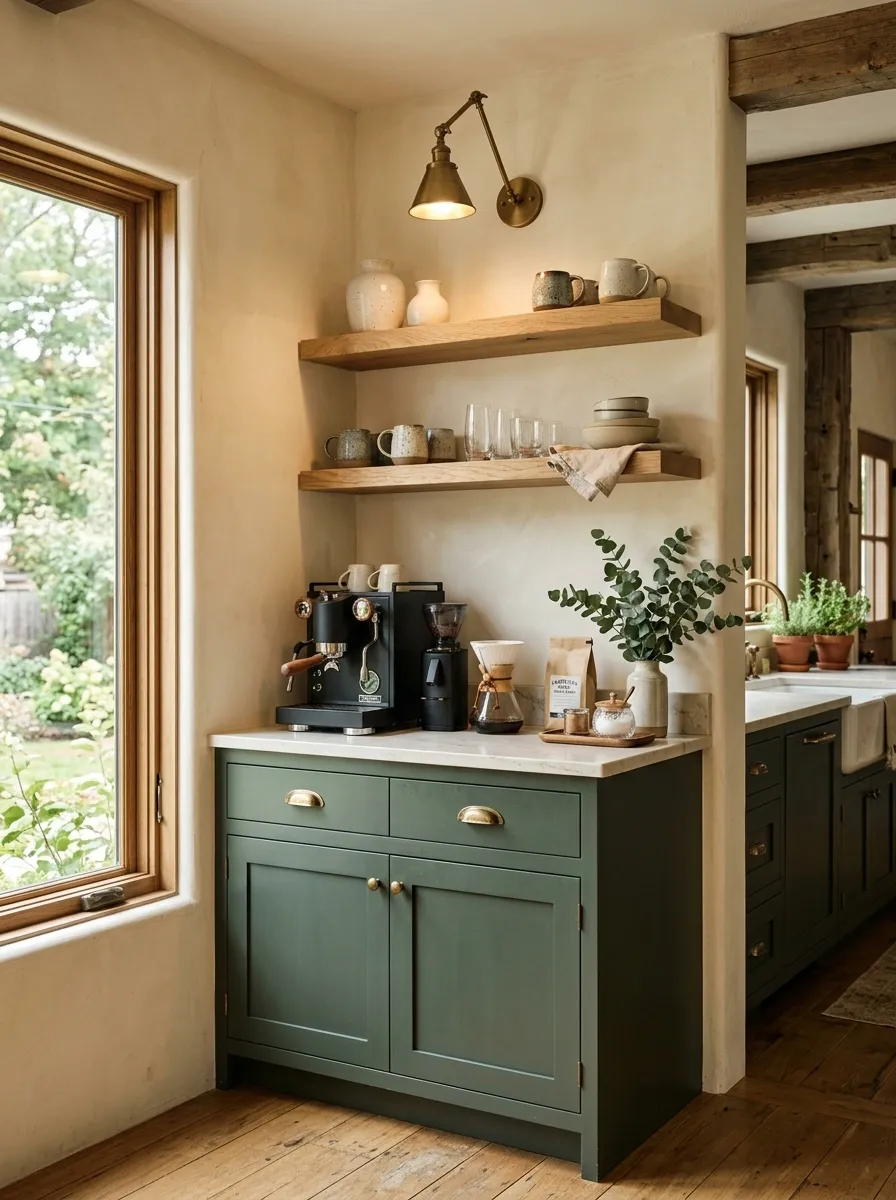
Deep muted green cabinetry gives this coffee bar a richer farmhouse identity without pushing it into full country-kitchen territory. Natural oak shelves soften the painted cabinets, while creamy walls and a pale counter keep enough light in the composition. Aged brass hardware adds warmth, and a single warm sconce helps the coffee station read as a small architectural zone rather than another stretch of cabinets.
The green should stay concentrated on the base. Bringing the same color onto every accessory would flatten the room. Keep the shelves mostly natural wood, ceramic, and glass. The result has personality without looking like the cabinets and the mugs joined a matching-outfit challenge.
Old-Farmhouse Coffee Bar With Freestanding Base Cabinet
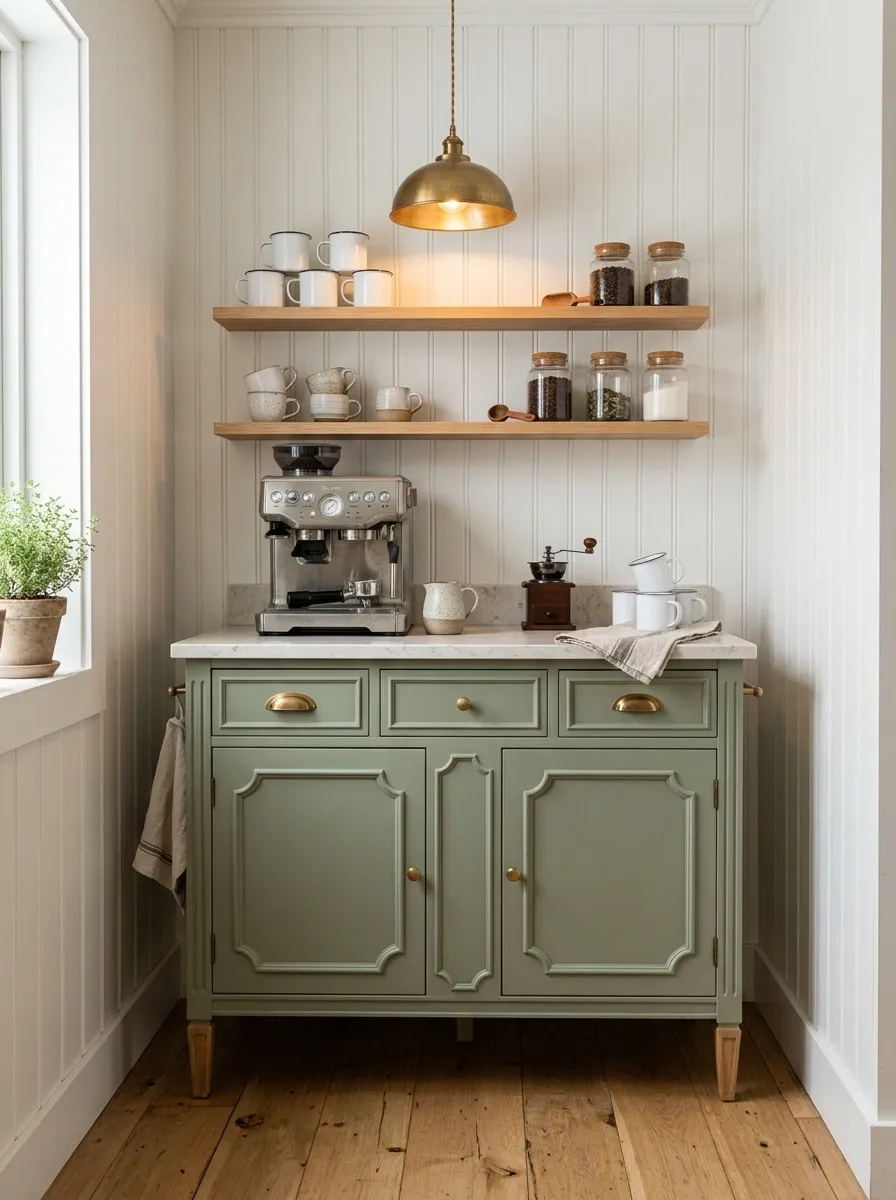
This arrangement feels like it belonged in the kitchen long before the espresso machine arrived. A freestanding painted cabinet provides the foundation, topped with a light stone-look surface and surrounded by vertical beadboard. Open shelving above holds a restrained collection of enamelware, mugs, and a few useful jars, while one vintage-style pendant gives the station a defined glow.
The furniture-like base is the star here. Its legs and slightly independent shape create more character than a standard run of built-ins. That also makes this design useful in older homes where a perfectly fitted contemporary cabinet could look oddly out of place. Keep the upper wall quiet. The cabinet already brought the personality.
Small Pantry Coffee Bar With Sliding Barn Door
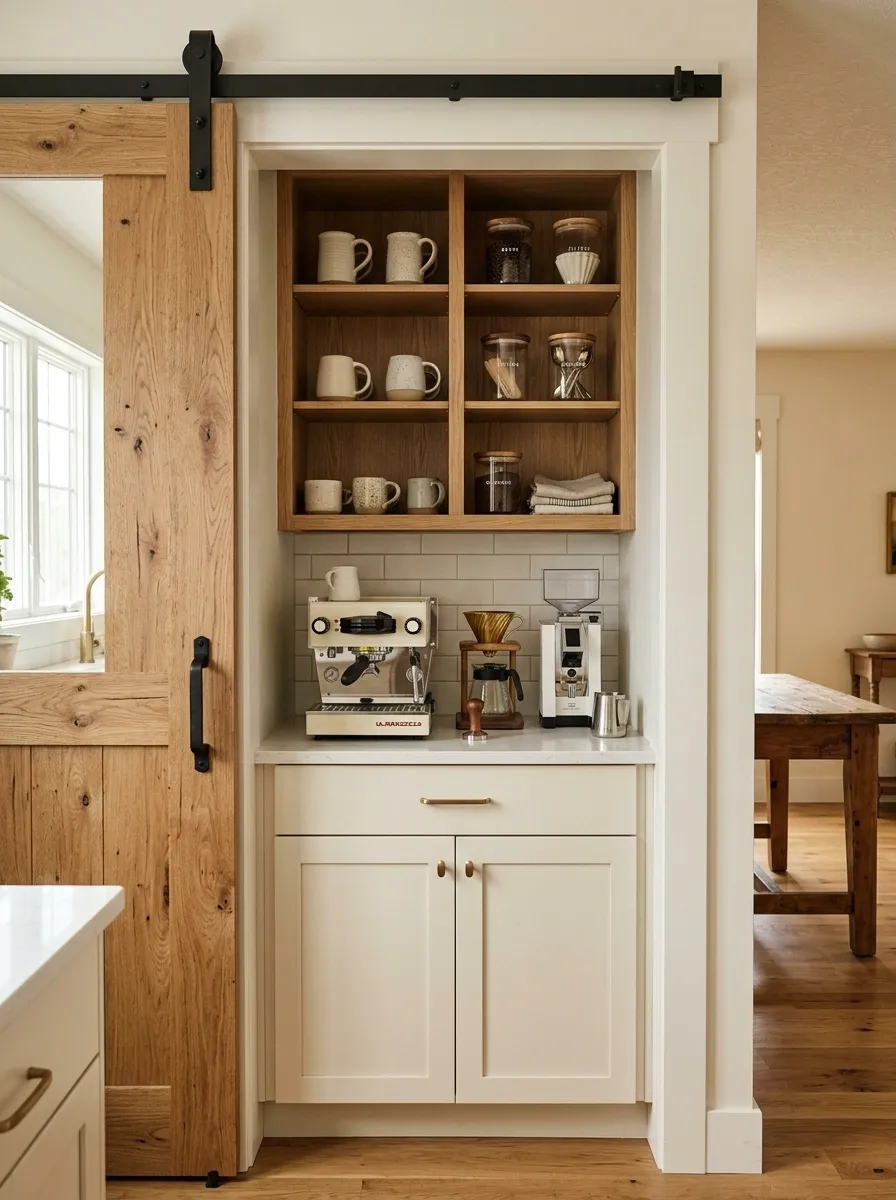
A narrow pantry becomes a dedicated coffee room in this setup, with a compact counter running along one wall and storage climbing upward. A sliding barn door gives the entrance a clear farmhouse cue, while the interior stays cleaner with light cabinetry, simple backsplash tile, and vertical shelving. Coffee equipment sits at the working level, while bulk supplies disappear behind doors or into drawers.
The charm comes from the fact that the coffee bar is actually contained. When the pantry door closes, the visual noise disappears with it. That matters in kitchens that already have enough going on. A barn door can easily become the loudest thing in the house, so keep its wood tone natural and let the inside of the pantry carry the softer finishes.
Soft Neutral Coffee Bar With Limestone-Look Countertop
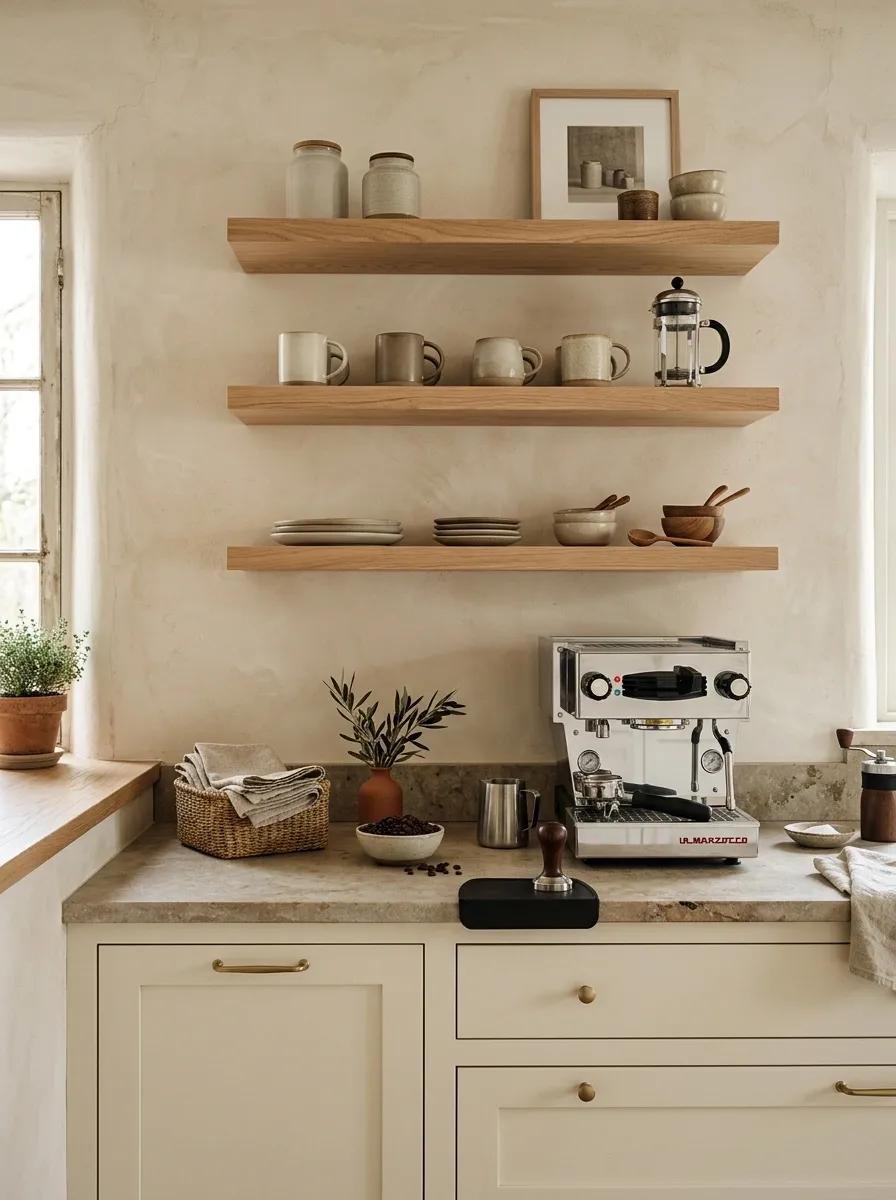
This version strips farmhouse styling down to its quieter side. Cream cabinetry, a limestone-look counter, pale oak shelving, woven storage, and soft natural light create a calm composition without relying on obvious rustic props. The coffee machine becomes part of the furniture arrangement instead of the visual star.
Texture carries this design. The slightly varied stone surface, natural grain of the oak, soft woven baskets, and matte ceramics give the pale palette enough depth to stay interesting. Keep the walls simple and resist the urge to add a giant coffee quote. The room already knows what it is for.
Vintage Green Lower Cabinet With White Beadboard
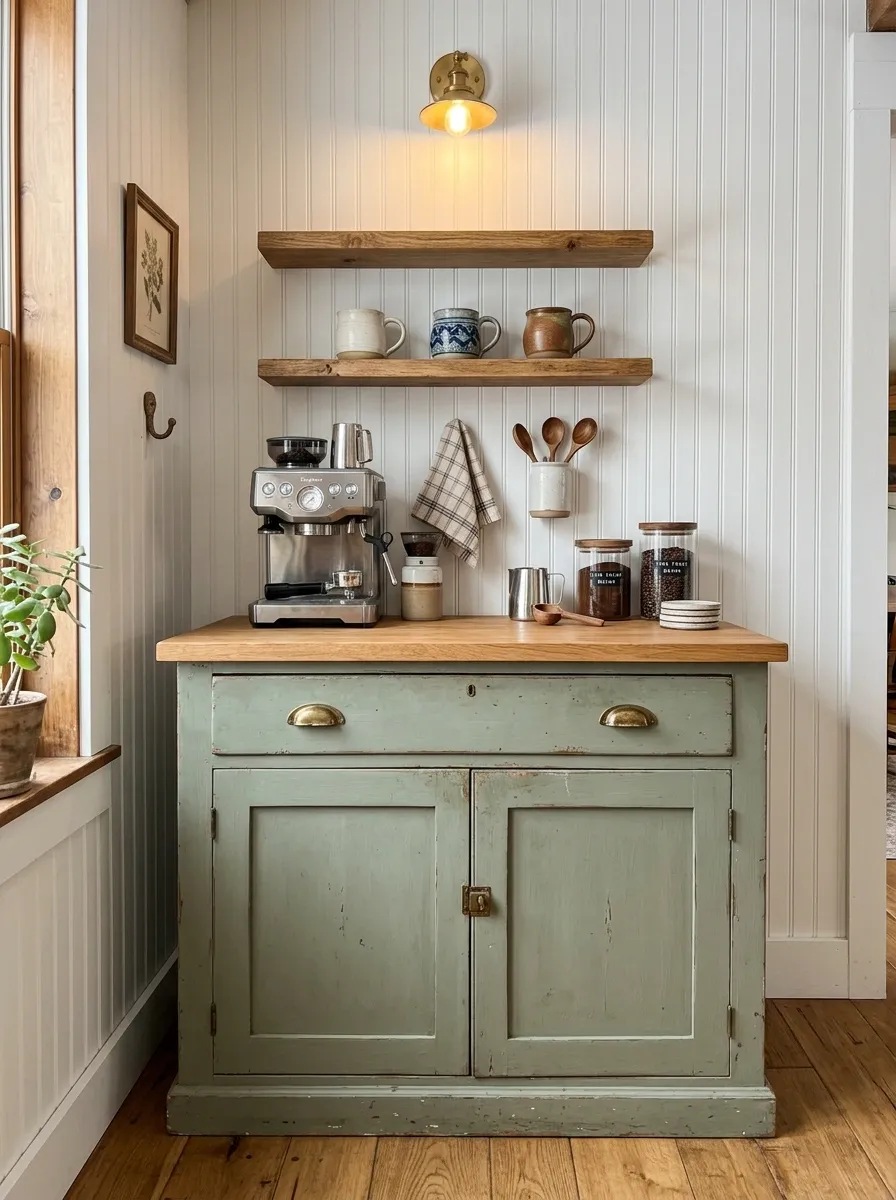
A weathered green cabinet gives this coffee bar its character, while white beadboard keeps the backdrop fresh and distinctly farmhouse. The counter is warm wood or pale stone, with open shelves carrying a small collection of everyday mugs, glass jars, and serving pieces. A compact sconce above the station adds a warm pool of light after the kitchen gets darker.
The strongest part is the relationship between the painted cabinet and the white wall. The green reads like an old piece of furniture rather than a standard kitchen finish. That distinction gives the design a collected quality without requiring a pile of antiques. Keep the styling loose and useful. The cabinet is already doing plenty of talking.
tell the story.
Long Built-In Coffee Bar With Closed Storage Below
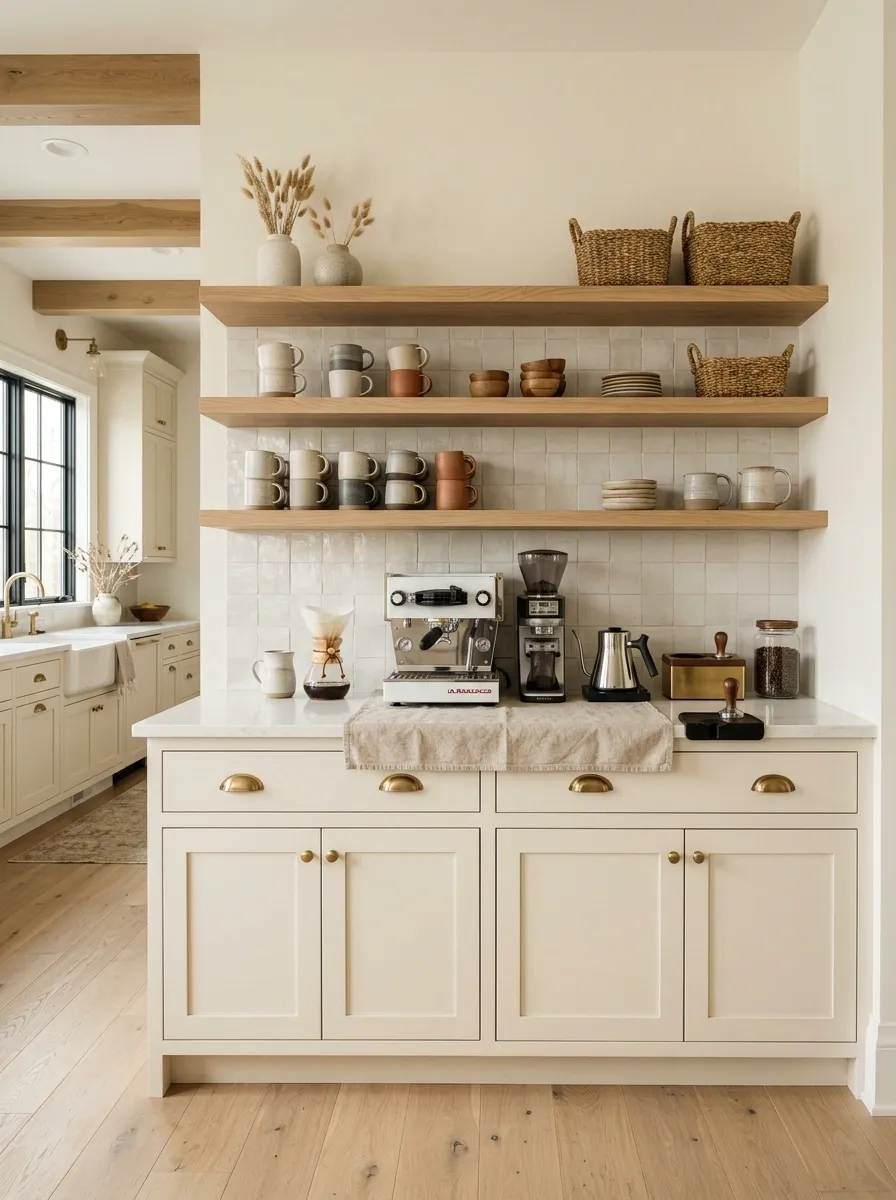
A longer wall gives this farmhouse coffee bar room to feel like a proper part of the kitchen instead of a side project squeezed beside the refrigerator. Lower painted cabinets run across the full station, topped with a light counter and a backsplash that quietly connects it to the rest of the room. Open shelving breaks up the cabinetry, while closed storage keeps extra beans, cups, paper goods, and small appliances out of sight.
The wider footprint changes the mood completely. There is enough room for the coffee machine, grinder, kettle, mugs, and a little serving space without everything touching elbows. That is the difference between a designed station and countertop Tetris.
Rustic Coffee Bar With Reclaimed Barn Wood Backdrop
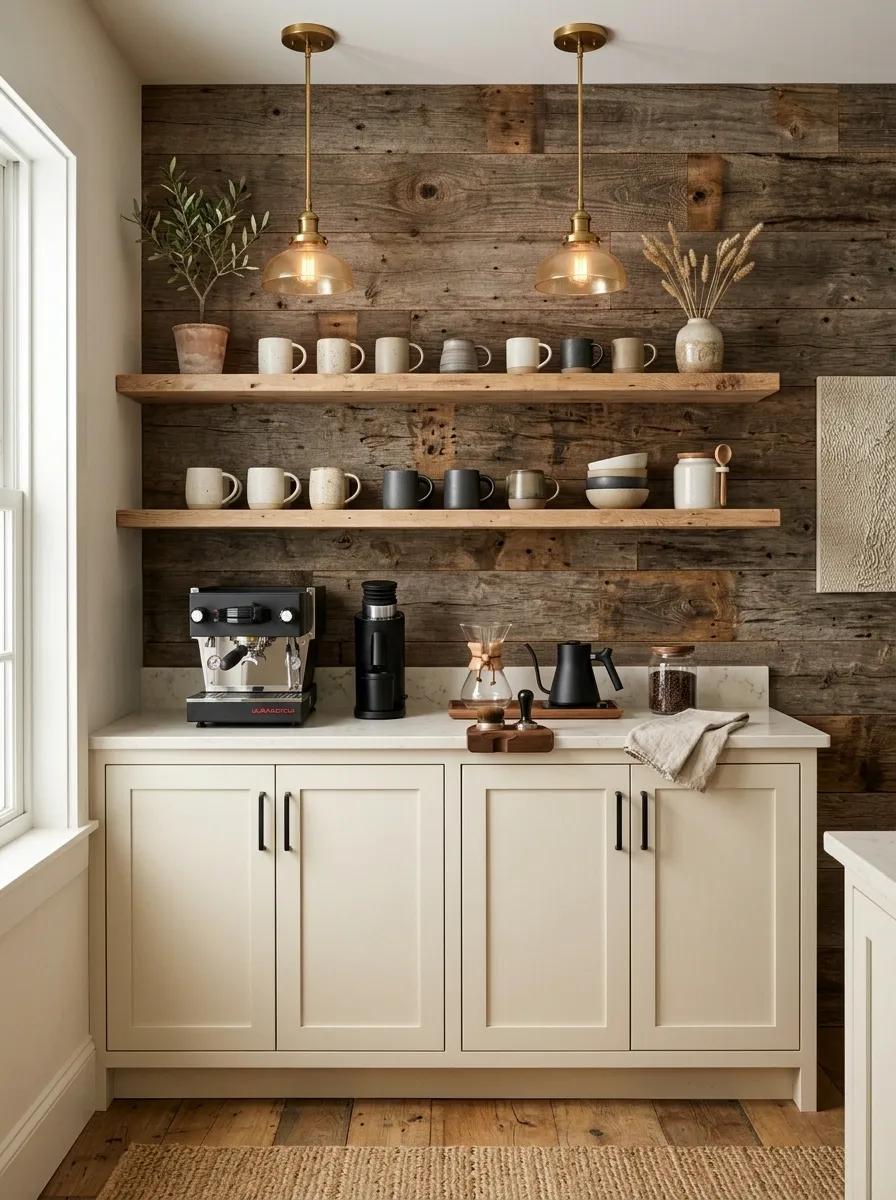
A reclaimed barn-wood wall gives this station instant architectural texture. In front of it sits a simple painted base cabinet with a light worktop, black hardware, open shelving, and warm pendant lighting. The rough timber becomes the backdrop rather than another decorative object, which keeps the whole composition more believable.
The trick is contrast. Weathered wood already has plenty of variation, so the cabinetry and countertop should stay relatively calm. Simple ceramic pieces look better here than a collection of overly themed accessories. The goal is rustic architecture, not a souvenir shop trying to sell farmhouse charm by the dozen.
Corner Farmhouse Coffee Bar With Open Shelving
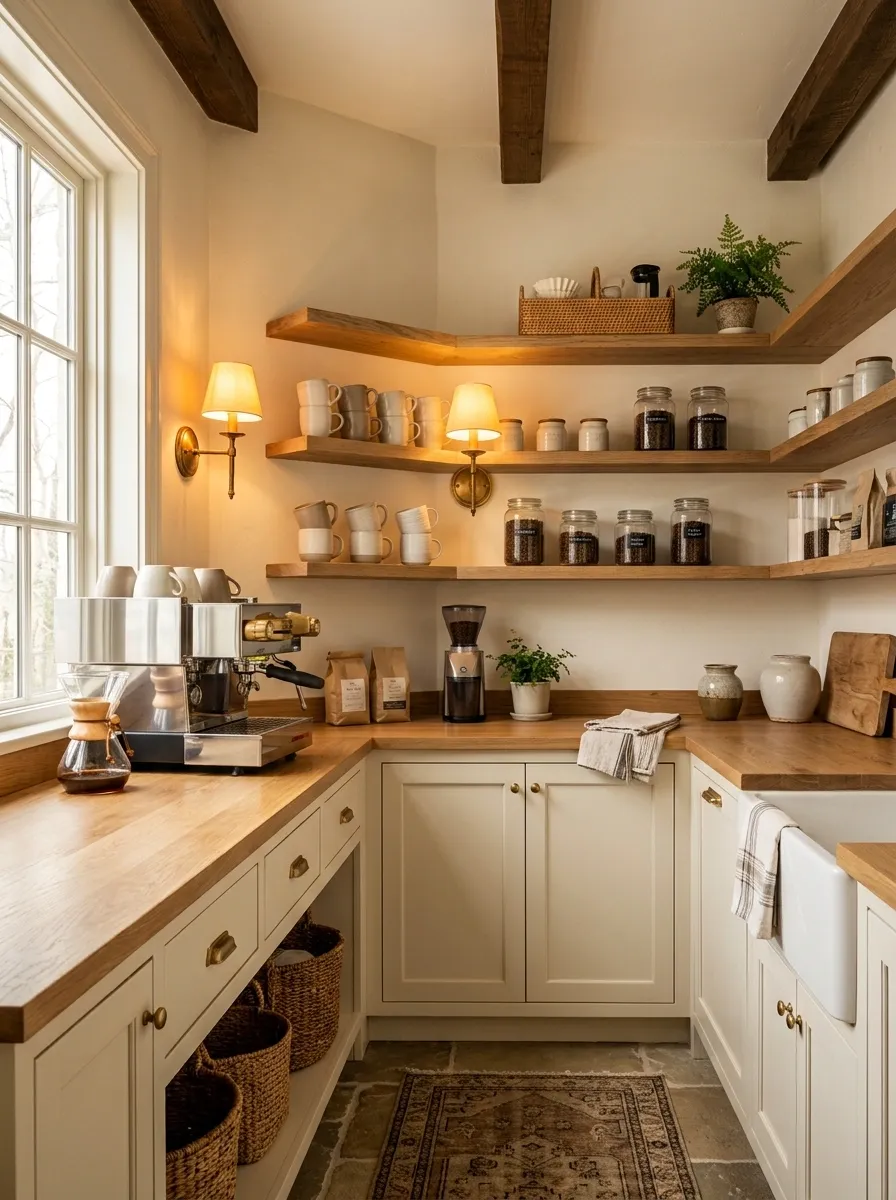
This L-shaped coffee bar makes a neglected kitchen corner feel planned from the start. One wall handles the main appliance setup, while the second turns toward a narrower storage and display zone. Painted lower cabinets keep the base unified, and open shelves wrap around the corner to create continuity.
The corner itself becomes the visual feature. Instead of putting all the attention on a single wall, the design creates a little room-within-a-room. A warm wood counter helps both sides read as one composition, while a small sconce tucked into the corner gives the shelves some depth at night.
The big win is flexibility. One side can stay focused on brewing while the other handles cups and serving pieces. Suddenly the awkward corner is pulling its weight.
STORAGE
Farmhouse Coffee Bar With Vintage Glass-Front Cabinets
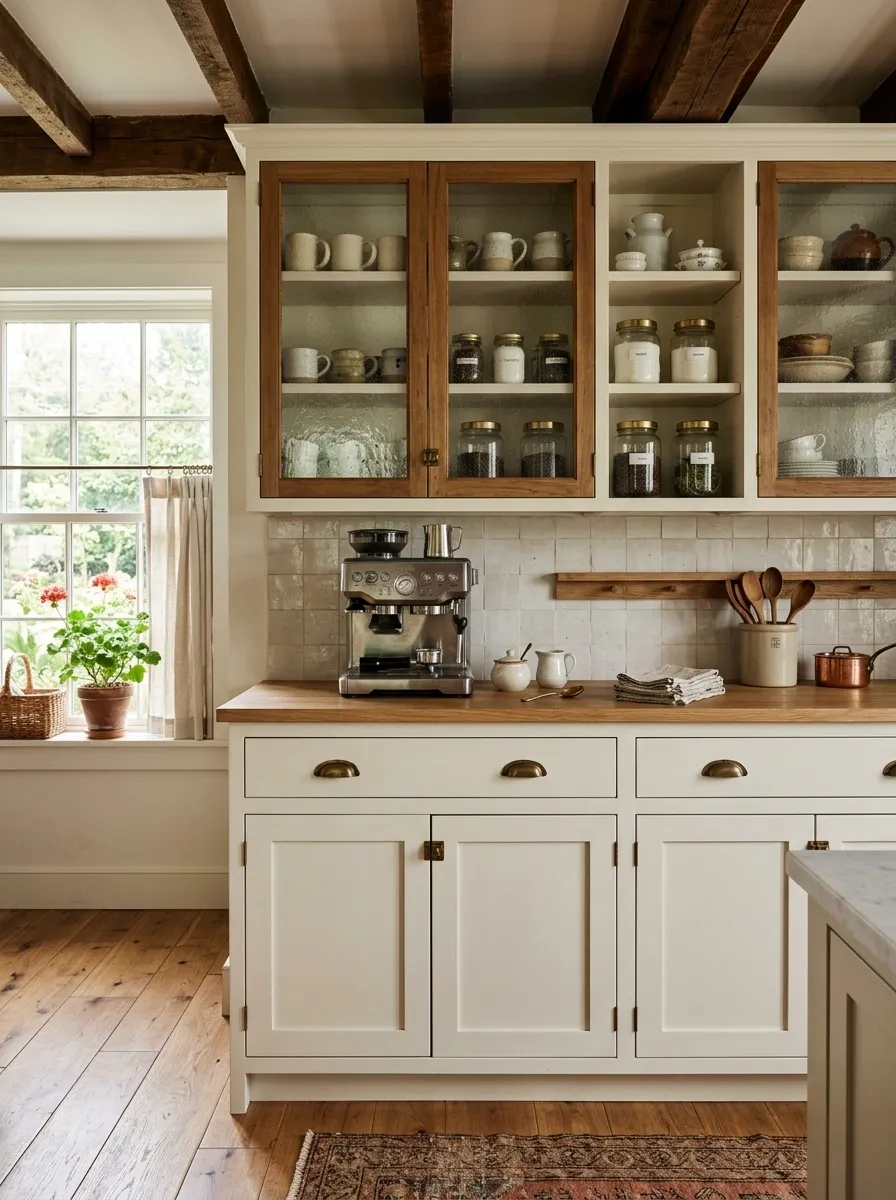
Glass-front cabinets bring a more collected, traditional feeling to this coffee bar. The upper cabinets display rows of mugs, clear jars, small serving dishes, and a few pieces of old-fashioned crockery. Below, solid cabinetry hides larger equipment and supplies. A pale backsplash keeps the cabinet wall from becoming visually dense, while warm wood or stone grounds the counter.
The glass fronts create a useful distinction between things worth seeing and things better left behind a door. That makes the station feel styled without requiring every object to be artfully arranged. It also gives the room a slightly old-kitchen character, which is exactly the point. Open shelves do not get all the farmhouse glory.
Compact Apartment Coffee Bar With Farmhouse Character
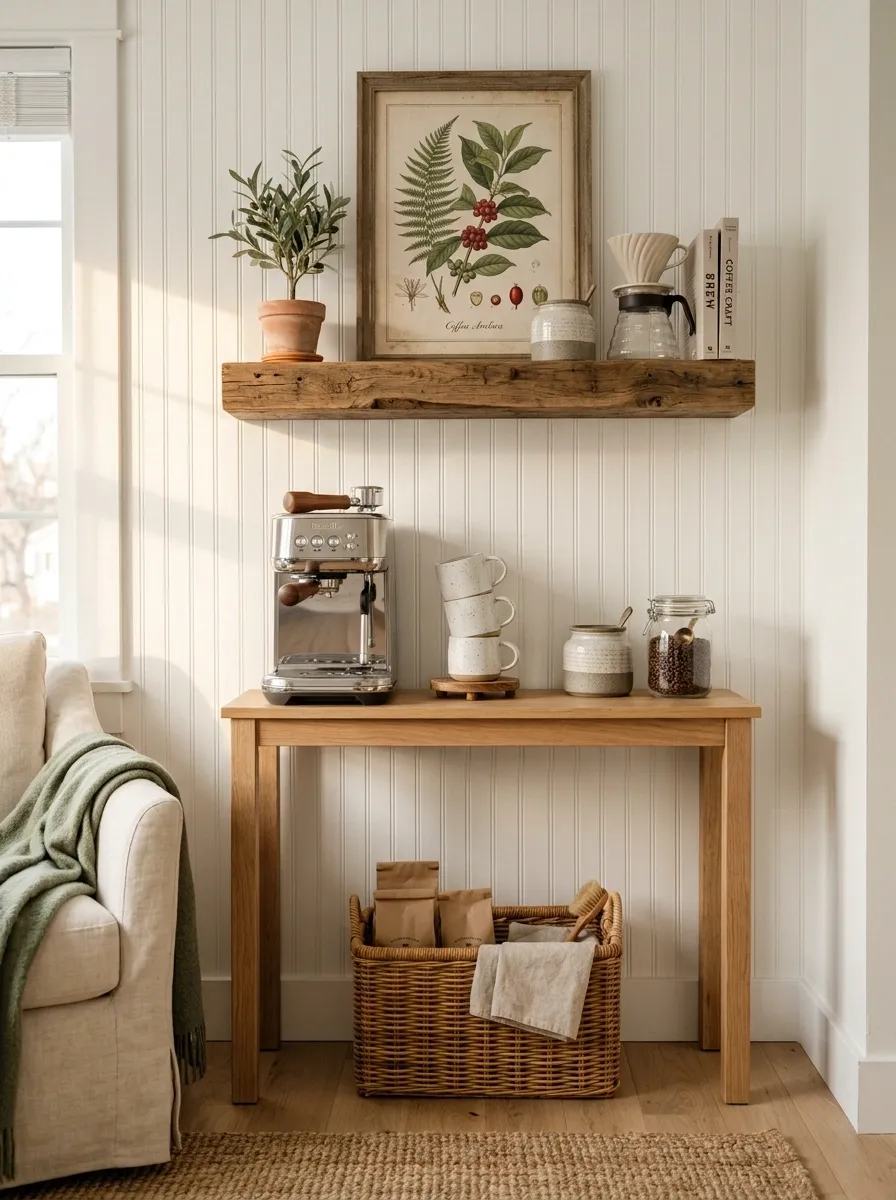
A small apartment does not need a farmhouse coffee bar squeezed into a giant dream-kitchen fantasy. This version works on a narrow wall with a slim console or shallow cabinet, one substantial wood shelf, a beadboard or paneled backdrop, and a compact brewing setup. A small basket underneath handles supplies, while a framed print or vintage-style piece gives the wall some personality.
The success comes from scale. Everything is deliberately narrow, so the station feels like part of the apartment instead of a miniature kitchen pretending to be a restaurant. Leave some wall visible and avoid stacking objects from counter to ceiling. Small spaces punish clutter immediately. There is no diplomatic way around it.
Not clutter.
Counter → one shelf → open wall → done.
White Brick Farmhouse Coffee Bar With Walnut Counter
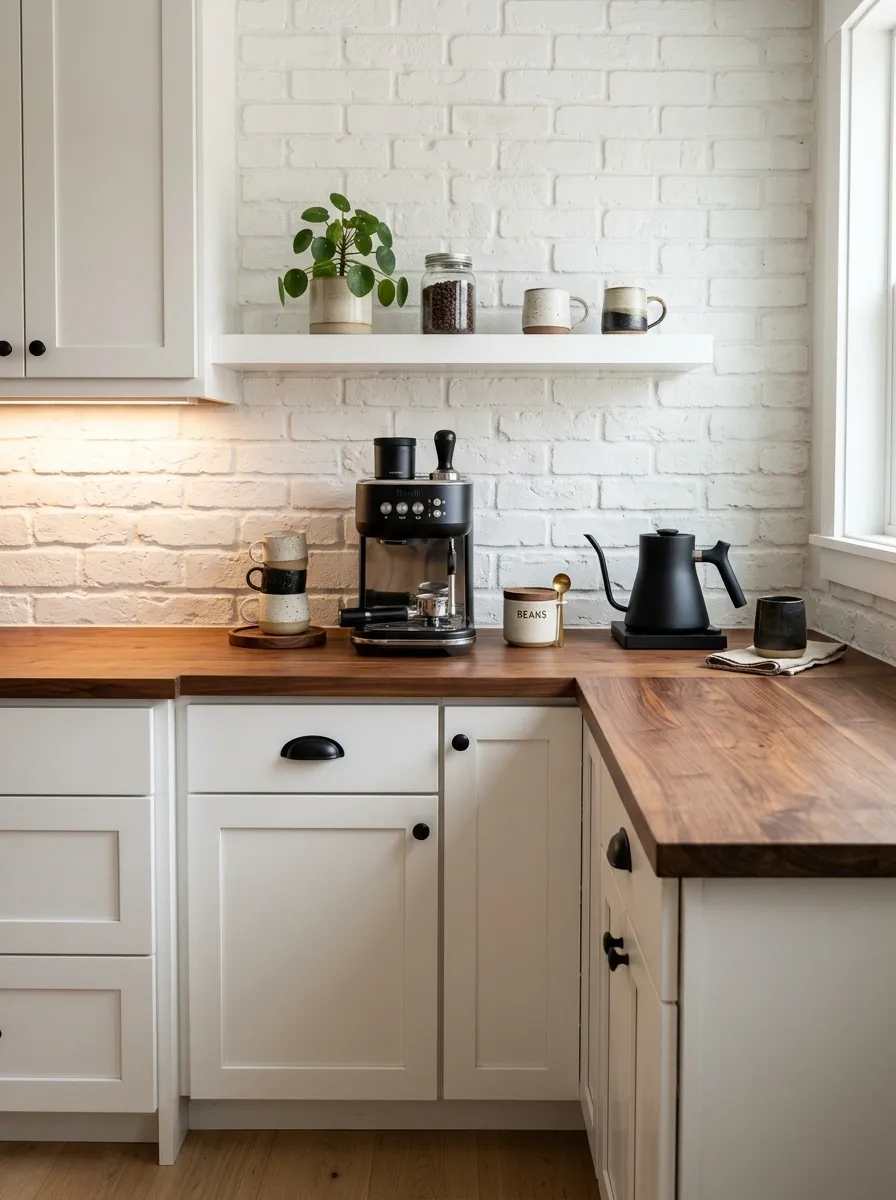
White brick gives this coffee bar a more architectural backdrop than standard painted drywall. Against it, simple light cabinetry keeps the station bright while a rich walnut counter adds enough contrast to make the area feel grounded. Black hardware and a compact black coffee machine create small dark notes that connect the different parts of the composition.
The walnut is doing more than providing a work surface. It becomes the visual bridge between the white wall and the darker hardware. That keeps the room from feeling washed out without needing another accent color. Warm lighting works especially well here because it brings out the depth of the wood after daylight fades.
The finished effect feels farmhouse, but with a cleaner architectural edge. Basically, rustic without looking like a rustic-themed coffee shop opened in the kitchen.
bridges
the two
Farmhouse Coffee Bar Inside a Breakfast Nook
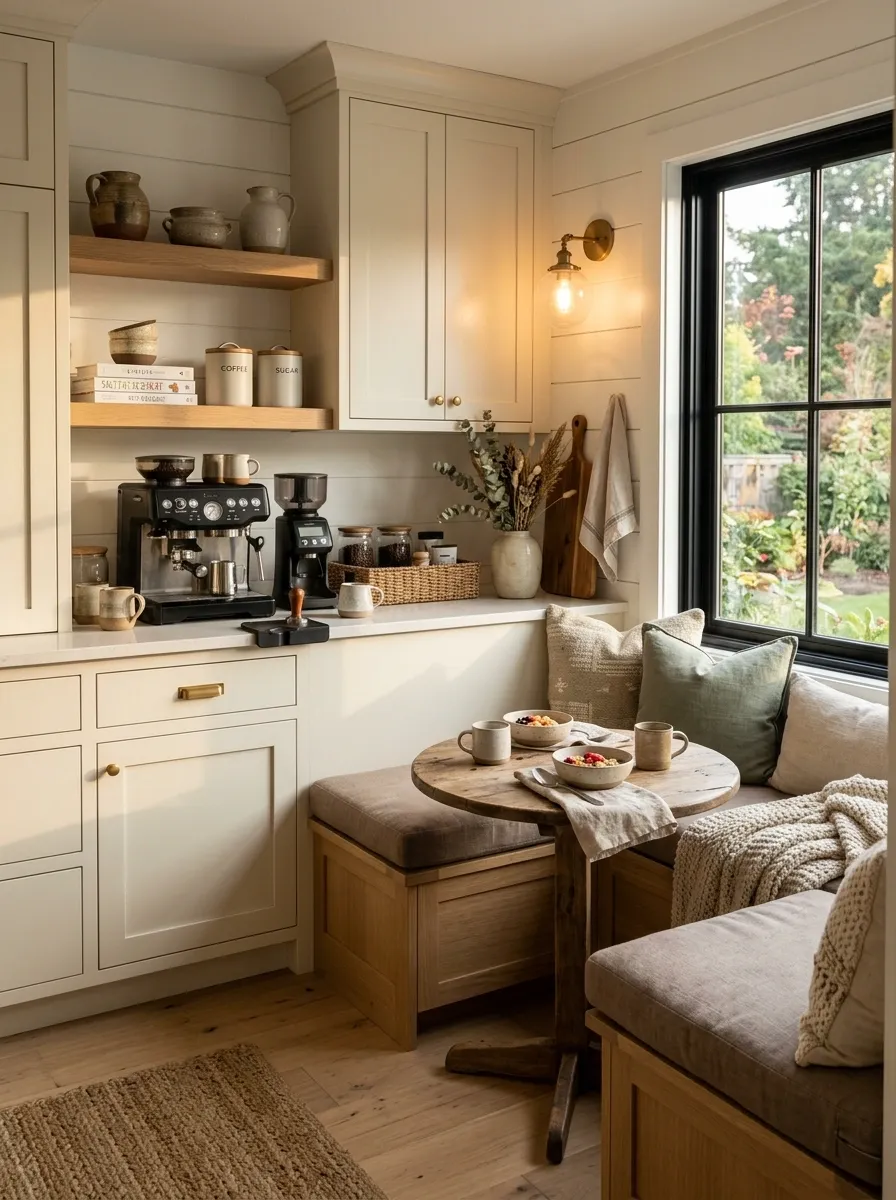
This coffee bar becomes part of a larger morning zone instead of sitting alone on a kitchen wall. A built-in cabinet houses the brewing setup, while a nearby breakfast bench creates a natural place to sit with the finished cup. Warm painted cabinetry, oak shelves, soft cushions, and simple vintage-inspired lighting make the two areas feel like one composition.
The connection between the coffee bar and seating is what makes this design different. The station is not just decorative storage. It supports the way the nook is actually used. Keep the finishes coordinated, but do not make every piece match exactly. A little variation keeps the space from looking assembled from one showroom collection.
The coffee machine finally has a socially acceptable reason to be sitting there all morning.
Moody Charcoal Farmhouse Coffee Station
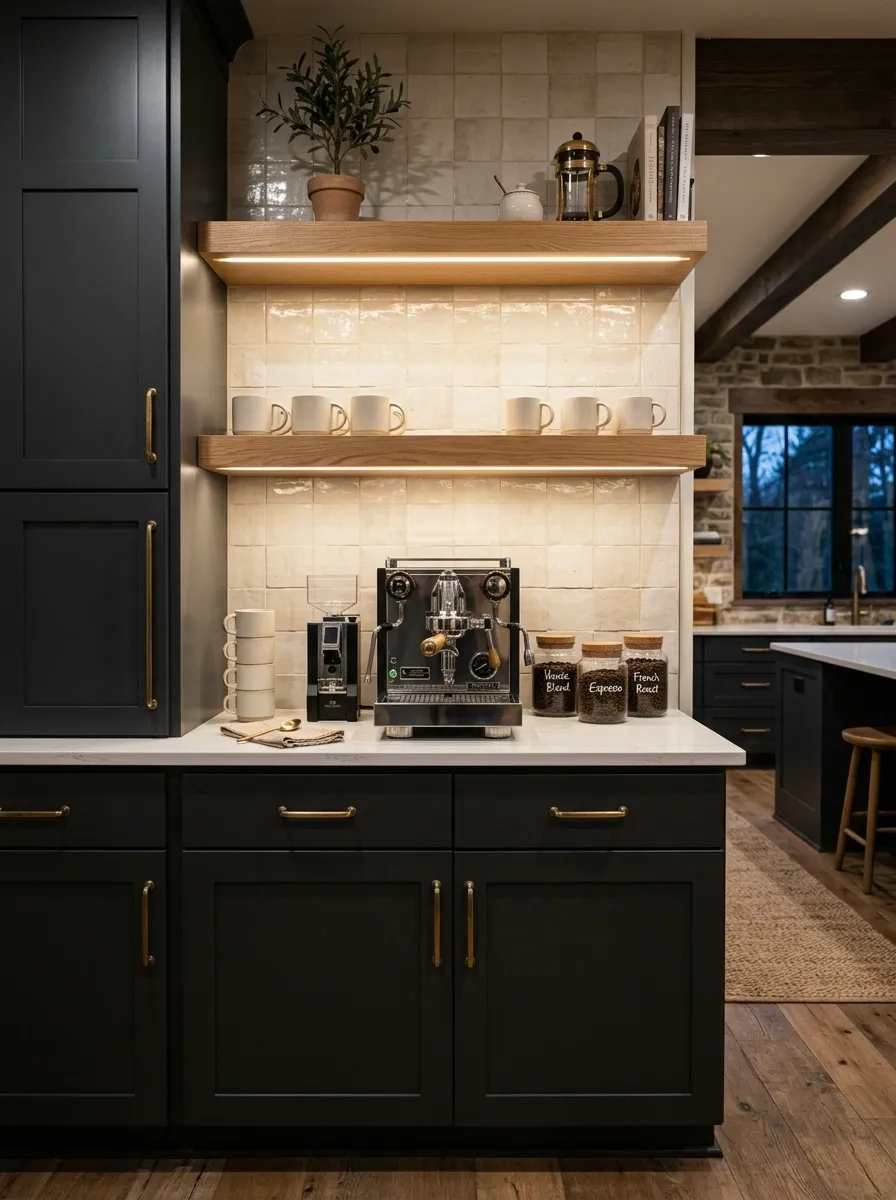
Farmhouse does not have to mean pale. Charcoal cabinetry gives this station a darker, more dramatic presence, while warm oak shelving and cream tile bring enough lightness back into the composition. Aged brass hardware adds a subtle warm note, and under-shelf lighting creates a softer evening glow across the counter.
The darker base works because the room still has lighter surfaces above it. That contrast keeps the station from becoming visually dense. Keep the accessories mostly cream, wood, and clear glass so the shelves do not compete with the cabinetry.
This is farmhouse with a little attitude. The coffee bar has officially stopped trying to please everyone.
Farmhouse Coffee Bar With Butcher Block and Beadboard
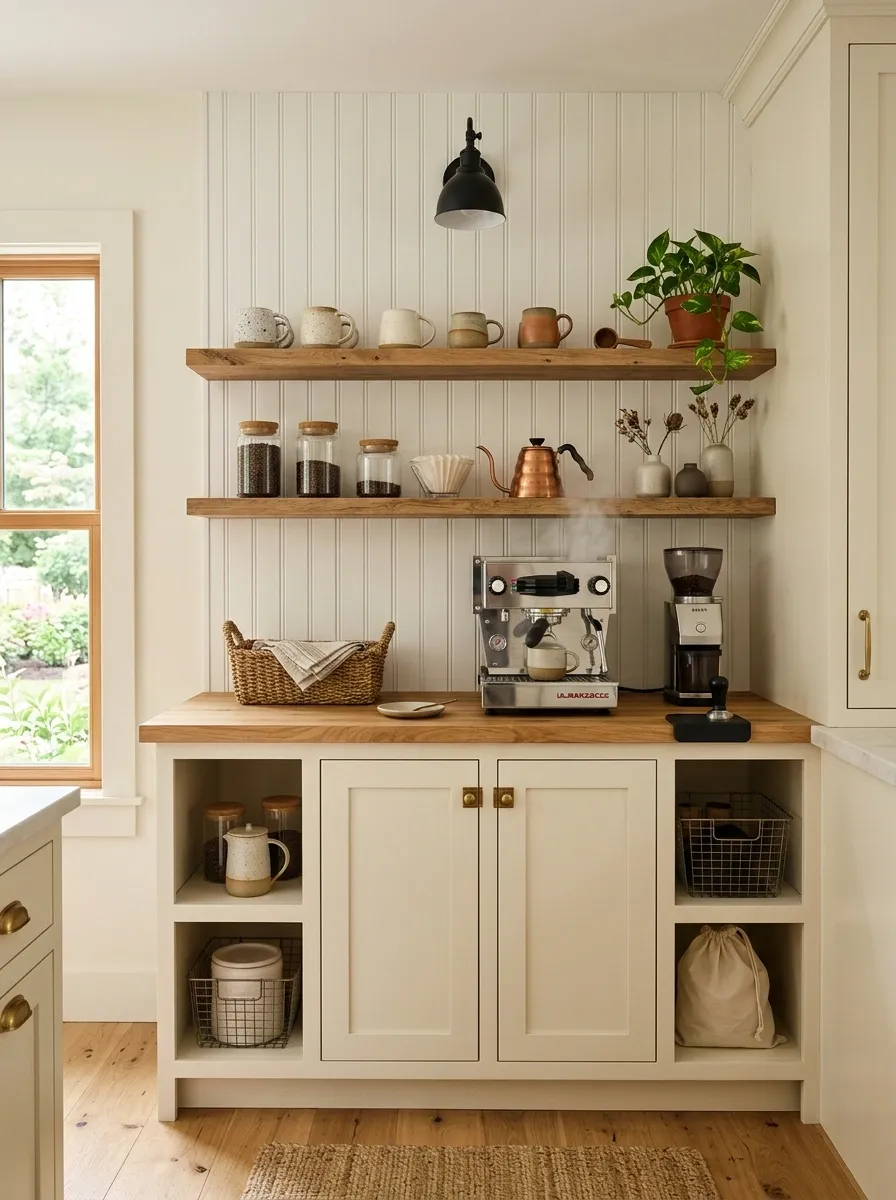
This combination is practically a farmhouse classic, but the finished composition keeps it from feeling predictable. A thick butcher-block countertop sits above painted cabinetry, while vertical beadboard covers the wall behind the coffee station. Open shelving adds height without making the arrangement feel like a row of upper cabinets.
The materials are doing different jobs. Beadboard creates vertical rhythm, butcher block introduces natural movement, and the painted cabinetry gives the eye a calm resting point. White or creamy walls make the whole setup feel lighter, while a single dark fixture adds definition.
There is a reason this combination keeps showing up in farmhouse kitchens. It works. Shocking development for the internet.
Vintage Cream Cabinetry With Rustic Copper Accents
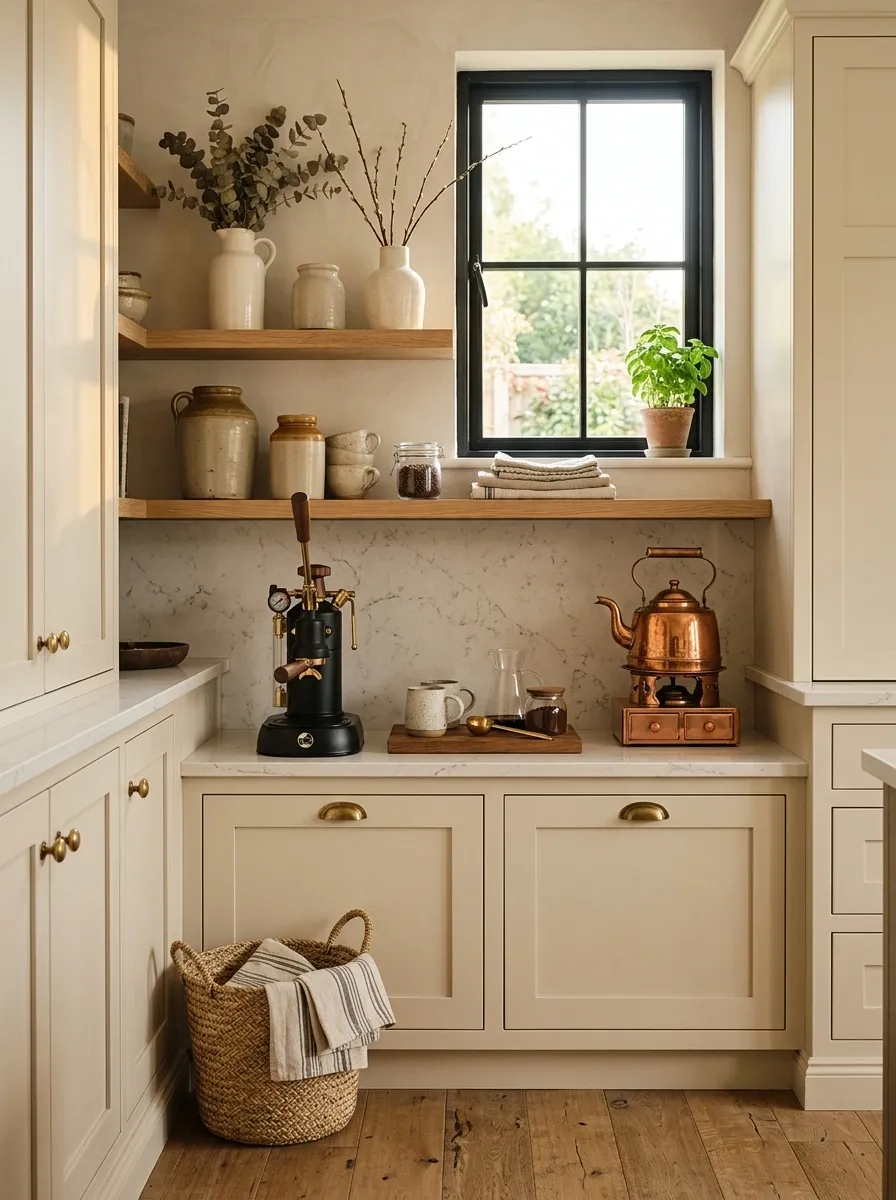
Cream cabinetry gives this coffee bar a softer, older-kitchen character, while copper accents add a warm glow that feels especially natural beside oak shelves and aged ceramics. The counter stays simple, allowing the metal details and creamy cabinet color to carry the personality.
This design is less about obvious farmhouse symbols and more about warmth. Copper can easily become too orange or decorative, so keep it limited to a few functional pieces or small hardware details. Natural wood helps absorb some of that shine and makes the whole station feel more grounded.
The final look feels collected over time rather than ordered in one afternoon from a farmhouse décor starter pack. Which, aesthetically speaking, is a win.
Farmhouse Coffee Bar With Sink and Prep Counter
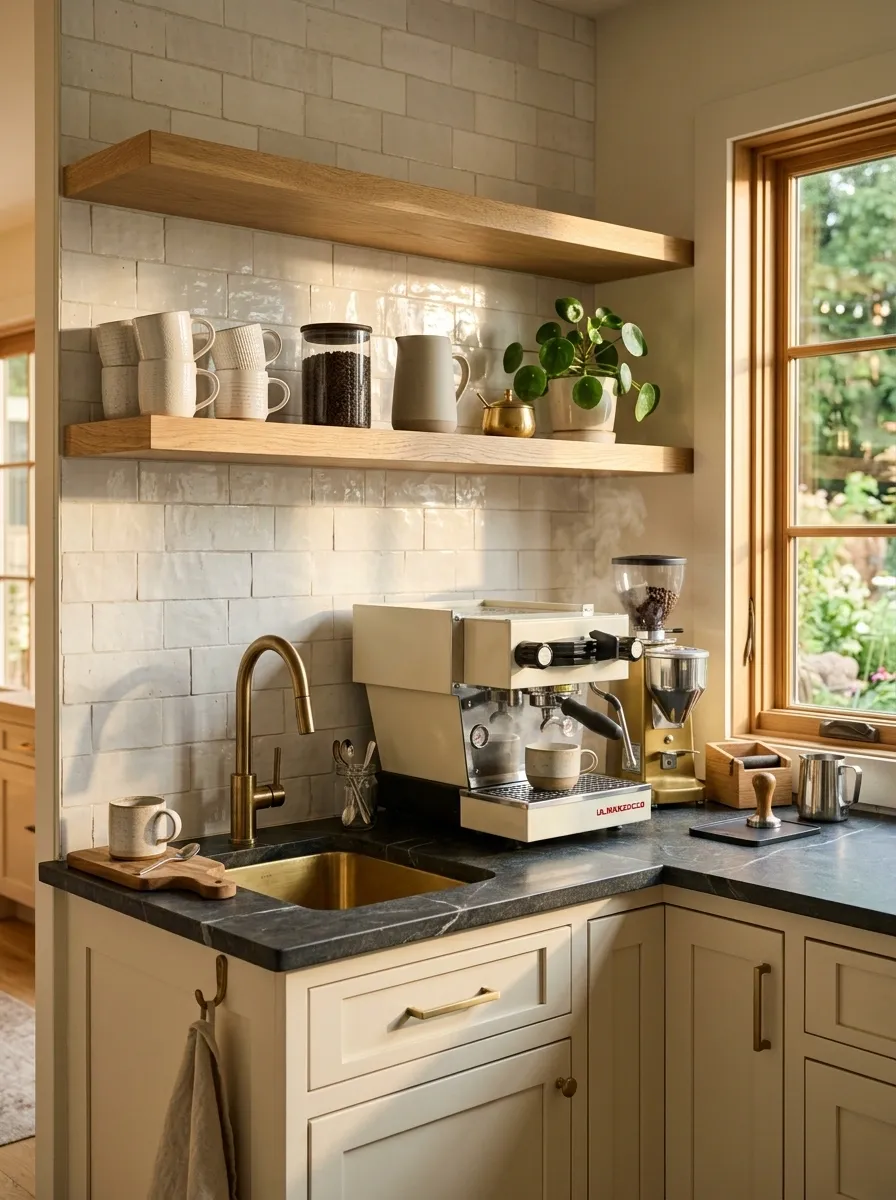
This is the farmhouse coffee bar for homes where the coffee station actually gets used hard every morning. A compact sink sits beside the brewing area, with painted lower cabinetry, a warm wood or stone counter, open shelving, and a simple backsplash tying everything together. The layout feels more like a miniature prep kitchen than a decorated corner.
The sink changes the whole setup because rinsing, filling, brewing, and serving happen in one place. That keeps the station practical without making it look industrial. Closed drawers below can hold the less attractive equipment, while the counter stays clear enough to work comfortably.
A pretty coffee machine is nice. A coffee machine with somewhere to rinse the filter without walking across the kitchen is nicer.
Whitewashed Rustic Coffee Bar With Exposed Wood Beam
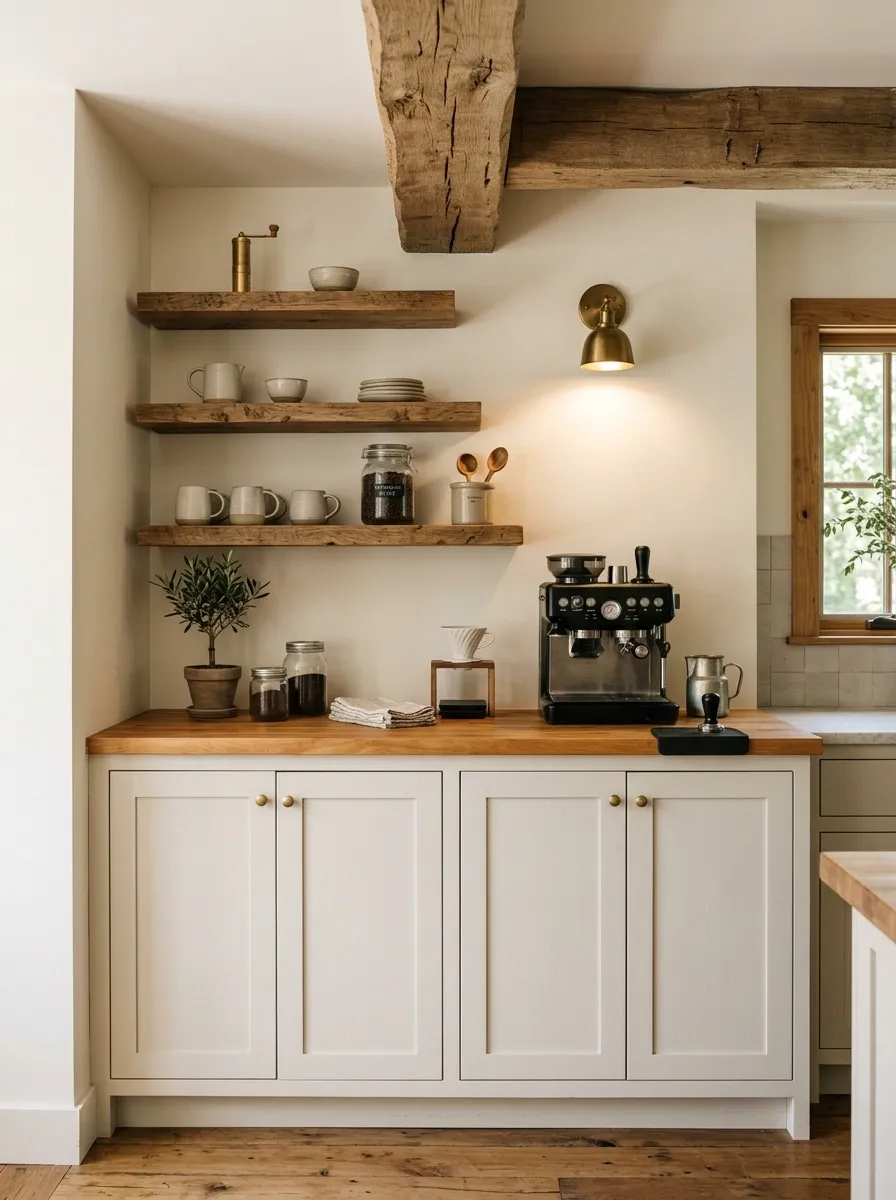
An exposed timber beam gives this coffee bar a strong architectural identity before a single mug lands on the shelf. Whitewashed walls and simple painted cabinetry keep the background airy, while a warm countertop and restrained wood shelving echo the beam above. A single pendant or compact sconce reinforces the vertical structure.
The beam works because it belongs to the architecture. That makes the rest of the styling easier. There is no need to recreate rustic character with excessive distressed accessories when the ceiling has already handled the assignment.
Keep the cabinetry simple and let the timber remain slightly imperfect. A heavily polished beam would lose some of the charm. The whole idea works because it feels inherited, not manufactured to look old last Tuesday.
Farmhouse Coffee Bar With Furniture-Style Cabinet Legs
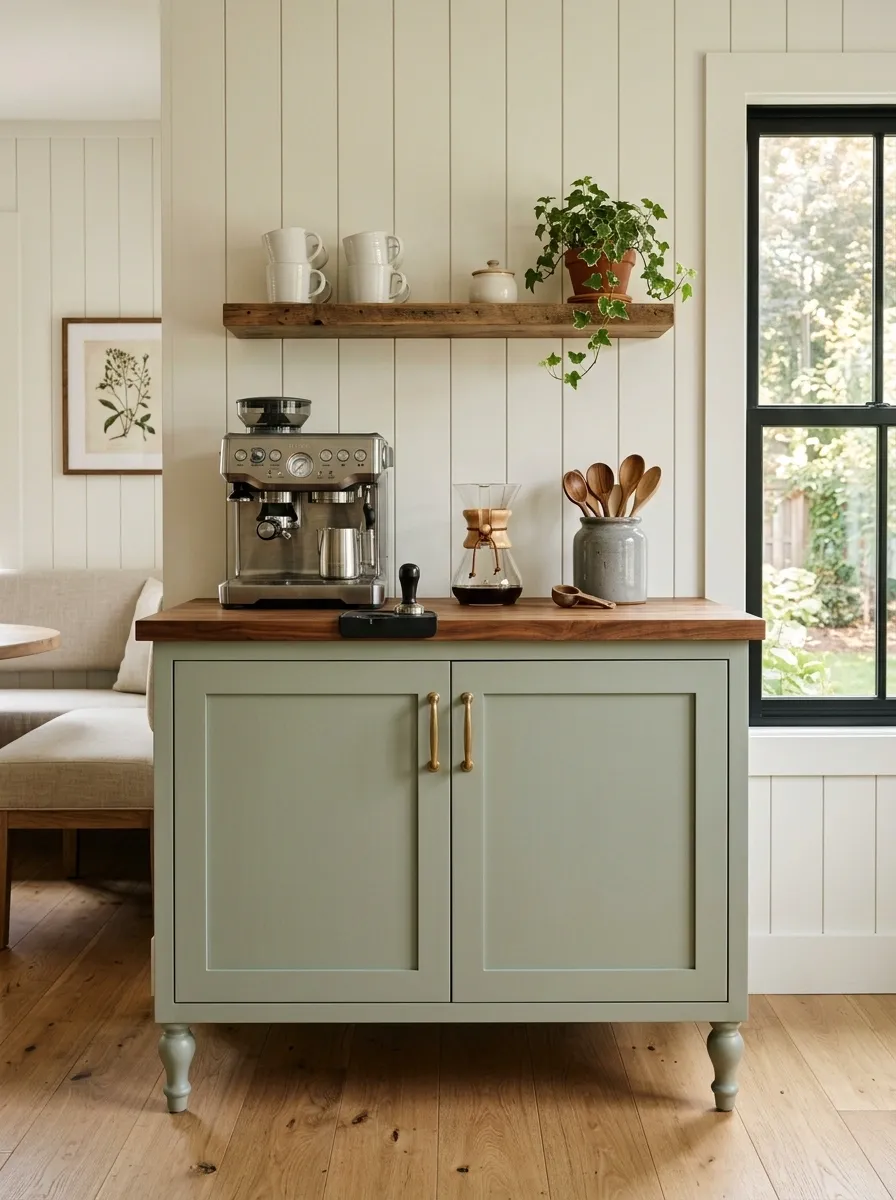
This station looks less like standard kitchen cabinetry and more like a custom piece of furniture. A painted base cabinet sits on furniture-style legs, topped with a warm wood counter and framed by simple wall paneling. Open shelving or a single upper cabinet completes the setup without making it feel like another full kitchen run.
The legs create a small visual break between the cabinet and floor, which makes the coffee bar feel lighter and more furniture-like. That matters in dining rooms, breakfast areas, and older kitchens where a wall of continuous cabinetry might look too heavy.
This is also a good reminder that farmhouse style is often about proportion, not decoration. Give a cabinet nice legs and suddenly it has opinions.
Narrow Hallway Coffee Bar With Vertical Storage
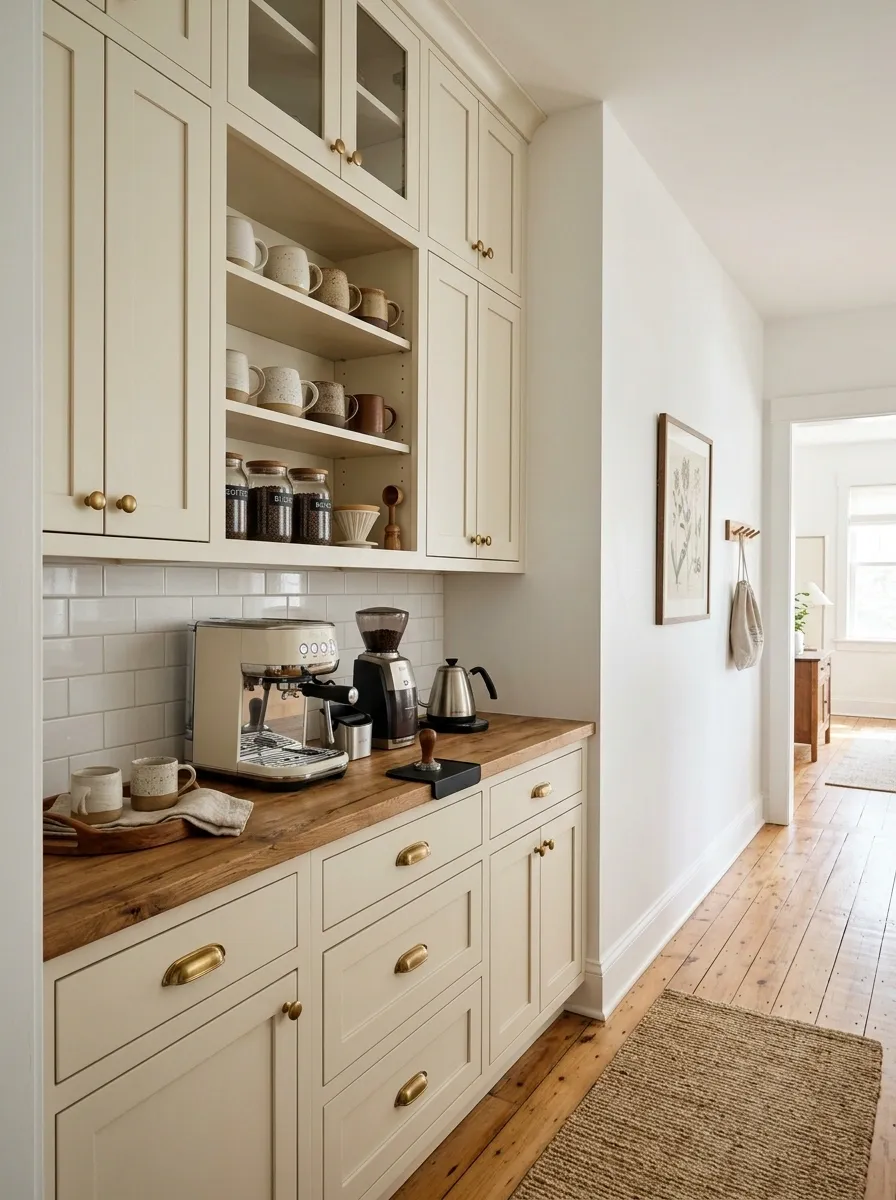
A narrow hallway or utility wall can become a surprisingly useful coffee station when the design works upward instead of outward. A shallow counter handles the brewing equipment, while tall cabinets and vertical shelving provide storage without eating into the walkway. Light painted cabinetry, warm wood, and a simple backsplash prevent the narrow zone from feeling boxed in.
The proportions are everything here. The station should stay visually slim, with storage concentrated above or beside the working surface. Leave enough clear passage around it so the coffee bar does not turn the hallway into an obstacle course before breakfast.
Tall storage is doing the heavy lifting. The floor area stays small while the wall gets put to work. Finally, a vertical space contributing to society.
More storage happens above the counter, not across the floor.
Modern Farmhouse Coffee Bar With Soft Gray Cabinetry
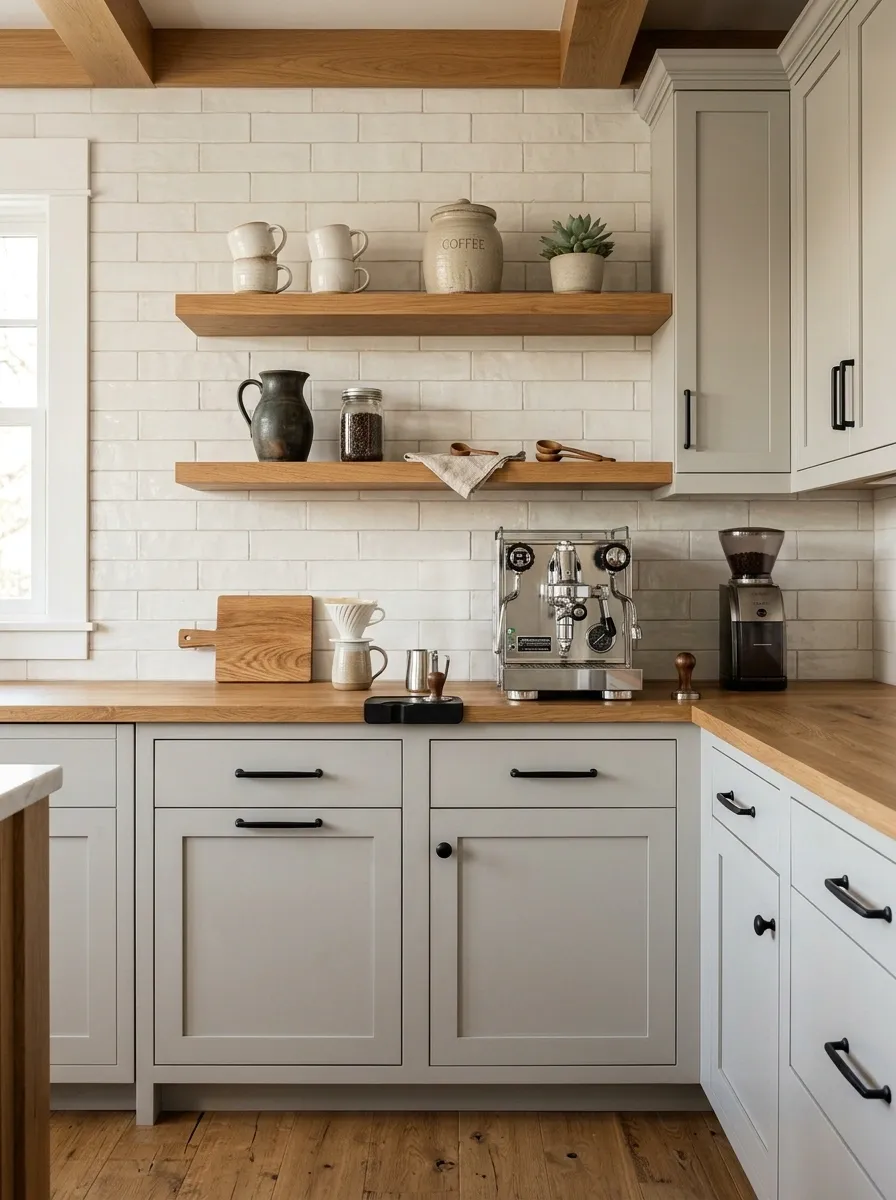
Soft gray cabinetry gives this coffee bar a cleaner, more contemporary farmhouse direction. Warm oak shelves and a wood counter prevent the gray from feeling cold, while creamy tile keeps the backdrop soft. Black hardware gives the composition definition without pushing it into industrial territory.
The shape of the cabinetry should stay simple and traditional, while the styling remains edited. That combination creates the modern farmhouse effect through proportion and restraint instead of trendy accessories. A single vintage vessel can add character, but the room does not need an entire antique market squeezed onto one shelf.
The result feels current without looking like it was designed specifically to survive an algorithm trend cycle. Which is probably good news for the kitchen.
Cleaner styling.
Farmhouse Coffee Bar With Open Plate Shelving
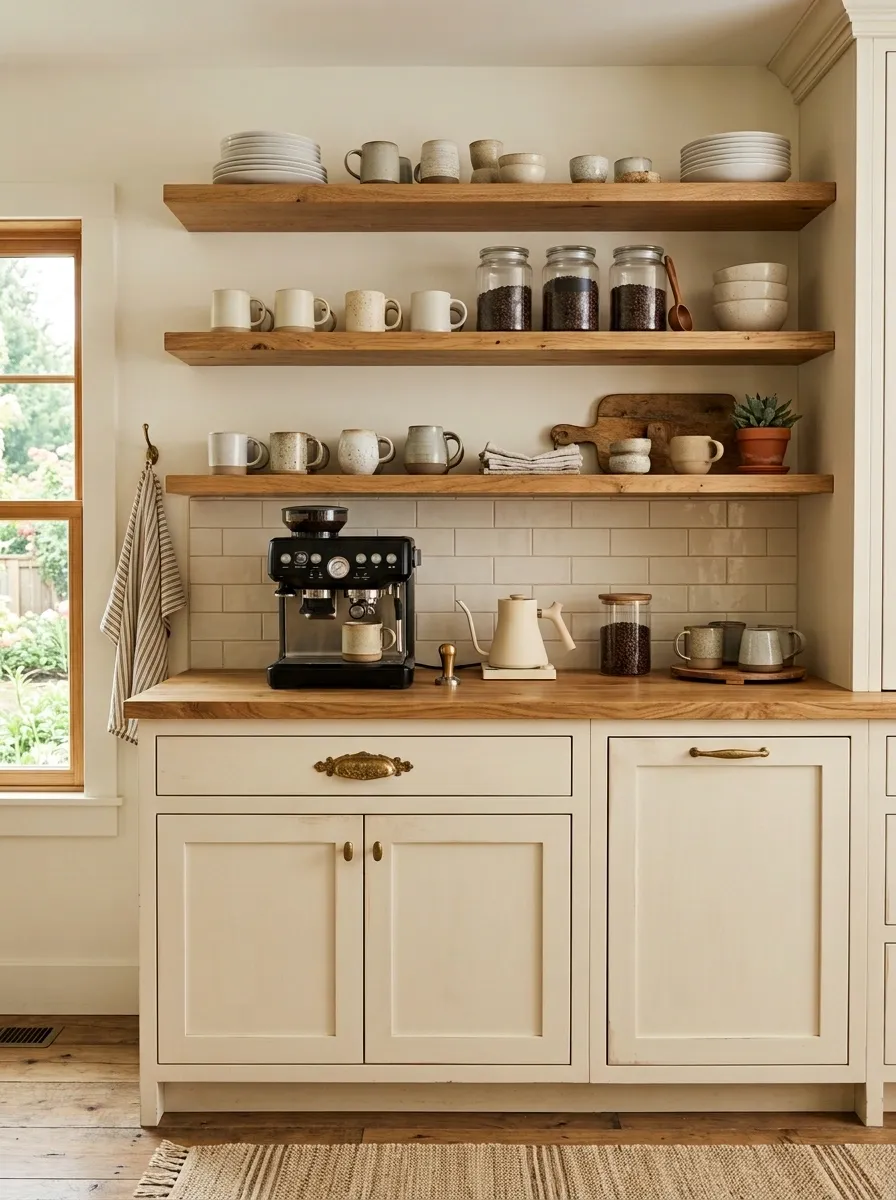
Broad open shelves make this coffee bar feel more like a traditional farmhouse kitchen than a modern appliance station. Painted lower cabinets support a warm wood counter, while the upper shelves display stacked plates, mugs, bowls, glass jars, and a few serving pieces. A pale backsplash keeps the wall behind everything from becoming too visually busy.
The shelves should feel useful first and decorative second. Larger plates can anchor the ends, everyday mugs can sit within easy reach, and smaller pieces can fill the middle without creating a wall of stuff. Empty space matters just as much as the objects.
The trick is editing. A shelf full of beautiful things can still look like a shelf full of things. Nobody needs the coffee mugs to form a census.
Tiny Farmhouse Coffee Station on a Console Table
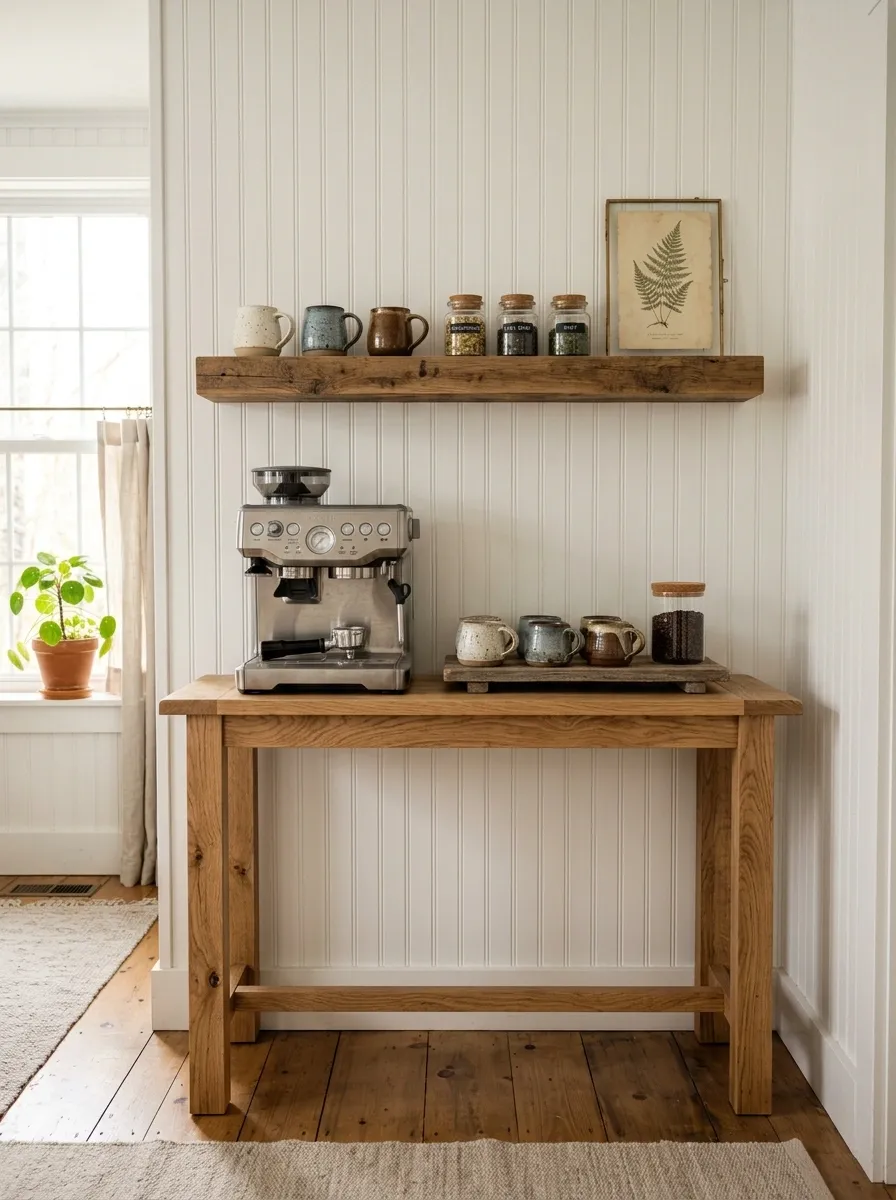
A simple console table can create a convincing farmhouse coffee zone without any cabinetry at all. The table holds the brewer and a small tray for everyday supplies, while a substantial wood shelf above provides height and storage. A paneled or beadboard backdrop gives the wall enough texture to make the arrangement feel intentional, and a small vintage-style frame adds character without taking over.
This setup works especially well where permanent cabinetry would feel excessive. The furniture can remain visually light, and the whole station takes up very little floor space. The key is giving each level a job. The tabletop handles daily use. The shelf handles the small amount worth displaying.
That is the beauty of a compact design: fewer places to hide clutter means fewer opportunities for clutter to start a second career.
Character above.
Farmhouse Coffee Bar With Navy Cabinetry and Warm Oak
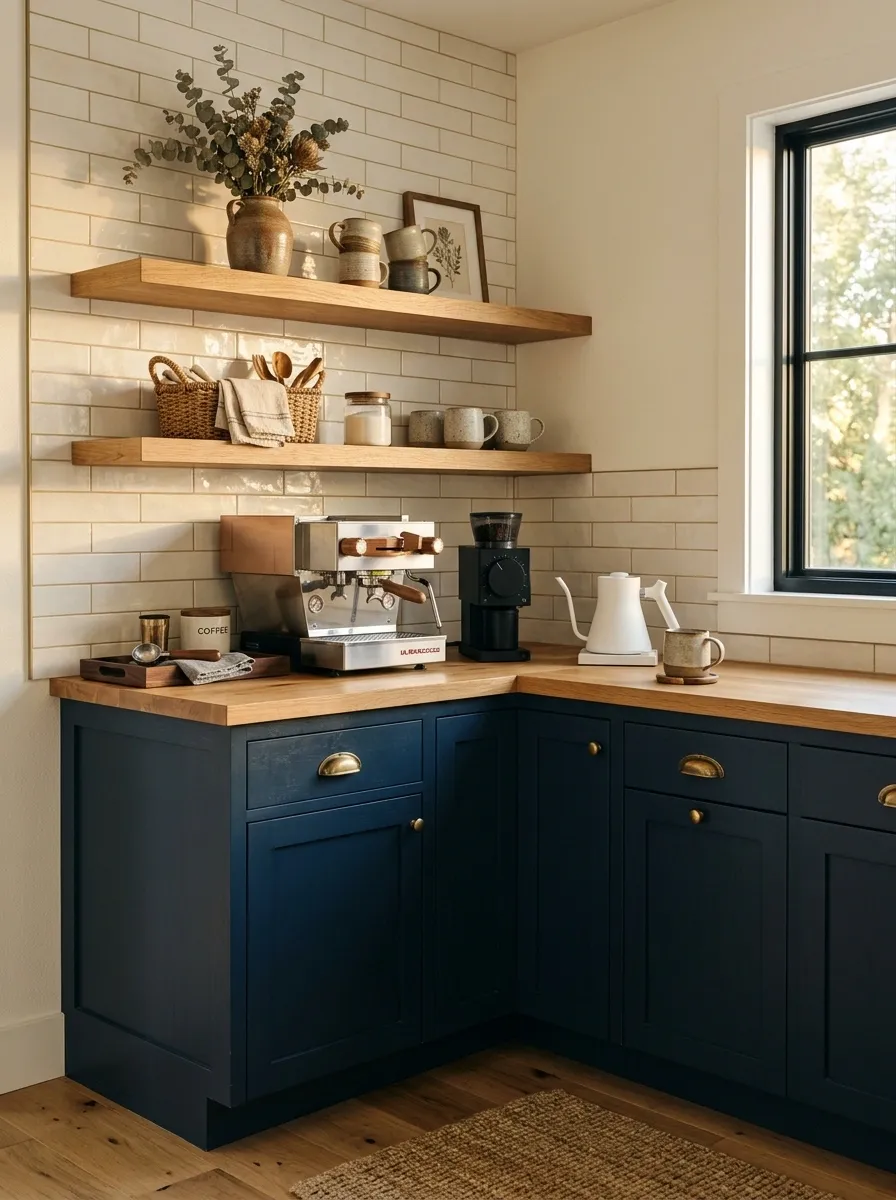
Navy cabinetry gives this farmhouse coffee bar a deeper color statement while warm oak keeps the room grounded. Cream walls and backsplash tile provide the breathing room, while aged brass hardware introduces a softer metallic accent. The counter can stay in natural wood to reinforce the warmth and connect the lower cabinets with the surrounding shelves.
Unlike the darker charcoal design, navy feels slightly softer and more traditional. That makes the composition work well in kitchens with classic millwork, warm floors, or traditional furniture nearby. Keep the upper portion light so the navy remains a strong base rather than turning the entire station into one dark block.
It has the confidence of a dramatic color choice without screaming, “Look, everyone, there is COLOR happening.”
Collected Farmhouse Coffee Bar With Vintage Furniture Mix
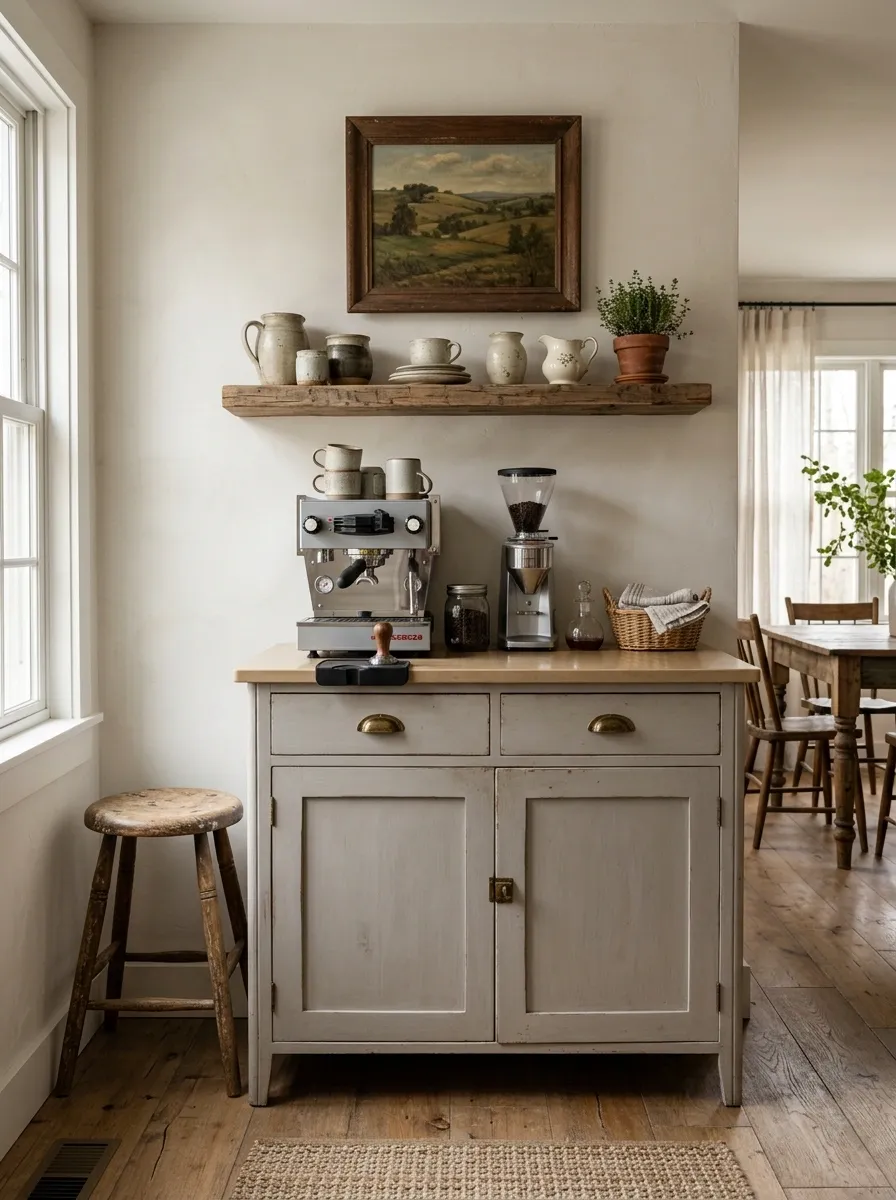
This coffee bar feels assembled rather than installed. A painted furniture-style cabinet anchors the station, while a reclaimed wood shelf, vintage stool, old framed artwork, ceramic vessels, and modern coffee equipment come together as one layered composition. The mix of old and new gives the setup the feeling of a real room that has evolved over time.
The secret is giving each period its own role. Vintage furniture supplies character. Reclaimed wood adds texture. Modern appliances handle the actual coffee business because apparently nostalgia cannot grind beans. Keeping the wall and larger surfaces simple allows the mixed pieces to feel intentional instead of crowded.
This approach works especially well in dining spaces, breakfast corners, and kitchens where a perfectly matched cabinetry package would feel too polished.
Large Farmhouse Coffee Bar With Full Built-In Wall
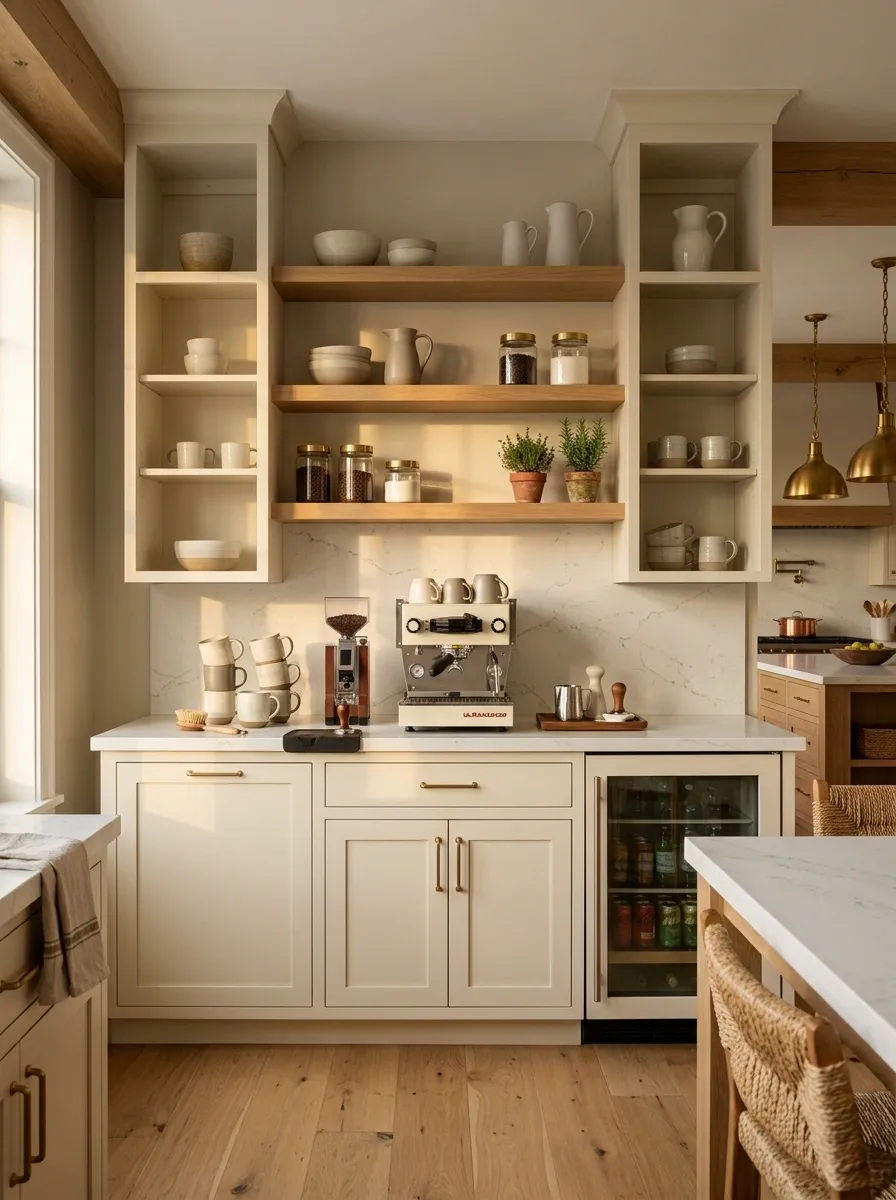
For a home with enough space to make the coffee station a destination, a full built-in wall creates the most complete version of the idea. Lower cabinets provide generous storage, a continuous counter handles multiple pieces of equipment, and a backsplash gives the entire wall one visual foundation. Open shelving adds display, while an appliance garage can hide larger equipment when the station is not in use.
The important part is zoning. The wall should have clear areas for brewing, preparation, storage, and display instead of becoming one long line of cabinets with nowhere to stop visually. Mix closed doors with open sections and keep the tallest elements toward the edges when possible.
This is the grand finale for a reason. It is basically the coffee bar equivalent of saying, “Yes, this deserves its own room,” without actually building one.