
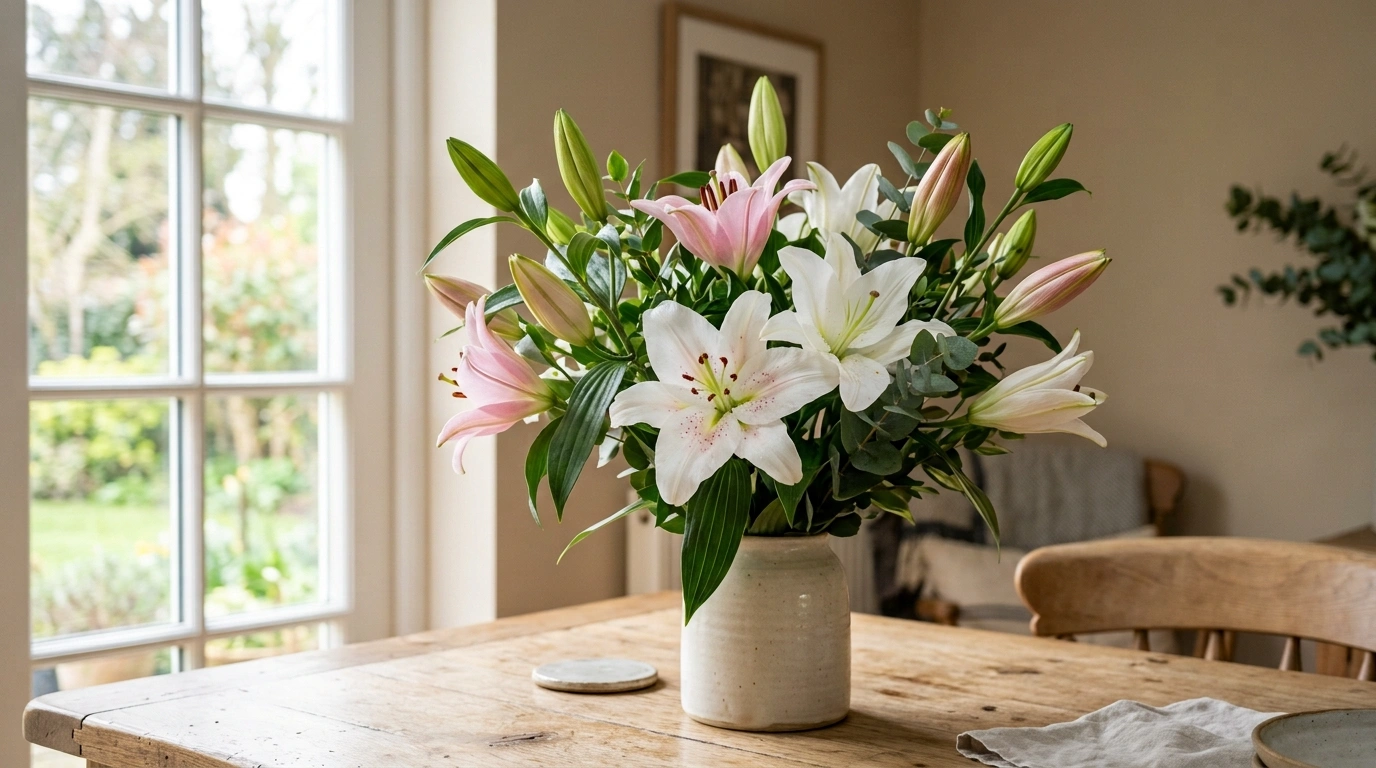
Lily flowers can make a room look polished in seconds, but they can also make a perfectly nice room look like somebody raided a supermarket flower counter five minutes before guests arrived.
The problem usually isn’t the lilies. It’s the styling around them. A crowded vase on a tiny table feels bulky. Tall stems in the wrong spot block the room. A beautiful bouquet surrounded by fifteen little decorations somehow looks less expensive, not more.
Good floral styling comes down to proportion, placement, color, and restraint. That’s especially important in real homes where coffee tables get used, kitchen counters need to stay clear, and bedside tables already have enough responsibilities.
The best arrangements don’t scream for attention. They quietly pull a room together. A few well-placed stems can soften hard furniture, fill an awkward corner, brighten a neutral space, or give a plain console the detail it was missing.
And no, every surface does not need flowers. That idea needs to retire immediately.
Pretty flowers are not the problem. Bad placement is.
A giant bouquet crammed onto a tiny table isn’t “lush.” It’s a hostage situation. Lilies look best when the stem height, vase shape, room size, and surface actually make sense together.
Stylish Ways to Decorate Your House With Lily
Create a Vibrant Lily Display
Rich pink lilies bring an undeniable energy to a traditional wooden console, but keeping it balanced requires careful placement.
Choose a classic clear glass vase to let the sturdy stems shine while anchoring the rich floral tones against warm wood.
Surround the arrangement with thoughtful accents like a simple white container and a candle to let the flowers take center stage.
Place Tall White Lilies in a Narrow Entryway Vase
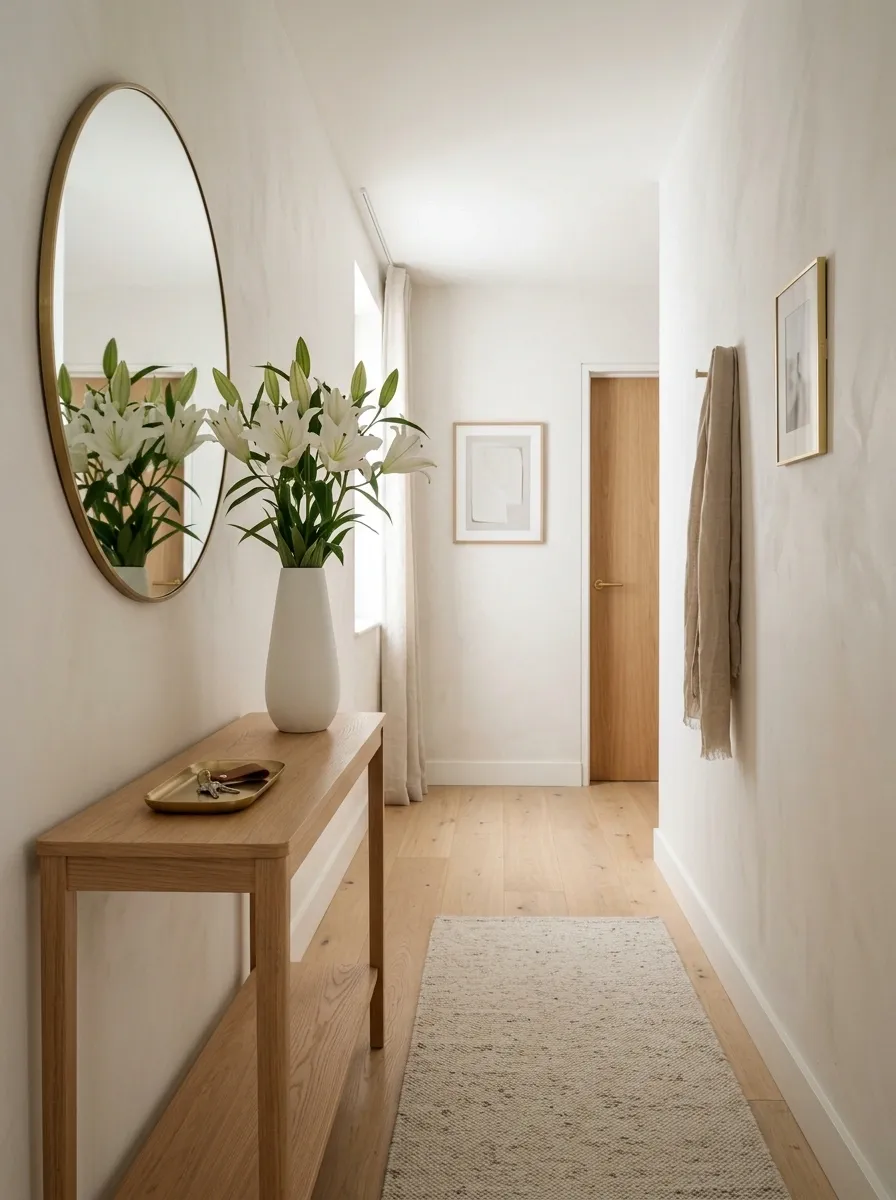
A narrow entry table doesn’t need a giant arrangement taking up every inch of usable space.
Tall white lilies solve the problem because their height draws the eye upward while their slim stems keep the surface open. Use a tall, simple vase and let a few stems rise above the rest instead of creating one dense flower ball. Leave space beside the vase for keys, a small tray, or nothing at all. Empty space is doing actual work here.
Style Lilies on Accent Books
A bedside table or accent shelf needs height variation without feeling cluttered or overcrowded.
Resting a sleek glass vase on top of a neutral coffee table book adds instant architecture and layered texture.
Keep surrounding accessories minimal, allowing the crisp white blooms and clean stems to breathe within the space.
Build a Low Lily Centerpiece for the Dining Table
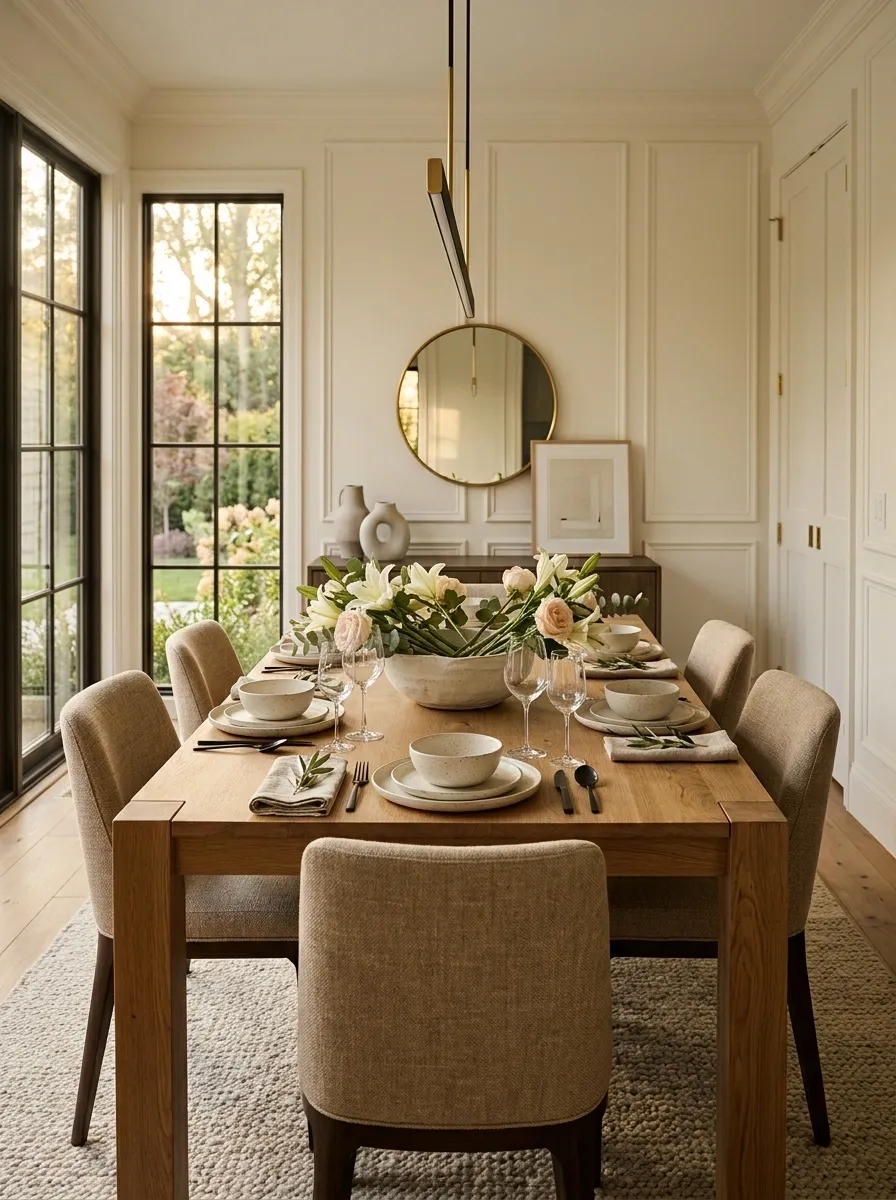
Dining tables need flowers that stay out of the conversation, literally.
Keep the arrangement low and wide enough to feel intentional without forcing everyone to peek around it during dinner. A low ceramic bowl or squat vase gives lilies a grounded shape, especially on a long rectangular table.
Use this order:
- Keep the vase below eye level.
- Spread the stems slightly outward.
- Leave clear space around the centerpiece.
The result feels dressed without turning dinner into a floral obstacle course. Nobody should have to lean sideways just to ask for the salt.
Arrange Calla Lilies in Spherical Vases
Modern seating areas call for clean lines and organic shapes that soften structured furniture.
A round glass bubble vase cradles calla lilies naturally, creating a lush, sculptural statement piece between chairs.
Allow the bright green stems to curve gracefully inside the water, adding a fresh and intentional element to the room.
Use One Oversized Lily Stem on a Bedside Table
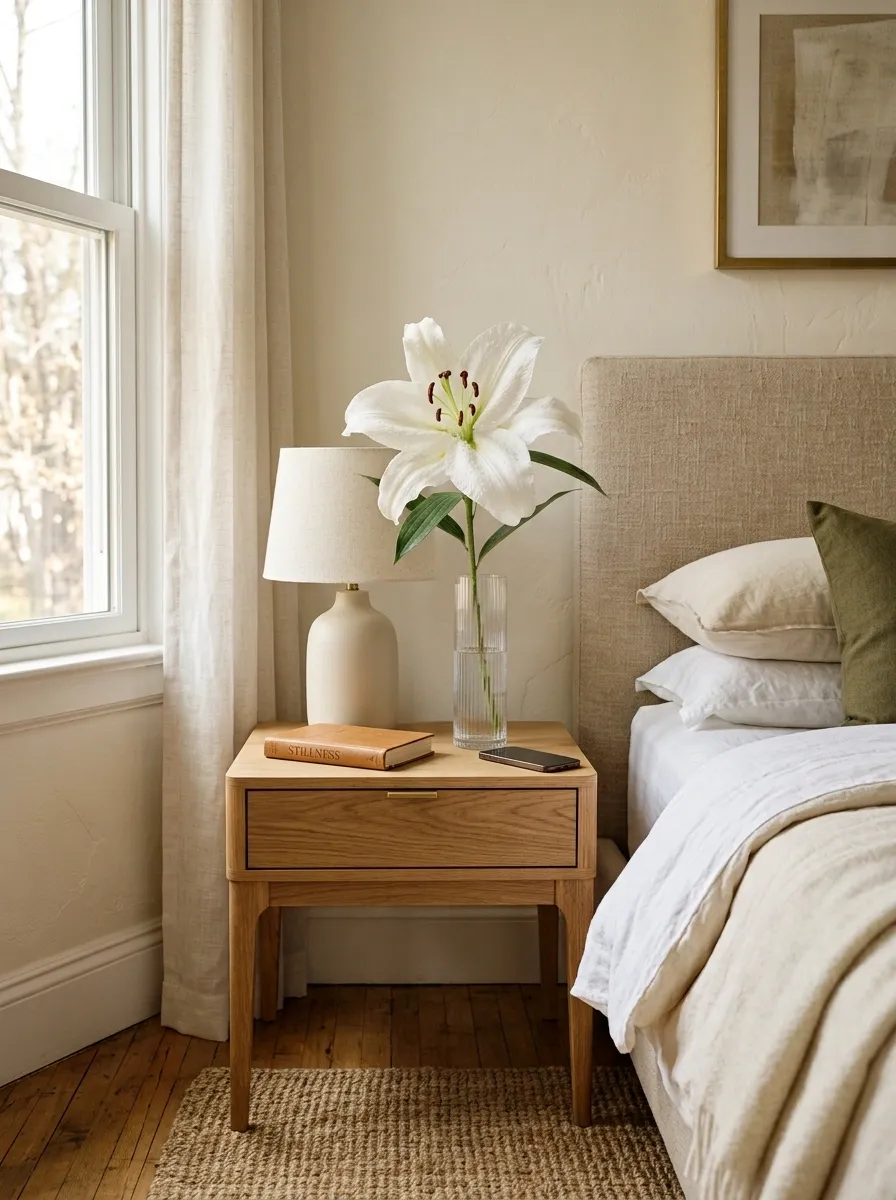
The tiny bedside table has already sacrificed enough space to the lamp, phone, charger, and that mystery glass of water.
One dramatic lily stem gives the surface a finished look without adding visual bulk. Choose a slender vase and let a single bloom sit slightly off-center. The asymmetry keeps it from looking staged, while the open space around it makes the flower feel larger.
Pair White Lilies With Minimalist Lighting
A minimalist white lily arrangement looks effortlessly chic when paired with a dainty brass lamp and stacked books.
Use a smoked grey glass vase to give the white petals a subtle, sophisticated contrast against light backdrops.
Keep the composition tight and purposeful, proving that a single well-styled corner can elevate an entire room.
Group Three Small Lily Arrangements Across a Console
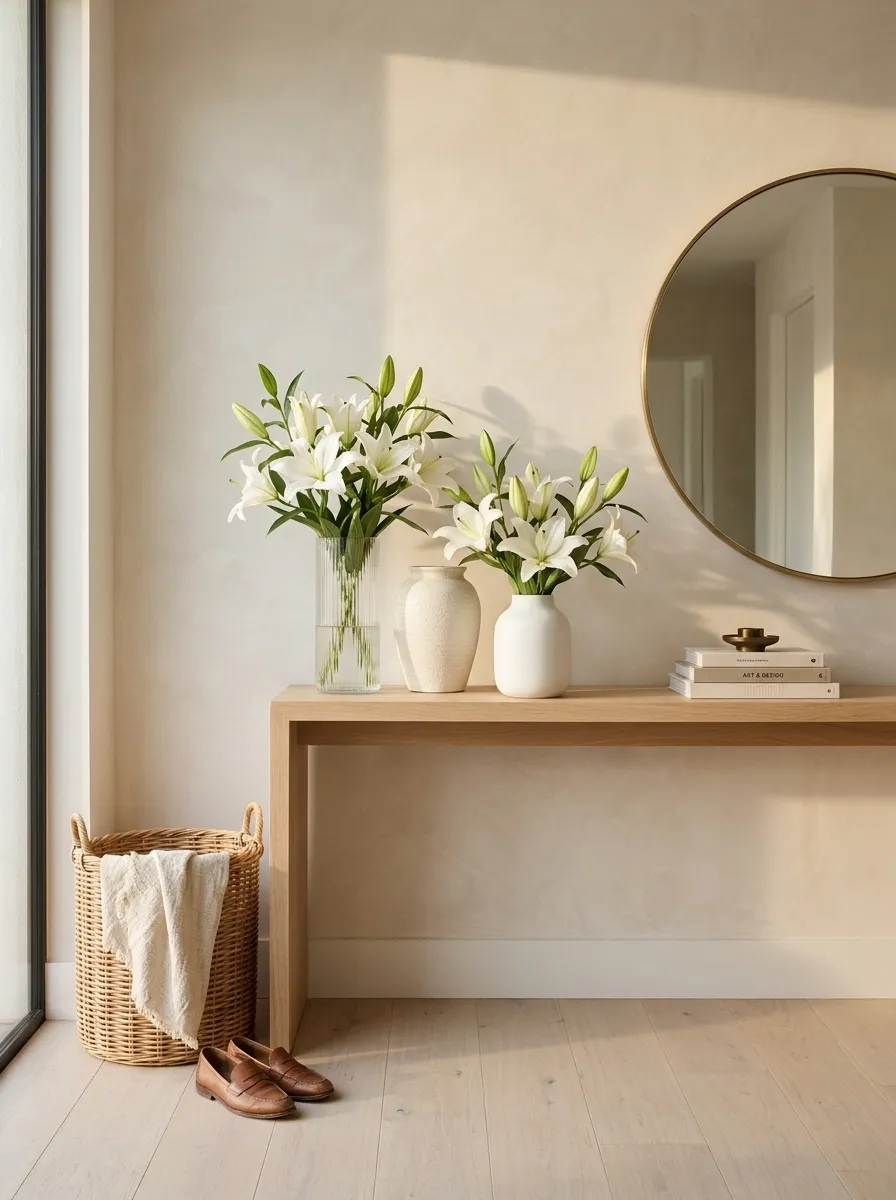
A long console can make one tiny vase look accidentally abandoned in the middle of nowhere.
Three smaller arrangements solve that without creating a single giant bouquet. Use different heights, but keep the flower color consistent so the display still reads as one composition. The spacing matters more than the quantity.
The easiest setup: place the tallest arrangement near one end, a medium vase toward the middle, and the smallest piece near the opposite side.
Don’t line them up like identical contestants waiting for a judging panel. A little imbalance makes the arrangement feel much more natural.
Pair White Lilies With Warm Wood for a Softer Living Room
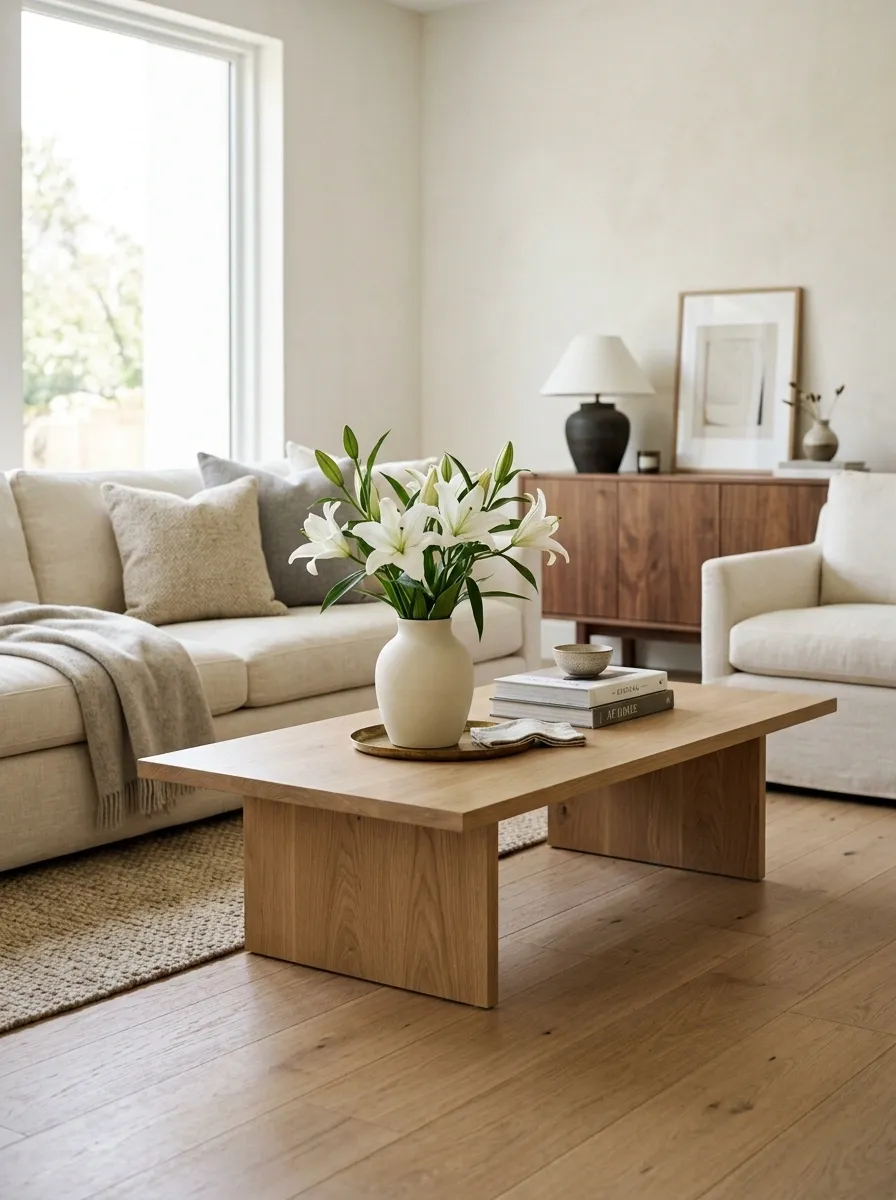
White lilies and warm wood already have the color relationship figured out. The flowers bring crisp brightness, while oak, walnut, cane, or warm wood tones stop the arrangement from feeling cold.
Place the vase on a wooden coffee table, sideboard, or open shelving with only a few supporting pieces nearby. Keep the accessories quiet. The flowers provide the contrast, so adding five more decorative objects defeats the point.
A matte ceramic vase works especially well here because the texture keeps the arrangement grounded while the white blooms stay visually clean.
Style Pink Lilies in a Simple Ceramic Vase
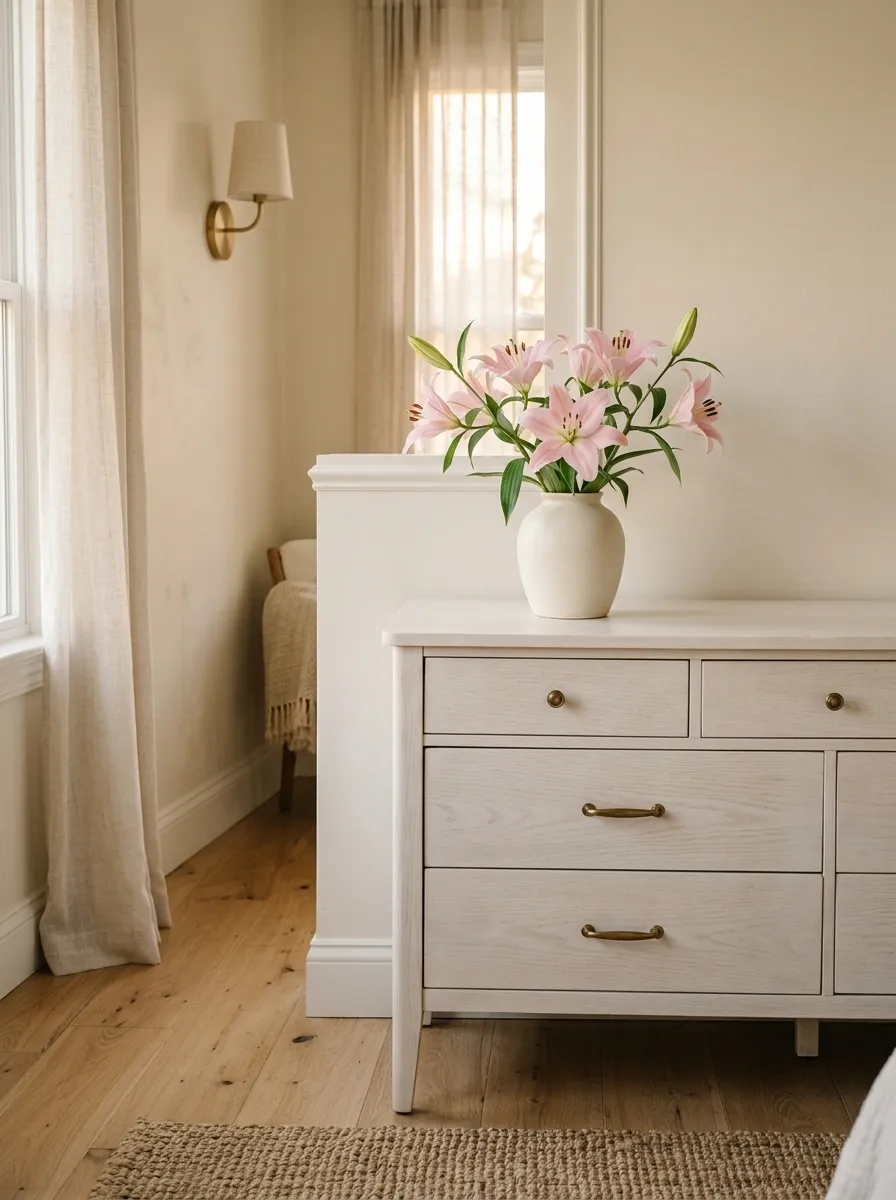
Pink lilies already bring enough personality to the room. The vase doesn’t need to audition too.
Choose a simple ceramic vessel in cream, soft beige, or a muted green, then keep the arrangement loose rather than tightly packed. This works especially well on a bedroom dresser, side table, or a quiet corner of the living room.
Keep the formula simple:
- Soft pink blooms
- One understated vase
- Plenty of clear surface around it
Too many decorative extras make the flowers lose their charm. Suddenly the arrangement is competing with candles, frames, beads, books, and whatever else got invited to the party.
Put Orange Lilies Where the Room Needs a Strong Focal Point
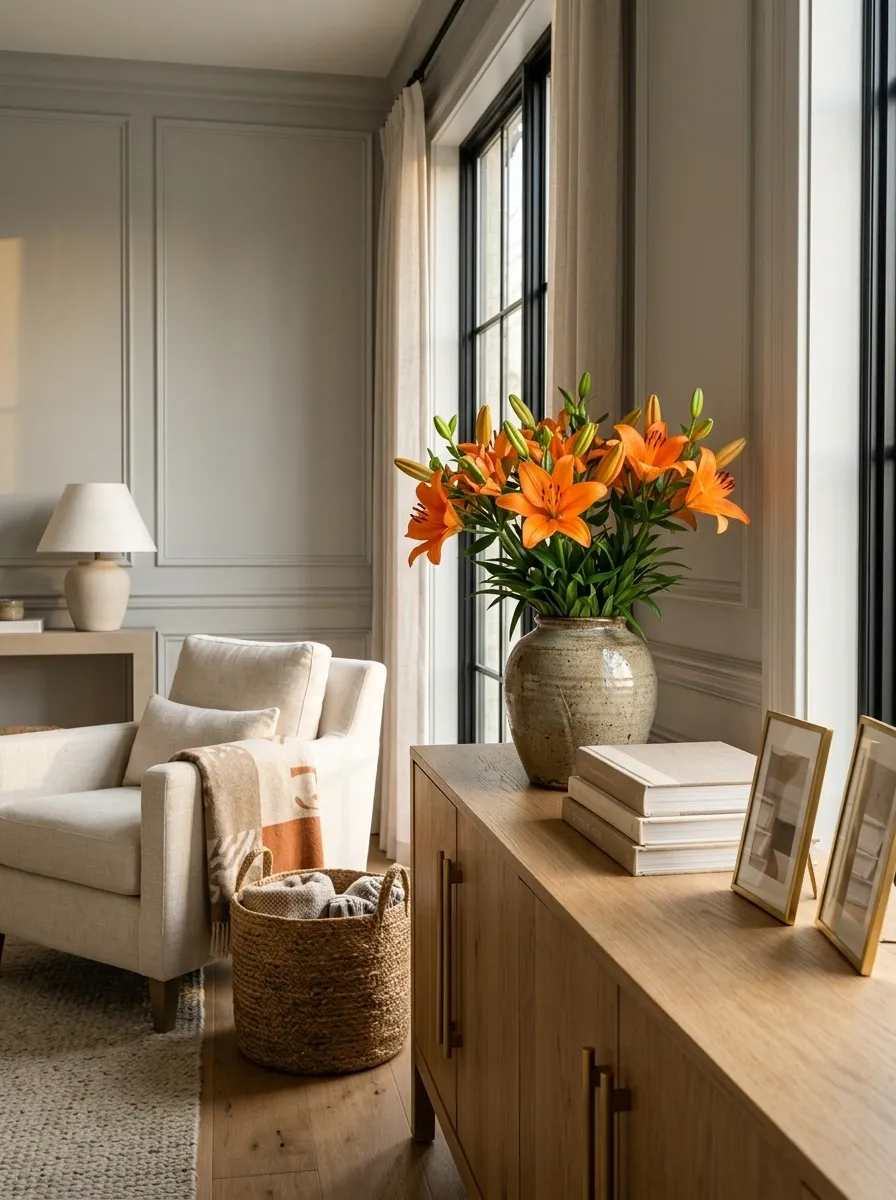
Orange lilies don’t exactly whisper. That’s useful when a room has one dead corner that looks like the furniture stopped halfway through moving in.
Use a fuller orange arrangement on a console, mantel, or large sideboard where it can command attention without fighting another bold centerpiece nearby. Keep the surrounding accessories restrained.
The placement should feel deliberate, not random.
Tuck Short Lily Stems Into a Kitchen Island Arrangement
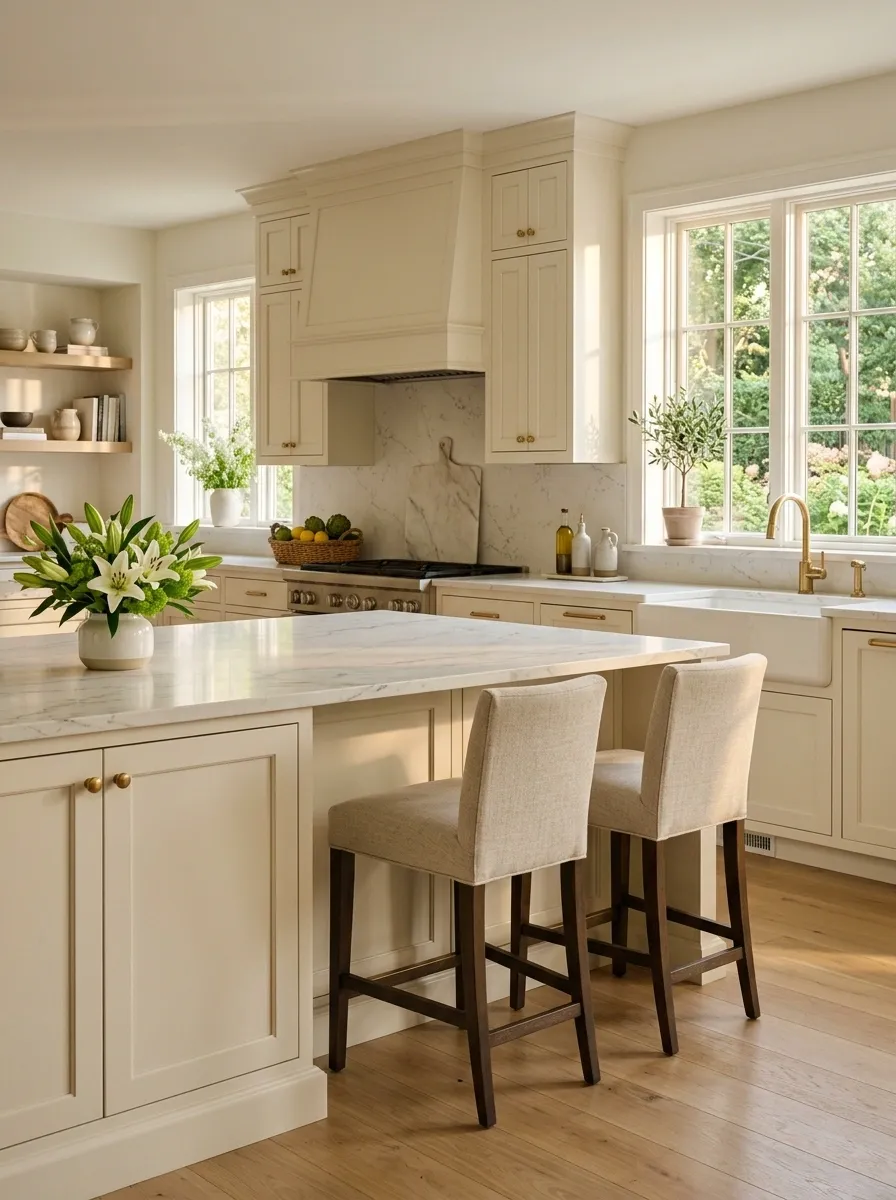
The kitchen island is a working surface, so a towering bouquet in the middle is asking to get knocked over by a cutting board.
Short lily stems work better. Use a compact vase or low vessel and position it toward one side of the island instead of dead center. That leaves the main prep area open and gives the kitchen a small floral moment without turning it into a centerpiece competition.
| Arrangement | Best placement | Why it works |
|---|---|---|
| Short stems | One side of island | Keeps prep space open |
| Medium stems | Breakfast corner | Adds height without blocking sightlines |
| Low arrangement | Center of large island | Works when the island has plenty of open space |
The kitchen should still function like a kitchen. Revolutionary concept, apparently.
Tuck Lilies Into an Awkward Empty Corner
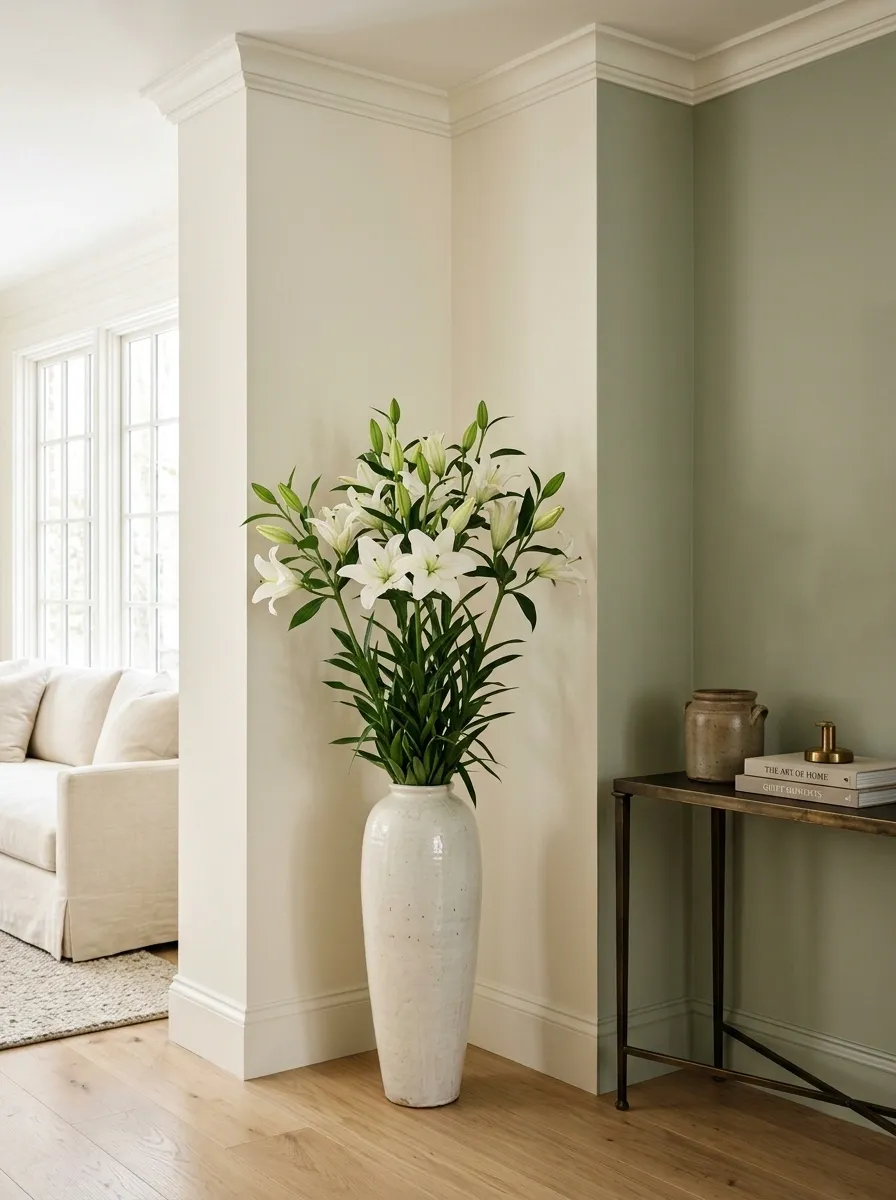
Some corners aren’t large enough for a chair and aren’t useful enough for a cabinet. They just sit there looking unemployed.
A tall lily arrangement can give that awkward spot a reason to exist. Choose a floor vase or a taller vessel on a narrow stand, then let the stems rise naturally instead of spreading them dramatically. This works beside a staircase, near a console, or in an unused living room corner.
The key is verticality. The flowers should fill the dead height, not eat up the floor.
Keep a Small Lily Arrangement Beside the Bathroom Mirror
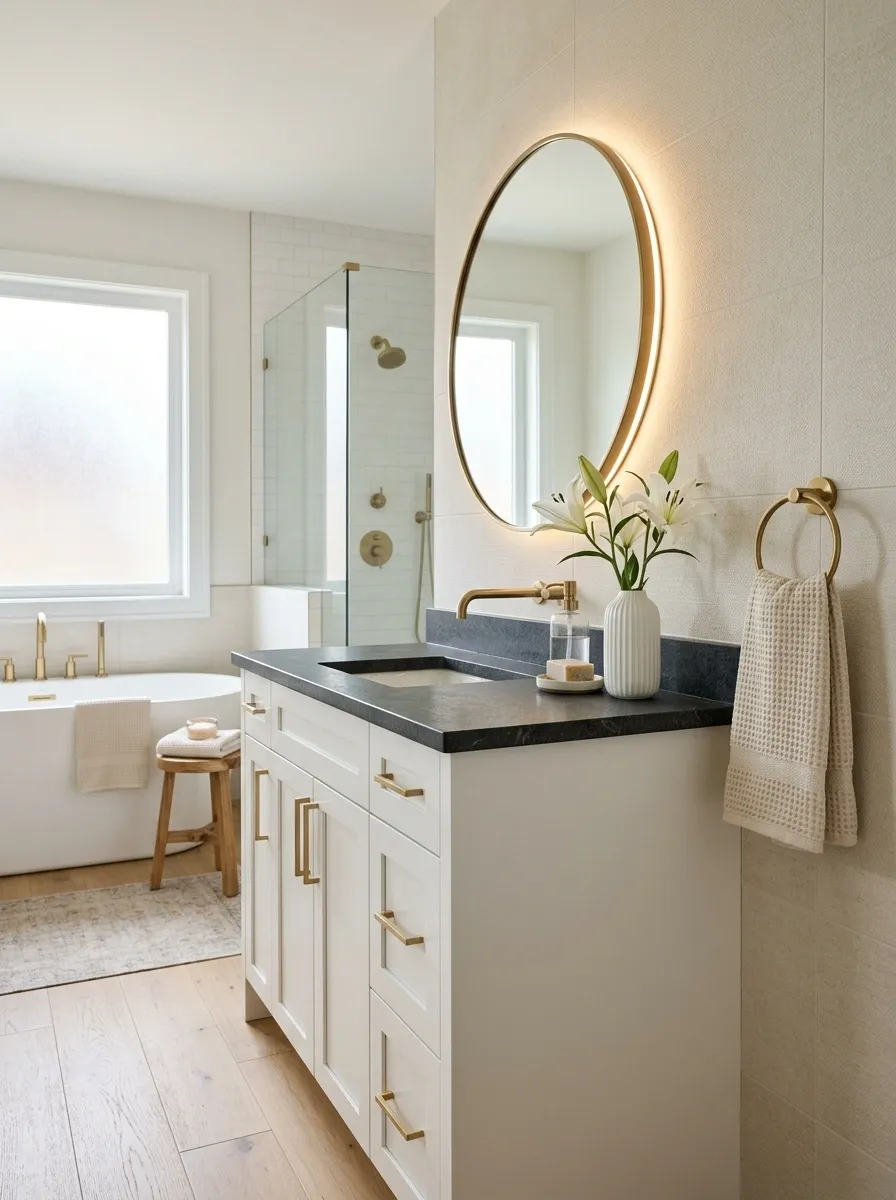
The bathroom rarely needs a huge floral display. A small arrangement beside the mirror does enough.
Use a compact vase with two or three lily stems and place it where it won’t interfere with toiletries, hand soap, or the morning rush. White lilies work especially well against stone, cream tile, wood, and darker finishes because their shape stays crisp.
Bathroom styling rules:
☑ Keep the vessel compact
☑ Leave the sink area usable
☑ Match the vase to an existing finish
☑ Keep the flower color simple
The goal is a fresh detail, not a bathroom jungle.
Mix Lily Stems With Simple Greenery Instead of Busy Filler Flowers
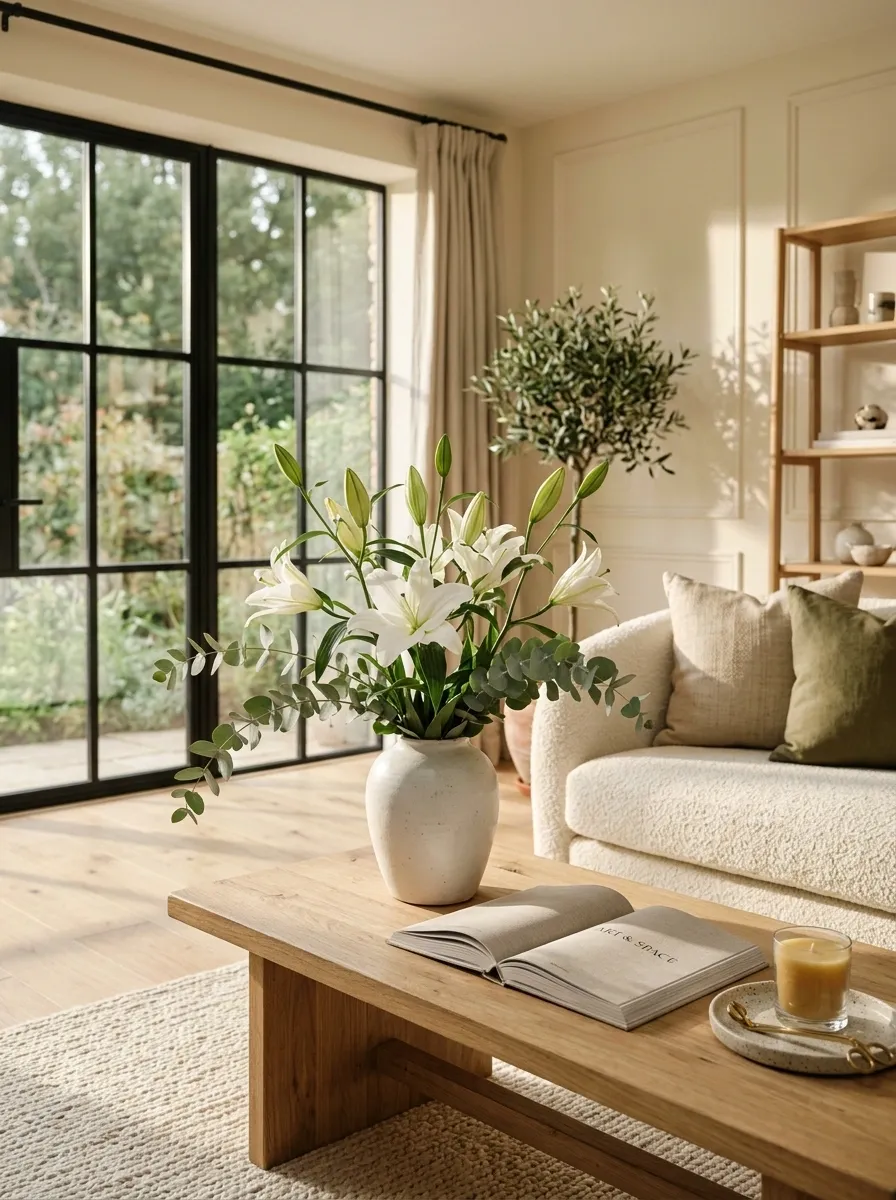
Lilies already have dramatic blooms and long stems. Adding five kinds of filler flowers can turn that clean shape into botanical traffic.
Use just one type of greenery to frame the lilies. Eucalyptus, olive branches, or another simple leafy stem can soften the arrangement without competing with the blooms. Keep the greenery slightly lower than the flowers so the lilies stay in charge.
The trick is restraint: one flower type, one greenery type, one vase.
That gives the arrangement a finished look without making it resemble a floral centerpiece that got lost on the way to a wedding.
Style Lilies in a Clear Glass Vase for a Lighter Look
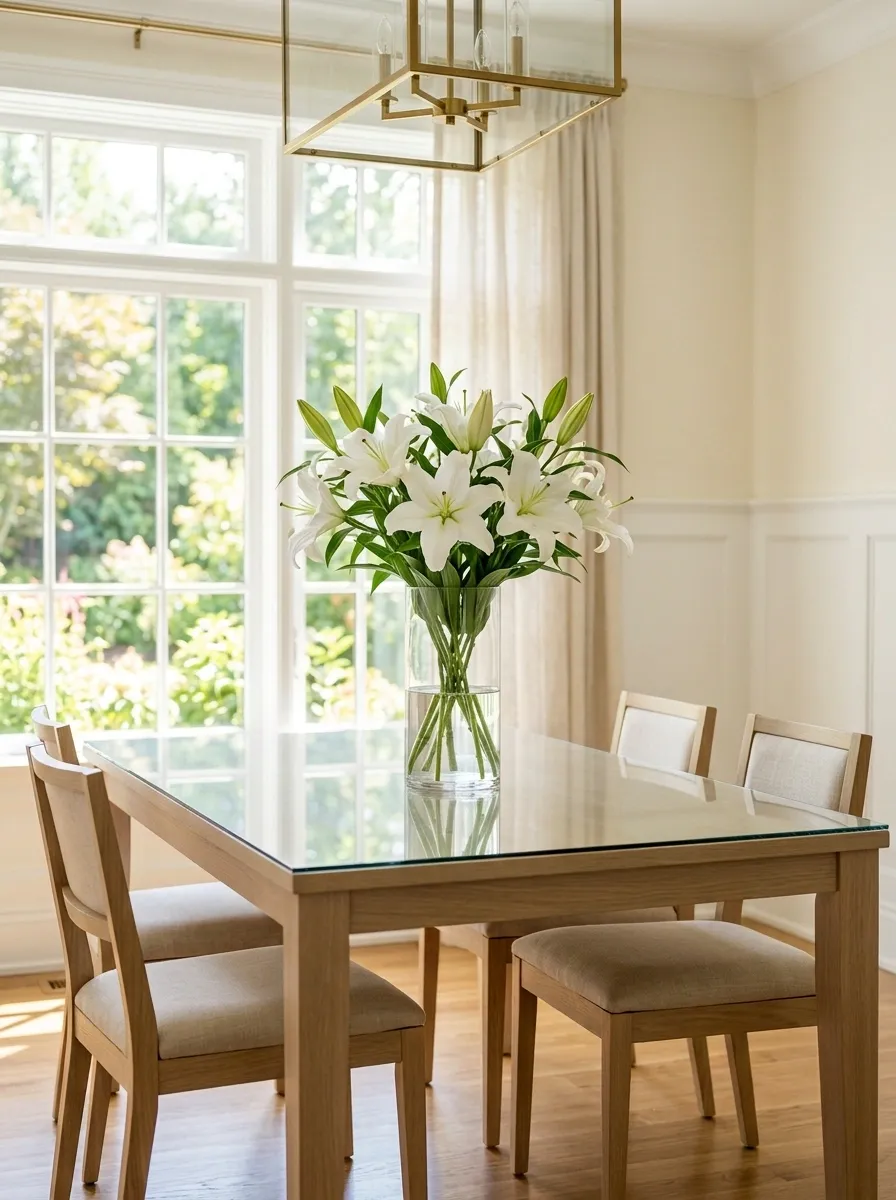
A clear glass vase makes lilies feel almost weightless, especially in rooms with pale furniture, glass tables, or lots of daylight.
Trim the stems cleanly, let the water line stay visible, and avoid cramming too many flowers into the opening. The exposed stems become part of the arrangement, which gives the whole display a simpler, more open look.
Keep these three details visible:
- The natural stem lines
- The water level
- Enough space between blooms
This style works particularly well on dining tables and windowside consoles where heavy ceramics would make the arrangement feel visually dense.
Put a Compact Lily Arrangement on a Coffee Table Tray
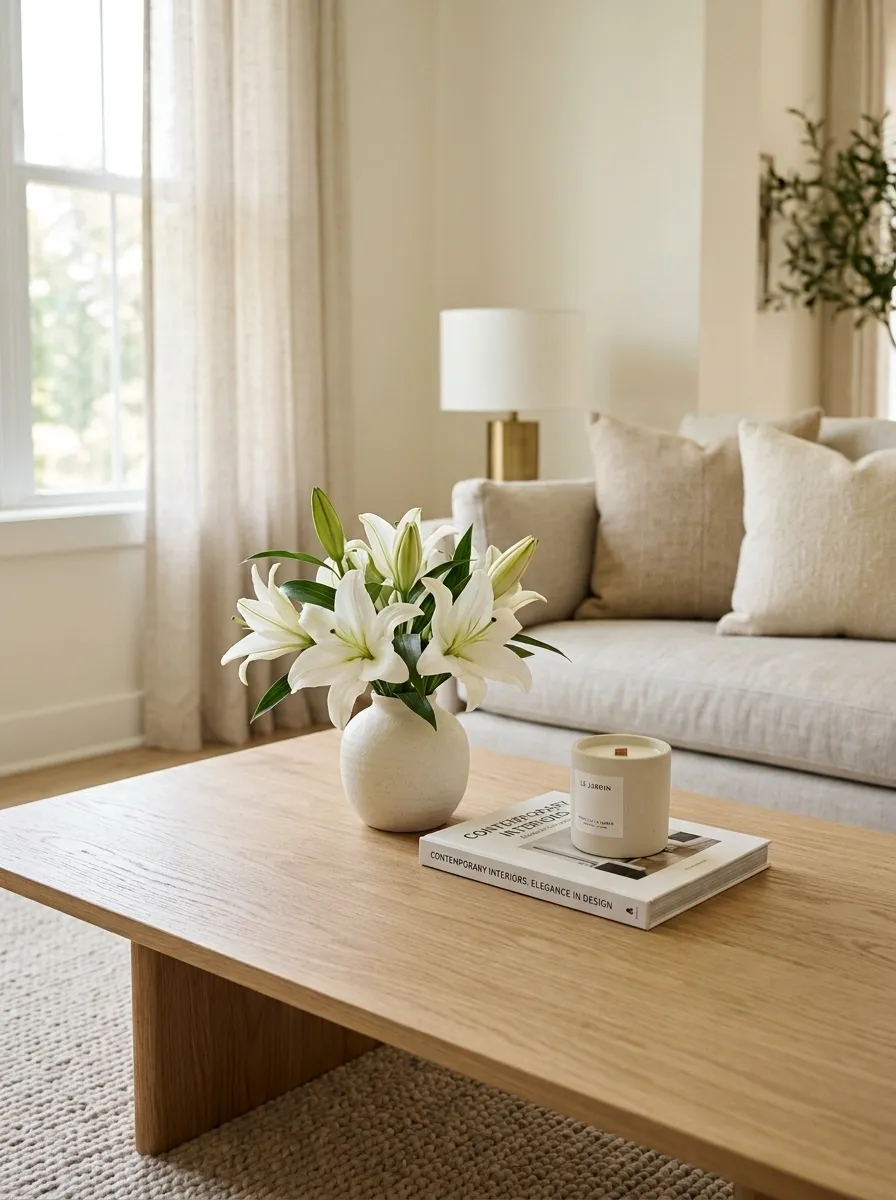
The coffee table gets messy fast. Remote, coaster, book, snack, mystery charger. Adding a huge vase to that situation is bold in the wrong direction.
Place a compact lily arrangement inside a tray instead. The tray creates a visual boundary, while the flowers become the tallest element within it. Keep one or two supporting objects nearby, such as a small book or candle, and stop there.
The arrangement should sit slightly off-center so the composition feels relaxed rather than perfectly staged.
Use One Lily Color Throughout an Open-Plan Space
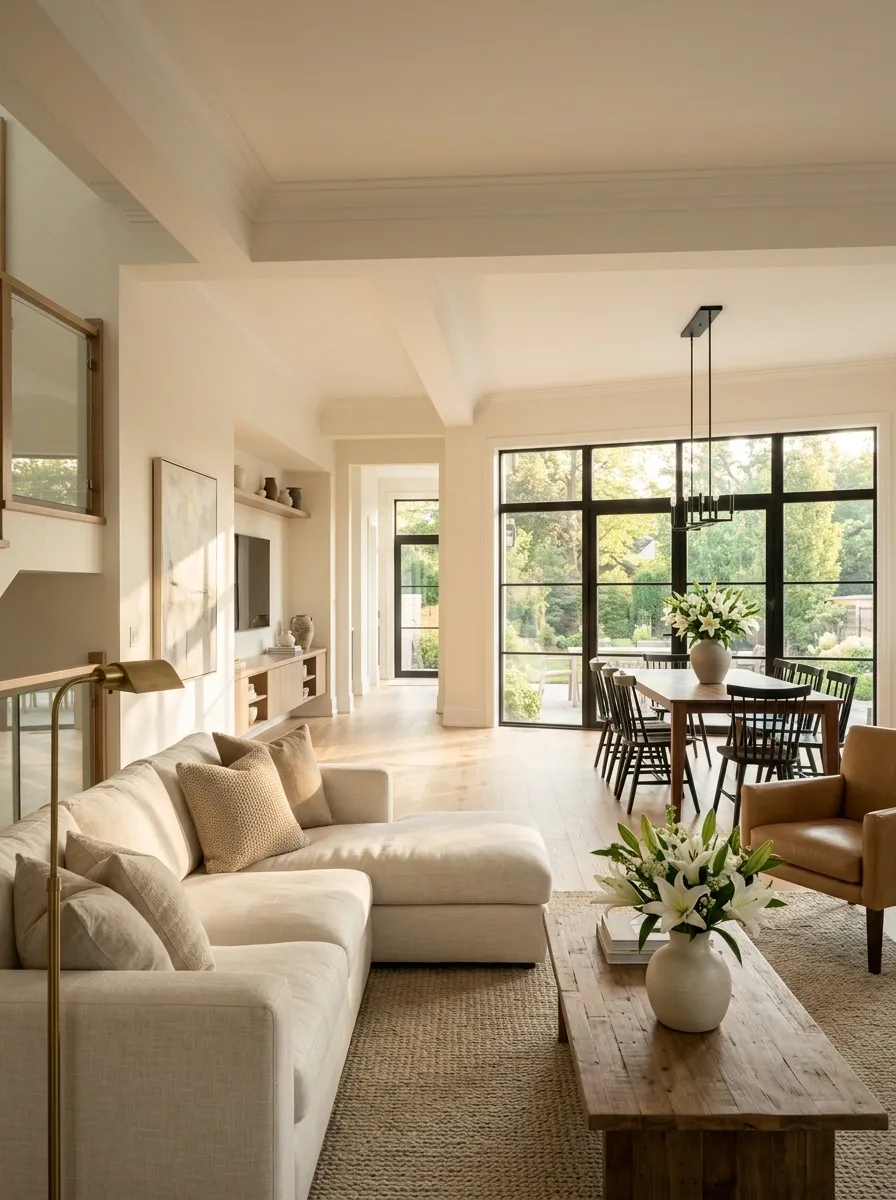
Open-plan rooms need visual repetition or everything starts looking like separate decorating decisions made on different Tuesdays.
Choose one lily color and repeat it in small doses across the connected spaces. White lilies can link a living room to the dining area, while pink or orange can create a warmer thread when those colors already appear in the furniture or accessories.
| Lily color | Works well with | Best effect |
|---|---|---|
| White | Wood, cream, black, stone | Crisp and calm |
| Pink | Beige, cream, warm wood | Soft and relaxed |
| Orange | Neutral upholstery, darker wood | Strong focal color |
| Yellow | Light wood, white, natural textures | Sunny and fresh |
The flowers don’t need to match every room. They just need to repeat one clear idea.
Let Lily Buds Add Shape to a Minimal Dining Room
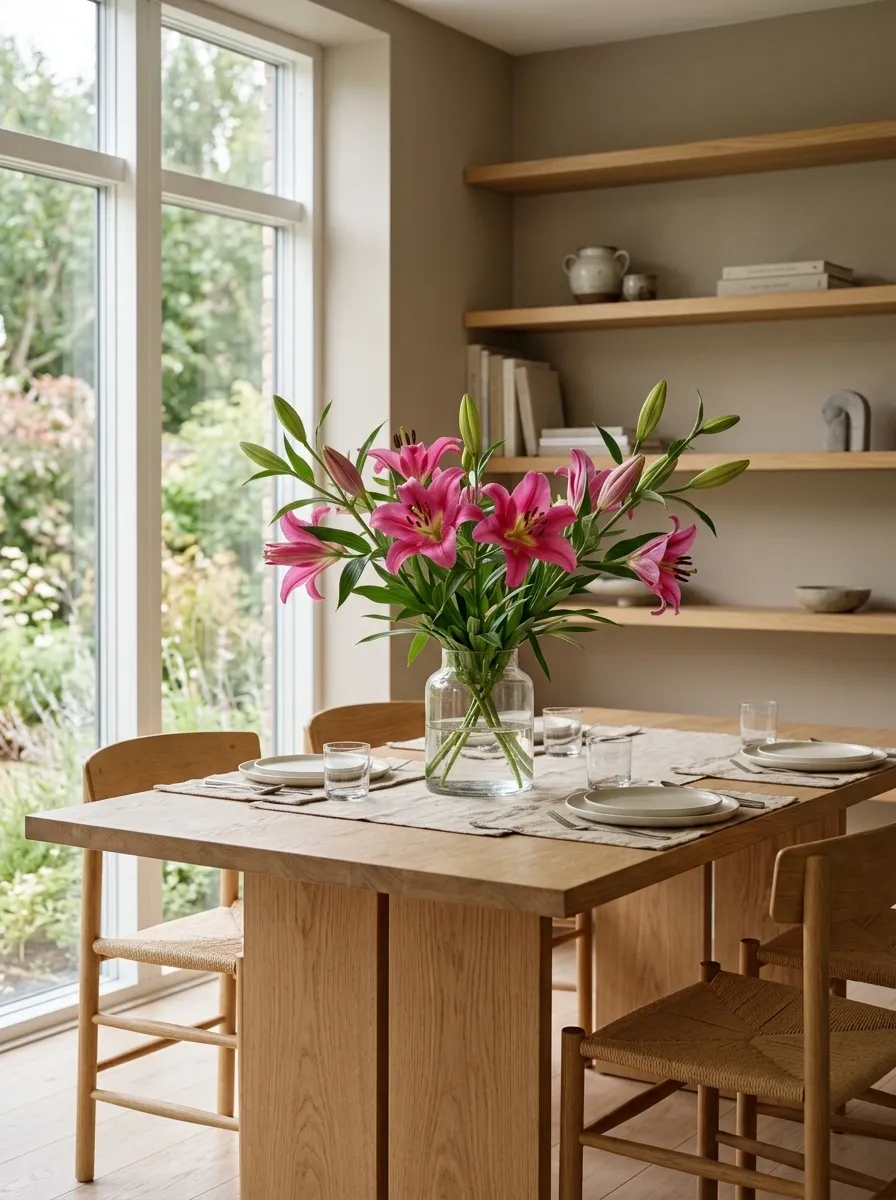
Fully open lilies give you color and impact. The unopened buds provide something else: shape.
In a minimal dining room, keep several buds visible among the open flowers instead of cutting every stem to the same height. The buds create a little tension and movement, which stops the arrangement from looking like a perfectly packed bouquet.
This works especially well with simple tables, plain linen, and uncluttered shelving.
Place Lilies Beside Books and Decor on a Shelf
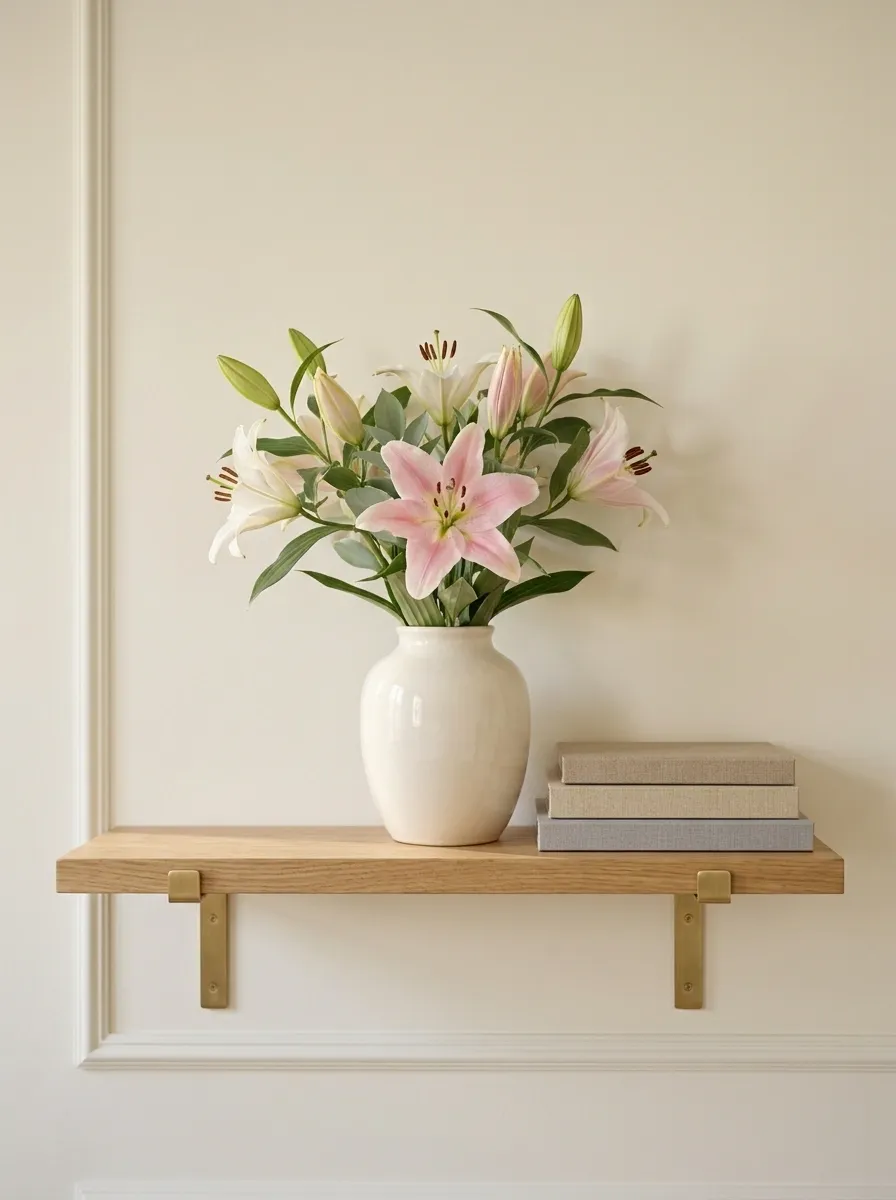
Shelves can start looking like a showroom display very quickly. Every object gets lined up, everything faces forward, and suddenly the room has no personality left.
A small lily arrangement breaks that stiffness.
Place the vase beside two or three stacked books, then leave a little empty shelf space between the arrangement and the next group. Let the flowers rise above the lower objects instead of hiding behind them. The contrast between soft petals, hard book covers, and the shelf finish gives the display more depth.
The shelf needs three levels:
- Low: books or a small box
- Mid: vase
- High: lily stems
That’s enough. The shelf doesn’t need a committee meeting.
Use a Short Wide Vase for Low Coffee Tables
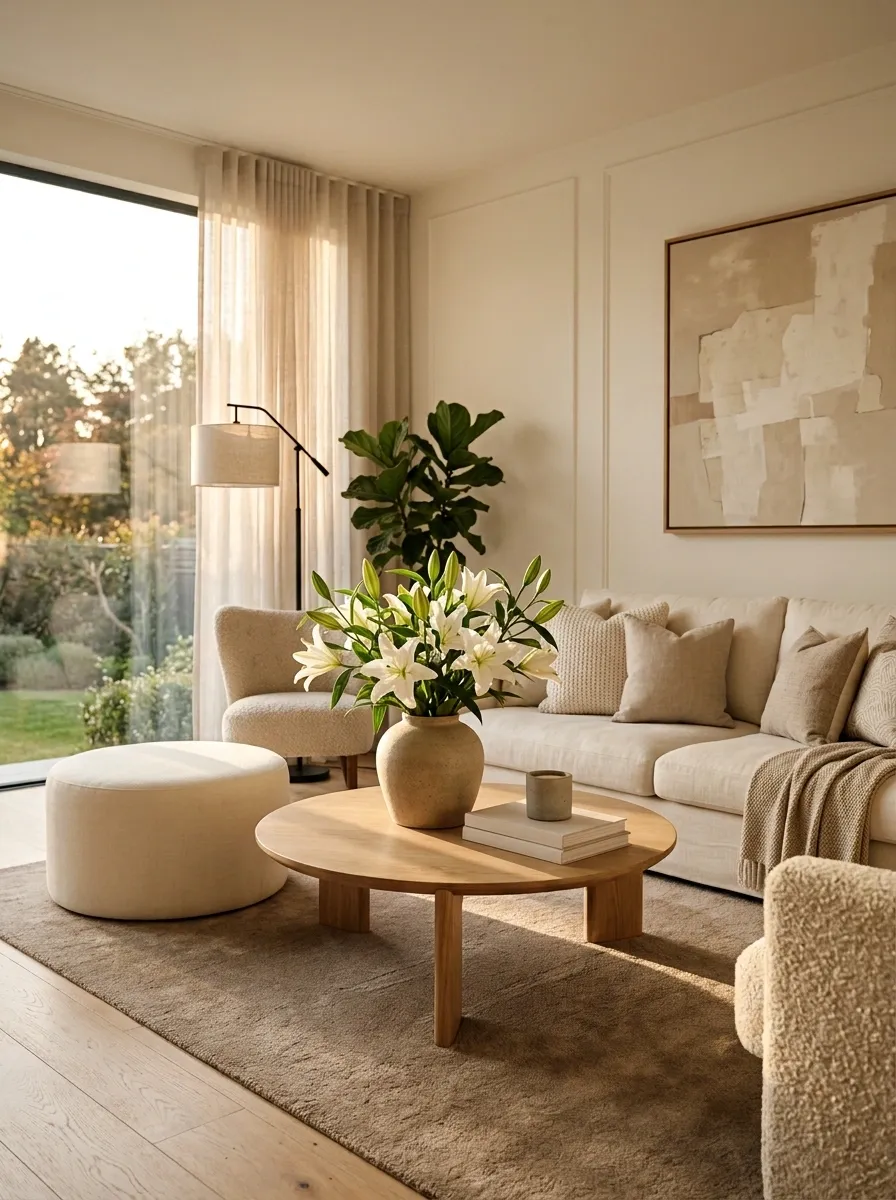
Low coffee tables have one annoying problem: anything tall starts blocking the room.
A short, wide vase keeps the lilies visible without creating a wall in the middle of the seating area. Trim the stems so the blooms sit closer to the vessel, then spread them slightly outward. The result feels fuller without needing a giant number of flowers.
This works especially well with round tables, upholstered ottomans, and rooms where the sofa sits close to the coffee table.
Choose the short vase when:
- Seating is close to the table
- The table is already visually low
- The room needs flowers without losing sightlines
Because nobody wants their coffee break interrupted by a surprise botanical skyscraper.
Decorate a Home Office With a Small Desk-Sized Lily Arrangement
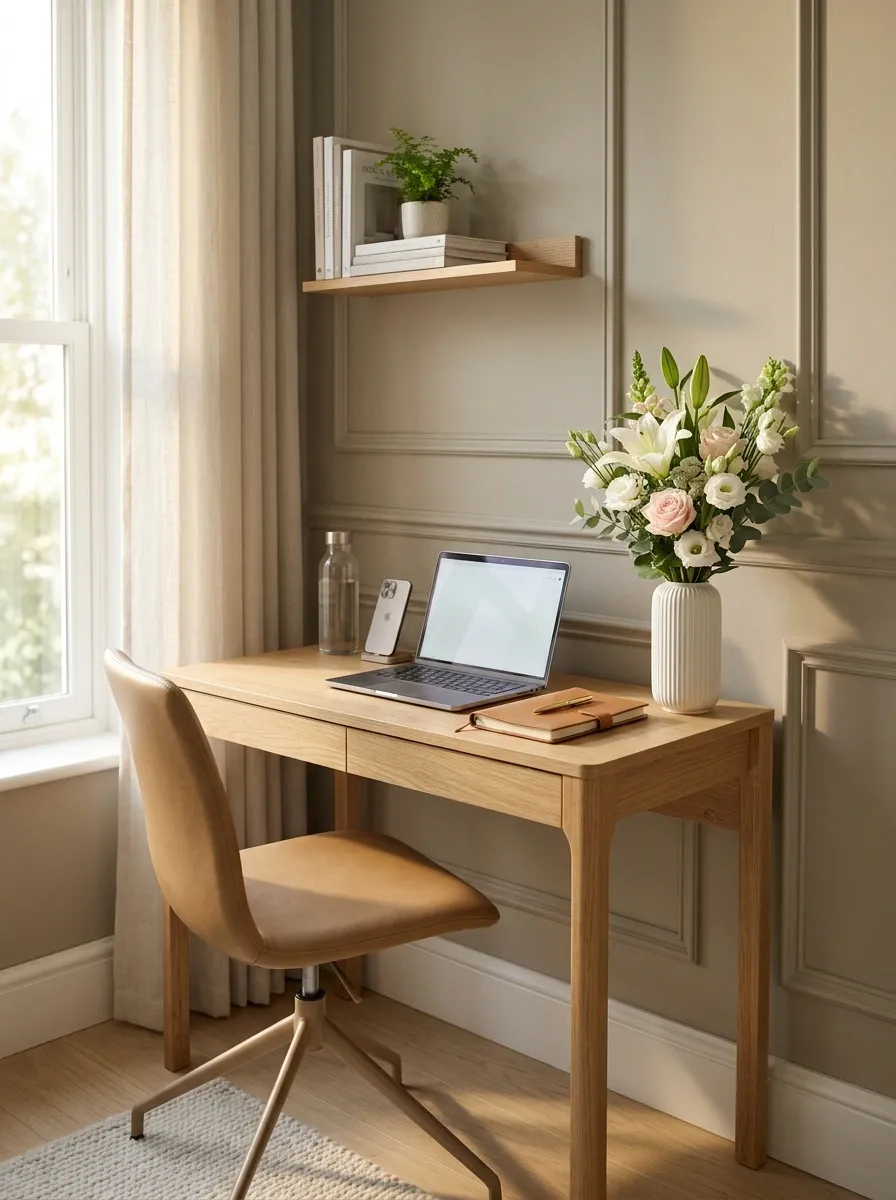
A desk already has enough going on. Laptop, notebook, charger, water bottle, three tabs that should have been closed yesterday.
A tiny lily arrangement adds softness without stealing working space. Choose a narrow vase and keep the blooms on the far corner of the desk, opposite the dominant screen area. White or pale pink flowers keep the arrangement visually calm.
The desk rule is simple: the arrangement should fit inside one small zone, not spread across the workspace.
The flowers are there to make the room feel finished. They’re not there to become the reason the mouse has nowhere to go.
Pair Soft Pink Lilies With Cream and Beige Decor
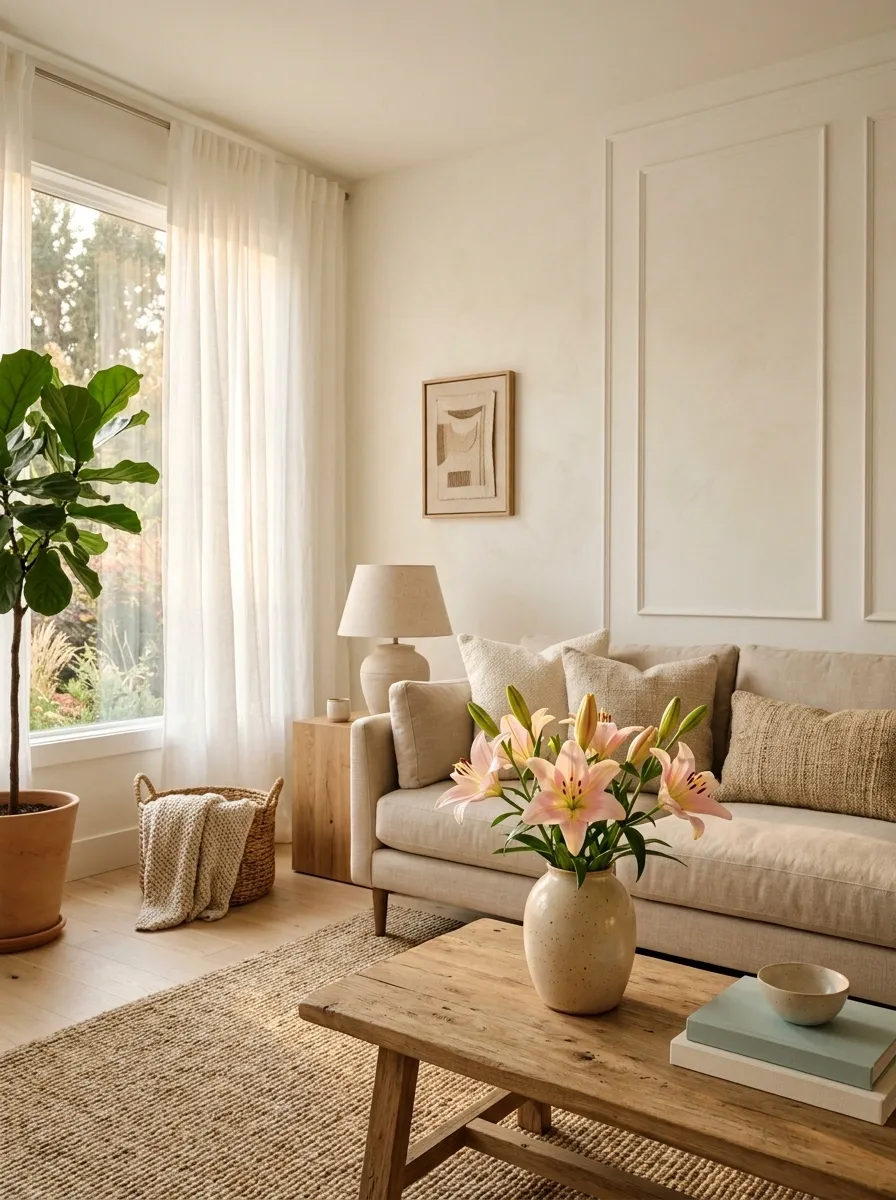
Soft pink lilies look best when the surrounding room doesn’t start screaming for attention.
Use them against creamy walls, beige upholstery, light wood, linen, or other muted finishes. A slightly warm vase keeps the flowers connected to the rest of the room instead of floating like a random bouquet dropped onto a neutral sofa.
The goal isn’t to create a room made entirely from blush tones. That’s how a calm living room accidentally becomes a cupcake display.
Style a Single Lily Branch on a Kitchen Counter
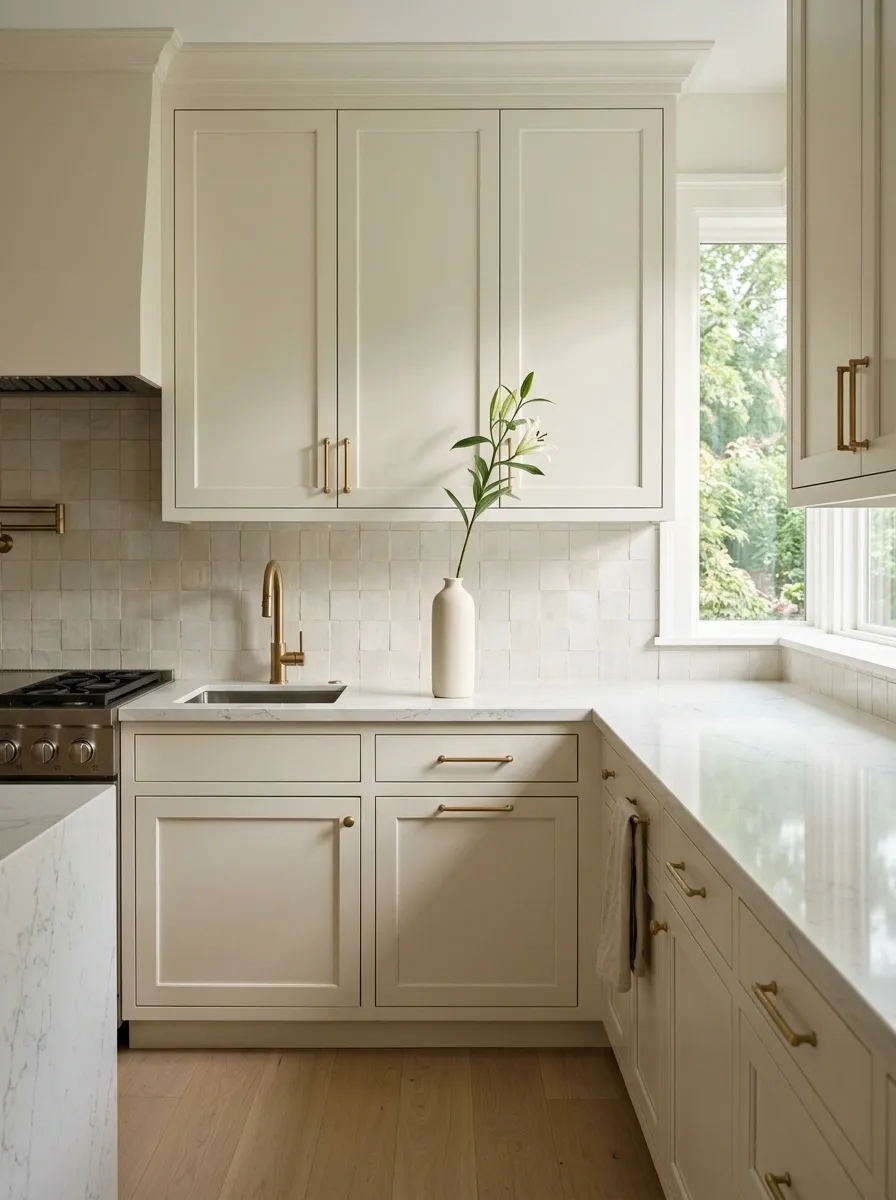
A single lily branch can do more for a plain kitchen counter than another decorative tray ever could.
Choose one long stem with an open bloom and place it in a slim bud vase near the sink, coffee station, or an unused section of counter. Keep the rest of the surface mostly clear. The flower becomes a tiny vertical accent against the horizontal lines of the countertop, cabinets, and backsplash.
Quick counter checklist:
☑ One branch
☑ One slim vase
☑ One clear spot
☑ No pile of accessories underneath
The kitchen already has plenty of visual information. The flower only needs to punctuate it.
Move Lily Arrangements Between Rooms Instead of Buying More Decor
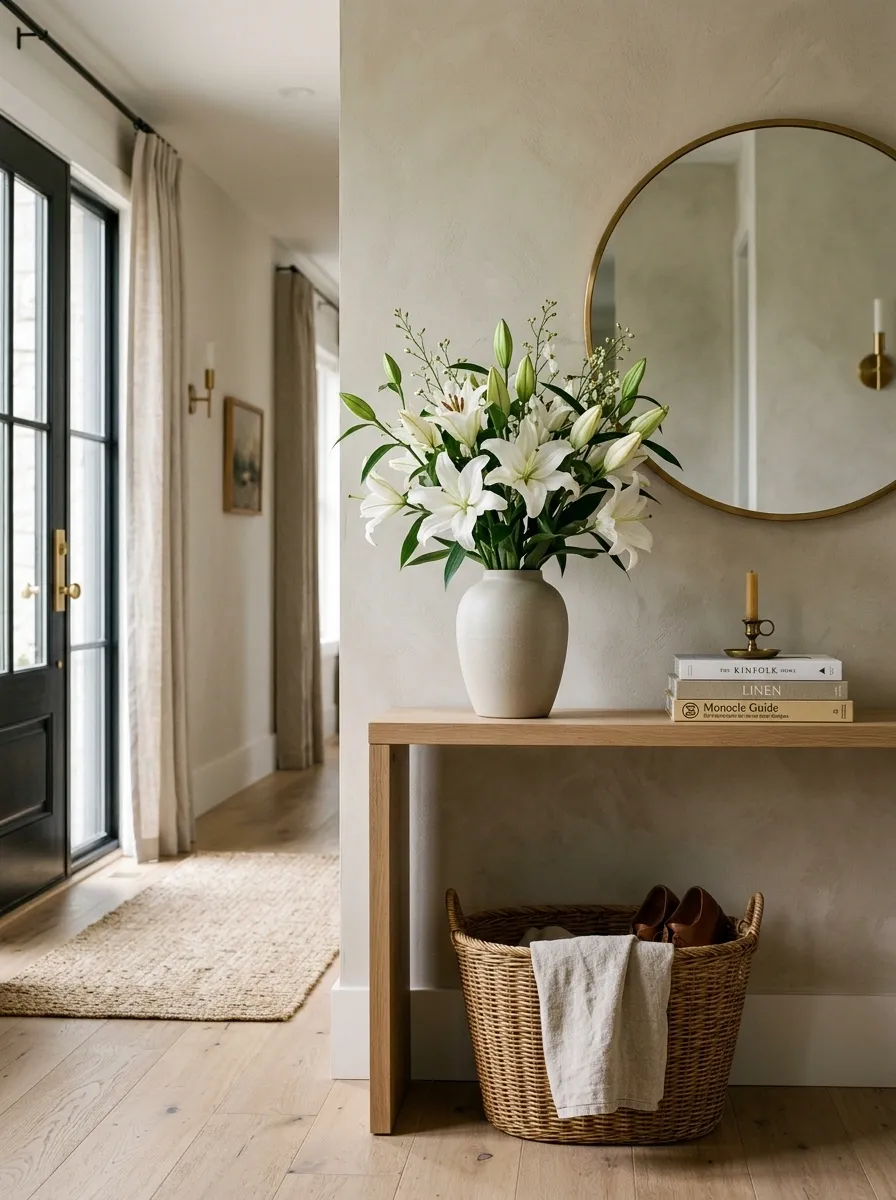
Fresh flowers don’t need a permanent address.
A single good lily arrangement can move from the entryway to the dining table, then to a console or kitchen island when the room needs a reset. This works especially well with a neutral vase that doesn’t look tied to one specific space.
The trick is to change the arrangement slightly for each surface. Trim the stems for a lower table, spread them for a long console, or keep them tall for an entryway. Same flowers, completely different effect.
Use a Dark Vase to Make Pale Lilies Stand Out
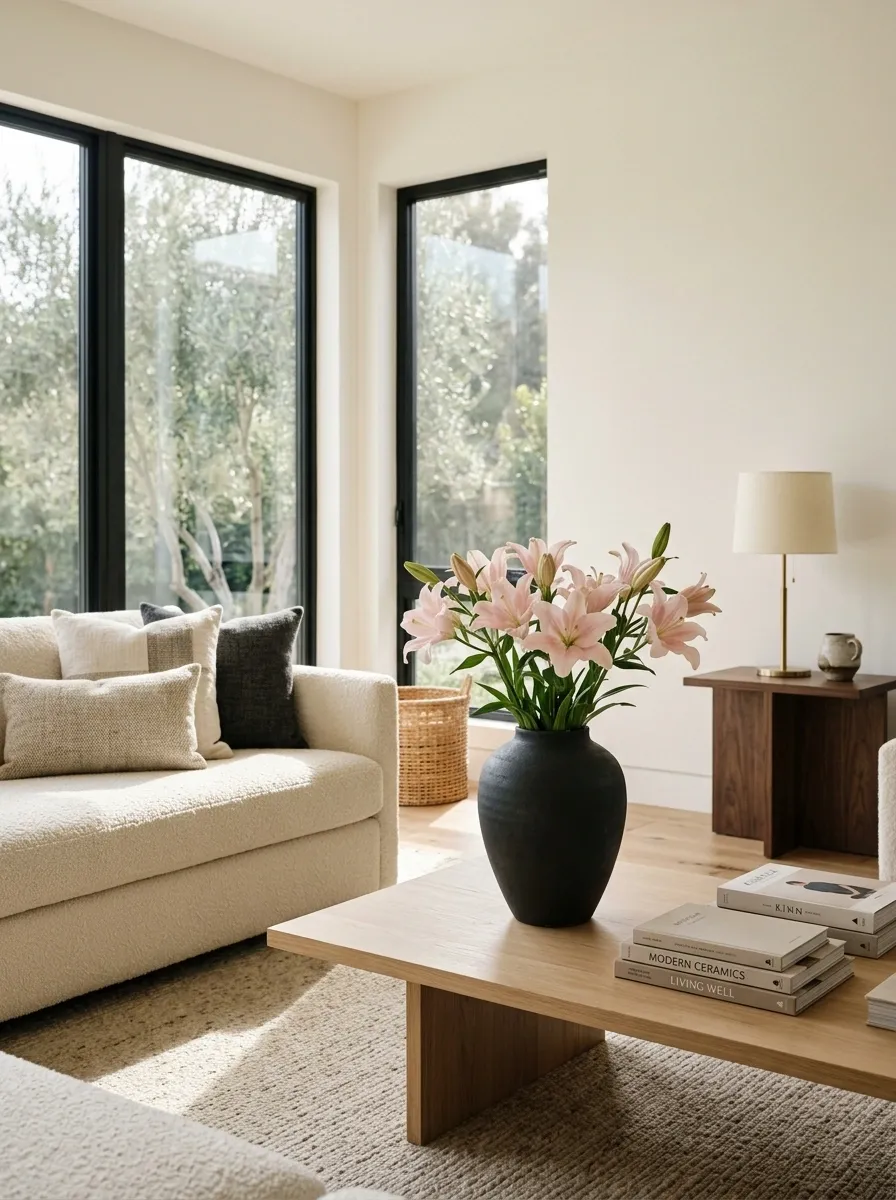
Pale lilies can disappear against white walls, light countertops, and creamy furniture. A dark vase fixes that instantly.
Choose charcoal, deep brown, black, or another rich neutral, then keep the rest of the arrangement relatively soft. The dark vessel creates a strong base while the pale blooms become the bright part of the display.
Try this pairing:
- White lilies + matte black vase
- Creamy lilies + deep brown vase
- Pale pink lilies + charcoal vase
The contrast gives the arrangement definition without adding another loud color to the room.
Create a Fuller Look by Varying Lily Stem Heights
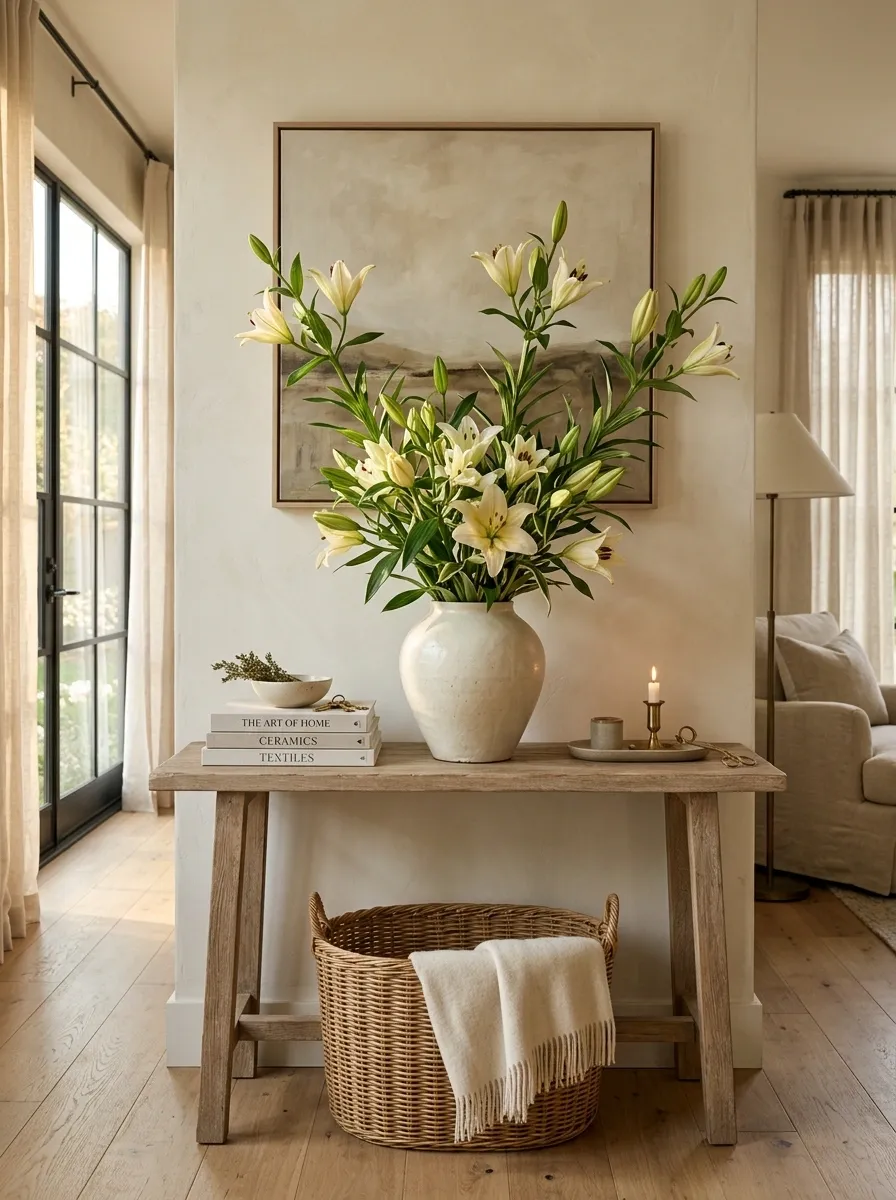
Cutting every lily stem to exactly the same height makes an arrangement look stiff.
Keep three distinct levels instead. Let a few blooms sit high, bring some into the middle, and allow shorter stems to fill the lower part of the vase. The uneven heights create movement and make the arrangement feel naturally gathered.
Don’t force perfect symmetry. Flowers don’t grow with a ruler, and the arrangement shouldn’t look like they did.
Keep Lilies Away From Cluttered Surfaces for a Cleaner Display
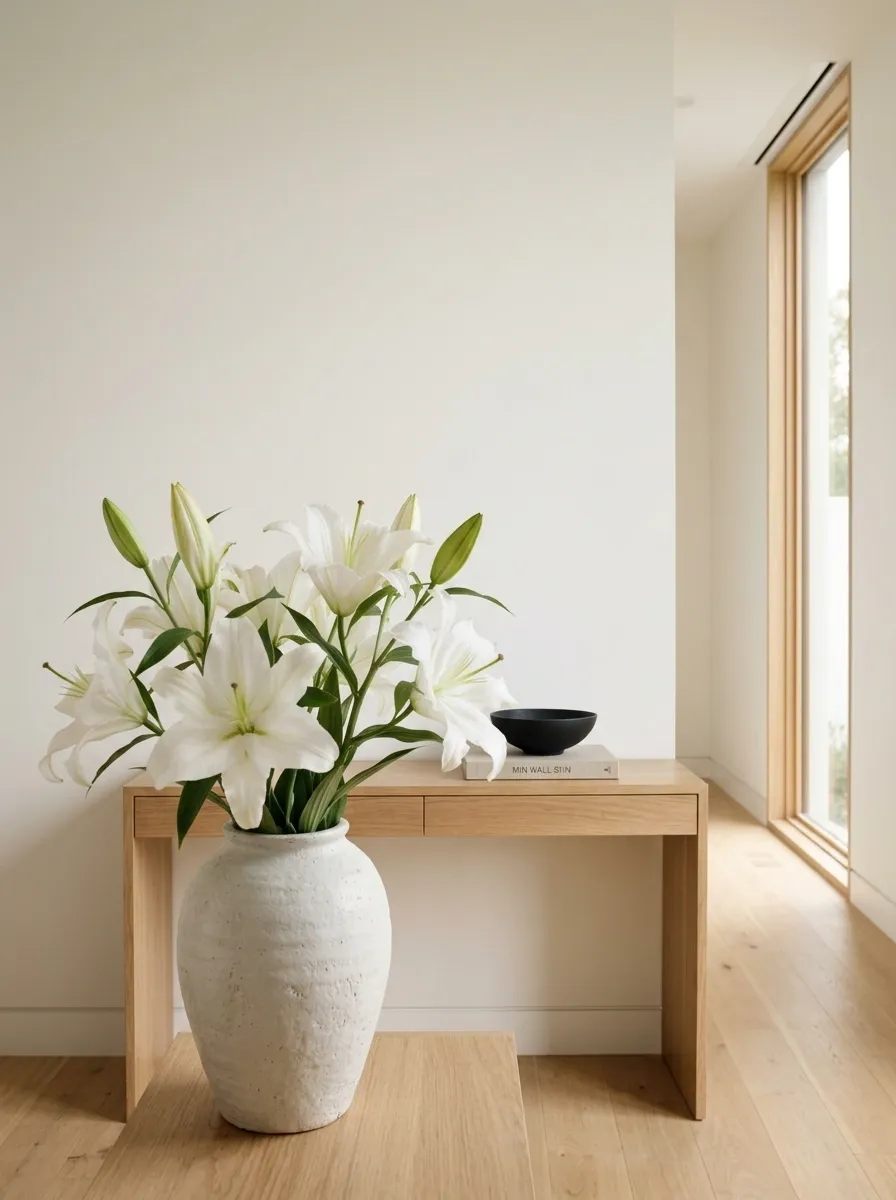
A beautiful arrangement can’t rescue a surface buried under stuff.
Before placing lilies on a console, dresser, or sideboard, clear the area first. Then bring back only the pieces that actually help the composition. The flowers need visible negative space around them so the eye can register their shape.
Mistake → Fix
Crowded console → Remove half the objects before adding flowers.
Flower buried behind frames → Move the vase forward or raise it.
Five little decorations beside one bouquet → Keep one or two supporting pieces.
The flowers aren’t asking for more decoration. They’re asking for less competition.
Finish a Room With Lilies as the One Fresh Natural Element
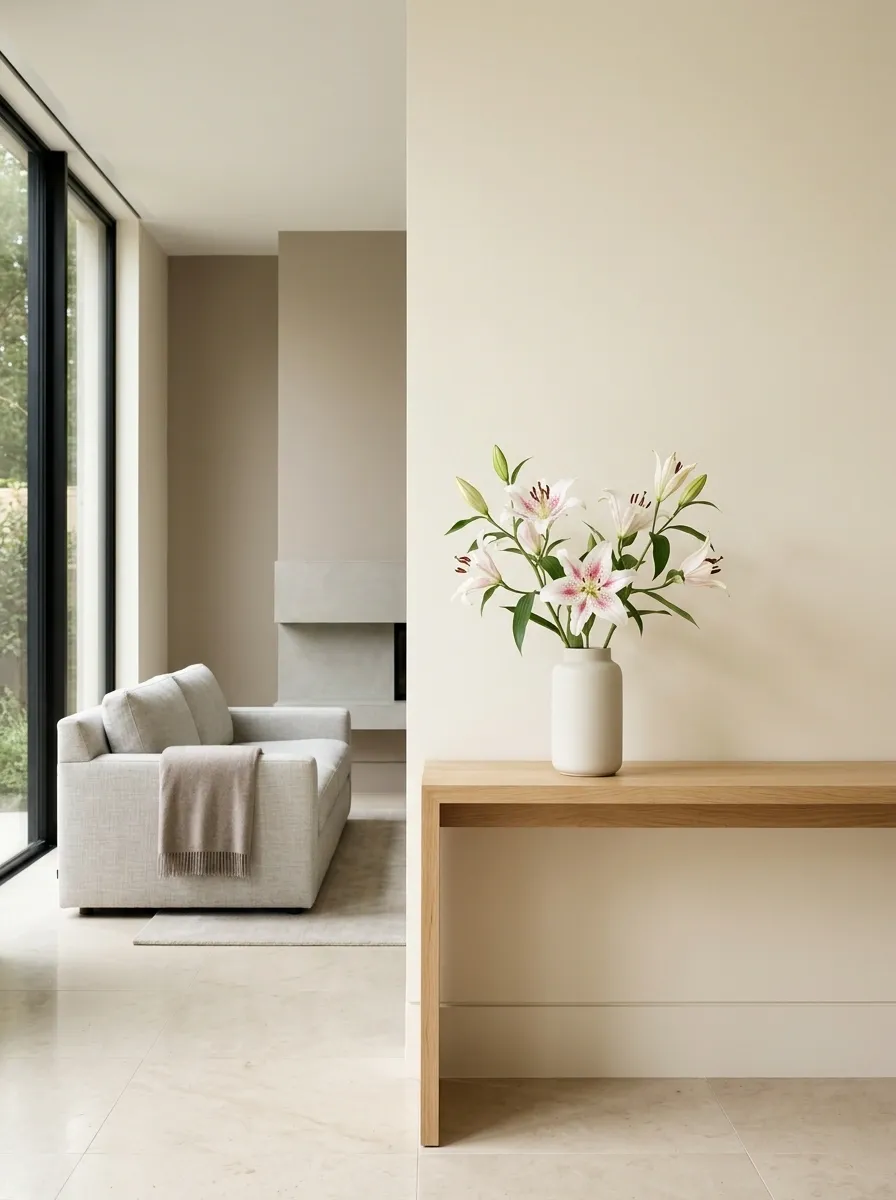
Sometimes the room doesn’t need another basket, candle, frame, bowl, or decorative object pretending to solve a problem that doesn’t exist.
A fresh lily arrangement can be the single natural element that softens a room full of hard surfaces. Place it on the surface that already feels slightly bare, then resist the urge to decorate around it. Let the flowers bring the organic shape, color, and movement.
This works beautifully in living rooms with clean-lined furniture, simple dining spaces, bedrooms with neutral bedding, and entryways that need one final detail.
The Best Lily Displays Know When to Stop
A room doesn’t become more stylish every time another vase gets added. That’s how a simple decorating idea turns into a tabletop inventory.
Lily flowers look strongest when they’re given a clear role. Tall stems can pull an entryway upward. Low arrangements can keep a dining table open. One branch can soften a kitchen counter. A darker vase can give pale blooms more definition. None of those moves needs a pile of extra accessories around it.
The details matter, but restraint matters just as much. Look at the surface first, choose the right scale, then leave enough empty space for the flowers to actually be seen.
That’s the difference between flowers sitting in a room and flowers belonging in the room.