
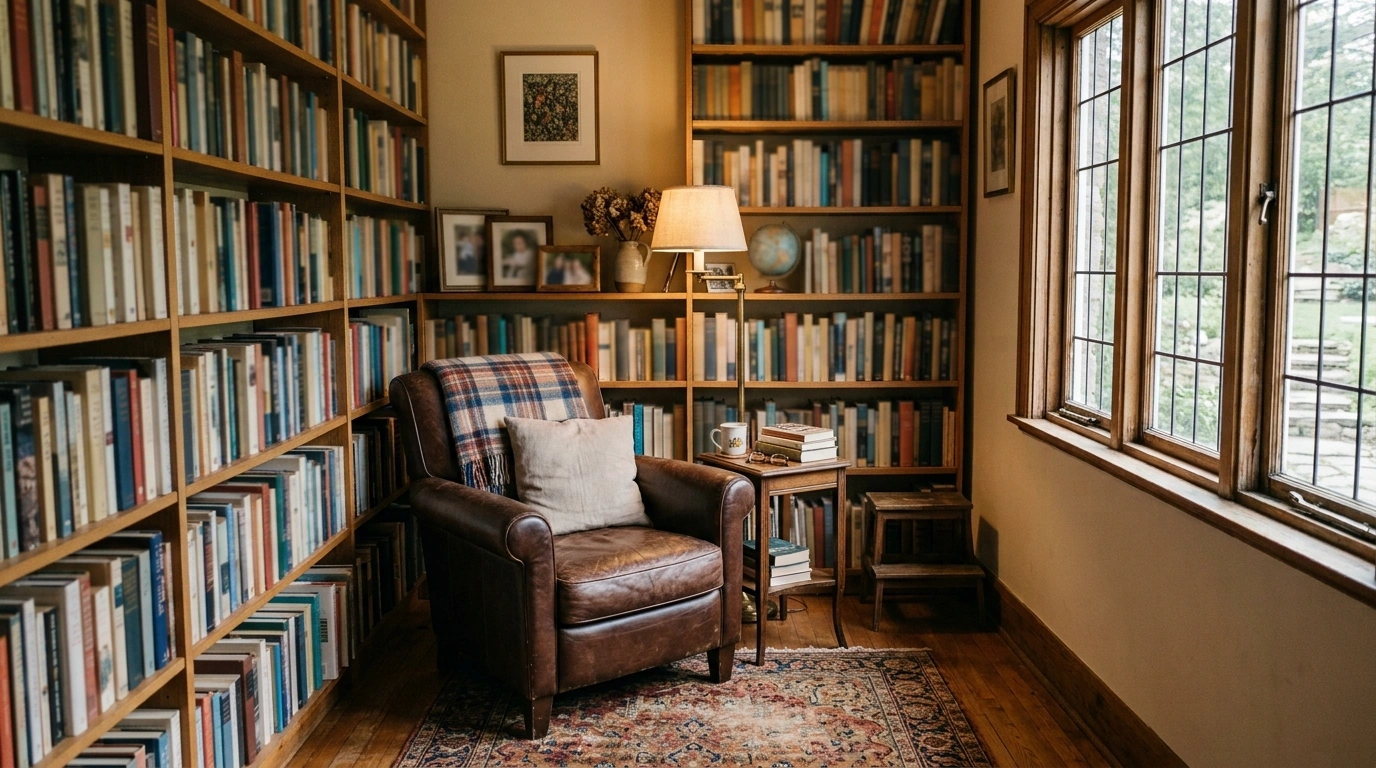
A home library can look strangely unfinished even when it contains all the things a library is supposed to have. Shelves are filled, a chair is sitting somewhere nearby, a lamp has been plugged in, and somehow the room still looks like someone moved into a bookstore warehouse and forgot the furniture.
The difference usually comes down to the finished composition. Bookshelves alone don’t create a convincing reading space.
Comfortable seating gives the room a purpose. Lighting makes that seating usable. Rugs and textiles soften harder architectural surfaces. Wood introduces warmth. Wall color can either make the shelves disappear into the architecture or turn them into the main event.
A Library Needs More Than Bookshelves
A good reading room has a visual hierarchy.
The shelves may be the most obvious feature, but they shouldn’t automatically be the only thing happening in the room. Comfortable seating gives the space a purpose. Lighting makes that seating usable. Rugs and textiles soften harder architectural surfaces. Wood introduces warmth. Wall color can either make the shelves disappear into the architecture or turn them into the main event.
The strongest rooms also understand scale. A giant bookcase beside a tiny chair feels awkward. A huge sectional shoved into a narrow library destroys circulation. A tiny lamp trying to illuminate a deep reading chair is basically decorative optimism.
The designs below focus on complete rooms rather than isolated decorating tricks.
Cozy Home Library Designs
Plum-Toned Library With Walnut Desk and Cream Upholstery
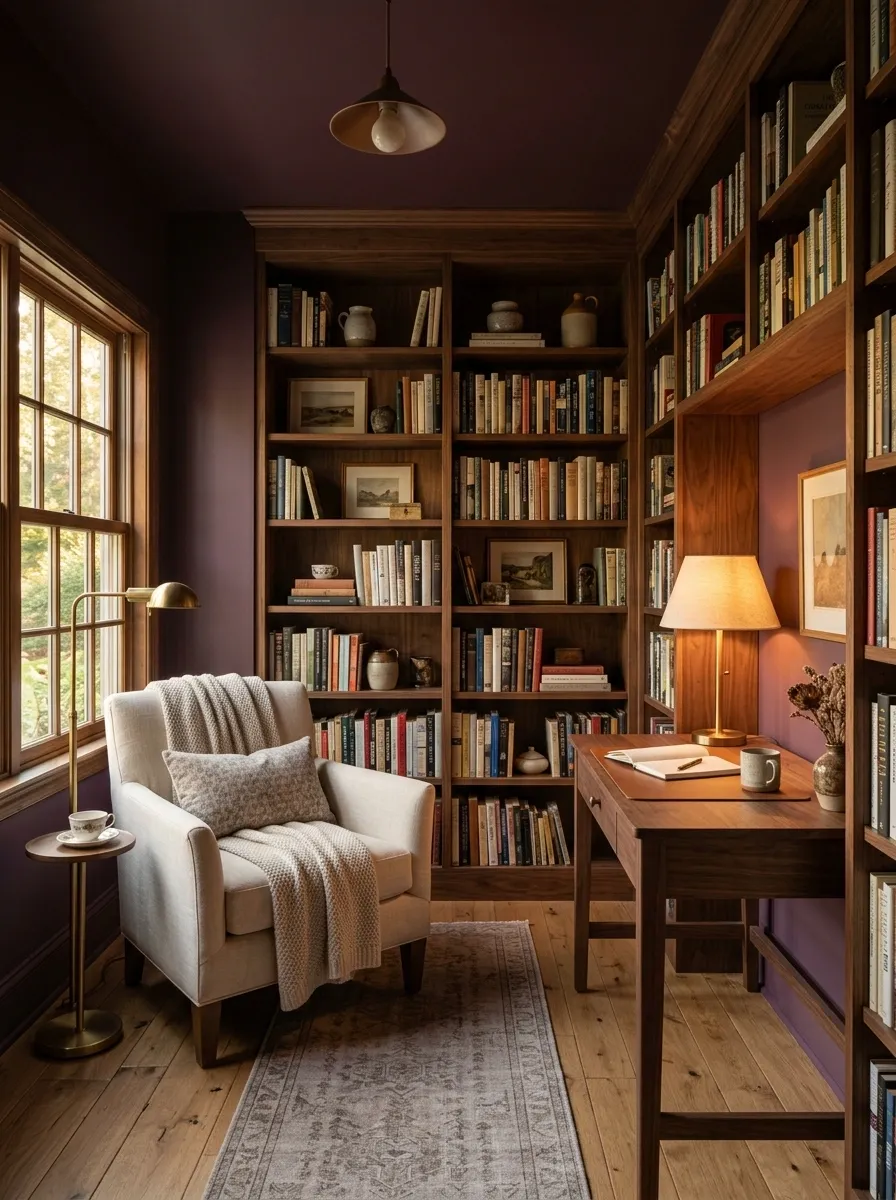
Deep plum walls create an intimate envelope for this library, while medium-dark walnut shelves and a compact writing desk bring enough structure to keep the room from feeling theatrical. A cream upholstered chair provides the visual break, with a patterned runner and warm desk lamp adding smaller layers without competing with the wall color.
The palette works because plum stays in charge. Walnut supports it rather than trying to become a second focal point, while cream gives the eye somewhere lighter to land. Keep the rug pattern contained and let the books introduce their own variation. Once every object starts matching the plum, the room stops feeling layered and starts looking suspiciously committed to one color.
Basement Library With Warm Lighting and Deep Built-In Shelves
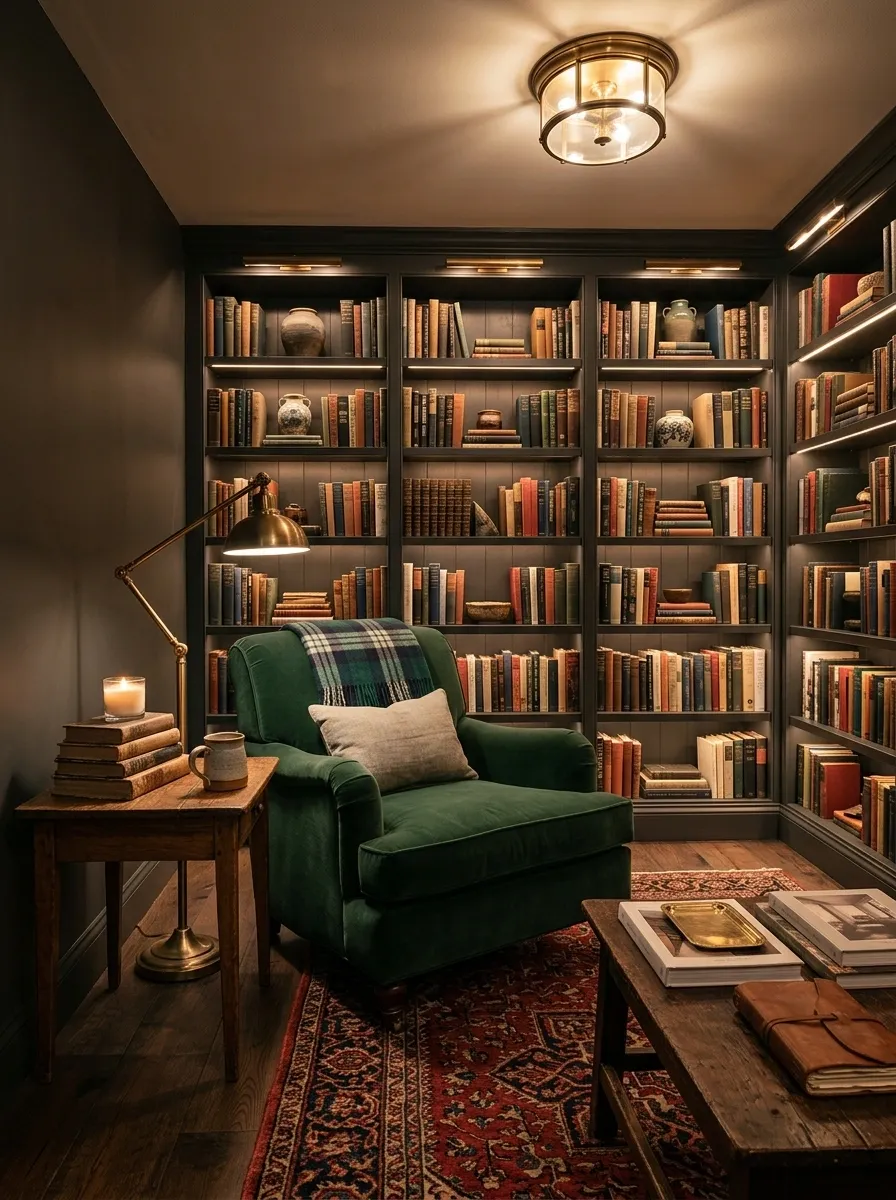
A basement library can lean into its lower-level character rather than pretending it has the same daylight as an upstairs room. Deep built-in shelving, darker warm walls, upholstered seating, low wood furniture, and layered lighting create a comfortable retreat. A small table beside the main chair gives the reading area a useful place for books, drinks, or a lamp.
Lighting carries the design here. The ceiling fixture provides general visibility, shelf lighting adds depth, and the reading lamp handles the actual task of reading. That separation keeps the room from feeling gloomy. Dark walls can work beautifully in a basement, but only when the room has enough varied light to keep the corners from looking like they have been permanently logged out of daylight.
Eclectic Library With Painted Cabinetry and Mixed Vintage Furniture
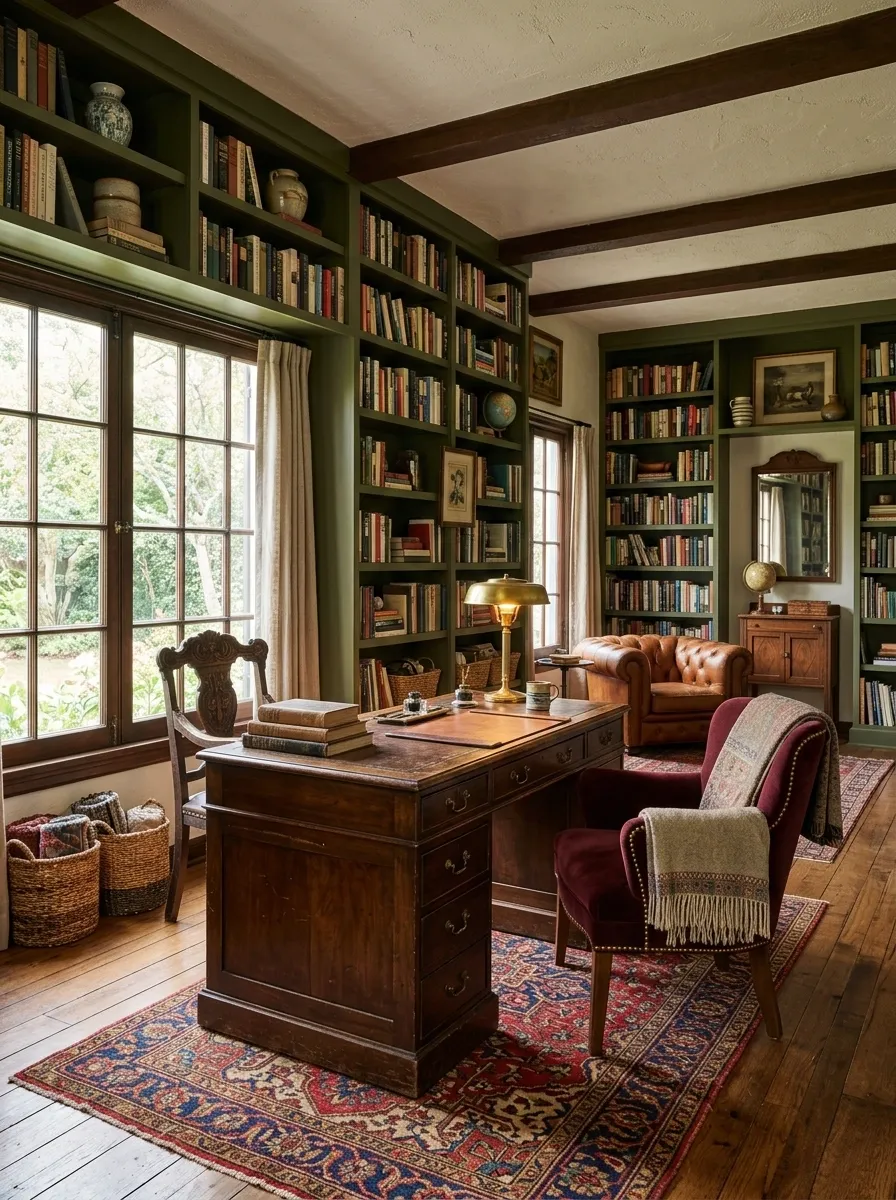
A single painted cabinetry color pulls together a deliberately mismatched collection of furniture in this eclectic library. One older desk sits beside a vintage lamp, a second chair comes from a different era, and the rug introduces another pattern without copying the upholstery. The bookshelves stay consistent, which gives all those individual pieces a common backdrop.
That’s the trick with eclectic rooms: something has to repeat. Here, the cabinetry color creates the thread that ties together furniture that would otherwise look unrelated. Keep the number of major patterns limited and repeat one or two colors in smaller objects. The furniture can disagree about its birth decade. It just can’t disagree about whether it belongs in the same room.
Quiet Bedroom-Library Hybrid With Window Bench and Full Bookcase Wall
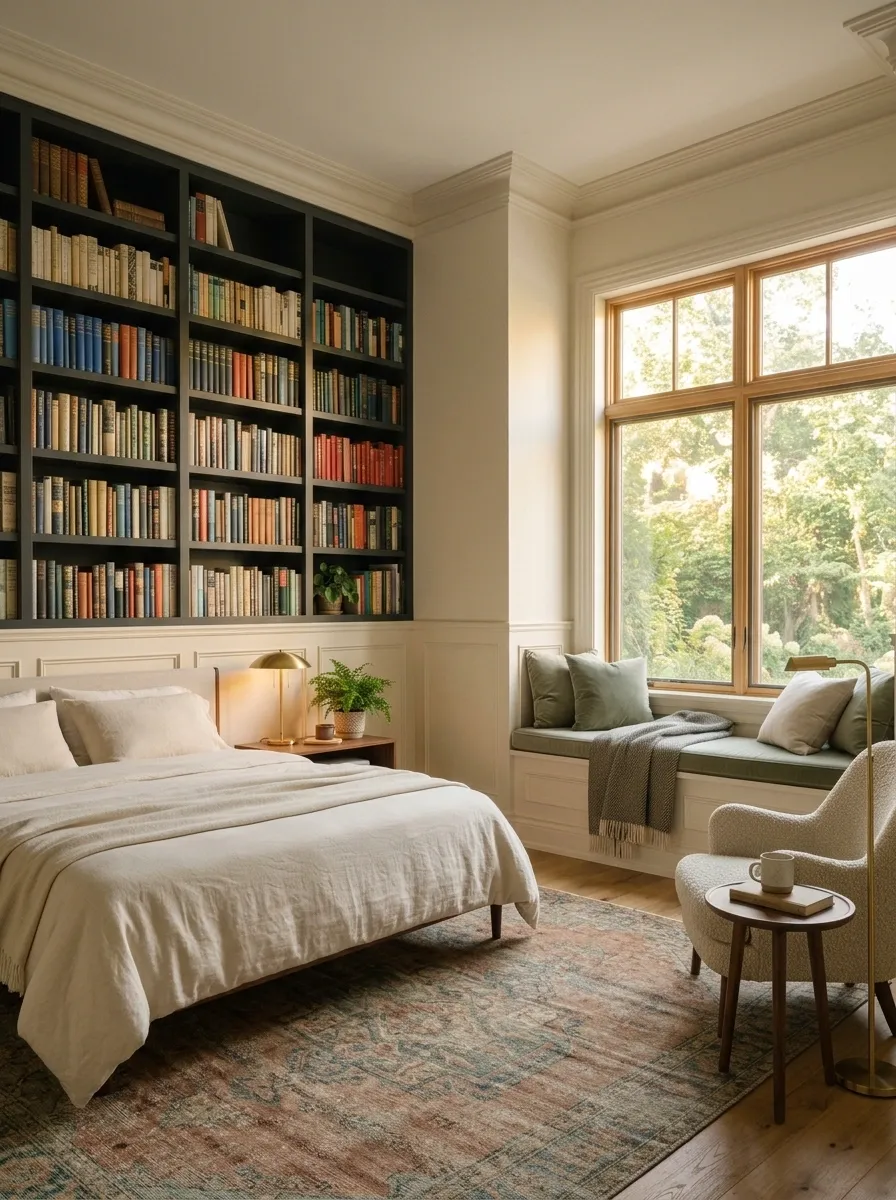
A full bookcase wall turns one side of this bedroom into a serious reading feature, while a built-in window bench creates a second, softer place to read. The rest of the room stays clearly bedroom-focused, with a properly sized bed, restrained bedding, a reading lamp, and a small upholstered chair positioned away from the sleeping zone.
The balance comes from giving the books one strong wall rather than spreading shelves throughout the room. That lets the library function feel substantial without taking over the bedroom. The window bench adds another reading position without adding bulky furniture. Keep the bedding and larger furniture fairly calm so the shelves remain the room’s strongest visual statement. Otherwise the poor bedroom has to compete with the entire library before anyone even gets to bedtime.
Light Oak Scandinavian Library With Bouclé Reading Chair
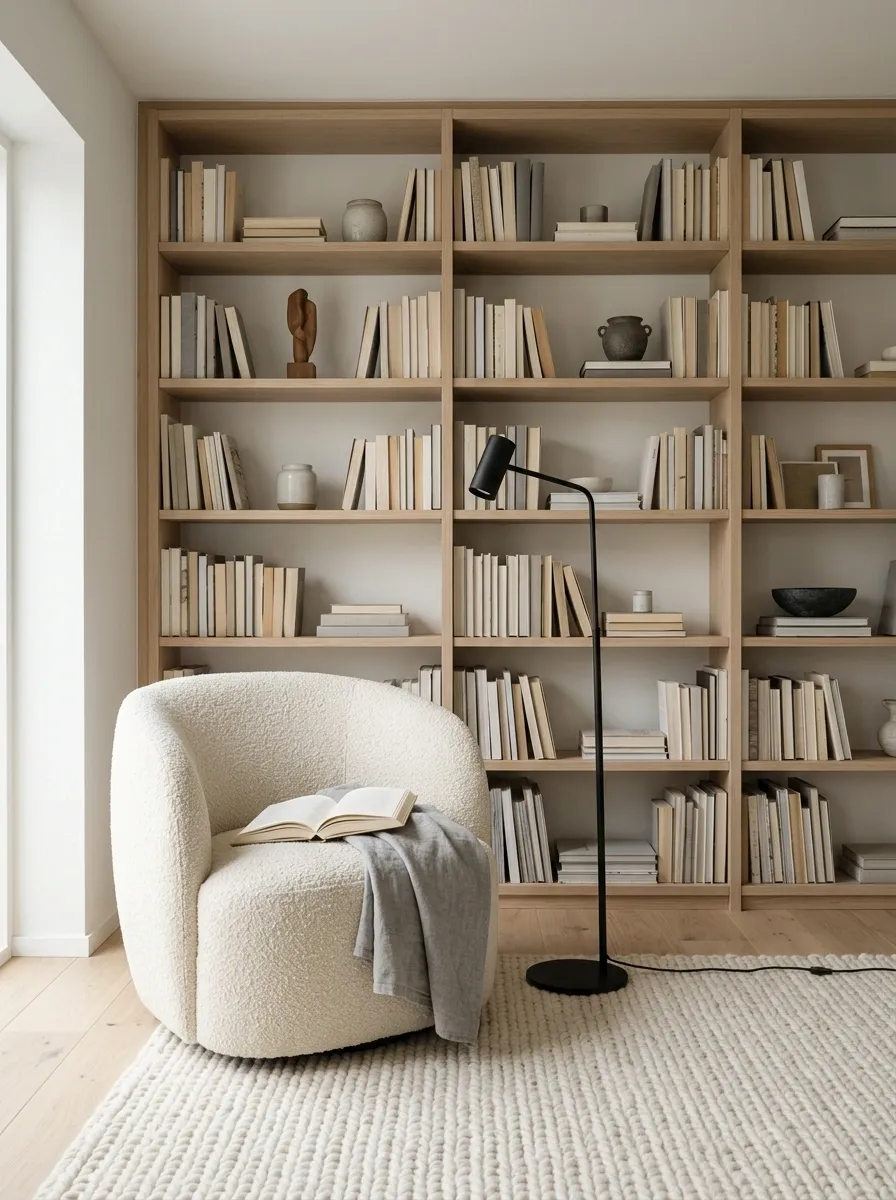
Pale oak shelves, warm white walls, a softly rounded bouclé chair, a wool rug, and one restrained black reading lamp create a Scandinavian library that feels calm without becoming sterile. The shelves should carry most of the visual activity, while the furniture stays simple enough to let the books and natural materials provide variation.
This room works because almost nothing is fighting for attention. The oak adds warmth, the textiles add softness, and the black lamp supplies just enough contrast. Keep decorative objects sparse and avoid filling every shelf with identical beige pottery because apparently the internet has decided every Scandinavian room needs twelve objects that all look like they have never experienced a Tuesday.
STRUCTURE
SOFTNESS
CONTRAST
Built-In Library Under a Sloped Attic Ceiling
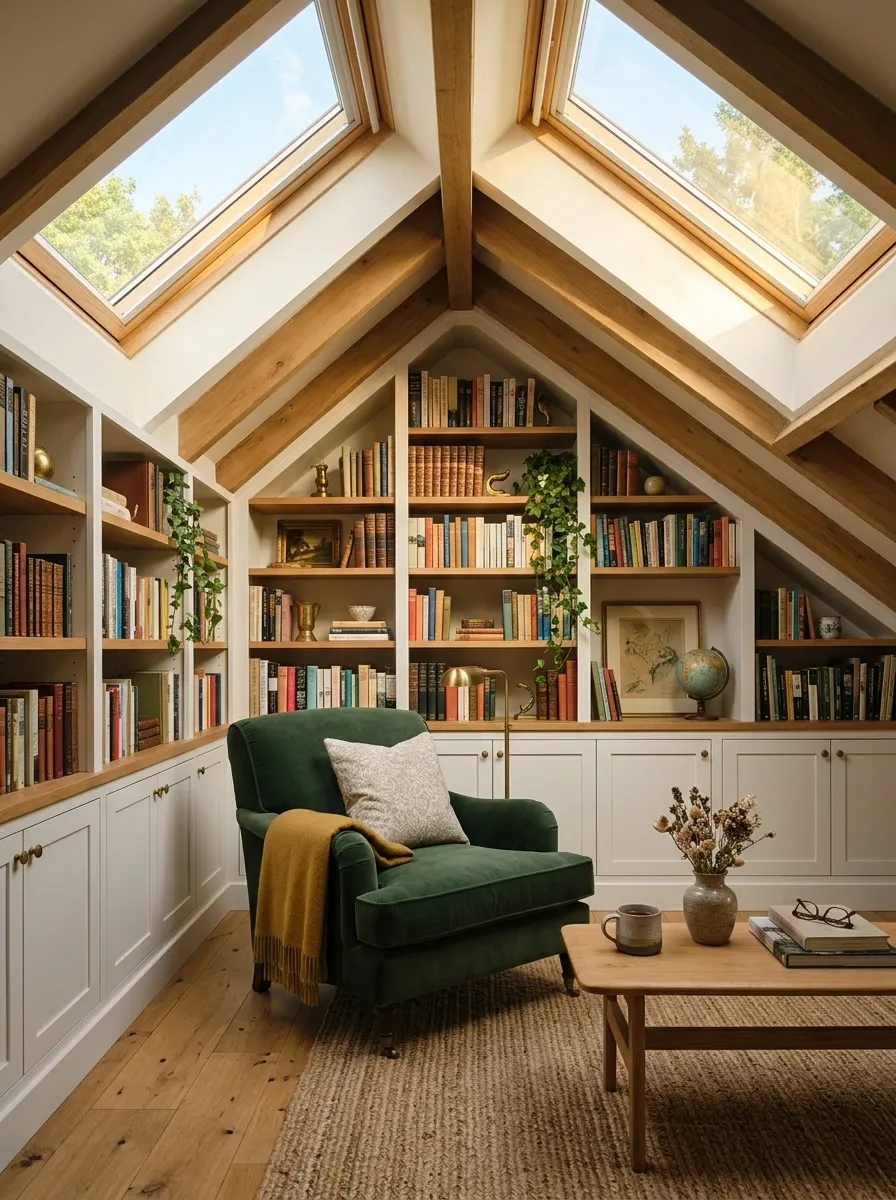
A sloped ceiling can become the defining feature of an attic library when the shelving follows the roofline instead of fighting it. Low cabinets occupy the shortest wall areas, while taller shelves rise toward the highest point. A dormer or skylight becomes the natural location for a reading chair, bringing daylight directly into the most comfortable part of the room.
The key is respecting the architecture. Trying to force identical full-height shelves underneath an angled ceiling creates awkward dead space. Custom shelving that steps with the roofline looks intentional and gives otherwise difficult corners a job.
Warm Terracotta Library With Low Walnut Shelving
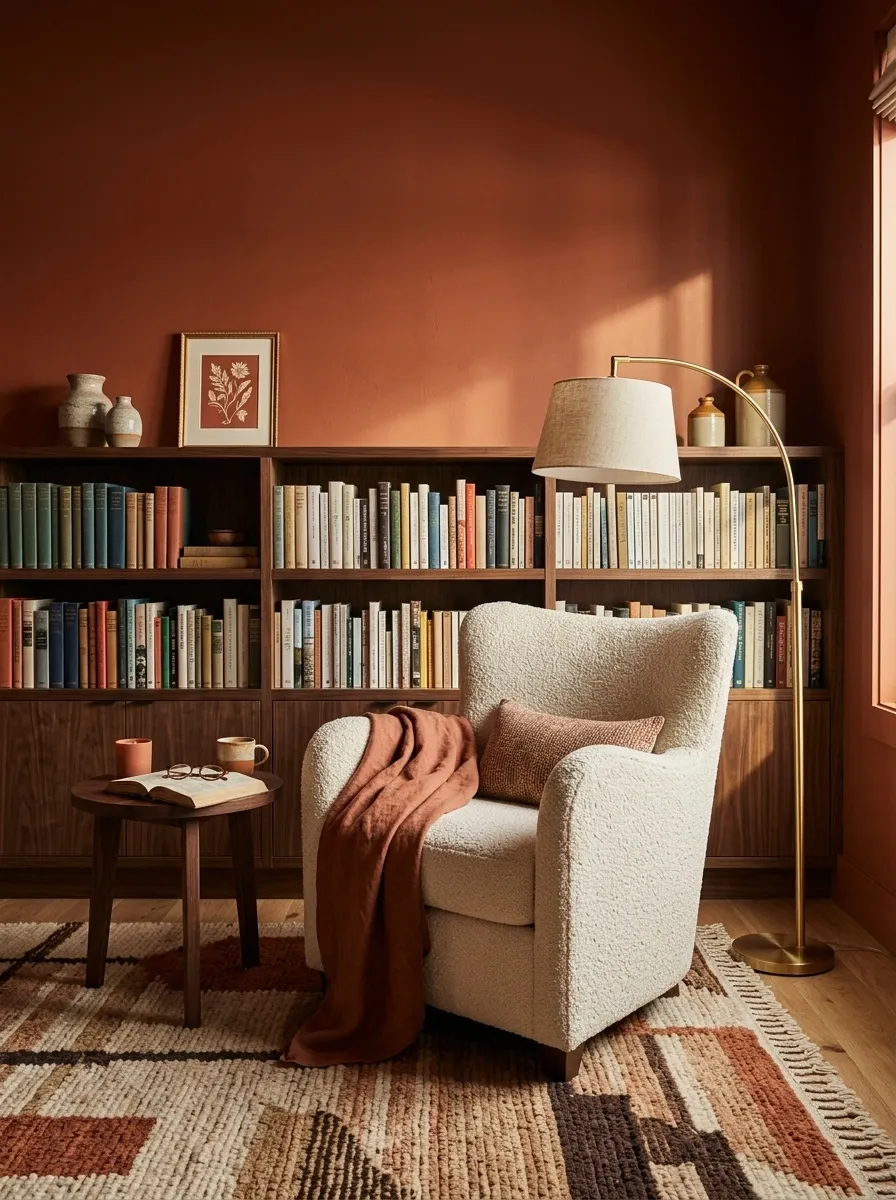
Warm terracotta walls bring color into the library without needing elaborate decoration. Low walnut shelves keep the room grounded, while a large upholstered chair, textured rug, and floor lamp create a comfortable reading zone in front of the storage.
Keeping the shelving low changes the atmosphere considerably. The walls remain visible above the books, making the room feel less like a storage wall and more like a furnished living space. Terracotta works especially well with walnut because both colors have enough warmth to feel related without becoming one giant orange-brown blur.
Dark Blue Library With Brass Picture Lights and Velvet Chair
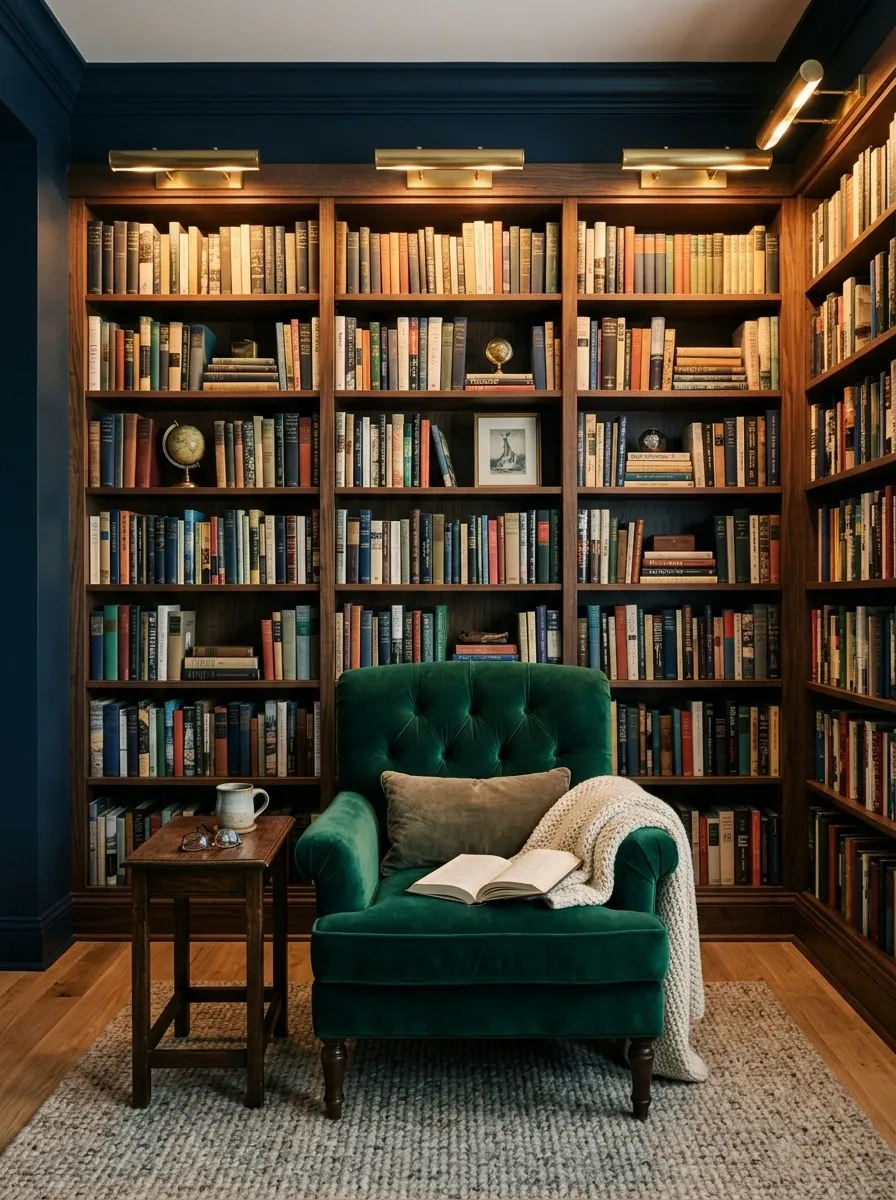
Deep blue walls create a dramatic backdrop for tall shelving, while brass picture lights add warm points of illumination across the books. A velvet reading chair introduces softness and catches the light without requiring a huge collection of decorative accessories.
The room works best when the brass stays limited to lighting and a few small details. Too much brass turns the library into a showroom. The velvet chair should be the softer focal point against the harder shelving, while a neutral rug keeps the floor from competing with the walls.
White Cottage Library With Painted Shelves and Floral Upholstery
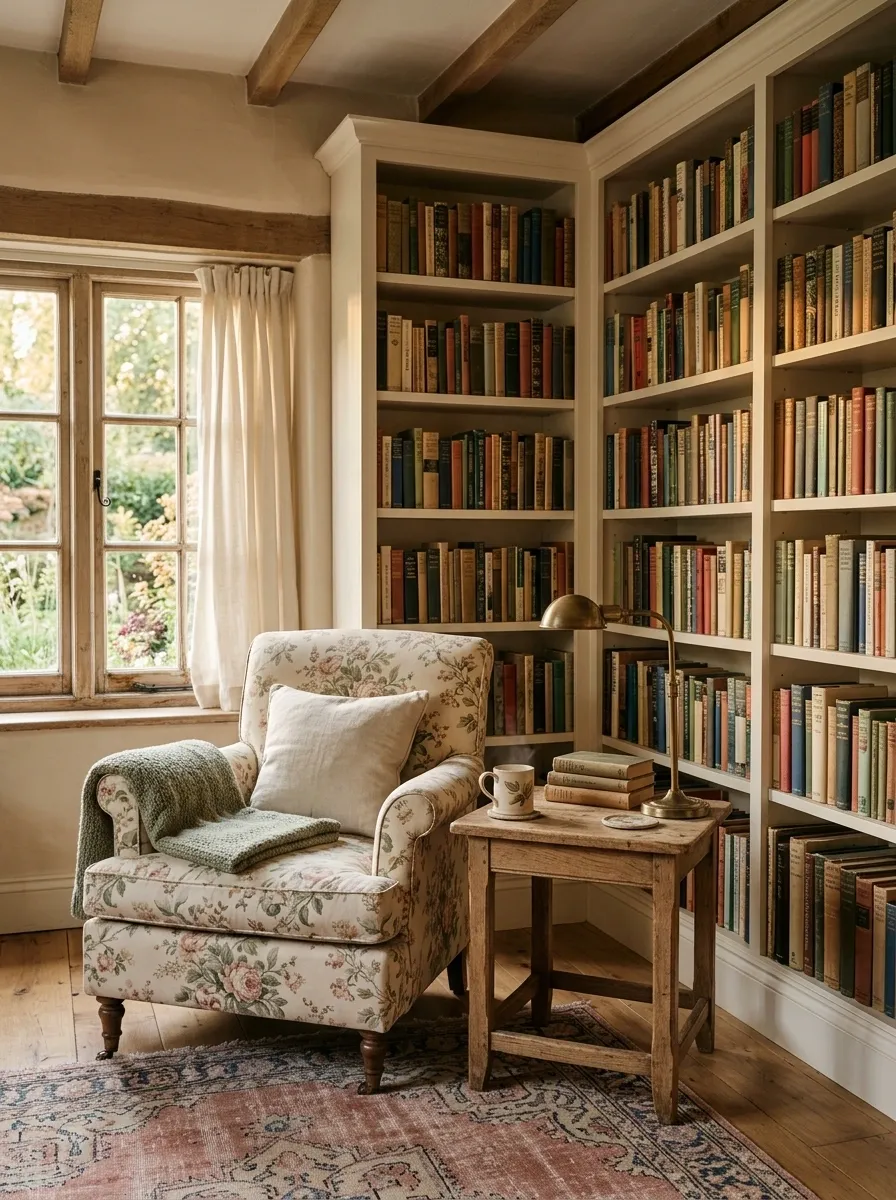
A cottage library feels strongest when the architecture stays simple and the softness comes through upholstery, curtains, rugs, and books. Painted shelves in warm white blend into the walls, while a floral reading chair adds pattern without requiring wallpaper across every available surface.
Use one substantial floral rather than several competing patterns. A faded rug, linen curtain, and painted wood furniture can fill in the rest. The books provide enough color variation that the room doesn’t need a collection of decorative accessories desperately auditioning for attention.
Modern Black-and-Oak Library With Floating Desk
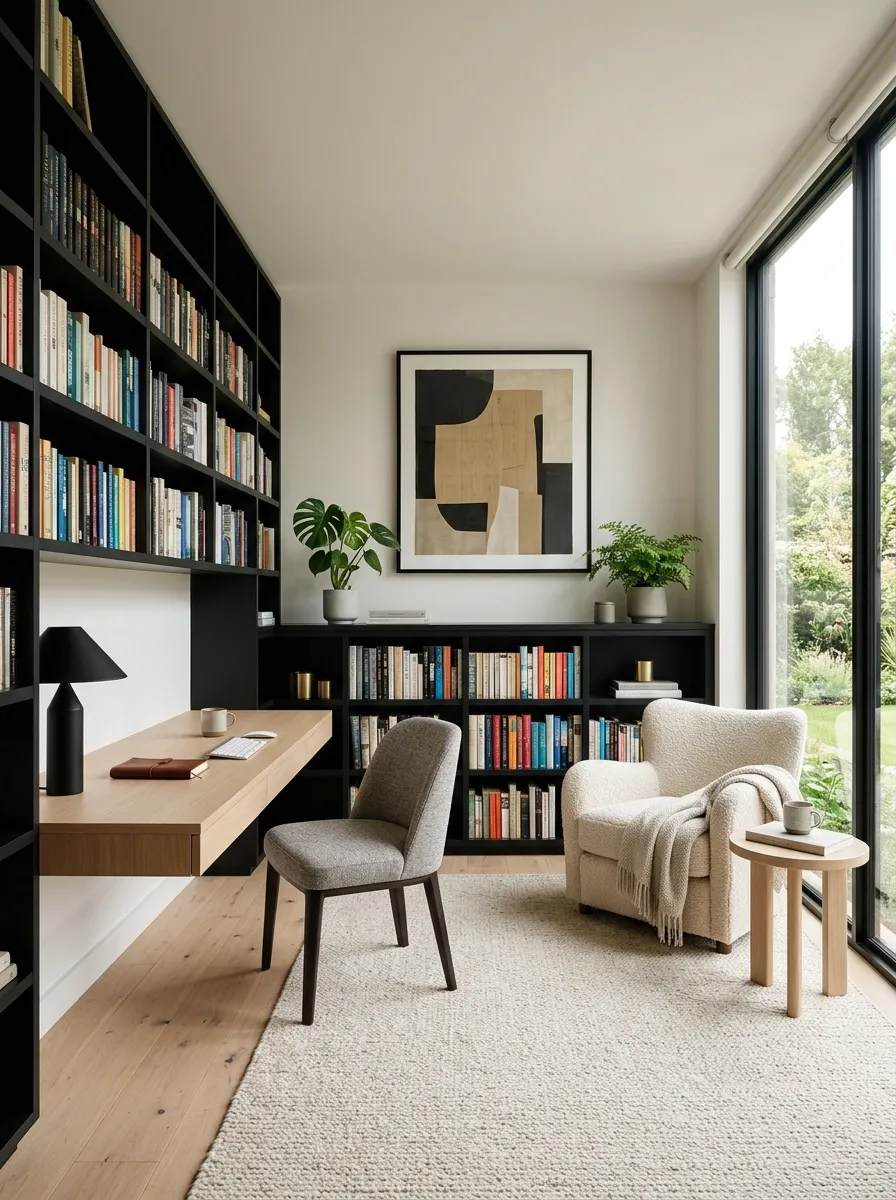
Black shelving and pale oak create a clean modern contrast, while a floating desk keeps the floor visually open. A simple upholstered chair sits directly at the desk, with a separate reading chair positioned near the strongest natural light.
The floating desk matters because it prevents a small library from becoming visually heavy. The black cabinetry already has substantial presence, so keeping the desk visually light gives the room more breathing space. Add a simple rug and one large piece of artwork rather than filling the walls with tiny decorations.
Library Wrapped Around a Corner Fireplace
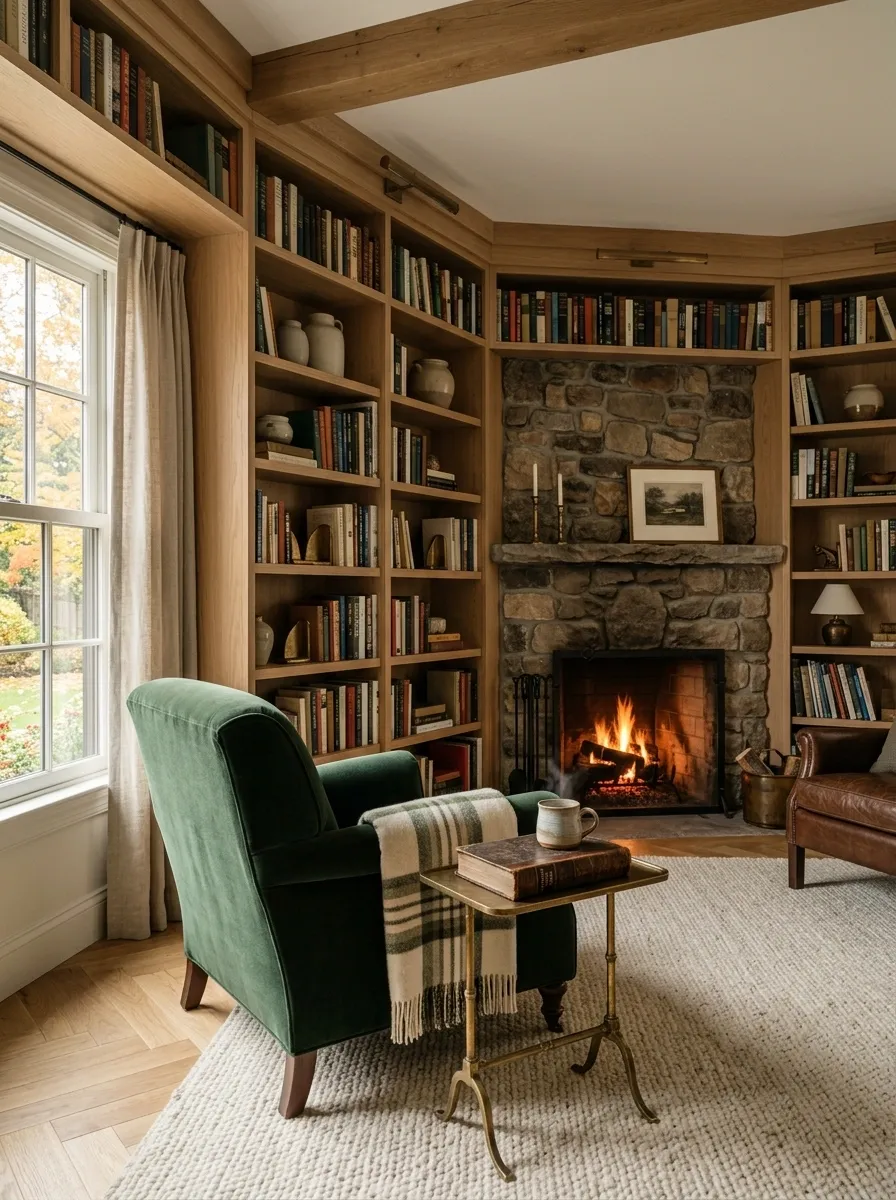
A corner fireplace can become the anchor of a library when shelving wraps around it rather than competing with it. Bookshelves on the adjacent walls create a continuous visual frame, while a reading chair angles toward the fire and a small table stays within reach.
The important move is leaving the fireplace visually dominant. Shelving should support the architectural feature rather than swallowing it. Keep the furniture arrangement loose enough that the fireplace remains visible from the main entrance to the room.
Dusty Rose Library With Pale Wood and Curved Seating
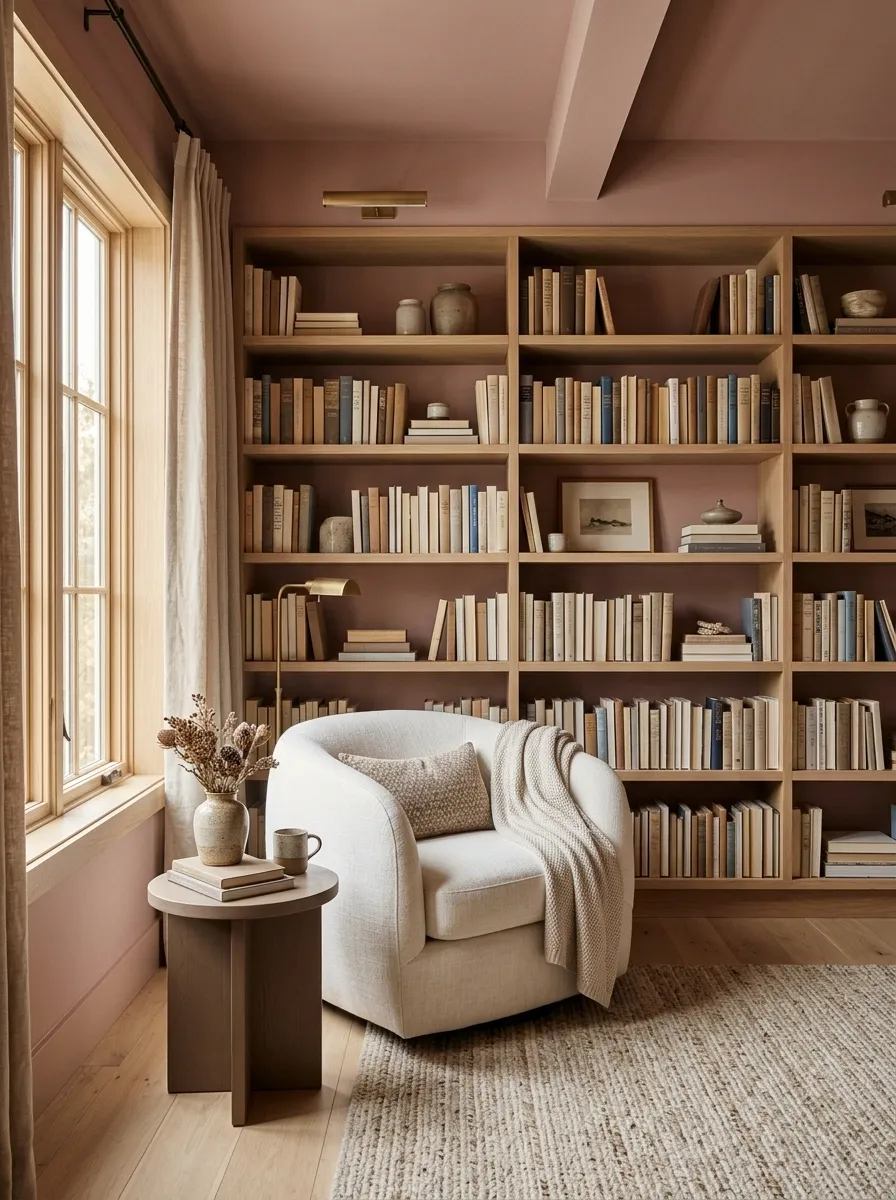
Dusty rose walls soften the atmosphere without making the library feel overly sweet. Pale wood shelving keeps the room bright, while curved seating introduces a more relaxed silhouette than the usual square reading chair.
The palette works particularly well with warm white upholstery and muted brown accents. Keep the pink dusty rather than saturated, and let the wood and books bring natural variation. A rounded chair can soften an otherwise rectilinear shelving wall without requiring a room full of curved furniture.
Home Library and Workroom With a Shared Long Built-In Wall
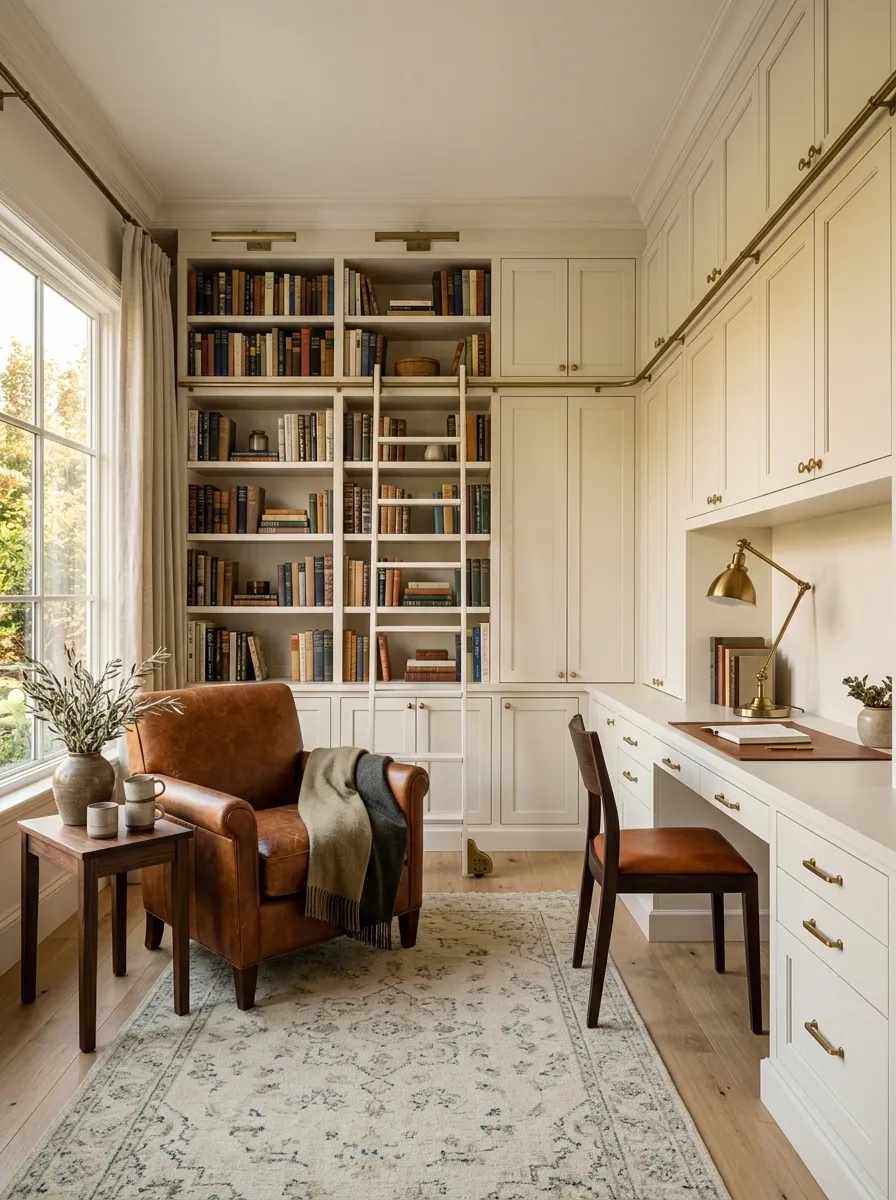
A long built-in wall can handle two jobs without making the room feel divided into office territory and library territory. Books occupy the main vertical storage, while one section becomes a proper desk with drawers and task lighting. A comfortable reading chair sits farther from the work surface so the room has a clear transition between focused work and reading.
The trick is keeping the cabinetry visually consistent. Matching materials across the shelves and desk makes the two functions feel intentional. If the office section suddenly looks like a separate flat-pack workstation, the illusion disappears immediately.
Traditional Library With Ladder, Paneling, and Green Reading Chair
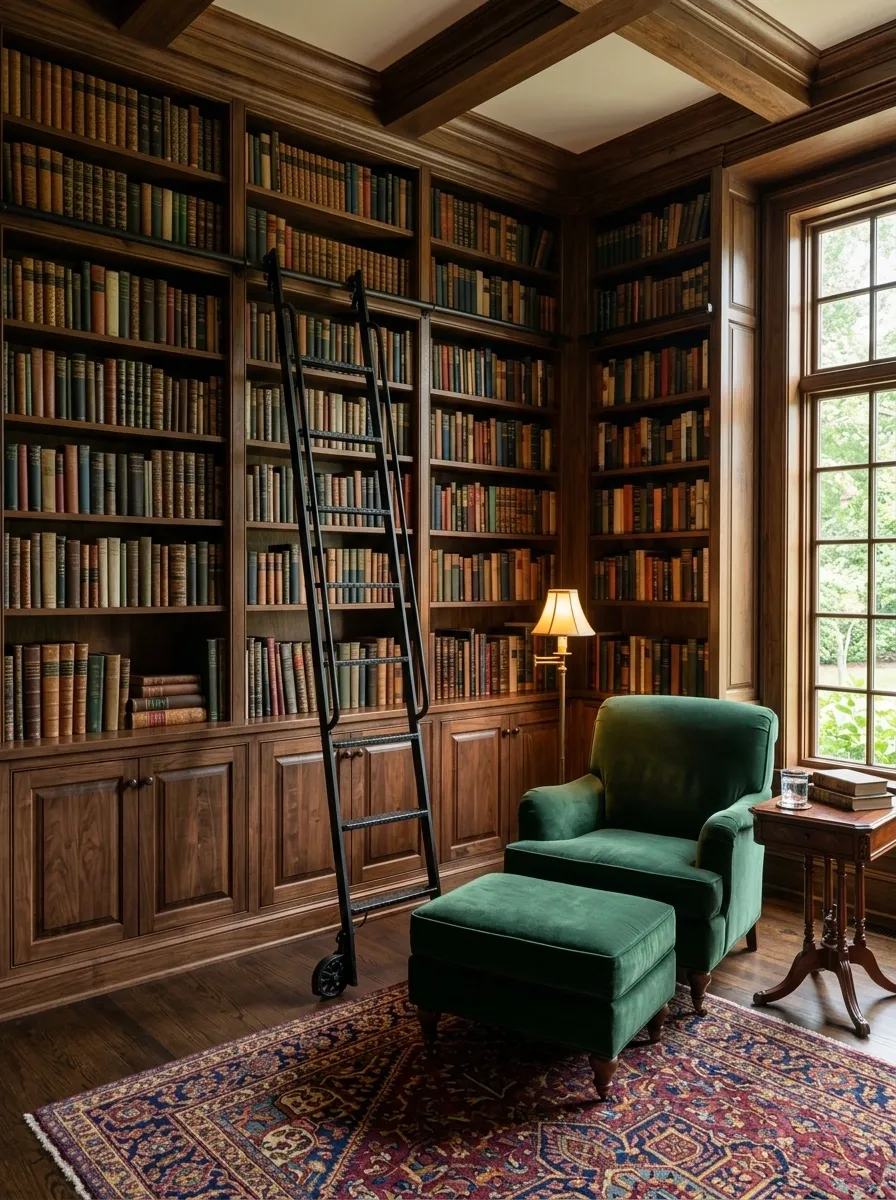
Warm wood paneling, floor-to-ceiling books, a rolling ladder, and a deep green reading chair create the classic library atmosphere without requiring a mansion-sized room. A patterned rug grounds the seating area, while a traditional lamp provides focused light beside the chair.
The rolling ladder adds height and character, but it should sit against shelving that actually needs the reach. If every book is within arm’s length, the ladder starts looking like theatrical scenery. Lower cabinets also help ground the composition and provide storage for larger books or less frequently used items.
Japandi Reading Library With Low Shelving and Floor-Level Seating
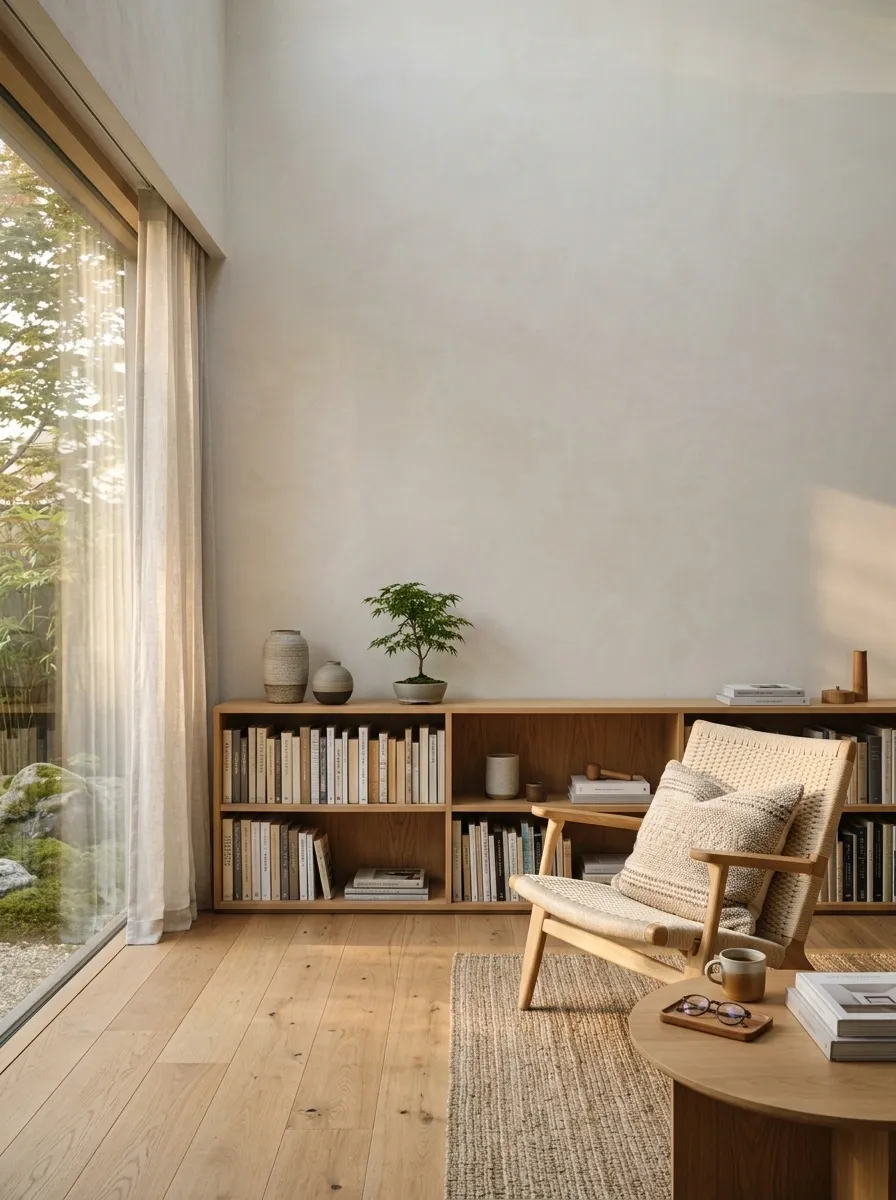
Pale plaster-like walls, low oak shelving, woven textiles, natural flooring, and a low-profile reading chair give this library a quiet Japandi character. Instead of filling the room vertically, the design keeps the visual weight closer to the floor.
That creates a surprising amount of breathing space. A few ceramics, a woven cushion, and carefully selected books are enough decoration. The room depends on proportion more than quantity, which is useful when the goal is a library that feels calm rather than packed.
Library Built Into a Former Dining Room With Central Round Table
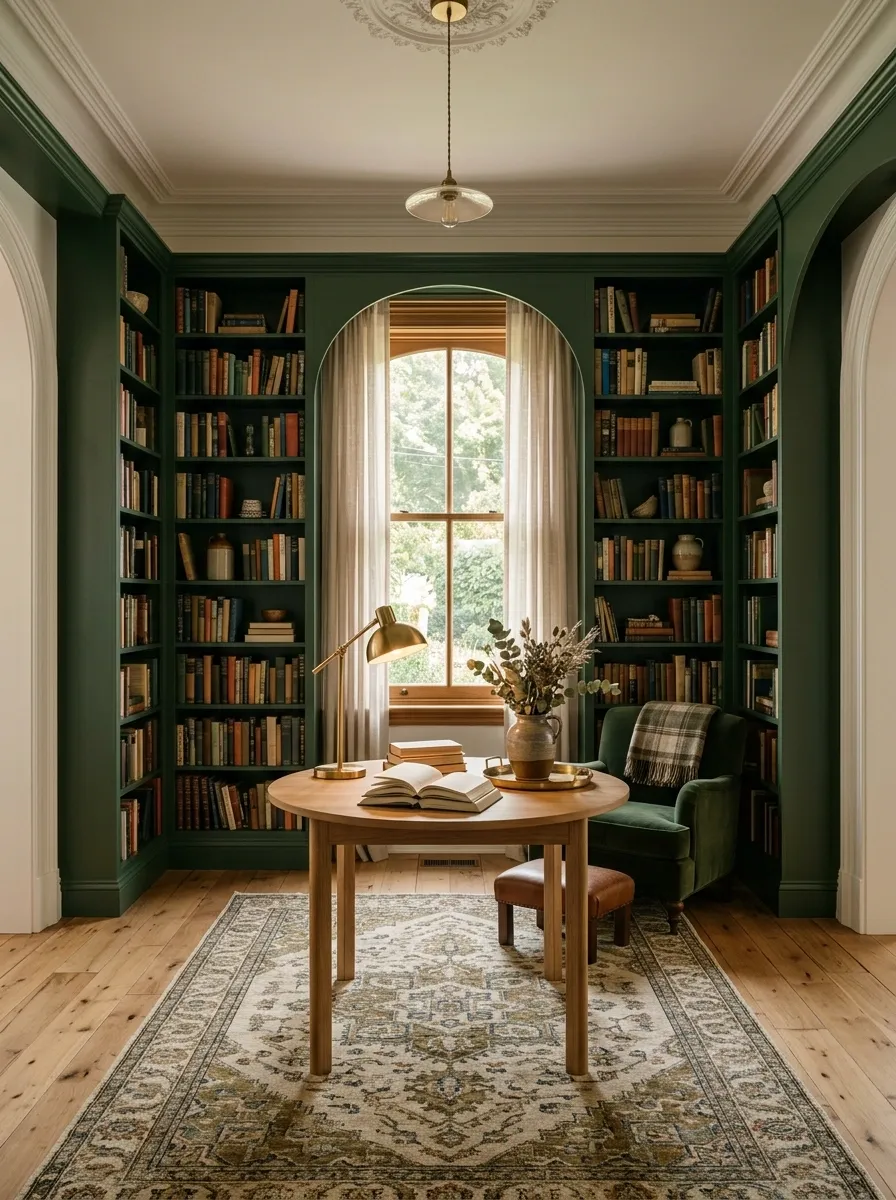
A former dining room can become a convincing home library by replacing the dining table with a smaller round reading table and filling the perimeter with bookshelves. This arrangement works particularly well when the room has architectural details worth preserving, such as windows, molding, a chandelier, or a wide doorway.
The central table creates a useful shared surface for books, writing, puzzles, or conversation without turning the room back into a formal dining area. Keep the table proportionate to the room and allow enough space around it for comfortable movement.
Compact Library Nook Beneath a Staircase
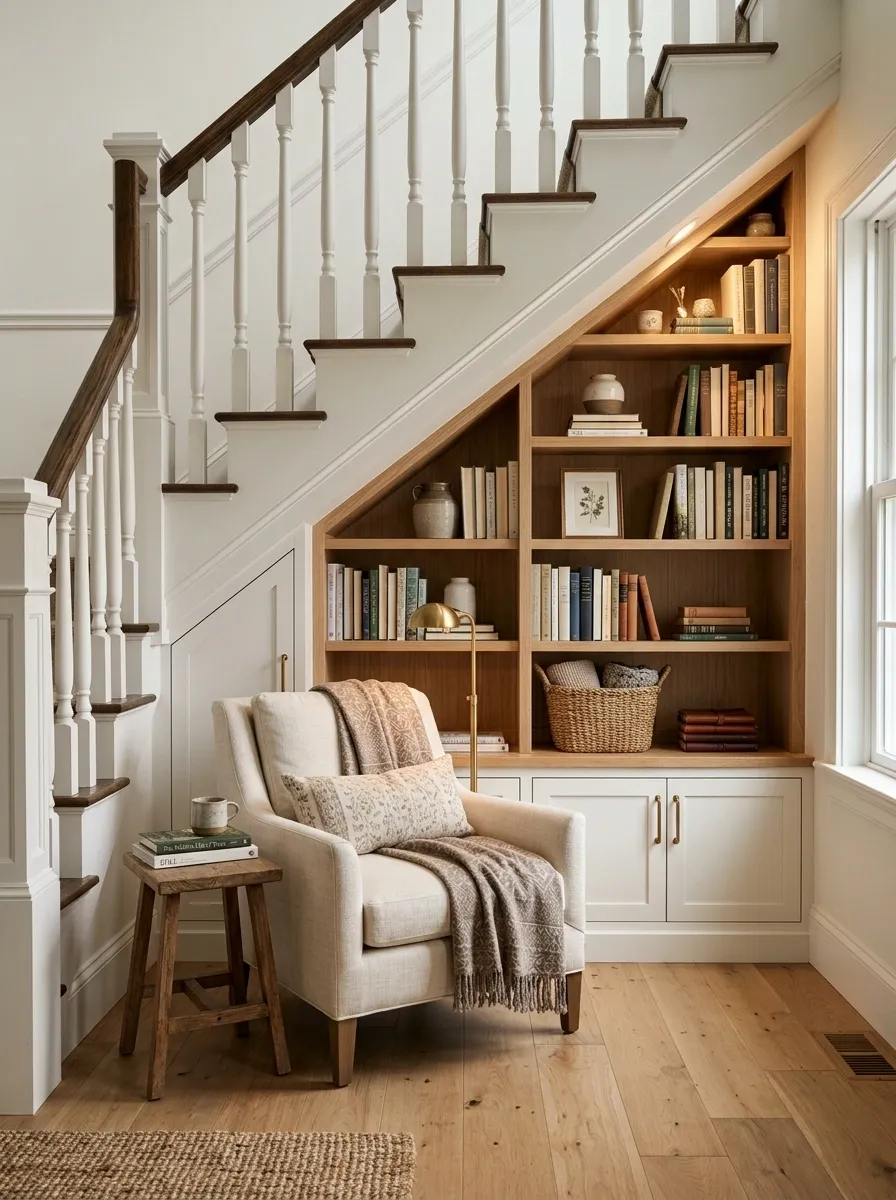
The unused space beneath a staircase can become a compact library when the shelving follows the slope instead of trying to ignore it. Low cabinets occupy the deepest portions, while smaller shelves rise toward the higher end. A narrow upholstered chair can fit into the remaining floor area without blocking circulation.
This is especially useful in homes where an entire room isn’t available. The staircase already creates a defined architectural pocket, so the library can feel intentional rather than squeezed into a random corner.
Sunlit Library With Full-Height Windows and Freestanding Shelves
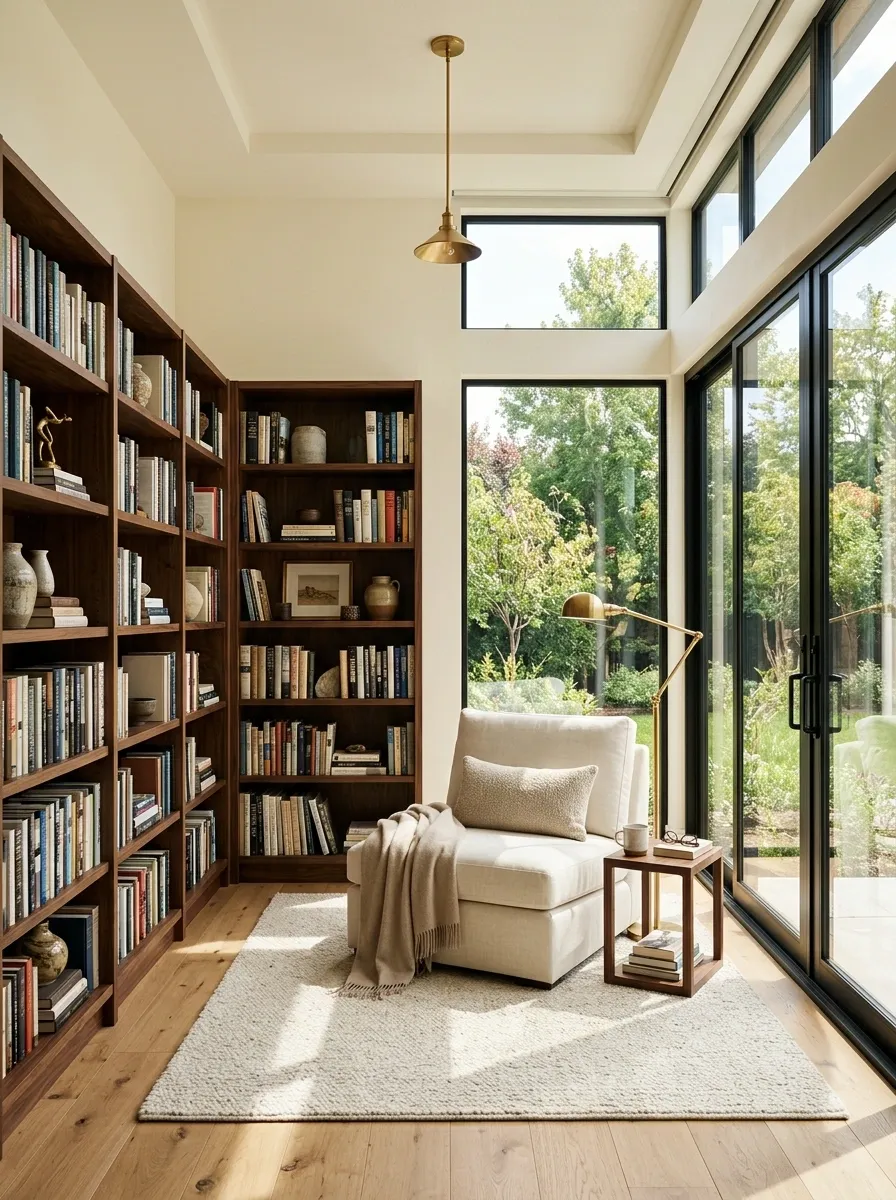
A library with full-height windows should avoid putting bulky furniture directly in front of the glass. Freestanding shelves can sit on an interior wall, leaving the brightest perimeter open for a reading chair, bench, or small sofa.
Natural light becomes part of the atmosphere during the day, while adjustable lamps handle evening reading. The furniture should stay visually light enough that the windows remain the main architectural feature.
Minimal White Library With Hidden Storage
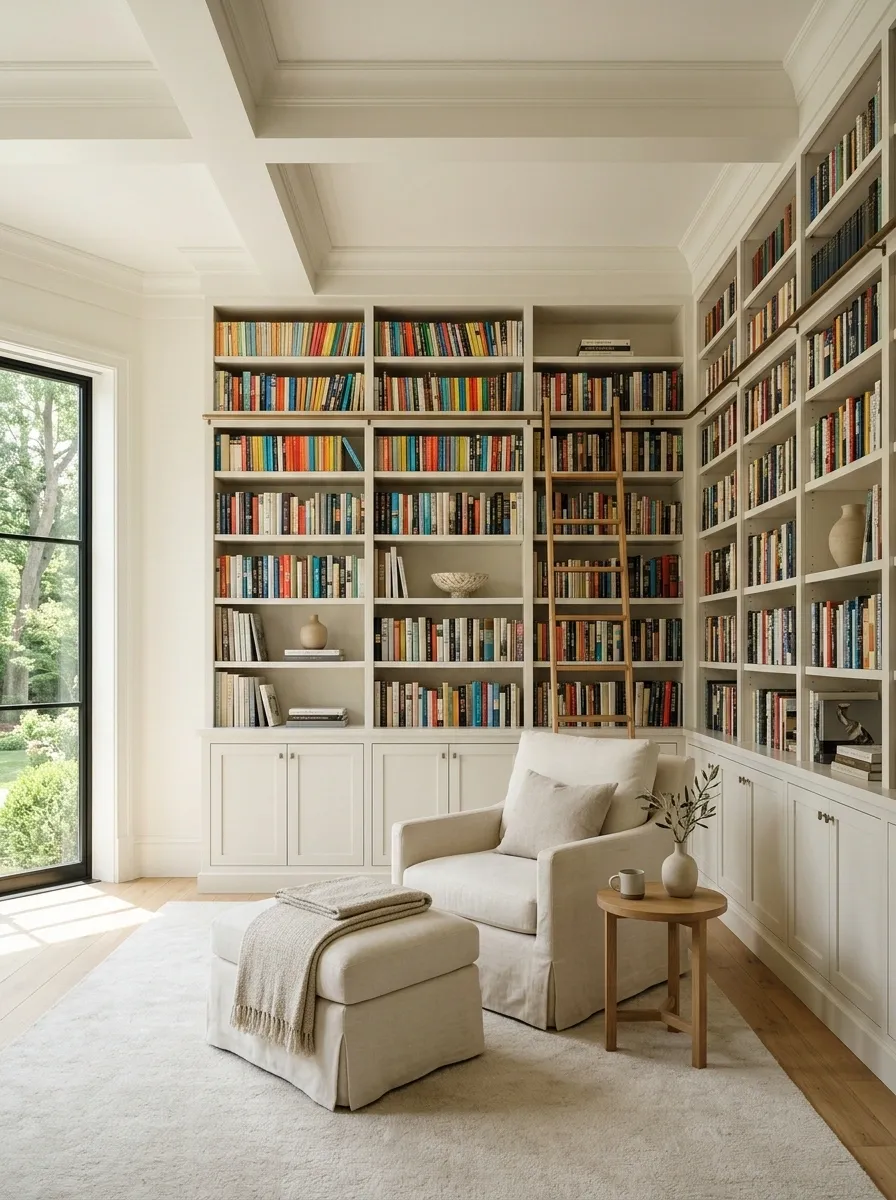
A minimal white library works when the architecture carries more visual weight than the decoration. Full-height shelves, warm white walls, a pale rug, and one substantial chair create a calm room where the books provide the majority of the color.
Closed cabinets at the bottom hide less attractive storage and keep the shelves from becoming visually chaotic. This is particularly useful when the library doubles as a guest room or living area where not every item needs to be on display.
Moody Green Library With Floor-to-Ceiling Shelving
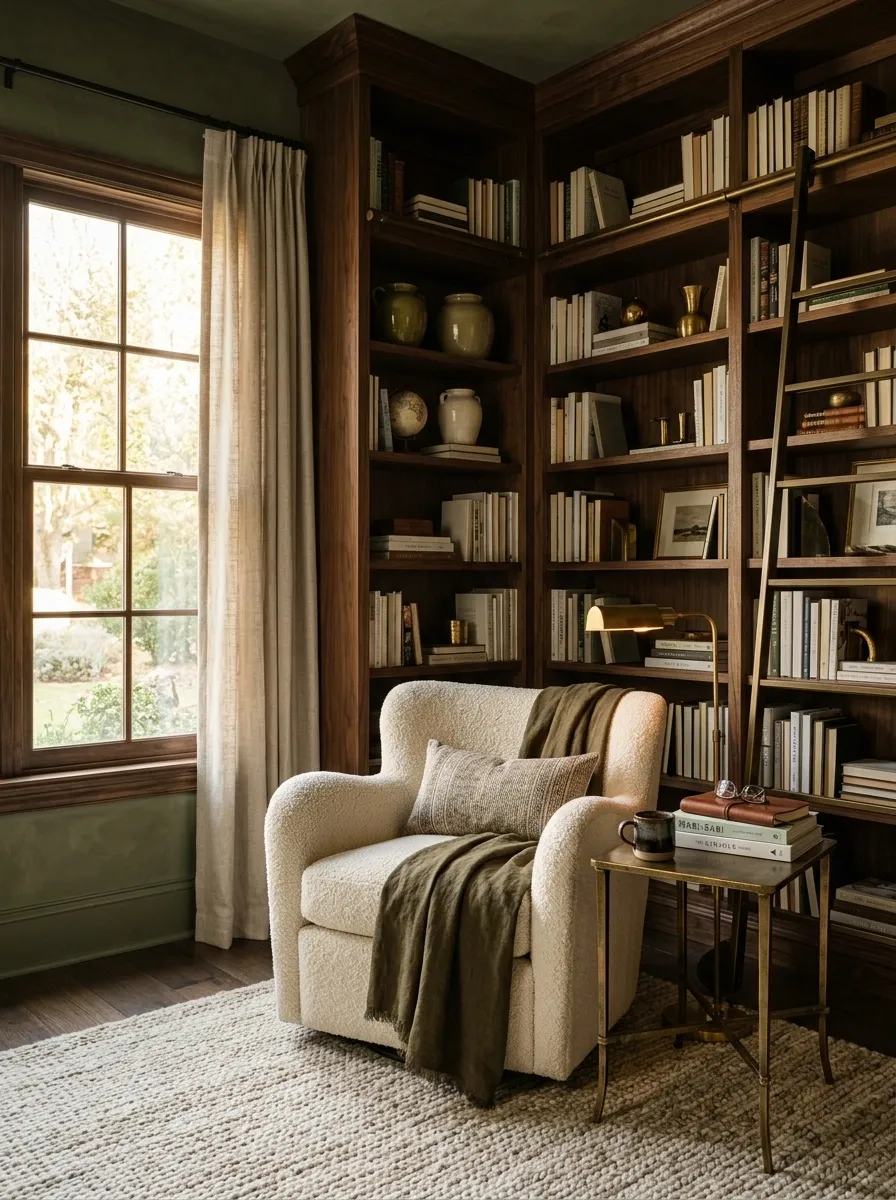
Deep olive green walls create a moody backdrop that works particularly well with walnut, aged brass, and cream upholstery. Floor-to-ceiling shelving makes the room feel immersive, while a lighter rug and chair prevent the darker palette from becoming visually heavy.
The trick is contrast rather than brightness. A cream chair against green walls has more impact than a room where every surface is pale. Add warm lamps at different heights so the room still has dimension after sunset.
SHELVES
LIGHT
Library With Built-In Window Seat and Vertical Bookcases
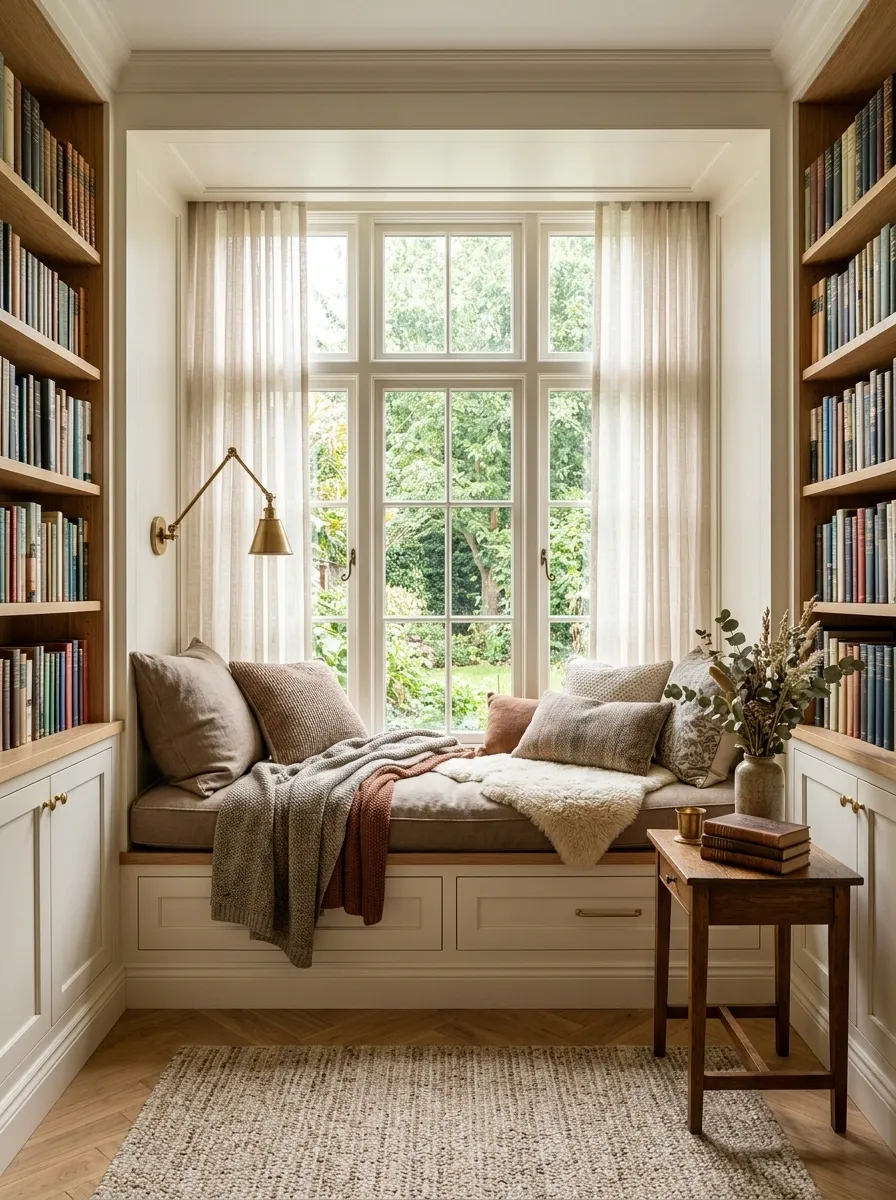
A built-in window seat can create the most comfortable reading position in the entire room while vertical bookcases handle storage around it. The seat should be deep enough for lounging, with a proper cushion and nearby lighting so it functions as more than an architectural photo opportunity.
The surrounding shelves can remain relatively simple because the window seat provides the room’s softer focal point. Use curtains that frame rather than cover the window and keep the cushion palette connected to the rug and nearby upholstery.
Library With Arched Shelving and Soft Architectural Curves
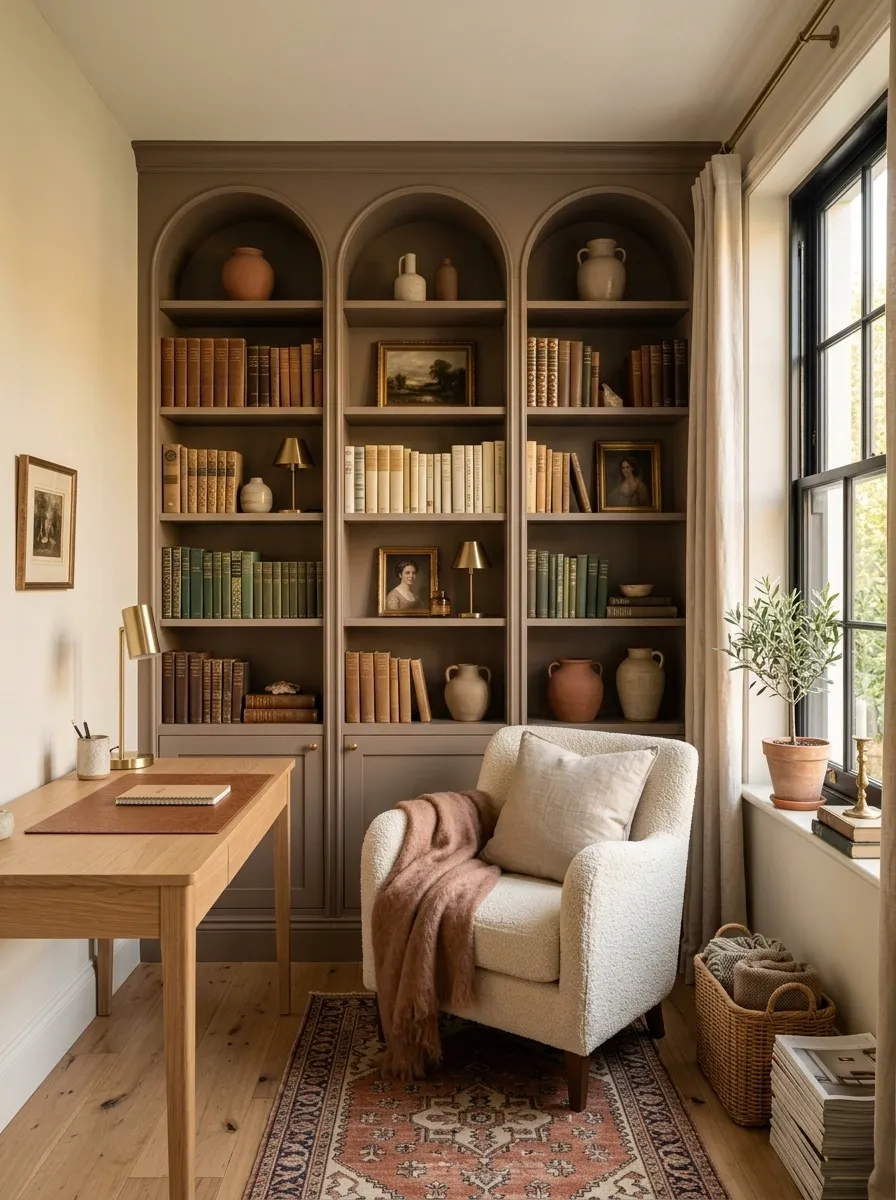
Arched shelving introduces architectural softness into a room dominated by straight lines. Repeated arches can frame books and artwork while creating a more distinctive silhouette than standard rectangular shelving.
The best version uses the arch sparingly. If every doorway, mirror, chair, table, and shelf is curved, the room starts looking like the architecture has developed a very specific obsession. Keep the larger furniture simple and let the shelving carry the shape.
Reading Library With Fireplace, Sofa, and Two Individual Chairs
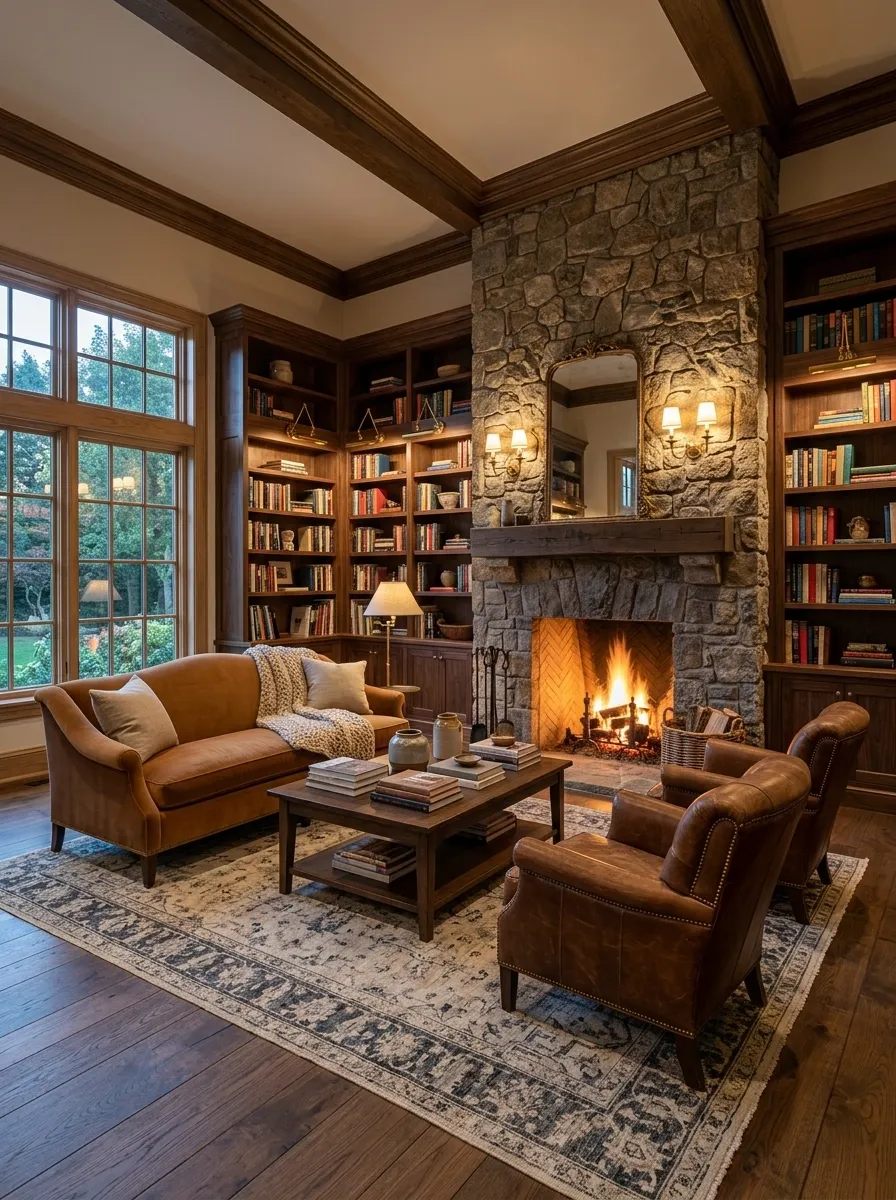
A larger library can support multiple seating positions when each one has a clear relationship to the architecture. A sofa can face the fireplace, while two individual chairs angle toward the center of the room for quieter reading or conversation.
The layout should avoid pushing every seat against a wall. Leaving some furniture floating within the room creates a more intentional composition and makes the library feel like a living space rather than a storage room with chairs.
Soft Neutral Library With Linen Seating and Natural Wood
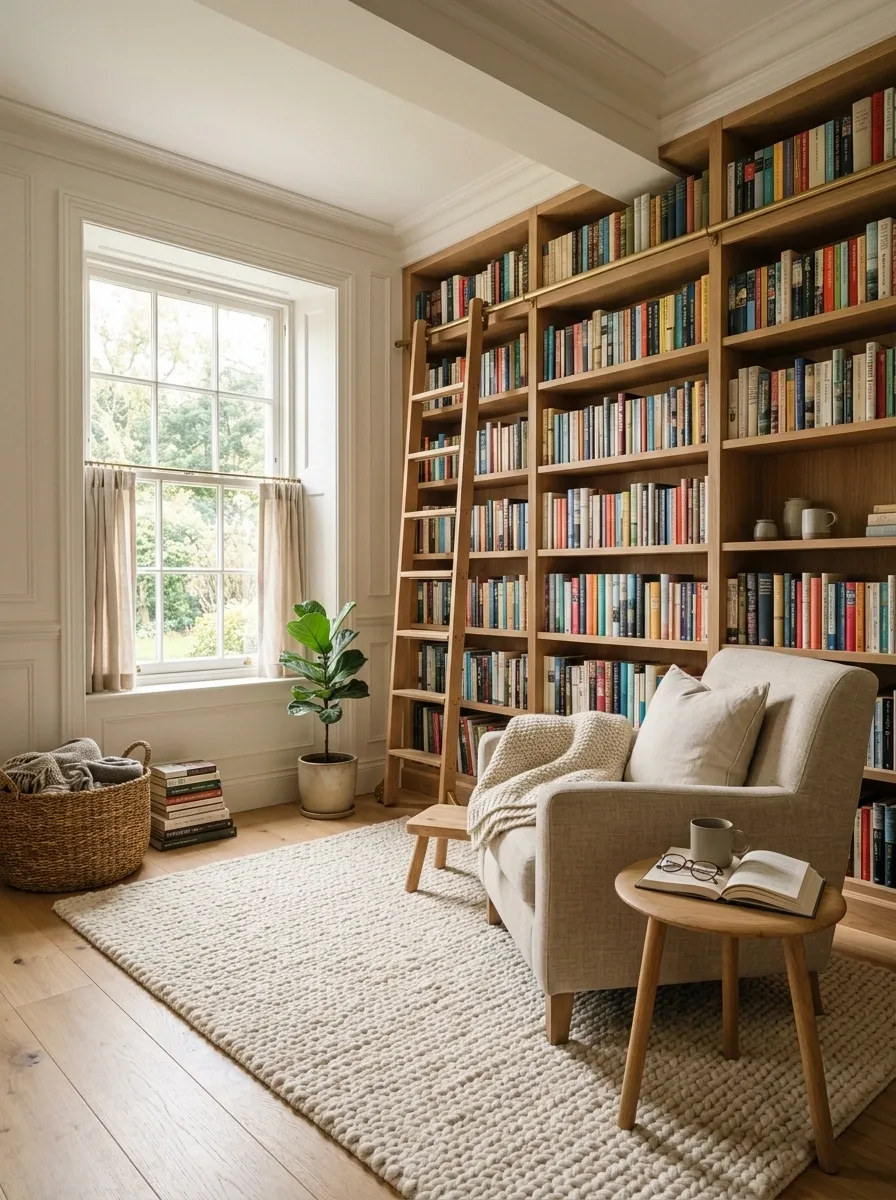
A neutral library doesn’t have to be bland when the materials carry enough variation. Warm white walls, natural oak, linen upholstery, woven baskets, and a wool rug create depth without introducing a large color statement.
The room should rely on differences in texture and proportion. Smooth wood against woven fibers and soft upholstery creates enough contrast to keep the neutral palette alive. Books then become the natural source of stronger color.
Traditional Library With Dark Wood and Antique-Inspired Details
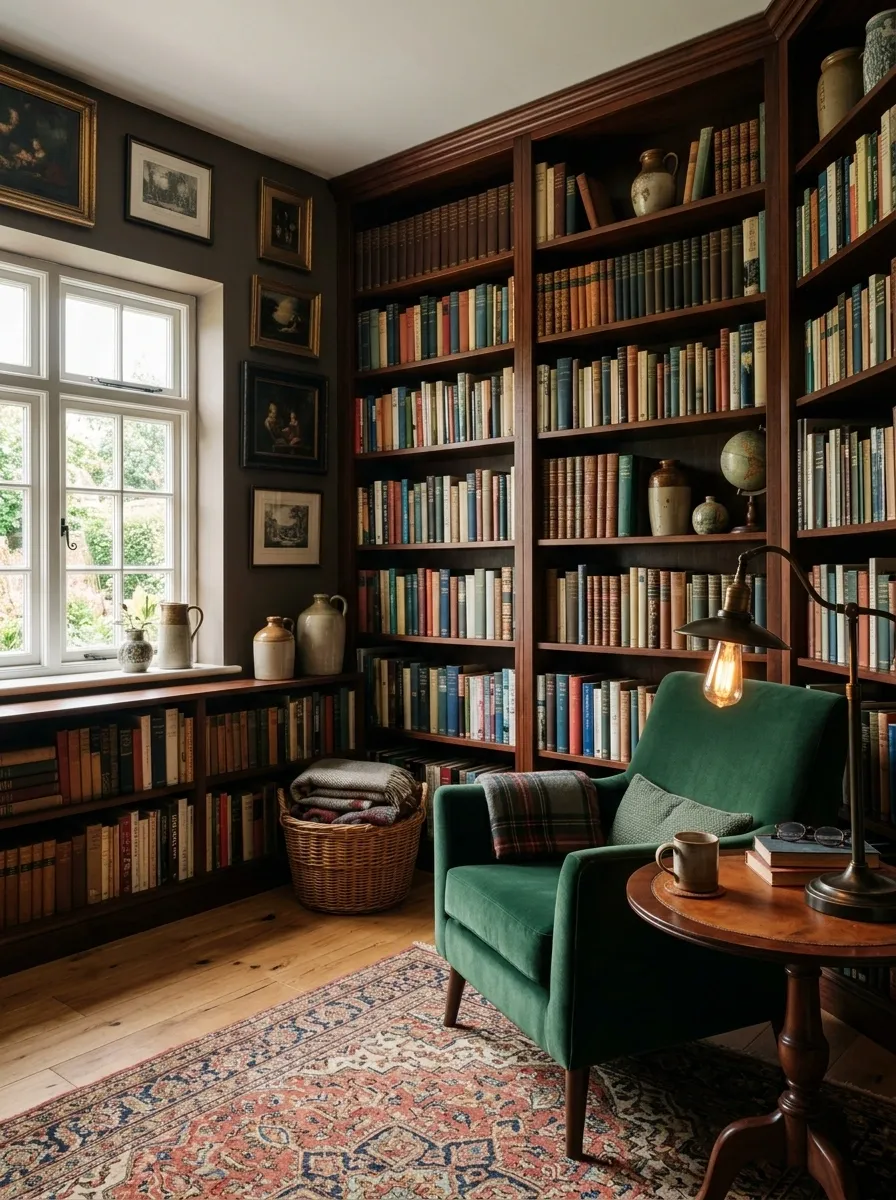
Dark wood shelving gives this library a classic character, while antique-inspired lamps, framed artwork, and a patterned rug create a sense of history without requiring every piece to be genuinely antique.
The room should avoid looking like a museum. Mix older-looking pieces with comfortable modern upholstery so the space remains usable. Books should look naturally collected rather than arranged by color for a photograph.
Quiet Library Corner With One Statement Chair
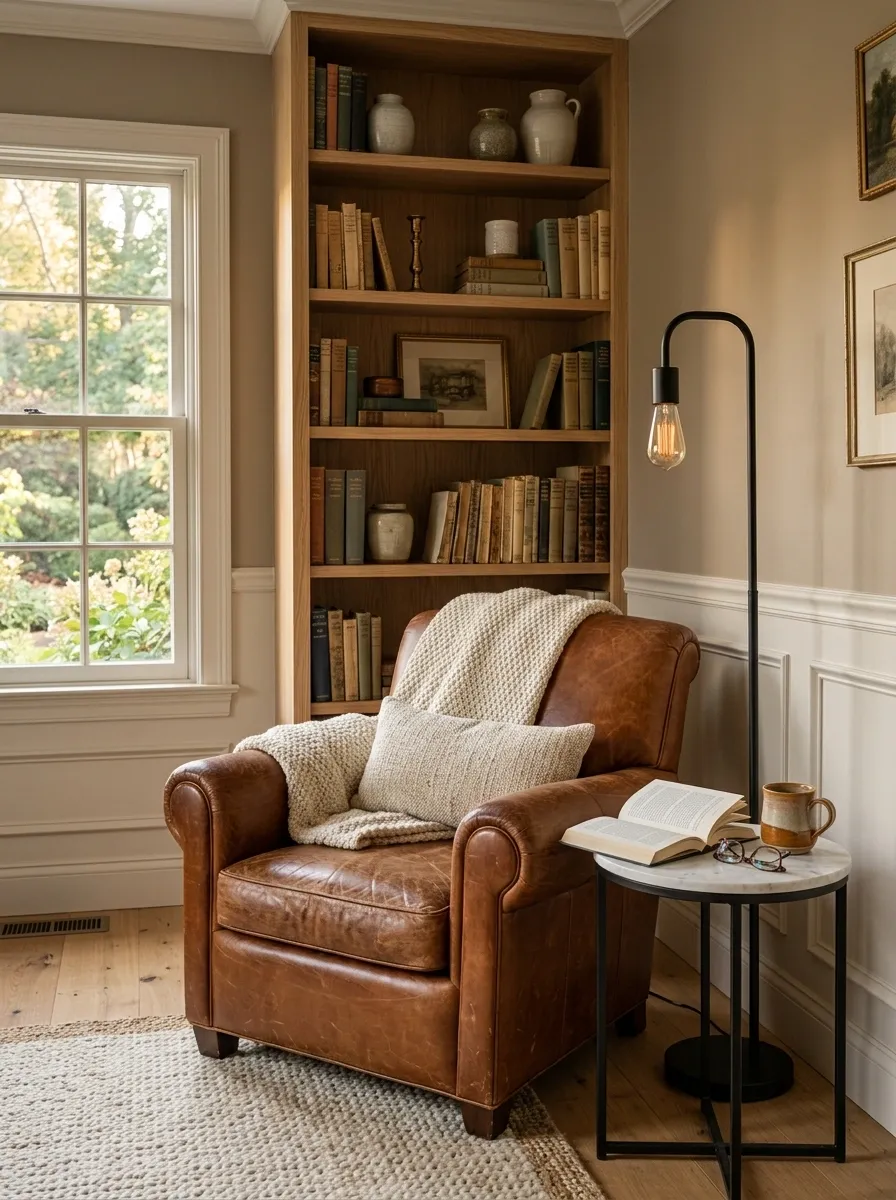
A library doesn’t always need multiple shelves and several seating areas. A small corner can work beautifully with one substantial chair, a narrow bookcase, a floor lamp, and a small side table.
The chair should be large enough to feel inviting without overwhelming the corner. Positioning it near natural light makes the space feel deliberate, while the bookcase can provide enough storage to establish the library function.
Quiet Bedroom-Library Hybrid With Window Bench and Full Bookcase Wall
A full bookcase wall turns one side of this bedroom into a serious reading feature, while a built-in window bench creates a second, softer place to read. The rest of the room stays clearly bedroom-focused, with a properly sized bed, restrained bedding, a reading lamp, and a small upholstered chair positioned away from the sleeping zone.
The balance comes from giving the books one strong wall rather than spreading shelves throughout the room. That lets the library function feel substantial without taking over the bedroom. The window bench adds another reading position without adding bulky furniture. Keep the bedding and larger furniture fairly calm so the shelves remain the room’s strongest visual statement. Otherwise the poor bedroom has to compete with the entire library before anyone even gets to bedtime.
When the Room Looks Better Because It Isn’t Trying So Hard
A cozy home library doesn’t need every square inch to announce that reading is happening here.
Sometimes the strongest rooms leave a little empty space around the shelves. Sometimes the best seat is simply the one placed near a window instead of the most expensive-looking chair in the showroom. Sometimes a dark wall does more for the atmosphere than another decorative object ever could.
The common thread is that the finished room has a clear visual direction. The materials relate to one another. The seating makes sense within the architecture. Lighting supports the way the room will actually be used. Books become part of the composition instead of being treated like decorative filler.
That is what makes a library feel personal rather than staged.
Save the designs that solve the kind of room you actually have, especially the ones that make you stop scrolling for a second. Those are usually the ideas worth keeping when the decorating decisions start getting real.