
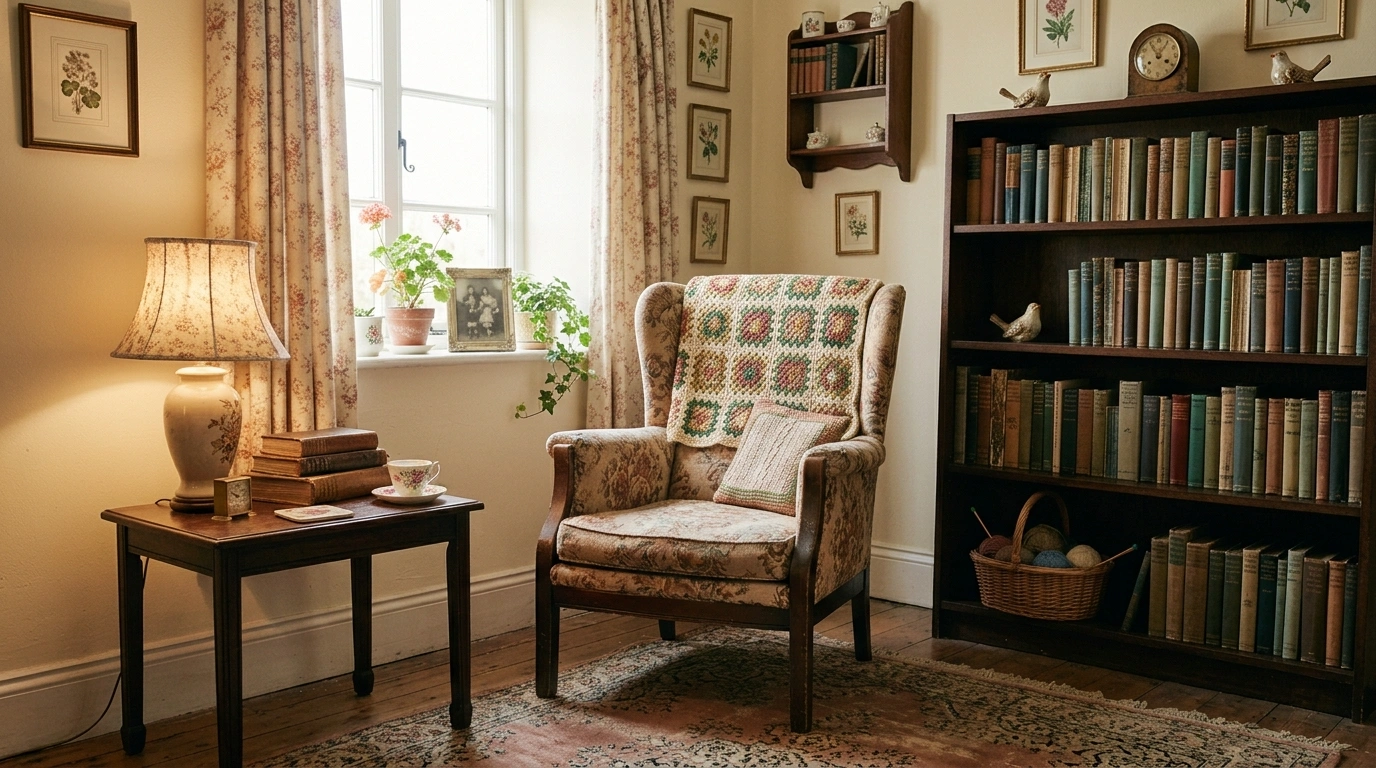
The problem with trying to create a cozy grandma’s house look is that the internet keeps confusing “cozy” with “put a floral cushion on everything and call it vintage.”
That’s not the look.
The rooms that actually feel warm have layers. There’s usually some old-looking wood, a soft patterned textile, a lamp throwing warm light into a corner, a stack of books that looks genuinely used, and something slightly imperfect that keeps the room from feeling staged. Nothing screams for attention, but nothing feels random either.
The trick is knowing which details create that feeling and which ones simply turn a room into a themed set for a period drama.
Texture, pattern, useful objects, warm finishes
Old-looking details with cleaner modern pieces
Matching sets, filler decor, and fake clutter
The Cozy Grandma’s House Moves
Layer Small Floral Wallpaper With Warm Wood
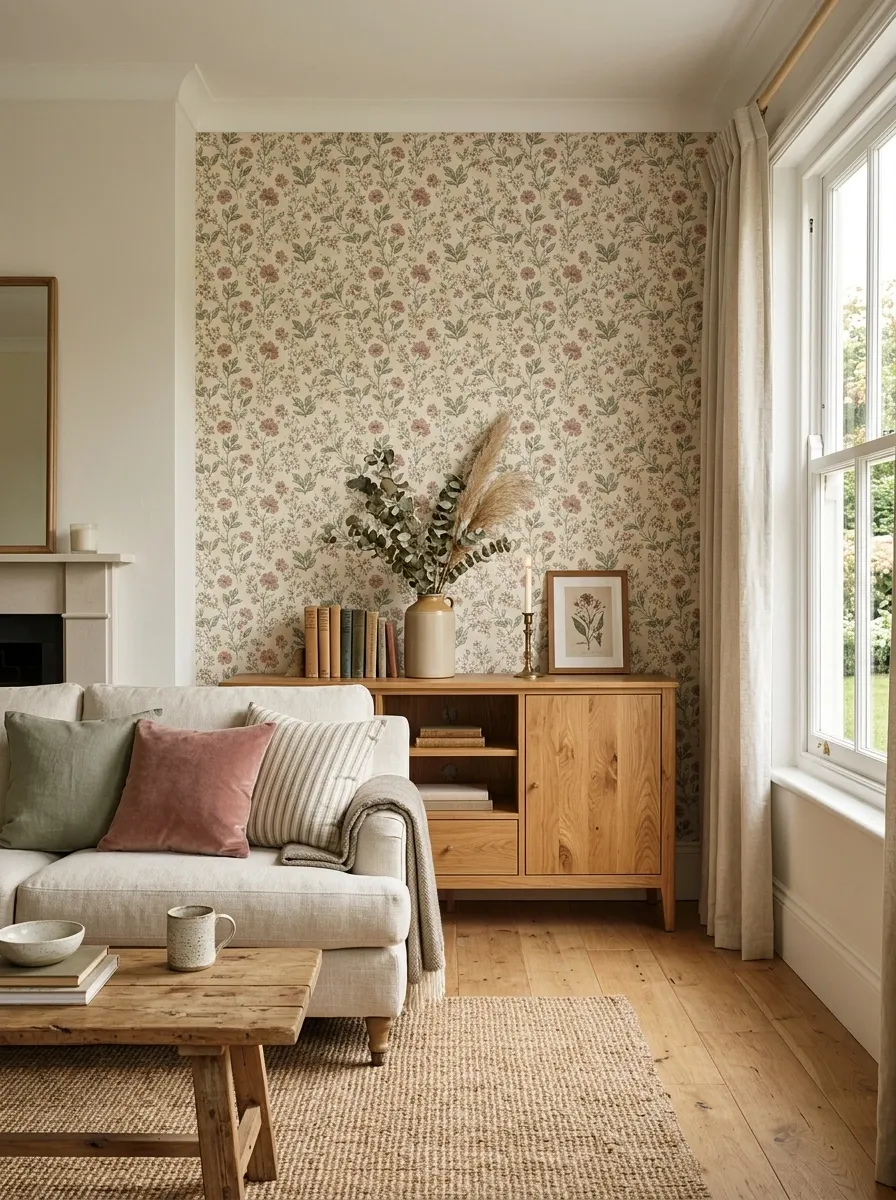
Floral wallpaper gets a bad reputation because the wrong print can make a room look like it hasn’t been updated since dial-up internet. The right print does the opposite.
Choose a small-scale floral with a slightly muted background, then pair it with warm wood furniture. The wood gives the pattern somewhere to settle instead of letting the walls dominate the room.
Use the wallpaper on one wall, inside a nook, behind open shelving, or throughout a small room where the pattern can actually become part of the architecture.
Best pairing: soft floral + walnut, oak, pine, or painted wood.
Keep the rest of the room quieter. The wallpaper already has opinions.
Put a Skirted Table Beside the Sofa
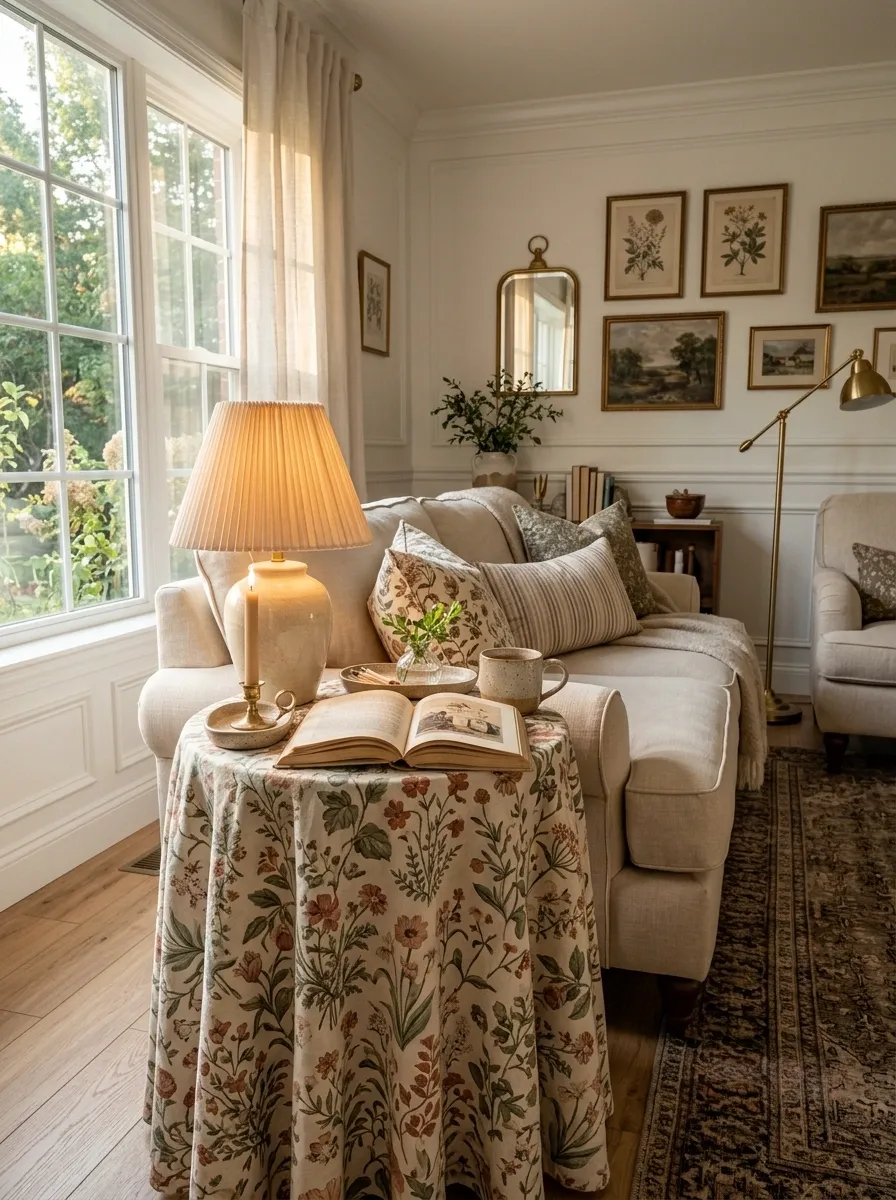
A skirted side table instantly softens a living room because it hides the hard furniture frame underneath and introduces another layer of fabric.
Choose a small round or square table with a relaxed cotton, linen, or printed skirt. Place it beside the sofa where the surface can actually be used for a lamp, drink, book, or remote.
The fabric doesn’t need to match the curtains or cushions. In fact, it shouldn’t look like the entire room was purchased in one suspiciously convenient bundle.
A little floral or checked skirt works especially well beside a plain upholstered sofa.
Hang Full-Length Floral Curtains That Frame the Room
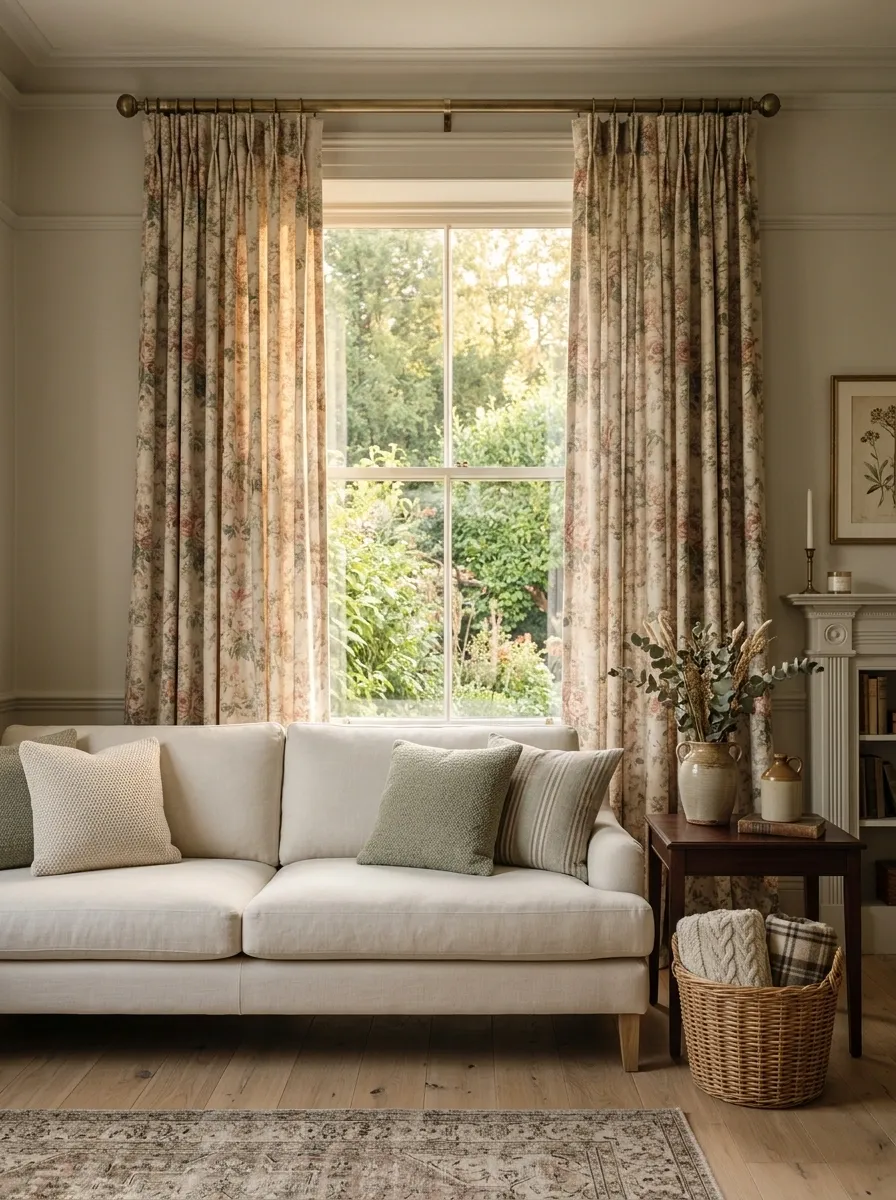
Short curtains make a room look chopped up. Full-length panels do something completely different. They soften the walls, frame the windows, and make the room feel more settled.
Choose a floral print with a slightly faded or muted quality. Hang the rod wider than the window so the fabric can sit outside the glass when open.
Let the panels reach the floor. Don’t stop them several inches above it unless there is an actual furniture or architectural reason.
For a calmer result, keep the sofa and large furniture pieces relatively simple.
And please don’t pair floral curtains with floral upholstery, floral cushions, and floral wallpaper unless the goal is to make every flower in the room compete for screen time.
Build a Reading Corner Around One Really Good Chair
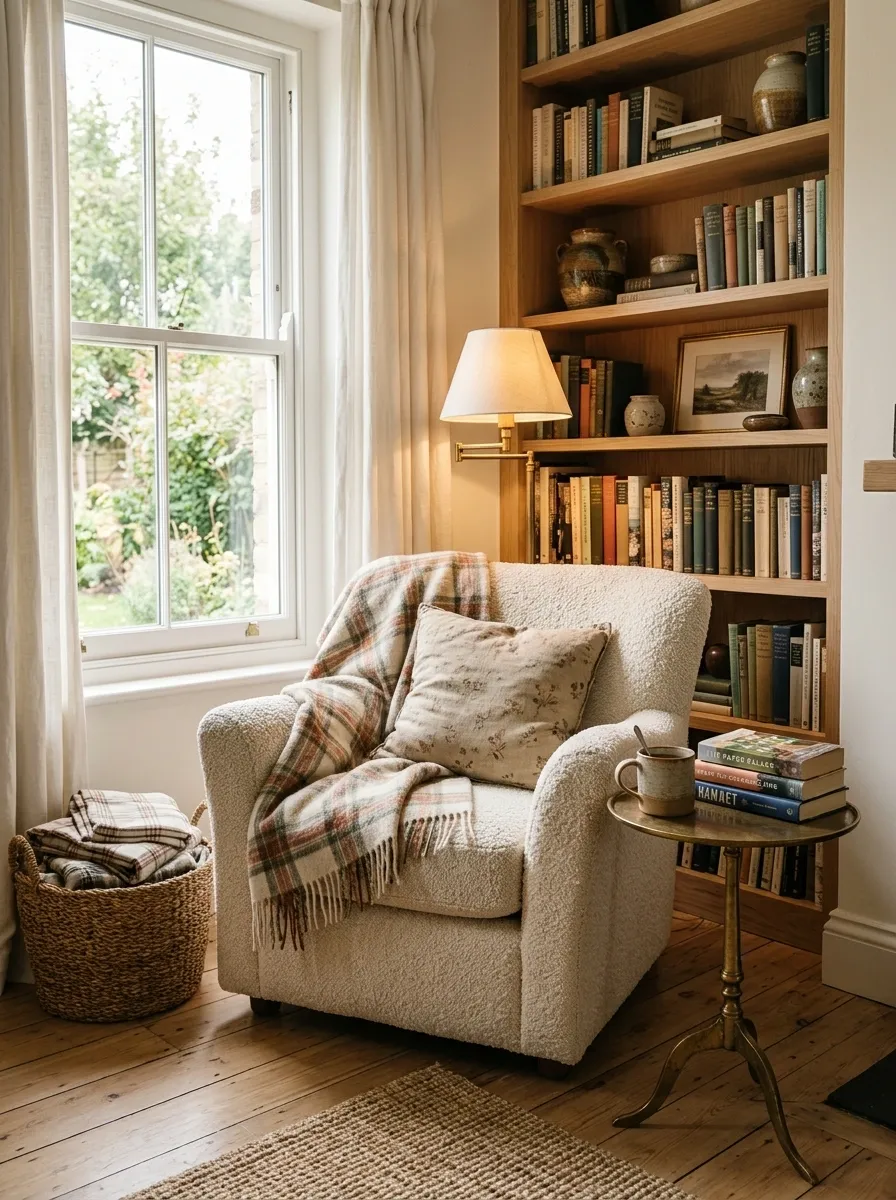
A reading corner doesn’t need a giant library or a suspiciously expensive chaise lounge. It needs one comfortable chair, one useful light, and somewhere to put a book.
Choose upholstery with texture, then place the chair near a window, beside a bookcase, or in an unused corner of the bedroom.
Add a small side table and a warm lamp. A basket for blankets can sit nearby if there’s room.
That’s enough.
The chair should look like someone could disappear into it for an hour, not like it’s waiting for a catalog photographer to arrive.
Anchor Modern Furniture With a Traditional Rug
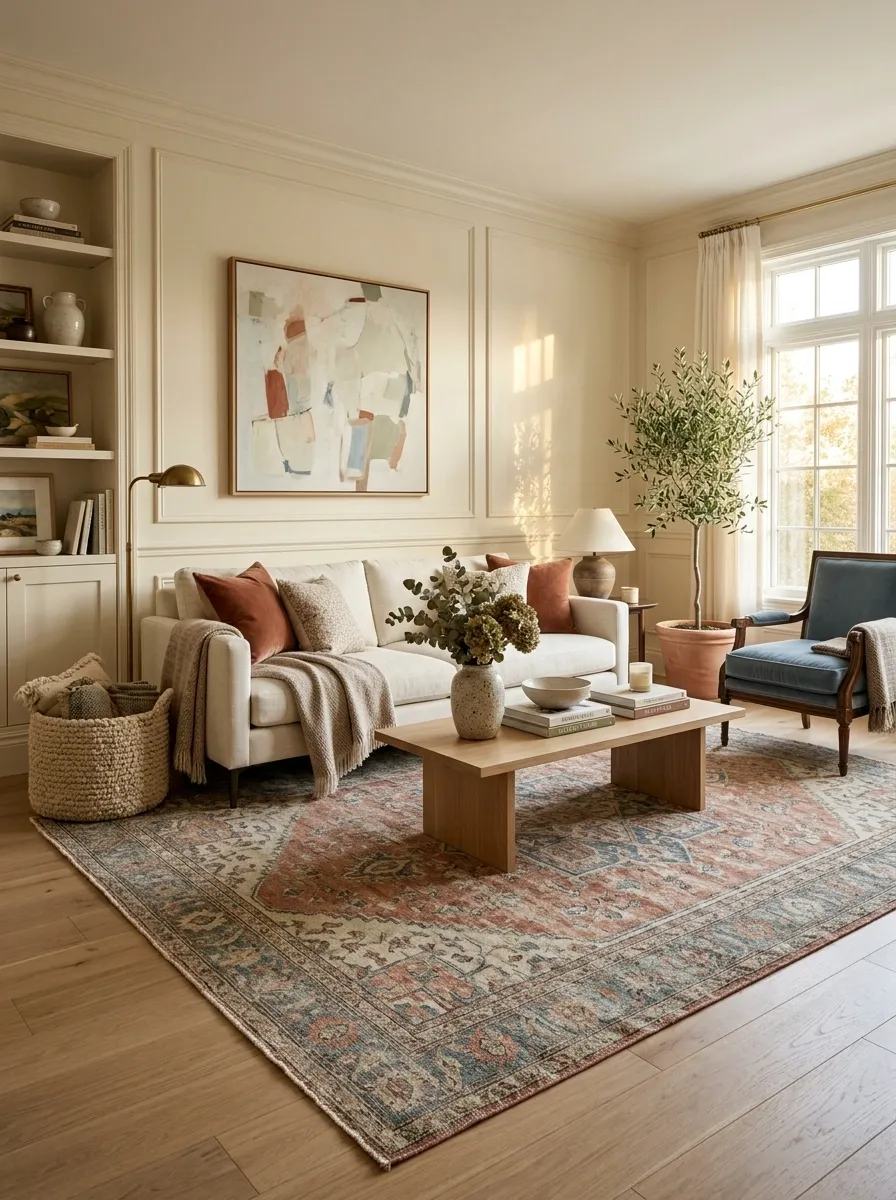
A traditional rug can make a very modern sofa feel warmer within minutes. Look for faded florals, Persian-inspired patterns, muted borders, or slightly worn-looking colors.
The trick is choosing a rug with enough color variation to connect several pieces in the room.
Keep the sofa itself relatively simple if the rug is detailed. Then repeat one or two of the rug colors somewhere else, such as a cushion, throw, lamp, or artwork.
Don’t match everything exactly.
The rug should connect the room, not become its personal dictator.
Display Everyday Dishes Like They Belong There
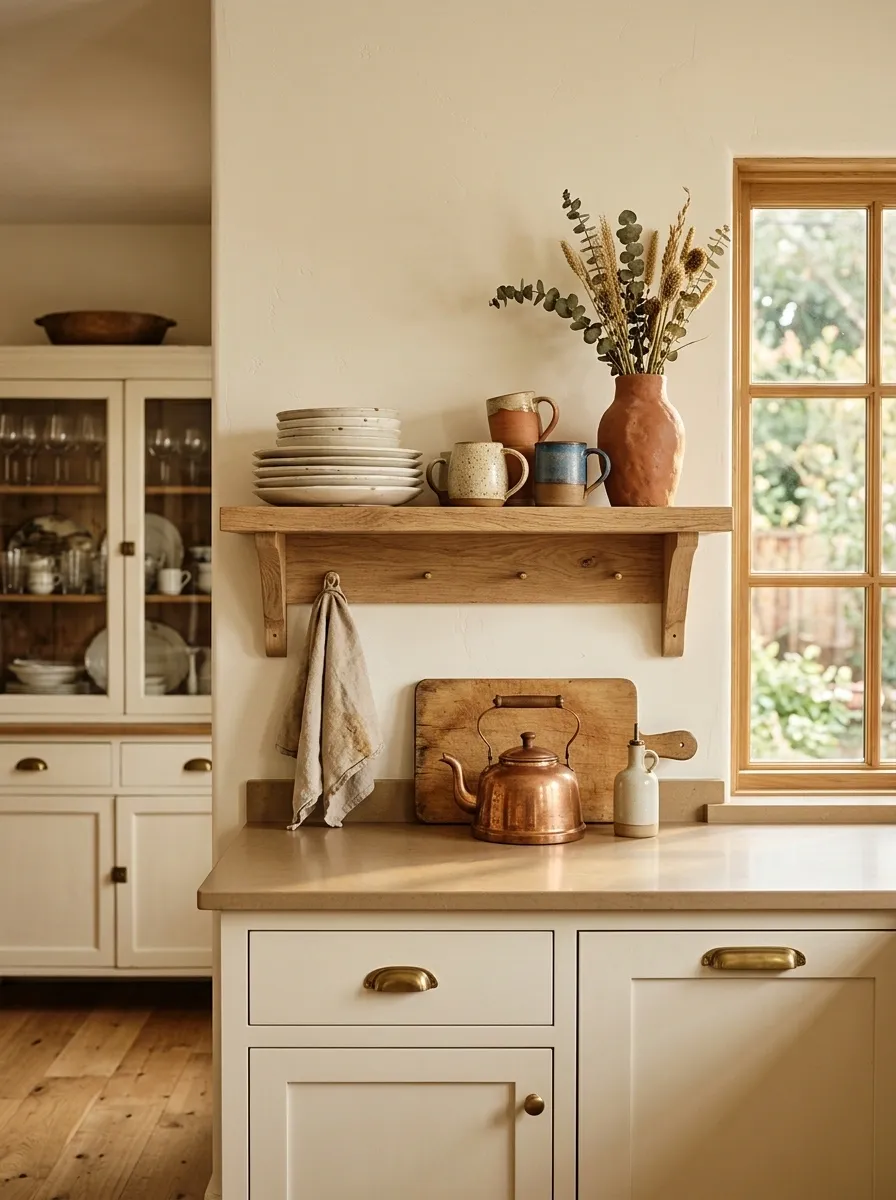
The prettiest kitchens in this style don’t hide every dish behind a cabinet door. A few everyday plates, mugs, bowls, or serving pieces can become part of the room.
Use an open shelf, glass-front cabinet, dresser-style hutch, or even one carefully chosen countertop corner.
Mix practical pieces with one or two prettier ceramics. Keep the colors related, but don’t make them identical.
The important part: display things that are actually used.
A shelf full of objects nobody can touch without triggering a museum alarm isn’t cozy. It’s an exhibit.
Keep the ones used every morning within reach.
Stack a small selection instead of the entire collection.
Add one interesting handmade-looking piece for character.
Use a Wood Hutch as the Room’s Main Character
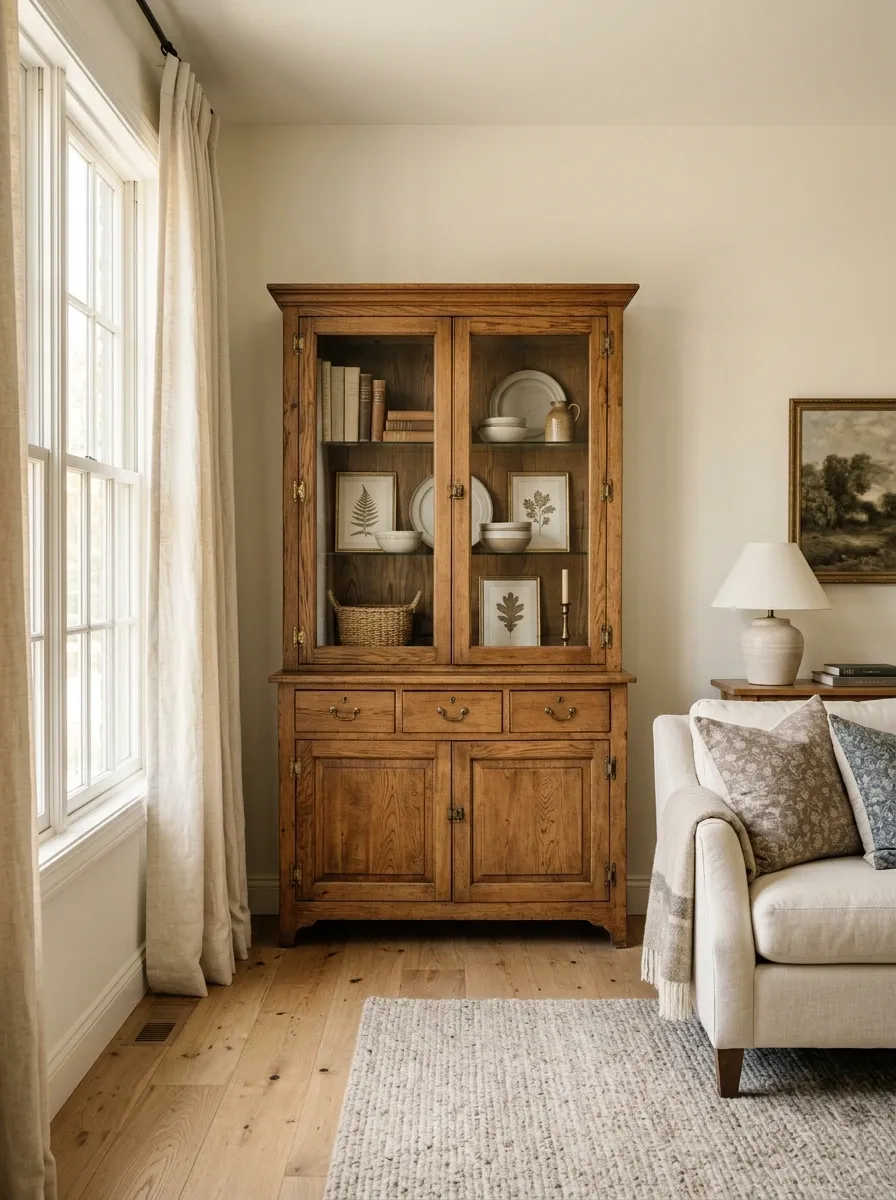
A wooden hutch doesn’t need much help. That’s why it’s such a strong choice for this style.
Look for visible grain, glass doors, traditional hardware, shelves, drawers, or a slightly aged finish. Then give it room to be seen.
Fill it with books, dishes, framed art, baskets, or a few collected objects. Don’t pack every shelf edge to edge.
The wood already brings warmth and history into the room. Adding fifty tiny accessories on top of it is basically putting sunglasses on a lamp.
Let the furniture carry some of the personality.
Mix Florals, Checks, and Stripes Without Starting a Pattern War
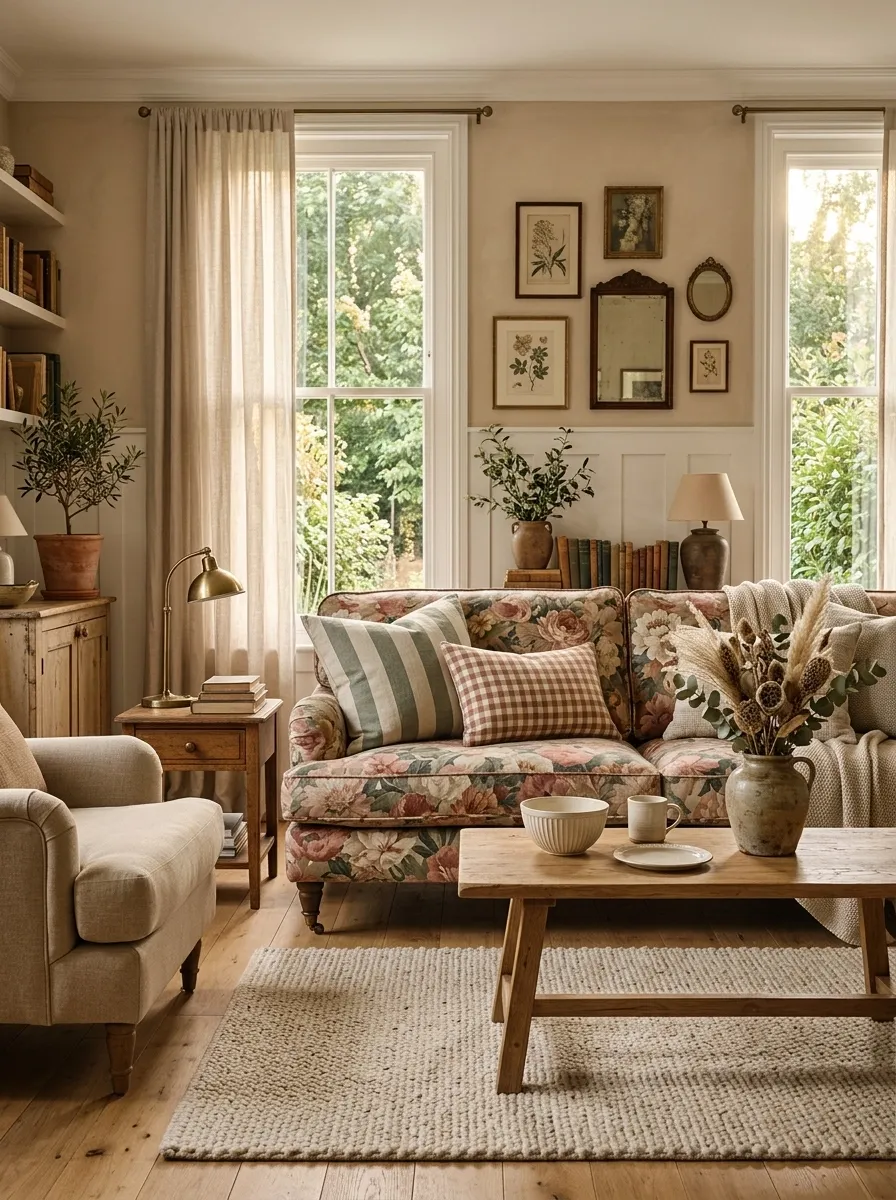
Multiple patterns are what make this style interesting, but they need different jobs.
Let one pattern lead, another support it, and the third stay quieter. A small floral can sit beside a wider stripe. A gingham cushion can work beside a faded floral curtain. The colors should overlap even when the patterns don’t.
The easiest mistake is choosing three patterns that all have the same visual weight.
Don’t do that.
Give each print a different scale and let solid fabrics interrupt the pattern.
Layer Table Lamps Until the Room Stops Looking Like a Waiting Room
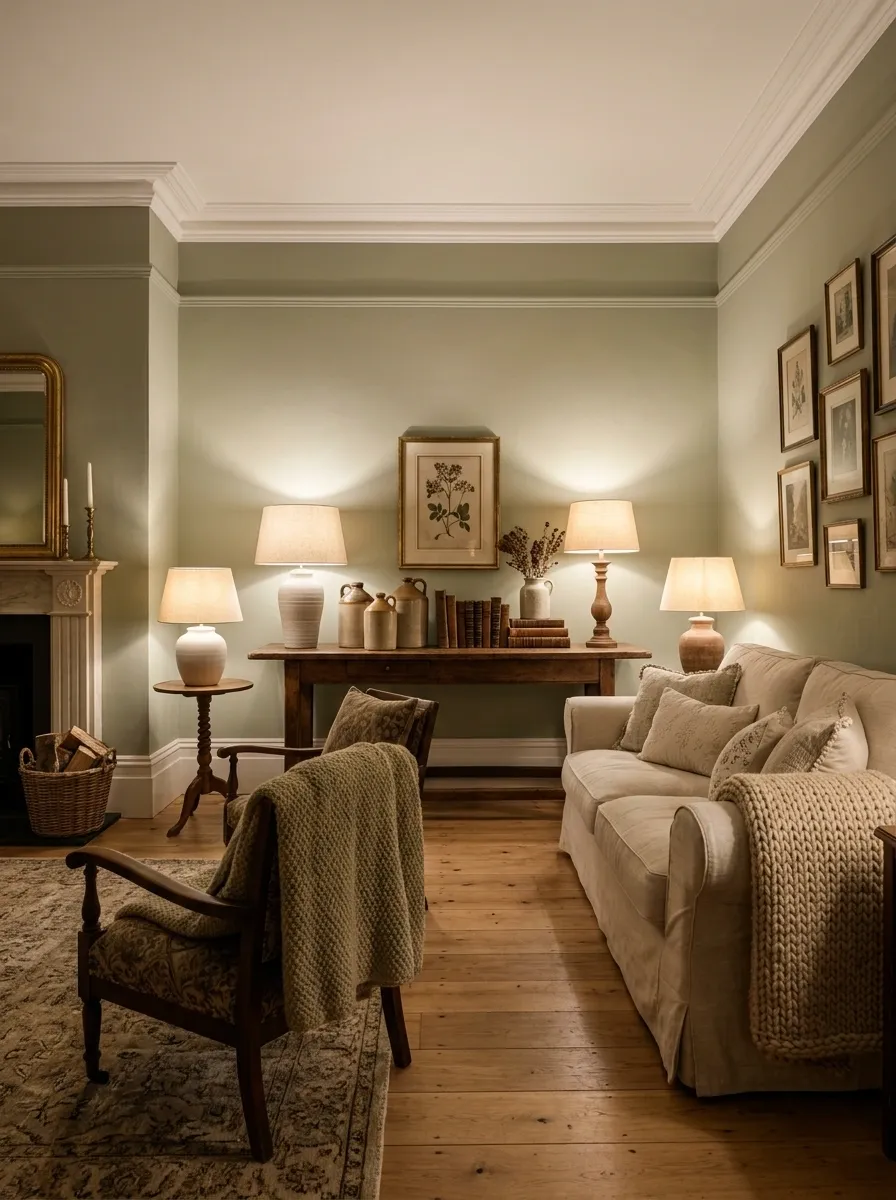
Overhead lighting is useful. It is also extremely good at making a cozy room look like a dental appointment.
Use table lamps to create smaller pools of warm light around the room. Put one on a side table, another on a console, and another near a reading chair if the space needs it.
Vary the lamp shapes slightly while repeating a finish or shade color.
The room shouldn’t glow evenly from every direction. A few warmer pockets of light make the furniture and textures feel much richer after dark.
Best move: light the corners people actually use.
Sofa Side
Soft light for evening sitting.
Reading Corner
Focused light where it’s actually needed.
Console
A small lamp keeps an otherwise dead wall alive.
Make a Casual Gallery Wall With Frames That Don’t Match
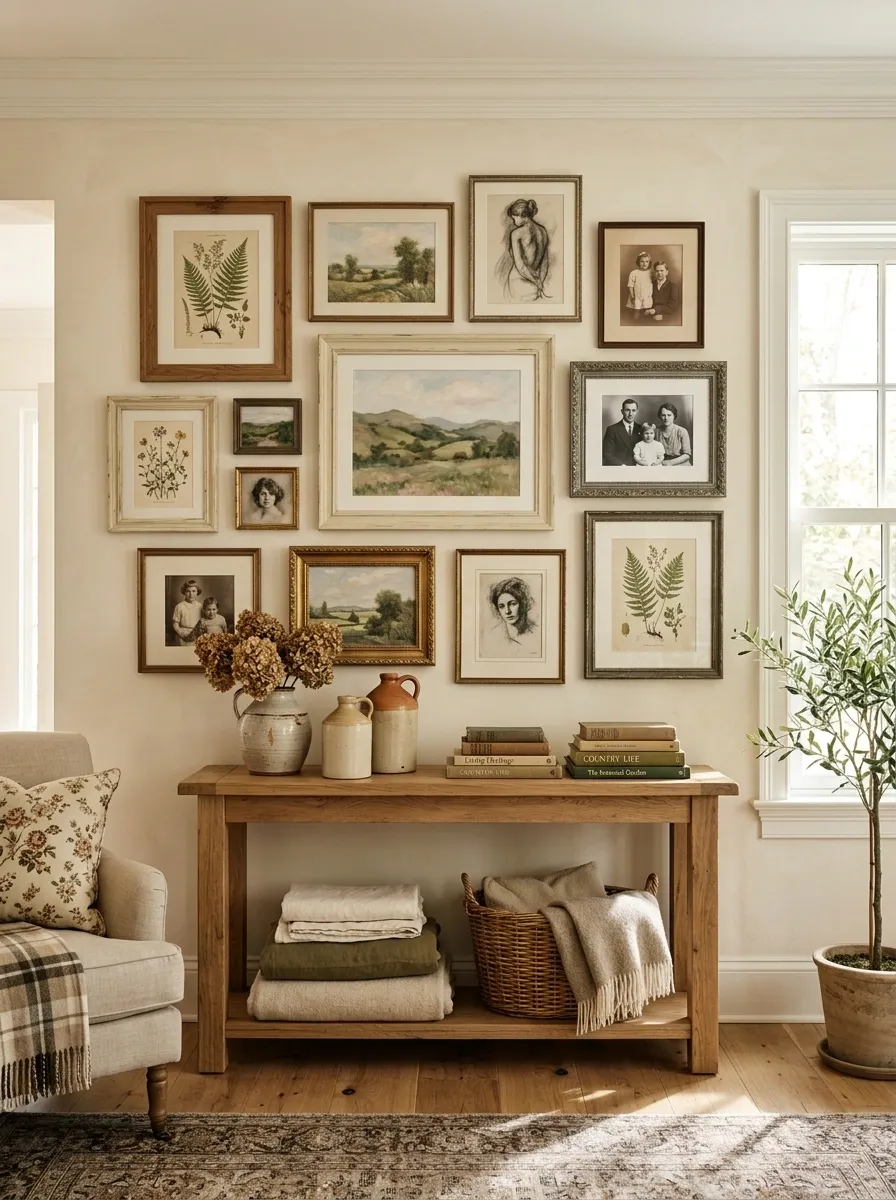
A gallery wall shouldn’t look like somebody measured every frame with military precision. A little variation makes it feel collected.
Mix wood frames, painted frames, simple rectangles, and one or two pieces with more detail. Keep the artwork connected through color, subject, or mood.
Start with the largest piece, then build around it. Leave enough space between frames to keep the wall readable.
Old family-style portraits, botanical prints, landscapes, sketches, and simple artwork all work well.
The goal is collected over time, not “purchased seventeen minutes ago.”
Drape Throws So the Sofa Looks Actually Used
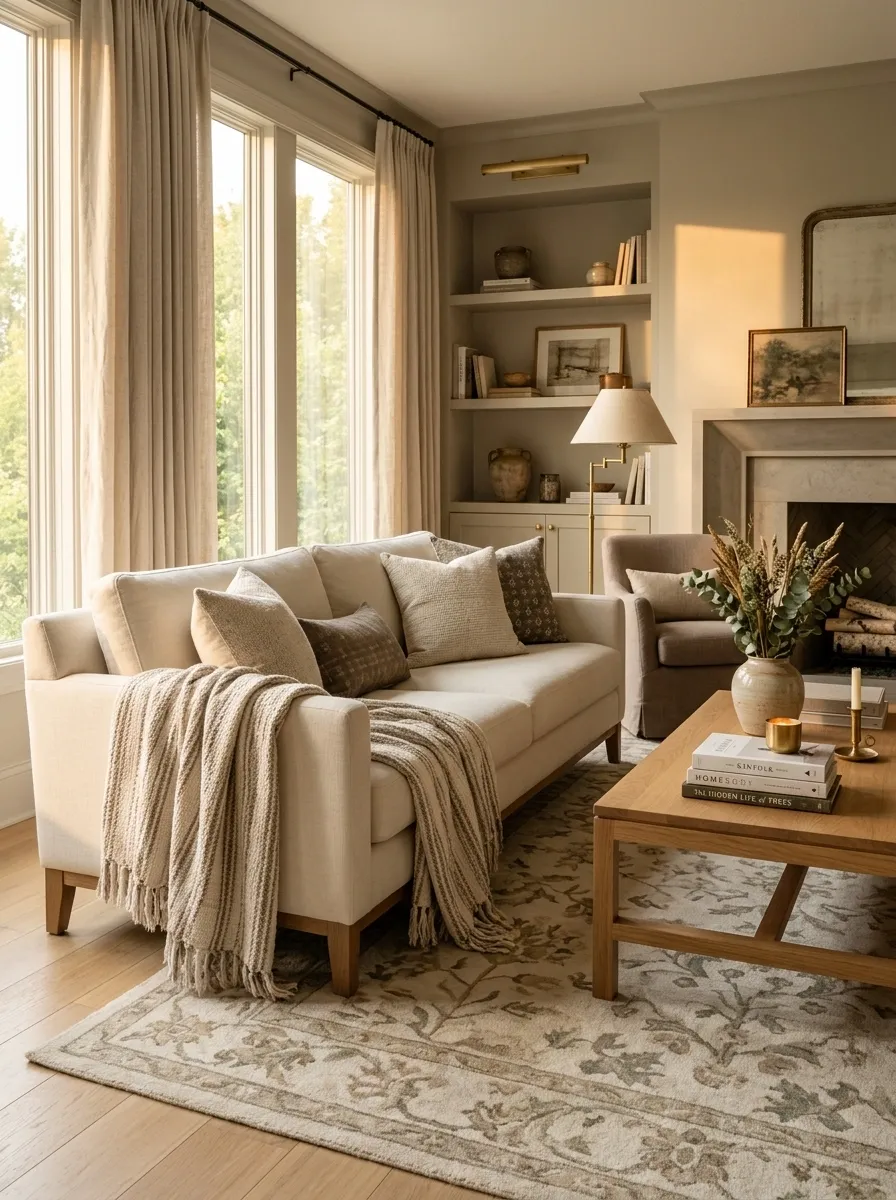
A throw shouldn’t sit folded into a perfect rectangle like it’s waiting for a real estate photographer.
Choose cotton, quilted, knitted, or woven fabric with enough weight to create a visible fold. Drape it over one arm, the back corner, or the edge of a seat. Keep the color tied to the rug, curtains, or upholstery so it feels connected without looking matched.
One throw is enough for a small sofa. Larger seating can handle two with different textures.
The rule: make it look reachable. A cozy room needs at least one thing that looks like someone can casually grab it during a cold evening.
Add a Small Side Table for Books, Tea, and Real Life
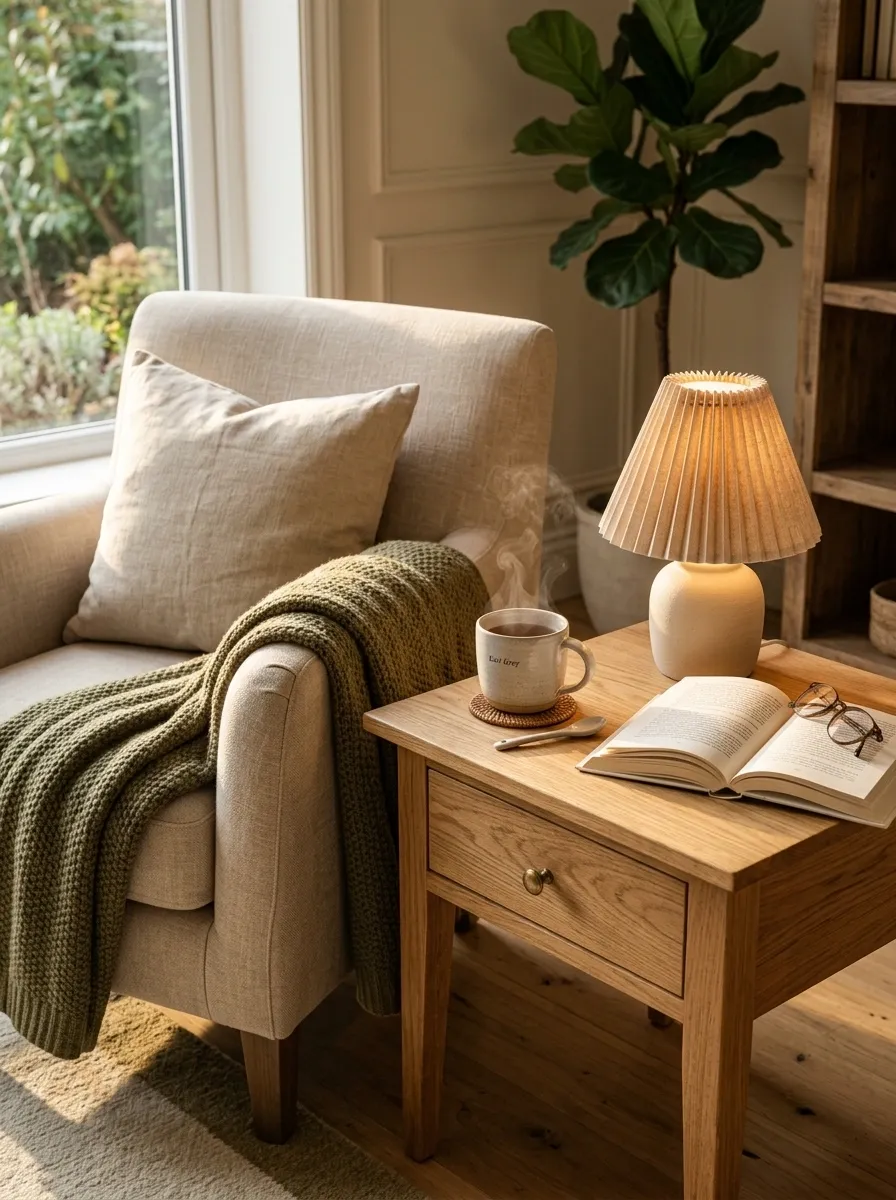
A tiny side table earns its place when it solves an actual problem. Put one beside a chair, between two seats, or next to the sofa where someone naturally reaches for a drink.
Wood works especially well here because it adds warmth without needing another decorative layer. A drawer is even better for hiding remotes, chargers, or the other little things that somehow multiply overnight.
Keep the top simple:
- One lamp or candle
- A book
- Enough empty surface for a mug
That’s the whole assignment. Furniture should work for the room, not just stand there looking expensive.
Layer Sheer Panels With Heavier Curtains
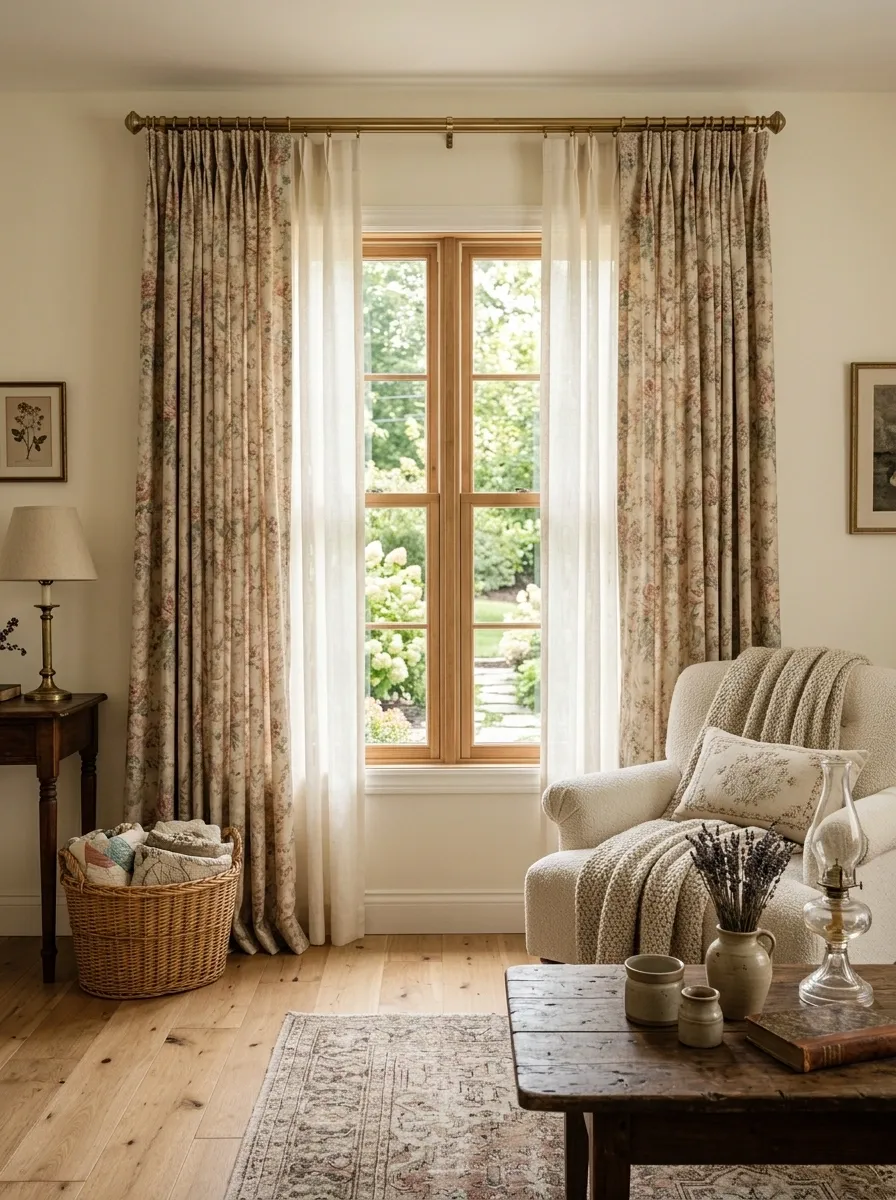
Bare windows can make a room feel oddly exposed, while heavy curtains alone can make smaller spaces feel visually dense. Layering solves both problems.
Hang sheer or lace-style panels closer to the glass, then place a fuller curtain outside them. During the day, the inner layer softens the window. At night, the heavier panels bring depth and privacy.
Choose fabrics that share a color family but don’t look like a matched bedding set. A soft ivory sheer with faded floral curtains feels much more collected than two identical layers.
And please let the curtains reach the floor. Tiny floating panels have never looked cozy.
Style the Dining Table Like Sunday Lunch Is Coming
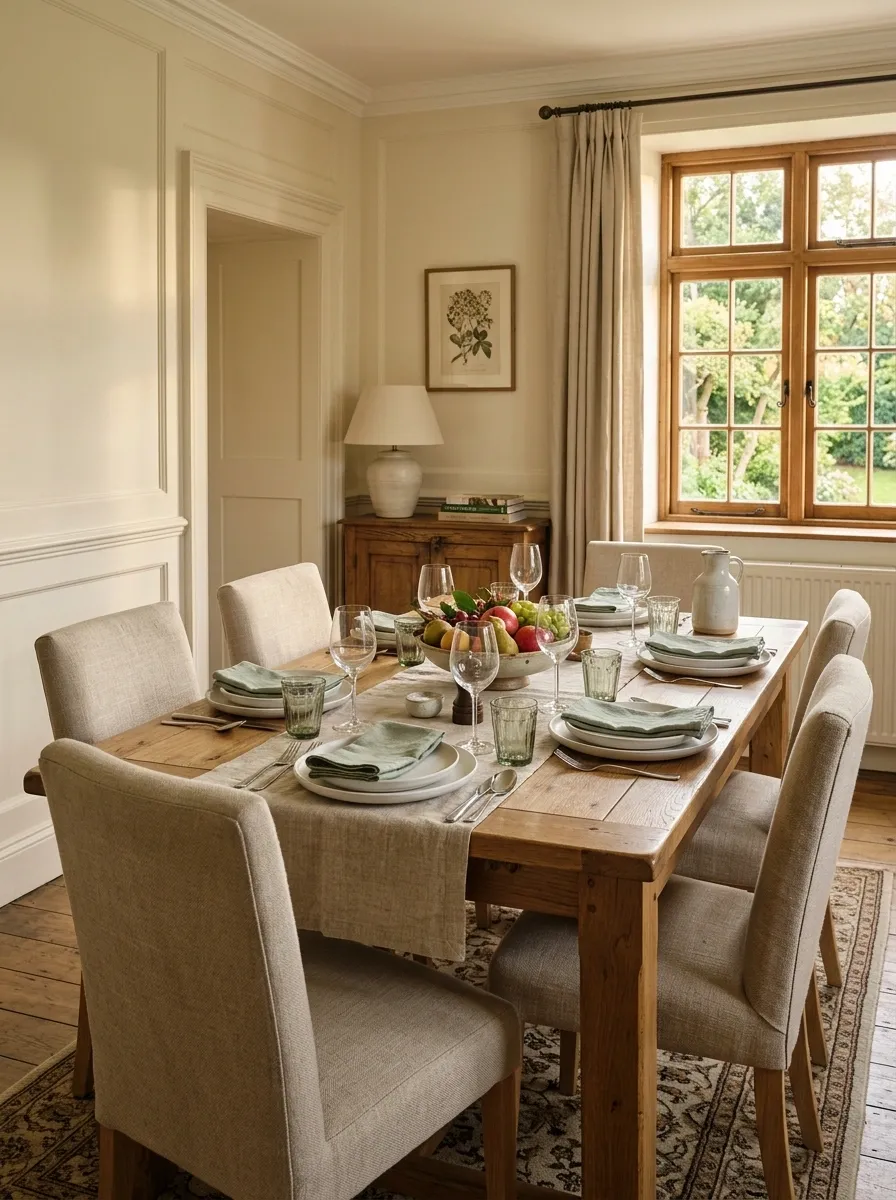
The dining table should feel ready for food, conversation, and somebody reaching across it for the serving bowl. That’s what gives this style its warmth.
Start with a runner, a low arrangement, or a simple bowl in the middle. Add cloth napkins, everyday dishes, and glasses that don’t look too precious to touch.
Keep the center low enough that people can see across the table. Tall decorations belong at the florist. The dining table has a job.
Quick setup:
- Add one soft textile
- Keep the centerpiece low
- Repeat one material from the room
- Leave clear space around the place settings
A little imperfection helps. Nobody needs a dining room that looks afraid of dinner.
Keep a Blanket Basket Where Someone Will Actually Use It
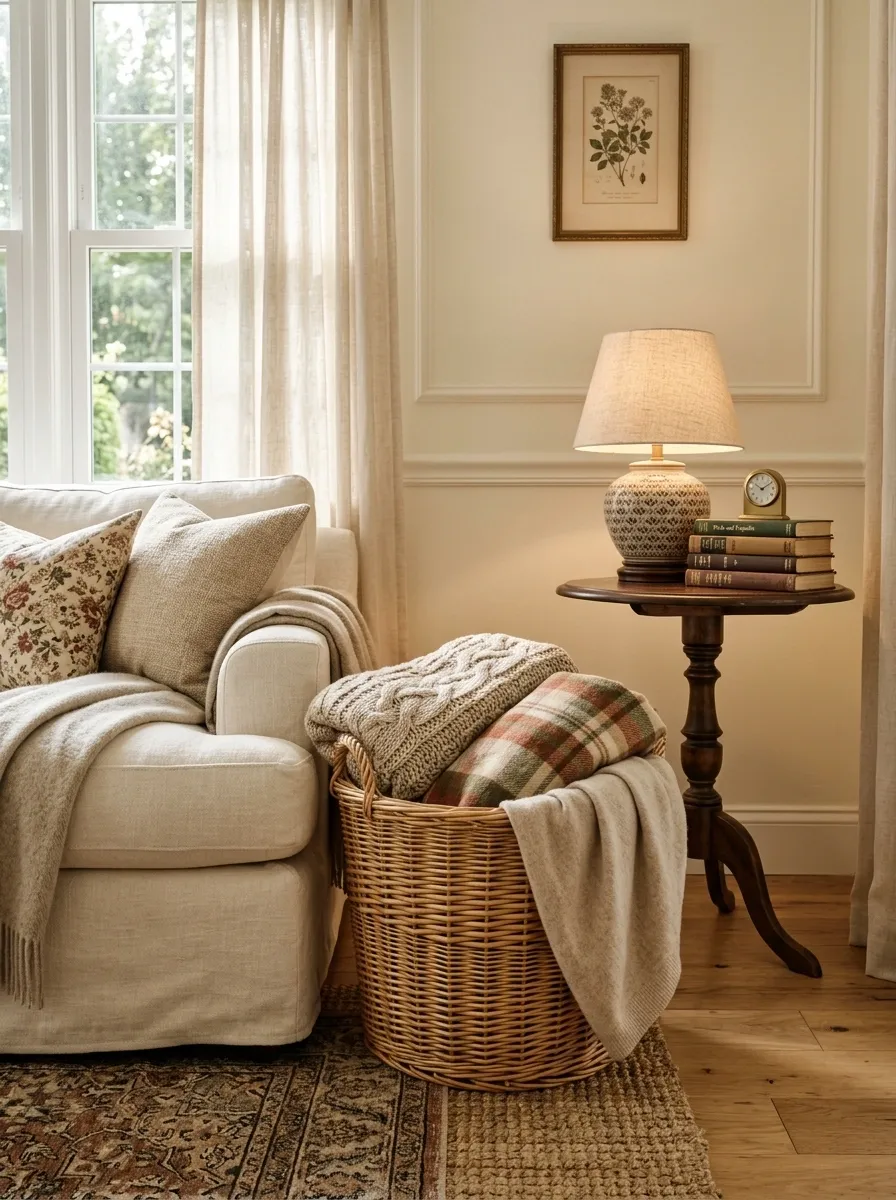
A blanket basket belongs beside the sofa, near the reading chair, or at the foot of the stairs. Not three rooms away where it becomes decorative furniture instead of storage.
Choose a woven basket with enough size to hold a few soft throws without stuffing them into a sad little fabric ball. Natural wicker, rattan, or seagrass works especially well with warm wood and traditional textiles.
Keep the blankets loose and visible. Fold one neatly over the rim and let another sit underneath.
That’s the whole point of this look. Useful things should be allowed to look useful.
Repeat Aged Brass in Tiny Details Around the Room
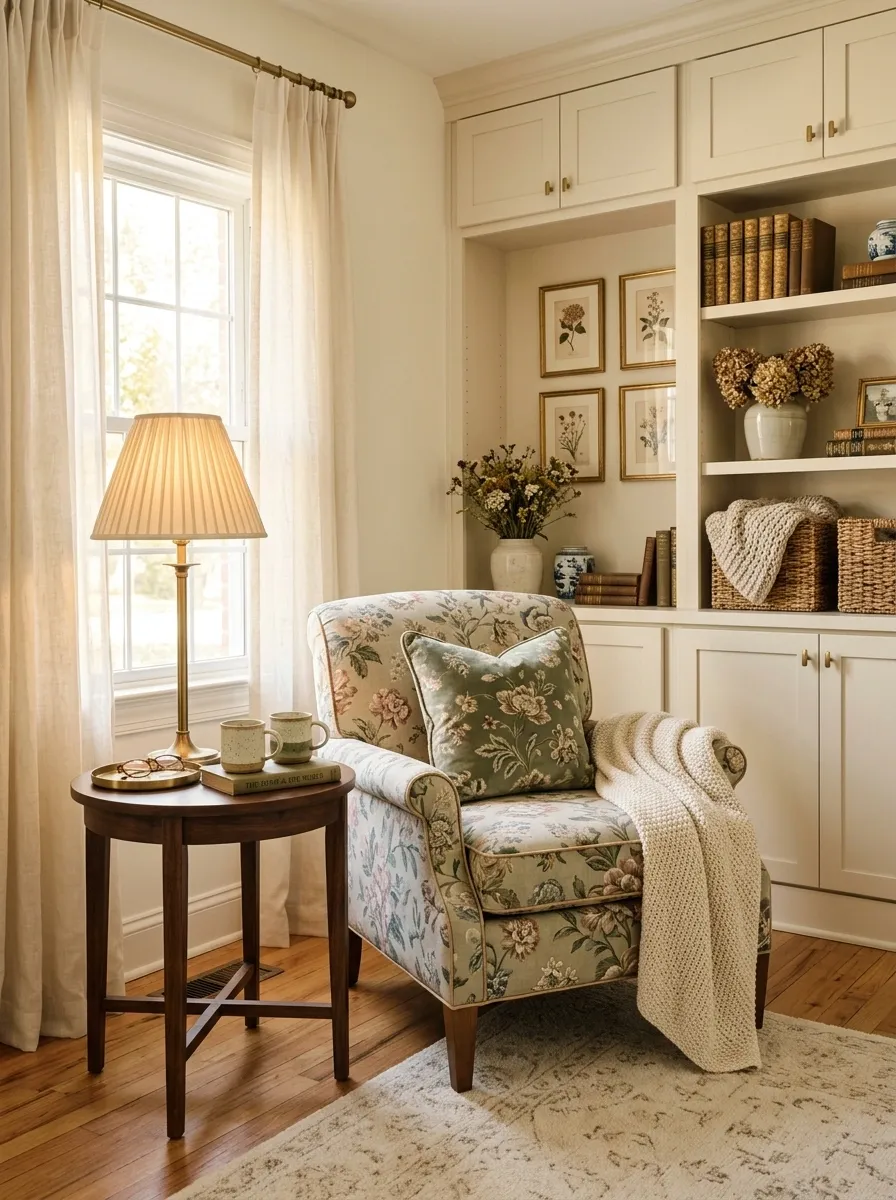
Brass works beautifully in this style, but it looks better when it appears in small doses instead of marching into the room with a brass furniture collection.
Repeat the finish across two or three details. Think lamp base, cabinet hardware, curtain rod, picture frame, or a small tray. The repetition creates continuity without making every surface shine.
Choose aged or brushed brass when possible. It has softer visual weight than a highly polished finish and works naturally with warm woods and muted fabrics.
The easiest rule is simple: repeat the finish, don’t duplicate the object.
Turn One Kitchen Corner Into a Tea or Baking Station
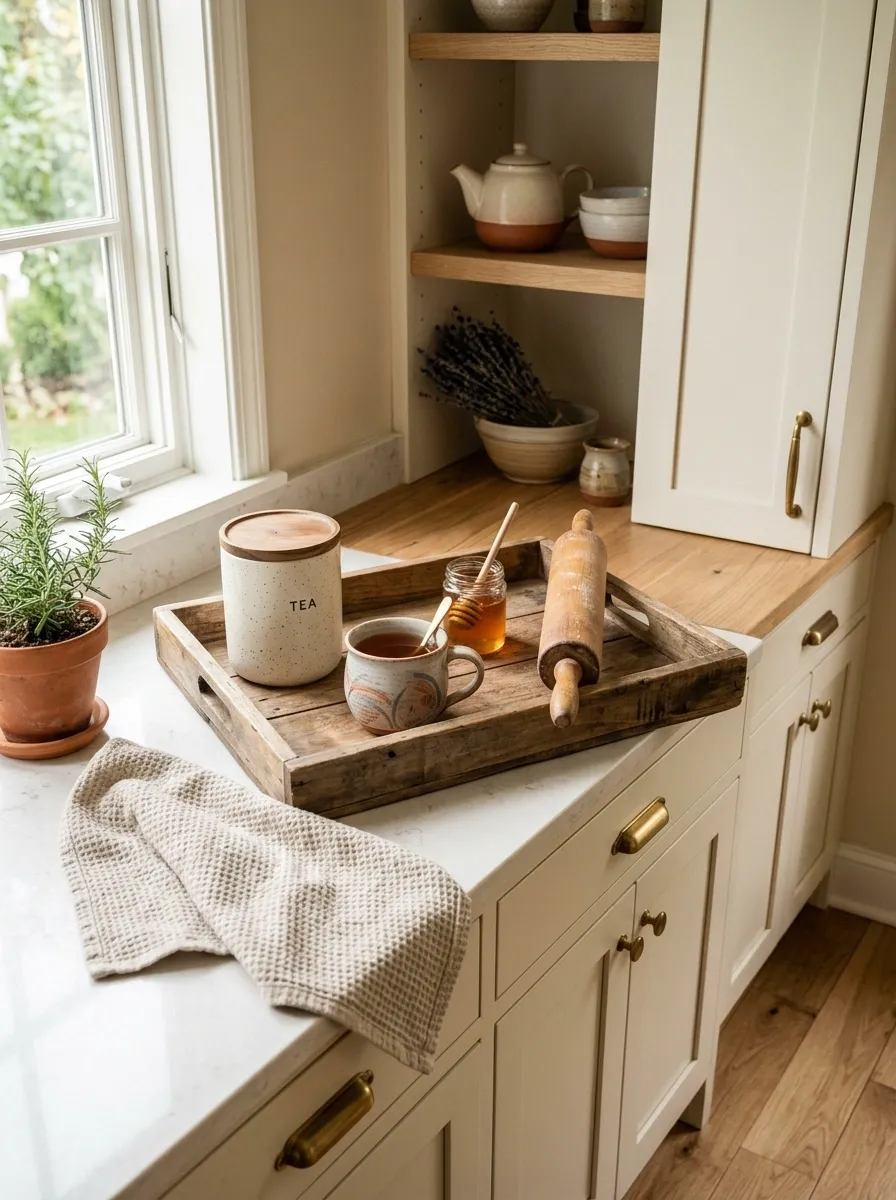
A tiny kitchen zone can add more character than a countertop covered in decorative clutter. Pick one corner for tea, coffee, baking, or whatever gets used every day.
A wooden tray can gather the essentials. Add a ceramic canister, a pretty mug or two, a small jar, and one practical tool. Keep the rest stored away.
The station should look ready for use, not like a café-themed display assembled for a Sunday brunch photo.
Good places for it: beside the kettle, at the end of a counter, on a small shelf, or inside a dedicated section of a hutch.
The smaller the zone, the more intentional it feels.
Use Gingham Without Making the Room Look Like a Picnic Blanket
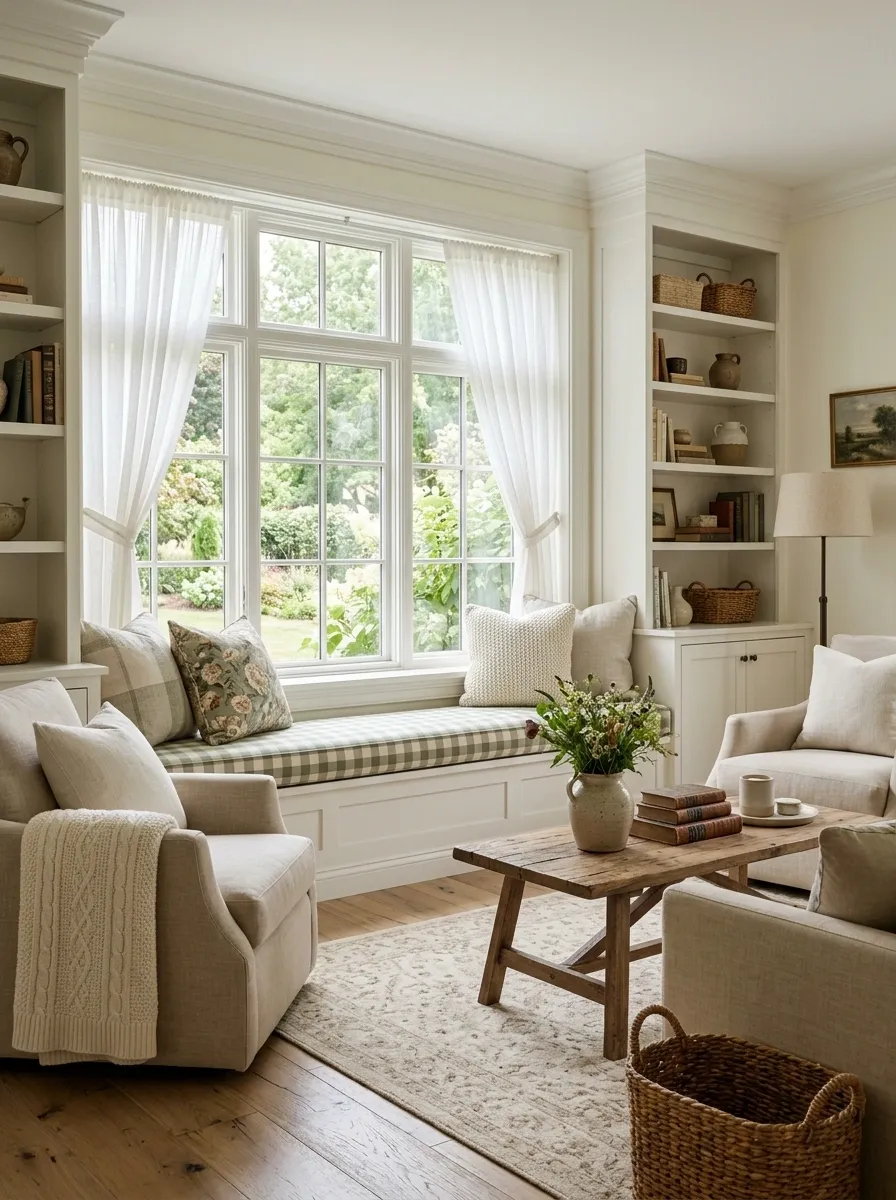
Gingham fits the grandma-house look perfectly, but the scale matters. Tiny checks feel delicate and traditional. Larger checks feel louder and more casual.
Use gingham on one meaningful piece such as a pair of cushions, a bench cushion, kitchen curtains, or a table runner. Then balance it with solid upholstery and another quieter texture.
Don’t put gingham on six different things because one cushion looked cute. That’s how a room accidentally develops a dress code.
Best pairing: gingham + floral + solid fabric. The solid piece gives the pattern somewhere to rest.
Stack Books Where People Actually Sit and Read
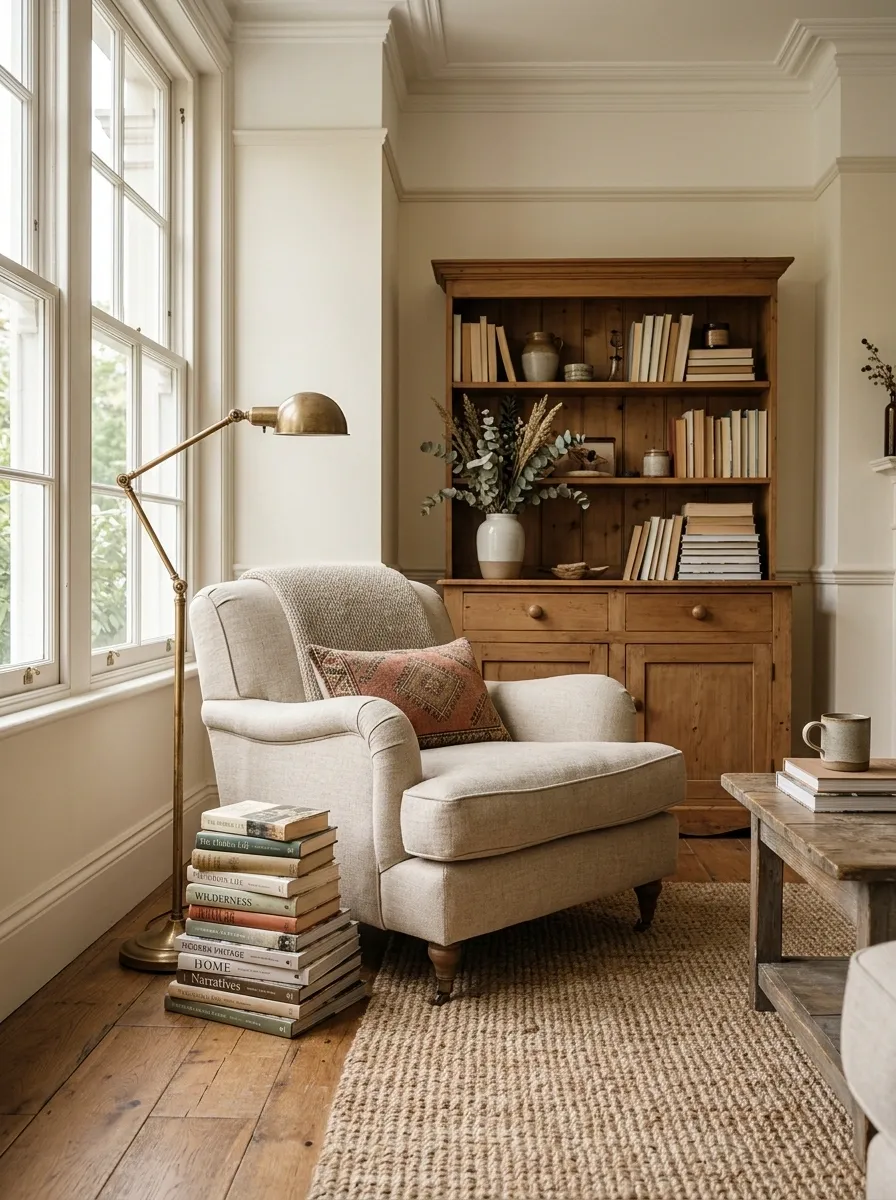
Books make a room feel lived in faster than almost any decorative object because they naturally suggest use. Put them beside a reading chair, on a coffee table, inside a hutch, or on a low shelf where someone would actually reach for them.
Mix a few larger hardcovers with smaller paperbacks. Stack some horizontally and keep others upright. The colors don’t need to match, but avoid making every cover face forward like a bookstore display.
Leave a little space around the stacks. A book pile should look casually settled, not engineered with measuring equipment.
And please don’t buy books by the yard just for the color. The room has enough problems already.
Put Flowers in Ordinary Rooms, Not Just the Dining Room
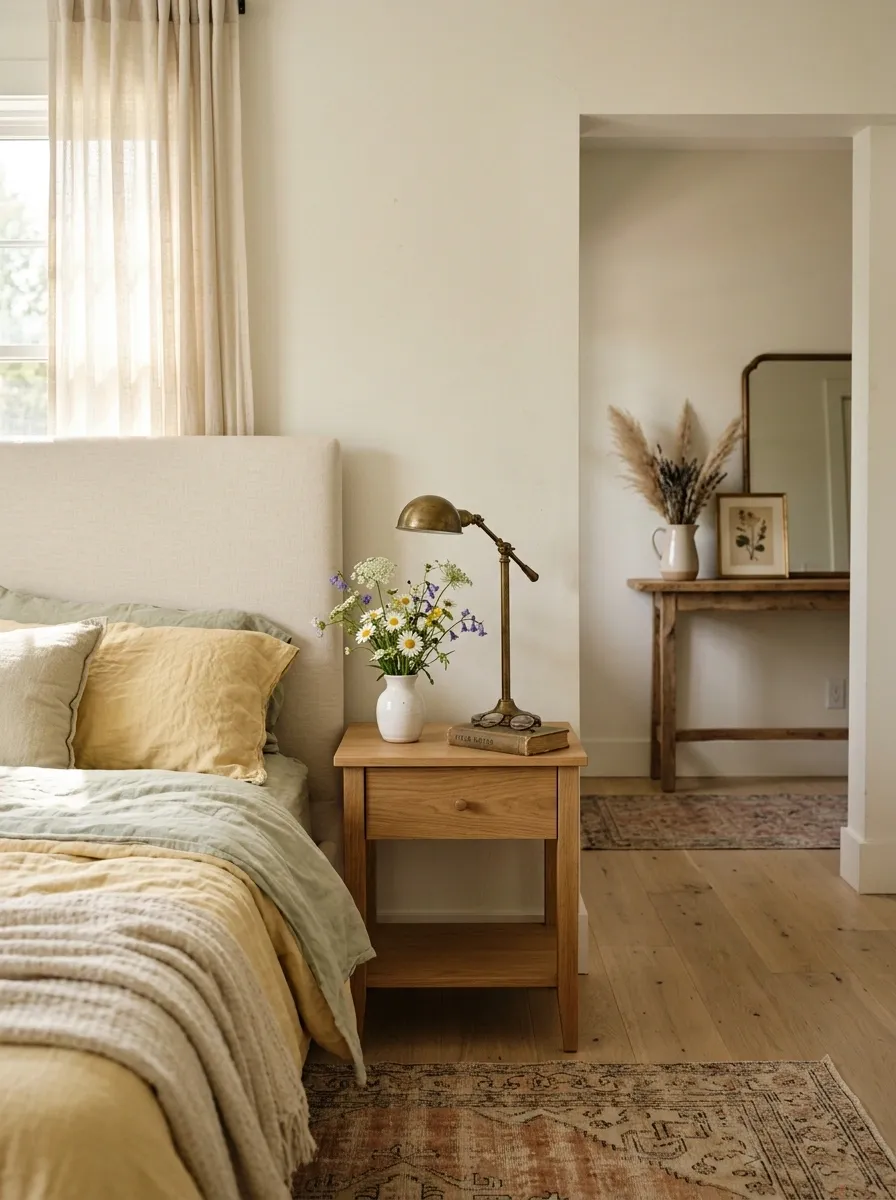
Flowers make the house feel occupied. That’s why they work so well here.
Skip the giant formal arrangement and spread small bunches through the rooms instead. A little vase on a bedside table, a jar on a kitchen shelf, or a single stem near the bathroom mirror feels much more natural.
Fresh flowers work beautifully, but dried stems or branches can create the same visual softness when kept simple.
Good spots:
- Bedroom nightstand
- Kitchen windowsill
- Entry console
- Bathroom shelf
The arrangement doesn’t need to look professionally styled. Slightly uneven stems are part of the charm.
Choose Traditional Lampshades With Some Shape and Personality
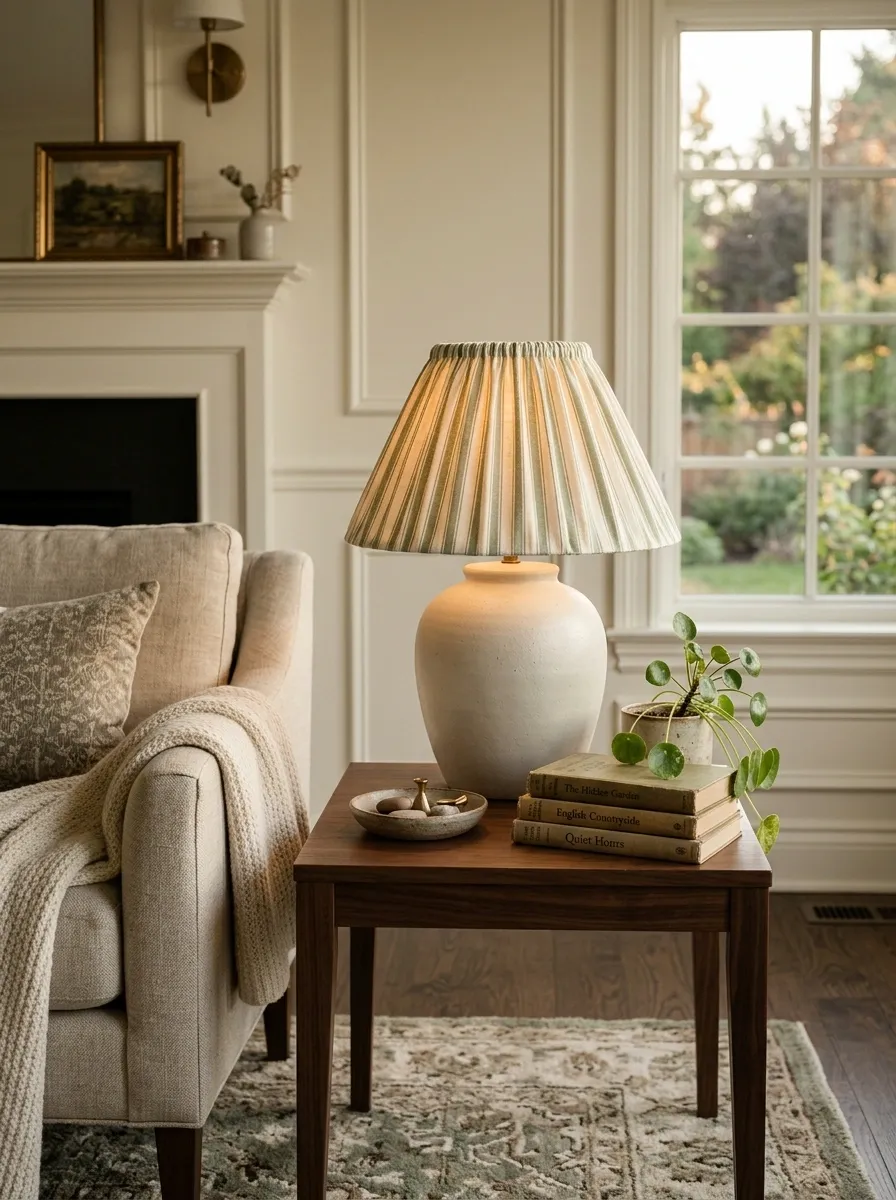
The lampshade is doing more visual work than it gets credit for. A plain white cylinder can feel anonymous, while a pleated, scalloped, gathered, or subtly patterned shade immediately gives a lamp more character.
Use the shade to repeat a room color or introduce a small floral or stripe pattern. Keep the base quieter if the shade is decorative.
For bedside lamps, matching shades can create balance. In a living room, slightly different lamps can feel more collected.
The goal isn’t to make every lamp look antique. It’s to stop the lighting from looking like it came bundled with the furniture.
Fold a Quilt at the Foot of the Bed
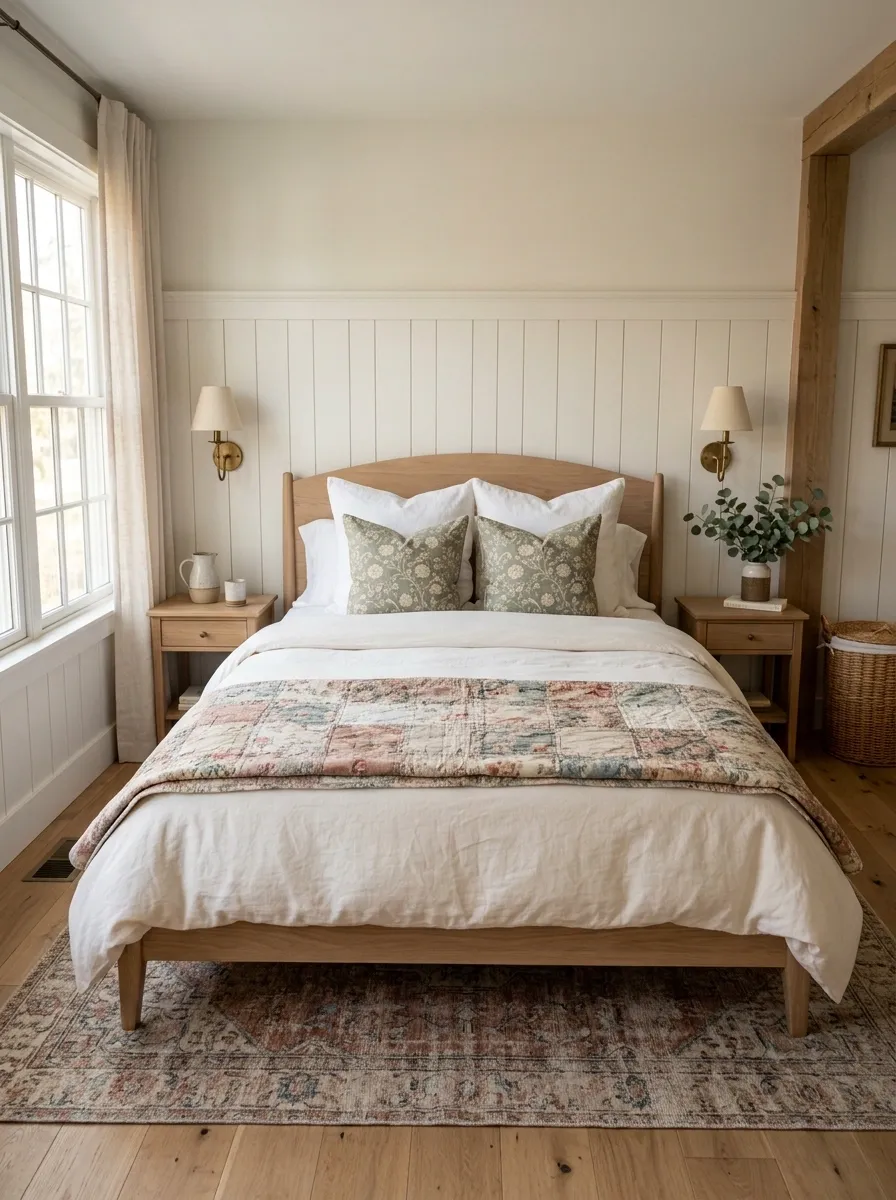
A quilt at the foot of the bed instantly makes the bedroom look softer and more lived in. It doesn’t have to cover the entire bed. A folded layer across the lower third is enough to introduce pattern, texture, and color.
Look for patchwork, floral, stitched, or gently faded designs. Pair the quilt with plain bedding so the room doesn’t become one giant pattern collision.
Fold it cleanly, then let the top layer relax slightly rather than pressing every edge into submission.
Keep the bedding hierarchy simple: solid sheets, soft duvet or coverlet, patterned quilt, one or two pillows that connect back to the room.
The bed should look inviting, not upholstered for inspection.
Simple sheets
Plain coverlet or duvet
Folded quilt
One or two related pillows
Give a Small Writing Desk Its Own Little Story
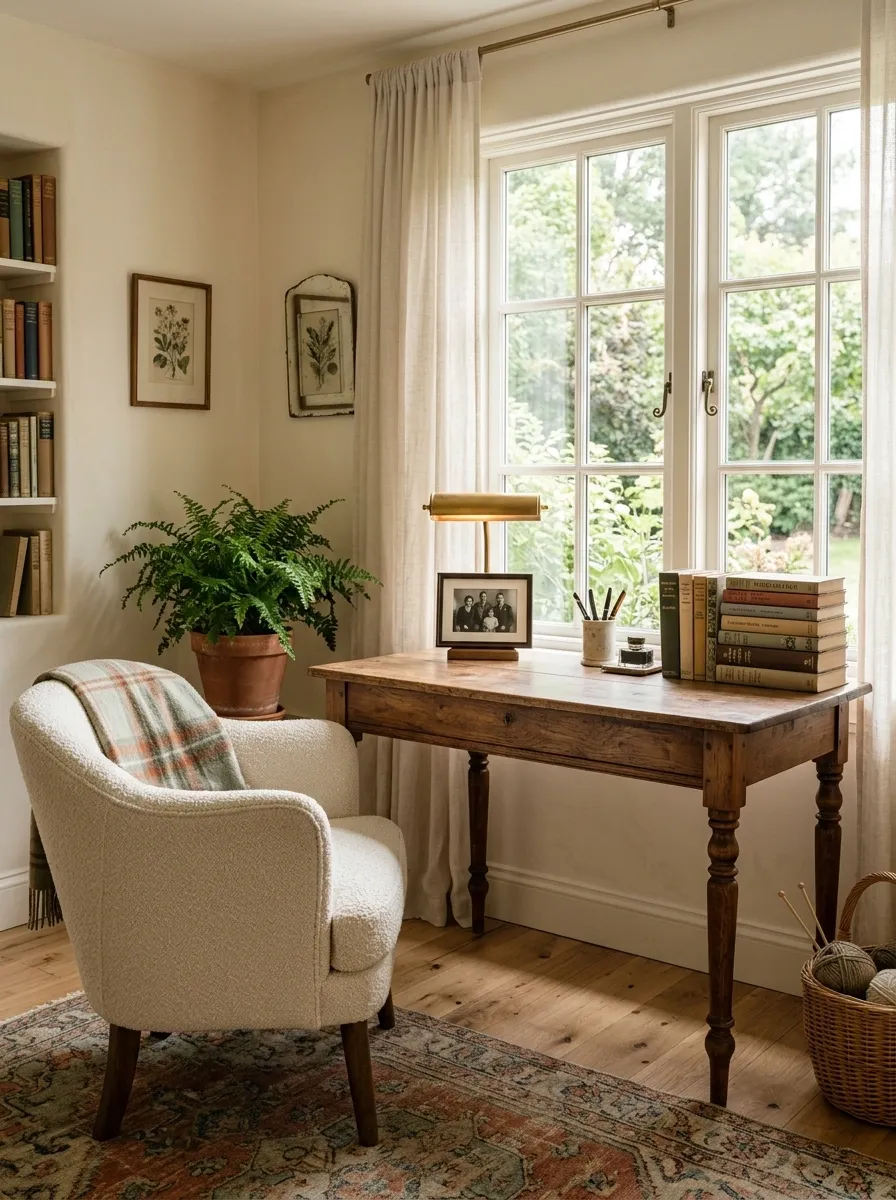
A small writing desk adds instant character because it suggests the room has a purpose beyond looking nice. Place one near a window, in a bedroom corner, along a hallway wall, or wherever an unused patch of space can support it.
Choose wood with visible grain or a traditional shape. Add a small lamp, a few books, a ceramic cup for pens, and perhaps one framed piece.
Don’t fill the entire surface. An empty patch makes the objects feel intentional and leaves the desk usable.
That’s the sweet spot: enough detail to suggest a life, not enough to suggest a paperwork emergency.
Leave Breathing Room Around the Pieces That Matter
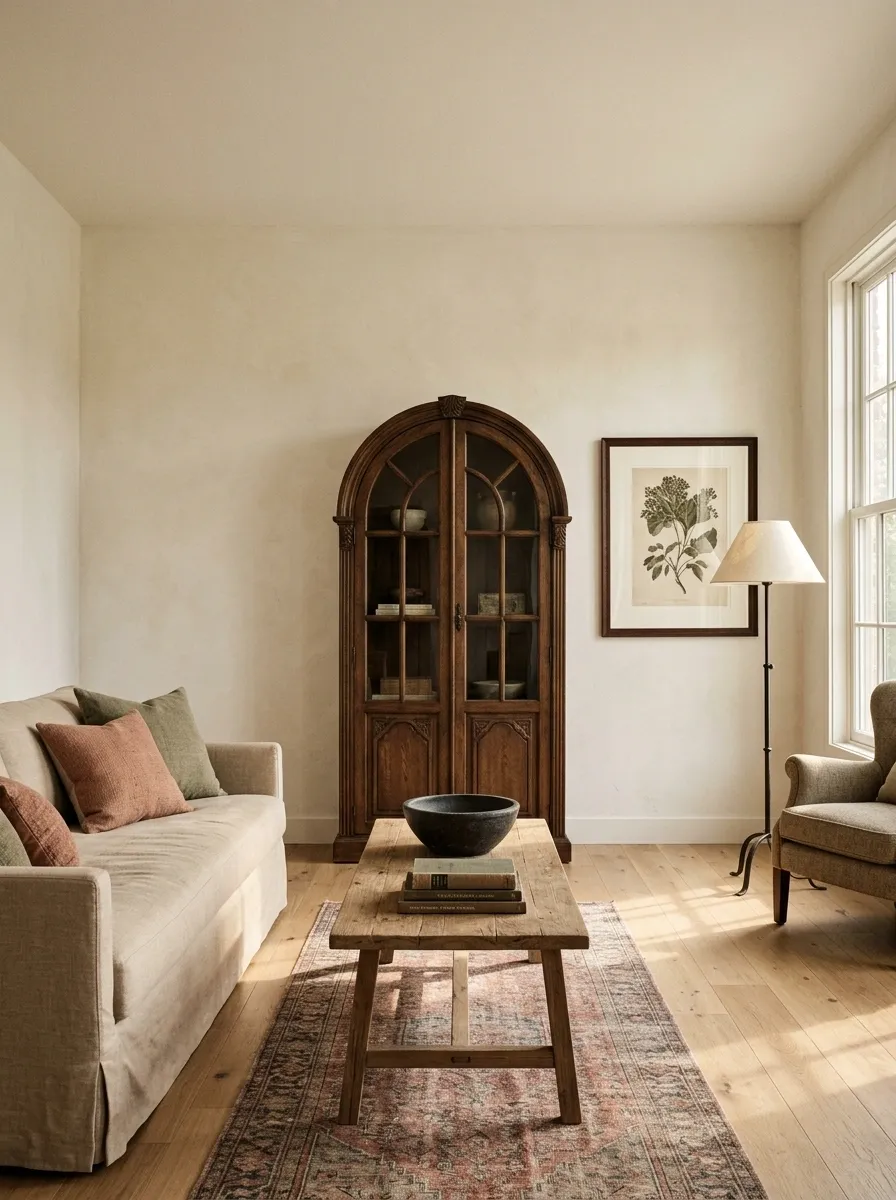
A cozy room doesn’t need something sitting on every available surface. In fact, a little empty space makes the good pieces look better.
Let the wooden cabinet have a clear patch beside it. Leave part of the coffee table open. Give a favorite framed print enough wall around it that the eye can actually land there.
Start by removing one small object from each busy surface. Then look again.
Keep: pieces with texture, use, history, or a strong shape.
Lose: filler objects that only exist because the surface looked “too empty.”
Empty space isn’t unfinished. It’s what keeps the room from looking like the decor aisle won a custody battle.
open wall, clear tabletop, visible floor
filler decor with no purpose or personality
Give the Hallway a Runner, Hooks, and One Proper Surface
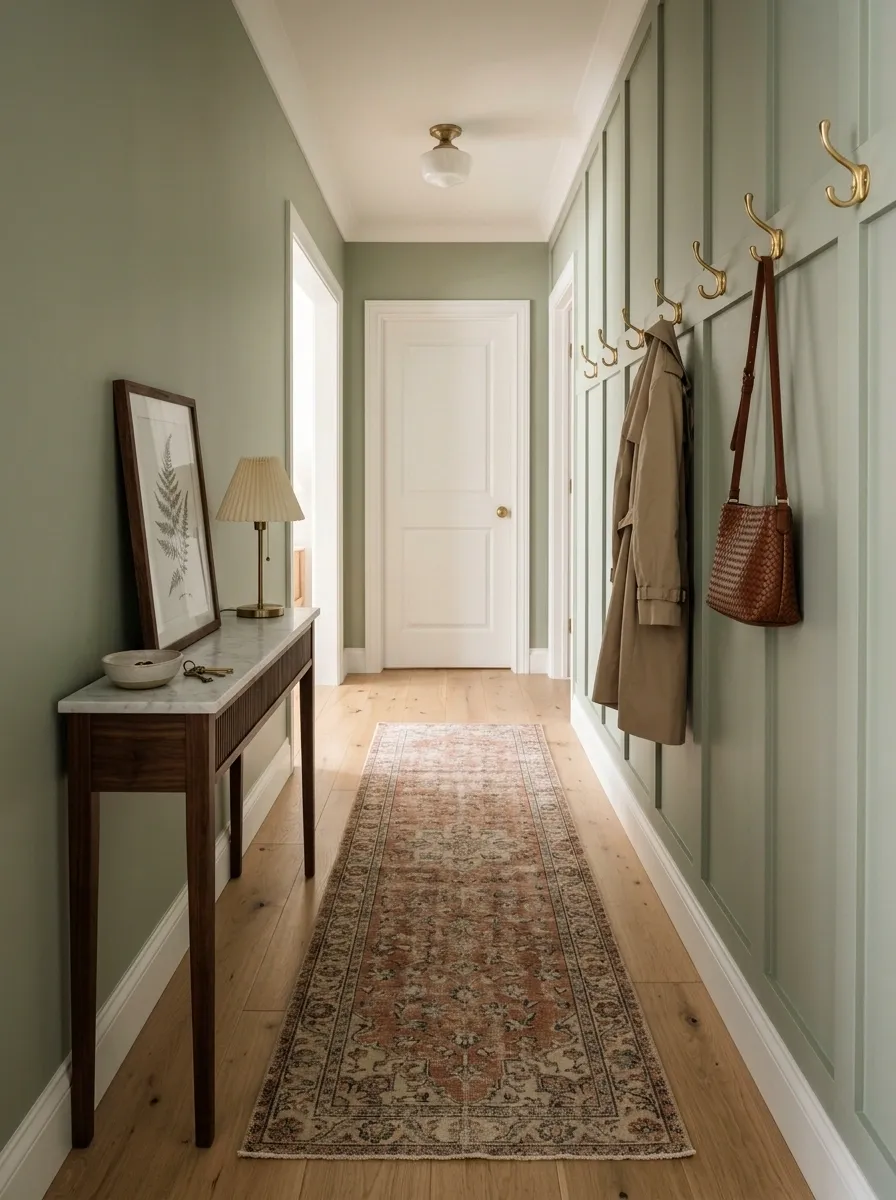
Hallways often get ignored because nobody considers them “real rooms.” That is exactly why a few traditional details can make such a difference there.
Lay down a narrow runner with a faded pattern. Add hooks for coats or bags, then bring in a slim console, wall shelf, or small bench where the space allows.
Keep the styling useful. A little bowl for keys, one framed picture, and a small lamp are enough.
The hallway should feel like part of the house rather than a loading dock between rooms.
And yes, someone will eventually drop a bag on the bench. That’s how you know the design is working.
Blend Grandma Details Into a Modern Room One Layer at a Time
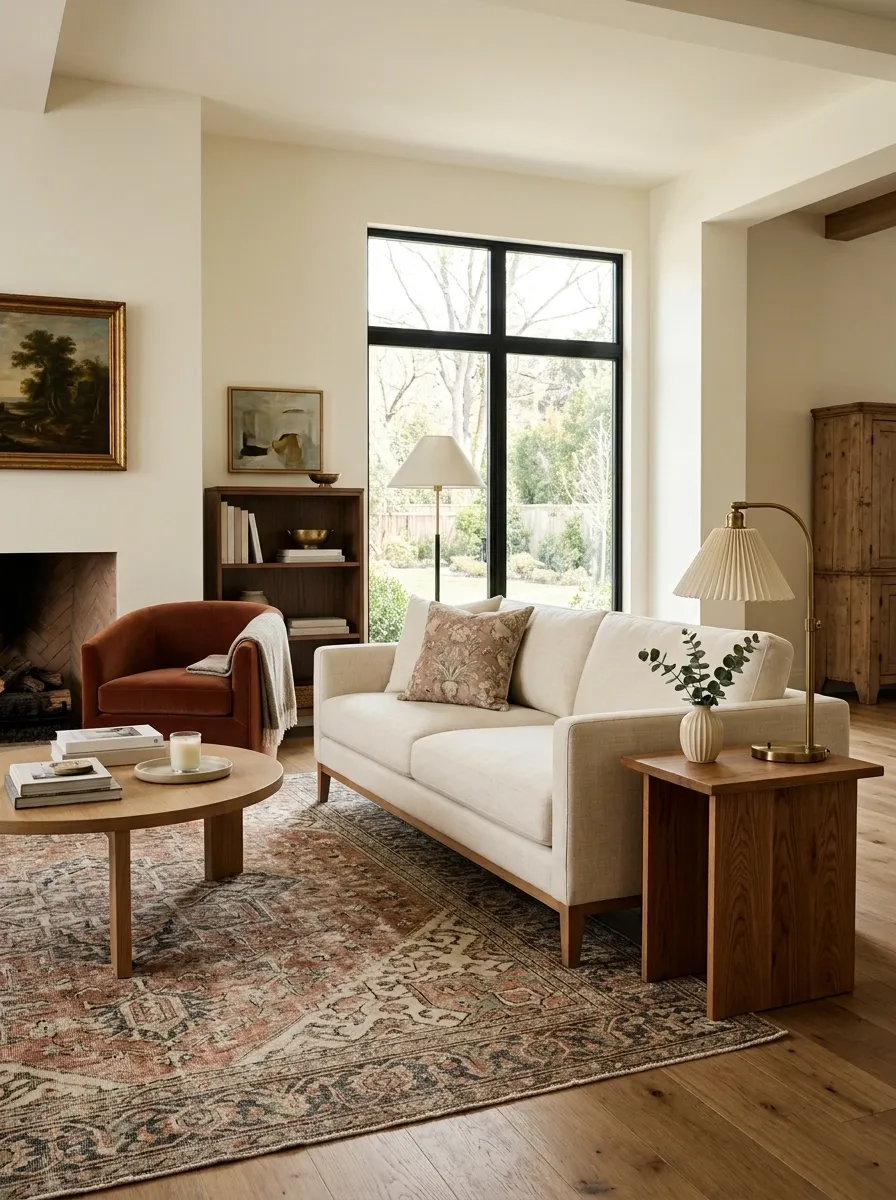
You don’t need to redecorate the entire house to get the look. Start with one traditional layer and build from there.
A modern sofa can handle a faded floral cushion. A clean bedroom can take a quilt. A contemporary dining room can support an old wooden cabinet. Add one layer, then stop and look at the room.
The goal is contrast, not a complete time-travel experience.
Try this order: traditional rug first, warm wood second, patterned textile third, vintage-style accessory last.
That sequence gives the room character while the existing modern pieces keep everything grounded.
Finish With Signs of Real Life Instead of Random Trinkets
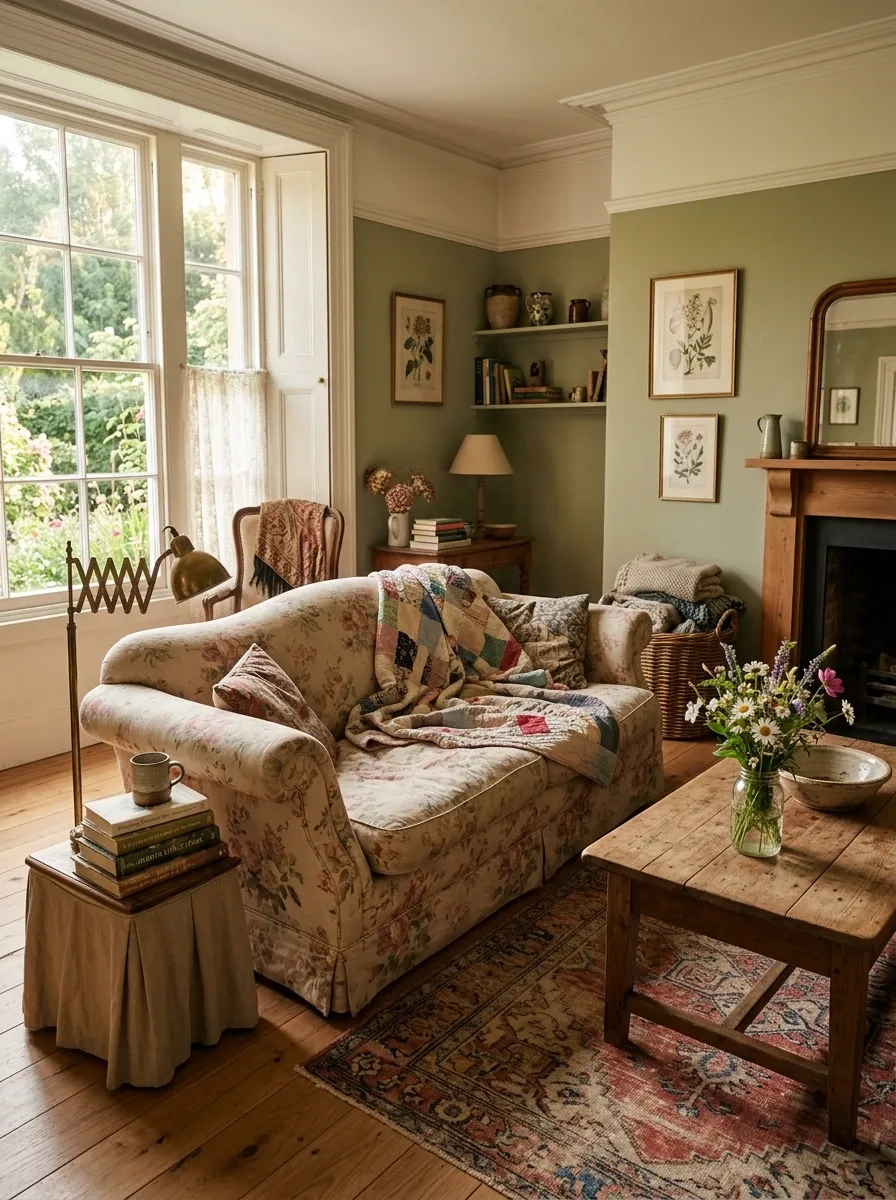
The final layer shouldn’t be another shopping trip. It should be the little evidence that people actually live there.
Leave a few books beside the sofa. Keep a ceramic bowl by the door. Let the quilt sit slightly loose at the foot of the bed. Put flowers in an ordinary jar instead of a formal vase.
These details make the room feel settled because they connect the decoration to daily routines.
Look around before adding anything else. The cozy grandma’s house look works best when the room feels warm, useful, and slightly imperfect.
That’s the magic. Not clutter. Not nostalgia overload. Just a home that looks like it’s waiting for somebody to put the kettle on.
Books, bowls, baskets, lamps, and furniture still have jobs.
Quilts, curtains, rugs, and textiles keep the room warm.
Wood, aged finishes, traditional patterns, and imperfect details create history.
Not every surface or corner needs to be filled.
A Home That Looks Lived In Beats a Room That Looks Perfect
The secret isn’t finding enough old-looking stuff. It’s creating the right tension between softness and structure.
Warm wood keeps floral fabrics from feeling sugary. Traditional rugs give modern furniture some history. Skirted tables, quilts, books, baskets, and lamps add the little signs of daily life that make a room feel comfortable instead of staged.
And the details don’t need to match.
That’s actually the point.
Let one corner be floral. Let another be mostly wood. Put a slightly crooked stack of books beside an immaculate lamp. Leave part of the coffee table empty. Keep the useful things visible.
The best version of this style feels like a home that has accumulated personality over time, not a room that spent an afternoon desperately trying to look nostalgic.
So before adding another decorative object, look at what the room already has. Give the good pieces space. Add warmth where it’s missing. Remove whatever feels like filler.
Then save this list for the next time a room starts feeling a little too new, a little too bare, or suspiciously like it was assembled by an algorithm with a beige paint subscription.