
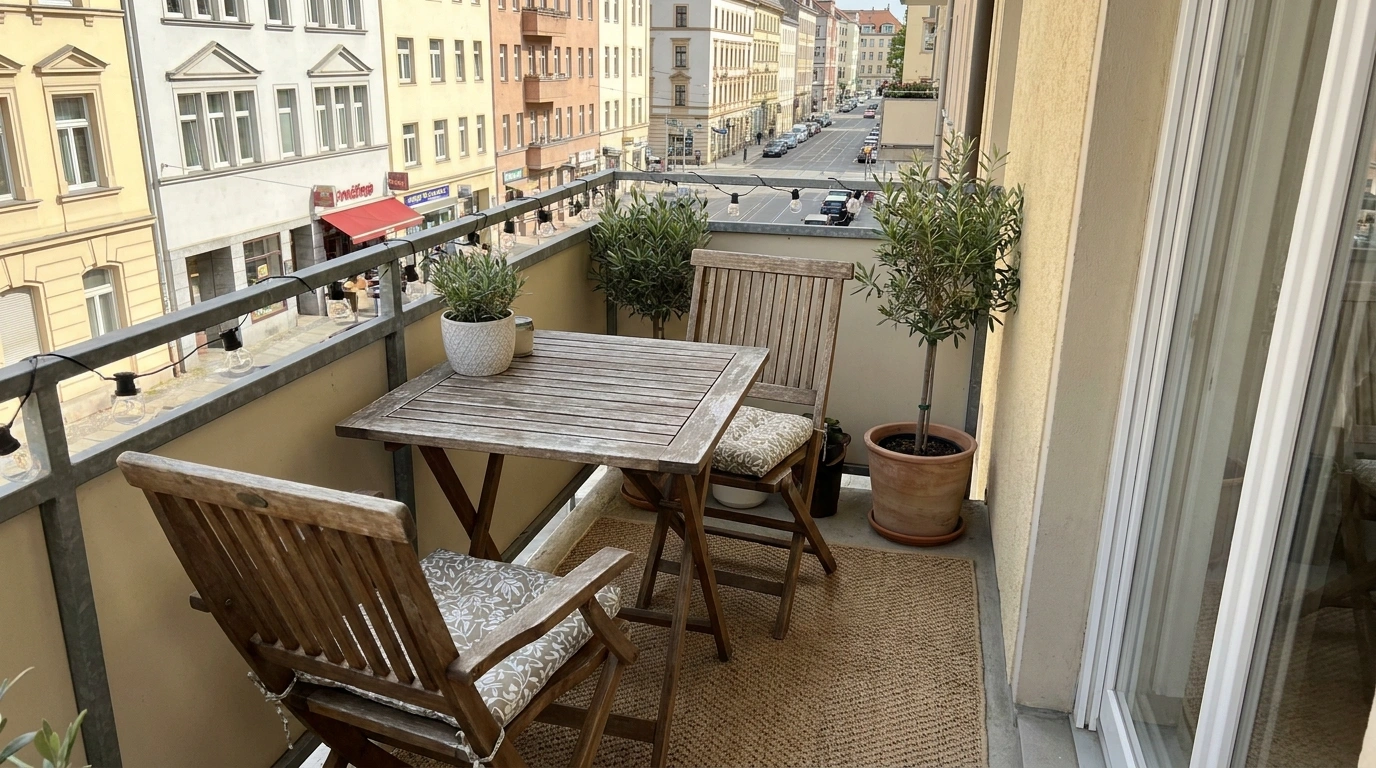
An apartment patio can look perfectly fine in an empty listing photo and somehow become a furniture traffic jam the second real life enters the picture. One chair goes here, a table goes there, someone buys three plants because apparently three plants were on sale, and suddenly the door barely opens.
The problem usually isn’t a lack of ideas. It’s that individual pieces don’t tell you what the finished patio is supposed to look like together.
These apartment patio ideas take a different approach. Each one starts with a complete visual direction, from the furniture arrangement and material mix to the planting, lighting, color palette, and empty space that keeps everything from feeling cramped. Some are built for narrow patios. Others create dining zones, private retreats, flexible family spaces, or proper evening lounges.
The goal isn’t to make a small outdoor space look expensive for five minutes in a photo. It is to make the whole composition make sense.
And yes, the empty floor space is part of the design. Your patio does not need to be completely covered in stuff to prove that you decorated it.
The Apartment Patio Designs Worth Stealing
Warm Oak Lounge Patio With Soft Green Upholstery
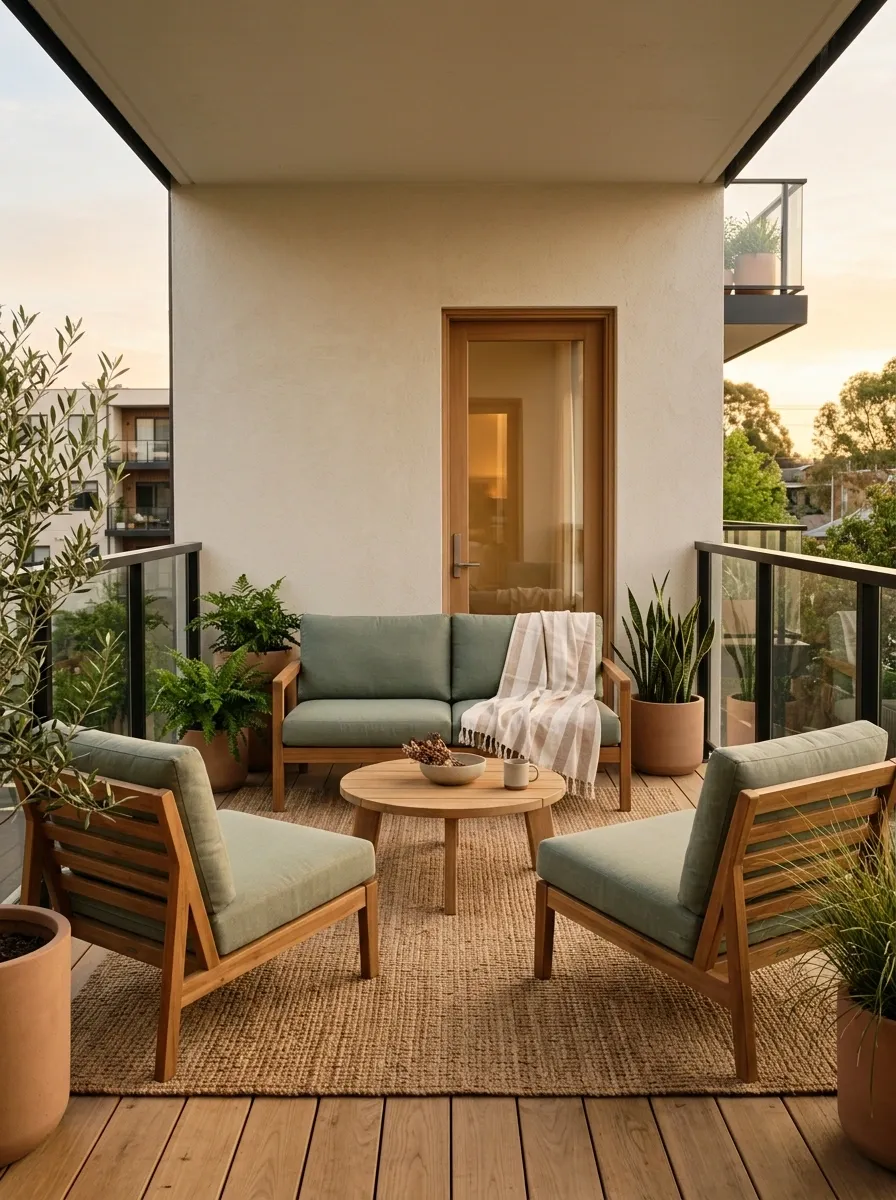
Warm oak furniture gives this apartment patio an immediate sense of structure without making the space feel heavy. A compact wooden sofa sits along the back wall with muted green cushions, while two smaller lounge chairs create a loose conversation area around a low coffee table.
The palette stays deliberately warm. Cream walls, natural wood, soft green upholstery, and a few terracotta planters create enough contrast without turning the patio into a color wheel.
A large woven rug defines the seating area and visually separates it from the doorway. Greenery is concentrated toward the outer corners, leaving the center open and easy to move through.
The important part is the restraint. The wood already provides plenty of visual texture, so the rest of the patio doesn’t need twelve decorative objects auditioning for attention.
Structural base
Soft contrast
Small warm accents
Visual breathing room
Small Balcony-Style Patio With a Bistro Table and Vertical Greenery
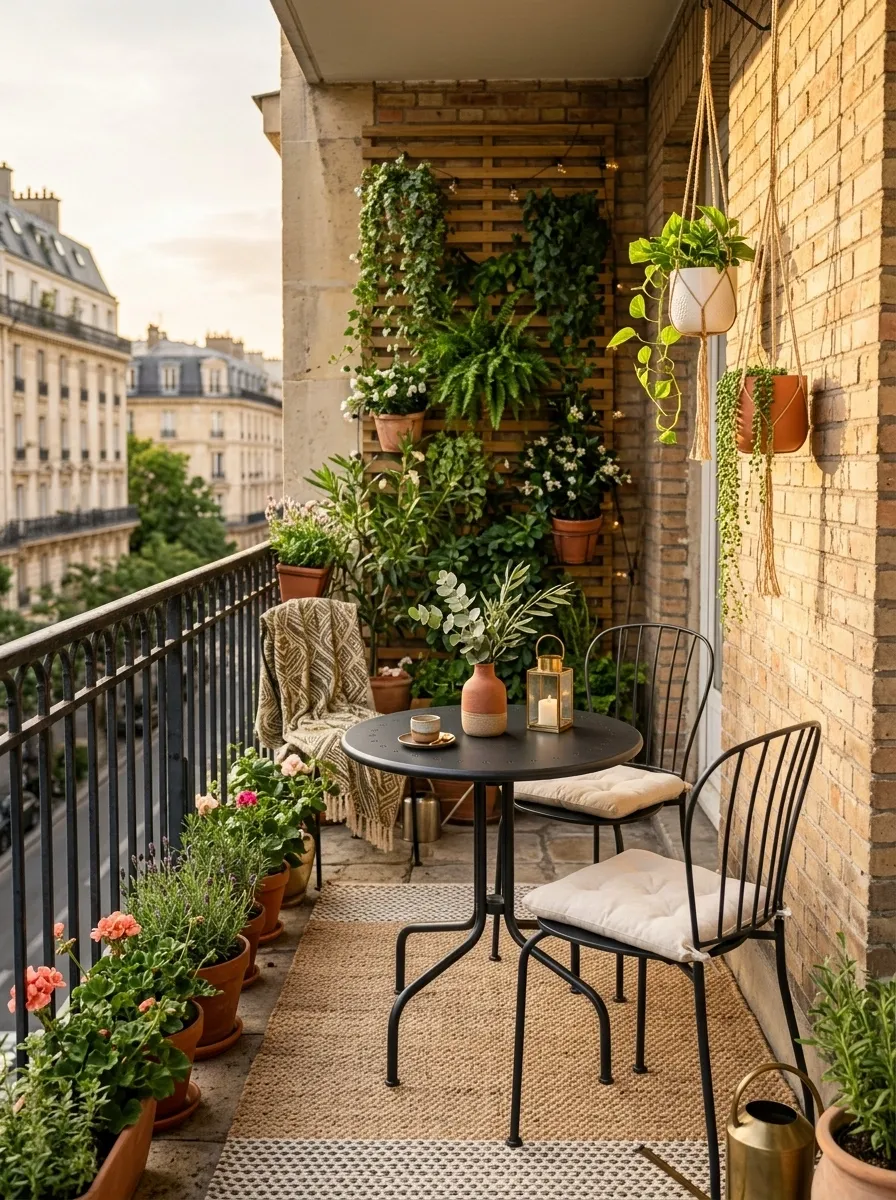
A narrow patio doesn’t need a full sofa to feel finished. This arrangement uses a small round bistro table with two lightweight chairs, leaving most of the floor open while a tall vertical planter arrangement adds greenery along the wall.
The round table is important because it softens the long rectangular footprint. A narrow outdoor rug runs beneath the seating, while climbing greenery and hanging planters pull the eye upward rather than outward.
The result feels more like a tiny café terrace than a storage strip attached to an apartment.
Keep the furniture compact and let the greenery occupy the vertical space. The floor has already done enough work.
Contemporary Patio With Black-Framed Furniture and Pale Stone Finishes
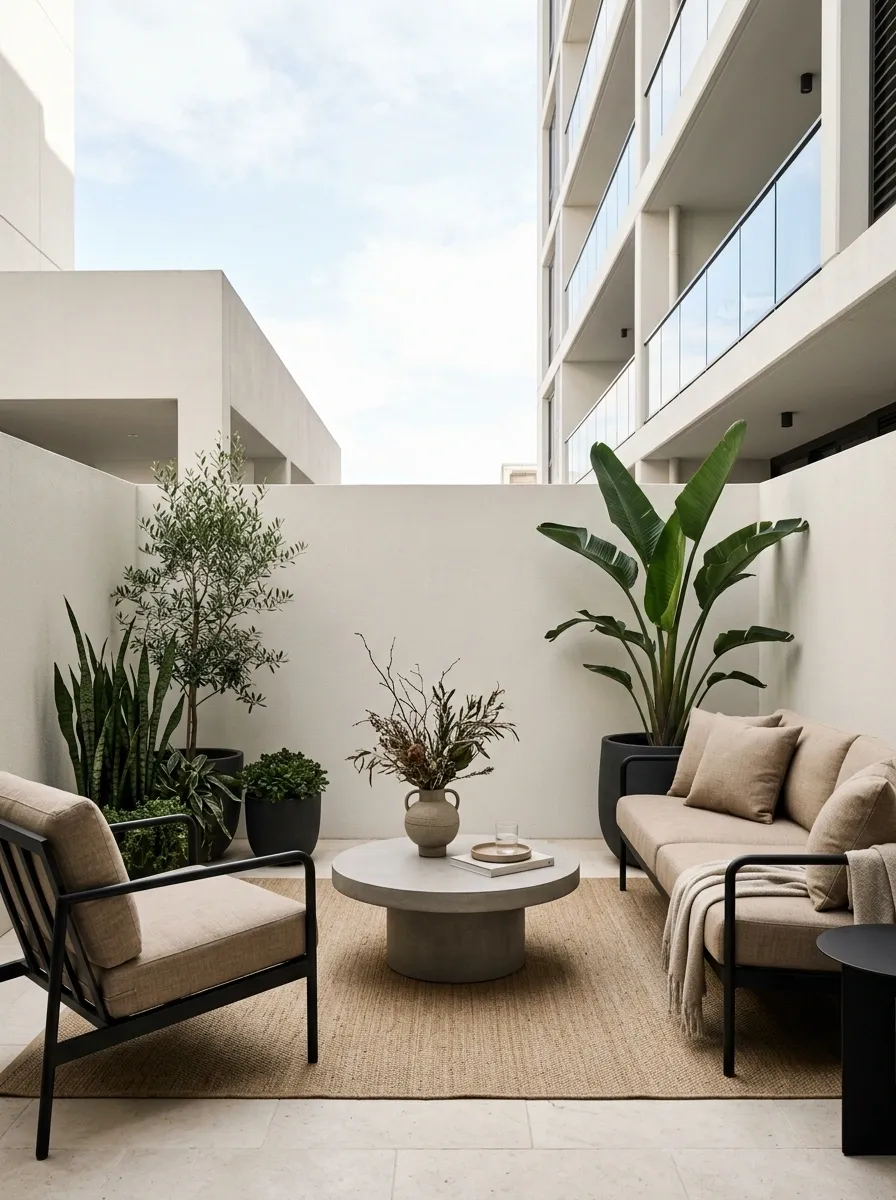
This patio uses a sharper architectural palette: pale stone, black metal, warm beige upholstery, and restrained greenery. A black-framed sofa anchors one side of the space, while a matching lounge chair faces inward toward a low stone-look coffee table.
The pale surfaces reflect daylight and keep the compact footprint feeling open. Black framing gives the furniture enough definition that the space doesn’t disappear into a sea of beige.
A few large plants soften the corners, but they are kept deliberately sculptural. The composition is clean without becoming sterile.
The secret is contrast. Light surfaces provide openness, dark furniture creates structure, and plants prevent the whole thing from looking like a showroom that forgot to install personality.
Keeps the background visually light.
Defines the furniture silhouette.
Breaks up the hard architectural lines.
Cozy Apartment Patio With a Built-In-Looking Bench and Layered Cushions
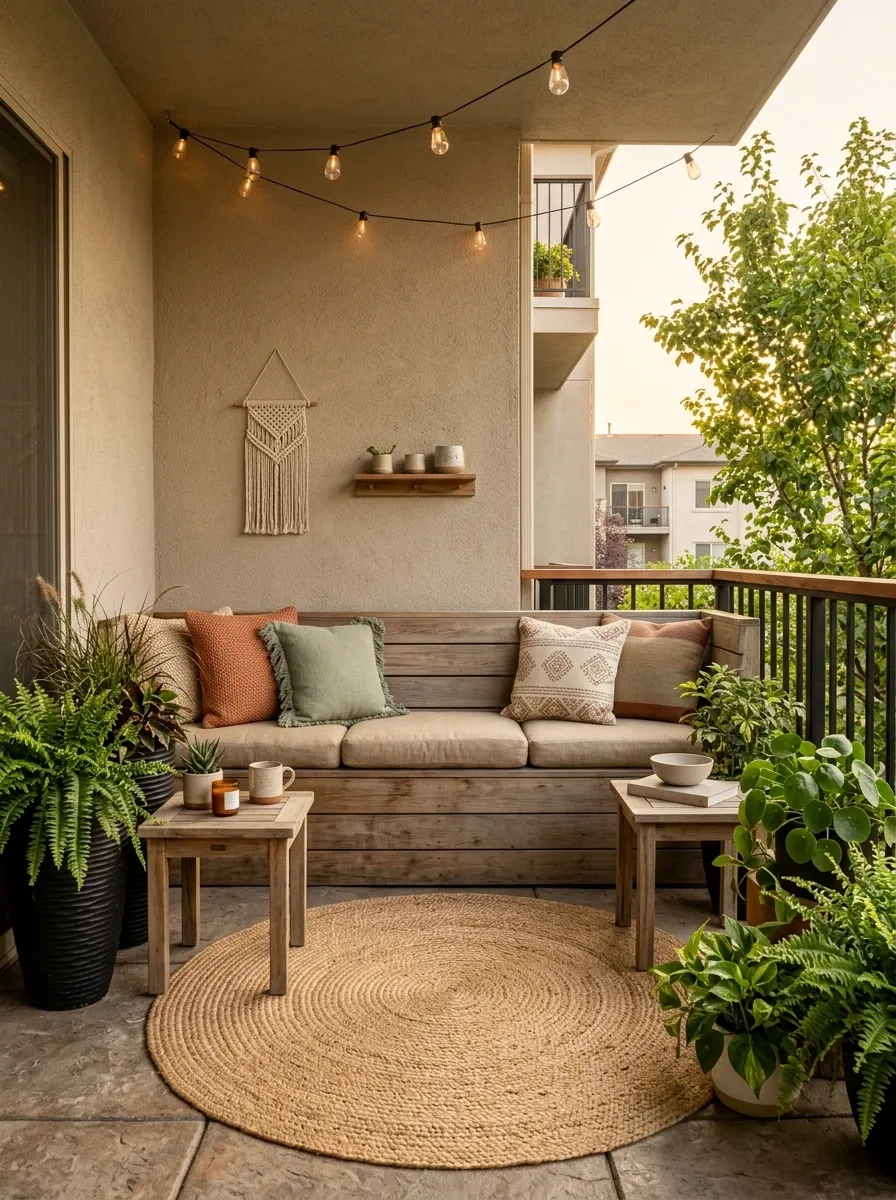
This design makes the patio feel more permanent by visually building the seating into one side of the space. A long bench runs against the wall with thick cushions, loose pillows, and a warm outdoor rug underneath.
Small side tables fill the gaps rather than a large central table, leaving more open floor in front of the seating. String lighting runs above the lounge area, while tall planters frame the ends of the bench.
The result has the comfortable feeling of an outdoor living room without requiring a huge furniture footprint.
The bench is also doing something useful: it creates one strong horizontal line. That makes the patio look organized before the cushions even enter the conversation.
Mediterranean Patio With Terracotta, Limewashed Walls, and Woven Seating
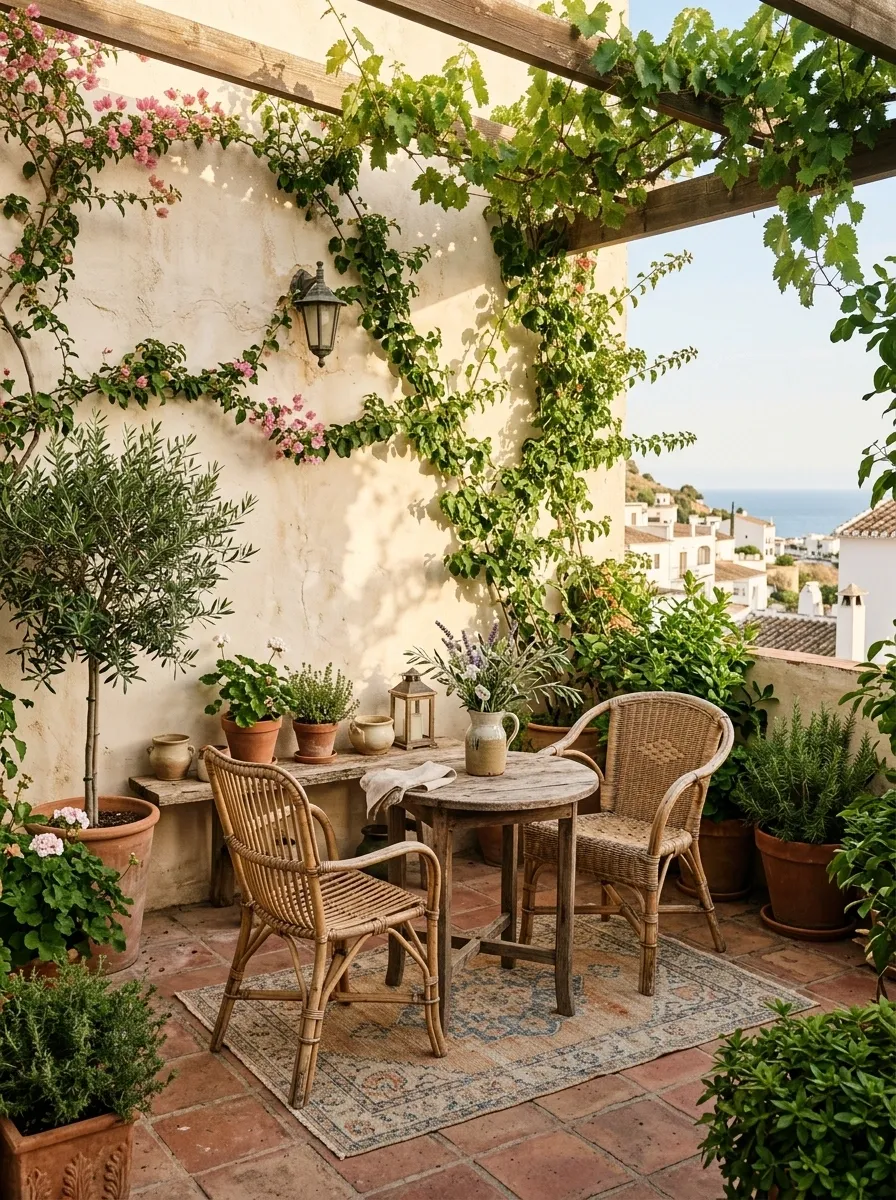
A Mediterranean-inspired apartment patio works beautifully with a warm, imperfect palette. Limewashed walls provide a pale textured backdrop, while terracotta planters, woven chairs, and warm wood create the main character.
The seating is arranged around a small round table, with climbing greenery softening one side of the wall. A patterned outdoor rug adds interest underfoot, but the pattern stays restrained so it doesn’t compete with the terracotta.
The design feels relaxed because the materials don’t look overly coordinated. They belong to the same family without appearing like they were purchased as a matching set.
The goal is sun-washed character, not turning the patio into a souvenir shop.
Soft, chalky texture
Warm terracotta
Natural texture
Living contrast
Bohemian Patio With Layered Textiles, Woven Furniture, and Warm Lighting
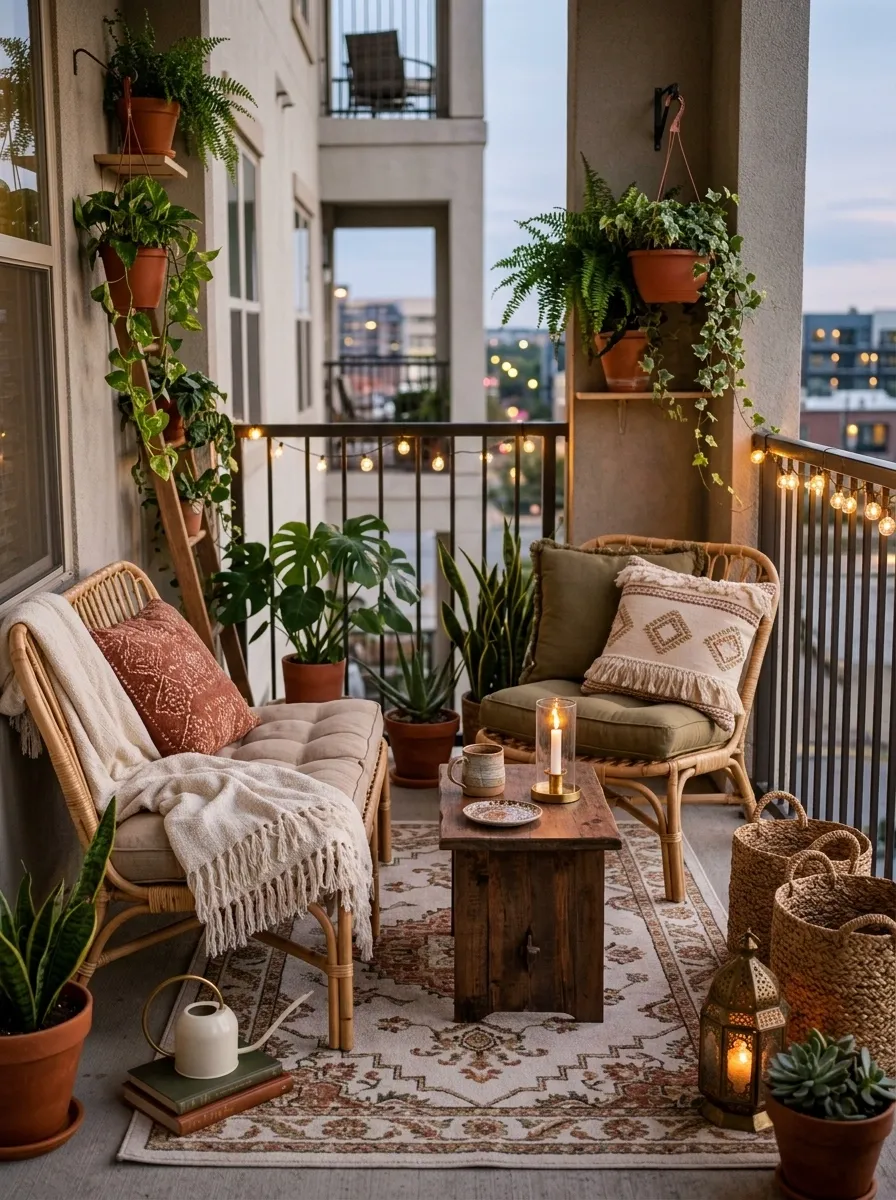
This patio takes a relaxed, collected approach without turning into a pile of random cushions. Low woven seating anchors the composition, while a patterned outdoor rug creates a clear lounge zone beneath it. Cream, rust, and muted olive textiles bring variation without making the small space visually frantic.
Hanging greenery adds height, baskets soften the harder edges, and small warm lights create a cozy evening glow around the seating rather than blasting the entire patio with one bright fixture.
The trick is giving every texture enough room to be noticed. The rug has a pattern, the furniture has a weave, and the plants bring their own shapes. Everything else stays comparatively quiet.
Texture is welcome. Eight competing patterns fighting for custody of the patio are not.
Texture carries the rest.
Outdoor rug or one statement textile
Woven furniture, baskets and natural fibers
Simple cushions and neutral surfaces
Modern Patio Dining Room With a Compact Six-Person Arrangement
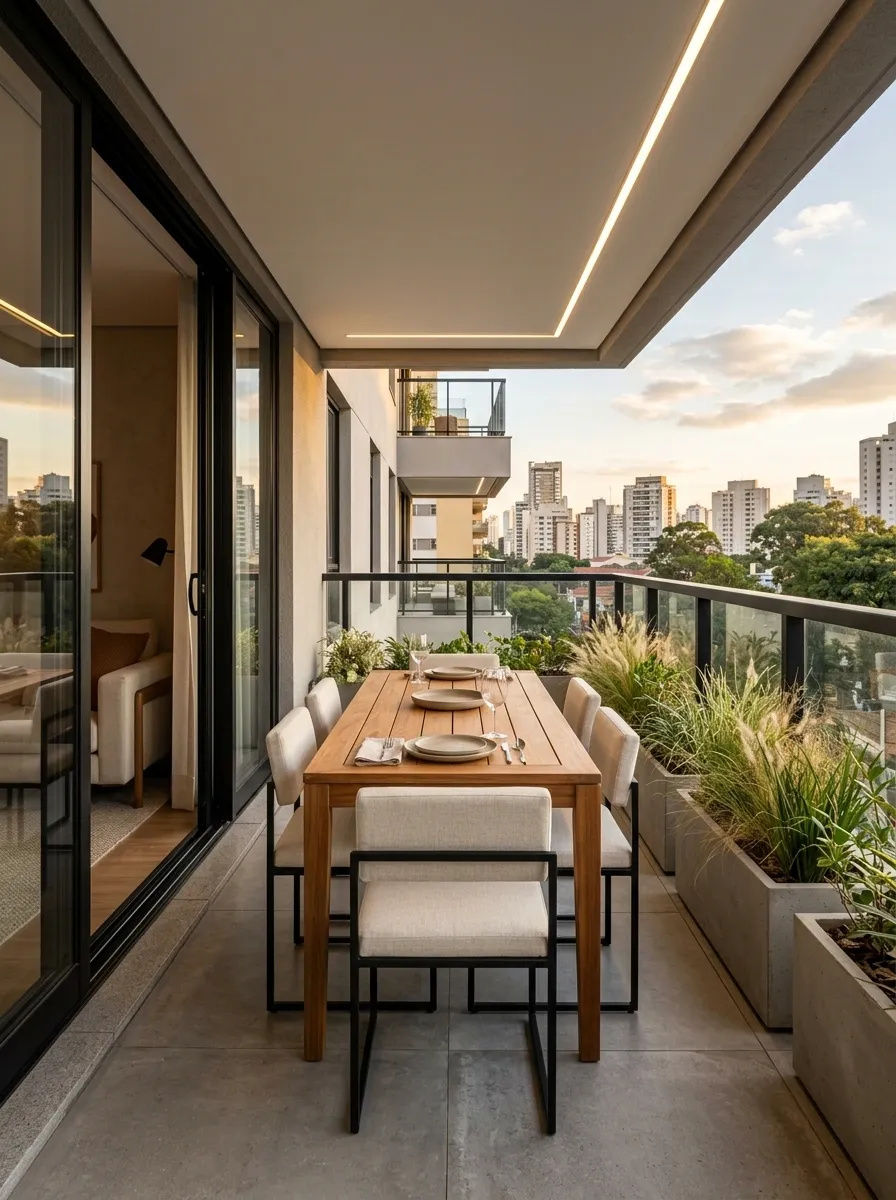
A longer apartment patio can work beautifully as an outdoor dining room when the table is chosen for the actual footprint rather than the fantasy version of the space.
This design uses a slim rectangular dining table with chairs that tuck neatly beneath it. The arrangement runs along the length of the patio, leaving a clear path near the door and enough breathing room at the ends. Linear lighting reinforces the long shape, while a restrained row of planters frames the dining zone without stealing floor space.
The table becomes the architecture of the patio. Everything else supports it.
A six-seat dining setup on an apartment patio is ambitious. A six-seat dining setup that blocks the door is just performance art.
Soft Cottage Patio With Painted Furniture and Flower-Filled Containers
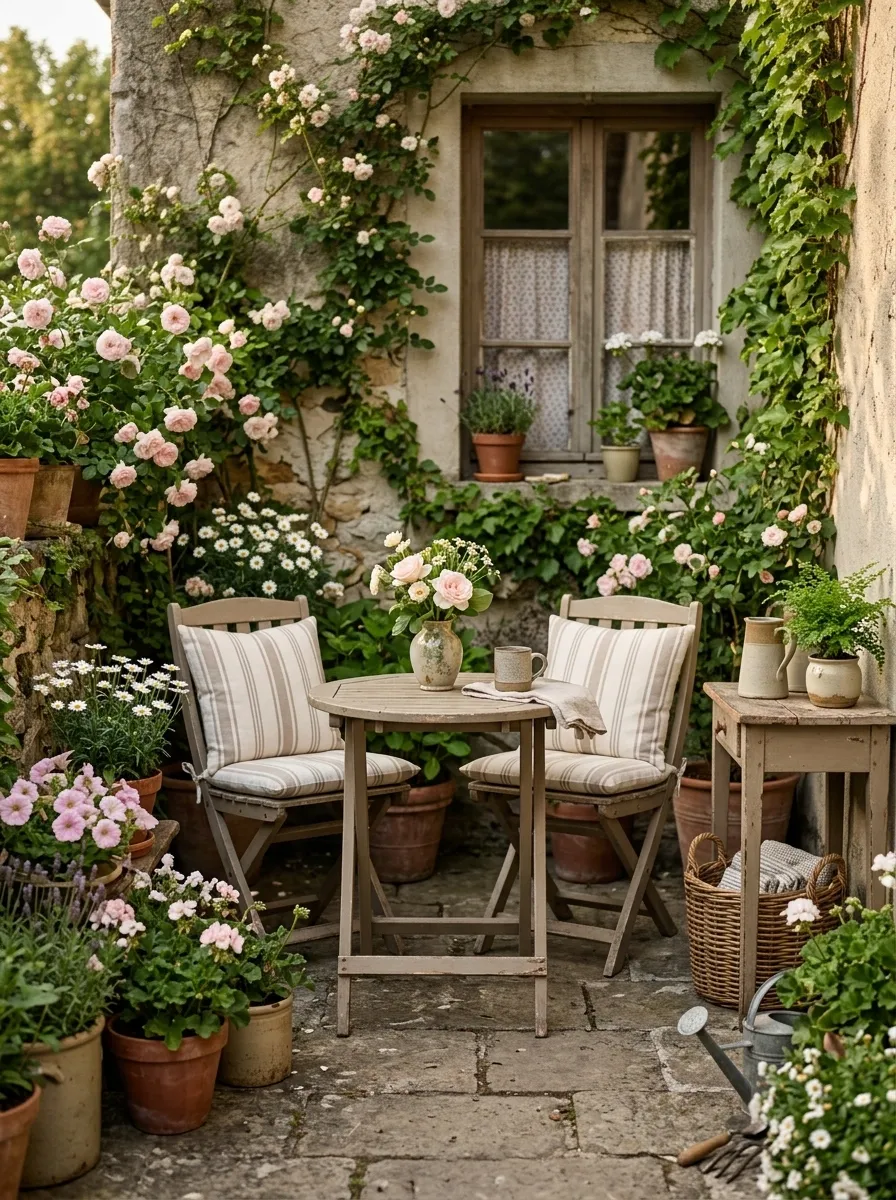
This cottage-inspired patio feels collected rather than staged. Painted furniture in a muted warm tone creates the foundation, while striped cushions introduce a little pattern without overwhelming the setting. Flower-filled containers are spread around the edges, making the planting feel integrated into the architecture instead of concentrated in one decorative corner.
A slightly weathered finish on the furniture adds character, while cream textiles and natural pots stop the composition from becoming too sugary. The result has a softer personality than the modern designs earlier in the gallery, but it still feels organized.
The patio works because the flowers aren’t doing all the talking. The furniture, planting, and textiles share the visual load.
Flowers everywhere sounds romantic until someone has to water all of them.
Desert-Inspired Patio With Terracotta, Gravel Texture, and Architectural Plants
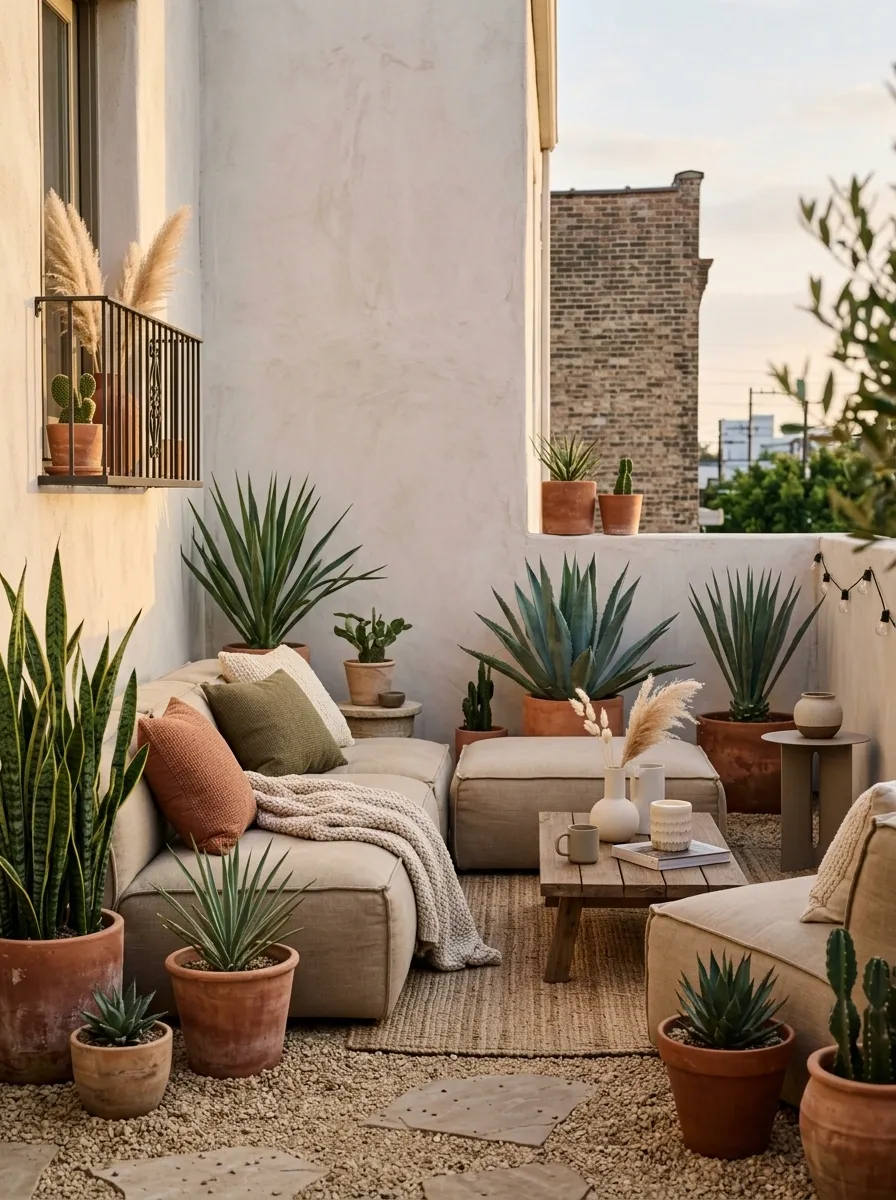
Warm clay, sandy neutrals, and sculptural greenery give this patio a stronger architectural identity. Instead of filling the space with leafy plants, the design relies on plants with clear silhouettes, allowing each one to read against the pale backdrop.
Chunky furniture in a warm neutral fabric keeps the seating substantial without adding another strong color. Terracotta planters tie into the warmer tones, while a gravel-like floor texture gives the composition a slightly rawer finish.
This is a good direction for anyone who wants greenery without the patio looking like a greenhouse. The plants become sculptural elements, not a wall of leaves.
The cactus collection can remain elsewhere. This patio has enough personality already.
Sand keeps it quiet.
Green gives it life.
Colorful Retro Patio With Rust, Mustard, Olive, and Cream
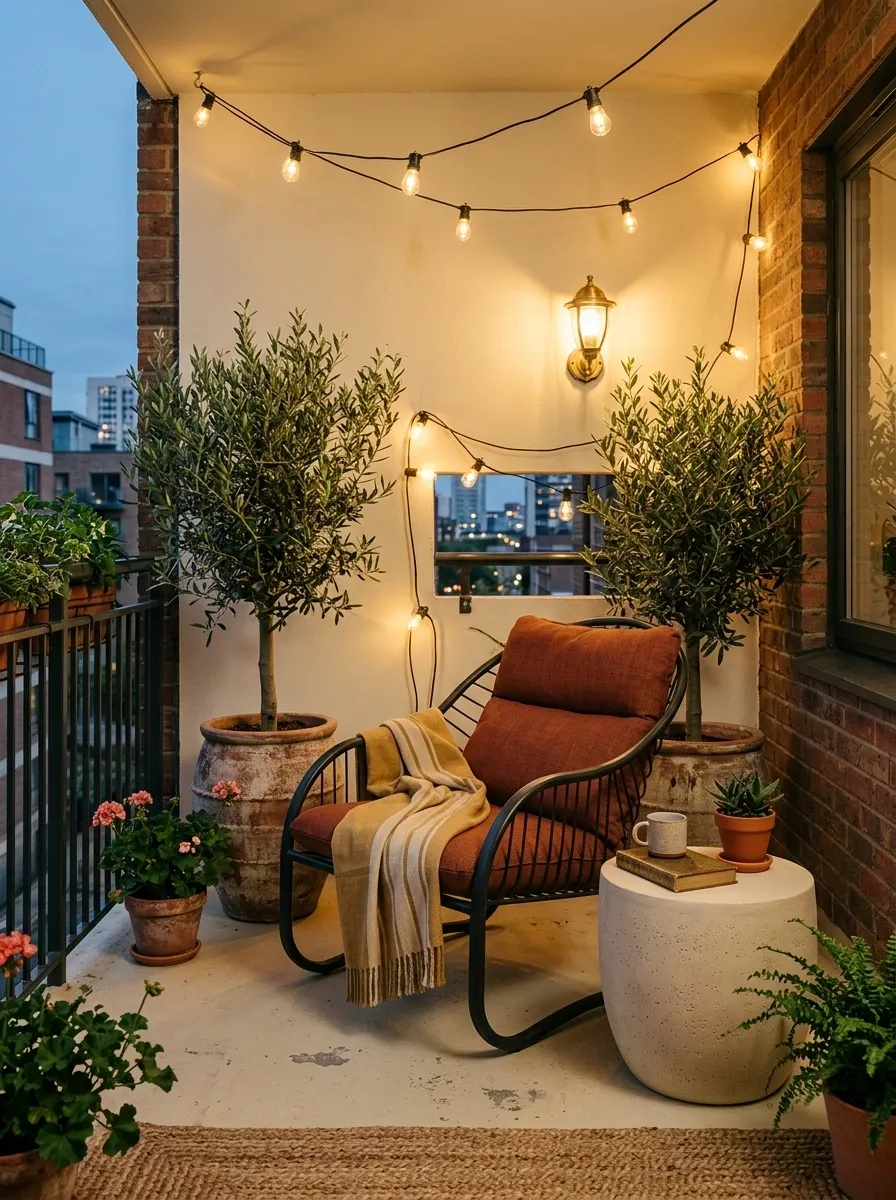
A retro-inspired apartment patio can have plenty of color without looking like every piece came from a different decade. This version starts with cream as the visual base, then builds around rust-colored upholstery, muted mustard accents, and olive greenery.
Vintage-inspired furniture with rounded edges gives the patio a softer silhouette than the sharper contemporary designs. A striped outdoor textile adds another period reference, while warm lighting keeps the colors rich after sunset.
The composition is deliberately nostalgic, but not themed. There are no unnecessary signs or novelty accessories competing for attention. The shapes, colors, and materials create the era reference on their own.
The patio looks retro. It does not look like a diner accidentally put outside.
Narrow Patio With One-Sided Lounge Seating and a Clear Walkway
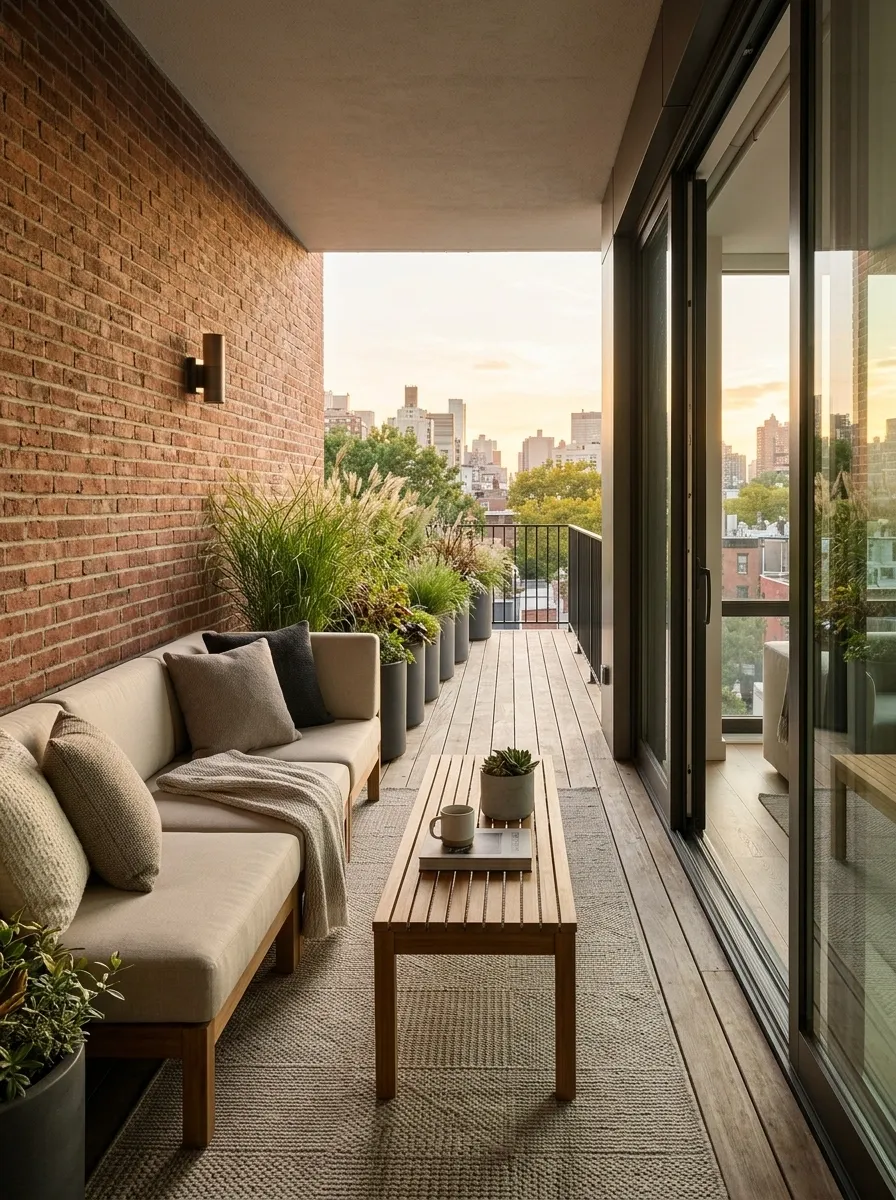
A long, narrow patio doesn’t need furniture balanced on both sides. In fact, doing exactly that is how a perfectly usable walkway mysteriously disappears.
This layout pushes the lounge seating against one wall, using a compact sofa, narrow coffee table, and a line of planters to create one continuous zone. The opposite side stays open from the apartment door to the far end, making the patio feel longer and easier to move through.
The arrangement also gives the eye one strong direction. Furniture, rug, and planting all run along the same axis, so the space feels organized instead of chopped into little sections.
The best feature here is the part that isn’t filled. Revolutionary behavior from an outdoor space.
Keep the seating compact and continuous.
Protect the route between the door and the far end.
Privacy-Focused Patio With Tall Planters and Breezy Outdoor Curtains
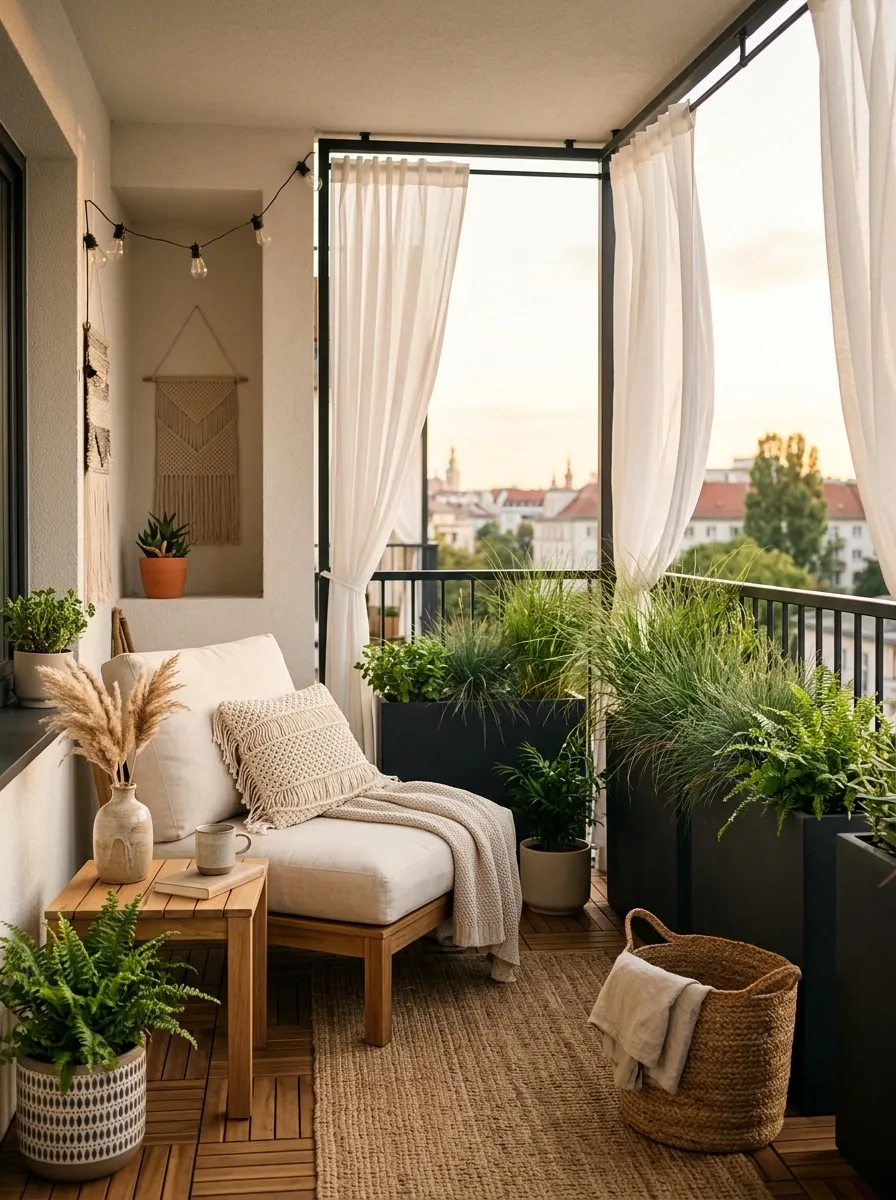
Privacy becomes part of the architecture in this apartment patio. Tall planters establish a leafy screen along the exposed edge, while lightweight outdoor curtains soften the remaining openings without closing the patio off completely.
The seating sits deeper inside the protected zone, with cream cushions and warm wood bringing softness against the taller planting. The curtains remain visually light, so the patio still gets daylight and doesn’t feel like a boxed-in porch.
The combination works because the privacy isn’t coming from one giant wall. Plants, fabric, and the patio structure each do part of the job.
A little separation from the neighbors can be nice. The goal is privacy, not witness protection.
Build the lower and middle visual screen.
Add a lighter upper layer without creating a solid wall.
Apartment Patio With a Corner Sectional and Low Gathering Table
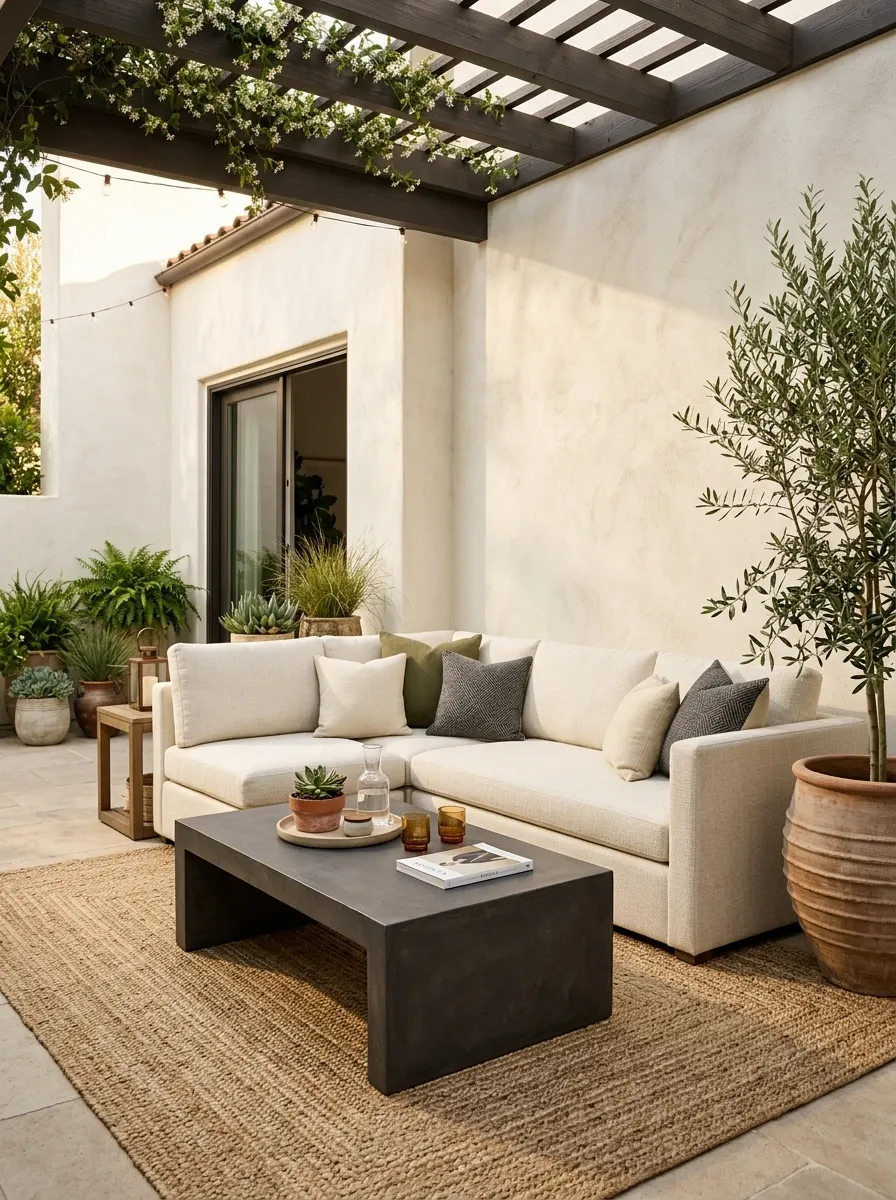
This patio turns the corner into the main event. A compact sectional wraps two walls, creating a natural conversation area while freeing the center for a low rectangular table.
The sectional is substantial enough to feel like proper outdoor seating, but its placement keeps the outer edges visually tidy. One large planter marks the open corner, while a textured rug pulls the sofa and table into one cohesive zone.
The layout works especially well on patios where two walls already create a natural room shape. Instead of fighting that geometry with furniture placed in the middle, the design reinforces it.
The sofa does most of the spatial organizing here. Everyone gets a seat, nobody has to balance on the railing.
Earthy Organic Patio With Stone Textures, Walnut Tones, and Greenery
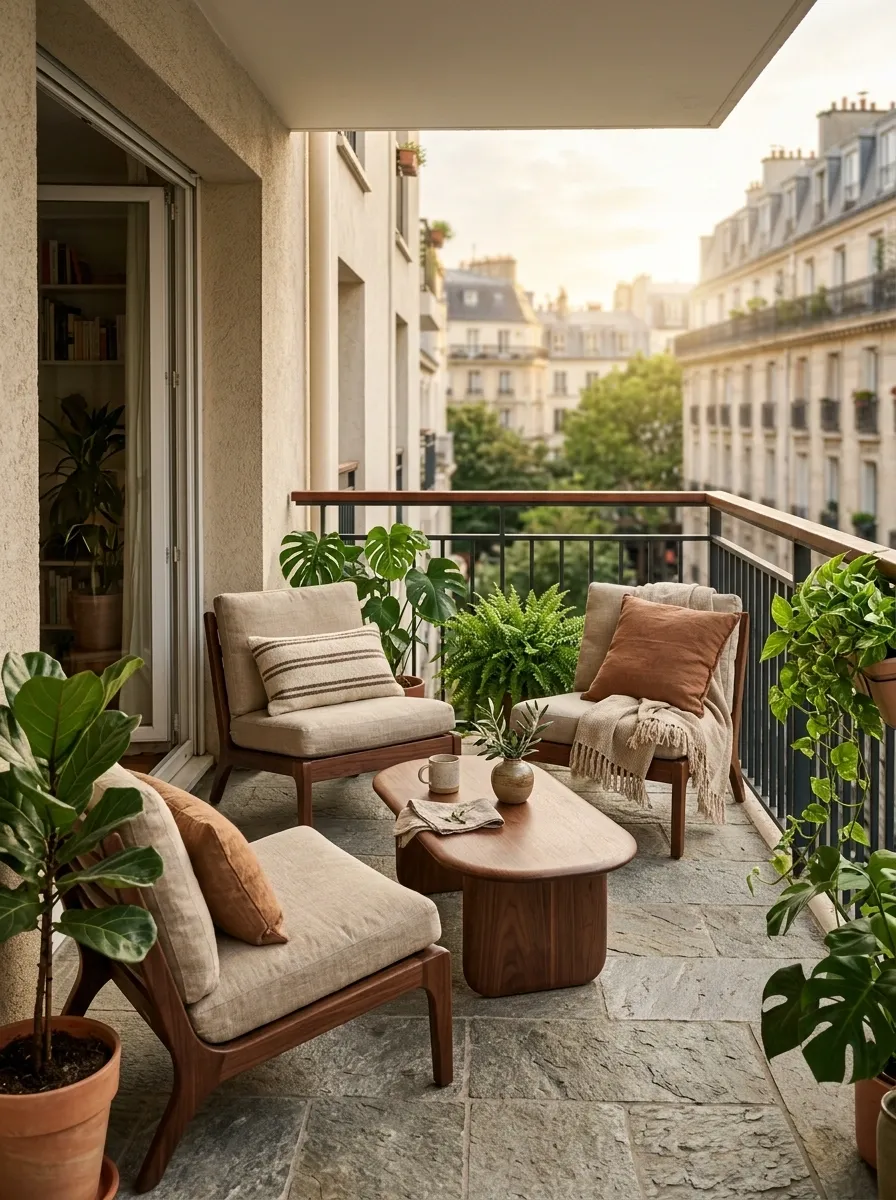
This patio feels grounded through material rather than decoration. Textured stone-like surfaces establish a strong base, deep walnut-toned furniture adds warmth, and soft beige cushions keep the seating from feeling too dark.
The furniture uses gentle curves, which helps soften the harder architectural finishes. Greenery fills a few carefully chosen areas, bringing movement into an otherwise earthy palette without competing with the wood and stone.
There is a useful visual order here: hard surfaces first, wood second, textiles third, plants last. Every layer is visible, but none demands the spotlight.
It has the sort of calm that comes from making fewer decisions, not from buying twelve objects called “organic.”
Grounds the space
Adds warmth
Softens the seating
Adds movement
Minimal White Patio With One Oversized Plant and Sculptural Seating
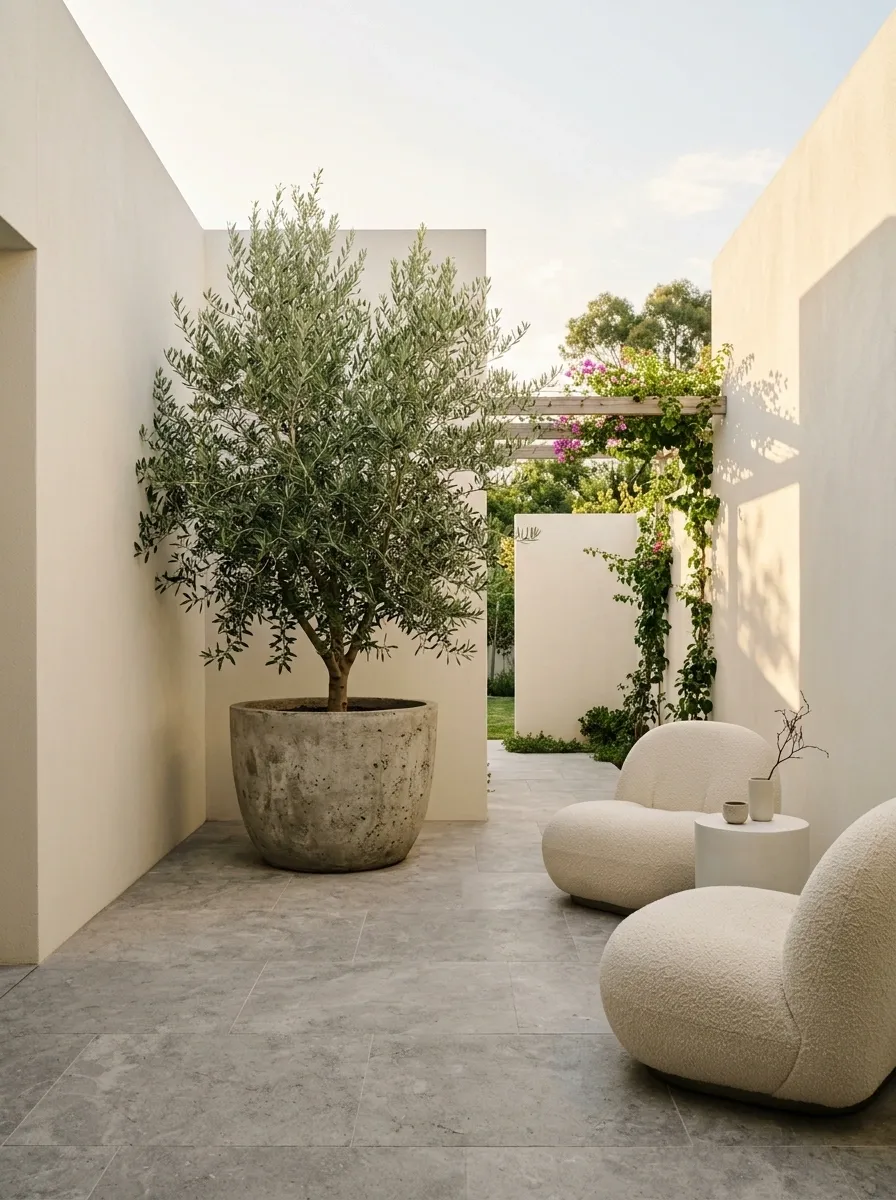
This is what happens when a patio stops trying to fill every awkward inch. Warm white surfaces create a quiet shell, two sculptural chairs establish the seating area, and one oversized plant becomes the main organic focal point.
A simple side table sits between the chairs, but almost everything else remains open. That negative space is deliberate. It makes the furniture easier to read and gives the small patio a more spacious visual rhythm.
The large plant is important because minimal doesn’t mean empty. One strong organic form adds enough variation without creating a collection of small objects competing across the floor.
Three accessories would start feeling busy. Apparently the patio has boundaries.
More visual breathing room.
Apartment Patio With a Foldable Dining Nook and Wall-Mounted Herb Garden
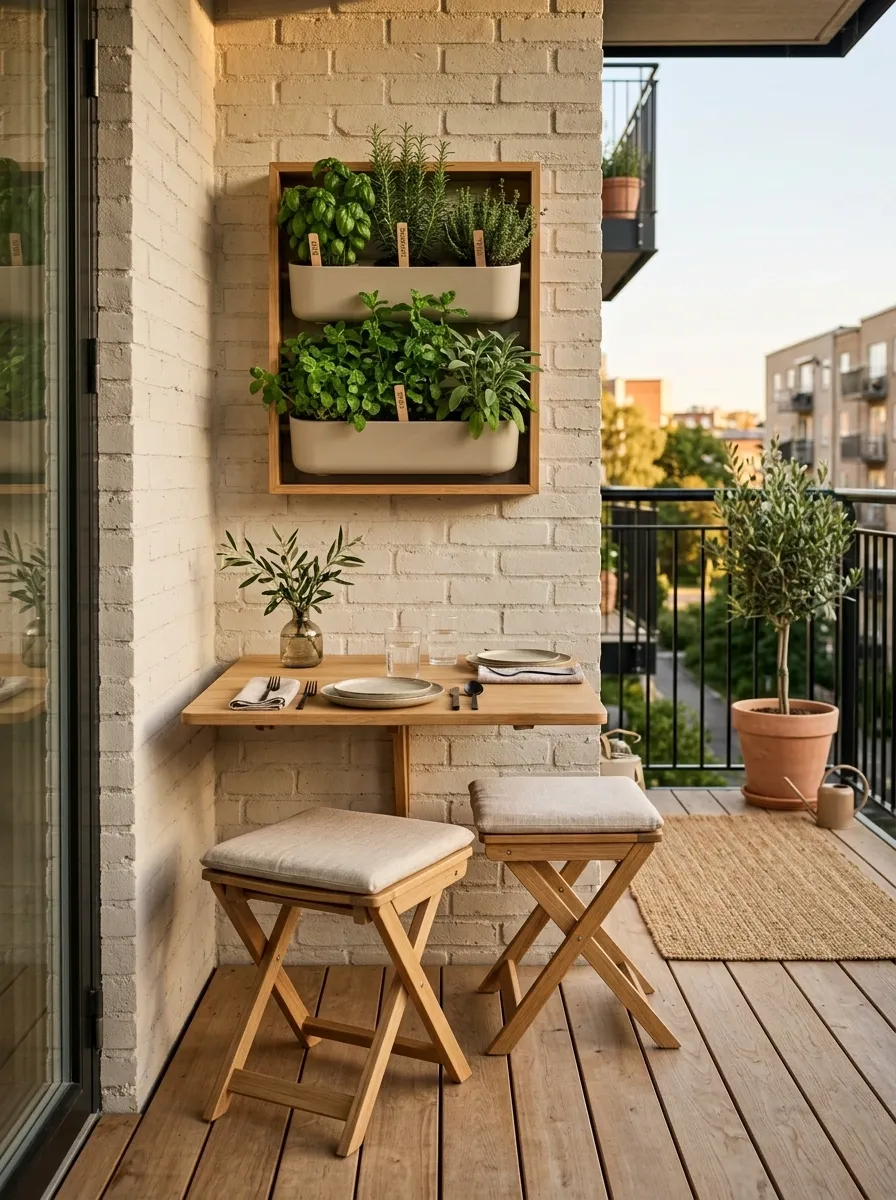
A tiny patio can still have a proper dining area when the walls are treated as usable design space. This composition uses a slim foldable table against one side, compact chairs that can be moved aside, and a wall-mounted herb garden positioned above the dining zone.
Warm wood keeps the arrangement from feeling overly utilitarian, while pale cushions and simple ceramic planters add softness. Because the herbs occupy the wall rather than the floor, the center of the patio stays open.
The vertical greenery also gives the dining nook a clear identity. It feels like one finished little room rather than a table that happened to survive outdoors.
The patio has discovered walls. Revolutionary stuff.
Warm Industrial Patio With Brick Texture, Black Metal, and Weathered Wood
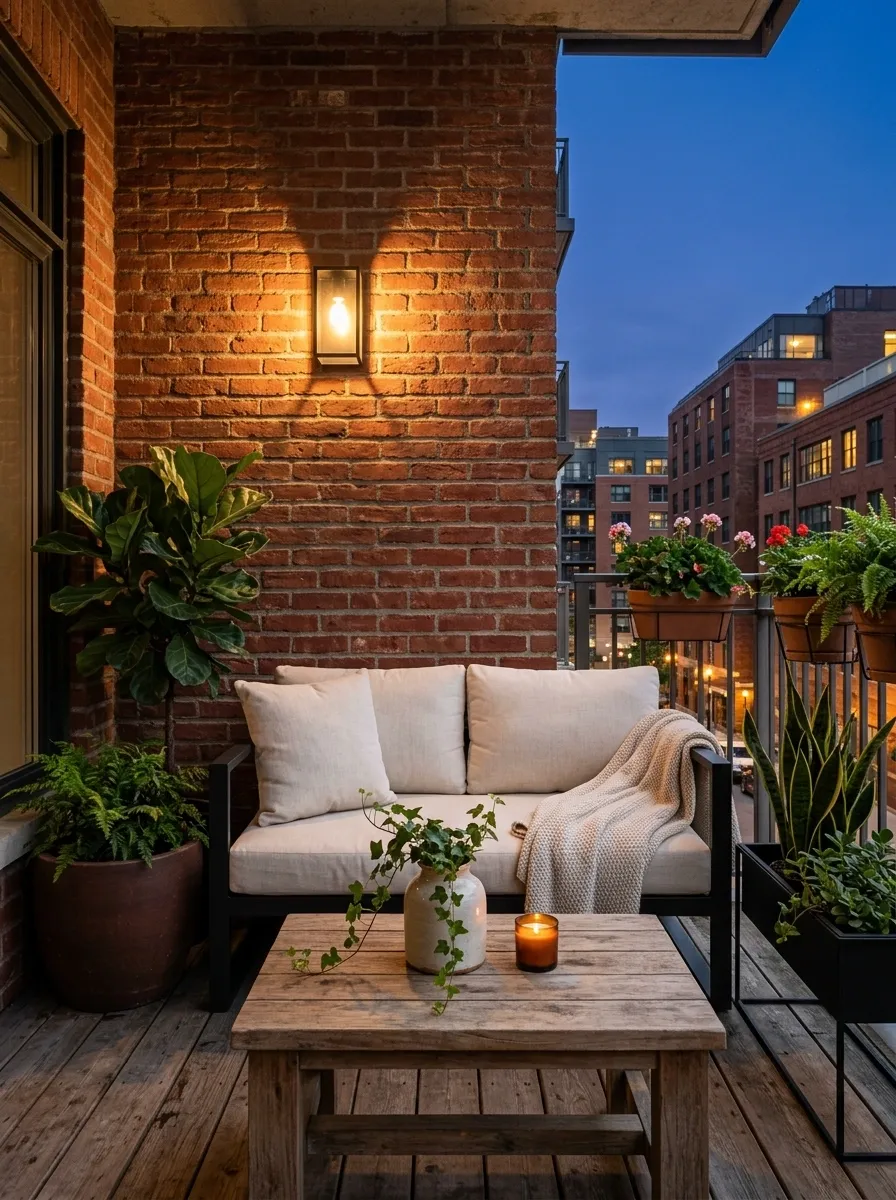
This patio takes a more urban direction with a brick-textured backdrop, black metal furniture, and warm weathered wood. The combination has enough contrast to feel architectural, but the cushions and greenery keep it from becoming visually hard.
A compact metal-framed sofa sits against the brick surface, paired with a chunky wood coffee table. Simple planters break up the darker materials, while directional lighting picks out the wall texture after sunset.
The materials are intentionally honest. Brick provides pattern, metal provides structure, wood provides warmth, and upholstery provides softness. There is no need for another decorative layer just because an empty shelf exists.
The shelf can remain empty. It has suffered enough.
Monochrome Charcoal Patio With Cream Textiles and Architectural Lighting
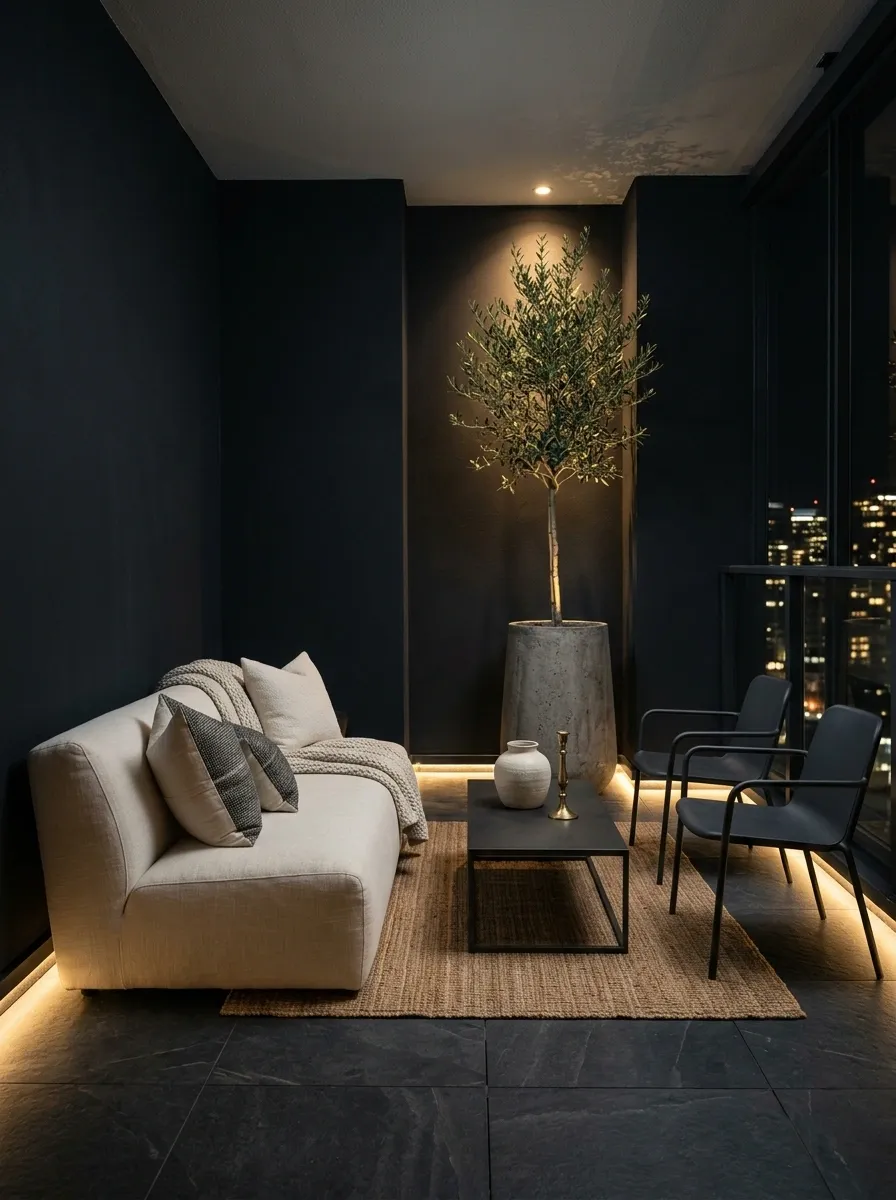
A charcoal patio can feel incredibly polished when the darker surfaces are treated as the architectural envelope rather than the entire color story. This design uses deep charcoal walls and flooring, then places cream upholstery and warm lighting against them.
The furniture stays sculptural and simple. A large planter gives the composition a strong vertical shape, while small pools of warm light pick out the seating and planting after dark instead of illuminating every square inch equally.
That contrast creates depth. The darker shell recedes, the cream seating comes forward, and the warm lights give the patio another layer once daylight disappears.
Very dramatic. Still a patio. No velvet rope required.
Family-Friendly Apartment Patio With Compact Dining and Open Floor Space
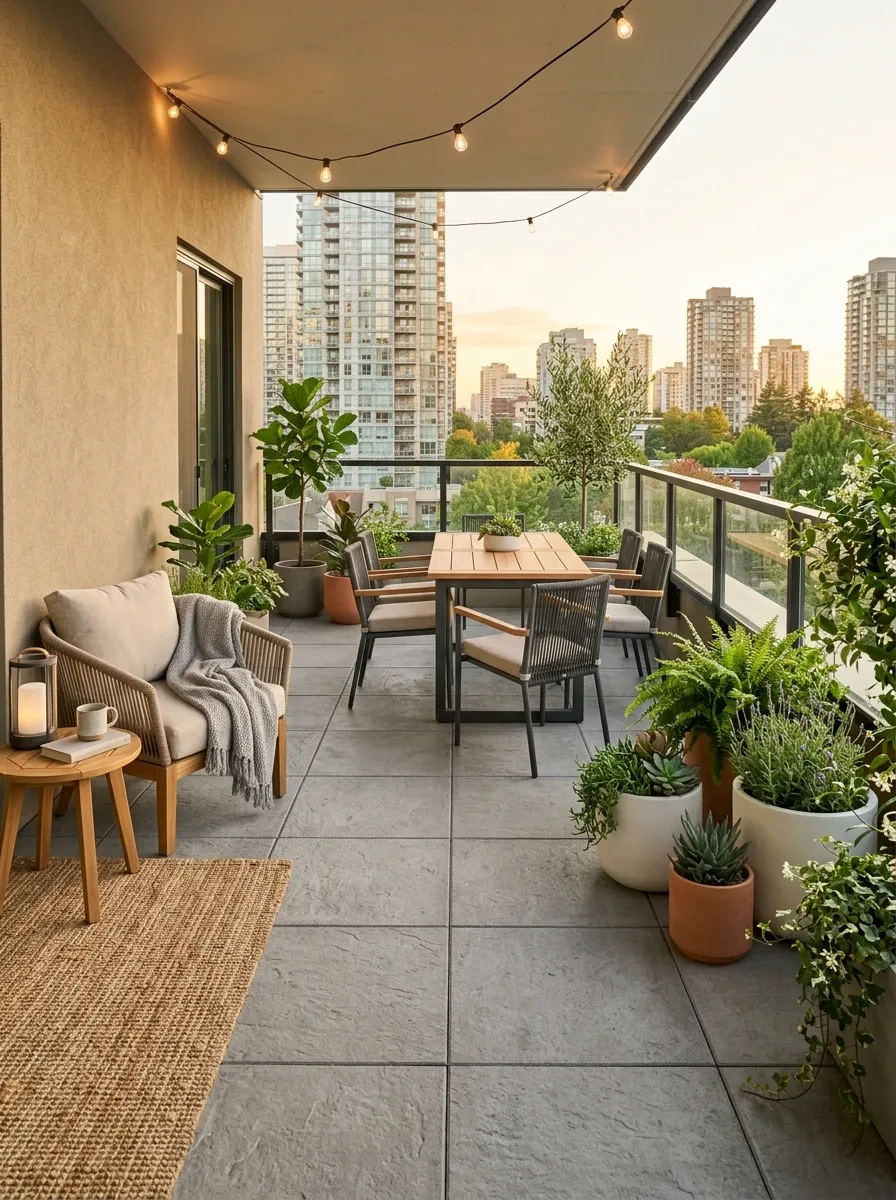
This layout gives an apartment patio enough flexibility to handle everyday life without turning it into a storage area for outdoor furniture. A compact dining table sits along one edge, while lightweight movable chairs and a small secondary seating piece can shift when more open floor is needed.
The center remains deliberately clear. That open area helps the patio feel larger and makes the entire arrangement easier to adapt throughout the day. Durable neutral finishes keep the visual palette calm, while greenery stays concentrated around the outer boundary.
Everything has a reason to be there, but nothing is permanently claiming the middle.
Because apparently someone has to leave room for actual humans to exist between the furniture.
Table stays against the edge.
Movable seating and plants.
Romantic Evening Patio With Candle-Style Lighting and Soft Upholstery
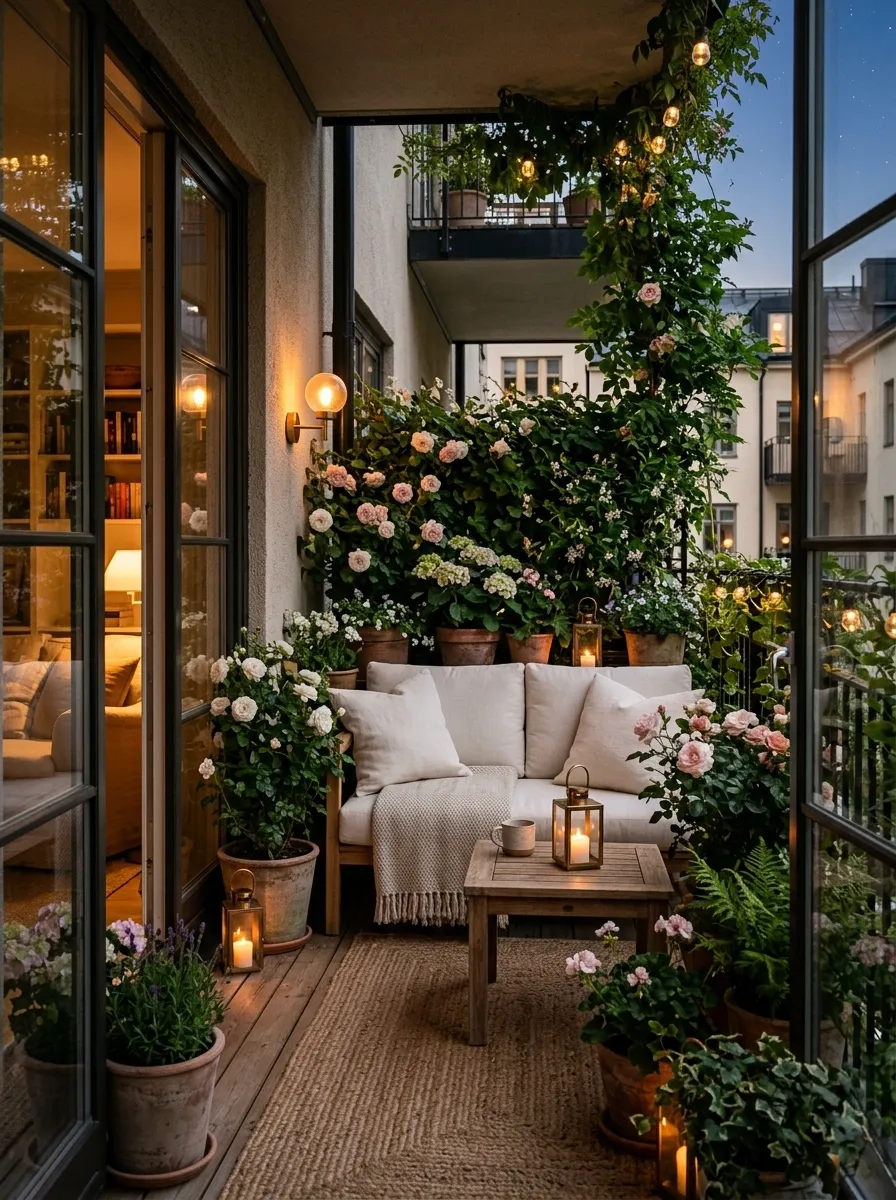
This patio is designed around the hour when the apartment lights are on and the outdoor space would usually be abandoned. Two comfortable chairs or a compact loveseat create the intimate center, surrounded by soft cream upholstery, flowering containers, and several small lantern-style lights.
Instead of one bright overhead source, the lighting is distributed at different heights. A low glow near the seating, another light closer to the floor, and a slightly higher source near the planting create depth across the small space.
The daytime palette stays quiet so the lighting can become the main character after dark. Warm materials make the transition feel natural rather than theatrical.
The patio after sunset suddenly has a personality. Finally, the outdoor furniture understood the assignment.
Marks the seating area.
Adds depth near the floor.
Brings attention to plants or the backdrop.
Green-and-Wood Patio With a Vertical Plant Wall and Compact Sofa
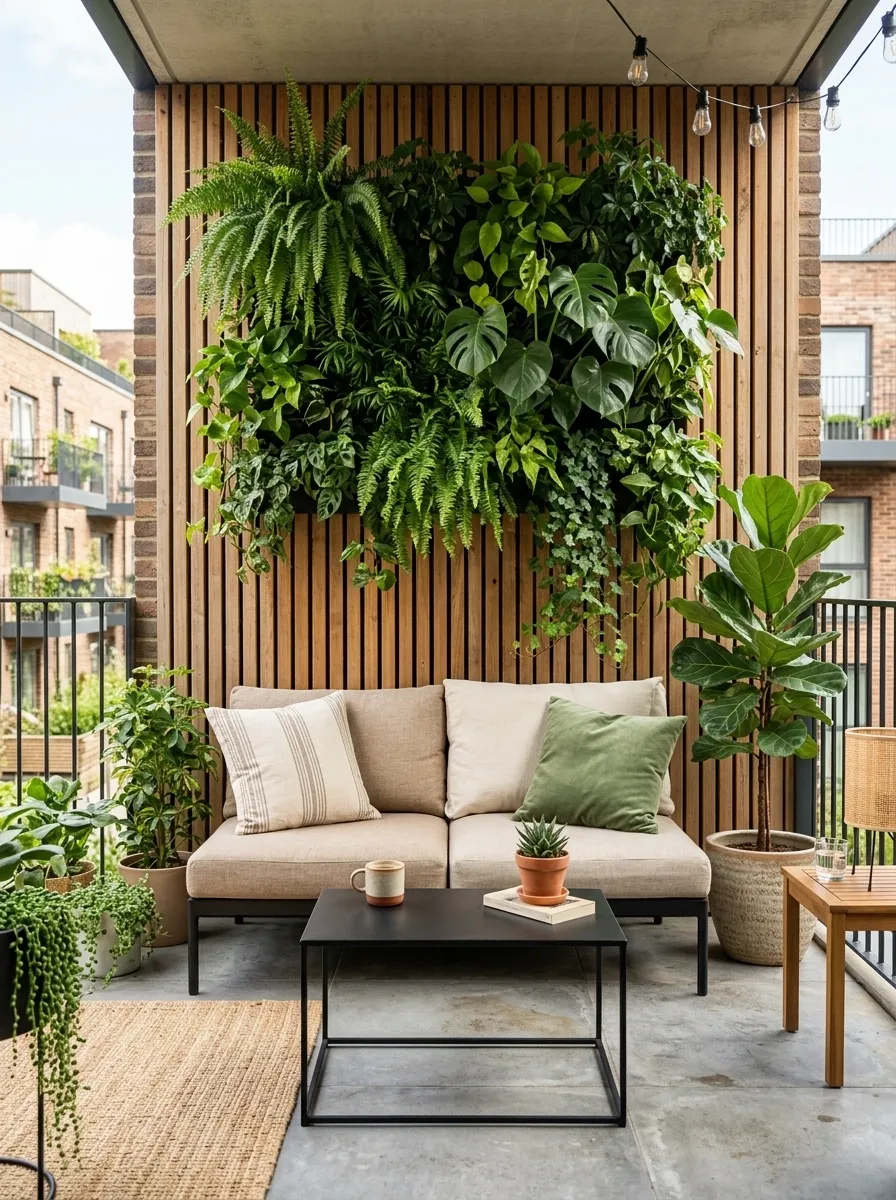
This patio makes the back wall part of the garden. A warm timber backdrop supports a vertical arrangement of greenery behind a compact sofa, creating the feeling of a deeper outdoor room without filling the floor with pots.
Neutral cushions keep the seating quiet, while a slim coffee table adds function without interrupting the view. The strongest contrast comes from the green foliage against the warm wood, with the patio floor kept relatively simple underneath.
The depth comes from layering. Wall first, greenery second, furniture third, floor last. That order gives the small space a stronger sense of dimension.
The plants finally got their own wall. The floor can relax now.
Traditional European-Style Patio With Iron Furniture and Patterned Tile
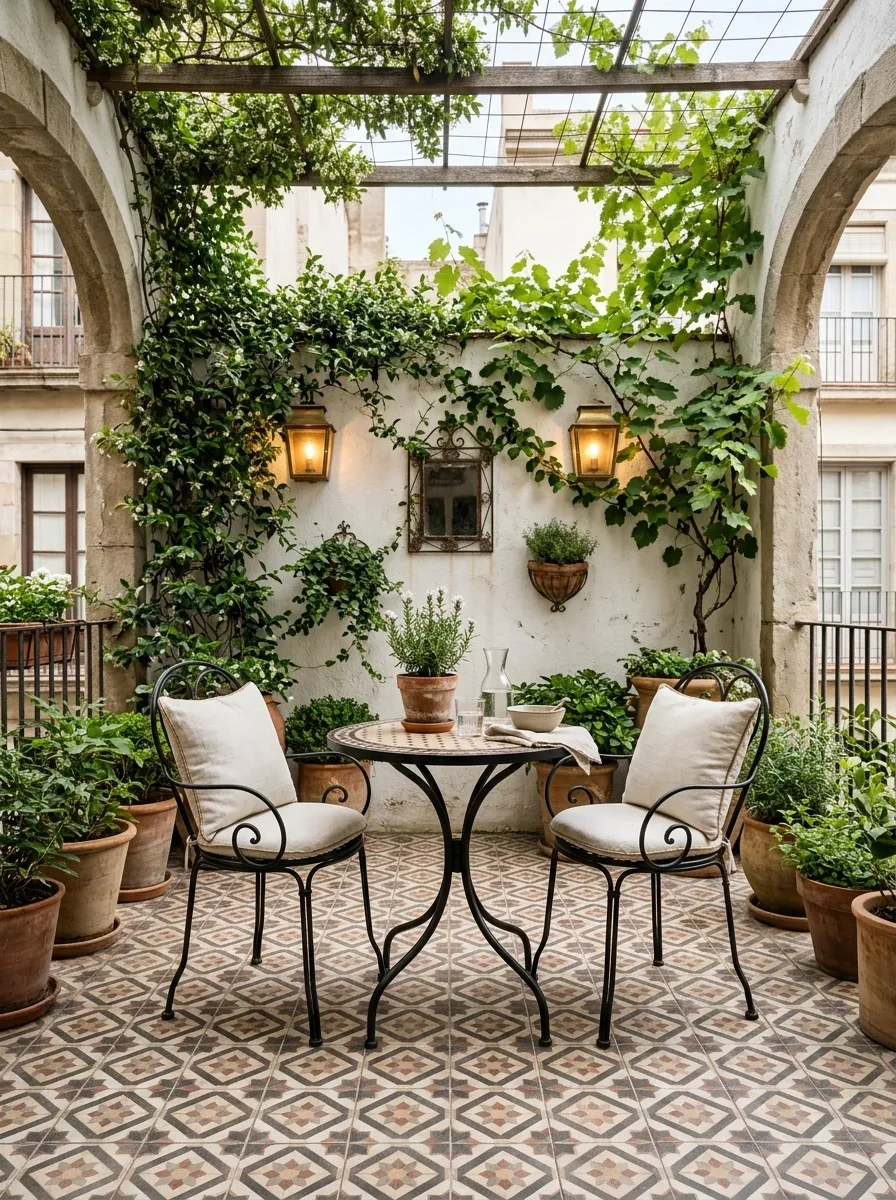
This patio leans into old-world character through shape and surface rather than novelty decoration. Slim iron furniture sits over patterned tile flooring, while aged ceramic planters and climbing greenery soften the edges.
The tile provides the strongest visual pattern, so the furniture stays relatively simple. Cream cushions keep the iron seating comfortable and prevent the darker frame from dominating the entire composition.
Climbing plants bring vertical movement without requiring a forest of containers across the floor. Warm wall lighting completes the setting and gives the tile pattern more depth after sunset.
It feels transported from an old European courtyard, minus the suspiciously perfect cobblestones and the €9 espresso.
Contemporary Small Patio With Curved Furniture and Oversized Planters
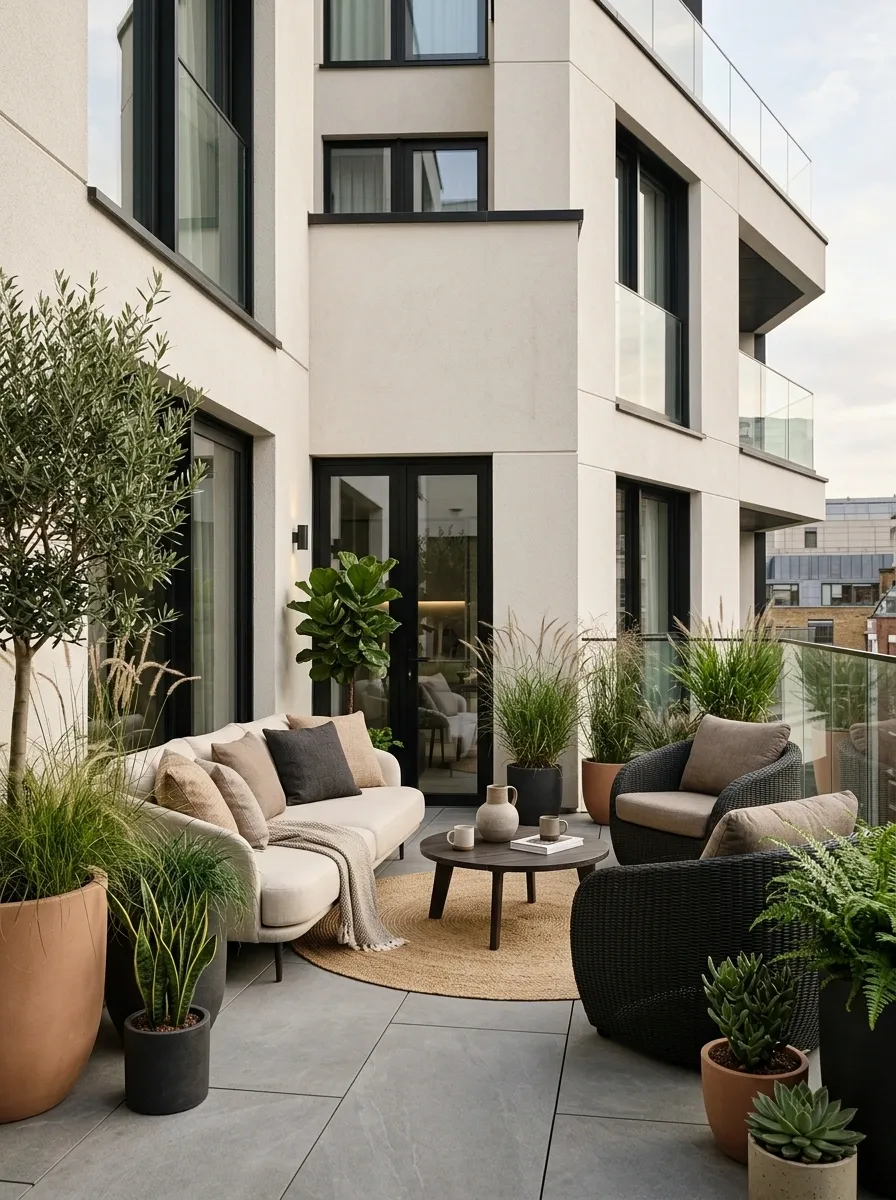
The architecture of a small patio is often full of straight lines, which makes curved furniture especially effective here. A softly curved sofa and rounded chairs interrupt the boxy geometry, while oversized planters create tall vertical forms around them.
The floor and walls remain relatively restrained so the furniture silhouettes stay easy to read. The planters aren’t scattered randomly either. Their larger shapes frame the seating and help define the patio without adding another collection of tiny objects.
This approach feels modern because the forms are doing the decorating. There is no need to cover every surface with accessories.
The furniture has curves. The architecture has corners. Nature is allowed to mediate the argument.
Budget-Conscious Apartment Patio With Layered Thrifted and New Pieces
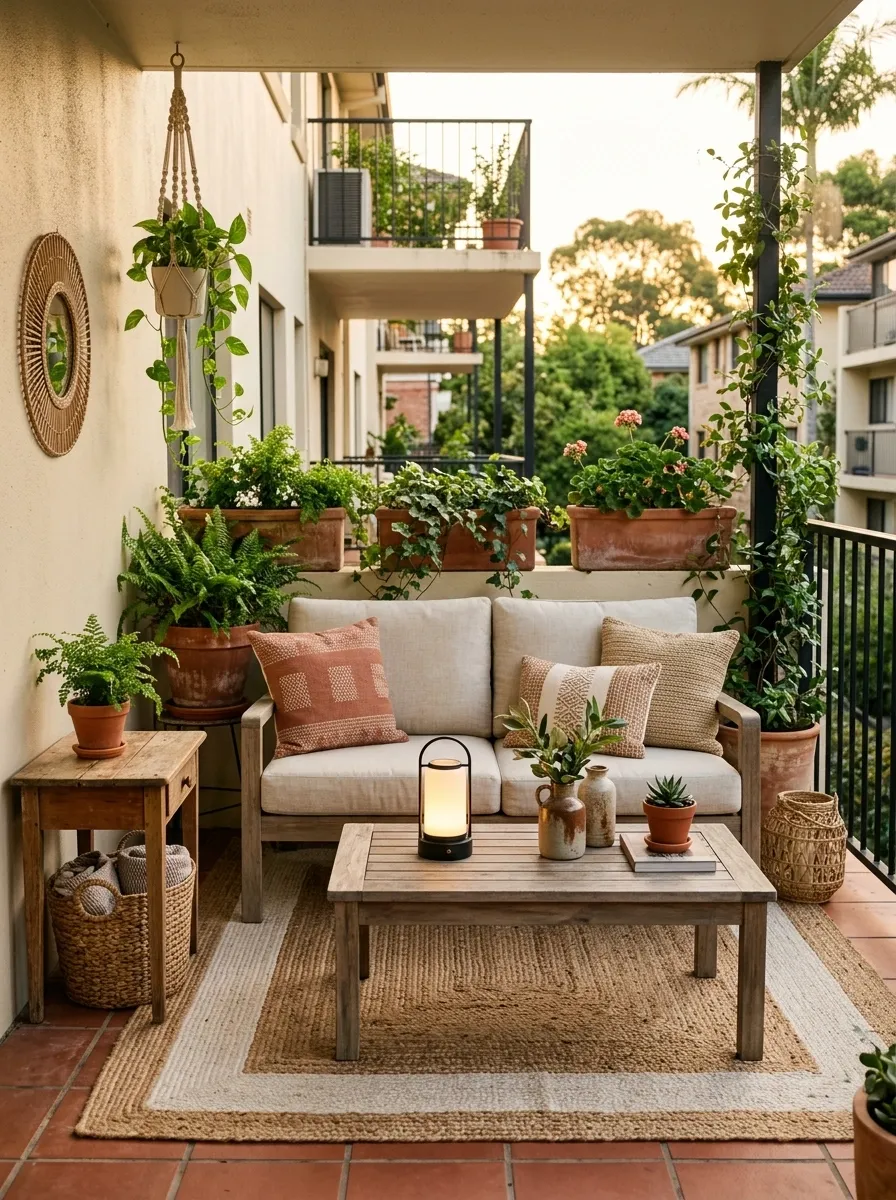
A polished patio doesn’t require every piece to match or arrive in the same delivery. This design mixes simple new outdoor furniture with secondhand-looking wood pieces, affordable textiles, basic planters, and warm portable lighting.
The finished composition works because the visual hierarchy is clear. One seating area anchors the space, a rug defines it, and greenery frames the edges. Smaller pieces can have more variation because the larger shapes already create order.
Natural wood and cream fabric keep the mixed-source look cohesive, while a few terracotta accents add warmth.
The secret isn’t making everything cheap. It’s making the expensive-looking parts of the composition do the heavy lifting.
A patio can absolutely thrift its way to personality.
Resort-Inspired Apartment Patio With a Daybed, Palms, and Warm Neutral Layers
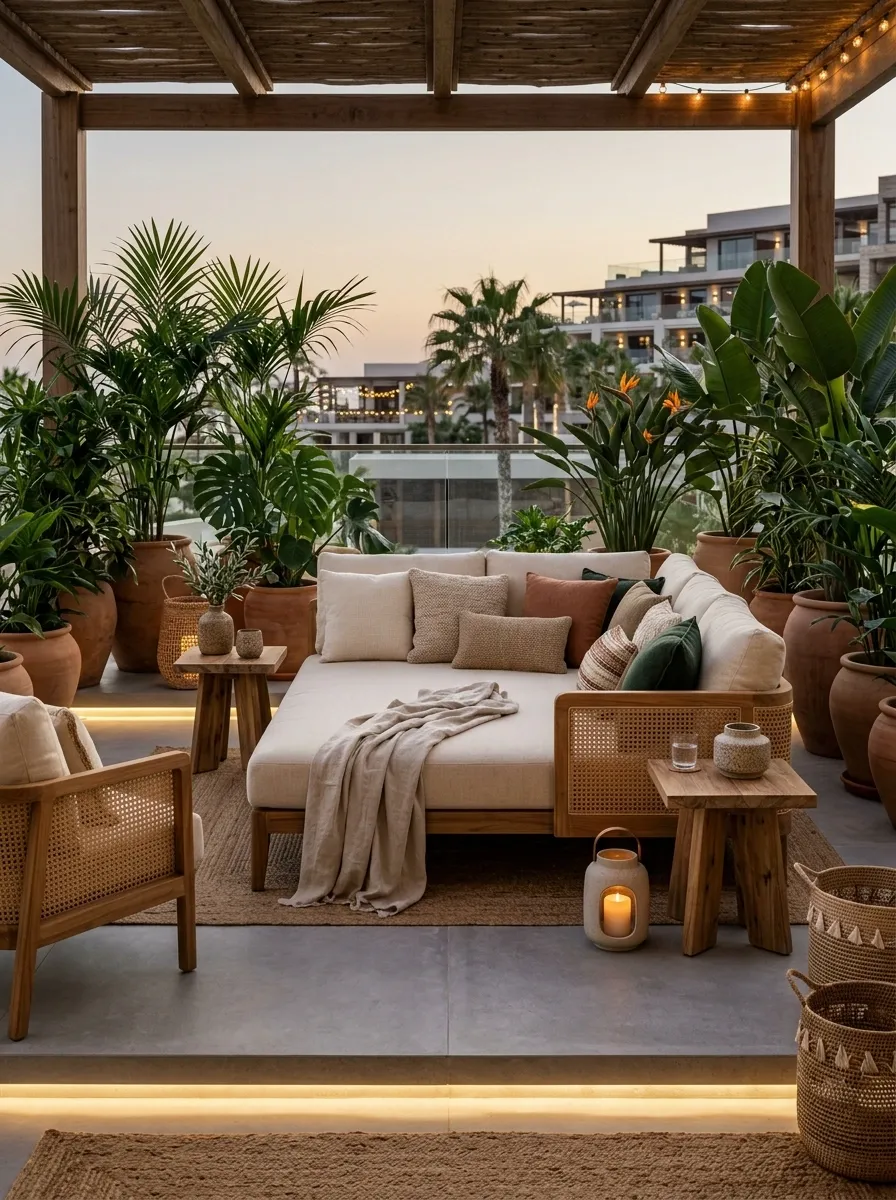
The final design turns a larger apartment patio into a compact outdoor retreat built around one unmistakable focal point: a comfortable daybed. Warm neutral upholstery gives it visual weight without making the space dark, while palms and large leafy plants frame the edges.
Woven textures appear through the daybed, planters, and smaller furniture pieces, creating continuity across the composition. Architectural lighting is placed low and around the perimeter, allowing the center seating to remain the visual focus after sunset.
The palette stays intentionally restrained. Cream, warm wood, terracotta, and deep green provide enough variation without competing with the daybed.
It has resort energy without requiring a swim-up bar, which is probably for the best given the square footage.
↓
FRAME IT, DON’T FIGHT IT
The Patio Doesn’t Need More Stuff
The most useful thing to take from these apartment patio ideas isn’t a particular sofa, planter, rug, or color palette. It’s the way the pieces work together.
A patio starts feeling intentional when there is a clear visual hierarchy. One area anchors the space. Another provides movement. The materials belong together. The furniture leaves enough room to actually use the patio. Even the empty areas have a job.
That matters more than copying a photograph exactly. A narrow patio may need a completely different arrangement from a wide one, and a sunny exposed balcony has different practical needs from a sheltered corner.